EP3830331B1 - Aktive garne und textilien zur stabilisierung und kontrollierten freisetzung von wirkstoffen - Google Patents
Aktive garne und textilien zur stabilisierung und kontrollierten freisetzung von wirkstoffen Download PDFInfo
- Publication number
- EP3830331B1 EP3830331B1 EP19768907.8A EP19768907A EP3830331B1 EP 3830331 B1 EP3830331 B1 EP 3830331B1 EP 19768907 A EP19768907 A EP 19768907A EP 3830331 B1 EP3830331 B1 EP 3830331B1
- Authority
- EP
- European Patent Office
- Prior art keywords
- weight
- yarn
- textile
- syndiotactic polystyrene
- fibres
- Prior art date
- Legal status (The legal status is an assumption and is not a legal conclusion. Google has not performed a legal analysis and makes no representation as to the accuracy of the status listed.)
- Active
Links
Images



Classifications
-
- C—CHEMISTRY; METALLURGY
- C08—ORGANIC MACROMOLECULAR COMPOUNDS; THEIR PREPARATION OR CHEMICAL WORKING-UP; COMPOSITIONS BASED THEREON
- C08J—WORKING-UP; GENERAL PROCESSES OF COMPOUNDING; AFTER-TREATMENT NOT COVERED BY SUBCLASSES C08B, C08C, C08F, C08G or C08H
- C08J3/00—Processes of treating or compounding macromolecular substances
- C08J3/20—Compounding polymers with additives, e.g. colouring
- C08J3/203—Solid polymers with solid and/or liquid additives
-
- A—HUMAN NECESSITIES
- A01—AGRICULTURE; FORESTRY; ANIMAL HUSBANDRY; HUNTING; TRAPPING; FISHING
- A01N—PRESERVATION OF BODIES OF HUMANS OR ANIMALS OR PLANTS OR PARTS THEREOF; BIOCIDES, e.g. AS DISINFECTANTS, AS PESTICIDES OR AS HERBICIDES; PEST REPELLANTS OR ATTRACTANTS; PLANT GROWTH REGULATORS
- A01N25/00—Biocides, pest repellants or attractants, or plant growth regulators, characterised by their forms, or by their non-active ingredients or by their methods of application, e.g. seed treatment or sequential application; Substances for reducing the noxious effect of the active ingredients to organisms other than pests
- A01N25/34—Shaped forms, e.g. sheets, not provided for in any other sub-group of this main group
-
- A—HUMAN NECESSITIES
- A01—AGRICULTURE; FORESTRY; ANIMAL HUSBANDRY; HUNTING; TRAPPING; FISHING
- A01N—PRESERVATION OF BODIES OF HUMANS OR ANIMALS OR PLANTS OR PARTS THEREOF; BIOCIDES, e.g. AS DISINFECTANTS, AS PESTICIDES OR AS HERBICIDES; PEST REPELLANTS OR ATTRACTANTS; PLANT GROWTH REGULATORS
- A01N31/00—Biocides, pest repellants or attractants, or plant growth regulators containing organic oxygen or sulfur compounds
- A01N31/08—Oxygen or sulfur directly attached to an aromatic ring system
-
- A—HUMAN NECESSITIES
- A01—AGRICULTURE; FORESTRY; ANIMAL HUSBANDRY; HUNTING; TRAPPING; FISHING
- A01N—PRESERVATION OF BODIES OF HUMANS OR ANIMALS OR PLANTS OR PARTS THEREOF; BIOCIDES, e.g. AS DISINFECTANTS, AS PESTICIDES OR AS HERBICIDES; PEST REPELLANTS OR ATTRACTANTS; PLANT GROWTH REGULATORS
- A01N31/00—Biocides, pest repellants or attractants, or plant growth regulators containing organic oxygen or sulfur compounds
- A01N31/08—Oxygen or sulfur directly attached to an aromatic ring system
- A01N31/16—Oxygen or sulfur directly attached to an aromatic ring system with two or more oxygen or sulfur atoms directly attached to the same aromatic ring system
-
- A—HUMAN NECESSITIES
- A01—AGRICULTURE; FORESTRY; ANIMAL HUSBANDRY; HUNTING; TRAPPING; FISHING
- A01N—PRESERVATION OF BODIES OF HUMANS OR ANIMALS OR PLANTS OR PARTS THEREOF; BIOCIDES, e.g. AS DISINFECTANTS, AS PESTICIDES OR AS HERBICIDES; PEST REPELLANTS OR ATTRACTANTS; PLANT GROWTH REGULATORS
- A01N35/00—Biocides, pest repellants or attractants, or plant growth regulators containing organic compounds containing a carbon atom having two bonds to hetero atoms with at the most one bond to halogen, e.g. aldehyde radical
- A01N35/02—Biocides, pest repellants or attractants, or plant growth regulators containing organic compounds containing a carbon atom having two bonds to hetero atoms with at the most one bond to halogen, e.g. aldehyde radical containing aliphatically bound aldehyde or keto groups, or thio analogues thereof; Derivatives thereof, e.g. acetals
-
- A—HUMAN NECESSITIES
- A61—MEDICAL OR VETERINARY SCIENCE; HYGIENE
- A61K—PREPARATIONS FOR MEDICAL, DENTAL OR TOILETRY PURPOSES
- A61K31/00—Medicinal preparations containing organic active ingredients
- A61K31/045—Hydroxy compounds, e.g. alcohols; Salts thereof, e.g. alcoholates
- A61K31/05—Phenols
-
- A—HUMAN NECESSITIES
- A61—MEDICAL OR VETERINARY SCIENCE; HYGIENE
- A61K—PREPARATIONS FOR MEDICAL, DENTAL OR TOILETRY PURPOSES
- A61K31/00—Medicinal preparations containing organic active ingredients
- A61K31/075—Ethers or acetals
- A61K31/085—Ethers or acetals having an ether linkage to aromatic ring nuclear carbon
-
- A—HUMAN NECESSITIES
- A61—MEDICAL OR VETERINARY SCIENCE; HYGIENE
- A61K—PREPARATIONS FOR MEDICAL, DENTAL OR TOILETRY PURPOSES
- A61K31/00—Medicinal preparations containing organic active ingredients
- A61K31/11—Aldehydes
-
- A—HUMAN NECESSITIES
- A61—MEDICAL OR VETERINARY SCIENCE; HYGIENE
- A61K—PREPARATIONS FOR MEDICAL, DENTAL OR TOILETRY PURPOSES
- A61K47/00—Medicinal preparations characterised by the non-active ingredients used, e.g. carriers or inert additives; Targeting or modifying agents chemically bound to the active ingredient
- A61K47/30—Macromolecular organic or inorganic compounds, e.g. inorganic polyphosphates
- A61K47/32—Macromolecular compounds obtained by reactions only involving carbon-to-carbon unsaturated bonds, e.g. carbomers, poly(meth)acrylates, or polyvinyl pyrrolidone
-
- A—HUMAN NECESSITIES
- A61—MEDICAL OR VETERINARY SCIENCE; HYGIENE
- A61K—PREPARATIONS FOR MEDICAL, DENTAL OR TOILETRY PURPOSES
- A61K8/00—Cosmetics or similar toiletry preparations
- A61K8/02—Cosmetics or similar toiletry preparations characterised by special physical form
- A61K8/0208—Tissues; Wipes; Patches
-
- A—HUMAN NECESSITIES
- A61—MEDICAL OR VETERINARY SCIENCE; HYGIENE
- A61K—PREPARATIONS FOR MEDICAL, DENTAL OR TOILETRY PURPOSES
- A61K8/00—Cosmetics or similar toiletry preparations
- A61K8/18—Cosmetics or similar toiletry preparations characterised by the composition
- A61K8/30—Cosmetics or similar toiletry preparations characterised by the composition containing organic compounds
- A61K8/33—Cosmetics or similar toiletry preparations characterised by the composition containing organic compounds containing oxygen
-
- A—HUMAN NECESSITIES
- A61—MEDICAL OR VETERINARY SCIENCE; HYGIENE
- A61K—PREPARATIONS FOR MEDICAL, DENTAL OR TOILETRY PURPOSES
- A61K8/00—Cosmetics or similar toiletry preparations
- A61K8/18—Cosmetics or similar toiletry preparations characterised by the composition
- A61K8/30—Cosmetics or similar toiletry preparations characterised by the composition containing organic compounds
- A61K8/33—Cosmetics or similar toiletry preparations characterised by the composition containing organic compounds containing oxygen
- A61K8/34—Alcohols
- A61K8/347—Phenols
-
- A—HUMAN NECESSITIES
- A61—MEDICAL OR VETERINARY SCIENCE; HYGIENE
- A61K—PREPARATIONS FOR MEDICAL, DENTAL OR TOILETRY PURPOSES
- A61K8/00—Cosmetics or similar toiletry preparations
- A61K8/18—Cosmetics or similar toiletry preparations characterised by the composition
- A61K8/72—Cosmetics or similar toiletry preparations characterised by the composition containing organic macromolecular compounds
- A61K8/81—Cosmetics or similar toiletry preparations characterised by the composition containing organic macromolecular compounds obtained by reactions involving only carbon-to-carbon unsaturated bonds
- A61K8/8105—Compositions of homopolymers or copolymers of unsaturated aliphatic hydrocarbons having only one carbon-to-carbon double bond; Compositions of derivatives of such polymers
- A61K8/8117—Homopolymers or copolymers of aromatic olefines, e.g. polystyrene; Compositions of derivatives of such polymers
-
- C—CHEMISTRY; METALLURGY
- C08—ORGANIC MACROMOLECULAR COMPOUNDS; THEIR PREPARATION OR CHEMICAL WORKING-UP; COMPOSITIONS BASED THEREON
- C08F—MACROMOLECULAR COMPOUNDS OBTAINED BY REACTIONS ONLY INVOLVING CARBON-TO-CARBON UNSATURATED BONDS
- C08F12/00—Homopolymers and copolymers of compounds having one or more unsaturated aliphatic radicals, each having only one carbon-to-carbon double bond, and at least one being terminated by an aromatic carbocyclic ring
- C08F12/02—Monomers containing only one unsaturated aliphatic radical
- C08F12/04—Monomers containing only one unsaturated aliphatic radical containing one ring
- C08F12/06—Hydrocarbons
- C08F12/08—Styrene
-
- D—TEXTILES; PAPER
- D01—NATURAL OR MAN-MADE THREADS OR FIBRES; SPINNING
- D01F—CHEMICAL FEATURES IN THE MANUFACTURE OF ARTIFICIAL FILAMENTS, THREADS, FIBRES, BRISTLES OR RIBBONS; APPARATUS SPECIALLY ADAPTED FOR THE MANUFACTURE OF CARBON FILAMENTS
- D01F6/00—Monocomponent artificial filaments or the like of synthetic polymers; Manufacture thereof
- D01F6/02—Monocomponent artificial filaments or the like of synthetic polymers; Manufacture thereof from homopolymers obtained by reactions only involving carbon-to-carbon unsaturated bonds
- D01F6/20—Monocomponent artificial filaments or the like of synthetic polymers; Manufacture thereof from homopolymers obtained by reactions only involving carbon-to-carbon unsaturated bonds from polymers of cyclic compounds with one carbon-to-carbon double bond in the side chain
- D01F6/22—Monocomponent artificial filaments or the like of synthetic polymers; Manufacture thereof from homopolymers obtained by reactions only involving carbon-to-carbon unsaturated bonds from polymers of cyclic compounds with one carbon-to-carbon double bond in the side chain from polystyrene
-
- D—TEXTILES; PAPER
- D06—TREATMENT OF TEXTILES OR THE LIKE; LAUNDERING; FLEXIBLE MATERIALS NOT OTHERWISE PROVIDED FOR
- D06M—TREATMENT, NOT PROVIDED FOR ELSEWHERE IN CLASS D06, OF FIBRES, THREADS, YARNS, FABRICS, FEATHERS OR FIBROUS GOODS MADE FROM SUCH MATERIALS
- D06M13/00—Treating fibres, threads, yarns, fabrics or fibrous goods made from such materials, with non-macromolecular organic compounds; Such treatment combined with mechanical treatment
- D06M13/005—Compositions containing perfumes; Compositions containing deodorants
-
- D—TEXTILES; PAPER
- D06—TREATMENT OF TEXTILES OR THE LIKE; LAUNDERING; FLEXIBLE MATERIALS NOT OTHERWISE PROVIDED FOR
- D06M—TREATMENT, NOT PROVIDED FOR ELSEWHERE IN CLASS D06, OF FIBRES, THREADS, YARNS, FABRICS, FEATHERS OR FIBROUS GOODS MADE FROM SUCH MATERIALS
- D06M16/00—Biochemical treatment of fibres, threads, yarns, fabrics, or fibrous goods made from such materials, e.g. enzymatic
-
- D—TEXTILES; PAPER
- D06—TREATMENT OF TEXTILES OR THE LIKE; LAUNDERING; FLEXIBLE MATERIALS NOT OTHERWISE PROVIDED FOR
- D06M—TREATMENT, NOT PROVIDED FOR ELSEWHERE IN CLASS D06, OF FIBRES, THREADS, YARNS, FABRICS, FEATHERS OR FIBROUS GOODS MADE FROM SUCH MATERIALS
- D06M2101/00—Chemical constitution of the fibres, threads, yarns, fabrics or fibrous goods made from such materials, to be treated
- D06M2101/16—Synthetic fibres, other than mineral fibres
- D06M2101/18—Synthetic fibres consisting of macromolecular compounds obtained by reactions only involving carbon-to-carbon unsaturated bonds
- D06M2101/20—Polyalkenes, polymers or copolymers of compounds with alkenyl groups bonded to aromatic groups
Definitions
- the invention falls within the technical/scientific fields of industrial chemistry and engineering, more in particular within the field of yarns and functionalised technical textiles, capable of releasing active molecules, in particular molecules with anti-microbial activity.
- These textiles can contain active compounds which improve the aesthetic properties or performance thereof and they are used in various industries, for example the cosmetics industry, the sports and military clothing industry and in the defence against environmental risks.
- the textiles Due to the high surface area and capacity to retain moisture, the textiles actually constitute a fertile ground for the growth of microorganisms, such as bacteria and fungi.
- the growth of the microorganisms leads to risks for the health of the user, in that it facilitates the development and spread of infections, and several unwanted effects on the textiles, for example generation of unpleasant odour, reduction of mechanical resistance and formation of stains.
- Some methods that produce this type of textiles are for example based on embedding of active substances in chemical fibres, during melt-spinning process.
- active substances for example, triclosan molecules (2,4,4-hydrophenyl trichloro (II) ether) or silver particles or particles of other metals can be added with the aim of obtaining an anti-microbial activity.
- triclosan molecules 2,4,4-hydrophenyl trichloro (II) ether
- silver particles or particles of other metals can be added with the aim of obtaining an anti-microbial activity.
- the functionalised textiles obtained using these techniques reveal the drawback lying in the fact that the active compound in the textile reduces overtime, especially following washing processes, and thus the action thereof is carried out over a limited period of time. Furthermore, the active compound reserve cannot be easily restored.
- a second category of textiles is characterised by the formation of a chemical bond between the textile fibres and the active compound.
- the active compound remains on the surface of the textile and it is not released into the surrounding environment.
- this type of functionalisation is used in case one does intend to obtain an action exclusively at the textile level. For example, in the case of molecules with anti-microbial activity, an exclusively biostatic action on the textile which protects it from bacterial or fungal contamination is obtained.
- the methods for manufacturing these textiles are based on the modification of fibres through chemical reactions that make them reactive against active molecules to be bonded to the textile, preferably grafting reactions in which chains containing active functional groups are grafted on the basic polymer chains of the fibre.
- Such methods have the advantage of an active molecule activity that is generally stable upon washing the textile.
- they reveal the drawback of the grafting procedure significantly depending on the chemical nature of the basic fibre and thus they cannot be used on all materials.
- a further limitation to the preparation of the functionalised textiles obtained using all the conventional methods described above lies in the fact that the latter leads to satisfactory results only upon using active molecules with a high stability, in particular against oxidation and which thus maintain the features thereof unaltered over time.
- Syndiotactic polystyrene (hereinafter indicated with s-PS too) is a thermoplastic polymeric material with an extremely complex polymorphism and it has five different crystalline forms and various scattered crystalline forms (mesomorphs). It is known that such polymer, starting from delta or epsilon nanoporous crystalline forms, is capable of forming co-crystalline phases for absorbing appropriate guest molecules, in which the polymer is present in form of type s(2/1)2 helices, which form low molecular mass guest molecules.
- a summary work describing these co-crystalline forms of s-PS is for example Guerra et al. Journal of Polymer Science, Part B: Polymer Physics (2012) 50, 305-322 .
- syndiotactic polystyrene films in which the crystalline phase is a co-crystalline form with active molecules, for example carvacrol, are capable of slowly releasing the low molecular mass compound.
- active molecules for example carvacrol
- the present inventors obtained yarns and functionalised textiles containing syndiotactic polystyrene characterised by a co-crystalline phase with low molecular mass active guest compounds. Such products controllably release into the environment active molecules, which can be restored in a simple and quick manner. Furthermore, they are capable of chemically stabilising unstable molecules.
- a first object of the present invention is a yarn, suitable for preparing textiles comprising at least 1% by weight of fibres of a syndiotactic polystyrene, the latter containing a co-crystalline phase comprising at least one active guest compound and characterised by a X-ray diffraction (CuKa) pattern comprising peaks having maxima at about 2 ⁇ : between 9.5° and 9.8°, between 16.3° and 16.6°, between 19.7° and 20°.
- CuKa X-ray diffraction
- a third object of the present invention is a method for obtaining a yarn according to the first object of the invention, as defined in claims 10 or 11.
- a fourth object of the present invention is a method for producing a textile according to the second object of the invention, as defined in claims 12 or 13.
- a fifth object of the invention is a method for restoring the amount of active compound in a yarn according to the first object of the invention or in a textile according to the second object of the invention, wherein said yarn or textile are immerged in a liquid composition, aqueous or alcoholic comprising said active compound at a concentration comprised between 0.1% and 40% by weight for a period of time that varies between 30 seconds and 24 hours.
- polystyrene is used to indicate a polymer obtained from the polymerisation of styrene having a syndiotactic structure for at least long sequences of the chain, with length greater than ten monomer units.
- a particularly preferred copolymer is the styrene/para-methyl styrene copolymer.
- the expression "yarn” is used to describe a yarn for use in the textile industry, obtained from a spinning method, consisting of an assembly of fibres held together by a torsion to form a long, continuous and flexible body (filament) and suitable to be interwoven for production of textiles.
- the torsion can be to the right or to the left.
- the expression “spinning” is used to indicate a process that allows to obtain a yarn starting from fibres, comprising a fibre torsion step.
- the aforementioned fibres may be as flock or as continuous filament.
- the expression “textile” is used to indicate an product with flat, thin and flexible surface consisting of a interweaving of filaments of yarns and obtained by weaving.
- the expression “weaving” is used to indicate a process that allows to obtain a textile starting from two assemblies of yarn filaments (weft filaments and warp filaments) by weaving them according to different, specific shapes based on which textiles having various different structure are obtained.
- the expression “average molecular weight” is used to indicate the average of the molecular weight of the polymeric chains forming the polymer.
- syndiotactic polystyrene is used to indicate a syndiotactic polystyrene whose X-ray diffraction patterns do not have any diffraction peak but of the widened haloes only.
- co-crystalline phase is used to indicate a phase in which polymeric chains with orderly conformation host low molecular mass compounds referred to a "guest compounds" in the present document, in specific crystallographic positions.
- compound is used to indicate an organic or inorganic molecule, preferably an organic molecule, having a molecular weight below 900 daltons.
- active compound is used to indicate a compound capable of conferring, when embedded in a textile, a specific property thereto.
- expression includes molecules having anti-microbial activity.
- degree of crystallinity is used to indicate the percentage by weight of the sample consisting of crystalline phase.
- molecular volume is used to indicate the M/( ⁇ N a ) ratio wherein M and ⁇ are the molecular mass and the density, respectively and N a is Avogadro number.
- natural textile fibres is used to indicate fibres of plant or animal origin. These for example include cotton, hemp, flax, wool and silk fibres.
- chemical fibres or “synthetic fibres” are used to indicate fibres obtained from polymers produced by man through polymerisation reactions. These for example include polyester, polyethylene, polyamide fibres.
- artificial fibres is used to indicate fibres obtained by transforming raw materials of natural origin. These for example include viscose fibres or rayon.
- liquid is used to indicate a pure compound in liquid state or a solution or even an emulsion in water of a compound.
- biostatic activity is used to indicate the control of growth and spread of microorganisms through a bacteriostatic and/or fungistatic activity.
- biocide activity is used to indicate the reduction, elimination, inactivation of microorganisms through a bactericidal and/or fungicidal activity.
- stable compound is used to indicate a compound that tends to simultaneously react and transform under normal environmental conditions.
- the expression includes compounds that react with air oxygen, with water, with acid compounds, undergoing oxidation, decomposition, polymerisation or combustion reactions.
- compound susceptible to oxidation in air is used to indicate a compound having productivity under oxidation by the molecular oxygen at ambient temperature calculated as the total of oxidised compound per liquid phase volume in presence of 0.2 bars of oxygen higher than 1 mM L -1 h -1 , preferably higher than 10mM L -1 h -1 , measured as described in Vanoye t al, RSC Adv 2013, 3, 18931-18937.
- a first object of the present invention is a yarn, suitable for preparing textiles comprising at least 1% by weight of fibres of a syndiotactic polystyrene, the latter containing a co-crystalline phase comprising at least one active guest compound and characterised by a X-ray diffraction (CuKa) pattern comprising peaks having maxima at about 2 ⁇ : between 9.5° and 9.8°, between 16.3° and 16.6°, between 19.7° and 20°.
- CuKa X-ray diffraction
- the aforementioned peaks are detected through an automatic powder diffractometer, which uses K ⁇ radiation emitted by copper cathodes (Cu).
- the aforementioned syndiotactic polystyrene has a weighted average molecular mass greater than 100000 and a rrr syndiotactic triad content, as determined by 13 C NMR spectra, greater than 80%.
- the aforementioned syndiotactic polystyrene has a degree of crystallinity, determined by measuring density using the floatation method, preferably at least 5%, more preferably at least 10%, even more preferably at least 20%, even more preferably at least 30%. According to a particularly preferred embodiment, the aforementioned syndiotactic polystyrene has a degree of crystallinity comprised between 20 and 60%, more preferably between 30 and 50%.
- the measurement of density using the floatation method is a technique well known to those skilled in the art and it is described in the book " Polymer synthesis theory and practice: Fundamentals, Methods, Experiments" by Braun et al., in sections 2.3.6 and 2.3.7.
- the aforementioned active compound may be any compound capable of conferring the desired characteristics to the yarn.
- the compound is preferably selected from among molecules which have anti-microbial, pharmacological, cosmetic activity and capable of conferring the aesthetics and pleasantness characteristics to the textile, such as perfuming for example.
- the active compound has preferably a molecular volume lower than 0.4 nm 3 . More preferably, the active compound also has an acid dissociation constant pKa >8, basic dissociation constant pKb >8, relative dielectric constant ⁇ 20 and absence of solvent capacity with respect to syndiotactic polystyrene at a temperature below 100°C.
- Preferred compounds having pharmacological activity according to the present invention are acetylsalicylic acid, isoniazid, methazolamide, metronidazole, sulfacetamide.
- Preferred compounds having cosmetic activity according to the present invention are butyl hydroxyanisole and capric acid.
- Preferred compounds capable of conferring perfume to the textile according to the present invention are butyl acetate, diacetyl, diallyl disulfide, ethyl acetate, guaiacol and linalool.
- the active compound has anti-microbial activity.
- Said anti-microbial activity can be a biostatic or biocide activity.
- Preferred compounds having anti-microbial activity according to the present invention are anethole, camphor, carvacrol, carvone, coumarin, eugenol, hexanal, tyrosol, geraniol, isoprenol, limonene, menthol, myrcene, caffeic acid, cinnamic acid, catechol, pyrogallol and thymol.
- the active compound is selected from among carvacrol, hexanal, eugenol, thymol and tyrosol.
- the active compound is contained in the syndiotactic polymer at an amount preferably greater than 1% by weight, more preferably greater than 5% by weight, even more preferably greater than 10%, even more preferably greater than 20% by weight, with respect to the total weight of the polymer.
- the active compound is contained in the syndiotactic polymer at an amount comprised between 5 and 50% more preferably between 10 and 30%.
- the syndiotactic polystyrene fibres according to the invention have a high active compounds absorption capacity, much higher with respect to what is observed relating to the compounds with amorphous syndiotactic polystyrene fibres or containing non-porous crystalline phases.
- the yarn according to the first object of the invention can solely consist of fibres of said syndiotactic polystyrene as defined above or, alternatively, fibres of said syndiotactic polystyrene and one or more of the natural and/or synthetic textile fibres.
- the yarn according to the invention comprises fibres of said syndiotactic polystyrene at an amount comprised between 1 and 100% by weight, preferably between 5 and 100% by weight, even more preferably between 20 and 100% by weight, with respect to the total weight of the yarn.
- the yarn according to the invention comprises natural and/or synthetic textile fibres at an amount comprised between 0 and 99% by weight, preferably between 0 and 95% by weight, even more preferably between 0 and 80% by weight, with respect to the total weight of the yarn.
- the fibres of the yarn according to the invention consist in fibres of a syndiotactic polystyrene as defined above, containing a co-crystalline phase comprising at least one active guest compound and characterised by an X-ray diffraction (CuKa) pattern comprising peaks having maxima at about 2 ⁇ : between 9.5° and 9.8°, between 16.3° and 16.6°, between 19.7° and 20°, and one or more natural and/or synthetic textile fibres.
- CuKa X-ray diffraction
- the yarn according to this embodiment of the invention comprises fibres of said syndiotactic polystyrene at an amount comprised between 1 and 99% by weight, preferably between 5 and 99 % by weight, even more preferably between 20 and 99% by weight, even more preferably between 50 and 99% by weight, with respect to the total weight of the yarn and natural and/or synthetic textile fibres at an amount comprised between 1 and 99% by weight, preferably between 1 and 95% by weight, even more preferably between 1 and 80% by weight, even more preferably between 1 and 50% by weight, with respect to the total weight of the yarn.
- the fibres of the yarn according to the invention consist of 100% of fibres of a syndiotactic polystyrene as defined above, containing a co-crystalline phase comprising at least one active guest compound and characterised by an X-ray diffraction (CuKa) pattern comprising peaks having maxima at about 2 ⁇ : between 9.5° and 9.8°, between 16.3° and 16.6°, between 19.7° and 20°.
- CuKa X-ray diffraction
- a second object of the present invention is a textile comprising a yarn according to the first object of the invention and wherein said syndiotactic polystyrene fibres, containing a co-crystalline phase comprising at least one active guest compound and characterised by a X-ray diffraction (CuK ⁇ ) pattern comprising peaks having maxima at about 2 ⁇ : between 9.5° and 9.8°, between 16.3° and 16.6°, between 19.7° and 20°, consist of at least 1% by weight, with respect to the total weight of the textile.
- the textile according to the invention is obtained by weaving solely yarns according to the first object of the invention.
- the textile according to the invention is obtained by weaving yarns according to the first object of the invention and different yarns.
- the yarn according to the invention is present in the textile at an amount of at least 1% by weight, preferably greater than 10% by weight and even more preferably greater than 90% by weight.
- syndiotactic polystyrene fibres constitute at least 1% by weight, preferably at least 4% by weight, even more preferably at least 10% by weight, with respect to the total weight of the textile.
- the amount of the aforementioned syndiotactic polystyrene in the textile depends on the functionalisation purpose of the textile and on the amount of active guest compound required to obtain the desired technical effect.
- the active guest compound may exercise its action at textile level, for example protecting it against microbial contamination or conferring it a particular perfume, and/or in the surrounding environment by releasing it at controlled speed.
- the active compounds preferably in the textiles according to the invention, have a combined activity at textile level and at the surrounding environment level.
- the syndiotactic polystyrene fibres according to the invention slowly release the active guest compounds, at a different speed when they are exposed to air with respect to an aqueous environment.
- the textiles according to the present invention have the advantage lying in the fact that the amount of active guest compound - that is slowly released by the textile over time and thus reduces - can be restored, even during the washing process.
- the persistence in the syndiotactic polymer with high degree of crystallinity allows an easy regeneration of the yarn and textiles activity.
- a third object of the present invention is a method for obtaining a yarn according to the first object of the invention, comprising the following stages:
- Said amorphous syndiotactic polystyrene fibre can be obtained by means of any method for processing it that leads to amorphization.
- methods for obtaining amorphous syndiotactic polystyrene were described in Guerra et al, Macromolecules, 1990, 23, 1539 and in WO2012089805 .
- said amorphous syndiotactic polystyrene fibre is obtained by melt-spinning syndiotactic polystyrene, at temperatures exceeding 250°C and lower than 300°C.
- the yarn according to the first object of the invention can be obtained using a method that provides for the following stages:
- a fourth object of the present invention is a method for producing a textile according to the second object of the invention.
- such method consists in weaving yarns according to the first object of the invention.
- said yarn is obtained through one of the aforementioned methods according to the third object of the invention.
- the textile can be obtained using any of the conventional weaving techniques.
- the aforementioned method comprises the weaving a yarn comprising syndiotactic polystyrene fibres in amorphous phase and the subsequent obtainment of a co-crystalline phase with the active compound and comprises the following stages:
- the liquid suitable to form a co-crystalline phase in the syndiotactic polystyrene of stage b), c') or b"), respectively is a liquid containing an active compound and/or a solvent suitable to form a co-crystalline phase in the syndiotactic polystyrene, in particular having the following characteristics: molecular volume lower than 0.4 nm 3 , acid dissociation constant pKa >8, basic dissociation constant pKb >8, relative dielectric constant ⁇ 20 and absence of solvent capacity with respect to syndiotactic polystyrene at temperatures below 100°C.
- the aforementioned liquid is selected from among said active compound in pure liquid form and solutions and emulsions of said active compound.
- the compound when said liquid of stage b), c') or b" consists in the active compound in pure liquid form, the compound has the aforementioned characteristics suitable to form a co-crystalline phase in syndiotactic polystyrene and, in particular, molecular volume lower than 0.4 nm 3 , acid dissociation constant pKa >8, basic dissociation constant pKb >8, relative dielectric constant ⁇ 20 and absence of solvent capacity with respect to syndiotactic polystyrene at temperatures below 100°C.
- liquid of stage b), c') or b" consist in solutions or emulsions of said active compound, at least from among the active compound and the solvent of the solution or emulsion has characteristics suitable to form a co-crystalline phase in syndiotactic polystyrene.
- characteristics in particular consist in molecular volume lower than 0.4 nm 3 , acid dissociation constant pKa >8, basic dissociation constant pKb >8, relative dielectric constant ⁇ 20 and absence of solvent capacity with respect to syndiotactic polystyrene at a temperature below 100°C.
- Active compounds having the aforementioned characteristics suitable to form a co-crystalline phase in syndiotactic polystyrene and which can thus be used in the aforementioned liquid in presence of solvents that do not have such characteristics are for example the anti-microbial compounds anethole, camphor, carvacrol, carvone, coumarin, eugenol, hexanal, geraniol, isoprenol, limonene, menthol, myrcene, catechol, pyrogallol, thymol and tyrosol, the perfume-conferring compounds butyl acetate, diacetyl, diallyl disulfide, ethyl acetate, guaiacol and linalool.
- the anti-microbial compounds anethole, camphor, carvacrol, carvone, coumarin, eugenol, hexanal, geraniol, isoprenol, limon
- Active compounds having a molecular volume lower than 0.4 nm 3 but do not have characteristics suitable to form a co-crystalline phase in syndiotactic polystyrene and thus must be used in the aforementioned liquid in combination with a solvent having such characteristics are the anti-microbial compounds caffeic acid, cinnamic acid, the compounds having pharmacological activity acetylsalicylic acid, isoniazid, methazolamide, metronidazole and sulfacetamide and the compounds having cosmetic activity butyl hydroxyanisole and capric acid.
- the solvent is preferably environmental-friendly.
- Preferred solvents according to the methods of the invention having the aforementioned characteristics suitable to form a co-crystalline phase in syndiotactic polystyrene, in particular molecular volume lower than 0.4 nm 3 , acid dissociation constant pKa >8, basic dissociation constant pKb >8, relative dielectric constant ⁇ 20 and absence of solvent capacity with respect to syndiotactic polystyrene at a temperature below 100°C, are methyl acetate, ethyl acetate and methyl ethyl ketone.
- Preferred solvents according to the methods of the invention that do not have characteristics suitable to form a co-crystalline phase in syndiotactic polystyrene but that can be used in the aforementioned liquid combined with an active compound having such characteristics are for example water and ethyl alcohol.
- an emulsion according to the methods of the invention consists of eugenol dispersed in water.
- solutions or emulsions of the active compound comprising a concentration of the active compound comprised between 0.1 and 100% and more preferably between 1% and 50%.
- the aforementioned fibre of stage a), yarn of stage b') or textile obtained in stage a") are kept immerged in the aforementioned liquid of stage b), c') or b") for a period of time sufficient to obtain an end product with degree of crystallinity of at least 5%, preferably comprised between 5% and 50%.
- Such period of time depends on the nature of the active compound and the concentration thereof in the aforementioned immersion liquid.
- such period of time varies between 30 seconds, when using the pure liquid form of the active compound, and 12 hours, when using a low concentration emulsion or solution of the active compound on the other hand, for example between 0.2 and 1% by weight.
- the present inventors surprisingly observed that the formation of a co-crystalline phase of the active compound with syndiotactic polystyrene protects unstable active compounds against unwanted reactions. Without being bound to a specific mechanism, the present inventors found out that the formation of the co-crystalline phase slows the spread of reagent molecules towards active guest compounds and/or increases the energy for activating unwanted reactions, due to the confinement of the active compounds and the corresponding activated complexes in the crystalline cavity of the polymer.
- the present inventors found out that active compounds having groups susceptible to oxidation, such as for example aldehydes, such as hexanal, are protected against oxidation reactions in the crystalline phase.
- the co-crystallisation of hexanal with the polymer allows to keep the characteristics intact, while the embedding thereof in a mesomorph form of the polymer without forming the nanoporous crystalline phases leads to almost full oxidation of hexanal into hexanoic acid.
- a syndiotactic polystyrene containing a co-crystalline phase comprising at least one active guest compound and characterised by a X-ray diffraction (CuKa) pattern comprising peaks having maxima at about 2 ⁇ : between 9.5° and 9.8°, between 16.3° and 16.6°, between 19.7° and 20°, wherein said active guest compound is an unstable compound, preferably a compound susceptible to oxidation in air.
- CuKa X-ray diffraction
- Organic compounds having the aforementioned characteristics that can be advantageously stabilised through the formation of the co-crystalline phase using the syndiotactic polymer for example are the aldehydes that are oxidised in air in the corresponding carboxylic acids such as for example, hexanal and trans-2-hexanal.
- the yarn or the textile according to the first and to the second object of the invention, wherein the active guest compound content is reduced over time, can be restored with the active compound, for example during washing, using an appropriate liquid composition.
- Such composition comprises said active compound at a concentration comprised between 0.1% and 40% by weight, in water or alcohol.
- said liquid composition is an aqueous or alcoholic solution or emulsion of the active compound.
- the active compound contained in the aforementioned liquid composition is the same present in the yarn or in the textile and it has characteristics suitable to form a co-crystalline phase in syndiotactic polystyrene, with molecular volume lower than 0.4 nm 3 , acid dissociation constant pKa >8, basic dissociation constant pKb >8, relative dielectric constant ⁇ 20 and absence of solvent capacity with respect to syndiotactic polystyrene at temperatures below 100°C.
- a fifth object of the present invention is a method for restoring the amount of active compound in a yarn according to the first object of the invention or in a textile according to the second object of the invention, wherein said yarn or textile are immerged in a composition according to the sixth object of the invention for a period that varies between 30 seconds and 24 hours, preferably between 2 minutes and 1 hour, even more preferably between 5 and 10 minutes in a liquid composition according to the sixth object of the invention.
- the restoration of the amount of active compound in the aforementioned yarn or textile can be carried out during the operations of washing the same.
- Particularly preferred is a method for restoring the amount of active compound in a yarn according to first object of the invention or a textile according to the second object of the invention comprising:
- the cleaning composition of stage a′′′ comprises surfactants selected from among those commonly used for washing textiles, for example sodium lauryl sulphate, lauryl ethoxy sulphate, benzalkonium chloride, dodecyl-betaine or lecithin.
- surfactants selected from among those commonly used for washing textiles, for example sodium lauryl sulphate, lauryl ethoxy sulphate, benzalkonium chloride, dodecyl-betaine or lecithin.
- Example 1 Amorphous syndiotactic polystyrene flock
- Syndiotactic polystyrene manufactured by Dow Chemical and sold under the tradename Questra was used.
- the granule was subjected to a melt-spinning process on a laboratory spinning installation, at a temperature of 305°C, using spinnerets with holes measuring 0,70 mm in diameter, obtaining a flock with filaments measuring about 30 ⁇ m in diameter.
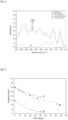
- the flock was amorphous, as shown in the X-ray diffraction (CuK ⁇ ) pattern of Figure 1 , curve A.
- the X-ray diffraction pattern in this and in the subsequent examples was carried out by means of a Brucker D8 automatic powder diffractometer, which uses K ⁇ radiation emitted by copper cathodes (Cu).
- Syndiotactic polystyrene manufactured by Idemitsu Chemical Japan and sold under the tradename Xarec ® 300ZC was used.
- the granule was subjected to a melt-spinning process on an industrial spinning installation, at a temperature of 310°C, using spinnerets with holes measuring 1.0 mm in diameter, obtaining a flock with filaments measuring about 20 ⁇ m in diameter.
- the flock was amorphous and it has an X-ray diffraction pattern similar to the one shown in Figure 1 , curve A.
- Syndiotactic polystyrene manufactured by Idemitsu Chemical Japan and sold under the tradename Xarec ® 90ZC was used.
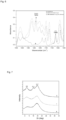
- the flock is mesomorphous, as shown by the X-ray diffraction (CuK ⁇ ) pattern of figure 1 , curve C, and by the presence of the typical absorption peak in FTIR spectra regarding a vibrational mode of the zig-zag-planar pattern of syndiotactic polystyrene, located at 1222 cm -1 in an area of the spectrum not shown in 2B.
- CuK ⁇ X-ray diffraction
- the amorphous flock prepared in example 1a was immerged in an hexanal solution in methyl-acetate (AcOMe) at 10% by weight for 60 minutes and subsequently left in air for 3 days.
- AcOMe methyl-acetate
- the activated flock had the X-ray diffraction (CuK ⁇ ) pattern indicated in Figure 1 , curve B.
- the X-ray diffraction (CuK ⁇ ) pattern shows reflexions with intensity greater than 2 ⁇ about equal to 9.5°, 16.6°, 20.0°, indicating the presence of a co-crystalline phase, rather scattered.
- the FTIR spectra, using the DRIFT technology, of the amorphous flock prepared in example 1a and of the corresponding flock activated with hexanal in 10% by weight methyl-acetate solution show peaks typical of the helix shape of syndiotactic polystyrene, such as for example the peak at 571 cm -1 in an area of the spectrum not shown in 2A, clearly indicating that the absorption of the solution leads to the formation of helices typical of clathrate crystalline phases, starting from the amorph.
- the FTIR spectra also show the presence of absorption peaks typical of methyl acetate and hexanal.
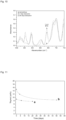
- the methyl acetate is desorbed spontaneously already at ambient temperature after 3 days (curve g), while after 3 days of desorption at ambient temperature hexanal is still present, without any oxidation under hexanoic acid, at an amount (analysis thermogravimetrically) equal to about 8% by weight of the polymer.
- the obtained results show that the co-crystallisation in the nano-crystalline reticulum of syndiotactic polystyrene protects it against oxidation phenomena, increasing the stability thereof.
- Spectral subtraction techniques allow to determine the degree of crystallinity of the crystalline form equal to 40%. Such degree of crystallinity is maintained even after desorption of hexanal in the long term. For example, after 3 days of desorption when about 20% of hexanal has been desorbed in the environment, the degree of crystallinity remains close to 40%.
- the mesomorphous flock prepared in example 2 was immerged in liquid hexanal for 60 minutes and subsequently left in air for 60 minutes.
- the amorphous flock prepared in example 1a was immerged in liquid eugenol for 30 minutes and subsequently left in air for 8 days.
- the FTIR spectra show the release, by the flock activated with liquid eugenol, of about 20% of the absorbed eugenol after 24h of immersion in water at ambient temperature.
- the data shows that eugenol is extracted faster from water, a potential microbial habitat.
- the release kinetics of the anti-microbial guest molecule by the flock is extremely slow in the absence of water and it allows to obtain high biostatic activity textiles.
- the anti-microbial molecule is released more rapidly when the flock comes into contact with water and this allows to obtain textiles that also carry out a bioactive function in presence of water, a bacterial growth habitat.
- the amorphous flock prepared in example 1b was immerged for 12 hours in an aqueous emulsion with a eugenol content equal to 0.25% or 0.6% by weight, and then subsequently left in air.
- the obtained activated flock has a eugenol content equal to 15% and 30%, respectively.
- the corresponding desorption kinetics in air of the two samples is shown in Figure 5 (curve b and curve c, respectively).
- the stock solution of the Staphylococcus aureus bacterial strain was prepared and grown on a PCA medium at 37°C for 24 hours.
- a sterile loop was used to collect a bacterial colony and immerged in 20 ml of peptone water, the solution thus obtained was incubated at 37°C for 24 hours under stirring. Dilutions were carried out up to achieving a solution with an estimated bacterial concentration of 10 5 -10 6 cells/mL.
- the amorphous flock prepared in example 1a was immerged in a methyl-acetate solution of thymol at 10% or at 30% by weight, for a period of 10 min, and subsequently left in air.
- the flock activated with the 30% methyl-acetate solution of thymol was subjected to a thermogravimetric analysis and a concentration of thymol equal to 10% by weight was observed.
- An anti-microbial assay according to the UNI EN ISO 20743 method was then conducted on the flock to evaluate the anti-microbial effectiveness with respect to the Staphylococcus aureus strain.
- the activated syndiotactic polystyrene flock of example 3d containing 20% of eugenol was used for obtaining - by cotton spinning an intimate blend yarn, with metric number Nm equal to 40 (40 km of filament per one kg), containing 96% of cotton and 4% of activate syndiotactic polystyrene.
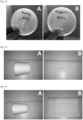
- a cone of such yarn is shown in Figure 13A .
- Such activated yarn was used for making, using a circular knitting machine, a stockinette stitch textile, shown in Figure 13B .
- the obtained yarn has an initial content of eugenol equal to about 0.8%. After one year at ambient temperature, the eugenol content of the yarn is close to 0.1%.
- the syndiotactic polystyrene filament with metric number Nm equal to 34 was used as a core of a yarn with metric number Nm equal to 12, which was covered using a cotton fibre, by means of cotton spinning.
- the obtained core yarn contains 70% of cotton and 30% of syndiotactic polystyrene and it is shown in Figure 14A .
- Such yarn was used for making, using a straight knitting machine, a stockinette stitch textile, shown in Figure 14B .
- Example 5- regenerating the active flock
- the activated syndiotactic polystyrene flock of example 3d - which upon activation (by the aqueous emulsion with a eugenol content equal to 0.6% by weight) had an eugenol content equal to 30% by weight, after one year at ambient temperature and in air has a eugenol content reduced at about 10% by weight.
- the amount of eugenol in the flock is restored using an alcoholic solution containing eugenol.
- the flock is immerged for 30 minutes in an ethanol solution with a eugenol content equal to about 10% by weight.
- the activated syndiotactic polystyrene flock of example 3d - which upon activation (by the aqueous emulsion with a eugenol content equal to 0.6% by weight) had absorbed 30% by weight of eugenol, - after one year at ambient temperature and in air has a eugenol content reduced at about 10% by weight.
- the amount of eugenol in the flock is restored using an aqueous solution containing eugenol.
- the flock is immerged for 30 minutes in an aqueous solution with a eugenol content equal to about 0.2% or in an aqueous emulsion with a eugenol content equal to 0.3% by weight.
- a syndiotactic polystyrene flock activated according to the method of example 3d has a eugenol content equal to 5% by weight.
- the flock is washed for 30 minutes in an aqueous cleaning solution, which includes 15% by weight of sodium lauryl phosphate, rinsed for 5 minutes in an aqueous emulsion with a eugenol concentration equal to 0.3%, and dried in a dryer at 60°C for 10 mins.
- an aqueous cleaning solution which includes 15% by weight of sodium lauryl phosphate
- rinsed for 5 minutes in an aqueous emulsion with a eugenol concentration equal to 0.3% and dried in a dryer at 60°C for 10 mins.
Landscapes
- Health & Medical Sciences (AREA)
- Life Sciences & Earth Sciences (AREA)
- General Health & Medical Sciences (AREA)
- Chemical & Material Sciences (AREA)
- Engineering & Computer Science (AREA)
- Epidemiology (AREA)
- Veterinary Medicine (AREA)
- Public Health (AREA)
- Animal Behavior & Ethology (AREA)
- Medicinal Chemistry (AREA)
- Pharmacology & Pharmacy (AREA)
- Chemical Kinetics & Catalysis (AREA)
- Textile Engineering (AREA)
- Zoology (AREA)
- Environmental Sciences (AREA)
- Birds (AREA)
- Agronomy & Crop Science (AREA)
- Plant Pathology (AREA)
- Dentistry (AREA)
- Wood Science & Technology (AREA)
- Pest Control & Pesticides (AREA)
- General Chemical & Material Sciences (AREA)
- Emergency Medicine (AREA)
- Polymers & Plastics (AREA)
- Organic Chemistry (AREA)
- Microbiology (AREA)
- Biochemistry (AREA)
- Inorganic Chemistry (AREA)
- Toxicology (AREA)
- Biomedical Technology (AREA)
- Treatments For Attaching Organic Compounds To Fibrous Goods (AREA)
- Yarns And Mechanical Finishing Of Yarns Or Ropes (AREA)
- Woven Fabrics (AREA)
- Artificial Filaments (AREA)
- Detergent Compositions (AREA)
Claims (14)
- Garn, welches wenigstens 1 Gew.- % Fasern eines syndiotaktischen Polystyrol umfasst, welche eine co-kristalline Phase beinhaltet, welche wenigstens eine aktive Gastverbindung umfasst und durch ein Röntgendiagramm (CuKa) gekennzeichnet ist, welches Höchstwerte umfasst, welche Maxima von ungefähr 2θ aufweisen: zwischen 9,5° und 9,8°, zwischen 16,3° und 16,6°, zwischen 19.7° und 20°.
- Garn nach Anspruch 1, wobei die aktive Verbindung eine antimikrobielle, pharmakologische oder kosmetische Wirkung aufweist, wobei die Verbindung bevorzugt ausgewählt ist, aus Acetylsalicylsäure, Isoniazid, Methazolamid, Metronidazol, Sulfacetamid, butyliertem Hydroxyanisol, Decansäure, Butylacetat, Diacetyl, Diallyldisulfid, Ethylacetat, Guajakol, Linalool, Anethol, Kampfer, Carvacrol, Carvon, Cumarin, Eugenol, Hexanal, Tyrosol, Geraniol, Isoprenol, Limonen, Menthol, Myrcen, Kaffeesäure, Zimtsäure, Catechinsäure, Pyrogallol und Thymol.
- Garn nach Anspruch 1 oder 2, wobei die aktive Verbindung ein Molekülvolumen von weniger als 0,4 nm3 aufweist.
- Garn nach den Ansprüchen 1 bis 3, wobei die aktive Verbindung auch eine Säuredissoziationskonstante pKa > 8, eine Basendissoziationskonstante pKb > 8, eine relative Dielektrizitätskonstante < 20 und eine Abwesenheit einer Lösungsmittelkapazität in Bezug auf syndiotaktisches Polystyrol bei Temperaturen unter 100 °C aufweist.
- Garn nach den Ansprüchen 1 bis 4, wobei die aktive Verbindung in dem syndiotaktischen Polymer in einer Menge von mehr als 1 Gew.-%, bevorzugt 5 Gew.-%, bevorzugter 10 Gew.-%, noch bevorzugter 20 Gew.-%, mit Bezug auf das Gesamtgewicht des Polymers enthalten ist, und/oder die aktive Gastverbindung in dem syndiotaktischen Polymer in einer Menge enthalten ist, welche zwischen 5 und 50 %, bevorzugter zwischen 10 und 30 % umfasst ist.
- Garn nach den Ansprüchen 1 bis 5, umfassend Fasern des syndiotaktischen Polystyrols in einer Menge zwischen 1 und 100 Gew.-%, bevorzugt zwischen 5 und 100 Gew.-%, bevorzugter zwischen 20 und 100 Gew.-%, mit Bezug auf das Gesamtgewicht des Garns und der natürlichen und/oder synthetischen Textilfasern, in einer Menge zwischen 0 und 99 Gew.-%, bevorzugt zwischen 0 und 95 Gew.-%, bevorzugter zwischen 0 und 80 Gew.-%, mit Bezug auf das Gesamtgewicht des Garns.
- Garn nach den Ansprüchen 1 bis 6, welches Fasern des syndiotaktischen Polystyrols und eine oder mehrere natürliche und/oder synthetische Textilfasern umfasst.
- Garn nach den Ansprüchen 1 bis 6, dessen Fasern aus Fasern des syndiotaktischen Polystyrols bestehen.
- Textil, welches ein Garn nach den Ansprüchen 1 bis 8 umfasst und wobei die Fasern aus syndiotaktischem Polystyrol wenigstens 1 Gew.-%, bevorzugt wenigstens 4 Gew.-%, bevorzugter 10 Gew.-%, des Textils ausmachen.
- Verfahren zum Erhalten eines Garns nach den Ansprüchen 1 bis 8, welches die folgenden Stufen umfasst:a) Bereitstellen einer Faser, bevorzugt eines Flocks oder eines Filaments, aus syndiotaktischem Polystyrol in amorpher Phase;b) Bereitstellen einer Flüssigkeit, welche geeignet ist, eine co-kristalline Phase in dem syndiotaktischen Polystyrol zu bilden, welche eine aktive Verbindung umfasst, welche ein Molekülvolumen von weniger als 0,4 nm3 aufweist, und Eintauchen der Faser aus Stufe a) in die Flüssigkeit;c) Eingetaucht halten der Faser in der Flüssigkeit für eine Zeit, welche ausreichend ist, um eine co-kristalline Phase mit der aktiven Verbindung zu bilden, welche darin enthalten ist;d) Entfernen der Faser aus der Flüssigkeit und Trocknen an der Luft;e) Durchführen eines Textilspinnens von einer oder mehreren Fasern, welche in Stufe c) erhalten sind, und optional einer oder mehrerer natürlicher und/oder synthetischer Fasern, um ein Garn zu erhalten.
- Verfahren zum Erhalten eines Garns nach den Ansprüchen 1 bis 8, welches die folgenden Stufen umfasst:a') Bereitstellen einer Faser, bevorzugt eines Flocks oder eines Filaments, aus syndiotaktischem Polystyrol in amorpher Phase;b') Durchführen eines Textilspinnens einer oder mehrerer Fasern aus Stufe a) und optional einer oder mehrerer natürlicher und/oder synthetischer Fasern, um ein Garn zu erhalten;c') Bereitstellen einer Flüssigkeit, welche geeignet ist, eine co-kristalline Phase in dem syndiotaktischen Polystyrol zu bilden, welche eine aktive Verbindung umfasst, welche ein Molekularvolumen von weniger als 0,4 nm3 aufweist, und Eintauchen des Garns in die Flüssigkeit, welcher in Stufe b') erhalten ist;d') Eingetaucht halten des Garns in der Flüssigkeit für eine Zeit, welche ausreichend ist, um eine co-kristalline Phase mit der aktiven Verbindung zu bilden, welche darin enthalten ist;e') Entfernen des Garns aus der Flüssigkeit und Trocknen an der Luft.
- Verfahren zum Produzieren eines Textils nach Anspruch 9, welches aus dem Weben eines Garns nach den Ansprüchen 1 bis 8 besteht.
- Verfahren zum Produzieren eines Textils nach Anspruch 9, welches die folgenden Stufen umfasst:a") Erhalten eines Textils durch Weben eines Garns, welches syndiotaktische Polystyrolfasern in amorpher Phase umfasst;b") Bereitstellen einer Flüssigkeit, welche geeignet ist, eine co-kristalline Phase in dem syndiotaktischen Polystyrol zu bilden, welche eine aktive Verbindung umfasst, welche ein Molekularvolumen von weniger als 0,4 nm3 aufweist, und Eintauchen des Textils, welches in Stufe a") erhalten ist, in der Flüssigkeit für eine Periode, welche ausreichend ist, um eine co-kristalline Phase mit der aktiven Verbindung zu bilden, welche darin enthalten ist;c") Entfernen des Textils aus der Flüssigkeit und Trocknen an der Luft.
- Verfahren zur Wiederherstellung der Menge von aktiver Verbindung in einem Garn oder Textil nach den Ansprüchen 1 bis 8 oder 9, wobei das Garn oder das Textil für eine Zeitperiode von 30 Sekunden bis 24 Stunden, bevorzugt zwischen 2 Minuten und 1 Stunde, bevorzugter zwischen 5 und 10 Minuten, in eine Flüssigkeitszusammensetzung eingetaucht wird, welche die aktive Verbindung in einer Konzentration zwischen 0,1 und 40 Gew.-% in Wasser oder Alkohol enthält.
Applications Claiming Priority (2)
| Application Number | Priority Date | Filing Date | Title |
|---|---|---|---|
| IT102018000007712A IT201800007712A1 (it) | 2018-07-31 | 2018-07-31 | Filati e tessuti attivi per stabilizzazione e rilascio controllato di composti attivi |
| PCT/IB2019/056530 WO2020026164A1 (en) | 2018-07-31 | 2019-07-31 | Active yarns and textiles for the stabilization and controlled release of active compounds |
Publications (2)
| Publication Number | Publication Date |
|---|---|
| EP3830331A1 EP3830331A1 (de) | 2021-06-09 |
| EP3830331B1 true EP3830331B1 (de) | 2024-12-11 |
Family
ID=63965869
Family Applications (1)
| Application Number | Title | Priority Date | Filing Date |
|---|---|---|---|
| EP19768907.8A Active EP3830331B1 (de) | 2018-07-31 | 2019-07-31 | Aktive garne und textilien zur stabilisierung und kontrollierten freisetzung von wirkstoffen |
Country Status (6)
| Country | Link |
|---|---|
| US (1) | US11780971B2 (de) |
| EP (1) | EP3830331B1 (de) |
| JP (1) | JP7391094B2 (de) |
| CA (1) | CA3107710A1 (de) |
| IT (1) | IT201800007712A1 (de) |
| WO (1) | WO2020026164A1 (de) |
Family Cites Families (5)
| Publication number | Priority date | Publication date | Assignee | Title |
|---|---|---|---|---|
| JP2597392B2 (ja) * | 1988-06-30 | 1997-04-02 | 出光興産株式会社 | 不織布 |
| ITSA20060008A1 (it) | 2006-03-21 | 2007-09-22 | Univ Degli Studi Salerno | Materiali polimerici solidi utilizzabili per rilevazione, trasferimento, amplificazione e memoria di chiralita' di composti otticamente attivi. |
| IT1404157B1 (it) * | 2010-12-30 | 2013-11-15 | Nano Active Film S R L | Forma cristallina nanoporosa disordinata di polistirene sindiotattico, suo processo di preparazione e articoli comprendenti la stessa. |
| JP2014111852A (ja) | 2012-11-08 | 2014-06-19 | Shinshu Univ | 立体規則性ポリスチレン繊維及びその製造方法 |
| JP2017110311A (ja) | 2015-12-16 | 2017-06-22 | 東洋紡株式会社 | シンジオタクチックポリスチレン繊維の製造方法 |
-
2018
- 2018-07-31 IT IT102018000007712A patent/IT201800007712A1/it unknown
-
2019
- 2019-07-31 WO PCT/IB2019/056530 patent/WO2020026164A1/en not_active Ceased
- 2019-07-31 JP JP2021529541A patent/JP7391094B2/ja active Active
- 2019-07-31 CA CA3107710A patent/CA3107710A1/en active Pending
- 2019-07-31 EP EP19768907.8A patent/EP3830331B1/de active Active
- 2019-07-31 US US17/264,652 patent/US11780971B2/en active Active
Also Published As
| Publication number | Publication date |
|---|---|
| WO2020026164A1 (en) | 2020-02-06 |
| JP7391094B2 (ja) | 2023-12-04 |
| US20210324151A1 (en) | 2021-10-21 |
| IT201800007712A1 (it) | 2020-01-31 |
| EP3830331A1 (de) | 2021-06-09 |
| JP2021533282A (ja) | 2021-12-02 |
| CA3107710A1 (en) | 2020-02-06 |
| US11780971B2 (en) | 2023-10-10 |
Similar Documents
| Publication | Publication Date | Title |
|---|---|---|
| Shahidi et al. | Antibacterial agents in textile industry | |
| CN103200825B (zh) | 银纳米颗粒的蓝色水性分散体,其制备方法及其组合物 | |
| Perera et al. | Morphological, antimicrobial, durability, and physical properties of untreated and treated textiles using silver-nanoparticles | |
| CA2924965C (en) | Cellulose fibres | |
| Goel et al. | Synthesis of antibacterial cotton fabric by radiation-induced grafting of [2-(Methacryloyloxy) ethyl] trimethylammonium chloride (MAETC) onto cotton | |
| US20080131471A1 (en) | Method of Transferring Bacteriostatic Properties to a Product in an Aqueous Solution | |
| Hebeish et al. | In situ formation of silver nanoparticles for multifunctional cotton containing cyclodextrin | |
| JP5425842B2 (ja) | 抗微生物布地仕上げ | |
| WO2006049478A1 (en) | Anti-microbial fiber products | |
| JP2017193793A (ja) | 繊維製品加工用組成物、繊維製品およびその製造方法 | |
| US20220341061A1 (en) | Wash-resistant bioactive cellulose fibre having antibacterial and antiviral properties | |
| RU2337716C1 (ru) | Способ получения антибактериального текстильного волокнистого материала | |
| WO2012059943A2 (en) | Pale yellow coloured aqueous dispersion of silver nanoparticles, a process for preparation and compositons thereof | |
| WO2024131999A2 (zh) | 一种长效耐洗涤抗菌消臭纺织品及其制备方法 | |
| Abbas et al. | Synthesis, characterization and antimicrobial properties of silver nanocomposites | |
| US11780971B2 (en) | Active yarns and textiles for the stabilization and controlled release of active compounds | |
| JP5323470B2 (ja) | 抗菌性組成物および抗菌性織物の加工方法 | |
| Tessier et al. | Antimicrobial fabrics coated with nano-sized silver salt crystals | |
| CN104411878B (zh) | 制造抗毒素纤维和纤维介质 | |
| TW202523929A (zh) | 改進的功能性紡織品及製造方法 | |
| KR101177305B1 (ko) | 피톤치드 저장 및 서방출용 고분자 필름 및 이의 제조방법 | |
| RU2447204C1 (ru) | Способ получения синтетического волокна с биоцидными свойствами | |
| JP2005537407A (ja) | セルロース繊維 | |
| CN107604651A (zh) | 一种负离子保健面料及其浸泡剂与应用 | |
| Ramadan et al. | REVIEWON RECENT APPLICATIONS OF ANTIMICROBIAL AGENTS FOR POLYAMIDE AND POLYPROPYLENE |
Legal Events
| Date | Code | Title | Description |
|---|---|---|---|
| STAA | Information on the status of an ep patent application or granted ep patent |
Free format text: STATUS: UNKNOWN |
|
| STAA | Information on the status of an ep patent application or granted ep patent |
Free format text: STATUS: THE INTERNATIONAL PUBLICATION HAS BEEN MADE |
|
| PUAI | Public reference made under article 153(3) epc to a published international application that has entered the european phase |
Free format text: ORIGINAL CODE: 0009012 |
|
| STAA | Information on the status of an ep patent application or granted ep patent |
Free format text: STATUS: REQUEST FOR EXAMINATION WAS MADE |
|
| 17P | Request for examination filed |
Effective date: 20210129 |
|
| AK | Designated contracting states |
Kind code of ref document: A1 Designated state(s): AL AT BE BG CH CY CZ DE DK EE ES FI FR GB GR HR HU IE IS IT LI LT LU LV MC MK MT NL NO PL PT RO RS SE SI SK SM TR |
|
| DAV | Request for validation of the european patent (deleted) | ||
| DAX | Request for extension of the european patent (deleted) | ||
| RAP3 | Party data changed (applicant data changed or rights of an application transferred) |
Owner name: NANO ACTIVE FILM S.R.L. Owner name: MATERIAS S.R.L. |
|
| P01 | Opt-out of the competence of the unified patent court (upc) registered |
Effective date: 20230526 |
|
| STAA | Information on the status of an ep patent application or granted ep patent |
Free format text: STATUS: EXAMINATION IS IN PROGRESS |
|
| 17Q | First examination report despatched |
Effective date: 20240325 |
|
| GRAP | Despatch of communication of intention to grant a patent |
Free format text: ORIGINAL CODE: EPIDOSNIGR1 |
|
| STAA | Information on the status of an ep patent application or granted ep patent |
Free format text: STATUS: GRANT OF PATENT IS INTENDED |
|
| RIC1 | Information provided on ipc code assigned before grant |
Ipc: D06M 101/20 20060101ALI20240628BHEP Ipc: D06M 16/00 20060101ALI20240628BHEP Ipc: D06M 13/00 20060101AFI20240628BHEP |
|
| INTG | Intention to grant announced |
Effective date: 20240712 |
|
| GRAS | Grant fee paid |
Free format text: ORIGINAL CODE: EPIDOSNIGR3 |
|
| GRAA | (expected) grant |
Free format text: ORIGINAL CODE: 0009210 |
|
| STAA | Information on the status of an ep patent application or granted ep patent |
Free format text: STATUS: THE PATENT HAS BEEN GRANTED |
|
| AK | Designated contracting states |
Kind code of ref document: B1 Designated state(s): AL AT BE BG CH CY CZ DE DK EE ES FI FR GB GR HR HU IE IS IT LI LT LU LV MC MK MT NL NO PL PT RO RS SE SI SK SM TR |
|
| REG | Reference to a national code |
Ref country code: GB Ref legal event code: FG4D |
|
| REG | Reference to a national code |
Ref country code: CH Ref legal event code: EP |
|
| REG | Reference to a national code |
Ref country code: DE Ref legal event code: R096 Ref document number: 602019063402 Country of ref document: DE |
|
| RAP4 | Party data changed (patent owner data changed or rights of a patent transferred) |
Owner name: NANO ACTIVE FILM S.R.L. Owner name: MATERIAS S.R.L. |
|
| REG | Reference to a national code |
Ref country code: IE Ref legal event code: FG4D |
|
| REG | Reference to a national code |
Ref country code: LT Ref legal event code: MG9D |
|
| PG25 | Lapsed in a contracting state [announced via postgrant information from national office to epo] |
Ref country code: HR Free format text: LAPSE BECAUSE OF FAILURE TO SUBMIT A TRANSLATION OF THE DESCRIPTION OR TO PAY THE FEE WITHIN THE PRESCRIBED TIME-LIMIT Effective date: 20241211 |
|
| PG25 | Lapsed in a contracting state [announced via postgrant information from national office to epo] |
Ref country code: FI Free format text: LAPSE BECAUSE OF FAILURE TO SUBMIT A TRANSLATION OF THE DESCRIPTION OR TO PAY THE FEE WITHIN THE PRESCRIBED TIME-LIMIT Effective date: 20241211 |
|
| PG25 | Lapsed in a contracting state [announced via postgrant information from national office to epo] |
Ref country code: BG Free format text: LAPSE BECAUSE OF FAILURE TO SUBMIT A TRANSLATION OF THE DESCRIPTION OR TO PAY THE FEE WITHIN THE PRESCRIBED TIME-LIMIT Effective date: 20241211 |
|
| REG | Reference to a national code |
Ref country code: NL Ref legal event code: MP Effective date: 20241211 |
|
| PG25 | Lapsed in a contracting state [announced via postgrant information from national office to epo] |
Ref country code: ES Free format text: LAPSE BECAUSE OF FAILURE TO SUBMIT A TRANSLATION OF THE DESCRIPTION OR TO PAY THE FEE WITHIN THE PRESCRIBED TIME-LIMIT Effective date: 20241211 |
|
| PG25 | Lapsed in a contracting state [announced via postgrant information from national office to epo] |
Ref country code: NO Free format text: LAPSE BECAUSE OF FAILURE TO SUBMIT A TRANSLATION OF THE DESCRIPTION OR TO PAY THE FEE WITHIN THE PRESCRIBED TIME-LIMIT Effective date: 20250311 |
|
| PG25 | Lapsed in a contracting state [announced via postgrant information from national office to epo] |
Ref country code: GR Free format text: LAPSE BECAUSE OF FAILURE TO SUBMIT A TRANSLATION OF THE DESCRIPTION OR TO PAY THE FEE WITHIN THE PRESCRIBED TIME-LIMIT Effective date: 20250312 Ref country code: LV Free format text: LAPSE BECAUSE OF FAILURE TO SUBMIT A TRANSLATION OF THE DESCRIPTION OR TO PAY THE FEE WITHIN THE PRESCRIBED TIME-LIMIT Effective date: 20241211 |
|
| PG25 | Lapsed in a contracting state [announced via postgrant information from national office to epo] |
Ref country code: RS Free format text: LAPSE BECAUSE OF FAILURE TO SUBMIT A TRANSLATION OF THE DESCRIPTION OR TO PAY THE FEE WITHIN THE PRESCRIBED TIME-LIMIT Effective date: 20250311 |
|
| PG25 | Lapsed in a contracting state [announced via postgrant information from national office to epo] |
Ref country code: NL Free format text: LAPSE BECAUSE OF FAILURE TO SUBMIT A TRANSLATION OF THE DESCRIPTION OR TO PAY THE FEE WITHIN THE PRESCRIBED TIME-LIMIT Effective date: 20241211 |
|
| REG | Reference to a national code |
Ref country code: AT Ref legal event code: MK05 Ref document number: 1750460 Country of ref document: AT Kind code of ref document: T Effective date: 20241211 |
|
| PG25 | Lapsed in a contracting state [announced via postgrant information from national office to epo] |
Ref country code: SM Free format text: LAPSE BECAUSE OF FAILURE TO SUBMIT A TRANSLATION OF THE DESCRIPTION OR TO PAY THE FEE WITHIN THE PRESCRIBED TIME-LIMIT Effective date: 20241211 |
|
| PG25 | Lapsed in a contracting state [announced via postgrant information from national office to epo] |
Ref country code: PL Free format text: LAPSE BECAUSE OF FAILURE TO SUBMIT A TRANSLATION OF THE DESCRIPTION OR TO PAY THE FEE WITHIN THE PRESCRIBED TIME-LIMIT Effective date: 20241211 |
|
| PG25 | Lapsed in a contracting state [announced via postgrant information from national office to epo] |
Ref country code: IS Free format text: LAPSE BECAUSE OF FAILURE TO SUBMIT A TRANSLATION OF THE DESCRIPTION OR TO PAY THE FEE WITHIN THE PRESCRIBED TIME-LIMIT Effective date: 20250411 |
|
| PG25 | Lapsed in a contracting state [announced via postgrant information from national office to epo] |
Ref country code: PT Free format text: LAPSE BECAUSE OF FAILURE TO SUBMIT A TRANSLATION OF THE DESCRIPTION OR TO PAY THE FEE WITHIN THE PRESCRIBED TIME-LIMIT Effective date: 20250411 |
|
| PG25 | Lapsed in a contracting state [announced via postgrant information from national office to epo] |
Ref country code: EE Free format text: LAPSE BECAUSE OF FAILURE TO SUBMIT A TRANSLATION OF THE DESCRIPTION OR TO PAY THE FEE WITHIN THE PRESCRIBED TIME-LIMIT Effective date: 20241211 |
|
| PG25 | Lapsed in a contracting state [announced via postgrant information from national office to epo] |
Ref country code: RO Free format text: LAPSE BECAUSE OF FAILURE TO SUBMIT A TRANSLATION OF THE DESCRIPTION OR TO PAY THE FEE WITHIN THE PRESCRIBED TIME-LIMIT Effective date: 20241211 Ref country code: AT Free format text: LAPSE BECAUSE OF FAILURE TO SUBMIT A TRANSLATION OF THE DESCRIPTION OR TO PAY THE FEE WITHIN THE PRESCRIBED TIME-LIMIT Effective date: 20241211 |
|
| PG25 | Lapsed in a contracting state [announced via postgrant information from national office to epo] |
Ref country code: SK Free format text: LAPSE BECAUSE OF FAILURE TO SUBMIT A TRANSLATION OF THE DESCRIPTION OR TO PAY THE FEE WITHIN THE PRESCRIBED TIME-LIMIT Effective date: 20241211 |
|
| PG25 | Lapsed in a contracting state [announced via postgrant information from national office to epo] |
Ref country code: CZ Free format text: LAPSE BECAUSE OF FAILURE TO SUBMIT A TRANSLATION OF THE DESCRIPTION OR TO PAY THE FEE WITHIN THE PRESCRIBED TIME-LIMIT Effective date: 20241211 |
|
| PG25 | Lapsed in a contracting state [announced via postgrant information from national office to epo] |
Ref country code: IT Free format text: LAPSE BECAUSE OF FAILURE TO SUBMIT A TRANSLATION OF THE DESCRIPTION OR TO PAY THE FEE WITHIN THE PRESCRIBED TIME-LIMIT Effective date: 20241211 |
|
| PG25 | Lapsed in a contracting state [announced via postgrant information from national office to epo] |
Ref country code: SE Free format text: LAPSE BECAUSE OF FAILURE TO SUBMIT A TRANSLATION OF THE DESCRIPTION OR TO PAY THE FEE WITHIN THE PRESCRIBED TIME-LIMIT Effective date: 20241211 |
|
| REG | Reference to a national code |
Ref country code: DE Ref legal event code: R097 Ref document number: 602019063402 Country of ref document: DE |
|
| PG25 | Lapsed in a contracting state [announced via postgrant information from national office to epo] |
Ref country code: DK Free format text: LAPSE BECAUSE OF FAILURE TO SUBMIT A TRANSLATION OF THE DESCRIPTION OR TO PAY THE FEE WITHIN THE PRESCRIBED TIME-LIMIT Effective date: 20241211 |
|
| PGFP | Annual fee paid to national office [announced via postgrant information from national office to epo] |
Ref country code: DE Payment date: 20250728 Year of fee payment: 7 |
|
| PLBE | No opposition filed within time limit |
Free format text: ORIGINAL CODE: 0009261 |
|
| STAA | Information on the status of an ep patent application or granted ep patent |
Free format text: STATUS: NO OPPOSITION FILED WITHIN TIME LIMIT |
|
| PGFP | Annual fee paid to national office [announced via postgrant information from national office to epo] |
Ref country code: FR Payment date: 20250725 Year of fee payment: 7 |
|
| REG | Reference to a national code |
Ref country code: CH Ref legal event code: L10 Free format text: ST27 STATUS EVENT CODE: U-0-0-L10-L00 (AS PROVIDED BY THE NATIONAL OFFICE) Effective date: 20251022 |
|
| 26N | No opposition filed |
Effective date: 20250912 |
|
| REG | Reference to a national code |
Ref country code: CH Ref legal event code: H13 Free format text: ST27 STATUS EVENT CODE: U-0-0-H10-H13 (AS PROVIDED BY THE NATIONAL OFFICE) Effective date: 20260224 |
|
| PG25 | Lapsed in a contracting state [announced via postgrant information from national office to epo] |
Ref country code: LU Free format text: LAPSE BECAUSE OF NON-PAYMENT OF DUE FEES Effective date: 20250731 |
|
| GBPC | Gb: european patent ceased through non-payment of renewal fee |
Effective date: 20250731 |
|
| REG | Reference to a national code |
Ref country code: BE Ref legal event code: MM Effective date: 20250731 |
|
| PG25 | Lapsed in a contracting state [announced via postgrant information from national office to epo] |
Ref country code: GB Free format text: LAPSE BECAUSE OF NON-PAYMENT OF DUE FEES Effective date: 20250731 |
|
| PG25 | Lapsed in a contracting state [announced via postgrant information from national office to epo] |
Ref country code: BE Free format text: LAPSE BECAUSE OF NON-PAYMENT OF DUE FEES Effective date: 20250731 |
|
| PG25 | Lapsed in a contracting state [announced via postgrant information from national office to epo] |
Ref country code: CH Free format text: LAPSE BECAUSE OF NON-PAYMENT OF DUE FEES Effective date: 20250731 |