EP3820191B1 - Verfahren zur identifizierung von störquellen, zugehörige vorrichtung und computerspeichermedium - Google Patents
Verfahren zur identifizierung von störquellen, zugehörige vorrichtung und computerspeichermedium Download PDFInfo
- Publication number
- EP3820191B1 EP3820191B1 EP19888694.7A EP19888694A EP3820191B1 EP 3820191 B1 EP3820191 B1 EP 3820191B1 EP 19888694 A EP19888694 A EP 19888694A EP 3820191 B1 EP3820191 B1 EP 3820191B1
- Authority
- EP
- European Patent Office
- Prior art keywords
- rate
- channel interference
- correlation coefficient
- channel
- receive
- Prior art date
- Legal status (The legal status is an assumption and is not a legal conclusion. Google has not performed a legal analysis and makes no representation as to the accuracy of the status listed.)
- Active
Links
Images


Classifications
-
- H—ELECTRICITY
- H04—ELECTRIC COMMUNICATION TECHNIQUE
- H04W—WIRELESS COMMUNICATION NETWORKS
- H04W24/00—Supervisory, monitoring or testing arrangements
- H04W24/08—Testing, supervising or monitoring using real traffic
-
- H—ELECTRICITY
- H04—ELECTRIC COMMUNICATION TECHNIQUE
- H04L—TRANSMISSION OF DIGITAL INFORMATION, e.g. TELEGRAPHIC COMMUNICATION
- H04L5/00—Arrangements affording multiple use of the transmission path
- H04L5/003—Arrangements for allocating sub-channels of the transmission path
- H04L5/0032—Distributed allocation, i.e. involving a plurality of allocating devices, each making partial allocation
-
- H—ELECTRICITY
- H04—ELECTRIC COMMUNICATION TECHNIQUE
- H04B—TRANSMISSION
- H04B17/00—Monitoring; Testing
- H04B17/30—Monitoring; Testing of propagation channels
- H04B17/309—Measuring or estimating channel quality parameters
- H04B17/345—Interference values
-
- H—ELECTRICITY
- H04—ELECTRIC COMMUNICATION TECHNIQUE
- H04W—WIRELESS COMMUNICATION NETWORKS
- H04W72/00—Local resource management
- H04W72/04—Wireless resource allocation
- H04W72/044—Wireless resource allocation based on the type of the allocated resource
- H04W72/0446—Resources in time domain, e.g. slots or frames
-
- H—ELECTRICITY
- H04—ELECTRIC COMMUNICATION TECHNIQUE
- H04W—WIRELESS COMMUNICATION NETWORKS
- H04W72/00—Local resource management
- H04W72/50—Allocation or scheduling criteria for wireless resources
- H04W72/54—Allocation or scheduling criteria for wireless resources based on quality criteria
- H04W72/541—Allocation or scheduling criteria for wireless resources based on quality criteria using the level of interference
-
- H—ELECTRICITY
- H04—ELECTRIC COMMUNICATION TECHNIQUE
- H04B—TRANSMISSION
- H04B17/00—Monitoring; Testing
- H04B17/30—Monitoring; Testing of propagation channels
- H04B17/382—Monitoring; Testing of propagation channels for resource allocation, admission control or handover
-
- H—ELECTRICITY
- H04—ELECTRIC COMMUNICATION TECHNIQUE
- H04W—WIRELESS COMMUNICATION NETWORKS
- H04W84/00—Network topologies
- H04W84/02—Hierarchically pre-organised networks, e.g. paging networks, cellular networks, WLAN [Wireless Local Area Network] or WLL [Wireless Local Loop]
- H04W84/10—Small scale networks; Flat hierarchical networks
- H04W84/12—WLAN [Wireless Local Area Networks]
Definitions
- This application relates to the field of communications technologies, and in particular, to an interference source identification method, a related device, and a computer storage medium.
- Co-channel interference is interference caused by an interfering signal to a receiver that receives a wanted signal, because a carrier of the interfering signal is same as that of the wanted signal.
- a frequency reuse technology is usually used to improve frequency utilization and increase a system capacity. Therefore, there are a plurality of access points (AP) that use a same frequency in a specific area, for example, a conference hall, a student dormitory, or a library.
- the plurality of APs that use the same frequency are usually deployed to meet a use requirement of a user.
- STA station
- the co-channel interference may be caused to another AP adjacent to the target AP.
- an interfering station that causes the co-channel interference to the AP needs to be determined, so that the interfering station can be processed, to reduce or eliminate the co-channel interference.
- US 20130201863 relates to co-channel utilization estimation.
- CN 101697624 relates to co-channel interference detection method, co-channel interference detection device and access point equipment.
- Implementations of this application disclose an interference source identification method, a related device, and a computer storage medium, to be able to identify an interference source that causes co-channel interference to an AP.
- the invention has been defined in the independent claims. Further specific technical features have been defined in the dependent claims.
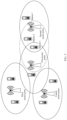
- Scenario 1 As shown in FIG. 1 , a first access point AP 1 and a second access point AP 2 use a same channel, and the AP 1 and the AP 2 cannot directly communicate with each other due to a distance or another factor.
- the AP 1 may be referred to as a hidden node of the AP 2
- the AP 2 is referred to as a hidden node of the AP 1, namely, the AP 1 and the AP 2 are mutually hidden nodes.
- a station (STA) 1 is located in an overlapping coverage area of the AP 1 and the AP 2
- the AP 1 and the AP 2 are located in a signal coverage area of the STA 1. If the STA 1 communicates with the AP 2, when the STA 1 sends a signal to the AP 2, the signal sent by the STA 1 is also received by the AP 1. Therefore, co-channel interference is caused to the AP 1.
- both a STA 2 and a STA 3 may directly perform data transmission with a third access point AP 3.
- the STA 2 and the STA 3 cannot directly communicate with each other due to a distance or another factor, namely, the STA 2 and the STA 3 are mutually hidden nodes. If the STA2 and the STA3 simultaneously send signals to the AP, because the AP cannot simultaneously process the two signals, the AP cannot correctly parse the signals sent by the STA2 and the STA3. Therefore, a data transmission failure is caused.
- the scenario in FIG. 1 is referred to as a scenario in which APs are mutually hidden nodes
- the scenario in FIG. 2 is referred to as a scenario in which STAs are mutually hidden nodes.
- a request to send/clear to send (RTS/CTS) solution may be used to resolve a problem that the STAs are mutually hidden nodes.
- FIG. 2 is still used as an example.
- the STA 2 When the STA 2 needs to send data to the AP 3, the STA 2 first sends an RTS frame to the AP 3.
- the RTS frame is used to reserve a channel use right for the AP 3.
- the AP 3 After receiving the RTS frame, the AP 3 sends, to a STA in a coverage area of the AP 3, a CTS frame that replies to the RTS frame. After receiving the CTS frame, the STA 2 may send the data to the AP 3. After receiving the CTS frame, another STA such as the STA 3 keeps silent, to prevent two or more STAs from simultaneously sending data to the AP.
- the STA 1 sends an RTS frame to the AP 2 when the STA 1 needs to communicate with the AP 2. Because a STA can communicate with only one AP, the AP 1 discards the RTS frame because a destination address of the RTS frame sent by the STA 1 does not match. Therefore, the AP 1 does not send a CTS frame for the RTS frame, to keep another STA in a coverage area of the AP 1 silent. In this case, the AP 1 receives both data sent by the STA 1 and data sent by another STA in the coverage area of the AP 1.
- the RTS/CTS solution cannot resolve a co-channel interference problem in the scenario in which the APs are mutually hidden nodes.
- the scenario in which the APs are mutually hidden nodes needs to be first identified, and then an interference source STA is identified and processed. For example, the interference source STA is forced to switch a frequency band or the STA is guided to access access points of different channels, to eliminate the co-channel interference. This improves network performance.
- an implementation of this application provides an interference source identification method.
- a network shown in FIG. 3 is used to describe the interference source identification method provided in this application.
- the STA may be a terminal device such as a mobile phone, a tablet computer, a personal digital assistant (PDA), a mobile internet device (MID), or a wearable device.
- PDA personal digital assistant
- MID mobile internet device
- a specific form or type of the STA is not limited in this application
- the AP may be a device that can establish a wireless local area network, such as a wireless router. This is not specifically limited in this implementation of this application.
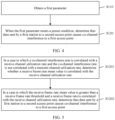
- FIG. 4 is a schematic flowchart of an interference source identification method according to an implementation of this application. The method includes the following steps.
- the first parameter includes a co-channel interference rate CCI AP1 of a first access point AP 1 in a preset time period, a receive channel utilization rate RX AP2 of a second access point AP 2 in the preset time period, a transmit channel utilization rate TX AP2 of the AP 2 in the preset time period, and a receive frame rate V STA of data that is sent by a first station STA 1 and that is received by the AP 2 in the preset time period.
- the preset time period includes one or more sampling periods.
- the co-channel interference rate is a ratio of the sampling period and a time period in which the AP 1 receives interference data in the sampling period.
- the receive channel utilization rate is a ratio of the sampling period and a time period in which the AP 2 receives wanted data in the sampling period.
- the transmit channel utilization rate is a ratio of the sampling period and a time period in which the AP 2 sends data in the sampling period.
- the receive frame rate is a frame rate of the data that is sent by the STA 1 and that is received by the AP 2 in the sampling period.
- the sampling period is 10 seconds, and the preset time period is 50 seconds
- a time period occupied by the AP 1 to receive the wanted data is 4 seconds
- a time period occupied by the AP 1 to send data is 2 seconds
- the time period occupied by the AP 1 to receive the interference data is 3 seconds.
- the co-channel interference rate of the AP 1 is 30%.
- the time period occupied by the AP 2 to receive the wanted data is 5 seconds
- the time period occupied by the AP 2 to send the data is 2 seconds
- a time period occupied by the AP 2 to receive the interference data is 1 second
- the receive channel utilization rate of the AP 2 is 50%
- the transmit channel utilization rate of the AP 2 is 20%
- a co-channel interference rate of the AP 2 is 10%.
- the AP 2 receives data sent by the STA 1 and the STA 2.
- a time period occupied by the AP 2 to receive the data sent by the STA 1 is 2 seconds, and 2400 frames of data sent by the STA 1 are received in total.
- a receive frame rate of the STA 1 corresponding to the AP 2 is 1200, and this also indicates that a transmit frame rate of the STA 1 in the sampling period is 1200.
- a collector collects, every 10 seconds, the co-channel interference rate of the AP 1, the receive channel utilization rate of the AP 2, the transmit channel utilization rate of the AP 2, and the receive frame rate of the data that is sent by the first station STA 1 and that is received by the AP 2. In the preset time period, the collector collects the foregoing data five times to form the first parameter.
- An interference source identification device obtains, every 50 seconds, the first parameter collected by the collector.
- the collector may be located in an AP, and one collector is integrated into each AP.
- the collector may be an independent device, and is wiredly or wirelessly connected to the AP and the interference source identification device.
- the collector may be further integrated into the interference source identification device. This is not specifically limited in this implementation of this application.
- the preset condition includes the following.
- a preset condition 1 The co-channel interference rate CCI AP1 of the AP 1 in the preset time period is correlated with the receive channel utilization rate RX AP2 of the AP 2 in the preset time period.
- a preset condition 2 The co-channel interference rate CCI AP1 of the AP 1 in the preset time period is not correlated with the transmit channel utilization rate TX AP2 of the AP 2 in the preset time period.
- a preset condition 3 The receive frame rate V STA of the data that is sent by the STA 1 and that is received by the AP 2 in the preset time period is correlated with the receive channel utilization rate RX AP2 of the second access point AP 2 in the preset time period.
- a preset condition 4 A receive frame rate mean value V mean of the receive frame rate V STA of the data that is sent by the STA 1 and that is received by the AP 2 in the preset time period is greater than a receive frame rate threshold TH sta , where the receive frame rate mean value V mean is a mean value of a plurality of receive frame rates collected in a plurality of sampling periods in the preset time period.
- the data sent by the first station to the second access point causes the co-channel interference to the first access point.
- whether two groups of data are correlated may be determined by calculating a correlation coefficient between the two groups of data and determining, based on whether the correlation coefficient between the two groups of data meets a threshold requirement, whether the two groups of data are correlated.
- the correlation coefficient used to determine whether the two groups of data are correlated may be any one of four coefficients: a Pearson correlation coefficient, a Spearman correlation coefficient, a Kendall correlation coefficient, or a time warping distance. This is not specifically limited in this implementation of this application.
- the time warping distance is obtained through calculation according to a dynamic time warping (DTW) algorithm.
- DTW dynamic time warping
- the interference source identification device calculates a correlation coefficient between the co-channel interference rate CCI AP1 of the AP 1 in the preset time period and the receive channel utilization rate RX AP2 of the AP 2 in the preset time period, to determine whether the co-channel interference rate CCI AP1 is correlated with the receive channel utilization rate RX AP2 .
- the interference source identification device calculates a correlation coefficient between the co-channel interference rate CCI AP1 of the AP 1 in the preset time period and the transmit channel utilization rate TX AP2 of the AP 2 in the preset time period, to determine whether the co-channel interference rate CCI AP1 is not correlated with the transmit channel utilization rate TX AP2 .
- the interference source identification device calculates a correlation coefficient between the receive frame rate V STA of the data that is sent by the STA 1 that is received by the AP 2 and the receive channel utilization rate RX AP2 of the AP 2 in the preset time period, to determine whether the receive frame rate V STA is correlated with the receive channel utilization rate RX AP2 .
- the correlation coefficient is the Pearson correlation coefficient, and it is determined whether the co-channel interference rate CCI AP1 is correlated with the channel utilization rate RX AP2 .
- the interference source identification device calculates the Pearson correlation coefficient between two groups of data: the co-channel interference rate CCI AP1 and the receive channel utilization rate RX AP2 . If the Pearson correlation coefficient between the two groups of data is greater than a first threshold, it is determined that the co-channel interference rate CCI AP1 is correlated with the receive channel utilization rate RX AP2 . If the Pearson correlation coefficient between the two groups of data is less than or equal to the first threshold, it is determined that the co-channel interference rate CCI AP1 is not correlated with the receive channel utilization rate RX AP2 .
- an absolute value of a first correlation coefficient between the co-channel interference rate and the receive channel utilization rate is greater than a first correlation threshold, it is determined that the co-channel interference rate is correlated with the receive channel utilization rate.
- the first correlation coefficient includes any one of the Pearson correlation coefficient, the Spearman correlation coefficient, or the Kendall correlation coefficient.
- an absolute value of a fourth correlation coefficient between the co-channel interference rate and the receive channel utilization rate is less than a fourth correlation threshold, it is determined that the co-channel interference rate is correlated with the receive channel utilization rate.
- the fourth correlation coefficient is the time warping distance.
- an absolute value of an absolute value of a second correlation coefficient between the co-channel interference rate and the transmit channel utilization rate is less than a second correlation threshold, it is determined that the co-channel interference rate is not correlated with the transmit channel utilization rate.
- the second correlation coefficient includes any one of the Pearson correlation coefficient, the Spearman correlation coefficient, or the Kendall correlation coefficient.
- a fifth correlation coefficient between the co-channel interference rate and the transmit channel utilization rate is greater than a fifth correlation threshold, it is determined that the co-channel interference rate is not correlated with the transmit channel utilization rate.
- the fifth correlation coefficient is the time warping distance.
- an absolute value of a third correlation coefficient between the receive frame rate and the receive channel utilization rate is greater than a third correlation threshold, it is determined that the receive frame rate is correlated with the receive channel utilization rate.
- the third correlation coefficient includes any one of the Pearson correlation coefficient, the Spearman correlation coefficient, or the Kendall correlation coefficient.
- an absolute value of a sixth correlation coefficient between the receive frame rate and the receive channel utilization rate is less than a sixth correlation threshold, it is determined that the receive frame rate is correlated with the receive channel utilization rate.
- the sixth correlation coefficient is the time warping distance.
- the first correlation threshold, the second correlation threshold, and the third correlation threshold are all positive real numbers less than 1.
- the second correlation threshold is less than or equal to the first correlation threshold, and the second correlation threshold is less than or equal to the third correlation threshold.
- the fourth correlation threshold is less than or equal to the fifth correlation threshold, and the sixth correlation threshold is less than or equal to the fifth correlation threshold.
- the interference source identification device when any one of the three coefficients: the Pearson correlation coefficient, the Spearman correlation coefficient, or the Kendall correlation coefficient, of the two groups of data is calculated. Quantities of pieces of data in the two groups of data need to be the same. However, when the DTW algorithm is used to calculate the time warping distance between the two groups of data, it is not required that the quantities of pieces of data in the two groups of data are consistent. Therefore, after obtaining the first parameter, the interference source identification device first obtains the quantities of pieces of data that are in the two groups of data and that participate in the calculation.
- the correlation coefficient may be any one of the four coefficient types: the Pearson correlation coefficient, the Spearman correlation coefficient, the Kendell correlation coefficient, or the time warping distance. If the quantities of pieces of data in the two groups of data are different, the correlation coefficient is the time warping distance.
- any one of the following correlation coefficients between the co-channel interference rate CCI AP1 and the receive channel utilization rate RX AP2 may be calculated: the Pearson correlation coefficient, the Spearman correlation coefficient, the Kendall correlation coefficient, or the time warping distance, to determine whether the co-channel interference rate CCI AP1 is correlated with the receive channel utilization rate RX AP2 .
- the interference source identification device determines that the quantity of pieces of data included in the co-channel interference rate CCI AP1 is different from the quantity of pieces of data included in the receive channel utilization rate RX AP2 , only the time warping distance between the co-channel interference rate CCI AP1 and the receive channel utilization rate RX AP2 can be calculated, to determine, based on the time warping distance, whether the co-channel interference rate CCI AP1 is correlated with the receive channel utilization rate RX AP2 .
- All correlation coefficients may be set to time warping distances to avoid that the interference source identification device needs to determine whether the quantities of pieces of data that are in the two groups of data and that participate in the calculation of the correlation coefficient are the same each time. In this way, calculation workload of the interference source identification device is reduced, and calculation efficiency is improved. This is not specifically limited in this implementation of this application.
- the STA 1 when the STA 1 causes the co-channel interference to the AP 1, the AP 2 is a hidden node of the AP 1, and the STA 1 sends the data to the AP 2.
- the step S120 may include the following steps.
- the interference source identification device After obtaining the first parameter, the interference source identification device first calculates a correlation coefficient between the co-channel interference rate and the receive channel utilization rate and a correlation coefficient between the co-channel interference rate and the transmit channel utilization rate. If the absolute value of the first correlation coefficient between the co-channel interference rate and the receive channel utilization rate is greater than the first correlation threshold, or if an absolute value of the fourth correlation coefficient between the co-channel interference rate and the receive channel utilization rate is less than the fourth correlation threshold, it is determined that the co-channel interference rate is correlated with the receive channel utilization rate, that is, the data received by the AP 2 causes the co-channel interference to the AP 1.
- the co-channel interference rate is not correlated with the transmit channel utilization rate, that is, the data sent by the AP 2 does not cause the interference to the AP 1. Because the data sent by the AP 2 does not cause the co-channel interference to the AP 1, it indicates that the AP 2 and the AP 1 cannot directly communicate with each other, and the data received by the AP 2 causes the co-channel interference to the AP 1. This indicates that data sent by a STA that communicates with the AP 2 and that is in a coverage area of the AP 2 causes the co-channel interference to the AP 1, namely, the AP 2 is the hidden node of the AP 1.
- the receive frame rate mean value corresponding to receive frame rates collected in a plurality of collection periods in the preset time period and a correlation coefficient between the receive frame rate and the receive channel utilization rate are calculated.
- the absolute value of the third correlation coefficient between the receive frame rate and the receive channel utilization rate is greater than the third correlation threshold, or in a case in which the absolute value of the sixth correlation coefficient between the receive frame rate and the receive channel utilization rate is less than the sixth correlation threshold, it is determined that the receive frame rate is correlated with the receive channel utilization rate.
- the receive frame rate mean value may be any one of an arithmetic mean value, a geometric mean value, or a weighted mean value of the plurality of receive frame rates. This is not specifically limited in this implementation of this application.
- V mean the receive frame rate mean value
- the receive frame rate threshold TH sta the receive frame rate threshold
- the receive frame rate is correlated with the receive channel utilization rate, it indicates that the data sent by the STA 1 in the coverage area of the AP 2 to the AP 2 causes the co-channel interference to the AP 1, and the STA 1 is a co-channel interference source of the AP 1.
- the co-channel interference rate of the first access point in the preset time period, the receive channel utilization rate of the second access point in the preset time period, the transmit channel utilization rate of the second access point in the preset time period, and the receive frame rate of the data that is sent by the first station and that is received by the second access point in the preset time period can be obtained by implementing the interference source identification method in this implementation of this application, to determine whether the data sent by the station in the coverage area of the second access point causes the co-channel interference to the first access point.
- an interfering station that is in the coverage area of the second access point and that causes the co-channel interference to the first access point may be further determined, so that the station may be processed, to reduce or eliminate the co-channel interference caused by the station to the first access point.
- any one or more of a co-channel interference rate mean value CCI mean , a co-channel interference rate peak value CCI max , or a co-channel interference rate proportion CCI pro may be obtained through calculation according to the plurality of co-channel interference rates.
- the CCI mean is a mean value of the plurality of co-channel interference rates in the preset time period.
- the CCI max is a maximum value of the plurality of co-channel interference rates in the preset time period.
- the CCI pro is a proportion of co-channel interference rates that are greater than the co-channel interference rate mean value and that are in the plurality of co-channel interference rates in the preset time period.
- the CCI mean may be any one of an arithmetic mean value, a geometric mean value, or a weighted mean value of the plurality of co-channel interference rates.
- each parameter in the second parameter in addition to that the co-channel interference rate is correlated with the receive channel utilization rate and that the co-channel interference rate is not correlated with the transmit channel utilization rate, each parameter in the second parameter further needs to meet a respective corresponding preset condition. In this way, the AP 2 can be determined as the hidden node of the AP1, to determine whether the receive frame rate is correlated with the receive channel utilization rate.
- the preset condition that the CCI mean needs to meet is that the CCI mean is greater than a co-channel interference rate mean value threshold TH mean .
- the preset condition that the CCI max needs to meet is that the CCI max is greater than a co-channel interference rate peak value threshold TH max .
- the preset condition that the CCI pro needs to meet is that the CCI pro is greater than a co-channel interference rate proportion threshold TH pro .
- the receive frame rate peak V max is a maximum value of the plurality of receive frame rates.
- the receive frame rate proportion V pro is a proportion of receive frame rates that are greater than the receive frame rate mean value V mean and that are in the plurality of receive frame rates.
- the V mean may be any one of the arithmetic mean value, the geometric mean value, or the weighted mean value of the plurality of co-channel interference rates.
- any one or more of pieces of data of the V max or the V pro is a third parameter.
- the receive frame rate mean value V mean is greater than the receive frame rate threshold TH sta and that the receive frame rate is correlated with the receive channel utilization rate, each parameter in the third parameter further needs to meet a respective corresponding preset condition.
- the preset condition that the V max needs to meet is that the V max is greater than a receive frame rate peak value threshold.
- the preset condition that the V pro needs to meet is that the V pro is greater than a received frame rate proportion threshold.
- the STA 1 in the coverage area of the AP 2 is used as an example to describe how to determine, after the AP 2 is determined as the hidden node of the AP 1, that the STA 1 in the coverage area of the AP 2 causes the co-channel interference to the AP 1 when sending the data to the AP 2.
- the interference source identification device may obtain a transmit frame rate (that is, a receive frame rate of data that is sent by the STA and that is received by the AP 2) of any STA other than the STA 1 in the coverage area of the AP 2.
- the interference source identification device determines whether data sent by any STA in the coverage area of the AP 2 causes the co-channel interference to the AP 1, to find all STAs that are in the coverage area of the AP 2 and that cause the co-channel interference to the AP 1.
- the interference source identification device may further obtain parameters such as a transmit channel utilization rate and a receive channel utilization rate of an access point such as the AP 3 in FIG. 3 .
- the interference source identification device determines whether another access point such as the AP 3 is the hidden node of the AP 1, to further determine a plurality of hidden nodes of the AP 1 and a STA that causes the co-channel interference to the AP 1 and that is of each hidden node.
- the following describes the interference source identification method through a specific example.
- the interference source identification device obtains the first parameter from the collector every 25 seconds.
- a plurality of receive channel utilization rates RX AP2 ⁇ 40%, 46%, 47%, 43%, 49% ⁇ of the AP 2
- a plurality of transmit channel utilization rates TX AP2 ⁇ 30%, 36%, 18%, 31%, 19% ⁇ of the AP 2
- a plurality of receive frame rates V STA ⁇ 1000, 1400, 1450, 1250, 1500 ⁇ of the AP 2.
- a correlation coefficient may be any one of the Pearson correlation coefficient, the Spearman correlation coefficient, the Kendall correlation coefficient, or the time warping distance.
- the first correlation threshold is 0.7
- the second correlation threshold is 0.3
- the third correlation threshold is 0.7
- the receive frame rate threshold TH sta is 1000.
- E(X) represents a mathematical expectation of the variable X.
- E(Y) represents a mathematical expectation of the variable Y.
- E(XY) represents a mathematical expectation of XY.
- ⁇ X represents a standard deviation of the variable X.
- ⁇ Y represents a standard deviation of the variable Y.
- a calculation formula of a correlation coefficient P1(CCI AP1 , RX AP2 ) between the co-channel interference rate and the receive channel utilization rate is:
- E(CCI AP1 ) represents a mathematical expectation of the five co-channel interference rates in the variable CCI AP1 .
- E(RX AP2 ) represents a mathematical expectation of the five receive channel utilization rates in the variable RX AP2 .
- E(CCI AP1 RX AP2 ) represents a mathematical expectation of CCI AP1 RX AP2 .
- ⁇ CCI AP1 represents a standard deviation of the variable CCI AP1 .
- ⁇ RX AP2 represents a standard deviation of the variable RX AP2 .
- a calculation formula of a correlation coefficient P2(CCI AP1 , TX AP2 ) between the co-channel interference rate and the transmit channel utilization rate is:
- E(TX AP2 ) represents a mathematical expectation of the five transmit channel utilization rates in the variable TX AP2 .
- E(CCI AP1 TX AP2 ) represents a mathematical expectation of CCI AP1 TX AP2 .
- ⁇ TX AP2 represents a standard deviation of the variable TX AP2 .
- a calculation formula of a correlation coefficient P3(V STA , RX AP2 ) between the receive frame rate and the transmit channel utilization rate is:
- E(V STA ) represents a mathematical expectation of the five receive frame rates in the variable V STA .
- E(V STA RX AP2 ) represents a mathematical expectation of V STA RX AP2 .
- ⁇ V STA represents a standard deviation of the variable V STA .
- P1(CCI AP1 , RX AP2 ) 0.9841
- P2(CCI AP1 , TX AP2 ) 0.2562
- the receive frame rate mean value in the preset time period is 1320.
- P1(CCI AP1 , RX AP2 ) is greater than the first correlation threshold that is 0.7
- P2(CCI AP1 , TX AP2 ) is less than the second correlation threshold that is 0.3
- P3(V STA , RX AP2 ) is greater than the third correlation threshold that is 0.7.
- the receive frame rate mean value is greater than the receive frame rate threshold, that is, the co-channel interference rate is correlated with the receive channel utilization rate, the co-channel interference rate is not correlated with the transmit channel utilization rate, the receive frame rate is correlated with the receive channel utilization rate, and the receive frame rate mean value is greater than the receive frame rate threshold. Therefore, it is determined that the data sent by the STA 1 to the AP 2 causes the co-channel interference to the AP 1.
- FIG. 6 is a schematic structural diagram of an interference source identification apparatus according to an implementation of this application.
- the apparatus 600 includes an obtaining module 602 and a processing module 604.
- the processing module 604 may be configured to control and manage an action of the interference source identification apparatus 600.
- the processing module 604 is configured to perform the step S120 in FIG. 4 or the step S1201 and the step S1202 in FIG. 5 , and/or is configured to perform other content of the technology described in the method implementation of this application.
- the obtaining module 602 is configured to communicate with another module or device.
- the obtaining module 602 is configured to perform the step S110 in FIG. 4 , and/or is configured to perform other content of the technology described in this application.
- the interference source identification apparatus 600 may further include a storage module 606.
- the storage module 606 is configured to store program code and data of the interference source identification apparatus 600, for example, store program code used for identifying an interference source.
- the processing module 604 is configured to invoke the program code in the storage module 606 to implement the implementation steps performed by the interference source identification apparatus in the implementation shown in FIG. 4 or FIG. 5 , and/or other content steps of the technology described in this application.
- the processing module 604 may be a processor or a controller, such as may be a central processing unit (CPU), a general-purpose processor, a digital signal processor (DSP), an application-specific integrated circuit (ASIC), a field programmable gate array (FPGA), or another programmable logic device, a transistor logic device, a hardware component, or any combination thereof.
- the processor may implement or execute various example logical blocks, modules, and circuits described with reference to content disclosed in this application.
- the processor may be a combination of processors implementing a computing function, for example, a combination including one or more microprocessors, or a combination of the DSP and a microprocessor.
- the obtaining module 602 may be a communications interface, a transceiver, a transceiver circuit, or the like.
- the communications interface is a general name, and may include one or more interfaces such as an interface between a communications module and the processing module, and an interface between the interference source identification apparatus and user equipment.
- the storage module 606 may be a memory, or another service or module configured to provide a storage function.
- FIG. 7 shows an interference source identification device 700 according to an implementation of this application.
- the interference source identification device 700 includes one or more processors 701, a communications interface 702, and a memory 703.
- the processor 701, the communications interface 702, and the memory 703 may be connected to each other through a bus 704.
- the processor 701 may include one or more general purpose processors, for example, one or more CPUs.
- the processor may be configured to run related program code to implement a function of the foregoing processing module.
- the processor 701 may be configured to run related program code in the memory 703 to perform the step S120 in FIG. 4 or the step S1201 and the step S1202 in FIG. 5 , and/or other content of the technology described in the method implementation of this application.
- the communications interface 702 may be a wired interface (for example, an Ethernet interface) or a wireless interface (for example, a cellular network interface or a wireless local area network interface), and is configured to communicate with another module or device.
- a wired interface for example, an Ethernet interface
- a wireless interface for example, a cellular network interface or a wireless local area network interface
- the communications interface 702 in this implementation of this application may be specifically configured to receive the foregoing first parameter.
- the memory 703 may include a volatile memory such as a random access memory (RAM), or the memory may include a non-volatile memory such as a read-only memory (ROM), a flash memory, a hard disk drive (HDD), or a solid-state drive (SSD), or the memory 703 may include a combination of the foregoing types of memories.
- the memory may be configured to store a group of program code and data, so that the processor invokes the program code and the data stored in the memory to implement functions of the communications module and/or the processing module in the implementations of this application. This is not limited in the implementations of this application.
- FIG. 4 or FIG. 5 is merely a possible implementation of the implementations of this application.
- the interference source identification device may further include more or fewer components. This is not limited herein.
- An implementation of this application further provides a computer non-transient storage medium.
- the computer non-transient storage medium stores an instruction.
- the processor When the instruction is run on a processor, the processor performs the steps S110 and S120 in FIG. 4 or the steps S1201 and S1202 in FIG. 5 , and/or is configured to perform other steps performed by interference source identification in the method implementation of this application.
- the software instruction may include a corresponding software module.
- the software module may be stored in a RAM, a flash memory, a ROM, an erasable programmable read-only memory (EPROM), an electrically erasable programmable read-only memory (EEPROM), a register, a hard disk, a removable hard disk, a compact disc read-only memory (CD-ROM), or any other form of storage medium well-known in the art.
- a storage medium is coupled to a processor, so that the processor can read information from the storage medium or write information into the storage medium.
- the storage medium may be a component of the processor.
- the processor and the storage medium may be located in an ASIC.
- the ASIC may be located in a computing device.
- the processor and the storage medium may exist in the computing device as discrete components.
- a person of ordinary skill in the art may understand that all or some of the processes of the methods in the implementations may be implemented by a computer program instructing relevant hardware.
- the program may be stored in a computer-readable storage medium. When the program runs, the processes of the methods in the implementations are performed.
- the foregoing storage medium includes: any medium that can store program code, such as a ROM, a RAM, a magnetic disk, or a compact disc.
Landscapes
- Engineering & Computer Science (AREA)
- Signal Processing (AREA)
- Computer Networks & Wireless Communication (AREA)
- Quality & Reliability (AREA)
- Physics & Mathematics (AREA)
- Electromagnetism (AREA)
- Mobile Radio Communication Systems (AREA)
Claims (13)
- Verfahren zum Identifizieren einer ersten Station als eine Gleichkanal-Störquelle an einem ersten Zugangspunkt, wenn die erste Station eine Kommunikation mit einem zweiten Zugangspunkt durchführt, wobei das Verfahren Folgendes umfasst:Erhalten (S110) eines ersten Parameters, wobei der erste Parameter eine Gleichkanal-Störungsrate des ersten Zugangspunkts in einer voreingestellten Zeitperiode, eine Empfangskanal-Auslastungsrate des zweiten Zugangspunkts in der voreingestellten Zeitperiode, eine Sendekanal-Auslastungsrate des zweiten Zugangspunkts in der voreingestellten Zeitperiode und eine Empfangsframerate von Daten, die von der ersten Station gesendet und von dem zweiten Zugangspunkt in der voreingestellten Zeitperiode empfangen werden, umfasst; undwenn der erste Parameter eine erste voreingestellte Bedingung erfüllt, Feststellen (S120), dass die von der ersten Station an den zweiten Zugangspunkt gesendeten Daten eine Gleichkanalstörung des ersten Zugangspunkts verursachen;wobei die voreingestellte Zeitperiode eine oder mehrere Abtastperioden umfasst;die Gleichkanal-Störungsrate ein Verhältnis der Abtastperiode und einer Zeitperiode ist, in der der erste Zugangspunkt Daten empfängt, die von einer Gleichkanal-Störquelle in der Abtastperiode gesendet werden;die Empfangskanal-Auslastungsrate ein Verhältnis der Abtastperiode und einer Zeitperiode ist, in der der zweite Zugangspunkt Daten empfängt, die in der Abtastperiode an den zweiten Zugangspunkt gesendet werden;die Sendekanal-Auslastungsrate ein Verhältnis der Abtastperiode und einer Zeitperiode ist, in der der zweite Zugangspunkt Daten in der Abtastperiode sendet; und die Empfangsframerate der Daten eine Framerate ist, mit der die von der ersten Station gesendeten Daten von dem zweiten Zugangspunkt in der Abtastperiode empfangen werden.
- Verfahren nach Anspruch 1, das Folgendes umfasst:
in einem Fall, in dem die Gleichkanal-Störungsrate mit der Empfangskanal-Auslastungsrate korreliert ist, die Gleichkanal-Störungsrate nicht mit der Sendekanal-Auslastungsrate korreliert ist, die Empfangsframerate mit der Empfangskanal-Auslastungsrate korreliert ist und ein Empfangsframeraten-Mittelwert der Empfangsframerate größer als ein Empfangsframeraten-Schwellenwert ist, Bestimmen, dass die von der ersten Station an den zweiten Zugangspunkt gesendeten Daten die Gleichkanalstörung für den ersten Zugangspunkt verursachen, wobei der Empfangsframeraten-Mittelwert ein Mittelwert von Empfangsframeraten ist, die in der einen oder den mehreren Abtastperioden gesammelt wurden. - Verfahren nach Anspruch 2, das Folgendes umfasst:in einem Fall, in dem ein Absolutwert eines ersten Korrelationskoeffizienten zwischen der Gleichkanal-Störungsrate und der Empfangskanal-Auslastungsrate größer als ein erster Korrelationsschwellenwert ist, Bestimmen, dass die Gleichkanal-Störungsrate mit der Empfangskanal-Auslastungsrate korreliert ist, wobei der erste Korrelationskoeffizient einen Pearson-Korrelationskoeffizienten, einen Spearman-Korrelationskoeffizienten oder einen Kendall-Korrelationskoeffizienten umfasst;in einem Fall, in dem ein Absolutwert eines zweiten Korrelationskoeffizienten zwischen der Gleichkanal-Störungsrate und der Sendekanal-Auslastungsrate kleiner als ein zweiter Korrelationsschwellenwert ist, Bestimmen, dass die Gleichkanal-Störungsrate nicht mit der Sendekanal-Auslastungsrate korreliert ist, wobei der zweite Korrelationskoeffizient den Pearson-Korrelationskoeffizienten, den Spearman-Korrelationskoeffizienten oder den Kendall-Korrelationskoeffizienten umfasst; undin einem Fall, in dem ein Absolutwert eines dritten Korrelationskoeffizienten zwischen der Empfangsframerate und der Empfangskanal-Auslastungsrate größer als ein dritter Korrelationsschwellenwert ist, Bestimmen, dass die Empfangsframerate mit der Empfangskanal-Auslastungsrate korreliert ist, wobei der dritte Korrelationskoeffizient den Pearson-Korrelationskoeffizienten, den Spearman-Korrelationskoeffizienten oderden Kendall-Korrelationskoeffizienten umfasst.
- Verfahren nach Anspruch 2, das Folgendes umfasst:in einem Fall, in dem ein Absolutwert eines vierten Korrelationskoeffizienten zwischen der Gleichkanal-Störungsrate und der Empfangskanal-Auslastungsrate kleiner als ein vierter Korrelationsschwellenwert ist, Bestimmen, dass die Gleichkanal-Störungsrate mit der Empfangskanal-Auslastungsrate korreliert ist;in einem Fall, in dem ein Absolutwert eines fünften Korrelationskoeffizienten zwischen der Gleichkanal-Störungsrate und der Sendekanal-Auslastungsrate größer als ein fünfter Korrelationsschwellenwert ist, Bestimmen, dass die Gleichkanal-Störungsrate nicht mit der Sendekanal-Auslastungsrate korreliert ist; undin einem Fall, in dem ein Absolutwert eines sechsten Korrelationskoeffizienten zwischen der Empfangsframerate und der Empfangskanal-Auslastungsrate kleiner als ein sechster Korrelationsschwellenwert ist, Bestimmen, dass die Empfangsframerate mit der Empfangskanal-Auslastungsrate korreliert ist; wobeider vierte Korrelationskoeffizient, der fünfte Korrelationskoeffizient und der sechste Korrelationskoeffizient Zeitverzerrungsabstände sind.
- Verfahren nach einem der Ansprüche 1 bis 4, das Folgendes umfasst:Bestimmen eines zweiten Parameters, der einen oder mehrere von einem Gleichkanal-Störungsraten-Mittelwert, einem Gleichkanal-Störungsraten-Spitzenwert oder einem Gleichkanal-Störungsratenanteil umfasst, wobei der Gleichkanal-Störungsraten-Mittelwert ein Mittelwert einer Vielzahl von Gleichkanal-Störungsraten ist, die in der voreingestellten Zeitperiode gesammelt wurden, der Gleichkanal-Störungsraten-Spitzenwert ein Maximalwert der Vielzahl von Gleichkanal-Störungsraten ist, und der Gleichkanal-Störungsratenanteil ein Anteil von Gleichkanal-Störungsraten ist, die größer als der Gleichkanal-Störungsraten-Mittelwert in der Vielzahl von Gleichkanal-Störungsraten sind und die in der Vielzahl von Gleichkanal-Störungsraten sind; undwenn jeder Parameter in dem zweiten Parameter eine jeweilige zweite voreingestellte Bedingung erfüllt und der erste Parameter die erste voreingestellte Bedingung erfüllt, Bestimmen, dass die von der ersten Station an den zweiten Zugangspunkt gesendeten Daten die Gleichkanalstörung für den ersten Zugangspunkt verursachen; wobeidie zweite voreingestellte Bedingung, die der Gleichkanal-Störungsraten-Mittelwert erfüllt, umfasst, dass der Gleichkanal-Störungsraten-Mittelwert größer ist als ein Schwellenwert für den Gleichkanal-Störungsraten-Mittelwert;die zweite voreingestellte Bedingung, die der Gleichkanal-Störungsraten-Spitzenwert erfüllt, umfasst, dass der Gleichkanal-Störungsraten-Spitzenwert größer ist als ein Schwellenwert für den Gleichkanal-Störungsraten-Spitzenwert; unddie zweite voreingestellte Bedingung, die der Gleichkanal-Störungsratenanteil erfüllt, umfasst, dass der Gleichkanal-Störungsratenanteil größer ist als ein Schwellenwert des Gleichkanal-Störungsratenanteils.
- Verfahren nach einem der Ansprüche 1 bis 5, wobei das Erhalten eines ersten Parameters das Erhalten des ersten Parameters umfasst, der von einem Kollektor gesammelt wird.
- Vorrichtung (600) zum Identifizieren einer ersten Station als eine Gleichkanal-Störquelle an einem ersten Zugangspunkt, wenn die erste Station eine Kommunikation mit einem zweiten Zugangspunkt durchführt, wobei die Vorrichtung Folgendes umfasst:ein Beschaffungsmodul (602), das so ausgebildet ist, dass es einen ersten Parameter erhält, wobei der erste Parameter eine Gleichkanal-Störungsrate des ersten Zugangspunkts in einer voreingestellten Zeitperiode, eine Empfangskanal-Auslastungsrate des zweiten Zugangspunkts in der voreingestellten Zeitperiode, eine Sendekanal-Auslastungsrate des zweiten Zugangspunkts in der voreingestellten Zeitperiode und eine Empfangsframerate von Daten umfasst, die von der ersten Station gesendet und von dem zweiten Zugangspunkt in der voreingestellten Zeitperiode empfangen werden; undein Verarbeitungsmodul (604), das für Folgendes ausgebildet ist:wenn der erste Parameter eine erste voreingestellte Bedingung erfüllt, Bestimmen, dass die von der ersten Station an den zweiten Zugangspunkt gesendeten Daten eine Gleichkanalstörung für den ersten Zugangspunkt verursachen, wobei die voreingestellte Zeitperiode eine oder mehrere Abtastperioden umfasst;die Gleichkanal-Störungsrate ein Verhältnis der Abtastperiode und einer Zeitperiode ist, in der der erste Zugangspunkt Daten empfängt, die von einer Gleichkanal-Störquelle in der Abtastperiode gesendet werden;die Empfangskanal-Auslastungsrate ein Verhältnis der Abtastperiode und einer Zeitperiode ist, in der der zweite Zugangspunkt Daten empfängt, die in der Abtastperiode an den zweiten Zugangspunkt gesendet werden;die Sendekanal-Auslastungsrate ein Verhältnis der Abtastperiode und einer Zeitperiode ist, in der der zweite Zugangspunkt Daten in der Abtastperiode sendet; und die Empfangsframerate der Daten eine Framerate ist, mit der die von der ersten Station gesendeten Daten von dem zweiten Zugangspunkt in der Abtastperiode empfangen werden.
- Vorrichtung nach Anspruch 7, wobei das Verarbeitungsmodul insbesondere für Folgendes ausgebildet ist:
in einem Fall, in dem die Gleichkanal-Störungsrate mit der Empfangskanal-Auslastungsrate korreliert ist, die Gleichkanal-Störungsrate nicht mit der Sendekanal-Auslastungsrate korreliert ist, die Empfangsframerate mit der Empfangskanal-Auslastungsrate korreliert ist und ein Empfangsframeraten-Mittelwert der Empfangsframerate größer als ein Empfangsframeraten-Schwellenwert ist, Bestimmen, dass die von der ersten Station an den zweiten Zugangspunkt gesendeten Daten die Gleichkanalstörung für den ersten Zugangspunkt verursachen, wobei der Empfangsframeraten-Mittelwert ein Mittelwert von in der einen oder den mehreren Abtastperioden gesammelten Empfangsframeraten ist. - Vorrichtung nach Anspruch 8, wobei das Verarbeitungsmodul insbesondere für Folgendes ausgebildet ist:in einem Fall, in dem ein Absolutwert eines ersten Korrelationskoeffizienten zwischen der Gleichkanal-Störungsrate und der Empfangskanal-Auslastungsrate größer als ein erster Korrelationsschwellenwert ist, Bestimmen, dass die Gleichkanal-Störungsrate mit der Empfangskanal-Auslastungsrate korreliert ist, wobei der erste Korrelationskoeffizient einen Pearson-Korrelationskoeffizienten, einen Spearman-Korrelationskoeffizienten oder einen Kendall-Korrelationskoeffizienten umfasst;in einem Fall, in dem ein Absolutwert eines zweiten Korrelationskoeffizienten zwischen der Gleichkanal-Störungsrate und der Sendekanal-Auslastungsrate kleiner als ein zweiter Korrelationsschwellenwert ist, Bestimmen, dass die Gleichkanal-Störungsrate nicht mit der Sendekanal-Auslastungsrate korreliert ist, wobei der zweite Korrelationskoeffizient den Pearson-Korrelationskoeffizienten, den Spearman-Korrelationskoeffizienten oder den Kendall-Korrelationskoeffizienten umfasst; undin einem Fall, in dem ein Absolutwert eines dritten Korrelationskoeffizienten zwischen der Empfangsframerate und der Empfangskanal-Auslastungsrate größer als ein dritter Korrelationsschwellenwert ist, Bestimmen, dass die Empfangsframerate mit der Empfangskanal-Auslastungsrate korreliert ist, wobei der dritte Korrelationskoeffizient den Pearson-Korrelationskoeffizienten, den Spearman-Korrelationskoeffizienten oder den Kendall-Korrelationskoeffizienten umfasst.
- Vorrichtung nach Anspruch 8, wobei das Verarbeitungsmodul insbesondere für Folgendes ausgebildet ist:in einem Fall, in dem ein Absolutwert eines vierten Korrelationskoeffizienten zwischen der Gleichkanal-Störungsrate und der Empfangskanal-Auslastungsrate kleiner als ein vierter Korrelationsschwellenwert ist, Bestimmen, dass die Gleichkanal-Störungsrate mit der Empfangskanal-Auslastungsrate korreliert ist;in einem Fall, in dem ein Absolutwert eines fünften Korrelationskoeffizienten zwischen der Gleichkanal-Störungsrate und der Sendekanal-Auslastungsrate größer als ein fünfter Korrelationsschwellenwert ist, Bestimmen, dass die Gleichkanal-Störungsrate nicht mit der Sendekanal-Auslastungsrate korreliert ist; undin einem Fall, in dem ein Absolutwert eines sechsten Korrelationskoeffizienten zwischen der Empfangsframerate und der Empfangskanal-Auslastungsrate kleiner als ein sechster Korrelationsschwellenwert ist, Bestimmen, dass die Empfangsframerate mit der Empfangskanal-Auslastungsrate korreliert ist; wobeider vierte Korrelationskoeffizient, der fünfte Korrelationskoeffizient und der sechste Korrelationskoeffizient Zeitverzerrungsabstände sind.
- Vorrichtung nach einem der Ansprüche 7 bis 10, wobei das Verarbeitungsmodul ferner für Folgendes ausgebildet ist:Bestimmen eines zweiten Parameters, der einen oder mehrere von einem Gleichkanal-Störungsraten-Mittelwert, einem Gleichkanal-Störungsraten-Spitzenwert oder einem Gleichkanal-Störungsratenanteil umfasst, wobei der Gleichkanal-Störungsraten-Mittelwert ein Mittelwert einer Vielzahl von Gleichkanal-Störungsraten ist, die in der voreingestellten Zeitperiode gesammelt wurden, der Gleichkanal-Störungsraten-Spitzenwert ein Maximalwert der Vielzahl von Gleichkanal-Störungsraten ist, und der Gleichkanal-Störungsratenanteil ein Anteil von Gleichkanal-Störungsraten ist, die größer als der Gleichkanal-Störungsraten-Mittelwert sind und die in der Vielzahl von Gleichkanal-Störungsraten sind; undwenn jeder Parameter in dem zweiten Parameter eine jeweilige zweite voreingestellte Bedingung erfüllt und der erste Parameter die erste voreingestellte Bedingung erfüllt, Bestimmen, dass die von der ersten Station an den zweiten Zugangspunkt gesendeten Daten die Gleichkanalstörung für den ersten Zugangspunkt verursachen; wobeidie zweite voreingestellte Bedingung, die der Gleichkanal-Störungsraten-Mittelwert erfüllt, umfasst, dass der Gleichkanal-Störungsraten-Mittelwert größer ist als ein Schwellenwert für den Gleichkanal-Störungsraten-Mittelwert;die zweite voreingestellte Bedingung, die der Gleichkanal-Störungsraten-Spitzenwert erfüllt, umfasst, dass der Gleichkanal-Störungsraten-Spitzenwert größer ist als ein Schwellenwert für den Gleichkanal-Störungsraten-Spitzenwert; unddie zweite voreingestellte Bedingung, die der Gleichkanal-Störungsratenanteil erfüllt, umfasst, dass der Gleichkanal-Störungsratenanteil größer ist als ein Schwellenwert des Gleichkanal-Störungsratenanteils.
- Vorrichtung nach einem der Ansprüche 7 bis 11, wobei das Beschaffungsmodul speziell so ausgebildet ist, dass es den von einem Kollektor erfassten ersten Parameter erhält.
- Computerspeichermedium, wobei das Computerspeichermedium ein Computerprogramm speichert und ein Prozessor oder mehrere Prozessoren bei der Ausführung des Computerprogramms bewirken, dass eine Vorrichtung zum Identifizieren einer ersten Station als Gleichkanal-Störquelle an einem ersten Zugangspunkt das Verfahren nach einem der Ansprüche 1 bis 6 durchführt.
Applications Claiming Priority (2)
| Application Number | Priority Date | Filing Date | Title |
|---|---|---|---|
| CN201811440927.1A CN111246508B (zh) | 2018-11-28 | 2018-11-28 | 干扰源识别方法、相关设备及计算机存储介质 |
| PCT/CN2019/121122 WO2020108506A1 (zh) | 2018-11-28 | 2019-11-27 | 干扰源识别方法、相关设备及计算机存储介质 |
Publications (3)
| Publication Number | Publication Date |
|---|---|
| EP3820191A1 EP3820191A1 (de) | 2021-05-12 |
| EP3820191A4 EP3820191A4 (de) | 2021-09-22 |
| EP3820191B1 true EP3820191B1 (de) | 2025-06-25 |
Family
ID=70853652
Family Applications (1)
| Application Number | Title | Priority Date | Filing Date |
|---|---|---|---|
| EP19888694.7A Active EP3820191B1 (de) | 2018-11-28 | 2019-11-27 | Verfahren zur identifizierung von störquellen, zugehörige vorrichtung und computerspeichermedium |
Country Status (5)
| Country | Link |
|---|---|
| US (1) | US11909675B2 (de) |
| EP (1) | EP3820191B1 (de) |
| JP (1) | JP7147049B2 (de) |
| CN (1) | CN111246508B (de) |
| WO (1) | WO2020108506A1 (de) |
Families Citing this family (5)
| Publication number | Priority date | Publication date | Assignee | Title |
|---|---|---|---|---|
| CN110601777B (zh) * | 2019-08-29 | 2020-06-30 | 浙江大学 | 一种低轨移动卫星星座下星地下行链路同频干扰估计方法 |
| EP3860064A1 (de) * | 2020-01-31 | 2021-08-04 | Robert Bosch GmbH | Verfahren zum betrieb einer ersten netzwerkvorrichtung, erste netzwerkvorrichtung und verfahren zum betrieb eines kommunikationsnetzwerks |
| CN115428513A (zh) * | 2020-04-15 | 2022-12-02 | 艾斯康实验室公司 | 无线网络多点关联性和多路径 |
| CN115278754B (zh) * | 2022-07-08 | 2024-05-10 | 中国联合网络通信集团有限公司 | 受激干扰源的确定方法、装置及计算机可读存储介质 |
| CN120075847B (zh) * | 2025-04-22 | 2025-09-19 | 浙江丹腾电气有限公司 | 智慧电表箱运行数据远程监测方法 |
Family Cites Families (17)
| Publication number | Priority date | Publication date | Assignee | Title |
|---|---|---|---|---|
| US6707798B1 (en) * | 2000-03-31 | 2004-03-16 | Ensemble Communications | Method and apparatus for reducing co-channel interference in a frame-synchronized wireless communication system |
| JP2006135891A (ja) * | 2004-11-09 | 2006-05-25 | Oki Electric Ind Co Ltd | 無線通信方法 |
| CN101697624B (zh) * | 2009-10-30 | 2012-07-25 | 福建星网锐捷网络有限公司 | 一种同频干扰检测方法、装置及接入点设备 |
| CN102098787B (zh) * | 2009-12-10 | 2014-10-29 | 中兴通讯股份有限公司 | 信道共享用户的选择与调整方法及装置 |
| CN102684737B (zh) * | 2011-03-10 | 2014-06-18 | 北京化工大学 | 基于并行干扰抵消算法的多用户扩频电台实现方法 |
| US8737925B2 (en) * | 2011-03-10 | 2014-05-27 | Comtech Ef Data Corp. | Method for the control of a wireless communications link for mitigating adjacent satellite interference |
| US8976702B2 (en) * | 2012-02-07 | 2015-03-10 | Cisco Technology, Inc. | Co-channel utilization estimation |
| JP5899149B2 (ja) | 2013-04-02 | 2016-04-06 | 株式会社Nttドコモ | 無線基地局及びユーザ端末 |
| US9635687B2 (en) * | 2013-11-20 | 2017-04-25 | Electronics & Telecommunications Research Institute | Method for transmitting and receiving frame in wireless local area network system and apparatus for the same |
| JP6200802B2 (ja) * | 2013-12-25 | 2017-09-20 | パナソニック株式会社 | 無線通信装置及び無線通信方法 |
| CN103702343B (zh) * | 2013-12-30 | 2017-06-06 | 大唐移动通信设备有限公司 | 一种同频干扰小区的检测方法及装置 |
| CN103945429B (zh) * | 2014-04-17 | 2017-10-27 | 京信通信技术(广州)有限公司 | 一种确定同频干扰源的方法、设备及系统 |
| US9930680B2 (en) * | 2014-09-05 | 2018-03-27 | Mitsubishi Electric Corporation | Interference identifying device, wireless communication apparatus, and interference identifying method |
| CN105792222B (zh) * | 2014-12-23 | 2020-02-11 | 中兴通讯股份有限公司 | 同频干扰的消除方法、探测方法以及装置和基站 |
| US10602545B2 (en) * | 2016-07-26 | 2020-03-24 | Qualcomm Incorporated | Cooperative hidden node identification and management |
| CN108243424B (zh) * | 2016-12-23 | 2021-08-27 | 中国移动通信集团广东有限公司 | 一种问题小区的确定方法及装置 |
| CN108184272B (zh) * | 2018-01-12 | 2020-09-29 | 海能达通信股份有限公司 | 一种干扰处理的方法、干扰处理装置以及计算机存储介质 |
-
2018
- 2018-11-28 CN CN201811440927.1A patent/CN111246508B/zh active Active
-
2019
- 2019-11-27 EP EP19888694.7A patent/EP3820191B1/de active Active
- 2019-11-27 JP JP2021511632A patent/JP7147049B2/ja active Active
- 2019-11-27 WO PCT/CN2019/121122 patent/WO2020108506A1/zh not_active Ceased
-
2021
- 2021-02-11 US US17/173,253 patent/US11909675B2/en active Active
Also Published As
| Publication number | Publication date |
|---|---|
| JP7147049B2 (ja) | 2022-10-04 |
| CN111246508A (zh) | 2020-06-05 |
| EP3820191A4 (de) | 2021-09-22 |
| US20210167907A1 (en) | 2021-06-03 |
| JP2021535686A (ja) | 2021-12-16 |
| EP3820191A1 (de) | 2021-05-12 |
| CN111246508B (zh) | 2022-05-13 |
| US11909675B2 (en) | 2024-02-20 |
| WO2020108506A1 (zh) | 2020-06-04 |
Similar Documents
| Publication | Publication Date | Title |
|---|---|---|
| US11909675B2 (en) | Interference source identification method, related device, and computer storage medium | |
| US10045239B2 (en) | Method and system for detecting idle channel in wireless communication system | |
| EP2941039B1 (de) | Verfahren zur auswahl einer arbeitenden entfernten funkeinheit für eine benutzervorrichtung durch eine basisstation | |
| US20070270102A1 (en) | Distributed coordination of a clear channel assessment (CCA) threshold | |
| US9622265B2 (en) | System and method for a CSMA-CA half window scheme | |
| US20210111819A1 (en) | Method of Reporting RSSI Measurements in an Unlicensed Band and Related Apparatus | |
| US9980290B2 (en) | System and method for adaptive back-off time determination | |
| US20170238218A1 (en) | Access control method and apparatus, and network device | |
| US10448284B2 (en) | Wireless communication apparatus, wireless communication node, and channel detection method | |
| CN112469136B (zh) | 一种上行正交频分多址随机接入的方法和装置 | |
| CN114143865B (zh) | 一种随机接入方法、终端及网络侧设备 | |
| CN113438671A (zh) | 一种干扰处理方法、装置及设备 | |
| WO2025176336A1 (en) | Scaling measurement periods due to radio resource management measurements skipping for extended reality | |
| CN104601311B (zh) | 一种同频干扰的抑制方法及装置 | |
| CN103650563B (zh) | 一种干扰控制方法及网络设备 | |
| WO2017004994A1 (zh) | 空闲信道评估方法和装置 | |
| EP4482184A1 (de) | Kommunikationsverfahren und -vorrichtung | |
| CN112601249B (zh) | 干扰源识别方法、装置、网络设备及存储介质 | |
| EP3270625B1 (de) | Verwaltung des mediumzugangs eines zugangspunktes und zugehörige vorrichtungen in einem drahtlosnetzwerk | |
| US20180041911A1 (en) | Control apparatus, wireless communication system, and control method | |
| JP7331943B2 (ja) | 無線フレーム推定装置、方法及びプログラム | |
| CN113630884A (zh) | 侧链通信的资源块调整方法及装置 | |
| CN113438673B (zh) | 一种干扰处理方法、装置及设备 | |
| CN115087014B (zh) | 灵活帧结构仿真系统的上行信号检测方法及装置 | |
| CN113438669B (zh) | 一种干扰处理方法、装置及设备 |
Legal Events
| Date | Code | Title | Description |
|---|---|---|---|
| STAA | Information on the status of an ep patent application or granted ep patent |
Free format text: STATUS: THE INTERNATIONAL PUBLICATION HAS BEEN MADE |
|
| PUAI | Public reference made under article 153(3) epc to a published international application that has entered the european phase |
Free format text: ORIGINAL CODE: 0009012 |
|
| STAA | Information on the status of an ep patent application or granted ep patent |
Free format text: STATUS: REQUEST FOR EXAMINATION WAS MADE |
|
| 17P | Request for examination filed |
Effective date: 20210203 |
|
| AK | Designated contracting states |
Kind code of ref document: A1 Designated state(s): AL AT BE BG CH CY CZ DE DK EE ES FI FR GB GR HR HU IE IS IT LI LT LU LV MC MK MT NL NO PL PT RO RS SE SI SK SM TR |
|
| A4 | Supplementary search report drawn up and despatched |
Effective date: 20210825 |
|
| RIC1 | Information provided on ipc code assigned before grant |
Ipc: H04W 24/08 20090101AFI20210819BHEP |
|
| DAV | Request for validation of the european patent (deleted) | ||
| DAX | Request for extension of the european patent (deleted) | ||
| STAA | Information on the status of an ep patent application or granted ep patent |
Free format text: STATUS: EXAMINATION IS IN PROGRESS |
|
| 17Q | First examination report despatched |
Effective date: 20231109 |
|
| GRAP | Despatch of communication of intention to grant a patent |
Free format text: ORIGINAL CODE: EPIDOSNIGR1 |
|
| STAA | Information on the status of an ep patent application or granted ep patent |
Free format text: STATUS: GRANT OF PATENT IS INTENDED |
|
| INTG | Intention to grant announced |
Effective date: 20250218 |
|
| GRAS | Grant fee paid |
Free format text: ORIGINAL CODE: EPIDOSNIGR3 |
|
| GRAA | (expected) grant |
Free format text: ORIGINAL CODE: 0009210 |
|
| STAA | Information on the status of an ep patent application or granted ep patent |
Free format text: STATUS: THE PATENT HAS BEEN GRANTED |
|
| AK | Designated contracting states |
Kind code of ref document: B1 Designated state(s): AL AT BE BG CH CY CZ DE DK EE ES FI FR GB GR HR HU IE IS IT LI LT LU LV MC MK MT NL NO PL PT RO RS SE SI SK SM TR |
|
| REG | Reference to a national code |
Ref country code: GB Ref legal event code: FG4D |
|
| REG | Reference to a national code |
Ref country code: CH Ref legal event code: EP |
|
| REG | Reference to a national code |
Ref country code: CH Ref legal event code: EP |
|
| REG | Reference to a national code |
Ref country code: IE Ref legal event code: FG4D |
|
| REG | Reference to a national code |
Ref country code: DE Ref legal event code: R096 Ref document number: 602019071738 Country of ref document: DE |
|
| PG25 | Lapsed in a contracting state [announced via postgrant information from national office to epo] |
Ref country code: FI Free format text: LAPSE BECAUSE OF FAILURE TO SUBMIT A TRANSLATION OF THE DESCRIPTION OR TO PAY THE FEE WITHIN THE PRESCRIBED TIME-LIMIT Effective date: 20250625 |
|
| REG | Reference to a national code |
Ref country code: LT Ref legal event code: MG9D |
|
| PG25 | Lapsed in a contracting state [announced via postgrant information from national office to epo] |
Ref country code: NO Free format text: LAPSE BECAUSE OF FAILURE TO SUBMIT A TRANSLATION OF THE DESCRIPTION OR TO PAY THE FEE WITHIN THE PRESCRIBED TIME-LIMIT Effective date: 20250925 Ref country code: GR Free format text: LAPSE BECAUSE OF FAILURE TO SUBMIT A TRANSLATION OF THE DESCRIPTION OR TO PAY THE FEE WITHIN THE PRESCRIBED TIME-LIMIT Effective date: 20250926 |
|
| PG25 | Lapsed in a contracting state [announced via postgrant information from national office to epo] |
Ref country code: BG Free format text: LAPSE BECAUSE OF FAILURE TO SUBMIT A TRANSLATION OF THE DESCRIPTION OR TO PAY THE FEE WITHIN THE PRESCRIBED TIME-LIMIT Effective date: 20250625 |
|
| PG25 | Lapsed in a contracting state [announced via postgrant information from national office to epo] |
Ref country code: HR Free format text: LAPSE BECAUSE OF FAILURE TO SUBMIT A TRANSLATION OF THE DESCRIPTION OR TO PAY THE FEE WITHIN THE PRESCRIBED TIME-LIMIT Effective date: 20250625 |
|
| PG25 | Lapsed in a contracting state [announced via postgrant information from national office to epo] |
Ref country code: RS Free format text: LAPSE BECAUSE OF FAILURE TO SUBMIT A TRANSLATION OF THE DESCRIPTION OR TO PAY THE FEE WITHIN THE PRESCRIBED TIME-LIMIT Effective date: 20250925 |
|
| PG25 | Lapsed in a contracting state [announced via postgrant information from national office to epo] |
Ref country code: LV Free format text: LAPSE BECAUSE OF FAILURE TO SUBMIT A TRANSLATION OF THE DESCRIPTION OR TO PAY THE FEE WITHIN THE PRESCRIBED TIME-LIMIT Effective date: 20250625 |
|
| REG | Reference to a national code |
Ref country code: NL Ref legal event code: MP Effective date: 20250625 |
|
| PG25 | Lapsed in a contracting state [announced via postgrant information from national office to epo] |
Ref country code: NL Free format text: LAPSE BECAUSE OF FAILURE TO SUBMIT A TRANSLATION OF THE DESCRIPTION OR TO PAY THE FEE WITHIN THE PRESCRIBED TIME-LIMIT Effective date: 20250625 |
|
| PG25 | Lapsed in a contracting state [announced via postgrant information from national office to epo] |
Ref country code: PT Free format text: LAPSE BECAUSE OF FAILURE TO SUBMIT A TRANSLATION OF THE DESCRIPTION OR TO PAY THE FEE WITHIN THE PRESCRIBED TIME-LIMIT Effective date: 20251027 |
|
| REG | Reference to a national code |
Ref country code: AT Ref legal event code: MK05 Ref document number: 1807922 Country of ref document: AT Kind code of ref document: T Effective date: 20250625 |
|
| PG25 | Lapsed in a contracting state [announced via postgrant information from national office to epo] |
Ref country code: IS Free format text: LAPSE BECAUSE OF FAILURE TO SUBMIT A TRANSLATION OF THE DESCRIPTION OR TO PAY THE FEE WITHIN THE PRESCRIBED TIME-LIMIT Effective date: 20251025 |
|
| PGFP | Annual fee paid to national office [announced via postgrant information from national office to epo] |
Ref country code: DE Payment date: 20250930 Year of fee payment: 7 |
|
| PG25 | Lapsed in a contracting state [announced via postgrant information from national office to epo] |
Ref country code: AT Free format text: LAPSE BECAUSE OF FAILURE TO SUBMIT A TRANSLATION OF THE DESCRIPTION OR TO PAY THE FEE WITHIN THE PRESCRIBED TIME-LIMIT Effective date: 20250625 Ref country code: SM Free format text: LAPSE BECAUSE OF FAILURE TO SUBMIT A TRANSLATION OF THE DESCRIPTION OR TO PAY THE FEE WITHIN THE PRESCRIBED TIME-LIMIT Effective date: 20250625 |
|
| PG25 | Lapsed in a contracting state [announced via postgrant information from national office to epo] |
Ref country code: CZ Free format text: LAPSE BECAUSE OF FAILURE TO SUBMIT A TRANSLATION OF THE DESCRIPTION OR TO PAY THE FEE WITHIN THE PRESCRIBED TIME-LIMIT Effective date: 20250625 |
|
| PG25 | Lapsed in a contracting state [announced via postgrant information from national office to epo] |
Ref country code: PL Free format text: LAPSE BECAUSE OF FAILURE TO SUBMIT A TRANSLATION OF THE DESCRIPTION OR TO PAY THE FEE WITHIN THE PRESCRIBED TIME-LIMIT Effective date: 20250625 |
|
| PG25 | Lapsed in a contracting state [announced via postgrant information from national office to epo] |
Ref country code: EE Free format text: LAPSE BECAUSE OF FAILURE TO SUBMIT A TRANSLATION OF THE DESCRIPTION OR TO PAY THE FEE WITHIN THE PRESCRIBED TIME-LIMIT Effective date: 20250625 |
|
| PG25 | Lapsed in a contracting state [announced via postgrant information from national office to epo] |
Ref country code: SK Free format text: LAPSE BECAUSE OF FAILURE TO SUBMIT A TRANSLATION OF THE DESCRIPTION OR TO PAY THE FEE WITHIN THE PRESCRIBED TIME-LIMIT Effective date: 20250625 |
|
| PG25 | Lapsed in a contracting state [announced via postgrant information from national office to epo] |
Ref country code: ES Free format text: LAPSE BECAUSE OF FAILURE TO SUBMIT A TRANSLATION OF THE DESCRIPTION OR TO PAY THE FEE WITHIN THE PRESCRIBED TIME-LIMIT Effective date: 20250625 |
|
| PG25 | Lapsed in a contracting state [announced via postgrant information from national office to epo] |
Ref country code: RO Free format text: LAPSE BECAUSE OF FAILURE TO SUBMIT A TRANSLATION OF THE DESCRIPTION OR TO PAY THE FEE WITHIN THE PRESCRIBED TIME-LIMIT Effective date: 20250625 |
|
| PG25 | Lapsed in a contracting state [announced via postgrant information from national office to epo] |
Ref country code: DK Free format text: LAPSE BECAUSE OF FAILURE TO SUBMIT A TRANSLATION OF THE DESCRIPTION OR TO PAY THE FEE WITHIN THE PRESCRIBED TIME-LIMIT Effective date: 20250625 |
|
| PG25 | Lapsed in a contracting state [announced via postgrant information from national office to epo] |
Ref country code: IT Free format text: LAPSE BECAUSE OF FAILURE TO SUBMIT A TRANSLATION OF THE DESCRIPTION OR TO PAY THE FEE WITHIN THE PRESCRIBED TIME-LIMIT Effective date: 20250625 |
|
| PLBE | No opposition filed within time limit |
Free format text: ORIGINAL CODE: 0009261 |
|
| STAA | Information on the status of an ep patent application or granted ep patent |
Free format text: STATUS: NO OPPOSITION FILED WITHIN TIME LIMIT |
|
| REG | Reference to a national code |
Ref country code: CH Ref legal event code: L10 Free format text: ST27 STATUS EVENT CODE: U-0-0-L10-L00 (AS PROVIDED BY THE NATIONAL OFFICE) Effective date: 20260507 |