EP3810171B1 - Novel interleukin-15 (1l-15) fusion proteins and uses thereof - Google Patents
Novel interleukin-15 (1l-15) fusion proteins and uses thereof Download PDFInfo
- Publication number
- EP3810171B1 EP3810171B1 EP19822948.6A EP19822948A EP3810171B1 EP 3810171 B1 EP3810171 B1 EP 3810171B1 EP 19822948 A EP19822948 A EP 19822948A EP 3810171 B1 EP3810171 B1 EP 3810171B1
- Authority
- EP
- European Patent Office
- Prior art keywords
- domain
- seq
- amino acid
- fusion protein
- polypeptide
- Prior art date
- Legal status (The legal status is an assumption and is not a legal conclusion. Google has not performed a legal analysis and makes no representation as to the accuracy of the status listed.)
- Active
Links
Images














Classifications
-
- C—CHEMISTRY; METALLURGY
- C07—ORGANIC CHEMISTRY
- C07K—PEPTIDES
- C07K14/00—Peptides having more than 20 amino acids; Gastrins; Somatostatins; Melanotropins; Derivatives thereof
- C07K14/435—Peptides having more than 20 amino acids; Gastrins; Somatostatins; Melanotropins; Derivatives thereof from animals; from humans
- C07K14/52—Cytokines; Lymphokines; Interferons
- C07K14/54—Interleukins [IL]
- C07K14/5443—IL-15
-
- A—HUMAN NECESSITIES
- A61—MEDICAL OR VETERINARY SCIENCE; HYGIENE
- A61K—PREPARATIONS FOR MEDICAL, DENTAL OR TOILETRY PURPOSES
- A61K45/00—Medicinal preparations containing active ingredients not provided for in groups A61K31/00 - A61K41/00
- A61K45/06—Mixtures of active ingredients without chemical characterisation, e.g. antiphlogistics and cardiaca
-
- A—HUMAN NECESSITIES
- A61—MEDICAL OR VETERINARY SCIENCE; HYGIENE
- A61P—SPECIFIC THERAPEUTIC ACTIVITY OF CHEMICAL COMPOUNDS OR MEDICINAL PREPARATIONS
- A61P35/00—Antineoplastic agents
-
- C—CHEMISTRY; METALLURGY
- C07—ORGANIC CHEMISTRY
- C07K—PEPTIDES
- C07K14/00—Peptides having more than 20 amino acids; Gastrins; Somatostatins; Melanotropins; Derivatives thereof
- C07K14/435—Peptides having more than 20 amino acids; Gastrins; Somatostatins; Melanotropins; Derivatives thereof from animals; from humans
- C07K14/705—Receptors; Cell surface antigens; Cell surface determinants
- C07K14/715—Receptors; Cell surface antigens; Cell surface determinants for cytokines; for lymphokines; for interferons
- C07K14/7155—Receptors; Cell surface antigens; Cell surface determinants for cytokines; for lymphokines; for interferons for interleukins [IL]
-
- A—HUMAN NECESSITIES
- A61—MEDICAL OR VETERINARY SCIENCE; HYGIENE
- A61K—PREPARATIONS FOR MEDICAL, DENTAL OR TOILETRY PURPOSES
- A61K38/00—Medicinal preparations containing peptides
-
- C—CHEMISTRY; METALLURGY
- C07—ORGANIC CHEMISTRY
- C07K—PEPTIDES
- C07K1/00—General methods for the preparation of peptides, i.e. processes for the organic chemical preparation of peptides or proteins of any length
- C07K1/14—Extraction; Separation; Purification
-
- C—CHEMISTRY; METALLURGY
- C07—ORGANIC CHEMISTRY
- C07K—PEPTIDES
- C07K2319/00—Fusion polypeptide
- C07K2319/30—Non-immunoglobulin-derived peptide or protein having an immunoglobulin constant or Fc region, or a fragment thereof, attached thereto
-
- C—CHEMISTRY; METALLURGY
- C07—ORGANIC CHEMISTRY
- C07K—PEPTIDES
- C07K2319/00—Fusion polypeptide
- C07K2319/31—Fusion polypeptide fusions, other than Fc, for prolonged plasma life, e.g. albumin
-
- C—CHEMISTRY; METALLURGY
- C07—ORGANIC CHEMISTRY
- C07K—PEPTIDES
- C07K2319/00—Fusion polypeptide
- C07K2319/33—Fusion polypeptide fusions for targeting to specific cell types, e.g. tissue specific targeting, targeting of a bacterial subspecies
Definitions
- IL-15 interleukin-15
- IL-15R ⁇ IL-15R ⁇
- ⁇ c common cytokine receptor ⁇ chain
- IL-15 exhibits broad activity and induces the differentiation and proliferation of T, B and natural killer (NK) cells.
- IL-15 stimulates differentiation and immunoglobulin synthesis by B cells and induces maturation of dendritic cells. It does not stimulate immunosuppressive T regulatory cells (Tregs). As such, it was hypothesized that boosting IL-15 activity could enhance innate and adaptive immunity and fight tumors, making it a promising agent for anticancer therapy (Steel et al., Trends in Pharmacological Sciences, 33(1):35-41, 2012).
- IL-15 has a short half-life ( ⁇ 40 minutes) resulting in 1) low bioavailability that impedes its in vivo antitumor effects and 2) the requirement for administration of a high dose to achieve therapeutic relevant exposure, which results in toxicity.
- IL-15 has poor expression levels in standard mammalian cell systems.
- the present invention provides novel and improved IL-15 fusion proteins for use in the treatment of cancer.
- the fusion proteins of the present invention have two functional domains: an IL-15/IL-15Receptor ⁇ (IL-15R ⁇ ) component (also referred to herein as an "IL-15/IL-15R ⁇ complex”) and an Fc domain, each of which can take different forms.
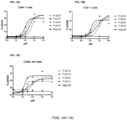
- the fusion proteins are configured such that the IL-15 is fused to either the C-terminal of the Fc domain or to the N-terminal of the Fc domain and co-expressed and non-covalently complexed with an IL-15R ⁇ domain (see FIGS. 1B and 1C ).
- the IL-15 fusion proteins of the present invention comprise an IL-15/IL-15R ⁇ complex wherein the IL-15 domain comprises the sequence of the mature human IL-15 polypeptide (also referred to herein as hulL-15 or IL-15 wild type (wt)) as set forth in SEQ ID NO: 2.
- the IL-15 domain will be an IL-15 variant (or mutant) comprising a sequence derived from the sequence of the mature human IL-15 polypeptide as set forth in SEQ ID NO: 2.
- Variants (or mutants) of IL-15 are referred to herein using the native amino acid, its position in the mature sequence and the variant amino acid.
- hulL-15 “S58D” refers to human IL-15 comprising a substitution of S to D at position 58 of SEQ ID NO: 2.
- the IL-15 variant functions as an IL-15 super-agonist as demonstrated by, e.g., increased binding activity for the IL-15R ⁇ and increased functional activity compared to the native IL-15 polypeptide.
- the IL-15 variant functions as an IL-15 antagonist as demonstrated by e.g., binding activity for the IL-15R ⁇ but no functional activity compared to the native IL-15 polypeptide.
- the IL-15 variant has increased binding affinity or a decreased binding activity for the IL-15R ⁇ c receptors compared to the native IL-15 polypeptide.
- the sequence of the IL-15 variant has at least one (i.e., 1, 2, 3, 4, 5, 6, 7, 8, 9, 10, or more) amino acid change compared to the native IL-15 sequence.
- the amino acid change can include one or more of an amino acid substitution, deletion, or insertion in the domain of IL-15 that interacts with IL-15R ⁇ and/or IL-15R ⁇ C and/or IL-15R ⁇ C .
- the amino acid change is one or more amino acid substitutions or deletions at position 30, 31, 32, 58, 62, 63, 67, 68, or 108 of SEQ ID NO: 2.
- the amino acid change is the substitution of D to T at position 30, V to Y at position 31, H to E at position 32, S to D at position 58, T to D at position 62, V to F at position 63, I to V at position 67, I to F or H or D or K at position 68, or Q to A or M or S at position 108 of the mature human IL-15 sequence, or any combination of these substitutions.
- the amino acid change is the substitution of S to D at position 58 of the mature human IL-15 sequence.
- the IL-15 polypeptide comprises an IL-15 variant comprising an S58D mutation of SEQ ID NO: 2.
- the IL-15 fusion proteins of the present invention comprise an IL-15/IL-15R ⁇ complex wherein the IL-15R ⁇ comprises either IL-15R ⁇ Sushi domain (SEQ ID NO: 5) or IL-15R ⁇ extracellular domain (SEQ ID NO: 4) or any binding functional domain of IL-15R ⁇ .
- the IL-15R ⁇ domain comprises a sequence that is at least 90% to the sequence set forth in SEQ ID NO: 4.
- the IL-15R ⁇ domain comprises a sequence that is at least 95% to the sequence set forth in SEQ ID NO: 4.
- the IL-15R ⁇ domain is an IL-15R ⁇ Sushi domain which comprises a sequence that is at least 90% to the sequence set forth in SEQ ID NO: 5. In various embodiments the IL-15R ⁇ Sushi domain comprises a sequence that is at least 95% to the sequence set forth in SEQ ID NO: 5.
- the IL-15 fusion proteins of the present invention comprise an IL-15/IL-15R ⁇ Sushi complex and at least one heterologous protein.
- the IL-15 fusion proteins of the present invention comprise an IL-15/IL-15R ⁇ complex wherein the IL-15 is fused to either the C-terminus, or N-terminus of the heterologous protein.
- the IL-15 fusion proteins of the present invention contain an IL-15/IL-15R ⁇ -heterologous protein complex either in dimeric or monomeric format.
- the heterologous protein is an Fc domain (or functional fragment thereof).
- the Fc domain is selected from the group consisting of human IgG1 Fc domain, human IgG2 Fc domain, human IgG3 Fc domain, human IgG4 Fc domain, IgA Fc domain, IgD Fc domain, IgE Fc domain, IgG Fc domain and IgM Fc domain; or any combination thereof.
- the Fc domain includes an amino acid change that results in an Fc domain having altered complement or Fc receptor binding properties. Amino acid changes to produce an Fc domain with altered complement or Fc receptor binding properties are known in the art.
- the heterodimeric Fc domain sequence used to make monovalent IL-15/IL-15R ⁇ complex-Fc fusion proteins is the Hole-Fc domain sequence set forth in SEQ ID NO: 8.
- SEQ ID NO: 8 contains amino acid substitutions that ablate Fc ⁇ R and C1q binding.
- the IL-15 fusion proteins of the present invention comprise an IL-15/IL-15R ⁇ complex and the heterologous protein is a full-length non-binding Ab for half-life extension or is a specific antibody or fragment used for targeting, multifunction, and half-life extension.
- the present disclosure provides novel and improved IL-15 fusion proteins for use in the treatment of cancer and other disorders.
- the fusion proteins of the invention have two functional domains: an IL-15/IL-15R ⁇ Sushi domain (also referred to herein as an "IL-15/IL-15R ⁇ Sushi complex”) and an Fc domain, each of which can take different forms, and configured such that the IL-15 is fused to the C-terminal or N-terminal of the Fc domain, and co-expressed and non-covalently complexed with IL-15R ⁇ , IL-15R ⁇ Sushi or IL-15R ⁇ ECD (see FIG.1 ).
- non-conservative amino acid substitution refers to the substitution of a member of one of these classes for a member from another class.
- the hydropathic index of amino acids may be considered. Each amino acid has been assigned a hydropathic index on the basis of its hydrophobicity and charge characteristics.
- the substitution of like amino acids can be made effectively on the basis of hydrophilicity, particularly where the biologically functional protein or peptide thereby created is intended for use in immunological embodiments, as disclosed herein.
- the greatest local average hydrophilicity of a protein as governed by the hydrophilicity of its adjacent amino acids, correlates with its immunogenicity and antigenicity, i.e., with a biological property of the protein.
- hydrophilicity values have been assigned to these amino acid residues: arginine (+3.0); lysine (+3.0); aspartate (+3.0.+-.1); glutamate (+3.0.+-.1); serine (+0.3); asparagine (+0.2); glutamine (+0.2); glycine (0); threonine (-0.4); proline (-0.5.+-.1); alanine (-0.5); histidine (-0.5); cysteine (-1.0); methionine (-1.3); valine (-1.5); leucine (-1.8); isoleucine (-1.8); tyrosine (-2.3); phenylalanine (-2.5) and tryptophan (-3.4).
- the substitution of amino acids whose hydrophilicity values are within ⁇ 2 is included, in various embodiments, those that are within ⁇ 1 are included, and in various embodiments, those within ⁇ 0.5 are included.
- Exemplary amino acid substitutions are set forth in Table 1.
- Table 1 Original Residues Exemplary Substitutions Preferred Substitutions Ala Val, Leu, Ile Val Arg Lys, Gln, Asn Lys Asn Gln Asp Glu Cys Ser, Ala Ser Gln Asn Asn Glu Asp Asp Gly Pro, Ala Ala His Asn, Gln, Lys, Arg Arg Ile Leu, Val, Met, Ala, Phe, Norleucine Leu Leu Norleucine, Ile, Val, Met, Ala, Phe Ile Lys Arg, 1,4 Diamino-butyric Acid, Gln, Asn Arg Met Leu, Phe, Ile Leu Phe Leu, Val, Ile, Ala, Tyr Leu Pro Ala Gly Ser Thr, Ala, Cys Thr Thr Ser Trp Tyr, Phe Tyr Tyr Trp, Phe, Thr, Ser Phe Val Ile, Met, Leu, Phe, Ala,
- polypeptide fragment and "truncated polypeptide” as used herein refers to a polypeptide that has an amino-terminal and/or carboxy-terminal deletion as compared to a corresponding full-length protein.
- fragments can be, e.g., at least 5, at least 10, at least 25, at least 50, at least 100, at least 150, at least 200, at least 250, at least 300, at least 350, at least 400, at least 450, at least 500, at least 600, at least 700, at least 800, at least 900 or at least 1000 amino acids in length.
- fragments can also be, e.g., at most 1000, at most 900, at most 800, at most 700, at most 600, at most 500, at most 450, at most 400, at most 350, at most 300, at most 250, at most 200, at most 150, at most 100, at most 50, at most 25, at most 10, or at most 5 amino acids in length.
- a fragment can further comprise, at either or both of its ends, one or more additional amino acids, for example, a sequence of amino acids from a different naturally-occurring protein (e.g., an Fc or leucine zipper domain) or an artificial amino acid sequence (e.g., an artificial linker sequence).
- polypeptide variant refers to a polypeptide that comprises an amino acid sequence wherein one or more amino acid residues are inserted into, deleted from and/or substituted into the amino acid sequence relative to another polypeptide sequence.
- the number of amino acid residues to be inserted, deleted, or substituted can be, e.g., at least 1, at least 2, at least 3, at least 4, at least 5, at least 10, at least 25, at least 50, at least 75, at least 100, at least 125, at least 150, at least 175, at least 200, at least 225, at least 250, at least 275, at least 300, at least 350, at least 400, at least 450 or at least 500 amino acids in length.
- Hybrids of the present disclosure include fusion proteins.
- a “derivative" of a polypeptide is a polypeptide that has been chemically modified, e.g., conjugation to another chemical moiety such as, for example, polyethylene glycol, albumin (e.g., human serum albumin), phosphorylation, and glycosylation.
- another chemical moiety such as, for example, polyethylene glycol, albumin (e.g., human serum albumin), phosphorylation, and glycosylation.
- the % identity is in the range of, e.g., about 60% to about 70%, about 70% to about 80%, about 80% to about 85%, about 85% to about 90%, about 90% to about 95%, or about 95% to about 99%.
- % sequence homology is used interchangeably herein with the term “% homology” and refers to the level of amino acid sequence homology between two or more peptide sequences or the level of nucleotide sequence homology between two or more nucleotide sequences, when aligned using a sequence alignment program.
- 80% homology means the same thing as 80% sequence homology determined by a defined algorithm, and accordingly a homologue of a given sequence has greater than 80% sequence homology over a length of the given sequence.
- the % homology is selected from, e.g., at least 60%, at least 65%, at least 70%, at least 75%, at least 80%, at least 85%, at least 90%, at least 95%, or at least 99% or more sequence homology to a given sequence. In certain embodiments, the % homology is in the range of, e.g., about 60% to about 70%, about 70% to about 80%, about 80% to about 85%, about 85% to about 90%, about 90% to about 95%, or about 95% to about 99%.
- the BLASTX program is preferred for searching nucleic acid sequences that have been translated in all reading frames against amino acid sequences in the GenBank Protein Sequences and other public databases. Both BLASTP and BLASTX are run using default parameters of an open gap penalty of 11.0, and an extended gap penalty of 1.0, and utilize the BLOSUM-62 matrix. See Id.
- the BLAST algorithm In addition to calculating percent sequence identity, the BLAST algorithm also performs a statistical analysis of the similarity between two sequences (see, e.g., Karlin & Altschul, Proc. Nat'l. Acad. Sci. USA, 90:5873-5787, 1993 ).
- One measure of similarity provided by the BLAST algorithm is the smallest sum probability (P(N)), which provides an indication of the probability by which a match between two nucleotide or amino acid sequences would occur by chance.
- a nucleic acid is considered similar to a reference sequence if the smallest sum probability in a comparison of the test nucleic acid to the reference nucleic acid is, e.g., less than about 0.1, less than about 0.01, or less than about 0.001.
- heterologous refers to a composition or state that is not native or naturally found, for example, that may be achieved by replacing an existing natural composition or state with one that is derived from another source.
- expression of a protein in an organism other than the organism in which that protein is naturally expressed constitutes a heterologous expression system and a heterologous protein.
- antibody refers to a protein comprising one or more polypeptides substantially or partially encoded by immunoglobulin genes or fragments of immunoglobulin genes and having specificity to a tumor antigen or specificity to a molecule overexpressed in a pathological state.
- the recognized immunoglobulin genes include the kappa, lambda, alpha, gamma, delta, epsilon and mu constant region genes, as well as subtypes of these genes and myriad of immunoglobulin variable region genes.
- Light chains (LC) are classified as either kappa or lambda.
- Heavy chains are classified as gamma, mu, alpha, delta, or epsilon, which in turn define the immunoglobulin classes, IgG, IgM, IgA, IgD and IgE, respectively.
- a typical immunoglobulin (e.g., antibody) structural unit comprises a tetramer. Each tetramer is composed of two identical pairs of polypeptide chains, each pair having one "light” (about 25 kD) and one "heavy" chain (about 50-70 kD). The N-terminus of each chain defines a variable region of about 100 to 110 or more amino acids primarily responsible for antigen recognition.
- Fc region defines the C-terminal region of an immunoglobulin heavy chain, which may be generated by papain digestion of an intact antibody.
- the Fc region may be a native sequence Fc region or a variant Fc region.
- the Fc region of an immunoglobulin generally comprises two constant domains, a C H2 domain and a C H3 domain, and optionally comprises a C H4 domain.
- the Fc portion of an antibody mediates several important effector functions e.g.
- Polynucleotide refers to a polymer composed of nucleotide units.
- Polynucleotides include naturally occurring nucleic acids, such as deoxyribonucleic acid (“DNA”) and ribonucleic acid (“RNA”) as well as nucleic acid analogs.
- Nucleic acid analogs include those which include non-naturally occurring bases, nucleotides that engage in linkages with other nucleotides other than the naturally occurring phosphodiester bond or which include bases attached through linkages other than phosphodiester bonds.
- nucleotide analogs include, for example and without limitation, phosphorothioates, phosphorodithioates, phosphorotriesters, phosphoramidates, boranophosphates, methylphosphonates, chiral-methyl phosphonates, 2-O-methyl ribonucleotides, peptide-nucleic acids (PNAs), and the like.
- PNAs peptide-nucleic acids
- Such polynucleotides can be synthesized, for example, using an automated DNA synthesizer.
- the term “nucleic acid” typically refers to large polynucleotides.
- oligonucleotide typically refers to short polynucleotides, generally no greater than about 50 nucleotides.
- nucleotide sequence is represented by a DNA sequence (i.e., A, T, G, C)
- this also includes an RNA sequence (i.e., A, U, G, C) in which "U" replaces "T.”
- the left-hand end of a single-stranded polynucleotide sequence is the 5'-end; the left-hand direction of a double-stranded polynucleotide sequence is referred to as the 5'-direction.
- the direction of 5' to 3' addition of nucleotides to nascent RNA transcripts is referred to as the transcription direction.
- “Complementary” refers to the topological compatibility or matching together of interacting surfaces of two polynucleotides.
- the two molecules can be described as complementary, and furthermore, the contact surface characteristics are complementary to each other.
- a first polynucleotide is complementary to a second polynucleotide if the nucleotide sequence of the first polynucleotide is substantially identical to the nucleotide sequence of the polynucleotide binding partner of the second polynucleotide, or if the first polynucleotide can hybridize to the second polynucleotide under stringent hybridization conditions.
- a “vector” is a polynucleotide that can be used to introduce another nucleic acid linked to it into a cell.
- a "plasmid” refers to a linear or circular double stranded DNA molecule into which additional nucleic acid segments can be ligated.
- a viral vector e.g., replication defective retroviruses, adenoviruses and adeno-associated viruses
- certain vectors are capable of autonomous replication in a host cell into which they are introduced (e.g., bacterial vectors comprising a bacterial origin of replication and episomal mammalian vectors).
- vectors e.g., non-episomal mammalian vectors
- An "expression vector” is a type of vector that can direct the expression of a chosen polynucleotide.
- a "regulatory sequence” is a nucleic acid that affects the expression (e.g., the level, timing, or location of expression) of a nucleic acid to which it is operably linked.
- the regulatory sequence can, for example, exert its effects directly on the regulated nucleic acid, or through the action of one or more other molecules (e.g., polypeptides that bind to the regulatory sequence and/or the nucleic acid).
- Examples of regulatory sequences include promoters, enhancers and other expression control elements (e.g., polyadenylation signals). Further examples of regulatory sequences are described in, for example, Goeddel, 1990, Gene Expression Technology: Methods in Enzymology 185, Academic Press, San Diego, Calif .
- a "host cell” is a cell that can be used to express a polynucleotide of the disclosure.
- a host cell can be a prokaryote, for example, E. coli, or it can be a eukaryote, for example, a single-celled eukaryote (e.g., a yeast or other fungus), a plant cell (e.g., a tobacco or tomato plant cell), an animal cell (e.g., a human cell, a monkey cell, a hamster cell, a rat cell, a mouse cell, or an insect cell) or a hybridoma.
- a prokaryote for example, E. coli
- a eukaryote for example, a single-celled eukaryote (e.g., a yeast or other fungus)
- a plant cell e.g., a tobacco or tomato plant cell
- an animal cell e.g.,
- a host cell is a cultured cell that can be transformed or transfected with a polypeptide-encoding nucleic acid, which can then be expressed in the host cell.
- the phrase "recombinant host cell” can be used to denote a host cell that has been transformed or transfected with a nucleic acid to be expressed.
- a host cell also can be a cell that comprises the nucleic acid but does not express it at a desired level unless a regulatory sequence is introduced into the host cell such that it becomes operably linked with the nucleic acid. It is understood that the term host cell refers not only to the particular subject cell but also to the progeny or potential progeny of such a cell. Because certain modifications may occur in succeeding generations due to, e.g., mutation or environmental influence, such progeny may not, in fact, be identical to the parent cell, but are still included within the scope of the term as used herein.
- Molecule purity or homogeneity may be assayed by a number of means well known in the art.
- the purity of a polypeptide sample may be assayed using polyacrylamide gel electrophoresis and staining of the gel to visualize the polypeptide using techniques well known in the art.
- higher resolution may be provided by using HPLC or other means well known in the art for purification.
- patient may be used interchangeably and refer to a mammal, preferably a human or a non-human primate, but also domesticated mammals (e.g., canine or feline), laboratory mammals (e.g., mouse, rat, rabbit, hamster, guinea pig), and agricultural mammals (e.g., equine, bovine, porcine, ovine).
- the patient can be a human (e.g., adult male, adult female, adolescent male, adolescent female, male child, female child) under the care of a physician or other health worker in a hospital, psychiatric care facility, as an outpatient, or other clinical context.
- the patient may be an immunocompromised patient or a patient with a weakened immune system including, but not limited to patients having primary immune deficiency, AIDS; cancer and transplant patients who are taking certain immunosuppressive drugs; and those with inherited diseases that affect the immune system (e.g., congenital agammaglobulinemia, congenital IgA deficiency).
- the patient has an immunogenic cancer, including, but not limited to bladder cancer, lung cancer, melanoma, and other cancers reported to have a high rate of mutations ( Lawrence et al., Nature, 499(7457): 214-218, 2013 ).
- a "pharmaceutically acceptable salt” is a salt that can be formulated into a compound for pharmaceutical use including, e.g., metal salts (sodium, potassium, magnesium, calcium, etc.) and salts of ammonia or organic amines.
- administering refers to the actions taken by a medical professional (e.g., a physician), or a person controlling medical care of a patient, that control and/or permit the administration of the agent(s)/compound(s) at issue to the patient.
- Causing to be administered can involve diagnosis and/or determination of an appropriate therapeutic regimen, and/or prescribing particular agent(s)/compounds for a patient.
- Such prescribing can include, for example, drafting a prescription form, annotating a medical record, and the like. Where administration is described herein, "causing to be administered” is also contemplated.
- Resistant or refractory cancer refers to tumor cells or cancer that do not respond to previous anti-cancer therapy including, e.g., chemotherapy, surgery, radiation therapy, stem cell transplantation, and immunotherapy.
- Tumor cells can be resistant or refractory at the beginning of treatment, or they may become resistant or refractory during treatment.
- Refractory tumor cells include tumors that do not respond at the onset of treatment or respond initially for a short period but fail to respond to treatment.
- Refractory tumor cells also include tumors that respond to treatment with anticancer therapy but fail to respond to subsequent rounds of therapies.
- refractory tumor cells also encompass tumors that appear to be inhibited by treatment with anticancer therapy but recur up to five years, sometimes up to ten years or longer after treatment is discontinued.
- the anticancer therapy can employ chemotherapeutic agents alone, radiation alone, targeted therapy alone, surgery alone, or combinations thereof.
- chemotherapeutic agents alone, radiation alone, targeted therapy alone, surgery alone, or combinations thereof.
- the refractory tumor cells are interchangeable with resistant tumor.
- references to "about” a value or parameter herein includes (and describes) variations that are directed to that value or parameter per se. For example, description referring to "about X” includes description of "X”.
- Interleukin-15 is a cytokine identified by two independent groups based upon its ability to stimulate proliferation of the IL-2-dependent CTLL-2 T-cell line in the presence of neutralizing anti-IL-2 antibodies ( Steel et al., Trends in Pharmacological Sciences, 33(1):35-41, 2012 ).
- IL-15 and Interleukin-2 have similar biologic properties in vitro, consistent with their shared receptor (R) signaling components (IL-2/15R ⁇ c ).
- R shared receptor
- specificity for IL-15 versus IL-2 is provided by unique private ⁇ -chain receptors that complete the IL-15R ⁇ and IL-2R ⁇ heterotrimeric high-affinity receptor complexes and thereby allow differential responsiveness depending on the ligand and high-affinity receptor expressed.
- both IL-15 and IL-15R ⁇ transcripts have a much broader tissue distribution than IL-2/IL-2R ⁇ . Further, multiple complex posttranscriptional regulatory mechanisms tightly control IL-15 expression. Thus, based upon complex regulation, as well as differential patterns of IL-15 and IL-15R ⁇ expression, it is likely that the critical in vivo functions of this receptor/ligand pair differ from those of IL-2 and IL-2R ⁇ . Studies to date examining the biology of IL-15 have identified several key nonredundant roles, such as IL-15's importance during natural killer (NK) cell, NK-T cell, and intestinal intraepithelial lymphocyte development and function.
- NK natural killer
- IL-15 A role for IL-15 during autoimmune processes such as rheumatoid arthritis and malignancies such as adult T-cell leukemia suggest that dysregulation of IL-15 may result in deleterious effects for the host ( Fehniger et al., Blood, 97:14-32, 2001 ).
- IL-15 and “native interleukin-15” in the context of proteins or polypeptides refer to any naturally occurring mammalian interleukin-15 amino acid sequences, including immature or precursor and mature forms.
- NP_000576 human, immature form
- CAA62616 human, immature form
- NP_001009207 Felis catus, immature form
- AAB94536 rattus, immature form
- AAB41697 rattus, immature form
- NP_032383 Mus musculus, immature form
- AAR19080 canine
- AAB60398 macaca mulatta, immature form
- AAI00964 human, immature form
- AAH23698 mus musculus, immature form
- AAH18149 human
- native IL-15 is the immature or precursor form of a naturally occurring mammalian IL-15. In other embodiments, native IL-15 is the mature form of a naturally occurring mammalian IL-15. In various embodiments, native IL-15 is the precursor form of naturally occurring human IL-15. In various embodiments, native IL-15 is the mature form of naturally occurring human IL-15. In various embodiments, the native IL-15 protein/polypeptide is isolated or purified. In various embodiments, the IL-15 domain is derived from the amino acid sequence of the human IL-15 precursor sequence set forth in SEQ ID NO: 1:
- IL-15 receptor is a type I cytokine receptor consisting of a beta ( ⁇ ) and gamma ( ⁇ ) subunit that it shares with IL-2 receptor, and an alpha ( ⁇ ) subunit which binds IL-15 with a high affinity.
- the full-length human IL-15R ⁇ is a type-1 transmembrane protein with a signal peptide of 32 AAs, an extracellular domain of 173 AAs, a transmembrane domain of 21 AAs, a 37-AA cytoplasmic tail, and multiple N- or O-linked glycosylation sites ( Anderson et al., J. Biol Chem, 270:29862- 29869, 1995 ).
- IL-15R ⁇ and “native interleukin-15 receptor alpha” in the context of proteins or polypeptides refer to any naturally occurring mammalian interleukin-15 receptor alpha ("IL-15R ⁇ ") amino acid sequence, including immature or precursor and mature forms and naturally occurring isoforms.
- IL-15R ⁇ mammalian interleukin-15 receptor alpha
- Non-limiting examples of GeneBank Accession Nos. for the amino acid sequence of various native mammalian IL-15R ⁇ include NP_002180 (human), ABK41438 (Macaca mulatta), NP_032384 (Mus musculus), Q60819 (Mus musculus), Q13261 (human).
- native IL-15R ⁇ is the immature form of a naturally occurring mammalian IL-15R ⁇ polypeptide. In various embodiments, native IL-15R ⁇ is the mature form of a naturally occurring mammalian IL-15R ⁇ polypeptide. In various embodiments, native IL-15R ⁇ is a form of a naturally occurring mammalian IL-15R ⁇ polypeptide. In various embodiments, native IL-15R ⁇ is the full-length form of a naturally occurring mammalian IL-15R ⁇ polypeptide. In various embodiments, native IL-15R ⁇ is the immature form of a naturally occurring human IL-15R ⁇ polypeptide.
- native IL-15R ⁇ is the mature form of a naturally occurring human IL-15R ⁇ polypeptide. In various embodiments, native IL-15R ⁇ is the form of a naturally occurring human IL-15R ⁇ polypeptide. In various embodiments, native IL-15R ⁇ is the full-length form of a naturally occurring human IL-15R ⁇ polypeptide. In various embodiments, a native IL-15R ⁇ protein or polypeptide is isolated or purified. In various embodiments, the IL-15R ⁇ domain is derived from the amino acid sequence of the human IL-15R ⁇ sequence set forth in SEQ ID NO: 3:
- native IL-15R ⁇ is the full extracellular form of a naturally occurring human IL-15R ⁇ polypeptide.
- a native IL-15R ⁇ protein or polypeptide is isolated or purified.
- the IL-15R ⁇ extracellular domain is derived from the amino acid sequence of the human IL-15R ⁇ sequence set forth in SEQ ID NO: 4:
- the IL-15 fusion proteins of the present invention contain an IL-15/IL-15R ⁇ Sushi complex wherein the IL-15 domain comprises the amino acid sequence of the mature human IL-15 polypeptide as set forth in SEQ ID NO: 2: and wherein the IL-15R ⁇ Sushi domain comprises the amino acid sequence of the mature human IL-15R ⁇ polypeptide as set forth in SEQ ID NO: 5:
- the IL-15 domain of the IL-15/IL-15R ⁇ Sushi complex will be an IL-15 variant (or mutant) comprising a sequence derived from the sequence of the mature human IL-15 polypeptide as set forth in SEQ ID NO: 2.
- Variants (or mutants) of IL-15 are referred to herein using the native amino acid, its position in the mature sequence and the variant amino acid.
- "huIL-15S58D” refers to human IL-15 comprising a substitution of S to D at position 58 of SEQ ID NO: 2.
- the IL-15 variant binds the IL-15R ⁇ polypeptide and functions as an IL-15 agonist or antagonist.
- the IL-15 variants with agonist activity have super agonist activity.
- the IL-15 variant can function as an IL-15 agonist or antagonist independent of its association with IL-15R ⁇ .
- IL-15 agonists are exemplified by comparable or increased biological activity compared to wild type IL-15.
- IL-15 antagonists are exemplified by decreased biological activity compared to wild type IL-15 or by the ability to inhibit IL-15-mediated responses.
- the IL-15 variant binds with increased or decreased activity to the IL-15R ⁇ C receptors.
- the sequence of the IL-15 variant has at least one amino acid change, e.g.
- the amino acid substitutions/deletions are in the domains of IL-15 that interact with IL-15R ⁇ and/or ⁇ C . In various embodiments, the amino acid substitutions/deletions do not affect binding to the IL-15R ⁇ polypeptide or the ability to produce the IL-15 variant. Suitable amino acid substitutions/deletions to generate IL-15 variants can be identified based on known IL-15 structures, comparisons of IL-15 with homologous molecules such as IL-2 with known structure, through rational or random mutagenesis and functional assays, as provided herein, or other empirical methods.
- the D30T (“D30” refers to the amino acid “D” and residue position "30” in the native mature human IL-15 sequence and “T” refers to the substituted amino acid residue at that position in the IL-15 variant), V31Y, H32E, T62D, I68F or Q108M substitutions result in IL-15 variants with antagonist activity and S58D substitutions result in IL-15 variants with agonist activity.
- the IL-15 domain of the IL-15/IL-15R ⁇ Sushi complex will be a human IL-15 variant polypeptide with a deletion from position 111-114 (SEQ ID NO: 39). In various embodiments, the IL-15 domain of the IL-15/IL-15R ⁇ Sushi complex will be a human IL-15 variant polypeptide with a deletion from position 109-114 (SEQ ID NO: 40). In various embodiments, the IL-15 domain of the IL-15/IL-15R ⁇ Sushi complex will be a human IL-15 variant polypeptide with a deletion from position 108-114 (SEQ ID NO: 41).
- the IL-15 domain of the IL-15/IL-15R ⁇ Sushi complex will be a human IL-15 variant polypeptide with a deletion from position 105-114 (SEQ ID NO: 42). In various embodiments, the IL-15 domain of the IL-15/IL-15R ⁇ Sushi complex will be a human IL-15 variant polypeptide with a 'GS' Insertion after position N95 (SEQ ID NO: 43). In various embodiments, the IL-15 domain of the IL-15/IL-15R ⁇ Sushi complex will be a human IL-15 variant polypeptide with a 'GGSGG' Insertion after position N95 (SEQ ID NO: 44). In various embodiments, the IL-15 domain of the IL-15/IL-15R ⁇ Sushi complex will be a human IL-15 variant polypeptide with a 'GSSGGSGGS' insertion after position N95 (SEQ ID NO: 45).
- Immunoglobulins of IgG class are among the most abundant proteins in human blood. Their circulation half-lives can reach as long as 21 days. Fusion proteins have been reported to combine the Fc regions of IgG with the domains of another protein, such as various cytokines and receptors (see, for example, Capon et al., Nature, 337:525-531, 1989 ; Chamow et al., Trends Biotechnol., 14:52-60, 1996 ); U.S. Pat. Nos. 5,116,964 and 5,541,087 ).
- the prototype fusion protein is a homodimeric protein linked through cysteine residues in the hinge region of IgG Fc, resulting in a molecule similar to an IgG molecule without the heavy chain variable and CH1 domains and light chains.
- the dimer nature of fusion proteins comprising the Fc domain may be advantageous in providing higher order interactions (i.e. bivalent or bispecific binding) with other molecules. Due to the structural homology, Fc fusion proteins exhibit in vivo pharmacokinetic profile comparable to that of human IgG with a similar isotype.
- Fc refers to molecule or sequence comprising the sequence of a non-antigen-binding fragment of whole antibody, whether in monomeric or multimeric form.
- the original immunoglobulin source of the native Fc is preferably of human origin and may be any of the immunoglobulins.
- Native Fc's are made up of monomeric polypeptides that may be linked into dimeric or multimeric forms by covalent (i.e., disulfide bonds) and non-covalent association.
- the number of intermolecular disulfide bonds between monomeric subunits of native Fc molecules ranges from 1 to 4 depending on class (e.g., IgG, IgA, IgE) or subclass (e.g., IgG1, IgG2, IgG3, IgA1, IgGA2).
- class e.g., IgG, IgA, IgE
- subclass e.g., IgG1, IgG2, IgG3, IgA1, IgGA2
- One example of a native Fc is a disulfide-bonded dimer resulting from papain digestion of an IgG (see Ellison et al. (1982), Nucleic Acids Res. 10: 4071-9 ).
- native Fc as used herein is generic to the monomeric, dimeric, and multimeric forms. Fc domains containing binding sites for Protein A, Protein G, various Fc receptors and complement proteins.
- Fc variant refers to a molecule or sequence that is modified from a native Fc but still comprises a binding site for the salvage receptor, FcRn.
- International applications WO 97/34631 (published Sep. 25, 1997 ) and WO 96/32478 describe exemplary Fc variants, as well as interaction with the salvage receptor.
- a native Fc comprises sites that may be removed because they provide structural features or biological activity that are not required for the fusion molecules of the present invention.
- the term "Fc variant” comprises a molecule or sequence that lacks one or more native Fc sites or residues that affect or are involved in (1) disulfide bond formation, (2) incompatibility with a selected host cell (3) N-terminal heterogeneity upon expression in a selected host cell, (4) glycosylation, (5) interaction with complement, (6) binding to an Fc receptor other than a salvage receptor, or (7) antibody-dependent cellular cytotoxicity (ADCC).
- ADCC antibody-dependent cellular cytotoxicity
- Fc domain encompasses native Fc and Fc variant molecules and sequences as defined above. As with Fc variants and native Fc's, the term “Fc domain” includes molecules in monomeric or multimeric form, whether digested from whole antibody or produced by recombinant gene expression or by other means.
- the IL-15 fusion proteins of the present invention comprise an IL-15/IL-15R ⁇ Sushi complex and at least one heterologous protein attached to the IL-15/IL-15R ⁇ Sushi complex either directly or through a peptide linker sequence to form an IL-15 fusion protein.
- fusion protein refers to a protein having a heterologous polypeptide attached via recombinant DNA techniques.
- the heterologous protein is an Fc domain (or functional fragment thereof) and the resultant fusion protein is an IL-15/IL-15R ⁇ Sushi complex-Fc fusion protein.
- the heterodimeric Fc domain sequence used to make monovalent IL-15/IL-15R ⁇ complex-Fc fusion proteins is the Knob-Fc domain sequence set forth in SEQ ID NO: 7: wherein SEQ ID NO: 7 contains amino acid substitutions (underlined) that ablate Fc ⁇ R and C1q binding.
- the heterodimeric Fc domain sequence used to make monovalent IL-15/IL-15R ⁇ complex-Fc fusion proteins is the Hole-Fc domain sequence set forth in SEQ ID NO: 8: wherein SEQ ID NO: 8 contains amino acid substitutions (underlined) that ablate Fc ⁇ R and C1q binding.
- the IL-15/IL-15R ⁇ Sushi heterodimeric Fc fusion protein of the present invention (also referred to hereinafter as "P-0155”) comprises a chain 1 (Hole Fc-linker-IL-15) having the amino acid sequence set forth in SEQ ID NO: 18: wherein the IL-15 domain sequence is underlined, and the peptide linker sequence is in bold; and a chain 2 (Knob-Fc-linker-IL-15R ⁇ -Sushi+) having the amino acid sequence set forth in SEQ ID NO: 17: wherein the IL-15R ⁇ -Sushi+ domain sequence is underlined, and the peptide linker sequence is in bold.
- a chain 1 Hole Fc-linker-IL-15
- SEQ ID NO: 18 wherein the IL-15 domain sequence is underlined, and the peptide linker sequence is in bold
- a chain 2 Knob-Fc-linker-IL-15R ⁇ -Sushi+
- the monovalent IL-15Fc fusion protein of the present invention (also referred to hereinafter as "P-0162") comprises a chain 1 (Hole Fc-linker-IL-15) having the amino acid sequence set forth in SEQ ID NO: 13 and a chain 2 (Knob-Fc) having the amino acid sequence set forth in SEQ ID NO: 7.
- the bivalent IL-15 Fc fusion protein of the present invention (also referred to hereinafter as "P-0167") comprises a chain 1 (Hole Fc-linker-IL-15) having the amino acid sequence set forth in SEQ ID NO: 13 and a chain 2 (Knob-Fc-linker-IL-15R ⁇ -Sushi+) having the amino acid sequence set forth in SEQ ID NO: 55: wherein the IL-15 domain sequence is underlined, and the peptide linker sequence is in bold.
- a chain 1 Hole Fc-linker-IL-15
- Knob-Fc-linker-IL-15R ⁇ -Sushi+ having the amino acid sequence set forth in SEQ ID NO: 55: wherein the IL-15 domain sequence is underlined, and the peptide linker sequence is in bold.
- the monovalent IL-15/IL-15R ⁇ Sushi (non-covalent) Fc fusion protein of the present invention (also referred to hereinafter as "P-0197”) comprises a chain 1 (Hole-Fc-Linker-IL-15) having the amino acid sequences set forth in SEQ ID NO: 13, a chain 2 (IL-15R ⁇ -Sushi+) having the amino acid sequence set forth in SEQ ID NO: 5, and a chain 3 (Knob-Fc) having the amino acid sequence set forth in SEQ ID NO: 7.
- the bivalent IL-15/IL-15R ⁇ Sushi (non-covalent) Fc fusion protein of the present invention (also referred to hereinafter as "P-0198") comprises a chain 1 (Hole-Fc-Linker-IL-15) having the amino acid sequences set forth in SEQ ID NO: 13, a chain 2 (IL-15R ⁇ -Sushi+) having the amino acid sequence set forth in SEQ ID NO: 5, and a chain 3 (Knob-Fc-Linker-IL-15) having the amino acid sequence set forth in SEQ ID NO: 55.
- the monovalent IL-15/IL-15R ⁇ Sushi (non-covalent) Fc fusion protein of the present invention (also referred to hereinafter as "P-0201") comprises a chain 1 (IL-15-Linker-Hole-Fc) having the amino acid sequences set forth in SEQ ID NO: 15, a chain 2 (IL-15R ⁇ -Sushi+) having the amino acid sequence set forth in SEQ ID NO: 5, and a chain 3 (Knob-Fc) having the amino acid sequence set forth in SEQ ID NO: 7.
- the monovalent IL-15/IL-15R ⁇ Sushi (non-covalent) Fc fusion protein of the present invention (also referred to hereinafter as "P-0207") comprises a chain 1 (Hole-Fc-Linker-IL-15) having the amino acid sequences set forth in SEQ ID NO: 18, a chain 2 (IL-15R ⁇ -Sushi+) having the amino acid sequence set forth in SEQ ID NO: 5, and a chain 3 (Knob-Fc) having the amino acid sequence set forth in SEQ ID NO: 7.
- the monovalent IL-15/IL-15R ⁇ Sushi (non-covalent) Fc fusion protein of the present invention (also referred to hereinafter as "P-0217”) comprises a chain 1 (Hole-Fc-Linker-IL-15) having the amino acid sequences set forth in SEQ ID NO: 54: wherein the IL-15 domain sequence is underlined and the peptide linker sequence is in bold; a chain 2 (IL-15R ⁇ -Sushi+) having the amino acid sequence set forth in SEQ ID NO: 5, and a chain 3 (Knob-Fc) having the amino acid sequence set forth in SEQ ID NO: 7.
- the monovalent IL-15/IL-15R ⁇ (non-covalent) complex-Fc fusion protein of the present invention (also referred to hereinafter as "P-0219") comprises a chain 1 (Hole-Fc-Linker-IL-15) having the amino acid sequences set forth in SEQ ID NO: 54, a chain 2 (IL-15R ⁇ -ECD) having the amino acid sequence set forth in SEQ ID NO: 4, and a chain 3 (Knob-Fc) having the amino acid sequence set forth in SEQ ID NO: 7.
- the monovalent IL-15/IL-15R ⁇ Sushi (non-covalent) Fc fusion protein of the present invention (also referred to hereinafter as "P-0221”) comprises a chain 1 (IL-15-Linker-Hole-Fc) having the amino acid sequences set forth in SEQ ID NO: 19: wherein the IL-15 domain sequence is underlined and the peptide linker sequence is in bold; a chain 2 (IL-15R ⁇ -Sushi+) having the amino acid sequence set forth in SEQ ID NO: 5, and a chain 3 (Knob-Fc) having the amino acid sequence set forth in SEQ ID NO: 7.
- IL-15-Linker-Hole-Fc having the amino acid sequences set forth in SEQ ID NO: 19: wherein the IL-15 domain sequence is underlined and the peptide linker sequence is in bold
- a chain 2 (IL-15R ⁇ -Sushi+) having the amino acid sequence set forth in SEQ ID NO: 5
- the monovalent IL-15/IL-15R ⁇ (non-covalent) Fc fusion protein of the present invention (also referred to hereinafter as "P-0222") comprises a chain 1 (IL-15-Linker-Hole-Fc) having the amino acid sequences set forth in SEQ ID NO: 19, a chain 2 (IL-15R ⁇ -ECD) having the amino acid sequence set forth in SEQ ID NO: 4, and a chain 3 (Knob-Fc) having the amino acid sequence set forth in SEQ ID NO: 7.
- the bivalent IL-15/IL-15R ⁇ Sushi (non-covalent) Fc fusion protein of the present invention (also referred to hereinafter as "P-0234") comprises a chain 1 (Fc-Linker-IL-15) having the amino acid sequences set forth in SEQ ID NO: 20: wherein the IL-15 domain sequence is underlined, and the peptide linker sequence is in bold; and a chain 2 (IL-15R ⁇ -Sushi+) having the amino acid sequence set forth in SEQ ID NO: 5.
- the bivalent IL-15/IL-15R ⁇ (non-covalent) Fc fusion protein of the present invention (also referred to hereinafter as "P-0220") comprises a chain 1 (Fc-Linker-IL-15) having the amino acid sequences set forth in SEQ ID NO: 20, and a chain 2 (IL-15R ⁇ -ECD) having the amino acid sequence set forth in SEQ ID NO: 4.
- the bivalent IL-15/IL-15R ⁇ (non-covalent) Fc fusion protein of the present invention (also referred to hereinafter as "P-0224") comprises a chain 1 (IL-15-Linker-Fc) having the amino acid sequences set forth in SEQ ID NO: 21, and a chain 2 (IL-15R ⁇ -ECD) having the amino acid sequence set forth in SEQ ID NO: 4.
- the monovalent IL-15 (non-covalent)/IL-15R ⁇ Sushi Fc fusion protein of the present invention (also referred to hereinafter as "P-0165”) comprises a chain 1 (IL-15) having the amino acid sequences set forth in SEQ ID NO: 2, a chain 2 (Knob-Fc-linker-IL-15R ⁇ -Sushi+) having the amino acid sequence set forth in SEQ ID NO: 14, and a chain 3 (Hole-Fc) having the amino acid sequence set forth in SEQ ID NO: 8.
- the monovalent IL-15 (non-covalent)/IL-15R ⁇ Sushi Fc fusion protein of the present invention (also referred to hereinafter as "P-0166") comprises a chain 1 (IL-15) having the amino acid sequences set forth in SEQ ID NO: 2, a chain 2 (Knob-Fc-linker-IL-15R ⁇ -Sushi+) having the amino acid sequence set forth in SEQ ID NO: 22: wherein the IL-15 R ⁇ Sushi domain sequence is underlined and the peptide linker sequence is in bold; and a chain 3 (Hole-Fc) having the amino acid sequence set forth in SEQ ID NO: 8.
- the bivalent IL-15 (non-covalent)/IL-15R ⁇ Sushi Fc fusion protein of the present invention (also referred to hereinafter as "P-0218") comprises a chain 1 (IL-15) having the amino acid sequences set forth in SEQ ID NO: 2, a chain 2 (Fc-linker-IL-15R ⁇ -Sushi+) having the amino acid sequence set forth in SEQ ID NO: 23: wherein the IL-15 R ⁇ Sushi domain sequence is underlined and the peptide linker sequence is in bold.
- the IL-15/IL-15R ⁇ Sushi complex will comprise an IL-15 variant having the amino acid sequence selected from the group consisting of the sequences set forth in SEQ ID NO: 24, SEQ ID NO: 25, SEQ ID NO: 26, SEQ ID NO: 27, SEQ ID NO: 28, SEQ ID NO: 29, SEQ ID NO: 30, SEQ ID NO: 31, SEQ ID NO: 32, SEQ ID NO: 33, SEQ ID NO: 34, SEQ ID NO: 35, SEQ ID NO: 36, SEQ ID NO: 37, SEQ ID NO: 38, SEQ ID NO: 39, SEQ ID NO: 40, SEQ ID NO: 41, SEQ ID NO: 42, SEQ ID NO: 43, SEQ ID NO: 44, and SEQ ID NO: 45.
- the IL-15/IL-15R ⁇ Sushi complex-Fc fusion protein of the present invention (also referred to hereinafter as "P-0314") comprises a chain 1 (Fc-linker-IL-15R ⁇ -Sushi+) having the amino acid sequences set forth in SEQ ID NO: 23, and a chain 2 (IL-15 S58D) having the amino acid sequence set forth in SEQ ID NO: 24.
- the bivalent IL-15 (non-covalent)/IL-15R ⁇ Sushi Fc fusion protein of the present invention (also referred to hereinafter as "P-0671”) comprises a chain 1 (IL-15 S58D) having the amino acid sequences set forth in SEQ ID NO: 24, a chain 2 (IL-15R ⁇ -Sushi+-Linker-Fc) having the amino acid sequence set forth in SEQ ID NO: 52: wherein the IL-15 R ⁇ Sushi domain sequence is underlined and the peptide linker sequence is in bold.
- a vector will be designed for production of the subject IL-15/IL-15R ⁇ Sushi-Fc fusion proteins in CHO cells, such as a Pcmv-Script vector (Stratagene, La Jolla, Calif.), pcDNA4 vectors (Invitrogen, Carlsbad, Calif.) and pCI-neo vectors (Promega, Madison, Wis.).
- a Pcmv-Script vector (Stratagene, La Jolla, Calif.)
- pcDNA4 vectors Invitrogen, Carlsbad, Calif.
- pCI-neo vectors Promega, Madison, Wis.
- the present disclosure further pertains to methods of producing the subject IL-15/IL-15R ⁇ Sushi-Fc fusion proteins.
- a host cell transfected with an expression vector encoding an IL-15/IL-15R ⁇ Sushi complex can be cultured under appropriate conditions to allow expression of the IL-15/IL-15R ⁇ Sushi complex to occur.
- the IL-15/IL-15R ⁇ Sushi complex may be secreted and isolated from a mixture of cells and medium containing the IL-15/IL-15R ⁇ Sushi-Fc fusion protein.
- the IL-15/IL-15R ⁇ Sushi complex may be retained cytoplasmically or in a membrane fraction and the cells harvested, lysed and the protein isolated.
- a cell culture includes host cells, media and other byproducts. Suitable media for cell culture are well known in the art.
- polypeptides and proteins of the present disclosure can be purified according to protein purification techniques are well known to those of skill in the art. These techniques involve, at one level, the crude fractionation of the proteinaceous and non-proteinaceous fractions. Having separated the peptide polypeptides from other proteins, the peptide or polypeptide of interest can be further purified using chromatographic and electrophoretic techniques to achieve partial or complete purification (or purification to homogeneity).
- isolated polypeptide or “purified polypeptide” as used herein, is intended to refer to a composition, isolatable from other components, wherein the polypeptide is purified to any degree relative to its naturally-obtainable state.
- a purified polypeptide therefore also refers to a polypeptide that is free from the environment in which it may naturally occur.
- purified will refer to a polypeptide composition that has been subjected to fractionation to remove various other components, and which composition substantially retains its expressed biological activity.
- substantially purified this designation will refer to a peptide or polypeptide composition in which the polypeptide or peptide forms the major component of the composition, such as constituting about 50%, about 60%, about 70%, about 80%, about 85%, or about 90% or more of the proteins in the composition.
- the present disclosure provides a pharmaceutical composition
- a pharmaceutical composition comprising the IL-15/IL-15R ⁇ Sushi-Fc fusion proteins in admixture with a pharmaceutically acceptable carrier.
- pharmaceutically acceptable carriers are well known and understood by those of ordinary skill and have been extensively described (see, e.g., Remington's Pharmaceutical Sciences, 18th Edition, A. R. Gennaro, ed., Mack Publishing Company, 1990 ).
- the pharmaceutically acceptable carriers may be included for purposes of modifying, maintaining or preserving, for example, the pH, osmolarity, viscosity, clarity, color, isotonicity, odor, sterility, stability, rate of dissolution or release, adsorption or penetration of the composition.
- Suitable pharmaceutically acceptable carriers include, but are not limited to, amino acids (such as glycine, glutamine, asparagine, arginine or lysine); antimicrobials; antioxidants (such as ascorbic acid, sodium sulfite or sodium hydrogen-sulfite); buffers (such as borate, bicarbonate, Tris-HCl, citrates, phosphates, other organic acids); bulking agents (such as mannitol or glycine), chelating agents (such as ethylenediamine tetraacetic acid (EDTA)); complexing agents (such as caffeine, polyvinylpyrrolidone, beta-cyclodextrin or hydroxypropyl-beta-cyclodextrin); fillers; monosaccharides; disaccharides and other carbohydrates (such as glucose, mannose, or dextrins); proteins (
- the primary vehicle or carrier in a pharmaceutical composition may be either aqueous or non-aqueous in nature.
- a suitable vehicle or carrier may be water for injection, physiological saline solution or artificial cerebrospinal fluid, possibly supplemented with other materials common in compositions for parenteral administration.
- Neutral buffered saline or saline mixed with serum albumin are further exemplary vehicles.
- Other exemplary pharmaceutical compositions comprise Tris buffer of about pH 7.0-8.5, or acetate buffer of about pH 4.0-5.5, which may further include sorbitol or a suitable substitute thereof.
- compositions may be prepared for storage by mixing the selected composition having the desired degree of purity with optional formulation agents (Remington's Pharmaceutical Sciences, supra) in the form of a lyophilized cake or an aqueous solution. Further, the therapeutic composition may be formulated as a lyophilizate using appropriate excipients such as sucrose.
- the optimal pharmaceutical composition will be determined by one of ordinary skill in the art depending upon, for example, the intended route of administration, delivery format, and desired dosage.
- Aqueous injection suspensions may contain substances that increase the viscosity of the suspension, such as sodium carboxymethyl cellulose, sorbitol, or dextran. Additionally, suspensions of the active compounds may be prepared as appropriate oily injection suspensions. Optionally, the suspension may also contain suitable stabilizers or agents to increase the solubility of the compounds and allow for the preparation of highly concentrated solutions.
- the therapeutic pharmaceutical compositions may be formulated for targeted delivery using a colloidal dispersion system.
- Colloidal dispersion systems include macromolecule complexes, nanocapsules, microspheres, beads, and lipid-based systems including oil-in-water emulsions, micelles, mixed micelles, and liposomes.
- lipids useful in liposome production include phosphatidyl compounds, such as phosphatidylglycerol, phosphatidylcholine, phosphatidylserine, phosphatidylethanolamine, sphingolipids, cerebrosides, and gangliosides.
- Illustrative phospholipids include egg phosphatidylcholine, dipalmitoylphosphatidylcholine, and distearoylphosphatidylcholine.
- the targeting of liposomes is also possible based on, for example, organ-specificity, cell-specificity, and organelle-specificity and is known in the art.
- the pharmaceutical compositions may also comprise buffering agents.
- Solid compositions of a similar type may also be employed as fillers in soft and hard-filled gelatin capsules using such excipients as lactose or milk sugars, as well as high molecular weight polyethylene glycols and the like.
- Liquid dosage forms for oral administration include pharmaceutically acceptable emulsions, microemulsions, solutions, suspensions, syrups, and elixirs.
- topical administration of the pharmaceutical compositions either to skin or to mucosal membranes is contemplated.
- the topical formulations may further include one or more of the wide variety of agents known to be effective as skin or stratum corneum penetration enhancers. Examples of these are 2-pyrrolidone, N-methyl-2-pyrrolidone, dimethylacetamide, dimethylformamide, propylene glycol, methyl or isopropyl alcohol, dimethyl sulfoxide, and azone. Additional agents may further be included to make the formulation cosmetically acceptable. Examples of these are fats, waxes, oils, dyes, fragrances, preservatives, stabilizers, and surface-active agents. Keratolytic agents such as those known in the art may also be included.
- Dosage forms for the topical or transdermal administration include powders, sprays, ointments, pastes, creams, lotions, gels, solutions, patches, and inhalants.
- the active compound may be mixed under sterile conditions with a pharmaceutically acceptable carrier, and with any preservatives, buffers, or propellants which may be required.
- the ointments, pastes, creams and gels may contain, in addition to a subject compound of the disclosure (e.g., an IL-15/IL-15R ⁇ Sushi-Fc fusion protein), excipients, such as animal and vegetable fats, oils, waxes, paraffins, starch, tragacanth, cellulose derivatives, polyethylene glycols, silicones, bentonites, silicic acid, talc and zinc oxide, or mixtures thereof.
- excipients such as animal and vegetable fats, oils, waxes, paraffins, starch, tragacanth, cellulose derivatives, polyethylene glycols, silicones, bentonites, silicic acid, talc and zinc oxide, or mixtures thereof.
- compositions contemplated for use herein include formulations involving polypeptides in sustained- or controlled-delivery formulations.
- pharmaceutical compositions may be formulated in nanoparticles, as slow release hydrogel, or incorporated into oncolytic viruses. Techniques for formulating a variety of other sustained- or controlled-delivery means, such as liposome carriers, bio-erodible microparticles or porous beads and depot injections, are also known to those skilled in the art.
- An effective amount of a pharmaceutical composition to be employed therapeutically will depend, for example, upon the therapeutic context and objectives.
- One skilled in the art will appreciate that the appropriate dosage levels for treatment will thus vary depending, in part, upon the molecule delivered, the indication for which the polypeptide is being used, the route of administration, and the size (body weight, body surface or organ size) and condition (the age and general health) of the patient. Accordingly, the clinician may titer the dosage and modify the route of administration to obtain the optimal therapeutic effect.
- a typical dosage may range from about 0.0001 mg/kg to up to about 100 mg/kg or more, depending on the factors mentioned above.
- Polypeptide compositions may be preferably injected or administered subcutaneously or intravenously.
- compositions may be administered every three to four days, every week, biweekly, or monthly depending on the half-life and clearance rate of the particular formulation.
- the frequency of dosing will depend upon the pharmacokinetic parameters of the polypeptide in the formulation used.
- a composition is administered until a dosage is reached that achieves the desired effect.
- the composition may therefore be administered as a single dose, or as multiple doses (at the same or different concentrations/dosages) over time, or as a continuous infusion. Further refinement of the appropriate dosage is routinely made. Appropriate dosages may be ascertained through use of appropriate dose-response data.
- the route of administration of the pharmaceutical composition is in accord with known methods, e.g. orally, through injection by intravenous, intraperitoneal, intratumoral, intracerebral (intra-parenchymal), intracerebroventricular, intramuscular, intra-ocular, intraarterial, intraportal, intralesional routes, intramedullary, intrathecal, intravesicular, intraventricular, transdermal, subcutaneous, or intraperitoneal; as well as intranasal, enteral, topical, sublingual, urethral, vaginal, or rectal means, by sustained release systems or by implantation devices.
- the compositions may be administered by bolus injection or continuously by infusion, or by implantation device.
- the composition may be administered locally via implantation of a membrane, sponge, or another appropriate material on to which the desired molecule has been absorbed or encapsulated.
- a membrane, sponge, or another appropriate material on to which the desired molecule has been absorbed or encapsulated.
- the device may be implanted into any suitable tissue or organ, and delivery of the desired molecule may be via diffusion, timed-release bolus, or continuous administration.
- the present disclosure provides for a method of treating cancer cells in a subject, comprising administering to said subject a therapeutically effective amount (either as monotherapy or in a combination therapy regimen) of an IL-15/IL-15R ⁇ Sushi-Fc fusion protein of the present disclosure in pharmaceutically acceptable carrier, wherein such administration inhibits the growth and/or proliferation of a cancer cell.
- a therapeutically effective amount either as monotherapy or in a combination therapy regimen
- an IL-15/IL-15R ⁇ Sushi-Fc fusion protein of the present disclosure is useful in treating disorders characterized as cancer.
- Such disorders include, but are not limited to solid tumors, such as cancers of the breast, respiratory tract, brain, reproductive organs, digestive tract, urinary tract, eye, liver, skin, head and neck, thyroid, parathyroid and their distant metastases, lymphomas, sarcomas, multiple myeloma and leukemia.
- solid tumors such as cancers of the breast, respiratory tract, brain, reproductive organs, digestive tract, urinary tract, eye, liver, skin, head and neck, thyroid, parathyroid and their distant metastases, lymphomas, sarcomas, multiple myeloma and leukemia.
- breast cancer include, but are not limited to invasive ductal carcinoma, invasive lobular carcinoma, ductal carcinoma in situ, and lobular carcinoma in situ.
- cancers of the respiratory tract include but are not limited to small-cell and non-small-cell lung carcinoma, as well as bronchial adenoma and pleuropulmonary blastoma.
- brain cancers include but are not limited to brain stem and hypothalamic glioma, cerebellar and cerebral astrocytoma, neuroblastoma, medulloblastoma, ependymoma, as well as neuroectodermal and pineal tumor.
- Tumors of the male reproductive organs include but are not limited to prostate and testicular cancer.
- Tumors of the female reproductive organs include, but are not limited to endometrial, cervical, ovarian, vaginal, and vulvar cancer, as well as sarcoma of the uterus.
- Tumors of the digestive tract include, but are not limited to anal, colon, colorectal, esophageal, gallbladder, gastric, liver, breast, pancreatic, rectal, small-intestine, and salivary gland cancers.
- Tumors of the urinary tract include, but are not limited to bladder, penile, kidney, renal pelvis, ureter, and urethral cancers.
- Eye cancers include but are not limited to intraocular melanoma and retinoblastoma.
- liver cancers include but are not limited to hepatocellular carcinoma (liver cell carcinomas with or without fibrolamellar variant), cholangiocarcinoma (intrahepatic bile duct carcinoma), and mixed hepatocellular cholangiocarcinoma.
- Skin cancers include, but are not limited to squamous cell carcinoma, Kaposi's sarcoma, malignant melanoma, Merkel cell skin cancer, and non-melanoma skin cancer.
- Head-and-neck cancers include, but are not limited to nasopharyngeal cancer, and lip and oral cavity cancer.
- Lymphomas include, but are not limited to AIDS-related lymphoma, non-Hodgkin's lymphoma, cutaneous T-cell lymphoma, Hodgkin's disease, and lymphoma of the central nervous system.
- Sarcomas include but are not limited to sarcoma of the soft tissue, osteosarcoma, malignant fibrous histiocytoma, lymphosarcoma, and rhabdomyosarcoma.
- Leukemias include, but are not limited to acute myeloid leukemia, acute lymphoblastic leukemia, chronic lymphocytic leukemia, chronic myelogenous leukemia, and hairy cell leukemia.
- the cancer will be a cancer with high expression of TGF- ⁇ family member, such as activin A, myostatin, TGF- ⁇ and GDF15, e.g., pancreatic cancer, gastric cancer, ovarian cancer, colorectal cancer, melanoma leukemia, lung cancer, prostate cancer, brain cancer, bladder cancer, and head-neck cancer.
- TGF- ⁇ family member such as activin A, myostatin, TGF- ⁇ and GDF15
- pancreatic cancer gastric cancer, ovarian cancer, colorectal cancer, melanoma leukemia, lung cancer, prostate cancer, brain cancer, bladder cancer, and head-neck cancer.
- the present disclosure provides for a method of treating refractory or resistance liquid or solid tumors through enhancing the therapeutic effect of existing cancer therapeutics as an adjuvant.
- the present disclosure also provides for a method of treating viral infection including hepatitis A, hepatitis B, hepatitis C, AIDS in HIV infection, human papillomavirus (HPV) infection, genital warts, etc. in a subject, comprising administering to human patient in need of an IL-15/IL-15R ⁇ Sushi-Fc fusion protein of the present disclosure in pharmaceutically acceptable carrier, wherein such administration inhibits the growth and/or replication of virus.
- viral infection including hepatitis A, hepatitis B, hepatitis C, AIDS in HIV infection, human papillomavirus (HPV) infection, genital warts, etc.
- HPV human papillomavirus
- Therapeutically effective amount or “therapeutically effective dose” refers to that amount of the therapeutic agent being administered which will relieve to some extent one or more of the symptoms of the disorder being treated.
- a therapeutically effective dose can be estimated initially from cell culture assays by determining an IC 50 .
- a dose can then be formulated in animal models to achieve a circulating plasma concentration range that includes the IC 50 as determined in cell culture. Such information can be used to more accurately determine useful doses in humans. Levels in plasma may be measured, for example, by HPLC. The exact composition, route of administration and dosage can be chosen by the individual physician in view of the subject's condition.
- Dosage regimens can be adjusted to provide the optimum desired response (e.g., a therapeutic or prophylactic response). For example, a single bolus can be administered, several divided doses (multiple or repeat or maintenance) can be administered over time and the dose can be proportionally reduced or increased as indicated by the exigencies of the therapeutic situation. It is especially advantageous to formulate parenteral compositions in dosage unit form for ease of administration and uniformity of dosage.
- Dosage unit form as used herein refers to physically discrete units suited as unitary dosages for the mammalian subjects to be treated; each unit containing a predetermined quantity of active compound calculated to produce the desired therapeutic effect in association with the required pharmaceutical carrier.
- the specification for the dosage unit forms of the present disclosure will be dictated primarily by the unique characteristics of the antibody and the particular therapeutic or prophylactic effect to be achieved.
- the dose and dosing regimen is adjusted in accordance with methods well-known in the therapeutic arts. That is, the maximum tolerable dose can be readily established, and the effective amount providing a detectable therapeutic benefit to a subject may also be determined, as can the temporal requirements for administering each agent to provide a detectable therapeutic benefit to the subject. Accordingly, while certain dose and administration regimens are exemplified herein, these examples in no way limit the dose and administration regimen that may be provided to a subject in practicing the present disclosure.
- dosage values may vary with the type and severity of the condition to be alleviated and may include single or multiple doses. It is to be further understood that for any particular subject, specific dosage regimens should be adjusted over time according to the individual need and the professional judgment of the person administering or supervising the administration of the compositions, and that dosage ranges set forth herein are exemplary only and are not intended to limit the scope or practice of the claimed composition. Further, the dosage regimen with the compositions of this disclosure may be based on a variety of factors, including the type of disease, the age, weight, sex, medical condition of the subject, the severity of the condition, the route of administration, and the particular antibody employed. Thus, the dosage regimen can vary widely, but can be determined routinely using standard methods.
- doses may be adjusted based on pharmacokinetic or pharmacodynamic parameters, which may include clinical effects such as toxic effects and/or laboratory values.
- the present disclosure encompasses intra-subject dose-escalation as determined by the skilled artisan. Determining appropriate dosages and regimens are well-known in the relevant art and would be understood to be encompassed by the skilled artisan once provided the teachings disclosed herein.
- An exemplary, non-limiting daily dosing range for a therapeutically or prophylactically effective amount of an IL-15/IL-15R ⁇ Sushi-Fc fusion protein of the disclosure can be 0.0001 to 100 mg/kg, 0.0001 to 90 mg/kg, 0.0001 to 80 mg/kg, 0.0001 to 70 mg/kg, 0.0001 to 60 mg/kg, 0.0001 to 50 mg/kg, 0.0001 to 40 mg/kg, 0.0001 to 30 mg/kg, 0.0001 to 20 mg/kg, 0.0001 to 10 mg/kg, 0.0001 to 5 mg/kg, 0.0001 to 4 mg/kg, 0.0001 to 3 mg/kg, 0.0001 to 2 mg/kg, 0.0001 to 1 mg/kg, 0.0010 to 50 mg/kg, 0.0010 to 40 mg/kg, 0.0010 to 30 mg/kg, 0.0010 to 20 mg/kg, 0.0010 to 10 mg/kg, 0.0010 to 5 mg/kg, 0.0010 to 4 mg/kg, 0.0010 to 3 mg/kg
- dosage values may vary with the type and severity of the conditions to be alleviated. It is to be further understood that for any particular subject, specific dosage regimens should be adjusted over time according to the individual need and the professional judgment of the person administering or supervising the administration of the compositions, and that dosage ranges set forth herein are exemplary only and are not intended to limit the scope or practice of the claimed composition.
- Toxicity and therapeutic index of the pharmaceutical compositions of the disclosure can be determined by standard pharmaceutical procedures in cell cultures or experimental animals, e.g., for determining the LD 50 (the dose lethal to 50% of the population) and the ED 50 (the dose therapeutically effective in 50% of the population).
- the dose ratio between toxic and therapeutic effective dose is the therapeutic index and it can be expressed as the ratio LD 50 /ED 50 .
- Compositions that exhibit large therapeutic indices are generally preferred.
- the dosing frequency of the administration of the IL-15/IL-15R ⁇ Sushi-Fc fusion protein pharmaceutical composition depends on the nature of the therapy and the particular disease being treated.
- the subject can be treated at regular intervals, such as weekly or monthly, until a desired therapeutic result is achieved.
- Exemplary dosing frequencies include, but are not limited to: once or twice a week without break; once or twice a week, every other week; once every 2 weeks; once every 3 weeks; weakly without break for 2 weeks, then monthly; weakly without break for 3 weeks, then monthly; monthly; monthly; once every other month; once every three months; once every four months; once every five months; or once every six months, or yearly.
- the terms "co-administration”, “co-administered” and “in combination with”, referring to an IL-15/IL-15R ⁇ Sushi-Fc fusion protein of the disclosure and one or more other therapeutic agents is intended to mean, and does refer to and include the following: simultaneous administration of such combination of an IL-15/IL-15R ⁇ Sushi-Fc fusion protein of the disclosure and therapeutic agent(s) to a subject in need of treatment, when such components are formulated together into a single dosage form which releases said components at substantially the same time to said subject; substantially simultaneous administration of such combination of an IL-15/IL-15R ⁇ Sushi-Fc fusion protein of the disclosure and therapeutic agent(s) to a subject in need of treatment, when such components are formulated apart from each other into separate dosage forms which are taken at substantially the same time by said subject, whereupon said components are released at substantially the same time to said subject; sequential administration of such combination of an IL-15/IL-15R ⁇ Sushi-Fc fusion protein of the disclosure and therapeutic
- the present disclosure provides a method for treating cancer or cancer metastasis in a subject, comprising administering a therapeutically effective amount of the pharmaceutical compositions of the invention in combination with a second therapy, including, but not limited to immunotherapy, cytotoxic chemotherapy, small molecule kinase inhibitor targeted therapy, surgery, radiation therapy, and stem cell transplantation.
- a second therapy including, but not limited to immunotherapy, cytotoxic chemotherapy, small molecule kinase inhibitor targeted therapy, surgery, radiation therapy, and stem cell transplantation.
- cytotoxic chemotherapy cytotoxic chemotherapy
- small molecule kinase inhibitor targeted therapy surgery
- radiation therapy radiation therapy
- stem cell transplantation stem cell transplantation
- a wide array of conventional compounds has been shown to have anti-neoplastic activities. These compounds have been used as pharmaceutical agents in chemotherapy to shrink solid tumors, prevent metastases and further growth, or decrease the number of malignant T-cells in leukemic or bone marrow malignancies.
- chemotherapy has been effective in treating various types of malignancies, many anti-neoplastic compounds induce undesirable side effects. It has been shown that when two or more different treatments are combined, the treatments may work synergistically and allow reduction of dosage of each of the treatments, thereby reducing the detrimental side effects exerted by each compound at higher dosages. In other instances, malignancies that are refractory to a treatment may respond to a combination therapy of two or more different treatments.
- a second anti-cancer agent such as a chemotherapeutic agent
- chemotherapeutic agent includes, but is not limited to, daunorubicin, dactinomycin, doxorubicin, bleomycin, mitomycin, nitrogen mustard, chlorambucil, melphalan, cyclophosphamide, 6-mercaptopurine, 6-thioguanine, bendamustine, cytarabine (CA), 5-fluorouracil (5-FU), floxuridine (5-FUdR), methotrexate (MTX), colchicine, vincristine, vinblastine, etoposide, teniposide, cisplatin, carboplatin, oxaliplatin, pentostatin, cladribine, cytarabine, gemcitabine, pralatrexate, mitoxantrone, diethylstilbestrol (DES), fluradabine,
- DES diethylstilbestrol
- the dosages of such chemotherapeutic agents include, but is not limited to, about any of 10 mg/m 2 , 20 mg/m 2 , 30 mg/m 2 , 40 mg/m 2 , 50 mg/m 2 , 60 mg/m 2 , 75 mg/m 2 , 80 mg/m 2 , 90 mg/m 2 , 100 mg/m 2 , 120 mg/m 2 , 150 mg/m 2 , 175 mg/m 2 , 200 mg/m 2 , 210 mg/m 2 , 220 mg/m 2 , 230 mg/m 2 , 240 mg/m 2 , 250 mg/m 2 , 260 mg/m 2 , and 300 mg/m 2 .
- the combination therapy methods of the present disclosure may further comprise administering to the subject a therapeutically effective amount of immunotherapy, including, but are not limited to, treatment using depleting antibodies to specific tumor antigens; treatment using antibody-drug conjugates; treatment using agonistic, antagonistic, or blocking antibodies to co-stimulatory or co-inhibitory molecules (immune checkpoints) such as CD276, CD272, CTLA-4, PD-1, PD-L1, CD40, SIRPa, CD47, OX-40, CD137, GITR, LAG3, ICOS, CD27, 4-1BB, TIM-3, B7-H4, Siglec 7, Siglec 8, Siglec 9, Siglec 15 and VISTA; treatment using bispecific T cell engaging antibodies (BiTE ® ) such as blinatumomab: treatment involving administration of biological response modifiers such as IL-2, IL-7, IL-12, IL-21, GM-CSF, IFN- ⁇ , IFN- ⁇ and IFN- ⁇ ;
- the combination therapy comprises administering an IL-15/IL-15R ⁇ Sushi-Fc fusion protein and the second agent composition simultaneously, either in the same pharmaceutical composition or in separate pharmaceutical composition.
- an IL-15/IL-15R ⁇ Sushi-Fc fusion protein composition and the second agent composition are administered sequentially, i.e., an IL-15/IL-15R ⁇ Sushi-Fc fusion protein composition is administered either prior to or after the administration of the second agent composition.
- the administrations of an IL-15/IL-15R ⁇ Sushi-Fc fusion protein composition and the second agent composition are concurrent, i.e., the administration period of an IL-15/IL-15R ⁇ Sushi-Fc fusion protein composition and the second agent composition overlap with each other.
- the administrations of an IL-15/IL-15R ⁇ Sushi-Fc fusion protein composition and the second agent composition are non-concurrent.
- the administration of an IL-15/IL-15R ⁇ Sushi-Fc fusion protein composition is terminated before the second agent composition is administered.
- the administration second agent composition is terminated before an IL-15/IL-15R ⁇ Sushi-Fc fusion protein composition is administered.
- the fusion proteins were produced by co-transfecting HEK293-F cells growing in suspension with the mammalian expression vectors using polyethylenimine (PEI, 25,000 MW linear, Polysciences). If there were two or more expression vectors, the vectors will be transfected in a 1: 1 ratio.
- PEI polyethylenimine
- HEK293 cells were cultivated in serum free FreeStyle TM 293 Expression Medium (ThermoFisher). For production in 1000 ml shaking flasks (maximum working volume 330 mL), HEK293 cells at density of 0.8 ⁇ 10 6 cells/ml were seeded 24 hours before transfection. Expression vectors to a total amount of 330 ⁇ g DNA were mixed with 16.7 ml Opti-mem Medium (ThermoFisher). After addition of 0.33 mg PEI diluted in 16.7 ml Opti-mem Medium, the mixture was vortexed for 15 seconds and subsequently incubated for 10 min at room temperature.
- ThermoFisher 16.7 ml Opti-mem Medium
- the DNA/PEI solution was then added to the cells and incubated at 37°C in an incubator with 8% CO 2 atmosphere.
- Sodium butyrate (Millipore Sigma) at the final concentration of 2 mg/L was added to the cell culture at day 4 to help sustain protein expression. After 6 days cultivation, supernatant was collected for purification by centrifugation for 20 min at 2200 rpm.
- the solution was sterile filtered (0.22 ⁇ m filter, Corning).
- the secreted protein was purified from cell culture supernatants using Protein A affinity chromatography.
- the secreted protein was purified from cell culture supernatants using Protein A affinity chromatography.
- Cell culture supernatant was loaded onto a HiTrap MabSelect SuRe 5 ml column (GE Healthcare) equilibrated with 5 column volumes (CV) of phosphate buffered saline, pH 7.2 (ThermoFisher). Unbound protein was removed by washing with 5 CVs PBS pH 7.2, and target protein was eluted with 25 mM sodium citrate, 25 mM sodium chloride, pH 3.2. Protein solution was neutralized by adding 3% of 1 M Tris pH 10.2. Target protein was concentrated and buffer exchanged to PBS, pH 7.2 using Amicon ® Ultra-15 Ultracel 10K (Merck Millipore)
- Purity and molecular weight of the purified molecules were analyzed by SDS-PAGE in the presence and absence of a reducing agent and staining with Coomassie (Imperial TM protein stain, ThermoFisher).
- the NuPAGE ® Pre-Cast gel system (4-12% Bis-Tris, ThermoFisher) was used according to the manufacturer's instruction.
- the aggregate content of the molecules was analyzed on an Agilent 1200 high-performance liquid chromatography (HPLC) system. Samples were injected onto an AdvanceBio size-exclusion column (300 ⁇ , 4.6 x 150 mm, 2.7 ⁇ m, LC column, Agilent) using 150 mM sodium phosphate, pH 7.0 as the mobile phase at 25 °C.
- the protein concentration of purified protein samples was determined by measuring the absorbance at 280 nm using a Nanodrop spectrophotometer (ThermoFisher) divided by the molar extinction coefficient calculated on the basis of the amino acid sequence. Endotoxin level of purified protein samples were measured using Endosafe nexgen-PTS (Charles River) according to the manufacturer's instruction.
- P-0217, P-0234, and P-0313 are all IL-15/IL-15R ⁇ (non-covalent)-Fc fusion proteins comprising IL-15/IL-15R ⁇ complex at the C-terminus.
- P-0217 is a monovalent IL-15/IL-15R ⁇ (non-covalent) Fc fusion
- P-0234 is the dimeric counterpart of P-0217
- P-0313 shares the same fusion configuration as P-0234 but differs only with S58D substitution in the IL-15 domain.
- the IL-15R ⁇ sushi+ domain with a calculated molecular weight of 8.6 kDa was non-covalently associated with IL-15 or IL-15 variant fused to Fc domain for both monovalent and bivalent Fc fusions, and it was dissociated under denaturing conditions and migrated to the expected position as a sharp band ( FIG. 2A ).
- the presence of IL-15R ⁇ -sushi+ band on the gel confirmed the non-covalent association between IL-15 and IL-15R ⁇ during cell culture growth; such association was maintained during Protein A purification under low-pH elution conditions.
- Size exclusion chromatogram in FIG. 2B indicated low aggregation propensity for the two fusion formats as only 1-2% aggregation was present for all three fusion proteins after the initial protein A capture step without polishing step.
- the sharp main peak further suggests the tight association of IL-15 and IL-15R ⁇ under native buffer conditions.
- the expression level of the fusion proteins was comparable (within 2-fold difference) to that of Fc-only protein under the same vector and culturing conditions.
- the high yield and low aggregation propensity demonstrated favorable developability profile of both monovalent and bivalent of IL-15/IL-15R ⁇ (non-covalent) Fc fusion proteins.
- amino acid substitution in IL-15 exemplified by P-0313, did not impact expression profile of the fusion protein; P-0313 exhibited almost identical purity and aggregation propensity as its wild type equivalent P-0234 ( FIG. 2 ).
- P-0162 is a C-terminal monomeric IL-15 alone Fc fusion protein containing a Hole-Fc-Linker1-IL-15 chain (SEQ ID NO: 13) and an empty Knob-Fc chain (SEQ ID NO: 7).
- P-0197 is a C-terminal monovalent IL-15/IL-15R ⁇ (non-covalent) Fc fusion with its schematic diagram depicted in FIG. 1B .
- P-0197 differs from P-0162 only by the presence of a free IL-15R ⁇ Sushi+ domain that is non-covalently complexed with IL-15.
- P-0153 is a N-terminal monomeric IL-15/IL-15R ⁇ fusion with the heterodimeric Fc fusion format with its cartoon diagram shown in FIG. 1A .
- P-0167 and P-0198 are the dimer counterparts of P-0162 and P-0197, respectively.
- the size exclusion diagrams of the 5 molecules are illustrated in FIG. 3A-3E .
- IL-15-Fc monomeric fusion without IL-15R ⁇ has a monomer content of 84.5% and the majority of impurities are of lower molecular weights.
- P-0197 contains 98.6% monomer content ( FIG. 3B ), and such significantly improvement in protein was apparently contributed from the free IL-15R ⁇ Sushi+ domain.
- the effect of free IL-15R ⁇ Sushi+ domain on the protein quality of IL-15-Fc fusion proteins were further highlighted for the dimeric formats, which is depicted with P-0167 and P-0198 SEC chromatograms in FIGS 3D and 3E , respectively.
- P-0167 contains a broad and irregular peak with shoulders on both sides of the main peak.
- P-0167 did not show any ex vivo activity in activating NK and T cells of fresh human PBMC, which was likely due to the incorrect folding of the protein.
- P-0198 which contains a non-covalently bound IL-15R ⁇ Sushi+ domain in dimeric form, demonstrated a sharp main peak with 90.5 % monomer content ( FIG. 3E ).
- the IL-15R ⁇ Sushi+ domain was not free, but covalently fused to a matching heterodimeric Fc as in P-0153, its complexation with IL-15-Fc did not yield any improvement in protein purity; rather, the protein sample contains >25% dimer and higher molecular weight soluble aggregates ( FIG. 3C ).
- IL-15R ⁇ Sushi+ domain can significantly improve IL-15-Fc fusion protein purity and biophysical property, but only when IL-15R ⁇ domain can associate with IL-15 in a favorable and unconstrained manner.
- P-0220 the protein comprising IL-15R ⁇ ECD domain, not only has a lower purity than its IL-15R ⁇ Sushi+-containing counterpart P-0234 (88.5% vs. 100%), but also expressed at a 2.5-fold lower level in the same batch of cells.
- IL-15R ⁇ Sushi+ domain is a preferred partner over IL-15R ⁇ ECD in constructing more developable IL-15/IL-15R ⁇ -Fc fusion proteins.
- P-0234 and P-0223 are dimeric IL-15/IL-15R ⁇ (non-covalent) Fc fusion proteins with the IL-15/IL-15R ⁇ Sushi complex attached to the C-terminus and N-terminus of Fc, respectively.
- Their SEC chromatograms FIG. 3H and 3I ) show rather subtle difference in purity (98.5% vs. 93.9%).
- purified P-0223 consistently contains a broad peak of higher molecular weight species and a small but appreciable peak containing lower molecular impurities, which were virtually absent in P-0234.
- P-0234 with C-terminal fusion has undoubtedly better SEC purity profile and is the preferred format from developability point of view considering that both molecules expressed at a comparable level.
- IL-15R ⁇ subunit with IL-15-Fc fusion can significantly improve expression, purity, and reduce aggregation; and such improvement requires proper IL-15R ⁇ association with IL-15 with minimal spatial constrains.
- IL-15R ⁇ Sushi+ the truncated version of IL-15R ⁇ ECD, appeared to be preferred over the full length ECD based on both productivity and purity assessment.
- placing IL-15/IL-15R ⁇ complex to the C-terminus of Fc is advantageous over N-terminus fusion to achieve high purity. Consequently, the dimeric IL-15/IL-15R ⁇ (non-covalent) C-terminal Fc fusion format, exemplified by P-0234, integrates all the preferable components and represents the superior format.
- Non-covalent association of IL-15R ⁇ enhances receptor binding and biological activities of IL-15/IL-15R ⁇ Fc fusion proteins
- IL-15 binds to its specific receptor IL-15R ⁇ with high affinity and both are expressed on antigen presenting cells.
- the association of IL-15R ⁇ with IL-15 trans-presents IL-15 to a heterodimeric receptor complex composed of IL-15R ⁇ and ⁇ c on the responding lymphocytes, including NK, T and B cells.
- the formation of the ligand-trimeric receptor complex (IL-15-IL-15R ⁇ ) initiates intracellular signaling cascades leading to downstream biological effects.
- the complexity of the IL-15 receptor biology eludes challenges to engineer an optimal IL-15 fusion protein that enables a conformationally effective ligand-trimeric receptor signaling complex.
- the binding activity was tested in ELISA assay. Briefly, Nunc Maxisorp (ThermoFisher) plates were coated overnight at 4°C with huIL-15R ⁇ -6His at 1 ⁇ g/well (100 ⁇ l/well) in bicarbonate buffer pH 9.4 (ThermoFisher). After washing 3 times with PBS/0.05% Tween20, plates were incubated with SuperBlock (300 ⁇ l/well) at room temperature for 2 hrs. to block nonspecific binding. After washing, IL-15 compounds each at 3-fold serial dilutions with blocking buffer were added to the plates (100 ⁇ l/well) and incubated at room temperature for 1 hr.
- Fc fusions were detected by 1 hr. incubation at room temperature with a goat anti-human IgG Fc secondary antibody conjugated with horseradish peroxidase (HRP) at 1:5000 dilution in blocking buffer (ThermoFisher) (100 ⁇ l/well). After washing, TMB substrate (ThermoFisher) was added (100ul/well). Plates were sealed and incubated 5-20min at room temperature in dark. Reaction was stopped by adding 2N sulfuric acid (Ricca Chemical) (50uL/well) and absorbance was read at 450-590 nm.
- HRP horseradish peroxidase
- CD69 is a cell surface glycoprotein that is early induced during lymphocyte activation.
- An ex vivo human peripheral blood mononuclear cell (PBMC) assay was established to analyze the number/percent of NK or CD8 T cells expressing CD69 following IL-15 treatment.
- human PBMCs were isolated by Ficoll-Hypaque centrifugation from the buffy coat purchased from Blood Oklahoma Institute. Purified human PBMCs were treated with serial dilutions of each IL-15 test compound and incubated at 37 oC for 48 hours. Cells were collected by 300G centrifugation and resuspended in FACS buffer.
- P-0197 is a C-terminal monovalent IL-15/IL-15R ⁇ (non-covalent) Fc fusion protein and P-0162 share the same structure as P-0197 without IL-15R ⁇ sushi included.
- P-0197 demonstrated 10-fold and 6-fold increased potency in induction of CD69 positive NK cells ( FIG. 5A ) and CD8 T cells ( FIG. 5B ) compared to P-0162, respectively, attributed to the inclusion of IL-15R ⁇ .
- P-0165 is an Fc fusion protein with IL-15R ⁇ fused to the Fc domain and IL-15 non-covalently bound
- P-0197 is configured reversely with IL-15 fused to the Fc domain and IL-15R ⁇ non-covalently bound
- P-0153 has a heterodimeric structure with both IL-15 and IL-15R ⁇ fused to the Fc domain.
- the fusion proteins with non-covalent complexation with either IL-15 or IL-15R ⁇ demonstrated better potency in induction of CD69 positive NK ( FIG. 6A ) and CD8 T cells ( FIG.
- a suitable linker to join the protein domains is critical in fusion protein engineering.
- the peptide linker not only provides a spatial distance between the fusion protein domains and allows their independent folding, but also directly affects the structural stability and functional property of the fusion proteins.
- flexibility and length of a linker on the biological activity of IL-15/IL-15R ⁇ Fc fusion proteins.
- P-0165 and P-0166 are monomeric IL-15 (non-covalent)/IL-15R ⁇ Fc fusions with a 10 amino acid rigid and flexible linker, respectively.
- P-0197, P-0207 and P-0217 are monovalent IL-15/IL-15R ⁇ (non-covalent) Fc fusion proteins with a rigid linker, a GS rich flexible linker of 10 and 15 amino acid length, respectively.
- Fc fusion proteins for therapeutic use are mostly homodimeric because the IgG1 Fc naturally homodimerizes due to the disulfide bonds formed in the hinge region.
- the dimeric protein has advantages in avidity, stability, quantity, size and function.
- Fc engineering could generate monomeric Fc fusion proteins. The alteration could affect the biological activity, pharmacokinetics, side effects, or reduce the size of dimeric protein for tissue penetration.
- IL-15/IL-15R ⁇ Fc fusion proteins both monomeric and homodimeric forms with different IL-15/IL-15R ⁇ Fc fusion configurations were constructed and biological activity tested.
- the biological activity was determined by measuring the induction of CD69 expression on human NK and CD8 T cells in an ex vivo human PBMC FACS-based assays as described previously. Results indicated that the homodimeric form of IL-15/IL-15Ra Fc fusion proteins showed approximately 2-fold enhancement in the biological activity compared to the respective monomeric counterpart across all the fusion formats tested (Table 2), suggesting the dimeric valency may offer advantages in functionality.
- Fc fusion protein can be constructed by placing IL-15/IL-15R ⁇ complex to either the N- or C-terminus of Fc connected by a spacing linker.
- the optimal scaffold is determined by whether the fusion protein is folded and expressed correctly, and whether the biological activity is retained.
- the IL-15/IL-15R ⁇ Fc fusion proteins were generated by attaching the IL-15/IL-15R ⁇ complex to either the N- or C-terminus of Fc spaced by a linker.
- the IL-15/IL-15R ⁇ complex was also configured differently in the context of the C- and N-terminal fusions.
- P-0218 is the C-terminal bivalent IL-15 (non-covalent)/IL-15R ⁇ Fc fusion protein
- the benchmark is the N-terminal counterpart of P-0218 additionally harboring N72D substitution in IL-15
- P-0234 is the C-terminal bivalent IL-15/IL-15R ⁇ (non-covalent) Fc fusion protein
- P-0223 is the N-terminal counterpart of P-0234.
- the biological activity of the fusion proteins was determined by measuring Ki67 expression in the nucleus of NK and CD8 T cells following IL-15 compound treatment.
- IL-15 is a potent lymphocyte growth factor that stimulates NK, T and B cell proliferation and differentiation.
- Ki67 is a nuclear protein induced in all active phases of cell cycle (G1, S, G2 and M), but not in quiescent phase (G0) and therefore is a marker for cell proliferation.
- the C-terminal Fc fusions (P-0218 and P-0234) consistently demonstrated stronger induction of Ki67 positive CD8 T cells or CD8 T cell proliferation than the N-terminal Fc fusion counterparts (Benchmark and P-0223) ( FIG. 8A and 8B ).
- IL-15 binds to the extracellular domain (ECD) of IL-15R ⁇ and the binding is mainly contributed to a conserved protein binding motif called sushi-domain.
- ECD extracellular domain
- the short and truncated version of IL-15R ⁇ may be desirable to reduce the size and structural complexity.
- the full or part (the Sushi domain with additional 12 AA) of the ECD domain conferring the binding of IL-15 was constructed into the fusion proteins and the functional activity was determined.
- P-0234 and P-0220 are the C-terminal dimeric IL-15/IL-15R ⁇ (non-covalent) fusion proteins, where IL-15R ⁇ is sushi and full ECD, respectively.
- P-0223 and P-0224 are N-terminal dimeric IL-15/IL-15R ⁇ (non-covalent) Fc fusion proteins, where IL-15R ⁇ is sushi and full ECD, respectively.
- P-0221 and P-0222 are N-terminal monovalent IL-15/IL-15R ⁇ (non-covalent) Fc fusion proteins, where IL-15R ⁇ is sushi and full ECD, respectively.
- deletion, insertion or point mutations were introduced into the human IL-15 peptide sequence at the contact interphase between IL-15 and receptor beta or gamma.
- the variants were introduced into different formats of the IL-15/IL-15R ⁇ Fc fusion proteins and the binding activity to IL-15R ⁇ was quantified by Enzyme-linked Immunosorbent Assays (ELISAs) as described previously.
- Table 3 shows the IL-15R ⁇ binding activity of the C-terminal IL-15 variant/IL-15R ⁇ heterodimeric Fc fusion proteins.
- the IL-15 variants have amino acid deletion, insertion or point mutations introduced in the human IL-15 peptide.
- the truncation of 3 amino acids from the C-terminus of IL-15 retained the binding activity of the fusion protein to IL-15R ⁇ as compared to the full-length wide type IL-15 fusion protein, while further truncation of 6 or 9 amino acids from the C-terminus of IL-15 led to gradual reductions in the binding activity of the fusion proteins.
- GS insertion with various lengths after N95 resulted in reductions of the IL-15R ⁇ binding activity of the fusion proteins.
- Single point mutations at the position 108 (Q108S and Q108A) and the combinational mutation (Q108S, D30T, V31Y, H31E) largely retained the R ⁇ binding potency of the wild type fusion protein.
- Table 4 shows the IL-15R ⁇ binding activity of the monomeric IL-15 variant (non-covalent) /IL-15R ⁇ Fc fusion proteins, where the human IL-15 domain contains single amino acid substitution at positions 58, 62, 63, 67 or 68.
- P-0185 the Fc fusion protein containing IL-15 (I67V) variant, demonstrated a similar binding activity to IL-15R ⁇ as the wild type fusion protein.
- P-0182 a fusion protein containing an IL-15 variant having an amino acid substitution at position 58 from serine to aspartic acid (S58D), demonstrated 4-fold enhancement in the binding potency to IL-15R ⁇ compared to wild type fusion protein.
- the substitutions at positions 62, 63 and 68 of the IL-15 peptide resulted in different degrees of reductions in IL-15R ⁇ binding activity of the fusion proteins.
- Table 5 shows the IL-15R ⁇ binding activity of the dimeric IL-15 variant /IL-15R ⁇ (non-covalent) Fc fusion proteins, where the human IL-15 contains single amino acid substitution at positions 58 or 68 or amino acid insertion after N95.
- P-0313 which contains the same IL-15 variant with S58D, demonstrated 2-fold enhancement in the binding potency to IL-15R ⁇ as compared to its respective wild type fusion protein P-0234.
- the data strengthened the notion that the S58D substitution in the IL-15 peptide may tune IL-15 into a super-agonist attributed to the enhanced receptor binding activity.
- IL-15 variant Fc fusion proteins were created and identified with differential IL-15R ⁇ binding activities. Some of the IL-15 variants exhibited reduced potency to bind to IL-15R ⁇ as compared to their wildtype counterparts (Tables 3-5). Some variants, such as P-0173, P-0179, P-0180, P-0181, P-0185, retained the binding activity to IL-15R ⁇ similarly as the wild types (Table 3).
- a Single point mutation with the substitution of serine at position 58 to aspartic acid in the human IL-15 domain offered enhanced binding activity of the fusion proteins (P-0182 & P-0313) to IL-15R ⁇ (Tables 4 & 5).
- the Fc fusion proteins of IL-15 variant /IL-15R ⁇ complex were evaluated for their functional activity in stimulating lymphocyte activation.
- An ex vivo human PBMC assay was established to analyze the number/percent of CD8 T cells expressing CD69, a lymphocyte activation marker, as previously described.
- P-0234 is a C-terminal dimeric IL-15/IL-15R ⁇ sushi (non-covalent) Fc fusion protein optimized by a combination of preferred configurations, including covalent IL-15 linkage to Fc, C-terminal fusion, dimeric valency and non-covalent IL-15R ⁇ sushi complexation.
- P-0313 is the S58D counterpart of P-0234. It shares the same fusion configuration as P-0234 but differs only with S58D substitution in the IL-15 polypeptide. P-0313 demonstrated increased IL-15R ⁇ binding activity compared to the wild type counterpart P-0234 previously (Table 5).
- the variant P-0313 harboring the S58D mutation also demonstrated an increased potency in inducing CD69 positive T cells (Table 6), confirming P-0313 exhibits super-agonist activity.
- two IL-15 variant fusion proteins (P-0179 and P-0181), which bound to IL-15R ⁇ comparably as the wild type fusion protein (Table 3), showed complete loss of their ability to induce CD69 positive CD8 T cells (Table 6), suggesting these two IL-15 variants may have impaired ability to interact with ⁇ C and this leads to abolished signaling activity and dampened biological functions.
- These variants, including P-0179 and P-0181 could serve as dominant negative antagonists to block the endogenous IL-15 function.
- the IL-15(S58D) variant demonstrated increased binding activity to IL-15R ⁇ and enhanced potency in stimulating CD69 positive lymphocytes.
- the current study examined the signaling activity of IL-15(S58D)/IL-15R ⁇ fusion proteins in stimulating intracellular phosphorylation of the signal transducer and activator of transcription 5 (pSTAT5) in NK and T cells.
- STAT5 phosphorylation was determined by intracellular FACS analysis in an ex vivo human PBMC assay following IL-15 compound treatment. Briefly, purified human PBMCs were treated with serial dilutions of IL-15 test compounds and incubated at 37 oC for 15 minutes. At the end of the treatment, cells were washed once with FACS buffer (1% FBS/PBS) and incubated in 150 ⁇ l/well of pre-warmed Cytofix fixation buffer at 37oC for 15 minutes. Fixed cells should be washed again and resuspended in 150 ⁇ l/well pre-cooled Perm buffer II at 4oC for 30 minutes.
- FACS buffer 1% FBS/PBS
- the S58D mutation was introduced into two formats of the Fc fusion proteins: the bivalent IL-15 (non-covalent)/IL-15R ⁇ Fc fusion and the IL-15/IL-15R ⁇ (non-covalent) Fc fusion proteins.
- P-0218 and P-0314 are the C-terminal dimeric IL-15 (non-covalent)/IL-15R ⁇ Fc fusion proteins containing wild type and S58D variant IL-15, respectively.
- P-0234 and P-0313 are C-terminal dimeric IL-15/IL-15R ⁇ (non-covalent) Fc fusion proteins containing wild type and S58D variant IL-15, respectively.
- the IL-15(S58D) variant fusion proteins demonstrated about 2-fold increase in potency to stimulate STAT5 phosphorylation as compared to their respective wide-type fusion proteins (P-0218 and P-0234) in CD8 ( FIG. 10A ), CD4 ( FIG. 10B ) T cells, as well as NK cells ( FIG. 10C ).
- IL-15 compounds The effect of IL-15 compounds on lymphocyte proliferation and expansion was also examined in the lymphoid organ the spleen. Similar to what was observed in peripheral blood, all IL-15 compounds increased the splenic Ki67 positive NK cells compared to vehicle ( FIG. 15A ). Only the low dose benchmark and P-0234 significantly increased the total number of NK cells in the spleen ( FIG. 15B ). Likewise, a reversed dose-response on splenic NK cell expansion was observed for the benchmark ( FIG. 15B ), and this was associated with high and persistent CD69 expression on splenic NK cells measured 4 days post termination ( FIG. 15C ). Data suggest that the benchmark compound may overstimulate NK cells and lead to cell exhaustion. With the IL-15 non-covalently bound to the IL-15R ⁇ Fc fusion protein, the IL-15 may dissociate from the fusion complex and lead to lymphocyte overstimulation, cell exhaustion, toxicity and weight loss.
- Heparin-treated whole blood was used for immune phenotyping and the volume was recorded. After red blood cell lysis using BD pharm lysis buffer, total viable mononuclear blood cells were counted by trypan blue dead cells exclusion and proceeded to Ki67 intracellular staining. Cell pellets were fully resuspended by 200ul/well of 1X Foxp3 fixation/permeabilization working solution and incubated for 30 minutes at room temperature in the dark. After centrifugation, 200ul of 1X permeabilization buffer was added to each well for another wash.
- Lungs were inflated by 15% india ink and de-stained in Fekete's solution (10% formaldehyde, 5% glacial acetic acid and 60% ethanol). Lung tumor nodules were counted for the entire lung under light microscope, and anti-metastatic effect were represented by different numbers of tumor nodules between treatment groups and vehicle control.
- mouse peripheral blood was collected on day 15 in heparin-treated tubes and the volume of blood used for the assay per mouse was recorded. After red blood cells were lysed by BD pharm lysis buffer, total viable mononuclear blood cells were counted by trypan blue dead cell exclusion and used for intracellular staining as described previously for immune cell phenotyping, and Ki67 proliferation analyses. After cell fixation, permeabilization and antibody staining, cells were collected and washed, resuspended in FACS buffer and analyzed by flow cytometry.
- FIG. 20A shows representative photographs of lung from each group to illustrate lung nodules. Lung metastatic lesions were microscopically counted and quantified ( FIG. 20B ).
- the Benchmark molecule given at 0.3 mg/kg inhibited lung metastasis with 84% reduction in lung nodule counts, confirming that activating IL-15 pathway is effective to prevent the formation and growth of lung metastases.
- administration of IL-15/IL-15R ⁇ -Fc complex P-0313 at a 3-fold lower dose (0.1 mg/kg) resulted in complete inhibition of the development of lung metastasis with zero nodule observed in all 8 mice treated ( FIG. 20A & 20B ).
- liver weight and serum concentrations of alanine aminotransferase (ALT) & aspartate aminotransferase (AST) were measured to assess hepatotoxicity associated with the treatment. As depicted in FIGS. 23A-23C , there was no increase in either liver weights, ALT or AST levels for any treatment groups in comparison to the vehicle group. The data suggested that the strong antitumor effect of IL-15/IL-15R ⁇ Fc fusion proteins was not associated with hepatotoxicity.
- PBS vehicle
- P-0313 0.1 mg/kg or 0.05 mg/kg
- volume 0.5 x (width) 2 x (length).
- mice As shown in FIG. 24A , the PBS-treated mice rapidly developed large subcutaneous tumors. Treatment of mice with P-0313 at either 0.1 mg/kg or 0.05 mg/kg were approximately equipotent in delaying tumor growth ( FIG. 24A ). The tumor growth curve for each individual mouse was plotted for all three treatment groups ( FIGS. 25A-25C ). It is apparent that mice responded well to the treatment of P-0313 and showed delayed and synchronized inhibition in tumor growth particularly at the initial phase for two tested dose groups ( FIGS. 25A-25C ). On day 21 post-tumor inoculation, the mean tumor volume in the PBS-treated mice was 820 mm 3 versus 410 mm 3 in mice treated with P-0313 at both doses ( FIG.
- P-0313-treated mice demonstrated similar body weight gain as the PBS-treated mice over the course of 21 days study ( FIG. 24B ), suggesting P-0313 is well tolerated and not associated with significant toxicity at the two tested doses.
- P-0313 also enhanced the expansion of both NK and CD8+T cells in the spleens as those in peripheral blood ( FIGs. 27A and 27B ), but the magnitude/fold changes in the spleens were less profound. The higher fold change was observed in NK cells ( ⁇ 10 fold for 0.1 mg/kg dosing group, and ⁇ 8 fold for 0.05 mg/kg dosing group). CD8+ T cells expanded by ⁇ 2.7 fold at 0.1 mg/kg dose, and only marginally expanded for the 0.05 mg/kg dosing group.
- mice received intraperitoneal injection of vehicle (PBS) or P-0313 (0.1 mg/kg) every 5 days for a total of 5 injections. Mice were terminated at Day 25 and tumors were measured two-three times a week
Landscapes
- Health & Medical Sciences (AREA)
- Chemical & Material Sciences (AREA)
- Life Sciences & Earth Sciences (AREA)
- Organic Chemistry (AREA)
- General Health & Medical Sciences (AREA)
- Medicinal Chemistry (AREA)
- Proteomics, Peptides & Aminoacids (AREA)
- Biochemistry (AREA)
- Zoology (AREA)
- Biophysics (AREA)
- Genetics & Genomics (AREA)
- Toxicology (AREA)
- Molecular Biology (AREA)
- Gastroenterology & Hepatology (AREA)
- Animal Behavior & Ethology (AREA)
- Immunology (AREA)
- Veterinary Medicine (AREA)
- Public Health (AREA)
- Pharmacology & Pharmacy (AREA)
- Cell Biology (AREA)
- Chemical Kinetics & Catalysis (AREA)
- Nuclear Medicine, Radiotherapy & Molecular Imaging (AREA)
- General Chemical & Material Sciences (AREA)
- Epidemiology (AREA)
- Peptides Or Proteins (AREA)
- Medicines That Contain Protein Lipid Enzymes And Other Medicines (AREA)
- Micro-Organisms Or Cultivation Processes Thereof (AREA)
- Medicinal Preparation (AREA)
- Engineering & Computer Science (AREA)
- Bioinformatics & Cheminformatics (AREA)
- Medicines Containing Material From Animals Or Micro-Organisms (AREA)
- Preparation Of Compounds By Using Micro-Organisms (AREA)
Applications Claiming Priority (2)
| Application Number | Priority Date | Filing Date | Title |
|---|---|---|---|
| US201862689051P | 2018-06-22 | 2018-06-22 | |
| PCT/US2019/038210 WO2019246379A1 (en) | 2018-06-22 | 2019-06-20 | Novel interleukin-15 (1l-15) fusion proteins and uses thereof |
Publications (4)
| Publication Number | Publication Date |
|---|---|
| EP3810171A1 EP3810171A1 (en) | 2021-04-28 |
| EP3810171A4 EP3810171A4 (en) | 2022-04-06 |
| EP3810171C0 EP3810171C0 (en) | 2025-07-09 |
| EP3810171B1 true EP3810171B1 (en) | 2025-07-09 |
Family
ID=68984274
Family Applications (1)
| Application Number | Title | Priority Date | Filing Date |
|---|---|---|---|
| EP19822948.6A Active EP3810171B1 (en) | 2018-06-22 | 2019-06-20 | Novel interleukin-15 (1l-15) fusion proteins and uses thereof |
Country Status (8)
| Country | Link |
|---|---|
| US (2) | US12319722B2 (https=) |
| EP (1) | EP3810171B1 (https=) |
| JP (2) | JP7440102B2 (https=) |
| KR (2) | KR20250130696A (https=) |
| CN (2) | CN112584851B (https=) |
| AU (2) | AU2019288471B2 (https=) |
| CA (1) | CA3102821A1 (https=) |
| WO (1) | WO2019246379A1 (https=) |
Families Citing this family (21)
| Publication number | Priority date | Publication date | Assignee | Title |
|---|---|---|---|---|
| CU24546B1 (es) * | 2016-12-30 | 2021-09-07 | Ct Ingenieria Genetica Biotecnologia | Composición vacunal que comprende un mutante de la interleucina-15 humana |
| US11629340B2 (en) | 2017-03-03 | 2023-04-18 | Obsidian Therapeutics, Inc. | DHFR tunable protein regulation |
| CN109705211B (zh) | 2017-10-26 | 2020-08-18 | 苏州复融生物技术有限公司 | 一种IgG1 Fc单体及其应用 |
| US20220002370A1 (en) | 2018-09-27 | 2022-01-06 | Xilio Development, Inc. | Masked cytokine polypeptides |
| JP7807076B2 (ja) * | 2019-12-13 | 2026-01-27 | キュージーン インコーポレイテッド | 新規インターロイキン-15(il-15)融合タンパク質およびその使用 |
| TW202214290A (zh) * | 2020-04-22 | 2022-04-16 | 瑞士商諾華公司 | 異源二聚體人介白素-15(hetil-15)之藥物組成物及藥物產品 |
| KR102863510B1 (ko) * | 2020-08-03 | 2025-09-23 | 난트셀, 인크. | Il-15 초작용제에 대한 약물-특이적 약동학 검정 (drug-specific pharmacokinetic assay for il-15 superagonist cross-reference to related applications) |
| WO2022045849A1 (ko) * | 2020-08-31 | 2022-03-03 | 주식회사 지아이셀 | Il15 단백질, il15 수용체 알파 단백질, fc 도메인 및 il2 단백질을 포함하는 융합단백질 및 이의 용도 |
| JP2023540629A (ja) * | 2020-09-16 | 2023-09-25 | ベイジーン リミテッド | インターロイキン15構築物及び使用方法 |
| WO2022115865A2 (en) | 2020-11-25 | 2022-06-02 | Xilio Development, Inc. | Tumor-specific cleavable linkers |
| CN113321736B (zh) * | 2020-12-30 | 2024-01-09 | 苏州复融生物技术有限公司 | 一种长效化白介素15融合蛋白及其制备方法和应用 |
| US20250197525A1 (en) * | 2021-04-28 | 2025-06-19 | Minotaur Therapeutics, Inc. | Humanized chimeric bovine antibodies and methods of use |
| CN113321740B (zh) * | 2021-05-08 | 2023-07-18 | 上海交通大学 | 一种融合蛋白及其制备方法和用途 |
| CN116655771A (zh) * | 2021-05-28 | 2023-08-29 | 苏州复融生物技术有限公司 | 一种新型白介素15突变体多肽的开发及其应用 |
| CA3220027A1 (en) * | 2021-05-28 | 2022-12-01 | Amato J. Giaccia | Bispecific fc fusion proteins with spd-1 and il-15 |
| KR20240043797A (ko) | 2021-08-13 | 2024-04-03 | 싸이튠 파마 | 암 치료용 IL-2/IL-15Rβγ 작용제와 항체-약물 접합체 조합 |
| CN116023503B (zh) * | 2021-10-25 | 2024-05-31 | 上海交通大学 | 一种融合蛋白及其制备方法和用途 |
| CA3238283A1 (en) * | 2021-11-15 | 2023-05-19 | Yangxin Fu | Fusion protein construct taking interleukin 15 as active ingredient and use thereof |
| CN115141283A (zh) * | 2022-03-10 | 2022-10-04 | 厦门柏慈生物科技有限公司 | 一种融合蛋白、制备方法及其应用 |
| CN119790066A (zh) * | 2022-08-05 | 2025-04-08 | 舒泰神(加州)生物科技有限公司 | 一种新型IL-15R alpha Fc融合蛋白及其使用 |
| US20260083832A1 (en) * | 2022-10-28 | 2026-03-26 | Nant Holdings Ip, Llc | Vaccine Composition For Stimulation Of Broad Spectrum Memory B Cell Expansion |
Family Cites Families (16)
| Publication number | Priority date | Publication date | Assignee | Title |
|---|---|---|---|---|
| ATE299938T1 (de) | 1997-05-02 | 2005-08-15 | Genentech Inc | Ein verfahren zur herstellung multispezifischer antikörper die heteromultimere und gemeinsame komponenten besitzen |
| CN1703423A (zh) | 2002-10-14 | 2005-11-30 | 豪夫迈-罗氏公司 | Il-15拮抗剂 |
| ES2367027T3 (es) | 2004-02-27 | 2011-10-27 | Inserm (Institut National De La Santé Et De La Recherche Medicale) | Sitio de unión de la il-15 para il-15ralfa y mutantes específicos de il-15 que tienen actividad agonista/antagonista. |
| US20060257361A1 (en) | 2005-04-12 | 2006-11-16 | Government Of The Us, As Represented By The Secretary, Department Of Health And Human Services | Novel form of interleukin-15, Fc-IL-15, and methods of use |
| EP1777294A1 (en) | 2005-10-20 | 2007-04-25 | Institut National De La Sante Et De La Recherche Medicale (Inserm) | IL-15Ralpha sushi domain as a selective and potent enhancer of IL-15 action through IL-15Rbeta/gamma, and hyperagonist (IL15Ralpha sushi -IL15) fusion proteins |
| NZ599338A (en) | 2007-06-27 | 2013-11-29 | Marinepolymer Tech Inc | Complexes of il-15 and il-15ralpha and uses thereof |
| US8507222B2 (en) | 2010-09-21 | 2013-08-13 | Altor Bioscience Corporation | Multimeric IL-15 soluble fusion molecules and methods of making and using same |
| HUE042040T2 (hu) * | 2012-09-27 | 2019-06-28 | Merus Nv | Bispecifikus IGG antitestek mint T-sejt kapcsolók |
| US20150359853A1 (en) * | 2012-10-24 | 2015-12-17 | Admune Therapeutics Llc | Il-15r alpha forms, cells expressing il-15r alpha forms, and therapeutic uses of il-15r alpha and il-15/il-15r alpha complexes |
| RU2689717C2 (ru) * | 2014-01-08 | 2019-05-28 | Шанхай Хэнжуй Фармасьютикал Ко., Лтд. | Гетеродимерный белок il-15 и его применения |
| ES2811974T3 (es) | 2014-07-29 | 2021-03-15 | Novartis Ag | Regímenes de aumento escalonado de la dosis del heterodímero de il-15 e il-15ralfa para tratar afecciones |
| PL3235830T3 (pl) | 2014-12-19 | 2020-12-14 | Jiangsu Hengrui Medicine Co., Ltd. | Kompleks białkowy interleukiny 15 i jego zastosowanie |
| CN112574316A (zh) | 2015-07-02 | 2021-03-30 | 博际生物医药科技(杭州)有限公司 | 用于肿瘤靶向治疗的白细胞介素-15融合蛋白 |
| WO2017046200A1 (en) * | 2015-09-16 | 2017-03-23 | INSERM (Institut National de la Santé et de la Recherche Médicale) | Specific interleukin-15 (il-15) antagonist polypeptide and uses thereof for the treatment of inflammatory and auto-immune diseases |
| MY203000A (en) | 2016-10-14 | 2024-06-01 | Xencor Inc | Il15/il15r� heterodimeric fc-fusion proteins |
| WO2019006472A1 (en) | 2017-06-30 | 2019-01-03 | Xencor, Inc. | TARGETED HETETRODIMERIC FUSION PROTEINS CONTAINING IL-15 / IL-15RA AND ANTIGEN-BINDING DOMAINS |
-
2019
- 2019-06-20 EP EP19822948.6A patent/EP3810171B1/en active Active
- 2019-06-20 WO PCT/US2019/038210 patent/WO2019246379A1/en not_active Ceased
- 2019-06-20 US US17/254,004 patent/US12319722B2/en active Active
- 2019-06-20 KR KR1020257027222A patent/KR20250130696A/ko active Pending
- 2019-06-20 CA CA3102821A patent/CA3102821A1/en active Pending
- 2019-06-20 JP JP2021520275A patent/JP7440102B2/ja active Active
- 2019-06-20 CN CN201980055119.XA patent/CN112584851B/zh active Active
- 2019-06-20 KR KR1020217002145A patent/KR102848197B1/ko active Active
- 2019-06-20 CN CN202511239681.1A patent/CN121086085A/zh active Pending
- 2019-06-20 AU AU2019288471A patent/AU2019288471B2/en active Active
-
2024
- 2024-02-07 JP JP2024016792A patent/JP7741574B2/ja active Active
-
2025
- 2025-02-19 AU AU2025201175A patent/AU2025201175A1/en active Pending
- 2025-05-03 US US19/197,991 patent/US20250388641A1/en active Pending
Also Published As
| Publication number | Publication date |
|---|---|
| US20250388641A1 (en) | 2025-12-25 |
| JP7741574B2 (ja) | 2025-09-18 |
| KR20250130696A (ko) | 2025-09-02 |
| JP2024063004A (ja) | 2024-05-10 |
| JP2021528104A (ja) | 2021-10-21 |
| AU2025201175A1 (en) | 2025-03-13 |
| JP7440102B2 (ja) | 2024-02-28 |
| EP3810171A1 (en) | 2021-04-28 |
| AU2019288471B2 (en) | 2024-11-21 |
| KR102848197B1 (ko) | 2025-08-21 |
| US12319722B2 (en) | 2025-06-03 |
| EP3810171C0 (en) | 2025-07-09 |
| CN121086085A (zh) | 2025-12-09 |
| CA3102821A1 (en) | 2019-12-26 |
| AU2019288471A1 (en) | 2021-01-14 |
| CN112584851B (zh) | 2025-09-05 |
| US20220106374A1 (en) | 2022-04-07 |
| KR20210033994A (ko) | 2021-03-29 |
| CN112584851A (zh) | 2021-03-30 |
| EP3810171A4 (en) | 2022-04-06 |
| WO2019246379A1 (en) | 2019-12-26 |
Similar Documents
| Publication | Publication Date | Title |
|---|---|---|
| US20250388641A1 (en) | Novel interleukin-15 (il-15) fusion proteins and uses thereof | |
| EP4461750A2 (en) | Novel interleukin-15 (il-15) fusion proteins and uses thereof | |
| AU2020291942B2 (en) | Novel interleukin-2 variants for the treatment of cancer | |
| AU2020292421B2 (en) | Novel interleukin-2 variants and bifunctional fusion molecules thereof | |
| HK40074638A (en) | Novel interleukin-2 variants for the treatment of cancer | |
| HK40074638B (zh) | 用於癌症治疗的新型白介素-2变体 |
Legal Events
| Date | Code | Title | Description |
|---|---|---|---|
| STAA | Information on the status of an ep patent application or granted ep patent |
Free format text: STATUS: THE INTERNATIONAL PUBLICATION HAS BEEN MADE |
|
| PUAI | Public reference made under article 153(3) epc to a published international application that has entered the european phase |
Free format text: ORIGINAL CODE: 0009012 |
|
| STAA | Information on the status of an ep patent application or granted ep patent |
Free format text: STATUS: REQUEST FOR EXAMINATION WAS MADE |
|
| 17P | Request for examination filed |
Effective date: 20210112 |
|
| AK | Designated contracting states |
Kind code of ref document: A1 Designated state(s): AL AT BE BG CH CY CZ DE DK EE ES FI FR GB GR HR HU IE IS IT LI LT LU LV MC MK MT NL NO PL PT RO RS SE SI SK SM TR |
|
| AX | Request for extension of the european patent |
Extension state: BA ME |
|
| DAV | Request for validation of the european patent (deleted) | ||
| DAX | Request for extension of the european patent (deleted) | ||
| A4 | Supplementary search report drawn up and despatched |
Effective date: 20220304 |
|
| RIC1 | Information provided on ipc code assigned before grant |
Ipc: C07K 1/18 20060101ALI20220228BHEP Ipc: C07K 1/16 20060101ALI20220228BHEP Ipc: A61K 45/06 20060101ALI20220228BHEP Ipc: A61K 38/20 20060101ALI20220228BHEP Ipc: A61K 38/00 20060101AFI20220228BHEP |
|
| P01 | Opt-out of the competence of the unified patent court (upc) registered |
Effective date: 20230519 |
|
| GRAP | Despatch of communication of intention to grant a patent |
Free format text: ORIGINAL CODE: EPIDOSNIGR1 |
|
| STAA | Information on the status of an ep patent application or granted ep patent |
Free format text: STATUS: GRANT OF PATENT IS INTENDED |
|
| INTG | Intention to grant announced |
Effective date: 20250203 |
|
| GRAS | Grant fee paid |
Free format text: ORIGINAL CODE: EPIDOSNIGR3 |
|
| GRAA | (expected) grant |
Free format text: ORIGINAL CODE: 0009210 |
|
| STAA | Information on the status of an ep patent application or granted ep patent |
Free format text: STATUS: THE PATENT HAS BEEN GRANTED |
|
| AK | Designated contracting states |
Kind code of ref document: B1 Designated state(s): AL AT BE BG CH CY CZ DE DK EE ES FI FR GB GR HR HU IE IS IT LI LT LU LV MC MK MT NL NO PL PT RO RS SE SI SK SM TR |
|
| REG | Reference to a national code |
Ref country code: GB Ref legal event code: FG4D |
|
| REG | Reference to a national code |
Ref country code: CH Ref legal event code: EP |
|
| REG | Reference to a national code |
Ref country code: IE Ref legal event code: FG4D |
|
| REG | Reference to a national code |
Ref country code: DE Ref legal event code: R096 Ref document number: 602019072373 Country of ref document: DE |
|
| U01 | Request for unitary effect filed |
Effective date: 20250710 |
|
| U07 | Unitary effect registered |
Designated state(s): AT BE BG DE DK EE FI FR IT LT LU LV MT NL PT RO SE SI Effective date: 20250717 |
|
| PG25 | Lapsed in a contracting state [announced via postgrant information from national office to epo] |
Ref country code: IS Free format text: LAPSE BECAUSE OF FAILURE TO SUBMIT A TRANSLATION OF THE DESCRIPTION OR TO PAY THE FEE WITHIN THE PRESCRIBED TIME-LIMIT Effective date: 20251109 |
|
| PG25 | Lapsed in a contracting state [announced via postgrant information from national office to epo] |
Ref country code: NO Free format text: LAPSE BECAUSE OF FAILURE TO SUBMIT A TRANSLATION OF THE DESCRIPTION OR TO PAY THE FEE WITHIN THE PRESCRIBED TIME-LIMIT Effective date: 20251009 |
|
| PG25 | Lapsed in a contracting state [announced via postgrant information from national office to epo] |
Ref country code: HR Free format text: LAPSE BECAUSE OF FAILURE TO SUBMIT A TRANSLATION OF THE DESCRIPTION OR TO PAY THE FEE WITHIN THE PRESCRIBED TIME-LIMIT Effective date: 20250709 |
|
| PG25 | Lapsed in a contracting state [announced via postgrant information from national office to epo] |
Ref country code: GR Free format text: LAPSE BECAUSE OF FAILURE TO SUBMIT A TRANSLATION OF THE DESCRIPTION OR TO PAY THE FEE WITHIN THE PRESCRIBED TIME-LIMIT Effective date: 20251010 |
|
| PG25 | Lapsed in a contracting state [announced via postgrant information from national office to epo] |
Ref country code: PL Free format text: LAPSE BECAUSE OF FAILURE TO SUBMIT A TRANSLATION OF THE DESCRIPTION OR TO PAY THE FEE WITHIN THE PRESCRIBED TIME-LIMIT Effective date: 20250709 |
|
| PG25 | Lapsed in a contracting state [announced via postgrant information from national office to epo] |
Ref country code: RS Free format text: LAPSE BECAUSE OF FAILURE TO SUBMIT A TRANSLATION OF THE DESCRIPTION OR TO PAY THE FEE WITHIN THE PRESCRIBED TIME-LIMIT Effective date: 20251009 |
|
| PG25 | Lapsed in a contracting state [announced via postgrant information from national office to epo] |
Ref country code: ES Free format text: LAPSE BECAUSE OF FAILURE TO SUBMIT A TRANSLATION OF THE DESCRIPTION OR TO PAY THE FEE WITHIN THE PRESCRIBED TIME-LIMIT Effective date: 20250709 |
|
| PG25 | Lapsed in a contracting state [announced via postgrant information from national office to epo] |
Ref country code: SM Free format text: LAPSE BECAUSE OF FAILURE TO SUBMIT A TRANSLATION OF THE DESCRIPTION OR TO PAY THE FEE WITHIN THE PRESCRIBED TIME-LIMIT Effective date: 20250709 |
|
| PG25 | Lapsed in a contracting state [announced via postgrant information from national office to epo] |
Ref country code: CZ Free format text: LAPSE BECAUSE OF FAILURE TO SUBMIT A TRANSLATION OF THE DESCRIPTION OR TO PAY THE FEE WITHIN THE PRESCRIBED TIME-LIMIT Effective date: 20250709 |
|
| PG25 | Lapsed in a contracting state [announced via postgrant information from national office to epo] |
Ref country code: SK Free format text: LAPSE BECAUSE OF FAILURE TO SUBMIT A TRANSLATION OF THE DESCRIPTION OR TO PAY THE FEE WITHIN THE PRESCRIBED TIME-LIMIT Effective date: 20250709 |