EP3801500B1 - Inhibitors of sarm1 - Google Patents
Inhibitors of sarm1 Download PDFInfo
- Publication number
- EP3801500B1 EP3801500B1 EP19816172.1A EP19816172A EP3801500B1 EP 3801500 B1 EP3801500 B1 EP 3801500B1 EP 19816172 A EP19816172 A EP 19816172A EP 3801500 B1 EP3801500 B1 EP 3801500B1
- Authority
- EP
- European Patent Office
- Prior art keywords
- compound
- sarm1
- disease
- compounds
- compositions
- Prior art date
- Legal status (The legal status is an assumption and is not a legal conclusion. Google has not performed a legal analysis and makes no representation as to the accuracy of the status listed.)
- Active
Links
Images

Classifications
-
- A—HUMAN NECESSITIES
- A61—MEDICAL OR VETERINARY SCIENCE; HYGIENE
- A61P—SPECIFIC THERAPEUTIC ACTIVITY OF CHEMICAL COMPOUNDS OR MEDICINAL PREPARATIONS
- A61P25/00—Drugs for disorders of the nervous system
- A61P25/02—Drugs for disorders of the nervous system for peripheral neuropathies
-
- A—HUMAN NECESSITIES
- A61—MEDICAL OR VETERINARY SCIENCE; HYGIENE
- A61P—SPECIFIC THERAPEUTIC ACTIVITY OF CHEMICAL COMPOUNDS OR MEDICINAL PREPARATIONS
- A61P25/00—Drugs for disorders of the nervous system
- A61P25/28—Drugs for disorders of the nervous system for treating neurodegenerative disorders of the central nervous system, e.g. nootropic agents, cognition enhancers, drugs for treating Alzheimer's disease or other forms of dementia
-
- C—CHEMISTRY; METALLURGY
- C07—ORGANIC CHEMISTRY
- C07D—HETEROCYCLIC COMPOUNDS
- C07D217/00—Heterocyclic compounds containing isoquinoline or hydrogenated isoquinoline ring systems
- C07D217/02—Heterocyclic compounds containing isoquinoline or hydrogenated isoquinoline ring systems with only hydrogen atoms or radicals containing only carbon and hydrogen atoms, directly attached to carbon atoms of the nitrogen-containing ring; Alkylene-bis-isoquinolines
-
- C—CHEMISTRY; METALLURGY
- C07—ORGANIC CHEMISTRY
- C07D—HETEROCYCLIC COMPOUNDS
- C07D217/00—Heterocyclic compounds containing isoquinoline or hydrogenated isoquinoline ring systems
- C07D217/22—Heterocyclic compounds containing isoquinoline or hydrogenated isoquinoline ring systems with hetero atoms or with carbon atoms having three bonds to hetero atoms with at the most one bond to halogen, e.g. ester or nitrile radicals, directly attached to carbon atoms of the nitrogen-containing ring
-
- C—CHEMISTRY; METALLURGY
- C07—ORGANIC CHEMISTRY
- C07D—HETEROCYCLIC COMPOUNDS
- C07D217/00—Heterocyclic compounds containing isoquinoline or hydrogenated isoquinoline ring systems
- C07D217/22—Heterocyclic compounds containing isoquinoline or hydrogenated isoquinoline ring systems with hetero atoms or with carbon atoms having three bonds to hetero atoms with at the most one bond to halogen, e.g. ester or nitrile radicals, directly attached to carbon atoms of the nitrogen-containing ring
- C07D217/24—Oxygen atoms
-
- C—CHEMISTRY; METALLURGY
- C07—ORGANIC CHEMISTRY
- C07D—HETEROCYCLIC COMPOUNDS
- C07D237/00—Heterocyclic compounds containing 1,2-diazine or hydrogenated 1,2-diazine rings
- C07D237/26—Heterocyclic compounds containing 1,2-diazine or hydrogenated 1,2-diazine rings condensed with carbocyclic rings or ring systems
- C07D237/28—Cinnolines
-
- C—CHEMISTRY; METALLURGY
- C07—ORGANIC CHEMISTRY
- C07D—HETEROCYCLIC COMPOUNDS
- C07D237/00—Heterocyclic compounds containing 1,2-diazine or hydrogenated 1,2-diazine rings
- C07D237/26—Heterocyclic compounds containing 1,2-diazine or hydrogenated 1,2-diazine rings condensed with carbocyclic rings or ring systems
- C07D237/30—Phthalazines
-
- C—CHEMISTRY; METALLURGY
- C07—ORGANIC CHEMISTRY
- C07D—HETEROCYCLIC COMPOUNDS
- C07D237/00—Heterocyclic compounds containing 1,2-diazine or hydrogenated 1,2-diazine rings
- C07D237/26—Heterocyclic compounds containing 1,2-diazine or hydrogenated 1,2-diazine rings condensed with carbocyclic rings or ring systems
- C07D237/30—Phthalazines
- C07D237/32—Phthalazines with oxygen atoms directly attached to carbon atoms of the nitrogen-containing ring
-
- C—CHEMISTRY; METALLURGY
- C07—ORGANIC CHEMISTRY
- C07D—HETEROCYCLIC COMPOUNDS
- C07D239/00—Heterocyclic compounds containing 1,3-diazine or hydrogenated 1,3-diazine rings
- C07D239/70—Heterocyclic compounds containing 1,3-diazine or hydrogenated 1,3-diazine rings condensed with carbocyclic rings or ring systems
- C07D239/72—Quinazolines; Hydrogenated quinazolines
- C07D239/74—Quinazolines; Hydrogenated quinazolines with only hydrogen atoms, hydrocarbon or substituted hydrocarbon radicals, attached to ring carbon atoms of the hetero ring
-
- C—CHEMISTRY; METALLURGY
- C07—ORGANIC CHEMISTRY
- C07D—HETEROCYCLIC COMPOUNDS
- C07D471/00—Heterocyclic compounds containing nitrogen atoms as the only ring hetero atoms in the condensed system, at least one ring being a six-membered ring with one nitrogen atom, not provided for by groups C07D451/00 - C07D463/00
- C07D471/02—Heterocyclic compounds containing nitrogen atoms as the only ring hetero atoms in the condensed system, at least one ring being a six-membered ring with one nitrogen atom, not provided for by groups C07D451/00 - C07D463/00 in which the condensed system contains two hetero rings
- C07D471/04—Ortho-condensed systems
Definitions
- Axonal degeneration is a hallmark of several neurological disorders including peripheral neuropathy, traumatic brain injury, and neurodegenerative diseases ( Gerdts et al., SARM1 activation triggers axon degeneration locally via NAD(+) destruction. Science 348 2016, pp. 453-457 , hereby incorporated by reference in its entirety). Neurodegenerative diseases and injuries are devastating to both patients and caregivers. Costs associated with these diseases currently exceed several hundred billion dollars annually in the Unites States alone. Since the incidence of many of these diseases and disorders increases with age, their incidence is rapidly increasing as demographics change.
- technologies useful for treating and/or preventing neurodegeneration (e.g., for reducing axonal degeneration). Further disclosed, are technologies that inhibit SARM1.
- compositions that are useful in medicine, and particularly for treating neurodegeneration (e.g., for reducing axonal degeneration).
- the present invention provides a compound of Formula I-b:
- R z1 is selected from -H, -F, -Cl, -Br, -I, -C ⁇ CH, -NH 2 , -OH, and -CH 2 OH
- R z2 is -H
- X 1 is C-R x1 , wherein R x1 is -H
- X 2 is C-R x2 , wherein R x2 is -H
- Y 1 is C-R y1
- R y1 is selected from -H, -F, -Cl, and -CN
- Y 2 is selected from N or C-R y2
- R y2 is selected from -H, -F, -Cl, -CN, and -OH
- Y 3 is selected from N or C-R y3 , wherein R y3 is selected from -H, -F, -Cl, -NH 2 , -NHCH 3 , -CN, -CH
- R z1 is selected from -Cl, -Br, and -I
- Y 1 is C-R y1
- R y1 is selected from -H and -F
- Y 2 is C-R y2
- R y2 is selected from -H and -F
- Y 3 is C-R y3 , wherein R y3 is selected from -H and -F.
- R z1 is selected from -Cl, -Br, and -I
- Y 1 is C-R y1
- R y1 is selected from -H and -CN
- Y 2 is C-R y2
- R y2 is selected from -H and -CN
- Y 3 is C-R y3 , wherein R y3 is selected from -H and -CN.
- R z1 is selected from -H, -F, -Cl, -Br, -I, -C ⁇ CH, -NH 2 , -OH, and -CH 2 OH
- R z2 is -H
- X 1 is N
- X 2 is C-R x2
- R x2 is -H
- Y 1 is C-R y1
- R y1 is selected from -H, -F, -Cl, and -CN
- Y 2 is selected from N and C-R y2
- R y2 is selected from -H, -F, - Cl, -CN, and -OH
- Y 3 is selected from N and C-R y3 , wherein R y3 is selected from -H, -F, -Cl, -NH 2 , -NHCH 3 , -CN, -OH, and -OCH 3 .
- R z1 is selected from -Cl, -Br, and -I
- Y 1 is C-R y1
- R y1 is selected from -H and -F
- Y 2 is C-R y2
- R y2 is selected from -H and -F
- Y 3 is C-R y3 , wherein R y3 is selected from -H and -F.
- R z1 is selected from -Cl, -Br, and -I
- Y 1 is C-R y1
- R y1 is selected from -H and -CN
- Y 2 is C-R y2
- R y2 is selected from -H and -CN
- Y 3 is C-R y3 , wherein R y3 is selected from -H and -CN.
- R z1 is selected from -H, -F, -Cl, -Br, -I, -C ⁇ CH, -NH 2 , - OH, and -CH 2 OH
- R z2 is -H
- X 1 is C-R x1 , wherein R x1 is -H, X 2 is N
- Y 1 is C-R y1
- R y1 is selected from -H, -F, -Cl, and -CN
- Y 2 is selected from N and C-R y2
- R y2 is selected from -H, -F, -Cl, -CN, and -OH
- Y 3 is selected from N and C-R y3 , wherein R y3 is selected from -H, -F, -Cl, -NH 2 , -NHCH 3 , -CN, -OH, and -OCH 3 .
- R z1 is selected from - Cl, -Br, and -I
- Y 1 is C-R y1 , wherein R y1 is selected from -H and -F
- Y 2 is C-R y2 , wherein R y2 is selected from -H and -F
- Y 3 is C-R y3 , wherein R y3 is selected from -H and -F.
- R z1 is selected from -Cl, -Br, and -I
- Y 1 is C-R y1
- R y1 is selected from -H and -CN
- Y 2 is C-R y2
- R y2 is selected from -H and -CN
- Y 3 is C-R y3 , wherein R y3 is selected from -H and -CN.
- the present invention provides a compound selected from: or a pharmaceutically acceptable salt thereof for use in the treatment or prevention of a neurodegenerative disease or disorder associated with axonal degeneration.
- the present invention provides a compound for use according to any one of the previous embodiments wherein the neurodegenerative disease or disorder associated with axonal degeneration is selected from diabetic neuropathy, HIV neuropathy, Charcot Marie Tooth disease, amyotrophic lateral sclerosis and chemotherapy-induced peripheral neuropathy.
- a solid form e.g., a crystal form or an amorphous form.
- compositions that comprise and/or deliver a compound of Formula I (e.g., in a form as described herein), a prodrug or active metabolite thereof.
- compositions that comprise and/or deliver a compound of Formula I.
- Such compositions may be pharmaceutical compositions that include at least one pharmaceutically acceptable carrier, diluent or excipient.
- SARM1 inhibitors that reduce or inhibit binding of NAD+ by SARM1.
- SARM1 inhibitors that bind to SARM1 within a pocket comprising one or more catalytic residues (e.g., a catalytic cleft of SARM1).
- Such compounds may alleviate one or more attributes of neurodegeneration.
- methods of treating a neurodegenerative disease or disorder associated with axonal degeneration are disclosed.
- Such one or more compounds and/or compositions as described herein may be useful, for example, to treat, prevent, or ameliorate axonal degeneration (e.g., one or more features or characteristics thereof).
- Such one or more compounds and/or compositions as described herein may be useful, for example, to inhibit axonal degeneration, including axonal degeneration that results from reduction or depletion of NAD+.
- Such one or more compounds and/or compositions as described herein may be useful, for example, to prevent the axon distal to an axonal injury from degenerating.
- one or more compounds and/or compositions as described herein that may be useful, for example, to treat one or more neurodegenerative diseases, disorders or conditions selected from the group consisting of neuropathies or axonopathies.
- Such one or more compounds and/or compositions as described herein may be useful, for example, to treat a neuropathy or axonopathy associated with axonal degeneration.
- a neuropathy associated with axonal degeneration may be a hereditary or congenital neuropathy or axonopathy.
- a neuropathy associated with axonal degeneration may result from a de novo or somatic mutation.
- a neuropathy associated with axonal degeneration may be selected from a list contained herein.
- a neuropathy or axonopathy may be associated with axonal degeneration, including, but not limited to, Parkinson's disease, non-Parkinson's disease, Alzheimer's disease, Herpes infection, diabetes, amyotrophic lateral sclerosis (ALS), a demyelinating disease, ischemia or stroke, chemical injury, thermal injury, and AIDS.
- Parkinson's disease non-Parkinson's disease
- Alzheimer's disease Herpes infection
- diabetes amyotrophic lateral sclerosis (ALS), a demyelinating disease
- ischemia or stroke chemical injury
- thermal injury AIDS
- the patient may be at risk of developing a condition characterized by axonal degeneration.
- the patient may have a condition characterized by axonal degeneration.
- the patient may have been diagnosed with a condition characterized by axonal degeneration.
- the population may be drawn from individuals who engage in activities where the potential for traumatic neuronal injury is high. In some methods, the population may be drawn from athletes who engage in contact sports or other high-risk activities
- the patient may be at risk of developing a neurodegenerative disorder.
- the patient may be elderly.
- the patient may be known to have a genetic risk factor for neurodegeneration.
- compounds that are useful, for example, as analytical tools, as probes in biological assays, or as therapeutic agents in accordance with the present disclosure.
- Compounds disclosed herein may also useful for the study of SARM1 NADase function in biological and pathological phenomena and the comparative evaluation of new SARM1 activity inhibitors in vitro or in vivo.
- One or more compounds and/or compositions which are useful, for example, as a method for inhibiting the degradation of neurons derived from a subject.
- One or more compounds and/or compositions as described herein may be useful for inhibiting the degeneration of a neuron, or a portion thereof, cultured in vitro.
- One or more compounds and/or compositions as described herein may be useful as stabilizing agents to promote in vitro neuronal survival.
- Alkyl refers to a saturated, optionally substituted straight or branched chain or cyclic hydrocarbon group having 1-12, 1-10, 1-8, 1-6, 1-4, 1-3, or 1-2 carbon atoms.
- cycloalkyl refers to an optionally substituted saturated ring system of about 3 to about 10 ring carbon atoms.
- Exemplary monocyclic cycloalkyl rings include cyclopropyl, cyclobutyl, cyclopentyl, cyclohexyl, and cycloheptyl.
- Alkylene refers to a bivalent alkyl group.
- Alkylene may be a bivalent straight or branched alkyl group, or a polymethylene group, i.e., -(CH 2 ) n -, wherein n is a positive integer, e.g., from 1 to 6, from 1 to 4, from 1 to 3, from 1 to 2, or from 2 to 3.
- An optionally substituted alkylene chain is a polymethylene group in which one or more methylene hydrogen atoms is optionally replaced with a substituent. Suitable substituents include those described below for a substituted aliphatic group and also include those described in the specification herein. It will be appreciated that two substituents of the alkylene group may be taken together to form a ring system. Two substituents may be taken together to form a 3-7-membered ring. The substituents can be on the same or different atoms.
- Alkynyl refers to an optionally substituted straight or branched chain hydrocarbon group having at least one triple bond and having 2-12, 2-10, 2-8, 2-6, 2-4, or 2-3 carbon atoms.
- biological sample typically refers to a sample obtained or derived from a biological source (e.g., a tissue or organism or cell culture) of interest, as described herein.
- a source of interest may comprise an organism, such as an animal or human.
- a biological sample may be or may comprise biological tissue or fluid.
- a biological sample may be or may comprise cells obtained from an individual. Obtained cells may be or may include cells from an individual from whom the sample is obtained.
- a sample may be a "primary sample" obtained directly from a source of interest by any appropriate means.
- a primary biological sample may be obtained by methods selected from the group consisting of biopsy (e.g., fine needle aspiration or tissue biopsy), surgery, collection of body fluid (e.g., blood, lymph, feces etc.), etc.
- biopsy e.g., fine needle aspiration or tissue biopsy
- surgery collection of body fluid (e.g., blood, lymph, feces etc.), etc.
- body fluid e.g., blood, lymph, feces etc.
- sample may refer to a preparation that is obtained by processing (e.g., by removing one or more components of and/or by adding one or more agents to) a primary sample. For example, filtering using a semi-permeable membrane.
- Such a “processed sample” may comprise, for example, nucleic acids or proteins extracted from a sample or obtained by subjecting a primary sample to techniques such as amplification or reverse transcription of mRNA, isolation and/or purification of certain components, etc.
- Biomarker The term “biomarker” is used herein to refer to a to an entity, event, or characteristic whose presence, level, degree, type, and/or form, correlates with a particular biological event or state of interest, so that it is considered to be a “marker” of that event or state. To give but a few examples, a biomarker may be or may comprise a marker for a particular disease state, or for likelihood that a particular disease, disorder or condition may develop, occur, or reoccur.
- a biomarker may be or may comprise a marker for a particular disease or therapeutic outcome, or likelihood thereof. Thus, a biomarker may be predictive, prognostic, or diagnostic of the relevant biological event or state of interest.
- a biomarker may be or comprise an entity of any chemical class and may be or comprise a combination of entities.
- a biomarker may be or may comprise a nucleic acid, a polypeptide, a lipid, a carbohydrate, a small molecule, an inorganic agent (e.g., a metal or ion), or a combination thereof.
- a biomarker may be a cell surface marker.
- a biomarker may be intracellular.
- a biomarker may be detected outside of cells (e.g., is secreted or is otherwise generated or present outside of cells, e.g., in a body fluid such as blood, urine, tears, saliva, cerebrospinal fluid, etc.
- a biomarker may be or may comprise a genetic or epigenetic signature.
- a biomarker may be or may comprise a gene expression signature.
- a biomarker may be or may comprise a marker for neurodegeneration, or for likelihood that a neurodegenerative disease, disorder or condition may develop, occur, or reoccur.
- a biomarker may be or may comprise a marker of neurodegeneration a therapeutic outcome, or likelihood thereof.
- a biomarker may be predictive, prognostic, diagnostic of a neurodegenerative disease, disorder or condition. in biomarker levels can be detected via cerebral spinal fluid (CSF), plasma and/or serum.
- CSF cerebral spinal fluid
- Neurodegeneration may be assessed, for example, by detecting an increase and/or decrease in the concentration of neurofilament protein light (NF-L) and/or neurofilament protein heavy (NF-H) contained the cerebral spinal fluid of a subject.
- the incidence and/or progression of neurodegeneration may be assessed via positron emission tomography (PET) with a synaptic vesicle glycoprotein 2a (SV2A) ligand.
- PET positron emission tomography
- SV2A synaptic vesicle glycoprotein 2a
- a detectable change in constitutive NAD and/or cADPR levels in neurons may be used to assess neurodegeneration.
- a detectable change in one or more neurodegeneration associated proteins in a subject, relative to a healthy reference population may be used as a biomarker of neurodegeneration.
- Such proteins include, but are not limited to, albumin, amyloid- ⁇ (A ⁇ )38, A ⁇ 40, A ⁇ 42, glial fibrillary acid protein (GFAP), heart-type fatty acid binding protein (hFABP), monocyte chemoattractin protein (MCP)-1, neurogranin, neuron specific enolayse (NSE), soluble amyloid precursor protein (sAPP) ⁇ , sAPP ⁇ , soluble triggering receptor expressed on myeloid cells (sTREM) 2, phospho-tau, and/or total-tau.
- GFAP glial fibrillary acid protein
- hFABP heart-type fatty acid binding protein
- MCP monocyte chemoattractin protein
- NSE neurogranin
- sAPP soluble amyloid precursor protein
- sAPP ⁇ soluble triggering receptor expressed on myeloid cells
- sTREM soluble triggering receptor expressed on myeloid cells
- An increase in cytokines and/or chemokines including, but not limited to
- Carrier refers to a diluent, adjuvant, excipient, or vehicle with which a composition is administered.
- Carriers may include sterile liquids, such as, for example, water and oils, including oils of petroleum, animal, vegetable or synthetic origin, such as, for example, peanut oil, soybean oil, mineral oil, sesame oil and the like. Carriers may be or may include one or more solid components.
- Combination therapy refers to those situations in which a subject is simultaneously exposed to two or more therapeutic regimens (e.g., two or more therapeutic agents).
- the two or more regimens may be administered simultaneously; such regimens may be administered sequentially (e.g., all "doses" of a first regimen are administered prior to administration of any doses of a second regimen); such agents are administered in overlapping dosing regimens.
- Administration of combination therapy may involve administration of one or more agent(s) or modality(ies) to a subject receiving the other agent(s) or modality(ies) in the combination.
- combination therapy does not require that individual agents be administered together in a single composition (or even necessarily at the same time), although two or more agents, or active moieties thereof, may be administered together in a combination composition, or even in a combination compound (e.g., as part of a single chemical complex or covalent entity).
- composition may be used to refer to a discrete physical entity that comprises one or more specified components.
- a composition may be of any form - e.g., gas, gel, liquid, solid, etc.
- domain refers to a section or portion of an entity.
- a “domain” may be associated with a particular structural and/or functional feature of the entity so that, when the domain is physically separated from the rest of its parent entity, it substantially or entirely retains the particular structural and/or functional feature.
- a domain may be or include a portion of an entity that, when separated from that (parent) entity and linked with a different (recipient) entity, substantially retains and/or imparts on the recipient entity one or more structural and/or functional features that characterized it in the parent entity.
- a domain may be a section or portion of a molecule (e.g., a small molecule, carbohydrate, lipid, nucleic acid, or polypeptide).
- a domain may be a section of a polypeptide; a domain may be characterized by a particular structural element (e.g., a particular amino acid sequence or sequence motif, ⁇ -helix character, ⁇ -sheet character, coiled-coil character, random coil character, etc.), and/or by a particular functional feature (e.g., binding activity, enzymatic activity, folding activity, signaling activity, etc.).
- a particular structural element e.g., a particular amino acid sequence or sequence motif, ⁇ -helix character, ⁇ -sheet character, coiled-coil character, random coil character, etc.
- a particular functional feature e.g., binding activity, enzymatic activity, folding activity, signaling activity, etc.
- Dosing regimen or therapeutic regimen may be used to refer to a set of unit doses (typically more than one) that are administered individually to a subject, typically separated by periods of time.
- a given therapeutic agent may have a recommended dosing regimen, which may involve one or more doses.
- a dosing regimen may comprise a plurality of doses each of which is separated in time from other doses. Individual doses may be separated from one another by a time period of the same length; a dosing regimen may comprise a plurality of doses and at least two different time periods separating individual doses. All doses within a dosing regimen may be of the same unit dose amount.
- a dosing regimen may comprise a first dose in a first dose amount, followed by one or more additional doses in a second dose amount different from the first dose amount.
- a dosing regimen may comprise a first dose in a first dose amount, followed by one or more additional doses in a second dose amount same as the first dose amount.
- a dosing regimen may be correlated with a desired or beneficial outcome when administered across a relevant population ( i.e., is a therapeutic dosing regimen).
- Excipient refers to a non-therapeutic agent that may be included in a pharmaceutical composition, for example, to provide or contribute to a desired consistency or stabilizing effect.
- suitable pharmaceutical excipients include, for example, starch, glucose, lactose, sucrose, gelatin, malt, rice, flour, chalk, silica gel, sodium stearate, glycerol monostearate, talc, sodium chloride, dried skim milk, glycerol, propylene, glycol, water, ethanol and the like.
- Heterocycle As used herein, the terms “heterocycle”, “heterocyclyl”, “heterocyclic radical”, and “heterocyclic ring” are used interchangeably and refer to a stable 3- to 8-membered monocyclic or 7-10-membered bicyclic heterocyclic moiety that is either saturated or partially unsaturated, and having, in addition to carbon atoms, one or more, such as one to four, heteroatoms, as defined above.
- nitrogen includes a substituted nitrogen.
- the nitrogen may be N (as in 3,4-dihydro-2H-pyrrolyl), NH (as in pyrrolidinyl), or NR + (as in N-substituted pyrrolidinyl).
- a heterocyclic ring can be attached to its pendant group at any heteroatom or carbon atom that results in a stable structure and any of the ring atoms can be optionally substituted.
- saturated or partially unsaturated heterocyclic radicals include, without limitation, tetrahydrofuranyl, tetrahydrothienyl, piperidinyl, decahydroquinolinyl, oxazolidinyl, piperazinyl, dioxanyl, dioxolanyl, diazepinyl, oxazepinyl, thiazepinyl, morpholinyl, and thiamorpholinyl.
- a heterocyclyl group may be mono-, bi-, tri-, or polycyclic, preferably mono-, bi-, or tricyclic, more preferably mono- or bicyclic.
- heterocyclylalkyl refers to an alkyl group substituted by a heterocyclyl, wherein the alkyl and heterocyclyl portions independently are optionally substituted. Additionally, a heterocyclic ring also includes groups in which the heterocyclic ring is fused to one or more aryl rings.
- Inhibitory agent refers to an entity, condition, or event whose presence, level, or degree correlates with decreased level or activity of a target.
- An inhibitory agent may act directly (in which case it exerts its influence directly upon its target, for example, by binding to the target); an inhibitory agent may act indirectly (in which case it exerts its influence by interacting with and/or otherwise altering a regulator of the target, so that level and/or activity of the target is reduced).
- An inhibitory agent may be one whose presence or level correlates with a target level or activity that is reduced relative to a particular reference level or activity (e.g., that observed under appropriate reference conditions, such as presence of a known inhibitory agent, or absence of the inhibitory agent in question, etc.).
- Neurodegeneration refers to a reduction in one or more features, structures, or characteristics of a neuron or neuronal tissue. Neurodegeneration may be observed as a pathological reduction in an organism. Those skilled in the art will appreciate that neurodegeneration is associated with certain diseases, disorders and conditions, including those that affect humans.
- Neurodegeneration may be transient (e.g., as sometimes occurs in association with certain infections and/or chemical or mechanical disruptions); neurodegeneration may be chronic and/or progressive (e.g., as is often associated with certain diseases, disorders or conditions such as, but not limited to, Parkinson's disease, amyotrophic lateral sclerosis, multiple sclerosis, Huntington disease, or Alzheimer's disease).
- Neurodegeneration may be assessed, for example, by detecting in a subject an increase in a biomarker associated with neurodegeneration.
- Neurodegeneration may be assessed, for example, by detecting in a subject a decrease in a biomarker associated with neurodegeneration.
- neurodegeneration may be assessed by magnetic resonance imaging (MRI), biomarkers containing cerebral spinal fluid, or other biomarkers observed in patients.
- Neurodegeneration may be defined as a score below 24 on the mini-mental state examination.
- Neurodegeneration may refer to loss of synapses.
- Neurodegeneration refers to a reduction in neural tissue relating to a traumatic injury (e.g. exposure to an external force which disrupts the integrity of the neural tissue).
- Neurodegeneration refers to a reduction in peripheral neural tissue.
- Neurodegeneration refers to a reduction in central nervous tissue.
- oral administration and “administered orally” as used herein have their art-understood meaning referring to administration by mouth of a compound or composition.
- parenteral administration and “administered parenterally” as used herein have their art-understood meaning referring to modes of administration other than enteral and topical administration, usually by injection, and include, without limitation, intravenous, intramuscular, intra-arterial, intrathecal, intracapsular, intraorbital, intracardiac, intradermal, intraperitoneal, transtracheal, subcutaneous, subcuticular, intraarticulare, subcapsular, subarachnoid, intraspinal, and intrasternal injection and infusion.
- Partially unsaturated refers to a ring moiety that includes at least one double or triple bond between ring atoms.
- the term “partially unsaturated” is intended to encompass rings having multiple sites of unsaturation, but is not intended to include aromatic (e.g., aryl or heteroaryl) moieties, as herein defined.
- the term "patient” refers to any organism to which a provided composition is or may be administered, e.g., for experimental, diagnostic, prophylactic, cosmetic, and/or therapeutic purposes. Typical patients include animals (e . g ., mammals such as mice, rats, rabbits, non-human primates, and/or humans. A patient may be a human. A patient may be suffering from or susceptible to one or more disorders or conditions. A patient may display one or more symptoms of a disorder or condition. A patient may have been diagnosed with one or more disorders or conditions. The patient may be receiving or has received certain therapy to diagnose and/or to treat a disease, disorder, or condition.
- animals e. g ., mammals such as mice, rats, rabbits, non-human primates, and/or humans.
- a patient may be a human.
- a patient may be suffering from or susceptible to one or more disorders or conditions.
- a patient may display one or more symptoms of a disorder or condition.
- a patient may have been diagnosed with one or more disorders or conditions. The patient
- composition refers to an active agent, formulated together with one or more pharmaceutically acceptable carriers.
- the active agent may be present in unit dose amount appropriate for administration in a therapeutic or dosing regimen that shows a statistically significant probability of achieving a predetermined therapeutic effect when administered to a relevant population.
- compositions may be specially formulated for administration in solid or liquid form, including those adapted for the following: oral administration, for example, drenches (aqueous or non-aqueous solutions or suspensions), tablets, e.g., those targeted for buccal, sublingual, and systemic absorption, boluses, powders, granules, pastes for application to the tongue; parenteral administration, for example, by subcutaneous, intramuscular, intravenous or epidural injection as, for example, a sterile solution or suspension, or sustained-release formulation; topical application, for example, as a cream, ointment, or a controlled-release patch or spray applied to the skin, lungs, or oral cavity; intravaginally or intrarectally, for example, as a pessary, cream, or foam; sublingually; ocularly; transdermally; or nasally, pulmonary, and to other mucosal surfaces.
- oral administration for example, drenches (aqueous or non-aqueous solutions or suspension
- pharmaceutically acceptable refers to those compounds, materials, compositions, and/or dosage forms which are, within the scope of sound medical judgment, suitable for use in contact with the tissues of human beings and animals without excessive toxicity, irritation, allergic response, or other problem or complication, commensurate with a reasonable benefit/risk ratio.
- pharmaceutically acceptable carrier means a pharmaceutically-acceptable material, composition or vehicle, such as a liquid or solid filler, diluent, excipient, or solvent encapsulating material, involved in carrying or transporting the subject compound from one organ, or portion of the body, to another organ, or portion of the body.
- Each carrier must be “acceptable” in the sense of being compatible with the other ingredients of the formulation and not injurious to the patient.
- materials which can serve as pharmaceutically-acceptable carriers include: sugars, such as lactose, glucose and sucrose; starches, such as corn starch and potato starch; cellulose, and its derivatives, such as sodium carboxymethyl cellulose, ethyl cellulose and cellulose acetate; powdered tragacanth; malt; gelatin; talc; excipients, such as cocoa butter and suppository waxes; oils, such as peanut oil, cottonseed oil, safflower oil, sesame oil, olive oil, corn oil and soybean oil; glycols, such as propylene glycol; polyols, such as glycerin, sorbitol, mannitol and polyethylene glycol; esters, such as ethyl oleate and ethyl laurate; agar; buffering agents, such as magnesium hydrox
- compositions that are appropriate for use in pharmaceutical contexts, i.e., salts which are, within the scope of sound medical judgment, suitable for use in contact with the tissues of humans and lower animals without undue toxicity, irritation, allergic response and the like, and are commensurate with a reasonable benefit/risk ratio.
- Pharmaceutically acceptable salts are well known in the art. For example, S. M. Berge, et al. describes pharmaceutically acceptable salts in detail in J. Pharmaceutical Sciences, 66: 1-19 (1977 ).
- Pharmaceutically acceptable salts may include, but are not limited to, nontoxic acid addition salts, which are salts of an amino group formed with inorganic acids such as hydrochloric acid, hydrobromic acid, phosphoric acid, sulfuric acid and perchloric acid or with organic acids such as acetic acid, maleic acid, tartaric acid, citric acid, succinic acid or malonic acid or by using other methods used in the art such as ion exchange.
- nontoxic acid addition salts which are salts of an amino group formed with inorganic acids such as hydrochloric acid, hydrobromic acid, phosphoric acid, sulfuric acid and perchloric acid or with organic acids such as acetic acid, maleic acid, tartaric acid, citric acid, succinic acid or malonic acid or by using other methods used in the art such as ion exchange.
- Pharmaceutically acceptable salts may include, but are not limited to, adipate, alginate, ascorbate, aspartate, benzenesulfonate, benzoate, bisulfate, borate, butyrate, camphorate, camphorsulfonate, citrate, cyclopentanepropionate, digluconate, dodecylsulfate, ethanesulfonate, formate, fumarate, glucoheptonate, glycerophosphate, gluconate, hemisulfate, heptanoate, hexanoate, hydroiodide, 2-hydroxy-ethanesulfonate, lactobionate, lactate, laurate, lauryl sulfate, malate, maleate, malonate, methanesulfonate, 2-naphthalenesulfonate, nicotinate, nitrate, oleate, oxalate, palmitate, pam
- alkali or alkaline earth metal salts include sodium, lithium, potassium, calcium, magnesium, and the like.
- Pharmaceutically acceptable salts include, when appropriate, nontoxic ammonium, quaternary ammonium, and amine cations formed using counterions such as halide, hydroxide, carboxylate, sulfate, phosphate, nitrate, alkyl having from 1 to 6 carbon atoms, sulfonate and aryl sulfonate.
- Prevent or prevention when used in connection with the occurrence of a disease, disorder, and/or condition, refer to reducing the risk of developing the disease, disorder and/or condition and/or to delaying onset of one or more characteristics or symptoms of the disease, disorder or condition. Prevention may be considered complete when onset of a disease, disorder or condition has been delayed for a predefined period of time.
- the term "specific”, when used herein with reference to an agent having an activity, is understood by those skilled in the art to mean that the agent discriminates between potential target entities or states. For example, an agent is said to bind "specifically" to its target if it binds preferentially with that target in the presence of one or more competing alternative targets. Specific interaction may be dependent upon the presence of a particular structural feature of the target entity (e.g., an epitope, a cleft, a binding site). It is to be understood that specificity need not be absolute. Specificity may be evaluated relative to that of the binding agent for one or more other potential target entities (e.g., competitors). Specificity may be evaluated relative to that of a reference specific binding agent.
- Subject refers to an organism, typically a mammal (e.g., a human).
- a subject may be suffering from a relevant disease, disorder or condition.
- a subject may be susceptible to a disease, disorder, or condition.
- a subject may display one or more symptoms or characteristics of a disease, disorder or condition.
- a subject may not display any symptom or characteristic of a disease, disorder, or condition.
- a subject may be someone with one or more features characteristic of susceptibility to or risk of a disease, disorder, or condition.
- a subject may be a patient.
- a subject may be an individual to whom diagnosis and/or therapy is and/or has been administered.
- Substituted or optionally substituted As described herein, compounds of the invention may contain "optionally substituted" moieties.
- the term “substituted,” whether preceded by the term “optionally” or not, means that one or more hydrogens of the designated moiety are replaced with a suitable substituent.
- “Substituted” applies to one or more hydrogens that are either explicit or implicit from the structure (e.g., refers to at least refers to at least or Unless otherwise indicated, an "optionally substituted” group may have a suitable substituent at each substitutable position of the group, and when more than one position in any given structure may be substituted with more than one substituent selected from a specified group, the substituent may be either the same or different at every position.
- Combinations of substituents envisioned by this invention are preferably those that result in the formation of stable or chemically feasible compounds.
- stable refers to compounds that are not substantially altered when subjected to conditions to allow for their production, detection, and their recovery, purification, and use for one or more of the purposes disclosed herein.
- therapeutic agent in general refers to any agent that elicits a desired pharmacological effect when administered to an organism.
- An agent may be considered to be a therapeutic agent if it demonstrates a statistically significant effect across an appropriate population.
- the appropriate population may be a population of model organisms.
- An appropriate population may be defined by various criteria, such as a certain age group, gender, genetic background, preexisting clinical conditions, etc.
- a therapeutic agent may be a substance that can be used to alleviate, ameliorate, relieve, inhibit, prevent, delay onset of, reduce severity of, and/or reduce incidence of one or more symptoms or features of a disease, disorder, and/or condition.
- a “therapeutic agent” may be an agent that has been or is required to be approved by a government agency before it can be marketed for administration to humans.
- a “therapeutic agent” may be an agent for which a medical prescription is required for administration to humans.
- Treat As used herein, the terms “treat,” “treatment,” or “treating” refer to any method used to partially or completely alleviate, ameliorate, relieve, inhibit, prevent, delay onset of, reduce severity of, and/or reduce incidence of one or more symptoms or features of a disease, disorder, and/or condition. Treatment may be administered to a subject who does not exhibit signs of a disease, disorder, and/or condition. Treatment may be administered to a subject who exhibits only early signs of the disease, disorder, and/or condition, for example, for the purpose of decreasing the risk of developing pathology associated with the disease, disorder, and/or condition.
- Axonal degeneration is a major pathological feature of neurological diseases such as, but not limited to, Alzheimer's disease, Parkinson's disease, ALS, multiple sclerosis, diabetic peripheral neuropathy, chemotherapy-induced peripheral neuropathy, inherited neuropathy, traumatic brain injury, and/or glaucoma. Damaged or unhealthy axons are eliminated via an intrinsic self-destruction program that is distinct from traditional cellular death pathways like apoptosis known as Wallerian degeneration. ( Gerdts, J., et al., Neuron, 2016, 89, 449-460 ; Whitmore, A.V. et al., Cell Death Differ., 2003, 10, 260-261 ).
- a peripheral nerve undergoes selective breakdown of the axon segment distal to an injury, whereas the proximal axon segment and cell body remain intact.
- This degeneration is characterized, first, by a depletion of nicotinamide mononucleotide adenyltransferase (NMNAT), followed by nicotinamide adenine dinucleotide (NAD+) loss, adenosine tri-phosphate (ATP) loss, neurofilament proteolysis, and finally axonal degradation approximately 8 to 24 hours following injury.
- NMNAT nicotinamide mononucleotide adenyltransferase
- NAD+ nicotinamide adenine dinucleotide
- ATP adenosine tri-phosphate
- NAD+ is a ubiquitous metabolite with critical roles in energy metabolism and cell signaling ( Belenkey et al., Trends Biochem., 2007, 32, 12-19 ; Chiarugi et al., Nat. Rev. Cancer, 2012, 12, 741-752 ).
- the homeostatic regulation of NAD+ levels is also responsible for maintaining axonal stability and integrity. Accordingly, manipulations that increase axonal localization of NMNAT1 confer axonal protection ( Babetto et al., Cell Rep., 2010, 3, 1422-1429 ; Sasaki et al., J. Neurosci., 2009 ).
- SARM1 Sterile Alpha and TIR motif-containing 1
- SARM1 belongs to the family of cytosolic adaptor proteins, but is unique among this family because it is the most evolutionary ancient adaptor, paradoxically inhibits TLR signaling, and has been identified as the central executioner of the injury-induced axon death pathway ( O'Neill, L.A. & Bowie, A.G., Nat. Rev.
- SARM1 is required for this injury-induced NAD+ depletion both in vitro and in vivo and SARM1 activation triggers axon degeneration locally via NAD(+) destruction ( Gerdts et al., et al., Science, 2015 348, 452-457 ; Sasaki et al., J. Biol. Chem. 2015, 290, 17228-17238 ; both of which are hereby incorporated by reference in their entireties). Genetic loss-of-function studies indicate that SARM1 serves as the central executioner of the axonal degeneration pathway following an injury.
- SARM1 allows for preservation of axons for up to 14 days after nerve transection ( Osterloh, J.M., et al., Science, 2012, 337, 481-484 ; Gerdts, J., et al.. J. Neurosci., 2013, 33, 13569-13580 ) and also improves functional outcomes in mice after traumatic brain injury ( Henninger, N. et al., Brain 139, 2016, 1094-1105 ). In addition to the direct role SARM1 has in axonal injury, SARM1 is also required for the axonal degeneration observed in chemotherapy-induced peripheral neuropathy (CIPN). Loss of SARM1 blocks CIPN, both inhibiting axonal degeneration and heightened pain sensitivity that develops after chemotherapeutic vincristine treatment ( Geisler et al, Brain, 2016, 139, 3092-3108 ).
- CIPN chemotherapy-induced peripheral neuropathy
- SARM1 contains multiple conserved motifs including SAM domains, ARM/HEAT motifs and a TIR domain ( FIG. 1 ) that mediate oligomerization and protein-protein interactions ( O'Neill, L.A. & Bowie, A.G., Nat. Rev. Immunol., 2007, 7, 353-364 ; Tewari, R., et al., Trends Cell Biol., 2010, 20, 470-481 ; Qiao, F. & Bowie, J.U., Sci. STKE 2005, re7, 2005 ).
- TIR domains are commonly found in signaling proteins functioning in innate immunity pathways where they serve as scaffolds for protein complexes ( O'Neill, L.A. & Bowie, A.G., Nat.
- SARM1 inhibitory agents e.g., as SARM1 inhibitory agents
- technologies relating thereto e.g., as SARM1 inhibitory agents
- each of and is independently a single or double bond.
- Each of and may be a single bond. may be a single bond and is a double bond.
- X 1 is selected from N and C-R x1 .
- X 1 may be N.
- X 1 may be C-R x1 .
- R x1 is selected from halogen, -CN, -R, and -OR.
- R x1 may be -R.
- R maybe H. Accordingly, R x1 may be H.
- R x1 may be -R, wherein R is -C 1-6 alkyl.
- R x1 may be -R, wherein R may be -CH 3 . Accordingly, R x1 may be -CH 3 .
- R x1 may be -OR.
- R x1 may be -OR, wherein R may be H. Accordingly, R x1 may be -OH.
- X 2 is selected from N and C-R x2 .
- X 2 may be N.
- X 2 may be C-R x2 .
- R x2 is selected from halogen, -CN, -R, -OR, -N(R) 2 , - SO 2 R, -C(O)R, -N(R)SO 2 R, -SO 2 N(R) 2 , -OC(O)R, -C(O)OR, -N(R)C(O)R, -C(O)N(R) 2 , and - N(R)C(O)N(R) 2 .
- R x2 may be -R.
- R may be H. Accordingly, R x2 may be H.
- R x2 may be -R, wherein R may be -C 1-6 alkyl.
- R x2 may be -R, wherein R may be -CH 3 . Accordingly, R x2 may be -CH 3 .
- R x2 be halogen.
- R x2 may be chloro.
- R x2 may be -N(R)SO 2 R.
- R x2 may be -NHSO 2 R.
- R may be -C 1-6 alkyl.
- R x2 may be -NHSO 2 R, wherein R is -CH 3 .
- R x2 may be -NHSO 2 R, wherein R is -CH 2 CH 3 .
- R x2 may bes - NHSO 2 R, wherein R is cyclopropyl.
- R x2 may be -N(R) 2 . Each R may be H. Accordingly, R x2 may be -NH 2 . R x2 may be -N(R) 2 , wherein each R may be independently selected from H and -C 1-6 alkyl. R x2 may be - N(R) 2 , wherein each R may be independently selected from H and -CH 3 . R x2 may be -NHCH 3 . R x2 may be -N(CH 3 ) 2 .
- R x2 may be -OR.
- R may be H. Accordingly, R x2 may be -OH.
- R x2 may be -OR, wherein R May be -C 1-6 alkyl.
- R x2 may be -OR, wherein R may be -CH 3 . Accordingly, R x2 may be -OCH 3 .
- R x2 may be -N(R)C(O)N(R) 2 and each R may be independently selected from H and -C 1-6 alkyl.
- R x2 may be -N(R)C(O)N(R) 2 , wherein each R may be independently selected from H and -CH 3 .
- R x2 may be -NHC(O)NHCH 3 .
- Y 1 is selected from N and C-R y1 when is a double bond or Y 1 is CH(R y1 ) or C(R y1 ) 2 when is a single bond.
- Y 1 may be N.
- Y 1 may be C-R y1 .
- Y 1 may be CH(R y1 ).
- Y 1 may be C(R y1 ) 2 .
- R y1 is selected from halogen, -CN and -R.
- R y1 may be -R. -R may be H. Accordingly, R y1 may be H.
- R y1 may be -N(R) 2 .
- R y1 may be -NH 2 .
- R y1 may be -OR.
- R y1 may be -OCH 3 .
- R y1 may be -OH.
- R y1 may be halogen.
- R y1 may be fluoro or bromo.
- Y 2 is selected from N and C-R y2 when is a double bond or Y 2 is selected from N-R and C(O) when is a single bond.
- Y 2 is N.
- Y 2 may be C-R y2 .
- Y 2 may be N-R.
- Y 2 may be C(O).
- Y 3 is selected from N and C-R y3 when is a double bond or Y 3 is selected from N-R and C(O) when is a single bond.
- Y 3 may be N.
- Y 3 may be N.
- Y 3 may be C-R y3 .
- Y 3 may be N-R.
- Y 3 may be C-R y3 .
- Y 3 may be N-R.
- Y 3 may be C(O).
- each R y2 and R y3 is independently selected from halogen, -CN, -R, -OR and -N(R) 2 .
- R y2 may be -R. -R may be H. Accordingly, R y2 may be H.
- R y2 may be halogen.
- R y2 may be fluoro or bromo.
- R y2 may be -OR.
- R may be H. Accordingly, R y2 may be -OH.
- R y2 may be -OR, wherein R may be -C 1-6 alkyl.
- R y2 may be -OCH 3 .
- R y3 may be -R. -R may be H. Accordingly, R y3 may be H. R y3 may be -R, wherein R may be -C 1-6 alkyl. -R may be CH 3 . Accordingly, R y3 may be CH 3 . R y3 may be halogen. R y3 may be chloro or bromo. R y3 may be -OR. R may be H. Accordingly, may be R y3 is -OH. R y3 may be -OR, wherein R is -C 1-6 alkyl. R y3 may be -OCH 3 .
- R y3 may be -N(R) 2 . Each R may be H. Accordingly, R y3 may be -NH 2 . R y3 may be -N(R) 2 , wherein each R may be independently selected from H and -C 1-6 alkyl. R y3 may be - N(R) 2 , wherein each R may be independently selected from H and -CH 3 . R y3 may be -NHCH 3 . R y3 may be -N(R)C(O)N(R) 2 . Each R may be independently selected from H and -C 1-6 alkyl. R y3 may be -N(R)C(O)N(R) 2 , wherein each R may be independently selected from H and -CH 3 . R y3 may be -NHC(O)NHCH 3 .
- Z 1 is selected from N and C-R z1 when is a double bond or Z 1 is CH(R z1 ) or C(R z1 ) 2 when is a single bond.
- Z 1 may be a double bond and Z 1 is N.
- Z 1 is C-R z1 .
- Z 1 is CH(R z1 ).
- Z 1 is C(R z1 ) 2 .
- R z1 is selected from halogen, -CN, -NO 2 , -R, -(C 1-6 alkylene)OR, -(C 1-6 alkylene)N(R) 2 , -OR, -SR, -SF 5 , -N(R) 2 , -C(O)R, -C(O)OR, -OC(O)R, -C(O)N(R) 2 , -N(R)C(O)R, -SOR, -SO 2 R, -N(R)SO 2 R, and -SO 2 N(R) 2 .
- R z1 may be -R.
- R may be H. Accordingly, R z1 may be H.
- R z1 may be halogen.
- R z1 may be bromo.
- R z1 may be iodo.
- R z1 may be chloro.
- R z1 may be -NO 2 .
- R z1 may be -CF 3 .
- R z1 may be -C(O)R.
- R may be -C 1-6 alkyl.
- R z1 may be -C(O)CH 3 .
- R z1 may be -C(O)OR.
- R may be selected from H and -C 1-6 alkyl.
- R z1 may be - C(O)OH.
- R z1 may be -C(O)OCH 3 .
- R z1 may be -N(R) 2 . Each R may be H. Accordingly, R z1 may be -NH 2 .
- R z1 may be -R, wherein R may be -C 1-6 alkyl.
- R z1 may be isopropyl.
- R z1 may be cyclopropyl.
- R z1 may be -R, wherein R may be -C 1-6 alkynyl.
- R z1 may be -C ⁇ CH.
- R z1 may be -OR.
- R may be H. Accordingly, R z1 may be -OH.
- R z1 may be -OR, wherein R may be -C 1-6 alkyl.
- R z1 may be -OCH 3 .
- R z1 may be -OCH(CH 3 ) 2 .
- R z1 may be -SR, wherein R may be -C 1-6 alkyl.
- R z1 may be -SCH 3 .
- R z1 may be -(C 1-6 alkylene)OR.
- R z1 may be -CH 2 OR.
- R may be H. Accordingly, R z1 may be -CH 2 OH.
- R z1 may be -C(CH 3 ) 2 OH.
- R z1 may be -(C 1-6 alkylene)N(R) 2 .
- R z1 may be -CH 2 N(R) 2 .
- Each R may be H. Accordingly, R z1 may be -CH 2 NH 2 .
- Z 2 may be selected from N and C-R z2 .
- Z 2 may be N.
- Z 2 may be C-R z2 .
- R z2 may be selected from halogen, -CN, -R, -OR, and -N(R) 2 .
- R z2 may be -R.
- R may be H. Accordingly, R z2 may be H.
- R z2 may be -R, wherein R may be -C 1-6 alkyl.
- R z2 may be -CH 3 .
- R z2 may be -CH(CH 3 ) 2 .
- R z2 may be cyclopropyl.
- R z2 may be halogen.
- R z2 may be bromo.
- R z2 may be iodo.
- R z2 may be -OR.
- R may be H. Accordingly, R z2 may be -OH.
- R z2 may be -OR, wherein R may be -C 1-6 alkyl. Accordingly, R z2 may be -OCH 3 .
- R z2 may be -N(R) 2 . Each R may be H. Accordingly, R z2 may be -NH 2 .
- each R may be independently selected from hydrogen, C 1-6 alkyl, C 2-6 alkenyl, and C 2-6 alkynyl, wherein each of C 1-6 alkyl, C 2-6 alkenyl, or C 2-6 alkynyl is optionally substituted with halogen; or two instances of R, together with the nitrogen atom to which they are attached, form a 3- to 6-membered saturated or partially unsaturated heterocyclic ring.
- a compound of formula I wherein Z 1 is C-R z1 and Z 2 is C-R z2 .
- Disclosed herein is a compound of formula I-a: or a pharmaceutically acceptable salt thereof.
- a compound of formula I wherein Z 1 is C-R z1 , Z 2 is C-R z2 , and each of and is a double bond. Accordingly, herein disclosed is a compound of formula I-b: or a pharmaceutically acceptable salt thereof.
- a compound of formula I wherein is a double bond, is a single bond, Y 2 is N-R, and Y 3 is C(O). Accordingly, herein disclosed is a compound of formula I-c: or a pharmaceutically acceptable salt thereof.
- a compound of formula I wherein is a single bond, Y 2 is N-R, and Y 3 is C(O). Accordingly, herein disclosed is a compound of formula I-d: or a pharmaceutically acceptable salt thereof.
- a compound of formula I wherein is a double bond, Y 2 is C(O), and Y 3 is N-R. Accordingly, herein disclosed is a compound of formula I-e: or a pharmaceutically acceptable salt thereof.
- a compound of formula I wherein is a single bond, Y 2 is C(O), and Y 3 is N-R. Accordingly, herein disclosed is a compound of formula I-f: or a pharmaceutically acceptable salt thereof.
- a compound of formula I wherein X 2 is C-R x2 , Y 1 is C-R y1 , Y 2 is C-R y2 , and Y 3 is C-R y3 . Accordingly, herein disclosed is a compound of formula I-g: or a pharmaceutically acceptable salt thereof.
- a compound of any one of formula XIX, XX, XXI, XXII, XXIII, XXIV, XXV, XXVI, and XXVII or a pharmaceutically acceptable salt thereof: or a pharmaceutically acceptable salt thereof, wherein each of R x1 , R x2 , R y1 , R y2 , R y3 , R z1 and R z2 is as defined above and described herein.
- the present disclosure provides a compound selected from: Example Structure 1 2 3 4 5 6 7 8 9 10 11 12 13 14 15 16 17 18 19 20 21 22 23 24 25 26 27 28 29 30 31 32 33 34 35 36 37 38 39 40 41 42 43 44 45 46 47 48 49 50 51 52 53 54 55 56 57 58 59 60 61 62 63 64 65 66 67 68 69 70 71 72 73 74 75 76 77 78 79 80 81 82 83 84 85 or a pharmaceutically acceptable salt thereof, for use in the treatment or prevention of a neurodegenerative disease or disorder associated with axonal degeneration.
- a compound of formula I may be provided in a composition, e.g., in combination (e.g., admixture) with one or more other components.
- compositions that comprise and/or deliver a compound of formula I, or an active metabolite thereof, e.g., when contacted with or otherwise administered to a system or environment e.g., which system or environment may include SARM1 NADase activity; in the present disclosure administration of such a composition to the system or environment achieves inhibition of SARM1 activity as described herein.
- a provided composition as described herein may be a pharmaceutical composition in that it comprises an active agent and one or more pharmaceutically acceptable excipients; in the present disclosure, a provided pharmaceutical composition comprises and/or delivers a compound of formula I, or an active metabolite thereof to a relevant system or environment (e.g., to a subject in need thereof) as described herein.
- one or more compounds of Formula I is provided and/or utilized in a pharmaceutically acceptable salt form.
- compositions comprising a compound of formula I, or a pharmaceutically acceptable salt or derivative thereof, and a pharmaceutically acceptable carrier, adjuvant, or vehicle.
- the amount of compound in provided compositions is such that is effective to measurably inhibit axonal degeneration in a biological sample or in a patient.
- a provided compound or composition is formulated for administration to a patient in need of such composition.
- the compounds and compositions, according to the disclosed methods of the present disclosure may be administered using any amount and any route of administration effective for treating or lessening the severity of any disease or disorder described herein.
- Provided compounds are preferably formulated in dosage unit form for ease of administration and uniformity of dosage.
- dose unit form refers to a physically discrete unit of agent appropriate for the patient to be treated. It will be understood, however, that the total daily usage of the provided compounds and compositions will be decided by the attending physician within the scope of sound medical judgment.
- the specific effective dose level for any particular patient or organism will vary from subject to subject, depending on a variety of factors, including the disorder being treated and the severity of the disorder; the activity of the specific compound employed; the specific composition employed and its route of administration; the species, age, body weight, sex and diet of the patient; the general condition of the subject; the time of administration; the rate of excretion of the specific compound employed; the duration of the treatment; drugs used in combination or coincidental with the specific compound employed, and the like.
- compositions may be administered orally, parenterally, by inhalation or nasal spray, topically (e.g., as by powders, ointments, or drops), rectally, buccally, intravaginally, intraperitoneally, intracisternally or via an implanted reservoir, depending on the severity of the condition being treated.
- the compositions are administered orally, intraperitoneally or intravenously.
- Provided compounds may be administered orally or parenterally at dosage levels of about 0.01 mg/kg to about 50 mg/kg, of subject body weight per day, one or more times a day, to obtain the desired therapeutic effect.
- Sterile injectable forms of provided compositions may be aqueous or oleaginous suspension. These suspensions may be formulated according to techniques known in the art using suitable dispersing or wetting agents and suspending agents.
- the sterile injectable preparation may also be a sterile injectable solution or suspension in a nontoxic parenterally acceptable diluent or solvent, for example, as a solution in 1,3-butanediol.
- acceptable vehicles and solvents that may be employed are water, Ringer's solution and isotonic sodium chloride solution.
- sterile, fixed oils are conventionally employed as a solvent or suspending medium.
- any bland fixed oil may be employed including synthetic mono- or di-glycerides.
- Fatty acids such as oleic acid and its glyceride derivatives are useful in the preparation of injectables, as are natural pharmaceutically-acceptable oils, such as olive oil or castor oil, especially in their polyoxyethylated versions.
- These oil solutions or suspensions may also contain a long-chain alcohol diluent or dispersant, such as carboxymethyl cellulose or similar dispersing agents that are commonly used in the formulation of pharmaceutically acceptable dosage forms including emulsions and suspensions.
- Other commonly used surfactants such as Tweens, Spans and other emulsifying agents or bioavailability enhancers which are commonly used in the manufacture of pharmaceutically acceptable solid, liquid, or other dosage forms may also be used for the purposes of formulation.
- Injectable formulations can be sterilized, for example, by filtration through a bacterial-retaining filter, or by incorporating sterilizing agents in the form of sterile solid compositions which can be dissolved or dispersed in sterile water or other sterile injectable medium prior to use.
- the rate of compound release can be controlled.
- biodegradable polymers include poly(orthoesters) and poly(anhydrides).
- Depot injectable formulations are also prepared by entrapping the compound in liposomes or microemulsions that are compatible with body tissues.
- compositions described herein may be orally administered in any orally acceptable dosage form including, but not limited to, capsules, tablets, aqueous suspensions or solutions.
- the active compound may be admixed with at least one inert diluent such as sucrose, lactose or starch.
- Such dosage forms may also comprise, as is normal practice, additional substances other than inert diluents, e.g., lubricants and other tableting aids such a magnesium stearate and microcrystalline cellulose.
- additional substances other than inert diluents e.g., lubricants and other tableting aids such a magnesium stearate and microcrystalline cellulose.
- aqueous suspensions are required for oral use, the active ingredient is combined with emulsifying and suspending agents. If desired, certain sweetening, flavoring or coloring agents may also be added.
- Solid dosage forms for oral administration include capsules, tablets, pills, powders, and granules.
- the active compound is mixed with at least one inert, pharmaceutically acceptable excipient or carrier such as sodium citrate or dicalcium phosphate and/or a) fillers or extenders such as starches, lactose, sucrose, glucose, mannitol, and silicic acid, b) binders such as, for example, carboxymethylcellulose, alginates, gelatin, polyvinylpyrrolidinone, sucrose, and acacia, c) humectants such as glycerol, d) disintegrating agents such as agar--agar, calcium carbonate, potato or tapioca starch, alginic acid, certain silicates, and sodium carbonate, e) solution retarding agents such as paraffin, f) absorption accelerators such as quaternary ammonium compounds, g) wetting agents such as, for example, cetyl alcohol and g
- Solid compositions of a similar type may also be employed as fillers in soft and hard-filled gelatin capsules using such excipients as lactose or milk sugar as well as high molecular weight polyethylene glycols and the like.
- the solid dosage forms of tablets, dragees, capsules, pills, and granules can be prepared with coatings and shells such as enteric coatings (i.e. buffering agents) and other coatings well known in the pharmaceutical formulating art. They may optionally contain opacifying agents and can also be of a composition that they release the active ingredient(s) only, or preferentially, in a certain part of the intestinal tract, optionally, in a delayed manner. Examples of embedding compositions that can be used include polymeric substances and waxes.
- Liquid dosage forms for oral administration include, but are not limited to, pharmaceutically acceptable emulsions, microemulsions, solutions, suspensions, syrups and elixirs.
- the liquid dosage forms may contain inert diluents commonly used in the art such as, for example, water or other solvents, solubilizing agents and emulsifiers such as ethyl alcohol, isopropyl alcohol, ethyl carbonate, ethyl acetate, benzyl alcohol, benzyl benzoate, propylene glycol, 1,3-butylene glycol, dimethylformamide, oils (in particular, cottonseed, groundnut, corn, germ, olive, castor, and sesame oils), glycerol, tetrahydrofurfuryl alcohol, polyethylene glycols and fatty acid esters of sorbitan, and mixtures thereof.
- the oral compositions can also include adjuvants such as, for example, water or other solvents, solubil
- compositions described herein may be administered in the form of suppositories for rectal or vaginal administration.
- suppositories for rectal or vaginal administration.
- suitable non-irritating excipients or carriers that are solid at room temperature but liquid at body (e.g. rectal or vaginal) temperature and therefore will melt in the rectum or vaginal cavity to release the active compound.
- suitable non-irritating excipients or carriers that are solid at room temperature but liquid at body (e.g. rectal or vaginal) temperature and therefore will melt in the rectum or vaginal cavity to release the active compound.
- Such materials include cocoa butter, a suppository wax (e.g., beeswax) and polyethylene glycols.
- compositions described herein may also be administered topically, especially when the target of treatment includes areas or organs readily accessible by topical application, including diseases of the eye, the skin, or the lower intestinal tract.
- Topical application for the lower intestinal tract can be effected in a rectal suppository formulation (see above) or in a suitable enema formulation.
- Dosage forms for topical or transdermal administration of a provided compound include ointments, pastes, creams, lotions, gels, powders, solutions, sprays, inhalants or patches.
- the active component is admixed under sterile conditions with a pharmaceutically acceptable carrier and any needed preservatives or buffers as may be required.
- Ophthalmic formulations, ear drops, and eye drops are also contemplated as being within the scope of this disclosure.
- the present disclosure contemplates the use of transdermal patches, which have the added advantage of providing controlled delivery of a compound to the body.
- Such dosage forms can be made by dissolving or dispensing the compound in the proper medium.
- Absorption enhancers can also be used to increase the flux of the compound across the skin. The rate can be controlled by either providing a rate controlling membrane or by dispersing the compound in a polymer matrix or gel.
- compositions may be formulated in a suitable ointment containing the active component suspended or dissolved in one or more carriers.
- Carriers for topical administration of compounds of this disclosure include, but are not limited to, mineral oil, liquid petrolatum, white petrolatum, propylene glycol, polyoxyethylene, polyoxypropylene compound, emulsifying wax and water.
- provided pharmaceutically acceptable compositions can be formulated in a suitable lotion or cream containing the active components suspended or dissolved in one or more pharmaceutically acceptable carriers.
- Suitable carriers include, but are not limited to, mineral oil, sorbitan monostearate, polysorbate 60, cetyl esters wax, cetearyl alcohol, 2-octyldodecanol, benzyl alcohol and water.
- compositions may be formulated as micronized suspensions in isotonic, pH adjusted sterile saline, or, preferably, as solutions in isotonic, pH adjusted sterile saline, either with or without a preservative such as benzylalkonium chloride.
- the pharmaceutically acceptable compositions may be formulated in an ointment such as petrolatum.
- compositions of this disclosure may also be administered by nasal aerosol or inhalation.
- Such compositions are prepared according to techniques well-known in the art of pharmaceutical formulation and may be prepared as solutions in saline, employing benzyl alcohol or other suitable preservatives, absorption promoters to enhance bioavailability, fluorocarbons, and/or other conventional solubilizing or dispersing agents.
- compositions of this disclosure are formulated for oral administration.
- the present disclosure provides various technologies for identification and/or characterization of compounds and/or compositions as described herein.
- the present disclosure provides various assays for assessing SARM1 inhibitory activity, and specifically for assessing SARM1 inhibitory activity.
- a reference may be absence of the relevant compound or composition.
- a reference may be presence of an alternative compound or composition, e.g., which alternative compound or composition has known performance (e.g., as a positive control or a negative control, as is understood in the art) in the relevant assay.
- a reference may be an alternative but comparable set of conditions (e.g., temperature, pH, salt concentration, etc.).
- a reference may be performance of the compound or composition with respect to a SARM1 variant.
- performance of one or more compounds or compositions of interest in an assay as described herein may be assessed in the presence of an appropriate reference compound or composition, for example, so that ability of the compound or composition to compete with the reference is determined.
- a plurality of compounds or compositions of interest may be subjected to analysis in a particular assay and/or compared with the same reference.
- Such a plurality of compounds or compositions may be or include a set of compounds or compositions that is considered to be a "library" because multiple members share one or more features (e.g., structural elements, source identity, synthetic similarities, etc.).
- Compounds and/or compositions may be identified based on and/or characterized by one or more activities or characteristics such as, for example: promoting axonal integrity, cytoskeletal stability, and/or neuronal survival.
- InProvided SARM1 inhibitors inhibit catabolism of NAD+ to by SARM1.
- Provided SARM1 inhibitors slow the rate of NAD+ catabolism.
- SARM1 inhibitors reduce or inhibit binding of NAD+ by SARM1.
- Provided SARM1 inhibitors bind to SARM1 within a pocket comprising one or more catalytic residues (e.g., a catalytic cleft of SARM1). Examples of such catalytic residues include the glutamic acid at position 642 (E642).
- Provided SARM1 inhibitors disrupt and/or prevent multimerization of the TIR1 domain of SARM1.
- Provided SARM1 inhibitors disrupt the multimerization of the SAM domains.
- Provided inhibitors disrupt the axonal signalling cascade that leads to depletion of NAD+.
- the present disclosure provides assays useful for identifying and/or characterizing one or more activities and/or characteristics of compound and/or compositions of interest.
- the present disclosure provides in vitro, cellular, and/or in vivo systems for assessing one or more such activities and/or characteristics.
- a method of identifying a SARM1 inhibitor comprises: a) providing a mixture comprising i) a mutant or fragment of SARM1, ii) NAD+ and iii) a candidate inhibitor, wherein the mutant or fragment has constitutive activity; b) incubating the mixture; c) quantifying NAD+ in the mixture after the incubating; and d) identifying the candidate inhibitor compound as an inhibitor if the amount of NAD+ is greater than that of a control mixture that does not contain the candidate inhibitor.
- identifying a SARM1 inhibitor comprising: a) providing a mixture comprising i) a full-length SARM1, ii) NAD+ and iii) a candidate inhibitor, wherein the full-length SARM1 has constitutive activity; b) incubating the mixture; c) quantifying NAD+ and ADPR (or cADPR) in the mixture after the incubating; d) determining the molar ratio of NAD+: ADPR (or cADPR); and e) identifying the candidate inhibitor compound as an inhibitor if the molar ratio is greater than that of a control mixture that does not contain the candidate inhibitor.
- identifying a SARM1 inhibitor comprising: a) providing a mixture comprising a solid support to which is bound i) a full-length SARM1 and at least one tag, ii) NAD+, and iii) a candidate inhibitor; b) incubating the mixture; c) quantifying the NAD+ after the incubating; and d) identifying the candidate inhibitor compound as a SARM1 inhibitor if the concentration of NAD+ is greater than that of a control.
- the efficacy of provided SARM1 inhibitors can be determined according to, e.g., the assays described in WO 2018/057989, published on March 29, 2018 , which is hereby incorporated by reference in its entirety.
- the provided SARM1 inhibitors can be applied to a solution containing SARM1 or a fragment thereof.
- the provided SARM1 inhibitors can be applied to an in vitro system.
- the provided SARM1 inhibitors can be applied to an in vivo.
- the provided SARM1 inhibitors can be applied to a patient.
- a SARM1 inhibitor can be mixed with SARM1 or fragment thereof that has been labelled with an epitope tag.
- the amount of bound SARM1 inhibitor can be compared to the amount of unbound SARM1 inhibitor, yielding the affinity for the SARM1 inhibitor.
- the mutant or fragment of SARM1 is a SAM-TIR fragment having constitutive activity. Fragments of SARM1 having constitutive activity include, for example and without limitation, a SARM1 with the autoinhibitory domain deleted; at least one point mutation of SARM1 that renders the autoinhibitory domain inactive; a fragment of SARM1 containing a TIR domain; or a fragment of SARM1 consisting of SAM and TIR domains.
- a SARM1 polypeptide can include one or more additional amino acid sequences that can act as tags, such as a His tag, a streptavidin tag, or a combination thereof.
- a SARM1 polypeptide can include a tag at the amino terminus, at the carboxy terminus, or a combination thereof. SARM1 or fragment thereof labeled with an epitope tag can be used to measure the binding efficacy of provided SARM1 inhibitors.
- a SARM1-TIR domain can be engineered with various protein, or epitope, tags, that can be useful, for example, in purification.
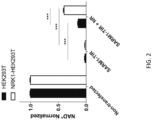
- the present disclosure also provides for a NRK1-HEK293T cell line comprising HEK293T cells transformed with a Nicotinamide Riboside Kinase 1 (NRK1).
- HEK293T cells may be transformed or transfected with a DNA sequence encoding Nicotinamide Riboside Kinase 1 (NRK1).
- the DNA encoding NRK1 can be genomic or cDNA.
- HEK293T cells may be stably or transiently transfected with DNA encoding NRK1 from a source exogenous to the host cell.
- HEK293T cells may be stably or transiently transfected with DNA encoding NRK1 such that the cells express NRK1 at an elevated level compared to control cells.
- DNA encoding NRK1 may be under the control of one or more exogenous regulatory DNA sequences such as a promoter, an enhancer or a combination thereof.
- a combination of a DNA sequences encoding NRK1 and regulatory sequences may be a non-naturally occurring combination.
- DNA encoding NRK1, either genomic or cDNA may comprise an expression vector such as an FCIV expression vector.
- DNA encoding NRK1 may be derived from genomic DNA or cDNA from a vertebrate or invertebrate species such as, but not limited to, human, mouse, zebrafish or a Drosophila.
- the NRK1 DNA is a human NRK1 DNA.
- the present disclosure provides a variety of uses and applications for compounds and/or compositions as described herein, for example in light of their activities and/or characteristics as described herein. Such uses may include therapeutic and/or diagnostic uses. Alternatively, such uses may include research, production, and/or other technological uses.
- the present disclosure provides methods comprising administering one or more compounds of formula I to a subject, e.g., to treat, prevent, or reduce the risk of developing one or more conditions characterized by axonal degeneration.
- the compound of formula I is a SARM1 inhibitor.
- the present disclosure relates to a method of inhibiting SARM1 activity in a patient comprising steps of administering to said patient a provided compound, or a composition comprising said compound.
- Inhibition of enzymes in a biological sample is useful for a variety of purposes that are known to one of skill in the art. Examples of such purposes include, but are not limited to biological assays, gene expression studies, and biological target identification.
- the present disclosure relates to a method of treating axonal degeneration in a biological sample comprising the step of contacting said biological sample with a compound or composition of Formula I.
- One or more compounds and/or compositions as described herein are useful, for example as a method of for inhibiting the degradation of neurons derived from a subject.
- One or more compounds and/or compositions as described herein are useful for inhibiting the degeneration of a neuron, or portion thereof, cultured in vitro.
- One or more compounds and/or compositions as described herein are useful as stabilizing agents to promote in vitro neuronal survival.
- Provided compounds and/or compositions inhibit NADase activity of SARM1. Alternatively or additionally, provided compounds alleviate one or more attributes of neurodegeneration.
- the present disclosure provides methods of treating a neurodegenerative disease or disorder associated with axonal degeneration.
- One or more compounds and/or compositions as described herein are useful, for example, in the practice of medicine.
- One or more compounds and/or compositions as described herein are useful, for example, to treat, prevent, or ameliorate axonal degeneration (e.g., one or more features or characteristics thereof).
- One or more compounds and/or compositions as described herein are useful, for example to inhibit axonal degeneration, including axonal degeneration that results from reduction or depletion of NAD+.
- One or more compounds and/or compositions as described herein are useful, for example to prevent the axon distal to an axonal injury from degenerating.
- One or more compounds and/or compositions as described herein are useful, for example as a method for inhibiting the degradation of a peripheral nervous system neuron or a portion thereof.
- One or more compounds and/or compositions as described herein are useful, for example as a method for inhibiting or preventing degeneration of a central nervous system (neuron) or a portion thereof.
- One or more compounds or compositions as described herein is characterized that, when administered to a population of subjects, reduces one or more symptoms or features of neurodegeneration.
- a relevant symptom or feature may be selected from the group consisting of extent, rate, and/or timing of neuronal disruption.
- the present disclosure provides compounds that are useful, for example, as analytical tools, as probes in biological assays, or as therapeutic agents in accordance with the present disclosure.
- Compounds provided by this disclosure are also useful for the study of SARM1 activity in biological and pathological phenomena and the comparative evaluation of new SARM1 activity inhibitors in vitro or in vivo.
- the present disclosure provides assays for identifying and/or characterizing compounds and/or compositions provided herein.
- Provided assays utilize particular reagents and/or systems (e.g., certain vector constructs and/or polypeptides) useful in assaying SARM1 activity.
- provided assays may utilize, for example, a SAM-TIR in which the SARM1 N-terminal auto-inhibitory domain is deleted, and/or one or more tagged versions of a TIR domain.
- One or more compounds and/or compositions as described herein are useful, for example as a method of for inhibiting the degradation of neurons derived from a subject.
- One or more compounds and/or compositions as described herein are useful for inhibiting the degeneration of a neuron, or portion thereof, cultured in vitro.
- One or more compounds and/or compositions as described herein are useful as stabilizing agents to promote in vitro neuronal survival.
- One or more compounds and/or compositions as described herein are useful, for example in affecting biomarkers associated with neurodegeneration. Changes in biomarkers can be detected systemically or with a sample of cerebral spinal fluid (CSF), plasma, serum, and/or tissue from a subject. One or more compounds and/or compositions can be used to affect a change in the concentration of neurofilament protein light (NF-L) and/or neurofilament protein heavy (NF-H) contained the cerebral spinal fluid of a subject. One or more compounds and/or compositions as described herein can affect constitutive NAD and/or cADPR levels in neurons and/or axons.
- CSF cerebral spinal fluid
- NF-L neurofilament protein light
- NF-H neurofilament protein heavy
- One or more compounds and/or compositions as described herein can affect a detectable change in the levels of one or more neurodegeneration-associated proteins in a subject.
- proteins include, but are not limited to, albumin, amyloid- ⁇ (A ⁇ )38, A ⁇ 40, A ⁇ 42, glial fibrillary acid protein (GFAP), heart-type fatty acid binding protein (hFABP), monocyte chemoattractin protein (MCP)-1, neurogranin, neuron specific enolayse (NSE), soluble amyloid precursor protein (sAPP) ⁇ , sAPP ⁇ , soluble triggering receptor expressed on myeloid cells (sTREM) 2, phospho-tau, and/or total-tau.
- GFAP amyloid- ⁇
- hFABP heart-type fatty acid binding protein
- MCP monocyte chemoattractin protein
- NSE neurogranin
- sAPP soluble amyloid precursor protein
- sTREM soluble triggering receptor expressed on myeloid cells
- compositions as described herein may be administered to subjects suffering from one or more diseases, disorders, or conditions.
- the condition may be an acute condition.
- the condition may be a chronic condition.
- the condition may be characterized by axonal degeneration in the central nervous system, the peripheral nervous system, the optic nerve, the cranial nerves, or a combination thereof.
- the condition may be or may comprise acute injury to the central nervous system, e.g., injury to the spinal cord and/or traumatic brain injury.
- the condition may be or may comprise a chronic injury to the central nervous system, e.g., injury to the spinal cord, traumatic brain injury, and/or traumatic axonal injury.
- the condition may be or may comprise chronic traumatic encephalopathy (CTE).
- CTE chronic traumatic encephalopathy
- the condition may be a chronic condition affecting the central nervous system, e.g., Parkinson's disease, amyotrophic lateral sclerosis, multiple sclerosis, or Huntington disease, Alzheimer's disease.
- Parkinson's disease e.g., amyotrophic lateral sclerosis, multiple sclerosis, or Huntington disease, Alzheimer's disease.
- CIPN Chemotherapy-induced peripheral neuropathy
- CIPN can be associated with various drugs, such as, but not limited to, thalidomide, epothilones (e.g., ixabepilone), taxanes (e.g., paclitaxel and docetaxel), vinca alkaloids (e.g., vinblastine, vinorelbine, vincristine, and vindesine), proteasome inhibitors (e.g., bortezomib), platinum-based drugs (e.g., cisplatin, oxaliplatin, and carboplatin).
- drugs such as, but not limited to, thalidomide, epothilones (e.g., ixabepilone), taxanes (e.g., paclitaxel and docetaxel), vinca alkaloids (e.g., vinblastine, vinorelbine, vincristine, and vindesine), proteasome inhibitors (
- the condition may be a chronic condition affecting the peripheral nervous system, e.g., diabetic neuropathy, HIV neuropathy, Charcot Marie Tooth disease, or amyotrophic lateral sclerosis.
- the condition may be an acute condition affecting the optic nerve, e.g., acute optic neuropathy (AON) or acute angle closure glaucoma.
- AON acute optic neuropathy
- AON acute angle closure glaucoma
- One or more compounds and/or compositions as described herein are useful, for example, to treat one or more neurodegenerative diseases, disorders or conditions selected from the group consisting of neuropathies or axonopathies.
- One or more compounds and/or compositions as described herein are useful, for example to treat a neuropathy or axonopathy associated with axonal degeneration.
- a neuropathy associated with axonal degeneration may be a hereditary or congenital neuropathy or axonopathy.
- a neuropathy associated with axonal degeneration may result from a de novo or somatic mutation.
- a neuropathy associated with axonal degeneration may be selected from a list contained herein.
- a neuropathy or axonopathy may be associated with axonal degeneration, including, but not limited to Parkinson's disease, non-Parkinson's disease, Alzheimer's disease, Herpes infection, diabetes, amyotrophic lateral sclerosis, a demyelinating disease, ischemia or stroke, chemical injury, thermal injury, and AIDS.
- One or more compounds or compositions as described herein may be characterized that, when administered to a population of subjects, reduces one or more symptoms or features of neurodegeneration.
- relevant symptom or feature may be selected from the group consisting of extent, rate, and/or timing of neuronal disruption.
- Neuronal disruption may be or comprise axonal degradation, loss of synapses, loss of dendrites, loss of synaptic density, loss of dendritic arborization, loss of axonal branching, loss of neuronal density, loss of myelination, loss of neuronal cell bodies, loss of synaptic potentiation, loss of action-potential potentiation, loss of cytoskeletal stability, loss of axonal transport, loss of ion channel synthesis and turnover, loss of neurotransmitter synthesis, loss of neurotransmitter release and reuptake capabilities, loss of axon-potential propagation, neuronal hyperexitability, and/or neuronal hypoexcitability.
- Neuronal disruption may be characterized by an inability to maintain an appropriate resting neuronal membrane potential. Neuronal disruption may be characterized by the appearance of inclusion bodies, plaques, and/or neurofibrillary tangles. Neuronal disruption may be characterized by the appearance of stress granules. Neuronal disruption may be characterized by the intracellular activation of one or more members of the cysteine-aspartic protease (Caspase) family. Neuronal disruption may be characterized by a neuron undergoing programed cell death (e.g. apoptosis, pyroptosis, ferroapoptosis, and/or necrosis) and/or inflammation.
- programed cell death e.g. apoptosis, pyroptosis, ferroapoptosis, and/or necrosis
- the neurodegenerative or neurological disease or disorder may be associated with axonal degeneration, axonal damage, axonopathy, a demyelinating disease, a central pontine myelinolysis, a nerve injury disease or disorder, a metabolic disease, a mitochondrial disease, metabolic axonal degeneration, axonal damage resulting from a leukoencephalopathy or a leukodystrophy.
- the neurodegenerative or neurological disease or disorder may be selected from the group consisting of spinal cord injury, stroke, multiple sclerosis, progressive multifocal leukoencephalopathy, congenital hypomyelination, encephalomyelitis, acute disseminated encephalomyelitis, central pontine myelolysis, osmotic hyponatremia, hypoxic demyelination, ischemic demyelination, adrenoleukodystrophy, Alexander's disease, Niemann-Pick disease, Pelizaeus Merzbacher disease, periventricular leukomalacia, globoid cell leukodystrophy (Krabbe's disease), Wallerian degeneration, optic neuritis, transverse myelitis, amyotrophic lateral sclerosis (ALS, Lou Gehrig's disease), Huntington's disease, Alzheimer's disease, Parkinson's disease, Tay-Sacks disease, Gaucher's disease, Hurler Syndrome, traumatic brain injury, post
- the present disclosure provides inhibitors of SARM1 activity for treatment of neurodegenerative or neurological diseases or disorders that involve axon degeneration or axonopathy.
- the present disclosure also provides methods of using inhibitors of SARM1 activity to treat, prevent or ameliorate axonal degeneration, axonopathies and neurodegenerative or neurological diseases or disorders that involve axonal degeneration.
- the present disclosure provides methods of treating neurodegenerative or neurological diseases or disorders related to axonal degeneration, axonal damage, axonopathies, demyelinating diseases, central pontine myelinolysis, nerve injury diseases or disorders, metabolic diseases, mitochondrial diseases, metabolic axonal degeneration, axonal damage resulting from a leukoencephalopathy or a leukodystrophy.
- Neuropathies and axonopathies may include any disease or condition involving neurons and/or supporting cells, such as for example, glia, muscle cells or fibroblasts, and, in particular, those diseases or conditions involving axonal damage.
- Axonal damage can be caused by traumatic injury or by non-mechanical injury due to diseases, conditions, or exposure to toxic molecules or drugs. The result of such damage can be degeneration or dysfunction of the axon and loss of functional neuronal activity.
- Disease and conditions producing or associated with such axonal damage are among a large number of neuropathic diseases and conditions.
- Such neuropathies can include peripheral neuropathies, central neuropathies, and combinations thereof.
- peripheral neuropathic manifestations can be produced by diseases focused primarily in the central nervous systems and central nervous system manifestations can be produced by essentially peripheral or systemic diseases.
- a peripheral neuropathy can involve damage to the peripheral nerves, and/or can be caused by diseases of the nerves or as the result of systemic illnesses.
- Some such diseases can include diabetes, uremia, infectious diseases such as AIDs or leprosy, nutritional deficiencies, vascular or collagen disorders such as atherosclerosis, and autoimmune diseases such as systemic lupus erythematosus, scleroderma, sarcoidosis, rheumatoid arthritis, and polyarteritis nodosa.
- Peripheral nerve degeneration may result from traumatic (mechanical) damage to nerves as well as chemical or thermal damage to nerves.
- Such conditions that injure peripheral nerves include compression or entrapment injuries such as glaucoma, carpal tunnel syndrome, direct trauma, penetrating injuries, contusions, fracture or dislocated bones; pressure involving superficial nerves (ulna, radial, or peroneal) which can result from prolonged use of crutches or staying in one position for too long, or from a tumor; intraneural hemorrhage; ischemia; exposure to cold or radiation or certain medicines or toxic substances such as herbicides or pesticides.
- the nerve damage can result from chemical injury due to a cytotoxic anticancer agent such as, for example, taxol, cisplatinin, a proteasome inhibitor, or a vinca alkaloid such as vincristine.
- Typical symptoms of such peripheral neuropathies include weakness, numbness, paresthesia (abnormal sensations such as burning, tickling, pricking or tingling) and pain in the arms, hands, legs and/or feet.
- a neuropathy may be associated with mitochondrial dysfunction.
- Such neuropathies can exhibit decreased energy levels, i.e., decreased levels of NAD and ATP.
- Peripheral neuropathy may be a metabolic and endocrine neuropathy which includes a wide spectrum of peripheral nerve disorders associated with systemic diseases of metabolic origin. These diseases include, for example, diabetes mellitus, hypoglycemia, uremia, hypothyroidism, hepatic failure, polycythemia, amyloidosis, acromegaly, porphyria, disorders of lipid/glycolipid metabolism, nutritional/vitamin deficiencies, and mitochondrial disorders, among others. The common hallmark of these diseases is involvement of peripheral nerves by alteration of the structure or function of myelin and axons due to metabolic pathway dysregulation.
- Neuropathies may include optic neuropathies such as glaucoma; retinal ganglion degeneration such as those associated with retinitis pigmentosa and outer retinal neuropathies; optic nerve neuritis and/or degeneration including that associated with multiple sclerosis; traumatic injury to the optic nerve which can include, for example, injury during tumor removal; hereditary optic neuropathies such as Kjer's disease and Leber's hereditary optic neuropathy; ischemic optic neuropathies, such as those secondary to giant cell arteritis; metabolic optic neuropathies such as neurodegenerative diseases including Leber's neuropathy mentioned earlier, nutritional deficiencies such as deficiencies in vitamins B12 or folic acid, and toxicities such as due to ethambutol or cyanide; neuropathies caused by adverse drug reactions and neuropathies caused by vitamin deficiency. Ischemic optic neuropathies also include non-arteritic anterior ischemic optic neuropathy.
- Neurodegenerative diseases that are associated with neuropathy or axonopathy in the central nervous system may include a variety of diseases. Such diseases include those involving progressive dementia such as, for example, Alzheimer's disease, senile dementia, Pick's disease, and Huntington's disease; central nervous system diseases affecting muscle function such as, for example, Parkinson's disease, motor neuron diseases and progressive ataxias such as amyotrophic lateral sclerosis; demyelinating diseases such as, for example multiple sclerosis; viral encephalitides such as, for example, those caused by enteroviruses, arboviruses, and herpes simplex virus; and prion diseases.
- progressive dementia such as, for example, Alzheimer's disease, senile dementia, Pick's disease, and Huntington's disease
- central nervous system diseases affecting muscle function such as, for example, Parkinson's disease, motor neuron diseases and progressive ataxias such as amyotrophic lateral sclerosis
- demyelinating diseases such as, for example
- Mechanical injuries such as glaucoma or traumatic injuries to the head and spine can also cause nerve injury and degeneration in the brain and spinal cord.
- ischemia and stroke as well as conditions such as nutritional deficiency and chemical toxicity such as with chemotherapeutic agents can cause central nervous system neuropathies.
- a neuropathy or axonopathy associated with axonal degeneration may be any of a number of neuropathies or axonopathies such as, for example, those that are hereditary or congenital or associated with Parkinson's disease, Alzheimer's disease, Herpes infection, diabetes, amyotrophic lateral sclerosis, a demyelinating disease, ischemia or stroke, chemical injury, thermal injury, and AIDS.
- neurodegenerative diseases not mentioned above as well as a subset of the above-mentioned diseases can also be treated with the methods of the present disclosure. Such subsets of diseases can include Parkinson's disease or non-Parkinson's diseases, or Alzheimer's disease.
- Compounds and/or compositions as described herein may be administered to subjects suffering from or susceptible to a disease, disorder or condition as described herein; such a disease, disorder or condition may be characterized by axonal degeneration, such as one of the conditions mentioned herein.
- a subject to whom a compound or composition is administered as described herein may exhibit one or more signs or symptoms associated with axonal degeneration; the subject may not exhibit any signs or symptoms of neurodegeneration.
- Provided methods may comprise administering a compound of formula I to a patient in need thereof.
- the patient may be at risk of developing a condition characterized by axonal degeneration.
- the patient may have a condition characterized by axonal degeneration.
- the patient may have been diagnosed with a condition characterized by axonal degeneration.
- Provided methods may comprise administering a composition as described herein to a patient population of in need thereof.
- the population may be drawn from individuals who engage in activities where the potential for traumatic neuronal injury is high.
- the population may drawn from athletes who engage in contact sports or other high-risk activities.
- the subject may be at risk of developing a condition characterized by axonal degeneration.
- the subject may be identified as being at risk of axonal degeneration, e.g., based on the subject's genotype, a diagnosis of a condition associated with axonal degeneration, and/or exposure to an agent and/or a condition that induces axonal degeneration.
- the patient may be at risk of developing a neurodegenerative disorder.
- the patient may be elderly.
- the patient may be known to has a genetic risk factor for neurodegeneration.
- the patient may have a family history of neurodegenerative disease.
- the patient may express one or more copies of a known genetic risk factor for neurodegeneration.
- the patient is drawn from a population with a high incidence of neurodegeneration.
- the patient may have a hexanucleotide repeat expansion in chromosome 9 open reading frame 72.
- the patient mayhave one or more copies of the ApoE4 allele.
- Subjects to which a compound or composition as described herein is administered may be or may comprise subjects suffering from or susceptible to a neurodegenerative disease, disorder or condition.
- a neurodegenerative disease, disorder or condition may be or may comprise a traumatic neuronal injury.
- a traumatic neuronal injury may be blunt force trauma, a closed-head injury, an open head injury, exposure to a concussive and/or explosive force, a penetrating injury in to the brain cavity or innervated region of the body.
- a traumatic neuronal injury may be a force which causes the axons to deform, stretch, crush or sheer.
- the subject may engage in an activity identified as a risk factor for neuronal degradation, e.g., a subject that engages in contact sports or occupations with a high chance for traumatic neuronal injury.
- a risk factor for neuronal degradation e.g., a subject that engages in contact sports or occupations with a high chance for traumatic neuronal injury.
- the subject may be a patient who is receiving, or is prescribed, a chemotherapy associated with peripheral neuropathy.
- chemotherapeutic agents include, but not limited to, thalidomide, epothilones (e.g., ixabepilone), taxanes (e.g., paclitaxel and docetaxel), vinca alkaloids (e.g., vinblastine, vinorelbine, vincristine, and vindesine), proteasome inhibitors (e.g., bortezomib), platinum-based drugs (e.g., cisplatin, oxaliplatin, and carboplatin).
- thalidomide epothilones
- taxanes e.g., paclitaxel and docetaxel
- vinca alkaloids e.g., vinblastine, vinorelbine, vincristine, and vindesine
- proteasome inhibitors e.g., bortezomib
- Provided methods may comprise administering a composition as described herein to a patient or patient population based on the presence or absence of one or more biomarkers. Provided methods further comprise monitoring the level of a biomarker in a patient or patient population and adjusting the dosing regimen accordingly.
- the exact amount of a particular compound included in and/or delivered by administration of a pharmaceutical composition or regimen as described herein may be selected by a medical practitioner and may be different for different subjects, for example, upon consideration of one or more of species, age, and general condition of the subject, and/or identity of the particular compound or composition, its mode of administration, and the like.
- the amount of a particular compound included in and/or delivered by administration of a pharmaceutical composition or regimen as described herein may be standardized across a relevant patient population (e.g., all patients, all patients of a particular age or stage of disease or expressing a particular biomarker, etc.).
- a provided compound or composition of the present disclosure is preferably formulated in dosage unit form for ease of administration and uniformity of dosage.
- dosage unit form refers to a physically discrete unit of agent appropriate for the patient to be treated. It will be understood, however, that the total daily usage of a provided compound or composition of the present disclosure will be decided by the attending physician within the scope of sound medical judgment.
- the specific effective dose level for any particular patient or organism will depend upon a variety of factors including the disorder being treated and the severity of the disorder; the clinical condition of the individual patient; the cause of the disorder; the activity of the specific compound employed; the specific composition employed; the age, body weight, general health, sex and diet of the patient; the time of administration, delivery site of the agent, route of administration, and rate of excretion of the specific compound employed; the duration of the treatment; drugs used in combination or coincidental with the specific compound employed, and like factors well known in the medical arts.
- the effective amount of the compound to be administered will be governed by such considerations, and is the minimum amount necessary to inhibit SARM1 activity as required to prevent or treat the undesired disease or disorder, such as for example, neurodegeneration or traumatic neural injury.
- a pharmaceutically acceptable composition of this disclosure can be administered to humans and other animals orally, rectally, intravenously, parenterally, intracisternally, intravaginally, intraperitoneally, topically (as by powders, ointments, or drops), bucally, as an oral or nasal spray, or the like, depending on the severity of the disease, disorder or infection being treated.
- the daily dose may be given as a single daily dose or in divided doses two to six times a day, or in sustained release form. This dosage regimen may be adjusted to provide the optimal therapeutic response.
- the compounds may be administered on a regimen of 1 to 4 times per day, preferably once or twice per day.
- compositions of the present disclosure may be administered orally, parenterally, by inhalation spray, topically, rectally, nasally, buccally, vaginally or via an implanted reservoir.
- parenteral as used herein includes subcutaneous, intravenous, intramuscular, intra-articular, intra-synovial, intrasternal, intrathecal, intrahepatic, intradermal, intraocular, intralesional and intracranial injection or infusion techniques.
- the compositions are administered orally, intraperitoneally or intravenously.
- compositions of this disclosure may also be administered topically, especially when the target of treatment includes areas or organs readily accessible by topical application, including diseases of the eye, the skin, or the lower intestinal tract. Suitable topical formulations are readily prepared for each of these areas or organs.
- compositions of this disclosure may be formulated for oral administration. Such formulations may be administered with or without food. Pharmaceutically acceptable compositions of this disclosure may be administered without food. Pharmaceutically acceptable compositions of this disclosure may be administered with food.
- those additional agents may be administered separately from a provided compound or composition thereof, as part of a multiple dosage regimen.
- those agents may be part of a single dosage form, mixed together with a provided compound in a single composition. If administered as part of a multiple dosage regime, the two active agents may be submitted simultaneously, sequentially or within a period of time from one another, normally within five hours from one another.
- a specific dosage and treatment regimen for any particular patient may depend upon a variety of factors, including the activity of the specific compound employed, the age, body weight, general health, sex, diet, time of administration, rate of excretion, drug combination, and the judgment of the treating physician and the severity of the particular disease being treated.
- the amount of a compound of the present disclosure in the composition will also depend upon the particular compound in the composition.
- SARM1 inhibition as described herein may be utilized in combination with one or more other therapies to treat a relevant disease, disorder, or condition. Dosing of a SARM1 inhibitor may be altered when utilized in combination therapy as compared with when administered as monotherapy; alternatively or additionally, a therapy that may be administered in combination with SARM1 inhibition as described herein is administered according to a regimen or protocol that differs from its regimen or protocol when administered alone or in combination with one or more therapies other than SARM1 inhibition. Compositions which comprise an additional therapeutic agent, that additional therapeutic agent and a provided compound may act synergistically. One or both therapies utilized in a combination regimen may be administered at a lower level or less frequently than when it is utilized as monotherapy.
- Compounds and/or compositions described herein may be administered with a chemotherapeutic agent including, but not limited to, alkylating agents, anthracyclines, taxanes, epothilones, histone deacetylase inhibitors, topoisomerase inhibitors, kinase inhibitors, nucleotide analogs, peptide antibiotics, platinum-based agents, retinoids, vinca alkaloids and derivatives.
- chemotherapeutic agent including, but not limited to, alkylating agents, anthracyclines, taxanes, epothilones, histone deacetylase inhibitors, topoisomerase inhibitors, kinase inhibitors, nucleotide analogs, peptide antibiotics, platinum-based agents, retinoids, vinca alkaloids and derivatives.
- Methods of administration of pharmaceuticals and dosage regimes can be determined according to standard principles of pharmacology, using methods provided by standard reference texts such as Remington: the Science and Practice of Pharmacy (Alfonso R. Gennaro ed. 19th ed. 1995 ); Hardman, J.G., et al., Goodman & Gilman's The Pharmacological Basis of Therapeutics, Ninth Edition, McGraw-Hill, 1996 ; and Rowe, R.C., et al., Handbook of Pharmaceutical Excipients, Fourth Edition, Pharmaceutical Press, 2003 .
- This Example describes an assay of SAM-TIR NADase activity and use of this assay to measure the efficacy of compounds of Formula I to block SARM1 mediated NAD+ cleavage.
- This assay is optimized in such a way as to characterize the efficacy of the compounds in Formula I to inhibit SARM1 activity and to calculate an IC50 value for each compound.
- This assay makes use of a fragment of the SARM1 molecule encompassing the SAM and TIR domains. As demonstrated herein, expression of this fragment without the autoinhibitory N- terminal domain generates a constitutively active enzyme that cleaves NAD+.
- NRK1-HEK293T cells refers to a cell line that has been stably e transfected with an FCIV expression vector that expresses human Nicotinamide Riboside Kinase 1 (NRK1), an enzyme that converts the NAD+ biosynthetic precursor nicotinamide riboside (NR) to NMN, the immediate precursor of NAD+.
- NRK1 human Nicotinamide Riboside Kinase 1
- NR nicotinamide riboside
- Figure 2 illustrates that a NRK1-HEK293T stable line with NR supplementation maintains higher NAD+ levels upon SARM1-TIR expression.
- NRK1-HEK293T cells represent a cell line that has been stably transfected with an FCIV expression vector that expresses human Nicotinamide Riboside Kinase 1 (NRK1), an enzyme that converts the NAD+ biosynthetic precursor nicotinamide riboside (NR) to NMN, the immediate precursor of NAD+.
- NRK1 human Nicotinamide Riboside Kinase 1
- NR nicotinamide riboside
- NRK1-HEK293T cells were seeded onto 150 cm 2 plates at 20 x 106 cells per plate. The next day, the cells were transfected with 15 ⁇ g FCIV-SST (SAM-TIR expression plasmid, SEQ ID NO: 1) using X-TREMEGENE TM 9 DNA Transfection Reagent (Roche product #06365787001).
- the lysates were centrifuged (12,000 ⁇ g for 10 min at 4°C) to remove cell debris and the supernatants (containing SARM1 SAM-TIR protein) were stored at -80°C for later use in the in vitro SARM1 SAM-TIR NADase assay (see below). Protein concentration was determined by the Bicinchoninic (BCA) method and used to normalize lysate concentrations.
- BCA Bicinchoninic
- the enzymatic assay was performed in a 384-well polypropylene plate in Dulbecco's PBS buffer in a final assay volume of 20 ⁇ L.
- SAM-TIR lysate with a final concentration of 5 ⁇ g/mL was pre-incubated with the respective compound at 1% DMSO final assay concentration over 2 hr at room temperature.
- the reaction was initiated by addition of 5 ⁇ M final assay concentration of NAD+ as substrate. After a 2 hr room temperature incubation, the reaction was terminated with 40 ⁇ L of stop solution of 7.5% trichloroactetic acid in acetonitrile.
- the NAD+ and ADPR concentrations were analyzed by a RapidFire High Throughput Mass Spectrometry System (Agilent Technologies, Santa Clara, CA) using an API4000 triple quadrupole mass spectrometer (AB Sciex Framingham, MA).
- Example SARM1 IC 50 ( ⁇ M) 1 B 2 C 3 A 4 A 5 A 6 B 7 D 8 A 9 C 10 A 11 A 12 A 13 B 14 D 15 A 16 D 17 B 18 A 19 B 20 B 21 B 22 B 23 D 24 D 25 D 26 A 27 D 28 D 29 A 30 A 31 A 32 A 33 B 34 C 35 C 36 C 37 C 38 D 39 D 40 D 41 A 42 A 43 A 44 A 45 A 46 A 47 B 48 B 49 B 50 C 51 D 52 D 53 D 54 C 55 A 56 A 57 B 58 B 59 C 60 D 61 D 62 A 63 B 64 A 65 A 66 A 67 A 68 A 69 A 70 A 71 B 72 B 73 B 74 B 75 C 76 C 77 C 78 C 79 C 80 D 81 D 82 D 83 D 84 D 85 A
- This Example illustrates an in vitro axon degeneration assay used to characterize compounds of Formula I. This assay is used to test the efficacy of the compounds of Formula I to prevent axonal degeneration in a mouse dorsal root ganglion (DRG) drop culture.
- DRG dorsal root ganglion
- DRGs Mouse dorsal root ganglion neurons
- E12.5 CD1 mice 50 ganglion per embryo
- DRG growth medium Neurotrophic factor (Gibco) containing 2% B27 (Invitrogen), 100 ng/ml 2.5S NGF (Harland Bioproducts), 1 mM 5-fluoro-2'deoxyuridine (Sigma), penicillin, and streptomycin.
- DRG growth medium Neurotrophic factor (Gibco) containing 2% B27 (Invitrogen), 100 ng/ml 2.5S NGF (Harland Bioproducts), 1 mM 5-fluoro-2'deoxyuridine (Sigma), penicillin, and streptomycin.
- DRG drop cultures were created by spotting 5000 cells/well into the center of each well of a 96-well tissue culture plate coated with poly-D-Lysine (0.1 mg/ml; Sigma) and laminin (3 mg/ml; Invitrogen). Cells were allowed to adhere to the plates in a humidified tissue culture incubator (5% CO 2 ) for 15 min and then DRG growth medium was gently added (100 ml well).
- Axonal degeneration was stimulated either by manual axonal transection using a scalpel blade, or chemotoxic stimuli. After an appropriate experimental time period, the DRG cultures were fixed in 1% PFA plus sucrose and kept in the fridge prior to imaging. Bright-field images of DRG axons and cell bodies were collected using the 20x water immersion lens of a Phenix automated confocal microscope (PerkinElmer) and quantitation of axonal performed using in-house developed scripts (Acapella, PerkinElmer).
Landscapes
- Organic Chemistry (AREA)
- Chemical & Material Sciences (AREA)
- Health & Medical Sciences (AREA)
- Neurosurgery (AREA)
- Engineering & Computer Science (AREA)
- Bioinformatics & Cheminformatics (AREA)
- Biomedical Technology (AREA)
- Neurology (AREA)
- Public Health (AREA)
- Life Sciences & Earth Sciences (AREA)
- Chemical Kinetics & Catalysis (AREA)
- General Chemical & Material Sciences (AREA)
- Medicinal Chemistry (AREA)
- Nuclear Medicine, Radiotherapy & Molecular Imaging (AREA)
- Pharmacology & Pharmacy (AREA)
- Veterinary Medicine (AREA)
- Animal Behavior & Ethology (AREA)
- General Health & Medical Sciences (AREA)
- Hospice & Palliative Care (AREA)
- Psychiatry (AREA)
- Pharmaceuticals Containing Other Organic And Inorganic Compounds (AREA)
- Nitrogen Condensed Heterocyclic Rings (AREA)
- Other In-Based Heterocyclic Compounds (AREA)
- Medicines That Contain Protein Lipid Enzymes And Other Medicines (AREA)
Applications Claiming Priority (2)
| Application Number | Priority Date | Filing Date | Title |
|---|---|---|---|
| US201862682033P | 2018-06-07 | 2018-06-07 | |
| PCT/US2019/035833 WO2019236879A1 (en) | 2018-06-07 | 2019-06-06 | Inhibitors of sarm1 |
Publications (3)
| Publication Number | Publication Date |
|---|---|
| EP3801500A1 EP3801500A1 (en) | 2021-04-14 |
| EP3801500A4 EP3801500A4 (en) | 2022-03-02 |
| EP3801500B1 true EP3801500B1 (en) | 2025-03-05 |
Family
ID=68769462
Family Applications (1)
| Application Number | Title | Priority Date | Filing Date |
|---|---|---|---|
| EP19816172.1A Active EP3801500B1 (en) | 2018-06-07 | 2019-06-06 | Inhibitors of sarm1 |
Country Status (8)
| Country | Link |
|---|---|
| US (1) | US12338238B2 (https=) |
| EP (1) | EP3801500B1 (https=) |
| JP (2) | JP2021527125A (https=) |
| CN (1) | CN112839647B (https=) |
| CA (1) | CA3102645A1 (https=) |
| ES (1) | ES3028093T3 (https=) |
| MA (1) | MA52813A (https=) |
| WO (1) | WO2019236879A1 (https=) |
Families Citing this family (14)
| Publication number | Priority date | Publication date | Assignee | Title |
|---|---|---|---|---|
| CN112839647B (zh) | 2018-06-07 | 2025-09-23 | 达萨玛治疗公司 | Sarm1抑制剂 |
| CN112839648B (zh) | 2018-06-07 | 2025-04-04 | 达萨玛治疗公司 | Sarm1抑制剂 |
| EP3897670A4 (en) | 2018-12-19 | 2022-09-07 | Disarm Therapeutics, Inc. | MRSA1 INHIBITORS IN COMBINATION WITH NEUROPROTECTIVE AGENTS |
| US12595252B2 (en) | 2019-06-14 | 2026-04-07 | Disarm Therapeutics, Inc. | Inhibitors of SARM1 |
| CA3150878A1 (en) | 2019-09-12 | 2021-03-18 | Jonathan Bentley | Inhibitors of sarm1 |
| JP7528212B2 (ja) * | 2019-11-26 | 2024-08-05 | ディスアーム セラピューティクス, インコーポレイテッド | 神経保護のための方法および組成物 |
| US12606558B2 (en) | 2020-04-09 | 2026-04-21 | Disarm Therapeutics, Inc. | Condensed pyrazole derivatives as inhibitors of SARM1 |
| US12435084B2 (en) | 2020-04-09 | 2025-10-07 | Eli Lilly And Company | Indazole derivatives as inhibitors of SARM1 |
| IL298577A (en) * | 2020-05-27 | 2023-01-01 | Emendobio Inc | Biallelic silencing of sarm1 |
| TWI904906B (zh) | 2020-08-24 | 2025-11-11 | 美商達薩瑪治療公司 | Sarm1之抑制劑 |
| WO2023240084A2 (en) * | 2022-06-06 | 2023-12-14 | Denali Therapeutics Inc. | Compounds, compositions, and methods |
| EP4539840A4 (en) * | 2022-06-17 | 2026-04-15 | Sundance Biosciences Inc | Kinase Modulators and Their Methods of Use |
| WO2024158607A1 (en) | 2023-01-24 | 2024-08-02 | Disarm Therapeutics, Inc. | Substituted 1h-pyrazole-4-carboxamides as sarm1 inhibitors |
| TW202509019A (zh) * | 2023-04-27 | 2025-03-01 | 香港商維泰瑞隆(香港)生物科技有限公司 | Sarm1調節子、其製劑及用途 |
Family Cites Families (58)
| Publication number | Priority date | Publication date | Assignee | Title |
|---|---|---|---|---|
| GB1022214A (en) | 1963-01-31 | 1966-03-09 | Sterling Drug Inc | Novel 1,3-disubstituted-1,4-dihydro-4-oxo-1,7-naphthyridines and their preparation |
| US3429887A (en) | 1965-01-26 | 1969-02-25 | Sterling Drug Inc | 1,7-naphthyridine-3-carboxylic acid derivatives and their preparation |
| US3506668A (en) | 1965-01-26 | 1970-04-14 | Sterling Drug Inc | Method of preparing 8-hydroxy-quinolines |
| US3429882A (en) | 1968-03-25 | 1969-02-25 | Geigy Chem Corp | 1,2,8,9-tetraazaphenalenes |
| US3539567A (en) | 1968-04-23 | 1970-11-10 | Geigy Chem Corp | 8-carboxy-1(2h) phthalazinones |
| US3761493A (en) | 1968-04-23 | 1973-09-25 | Ciba Geigy Corp | 3-dibromomethylphthalic anhydride |
| US3624108A (en) | 1968-04-23 | 1971-11-30 | Geigy Chem Corp | 7-carboxyphthalides |
| US3542777A (en) | 1968-08-12 | 1970-11-24 | Geigy Chem Corp | Derivatives of 9-pyridylalkyl-1,2,8,9-tetraazaphenalenes |
| US3517014A (en) | 1969-06-16 | 1970-06-23 | Sterling Drug Inc | Method of preparing 8-hydroxyquinoline-3-carboxylic acids |
| US3711473A (en) | 1970-04-06 | 1973-01-16 | Ciba Geigy Corp | 3-hydrazino-1,2,8,9-tetraazaphenalenes |
| DE2449252A1 (de) | 1973-10-16 | 1975-04-17 | Fuji Photo Film Co Ltd | Waermeentwickelbares, lichtempfindliches material |
| US4207112A (en) | 1974-01-29 | 1980-06-10 | Fuji Photo Film Co., Ltd. | Heat developable light-sensitive materials |
| JPS50123331A (https=) | 1974-03-14 | 1975-09-27 | ||
| GB9310700D0 (en) * | 1993-05-24 | 1993-07-07 | Zeneca Ltd | Novel composition |
| WO2001081316A2 (en) | 2000-04-27 | 2001-11-01 | Abbott Laboratories | Substituted phenyl farnesyltransferase inhibitors |
| US7109208B2 (en) * | 2001-04-11 | 2006-09-19 | Senju Pharmaceutical Co., Ltd. | Visual function disorder improving agents |
| ES2211344B1 (es) | 2002-12-26 | 2005-10-01 | Almirall Prodesfarma, S.A. | Nuevos derivados de piridazin-3(2h)-ona. |
| US20050222127A1 (en) * | 2004-03-30 | 2005-10-06 | Alcon, Inc. | Use of Rho kinase inhibitors in the treatment of hearing loss, tinnitus and improving body balance |
| US20060078890A1 (en) * | 2004-10-08 | 2006-04-13 | Ole Isacson | Methods for identifying parkinson's disease therapeutics |
| CN101213187B (zh) * | 2005-06-28 | 2012-06-06 | 塞诺菲-安万特股份有限公司 | 作为rho-激酶抑制剂的异喹啉衍生物 |
| RS52241B (sr) * | 2005-07-26 | 2012-10-31 | Sanofi | Derivati cikloheksilamin izohinolona kao inhibitori rho-kinaze |
| CN101277939A (zh) | 2005-09-09 | 2008-10-01 | 布里斯托尔-迈尔斯斯奎布公司 | 无环ikur抑制剂 |
| GB0605766D0 (en) | 2006-03-22 | 2006-05-03 | Ucb Sa | Process |
| US20100004244A1 (en) * | 2006-06-27 | 2010-01-07 | Yissum Research Development Company Of The Hebrew University Of Jerusalem | Use of cb2 receptor agonists for promoting neurogenesis |
| JP2009543801A (ja) * | 2006-07-13 | 2009-12-10 | ノバルティス アクチエンゲゼルシャフト | 神経障害処置におけるトリフルオロメチル置換ベンズアミドの使用 |
| CA2725014C (en) * | 2008-05-30 | 2014-06-17 | Amgen Inc. | Inhibitors of pi3 kinase |
| JP2010053073A (ja) * | 2008-08-28 | 2010-03-11 | Sankyo Kasei Kk | ハロゲン化イソキノリン類の製造方法 |
| US8450363B2 (en) * | 2009-02-06 | 2013-05-28 | Elan Pharmaceuticals, Inc. | Inhibitors of Jun N-terminal kinase |
| AU2012212323A1 (en) | 2011-02-01 | 2013-09-12 | The Board Of Trustees Of The University Of Illinois | HDAC inhibitors and therapeutic methods using the same |
| DE102011009961A1 (de) * | 2011-02-01 | 2012-08-02 | Merck Patent Gmbh | 7-Azaindolderivate |
| WO2012178022A2 (en) | 2011-06-24 | 2012-12-27 | University Of Massachusetts | Therapeutic applications targeting sarm1 |
| WO2013005157A1 (en) | 2011-07-05 | 2013-01-10 | Lupin Limited | Sulfone derivatives and their use as pkm2 modulators for the treatment of cancer |
| DE102012019369A1 (de) | 2012-10-02 | 2014-04-03 | Merck Patent Gmbh | 7-Azaindolderivat |
| KR20160023854A (ko) | 2013-06-24 | 2016-03-03 | 메르크 파텐트 게엠베하 | 프탈라진 유도체 |
| WO2015050471A1 (en) * | 2013-10-02 | 2015-04-09 | Obschestvo S Ogranichennoy Otvetstvennost'yu "Panacela Labs" | Carbazole compounds and methods of using same |
| WO2015102929A1 (en) * | 2013-12-30 | 2015-07-09 | Novartis Ag | Tricyclic sulfonamide derivatives |
| FR3017868A1 (fr) | 2014-02-21 | 2015-08-28 | Servier Lab | Derives d'isoquinoleine, leur procede de preparation et les compositions pharmaceutiques qui les contiennent |
| ES2774923T3 (es) * | 2014-04-28 | 2020-07-23 | China Resources Pharmaceutical Holdings Company Ltd | Derivados de isoquinolinsulfonilo como inhibidores de RHO quinasa |
| EP3188730B1 (en) * | 2014-09-05 | 2019-05-01 | Merck Sharp & Dohme Corp. | Tetrahydroisoquinoline derivatives useful as inhibitors of diacylglyceride o-acyltransferase 2 |
| CA3011189C (en) | 2016-01-14 | 2024-02-20 | Bayer Pharma Aktiengesellschaft | 5-substituted 2-(morpholin-4-yl)-1,7-naphthyridines |
| WO2018035204A1 (en) | 2016-08-16 | 2018-02-22 | Henry Ford Health System | Compositions for the treatment of neuropathic pain and sensitization of tumors to chemotherapies |
| JP7044789B2 (ja) | 2016-09-24 | 2022-03-30 | ワシントン・ユニバーシティ | Sarm1 nadアーゼ活性の阻害剤およびその使用 |
| US11098026B2 (en) * | 2017-03-13 | 2021-08-24 | Impetis Biosciences Limited | Fused bicyclic compounds, compositions and applications thereof |
| CN112839648B (zh) | 2018-06-07 | 2025-04-04 | 达萨玛治疗公司 | Sarm1抑制剂 |
| CN112839647B (zh) | 2018-06-07 | 2025-09-23 | 达萨玛治疗公司 | Sarm1抑制剂 |
| CA3108669A1 (en) | 2018-06-07 | 2019-12-12 | Disarm Therapeutics, Inc. | Inhibitors of sarm1 |
| CN109223787A (zh) | 2018-10-04 | 2019-01-18 | 南京先进生物材料与过程装备研究院有限公司 | 一种喜树碱和新型酞嗪酮类化合物联合用药物组合物 |
| CN109336863A (zh) | 2018-10-04 | 2019-02-15 | 南京先进生物材料与过程装备研究院有限公司 | 一种新型酞嗪酮类btk抑制剂、制备及其应用 |
| CN109485636A (zh) | 2018-10-04 | 2019-03-19 | 南京先进生物材料与过程装备研究院有限公司 | 一种新型btk激酶抑制剂的盐酸盐及其制备方法与用途 |
| CN109180642A (zh) | 2018-10-04 | 2019-01-11 | 南京先进生物材料与过程装备研究院有限公司 | 酞嗪酮类btk抑制剂及其应用 |
| CN109293635A (zh) | 2018-10-04 | 2019-02-01 | 南京先进生物材料与过程装备研究院有限公司 | 一种新型btk激酶抑制剂的p晶型及其制备方法 |
| WO2020081923A1 (en) * | 2018-10-19 | 2020-04-23 | Disarm Therapeutics, Inc. | Inhibitors of sarm1 in combination with nad+ or a nad+ precursor |
| CN109276571A (zh) | 2018-10-31 | 2019-01-29 | 南京先进生物材料与过程装备研究院有限公司 | 一种紫杉醇和新型硝基酞嗪酮btk抑制剂联合用药物组合物及其应用 |
| CN109331018A (zh) | 2018-10-31 | 2019-02-15 | 南京先进生物材料与过程装备研究院有限公司 | 一种紫杉醇和硝基酞嗪酮btk抑制剂联合用药物组合物及其应用 |
| CN109481441A (zh) | 2018-10-31 | 2019-03-19 | 南京先进生物材料与过程装备研究院有限公司 | 一种紫杉醇和新型甲氧基酞嗪酮类btk抑制剂联合用药物组合物及其应用 |
| CN109172562A (zh) | 2018-10-31 | 2019-01-11 | 南京先进生物材料与过程装备研究院有限公司 | 一种紫杉醇和甲氧基酞嗪酮类btk抑制剂联合用药物组合物及其应用 |
| CN109394766A (zh) | 2018-10-31 | 2019-03-01 | 南京先进生物材料与过程装备研究院有限公司 | 一种紫杉醇和对苯硝基酞嗪酮类btk抑制剂联合用药物组合物及其应用 |
| EP4174170A4 (en) | 2020-06-25 | 2023-12-06 | FUJIFILM Corporation | METHOD FOR PRODUCING INTESTINAL EPITHELIAL CELLS AND USE THEREOF |
-
2019
- 2019-06-06 CN CN201980052437.0A patent/CN112839647B/zh active Active
- 2019-06-06 CA CA3102645A patent/CA3102645A1/en active Pending
- 2019-06-06 JP JP2021518045A patent/JP2021527125A/ja active Pending
- 2019-06-06 EP EP19816172.1A patent/EP3801500B1/en active Active
- 2019-06-06 ES ES19816172T patent/ES3028093T3/es active Active
- 2019-06-06 US US16/972,684 patent/US12338238B2/en active Active
- 2019-06-06 WO PCT/US2019/035833 patent/WO2019236879A1/en not_active Ceased
- 2019-06-06 MA MA052813A patent/MA52813A/fr unknown
-
2023
- 2023-11-30 JP JP2023203259A patent/JP7576145B2/ja active Active
Non-Patent Citations (2)
| Title |
|---|
| KITAOKA YASUSHI ET AL: "Axonal Protection by Ripasudil, a Rho Kinase Inhibitor, via Modulating Autophagy in TNF-Induced Optic Nerve Degeneration", INVESTIGATIVE OPTHALMOLOGY & VISUAL SCIENCE, vol. 58, no. 12, 4 October 2017 (2017-10-04), US, pages 5056, XP093003746, ISSN: 1552-5783, DOI: 10.1167/iovs.17-22000 * |
| KOTARO YAMAMOTO ET AL: "The Novel Rho Kinase (ROCK) Inhibitor K-115: A New Candidate Drug for Neuroprotective Treatment in Glaucoma", INVESTIGATIVE OPTHALMOLOGY & VISUAL SCIENCE, vol. 55, no. 11, 11 November 2014 (2014-11-11), US, pages 7126 - 7136, XP055326441, ISSN: 1552-5783, DOI: 10.1167/iovs.13-13842 * |
Also Published As
| Publication number | Publication date |
|---|---|
| ES3028093T3 (en) | 2025-06-18 |
| MA52813A (fr) | 2021-04-14 |
| JP2021527125A (ja) | 2021-10-11 |
| EP3801500A4 (en) | 2022-03-02 |
| CN112839647B (zh) | 2025-09-23 |
| CN112839647A (zh) | 2021-05-25 |
| US12338238B2 (en) | 2025-06-24 |
| EP3801500A1 (en) | 2021-04-14 |
| JP2024037770A (ja) | 2024-03-19 |
| US20210261540A1 (en) | 2021-08-26 |
| WO2019236879A1 (en) | 2019-12-12 |
| JP7576145B2 (ja) | 2024-10-30 |
| CA3102645A1 (en) | 2019-12-12 |
Similar Documents
| Publication | Publication Date | Title |
|---|---|---|
| EP3801500B1 (en) | Inhibitors of sarm1 | |
| EP3980011B1 (en) | Inhibitors of sarm1 | |
| US12595252B2 (en) | Inhibitors of SARM1 | |
| US12448374B2 (en) | Inhibitors of SARM1 | |
| EP4132920B1 (en) | Indazole derivatives as inhibitors of sarm1 | |
| US20210261537A1 (en) | Inhibitors of sarm1 | |
| US12441719B2 (en) | Inhibitors of SARM1 | |
| EP4132928B1 (en) | Condensed pyrazole derivatives as inhibitors of sarm1 | |
| US20240051939A1 (en) | Benzopyrazole inhibitors of sarm1 | |
| CA3102598C (en) | Inhibitors of sarm1 |
Legal Events
| Date | Code | Title | Description |
|---|---|---|---|
| STAA | Information on the status of an ep patent application or granted ep patent |
Free format text: STATUS: THE INTERNATIONAL PUBLICATION HAS BEEN MADE |
|
| PUAI | Public reference made under article 153(3) epc to a published international application that has entered the european phase |
Free format text: ORIGINAL CODE: 0009012 |
|
| STAA | Information on the status of an ep patent application or granted ep patent |
Free format text: STATUS: REQUEST FOR EXAMINATION WAS MADE |
|
| 17P | Request for examination filed |
Effective date: 20210105 |
|
| AK | Designated contracting states |
Kind code of ref document: A1 Designated state(s): AL AT BE BG CH CY CZ DE DK EE ES FI FR GB GR HR HU IE IS IT LI LT LU LV MC MK MT NL NO PL PT RO RS SE SI SK SM TR |
|
| AX | Request for extension of the european patent |
Extension state: BA ME |
|
| REG | Reference to a national code |
Ref country code: DE Ref legal event code: R079 Free format text: PREVIOUS MAIN CLASS: A61K0031395000 Ipc: C07D0217220000 Ref country code: DE Ref legal event code: R079 Ref document number: 602019066959 Country of ref document: DE Free format text: PREVIOUS MAIN CLASS: A61K0031395000 Ipc: C07D0217220000 |
|
| A4 | Supplementary search report drawn up and despatched |
Effective date: 20220131 |
|
| RIC1 | Information provided on ipc code assigned before grant |
Ipc: A61P 25/02 20060101ALI20220126BHEP Ipc: A61K 31/472 20060101ALI20220126BHEP Ipc: A61K 31/502 20060101ALI20220126BHEP Ipc: C07D 471/04 20060101ALI20220126BHEP Ipc: C07D 237/30 20060101ALI20220126BHEP Ipc: C07D 239/74 20060101ALI20220126BHEP Ipc: C07D 237/28 20060101ALI20220126BHEP Ipc: C07D 217/24 20060101ALI20220126BHEP Ipc: C07D 217/22 20060101AFI20220126BHEP |
|
| STAA | Information on the status of an ep patent application or granted ep patent |
Free format text: STATUS: EXAMINATION IS IN PROGRESS |
|
| 17Q | First examination report despatched |
Effective date: 20221208 |
|
| P01 | Opt-out of the competence of the unified patent court (upc) registered |
Effective date: 20230530 |
|
| GRAP | Despatch of communication of intention to grant a patent |
Free format text: ORIGINAL CODE: EPIDOSNIGR1 |
|
| STAA | Information on the status of an ep patent application or granted ep patent |
Free format text: STATUS: GRANT OF PATENT IS INTENDED |
|
| INTG | Intention to grant announced |
Effective date: 20240920 |
|
| GRAS | Grant fee paid |
Free format text: ORIGINAL CODE: EPIDOSNIGR3 |
|
| GRAA | (expected) grant |
Free format text: ORIGINAL CODE: 0009210 |
|
| STAA | Information on the status of an ep patent application or granted ep patent |
Free format text: STATUS: THE PATENT HAS BEEN GRANTED |
|
| AK | Designated contracting states |
Kind code of ref document: B1 Designated state(s): AL AT BE BG CH CY CZ DE DK EE ES FI FR GB GR HR HU IE IS IT LI LT LU LV MC MK MT NL NO PL PT RO RS SE SI SK SM TR |
|
| REG | Reference to a national code |
Ref country code: GB Ref legal event code: FG4D |
|
| REG | Reference to a national code |
Ref country code: DE Ref legal event code: R082 Ref document number: 602019066959 Country of ref document: DE Representative=s name: OFFICE FREYLINGER S.A., LU |
|
| REG | Reference to a national code |
Ref country code: CH Ref legal event code: EP |
|
| REG | Reference to a national code |
Ref country code: IE Ref legal event code: FG4D |
|
| REG | Reference to a national code |
Ref country code: DE Ref legal event code: R096 Ref document number: 602019066959 Country of ref document: DE |
|
| REG | Reference to a national code |
Ref country code: ES Ref legal event code: FG2A Ref document number: 3028093 Country of ref document: ES Kind code of ref document: T3 Effective date: 20250618 |
|
| PG25 | Lapsed in a contracting state [announced via postgrant information from national office to epo] |
Ref country code: RS Free format text: LAPSE BECAUSE OF FAILURE TO SUBMIT A TRANSLATION OF THE DESCRIPTION OR TO PAY THE FEE WITHIN THE PRESCRIBED TIME-LIMIT Effective date: 20250605 |
|
| PG25 | Lapsed in a contracting state [announced via postgrant information from national office to epo] |
Ref country code: FI Free format text: LAPSE BECAUSE OF FAILURE TO SUBMIT A TRANSLATION OF THE DESCRIPTION OR TO PAY THE FEE WITHIN THE PRESCRIBED TIME-LIMIT Effective date: 20250305 |
|
| PGFP | Annual fee paid to national office [announced via postgrant information from national office to epo] |
Ref country code: DE Payment date: 20250520 Year of fee payment: 7 |
|
| REG | Reference to a national code |
Ref country code: NL Ref legal event code: MP Effective date: 20250305 |
|
| PGFP | Annual fee paid to national office [announced via postgrant information from national office to epo] |
Ref country code: GB Payment date: 20250520 Year of fee payment: 7 |
|
| REG | Reference to a national code |
Ref country code: LT Ref legal event code: MG9D |
|
| PG25 | Lapsed in a contracting state [announced via postgrant information from national office to epo] |
Ref country code: NO Free format text: LAPSE BECAUSE OF FAILURE TO SUBMIT A TRANSLATION OF THE DESCRIPTION OR TO PAY THE FEE WITHIN THE PRESCRIBED TIME-LIMIT Effective date: 20250605 |
|
| PGFP | Annual fee paid to national office [announced via postgrant information from national office to epo] |
Ref country code: IT Payment date: 20250520 Year of fee payment: 7 |
|
| PG25 | Lapsed in a contracting state [announced via postgrant information from national office to epo] |
Ref country code: HR Free format text: LAPSE BECAUSE OF FAILURE TO SUBMIT A TRANSLATION OF THE DESCRIPTION OR TO PAY THE FEE WITHIN THE PRESCRIBED TIME-LIMIT Effective date: 20250305 |
|
| PG25 | Lapsed in a contracting state [announced via postgrant information from national office to epo] |
Ref country code: LV Free format text: LAPSE BECAUSE OF FAILURE TO SUBMIT A TRANSLATION OF THE DESCRIPTION OR TO PAY THE FEE WITHIN THE PRESCRIBED TIME-LIMIT Effective date: 20250305 |
|
| PGFP | Annual fee paid to national office [announced via postgrant information from national office to epo] |
Ref country code: FR Payment date: 20250520 Year of fee payment: 7 |
|
| PG25 | Lapsed in a contracting state [announced via postgrant information from national office to epo] |
Ref country code: GR Free format text: LAPSE BECAUSE OF FAILURE TO SUBMIT A TRANSLATION OF THE DESCRIPTION OR TO PAY THE FEE WITHIN THE PRESCRIBED TIME-LIMIT Effective date: 20250606 Ref country code: BG Free format text: LAPSE BECAUSE OF FAILURE TO SUBMIT A TRANSLATION OF THE DESCRIPTION OR TO PAY THE FEE WITHIN THE PRESCRIBED TIME-LIMIT Effective date: 20250305 |
|
| PGFP | Annual fee paid to national office [announced via postgrant information from national office to epo] |
Ref country code: IE Payment date: 20250522 Year of fee payment: 7 |
|
| REG | Reference to a national code |
Ref country code: AT Ref legal event code: MK05 Ref document number: 1772869 Country of ref document: AT Kind code of ref document: T Effective date: 20250305 |
|
| PG25 | Lapsed in a contracting state [announced via postgrant information from national office to epo] |
Ref country code: NL Free format text: LAPSE BECAUSE OF FAILURE TO SUBMIT A TRANSLATION OF THE DESCRIPTION OR TO PAY THE FEE WITHIN THE PRESCRIBED TIME-LIMIT Effective date: 20250305 |
|
| PG25 | Lapsed in a contracting state [announced via postgrant information from national office to epo] |
Ref country code: SE Free format text: LAPSE BECAUSE OF FAILURE TO SUBMIT A TRANSLATION OF THE DESCRIPTION OR TO PAY THE FEE WITHIN THE PRESCRIBED TIME-LIMIT Effective date: 20250305 |
|
| PG25 | Lapsed in a contracting state [announced via postgrant information from national office to epo] |
Ref country code: SM Free format text: LAPSE BECAUSE OF FAILURE TO SUBMIT A TRANSLATION OF THE DESCRIPTION OR TO PAY THE FEE WITHIN THE PRESCRIBED TIME-LIMIT Effective date: 20250305 |
|
| PG25 | Lapsed in a contracting state [announced via postgrant information from national office to epo] |
Ref country code: PT Free format text: LAPSE BECAUSE OF FAILURE TO SUBMIT A TRANSLATION OF THE DESCRIPTION OR TO PAY THE FEE WITHIN THE PRESCRIBED TIME-LIMIT Effective date: 20250707 |
|
| PGFP | Annual fee paid to national office [announced via postgrant information from national office to epo] |
Ref country code: ES Payment date: 20250701 Year of fee payment: 7 |
|
| PG25 | Lapsed in a contracting state [announced via postgrant information from national office to epo] |
Ref country code: PL Free format text: LAPSE BECAUSE OF FAILURE TO SUBMIT A TRANSLATION OF THE DESCRIPTION OR TO PAY THE FEE WITHIN THE PRESCRIBED TIME-LIMIT Effective date: 20250305 |
|
| VS25 | Lapsed in a validation state [announced via postgrant information from nat. office to epo] |
Ref country code: MD Free format text: LAPSE BECAUSE OF FAILURE TO SUBMIT A TRANSLATION OF THE DESCRIPTION OR TO PAY THE FEE WITHIN THE PRESCRIBED TIME-LIMIT Effective date: 20250305 |
|
| PG25 | Lapsed in a contracting state [announced via postgrant information from national office to epo] |
Ref country code: AT Free format text: LAPSE BECAUSE OF FAILURE TO SUBMIT A TRANSLATION OF THE DESCRIPTION OR TO PAY THE FEE WITHIN THE PRESCRIBED TIME-LIMIT Effective date: 20250305 |
|
| PG25 | Lapsed in a contracting state [announced via postgrant information from national office to epo] |
Ref country code: CZ Free format text: LAPSE BECAUSE OF FAILURE TO SUBMIT A TRANSLATION OF THE DESCRIPTION OR TO PAY THE FEE WITHIN THE PRESCRIBED TIME-LIMIT Effective date: 20250305 Ref country code: EE Free format text: LAPSE BECAUSE OF FAILURE TO SUBMIT A TRANSLATION OF THE DESCRIPTION OR TO PAY THE FEE WITHIN THE PRESCRIBED TIME-LIMIT Effective date: 20250305 |
|
| PG25 | Lapsed in a contracting state [announced via postgrant information from national office to epo] |
Ref country code: RO Free format text: LAPSE BECAUSE OF FAILURE TO SUBMIT A TRANSLATION OF THE DESCRIPTION OR TO PAY THE FEE WITHIN THE PRESCRIBED TIME-LIMIT Effective date: 20250305 |
|
| PG25 | Lapsed in a contracting state [announced via postgrant information from national office to epo] |
Ref country code: SK Free format text: LAPSE BECAUSE OF FAILURE TO SUBMIT A TRANSLATION OF THE DESCRIPTION OR TO PAY THE FEE WITHIN THE PRESCRIBED TIME-LIMIT Effective date: 20250305 |
|
| PG25 | Lapsed in a contracting state [announced via postgrant information from national office to epo] |
Ref country code: IS Free format text: LAPSE BECAUSE OF FAILURE TO SUBMIT A TRANSLATION OF THE DESCRIPTION OR TO PAY THE FEE WITHIN THE PRESCRIBED TIME-LIMIT Effective date: 20250705 |
|
| REG | Reference to a national code |
Ref country code: DE Ref legal event code: R097 Ref document number: 602019066959 Country of ref document: DE |
|
| PLBE | No opposition filed within time limit |
Free format text: ORIGINAL CODE: 0009261 |
|
| STAA | Information on the status of an ep patent application or granted ep patent |
Free format text: STATUS: NO OPPOSITION FILED WITHIN TIME LIMIT |
|
| PG25 | Lapsed in a contracting state [announced via postgrant information from national office to epo] |
Ref country code: DK Free format text: LAPSE BECAUSE OF FAILURE TO SUBMIT A TRANSLATION OF THE DESCRIPTION OR TO PAY THE FEE WITHIN THE PRESCRIBED TIME-LIMIT Effective date: 20250305 |
|
| REG | Reference to a national code |
Ref country code: CH Ref legal event code: L10 Free format text: ST27 STATUS EVENT CODE: U-0-0-L10-L00 (AS PROVIDED BY THE NATIONAL OFFICE) Effective date: 20260114 |
|
| REG | Reference to a national code |
Ref country code: CH Ref legal event code: H13 Free format text: ST27 STATUS EVENT CODE: U-0-0-H10-H13 (AS PROVIDED BY THE NATIONAL OFFICE) Effective date: 20260127 |
|
| PG25 | Lapsed in a contracting state [announced via postgrant information from national office to epo] |
Ref country code: MC Free format text: LAPSE BECAUSE OF FAILURE TO SUBMIT A TRANSLATION OF THE DESCRIPTION OR TO PAY THE FEE WITHIN THE PRESCRIBED TIME-LIMIT Effective date: 20250305 |
|
| 26N | No opposition filed |
Effective date: 20251208 |
|
| VS25 | Lapsed in a validation state [announced via postgrant information from nat. office to epo] |
Ref country code: MA Free format text: FAILURE TO ELECT DOMICILE IN THE NATIONAL COUNTRY Effective date: 20250606 |
|
| PG25 | Lapsed in a contracting state [announced via postgrant information from national office to epo] |
Ref country code: LU Free format text: LAPSE BECAUSE OF NON-PAYMENT OF DUE FEES Effective date: 20250606 |
|
| REG | Reference to a national code |
Ref country code: BE Ref legal event code: MM Effective date: 20250630 |
|
| VS25 | Lapsed in a validation state [announced via postgrant information from nat. office to epo] |
Ref country code: MA Free format text: LAPSE BECAUSE OF FAILURE TO SUBMIT A TRANSLATION OF THE DESCRIPTION OR TO PAY THE FEE WITHIN THE PRESCRIBED TIME-LIMIT Effective date: 20250305 |
|
| PG25 | Lapsed in a contracting state [announced via postgrant information from national office to epo] |
Ref country code: BE Free format text: LAPSE BECAUSE OF NON-PAYMENT OF DUE FEES Effective date: 20250630 |
|
| PG25 | Lapsed in a contracting state [announced via postgrant information from national office to epo] |
Ref country code: CH Free format text: LAPSE BECAUSE OF NON-PAYMENT OF DUE FEES Effective date: 20250630 |