EP3783099B1 - Verfahren zur isolierung und züchtung von nervenstammzellen mit hohem wirkungsgrad - Google Patents
Verfahren zur isolierung und züchtung von nervenstammzellen mit hohem wirkungsgrad Download PDFInfo
- Publication number
- EP3783099B1 EP3783099B1 EP19767415.3A EP19767415A EP3783099B1 EP 3783099 B1 EP3783099 B1 EP 3783099B1 EP 19767415 A EP19767415 A EP 19767415A EP 3783099 B1 EP3783099 B1 EP 3783099B1
- Authority
- EP
- European Patent Office
- Prior art keywords
- stem cells
- neural stem
- isolating
- culture
- cells
- Prior art date
- Legal status (The legal status is an assumption and is not a legal conclusion. Google has not performed a legal analysis and makes no representation as to the accuracy of the status listed.)
- Active
Links
Images


Classifications
-
- C—CHEMISTRY; METALLURGY
- C12—BIOCHEMISTRY; BEER; SPIRITS; WINE; VINEGAR; MICROBIOLOGY; ENZYMOLOGY; MUTATION OR GENETIC ENGINEERING
- C12N—MICROORGANISMS OR ENZYMES; COMPOSITIONS THEREOF; PROPAGATING, PRESERVING, OR MAINTAINING MICROORGANISMS; MUTATION OR GENETIC ENGINEERING; CULTURE MEDIA
- C12N5/00—Undifferentiated human, animal or plant cells, e.g. cell lines; Tissues; Cultivation or maintenance thereof; Culture media therefor
- C12N5/06—Animal cells or tissues; Human cells or tissues
- C12N5/0602—Vertebrate cells
- C12N5/0618—Cells of the nervous system
- C12N5/0619—Neurons
-
- C—CHEMISTRY; METALLURGY
- C12—BIOCHEMISTRY; BEER; SPIRITS; WINE; VINEGAR; MICROBIOLOGY; ENZYMOLOGY; MUTATION OR GENETIC ENGINEERING
- C12N—MICROORGANISMS OR ENZYMES; COMPOSITIONS THEREOF; PROPAGATING, PRESERVING, OR MAINTAINING MICROORGANISMS; MUTATION OR GENETIC ENGINEERING; CULTURE MEDIA
- C12N5/00—Undifferentiated human, animal or plant cells, e.g. cell lines; Tissues; Cultivation or maintenance thereof; Culture media therefor
- C12N5/06—Animal cells or tissues; Human cells or tissues
- C12N5/0602—Vertebrate cells
- C12N5/0618—Cells of the nervous system
- C12N5/0623—Stem cells
-
- C—CHEMISTRY; METALLURGY
- C12—BIOCHEMISTRY; BEER; SPIRITS; WINE; VINEGAR; MICROBIOLOGY; ENZYMOLOGY; MUTATION OR GENETIC ENGINEERING
- C12N—MICROORGANISMS OR ENZYMES; COMPOSITIONS THEREOF; PROPAGATING, PRESERVING, OR MAINTAINING MICROORGANISMS; MUTATION OR GENETIC ENGINEERING; CULTURE MEDIA
- C12N9/00—Enzymes; Proenzymes; Compositions thereof; Processes for preparing, activating, inhibiting, separating or purifying enzymes
- C12N9/14—Hydrolases (3)
- C12N9/16—Hydrolases (3) acting on ester bonds (3.1)
- C12N9/22—Ribonucleases [RNase]; Deoxyribonucleases [DNase]
-
- C—CHEMISTRY; METALLURGY
- C12—BIOCHEMISTRY; BEER; SPIRITS; WINE; VINEGAR; MICROBIOLOGY; ENZYMOLOGY; MUTATION OR GENETIC ENGINEERING
- C12N—MICROORGANISMS OR ENZYMES; COMPOSITIONS THEREOF; PROPAGATING, PRESERVING, OR MAINTAINING MICROORGANISMS; MUTATION OR GENETIC ENGINEERING; CULTURE MEDIA
- C12N9/00—Enzymes; Proenzymes; Compositions thereof; Processes for preparing, activating, inhibiting, separating or purifying enzymes
- C12N9/14—Hydrolases (3)
- C12N9/48—Hydrolases (3) acting on peptide bonds (3.4)
- C12N9/50—Proteinases, e.g. Endopeptidases (3.4.21-3.4.25)
- C12N9/63—Proteinases, e.g. Endopeptidases (3.4.21-3.4.25) derived from plants
-
- C—CHEMISTRY; METALLURGY
- C12—BIOCHEMISTRY; BEER; SPIRITS; WINE; VINEGAR; MICROBIOLOGY; ENZYMOLOGY; MUTATION OR GENETIC ENGINEERING
- C12Y—ENZYMES
- C12Y301/00—Hydrolases acting on ester bonds (3.1)
- C12Y301/21—Endodeoxyribonucleases producing 5'-phosphomonoesters (3.1.21)
- C12Y301/21001—Deoxyribonuclease I (3.1.21.1)
-
- C—CHEMISTRY; METALLURGY
- C12—BIOCHEMISTRY; BEER; SPIRITS; WINE; VINEGAR; MICROBIOLOGY; ENZYMOLOGY; MUTATION OR GENETIC ENGINEERING
- C12Y—ENZYMES
- C12Y304/00—Hydrolases acting on peptide bonds, i.e. peptidases (3.4)
- C12Y304/22—Cysteine endopeptidases (3.4.22)
- C12Y304/22002—Papain (3.4.22.2)
-
- G—PHYSICS
- G01—MEASURING; TESTING
- G01N—INVESTIGATING OR ANALYSING MATERIALS BY DETERMINING THEIR CHEMICAL OR PHYSICAL PROPERTIES
- G01N1/00—Sampling; Preparing specimens for investigation
- G01N1/28—Preparing specimens for investigation including physical details of (bio-)chemical methods covered elsewhere, e.g. G01N33/50, C12Q
- G01N1/40—Concentrating samples
- G01N1/4044—Concentrating samples by chemical techniques; Digestion; Chemical decomposition
-
- C—CHEMISTRY; METALLURGY
- C12—BIOCHEMISTRY; BEER; SPIRITS; WINE; VINEGAR; MICROBIOLOGY; ENZYMOLOGY; MUTATION OR GENETIC ENGINEERING
- C12N—MICROORGANISMS OR ENZYMES; COMPOSITIONS THEREOF; PROPAGATING, PRESERVING, OR MAINTAINING MICROORGANISMS; MUTATION OR GENETIC ENGINEERING; CULTURE MEDIA
- C12N2509/00—Methods for the dissociation of cells, e.g. specific use of enzymes
Definitions
- the present invention relates to a method for isolating and culturing neural stem cells with high efficiency, which is able to shorten an isolation and culture time by simplifying a method of isolating and culturing neural stem cells, and increase the acquisition yield of neural stem cells.
- Stem cells refer to cells that can differentiate into two or more types of cells with self-renewability, and classified into totipotent stem cells, pluripotent stem cells and multipotent stem cells.
- Many scientists have suggested the applicability of stem cells in various ways including the treatment of incurable diseases such as Parkinson's disease, various types of cancer, diabetes and spinal cord injury, as well as regeneration of almost all human organs.
- Neural stem cells that is stem cells that can differentiate into neurons, astrocytes and oligodendrocytes, were first found in the rodent, mice. Afterward, it was known that neural stem cells are present in the human brain, and involved in brain regeneration throughout one's life. Therefore, for treatment of degenerative neurological diseases, recently, the development of a therapeutic agent using neural stem cells is attracting attention.
- neural stem cells were isolated from a fetal brain and cultured. Based on those researches, recently, clinical trials for treating stroke or spinal cord injury have been conducted. In addition, research on isolating and culturing neural stem cells from embryonic stem cells has been undertaken. Recently, a method for differentiation into neural stem cells from induced pluripotent stem (iPS) cells has been studied, and there is an increasing expectation of culture of neural stem cells that enable autologous transplantation.
- iPS induced pluripotent stem
- neural stem cells derived from a fetus or embryonic stem cells have ethical problems and concerns about tumorigenic safety.
- iPS cell-derived neural stem cells also have problems with tumorigenic safety, for clinical application of these stem cells, there was a need for verification of biological safety.
- KR101269125B1 relates to a method for proliferating stem cells using genes activating Notch signaling.
- WO2007/020611A2 describes a process of obtaining a culture of adult human neural progenitor/stem cells obtained from epithelium and olfactory lamina intestinal of a human adult.
- the present invention provides a method for isolating and culturing neural stem cells with high efficiency, which is able to shorten an isolation and culture time by simplifying a method of isolating and culturing neural stem cells, and increase the acquisition yield of neural stem cells.
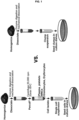
- the present invention provides a method for isolating and culturing neural stem cells with high efficiency, which includes: placing brain tissue in an enzyme solution for enzyme treatment; physically dissociating cell clumps from enzyme-treated brain tissue; separating the cell clumps by size and removing impurities; and performing subculture by seeding the cell clumps that have a size of 70 to 100 ⁇ m in a culture dish.
- the enzyme solution may include papain; DNase I; and D, L-cysteine.
- the brain tissue may be adult brain tissue, and the method for isolating and culturing neural stem cells may not include single cell isolation using Percoll.
- a method for isolating and culturing neural stem cells with high efficiency can shorten an isolation and culture time by simplifying a method of isolating and culturing neural stem cells, and increase the acquisition yield of neural stem cells.
- cell viability can be increased by shortening of an isolation and culture time, and a large number of cells can be acquired in a short time, thereby having an advantage of increasing the success rate of culturing neural stem cells.
- the present invention is directed to providing a method for isolating and culturing neural stem cells with high efficiency, which is able to shorten an isolation and culture time by simplifying a method of isolating and culturing neural stem cells, and increase the acquisition yield of neural stem cells.
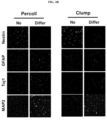
- the neural stem cells according to the method of the present invention maintain neural differentiation ability (see Example 3).
- Clump type II 70 to 100 ⁇ m
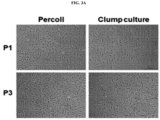
- Clump type II when Clump type II is cultured according to the method of the present invention (clump culture), it is confirmed that the time for first subculture is shortened, a cell morphology is normal, neural differentiation ability is also normal, and thus stem cell properties are well maintained (see Example 6).
- neural stem cells derived from Clump type II have angiogenic ability (see Example 7).
- the present invention provides a method for isolating and culturing neural stem cells with high efficiency, which includes: placing brain tissue in an enzyme solution for enzyme treatment; physically dissociating cell clumps from enzyme-treated brain tissue; separating the cell clumps by size and removing impurities; and performing subculture by seeding the cell clumps that have a size of 70 to 100 ⁇ m in a culture dish.
- the method of isolating and culturing neural stem cells takes a long time, and has a problem in the acquisition yield of neural stem cells. Therefore, the inventors confirmed through an experiment, in the case of introducing a process of separating the cells by clumps and not including a process of isolating single cells using Percoll, an isolation and culture time was shortened, and the acquisition yield of neural stem cells was able to increase, and thus the present invention was completed.
- a method for isolating and culturing neural stem cells with high efficiency which includes: placing brain tissue in an enzyme solution for enzyme treatment; physically dissociating cell clumps from enzyme-treated brain tissue; separating the cell clumps by size and removing impurities; and performing subculture by seeding the cell clumps that have a size of 70 to 100 ⁇ m in a culture dish, is provided.
- the enzyme solution is not particularly limited, and may include papain; DNase I; and D, L-cysteine.
- the cell clumps may be further separated by size using a mesh.
- the brain tissue is preferably adult brain tissue.
- the method for isolating and culturing neural stem cells with high efficiency does not include isolating single cells using Percoll.
- the method for isolating and culturing neural stem cells according to the present invention has advantages of shortening an isolation and culture time by simplifying a method for isolating and culturing neural stem cells by excluding single cell isolation using Percoll, increasing the acquisition yield of neural stem cells, increasing cell viability due to the shortening of an isolation and culture time, and acquiring a large number of cells in a short time, thereby increasing the success rate of culturing neural stem cells.
- Example 1 Primary culture of neural stem cells
- PBS phosphate-buffered saline
- a Percoll solution was prepared by mixing 10-fold concentrated PBS and Percoll in a ratio of 1 :9, 20 mL of a cell suspension and 10 mL of Percoll solution were mixed and centrifuged at 20,000 rpm and 18°C to isolate cells from a cell layer, and the cells were then washed twice with PBS again, and cultured in a poly-L-ornithine (PLO)-coated dish.
- PLO poly-L-ornithine
- the cells When reaching a confluency of 70 to 80%, the cells were detached using Accutase, and then subcultured. The number of cells and viability were calculated using a Tryphan Blue solution and a population doubling length (PDL) was measured, thereby plotting a cell growth curve, and morphologies of the isolated and cultured neural stem cells were observed under a microscope.
- PDL population doubling length
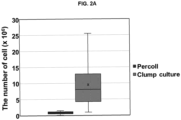
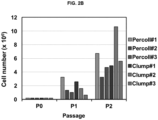
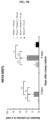
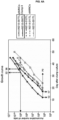
- FIG. 2A As a result, as shown in FIG. 2A , according to the isolation and culture method (clump culture), it was confirmed that a larger amount of neural stem cells per the same weight of brain tissue, compared with a method using Percoll, may be acquired, and as shown in FIG. 2B , according to the isolation and culture method (clump culture), it was confirmed that a cell growth is overall superior to that according to the conventional method using Percoll.
- Neural stem cells were cultured to be a confluency of approximately 70 to 80%, and washed twice with PBS. Forty-eight hours after incubation under neural differentiation conditions such as DMEM/F12, 0.5% FBS, B27, 0.5 mM IBMX and P/S, the cells were fixed, followed by immunofluorescence staining.
- Neural stem cells were cultured on a PLO-coated 8-well slide chamber (Thermo) and fixed in 4% paraformaldehyde for 5 minutes. The cells were rinsed with 0.1% Triton-X 100-diluted PBS (0.1% PBST), treated with a blocking solution (5% normal goat serum and 5% normal donkey serum) for approximately 1 hour, and reacted overnight with a primary antibody. At next day, cells were washed twice with PBS, and treated with an Alexa488 or Alexa594-conjugated secondary antibody for 1 hour. After counter staining with DAPI and mounting, the cells were observed under a fluorescence microscope.
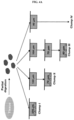
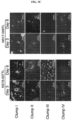
- clump culture method human brain tissue was treated with an enzyme solution, physically dissociated, and then filtered through various sizes of meshes, thereby separated clumps with specific rages of size (see FIG. 4A ).
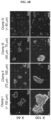
- the clumps were classified as type 1 to IV by size as shown below, and then observed under a microscope.
- each type of clumps derived from two patients according to the method of Example 1 were cultured to confirm the number of colonies and observe colony morphology using a microscope.
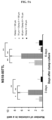
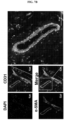
- Umbilical vein endothelial cells were purchased from Promocell, and cultured using the manufacturer's exclusive medium. 1 ⁇ 10 6 of HUVECs and 1 ⁇ 10 6 of neural stem cells were mixed in 200 ⁇ L of phenol red-free Matrigel (BD), and subcutaneously transplanted into 4 to 6-week old Balbc-nu mice. After 3 to 4 days, Matrigel was removed, and then fixed with 4% PFA for 24 hours, followed by making a block. For histological analysis, hematoxylin & eosin (H&E) staining was performed. To stain new blood vessels generated in Matrigel, HUVECs and neural stem cells were subjected to immunofluorescence staining for CD31 and alpha-smooth muscle actin ( ⁇ -SMA).
- BD phenol red-free Matrigel
- H&E hematoxylin & eosin
- FIG. 7A blood vessels were hardly formed by neural stem cells, but blood vessel formation was able to be confirmed when HUVECs and neural stem cells were mixed and transplanted.
- FIG. 7B it was confirmed that the neural stem cells were located around a blood vessel, contributing to blood vessel formation.
- a method for isolating and culturing neural stem cells with high efficiency may shorten an isolation and culture time by simplifying a method of isolating and culturing neural stem cells, and increase the yield of neural stem cells.
- the present invention has advantages of increasing cell viability due to the shortening of an isolation and culture time, and increasing the success rate of culture of neural stem cells by obtaining a large number of cells in a short time, and thus is expected to contribute to treatment of a central nervous system disease to achieve direct or indirect neural regeneration effects using neural stem cells.
- the present invention is expected to be also used in the fields related to direct or indirect neural regeneration by a protein or enzyme released from neural stem cells (purification of a conditioned medium, development of an exosome, etc.).
Landscapes
- Health & Medical Sciences (AREA)
- Engineering & Computer Science (AREA)
- Life Sciences & Earth Sciences (AREA)
- Chemical & Material Sciences (AREA)
- Biomedical Technology (AREA)
- Organic Chemistry (AREA)
- Zoology (AREA)
- Wood Science & Technology (AREA)
- Genetics & Genomics (AREA)
- Bioinformatics & Cheminformatics (AREA)
- Biotechnology (AREA)
- General Health & Medical Sciences (AREA)
- Biochemistry (AREA)
- General Engineering & Computer Science (AREA)
- Microbiology (AREA)
- Neurology (AREA)
- Cell Biology (AREA)
- Neurosurgery (AREA)
- Molecular Biology (AREA)
- Developmental Biology & Embryology (AREA)
- Medicinal Chemistry (AREA)
- Pathology (AREA)
- Analytical Chemistry (AREA)
- Physics & Mathematics (AREA)
- Botany (AREA)
- General Physics & Mathematics (AREA)
- Immunology (AREA)
- Micro-Organisms Or Cultivation Processes Thereof (AREA)
Claims (4)
- Verfahren zum Isolieren und Kultivieren neuraler Stammzellen mit hoher Effizienz, umfassend:Einlegen von Hirngewebe in eine Enzymlösung zur Enzymbehandlung;physisches Trennen von Zellklumpen von dem enzymbehandelten Hirngewebe;Trennen der Zellklumpen nach Größe und Entfernen von Verunreinigungen; undDurchführen einer Subkultur durch Aussäen der Zellklumpen, die eine Größe von 70 bis 100 µm in einer Kulturschale aufweisen.
- Verfahren nach Anspruch 1, wobei die Enzymlösung Papain; DNase I; und D, L-Cystein enthält.
- Verfahren nach Anspruch 1 oder 2, wobei das Hirngewebe Hirngewebe eines Erwachsenen ist.
- Verfahren nach einem der Ansprüche 1 bis 3, wobei das Verfahren zum Isolieren und Kultivieren neuraler Stammzellen kein Isolieren einzelner Zellen unter Verwendung von Percoll umfasst.
Applications Claiming Priority (3)
| Application Number | Priority Date | Filing Date | Title |
|---|---|---|---|
| KR20180031101 | 2018-03-16 | ||
| KR1020190011226A KR101994640B1 (ko) | 2018-03-16 | 2019-01-29 | 신경줄기세포의 고효율 분리배양 방법 |
| PCT/KR2019/001288 WO2019177270A1 (ko) | 2018-03-16 | 2019-01-30 | 신경줄기세포의 고효율 분리배양 방법 |
Publications (4)
| Publication Number | Publication Date |
|---|---|
| EP3783099A1 EP3783099A1 (de) | 2021-02-24 |
| EP3783099A4 EP3783099A4 (de) | 2022-01-12 |
| EP3783099C0 EP3783099C0 (de) | 2024-10-16 |
| EP3783099B1 true EP3783099B1 (de) | 2024-10-16 |
Family
ID=67258280
Family Applications (1)
| Application Number | Title | Priority Date | Filing Date |
|---|---|---|---|
| EP19767415.3A Active EP3783099B1 (de) | 2018-03-16 | 2019-01-30 | Verfahren zur isolierung und züchtung von nervenstammzellen mit hohem wirkungsgrad |
Country Status (6)
| Country | Link |
|---|---|
| US (1) | US12215346B2 (de) |
| EP (1) | EP3783099B1 (de) |
| JP (1) | JP7205928B2 (de) |
| KR (1) | KR101994640B1 (de) |
| CN (1) | CN112154203B (de) |
| WO (1) | WO2019177270A1 (de) |
Families Citing this family (2)
| Publication number | Priority date | Publication date | Assignee | Title |
|---|---|---|---|---|
| KR102619405B1 (ko) | 2021-12-06 | 2023-12-28 | 한림대학교 산학협력단 | 세포 배양 시트 및 신경줄기세포의 분리 배양 방법 |
| CN118995612A (zh) * | 2024-08-09 | 2024-11-22 | 北京神源百龄医学科技有限公司 | 一种人源脑皮层神经干细胞的分离方法 |
Family Cites Families (10)
| Publication number | Priority date | Publication date | Assignee | Title |
|---|---|---|---|---|
| US7838292B1 (en) | 2001-03-29 | 2010-11-23 | University Of Louisville Research Foundation, Inc. | Methods for obtaining adult human olfactory progenitor cells |
| AUPS187202A0 (en) | 2002-04-22 | 2002-05-30 | Griffith University | Method for culturing stem cells |
| CA2537960C (en) * | 2003-09-12 | 2012-01-10 | Stemcell Technologies Inc. | Neural colony forming assay |
| JP5294635B2 (ja) | 2004-11-29 | 2013-09-18 | イエダ リサーチ アンド デベロップメント カンパニー リミテッド | コポリマー1と組み合わせた、神経発生の誘発及び幹細胞治療 |
| WO2007020611A2 (en) * | 2005-08-19 | 2007-02-22 | ECBIO - Investigação e Desenvolvimento em Biotecnologia, S.A. | Adult human neural stem/progenitor cells from the olfactory epithelium and olfactory lamina propria, isolation method, proliferation and differentiation in serum free culture medium and utilization for transplantation |
| KR101269125B1 (ko) * | 2010-02-03 | 2013-06-04 | 사회복지법인 삼성생명공익재단 | 노치 신호 활성 유전자를 이용한 줄기세포의 증식 방법 |
| EP2531594B1 (de) | 2010-02-03 | 2016-11-16 | Samsung Life Public Welfare Foundation | Verfahren zur proliferation von stammzellen durch aktivierung einer c-met/hgf-signalisierung und einer notch-signalisierung |
| CN103687941A (zh) | 2011-01-12 | 2014-03-26 | 城户常雄 | 获得和维持易于在体外分化成少突胶质细胞谱系细胞的纯化或富集的哺乳动物神经干细胞群和/或神经祖细胞群的培养方法 |
| CN104017771B (zh) * | 2014-06-24 | 2016-01-13 | 中南大学 | 一种促进大鼠神经干细胞分化的培养基及其使用方法 |
| KR101910269B1 (ko) * | 2017-02-24 | 2018-10-19 | 성균관대학교산학협력단 | 인간 뇌 조직 유래 신경줄기세포의 고효율 분리 방법 |
-
2019
- 2019-01-29 KR KR1020190011226A patent/KR101994640B1/ko active Active
- 2019-01-30 JP JP2020549677A patent/JP7205928B2/ja active Active
- 2019-01-30 US US16/980,889 patent/US12215346B2/en active Active
- 2019-01-30 EP EP19767415.3A patent/EP3783099B1/de active Active
- 2019-01-30 CN CN201980019698.2A patent/CN112154203B/zh active Active
- 2019-01-30 WO PCT/KR2019/001288 patent/WO2019177270A1/ko not_active Ceased
Also Published As
| Publication number | Publication date |
|---|---|
| US20220243175A1 (en) | 2022-08-04 |
| JP2021518118A (ja) | 2021-08-02 |
| EP3783099A1 (de) | 2021-02-24 |
| EP3783099C0 (de) | 2024-10-16 |
| WO2019177270A1 (ko) | 2019-09-19 |
| EP3783099A4 (de) | 2022-01-12 |
| KR101994640B1 (ko) | 2019-07-02 |
| JP7205928B2 (ja) | 2023-01-17 |
| US12215346B2 (en) | 2025-02-04 |
| CN112154203A (zh) | 2020-12-29 |
| CN112154203B (zh) | 2025-08-29 |
Similar Documents
| Publication | Publication Date | Title |
|---|---|---|
| KR100519227B1 (ko) | 간엽 줄기세포를 신경세포로 분화시키는 방법 | |
| EP2708597B1 (de) | Polynukleierte megakaryozytische zelle und verfahren zur herstellung von thrombozyten | |
| CN101801396B (zh) | 治疗神经变性的方法和组合物 | |
| EP2982747B1 (de) | Verfahren zur herstellung neuprogrammierter und abgeleiteter neuronaler stammzellen aus nicht-neuronalen zellen mittels hmga2 | |
| CA2930590A1 (en) | Engineering neural stem cells using homologous recombination | |
| JP2005151907A5 (de) | ||
| JP2005151907A (ja) | 胎盤又は羊膜由来ヒト幹細胞及びその樹立方法並びに臓器への分化誘導方法 | |
| KR101686315B1 (ko) | 편도 유래 중간엽 줄기세포로부터 슈반 세포의 분화 방법 | |
| CN109689858A (zh) | 用于产生具有体内血管形成能力的中胚层和/或内皮集落形成细胞样细胞的方法 | |
| EP3783099B1 (de) | Verfahren zur isolierung und züchtung von nervenstammzellen mit hohem wirkungsgrad | |
| CN111484977B (zh) | 重编程产生功能性去甲肾上腺素能神经元的方法 | |
| US20260002124A1 (en) | Enhancing neuronal differentiation of ventral midbrain neural progenitor cells | |
| CN107435050B (zh) | 一种将人或动物体细胞诱导为神经干细胞的方法 | |
| US12227762B2 (en) | Spheroid culture method for neural stem cell | |
| KR102650805B1 (ko) | 인간 만능 줄기세포로부터 제작된 3d 오가노이드를 해체하여 희소돌기아교세포를 다량 확보하는 분화방법 | |
| US20190374681A1 (en) | Method for isolating human brain tissue-derived neural stem cell at high efficiency | |
| TWI769410B (zh) | 新穎誘導性多能幹細胞(ipscs)及其應用 | |
| Xue et al. | Favorable proliferation and differentiation capabilities of neural precursor cells derived from rat cochlear nucleus | |
| US20210123026A1 (en) | Induced pluripotent stem cells (ipscs) and applications thereof | |
| CN119700761A (zh) | 一种小分子组合及其应用 | |
| Zhang et al. | Differentiation of human epidermis-derived mesenchymal stem cell-like pluripotent cells into neural-like cells in culture and after transplantation | |
| WO2020030019A1 (zh) | 治疗神经源性肌肉萎缩的药物组合物及其制法和应用 | |
| WO2019093047A1 (ja) | インビトロでの機能的な外分泌腺の製造方法、および、当該方法によって製造される外分泌腺 |
Legal Events
| Date | Code | Title | Description |
|---|---|---|---|
| STAA | Information on the status of an ep patent application or granted ep patent |
Free format text: STATUS: THE INTERNATIONAL PUBLICATION HAS BEEN MADE |
|
| PUAI | Public reference made under article 153(3) epc to a published international application that has entered the european phase |
Free format text: ORIGINAL CODE: 0009012 |
|
| STAA | Information on the status of an ep patent application or granted ep patent |
Free format text: STATUS: REQUEST FOR EXAMINATION WAS MADE |
|
| 17P | Request for examination filed |
Effective date: 20201014 |
|
| AK | Designated contracting states |
Kind code of ref document: A1 Designated state(s): AL AT BE BG CH CY CZ DE DK EE ES FI FR GB GR HR HU IE IS IT LI LT LU LV MC MK MT NL NO PL PT RO RS SE SI SK SM TR |
|
| AX | Request for extension of the european patent |
Extension state: BA ME |
|
| DAV | Request for validation of the european patent (deleted) | ||
| DAX | Request for extension of the european patent (deleted) | ||
| A4 | Supplementary search report drawn up and despatched |
Effective date: 20211210 |
|
| RIC1 | Information provided on ipc code assigned before grant |
Ipc: C12N 5/0797 20100101AFI20211206BHEP |
|
| STAA | Information on the status of an ep patent application or granted ep patent |
Free format text: STATUS: EXAMINATION IS IN PROGRESS |
|
| 17Q | First examination report despatched |
Effective date: 20220629 |
|
| GRAP | Despatch of communication of intention to grant a patent |
Free format text: ORIGINAL CODE: EPIDOSNIGR1 |
|
| STAA | Information on the status of an ep patent application or granted ep patent |
Free format text: STATUS: GRANT OF PATENT IS INTENDED |
|
| INTG | Intention to grant announced |
Effective date: 20240711 |
|
| GRAS | Grant fee paid |
Free format text: ORIGINAL CODE: EPIDOSNIGR3 |
|
| GRAA | (expected) grant |
Free format text: ORIGINAL CODE: 0009210 |
|
| STAA | Information on the status of an ep patent application or granted ep patent |
Free format text: STATUS: THE PATENT HAS BEEN GRANTED |
|
| AK | Designated contracting states |
Kind code of ref document: B1 Designated state(s): AL AT BE BG CH CY CZ DE DK EE ES FI FR GB GR HR HU IE IS IT LI LT LU LV MC MK MT NL NO PL PT RO RS SE SI SK SM TR |
|
| REG | Reference to a national code |
Ref country code: GB Ref legal event code: FG4D |
|
| REG | Reference to a national code |
Ref country code: CH Ref legal event code: EP |
|
| REG | Reference to a national code |
Ref country code: IE Ref legal event code: FG4D |
|
| REG | Reference to a national code |
Ref country code: DE Ref legal event code: R096 Ref document number: 602019060518 Country of ref document: DE |
|
| U01 | Request for unitary effect filed |
Effective date: 20241106 |
|
| U07 | Unitary effect registered |
Designated state(s): AT BE BG DE DK EE FI FR IT LT LU LV MT NL PT RO SE SI Effective date: 20241114 |
|
| U20 | Renewal fee for the european patent with unitary effect paid |
Year of fee payment: 7 Effective date: 20250213 |
|
| PG25 | Lapsed in a contracting state [announced via postgrant information from national office to epo] |
Ref country code: HR Free format text: LAPSE BECAUSE OF FAILURE TO SUBMIT A TRANSLATION OF THE DESCRIPTION OR TO PAY THE FEE WITHIN THE PRESCRIBED TIME-LIMIT Effective date: 20241016 Ref country code: IS Free format text: LAPSE BECAUSE OF FAILURE TO SUBMIT A TRANSLATION OF THE DESCRIPTION OR TO PAY THE FEE WITHIN THE PRESCRIBED TIME-LIMIT Effective date: 20250216 |
|
| PG25 | Lapsed in a contracting state [announced via postgrant information from national office to epo] |
Ref country code: ES Free format text: LAPSE BECAUSE OF FAILURE TO SUBMIT A TRANSLATION OF THE DESCRIPTION OR TO PAY THE FEE WITHIN THE PRESCRIBED TIME-LIMIT Effective date: 20241016 |
|
| PG25 | Lapsed in a contracting state [announced via postgrant information from national office to epo] |
Ref country code: NO Free format text: LAPSE BECAUSE OF FAILURE TO SUBMIT A TRANSLATION OF THE DESCRIPTION OR TO PAY THE FEE WITHIN THE PRESCRIBED TIME-LIMIT Effective date: 20250116 |
|
| PG25 | Lapsed in a contracting state [announced via postgrant information from national office to epo] |
Ref country code: GR Free format text: LAPSE BECAUSE OF FAILURE TO SUBMIT A TRANSLATION OF THE DESCRIPTION OR TO PAY THE FEE WITHIN THE PRESCRIBED TIME-LIMIT Effective date: 20250117 |
|
| PG25 | Lapsed in a contracting state [announced via postgrant information from national office to epo] |
Ref country code: PL Free format text: LAPSE BECAUSE OF FAILURE TO SUBMIT A TRANSLATION OF THE DESCRIPTION OR TO PAY THE FEE WITHIN THE PRESCRIBED TIME-LIMIT Effective date: 20241016 |
|
| PG25 | Lapsed in a contracting state [announced via postgrant information from national office to epo] |
Ref country code: RS Free format text: LAPSE BECAUSE OF FAILURE TO SUBMIT A TRANSLATION OF THE DESCRIPTION OR TO PAY THE FEE WITHIN THE PRESCRIBED TIME-LIMIT Effective date: 20250116 |
|
| PG25 | Lapsed in a contracting state [announced via postgrant information from national office to epo] |
Ref country code: SM Free format text: LAPSE BECAUSE OF FAILURE TO SUBMIT A TRANSLATION OF THE DESCRIPTION OR TO PAY THE FEE WITHIN THE PRESCRIBED TIME-LIMIT Effective date: 20241016 |
|
| PG25 | Lapsed in a contracting state [announced via postgrant information from national office to epo] |
Ref country code: SK Free format text: LAPSE BECAUSE OF FAILURE TO SUBMIT A TRANSLATION OF THE DESCRIPTION OR TO PAY THE FEE WITHIN THE PRESCRIBED TIME-LIMIT Effective date: 20241016 |
|
| PG25 | Lapsed in a contracting state [announced via postgrant information from national office to epo] |
Ref country code: CZ Free format text: LAPSE BECAUSE OF FAILURE TO SUBMIT A TRANSLATION OF THE DESCRIPTION OR TO PAY THE FEE WITHIN THE PRESCRIBED TIME-LIMIT Effective date: 20241016 |
|
| PLBE | No opposition filed within time limit |
Free format text: ORIGINAL CODE: 0009261 |
|
| STAA | Information on the status of an ep patent application or granted ep patent |
Free format text: STATUS: NO OPPOSITION FILED WITHIN TIME LIMIT |
|
| REG | Reference to a national code |
Ref country code: CH Ref legal event code: PL |
|
| PG25 | Lapsed in a contracting state [announced via postgrant information from national office to epo] |
Ref country code: MC Free format text: LAPSE BECAUSE OF FAILURE TO SUBMIT A TRANSLATION OF THE DESCRIPTION OR TO PAY THE FEE WITHIN THE PRESCRIBED TIME-LIMIT Effective date: 20241016 |
|
| 26N | No opposition filed |
Effective date: 20250717 |
|
| GBPC | Gb: european patent ceased through non-payment of renewal fee |
Effective date: 20250130 |
|
| PG25 | Lapsed in a contracting state [announced via postgrant information from national office to epo] |
Ref country code: GB Free format text: LAPSE BECAUSE OF NON-PAYMENT OF DUE FEES Effective date: 20250130 |
|
| PG25 | Lapsed in a contracting state [announced via postgrant information from national office to epo] |
Ref country code: CH Free format text: LAPSE BECAUSE OF NON-PAYMENT OF DUE FEES Effective date: 20250131 |
|
| PG25 | Lapsed in a contracting state [announced via postgrant information from national office to epo] |
Ref country code: IE Free format text: LAPSE BECAUSE OF NON-PAYMENT OF DUE FEES Effective date: 20250130 |
|
| U20 | Renewal fee for the european patent with unitary effect paid |
Year of fee payment: 8 Effective date: 20260130 |