EP3765962B1 - Verfahren zur behebung von prozessanomalien - Google Patents
Verfahren zur behebung von prozessanomalien Download PDFInfo
- Publication number
- EP3765962B1 EP3765962B1 EP18711288.3A EP18711288A EP3765962B1 EP 3765962 B1 EP3765962 B1 EP 3765962B1 EP 18711288 A EP18711288 A EP 18711288A EP 3765962 B1 EP3765962 B1 EP 3765962B1
- Authority
- EP
- European Patent Office
- Prior art keywords
- anomaly
- instance
- sensor
- instances
- executed
- Prior art date
- Legal status (The legal status is an assumption and is not a legal conclusion. Google has not performed a legal analysis and makes no representation as to the accuracy of the status listed.)
- Active
Links
Images




Classifications
-
- G—PHYSICS
- G06—COMPUTING OR CALCULATING; COUNTING
- G06F—ELECTRIC DIGITAL DATA PROCESSING
- G06F11/00—Error detection; Error correction; Monitoring
- G06F11/07—Responding to the occurrence of a fault, e.g. fault tolerance
- G06F11/0703—Error or fault processing not based on redundancy, i.e. by taking additional measures to deal with the error or fault not making use of redundancy in operation, in hardware, or in data representation
- G06F11/0793—Remedial or corrective actions
-
- G—PHYSICS
- G05—CONTROLLING; REGULATING
- G05B—CONTROL OR REGULATING SYSTEMS IN GENERAL; FUNCTIONAL ELEMENTS OF SUCH SYSTEMS; MONITORING OR TESTING ARRANGEMENTS FOR SUCH SYSTEMS OR ELEMENTS
- G05B19/00—Program-control systems
- G05B19/02—Program-control systems electric
- G05B19/18—Numerical control [NC], i.e. automatically operating machines, in particular machine tools, e.g. in a manufacturing environment, so as to execute positioning, movement or co-ordinated operations by means of program data in numerical form
- G05B19/406—Numerical control [NC], i.e. automatically operating machines, in particular machine tools, e.g. in a manufacturing environment, so as to execute positioning, movement or co-ordinated operations by means of program data in numerical form characterised by monitoring or safety
-
- G—PHYSICS
- G06—COMPUTING OR CALCULATING; COUNTING
- G06F—ELECTRIC DIGITAL DATA PROCESSING
- G06F11/00—Error detection; Error correction; Monitoring
- G06F11/30—Monitoring
- G06F11/3003—Monitoring arrangements specially adapted to the computing system or computing system component being monitored
- G06F11/302—Monitoring arrangements specially adapted to the computing system or computing system component being monitored where the computing system component is a software system
-
- G—PHYSICS
- G06—COMPUTING OR CALCULATING; COUNTING
- G06F—ELECTRIC DIGITAL DATA PROCESSING
- G06F11/00—Error detection; Error correction; Monitoring
- G06F11/30—Monitoring
- G06F11/34—Recording or statistical evaluation of computer activity, e.g. of down time, of input/output operation ; Recording or statistical evaluation of user activity, e.g. usability assessment
- G06F11/3447—Performance evaluation by modeling
-
- G—PHYSICS
- G06—COMPUTING OR CALCULATING; COUNTING
- G06F—ELECTRIC DIGITAL DATA PROCESSING
- G06F11/00—Error detection; Error correction; Monitoring
- G06F11/30—Monitoring
- G06F11/34—Recording or statistical evaluation of computer activity, e.g. of down time, of input/output operation ; Recording or statistical evaluation of user activity, e.g. usability assessment
- G06F11/3466—Performance evaluation by tracing or monitoring
- G06F11/3476—Data logging
-
- G—PHYSICS
- G06—COMPUTING OR CALCULATING; COUNTING
- G06Q—INFORMATION AND COMMUNICATION TECHNOLOGY [ICT] SPECIALLY ADAPTED FOR ADMINISTRATIVE, COMMERCIAL, FINANCIAL, MANAGERIAL OR SUPERVISORY PURPOSES; SYSTEMS OR METHODS SPECIALLY ADAPTED FOR ADMINISTRATIVE, COMMERCIAL, FINANCIAL, MANAGERIAL OR SUPERVISORY PURPOSES, NOT OTHERWISE PROVIDED FOR
- G06Q10/00—Administration; Management
- G06Q10/06—Resources, workflows, human or project management; Enterprise or organisation planning; Enterprise or organisation modelling
- G06Q10/063—Operations research, analysis or management
- G06Q10/0639—Performance analysis of employees; Performance analysis of enterprise or organisation operations
-
- G—PHYSICS
- G05—CONTROLLING; REGULATING
- G05B—CONTROL OR REGULATING SYSTEMS IN GENERAL; FUNCTIONAL ELEMENTS OF SUCH SYSTEMS; MONITORING OR TESTING ARRANGEMENTS FOR SUCH SYSTEMS OR ELEMENTS
- G05B2219/00—Program-control systems
- G05B2219/30—Nc systems
- G05B2219/32—Operator till task planning
- G05B2219/32179—Quality control, monitor production tool with multiple sensors
Definitions
- the invention relates to a method for monitoring process instances in execution and for correcting process anomalies in these process instances.
- the processes to be analyzed can be executed in a computer system, with the help of a computer system, or outside of a computer system.
- the processes executed outside of a computer system can be technical processes, such as assembly processes, manufacturing processes, or the like.
- An executed process is referred to as a process instance of a specific process.
- a process instance can comprise multiple process steps.
- Each process step typically generates data that is stored in a computer system.
- the computer system can store who executed which process step of an ordering process and when.
- For an assembly process for example, it can store when which assembly step was executed with which parameters (e.g., the torque when tightening screws) during the assembly of a vehicle – this data can be provided, for example, by measuring sensors.
- a process anomaly is an error in a process instance that is currently executing.
- a process anomaly can also be a deviation of a process instance from a specified target value, although the deviation does not necessarily have to be an error, such as when the torque used to tighten a screw exceeds a target torque but is still below a maximum permissible torque.
- the method according to the invention can be used to actively intervene in process instances that are currently being executed.
- a specific technical process e.g., a pasteurization process
- the sensor detects an anomaly (e.g., the pasteurization temperature being exceeded) during the monitoring step.
- the anomaly can be remedied (e.g., the pasteurization device can be prompted to reduce the heat energy supplied).
- the process data for each process step are stored in the process log during the execution of the process step or at the end of the process step.
- the sensor definition may contain data and/or instructions used in the monitoring step to select process instances and/or processes from the process log that meet a predetermined selection criterion.
- a process instance can have several sub-process instances, wherein the process steps of the sub-process instances can be executed in different source systems, and wherein the process data for the already executed process steps of the sub-process instances are merged in the at least one process log.
- the process data is stored in a central process log, even if the sub-process instances are executed in different systems (e.g. if a sub-process of an assembly process is carried out with a first assembly machine and another sub-process of this assembly process is carried out with a second assembly machine).
- the process data stored in the process log can be linked to additional auxiliary data describing the respective process instance and/or the respective process step, wherein the process intervention instance is parameterized with the auxiliary data when it is generated.
- This makes it possible to generate a process intervention instance tailored to the respective process instance (for which an anomaly is to be remedied) and to expand the sensor definition with data not stored in the process log.
- the selection of at least one generic action from the set of generic actions assigned to the process anomaly can be performed by performing a simulation for a number of the actions or combinations of actions contained in the set of generic actions. This simulation determines which action or combination of actions, when applied to the process instance, best leads to a predetermined result. This action or combination of actions is then selected. For several potentially suitable actions, an "optimal" action or combination of actions can thus be selected. This prevents the need to "test" an action or combination of actions on the running process instance.
- the anomaly detection engine and the anomaly correction engine can be executed in a computer system.
- the invention makes it possible for the first time to monitor the execution of process instances and to intervene during the execution of a process instance in order to correct an error or anomaly in that process instance.
- a process in progress is also referred to as a process instance of that process.
- the error or anomaly is remedied by executing a process intervention instance, which is generated during the execution of the process instance depending on the detected error or anomaly.
- a process intervention instance can, for example, influence or control the further execution of the process instance.
- a payment hold can be initiated if a supplier's invoice is received before the ordered goods are delivered.
- a PCB assembly machine in an ongoing assembly process can be prompted to change the assembly sequence of the components still to be assembled if the last components assembled threaten to exceed the maximum assembly time.
- a process intervention instance therefore contains one or more instructions adapted to change or control the corresponding process instance.
- this instruction can be, for example, an SAP® transaction that initiates a payment block if the ordering process is executed in an SAP® system.
- the instructions can be interpretable instructions by the placement machine that cause the placement machine to make a corresponding change to the placement sequence.
- a process instance typically comprises multiple process steps.
- an instance of an ordering process may include a step for checking the availability of a product, a step for ordering a specific quantity of the product, and a step for receiving an order confirmation.
- An instance of a painting process performed by a painting machine may include a step for requesting a specific color from a paint warehouse, a step for applying the color to the object, and a step for applying a clear coat.
- Process data for the process steps already executed in a process instance currently being executed is stored in a process log.
- further data may arise or be generated during the execution of the process steps that do not need to be stored in the process log.
- the process data and this additional data are collectively referred to as source data. It can be advantageous to store the source data in the source system (e.g., in the computer system in which an ordering process is executed, or in a storage device assigned to an assembly facility), to extract the process data from the source system, and to store the extracted process data in the process log.
- the process data is stored in the process log in real time, i.e., immediately after the corresponding process step has been executed.
- This also enables real-time monitoring (or near-real-time monitoring) of the process instances, which in turn allows for intervention or control of the process instance in real time. This is particularly important when the process steps of a process instance are executed at short intervals (for example, in an assembly process where a large number of components are mounted on a circuit board within a few seconds).
- sequence of the process steps within the process instance can be specified, for example, by a consecutive unique number or by a timestamp (e.g., the execution time of the process step). Other ways of specifying the sequence are possible, for example, by a process step referencing its subsequent process step.
- the process log can provide master data information on the objects or process instances, for example, the quantity and price of an order, the production type of a good, the transport route of a logistics process, or the maximum duration and temperature of a pasteurization process.
- This master data information can either be stored in the process log or accessed via the identifier of the process step or the The process instance identifier can be referenced.
- This master data information is also called auxiliary data.
- a process instance can have multiple sub-process instances, whereby the process steps of the sub-process instances can be executed in different source systems.
- the process data of the executed process steps of the sub-process instances can be stored in separate process logs. However, it is advantageous if the process data of the sub-process instances are stored or merged in a common process log.
- process steps of a specific process instance are also referred to as process paths. Accordingly, a process protocol has multiple process paths.
- the process data for a process instance executed in a computer system is usually provided by this computer system.
- the computer system in which a process instance is executed is also referred to as the source system.
- the process data is usually provided by the respective technical equipment, such as measuring sensors (e.g., a torque and angle sensor in a screwing process).
- the technical equipment is also referred to as the source system.
- the source system is therefore the system that executes the process instance. If a process instance is executed by multiple source systems (e.g. a first sub-process instance from source system A and a second sub-process instance from source system B), these source systems are collectively referred to as a source system.
- process anomaly is an error occurring in an executing process instance or a process instance's flow that leads to undesirable results or deviates from a predetermined target process.
- the process log is stored in the main memory of a computer system, preferably in such a way that successive process steps of a process instance are stored in adjacent memory locations.
- the process steps can then be read from the main memory as a continuous stream and in the correct order. This eliminates the need for complex sorting.
- Fig. 1 shows a block diagram of an anomaly detection engine to illustrate the sub-process for monitoring executing process instances and the mechanism for discovering or detecting process anomalies.
- the basis for the anomaly detection engine is the process log, which also forms the data input for the anomaly detection engine.
- the anomaly detection engine is adapted to monitor the process log and detect anomalies in all or selected process instances stored in the process log.
- the anomaly(s) to be detected in a process log or for process instances in the process log are characterized by one or more sensor definitions.
- a sensor of the anomaly detection engine uses the sensor definitions to analyze the process log for the process anomalies described in the sensor definitions. At the same time, the sensor detects process instances or processes comprising multiple process instances that exhibit the process anomalies described in the sensor definition.
- the sensor definition can refer to both anomalies/problems in business processes and anomalies/problems in technical processes.
- business process environments include purchasing processes, sales processes, billing processes, IT service management, web analytics, or master data management.
- technical processes include logistics processes, production processes, or assembly processes.
- the above-mentioned classes of anomalies and the corresponding examples refer to the detection of anomalies in individual process instances or in individual process paths.
- the sensor definition includes data and/or instructions used in the monitoring step to select process instances and/or processes from the process log that meet a predetermined selection criterion.
- a predetermined selection criterion are those mentioned above for the classes of anomalies or types of anomalies.
- the instruction or selection criterion of the sensor definition could be: “Find all process instances of the process 'Pasteurizing milk' where the heating time in the heating step is greater than 8 minutes.”
- the heating time is recorded by a timer and made available for storage in the process log.
- a corresponding Process log entry created.
- the heating duration can be stored directly in the process log. Alternatively, the heating duration for this process step can be stored in an external table referenced from the process log.
- the anomaly detection engine's sensor which monitors the process log according to this sensor definition, can detect this anomaly and pass the detected anomaly to an anomaly correction engine (described in more detail below) for correction.
- the instruction or selection criterion of the sensor definition could alternatively be as follows: "Find all process instances of the 'Pasteurizing Milk' process for which more than 8 minutes have passed since the start of heating.”
- the start of heating can be indicated in the process log, for example, by a timestamp.
- the heating time itself is not stored in the process log. Rather, the respective sensor continuously checks (e.g., every 5 seconds) whether the specified heating time (here 8 minutes) has already been exceeded since the start of heating.
- This alternative sensor definition has the significant advantage over the first sensor definition that exceeding the specified heating time can be detected or recognized while the heating step is being executed (with the first sensor definition, however, exceeding the specified heating time can only be detected after the heating step has ended). This allows the anomaly correction engine to intervene in the ongoing heating step using a corresponding process intervention instance and, for example, provide instructions to a pasteurization device that cause the pasteurization device to immediately terminate the heating step.
- the above-mentioned classes and types of anomalies for process instances and processes as a whole can be described in a sensor definition, i.e., defined with the help of data and/or instructions or selection criteria in the sensor definition.
- An example sensor definition is considered, with which a sensor of the anomaly detection engine can detect outstanding deliveries from the USA and Germany in a process log.
- auxiliary data also flow into the sensor definition. All components relevant to this example are listed below. 1.
- the minimal attributes of the process log i.e. the process steps with the corresponding assignments to a process instance and their execution times, are stored here in a "Process Steps" table.
- the "ID” column identifies the process instance
- the "Process Step” column identifies the process step within the process instance
- the "Entry Time” column identifies the time at which the respective process step was executed.
- the "Entry Time” column also determines the order of the process steps within a process instance. 2.
- ID supplier Net value currency 10829382 318623 1000 10182731 327462 2000 USD 20173621 621531 1500 EUR ... ... ...
- the filter condition examines the entire process log for the specified criteria and returns exactly those orders for which the criteria are violated and thus exhibit an anomaly.
- the three "process-equals" expressions limit the data set to those orders for which the supplier's order confirmation has already been received, but no goods have yet been received and no reminder has been sent. This means that the process log is reduced to open orders (in the sense of goods not yet received).
- the "DAYS_BETWEEN" condition specifies the anomaly condition (in this case, the timeout). If at least seven days elapse between the observation time and the last confirmed delivery date, the delivery is considered late and thus constitutes an anomaly.
- the PU_MAX function is intended to determine the exact date furthest in the future for an order item.
- anomalies arise for orders 10829382 (19 days late) and 10182731 (seven days late) at the observation time of February 12, 2018 (e.g., the sensor's execution time).
- Order 20173621 does not represent an anomaly because, among other things, the goods have already been received and the condition "process not equals 'Received Goods'" is therefore not met.
- the sensor itself can be executed at predefined times, e.g., cyclically every two days, or every Monday and Wednesday.
- the sensor's execution can be triggered by an entry in the "Process Steps" table, i.e., as soon as a new entry is added to this table, the sensor is executed. Triggering the sensor by adding an entry to the process log can be advantageous when real-time or near-real-time anomaly detection is required to be able to correct anomalies detected in real time.
- Any process steps and attributes can be included in the sensor definition and any calculation operations can be carried out on them for anomaly detection.
- An example of an ordering process is shown above.
- Corresponding sensor definitions can also be defined for technical processes (e.g., manufacturing processes). The possibilities for sensor definitions are ultimately limited only by the data stored in the process log.
- a sensor according to this sensor definition returns all process instances (painting operations) where the painting process is complete, the paint thickness is less than 1.5 mm, and the corresponding component has not yet left the paint shop.
- the anomaly correction engine can then instruct the painting robot to repaint the component.
- the anomaly correction engine could cause a transport device (e.g. a warehouse robot) to transport the component back to the paint shop to be painted again.
- a transport device e.g. a warehouse robot
- a higher-level sensor is also called a meta-sensor.
- a meta-sensor uses existing sensors as input, so a meta-sensor can be viewed as a sensor that monitors existing sensors. This makes it possible, for example, to detect clusters of certain anomalies across multiple sensors, which is explained in more detail using the following example.
- these three sensors share the attribute "material number,” meaning that when a corresponding anomaly is detected, the sensors can provide data that includes the material number of the corresponding process instance.
- a meta-sensor can be provided that detects anomalies of the "accumulation" type, for example, with regard to the material number.
- the meta-sensor provided in this example can detect that, for example, in the current week, an accumulation across the individual sensors for a specific material (specified here by the material number) is occurring. This accumulation may indicate that a shortage of this material is looming.
- the anomaly detection engine which also runs and controls the meta-sensor, can now provide the anomaly correction engine with information about the detected Provide accumulation.
- the anomaly correction engine can then generate corresponding process intervention instances, which, for example, trigger a merchandise management system to actively and automatically build up the inventory of this material, for example by ordering additional material from alternative suppliers.
- Such clusters can only be detected by means of a computer system because, on the one hand, a large number of sensors can detect different anomalies, all of which can contribute to a specific cluster, and, on the other hand, each sensor can detect a very large number of process instances, each of which can influence the specific cluster quantitatively in different ways.
- anomalies in process instances can be detected during the execution of the process instances.
- An anomaly detection engine executing the sensor passes the detected process instances or information about the detected process instances to an anomaly correction engine, which is adapted to eliminate the anomaly(s) in the detected process instances.
- the anomaly is eliminated during the execution of the respective detected process instance, i.e., the process instance is actively intervened in and, for example, the further execution of the process instance is controlled.
- the anomaly detection engine passes the sensor definition (or sensor) on the basis of which the sensor detected the process instances to the anomaly correction engine.
- Fig. 2 shows a block diagram of an anomaly correction engine to illustrate the subprocess for correcting executing process instances.
- "Correction” here means that anomalies in a process instance are corrected or eliminated.
- the anomaly detection engine and the anomaly correction engine can be executed on different systems connected to a communications network.
- the anomaly correction engine is configured to assign a set of generic actions to each possible sensor definition or sensor.
- the generic actions assigned to a sensor can be used to "correct" the process instances detected by that sensor.
- At least one generic action is selected from the set of generic actions. If the set of generic actions assigned to a sensor contains multiple generic actions, the selection of a generic action can be based, for example, on one or more attribute values of the respective process instance or on a simulation that determines the most suitable action, as described in more detail below.
- the generic actions each define a specific action that can be used to correct an anomalous process instance.
- the definition of the generic action is independent of the source system. For example, a generic action "Generate Reminder" is defined that can be used to correct a corresponding anomaly in a process instance running in an SAP® system or in a process instance running in a Salesforce® system.
- a specific process intervention instance is created for the respective detected process instance.
- the process intervention instance is source system-dependent.
- different process intervention instances would be created for the SAP® system and for the Salesforce® system.
- the process intervention instance itself is then adapted so that it can correct the anomaly in the specific detected process instance.
- This adaptation can be achieved, for example, via parameters of the process intervention instance, to which attribute values of the respective process instance, e.g., a unique identifier of the process instance, can be passed.
- Other types of such adaptation are also possible.
- the process intervention instance is then converted into instructions executable by the source system (where the detected process instance is running). These instructions are then transferred by the anomaly correction engine to the corresponding source system and executed there.
- Non-invasive activities or process intervention instances refer to activities that are executed outside the affected source system. According to the invention, any information from the process log can be utilized.
- the product group of the material causing the overflow or the supplying manufacturer can be determined and visualized.
- the anomaly correction engine In addition to the static visualization of information from the process log, the anomaly correction engine also supports dynamic information calculation. For example, for the hazardous goods warehouse, using existing delivery schedules to customers, it can be automatically calculated when which capacities will become available and when the overflow will be resolved without further intervention.
- a non-invasive activity is the invocation of a process analysis, which can be used to visualize and evaluate the entire process of a process instance based on the process log. Additional information, such as process metrics, can be calculated and displayed.
- the anomaly correction engine can link a detected anomaly with a process analysis associated with the process log, so that an activity can be executed that can directly perform an analysis of the underlying process for a detected anomaly.
- the information required for the analysis is contained in the process log (minimal data of the process log). and auxiliary data), with the minimum data of the process log and the auxiliary data being linked accordingly. This makes it easy to filter the process log with respect to a specific process instance or the process instances of a specific process, so that only the data associated with these process instances is included in the analysis. This enables easy verification of the detected anomaly.
- Invasive activities or process intervention instances refer to activities that are executed within the affected source system and thus trigger changes in the source system in order to correct anomalies or actively make improvements in the executed process instance.
- the process intervention instance generated by the anomaly correction engine can include an invasive activity that places a payment hold for the corresponding order in the source system (e.g., an ERP system in which the order process is executed).
- the anomaly correction engine thus intervenes in the flow of the process instance with the corresponding process intervention instance.
- the anomaly correction engine can trigger a process intervention instance with an invasive activity, where the invasive activity causes an assembly machine to change the assembly sequence of the parts still to be assembled.
- a first invasive activity can trigger an acceleration of the subsequent production steps performed by a machine for timely completion.
- a second invasive activity can trigger an ERP system to inform the freight forwarder and the customer of a delayed delivery. This is also an example of how instructions can be executed partly in a computer system and partly by technical devices.
- the anomaly correction engine can create a process intervention instance that can trigger an automated reallocation of inventory or the early delivery of stored hazardous goods to create additional capacity.
- a desirable action may be to specifically remind the affected supplier.
- This is an example of a dynamically generated, invasive action because, on the one hand, attributes of the anomaly are incorporated into the creation of the process intervention instance, and, on the other hand, a direct execution of the process intervention instance (in the form of executable instructions) is initiated, thus causing a change in the source system.
- “Dynamic” in this case means that, for example, the supplier number is incorporated into the creation of the process intervention instance in order to specifically remind the affected supplier.
- “Invasive” means that the reminder is generated directly in the source system.
- Fig. 3 shows a block diagram of a routing engine.
- the task of the routing engine is to narrow down the process log for a given user so that all anomalies occurring therein correspond to the process instances to be processed by the user.
- Incoming parameters of the routing engine are the process protocol, a mapping attribute (which can be an attribute of the process protocol), and instances (values) of the mapping attribute to be assigned to a given user.
- the routing engine Based on the incoming parameters, the routing engine compares the process log for a given user with regard to all instances of the mapping attribute and the instances assigned to the user and returns the portion of the process log that matches the instances of the mapping attribute assigned to the user.
- the result is a filtered process log that can be monitored by the anomaly detection engine (see also Fig. 4 ).
- a technical advantage of the routing engine is that it automatically restricts the process log to the process anomalies relevant to the user. Manual assignment is not possible given the typically extremely high number of individual process instances (several millions) in the process log.
- attributes of the anomaly can also be included in the assignment. Assigning process instances to individual users via the routing engine is advantageous when The anomaly detection engine detects an anomalous process instance and the anomaly correction engine generates a process intervention instance, but the execution of the process intervention instance must be confirmed by a user. In cases where no user intervention is necessary, the assignment to a user can be omitted.
- the processor should initially be assigned via the corresponding assignment in the production order. If no improvement occurs in the process instance and completion is further delayed, the assignment should be made via another attribute, which is used to assign the process instance to the plant manager.
- the process instances continue to be monitored by the anomaly detection engine even after intervention in the process instance via a process intervention instance. The anomaly detection engine can thus determine whether a timeout still exists after a process intervention instance that has been confirmed by the processor.
- a generic action "Shut down machine” can only be made available to a plant manager for generating a corresponding process intervention instance, but not to a regular employee.
- Another key advantage of the routing engine is that the process log for monitoring by the anomaly detection engine is significantly can be reduced. Especially with a very large number of process instances (typically several million), efficient monitoring of the process log can be ensured.
- Fig. 4 shows a block diagram of a process intervention engine showing the relationships of the anomaly detection engine, the anomaly correction engine, and the routing engine for a given sensor.
- the configuration of a sensor to identify a specific process anomaly includes the process log, the criteria (sensor definition) of the anomaly, the time interval of the periodic review of the process log for this anomaly, the assignment rule and the defined set of possible actions to resolve the anomaly.
- the (optional) calculation of the filtered process log for a user is performed based on the assignment rule. This, if applicable, filtered process log is then made available to the anomaly detection engine.
- the anomaly detection engine monitors the filtered process log and uses it to identify those process instances that match the sensor definition, i.e., that exhibit an anomaly according to the sensor definition.
- process intervention instances are generated for the identified or detected process instances and executed in the respective source systems.
- process anomalies process instances that exhibit an anomie.
- a block diagram of a notification engine is shown in Fig. 5 shown.
- the notification engine does not refer to a single sensor, but refers to all Anomalies that are assigned to a specific user via various sensors are included.
- the starting point for notifying a user is therefore the set of all process intervention instances assigned to him (in Fig. 5 referred to as Process Intervention Store). This set is continuously updated according to the frequency of the sensor (sensor interval) in the sensor configuration, and the newly emerging anomalies are collected over time.
- the Process Intervention Register plays a crucial role in notification.
- the Process Intervention Register records or registers the anomalies already assigned to a user at the time of the previous notification.
- the set of new anomalies i.e., anomalies that have occurred since the last notification, is determined by comparing the Process Intervention Store with the Process Intervention Register. Process intervention instances that are not already part of the Process Intervention Register are also continuously checked for their status. This status can include the validity of an anomaly – if a new anomaly is resolved before the next notification, this anomaly can be removed from the Process Intervention Store or marked as invalid. Alternatively, each anomaly to be transferred to the Process Intervention Register can be checked to see whether this anomaly still exists. This check can be performed using the Anomaly Detection Engine. The comparison and sending of the corresponding notification takes place at the times specified in the notification interval (e.g., daily from Monday to Friday at 11 a.m. and 3 p.m.). A user receives a notification with the bundled anomalies that are not yet part of the Process Intervention Register and still exist at the time of the notification.
- the The timeliness of process intervention instances can be controlled independently of user notifications.
- bundling anomalies across sensors users can be notified centrally. Taking the status of anomalies into account ensures that the responsible processor is only informed about anomalies that actually exist.
- Fig. 6 shows a block diagram of an overall system of the invention.
- anomalies are detected and process intervention instances are created to correct the anomalies, which are sent out notifications and thus promote anomaly correction.
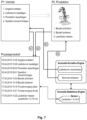
- Fig. 7 Using a specific executing process instance, it demonstrates the interaction between the source system, process log, anomaly detection engine, and anomaly correction engine.
- the process instance comprises two sub-process instances, P1 and P2.
- Subprocess instance P1 is a sales process in which four steps have already been executed: "Create quotation,” “Confirm delivery date,” “Order production,” and “Notify shipping company.” Subprocess instance P1 was executed in an ERP system.
- Sub-process instance P2 is a production process in which a specific prefabricated component is painted according to customer requirements. Three steps have already been executed in sub-process instance P2: "request component” (e.g., from a component warehouse), "paint component” (after painting, the component was dried), and "measure paint thickness.” Sub-process instance P2 was executed by a painting robot equipped with appropriate sensors for measuring paint density.
- step S1 and S2 For the two steps executed in the sub-process instances P1 and P2, corresponding entries are created in the process log (steps S1 and S2), where Fig. 7 For simplicity, only the execution time and the identifier of the respective process step are shown.
- the measured paint density is also stored in the process log.
- the entries in the process log are advantageously generated immediately after the corresponding steps have been executed.
- a sensor of the anomaly detection engine continuously monitors the process log (e.g., every two minutes).
- the sensor definition specifies that the sensor monitors the process protocol to determine whether a "Measure paint thickness" step was executed within a process instance in which the measured paint thickness is less than 3 mm.
- a paint thickness of 1.5 mm was measured in the "Measure Paint Thickness" step.
- a paint thickness of less than 3 mm represents a process anomaly within the meaning of the present invention.
- the minimum paint thickness of 3 mm is fixed here. However, it can also be specified dynamically, for example, based on the requirements of the ordering customer.
- the anomaly detection engine informs the anomaly correction engine in which process instance which anomaly occurred.
- the anomaly detection engine informs the anomaly correction engine that the process instance specified in the process log has measured too low a paint thickness.
- the anomaly correction engine selects from a set of generic actions (which are defined in Fig. 7 are not shown) the generic actions that can be used to correct this process anomaly.
- these are the generic actions "Postpone delivery date” and "Repaint.”
- the generic action "Postpone delivery date” is necessary here because repainting the component delays its availability for handover to the shipping company.
- the anomaly correction engine generates process intervention instances from the selected generic actions.
- the process intervention instance "Postpone delivery date” is transferred by the anomaly correction engine to the ERP system (step S3), in which the first sub-process instance P1 was executed.
- the process intervention instance "Repaint” is transferred by the anomaly correction engine to the production system (e.g., to the painting robot) (step S4), in which the second sub-process instance P2 was executed.
- the process intervention instances are adjusted using a number of parameters.
- the parameter values can be fixed or, for example, can be set depending on the current process instance.
- the generic action "Postpone delivery date” can be used for different process instances of different processes to postpone a delivery date.
- the anomaly correction engine can calculate the delay in the availability of the component from the duration for painting and drying the component and from the availability of the painting robot, and pass this delay (e.g., 36 hours) as a parameter of the process intervention instance "Delay delivery date".
- the anomaly correction engine can pass the parameterized process intervention instances directly to the respective source system.
- the source systems can then convert the respective process intervention instances into instructions that are executable by the respective source system.
- the anomaly correction engine generates corresponding instructions executable by the respective source system from the process intervention instances and then passes these instructions to the respective source system.
- the creation of instructions from the process intervention instances can thus be performed centrally by the anomaly correction engine.
- the anomaly correction engine generates the corresponding instructions depending on the respective source system to which the instructions are to be made available.
- the process intervention instances or the corresponding instructions are then executed by the respective source system. Entries can then be created in the process log for the corresponding steps (according to the executed instructions) (in Fig. 7 (not shown), which in turn can be monitored by the sensor of the anomaly detection engine. For repainting, the entries "19.04.2018 12:00 Repaint component,""19.04.2018 12:30 Drying process start,”"19.04.2018 12:43 Drying process end,” and "19.04.2018 12:32 Measure paint thickness, paint thickness 3.05 mm" could be generated in the process log. Since the paint thickness is now greater than 3 mm, the anomaly is considered resolved according to the sensor definition of the sensor monitoring the process log.
- Fig. 7 Using a specific executing process instance, it demonstrates the interaction between the source system, process log, anomaly detection engine, and anomaly correction engine.
- the process instance comprises two sub-process instances, P1 and P2.
- Subprocess instance P1 is a sales process in which four steps have already been executed: "Create quotation,” “Confirm delivery date,” “Order production,” and “Notify shipping company.” Subprocess instance P1 was executed in an ERP system.
- Sub-process instance P2 is a production process in which a specific prefabricated component is painted according to customer requirements. Three steps have already been executed in sub-process instance P2: "request component” (e.g., from a component warehouse), "paint component” (after painting, the component was dried), and "measure paint thickness.” Sub-process instance P2 was executed by a painting robot equipped with appropriate sensors for measuring paint density.
- step S1 and S2 For the two steps executed in the sub-process instances P1 and P2, corresponding entries are created in the process log (steps S1 and S2), where Fig. 7 For simplicity, only the execution time and the identifier of the respective process step are shown.
- the measured paint density is also stored in the process log.
- the entries in the process log are advantageously generated immediately after the corresponding steps have been executed.
- a sensor of the anomaly detection engine continuously monitors the process log (e.g., every two minutes).
- the sensor definition specifies that the sensor monitors the process protocol to determine whether a "Measure paint thickness" step was executed within a process instance in which the measured paint thickness is less than 3 mm.
- a paint thickness of 1.5 mm was measured in the "Measure paint thickness" step.
- a paint thickness of less than 3 mm represents a process anomaly within the meaning of the present invention.
- the value of the minimum paint thickness of 3 mm is It is fixed here. However, it can also be specified dynamically, for example, based on the requirements of the ordering customer.
- the anomaly detection engine informs the anomaly correction engine in which process instance which anomaly occurred.
- the anomaly detection engine informs the anomaly correction engine that the process instance specified in the process log has measured too low a paint thickness.
- the anomaly correction engine selects from a set of generic actions (which are defined in Fig. 7 not shown) selects the generic actions that can be used to resolve this process anomaly.
- these are the generic actions "Postpone Delivery Date” and "Repaint.”
- the generic action "Postpone Delivery Date” is necessary here because repainting the component will delay its preparation for handover to the shipping company.
- the anomaly correction engine generates process intervention instances from the selected generic actions.
- the process intervention instance "Postpone delivery date” is transferred by the anomaly correction engine to the ERP system (step S3), in which the first sub-process instance P1 was executed.
- the process intervention instance "Repaint” is transferred by the anomaly correction engine to the production system (e.g., to the painting robot) (step S4), in which the second sub-process instance P2 was executed.
- the process intervention instances are adjusted using a number of parameters.
- the parameter values can be fixed or, for example, can be set depending on the current process instance. In this way, the The generic "Postpone Delivery Date" action can be used for different process instances of different processes to postpone a delivery date.
- the anomaly correction engine can calculate the delay in the availability of the component from the duration of painting and drying the component and the availability of the painting robot, and pass this delay (e.g., 36 hours) as a parameter to the "Postpone Delivery Date" process intervention instance.
- the anomaly correction engine can pass the parameterized process intervention instances directly to the respective source system.
- the source systems can then convert the respective process intervention instances into instructions that are executable by the respective source system.
- the anomaly correction engine generates corresponding instructions executable by the respective source system from the process intervention instances and then passes these instructions to the respective source system.
- the creation of instructions from the process intervention instances can thus be performed centrally by the anomaly correction engine.
- the anomaly correction engine generates the corresponding instructions depending on the respective source system to which the instructions are to be made available.
- the process intervention instances or the corresponding instructions are then executed by the respective source system. Entries can then be created in the process log for the corresponding steps (according to the executed instructions) (in Fig. 7 (not shown), which in turn can be monitored by the sensor of the anomaly detection engine. For repainting, the entries "19.04.2018 12:00 Repaint component", “04/19/2018 12:30 Drying process start,””04/19/2018 12:43 Drying process end,” and “04/19/2018 12:32 Measure paint thickness, paint thickness 3.05 mm" are generated in the process log. Since the paint thickness is now greater than 3 mm, the anomaly is considered resolved according to the sensor definition of the sensor monitoring the process log.
- a machine carries out several steps, e.g. of a production process.
- the machine can also be a computer system in or with which a process (e.g. an ordering process in an ERP system) is executed.
- Each process step generates data that is stored as process data PD in the process log. In the case of a machine, this data can include sensor data or operating parameters.
- the process data comprises at least an identifier of the process instance and an identifier of the process step as well as information (e.g. a timestamp) that determines the sequence of the process steps of a process instance.
- Each process step stores the process data during execution or immediately after execution.
- the process log can be stored in a database of a computer system connected to the machine via a communications network. It is advantageous if the database is stored in the computer system's RAM.
- An anomaly detection engine controls one or more sensors that continuously (or at specific time intervals) monitor the process log and, based on one or more sensor definitions, detects faulty or anomalous process instances (PI) in the process log. If the process data is saved in the process log during execution or immediately after the execution of the respective process steps, faulty or anomalous process instances can be detected during the execution of the respective process instance, i.e., before the execution of the respective process instance is completed. Depending on the time intervals at which the sensor(s) query the process log, it is even possible to detect faulty or anomalous process instances in real time, which in turn enables intervention in the respective process instance in real time to correct the error or eliminate the anomaly.
- the anomaly detection engine passes the detected process instances (PI) to the anomaly correction engine.
- the anomaly detection engine can also pass additional data (auxiliary data) to the anomaly correction engine that further describes the respective process instance.
- this data can include information about the customer for whom the workpiece being machined by the machine is intended.
- the anomaly detection engine can query this auxiliary data from other databases and make it available to the anomaly correction engine.
- this auxiliary data can also be queried by the anomaly correction engine, e.g., from additional databases. This is advantageous for reducing the load on the anomaly detection engine, especially when very large process protocols (e.g., with several hundred million process steps) need to be monitored in real time, if possible.
- the Anomaly Correction Engine creates process intervention instances for the process instances passed by the Anomaly Detection Engine, as described above. These process intervention instances are designed to control the respective executing process instance.
- the machine in the example shown is the machine. It is advantageous if the instructions are adapted to the respective source system so that they can be executed directly there.
- Fig. 8 In the example shown, the machine can be instructed to carry out a specific processing step with which the detected error or anomaly can be rectified.
- the anomaly detection engine and the anomaly correction engine can run on the same computer system. Alternatively, the anomaly detection engine and the anomaly correction engine can run on separate computer systems connected via a communications network.
- multiple process logs can be present in which process data from different source systems is stored.
- multiple anomaly detection engines (each of which can control multiple sensors) can be provided, which monitor different process logs or monitor a process log jointly.
- multiple anomaly correction engines can be provided, each adapted to correct specific process anomalies.
- the anomaly detection engines can be adapted to transfer the respective detected process instance to a corresponding anomaly correction engine. This allows a network of process logs, anomaly detection engines, and anomaly correction engines to be provided, in which each engine is configured to solve specific tasks, as exemplified in Fig. 9 shown.
Landscapes
- Engineering & Computer Science (AREA)
- Theoretical Computer Science (AREA)
- Physics & Mathematics (AREA)
- General Physics & Mathematics (AREA)
- General Engineering & Computer Science (AREA)
- Business, Economics & Management (AREA)
- Quality & Reliability (AREA)
- Human Resources & Organizations (AREA)
- Computing Systems (AREA)
- Computer Hardware Design (AREA)
- Strategic Management (AREA)
- Development Economics (AREA)
- Educational Administration (AREA)
- Economics (AREA)
- Entrepreneurship & Innovation (AREA)
- Automation & Control Theory (AREA)
- Manufacturing & Machinery (AREA)
- Human Computer Interaction (AREA)
- Evolutionary Biology (AREA)
- Operations Research (AREA)
- General Business, Economics & Management (AREA)
- Life Sciences & Earth Sciences (AREA)
- Bioinformatics & Cheminformatics (AREA)
- Bioinformatics & Computational Biology (AREA)
- Game Theory and Decision Science (AREA)
- Tourism & Hospitality (AREA)
- Marketing (AREA)
- Mathematical Physics (AREA)
- General Factory Administration (AREA)
- Testing And Monitoring For Control Systems (AREA)
- Debugging And Monitoring (AREA)
- Management, Administration, Business Operations System, And Electronic Commerce (AREA)
Description
- Die Erfindung betrifft ein Verfahren zur Überwachung von sich in Ausführung befindlichen Prozessinstanzen und zur Behebung von Prozessanomalien in diesen Prozessinstanzen.
- Immer mehr Unternehmen setzen Verfahren ein, um Ist-Prozesse zu analysieren. Die zu analysierenden Prozesse können in einem Computersystem, mit Hilfe eines Computersystems oder außerhalb eines Computersystems ausgeführt worden sein. Bei den außerhalb eines Computersystems ausgeführten Prozessen kann es sich um technische Prozesse, etwa um Montageprozesse, Herstellungsprozesse oder dergleichen handeln.
- Ein ausgeführter Prozess wird als Prozessinstanz eines bestimmten Prozesses bezeichnet. Eine Prozessinstanz kann hierbei mehrere Prozessschritte umfassen. Jeder Prozessschritt erzeugt in der Regel Daten, die in einem Computersystem gespeichert werden. Beispielsweise kann in dem Computersystem gespeichert werden, wer wann welchen Prozessschritt eines Bestellprozesses ausgeführt hat. Für einen Montageprozess kann beispielsweise gespeichert werden, wann welcher Montageschritt mit welchen Parametern (z.B. das Drehmoment beim Befestigen von Schrauben) bei der Montage eines Fahrzeuges ausgeführt wurde - die Daten hierzu können z.B. von Messwertgebern bereitgestellt werden.
- Aus diesen gespeicherten Daten können Informationen extrahiert werden, die für die Analyse der Prozesse relevant sind.
- Bei diesen Analysen handelt es sich um rückwärtsgewandte bzw. retrospektive Analysen von bereits ausgeführten Prozessinstanzen, die Informationen über Schwächen der jeweiligen Prozesse liefern können. Allerdings ist ein proaktives Eingreifen in die Prozessinstanzen zur Steuerung fehlerhafter Prozessinstanzen nicht möglich, da die fehlerhaften Prozessinstanzen bereits ausgeführt wurden und Fehler in einzelnen Prozessinstanzen daher erst nach deren Ausführung entdeckt werden können. So kann beispielsweise für einen Montageprozess eines Fahrzeuges erst nach Abschluss des Montageprozesses festgestellt werden, dass die Montage dieses Fahrzeuges eine vorbestimmte Montagedauer überschritten hat. Mit den aus dem Stand der Technik bekannten Verfahren ist es allenfalls möglich, anhand der Analyse bereits ausgeführter Prozessinstanzen Verbesserungen an zukünftig auszuführenden Prozessinstanzen vorzunehmen. Fehler oder Anomalien - die trotz Verbesserungen des Prozesses auftreten können - in sich in Ausführung befindlichen Prozessinstanzen können aber nicht erkannt oder gar behoben werden.
- Die Offenbarung in
US2016110277 betrifft das Loggen von Ausführungszeiten periodischer Jobs. Es wird eine statistische Analyse zur Feststellung von Anomalien und Inkonsistenzen durchgeführt. Bei Überschreitung eines Schwellwertes wird ein Korrektiv ausgeführt. - Aufgabe der Erfindung ist es daher, Lösungen bereitzustellen, die es ermöglichen, Fehler bzw. Anomalien bereits während der Ausführung der Prozessinstanzen zu erkennen und zu beheben.
- Diese Aufgabe wird erfindungsgemäß durch ein Verfahren nach dem unabhängigen Anspruch gelöst. Vorteilhafte Ausgestaltungen und Weiterbildungen der Erfindung sind in den abhängigen Ansprüchen angegeben.
- Bereit gestellt wird demnach in Verfahren zur Überwachung von sich in Ausführung befindlichen Prozessinstanzen und zur Behebung von Prozessanomalien in diesen Prozessinstanzen, wobei jede Prozessinstanz eine Anzahl von Prozessschritte umfasst, wobei für die bereits ausgeführten Prozessschritte der Prozessinstanzen Prozessdaten in zumindest einem Prozessprotokoll gespeichert werden, wobei die Prozessdaten für jeden Prozessschritt zumindest
- eine Kennung des Prozessschrittes,
- eine Kennung, mit der der Prozessschritt eindeutig einer Prozessinstanz zuordenbar ist, und
- eine Reihenfolge des Prozessschrittes innerhalb der Prozessinstanz umfassen, wobei eine Prozessanomalie mit zumindest einer Sensordefinition beschrieben wird, wobei einer Prozessanomalie eine Menge von generischen Aktionen zur Behebung der Prozessanomalie zugeordnet ist, wobei
- (a) in einem Überwachungsschritt ein Sensor unter Verwendung der Sensordefinition das Prozessprotokoll hinsichtlich der in der Sensordefinition beschriebenen Prozessanomalie überwacht und Prozessinstanzen oder mehrere Prozessinstanzen umfassende Prozesse detektiert, die die in der Sensordefinition beschriebenen Prozessanomalie aufweisen, und
- (b) in einem Korrekturschritt für eine in dem Überwachungsschritt detektierte Prozessinstanz die Prozessanomalie zur Laufzeit dieser Prozessinstanz behoben wird, wobei
- aus der der Prozessanomalie zugeordneten Menge von generischen Aktionen zumindest eine generische Aktion ausgewählt wird,
- basierend auf der ausgewählten generischen Aktion eine für den detektierten Prozess bzw. eine für die detektierte Prozessinstanz spezifische Prozesseingriffsinstanz erzeugt wird, und
- die Prozesseingriffsinstanz zur Behebung der Prozessanomalie der detektierten Prozessinstanz oder des detektierten Prozesses zur Ausführung gebracht wird.
- Eine Prozessanomalie ist ein Fehler in einer sich in Ausführung befindlichen Prozessinstanz. Eine Prozessanomalie kann aber auch eine Abweichung einer Prozessinstanz von einem vorgegebenen Sollwert sein, wobei die Abweichung nicht unbedingt ein Fehler sein muss, etwa wenn ein Drehmoment, mit dem eine Schraube befestigt wird ein Soll-Drehmoment überschreitet aber noch unterhalb eines maximal zulässigen Drehmoments liegt.
- Mit dem erfindungsgemäßen Verfahren kann aktiv in sich in Ausführung befindliche Prozessinstanzen eingegriffen werden. So kann beispielsweise in einen konkreten technischen Prozess (z.B. in einem Pasteurisierungsvorgang) eingegriffen werden, wenn der Sensor in dem Überwachungsschritt eine Anomalie (z.B. das Überschreiten der Pasteurisierungstemperatur) feststellt. Mit dem Eingriff in den Prozess kann die Anomalie behoben (z.B. kann die Pasteurisierungsvorrichtung veranlasst werden die zugeführte Wärmeenergie zu reduzieren)
- In einer Ausgestaltung der Erfindung werden für jeden Prozessschritt die Prozessdaten während der Ausführung des Prozessschrittes oder am Ende des Prozessschrittes in dem Prozessprotokoll gespeichert.
- Die Sensordefinition kann Daten und/oder Anweisungen enthalten, mit denen in dem Überwachungsschritt Prozessinstanzen und/oder Prozesse aus dem Prozessprotokoll selektiert werden, die ein vorbestimmtes Selektionskriterium erfüllen.
- Das Selektionskriterium kann
- zumindest ein statischer oder dynamischer Parameter,
- zumindest ein vorbestimmtes Muster, und/oder
- zumindest ein mittels Mustererkennung festlegbarer Parameter
- Eine Prozessinstanz kann mehrere Teilprozessinstanzen aufweisen, wobei die Prozessschritte der Teilprozessinstanzen in unterschiedlichen Quellsystemen ausgeführt werden können, und wobei für die bereits ausgeführten Prozessschritte der Teilprozessinstanzen die Prozessdaten in dem zumindest einen Prozessprotokoll zusammengeführt werden.
- Einerseits werden so die Prozessdaten in einem zentralen Prozessprotokoll gespeichert, selbst wenn die Teilprozesseinstanzen in unterschiedlichen Systemen ausgeführt werden (z.B. wenn ein Teilprozess eines Montageprozesses mit einer ersten Montagemaschine und ein weiterer Teilprozess dieses Montageprozesses mit einer zweiten Montagemaschine durchgeführt werden).
- In einer Ausgestaltung der Erfindung kann die Sensordefinition eine Information darüber umfassen, zu welchen Zeitpunkten der Überwachungsschritt ausgeführt wird. Je nach Bedarf ist so auch eine Echtzeitüberwachung von sich in Ausführung befindlichen Prozessinstanzen möglich.
- Es kann vorteilhaft sein, wenn vor dem Überwachungsschritt das Prozessprotokoll gemäß vorbestimmter Filterkriterien gefiltert wird, wobei das gefilterte Prozessprotokoll die Basis für den Überwachungsschritt ist. Damit kann die Menge der zu prüfenden Einträge in dem Prozessprotokoll bei Bedarf reduziert werden, was insbesondere dann von Vorteil ist, wenn das Prozessprotokoll sehr viele Daten (z.B. Prozessdaten zu mehreren hundert Millionen Prozessschritten) aufweist. Die Verarbeitungsgeschwindigkeit kann so erhöht werden.
- In einer Ausgestaltung der Erfindung können die in dem Prozessprotokoll gespeicherten Prozessdaten mit weiteren die jeweilige Prozessinstanz und/oder den jeweiligen Prozessschritt beschreibenden Hilfsdaten verknüpfbar sein, wobei beim Erzeugen der Prozesseingriffsinstanz diese mit den Hilfsdaten parametrisiert wird. Damit wird es möglich eine auf die jeweilige Prozessinstanz (für die eine Anomalie behoben werden soll) angepasst Prozesseingriffsinstanz zu erzeugen und die Sensordefinition um nicht in dem Prozessprotokoll gespeicherten Daten zu erweitern.
- Die Prozesseingriffsinstanz kann eine Anzahl von nicht-invasiven Aktionen und/oder eine Anzahl von invasiven Aktionen aufweisen, wobei
- die nicht-invasiven Aktionen außerhalb des Quellsystems, in dem die jeweilige Prozessinstanz ausgeführt wird, ausgeführt werden, und
- die invasiven Aktionen in dem Quellsystems, in dem die jeweilige Prozessinstanz ausgeführt wird, ausgeführt werden.
- Mit einer invasiven Aktion kann der Ablauf der jeweiligen Prozessinstanz in dem Quellsystem geändert und/oder gesteuert wird.
- Die nicht-invasiven Aktionen und/oder die invasiven Aktionen können in für das jeweilige Quellsystem ausführbare Instruktionen umgewandelt werden.
- Die Auswahl der zumindest einen generischen Aktion aus der der Prozessanomalie zugeordneten Menge von generischen Aktionen kann derart erfolgen, dass für eine Anzahl der in der Menge von generischen Aktionen enthaltenen Aktionen oder Kombinationen von Aktionen eine Simulation durchgeführt wird, in der ermittelt wird, welche Aktion oder Kombination von Aktionen angewandt auf die Prozessinstanz am besten zu einem vorbestimmten Ergebnis führt, wobei diese Aktion oder Kombination von Aktionen ausgewählt wird. Für mehrere potentiell in Frage kommende Aktionen kann so eine "optimale" Aktion oder Kombination von Aktionen ausgewählt werden. so kann verhindert werden, dass eine Aktion oder eine Kombination von Aktionen an der laufenden Prozessinstanz "getestet" werden müssen.
- Das Filterkriterium kann gebildet werden durch zumindest ein Attribut des Prozessprotokolls und die Ausprägungen, die dieses Attribut annehmen kann, wobei die Ausprägungen einem Nutzer zugeordnet sind, wobei über die Zuordnung der Ausprägungen des Attributs zu dem Nutzer die in dem gefilterten Prozessprotokoll auftretenden Prozessanomalien ebenfalls diesem Nutzer zugeordnet sind.
- Besonders vorteilhaft ist es, wenn das Prozessprotokoll in einem Arbeitsspeicher eines Computersystems gespeichert wird, vorzugsweise derart, dass aufeinanderfolgende Prozessschritte einer Prozessinstanz in benachbarten Speicherzellen gespeichert werden. Damit kann das Prozessprotokoll als fortlaufender Stream aus dem Speicher ausgelesen werden, d.h. Speicherzelle für Speicherzelle. Komplexe Adressierungen oder Adressierungsvorgänge (etwa um Referenzen zwischen aufeinanderfolgende Prozessschritte einer Prozessinstanz abzubilden), die nachteilig für die Performance sind, können so vermieden werden. Wenn bekannt ist, wie viele Speicherzellen von einer Prozessinstanz belegt werden, können diese zudem blockweise ausgelesen werden.
- Der Überwachungsschritt kann von einer Anomalie-Detektions-Engine und der Korrekturschritt kann von einer Anomalie-Korrektur-Engine ausgeführt werden, wobei
- die Anomalie-Detektions-Engine die Ausführung des Sensors steuert, wobei die Ausführung des Sensors gemäß den in der Sensordefinition angegebenen Zeitpunkten getriggert wird, und
- die Anomalie-Detektions-Engine Informationen über die von dem Sensor detektierten Prozessinstanzen der Anomalie-Korrektur-Engine übergibt.
- Die Anomalie-Detektions-Engine und die Anomalie-Korrektur-Engine können in einem Computersystem ausgeführt werden.
- Einzelheiten und Merkmale der Erfindung sowie konkrete Ausgestaltungen der Erfindung ergeben sich aus der nachfolgenden Beschreibung in Verbindung mit der Zeichnung. Es zeigt:
- Fig. 1
- ein Blockdiagramm einer Anomalie-Detektions-Engine;
- Fig. 2
- ein Blockdiagramm einer Anomalie-Korrektur-Engine;
- Fig. 3
- ein Blockdiagramm der Routing-Engine;
- Fig. 4
- ein Blockdiagramm der Prozess-Eingriffs-Engine;
- Fig. 5
- ein Blockdiagramm der Benachrichtigungs-Engine;
- Fig. 6
- ein Blockdiagramm eines Gesamtsystems der Erfindung;
- Fig. 7
- ein konkretes Beispiel einer sich in Ausführung befindlichen Prozessinstanz;
- Fig. 8
- ein Blockdiagramm zur Verdeutlichung des grundlegenden erfinderischen Verfahrens; und
- Fig. 9
- ein Netzwerk aus Prozessprotokollen, Anomalie-Detektions-Engines und Anomalie-Korrektur-Engines.
- Mit der Erfindung wird es erstmals möglich, die Ausführung von Prozessinstanzen zu überwachen und während der Ausführung einer Prozessinstanz in diesen einzugreifen, um einen Fehler oder eine Anomalie in dieser Prozessinstanz zu beheben. In diesem Sinne wird auch ein sich in Ausführung befindlicher Prozess als Prozessinstanz diese Prozesses bezeichnet.
- Die Behebung des Fehlers oder der Anomalie erfolgt erfindungsgemäß durch Ausführen einer Prozesseingriffsinstanz, die in Abhängigkeit von dem detektierten Fehler oder der Anomalie während der Ausführung der Prozessinstanz erzeugt wird. Mit einer solchen Prozesseingriffsinstanz kann beispielsweise der weitere Ablauf der Prozessinstanz beeinflusst bzw. gesteuert werden.
- Beispielsweise kann in einem Quellsystem, in dem ein Bestellprozess ausgeführt wird, eine Zahlungssperre veranlasst werden, wenn die Rechnung eines Lieferanten vor der Lieferung der bestellten Ware eingeht. Gemäß eines anderen Beispiels kann eine Bestückungsmaschine für Leiterplatten in einem laufenden Bestückungsvorgang veranlasst werden, die Bestückungsreihenfolge der noch zu montierenden Komponenten zu ändern, wenn aufgrund der zuletzt montierten Komponenten ein Überschreiten der maximalen Bestückungsdauer droht.
- Eine Prozesseingriffsinstanz enthält demnach eine oder mehrere Anweisungen, die angepasst sind, die entsprechende Prozessinstanz zu ändern oder zu steuern. In dem vorstehenden Beispiel des Bestellprozesses kann diese Anweisung z.B. eine SAP®-Transaktion sein, mit die Zahlungssperre veranlasst wird, wenn der Bestellprozesses in einem SAP®-System ausgeführt wird. In dem Beispiel der Bestückungsmaschine können die Anweisungen von der Bestückungsmaschine interpretierbare Instruktionen sein, die eine entsprechende Änderung der Bestückungsreihenfolge durch die Bestückungsmaschine bewirken.
- Erfindungsgemäß können beliebige Arten von Prozessinstanzen überwacht und während der Ausführung Anomalien oder Fehler behoben werden. Insbesondere können
- ausschließlich in einem Computersystem ausgeführte Prozessinstanzen (z.B. Instanzen eines Bestellprozesses oder Instanzen einer Bezahlprozesses),
- ausschließlich durch technische Vorrichtungen ausgeführte Prozessinstanzen (z.B. ein Montageprozess, der durch eine oder mehrere Montagemaschinen ausgeführt wird oder eine Lackiervorgang, der durch einen Lackierroboter ausgeführt wird), und
- Prozessinstanzen, die teilweise in einem Computersystem und teilweise durch technische Vorrichtungen ausgeführt werden (z.B. ein Just-In-Time Produktionsprozess, der einen in einem Computersystem ausgeführten Bestellprozess und einen durch Produktionsmaschinen ausgeführten Produktionsprozess umfasst),
- Eine Prozessinstanz umfasst in der Regel mehrere Prozessschritte. So kann eine Instanz eines Bestellprozesses einen Schritt zum Prüfen der Verfügbarkeit eines Produktes, einen Schritt zum Bestellen einer bestimmten Menge des Produktes und einen Schritt zum Empfangen einer Bestellbestätigung umfassen. Eine Instanz eines durch eine Lackiermaschine ausgeführten Lackierprozesses kann einen Schritt zum Anfordern einer bestimmten Farbe aus einem Farblager, einen Schritt zum Auftragen der Farbe auf den Gegenstand und einen Schritt zum Auftragen eines Klarlackes umfassen.
- Für die bereits ausgeführten Prozessschritte einer sich in Ausführung befindlichen Prozessinstanz werden Prozessdaten in einem Prozessprotokoll gespeichert. Neben den im Prozessprotokoll zu speichernden Prozessdaten können bei der Ausführung der Prozessschritte weitere Daten anfallen oder erzeugt werden, die nicht in dem Prozessprotokoll gespeichert werden müssen. Die Prozessdaten und diese weiteren Daten werden in ihrer Gesamtheit Quelldaten genannt. Es kann vorteilhaft sein, die Quelldaten in dem Quellsystem (z.B. in dem Computersystem, in dem ein Bestellprozess ausgeführt wird, oder in einer Montageeinrichtung zugeordneten Speichereirichtung) zu speichern und aus dem Quellsystem die Prozessdaten zu extrahieren und die extrahierten Prozessdaten in dem Prozessprotokoll zu speichern.
- Vorteilhaft ist es hierbei, wenn die Prozessdaten in Echtzeit in dem Prozessprotokoll gespeichert werden, d.h. unmittelbar nach der Ausführung des entsprechenden Prozessschrittes. Dadurch wird auch eine Echtzeitüberwachung (oder eine annähernde Echtzeitüberwachung) der Prozessinstanzen möglich, was wiederum ein Eingreifen oder Steuern der Prozessinstanz in Echtzeit ermöglicht. Dies ist insbesondere dann wichtig, wenn die Prozessschritte einer Prozessinstanz in kurzen zeitlichen Abständen ausgeführt werden (etwa in einem Bestückungsprozess, bei dem innerhalb weniger Sekunden eine Vielzahl von Komponenten auf eine Leiterplatte montiert wird).
- Das Prozessprotokoll enthält zumindest die Informationen, welche Prozessschritte für welche Objekte (z.B. Bestellungen, Produktionsgüter, Logistikvorgänge, Montageprozesse) zu welchen Zeitpunkten stattgefunden haben, also für jeden Prozessschritt zumindest
- eine Kennung des Prozessschrittes,
- eine Kennung, mit der der Prozessschritt eindeutig einer Prozessinstanz zuordenbar ist, und
- eine Reihenfolge des Prozessschrittes innerhalb der Prozessinstanz.
- Die Reihenfolge des Prozessschrittes innerhalb der Prozessinstanz kann beispielsweise durch eine fortlaufende eindeutige Nummer oder durch einen Zeitstempel (etwa der Ausführungszeitpunkt des Prozessschrittes) angegeben werden. Andere Arten, die Reihenfolge anzugeben sind möglich, etwa indem ein Prozessschritt auf seinen nachfolgenden Prozessschritt referenziert.
- Zusätzlich können durch das Prozessprotokoll Stammdateninformationen zu den Objekten bzw. Prozessinstanzen bereitgestellt werden, beispielsweise Menge und Preis einer Bestellung, den Produktionstyp eines Gutes, die Transportroute eines Logistikvorgangs, oder Maximaldauer und -Temperatur eines Pasteurisierungsvorganges. Diese Stammdateninformationen können entweder in dem Prozessprotokoll gespeichert werden oder mittels der Kennung des Prozessschrittes bzw. der Kennung der Prozessinstanz referenziert werden. Diese Stammdateninformationen werden auch Hilfsdaten genannt.
- Eine Prozessinstanz kann mehrere Teilprozessinstanzen aufweisen, wobei die Prozessschritte der Teilprozessinstanzen in unterschiedlichen Quellsystemen ausgeführt werden können. Beispielsweise kann ein Beschaffungsprozess (= Prozessinstanz) einen Bestellprozess (= erste Teilprozessinstanz) und einen Bezahlprozess (= zweite Teilprozessinstanz) umfassen, wobei der Bestellprozess in einem Bestellsystem und der Bezahlprozess in einem Buchhaltungssystem ausgeführt werden. In einem Produktionsprozess (= Prozessinstanz) können das Schleifen (= erste Teilprozessinstanz) eines Bauteils von einer Schleifmaschine und das Lackieren (= zweite Teilprozessinstanz) des Bauteils von einem Lackierroboter durchgeführt werden.
- Die Prozessdaten der ausgeführten Prozessschritte der Teilprozessinstanzen können in separaten Prozessprotokollen gespeichert werden. Vorteilhaft ist es jedoch, wenn die Prozessdaten der Teilprozessinstanzen in einem gemeinsamen Prozessprotokoll gespeichert bzw. zusammengeführt werden.
- Die Prozessschritte einer konkreten Prozessinstanz werden nachfolgend auch Prozesspfad genannt. Demnach weist ein Prozessprotokoll mehrere Prozesspfade auf.
- Die Prozessdaten werden bei einer in einem Computersystem ausgeführten Prozessinstanz in der Regel von diesem Computersystem bereitgestellt. Das Computersystem in dem eine Prozessinstanz ausgeführt wird, wird auch als Quellsystem bezeichnet. Bei Prozessinstanzen, die von technischen Einrichtungen, etwa Produktionsmaschinen, ausgeführt werden, werden die Prozessdaten in der Regel von der jeweiligen technischen Einrichtung, etwa von Messwertgebern (z.B. von einem Drehmoment- und Drehwinkelsensor eines Verschraubungsprozesses), bereitgestellt. Die technische Einrichtung wird ebenfalls als Quellsystem bezeichnet. Das Quellsystem ist demnach jenes System, das die Prozessinstanz ausführt. Wird eine Prozessinstanz von mehreren Quellsystemen ausgeführt (z.B. eine erste Teilprozessinstanz von Quellsystem A und eine zweite Teilprozessinstanz von Quellsystem B) werden diese Quellsysteme gemeinsam als Quellsystem bezeichnet.
- Nachfolgend wird auch der Begriff "Prozessanomalie" verwendet. Eine Prozessanomalie ist ein in einer sich in Ausführung befindlichen Prozessinstanz auftretender Fehler oder ein Ablauf einer Prozessinstanz, der zu unerwünschten Ergebnissen führt oder von einem vorbestimmten Sollprozess abweicht.
- Vorteilhaft ist es, wenn das Prozessprotokoll in einem Arbeitsspeicher eines Computersystems gespeichert wird, vorzugsweise derart, dass aufeinanderfolgende Prozessschritte einer Prozessinstanz in benachbarten Speicherzellen gespeichert werden. Die Prozessschritte können so als fortlaufender Stream und in der richtigen Reihenfolge aus dem Arbeitsspeicher ausgelesen werden. Aufwändige Sortierungen können so entfallen.
-
Fig. 1 zeigt ein Blockdiagramm einer Anomalie-Detektions-Engine zur Verdeutlichung des Teilverfahrens zur Überwachung von sich in Ausführung befindlichen Prozessinstanzen und des Mechanismus zur Entdeckung bzw. Detektion von Prozessanomalien. - Basis für die Anomalie-Detektions-Engine ist das Prozessprotokoll, das gleichzeitig den Dateninput für die Anomalie-Detektions-Engine bildet. Die Anomalie-Detektions-Engine ist angepasst, das Prozessprotokoll zu überwachen und Anomalien in den allen oder in ausgewählten im Prozessprotokoll gespeicherten Prozessinstanzen zu detektieren.
- Die Anomalie bzw. Anomalien, die in einem Prozessprotokoll bzw. für Prozessinstanzen in dem Prozessprotokoll aufgespürt werden sollen, werden durch eine oder mehrere Sensordefinition charakterisiert. In einem Überwachungsschritt überwacht ein Sensor der Anomalie-Detektions-Engine unter Verwendung der Sensordefinitionen das Prozessprotokoll hinsichtlich der in den Sensordefinitionen beschriebenen Prozessanomalien. Gleichzeitig detektiert der Sensor Prozessinstanzen oder mehrere Prozessinstanzen umfassende Prozesse, die die in der Sensordefinition beschriebenen Prozessanomalien aufweisen.
- Die Sensordefinition kann sich sowohl auf Anomalien / Probleme in Geschäftsprozessen als auch auf Anomalien / Probleme in technischen Prozessen beziehen. Beispielhafte Umfelder im Rahmen von Geschäftsprozessen sind Einkaufsprozesse, Vertriebsprozesse, Abrechnungsprozesse, das IT Service Management, die Webanalytik oder die Stammdatenverwaltung. Beispiele für technische Prozesse umfassen Logistikprozesse, Produktionsprozesse oder Montageprozesse.
- Nachfolgend werden Beispiele für verschiedene Klassen von Anomalien wiedergegeben, die mit der erfindungsgemäßen Anomalie-Detektions-Engine überwacht und detektiert werden können, wobei auch weitere Klassen von Anomalien möglich sind.
- Klasse Zeitüberschreitung: Eine Zeitüberschreitung ist dadurch gekennzeichnet, dass eine Aktivität B nicht innerhalb einer vorgegebenen Zeitspanne nach dem Auftreten einer Aktivität A eintritt bzw. ausgeführt wird, d.h. eine vorgegebenen Zeitspanne zwischen zwei Aktivitäten bzw. Prozessschritten einer Prozessinstanz wird überschritten.
Beispiele:- Zur Ausführung eines Produktionsvorganges müssen Rohstoffe bestellt werden. Die Rohstoffe werden nicht innerhalb der vorgegebenen Zeitspanne bestellt, sodass der mit dem Produktionsvorgang verknüpfte Kundenauftrag nicht zum Kundenwunschtermin bedient werden kann.
- Die vorgeschriebene Erhitzungsdauer bei der Pasteurisierung von Milch wird überschritten.
- Klasse Zeitunterschreitung: Eine Zeitunterschreitung entsteht, wenn eine Mindestzeitdifferenz zwischen zwei Prozessschritten einer Prozessinstanz unterschritten wird.
Beispiele:- Die Gefahrgutlieferung eines Lieferanten tritt vor dem angegebenen Liefertermin ein und führt zu einem Überlauf des Gefahrgutlagers.
- Die zur Abhärtung von Stahl notwendige Mindestkühldauer im Abschreckungsprozess wird nicht eingehalten.
- Klasse unerlaubtes Prozessmuster: Ein unerlaubtes Prozessmuster ist beispielsweise charakterisiert durch eine unerlaubte chronologische Abfolge von Prozessschritten einer Prozessinstanz oder durch eine unerlaubte Kombination von Prozessparametern mehrerer Prozessschritte einer Prozessinstanz.
Beispiele:- Die Rechnung eines Lieferanten geht vor dem Eingang des bestellten Gutes ein.
- Die Montagereihenfolge beim maschinengesteuerten Zusammenbau einer Maschine wird nicht eingehalten.
- Klasse Verletzung von Verantwortlichkeiten: Eine Verletzung von Verantwortlichkeiten tritt ein, wenn z.B. zwei unterschiedliche Prozessschritte einer Prozessinstanz unerlaubterweise von derselben Person (oder in technischen Prozessen von demselben Objekt/Maschine) ausgeführt werden.
Beispiele:- Die Freigabe einer Lieferantenrechnung sowie die Zahlung derselben werden von der gleichen Person ausgeführt, sodass das Vier-Augen-Prinzip verletzt wird.
- Die initiale Montage und die Kontrolle des Radstands beim Fahrzeugbau werden mit dem gleichen Messgerät durchgeführt.
- Die vorstehend genannten Klassen von Anomalien und die dazugehörigen Beispiele beziehen sich auf die Erkennung von Anomalien in einzelnen Prozessinstanzen bzw. in einzelnen Prozesspfaden.
- Neben der Prozessinstanz-spezifischen Erkennung von Anomalien ermöglicht das erfindungsgemäß Verfahren auch die Überwachung und Detektion von Prozessinstanz-übergreifenden Anomalien. Hierdurch kann für einen Prozess (= Instanzen dieses Prozesses) als Gesamtes ermittelt werden, ob er sich in einem normalen oder nicht normalen Zustand befindet. Folgende Typen von Anomalien können beispielsweise überwacht und detektiert werden.
- Anomalie vom Typ "Häufung": Eine Anomalie vom Typ "Häufung" bezieht sich auf die in zeitlicher Hinsicht ungewöhnliche Anhäufung des Auftretens eines bestimmten Prozessschrittes über mehrere Prozessinstanzen hinweg. Das Attribut "ungewöhnlich" kann sich hierbei entweder auf einen statisch vorgegebenen Referenzwert oder einen dynamisch ermittelten Wert aus der Vergangenheit beziehen.
Beispiele:- Die Absagequote von Kundenaufträgen nimmt ungewöhnlich stark zu.
- Der Ausschussanteil in einem Produktionsprozess steigt statistisch signifikant an.
- Anomalie vom Typ "Durchlaufzeit": Eine Durchlaufzeitenanomalie beschreibt die ungewöhnliche zeitliche Entwicklung der Durchlaufzeit zwischen zwei Prozessschritten über mehrere Prozessinstanzen hinweg. Mit dem erfindungsgemäßen Verfahren kann eine signifikante Abweichung von einem statischen Referenzwert oder von einem dynamisch ermittelten Referenzwert aus den Durchlaufzeitwerten der Vergangenheit ermittelt werden.
Beispiele:- Der Freigabeprozess (z.B. die Dauer zwischen der Erstellung und Freigabe einer Bestellung) dauert über mehrere Prozessinstanzen hinweg plötzlich ungewöhnlich lange.
- Die Liegezeit eines Erzeugnisses innerhalb des Produktionssystems nimmt ungewöhnlich hohe Werte an.
- Die Sensordefinition weist Daten und/oder Anweisungen auf, mit denen in dem Überwachungsschritt Prozessinstanzen und/oder Prozesse aus dem Prozessprotokoll selektiert werden, die ein vorbestimmtes Selektionskriterium erfüllen. Beispiele für ein vorbestimmtes Selektionskriterium sind vorstehend zu den Klassen von Anomalien bzw. Typen von Anomalien genannten Beispiele.
- In dem vorstehend zur Klasse "Zeitüberschreitung" genannten Beispiel der Erhitzungsdauer bei der Pasteurisierung von Milch könnte die Anweisung bzw. das Selektionskriterium der Sensordefinition lauten: "Finde alle Prozessinstanzen des Prozesses 'Pasteurisieren von Milch', bei denen die Erhitzungsdauer in dem Erhitzungsschritt größer als 8 Minuten ist". Die Erhitzungsdauer wird von einem Zeitgeber erfasst und zur Speicherung in dem Prozessprotokoll bereitgestellt. Sobald für eine Prozessinstanz des Prozesses "Pasteurisieren von Milch" der Prozessschritt "Erhitzungsschritt" ausgeführt wurde, wird für diesen Prozessschritt ein entsprechender Eintrag in Prozessprotokoll erzeugt. Die Erhitzungsdauer kann direkt in dem Prozessprotokoll gespeichert werden. Alternativ kann die Erhitzungsdauer für diesen Prozessschritt in einer externen Tabelle gespeichert werden, auf die von dem Prozessprotokoll aus referenziert wird. Direkt nach Erzeugen des entsprechenden Eintrages in dem Prozessprotokoll kann der Sensor der Anomalie-Detektions-Engine, der das Prozessprotokoll gemäß dieser Sensordefinition überwacht, diese Anomalie detektieren und die detektierte Anomalie zur Behebung dieser Anomalie an eine Anomalie-Korrektur-Engine (die weiter unten näher beschrieben wird) übergeben.
- Bei dem eben genannten Beispiel der Erhitzungsdauer bei der Pasteurisierung von Milch kann alternativ die Anweisung bzw. das Selektionskriterium der Sensordefinition folgendermaßen lauten: "Finde alle Prozessinstanzen des Prozesses 'Pasteurisieren von Milch', bei denen seit dem Start der Erhitzung mehr als 8 Minuten vergangen sind". Der Start der Erhitzung kann in dem Prozessprotokoll beispielsweise durch einen Zeitstempel angegeben werden. Hierbei wird also die Erhitzungsdauer nicht selbst im Prozessprotokoll gespeichert. Vielmehr überprüft der jeweilige Sensor fortlaufend (z.B. alle 5 Sekunden), ob seit dem Start der Erhitzung die vorgegebenen Erhitzungsdauer (hier 8 Minuten) bereits überschritten wurden.
- Diese alternative Sensordefinition hat gegenüber der ersten Sensordefinition den wesentlichen Vorteil, dass bereits während der Ausführung des Erhitzungsschrittes ein Überschreiten der vorgegebenen Erhitzungsdauer detektiert bzw. erkannt werden kann (bei der ersten Sensordefinition hingegen kann erst nach dem Beenden des Erhitzungsschrittes ein überschreiten der vorgegebenen Erhitzungsdauer detektiert werden). Dadurch kann die Anomalie-Korrektur-Engine mittels einer entsprechend Prozesseingriffsinstanz noch in den laufenden Erhitzungsschritt eingreifen und beispielsweise einer Pasteurisierungsvorrichtung Instruktionen zur Verfügung stellen, mit denen die Pasteurisierungsvorrichtung veranlasst wird, den Erhitzungsschritt unverzüglich zu beenden.
- Die vorstehend genannten Klassen und Typen von Anomalien für Prozessinstanzen und Prozesse als Gesamtes können erfindungsgemäß in einer Sensordefinition beschrieben werden, d.h. mit Hilfe von Daten und/oder Anweisungen bzw. Selektionskriterien in der Sensordefinition definiert werden.
- Hierbei können die drei nachfolgend beschriebenen Arten von Sensordefinitionen vorgesehen werden.
- Sensordefinition für die Anomalie durch Überschreitung / Unterschreitung eines statisch festgelegten Parameters (statischer Sensor): Die oben beschriebenen Beispiele der Prozessinstanz-abhängigen Anomalien können dahingehend in der Sensordefinition berücksichtigt werden, dass ein vorgegebener Parameter (ein Zeitintervall, eine Soll-Abfolge von Prozessaktivitäten, ...) nicht eingehalten wird und die entsprechende Prozessinstanz daher eine Anomalie aufweist.
- Sensordefinition für Anomalien mittels Mustererkennung: Die Anomalien der oben genannten Typen "Häufung" und "Durchlaufzeit" für Prozessinstanz-übergreifende Anomalien stellen Beispiele für eine durch die Erfindung unterstützte Mustererkennung dar. Anhand eines Referenzzeitraums in der Vergangenheit werden typische Muster aus Prozessinstanzen eines Prozesses extrahiert und Abweichung von diesen Mustern in der Beobachtungsperiode können als Prozessanomalie erkannt werden.
Beispiele:- Der Sensor der Anomalie-Detektions-Engine scannt fortlaufend die Quote manueller Eingriffe im Rahmen eines Beschaffungsprozesses (z.B. manuelle Änderungen der Bestellpreise oder -mengen). Ergeben sich in der aktuellen Woche (=Beobachtungsperiode) Ausprägungen, welche signifikant von Höhe und Schwankung der Quote im Referenzzeitraum (z.B. dem vergangenen Jahr) abweichen, wird eine Prozessanomalie detektiert, die durch eine Anomalie-Korrektur-Engine behoben werden kann.
- In einem Fertigungsprozess wird ein bestimmtes Produkt nach bestimmten Vorgaben hergestellt. Im Vergleich zu den Fertigungsmengen in der Vergangenheit wird durch den Sensor festgestellt, dass die Produktionsmenge in der Beobachtungsperiode plötzlich auffallend niedrig ist. Die Anomalie-Korrektur-Engine kann in den Fertigungsprozess eingreifen, um die Produktionsmenge wieder auf das gewünschte Niveau zu bringen.
- Sensordefinition für Anomalien durch Überschreitung / Unterschreitung eines dynamisch mittels Mustererkennung festgelegten Parameters: In Erweiterung zum oben beschriebenen statischen Sensor ist es erfindungsgemäß möglich den Parameter zur Abgrenzung einer Anomalie dynamisch mittels eines Mustererkennungsprozesses zu bestimmen. Nach Vorgabe eines parametrischen Modells erfolgt die Kalibrierung der Parameter hierbei auf Basis von Mustern in einer Referenzperiode. Die so festgesetzten Parameter können wie beim statischen Sensor als Basis zur Erkennung von Anomalien herangezogen werden.
- Nachfolgend wird ein ausführliches Beispiel für eine Sensordefinition bzw. für einen Sensor wiedergegeben.
- Betrachten wird eine beispielhafte Sensordefinition, mit der ein Sensor der Anomalie-Detektions-Engine ausstehende Lieferungen aus den USA und Deutschland in einem Prozessprotokoll detektieren kann.
- Das Prozessprotokoll, das mindestens eine Kennung der Prozessschritte, eine Kennung, mit der die Prozessschritte eindeutig einer Prozessinstanz zuordenbar sind und eine Reihenfolge der Prozessschrittes innerhalb der Prozessinstanzen aufweist (= Minimalattribute des Prozessprotokolls), wird in diesem Beispiel um Hilfsdaten angereichert, um es dem Sensor zu ermöglichen ausstehende Lieferungen aus den USA und Deutschland zu detektieren. Das Prozessprotokoll enthält damit die Minimalattribute des Prozessprotokolls und die notwendigen Hilfsdaten.
- In die Definition der Sensordefinition fließen hier neben den genannten Minimalattributen des Prozessprotokolls auch die Hilfsdaten ein. Sämtliche für dieses Beispiel relevanten Bestandteile werden nachfolgend aufgeführt.
1. Die Minimalattribute des Prozessprotokolls, d.h. die Prozessschritte mit den entsprechenden Zuordnungen zu einer Prozessinstanz und deren Ausführungszeitpunkte werden hier in einer Tabelle "Prozessschritte" gespeichert.Tabelle Prozessschritte ID Prozessschritt Eintrittszeitpunkt 10829382 Erstelle Bestellposition 2018-01-03 10829382 Erhalte Auftragsbestätigung 2018-01-04 10829382 Bestätigtes Lieferdatum 2018-01-24 10182731 Erstelle Bestellposition 2018-02-01 10182731 Erhalte Auftragsbestätigung 2018-02-04 10182731 Bestätigtes Lieferdatum 2018-02-05 10182731 Erhalte Rechnung 2018-02-09 20173621 Erstelle Bestellposition 2017-12-02 20173621 Erhalte Auftragsbestätigung 2017-12-08 20173621 Bestätigtes Lieferdatum 2017-12-20 20173621 Erhalte Ware 2017-12-20 20173621 Erhalte Rechnung 2017-12-21 20173621 Zahle Rechnung 2017-12-23 ... ... ...
2. Eine Liste aller Bestellungen (die beispielsweise in einer Datenbank in einer Tabelle "Bestellungen" gespeichert sein können), bestehend aus der Kennung der Bestellung (ID = Bestellnummer) und einer Kennung des jeweiligen Lieferanten. Weitere Attribute, die für die Sensordefinition gemäß dieses Beispiels nicht notwendig sind, können vorgesehen sein, etwa die Währung und der Bestellwert.Tabelle Bestellungen ID Lieferant Nettowert Währung 10829382 318623 1000 EUR 10182731 327462 2000 USD 20173621 621531 1500 EUR ... ... ... ...
3. Informationen zu den Lieferanten. Diese sind für die Einschränkung auf ausstehende Lieferungen aus den USA und Deutschland notwendig und werden in vielen Quellsystemen in Form einer zentralen Stammdatentabelle (hier Tabelle "Lieferanten") bereitgestellt. Diese Tabelle enthält zumindest eine Kennung der Lieferanten und das dem jeweiligen Lieferanten zugeordnete Land. Weitere Attribute, die für die Sensordefinition gemäß dieses Beispiels nicht notwendig sind, können vorgesehen sein, etwa die Telefonnummer des Lieferanten.Tabelle Lieferanten Lieferant Land Telefonnummer 318623 GER ... 327462 USA ... 621531 GER ... ... ... ... - Eine mögliche Sensordefinition, mit der ein Sensor der Anomalie-Detektions-Engine ausstehende Lieferungen aus den USA und Deutschland in einem Prozessprotokoll detektieren kann, kann (gemäß eines Pseudocodes) folgendermaßen ausse- hen:
           FILTER
           process equals 'Erhalte Auftragsbestätigung'
           and process not equals 'Erhalte Ware'
           and process not equals 'Sende Mahnung'
           and "Lieferanten"."Land" IN ('USA', 'GER')
           and DAYS_BETWEEN
                (
                    PU_MAX("Bestellungen", "Prozessschritte" . "Eintrittszeitpun
                    kt", "Prozessschritte" . "Prozessschritt" = 'Bestätigtes Lieferda-
                    tum', TODAY())
                ) >= 7
           FILTER
           process equals 'Lackiervorgang abgeschlossen'
           and process not equals 'Bauteil hat Lackierhalle verlassen'
           and "Bauteile"."Lackdicke" < 1,5 mm
and process equals 'Bauteil hat Lackierhalle verlassen'
dann könnte die Anomalie-Korrektur-Engine eine Transporteinrichtung (z.B. ein Lagerroboter) veranlassen, das Bauteil wieder in die Lackierhalle zu transportieren, um es noch einmal zu lackieren.
- Durch die Zusammenführung potenziell mehrerer Bestandteile (Minimalattribute des Prozessprotokolls und Hilfsdaten) eines Quellsystems wird es möglich, Sensoren bereitzustellen, die neben der Reihenfolge der Prozessschritte innerhalb einer Prozessinstanz auch weitere Abhängigkeiten zwischen den Prozessschritten berücksichtigen können. Diese Abhängigkeit kann sich sogar über mehrere Prozesse und Prozessarten erstrecken, d.h. ein Sensor kann Abhängigkeiten zwischen Prozessschritten berücksichtigen, die zu Prozessinstanzen unterschiedlicher Prozesse gehören oder die zu unterschiedlichen Prozessinstanzen ein und desselben Prozesses gehören. Beispielsweise können so Produktions-, Logistik- und Vertriebsprozess in einem Unternehmen verknüpft werden, wodurch ein Sensor Anomalien über mehrere Prozessinstanzen hinweg detektieren kann. Beispiel: Eine Anomalie in einem Produktionsprozess (z.B. eine Zeitüberschreitung in einem Fertigungsvorgang) kann mit der Nichtverfügbarkeit eines eigentlich früher reservierten Spediteurs einhergehen, was die Belieferung eines Kunden zu einem bestätigten Termin beeinträchtigen kann. Durch die Definition eines übergreifenden Sensors kann die drohende Verzögerung des Termins bereits zum Zeitpunkt der Produktionsstörung erkannt werden.
- Es können mehrerer Systemlandschaften berücksichtigt werden. Singuläre Anomaliedetektionssysteme sind monosystemisch und daher nur in der Lage, Abweichungen innerhalb einer Systemlandschaft (etwa bei Prozessen bzw. Prozessinstanzen die innerhalb eines bestimmten Systems, z.B. innerhalb eines SAP®-Systems oder innerhalb einer Produktionsanlage ausgeführt werden) aufzuspüren. Mit Hilfe des Prozessprotokolls können Prozesse bzw. Prozessinstanzen, die in unterschiedlichen Systemen ausgeführt werden, zusammengeführt werden und so von einem Sensor überwacht werden. Beispiel: Ein Bestellprozess und ein Fertigungsprozess werden für ein bestimmtes Produkt zeitlich hintereinander ausgeführt und bilden zusammen einen Beschaffungsprozess. Prozessdaten des Bestellprozesses, der in einem SAP-System ausgeführt wird, und Prozessdaten des Fertigungsprozesses, der von einer Fertigungsmaschine ausgeführt wird, werden in einem gemeinsamen Prozessprotokoll gespeichert. Ein Sensor kann so den gesamten Beschaffungsprozess überwachen und Anomalien innerhalb des gesamten Beschaffungsprozesses detektieren, obwohl der Bestellprozesses und der Fertigungsprozesses in unterschiedlichen Systemen ausgeführt werden.
- Ein weiterer technischer Vorteil der Erfindung ergibt sich aus den drei Arten von Sensordefinitionen (statisches parametrisches Modell, Mustererkennung, dynamisches parametrisiertes Modell). Insbesondere die Sensordefinitionen mittels Mustererkennung und mittels eines dynamisch parametrisierten Modells ermöglichen eine automatisierte Anomaliedetektion, die manuell nicht bewerkstelligbar ist, d.h. nur unter Zuhilfenahme des erfindungsgemäßen Computer implementieren Verfahrens möglich ist.
- Ferner können unterschiedliche Sensoren zu einem gesamtheitlichen Signal verdichtet werden und dadurch ein übergeordneter Sensor zur Erkennung fundamentaler Prozessschwächen bereitgestellt werden. Heterogene singuläre Signale aus einzelnen Sensoren können so parallel aufgezeichnet und simultan ausgewertet werden.
- ein Sensor, der die Erhöhung eines Bestellpreises in einer Bestellposition durch den Lieferanten detektiert,
- ein Sensor, der die Verschiebung eines Liefertermins in einer Bestellposition durch den Lieferanten detektiert, und
- ein Sensor, der die Erhöhung der nachgefragten Liefermenge in einem Kundenauftrag durch den Kunden detektiert.
- mehrere z.B. voneinander unabhängige Aktivitäten in dem Quellsystem ausgeführt werden müssen, oder
- mehrere Aktivitäten in unterschiedlichen Quellsystemen ausgeführt werden müssen. Beispielsweise kann ein zu dünner Lackauftrag durch einen Lackierroboter zu einer Verzögerung des zugesicherten Liefertermins führen. Die generische Aktion zur Behebung dieser Anomalie könnte "Lackerschritt wiederholen" sein. Basierend auf dieser generischen Aktion wird eine Prozesseingriffsinstanz erzeugt, die eine erste Aktivität und einer zweite Aktivität umfasst. Mit der ersten Aktivität kann der Lackierroboter veranlasst werden, eine zusätzliche Lackschicht aufzutragen. Mit der zweiten Aktivität kann ein ERP-System veranlasst werden, dem Kunden einen neuen Liefertermin mitzuteilen. Für beide Aktivitäten erzeugt die Anomalie-Korrektur-Engine entsprechende Instruktionen und überträgt diese an den Lackierroboter bzw. an das ERP-System.
- nicht-invasive Aktivitäten bzw. Prozesseingriffsinstanzen, und
- invasive Aktivitäten bzw. Prozesseingriffsinstanzen.
- ausschließlich in einem Computersystem ausgeführt werden,
- ausschließlich durch technische Vorrichtungen (z.B. eine Montagemaschine) ausgeführt werden, oder
- teilweise in einem Computersystem und teilweise durch technische Vorrichtungen ausgeführt werden,
- Statisch generierte Prozesseingriffsinstanzen können sich auf die Wiedergabe von Informationen, welche statisch aus dem der Anomalie zugeordneten Prozessprotokoll gewonnen werden, beschränken. Hierzu zählen beispielsweise das Anzeigen von Attributen der Anomalie, wie beispielsweise der Lieferanten- und Referenzbelegnummer bei einer verspäteten Lieferung, den handelnden Personen bei einer Verletzung der Process Compliance oder der Dauer der Zeitüberschreitung bei einem Pasteurisierungsvorgang.
- Bei dynamisch erzeugten Prozesseingriffsinstanzen werden über das Prozessprotokoll hinausgehende Metainformationen der Anomalie sowie des Quellsystems mit einbezogen. Ein Ergebnis davon ist beispielsweise die Verknüpfung einer Anomalie mit einer dem Prozessprotokoll zugehörigen Prozessanalyse oder die Erzeugung einer im Quellsystem ausführbaren Aktivität (= invasive Aktivität).
- Gemäß einer dritten Art wird für das Erzeugen einer Prozesseingriffsinstanz eine optimale Aktion aus der Menge von generischen Aktionen mittels einer Simulation ermittelt. Beispielsweise kann für alle möglichen generischen Aktionen ermittelt werden, wie sich die Durchlaufzeit einer Prozessinstanz bei Anwendung der Aktionen auf die Prozessinstanz ändert, und jene Aktion zum Erzeugen der Prozesseingriffsinstanz ausgewählt werden, bei der die ermittelte Durchlaufzeit am nahesten an eine Soll-Durchlaufzeit herankommt.
- Die generischen Aktionen können für beliebige Module innerhalb eines Systems und für verschiedene Quellsysteme einheitlich definiert werden. Erst beim ausführen der Prozesseingriffsinstanzen müssen quellsystem-spezifische Instruktionen erzeugt werden, die in einer Ausgestaltung der Erfindung auch von dem Quellsystem selbst erzeugt werden können, wenn die Anomalie-Korrektur-Engine dem Quellsystem die hierfür benötigten Informationen zur Verfügung stellt. Insbesondere Anomalien, die den gleichzeitigen invasiven Eingriff in mehrere Systeme zur Behebung der Anomalie erfordern, stellt dies eine notwendige Voraussetzung für eine aktive Steuerung eines gesamtheitlichen Prozesses dar.
- Einen weiteren Vorteil stellt die beschriebene Verknüpfung einer Anomalie mit einer dem Prozessprotokoll zugehörigen Prozessanalyse dar. Hierdurch wird eine effiziente Methode bereitgestellt, Anomalien gezielt zu untersuchen, deren Prozessfluss im Detail nachzuvollziehen und die geeignetste Handlungsoption auszuwählen.
- Ein weiterer bedeutender technischer Vorteil besteht darin, die geeignetste Aktion mittels einer Simulation zu ermitteln. Dadurch können beispielsweise die Auswirkung verschiedener Anordnungen der Montageabfolge in einem Produktionsprozess oder die Entwicklung des Gefahrgutbestands bei Anpassung der Planlieferzeiten simuliert und die voraussichtlich beste Option ausgewählt werden. Ein manuelles "Ausprobieren" in der sich in Ausführung befindlichen Prozessinstanz ist hingegen nicht möglich.
- Für eine Einkaufsposition im Bestellprozess ist ein bestimmter Einkäufer zuständig, welcher über den Materialstamm des Quellsystems dem eingekauften Material zugeordnet ist. In diesem Fall ist das Zuordnungsattribut die Materialnummer und der dem Einkäufer zugeordnete Wert des Zuordnungsattributes die Materialnummer der einzelnen Einkaufsposition.
Claims (14)
- Computer implementiertes Verfahren zur Überwachung von sich in zumindest einem Quellsystem in Ausführung befindlichen Prozessinstanzen und zur Behebung von Prozessanomalien in diesen Prozessinstanzen, wobei jede Prozessinstanz eine Anzahl von Prozessschritte umfasst, wobei für die bereits ausgeführten Prozessschritte Prozessdaten in zumindest einem Prozessprotokoll gespeichert werden, wobei für jeden Prozessschritt die Prozessdaten während der Ausführung des Prozessschrittes in dem Prozessprotokoll gespeichert werden, wobei die Prozessdaten für jeden Prozessschritt zumindest- eine Kennung des Prozessschrittes,- eine Kennung, mit der der Prozessschritt eindeutig einer Prozessinstanz zuordenbar ist, und- eine Reihenfolge des Prozessschrittes innerhalb der Prozessinstanz umfassen, wobei eine Prozessanomalie mit zumindest einer Sensordefinition beschrieben wird, wobei einer Prozessanomalie eine Menge von generischen Aktionen zur Behebung der Prozessanomalie zugeordnet ist, wobei(a) in einem Überwachungsschritt ein Sensor unter Verwendung der Sensordefinition das Prozessprotokoll hinsichtlich der in der Sensordefinition beschriebenen Prozessanomalie überwacht und Prozessinstanzen detektiert, die die in der Sensordefinition beschriebenen Prozessanomalie aufweisen, und(b) in einem Korrekturschritt für eine in dem Überwachungsschritt detektierte Prozessinstanz die Prozessanomalie zur Laufzeit dieser Prozessinstanz behoben wird, wobei- aus der der Prozessanomalie zugeordneten Menge von generischen Aktionen zumindest eine generische Aktion ausgewählt wird,- basierend auf der ausgewählten generischen Aktion eine für den detektierten Prozess spezifische Prozesseingriffsinstanz erzeugt wird, und- die Prozesseingriffsinstanz zur Behebung der Prozessanomalie der detektierten Prozessinstanz zur Ausführung gebracht wird.
- Verfahren nach Anspruch 1, wobei die Sensordefinition Daten und/oder Anweisungen enthält, mit denen in dem Überwachungsschritt Prozessinstanzen aus dem Prozessprotokoll selektiert werden, die ein vorbestimmtes Selektionskriterium erfüllen.
- Verfahren nach dem vorhergehenden Anspruch, wobei das Selektionskriterium- zumindest ein statischer oder dynamischer Parameter,- zumindest ein vorbestimmtes Muster, und/oder- zumindest ein mittels Mustererkennung festlegbarer Parameterist, wobei bei einer Abweichung oder bei einer Nicht-Abweichung von dem Selektionskriterium das Selektionskriterium erfüllt ist und ein Abweichen oder Nicht-Abweichen von dem Selektionskriterium indikativ für eine Prozessanomalie ist.
- Verfahren nach Anspruch 1, wobei eine Prozessinstanz mehrere Teilprozessinstanzen aufweist, wobei die Prozessschritte der Teilprozessinstanzen in unterschiedlichen Quellsystemen ausgeführt werden können, und wobei für die bereits ausgeführten Prozessschritte der Teilprozessinstanzen die Prozessdaten in dem zumindest einen Prozessprotokoll zusammengeführt werden.
- Verfahren nach Anspruch 1, wobei die Sensordefinition eine Information darüber umfasst, zu welchen Zeitpunkten der Überwachungsschritt ausgeführt wird.
- Verfahren nach Anspruch 1, wobei vor dem Überwachungsschritt das Prozessprotokoll gemäß vorbestimmter Filterkriterien gefiltert wird und wobei das gefilterte Prozessprotokoll die Basis für den Überwachungsschritt ist.
- Verfahren nach Anspruch 1, wobei die in dem Prozessprotokoll gespeicherten Prozessdaten mit weiteren die jeweilige Prozessinstanz und/oder den jeweiligen Prozessschritt beschreibenden Hilfsdaten verknüpfbar sind, wobei beim Erzeugen der Prozesseingriffsinstanz diese mit den Hilfsdaten parametrisiert wird.
- Verfahren nach dem vorhergehenden Anspruch, wobei die Prozesseingriffsinstanz eine Anzahl von nicht-invasiven Aktionen und/oder eine Anzahl von invasiven Aktionen aufweist, wobei- die nicht-invasiven Aktionen außerhalb des Quellsystems, in dem die jeweilige Prozessinstanz ausgeführt wird, ausgeführt werden, und- die invasiven Aktionen in dem Quellsystems, in dem die jeweilige Prozessinstanz ausgeführt wird, ausgeführt werden.
- Verfahren nach dem vorhergehenden Anspruch, wobei mit einer invasiven Aktion der Ablauf der jeweiligen Prozessinstanz in dem Quellsystem geändert und/oder gesteuert wird.
- Verfahren nach Anspruch 8, wobei die nicht-invasiven Aktionen und/oder die invasiven Aktionen in für das jeweilige Quellsystem ausführbare Instruktionen umgewandelt werden.
- Verfahren nach Anspruch 1, wobei die Auswahl der zumindest einen generischen Aktion aus der der Prozessanomalie zugeordneten Menge von generischen Aktionen derart erfolgt, dass für eine Anzahl der in der Menge von generischen Aktionen enthaltenen Aktionen oder Kombinationen von Aktionen eine Simulation durchgeführt wird, in der ermittelt wird, welche Aktion oder Kombination von Aktionen angewandt auf die Prozessinstanz am besten zu einem vorbestimmten Ergebnis führt, wobei diese Aktion oder Kombination von Aktionen ausgewählt wird.
- Verfahren nach Anspruch 6, wobei das Filterkriterium gebildet wird durch zumindest ein Attribut des Prozessprotokolls und die Ausprägungen, die dieses Attribut annehmen kann, wobei die Ausprägungen einem Nutzer zugeordnet sind, wobei über die Zuordnung der Ausprägungen des Attributs zu dem Nutzer die in dem gefilterten Prozessprotokoll auftretenden Prozessanomalien ebenfalls diesem Nutzer zugeordnet sind.
- Verfahren nach Anspruch 1, wobei das Prozessprotokoll in einem Arbeitsspeicher eines Computersystems gespeichert wird, vorzugsweise derart, dass aufeinanderfolgende Prozessschritte einer Prozessinstanz in benachbarten Speicherzellen gespeichert werden.
- Verfahren nach Anspruch 5, wobei der Überwachungsschritt von einer Anomalie-Detektions-Engine und der Korrekturschritt von einer Anomalie-Korrektur-Engine ausgeführt werden, wobei- die Anomalie-Detektions-Engine die Ausführung des Sensors steuert, wobei die Ausführung des Sensors gemäß den in der Sensordefinition angegebenen Zeitpunkten getriggert wird, und- die Anomalie-Detektions-Engine Informationen über die von dem Sensor detektierten Prozessinstanzen der Anomalie-Korrektur-Engine übergibt.
Applications Claiming Priority (1)
| Application Number | Priority Date | Filing Date | Title |
|---|---|---|---|
| PCT/EP2018/056066 WO2019174709A1 (de) | 2018-03-12 | 2018-03-12 | Verfahren zur behebung von prozessanomalien |
Publications (3)
| Publication Number | Publication Date |
|---|---|
| EP3765962A1 EP3765962A1 (de) | 2021-01-20 |
| EP3765962C0 EP3765962C0 (de) | 2025-04-30 |
| EP3765962B1 true EP3765962B1 (de) | 2025-04-30 |
Family
ID=61655761
Family Applications (1)
| Application Number | Title | Priority Date | Filing Date |
|---|---|---|---|
| EP18711288.3A Active EP3765962B1 (de) | 2018-03-12 | 2018-03-12 | Verfahren zur behebung von prozessanomalien |
Country Status (4)
| Country | Link |
|---|---|
| US (1) | US11307557B2 (de) |
| EP (1) | EP3765962B1 (de) |
| JP (1) | JP7032557B2 (de) |
| WO (1) | WO2019174709A1 (de) |
Families Citing this family (5)
| Publication number | Priority date | Publication date | Assignee | Title |
|---|---|---|---|---|
| AT524002B1 (de) * | 2020-07-10 | 2023-10-15 | Engel Austria Gmbh | Verfahren zur automatischen Überwachung mindestens eines Produktionsprozesses |
| US20230004551A1 (en) * | 2021-07-02 | 2023-01-05 | Viettel Group | Method of processing and storing data for real time anomaly detection problem |
| US12461933B2 (en) | 2022-10-03 | 2025-11-04 | Eygs Llp | Enterprise resource planning database extraction, transformation, and analysis |
| US12072784B2 (en) | 2022-10-17 | 2024-08-27 | Oracle International Corporation | Multi-stage anomaly detection and remediation |
| US12225037B1 (en) * | 2024-03-29 | 2025-02-11 | Wiz, Inc. | Techniques for cybersecurity investigation of cloud entity misuse leveraging runtime context |
Citations (9)
| Publication number | Priority date | Publication date | Assignee | Title |
|---|---|---|---|---|
| US20030149604A1 (en) | 2002-01-25 | 2003-08-07 | Fabio Casati | Exception analysis, prediction, and prevention method and system |
| US20070067452A1 (en) | 2005-05-13 | 2007-03-22 | Fung Casey K | Mobile network dynamic workflow exception handling system |
| TW200928643A (en) | 2007-12-25 | 2009-07-01 | Ind Tech Res Inst | Multi-stages event monitoring method for detecting abnormal manufacturing process |
| CN103701657A (zh) | 2012-09-28 | 2014-04-02 | 中国银联股份有限公司 | 用于不间断运行的数据处理系统的异常监控及处理装置和方法 |
| US20160110277A1 (en) | 2014-10-16 | 2016-04-21 | Siemens Aktiengesellshaft | Method for Computer-Aided Analysis of an Automation System |
| WO2016172316A1 (en) | 2015-04-24 | 2016-10-27 | Ppg Industries Ohio, Inc. | Integrated and intelligent paint management |
| WO2016191639A1 (en) | 2015-05-28 | 2016-12-01 | Oracle International Corporation | Automatic anomaly detection and resolution system |
| EP3244334A1 (de) | 2016-05-09 | 2017-11-15 | Accenture Global Solutions Limited | Logdateiengraph wegzersetzung um netzwerkanomalien zu detektieren |
| US20180032393A1 (en) | 2016-08-01 | 2018-02-01 | International Business Machines Corporation | Self-healing server using analytics of log data |
Family Cites Families (9)
| Publication number | Priority date | Publication date | Assignee | Title |
|---|---|---|---|---|
| JP2003022117A (ja) | 2001-07-05 | 2003-01-24 | Mitsubishi Electric Corp | アクション管理装置及びアクション管理方法 |
| JP2003263222A (ja) | 2002-03-08 | 2003-09-19 | Toyota Motor Corp | 生産設備の保守支援装置およびプログラム |
| DE102004046611A1 (de) * | 2004-09-25 | 2006-03-30 | Robert Bosch Gmbh | Verfahren zur Abarbeitung eines Computerprogramms auf einem Computersystem |
| US8725667B2 (en) * | 2008-03-08 | 2014-05-13 | Tokyo Electron Limited | Method and system for detection of tool performance degradation and mismatch |
| JP5534313B2 (ja) | 2010-01-27 | 2014-06-25 | 沖電気工業株式会社 | 取引処理装置の予防保守システム及び予防保守サーバ |
| JP5681453B2 (ja) | 2010-11-08 | 2015-03-11 | 株式会社ディスコ | 測定方法および測定装置 |
| JP2012140648A (ja) | 2010-12-28 | 2012-07-26 | Canon Anelva Corp | スパッタリング装置及びそのスパッタリング方法 |
| US10235227B2 (en) * | 2015-10-12 | 2019-03-19 | Bank Of America Corporation | Detection, remediation and inference rule development for multi-layer information technology (“IT”) structures |
| JP2017199249A (ja) | 2016-04-28 | 2017-11-02 | 株式会社リコー | 情報処理システム、画像処理装置および動作ログの出力方法 |
-
2018
- 2018-03-12 EP EP18711288.3A patent/EP3765962B1/de active Active
- 2018-03-12 WO PCT/EP2018/056066 patent/WO2019174709A1/de not_active Ceased
- 2018-03-12 JP JP2020548752A patent/JP7032557B2/ja active Active
-
2020
- 2020-09-11 US US17/018,296 patent/US11307557B2/en active Active
Patent Citations (9)
| Publication number | Priority date | Publication date | Assignee | Title |
|---|---|---|---|---|
| US20030149604A1 (en) | 2002-01-25 | 2003-08-07 | Fabio Casati | Exception analysis, prediction, and prevention method and system |
| US20070067452A1 (en) | 2005-05-13 | 2007-03-22 | Fung Casey K | Mobile network dynamic workflow exception handling system |
| TW200928643A (en) | 2007-12-25 | 2009-07-01 | Ind Tech Res Inst | Multi-stages event monitoring method for detecting abnormal manufacturing process |
| CN103701657A (zh) | 2012-09-28 | 2014-04-02 | 中国银联股份有限公司 | 用于不间断运行的数据处理系统的异常监控及处理装置和方法 |
| US20160110277A1 (en) | 2014-10-16 | 2016-04-21 | Siemens Aktiengesellshaft | Method for Computer-Aided Analysis of an Automation System |
| WO2016172316A1 (en) | 2015-04-24 | 2016-10-27 | Ppg Industries Ohio, Inc. | Integrated and intelligent paint management |
| WO2016191639A1 (en) | 2015-05-28 | 2016-12-01 | Oracle International Corporation | Automatic anomaly detection and resolution system |
| EP3244334A1 (de) | 2016-05-09 | 2017-11-15 | Accenture Global Solutions Limited | Logdateiengraph wegzersetzung um netzwerkanomalien zu detektieren |
| US20180032393A1 (en) | 2016-08-01 | 2018-02-01 | International Business Machines Corporation | Self-healing server using analytics of log data |
Non-Patent Citations (4)
Also Published As
| Publication number | Publication date |
|---|---|
| JP2021515948A (ja) | 2021-06-24 |
| US20210041849A1 (en) | 2021-02-11 |
| EP3765962C0 (de) | 2025-04-30 |
| WO2019174709A1 (de) | 2019-09-19 |
| JP7032557B2 (ja) | 2022-03-08 |
| US11307557B2 (en) | 2022-04-19 |
| EP3765962A1 (de) | 2021-01-20 |
Similar Documents
| Publication | Publication Date | Title |
|---|---|---|
| DE69508931T2 (de) | Fabriknetzwerk mit mehreren fabriken und koordinationsverfahren | |
| EP2122428B1 (de) | Verfahren und system zur ermittlung von zuverlässigkeitsparametern einer technischen anlage | |
| WO2019174709A1 (de) | Verfahren zur behebung von prozessanomalien | |
| DE102004023266A1 (de) | Bestimmen eines Sollbestands für einen Knoten einer Lieferkette | |
| EP3139289A1 (de) | Verfahren zur analyse von prozessen | |
| DE102011014817A1 (de) | Inventarmanagement | |
| EP1530770B1 (de) | Verfahren und vorrichtung zur prozessoptimierung | |
| DE102018118471A1 (de) | Vorrichtung und Verfahren zur Bereitstellung von Ersatzteilen eines Luftfahrzeuges | |
| WO2019233735A1 (de) | Verfahren zur qualitätssicherung bei der produktion eines produktes sowie recheneinrichtung und computerprogramm | |
| DE19930446C1 (de) | Diagnoseverfahren und Diagnosesystem zur Überwachung der verfügbaren Resourcen in einem Herstellungsprozeß | |
| DE69903461T2 (de) | Verfahren und system für die planung von betriebsmittel-anforderungen und zum erzeugen eines produktionsplans mit hilfe eines uniformen datenmodells | |
| EP3139274B1 (de) | Verfahren zum ermitteln einer netto-durchlaufzeit zwischen prozessschritten einer prozessinstanz | |
| EP1556811A2 (de) | Vorhersage des termintreuegrads in der serienfertigung | |
| EP4500424B1 (de) | Optimierung einer produktionsplanung | |
| EP3139273B1 (de) | Verfahren zum ermitteln von parallelen prozesspfaden in prozessdaten | |
| WO2007042055A1 (de) | Verfahren zur disposition und steuerung von aufträgen und management information system | |
| EP3139272A1 (de) | Verfahren zur effizienten analyse von prozessdaten | |
| EP2569763B1 (de) | Verfahren zur rechnergestützten überwachung der funktionsleistung eines technischen systems | |
| DE202020006160U1 (de) | System zum Erstellen von Prozessprotokollen | |
| DE10325832A1 (de) | Abwicklung von Planungs- Problemen über Planungs- Zyklen | |
| EP2901384A1 (de) | Verfahren zur lagerhaltung und/oder obsoleszenzrisikoeinschätzung | |
| DE202018004070U1 (de) | Maschinenanalyse | |
| WO2004040487A2 (de) | Verfahren zur bestimmung einer vorlaufzeit | |
| EP3783449A1 (de) | Allokation von geräten einer technischen anlage | |
| DE10325831A1 (de) | Bestimmung einer oder mehrerer Hauptursachen eines Planungsproblems |
Legal Events
| Date | Code | Title | Description |
|---|---|---|---|
| STAA | Information on the status of an ep patent application or granted ep patent |
Free format text: STATUS: UNKNOWN |
|
| STAA | Information on the status of an ep patent application or granted ep patent |
Free format text: STATUS: THE INTERNATIONAL PUBLICATION HAS BEEN MADE |
|
| PUAI | Public reference made under article 153(3) epc to a published international application that has entered the european phase |
Free format text: ORIGINAL CODE: 0009012 |
|
| STAA | Information on the status of an ep patent application or granted ep patent |
Free format text: STATUS: REQUEST FOR EXAMINATION WAS MADE |
|
| 17P | Request for examination filed |
Effective date: 20201012 |
|
| AK | Designated contracting states |
Kind code of ref document: A1 Designated state(s): AL AT BE BG CH CY CZ DE DK EE ES FI FR GB GR HR HU IE IS IT LI LT LU LV MC MK MT NL NO PL PT RO RS SE SI SK SM TR |
|
| AX | Request for extension of the european patent |
Extension state: BA ME |
|
| DAV | Request for validation of the european patent (deleted) | ||
| DAX | Request for extension of the european patent (deleted) | ||
| STAA | Information on the status of an ep patent application or granted ep patent |
Free format text: STATUS: EXAMINATION IS IN PROGRESS |
|
| 17Q | First examination report despatched |
Effective date: 20220615 |
|
| REG | Reference to a national code |
Ref country code: DE Ref legal event code: R079 Free format text: PREVIOUS MAIN CLASS: G06F0011070000 Ipc: G06F0011340000 Ref document number: 502018015775 Country of ref document: DE |
|
| RIC1 | Information provided on ipc code assigned before grant |
Ipc: G06F 11/30 20060101ALI20240827BHEP Ipc: G06F 11/07 20060101ALI20240827BHEP Ipc: G06F 11/34 20060101AFI20240827BHEP |
|
| GRAP | Despatch of communication of intention to grant a patent |
Free format text: ORIGINAL CODE: EPIDOSNIGR1 |
|
| STAA | Information on the status of an ep patent application or granted ep patent |
Free format text: STATUS: GRANT OF PATENT IS INTENDED |
|
| INTG | Intention to grant announced |
Effective date: 20241009 |
|
| GRAS | Grant fee paid |
Free format text: ORIGINAL CODE: EPIDOSNIGR3 |
|
| GRAA | (expected) grant |
Free format text: ORIGINAL CODE: 0009210 |
|
| STAA | Information on the status of an ep patent application or granted ep patent |
Free format text: STATUS: THE PATENT HAS BEEN GRANTED |
|
| AK | Designated contracting states |
Kind code of ref document: B1 Designated state(s): AL AT BE BG CH CY CZ DE DK EE ES FI FR GB GR HR HU IE IS IT LI LT LU LV MC MK MT NL NO PL PT RO RS SE SI SK SM TR |
|
| REG | Reference to a national code |
Ref country code: CH Ref legal event code: EP Ref country code: GB Ref legal event code: FG4D Free format text: NOT ENGLISH |
|
| REG | Reference to a national code |
Ref country code: IE Ref legal event code: FG4D Free format text: LANGUAGE OF EP DOCUMENT: GERMAN |
|
| REG | Reference to a national code |
Ref country code: DE Ref legal event code: R096 Ref document number: 502018015775 Country of ref document: DE |
|
| U01 | Request for unitary effect filed |
Effective date: 20250530 |
|
| U07 | Unitary effect registered |
Designated state(s): AT BE BG DE DK EE FI FR IT LT LU LV MT NL PT RO SE SI Effective date: 20250606 |
|
| PG25 | Lapsed in a contracting state [announced via postgrant information from national office to epo] |
Ref country code: ES Free format text: LAPSE BECAUSE OF FAILURE TO SUBMIT A TRANSLATION OF THE DESCRIPTION OR TO PAY THE FEE WITHIN THE PRESCRIBED TIME-LIMIT Effective date: 20250430 |
|
| PG25 | Lapsed in a contracting state [announced via postgrant information from national office to epo] |
Ref country code: NO Free format text: LAPSE BECAUSE OF FAILURE TO SUBMIT A TRANSLATION OF THE DESCRIPTION OR TO PAY THE FEE WITHIN THE PRESCRIBED TIME-LIMIT Effective date: 20250730 Ref country code: GR Free format text: LAPSE BECAUSE OF FAILURE TO SUBMIT A TRANSLATION OF THE DESCRIPTION OR TO PAY THE FEE WITHIN THE PRESCRIBED TIME-LIMIT Effective date: 20250731 |
|
| PG25 | Lapsed in a contracting state [announced via postgrant information from national office to epo] |
Ref country code: PL Free format text: LAPSE BECAUSE OF FAILURE TO SUBMIT A TRANSLATION OF THE DESCRIPTION OR TO PAY THE FEE WITHIN THE PRESCRIBED TIME-LIMIT Effective date: 20250430 |
|
| PG25 | Lapsed in a contracting state [announced via postgrant information from national office to epo] |
Ref country code: HR Free format text: LAPSE BECAUSE OF FAILURE TO SUBMIT A TRANSLATION OF THE DESCRIPTION OR TO PAY THE FEE WITHIN THE PRESCRIBED TIME-LIMIT Effective date: 20250430 |
|
| PG25 | Lapsed in a contracting state [announced via postgrant information from national office to epo] |
Ref country code: RS Free format text: LAPSE BECAUSE OF FAILURE TO SUBMIT A TRANSLATION OF THE DESCRIPTION OR TO PAY THE FEE WITHIN THE PRESCRIBED TIME-LIMIT Effective date: 20250731 |
|
| PG25 | Lapsed in a contracting state [announced via postgrant information from national office to epo] |
Ref country code: IS Free format text: LAPSE BECAUSE OF FAILURE TO SUBMIT A TRANSLATION OF THE DESCRIPTION OR TO PAY THE FEE WITHIN THE PRESCRIBED TIME-LIMIT Effective date: 20250830 |
|
| PG25 | Lapsed in a contracting state [announced via postgrant information from national office to epo] |
Ref country code: SM Free format text: LAPSE BECAUSE OF FAILURE TO SUBMIT A TRANSLATION OF THE DESCRIPTION OR TO PAY THE FEE WITHIN THE PRESCRIBED TIME-LIMIT Effective date: 20250430 |
|
| PG25 | Lapsed in a contracting state [announced via postgrant information from national office to epo] |
Ref country code: CZ Free format text: LAPSE BECAUSE OF FAILURE TO SUBMIT A TRANSLATION OF THE DESCRIPTION OR TO PAY THE FEE WITHIN THE PRESCRIBED TIME-LIMIT Effective date: 20250430 |
|
| PG25 | Lapsed in a contracting state [announced via postgrant information from national office to epo] |
Ref country code: SK Free format text: LAPSE BECAUSE OF FAILURE TO SUBMIT A TRANSLATION OF THE DESCRIPTION OR TO PAY THE FEE WITHIN THE PRESCRIBED TIME-LIMIT Effective date: 20250430 |
|
| PLBI | Opposition filed |
Free format text: ORIGINAL CODE: 0009260 |
|
| PLAX | Notice of opposition and request to file observation + time limit sent |
Free format text: ORIGINAL CODE: EPIDOSNOBS2 |
|
| REG | Reference to a national code |
Ref country code: CH Ref legal event code: L10 Free format text: ST27 STATUS EVENT CODE: U-0-0-L10-L00 (AS PROVIDED BY THE NATIONAL OFFICE) Effective date: 20260211 |
|
| 26 | Opposition filed |
Opponent name: SAP SE Effective date: 20260130 |
|
| PGFP | Annual fee paid to national office [announced via postgrant information from national office to epo] |
Ref country code: GB Payment date: 20260317 Year of fee payment: 9 |
|
| U20 | Renewal fee for the european patent with unitary effect paid |
Year of fee payment: 9 Effective date: 20260327 |