EP3763361B1 - Cannabidivarin (cbdv) for use in the treatment of epilepsy - Google Patents
Cannabidivarin (cbdv) for use in the treatment of epilepsy Download PDFInfo
- Publication number
- EP3763361B1 EP3763361B1 EP20194696.9A EP20194696A EP3763361B1 EP 3763361 B1 EP3763361 B1 EP 3763361B1 EP 20194696 A EP20194696 A EP 20194696A EP 3763361 B1 EP3763361 B1 EP 3763361B1
- Authority
- EP
- European Patent Office
- Prior art keywords
- cbdv
- seizure
- seizures
- thcv
- bds
- Prior art date
- Legal status (The legal status is an assumption and is not a legal conclusion. Google has not performed a legal analysis and makes no representation as to the accuracy of the status listed.)
- Active
Links
Images









Classifications
-
- A—HUMAN NECESSITIES
- A61—MEDICAL OR VETERINARY SCIENCE; HYGIENE
- A61K—PREPARATIONS FOR MEDICAL, DENTAL OR TOILETRY PURPOSES
- A61K31/00—Medicinal preparations containing organic active ingredients
- A61K31/045—Hydroxy compounds, e.g. alcohols; Salts thereof, e.g. alcoholates
- A61K31/05—Phenols
-
- A—HUMAN NECESSITIES
- A61—MEDICAL OR VETERINARY SCIENCE; HYGIENE
- A61K—PREPARATIONS FOR MEDICAL, DENTAL OR TOILETRY PURPOSES
- A61K31/00—Medicinal preparations containing organic active ingredients
- A61K31/658—Medicinal preparations containing organic active ingredients o-phenolic cannabinoids, e.g. cannabidiol, cannabigerolic acid, cannabichromene or tetrahydrocannabinol
-
- A—HUMAN NECESSITIES
- A61—MEDICAL OR VETERINARY SCIENCE; HYGIENE
- A61K—PREPARATIONS FOR MEDICAL, DENTAL OR TOILETRY PURPOSES
- A61K31/00—Medicinal preparations containing organic active ingredients
- A61K31/185—Acids; Anhydrides, halides or salts thereof, e.g. sulfur acids, imidic, hydrazonic or hydroximic acids
- A61K31/19—Carboxylic acids, e.g. valproic acid
-
- A—HUMAN NECESSITIES
- A61—MEDICAL OR VETERINARY SCIENCE; HYGIENE
- A61K—PREPARATIONS FOR MEDICAL, DENTAL OR TOILETRY PURPOSES
- A61K31/00—Medicinal preparations containing organic active ingredients
- A61K31/33—Heterocyclic compounds
- A61K31/335—Heterocyclic compounds having oxygen as the only ring hetero atom, e.g. fungichromin
- A61K31/35—Heterocyclic compounds having oxygen as the only ring hetero atom, e.g. fungichromin having six-membered rings with one oxygen as the only ring hetero atom
- A61K31/352—Heterocyclic compounds having oxygen as the only ring hetero atom, e.g. fungichromin having six-membered rings with one oxygen as the only ring hetero atom condensed with carbocyclic rings, e.g. methantheline
-
- A—HUMAN NECESSITIES
- A61—MEDICAL OR VETERINARY SCIENCE; HYGIENE
- A61K—PREPARATIONS FOR MEDICAL, DENTAL OR TOILETRY PURPOSES
- A61K31/00—Medicinal preparations containing organic active ingredients
- A61K31/33—Heterocyclic compounds
- A61K31/395—Heterocyclic compounds having nitrogen as a ring hetero atom, e.g. guanethidine or rifamycins
- A61K31/40—Heterocyclic compounds having nitrogen as a ring hetero atom, e.g. guanethidine or rifamycins having five-membered rings with one nitrogen as the only ring hetero atom, e.g. sulpiride, succinimide, tolmetin, buflomedil
-
- A—HUMAN NECESSITIES
- A61—MEDICAL OR VETERINARY SCIENCE; HYGIENE
- A61K—PREPARATIONS FOR MEDICAL, DENTAL OR TOILETRY PURPOSES
- A61K31/00—Medicinal preparations containing organic active ingredients
- A61K31/33—Heterocyclic compounds
- A61K31/395—Heterocyclic compounds having nitrogen as a ring hetero atom, e.g. guanethidine or rifamycins
- A61K31/495—Heterocyclic compounds having nitrogen as a ring hetero atom, e.g. guanethidine or rifamycins having six-membered rings with two or more nitrogen atoms as the only ring heteroatoms, e.g. piperazine or tetrazines
- A61K31/505—Pyrimidines; Hydrogenated pyrimidines, e.g. trimethoprim
- A61K31/513—Pyrimidines; Hydrogenated pyrimidines, e.g. trimethoprim having oxo groups directly attached to the heterocyclic ring, e.g. cytosine
- A61K31/515—Barbituric acids; Derivatives thereof, e.g. sodium pentobarbital
-
- A—HUMAN NECESSITIES
- A61—MEDICAL OR VETERINARY SCIENCE; HYGIENE
- A61K—PREPARATIONS FOR MEDICAL, DENTAL OR TOILETRY PURPOSES
- A61K36/00—Medicinal preparations of undetermined constitution containing material from algae, lichens, fungi or plants, or derivatives thereof, e.g. traditional herbal medicines
- A61K36/18—Magnoliophyta (angiosperms)
- A61K36/185—Magnoliopsida (dicotyledons)
- A61K36/348—Cannabaceae
- A61K36/3482—Cannabis
-
- A—HUMAN NECESSITIES
- A61—MEDICAL OR VETERINARY SCIENCE; HYGIENE
- A61K—PREPARATIONS FOR MEDICAL, DENTAL OR TOILETRY PURPOSES
- A61K45/00—Medicinal preparations containing active ingredients not provided for in groups A61K31/00 - A61K41/00
- A61K45/06—Mixtures of active ingredients without chemical characterisation, e.g. antiphlogistics and cardiaca
-
- A—HUMAN NECESSITIES
- A61—MEDICAL OR VETERINARY SCIENCE; HYGIENE
- A61P—SPECIFIC THERAPEUTIC ACTIVITY OF CHEMICAL COMPOUNDS OR MEDICINAL PREPARATIONS
- A61P25/00—Drugs for disorders of the nervous system
- A61P25/08—Antiepileptics; Anticonvulsants
-
- A—HUMAN NECESSITIES
- A61—MEDICAL OR VETERINARY SCIENCE; HYGIENE
- A61P—SPECIFIC THERAPEUTIC ACTIVITY OF CHEMICAL COMPOUNDS OR MEDICINAL PREPARATIONS
- A61P43/00—Drugs for specific purposes, not provided for in groups A61P1/00-A61P41/00
Definitions
- CBDV cannabidivarin
- CBDV cannabidiol
- SAED standard anti-epileptic drugs
- the CBDV is used in combination with a SAED with a mechanism of action which acts via sodium or calcium channels, more preferably one which:
- Epilepsy is a chronic neurological disorder presenting a wide spectrum of diseases that affects approximately 50 million people worldwide (Sander, 2003). Advances in the understanding of the body's internal 'endocannabinoid' system has lead to the suggestion that cannabis-based medicines may have the potential to treat this disorder of hyperexcitability in the central nervous system (Mackie, 2006, Wingerchuk, 2004, Alger, 2006).
- cannabidiol was given in oral form to sufferers of generalised grand mal or focal seizures.
- Cunha et al (1980) reported a study on 16 grand mal patients who were not doing well on conventional medication. They received their regular medication and either 200-300mg of cannabidiol or a placebo. Of the patients who received CBD, 3 showed complete improvement, 2 partial, 2 minor, while 1 remained unchanged. The only unwanted effect was mild sedation. Of the patients who received the placebo, 1 improved and 7 remained unchanged.
- CBD tetrahydrocannabinol
- THCV cannabinoid Tetrahydrocannabivarin
- the application WO 2007/138322 shows CBD to be an inverse agonists at the CB1 and CB2 receptors and suggests this compound and structurally related compounds including CBDV, may have a therapeutic benefit in a wide range of conditions which involve these receptors. More specifically the data demonstrates that the cannabinoid CBD reduced bodyweight in rats.
- WO 2009/007697 describes a THCV and CBD pharmaceutical formulation. Such a formulation is suggested to be of use in many different types of diseases including epilepsy.
- the application WO 02/064109 describes a pharmaceutical formulation where the cannabinoids THC and CBD are used.
- the application goes on to state that the propyl analogs of these cannabinoids may also be used in the formulation. Since this application was written it has been shown that THCV behaves in a very different manner to THC and therefore the assumption that the propyl analogs of cannabinoids may behave in a similar manner to their pentyl counterparts is now not valid.
- the application GB0911580.9 describes the use of THCV for the treatment of generalised seizures, and also describes the use of CBD in combination with THCV.
- Neuronal activity is a prerequisite for proper brain function. However, disturbing the excitatory - inhibitory equilibrium of neuronal activity may induce epileptic seizures. These epileptic seizures can be grouped into two basic categories:
- the International League Against Epilepsy further classified partial seizures, separating them into simple and complex, depending on the presence or the impairment of a consciousness state (Dreifuss et al., 1981).
- the league also categorized generalised seizures into numerous clinical seizure types, some examples of which are outlined below:
- Absence seizures occur frequently, having a sudden onset and interruption of ongoing activities. Additionally, speech is slowed or impeded with seizures lasting only a few seconds (Dreifuss et al., 1981).
- Tonic-clonic seizures often known as "grand mal", are the most frequently encountered of the generalised seizures (Dreifuss et al., 1981).
- This generalised seizure type has two stages: tonic muscle contractions which then give way to a clonic stage of convulsive movements. The patient remains unconscious throughout the seizure and for a variable period of time afterwards.
- Atonic seizures are the result of sudden loss of muscle tone to either a specific muscle, muscle group or all muscles in the body (Dreifuss et al., 1981).
- epilepsy also greatly affects the lifestyle of the sufferer - potentially living in fear of consequential injury (e.g. head injury) resulting from a grand mal seizure or the inability to perform daily tasks or the inability to drive a car unless having had a lengthy seizure-free period (Fisher et al., 2000).
- consequential injury e.g. head injury
- Such drugs include:: acetozolamide, carbamazepine, clobazam, clonazepam, ethosuximide, eslicarbazepine acetate, gabapentin, lacosamide, lamotriquine, levetiracetam, oxcarbazepine, Phenobarbital, phenytoin, pregabalin, primidone, rufinamide, sodium valproate, tiagabine, topiramate, valproate, vigabatrin, and zonisamide.
- Antiepileptic drug Mechanism of action Sodium or calcium or GABA channel involvement
- Barbiturates primidone (Mysoline), phenobarbital Enhances GABAergic inhibition
- GABA Carbamazepine Tegretol, Tegretol-XR, Carbatrol
- Inhibits voltage-dependent sodium channels Sodium Ethosuximide (Zarontin) Modifies low-threshold or transient neuronal calcium currents Calcium Felbamate (Felbatol) Unknown Gabapentin (Neurontin) Unknown Lamotrigine (Lamictal) Inhibits voltage-dependent sodium channels, resulting in decreased release of the excitatory neurotransmitters glutamate and aspartate Sodium Phenytoin (Dilantin, Phenytek) Blocks sodium-dependent action potentials; reduces neuronal calcium uptake Sodium/Calcium Valproate (Depakote, Depakote ER, Depakene, valproic acid) Reduces high
- valproate and ethosuximide both exhibit notable motor and other side effects (including sedation) when given to rats at doses greater than 200mg/kg, as does phenobarbitone at doses greater than 250 mg/kg in rat models of epilepsy.
- novel anti-convulsant will be effective in areas currently not adequately provided for by existing medications, standard anti-epileptic drugs (SAEDs).
- SAEDs standard anti-epileptic drugs
- novel anti-convulsant will have a better side effect profile than existing SAEDs particularly when it comes to motor side effects.
- phytocannabinoids are cannabinoids that originate from nature and can be found in the cannabis plant.
- the phytocannabinoids can be isolated cannabinoids or present as a botanical drug substance.
- isolated cannabinoid is defined as a phytocannabinoid that has been extracted from the cannabis plant and purified to such an extent that all the additional components such as secondary and minor cannabinoids and the non-cannabinoid fraction have been removed.
- a “botanical drug substance” or “BDS” is defined in the Guidance for Industry Botanical Drug Products Draft Guidance, August 2000, US Department of Health and Human Services, Food and Drug Administration Centre for Drug Evaluation and Research as: "A drug derived from one or more plants, algae, or microscopic fungi. It is prepared from botanical raw materials by one or more of the following processes: pulverisation, decoction, expression, aqueous extraction, ethanolic extraction or other similar processes.”
- a botanical drug substance does not include a highly purified or chemically modified substance derived from natural sources.
- BDS derived from cannabis plants do not include highly purified Pharmacopoeial grade cannabinoids.
- a BDS is considered to have two components: the phytocannabinoid-containing component and the non-phytocannabinoid containing component.
- the phytocannabinoid-containing component is the larger component comprising greater than 50% (w/w) of the total BDS and the non-phytocannabinoid containing component is the smaller component comprising less than 50% (w/w) of the total BDS.
- the amount of phytocannabinoid-containing component in the BDS may be greater than 55%, through 60%, 65%, 70%, 75%, 80% to 85% or more of the total extract.
- the actual amount is likely to depend on the starting material used and the method of extraction used.
- the "principle phytocannabinoid" in a BDS is the phytocannabinoid that is present in an amount that is higher than that of the other phytocannabinoids.
- the principle phytocannabinoid is present in an amount greater than 40% (w/w) of the total extract. More preferably the principle phytocannabinoid is present in an amount greater than 50% (w/w) of the total extract. More preferably still the principle phytocannabinoid is present in an amount greater than 60% (w/w) of the total extract.
- the amount of the principle phytocannabinoid in the BDS is preferably greater than 75% of the phytocannabinoid-containing fraction, more preferably still greater than 85% of the phytocannabinoid-containing fraction, and more preferably still greater than 95% of the phytocannabinoid-containing fraction.
- the amount of the principle phytocannabinoid in the BDS is lower.
- the amount of phytocannabinoid is preferably greater than 55% of the phytocannabinoid-containing fraction.
- the "secondary phytocannabinoid/s" in a BDS is the phytocannabinoid/s that is / are present in significant proportions.
- the secondary phytocannabinoid is present in an amount greater than 5% (w/w) of the total extract, more preferably greater than 10% (w/w) of the total extract, more preferably still greater than 15% (w/w) of the total extract.
- Some BDS's will have two or more secondary phytocannabinoids that are present in significant amounts. However not all BDS's will have a secondary phytocannabinoid. For example CBG BDS does not have a secondary phytocannabinoid in its extract.
- the "minor phytocannabinoid/s" in a BDS can be described as the remainder of all the phytocannabinoid components once the principle and secondary phytocannabinoids are accounted for.
- the minor phytocannabinoids are present in total in an amount of less than 10% (w/w) of the total extract, more preferably still less than 5% (w/w) of the total extract, and most preferably the minor phytocannabinoid is present in an amount less than 2% (w/w) of the total extract.
- non-phytocannabinoid containing component of the BDS comprises terpenes, sterols, triglycerides, alkanes, squalenes, tocopherols and carotenoids.
- terpene fraction may be of significance and can be broken down by the type of terpene: monoterpene or sesquiterpene. These terpene components can be further defined in a similar manner to the cannabinoids.
- the amount of non-phytocannabinoid containing component in the BDS may be less than 45%, through 40%, 35%, 30%, 25%, 20% to 15% or less of the total extract.
- the actual amount is likely to depend on the starting material used and the method of extraction used.
- the "principle monoterpene/s" in a BDS is the monoterpene that is present in an amount that is higher than that of the other monoterpenes.
- the principle monoterpene/s is present in an amount greater than 20% (w/w) of the total terpene content. More preferably the principle monoterpene is present in an amount greater than 30% (w/w) of the total terpene content, more preferably still greater than 40% (w/w) of the total terpene content, and more preferably still greater than 50% (w/w) of the total terpene content.
- the principle monoterpene is preferably a myrcene or pinene. In some cases there may be two principle monoterpenes. Where this is the case the principle monoterpenes are preferably a pinene and / or a myrcene.
- the "principle sesquiterpene" in a BDS is the sesquiterpene that is present in an amount that is higher than all the other terpenes.
- the principle sesquiterpene is present in an amount greater than 20% (w/w) of the total terpene content, more preferably still t greater than 30% (w/w) of the total terpene content.
- the principle sesquiterpene is preferably a caryophyllene and / or a humulene.
- the sesquiterpene components may have a "secondary sesquiterpene".
- the secondary monoterpene is preferably a pinene, which is preferably present at an amount greater than 5% (w/w) of the total terpene content, more preferably the secondary terpene is present at an amount greater than 10% (w/w) of the total terpene content.
- the secondary sesquiterpene is preferably a humulene which is preferably present at an amount greater than 5% (w/w) of the total terpene content, more preferably the secondary terpene is present at an amount greater than 10% (w/w) of the total terpene content.
- botanical extracts may be prepared by introducing isolated phytocannabinoids into a non-cannabinoid plant fraction as can be obtained from a zero cannabinoid plant or a CBG-free BDS.
- CBDV Cannabidivarin
- Phytocannabinoids can be found as either the neutral (decarboxylated form) or the carboxylic acid form depending on the method used to extract the cannabinoids. For example it is known that heating the carboxylic acid form will cause most of the carboxylic acid form to decarboxylate into the neutral form.
- Phytocannabinoids can also occur as either the pentyl (5 carbon atoms) or propyl (3 carbon atoms) variant. Initially it was thought that the propyl and pentyl variants would have similar properties, however recent research suggests this is not true.
- the phytocannabinoid THC is known to be a CB1 receptor agonist whereas the propyl variant THCV has been discovered to be a CB1 receptor antagonist meaning that it has almost opposite effects.
- CB1 receptor antagonists which include appetite suppression, the reduction of L-dopa dyskinesia in patient's with Parkinson's disease, management of acute schizophrenia and the amelioration of cognitive memory dysfunctions associated with Alzheimer's disease. All of these therapeutic targets are very different from those suggested for CB1 receptor agonists such as appetite stimulation and reduction of pain.
- CBDV formulation for clinical development would be delivered orally containing either CBDV BDS or isolated CBDV.
- Unit dosage amounts may vary depending on the type and severity of the epilepsy to be treated.
- Each dosage unit may comprise less than or equal to 1000mg of CBDV and the number of doses to be taken may also be varied to suit a patient's requirements.
- CBDV for use in the treatment of epilepsy, wherein the CBDV is present as an isolated cannabinoid.
- CBDV significantly in an MES model of epilepsy CBDV showed much greater anti-convulsant activity than CBD.
- a medicament may be provided as a formulation comprising CBDV and at least one pharmaceutically acceptable excipient.
- the type of epileptic seizure to be treated is a generalised seizure or a temporal lobe seizure.
- CBDV is combined with cannabidiol (CBD).
- the CBDV is for use in combination with a standard anti-epileptic drug (SAED).
- SAED may be one with a mechanism of action which acts via sodium or calcium channels, more preferably one which:
- the combination may prove beneficial in one or more of the following:
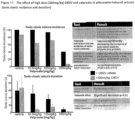
- A-C mean latency to seizure onset (A), clonic (B) and tonic-clonic (C) seizures in s.
- Statistical significance was assessed by ANOVA and post hoc Tukey test, p ⁇ 0.05 was considered to be significant in both cases. Data is presented ⁇ S.E.M., * indicates p ⁇ 0.05.
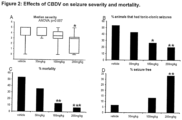
- A Median severity of seizures (grey line), also shown is the 25 th and 75 th percentiles (black horizontal lines) and the maximum and minimum values (upward and downward error bars respectively).
- B Proportion of animals in each group that developed tonic-clonic seizures.
- C Proportion of animals in each group that died.
- D Proportion of animals in each group that remained seizure free after PTZ administration. *, ** and *** indicate p ⁇ 0.05, 0.01 and 0.001 respectively.
- A median data tested by ANOVA and post hoc Tukey's test.
- B-D Percentages tested by binomial statistics test.
- A onset latency ⁇ S.E.M.
- B Severity; median values are shown in red, 25th and 75th percentiles are represented by boxes and maxima and minima in each group by error bars.
- C Seizure duration ⁇ S.E.M.
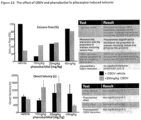
- A Effects of CBDV on the proportion of animals that remained seizure-free (%).
- B&C Effects of CBDV on the proportion of animals that developed clonic (B) and tonic-clonic (C) seizures (%).
- D Effects of CBDV on mortality (%).
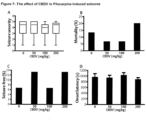
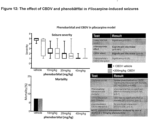
- A Effect of CBDV on overall seizure severity. Grey lines indicate median severity for each group, "boxes” represent 25th and 75th percentile ranges, error bars represent maxima and minima.
- B, C Effect of CBDV on percentage mortality (B) and the percentage of animals that remained seizure-free (C). Seizure-free was considered to be a score of [1] or [0].
- D Onset latency ( ⁇ S.E.M.) in seconds to first display of seizure severity [2] or above.
- A the mean number of seizure episodes (per animal, only animals that experienced seizures were included).
- B Median severity of all episodes in an experimental group, see FIG 1 (PILO) for description of plot.
- C Latency to 1st episode ( ⁇ S.E.M.) in seconds.
- D Mean duration of all episodes in an experimental group ( ⁇ S.E.M.).
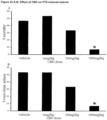
- B % of vehicle- and CBD-dosed (1, 10,100mg/kg CBD) animals that experienced tonic-clonic seizures as a result of IP injection of 80mg/kg PTZ. * indicates significant result (p ⁇ 0.01).
- Examples 1 to 5 below describe the use of isolated CBDV in different models of epilepsy. Further reference examples will describe phytocannabinoid BDS which comprise along with the principle cannabinoid other secondary and minor cannabinoids along with a non-phytocannabinoid containing fraction.
- Hippocampal slices were produced acutely from P>21 Wistar rats and activity recorded by multi-electrode arrays (MEA).
- MEA multi-electrode arrays
- Mg 2+ was removed (Mg 2+ -free model) or 100 ⁇ M 4-aminopyridine was added (4-AP model). 30 min after epileptiform burst activity was established, CBDV was added cumulatively (1, 10, 100 ⁇ M; 30 min each).
- mice Male Wistar rats (P24-29; 75-110g) were used to assess the effects of the phytocannabinoid CBDV in the PTZ model of generalised seizures. Animals were habituated to the test environment, cages, injection protocol and handling prior to experimentation. Animals were housed in a room at 21°C on a 12 hour light: dark cycle (lights on 0900) in 50% humidity, with free access to food and water.
- HED Human dose equivalent
- the K m for a rat is 6 and the K m for a human is 37.
- a 200mg/Kg dose in rat would equate to a human daily dose of about 2000mg.
- a range of doses of PTZ (50-100mg/kg body weight) were used to determine the best dose for induction of seizures (see below).
- a dose of 80mg/kg injected intra-peritoneally (IP; stock solution 50mg/ml in 0.9% saline) were used to screen the CBDV.
- CBDV CBDV was administered via intra-peritoneal (i.p.) injection at doses of 50, 100 and 200 mg/kg alongside animals that were injected with a matched volume of the cannabinoid vehicle (2:1:17 ethanol:Cremophor: 0.9%w/v NaCl solution), which served as the negative control group. Animals were then observed for 1 hour, after which time they received an IP injection of 80mg/kg PTZ. Negative vehicle controls were performed in parallel with cannabinoid-dosed subjects. After receiving a dose of PTZ, animals were observed and videoed to determine the severity of seizure and latency to several seizure behaviour types (see in vivo analysis, below). Animals were filmed for half an hour after last sign of seizure, and then returned to their cage.
- cannabinoid vehicle 2:1:17 ethanol:Cremophor: 0.9%w/v NaCl solution
- Seizure score Behavioural expression Righting reflex 0 No changes to behaviour Preserved 0.5 Abnormal behaviour (sniffing, excessive washing, orientation) Preserved 1 Isolated myoclonic jerks Preserved 2 Atypical clonic seizure Preserved 3 Fully developed bilateral forelimb clonus Preserved 3.5 Forelimb clonus with tonic component and body twist Preserved 4 Tonic-clonic seizure with suppressed tonic phase Lost 5 Fully developed tonic-clonic seizure Lost 6 Death
- FMJ myoclonic jerk
- Figure 1 illustrates the onset and development of seizures by showing the latency from administration of 80mg/kg PTZ to: the onset of seizure ( Figure 1A ); the development of clonic seizures ( Figure 1B ) and the development of tonic-clonic seizures ( Figure 1C ).
- CBDV shows great potential as an anti-epileptic drug.
- FIGS 3 and 4 detail the use of the SAED ethosuximide (a drug operating via calcium channels) with isolated CBDV.
- SAED ethosuximide a drug operating via calcium channels
- FIGS 5 and 6 detail the use of the SAED valproate (a drug operating via sodium channels) with isolated CBDV.
- SAED valproate a drug operating via sodium channels
- CBDV isolated CBDV
- Isolated CBDV was injected intra-peritoneally (IP) in the standard vehicle (1:1:18 ethanol:Cremophor:0.9% w / v NaCl) at doses of 50, 100 and 200mg/kg alongside animals that received vehicle alone at a matched volume. 15 minutes later methylscopolamine (1 mg/kg; to reduce peripheral muscarinic effects of pilocarpine) was administered followed, 45 minutes later by pilocarpine (380 mg/kg, IP) administration.
- IP intra-peritoneally
- FIGS 7 and 8 details the effect of CBDV on pilocarpine-induced seizures. As can be observed the lower doses of CBDV (50 and 100 mg/kg) decreased the mortality.
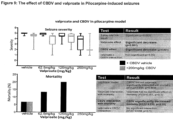
- the SAEDs valproate and phenobarbital were used at various doses along with isolated CBDV at 200 mg/kg. These two drugs are representative of two classes of anti-convulsants which have different mechanisms of action. Valproate operates via sodium channels and Phenobarbital enhances GABAergic inhibition.
- Figure 9 details the data obtained when CBDV was used in combination with the SAED valproate. Both CBDV and valproate exerted independent and positive effects upon seizure severity although only CBDV and not valproate independently caused a significant decrease in mortality. The combination of CBDV with valproate increased the seizure latency and decreased the seizure incidence. However these data were not statistically significant.
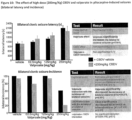
- Figure 10 details further data obtained when CBDV was used in combination with the SAED valproate. It shows that bilateral seizure incidence was significantly decreased by CBDV (particularly with the high dose Valproate (250mg/kg).
- Figure 11 details further data obtained when CBDV was used in combination with the SAED valproate. It shows that both tonic/ clonic incidence and total tonic clonic duration decreased when CBDV was used in combination with all doses of Valproate and that the CBDV interaction (alone) with clonic tonic seizure was statistically significant.
- Figure 12 details the data obtained when CBDV was used in combination with the SAED phenobarbital. As can be seen the CBDV significantly decreases severity and the combination is also significant.
- Figure 13 details further data obtained when CBDV was used in combination with the SAED phenobarbital. Although the data did not demonstrate statistical significance there was a strong trend, particularly at the lower dose levels of Phenobarbital, towards an increase in seizure free animals and increased onset latency.
- CBDV BDS comprises, as well as CBDV, the cannabinoids CBD and THCV.
- CBDV BDS comprises, as well as CBDV, the cannabinoids CBD and THCV.
- Cannabidivarin (CBDV) botanical drug substance analysis
- CBDV BDS can be obtained from extraction of CBDV-rich plants. Such chemovars are bred specifically to produce a significant proportion of their cannabinoids as CBDV.
- CBDV BDS can also be prepared by adding isolated CBDV to a cannabinoid free BDS.
- a cannabinoid free BDS can be prepared from either a CBG BDS or a zero cannabinoid plant such as USO-31. Because CBG is the major cannabinoid present in CBG BDS it is possible to remove the CBG present relatively easily using standard techniques known in the art such as column chromatography. It is possible to fractionate the BDS completely so that individual compounds can be removed for purification and the remainder recombined to produce, following solvent removal, a BDS free of the selected compound(s).
- the CBDV chemotype results from the breeding of plants which carry both postulated B D and A PR genes.
- the B D gene instruct the plants to synthesize the cyclic part of the CBD molecule and the A PR gene instructs the plant to synthesize this molecule with a propyl side chain, as opposed to the usual pentyl chain found in CBD.
- CBDV chemovar has been bred and the BDS analysed as described in Table 4.1 below: Table 4.1 Cannabidivarin BDS amount in total and range CBDV BDS Amount (% w/w) Range ( ⁇ 10%) Range ( ⁇ 25%) Range ( ⁇ 50%) CBDVA 0.14 0.13 - 0.15 0.11 - 0.18 0.07 - 0.21 CBDV 41.19 37.07 - 45.31 30.89 - 51.49 20.60 - 61.79 CBDA 0.07 0.06 - 0.08 0.05 - 0.09 0.04 - 0.11 CBG 0.59 0.53 - 0.65 0.44 - 0.74 0.30 - 0.89 CBD 17.70 15.93 - 19.47 13.28 - 22.13 8.85 - 26.55 THCV 3.06 2.75 - 6.12 2.30 - 3.83 1.53 - 4.59 CBCV 4.35 3.92 - 4.79 3.26 - 5.44 2.18 - 6.53 THC 0.88 0.79 - 0.97 0.66 - 1.10 0.44
- the total phytocannabinoid containing fraction of CBDV BDS comprises approximately 41% of the total BDS. According to variation this fraction may vary by ⁇ 10% up to ⁇ 50%.
- Table 4.2 Cannabidivarin BDS by percentage cannabinoid CBDV BDS Amount (% of total cannabinoid) CBDVA 0.20 CBDV 57.92 CBDA 0.10 CBG 0.83 CBD 24.89 THCV 4.30 CBCV 6.12 THC 1.24 CBDV (related substances) 3.09 CBC 1.31
- the amount of the principle phytocannabinoid in the CBDV BDS as a percentage of the phytocannabinoid containing fraction is approximately 58%. According to variation this fraction may vary by ⁇ 10% up to ⁇ 50%.
- CBDV BDS comprises the known anti-epileptic phytocannabinoids CBD and THCV in relatively large amounts and relatively little THC, as compared to THCV extract below infers that the use of CBDV in the form of a BDS will be a promising new treatment for epilepsy.
- Table 4.3 below details the cannabinoid components of THCV BDS, as can be seen the secondary cannabinoid is THC and is present at a significant amount in comparison to the other cannabinoids.
- Table 4.3 Tetrahydrocannabivarin BDS amount in total and range THCV BDS Amount (% w/w) Range ( ⁇ 10%) Range ( ⁇ 25%) Range ( ⁇ 50%) CBGV 0.15 0.14 - 0.17 0.11 - 0.19 0.07 - 0.23 CBNV 1.30 1.20 - 1.40 1.00 - 1.60 0.65 - 1.95 THCV 64.49 58.04 - 70.94 48.37 - 80.61 32.25 - 96.74 CBCV 0.65 0.59 - 0.72 0.49 - 0.81 0.33 - 0.98 THC-C4 0.82 0.74 - 0.90 0.62 - 1.03 0.41 - 1.23 CBN 0.15 0.14 - 0.17 0.11 - 0.19 0.07 - 0.23 THCVA 0.
- the total phytocannabinoid containing fraction of THCV BDS comprises approximately 74-90% (w/w) of the total BDS.
- Table 4.4 Tetrahydrocannabivarin BDS by percentage cannabinoid THCV BDS Amount (% of total cannabinoid) CBGV 0.18 CBNV 1.59 THCV 78.71 CBCV 0.79 THC-C4 1.00 CBN 0.18 THCVA 0.44 THC 16.39 Unknowns 0.71
- the amount of the principle phytocannabinoid in the THCV BDS as a percentage of the phytocannabinoid containing fraction is approximately 71-87% (w/w).
- the THCV BDS also has a secondary cannabinoid THC which is present at approximately 14.8-18% (w/w) of the phytocannabinoid containing fraction.
- the non-cannabinoid components of a phytocannabinoid BDS may play an important role in the BDS's pharmacology.
- the terpene profile is classified below.
- the following tables illustrate the terpene profile of a CBD chemovar which is representative of a high phytocannabinoid containing plant. Five plants were freshly harvested and extracted using steam distillation. The principle monoterpene and sesquiterpene are highlighted in bold.
- the monoterpene containing fraction comprises approximately 52-64% (w/w) of the total terpene fraction.
- Table 4.6 Monoterpene amount by percentage of monoterpenes Monoterpenes Amount (% of monoterpene fraction) Pinene (alpha & beta) 18.14 Myrcene 67.80 Limonene 7.12 Beta-ocimene 6.94
- the amount of the principle monoterpene myrcene in the monoterpene fraction as a percentage of the monoterpene fraction is approximately 61-75% (w/w).
- the monoterpene fraction also has a secondary monoterpene pinene which is present at approximately 16.3-20% (w/w) of the monoterpene fraction.
- the sesquiterpene containing fraction comprises approximately 27-32% (w/w) of the total terpene fraction.
- Table 4.8 Sesquiterpene amount by percentage of sesquiterpenes Sesquiterpenes Amount (% of sesquiterpene fraction) Caryophyllenes (t & oxide) 70.02 Bergotamene 0.43 Humulene 19.07 Aromadendrene 0.79 Selinene 1.41 Anon 1.05 Farnesene (Z,E & alpha) 3.71 alpha Gurjunene 0.29 Bisabolene 0.93 Nerolidol 1.03 Diepicedrene-1-oxide 0.91 Alpha-Bisabolol 0.38
- the zero cannabinoid plant was found to comprise two principle monoterpenes; pinene and myrcene.
- the amount of the principle monoterpene myrcene in the monoterpene fraction as a percentage of the monoterpene fraction is approximately 37-45% (w/w).
- the amount of the principle monoterpene pinene in the monoterpene fraction as a percentage of the monoterpene fraction is approximately 37-45% (w/w).
- CBDV CBDV
- CBDV BDS was administered at four doses that yielded a dose of CBDV of 50 and 100 mg/kg.
- Table 7.1 below details the data obtained.
- Table 7.1 CBDV (mg/kg) Mortality (%) 0 26.3 50 16.7 100 0
- CBDV BDS exhibited a trend to decrease seizure-related mortality.
- THCV THCV
- isolated THCV THCV
- isolated CBD THCV
- the THCV BDS comprised a whole extract of a chemovar in which THCV was the predominant cannabinoid. (i.e. it was the major cannabinoid present in the extract, 80% by weight of the total cannabinoid content).
- THC was the second most prevalent cannabinoid, and was present in significant amounts. (i.e. it comprised greater than 10% by weight of the total cannabinoid content, being present at about 16%), and there were a number of minor cannabinoids identified, each comprising less than 2% by weight of the total cannabinoid content as measured by HPLC analysis.
- the ratio of THCV to THC in this extract is about 5:1.
- the THCV content was 67.5% by weight of the extract and the THC content was 13.6% by weight of the extract, with the other identified cannabinoids in total comprising about 3% by weight of the extract, the remaining 16% comprising non-cannabinoids.
- PTZ doses of:
- THCV BDS The effect of THCV BDS on PTZ-induced seizures was first assessed against a PTZ dose of 70 mg/kg. As described below, this yielded a vehicle control group that did not typically experience severe seizure scores. Therefore THCV BDS was also screened against an 80mg/kg dose of PTZ. It was felt that the increased seizure severity experienced by vehicle control animals exposed to 80mg/kg PTZ was a more appropriate test of potential anti-convulsant activity.
- THCV BDS Three doses of THCV BDS were assessed against a concentration of PTZ known to induce moderate seizures in rats (70mg/kg; see pilot, above).
- the low, medium and high doses of THCV BDS used were 0.37, 3.70 and 37.04mg/kg, and yielded actual THCV doses of 0.25, 2.5 and 25mg/kg respectively. These doses were matched by THCV content to those being used for screening pure THCV against PTZ-induced seizures.
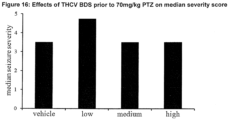
- THCV BDS did not have any significant effects on latency to first myoclonic jerk or on latency to attaining a severity score of 3.5 on the seizure severity scale ( Figure 14 ). It should be noted that although values for both these variables were higher for animals treated with medium and high dose THCV BDS compared to control, this failed to reach significance (P>0.05). Similarly, no significant impact on duration of seizure was seen ( Figure 15 ).
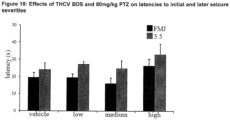
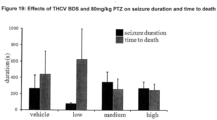
- THCV BDS did not have a significant effect on latencies to FMJ or a severity score of 3.5 ( Figure 18 ). Similarly, no effect was observed on seizure durations ( Figure 19 ).
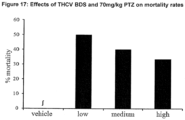
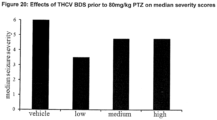
- Low dose THCV BDS decreased both seizure severity ( Figure 20 ) and mortality ( Figure 21 ) in animals that received doses of 80mg/kg PTZ. Animals that received low THCV BDS had a lower median severity score (3.5 compared to 6) than vehicle controls. However, this difference was not significant (P>0.5). The low THCV BDS dose group also had a mortality rate half that of the vehicle control group (30% vs 60%).
- Groups treated with medium and high doses of THCV BDS had a lower seizure severity score of 4.75 (P>0.5 vs control), and a lower mortality rate of 50%, compared to 6 and 60% respectively.
- THCV BDS cannabinoid constituents present in the non-THCV content of the THCV BDS.
- THC cannabinoid constituents
- Table 8.2 displays the values for median seizure severity in each experimental group.
- Table 8.2 Seizure severity and incidence Vehicle 0.025 mg/kg THCV 0.25 mg/kg THCV 2.5 mg/kg THCV Median severity 4.25 3.5 3.5 3.5 % no seizure 12.5 5.9 33.3* 18.8
- Vehicle control animals exhibited a median seizure severity of 4.25, whereas all groups which received THCV had a median severity score of 3.5. This decrease was not significantly different.
- THCV can delay both onset and seizure development, whilst the significant effects of the medium dose on the incidence of seizure at medium (0.25 mg/kg) THCV doses suggest a significant anticonvulsive action on PTZ-induced seizures.
- CBD was also screened in the PTZ model.
- IP intra-peritoneally
- THCV and CBD show promise as an anti-epileptic for generalized seizure, particularly clonic/ tonic seizure.
- the data generated for a THCV rich extract, containing other cannabinoids including significant amounts of THC suggest that the THC may be countering the effect of the THCV and that a cannabinoid extract which contains THCV as a major or predominant cannabinoid, but which also contains minimal, or substantially no, THC would be desirable for treating epilepsy.
- pure CBD suggest that an extract containing significant amounts of both THCV and CBD, but again, minimal or substantially no THC may provide an optimum combination.
- a THCV predominant extract in which THC is selectively, and substantially, removed (to levels of less than a few percent).
- This could be mixed with a CBD rich extract in which CBD is the major and predominant cannabinoid (also with low levels of THC) to produce an extract with clearly defined, and significant levels of both THCV and CBD, but with insignificant levels of THC.
- Such an extract may contain other cannabinoids and the non-cannabinoid components which result from extraction, by for example, carbon dioxide as disclosed in WO04/016277 , which components may support an "entourage" effect in the endocannabinoid system.
- a rat / human conversion factor suggests a CBD daily dose of at least 600mg (and optionally between 400mg and 800mg) and for THCV at least 1.5mg (medium) and preferably at least 15mg (high).
- a phytocannabinoid extract is to be used, an extract with low or negligible levels of THC and therapeutically effective levels of THCV and / or CBD is desired.
- the vehicle used in this study was 2:1:17 (ethanol:Cremophor:0.9% w v NaCl).
- the test compounds used were cannabidiol (CBD) and cannabidivarin (CBDV). These were made to a solution at the highest concentration; these were then dissolved in ethanol before combination with Cremophor and 0.9% NaCl in the proportion described above.
- CBD or CBDV were administered intraperitoneally at a volume of 10 ml/kg body weight.
- the SAED valproic acid (VPA) was dissolved in saline.
- Animal Species/Strain Mouse/ICR, Microbiological grade: SPF, Supplier: SLC Japan, Inc. Sex: male, Age (at time of testing): 5-7 weeks old, Number of animals: about 5 animals per group. Temperature: 23 ⁇ 2°C, Humidity: 60 ⁇ 10%, Light conditions: 7 AM to 7 PM for the light period, 7 PM to 7 AM for the dark period. Chow and water: Free access to CRF-1 (Oriental Yeast Co, Ltd) and tap water.
- mice were weighed and randomized into several groups in each test. On the morning of the experiment day, body weight was measured in order to calculate the administration volume of each animal. Vehicle, CBD, CBDV or valproic acid sodium salt was interperitoneally administered 30 minutes before electric stimuli. Maximal electroshock seizures (MES) in mice was induced by a stimulator (UGO BASILE ECT UNIT 7801, Italia) using a current of 30 mA delivered with a pulse frequency of 100 Hz for 200 msec through earlap electrodes. The mice were observed for 10 seconds and the incidence of tonic hindlimb extension was noted.
- MES Maximal electroshock seizures
- CBDV cannabinoid CBDV clearly demonstrates greater efficacy as an anti-convulsant in the MES model of epilepsy than the cannabinoid CBD.
- the efficacy of CBDV is approaching that of the SAED valproic acid it is a clear contender for use an anti-convulsant without producing the side effects that are known to occur with SAEDs.
- Experimental test days were separated by a two day rest period to allow for clearance of previous compounds. The order of drug administration was randomised using a standard Latin square design.
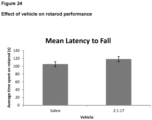
- mice 60 minutes after CBDV or vehicle administration, animals were placed on a linearly accelerating rotarod (Panlab/Harvard Apparatus, Holliston, USA) that increased in speed from 4 to 40 rpm over a 300 second period.
- An accelerating protocol was employed to eliminate the need for habituation to the rotarod, minimising divergence in the results obtained for each animal owing to disproportionate improvements in performance.
- Each test ended when the animal fell from the rotarod, with each animal performing three accelerating rotarod runs per experimental day. Animals were allowed a 5 minute recovery between tests to prevent fatigue-induced declines in performance. Mean latency in seconds to fall from the rotarod was compared between vehicle control and CBDV groups to assess motor function.
- CBDV 100 and 200mg/kg
- the rotarod tests the effect of drugs on the motor behaviour of the rats.
- Anti-convulsant drugs such as phenobarbital are known to produce a decrease in time that the animals can remain on the rotarod demonstrating the known side effects of these drugs on motor control.
Landscapes
- Health & Medical Sciences (AREA)
- Life Sciences & Earth Sciences (AREA)
- General Health & Medical Sciences (AREA)
- Veterinary Medicine (AREA)
- Public Health (AREA)
- Animal Behavior & Ethology (AREA)
- Chemical & Material Sciences (AREA)
- Medicinal Chemistry (AREA)
- Pharmacology & Pharmacy (AREA)
- Epidemiology (AREA)
- Natural Medicines & Medicinal Plants (AREA)
- Engineering & Computer Science (AREA)
- Nuclear Medicine, Radiotherapy & Molecular Imaging (AREA)
- Chemical Kinetics & Catalysis (AREA)
- General Chemical & Material Sciences (AREA)
- Organic Chemistry (AREA)
- Bioinformatics & Cheminformatics (AREA)
- Microbiology (AREA)
- Medical Informatics (AREA)
- Mycology (AREA)
- Botany (AREA)
- Alternative & Traditional Medicine (AREA)
- Biotechnology (AREA)
- Biomedical Technology (AREA)
- Neurosurgery (AREA)
- Pain & Pain Management (AREA)
- Neurology (AREA)
- Pharmaceuticals Containing Other Organic And Inorganic Compounds (AREA)
- Acyclic And Carbocyclic Compounds In Medicinal Compositions (AREA)
- Medicines That Contain Protein Lipid Enzymes And Other Medicines (AREA)
- Medicines Containing Plant Substances (AREA)
Applications Claiming Priority (4)
| Application Number | Priority Date | Filing Date | Title |
|---|---|---|---|
| GB1005364.3A GB2479153B (en) | 2010-03-30 | 2010-03-30 | The phytocannabinoid cannabidivarin (CBDV) for use in the treatment of epilepsy |
| GB1100042.9A GB2487183B (en) | 2011-01-04 | 2011-01-04 | Use of the phytocannabinoid cannabidivarin (CBDV) in the treatment of epilepsy |
| EP11712658A EP2552430A1 (en) | 2010-03-30 | 2011-03-30 | Use of the phytocannabinoid cannabidivarin (cbdv) in the treatment of epilepsy |
| PCT/GB2011/050649 WO2011121351A1 (en) | 2010-03-30 | 2011-03-30 | Use of the phytocannabinoid cannabidivarin (cbdv) in the treatment of epilepsy |
Related Parent Applications (1)
| Application Number | Title | Priority Date | Filing Date |
|---|---|---|---|
| EP11712658A Division EP2552430A1 (en) | 2010-03-30 | 2011-03-30 | Use of the phytocannabinoid cannabidivarin (cbdv) in the treatment of epilepsy |
Publications (2)
| Publication Number | Publication Date |
|---|---|
| EP3763361A1 EP3763361A1 (en) | 2021-01-13 |
| EP3763361B1 true EP3763361B1 (en) | 2024-06-26 |
Family
ID=43983229
Family Applications (2)
| Application Number | Title | Priority Date | Filing Date |
|---|---|---|---|
| EP11712658A Withdrawn EP2552430A1 (en) | 2010-03-30 | 2011-03-30 | Use of the phytocannabinoid cannabidivarin (cbdv) in the treatment of epilepsy |
| EP20194696.9A Active EP3763361B1 (en) | 2010-03-30 | 2011-03-30 | Cannabidivarin (cbdv) for use in the treatment of epilepsy |
Family Applications Before (1)
| Application Number | Title | Priority Date | Filing Date |
|---|---|---|---|
| EP11712658A Withdrawn EP2552430A1 (en) | 2010-03-30 | 2011-03-30 | Use of the phytocannabinoid cannabidivarin (cbdv) in the treatment of epilepsy |
Country Status (19)
| Country | Link |
|---|---|
| US (3) | US9125859B2 (enExample) |
| EP (2) | EP2552430A1 (enExample) |
| JP (1) | JP5918748B2 (enExample) |
| KR (1) | KR101849703B1 (enExample) |
| CN (1) | CN103025325B (enExample) |
| AR (1) | AR080730A1 (enExample) |
| AU (3) | AU2011234225B2 (enExample) |
| BR (1) | BR112012024480A8 (enExample) |
| CA (1) | CA2794620C (enExample) |
| EA (1) | EA036044B1 (enExample) |
| IL (1) | IL222132B (enExample) |
| MX (1) | MX2012011033A (enExample) |
| MY (1) | MY162129A (enExample) |
| NZ (1) | NZ602925A (enExample) |
| PH (1) | PH12012501902A1 (enExample) |
| SG (2) | SG10201502480XA (enExample) |
| TW (1) | TWI583374B (enExample) |
| WO (1) | WO2011121351A1 (enExample) |
| ZA (1) | ZA201208141B (enExample) |
Families Citing this family (73)
| Publication number | Priority date | Publication date | Assignee | Title |
|---|---|---|---|---|
| EP1811983B1 (en) * | 2004-11-16 | 2020-10-07 | GW Pharma Limited | New use for cannabinoid |
| GB0425248D0 (en) | 2004-11-16 | 2004-12-15 | Gw Pharma Ltd | New use for cannabinoid |
| GB2471523A (en) | 2009-07-03 | 2011-01-05 | Gw Pharma Ltd | Use of tetrahydrocannibivarin (THCV) and optionally cannabidiol (CBD) in the treatment of epilepsy |
| GB2487183B (en) * | 2011-01-04 | 2018-10-03 | Otsuka Pharma Co Ltd | Use of the phytocannabinoid cannabidivarin (CBDV) in the treatment of epilepsy |
| TWI583374B (zh) * | 2010-03-30 | 2017-05-21 | Gw伐瑪有限公司 | 使用植物大麻素次大麻二酚(cbdv)來治療癲癇之用途 |
| GB2487712B (en) | 2011-01-04 | 2015-10-28 | Otsuka Pharma Co Ltd | Use of the phytocannabinoid cannabidiol (CBD) in combination with a standard anti-epileptic drug (SAED) in the treatment of epilepsy |
| GB2514054A (en) | 2011-09-29 | 2014-11-12 | Gw Pharma Ltd | A pharmaceutical composition comprising the phytocannabinoids cannabidivarin (CBDV) and cannabidiol (CBD) |
| US10774288B2 (en) | 2013-09-18 | 2020-09-15 | The Werc Shop, LLC | Terpene-based compositions, processes, methodologies for creation and products thereby |
| DK3062606T3 (da) * | 2013-10-29 | 2019-06-24 | Biotech Inst Llc | Forædling, fremstilling, forarbejdning og anvendelse af speciel cannabis |
| GB2530001B (en) | 2014-06-17 | 2019-01-16 | Gw Pharma Ltd | Use of cannabidiol in the reduction of convulsive seizure frequency in treatment-resistant epilepsy |
| GB2527599A (en) * | 2014-06-27 | 2015-12-30 | Gw Pharma Ltd | Use of 7-OH-Cannabidiol (7-OH-CBD) and/or 7-OH-Cannabidivarin (7-OH-CBDV) in the treatment of epilepsy |
| WO2016044370A1 (en) | 2014-09-16 | 2016-03-24 | India Globalization Capital, Inc. | Cannabinoid composition and method for treating pain |
| GB2531282A (en) | 2014-10-14 | 2016-04-20 | Gw Pharma Ltd | Use of cannabinoids in the treatment of epilepsy |
| GB2531281A (en) | 2014-10-14 | 2016-04-20 | Gw Pharma Ltd | Use of cannabidiol in the treatment of intractable epilepsy |
| GB2531278A (en) | 2014-10-14 | 2016-04-20 | Gw Pharma Ltd | Use of cannabidiol in the treatment of intractable epilepsy |
| WO2016118391A1 (en) * | 2015-01-25 | 2016-07-28 | India Globalization Capital, Inc. | Composition and method for treating seizure disorders |
| US10238745B2 (en) | 2015-01-31 | 2019-03-26 | Constance Therapeutics, Inc. | Cannabinoid composition and products including α-tocopherol |
| MX386351B (es) | 2015-01-31 | 2025-03-18 | Constance Therapeutics Inc | Métodos para la preparación de extractos y composiciones de aceite de cannabis. |
| MX2017010872A (es) | 2015-02-27 | 2018-05-07 | Ebbu Llc | Composiciones que comprenden combinaciones de cannabinoides purificados, con al menos uno de flavonoides, terpenos o minerales. |
| EP3288592A4 (en) * | 2015-04-28 | 2019-01-09 | The Regents of The University of California | USE OF CANNABIDIOL FOR THE TREATMENT OF CHILDREN'S SPAS |
| GB2539472A (en) | 2015-06-17 | 2016-12-21 | Gw Res Ltd | Use of cannabinoids in the treatment of epilepsy |
| GB2541191A (en) | 2015-08-10 | 2017-02-15 | Gw Pharma Ltd | Use of cannabinoids in the treatment of epilepsy |
| US10596159B2 (en) | 2015-08-12 | 2020-03-24 | India Globalization Capital, Inc. | Method and composition for treating cachexia and eating disorders |
| WO2017091764A1 (en) | 2015-11-24 | 2017-06-01 | Constance Therapeutics, Inc. | Cannabis oil compositions and methods for preparation thereof |
| GB2548873B (en) | 2016-03-31 | 2020-12-02 | Gw Res Ltd | Use of Cannabidiol in the Treatment of SturgeWeber Syndrome |
| GB2549278B (en) * | 2016-04-11 | 2021-02-17 | Gw Res Ltd | Use of cannabidivarin in the treatment of autism spectrum disorder |
| US10499584B2 (en) | 2016-05-27 | 2019-12-10 | New West Genetics | Industrial hemp Cannabis cultivars and seeds with stable cannabinoid profiles |
| US10399920B2 (en) | 2016-06-01 | 2019-09-03 | S&B Pharma, Inc. | Crystalline form of cannabidiol |
| US10053407B2 (en) | 2016-06-01 | 2018-08-21 | S&B Pharma, Inc. | Crystalline cannabidivarin |
| WO2017218629A1 (en) | 2016-06-15 | 2017-12-21 | India Globalization Capital, Inc. | Method and composition for treating seizure disorders |
| WO2018000094A1 (en) | 2016-06-29 | 2018-01-04 | CannScience Innovations Inc. | Decarboxylated cannabis resins, uses thereof and methods of making same |
| GB2551986A (en) | 2016-07-01 | 2018-01-10 | Gw Res Ltd | Parenteral formulations |
| GB2551987A (en) | 2016-07-01 | 2018-01-10 | Gw Res Ltd | Oral cannabinoid formulations |
| CA3031810A1 (en) | 2016-08-03 | 2018-02-08 | Zelda Therapeutics Operations Pty Ltd | Cannabis composition |
| GB2553139A (en) | 2016-08-25 | 2018-02-28 | Gw Res Ltd | Use of cannabinoids in the treatment of multiple myeloma |
| US12485129B2 (en) | 2016-08-29 | 2025-12-02 | Canopy Growth Corporation | Water soluble compositions comprising purified cannabinoids |
| WO2018044953A1 (en) | 2016-08-29 | 2018-03-08 | Ebbu, LLC | Water soluble compositions comprising purified cannabinoids |
| GB2557921A (en) | 2016-12-16 | 2018-07-04 | Gw Res Ltd | Use of cannabinoids in the treatment of angelman syndrome |
| CN108236608B (zh) * | 2016-12-27 | 2020-05-08 | 汉义生物科技(北京)有限公司 | 大麻二酚与氨己烯酸的药物组合物及其用途 |
| CN108245517B (zh) * | 2016-12-29 | 2020-05-08 | 汉义生物科技(北京)有限公司 | 大麻二酚与拉莫三嗪的药物组合物及其用途 |
| CN108245499B (zh) * | 2016-12-29 | 2020-11-20 | 汉义生物科技(北京)有限公司 | 大麻二酚与双链脂肪酸类抗癫痫药物的组合物及其用途 |
| CN108245510B (zh) * | 2016-12-29 | 2020-11-20 | 汉义生物科技(北京)有限公司 | 大麻二酚与乙丙酰脲类抗癫痫药物的组合物及其用途 |
| GB2559774B (en) | 2017-02-17 | 2021-09-29 | Gw Res Ltd | Oral cannabinoid formulations |
| GB2560019A (en) | 2017-02-27 | 2018-08-29 | Gw Res Ltd | Use of cannabinoids in the treatment of leukaemia |
| CA3054690A1 (en) * | 2017-03-01 | 2018-09-07 | Canopy Growth Corporation | Compositions purposefully selected comprising purified cannabinoids and/or purified terpenes |
| GB2564383B (en) | 2017-06-23 | 2021-04-21 | Gw Res Ltd | Use of cannabidiol in the treatment of tumours assoicated with Tuberous Sclerosis Complex |
| CN109106699A (zh) * | 2017-06-23 | 2019-01-01 | 汉义生物科技(北京)有限公司 | 一种用于治疗癫痫的药物组合物、其制备方法及用途 |
| CN109498606A (zh) | 2017-09-15 | 2019-03-22 | 汉义生物科技(北京)有限公司 | 一种含有大麻二酚和/或次大麻二酚的组合物及其在治疗痛经中的应用 |
| GB2568929A (en) | 2017-12-01 | 2019-06-05 | Gw Res Ltd | Use of cannabinoids in the treatment of epilepsy |
| AU2018379109A1 (en) * | 2017-12-08 | 2020-07-02 | Biotech Institute LLC | Propyl cannabinoid hemp plants, methods of producing and methods of using them |
| GB2569961B (en) | 2018-01-03 | 2021-12-22 | Gw Res Ltd | Pharmaceutical |
| GB201806953D0 (en) | 2018-04-27 | 2018-06-13 | Gw Res Ltd | Cannabidiol Preparations |
| WO2020123383A1 (en) * | 2018-12-10 | 2020-06-18 | Natural Extraction Systems, LLC | Compositions with novel cannabinoid and terpene profiles |
| WO2020185661A1 (en) * | 2019-03-08 | 2020-09-17 | The Regents Of The University Of California | Use of 8,9-dihydrocannabidiol compounds |
| GB201910389D0 (en) | 2019-07-19 | 2019-09-04 | Gw Pharma Ltd | Novel compounds, methods for their manufacture, and uses thereof |
| GB2588576A (en) | 2019-08-27 | 2021-05-05 | Gw Res Ltd | Use of cannabinoids in the treatment of dyskinesia associated with Parkinson's disease |
| GB201916849D0 (en) | 2019-11-19 | 2020-01-01 | Gw Res Ltd | Cannabidiol-type cannabinoid compound |
| GB201916846D0 (en) | 2019-11-19 | 2020-01-01 | Gw Res Ltd | Cannabidiol-type cannabinoid compound |
| GB201916974D0 (en) | 2019-11-21 | 2020-01-08 | Gw Res Ltd | Cannabidol-type cannabinoid compound |
| GB201916977D0 (en) * | 2019-11-21 | 2020-01-08 | Gw Res Ltd | Cannibidol-type cannabinoid compound |
| WO2021113083A1 (en) | 2019-12-06 | 2021-06-10 | JLABS Beauty LLC | Topical compositions containing rose oil and cannabidiol and methods of making and using the same |
| GB202002754D0 (en) | 2020-02-27 | 2020-04-15 | Gw Res Ltd | Methods of treating tuberous sclerosis complex with cannabidiol and everolimus |
| KR102371269B1 (ko) | 2020-03-11 | 2022-03-07 | 연세대학교 산학협력단 | VEGFR-3 발현 조절을 통한 mTOR 관련 질환의 예방 또는 치료 방법 |
| EP4153306A4 (en) | 2020-05-22 | 2024-06-26 | Ilera Derm LLC | COMPOSITIONS FOR TREATING ACNE AND DERMATOLOGICAL DISEASES |
| WO2022026613A2 (en) | 2020-07-28 | 2022-02-03 | Impello Biosciences, Inc. | Methods and compositions for altering secondary metabolites in plants |
| GB202014250D0 (en) * | 2020-09-10 | 2020-10-28 | Gw Res Ltd | Use of cannabidivarin in the treatment of seizures associated with rare epilepsy syndromes related to genetic abnormalities |
| US11160757B1 (en) | 2020-10-12 | 2021-11-02 | GW Research Limited | pH dependent release coated microparticle cannabinoid formulations |
| US11672761B2 (en) | 2020-11-16 | 2023-06-13 | Orcosa Inc. | Rapidly infusing platform and compositions for therapeutic treatment in humans |
| WO2022103638A1 (en) | 2020-11-16 | 2022-05-19 | Orcosa Inc. | Cannabinoids in the treatment of autism spectrum disorder |
| WO2022122904A1 (en) | 2020-12-09 | 2022-06-16 | Chanelle Mccoy Cbd Limited | A delayed-release capsule of cannabidiol |
| GB2606334A (en) | 2021-02-12 | 2022-11-09 | Gw Res Ltd | Use of cannabidivarin in the treatment of seizures associated with canine epilepsy |
| CN115583933B (zh) * | 2022-10-31 | 2024-02-06 | 暨明医药科技(苏州)有限公司 | 一种高纯度四氢大麻素同系物的制备方法 |
| US11977085B1 (en) | 2023-09-05 | 2024-05-07 | Elan Ehrlich | Date rape drug detection device and method of using same |
Citations (3)
| Publication number | Priority date | Publication date | Assignee | Title |
|---|---|---|---|---|
| WO2006054057A2 (en) * | 2004-11-16 | 2006-05-26 | Gw Pharma Limited | New use for cannabinoid |
| WO2009007697A1 (en) * | 2007-07-06 | 2009-01-15 | Gw Pharma Limited | New pharmaceutical formulation comprising cannabidiol and tetrahydrocannabidivarin |
| WO2011001169A1 (en) * | 2009-07-03 | 2011-01-06 | Gw Pharma Limited | Use of one or a combination of phyto-cannabinoids in the treatment of epilepsy |
Family Cites Families (40)
| Publication number | Priority date | Publication date | Assignee | Title |
|---|---|---|---|---|
| US6403126B1 (en) | 1999-05-26 | 2002-06-11 | Websar Innovations Inc. | Cannabinoid extraction method |
| US6949582B1 (en) | 1999-05-27 | 2005-09-27 | Wallace Walter H | Method of relieving analgesia and reducing inflamation using a cannabinoid delivery topical liniment |
| GB0103638D0 (en) * | 2001-02-14 | 2001-03-28 | Gw Pharmaceuticals Ltd | Pharmaceutical formulations |
| EP2298284A3 (en) * | 2001-02-14 | 2013-12-18 | GW Pharma Limited | Mucoadhesive pharmaceutical formulations |
| GB0202385D0 (en) | 2002-02-01 | 2002-03-20 | Gw Pharma Ltd | Compositions for the treatment of nausea,vomiting,emesis,motion sicknes or like conditions |
| ITPD20020138A1 (it) | 2002-05-24 | 2003-11-24 | Matteo Bevilacqua | Composizione di sostanze a base terpenica, metodo di preparazione e metodo di dispersione in ambiente della medesima. |
| DE10226494A1 (de) | 2002-06-14 | 2004-01-08 | Lts Lohmann Therapie-Systeme Ag | Filmförmige mucoadhäsive Darreichungsformen zur Verabreichung von Cannabis-Wirkstoffen |
| KR101008609B1 (ko) * | 2002-08-14 | 2011-01-17 | 지더블유 파마 리미티드 | 점막투여용 칸나비노이드 액체 제형 |
| GB2392093B (en) * | 2002-08-14 | 2006-03-08 | Gw Pharma Ltd | Pharmaceutical formulations |
| JP4657716B2 (ja) | 2002-08-14 | 2011-03-23 | ジーダブリュー・ファーマ・リミテッド | 植物材料からの薬学的に活性な成分の抽出の改良 |
| GB0425248D0 (en) | 2004-11-16 | 2004-12-15 | Gw Pharma Ltd | New use for cannabinoid |
| TWI366460B (en) | 2005-06-16 | 2012-06-21 | Euro Celtique Sa | Cannabinoid active pharmaceutical ingredient for improved dosage forms |
| GB2434312B (en) * | 2006-01-18 | 2011-06-29 | Gw Pharma Ltd | Cannabinoid-containing plant extracts as neuroprotective agents |
| US9877928B2 (en) | 2006-05-30 | 2018-01-30 | Air Systems, Inc. | Gear drive damper |
| GB2438682A (en) | 2006-06-01 | 2007-12-05 | Gw Pharma Ltd | New use for cannabinoids |
| WO2008094181A2 (en) | 2007-02-01 | 2008-08-07 | The Regents Of The University Of Michigan | Compositions and methods for detecting, preventing and treating seizures and seizure related disorders |
| GB2448535A (en) | 2007-04-19 | 2008-10-22 | Gw Pharma Ltd | New use for cannabinoid-containing plant extracts |
| GB2449691A (en) | 2007-05-31 | 2008-12-03 | Gw Pharma Ltd | A reference plant lacking medicinal active compound expression |
| GB2456183A (en) | 2008-01-04 | 2009-07-08 | Gw Pharma Ltd | Anti-psychotic composition comprising cannabinoids and anti-psychotic medicament |
| GB2459637B (en) | 2008-01-21 | 2012-06-06 | Gw Pharma Ltd | New use for cannabinoids |
| US9023322B2 (en) | 2008-03-26 | 2015-05-05 | Stichting Sanammad | Chewing gum compositions comprising cannabinoids |
| GB2478074B (en) | 2008-06-04 | 2012-12-26 | Gw Pharma Ltd | Anti-tumoural effects of cannabinoid combinations |
| GB2478072B (en) | 2008-06-04 | 2012-12-26 | Gw Pharma Ltd | Anti-tumoural effects of cannabinoid combinations |
| GB2478595B (en) | 2010-03-12 | 2018-04-04 | Gw Pharma Ltd | Phytocannabinoids in the treatment of glioma |
| GB2479153B (en) | 2010-03-30 | 2014-03-19 | Gw Pharma Ltd | The phytocannabinoid cannabidivarin (CBDV) for use in the treatment of epilepsy |
| TWI583374B (zh) | 2010-03-30 | 2017-05-21 | Gw伐瑪有限公司 | 使用植物大麻素次大麻二酚(cbdv)來治療癲癇之用途 |
| US8895537B2 (en) | 2010-10-29 | 2014-11-25 | Infirst Healthcare Ltd. | Compositions and methods for treating cardiovascular diseases |
| GB2487712B (en) | 2011-01-04 | 2015-10-28 | Otsuka Pharma Co Ltd | Use of the phytocannabinoid cannabidiol (CBD) in combination with a standard anti-epileptic drug (SAED) in the treatment of epilepsy |
| GB201111261D0 (en) | 2011-07-01 | 2011-08-17 | Gw Pharma Ltd | Cannabinoids for use in the treatment of neuro-degenerative diseases or disorders |
| US9750747B2 (en) | 2011-08-26 | 2017-09-05 | Bail-Portela & Ca, S.A. | Treatments involving eslicarbazepine acetate or eslicarbazepine |
| GB2514054A (en) * | 2011-09-29 | 2014-11-12 | Gw Pharma Ltd | A pharmaceutical composition comprising the phytocannabinoids cannabidivarin (CBDV) and cannabidiol (CBD) |
| GB2496687A (en) | 2011-11-21 | 2013-05-22 | Gw Pharma Ltd | Tetrahydrocannabivarin (THCV) in the protection of pancreatic islet cells |
| US20150181924A1 (en) | 2013-10-31 | 2015-07-02 | Michael R. Llamas | Cannabidiol liquid composition for smoking |
| US10052339B2 (en) | 2014-03-21 | 2018-08-21 | Bodybio Inc. | Methods and compositions for treating symptoms of diseases related to imbalance of essential fatty acids |
| CN106999598B (zh) | 2014-05-29 | 2022-02-08 | 鲜切发展有限责任公司 | 稳定的大麻素类化合物制剂 |
| GB2530001B (en) | 2014-06-17 | 2019-01-16 | Gw Pharma Ltd | Use of cannabidiol in the reduction of convulsive seizure frequency in treatment-resistant epilepsy |
| GB2531282A (en) | 2014-10-14 | 2016-04-20 | Gw Pharma Ltd | Use of cannabinoids in the treatment of epilepsy |
| GB2531278A (en) | 2014-10-14 | 2016-04-20 | Gw Pharma Ltd | Use of cannabidiol in the treatment of intractable epilepsy |
| GB2531281A (en) | 2014-10-14 | 2016-04-20 | Gw Pharma Ltd | Use of cannabidiol in the treatment of intractable epilepsy |
| GB2539472A (en) | 2015-06-17 | 2016-12-21 | Gw Res Ltd | Use of cannabinoids in the treatment of epilepsy |
-
2011
- 2011-03-15 TW TW100108735A patent/TWI583374B/zh active
- 2011-03-28 AR ARP110101014 patent/AR080730A1/es unknown
- 2011-03-30 EA EA201290975A patent/EA036044B1/ru unknown
- 2011-03-30 WO PCT/GB2011/050649 patent/WO2011121351A1/en not_active Ceased
- 2011-03-30 MY MYPI2012004222A patent/MY162129A/en unknown
- 2011-03-30 EP EP11712658A patent/EP2552430A1/en not_active Withdrawn
- 2011-03-30 US US13/075,873 patent/US9125859B2/en active Active
- 2011-03-30 BR BR112012024480A patent/BR112012024480A8/pt not_active Application Discontinuation
- 2011-03-30 AU AU2011234225A patent/AU2011234225B2/en active Active
- 2011-03-30 NZ NZ60292511A patent/NZ602925A/en unknown
- 2011-03-30 CN CN201180026947.4A patent/CN103025325B/zh active Active
- 2011-03-30 CA CA2794620A patent/CA2794620C/en active Active
- 2011-03-30 KR KR1020127028091A patent/KR101849703B1/ko active Active
- 2011-03-30 SG SG10201502480XA patent/SG10201502480XA/en unknown
- 2011-03-30 PH PH1/2012/501902A patent/PH12012501902A1/en unknown
- 2011-03-30 SG SG2012070793A patent/SG184236A1/en unknown
- 2011-03-30 EP EP20194696.9A patent/EP3763361B1/en active Active
- 2011-03-30 MX MX2012011033A patent/MX2012011033A/es active IP Right Grant
- 2011-03-30 JP JP2013501945A patent/JP5918748B2/ja active Active
-
2012
- 2012-09-24 IL IL222132A patent/IL222132B/en active IP Right Grant
- 2012-10-29 ZA ZA2012/08141A patent/ZA201208141B/en unknown
-
2015
- 2015-04-14 US US14/685,753 patent/US10799467B2/en active Active
-
2016
- 2016-10-11 AU AU2016244223A patent/AU2016244223A1/en not_active Abandoned
-
2018
- 2018-08-17 AU AU2018217303A patent/AU2018217303A1/en not_active Abandoned
-
2020
- 2020-09-04 US US17/012,448 patent/US12023305B2/en active Active
Patent Citations (3)
| Publication number | Priority date | Publication date | Assignee | Title |
|---|---|---|---|---|
| WO2006054057A2 (en) * | 2004-11-16 | 2006-05-26 | Gw Pharma Limited | New use for cannabinoid |
| WO2009007697A1 (en) * | 2007-07-06 | 2009-01-15 | Gw Pharma Limited | New pharmaceutical formulation comprising cannabidiol and tetrahydrocannabidivarin |
| WO2011001169A1 (en) * | 2009-07-03 | 2011-01-06 | Gw Pharma Limited | Use of one or a combination of phyto-cannabinoids in the treatment of epilepsy |
Also Published As
Similar Documents
| Publication | Publication Date | Title |
|---|---|---|
| US12023305B2 (en) | Use of the phytocannabinoid cannabidivarin (CBDV) in the treatment of epilepsy | |
| US12121499B2 (en) | Pharmaceutical composition comprising the phytocannabinoids cannabidivarin (CBDV) and cannabidiol (CBD) | |
| GB2479153A (en) | Use of the phytocannabinoid cannabidivarin (CBDV) in the treatment of epilepsy | |
| GB2487183A (en) | Cannabidivarin (CBDV) for use in the treatment of epilepsy | |
| HK40043526A (en) | Cannabidivarin (cbdv) for use in the treatment of epilepsy | |
| HK40041471A (en) | A pharmaceutical composition comprising the phytocannabinoids cannabidivarin (cbdv) and cannabidiol (cbd) | |
| NZ622424B2 (en) | A pharmaceutical composition comprising the phytocannabinoids cannabidivarin (cbdv) and cannabidiol (cbd) |
Legal Events
| Date | Code | Title | Description |
|---|---|---|---|
| PUAI | Public reference made under article 153(3) epc to a published international application that has entered the european phase |
Free format text: ORIGINAL CODE: 0009012 |
|
| STAA | Information on the status of an ep patent application or granted ep patent |
Free format text: STATUS: THE APPLICATION HAS BEEN PUBLISHED |
|
| AC | Divisional application: reference to earlier application |
Ref document number: 2552430 Country of ref document: EP Kind code of ref document: P |
|
| AK | Designated contracting states |
Kind code of ref document: A1 Designated state(s): AL AT BE BG CH CY CZ DE DK EE ES FI FR GB GR HR HU IE IS IT LI LT LU LV MC MK MT NL NO PL PT RO RS SE SI SK SM TR |
|
| RIN1 | Information on inventor provided before grant (corrected) |
Inventor name: STEPHENS, GARY Inventor name: WILLIAMS, CLAIRE Inventor name: FUTAMURA, TAKASHI Inventor name: WHALLEY, BENJAMIN Inventor name: HILL, THOMAS |
|
| STAA | Information on the status of an ep patent application or granted ep patent |
Free format text: STATUS: REQUEST FOR EXAMINATION WAS MADE |
|
| 17P | Request for examination filed |
Effective date: 20210712 |
|
| RBV | Designated contracting states (corrected) |
Designated state(s): AL AT BE BG CH CY CZ DE DK EE ES FI FR GB GR HR HU IE IS IT LI LT LU LV MC MK MT NL NO PL PT RO RS SE SI SK SM TR |
|
| REG | Reference to a national code |
Ref country code: HK Ref legal event code: DE Ref document number: 40043526 Country of ref document: HK |
|
| STAA | Information on the status of an ep patent application or granted ep patent |
Free format text: STATUS: EXAMINATION IS IN PROGRESS |
|
| 17Q | First examination report despatched |
Effective date: 20221104 |
|
| RAP1 | Party data changed (applicant data changed or rights of an application transferred) |
Owner name: GW PHARMA LIMITED |
|
| GRAP | Despatch of communication of intention to grant a patent |
Free format text: ORIGINAL CODE: EPIDOSNIGR1 |
|
| STAA | Information on the status of an ep patent application or granted ep patent |
Free format text: STATUS: GRANT OF PATENT IS INTENDED |
|
| INTG | Intention to grant announced |
Effective date: 20240417 |
|
| GRAS | Grant fee paid |
Free format text: ORIGINAL CODE: EPIDOSNIGR3 |
|
| GRAA | (expected) grant |
Free format text: ORIGINAL CODE: 0009210 |
|
| STAA | Information on the status of an ep patent application or granted ep patent |
Free format text: STATUS: THE PATENT HAS BEEN GRANTED |
|
| P01 | Opt-out of the competence of the unified patent court (upc) registered |
Effective date: 20240429 |
|
| AC | Divisional application: reference to earlier application |
Ref document number: 2552430 Country of ref document: EP Kind code of ref document: P |
|
| AK | Designated contracting states |
Kind code of ref document: B1 Designated state(s): AL AT BE BG CH CY CZ DE DK EE ES FI FR GB GR HR HU IE IS IT LI LT LU LV MC MK MT NL NO PL PT RO RS SE SI SK SM TR |
|
| REG | Reference to a national code |
Ref country code: GB Ref legal event code: FG4D |
|
| REG | Reference to a national code |
Ref country code: CH Ref legal event code: EP |
|
| REG | Reference to a national code |
Ref country code: DE Ref legal event code: R096 Ref document number: 602011074857 Country of ref document: DE |
|
| REG | Reference to a national code |
Ref country code: NL Ref legal event code: FP |
|
| PG25 | Lapsed in a contracting state [announced via postgrant information from national office to epo] |
Ref country code: BG Free format text: LAPSE BECAUSE OF FAILURE TO SUBMIT A TRANSLATION OF THE DESCRIPTION OR TO PAY THE FEE WITHIN THE PRESCRIBED TIME-LIMIT Effective date: 20240626 |
|
| PG25 | Lapsed in a contracting state [announced via postgrant information from national office to epo] |
Ref country code: FI Free format text: LAPSE BECAUSE OF FAILURE TO SUBMIT A TRANSLATION OF THE DESCRIPTION OR TO PAY THE FEE WITHIN THE PRESCRIBED TIME-LIMIT Effective date: 20240626 Ref country code: HR Free format text: LAPSE BECAUSE OF FAILURE TO SUBMIT A TRANSLATION OF THE DESCRIPTION OR TO PAY THE FEE WITHIN THE PRESCRIBED TIME-LIMIT Effective date: 20240626 |
|
| REG | Reference to a national code |
Ref country code: LT Ref legal event code: MG9D |
|
| PG25 | Lapsed in a contracting state [announced via postgrant information from national office to epo] |
Ref country code: GR Free format text: LAPSE BECAUSE OF FAILURE TO SUBMIT A TRANSLATION OF THE DESCRIPTION OR TO PAY THE FEE WITHIN THE PRESCRIBED TIME-LIMIT Effective date: 20240927 |
|
| PG25 | Lapsed in a contracting state [announced via postgrant information from national office to epo] |
Ref country code: LV Free format text: LAPSE BECAUSE OF FAILURE TO SUBMIT A TRANSLATION OF THE DESCRIPTION OR TO PAY THE FEE WITHIN THE PRESCRIBED TIME-LIMIT Effective date: 20240626 |
|
| PG25 | Lapsed in a contracting state [announced via postgrant information from national office to epo] |
Ref country code: NO Free format text: LAPSE BECAUSE OF FAILURE TO SUBMIT A TRANSLATION OF THE DESCRIPTION OR TO PAY THE FEE WITHIN THE PRESCRIBED TIME-LIMIT Effective date: 20240926 Ref country code: LV Free format text: LAPSE BECAUSE OF FAILURE TO SUBMIT A TRANSLATION OF THE DESCRIPTION OR TO PAY THE FEE WITHIN THE PRESCRIBED TIME-LIMIT Effective date: 20240626 Ref country code: HR Free format text: LAPSE BECAUSE OF FAILURE TO SUBMIT A TRANSLATION OF THE DESCRIPTION OR TO PAY THE FEE WITHIN THE PRESCRIBED TIME-LIMIT Effective date: 20240626 Ref country code: GR Free format text: LAPSE BECAUSE OF FAILURE TO SUBMIT A TRANSLATION OF THE DESCRIPTION OR TO PAY THE FEE WITHIN THE PRESCRIBED TIME-LIMIT Effective date: 20240927 Ref country code: FI Free format text: LAPSE BECAUSE OF FAILURE TO SUBMIT A TRANSLATION OF THE DESCRIPTION OR TO PAY THE FEE WITHIN THE PRESCRIBED TIME-LIMIT Effective date: 20240626 Ref country code: BG Free format text: LAPSE BECAUSE OF FAILURE TO SUBMIT A TRANSLATION OF THE DESCRIPTION OR TO PAY THE FEE WITHIN THE PRESCRIBED TIME-LIMIT Effective date: 20240626 Ref country code: RS Free format text: LAPSE BECAUSE OF FAILURE TO SUBMIT A TRANSLATION OF THE DESCRIPTION OR TO PAY THE FEE WITHIN THE PRESCRIBED TIME-LIMIT Effective date: 20240926 |
|
| REG | Reference to a national code |
Ref country code: AT Ref legal event code: MK05 Ref document number: 1697131 Country of ref document: AT Kind code of ref document: T Effective date: 20240626 |
|
| PG25 | Lapsed in a contracting state [announced via postgrant information from national office to epo] |
Ref country code: PT Free format text: LAPSE BECAUSE OF FAILURE TO SUBMIT A TRANSLATION OF THE DESCRIPTION OR TO PAY THE FEE WITHIN THE PRESCRIBED TIME-LIMIT Effective date: 20241028 |
|
| PG25 | Lapsed in a contracting state [announced via postgrant information from national office to epo] |
Ref country code: PT Free format text: LAPSE BECAUSE OF FAILURE TO SUBMIT A TRANSLATION OF THE DESCRIPTION OR TO PAY THE FEE WITHIN THE PRESCRIBED TIME-LIMIT Effective date: 20241028 |
|
| PG25 | Lapsed in a contracting state [announced via postgrant information from national office to epo] |
Ref country code: PL Free format text: LAPSE BECAUSE OF FAILURE TO SUBMIT A TRANSLATION OF THE DESCRIPTION OR TO PAY THE FEE WITHIN THE PRESCRIBED TIME-LIMIT Effective date: 20240626 |
|
| PG25 | Lapsed in a contracting state [announced via postgrant information from national office to epo] |
Ref country code: EE Free format text: LAPSE BECAUSE OF FAILURE TO SUBMIT A TRANSLATION OF THE DESCRIPTION OR TO PAY THE FEE WITHIN THE PRESCRIBED TIME-LIMIT Effective date: 20240626 |
|
| PG25 | Lapsed in a contracting state [announced via postgrant information from national office to epo] |
Ref country code: AT Free format text: LAPSE BECAUSE OF FAILURE TO SUBMIT A TRANSLATION OF THE DESCRIPTION OR TO PAY THE FEE WITHIN THE PRESCRIBED TIME-LIMIT Effective date: 20240626 Ref country code: IS Free format text: LAPSE BECAUSE OF FAILURE TO SUBMIT A TRANSLATION OF THE DESCRIPTION OR TO PAY THE FEE WITHIN THE PRESCRIBED TIME-LIMIT Effective date: 20241026 |
|
| PG25 | Lapsed in a contracting state [announced via postgrant information from national office to epo] |
Ref country code: CZ Free format text: LAPSE BECAUSE OF FAILURE TO SUBMIT A TRANSLATION OF THE DESCRIPTION OR TO PAY THE FEE WITHIN THE PRESCRIBED TIME-LIMIT Effective date: 20240626 |
|
| PG25 | Lapsed in a contracting state [announced via postgrant information from national office to epo] |
Ref country code: SK Free format text: LAPSE BECAUSE OF FAILURE TO SUBMIT A TRANSLATION OF THE DESCRIPTION OR TO PAY THE FEE WITHIN THE PRESCRIBED TIME-LIMIT Effective date: 20240626 Ref country code: RO Free format text: LAPSE BECAUSE OF FAILURE TO SUBMIT A TRANSLATION OF THE DESCRIPTION OR TO PAY THE FEE WITHIN THE PRESCRIBED TIME-LIMIT Effective date: 20240626 |
|
| PG25 | Lapsed in a contracting state [announced via postgrant information from national office to epo] |
Ref country code: ES Free format text: LAPSE BECAUSE OF FAILURE TO SUBMIT A TRANSLATION OF THE DESCRIPTION OR TO PAY THE FEE WITHIN THE PRESCRIBED TIME-LIMIT Effective date: 20240626 Ref country code: SM Free format text: LAPSE BECAUSE OF FAILURE TO SUBMIT A TRANSLATION OF THE DESCRIPTION OR TO PAY THE FEE WITHIN THE PRESCRIBED TIME-LIMIT Effective date: 20240626 |
|
| PG25 | Lapsed in a contracting state [announced via postgrant information from national office to epo] |
Ref country code: SM Free format text: LAPSE BECAUSE OF FAILURE TO SUBMIT A TRANSLATION OF THE DESCRIPTION OR TO PAY THE FEE WITHIN THE PRESCRIBED TIME-LIMIT Effective date: 20240626 Ref country code: SK Free format text: LAPSE BECAUSE OF FAILURE TO SUBMIT A TRANSLATION OF THE DESCRIPTION OR TO PAY THE FEE WITHIN THE PRESCRIBED TIME-LIMIT Effective date: 20240626 Ref country code: RO Free format text: LAPSE BECAUSE OF FAILURE TO SUBMIT A TRANSLATION OF THE DESCRIPTION OR TO PAY THE FEE WITHIN THE PRESCRIBED TIME-LIMIT Effective date: 20240626 Ref country code: PL Free format text: LAPSE BECAUSE OF FAILURE TO SUBMIT A TRANSLATION OF THE DESCRIPTION OR TO PAY THE FEE WITHIN THE PRESCRIBED TIME-LIMIT Effective date: 20240626 Ref country code: IS Free format text: LAPSE BECAUSE OF FAILURE TO SUBMIT A TRANSLATION OF THE DESCRIPTION OR TO PAY THE FEE WITHIN THE PRESCRIBED TIME-LIMIT Effective date: 20241026 Ref country code: ES Free format text: LAPSE BECAUSE OF FAILURE TO SUBMIT A TRANSLATION OF THE DESCRIPTION OR TO PAY THE FEE WITHIN THE PRESCRIBED TIME-LIMIT Effective date: 20240626 Ref country code: EE Free format text: LAPSE BECAUSE OF FAILURE TO SUBMIT A TRANSLATION OF THE DESCRIPTION OR TO PAY THE FEE WITHIN THE PRESCRIBED TIME-LIMIT Effective date: 20240626 Ref country code: CZ Free format text: LAPSE BECAUSE OF FAILURE TO SUBMIT A TRANSLATION OF THE DESCRIPTION OR TO PAY THE FEE WITHIN THE PRESCRIBED TIME-LIMIT Effective date: 20240626 Ref country code: AT Free format text: LAPSE BECAUSE OF FAILURE TO SUBMIT A TRANSLATION OF THE DESCRIPTION OR TO PAY THE FEE WITHIN THE PRESCRIBED TIME-LIMIT Effective date: 20240626 |
|
| PG25 | Lapsed in a contracting state [announced via postgrant information from national office to epo] |
Ref country code: IT Free format text: LAPSE BECAUSE OF FAILURE TO SUBMIT A TRANSLATION OF THE DESCRIPTION OR TO PAY THE FEE WITHIN THE PRESCRIBED TIME-LIMIT Effective date: 20240626 |
|
| PGFP | Annual fee paid to national office [announced via postgrant information from national office to epo] |
Ref country code: NL Payment date: 20250107 Year of fee payment: 15 |
|
| RAP4 | Party data changed (patent owner data changed or rights of a patent transferred) |
Owner name: JAZZ PHARMACEUTICALS OPERATIONS UK LIMITED |
|
| REG | Reference to a national code |
Ref country code: CH Ref legal event code: PK Free format text: BERICHTIGUNGEN |
|
| REG | Reference to a national code |
Ref country code: DE Ref legal event code: R097 Ref document number: 602011074857 Country of ref document: DE |
|
| RIN2 | Information on inventor provided after grant (corrected) |
Inventor name: HILL, THOMAS Inventor name: FUTAMURA, TAKASHI Inventor name: STEPHENS, GARY Inventor name: WILLIAMS, CLAIRE Inventor name: WHALLEY, BENJAMIN |
|
| PGFP | Annual fee paid to national office [announced via postgrant information from national office to epo] |
Ref country code: DE Payment date: 20241231 Year of fee payment: 15 |
|
| PG25 | Lapsed in a contracting state [announced via postgrant information from national office to epo] |
Ref country code: DK Free format text: LAPSE BECAUSE OF FAILURE TO SUBMIT A TRANSLATION OF THE DESCRIPTION OR TO PAY THE FEE WITHIN THE PRESCRIBED TIME-LIMIT Effective date: 20240626 |
|
| PGFP | Annual fee paid to national office [announced via postgrant information from national office to epo] |
Ref country code: FR Payment date: 20250210 Year of fee payment: 15 |
|
| PGFP | Annual fee paid to national office [announced via postgrant information from national office to epo] |
Ref country code: GB Payment date: 20250102 Year of fee payment: 15 |
|
| PLBE | No opposition filed within time limit |
Free format text: ORIGINAL CODE: 0009261 |
|
| STAA | Information on the status of an ep patent application or granted ep patent |
Free format text: STATUS: NO OPPOSITION FILED WITHIN TIME LIMIT |
|
| 26N | No opposition filed |
Effective date: 20250327 |
|
| REG | Reference to a national code |
Ref country code: DE Ref legal event code: R081 Ref document number: 602011074857 Country of ref document: DE Owner name: JAZZ PHARMACEUTICALS OPERATIONS UK LIMITED, SI, GB Free format text: FORMER OWNER: GW PHARMA LIMITED, CAMBRIDGE, CAMBRIDGESHIRE, GB Ref country code: DE Ref legal event code: R081 Ref document number: 602011074857 Country of ref document: DE Owner name: JAZZ PHARMACEUTICALS RESEARCH UK LIMITED, SITT, GB Free format text: FORMER OWNER: GW PHARMA LIMITED, CAMBRIDGE, CAMBRIDGESHIRE, GB |
|
| PGFP | Annual fee paid to national office [announced via postgrant information from national office to epo] |
Ref country code: CH Payment date: 20250401 Year of fee payment: 15 |
|
| REG | Reference to a national code |
Ref country code: DE Ref legal event code: R081 Ref document number: 602011074857 Country of ref document: DE Owner name: JAZZ PHARMACEUTICALS OPERATIONS UK LIMITED, SI, GB Free format text: FORMER OWNER: JAZZ PHARMACEUTICALS RESEARCH UK LIMITED, SITTINGBOURNE, KENT, GB |
|
| REG | Reference to a national code |
Ref country code: NL Ref legal event code: HC Owner name: JAZZ PHARMACEUTICALS OPERATIONS UK LIMITED; GB Free format text: DETAILS ASSIGNMENT: CHANGE OF OWNER(S), CHANGE OF OWNER(S) NAME; FORMER OWNER NAME: GW PHARMA LIMITED Effective date: 20250813 |
|
| PG25 | Lapsed in a contracting state [announced via postgrant information from national office to epo] |
Ref country code: SE Free format text: LAPSE BECAUSE OF FAILURE TO SUBMIT A TRANSLATION OF THE DESCRIPTION OR TO PAY THE FEE WITHIN THE PRESCRIBED TIME-LIMIT Effective date: 20240626 |
|
| PG25 | Lapsed in a contracting state [announced via postgrant information from national office to epo] |
Ref country code: MC Free format text: LAPSE BECAUSE OF FAILURE TO SUBMIT A TRANSLATION OF THE DESCRIPTION OR TO PAY THE FEE WITHIN THE PRESCRIBED TIME-LIMIT Effective date: 20240626 |
|
| PG25 | Lapsed in a contracting state [announced via postgrant information from national office to epo] |
Ref country code: LU Free format text: LAPSE BECAUSE OF NON-PAYMENT OF DUE FEES Effective date: 20250330 |
|
| REG | Reference to a national code |
Ref country code: BE Ref legal event code: MM Effective date: 20250331 |