EP3744752B1 - Verfahren zur herstellung von nichtcyclischen alkoxyfunktionellen polysiloxanen - Google Patents
Verfahren zur herstellung von nichtcyclischen alkoxyfunktionellen polysiloxanen Download PDFInfo
- Publication number
- EP3744752B1 EP3744752B1 EP20174622.9A EP20174622A EP3744752B1 EP 3744752 B1 EP3744752 B1 EP 3744752B1 EP 20174622 A EP20174622 A EP 20174622A EP 3744752 B1 EP3744752 B1 EP 3744752B1
- Authority
- EP
- European Patent Office
- Prior art keywords
- acid
- cyclic
- mol
- process according
- alkoxy
- Prior art date
- Legal status (The legal status is an assumption and is not a legal conclusion. Google has not performed a legal analysis and makes no representation as to the accuracy of the status listed.)
- Active
Links
Images
Classifications
-
- C—CHEMISTRY; METALLURGY
- C08—ORGANIC MACROMOLECULAR COMPOUNDS; THEIR PREPARATION OR CHEMICAL WORKING-UP; COMPOSITIONS BASED THEREON
- C08G—MACROMOLECULAR COMPOUNDS OBTAINED OTHERWISE THAN BY REACTIONS ONLY INVOLVING UNSATURATED CARBON-TO-CARBON BONDS
- C08G77/00—Macromolecular compounds obtained by reactions forming a linkage containing silicon with or without sulfur, nitrogen, oxygen or carbon in the main chain of the macromolecule
- C08G77/04—Polysiloxanes
- C08G77/14—Polysiloxanes containing silicon bound to oxygen-containing groups
- C08G77/18—Polysiloxanes containing silicon bound to oxygen-containing groups to alkoxy or aryloxy groups
-
- C—CHEMISTRY; METALLURGY
- C08—ORGANIC MACROMOLECULAR COMPOUNDS; THEIR PREPARATION OR CHEMICAL WORKING-UP; COMPOSITIONS BASED THEREON
- C08G—MACROMOLECULAR COMPOUNDS OBTAINED OTHERWISE THAN BY REACTIONS ONLY INVOLVING UNSATURATED CARBON-TO-CARBON BONDS
- C08G77/00—Macromolecular compounds obtained by reactions forming a linkage containing silicon with or without sulfur, nitrogen, oxygen or carbon in the main chain of the macromolecule
- C08G77/70—Siloxanes defined by use of the MDTQ nomenclature
-
- B—PERFORMING OPERATIONS; TRANSPORTING
- B01—PHYSICAL OR CHEMICAL PROCESSES OR APPARATUS IN GENERAL
- B01D—SEPARATION
- B01D19/00—Degasification of liquids
- B01D19/02—Foam dispersion or prevention
- B01D19/04—Foam dispersion or prevention by addition of chemical substances
- B01D19/0404—Foam dispersion or prevention by addition of chemical substances characterised by the nature of the chemical substance
- B01D19/0409—Foam dispersion or prevention by addition of chemical substances characterised by the nature of the chemical substance compounds containing Si-atoms
-
- C—CHEMISTRY; METALLURGY
- C08—ORGANIC MACROMOLECULAR COMPOUNDS; THEIR PREPARATION OR CHEMICAL WORKING-UP; COMPOSITIONS BASED THEREON
- C08G—MACROMOLECULAR COMPOUNDS OBTAINED OTHERWISE THAN BY REACTIONS ONLY INVOLVING UNSATURATED CARBON-TO-CARBON BONDS
- C08G77/00—Macromolecular compounds obtained by reactions forming a linkage containing silicon with or without sulfur, nitrogen, oxygen or carbon in the main chain of the macromolecule
- C08G77/04—Polysiloxanes
- C08G77/06—Preparatory processes
-
- C—CHEMISTRY; METALLURGY
- C08—ORGANIC MACROMOLECULAR COMPOUNDS; THEIR PREPARATION OR CHEMICAL WORKING-UP; COMPOSITIONS BASED THEREON
- C08G—MACROMOLECULAR COMPOUNDS OBTAINED OTHERWISE THAN BY REACTIONS ONLY INVOLVING UNSATURATED CARBON-TO-CARBON BONDS
- C08G77/00—Macromolecular compounds obtained by reactions forming a linkage containing silicon with or without sulfur, nitrogen, oxygen or carbon in the main chain of the macromolecule
- C08G77/04—Polysiloxanes
- C08G77/06—Preparatory processes
- C08G77/08—Preparatory processes characterised by the catalysts used
-
- C—CHEMISTRY; METALLURGY
- C08—ORGANIC MACROMOLECULAR COMPOUNDS; THEIR PREPARATION OR CHEMICAL WORKING-UP; COMPOSITIONS BASED THEREON
- C08G—MACROMOLECULAR COMPOUNDS OBTAINED OTHERWISE THAN BY REACTIONS ONLY INVOLVING UNSATURATED CARBON-TO-CARBON BONDS
- C08G77/00—Macromolecular compounds obtained by reactions forming a linkage containing silicon with or without sulfur, nitrogen, oxygen or carbon in the main chain of the macromolecule
- C08G77/42—Block-or graft-polymers containing polysiloxane sequences
- C08G77/46—Block-or graft-polymers containing polysiloxane sequences containing polyether sequences
Definitions
- the invention relates to a process for producing a reaction product which contains a non-cyclic alkoxy-functional polysiloxane, and to their use for producing SiOC-based silicon compounds, in particular for producing SiOC-based polyether siloxanes.
- SiOC-based polyether siloxanes are well-known components of defoamers that demonstrate particular effectiveness and stability in defoaming aqueous and non-aqueous media. These include foam inhibition, defoaming, very good long-term stability and excellent compatibility in aqueous and non-aqueous media. All of these properties are of great importance for modern paint applications.
- defoamer includes both products and formulations that prevent foam, as well as those that destroy foam and enable venting. In practice, the boundaries between these products are fluid, so the collective term defoamer is used here.
- foam or foam crowns that accumulate during stirring and dispersing processes or in the containers during the filling process can extend production times or reduce the effective volume of the system or even prevent it from working correctly (overflow, lack of color transfer).
- defoamers which, even at very low concentrations starting from around 0.001% by weight, are able to prevent or destroy undesirable foams and at the same time do not cause surface defects after the systems have been applied. In practice, this latter factor must be taken into account at least as much as good defoaming.
- DE 24 13 987 A1 discloses the use of non-cyclic alkoxy-functional siloxanes for the preparation of polyether siloxanes, in particular for the preparation of polyurethane foam stabilizers.
- SiOC-based polyether siloxanes also known as silicone polyethers or siloxane-polyether copolymers
- several process variants are used according to the current state of the art.
- SiOC-linked polyether siloxanes are a product class that does not tend to resinify. Even if SiOC-linked polyether siloxanes contain reactive groups, such as hydroxyl groups, they are not used for targeted crosslinking. Unlike silicone resins, they do not form films.
- SiOC bonds are formed by the reaction of a siloxane with a leaving group (e.g. halogen) bonded to the silicon atom and an alcohol or polyetherol.
- a leaving group e.g. halogen
- the latter is usually obtained beforehand by alkoxylation of monohydroxy-functional starting compounds such as butanol with alkylene oxides.
- Chlorosiloxanes are particularly common as starting compounds for this type of reaction.
- chlorosiloxanes are difficult to handle because they are extremely reactive. Their use also has the disadvantage that the hydrogen chloride formed during the reaction limits handling to corrosion-resistant systems and leads to ecological problems.
- organic chlorine compounds can be formed, which are undesirable for toxicological reasons.
- Cyclic siloxanes such as hexamethylcyclotrisiloxane, octamethylcyclotetrasiloxane and decamethylcyclopentasiloxane can be polymerized by catalysis with Lewis or Brönsted acids to linear, long-chain reactive siloxanes, as in W. Noll, Chemistry and Technology of Silicones, Verlag Chemie GmbH, Weinheim, 1968 is shown.
- a reactive product such as a methoxy-terminated polydiorganosiloxane for the preparation of crosslinkable polyorganopolysiloxanes, which is prepared from hexamethylcyclotrisiloxane (D3) and 1,4,6-trimethyl-2,4,6-trivinylcyclotrisiloxane (V3) with tetramethoxysilane (TMOS) in the presence of trifluoromethanesulfonic acid.
- D3 hexamethylcyclotrisiloxane
- V3 1,4,6-trimethyl-2,4,6-trivinylcyclotrisiloxane
- TMOS tetramethoxysilane
- the EP 3 022 248 B1 discloses a process for preparing a non-cyclic hydrocarbonoxyfunctional polyorganosiloxane by heating a composition of cyclic polyorganosiloxanes, a silane and a metal triflate, wherein the metal atom is selected from aluminum (Al), bismuth (Bi), iron (Fe), gallium (Ga), indium (In), scandium (Sc), samarium (Sm) and ytterbium (Yb).
- the object of the invention is therefore to provide a process with which non-cyclic alkoxy-functional polysiloxanes can be produced without using catalysts with a corrosive effect on metals or catalysts containing heavy metals.
- the catalyst system according to the invention comprising a metal trifluoromethanesulfonate of the formula [M] + [CF 3 SO 3 - ], where M is a metal atom selected from sodium (Na) and potassium (K) and a Brönsted acid.
- Trifluoromethanesulfonate salts metal trifluoromethanesulfonates, triflates, metal triflates are understood here as synonyms.
- the molar ratio of Brönsted acid used to metal trifluoromethanesulfonate is in the range from 1:10 to 10:1, preferably from 1:5 to 5:1, particularly preferably from 1:2 to 2:1
- Preferred co-catalysts are Brönsted acids.
- suitable Brönsted acids are carboxylic acids, such as trifluoroacetic acid, sulfonic acids, such as Methanesulfonic acid, p-toluenesulfonic acid and dodecylbenzenesulfonic acid, mineral acids such as hydrochloric acid, nitric acid, sulfuric acid and phosphoric acid.
- the Brönsted acid that is particularly preferably used according to the invention is a methanesulfonic acid, sulfuric acid, phosphoric acid, trifluoroacetic acid and p-toluenesulfonic acid.
- the inventors have found that an acid-catalyzed ring opening of the cyclic polyorganosiloxane is not successful with only Na triflates or K triflates or only methanesulfonic acid, but a mixture of Na triflates or K triflates and methanesulfonic acids is.
- the advantage is therefore that corrosive catalysts such as Al triflates or iron triflates can be dispensed with.
- the use of heavy metal-containing catalysts such as gallium triflates, scandium triflates and chromium triflates is another advantageous aspect of the invention.
- the silanes are preferably dimethyldialkoxysilanes (such as diethoxydimethylsilane and dimethoxydimethylsilane), methyltrialkoxysilanes (such as triethoxymethylsilane and trimethoxymethylsilane) and tetraalkoxysilanes (tetraethoxysilane and tetramethoxysilane).
- dimethyldialkoxysilanes such as diethoxydimethylsilane and dimethoxydimethylsilane
- methyltrialkoxysilanes such as triethoxymethylsilane and trimethoxymethylsilane
- tetraalkoxysilanes tetraethoxysilane and tetramethoxysilane.
- cyclic polyorganosiloxanes are used within the scope of the invention, in particular comprising D 4 (octamethylcyclotetrasiloxane), D 5 (decamethylcyclopentasiloxane) and/or D 6 (dodecamethylcyclohexasiloxane), with D 4 and/or D 5 being particularly preferred and D 5 being most preferred, then a further preferred embodiment of the invention is present.
- the heating takes place at a temperature of from 40 °C to 180 °C, more preferably from 80 °C to 150 °C, for a time sufficient to form the non-cyclic alkoxy-functional siloxane.
- components (A) and (B) are present in such amounts that the molar ratio of (A)/(B) is at least 1:1, preferably at least 2:1.
- component (C) is preferably present in an amount of 0.1 mol% to 5 mol%, preferably 0.2 mol% to 1 mol% and particularly preferably 0.5 mol% to 1 mol% based on the combined weights of components (A), (B) and (C).
- the invention further relates to the use of alkoxy-functional siloxanes, prepared using a reaction system as described above, for the preparation of polyether siloxanes, in particular for the preparation of polyurethane foam stabilizers, defoamers, in particular diesel defoamers, deaerators, wetting agents, paint, flow and dispersing additives and/or demulsifiers, hydrophobizing agents.
- polyether siloxanes produced in this way for producing polymer dispersions; for producing adhesives or sealants; for surface treatment of fibers, particles or fabrics, in particular for finishing or impregnating textiles, for producing paper towels, in the coating of fillers; for producing cleaning and care formulations for the home or for industrial applications, in particular for producing fabric softeners; for producing cosmetic, pharmaceutical and dermatological compositions, in particular cosmetic cleaning and care formulations, hair treatment agents and hair aftercare agents; for cleaning and caring for hard surfaces; as processing aids in the extrusion of thermoplastics; for producing thermoplastic moldings; as adjuvant in crop protection; for producing building material compositions.
- the water content is generally determined using the Karl Fischer method based on DIN 51777, DGF E-III 10 and DGF C-III 13a. 29 Si NMR spectroscopy was used to monitor the reaction in all examples.
- TMS tetramethylsilane
- the GPCs (gel permeation chromatography) are recorded using THF as mobile phase on a column combination SDV 1000/10000A, length 65 cm, ID 0.80 at a temperature of 30°C on a SECcurity 2 GPC System 1260 (PSS Polymer Standards Service GmbH).
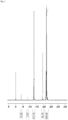
- a clear terminal ⁇ - ⁇ diethoxypolysiloxane is thus obtained, the target structure of which is confirmed by the accompanying 29 Si-NMR spectroscopy.
- the 29 Si-NMR spectroscopy also ensures that no SiOH groups are present within the limits of the measurement accuracy. ( Fig. 1 )
- Fig. 1 In the 29 Si-NMR spectrum, the signal at - 13 ppm can be assigned to the ethoxy groups. At - 22 ppm, the polysiloxane chain can be recognized.
Landscapes
- Chemical & Material Sciences (AREA)
- Health & Medical Sciences (AREA)
- Chemical Kinetics & Catalysis (AREA)
- Medicinal Chemistry (AREA)
- Polymers & Plastics (AREA)
- Organic Chemistry (AREA)
- Toxicology (AREA)
- Dispersion Chemistry (AREA)
- Silicon Polymers (AREA)
Description
- Die Erfindung betrifft ein Verfahren zur Herstellung eines Reaktionsprodukts, das ein nichtzyklisches alkoxyfunktionelles Polysiloxan enthält, sowie deren Verwendung zur Herstellung SiOC-basierter Siliziumverbindungen, insbesondere zur Herstellung SiOC-basierter Polyethersiloxane.
- SiOC-basierte Polyethersiloxane sind bekannte Bestandteile von Entschäumern, die zur Entschäumung wässriger und nichtwässriger Medien eine besondere Wirksamkeit und Stabilität zeigen. Dazu zählen sowohl die Schauminhibierung, die Entschäumung, eine sehr gute Langzeitstabilität, als auch die hervorragende Verträglichkeit in wässrigen und nicht wässrigen Medien. Alle diese Eigenschaften sind für moderne Lackanwendungen von hoher Bedeutung.
- Der Begriff Entschäumer umfasst im vorliegenden Fall sowohl Produkte als auch Formulierungen, die Schaum verhindern, als auch solche, die Schaum zerstören sowie eine Entlüftung ermöglichen. In der Praxis sind die Übergänge zwischen diesen Produkten fließend, so dass hier der gemeinsame Sammelbegriff Entschäumer verwendet wird.
- In vielen technischen Verfahren, insbesondere, wenn in wässrigen Medien gearbeitet wird, ist es notwendig, die unerwünschte Bildung von Schaum während der Herstellungs- oder Verarbeitungsprozesse zurückzudrängen oder ganz zu unterbinden, da Schaum bzw. Schaumkronen, die sich bei Rühr- und Dispergiervorgängen oder in den Gebinden während des Abfüllvorganges ansammeln, die Produktionszeiten verlängern oder aber das Effektivvolumen der Anlage vermindern bzw. deren korrekte Arbeit sogar verhindern können (Überlaufen, fehlende Farbübertragung).
- Dies kann erreicht werden, indem man Entschäumer hinzugibt, die schon bei sehr geringen Einsatzkonzentrationen ab etwa 0,001 Gew.-% in der Lage sind, unerwünschte Schäume zu vermeiden oder zu zerstören und gleichzeitig nach der Applikation der Systeme keine Oberflächenstörungen hervorzurufen. In der Praxis muss dieser letztere Faktor mindestens ebenso berücksichtigt werden wie eine gute Entschäumung.
- Unter Oberflächenstörungen sind für den Anwender unerwünschte Eigenschaften wie beispielsweise Pinholes, Krater, Glanzverlust, Orangenschaleneffekt, Runzelbildung und Haftungsverlust im Beschichtungssystem zu verstehen. Für den Anwender ist aber auch eine entsprechende Langzeitstabilität der Formulierungen sehr wichtig, da oftmals Produkte wie Farben nicht umgehend, sondern mitunter erst nach längerer Lagerung verbraucht werden. Bei Lagerung unter extremen klimatischen Bedingungen (Hitze und Sonneneinstrahlung) kann mitunter die Wirksamkeit einer Entschäumerformulierung schon nach kurzer Zeit zusammenbrechen.
-
DE 24 13 987 A1 offenbart die Verwendung von nichtzyklischen alkoxyfunktionellen Siloxanen zur Herstellung von Polyethersiloxanen, insbesondere für die Herstellung von Polyurethanschaumstabilisatoren. - Zur Herstellung der wirtschaftlich bedeutsamen Klasse der SiOC-basierten Polyethersiloxane, auch als Siliconpolyether oder Siloxan-Polyether-Copolymere bezeichnet, bedient man sich nach heutigem Stand der Technik mehrerer Verfahrensvarianten.
- Dem Fachmann ist bekannt, dass es bei diesen SiOC-verknüpften Polyethersiloxanen um eine Produktklasse handelt, die nicht zum Verharzen neigen. Auch wenn SiOC-verknüpfte Polyethersiloxane reaktive Gruppen, wie etwa Hydroxygruppen, enthalten, so werden sie nicht zur gezielten Vernetzung eingesetzt. Sie sind nicht filmbildend im Gegensatz zu Silikonharzen.
- Klassischerweise werden SiOC-Verknüpfungen durch die Reaktion eines Siloxans mit einer am Siliciumatom gebundenen Abgangsgruppe (z.B. Halogen) und einem Alkohol oder Polyetherol gebildet. Letzterer wird üblicherweise zuvor durch Alkoxylierung von monohydroxyfunktionellen Startverbindungen wie zum Beispiel Butanol mit Alkylenoxiden gewonnen. Besonders Chlorsiloxane sind als Ausgangsverbindungen für diesen Reaktionstyp verbreitet. Chlorsiloxane sind jedoch schwierig zu handhaben, da sie äußerst reaktionsfreudig sind. Ihr Einsatz ist weiterhin mit dem Nachteil verbunden, dass der im Verlauf der Reaktion gebildete Chlorwasserstoff eine Handhabung auf korrosionsbeständige Anlagen beschränkt und zu ökologischen Problemen führt. Darüber hinaus können in Gegenwart von Chlorsiloxanen und Alkoholen bzw. Polyetherolen organische Chlorverbindungen entstehen, die aus toxikologischen Gründen nicht wünschenswert sind. Weiterhin ist es nicht einfach, bei der Reaktion eines Chlorsiloxans mit einem Alkohol oder Polyetherol einen quantitativen Umsatz zu erreichen, so dass die OH-funktionelle Komponente oft in einem stöchiometrischen Überschuss bezogen auf die SiCl-Funktionen der Siloxankomponente eingesetzt werden muss. Die Verwendung eines Polyetherüberschusses bedeutet in der Praxis, dass in den so hergestellten Siliconpolyethern unvermeidbar größere Mengen an unreagierten Überschusspolyethern enthalten sind, die die Konzentration der tensidisch wirksamen Siliconpolyether herabsetzen und die anwendungstechnischen Eigenschaften der Zielprodukte beeinträchtigen. Häufig müssen bei der Chlorsiloxanroute Basen als HCl-Fänger eingesetzt werden, um gute Umsätze zu erzielen. Durch Einsatz dieser Basen entstehen große Salzmengen, deren Entfernung im industriellen Maßstab Schwierigkeiten bereitet.
- Zyklische Siloxane wie Hexamethylzyklotrisiloxan, Octamethylzyklotetrasiloxan und Decamethylzyklopentasiloxan können durch Katalyse mit Lewis- oder Brönsted Säuren zu linearen, langkettigen reaktiven Siloxanen polymerisiert werden, wie z. B. in W. Noll, Chemie und Technologie der Silicone, Verlag Chemie GmbH, Weinheim, 1968 dargestellt wird.
- Des Weiteren ist bekannt, ein Reaktivprodukt wie etwa ein Methoxy-terminiertes Polydiorganosiloxan zur Herstellung von vernetzbaren Polyorganopolysiloxanen einzusetzen, welches aus Hexamethylzyklotrisiloxan (D3) und 1,4,6-trimethyl-2,4,6-trivinylzyklotrisiloxan (V3) mit Tetramethoxysilan (TMOS) in Gegenwart von Trifluormehtansulfonsäure hergestellt wird. ("Cationic Telomerization of Hexamethylcyclotrisiloxane (03) with Silanes Containing Alkoxy, Aryloxy and Acyloxy functions bound to Silicon", European Polymer Journal, Vol. 17, No. 4, 1981, pages 413 - 419).
- Die
EP 3 022 248 B1 offenbart ein Verfahren zur Herstellung eines nichtzyklischen hydrocarbonoxyfunktionellen Polyorganosiloxans durch Erwärmen einer Zusammensetzung aus zyklischen Polyorganosiloxanen, einem Silan und einem Metalltriflat, wobei das Metallatom ausgewählt ist aus Aluminium (Al), Bismut (Bi), Eisen (Fe), Gallium (Ga), Indium (In), Scandium (Sc), Samarium (Sm) und Ytterbium (Yb). - Im Rahmen umfangreicher Untersuchungen konnten die Erfinder feststellen, dass bei der Katalyse auf ein bestimmtes Katalysatorsystem ankommt. Aufgabe der Erfindung ist demnach, ein Verfahren bereitzustellen, mit dem nichtzyklischen alkoxyfunktionellen Polysiloxanen hergestellt werden kann, ohne dass Katalysatoren mit korrosiver Wirkung gegenüber Metallen oder Katalysatoren enthaltend Schwermetalle eingesetzt werden.
- In diesem Zusammenhang wurde erfindungsgemäß in völlig überraschender Weise gefunden, dass ein Verfahren zur Herstellung eines Reaktionsprodukts, das ein nichtzyklisches alkoxyfunktionelles Polysiloxan enthält, durch Erwärmen eines Reaktionssystems umfassend:
- (A) ein zyklisches Polyorganosiloxan der Formel [(R1 2SiO)2/2]n, wobei das tiefgestellte n eine ganze Zahl von mindestens 4 ist und jedes R1 eine Alkylgruppe oder Arylgruppe ist;
- (B) ein Silan der Formel R2 (4-m)Si(OR3)m, wobei das tiefgestellte m eine ganze Zahl von 1 bis 4 ist, jedes R2 unabhängig eine Alkylgruppe oder Arylgruppe, eine Hydrocarbylgruppe oder eine halogenierte Hydrocarbylgruppe ist und jedes R3 unabhängig eine Alkylgruppe ist; und
- (C) ein Katalysatorsystem umfassend ein Metall-Trifluormethansulfonat der Formel [M]+[CF3SO3]-, wobei M ein Metallatom ist, ausgewählt aus Natrium (Na) und Kalium (K) und eine Brönsted Säure,
- wobei Brönsted Säuren mit einem pKa-Wert ≤ 3,0, bevorzugt mit einem pKa-Wert ≤ 2,0, besonders bevorzugt mit einem pKa-Wert ≤ - 0,0 eingesetzt werden,
- die Aufgabe hervorragend löst.
- Es war völlig überraschend gewesen, dass die säurekatalysierte Ringöffnung des zyklischen Polyorganosiloxans durch das erfindungsgemäße Katalysatorsystem umfassend ein Metall-Trifluormethansulfonat der Formel [M]+[CF3SO3 -], wobei M ein Metallatom ist, ausgewählt aus Natrium (Na) und Kalium (K) und einer Brönsted Säure überhaupt ermöglicht.
- Trifluormethansulfonatsalze, Metall-Trifluormethansulfonate, Triflate, Metalltriflate werden hier als Synonyme verstanden.
- Bevorzugt liegt das molare Mengenverhältnis von eingesetzter Brönsted Säure zu Metall-Trifluormethansulfonat im Bereich von 1:10 bis 10:1, bevorzugt von 1:5 bis 5:1 besonders bevorzugt von1:2 bis 2:1
- Bevorzugte Co-Katalysatoren sind Brönsted-Säuren. Beispiele für geeignete Brönsted-Säuren sind Carbonsäuren, wie beispielsweise Trifluoressigsäure Sulfonsäuren, wie beispielsweise Methansulfonsäure, p-Toluosulfonsäure und Dodecylbenzolsulfonsäure, Mineralsäuren, wie beispielsweise Salzsäure, Salpetersäure, Schwefelsäure und Phosphorsäure.
- Die erfindungsgemäß besonders bevorzugt einzusetzende Brönsted Säure ist eine Methansulfonsäure, Schwefelsäure, Phosphorsäure, Trifluoressigsäure und p-Toluolsulfonsäure. Die Erfinder haben festgestellt, dass eine säurekatalysierte Ringöffnung des zyklischen Polyorganosiloxans nur mit Na-Triflaten oder K-Triflaten bzw. nur Methansulfonsäure nicht gelingt, jedoch eine Mischung aus Na-Triflaten oder K-Triflaten und Methansulfonsäuren. Somit liegt der Vorteil darin, dass auf korrosive Katalysatoren wie AI-Triflate oder Eisen-Triflate verzichtet werden kann. Auch der Einsatz von schwermetallhaltigen Katalysatoren wie Galliumtriflate, Scandiumtriflate, Chromiumtriflate ist ein weiterer vorteilhafter Aspekt der Erfindung.
- Vorzugsweise handelt es sich bei den Silanen um Dimethyldialkoxysilane (wie z.B. Diethoxydimethylsilan und Dimethoxydimethylsilan), Methyltrialkoxysilane (wie z.B. Triethoxymethylsilan und Trimethoxymethylsilane) und Tetraalkoxysilane (Tetraethoxysilan und Tetramethoxysilan).
- Wenn im Rahmen der Erfindung zyklische Polyorganosiloxane eingesetzt werden, insbesondere umfassend D4 (Oktamethylzyklotetrasiloxan), D5 (Dekamethylzyklopentasiloxan) und/oder D6 (Dodekamethylzyklohexasiloxan), wobei D4 und/oder D5 besonders bevorzugt sind, und D5 am meisten bevorzugt ist, so liegt eine weitere bevorzugte Ausführungsform der Erfindung vor.
- Wenn im Rahmen der Erfindung zyklische Polyorganosiloxane, insbesondere zyklisch-verzweigte Siloxane vom DT-Typ eingesetzt werden, vorzugsweise
- i. Mischungen zyklischer-verzweigter Siloxane vom D/T-Typ, die (vorzugsweise ausschließlich) aus D- und T-Einheiten aufweisenden Siloxanen bestehen und deren mit 29Si-NMR-Spektroskopie bestimmbarer summarischer Anteil der in der Siloxanmatrix vorhandenen D- und T-Einheiten, die Si-Alkoxy- und/oder SiOH-Gruppen aufweisen, ≤ 2 Molprozent, bevorzugt kleiner 1 Molprozent ist, und die bevorzugt zumindest 5 Gewichtsprozent Siloxanzyklen, wie vorzugsweise Oktamethylzyklotetrasiloxan (D4), Dekamethylzyckopentasiloxan (D5) und/oder deren Mischungen enthalten oder aber
- ii. Mischungen zyklischer-verzweigter, (vorzugsweise ausschließlich) D- und T-Einheiten aufweisender Siloxane deren mit 29Si-NMR-Spektroskopie bestimmbarer summarischer Anteil der in der Siloxanmatrix vorhandenen D- und T-Einheiten, die Si-Alkoxy- und/oder SiOH-Gruppen aufweisen, größer 2 und kleiner 10 Molprozent sind,
- Gemäß einer bevorzugten Ausführungsform der Erfindung findet das Erwärmen bei einer Temperatur von 40 °C bis 180 °C besonders bevorzugt von 80 °C bis 150 °C für eine Zeit stattfindet, die zum Bilden des nichtzyklischen alkoxyfunktionellen Siloxans erreicht.
- Vorzugsweise sind die Bestandteile (A) und (B) in solchen Mengen vorhanden, dass das Molverhältnis von (A)/(B) mindestens 1:1, bevorzugt mindestens 2:1 beträgt.
- Das erfindungsgemäße Verfahren ist dadurch gekennzeichnet, dass der Bestandteil (C) vorzugsweise in einer Menge von 0,1 Mol-% bis 5 Mol-%, bevorzugt 0,2 Mol % bis 1 Mol % und besonders bevorzugt 0,5 Mol % bis 1 Mol % bezogen auf die kombinierten Gewichte der Bestandteile (A), (B) und (C), vorhanden ist.
- Verfahrenstechnisch und wirtschaftlich ist es nicht bevorzugt, höhere Mengen an Metall-Trifluormethansulfonaten und Brönsted Säuren in dem erfindungsgemäßen Reaktionssystem hinzuzufügen, da man diese spätestens bei der Weiterverarbeitung des gewonnenen alkoxyfunktionellen Siloxans auch wieder ggf. entfernen muss.
- In einer anderen bevorzugten Ausführungsform bedarf es keiner Zugabe von Wasser.
- Ein weiterer Gegenstand der Erfindung ist die Verwendung von Alkoxyfunktionellen Siloxanen, hergestellt unter Einsatz eines Reaktionssystems, wie zuvor beschrieben, zur Herstellung von Polyethersiloxanen, insbesondere für die Herstellung von Polyurethanschaumstabilisatoren, Entschäumern, insbesondere Dieselentschäumern, Entlüftern, Netzmitteln, Lack-, Verlaufs- und Dispergieradditiven und/oder Dismulgatoren, Hydrophobierungsmitteln.
- Es ist auch vorstellbar, derartig hergestellte Polyethersiloxane, wie zuvor beschrieben, zur Herstellung von Polymerdispersionen; zur Herstellung von Klebstoffen oder Dichtstoffen; zur Oberflächenbehandlung von Fasern, Partikeln oder Flächengebilden, insbesondere zur Ausrüstung oder Imprägnierung von Textilien, zur Herstellung von Papiertüchern, bei der Beschichtung von Füllstoffen; zur Herstellung von Reinigungs- und Pflegeformulierungen für den Haushalt oder für industrielle Anwendungen, insbesondere zur Herstellung von Weichspülmitteln; zur Herstellung von kosmetischen, pharmazeutischen und dermatologischen Zusammensetzungen, insbesondere kosmetischen Reinigungs- und Pflegeformulierungen, Haarbehandlungsmitteln und Haarnachbehandlungsmitteln; zur Reinigung und Pflege von harten Oberflächen; als Prozesshilfsmittel bei der Extrusion von Thermoplasten; zur Herstellung von thermoplastischen Formkörpern; als Adjuvant im Pflanzenschutz; zur Herstellung von Baustoffzusammensetzungen, zu verwenden.
- Die folgenden Beispiele dienen dem Fachmann allein zur Erläuterung dieser Erfindung und stellen keinerlei Beschränkung des beanspruchten Gegenstandes dar. Die Bestimmung der Wassergehalte erfolgt grundsätzlich mit der Karl-Fischer-Methode in Anlehnung an DIN 51777, DGF E-III 10 und DGF C-III 13a. Die 29Si-NMR-Spektroskopie diente in allen Beispielen der Reaktionsverfolgung.
- Die 29Si-NMR-Proben werden im Rahmen dieser Erfindung bei einer Messfrequenz von 79,49 MHz in einem Bruker Avance III Spektrometer, das mit einem Probenkopf 287430 mit 10 mm Spaltbreite ausgestattet ist, bei 22°C gelöst in CDCl3 und gegen Tetramethylsilan (TMS) als externem Standard[δ(29Si) = 0,0 ppm] gemessen.
- Die GPC's (Gel-Permeations-Chromatographie) werden unter Verwendung von THF als mobiler Phase an einer Säulenkombination SDV 1000/10000A, Länge 65 cm, ID 0,80 bei einer Temperatur von 30°C an einem SECcurity2 GPC System 1260 (PSS Polymer Standards Service GmbH) aufgenommen.
- Die Gaschromatogramme werden an einem GC-Gerät des Typs GC 7890B der Fa. Agilent Technologies ausgestattet mit einer Säule vom Typ HP-1; 30m × 0,32mm ID × 0,25µm dF (Agilent Technologies Nr. 19091Z-413E) und Wasserstoff als Trägergas mit folgenden Parametern aufgenommen:
- Detektor: FID; 310°C
- Injektor: Split; 290°C
- Mode: constant flow 2 mL/min
- Temperaturprogramm: 60°C mit 8°C/min -150°C mit 40°C/min - 300°C 10 min.
- Soweit nicht anders gesagt, sind alle Angaben in Gewichtsprozent zu verstehen.
- In einem 500-ml-Vierhalsrundkolben mit KPG-Rührer, Innenthermometer und aufgesetztem Rückflusskühler werden 327,2g (4,4 mol an D Einheiten) eines Zyklengemisches D4/D5 erhältlich bei der Firma Dow mit 72,8g (0,5 mol) Diethoxydimethylsilan (Dynasylan 9811, Fa. Evonik) unter Rühren bei 23°C vorgelegt. In einem zweiten Schritt wird sequentiell 0,8g Kalium Triflate und 0,8g Methansulfonsäure dem Reaktionsgemisch zugegeben. Anschließend wird das Gemisch auf 140°C aufgeheizt und 6 Stunden bei Reaktionstemperatur gehalten. Nach der Reaktionszeit wird der Reaktionsansatz auf 23°C abkühlen. Nach Abkühlen des Reaktionsgemisches erhält man ein klares oranges α-ω Diethoxypolysiloxan.
- Erhalten wird somit ein klares terminales α-ω Diethoxypolysiloxan erhalten, dessen Zielstruktur durch die begleitende 29Si-NMR-Spektroskopie belegt wird. Gleichfalls sichert die 29Si-NMR-Spektroskopie ab, dass im Rahmen der Messgenauigkeit keinerlei Anteile von SiOH Gruppen zugegen sind.
- In einem 500-ml-Vierhalsrundkolben mit KPG-Rührer, Innenthermometer und aufgesetztem Rückflusskühler werden 327,2g (4,4 mol an D Einheiten) eines Zyklengemisches D4/D5 erhältlich bei der Firma Dow mit 72,8g (0,5 mol) Diethoxydimethylsilan (Dynasylan 9811, Fa. Evonik) unter Rühren bei 23°C vorgelegt. In einem zweiten Schritt wird sequentiell 0,8g Kalium Triflate, 0,8g Methansulfonsäure und 0,2g Wasser dem Reaktionsgemisch zugegeben. Anschließend wird das Gemisch auf 140°C aufgeheizt und 6 Stunden bei Reaktionstemperatur gehalten. Nach der Reaktionszeit wird der Reaktionsansatz auf 23°C abkühlen. Nach Abkühlen des Reaktionsgemisches erhält man ein klares gelbes α-ω Diethoxypolysiloxan.
- Erhalten wird somit ein klares terminales α-ω Diethoxypolysiloxan erhalten, dessen Zielstruktur durch die begleitende 29Si-NMR-Spektroskopie belegt wird. Gleichfalls sichert die 29Si-NMR-Spektroskopie ab, dass im Rahmen der Messgenauigkeit keinerlei Anteile von SiOH Gruppen zugegen sind.
- In einem 500-ml-Vierhalsrundkolben mit KPG-Rührer, Innenthermometer und aufgesetztem Rückflusskühler werden 327,2g (4,4 mol an D Einheiten) eines Zyklengemisches D4/D5 erhältlich bei der Firma Dow mit 72,8g (0,5 mol) Diethoxydimethylsilan (Dynasylan 9811, Fa. Evonik) unter Rühren bei 23°C vorgelegt. In einem zweiten Schritt wird sequentiell 0,8g Natrium Triflate und 0,8g Methansulfonsäure dem Reaktionsgemisch zugegeben. Anschließend wird das Gemisch auf 140°C aufgeheizt und 6 Stunden bei Reaktionstemperatur gehalten. Nach der Reaktionszeit wird der Reaktionsansatz auf 23°C abkühlen. Nach Abkühlen des Reaktionsgemisches erhält man ein klares farbloses α-ω Diethoxypolysiloxan.
- Erhalten wird somit ein klares terminales α-ω Diethoxypolysiloxan erhalten, dessen Zielstruktur durch die begleitende 29Si-NMR-Spektroskopie belegt wird. Gleichfalls sichert die 29Si-NMR-Spektroskopie ab, dass im Rahmen der Messgenauigkeit keinerlei Anteile von SiOH Gruppen zugegen sind. (
Fig. 1 ) -
Fig. 1 : Im 29Si-NMR-Spektrum kann man das Signal bei - 13ppm der Ethoxygruppen zuordnen. Bei - 22ppm erkennt man die Polysiloxankette. - In einem 500-ml-Vierhalsrundkolben mit KPG-Rührer, Innenthermometer und aufgesetztem Rückflusskühler werden 327,2g (4,4 mol an D Einheiten) eines Zyklengemisches D4/D5 erhältlich bei der Firma Dow mit 72,8g (0,5 mol) Diethoxydimethylsilan (Dynasylan 9811, Fa. Evonik) unter Rühren bei 23°C vorgelegt. In einem zweiten Schritt wird sequentiell 0,8g Natrium Triflate, 0,8g Methansulfonsäure und 0,2g Wasser dem Reaktionsgemisch zugegeben. Anschließend wird das Gemisch auf 140°C aufgeheizt und 6 Stunden bei Reaktionstemperatur gehalten. Nach der Reaktionszeit wird der Reaktionsansatz auf 23°C abkühlen. Nach Abkühlen des Reaktionsgemisches erhält man ein klares gelbes α-ω Diethoxypolysiloxan.
- Erhalten wird somit ein klares terminales α-ω Diethoxypolysiloxan erhalten, dessen Zielstruktur durch die begleitende 29Si-NMR-Spektroskopie belegt wird. Gleichfalls sichert die 29Si-NMR-Spektroskopie ab, dass im Rahmen der Messgenauigkeit keinerlei Anteile von SiOH Gruppen zugegen sind.
- In einem 500-ml-Vierhalsrundkolben mit KPG-Rührer, Innenthermometer und aufgesetztem Rückflusskühler werden 327,2g (4,4 mol an D Einheiten) eines Zyklengemisches D4/D5 erhältlich bei der Firma Dow mit 72,8g (0,5 mol) Diethoxydimethylsilan (Dynasylan 9811, Fa. Evonik) unter Rühren bei 23°C vorgelegt. In einem zweiten Schritt wird 0,8g Kalium Triflat dem Reaktionsgemisch zugegeben. Anschließend wird das Gemisch auf 140°C aufgeheizt und 6 Stunden bei Reaktionstemperatur gehalten. Nach der Reaktionszeit wird der Reaktionsansatz auf 23°C abkühlen. Nach Abkühlen des Reaktionsgemisches erhält man ein klares gelbes Gemisch aus D4/D5 und Diethoxydimethylsilan.
- Erhalten wird kein terminales α-ω Diethoxypolysiloxan erhalten, dessen Beweis durch die begleitende 29Si-NMR-Spektroskopie belegt wird.
- In einem 500-ml-Vierhalsrundkolben mit KPG-Rührer, Innenthermometer und aufgesetztem Rückflusskühler werden 327,2g (4,4 mol an D Einheiten) eines Zyklengemisches D4/D5 erhältlich bei der Firma Dow mit 72,8g (0,5 mol) Diethoxydimethylsilan (Dynasylan 9811, Fa. Evonik) unter Rühren bei 23°C vorgelegt. In einem zweiten Schritt wird 0,8g Natrium Triflat dem Reaktionsgemisch zugegeben. Anschließend wird das Gemisch auf 140°C aufgeheizt und 6 Stunden bei Reaktionstemperatur gehalten. Nach der Reaktionszeit wird der Reaktionsansatz auf 23°C abkühlen. Nach Abkühlen des Reaktionsgemisches erhält man ein klares gelbes Gemisch aus D4/D5 und Diethoxydimethylsilan.
- Erhalten wird kein terminales α-ω Diethoxypolysiloxan erhalten, dessen Beweis durch die begleitende 29Si-NMR-Spektroskopie belegt wird.
- In einem 500-ml-Vierhalsrundkolben mit KPG-Rührer, Innenthermometer und aufgesetztem Rückflusskühler werden 327,2g (4,4 mol an D Einheiten) eines Zyklengemisches D4/D5 erhältlich bei der Firma Dow mit 72,8g (0,5 mol) Diethoxydimethylsilan (Dynasylan 9811, Fa. Evonik) unter Rühren bei 23°C vorgelegt. In einem zweiten Schritt wird 0,8g Methansulfonsäure dem Reaktionsgemisch zugegeben. Anschließend wird das Gemisch auf 140°C aufgeheizt und 6 Stunden bei Reaktionstemperatur gehalten. Nach der Reaktionszeit wird der Reaktionsansatz auf 23°C abkühlen. Nach Abkühlen des Reaktionsgemisches erhält man ein klares gelbes Gemisch aus D4/D5 und Diethoxydimethylsilan.
- Erhalten wird kein terminales α-ω Diethoxypolysiloxan erhalten, dessen Beweis durch die begleitende 29Si-NMR-Spektroskopie belegt wird.
- In einem 500-ml-Vierhalsrundkolben mit KPG-Rührer, Innenthermometer und aufgesetztem Rückflusskühler werden 327,2g (4,4 mol an D Einheiten) eines Zyklengemisches D4/D5 erhältlich bei der Firma Dow mit 72,8g (0,5 mol) Diethoxydimethylsilan (Dynasylan 9811, Fa. Evonik) unter Rühren bei 23°C vorgelegt. In einem zweiten Schritt wird sequentiell 0,8g Methansulfonsäure und 0,2g Wasser dem Reaktionsgemisch zugegeben. Anschließend wird das Gemisch auf 140°C aufgeheizt und 6 Stunden bei Reaktionstemperatur gehalten. Nach der Reaktionszeit wird der Reaktionsansatz auf 23°C abkühlen. Nach Abkühlen des Reaktionsgemisches erhält man ein klares gelbes Gemisch aus D4/D5 und Diethoxydimethylsilan.
- Erhalten wird kein terminales α-ω Diethoxypolysiloxan erhalten, dessen Beweis durch die begleitende 29Si-NMR-Spektroskopie belegt wird.
Claims (10)
- Verfahren zur Herstellung eines Reaktionsprodukts, das ein nichtcyclisches alkoxyfunktionelles Polysiloxan enthält, durch Erwärmen eines Reaktionssystems umfassend:(A) ein zyklisches Polyorganosiloxan der Formel [(R1 2SiO)2/2]n, wobei das tiefgestellte n eine ganze Zahl von mindestens 4 ist und jedes R1 eine Alkylgruppe oder Arylgruppe ist;(B) ein Silan der Formel R2 (4-m)Si(OR3)m, wobei das tiefgestellte m eine ganze Zahl von 1 bis 4 ist, jedes R2 unabhängig eine Alkylgruppe oder Arylgruppe, eine Hydrocarbylgruppe oder eine halogenierte Hydrocarbylgruppe ist und jedes R3 unabhängig eine Alkylgruppe ist; und(C) ein Katalysatorsystem umfassend ein Metall-Trifluormethansulfonat der Formel [M]+[CF3SO3]-, wobei M ein Metallatom ist, ausgewählt aus Natrium (Na) und Kalium (K) und eine Brönsted Säure,wobei Brönsted Säuren mit einem pKa-Wert ≤ 3,0, bevorzugt mit einem pKa-Wert ≤ 2,0, besonders bevorzugt mit einem pKa-Wert ≤ - 0,0 eingesetzt werden.
- Verfahren nach Anspruch 1, dadurch gekennzeichnet, dass das molare Mengenverhältnis von eingesetzter Brönsted Säure zu Metall-Trifluormethansulfonat im Bereich von 1:10 bis 10:1, bevorzugt von 1:5 bis 5:1 besonders bevorzugt von1:2 bis 2:1.
- Verfahren nach Anspruch 1 oder 2, dadurch gekennzeichnet, dass es sich bei der Brönsted Säure um Carbonsäuren, wie beispielsweise Trifluoressigsäure Sulfonsäuren, wie beispielsweise Methansulfonsäure, p-Toluosulfonsäure und Dodecylbenzolsulfonsäure, Mineralsäuren, wie beispielsweise Salzsäure, Salpetersäure, Schwefelsäure und Phosphorsäure handelt.
- Verfahren nach einem der vorgenannten Ansprüche, dadurch gekennzeichnet, dass es sich bei den Silanen um Dimethyldialkoxysilane, ausgewählt aus Diethoxydimethylsilan und Dimethoxydimethylsilan, Methyltrialkoxysilane ausgewählt aus Triethoxymethylsilan und Trimethoxymethylsilane, und Tetraalkoxysilane ausgewählt aus Tetraethoxysilan und Tetramethoxysilan handelt.
- Verfahren nach einem der vorgenannten Ansprüche, dadurch gekennzeichnet, dass die cyclischen Polyorganosiloxane ausgewählt ist aus D4 (Octamethylzyklotetrasiloxan), D5 (Dekamethylzyklopentasiloxan) und/oder D6 (Dodekamethylzyklohexasiloxan), wobei D4 und/oder D5 besonders bevorzugt sind, und D5 am meisten bevorzugt ist, eingesetzt werden.
- Verfahren nach einem der vorgenannten Ansprüche, dadurch gekennzeichnet, dass es sich bei den cyclischen Polyorganosiloxanen um zyklisch-verzweigte Polyorganosiloxane vom DT-Typ handelt, vorzugsweisei) Mischungen zyklischer-verzweigter Siloxane vom D/T-Typ, die aus D- und T-Einheiten aufweisenden Siloxanen bestehen und deren mit 29Si-NMR-Spektroskopie bestimmbarer summarischer Anteil der in der Siloxanmatrix vorhandenen D- und T-Einheiten, die Si-Alkoxy- und/oder SiOH-Gruppen aufweisen, ≤ 2 Molprozent, bevorzugt kleiner 1 Molprozent ist, und die bevorzugt zumindest 5 Gewichtsprozent Siloxanzyklen, wie vorzugsweise Oktamethylzyklotetrasiloxan (D4), Dekamethylzyklopentasiloxan (D5) und/oder deren Mischungen enthalten oder aberii) Mischungen zyklischer-verzweigter, D- und T-Einheiten aufweisender Siloxane deren mit 29Si-NMR-Spektroskopie bestimmbarer summarischer Anteil der in der Siloxanmatrix vorhandenen D- und T-Einheiten, die Si-Alkoxy- und/oder SiOH-Gruppen aufweisen, größer 2 und kleiner 10 Molprozent sind.
- Verfahren nach einem der vorgenannten Ansprüche, wobei das Erwärmen bei einer Temperatur von 40 °C bis 180 °C besonders bevorzugt von 80 °C bis 150 °C für eine Zeit stattfindet, die zum Bilden des nichtzyklischen alkoxyfunktionellen Siloxans erreicht.
- Verfahren nach einem der vorgenannten Ansprüche, wobei die Bestandteile (A) und (B) in solchen Mengen vorhanden sind, dass das Molverhältnis von (A)/(B) mindestens 1:1, bevorzugt mindestens 2:1 beträgt.
- Verfahren nach einem der vorgenannten Ansprüche, wobei der Bestandteil (C) in einer Menge 0,1 Mol-% bis 5 Mol-%, bevorzugt 0,2 Mol % bis 1 Mol % und besonders bevorzugt 0,5 Mol % bis 1 Mol % bezogen auf die kombinierten Gewichte der Bestandteile (A), (B) und (C), vorhanden ist.
- Verfahren nach einem der vorgenannten Ansprüche, wobei die Zugabe von Wasser nicht erforderlich ist.
Applications Claiming Priority (1)
| Application Number | Priority Date | Filing Date | Title |
|---|---|---|---|
| EP19176885 | 2019-05-28 |
Publications (2)
| Publication Number | Publication Date |
|---|---|
| EP3744752A1 EP3744752A1 (de) | 2020-12-02 |
| EP3744752B1 true EP3744752B1 (de) | 2024-10-16 |
Family
ID=66676235
Family Applications (1)
| Application Number | Title | Priority Date | Filing Date |
|---|---|---|---|
| EP20174622.9A Active EP3744752B1 (de) | 2019-05-28 | 2020-05-14 | Verfahren zur herstellung von nichtcyclischen alkoxyfunktionellen polysiloxanen |
Country Status (6)
| Country | Link |
|---|---|
| US (1) | US11377523B2 (de) |
| EP (1) | EP3744752B1 (de) |
| CN (1) | CN112011053B (de) |
| CA (1) | CA3081035A1 (de) |
| ES (1) | ES2994477T3 (de) |
| PL (1) | PL3744752T3 (de) |
Families Citing this family (7)
| Publication number | Priority date | Publication date | Assignee | Title |
|---|---|---|---|---|
| ES2970332T3 (es) | 2018-12-04 | 2024-05-28 | Evonik Operations Gmbh | Siloxanos reactivos |
| US12264220B2 (en) | 2020-01-30 | 2025-04-01 | Evonik Operations Gmbh | Process for producing high-purity hydrosilylation products |
| EP3954740A1 (de) | 2020-08-14 | 2022-02-16 | Evonik Operations GmbH | Entschäumerzusammensetzung auf basis von organofunktionell modifizierten polysiloxanen |
| EP4011992A1 (de) | 2020-12-09 | 2022-06-15 | Evonik Operations GmbH | Härtbare kondensationsverbindungen auf basis von alkoxyfunktionellen polysiloxanen |
| US12060460B2 (en) | 2021-04-29 | 2024-08-13 | Evonik Operations Gmbh | Process for producing endcapped, liquid siloxanes from silicone wastes |
| EP4119597A1 (de) | 2021-07-14 | 2023-01-18 | Evonik Operations GmbH | Molekulargewichtsaufbau niedermolekularer alpha,omega-polysiloxandiole |
| CA3180684A1 (en) | 2021-11-25 | 2023-05-25 | Evonik Operations Gmbh | Curable condensation compounds based on alkoxy-functional polysiloxanes |
Citations (1)
| Publication number | Priority date | Publication date | Assignee | Title |
|---|---|---|---|---|
| EP3022248B1 (de) * | 2013-07-15 | 2017-08-02 | Dow Corning Corporation | Telomerisation von cyclischen polyorganosiloxanen |
Family Cites Families (57)
| Publication number | Priority date | Publication date | Assignee | Title |
|---|---|---|---|---|
| DE2413987A1 (de) * | 1974-03-22 | 1975-09-25 | Union Carbide Corp | Verfahren zur herstellung von siloxanpolyoxyalkylen-blockmischpolymeren und deren verwendung |
| US4508887A (en) * | 1983-08-01 | 1985-04-02 | Dow Corning Corporation | Method and novel catalyst compositions for preparing polyorganosiloxanes |
| US4525470A (en) * | 1983-08-01 | 1985-06-25 | Dow Corning Corporation | Catalyst compositions for preparing polyorganosiloxanes |
| US4929691A (en) * | 1989-03-28 | 1990-05-29 | Dow Corning Corporation | Liquid silicone resin compositions |
| US4923755A (en) * | 1989-03-28 | 1990-05-08 | Dow Corning Corporation | Organosilicone resin coating compositions |
| JP3187444B2 (ja) * | 1991-02-22 | 2001-07-11 | 東レ・ダウコーニング・シリコーン株式会社 | オルガノポリシロキサンの製造方法 |
| FR2802540B1 (fr) * | 1999-12-17 | 2002-05-24 | Rhodia Chimie Sa | Procede de preparation de polyorganosiloxanes par polymerisation catalysee par un systeme catalytique a base d'acide triflique ou de derives de l'acide triflique |
| JP4965033B2 (ja) * | 2001-06-29 | 2012-07-04 | 東レ・ダウコーニング株式会社 | 液状アルコキシシリル官能性シリコーン樹脂、その製造方法および硬化性シリコーン樹脂組成物 |
| DE10232305A1 (de) | 2002-07-17 | 2004-02-05 | Goldschmidt Ag | Verfahren zur Herstellung von organomodifizierten Polysiloxanen unter Verwendung ionischer Flüssigkeiten |
| DE10348825A1 (de) | 2003-10-21 | 2005-06-02 | Goldschmidt Ag | Dispergiermittel zur Herstellung wässriger Pigmentpasten |
| DE102004044253A1 (de) | 2004-09-14 | 2006-03-16 | Goldschmidt Gmbh | Wasserunlösliche gepfropfte Polysiloxan-Copolymerisate und deren Verwendung zur Entschäumung und Entlüftung nichtwässriger Öle |
| JP2006160706A (ja) * | 2004-12-10 | 2006-06-22 | Dow Corning Toray Co Ltd | オルガノポリシロキサンの製造方法 |
| DE102006041088A1 (de) | 2006-09-01 | 2008-03-06 | Evonik Goldschmidt Gmbh | Siliconhaltige, blockweise aufgebaute Pfropfmischpolymere |
| DE102006059558A1 (de) | 2006-12-16 | 2008-06-19 | Evonik Goldschmidt Gmbh | Neuartige Dispergierharze, deren Herstellung und deren Verwendung zur Dispergierung von Feststoffen |
| DE102007055485A1 (de) * | 2007-11-21 | 2009-06-04 | Evonik Goldschmidt Gmbh | Verfahren zur Herstellung verzweigter SiH-funktioneller Polysiloxane und deren Verwendung zur Herstellung SiC- und SiOC-verknüpfter, verzweigter organomodifizierter Polysiloxane |
| US8722944B2 (en) * | 2008-05-09 | 2014-05-13 | Dow Global Technologies Llc | Process for olefin etherification |
| US20110144269A1 (en) | 2008-08-11 | 2011-06-16 | Evonik Goldschmidt Gmbh | Dispersing agent and its use |
| DE102008043032A1 (de) | 2008-10-22 | 2010-04-29 | Evonik Goldschmidt Gmbh | Entschäumer zur Entschäumung von Lacken |
| BR112012029304A2 (pt) | 2010-05-19 | 2016-07-26 | Evonik Goldschimdt Gmbh | copolíme-ros em bloco de polissiloxano e seu uso em formulações cosmeticas |
| DE102010031087A1 (de) | 2010-07-08 | 2012-01-12 | Evonik Goldschmidt Gmbh | Neuartige polyestermodifizierte Organopolysiloxane |
| DE102010039140A1 (de) | 2010-08-10 | 2012-02-16 | Evonik Goldschmidt Gmbh | Dispergiermittel und Verfahren zu deren Herstellung |
| DE102012202523A1 (de) | 2012-02-20 | 2013-08-22 | Evonik Industries Ag | Verwendung von selbstvernetzten Siloxanen zum Entschäumen von flüssigen Kohlenwasserstoffen |
| DE102012202527A1 (de) | 2012-02-20 | 2013-08-22 | Evonik Goldschmidt Gmbh | Zusammensetzungen enthaltend Polymere und Metallatome oder -ionen und deren Verwendung |
| DE102012206574A1 (de) | 2012-04-20 | 2013-10-24 | Evonik Industries Ag | Verwendung von Polyglycerinpartialestern als Entschäumer |
| DE102012013710A1 (de) * | 2012-07-11 | 2014-01-16 | Technische Universität München | Vernetzbare Siloxane durch säurekatalysierte Polymerisation von Oxasilacyclen |
| DE102013204605A1 (de) | 2013-03-15 | 2014-09-18 | Evonik Industries Ag | Phosphorsäureester, ihre Herstellung und Verwendung |
| DE102013206175A1 (de) | 2013-04-09 | 2014-10-09 | Evonik Industries Ag | Polysiloxan-Polyether-Copolymere mit Amino- und/oder quaternären Ammoniumgruppen im Polyetherteil und Verfahren zu deren Herstellung |
| DE102013214081A1 (de) | 2013-07-18 | 2015-01-22 | Evonik Industries Ag | Neue aminosäuremodifizierte Siloxane, Verfahren zu ihrer Herstellung und Anwendung |
| DE102013216781A1 (de) | 2013-08-23 | 2015-02-26 | Evonik Industries Ag | Beschichtungsmassen |
| DE102013216787A1 (de) | 2013-08-23 | 2015-02-26 | Evonik Degussa Gmbh | Guanidingruppen aufweisende semi-organische Siliciumgruppen enthaltende Verbindungen |
| DE102013216777A1 (de) | 2013-08-23 | 2015-02-26 | Evonik Industries Ag | Bei Raumtemperatur härtbare Silikonharz-Zusammensetzungen |
| DE102014205680A1 (de) | 2014-03-26 | 2015-10-01 | Evonik Degussa Gmbh | Dispergierharze |
| DE102014209355A1 (de) | 2014-05-16 | 2015-11-19 | Evonik Degussa Gmbh | Guanidinhaltige Polyoxyalkylene und Verfahren zur Herstellung |
| DE102014209407A1 (de) | 2014-05-19 | 2015-11-19 | Evonik Degussa Gmbh | Hoch aktive Doppelmetallcyanid-Katalysatoren und Verfahren zu deren Herstellung |
| DE102014209408A1 (de) | 2014-05-19 | 2015-11-19 | Evonik Degussa Gmbh | Ethoxylatherstellung unter Verwendung hoch aktiver Doppelmetallcyanid-Katalysatoren |
| JP6511927B2 (ja) * | 2014-06-05 | 2019-05-15 | Jsr株式会社 | シリコン含有膜形成用組成物、パターン形成方法及びポリシロキサン化合物 |
| DE102014215380B4 (de) | 2014-08-05 | 2022-04-28 | Evonik Operations Gmbh | Stickstoffhaltige Verbindungen, geeignet zur Verwendung bei der Herstellung von Polyurethanen |
| DE102014215387B4 (de) | 2014-08-05 | 2020-06-10 | Evonik Operations Gmbh | Stickstoffhaltige Verbindungen, geeignet zur Verwendung bei der Herstellung von Polyurethanen |
| DE102014215384A1 (de) | 2014-08-05 | 2016-02-11 | Evonik Degussa Gmbh | Stickstoffhaltige Verbindungen, geeignet zur Verwendung bei der Herstellung von Polyurethanen |
| DE102014215381B4 (de) | 2014-08-05 | 2020-06-10 | Evonik Operations Gmbh | Stickstoffhaltige Verbindungen, geeignet zur Verwendung bei der Herstellung von Polyurethanen |
| DE102014215382A1 (de) | 2014-08-05 | 2016-02-11 | Evonik Degussa Gmbh | Stickstoffhaltige Verbindungen, geeignet zur Verwendung bei der Herstellung von Polyurethanen |
| DE102014215383B4 (de) | 2014-08-05 | 2020-06-10 | Evonik Operations Gmbh | Stickstoffhaltige Verbindungen, geeignet zur Verwendung bei der Herstellung von Polyurethanen |
| DE102014215388A1 (de) | 2014-08-05 | 2016-02-11 | Evonik Degussa Gmbh | Stickstoffhaltige Verbindungen, geeignet zur Verwendung bei der Herstellung von Polyurethanen |
| WO2017009297A1 (en) | 2015-07-13 | 2017-01-19 | Jotun A/S | Antifouling composition |
| EP3153540B8 (de) * | 2015-10-09 | 2018-07-25 | Dow Silicones Corporation | Verfahren zur herstellung von linearen carbosiloxanpolymeren |
| ES2992846T3 (en) | 2016-03-24 | 2024-12-18 | Evonik Operations Gmbh | Dispersants |
| PL3305840T3 (pl) | 2016-10-05 | 2021-05-04 | Evonik Operations Gmbh | Kompatybilizator dla uniwersalnych barwników w rozpuszczalnikowych farbach alkidowych |
| SG11201906534XA (en) | 2017-01-19 | 2019-08-27 | Jotun As | Antifouling composition |
| PL3401353T3 (pl) * | 2017-05-08 | 2021-12-13 | Evonik Operations Gmbh | Mieszaniny cyklicznych, rozgałęzionych siloksanów typu D/T i ich dalszych produktów |
| DK3434737T3 (da) | 2017-07-26 | 2023-03-27 | Evonik Operations Gmbh | Modificerede pigmenter og deres anvendelse |
| EP3438158B1 (de) * | 2017-08-01 | 2020-11-25 | Evonik Operations GmbH | Herstellung von sioc-verknüpften polyethersiloxanen |
| ES3060196T3 (en) | 2017-09-28 | 2026-03-25 | Evonik Operations Gmbh | Curable composition based on polysiloxanes |
| EP3470475B1 (de) | 2017-10-13 | 2021-01-27 | Evonik Operations GmbH | Härtbare zusammensetzung für beschichtungen mit anti-adhäsiver eigenschaft |
| DE112018004605A5 (de) | 2017-10-17 | 2020-05-28 | Evonik Operations Gmbh | Zinkketoiminatkomplexe als Katalysatoren zur Herstellung von Polyurethanen |
| PL3505550T3 (pl) | 2017-12-27 | 2022-09-12 | Evonik Operations Gmbh | Środek zwilżający i dyspergujący o właściwości reologicznej |
| DK3524651T3 (da) | 2018-02-08 | 2026-02-16 | Evonik Operations Gmbh | Vandig polyorganosiloxanhybridharpiks-dispersion |
| ES2970332T3 (es) | 2018-12-04 | 2024-05-28 | Evonik Operations Gmbh | Siloxanos reactivos |
-
2020
- 2020-05-14 PL PL20174622.9T patent/PL3744752T3/pl unknown
- 2020-05-14 ES ES20174622T patent/ES2994477T3/es active Active
- 2020-05-14 EP EP20174622.9A patent/EP3744752B1/de active Active
- 2020-05-21 CA CA3081035A patent/CA3081035A1/en active Pending
- 2020-05-26 US US15/929,841 patent/US11377523B2/en active Active
- 2020-05-28 CN CN202010465580.7A patent/CN112011053B/zh active Active
Patent Citations (1)
| Publication number | Priority date | Publication date | Assignee | Title |
|---|---|---|---|---|
| EP3022248B1 (de) * | 2013-07-15 | 2017-08-02 | Dow Corning Corporation | Telomerisation von cyclischen polyorganosiloxanen |
Also Published As
| Publication number | Publication date |
|---|---|
| US20200377668A1 (en) | 2020-12-03 |
| PL3744752T3 (pl) | 2025-02-10 |
| CN112011053A (zh) | 2020-12-01 |
| US11377523B2 (en) | 2022-07-05 |
| CN112011053B (zh) | 2023-09-12 |
| EP3744752A1 (de) | 2020-12-02 |
| CA3081035A1 (en) | 2020-11-28 |
| ES2994477T3 (en) | 2025-01-24 |
Similar Documents
| Publication | Publication Date | Title |
|---|---|---|
| EP3744761B1 (de) | Sioc basierte polyethersiloxane | |
| EP3744752A1 (de) | Verfahren zur herstellung von nichtcyclischen alkoxyfunktionellen polysiloxanen | |
| EP3744762B1 (de) | Verfahren zur herstellung von polyoxyalkylen polysiloxan blockpolymerisaten | |
| EP3744763B1 (de) | Massgeschneiderte sioc basierte polyethersiloxane | |
| EP3467006B1 (de) | Mischungen zyklischer-verzweigter siloxane vom d/t-typ und deren folgeprodukte | |
| EP3401353B1 (de) | Mischungen zyklischer-verzweigter siloxane vom d/t-typ und deren folgeprodukte | |
| WO2019219446A1 (de) | Lineare polydimethylsiloxan-polyoxyalkylen-blockcopolymere des strukturtyps aba | |
| WO2019219452A1 (de) | Lineare polydimethylsiloxan-polyoxyalkylen-blockcopolymere des strukturtyps aba | |
| EP3744754B1 (de) | Verfahren zur herstellung acetoxygruppen-tragender siloxane | |
| EP3744755B1 (de) | Verfahren zur herstellung acetoxygruppen-tragender siloxane | |
| EP3492513B1 (de) | Verfahren zur herstellung von im siloxanteil verzweigten sioc-verknüpften polyethersiloxanen | |
| EP2028213B1 (de) | Verfahren zur Herstellung von verzweigten Polyorganosiloxanen | |
| EP3744759A1 (de) | Verfahren zur herstellung von im siloxanteil verzweigten sioc-verknüpften polyethersiloxanen | |
| EP3744760A1 (de) | Verfahren zur herstellung von im siloxanteil verzweigten sioc-verknüpften polyethersiloxanen | |
| EP3919550A1 (de) | Lineare acetoxygruppen-tragende siloxane und folgeprodukte | |
| EP3611216A1 (de) | Lineare polydimethylsiloxan-polyoxyalkylen-blockcopolymere des strukturtyps aba | |
| EP3611217B1 (de) | Lineare polydimethylsiloxan-polyoxyalkylen-blockcopolymere des strukturtyps aba | |
| DE102005051939A1 (de) | Verfahren zur Herstellung von organisch modifizierten Polyorganosiloxanen | |
| EP3253847B1 (de) | Verzweigte organosiloxane als wärmeträgerflüssigkeit | |
| EP2602278B1 (de) | Herstellung hochmolekularer Siliconharze | |
| EP3191542B1 (de) | Verfahren zur herstellung von aminogruppen aufweisenden organosiliciumverbindungen | |
| DE69823711T2 (de) | Verfahren zur Stabilisierung von Siloxanpolymeren | |
| EP0258640B1 (de) | Verfahren zur Ketten-stabilisierung von Organo-polysiloxanen | |
| EP4294857B1 (de) | Mischung aus polymeren alkylsilikaten |
Legal Events
| Date | Code | Title | Description |
|---|---|---|---|
| PUAI | Public reference made under article 153(3) epc to a published international application that has entered the european phase |
Free format text: ORIGINAL CODE: 0009012 |
|
| STAA | Information on the status of an ep patent application or granted ep patent |
Free format text: STATUS: REQUEST FOR EXAMINATION WAS MADE |
|
| 17P | Request for examination filed |
Effective date: 20200514 |
|
| AK | Designated contracting states |
Kind code of ref document: A1 Designated state(s): AL AT BE BG CH CY CZ DE DK EE ES FI FR GB GR HR HU IE IS IT LI LT LU LV MC MK MT NL NO PL PT RO RS SE SI SK SM TR |
|
| AX | Request for extension of the european patent |
Extension state: BA ME |
|
| GRAP | Despatch of communication of intention to grant a patent |
Free format text: ORIGINAL CODE: EPIDOSNIGR1 |
|
| STAA | Information on the status of an ep patent application or granted ep patent |
Free format text: STATUS: GRANT OF PATENT IS INTENDED |
|
| INTG | Intention to grant announced |
Effective date: 20240527 |
|
| GRAS | Grant fee paid |
Free format text: ORIGINAL CODE: EPIDOSNIGR3 |
|
| GRAA | (expected) grant |
Free format text: ORIGINAL CODE: 0009210 |
|
| STAA | Information on the status of an ep patent application or granted ep patent |
Free format text: STATUS: THE PATENT HAS BEEN GRANTED |
|
| P01 | Opt-out of the competence of the unified patent court (upc) registered |
Free format text: CASE NUMBER: APP_49206/2024 Effective date: 20240829 |
|
| AK | Designated contracting states |
Kind code of ref document: B1 Designated state(s): AL AT BE BG CH CY CZ DE DK EE ES FI FR GB GR HR HU IE IS IT LI LT LU LV MC MK MT NL NO PL PT RO RS SE SI SK SM TR |
|
| REG | Reference to a national code |
Ref country code: GB Ref legal event code: FG4D Free format text: NOT ENGLISH |
|
| REG | Reference to a national code |
Ref country code: CH Ref legal event code: EP Ref country code: DE Ref legal event code: R096 Ref document number: 502020009483 Country of ref document: DE |
|
| REG | Reference to a national code |
Ref country code: IE Ref legal event code: FG4D Free format text: LANGUAGE OF EP DOCUMENT: GERMAN |
|
| REG | Reference to a national code |
Ref country code: NL Ref legal event code: FP |
|
| REG | Reference to a national code |
Ref country code: ES Ref legal event code: FG2A Ref document number: 2994477 Country of ref document: ES Kind code of ref document: T3 Effective date: 20250124 |
|
| REG | Reference to a national code |
Ref country code: LT Ref legal event code: MG9D |
|
| PG25 | Lapsed in a contracting state [announced via postgrant information from national office to epo] |
Ref country code: IS Free format text: LAPSE BECAUSE OF FAILURE TO SUBMIT A TRANSLATION OF THE DESCRIPTION OR TO PAY THE FEE WITHIN THE PRESCRIBED TIME-LIMIT Effective date: 20250216 Ref country code: HR Free format text: LAPSE BECAUSE OF FAILURE TO SUBMIT A TRANSLATION OF THE DESCRIPTION OR TO PAY THE FEE WITHIN THE PRESCRIBED TIME-LIMIT Effective date: 20241016 Ref country code: PT Free format text: LAPSE BECAUSE OF FAILURE TO SUBMIT A TRANSLATION OF THE DESCRIPTION OR TO PAY THE FEE WITHIN THE PRESCRIBED TIME-LIMIT Effective date: 20250217 |
|
| PG25 | Lapsed in a contracting state [announced via postgrant information from national office to epo] |
Ref country code: FI Free format text: LAPSE BECAUSE OF FAILURE TO SUBMIT A TRANSLATION OF THE DESCRIPTION OR TO PAY THE FEE WITHIN THE PRESCRIBED TIME-LIMIT Effective date: 20241016 |
|
| PG25 | Lapsed in a contracting state [announced via postgrant information from national office to epo] |
Ref country code: BG Free format text: LAPSE BECAUSE OF FAILURE TO SUBMIT A TRANSLATION OF THE DESCRIPTION OR TO PAY THE FEE WITHIN THE PRESCRIBED TIME-LIMIT Effective date: 20241016 |
|
| PG25 | Lapsed in a contracting state [announced via postgrant information from national office to epo] |
Ref country code: LV Free format text: LAPSE BECAUSE OF FAILURE TO SUBMIT A TRANSLATION OF THE DESCRIPTION OR TO PAY THE FEE WITHIN THE PRESCRIBED TIME-LIMIT Effective date: 20241016 Ref country code: GR Free format text: LAPSE BECAUSE OF FAILURE TO SUBMIT A TRANSLATION OF THE DESCRIPTION OR TO PAY THE FEE WITHIN THE PRESCRIBED TIME-LIMIT Effective date: 20250117 |
|
| PG25 | Lapsed in a contracting state [announced via postgrant information from national office to epo] |
Ref country code: RS Free format text: LAPSE BECAUSE OF FAILURE TO SUBMIT A TRANSLATION OF THE DESCRIPTION OR TO PAY THE FEE WITHIN THE PRESCRIBED TIME-LIMIT Effective date: 20250116 |
|
| PGFP | Annual fee paid to national office [announced via postgrant information from national office to epo] |
Ref country code: NL Payment date: 20250521 Year of fee payment: 6 |
|
| PG25 | Lapsed in a contracting state [announced via postgrant information from national office to epo] |
Ref country code: SM Free format text: LAPSE BECAUSE OF FAILURE TO SUBMIT A TRANSLATION OF THE DESCRIPTION OR TO PAY THE FEE WITHIN THE PRESCRIBED TIME-LIMIT Effective date: 20241016 |
|
| PGFP | Annual fee paid to national office [announced via postgrant information from national office to epo] |
Ref country code: PL Payment date: 20250508 Year of fee payment: 6 Ref country code: DE Payment date: 20250521 Year of fee payment: 6 |
|
| PG25 | Lapsed in a contracting state [announced via postgrant information from national office to epo] |
Ref country code: DK Free format text: LAPSE BECAUSE OF FAILURE TO SUBMIT A TRANSLATION OF THE DESCRIPTION OR TO PAY THE FEE WITHIN THE PRESCRIBED TIME-LIMIT Effective date: 20241016 |
|
| PGFP | Annual fee paid to national office [announced via postgrant information from national office to epo] |
Ref country code: GB Payment date: 20250527 Year of fee payment: 6 |
|
| PGFP | Annual fee paid to national office [announced via postgrant information from national office to epo] |
Ref country code: NO Payment date: 20250523 Year of fee payment: 6 |
|
| PGFP | Annual fee paid to national office [announced via postgrant information from national office to epo] |
Ref country code: BE Payment date: 20250521 Year of fee payment: 6 Ref country code: IT Payment date: 20250527 Year of fee payment: 6 |
|
| REG | Reference to a national code |
Ref country code: DE Ref legal event code: R097 Ref document number: 502020009483 Country of ref document: DE |
|
| PG25 | Lapsed in a contracting state [announced via postgrant information from national office to epo] |
Ref country code: EE Free format text: LAPSE BECAUSE OF FAILURE TO SUBMIT A TRANSLATION OF THE DESCRIPTION OR TO PAY THE FEE WITHIN THE PRESCRIBED TIME-LIMIT Effective date: 20241016 |
|
| PGFP | Annual fee paid to national office [announced via postgrant information from national office to epo] |
Ref country code: FR Payment date: 20250528 Year of fee payment: 6 |
|
| PG25 | Lapsed in a contracting state [announced via postgrant information from national office to epo] |
Ref country code: RO Free format text: LAPSE BECAUSE OF FAILURE TO SUBMIT A TRANSLATION OF THE DESCRIPTION OR TO PAY THE FEE WITHIN THE PRESCRIBED TIME-LIMIT Effective date: 20241016 |
|
| PG25 | Lapsed in a contracting state [announced via postgrant information from national office to epo] |
Ref country code: SK Free format text: LAPSE BECAUSE OF FAILURE TO SUBMIT A TRANSLATION OF THE DESCRIPTION OR TO PAY THE FEE WITHIN THE PRESCRIBED TIME-LIMIT Effective date: 20241016 |
|
| PG25 | Lapsed in a contracting state [announced via postgrant information from national office to epo] |
Ref country code: CZ Free format text: LAPSE BECAUSE OF FAILURE TO SUBMIT A TRANSLATION OF THE DESCRIPTION OR TO PAY THE FEE WITHIN THE PRESCRIBED TIME-LIMIT Effective date: 20241016 |
|
| PLBE | No opposition filed within time limit |
Free format text: ORIGINAL CODE: 0009261 |
|
| STAA | Information on the status of an ep patent application or granted ep patent |
Free format text: STATUS: NO OPPOSITION FILED WITHIN TIME LIMIT |
|
| PG25 | Lapsed in a contracting state [announced via postgrant information from national office to epo] |
Ref country code: SE Free format text: LAPSE BECAUSE OF FAILURE TO SUBMIT A TRANSLATION OF THE DESCRIPTION OR TO PAY THE FEE WITHIN THE PRESCRIBED TIME-LIMIT Effective date: 20241016 |
|
| 26N | No opposition filed |
Effective date: 20250717 |
|
| PGFP | Annual fee paid to national office [announced via postgrant information from national office to epo] |
Ref country code: ES Payment date: 20250630 Year of fee payment: 6 |
|
| REG | Reference to a national code |
Ref country code: CH Ref legal event code: H13 Free format text: ST27 STATUS EVENT CODE: U-0-0-H10-H13 (AS PROVIDED BY THE NATIONAL OFFICE) Effective date: 20251223 |
|
| PG25 | Lapsed in a contracting state [announced via postgrant information from national office to epo] |
Ref country code: LU Free format text: LAPSE BECAUSE OF NON-PAYMENT OF DUE FEES Effective date: 20250514 |
|
| PG25 | Lapsed in a contracting state [announced via postgrant information from national office to epo] |
Ref country code: CH Free format text: LAPSE BECAUSE OF NON-PAYMENT OF DUE FEES Effective date: 20250531 |
|
| PG25 | Lapsed in a contracting state [announced via postgrant information from national office to epo] |
Ref country code: MC Free format text: LAPSE BECAUSE OF FAILURE TO SUBMIT A TRANSLATION OF THE DESCRIPTION OR TO PAY THE FEE WITHIN THE PRESCRIBED TIME-LIMIT Effective date: 20241016 |
|
| PG25 | Lapsed in a contracting state [announced via postgrant information from national office to epo] |
Ref country code: IE Free format text: LAPSE BECAUSE OF NON-PAYMENT OF DUE FEES Effective date: 20250514 |