EP3740487B1 - Benzamidverbindungen als bci hemmstoffe zur behandlung von hiv - Google Patents
Benzamidverbindungen als bci hemmstoffe zur behandlung von hiv Download PDFInfo
- Publication number
- EP3740487B1 EP3740487B1 EP19738996.8A EP19738996A EP3740487B1 EP 3740487 B1 EP3740487 B1 EP 3740487B1 EP 19738996 A EP19738996 A EP 19738996A EP 3740487 B1 EP3740487 B1 EP 3740487B1
- Authority
- EP
- European Patent Office
- Prior art keywords
- unsubstituted
- compound
- substituted
- cancer
- pharmaceutically acceptable
- Prior art date
- Legal status (The legal status is an assumption and is not a legal conclusion. Google has not performed a legal analysis and makes no representation as to the accuracy of the status listed.)
- Active
Links
Images













Classifications
-
- A—HUMAN NECESSITIES
- A61—MEDICAL OR VETERINARY SCIENCE; HYGIENE
- A61K—PREPARATIONS FOR MEDICAL, DENTAL OR TOILETRY PURPOSES
- A61K31/00—Medicinal preparations containing organic active ingredients
- A61K31/33—Heterocyclic compounds
- A61K31/395—Heterocyclic compounds having nitrogen as a ring hetero atom, e.g. guanethidine or rifamycins
- A61K31/495—Heterocyclic compounds having nitrogen as a ring hetero atom, e.g. guanethidine or rifamycins having six-membered rings with two or more nitrogen atoms as the only ring heteroatoms, e.g. piperazine or tetrazines
- A61K31/496—Non-condensed piperazines containing further heterocyclic rings, e.g. rifampin, thiothixene or sparfloxacin
-
- A—HUMAN NECESSITIES
- A61—MEDICAL OR VETERINARY SCIENCE; HYGIENE
- A61K—PREPARATIONS FOR MEDICAL, DENTAL OR TOILETRY PURPOSES
- A61K31/00—Medicinal preparations containing organic active ingredients
- A61K31/33—Heterocyclic compounds
- A61K31/395—Heterocyclic compounds having nitrogen as a ring hetero atom, e.g. guanethidine or rifamycins
- A61K31/535—Heterocyclic compounds having nitrogen as a ring hetero atom, e.g. guanethidine or rifamycins having six-membered rings with at least one nitrogen and one oxygen as the ring hetero atoms, e.g. 1,2-oxazines
- A61K31/5355—Non-condensed oxazines and containing further heterocyclic rings
-
- A—HUMAN NECESSITIES
- A61—MEDICAL OR VETERINARY SCIENCE; HYGIENE
- A61K—PREPARATIONS FOR MEDICAL, DENTAL OR TOILETRY PURPOSES
- A61K31/00—Medicinal preparations containing organic active ingredients
- A61K31/33—Heterocyclic compounds
- A61K31/395—Heterocyclic compounds having nitrogen as a ring hetero atom, e.g. guanethidine or rifamycins
- A61K31/535—Heterocyclic compounds having nitrogen as a ring hetero atom, e.g. guanethidine or rifamycins having six-membered rings with at least one nitrogen and one oxygen as the ring hetero atoms, e.g. 1,2-oxazines
- A61K31/5375—1,4-Oxazines, e.g. morpholine
- A61K31/5377—1,4-Oxazines, e.g. morpholine not condensed and containing further heterocyclic rings, e.g. timolol
-
- A—HUMAN NECESSITIES
- A61—MEDICAL OR VETERINARY SCIENCE; HYGIENE
- A61K—PREPARATIONS FOR MEDICAL, DENTAL OR TOILETRY PURPOSES
- A61K45/00—Medicinal preparations containing active ingredients not provided for in groups A61K31/00 - A61K41/00
- A61K45/06—Mixtures of active ingredients without chemical characterisation, e.g. antiphlogistics and cardiaca
-
- A—HUMAN NECESSITIES
- A61—MEDICAL OR VETERINARY SCIENCE; HYGIENE
- A61P—SPECIFIC THERAPEUTIC ACTIVITY OF CHEMICAL COMPOUNDS OR MEDICINAL PREPARATIONS
- A61P31/00—Antiinfectives, i.e. antibiotics, antiseptics, chemotherapeutics
- A61P31/12—Antivirals
- A61P31/14—Antivirals for RNA viruses
- A61P31/18—Antivirals for RNA viruses for HIV
-
- A—HUMAN NECESSITIES
- A61—MEDICAL OR VETERINARY SCIENCE; HYGIENE
- A61P—SPECIFIC THERAPEUTIC ACTIVITY OF CHEMICAL COMPOUNDS OR MEDICINAL PREPARATIONS
- A61P35/00—Antineoplastic agents
-
- C—CHEMISTRY; METALLURGY
- C07—ORGANIC CHEMISTRY
- C07C—ACYCLIC OR CARBOCYCLIC COMPOUNDS
- C07C47/00—Compounds having —CHO groups
- C07C47/38—Unsaturated compounds having —CHO groups bound to carbon atoms of rings other than six—membered aromatic rings
- C07C47/42—Unsaturated compounds having —CHO groups bound to carbon atoms of rings other than six—membered aromatic rings with a six-membered ring
-
- C—CHEMISTRY; METALLURGY
- C07—ORGANIC CHEMISTRY
- C07C—ACYCLIC OR CARBOCYCLIC COMPOUNDS
- C07C49/00—Ketones; Ketenes; Dimeric ketenes; Ketonic chelates
- C07C49/385—Saturated compounds containing a keto group being part of a ring
- C07C49/517—Saturated compounds containing a keto group being part of a ring containing ether groups, groups, groups, or groups
-
- C—CHEMISTRY; METALLURGY
- C07—ORGANIC CHEMISTRY
- C07D—HETEROCYCLIC COMPOUNDS
- C07D205/00—Heterocyclic compounds containing four-membered rings with one nitrogen atom as the only ring hetero atom
- C07D205/02—Heterocyclic compounds containing four-membered rings with one nitrogen atom as the only ring hetero atom not condensed with other rings
- C07D205/04—Heterocyclic compounds containing four-membered rings with one nitrogen atom as the only ring hetero atom not condensed with other rings having no double bonds between ring members or between ring members and non-ring members
-
- C—CHEMISTRY; METALLURGY
- C07—ORGANIC CHEMISTRY
- C07D—HETEROCYCLIC COMPOUNDS
- C07D207/00—Heterocyclic compounds containing five-membered rings not condensed with other rings, with one nitrogen atom as the only ring hetero atom
- C07D207/02—Heterocyclic compounds containing five-membered rings not condensed with other rings, with one nitrogen atom as the only ring hetero atom with only hydrogen or carbon atoms directly attached to the ring nitrogen atom
- C07D207/04—Heterocyclic compounds containing five-membered rings not condensed with other rings, with one nitrogen atom as the only ring hetero atom with only hydrogen or carbon atoms directly attached to the ring nitrogen atom having no double bonds between ring members or between ring members and non-ring members
- C07D207/10—Heterocyclic compounds containing five-membered rings not condensed with other rings, with one nitrogen atom as the only ring hetero atom with only hydrogen or carbon atoms directly attached to the ring nitrogen atom having no double bonds between ring members or between ring members and non-ring members with hetero atoms or with carbon atoms having three bonds to hetero atoms with at the most one bond to halogen, e.g. ester or nitrile radicals, directly attached to ring carbon atoms
- C07D207/12—Oxygen or sulfur atoms
-
- C—CHEMISTRY; METALLURGY
- C07—ORGANIC CHEMISTRY
- C07D—HETEROCYCLIC COMPOUNDS
- C07D211/00—Heterocyclic compounds containing hydrogenated pyridine rings, not condensed with other rings
- C07D211/04—Heterocyclic compounds containing hydrogenated pyridine rings, not condensed with other rings with only hydrogen or carbon atoms directly attached to the ring nitrogen atom
- C07D211/06—Heterocyclic compounds containing hydrogenated pyridine rings, not condensed with other rings with only hydrogen or carbon atoms directly attached to the ring nitrogen atom having no double bonds between ring members or between ring members and non-ring members
- C07D211/36—Heterocyclic compounds containing hydrogenated pyridine rings, not condensed with other rings with only hydrogen or carbon atoms directly attached to the ring nitrogen atom having no double bonds between ring members or between ring members and non-ring members with hetero atoms or with carbon atoms having three bonds to hetero atoms with at the most one bond to halogen, e.g. ester or nitrile radicals, directly attached to ring carbon atoms
- C07D211/40—Oxygen atoms
- C07D211/44—Oxygen atoms attached in position 4
- C07D211/46—Oxygen atoms attached in position 4 having a hydrogen atom as the second substituent in position 4
-
- C—CHEMISTRY; METALLURGY
- C07—ORGANIC CHEMISTRY
- C07D—HETEROCYCLIC COMPOUNDS
- C07D211/00—Heterocyclic compounds containing hydrogenated pyridine rings, not condensed with other rings
- C07D211/04—Heterocyclic compounds containing hydrogenated pyridine rings, not condensed with other rings with only hydrogen or carbon atoms directly attached to the ring nitrogen atom
- C07D211/06—Heterocyclic compounds containing hydrogenated pyridine rings, not condensed with other rings with only hydrogen or carbon atoms directly attached to the ring nitrogen atom having no double bonds between ring members or between ring members and non-ring members
- C07D211/36—Heterocyclic compounds containing hydrogenated pyridine rings, not condensed with other rings with only hydrogen or carbon atoms directly attached to the ring nitrogen atom having no double bonds between ring members or between ring members and non-ring members with hetero atoms or with carbon atoms having three bonds to hetero atoms with at the most one bond to halogen, e.g. ester or nitrile radicals, directly attached to ring carbon atoms
- C07D211/56—Nitrogen atoms
- C07D211/58—Nitrogen atoms attached in position 4
-
- C—CHEMISTRY; METALLURGY
- C07—ORGANIC CHEMISTRY
- C07D—HETEROCYCLIC COMPOUNDS
- C07D241/00—Heterocyclic compounds containing 1,4-diazine or hydrogenated 1,4-diazine rings
- C07D241/02—Heterocyclic compounds containing 1,4-diazine or hydrogenated 1,4-diazine rings not condensed with other rings
- C07D241/04—Heterocyclic compounds containing 1,4-diazine or hydrogenated 1,4-diazine rings not condensed with other rings having no double bonds between ring members or between ring members and non-ring members
-
- C—CHEMISTRY; METALLURGY
- C07—ORGANIC CHEMISTRY
- C07D—HETEROCYCLIC COMPOUNDS
- C07D295/00—Heterocyclic compounds containing polymethylene-imine rings with at least five ring members, 3-azabicyclo [3.2.2] nonane, piperazine, morpholine or thiomorpholine rings, having only hydrogen atoms directly attached to the ring carbon atoms
- C07D295/04—Heterocyclic compounds containing polymethylene-imine rings with at least five ring members, 3-azabicyclo [3.2.2] nonane, piperazine, morpholine or thiomorpholine rings, having only hydrogen atoms directly attached to the ring carbon atoms with substituted hydrocarbon radicals attached to ring nitrogen atoms
- C07D295/10—Heterocyclic compounds containing polymethylene-imine rings with at least five ring members, 3-azabicyclo [3.2.2] nonane, piperazine, morpholine or thiomorpholine rings, having only hydrogen atoms directly attached to the ring carbon atoms with substituted hydrocarbon radicals attached to ring nitrogen atoms substituted by doubly bound oxygen or sulphur atoms
- C07D295/112—Heterocyclic compounds containing polymethylene-imine rings with at least five ring members, 3-azabicyclo [3.2.2] nonane, piperazine, morpholine or thiomorpholine rings, having only hydrogen atoms directly attached to the ring carbon atoms with substituted hydrocarbon radicals attached to ring nitrogen atoms substituted by doubly bound oxygen or sulphur atoms with the ring nitrogen atoms and the doubly bound oxygen or sulfur atoms separated by carbocyclic rings or by carbon chains interrupted by carbocyclic rings
-
- C—CHEMISTRY; METALLURGY
- C07—ORGANIC CHEMISTRY
- C07D—HETEROCYCLIC COMPOUNDS
- C07D295/00—Heterocyclic compounds containing polymethylene-imine rings with at least five ring members, 3-azabicyclo [3.2.2] nonane, piperazine, morpholine or thiomorpholine rings, having only hydrogen atoms directly attached to the ring carbon atoms
- C07D295/04—Heterocyclic compounds containing polymethylene-imine rings with at least five ring members, 3-azabicyclo [3.2.2] nonane, piperazine, morpholine or thiomorpholine rings, having only hydrogen atoms directly attached to the ring carbon atoms with substituted hydrocarbon radicals attached to ring nitrogen atoms
- C07D295/12—Heterocyclic compounds containing polymethylene-imine rings with at least five ring members, 3-azabicyclo [3.2.2] nonane, piperazine, morpholine or thiomorpholine rings, having only hydrogen atoms directly attached to the ring carbon atoms with substituted hydrocarbon radicals attached to ring nitrogen atoms substituted by singly or doubly bound nitrogen atoms
- C07D295/125—Heterocyclic compounds containing polymethylene-imine rings with at least five ring members, 3-azabicyclo [3.2.2] nonane, piperazine, morpholine or thiomorpholine rings, having only hydrogen atoms directly attached to the ring carbon atoms with substituted hydrocarbon radicals attached to ring nitrogen atoms substituted by singly or doubly bound nitrogen atoms with the ring nitrogen atoms and the substituent nitrogen atoms attached to the same carbon chain, which is not interrupted by carbocyclic rings
- C07D295/13—Heterocyclic compounds containing polymethylene-imine rings with at least five ring members, 3-azabicyclo [3.2.2] nonane, piperazine, morpholine or thiomorpholine rings, having only hydrogen atoms directly attached to the ring carbon atoms with substituted hydrocarbon radicals attached to ring nitrogen atoms substituted by singly or doubly bound nitrogen atoms with the ring nitrogen atoms and the substituent nitrogen atoms attached to the same carbon chain, which is not interrupted by carbocyclic rings to an acyclic saturated chain
-
- C—CHEMISTRY; METALLURGY
- C07—ORGANIC CHEMISTRY
- C07D—HETEROCYCLIC COMPOUNDS
- C07D295/00—Heterocyclic compounds containing polymethylene-imine rings with at least five ring members, 3-azabicyclo [3.2.2] nonane, piperazine, morpholine or thiomorpholine rings, having only hydrogen atoms directly attached to the ring carbon atoms
- C07D295/04—Heterocyclic compounds containing polymethylene-imine rings with at least five ring members, 3-azabicyclo [3.2.2] nonane, piperazine, morpholine or thiomorpholine rings, having only hydrogen atoms directly attached to the ring carbon atoms with substituted hydrocarbon radicals attached to ring nitrogen atoms
- C07D295/14—Heterocyclic compounds containing polymethylene-imine rings with at least five ring members, 3-azabicyclo [3.2.2] nonane, piperazine, morpholine or thiomorpholine rings, having only hydrogen atoms directly attached to the ring carbon atoms with substituted hydrocarbon radicals attached to ring nitrogen atoms substituted by carbon atoms having three bonds to hetero atoms with at the most one bond to halogen, e.g. ester or nitrile radicals
- C07D295/155—Heterocyclic compounds containing polymethylene-imine rings with at least five ring members, 3-azabicyclo [3.2.2] nonane, piperazine, morpholine or thiomorpholine rings, having only hydrogen atoms directly attached to the ring carbon atoms with substituted hydrocarbon radicals attached to ring nitrogen atoms substituted by carbon atoms having three bonds to hetero atoms with at the most one bond to halogen, e.g. ester or nitrile radicals with the ring nitrogen atoms and the carbon atoms with three bonds to hetero atoms separated by carbocyclic rings or by carbon chains interrupted by carbocyclic rings
-
- C—CHEMISTRY; METALLURGY
- C07—ORGANIC CHEMISTRY
- C07D—HETEROCYCLIC COMPOUNDS
- C07D413/00—Heterocyclic compounds containing two or more hetero rings, at least one ring having nitrogen and oxygen atoms as the only ring hetero atoms
- C07D413/02—Heterocyclic compounds containing two or more hetero rings, at least one ring having nitrogen and oxygen atoms as the only ring hetero atoms containing two hetero rings
- C07D413/12—Heterocyclic compounds containing two or more hetero rings, at least one ring having nitrogen and oxygen atoms as the only ring hetero atoms containing two hetero rings linked by a chain containing hetero atoms as chain links
-
- C—CHEMISTRY; METALLURGY
- C07—ORGANIC CHEMISTRY
- C07D—HETEROCYCLIC COMPOUNDS
- C07D471/00—Heterocyclic compounds containing nitrogen atoms as the only ring hetero atoms in the condensed system, at least one ring being a six-membered ring with one nitrogen atom, not provided for by groups C07D451/00 - C07D463/00
- C07D471/02—Heterocyclic compounds containing nitrogen atoms as the only ring hetero atoms in the condensed system, at least one ring being a six-membered ring with one nitrogen atom, not provided for by groups C07D451/00 - C07D463/00 in which the condensed system contains two hetero rings
- C07D471/04—Ortho-condensed systems
-
- C—CHEMISTRY; METALLURGY
- C07—ORGANIC CHEMISTRY
- C07D—HETEROCYCLIC COMPOUNDS
- C07D471/00—Heterocyclic compounds containing nitrogen atoms as the only ring hetero atoms in the condensed system, at least one ring being a six-membered ring with one nitrogen atom, not provided for by groups C07D451/00 - C07D463/00
- C07D471/12—Heterocyclic compounds containing nitrogen atoms as the only ring hetero atoms in the condensed system, at least one ring being a six-membered ring with one nitrogen atom, not provided for by groups C07D451/00 - C07D463/00 in which the condensed system contains three hetero rings
- C07D471/14—Ortho-condensed systems
-
- C—CHEMISTRY; METALLURGY
- C07—ORGANIC CHEMISTRY
- C07D—HETEROCYCLIC COMPOUNDS
- C07D491/00—Heterocyclic compounds containing in the condensed ring system both one or more rings having oxygen atoms as the only ring hetero atoms and one or more rings having nitrogen atoms as the only ring hetero atoms, not provided for by groups C07D451/00 - C07D459/00, C07D463/00, C07D477/00 or C07D489/00
- C07D491/02—Heterocyclic compounds containing in the condensed ring system both one or more rings having oxygen atoms as the only ring hetero atoms and one or more rings having nitrogen atoms as the only ring hetero atoms, not provided for by groups C07D451/00 - C07D459/00, C07D463/00, C07D477/00 or C07D489/00 in which the condensed system contains two hetero rings
- C07D491/10—Spiro-condensed systems
- C07D491/107—Spiro-condensed systems with only one oxygen atom as ring hetero atom in the oxygen-containing ring
-
- C—CHEMISTRY; METALLURGY
- C07—ORGANIC CHEMISTRY
- C07D—HETEROCYCLIC COMPOUNDS
- C07D519/00—Heterocyclic compounds containing more than one system of two or more relevant hetero rings condensed among themselves or condensed with a common carbocyclic ring system not provided for in groups C07D453/00 or C07D455/00
Definitions
- the present application relates to compounds that are Bcl-2 inhibitors and methods of using them to treat conditions characterized by excessive cellular proliferation, such as cancer and tumors, and viral infections such as infection with the human immunodeficiency virus (HIV).
- HIV human immunodeficiency virus
- Bcl-2 plays a role in cell death regulation, including apoptosis, necrosis and autophagy. Accordingly, alterations in Bcl-2 expression and function contribute to pathogenesis and progression of human cancers and tumors, and may facilitate certain viral infections such as HIV.
- Bcl inhibitors are known from WO2016/13100 , WO2010/065865 and WO2005/049593 .
- Some embodiments provide a compound of Formula (I), or a pharmaceutically acceptable salt thereof.
- compositions that can include an effective amount of one or more of compounds of Formula (I), or a pharmaceutically acceptable salt thereof, and a pharmaceutically acceptable carrier, diluent, excipient or combination thereof.
- Some embodiments described herein relate to an effective amount of a compound described herein (for example, a compound of Formula (I), or a pharmaceutically acceptable salt thereof) or a pharmaceutical composition that includes a compound described herein (for example, a compound of Formula (I), or a pharmaceutically acceptable salt thereof) for treating a cancer or a tumor described herein.
- a compound described herein for example, a compound of Formula (I), or a pharmaceutically acceptable salt thereof
- a pharmaceutical composition that includes a compound described herein (for example, a compound of Formula (I), or a pharmaceutically acceptable salt thereof) for treating a cancer or a tumor described herein.
- Some embodiments described herein relate to an effective amount of a compound described herein (for example, a compound of Formula (I), or a pharmaceutically acceptable salt thereof) for inhibiting replication of a malignant growth or a tumor described herein.
- a compound described herein for example, a compound of Formula (I), or a pharmaceutically acceptable salt thereof
- Some embodiments described herein relate to an effective amount of a compound described herein (for example, a compound of Formula (I), or a pharmaceutically acceptable salt thereof) for treating a malignant growth or a tumor described herein, wherein the malignant growth or tumor is due to a cancer described herein.
- a compound described herein for example, a compound of Formula (I), or a pharmaceutically acceptable salt thereof
- Some embodiments described, but not claimed, herein relate to a method for inhibiting the activity of Bcl-2 that can include administering an effective amount of a compound described herein (for example, a compound of Formula (I), or a pharmaceutically acceptable salt thereof) or a pharmaceutical composition that includes a compound described herein (for example, a compound of Formula (I), or a pharmaceutically acceptable salt thereof) to a subject and can also include contacting a cell that expresses Bcl-2 with an effective amount of a compound described herein (for example, a compound of Formula (I), or a pharmaceutically acceptable salt thereof) or a pharmaceutical composition that includes a compound described herein (for example, a compound of Formula (I), or a pharmaceutically acceptable salt thereof).
- Still other embodiments described, but not claimed, herein relate to an effective amount of a compound described herein (for example, a compound of Formula (I), or a pharmaceutically acceptable salt thereof) for inhibiting the activity of Bcl-2 in a subject; or for inhibiting the activity of Bcl-2 by contacting a cell that expresses Bcl-2.
- a compound described herein for example, a compound of Formula (I), or a pharmaceutically acceptable salt thereof
- Some embodiments described herein relate to an effective amount of a compound described herein (for example, a compound of Formula (I), or a pharmaceutically acceptable salt thereof) and an effective amount of a HIV latency reversing agent, or a pharmaceutically acceptable salt thereof, for treating a HIV infection in a subject suffering from the HIV infection; or for treating a HIV infection by contacting a cell infected with HIV.
- a compound described herein for example, a compound of Formula (I), or a pharmaceutically acceptable salt thereof
- a HIV latency reversing agent or a pharmaceutically acceptable salt thereof
- Some embodiments described herein relate to an effective amount of a compound described herein (for example, a compound of Formula (I), or a pharmaceutically acceptable salt thereof) and an effective amount of a HIV latency reversing agent, or a pharmaceutically acceptable salt thereof, for reducing the population of HIV infected cells in a subject suffering from the HIV infection; or for reducing the population of HIV infected cells by contacting a cell infected with HIV.
- a compound described herein for example, a compound of Formula (I), or a pharmaceutically acceptable salt thereof
- an effective amount of a HIV latency reversing agent, or a pharmaceutically acceptable salt thereof for reducing the population of HIV infected cells in a subject suffering from the HIV infection; or for reducing the population of HIV infected cells by contacting a cell infected with HIV.
- Some embodiments described herein relate to an effective amount of a compound described herein (for example, a compound of Formula (I), or a pharmaceutically acceptable salt thereof) and an effective amount of a HIV latency reversing agent, or a pharmaceutically acceptable salt thereof, for reducing the reoccurrence of a HIV infection in a subject suffering from the HIV infection; or for reducing the reoccurrence of a HIV infection by contacting a cell infected with HIV.
- a compound described herein for example, a compound of Formula (I), or a pharmaceutically acceptable salt thereof
- an effective amount of a HIV latency reversing agent, or a pharmaceutically acceptable salt thereof for reducing the reoccurrence of a HIV infection in a subject suffering from the HIV infection; or for reducing the reoccurrence of a HIV infection by contacting a cell infected with HIV.
- Some embodiments described herein relate to an effective amount of a Bcl protein inhibitor, or a pharmaceutically acceptable salt thereof, and an effective amount of a HIV latency reversing agent, or a pharmaceutically acceptable salt thereof, for ameliorating or treating a HIV infection in a subject suffering from the HIV infection; or for ameliorating or treating a HIV infection by contacting a cell infected with HIV.
- Some embodiments described herein relate to an effective amount of a Bcl protein inhibitor, or a pharmaceutically acceptable salt thereof, and an effective amount of a HIV latency reversing agent, or a pharmaceutically acceptable salt thereof, for reducing the population of HIV infected cells in a subject suffering from the HIV infection; or for reducing the population of HIV infected cells by contacting a cell infected with HIV.
- Some embodiments described herein relate to an effective amount of a Bcl protein inhibitor, or a pharmaceutically acceptable salt thereof, and an effective amount of a HIV latency reversing agent, or a pharmaceutically acceptable salt thereof, for reducing the reoccurrence of a HIV infection in a subject suffering from the HIV infection; or for reducing the reoccurrence of a HIV infection by contacting a cell infected with HIV.
- Bcl-2 is a critical regulator of programmed cell death (apoptosis).
- Bcl-2 belongs to the B cell lymphoma 2 (BCL-2) a family of proteins, which includes both pro-apoptotic proteins (such as Bak, Bax, Bim, Bid, tBid, Bad, Bik, PUMA, Bnip-1, Hrk, Bmf and Noxa) and anti-apoptotic proteins (such as Bcl-2, Bcl-X L , Bcl-W, Mcl-1 and Bcl-2A1).
- pro-apoptotic proteins such as Bak, Bax, Bim, Bid, tBid, Bad, Bik, PUMA, Bnip-1, Hrk, Bmf and Noxa
- anti-apoptotic proteins such as Bcl-2, Bcl-X L , Bcl-W, Mcl-1 and Bcl-2A1.
- Bcl-2 inhibits apoptosis in
- Bcl-2 Activation of the intrinsic apoptosis pathway (e.g., by cellular stress) inhibits Bcl-2, thus activating Bak and Bax.
- These proteins facilitate mitochondrial outer membrane permeabilization, releasing cytochrome c and Smac. This initiates the caspase signaling pathway, ultimately resulting in cell death.
- Dysregulation of Bcl-2 leads to sequestration of cell-death-promoting proteins, leading to evasion of apoptosis. This process contributes to malignancy, and facilitates cell survival under other disadvantageous conditions, such as during viral infection.
- transcriptionally active HIV can incidentally generate a caspase protein fragment. This fragment binds to and activates the pro-apoptotic Bak.
- this fragment also binds to, and is sequestered by, Bcl-2 reducing its effectiveness at inducing cell death. Inhibition of Bcl-2 disrupts sequestration of pro-apoptotic proteins, restoring apoptotic signaling, and promoting damaged cells to undergo programmed cell death. Therefore, Bcl-2 inhibition has the potential to ameliorate or treat cancers and tumors, as well as ameliorate or treat certain viral infections in combination with other agents.
- the indicated “optionally substituted” or “substituted” group may be substituted with one or more group(s) individually and independently selected from alkyl, alkenyl, alkynyl, cycloalkyl, cycloalkenyl, aryl, heteroaryl, heterocyclyl, aryl(alkyl), cycloalkyl(alkyl), heteroaryl(alkyl), heterocyclyl(alkyl), hydroxy, alkoxy, acyl, cyano, halogen, thiocarbonyl, O-carbamyl, N-carbamyl, O-thiocarbamyl, N-thiocarbamyl, C-amido, N-amido, S-sulfonamido, N-sulfonamido, C-carboxy, O-carboxy, nitro, sulfenyl, sulfinyl, sulfonyl,
- C a to C b in which "a” and “b” are integers refer to the number of carbon atoms in a group.
- the indicated group can contain from “a” to “b", inclusive, carbon atoms.
- a “C 1 to C 4 alkyl” group refers to all alkyl groups having from 1 to 4 carbons, that is, CH 3 -, CH 3 CH 2 -, CH 3 CH 2 CH 2 -, (CH 3 ) 2 CH-, CH 3 CH 2 CH 2 CH 2 -, CH 3 CH 2 CH(CH 3 )- and (CH 3 ) 3 C-. If no "a” and "b” are designated, the broadest range described in these definitions is to be assumed.
- R groups are described as being “taken together” the R groups and the atoms they are attached to can form a cycloalkyl, cycloalkenyl, aryl, heteroaryl or heterocycle.
- R a and R b of an NR a R b group are indicated to be “taken together,” it means that they are covalently bonded to one another to form a ring:
- alkyl refers to a fully saturated aliphatic hydrocarbon group.
- the alkyl moiety may be branched or straight chain.
- branched alkyl groups include, but are not limited to, iso-propyl, sec-butyl, t-butyl and the like.
- straight chain alkyl groups include, but are not limited to, methyl, ethyl, n-propyl, n-butyl, n-pentyl, n-hexyl, n-heptyl and the like.
- the alkyl group may have 1 to 30 carbon atoms (whenever it appears herein, a numerical range such as “1 to 30" refers to each integer in the given range; e.g., "1 to 30 carbon atoms” means that the alkyl group may consist of 1 carbon atom, 2 carbon atoms, 3 carbon atoms, etc., up to and including 30 carbon atoms, although the present definition also covers the occurrence of the term "alkyl” where no numerical range is designated).
- the alkyl group may also be a medium size alkyl having 1 to 12 carbon atoms.
- the alkyl group could also be a lower alkyl having 1 to 6 carbon atoms.
- An alkyl group may be substituted or unsubstituted.
- alkylene refers to a bivalent fully saturated straight chain aliphatic hydrocarbon group.
- alkylene groups include, but are not limited to, methylene, ethylene, propylene, butylene, pentylene, hexylene, heptylene and octylene.
- An alkylene group may be represented by , followed by the number of carbon atoms, followed by a "*". For example, to represent ethylene.
- the alkylene group may have 1 to 30 carbon atoms (whenever it appears herein, a numerical range such as “1 to 30" refers to each integer in the given range; e.g., "1 to 30 carbon atoms” means that the alkyl group may consist of 1 carbon atom, 2 carbon atoms, 3 carbon atoms, etc., up to and including 30 carbon atoms, although the present definition also covers the occurrence of the term "alkylene” where no numerical range is designated).
- the alkylene group may also be a medium size alkyl having 1 to 12 carbon atoms.
- the alkylene group could also be a lower alkyl having 1 to 4 carbon atoms.
- An alkylene group may be substituted or unsubstituted.
- a lower alkylene group can be substituted by replacing one or more hydrogen of the lower alkylene group and/or by substituting both hydrogens on the same carbon with a C 3-6 monocyclic cycloalkyl group (e.g., ).
- alkenyl refers to a monovalent straight or branched chain radical of from two to twenty carbon atoms containing a carbon double bond(s) including, but not limited to, 1-propenyl, 2-propenyl, 2-methyl-1-propenyl, 1-butenyl, 2-butenyl and the like.
- An alkenyl group may be unsubstituted or substituted.
- alkynyl used herein refers to a monovalent straight or branched chain radical of from two to twenty carbon atoms containing a carbon triple bond(s) including, but not limited to, 1-propynyl, 1-butynyl, 2-butynyl and the like.
- An alkynyl group may be unsubstituted or substituted.
- cycloalkyl refers to a completely saturated (no double or triple bonds) mono- or multi- cyclic (such as bicyclic) hydrocarbon ring system. When composed of two or more rings, the rings may be joined together in a fused, bridged or spiro fashion. As used herein, the term “fused” refers to two rings which have two atoms and one bond in common. As used herein, the term “bridged cycloalkyl” refers to compounds wherein the cycloalkyl contains a linkage of one or more atoms connecting non-adjacent atoms.
- Cycloalkyl groups can contain 3 to 30 atoms in the ring(s), 3 to 20 atoms in the ring(s), 3 to 10 atoms in the ring(s), 3 to 8 atoms in the ring(s) or 3 to 6 atoms in the ring(s).
- a cycloalkyl group may be unsubstituted or substituted.
- Examples of mono-cycloalkyl groups include, but are in no way limited to, cyclopropyl, cyclobutyl, cyclopentyl, cyclohexyl, cycloheptyl and cyclooctyl.
- Examples of fused cycloalkyl groups are decahydronaphthalenyl, dodecahydro-1H-phenalenyl and tetradecahydroanthracenyl;
- examples of bridged cycloalkyl groups are bicyclo[1.1.1]pentyl, adamantanyl and norbornanyl; and examples of spiro cycloalkyl groups include spiro[3.3]heptane and spiro[4.5]decane.
- cycloalkenyl refers to a mono- or multi- cyclic (such as bicyclic) hydrocarbon ring system that contains one or more double bonds in at least one ring; although, if there is more than one, the double bonds cannot form a fully delocalized pi-electron system throughout all the rings (otherwise the group would be "aryl,” as defined herein).
- Cycloalkenyl groups can contain 3 to 10 atoms in the ring(s), 3 to 8 atoms in the ring(s) or 3 to 6 atoms in the ring(s). When composed of two or more rings, the rings may be connected together in a fused, bridged or spiro fashion.
- a cycloalkenyl group may be unsubstituted or substituted.
- aryl refers to a carbocyclic (all carbon) monocyclic or multicyclic (such as bicyclic) aromatic ring system (including fused ring systems where two carbocyclic rings share a chemical bond) that has a fully delocalized pi-electron system throughout all the rings.
- the number of carbon atoms in an aryl group can vary.
- the aryl group can be a C 6 -C 14 aryl group, a C 6 -C 10 aryl group or a C 6 aryl group.
- Examples of aryl groups include, but are not limited to, benzene, naphthalene and azulene.
- An aryl group may be substituted or unsubstituted.
- heteroaryl refers to a monocyclic or multicyclic (such as bicyclic) aromatic ring system (a ring system with fully delocalized pi-electron system) that contain(s) one or more heteroatoms (for example, 1, 2 or 3 heteroatoms), that is, an element other than carbon, including but not limited to, nitrogen, oxygen and sulfur.
- heteroatoms for example, 1, 2 or 3 heteroatoms
- the number of atoms in the ring(s) of a heteroaryl group can vary.
- the heteroaryl group can contain 4 to 14 atoms in the ring(s), 5 to 10 atoms in the ring(s) or 5 to 6 atoms in the ring(s), such as nine carbon atoms and one heteroatom; eight carbon atoms and two heteroatoms; seven carbon atoms and three heteroatoms; eight carbon atoms and one heteroatom; seven carbon atoms and two heteroatoms; six carbon atoms and three heteroatoms; five carbon atoms and four heteroatoms; five carbon atoms and one heteroatom; four carbon atoms and two heteroatoms; three carbon atoms and three heteroatoms; four carbon atoms and one heteroatom; three carbon atoms and two heteroatoms; or two carbon atoms and three heteroatoms.
- heteroaryl includes fused ring systems where two rings, such as at least one aryl ring and at least one heteroaryl ring or at least two heteroaryl rings, share at least one chemical bond.
- heteroaryl rings include, but are not limited to, furan, furazan, thiophene, benzothiophene, phthalazine, pyrrole, oxazole, benzoxazole, 1,2,3-oxadiazole, 1,2,4-oxadiazole, thiazole, 1,2,3-thiadiazole, 1,2,4-thiadiazole, benzothiazole, imidazole, benzimidazole, indole, indazole, pyrazole, benzopyrazole, isoxazole, benzoisoxazole, isothiazole, triazole, benzotriazole, thiadiazole, tetrazole, pyridine, pyridazine, pyrimidine,
- heterocyclyl or “heteroalicyclyl” refers to three-, four-, five-, six-, seven-, eight-, nine-, ten-, up to 18-membered monocyclic, bicyclic and tricyclic ring system wherein carbon atoms together with from 1 to 5 heteroatoms constitute said ring system.
- a heterocycle may optionally contain one or more unsaturated bonds situated in such a way, however, that a fully delocalized pi-electron system does not occur throughout all the rings.
- the heteroatom(s) is an element other than carbon including, but not limited to, oxygen, sulfur and nitrogen.
- a heterocycle may further contain one or more carbonyl or thiocarbonyl functionalities, so as to make the definition include oxo-systems and thio-systems such as lactams, lactones, cyclic imides, cyclic thioimides and cyclic carbamates.
- oxo-systems and thio-systems such as lactams, lactones, cyclic imides, cyclic thioimides and cyclic carbamates.
- the rings When composed of two or more rings, the rings may be joined together in a fused, bridged or spiro fashion.
- the term "fused" refers to two rings which have two atoms and one bond in common.
- any nitrogens in a heteroalicyclic may be quaternized.
- Heterocyclyl or heteroalicyclic groups may be unsubstituted or substituted.
- heterocyclyl or “heteroalicyclyl” groups include but are not limited to, 1,3-dioxin, 1,3-dioxane, 1,4-dioxane, 1,2-dioxolane, 1,3-dioxolane, 1,4-dioxolane, 1,3-oxathiane, 1,4-oxathiin, 1,3-oxathiolane, 1,3-dithiole, 1,3-dithiolane, 1,4-oxathiane, tetrahydro-1,4-thiazine, 2H-1,2-oxazine, maleimide, succinimide, barbituric acid, thiobarbituric acid, dioxopiperazine, hydantoin, dihydrouracil, trioxane, hexahydro-1,3,5-triazine, imidazoline, imidazolidine, isoxazoline, isoxazol
- spiro heterocyclyl groups examples include 2-azaspiro[3.3]heptane, 2-oxaspiro[3.3]heptane, 2-oxa-6-azaspiro[3.3]heptane, 2,6-diazaspiro[3.3]heptane, 2-oxaspiro[3.4]octane and 2-azaspiro[3.4]octane.
- heteroarylkyl and “heteroaryl(alkyl)” refer to a heteroaryl group connected, as a substituent, via a lower alkylene group.
- the lower alkylene and heteroaryl group of heteroaralkyl may be substituted or unsubstituted. Examples include but are not limited to 2-thienylalkyl, 3-thienylalkyl, furylalkyl, thienylalkyl, pyrrolylalkyl, pyridylalkyl, isoxazolylalkyl and imidazolylalkyl and their benzo-fused analogs.
- hydroxy refers to a -OH group.
- alkoxy refers to the Formula -OR wherein R is an alkyl, an alkenyl, an alkynyl, a cycloalkyl, a cycloalkenyl, aryl, heteroaryl, heterocyclyl, cycloalkyl(alkyl), aryl(alkyl), heteroaryl(alkyl) or heterocyclyl(alkyl) is defined herein.
- R is an alkyl, an alkenyl, an alkynyl, a cycloalkyl, a cycloalkenyl, aryl, heteroaryl, heterocyclyl, cycloalkyl(alkyl), aryl(alkyl), heteroaryl(alkyl) or heterocyclyl(alkyl) is defined herein.
- a non-limiting list of alkoxys are methoxy, ethoxy, n-propoxy, 1-methylethoxy (isopropoxy), n-butoxy, iso-butoxy,
- acyl refers to a hydrogen, alkyl, alkenyl, alkynyl, aryl, heteroaryl, heterocyclyl, aryl(alkyl), heteroaryl(alkyl) and heterocyclyl(alkyl) connected, as substituents, via a carbonyl group. Examples include formyl, acetyl, propanoyl, benzoyl and acryl. An acyl may be substituted or unsubstituted.
- halogen atom or "halogen” as used herein, means any one of the radio-stable atoms of column 7 of the Periodic Table of the Elements, such as, fluorine, chlorine, bromine and iodine.
- a thiocarbonyl may be substituted or unsubstituted.
- An O-carbamyl may be substituted or unsubstituted.
- An N-carbamyl may be substituted or unsubstituted.
- a C-amido may be substituted or unsubstituted.
- S-sulfonamido refers to a "-SO 2 N(R A R B )" group in which R A and R B can be independently hydrogen, an alkyl, an alkenyl, an alkynyl, a cycloalkyl, a cycloalkenyl, aryl, heteroaryl, heterocyclyl, cycloalkyl(alkyl), aryl(alkyl), heteroaryl(alkyl) or heterocyclyl(alkyl).
- An S-sulfonamido may be substituted or unsubstituted.
- N-sulfonamido refers to a "RSO 2 N(R A )-" group in which R and R A can be independently hydrogen, an alkyl, an alkenyl, an alkynyl, a cycloalkyl, a cycloalkenyl, aryl, heteroaryl, heterocyclyl, cycloalkyl(alkyl), aryl(alkyl), heteroaryl(alkyl) or heterocyclyl(alkyl).
- R and R A can be independently hydrogen, an alkyl, an alkenyl, an alkynyl, a cycloalkyl, a cycloalkenyl, aryl, heteroaryl, heterocyclyl, cycloalkyl(alkyl), aryl(alkyl), heteroaryl(alkyl) or heterocyclyl(alkyl).
- An N-sulfonamido may be substituted or unsubstituted.
- R can be hydrogen, an alkyl, an alkenyl, an alkynyl, a cycloalkyl, a cycloalkenyl, aryl, heteroaryl, heterocyclyl, cycloalkyl(alkyl), aryl(alkyl), heteroaryl(alkyl) or heterocyclyl(alkyl), as defined herein.
- An O-carboxy may be substituted or unsubstituted.
- An ester and C-carboxy may be substituted or unsubstituted.
- a “sulfenyl” group refers to an "-SR" group in which R can be hydrogen, an alkyl, an alkenyl, an alkynyl, a cycloalkyl, a cycloalkenyl, aryl, heteroaryl, heterocyclyl, cycloalkyl(alkyl), aryl(alkyl), heteroaryl(alkyl) or heterocyclyl(alkyl).
- R can be hydrogen, an alkyl, an alkenyl, an alkynyl, a cycloalkyl, a cycloalkenyl, aryl, heteroaryl, heterocyclyl, cycloalkyl(alkyl), aryl(alkyl), heteroaryl(alkyl) or heterocyclyl(alkyl).
- a sulfenyl may be substituted or unsubstituted.
- a sulfinyl may be substituted or unsubstituted.
- a “sulfonyl” group refers to an “SO 2 R" group in which R can be the same as defined with respect to sulfenyl.
- a sulfonyl may be substituted or unsubstituted.
- haloalkyl refers to an alkyl group in which one or more of the hydrogen atoms are replaced by a halogen (e.g., mono-haloalkyl, di-haloalkyl, trihaloalkyl and polyhaloalkyl).
- a halogen e.g., mono-haloalkyl, di-haloalkyl, trihaloalkyl and polyhaloalkyl.
- halogen e.g., mono-haloalkyl, di-haloalkyl, trihaloalkyl and polyhaloalkyl.
- Such groups include but are not limited to, chloromethyl, fluoromethyl, difluoromethyl, trifluoromethyl, 1-chloro-2-fluoromethyl, 2-fluoroisobutyl and pentafluoroethyl.
- a haloalkyl may be substituted or unsubstituted.
- amino and "unsubstituted amino” as used herein refer to a -NH 2 group.
- a “mono-substituted amine” group refers to a "-NHR A " group in which R A can be an alkyl, an alkenyl, an alkynyl, a cycloalkyl, a cycloalkenyl, aryl, heteroaryl, heterocyclyl, cycloalkyl(alkyl), aryl(alkyl), heteroaryl(alkyl) or heterocyclyl(alkyl), as defined herein.
- the R A may be substituted or unsubstituted.
- a mono-substituted amine group can include, for example, a mono-alkylamine group, a mono-C 1 -C 6 alkylamine group, a mono-arylamine group, a mono-C 6 -C 10 arylamine group and the like.
- Examples of mono-substituted amine groups include, but are not limited to, -NH(methyl), -NH(phenyl) and the like.
- a “di-substituted amine” group refers to a "-NR A R B " group in which R A and R B can be independently an alkyl, an alkenyl, an alkynyl, a cycloalkyl, a cycloalkenyl, aryl, heteroaryl, heterocyclyl, cycloalkyl(alkyl), aryl(alkyl), heteroaryl(alkyl) or heterocyclyl(alkyl), as defined herein.
- R A and R B can independently be substituted or unsubstituted.
- a di-substituted amine group can include, for example, a di-alkylamine group, a di-C 1 -C 6 alkylamine group, a di-arylamine group, a di-C 6 -C 10 arylamine group and the like.
- Examples of di-substituted amine groups include, but are not limited to, -N(methyl) 2 , -N(phenyl)(methyl), -N(ethyl)(methyl) and the like.
- mono-substituted amine(alkyl) refers to a mono-substituted amine as provided herein connected, as a substituent, via a lower alkylene group.
- a mono-substituted amine(alkyl) may be substituted or unsubstituted.
- a mono-substituted amine(alkyl) group can include, for example, a mono-alkylamine(alkyl) group, a mono-C 1 -C 6 alkylamine(C 1 -C 6 alkyl) group, a mono-arylamine(alkyl group), a mono-C 6 -C 10 arylamine(C 1 -C 6 alkyl) group and the like.
- Examples of mono-substituted amine(alkyl) groups include, but are not limited to, -CH 2 NH(methyl), -CH 2 NH(phenyl), -CH 2 CH 2 NH(methyl), -CH 2 CH 2 NH(phenyl) and the like.
- di-substituted amine(alkyl)groups include, but are not limited to, -CH 2 N(methyl) 2 , -CH 2 N(phenyl)(methyl), -NCH 2 (ethyl)(methyl), -CH 2 CH 2 N(methyl) 2 , -CH 2 CH 2 N(phenyl)(methyl), -NCH 2 CH 2 (ethyl)(methyl) and the like.
- substituents there may be one or more substituents present.
- haloalkyl may include one or more of the same or different halogens.
- C 1 -C 3 alkoxyphenyl may include one or more of the same or different alkoxy groups containing one, two or three atoms.
- a radical indicates species with a single, unpaired electron such that the species containing the radical can be covalently bonded to another species.
- a radical is not necessarily a free radical. Rather, a radical indicates a specific portion of a larger molecule.
- the term "radical” can be used interchangeably with the term "group.”
- pharmaceutically acceptable salt refers to a salt of a compound that does not cause significant irritation to an organism to which it is administered and does not abrogate the biological activity and properties of the compound.
- the salt is an acid addition salt of the compound.
- Pharmaceutical salts can be obtained by reacting a compound with inorganic acids such as hydrohalic acid (e.g., hydrochloric acid or hydrobromic acid), a sulfuric acid, a nitric acid and a phosphoric acid (such as 2,3-dihydroxypropyl dihydrogen phosphate).
- Pharmaceutical salts can also be obtained by reacting a compound with an organic acid such as aliphatic or aromatic carboxylic or sulfonic acids, for example formic, acetic, succinic, lactic, malic, tartaric, citric, ascorbic, nicotinic, methanesulfonic, ethanesulfonic, p-toluensulfonic, trifluoroacetic, benzoic, salicylic, 2-oxopentanedioic or naphthalenesulfonic acid.
- an organic acid such as aliphatic or aromatic carboxylic or sulfonic acids
- Pharmaceutical salts can also be obtained by reacting a compound with a base to form a salt such as an ammonium salt, an alkali metal salt, such as a sodium, a potassium or a lithium salt, an alkaline earth metal salt, such as a calcium or a magnesium salt, a salt of a carbonate, a salt of a bicarbonate, a salt of organic bases such as dicyclohexylamine, N-methyl-D-glucamine, tris(hydroxymethyl)methylamine, C 1 -C 7 alkylamine, cyclohexylamine, triethanolamine, ethylenediamine and salts with amino acids such as arginine and lysine.
- a salt such as an ammonium salt, an alkali metal salt, such as a sodium, a potassium or a lithium salt, an alkaline earth metal salt, such as a calcium or a magnesium salt, a salt of a carbonate, a salt of a bicarbonate, a salt of organic bases such as
- a salt is formed by protonation of a nitrogen-based group (for example, NH 2 )
- the nitrogen-based group can be associated with a positive charge (for example, NH 2 can become NH 3 + ) and the positive charge can be balanced by a negatively charged counterion (such as C1 - ).
- HIV latency reversing agent refers to an agent (including small molecules and proteins) that stimulates HIV transcription, converting latently infected HIV cells into cells expressing replicating HIV.
- HIV latency reversing agents include, but are not limited to protein kinase C agonists (such as prostratin, bryostatin-1 and ingenol), PD-1 inhibitors (such as nivolumab, pembrolizumab, BGB-A317, pidilizumab, AMP-224, AMP-514, PDR001, REGN2810 and MEDI0680), PD-L1 inhibitors (such as atezolizumab, durvalumab, avelumab and BMS-936559), HDAC inhibitors (such as vorinostat, panobinostat, romidepsin and valproic acid), phorbol esters (such as phorbol 12-myristate-13-acetate and (S)-tert-butyl-2-(4-(4-chlorophenyl)-2,3,9-trimethyl-6H-thieno[3,2-f][1,2,4]triazolo[4,3-a][
- Additional Bcl protein inhibitors include, but are not limited to, compounds disclosed in PCT Application Publication Nos. WO2017/132474 , WO 2014/113413 and WO 2013/110890 , U.S. Patent Application Publication No. 2015/0051189 and Chinese Patent Application No. CN 106565607 , which are each incorporated herein by reference for the limited purpose of disclosing additional Bcl protein inhibitors.
- FRET fluorescence resonance energy transfer
- SPR surface plasmon resonance
- fluorescence polarization/anisotropy fluorescence polarization/anisotropy.
- each center may independently be of R-configuration or S-configuration or a mixture thereof.
- the compounds provided herein may be enantiomerically pure, enantiomerically enriched, racemic mixture, diastereomerically pure, diastereomerically enriched or a stereoisomeric mixture.
- each double bond may independently be E or Z a mixture thereof.
- all tautomeric forms are also intended to be included.
- valencies are to be filled with hydrogens or isotopes thereof, e.g., hydrogen-1 (protium) and hydrogen-2 (deuterium).
- each chemical element as represented in a compound structure may include any isotope of said element.
- a hydrogen atom may be explicitly disclosed or understood to be present in the compound.
- the hydrogen atom can be any isotope of hydrogen, including but not limited to hydrogen-1 (protium) and hydrogen-2 (deuterium).
- reference herein to a compound encompasses all potential isotopic forms unless the context clearly dictates otherwise.
- the methods and combinations described herein include crystalline forms (also known as polymorphs, which include the different crystal packing arrangements of the same elemental composition of a compound), amorphous phases, salts, solvates and hydrates.
- the compounds described herein exist in solvated forms with pharmaceutically acceptable solvents such as water, ethanol or the like.
- the compounds described herein exist in unsolvated form.
- Solvates contain either stoichiometric or non-stoichiometric amounts of a solvent, and may be formed during the process of crystallization with pharmaceutically acceptable solvents such as water, ethanol or the like. Hydrates are formed when the solvent is water or alcoholates are formed when the solvent is alcohol.
- the compounds provided herein can exist in unsolvated as well as solvated forms. In general, the solvated forms are considered equivalent to the unsolvated forms for the purposes of the compounds and methods provided herein.
- the term “comprising” is to be interpreted synonymously with the phrases “having at least” or “including at least”.
- the term “comprising” means that the compound, composition or device includes at least the recited features or components, but may also include additional features or components.
- R 1 can be selected from hydrogen, halogen, a substituted or unsubstituted C 1 -C 6 alkyl, a substituted or unsubstituted C 1 -C 6 haloalkyl, a substituted or unsubstituted C 3 -C 6 cycloalkyl, a substituted or unsubstituted C 1 -C 6 alkoxy, an unsubstituted mono-C 1 -C 6 alkylamine and an unsubstituted di-C 1 -C 6 alkylamine; each R 2 can be independently selected from halogen, a substituted or unsubstituted C 1 -C 6 alkyl, a substituted or unsubstituted C 1 -C 6 haloalkyl and a substituted or unsubstituted C 3 -C 6 cycloalkyl;
- R 1 can be halogen, for example, fluoro, chloro, bromo or iodo. In some embodiments, R 1 can be fluoro. In some embodiments, R 1 can be chloro. In some embodiments, R 1 can be hydrogen.
- R 1 can be a substituted or unsubstituted C 1 -C 6 alkyl.
- R 1 can be a substituted C 1 -C 6 alkyl.
- R 1 can be an unsubstituted C 1 -C 6 alkyl.
- suitable C 1 -C 6 alkyl groups include, but are not limited to methyl, ethyl, n-propyl, isopropyl, n-butyl, isobutyl, tert-butyl, pentyl (branched and straight-chained) and hexyl (branched and straight-chained).
- R 1 can be an unsubstituted methyl or an unsubstituted ethyl.
- R 1 can be a substituted or unsubstituted monocyclic or bicyclic C 3 -C 6 cycloalkyl.
- R 1 can be a substituted monocyclic C 3 -C 6 cycloalkyl.
- R 1 can be an unsubstituted monocyclic C 3 -C 6 cycloalkyl.
- suitable monocyclic or bicyclic C 3 -C 6 cycloalkyl groups include, but are not limited to cyclopropyl, cyclobutyl, cyclopentyl, [1.1.1]bicyclopentyl and cyclohexyl.
- R 1 can be a substituted or unsubstituted C 1 -C 6 alkoxy.
- R 1 can be a substituted C 1 -C 6 alkoxy.
- R 1 can be an unsubstituted C 1 -C 6 alkoxy.
- suitable C 1 -C 6 alkoxy groups include, but are not limited to methoxy, ethoxy, n-propoxy, isopropoxy, n-butoxy, isobutoxy, tert-butoxy, pentoxy (branched and straight-chained) and hexoxy (branched and straight-chained).
- R 1 can be an unsubstituted methoxy or an unsubstituted ethoxy.
- R 1 can be an unsubstituted mono-C 1 -C 6 alkylamine, for example, methylamine, ethylamine, n-propylamine, isopropylamine, n-butylamine, isobutylamine, tert-butylamine, pentylamine (branched and straight-chained) and hexylamine (branched and straight-chained).
- R 1 can be methylamine or ethylamine.
- R 1 can be an unsubstituted di-C 1 -C 6 alkylamine.
- each C 1 -C 6 alkyl in the di-C 1 -C 6 alkylamine is the same. In other embodiments, each C 1 -C 6 alkyl in the di-C 1 -C 6 alkylamine is different.
- suitable di-C 1 -C 6 alkylamine groups include, but are not limited to di-methylamine, di-ethylamine, (methyl)(ethyl)amine, (methyl)(isopropyl)amine and (ethyl)(isopropyl)amine.
- m can be 0. When m is 0, those skilled in the art understand that the ring to which R 2 is attached is unsubstituted. In some embodiments, m can be 1. In some embodiments, m can be 2. In some embodiments, m can be 3.
- one R 2 can be an unsubstituted C 1 -C 6 alkyl (for example, methyl, ethyl, n-propyl, isopropyl, n-butyl, isobutyl, tert-butyl, pentyl (branched and straight-chained) and hexyl (branched and straight-chained)) and any other R 2 , if present, can be independently selected from halogen (for example, fluoro or chloro), a substituted or unsubstituted C 1 -C 6 alkyl (such as those described herein), a substituted or unsubstituted C 1 -C 6 haloalkyl (such as those described herein) and a substituted or unsubstituted monocyclic or bicyclic C 3 -C 6 cycloalkyl (such as those described herein).
- each R 2 can be independently selected from an unsubstituted C 1 -C 6 alkyl (
- m can be 2; and each R 2 can be geminal. In some embodiments, m can be 2; and each R 2 can be vicinal. In some embodiments, m can be 2; and each R 2 can be an unsubstituted methyl. In some embodiments, m can be 2; and each R 2 can be a geminal unsubstituted methyl.
- two R 2 groups can be taken together with the atom(s) to which they are attached to form a substituted or unsubstituted monocyclic C 3 -C 6 cycloalkyl.
- two R 2 groups can be taken together with the atom(s) to which they are attached to form a substituted monocyclic C 3 -C 6 cycloalkyl, such as those described herein.
- two R 2 groups can be taken together with the atom(s) to which they are attached to form an unsubstituted monocyclic C 3 -C 6 cycloalkyl, such as those described herein.
- two R 2 groups can be taken together with the atom to which they are attached to form an unsubstituted cyclopropyl.
- two R 2 groups can be taken together with the atom(s) to which they are attached to form a substituted or unsubstituted monocyclic 3 to 6 membered heterocyclyl.
- two R 2 groups can be taken together with the atom(s) to which they are attached to form a substituted monocyclic 3 to 6 membered heterocyclyl.
- two R 2 groups can be taken together with the atom(s) to which they are attached to form an unsubstituted monocyclic 3 to 6 membered monocyclic heterocyclyl.
- the substituted monocyclic 3 to 6 membered heterocyclyl can be substituted on one or more nitrogen atoms.
- Suitable substituted or unsubstituted monocyclic 3 to 6 membered heterocyclyl groups include, but are not limited to azidirine, oxirane, azetidine, oxetane, pyrrolidine, tetrahydrofuran, imidazoline, pyrazolidine, piperidine, tetrahydropyran, piperazine, morpholine, thiomorpholine and dioxane.
- R 3 can be X-R 3A .
- X can be -O-.
- X can be -S-.
- X can be -NH-.
- R 3A can be In some embodiments, R 3A can be
- Suitable substituted or unsubstituted monocyclic or bicyclic 5 to 10 membered heteroaryl groups include, but are not limited to pyrrole, furan, thiophene, imidazole, pyrazole, oxazole, isoxazole, thiazole, isothiazole, triazole, pyridine, pyridazine, pyrimidine, pyrazine, pyrrolo-pyrroles, pyrrolo-furans, pyrrolo-thiophenes, indole, isoindole, indolizine, indazole, benzimidazole, azaindoles, azaindazoles, purine, benzofuran, isobenzofuran, benzothiophene, isobenzothiophene, quinoline, isoquinoline, quinoxaline, phthalazine, quinazoline, cinnoline, 1,8-naphthy
- R 3 can be hydrogen. In some embodiments, R 3 can be halogen. In some embodiments, R 3 can be fluoro or chloro.
- R 4 can be an unsubstituted C 1 -C 6 haloalkyl, such as those described herein. In some embodiments, R 4 can be -CF 3 .
- R 6 can be a substituted or unsubstituted C 1 -C 6 alkyl.
- R 6 can be a substituted C 1 -C 6 alkyl, such as those described herein.
- R 6 can be an unsubstituted C 1 -C 6 alkyl, such as those described herein.
- R 6 can be a substituted or unsubstituted monocyclic or bicyclic C 3 -C 6 cycloalkyl.
- R 6 can be a substituted monocyclic or bicyclic C 3 -C 6 cycloalkyl.
- R 6 can be an unsubstituted monocyclic or bicyclic C 3 -C 6 cycloalkyl.
- suitable monocyclic or bicyclic C 3 -C 6 cycloalkyl groups include, but are not limited to cyclopropyl, cyclobutyl, cyclopentyl, [1.1.1]bicyclopentyl and cyclohexyl.
- R 6 can be a substituted or unsubstituted C 1 -C 6 haloalkyl, such as those described herein. In some embodiments, R 6 can be -CF 3 .
- R 5 can be -X 1 -(Alk 1 ) n -R 7 .
- X 1 can be -NH-.
- Alk 1 can be unsubstituted -(CH 2 ) 1-4 -* for which "*" represents the point of attachment to R 7 . In some embodiments, Alk 1 can be
- Alk 1 can be a substituted for which "*" represents the point of attachment to R 7 .
- Alk 1 can be a substituted methylene, a substituted ethylene, a substituted propylene or a substituted butylene.
- Alk 1 can be mono-substituted, di-substituted or trisubstituted.
- Alk 1 can be mono-substituted with a halogen (such as fluoro or chloro) or unsubstituted C 1 -C 3 alkyl, such as those described herein.
- Alk 1 can be mono-substituted unsubstituted C 1 -C 3 haloalkyl, such as those described herein. In some embodiments, Alk 1 can be mono-substituted with fluoro or unsubstituted methyl. In some embodiments, Alk 1 can be di-substituted with one fluoro and one unsubstituted C 1 -C 3 alkyl, such as those described herein. In other embodiments, Alk 1 can be di-substituted with one unsubstituted C 1 -C 3 haloalkyl, such as those described herein, and one unsubstituted C 1 -C 3 alkyl, such as those described herein.
- Alk 1 can be di-substituted with one fluoro and one unsubstituted methyl. In some embodiments, Alk 1 can be di-substituted with two independently selected unsubstituted C 1 -C 3 alkyl groups, such as those described herein. In some embodiments, Alk 1 can be di-substituted with unsubstituted methyl.
- Alk 1 can be selected from:
- n can be 0. When n is 0, those skilled in the art understand that X 1 is directly connected to R 7 . In some embodiments, n can be 1.
- R 7 can be a substituted or unsubstituted C 3 -C 10 cycloalkyl. In some embodiments, R 7 can be a substituted or unsubstituted monocyclic C 3 -C 10 cycloalkyl. In other embodiments, R 7 can be a substituted or unsubstituted bicyclic C 3 -C 10 cycloalkyl, for example, a bridged, fused or spiro C 3 -C 10 cycloalkyl.
- Suitable substituted or unsubstituted monocyclic or bicyclic C 3 -C 10 cycloalkyl groups include, but are not limited to, cyclopropyl, cyclobutyl, cyclopentyl, cyclohexyl, cycloheptyl, cyclooctyl, cyclononyl, cyclodecyl, spiro[3.3]heptyl, spiro[2.3]hexyl, spiro[3.4]octyl, spiro[3.5]nonyl, spiro[3.6]decyl, spiro[2.4]heptyl, spiro[4.4]nonyl, spiro[4.5]decyl, spiro[2.5]octyl, spiro[3.5]nonyl, bicyclo[1.1.1]pentyl, bicyclo[2.1.1]hexyl, bicyclo[2.2.1]h
- R 7 can be a substituted or unsubstituted C 6 -C 10 spirocycloalkyl. In some embodiments, R 7 can be a substituted C 6 -C 10 spirocycloalkyl. In other embodiments, R 7 can be an unsubstituted C 6 -C 10 spirocycloalkyl.
- R 7 can be a substituted or unsubstituted -cyclopropyl-cyclobutyl spiroalkyl, -cyclopropyl-cyclopentyl spiroalkyl, -cyclopropyl-cyclohexyl spiroalkyl, -cyclopropyl-cycloheptyl spiroalkyl, -cyclopropyl-cyclooctyl spiroalkyl, -cyclobutyl-cyclopropyl spiroalkyl, -cyclobutyl-cyclobutyl spiroalkyl, -cyclobutyl-cyclopentyl spiroalkyl, -cyclobutyl-cyclohexyl spiroalkyl, -cyclobutyl-cycloheptyl spiroalkyl, -cyclopentyl-cyclopropyl spiroalkyl, -
- R 7 can be a substituted or unsubstituted 3 to 10 membered heterocyclyl. In some embodiments, R 7 can be a substituted 3 to 10 membered heterocyclyl. In other embodiments, R 7 can be an unsubstituted 3 to 10 membered heterocyclyl. In some embodiments, R 7 can be a substituted or unsubstituted monocyclic 3 to 10 membered heterocyclyl. In other embodiments, R 7 can be a substituted or unsubstituted bicyclic 5 to 10 membered heterocyclyl, for example, a fused, bridged or spiro 5 to 10 membered heterocyclyl.
- Suitable substituted or unsubstituted 3 to 10 membered heterocyclyl groups include, but are not limited to, azidirine, oxirane, azetidine, oxetane, pyrrolidine, tetrahydrofuran, imidazoline, pyrazolidine, piperidine, tetrahydropyran, piperazine, morpholine, thiomorpholine, dioxane, 2-azaspiro[3.3]heptane, 2-oxaspiro[3.3]heptane, 2,6-diazaspiro[3.3]heptane, 2-oxa-6-azaspiro[3.3]heptane, 2-azaspiro[3.4]octane, 6-oxaspiro[3.4]octane, 6-oxa-2-azaspiro[3.4]octane, 7-oxa-2-azaspiro[3.5]nonane, 7-oxaspiro[3.5
- the substituted or unsubstituted monocyclic or bicyclic 3 to 10 membered heterocyclyl can be connected to the rest of the molecule through a nitrogen atom. In other embodiments, the substituted or unsubstituted monocyclic or bicyclic 3 to 10 membered heterocyclyl can be connected to the rest of the molecule through a carbon atom. In some embodiments, the substituted monocyclic or bicyclic 3 to 10 membered heterocyclyl can be substituted on one or more nitrogen atoms.
- R 7 can be a substituted or unsubstituted 6 to 10 membered spiro heterocyclyl. In some embodiments, R 7 can be a substituted 6 to 10 membered spiro heterocyclyl. In other embodiments, R 7 can be an unsubstituted 6 to 10 membered spiro heterocyclyl.
- R 7 can be a substituted or unsubstituted azaspirohexane, azaspiroheptane, azaspirooctane, oxaspirohexane, oxaspiroheptane, oxaspirooctane, diazaspirohexane, diazaspiroheptane, diazaspirooctane, dioxaspirohexane, dioxaspiroheptane, dioxaspirooctane, oxa-azaspirohexane, oxa-azaspiroheptane or oxa-azaspirooctane.
- Suitable substituted or unsubstituted 3 to 10 membered heterocyclyl groups include, but are not limited to, 2-azaspiro[3.3]heptane, 2-oxaspiro[3.3]heptane, 2,6-diazaspiro[3.3]heptane, 2-oxa-6-azaspiro[3.3]heptane, 2-azaspiro[3.4]octane, 6-oxaspiro[3.4]octane, 6-oxa-2-azaspiro[3.4]octane, 7-oxa-2-azaspiro[3.5]nonane, 7-oxaspiro[3.5]nonane and 2-oxa-8-azaspiro[4.5]decane.
- the substituted or unsubstituted 6 to 10 membered spiro heterocyclyl can be connected to the rest of the molecule through a nitrogen atom. In other embodiments, the substituted or unsubstituted 6 to 10 membered spiro heterocyclyl can be connected to the rest of the molecule through a carbon atom. In some embodiments, the substituted 6 to 10 membered spiroheterocyclyl can be substituted on one or more nitrogen atoms.
- R 7 can be unsubstituted. In other embodiments, R 7 can be substituted. In some embodiments, R 7 can be substituted with 1 or 2 substituents independently selected from an unsubstituted C 1 -C 6 alkyl (such as those described herein), an unsubstituted C 1 -C 6 alkoxy (such as those described herein), fluoro, chloro, hydroxy and - SO 2 -(unsubstituted C 1 -C 6 alkyl).
- the C 1 -C 6 alkoxy, C 3 -C 10 cycloalkyl, 3 to 10 membered heterocyclyl, mono-substituted amine group, di-substituted amine group, N-carbamyl, C-amido and N-amido groups of R 7 can be substituted with 1 or 2 substituents independently selected from any of the aforementioned substituents.
- R 7 can be
- R 7 can be
- R 7 can be For example, in some embodiments R 7 can be In some embodiments R 7 can be In some embodiments R 7 can be, in some embodiments R 7 can be or In some embodiments R 7 can be In some embodiments R 7 can be In some embodiments R 7 can be, in some embodiments R 7 can be, in some embodiments R 7 can be or
- R 3 is selected from the group consisting of X-R 3A , and X 1 is -NH-.
- R 3 is selected from the group consisting of X-R 3A , and X 1 is -NH-.
- X 1 is -NH-.
- an embodiment provides a compound of Formula (I), or a pharmaceutically acceptable salt thereof, wherein:
- R 1 is as described above with the proviso that it is not -CH 2 F, -CHF 2 or -CF 3; R 3 is selected from the group consisting of X-R 3A , and and X 1 is -NH-.
- R 1 is as described above with the proviso that it is not -CH 2 F, -CHF 2 or -CF 3; R 3 is selected from the group consisting of X-R 3A , and and X 1 is -NH-.
- an embodiment provides a compound of Formula (I), or a pharmaceutically acceptable salt thereof, wherein:
- R 1 is -CH 2 F, -CHF 2 or -CF 3
- R 3 is selected from the group consisting of X-R 3A
- X 1 is -NH-.
- an embodiment provides a compound of Formula (I), or a pharmaceutically acceptable salt thereof, wherein:
- the compound of Formula (I), or a pharmaceutically acceptable salt thereof can be selected from a compound of Formula (Ia), Formula (Ib), Formula (Ic) and Formula (Id): or pharmaceutically acceptable salts of any of the foregoing.
- R 3 can be hydrogen
- R 4 can be nitro or -SO 2 CF 3 .
- R 1 can be fluoro, chloro, -CH 3 , -CH 2 CH 3 , -CHF 2 , -CF 3 , -CH 2 CF 3 , -CF 2 CH 3 , -OCH 3 , -OCH 2 CH 3 , -NHCH 3 , -NHCH 2 CH 3 , -N(CH 3 ) 2 or -N(CH 2 CH 3 ) 2 .
- R 5 can be or -NH-R 7 .
- R 5 can be -NH-Alk 1 -R 7 .
- Alk 1 can be an unsubstituted methylene, an unsubstituted ethylene, or an ethylene mono-substituted with -CH 3 .
- R 7 can be an unsubstituted cyclohexanyl or a cyclohexanyl substituted with one or two substituents independently selected from hydroxy, amino, fluoro and unsubstituted C 1 -C 3 alkyl (such as those described herein).
- R 7 can be a substituted or unsubstituted monocyclic 5 or 6 membered heterocyclyl, for example, pyrrolidine, piperidine, morpholine, piperazine or tetrahydropyran; wherein each of the aforementioned substituted groups can be substituted with 1 or 2 substituents independently selected from hydroxy, amino, fluoro, an unsubstituted C 1 -C 3 alkyl (such as those described herein), an unsubstituted C 1 -C 3 alkoxy (such as those described herein), or -SO 2 CH 3 .
- R 7 can be connected to Alk 1 by a nitrogen atom. In some embodiments of Formulae (Ia), (Ib), (Ic) and/or (Id), R 7 can be connected to Alk 1 by a carbon atom. In some embodiments of Formulae (Ia), (Ib), (Ic) and/or (Id), R 7 can be substituted on one or more nitrogen atoms.
- Examples of a compound of Formula (I) include: or a pharmaceutically acceptable salt of any of the foregoing.
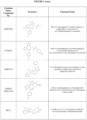
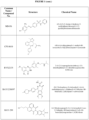
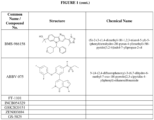
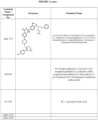
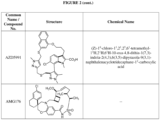
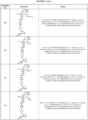
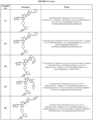
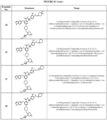
- FIG. 3 provides the chemical names and structures for examples of the compounds of Formula (I) listed above in which R 3 is hydrogen or halogen, along with other examples of such compounds (compounds in FIG. 3 which are not claimed are marked as reference examples).
- the compound of Formula (I) is a non-reference compound selected from FIG. 3 , or a pharmaceutically acceptable salt of any of the compounds listed in FIG. 3 .
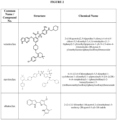
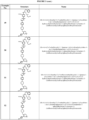
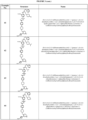
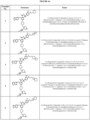
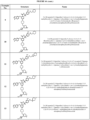
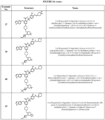
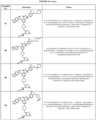
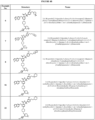
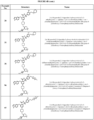
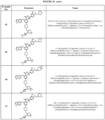
- 4A , 4B and 4C provide the chemical names and structures for examples of the compounds of Formula (I) listed above in which R 3 is X-R 3A , or along with other examples of such compounds, including those in which R 1 is any of the aforementioned options for R 1 except that R 1 is not -CH 2 F, -CHF 2 or -CF 3 , and X 1 and X 2 are -NH- ( FIG 4A ); those in which R 1 is any of the aforementioned options for R 1 , and X 1 and X 2 are -O- ( FIG.
- the compound of Formula (I) is a non-reference compound selected from FIGS. 3 , 4A , 4B , and/or 4C, or a pharmaceutically acceptable salt of any of the non-reference compounds listed in FIGS. 3 , 4A , 4B and/or 4C.
- the compound of Formula (I) is a non-reference compound selected from FIG.
- the compound of Formula (I) is a non-reference compound selected from FIG. 4A , or a pharmaceutically acceptable salt of any of the non-reference compounds listed in FIG. 4A .
- the non-reference compound of Formula (I) is a compound selected from FIG. 4B , or a pharmaceutically acceptable salt of any of the non-reference compounds listed in FIG. 4B .
- the non-reference compound of Formula (I) is a compound selected from FIG. 4C , or a pharmaceutically acceptable salt of any of the non-reference compounds listed in FIG. 4C .
- a compound of Formula (I), or a pharmaceutically acceptable salt thereof can have increased metabolic and/or plasma stability. In some embodiments, a compound of Formula (I), or a pharmaceutically acceptable salt thereof, can be more resistant to hydrolysis and/or more resistant to enzymatic transformations. In some embodiments, a compound of Formula (I), or a pharmaceutically acceptable salt thereof, can have improved properties.
- a non-limiting list of example properties include, but are not limited to, increased biological half-life, increased bioavailability, increase potency, a sustained in vivo response, increased dosing intervals, decreased dosing amounts, decreased cytotoxicity, reduction in required amounts for treating disease conditions, a reduction of morbidity or mortality in clinical outcomes, decrease in or prevention of opportunistic infections, increased subject compliance and increased compatibility with other medications.
- a compound of Formula (I), or a pharmaceutically acceptable salt thereof can have more potent anticancer activity (for example, a lower EC 50 in a cell replication assay) as compared to the current standard of care (such as venetoclax).
- the coupling reaction reactions between compounds of the general Formulae A and B to form compounds of the Formula (I) as illustrated in General Scheme 1 can be carried out in a manner similar to the reactions as described herein in the Examples, by appropriate adjustment of the reagents and conditions described in the Examples. Any preliminary reaction steps required to form starting compounds of the general Formula A and B, or other precursors, can be carried out by those skilled in the art.
- R 1 , R 2 , R 3 R 4 , R 5 and m can be as described herein.
- composition refers to a mixture of one or more compounds and/or salts disclosed herein with other chemical components, such as diluents or carriers.
- the pharmaceutical composition facilitates administration of the compound to an organism.
- Pharmaceutical compositions can also be obtained by reacting compounds with inorganic or organic acids such as hydrochloric acid, hydrobromic acid, sulfuric acid, nitric acid, phosphoric acid, methanesulfonic acid, ethanesulfonic acid, p-toluenesulfonic acid and salicylic acid.
- Pharmaceutical compositions will generally be tailored to the specific intended route of administration.
- physiologically acceptable defines a carrier, diluent or excipient that does not abrogate the biological activity and properties of the compound nor cause appreciable damage or injury to an animal to which delivery of the composition is intended.
- a “carrier” refers to a compound that facilitates the incorporation of a compound into cells or tissues.
- DMSO dimethyl sulfoxide
- DMSO dimethyl sulfoxide
- a "diluent” refers to an ingredient in a pharmaceutical composition that lacks appreciable pharmacological activity but may be pharmaceutically necessary or desirable.
- a diluent may be used to increase the bulk of a potent drug whose mass is too small for manufacture and/or administration. It may also be a liquid for the dissolution of a drug to be administered by injection, ingestion or inhalation.
- a common form of diluent in the art is a buffered aqueous solution such as, without limitation, phosphate buffered saline that mimics the pH and isotonicity of human blood.
- compositions described herein can be administered to a human patient per se, or in pharmaceutical compositions where they are mixed with other active ingredients, as in combination therapy, or carriers, diluents, excipients or combinations thereof. Proper formulation is dependent upon the route of administration chosen. Techniques for formulation and administration of the compounds described herein are known to those skilled in the art.
- compositions disclosed herein may be manufactured in a manner that is itself known, e.g., by means of conventional mixing, dissolving, granulating, dragee-making, levigating, emulsifying, encapsulating, entrapping or tableting processes. Additionally, the active ingredients are contained in an amount effective to achieve its intended purpose. Many of the compounds used in the pharmaceutical combinations disclosed herein may be provided as salts with pharmaceutically compatible counterions.
- a compound, salt and/or composition include, but not limited to, oral, rectal, pulmonary, topical, aerosol, injection, infusion and parenteral delivery, including intramuscular, subcutaneous, intravenous, intramedullary injections, intrathecal, direct intraventricular, intraperitoneal, intranasal and intraocular injections.
- a compound of Formula (I), or a pharmaceutically acceptable salt thereof can be administered orally.
- compositions may, if desired, be presented in a pack or dispenser device which may contain one or more unit dosage forms containing the active ingredient.
- the pack may for example comprise metal or plastic foil, such as a blister pack.
- the pack or dispenser device may be accompanied by instructions for administration.
- the pack or dispenser may also be accompanied with a notice associated with the container in form prescribed by a governmental agency regulating the manufacture, use, or sale of pharmaceuticals, which notice is reflective of approval by the agency of the form of the drug for human or veterinary administration. Such notice, for example, may be the labeling approved by the U.S. Food and Drug Administration for prescription drugs, or the approved product insert.
- Compositions that can include a compound and/or salt described herein formulated in a compatible pharmaceutical carrier may also be prepared, placed in an appropriate container and labeled for treatment of an indicated condition.
- references to methods of treatment in the subsequent paragraphs of this description are to be interpreted as references to the compounds, pharmaceutical compositions and medicaments of the present invention for use in a method for treatment of the human (or animal) body by therapy (or for diagnosis).
- Some embodiments described herein relate to an effective amount of a compound described herein (for example, a compound of Formula (I), or a pharmaceutically acceptable salt thereof) or a pharmaceutical composition that includes a compound described herein (for example, a compound of Formula (I), or a pharmaceutically acceptable salt thereof) for treating a cancer or a tumor described herein.
- a compound described herein for example, a compound of Formula (I), or a pharmaceutically acceptable salt thereof
- a pharmaceutical composition that includes a compound described herein (for example, a compound of Formula (I), or a pharmaceutically acceptable salt thereof) for treating a cancer or a tumor described herein.
- Some embodiments described herein relate to an effective amount of a compound described herein (for example, a compound of Formula (I), or a pharmaceutically acceptable salt thereof) for inhibiting replication of a malignant growth or a tumor described herein.
- a compound described herein for example, a compound of Formula (I), or a pharmaceutically acceptable salt thereof
- Some embodiments described herein relate to an effective amount of a compound described herein (for example, a compound of Formula (I), or a pharmaceutically acceptable salt thereof) for contacting a malignant growth or a tumor described herein, wherein the malignant growth or tumor is due to a cancer described herein.
- a compound described herein for example, a compound of Formula (I), or a pharmaceutically acceptable salt thereof
- suitable malignant growths, cancers and tumors include, but are not limited to: bladder cancers, brain cancers, breast cancers, bone marrow cancers, cervical cancers, colorectal cancers, esophageal cancers, hepatocellular cancers, lymphoblastic leukemias, follicular lymphomas, lymphoid malignancies of T-cell or B-cell origin, melanomas, myelogenous leukemias, Hodgkin's lymphoma, Non-Hodgkin's lymphoma, head and neck cancers (including oral cancers), ovarian cancers, non-small cell lung cancer, chronic lymphocytic leukemias, myelomas (including multiple myelomas), prostate cancer, small cell lung cancer, spleen cancers, polycythemia vera, thyroid cancers, endometrial cancer, stomach cancers, gallbladder cancer, bile duct cancers, testicular cancers, neuroblastomas, osteosar
- a malignant growth, cancer or tumor can become resistant to one or more anti-proliferative agents.
- a compound described herein for example, a compound of Formula (I), or a pharmaceutically acceptable salt thereof
- a pharmaceutical composition that includes a compound described herein for example, a compound of Formula (I), or a pharmaceutically acceptable salt thereof
- anti-proliferative agents examples include, but are not limited to, Bcl-2 inhibitors (such as venetoclax, navitoclax, obatoclax, S55746, APG-1252, APG-2575 and ABT-737).
- Bcl-2 inhibitors such as venetoclax, navitoclax, obatoclax, S55746, APG-1252, APG-2575 and ABT-737.
- the malignant growth, cancer or tumor, that has become resistant to one or more anti-proliferative agents can be a malignant growth, cancer or tumor, described herein.
- Some embodiments described, but not claimed, herein relate to a method for inhibiting the activity of Bcl-2 that can include administering an effective amount of a compound described herein (for example, a compound of Formula (I), or a pharmaceutically acceptable salt thereof) or a pharmaceutical composition that includes a compound described herein (for example, a compound of Formula (I), or a pharmaceutically acceptable salt thereof) to a subject and can also include contacting a cell that expresses Bcl-2 with an effective amount of a compound described herein (for example, a compound of Formula (I), or a pharmaceutically acceptable salt thereof) or a pharmaceutical composition that includes a compound described herein (for example, a compound of Formula (I), or a pharmaceutically acceptable salt thereof).
- Still other embodiments described, but not claimed, herein relate to an effective amount of a compound described herein (for example, a compound of Formula (I), or a pharmaceutically acceptable salt thereof) for inhibiting the activity of Bcl-2 in a subject; or for inhibiting the activity of Bcl-2 by contacting a cell that expresses Bcl-2.
- a compound described herein for example, a compound of Formula (I), or a pharmaceutically acceptable salt thereof
- Some embodiments described herein relate to an effective amount of a compound described herein (for example, a compound of Formula (I), or a pharmaceutically acceptable salt thereof) and an effective amount of a HIV latency reversing agent, or a pharmaceutically acceptable salt thereof, for treating a HIV infection in a subject suffering from the HIV infection; or for treating a HIV infection by contacting a cell infected with HIV.
- the cells can be in a subject.
- the cells can be CD4+T cells.
- the CD4+T cells can be in a subject.
- Some embodiments described herein relate to an effective amount of a compound described herein (for example, a compound of Formula (I), or a pharmaceutically acceptable salt thereof) and an effective amount of a HIV latency reversing agent, or a pharmaceutically acceptable salt thereof, for reducing the population of HIV infected cells in a subject suffering from the HIV infection; or for reducing the population of HIV infected cells by contacting a cell infected with HIV.
- the cells can be in a subject.
- the cells can be CD4+T cells.
- the CD4+T cells can be in a subject.
- Some embodiments described herein relate to an effective amount of a compound described herein (for example, a compound of Formula (I), or a pharmaceutically acceptable salt thereof) and an effective amount of a HIV latency reversing agent, or a pharmaceutically acceptable salt thereof, for reducing the reoccurrence of a HIV infection in a subject suffering from the HIV infection; or for reducing the reoccurrence of a HIV infection by contacting a cell infected with HIV.
- the cells can be in a subject.
- the cells can be CD4+T cells.
- the CD4+T cells can be in a subject.
- Some embodiments described herein relate to an effective amount of a Bcl protein inhibitor, or a pharmaceutically acceptable salt thereof, and an effective amount of a HIV latency reversing agent, or a pharmaceutically acceptable salt thereof, for treating a HIV infection in a subject suffering from the HIV infection; or for treating a HIV infection by contacting a cell infected with HIV.
- the cells can be in a subject.
- the cells can be CD4+T cells.
- the CD4+T cells can be in a subject.
- Some embodiments described herein relate to an effective amount of a Bcl protein inhibitor, or a pharmaceutically acceptable salt thereof, and an effective amount of a HIV latency reversing agent, or a pharmaceutically acceptable salt thereof, for reducing the population of HIV infected cells in a subject suffering from the HIV infection; or for reducing the population of HIV infected cells by contacting a cell infected with HIV.
- the cells can be in a subject.
- the cells can be CD4+T cells.
- the CD4+T cells can be in a subject.
- Some embodiments described herein relate to an effective amount of a Bcl protein inhibitor, or a pharmaceutically acceptable salt thereof, and an effective amount of a HIV latency reversing agent, or a pharmaceutically acceptable salt thereof, for reducing the reoccurrence of a HIV infection in a subject suffering from the HIV infection; or for reducing the reoccurrence of a HIV infection by contacting a cell infected with HIV.
- the cells can be in a subject.
- the cells can be CD4+T cells.
- the CD4+T cells can be in a subject.
- the HIV latency reversing agent can be a protein kinase C agonist, a PD-1 inhibitor, a PD-L1 inhibitor, an HDAC inhibitor, a phorbol ester or a bromodomain inhibitor.
- the HIV latency reversing agent can be a protein kinase C agonist, which includes, but is not limited to prostratin, bryostatin-1 and ingenol.
- the HIV latency reversing agent can be a PD-1 inhibitor, which includes, but is not limited to nivolumab, pembrolizumab, BGB-A317, pidilizumab, AMP-224, AMP-514, PDR001, REGN2810 and MEDI0680.
- the HIV latency reversing agent can be a PD-L1 inhibitor, which includes, but is not limited to atezolizumab, durvalumab, avelumab and BMS-936559.
- the HIV latency reversing agent can be a HDAC inhibitor, which includes, but is not limited to vorinostat, panobinostat, romidepsin and valproic acid.
- the HIV latency reversing agent can be a phorbol ester, which includes, but is not limited to phorbol 12-myristate-13-acetate and (S)-tert-butyl-2-(4-(4-chlorophenyl)-2,3,9-trimethyl-6H-thieno[3,2-f][1,2,4]triazolo[4,3-a][1,4]diazepin-6-yl)acetate.
- the HIV latency reversing agent can be a bromodomain inhibitor, which includes, but is not limited to JQ1, I-BET762, OTX015, I-BET151, CPI203, PFI-1, MS436, CPI-0610, RVX2135, FT-1101, BAY1238097, INCB054329, TEN-010, GSK2820151, ZEN003694, BAY-299, BMS-986158, ABBV-075 and GS-5829.
- a combination of two or more HIV latency reversing agents may be used.
- the Bcl protein inhibitor of Formula (I) can be a selective Bcl-2 inhibitor, a selective Bcl-X L inhibitor, a selective Bcl-W inhibitor, a selective Mcl-1 inhibitor or a selective Bcl-2A1 inhibitor. In some embodiments, the Bcl protein inhibitor of Formula (I) can inhibit more than one Bcl protein. In some embodiments, the Bcl protein inhibitor can be an inhibitor of the activity of Bcl-2 and one of Bcl-X L , Bcl-W, Mcl-1 and Bcl-2A1. In some embodiments, the Bcl protein inhibitor can be an inhibitor of the activity of Bcl-X L and one of Bcl-W, Mcl-1 and Bcl-2A1.
- the Bcl protein inhibitor of Formula (I) can inhibit both Bcl-2 and Bcl-X L .
- the Bcl protein inhibitor can be venetoclax, navitoclax, obatoclax, ABT-737, S55746, AT-101, APG-1252, APG-2575, AMG176 or AZD5991, or a combination of any of the foregoing.
- the methods of ameliorating or treating a HIV infection can also include the use of one or more agents selected from a non-nucleoside reverse transcriptase inhibitor (NNRTI), a nucleoside reverse transcriptase inhibitor (NRTI), a protease inhibitor (PI), a fusion/entry inhibitor, an integrase strand transfer inhibitor (INSTI), a HIV vaccine, a HIV other antiretroviral therapy compound and combinations thereof, or a pharmaceutically acceptable salt of any of the aforementioned.
- NRTI non-nucleoside reverse transcriptase inhibitor
- NRTI nucleoside reverse transcriptase inhibitor
- PI protease inhibitor
- INSTI integrase strand transfer inhibitor
- HIV vaccine a HIV other antiretroviral therapy compound and combinations thereof, or a pharmaceutically acceptable salt of any of the aforementioned.
- the subject suffering from the HIV infection is not using an agent selected from a non-nucleoside reverse transcriptase inhibitor (NNRTI), a nucleoside reverse transcriptase inhibitor (NRTI), a protease inhibitor (PI), a fusion/entry inhibitor, an integrase strand transfer inhibitor (INSTI), a HIV vaccine, a HIV other antiretroviral therapy compound and combinations thereof, or a pharmaceutically acceptable salt of any of the aforementioned.
- NRTI non-nucleoside reverse transcriptase inhibitor
- NRTI nucleoside reverse transcriptase inhibitor
- PI protease inhibitor
- INSTI integrase strand transfer inhibitor
- HIV vaccine a HIV other antiretroviral therapy compound and combinations thereof, or a pharmaceutically acceptable salt of any of the aforementioned.
- NNRTIs include, but are not limited to, delavirdine (Rescriptor ® ), efavirenz (Sustiva ® ), etravirine (Intelence ® ), nevirapine (Viramune ® ), rilpivirine (Edurant ® ), doravirine, and pharmaceutically acceptable salts of any of the foregoing, and/or a combination thereof.
- Suitable NRTIs include, but are not limited to, abacavir (Ziagen ® ), adefovir (Hepsera ® ), amdoxovir, apricitabine, censavudine, didanosine (Videx ® ), elvucitabine, emtricitabine (Emtriva ® ), entecavir (Baraclude ® ), lamivudine (Epivir ® ), racivir, stampidine, stavudine (Zerit ® ), tenofovir disoproxil (including Viread ® ), tenofovir alafenamide, zalcitabine (Hivid ® ), zidovudine (Retrovir ® ), and pharmaceutically acceptable salts of any of the foregoing, and/or a combination thereof.
- abacavir Ziagen ®
- Hepsera ® adefovir
- vaccines include, but are not limited to Heplislav ® , ABX-203, INO-1800, and pharmaceutically acceptable salts of any of the foregoing, and/or combinations thereof.
- suitable protease inhibitors include, but are not limited to, atazanavir (Reyataz ® ), darunavir (Prezista ® ), fosamprenavir (Lexiva ® ), indinavir (Crixivan ® ), lopinavir/ritonavir (Kaletra ® ), nelfinavir (Viracept ® ), ritonavir (Norvir ® ) and saquinavir (Invirase ® ).
- fusion/entry inhibitors include, but are not limited to, enfuvirtide (Fuzeon ® ), maraviroc (Selzentry ® ), vicriviroc, apliviroc, ibalizumab, fostemsavir and PRO-140.
- suitable INSTIs include, but are not limited to, raltegravir (Isentress ® ), dolutegravir (Tivicay ® ) and elvitegravir (Viteka ® ).
- HIV-1 is more virulent and more infective strain, and has a global prevalence. HIV-2 is considered to be less virulent and is geographically confined.
- an effective amount of a compound of Formula (I), or a pharmaceutically acceptable salt thereof, or a pharmaceutical composition that includes an effective amount of a compound of Formula (I), or a pharmaceutically acceptable salt thereof can be effective to treat HIV-1.
- an effective amount of a compound of Formula (I), or a pharmaceutically acceptable salt thereof, or a pharmaceutical composition that includes an effective amount of a compound of Formula (I), or a pharmaceutically acceptable salt thereof can be effective to treat HIV-2.
- a compound described herein for example, a compound of Formula (I), or a pharmaceutically acceptable salt thereof
- Suitable indicators include, but are not limited to, a reduction in viral load, a reduction in plasma viral load, a reduction in viral replication, a reduction in time to seroconversion (virus undetectable in patient serum), an increase CD4+ T lymphocyte counts, a reduction in the population of HIV infected cells, a reduction of morbidity or mortality in clinical outcomes and/or a reduction in the rate of opportunistic infections.
- successful therapy with an effective amount of a compound or a pharmaceutical composition described herein (for example, a compound of Formula (I), or a pharmaceutically acceptable salt thereof) and an effective amount of a HIV latency reversing agent, or a pharmaceutically acceptable salt thereof can reduce the incidence of opportunistic infections in HIV infected subjects.
- an effective amount of a compound of Formula (I), or a pharmaceutically acceptable salt thereof is an amount that is effective to reduce the population of CD4+ T lymphocyte cells harboring HIV to undetectable levels.
- an effective amount of a compound of Formula (I), or a pharmaceutically acceptable salt thereof is an amount that is effective to increase CD4+ T lymphocyte counts from less than about 200 cells/mL to greater than about 1,200 cells/mL. In some embodiments, an effective amount of a compound of Formula (I), or a pharmaceutically acceptable salt thereof, is an amount that is effective to increase CD4+ T lymphocyte counts from less than about 200 cells/mL to greater than about 500 cells/mL.
- infectious agents can develop resistance to one or more therapeutic agents.
- resistance refers to a viral strain displaying a delayed, lessened and/or null response to a therapeutic agent(s).
- the virus sometimes mutates or produces variations that are resistant or partially resistant to certain drugs.
- the viral load of a subject infected with a resistant virus may be reduced to a lesser degree compared to the amount in viral load reduction exhibited by a subject infected with a non-resistant strain.
- a compound of Formula (I), or a pharmaceutically acceptable salt thereof can be provided to a subject infected with a HIV strain that is resistant to one or more different anti-HIV agents (for example, an agent used in a conventional standard of care).
- anti-HIV agents include, but are not limited to, non-nucleoside reverse transcriptase inhibitors (NNRTIs), nucleoside reverse transcriptase inhibitors (NRTIs), protease inhibitors (Pls), fusion/entry inhibitors, integrase strand transfer inhibitors (INSTIs), HIV vaccines, and combinations thereof, or pharmaceutically acceptable salts of any of the aforementioned.
- Bcl-2 inhibitors can cause one or more undesirable side effects in the subject being treated.
- undesirable side effects include, but are not limited to, thrombocytopenia, neutropenia, anemia, diarrhea, nausea and upper respiratory tract infection.
- a compound described herein for example, a compound of Formula (I), or a pharmaceutically acceptable salt thereof
- a compound of Formula (I), or a pharmaceutically acceptable salt thereof can result in a severity of a side effect (such as one of those described herein) that is 25% less than compared to the severity of the same side effect experienced by a subject receiving a known Bcl-2 inhibitors (such as venetoclax, navitoclax, obatoclax, ABT-737, S55746, AT-101, APG-1252 and APG-2575).
- a side effect such as one of those described herein
- a side effect such as one of those described herein
- a known Bcl-2 inhibitors such as venetoclax, navitoclax, obatoclax, ABT-737, S55746, AT-101, APG-1252 and APG-2575.
- a compound of Formula (I), or a pharmaceutically acceptable salt thereof results in a number of side effects that is 25% less than compared to the number of side effects experienced by a subject receiving a known Bcl-2 inhibitors (for example, venetoclax, navitoclax, obatoclax, ABT-737, S55746, AT-101, APG-1252 and APG-2575).
- a known Bcl-2 inhibitors for example, venetoclax, navitoclax, obatoclax, ABT-737, S55746, AT-101, APG-1252 and APG-2575.
- a compound of Formula (I), or a pharmaceutically acceptable salt thereof results in a severity of a side effect (such as one of those described herein) that is less in the range of about 10% to about 30% compared to the severity of the same side effect experienced by a subject receiving a known Bcl-2 inhibitors (for example, venetoclax, navitoclax, obatoclax, ABT-737, S55746, AT-101, APG-1252 and APG-2575).
- a side effect such as one of those described herein
- a compound of Formula (I), or a pharmaceutically acceptable salt thereof results in a number of side effects that is in the range of about 10% to about 30% less than compared to the number of side effects experienced by a subject receiving a known Bcl-2 inhibitors (for example, venetoclax, navitoclax, obatoclax, ABT-737, S55746, APG-1252 and APG-2575).
- a known Bcl-2 inhibitors for example, venetoclax, navitoclax, obatoclax, ABT-737, S55746, APG-1252 and APG-2575.
- the one or more compounds of Formula (I), or a pharmaceutically acceptable salt thereof, that can be used to treat, or inhibit the replication of a cancer, malignant growth, or tumor wherein inhibiting the activity of Bcl-2 is beneficial is provided in any of the embodiments described above under the heading titled "Compounds.”
- the methods and uses described above in the Uses and Methods of Treatment section are carried out in the described manner (generally involving cancer, malignant growth, and/or tumor) using a compound of Formula (I) in which R 3 is X-R 3A ,
- the methods and uses described above in the Uses and Methods of Treatment section of this disclosure are carried out in the described manner (generally involving cancer, malignant growth, and/or tumor) using a compound of Formula (I) in which R 3 is X-R 3A , and in which X 1 is -NH-.
- the one or more compounds of Formula (I), or a pharmaceutically acceptable salt thereof, that can be used to treat and/or ameliorate a HIV infection and/or reducing the reoccurrence of a HIV infection and/or reducing the population of HIV infected cells, wherein inhibiting the activity of Bcl-2 is beneficial is provided in any of the embodiments described above under the heading titled "Compounds.”
- the methods and uses described above in the Uses and Methods of Treatment section are carried out in the described manner (generally involving HIV) using a compound of Formula (I) in which R 3 is X-R 3A ,
- the methods and uses described above in the Uses and Methods of Treatment section of this disclosure are carried out in the described manner (generally involving HIV) using a compound of Formula (I) in which R 3 is X-R 3A , and in which X 1 is -NH-.
- the methods and uses described above in the Uses and Methods of Treatment section are carried out in the described manner (generally involving HIV) using a compound of Formula (I) in which R 1 is selected from the group consisting of hydrogen, halogen, a substituted or unsubstituted C 1 -C 6 alkyl, a substituted or unsubstituted C 1 -C 6 haloalkyl, a substituted or unsubstituted C 3 -C 6 cycloalkyl, a substituted or unsubstituted C 1 -C 6 alkoxy, an unsubstituted mono-C 1 -C 6 alkylamine and an unsubstituted di-C 1 -C 6 alkylamine, with the proviso that R 1 is not -CH 2 F, -CHF 2 or -CF 3 ; R 3 is X-R 3A , and X 1 is -NH-.
- R 1 is selected from the group consisting of hydrogen, halogen,
- the methods and uses described above in the Uses and Methods of Treatment section are carried out in the described manner (generally involving HIV) using a compound of Formula (I) in which R 1 is -CH 2 F, -CHF 2 or -CF 3 ; R 3 is X-R 3A , and X 1 is -NH-.
- treat do not necessarily mean total cure or abolition of the disease or condition. Any alleviation of any undesired signs or symptoms of the disease or condition, to any extent can be considered treatment and/or therapy. Furthermore, treatment may include acts that may worsen the subject's overall feeling of well-being or appearance.
- a therapeutically effective amount of compound, salt or composition can be the amount needed to prevent, alleviate or ameliorate symptoms of the disease or condition, or prolong the survival of the subject being treated. This response may occur in a tissue, system, animal or human and includes alleviation of the signs or symptoms of the disease or condition being treated. Determination of an effective amount is well within the capability of those skilled in the art, in view of the disclosure provided herein.
- the therapeutically effective amount of the compounds disclosed herein required as a dose will depend on the route of administration, the type of animal, including human, being treated and the physical characteristics of the specific animal under consideration. The dose can be tailored to achieve a desired effect, but will depend on such factors as weight, diet, concurrent medication and other factors which those skilled in the medical arts will recognize.
- an effective amount of a compound is the amount that results in: (a) the reduction, alleviation or disappearance of one or more symptoms caused by the cancer, (b) the reduction of tumor size, (c) the elimination of the tumor, and/or (d) long-term disease stabilization (growth arrest) of the tumor.
- a therapeutically effective amount is that amount that alleviates or eliminates cough, shortness of breath and/or pain.
- an effective amount, or a therapeutically effective amount of a Bcl-2 inhibitor is the amount which results in the reduction in Bcl-2 activity and/or an increase in apoptosis.
- the reduction in Bcl-2 activity is known to those skilled in the art and can be determined by the analysis of Bcl-2 binding and relatives levels of cells undergoing apoptosis.
- a suitable dose will often be in the range of from about 0.05 mg/kg to about 10 mg/kg.
- a suitable dose may be in the range from about 0.10 mg/kg to about 7.5 mg/kg of body weight per day, such as about 0.15 mg/kg to about 5.0 mg/kg of body weight of the recipient per day, about 0.2 mg/kg to 4.0 mg/kg of body weight of the recipient per day, or any amount in between.
- the compound may be administered in unit dosage form; for example, containing 1 to 500 mg, 10 to 100 mg, 5 to 50 mg or any amount in between, of active ingredient per unit dosage form.
- the desired dose may conveniently be presented in a single dose or as divided doses administered at appropriate intervals, for example, as two, three, four or more sub-doses per day.
- the sub-dose itself may be further divided, e.g., into a number of discrete loosely spaced administrations.
- the useful in vivo dosage to be administered and the particular mode of administration will vary depending upon the age, weight, the severity of the affliction, the mammalian species treated, the particular compounds employed and the specific use for which these compounds are employed.
- the determination of effective dosage levels can be accomplished by one skilled in the art using routine methods, for example, human clinical trials, in vivo studies and in vitro studies.
- useful dosages of a compound of Formula (I), or pharmaceutically acceptable salts thereof can be determined by comparing their in vitro activity and in vivo activity in animal models. Such comparison can be done by comparison against an established drug, such as cisplatin and/or gemcitabine)
- Dosage amount and interval may be adjusted individually to provide plasma levels of the active moiety which are sufficient to maintain the modulating effects, or minimal effective concentration (MEC).
- MEC minimal effective concentration
- the MEC will vary for each compound but can be estimated from in vivo and/or in vitro data. Dosages necessary to achieve the MEC will depend on individual characteristics and route of administration. However, HPLC assays or bioassays can be used to determine plasma concentrations. Dosage intervals can also be determined using MEC value.
- Compositions should be administered using a regimen which maintains plasma levels above the MEC for 10-90% of the time, preferably between 30-90% and most preferably between 50-90%. In cases of local administration or selective uptake, the effective local concentration of the drug may not be related to plasma concentration.
- the attending physician would know how to and when to terminate, interrupt or adjust administration due to toxicity or organ dysfunctions. Conversely, the attending physician would also know to adjust treatment to higher levels if the clinical response were not adequate (precluding toxicity).
- the magnitude of an administrated dose in the management of the disorder of interest will vary with the severity of the disease or condition to be treated and to the route of administration. The severity of the disease or condition may, for example, be evaluated, in part, by standard prognostic evaluation methods. Further, the dose and perhaps dose frequency, will also vary according to the age, body weight and response of the individual patient. A program comparable to that discussed above may be used in veterinary medicine.
- Step 1 A solution of 2-oxa-8-azaspiro[4.5] decane hydrochloride (500 mg, 2.81 mmol) in CH 3 CN (20 mL) was treated with tert -butyl-2-bromoethylcarbamate (700 mg, 3.12 mmol) and K 2 CO 3 (1.55 g, 11.24 mmol) and heated to 80 °C for 16 h. The reaction was concentrated, diluted with water (20 mL), and extracted with EtOAc (3 x 20 mL). The combined organic layers were dried over Na 2 SO 4 , filtered and concentrated. The residue was purified by column chromatography (SiO 2 , EtOAc/pet.
- Step 2 To a stirred solution of Intermediate 4-1 (500 mg, 1.76 mmol) in DCM (20 mL) was added HCl (4 M in dioxane, 10 mL) at 0 °C. The reaction was warmed to rt, stirred for 2 h, concentrated and triturated with Et 2 O to afford 2-(2-oxa-8-azaspiro[4.5]decan-8- yl )ethanamine dihydrochloride (Intermediate 4-2) (300 mg, 66%) as an off white solid which was used for the next step without further purification.
- Step 3 A solution of Intermediate 4-2 (300 mg, 1.17 mmol) in CH 3 CN (15 mL) was treated with 4-chloro-3-nitrobenzenesulfonamide (276 mg, 1.17 mmol) followed by DIPEA (0.82 mL, 4.68 mmol) and then heated to 80 °C. After 16 h, the reaction was cooled to rt and concentrated. The crude product was purified by column chromatography (SiO 2 , MeOH(0.1% triethylamine)/DCM) to afford Intermediate 4 (300 mg, 66%) as a yellow solid. LC/MS (ESI) m / z 385.3 [M+H] + .
- Step 1 tert -butyl 2-(7-oxa-2-azaspiro[3.5]nonan-2- yl )ethylcarbamate (Intermediate 5-1) was prepared following the procedure described in Step 1 for Intermediate 4 using 7-oxa-2-azaspiro[3.5] nonane hemioxalic acid in place of 2-oxa-8-azaspiro[4.5] decane hydrochloride 1 H NMR (300 MHz, DMSO- d 6 ) ⁇ 6.94 (br s, 1H), 3.74 (br s, 4H), 3.51-3.42 (m, 4H), 3.10 (br s, 4H), 1.76 (br s, 4H), 1.39 (s, 9H).
- Step 2 2-(7-oxa-2-azaspiro[3.5]nonan-2-yl)ethanamine dihydrochloride (Intermediate 5-2) was prepared following the procedure described in Step 2 for Intermediate 4 using Intermediate 5-1 in place of Intermediate 4-1.
- 1 H NMR 300 MHz, DMSO- d 6 ) ⁇ 11.42 (br s, 1H), 8.3 (br s, 3H), 4.05-3.99 (m, 2H), 3.92-3.86 (m, 2H), 3.57-3.54 (m, 4H), 3.49-3.40 (m, 4H), 3.10-3.05 (m, 2H), 1.88 (br s, 2H), 1.72 (br s, 2H).
- Step 3 A solution of Intermediate 5-2 (250 mg, 1.03 mmol) in CH 3 CN (13 mL) was treated with 4-fluoro-3-nitrobenzenesulfonamide (226.8 mg, 1.03 mmol) followed by triethylamine (0.58 mL, 4.12 mmol) at rt. After 16 h, the reaction was concentrated to afford the crude product, which was purified by column chromatography (SiO 2 , MeOH (containing 7N NH 3 )/DCM) to obtain Intermediate 5 (200 mg, 52%) as a yellow solid. LC/MS (ESI) m / z 371.3 [M+H] + .
- Step 1 To a stirred solution of 1-(3-hydroxy-2-(tetrahydro-2 H -pyran-2-yloxy)propyl)cyclopropanol (prepared according to CN106565706 ) and triphenyl phosphine (9.10 g, 34.7 mmol) in THF (50 mL), was added diethyl azodicarboxylate (DEAD) (5.44 mL, 34.7 mmol) dropwise at rt. After 16 h, the reaction mixture was quenched with H 2 O (50 mL) and extracted with EtOAc (3 x 50 mL). The combined organic layers were washed with water (50 mL), dried over Na 2 SO 4 and concentrated.
- DEAD diethyl azodicarboxylate
- Step 2 To a stirred solution of Intermediate 7-1 (3.2 g, 16.1 mmol) in MeOH (32 mL) was added pyridinium p-toluenesulfonate (811 mg, 3.23 mmol) and stirred at 40 °C for 5 h. The reaction mixture was concentrated, and the residue was purified by column chromatography (SiO 2 , EtOAc/pet. ether) to obtain 4-oxaspiro[2.4]heptan-6-ol (Intermediate 7-2) (1.0 g, 54% yield) as colorless oil. GC/MS m / z 114.1 [M] + .
- Step 3 To a stirred solution of Intermediate 7-2 was added sodium hydride (63% dispersion in oil, 1.05 g, 26.3 mmol) at 0 °C. After 30 min, a solution of 4-fluoro-3-nitrobenzenesulfonamide (1.92 g, 8.76 mmol) in THF (5 mL) was added dropwise at 0 °C. The reaction was warmed to rt and stirred for 6 h. The reaction was cooled to 0 °C and quenched with sat. aq. NH 4 Cl and extracted with EtOAc (3 x 50 mL). The combined organic layers were dried over Na 2 SO 4 and concentrated. The residue was triturated with Et 2 O and n-pentane to afford Intermediate 7 (700 mg, 25% yield) as a white solid. LC/MS (ESI) m / z 313.0 [M-H] - .
- Step 1 To a stirred solution of 3-(methoxycarbonyl)bicyclo[1.1.1]pentane-1-carboxylic acid (10 g, 58.8 mmol), N,O -dimethylhydroxylamine hydrochloride (6.88 g, 42.4 mmol) and triethylamine (12.3 mL, 176.4 mmol) in DCM (200 mL) at 0 °C was added T 3 P (50% solution in EtOAc, 18.8 g, 58.8 mmol). The resulting reaction mixture warmed to rt and stirred for 16 h. The reaction mixture was quenched with water (250 mL) and extracted with DCM (3 x 250 mL).
- Step 2 To a stirred solution of Intermediate 13-1 (5 g, 23.5 mmol) in THF (100 mL) at -78 °C was added MeMgBr (3M in Et 2 O, 31.3 mL, 93.8 mmol). After stirring for 2 h at -78 °C, the reaction was quenched with sat. aq. NH 4 Cl (100 mL) and extracted with EtOAc (3 x 100 mL). The combined organic layers were dried over Na 2 SO 4 , filtered and concentrated. The crude product was purified by column chromatography (SiO 2 , EtOAc/pet.
- Step 3 A solution of the Intermediate 13-2 (2.3 g, 13.6 mmol) in DCM (50 mL) at -78 °C was treated dropwise with DAST (6.62 g, 41.0 mmol). After the addition, the temperature was raised to rt. After 16 h, the reaction mixture was cooled to -78 °C and carefully quenched with sat. aq. NaHCO 3 (100 mL). The mixture was extracted with DCM (3 x 100 mL) and the combined organic layers were dried over Na 2 SO 4 , filtered and concentrated. The crude product was purified by chromatography chromatography (SiO 2 , EtOAc/pet.
- Step 4 To a stirred solution of Intermediate 13-3 (1.8 g, 9.46 mmol) and N,O-dimethylhydroxylamine hydrochloride (0.923 g, 9.46 mmol) in anhydrous THF (40 mL) at -78 °C was added i -PrMgCl (2M in THF, 18.9 mL, 37.8 mmol). The reaction mixture was warmed -50 °C and stirred for 2 h. The reaction mixture was quenched with sat. aq. NHaCl (50 mL) and extracted with EtOAc (3 x 75 mL). The combined organic layers were dried over Na 2 SO 4 , filtered and concentrated.
- i -PrMgCl 2M in THF, 18.9 mL, 37.8 mmol
- Step 1 To a stirred solution of tert -butyl 4-(aminomethyl)-4-fluoropiperidine-1-carboxylate (2.00 g, 8.61 mmol) in THF (30 mL), was added 4-fluoro-3-nitrobenzenesulfonamide (2.08 g, 9.47 mmol) followed by triethylamine (4.8 mL, 34.45 mmol). The resulting reaction mixture was stirred at rt for 16 h. The reaction was then concentrated, and the resulting residue was diluted with 10% MeOH-DCM (50 mL) and washed with ice-cold water (5 x 50 mL). The organic layer was dried over Na 2 SO 4 , filtered and concentrated.
- Step 2 To a stirred solution of Intermediate 15-1 (1.6 g, 3.70 mmol) in 1,4-dioxane (10 mL) at 0 °C was added HCl (4M HCl in 1,4-dioxane, 20 mL). The reaction was warmed to rt and stirred for 6 h. The reaction was concentrated and triturated with Et 2 O to afford 4-(((4-fluoropiperidin-4-yl)methyl)amino)-3-nitrobenzenesulfonamide hydrochloride (Intermediate 15-2) (1.3g, 96%) as a yellow solid.
- LC/MS (ESI) m / z 333.1 [C 12 H 17 FN 4 O 4 S+H] + .
- Step 3 To a stirred solution of Intermediate 15-2 (430 mg, 1.35 mmol) in MeOH (15 mL) was added paraformaldehyde (81 mg, 2.71 mmol) at 0 °C. After 15 min, NaCNBH 3 (128 mg, 2.03 mmol) was added and the reaction was warmed to rt. After 18h, the reaction was quenched sat. aq. NaHCO 3 (15 mL) and the reaction was extracted with DCM (3 x 100 mL). The combined organic layers were dried over Na 2 SO 4 , filtered and concentrated. The crude product was triturated with Et 2 O followed by 1:1 EtOAc/Hexane to afford Intermediate 15 (340 mg, 25% yield) as a yellow solid. LC/MS (ESI) m / z 347.1 [M+H] + .
- LC/MS (ESI) m / z 331.2 [M+H] + .
- the absolute stereochemistry was arbitrarily assigned for Intermediate 17A.
- LC/MS (ESI) m / z 331.2 [M+H] + .
- the absolute stereochemistry was arbitrarily assigned for Intermediate 17B.
- Step 1 A solution of NaClO 2 (11.08 g, 122.5 mmol) in water (100 mL) was added drop wise to a stirring mixture of 2-bromo-4,4-dimethylcyclohex-1-ene-1-carbaldehyde (19 g, 87.5 mmol), CH 3 CN (100 mL), NaH 2 PO 4 (2.72 g, 22.75 mmol), water (40 mL) and 30% H 2 O 2 (aq.) (15 mL) at 10 °C. Upon completion, the reaction, was poured into sat. aq. Na 2 CO 3 (200 mL) and washed with Et 2 O (200 mL).
- Step 2 To a stirred solution of Intermediate 20-1 (10 g, 42.9 mmol) in DMF (100 mL) was added K 2 CO 3 (17.79 g, 128.7 mmol) followed by benzyl bromide (14.67 g, 85.8 mmol) at 0 °C and the reaction was warmed to rt. After 16 h, water (200 mL) was added and the reaction was extracted with EtOAc (3 x 200 mL). The combined organic layers were washed with water (3 x 200 mL), dried over Na 2 SO 4 , filtered and concentrated. The crude product was purified by column chromatography (SiO 2 , EtOAc/pet.
- Step 1 A stirring solution of methyl 3-formylbicyclo[1.1.1]pentane-1-carboxylate (7.5 g, 48.7 mmol) in DCM (100 mL) was cooled to -78 °C, and treated with DAST (19.3 mL, 146.1 mmol) drop wise and warmed to rt. After 6 h, the reaction mixture was cooled to -78 °C and quenched with sat. aq. NaHCO 3 (100 mL) and extracted with DCM (3 x 100 mL).
- Step 2 To a stirred solution of Intermediate 21-1 (7 g, 39.74 mmol) in anhydrous THF (70 mL) was added N,O- dimethylhydroxylamine hydrochloride (3.89 g, 39.74 mmol) at -78 °C, followed by i -PrMgCl (2M in THF, 79.5 mL, 159 mmol). The reaction was warmed to -50 °C and stirred for 2 h. The reaction mixture was then quenched with sat. aq. NH 4 Cl solution (100 mL) and extracted with EtOAc (3 x 100 mL). The combined organic layers were dried over Na 2 SO 4 , filtered and concentrated.
- Step 1 A solution of 1-iodo-3-methylbicyclo[1.1.1]pentane (30 g, 144.20 mmol) in THF (225 mL) was cooled to -78 °C and sec-butyllithium (1.4M in cyclohexane, 154.50 mL, 216.30 mmol) was added drop wise over 1 h. The resulting pale yellow suspension was stirred at -78 °C for 10 min and then warmed to 0 °C and stirred for 80 min. The reaction mixture was then cooled to -78 °C, and a solution of Intermediate 19 (24.67 g, 108.15 mmol) in THF (75 mL) was added drop wise over 20 min.
- Step 2 A solution of Intermediate 22-1 (62 g, 199.69 mmol) in 1,4-dioxane (1.24 L), was treated with 2N HCl(aq.) (299.5 mL, 599.2 mmol) at rt and then warmed to 70 °C. After 16 h, the reaction was cooled to rt, poured into water (1.24 L) and extracted with Et 2 O (2 X 750 mL). The combined organic layers were dried over Na 2 SO 4 , filtered and concentrated. The crude product was purified by column chromatography (SiO 2 , EtOAc/pet. ether) to provide Intermediate 22 (23 g, 36 % yield over 2 steps) as a yellow oil.
- Step 1 To a stirred solution of [1.1.1]propellane (0.19M in Et 2 O/pentane), 128.6 mmol) at -78 °C was added EtI (18.7 g, 257.38 mmol). The reaction was warmed to rt and stirred for 3 days in the dark. The reaction was then concentrated at 0 °C to afford 1-ethyl-3-iodobicyclo[1.1.1]pentane (Intermediate 23-1) (21.2 g, 74% yield) as yellow oil.
- Step 2 To a stirred solution of Intermediate 23-1 (10.90 g, 49.1 mmol) in Et 2 O (75 mL) at -78 °C was added sec -BuLi (1.4 M in cyclohexane, 50 mL, 70.0 mmol). After 10 min, the reaction was warmed to rt and stirred for 1 h. The reaction mixture was then cooled to -78 °C and treated with a solution of 2-(diethoxymethyl)-5,5-dimethylcyclohexan-1-one (8 g, 35.0 mmol) in Et 2 O (25 mL). After 1 h, the reaction was warmed to 0 °C and stirred for 2 h.
- Step 3 A solution of Intermediate 23-2 (8.5 g, crude) in acetone (80 mL), was treated with 2N HCl(aq.) (20 mL) at rt and then warmed to 75 °C. After 24 h, the reaction was concentrated and then diluted with water (50 mL) and extracted with Et 2 O (3 X 250 mL). The combined organic layers were washed with sat. aq. NaHCO 3 , dried over Na 2 SO 4 and concentrated. The crude product was purified by column chromatography (SiO 2 , Et 2 O/pet. ether) to provide Intermediate 23 (3.9 g, 48 % yield over 2 steps) as a brown oil.
- Step 1 Preparation of CF 2 HI (based on a procedure from Cao, P. et. al. J. Chem. Soc., Chem. Commun. 1994, 737-738 ): performed in two parallel batches: A mixture of KI (94 g, 568 mol), MeCN (228 ml) and water (18 mL) was heated to 45°C and treated with, 2,2-difluoro-2-(fluorosulfonyl)acetic acid (50 g, 284 mmol) in MeCN (50 mL) dropwise over 4 h. The reaction mixture was then cooled to 0 °C, and diluted with pentane (150 mL) and water (125 mL).
- Step 2 To a stirred solution of [1.1.1]propellane (0.53 M in Et 2 O, 52 mL, 27.56 mmol) at -40 °C was added Intermediate 24-1 (0.15 M in pentane, 200 mL, 30 mmol). The reaction mixture was warmed to rt, protected from light, and stirred for 2 days. The reaction was then concentrated at 0 - 10 °C to obtain 1-(difluoromethyl)-3-iodobicyclo[1.1.1]pentane (Intermediate 24-2) (5 g, 20.5 mmol, 74% yield) as a white solid.
- Step 3 A solution of Intermediate 24-2 (30 g, 122.94 mmol) in THF (225 mL) was cooled to -78 °C and sec-butyllithium (1.4M in cyclohexane, 219 mL, 306.7 mmol) was added drop-wise for 1 h. The resulting pale yellow suspension was stirred at -78 °C for 10 min and temperature was raised to 0 °C and stirred for 80 min. The reaction mixture was then cooled to - 78 °C, and a solution of Intermediate 19 (21 g, 92.20 mmol) in THF (75 mL) was added drop wise to the reaction over 20 min.
- Step 4 Intermediate 24 was prepared following the procedure described in Step 2 for Intermediate 22 using Intermediate 24-3 in place of Intermediate 22-1 (38% over 2 steps).
- Step 1 To a stirred solution of 1-iodo-3-(trifluoromethyl)bicyclo[1.1.1]pentane (5.00 g, 19.1 mmol) in Et 2 O (100 mL) at -78 °C was added sec-BuLi (1.4 M in cyclohexane, 13.63 mL, 19.08 mmol. After 10 minutes at -78 °C, the reaction was warmed to 0 °C and stirred for 1 h. The reaction mixture was then cooled to -78 °C and then a solution of Intermediate 19 (3.63 g, 15.90 mmol) in Et 2 O (50 mL) was added.
- Step 1 A solution of 5-iodo-4,4-dimethylpent-1-ene (9.85 g, 44.0 mmol) in pentane (100 mL) was treated with t-BuLi (64.6 mL, 1.7 M in n-pentane, 109.9 mmol) at - 78°C under inert atmosphere. After 1 h, a solution of Intermediate 1 (5 g, 26.4 mmol) in THF (20 mL) was added and the mixture was stirred at -78°C for 1 h. The reaction was then warmed to -30 °C over 30 min. and stirred for 1 h. The reaction was quenched with sat. aq.
- Step 2 A solution of Intermediate 26-1 (3.1 g, 13.7 mmol) and acrylonitrile (2.18 g, 41.0 mmol) in degassed DCM (120 mL) was treated dropwise over 2 h with a solution of Hoveyda-Grubbs Catalyst TM 2 nd Generation (343 mg, 0.55 mmol) in DCM (5 mL) at 45 °C. The reaction was stirred at 45°C for 48 h, cooled to rt, concentrated and absorbed onto Celite. The residue was purified by column chromatography (SiO 2 , EtOAc/pet.
- Step 4 A solution of Intermediate 26-3 (1.1 g, 4.34 mmol, 1 eq) in THF (20 mL) was treated with 4 ⁇ molecular sieves (100 mg) and 15-Crown-5 (956 mg, 4.34 mmol) and was placed in a preheated 70 °C oil bath. After 2 min, the reaction was treated with t-BuONa (2.09 g, 21.7 mmol) in a single portion. After 5 h, the reaction was cooled to rt and poured into a stirring solution of sat. aq. NH 4 Cl. The aqueous phase was washed with DCM (3 x 25 mL). The combined organic layers were dried over Na 2 SO 4 , filtered and concentrated.
- Step 5 To a stirred solution of Intermediate 26-4 (400 mg, 1.70 mmol) in anhydrous DCM (20 mL) at -78 °C was added DIBAL-H (2.55 mL, 1M in toluene, 2.55 mmol). The reaction was warmed to rt. After 4 h, the reaction was cooled to 0 °C, quenched with 2M HCl(aq.) (40 mL) and warmed to rt.
- DIBAL-H 2.55 mL, 1M in toluene, 2.55 mmol
- Step 6 To a stirred solution of Intermediate 26-5 (300 mg, 1.26 mmol) in DCM (10 mL) was added Intermediate 2 (544 mg, 1.38 mmol) and NaBH(OAc) 3 (347 mg, 1.64 mmol) at rt. After 16 h, additional NaBH(OAc) 3 (347 mg, 1.64 mmol) was added. After 48 h, the reaction was quenched with MeOH (0.2 mL) at 0 °C, warmed to rt and concentrated. The residue was diluted with DCM and washed with sat. aq. NaHCO 3 .
- Step 7 To a solution of Intermediate 26-6 (125 mg, 0.20 mmol) in DCM (2 mL) at 0 °C was added TFA (139 mg, 1.22 mmol). The mixture was warmed to rt and stirred for 3 h and concentrated to provide the TFA salt of 2-(1 H -pyrrolo[2,3-b]pyridin-5-yl-oxy)-4-(4-((2-(3-chlorobicyclo[1.1.1]pentan-1- yl )-4,4-dimethylcyclohex-1-en-yl)methyl)piperazin-1- yl )benzoic acid (140 mg, quantitative) as a white solid LC/MS (ESI) m / z 561.3 [C 32 H 37 ClN 4 O 3 +H] + .
- Step 1 1-(3-fluorobicyclo[1.1.1]pentan-1-yl)-3,3-dimethylhex-5-en-1-one (Intermediate 27-1) was prepared following the procedure described in Step 1 for Intermediate 26 using Intermediate 11 in place of Intermediate 1.
- Step 2 E / Z -7-(3-fluorobicyclo[1.1.1]pentan-1-yl)-5,5-dimethyl-7-oxohept-2-enenitrile (Intermediate 27-2) was prepared following the procedure described in Step 2 for Intermediate 26 using Intermediate 27-1 in place of Intermediate 26-1.
- LC/MS (ESI) m / z 236.3 [M+H] + .
- Step 3 7-(3-fluorobicyclo[1.1.1]pentan-1-yl)-5,5-dimethyl-7-oxoheptanenitrile (Intermediate 27-3) was prepared following the procedure described in Step 3 for Intermediate 26 using Intermediate 27-2 in place of Intermediate 26-2.
- Step 4 2-(3-fluorobicyclo[1.1.1]pentan-1-yl)-4,4-dimethylcyclohex-1-enecarbonitrile (Intermediate 27-4) was prepared following the procedure described in Step 4 for Intermediate 26 using Intermediate 27-3 in place of Intermediate 26-3.
- LC/MS (ESI) m / z 220.4 [M+H] + .
- Step 5 2-(3-fluorobicyclo[1.1.1]pentan-1-yl)-4,4-dimethylcyclohex-1-enecarbaldehyde (Intermediate 27-5) was prepared following the procedure described in Step 5 for Intermediate 26 using Intermediate 27-4 in place of Intermediate 26-4.
- 1 H NMR 300 MHz, CDCl 3 ) ⁇ 10.19 (s, 1H), 2.37-2.34 (m, 6H), 2.30-2.25 (m, 2H), 1.93 (br s, 2H), 1.40-1.35 (m, 2H), 0.91 (s, 6H).
- Step 6 To a stirred solution of Intermediate 27-5 (100 mg, 0.45 mmol) in EtOH (4 mL) was added Intermediate 2 (195 mg, 0.49 mmol) and AcOH ( cat .) at rt and stirred for 15 min. The resulting reaction mixture was cooled to 0 °C and NaCNBH 3 (42 mg, 0.675 mmol) was added and the reaction was warmed to rt. After 16 h, the reaction was concentrated and the residue was diluted with sat. aq. NaHCO 3 (10 ml) and extracted with DCM (3 x 10 ml). The combined organic layers were dried over Na 2 SO 4 and concentrated. The crude compound was purified by column chromatography (SiO 2 , EtOAc/pet.
- Step 7 2-(1 H -pyrrolo[2,3- b ]pyridin-5-yl-oxy)-4-(4-((2-(3-fluorobicyclo[1.1.1]pentan-1- yl )-4,4-dimethylcyclohex-1-en- yl )methyl)piperazin-1-yl)benzoic acid as the TFA salt was prepared following the procedure described in Step 7 for Intermediate 26 by reacting Intermediate 27-6 in place of Intermediate 26-6.
- Step 1 3,3-dimethyl-1-(3-methylbicyclo[1.1.1]pentan-1-yl)hex-5-en-1-one (Intermediate 28-1) was prepared following the procedure described in Step 1 for Intermediate 26 using Intermediate 10 in place of Intermediate 1.
- Step 2 E / Z -5,5-dimethyl-7-(3-methylbicyclo[1.1.1]pentan-1-yl)-7-oxohept-2-enenitrile (Intermediate 28-2) was prepared following the procedure described in Step 2 for Intermediate 26 using Intermediate 28-1 in place of Intermediate 26-1.
- LC/MS (ESI) m / z 232.3 [M+H] + .
- Step 3 5,5-dimethyl-7-(3-methylbicyclo[1.1.1]pentan-1-yl)-7-oxoheptanenitrile (Intermediate 28-3) was prepared following the procedure described in Step 3 for Intermediate 26 using Intermediate 28-2 in place of Intermediate 26-2.
- 1 H NMR 400 MHz, CDCl 3 ) ⁇ 2.33-2.29 (m, 4H), 1.86 (s, 6H), 1.64-1.56 (m, 2H), 1.50-1.45 (m, 2H), 1.18 (s, 3H), 0.98 (s, 6H).
- Step 4 4,4-dimethyl-2-(3-methylbicyclo[1.1.1]pentan-1-yl)cyclohex-1-enecarbonitrile (Intermediate 28-4) was prepared following the procedure described in Step 4 for Intermediate 26 using Intermediate 28-3 in place of Intermediate 26-3.
- LC/MS (ESI) m / z 216.4 [M+H] + .
- Step 5 Intermediate 22 was prepared following the procedure described in Step 5 for Intermediate 26 using Intermediate 28-4 in place of Intermediate 26-4. LC/MS (ESI) m / z 219.3 [M+H] + .
- Step 6 To a stirred solution of Intermediate 22 (70 mg, 0.32 mmol) in EtOH (4 mL) was added Intermediate 2 (190 mg, 0.48 mmol) and AcOH (cat.) at rt. After 15 min, the mixture was cooled to 0 °C, NaCNBH 3 (31 mg, 0.48 mmol) was added and the reaction was warmed to rt. After 16 h, the reaction was concentrated, and the residue was diluted with sat. aq. NaHCO 3 (10 mL) and extracted with DCM (3 x 10 ml). The combined organic layers were dried over Na 2 SO 4 , filtered and concentrated. The crude product was purified by column chromatography (SiO 2 , EtOAc/pet.
- Step 7 2-(1 H -pyrrolo[2,3- b ]pyridin-5-yloxy)-4-(4-((4,4-dimethyl-2-(3-methylbicyclo[1.1.1]pentan-1-yl)cyclohex-1-enyl)methyl)piperazin-1-yl)benzoic acid trifluoroacetate was prepared following the procedure described in Step 7 for Intermediate 26 using Intermediate 28-5 in place of Intermediate 26-6. LC/MS (ESI) m / z 541.4 [C 33 H 40 N 4 O 3 +H] + .
- Step 1 A solution of t -butyl lithium (1.3 M in pentane, 60 mL, 78 mmol) was added dropwise to a solution of 1-iodo-3-methylbicyclo[1.1.1]pentane (6.5 g, 31.2 mmol) in MTBE (60 mL) at -78 °C under N 2 . The reaction mixture was stirred for 1 h at -78 °C. Lithium 2-thienylcyanocuprate (0.25M in THF, 125 mL, 31.2 mmol) was added at -78 °C, and the addition was controlled to keep the temperature below -60 °C.
- reaction mixture was warmed to 0 °C and stirred for 30 min.
- the reaction was then cooled to -78 °C and Intermediate 20 (5 g, 15.5 mmol) in MTBE (5 mL,) was added followed by BF 3 •OEt 2 (3.5 mL, 15.5 mmol).
- the reaction was stirred for 30 min at -78 °C and then warmed to rt.
- the reaction was cooled to 0 °C and quenched with sat. aq. NH a Cl (50 mL) and H 2 O (50 mL).
- MTBE 50 mL was then added and the reaction mixture was stirred for 20 min at rt.
- Step 2 To a stirred solution of benzyl 4,4-dimethyl-2-(3-methylbicyclo[1.1.1]pentan-1-yl)cyclohex-1-ene-1-carboxylate (1.1 g, 3.39 mmol) in THF (40 mL) at 0 °C was added lithium aluminum hydride (386.6 mg, 10.2 mmol). The reaction was warmed to rt and stirred for 3 h. The reaction was then cooled to 0 °C, diluted with Et 2 O (40 ml) and treated with H 2 O (0.386 mL), 0.386 mL of 15% NaOH(aq.) followed by H 2 O (1.15 mL).
- reaction was warmed to rt, stirred for 15 min, and then treated with anhydrous MgSO 4 . After 15 min, the reaction was filtered, concentrated, and purified by column chromatography (SiO 2 , EtOAc/pet. ether) to provide (4,4-dimethyl-2-(3-methylbicyclo[1.1.1]pentan-1-yl)cyclohex-1-en-1-yl)methanol (1.1 g, 68% yield) as a colorless oil.
- Step 3 To a stirred solution of (4,4-dimethyl-2-(3-methylbicyclo[1.1.1]pentan-1-yl)cyclohex-1-en-1-yl)methanol (500 mg, 2.27 mmol) in DCM (20 mL) at 0 °C was added SOCl 2 (0.537 mL, 4.54 mmol) drop wise. The reaction mixture was warmed to rt and stirred for 2 h. The reaction was concentrated, diluted with DCM and concentrated once more to obtain 1-(2-(chloromethyl)-5,5-dimethylcyclohex-1-en-1-yl)-3-methylbicyclo[1.1.1]pentane (540 mg, quantitative yield) as a clear oil.
- Step 4 To a stirred solution of 1-(2-(chloromethyl)-5,5-dimethylcyclohex-1-en-1-yl)-3-methylbicyclo[1.1.1]pentane (540 mg, 2.26 mmol) in acetone (20 mL) was added methyl 2-((1 H -pyrrolo[2,3- b ]pyridin-5-yl)oxy)-4-(piperazin-1-yl)benzoate (798 mg, 2.26 mmol), NaI (33.90 mg, 0.22 mmol) and K 2 CO 3 (938.9 mg, 6.80 mmol) at rt. The reaction was then heated to reflux for 6 h.
- Step 5 To a stirred solution of methyl 2-((1 H- pyrrolo[2,3- b ]pyridin-5-yl)oxy)-4-(4-((4,4-dimethyl-2-(3-methylbicyclo[1.1.1]pentan-1-yl)cyclohex-1-en-1-yl)methyl)piperazin-1-yl)benzoate (1.15 g, 2.075 mmol) in MeOH:THF:H 2 O (1:1:1) (36 mL) was added LiOH•H 2 O (261.30 mg, 6.23 mmol) at rt. The reaction was heated to 30 °C and stirred for 16 h.
- Step 1 A solution of methyl 2-((1H-pyrrolo[2,3-b]pyridin-5-yl)oxy)-4-(piperazin-1-yl)benzoate (35 g, 99.3 mmol) and Intermediate 22 (26.0 g, 119.2 mmol) in THF (700 mL) was stirred at rt for 20 min. The reaction was then cooled to 0 °C and NaBH(OAc) 3 (63.15 g, 297.96 mmol) was added. Following the addition, the reaction was warmed to rt. After 16 h, the reaction was poured into ice cold water (1 L), and extracted with EtOAc (2 x 500 mL).
- Step 2 Intermediate 28 was prepared following the procedure described in Step 5, Route B for Intermediate 28. LC/MS (ESI) m / z 541.3 [M+H] + .
- Step 1 To a solution of methyl 2-((1 H -pyrrolo[2,3- b ]pyridin-5-yl)oxy)-4-(piperazin-1-yl)benzoate (1.89 g, 5.38 mmol) in DMSO (25 mL) was added a solution of Intermediate 23 (1.5 g, 6.46 mmol) in THF (25 mL) at rt and the reaction was stirred for 1 h. The reaction was then cooled to 0 °C and treated with Na(OAc) 3 BH (3.42 g, 16.14 mmol) and warmed to rt. After 24 h, the reaction was diluted with sat. aq.
- Step 2 Intermediate 29 was prepared following the procedure described in Step 5, Route B for Intermediate 28 using Intermediate 29-1 in place of methyl 2-((1H-pyrrolo[2,3-b]pyridin-5-yl)oxy)-4-(4-((4,4-dimethyl-2-(3-methylbicyclo[1.1.1]pentan-1-yl)cyclohex-1-en-1-yl)methyl)piperazin-1-yl)benzoate.
- Step 1 Methyl 2-((1 H -pyrrolo[2,3- b ]pyridin-5-yl)oxy)-4-(4-((2-(3-(difluoromethyl)bicyclo[1.1.1]pentan-1-yl)-4,4-dimethylcyclohex-1-en-1-yl)methyl)piperazin-1-yl)benzoate (Intermediate 30-1) was prepared following the procedure described in Step 1, Route C for Intermediate 28 using Intermediate 24 in place of Intermediate 22. LC/MS (ESI) m / z 591.2 [M+H] + .
- Step 2 Intermediate 30 was prepared following the procedure described in Step 5 , Route B for Intermediate 26 using Intermediate 30-1 in place of methyl 2-((1H-pyrrolo[2,3-b]pyridin-5-yl)oxy)-4-(4-((4,4-dimethyl-2-(3-methylbicyclo[1.1.1]pentan-1-yl)cyclohex-1-en-1-yl)methyl)piperazin-1-yl)benzoate.
- LC/MS (ESI) m / z 577.5[M+H] + LC/MS (ESI) m / z 577.5[M+H] + .
- Step 1 Representative procedure (reaction was performed in 3 parallel batches): To a stirred solution of methyl 2-((1 H -pyrrolo[2,3- b ]pyridin-5-yl)oxy)-4-(piperazin-1-yl)benzoate (2 g, 5.68 mmol) in DMSO (0.2 M, 30 mL) was added a solution of Intermediate 25 (1.72 g, 6.22 mmol) in THF (30 mL) at rt. After 1 h, the reaction mixture was cooled to 0 °C, and treated with NaBH(OAc) 3 (1.70 g, 17.04 mmol). The reaction was warmed to rt and stirred for 24 h. The reaction mixture was diluted with sat.
- Step 2 To a stirred solution of Intermediate 31-1 (8.3 g, 13.65 mmol) in MeOH:THF:H 2 O (1:1:1) (100 mL) was added LiOH•H 2 O (1.7 g, 40.95 mmol) at rt. The reaction mixture was then heated to 35 °C and stirred for 16 h. The reaction mixture was concentrated, diluted with water and neutralized with 1N HCl. The product was then extracted with 10% MeOH-DCM (3 x 150 mL). The combined organic layers were dried over Na 2 SO 4 , filtered and concentrated to provide Intermediate 31 (7.6 g, 90% yield) as a white solid.
- Step 1 3,3-dimethyl-1-(3-isopropylbicyclo[1.1.1]pentan-1-yl)hex-5-en-1-one (Intermediate 32-1) was prepared following the procedure described in Step 1 from Intermediate 26 using Intermediate 12 in place of Intermediate 1.
- Step 2 E / Z -7-(3-isopropylbicyclo[1.1.1]pentan-1-yl)-5,5-dimethyl-7-oxohept-2-enenitrile (Intermediate 32-2)was prepared following the procedure described in Step 2 from Intermediate 26 using Intermediate 32-1 in place of Intermediate 26-1.
- Step 3 7-(3-Isopropylbicyclo[1.1.1]pentan-1-yl)-5,5-dimethyl-7-oxoheptanenitrile (Intermediate 32-3) was prepared following the procedure described in Step 3 from Intermediate 26 using Intermediate 32-2 in place of Intermediate 26-2.
- Step 4 2-(3-Isopropylbicyclo[1.1.1]pentan-1-yl)-4,4-dimethylcyclohex-1-enecarbonitrile (Intermediate 32-4) was prepared following the procedure described in Step 4 from Intermediate 26 using Intermediate 32-3 in place of Intermediate 26-3.
- Step 5 2-(3-Isopropylbicyclo[1.1.1]pentan-1-yl)-4,4-dimethylcyclohex-1-enecarbaldehyde (Intermediate 32-5) was prepared following the procedure described in Step 5 from Intermediate 26 using Intermediate 32-4 in place of Intermediate 26-4.
- LC/MS (ESI) m / z 247.4 [M+H] + .
- Step 6 tert -Butyl 2-(1 H -pyrrolo[2,3-b]pyridin-5-yloxy)-4-(4-((2-(3-isopropylbicyclo [1.1.1]pentan-1-yl)-4,4-dimethylcyclohex-1-enyl)methyl)piperazin-1-yl)benzoate (Intermediate 32-6) was prepared following the procedure described in Step 6, Route A for Intermediate 28 using Intermediate 32-5 in place of Intermediate 28-5 .
- LC/MS (ESI) m / z 625.7 [M+H] + .
- Step 7 To a solution of Intermediate 32-6 (160 mg, 0.26 mmol) in DCM (5 mL) at 0 °C was added TFA (176 mg, 1.54 mmol). The mixture was warmed to rt and stirred for 3 h. The reaction was then diluted with sat. aq. NaHCO 3 (10 mL), and extracted with DCM (3 x 10 mL). The combined organic layers were dried over Na 2 SO 4 , filtered and concentrated to provide Intermediate 32 as an off-white solid. LC/MS (ESI) m / z 569.6 [M+H] + .
- Step 2 E / Z -7-(3-(1,1-difluoroethyl)bicyclo[1.1.1]pentan-1-yl)-5,5-dimethyl-7-oxohept-2-enenitrile (Intermediate 33-2) was prepared following the procedure described in Step 2 for Intermediate 26 using Intermediate 33-1 in place of Intermediate 26-1.
- LC/MS (ESI) m / z 282.5 [M+H] + .
- Step 3 7-(3-(1,1-Difluoroethyl)bicyclo[1.1.1]pentan-1-yl)-5,5-dimethyl-7-oxoheptanenitrile (Intermediate 33-3) was prepared following the procedure described in Step 3 for Intermediate 26 using Intermediate 33-2 in place of Intermediate 26-2.
- Step 4 2-(3-(1,1-Difluoroethyl)bicyclo[1.1.1]pentan-1-yl)-4,4-dimethylcyclohex-1-enecarbonitrile (Intermediate 33-4) was prepared following the procedure described in Step 4 for Intermediate 26 using Intermediate 33-3 in place of Intermediate 26-3.
- LC/MS (ESI) m / z 266.1 [M+H] + .
- Step 5 2-(3-(1,1-difluoroethyl)bicyclo[1.1.1]pentan-1-yl)-4,4-dimethylcyclohex-1-enecarbaldehyde (Intermediate 33-5) was prepared following the procedure described in Step 5 for Intermediate 26 using Intermediate 33-4 in place of Intermediate 26-4.
- Step 6 tert -butyl 2-(1 H -pyrrolo[2,3- b ]pyridin-5-yloxy)-4-(4-((2-(3-(1,1-difluoroethyl)bicyclo[1.1.1]pentan-1-yl)-4,4-dimethylcyclohex-1-enyl)methyl)piperazin-1-yl)benzoate (Intermediate 33-6) was prepared following the procedure described in Step 6, Route A for Intermediate 28 using Intermediate 33-5 in place of Intermediate 28-5. LC/MS (ESI) m / z 647.3 [M+H] + .
- Step 7 Intermediate 33 was prepared following the procedure described in Step 7 for Intermediate 32 using Intermediate 33-6 in place of Intermediate 32-6. LC/MS (ESI) m / z 591.3 [M+H] + .
- Step 1 To a stirred solution of 3,3-dimethylpent-4-en-1-ol (18.5 g, 162.01 mmol) in DCM (100 mL), was added MsCl (13.54 mL, 175.0 mmol) followed by NEt 3 (33.87 mL, 243.0 mmol) at 0 °C and the reaction was warmed to rt. After 4 h, sat. aq. NaHCO 3 solution (100 mL) was added and the reaction was extracted with DCM (3 x 100 mL).
- Step 2 To a pressure flask was added Intermediate 36-1 (20 g, 104.01 mmol) and NaI (46.77 g, 312.04 mmol) in acetone (100 mL). The flask was sealed and the reaction was stirred at 100 °C for 12 h. The reaction mixture was cooled to rt, diluted with water (250 mL) and extracted with Et 2 O (3 x 200 mL). The combined organic layers were washed with sat. aq. Na 2 S 2 O 3 , dried over Na 2 SO 4 , and evaporated to afford 5-iodo-3,3-dimethylpent-1-ene (Intermediate 36-2) (18 g, 77% yield) as a clear colorless oil.
- Step 3 1-(3-Chlorobicyclo[1.1.1]pentan-1-yl)-4,4-dimethylhex-5-en-1-one (Intermediate 36-3) was prepared following the procedure described in Step 1 for Intermediate 26 by reacting 36-2 in place of 5-iodo-4,4-dimethylpent-1-ene.
- 1 H NMR 400 MHz, CDCl 3 ) ⁇ 5.71-5.63 (m, 1H), 4.97-4.88 (m, 2H), 2.38 (s, 6H), 2.34-2.30 (m, 2H), 1.57-1.52 (m, 2H), 0.98 (s, 6H).
- Step 4 Ozone gas was bubbled into a solution of Intermediate 36-3 (1.5 g, 6.63 mmol) in DCM (40 mL) at -78 °C until the solution turned a blue color ( ⁇ 30 min). Then N 2 gas was bubbled into the reaction mixture until it became colorless. PPh 3 (2.6 g, 9.94 mmol) was added in one portion and the reaction was warmed to rt. After 3 h, the reaction mixture was diluted with DCM (100 mL), washed with water (2 x 25 mL), and brine (50 mL). The organic layer was dried over Na 2 SO 4 , filtered and concentrated. The crude product was purified by column chromatography (SiO2, EtOAc/pet.
- Step 5 To a stirred solution of diethyl cyanomethylphosphonate (619 mg, 3.50 mmol) in toluene (10 mL) at 0 °C was added LiHMDS (1 M in toluene, 3.5 mL, 3.50 mmol). The reaction was then warmed to rt. After 30 min, the solution was added dropwise at -78 °C to a solution of Intermediate 36-4 (800 mg, 3.50 mmol) in toluene (10 mL). The reaction mixture was warmed to rt and stirred for 16 h at which point it was cooled to 0 °C and quenched with sat. aq. NH 4 Cl (20 ml).
- Step 6 A solution of Intermediate 36-5 (440 mg, 1.75 mmol) in MeOH (10 mL) was treated with Pd/C (25 wt %, 110 mg) and stirred under an atmosphere of H 2 (1 atm) for 2 h. The reaction was then purged with N 2 , and filtered over Celite. The Celite plug was washed with MeOH (3 x 25 mL) and the combined organic layers were concentrated to provide 7-(3-chlorobicyclo[1.1.1]pentan-1-yl)-4,4-dimethyl-7-oxoheptanenitrile (Intermediate 36-6) as a clear colorless oil (360 mg, 81% yield).
- Step 7 2-(3-Chlorobicyclo[1.1.1]pentan-1-yl)-5,5-dimethylcyclohex-1-ene-1-carbonitrile (Intermediate 36-7) was prepared following the procedure described in Step 4 for Intermediate 26 by reacting Intermediate 36-6 in place of Intermediate 26-3.
- Step 8 5,5-Dimethyl-2-(3-methylbicyclo[1.1.1]pentan-1-yl)cyclohex-1-ene-1-carbaldehyde (Intermediate 36-8) was prepared following the procedure described in Step 5 for Intermediate 26 by reacting Intermediate 36-7 in place of Intermediate 26-4.
- Step 9 To a stirred solution of Intermediate 36-8 (85 mg, 0.361 mmol) in EtOH (3 mL) was added tert -Butyl 4-(piperazin-1-yl)benzoate (104 mg, 0.397 mmol) and AcOH ( cat .). After 15 min, the reaction was cooled to 0 °C, treated with NaCNBH 3 (33.6 mg, 0.535 mmol) and warmed to rt. After 16 h, the reaction was diluted with sat. aq. NaHCO 3 and extracted with DCM (3 x 15 mL). The combined organic layers were dried over Na 2 SO 4 , filtered and concentrated.
- Step 10 To a stirred solution of Intermediate 36-9 (80 mg, 0.165 mmol) in DCM (3 mL) at 0 °C was added TFA (113 mg, 0.99 mmol). The reaction was warmed to rt and stirred for 3h. The reaction was concentrated and then diluted with sat. aq. NaHCO 3 and extracted with DCM (3 x 10 mL). The combined organic layers were dried over Na 2 SO 4 , filtered and concentrated to obtain the Intermediate 36 as an off-white solid (60 mg, 85%). LC/MS (ESI) m / z 429.5 [M+H] + .
- Step 1 To a stirred solution of (R)-3-((((9H-fluoren-9-yl)methoxy)carbonyl)amino)-4-(phenylthio)butanoic acid (6.8 g, 15.7 mmol) in DCM (70 mL) and DMF (10 mL) was added HATU (9.5 g, 25.12 mmol) followed by DIPEA (8.3 mL, 47.1 mmol) at 0 °C. After 10 min, 4-hydroxypiperidine (2.4 g, 23.55 mmol) was added and temperature was raised to rt. After 16 h, the reaction was diluted with water and extracted with EtOAc.
- Step 2 To a stirred solution of Intermediate 37-1 (2.75 g, 5.32 mmol) in CH 3 CN (20 mL) at rt was added diethylamine (3.3 mL, 31.92 mmol) and stirred at rt. After 16 h, the reaction was concentrated and purified by column chromatography (neutral alumina, MeOH/DCM) to afford ( R )-3-amino-1-(4-hydroxypiperidin-1-yl)-4-(phenylthio)butan-1-one (Intermediate 37-2) (900 mg, 57% yield) as a brown liquid. LC/MS (ESI) m/z 295.1 [M+H] + .
- Step 3 To a stirred solution of Intermediate 37-2 (0.9 g, 3.06 mmol) in anhydrous THF (12 mL) at 0 °C was added BH 3 (1 M in THF, 9.18 mL, 9.18 mmol) and the temperature was raised to 45 °C. After 16 h, the reaction was cooled to 0 °C and MeOH (30 ml) was added. After 1 hour, the reaction was concentrated and purified by column chromatography (C18, CH 3 CN/Water) to afford ( R )-1-(3-amino-4-(phenylthio)butyl)piperidin-4-ol (Intermediate 37-3) (305 mg, 36% yield) as an off-white semi solid. LC/MS (ESI) m/z 281.2 [M+H] + .
- Step 4 To a stirred solution of Intermediate 37-3 (100 mg, 0.357 mmol) in DMF (1 mL) was added 4-fluoro-3-(trifluoromethylsulfonyl)benzenesulfonamide (99 mg, 0.32 mmol) followed by DIPEA (140 mg, 1.07 mmol) and the resulting reaction mixture was stirred at rt. After 16 h, the reaction was concentrated, diluted with water and extracted with 9:1 DCM:MeOH (2 x 10 mL). The combined organic layers were dried over Na 2 SO 4 , filtered and concentrated. The crude product was purified by trituration with EtOAc/Et 2 O to afford Intermediate 37 (105 mg, 51% yield) as a white solid. LC/MS (ESI) m / z 568.1 [M+H] + .
- Step 1 4,4-Dimethyl-1-(3-methylbicyclo[1.1.1]pentan-1-yl)hex-5-en-1-one (Intermediate 38-1) was prepared following the procedure described in Step 1 for Intermediate 26 using Intermediate 10 and Intermediate 36-2 in place of Intermediate 1 and 5-iodo-4,4-dimethylpent-1-ene .
- 1 H NMR 400 MHz, CDCl 3 ) ⁇ 5.73-5.66 (m, 1H), 4.95-4.88 (m, 2H), 2.33-2.28 (m, 2H), 1.88 (s, 6H), 1.55-1.51 (m, 2H), 1.21 (s, 3H), 0.99 (s, 6H).
- Step 2 2,2-dimethyl-5-(3-methylbicyclo[1.1.1]pentan-1-yl)-5-oxopentanal (Intermediate 38-2) was prepared following the procedure described in Step 4 for Intermediate 36 using Intermediate 38-1 in place of Intermediate 36-3.
- 1H NMR 300 MHz, CDCl 3 ) ⁇ 9.41 (s, 1H), 2.36-2.30 (m, 2H), 1.88 (s, 6H), 1.79-1.71 (m, 2H), 1.18 (s, 3H), 1.05 (s, 6H).
- Step 3 4,4-dimethyl-7-(3-methylbicyclo[1.1.1]pentan-1-yl)-7-oxohept-2-enenitrile (Intermediate 38-3) was prepared following the procedure described in Step 5 for Intermediate 36 using Intermediate 38-2 in place of Intermediate 36-4.
- Step 4 4,4-dimethyl-7-(3-methylbicyclo[1.1.1]pentan-1-yl)-7-oxoheptanenitrile (Intermediate 38-4) was prepared following the procedure described in Step 6 for Intermediate 36 using Intermediate 38-3 in place of Intermediate 36-5.
- 1 H NMR 400 MHz, CDCl 3 ) ⁇ 2.38-2.33 (m, 2H), 2.29-2.25 (m, 2H), 1.90 (s, 6H), 1.62-1.58 (m, 2H), 1.48-1.44 (m, 2H), 1.19 (s, 3H), 0.90 (s, 6H).
- Step 5 5,5-dimethyl-2-(3-methylbicyclo[1.1.1]pentan-1-yl)cyclohex-1-ene-1-carbonitrile (Intermediate 38-5) was prepared following the procedure described in Step 4 for Intermediate 26 using Intermediate 38-4 in place of Intermediate 26-3.
- Step 6 5,5-dimethyl-2-(3-methylbicyclo[1.1.1]pentan-1-yl)cyclohex-1-ene-1-carbaldehyde (Intermediate 38-6) was prepared following the procedure described in Step 5 for Intermediate 26 using Intermediate 38-5 in place of Intermediate 26-4.
- Step 7 tert-Butyl 4-(4-((5,5-dimethyl-2-(3-methylbicyclo[1.1.1]pentan-1-yl)cyclohex-1-en-1-yl)methyl)piperazin-1-yl)benzoate (Intermediate 38-7) was prepared following the procedure described in Step 9 from Intermediate 36 using Intermediate 38-6 in place of Intermediate 36-8.
- Step 8 Intermediate 38 was prepared following the procedure described in Step 10 from Intermediate 36 by reacting Intermediate 38-7 in place of Intermediate 36-9.
- LC/MS (ESI) m / z 409.6 [M+H] + .
- Step 1 To a stirred solution of methyl 4-(piperazin-1-yl)benzoate (1.68 g, 7.6 mmol) and Intermediate 22 (2.0 g, 9.15 mmol) in THF (20 mL) was added Na(OAc) 3 BH (4.8 g, 22.8 mmol) at rt. After 16 h, the reaction was put in an ice batch and quenched with sat. aq. NaHCO 3 (25 mL). The reaction mixture was extracted with EtOAc (3 x 50 mL), dried over Na 2 SO 4 , filtered, and concentrated. The crude product was purified by column chromatography (SiO 2 , EtOAc/pet.
- Step 2 Intermediate 39 was prepared following the procedure described in Step 5, Route B for Intermediate 28 using Intermediate 39-1 in place of methyl 2-((1H-pyrrolo[2,3-b]pyridin-5-yl)oxy)-4-(4-((4,4-dimethyl-2-(3-methylbicyclo[1.1.1]pentan-1-yl)cyclohex-1-en-1-yl)methyl)piperazin-1-yl)benzoate.
- Step 1 Methyl 4-(4-((2-(3-ethylbicyclo[1.1.1]pentan-1-yl)-4,4-dimethylcyclohex-1-en-1-yl)methyl)piperazin-1-yl)benzoate (Intermediate 40-1) was prepared following the procedure described in Step 1 for Intermediate 39 using Intermediate 23 in place of Intermediate 22. LC/MS (ESI) m / z 437.3 [M+H] + .
- Step 1 Intermediate 40 was prepared following the procedure described in Step 2 for Intermediate 39 using Intermediate 40-1 in place of Intermediate 39-1.
- LC/MS (ESI) m / z 423.3 [M+H] + .
- Step 1 To a stirred solution of Intermediate 25 (3.5 g, 12.85 mmol) in toluene was added titanium (IV) ethoxide (3.73 g, 16.36 mmol). After 30 min, a solution of methyl 4-(piperazin-1-yl) benzoate (2.35 g, 10.71 mmol) in toluene (20 mL) was added and the resulting reaction mixture was stirred at rt for 1 h. The reaction mixture was then cooled to 0 °C, and Na(OAc) 3 BH (6.9 g, 32.72 mmol) was added and the reaction was warmed to rt.
- Step 2 Intermediate 41 was prepared following the procedure described in Step 2 for Intermediate 39 by reacting Intermediate 41-1 in place of Intermediate 39-1.
- LC/MS (ESI) m / z 463.2 [M+H] + .
- Step 1 Methyl 4-(4-((2-(3-(difluoromethyl)bicyclo[1.1.1]pentan-1-yl)-4,4-dimethylcyclohex-1-en-1-yl)methyl)piperazin-1-yl)benzoate (Intermediate 42-1) was prepared following the procedure described in Step 1 for Intermediate 39 using Intermediate 24 in place of Intermediate 22.
- Step 1 Intermediate 42 was prepared following the procedure described in Step 2 for Intermediate 39 using Intermediate 42-1 in place of Intermediate 39-1.
- LC/MS (ESI) m / z 445.6 [M+H] + .
- Step 1 To a stirred solution of N , N -dimethylpiperidin-4-amine (462.5 mg, 3.61 mmol), DMAP (367.80 mg, 3.01 mmol), and EDC•HCl (863.75 mg, 4.51 mmol) in DCM (20 mL) was added (R)-4-(phenylthio)-3-((4-sulfamoyl-2-((trifluoromethyl)sulfonyl)phenyl)amino)butanoic acid (prepared following a procedure described in WO2012017251A1 ) (1.5 g, 3.01 mmol) and Et 3 N (0.84 mL, 6.02 mmol) at rt.
- reaction was heated to 35 °C and stirred for 16 h.
- the reaction mixture was then cooled to rt, diluted with DCM (100 mL) and MeOH (10 mL) and washed with 10% CH 3 CO 2 H (aq.) (2 x 20 mL).
- the organic layer was then washed with 5% NaHCO 3 (aq.) (20 mL) and 5% NaCl(aq.) (20 mL) and concentrated.
- Step 2 To a stirred solution of Intermediate 45-1 (800 mg, 1.31 mmol) in THF (15 mL) was added BH 3 •THF (1M in THF, 6.57 mL, 6.57 mmol) at rt. The resulting reaction mixture was heated to 55 °C for 24 h in a sealed tube. The reaction was then cooled to rt, and treated with MeOH (8 mL) and conc. HCl (2 mL) and heated to 65 °C. After 10 h. the reaction was concentrated, diluted with 2N NaOH solution and extracted with EtOAc. The combined organic layers were dried over Na 2 SO 4 , filtered and concentrated. The crude product was purified by column chromatography (C18, CH 3 CN/H 2 O) to afford Intermediate 45 (490 mg, 62% yield). LC/MS (ESI) m / z 595.3 [M+H] + .
- Step 1 ( R )- tert -Butyl 4-(4-(phenylthio)-3-((4-sulfamoyl-2-((trifluoromethyl)sulfonyl)phenyl)-amino)butanoyl)piperazine-1-carboxylate (Intermediate 46-1) was prepared following the procedure described in Step 1 for Intermediate 45 using tert -butyl piperazine-1-carboxylate in place of N,N -dimethylpiperidin-4-amine. LC/MS (ESI) m / z 665.4 [M-H] - .
- Step 2 Intermediate 46 was prepared following the procedure described in Step 2 for Intermediate 45 using Intermediate 46-1 in place of Intermediate 45-1.
- LC/MS (ESI) m / z 653.2 [M+H] + .
- Step 1 To a stirred solution of Intermediate 24-2 (4.67 g, 19.15 mmol) in Et 2 O (30 mL) under argon was added sec-BuLi (1.4 M in cyclohexane, 20.8 mL, 29.12 mmol) at -78 °C and the reaction was stirred for 10 minutes at the same temperature. The temperature was then warmed to 0 °C and stirred for 1 h. The reaction was cooled to -78 °C and a solution of Intermediate 47 (2 g, 8.32 mmol) in Et 2 O (20 mL) was added dropwise for 5 minutes. The reaction was stirred at -78 °C for 1 h, and then warmed to 0 °C and stirred for 1 h.
- Step 2 To a stirred solution of Intermediate 48-1 (1.5 g crude, 4.18 mmol) in 1,4-dioxane (30 mL) was added 2N HCl (aq.) (7 mL) and the resulting reaction mixture was stirred at 65-70 °C for 16 h. The reaction mixture was diluted with ice cold water (15 mL) and extracted with Et 2 O (3 x 100 mL). The combined organic layers were dried over Na 2 SO 4 , filtered and concentrated. The product was purified by column chromatography (SiO 2 , Et 2 O/pet. ether) to afford Intermediate 48 (1 g, 45% yield over 2 steps) as a brown oil.
- Step 1 7-(diethoxymethyl)-6-(3-methylbicyclo[1.1.1]pentan-1-yl)spiro[3.5]nonan-6-ol (Intermediate 49-1) was prepared following the procedure described in Step 1 for Intermediate 48 using 1-iodo-3-methylbicyclo[1.1.1]pentane in place of Intermediate 24-2.
- Step 2 Intermediate 49 was prepared following the procedure described in Step 2 for Intermediate 49 using Intermediate 49-1 in place of Intermediate 48-1.
- 1 H NMR 400 MHz, CDCl 3 ) ⁇ 10.23 (s, 1H), 2.23-2.20 (m, 2H), 1.96 (s, 6H), 1.89-1.71 (m, 8H), 1.58-1.55 (m, 2H), 1.16 (s, 3H).
- Step 1 Methyl 2-((1 H -pyrrolo[2,3-b]pyridin-5-yl)oxy)-4-(4-((6-(3-(difluoromethyl)bicyclo[1.1.1]pentan-1-yl)spiro[3.5]non-6-en-7-yl)methyl)piperazin-1-yl)benzoate (Intermediate 50-1) was prepared following the procedure described in Step 1, Route C for Intermediate 28 using Intermediate 48 in place of Intermediate 22. LC/MS (ESI) m / z 603.5 [M+H] + .
- Step 2 Intermediate 50 was prepared following the procedure described in Step 5, Route B for Intermediate 28 using Intermediate 50-1 in place of methyl 2-((1 H- pyrrolo[2,3- b ]pyridin-5-yl)oxy)-4-(4-((4,4-dimethyl-2-(3-methylbicyclo[1.1.1]pentan-1-yl)cyclohex-1-en-1-yl)methyl)piperazin-1-yl)benzoate.
- Step 1 Methyl 2-((1H-pyrrolo[2,3-b]pyridin-5-yl)oxy)-4-(4-((6-(3-methylbicyclo[1.1.1]pentan-1-yl)spiro[3.5]non-6-en-7-yl)methyl)piperazin-1-yl)benzoate: (Intermediate 51-1) was prepared following the procedure described in Step 1, Route C for Intermediate 28 using Intermediate 49 in place of Intermediate 22. LC/MS (ESI) m / z 567.3 [M+H] + .
- Step 2 Intermediate 50 was prepared following the procedure described in Step 5, Route B for Intermediate 28 using Intermediate 51-1 in place of methyl 2-((1 H- pyrrolo[2,3- b ]pyridin-5-yl)oxy)-4-(4-((4,4-dimethyl-2-(3-methylbicyclo[1.1.1]pentan-1-yl)cyclohex-1-en-1-yl)methyl)piperazin-1-yl)benzoate.
- Step 1 2-(diethoxymethyl)-1-(3-(difluoromethyl)bicyclo[1.1.1]pentan-1-yl)-4,4-dimethylcyclohexanol (Intermediate 56-1) was prepared following the procedure described in Step 1, for Intermediate 25 using Intermediate 24-2 in place of i-iodo-3(trifluoromethyl)bicyclo[1.1.1]pentane and 2-(diethoxymethyl)-4,4-dimethylcyclohexanone in place of Intermediate 19. The crude product was used in the next step without purification.
- Step 2 2-(3-(difluoromethyl)bicyclo[1.1.1]pentan-1-yl)-5,5-dimethylcyclohex-1-enecarbaldehyde (Intermediate 56-2) was prepared following the procedure described in Step 2 for Intermediate 22, using Intermediate 56-1 in place of Intermediate 22-1.
- Step 3 To a stirred solution of methyl 4-(piperazin-1-yl)benzoate (389 mg, 1.77 mmol) in THF (10 mL) was added a solution of Intermediate 56-2 (450 mg, 1.77 mmol) in THF (5 mL) at rt. The reaction was stirred for 1h, treated with Na(OAc) 3 BH (1.12 g, 5.31 mmol) at 0 °C, and then warmed to rt. After 16 h, MeOH (10 mL) was added and the reaction was stirred for 30 minutes. The reaction mixture was concentrated under reduced pressure, dissolved in DCM (20 mL) and washed with sat. aq. NaHCO 3 (3 ⁇ 10 mL).
- Step 4 Intermediate 56 was prepared following the procedure described in Step 5, Route B for Intermediate 28 using Intermediate 56-3 in place of methyl 2-((1 H- pyrrolo[2,3- b ]pyridin-5-yl)oxy)-4-(4-((4,4-dimethyl-2-(3-methylbicyclo[1.1.1]pentan-1-yl)cyclohex-1-en-1-yl)methyl)piperazin-1-yl)benzoate.
- Step 1 To a solution of ( R )-4-(phenylthio)-3-((4-sulfamoyl-2-((trifluoromethyl)sulfonyl)phenyl)amino)butanoic acid (1.5 g, 3.01 mmol) and O-(Benzotriazol-1-yl)-N,N,N',N'-tetramethyluronium tetrafluoroborate (TBTU) (1.09 g, 3.41 mmol) in DCM (3 mL) at 0 °C was added N -methylmorpholine (1.3 mL, 9.3 mmol) and DMF (1.5 mL).
- the reaction was warmed to rt and stirred for 0.5 h.
- the reaction mixture was then cooled to 0 °C, and azetidin-3-ol (264 mg, 3.61 mmol) was added and the reaction was warmed to rt.
- the reaction was quenched with sat. aq. NaHCO 3 (50 mL) and extracted with EtOAc (3 x 100 mL). The combined organic layers were dried over Na 2 SO 4 , filtered and concentrated.
- Step 2 To a stirred solution of Intermediate 57-1 (1.0 g, 1.80 mmol) in THF (20 mL) at 0 °C was added BH 3 •THF (1 M in THF, 5.0 mL, 5 mmol) and the reaction was warmed to rt. After 1 h, the reaction mixture was heated to 55 °C and stirred for 16 h in a sealed tube. The reaction mixture was then cooled to 0 °C, quenched with NH 3 (7.0 M in MeOH, 5 mL) at 0 °C and warmed to rt. After 16 h.
- Step 1 Methyl 4-(4-((6-(3-(difluoromethyl)bicyclo[1.1.1]pentan-1-yl)spiro[3.5]non-6-en-7-yl)methyl)piperazin-1-yl)benzoate (Intermediate 58-1) was prepared following the procedure described in Step 3, for Intermediate 56 using Intermediate 48 in place of Intermediate 56-2. LC/MS (ESI) m / z 471.3 [M+H] + .
- Step 2 Intermediate 58 was prepared following the procedure described in Step 5, Route B for Intermediate 28 using Intermediate 58-1 in place of methyl 2-((1 H- pyrrolo[2,3- b ]pyridin-5-yl)oxy)-4-(4-((4,4-dimethyl-2-(3-methylbicyclo[1.1.1]pentan-1-yl)cyclohex-1-en-1-yl)methyl)piperazin-1-yl)benzoate.
- Step 1 ( R )-4-((4-(4-(2-(( tert -butyldiphenylsilyl)oxy)ethyl)piperazin-1-yl)-4-oxo-1-(phenylthio)butan-2-yl)amino)-3-((trifluoromethyl)sulfonyl)benzenesulfonamide (Intermediate 59-1) was prepared following the procedure described in Step 1 for Intermediate 45 using 1-(2-(( tert -butyldiphenylsilyl)oxy)ethyl)piperazine in place of N,N- dimethylpiperidin-4-amine. LC/MS (ESI) m / z 849.3 [M+H] + .
- Step 2 Intermediate 59 was prepared following the procedure described in Step 2, for Intermediate 57 using Intermediate 59-1 in place of Intermediate 57-1.
- Step 1 2-((tert-butyldiphenylsilyl)oxy)- N -ethylethanamine (Intermediate 60-1) was prepared following a procedure described in WO2012/017251A1 .
- LC/MS (ESI) m / z 328.4 [M+H] + .
- Step 2 To a stirred solution of ( R )-4-(phenylthio)-3-((4-sulfamoyl-2-((trifluoromethyl)sulfonyl)phenyl)amino)butanoic acid (500 mg, 1.0 mmol) in CH 3 CN (10 mL) at 0 °C was added Intermediate 60-1 (328 mg, 1.01 mmol) in CH 3 CN (2 mL), followed by N -methyl imidazole (250 mg, 3.1 mmol) and N , N , N' , N '-tetramethylchloroformamidinium hexafluorophosphate (TCFH) (308 mg, 1.1 mmol).
- the reaction was warmed to rt and stirred for 16 h. The reaction was then diluted with water and extracted with EtOAc (3 x 100 mL). The combined organic layers were washed with sat. aq. NaHCO 3 (2 x 20 mL), water (2 x 10 mL) and then brine (2 x 20 mL). The organic layer was dried over Na 2 SO 4 , filtered and concentrated. The crude product was purified by column chromatography (SiO 2 , EtOAc/pet.
- Step 2 Intermediate 60 was prepared following the procedure described in Step 2, for Intermediate 57 using Intermediate 60-2 in place of Intermediate 57-1.
- LC/MS (ESI) m / z 794.8 [M+H] + .
- Step 1 4-(((2 R )-4-(3-Hydroxypyrrolidin-1-yl)-4-oxo-1-(phenylthio)butan-2-yl)amino)-3-((trifluoromethyl)sulfonyl)benzenesulfonamide (Intermediate 61-1) was prepared following the procedure described in Step 1, for Intermediate 45 using pyrrolidin-3-ol in place of N , N -dimethylpiperidin-4-amine. LC/MS (ESI) m / z 568.1 [M+H] + .
- Step 2 Intermediate 61 was prepared following the procedure described in Step 2, for Intermediate 57 using Intermediate 61-1 in place of Intermediate 57-1.
- Step 1 1-(3-Chlorobicyclo[1.1.1]pentan-1-yl)hex-5-en-1-one (Intermediate 62-1) was prepared following the procedure described in Step 1 for Intermediate 26 using 5-bromopent-1-ene in place of 5-iodo-3,3-dimethylpent-1-ene.
- Step 2 E / Z -7-(3-chlorobicyclo[1.1.1]pentan-1-yl)-7-oxohept-2-enenitrile (Intermediate 62-2) was prepared following the procedure described in Step 2 for Intermediate 26 using Intermediate 62-1 in place of Intermediate 26-1.
- Step 3 7-(3-Chlorobicyclo[1.1.1]pentan-1-yl)-7-oxoheptanenitrile (Intermediate 62-3) was prepared following the procedure described in Step 3 for Intermediate 26 using Intermediate 62-2 in place of Intermediate 26-2.
- Step 4 2-(3-chlorobicyclo[1.1.1]pentan-1-yl)cyclohex-1-enecarbonitrile (Intermediate 62-4) was prepared following the procedure described in Step 4 for Intermediate 26 using Intermediate 62-3 in place of Intermediate 26-3.
- Step 5 2-(3-chlorobicyclo[1.1.1]pentan-1-yl)cyclohex-1-enecarbaldehyde (Intermediate 62-5) was prepared following the procedure described in Step 5 for Intermediate 26 using Intermediate 62-4 in place of Intermediate 26-4.
- 1 H NMR 300 MHz, CDCl 3 ) ⁇ 10.16 (s, 1H), 2.46 (s, 6H), 2.23-2.21 (m, 2H), 2.15-2.13 (m, 2H), 1.64-1.54 (m, 4H).
- Step 6 tert -butyl 2-(1 H -pyrrolo[2,3- b ]pyridin-5-yloxy)-4-(4-((2-(3-chlorobicyclo[1.1.1]pentan-1-yl)cyclohex-1-enyl)methyl)piperazin-1-yl)benzoate (Intermediate 62-6) was prepared following the procedure described in Step 6, Route A for Intermediate 28 using Intermediate 62-5 in place of Intermediate 22. LC/MS (ESI) m / z 589.3 [M+H] + .
- Step 7 Intermediate 62 was prepared following the procedure described in Step 7, for Intermediate 32, using Intermediate 62-6 in place of Intermediate 32-6.
- N N -dimethylethylenediamine (2-2.5 equiv., Note #2) was added to the reaction mixture and the reaction was stirred for 90 min. The reaction mixture was then washed with 10% aq. AcOH (Note #3), 5% NaHCO 3 (aq.) and then with 5% NaCl (aq.). The organic layer was concentrated, and crude product C was either purified by 1) column chromatography (SiO 2 ), 2) HPLC (10 mM NH 4 CO 3 H(aq): CH 3 CN or MeOH), or 3) trituration with an organic solvent.
- N , N -dimethylethylenediamine was not added during the workup.
- Example 1 (69 mg, 39%) as a yellow solid.
- Example 2 was prepared following General Procedure A using Intermediate 26 and Intermediate 3.
- Example 3 was prepared following General Procedure A using Intermediate 26 and Intermediate 4.
- Example 4 was prepared following General Procedure A using Intermediate 26 and Intermediate 5.
- Example 5 was prepared following General Procedure A using Intermediate 26 and Intermediate 6.
- Example 6 was prepared following General Procedure A using Intermediate 26 and Intermediate 7. LC/MS (ESI) m / z 857.4 [M+H] + .
- Example 7 was prepared following General Procedure A using Intermediate 26 and Intermediate 8. LC/MS (ESI) m / z 886.5 [M+H] + .
- Example 8 was prepared following General Procedure A using Intermediate 26 and Intermediate 9. LC/MS (ESI) m / z 871.6 [M+H] + .
- Example 9 was prepared following General Procedure A using Intermediate 28 and 3-nitro-4-(((tetrahydro-2 H -pyran-4-yl)methyl)amino)benzenesulfonamide.
- 1 H NMR 400 MHz, DMSO- d 6 ) ⁇ 11.68 (s, 1H), 11.42 (br s, 1H), 8.58 (br s, 1H), 8.54 (s, 1H), 8.03 (s, 1H), 7.80-7.76 (m, 1H), 7.53-7.48 (m, 3H), 7.12-7.05 (m, 1H), 6.74-6.70 (m, 1H), 6.38 (s, 1H), 6.25 (s, 1H), 3.85-3.83 (m, 2H), 3.30-3.23 (m, 4H), 3.19-3.05 (m, 4H), 2.99 (br s, 2H), 2.38-2.32 (m, 4H), 2.05-1.95 (m, 2H), 1.93-1.85 (m, 1H),
- Example 10 was prepared following General Procedure A using Intermediate 27 and 3-nitro-4-(((tetrahydro-2 H -pyran-4-yl)methyl)amino)benzenesulfonamide.
- Example 11 was prepared following General Procedure A using Intermediate 28 and Intermediate 6.
- Example 13 was prepared following General Procedure A using Intermediate 28 and Intermediate 15.
- Example 14 was prepared following General Procedure A using Intermediate 28 and Intermediate 16. LC/MS (ESI) m / z 865.5 [M+H] + .
- Example 15 was prepared following General Procedure A using Intermediate 28 and Intermediate 52.
- Example 16 was prepared following General Procedure A using Intermediate 28 and Intermediate 53.
- Example 19 was prepared following General Procedure A using Intermediate 28 and Intermediate 18. LC/MS (ESI) m/z 866.5 [M+H] +
- Example 21 was prepared following General Procedure A using Intermediate 28 and Intermediate 54. LC/MS (ESI) m/z 853.6 [M+H] + .
- N , N -dimethylethylenediamine (0.055 mL) was charged to the reaction mixture, and stirring was continued for 90 min.
- the reaction mixture was then washed with 10% acetic acid solution (2 x 10 mL). Note: The organic layer was diluted with DCM (10 mL) and MeOH (3 mL), before final separation of the aqueous layer.
- the organic layer was washed with 5% NaHCO 3 (aq.) (10 mL), 5% NaCl(aq.) (10 mL) and the organic layer was concentrated.
- Example 23 was prepared following General Procedure B using Intermediate 29 and 3-nitro-4-(((tetrahydro-2 H -pyran-4-yl)methyl)amino)benzenesulfonamide.
- Example 24 was prepared following General Procedure B using Intermediate 29 and Intermediate 15. LC/MS (ESI) m / z 883.9 [M+H] + .
- Example 25 was prepared following General Procedure B using Intermediate 29 and Intermediate 52. LC/MS (ESI) m/z 870.8 [M+H] + .
- Example 26 was prepared following General Procedure B using Intermediate 29 and Intermediate 53. LC/MS (ESI) m/z 871.7 [M+H] + .
- Example 27 was prepared following General Procedure B using Intermediate 29 and Intermediate 18. LC/MS (ESI) m/z 880.6 [M+H] + .
- Example 28 was prepared following General Procedure A using Intermediate 31 and 3-nitro-4-(((tetrahydro-2 H -pyran-4-yl)methyl)amino)benzenesulfonamide.
- Example 29 was prepared following General Procedure B using Intermediate 31 and Intermediate 15. LC/MS (ESI) m / z 923.9 [M+H] + .
- Example 30 was prepared following General Procedure B using Intermediate 31 and Intermediate 52. LC/MS (ESI) m/z 910.6 [M+H] + .
- Example 31 was prepared following General Procedure B using Intermediate 31 and Intermediate 53. LC/MS (ESI) m/z 911.6 [M+H] + .
- Example 32 was prepared following General Procedure B using Intermediate 31 and Intermediate 18. LC/MS (ESI) m/z 920.7 [M+H] + .
- Example 33 was prepared following General Procedure A using Intermediate 30 and 3-nitro-4-(((tetrahydro-2 H -pyran-4-yl)methyl)amino)benzenesulfonamide.
- Example 34 was prepared following General Procedure A using Intermediate 30 and Intermediate 18.
- Example 35 was prepared following General Procedure A using Intermediate 30 and Intermediate 52. LC/MS (ESI) m/z 892.5 [M+H] + .
- Example 36 was prepared following General Procedure A using Intermediate 30 and Intermediate 53. LC/MS (ESI) m/z 893.5 [M+H] + .
- Example 37 was prepared following General Procedure A using Intermediate 30 and Intermediate 6. LC/MS (ESI) m/z 914.5 [M+H] + .
- Example 38 was prepared following General Procedure A using Intermediate 30 and Intermediate 15. LC/MS (ESI) m / z 905.5 [M+H] + .
- Example 39 was prepared following General Procedure A using Intermediate 32 and 3-nitro-4-(((tetrahydro-2 H -pyran-4-yl)methyl)amino)benzenesulfonamide.
- Example 40 was prepared following General Procedure B using Intermediate 33 and 3-nitro-4-(((tetrahydro-2 H -pyran-4-yl)methyl)amino)benzenesulfonamide.
- Example 41 was prepared following General Procedure B using Intermediate 30 and Intermediate 34. LC/MS (ESI) m/z 876.5 [M+H] + .
- Example 42 was prepared following General Procedure B using Intermediate 50 and 3-nitro-4-(((tetrahydro-2 H -pyran-4-yl)methyl)amino)benzenesulfonamide.
- Example 43 was prepared following General Procedure B using Intermediate 51 and Intermediate 52.
- Example 44 was prepared following General Procedure B using Intermediate 50 and Intermediate 18. LC/MS (ESI) m / z 914.5 [M+H] + .
- Example 46 was prepared following the procedure described for Example 45 by using Intermediate 37 in place of ( R )-4-((4-morpholino-1-(phenylthio)butan-2-yl)amino)-3-((trifluoromethyl)sulfonyl)benzenesulfonamide.
- LC/MS (ESI) m/z 978.4 [M+H] +
- Example 47 was prepared following the procedure described for Example 45 by using Intermediate 38 in place of Intermediate 36.
- Example 48 was prepared following the procedure described Example 46 by using Intermediate 38 in place of Intermediate 36.
- LC/MS (ESI) m/z 958.3 [M+H] + .
- Step 1 (R)-N-((4-((4-((2-((tert-butyldiphenylsilyl)oxy)ethyl)(methyl)amino)-1-(phenylthio)butan-2-yl)amino)-3-((trifluoromethyl)sulfonyl)phenyl)sulfonyl)-4-(4-((4,4-dimethyl-2-(3-methylbicyclo[1.1.1]pentan-1-yl)cyclohex-1-en-1 -yl)methyl)piperazin-1-yl)benzamide (Example 49-1) was prepared following General Procedure B using Intermediate 39 and Intermediate 35. LC/MS (ESI) m/z 1170.9 [M+H] + .
- Step 2 To a stirred solution of Example 49-1 (375 mg, 0.32 mmol) in THF (15 mL) at 0 °C was added TBAF (1M in THF, 0.48 mL). After 5 min the reaction was warmed to rt. After 2 h, the reaction was quenched with water (25 mL) and extracted with 9:1 DCM/MeOH (3 x 35 mL), and concentrated. The crude compound was purified by HPLC (50:50 to 0:100 10mM NH 4 CO 3 H(aq.)/ CH 3 CN) to obtain Example 49 as a white solid. LC/MS (ESI) m/z 932.6 [M+H] +
- Step 1 (R)-N-((4-((4-((2-((tert-Butyldiphenylsilyl)oxy)ethyl)(methyl)amino)-1-(phenylthio)butan-2-yl)amino)-3-((trifluoromethyl)sulfonyl)phenyl)sulfonyl)-4-(4-((2-(3-ethylbicyclo[1.1.1]pentan-1 -yl)-4,4-dimethylcyclohex-1-en-1-yl)methyl)piperazin-1-yl)benzamide (Example 50-1) was prepared following General Procedure B using Intermediate 40 and Intermediate 35. LC/MS (ESI) m/z 1186.0 [M+H] +
- Step 2 Example 50 was prepared following the procedure described in Step 2 for Example 49 by using Example 50-1 in place of Example 49-1.
- LC/MS (ESI) m/z 946.7 [M+H] +
- Step 1 (R)-N-((4-((4-((2-((tert-Butyldiphenylsilyl)oxy)ethyl)(methyl)amino)-1-(phenylthio)butan-2-yl)amino)-3-((trifluoromethyl)sulfonyl)phenyl)sulfonyl)-4-(4-((2-(3-ethylbicyclo[1.1.1]pentan-1-yl)-4,4-dimethylcyclohex-1-en-1-yl)methyl)piperazin-1-yl)benzamide (Example 51-1) was prepared following General Procedure B using Intermediate 41 and Intermediate 35. LC/MS (ESI m/z 1225.9 [M+2H] +
- Step 2 To a stirred solution of Example 51-1 (500 mg, 0.4 mmol) in THF at 0 °C was added TBAF (1M in THF, 0.49 mL). After 5 min the reaction was warmed to rt. After 5 h, the reaction was quenched with water (25 mL) and with 9:1 DCM/MeOH (3 x 50 mL). The combined organic layers were washed with brine (2 x 15 mL), dried over Na 2 SO 4 , filtered and concentrated. The crude compound was purified by column chromatography (SiO 2 , 7-10% MeOH in DCM) to obtain Example 51 (101 mg, 20 %, over 2 steps) as a white solid. LC/MS (ESI) m/z 986.7 [M+H] +
- Example 52 was prepared following General Procedure B using Intermediate 39 and ( R )-4-((4-morpholino-1-(phenylthio)butan-2-yl)amino)-3-((trifluoromethyl)sulfonyl)benzenesulfonamide.
- LC/MS (ESI) m/z 944.9 [M+H] + .
- Example 53 was prepared following General Procedure B using Intermediate 40 and ( R )-4-((4-morpholino-1-(phenylthio)butan-2-yl)amino)-3-((trifluoromethyl)sulfonyl)benzenesulfonamide.
- LC/MS (ESI) m/z 958.8 [M+H] + .
- Example 54 was prepared following General Procedure B using Intermediate 41 and ( R )-4-((4-morpholino-1-(phenylthio)butan-2-yl)amino)-3-((trifluoromethyl)sulfonyl)benzenesulfonamide.
- LC/MS (ESI) m/z 998.9 [M+H] + .
- Example 55 was prepared following General Procedure B using Intermediate 42 and ( R )-4-((4-morpholino-1-(phenylthio)butan-2-yl)amino)-3-((trifluoromethyl)sulfonyl)benzenesulfonamide.
- LC/MS (ESI) m/z 980.9 [M+H] + .
- Example 56 was prepared following General Procedure B using Intermediate 39 and Intermediate 43. LC/MS (ESI) m/z 857.8 [M+H] + .
- Example 57 was prepared following General Procedure B using Intermediate 40 and Intermediate 43. LC/MS (ESI) m/z 871.8 [M+H] + .
- Example 58 was prepared following General Procedure B using Intermediate 42 and Intermediate 43.
- Example 59 was prepared following General Procedure B using Intermediate 39 and Intermediate 44. LC/MS (ESI) m/z 902.6 [M+H] + .
- Step 1 (R)-N-((4-((4-((2-((tert-butyldiphenylsilyl)oxy)ethyl)(methyl)amino)-l-(phenylthio)butan-2-yl)amino)-3-((trifluoromethyl)sulfonyl)phenyl)sulfonyl)-4-(4-((2-(3-(difluoromethyl)bicyclo[1.1.1]pentan-1-yl)-4,4-dimethylcyclohex-1-en-1 - yl)methyl)piperazin-1-yl)benzamide (Example 60-1) was prepared following General Procedure B using Intermediate 42 and Intermediate 35. LC/MS (ESI) m/z 1206.5 [M+H] +
- Step 2 To a stirred solution of Example 60-1 (130 mg, 0.10 mmol) in 1,4-dioxane (5 mL) was added HCl (4M in 1,4 dioxane, 1 mL) followed by 3 drops of water at 0 °C. The reaction was warmed to rt, stirred for 16 h, and then concentrated. The crude reaction mixture was diluted with sat. aq. NaHCO 3 and extracted with EtOAc (3 X 25 mL). The combined organic layers were dried over Na 2 SO 4 , filtered and concentrated. The crude product was purified by column chromatography (SiO 2 , MeOH/DCM) to afford Example 60 (30 mg, 29% yield) as an off-white colored solid. LC/MS (ESI) m / z 968.2 [M+H] + .
- Example 61 was prepared following General Procedure B using Intermediate 42 and Intermediate 37. LC/MS (ESI) m/z 994.6 M+H] + .
- Example 62 was prepared following General Procedure B using Intermediate 42 and Intermediate 45. LC/MS (ESI) m/z 1021.2 [M+H] + .
- Example 63 was prepared following General Procedure B using Intermediate 42 and Intermediate 44. LC/MS (ESI) m/z 938.4 [M+H] + .
- Step 1 (R)- tert -Butyl 4-(3-((4-( N -(4-(4-((2-(3-(difluoromethyl)bicyclo[1.1.1]pentan-1-yl)-4,4-dimethylcyclohex-1-en-1-yl)methyl)piperazin-1-yl)benzoyl)sulfamoyl)-2-((trifluoro-methyl)sulfonyl)phenyl)amino)-4-(phenylthio)butyl)piperazine-1-carboxylate (Example 64-1) was prepared following General Procedure B using Intermediate 42 and Intermediate 46. LC/MS (ESI) m/z 1079.3 [M+H] +
- Step 2 To a stirred solution of Example 64-1 (350 mg, 0.32 mmol) in Et 2 O (5 mL) at 0 °C, was added HCl (2M in Et 2 O, 2.0 mL). The reaction was warmed to rt and stirred for 16 h. The reaction was concentrated, diluted with ice cold water, basified with sat. aq. NaHCO 3 (10 mL) and extracted with 10% MeOH in DCM (3 ⁇ 30 mL). The combined organic layers were dried over anhydrous Na 2 SO 4 , filtered and concentrated.
- Example 65 was prepared following General Procedure B using Intermediate 56 and Intermediate 37. LC/MS (ESI) m/z 994.4 [M+H] + .
- Example 66 was prepared following General Procedure B using Intermediate 42 and Intermediate 57. LC/MS (ESI) m/z 966.5 [M+H] + .
- Example 67 was prepared following General Procedure B using Intermediate 58 and Intermediate 37. LC/MS (ESI) m/z 1006.5 [M+H] + .
- Step 1 ( R )-N-((4-((4-(4-(4-(2-(( tert -butyldiphenylsilyl)oxy)ethyl)piperazin-1-yl)-1-(phenylthio)butan-2-yl)amino)-3-((trifluoromethyl)sulfonyl)phenyl)sulfonyl)-4-(4-((2-(3-(difluoromethyl)bicyclo[1.1.1]pentan-1-yl)-4,4-dimethylcyclohex-1-en-1-yl)methyl)piperazin-1-yl)benzamide (Example 69-1) was prepared following General Procedure B using Intermediate 42 and Intermediate 59. LC/MS (ESI) m/z 631.6 [M+2H] +
- Step 2 To a stirred solution of Example 69-1 (250 mg, 0.198 mmol) in 1,4-dioxane was added HCl (4M in 1,4 dioxane, 1.5 mL) followed by 3 drops of water at 0 °C. The reaction was warmed to rt, stirred for 16 h, and then concentrated. The crude reaction mixture was diluted with sat. aq. NaHCO 3 and extracted with 9:1 DCM:MeOH (3 ⁇ 30 mL). The combined organic layers were dried over Na 2 SO 4 , filtered and concentrated.
- Step 1 ( R )- N -((4-((4-((2-((tert-butyldiphenylsilyl)oxy)ethyl)(ethyl)amino)-1-(phenylthio)butan-2-yl)amino)-3-((trifluoromethyl)sulfonyl)phenyl)sulfonyl)-4-(4-((2-(3-(difluoromethyl)bicyclo[1.1.1]pentan-1-yl)-4,4-dimethylcyclohex-1-en-1-yl)methyl)piperazin-1-yl)benzamide (Example 70-1) was prepared following General Procedure B using Intermediate 42 and Intermediate 60. LC/MS (ESI) m/z 611.3 [M+2H] +
- Example 70 was prepared following the procedure described in Example 69 using Example 70-1 in place of Example 69-1.
- LC/MS (ESI) m/z 982.5 [M+H] + .
- Example 71 was prepared following General Procedure B using Intermediate 42 and Intermediate 61. LC/MS (ESI) m/z 980.4 [M+H] + .
- Example 72 was prepared following General Procedure A using Intermediate 62 and 3-nitro-4-(((tetrahydro-2 H -pyran-4-yl)methyl)amino)benzenesulfonamide. LC/MS (ESI) m/z 830.8 [M+H] + .
- Example 73 was prepared following General Procedure B using Intermediate 30 and Intermediate 17A. The absolute stereochemistry was arbitrarily assigned. LC/MS (ESI) m/z 445.5 [M+2H] + .
- Examples 74-97 having the chemical names and structures shown in FIGS. 3 , 4A and 4B , are prepared in accordance with the methods described herein. Similar results are obtained.
- Streptavidin-coated magnetic beads were treated with biotinylated BIM peptide ligand for 30 minutes at room temperature to generate affinity resins for BCL2 assays.
- the liganded beads were blocked with excess biotin and washed with blocking buffer (SeaBlock (Pierce), 1 % BSA, 0.05 % Tween 20, 1 mM DTT) to remove unbound ligand and to reduce non-specific phage binding.
- Binding reactions were assembled by combining BCL2 proteins, liganded affinity beads, and test compounds in 1 ⁇ binding buffer (20 % SeaBlock, 0.17x PBS, 0.05 % Tween 20, 6 mM DTT). Test compounds were prepared as 100X stocks in 100% DMSO.
- Kds were determined using an 11-point 3-fold compound dilution series with one DMSO control point. All compounds for Kd measurements were distributed by acoustic transfer in 100% DMSO. The compounds were then diluted directly into the assays such that the final concentration of DMSO was 0.9%. All reactions performed in polypropylene 384-well plates. Each was a final volume of 0.02 ml. The assay plates were incubated at room temperature with shaking for 1 hour and the affinity beads were washed with wash buffer (1 ⁇ PBS, 0.05% Tween 20).
- Binding to Bcl-2 proteins Bcl-2, and Bcl-X L was also assessed using an HTRF assay. Background: FAM-Bak/Bad binds to surface pocket of the Bcl-2 protein family. This binding can be monitored by HTRF signals between anti-GST-Tb and FAM-peptide using GST-tagged Bcl proteins.
- Bcl-2 4 nM Bcl-2, 100 nM FAM-Bak peptide, Bcl-X L : 3 nM Bcl-X L , 40 nM FAM-Bad peptide in 20 mM K Phosphate, pH 7.5, 50 mM NaCl, 1 mM EDTA, 0.005% Triton X-100 and 1% DMSO (final).
- Assay procedure Compounds were tested in 10-dose IC 50 mode, in singlicate, with 3-fold serial dilution starting at 10 ⁇ M or 1 ⁇ M. Compound stock solutions were added to protein solution using Acoustic technology. The compounds were then incubated with protein for 10 min at room temperature.
- Cell proliferation was measured using the CellTiter-Glo ® Luminescent Cell Viability Assay.
- the assay involved the addition of a single reagent (CellTiter-Glo ® Reagent) directly to cells cultured in serum-supplemented medium.
- CellTiter-Glo ® Reagent a single reagent directly to cells cultured in serum-supplemented medium.
- RS4;11 ATC, CRL-1873
- NCI-H1963 cells ATCC CRL-5982 were cultured according to ATCC recommendations and seeded at 12,000 cells per well.
- Each compound evaluated was prepared as a DMSO stock solution (10 mM). Compounds were tested in duplicate on each plate, with a 10-point serial dilution curve (1:3 dilution). Compound treatment (1.0 ⁇ L) was added from the compound dilution plate to the cell plate. The highest compound concentration was 10 ⁇ M (final), with a 0.1% final DMSO concentration. Plates were then incubated at 37 °C, 5% CO 2 . After 48 h of compound treatment for RS4;11 or 72 h for NCI-H1963, cell plates were equilibrated at rt for approximately 30 mins. An equi-volume amount of CellTiter-Glo ® Reagent (40 ⁇ L) was added to each well.
- IC 50 of each compound was calculated using GraphPad Prism by nonlinear regression analysis. IC 50 values are provided in Table 3.
- Primary CD4 T cells were purified by negative selection, using RosetteSep human CD4 + T cell enrichment cocktail (Stemcell Technologies) or an EasySep human CD4 + T cell isolation kit (Stemcell Technologies) as per the manufacturer's protocol.
- Primary CD4 T cells were isolated and activated with IL-2 50 IU/mL and phytohaemagglutinin (PHA) 1 ⁇ g/mL for 48 hours. Then cells were infected with HIV-1 IIIb (NIH AIDS Reagent Program) viral stock for 3-6 hours with 6 ug/mL Polybrene (Sigma-Aldrich), washed, and resuspended with complete RPMI and IL-2 for 48 hours.
- HIV-1 IIIb NIH AIDS Reagent Program
- the cells were treated with compounds as 100 ⁇ M and 300 ⁇ M DMSO stock solutions or DMSO.
- Cell death was measured using an IncuCyte system (Essen BioScience) and IncuCyte Caspase 3/7 Green Apoptosis Assay Reagent (catalog number 4440, Essen BioScience). Analysis of the data was done using IncuCyte Zoom software (2018A). Statistical analysis was performed using GraphPad Prism. Results are depicted as standard error (SE). The fold changes for area under the curve analysis were compared by multiple t-tests. P values of less than 0.05 were considered statistically significant. The results of this assay are summarized in FIG. 5 and indicate that Examples 34 and 36 exhibit selectivity in killing HIV vs. mock infected cells.
Landscapes
- Chemical & Material Sciences (AREA)
- Organic Chemistry (AREA)
- Health & Medical Sciences (AREA)
- Life Sciences & Earth Sciences (AREA)
- General Health & Medical Sciences (AREA)
- Veterinary Medicine (AREA)
- Medicinal Chemistry (AREA)
- Public Health (AREA)
- Pharmacology & Pharmacy (AREA)
- Animal Behavior & Ethology (AREA)
- Virology (AREA)
- Nuclear Medicine, Radiotherapy & Molecular Imaging (AREA)
- General Chemical & Material Sciences (AREA)
- Chemical Kinetics & Catalysis (AREA)
- Epidemiology (AREA)
- AIDS & HIV (AREA)
- Tropical Medicine & Parasitology (AREA)
- Molecular Biology (AREA)
- Communicable Diseases (AREA)
- Oncology (AREA)
- Pharmaceuticals Containing Other Organic And Inorganic Compounds (AREA)
- Organic Low-Molecular-Weight Compounds And Preparation Thereof (AREA)
- Nitrogen Condensed Heterocyclic Rings (AREA)
- Acyclic And Carbocyclic Compounds In Medicinal Compositions (AREA)
- Nitrogen And Oxygen Or Sulfur-Condensed Heterocyclic Ring Systems (AREA)
- Pyrrole Compounds (AREA)
- Medicines That Contain Protein Lipid Enzymes And Other Medicines (AREA)
- Heterocyclic Carbon Compounds Containing A Hetero Ring Having Nitrogen And Oxygen As The Only Ring Hetero Atoms (AREA)
- Hydrogenated Pyridines (AREA)
- Cephalosporin Compounds (AREA)
- Nitrogen- Or Sulfur-Containing Heterocyclic Ring Compounds With Rings Of Six Or More Members (AREA)
- Pyridine Compounds (AREA)
Claims (41)
- Verbindung der Formel (I), oder pharmazeutisch unbedenkliches Salz davon, mit der Struktur:
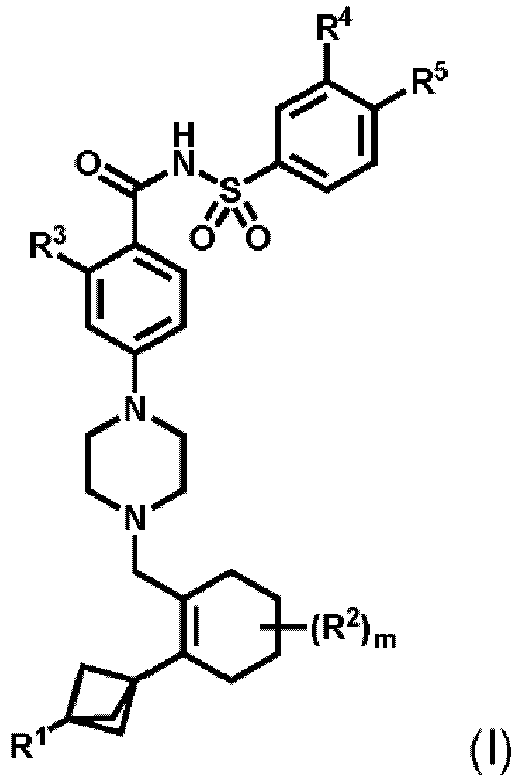 R1 aus der aus Wasserstoff, Halogen, substituiertem oder unsubstituiertem C1-C6-Alkyl, substituiertem oder unsubstituiertem C1-C6-Halogenalkyl, substituiertem oder unsubstituiertem C3-C6-Cycloalkyl, substituiertem oder unsubstituiertem C1-C6-Alkoxy, unsubstituiertem Mono-C1-C6-alkylamin und unsubstituiertem Di-C1-C6-alkylamin bestehenden Gruppe ausgewählt ist,R2 jeweils unabhängig aus der aus Halogen, substituiertem oder unsubstituiertem C1-C6-Alkyl, substituiertem oder unsubstituiertem C1-C6-Halogenalkyl und substituiertem oder unsubstituiertem C3-C6-Cycloalkyl bestehenden Gruppe ausgewählt ist, oderwenn m für 2 oder 3 steht, R2 jeweils unabhängig aus der aus Halogen, substituiertem oder unsubstituiertem C1-C6-Alkyl, substituiertem oder unsubstituiertem C1-C6-Halogenalkyl und substituiertem oder unsubstituiertem C3-C6-Cycloalkyl bestehenden Gruppe ausgewählt ist, oder zwei R2-Gruppen zusammen mit dem/den Atom(en), an das/die sie gebunden sind, substituiertes oder unsubstituiertes C3-C6-Cycloalkyl oder substituiertes oder unsubstituiertes 3- bis 6-gliedriges Heterocyclyl bilden,R3 aus der aus X-R3A,
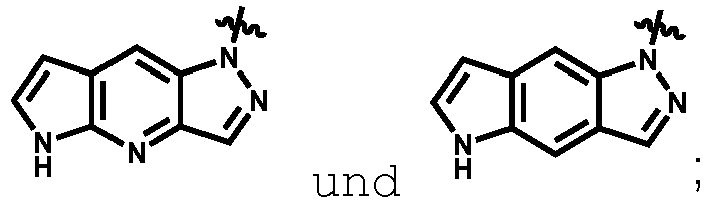 R3A für substituiertes oder unsubstituiertes 5- bis 10-gliedriges Heteroaryl steht,R4 aus der aus NO2, S(O)R6, SO2R6, Halogen, Cyano und unsubstituiertem C1-C6-Halogenalkyl bestehenden Gruppe ausgewählt ist,R5 für -X1-(Alk1)n-R7 steht,Alk1 aus unsubstituiertem C1-C4-Alkylen und durch 1, 2 oder 3 unabhängig voneinander aus Fluor, Chlor, unsubstituiertem C1-C3-Alkyl und unsubstituiertem C1-C3-Halogenalkyl ausgewählten Substituenten substituiertem C1-C4-Alkylen ausgewählt ist,R6 aus der aus substituiertem oder unsubstituiertem C1-C6-Alkyl, substituiertem oder unsubstituiertem C1-C6-Halogenalkyl und substituiertem oder unsubstituiertem C3-C6-Cycloalkyl bestehenden Gruppe ausgewählt ist,R7 aus substituiertem oder unsubstituiertem C3-C10-Cycloalkyl und substituiertem oder unsubstituiertem 3-bis 10-gliedrigen Heterocyclyl ausgewählt ist,m für 0, 1, 2 oder 3 steht,n aus 0 und 1 ausgewählt ist,X1 für -NH- steht undX aus der aus -O-, -S- und -NH- bestehenden Gruppe ausgewählt ist,wobei sich Cycloalkyl auf ein vollständig gesättigtes mono- oder polycyclisches Kohlenwasserstoffringsystem bezieht, bei dem, wenn es aus zwei oder mehr Ringen besteht, die Ringe kondensiert, verbrückt oder spiromäßig miteinander verbunden sein können, undwobei sich Heterocyclyl auf drei- bis 18-gliedrige monocyclische, bicyclische oder tricyclische Ringsysteme bezieht, bei denen das Ringsystem von Kohlenstoffatomen zusammen mit 1 bis 5 Heteroatomen gebildet wird, bei dem, wenn es aus zwei oder mehr Ringen besteht, die Ringe kondensiert, verbrückt oder spiromäßig miteinander verbunden sein können.
 - Verbindung nach Anspruch 1 oder pharmazeutisch unbedenkliches Salz davon, wobei R1 für -CH2F oder -CF3 steht.
- Verbindung nach Anspruch 1 oder pharmazeutisch unbedenkliches Salz davon, wobei R1 für -CHF2 steht.
- Verbindung nach Anspruch 1 oder pharmazeutisch unbedenkliches Salz davon, wobei R1 nicht für -CH2F, - CHF2 oder -CF3 steht.
- Verbindung nach einem der Ansprüche 1-4 oder pharmazeutisch unbedenkliches Salz davon, wobei m für 1, 2 oder 3 steht.
- Verbindung nach einem der Ansprüche 1-5 oder pharmazeutisch unbedenkliches Salz davon, wobei R2 jeweils unabhängig für unsubstituiertes C1-C6-Alkyl steht oder ein R2 für unsubstituiertes C1-C6-Alkyl steht und alle anderen R2, falls vorhanden, unabhängig voneinander aus der aus Halogen, substituiertem oder unsubstituiertem C1-C6-Alkyl, substituiertem oder unsubstituiertem C1-C6-Halogenalkyl und substituiertem oder unsubstituiertem C3-C6-Cycloalkyl bestehenden Gruppe ausgewählt sind.
- Verbindung nach einem der Ansprüche 1-6 oder pharmazeutisch unbedenkliches Salz davon, wobei m für 2 steht und R2 jeweils für unsubstituiertes Methyl steht.
- Verbindung nach einem der Ansprüche 1-4 oder pharmazeutisch unbedenkliches Salz davon, wobei m für 0 steht.
- Verbindung nach einem der Ansprüche 1-5 oder pharmazeutisch unbedenkliches Salz davon, wobei zwei R2-Gruppen zusammen mit dem/den Atom(en), an das/die sie gebunden sind, substituiertes oder unsubstituiertes C3-C6-Cycloalkyl, vorzugsweise unsubstituiertes Cyclopropyl, oder substituiertes oder unsubstituiertes 3- bis 6-gliedriges Heterocyclyl bilden.
- Verbindung nach einem der Ansprüche 1-9, bei der es sich auch um eine Verbindung der Formel (Ia), Formel (Ib), Formel (Ic) oder Formel (Id) handelt:

- Verbindung nach einem der Ansprüche 1-10, wobei R3 für
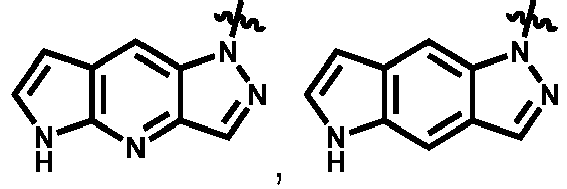

- Verbindung nach einem der Ansprüche 1-11 oder pharmazeutisch unbedenkliches Salz davon, wobei R4 für NO2, Cyano, Halogen, S(O)R6, SO2R6 oder unsubstituiertes C1-C6-Halogenalkyl, vorzugsweise -CF3 steht.
- Verbindung nach einem der Ansprüche 1-12 oder pharmazeutisch unbedenkliches Salz davon, wobei R6 für substituiertes oder unsubstituiertes C1-C6-Alkyl, substituiertes oder unsubstituiertes C3-C6-Cycloalkyl oder substituiertes oder unsubstituiertes C1-C6-Halogenalkyl, vorzugsweise -CF3, steht.
- Verbindung nach einem der Ansprüche 1-13 oder pharmazeutisch unbedenkliches Salz davon, wobei Alk1 für unsubstituiertes - (CH2)1-4-* steht, bei dem "*" den Anbindungspunkt an R7 kennzeichnet, aus


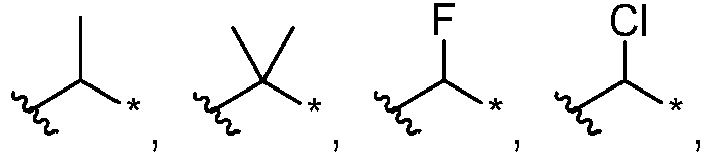


- Verbindung nach einem der Ansprüche 1-14 oder pharmazeutisch unbedenkliches Salz davon, wobei R7 durch 1 oder 2 unabhängig voneinander aus unsubstituiertem C1-C6-Alkyl, unsubstituiertem C1-C6-Alkoxy, Fluor, Chlor, Hydroxy und -SO2- (unsubstituiertes C1-C6-Alkyl) ausgewählte Substituenten substituiert ist.
- Verbindung nach einem der Ansprüche 1-14 oder pharmazeutisch unbedenkliches Salz davon, wobei R7 ausgewählt ist aus:


- Verbindung nach Anspruch 1 oder pharmazeutisch unbedenkliches Salz davon, wobei die Verbindung ausgewählt ist aus der Gruppe bestehend aus:
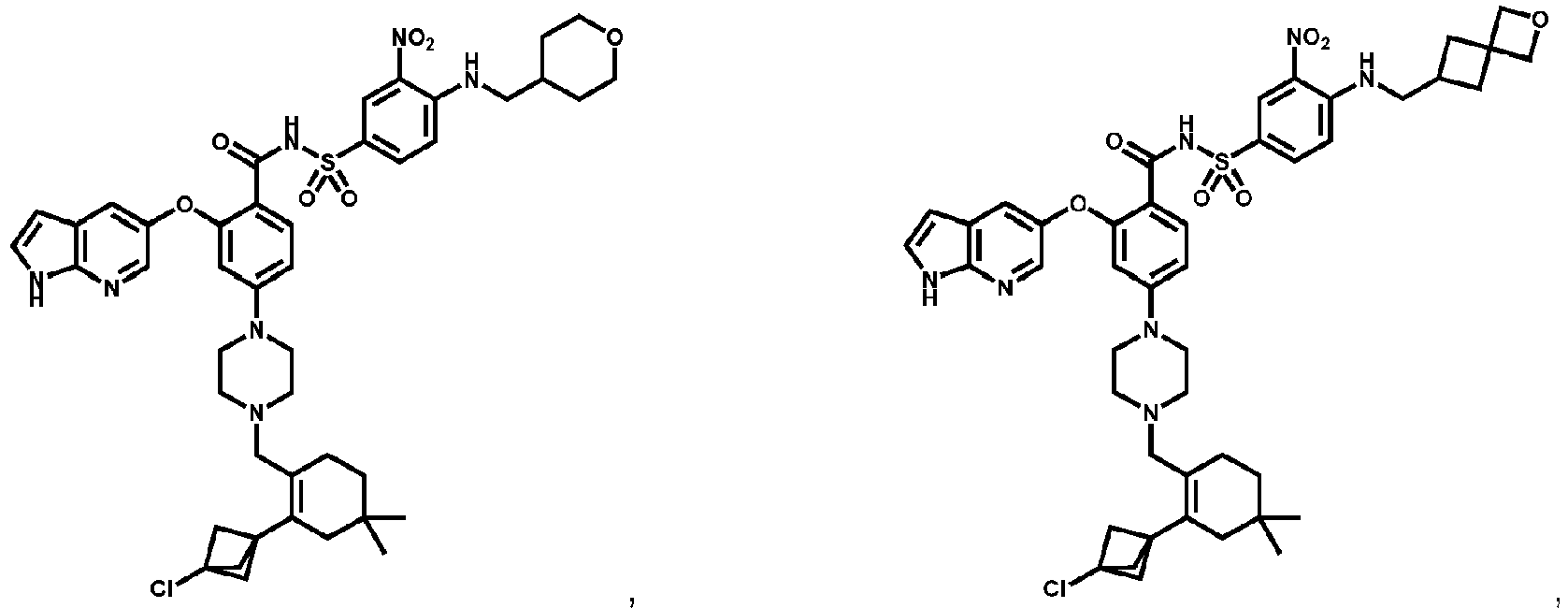

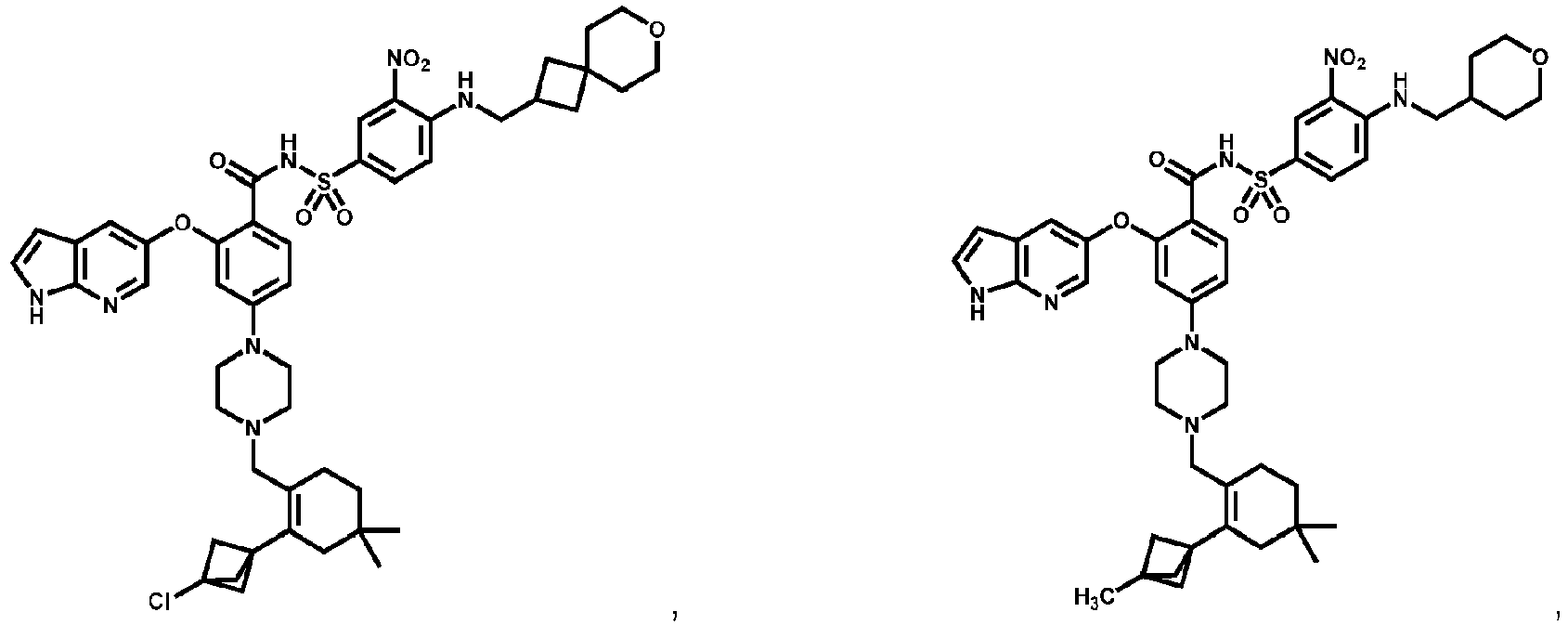


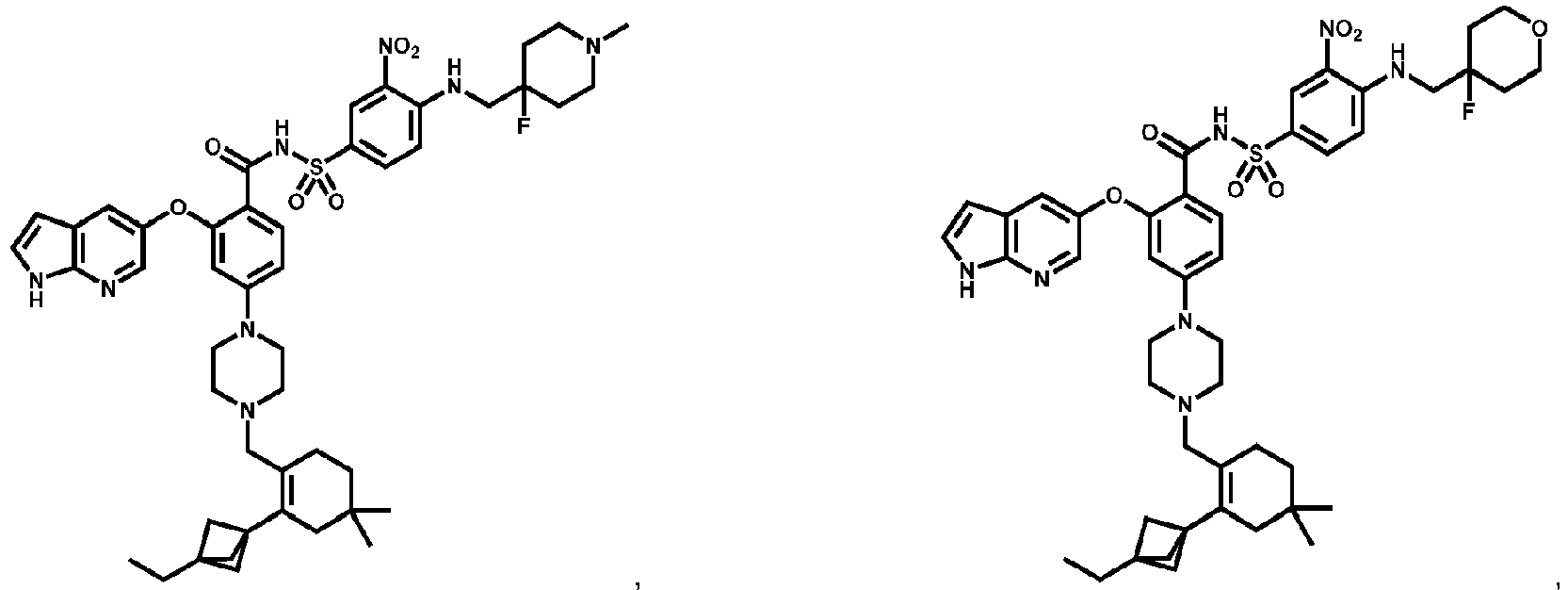


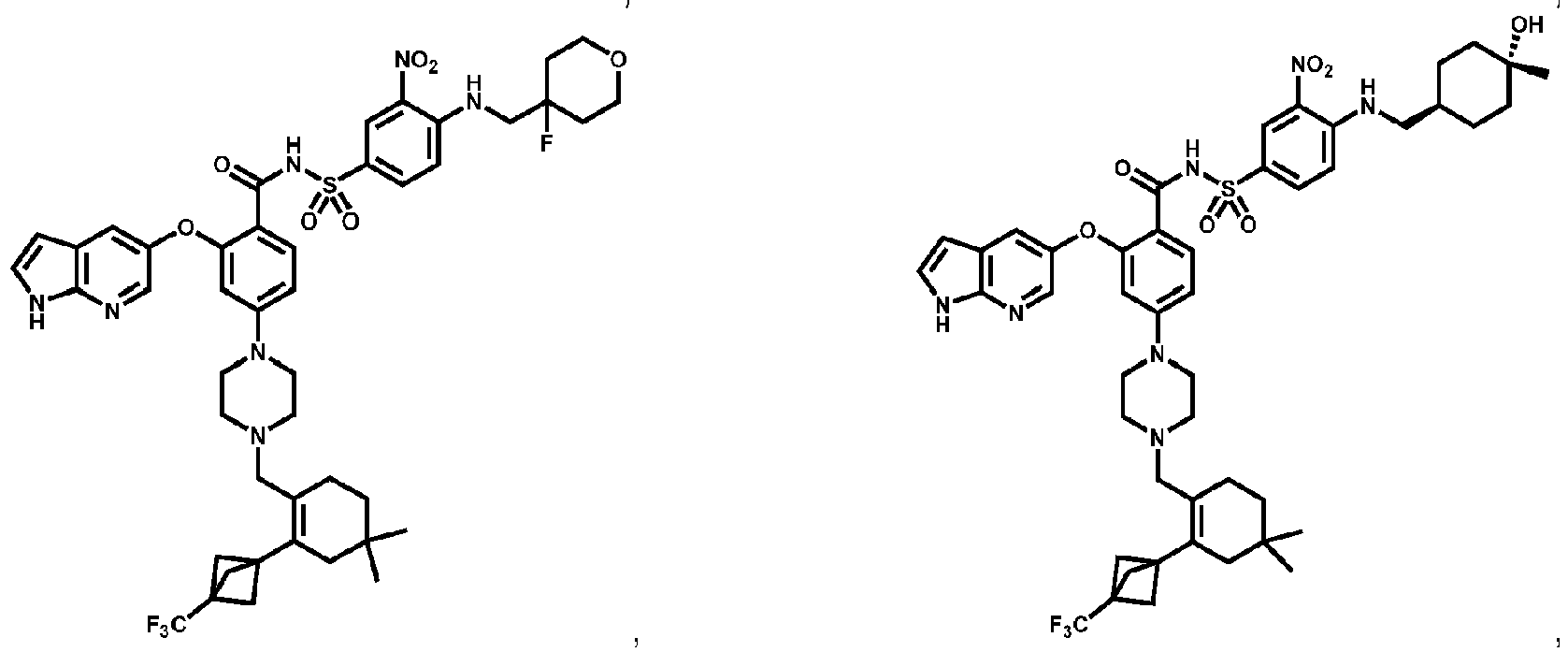

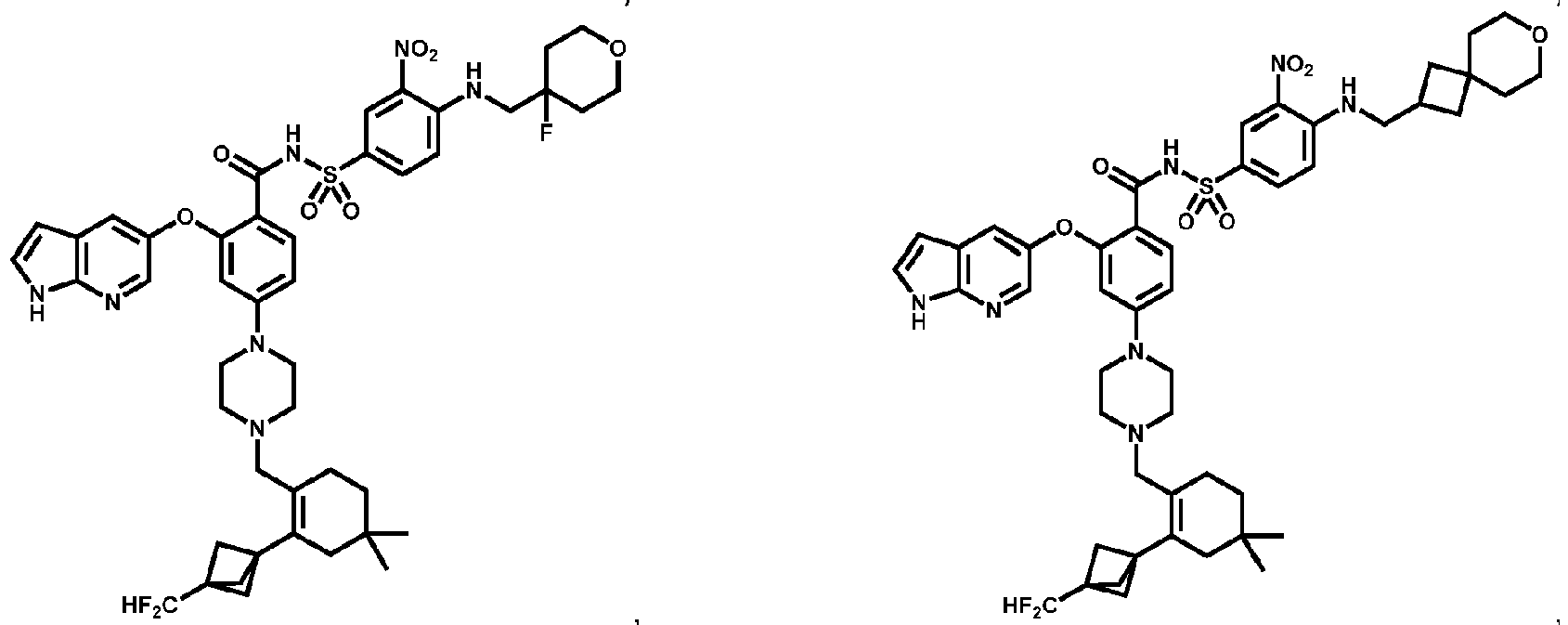

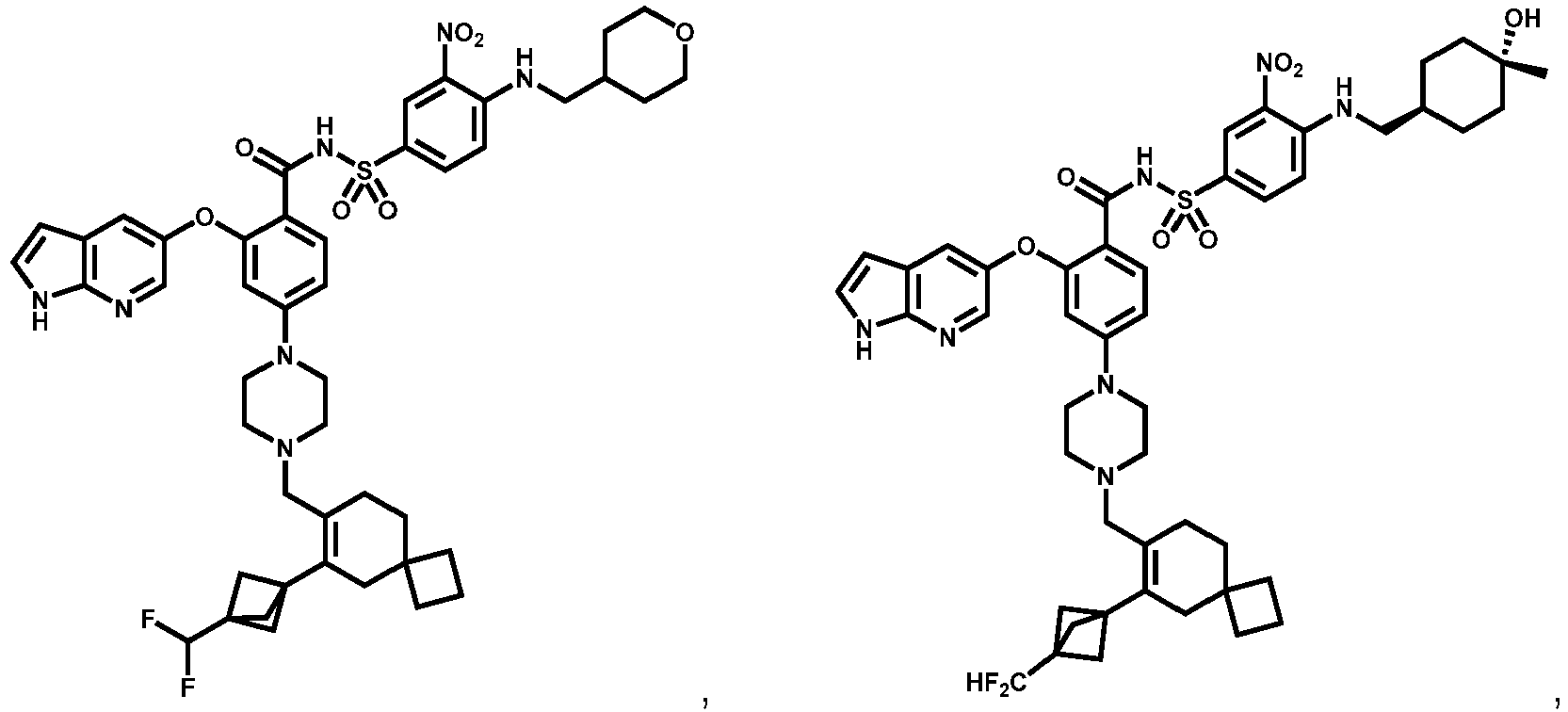

- Verbindung nach Anspruch 17, wobei die Verbindung ausgewählt ist aus der Gruppe bestehend aus:

- Verbindung nach Anspruch 17, wobei es sich bei der Verbindung um

- Verbindung nach Anspruch 17, wobei es sich bei der Verbindung um

- Verbindung nach Anspruch 17, wobei es sich bei der Verbindung um
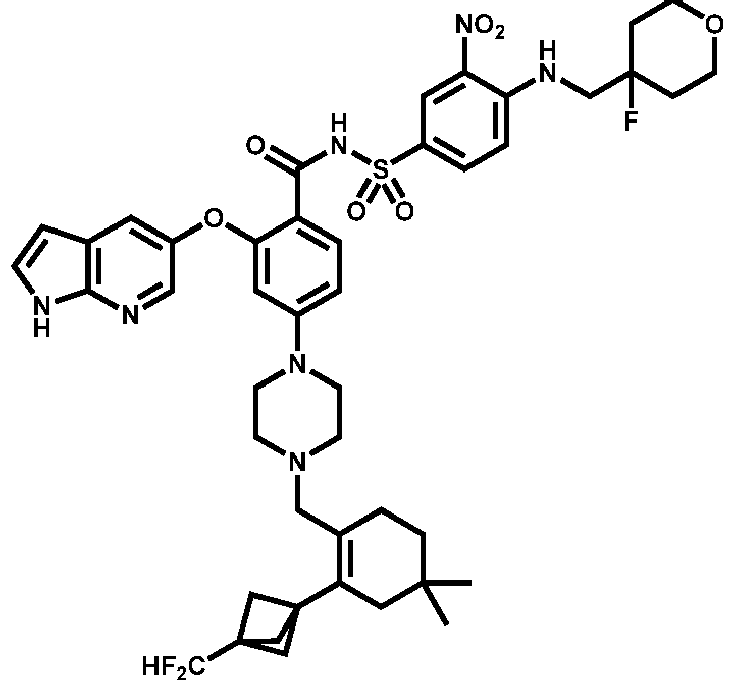
- Verbindung nach Anspruch 17, wobei es sich bei der Verbindung um

- Verbindung nach Anspruch 17, wobei es sich bei der Verbindung um

- Verbindung nach Anspruch 17, wobei es sich bei der Verbindung um

- Verbindung nach Anspruch 17, wobei es sich bei der Verbindung um

- Verbindung nach Anspruch 17, wobei es sich bei der Verbindung um
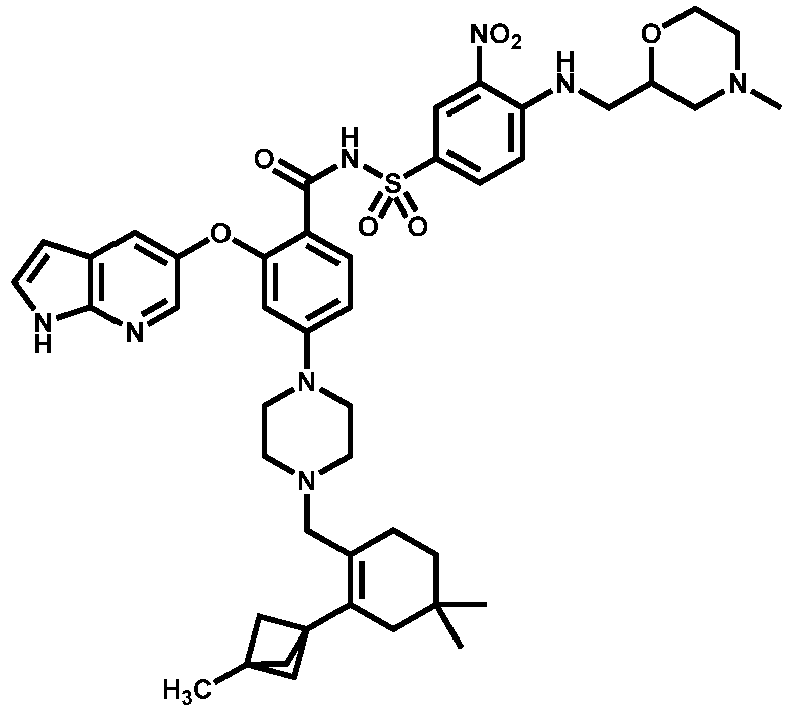
- Verbindung nach Anspruch 17, wobei es sich bei der Verbindung um

- Pharmazeutische Zusammensetzung, umfassend eine wirksame Menge der Verbindung nach einem der Ansprüche 1-27 oder eines pharmazeutisch unbedenkliches Salzes davon und einen pharmazeutisch unbedenklichen Träger, ein pharmazeutisch unbedenkliches Verdünnungsmittel, einen pharmazeutisch unbedenklichen Exzipienten oder eine Kombination davon.
- Verbindung nach einem der Ansprüche 1-27 oder pharmazeutisch unbedenkliches Salz davon oder pharmazeutische Zusammensetzung nach Anspruch 28 zur Verwendung als Medikament zur Behandlung eines Krebserkrankung oder eines Tumors, wobei der Krebs bzw. der Tumor aus Blasenkrebs, Hirnkrebs, Brustkrebs, Knochenmarkskrebs, Gebärmutterhalskrebs, Kolorektalkrebs, Speiseröhrenkrebs, hepatozellulärem Krebs, lymphoblastischer Leukämie, follikulärem Lymphom, lymphatischem T- oder B-Zell-Malignom, Melanom, myeloischer Leukämie, Hodgkin-Lymphom, Non-Hodgkin-Lymphom, Kopf- und Halskrebs (einschließlich Mundhöhlenkrebs), Eierstockkrebs, nichtkleinzelligem Lungenkrebs, chronischer lymphatischer Leukämie, Myelom, Prostatakrebs, kleinzelligem Lungenkrebs, Milzkrebs, Polycythaemia vera, Schilddrüsenkrebs, Endometriumkrebs, Magenkrebs, Gallenblasenkrebs, Gallengangskrebs, Hodenkrebs, Neuroblastom, Osteosarkom, Ewing-Tumor und Wilms-Tumor ausgewählt ist.
- Verbindung nach einem der Ansprüche 1-27 oder pharmazeutisch unbedenkliches Salz davon oder pharmazeutische Zusammensetzung nach Anspruch 28 zur Verwendung als Medikament zum Inhibieren der Replikation eines malignen Wachstums oder eines Tumors, wobei das maligne Wachstum bzw. der Tumor auf eine Krebserkrankung ausgewählt aus Blasenkrebs, Hirnkrebs, Brustkrebs, Knochenmarkskrebs, Gebärmutterhalskrebs, Kolorektalkrebs, Speiseröhrenkrebs, hepatozellulärem Krebs, lymphoblastischer Leukämie, follikulärem Lymphom, lymphatischem T- oder B-Zell-Malignom, Melanom, myeloischer Leukämie, Hodgkin-Lymphom, Non-Hodgkin-Lymphom, Kopf- und Halskrebs (einschließlich Mundhöhlenkrebs), Eierstockkrebs, nichtkleinzelligem Lungenkrebs, chronischer lymphatischer Leukämie, Myelom, Prostatakrebs, kleinzelligem Lungenkrebs, Milzkrebs, Polycythaemia vera, Schilddrüsenkrebs, Endometriumkrebs, Magenkrebs, Gallenblasenkrebs, Gallengangskrebs, Hodenkrebs, Neuroblastom, Osteosarkom, Ewing-Tumor und Wilms-Tumor zurückzuführen ist.
- Verbindung nach einem der Ansprüche 1-27 oder pharmazeutisch unbedenkliches Salz davon oder pharmazeutische Zusammensetzung nach Anspruch 28 zur Verwendung als Medikament zur Behandlung eines malignen Wachstums oder eines Tumors, wobei das maligne Wachstum bzw. der Tumor auf eine Krebserkrankung ausgewählt aus Blasenkrebs, Hirnkrebs, Brustkrebs, Knochenmarkskrebs, Gebärmutterhalskrebs, Kolorektalkrebs, Speiseröhrenkrebs, hepatozellulärem Krebs, lymphoblastischer Leukämie, follikulärem Lymphom, lymphatischem T- oder B-Zell-Malignom, Melanom, myeloischer Leukämie, Hodgkin-Lymphom, Non-Hodgkin-Lymphom, Kopf- und Halskrebs (einschließlich Mundhöhlenkrebs), Eierstockkrebs, nichtkleinzelligem Lungenkrebs, chronischer lymphatischer Leukämie, Myelom, Prostatakrebs, kleinzelligem Lungenkrebs, Milzkrebs, Polycythaemia vera, Schilddrüsenkrebs, Endometriumkrebs, Magenkrebs, Gallenblasenkrebs, Gallengangskrebs, Hodenkrebs, Neuroblastom, Osteosarkom, Ewing-Tumor und Wilms-Tumor zurückzuführen ist.
- Verbindung nach einem der Ansprüche 1-27 oder pharmazeutisch unbedenkliches Salz davon oder pharmazeutische Zusammensetzung nach Anspruch 28 und wirksame Menge eines Mittels zum Aufheben der HIV-Latenz (HIV Latency Reversing Agent) oder eines pharmazeutisch unbedenklichen Salzes davon zur Verwendung als Medikament zur Behandlung einer HIV-Infektion.
- Verbindung nach einem der Ansprüche 1-27 oder pharmazeutisch unbedenkliches Salz davon oder pharmazeutische Zusammensetzung nach Anspruch 28 und wirksame Menge eines Mittels zum Aufheben der HIV-Latenz (HIV Latency Reversing Agent) oder eines pharmazeutisch unbedenklichen Salzes davon zur Verwendung als Medikament zum Reduzieren des Wiederauftretens einer HIV-Infektion.
- Verbindung nach einem der Ansprüche 1-27 oder pharmazeutisch unbedenkliches Salz davon oder pharmazeutische Zusammensetzung nach Anspruch 28 und wirksame Menge eines Mittels zum Aufheben der HIV-Latenz (HIV Latency Reversing Agent) oder eines pharmazeutisch unbedenklichen Salzes davon zur Verwendung als Medikament zum Reduzieren der Population HIV-infizierter Zellen.
- Menge eines Bcl-Protein-Inhibitors nach Anspruch 1 oder eines pharmazeutisch unbedenklichen Salzes davon und Menge eines Mittels zum Aufheben der HIV-Latenz (HIV Latency Reversing Agent) oder eines pharmazeutisch unbedenklichen Salzes davon zur Verwendung als Medikament zur Behandlung einer HIV-Infektion.
- Menge eines Bcl-Protein-Inhibitors nach Anspruch 1 oder eines pharmazeutisch unbedenklichen Salzes davon und Menge eines Mittels zum Aufheben der HIV-Latenz (HIV Latency Reversing Agent) oder eines pharmazeutisch unbedenklichen Salzes davon zur Verwendung als Medikament zum Reduzieren des Wiederauftretens einer HIV-Infektion.
- Menge eines Bcl-Protein-Inhibitors nach Anspruch 1 oder eines pharmazeutisch unbedenklichen Salzes davon und Menge eines Mittels zum Aufheben der HIV-Latenz (HIV Latency Reversing Agent) oder eines pharmazeutisch unbedenklichen Salzes davon zur Verwendung als Medikament zum Reduzieren der Population HIV-infizierter Zellen.
- Verbindung zur Verwendung nach Anspruch 34 oder Bcl-Protein-Inhibitor zur Verwendung nach Anspruch 37, wobei es sich bei den Zellen um CD4+T-Zellen handelt.
- Verbindung zur Verwendung nach einem der Ansprüche 32-34 und 38 oder Bcl-Protein-Inhibitor zur Verwendung nach einem der Ansprüche 35-38, wobei es sich bei dem Mittel zum Aufheben der HIV-Latenz (HIV Latency Reversing Agent) um einen Proteinkinase-C-Agonisten handelt.
- Verbindung zur Verwendung oder Bcl-Protein-Inhibitor zur Verwendung nach Anspruch 39, wobei das Mittel zum Aufheben der HIV-Latenz (HIV Latency Reversing Agent) ausgewählt ist aus: Ingenol, Rostatin, Nivolumab, Pembrolizumab, Pidilizumab, AMP-224, AMP-514, PDR001, REGN2810, MEDI0680, Durvalumab, Atezolizumab, Avelumab, BMS-936559, BGB-A317, Vorinostat, Panobinostat, Valproinsäure, Romidepsin, Prostratin, Phorbol-12-myristat-13-acetat, Bryostatin-1, (S)-2-(4-(4-Chlorphenyl)-2,3,9-trimethyl-6H-thieno[3,2-f][1,2,4]triazolo[4,3-a][1,4]diazepin-6-yl)essigsäure-tert.-butylester, JQ1, I-BET762, OTX015, I-BET151, CPI203, PFI-1, MS436, CPI-0610, RVX2135, FT-1101, BAY1238097, INCB054329, TEN-010, GSK2820151, ZEN003694, BAY-299, BMS-986158, ABBV-075 und GS-5829.
- Verbindung zur Verwendung nach einem der Ansprüche 32-34 und 38-40 oder Bcl-Protein-Inhibitor zur Verwendung nach einem der Ansprüche 35-40, weiterhin umfassend die Verwendung eines oder mehrerer Mittel ausgewählt aus der aus einem nichtnukleosidischen Reverse-Transkriptase-Inhibitor (NNRTI), einem nukleosidischen Reverse-Transkriptase-Inhibitor (NRTI), einem Protease-Inhibitor (PI), einem Fusions-/Eintrittsinhibitor, einem Integrase-Strang-Transfer-Inhibitor (INSTI), einem HIV-Impfstoff, einer Verbindung für eine andere antiretrovirale HIV-Therapie und Kombinationen davon oder einem pharmazeutisch unbedenklichen Salz einer der obigen bestehenden Gruppe.
Priority Applications (1)
| Application Number | Priority Date | Filing Date | Title |
|---|---|---|---|
| EP25150549.1A EP4556469A1 (de) | 2018-01-10 | 2019-01-08 | Benzamidverbindungen |
Applications Claiming Priority (2)
| Application Number | Priority Date | Filing Date | Title |
|---|---|---|---|
| US201862615857P | 2018-01-10 | 2018-01-10 | |
| PCT/US2019/012695 WO2019139899A1 (en) | 2018-01-10 | 2019-01-08 | Benzamide compounds |
Related Child Applications (1)
| Application Number | Title | Priority Date | Filing Date |
|---|---|---|---|
| EP25150549.1A Division EP4556469A1 (de) | 2018-01-10 | 2019-01-08 | Benzamidverbindungen |
Publications (4)
| Publication Number | Publication Date |
|---|---|
| EP3740487A1 EP3740487A1 (de) | 2020-11-25 |
| EP3740487A4 EP3740487A4 (de) | 2021-11-10 |
| EP3740487C0 EP3740487C0 (de) | 2025-01-08 |
| EP3740487B1 true EP3740487B1 (de) | 2025-01-08 |
Family
ID=67218673
Family Applications (4)
| Application Number | Title | Priority Date | Filing Date |
|---|---|---|---|
| EP19738858.0A Withdrawn EP3737681A4 (de) | 2018-01-10 | 2019-01-08 | Benzamidverbindungen |
| EP19738996.8A Active EP3740487B1 (de) | 2018-01-10 | 2019-01-08 | Benzamidverbindungen als bci hemmstoffe zur behandlung von hiv |
| EP19738922.4A Withdrawn EP3737672A4 (de) | 2018-01-10 | 2019-01-08 | Benzamidverbindungen |
| EP25150549.1A Pending EP4556469A1 (de) | 2018-01-10 | 2019-01-08 | Benzamidverbindungen |
Family Applications Before (1)
| Application Number | Title | Priority Date | Filing Date |
|---|---|---|---|
| EP19738858.0A Withdrawn EP3737681A4 (de) | 2018-01-10 | 2019-01-08 | Benzamidverbindungen |
Family Applications After (2)
| Application Number | Title | Priority Date | Filing Date |
|---|---|---|---|
| EP19738922.4A Withdrawn EP3737672A4 (de) | 2018-01-10 | 2019-01-08 | Benzamidverbindungen |
| EP25150549.1A Pending EP4556469A1 (de) | 2018-01-10 | 2019-01-08 | Benzamidverbindungen |
Country Status (16)
| Country | Link |
|---|---|
| US (7) | US11318134B2 (de) |
| EP (4) | EP3737681A4 (de) |
| JP (4) | JP2021510163A (de) |
| KR (4) | KR20200108301A (de) |
| CN (5) | CN111801320A (de) |
| AR (4) | AR114949A1 (de) |
| AU (4) | AU2019207616A1 (de) |
| BR (3) | BR112020014160A2 (de) |
| CA (3) | CA3087261A1 (de) |
| ES (1) | ES3013457T3 (de) |
| IL (4) | IL316472A (de) |
| MX (4) | MX2020007388A (de) |
| RU (2) | RU2020120928A (de) |
| SG (3) | SG11202005785XA (de) |
| TW (5) | TW201934550A (de) |
| WO (4) | WO2019139902A1 (de) |
Families Citing this family (19)
| Publication number | Priority date | Publication date | Assignee | Title |
|---|---|---|---|---|
| EP3565815B1 (de) | 2017-01-07 | 2024-03-13 | Fochon Pharmaceuticals, Ltd. | Verbindungen als bcl-2-selektive apoptose-induzierende mittel |
| SI3612531T1 (sl) | 2017-04-18 | 2022-11-30 | Shanghai Fochon Pharmaceutical Co., Ltd. | Sredstva, ki sprožajo apoptozo |
| SG11202005785XA (en) | 2018-01-10 | 2020-07-29 | Recurium Ip Holdings Llc | Benzamide compounds |
| WO2021007307A1 (en) * | 2019-07-10 | 2021-01-14 | Recurium Ip Holdings, Llc | Bcl-2 protein inhibitors |
| AR119378A1 (es) * | 2019-07-10 | 2021-12-15 | Recurium Ip Holdings Llc | Formulación de nanopartículas del inhibidor de bcl-2 |
| JP7142173B2 (ja) | 2019-12-06 | 2022-09-26 | ロクソ オンコロジー, インコーポレイテッド | ブルトン型チロシンキナーゼ阻害剤の投薬 |
| KR20220119418A (ko) * | 2019-12-20 | 2022-08-29 | 리커리엄 아이피 홀딩스, 엘엘씨 | 조합물 |
| MX2022007626A (es) * | 2019-12-20 | 2022-09-23 | Recurium Ip Holdings Llc | Combinaciones. |
| IL294081A (en) * | 2019-12-20 | 2022-08-01 | Recurium Ip Holdings Llc | Combinations |
| CN115135325A (zh) * | 2019-12-20 | 2022-09-30 | 里科瑞尔姆Ip控股有限责任公司 | 组合 |
| EP4097071A4 (de) * | 2020-02-21 | 2024-02-21 | Recurium IP Holdings, LLC | Difluormethyliod-verbindungen und verfahren |
| JP2023524439A (ja) * | 2020-04-28 | 2023-06-12 | リキュリウム アイピー ホールディングス リミテッド ライアビリティー カンパニー | Bcl-2タンパク質阻害剤 |
| CN115666574A (zh) * | 2020-05-07 | 2023-01-31 | 里科瑞尔姆Ip控股有限责任公司 | 组合 |
| EP4138837A4 (de) * | 2020-05-19 | 2024-05-22 | Recurium IP Holdings, LLC | Behandlung von amyloidose |
| WO2022007940A1 (zh) * | 2020-07-10 | 2022-01-13 | 江苏恒瑞医药股份有限公司 | 磺酰苯甲酰胺类衍生物及其偶联物、其制备方法及其应用 |
| JP2023545498A (ja) * | 2020-10-16 | 2023-10-30 | リキュリウム アイピー ホールディングス リミテッド ライアビリティー カンパニー | Bcl-2阻害剤と化学療法剤との組み合わせ |
| WO2022133446A1 (en) * | 2020-12-16 | 2022-06-23 | Recurium Ip Holdings, Llc | Combinations |
| CN113143930B (zh) * | 2021-04-08 | 2023-05-30 | 深圳湾实验室 | 化合物在制备SARS-Cov-2 E蛋白抑制剂中的用途 |
| CN113816889B (zh) * | 2021-10-11 | 2023-08-22 | 中国药科大学 | 一类4-磺酰亚胺-1H-吡咯类Mcl-1抑制剂及其抗肿瘤医药用途 |
Family Cites Families (78)
| Publication number | Priority date | Publication date | Assignee | Title |
|---|---|---|---|---|
| AR031130A1 (es) | 2000-09-20 | 2003-09-10 | Abbott Lab | N-acilsulfonamidas promotoras de la apoptosis |
| JP2003096461A (ja) | 2001-09-25 | 2003-04-03 | Fuji Photo Film Co Ltd | 液晶組成物およびそれを用いた液晶素子 |
| DE10217814A1 (de) | 2002-04-22 | 2003-11-13 | Ibfb Pharma Gmbh | Neue tricyclische Mercaptane, Verfahren zu ihrer Herstellung und ihre Verwendung als Arzneimittel |
| WO2005049593A2 (en) | 2003-11-13 | 2005-06-02 | Abbott Laboratories | N-acylsulfonamide apoptosis promoters |
| US7767684B2 (en) | 2003-11-13 | 2010-08-03 | Abbott Laboratories | Apoptosis promoters |
| US8614318B2 (en) | 2003-11-13 | 2013-12-24 | Abbvie Inc. | Apoptosis promoters |
| US7642260B2 (en) | 2003-11-13 | 2010-01-05 | Abbott Laboratories, Inc. | Apoptosis promoters |
| WO2005079803A1 (en) | 2004-02-13 | 2005-09-01 | Pfizer Products, Inc. | Compounds for treatment of cardiovascular diseases |
| JP4628140B2 (ja) | 2005-03-03 | 2011-02-09 | 富士フイルム株式会社 | セルロースアシレートフィルム、偏光板および液晶表示装置 |
| TWI337608B (en) | 2005-05-12 | 2011-02-21 | Abbott Lab | Apoptosis promoters |
| US8624027B2 (en) | 2005-05-12 | 2014-01-07 | Abbvie Inc. | Combination therapy for treating cancer and diagnostic assays for use therein |
| WO2008008374A2 (en) | 2006-07-14 | 2008-01-17 | Chemocentryx, Inc. | Ccr2 inhibitors and methods of use thereof |
| MX2009002422A (es) | 2006-09-05 | 2009-03-20 | Abbott Lab | Inhibidores bcl para tratar exceso de plaquetas. |
| EP2061772A4 (de) | 2006-09-11 | 2011-06-29 | Curis Inc | Multifunktionale kleine moleküle als proliferationshemmende wirkstoffe |
| CN101535280B (zh) | 2006-11-15 | 2012-06-27 | 健泰科生物技术公司 | 芳基磺酰胺化合物 |
| US20080182845A1 (en) | 2006-11-16 | 2008-07-31 | Abbott Laboratories | Method of preventing or treating organ, hematopoietic stem cell or bone marrow transplant rejection |
| WO2008070663A2 (en) | 2006-12-04 | 2008-06-12 | Abbott Laboratories | Companion diagnostic assays for cancer therapy |
| WO2009036051A1 (en) | 2007-09-10 | 2009-03-19 | Curis, Inc. | Bcl-2 inhibitors containing a zinc binding moiety |
| US8557983B2 (en) | 2008-12-04 | 2013-10-15 | Abbvie Inc. | Apoptosis-inducing agents for the treatment of cancer and immune and autoimmune diseases |
| US20100160322A1 (en) | 2008-12-04 | 2010-06-24 | Abbott Laboratories | Apoptosis-inducing agents for the treatment of cancer and immune and autoimmune diseases |
| UA108193C2 (uk) | 2008-12-04 | 2015-04-10 | Апоптозіндукуючий засіб для лікування раку і імунних і аутоімунних захворювань | |
| US8563735B2 (en) | 2008-12-05 | 2013-10-22 | Abbvie Inc. | Bcl-2-selective apoptosis-inducing agents for the treatment of cancer and immune diseases |
| CN106008322B (zh) * | 2008-12-05 | 2018-09-04 | Abbvie 公司 | 作为用于治疗癌症和免疫疾病的bcl-2-选择性诱发细胞凋亡药剂的磺酰胺衍生物 |
| NZ593594A (en) | 2009-01-19 | 2013-08-30 | Abbvie Inc | Apoptosis-inducing agents for the treatment of cancer and immune and autoimmune diseases |
| US8546399B2 (en) | 2009-05-26 | 2013-10-01 | Abbvie Inc. | Apoptosis inducing agents for the treatment of cancer and immune and autoimmune diseases |
| PH12015500297B1 (en) | 2009-05-26 | 2023-10-20 | Abbvie Ireland Unlimited Co | Adoptosis-inducing agents for the treatment of cancer and immune and automoimmune disease |
| US9034875B2 (en) | 2009-05-26 | 2015-05-19 | Abbvie Inc. | Apoptosis-inducing agents for the treatment of cancer and immune and autoimmune diseases |
| TWI532484B (zh) | 2009-06-08 | 2016-05-11 | 艾伯維有限公司 | 包含凋亡促進劑之固態分散劑 |
| KR20120052937A (ko) | 2009-06-18 | 2012-05-24 | 아보트 러보러터리즈 | 안정한 나노입자형 약물 현탁액 |
| WO2010148422A1 (en) | 2009-06-25 | 2010-12-29 | Walter And Eliza Hall Institute Of Medical Research | Compounds and methods for treating parasitic infestations |
| NZ597983A (en) | 2009-08-20 | 2014-05-30 | Karus Therapeutics Ltd | Tricyclic heterocyclic compounds as phosphoinositide 3-kinase inhibitors |
| CN101798292A (zh) | 2010-03-29 | 2010-08-11 | 无锡好芳德药业有限公司 | ABT-263衍生的新型Bcl-2蛋白抑制剂的制备 |
| TWI520960B (zh) | 2010-05-26 | 2016-02-11 | 艾伯維有限公司 | 用於治療癌症及免疫及自體免疫疾病之細胞凋亡誘導劑 |
| TWI535712B (zh) | 2010-08-06 | 2016-06-01 | 阿斯特捷利康公司 | 化合物 |
| UA113500C2 (xx) | 2010-10-29 | 2017-02-10 | Одержані екструзією розплаву тверді дисперсії, що містять індукуючий апоптоз засіб | |
| KR20180059560A (ko) | 2010-10-29 | 2018-06-04 | 애브비 인코포레이티드 | 아폽토시스―유도제를 포함하는 고체 분산체 |
| JP2013542245A (ja) | 2010-11-11 | 2013-11-21 | レッドエックス ファーマ リミテッド | 薬物誘導体 |
| PH12013501006A1 (en) | 2010-11-23 | 2022-03-30 | Abbvie Ireland Unlimited Co | Methods of treatment using selective bcl-2 inhibitors |
| SG192126A1 (en) | 2011-01-25 | 2013-09-30 | Univ Michigan | Bcl-2/bcl-xl inhibitors and therapeutic methods using the same |
| FR2986002B1 (fr) | 2012-01-24 | 2014-02-21 | Servier Lab | Nouveaux derives d'indolizine, leur procede de preparation et les compositions pharmaceutiques qui les contiennent |
| WO2013185202A1 (en) | 2012-06-14 | 2013-12-19 | Beta Pharma Canada Inc | Apoptosis inducers |
| JP6347793B2 (ja) | 2013-01-16 | 2018-06-27 | ザ リージェンツ オブ ザ ユニバーシティー オブ ミシガン | Bcl−2/Bcl−xL阻害薬およびそれを使用した治療方法 |
| CN105164128B (zh) | 2013-03-13 | 2017-12-12 | 艾伯维公司 | 制备细胞凋亡诱导剂的方法 |
| US20140275082A1 (en) | 2013-03-14 | 2014-09-18 | Abbvie Inc. | Apoptosis-inducing agents for the treatment of cancer and immune and autoimmune diseases |
| US9168257B2 (en) | 2013-05-22 | 2015-10-27 | Children's Hospital Medical Center | Combination therapy for MDS |
| AU2014269144B2 (en) | 2013-05-24 | 2019-10-31 | Mark Barry HAMPTON | Bioactive compounds |
| CN105793424B (zh) | 2013-07-12 | 2021-02-19 | 亥姆霍兹感染研究中心有限公司 | 孢囊菌酰胺 |
| WO2015085238A1 (en) | 2013-12-05 | 2015-06-11 | The Regents Of The University Of California, A California Corporation | Inhibitors of lpxc |
| CN105012318B (zh) | 2014-04-17 | 2020-02-11 | 沈华浩 | 磺酰胺类化合物在气道慢性炎症性疾病中的应用 |
| CN104131034B (zh) | 2014-06-19 | 2017-04-05 | 中山大学 | 一种嵌合载体及其制备方法和应用 |
| WO2016025652A1 (en) | 2014-08-13 | 2016-02-18 | Celgene Avilomics Research, Inc. | Combinations of an erk inhibitor and a bcl-2 pathway modulator and related methods |
| EP3193855B1 (de) * | 2014-09-17 | 2021-05-19 | Recurium IP Holdings, LLC | Bicyclische verbindungen |
| UY36391A (es) * | 2014-11-05 | 2016-06-01 | Flexus Biosciences Inc | Compuestos moduladores de la enzima indolamina 2,3-dioxigenasa (ido1), sus métodos de síntesis y composiciones farmacèuticas que las contienen |
| US9694084B2 (en) | 2014-12-23 | 2017-07-04 | Dana-Farber Cancer Institute, Inc. | Methods to induce targeted protein degradation through bifunctional molecules |
| TW201639573A (zh) | 2015-02-03 | 2016-11-16 | 吉李德科學股份有限公司 | 有關治療癌症之合併治療 |
| WO2016127135A1 (en) | 2015-02-06 | 2016-08-11 | Unity Biotechnology, Inc. | Compounds and uses in treatment of senescence-associated conditons |
| WO2016131100A1 (en) | 2015-02-18 | 2016-08-25 | The Walter And Eliza Hall Institute Of Medical Research | Methods of treating infectious diseases |
| CN108025015B (zh) * | 2015-04-20 | 2021-11-09 | 梅约医学教育与研究基金会 | 杀伤hiv感染的细胞的方法和材料 |
| CN107847600B (zh) | 2015-05-26 | 2021-09-03 | 豪夫迈·罗氏有限公司 | 抗CD20抗体与Bcl-2抑制剂和MDM2抑制剂的组合疗法 |
| GB201513481D0 (en) | 2015-07-30 | 2015-09-16 | Univ Manchester | Inhibitor compounds |
| WO2017044720A1 (en) | 2015-09-11 | 2017-03-16 | Navitor Pharmaceuticals, Inc. | Rapamycin analogs and uses thereof |
| CN106608895A (zh) | 2015-10-21 | 2017-05-03 | 苏州国匡医药科技有限公司 | 一类具有糖环结构的bcl-2选择性抑制剂及其用途 |
| US11111259B2 (en) | 2015-12-18 | 2021-09-07 | Unity Biotechnology, Inc. | Acylsulfonamide derivatives for treating senescence-associated diseases and disorders |
| CN106957315B (zh) | 2016-01-08 | 2019-08-13 | 中国人民解放军第二军医大学 | N-取代苯磺酰基-氮杂吲哚氧基苯甲酰胺类化合物及其制备药物的用途 |
| AU2017206731A1 (en) | 2016-01-11 | 2018-08-02 | Merrimack Pharmaceuticals, Inc. | Inhibiting B-cell lymphoma 2 (Bcl-2) and related proteins |
| WO2017132474A1 (en) | 2016-01-30 | 2017-08-03 | Newave Pharmaceutical Inc. | Bcl-2 inhibitors |
| US10807977B2 (en) | 2016-04-21 | 2020-10-20 | Bioventures, Llc | Compounds that induce degradation of anti-apoptotic Bcl-2 family proteins and the uses thereof |
| JP2019517564A (ja) | 2016-06-09 | 2019-06-24 | ブリンクバイオ インコーポレイテッド | シラノール系治療的ペイロード |
| EP3318276A1 (de) | 2016-11-04 | 2018-05-09 | Janssen Biotech, Inc. | Zusammensetzungen aus einem telomerase-hemmer und einem bcl-2-hemmer zur behandlung von blutkrebs |
| CN106565607B (zh) | 2016-10-11 | 2019-03-26 | 湖北泓肽生物科技有限公司 | 一种l-肌肽的合成方法 |
| CN106565706B (zh) | 2016-10-27 | 2018-05-01 | 广东东阳光药业有限公司 | 一种磺酰胺衍生物及其在药学中的应用 |
| CN106749233B (zh) | 2016-11-24 | 2020-04-21 | 中山大学 | 一类磺酰胺衍生物及其应用 |
| EP3565815B1 (de) | 2017-01-07 | 2024-03-13 | Fochon Pharmaceuticals, Ltd. | Verbindungen als bcl-2-selektive apoptose-induzierende mittel |
| WO2018146506A1 (en) | 2017-02-10 | 2018-08-16 | Universitat Politècnica De València | Therapeutic derivatives |
| CN107089981A (zh) | 2017-04-24 | 2017-08-25 | 杭州科耀医药科技有限公司 | 一种BCL‑2抑制剂Venetoclax的合成方法 |
| SG11202005785XA (en) | 2018-01-10 | 2020-07-29 | Recurium Ip Holdings Llc | Benzamide compounds |
| HUE071493T2 (hu) | 2018-04-29 | 2025-09-28 | Beigene Switzerland Gmbh | Bcl-2 inhibitorok |
| TWI824010B (zh) | 2018-09-18 | 2023-12-01 | 加拿大商聖諾康生命科學公司 | 治療血癌之組合療法 |
-
2019
- 2019-01-08 SG SG11202005785XA patent/SG11202005785XA/en unknown
- 2019-01-08 CN CN201980015896.1A patent/CN111801320A/zh active Pending
- 2019-01-08 CN CN202410225030.6A patent/CN118084904A/zh active Pending
- 2019-01-08 US US16/957,861 patent/US11318134B2/en not_active Ceased
- 2019-01-08 KR KR1020207022537A patent/KR20200108301A/ko not_active Withdrawn
- 2019-01-08 AU AU2019207616A patent/AU2019207616A1/en not_active Abandoned
- 2019-01-08 EP EP19738858.0A patent/EP3737681A4/de not_active Withdrawn
- 2019-01-08 WO PCT/US2019/012704 patent/WO2019139902A1/en not_active Ceased
- 2019-01-08 CA CA3087261A patent/CA3087261A1/en active Pending
- 2019-01-08 EP EP19738996.8A patent/EP3740487B1/de active Active
- 2019-01-08 KR KR1020207022443A patent/KR20200108298A/ko not_active Withdrawn
- 2019-01-08 CA CA3087263A patent/CA3087263A1/en active Pending
- 2019-01-08 US US16/957,865 patent/US11590126B2/en active Active
- 2019-01-08 RU RU2020120928A patent/RU2020120928A/ru unknown
- 2019-01-08 WO PCT/US2019/012719 patent/WO2019139907A1/en not_active Ceased
- 2019-01-08 ES ES19738996T patent/ES3013457T3/es active Active
- 2019-01-08 AU AU2019207608A patent/AU2019207608B2/en active Active
- 2019-01-08 MX MX2020007388A patent/MX2020007388A/es unknown
- 2019-01-08 IL IL316472A patent/IL316472A/en unknown
- 2019-01-08 JP JP2020538644A patent/JP2021510163A/ja active Pending
- 2019-01-08 CN CN202410225032.5A patent/CN118084905A/zh active Pending
- 2019-01-08 SG SG11202005784YA patent/SG11202005784YA/en unknown
- 2019-01-08 EP EP19738922.4A patent/EP3737672A4/de not_active Withdrawn
- 2019-01-08 WO PCT/US2019/012695 patent/WO2019139899A1/en not_active Ceased
- 2019-01-08 CA CA3087262A patent/CA3087262A1/en active Pending
- 2019-01-08 KR KR1020247043033A patent/KR20250008139A/ko active Pending
- 2019-01-08 BR BR112020014160-7A patent/BR112020014160A2/pt not_active Application Discontinuation
- 2019-01-08 US US18/212,692 patent/USRE50643E1/en active Active
- 2019-01-08 MX MX2020007014A patent/MX2020007014A/es unknown
- 2019-01-08 BR BR112020014169-0A patent/BR112020014169A2/pt active Search and Examination
- 2019-01-08 EP EP25150549.1A patent/EP4556469A1/de active Pending
- 2019-01-08 IL IL275762A patent/IL275762B2/en unknown
- 2019-01-08 JP JP2020538691A patent/JP7355741B2/ja active Active
- 2019-01-08 CN CN201980015923.5A patent/CN111788203A/zh active Pending
- 2019-01-08 SG SG11202005985PA patent/SG11202005985PA/en unknown
- 2019-01-08 RU RU2020120929A patent/RU2020120929A/ru unknown
- 2019-01-08 WO PCT/US2019/012699 patent/WO2019139900A1/en not_active Ceased
- 2019-01-08 JP JP2020538692A patent/JP2021510165A/ja active Pending
- 2019-01-08 MX MX2020007392A patent/MX2020007392A/es unknown
- 2019-01-08 US US16/957,862 patent/US11344546B2/en active Active
- 2019-01-08 CN CN201980015882.XA patent/CN111801327B/zh active Active
- 2019-01-08 BR BR112020014151-8A patent/BR112020014151A2/pt not_active Application Discontinuation
- 2019-01-08 KR KR1020207022538A patent/KR102751751B1/ko active Active
- 2019-01-08 AU AU2019207611A patent/AU2019207611A1/en not_active Abandoned
- 2019-01-10 AR ARP190100051A patent/AR114949A1/es not_active Application Discontinuation
- 2019-01-10 TW TW108101045A patent/TW201934550A/zh unknown
- 2019-01-10 AR ARP190100050A patent/AR114948A1/es unknown
- 2019-01-10 AR ARP190100053A patent/AR114998A1/es unknown
- 2019-01-10 TW TW113101066A patent/TW202417442A/zh unknown
- 2019-01-10 AR ARP190100052A patent/AR114950A1/es not_active Application Discontinuation
- 2019-01-10 TW TW108101048A patent/TWI829664B/zh active
- 2019-01-10 TW TW108101046A patent/TW201934538A/zh unknown
- 2019-01-10 TW TW108101047A patent/TW201930317A/zh unknown
-
2020
- 2020-06-30 IL IL275761A patent/IL275761A/en unknown
- 2020-06-30 IL IL275763A patent/IL275763A/en unknown
- 2020-07-13 MX MX2023009185A patent/MX2023009185A/es unknown
-
2022
- 2022-03-28 US US17/656,726 patent/US11813259B2/en active Active
-
2023
- 2023-05-26 US US18/202,622 patent/US11813260B1/en active Active
- 2023-09-20 US US18/471,017 patent/US20240180899A1/en not_active Abandoned
- 2023-09-21 JP JP2023156385A patent/JP2024001052A/ja active Pending
-
2024
- 2024-06-06 AU AU2024203833A patent/AU2024203833A1/en active Pending
Also Published As
Similar Documents
| Publication | Publication Date | Title |
|---|---|---|
| EP3740487B1 (de) | Benzamidverbindungen als bci hemmstoffe zur behandlung von hiv | |
| US20220273666A1 (en) | Nanoparticle formulation of bcl-2 inhibitor | |
| HK40040853B (en) | Benzamide compounds as bci inhibitors for the treatment of hiv | |
| HK40040853A (en) | Benzamide compounds as bci inhibitors for the treatment of hiv | |
| RU2801647C2 (ru) | Бензамидные соединения |
Legal Events
| Date | Code | Title | Description |
|---|---|---|---|
| STAA | Information on the status of an ep patent application or granted ep patent |
Free format text: STATUS: THE INTERNATIONAL PUBLICATION HAS BEEN MADE |
|
| PUAI | Public reference made under article 153(3) epc to a published international application that has entered the european phase |
Free format text: ORIGINAL CODE: 0009012 |
|
| STAA | Information on the status of an ep patent application or granted ep patent |
Free format text: STATUS: REQUEST FOR EXAMINATION WAS MADE |
|
| 17P | Request for examination filed |
Effective date: 20200726 |
|
| AK | Designated contracting states |
Kind code of ref document: A1 Designated state(s): AL AT BE BG CH CY CZ DE DK EE ES FI FR GB GR HR HU IE IS IT LI LT LU LV MC MK MT NL NO PL PT RO RS SE SI SK SM TR |
|
| AX | Request for extension of the european patent |
Extension state: BA ME |
|
| DAV | Request for validation of the european patent (deleted) | ||
| DAX | Request for extension of the european patent (deleted) | ||
| REG | Reference to a national code |
Ref country code: HK Ref legal event code: DE Ref document number: 40040853 Country of ref document: HK |
|
| REG | Reference to a national code |
Ref country code: DE Ref legal event code: R079 Free format text: PREVIOUS MAIN CLASS: C07D0471040000 Ipc: C07D0295155000 Ref country code: DE Ref legal event code: R079 Ref document number: 602019064605 Country of ref document: DE Free format text: PREVIOUS MAIN CLASS: C07D0471040000 Ipc: C07D0295155000 |
|
| A4 | Supplementary search report drawn up and despatched |
Effective date: 20211008 |
|
| RIC1 | Information provided on ipc code assigned before grant |
Ipc: A61K 31/496 20060101ALI20211004BHEP Ipc: A61K 31/5377 20060101ALI20211004BHEP Ipc: A61P 35/00 20060101ALI20211004BHEP Ipc: A61P 31/18 20060101ALI20211004BHEP Ipc: C07D 211/46 20060101ALI20211004BHEP Ipc: C07D 491/107 20060101ALI20211004BHEP Ipc: C07D 295/155 20060101AFI20211004BHEP |
|
| STAA | Information on the status of an ep patent application or granted ep patent |
Free format text: STATUS: EXAMINATION IS IN PROGRESS |
|
| 17Q | First examination report despatched |
Effective date: 20221202 |
|
| RIC1 | Information provided on ipc code assigned before grant |
Ipc: C07D 519/00 20060101ALI20231123BHEP Ipc: A61P 31/18 20060101ALI20231123BHEP Ipc: A61K 31/496 20060101ALI20231123BHEP Ipc: A61K 31/5377 20060101ALI20231123BHEP Ipc: A61P 35/00 20060101ALI20231123BHEP Ipc: C07D 491/107 20060101ALI20231123BHEP Ipc: C07D 471/14 20060101ALI20231123BHEP Ipc: C07D 471/04 20060101ALI20231123BHEP Ipc: C07D 211/46 20060101ALI20231123BHEP Ipc: C07D 207/12 20060101ALI20231123BHEP Ipc: C07D 205/04 20060101ALI20231123BHEP Ipc: C07D 295/155 20060101AFI20231123BHEP |
|
| GRAP | Despatch of communication of intention to grant a patent |
Free format text: ORIGINAL CODE: EPIDOSNIGR1 |
|
| STAA | Information on the status of an ep patent application or granted ep patent |
Free format text: STATUS: GRANT OF PATENT IS INTENDED |
|
| INTG | Intention to grant announced |
Effective date: 20240102 |
|
| GRAJ | Information related to disapproval of communication of intention to grant by the applicant or resumption of examination proceedings by the epo deleted |
Free format text: ORIGINAL CODE: EPIDOSDIGR1 |
|
| STAA | Information on the status of an ep patent application or granted ep patent |
Free format text: STATUS: EXAMINATION IS IN PROGRESS |
|
| GRAP | Despatch of communication of intention to grant a patent |
Free format text: ORIGINAL CODE: EPIDOSNIGR1 |
|
| STAA | Information on the status of an ep patent application or granted ep patent |
Free format text: STATUS: GRANT OF PATENT IS INTENDED |
|
| INTC | Intention to grant announced (deleted) | ||
| INTG | Intention to grant announced |
Effective date: 20240306 |
|
| GRAJ | Information related to disapproval of communication of intention to grant by the applicant or resumption of examination proceedings by the epo deleted |
Free format text: ORIGINAL CODE: EPIDOSDIGR1 |
|
| STAA | Information on the status of an ep patent application or granted ep patent |
Free format text: STATUS: EXAMINATION IS IN PROGRESS |
|
| GRAP | Despatch of communication of intention to grant a patent |
Free format text: ORIGINAL CODE: EPIDOSNIGR1 |
|
| STAA | Information on the status of an ep patent application or granted ep patent |
Free format text: STATUS: GRANT OF PATENT IS INTENDED |
|
| INTC | Intention to grant announced (deleted) | ||
| INTG | Intention to grant announced |
Effective date: 20240730 |
|
| P01 | Opt-out of the competence of the unified patent court (upc) registered |
Free format text: CASE NUMBER: APP_47294/2024 Effective date: 20240819 |
|
| GRAS | Grant fee paid |
Free format text: ORIGINAL CODE: EPIDOSNIGR3 |
|
| GRAA | (expected) grant |
Free format text: ORIGINAL CODE: 0009210 |
|
| STAA | Information on the status of an ep patent application or granted ep patent |
Free format text: STATUS: THE PATENT HAS BEEN GRANTED |
|
| AK | Designated contracting states |
Kind code of ref document: B1 Designated state(s): AL AT BE BG CH CY CZ DE DK EE ES FI FR GB GR HR HU IE IS IT LI LT LU LV MC MK MT NL NO PL PT RO RS SE SI SK SM TR |
|
| REG | Reference to a national code |
Ref country code: GB Ref legal event code: FG4D |
|
| REG | Reference to a national code |
Ref country code: CH Ref legal event code: EP |
|
| REG | Reference to a national code |
Ref country code: DE Ref legal event code: R096 Ref document number: 602019064605 Country of ref document: DE |
|
| REG | Reference to a national code |
Ref country code: IE Ref legal event code: FG4D |
|
| U01 | Request for unitary effect filed |
Effective date: 20250204 |
|
| U07 | Unitary effect registered |
Designated state(s): AT BE BG DE DK EE FI FR IT LT LU LV MT NL PT RO SE SI Effective date: 20250210 |
|
| P04 | Withdrawal of opt-out of the competence of the unified patent court (upc) registered |
Free format text: CASE NUMBER: APP_6229/2025 Effective date: 20250205 |
|
| U20 | Renewal fee for the european patent with unitary effect paid |
Year of fee payment: 7 Effective date: 20250213 |
|
| REG | Reference to a national code |
Ref country code: ES Ref legal event code: FG2A Ref document number: 3013457 Country of ref document: ES Kind code of ref document: T3 Effective date: 20250414 |
|
| PGFP | Annual fee paid to national office [announced via postgrant information from national office to epo] |
Ref country code: ES Payment date: 20250211 Year of fee payment: 7 |
|
| PGFP | Annual fee paid to national office [announced via postgrant information from national office to epo] |
Ref country code: GB Payment date: 20250213 Year of fee payment: 7 |
|
| PG25 | Lapsed in a contracting state [announced via postgrant information from national office to epo] |
Ref country code: RS Free format text: LAPSE BECAUSE OF FAILURE TO SUBMIT A TRANSLATION OF THE DESCRIPTION OR TO PAY THE FEE WITHIN THE PRESCRIBED TIME-LIMIT Effective date: 20250408 |
|
| PG25 | Lapsed in a contracting state [announced via postgrant information from national office to epo] |
Ref country code: PL Free format text: LAPSE BECAUSE OF FAILURE TO SUBMIT A TRANSLATION OF THE DESCRIPTION OR TO PAY THE FEE WITHIN THE PRESCRIBED TIME-LIMIT Effective date: 20250108 |
|
| PG25 | Lapsed in a contracting state [announced via postgrant information from national office to epo] |
Ref country code: NO Free format text: LAPSE BECAUSE OF FAILURE TO SUBMIT A TRANSLATION OF THE DESCRIPTION OR TO PAY THE FEE WITHIN THE PRESCRIBED TIME-LIMIT Effective date: 20250408 Ref country code: IS Free format text: LAPSE BECAUSE OF FAILURE TO SUBMIT A TRANSLATION OF THE DESCRIPTION OR TO PAY THE FEE WITHIN THE PRESCRIBED TIME-LIMIT Effective date: 20250508 |
|
| PG25 | Lapsed in a contracting state [announced via postgrant information from national office to epo] |
Ref country code: HR Free format text: LAPSE BECAUSE OF FAILURE TO SUBMIT A TRANSLATION OF THE DESCRIPTION OR TO PAY THE FEE WITHIN THE PRESCRIBED TIME-LIMIT Effective date: 20250108 |
|
| PG25 | Lapsed in a contracting state [announced via postgrant information from national office to epo] |
Ref country code: GR Free format text: LAPSE BECAUSE OF FAILURE TO SUBMIT A TRANSLATION OF THE DESCRIPTION OR TO PAY THE FEE WITHIN THE PRESCRIBED TIME-LIMIT Effective date: 20250409 |
|
| REG | Reference to a national code |
Ref country code: CH Ref legal event code: PL |
|
| PG25 | Lapsed in a contracting state [announced via postgrant information from national office to epo] |
Ref country code: SM Free format text: LAPSE BECAUSE OF FAILURE TO SUBMIT A TRANSLATION OF THE DESCRIPTION OR TO PAY THE FEE WITHIN THE PRESCRIBED TIME-LIMIT Effective date: 20250108 |
|
| PG25 | Lapsed in a contracting state [announced via postgrant information from national office to epo] |
Ref country code: MC Free format text: LAPSE BECAUSE OF FAILURE TO SUBMIT A TRANSLATION OF THE DESCRIPTION OR TO PAY THE FEE WITHIN THE PRESCRIBED TIME-LIMIT Effective date: 20250108 |
|
| PG25 | Lapsed in a contracting state [announced via postgrant information from national office to epo] |
Ref country code: CH Free format text: LAPSE BECAUSE OF NON-PAYMENT OF DUE FEES Effective date: 20250131 |
|
| PG25 | Lapsed in a contracting state [announced via postgrant information from national office to epo] |
Ref country code: CZ Free format text: LAPSE BECAUSE OF FAILURE TO SUBMIT A TRANSLATION OF THE DESCRIPTION OR TO PAY THE FEE WITHIN THE PRESCRIBED TIME-LIMIT Effective date: 20250108 |
|
| PG25 | Lapsed in a contracting state [announced via postgrant information from national office to epo] |
Ref country code: SK Free format text: LAPSE BECAUSE OF FAILURE TO SUBMIT A TRANSLATION OF THE DESCRIPTION OR TO PAY THE FEE WITHIN THE PRESCRIBED TIME-LIMIT Effective date: 20250108 |
|
| PLBE | No opposition filed within time limit |
Free format text: ORIGINAL CODE: 0009261 |
|
| STAA | Information on the status of an ep patent application or granted ep patent |
Free format text: STATUS: NO OPPOSITION FILED WITHIN TIME LIMIT |