EP3719085A1 - Harzzusammensetzung, optische schicht, abdeckelement und beweglicher körper - Google Patents
Harzzusammensetzung, optische schicht, abdeckelement und beweglicher körper Download PDFInfo
- Publication number
- EP3719085A1 EP3719085A1 EP19866735.4A EP19866735A EP3719085A1 EP 3719085 A1 EP3719085 A1 EP 3719085A1 EP 19866735 A EP19866735 A EP 19866735A EP 3719085 A1 EP3719085 A1 EP 3719085A1
- Authority
- EP
- European Patent Office
- Prior art keywords
- layer
- meth
- equal
- base material
- resin composition
- Prior art date
- Legal status (The legal status is an assumption and is not a legal conclusion. Google has not performed a legal analysis and makes no representation as to the accuracy of the status listed.)
- Granted
Links
Images
Classifications
-
- B—PERFORMING OPERATIONS; TRANSPORTING
- B32—LAYERED PRODUCTS
- B32B—LAYERED PRODUCTS, i.e. PRODUCTS BUILT-UP OF STRATA OF FLAT OR NON-FLAT, e.g. CELLULAR OR HONEYCOMB, FORM
- B32B7/00—Layered products characterised by the relation between layers; Layered products characterised by the relative orientation of features between layers, or by the relative values of a measurable parameter between layers, i.e. products comprising layers having different physical, chemical or physicochemical properties; Layered products characterised by the interconnection of layers
- B32B7/02—Physical, chemical or physicochemical properties
- B32B7/023—Optical properties
-
- C—CHEMISTRY; METALLURGY
- C09—DYES; PAINTS; POLISHES; NATURAL RESINS; ADHESIVES; COMPOSITIONS NOT OTHERWISE PROVIDED FOR; APPLICATIONS OF MATERIALS NOT OTHERWISE PROVIDED FOR
- C09D—COATING COMPOSITIONS, e.g. PAINTS, VARNISHES OR LACQUERS; FILLING PASTES; CHEMICAL PAINT OR INK REMOVERS; INKS; CORRECTING FLUIDS; WOODSTAINS; PASTES OR SOLIDS FOR COLOURING OR PRINTING; USE OF MATERIALS THEREFOR
- C09D143/00—Coating compositions based on homopolymers or copolymers of compounds having one or more unsaturated aliphatic radicals, each having only one carbon-to-carbon double bond, and containing boron, silicon, phosphorus, selenium, tellurium, or a metal; Coating compositions based on derivatives of such polymers
- C09D143/04—Homopolymers or copolymers of monomers containing silicon
-
- B—PERFORMING OPERATIONS; TRANSPORTING
- B32—LAYERED PRODUCTS
- B32B—LAYERED PRODUCTS, i.e. PRODUCTS BUILT-UP OF STRATA OF FLAT OR NON-FLAT, e.g. CELLULAR OR HONEYCOMB, FORM
- B32B27/00—Layered products comprising a layer of synthetic resin
- B32B27/30—Layered products comprising a layer of synthetic resin comprising vinyl (co)polymers; comprising acrylic (co)polymers
-
- B—PERFORMING OPERATIONS; TRANSPORTING
- B32—LAYERED PRODUCTS
- B32B—LAYERED PRODUCTS, i.e. PRODUCTS BUILT-UP OF STRATA OF FLAT OR NON-FLAT, e.g. CELLULAR OR HONEYCOMB, FORM
- B32B27/00—Layered products comprising a layer of synthetic resin
- B32B27/36—Layered products comprising a layer of synthetic resin comprising polyesters
-
- C—CHEMISTRY; METALLURGY
- C08—ORGANIC MACROMOLECULAR COMPOUNDS; THEIR PREPARATION OR CHEMICAL WORKING-UP; COMPOSITIONS BASED THEREON
- C08F—MACROMOLECULAR COMPOUNDS OBTAINED BY REACTIONS ONLY INVOLVING CARBON-TO-CARBON UNSATURATED BONDS
- C08F222/00—Copolymers of compounds having one or more unsaturated aliphatic radicals, each having only one carbon-to-carbon double bond, and at least one being terminated by a carboxyl radical and containing at least one other carboxyl radical in the molecule; Salts, anhydrides, esters, amides, imides, or nitriles thereof
- C08F222/10—Esters
- C08F222/1006—Esters of polyhydric alcohols or polyhydric phenols
- C08F222/104—Esters of polyhydric alcohols or polyhydric phenols of tetraalcohols, e.g. pentaerythritol tetra(meth)acrylate
-
- C—CHEMISTRY; METALLURGY
- C08—ORGANIC MACROMOLECULAR COMPOUNDS; THEIR PREPARATION OR CHEMICAL WORKING-UP; COMPOSITIONS BASED THEREON
- C08F—MACROMOLECULAR COMPOUNDS OBTAINED BY REACTIONS ONLY INVOLVING CARBON-TO-CARBON UNSATURATED BONDS
- C08F290/00—Macromolecular compounds obtained by polymerising monomers on to polymers modified by introduction of aliphatic unsaturated end or side groups
- C08F290/02—Macromolecular compounds obtained by polymerising monomers on to polymers modified by introduction of aliphatic unsaturated end or side groups on to polymers modified by introduction of unsaturated end groups
- C08F290/06—Polymers provided for in subclass C08G
- C08F290/067—Polyurethanes; Polyureas
-
- C—CHEMISTRY; METALLURGY
- C08—ORGANIC MACROMOLECULAR COMPOUNDS; THEIR PREPARATION OR CHEMICAL WORKING-UP; COMPOSITIONS BASED THEREON
- C08F—MACROMOLECULAR COMPOUNDS OBTAINED BY REACTIONS ONLY INVOLVING CARBON-TO-CARBON UNSATURATED BONDS
- C08F290/00—Macromolecular compounds obtained by polymerising monomers on to polymers modified by introduction of aliphatic unsaturated end or side groups
- C08F290/02—Macromolecular compounds obtained by polymerising monomers on to polymers modified by introduction of aliphatic unsaturated end or side groups on to polymers modified by introduction of unsaturated end groups
- C08F290/06—Polymers provided for in subclass C08G
- C08F290/068—Polysiloxanes
-
- C—CHEMISTRY; METALLURGY
- C08—ORGANIC MACROMOLECULAR COMPOUNDS; THEIR PREPARATION OR CHEMICAL WORKING-UP; COMPOSITIONS BASED THEREON
- C08G—MACROMOLECULAR COMPOUNDS OBTAINED OTHERWISE THAN BY REACTIONS ONLY INVOLVING UNSATURATED CARBON-TO-CARBON BONDS
- C08G18/00—Polymeric products of isocyanates or isothiocyanates
- C08G18/06—Polymeric products of isocyanates or isothiocyanates with compounds having active hydrogen
- C08G18/28—Polymeric products of isocyanates or isothiocyanates with compounds having active hydrogen characterised by the compounds used containing active hydrogen
- C08G18/40—High-molecular-weight compounds
- C08G18/61—Polysiloxanes
-
- C—CHEMISTRY; METALLURGY
- C08—ORGANIC MACROMOLECULAR COMPOUNDS; THEIR PREPARATION OR CHEMICAL WORKING-UP; COMPOSITIONS BASED THEREON
- C08G—MACROMOLECULAR COMPOUNDS OBTAINED OTHERWISE THAN BY REACTIONS ONLY INVOLVING UNSATURATED CARBON-TO-CARBON BONDS
- C08G18/00—Polymeric products of isocyanates or isothiocyanates
- C08G18/06—Polymeric products of isocyanates or isothiocyanates with compounds having active hydrogen
- C08G18/28—Polymeric products of isocyanates or isothiocyanates with compounds having active hydrogen characterised by the compounds used containing active hydrogen
- C08G18/40—High-molecular-weight compounds
- C08G18/62—Polymers of compounds having carbon-to-carbon double bonds
- C08G18/6295—Polymers of silicium containing compounds having carbon-to-carbon double bonds
-
- C—CHEMISTRY; METALLURGY
- C08—ORGANIC MACROMOLECULAR COMPOUNDS; THEIR PREPARATION OR CHEMICAL WORKING-UP; COMPOSITIONS BASED THEREON
- C08J—WORKING-UP; GENERAL PROCESSES OF COMPOUNDING; AFTER-TREATMENT NOT COVERED BY SUBCLASSES C08B, C08C, C08F, C08G or C08H
- C08J7/00—Chemical treatment or coating of shaped articles made of macromolecular substances
- C08J7/04—Coating
- C08J7/0427—Coating with only one layer of a composition containing a polymer binder
-
- C—CHEMISTRY; METALLURGY
- C08—ORGANIC MACROMOLECULAR COMPOUNDS; THEIR PREPARATION OR CHEMICAL WORKING-UP; COMPOSITIONS BASED THEREON
- C08J—WORKING-UP; GENERAL PROCESSES OF COMPOUNDING; AFTER-TREATMENT NOT COVERED BY SUBCLASSES C08B, C08C, C08F, C08G or C08H
- C08J7/00—Chemical treatment or coating of shaped articles made of macromolecular substances
- C08J7/04—Coating
- C08J7/046—Forming abrasion-resistant coatings; Forming surface-hardening coatings
-
- C—CHEMISTRY; METALLURGY
- C08—ORGANIC MACROMOLECULAR COMPOUNDS; THEIR PREPARATION OR CHEMICAL WORKING-UP; COMPOSITIONS BASED THEREON
- C08L—COMPOSITIONS OF MACROMOLECULAR COMPOUNDS
- C08L33/00—Compositions of homopolymers or copolymers of compounds having one or more unsaturated aliphatic radicals, each having only one carbon-to-carbon double bond, and only one being terminated by only one carboxyl radical, or of salts, anhydrides, esters, amides, imides or nitriles thereof; Compositions of derivatives of such polymers
- C08L33/04—Homopolymers or copolymers of esters
- C08L33/06—Homopolymers or copolymers of esters of esters containing only carbon, hydrogen and oxygen, which oxygen atoms are present only as part of the carboxyl radical
- C08L33/10—Homopolymers or copolymers of methacrylic acid esters
- C08L33/12—Homopolymers or copolymers of methyl methacrylate
-
- C—CHEMISTRY; METALLURGY
- C08—ORGANIC MACROMOLECULAR COMPOUNDS; THEIR PREPARATION OR CHEMICAL WORKING-UP; COMPOSITIONS BASED THEREON
- C08L—COMPOSITIONS OF MACROMOLECULAR COMPOUNDS
- C08L75/00—Compositions of polyureas or polyurethanes; Compositions of derivatives of such polymers
- C08L75/04—Polyurethanes
- C08L75/14—Polyurethanes having carbon-to-carbon unsaturated bonds
-
- C—CHEMISTRY; METALLURGY
- C09—DYES; PAINTS; POLISHES; NATURAL RESINS; ADHESIVES; COMPOSITIONS NOT OTHERWISE PROVIDED FOR; APPLICATIONS OF MATERIALS NOT OTHERWISE PROVIDED FOR
- C09D—COATING COMPOSITIONS, e.g. PAINTS, VARNISHES OR LACQUERS; FILLING PASTES; CHEMICAL PAINT OR INK REMOVERS; INKS; CORRECTING FLUIDS; WOODSTAINS; PASTES OR SOLIDS FOR COLOURING OR PRINTING; USE OF MATERIALS THEREFOR
- C09D133/00—Coating compositions based on homopolymers or copolymers of compounds having one or more unsaturated aliphatic radicals, each having only one carbon-to-carbon double bond, and at least one being terminated by only one carboxyl radical, or of salts, anhydrides, esters, amides, imides, or nitriles thereof; Coating compositions based on derivatives of such polymers
- C09D133/04—Homopolymers or copolymers of esters
- C09D133/06—Homopolymers or copolymers of esters of esters containing only carbon, hydrogen and oxygen, the oxygen atom being present only as part of the carboxyl radical
- C09D133/08—Homopolymers or copolymers of acrylic acid esters
-
- C—CHEMISTRY; METALLURGY
- C09—DYES; PAINTS; POLISHES; NATURAL RESINS; ADHESIVES; COMPOSITIONS NOT OTHERWISE PROVIDED FOR; APPLICATIONS OF MATERIALS NOT OTHERWISE PROVIDED FOR
- C09D—COATING COMPOSITIONS, e.g. PAINTS, VARNISHES OR LACQUERS; FILLING PASTES; CHEMICAL PAINT OR INK REMOVERS; INKS; CORRECTING FLUIDS; WOODSTAINS; PASTES OR SOLIDS FOR COLOURING OR PRINTING; USE OF MATERIALS THEREFOR
- C09D151/00—Coating compositions based on graft polymers in which the grafted component is obtained by reactions only involving carbon-to-carbon unsaturated bonds; Coating compositions based on derivatives of such polymers
- C09D151/08—Coating compositions based on graft polymers in which the grafted component is obtained by reactions only involving carbon-to-carbon unsaturated bonds; Coating compositions based on derivatives of such polymers grafted on to macromolecular compounds obtained otherwise than by reactions only involving carbon-to-carbon unsaturated bonds
-
- C—CHEMISTRY; METALLURGY
- C09—DYES; PAINTS; POLISHES; NATURAL RESINS; ADHESIVES; COMPOSITIONS NOT OTHERWISE PROVIDED FOR; APPLICATIONS OF MATERIALS NOT OTHERWISE PROVIDED FOR
- C09D—COATING COMPOSITIONS, e.g. PAINTS, VARNISHES OR LACQUERS; FILLING PASTES; CHEMICAL PAINT OR INK REMOVERS; INKS; CORRECTING FLUIDS; WOODSTAINS; PASTES OR SOLIDS FOR COLOURING OR PRINTING; USE OF MATERIALS THEREFOR
- C09D175/00—Coating compositions based on polyureas or polyurethanes; Coating compositions based on derivatives of such polymers
- C09D175/04—Polyurethanes
-
- C—CHEMISTRY; METALLURGY
- C09—DYES; PAINTS; POLISHES; NATURAL RESINS; ADHESIVES; COMPOSITIONS NOT OTHERWISE PROVIDED FOR; APPLICATIONS OF MATERIALS NOT OTHERWISE PROVIDED FOR
- C09D—COATING COMPOSITIONS, e.g. PAINTS, VARNISHES OR LACQUERS; FILLING PASTES; CHEMICAL PAINT OR INK REMOVERS; INKS; CORRECTING FLUIDS; WOODSTAINS; PASTES OR SOLIDS FOR COLOURING OR PRINTING; USE OF MATERIALS THEREFOR
- C09D175/00—Coating compositions based on polyureas or polyurethanes; Coating compositions based on derivatives of such polymers
- C09D175/04—Polyurethanes
- C09D175/14—Polyurethanes having carbon-to-carbon unsaturated bonds
-
- C—CHEMISTRY; METALLURGY
- C09—DYES; PAINTS; POLISHES; NATURAL RESINS; ADHESIVES; COMPOSITIONS NOT OTHERWISE PROVIDED FOR; APPLICATIONS OF MATERIALS NOT OTHERWISE PROVIDED FOR
- C09D—COATING COMPOSITIONS, e.g. PAINTS, VARNISHES OR LACQUERS; FILLING PASTES; CHEMICAL PAINT OR INK REMOVERS; INKS; CORRECTING FLUIDS; WOODSTAINS; PASTES OR SOLIDS FOR COLOURING OR PRINTING; USE OF MATERIALS THEREFOR
- C09D4/00—Coating compositions, e.g. paints, varnishes or lacquers, based on organic non-macromolecular compounds having at least one polymerisable carbon-to-carbon unsaturated bond ; Coating compositions, based on monomers of macromolecular compounds of groups C09D183/00 - C09D183/16
- C09D4/06—Organic non-macromolecular compounds having at least one polymerisable carbon-to-carbon unsaturated bond in combination with a macromolecular compound other than an unsaturated polymer of groups C09D159/00 - C09D187/00
-
- F—MECHANICAL ENGINEERING; LIGHTING; HEATING; WEAPONS; BLASTING
- F21—LIGHTING
- F21S—NON-PORTABLE LIGHTING DEVICES; SYSTEMS THEREOF; VEHICLE LIGHTING DEVICES SPECIALLY ADAPTED FOR VEHICLE EXTERIORS
- F21S43/00—Signalling devices specially adapted for vehicle exteriors, e.g. brake lamps, direction indicator lights or reversing lights
- F21S43/20—Signalling devices specially adapted for vehicle exteriors, e.g. brake lamps, direction indicator lights or reversing lights characterised by refractors, transparent cover plates, light guides or filters
- F21S43/2605—Refractors
-
- G—PHYSICS
- G02—OPTICS
- G02B—OPTICAL ELEMENTS, SYSTEMS OR APPARATUS
- G02B1/00—Optical elements characterised by the material of which they are made; Optical coatings for optical elements
- G02B1/10—Optical coatings produced by application to, or surface treatment of, optical elements
- G02B1/14—Protective coatings, e.g. hard coatings
-
- G—PHYSICS
- G02—OPTICS
- G02B—OPTICAL ELEMENTS, SYSTEMS OR APPARATUS
- G02B5/00—Optical elements other than lenses
- G02B5/20—Filters
- G02B5/208—Filters for use with infrared or ultraviolet radiation, e.g. for separating visible light from infrared and/or ultraviolet radiation
-
- G—PHYSICS
- G02—OPTICS
- G02B—OPTICAL ELEMENTS, SYSTEMS OR APPARATUS
- G02B5/00—Optical elements other than lenses
- G02B5/20—Filters
- G02B5/22—Absorbing filters
- G02B5/223—Absorbing filters containing organic substances, e.g. dyes, inks or pigments
-
- C—CHEMISTRY; METALLURGY
- C08—ORGANIC MACROMOLECULAR COMPOUNDS; THEIR PREPARATION OR CHEMICAL WORKING-UP; COMPOSITIONS BASED THEREON
- C08J—WORKING-UP; GENERAL PROCESSES OF COMPOUNDING; AFTER-TREATMENT NOT COVERED BY SUBCLASSES C08B, C08C, C08F, C08G or C08H
- C08J2369/00—Characterised by the use of polycarbonates; Derivatives of polycarbonates
-
- C—CHEMISTRY; METALLURGY
- C08—ORGANIC MACROMOLECULAR COMPOUNDS; THEIR PREPARATION OR CHEMICAL WORKING-UP; COMPOSITIONS BASED THEREON
- C08J—WORKING-UP; GENERAL PROCESSES OF COMPOUNDING; AFTER-TREATMENT NOT COVERED BY SUBCLASSES C08B, C08C, C08F, C08G or C08H
- C08J2433/00—Characterised by the use of homopolymers or copolymers of compounds having one or more unsaturated aliphatic radicals, each having only one carbon-to-carbon double bond, and only one being terminated by only one carboxyl radical, or of salts, anhydrides, esters, amides, imides, or nitriles thereof; Derivatives of such polymers
- C08J2433/04—Characterised by the use of homopolymers or copolymers of compounds having one or more unsaturated aliphatic radicals, each having only one carbon-to-carbon double bond, and only one being terminated by only one carboxyl radical, or of salts, anhydrides, esters, amides, imides, or nitriles thereof; Derivatives of such polymers esters
-
- C—CHEMISTRY; METALLURGY
- C08—ORGANIC MACROMOLECULAR COMPOUNDS; THEIR PREPARATION OR CHEMICAL WORKING-UP; COMPOSITIONS BASED THEREON
- C08L—COMPOSITIONS OF MACROMOLECULAR COMPOUNDS
- C08L2203/00—Applications
- C08L2203/16—Applications used for films
-
- F—MECHANICAL ENGINEERING; LIGHTING; HEATING; WEAPONS; BLASTING
- F21—LIGHTING
- F21S—NON-PORTABLE LIGHTING DEVICES; SYSTEMS THEREOF; VEHICLE LIGHTING DEVICES SPECIALLY ADAPTED FOR VEHICLE EXTERIORS
- F21S43/00—Signalling devices specially adapted for vehicle exteriors, e.g. brake lamps, direction indicator lights or reversing lights
- F21S43/20—Signalling devices specially adapted for vehicle exteriors, e.g. brake lamps, direction indicator lights or reversing lights characterised by refractors, transparent cover plates, light guides or filters
- F21S43/26—Refractors, transparent cover plates, light guides or filters not provided in groups F21S43/235 - F21S43/255
Definitions
- the present invention relates to a resin composition used for forming an optical layer, an optical layer, a cover member, and a moving body.
- molded articles formed of a resin material having light-transmitting properties are light and have excellent molding properties.
- the molded articles formed of a polycarbonate-based resin have excellent transparency and higher impact resistance compared to glass products. Therefore, these are frequently used in covers and windshield boards for various lamp lenses, window materials, instruments, and the like (for example, see PTL 1).
- Such molded articles can be used as a cover member that moving bodies such as automobiles or two-wheel vehicles have. These moving bodies are used outdoors. Accordingly, in the moving bodies, a cover member including a hardcoat layer (coating layer) is used which is formed by performing a hard coating treatment on the surface of a molded article such that the cover member can endure an extremely harsh environment such as sunlight or rain.
- a cover member including a hardcoat layer coating layer which is formed by performing a hard coating treatment on the surface of a molded article such that the cover member can endure an extremely harsh environment such as sunlight or rain.
- the coating layer is required to have weather fastness and environmental tolerance such that the coating layer can endure a harsh environment. Furthermore, from the viewpoint of surface protection, the coating layer is also required to have scratch resistance as an essential characteristic. In addition, depending on the purpose, the coating layer is required to have various characteristics such as bending properties (processability), and has been examined in various ways in recent years.
- the coating layer has been in contact with chemicals such as a petroleum-based solvent used at the time of repairing the moving bodies.
- chemicals such as a petroleum-based solvent used at the time of repairing the moving bodies.
- the coating layer stained with the chemicals is left as it is, unfortunately, the appearance thereof is impaired.
- An object of the present invention is to provide a resin composition capable of forming an optical layer as a cover member, which is precisely inhibited or prevented from experiencing the appearance impairment even though the cover member is exposed to chemicals such as a petroleum-based solvent, an optical layer and a cover member formed using the resin composition, and an extremely reliable moving body including the cover member.
- the resin composition of the present invention is used for forming a second layer in an optical layer including a first layer and the second layer protecting the first layer, in which the first layer contains a resin material as a main material having light-transmitting properties and a visible light absorber which is dispersed in the resin material and absorbs visible light.
- the resin composition contains a silicon-modified (meth)acryl resin, a urethane (meth)acrylate, and a polyfunctional (meth) acrylate.
- a coating film of a mixed solvent containing a petroleum-based solvent at a proportion equal to or higher than 45 wt% is formed on the second layer and left as it is under a condition of 85°C ⁇ 24 hours, the second layer is then returned to an atmosphere of 25°C, the mixed solvent is removed thereafter, and then a cross-cut method specified in JIS K 5600-5-6 is implemented on the second layer, an adherence of the second layer cut in the form of a lattice with respect to the base material is equal to or higher than 95%.
- an optical layer including the second layer can be used as a cover member which is precisely inhibited or prevented from experiencing appearance impairment even though the second layer is exposed to chemicals such as a petroleum-based solvent. Accordingly, a moving body including the optical layer as a cover member is extremely reliable.
- the resin composition of the present invention is a resin composition used for forming a second layer in an optical layer including a first layer and the second layer protecting the first layer, in which the first layer contains a resin material as a main material having light-transmitting properties and a visible light absorber which is dispersed in the resin material and absorbs visible light.
- the resin composition contains a silicon-modified (meth)acryl resin, a urethane (meth)acrylate, and a polyfunctional (meth) acrylate, and satisfies the following condition A.
- Condition A In a case where the second layer having an average thickness of 12 ⁇ m is formed on a base material containing a bisphenol-type polycarbonate-based resin as a main material, a coating film of a mixed solvent containing a petroleum-based solvent at a proportion equal to or higher than 45 wt% is formed on the second layer and left as it is under a condition of 85°C ⁇ 24 hours, the second layer is then returned to an atmosphere of 25°C, the mixed solvent is removed thereafter, and then a cross-cut method specified in JIS K 5600-5-6 is implemented on the second layer, an adherence of the second layer cut in the form of a lattice with respect to the base material is equal to or higher than 95%.
- the optical layer including the second layer satisfying the condition A is formed. Therefore, even though the optical layer is exposed to chemicals such as a petroleum-based solvent, in the optical layer, it is possible to precisely inhibit or prevent the second layer (protective layer) from being peeled from the first layer (base material layer). Accordingly, the optical layer can be used as a cover member maintaining excellent appearance.
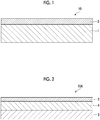
- FIG. 1 is a vertical cross-sectional view illustrating the first embodiment of the optical layer of the present invention.
- the upper side and the lower side in FIG. 1 will be described as “top” and “bottom” respectively.
- optical layer 10 (optical film) is applied to a cover member.
- the optical layer 10 has a base material layer 1 (first layer) and a protective layer 2 (second layer) which is laminated on the base material layer 1 and protects the base material layer 1.
- the optical layer 10 is installed such that the protective layer 2 faces outside and the base material layer 1 is on the side of a substance that is to be covered.
- the protective layer 2 hardcoat layer
- the base material layer 1 (first layer) contains a resin material as a main material having light-transmitting properties and a visible light absorber which is dispersed in the resin material and absorbs visible light.
- the base material layer 1 has a function of allowing the transmission of light having a desired wavelength range by inhibiting or preventing the transmission of visible light in a specific wavelength range.
- the optical layer 10 By including the base material layer 1, the optical layer 10 (cover member) exhibits light blocking properties of blocking light in specific wavelength range. As a result, the optical layer 10 exhibits light-transmitting properties of transmitting light having a desired wavelength range. Accordingly, the optical layer 10 can be used as a cover member that allows the transmission of light of desired color.
- the resin material (base resin) is contained as a main material of the base material layer 1 and used for molding the base material layer 1 in the form of a substrate.
- the resin material is not particularly limited as long as it is a material having light-transmitting properties.
- examples thereof include an acrylic resin, a polystyrene-based resin, a polyethylene-based resin, a polypropylene-based resin, a polyester-based resin such as polyethylene terephthalate (PET) and polyethylene naphthalate (PEN), a polycarbonate-based resin, a vinyl chloride-based resin, a polyacetal-based resin, and the like.
- PET polyethylene terephthalate
- PEN polyethylene naphthalate
- One kind of each of these can be used singly, or two or more kinds of these can be used in combination.
- a polycarbonate-based resin is particularly preferable.
- the polycarbonate-based resin is rich in transparency (light-transmitting properties) or mechanical strength such as stiffness or impact resistance. Therefore, in a case where the polycarbonate-based resin is used as the resin material, it is possible to improve the transparency of the optical layer 10 in the resin material or improve the mechanical strength of the optical layer 10. Furthermore, the polycarbonate-based resin has a specific gravity of about 1.2 and is classified as a light material among resin materials. Accordingly, in a case where the polycarbonate-based resin is used as the resin material, the optical layer 10 can be lightened.
- polycarbonate-based resin various polycarbonate-based resins having diverse molecular structures can be used. Among these, a bisphenol-type polycarbonate-based resin is preferable.
- the bisphenol-type polycarbonate-based resin has a benzene ring on the main chain thereof, and accordingly, the optical layer 10 has higher strength.
- the bisphenol-type polycarbonate-based resin is synthesized, for example, by an interfacial polycondensation reaction between bisphenol and phosgene, an ester exchange reaction between bisphenol and diphenyl carbonate, and the like.
- bisphenol examples include bisphenol A, bisphenol (modified bisphenol) as an origin of a repeating unit of polycarbonate represented by the following Formula (A), and the like.
- X represents an alkyl group having 1 to 18 carbon atoms, an aromatic group, or a cyclic aliphatic group
- Ra and Rb each independently represent an alkyl group having 1 to 12 carbon atoms
- m and n each independently represent an integer of 0 to 4
- p represents the number of repeating units).
- Examples of the bisphenol as an origin of the a repeating unit of polycarbonate represented by the Formula (A) include 4,4'-(pentane-2,2-diyl)diphenol, 4,4'-(pentane-3,3-diyl)diphenol, 4,4'-(butane-2,2-diyl)diphenol, 1,1'-(cyclohexanediyl)diphenol, 2-cyclohexyl-1,4-bis(4-hydroxyphenyl)benzene, 2,3-biscyclohexyl-1,4-bis(4-hydroxyphenyl)benzene, 1,1'-bis(4-hydroxy-3-methylphenyl)cyclohexane, 2,2'-bis(4-hydroxy-3-methylphenyl)propane, and the like.
- One kind of each of these can be used singly, or two or more kinds of these can be used in combination.
- the content of the resin material in the optical layer 10 is not particularly limited, but is preferably equal to or greater than 75 wt% and more preferably equal to or greater than 85 wt%. In a case where the content of the resin material is within the above range, it is possible to make the optical layer 10 exhibit excellent strength.
- the visible light absorber is a material that inhibits or prevents the transmission of visible light in a specific wavelength range. By causing the visible light absorber to be substantially homogeneously incorporated into the base material layer 1 in a state of being dispersed in the base material layer 1, the function of allowing the transmission of light having a desired wavelength range is given to the base material layer 1.
- the visible light absorber is not particularly limited, and examples thereof include a first light absorber absorbing light having a wavelength equal to or longer than 300 nm and equal to or shorter than 550 nm, a second light absorber absorbing light having a wavelength equal to or longer than 450 nm and equal to or shorter than 800 nm, and a third light absorber absorbing light having a wavelength equal to or longer than 400 nm and equal to or shorter than 800 nm.
- the first light absorber has absorption wavelength characteristics of absorbing light having a wavelength equal to or longer than 300 nm and equal to or shorter than 550 nm.
- Examples of the first light absorber include a quinoline-based coloring material.
- the quinoline-based coloring material examples include an alkyl-substituted quinoline compound such as 2-methylquinoline, 3-methylquinoline, 4-methylquinoline, 6-methylquinoline, 7-methylquinoline, 8-methylquinoline, 6-isopropylquinoline, 2,4-dimethylquinoline, 2,6-dimethylquinoline, or 4,6,8-trimethylquinoline, an amino group substituted quinoline compound such as 2-aminoquinoline, 3-aminoquinoline, 5-aminoquinoline, 6-aminoquinoline, 8-aminoquinoline, or 6-amino-2-methylquinoline, an alkoxy group-substituted quinoline compound such as 6-methoxy-2-methylquinoline or 6,8-dimethoxy-4-methylquinoline, a halogen group-substituted quinoline compound such as 6-chloroquinoline, 4,7-dichloroquinoline, 3-bromoquinoline, or 7-chloro-2-methylquinoline, and the like.
- the first light absorber is mixed with the base material layer 1 as a visible light absorber, among the lights incident on the base material layer 1, the light having a wavelength equal to or longer than 300 nm and equal to or shorter than 550 nm can be reliably absorbed into the base material layer 1.
- the content rate of the first light absorber in the base material layer 1 is not particularly limited, but is preferably equal to or higher than 0.001 wt% and equal to or lower than 10 wt%, more preferably equal to or higher than 0.002 wt% and equal to or lower than 1.0 wt%, and even more preferably equal to or higher than 0.005 wt% and equal to or lower than 0.3 wt%.
- the content rate of the first light absorber in the base material layer 1 is less than the lower limit described above, depending on the type of the first light absorber, the visible light (light having a wavelength equal to or longer than 300 nm and equal to or shorter than 550 nm) absorptiveness of the base material layer 1 may be reduced.
- the visible light (light having a wavelength equal to or longer than 300 nm and equal to or shorter than 550 nm) absorptiveness is not further improved, and the adhesiveness of the base material layer 1 with respect to the protective layer 2 may deteriorate.
- the second light absorber has absorption wavelength characteristics of absorbing light having a wavelength equal to or longer than 450 nm and equal to or shorter than 800 nm.
- Examples of the second light absorber include an anthraquinone-based coloring material.
- anthraquinone-based coloring material examples include (1) 2-anilino-1,3,4-trifluoroanthraquinone, (2) 2(o-ethoxycarbonylanilino)-1,3,4-trifluoroanthraquinone, (3) 2-(p-ethoxycarbonylanilino)-1,3,4-trifluoroanthraquinone, (4) 2-(m-ethoxycarbonylanilino)-1,3,4-trifluoroanthraquinone, (5) 2-(o-cyanoanilino)-1,3,4-trifluoroanthraquinone, (6) 2-(p-cyanoanilino)-1,3,4-trifluoroanthraquinone, (7) 2-(m-cyanoanilino)-1,3,4-trifluoroanthraquinone, (8) 2-(o-nitroanilino)-1,3,4-trifluoroanthraquinone, (
- the second light absorber is mixed with the base material layer 1 as a visible light absorber, among the lights incident on the base material layer 1, the light having a wavelength equal to or longer than 450 nm and equal to or shorter than 800 nm can be reliably absorbed into the base material layer 1.
- the content rate of the second light absorber in the base material layer 1 is not particularly limited, but is preferably equal to or higher than 0.001 wt% and equal to or lower than 10 wt%, more preferably equal to or higher than 0.002 wt% and equal to or lower than 1.0 wt%, and even more preferably equal to or higher than 0.005 wt% and equal to or lower than 0.6 wt%.
- the content rate of the second light absorber in the base material layer 1 is less than the lower limit described above, depending on the type of the second light absorber, sometimes the visible light (light having a wavelength equal to or longer than 450 nm and equal to or shorter than 800 nm) absorptiveness of the base material layer 1 may be reduced.
- the visible light (light having a wavelength equal to or longer than 450 nm and equal to or shorter than 800 nm) absorptiveness is not further improved, and sometimes the adhesiveness of the base material layer 1 with respect to the protective layer 2 deteriorates.
- the third light absorber has absorption wavelength characteristics of absorbing light having a wavelength equal to or longer than 400 nm and equal to or shorter than 800 nm.
- Examples of the third light absorber include a perinone-based coloring material.
- perinone-based coloring material examples include 2,3-naphthaloperinone, 1,8-naphthaloperinone, tetrabromo-1,2-naphthaloperinone, and the like. One kind of each of these can be used singly, or two or more kinds of these can be used in combination.
- the perinone-based coloring material is mixed with the base material layer 1, among the lights incident on the base material layer 1, the light having a wavelength equal to or longer than 400 nm and equal to or shorter than 800 nm can be reliably absorbed into the base material layer 1.
- the content rate of the third light absorber in the base material layer 1 is not particularly limited, but is preferably equal to or higher than 0.001 wt% and equal to or lower than 10 wt%, more preferably equal to or higher than 0.002 wt% and equal to or lower than 1.0 wt%, and even more preferably equal to or higher than 0.005 wt% and equal to or lower than 0.6 wt%.
- the content rate of the third light absorber in the base material layer 1 is less than the lower limit described above, depending on the type of the third light absorber, sometimes the visible light (light having a wavelength equal to or longer than 400 nm and equal to or shorter than 800 nm) absorptiveness of the base material layer 1 is reduced.
- the visible light (light having a wavelength equal to or longer than 400 nm and equal to or shorter than 800 nm) absorptiveness is not further improved, and sometimes the adhesiveness of the base material layer 1 with respect to the protective layer 2 deteriorates.
- the base material layer 1 further contains an ultraviolet absorber in addition to the visible light absorber.
- an ultraviolet absorber it is possible to precisely inhibit or prevent the resin material or the visible light absorber contained in the base material layer 1 and the substance to be covered with the optical layer 10 (cover member) from deteriorating by ultraviolet rays. As a result, the base material layer 1 has excellent weather fastness.
- the ultraviolet absorber is not particularly limited. However, it is preferable that the ultraviolet absorber contains a fourth light absorber absorbing light having a wavelength equal to or longer than 100 nm and equal to or shorter than 400 nm. In a case where the ultraviolet absorber contains the fourth light absorber, among the ultraviolet rays and visible light, the transmission of light having a relatively short wavelength (light having a wavelength equal to or shorter than 400 nm) can be inhibited. As a result, it is possible to make the ultraviolet absorber reliably perform the function thereof.
- the fourth light absorber is not particularly limited. Examples thereof include a triazine-based compound, a benzophenone-based compound, a benzotriazole-based compound, and a cyanoacrylate-based compound. One kind of each of these can be used singly, or two or more kinds of these can be used in combination. Among these, a triazine-based compound is particularly preferable. In a case where the triazine-based compound is used, it is possible to more reliably prevent or inhibit the base material layer 1 from deteriorating by ultraviolet rays and to further improve the weather fastness of the optical layer 10.
- triazine-based compound examples include a 2-mono(hydroxyphenyl)-1,3,5-triazine compound, a 2,4-bis(hydroxyphenyl)-1,3,5-triazine compound, and a 2,4,6-tris(hydroxyphenyl)-1,3,5-triazine compound.
- examples thereof include 2,4-diphenyl-6-(2-hydroxy-4-methoxyphenyl)-1,3,5-triazine, 2,4-diphenyl-6-(2-hydroxy-4-ethoxyphenyl)-1,3,5-triazine, 2,4-diphenyl-(2-hydroxy-4-propoxyphenyl)-1,3,5-triazine, 2,4-diphenyl-(2-hydroxy-4-butoxyphenyl)-1,3,5-triazine, 2,4-diphenyl-6-(2-hydroxy-4-butoxyphenyl)-1,3,5-triazine, 2,4-diphenyl-6-(2-hydroxy-4-hexyloxyphenyl)-1,3,5-triazine, 2,4-diphenyl-6-(2-hydroxy-4-octyloxyphenyl)-1,3,5-triazine, 2,4-diphenyl-6-(2-hydroxy-4-dodecyloxyphenyl)-1,3,5-triazine
- examples of commercial products of the triazine-based ultraviolet absorber include "TINUVIN 1577”, “TINUVIN 460”, “TINUVIN 477” (manufactured by BASF Japan Ltd.), “ADEKASTAB LA-F70” (manufactured by ADEKA CORPORATION), and the like.
- TINUVIN 1577 "TINUVIN 460”
- TINUVIN 477 manufactured by BASF Japan Ltd.
- ADEKASTAB LA-F70 manufactured by ADEKA CORPORATION
- the fourth light absorber is mixed with the base material layer 1, among the lights incident on the base material layer 1, the light having a wavelength equal to or longer than 100 nm and equal to or shorter than 400 nm can be reliably absorbed into the base material layer 1.
- the content rate of the fourth light absorber in the base material layer 1 is not particularly limited.
- the content rate of the fourth light absorber is preferably equal to or higher than 0.1 wt% and equal to or lower than 24 wt%, and more preferably equal to or higher than 0.1 wt% and equal to or lower than 10 wt%.
- the content rate of the fourth light absorber in the base material layer 1 is less than the lower limit described above, depending on the type of the first light absorber, the weather fastness of the base material layer 1 may deteriorate.
- the weather fastness is not further improved, and the adhesiveness of the base material layer 1 with respect to the protective layer 2 may deteriorate.
- the base material layer 1 may contain a coloring material (for example, an infrared absorber or the like) different from the visible light absorber and the ultraviolet absorber exemplified above.
- a coloring material for example, an infrared absorber or the like
- Such a coloring material is not particularly limited, and examples thereof include a pigment, a dye, and the like. One kind of each of these may be used singly, or these can be used by being mixed together.
- the pigment is not particularly limited, and examples thereof include organic pigments including a phthalocyanine-based pigment such as phthalocyanine green or phthalocyanine blue, an azo-based pigment such as first yellow, disazo yellow, condensed azo yellow, benzimidazolone yellow, dinitroaniline orange, benzimidazolone orange, toluidine red, permanent carmine, permanent red, naphthol red, condensed azo red, benzimidazolone carmine, or benzimidazolone brown, an anthraquinone-based pigment such as anthrapyrimidine yellow or anthraquinonyl red, an azomethine-based pigment such as copper azomethine yellow, a quinophthalone-based pigment such as quinophthalone yellow, an isoindoline-based pigment such as isoindoline yellow, a nitroso-based pigment such as nickel dioxime yellow, a perinone-based pigment such as perinone orange, a
- the dye is not particularly limited, and examples thereof include a metal complex coloring material, a cyanine-based coloring material, a xanthene-based coloring material, an azo-based coloring material, a hibiscus coloring material, a black berry coloring material, a raspberry coloring material, a pomegranate juice coloring material, a chlorophyll coloring material, and the like.
- a metal complex coloring material a cyanine-based coloring material, a xanthene-based coloring material, an azo-based coloring material, a hibiscus coloring material, a black berry coloring material, a raspberry coloring material, a pomegranate juice coloring material, a chlorophyll coloring material, and the like.
- a metal complex coloring material e.g., a metal complex coloring material, a cyanine-based coloring material, a xanthene-based coloring material, an azo-based coloring material, a hibiscus coloring material, a black berry coloring material, a raspberry
- the base material layer 1 By combining the visible light absorber, the ultraviolet absorber, and a coloring material of type different from these and appropriately setting the content thereof, it is possible to make the base material layer 1 perform the function of selectively allowing the transmission of light having a desired wavelength range.
- the protective layer 2 By being laminated on the base material layer 1, the protective layer 2 covers the base material layer 1. In this way, the protective layer 2 functions as a hardcoat layer (coating layer) protecting the base material layer 1.
- the protective layer 2 is constituted with the second layer formed using the resin composition of the present invention.
- the resin composition of the present invention contains a silicon-modified (meth)acryl resin, a urethane (meth)acrylate, and a polyfunctional (meth)acrylate.
- the optical layer 10 including the protective layer 2 constituted with the second layer is excellent in weather fastness, durability, scratch resistance, and heat molding properties and particularly satisfies the following condition A.
- Condition A In a case where the second layer having an average thickness of 12 ⁇ m is formed on a base material containing a bisphenol-type polycarbonate-based resin as a main material, a coating film of a mixed solvent containing a petroleum-based solvent at a proportion equal to or higher than 45 wt% is formed on the second layer and left as it is under a condition of 85°C ⁇ 24 hours, the second layer is then returned to an atmosphere of 25°C, the mixed solvent is removed thereafter, and then a cross-cut method specified in JIS K 5600-5-6 is implemented on the second layer, an adherence of the second layer cut in the form of a lattice with respect to the base material is equal to or higher than 95%.
- the resin composition of the present invention it is possible to obtain the optical layer 10 in which the protective layer 2 formed of the second layer satisfying the condition A is formed on the base material layer 1. Accordingly, in a case where the optical layer 10 is applied, for example, to a cover member of a brake lamp or a hazard lamp included in moving bodies such as automobiles or two-wheel vehicles, even though the cover member is exposed to chemicals such as a petroleum-based solvent contained in a lubricant, an anticorrosive, and the like used for repairing the moving bodies, in the optical layer 10 (cover member), it is possible to precisely inhibit or prevent the protective layer 2 (second layer) from being peeled from the base material layer 1 (base material).
- the optical layer 10 applied to the cover member can maintain excellent appearance. Consequently, it is possible to precisely inhibit or prevent the occurrence of changes in characteristics such as the visibility of the optical layer 10 or the light-transmitting properties of allowing the transmission of light in a specific wavelength range.
- the resin composition contains the silicon-modified (meth)acryl resin
- the surface hardness of the protective layer 2 can be improved. Therefore, excellent durability and scratch resistance can be given to the optical layer 10 including the protective layer 2.
- the resin composition contains the urethane (meth) acrylate, the flexibility of the protective layer 2 can be improved. Therefore, it is possible to inhibit the occurrence of cracks on the surface of the protective layer 2 in a case where the optical layer 10 bends by heat and to give excellent heat molding properties to the optical layer 10.
- the resin composition contains the polyfunctional (meth)acrylate
- the chemical resistance of the protective layer 2 against chemicals such as a petroleum-based solvent can be improved. Therefore, the protective layer 2 satisfies the condition A. Consequently, excellent chemical resistance against chemicals such as a petroleum-based solvent can be given to the optical layer 10 including the protective layer 2.
- the surface hardness of the protective layer 2 can be improved. Therefore, it is possible to give excellent durability and scratch resistance to the optical layer 10 including the protective layer 2.
- the optical layer 10 which satisfies both the excellent scratch resistance and excellent heat molding properties to a high degree and satisfies the condition A.
- the silicon-modified (meth)acryl resin is a polymer (prepolymer) having a main chain, which includes repeating constitutional units derived from a (meth)acryl monomer having a (meth)acryloyl group, and a repeating body which is linked to the main chain and includes repeating constitutional units having a siloxane bond.
- the silicon-modified (meth)acryl resin gives transparency to the protective layer 2. Furthermore, by having the repeating body including repeating constitutional units having a siloxane bond, the silicon-modified (meth)acryl resin gives scratch resistance to the protective layer 2.
- examples of the main chain of the silicon-modified (meth)acryl resin include a structure constituted with repeating constitutional units derived from a monomer having a (meth)acryloyl group that is represented by at least one of the following Formula (1) and the following Formula (2) .
- n represents an integer equal to or greater than 1
- R1 independently represents a hydrocarbon group, an organic group, or a hydrogen atom
- R0 independently represents a hydrocarbon group or a hydrogen atom.
- m represents an integer equal to or greater than 1
- R2 independently represents a hydrocarbon group, an organic group, or a hydrogen atom
- R0 independently represents a hydrocarbon group or a hydrogen atom.
- the silicon-modified (meth)acryl resin has a hydroxyl group (-OH) on a terminal of the main chain or on a side chain thereof. That is, in the case of the Formula (1) or the Formula (2), R1 or R2 is preferably hydrogen. In a case where R1 or R2 is hydrogen, and a polycarbonate-based resin is used as the resin material contained in the base material layer 1, the adhesiveness between the protective layer 2 and the base material layer 1 can be improved. As a result, it is possible to precisely inhibit or prevent the protective layer 2 from being unintentionally peeled from the base material layer 1.
- the hydroxyl group reacts with the isocyanate group contained in a curing agent, and consequently, a crosslinked structure is formed by a urethane bond. Therefore, the protective layer 2 can be densified. Consequently, the chemical resistance against chemicals such as a petroleum-based solvent is improved, and accordingly, the protective layer 2 reliably satisfies the condition A.
- the repeating body including repeating constitutional units having a siloxane bond is bonded to at least one terminal of the main chain or to the side chain.
- a siloxane bond has strong bonding force. Therefore, in a case where the silicon-modified (meth)acryl resin has the repeating body including repeating constitutional units having a siloxane bond, it is possible to obtain a protective layer 2 having further improved heat resistance and weather fastness. In addition, because the siloxane bond has strong bonding force, a hard protective layer 2 can be obtained. Accordingly, in a case where the optical layer 10 is applied to a cover member included in a brake lamp or a hazard lamp that moving bodies such as automobiles or two-wheel vehicles have, it is possible to further improve the scratch resistance of the optical layer 10 against the impact caused by sand dust, stones flying at the optical layer 10, and the like.
- examples of the repeating body including repeating constitutional units having a siloxane bond include a structure constituted with repeating constitutional units having a siloxane bond that is represented by at least one of the following Formula (3) and the following Formula (4).
- X 1 represents a hydrocarbon group or a hydroxyl group.
- X 2 represents a hydrocarbon group or a hydroxyl group
- X 3 represents a divalent group formed in a case where hydrogen leaves a hydrocarbon group or a hydroxyl group.
- examples of the repeating body including repeating constitutional units having a siloxane bond include a structure having polyorganosiloxane and a structure having silsesquioxane.
- the silsesquioxane may have any structure such as a random structure, a cage-like structure, and a ladder structure.
- hydrocarbon group examples include an alkyl group such as a methyl group, an ethyl group, a propyl group, or an isopropyl group, a cycloalkyl group such as a cyclopropyl group, a cyclobutyl group, a cyclopentyl group, or a cyclohexyl group, an aryl group such as a phenyl group, a naphthyl group, or a 2-methylphenyl group, an aralkyl group such as a benzyl group, a diphenylmethyl group, or a naphthylmethyl group, a phenyl group, a biphenyl group, and the like.
- alkyl group such as a methyl group, an ethyl group, a propyl group, or an isopropyl group
- a cycloalkyl group such as a cyclopropyl group, a cyclobutyl
- an unsaturated double bond is introduced into a terminal or a side chain of the repeating body including repeating constitutional units having a siloxane bond.
- the unsaturated double bond is introduced as described above, the unsaturated double bond is bonded to a (meth)acryloyl group that the urethane (meth)acrylate has, and accordingly, a network of the silicon-modified (meth) acryl resin and the urethane (meth) acrylate can be formed.
- the silicon-modified (meth)acryl resin and the urethane (meth) acrylate are more homogeneously dispersed in the protective layer 2, and consequently, the characteristics of the protective layer 2 described above can be more evenly exhibited in the entirety of the protective layer 2.
- the content rate of the silicon-modified (meth) acryl resin in the resin composition is not particularly limited. However, in a main resin which will be described later, the content rate of the silicon-modified (meth) acryl resin is preferably equal to or higher than 7 wt% and equal to or lower than 15 wt%, more preferably equal to or higher than 8.5 wt% and equal to or lower than 15 wt%, and even more preferably equal to or higher than 10 wt% and equal to or lower than 14 wt%.
- the content rate of the silicon-modified (meth)acryl resin in the resin composition is less than lower limit described above, depending on the type of the silicon-modified (meth)acryl resin, the hardness of the protective layer 2 obtained from the resin composition may be reduced. Furthermore, in a case where the content rate of the silicon-modified (meth)acryl resin in the resin composition is higher than the upper limit described above, the content of materials other than the silicon-modified (meth)acryl resin in the resin composition is relatively reduced. Accordingly, the elasticity of the protective layer 2 formed using the resin composition is likely to be reduced.
- the urethane (meth)acrylate is a compound having a main chain, which has a urethane bond (-OCONH-), and a (meth) acryloyl group linked to the main chain. Furthermore, the urethane (meth)acrylate is a monomer or an oligomer.
- the urethane (meth) acrylate is a compound having excellent flexibility because of a urethane bond that the compound has. Therefore, by incorporating the urethane (meth) acrylate into the protective layer 2, it is possible to give higher elasticity (flexibility) to the protective layer 2.
- the optical layer 10 is molded in the form of a curved surface, it is possible to precisely inhibit or prevent the occurrence of cracks in a bending portion.
- the number of (meth)acryloyl groups in one urethane (meth)acrylate molecule is preferably equal to or greater than 2.
- the urethane (meth)acrylate is bonded to the silicon-modified (meth)acryl resin, and as a result, a network can be formed. Therefore, in a case where the protective layer 2 is formed using the resin composition, it is possible to accelerate the curing of the protective layer 2. As a result, the crosslink density of the protective layer 2 can be improved, and accordingly, the hardness of the protective layer 2 can be improved to some extent. Consequently, the characteristics of the protective layer 2 such as scratch resistance or chemical resistance can be improved. Therefore, it is possible to obtain the protective layer 2 reliably satisfying the condition A.
- the urethane (meth)acrylate can be obtained as a product of a reaction between an isocyanate compound, which is obtained by causing a reaction between polyol and diisocyanate, and a (meth)acrylate monomer having a hydroxyl group.
- polyol examples include polyether polyol, polyester polyol, and polycarbonate diol.
- the polyether polyol is preferably polyethylene oxide, polypropylene oxide, or an ethylene oxide-propylene oxide random copolymer, and preferably has a number-average molecular weight less than 1,300.
- the protective layer 2 becomes excessively flexible. Therefore, for example, scratches may be easily made on the protective layer 2 (cover member) by the impact caused by sand dust, stones flying at the protective layer 2, and the like.
- the polyester polyol can be obtained, for example, by causing a polycondensation reaction between diol and dicarboxylic acid or dicarboxylic acid chloride or by causing an ester exchange reaction by means of esterifying diol or dicarboxylic acid.
- dicarboxylic acid adipic acid, succinic acid, glutaric acid, pimelic acid, sebacic acid, azelaic acid, maleic acid, terephthalic acid, isophthalic acid, phthalic acid, and the like are used.
- diol ethylene glycol, 1,4-butanediol, 1,6-hexanediol, diethylene glycol, dipropylene glycol, triethylene glycol, tetraethylene glycol, tripropylene glycol, tetrapropylene glycol, and the like are used.
- polycarbonate diol 1,4-butanediol, 1,6-hexanediol, ethylene glycol, propylene glycol, diethylene glycol, triethylene glycol, 1,2-propylene glycol, 1,3-propylene glycol, dipropylene glycol, 2-ethyl-1,3-hexanediol, 1,5-pentanediol, 3-methyl-1,5-pentanediol, 1,4-cyclohexanediol, polyoxyethylene glycol, and the like are used.
- One kind of each of these can be used singly, or two or more kinds of these can be used in combination.
- acrylate monomer having a hydroxyl group examples include trimethylolpropane triacrylate, pentaerythritol triacrylate, dipentaerythritol triacrylate, 2-hydroxyethyl acrylate, 2-hydroxypropyl acrylate, 2-hydroxybutyl acrylate, 3-hydroxybutyl acrylate, polyethylene glycol monoacrylate, and the like.
- the weight-average molecular weight of the urethane (meth)acrylate is not particularly limited, but is preferably equal to or greater than 1.0 x 10 3 and equal to or smaller than 1.5 x 10 4 , and more preferably equal to or greater than 1.5 x 10 3 and equal to or smaller than 1.0 x 10 4 .
- the weight-average molecular weight of the urethane (meth)acrylate is within the above range, the balance between the elasticity and the hardness of the protective layer 2 becomes excellent. Accordingly, in a case where the optical layer 10 is molded in the form of a curved surface, the occurrence of cracks in a bending portion can be inhibited.
- the weight-average molecular weight of the urethane (meth)acrylate can be measured, for example, by gel permeation chromatography (GPC).
- the urethane (meth)acrylate among the materials described above, an alicyclic urethane (meth)acrylate having a carbonate structure is particularly preferable.
- the protective layer 2 can become a layer having both the higher elasticity (flexibility) and higher stress resistance. Furthermore, the weather fastness of the protective layer 2 becomes excellent. Therefore, even though the optical layer 10 is made as a layer molded in the form of a curved surface, the optical layer 10 can be a layer which is excellent in water resistance, heat resistance, and weather fastness.
- the alicyclic urethane (meth)acrylate having a carbonate structure can be obtained, for example, using a compound, which is obtained by causing a reaction between polycarbonate diol and alicyclic diisocyanate, as an isocyanate compound.
- the content rate of the urethane (meth) acrylate in the resin composition is not particularly limited. However, in the main resin which will be described later, the content rate of the urethane (meth) acrylate is preferably equal to or higher than 10 wt% and equal to or lower than 25 wt%, and more preferably equal to or higher than 12 wt% and equal to or lower than 24 wt%. In a case where the content rate of the urethane (meth)acrylate in the resin composition is less than the lower limit described above, depending on the type of the urethane (meth)acrylate, the protective layer 2 lacks flexibility, and consequently, the water resistance and the hot water resistance thereof may be reduced.
- the content rate of the urethane (meth) acrylate in the resin composition is higher than the upper limit described above, the content of materials other than the urethane (meth)acrylate in the resin composition is relatively reduced, and accordingly, the scratch resistance of the optical layer 10 may be reduced.
- the polyfunctional (meth)acrylate is a (meth)acrylate having two or more (meth)acryloyl groups, which contribute to a polymerization reaction, in one molecule.
- the polyfunctional (meth) acrylate has two or more (meth)acryloyl groups, the hardness of the formed protective layer 2 becomes relatively high. Accordingly, in a case where the resin composition contains the polyfunctional (meth) acrylate, a hard protective layer 2 having high strength can be obtained.
- the polyfunctional (meth)acrylate just needs to have two or more (meth)acryloyl groups, which contribute to a polymerization reaction, in one molecule.
- the polyfunctional (meth) acrylate may be any of a monomer and an oligomer, and the molecular weight and the molecular structure thereof are not particularly limited.
- polyfunctional (meth)acrylate monomer examples include 1,4-butanediol diacrylate, ethoxylated cyclohexane dimethanol diacrylate, tricyclodecane dimethanol diacrylate, ethoxylated bisphenol A diacrylate, dipentaerythritol hexaacrylate, pentaerythritol tetraacrylate, ditrimethylolpropane triacrylate, trimethylolpropane triacrylate, pentaerythritol triacrylate, dipentaerythritol triacrylate, ethoxylated trimethylolpropane triacrylate, ethoxylated pentaerythritol triacrylate, ethoxylated pentaerythritol tetraacrylate, and the like.
- polyfunctional (meth)acrylate oligomer examples include polyfunctional epoxy (meth)acrylate, polyfunctional polyester (meth)acrylate, and the like.
- the polyfunctional epoxy (meth)acrylate oligomer can be obtained, for example, by an esterification reaction between an oxirane ring of a bisphenol-type epoxy resin or a novolac epoxy resin having a low molecular weight and a (meth)acrylic acid.
- the polyfunctional polyester (meth)acrylate oligomer can be obtained, for example, by esterifying hydroxyl groups of a polyester oligomer, which is obtained by the condensation of a polyvalent carboxylic acid and a polyhydric alcohol and has a hydroxyl group on both terminals, by using a (meth) acrylic acid. Furthermore, the polyfunctional polyester (meth)acrylate oligomer can be obtained, for example, by esterifying hydroxyl groups on the terminals of an oligomer, which is obtained by adding alkylene oxide to a polyvalent carboxylic acid, by using a (meth)acrylic acid.
- the polyfunctional (meth) acrylate monomer described above is preferably a combination of a tetrafunctional (meth) acrylate, which has four (meth)acryloyl groups in one molecule, and an aromatic difunctional (meth)acrylate which has two (meth)acryloyl groups in one molecule and has an aromatic ring.
- a three-dimensional crosslinked structure having an aromatic ring is formed in the formed protective layer 2. Accordingly, it is possible to improve the chemical resistance of the protective layer 2 against chemicals such as a petroleum-based solvent and to improve the scratch resistance of the protective layer 2. Therefore, the condition A can be satisfied for a long period of time.
- the content rate of the tetrafunctional (meth)acrylate in the resin composition is not particularly limited.
- the content rate of the tetrafunctional (meth)acrylate is preferably equal to or higher than 40 wt% and equal to or lower than 70 wt%, and more preferably equal to or higher than 40 wt% and equal to or lower than 65 wt%.
- the content rate of the aromatic difunctional (meth)acrylate is not particularly limited.
- the content rate of the aromatic difunctional (meth)acrylate is preferably equal to or higher than 6 wt% and equal to or lower than 15 wt%, and more preferably equal to or higher than 7 wt% and equal to or lower than 14 wt%.
- the protective layer 2 may lack chemical resistance.
- the content rate of the tetrafunctional (meth)acrylate and the aromatic difunctional (meth) acrylate in the resin composition is higher than the upper limit described above, the content of materials other than the tetrafunctional (meth)acrylate and the aromatic difunctional (meth)acrylate in the resin composition is relatively reduced, and accordingly, the flexibility of the optical layer 10 may be reduced.
- the resin composition contains isocyanate.
- the isocyanate functions as a crosslinking agent that causes the silicon-modified (meth) acrylate molecules to be bonded (crosslinked) to each other. Accordingly, because the isocyanate functions as a crosslinking agent, the hydroxyl group contained in the silicon-modified (meth) acrylate reacts with the isocyanate group contained in the isocyanate, and as a result, a crosslinked structure constituted with a urethane bond is formed. Therefore, the scratch resistance of the protective layer 2 can be improved.
- the isocyanate is not particularly limited, and examples thereof include polyisocyanate having two or more isocyanate groups and the like. Particularly, it is more preferable that the resin composition contains polyfunctional isocyanate having three or more isocyanate groups. In a case where the resin composition also contains the polyfunctional isocyanate, the scratch resistance of the protective layer 2 can be further improved.
- the content rate of the isocyanate in the resin composition is not particularly limited. However, in the main resin which will be described later, the content rate of the isocyanate is preferably equal to or higher than 2 wt% and equal to or lower than 8 wt%, and more preferably equal to or higher than 3 wt% and equal to or lower than 7 wt%. In a case where the content rate of the isocyanate in the resin composition is less than the lower limit described above, depending on the type of the isocyanate, the scratch resistance of the protective layer 2 may be reduced. Furthermore, in a case where the content rate of the isocyanate in the resin composition is higher than the upper limit described above, unreacted substances of the isocyanate remain in the coating film as impurities. Accordingly, depending on the type of the isocyanate, the scratch resistance and the durability (adhesiveness) of the coating film may be reduced.
- the silicon-modified (meth)acryl resin, the urethane (meth)acrylate, the polyfunctional (meth)acrylate, and the isocyanate described above in the resin composition are "main resin".
- the silicon-modified (meth)acryl resin, the urethane (meth)acrylate, and the polyfunctional (meth)acrylate are essential components, and the isocyanate is a preferable component that the resin composition preferably contains.
- the resin composition contains an ultraviolet absorber.
- an ultraviolet absorber it is possible to more reliably prevent or inhibit the protective layer 2 from deteriorating by ultraviolet rays and to further improve the weather fastness of the optical layer 10.
- the ultraviolet absorber is not particularly limited, and examples thereof include a triazine-based compound, a benzophenone-based compound, a benzotriazole-based compound, and a cyanoacrylate-based compound. One kind of each of these can be used singly, or two kinds of these can be used in combination. Among these, a triazine-based ultraviolet absorber is particularly preferably used.
- a hydroxyphenyl triazine-based ultraviolet absorber is more preferable. In a case where the hydroxyphenyl triazine-based ultraviolet absorber is used, the effect described above can be more markedly exhibited.
- the content rate of the ultraviolet absorber in the resin composition is not particularly limited.
- the content rate of the ultraviolet absorber with respect to 100 wt% of the main resin is preferably equal to or higher than 1.0 wt% and equal to or lower than 4.0 wt%, and more preferably equal to or higher than 1.7 wt% and equal to or lower than 3.5 wt%.
- the content rate of the ultraviolet absorber in the resin composition is less than the lower limit described above, sometimes the weather fastness of the protective layer 2 is reduced.
- the weather fastness is not further improved, and sometimes the transparency of the protective layer 2 or the adhesiveness of the protective layer 2 with respect to the base material layer 1 deteriorates.
- the resin composition may contain a photopolymerization initiator.
- the photopolymerization initiator is not particularly limited.
- As the photopolymerization initiator it is possible to use benzoin or benzoin alkyl ethers such as benzoin, benzoin methyl ether, benzoin ethyl ether, and benzoin isopropyl ether, aromatic ketones such as benzophenone and benzoyl benzoate, ⁇ -dicarbonyls such as benzyl, benzyl ketals such as benzyl dimethyl ketal and benzyl diethyl ketal, acetophenones such as acetophenone, 1-(4-dodecylphenyl)-2-hydroxy-2-methylpropan-1-one, 1-hydroxycyclohexylphenylketone, 2-hydroxy-2-methyl-1-phenyl-1-propan-1-one, 1-(4-isopropylphenyl)-2-hydroxy-2-methyl-prop
- acetophenones such as 1-(4-dodecylphenyl)-2-hydroxy-2-methylpropan-1-one, 1-hydroxycyclohexylphenylketone, 2-hydroxy-2-methyl-1-phenyl-1-propan-1-one, 1-(4-isopropylphenyl)-2-hydroxy-2-methyl-propan-1-one, and 2-methyl-1-[4-(methylthio)phenyl]-2-morpholinopropanone-1 are particularly preferable.
- the content rate of the photopolymerization initiator in the resin composition is not particularly limited.
- the content rate of the photopolymerization initiator with respect to 100 wt% of the main resin is preferably equal to or higher than 0.5 wt% and equal to or lower than 10 wt%, and more preferably equal to or higher than 2.0 wt% and equal to or lower than 6.0 wt%.
- the content rate of the photopolymerization initiator in the resin composition is less than the lower limit described above, sometimes it is difficult to thoroughly curing the resin composition.
- the characteristics of the protective layer 2 are not further improved.
- the resin composition may contain other materials in addition to the materials described above.
- Examples of those other materials include a resin material other than the silicon-modified (meth) acryl resin described above, a coloring agent, a sensitizer, a stabilizer, a surfactant, an antioxidant, a reduction inhibitor, an antistatic agent, a surface conditioner, a solvent, and the like.
- the solvent is a component that is incorporated into the resin composition so as to make sure that the resin composition is in the form of varnish.
- the solvent include aliphatic hydrocarbon such as hexane, heptane, or cyclohexane, aromatic hydrocarbon such as toluene or xylene, an alcohol such as methanol, ethanol, propanol, or butanol, ketone such as methyl ethyl ketone, 2-pentanone, isophorone, or diisobutyl ketone, an ester such as ethyl acetate, butyl acetate, isobutyl acetate, or methoxypropyl acetate, a cellosolve-based solvent such as ethyl cellosolve, a glycol-based solvent such as methoxypropanol, ethoxypropanol, or methoxybutanol, and the like.
- the protective layer 2 formed on the base material layer 1 by using the resin composition can be a layer that exhibits excellent adhesiveness with respect to the base material layer 1.
- the thickness of the protective layer 2 is not particularly limited, but is preferably equal to or greater than 1 ⁇ m and equal to or smaller than 40 ⁇ m, and more preferably equal to or greater than 3 ⁇ m and equal to or smaller than 20 ⁇ m. In a case where the thickness of the protective layer 2 is less than the lower limit described above, sometimes the weather fastness of the optical layer 10 is reduced. In contrast, provided that the thickness of the protective layer 2 is greater than the upper limit described above, in a case where the optical layer 10 is molded in the form of a curved surface, sometimes cracks occur in a bending portion.
- the adherence is preferably equal to or higher than 98%, and more preferably 100%.
- the protective layer 2 is more precisely inhibited or prevented from being peeled from the base material layer 1. Accordingly, the appearance of the optical layer 10 can be maintained in a better state.
- the base material to be prepared just needs to contain a bisphenol-type polycarbonate-based resin as a main material or may be a base material constituted with a bisphenol-type polycarbonate-based resin.
- the base material contains a bisphenol-type polycarbonate-based resin as a main material, a visible light absorber, and an ultraviolet absorber (fourth light absorber).
- the total content of the visible light absorber and the ultraviolet absorber in the base material is preferably equal to or greater than 0.30 wt% and equal to or smaller than 0.4 wt%, and more preferably about 0.38 wt%.
- the visible light absorber is preferably a combination of the first light absorber to the third light absorber.
- the bisphenol in the bisphenol-type polycarbonate-based resin is preferably bisphenol A.
- the peeling properties of the protective layer 2 with respect to the base material layer 1 can be more precisely evaluated by investigating whether the condition A is satisfied. Therefore, in a case where the condition A is satisfied in the base material, it can be said that the protective layer 2 is more precisely inhibited or prevented from being peeled from the base material layer 1 in the optical layer 10 (cover member) even though the optical layer 10 is exposed to chemicals such as a petroleum-based solvent.
- the mixed solvent to be prepared just needs to be a solvent containing a petroleum-based solvent at a proportion equal to or higher than 45 wt%.
- the content rate of the petroleum-based solvent is preferably equal to or higher than 45 wt% and equal to or lower than 70 wt%, and more preferably equal to or higher than 50 wt% and equal to or lower than 60 wt%.
- the petroleum-based solvent is specified in JIS K 2201-1991, and may be any of Grade 1 (benzine), Grade 2 (rubber solvent), Grade 3 (soybean solvent), Grade 4 (mineral spirit), and Grade 5 (cleaning solvent) .
- components other than the petroleum-based solvent that are contained in the mixed solvent include a mineral oil (petroleum-based oil), a lubricating additive, an anticorrosive additive, a surfactant, and the like.
- a mineral oil mineral oil
- a lubricating additive such as sodium-based oil
- an anticorrosive additive such as sodium-based solvent
- a surfactant such as sodium-based solvent
- the protective layer 2 is more precisely inhibited or prevented from being peeled from the base material layer 1 in the optical layer 10 (cover member) even though the optical layer 10 is exposed to chemicals such as a petroleum-based solvent.
- the condition A is satisfied even though an acid solution (chemical), in which the total content of nitrile acetate and a salt thereof is equal to or greater than 15 wt% and equal to or smaller than 30 wt%, is used instead of the mixed solvent containing a petroleum-based solvent at a proportion equal to or higher than 45 wt%.
- an acid solution chemical
- the condition A is satisfied as described above, even though the optical layer 10 is exposed not only to chemicals such as a petroleum-based solvent but also to chemicals such as an acid solution containing nitrile acetate, the base material layer 1 is more precisely inhibited or prevented from being peeled from the protective layer 2 in the optical layer 10 (cover member) . Accordingly, it can be said that the protective layer 2 which has further improved chemical resistance and protects the base material layer 1.
- the acid solution contains, in addition to nitrile acetate and a salt thereof, a nonionic surfactant at a proportion equal to or higher than 5 wt% and equal to or lower than 15 wt%.
- a nonionic surfactant at a proportion equal to or higher than 5 wt% and equal to or lower than 15 wt%.
- the acid solution containing nitrile acetate and a salt thereof is contained in a cleaner used for washing the moving bodies and the like. It is considered that accordingly, because the acid solution (cleaner) contacts the optical layer 10 (cover member) at the time of washing the moving bodies, the base material layer 1 may be peeled from the protective layer 2.
- the second layer formed on the base material is subjected to a boiling test, in which the second layer is immersed in boiling water for 10 hours, before the coating film of the mixed solvent is formed.
- the second layer having undergone the boiling test also satisfies the condition A. Therefore, it can be said that the protective layer 2 has further improved chemical resistance and protects the base material layer 1.
- the second layer formed on the base material is subjected to a weather fastness test, in which the second layer is under the condition of EYE SUPER UV TESTER (manufactured by IWASAKI ELECTRIC CO., LTD., ultraviolet illuminance: 150 mW/cm 2 , temperature 63°C/humidity 50%RH, shower frequency: 18 min/120 min, exposure time: 72 h), before the coating film of the mixed solvent is formed.
- the second layer subjected to the weather fastness test also satisfies the condition A. Therefore, it can be said that the protective layer 2 has further improved chemical resistance and protects the base material layer 1.
- the second layer formed on the base material further satisfies the following condition B in addition to the condition A.
- Condition B In a case where the second layer having an average thickness of 12 ⁇ m is provided on a base material which is constituted with a bisphenol-type polycarbonate-based resin and has an average thickness of 2 mm so as to form a laminate constituted with the base material and the second layer, a coating film of the mixed solvent is formed on the second layer and left as it is under a condition of 85°C ⁇ 24 hours, the laminate is then returned to an atmosphere of 25°C, the mixed solvent is removed thereafter, and a transmittance (%) of the laminate at a wavelength of 900 nm is measured, the transmittance is equal to or higher than 60%.
- the transmittance just needs to be equal to or higher than 60%, but is preferably equal to or higher than 75% and more preferably equal to or higher than 85%. It can be said that in a case where the optical layer 10, which includes the second layer satisfying the above relationship as the protective layer 2, is applied to a cover member of a brake lamp or a hazard lamp included in moving bodies such as automobiles or two-wheel vehicles, even though the cover member is exposed to chemicals such as a petroleum-based solvent contained in a lubricant, an anticorrosive, and the like used for repairing the moving bodies, the light transmission characteristics (infrared transmission characteristics) of infrared rays in various wavelength ranges are precisely inhibited or prevented from being reduced by the protective layer 2 (second layer) in the optical layer 10 (cover member). Therefore, in a case where the optical layer 10 satisfying the condition B is applied to a cover member, the infrared transmission characteristics (light transmission characteristics) of the cover member can be maintained in an excellent state.
- the base material to be prepared, the mixed solvent, the acid solution, and the boiling test and the weather fastness test performed on the base material are the same as the components and the testing methods described in the condition A.
- the protective layer 2 satisfies the condition B in which the components and the testing methods described above are used, it can be said that the protective layer 2 is more precisely inhibited or prevented from reducing the infrared transmission characteristics and protects the base material layer 1.
- FIG. 2 is a vertical cross-sectional view illustrating the second embodiment of the optical layer of the present invention.
- optical layer 10A of the second embodiment will be described.
- the description is focused on the differences with the optical layer 10 of the first embodiment, and the same matters as those of the optical layer 10 will not be described.
- the optical layer 10 A of the present embodiment is the same as the first embodiment, except for the constitution of the base material layer.
- the optical layer 10A has a visible light absorbing layer 3 which absorbs visible light, an ultraviolet absorbing layer 4 which absorbs ultraviolet rays, and the protective layer 2.
- the optical layer 10A is a laminate in which these layers are laminated in the above order from the lower side (see FIG. 2 ). That is, in the present embodiment, the base material layer 1 (first layer) in the first embodiment is constituted with the laminate of the visible light absorbing layer 3 and the ultraviolet absorbing layer 4.
- the visible light absorbing layer 3 contains a resin material having light-transmitting properties as a main material and a visible light absorber which is dispersed in the resin material and absorbs visible light. In this way, the visible light absorbing layer 3 inhibits or prevents the transmission of visible light in a specific wavelength range. As a result, the visible light absorbing layer 3 has a function of allowing the transmission of light having a desired wavelength range.
- the ultraviolet absorbing layer 4 contains a resin material having light-transmitting properties as a main material and an ultraviolet absorber which is dispersed in the resin material and absorbs ultraviolet rays. In this way, the ultraviolet absorbing layer 4 has a function of allowing the transmission of infrared rays and visible light while inhibiting or preventing the transmission of ultraviolet rays.
- the resin material contained in the visible light absorbing layer 3 and the ultraviolet absorbing layer 4 is a material which is contained in each of the layers as a main material and for molding each of the layers in the form of a substrate.
- As the resin material it is possible to use the same material as the material described as the resin material contained in the base material layer 1 in the first embodiment.
- the visible light absorber contained in the visible light absorbing layer 3 in the present embodiment contains at least one kind of light absorber among a first light absorber absorbing light having a wavelength equal to or longer than 300 nm and equal to or shorter than 550 nm, a second light absorber absorbing light having a wavelength equal to or longer than 450 nm and equal to or shorter than 800 nm, and a third light absorber absorbing light having a wavelength equal to or longer than 400 nm and equal to or shorter than 800 nm.
- the first to third light absorbers it is possible to use the same materials as the materials described as the first to third light absorbers contained in the base material layer 1 in the first embodiment.
- the ultraviolet absorber contained in the ultraviolet absorbing layer 4 in the present embodiment contains a fourth light absorber absorbing light having a wavelength equal to or longer than 100 nm and equal to or shorter than 400 nm. Furthermore, as the fourth light absorber, it is possible to use the same material as the material described as the fourth light absorber which may be contained in the base material layer 1 in the first embodiment.
- the base material layer (first layer) is constituted with the laminate of the visible light absorbing layer 3 and the ultraviolet absorbing layer 4. Even though the base material layer (first layer) is constituted with the laminate, in a case where the protective layer 2 (second layer) formed on the laminate (base material layer) satisfies the condition A, it is possible to precisely inhibit or prevent the protective layer 2 (second layer) from being peeled from the base material layer (first layer) in the optical layer 10A (cover member) even if the optical layer 10A used as a cover member is exposed to chemicals such as a petroleum-based solvent.
- the optical layer of the present invention can be applied, for example, to a cover member of a brake lamp or a hazard lamp included in moving bodies such as automobiles or two-wheel vehicles as described above.
- the optical layer of the present invention can be applied to a cover member of an infrared radar that the moving bodies have, a windshield board or a spoiler that the moving bodies have, a cover member included in an oil meter of gasoline stations, a lens material (cover member) that monitoring cameras have, and the like.
- the infrared radar may be built in moving bodies such as automobile. Furthermore, the infrared radar may be built in an automatic ticketing machine or an automatic vending machine, which are installed in the outdoor environment, as a motion sensor.
- the moving body (moving body of the present invention) including the optical layer of the present invention as a cover member may be an automobile, a two-wheel vehicle (motor cycle or bicycle), a ship, a railroad vehicle, an airplane, a bus, a forklift, a working vehicle carrying out a predetermined work in a construction site and the like, a golf cart, an automatic guided vehicle, or the like.
- the resin composition for forming a protective layer was pretreated by being irradiated with ultraviolet rays under the conditions of an irradiation distance: 50 mm, a conveyer speed: 1.5 m/min, irradiation intensity: 350 mW/cm 2 , and a cumulative amount of light: 700 mJ/cm 2 . Then, by using a bar coater, the base material layer was coated with the resin composition for forming a protective layer such that the thickness of the resin composition (thickness of a protective layer to be formed) became 12 ⁇ m after drying, thereby forming a coating film on the base material layer.
- H valve electrode UV lamp
- the coating film with which the base material layer was coated was dried for 10 minutes in a hot air oven at 65°C.
- the coating film was irradiated with ultraviolet rays under the conditions of an irradiation distance: 50 mm, a conveyer speed: 1.5 m/min, irradiation intensity: 500 mW/cm 2 , and a cumulative amount of light: 1,700 mJ/cm 2 .
- the coating film was heated for 48 hours in a hot air oven at 60°C, thereby obtaining a cured protective layer. In this way, a flat plate-like optical layer according to Example 1 was obtained in which the protective layer (second layer) was formed on the base material layer (first layer).
- Optical layers of Examples 2 to 7 and Comparative Examples 1 and 2 were obtained in the same manner as in Example 1, except that the resin composition for forming a protective layer was prepared by changing the content of the constituent materials contained in the resin composition for forming a protective layer as shown in Table 1.
- a silicon-modified (meth)acryl resin a mixture of a silicon-modified (meth)acryl resin and an acrylate monomer was used (trade name "MFG COAT SD-101", silicon-modified (meth)acryl resin: 16 parts by mass, acrylate monomer: 5.5 parts by mass, manufactured by DIC Corporation).
- optical layer of each of the examples and the comparative examples was evaluated by the following method.
- the chemical resistance against a mixed solvent 1 containing a petroleum-based solvent at a proportion equal to or higher than 45 wt% and equal to or lower than 65 wt% was evaluated as below.
- an anticorrosive ⁇ lubricant manufactured by KURE Engineering Ltd., "CRC 5-56" was prepared which contained a petroleum-based solvent at a proportion equal to or higher than 45 wt% and equal to or lower than 65 wt%, a mineral oil at a proportion equal to or higher than 10 wt% and equal to or lower than 30 wt%, a lubricating additive at a proportion less than 10 wt%, and an anticorrosive additive at a proportion less than 10 wt%.
- the optical layer of each of the examples and the comparative examples was left to stand under the condition of 85°C x 24 hours in a state where the coating film of the mixed solvent 1 was formed on the protective layer (second layer). Thereafter, the mixed solvent 1 was removed, and then the appearance change was observed and evaluated according to the following evaluation standards.
- the optical layer of each of the examples and the comparative examples was left to stand under the condition of 85°C x 24 hours in a state where the coating film of the mixed solvent 1 was formed on the protective layer (second layer), and then the mixed solvent 1 was removed. Thereafter, a pressure-sensitive adhesive tape having a width of 18 mm (manufactured by NICHIBAN CO., LTD., "CELLOTAPE (registered trademark)) " was stuck to the protective layer, and then the tape was peeled off at 25°C along a direction at an angle of 90° at a speed of 10 mm/min. Subsequently, whether or not the protective layer was peeled was observed and evaluated according to the following evaluation standards.
- the optical layer of each of the examples and the comparative examples was left to stand under the condition of 85°C x 24 hours in a state where the coating film of the mixed solvent 1 was formed on the protective layer (second layer), and then the mixed solvent 1 was removed. Thereafter, the optical layer was returned to the atmosphere at 25°C, and according to a cross-cut method specified in JIS K 5600-5-6, whether or not the protective layer, which was cut into 100 pieces in the form of a lattice, adhered to the base material layer was observed.
- the optical layer of each of the examples and the comparative examples was left to stand under the condition of 85°C x 24 hours in a state where the coating film of the mixed solvent 1 was formed on the protective layer (second layer), and then the mixed solvent 1 was removed. Thereafter, the optical layer was returned to the atmosphere at 25°C, and a transmittance (%) of the optical layer at a wavelength of 900 nm was measured.
- the optical layer of each of the examples and the comparative examples that was in a state where the coating film of the mixed solvent 1 was not yet formed was also evaluated in the same manner.
- the optical layers of Examples 1 to 6 and the comparative examples were also subj ected to a boiling test and then subjected to the appearance change, the tape peeling property test, the cross-cut test, and the spectral transmittance test described above and evaluated in the same manner.
- the boiling test was performed by immersing the samples in boiling water for 10 hours.
- the optical layers of Examples 1 to 6 and the comparative examples were also subjected to a treatment for weather fastness and then subjected to the appearance change, the tape peeling property test, the cross-cut test, and the spectral transmittance test described above and evaluated in the same manner.
- the treatment for weather fastness was performed under the condition of EYE SUPER UV TESTER (manufactured by IWASAKI ELECTRIC CO., LTD., ultraviolet illuminance: 150 mW/cm 2 , temperature 63°C/humidity 50%RH, shower frequency: 18 min/120 min, exposure time: 72 h).
- Example 7 The optical layer of Example 7 was subjected neither to the boiling test or the treatment for weather fastness nor to the appearance change, the tape peeling property test, the cross-cut test, and the spectral transmittance test.
- the chemical resistance against a mixed solvent 2 containing a petroleum-based solvent at a proportion equal to or higher than 50 wt% and equal to or lower than 70 wt% was evaluated as below.
- an anticorrosive ⁇ lubricant manufactured by S.T. CORPORATION, "WD-40" was prepared which contained a petroleum-based solvent (mineral spirit) at a proportion equal to or higher than 50 wt% and equal to or lower than 70 wt%, a mineral oil at a proportion less than 25 wt%, and an anticorrosive ⁇ lubricating additive at a proportion less than 10 wt%.
- the optical layer of each of the examples and the comparative examples was left to stand under the condition of 85°C x 24 hours in a state where the coating film of the mixed solvent 2 was formed on the protective layer (second layer). Thereafter, the mixed solvent 2 was removed, and then the appearance change was observed and evaluated according to the following evaluation standards.
- the optical layer of each of the examples and the comparative examples was left to stand under the condition of 85°C x 24 hours in a state where the coating film of the mixed solvent 2 was formed on the protective layer (second layer), and then the mixed solvent 2 was removed. Thereafter, a pressure-sensitive adhesive tape having a width of 18 mm (manufactured by NICHIBAN CO., LTD., "CELLOTAPE (registered trademark)" was stuck to the protective layer, and then the tape was peeled off at 25°C along a direction at an angle of 90° at a speed of 10 mm/min. Subsequently, whether or not the protective layer was peeled was observed and evaluated according to the following evaluation standards.
- the optical layer of each of the examples and the comparative examples was left to stand under the condition of 85°C x 24 hours in a state where the coating film of the mixed solvent 2 was formed on the protective layer (second layer), and then the mixed solvent 2 was removed. Thereafter, the optical layer was returned to the atmosphere at 25°C, and according to a cross-cut method specified in JIS K 5600-5-6, whether or not the protective layer, which was cut into 100 pieces in the form of a lattice, adhered to the base material layer was observed.
- the optical layer of each of the examples and the comparative examples was left to stand under the condition of 85°C x 24 hours in a state where the coating film of the mixed solvent 2 was formed on the protective layer (second layer), and then the mixed solvent 2 was removed. Thereafter, the optical layer was returned to the atmosphere at 25°C, and a transmittance (%) of the optical layer at a wavelength of 900 nm was measured.
- the optical layers of Examples 1 to 6 and the comparative examples were also subjected to a boiling test and then subj ected to the appearance change, the tape peeling property test, the cross-cut test, and the spectral transmittance test described above and evaluated in the same manner.
- the boiling test was performed by immersing the samples in boiling water for 10 hours.
- the optical layers of Examples 1 to 6 and the comparative examples were also subjected to a treatment for weather fastness and then subjected to the appearance change, the tape peeling property test, the cross-cut test, and the spectral transmittance test described above and evaluated in the same manner.
- the treatment for weather fastness was performed under the condition of EYE SUPER UV TESTER (manufactured by IWASAKI ELECTRIC CO., LTD., ultraviolet illuminance: 150 mW/cm 2 , temperature 63°C/humidity 50%RH, shower frequency: 18 min/120 min, exposure time: 72 h).
- Example 7 The optical layer of Example 7 was subjected neither to the boiling test or the treatment for weather fastness nor to the appearance change, the tape peeling property test, the cross-cut test, and the spectral transmittance test.
- a cold cleaner manufactured by bluechem JAPAN, "CS" was prepared in which the total content of nitrile acetate and a salt thereof was equal to or greater than 15 wt% and equal to or smaller than 30 wt% and the content of a nonionic surfactant was equal to or greater than 5 wt% and equal to or smaller than 15 wt%.
- the optical layer of each of the examples and the comparative examples was left to stand under the condition of 85°C x 24 hours in a state where a coating film of the acid solution 1 was formed on the protective layer (second layer). Thereafter, the acid solution 1 was removed, and then the appearance change was observed and evaluated according to the following evaluation standards.
- the optical layer of each of the examples and the comparative examples was left to stand under the condition of 85°C x 24 hours in a state where the coating film of the acid solution 1 was formed on the protective layer (second layer), and then the acid solution 1 was removed. Thereafter, a pressure-sensitive adhesive tape having a width of 18 mm (manufactured by NICHIBAN CO., LTD., "CELLOTAPE (registered trademark)" was stuck to the protective layer, and then the tape was peeled off at 25°C along a direction at an angle of 90° at a speed of 10 mm/min. Subsequently, whether or not the protective layer was peeled was observed and evaluated according to the following evaluation standards.
- the optical layer of each of the examples and the comparative examples was left to stand under the condition of 85°C x 24 hours in a state where the coating film of the acid solution 1 was formed on the protective layer (second layer), and then the acid solution 1 was removed. Thereafter, the optical layer was returned to the atmosphere at 25°C, and according to a cross-cut method specified in JIS K 5600-5-6, whether or not the protective layer, which was cut into 100 pieces in the form of a lattice, adhered to the base material layer was observed.
- the optical layer of each of the examples and the comparative examples was left to stand under the condition of 85°C x 24 hours in a state where the coating film of the acid solution 1 was formed on the protective layer (second layer), and then the acid solution 1 was removed. Thereafter, the optical layer was returned to the atmosphere at 25°C, and a transmittance (%) of the optical layer at a wavelength of 900 nm was measured.
- the optical layers of Examples 1 to 6 and the comparative examples were also subjected to a boiling test and then subj ected to the appearance change, the tape peeling property test, the cross-cut test, and the spectral transmittance test described above and evaluated in the same manner.
- the boiling test was performed by immersing the samples in boiling water for 10 hours.
- the optical layers of Examples 1 to 6 and the comparative examples were also subjected to a treatment for weather fastness and then subjected to the appearance change, the tape peeling property test, the cross-cut test, and the spectral transmittance test described above and evaluated in the same manner.
- the treatment for weather fastness was performed under the condition of EYE SUPER UV TESTER (manufactured by IWASAKI ELECTRIC CO., LTD., ultraviolet illuminance: 150 mW/cm 2 , temperature 63°C/humidity 50%RH, shower frequency: 18 min/120 min, exposure time: 72 h).
- Example 7 The optical layer of Example 7 was subjected neither to the boiling test or the treatment for weather fastness nor to the appearance change, the tape peeling property test, the cross-cut test, and the spectral transmittance test.
- the molding properties of the optical layer were evaluated as below.
- a sample having a size of 60 mm (width) x 120 mm (length) x 2 mm (thickness) was prepared.
- the sample was softened by being heated for 3 minutes in a hot air circulating oven set to be 170°C.
- the sample was stuck to wooden cylinders having various radii through flannel cloth in a state where the protective layer faced outside.
- the sample was kept as it was such that the sample was molded in the form of a simply curved surface.
- the radius at which the appearance change did not occur was adopted as a minimum radius of curvature R, and the heat bending properties were evaluated according to the following evaluation standards.
- the following heat bending property evaluation was not performed.
- the weather fastness of the optical layer was evaluated as below.
- the tests relating to the weather fastness described below were not performed.
- the optical layer of each of the examples and the comparative examples was caused to be under the condition of EYE SUPER UV TESTER (manufactured by IWASAKI ELECTRIC CO., LTD., ultraviolet illuminance: 150 mW/cm 2 , temperature 63°C/humidity 50%RH, shower frequency: 18 min/120 min) for 120 hours.
- EYE SUPER UV TESTER manufactured by IWASAKI ELECTRIC CO., LTD., ultraviolet illuminance: 150 mW/cm 2 , temperature 63°C/humidity 50%RH, shower frequency: 18 min/120 min
- a pressure-sensitive adhesive tape having a width of 18 mm (manufactured by NICHIBAN CO., LTD., "CELLOTAPE (registered trademark) " was stuck to the protective layer, and then the tape was peeled off at 25°C along a direction at an angle of 90° at a speed of 10 mm/min. Subsequently, whether or not the protective layer was peeled was observed and evaluated according to the following evaluation standards.
- the optical layer of each of the examples and the comparative examples was caused to be under the condition of EYE SUPER UV TESTER (manufactured by IWASAKI ELECTRIC CO., LTD., ultraviolet illuminance: 150 mW/cm 2 , temperature 63°C/humidity 50%RH, shower frequency: 18 min/120 min) for 120 hours. Thereafter, the optical layer was returned to the atmosphere at 25°C, and according to a cross-cut method specified in JIS K 5600-5-6, whether or not the protective layer, which was cut into 100 pieces in the form of a lattice, adhered to the base material layer was observed.
- the optical layer of each of the examples and the comparative examples was caused to be under the condition of EYE SUPER UV TESTER (manufactured by IWASAKI ELECTRIC CO., LTD., ultraviolet illuminance: 150 mW/cm 2 , temperature 63°C/humidity 50%RH, shower frequency: 18 min/120 min) for 120 hours. Thereafter, the optical layer was returned to the atmosphere at 25°C, and a transmittance (%) of the optical layer at a wavelength of 900 nm was measured.
- EYE SUPER UV TESTER manufactured by IWASAKI ELECTRIC CO., LTD., ultraviolet illuminance: 150 mW/cm 2 , temperature 63°C/humidity 50%RH, shower frequency: 18 min/120 min
- Table 1 shows the evaluation results obtained as above from the optical layer of each of the examples and the comparative examples.
- the visible light transmittance can be suppressed to be the same as or lower than the visible light transmittance in the comparative examples, and the infrared transmittance can be improved to be the same as or higher than the infrared transmittance in the comparative examples.
- the weather fastness, the heat molding properties, the Taber abrasion properties, and the durability can be improved to be the same as or higher than those in the comparative examples.
- the resin composition of the present invention is used for forming a second layer in an optical layer having a first layer and the second layer protecting the first layer, in which the first layer contains a resin material as a main material having light-transmitting properties and a visible light absorber which is dispersed in the resin material and absorbs visible light.
- the resin composition contains a silicon-modified (meth)acryl resin, a urethane (meth)acrylate, and a polyfunctional (meth) acrylate.
- a coating film of a mixed solvent containing a petroleum-based solvent at a proportion equal to or higher than 45 wt% is formed on the second layer and left as it is under a condition of 85°C ⁇ 24 hours, the second layer is then returned to an atmosphere of 25°C, the mixed solvent is removed thereafter, and then a cross-cut method specified in JIS K 5600-5-6 is implemented on the second layer, an adherence of the second layer cut in the form of a lattice with respect to the base material is equal to or higher than 95%.
- the optical layer having the second layer can be used as a cover member which is precisely inhibited or prevented from experiencing the deterioration of appearance even though the second layer is exposed to chemicals such as a petroleum-based solvent.
- a moving body including the optical layer as a cover member has excellent reliability. Therefore, the present invention is industrially applicable.
Landscapes
- Chemical & Material Sciences (AREA)
- Organic Chemistry (AREA)
- Health & Medical Sciences (AREA)
- Chemical Kinetics & Catalysis (AREA)
- Polymers & Plastics (AREA)
- Medicinal Chemistry (AREA)
- Engineering & Computer Science (AREA)
- Wood Science & Technology (AREA)
- Physics & Mathematics (AREA)
- Life Sciences & Earth Sciences (AREA)
- Materials Engineering (AREA)
- Optics & Photonics (AREA)
- General Physics & Mathematics (AREA)
- Toxicology (AREA)
- General Engineering & Computer Science (AREA)
- Laminated Bodies (AREA)
- Optical Filters (AREA)
- Non-Portable Lighting Devices Or Systems Thereof (AREA)
- Macromonomer-Based Addition Polymer (AREA)
Applications Claiming Priority (2)
| Application Number | Priority Date | Filing Date | Title |
|---|---|---|---|
| JP2018182900A JP6544473B1 (ja) | 2018-09-27 | 2018-09-27 | 樹脂組成物、光学性層、カバー部材および移動体 |
| PCT/JP2019/037234 WO2020066996A1 (ja) | 2018-09-27 | 2019-09-24 | 樹脂組成物、光学性層、カバー部材および移動体 |
Publications (3)
| Publication Number | Publication Date |
|---|---|
| EP3719085A1 true EP3719085A1 (de) | 2020-10-07 |
| EP3719085A4 EP3719085A4 (de) | 2021-08-11 |
| EP3719085B1 EP3719085B1 (de) | 2022-10-26 |
Family
ID=67297563
Family Applications (1)
| Application Number | Title | Priority Date | Filing Date |
|---|---|---|---|
| EP19866735.4A Active EP3719085B1 (de) | 2018-09-27 | 2019-09-24 | Harzzusammensetzung, optische schicht, abdeckelement und beweglicher körper |
Country Status (5)
| Country | Link |
|---|---|
| US (1) | US20200361178A1 (de) |
| EP (1) | EP3719085B1 (de) |
| JP (1) | JP6544473B1 (de) |
| CN (1) | CN111630121B (de) |
| WO (1) | WO2020066996A1 (de) |
Cited By (2)
| Publication number | Priority date | Publication date | Assignee | Title |
|---|---|---|---|---|
| EP3932669A4 (de) * | 2019-03-29 | 2022-05-11 | Sumitomo Bakelite Co.Ltd. | Harzzusammensetzung, formkörper, optische schicht, abdeckteil und beweglicher körper |
| EP4613801A1 (de) * | 2024-03-06 | 2025-09-10 | LANXESS Deutschland GmbH | 3d druckerzeugnisse |
Families Citing this family (7)
| Publication number | Priority date | Publication date | Assignee | Title |
|---|---|---|---|---|
| JPWO2021107038A1 (ja) * | 2019-11-29 | 2021-12-02 | 住友ベークライト株式会社 | 光学性層、カバー部材および移動体 |
| CN115244373B (zh) | 2020-03-19 | 2025-11-07 | 阿尔卑斯阿尔派株式会社 | 检测体以及检测系统 |
| JP7559477B2 (ja) * | 2020-09-30 | 2024-10-02 | 住友大阪セメント株式会社 | 分散液、組成物、封止部材、発光装置、照明器具、表示装置 |
| CN112574673B (zh) * | 2020-11-30 | 2022-03-25 | 中国电力科学研究院有限公司武汉分院 | 一种激光清除废旧涂层辅助剂 |
| CN113050212A (zh) * | 2021-01-12 | 2021-06-29 | 苏州群烨新材料科技有限公司 | 红外带通滤光片、其制备方法及具有其的成像设备 |
| CN113683743B (zh) * | 2021-08-17 | 2023-11-07 | 上海康耐特光学有限公司 | 一种镜片基底及其制备方法和应用 |
| US20260159657A1 (en) * | 2021-11-01 | 2026-06-11 | Sumitomo Bakelite Co., Ltd. | Translucent resin sheet, projection type display, and moving body |
Family Cites Families (10)
| Publication number | Priority date | Publication date | Assignee | Title |
|---|---|---|---|---|
| EP1452309B1 (de) * | 2001-12-10 | 2012-03-21 | Teijin Dupont Films Japan Limited | Polyesterklebefolie zur optischen verwendung |
| CN101592860B (zh) * | 2004-10-07 | 2012-04-04 | 日立化成工业株式会社 | 光学材料用树脂组合物、光学材料用树脂薄膜及使用其的光导 |
| US8941904B2 (en) * | 2005-07-04 | 2015-01-27 | Dai Nippon Printing Co., Ltd. | Hologram sheet and hologram observation sheet using same, and blinding device |
| JP2008218140A (ja) * | 2007-03-02 | 2008-09-18 | Takehisa Saito | 反射板、及び面発光装置 |
| US20100003493A1 (en) * | 2007-10-10 | 2010-01-07 | Ppg Industries Ohio, Inc. | Radiation curable coating compositions, related coatings and methods |
| WO2009110765A2 (ko) * | 2008-03-07 | 2009-09-11 | 주식회사 코오롱 | 광학 시트 |
| JP5181056B2 (ja) * | 2011-11-28 | 2013-04-10 | 新日鉄住金化学株式会社 | ハードコートフィルム又はシート、光学素子及び画像表示装置 |
| JP2013227562A (ja) | 2012-03-30 | 2013-11-07 | Mitsubishi Chemicals Corp | ポリカーボネート樹脂組成物及びその成形品 |
| KR20150060337A (ko) * | 2013-11-26 | 2015-06-03 | 삼성전기주식회사 | 복합 파우더, 이를 사용한 착색 페이스트 및 터치센서 |
| JP6354888B2 (ja) * | 2016-12-28 | 2018-07-11 | 住友ベークライト株式会社 | 光学性層 |
-
2018
- 2018-09-27 JP JP2018182900A patent/JP6544473B1/ja active Active
-
2019
- 2019-09-24 US US16/962,367 patent/US20200361178A1/en not_active Abandoned
- 2019-09-24 EP EP19866735.4A patent/EP3719085B1/de active Active
- 2019-09-24 WO PCT/JP2019/037234 patent/WO2020066996A1/ja not_active Ceased
- 2019-09-24 CN CN201980008688.9A patent/CN111630121B/zh active Active
Cited By (3)
| Publication number | Priority date | Publication date | Assignee | Title |
|---|---|---|---|---|
| EP3932669A4 (de) * | 2019-03-29 | 2022-05-11 | Sumitomo Bakelite Co.Ltd. | Harzzusammensetzung, formkörper, optische schicht, abdeckteil und beweglicher körper |
| US11634579B2 (en) | 2019-03-29 | 2023-04-25 | Sumitomo Bakelite Co., Ltd. | Resin composition, molded body, optical layer, cover member and moving body |
| EP4613801A1 (de) * | 2024-03-06 | 2025-09-10 | LANXESS Deutschland GmbH | 3d druckerzeugnisse |
Also Published As
| Publication number | Publication date |
|---|---|
| US20200361178A1 (en) | 2020-11-19 |
| EP3719085A4 (de) | 2021-08-11 |
| EP3719085B1 (de) | 2022-10-26 |
| WO2020066996A1 (ja) | 2020-04-02 |
| JP6544473B1 (ja) | 2019-07-17 |
| CN111630121B (zh) | 2021-09-07 |
| JP2020049851A (ja) | 2020-04-02 |
| CN111630121A (zh) | 2020-09-04 |
Similar Documents
| Publication | Publication Date | Title |
|---|---|---|
| EP3719085B1 (de) | Harzzusammensetzung, optische schicht, abdeckelement und beweglicher körper | |
| JP6354888B2 (ja) | 光学性層 | |
| AU674389B2 (en) | Process for improving impact resistance of coated plastic substrates | |
| EP2011837B1 (de) | Aktinisch härtbarer beschichtungsstoff und einen gehärteten beschichtungsfilm der zusammensetzung aufweisender formkörper | |
| EP2818317B1 (de) | Kunstharzlaminat | |
| CN118909561A (zh) | 具有减少的缺陷的涂膜贴花、制品和方法 | |
| JP6476676B2 (ja) | 車両用風防板 | |
| JP2010111810A (ja) | 活性エネルギー線硬化型組成物及び該組成物の硬化被膜を有する成形品 | |
| EP3932669B1 (de) | Harzzusammensetzung, formkörper, optische schicht, abdeckteil und beweglicher körper | |
| KR101739072B1 (ko) | 무광건식도금 코팅용 도료 조성물 및 이를 이용한 도장 방법 | |
| CN118574734A (zh) | 转印膜、以及抗水/抗油性外部装饰材料及其制造方法 | |
| WO2021107038A1 (ja) | 光学性層、カバー部材および移動体 | |
| WO2021107040A1 (ja) | 光学性積層体、移動体およびカメラ | |
| JP2022150261A (ja) | シート材 | |
| JP2018169579A (ja) | 光学性層 | |
| WO2021187600A1 (ja) | 光学性積層体および移動体 | |
| JP7544299B1 (ja) | 熱曲げ加工用ポリカーボネート樹脂積層体、熱曲げ加工用ポリカーボネート樹脂積層体の製造方法 | |
| CN114008492B (zh) | 回归性反射片材 | |
| JP6680019B2 (ja) | 風防板および車両 | |
| HK40064254A (en) | Retroreflective sheet | |
| HK1200774B (en) | Synthetic resin laminate | |
| TW201512323A (zh) | 低油光、抗刮且抗溶劑之聚碳酸酯膜 |
Legal Events
| Date | Code | Title | Description |
|---|---|---|---|
| STAA | Information on the status of an ep patent application or granted ep patent |
Free format text: STATUS: THE INTERNATIONAL PUBLICATION HAS BEEN MADE |
|
| PUAI | Public reference made under article 153(3) epc to a published international application that has entered the european phase |
Free format text: ORIGINAL CODE: 0009012 |
|
| STAA | Information on the status of an ep patent application or granted ep patent |
Free format text: STATUS: REQUEST FOR EXAMINATION WAS MADE |
|
| 17P | Request for examination filed |
Effective date: 20200702 |
|
| AK | Designated contracting states |
Kind code of ref document: A1 Designated state(s): AL AT BE BG CH CY CZ DE DK EE ES FI FR GB GR HR HU IE IS IT LI LT LU LV MC MK MT NL NO PL PT RO RS SE SI SK SM TR |
|
| AX | Request for extension of the european patent |
Extension state: BA ME |
|
| A4 | Supplementary search report drawn up and despatched |
Effective date: 20210708 |
|
| RIC1 | Information provided on ipc code assigned before grant |
Ipc: C09D 133/08 20060101AFI20210702BHEP Ipc: B32B 7/02 20190101ALI20210702BHEP Ipc: B32B 27/30 20060101ALI20210702BHEP Ipc: B32B 27/36 20060101ALI20210702BHEP Ipc: C08F 290/06 20060101ALI20210702BHEP Ipc: C09D 175/14 20060101ALI20210702BHEP Ipc: F21S 43/20 20180101ALI20210702BHEP Ipc: F21S 45/10 20180101ALI20210702BHEP Ipc: G02B 5/22 20060101ALI20210702BHEP Ipc: F21W 103/30 20180101ALI20210702BHEP Ipc: F21W 103/35 20180101ALI20210702BHEP Ipc: C08F 222/10 20060101ALI20210702BHEP Ipc: C08G 18/61 20060101ALI20210702BHEP Ipc: C08G 18/62 20060101ALI20210702BHEP Ipc: C08J 7/046 20200101ALI20210702BHEP Ipc: C08J 7/12 20060101ALI20210702BHEP Ipc: C09D 4/06 20060101ALI20210702BHEP Ipc: C09D 143/04 20060101ALI20210702BHEP Ipc: C09D 175/04 20060101ALI20210702BHEP |
|
| DAV | Request for validation of the european patent (deleted) | ||
| DAX | Request for extension of the european patent (deleted) | ||
| REG | Reference to a national code |
Ref country code: DE Ref legal event code: R079 Ref document number: 602019021261 Country of ref document: DE Free format text: PREVIOUS MAIN CLASS: C09D0133080000 Ipc: C08F0222100000 |
|
| GRAP | Despatch of communication of intention to grant a patent |
Free format text: ORIGINAL CODE: EPIDOSNIGR1 |
|
| STAA | Information on the status of an ep patent application or granted ep patent |
Free format text: STATUS: GRANT OF PATENT IS INTENDED |
|
| RIC1 | Information provided on ipc code assigned before grant |
Ipc: G02B 5/22 20060101ALI20220408BHEP Ipc: G02B 5/20 20060101ALI20220408BHEP Ipc: G02B 1/14 20150101ALI20220408BHEP Ipc: C09D 175/14 20060101ALI20220408BHEP Ipc: C09D 175/04 20060101ALI20220408BHEP Ipc: C09D 151/08 20060101ALI20220408BHEP Ipc: C09D 143/04 20060101ALI20220408BHEP Ipc: C09D 133/08 20060101ALI20220408BHEP Ipc: C09D 4/06 20060101ALI20220408BHEP Ipc: C08L 75/14 20060101ALI20220408BHEP Ipc: C08J 7/046 20200101ALI20220408BHEP Ipc: C08J 7/04 20200101ALI20220408BHEP Ipc: C08G 18/62 20060101ALI20220408BHEP Ipc: C08G 18/61 20060101ALI20220408BHEP Ipc: C08F 290/06 20060101ALI20220408BHEP Ipc: C08F 222/10 20060101AFI20220408BHEP |
|
| INTG | Intention to grant announced |
Effective date: 20220513 |
|
| GRAS | Grant fee paid |
Free format text: ORIGINAL CODE: EPIDOSNIGR3 |
|
| GRAA | (expected) grant |
Free format text: ORIGINAL CODE: 0009210 |
|
| STAA | Information on the status of an ep patent application or granted ep patent |
Free format text: STATUS: THE PATENT HAS BEEN GRANTED |
|
| AK | Designated contracting states |
Kind code of ref document: B1 Designated state(s): AL AT BE BG CH CY CZ DE DK EE ES FI FR GB GR HR HU IE IS IT LI LT LU LV MC MK MT NL NO PL PT RO RS SE SI SK SM TR |
|
| REG | Reference to a national code |
Ref country code: GB Ref legal event code: FG4D |
|
| REG | Reference to a national code |
Ref country code: CH Ref legal event code: EP |
|
| REG | Reference to a national code |
Ref country code: AT Ref legal event code: REF Ref document number: 1526998 Country of ref document: AT Kind code of ref document: T Effective date: 20221115 |
|
| REG | Reference to a national code |
Ref country code: DE Ref legal event code: R096 Ref document number: 602019021261 Country of ref document: DE |
|
| REG | Reference to a national code |
Ref country code: IE Ref legal event code: FG4D |
|
| REG | Reference to a national code |
Ref country code: LT Ref legal event code: MG9D |
|
| REG | Reference to a national code |
Ref country code: NL Ref legal event code: MP Effective date: 20221026 |
|
| REG | Reference to a national code |
Ref country code: AT Ref legal event code: MK05 Ref document number: 1526998 Country of ref document: AT Kind code of ref document: T Effective date: 20221026 |
|
| PG25 | Lapsed in a contracting state [announced via postgrant information from national office to epo] |
Ref country code: NL Free format text: LAPSE BECAUSE OF FAILURE TO SUBMIT A TRANSLATION OF THE DESCRIPTION OR TO PAY THE FEE WITHIN THE PRESCRIBED TIME-LIMIT Effective date: 20221026 |
|
| PG25 | Lapsed in a contracting state [announced via postgrant information from national office to epo] |
Ref country code: SE Free format text: LAPSE BECAUSE OF FAILURE TO SUBMIT A TRANSLATION OF THE DESCRIPTION OR TO PAY THE FEE WITHIN THE PRESCRIBED TIME-LIMIT Effective date: 20221026 Ref country code: PT Free format text: LAPSE BECAUSE OF FAILURE TO SUBMIT A TRANSLATION OF THE DESCRIPTION OR TO PAY THE FEE WITHIN THE PRESCRIBED TIME-LIMIT Effective date: 20230227 Ref country code: NO Free format text: LAPSE BECAUSE OF FAILURE TO SUBMIT A TRANSLATION OF THE DESCRIPTION OR TO PAY THE FEE WITHIN THE PRESCRIBED TIME-LIMIT Effective date: 20230126 Ref country code: LT Free format text: LAPSE BECAUSE OF FAILURE TO SUBMIT A TRANSLATION OF THE DESCRIPTION OR TO PAY THE FEE WITHIN THE PRESCRIBED TIME-LIMIT Effective date: 20221026 Ref country code: FI Free format text: LAPSE BECAUSE OF FAILURE TO SUBMIT A TRANSLATION OF THE DESCRIPTION OR TO PAY THE FEE WITHIN THE PRESCRIBED TIME-LIMIT Effective date: 20221026 Ref country code: ES Free format text: LAPSE BECAUSE OF FAILURE TO SUBMIT A TRANSLATION OF THE DESCRIPTION OR TO PAY THE FEE WITHIN THE PRESCRIBED TIME-LIMIT Effective date: 20221026 Ref country code: AT Free format text: LAPSE BECAUSE OF FAILURE TO SUBMIT A TRANSLATION OF THE DESCRIPTION OR TO PAY THE FEE WITHIN THE PRESCRIBED TIME-LIMIT Effective date: 20221026 |
|
| PG25 | Lapsed in a contracting state [announced via postgrant information from national office to epo] |
Ref country code: RS Free format text: LAPSE BECAUSE OF FAILURE TO SUBMIT A TRANSLATION OF THE DESCRIPTION OR TO PAY THE FEE WITHIN THE PRESCRIBED TIME-LIMIT Effective date: 20221026 Ref country code: PL Free format text: LAPSE BECAUSE OF FAILURE TO SUBMIT A TRANSLATION OF THE DESCRIPTION OR TO PAY THE FEE WITHIN THE PRESCRIBED TIME-LIMIT Effective date: 20221026 Ref country code: LV Free format text: LAPSE BECAUSE OF FAILURE TO SUBMIT A TRANSLATION OF THE DESCRIPTION OR TO PAY THE FEE WITHIN THE PRESCRIBED TIME-LIMIT Effective date: 20221026 Ref country code: IS Free format text: LAPSE BECAUSE OF FAILURE TO SUBMIT A TRANSLATION OF THE DESCRIPTION OR TO PAY THE FEE WITHIN THE PRESCRIBED TIME-LIMIT Effective date: 20230226 Ref country code: HR Free format text: LAPSE BECAUSE OF FAILURE TO SUBMIT A TRANSLATION OF THE DESCRIPTION OR TO PAY THE FEE WITHIN THE PRESCRIBED TIME-LIMIT Effective date: 20221026 Ref country code: GR Free format text: LAPSE BECAUSE OF FAILURE TO SUBMIT A TRANSLATION OF THE DESCRIPTION OR TO PAY THE FEE WITHIN THE PRESCRIBED TIME-LIMIT Effective date: 20230127 |
|
| REG | Reference to a national code |
Ref country code: DE Ref legal event code: R097 Ref document number: 602019021261 Country of ref document: DE |
|
| PG25 | Lapsed in a contracting state [announced via postgrant information from national office to epo] |
Ref country code: SM Free format text: LAPSE BECAUSE OF FAILURE TO SUBMIT A TRANSLATION OF THE DESCRIPTION OR TO PAY THE FEE WITHIN THE PRESCRIBED TIME-LIMIT Effective date: 20221026 Ref country code: RO Free format text: LAPSE BECAUSE OF FAILURE TO SUBMIT A TRANSLATION OF THE DESCRIPTION OR TO PAY THE FEE WITHIN THE PRESCRIBED TIME-LIMIT Effective date: 20221026 Ref country code: EE Free format text: LAPSE BECAUSE OF FAILURE TO SUBMIT A TRANSLATION OF THE DESCRIPTION OR TO PAY THE FEE WITHIN THE PRESCRIBED TIME-LIMIT Effective date: 20221026 Ref country code: DK Free format text: LAPSE BECAUSE OF FAILURE TO SUBMIT A TRANSLATION OF THE DESCRIPTION OR TO PAY THE FEE WITHIN THE PRESCRIBED TIME-LIMIT Effective date: 20221026 Ref country code: CZ Free format text: LAPSE BECAUSE OF FAILURE TO SUBMIT A TRANSLATION OF THE DESCRIPTION OR TO PAY THE FEE WITHIN THE PRESCRIBED TIME-LIMIT Effective date: 20221026 |
|
| PG25 | Lapsed in a contracting state [announced via postgrant information from national office to epo] |
Ref country code: SK Free format text: LAPSE BECAUSE OF FAILURE TO SUBMIT A TRANSLATION OF THE DESCRIPTION OR TO PAY THE FEE WITHIN THE PRESCRIBED TIME-LIMIT Effective date: 20221026 Ref country code: AL Free format text: LAPSE BECAUSE OF FAILURE TO SUBMIT A TRANSLATION OF THE DESCRIPTION OR TO PAY THE FEE WITHIN THE PRESCRIBED TIME-LIMIT Effective date: 20221026 |
|
| PLBE | No opposition filed within time limit |
Free format text: ORIGINAL CODE: 0009261 |
|
| STAA | Information on the status of an ep patent application or granted ep patent |
Free format text: STATUS: NO OPPOSITION FILED WITHIN TIME LIMIT |
|
| 26N | No opposition filed |
Effective date: 20230727 |
|
| PG25 | Lapsed in a contracting state [announced via postgrant information from national office to epo] |
Ref country code: SI Free format text: LAPSE BECAUSE OF FAILURE TO SUBMIT A TRANSLATION OF THE DESCRIPTION OR TO PAY THE FEE WITHIN THE PRESCRIBED TIME-LIMIT Effective date: 20221026 |
|
| REG | Reference to a national code |
Ref country code: CH Ref legal event code: PL |
|
| PG25 | Lapsed in a contracting state [announced via postgrant information from national office to epo] |
Ref country code: LU Free format text: LAPSE BECAUSE OF NON-PAYMENT OF DUE FEES Effective date: 20230924 |
|
| REG | Reference to a national code |
Ref country code: BE Ref legal event code: MM Effective date: 20230930 |
|
| GBPC | Gb: european patent ceased through non-payment of renewal fee |
Effective date: 20230924 |
|
| PG25 | Lapsed in a contracting state [announced via postgrant information from national office to epo] |
Ref country code: LU Free format text: LAPSE BECAUSE OF NON-PAYMENT OF DUE FEES Effective date: 20230924 Ref country code: IT Free format text: LAPSE BECAUSE OF FAILURE TO SUBMIT A TRANSLATION OF THE DESCRIPTION OR TO PAY THE FEE WITHIN THE PRESCRIBED TIME-LIMIT Effective date: 20221026 Ref country code: MC Free format text: LAPSE BECAUSE OF FAILURE TO SUBMIT A TRANSLATION OF THE DESCRIPTION OR TO PAY THE FEE WITHIN THE PRESCRIBED TIME-LIMIT Effective date: 20221026 |
|
| REG | Reference to a national code |
Ref country code: IE Ref legal event code: MM4A |
|
| PG25 | Lapsed in a contracting state [announced via postgrant information from national office to epo] |
Ref country code: IE Free format text: LAPSE BECAUSE OF NON-PAYMENT OF DUE FEES Effective date: 20230924 |
|
| PG25 | Lapsed in a contracting state [announced via postgrant information from national office to epo] |
Ref country code: GB Free format text: LAPSE BECAUSE OF NON-PAYMENT OF DUE FEES Effective date: 20230924 |
|
| PG25 | Lapsed in a contracting state [announced via postgrant information from national office to epo] |
Ref country code: CH Free format text: LAPSE BECAUSE OF NON-PAYMENT OF DUE FEES Effective date: 20230930 |
|
| PG25 | Lapsed in a contracting state [announced via postgrant information from national office to epo] |
Ref country code: IE Free format text: LAPSE BECAUSE OF NON-PAYMENT OF DUE FEES Effective date: 20230924 Ref country code: GB Free format text: LAPSE BECAUSE OF NON-PAYMENT OF DUE FEES Effective date: 20230924 Ref country code: FR Free format text: LAPSE BECAUSE OF NON-PAYMENT OF DUE FEES Effective date: 20230930 Ref country code: CH Free format text: LAPSE BECAUSE OF NON-PAYMENT OF DUE FEES Effective date: 20230930 |
|
| PG25 | Lapsed in a contracting state [announced via postgrant information from national office to epo] |
Ref country code: BE Free format text: LAPSE BECAUSE OF NON-PAYMENT OF DUE FEES Effective date: 20230930 |
|
| PG25 | Lapsed in a contracting state [announced via postgrant information from national office to epo] |
Ref country code: BG Free format text: LAPSE BECAUSE OF FAILURE TO SUBMIT A TRANSLATION OF THE DESCRIPTION OR TO PAY THE FEE WITHIN THE PRESCRIBED TIME-LIMIT Effective date: 20221026 |
|
| PG25 | Lapsed in a contracting state [announced via postgrant information from national office to epo] |
Ref country code: BG Free format text: LAPSE BECAUSE OF FAILURE TO SUBMIT A TRANSLATION OF THE DESCRIPTION OR TO PAY THE FEE WITHIN THE PRESCRIBED TIME-LIMIT Effective date: 20221026 |
|
| PG25 | Lapsed in a contracting state [announced via postgrant information from national office to epo] |
Ref country code: CY Free format text: LAPSE BECAUSE OF FAILURE TO SUBMIT A TRANSLATION OF THE DESCRIPTION OR TO PAY THE FEE WITHIN THE PRESCRIBED TIME-LIMIT; INVALID AB INITIO Effective date: 20190924 |
|
| PG25 | Lapsed in a contracting state [announced via postgrant information from national office to epo] |
Ref country code: HU Free format text: LAPSE BECAUSE OF FAILURE TO SUBMIT A TRANSLATION OF THE DESCRIPTION OR TO PAY THE FEE WITHIN THE PRESCRIBED TIME-LIMIT; INVALID AB INITIO Effective date: 20190924 |
|
| PGFP | Annual fee paid to national office [announced via postgrant information from national office to epo] |
Ref country code: DE Payment date: 20250730 Year of fee payment: 7 |
|
| PG25 | Lapsed in a contracting state [announced via postgrant information from national office to epo] |
Ref country code: TR Free format text: LAPSE BECAUSE OF FAILURE TO SUBMIT A TRANSLATION OF THE DESCRIPTION OR TO PAY THE FEE WITHIN THE PRESCRIBED TIME-LIMIT Effective date: 20221026 |