EP3702352A1 - Pyrimidinedione compound against cardiac conditions - Google Patents
Pyrimidinedione compound against cardiac conditions Download PDFInfo
- Publication number
- EP3702352A1 EP3702352A1 EP20155100.9A EP20155100A EP3702352A1 EP 3702352 A1 EP3702352 A1 EP 3702352A1 EP 20155100 A EP20155100 A EP 20155100A EP 3702352 A1 EP3702352 A1 EP 3702352A1
- Authority
- EP
- European Patent Office
- Prior art keywords
- compound
- dione
- mmol
- amino
- equiv
- Prior art date
- Legal status (The legal status is an assumption and is not a legal conclusion. Google has not performed a legal analysis and makes no representation as to the accuracy of the status listed.)
- Pending
Links
- 0 CC(*)(*)NC(NC(N1*)=O)=C(*)C1=O Chemical compound CC(*)(*)NC(NC(N1*)=O)=C(*)C1=O 0.000 description 5
- KGNSZFNQYGWUGX-UHFFFAOYSA-N CC(C)N(C(C=C(N1)Cl)=O)C1=O Chemical compound CC(C)N(C(C=C(N1)Cl)=O)C1=O KGNSZFNQYGWUGX-UHFFFAOYSA-N 0.000 description 2
- PMGRAFFJHVPTPP-UHFFFAOYSA-N CC(C)N(C(C=C(NC(C)c(cccc1)c1O)N1)=O)C1=O Chemical compound CC(C)N(C(C=C(NC(C)c(cccc1)c1O)N1)=O)C1=O PMGRAFFJHVPTPP-UHFFFAOYSA-N 0.000 description 1
- DTYSXMSIXPIKMV-JTQLQIEISA-N CC(C)N(C(C=C(N[C@@H](C)c(cc1)ccc1O)N1)=O)C1=O Chemical compound CC(C)N(C(C=C(N[C@@H](C)c(cc1)ccc1O)N1)=O)C1=O DTYSXMSIXPIKMV-JTQLQIEISA-N 0.000 description 1
- LYTNAUVGCQSVII-INIZCTEOSA-N CC(C)N(C(C=C(N[C@@H](C)c(cc1)ccc1OCc1ccccc1)N1)=O)C1=O Chemical compound CC(C)N(C(C=C(N[C@@H](C)c(cc1)ccc1OCc1ccccc1)N1)=O)C1=O LYTNAUVGCQSVII-INIZCTEOSA-N 0.000 description 1
- NALWOEUYNCQRJE-LBPRGKRZSA-N CC(C)N(C(C=C(N[C@@H](C)c1c(C)cccc1)N1)=O)C1=O Chemical compound CC(C)N(C(C=C(N[C@@H](C)c1c(C)cccc1)N1)=O)C1=O NALWOEUYNCQRJE-LBPRGKRZSA-N 0.000 description 1
- ARCUBLJIPLQAHY-NSHDSACASA-N CC(C)N(C(C=C(N[C@@H](C)c1cc(OC)ccc1)N1)=O)C1=O Chemical compound CC(C)N(C(C=C(N[C@@H](C)c1cc(OC)ccc1)N1)=O)C1=O ARCUBLJIPLQAHY-NSHDSACASA-N 0.000 description 1
- YLGMODHOOYDTAV-LBPRGKRZSA-N CC(C)N(C(C=C(N[C@@H](C)c1cccc(C)c1)N1)=O)C1=O Chemical compound CC(C)N(C(C=C(N[C@@H](C)c1cccc(C)c1)N1)=O)C1=O YLGMODHOOYDTAV-LBPRGKRZSA-N 0.000 description 1
- RLCLASQCAPXVLM-NSHDSACASA-N CC(C)N(C(C=C(N[C@@H](C)c1ccccc1)N1)=O)C1=O Chemical compound CC(C)N(C(C=C(N[C@@H](C)c1ccccc1)N1)=O)C1=O RLCLASQCAPXVLM-NSHDSACASA-N 0.000 description 1
- ARCUBLJIPLQAHY-LLVKDONJSA-N CC(C)N(C(C=C(N[C@H](C)c1cc(OC)ccc1)N1)=O)C1=O Chemical compound CC(C)N(C(C=C(N[C@H](C)c1cc(OC)ccc1)N1)=O)C1=O ARCUBLJIPLQAHY-LLVKDONJSA-N 0.000 description 1
- WHHTVBDBVXMSKD-DTIOYNMSSA-N CC(CC(F)(F)F)N(C(C=C(N[C@@H](C)c1ccccc1)N1)=O)C1=O Chemical compound CC(CC(F)(F)F)N(C(C=C(N[C@@H](C)c1ccccc1)N1)=O)C1=O WHHTVBDBVXMSKD-DTIOYNMSSA-N 0.000 description 1
- STDXHSDRQCERCX-JTQLQIEISA-N CCCN(C(C=C(N[C@@H](C)c1cc(C(F)(F)F)ccc1)N1)=O)C1=O Chemical compound CCCN(C(C=C(N[C@@H](C)c1cc(C(F)(F)F)ccc1)N1)=O)C1=O STDXHSDRQCERCX-JTQLQIEISA-N 0.000 description 1
- HVDCKJUKYJVUHQ-UWVGGRQHSA-N C[C@@H](C(F)(F)F)N(C(C=C(N[C@@H](C)c1ccccc1)N1)=O)C1=O Chemical compound C[C@@H](C(F)(F)F)N(C(C=C(N[C@@H](C)c1ccccc1)N1)=O)C1=O HVDCKJUKYJVUHQ-UWVGGRQHSA-N 0.000 description 1
- IZMFGBLNGSYTCY-ZETCQYMHSA-N C[C@@H](Cc(cc1)ccc1F)NCl Chemical compound C[C@@H](Cc(cc1)ccc1F)NCl IZMFGBLNGSYTCY-ZETCQYMHSA-N 0.000 description 1
- VFJZSPRLKBSARH-ZETCQYMHSA-N C[C@@H](c(cc1)cc2c1OCO2)N(C)Cl Chemical compound C[C@@H](c(cc1)cc2c1OCO2)N(C)Cl VFJZSPRLKBSARH-ZETCQYMHSA-N 0.000 description 1
- HIJMHAFOUAKOMS-QMMMGPOBSA-N C[C@@H](c1cccc(C)c1)N Chemical compound C[C@@H](c1cccc(C)c1)N HIJMHAFOUAKOMS-QMMMGPOBSA-N 0.000 description 1
- KLHUOOCYDHZVJF-ZDUSSCGKSA-N C[C@@H](c1ccccc1)NC(NC(N1C2CCCCC2)=O)=CC1=O Chemical compound C[C@@H](c1ccccc1)NC(NC(N1C2CCCCC2)=O)=CC1=O KLHUOOCYDHZVJF-ZDUSSCGKSA-N 0.000 description 1
- ZCDYTNZJBGSKFI-QMMMGPOBSA-N C[C@@H](c1ccccc1C)N Chemical compound C[C@@H](c1ccccc1C)N ZCDYTNZJBGSKFI-QMMMGPOBSA-N 0.000 description 1
- GTNYFSVOMYIGPN-SNVBAGLBSA-N C[C@H](COCc1ccccc1)N(C(CC(N1)=O)=O)C1=O Chemical compound C[C@H](COCc1ccccc1)N(C(CC(N1)=O)=O)C1=O GTNYFSVOMYIGPN-SNVBAGLBSA-N 0.000 description 1
- PDADXHOEMGWRMJ-SECBINFHSA-N C[C@H](COCc1ccccc1)NC(N)=O Chemical compound C[C@H](COCc1ccccc1)NC(N)=O PDADXHOEMGWRMJ-SECBINFHSA-N 0.000 description 1
- KCXZRESSSSYYCW-UHFFFAOYSA-N O=CCc(cc1)ccc1F Chemical compound O=CCc(cc1)ccc1F KCXZRESSSSYYCW-UHFFFAOYSA-N 0.000 description 1
- SATCULPHIDQDRE-UHFFFAOYSA-N O=Cc(cc1)cc2c1OCO2 Chemical compound O=Cc(cc1)cc2c1OCO2 SATCULPHIDQDRE-UHFFFAOYSA-N 0.000 description 1
- GGQJOOOPHKOMHZ-DTIOYNMSSA-N O[C@@H](c1ccccc1)NC(NC(N1CC(F)(F)F)=O)=CC1O Chemical compound O[C@@H](c1ccccc1)NC(NC(N1CC(F)(F)F)=O)=CC1O GGQJOOOPHKOMHZ-DTIOYNMSSA-N 0.000 description 1
Images
Classifications
-
- A—HUMAN NECESSITIES
- A61—MEDICAL OR VETERINARY SCIENCE; HYGIENE
- A61K—PREPARATIONS FOR MEDICAL, DENTAL OR TOILETRY PURPOSES
- A61K31/00—Medicinal preparations containing organic active ingredients
- A61K31/33—Heterocyclic compounds
- A61K31/395—Heterocyclic compounds having nitrogen as a ring hetero atom, e.g. guanethidine or rifamycins
- A61K31/495—Heterocyclic compounds having nitrogen as a ring hetero atom, e.g. guanethidine or rifamycins having six-membered rings with two or more nitrogen atoms as the only ring heteroatoms, e.g. piperazine or tetrazines
- A61K31/505—Pyrimidines; Hydrogenated pyrimidines, e.g. trimethoprim
- A61K31/513—Pyrimidines; Hydrogenated pyrimidines, e.g. trimethoprim having oxo groups directly attached to the heterocyclic ring, e.g. cytosine
-
- A—HUMAN NECESSITIES
- A61—MEDICAL OR VETERINARY SCIENCE; HYGIENE
- A61K—PREPARATIONS FOR MEDICAL, DENTAL OR TOILETRY PURPOSES
- A61K45/00—Medicinal preparations containing active ingredients not provided for in groups A61K31/00 - A61K41/00
- A61K45/06—Mixtures of active ingredients without chemical characterisation, e.g. antiphlogistics and cardiaca
-
- A—HUMAN NECESSITIES
- A61—MEDICAL OR VETERINARY SCIENCE; HYGIENE
- A61P—SPECIFIC THERAPEUTIC ACTIVITY OF CHEMICAL COMPOUNDS OR MEDICINAL PREPARATIONS
- A61P9/00—Drugs for disorders of the cardiovascular system
-
- A—HUMAN NECESSITIES
- A61—MEDICAL OR VETERINARY SCIENCE; HYGIENE
- A61P—SPECIFIC THERAPEUTIC ACTIVITY OF CHEMICAL COMPOUNDS OR MEDICINAL PREPARATIONS
- A61P9/00—Drugs for disorders of the cardiovascular system
- A61P9/04—Inotropic agents, i.e. stimulants of cardiac contraction; Drugs for heart failure
-
- A—HUMAN NECESSITIES
- A61—MEDICAL OR VETERINARY SCIENCE; HYGIENE
- A61P—SPECIFIC THERAPEUTIC ACTIVITY OF CHEMICAL COMPOUNDS OR MEDICINAL PREPARATIONS
- A61P9/00—Drugs for disorders of the cardiovascular system
- A61P9/10—Drugs for disorders of the cardiovascular system for treating ischaemic or atherosclerotic diseases, e.g. antianginal drugs, coronary vasodilators, drugs for myocardial infarction, retinopathy, cerebrovascula insufficiency, renal arteriosclerosis
-
- A—HUMAN NECESSITIES
- A61—MEDICAL OR VETERINARY SCIENCE; HYGIENE
- A61P—SPECIFIC THERAPEUTIC ACTIVITY OF CHEMICAL COMPOUNDS OR MEDICINAL PREPARATIONS
- A61P9/00—Drugs for disorders of the cardiovascular system
- A61P9/12—Antihypertensives
-
- C—CHEMISTRY; METALLURGY
- C07—ORGANIC CHEMISTRY
- C07D—HETEROCYCLIC COMPOUNDS
- C07D239/00—Heterocyclic compounds containing 1,3-diazine or hydrogenated 1,3-diazine rings
- C07D239/02—Heterocyclic compounds containing 1,3-diazine or hydrogenated 1,3-diazine rings not condensed with other rings
- C07D239/24—Heterocyclic compounds containing 1,3-diazine or hydrogenated 1,3-diazine rings not condensed with other rings having three or more double bonds between ring members or between ring members and non-ring members
- C07D239/28—Heterocyclic compounds containing 1,3-diazine or hydrogenated 1,3-diazine rings not condensed with other rings having three or more double bonds between ring members or between ring members and non-ring members with hetero atoms or with carbon atoms having three bonds to hetero atoms with at the most one bond to halogen, directly attached to ring carbon atoms
- C07D239/46—Two or more oxygen, sulphur or nitrogen atoms
- C07D239/52—Two oxygen atoms
- C07D239/54—Two oxygen atoms as doubly bound oxygen atoms or as unsubstituted hydroxy radicals
-
- C—CHEMISTRY; METALLURGY
- C07—ORGANIC CHEMISTRY
- C07D—HETEROCYCLIC COMPOUNDS
- C07D239/00—Heterocyclic compounds containing 1,3-diazine or hydrogenated 1,3-diazine rings
- C07D239/02—Heterocyclic compounds containing 1,3-diazine or hydrogenated 1,3-diazine rings not condensed with other rings
- C07D239/24—Heterocyclic compounds containing 1,3-diazine or hydrogenated 1,3-diazine rings not condensed with other rings having three or more double bonds between ring members or between ring members and non-ring members
- C07D239/28—Heterocyclic compounds containing 1,3-diazine or hydrogenated 1,3-diazine rings not condensed with other rings having three or more double bonds between ring members or between ring members and non-ring members with hetero atoms or with carbon atoms having three bonds to hetero atoms with at the most one bond to halogen, directly attached to ring carbon atoms
- C07D239/46—Two or more oxygen, sulphur or nitrogen atoms
- C07D239/52—Two oxygen atoms
- C07D239/54—Two oxygen atoms as doubly bound oxygen atoms or as unsubstituted hydroxy radicals
- C07D239/545—Two oxygen atoms as doubly bound oxygen atoms or as unsubstituted hydroxy radicals with other hetero atoms or with carbon atoms having three bonds to hetero atoms with at the most one bond to halogen, directly attached to ring carbon atoms
-
- C—CHEMISTRY; METALLURGY
- C07—ORGANIC CHEMISTRY
- C07D—HETEROCYCLIC COMPOUNDS
- C07D239/00—Heterocyclic compounds containing 1,3-diazine or hydrogenated 1,3-diazine rings
- C07D239/02—Heterocyclic compounds containing 1,3-diazine or hydrogenated 1,3-diazine rings not condensed with other rings
- C07D239/24—Heterocyclic compounds containing 1,3-diazine or hydrogenated 1,3-diazine rings not condensed with other rings having three or more double bonds between ring members or between ring members and non-ring members
- C07D239/28—Heterocyclic compounds containing 1,3-diazine or hydrogenated 1,3-diazine rings not condensed with other rings having three or more double bonds between ring members or between ring members and non-ring members with hetero atoms or with carbon atoms having three bonds to hetero atoms with at the most one bond to halogen, directly attached to ring carbon atoms
- C07D239/46—Two or more oxygen, sulphur or nitrogen atoms
- C07D239/52—Two oxygen atoms
- C07D239/54—Two oxygen atoms as doubly bound oxygen atoms or as unsubstituted hydroxy radicals
- C07D239/545—Two oxygen atoms as doubly bound oxygen atoms or as unsubstituted hydroxy radicals with other hetero atoms or with carbon atoms having three bonds to hetero atoms with at the most one bond to halogen, directly attached to ring carbon atoms
- C07D239/553—Two oxygen atoms as doubly bound oxygen atoms or as unsubstituted hydroxy radicals with other hetero atoms or with carbon atoms having three bonds to hetero atoms with at the most one bond to halogen, directly attached to ring carbon atoms with halogen atoms or nitro radicals directly attached to ring carbon atoms, e.g. fluorouracil
-
- C—CHEMISTRY; METALLURGY
- C07—ORGANIC CHEMISTRY
- C07D—HETEROCYCLIC COMPOUNDS
- C07D401/00—Heterocyclic compounds containing two or more hetero rings, having nitrogen atoms as the only ring hetero atoms, at least one ring being a six-membered ring with only one nitrogen atom
- C07D401/02—Heterocyclic compounds containing two or more hetero rings, having nitrogen atoms as the only ring hetero atoms, at least one ring being a six-membered ring with only one nitrogen atom containing two hetero rings
- C07D401/04—Heterocyclic compounds containing two or more hetero rings, having nitrogen atoms as the only ring hetero atoms, at least one ring being a six-membered ring with only one nitrogen atom containing two hetero rings directly linked by a ring-member-to-ring-member bond
-
- C—CHEMISTRY; METALLURGY
- C07—ORGANIC CHEMISTRY
- C07D—HETEROCYCLIC COMPOUNDS
- C07D401/00—Heterocyclic compounds containing two or more hetero rings, having nitrogen atoms as the only ring hetero atoms, at least one ring being a six-membered ring with only one nitrogen atom
- C07D401/02—Heterocyclic compounds containing two or more hetero rings, having nitrogen atoms as the only ring hetero atoms, at least one ring being a six-membered ring with only one nitrogen atom containing two hetero rings
- C07D401/12—Heterocyclic compounds containing two or more hetero rings, having nitrogen atoms as the only ring hetero atoms, at least one ring being a six-membered ring with only one nitrogen atom containing two hetero rings linked by a chain containing hetero atoms as chain links
-
- C—CHEMISTRY; METALLURGY
- C07—ORGANIC CHEMISTRY
- C07D—HETEROCYCLIC COMPOUNDS
- C07D403/00—Heterocyclic compounds containing two or more hetero rings, having nitrogen atoms as the only ring hetero atoms, not provided for by group C07D401/00
- C07D403/02—Heterocyclic compounds containing two or more hetero rings, having nitrogen atoms as the only ring hetero atoms, not provided for by group C07D401/00 containing two hetero rings
- C07D403/04—Heterocyclic compounds containing two or more hetero rings, having nitrogen atoms as the only ring hetero atoms, not provided for by group C07D401/00 containing two hetero rings directly linked by a ring-member-to-ring-member bond
-
- C—CHEMISTRY; METALLURGY
- C07—ORGANIC CHEMISTRY
- C07D—HETEROCYCLIC COMPOUNDS
- C07D403/00—Heterocyclic compounds containing two or more hetero rings, having nitrogen atoms as the only ring hetero atoms, not provided for by group C07D401/00
- C07D403/02—Heterocyclic compounds containing two or more hetero rings, having nitrogen atoms as the only ring hetero atoms, not provided for by group C07D401/00 containing two hetero rings
- C07D403/12—Heterocyclic compounds containing two or more hetero rings, having nitrogen atoms as the only ring hetero atoms, not provided for by group C07D401/00 containing two hetero rings linked by a chain containing hetero atoms as chain links
-
- C—CHEMISTRY; METALLURGY
- C07—ORGANIC CHEMISTRY
- C07D—HETEROCYCLIC COMPOUNDS
- C07D405/00—Heterocyclic compounds containing both one or more hetero rings having oxygen atoms as the only ring hetero atoms, and one or more rings having nitrogen as the only ring hetero atom
- C07D405/02—Heterocyclic compounds containing both one or more hetero rings having oxygen atoms as the only ring hetero atoms, and one or more rings having nitrogen as the only ring hetero atom containing two hetero rings
- C07D405/04—Heterocyclic compounds containing both one or more hetero rings having oxygen atoms as the only ring hetero atoms, and one or more rings having nitrogen as the only ring hetero atom containing two hetero rings directly linked by a ring-member-to-ring-member bond
-
- C—CHEMISTRY; METALLURGY
- C07—ORGANIC CHEMISTRY
- C07D—HETEROCYCLIC COMPOUNDS
- C07D405/00—Heterocyclic compounds containing both one or more hetero rings having oxygen atoms as the only ring hetero atoms, and one or more rings having nitrogen as the only ring hetero atom
- C07D405/02—Heterocyclic compounds containing both one or more hetero rings having oxygen atoms as the only ring hetero atoms, and one or more rings having nitrogen as the only ring hetero atom containing two hetero rings
- C07D405/12—Heterocyclic compounds containing both one or more hetero rings having oxygen atoms as the only ring hetero atoms, and one or more rings having nitrogen as the only ring hetero atom containing two hetero rings linked by a chain containing hetero atoms as chain links
-
- C—CHEMISTRY; METALLURGY
- C07—ORGANIC CHEMISTRY
- C07D—HETEROCYCLIC COMPOUNDS
- C07D413/00—Heterocyclic compounds containing two or more hetero rings, at least one ring having nitrogen and oxygen atoms as the only ring hetero atoms
- C07D413/02—Heterocyclic compounds containing two or more hetero rings, at least one ring having nitrogen and oxygen atoms as the only ring hetero atoms containing two hetero rings
- C07D413/04—Heterocyclic compounds containing two or more hetero rings, at least one ring having nitrogen and oxygen atoms as the only ring hetero atoms containing two hetero rings directly linked by a ring-member-to-ring-member bond
-
- C—CHEMISTRY; METALLURGY
- C07—ORGANIC CHEMISTRY
- C07D—HETEROCYCLIC COMPOUNDS
- C07D413/00—Heterocyclic compounds containing two or more hetero rings, at least one ring having nitrogen and oxygen atoms as the only ring hetero atoms
- C07D413/02—Heterocyclic compounds containing two or more hetero rings, at least one ring having nitrogen and oxygen atoms as the only ring hetero atoms containing two hetero rings
- C07D413/12—Heterocyclic compounds containing two or more hetero rings, at least one ring having nitrogen and oxygen atoms as the only ring hetero atoms containing two hetero rings linked by a chain containing hetero atoms as chain links
Definitions
- HCM hypertrophic cardiomyopathy
- HCM Sarcomere gene mutations that cause HCM are highly penetrant, but there is wide variability in clinical severity and clinical course. Some genotypes are associated with a more malignant course, but there is considerable variability between and even within families carrying the same mutation. Sex differences have also been noted, with male patients generally more severely affected than female patients. While many patients with HCM report minimal or no symptoms for extended periods of time, HCM is a progressive disease with a significant cumulative burden of morbidity. Symptoms of effort intolerance predominate, and can be exacerbated by exercise and other maneuvers that increase heart rate and/or decrease preload. As with many other disorders, symptoms tend to worsen with age. By far the most prevalent clinical burden for patients with HCM is exertional dyspnea, which limits their activities of daily living and can be debilitating.
- HCM patients with HCM are often symptomatic in the absence of documented hemodynamic abnormalities like left ventricular outflow tract obstruction (with or without mitral regurgitation). Patients' symptoms of exertional dyspnea can rapidly worsen with the onset of atrial fibrillation, a common complication of HCM that can precipitate acute pulmonary edema that increases the risk of systemic arterial thromboembolic disease, including stroke. Other adverse events associated with HCM include intolerance of hypovolemia or hypervolemia, and syncope. Concomitant coronary artery disease may confer a higher risk of acute coronary syndromes than in patients without HCM. Sudden cardiac death (SCD) in patients with HCM is both uncommon and difficult to predict but is a leading cause of non-traumatic death in young adults. For survivors of SCD, ICD placement is standard practice, and in other HCM patients risk profiling, while imprecise, is used to identify those for whom ICD placement for primary prevention is deemed prudent.
- SCD Sudden cardiac death
- Medical therapy for HCM is limited to the treatment of symptoms and does not address the fundamental, underlying cause of disease - disruptions in normal sarcomere function.
- therapies are variably effective in alleviating symptoms but typically show decreased efficacy with increasing disease duration. Patients are thus empirically managed with beta-blockers, non-dihydropyridine calcium channel blockers, and/or disopyramide. None of these agents carry labeled indications for treating HCM, and essentially no rigorous clinical trial evidence is available to guide their use. Compounding this unfortunate situation is the fact that no new medical therapies for HCM have been identified for many years.
- R 1 is a member selected from C 1 -C 8 alkyl, C 3 -C 8 cycloalkyl, C 3 -C 8 cycloalkyl-C 1 -C 4 alkyl, 4- to 7-membered heterocycloalkyl, phenyl, phenyl-C 1 -C 4 alkyl, 5- to 6-membered heteroaryl and 5- to 6-membered heteroaryl-C 1 -C 4 alkyl, wherein each R 1 is optionally substituted with from 1-3 R a ;
- R 2 is a member selected from phenyl, phenyl-C 1 -C 4 alkyl, 5- to 6-membered heteroaryl and 5- to 6-membered heteroaryl-C 1 -C 4 alkyl, wherein each R 2 is optionally substituted with from 1-5 R b ;
- R 3 is a member selected from C 1
- Each R a is independently selected from halo, CN, hydroxyl, C 1 -C 4 alkyl, C 1 -C 4 haloalkyl, C 1 -C 4 alkoxy, phenyl, phenyl-C 1 -C 4 alkyl, phenyl-Ci-C4 alkoxy, phenoxy, -COR a1 , -CO 2 R a1 , -SO 2 R a1 , -SO 2 NR a1 R a2 , and -CONR a1 R a2 , wherein each R a1 and R a2 is independently selected from H, C 1 -C 4 alkyl and phenyl, or optionally R a1 and R a2 when attached to a nitrogen atom are combined to form a 4- to 6- membered ring.
- each R b when present, is independently selected from halo, CN, hydroxyl, C 1 -C 4 alkyl, C 1 -C 4 haloalkyl, C 1 -C 4 alkoxy, phenoxy, phenyl-C 1 -C 4 alkoxy, methylenedioxy, difluoromethylenedioxy, -COR b1 , -CO 2 R b1 , -SO 2 R b1 , -SO 2 NR b1 R b2 , CONR b1 R b2 , NR b1 R b2 , 5- to 6-membered heteroaryl, and 5- to 6-membered heterocyclyl optionally substituted with oxo, wherein each R b1 and R b2 is independently selected from H and C 1 -C 4 alkyl or optionally R b1 and R b2 when attached to a nitrogen atom are combined to form a 4- to 6- membered ring; and each
- composition containing a compound or or pharmaceutically acceptable salt described herein and a pharmaceutically acceptable excipient.
- HCM hypertrophic cardiomyopathy
- the method includes administering to a subject in need thereof an effective amount of a compound or pharmaceutically acceptable salt described herein.
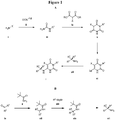
- Figure 1 shows a schematic route for the synthesis of the compounds or pharmaceutically acceptable salts described herein ( Figure 1A ) and a route for the preparation of chiral amines ( Figure 1B ).
- a series of pyrimidine dione compounds and pharmaceutically acceptable salts thereof has been found to reduce excess contractility in hypercontractile states and/or promote cardiac relaxation in hearts with diastolic dysfunction by stabilizing the conformation of beta cardiac myosin post-ATP hydrolysis but prior to strongly binding the actin filament and releasing phosphate, thus reducing the proportion of myosin molecules that are available to participate in the "powerstroke" portion of the muscle contraction cycle.
- the compounds can improve cardiac elasticity, reduce dynamic and/or static left ventricular outflow obstruction, improve diastolic left ventricular relaxation, reduce left ventricular diastolic (filling) pressures, reduce functional mitral regurgitation, and/or reduce left atrial and pulmonary capillary wedge pressures in patients with HCM helping overcome the debilitating exertional dyspnea and/or symptoms referable to left ventricular outflow obstruction (presyncope or syncope) that often accompanies the disease.
- the compounds can also be used to treat other cardiac disorders.
- alkyl refers to a straight or branched, saturated, aliphatic radical having the number of carbon atoms indicated. Alkyl can include any number of carbons, such as C 1-2 , C 1-3 , C 1-4 , C 1-5 , C 1-6 , C 1-7 , C 1-8 , C 2-3 , C 2-4 , C 2-5 , C 2-6 , C 3-4 , C 3-5 , C 3-6 , C 4-5 , C 4-6 and C 5-6 .
- C 1-6 alkyl includes, but is not limited to, methyl, ethyl, propyl, isopropyl, butyl, isobutyl, sec-butyl, tert-butyl, pentyl, isopentyl, hexyl, etc.
- Alkyl can refer to alkyl groups having up to 20 carbons atoms, such as, but not limited to heptyl, octyl, nonyl, decyl, etc. Unless stated otherwise, alkyl groups are unsubstituted.
- a "substituted alkyl" group can be substituted with one or more moieties selected from halo, hydroxy, amino, alkylamino, nitro, cyano, and alkoxy.
- cycloalkyl refers to a saturated or partially unsaturated, monocyclic, fused bicyclic or bridged polycyclic ring assembly containing from 3 to 12 ring atoms, or the number of atoms indicated. Cycloalkyl can include any number of carbons, such as C 3-6 , C 4-6 , C 5-6 , C 3-8 , C 4-8 , C 5-8 , and C 6-8 . Saturated monocyclic cycloalkyl rings include, for example, cyclopropyl, cyclobutyl, cyclopentyl, cyclohexyl, and cyclooctyl.
- Saturated bicyclic and polycyclic cycloalkyl rings include, for example, norbornane, [2.2.2] bicyclooctane, decahydronaphthalene and adamantane. Cycloalkyl groups can also be partially unsaturated, having one or more double bonds in the ring.
- cycloalkyl groups that are partially unsaturated include, but are not limited to, cyclobutene, cyclopentene, cyclohexene, cyclohexadiene (1,3- and 1,4-isomers), cycloheptene, cycloheptadiene, cyclooctene, cyclooctadiene (1,3-, 1,4- and 1,5-isomers), norbornene, and norbornadiene. Unless otherwise stated, cycloalkyl groups are unsubstituted. A "substituted cycloalkyl" group can be substituted with one or more moieties selected from halo, hydroxy, amino, alkylamino, nitro, cyano, and alkoxy.
- heterocycloalkyl refers to a saturated ring system having from 3 to 12 ring members and from 1 to 4 heteroatoms selected from N, O and S. Additional heteroatoms including, but not limited to, B, Al, Si and P can also be present in a heterocycloalkyl group. The heteroatoms can be oxidized to form moieties such as, but not limited to, -S(O)- and -S(O) 2 -. Heterocycloalkyl groups can include any number of ring atoms, such as, 3 to 6, 4 to 6, 5 to 6, or 4 to 7 ring members.
- heterocycloalkyl groups any suitable number of heteroatoms can be included in the heterocycloalkyl groups, such as 1, 2, 3, or 4, or 1 to 2, 1 to 3, 1 to 4, 2 to 3, 2 to 4, or 3 to 4.
- heterocycloalkyl groups include, but are not limited to, aziridine, azetidine, pyrrolidine, piperidine, azepane, azocane, quinuclidine, pyrazolidine, imidazolidine, piperazine (1,2-, 1,3- and 1,4-isomers), oxirane, oxetane, tetrahydrofuran, oxane (tetrahydropyran), oxepane, thiirane, thietane, thiolane (tetrahydrothiophene), thiane (tetrahydrothiopyran), oxazolidine, isoxazolidine, thiazolidine, isothiazolidine, diox
- Heterocycloalkyl groups are unsubstituted, but can be described, in some embodiments as substituted. "Substituted heterocycloalkyl" groups can be substituted with one or more moieties selected from halo, hydroxy, amino, alkylamino, nitro, cyano, and alkoxy.
- heteroaryl refers to a monocyclic or fused bicyclic or tricyclic aromatic ring assembly containing 5 to 16 ring atoms, where from 1 to 5 of the ring atoms are a heteroatom such as N, O or S. Additional heteroatoms including, but not limited to, B, Al, Si and P can also be present in a heteroaryl group. The heteroatoms can be oxidized to form moieties such as, but not limited to, -S(O)- and -S(O) 2 -. Heteroaryl groups can include any number of ring atoms, such as, 5 to 6, 5 to 8, 6 to 8, 5 to 9, 5 to 10, 5 to 11, or 5 to 12 ring members.
- heteroaryl groups can have from 5 to 8 ring members and from 1 to 4 heteroatoms, or from 5 to 8 ring members and from 1 to 3 heteroatoms, or from 5 to 6 ring members and from 1 to 4 heteroatoms, or from 5 to 6 ring members and from 1 to 3 heteroatoms.
- heteroaryl groups include, but are not limited to, pyrrole, pyridine, imidazole, pyrazole, triazole, tetrazole, pyrazine, pyrimidine, pyridazine, triazine (1,2,3-, 1,2,4- and 1,3,5-isomers), thiophene, furan, thiazole, isothiazole, oxazole, and isoxazole.
- Heteroaryl groups are unsubstituted, but can be described, in some embodiments as substituted. "Substituted heteroaryl" groups can be substituted with one or more moieties selected from halo, hydroxy, amino, alkylamino, nitro, cyano, and alkoxy.
- alkoxy refers to an alkyl group having an oxygen atom that connects the alkyl group to the point of attachment: i.e., alkyl-O-.
- alkoxy groups can have any suitable number of carbon atoms, such as C 1-6 or C 1-4 .
- Alkoxy groups include, for example, methoxy, ethoxy, propoxy, iso-propoxy, butoxy, 2-butoxy, iso-butoxy, sec-butoxy, tert-butoxy, pentoxy, hexoxy, etc. Alkoxy groups are unsubstituted, but can be described, in some embodiments as substituted. "Substituted alkoxy" groups can be substituted with one or more moieties selected from halo, hydroxy, amino, alkylamino, nitro, cyano, and alkoxy.
- halo and halogen refer to fluorine, chlorine, bromine and iodine.
- the term "pharmaceutically acceptable” refers to a substance that is compatible with a compound or salt as described herein, as well as with any other ingredients with which the compound is formulated. Furthermore, a pharmaceutically acceptable substance is not deleterious to the recipient of the substance.
- salt refers to an acid or base salt of a compound described herein.
- Pharmaceutically acceptable salts can be derived, for example, from mineral acids (hydrochloric acid, hydrobromic acid, phosphoric acid, and the like), organic acids (acetic acid, propionic acid, glutamic acid, citric acid and the like), and quaternary ammonium ions. It is understood that the pharmaceutically acceptable salts are non-toxic. Additional information on suitable pharmaceutically acceptable salts can be found in Remington's Pharmaceutical Sciences, 17th ed., Mack Publishing Company, Easton, Pa., 1985 , which is incorporated herein by reference. The neutral form of a compound may be regenerated by contacting the salt with a base or acid and isolating the parent compound in the conventional manner.
- the term "pharmaceutical composition” refers to a product comprising a compound or pharmaceutically acceptable salt described herein, an excipient as defined herein, and other optional ingredients in specified amounts, as well as any product which results directly or indirectly from combination of the specified ingredients in the specified amounts.
- excipient refers to a substance that aids the administration of an active agent to a subject.
- Pharmaceutical excipients include, but are not limited to, binders, fillers, disintegrants, lubricants, coatings, sweeteners, flavors and colors.
- binders include, but are not limited to, binders, fillers, disintegrants, lubricants, coatings, sweeteners, flavors and colors.
- the terms “treat,” “treating” and “treatment” refer to any indicia of success in the treatment or amelioration of a pathology, injury, condition, or symptom related to hypertrophic cardiomyopathy, including any objective or subjective parameter such as abatement; remission; diminishing of symptoms; making the pathology, injury, condition, or symptom more tolerable to the patient; decreasing the frequency or duration of the pathology, injury, condition, or symptom; or, in some situations, preventing the onset of the pathology, injury, condition, or symptom.
- Treatment or amelioration can be based on any objective or subjective parameter; including, e.g., the result of a physical examination.
- a compound having the formula: or a pharmaceutically acceptable salt thereof is provided.
- R 1 is a member selected from C 1 -C 8 alkyl, C 3 -C 8 cycloalkyl, C 3 -C 8 cycloalkyl-C 1 -C 4 alkyl, 4- to 7-membered heterocycloalkyl, phenyl, phenyl-C 1 -C 4 alkyl, 5- to 6-membered heteroaryl and 5- to 6-membered heteroaryl-C 1 -C 4 alkyl, wherein each R 1 is optionally substituted with from 1-3 R a ;
- R 2 is a member selected from phenyl, phenyl-C 1 -C 4 alkyl, 5- to 6-membered heteroaryl and 5- to 6-membered heteroaryl-C 1 -C 4 alkyl, wherein each R 2 is optionally substituted with from 1-5 R b ;
- R 3 is a member selected from C 1 -C 4 alkyl, C 3 -C 4 cycloalkyl, and 4- to 7-
- Each R a is independently selected from halo, CN, hydroxyl, C 1 -C 4 alkyl, C 1 -C 4 haloalkyl, C 1 -C 4 alkoxy, phenyl, phenyl-C 1 -C 4 alkyl, phenyl-C 1 -C 4 alkoxy, phenoxy, -COR a1 , -CO 2 R a1 , -SO 2 R a1 ,-SO 2 NR a1 R a2 , and -CONR a1 R a2 , wherein each R a1 and R a2 is independently selected from H, C 1 -C 4 alkyl and phenyl, or optionally R a1 and R a2 when attached to a nitrogen atom are combined to form a 4- to 6- membered ring.
- each R b when present, is independently selected from halo, CN, hydroxyl, C 1 -C 4 alkyl, C 1 -C 4 haloalkyl, C 1 -C 4 alkoxy, phenoxy, phenyl-C 1 -C 4 alkoxy, methylenedioxy, difluoromethylenedioxy, -COR b1 , -CO 2 R b1 , -SO 2 R b1 , -SO 2 NR b1 R b2 , CONR b1 R b2 , NR b1 R b2 , 5- to 6-membered heteroaryl, and 5- to 6-membered heterocyclyl optionally substituted with oxo, wherein each R b1 and R b2 is independently selected from H and C 1 -C 4 alkyl or optionally R b1 and R b2 when attached to a nitrogen atom are combined to form a 4- to 6- membered ring; and each
- R 1 is selected from C 1 -C 8 alkyl, C 3 -C 8 cycloalkyl, 4- to 7-membered heterocycloalkyl, phenyl, or 5- to 6-membered heteroaryl, wherein each R 1 is optionally substituted with from 1-3 R a .
- R 2 is phenyl, which is optionally substituted with from 1-5 R b .
- R 3 is selected from C 1 -C 4 alkyl, C 3 -C 4 cycloalkyl, or 4- to 7-membered heterocycloalkyl, wherein each R 3 is optionally substituted with from 1-2 R c .
- R 4 is H, and X is H or F.
- each R a when present, is independently halo, CN, C 1 -C 4 alkyl, C 1 -C 4 alkoxy, -COR a1 , -CO 2 R a1 , -SO 2 R a1 , -SO 2 NR a1 R a2 , or -CONR a1 R a2 , wherein each R a1 and R a2 is independently H or C 1 -C 4 alkyl.
- R a1 and R a2 when attached to a nitrogen atom, are optionally combined to form a 4- to 6- membered ring.
- Each R b when present, is independently halo, CN, C 1 -C 4 alkyl, C 1 -C 4 alkoxy, -COR b1 , -CO 2 R b1 , -SO 2 R b1 ,-SO 2 NR b1 R b2 , CONR b1 R b2 , NR b1 R b2 , 5- to 6-membered heteroaryl, or 5- to 6-membered heterocyclyl optionally substituted with oxo, wherein each R b1 and R b2 is independently H or C 1 -C 4 alkyl.
- R b1 and R b2 when attached to a nitrogen atom, are optionally combined to form a 4- to 6- membered ring.
- Each R c when present, is independently halo or C 1 -C 2 alkoxy.
- X is H.
- R 1 is C 3 -C 4 alkyl, C 3 -C 5 cycloalkyl, or 4- to 6-membered heterocycloalkyl, wherein each R 1 is optionally substituted with from 1-2 R a .
- R 1 is phenyl or 5- to 6-membered heteroaryl, wherein each R 1 is optionally substituted with from 1-3 R a .
- R 1 is C 3 -C 4 alkyl, C 3 -C 5 cycloalkyl, or 4- to 6-membered heterocycloalkyl.
- R 1 is 4- to 6-membered heterocycloalkyl, optionally substituted with from 1-2 R a selected from C 1 -C 4 alkyl, C 1 -C 4 alkoxy, -COR a1 , -CO 2 R a1 , -SO 2 R a1 , -SO 2 NR a1 R a2 , and -CONR a1 R a2 , wherein each R a1 and R a2 is independently H or C 1 -C 4 alkyl.
- R 1 is cyclobutyl, isopropyl, isobutyl, 1-methoxypropan-2-yl, cyclopentyl, cyclohexyl, 4-tetrahydropyranyl, 1-(methylsulfonyl)piperidin-4-yl, 1-(methoxycarbonyl)piperidin-4-yl, 4,4-difluorocyclohexyl, phenyl, 2-pyridyl, 3-pyridyl, 3-isoxazolyl, 5-isoxazolyl, or 1-methyl-3-pyrazolyl.
- R 2 is optionally substituted with from 1-2 R b .
- R 2 is phenyl, 3-methylphenyl, 2-fluorophenyl, 3-fluorophenyl, 4-fluorophenyl, 2,5-difluorophenyl, 3,5-difluorophenyl, 3-chlorophenyl, 3-methoxyphenyl, 3-(3-oxazolidin-2-onyl)phenyl, 3-(2-methyl-1-imidazyl)phenyl, 3-(1-pyrazolyl)phenyl, or 3-(1,2,4-triazol-1-yl)phenyl.
- R 3 is C 1 -C 4 alkyl, C 1 -C 4 alkoxyalkyl, or C 3 -C 4 cycloalkyl.
- R 3 is methyl, ethyl, propyl, cyclopropyl, cyclobutyl or 2-methoxymethyl.
- R 3 is methyl
- the compounds or pharmaceutically acceptable salts described herein can have any combination of the R 1 , R 2 , R 3 , R 4 , R a , R a1 , R a2 , R b , R b1 , R b2 , R c , and X groups recited above.
- Selected embodiments recited for R 2 can be combined with any of the selected embodiments recited for R 1 which, in turn, can be combined with any of the selected embodiments recited for R 3 .
- R 1 is C 3 -C 8 alkyl; R 3 is C 3 -C 4 cycloalkyl or 4-to 7-membered heterocycloalkyl; and R 2 is phenyl.
- R 1 is 4- to 7-membered heterocycloalkyl or 5- to 6-membered heteroaryl which is optionally substituted with C 1 -C 4 alkyl, -CO 2 R a1 , -SO 2 NR a1 R a2 , or -SO 2 R a1 ; R 3 is C 3 -C 4 cycloalkyl or 4- to 7-membered heterocycloalkyl; and R 2 is phenyl.
- R 1 is C 3 -C 8 cycloalkyl or phenyl
- R 3 is C 3 -C 4 cycloalkyl or 4- to 7-membered heterocycloalkyl
- R 2 is phenyl
- R 1 is C 3 -C 8 alkyl; R 3 is C 1 -C 4 alkyl; and R 2 is phenyl.
- R 1 is 4- to 7-membered heterocycloalkyl or 5- to 6-membered heteroaryl which is optionally substituted with C 1 -C 4 alkyl, -CO 2 R a1 , or -SO 2 R a1 ; R 3 is C 1 -C 4 alkyl; and R 2 is phenyl.
- R 1 is C 3 -C 8 cycloalkyl or phenyl; R 3 is C 1 -C 4 alkyl; and R 2 is phenyl.
- R 1 is C 3 -C 8 alkyl
- R 3 is C 3 -C 4 cycloalkyl or 4- to 7-membered heterocycloalkyl
- R 2 is phenyl substituted with 1-2 C 1 -C 4 alkoxy or halo.
- R 1 is 4- to 7-membered heterocycloalkyl or 5- to 6-membered heteroaryl which is optionally substituted with C 1 -C 4 alkyl, -CO 2 R a1 , or -SO 2 R a1 ;
- R 3 is C 3 -C 4 cycloalkyl or 4- to 7-membered heterocycloalkyl; and
- R 2 is phenyl substituted with 1-2 C 1 -C 4 alkoxy or halo.
- R 1 is C 3 -C 8 cycloalkyl or phenyl
- R 3 is C 3 -C 4 cycloalkyl or 4- to 7-membered heterocycloalkyl
- R 2 is phenyl substituted with 1-2 C 1 -C 4 alkoxy or halo.
- R 1 is C 3 -C 8 alkyl; R 3 is C 1 -C 4 alkyl; and R 2 is phenyl substituted with 1-2 C 1 -C 4 alkoxy or halo.
- R 1 is 4- to 7-membered heterocycloalkyl or 5- to 6-membered heteroaryl which is optionally substituted with C 1 -C 4 alkyl, -CO 2 R a1 , or -SO 2 R a1 ;
- R 3 is C 1 -C 4 alkyl; and R 2 is phenyl substituted with 1-2 C 1 -C 4 alkoxy or halo.
- R 1 is C 3 -C 8 cycloalkyl or phenyl
- R 3 is C 1 -C 4 alkyl
- R 2 is phenyl substituted with 1-2 C 1 -C 4 alkoxy or halo.
- R 1 is C 3 -C 8 alkyl
- R 3 is C 3 -C 4 cycloalkyl or 4- to 7-membered heterocycloalkyl
- R 2 is phenyl substituted with 5- to 6-membered heteroaryl or 5- to 6-membered heterocyclyl optionally substituted with oxo.
- R 1 is 4- to 7-membered heterocycloalkyl or 5- to 6-membered heteroaryl which is optionally substituted with C 1 -C 4 alkyl, -CO 2 R a1 , or -SO 2 R a1 ;
- R 3 is C 3 -C 4 cycloalkyl or 4- to 7-membered heterocycloalkyl; and
- R 2 is phenyl substituted with 5- to 6-membered heteroaryl or 5- to 6-membered heterocyclyl optionally substituted with oxo.
- R 1 is C 3 -C 8 cycloalkyl or phenyl
- R 3 is C 3 -C 4 cycloalkyl or 4- to 7-membered heterocycloalkyl
- R 2 is phenyl substituted with 5- to 6-membered heteroaryl or 5- to 6-membered heterocyclyl optionally substituted with oxo.
- R 1 is C 3 -C 8 alkyl
- R 3 is C 1 -C 4 alkyl
- R 2 is phenyl substituted with 5- to 6-membered heteroaryl or 5- to 6-membered heterocyclyl optionally substituted with oxo.
- R 1 is 4- to 7-membered heterocycloalkyl or 5- to 6-membered heteroaryl which is optionally substituted with C 1 -C 4 alkyl, -CO 2 R a1 , or -SO 2 R a1 ;
- R 3 is C 1 -C 4 alkyl; and
- R 2 is phenyl substituted with 5- to 6-membered heteroaryl or 5- to 6-membered heterocyclyl optionally substituted with oxo.
- R 1 is C 3 -C 8 cycloalkyl or phenyl
- R 3 is C 1 -C 4 alkyl
- R 2 is phenyl substituted with 5- to 6-membered heteroaryl or 5- to 6-membered heterocyclyl optionally substituted with oxo.
- R 1 is C 3 -C 8 alkyl
- R 3 is C 3 -C 4 cycloalkyl or 4- to 7-membered heterocycloalkyl
- R 2 is phenyl substituted with CN, C 1 -C 4 alkyl, -COR b1 , -CO 2 R b1 , -SO 2 R b1 , -SO 2 NR b1 R b2 , CONR b1 R b2 , or NR b1 R b2 .
- R 1 is 4- to 7-membered heterocycloalkyl or 5- to 6-membered heteroaryl which is optionally substituted with C 1 -C 4 alkyl, -CO 2 R a1 , or -SO 2 R a1 ;
- R 3 is C 3 -C 4 cycloalkyl or 4- to 7-membered heterocycloalkyl;
- R 2 is phenyl substituted with CN, C 1 -C 4 alkyl, -COR b1 , -CO 2 R b1 , -SO 2 R b1 , CONR b1 R b2 , or NR b1 R b2 .
- R 1 is C 3 -C 8 cycloalkyl or phenyl
- R 3 is C 3 -C 4 cycloalkyl or 4- to 7-membered heterocycloalkyl
- R 2 is phenyl substituted with CN, C 1 -C 4 alkyl, -COR b1 , -CO 2 R b1 , -SO 2 R b1 , CONR b1 R b2 , or NR b1 R b2 .
- R 1 is C 3 -C 8 alkyl
- R 3 is C 1 -C 4 alkyl
- R 2 is phenyl substituted with CN, C 1 -C 4 alkyl, -COR b1 , -CO 2 R b1 , -SO 2 R b1 , CONR b1 R b2 , or NR b1 R b2 .
- R 1 is 4- to 7-membered heterocycloalkyl or 5- to 6-membered heteroaryl which is optionally substituted with C 1 -C 4 alkyl, -CO 2 R a1 , or -SO 2 R a1 ;
- R 3 is C 1 -C 4 alkyl; and
- R 2 is phenyl substituted with CN, C 1 -C 4 alkyl, -COR b1 , -CO 2 R b1 , -SO 2 R b1 , CONR b1 R b2 , or NR b1 R b2 .
- R 1 is C 3 -C 8 cycloalkyl or phenyl;
- R 3 is C 1 -C 4 alkyl;
- R 2 is phenyl substituted with CN, C 1 -C 4 alkyl, -COR b1 , -CO 2 R b1 , -SO 2 R b1 , CONR b1 R b2 , NR b1 R b2 , or -CONR a1 R a2 .
- R 1 is isopropyl
- R 2 is optionally substituted with 1-2 R b
- R 3 is methyl
- R 1 is 4- to 6-membered heterocycloalkyl, optionally substituted with from 1-2 R a selected from C 1 -C 4 alkyl, C 1 -C 4 alkoxy, -COR a1 , -CO 2 R a1 , -SO 2 R a1 , -SO 2 NR a1 R a2 , and -CONR a1 R a2 , wherein each R a1 and R a2 can independently be H or C 1 -C 4 alkyl; R 2 is optionally substituted with 1-2 R b ; and R 3 is methyl.
- R 1 is phenyl or 5- to 6-membered heteroaryl, wherein each R 1 is optionally substituted with from 1-3 R a ; R 2 is optionally substituted with from 1-2 R b ; and R 3 is methyl.
- X can be H in any of the embodiments set forth above. In other embodiments, X can be F in any of the embodiments set forth above. Still further, compounds provided herein with an identified stereochemistry (indicated as R or S, or with dashed or wedge bond designations) will be understood by one of skill in the art to be substantially free of other isomers (e.g., at least 80%, 90%, 95% up to 100% free of the other isomer).
- the compound is selected from:
- the compound is selected from or a pharmaceutically acceptable salt thereof.
- the compounds or pharmaceutically acceptable salts described herein ( I ) can be prepared via any suitable method.
- Compounds can be prepared, for example, by the route outlined in Figure 1 .
- a pyrimidine trione v can be synthesized via condensation of a urea iii with a malonate iv.
- the urea iii can be prepared via reaction of an amine i with an appropriate cyanate ii.
- the pyrimidine trione v is derivatized with a suitable leaving group (Lg) to provide intermediate vi.
- the leaving group can be, but is not limited to, a halogen such as a chloride or iodide.
- a halogenated intermediate vi can be prepared from pyrimidine triones by methods such as those described by Brown (The Chemistry of Heterocyclic Compounds, The Pyrimidines, John Wiley & Sons, 2009 ). Intermediates vi can be converted to compounds of formula I via reaction with amines vii. Certain chiral amines can be prepared from a ketone or aldehyde ix as shown in Figure 1B ; a sulfinyl imine xii derived from the ketone or aldehyde can be reacted with a Gringard reagent xiii to provide a chiral amine vii.
- One of skill in the art will appreciate that the compounds described herein can be prepared via other methods, such as those described by LaRock (Comprehensive Organic Transformations: A Guide to Functional Group Preparations, Wiley, 1999 ).
- compositions containing a compound or pharmaceutically acceptable salt described herein and a pharmaceutically acceptable excipient.
- the compositions may be useful for treating hypertrophic cardiomyopathy in humans and other subjects.
- compositions for the administration of the compounds or pharmaceutically acceptable salts described herein may conveniently be presented in unit dosage form and may be prepared by any of the methods known in the art of pharmacy and drug delivery. All methods include the step of bringing the active ingredient into association with a carrier containing one or more accessory ingredients.
- the pharmaceutical compositions are prepared by uniformly and intimately bringing the active ingredient into association with a liquid carrier or a finely divided solid carrier or both, and then, if necessary, shaping the product into the desired formulation.
- the active agent is generally included in an amount sufficient to produce the desired effect upon myocardial contractility (i.e. to decrease the often supranormal systolic contractility in HCM) and to improve left ventricular relaxation in diastole.
- Such improved relaxation can alleviate symptoms in hypertrophic cardiomyopathy and other etiologies of diastolic dysfunction. It can also ameliorate the effects of diastolic dysfunction causing impairment of coronary blood flow, improving the latter as an adjunctive agent in angina pectoris and ischemic heart disease. It can also confer benefits on salutary left ventricular remodeling in HCM and other causes of left ventricular hypertrophy due to chronic volume or pressure overload from, e.g., valvular heart disease or systemic hypertension.
- compositions containing the active ingredient may be in a form suitable for oral use, for example, as tablets, troches, lozenges, aqueous or oily suspensions, dispersible powders or granules, emulsions, hard or soft capsules, syrups, elixirs, solutions, buccal patch, oral gel, chewing gum, chewable tablets, effervescent powder and effervescent tablets.
- Compositions intended for oral use may be prepared according to any method known to the art for the manufacture of pharmaceutical compositions and such compositions may contain one or more agents selected from the group consisting of sweetening agents, flavoring agents, coloring agents, antioxidants and preserving agents in order to provide pharmaceutically elegant and palatable preparations.
- Tablets contain the active ingredient in admixture with non-toxic pharmaceutically acceptable excipients which are suitable for the manufacture of tablets.
- excipients may be for example, inert diluents, such as cellulose, silicon dioxide, aluminum oxide, calcium carbonate, sodium carbonate, glucose, mannitol, sorbitol, lactose, calcium phosphate or sodium phosphate; granulating and disintegrating agents, for example, corn starch, or alginic acid; binding agents, for example PVP, cellulose, PEG, starch, gelatin or acacia, and lubricating agents, for example magnesium stearate, stearic acid or talc.
- inert diluents such as cellulose, silicon dioxide, aluminum oxide, calcium carbonate, sodium carbonate, glucose, mannitol, sorbitol, lactose, calcium phosphate or sodium phosphate
- granulating and disintegrating agents for example, corn starch, or alginic acid
- the tablets may be uncoated or they may be coated, enterically or otherwise, by known techniques to delay disintegration and absorption in the gastrointestinal tract and thereby provide a sustained action over a longer period.
- a time delay material such as glyceryl monostearate or glyceryl distearate may be employed. They may also be coated to form osmotic therapeutic tablets for controlled release.
- Formulations for oral use may also be presented as hard gelatin capsules wherein the active ingredient is mixed with an inert solid diluent, for example, calcium carbonate, calcium phosphate or kaolin, or as soft gelatin capsules wherein the active ingredient is mixed with water or an oil medium, for example peanut oil, liquid paraffin, or olive oil.
- emulsions can be prepared with a non-water miscible ingredient such as oils and stabilized with surfactants such as mono-diglycerides, PEG esters and the like.
- Aqueous suspensions contain the active materials in admixture with excipients suitable for the manufacture of aqueous suspensions.
- excipients are suspending agents, for example sodium carboxymethylcellulose, methylcellulose, hydroxypropylmethylcellulose, sodium alginate, polyvinyl-pyrrolidone, gum tragacanth and gum acacia; dispersing or wetting agents may be a naturally-occurring phosphatide, for example lecithin, or condensation products of an alkylene oxide with fatty acids, for example polyoxyethylene stearate, or condensation products of ethylene oxide with long chain aliphatic alcohols, for example heptadecaethyleneoxycetanol, or condensation products of ethylene oxide with partial esters derived from fatty acids and a hexitol such as polyoxyethylene sorbitol monooleate, or condensation products of ethylene oxide with partial esters derived from fatty acids and hexitol anhydrides, for example polyethylene sorbitan monoole
- the aqueous suspensions may also contain one or more preservatives, for example ethyl, or n-propyl, p-hydroxybenzoate, one or more coloring agents, one or more flavoring agents, and one or more sweetening agents, such as sucrose or saccharin.
- preservatives for example ethyl, or n-propyl, p-hydroxybenzoate
- coloring agents for example ethyl, or n-propyl, p-hydroxybenzoate
- coloring agents for example ethyl, or n-propyl, p-hydroxybenzoate
- flavoring agents for example ethyl, or n-propyl, p-hydroxybenzoate
- sweetening agents such as sucrose or saccharin.
- Oily suspensions may be formulated by suspending the active ingredient in a vegetable oil, for example arachis oil, olive oil, sesame oil or coconut oil, or in a mineral oil such as liquid paraffin.
- the oily suspensions may contain a thickening agent, for example beeswax, hard paraffin or cetyl alcohol. Sweetening agents such as those set forth above, and flavoring agents may be added to provide a palatable oral preparation. These compositions may be preserved by the addition of an anti-oxidant such as ascorbic acid.
- Dispersible powders and granules suitable for preparation of an aqueous suspension by the addition of water provide the active ingredient in admixture with a dispersing or wetting agent, suspending agent and one or more preservatives.
- a dispersing or wetting agent e.g., glycerol, glycerol, glycerol, glycerol, glycerol, glycerol, glycerin, glycerin, glycerin, glycerin, glycerin, sorbitol, sorbitol, sorbitol, sorbitol, sorbitol, sorbitol, sorbitol, sorbitol, sorbitol, sorbitol, glycerol, glycerol, glycerol, glycerol, glycerol, glycerol, glycerol, glycerol, glycerol
- the pharmaceutical compositions described herein may also be in the form of oil-in-water emulsions.
- the oily phase may be a vegetable oil, for example olive oil or arachis oil, or a mineral oil, for example liquid paraffin or mixtures of these.
- Suitable emulsifying agents may be naturally-occurring gums, for example gum acacia or gum tragacanth, naturally-occurring phosphatides, for example soy bean, lecithin, and esters or partial esters derived from fatty acids and hexitol anhydrides, for example sorbitan monooleate, and condensation products of the said partial esters with ethylene oxide, for example polyoxyethylene sorbitan monooleate.
- the emulsions may also contain sweetening and flavoring agents.
- Syrups and elixirs may be formulated with sweetening agents, for example glycerol, propylene glycol, sorbitol or sucrose. Such formulations may also contain a demulcent, a preservative and flavoring and coloring agents.
- Oral solutions can be prepared in combination with, for example, cyclodextrin, PEG and surfactants.
- the pharmaceutical compositions may be in the form of a sterile injectable aqueous or oleagenous suspension.
- This suspension may be formulated according to the known art using those suitable dispersing or wetting agents and suspending agents which have been mentioned above.
- the sterile injectable preparation may also be a sterile injectable solution or suspension in a non-toxic parenterally-acceptable diluent or solvent, for example as a solution in 1,3-butane diol.
- the acceptable vehicles and solvents that may be employed are water, Ringer's solution and isotonic sodium chloride solution.
- sterile, fixed oils are conventionally employed as a solvent or suspending medium.
- any bland fixed oil may be employed including synthetic mono- or diglycerides.
- fatty acids such as oleic acid find use in the preparation of injectables.
- the compounds or pharmaceutically acceptable salts described herein may also be administered in the form of suppositories for rectal administration of the drug.
- These compositions can be prepared by mixing the drug with a suitable non-irritating excipient which is solid at ordinary temperatures but liquid at the rectal temperature and will therefore melt in the rectum to release the drug.
- a suitable non-irritating excipient which is solid at ordinary temperatures but liquid at the rectal temperature and will therefore melt in the rectum to release the drug.
- Such materials include cocoa butter and polyethylene glycols.
- the compounds or pharmaceutically acceptable salts can be administered via ocular delivery by means of solutions or ointments.
- transdermal delivery of the subject compounds or pharmaceutically acceptable salts can be accomplished by means of iontophoretic patches and the like.
- creams, ointments, jellies, solutions or suspensions, etc., containing the compounds or pharmaceutically acceptable salts described herein are employed.
- topical application is also meant to include the use of mouth washes and gargles.
- the compounds or pharmaceutically acceptable salts described herein may also be coupled to a carrier that is a suitable polymer for targetable drug carriers.
- a carrier that is a suitable polymer for targetable drug carriers.
- suitable polymers can include polyvinylpyrrolidone, pyran copolymer, polyhydroxy-propyl-methacrylamide-phenol, polyhydroxyethyl-aspartamide-phenol, or polyethyleneoxide-polylysine substituted with palmitoyl residues.
- the compounds or pharmaceutically acceptable salts described herein may be coupled to a carrier that is a biodegradable polymer useful in achieving controlled release of a drug, such as polylactic acid, polyglycolic acid, copolymers of polylactic and polyglycolic acid, polyepsilon caprolactone, polyhydroxy butyric acid, polyorthoesters, polyacetals, polydihydropyrans, polycyanoacrylates and cross linked or amphipathic block copolymers of hydrogels.
- a carrier that is a biodegradable polymer useful in achieving controlled release of a drug, such as polylactic acid, polyglycolic acid, copolymers of polylactic and polyglycolic acid, polyepsilon caprolactone, polyhydroxy butyric acid, polyorthoesters, polyacetals, polydihydropyrans, polycyanoacrylates and cross linked or amphipathic block copolymers of hydrogels.
- HCM myosin mechanics
- R403Q and R453C are located in different sections of the motor domain and cause distinct mechanistic perturbations that lead to the common outcome of increased force production.
- the compounds or pharmaceutically acceptable salts described herein can bind directly to the mutant sarcomeric proteins and correct for their aberrant function, either in cis (by affecting the same specific function) or in trans (by altering a complementary function). As such, they can provide therapeutic benefit for HCM patients by counteracting the hypercontractile and/or impaired relaxation associated with this disease.
- HCM hypertrophic cardiomyopathy
- the method includes administering to a subject in need thereof an effective amount of a compound or pharmaceutically acceptable salt described herein.
- the compounds of the invention or their pharmaceutically acceptable salts can alter the natural history of HCM and other diseases rather than merely palliating symptoms.
- the mechanisms conferring clinical benefit to HCM patients can extend to patients with other forms of heart disease sharing similar pathophysiology, with or without demonstrable genetic influence.
- an effective treatment for HCM by improving ventricular relaxation during diastole, can also be effective in a broader population characterized by diastolic dysfunction.
- the compounds of the invention or their pharmaceutically acceptable salts can specifically target the root causes of the conditions or act upon other downstream pathways.
- the compounds of the invention or their pharmaceutically acceptable salts can also confer benefit to patients suffering from diastolic heart failure with preserved ejection fraction, ischemic heart disease, angina pectoris, or restrictive cardiomyopathy.
- Compounds of the invention or their pharmaceutically acceptable salts can also promote salutary ventricular remodeling of left ventricular hypertrophy due to volume or pressure overload; e.g., chronic mitral regurgitation, chronic aortic stenosis, or chronic systemic hypertension; in conjunction with therapies aimed at correcting or alleviating the primary cause of volume or pressure overload (valve repair/replacement, effective antihypertensive therapy). By reducing left ventricular filling pressures the compounds could reduce the risk of pulmonary edema and respiratory failure.
- Reducing or eliminating functional mitral regurgitation and/or lowering left atrial pressures may reduce the risk of paroxysmal or permanent atrial fibrillation, and with it reduce the attendant risk of arterial thromboembolic complications including but not limited to cerebral arterial embolic stroke.
- Reducing or eliminating either dynamic and/or static left ventricular outflow obstruction may reduce the likelihood of requiring septal reduction therapy, either surgical or percutaneous, with their attendant risks of short and long term complications.
- the compounds or their pharmaceutically acceptable salts may reduce the severity of the chronic ischemic state associated with HCM and thereby reduce the risk of Sudden Cardiac Death (SCD) or its equivalent in patients with implantable cardioverter-defibrillators (frequent and/or repeated ICD discharges) and/or the need for potentially toxic antiarrhythmic medications.
- SCD Sudden Cardiac Death
- the compounds or their pharmaceutically acceptable salts could be valuable in reducing or eliminating the need for concomitant medications with their attendant potential toxicities, drug-drug interactions, and/or side effects.
- the compounds or their pharmaceutically acceptable salts may reduce interstitial myocardial fibrosis and/or slow the progression, arrest, or reverse left ventricular hypertrophy.
- the compounds or pharmaceutically acceptable salts described herein may be administered by oral, parenteral (e.g., intramuscular, intraperitoneal, intravenous, ICV, intracisternal injection or infusion, subcutaneous injection, or implant), by implantation (e.g., as when the compound or pharmaceutically acceptable salt is coupled to a stent device), by inhalation spray, nasal, vaginal, rectal, sublingual, or topical routes of administration and may be formulated, alone or together, in suitable dosage unit formulations containing conventional non-toxic pharmaceutically acceptable carriers, adjuvants and vehicles appropriate for each route of administration.
- parenteral e.g., intramuscular, intraperitoneal, intravenous, ICV, intracisternal injection or infusion, subcutaneous injection, or implant
- implantation e.g., as when the compound or pharmaceutically acceptable salt is coupled to a stent device
- inhalation spray e.g., nasal, vaginal, rectal, sublingual, or topical routes of administration and may
- an appropriate dosage level will generally be about 0.001 to 100 mg per kg patient body weight per day which can be administered in single or multiple doses.
- the dosage level will be about 0.01 to about 25 mg/kg per day; in some embodiments, about 0.05 to about 10 mg/kg per day.
- a suitable dosage level may be about 0.01 to 25 mg/kg per day, about 0.05 to 10 mg/kg per day, or about 0.1 to 5 mg/kg per day. Within this range the dosage may be 0.005 to 0.05, 0.05 to 0.5 or 0.5 to 5.0 mg/kg per day.
- the compositions are provided in the form of tablets containing 1.0 to 1000 milligrams of the active ingredient, particularly 1.0, 5.0, 10.0, 15.0, 20.0, 25.0, 50.0, 75.0, 100.0, 150.0, 200.0, 250.0, 300.0, 400.0, 500.0, 600.0, 750.0, 800.0, 900.0, and 1000.0 milligrams of the active ingredient for the symptomatic adjustment of the dosage to the patient to be treated.
- the compounds or pharmaceutically acceptable salts may be administered on a regimen of 1 to 4 times per day, in some embodiments, once or twice per day.
- the specific dose level and frequency of dosage for any particular patient may be varied and will depend upon a variety of factors including the activity of the specific compound or pharmaceutically acceptable salt employed, the metabolic stability and length of action of that compound or pharmaceutically acceptable salt, the age, body weight, hereditary characteristics, general health, sex and diet of the subject, as well as the mode and time of administration, rate of excretion, drug combination, and the severity of the particular condition for the subject undergoing therapy.
- compositions provided herein may be used in combination with other drugs that are used in the treatment, prevention, suppression or amelioration of the diseases or conditions for which compounds and compositions provided herein are useful. Such other drugs may be administered, by a route and in an amount commonly used therefor, contemporaneously or sequentially with a compound or composition provided herein. When a compound or composition provided herein is used contemporaneously with one or more other drugs, a pharmaceutical composition containing such other drugs in addition to the compound or composition provided herein is preferred. Accordingly, the pharmaceutical compositions provided herein include those that also contain one or more other active ingredients or therapeutic agents, in addition to a compound or composition provided herein.
- Suitable additional active agents include, for example: therapies that retard the progression of heart failure by down-regulating neurohormonal stimulation of the heart and attempt to prevent cardiac remodeling (e.g., ACE inhibitors, angiotensin receptor blockers (ARBs), ⁇ -blockers, aldosterone receptor antagonists, or neural endopeptidase inhibitors); therapies that improve cardiac function by stimulating cardiac contractility (e.g., positive inotropic agents, such as the ⁇ -adrenergic agonist dobutamine or the phosphodiesterase inhibitor milrinone); and therapies that reduce cardiac preload (e.g., diuretics, such as furosemide) or afterload (vasodilators of any class, including but not limited to calcium channel blockers, phosphodiesterase inhibitors, endothelin receptor antagonists, renin inhibitors, or smooth muscle myosin modulators).
- the weight ratio of the compound provided herein to the second active ingredient may be varied and will depend upon the effective dose of each ingredient. Generally, an effective dose of each
- Example 48 Preparation of ( S )-6-((1-phenylethyl)amino)-3-propylpyrimidine-2,4(1H,3H)-dione.
- Example 54 Preparation of 3-(( R )-1-hydroxypropan-2-yl)-6-(( S )-1-phenylethyl)amino)pyrimidine-2,4(1H,3H)-dione (54).
- Example 55 Preparation of ( S )-3-isopropyl-6-((1-(3-(trifluoromethyl)phenyl)ethyl)amino) pyrimidine-2,4(1H,3H)-dione.
- the resulting solution was stirred under an argon atmosphere at 100°C in an oil bath for 2 h. Upon cooling, the reaction was quenched with a saturated aqueous FeSO 4 solution (5 mL). The resulting mixture was diluted with EtOAc (20 mL) and washed with a saturated aqueous FeSO 4 solution (2 x 20 mL). The organic layer was dried with anhydrous Na 2 SO 4 , filtered, and concentrated under reduced pressure.
- benzyl isocyanate 150 uL, 1.2 mmol was added to a stirred solution of 57.2 (143 mg, 0.61 mmol) and DIEA (300 uL) in CH 3 CN (1 mL). After 10 min, the reaction mixture was quenched with H 2 O (10 mL). The resulting mixture was diluted with EtOAc (40 mL) and the layers were separated. To the organic layer was added the filtrate from first reaction. The layers were separated and the organics were concentrated to give the title compound which was utilized without further purification.
- Example 60 Preparation of ( R )-6-((1-(2,6-difluorophenyl)ethyl)amino)-3-isopropylpyrimidine-2,4(1H,3H)-dione (60R).
- Example 62 Preparation of ( S )-6-((1-(4-(benzyloxy)phenyl)ethyl)amino)-3-isopropylpyrimidine-2,4(1H,3H)-dione.
- Example 65 Preparation of ( S )-3-(6-methylpyridin-2-yl)-6-((1-phenylethyl)amino)pyrimidine-2,4(1H,3H)-dione.
- the pH was adjusted to 7 with anion ion-exchange resin (activated 201 ⁇ 4(711) strong base styrene anion exchange resin, 20 g) and the solids were filtered. The filtrate was concentrated under reduced pressure resulting in 0.2 g (37%) of the title compound as a yellow solid.
- anion ion-exchange resin activated 201 ⁇ 4(711) strong base styrene anion exchange resin, 20 g
- Example 70 Preparation of ( S )-3-isopropyl-6-((1-(2-(trifluoromethyl)phenyl)ethyl)amino) pyrimidine-2,4(1H,3H)-dione.
- the crude product (200 mg) was purified by chiral preparative HPLC with the following conditions: Column, Phenomenex Lux-2 5u Cellulose-2, 30 ⁇ 150mm; mobile phase, Hex-HPLC and ethanol-HPLC (hold 20% ethanol-HPLC in 14 min); Detector, uv 254/220nm. 160 mg crude product was obtained.
- Small molecule agents were assessed for their ability to inhibit the enzymatic activity of bovine cardiac myosin using a biochemical assay that couples the release of ADP (adenosine diphosphate) from cardiac myosin to an enzymatic coupling system consisting of pyruvate kinase and lactate dehydrogenase (PK/LDH) and monitoring the absorbance decrease of NADH (at 340 nm) as a function of time.
- PK converts ADP to ATP (adenosine triphosphate) by converting PEP (phosphoenolpyruvate) to pyruvate.
- nicotinamide adenine dinucleotide Pyruvate is then converted to lactate by LDH by converting NADH (nicotinamide adenine dinucleotide) to NAD (oxidized nicotinamide adenine dinucleotide).
- the source of cardiac myosin was from bovine heart in the form of skinned myofibrils. Prior to testing small molecule agents, the bovine myofibrils were assessed for their calcium responsiveness and the calcium concentration that achieves either a 50% (pCa 50 ) or 75% (pCa 75 ) activation of the myofibril system was chosen as the final condition for assessing the inhibitory activity of the small molecule agents.
- a dilution series of compound was created in DMSO such that the final desired concentration of compound would be achieved in a volume of 100 ⁇ L with a fixed DMSO concentration of 2% (v/v).
- 2 ⁇ L of the dilution series were added to 96 well plate to achieve an 8 or 12 point dose response.
- the enzymatic reaction was started with the addition of 50 ⁇ L of a solution containing ATP, PEP and NADH. The reaction progress was followed in a Molecular Devices M5e plate reader at ambient temperature using clear half area plates.
- the plate reader was configured to read absorbance at 340 nm in kinetics mode for 15 minutes. Data were recorded as the slope of the absorbance response to time. The slopes of the absorbance response as a function of time were normalized to slopes on the plate containing DMSO. This normalized rate was then plotted as a function of small molecule concentration and the data was fitted to a four-parameter fit using GraphPad Prism. The midpoint of this plot is the IC50 and is the concentration at which fifty percent of the total response is inhibited. Any agent that failed to achieve a fifty percent inhibition at the highest concentration tested was reported as an IC50 greater than the highest concentration tested (ie. IC50> 25 uM).
- Contractility of adult rat ventricular myocytes is determined by edge detection with an IonOptix contractility system. Aliquots of myocytes in Tyrode buffer (137 mM NaCl, 3.7 mM KCL, 0.5 mM MgCl 2 , 1.5 mM CaCl 2 , 4 mM HEPES, 11 mM glucose) are placed in a perfusion chamber (Series 20 RC-27NE; Warner Instruments), allowed to adhere to the coverslip, and then perfused with 37°C Tyrode buffer. Myocytes are filed stimulated at 1Hz and 10V.
- myocytes with clear striations, quiescent prior to pacing, with a cell length of 120-180 microns, a basal fractional shortening equal to 3-8% of the cell length, and a contraction velocity greater than 100 microns per second are used for contractility experiments.
- myocytes are first perfused for 60 seconds with Tyrodes buffer followed by 5 minutes of compound and a 140 second washout with Tyrodes buffer. Data is continuously recorded using IonOptix software. Contractility data is analyzed using Ionwizard software (IonOptix). For each cell, 10-20 contractility transients were averaged and compared under basal (no compound) and compound-treated conditions.
- Compound activity is measured by effects on fractional shortening (FS), where fractional shortening is the ratio of the peak length of the cell at contraction divided by the basal cell length normalized to 100% for an untreated cell.
- Table 4 Inhibition of Cardiomyocyte Contraction by Selected Compounds a ID Activity at 0.3 uM Activity at 1.0 uM 1 ++ +++ 2 ++ +++ 12 n.d. ++ 19 n.d. + 27 ++ n.d. 67 n.d. +++ a + represents fractional shorting inhibition values less than 33%. ++ represents fractional shorting inhibition values from 33% to 66%. +++ represents fractional shortening inhibition values greater than 66%.
- LVESd systole/contraction
- LVEDd diastole/relaxation
Landscapes
- Chemical & Material Sciences (AREA)
- Organic Chemistry (AREA)
- Health & Medical Sciences (AREA)
- Medicinal Chemistry (AREA)
- Veterinary Medicine (AREA)
- Public Health (AREA)
- Animal Behavior & Ethology (AREA)
- General Health & Medical Sciences (AREA)
- Pharmacology & Pharmacy (AREA)
- Life Sciences & Earth Sciences (AREA)
- Bioinformatics & Cheminformatics (AREA)
- Engineering & Computer Science (AREA)
- Cardiology (AREA)
- Heart & Thoracic Surgery (AREA)
- Nuclear Medicine, Radiotherapy & Molecular Imaging (AREA)
- General Chemical & Material Sciences (AREA)
- Chemical Kinetics & Catalysis (AREA)
- Epidemiology (AREA)
- Urology & Nephrology (AREA)
- Vascular Medicine (AREA)
- Hospice & Palliative Care (AREA)
- Pharmaceuticals Containing Other Organic And Inorganic Compounds (AREA)
- Plural Heterocyclic Compounds (AREA)
- Medicines That Contain Protein Lipid Enzymes And Other Medicines (AREA)
- Pyridine Compounds (AREA)
- Heterocyclic Carbon Compounds Containing A Hetero Ring Having Nitrogen And Oxygen As The Only Ring Hetero Atoms (AREA)
Applications Claiming Priority (5)
| Application Number | Priority Date | Filing Date | Title |
|---|---|---|---|
| US201361838088P | 2013-06-21 | 2013-06-21 | |
| US201461939655P | 2014-02-13 | 2014-02-13 | |
| US201461981366P | 2014-04-18 | 2014-04-18 | |
| EP14738986.0A EP3010910B1 (en) | 2013-06-21 | 2014-06-19 | Pyrimidinedione compounds against cardiac conditions |
| PCT/US2014/043192 WO2014205223A1 (en) | 2013-06-21 | 2014-06-19 | Pyrimidinedione compounds against cardiac conditions |
Related Parent Applications (1)
| Application Number | Title | Priority Date | Filing Date |
|---|---|---|---|
| EP14738986.0A Division EP3010910B1 (en) | 2013-06-21 | 2014-06-19 | Pyrimidinedione compounds against cardiac conditions |
Publications (1)
| Publication Number | Publication Date |
|---|---|
| EP3702352A1 true EP3702352A1 (en) | 2020-09-02 |
Family
ID=51177189
Family Applications (2)
| Application Number | Title | Priority Date | Filing Date |
|---|---|---|---|
| EP20155100.9A Pending EP3702352A1 (en) | 2013-06-21 | 2014-06-19 | Pyrimidinedione compound against cardiac conditions |
| EP14738986.0A Active EP3010910B1 (en) | 2013-06-21 | 2014-06-19 | Pyrimidinedione compounds against cardiac conditions |
Family Applications After (1)
| Application Number | Title | Priority Date | Filing Date |
|---|---|---|---|
| EP14738986.0A Active EP3010910B1 (en) | 2013-06-21 | 2014-06-19 | Pyrimidinedione compounds against cardiac conditions |
Country Status (38)
| Country | Link |
|---|---|
| US (9) | US9181200B2 (da) |
| EP (2) | EP3702352A1 (da) |
| JP (5) | JP6603213B2 (da) |
| KR (4) | KR20220020410A (da) |
| CN (2) | CN109384729B (da) |
| AU (5) | AU2014281408B2 (da) |
| BR (1) | BR112015031864B1 (da) |
| CA (1) | CA2915967C (da) |
| CL (1) | CL2015003689A1 (da) |
| CR (1) | CR20160032A (da) |
| CY (2) | CY1122964T1 (da) |
| DK (1) | DK3010910T3 (da) |
| DO (1) | DOP2015000300A (da) |
| EA (2) | EA201891009A1 (da) |
| ES (1) | ES2773250T3 (da) |
| FI (1) | FIC20230036I1 (da) |
| FR (1) | FR23C1047I2 (da) |
| GT (1) | GT201500348A (da) |
| HR (1) | HRP20200379T1 (da) |
| HU (2) | HUE047566T2 (da) |
| IL (7) | IL310829A (da) |
| LT (2) | LT3010910T (da) |
| MX (3) | MX2021005326A (da) |
| MY (1) | MY190860A (da) |
| NL (1) | NL301253I2 (da) |
| NO (1) | NO2023043I1 (da) |
| PE (1) | PE20160208A1 (da) |
| PH (2) | PH12021552715A1 (da) |
| PL (1) | PL3010910T3 (da) |
| PT (1) | PT3010910T (da) |
| RS (1) | RS59906B1 (da) |
| SG (2) | SG11201510163TA (da) |
| SI (1) | SI3010910T1 (da) |
| SM (1) | SMT202000071T1 (da) |
| TN (1) | TN2015000553A1 (da) |
| UA (1) | UA117929C2 (da) |
| WO (1) | WO2014205223A1 (da) |
| ZA (1) | ZA201508959B (da) |
Families Citing this family (58)
| Publication number | Priority date | Publication date | Assignee | Title |
|---|---|---|---|---|
| CN103491900B (zh) | 2010-12-23 | 2017-03-01 | 托尔福公司 | 用于二尖瓣修复和替换的系统 |
| EP3964176B1 (en) | 2011-06-21 | 2025-05-14 | Twelve, Inc. | Prosthetic heart valve devices |
| WO2013059743A1 (en) | 2011-10-19 | 2013-04-25 | Foundry Newco Xii, Inc. | Devices, systems and methods for heart valve replacement |
| CN103974674B (zh) | 2011-10-19 | 2016-11-09 | 托尔福公司 | 人工心脏瓣膜装置、人工二尖瓣和相关系统及方法 |
| US9039757B2 (en) | 2011-10-19 | 2015-05-26 | Twelve, Inc. | Prosthetic heart valve devices, prosthetic mitral valves and associated systems and methods |
| US11202704B2 (en) | 2011-10-19 | 2021-12-21 | Twelve, Inc. | Prosthetic heart valve devices, prosthetic mitral valves and associated systems and methods |
| US9579198B2 (en) | 2012-03-01 | 2017-02-28 | Twelve, Inc. | Hydraulic delivery systems for prosthetic heart valve devices and associated methods |
| WO2014205234A1 (en) * | 2013-06-21 | 2014-12-24 | MyoKardia, Inc. | Cycloalkyl-substituted pyrimidinedione compounds |
| SMT202000071T1 (it) * | 2013-06-21 | 2020-03-13 | Myokardia Inc | Composti di pirimidinadione contro le condizioni cardiache |
| US9346776B2 (en) | 2014-02-13 | 2016-05-24 | Takeda Pharmaceutical Company Limited | Fused heterocyclic compound |
| ME03654B (me) | 2014-02-13 | 2020-07-20 | Incyte Corp | Ciklopropilamini kao lsd1 inhibitori |
| US9428470B2 (en) | 2014-02-13 | 2016-08-30 | Takeda Pharmaceutical Company Limited | Heterocyclic compound |
| WO2015123437A1 (en) | 2014-02-13 | 2015-08-20 | Incyte Corporation | Cyclopropylamines as lsd1 inhibitors |
| PT3105226T (pt) | 2014-02-13 | 2019-11-06 | Incyte Corp | Ciclopropilaminas como inibidores de lsd1 |
| WO2016007731A1 (en) | 2014-07-10 | 2016-01-14 | Incyte Corporation | Imidazopyridines and imidazopyrazines as lsd1 inhibitors |
| WO2016007722A1 (en) | 2014-07-10 | 2016-01-14 | Incyte Corporation | Triazolopyridines and triazolopyrazines as lsd1 inhibitors |
| AU2016243939B2 (en) | 2015-04-03 | 2020-09-03 | Incyte Holdings Corporation | Heterocyclic compounds as LSD1 inhibitors |
| KR102710120B1 (ko) | 2015-08-12 | 2024-09-27 | 인사이트 홀딩스 코포레이션 | Lsd1 저해제의 염 |
| CN106432222A (zh) * | 2016-09-19 | 2017-02-22 | 丹诺医药(苏州)有限公司 | 8‑氯‑1‑环丙基‑7‑氟‑9‑甲基‑4‑氧‑4‑氢‑喹嗪‑3‑羧酸酯及其制备方法 |
| CN106946851B (zh) * | 2017-03-14 | 2019-11-12 | 牡丹江医学院 | 一种用于预防和治疗肾结石的药物 |
| US10575950B2 (en) | 2017-04-18 | 2020-03-03 | Twelve, Inc. | Hydraulic systems for delivering prosthetic heart valve devices and associated methods |
| US10646338B2 (en) | 2017-06-02 | 2020-05-12 | Twelve, Inc. | Delivery systems with telescoping capsules for deploying prosthetic heart valve devices and associated methods |
| RU2020109345A (ru) * | 2017-08-04 | 2021-09-06 | Миокардиа, Инк. | Применение мавакамтена для лечения гипертрофической кардиомиопатии |
| HUE067913T2 (hu) | 2018-01-19 | 2024-11-28 | Cytokinetics Inc | Dihidrobenzofurán és indén analógok mint szív szarkomer gátlók |
| US12187712B2 (en) | 2018-06-26 | 2025-01-07 | Cytokinetics, Inc. | Cardiac sarcomere inhibitors |
| JP7438148B2 (ja) | 2018-06-26 | 2024-02-26 | サイトキネティックス, インコーポレイテッド | 心臓サルコメア阻害剤 |
| WO2020047198A1 (en) | 2018-08-31 | 2020-03-05 | Incyte Corporation | Salts of an lsd1 inhibitor and processes for preparing the same |
| MA53491A (fr) | 2018-08-31 | 2021-09-15 | Cytokinetics Inc | Inhibiteurs de sarcomes cardiaques |
| PT3873904T (pt) * | 2018-10-29 | 2024-10-08 | Myokardia Inc | Compostos de pirimidinadiona bicíclica substituídos por tetra-hidropirano (thp) |
| WO2020151605A1 (zh) * | 2019-01-25 | 2020-07-30 | 青岛吉澳医药科技有限公司 | 氘代苯甲氨嘧啶二酮衍生物及其用途 |
| CN110698415B (zh) * | 2019-10-21 | 2023-05-09 | 上海先行医药开发有限公司 | 一种肌球蛋白抑制剂及其制备方法和用途 |
| AU2020378197A1 (en) * | 2019-11-10 | 2022-05-26 | MyoKardia, Inc. | Methods of treatment with myosin modulator |
| AU2021213748A1 (en) | 2020-01-28 | 2022-08-25 | Assia Chemical Industries Ltd. | Solid state forms of Mavacamten and process for preparation thereof |
| CA3190060A1 (en) | 2020-08-28 | 2022-03-03 | MyoKardia, Inc. | Methods of treatment with myosin modulator |
| JP2023550444A (ja) * | 2020-11-20 | 2023-12-01 | 江▲蘇▼恒瑞医▲薬▼股▲フン▼有限公司 | トリアジンジオン系誘導体、その調製方法及びその医薬的応用 |
| CN114539229B (zh) * | 2020-11-24 | 2024-10-22 | 江苏恒瑞医药股份有限公司 | 嘧啶二酮类衍生物、其制备方法及其在医药上的应用 |
| WO2022111498A1 (zh) * | 2020-11-24 | 2022-06-02 | 江苏恒瑞医药股份有限公司 | 嘧啶二酮类衍生物、其制备方法及其在医药上的应用 |
| WO2022162701A1 (en) * | 2021-02-01 | 2022-08-04 | Dr. Reddy's Laboratories Limited | Process for preparation of mavacamten and solid state forms thereof |
| WO2022179611A1 (zh) * | 2021-02-25 | 2022-09-01 | 南京明德新药研发有限公司 | 取代的吡啶-2,4-二酮类衍生物 |
| CN117083275A (zh) | 2021-03-04 | 2023-11-17 | 赛特凯恩蒂克公司 | 心脏肌节抑制剂 |
| CN112939876A (zh) * | 2021-03-10 | 2021-06-11 | 杭州科巢生物科技有限公司 | Mavacamten的晶型I及其制备方法 |
| WO2022189599A1 (en) | 2021-03-12 | 2022-09-15 | Sandoz Ag | Crystalline forms of mavacamten for the treatment of hcm |
| IL305234A (en) * | 2021-03-17 | 2023-10-01 | Hansoh Bio Llc | Nitrogen-containing heterocyclic ketones, preparation methods and medical use thereof |
| JPWO2023286719A1 (da) * | 2021-07-13 | 2023-01-19 | ||
| JP7315632B2 (ja) * | 2021-09-16 | 2023-07-26 | 楽天グループ株式会社 | 特典付与システム、特典付与方法、及びプログラム |
| CN116410143A (zh) * | 2021-12-29 | 2023-07-11 | 杭州奥默医药股份有限公司 | 一种多取代脲嘧啶衍生物及其制备方法和应用 |
| US20250154108A1 (en) * | 2022-01-27 | 2025-05-15 | Cms Research & Development Pte. Ltd. | Crystal form of 7-azaspiro[4,5]decane-6,10-dione compound and preparation method therefor |
| WO2023199258A1 (en) | 2022-04-13 | 2023-10-19 | Teva Pharmaceuticals International Gmbh | Solid state forms of mavacamten and process for preparation thereof |
| US20250288586A1 (en) | 2022-04-26 | 2025-09-18 | MyoKardia, Inc. | Methods of Administering Myosin Inhibitors |
| KR20250012075A (ko) | 2022-05-20 | 2025-01-23 | 지앙수 헨그루이 파마슈티컬스 컴퍼니 리미티드 | 트리아진디온계 유도체의 결정형 및 제조 방법 |
| CN119866337A (zh) * | 2022-09-16 | 2025-04-22 | 江苏豪森药业集团有限公司 | 一种含氮杂环酮化合物的晶型及其制备方法 |
| WO2024182469A1 (en) * | 2023-02-28 | 2024-09-06 | MyoKardia, Inc. | Myosin inhibitors for use in the treatment of hypertrophic cardiomyopathy |
| KR20250174911A (ko) | 2023-03-27 | 2025-12-15 | 엣지와이즈 테라퓨틱스, 인크. | 퀴놀리논 아미드 화합물 및 이의 용도 |
| WO2024218783A1 (en) * | 2023-04-17 | 2024-10-24 | Dasha Pharmaceuticals Private Limited | Green chemistry approach for synthesis of mavacamten and its intermediate using novel methodology |
| IT202300016653A1 (it) | 2023-08-03 | 2025-02-03 | Olon Spa | Processo per preparare mavacamten e intermedio di processo. |
| WO2025046606A1 (en) | 2023-08-26 | 2025-03-06 | Micro Labs Limited | Granules of mavacamten for oral administration |
| WO2025096779A2 (en) | 2023-11-01 | 2025-05-08 | Bristol Myers Squibb Company | Methods of treatment with a myosin inhibitor using protein levels |
| WO2025130408A1 (zh) * | 2023-12-20 | 2025-06-26 | 福石生物科技(合肥)有限公司 | 一种肌球蛋白抑制剂及其应用 |
Citations (3)
| Publication number | Priority date | Publication date | Assignee | Title |
|---|---|---|---|---|
| US5008267A (en) * | 1988-10-29 | 1991-04-16 | Mitsui Toatsu Chemicals, Incorporated | Pyrimidinedione compounds, method of producing the same and antiarrythmic agents containing the same |
| JPH06128238A (ja) * | 1992-10-20 | 1994-05-10 | Mitsui Toatsu Chem Inc | 新規ピリミジンジオン誘導体 |
| WO2004014868A2 (en) * | 2002-08-13 | 2004-02-19 | Warner-Lambert Company Llc | Pyrimidine-2,4-dione derivatives as matrix metalloproteinase inhibitors |
Family Cites Families (23)
| Publication number | Priority date | Publication date | Assignee | Title |
|---|---|---|---|---|
| DE1280877B (de) | 1960-11-16 | 1968-10-24 | Robugen Gmbh | Verfahren zur Herstellung von in 1-Stellung substituierten 4-Aminouracilen |
| JPS61205261A (ja) | 1985-03-08 | 1986-09-11 | Sagami Chem Res Center | 6―置換―5―フルオロウラシル誘導体 |
| JPH0637479B2 (ja) * | 1987-12-28 | 1994-05-18 | 三井東圧化学株式会社 | 新規ピリミジン誘導体、その製造法およびそれを含有する抗不整脈剤 |
| JPH03173885A (ja) | 1989-12-01 | 1991-07-29 | Mitsui Toatsu Chem Inc | ピリミジンジオン誘導体化合物、該化合物の製造法および該化合物を含む抗不整脈剤 |
| FR2659656B1 (fr) | 1990-03-15 | 1994-09-09 | Sanofi Sa | Derives de pyrimidinedione-2,4 et medicaments les contenant. |
| JPH0413669A (ja) * | 1990-04-27 | 1992-01-17 | Mitsui Toatsu Chem Inc | 新規ピリミジンジオン誘導体及び該化合物を含有する抗不整脈剤 |
| EP0697407B1 (en) | 1994-08-19 | 1997-06-25 | MITSUI TOATSU CHEMICALS, Inc. | Pyrimidinedione derivatives and antiarrhythmic compositions containing same |
| US5516905A (en) | 1994-08-30 | 1996-05-14 | University Of Massachusetts Medical Center | Antibiotic compounds and methods to treat gram-positive bacterial and mycoplasmal infections |
| ATE230733T1 (de) | 1998-06-26 | 2003-01-15 | Crompton Vinyl Additives Gmbh | Neue nh2-modifizierte 6-aminouracile als stabilisatoren für halogenhaltige polymere |
| US7416856B2 (en) | 1999-05-18 | 2008-08-26 | Cytokinetics, Inc. | High sensitivity assay for detection of nucleoside diphosphate production |
| US7202051B1 (en) | 1999-05-18 | 2007-04-10 | Cytokinetics, Inc. | Compositions and assays utilizing ADP or phosphate for detecting protein modulators |
| WO2001029010A1 (en) | 1999-10-21 | 2001-04-26 | Merck & Co., Inc. | Gram-positive selective antibacterial compounds, compositions containing such compounds and methods of treatment |
| US6495337B1 (en) | 2000-03-29 | 2002-12-17 | Cytokinetics, Inc. | High throughput sarcomeric assay |
| US20030114414A1 (en) | 2001-06-15 | 2003-06-19 | Chengxin Zhi | Methods for synthesizing substituted pyrimidines |
| US20030114445A1 (en) | 2001-06-15 | 2003-06-19 | Chengxin Zhi | N3-substituted 6-anilinopyrimidines and methods to treat-Gram-positive bacterial and mycoplasmal infections |
| WO2002102769A2 (en) | 2001-06-15 | 2002-12-27 | University Of Massachusetts | Methods for synthesizing substituted pyrimidines |
| DE10208460A1 (de) | 2002-02-27 | 2003-09-04 | Bayer Ag | Uracil-Thioether |
| EA013427B1 (ru) | 2004-03-15 | 2010-04-30 | Такеда Фармасьютикал Компани Лимитед | Ингибиторы дипептидилпептидазы |
| US20060194821A1 (en) | 2005-02-18 | 2006-08-31 | The Brigham And Women's Hospital, Inc. | Compounds inhibiting the aggregation of superoxide dismutase-1 |
| AU2008345225A1 (en) * | 2007-12-21 | 2009-07-09 | University Of Rochester | Method for altering the lifespan of eukaryotic organisms |
| GB0908193D0 (en) * | 2009-05-13 | 2009-06-24 | Albright Patents | Treatment of disease state |
| WO2014205234A1 (en) * | 2013-06-21 | 2014-12-24 | MyoKardia, Inc. | Cycloalkyl-substituted pyrimidinedione compounds |
| SMT202000071T1 (it) * | 2013-06-21 | 2020-03-13 | Myokardia Inc | Composti di pirimidinadione contro le condizioni cardiache |
-
2014
- 2014-06-18 SM SM20200071T patent/SMT202000071T1/it unknown
- 2014-06-19 SI SI201431491T patent/SI3010910T1/sl unknown
- 2014-06-19 LT LTEP14738986.0T patent/LT3010910T/lt unknown
- 2014-06-19 KR KR1020227003283A patent/KR20220020410A/ko not_active Ceased
- 2014-06-19 IL IL310829A patent/IL310829A/en unknown
- 2014-06-19 KR KR1020237033462A patent/KR20230144117A/ko not_active Ceased
- 2014-06-19 CN CN201811208548.XA patent/CN109384729B/zh active Active
- 2014-06-19 WO PCT/US2014/043192 patent/WO2014205223A1/en not_active Ceased
- 2014-06-19 EP EP20155100.9A patent/EP3702352A1/en active Pending
- 2014-06-19 KR KR1020217029573A patent/KR102359158B1/ko active Active
- 2014-06-19 PT PT147389860T patent/PT3010910T/pt unknown
- 2014-06-19 PL PL14738986T patent/PL3010910T3/pl unknown
- 2014-06-19 AU AU2014281408A patent/AU2014281408B2/en active Active
- 2014-06-19 JP JP2016521578A patent/JP6603213B2/ja active Active
- 2014-06-19 UA UAA201600450A patent/UA117929C2/uk unknown
- 2014-06-19 HR HRP20200379TT patent/HRP20200379T1/hr unknown
- 2014-06-19 SG SG11201510163TA patent/SG11201510163TA/en unknown
- 2014-06-19 RS RS20200149A patent/RS59906B1/sr unknown
- 2014-06-19 BR BR112015031864-9A patent/BR112015031864B1/pt active IP Right Grant
- 2014-06-19 KR KR1020167001045A patent/KR102304121B1/ko active Active
- 2014-06-19 EA EA201891009A patent/EA201891009A1/ru unknown
- 2014-06-19 ES ES14738986T patent/ES2773250T3/es active Active
- 2014-06-19 MX MX2021005326A patent/MX2021005326A/es unknown
- 2014-06-19 SG SG10201803459TA patent/SG10201803459TA/en unknown
- 2014-06-19 IL IL302299A patent/IL302299A/en unknown
- 2014-06-19 MY MYPI2015704457A patent/MY190860A/en unknown
- 2014-06-19 CA CA2915967A patent/CA2915967C/en active Active
- 2014-06-19 PH PH1/2021/552715A patent/PH12021552715A1/en unknown
- 2014-06-19 TN TN2015000553A patent/TN2015000553A1/en unknown
- 2014-06-19 DK DK14738986.0T patent/DK3010910T3/da active
- 2014-06-19 MX MX2015017865A patent/MX382520B/es unknown
- 2014-06-19 EA EA201690066A patent/EA030846B1/ru unknown
- 2014-06-19 CN CN201480046057.3A patent/CN105473576B/zh active Active
- 2014-06-19 US US14/309,381 patent/US9181200B2/en not_active Ceased
- 2014-06-19 EP EP14738986.0A patent/EP3010910B1/en active Active
- 2014-06-19 PH PH1/2015/502794A patent/PH12015502794B1/en unknown
- 2014-06-19 HU HUE14738986A patent/HUE047566T2/hu unknown
- 2014-06-19 IL IL317628A patent/IL317628A/en unknown
- 2014-06-19 PE PE2015002629A patent/PE20160208A1/es unknown
-
2015
- 2015-10-14 US US14/883,152 patent/US9585883B2/en active Active
- 2015-12-08 ZA ZA2015/08959A patent/ZA201508959B/en unknown
- 2015-12-14 DO DO2015000300A patent/DOP2015000300A/es unknown
- 2015-12-17 GT GT201500348A patent/GT201500348A/es unknown
- 2015-12-17 IL IL243222A patent/IL243222B/en active IP Right Grant
- 2015-12-18 MX MX2022014414A patent/MX2022014414A/es unknown
- 2015-12-21 CL CL2015003689A patent/CL2015003689A1/es unknown
-
2016
- 2016-01-15 CR CR20160032A patent/CR20160032A/es unknown
-
2017
- 2017-01-18 US US15/409,369 patent/US20170281626A1/en not_active Abandoned
-
2018
- 2018-02-15 US US15/897,549 patent/US20180311242A1/en not_active Abandoned
- 2018-11-15 AU AU2018264088A patent/AU2018264088A1/en not_active Abandoned
-
2019
- 2019-10-09 JP JP2019185576A patent/JP6980734B2/ja active Active
-
2020
- 2020-04-15 CY CY20201100354T patent/CY1122964T1/el unknown
- 2020-06-05 US US16/893,500 patent/US20200297726A1/en not_active Abandoned
- 2020-06-26 AU AU2020204271A patent/AU2020204271B2/en active Active
- 2020-07-05 IL IL275837A patent/IL275837B/en unknown
-
2021
- 2021-01-13 US US17/147,821 patent/US20210346379A1/en not_active Abandoned
- 2021-08-30 IL IL285971A patent/IL285971A/en unknown
- 2021-11-17 JP JP2021186772A patent/JP7376556B2/ja active Active
-
2022
- 2022-03-19 US US17/699,114 patent/USRE50050E1/en active Active
- 2022-04-06 AU AU2022202298A patent/AU2022202298A1/en not_active Abandoned
-
2023
- 2023-01-27 US US18/160,393 patent/US20230165860A1/en not_active Abandoned
- 2023-10-26 JP JP2023183708A patent/JP2024010108A/ja active Pending
- 2023-12-01 NO NO2023043C patent/NO2023043I1/no unknown
- 2023-12-01 FI FIC20230036C patent/FIC20230036I1/fi unknown
- 2023-12-04 FR FR23C1047C patent/FR23C1047I2/fr active Active
- 2023-12-07 LT LTPA2023535C patent/LTC3010910I2/lt unknown
- 2023-12-11 HU HUS2300042C patent/HUS2300042I1/hu unknown
- 2023-12-12 NL NL301253C patent/NL301253I2/nl unknown
- 2023-12-13 CY CY2023027C patent/CY2023027I2/el unknown
-
2024
- 2024-02-22 US US18/584,115 patent/US20240382486A1/en active Pending
- 2024-04-16 AU AU2024202464A patent/AU2024202464A1/en active Pending
-
2025
- 2025-07-31 JP JP2025128210A patent/JP2025163126A/ja active Pending
- 2025-10-15 IL IL323967A patent/IL323967A/en unknown
Patent Citations (3)
| Publication number | Priority date | Publication date | Assignee | Title |
|---|---|---|---|---|
| US5008267A (en) * | 1988-10-29 | 1991-04-16 | Mitsui Toatsu Chemicals, Incorporated | Pyrimidinedione compounds, method of producing the same and antiarrythmic agents containing the same |
| JPH06128238A (ja) * | 1992-10-20 | 1994-05-10 | Mitsui Toatsu Chem Inc | 新規ピリミジンジオン誘導体 |
| WO2004014868A2 (en) * | 2002-08-13 | 2004-02-19 | Warner-Lambert Company Llc | Pyrimidine-2,4-dione derivatives as matrix metalloproteinase inhibitors |
Non-Patent Citations (3)
| Title |
|---|
| "Remington's Pharmaceutical Sciences", 1985, MACK PUBLISHING COMPANY |
| LAROCK: "Comprehensive Organic Transformations: A Guide to Functional Group Preparations", 1999, WILEY |
| SAEKI T ET AL: "SELECTIVE BLOCK OF DELAYED RECTIFYING POTASSIUM CURRENT IN THE RABBIT SINOATRIAL NODE BY A NOVEL CLASS III ANTIARRHYTHMIC AGENT MS-551", HEART AND VESSELS, SPRINGER, BERLIN, DE, vol. 9, no. 2, 1 January 1994 (1994-01-01), pages 87 - 95, XP002049602, ISSN: 0910-8327, DOI: 10.1007/BF01751942 * |
Also Published As
Similar Documents
| Publication | Publication Date | Title |
|---|---|---|
| USRE50050E1 (en) | Pyrimidinedione compounds | |
| HK40032330A (en) | Pyrimidinedione compound against cardiac conditions | |
| HK1223930B (en) | Pyrimidinedione compounds against cardiac conditions | |
| OA17651A (en) | Pyrimidinedione compounds against cardiac conditions. | |
| NZ715456B2 (en) | Pyrimidinedione compounds against cardiac conditions | |
| EA048949B1 (ru) | Соединения пиримидиндиона |
Legal Events
| Date | Code | Title | Description |
|---|---|---|---|
| PUAI | Public reference made under article 153(3) epc to a published international application that has entered the european phase |
Free format text: ORIGINAL CODE: 0009012 |
|
| STAA | Information on the status of an ep patent application or granted ep patent |
Free format text: STATUS: THE APPLICATION HAS BEEN PUBLISHED |
|
| AC | Divisional application: reference to earlier application |
Ref document number: 3010910 Country of ref document: EP Kind code of ref document: P |
|
| AK | Designated contracting states |
Kind code of ref document: A1 Designated state(s): AL AT BE BG CH CY CZ DE DK EE ES FI FR GB GR HR HU IE IS IT LI LT LU LV MC MK MT NL NO PL PT RO RS SE SI SK SM TR |
|
| AX | Request for extension of the european patent |
Extension state: BA ME |
|
| STAA | Information on the status of an ep patent application or granted ep patent |
Free format text: STATUS: REQUEST FOR EXAMINATION WAS MADE |
|
| REG | Reference to a national code |
Ref country code: HK Ref legal event code: DE Ref document number: 40032330 Country of ref document: HK |
|
| 17P | Request for examination filed |
Effective date: 20210302 |
|
| RAX | Requested extension states of the european patent have changed |
Extension state: ME Payment date: 20210302 Extension state: BA Payment date: 20210302 |
|
| RBV | Designated contracting states (corrected) |
Designated state(s): AL AT BE BG CH CY CZ DE DK EE ES FI FR GB GR HR HU IE IS IT LI LT LU LV MC MK MT NL NO PL PT RO RS SE SI SK SM TR |
|
| STAA | Information on the status of an ep patent application or granted ep patent |
Free format text: STATUS: EXAMINATION IS IN PROGRESS |
|
| 17Q | First examination report despatched |
Effective date: 20210914 |
|
| GRAP | Despatch of communication of intention to grant a patent |
Free format text: ORIGINAL CODE: EPIDOSNIGR1 |
|
| STAA | Information on the status of an ep patent application or granted ep patent |
Free format text: STATUS: GRANT OF PATENT IS INTENDED |
|
| INTG | Intention to grant announced |
Effective date: 20230828 |
|
| GRAJ | Information related to disapproval of communication of intention to grant by the applicant or resumption of examination proceedings by the epo deleted |
Free format text: ORIGINAL CODE: EPIDOSDIGR1 |
|
| STAA | Information on the status of an ep patent application or granted ep patent |
Free format text: STATUS: EXAMINATION IS IN PROGRESS |
|
| GRAP | Despatch of communication of intention to grant a patent |
Free format text: ORIGINAL CODE: EPIDOSNIGR1 |
|
| STAA | Information on the status of an ep patent application or granted ep patent |
Free format text: STATUS: GRANT OF PATENT IS INTENDED |
|
| INTC | Intention to grant announced (deleted) | ||
| INTG | Intention to grant announced |
Effective date: 20240126 |
|
| GRAJ | Information related to disapproval of communication of intention to grant by the applicant or resumption of examination proceedings by the epo deleted |
Free format text: ORIGINAL CODE: EPIDOSDIGR1 |
|
| STAA | Information on the status of an ep patent application or granted ep patent |
Free format text: STATUS: EXAMINATION IS IN PROGRESS |
|
| GRAP | Despatch of communication of intention to grant a patent |
Free format text: ORIGINAL CODE: EPIDOSNIGR1 |
|
| STAA | Information on the status of an ep patent application or granted ep patent |
Free format text: STATUS: GRANT OF PATENT IS INTENDED |
|
| INTC | Intention to grant announced (deleted) | ||
| INTG | Intention to grant announced |
Effective date: 20240923 |
|
| GRAJ | Information related to disapproval of communication of intention to grant by the applicant or resumption of examination proceedings by the epo deleted |
Free format text: ORIGINAL CODE: EPIDOSDIGR1 |
|
| STAA | Information on the status of an ep patent application or granted ep patent |
Free format text: STATUS: EXAMINATION IS IN PROGRESS |
|
| GRAP | Despatch of communication of intention to grant a patent |
Free format text: ORIGINAL CODE: EPIDOSNIGR1 |
|
| STAA | Information on the status of an ep patent application or granted ep patent |
Free format text: STATUS: GRANT OF PATENT IS INTENDED |
|
| INTC | Intention to grant announced (deleted) | ||
| INTG | Intention to grant announced |
Effective date: 20250424 |
|
| RAP3 | Party data changed (applicant data changed or rights of an application transferred) |
Owner name: MYOKARDIA, INC. |
|
| GRAJ | Information related to disapproval of communication of intention to grant by the applicant or resumption of examination proceedings by the epo deleted |
Free format text: ORIGINAL CODE: EPIDOSDIGR1 |
|
| STAA | Information on the status of an ep patent application or granted ep patent |
Free format text: STATUS: EXAMINATION IS IN PROGRESS |
|
| INTC | Intention to grant announced (deleted) | ||
| GRAP | Despatch of communication of intention to grant a patent |
Free format text: ORIGINAL CODE: EPIDOSNIGR1 |
|
| STAA | Information on the status of an ep patent application or granted ep patent |
Free format text: STATUS: GRANT OF PATENT IS INTENDED |
|
| INTG | Intention to grant announced |
Effective date: 20250926 |