EP3702020A1 - Wasserbehandlungstrennmembran, wasserbehandlungsmodul damit und herstellungsverfahren dafür - Google Patents
Wasserbehandlungstrennmembran, wasserbehandlungsmodul damit und herstellungsverfahren dafür Download PDFInfo
- Publication number
- EP3702020A1 EP3702020A1 EP19833891.5A EP19833891A EP3702020A1 EP 3702020 A1 EP3702020 A1 EP 3702020A1 EP 19833891 A EP19833891 A EP 19833891A EP 3702020 A1 EP3702020 A1 EP 3702020A1
- Authority
- EP
- European Patent Office
- Prior art keywords
- water
- treatment
- treatment membrane
- active layer
- manufacturing
- Prior art date
- Legal status (The legal status is an assumption and is not a legal conclusion. Google has not performed a legal analysis and makes no representation as to the accuracy of the status listed.)
- Granted
Links
Images
Classifications
-
- B—PERFORMING OPERATIONS; TRANSPORTING
- B01—PHYSICAL OR CHEMICAL PROCESSES OR APPARATUS IN GENERAL
- B01D—SEPARATION
- B01D61/00—Processes of separation using semi-permeable membranes, e.g. dialysis, osmosis or ultrafiltration; Apparatus, accessories or auxiliary operations specially adapted therefor
- B01D61/02—Reverse osmosis; Hyperfiltration ; Nanofiltration
- B01D61/025—Reverse osmosis; Hyperfiltration
-
- B—PERFORMING OPERATIONS; TRANSPORTING
- B01—PHYSICAL OR CHEMICAL PROCESSES OR APPARATUS IN GENERAL
- B01D—SEPARATION
- B01D71/00—Semi-permeable membranes for separation processes or apparatus characterised by the material; Manufacturing processes specially adapted therefor
- B01D71/06—Organic material
- B01D71/56—Polyamides, e.g. polyester-amides
-
- B—PERFORMING OPERATIONS; TRANSPORTING
- B01—PHYSICAL OR CHEMICAL PROCESSES OR APPARATUS IN GENERAL
- B01D—SEPARATION
- B01D67/00—Processes specially adapted for manufacturing semi-permeable membranes for separation processes or apparatus
- B01D67/0002—Organic membrane manufacture
- B01D67/0006—Organic membrane manufacture by chemical reactions
-
- B—PERFORMING OPERATIONS; TRANSPORTING
- B01—PHYSICAL OR CHEMICAL PROCESSES OR APPARATUS IN GENERAL
- B01D—SEPARATION
- B01D67/00—Processes specially adapted for manufacturing semi-permeable membranes for separation processes or apparatus
- B01D67/0081—After-treatment of organic or inorganic membranes
- B01D67/0088—Physical treatment with compounds, e.g. swelling, coating or impregnation
-
- B—PERFORMING OPERATIONS; TRANSPORTING
- B01—PHYSICAL OR CHEMICAL PROCESSES OR APPARATUS IN GENERAL
- B01D—SEPARATION
- B01D69/00—Semi-permeable membranes for separation processes or apparatus characterised by their form, structure or properties; Manufacturing processes specially adapted therefor
- B01D69/02—Semi-permeable membranes for separation processes or apparatus characterised by their form, structure or properties; Manufacturing processes specially adapted therefor characterised by their properties
-
- B—PERFORMING OPERATIONS; TRANSPORTING
- B01—PHYSICAL OR CHEMICAL PROCESSES OR APPARATUS IN GENERAL
- B01D—SEPARATION
- B01D69/00—Semi-permeable membranes for separation processes or apparatus characterised by their form, structure or properties; Manufacturing processes specially adapted therefor
- B01D69/10—Supported membranes; Membrane supports
- B01D69/105—Support pretreatment
-
- B—PERFORMING OPERATIONS; TRANSPORTING
- B01—PHYSICAL OR CHEMICAL PROCESSES OR APPARATUS IN GENERAL
- B01D—SEPARATION
- B01D69/00—Semi-permeable membranes for separation processes or apparatus characterised by their form, structure or properties; Manufacturing processes specially adapted therefor
- B01D69/10—Supported membranes; Membrane supports
- B01D69/107—Organic support material
- B01D69/1071—Woven, non-woven or net mesh
-
- B—PERFORMING OPERATIONS; TRANSPORTING
- B01—PHYSICAL OR CHEMICAL PROCESSES OR APPARATUS IN GENERAL
- B01D—SEPARATION
- B01D69/00—Semi-permeable membranes for separation processes or apparatus characterised by their form, structure or properties; Manufacturing processes specially adapted therefor
- B01D69/12—Composite membranes; Ultra-thin membranes
- B01D69/125—In situ manufacturing by polymerisation, polycondensation, cross-linking or chemical reaction
- B01D69/1251—In situ manufacturing by polymerisation, polycondensation, cross-linking or chemical reaction by interfacial polymerisation
-
- B—PERFORMING OPERATIONS; TRANSPORTING
- B01—PHYSICAL OR CHEMICAL PROCESSES OR APPARATUS IN GENERAL
- B01D—SEPARATION
- B01D71/00—Semi-permeable membranes for separation processes or apparatus characterised by the material; Manufacturing processes specially adapted therefor
- B01D71/06—Organic material
- B01D71/76—Macromolecular material not specifically provided for in a single one of groups B01D71/08 - B01D71/74
- B01D71/82—Macromolecular material not specifically provided for in a single one of groups B01D71/08 - B01D71/74 characterised by the presence of specified groups, e.g. introduced by chemical after-treatment
-
- C—CHEMISTRY; METALLURGY
- C02—TREATMENT OF WATER, WASTE WATER, SEWAGE, OR SLUDGE
- C02F—TREATMENT OF WATER, WASTE WATER, SEWAGE, OR SLUDGE
- C02F1/00—Treatment of water, waste water, or sewage
- C02F1/44—Treatment of water, waste water, or sewage by dialysis, osmosis or reverse osmosis
-
- B—PERFORMING OPERATIONS; TRANSPORTING
- B01—PHYSICAL OR CHEMICAL PROCESSES OR APPARATUS IN GENERAL
- B01D—SEPARATION
- B01D2323/00—Details relating to membrane preparation
- B01D2323/15—Use of additives
- B01D2323/16—Swelling agents
-
- B—PERFORMING OPERATIONS; TRANSPORTING
- B01—PHYSICAL OR CHEMICAL PROCESSES OR APPARATUS IN GENERAL
- B01D—SEPARATION
- B01D2323/00—Details relating to membrane preparation
- B01D2323/219—Specific solvent system
- B01D2323/22—Specific non-solvents or non-solvent system
-
- B—PERFORMING OPERATIONS; TRANSPORTING
- B01—PHYSICAL OR CHEMICAL PROCESSES OR APPARATUS IN GENERAL
- B01D—SEPARATION
- B01D2323/00—Details relating to membrane preparation
- B01D2323/36—Introduction of specific chemical groups
-
- B—PERFORMING OPERATIONS; TRANSPORTING
- B01—PHYSICAL OR CHEMICAL PROCESSES OR APPARATUS IN GENERAL
- B01D—SEPARATION
- B01D2323/00—Details relating to membrane preparation
- B01D2323/46—Impregnation
-
- B—PERFORMING OPERATIONS; TRANSPORTING
- B01—PHYSICAL OR CHEMICAL PROCESSES OR APPARATUS IN GENERAL
- B01D—SEPARATION
- B01D2325/00—Details relating to properties of membranes
- B01D2325/28—Degradation or stability over time
-
- C—CHEMISTRY; METALLURGY
- C02—TREATMENT OF WATER, WASTE WATER, SEWAGE, OR SLUDGE
- C02F—TREATMENT OF WATER, WASTE WATER, SEWAGE, OR SLUDGE
- C02F2101/00—Nature of the contaminant
- C02F2101/10—Inorganic compounds
- C02F2101/108—Boron compounds
Definitions
- the present specification relates to a water-treatment membrane, a water-treatment module including the same, and a method for manufacturing the same.
- a phenomenon that a solvent moves from, between two solutions separated by a semi-permeable membrane, a solution with a low solute concentration to a solution with a high solute concentration through the membrane is referred to as an osmosis phenomenon, and herein, a pressure working on the side of the solution with a high solute concentration due to the solvent migration is referred to as an osmotic pressure.
- an osmotic pressure a pressure working on the side of the solution with a high solute concentration due to the solvent migration
- this phenomenon is referred to as reverse osmosis.
- reverse osmosis Using a reverse osmosis principle, various salts or organic substances may be separated through a semi-permeable membrane with a pressure gradient as a driving force.
- a water-treatment membrane using such a reverse osmosis phenomenon has been used to supply water for household, construction and industry after separating substances at a molecular level and removing salts from salt water or sea water.
- Typical examples of such a water-treatment membrane may include a polyamide-based water-treatment membrane, and the polyamide-based water-treatment membrane is manufactured using a method of forming a polyamide active layer on a microporous support. More specifically, the polyamide-based water-treatment membrane is manufactured using a method of forming a polysulfone layer on a non-woven fabric to form a microporous support, dipping this microporous support into an aqueous m-phenylenediamine (hereinafter, mPD) solution to form an mPD layer, and dipping this again into an organic trimesoyl chloride (TMC) solvent, bringing the mPD layer into contact with the TMC, and interfacial polymerizing the result to form a polyamide active layer.
- mPD m-phenylenediamine
- the polyamide active layer has a great effect on salt rejection and flux, indicators representing performance of a polyamide-based water-treatment membrane, and studies thereon have been continuously ongoing.
- the present specification is directed to providing a water-treatment membrane, a water-treatment module including the same, and a method for manufacturing the same.
- One embodiment of the present specification provides a water-treatment membrane including, a porous support; and a polyamide active layer provided on the porous support and including chlorine on a surface thereof, wherein CIE L*a*b* color coordinate values after storing for 30 days or longer at 25°C to 80°C satisfy the following [Equation 1] to [Equation 3]. 91 ⁇ L * ⁇ 97 ⁇ 1.5 ⁇ a * ⁇ 1.5 ⁇ 1.5 ⁇ b * ⁇ 8
- Another embodiment of the present specification provides a water-treatment module including one or more of the water-treatment membranes.
- Another embodiment of the present specification provides a method for manufacturing a water-treatment membrane, the method including,
- Another embodiment of the present specification provides a method for manufacturing a water-treatment module, the method including,
- a water-treatment membrane manufactured according to one embodiment of the present specification has excellent salt rejection and flux, and has an advantage of excellent durability due to a small degree of discoloration.
- a description of a certain member being placed 'on' another member includes not only a case of the certain member adjoining the another member but a case of still another member being present between the two members.
- a 'moisture content of water-treatment membrane' measured immediately after a specific step means a moisture content for a sample completed up to the corresponding step.
- a moisture content of a water-treatment membrane measured immediately after step (a) means a moisture content of a sample completed only up to a process of forming a polyamide active layer on a porous support.
- a method for manufacturing a water-treatment membrane includes,
- a swelling effect of the active layer is induced during the pretreatment process, which is effective in enhancing flux.
- chloride ions bond in the active layer ultimately enhancing salt rejection and flux of a water-treatment membrane.
- the porous support may be prepared by coating a polymer material on a non-woven fabric, and type, thickness and porosity of the non-woven fabric may diversely vary as necessary.
- polymer material examples include polysulfone, polyethersulfone, polycarbonate, polyethylene oxide, polyimide, polyetherimide, polyetheretherketone, polypropylene, polymethylpentene, polymethyl chloride, polyvinylidene fluoride and the like, but are not limited thereto.
- the polymer material may be polysulfone.
- the forming of a polyamide active layer may be conducted by interfacial polymerizing an amine compound and an acyl halide compound, and specifically, may include forming an aqueous solution layer including an amine compound on the porous support; and bringing an organic solution including an acyl halide compound and an organic solvent into contact with the aqueous solution layer thereon.
- polyamide When bringing the organic solution into contact with the aqueous solution layer, polyamide is produced by interfacial polymerization while the amine compound coated on the porous support surface and the acyl halide compound react, and the polyamide is adsorbed on the microporous support to form a thin film.
- a method of the contact a method of dipping, spraying, coating or the like may be used.
- coating an additive such as triethylammonium camphorsulfonate (TEACSA) may be further included after preparing a porous support and before the forming of a polyamide active layer on the porous support, that is, before coating an aqueous solution including an amine compound on the support.
- TAACSA triethylammonium camphorsulfonate
- a method for forming the aqueous solution layer including an amine compound on the porous support is not particularly limited, and methods capable of forming an aqueous solution layer on a support may be used without limit. Specifically, spraying, coating, dipping, dropping or the like may be used.
- the amine compound is not limited as long as it may be used in polyamide polymerization, however, examples thereof may include m-phenylenediamine (mPD), p-phenylenediamine (PPD), 1,3,6-benzenetriamine (TAB), 4-chloro-1,3-phenylenediamine, 6-chloro-1,3-phenylenediamine, 3-chloro-1,4-phenylenediamine or mixtures thereof, and preferably, the amine compound may be m-phenylenediamine (mPD).
- mPD m-phenylenediamine
- PPD p-phenylenediamine
- TAB 1,3,6-benzenetriamine
- 4-chloro-1,3-phenylenediamine 6-chloro-1,3-phenylenediamine
- 3-chloro-1,4-phenylenediamine 3-chloro-1,4-phenylenediamine or mixtures thereof
- the amine compound may be m-phen
- a content of the amine compound may be from 0.1 wt% to 20 wt%, preferably from 1 wt% to 15 wt%, and more preferably from 3 wt% to 10 wt% based on 100 wt% of the aqueous solution including an amine compound.
- a uniform polyamide active layer may be prepared.
- the aqueous solution layer may further go through removing an excess amine compound-including aqueous solution as necessary.
- the aqueous solution layer formed on the porous support may be non-uniformly distributed when there are too much of the aqueous solution present on the support, and when the aqueous solution is non-uniformly distributed, a non-uniform polyamide active layer may be formed by subsequent interfacial polymerization.
- the excess aqueous solution is preferably removed after forming the aqueous solution layer on the support.
- a method of removing the excess aqueous solution is not particularly limited, however, methods using a sponge, an air knife, nitrogen gas blowing, natural drying, a compression roll or the like may be used.
- the acyl halide compound is not limited as long as it may be used in polyamide polymerization, however, an aromatic compound having 2 or 3 carboxylic acid halides, for example, one type selected from the compound group consisting of trimesoyl chloride (TMC), isophthaloyl chloride and terephthaloyl chloride, or a mixture of two or more types thereof may be preferably used, and preferably, trimesoyl chloride (TMC) may be used.
- TMC trimesoyl chloride
- TMC trimesoyl chloride
- the organic solvent preferably does not participate in an interfacial polymerization reaction
- an aliphatic hydrocarbon solvent for example, one or more types selected from among freons, alkane having 5 to 12 carbon atoms and isoparaffin-based solvents, an alkane mixture material, may be included.
- freons alkane having 5 to 12 carbon atoms
- isoparaffin-based solvents an alkane mixture material
- one or more types selected from among hexane, heptane, octane, nonane, decane, undecane, dodecane, cyclohexane, IsoPar (Exxon), IsoPar G (Exxon), ISOL-C (SK Chem) and ISOL-G (Exxon) may be used, however, the organic solvent is not limited thereto.
- a content of the acyl halide compound may be from 0.05 wt% to 1 wt%, preferably from 0.08 wt% to 0.8 wt%, and more preferably from 0.05 wt% to 0.6 wt% based on 100 wt% of the organic solution.
- a uniform polyamide layer may be prepared when the acyl halide compound content is in the above-mentioned range.
- the aqueous solution including an amine compound may further include a surfactant.
- polyamide When interfacial polymerizing the polyamide active layer, polyamide is quickly formed at an interface of an aqueous solution layer and an organic solution layer, and herein, the surfactant makes the layer thin and uniform so that the amine compound present in the aqueous solution layer readily migrates to the organic solution layer to form a uniform polyamide active layer.
- the surfactant may be selected from among nonionic, cationic, anionic and amphoteric surfactants.
- the surfactant may be selected from among sodium lauryl sulfate (SLS); alkyl ether sulfates; alkyl sulfates; olefin sulfonates; alkyl ether carboxylates; sulfosuccinates; aromatic sulfonates; octylphenol ethoxylates; ethoxylated nonylphenols; alkyl poly(ethylene oxide); copolymers of poly(ethylene oxide) and poly(propylene oxide); alkyl polyglucosides such as octyl glucoside and decyl maltoside; aliphatic acid alcohols such as cetyl alcohol, oleyl alcohol, cocamide MEA, cocamide DEA, alkyl hydroxyethyldimethylammonium
- the SLS sodium lauryl sulfate
- HLB hydrophile-lipophile balance
- CMC critical micelle concentration
- a content of the surfactant may be from 0.005 wt% to 0.5 wt% based on 100 wt% of the aqueous solution including an amine compound.
- a moisture content of the water-treatment membrane measured after drying for 1 minute to 3 minutes at 50°C to 95°C immediately after the step (a) is from 0.1% to 3% and preferably from 0.5% to 1.5%, and a measurement error is ⁇ 0.5%.
- the pretreatment may be conducted through a process of bringing the polyamide active layer prepared in the step (a) into contact with a pretreatment solution including water.
- the contact may be conducted using a method such as dipping, spraying or coating, and may be preferably conducted through dipping.
- the step (b) may be conducted at 10°C to 80°C and preferably at 40°C to 80°C, and may be conducted for 1 second to 5 minutes, preferably for 1 second to 3 minutes, and more preferably for 1 second to 1 minute.
- a higher temperature of the pretreatment solution has advantages of shortening the process time since the rate of removing monomers remaining after forming the polyamide active layer is higher, and increasing the L* value.
- a temperature of higher than 80°C may cause denaturation of the non-woven fabric.
- forming the pretreatment solution only with water may be advantageous in that the temperature of the solution is readily adjusted, and there is no concern over a secondary reaction caused by constituents other than water and gas generation and the like resulting therefrom.
- the pretreatment solution may further include one or more types of acidic salts or basic salts.
- the pretreatment solution further includes an acidic salt or a basic salt, osmosis of the polyamide active layer is induced, and the degree of pore shrinkage and expansion may be controlled depending on the concentration, which is advantageous in controlling polyamide active layer performance.
- the acidic salt is sodium sulfate, calcium sulfate, potassium sulfate, sodium phosphate, calcium phosphate or potassium phosphate
- the basic salt is sodium carbonate, calcium carbonate or potassium carbonate.
- the salt may be included in 0.1 wt% to 30 wt% based on 100 wt% of the pretreatment solution.
- a moisture content of the water-treatment membrane measured immediately after the step (b) is from 20% to 50% and preferably from 30% to 40%, and a measurement error is ⁇ 5%.
- the method for manufacturing a water-treatment membrane includes bringing a hypochlorite solution having a concentration of 50 ppm to 450 ppm into contact with the polyamide active layer in order to enhance salt rejection and flux.
- the contact may be conducted using a method of coating a hypochlorite solution on the polyamide active layer or dipping the polyamide active layer into a hypochlorite solution.
- a method of coating a hypochlorite solution on the polyamide active layer is preferred since the treatment condition is readily controlled and uniformity of the hypochlorite effect is excellent.
- a concentration of active chlorine participating on the membrane surface may be maintained uniformly, and a sufficient chlorine treatment effect is obtained with a hypochlorite solution having a low concentration by providing a pressurizing condition.
- the hypochlorite solution is an aqueous sodium hypochlorite (NaOCl) solution.
- the hypochlorite solution may have a concentration of 50 ppm to 450 ppm, preferably 100 ppm to 350 ppm, and more preferably 150 ppm to 350 ppm.
- hypochlorite solution When the hypochlorite solution has a concentration of 50 ppm or greater, a sufficient hypochlorite effect may be obtained, and when the hypochlorite solution has a concentration of 450 ppm or less, a hypochlorite effect may be obtained without reducing durability of the water-treatment membrane.
- the contacting of a hypochlorite solution may be conducted using a method of dipping the water-treatment membrane into a hypochlorite solution for 1 second to 1 minute.
- the hypochlorite solution may have a temperature of 20°C to 80°C.
- the temperature may be from 20°C to 30°C.
- the hypochlorite solution temperature is in the above-mentioned range, reactivity of active chlorine is optimized.
- the hypochlorite solution has a temperature of lower than 20°C, an effect of improving performance of the water-treatment membrane is insignificant and managing the solution is difficult as well.
- the solution temperature is higher than 80°C, a structure of the water-treatment membrane is destroyed, which may weaken durability of the membrane.
- a moisture content of the water-treatment membrane measured immediately after the step (c) is from 20% to 50% and preferably from 30% to 40%, and a measurement error is ⁇ 5%.
- the method for manufacturing a water-treatment membrane may further include, after the step (c), (d) forming a protective layer by coating an aqueous glycerin solution on the polyamide active layer.
- a content of glycerin is from 5 wt% to 30 wt%, preferably from 10 wt% to 30 wt% and more preferably from 10 wt% to 20 wt% in 100 wt% of the aqueous glycerin solution.
- a moisture content of the water-treatment membrane measured after drying for 1 minute to 2 minutes at 50°C to 95°C in a dryer immediately after the step (d) is from 0.1% to 5% and preferably from 1.5% to 3.5%, and a measurement error is ⁇ 1%.
- a method for manufacturing a water-treatment module includes,
- the steps (a) to (c) may be conducted in the same manner as in the method for manufacturing a water-treatment membrane described above.
- each constitution of the method for manufacturing a water-treatment module may cite the descriptions on each constitution of the method for manufacturing a water-treatment membrane.
- the method for manufacturing a water-treatment module may employ methods commonly used in the art except that the method for manufacturing a water-treatment membrane described above is used.
- processes of tricoater packaging, membrane prepping, manual rolling, end trimming, fiber reinforced polymer coating (FRP coating) and the like may be consecutively conducted in the manufacture.
- a moisture content of the water-treatment membrane measured after dissembling the water-treatment module to the water-treatment membrane after the step (e) is from 0.1% to 5% and preferably from 1.5% to 3.5%.
- the water-treatment membrane includes a porous support; and a polyamide active layer provided on the porous support and including chlorine on a surface thereof, wherein CIE L*a*b* color coordinate values after storing for 30 days or longer at 25°C to 80°C satisfy the following [Equation 1] to [Equation 3] . 91 ⁇ L * ⁇ 97 ⁇ 1.5 ⁇ a * ⁇ 1.5 ⁇ 1.5 ⁇ b * ⁇ 8
- CIE L*a*b* color coordinate values after storing for 30 days or longer at 25°C to 80°C may satisfy 92 ⁇ L* ⁇ 97, -1.2 ⁇ a* ⁇ 1.0 and -1.0 ⁇ b* ⁇ 7.
- CIE L*a*b* color coordinate values after storing for 30 days or longer at 25°C to 80°C may satisfy 94.5 ⁇ L* ⁇ 96.6, -1.0 ⁇ a* ⁇ 0.3 and 4.9 ⁇ b* ⁇ 6.7.
- a storage temperature of the water-treatment membrane is preferably from 25°C to 60°C, and more preferably room temperature.
- the 'storing for 30 days or longer' may mean storing for 30 days or longer from the date of completing a final product after completing manufacture of all components forming the water-treatment membrane.
- the 'storing for 30 days or longer' may mean storing for 30 days or longer from the date of obtaining a commercially available water-treatment membrane.
- CIE L*a*b* color coordinate values at the beginning are measured within 3 minutes after forming a protective layer, a final step of the water-treatment membrane manufacturing process, and CIE L*a*b* color coordinate values are measured again after storing for 30 days from the beginning.
- the water-treatment membrane may further include a protective layer including glycerin on the polyamide active layer.
- the protective layer may have a thickness of 10 nm to 50 nm, and when the thickness is in the above-mentioned range, there is an advantage of increasing flux without losing rejection.
- the protective layer thickness may be measured using an image observed with a scanning electron microscope (SEM). Specifically, after cutting a cross section of a 0.2 cm membrane sample through a microtome, platinum (Pt) is coated thereon, and the protective layer thickness is measured using a scanning electron microscope (SEM) to calculate an average value.
- SEM scanning electron microscope
- CIE L*a*b* color coordinate values satisfy [Equation 1] to [Equation 3] even after storing for 30 days or longer at 25°C to 80°C, and this means that the manufactured water-treatment membrane has a small degree of discoloration.
- the degree of discoloration is severe, and in this case, the monomer acts as an impurity declining performance of the water-treatment membrane.
- the water-treatment membrane according to one embodiment of the present specification has excellent durability.
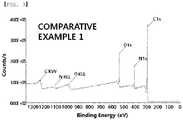
- a chlorine element content when conducting an elemental analysis on the water-treatment membrane surface is greater than 0 at% and less than or equal to 3 at%, preferably greater than or equal to 0.1 at% and less than or equal to 3 at%, and more preferably greater than or equal to 1.0 at% and less than or equal to 2.7 at%.
- the elemental analysis in the present specification may be conducted through X-ray photoelectron spectroscopy (XPS) or electron spectroscopy for chemical analysis (ESCA).
- XPS X-ray photoelectron spectroscopy
- ESCA electron spectroscopy for chemical analysis
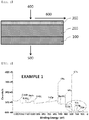
- FIG. 1 illustrates the water-treatment membrane according to one embodiment of the present specification.
- FIG. 1 illustrates the water-treatment membrane in which a non-woven fabric (100), a porous support (200) and a polyamide active layer (300) are consecutively provided, and as raw water including impurities (400) flows into the polyamide active layer (300), purified water (500) is discharged through the non-woven fabric (100), and concentrated water (600) is discharged outside failing to pass through the polyamide active layer (300).
- structures of the water-treatment membrane according to one embodiment of the present specification are not limited to the structure of FIG. 1 , and additional constitutions may be further included.
- the water-treatment membrane may be a microfiltration membrane, an ultrafiltration membrane, a nanofiltration membrane or a reverse osmosis membrane, and may specifically be a reverse osmosis membrane.
- the water-treatment module includes one or more of the water-treatment membranes according to one embodiment of the present specification.
- the water-treatment module is not particularly limited, and examples thereof may include a plate & frame module, a tubular module, a hollow & fiber module, a spiral wound module or the like.
- the water-treatment module includes the water-treatment membrane according to one embodiment of the present specification described above, the water-treatment module is not particularly limited in other constitutions and manufacturing methods, and general means known in the art may be employed without limit.
- the water-treatment module according to one embodiment of the present specification has excellent salt rejection and boron rejection, and therefore, is useful in water-treatment systems such as household/industrial water-purification systems, sewage treatment systems or sea to fresh water treatment systems.
- a solution including 10 wt% of triethylammonium camphorsulfonate (TEACSA) with respect to the whole solution and water was coated using a slot die coating method.
- TAACSA triethylammonium camphorsulfonate
- an aqueous solution including 5 wt% of metaphenylenediamine (mPD) with respect to the whole aqueous solution was coated on the porous polysulfone support using a slot die coating method at a rate of 16 m/min to form an aqueous solution layer. Furthermore, an extra aqueous solution generated during the coating was removed using an air knife.
- mPD metaphenylenediamine
- an organic solution including 0.3 wt% of trimesoyl chloride (TMC) and 99.7 wt% of an organic solvent (IsoPar G) with respect to the whole organic solution was coated using a slot die coating method at a rate of 16 m/min. Then, the result was dried at 95°C until all the liquid components evaporated, and then washed with ultrapure distilled water (DIW) to manufacture a water-treatment membrane.
- the membrane was prepared to have a width of 380 nm.
- hypochlorite treatment was conducted using a method of dipping the pretreated water-treatment membrane into a 100 ppm hypochlorite solution at 25°C.
- a protective layer was formed using a method of coating 10 wt% of an aqueous glycerin solution on the hypochlorite treated polyamide active layer to complete a water-treatment membrane.
- the completed water-treatment membrane was rolled in multiple layers to manufacture a round-shaped cylindrical water-treatment module having a diameter of 1.8 inches and a length of 12 inches.
- a water-treatment module was manufactured in the same manner as in Example 1 except that the temperature of the water, a pretreatment solution, was adjusted to 40°C or higher, and the concentration of the hypochlorite solution was changed to 300 ppm.
- a round-shaped cylindrical water-treatment module having a diameter of 1.8 inches and a length of 12 inches was manufactured by rolling the water-treatment membrane of the preparation example in multiple layers.
- a water-treatment module was manufactured in the same manner as in Example 1 except that the concentration of the hypochlorite solution was changed to 10 ppm.
- a water-treatment module was manufactured in the same manner as in Example 1 except that the pretreatment was not conducted.
- a round-shaped cylindrical water-treatment module having a diameter of 1.8 inches and a length of 12 inches was manufactured by rolling the water-treatment membrane of the preparation example in multiple layers, and then hypochlorite treatment was conducted on the manufactured water-treatment module under a condition of 25°C, 20 ppm hypochlorite solution and 10 psi pressurizing.
- the moisture content in each step of the manufacturing process of the examples and the comparative examples was measured under conditions as follows after drying the sample for 1 minute and 30 seconds at 100°C using an IR heater, and through changes in the weight before and after the drying.
- the membrane was cut to a 5 cmx5 cm size sample before being rolled to a water-treatment module, and using a CM-3600D spectrophotometer of Konica Minolta, Inc., CIE L*a*b* color coordinate values were measured based on specular component included (SCI).
- Example 2 having a pretreatment solution temperature of 40°C or higher, the L* value increased after storing for 30 days compared to the value at the beginning, whereas, in Example 1, the L* value decreased after storing for 30 days compared to the value at the beginning.
- the pretreatment solution temperature was 40°C or higher, there were no substances subject to an oxidation reaction even when the time of storage increased since monomers remaining after forming the polyamide active layer were quickly removed, and as a result, an effect of maintaining or increasing the L* value of the membrane was obtained.
Landscapes
- Chemical & Material Sciences (AREA)
- Chemical Kinetics & Catalysis (AREA)
- Engineering & Computer Science (AREA)
- Water Supply & Treatment (AREA)
- Manufacturing & Machinery (AREA)
- Hydrology & Water Resources (AREA)
- Environmental & Geological Engineering (AREA)
- Organic Chemistry (AREA)
- Life Sciences & Earth Sciences (AREA)
- Inorganic Chemistry (AREA)
- Nanotechnology (AREA)
- Separation Using Semi-Permeable Membranes (AREA)
- Polyamides (AREA)
Applications Claiming Priority (2)
| Application Number | Priority Date | Filing Date | Title |
|---|---|---|---|
| KR20180079514 | 2018-07-09 | ||
| PCT/KR2019/008408 WO2020013562A1 (ko) | 2018-07-09 | 2019-07-09 | 수처리 분리막, 이를 포함하는 수처리 모듈 및 이의 제조 방법 |
Publications (3)
| Publication Number | Publication Date |
|---|---|
| EP3702020A1 true EP3702020A1 (de) | 2020-09-02 |
| EP3702020A4 EP3702020A4 (de) | 2021-02-17 |
| EP3702020B1 EP3702020B1 (de) | 2025-03-12 |
Family
ID=69142722
Family Applications (1)
| Application Number | Title | Priority Date | Filing Date |
|---|---|---|---|
| EP19833891.5A Active EP3702020B1 (de) | 2018-07-09 | 2019-07-09 | Wasserbehandlungstrennmembran, wasserbehandlungsmodul damit und herstellungsverfahren dafür |
Country Status (6)
| Country | Link |
|---|---|
| US (1) | US11517861B2 (de) |
| EP (1) | EP3702020B1 (de) |
| JP (1) | JP6969727B2 (de) |
| KR (1) | KR102230984B1 (de) |
| CN (1) | CN111201078B (de) |
| WO (1) | WO2020013562A1 (de) |
Families Citing this family (2)
| Publication number | Priority date | Publication date | Assignee | Title |
|---|---|---|---|---|
| CN112755785A (zh) * | 2021-02-22 | 2021-05-07 | 上海应用技术大学 | 热稳定性能pmia纳滤膜的制备方法及在高温废水处理的应用 |
| WO2025249485A1 (ja) * | 2024-05-31 | 2025-12-04 | 東レ株式会社 | 複合半透膜及び複合半透膜の製造方法 |
Family Cites Families (36)
| Publication number | Priority date | Publication date | Assignee | Title |
|---|---|---|---|---|
| JPS5013927B1 (de) * | 1967-11-20 | 1975-05-23 | ||
| JPS6354905A (ja) | 1986-08-25 | 1988-03-09 | Toray Ind Inc | 半透性複合膜の製造方法 |
| JPH05329344A (ja) | 1992-06-01 | 1993-12-14 | Nitto Denko Corp | 複合半透膜の製造方法 |
| JPH07114941A (ja) | 1993-08-26 | 1995-05-02 | Japan Energy Corp | イオン伝導体 |
| US5876602A (en) | 1997-11-04 | 1999-03-02 | The Dow Chemical Company | Treatment of composite polyamide membranes to improve performance |
| KR100460011B1 (ko) | 1998-02-17 | 2005-04-06 | 주식회사 새 한 | 폴리아미드계 역삼투 분리막의 후처리 공정 |
| US6337018B1 (en) * | 2000-04-17 | 2002-01-08 | The Dow Chemical Company | Composite membrane and method for making the same |
| JP4147766B2 (ja) * | 2001-05-24 | 2008-09-10 | ダイキン工業株式会社 | フィルタ濾材のスペーサ |
| CN100411719C (zh) * | 2003-03-03 | 2008-08-20 | 通用电气公司 | 半渗透膜的制备方法 |
| NL1030288C2 (nl) | 2004-10-29 | 2006-10-09 | Toray Industries | Semipermeabel composietmembraan, productiewerkwijze daarvan, en element, fluïdumscheidingsinstallatie en werkwijze voor behandeling van water onder toepassing van hetzelfde. |
| US20070227966A1 (en) | 2006-03-31 | 2007-10-04 | Koo Ja-Young | Composite polyamide reverse osmosis membrane showing high boron rejection and method of producing the same |
| JP2008080187A (ja) | 2006-09-26 | 2008-04-10 | Toray Ind Inc | 複合半透膜およびその用途 |
| JP4936438B2 (ja) | 2006-10-10 | 2012-05-23 | 日東電工株式会社 | 乾燥複合半透膜の製造方法 |
| CA2667579A1 (en) * | 2006-10-27 | 2008-05-15 | The Regents Of The University Of California | Micro-and nanocomposite support structures for reverse osmosis thin film membranes |
| EP3144054B1 (de) * | 2008-04-15 | 2022-11-02 | NanoH2O, Inc. | Polyamid dünnschichtkompositmembrane hergestellt unter der verwendung von monohydrolysiertem trimesoylchlorid |
| KR101240736B1 (ko) | 2008-12-23 | 2013-03-07 | 주식회사 엘지화학 | 고분자 조성물, 상기를 포함하는 수처리 분리막 및 수처리 모듈 |
| JP5614871B2 (ja) | 2009-02-23 | 2014-10-29 | ロンシール工業株式会社 | 熱可塑性樹脂製遮熱床シート |
| CA2766352C (en) | 2009-06-29 | 2018-09-18 | NanoH2O Inc. | Improved hybrid tfc ro membranes with nitrogen additives |
| JP2014500131A (ja) * | 2010-09-30 | 2014-01-09 | ゼネラル・エレクトリック・カンパニイ | カーボンナノチューブを組み込んだ複合薄膜 |
| US20120080381A1 (en) * | 2010-09-30 | 2012-04-05 | General Electric Company | Thin film composite membranes incorporating carbon nanotubes |
| JP6032011B2 (ja) | 2011-09-29 | 2016-11-24 | 東レ株式会社 | 複合半透膜 |
| US20130146530A1 (en) | 2011-12-08 | 2013-06-13 | General Electric Company | Membrane, water treatment system, and method of making |
| KR20140073011A (ko) * | 2012-12-05 | 2014-06-16 | 도레이케미칼 주식회사 | 우수한 전력밀도를 갖는 압력지연삼투 분리막 제조방법 및 이를 통해 제조된 압력지연삼투 분리막 |
| CN105848767B (zh) * | 2013-12-26 | 2019-06-18 | 株式会社Lg化学 | 高性能的基于聚酰胺的干式水处理分离器及其制造方法 |
| JP5961643B2 (ja) * | 2014-01-28 | 2016-08-02 | 日東電工株式会社 | 複合分離膜とこれを用いた分離膜エレメント |
| JP2015180495A (ja) * | 2014-03-07 | 2015-10-15 | 東レ株式会社 | 複合分離膜および複合分離膜エレメント |
| CN103894073A (zh) * | 2014-04-21 | 2014-07-02 | 哈尔滨工业大学 | 一种利用稀溶液界面聚合行为的多孔滤膜亲水化改性方法 |
| KR101665189B1 (ko) | 2014-10-02 | 2016-10-24 | 주식회사 휴비스워터 | 내화학성이 우수한 폴리설폰계 중공사막 및 이의 제조방법 |
| KR102072877B1 (ko) | 2015-10-22 | 2020-02-03 | 주식회사 엘지화학 | 수처리 분리막의 제조방법 및 이에 의하여 제조된 수처리 분리막 및 수처리 분리막을 포함하는 수처리 모듈 |
| KR101823050B1 (ko) | 2016-02-26 | 2018-01-31 | 한양대학교 산학협력단 | 수처리 분리막용 다공성 지지체, 이를 포함하는 초박형 복합막 및 그 제조방법 |
| US10155203B2 (en) * | 2016-03-03 | 2018-12-18 | Lg Nanoh2O, Inc. | Methods of enhancing water flux of a TFC membrane using oxidizing and reducing agents |
| CN106345299A (zh) | 2016-08-28 | 2017-01-25 | 贵阳时代沃顿科技有限公司 | 一种提高反渗透膜性能的方法 |
| KR102079845B1 (ko) | 2016-09-30 | 2020-02-20 | 주식회사 엘지화학 | 수처리 분리막의 제조방법, 이를 이용하여 제조된 수처리 분리막, 및 수처리 분리막 제조용 조성물 |
| CN106582315A (zh) * | 2016-11-29 | 2017-04-26 | 华中科技大学 | 一种聚酰胺复合膜及其制备方法 |
| KR102611538B1 (ko) | 2016-12-30 | 2023-12-08 | 명화공업주식회사 | 오일펌프용 릴리프 밸브의 플런저 테이퍼부의 각도 설계 방법 |
| KR20180124525A (ko) * | 2017-05-12 | 2018-11-21 | 주식회사 엘지화학 | 수처리 분리막의 제조방법, 이를 이용하여 제조된 수처리 분리막 및 수처리 분리막을 포함하는 수처리 모듈 |
-
2019
- 2019-07-09 WO PCT/KR2019/008408 patent/WO2020013562A1/ko not_active Ceased
- 2019-07-09 EP EP19833891.5A patent/EP3702020B1/de active Active
- 2019-07-09 KR KR1020190082659A patent/KR102230984B1/ko active Active
- 2019-07-09 US US16/756,264 patent/US11517861B2/en active Active
- 2019-07-09 JP JP2020518517A patent/JP6969727B2/ja active Active
- 2019-07-09 CN CN201980005006.9A patent/CN111201078B/zh active Active
Also Published As
| Publication number | Publication date |
|---|---|
| KR20200006019A (ko) | 2020-01-17 |
| EP3702020B1 (de) | 2025-03-12 |
| WO2020013562A1 (ko) | 2020-01-16 |
| EP3702020A4 (de) | 2021-02-17 |
| CN111201078B (zh) | 2022-04-15 |
| JP6969727B2 (ja) | 2021-11-24 |
| US11517861B2 (en) | 2022-12-06 |
| US20200254397A1 (en) | 2020-08-13 |
| JP2020535957A (ja) | 2020-12-10 |
| KR102230984B1 (ko) | 2021-03-23 |
| CN111201078A (zh) | 2020-05-26 |
Similar Documents
| Publication | Publication Date | Title |
|---|---|---|
| EP2883600B1 (de) | Verfahren zur herstellung einer trennmembran auf polyamidbasis zur wasserbehandlung | |
| US20160129401A1 (en) | Composite semipermeable membrane | |
| EP3088073B1 (de) | Hochfunktioneller polyamidbasierter trockenwasseraufbereitungsseparator und verfahren zu seiner herstellung | |
| EP3702020B1 (de) | Wasserbehandlungstrennmembran, wasserbehandlungsmodul damit und herstellungsverfahren dafür | |
| EP1806174A1 (de) | Verfahren zur herstellung einer semipermeablen verbundmembran | |
| US11944940B2 (en) | Method for preparation of water-treatment separation membrane and water-treatment separation membrane prepared thereby | |
| KR102286141B1 (ko) | 분리막의 제조 방법 및 이에 의하여 제조된 분리막 | |
| KR20170047114A (ko) | 수처리 분리막의 제조방법 및 이에 의하여 제조된 수처리 분리막 및 수처리 분리막을 포함하는 수처리 모듈 | |
| KR102288033B1 (ko) | 수처리 분리막의 제조 방법 및 이에 의하여 제조된 수처리 분리막 | |
| KR102230992B1 (ko) | 수처리 분리막 및 이의 제조방법 | |
| KR102660173B1 (ko) | 분리막의 제조방법, 분리막 및 수처리 모듈 | |
| EP3202487B1 (de) | Verfahren zur herstellung von polyamidem wasserbehandlungsseparator mit ausgezeichneten permeationsflusseigenschaften | |
| JP2021528241A (ja) | アルカリ安定性のナノ濾過複合膜及びそれらの製造方法 | |
| KR102280869B1 (ko) | 수처리 분리막의 제조 방법 및 이에 의하여 제조된 수처리 분리막 | |
| KR102841498B1 (ko) | 수처리 분리막의 제조방법, 이에 의하여 제조된 수처리 분리막 및 수처리 모듈 | |
| KR20250099524A (ko) | 수처리 분리막의 제조방법 | |
| KR102155930B1 (ko) | 수처리 분리막 및 이의 제조방법 | |
| KR20250089595A (ko) | 수처리 분리막의 제조방법 및 수처리 분리막 | |
| KR102524361B1 (ko) | 분리막의 제조방법, 분리막 및 수처리 모듈 | |
| KR20240172459A (ko) | 수처리 분리막 활성층 형성용 조성물, 수처리 분리막의 제조방법, 이에 의하여 제조된 수처리 분리막 및 수처리 모듈 | |
| KR20250082119A (ko) | 수처리 분리막의 제조방법, 이에 의하여 제조된 수처리 분리막 및 수처리 모듈 | |
| KR20250025804A (ko) | 수처리 분리막의 제조방법 | |
| KR20250087775A (ko) | 수처리 분리막의 제조방법 | |
| KR20250068319A (ko) | 폴리아미드 활성층 형성용 조성물, 수처리 분리막의 제조방법, 이에 의하여 제조된 수처리 분리막 및 수처리 모듈 | |
| KR20190143239A (ko) | 폴리아미드 계면중합용 조성물 및 이를 이용한 수처리 분리막의 제조 방법 |
Legal Events
| Date | Code | Title | Description |
|---|---|---|---|
| STAA | Information on the status of an ep patent application or granted ep patent |
Free format text: STATUS: THE INTERNATIONAL PUBLICATION HAS BEEN MADE |
|
| PUAI | Public reference made under article 153(3) epc to a published international application that has entered the european phase |
Free format text: ORIGINAL CODE: 0009012 |
|
| STAA | Information on the status of an ep patent application or granted ep patent |
Free format text: STATUS: REQUEST FOR EXAMINATION WAS MADE |
|
| 17P | Request for examination filed |
Effective date: 20200324 |
|
| AK | Designated contracting states |
Kind code of ref document: A1 Designated state(s): AL AT BE BG CH CY CZ DE DK EE ES FI FR GB GR HR HU IE IS IT LI LT LU LV MC MK MT NL NO PL PT RO RS SE SI SK SM TR |
|
| AX | Request for extension of the european patent |
Extension state: BA ME |
|
| RIN1 | Information on inventor provided before grant (corrected) |
Inventor name: SHIN, CHONG KYU Inventor name: SHI, YOUNG JUN Inventor name: JEON, HYUNGJOON Inventor name: BYUN, EUNKYOUNG Inventor name: LEE, YOUNGJU |
|
| A4 | Supplementary search report drawn up and despatched |
Effective date: 20210118 |
|
| RIC1 | Information provided on ipc code assigned before grant |
Ipc: B01D 69/10 20060101ALI20210112BHEP Ipc: B01D 71/56 20060101AFI20210112BHEP Ipc: B01D 61/02 20060101ALI20210112BHEP Ipc: B01D 67/00 20060101ALI20210112BHEP Ipc: C02F 1/44 20060101ALI20210112BHEP Ipc: B01D 69/12 20060101ALI20210112BHEP Ipc: B01D 71/82 20060101ALI20210112BHEP |
|
| DAV | Request for validation of the european patent (deleted) | ||
| DAX | Request for extension of the european patent (deleted) | ||
| STAA | Information on the status of an ep patent application or granted ep patent |
Free format text: STATUS: EXAMINATION IS IN PROGRESS |
|
| 17Q | First examination report despatched |
Effective date: 20230215 |
|
| GRAP | Despatch of communication of intention to grant a patent |
Free format text: ORIGINAL CODE: EPIDOSNIGR1 |
|
| STAA | Information on the status of an ep patent application or granted ep patent |
Free format text: STATUS: GRANT OF PATENT IS INTENDED |
|
| INTG | Intention to grant announced |
Effective date: 20241220 |
|
| GRAS | Grant fee paid |
Free format text: ORIGINAL CODE: EPIDOSNIGR3 |
|
| GRAA | (expected) grant |
Free format text: ORIGINAL CODE: 0009210 |
|
| STAA | Information on the status of an ep patent application or granted ep patent |
Free format text: STATUS: THE PATENT HAS BEEN GRANTED |
|
| AK | Designated contracting states |
Kind code of ref document: B1 Designated state(s): AL AT BE BG CH CY CZ DE DK EE ES FI FR GB GR HR HU IE IS IT LI LT LU LV MC MK MT NL NO PL PT RO RS SE SI SK SM TR |
|
| REG | Reference to a national code |
Ref country code: GB Ref legal event code: FG4D |
|
| REG | Reference to a national code |
Ref country code: CH Ref legal event code: EP |
|
| REG | Reference to a national code |
Ref country code: DE Ref legal event code: R096 Ref document number: 602019067260 Country of ref document: DE |
|
| REG | Reference to a national code |
Ref country code: IE Ref legal event code: FG4D |
|
| PG25 | Lapsed in a contracting state [announced via postgrant information from national office to epo] |
Ref country code: RS Free format text: LAPSE BECAUSE OF FAILURE TO SUBMIT A TRANSLATION OF THE DESCRIPTION OR TO PAY THE FEE WITHIN THE PRESCRIBED TIME-LIMIT Effective date: 20250612 |
|
| PG25 | Lapsed in a contracting state [announced via postgrant information from national office to epo] |
Ref country code: FI Free format text: LAPSE BECAUSE OF FAILURE TO SUBMIT A TRANSLATION OF THE DESCRIPTION OR TO PAY THE FEE WITHIN THE PRESCRIBED TIME-LIMIT Effective date: 20250312 |
|
| PG25 | Lapsed in a contracting state [announced via postgrant information from national office to epo] |
Ref country code: ES Free format text: LAPSE BECAUSE OF FAILURE TO SUBMIT A TRANSLATION OF THE DESCRIPTION OR TO PAY THE FEE WITHIN THE PRESCRIBED TIME-LIMIT Effective date: 20250312 |
|
| PGFP | Annual fee paid to national office [announced via postgrant information from national office to epo] |
Ref country code: GB Payment date: 20250624 Year of fee payment: 7 |
|
| REG | Reference to a national code |
Ref country code: LT Ref legal event code: MG9D |
|
| PG25 | Lapsed in a contracting state [announced via postgrant information from national office to epo] |
Ref country code: NO Free format text: LAPSE BECAUSE OF FAILURE TO SUBMIT A TRANSLATION OF THE DESCRIPTION OR TO PAY THE FEE WITHIN THE PRESCRIBED TIME-LIMIT Effective date: 20250612 |
|
| PG25 | Lapsed in a contracting state [announced via postgrant information from national office to epo] |
Ref country code: HR Free format text: LAPSE BECAUSE OF FAILURE TO SUBMIT A TRANSLATION OF THE DESCRIPTION OR TO PAY THE FEE WITHIN THE PRESCRIBED TIME-LIMIT Effective date: 20250312 |
|
| REG | Reference to a national code |
Ref country code: NL Ref legal event code: MP Effective date: 20250312 |
|
| PG25 | Lapsed in a contracting state [announced via postgrant information from national office to epo] |
Ref country code: LV Free format text: LAPSE BECAUSE OF FAILURE TO SUBMIT A TRANSLATION OF THE DESCRIPTION OR TO PAY THE FEE WITHIN THE PRESCRIBED TIME-LIMIT Effective date: 20250312 |
|
| PGFP | Annual fee paid to national office [announced via postgrant information from national office to epo] |
Ref country code: FR Payment date: 20250624 Year of fee payment: 7 |
|
| PG25 | Lapsed in a contracting state [announced via postgrant information from national office to epo] |
Ref country code: GR Free format text: LAPSE BECAUSE OF FAILURE TO SUBMIT A TRANSLATION OF THE DESCRIPTION OR TO PAY THE FEE WITHIN THE PRESCRIBED TIME-LIMIT Effective date: 20250613 Ref country code: BG Free format text: LAPSE BECAUSE OF FAILURE TO SUBMIT A TRANSLATION OF THE DESCRIPTION OR TO PAY THE FEE WITHIN THE PRESCRIBED TIME-LIMIT Effective date: 20250312 |
|
| REG | Reference to a national code |
Ref country code: AT Ref legal event code: MK05 Ref document number: 1774563 Country of ref document: AT Kind code of ref document: T Effective date: 20250312 |
|
| PG25 | Lapsed in a contracting state [announced via postgrant information from national office to epo] |
Ref country code: NL Free format text: LAPSE BECAUSE OF FAILURE TO SUBMIT A TRANSLATION OF THE DESCRIPTION OR TO PAY THE FEE WITHIN THE PRESCRIBED TIME-LIMIT Effective date: 20250312 |
|
| PG25 | Lapsed in a contracting state [announced via postgrant information from national office to epo] |
Ref country code: SE Free format text: LAPSE BECAUSE OF FAILURE TO SUBMIT A TRANSLATION OF THE DESCRIPTION OR TO PAY THE FEE WITHIN THE PRESCRIBED TIME-LIMIT Effective date: 20250312 |
|
| PG25 | Lapsed in a contracting state [announced via postgrant information from national office to epo] |
Ref country code: SM Free format text: LAPSE BECAUSE OF FAILURE TO SUBMIT A TRANSLATION OF THE DESCRIPTION OR TO PAY THE FEE WITHIN THE PRESCRIBED TIME-LIMIT Effective date: 20250312 |
|
| PG25 | Lapsed in a contracting state [announced via postgrant information from national office to epo] |
Ref country code: PT Free format text: LAPSE BECAUSE OF FAILURE TO SUBMIT A TRANSLATION OF THE DESCRIPTION OR TO PAY THE FEE WITHIN THE PRESCRIBED TIME-LIMIT Effective date: 20250714 |
|
| PGFP | Annual fee paid to national office [announced via postgrant information from national office to epo] |
Ref country code: DE Payment date: 20250624 Year of fee payment: 7 |
|
| PG25 | Lapsed in a contracting state [announced via postgrant information from national office to epo] |
Ref country code: PL Free format text: LAPSE BECAUSE OF FAILURE TO SUBMIT A TRANSLATION OF THE DESCRIPTION OR TO PAY THE FEE WITHIN THE PRESCRIBED TIME-LIMIT Effective date: 20250312 Ref country code: IT Free format text: LAPSE BECAUSE OF FAILURE TO SUBMIT A TRANSLATION OF THE DESCRIPTION OR TO PAY THE FEE WITHIN THE PRESCRIBED TIME-LIMIT Effective date: 20250312 |
|
| PG25 | Lapsed in a contracting state [announced via postgrant information from national office to epo] |
Ref country code: AT Free format text: LAPSE BECAUSE OF FAILURE TO SUBMIT A TRANSLATION OF THE DESCRIPTION OR TO PAY THE FEE WITHIN THE PRESCRIBED TIME-LIMIT Effective date: 20250312 |
|
| PG25 | Lapsed in a contracting state [announced via postgrant information from national office to epo] |
Ref country code: CZ Free format text: LAPSE BECAUSE OF FAILURE TO SUBMIT A TRANSLATION OF THE DESCRIPTION OR TO PAY THE FEE WITHIN THE PRESCRIBED TIME-LIMIT Effective date: 20250312 Ref country code: EE Free format text: LAPSE BECAUSE OF FAILURE TO SUBMIT A TRANSLATION OF THE DESCRIPTION OR TO PAY THE FEE WITHIN THE PRESCRIBED TIME-LIMIT Effective date: 20250312 |
|
| PG25 | Lapsed in a contracting state [announced via postgrant information from national office to epo] |
Ref country code: RO Free format text: LAPSE BECAUSE OF FAILURE TO SUBMIT A TRANSLATION OF THE DESCRIPTION OR TO PAY THE FEE WITHIN THE PRESCRIBED TIME-LIMIT Effective date: 20250312 |
|
| PG25 | Lapsed in a contracting state [announced via postgrant information from national office to epo] |
Ref country code: SK Free format text: LAPSE BECAUSE OF FAILURE TO SUBMIT A TRANSLATION OF THE DESCRIPTION OR TO PAY THE FEE WITHIN THE PRESCRIBED TIME-LIMIT Effective date: 20250312 |
|
| PG25 | Lapsed in a contracting state [announced via postgrant information from national office to epo] |
Ref country code: IS Free format text: LAPSE BECAUSE OF FAILURE TO SUBMIT A TRANSLATION OF THE DESCRIPTION OR TO PAY THE FEE WITHIN THE PRESCRIBED TIME-LIMIT Effective date: 20250712 |
|
| REG | Reference to a national code |
Ref country code: DE Ref legal event code: R097 Ref document number: 602019067260 Country of ref document: DE |
|
| PG25 | Lapsed in a contracting state [announced via postgrant information from national office to epo] |
Ref country code: DK Free format text: LAPSE BECAUSE OF FAILURE TO SUBMIT A TRANSLATION OF THE DESCRIPTION OR TO PAY THE FEE WITHIN THE PRESCRIBED TIME-LIMIT Effective date: 20250312 |
|
| REG | Reference to a national code |
Ref country code: GB Ref legal event code: 732E Free format text: REGISTERED BETWEEN 20251218 AND 20251224 |
|
| PLBE | No opposition filed within time limit |
Free format text: ORIGINAL CODE: 0009261 |
|
| STAA | Information on the status of an ep patent application or granted ep patent |
Free format text: STATUS: NO OPPOSITION FILED WITHIN TIME LIMIT |
|
| REG | Reference to a national code |
Ref country code: CH Ref legal event code: L10 Free format text: ST27 STATUS EVENT CODE: U-0-0-L10-L00 (AS PROVIDED BY THE NATIONAL OFFICE) Effective date: 20260121 |
|
| REG | Reference to a national code |
Ref country code: DE Ref legal event code: R081 Ref document number: 602019067260 Country of ref document: DE Owner name: NANOH2O CO., LTD., CHEONGJU-SI, KR Free format text: FORMER OWNER: LG CHEM, LTD., SEOUL, KR |
|
| 26N | No opposition filed |
Effective date: 20251215 |
|
| REG | Reference to a national code |
Ref country code: CH Ref legal event code: H13 Free format text: ST27 STATUS EVENT CODE: U-0-0-H10-H13 (AS PROVIDED BY THE NATIONAL OFFICE) Effective date: 20260224 |
|
| PG25 | Lapsed in a contracting state [announced via postgrant information from national office to epo] |
Ref country code: LU Free format text: LAPSE BECAUSE OF NON-PAYMENT OF DUE FEES Effective date: 20250709 |