EP3694894B1 - Isobutylen-copolymere, verfahren zur herstellung von isobutylen-copolymeren und isobutylen-copolymer-produkte - Google Patents
Isobutylen-copolymere, verfahren zur herstellung von isobutylen-copolymeren und isobutylen-copolymer-produkte Download PDFInfo
- Publication number
- EP3694894B1 EP3694894B1 EP18866182.1A EP18866182A EP3694894B1 EP 3694894 B1 EP3694894 B1 EP 3694894B1 EP 18866182 A EP18866182 A EP 18866182A EP 3694894 B1 EP3694894 B1 EP 3694894B1
- Authority
- EP
- European Patent Office
- Prior art keywords
- isobutylene
- copolymer
- molecular weight
- isoprene
- isobutylene copolymer
- Prior art date
- Legal status (The legal status is an assumption and is not a legal conclusion. Google has not performed a legal analysis and makes no representation as to the accuracy of the status listed.)
- Active
Links
Images



Classifications
-
- C—CHEMISTRY; METALLURGY
- C08—ORGANIC MACROMOLECULAR COMPOUNDS; THEIR PREPARATION OR CHEMICAL WORKING-UP; COMPOSITIONS BASED THEREON
- C08F—MACROMOLECULAR COMPOUNDS OBTAINED BY REACTIONS ONLY INVOLVING CARBON-TO-CARBON UNSATURATED BONDS
- C08F8/00—Chemical modification by after-treatment
- C08F8/46—Reaction with unsaturated dicarboxylic acids or anhydrides thereof, e.g. maleinisation
-
- C—CHEMISTRY; METALLURGY
- C08—ORGANIC MACROMOLECULAR COMPOUNDS; THEIR PREPARATION OR CHEMICAL WORKING-UP; COMPOSITIONS BASED THEREON
- C08F—MACROMOLECULAR COMPOUNDS OBTAINED BY REACTIONS ONLY INVOLVING CARBON-TO-CARBON UNSATURATED BONDS
- C08F2/00—Processes of polymerisation
- C08F2/001—Multistage polymerisation processes characterised by a change in reactor conditions without deactivating the intermediate polymer
-
- C—CHEMISTRY; METALLURGY
- C08—ORGANIC MACROMOLECULAR COMPOUNDS; THEIR PREPARATION OR CHEMICAL WORKING-UP; COMPOSITIONS BASED THEREON
- C08F—MACROMOLECULAR COMPOUNDS OBTAINED BY REACTIONS ONLY INVOLVING CARBON-TO-CARBON UNSATURATED BONDS
- C08F2/00—Processes of polymerisation
- C08F2/01—Processes of polymerisation characterised by special features of the polymerisation apparatus used
-
- C—CHEMISTRY; METALLURGY
- C08—ORGANIC MACROMOLECULAR COMPOUNDS; THEIR PREPARATION OR CHEMICAL WORKING-UP; COMPOSITIONS BASED THEREON
- C08F—MACROMOLECULAR COMPOUNDS OBTAINED BY REACTIONS ONLY INVOLVING CARBON-TO-CARBON UNSATURATED BONDS
- C08F210/00—Copolymers of unsaturated aliphatic hydrocarbons having only one carbon-to-carbon double bond
- C08F210/04—Monomers containing three or four carbon atoms
- C08F210/08—Butenes
- C08F210/10—Isobutene
-
- C—CHEMISTRY; METALLURGY
- C08—ORGANIC MACROMOLECULAR COMPOUNDS; THEIR PREPARATION OR CHEMICAL WORKING-UP; COMPOSITIONS BASED THEREON
- C08F—MACROMOLECULAR COMPOUNDS OBTAINED BY REACTIONS ONLY INVOLVING CARBON-TO-CARBON UNSATURATED BONDS
- C08F210/00—Copolymers of unsaturated aliphatic hydrocarbons having only one carbon-to-carbon double bond
- C08F210/04—Monomers containing three or four carbon atoms
- C08F210/08—Butenes
- C08F210/10—Isobutene
- C08F210/12—Isobutene with conjugated diolefins, e.g. butyl rubber
-
- C—CHEMISTRY; METALLURGY
- C08—ORGANIC MACROMOLECULAR COMPOUNDS; THEIR PREPARATION OR CHEMICAL WORKING-UP; COMPOSITIONS BASED THEREON
- C08F—MACROMOLECULAR COMPOUNDS OBTAINED BY REACTIONS ONLY INVOLVING CARBON-TO-CARBON UNSATURATED BONDS
- C08F212/00—Copolymers of compounds having one or more unsaturated aliphatic radicals, each having only one carbon-to-carbon double bond, and at least one being terminated by an aromatic carbocyclic ring
- C08F212/02—Monomers containing only one unsaturated aliphatic radical
- C08F212/04—Monomers containing only one unsaturated aliphatic radical containing one ring
- C08F212/06—Hydrocarbons
- C08F212/08—Styrene
-
- C—CHEMISTRY; METALLURGY
- C08—ORGANIC MACROMOLECULAR COMPOUNDS; THEIR PREPARATION OR CHEMICAL WORKING-UP; COMPOSITIONS BASED THEREON
- C08F—MACROMOLECULAR COMPOUNDS OBTAINED BY REACTIONS ONLY INVOLVING CARBON-TO-CARBON UNSATURATED BONDS
- C08F236/00—Copolymers of compounds having one or more unsaturated aliphatic radicals, at least one having two or more carbon-to-carbon double bonds
- C08F236/02—Copolymers of compounds having one or more unsaturated aliphatic radicals, at least one having two or more carbon-to-carbon double bonds the radical having only two carbon-to-carbon double bonds
- C08F236/04—Copolymers of compounds having one or more unsaturated aliphatic radicals, at least one having two or more carbon-to-carbon double bonds the radical having only two carbon-to-carbon double bonds conjugated
- C08F236/06—Butadiene
-
- C—CHEMISTRY; METALLURGY
- C08—ORGANIC MACROMOLECULAR COMPOUNDS; THEIR PREPARATION OR CHEMICAL WORKING-UP; COMPOSITIONS BASED THEREON
- C08F—MACROMOLECULAR COMPOUNDS OBTAINED BY REACTIONS ONLY INVOLVING CARBON-TO-CARBON UNSATURATED BONDS
- C08F236/00—Copolymers of compounds having one or more unsaturated aliphatic radicals, at least one having two or more carbon-to-carbon double bonds
- C08F236/02—Copolymers of compounds having one or more unsaturated aliphatic radicals, at least one having two or more carbon-to-carbon double bonds the radical having only two carbon-to-carbon double bonds
- C08F236/04—Copolymers of compounds having one or more unsaturated aliphatic radicals, at least one having two or more carbon-to-carbon double bonds the radical having only two carbon-to-carbon double bonds conjugated
- C08F236/08—Isoprene
-
- C—CHEMISTRY; METALLURGY
- C08—ORGANIC MACROMOLECULAR COMPOUNDS; THEIR PREPARATION OR CHEMICAL WORKING-UP; COMPOSITIONS BASED THEREON
- C08F—MACROMOLECULAR COMPOUNDS OBTAINED BY REACTIONS ONLY INVOLVING CARBON-TO-CARBON UNSATURATED BONDS
- C08F4/00—Polymerisation catalysts
- C08F4/06—Metallic compounds other than hydrides and other than metallo-organic compounds; Boron halide or aluminium halide complexes with organic compounds containing oxygen
- C08F4/12—Metallic compounds other than hydrides and other than metallo-organic compounds; Boron halide or aluminium halide complexes with organic compounds containing oxygen of boron, aluminium, gallium, indium, thallium or rare earths
- C08F4/14—Boron halides or aluminium halides; Complexes thereof with organic compounds containing oxygen
-
- C—CHEMISTRY; METALLURGY
- C08—ORGANIC MACROMOLECULAR COMPOUNDS; THEIR PREPARATION OR CHEMICAL WORKING-UP; COMPOSITIONS BASED THEREON
- C08F—MACROMOLECULAR COMPOUNDS OBTAINED BY REACTIONS ONLY INVOLVING CARBON-TO-CARBON UNSATURATED BONDS
- C08F4/00—Polymerisation catalysts
- C08F4/42—Metals; Metal hydrides; Metallo-organic compounds; Use thereof as catalyst precursors
- C08F4/44—Metals; Metal hydrides; Metallo-organic compounds; Use thereof as catalyst precursors selected from light metals, zinc, cadmium, mercury, copper, silver, gold, boron, gallium, indium, thallium, rare earths or actinides
- C08F4/52—Metals; Metal hydrides; Metallo-organic compounds; Use thereof as catalyst precursors selected from light metals, zinc, cadmium, mercury, copper, silver, gold, boron, gallium, indium, thallium, rare earths or actinides selected from boron, aluminium, gallium, indium, thallium or rare earths
-
- C—CHEMISTRY; METALLURGY
- C08—ORGANIC MACROMOLECULAR COMPOUNDS; THEIR PREPARATION OR CHEMICAL WORKING-UP; COMPOSITIONS BASED THEREON
- C08G—MACROMOLECULAR COMPOUNDS OBTAINED OTHERWISE THAN BY REACTIONS ONLY INVOLVING UNSATURATED CARBON-TO-CARBON BONDS
- C08G63/00—Macromolecular compounds obtained by reactions forming a carboxylic ester link in the main chain of the macromolecule
- C08G63/02—Polyesters derived from hydroxycarboxylic acids or from polycarboxylic acids and polyhydroxy compounds
- C08G63/12—Polyesters derived from hydroxycarboxylic acids or from polycarboxylic acids and polyhydroxy compounds derived from polycarboxylic acids and polyhydroxy compounds
- C08G63/52—Polycarboxylic acids or polyhydroxy compounds in which at least one of the two components contains aliphatic unsaturation
- C08G63/54—Polycarboxylic acids or polyhydroxy compounds in which at least one of the two components contains aliphatic unsaturation the acids or hydroxy compounds containing carbocyclic rings
-
- C—CHEMISTRY; METALLURGY
- C08—ORGANIC MACROMOLECULAR COMPOUNDS; THEIR PREPARATION OR CHEMICAL WORKING-UP; COMPOSITIONS BASED THEREON
- C08L—COMPOSITIONS OF MACROMOLECULAR COMPOUNDS
- C08L23/00—Compositions of homopolymers or copolymers of unsaturated aliphatic hydrocarbons having only one carbon-to-carbon double bond; Compositions of derivatives of such polymers
- C08L23/02—Compositions of homopolymers or copolymers of unsaturated aliphatic hydrocarbons having only one carbon-to-carbon double bond; Compositions of derivatives of such polymers not modified by chemical after-treatment
- C08L23/18—Homopolymers or copolymers of hydrocarbons having four or more carbon atoms
- C08L23/20—Homopolymers or copolymers of hydrocarbons having four or more carbon atoms having four to nine carbon atoms
- C08L23/22—Copolymers of isobutene; Butyl rubber; Homopolymers or copolymers of other iso-olefins
-
- C—CHEMISTRY; METALLURGY
- C08—ORGANIC MACROMOLECULAR COMPOUNDS; THEIR PREPARATION OR CHEMICAL WORKING-UP; COMPOSITIONS BASED THEREON
- C08L—COMPOSITIONS OF MACROMOLECULAR COMPOUNDS
- C08L63/00—Compositions of epoxy resins; Compositions of derivatives of epoxy resins
-
- C—CHEMISTRY; METALLURGY
- C08—ORGANIC MACROMOLECULAR COMPOUNDS; THEIR PREPARATION OR CHEMICAL WORKING-UP; COMPOSITIONS BASED THEREON
- C08L—COMPOSITIONS OF MACROMOLECULAR COMPOUNDS
- C08L67/00—Compositions of polyesters obtained by reactions forming a carboxylic ester link in the main chain; Compositions of derivatives of such polymers
- C08L67/06—Unsaturated polyesters
-
- C—CHEMISTRY; METALLURGY
- C08—ORGANIC MACROMOLECULAR COMPOUNDS; THEIR PREPARATION OR CHEMICAL WORKING-UP; COMPOSITIONS BASED THEREON
- C08L—COMPOSITIONS OF MACROMOLECULAR COMPOUNDS
- C08L75/00—Compositions of polyureas or polyurethanes; Compositions of derivatives of such polymers
- C08L75/04—Polyurethanes
-
- C—CHEMISTRY; METALLURGY
- C09—DYES; PAINTS; POLISHES; NATURAL RESINS; ADHESIVES; COMPOSITIONS NOT OTHERWISE PROVIDED FOR; APPLICATIONS OF MATERIALS NOT OTHERWISE PROVIDED FOR
- C09J—ADHESIVES; NON-MECHANICAL ASPECTS OF ADHESIVE PROCESSES IN GENERAL; ADHESIVE PROCESSES NOT PROVIDED FOR ELSEWHERE; USE OF MATERIALS AS ADHESIVES
- C09J123/00—Adhesives based on homopolymers or copolymers of unsaturated aliphatic hydrocarbons having only one carbon-to-carbon double bond; Adhesives based on derivatives of such polymers
- C09J123/02—Adhesives based on homopolymers or copolymers of unsaturated aliphatic hydrocarbons having only one carbon-to-carbon double bond; Adhesives based on derivatives of such polymers not modified by chemical after-treatment
- C09J123/18—Homopolymers or copolymers of hydrocarbons having four or more carbon atoms
- C09J123/20—Homopolymers or copolymers of hydrocarbons having four or more carbon atoms having four to nine carbon atoms
- C09J123/22—Copolymers of isobutene; Butyl rubber ; Homo- or copolymers of other iso-olefines
Definitions
- the present invention relates to a method of making isobutylene copolymers with other unsaturated comonomers such as isoprene, styrene and the like, to copolymers derived from isobutylene and isoprene and end-uses thereof.
- Isobutylene copolymers are known in the art. The materials are generally reported useful in preparing fuel and lubricating oil additives when derivatized with maleic anhydride and optionally amines.
- Example 9 includes a reactant mixture of C5s including isoprene, pentadienes and cyclopentadienes. Conversions of the various diene monomers in Example 9 are not reported. Reaction is carried out in a loop reactor with the reactants in hexane solvent (1:1) at -10°C.
- United States Patent No. 7,750,089 discloses isobutylene/diene copolymers made with chloride catalysts which are derivatized with anhydrides/amines for fuel additives. Examples specify isoprene/isobutylene made in a 1 L continuous reactor at -30°C. See also , United States Patent No. 7,067,594 (Lubrizol ) which discloses carboxylated isobutylene/polyene polymers for lubricating oil additives wherein carboxylation is carried out with maleic anhydride. The copolymers of the '594 patent are made with aluminum trichloride catalyst.
- copolymers made by the method of the present invention are useful in a variety of applications including fuel and lubricating oil additives, rubber compositions and products as well as applications not typically employing polyisobutylenes such as in unsaturated polyester resins, polyurethanes, adhesives, sizings, oxirane derivatives and so forth as is described hereinafter.
- copolymers made by the method of the present invention which are typically chloride-free, can be tailored to the particular end use in terms of molecular weight and functionality to provide superior novel products which are more easily formulated and prepared than traditional products.
- isobutylene copolymers with an increased double bond content or selective incorporation of comonomers can be prepared in high yield at low reactor residence times. Suitable reactor temperatures are above -30°C.
- Comonomers used with isobutylene include: isoprene, cyclopentadiene, dicyclopentadiene, butadiene, limonene, alpha methyl styrene, para methyl styrene, other substituted styrenes; piperylene, and C4 to C10 dienes other than isoprene, cyclopentadiene, dicyclopentadiene, butadiene and piperylene, as well as like comonomers, such as ⁇ -terpenes and ⁇ -terpenes.
- the comonomers may be used in combination if so desired.
- an isobutylene copolymer comprising: (a) providing a reaction mixture to a reactor comprising isobutylene monomer, and one or more comonomers selected from isoprene, butadiene, cyclopentadiene, limonene, substituted styrenes, and C4 to C10 dienes other than isoprene, butadiene, limonene or cyclopentadiene as well as a Lewis acid polymerization catalyst, wherein the mole ratio of isobutylene to the comonomer is from 30:1 to 1:1; (b) polymerizing the reaction mixture while maintaining the reactor at a temperature of from 0°C to 35°C and utilizing a reactor residence time of less than 20 minutes to produce a crude isobutylene copolymer in a polymerization mixture; and (c) recovering a purified isobutylene copolymer from the polymerization mixture
- an isobutylene copolymer of claim 8 comprising repeat units derived from isobutylene and repeat units derived from isoprene as a comonomer, wherein the molar ratio of isobutylene derived repeat units to the comonomer derived repeat units is from 75:1 to 1.5:1 and the isobutylene copolymer has a molecular weight, Mn, of from 200 to 2500 Daltons, at least 1.3 double bonds per molecule and greater than 0.8 vinylidene double bonds per molecule.
- copolymers made by the method of the present invention are useful in products such as fuel and lubricating oil additives as well as rubber compositions, adhesives, sizings, functionalized copolymers, unsaturated polyesters, polyurethanes, oxirane derivatives and so forth as described hereinafter.
- the copolymers described herein provide enhanced properties in such products, for example, better sizing properties based on multiple succinic anhydride groups per molecule allowing better integration into the paper product and superior sizing properties.
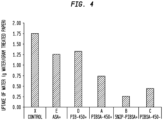
- Note Figure 5 wherein it is seen that paper sizings made with the copolymers made by the method of the present invention exhibit relative water repellency more than 300% higher than conventional products.
- Absorptiveness of sized paper is measured using a modified Cobb test (TAPPI Test Method T-441 or equivalent) as described herein.
- “Blending” and like terminology refers to intimate mixing of two or more feedstocks and includes simultaneously feeding two feedstocks to a reactor ( in situ combination).
- Chloride free and like terminology refers to compositions with less than 2 ppm chlorine content.
- compositions or mixture consist essentially of the recited components when the composition or mixture includes 95% or more by weight of the recited components. That is, the terminology excludes more than 5% unrecited components.
- Conversion of the reaction mixture to polymer is expressed in percent and calculated as the weight (or moles) of monomer incorporated into the copolymer produced less the weight (or moles) of monomer fed to the reaction system divided by the weight (or moles) of monomer fed to the reaction system times 100.
- Hydrophobicity index is a measure of relative water repellency as described herein.
- Kinematic viscosity of the copolymer products of the invention may be expressed in Cst @100°C and is preferably measured in accordance with Test Method ASTM D 445.
- Molecular weight herein is typically reported as number average molecular weight, M n , in Daltons, and is measured by Gel Permeation Chromatography (GPC). GPC measurements reported herein were carried out using a Viscotek GPCmax ® instrument (Malvern instruments, Worcestershire, UK) employing a 3-column set-up (5 ⁇ m (particle size) 100 Angstrom (pore size), 5 ⁇ m 500Angstrom, 5 ⁇ m 10 4 Angstrom) and a Refractive Index (RI) detector. Polyisobutylene standards were used to construct the calibration curve.
- Polydispersity or PDI is defined as the ratio of the weight average molecular weight divided by the number average molecular weight of the polymer.
- Glass transition temperature or Tg, of a composition refers to the temperature at which a composition transitions from a glassy state to a viscous or rubbery state. Glass transition temperature may be measured in accordance with ASTM D7426, ASTM D3418 or equivalent procedure as described herein.
- Melting temperature refers to the crystalline melting temperature of a semicrystalline composition. Melting temperatures may also be measured in accordance with ASTM D3418 or equivalent procedure.
- Copolymers made by the method of the invention have significant amounts of alpha vinylidene terminated molecules due to the isobutylene content of the copolymers and their method of manufacture:
- Reactive end groups present may also include beta olefin isomers (1,1,2-trisubstituted or 1,2,2-trisubstituted cis or trans isomer):
- Other end group structures which may be present include tetrasubstituted structures, other trisubstituted structures with a double bond in the internal gamma position, structures with other internal double bonds and aliphatic structures, for example:
- the materials prepared by the method of the present invention may be characterized by double bond content based on monomer conversion or direct measurement by 1 H NMR and 13 C NMR as is seen in White, J.L. et al., Incorporation of Isoprene in Isobutylene/Isoprene Copolymers: NMR Identification of Branching in Butyl Rubber, Macromolecules 1995, 28, 3290-3300 ; Chu, C.Y. et al., Determination of the Structure of Butyl Rubber by NMR Spectroscopy, Macromolecules 1985, 18, 1423-1430 ; Barsan, F.
- isobutylene/isoprene copolymer may have one of the following structures depending upon whether the addition of isoprene is a 1,4 or 1,2 or 4,3 addition to the copolymer chain:
- the molecules may have chain ends besides the alpha terminated chains seen above, including beta or tetra structures on the chain ends.
- vinylidine double bonds as including alpha vinylidene double bonds and the internal vinylidine double bonds seen in the latter two structures, above, as well as the "internal alpha” structure referred to in United States Patent No. 8,816,028 , entitled Polyisobutylene Composition Having Internal Vinylidene and Process for Preparing the Polyisobutylene Polymer Composition:
- vinylene double bonds thus refer to reactive double bonds in the molecule that are CH 2 terminated.
- the improved process of the present invention features the use of Friedel-Crafts or Lewis acid catalysts which are typically complexed with a complexing agent.
- Many useful Lewis acid catalysts are known to those of ordinary skill in the related art field. In particular, many useful catalysts are described in the patents referenced above.
- Useful Lewis acid catalysts include, for example, BF 3 , AlCl 3 , TiCl 4 , BCl 3 , SnCl 4 and FeCl 3 and the like.
- the complexing agent for the catalyst, and in particular for the BF 3 catalyst may be any compound containing a lone pair of electrons, such as, for example, an alcohol, an ester or an amine.
- the complexing agent may be an alcohol, desirably a primary alcohol, preferably a C1-C8 primary alcohol (such as, for example, methanol, ethanol, propanol, isopropanol, hexyl alcohol and the like) and ideally methanol.
- a primary alcohol preferably a C1-C8 primary alcohol (such as, for example, methanol, ethanol, propanol, isopropanol, hexyl alcohol and the like) and ideally methanol.
- Catalyst refers to a Lewis acid catalyst of the class described above
- Catalyst complex refers to the Lewis acid catalyst and complexing agent up to a 1:1 molar ratio.
- Preferred Lewis acids which can be used are complexes of Aluminum Trichloride and/or Ethyl Aluminum Dichloride with C1-C5 alcohol and/or ether as modifier.
- the catalyst employed is most preferably a BF 3 catalyst together with a modifier, sometimes referred to as a cocatalyst or complexing agent.
- the modifier for the BF 3 catalyst may be any compound containing a lone pair of electrons, such as, for example, an alcohol, ether, an ester or an amine or mixtures thereof.
- the alcohol compound used as the cocatalyst may be a primary, secondary or tertiary alcohol having 1 to 8 carbon atoms, such as, for example, methanol, ethanol, isopropanol, n-propanol, isobutanol, t-butanol, hexyl alcohol and the like.
- the ether compound used as the cocatalyst may be a primary, secondary or tertiary ether having 2 to 8 carbon atoms, such as, for example, dimethyl ether, diethyl ether, diisopropyl ether, methylpropyl ether, methylisopropyl ether, methylethyl ether, methylbutyl ether, methyl-t-butyl ether, ethylpropyl ether, ethylisopropyl ether, ethylbutyl ether, ethylisobutyl ether, ethyl-t-butyl ether and the like.
- the complexing agent may be added to the reactor, in whole or in part, separately from the BF 3 catalyst, or pre-mixed therewith and added to the reactor together with the BF 3 catalyst.
- modifier may be added to the reactor separately from the catalyst and complexing agent or pre-mixed therewith and added to the reactor together with the BF 3 catalyst and complexing agent.
- the polymerization reaction is carried out in the presence of a catalyst system comprising secondary alkylether, tertiary alcohol, and boron trifluoride, the amount of boron trifluoride is 0.05-1.0 weight part per 100 weight part of monomer, the mole ratio of a co-catalyst including secondary alkylether and tertiary alcohol:boron trifluoride is 1.0-2.0:1, and the mole ratio of secondary alkylether:tertiary alcohol is 0.5-1.2:1.
- a catalyst system comprising secondary alkylether, tertiary alcohol, and boron trifluoride
- the amount of boron trifluoride is 0.05-1.0 weight part per 100 weight part of monomer
- the mole ratio of a co-catalyst including secondary alkylether and tertiary alcohol:boron trifluoride is 1.0-2.0:1
- the mole ratio of secondary alkylether:tertiary alcohol is 0.5-1.2:1.
- the estimated molar ratio of modifier to BF 3 in the catalyst composition is generally in the range of from approximately 0.5-3.5 to 1, desirably within the range of from approximately 0.5:1 to approximately 2:1, and in some cases within the range of from approximately 1.5:1 to approximately 1:1.
- the catalyst estimated composition may simply be a 1:1 molar complex of BF 3 and alcohol and ether mixtures
- the estimated molar ratio of complexing agent:BF 3 in said complex may be approximately 1.3:1.
- the temperature in the reaction zone may be maintained at a constant level at a temperature of suitably 0°C or above or wherein the reactor is maintained at a temperature of 5°C or 10°C or above. Temperatures in the range of above 10°C to 27.5°C are typical.
- the residence time is 20 minutes or less, 15 minutes or less or 10 minutes or less. Suitable pressures may be anywhere from 2-20 bar to maintain a liquid phase.
- inert diluents such as an alkane (e.g., isobutane, n-butane, hexane and the like).
- the products of the invention may be made in a continuous stirred tank reactor (CSTR), a plug flow reactor (PFR) or a loop reactor in a liquid phase process.
- CSTR continuous stirred tank reactor
- PFR plug flow reactor
- loop reactor in a liquid phase process.
- the flow characteristics of the reaction mixture are also influenced by temperature in the reactor, molecular weight, monomer and diluent content and so forth as is readily appreciated by one of skill in the art.
- the flow characteristics of the reaction mixture are thus controlled by feed and catalyst rates, conversion of monomer, mixture composition and the temperatures in the reactor as is seen in the examples which follow.
- the inventive process is operated in a loop reactor wherein the recirculation rate is much higher than the feed rate; ratios of recirculation to feed ratios may be anywhere from 5:1 to 40:1.
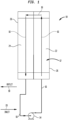
- FIG. 1 there is shown schematically a reactor system 10 which includes a two-pass loop reactor 12, a recirculation pump 14, a feed and recirculation loop indicated at 16, a product outlet indicated at 18 and a feed inlet indicated at 20.
- Reactor 12 includes a plurality of reaction tubes indicated at 22, 24 in a two-pass configuration within a heat exchanger shell indicated at 26.
- isobutylene and comonomer feedstock, catalyst and modifier is continuously fed at 20 to the system, while pump 14 operates at a pressure differential to recirculate the reaction mixture in reactor 12 via loop 16, while product is continuously withdrawn at 18.
- pump 14 operates at a pressure differential to recirculate the reaction mixture in reactor 12 via loop 16, while product is continuously withdrawn at 18. Details of operating reactor 12 are provided in EP 1,242,464 .
- a fixed bed loop reactor having generally the construction of Figure 1 is provided with heterogeneous catalyst packed in the tubes of described heat exchanger.
- a supported BF 3 :alcohol catalyst is charged to the system as is seen in United States Patent Nos. 8,791,216 , entitled Activated Inorganic Metal Oxide and 8,816,028 , entitled Polyisobutylene Composition Having Internal Vinylidene and Process for Preparing the Polyisobutylene Polymer Composition.
- additional liquid catalyst complex is injected into the system to replenish the catalyst charge.
- CSTR apparatus 100 includes a pressurized reaction vessel 120 provided with a cooling jacket 122, a feed port 124, one or more baffles 126, 128, an outlet port 130, as well as an agitator 132, driven by a motor 134 via shaft 135.
- the isobutylene and comonomer feedstock, together with catalyst and modifier, is fed continuously to vessel 120 in the liquid phase through feed port 124, while motor 134 drives agitator 132 via shaft 135 to keep the reaction mixture thoroughly mixed.
- the feed rate, cooling jacket temperature and catalyst concentration are manipulated to keep the reactor at the desired temperature and to achieve target conversion as product is continuously withdrawn from outlet port 130 after a characteristic steady state residence time in the reactor.
- the residence time, feed composition and temperature in all cases are important features towards achieving the desired properties in the copolymer product.
- at least a relatively high temperature and/or a short residence time is employed.
- the reaction mixture is quenched to deactivate the catalyst, preferably with an inorganic base such as sodium hydroxide or ammonium containing catalyst deactivator such as ammonium hydroxide.
- the effluent is then washed with water to remove salts as described in United States Patent No. 6,858,188 .
- the processed effluent is flashed or distilled to remove oligomers in order to provide a purified product as is discussed herein.
- Suitable treating temperatures may be from 150°C to 300°C or so, optionally at lower than atmospheric pressure (taking care not to overheat the polymer), to further remove quench salts while removing oligomers.
- a particularly preferred range is from 200°C to 250°C.
- a suitable post-reactor purification methodology is illustrated in connection with Figure 3 .
- FIG. 3 there is illustrated schematically a process and apparatus 200 for purifying isobutylene copolymer produced in reactors such as reactors 12, 120 described above.
- the reactor outlet (for example, outlet 18 or outlet 130) feeds line 202 which is connected to a washing and decanting system 204.
- Line 206 provides a quenching agent such as aqueous ammonium hydroxide in excess of the amount needed to quench the catalyst.
- the quenched mixture is washed with water provided by way of line 208 and separated into two phases, an aqueous phase containing catalyst reside and ammonium hydroxide and a hydrocarbon phase containing polymer, un-reacted monomer and solvents.
- the aqueous phase exits 204 via line 210 for further processing and recycle, while the organic phase exits 204 via line 212 and is heated and flashed at 214 under positive pressure at temperatures of 120-200°C to remove monomer and light oligomers, usually up to C12 oligomers which exit via line 216 for further processing.
- the partially purified isobutylene copolymer is forwarded via line 218 to a vacuum flash or distillation unit 220, where the product is further purified by distillation to remove oligomers, especially C8 to C24 oligomers at temperatures of from 150°C - 300°C and pressures of from 0.25 psia to 10 psia or so.
- a wipe film evaporator or like apparatus can be employed to eliminate oligomers from the composition.
- the purified isobutylene copolymer product is removed at 222.
- polymerization was carried out by providing isobutylene, isoprene, along with BF 3 catalyst and a methanol co-catalyst to the circulation loop. Isobutylene and isoprene are dried on molecular sieves before use.
- the blended feedstock was fed to the reactor and polymerized in the liquid phase at the temperatures indicated in Table 1 below and an average residence time of less than 10 minutes; typically 4 minutes. Methanol/BF 3 molar ratio was provided in the range of 0.5-2.0.
- polymer was quenched with NH 4 OH and washed with water. Wash water was separated off and product was further purified by vacuum distillation.
- IP-PIB The purified product (IP-PIB) had isobutylene conversions by weight %, isoprene conversion by weight %, average number of double bond per polymer molecule between 1-5, molecular weight, Mn, in Daltons and a vinylidine double bond content per molecule as indicated in Table 1 below.
- the number of double bonds per molecule in the foregoing Table is calculated from the conversion and molecular weight data as the average number of diene-derived units per molecule plus one.
- the average number of diene units is calculated by dividing the number average molecular weight, Mn, of the polymers by the molar average molecular weight of the repeat units incorporated into the copolymer and multiplying by the mole fraction isoprene units in the copolymer. Molar contents are calculated from the conversion data.
- Mn number average molecular weight
- Molar contents are calculated from the conversion data.
- the average number of double bonds per molecule is calculated as 2.4 + 1 or 3.4 using the foregoing data and densities of 0.681 and 0.588 for isoprene and isobutylene, respectively.
- molecular weights of 68 and 56 are used for isoprene and isobutylene.
- Table 1A Representative Isobutylene-Isoprene Copolymers with High Double bond Content made by the method of the present invention Feature General Range Typical Range Preferred Range Molecular Weight, Mn, Daltons 250 - 2500 250 - 900 250 - 650 Molar Ratio Isobutylene:Isoprene Derived Repeat Units 30:1 to 3:1 12.5:1 to 3:1 5:1 to 3:1 Double Bonds/ Molecule 1.25 to 5 1.3 to 4 3 to 4.5 Vinylidene Bonds/ Molecule 0.8 to 3.5 0.85 to 2 1.2 to 1.8
- Table 1A The general, typical and preferred ranges for each feature in Table 1A can be interchanged for a specific embodiment made by the method of the present invention, for Example a polymer of 2500 Daltons molecular weight may have the molar ratios and double bond features of the preferred ranges and so forth.
- Table 1A thus represents 81 specific combinations of ranges for molecular weight, molar ratios of isobutylene:isoprene derived repeat units, double bonds/molecule and vinylidene bonds/molecule for isobutylene-isoprene copolymers, which can be prepared according to the invention.
- polymerization was carried out by providing isobutylene, para- methyl styrene (pmStyrene), along with BF 3 catalyst and a methanol co-catalyst to the circulation loop.
- Isobutylene and isobutane are dried on molecular sieves before use.
- the blended feedstock was fed to the reactor and polymerized in the liquid phase at the temperatures indicated in the table below and an average residence time of less than 10 minutes; typically 4 minutes.
- Methanol/BF 3 molar ratio was provided in the range of 0.5-2.0. After the completion of reaction, polymer was quenched with NH 4 OH and washed with water.
- Examples 8-10 the percentage of para-methyl styrene incorporation in the polymeric chain was calculated based on proton NMR spectroscopy. For products 8-10, aromatic region peaks between 6.5-7.5 ppm are due to aromatic protons, whereas peaks between 0.1- 5.7 are due to aliphatic protons. Based on the peak intensity of aromatic and aliphatic regions, % incorporation of styrene content in the polymeric chain is calculated. A detailed description of the analysis and calculation of the molar composition of the copolymers is reported in the literature, Journal of Macromolecular Science, Part A: Pure and Applied Chemistry, 32:11, 1809-1830 (1995 ).
- copolymers prepared by the method of the invention may be used to make a variety of derivatives for use in fuel or lubricant additives as well as rubber products, adhesives, sizings and resins such as unsaturated polyester resins or polyurethanes.
- United States Patent No. 5,663,457 to Kolp teaches to prepare alkylated hydroxyl aromatics by reacting polyisobutylene with hydroxyaromatics in the presence of an acidic ion exchange resin. This class of products is useful as lubricant and fuel additive compositions.
- United States Patent No. 5,725,612 to Malfer et al. discloses Mannich fuel additives prepared by reacting alkylated hydroxyaromatic compounds with an aliphatic polyamide and an aldehyde. Mannich reaction product fuel additives are also disclosed in United States Patent Application Publication No. US 2007/0068070 of Jackson et al. wherein the materials are prepared using a mixture of conventional and highly reactive polyisobutylene.
- PIB-maleic anhydride reaction products such as polyisobutenylsuccinic anhydrides (PIBSAs) and polyisobutenylsuccinimides (PIBSIs) are also prepared with the copolymers prepared by the method of the invention:
- PIBSA Polyisobutylene Succinic Anhydride
- PIBSI polyisobutylene succinimide
- PIBSA derivatives are prepared via thermal ene reaction with maleic anhydride. It has been found in accordance with the invention that the multiple reactive double bonds in the polyisobutylene isoprene copolymer used to make IP-PIBSA with more than one maleic anhydride attached to the polyisobutylene isoprene copolymer molecule increases the polar to non-polar molecule ratio in the dispersant which has the unexpected and added advantage in dispersing property of the final molecule.
- Reactor pressure at 225 C was 36.6 Psig 13 1:1.4 based on vinylidene in polymer Hold for 4hrs @ 200C 1:1.4 ratio of PIB: MA was added to pre heated PIB.
- PIBSA sample was collected for analysis after 4hrs at 200 C. Then reaction mixture was heated to 225 C for 12 hrs.
- PIBSA sample was collected after 12 hrs. 14 1:1.4 based on based on vinylidene in polymer No hold 1:1.4 ratio of PIB: MA was added to pre heated PIB.
- PIBSA sample was collected for analysis after 4hrs at 200 C. Then reaction mixture was heated to 225 C for 12 hrs.
- PIBSA sample was collected after 16 hrs.
- Exemplary PIBSA and PIBSI compounds are enumerated in Polyfunctional PIB Succinimide Type Engine Oil Additives, L. Bartha et al., Lubrication Science, August, 2001, pp. 313-328 .
- Amines may also be prepared from a carbonyl functionalized PIB as described in United States Patent No. 5,124,484 , Col. 2, lines 38-60. The various derivatives may thus be represented:
- Adhesives are of numerous types, including chemically reactive, for example, epoxy type adhesives or thermoplastic adhesives such as hot melt adhesives or solvent based systems such as polyvinyl acetate emulsions.
- Pandit, R. et al. Epoxidation of Styrene/Butadiene Star Block Copolymer by Different Methods and Characterization of the Blends with Epoxy Resin, Macromol. Symp. 2014, 341, pp. 67-74 (Wiley, 2014 ) discloses various methods of epoxidating styrene/butadiene resins which are then blended with epoxy resins of the bisphenol-A type. The epoxidized resins are reported to make the blends more ductile.
- the reagents used to epoxidize the resins include m-chloroperoxy benzoic acid (MCPBA), peracetic aid (PAA), performic acid (PFA) and hexafluoro isopropanol (HFIP).
- MCPBA m-chloroperoxy benzoic acid
- PAA peracetic aid
- PFA performic acid
- HFIP hexafluoro isopropanol
- Terpene resins have been disclosed for use in pressure-sensitive adhesives as tackifiers along with other resins and are reported to increase heat resistance of adhesives.
- Exemplary compositions might include 36% styrene-isoprene-styrene resin (SIS), 53% limonene resin, naphthenic oil and anti-oxidant.
- polyisobutylene/isoprene or other diene copolymers made by the method of the invention where many of the polymeric chains will have at least two double bonds is used as reactive plasticizer for adhesive formulations. Having multiple double bonds in the polymer chain facilitates crosslinking with pressure sensitive adhesives.
- Paper sizing imparts hydrophobicity to paper which is generally very hydrophilic, thus allowing enhanced properties such as inking and water barrier properties.
- Paper sizing agents typically are of two classes, Alkyl Ketene Dimer (AKD) sizings or Alkyl Succinic Anhydride (ASA) sizings.
- ASA is typically an alpha olefin product in the range of 14-18 carbons prepared by reaction with maleic anhydride.
- ASA sizings are thus amphiphilic and reactive allowing integration into the paper via the succinic anhydride end and sizing properties are imparted by the hydrophobic hydrocarbon end.
- ASA is subsequently emulsified and added into the papermaking process either at the wet-end or sprayed on the paper web.
- copolymers described herein are expected to offer enhanced sizing properties based on multiple succinic anhydride groups per molecule allowing better integration into the paper product and superior sizing properties. Further details are seen in: Hodgson, K.T. A review of paper sizing using alkyl ketene dimer versus alkenyl succinic anhydride, Appita J. 47(1994):5. pp. 402-406 ; Gess, J.M. Rosin. The Sizing of Paper 3rd edition. Eds. Gess, J.M. & Rodriquez, J.M. Publ. TAPPI Press. Atlanta. 2005. pp. 57-73 .
- Samples of PIB or co-polymer of isobutylene and 5 wt % isoprene were maleated using the thermal reaction of addition of maleic anhydride to the reactant at 210°C for 18 hours.
- the standard sizing agent dodecanyl succinic anhydride, a 12 carbon alkenyl succinic anhydride (ASA), was used as a control in all tests.
- ASA 12 carbon alkenyl succinic anhydride
- 15g of the alkylated succinic anhydride was combined with 185 g 4% starch solution and 1 or 0 ml emulsion stabilizing agent, Genapol 100, and the mixture was emulsified (blended) for 90 seconds.
- a calculated Hydrophobicity Index takes into account the weight of sizing agent per gram of paper used in the test, which is then compared to ASA (ratio of the two) after first normalizing to untreated control. HI> 1 means the sample is more hydrophobic than ASA treated.
- a sample calculation is set forth below: All paper samples used were substantially the same size, thus equivalent in paper content and weight of paper need not be normalized in the calculation.
- IP-PIBSA isoprene-isobutylene random co-polymer reacted with maleic anhydride
- the rank of sizing agents with increasing efficacy (hydrophobicity) is therefore: ASA ⁇ PIBSA 450 ⁇ 5 % IP ⁇ PIBSA
- PIB-Isoprene copolymers are particularly preferred for preparing alkylated succinic anhydride sizing agents and emulsifying them with starch and optionally an additional emulsifier or protective colloid.
- compositions include a succinic anhydride derivative of a PIB-Isoprene copolymer having the features in the foregoing Table 1A, emulsified with starch and optionally including an additional emulsifier or protective colloid selected from one or more of: anionic surfactants such as an alkylbenzenesulfonate, an alkylsulfate, a rosined soap, a polyoxyethylene alkylphenyl ether sulfate, polyoxyethylene alkylphenyl ether sulfonate, polyoxyethylene alkylphenyl ether sulfosuccinate, a polyoxyethylene distyrylphenyl ether sulfate and a polyoxyethylene distyrylphenyl ether sulfosuccinate; nonionic surfactants such as polyethylene oxide, polypropylene oxide, and an alkyl, aryl, alkylaryl or aralkylaryl ester or partial ester,
- Table 1A The various ranges of features in Table 1A may be combined with each other if so desired, for example the general range for molecular weight may be combined with typical ranges or preferred ranges for molar ratios of repeat units, double bonds per molecule and so forth as is noted above in connection with Table 1A.
- the copolymers made by the method of the invention may also be used in connection with preparing various resinous products, including unsaturated polyester resins (UPR). These resins are mostly used with reinforced and non-reinforced material for a wide variety of applications. Fiberglass and other inorganic filler reinforced polyester resins are used in cars, boats, construction, fire retardant resins and in electronic devices. However, non-reinforced polyester resins are used in coating applications. Reinforced polyester resin has increased mechanical properties as compared to the non-reinforced one.
- URR unsaturated polyester resins
- Polyester resins are synthesized by condensation reaction of anhydride or acid and alcohol based functional group.
- maleic anhydride, phthallic anhydride and 1,2 propane glycol is used for condensation reaction.
- brominated or phosphate derivatives of phthallic anhydride is used for fire retardant material.
- Synthesis of polyester resins using these molecules are mostly brittle in character.
- PIBSA polyisobutylene succinic anhydride
- polyisobutylene based copolymer derivatives in place of maleic anhydride to make polyester resins.
- polyester resins In a three neck round bottom flask polyisobutylene succinic anhydride (1 mol), phthallic anhydride (1 mol) and propylene glycol (2.1 mol) was added. Mixture was heated to 200°C with continuous stirring for 12 hrs. After the completion of condensation reaction, temperature was reduced to 150 ° C and 200 mg of hydroquinone was added in the polyester resin and diluted with 25-40 wt% of styrene. Usually, methyl ethyl ketone or benzoyl peroxide is used as initiator to cure the polymer. The polyester resins and the styrene solvents react together to crosslink and form the solid resins. Polyester resins are formulated with inorganic filler for various applications.
- Polyester + Styrene yields the polyester/styrene resins.
- polyester resins are readily prepared by way of the above procedure: Table 5 - Unsaturated Polyester Compositions
- PIBSA (450) refers to isobutylene homopolymer based anhydride
- PIB-IPSA refers to isobutylene/isoprene copolymer based anhydride, wherein the molecular weight of the copolymer, M n , is 450 Daltons.
- an unsaturated polyester resin may be synthesized to incorporate a low molecular weight polyisobutylene homopolymer or oligomer having a number average molecular weight, M n , of less than 800 Daltons, suitably 750 Daltons or less. This is conveniently provided by incorporating succinic anhydrides of oligomers such as triisobutylene or tetraisobutylene during preparation of the resins.
- an improvement in unsaturated polyester resin production comprising preparing a succinic anhydride from a polyisobutylene composition and synthesizing the unsaturated polyester resin by reacting the succinic anhydride with a glycol and a diacid or diacid anhydride, wherein the polyisobutylene composition is selected from (i) low molecular weight polyisobutylene homopolymer or oligomer having a molecular weight of less than 800 Daltons, suitably from 200 to 800 Daltons, or an isobutylene copolymer having a molecular weight of less than 800 Daltons, suitably from 200 to 800 Daltons, or (ii) a polyisobutylene copolymer of isobutylene and one or more comonomers selected from isoprene, butadiene, cyclopentadiene, dicyclopentadiene, limonene, substituted styrenes, piperylene and
- Polyisobutylene or polyisobutylene copolymer is preferably employed at relatively low levels, wherein the PIB polymer also acts as a plasticizer in the resins.
- the amount of PIB polymer or copolymer employed in an unsaturated polyester resin may be higher or lower considering the solubility of the PIB polymer or PIB copolymer; typically in the range of from 5% to 20% of the solids present.
- an improvement in curing unsaturated polyester resin compositions comprising providing an unsaturated polyester resin composition, adding a polyisobutylene composition along with an initiator and optionally one or more copromoters followed by curing the unsaturated polyester composition.
- the initiator is suitably a peroxide compound such as methyl ethyl ketone peroxide
- the copromoters (accelerators) may be a metal complex such as a metal napthenate or octoate, or an organic compound such as diethyl aniline, N,N dimethylacetoacetamide, or acetoacetanilide. Suitable components are enumerated in Kirk Othmer Encyclopedia of Chemical Technology, Vol. 18, pp.
- the polyisobutylene composition is selected from (i) low molecular weight polyisobutylene homopolymer or oligomer having a molecular weight of less than 800 Daltons, suitably from 200 to 800 Daltons, or an isobutylene copolymer having a molecular weight of less than 800 Daltons, suitably from 200 to 800 Daltons, or (ii) a polyisobutylene copolymer of isobutylene and one or more comonomers selected from one or more comonomers selected from isoprene, butadiene, cyclopentadiene, dicyclopentadiene, limonene, substituted styrenes, piperylene and C4 to C10 dienes other than isoprene, butadiene, lim
- Polyisobutylene copolymer based epoxy derivatives are also used for epoxy resins. These may be prepared by way of reacting the copolymers made by the method of the invention with a peroxidizing agent in order to provide epoxidized copolymers in accordance with the following:
- Polyisobutylene or PIB based copolymers may be functionalized with OH groups and reacted with di or polyisocyanates to make polyurethanes. See Magenau, Andrew Jackson David, “Polyisobutylene Chain End Transformations: Block Copolymer Synthesis and Click Chemistry Functionalizations” (2010). Dissertations. 872. http://aquila.usm.edu/dissertations/872. See also, United States Patent No. 8,710,147 to Cherpeck et al.
- the copolymers made by the method of the invention are likewise suitable to improve properties of rubber compositions, such as those comprising butyl rubber, styrene-butadiene rubber (SBR), natural rubber and the like.
- the copolymers may be used as such or more preferably derivatized to phenolic, succinimide or succinic anhydride form to provide further functionality and compatibility with the rubber composition.
- the copolymers made by the process of the invention are used in amounts of from about 2 to 25 percent by weight of copolymer or copolymer derivative based on the combined weight of the rubber and copolymer or copolymer derivative in the composition.
- the copolymers of the invention may be used as reactive intermediates that are part of the rubber matrix production process by grafting onto the rubber matrix resin or copolymerizing with the rubber monomers during production of the rubber resin, thereby modifying the mechanical or physical properties of the rubber itself.
- the copolymers made by the method of the invention may also be compounded into the rubber in connection with curing to improve the mechanical or physical properties, and may be used as a replacement or enhancement for the typically used process (asphalt) oils during cure.
- the copolymers of the invention may be applied after curing a rubber product and reacted with the cured product to improve properties of the product, for example frictional properties.
- the copolymers made by themethod of the invention further improve the properties of a rubber product as compared to conventional rubber/polyisobutylene based compositions as are seen in United States patent No. 4,465,829 to Graves and United States patent No. 9,752,020 to Wang et al.
- the copolymers made by the method of the invention can be tailored to the application. For example, a random or non-random isobutylene/styrene copolymer optionally derivatized to phenolic, succinimide or succinic anhydride form provides a better anchor in the matrix of an SBR system than PIB or other PIB copolymer compositions.
- the diene copolymers made by the method of the invention are especially useful when used in connection with curing of the rubber product; here again the diene copolymers may be derivatized to phenolic, succinimide or succinic anhydride form.
- an isobutylene copolymer comprising: (a) providing a reaction mixture to a reactor comprising isobutylene monomer, and one or more comonomers selected from isoprene, butadiene, cyclopentadiene, dicyclopentadiene, limonene, substituted styrenes, piperylene and C4 to C10 dienes other than isoprene, butadiene, cyclopentadiene, dicyclopentadiene, limonene or piperylene as well as a Lewis acid polymerization catalyst, wherein the molar ratio of isobutylene monomer to the comonomer is from 30:1 to 1:1; (b) polymerizing the reaction mixture while maintaining the reactor at a temperature of from 0°C to 35°C and utilizing a reactor residence time of less than 20 minutes to produce a crude isobutylene copolymer in a polymerization mixture
- Suitable temperatures and residence times which may be selected for the process appear in the following Table 6: Table 6 Reaction Conditions Reactor Temperature Residence Time 0°C to 35°C 20 minutes or less 5°C to 35°C 15 minutes or less 10°C to 35°C 10 minutes or less 15°C to 35°C 2 to 8 minutes 20°C to 35°C 25°C to 35°C
- the conversion of isobutylene monomer is suitably from 40% to 98%, more preferably from 50% to 95% or 55% to 90%, while the conversion of comonomer is suitably from 30% to 90%, more preferably from 40% to 85% or from 45% to 80%
- the Lewis Acid polymerization catalyst typically comprises a catalyst including BF 3 , AlCl 3 or EtAlCl 2 and a co-catalyst comprising an alcohol, ether or ester or mixture thereof, most preferably the catalyst comprises BF 3 and an alcohol co-catalyst.
- Molar ratios of isobutylene to the one or more comonomers is generally from 30:1 to 1:1, more typically the molar ratio of isobutylene to the one or more comonomers is from 12:1 to 1:1 or from 6:1 to 1:1. In some preferred embodiments, the molar ratio of isobutylene to the one or more comonomers is from 3:5 to 1:1.
- the one or more comonomers may consist essentially of isoprene, or alpha methyl styrene or mixtures thereof, or may consist essentially of butadiene, cyclopentadiene, dicyclopentadiene, limonene, piperylene or mixtures thereof.
- the purified copolymer products made by the method of the invention have the features indicated in the Table 7 below.
- an isobutylene copolymer according to claim 8 comprising repeat units derived from isobutylene and repeat units derived from isoprene, wherein the molar ratio of isobutylene derived repeat units to the comonomer derived repeat units is from 75:1 to 1.5:1 and the isobutylene copolymer has a molecular weight, M n , of from 200 to 2,500.
- the product may have any of the features noted above and the additional features noted below.
- the molar ratio of isobutylene derived repeat units to the comonomer derived repeat units is generally from 30:1 to 2:1, more preferably from 30:1 to 3:1 or from 12.5:1 to 3:1. In some embodiments, the molar ratio of isobutylene derived repeat units to the comonomer derived repeat units is from 5:1 to 3:1. Most preferably, the isobutylene copolymer is substantially chloride-free.
- the isobutylene copolymer made by the method according to the invention may be incorporated into an adhesive composition, a sizing composition, an unsaturated polyester resin, a fuel or lube additive composition, an epoxy resin or a polyurethane resin. It has also been found that an unsaturated polyester resin incorporating low molecular weight polyisobutylene having a number average molecular weight, Mn, of less than 800 Daltons especially wherein the polyester resin incorporates a succinic anhydride derivative of a low molecular weight polyisobutylene oligomer selected from triisobutylene and tetraisobutylene.
- the reactor is maintained at a temperature of up to 35°C, more preferred at a temperature of 5°C or above, still more preferred at a temperature of 10°C or above, very preferred at a temperature of 15°C or above and most preferred at a temperature of at least 20C or above.
- a reactor residence time of 10 minutes or less is used.
- the conversion of isobutylene monomer is from 55% to 90%, more preferred from 45% to 80%.
- the polymerization is carried out in a loop reactor or in a CSTR.
- the polymerization catalyst comprises BF3 and an alcohol co-catalyst.
- Preferrred is a method according to the invention, wherein the molar ratio of isobutylene to the one or more comonomers is from 12:1 to 1:1, more preferred from 3:5 to 1:1.
- the purified isobutylene copolymer has a molecular weight, M n , of from 250 to 1,500 Daltons, more preferred from 250 to 700 Daltons.
- the purified isobutylene copolymer has, on average, from 1.25 to 5 double bonds per molecule.
- the purified isobutylene copolymer has, on average, from 0.8 to 2 vinylidene double bonds per molecule, more preferred from 1.2 to 1.8 vinylidene double bonds per molecule.
- the purified isobutylene copolymer has a PDI of from 1.2 to 4.
- M n molecular weight
- the isobutylene copolymer has, on average, from 1.25 to 5 double bonds per molecule, more preferred from 1.3 to 4 double bonds per molecule and most preferred from 3 to 4.5 double bonds per molecule.
- the isobutylene copolymer has, on average, from 0.8 to 3.5 vinylidene double bonds per molecule more preferred from 0.85 to 2 vinylidene double bonds per molecule and most preferred from 1.2 to 1.8 vinylidene double bonds per molecule.
- an unsaturated polyester resin incorporating low molecular weight polyisobutylene made by the method of the invention having a number average molecular weight, Mn, of less than 800 Daltons and incorporating a succinic anhydride derivative of a low molecular weight polyisobutylene oligomer selected from triisobutylene and tetraisobutylene.
- an unsaturated polyester resin incorporating low molecular weight polyisobutylene made by the method of the invention having a number average molecular weight, Mn, of less than 800 Daltons, wherein the low molecular weight polyisobutylene is a copolymer of isobutylene and one or more comonomers selected from isoprene, butadiene, cyclopentadiene, dicyclopentadiene, limonene, substituted styrenes and piperylene, wherein the molar ratio of isobutylene derived repeat units to the comonomer derived repeat units is from 30:1 to 1.5:1 and the isobutylene copolymer has a molecular weight, Mn, of from 200 to 20,000 Daltons, with the provisos that (i) when the comonomer is styrene, the copolymer has a molecular weight, Mn, from 200 to 500 Daltons and (ii)) when the
Landscapes
- Chemical & Material Sciences (AREA)
- Organic Chemistry (AREA)
- Health & Medical Sciences (AREA)
- Chemical Kinetics & Catalysis (AREA)
- Medicinal Chemistry (AREA)
- Polymers & Plastics (AREA)
- Engineering & Computer Science (AREA)
- Materials Engineering (AREA)
- General Chemical & Material Sciences (AREA)
- Addition Polymer Or Copolymer, Post-Treatments, Or Chemical Modifications (AREA)
Claims (14)
- Verfahren zur Herstellung eines Isobutylen-Copolymers, umfassend:(a) Bereitstellen einer Reaktionsmischung in einem Reaktor enthaltend Isobutylenmonomer und ein oder mehrere Comonomere ausgewählt aus Isopren, Butadien, Cyclopentadien, Dicyclopentadien, Limonen, substituierten Styrolen, Piperylen und C4- bis C10-Dienen, die von Isopren, Butadien, Cyclopentadien, Dicyclopentadien, Limonen oder Piperylen verschieden sind, sowie einen Lewis-Säure-Polymerisationskatalysator,
wobei das molare Verhältnis von Isobutylenmonomer zu Comonomer 30:1 bis 1:1 beträgt;(b) Polymerisieren der Reaktionsmischung, während der Reaktor bei einer Temperatur von 0°C bis 35°C gehalten wird und eine Reaktorverweilzeit von weniger als 20 Minuten verwendet wird, um ein rohes Isobutylen-Copolymer in einer Polymerisationsmischung herzustellen; und(c) Gewinnen eines gereinigten Isobutylen-Copolymers aus der Polymerisationsmischung mit einem Molekulargewicht, Mn, von 200 bis 20.000 Dalton,mit den Maßgaben, dass (i) wenn das Comonomer Isopren, Butadien oder Mischungen davon ist, das gereinigte Isobutylen-Copolymer ein Molekulargewicht, Mn, von 200 bis 2500 Dalton hat und (ii) wenn das Comonomer ein substituiertes Styrol umfasst, das gereinigte Copolymer ein Molekulargewicht, Mn, von 200 bis 5000 Dalton hat. - Verfahren nach Anspruch 1, worin der Reaktor bei einer Temperatur von 5°C oder darüber gehalten wird.
- Verfahren nach Anspruch 1, worin die Umwandlung des Comonomers zwischen 45 % und 80 % beträgt.
- Verfahren nach Anspruch 1, worin die Polymerisation in einem Schlaufenreaktor durchgeführt wird.
- Verfahren nach einem der Ansprüche 1-4, ferner umfassend das Einarbeiten des Copolymers in eine Schlichtezusammensetzung.
- Verfahren nach einem der Ansprüche 1 bis 4, ferner umfassend das Einarbeiten des Copolymers in ein ungesättigtes Polyesterharz.
- Verfahren nach Anspruch 1, worin das Comonomer ausgewählt ist aus Isopren, Butadien, Cyclopentadien, Dicyclopentadien, Limonen und Piperylen und worin das gereinigte Isobutylen-Copolymer von 0,85 bis 2 Vinylidenbindungen pro Molekül und von 1,75 bis 3.5 Doppelbindungen pro Molekül aufweist und, wenn das Comonomer Isopren oder Butadien ist, das gereinigte Isobutylen-Copolymer ein Molekulargewicht, Mn, von 200 bis 2500 Dalton aufweist und, wenn das Comonomer Cyclopentadien, Dicyclopentadien, Limonen oder Piperylen ist, das gereinigte Isobutylen-Copolymer ein Molekulargewicht, Mn, von 250 bis 3000 Dalton aufweist.
- Isobutylen-Copolymer enthaltend Wiederholeinheiten, die von Isobutylen abgeleitet sind, und Wiederholeinheiten, die von einem Isopren als Comonomer abgeleitet sind, wobei das Molverhältnis der von Isobutylen abgeleiteten Wiederholeinheiten zu den vom Comonomer abgeleiteten Wiederholeinheiten 30:1 bis 3:1 beträgt und das Isobutylen-Copolymer ein Molekulargewicht, Mn, von 200 bis 2500 Dalton aufweist, mindestens 1.3 Doppelbindungen pro Molekül, mehr als 0,8 Vinyliden-Doppelbindungen pro Molekül und einen Gehalt an Vinyliden-Doppelbindungen, bezogen auf den Gehalt an Doppelbindungen des Copolymers, von mindestens 46 %.
- Isobutylen-Copolymer nach Anspruch 8, worin das Isobutylen-Copolymer ein Molekulargewicht, Mn, von 250 bis 1.500 Dalton aufweist.
- Isobutylen-Copolymer nach Anspruch 8 oder 9, worin das Isobutylen-Copolymer im Durchschnitt 1,25 bis 5 Doppelbindungen pro Molekül aufweist.
- Isobutylen-Copolymer nach Anspruch 8 oder 9, worin das Isobutylen-Copolymer im Durchschnitt 0,8 bis 3,5 Vinyliden-Doppelbindungen pro Molekül aufweist.
- Isobutylen-Copolymer nach Anspruch 8 oder 9, worin das Isobutylen-Copolymer im Durchschnitt 1,2 bis 1,8 Vinyliden-Doppelbindungen pro Molekül aufweist.
- Isobutylen-Copolymer nach Anspruch 8 oder 9, worin das Isobutylen-Copolymer 0,85 bis 2 Vinylidenbindungen pro Molekül und 1,75 bis 3,5 Doppelbindungen pro Molekül aufweist und ein Molekulargewicht, Mn, von 200 bis 2500 Dalton hat.
- Verwendung von Isobutylen-Copolymeren nach einem der Ansprüche 8 bis 13 als Kraftstoff- und Schmieröladditive, in Kautschukzusammensetzungen, Klebstoffen, Schlichten, funktionalisierten Copolymeren, ungesättigten Polyestern, Polyurethanen und Oxiran-Derivaten.
Applications Claiming Priority (2)
| Application Number | Priority Date | Filing Date | Title |
|---|---|---|---|
| US201762572440P | 2017-10-14 | 2017-10-14 | |
| PCT/US2018/055617 WO2019075331A2 (en) | 2017-10-14 | 2018-10-12 | ISOBUTYLENE COPOLYMERS, PROCESS FOR THE PRODUCTION OF ISOBUTYLENE COPOLYMERS AND PRODUCTS BASED ON ISOBUTYLENE COPOLYMERS |
Publications (3)
| Publication Number | Publication Date |
|---|---|
| EP3694894A2 EP3694894A2 (de) | 2020-08-19 |
| EP3694894A4 EP3694894A4 (de) | 2021-09-08 |
| EP3694894B1 true EP3694894B1 (de) | 2025-05-21 |
Family
ID=66101171
Family Applications (2)
| Application Number | Title | Priority Date | Filing Date |
|---|---|---|---|
| EP18866182.1A Active EP3694894B1 (de) | 2017-10-14 | 2018-10-12 | Isobutylen-copolymere, verfahren zur herstellung von isobutylen-copolymeren und isobutylen-copolymer-produkte |
| EP18866876.8A Active EP3694896B1 (de) | 2017-10-14 | 2018-10-12 | Nicht zufällige isobutylencopolymere |
Family Applications After (1)
| Application Number | Title | Priority Date | Filing Date |
|---|---|---|---|
| EP18866876.8A Active EP3694896B1 (de) | 2017-10-14 | 2018-10-12 | Nicht zufällige isobutylencopolymere |
Country Status (8)
| Country | Link |
|---|---|
| US (2) | US11208511B2 (de) |
| EP (2) | EP3694894B1 (de) |
| KR (2) | KR102574125B1 (de) |
| CN (2) | CN111247179B (de) |
| ES (2) | ES2973829T3 (de) |
| MY (2) | MY197011A (de) |
| SA (2) | SA520411731B1 (de) |
| WO (2) | WO2019075331A2 (de) |
Families Citing this family (8)
| Publication number | Priority date | Publication date | Assignee | Title |
|---|---|---|---|---|
| JP7229866B2 (ja) * | 2019-06-28 | 2023-02-28 | 花王株式会社 | トナー用結着樹脂組成物 |
| KR102475296B1 (ko) * | 2020-07-21 | 2022-12-06 | 디엘케미칼 주식회사 | 고무배합용 폴리부텐 유도체 및 이를 포함하는 고무 조성물 |
| WO2023000101A1 (en) * | 2021-07-21 | 2023-01-26 | ARLANXEO Canada Inc. | Branched poly(isobutylene-co-paramethylstyrene) compounds |
| CN116023570B (zh) * | 2021-10-27 | 2025-01-28 | 中国石油天然气股份有限公司 | 异丁烯与马来酸酐共聚的方法 |
| US12187819B1 (en) | 2023-11-15 | 2025-01-07 | Tpc Group, Llc | Compound, its preparation and use |
| US20250382395A1 (en) | 2024-06-12 | 2025-12-18 | Tpc Group Llc | Polyisobutylene Epoxide, its Preparation and Use |
| WO2026022785A2 (en) * | 2024-07-26 | 2026-01-29 | Visolis, Inc. | Compositions for fuel blending made by a sustainable process, and sustainable fuel compositions therefrom |
| US20260092151A1 (en) | 2024-10-02 | 2026-04-02 | Tpc Group Llc | Compounds, their Preparation and Use |
Family Cites Families (51)
| Publication number | Priority date | Publication date | Assignee | Title |
|---|---|---|---|---|
| US3288735A (en) | 1960-02-03 | 1966-11-29 | Toyo Koatsu Ind Inc | Process of curing unsaturated polyester resin |
| US3438804A (en) | 1965-10-21 | 1969-04-15 | Shell Oil Co | Water absorbent material rendered water repellent with polyisobutenylsuccinic anhydride |
| US3948868A (en) | 1969-04-03 | 1976-04-06 | Exxon Research And Engineering Company | Homogeneous styrene/isoolefin copolymers |
| IT951473B (it) * | 1972-04-17 | 1973-06-30 | Snam Progetti | Procedimento per la produzione di polimeri e copolimeri dell iso butilene |
| US4139695A (en) * | 1975-11-13 | 1979-02-13 | Exxon Research & Engineering Co. | High molecular weight high unsaturation C4-C10 isoolefin conjugated diolefin copolymers and multipolymers containing methylcyclopentadiene |
| DE2702604C2 (de) * | 1977-01-22 | 1984-08-30 | Basf Ag, 6700 Ludwigshafen | Polyisobutene |
| GB1601464A (en) | 1977-06-28 | 1981-10-28 | Tenneco Chem | Paper sizing agents |
| US4465829A (en) | 1983-09-06 | 1984-08-14 | The Firestone Tire & Rubber Company | Elastomeric composition comprising natural rubber for use under dynamic, high heat conditions |
| US4698411A (en) | 1986-04-30 | 1987-10-06 | Phillips Petroleum Company | Polyester resins |
| GB8902987D0 (en) | 1989-02-10 | 1989-03-30 | Bp Chemicals Additives | Chemical product |
| DE4306384A1 (de) * | 1993-03-02 | 1994-09-08 | Basf Ag | Chlorfreie, nicht-trocknende Isobuten-Dien-Copolymere |
| US5677405A (en) | 1995-05-24 | 1997-10-14 | The B.F. Goodrich Company | Homopolymers and copolymers of cationically polymerizable monomers and method of their preparation |
| DE19520078A1 (de) | 1995-06-07 | 1996-12-12 | Basf Ag | Verfahren zur Herstellung von niedermolekularem, hochreaktivem Polyisobuten |
| US5663457A (en) | 1996-02-16 | 1997-09-02 | The Lubrizol Corporation | Methods for preparing alkylated hydroxyaromatics |
| US5725612A (en) | 1996-06-07 | 1998-03-10 | Ethyl Corporation | Additives for minimizing intake valve deposits, and their use |
| US6274689B1 (en) * | 1998-10-07 | 2001-08-14 | Exxon Chemical Patents, Inc. | Random isomonoolefin/allyl styrene copolymers and functionalized derivatives thereof |
| JP2000191714A (ja) * | 1998-12-25 | 2000-07-11 | Bridgestone Corp | 重合用触媒及びそれを用いたイソブチレン―スチレン共重合体の製造方法 |
| JP2001055415A (ja) * | 1999-06-08 | 2001-02-27 | Kanegafuchi Chem Ind Co Ltd | イソブチレン系重合体の製造方法 |
| ATE423791T1 (de) | 1999-06-08 | 2009-03-15 | Kaneka Corp | Verfahren zur kontinuierlichen katonischen lebenden polymerisation |
| AU7123700A (en) | 1999-09-16 | 2001-04-17 | Texas Petrochemicals Lp | Process for preparing polyolefin products |
| US6858188B2 (en) | 2003-05-09 | 2005-02-22 | Texas Petrochemicals, Lp | Apparatus for preparing polyolefin products and methodology for using the same |
| JP2004501251A (ja) | 2000-06-22 | 2004-01-15 | ザ ルブリゾル コーポレイション | 官能基化イソブチレン−ポリエンコポリマーおよびその誘導体 |
| US6372851B1 (en) * | 2000-07-06 | 2002-04-16 | Eastman Chemical Resins, Inc. | Maleated liquid C5 hydrocarbon resins |
| AU2002353093A1 (en) | 2001-12-10 | 2003-07-09 | Exxonmobil Chemical Patents Inc. | Elastomeric compositions |
| US6673878B2 (en) | 2001-12-19 | 2004-01-06 | Exxonmobil Chemical Patents Inc. | Tubular polymerization reactors and polymers made therein |
| US20030171530A1 (en) | 2002-03-06 | 2003-09-11 | Atofina Chemicals, Inc. | Alkanolamine-based promoter systems for curing of unsaturated polyester resin compositions |
| DE10211418A1 (de) | 2002-03-15 | 2003-09-25 | Bayer Ag | Verfahren zur Herstellung hochreaktiver Polyisobutene |
| DE60332866D1 (de) | 2002-12-20 | 2010-07-15 | Exxonmobil Chem Patents Inc | Polymere mit neuen sequenzverteilungen |
| CA2418884C (en) * | 2003-02-14 | 2010-07-20 | Bayer Inc. | Process for production of high-isoprene butyl rubber |
| CN100443511C (zh) | 2003-11-04 | 2008-12-17 | 卢布里佐尔公司 | 常规和高亚乙烯基聚异丁烯烷基化的羟基芳族化合物及其组合物和方法 |
| US8492489B2 (en) | 2004-02-13 | 2013-07-23 | Total Petrochemicals Research Feluy | Double loop technology |
| WO2005087821A2 (en) | 2004-03-10 | 2005-09-22 | The Lubrizol Corporation | Dispersant viscosity modifiers based on diene-containing polymers |
| US7388033B2 (en) | 2004-09-21 | 2008-06-17 | Capital Chemical Co. | Amine-functionalized polyisobutylenes for improved hydrophobizing microemulsions |
| CN100429252C (zh) * | 2005-12-15 | 2008-10-29 | 北京化工大学 | 软段全饱和嵌段共聚物的制备方法 |
| DE102005061627A1 (de) * | 2005-12-21 | 2007-06-28 | Lanxess Deutschland Gmbh | Synthetischer Kautschuk mit enger Molekulargewichtsverteilung, ein Verfahren zu seiner Herstellung und seine Verwendung |
| EP1803771B1 (de) | 2005-12-28 | 2017-12-06 | Bridgestone Corporation | Kautschukzusammensetzung mit gutem nassgiff und geringem gehalt an aromatischem öl |
| EP2235082B1 (de) * | 2007-12-28 | 2014-05-14 | Bridgestone Corporation | Mischpolymere, die isobutylen- und dien-mer-einheiten enthalten |
| US20100298507A1 (en) * | 2009-05-19 | 2010-11-25 | Menschig Klaus R | Polyisobutylene Production Process With Improved Efficiencies And/Or For Forming Products Having Improved Characteristics And Polyisobutylene Products Produced Thereby |
| CN101955558B (zh) * | 2009-07-15 | 2013-03-13 | 北京化工大学 | 制备高反应活性聚异丁烯及其共聚物的引发体系 |
| CA2784549C (en) | 2009-12-18 | 2018-01-23 | Chevron Oronite Company Llc | Carbonyl-ene functionalized polyolefins |
| MX2012010346A (es) | 2010-03-11 | 2012-12-17 | Petrochemical Supply Inc | Oxidos de metales inorganicos activados. |
| US20120000118A1 (en) | 2010-06-01 | 2012-01-05 | Basf Se | Low-molecular weight polyisobutyl-substituted amines as dispersant boosters |
| CN103717719B (zh) * | 2011-05-24 | 2016-06-15 | 路博润公司 | 包含聚(异丁烯)/聚(乙烯基芳烃)嵌段共聚物的润滑组合物 |
| KR101930735B1 (ko) * | 2011-10-26 | 2018-12-19 | 티피씨 그룹 엘엘씨 | 중간 범위 비닐리덴 함량, 고 점성 폴리아이소부틸렌 중합체 |
| FR2990157B1 (fr) | 2012-05-03 | 2014-04-25 | Michelin & Cie | Objet pneumatique pourvu d'une couche etanche aux gaz a base d'un elastomere thermoplastique et d'une charge lamellaire |
| CN103387628B (zh) * | 2012-05-07 | 2015-09-09 | 中国石油化工股份有限公司 | 一种烯烃聚合的系统及方法 |
| US8816028B2 (en) | 2012-05-22 | 2014-08-26 | Petrochemical Supply, Inc. | Polyisobutylene composition having internal vinylidene and process for preparing the polyisobutylene polymer composition |
| US9587150B2 (en) * | 2012-08-14 | 2017-03-07 | 3M Innovative Properties Company | Adhesives comprising grafted isobutylene copolymer |
| FR3033570B1 (fr) * | 2015-03-09 | 2017-03-10 | Michelin & Cie | Objet pneumatique pourvu d'une couche elastomere a base d'un elastomere thermoplastique sous forme d'un copolymere a blocs (a-b-(alpha-methylstyrene-co-b))n-b-c |
| US9617366B1 (en) * | 2016-03-03 | 2017-04-11 | Tpc Group Llc | Low-fluoride, reactive polyisobutylene |
| WO2017151339A1 (en) * | 2016-03-03 | 2017-09-08 | Tpc Group Llc | Low-fluoride, reactive polyisobutylene |
-
2018
- 2018-10-12 EP EP18866182.1A patent/EP3694894B1/de active Active
- 2018-10-12 MY MYPI2020000964A patent/MY197011A/en unknown
- 2018-10-12 KR KR1020207010600A patent/KR102574125B1/ko active Active
- 2018-10-12 US US16/648,580 patent/US11208511B2/en active Active
- 2018-10-12 KR KR1020207010599A patent/KR102762108B1/ko active Active
- 2018-10-12 WO PCT/US2018/055617 patent/WO2019075331A2/en not_active Ceased
- 2018-10-12 CN CN201880066034.7A patent/CN111247179B/zh active Active
- 2018-10-12 EP EP18866876.8A patent/EP3694896B1/de active Active
- 2018-10-12 MY MYPI2020000967A patent/MY197010A/en unknown
- 2018-10-12 ES ES18866876T patent/ES2973829T3/es active Active
- 2018-10-12 WO PCT/US2018/055652 patent/WO2019075356A2/en not_active Ceased
- 2018-10-12 US US16/648,488 patent/US11326004B2/en active Active
- 2018-10-12 CN CN201880065965.5A patent/CN111315788B/zh active Active
- 2018-10-12 ES ES18866182T patent/ES3032677T3/es active Active
-
2020
- 2020-04-08 SA SA520411731A patent/SA520411731B1/ar unknown
- 2020-04-09 SA SA520411750A patent/SA520411750B1/ar unknown
Also Published As
| Publication number | Publication date |
|---|---|
| KR102762108B1 (ko) | 2025-02-03 |
| WO2019075356A2 (en) | 2019-04-18 |
| EP3694894A4 (de) | 2021-09-08 |
| SA520411750B1 (ar) | 2022-12-13 |
| EP3694896A2 (de) | 2020-08-19 |
| WO2019075331A2 (en) | 2019-04-18 |
| US20200231724A1 (en) | 2020-07-23 |
| CN111247179B (zh) | 2023-08-25 |
| MY197010A (en) | 2023-05-18 |
| MY197011A (en) | 2023-05-18 |
| EP3694894A2 (de) | 2020-08-19 |
| WO2019075356A3 (en) | 2019-07-04 |
| US11326004B2 (en) | 2022-05-10 |
| CN111315788A (zh) | 2020-06-19 |
| KR20200057022A (ko) | 2020-05-25 |
| CN111247179A (zh) | 2020-06-05 |
| US11208511B2 (en) | 2021-12-28 |
| ES2973829T3 (es) | 2024-06-24 |
| EP3694896B1 (de) | 2024-01-10 |
| CN111315788B (zh) | 2023-08-15 |
| ES3032677T3 (en) | 2025-07-23 |
| US20210301048A1 (en) | 2021-09-30 |
| WO2019075331A3 (en) | 2019-05-31 |
| SA520411731B1 (ar) | 2022-11-14 |
| EP3694896A4 (de) | 2021-10-20 |
| KR20200057021A (ko) | 2020-05-25 |
| KR102574125B1 (ko) | 2023-09-01 |
Similar Documents
| Publication | Publication Date | Title |
|---|---|---|
| EP3694894B1 (de) | Isobutylen-copolymere, verfahren zur herstellung von isobutylen-copolymeren und isobutylen-copolymer-produkte | |
| DE69323769T2 (de) | Amorphe olefinpolymere, copolymere, verfahren zur herstellung und derivate davon | |
| CA2418884C (en) | Process for production of high-isoprene butyl rubber | |
| Kukhta et al. | Room temperature cationic polymerization of β-pinene using modified AlCl 3 catalyst: toward sustainable plastics from renewable biomass resources | |
| US9771442B2 (en) | Polymerization initiating system and method to produce highly reactive olefin functional polymers | |
| KR101929082B1 (ko) | 낮은 희석제 함량 반응 매질로 제조된 폴리아이소부틸렌 | |
| EP0687276B1 (de) | Chlorfreie, nicht-trocknende isobuten-dien-copolymere | |
| US7741410B2 (en) | Epoxidation of isobutene polymers | |
| JP2016501306A (ja) | 官能化されたポリイソブテンの製造法および該化合物の誘導体 | |
| KR100910004B1 (ko) | 이소부텐의 양이온 중합의 액체 반응 배출물의 처리 방법 | |
| WO2011143744A1 (en) | Free-radical curable functional macromonomers prepared from anhydride | |
| US9617363B1 (en) | Low-fluoride, reactive polyisobutylene | |
| EP0407555A1 (de) | Polybutylketone und hydroxyester von epoxidierten polybutenen | |
| EP1280847B1 (de) | Oligo/polysuccinimide, verfahren zu deren herstellung sowie deren verwendung | |
| US9617366B1 (en) | Low-fluoride, reactive polyisobutylene | |
| US4210737A (en) | Synthesis of substituted cyclopentadienes and cyclopentadiene-functionalized polymers | |
| JP2001064376A (ja) | マレエート基を含むポリエステルの製造方法、樹脂組成物の製造方法及びマレエート基を含むポリエステルの異性化方法 | |
| CA2593511C (en) | Co-polymerization of an isoolefin with a halogenated co-monomer | |
| WO2017151339A1 (en) | Low-fluoride, reactive polyisobutylene | |
| US20170114164A1 (en) | Method for Preparing Polybutene by Using Catalyst Containing N-Propanol | |
| CN120005072A (zh) | 一种橡胶组合物、一种低门尼橡胶及其制备方法和一种低门尼卤化橡胶及应用 |
Legal Events
| Date | Code | Title | Description |
|---|---|---|---|
| STAA | Information on the status of an ep patent application or granted ep patent |
Free format text: STATUS: THE INTERNATIONAL PUBLICATION HAS BEEN MADE |
|
| PUAI | Public reference made under article 153(3) epc to a published international application that has entered the european phase |
Free format text: ORIGINAL CODE: 0009012 |
|
| STAA | Information on the status of an ep patent application or granted ep patent |
Free format text: STATUS: REQUEST FOR EXAMINATION WAS MADE |
|
| 17P | Request for examination filed |
Effective date: 20200514 |
|
| AK | Designated contracting states |
Kind code of ref document: A2 Designated state(s): AL AT BE BG CH CY CZ DE DK EE ES FI FR GB GR HR HU IE IS IT LI LT LU LV MC MK MT NL NO PL PT RO RS SE SI SK SM TR |
|
| AX | Request for extension of the european patent |
Extension state: BA ME |
|
| RIN1 | Information on inventor provided before grant (corrected) |
Inventor name: GOBIN, ANDRE, M. Inventor name: REDD, RANDALL, V. Inventor name: NUTT, MICHAEL, O. Inventor name: PAPPAS, GEORGE Inventor name: HOPSON, JAMES, A. Inventor name: KUMAR, RAJEEV Inventor name: MACATANGAY, PEGGY, J. |
|
| RIN1 | Information on inventor provided before grant (corrected) |
Inventor name: HOPSON, JAMES, A. Inventor name: NUTT, MICHAEL, O. Inventor name: REDD, RANDALL, V. Inventor name: MACATANGAY, PEGGY, J. Inventor name: KUMAR, RAJEEV Inventor name: PAPPAS, GEORGE Inventor name: GOBIN, ANDRE, M. |
|
| DAV | Request for validation of the european patent (deleted) | ||
| DAX | Request for extension of the european patent (deleted) | ||
| REG | Reference to a national code |
Ref country code: DE Ref legal event code: R079 Free format text: PREVIOUS MAIN CLASS: C08F0010100000 Ipc: C08F0210100000 Ref country code: DE Ref legal event code: R079 Ref document number: 602018082172 Country of ref document: DE Free format text: PREVIOUS MAIN CLASS: C08F0010100000 Ipc: C08F0210100000 |
|
| A4 | Supplementary search report drawn up and despatched |
Effective date: 20210811 |
|
| RIC1 | Information provided on ipc code assigned before grant |
Ipc: C08L 63/00 20060101ALI20210805BHEP Ipc: C08L 67/06 20060101ALI20210805BHEP Ipc: C08L 23/22 20060101ALI20210805BHEP Ipc: C09J 123/22 20060101ALI20210805BHEP Ipc: C08F 4/52 20060101ALI20210805BHEP Ipc: C08F 2/01 20060101ALI20210805BHEP Ipc: C08F 236/00 20060101ALI20210805BHEP Ipc: C08F 212/08 20060101ALI20210805BHEP Ipc: C08F 10/10 20060101ALI20210805BHEP Ipc: C08F 210/10 20060101AFI20210805BHEP |
|
| STAA | Information on the status of an ep patent application or granted ep patent |
Free format text: STATUS: EXAMINATION IS IN PROGRESS |
|
| 17Q | First examination report despatched |
Effective date: 20230713 |
|
| GRAP | Despatch of communication of intention to grant a patent |
Free format text: ORIGINAL CODE: EPIDOSNIGR1 |
|
| STAA | Information on the status of an ep patent application or granted ep patent |
Free format text: STATUS: GRANT OF PATENT IS INTENDED |
|
| GRAS | Grant fee paid |
Free format text: ORIGINAL CODE: EPIDOSNIGR3 |
|
| GRAA | (expected) grant |
Free format text: ORIGINAL CODE: 0009210 |
|
| STAA | Information on the status of an ep patent application or granted ep patent |
Free format text: STATUS: THE PATENT HAS BEEN GRANTED |
|
| INTG | Intention to grant announced |
Effective date: 20250319 |
|
| AK | Designated contracting states |
Kind code of ref document: B1 Designated state(s): AL AT BE BG CH CY CZ DE DK EE ES FI FR GB GR HR HU IE IS IT LI LT LU LV MC MK MT NL NO PL PT RO RS SE SI SK SM TR |
|
| REG | Reference to a national code |
Ref country code: GB Ref legal event code: FG4D |
|
| REG | Reference to a national code |
Ref country code: CH Ref legal event code: EP |
|
| REG | Reference to a national code |
Ref country code: DE Ref legal event code: R096 Ref document number: 602018082172 Country of ref document: DE |
|
| REG | Reference to a national code |
Ref country code: IE Ref legal event code: FG4D |
|
| REG | Reference to a national code |
Ref country code: NL Ref legal event code: FP |
|
| REG | Reference to a national code |
Ref country code: ES Ref legal event code: FG2A Ref document number: 3032677 Country of ref document: ES Kind code of ref document: T3 Effective date: 20250723 |
|
| PG25 | Lapsed in a contracting state [announced via postgrant information from national office to epo] |
Ref country code: FI Free format text: LAPSE BECAUSE OF FAILURE TO SUBMIT A TRANSLATION OF THE DESCRIPTION OR TO PAY THE FEE WITHIN THE PRESCRIBED TIME-LIMIT Effective date: 20250521 Ref country code: PT Free format text: LAPSE BECAUSE OF FAILURE TO SUBMIT A TRANSLATION OF THE DESCRIPTION OR TO PAY THE FEE WITHIN THE PRESCRIBED TIME-LIMIT Effective date: 20250922 |
|
| REG | Reference to a national code |
Ref country code: LT Ref legal event code: MG9D |
|
| PG25 | Lapsed in a contracting state [announced via postgrant information from national office to epo] |
Ref country code: GR Free format text: LAPSE BECAUSE OF FAILURE TO SUBMIT A TRANSLATION OF THE DESCRIPTION OR TO PAY THE FEE WITHIN THE PRESCRIBED TIME-LIMIT Effective date: 20250822 Ref country code: NO Free format text: LAPSE BECAUSE OF FAILURE TO SUBMIT A TRANSLATION OF THE DESCRIPTION OR TO PAY THE FEE WITHIN THE PRESCRIBED TIME-LIMIT Effective date: 20250821 |
|
| PG25 | Lapsed in a contracting state [announced via postgrant information from national office to epo] |
Ref country code: PL Free format text: LAPSE BECAUSE OF FAILURE TO SUBMIT A TRANSLATION OF THE DESCRIPTION OR TO PAY THE FEE WITHIN THE PRESCRIBED TIME-LIMIT Effective date: 20250521 |
|
| PG25 | Lapsed in a contracting state [announced via postgrant information from national office to epo] |
Ref country code: BG Free format text: LAPSE BECAUSE OF FAILURE TO SUBMIT A TRANSLATION OF THE DESCRIPTION OR TO PAY THE FEE WITHIN THE PRESCRIBED TIME-LIMIT Effective date: 20250521 |
|
| PG25 | Lapsed in a contracting state [announced via postgrant information from national office to epo] |
Ref country code: HR Free format text: LAPSE BECAUSE OF FAILURE TO SUBMIT A TRANSLATION OF THE DESCRIPTION OR TO PAY THE FEE WITHIN THE PRESCRIBED TIME-LIMIT Effective date: 20250521 |
|
| PG25 | Lapsed in a contracting state [announced via postgrant information from national office to epo] |
Ref country code: RS Free format text: LAPSE BECAUSE OF FAILURE TO SUBMIT A TRANSLATION OF THE DESCRIPTION OR TO PAY THE FEE WITHIN THE PRESCRIBED TIME-LIMIT Effective date: 20250821 |
|
| PG25 | Lapsed in a contracting state [announced via postgrant information from national office to epo] |
Ref country code: IS Free format text: LAPSE BECAUSE OF FAILURE TO SUBMIT A TRANSLATION OF THE DESCRIPTION OR TO PAY THE FEE WITHIN THE PRESCRIBED TIME-LIMIT Effective date: 20250921 |
|
| PG25 | Lapsed in a contracting state [announced via postgrant information from national office to epo] |
Ref country code: LV Free format text: LAPSE BECAUSE OF FAILURE TO SUBMIT A TRANSLATION OF THE DESCRIPTION OR TO PAY THE FEE WITHIN THE PRESCRIBED TIME-LIMIT Effective date: 20250521 |
|
| PGFP | Annual fee paid to national office [announced via postgrant information from national office to epo] |
Ref country code: NL Payment date: 20251026 Year of fee payment: 8 |
|
| REG | Reference to a national code |
Ref country code: AT Ref legal event code: MK05 Ref document number: 1796712 Country of ref document: AT Kind code of ref document: T Effective date: 20250521 |
|
| PGFP | Annual fee paid to national office [announced via postgrant information from national office to epo] |
Ref country code: DE Payment date: 20251029 Year of fee payment: 8 |
|
| PGFP | Annual fee paid to national office [announced via postgrant information from national office to epo] |
Ref country code: GB Payment date: 20251027 Year of fee payment: 8 |
|
| PG25 | Lapsed in a contracting state [announced via postgrant information from national office to epo] |
Ref country code: AT Free format text: LAPSE BECAUSE OF FAILURE TO SUBMIT A TRANSLATION OF THE DESCRIPTION OR TO PAY THE FEE WITHIN THE PRESCRIBED TIME-LIMIT Effective date: 20250521 Ref country code: DK Free format text: LAPSE BECAUSE OF FAILURE TO SUBMIT A TRANSLATION OF THE DESCRIPTION OR TO PAY THE FEE WITHIN THE PRESCRIBED TIME-LIMIT Effective date: 20250521 Ref country code: SM Free format text: LAPSE BECAUSE OF FAILURE TO SUBMIT A TRANSLATION OF THE DESCRIPTION OR TO PAY THE FEE WITHIN THE PRESCRIBED TIME-LIMIT Effective date: 20250521 |
|
| PGFP | Annual fee paid to national office [announced via postgrant information from national office to epo] |
Ref country code: IT Payment date: 20251021 Year of fee payment: 8 |
|
| PGFP | Annual fee paid to national office [announced via postgrant information from national office to epo] |
Ref country code: FR Payment date: 20251027 Year of fee payment: 8 |
|
| PGFP | Annual fee paid to national office [announced via postgrant information from national office to epo] |
Ref country code: BE Payment date: 20251027 Year of fee payment: 8 |
|
| PG25 | Lapsed in a contracting state [announced via postgrant information from national office to epo] |
Ref country code: CZ Free format text: LAPSE BECAUSE OF FAILURE TO SUBMIT A TRANSLATION OF THE DESCRIPTION OR TO PAY THE FEE WITHIN THE PRESCRIBED TIME-LIMIT Effective date: 20250521 |
|
| PG25 | Lapsed in a contracting state [announced via postgrant information from national office to epo] |
Ref country code: EE Free format text: LAPSE BECAUSE OF FAILURE TO SUBMIT A TRANSLATION OF THE DESCRIPTION OR TO PAY THE FEE WITHIN THE PRESCRIBED TIME-LIMIT Effective date: 20250521 |
|
| PG25 | Lapsed in a contracting state [announced via postgrant information from national office to epo] |
Ref country code: RO Free format text: LAPSE BECAUSE OF FAILURE TO SUBMIT A TRANSLATION OF THE DESCRIPTION OR TO PAY THE FEE WITHIN THE PRESCRIBED TIME-LIMIT Effective date: 20250521 Ref country code: SK Free format text: LAPSE BECAUSE OF FAILURE TO SUBMIT A TRANSLATION OF THE DESCRIPTION OR TO PAY THE FEE WITHIN THE PRESCRIBED TIME-LIMIT Effective date: 20250521 |
|
| PGFP | Annual fee paid to national office [announced via postgrant information from national office to epo] |
Ref country code: ES Payment date: 20251103 Year of fee payment: 8 |
|
| REG | Reference to a national code |
Ref country code: DE Ref legal event code: R097 Ref document number: 602018082172 Country of ref document: DE |
|
| PLBE | No opposition filed within time limit |
Free format text: ORIGINAL CODE: 0009261 |
|
| STAA | Information on the status of an ep patent application or granted ep patent |
Free format text: STATUS: NO OPPOSITION FILED WITHIN TIME LIMIT |
|
| REG | Reference to a national code |
Ref country code: CH Ref legal event code: L10 Free format text: ST27 STATUS EVENT CODE: U-0-0-L10-L00 (AS PROVIDED BY THE NATIONAL OFFICE) Effective date: 20260402 |