EP3694516B1 - Biologisch abbaubare chinolon-antibiotika - Google Patents
Biologisch abbaubare chinolon-antibiotika Download PDFInfo
- Publication number
- EP3694516B1 EP3694516B1 EP18786271.9A EP18786271A EP3694516B1 EP 3694516 B1 EP3694516 B1 EP 3694516B1 EP 18786271 A EP18786271 A EP 18786271A EP 3694516 B1 EP3694516 B1 EP 3694516B1
- Authority
- EP
- European Patent Office
- Prior art keywords
- formula
- quinolone
- cip
- antibiotic
- quinolone antibiotic
- Prior art date
- Legal status (The legal status is an assumption and is not a legal conclusion. Google has not performed a legal analysis and makes no representation as to the accuracy of the status listed.)
- Active
Links
Images


Classifications
-
- C—CHEMISTRY; METALLURGY
- C07—ORGANIC CHEMISTRY
- C07D—HETEROCYCLIC COMPOUNDS
- C07D401/00—Heterocyclic compounds containing two or more hetero rings, having nitrogen atoms as the only ring hetero atoms, at least one ring being a six-membered ring with only one nitrogen atom
- C07D401/02—Heterocyclic compounds containing two or more hetero rings, having nitrogen atoms as the only ring hetero atoms, at least one ring being a six-membered ring with only one nitrogen atom containing two hetero rings
- C07D401/12—Heterocyclic compounds containing two or more hetero rings, having nitrogen atoms as the only ring hetero atoms, at least one ring being a six-membered ring with only one nitrogen atom containing two hetero rings linked by a chain containing hetero atoms as chain links
-
- A—HUMAN NECESSITIES
- A61—MEDICAL OR VETERINARY SCIENCE; HYGIENE
- A61K—PREPARATIONS FOR MEDICAL, DENTAL OR TOILETRY PURPOSES
- A61K31/00—Medicinal preparations containing organic active ingredients
- A61K31/33—Heterocyclic compounds
- A61K31/395—Heterocyclic compounds having nitrogen as a ring hetero atom, e.g. guanethidine or rifamycins
- A61K31/435—Heterocyclic compounds having nitrogen as a ring hetero atom, e.g. guanethidine or rifamycins having six-membered rings with one nitrogen as the only ring hetero atom
- A61K31/47—Quinolines; Isoquinolines
- A61K31/4709—Non-condensed quinolines and containing further heterocyclic rings
-
- A—HUMAN NECESSITIES
- A61—MEDICAL OR VETERINARY SCIENCE; HYGIENE
- A61K—PREPARATIONS FOR MEDICAL, DENTAL OR TOILETRY PURPOSES
- A61K31/00—Medicinal preparations containing organic active ingredients
- A61K31/33—Heterocyclic compounds
- A61K31/395—Heterocyclic compounds having nitrogen as a ring hetero atom, e.g. guanethidine or rifamycins
- A61K31/495—Heterocyclic compounds having nitrogen as a ring hetero atom, e.g. guanethidine or rifamycins having six-membered rings with two or more nitrogen atoms as the only ring heteroatoms, e.g. piperazine or tetrazines
- A61K31/496—Non-condensed piperazines containing further heterocyclic rings, e.g. rifampin, thiothixene or sparfloxacin
-
- A—HUMAN NECESSITIES
- A61—MEDICAL OR VETERINARY SCIENCE; HYGIENE
- A61P—SPECIFIC THERAPEUTIC ACTIVITY OF CHEMICAL COMPOUNDS OR MEDICINAL PREPARATIONS
- A61P31/00—Antiinfectives, i.e. antibiotics, antiseptics, chemotherapeutics
- A61P31/04—Antibacterial agents
-
- Y—GENERAL TAGGING OF NEW TECHNOLOGICAL DEVELOPMENTS; GENERAL TAGGING OF CROSS-SECTIONAL TECHNOLOGIES SPANNING OVER SEVERAL SECTIONS OF THE IPC; TECHNICAL SUBJECTS COVERED BY FORMER USPC CROSS-REFERENCE ART COLLECTIONS [XRACs] AND DIGESTS
- Y02—TECHNOLOGIES OR APPLICATIONS FOR MITIGATION OR ADAPTATION AGAINST CLIMATE CHANGE
- Y02A—TECHNOLOGIES FOR ADAPTATION TO CLIMATE CHANGE
- Y02A50/00—TECHNOLOGIES FOR ADAPTATION TO CLIMATE CHANGE in human health protection, e.g. against extreme weather
- Y02A50/30—Against vector-borne diseases, e.g. mosquito-borne, fly-borne, tick-borne or waterborne diseases whose impact is exacerbated by climate change
Definitions
- the present invention relates to novel quinolone antibiotics for medical use as defined in the claims.
- Antibiotics are particularly problematic. Antibiotics are used to treat infections with pathogenic bacteria. Excessive use of non-degradable antibiotics by human patients or in livestock could lead to accumulation in water and subsequently promote the development of resistance if large areas with relevant bacteria have sufficient active ingredient concentrations of antibiotics and thus exert constant selection pressure on the bacteria.
- biodegradable compounds can contain chemical bonds that are, for example, enzymatically cleavable. Examples include ester bonds, amide bonds or acetal bonds.
- CN103405435A and CN102030737A disclose amino derivatives (containing an amide bond in a side chain, but not on the antibiotic backbone) of the antibiotic clinafloxacin).
- EP373531A1 also discloses antibiotic-active fluoroquinolone basic structures (based on ofloxacin), which, however, do not contain any amide bonds.
- the quinolone antibiotic of the present invention is not one of those described in Wetzstein et al. 2006 outlined connections, such as the connections on page 94 of Wetzstein et al. 2006, especially not compound 106 by Wetzstein et al. 2006 : where R 3 stands for -CH 2 -NH 2 . H
- the compounds claimed herein should have sufficient stability to be able to act in the human or animal body for a sufficient period of time (e.g. for 1-3 days), whereas the compounds after elimination from the body relatively quickly (i.e. within a few weeks or months ), for example under the influence of UV light, are broken down and then no longer have an antibiotic effect or at least have less antibiotic activity. This is ensured by the amide bond according to the invention on the basic structure of the antibiotic.
- amidases occur in humans and would therefore theoretically lead to inactivation of the new antibiotic, it was unexpectedly found that the two derivatives do not appear to exhibit increased instability by liver enzymes and intestinal enzymes and sufficient abiotic stability under physiological conditions.
- the amide bond according to the invention should be similarly stable in the circulation in the human body as hydrolyzable amide bonds in other biotechnological drugs (antibodies, proteins, peptides).
- the present invention relates to the following embodiments: 1. Quinolone antibiotic of general formula I, II, III or IV: wherein R 1 to R 5 have the meaning given in claim 1 and R 6 is selected from Cyclopropyl Cyclobutyl Ethyl Propyl methyl Preferred combinations for R1 to R5 are: Structure number R1 R2 R3 R4 R5 1 -H -F As defined in the claims herein -H -H 2 -H -H See structure no. 1 -OH 3 -H 3 -H -H See structure no. 1 -OCHF 2 -H 4 -H -F See structure no. 1 -Cl -H 5 -H -F See structure no.
- quinolone antibiotics according to the invention could, for example, be broken down by amidases. It is also known that quinolone antibiotics with the above-mentioned residues R 1 , R 2 and R 5 have antibiotic activity. As shown herein, the introduction of a cleavable group on R 3 does not result in a loss of this antibiotic activity.
- the present invention targets all stereoisomers. Since natural amino acids mainly occur in the L form, it is assumed that the L (stereo) isomers of the residue R3 can be split off more enzymatically. Degradation can occur both abiotically and biotically (enzymatically).
- the residue of a natural amino acid after amidic bonding to the quinolone backbone means that the amino acid is amidically coupled to the quinolone backbone and is then of course no longer present as an "acid", but becomes part of the amide bond with the elimination of water.
- the carbonyl group adjacent to R 3 comes from the acid function of the amino acid.
- the quinolone antibiotic may have the following formula: or or
- the quinolone antibiotic can, for example, have the formula II-a and II-b (with formula IIb not being claimed)
- the quinolone antibiotic can have the general formula Ia:
- the quinolone antibiotic can have one of the following formulas:
- the amide bond can be cleaved abiotically or biotically.
- the invention also relates to a medicament containing a quinolone antibiotic according to the invention.
- antibiotics described herein can be formulated or incorporated into medications/dosage forms in conventional ways.
- the quinolone antibiotic according to the invention can be used as a medication.
- the quinolone antibiotic according to the invention can be used to treat bacterial infections.
- the invention relates to the antibiotics described herein for use against hospital germs (nosocomial germs) or germs that are to be treated without risking the development of resistance in other germs. This particularly concerns the Invention the antibiotics described herein for the treatment of E. Coli -caused infections.
- the claimed compounds can also be prepared using known synthetic routes known to those skilled in the art.
- the person skilled in the art can orientate himself in particular on the known quinolone antibiotics which carry the residues R 1 , R 2 , R 5 and R 6 , as defined herein.
- an amine function could first be created on the heterocycle of the quinolone structure and then reacted with a carboxylic acid to form the desired amide group.
- Dicyclohexylcarbodiimide (DCC) or something similar can be used as an aid in the formation of the amide bond, whereby the free carboxyl group on the heterocycle of the quinolone structure should be protected in this step.
- Cip-P2C and Cip-Pro and other antibiotics of the invention can also be prepared using general technical knowledge.
- Cip-P2C and Cip-Pro can be used as starting materials to produce further antibiotics according to the invention.
- Antibiotic activity was determined by performing the broth microdilution method (Cockerill et al., 2012; see cited literature).
- the following bacterial strains were used: Staphylococcus aureus (ATCC 29213), Enterococcus faecalis (ATCC 29212), Escherichia coli (ATCC 25922) and Pseudomonas aeruginosa (ATCC 27853), as well as S. aureus (ATCC 43300), K. pneumoniae (ATCC 700603 ), A. baumanii (ATCC 19606).
- Bacterial cells were diluted at a cell density of 2 - 8 ⁇ 105 cfu/ml in 200 ⁇ l Mueller-Hinton broth medium. The batches contained a series of dilutions of the test substances. These inoculated 96-well plates were incubated for 18 h at 36°C. The minimum inhibitory concentration was determined by visually estimating the lowest concentration that completely inhibited the bacteria.
- HEK293 Human embryonic kidney cells (HEK293) were seeded in 384-well plates at a density of 6000 cells/well in a final volume of 50 ⁇ l with the desired concentration of the test substance. DMEM with 10% fetal bovine serum (FBS) was used as growth medium. The cells were incubated together with the test substances for 20 h at 37 °C with 5% CO2.
- FBS fetal bovine serum
- Ciprofloxacin, Cip-pro or Cip-P2C were dissolved in 12 ml of phosphate-buffered saline at a concentration of 10 mg/L.
- the pH was adjusted to pH 6, pH 7.4 or pH 9.
- the mixtures were incubated at 37 °C for pH 6 and 7.4 and at room temperature for pH 9 with shaking (250 rpm) for 28 days.
- samples 700 ⁇ L were taken for HPLC analysis.
- the quotient of the initial concentration c0 by the concentration at the respective time point (ct) was calculated and plotted against the incubation time.
- Escherichia coli ATCC 23716 was obtained from DSMZ GmbH (Braunschweig, Germany). The test substances were diluted in water and added to the bacterial suspension (in 2x bacterial medium (10 g peptone and 6 g meat extract in 1 liter)) on a 96-well plate so that the final concentration of the medium was 1x. The plate was incubated at 37°C for 4 h. Cell density was determined photometrically by measuring absorbance at 600 nm. The growth inhibition in percent of the untreated controls is plotted against the concentration of the test substance.
- the Shimadzu Prominence HPLC system (Duisburg, Germany) was used for the chromatographic examinations of the test substances.
- the flow rate was set to 0.5 mL min -1 .
- the temperature of the column oven was set to 25 °C and the injection volume was 10 ⁇ L.
- test substances were detected by a UV/Vis detector at 270 nm.
- the flow gradient method was applied as listed in Table 2.
- Table 1 Flow gradient conditions for chromatographic analysis of the test substances Time (min) % Solution B (acetonitrile) 0.01-2.0 1 5.0 5 7.0 10 10.0 15 13.0 25 15.0 30 17.0 35 20.0 40 22.0 50 25.0 60 27.0 65 29.0 20 30.0-32.0 1 32.01 Stop
- Ciprofloxacin, Cip-Pro, Cip-P2C Abiotic hydrolysis Ciprofloxacin, Cip-Pro, Cip-P2C (see Figures 7a-c):
- 10 mg/ml of the test substances in phosphate-buffered saline (PBS) were incubated at different pH conditions at room temperature for 28 days and analyzed by chromatographic methods.
- the initial concentration c0 was related to the concentration at the respective time point (c) and plotted against the incubation time.
- Half-lives of the test substances when incubated with human intestinal microsomes 20 ppm of the test substances were incubated in 1 ml of PBS with 150 ⁇ g/ml human intestinal microsomes at 37 °C with shaking for 24 h.
- the ester methylprednisolone hemisuccinate acted as a positive control.
- the final concentration of the test substances was determined by HPLC. The half-life was calculated from the initial concentration and final concentration.
- Half-lives of the test substances when incubated with human intestinal microsomes 20 ppm of the test substances were incubated in 1 ml of PBS with 150 ⁇ g/ml human intestinal microsomes (Xenotech) at 37 °C with shaking for 24 h. The ester methylprednisolone hemisuccinate acted as a positive control. The final concentration of the test substances was determined by HPLC. The half-life was calculated from the initial concentration and final concentration.
- the quinolone antibiotic has a half-life of less than 50 days or less than 30 days in this test.
- test substances 20 ppm were incubated in 1 ml of PBS with 500 ⁇ g/ml human liver microsomes (Corning) at 37 °C with shaking for 24 h.
- concentrations of the test substances were determined by HPLC. The half-life was calculated from the decrease in concentrations over the course of 24 hours.
- the quinolone antibiotic has a half-life of less than 50 days or less than 30 days in this test.
- S-piperazine-2-carboxylic acid (1) reacts with benzyl chloroformate (2) to form 1,4-Cbz-(S)-piperazine-2-carboxylic acid (3), which is subsequently mixed with, for example, thionyl chloride in acetonitrile (ACN) to form the acid chloride ( 4) is implemented.
- ACN acetonitrile
- CIP-proline can be carried out analogously to CIP-P2C.
- Cbz-L-proline (1) is reacted with, for example, thionyl chloride in ACN to form the acid chloride (2).
- (2) and (4) are reacted in, for example, ACN with triethylamine (TEA) to give (5).
- TAA triethylamine
- the ester is then hydrolyzed with NaOH to give (6) and the Cbz protecting group is removed with Pd/CH 2 (7).
Landscapes
- Health & Medical Sciences (AREA)
- Chemical & Material Sciences (AREA)
- Organic Chemistry (AREA)
- General Health & Medical Sciences (AREA)
- Public Health (AREA)
- Veterinary Medicine (AREA)
- Medicinal Chemistry (AREA)
- Animal Behavior & Ethology (AREA)
- Life Sciences & Earth Sciences (AREA)
- Pharmacology & Pharmacy (AREA)
- Epidemiology (AREA)
- Oncology (AREA)
- Nuclear Medicine, Radiotherapy & Molecular Imaging (AREA)
- Communicable Diseases (AREA)
- Chemical Kinetics & Catalysis (AREA)
- General Chemical & Material Sciences (AREA)
- Pharmaceuticals Containing Other Organic And Inorganic Compounds (AREA)
Description
- Die vorliegende Erfindung betrifft neue Chinolon-Antibiotika zur medizinischen Verwendung, wie in den Ansprüchen definiert.
- Da sich die instrumentelle Analytik in den letzten Jahrzehnten rasant weiterentwickelt hat, wurden bisher schon mehr als hundert verschiedene Pharmazeutika im Ablauf von Kläranlagen, Oberflächengewässern, Grundwasser und vereinzelt auch Trinkwasser im Bereich von ng/L bis µg/L detektiert. Diese Mikroverunreinigungen werden daher mittlerweile als Risiko für die Wasserqualität und ein nachhaltiges Management der Wasserressourcen wahrgenommen. In dem Zusammenhang ist auch sehr wenig über das Auftreten und das umweltwissenschaftliche Schicksal der Zerfalls- und Abbauprodukte der applizierten oder unsachgemäß entsorgten Pharmazeutika bekannt. Persistenz, Akkumulation, Metabolisierung durch Mikroorganismen, Tiere und Pflanzen, Reaktion mit Sauerstoff oder Beeinflussung durch Licht können die Ausgangsstoffe so verändern, dass sich die Toxizität der Substanzen verändern kann und damit die Trinkwasserresourcen beeinträchtigt werden können.
- Besonders problematisch sind Antibiotika. Antibiotika werden zur Behandlung von Infektionen mit pathogenen Bakterien genutzt. Übermäßige Nutzung von nicht abbaubaren Antibiotika durch menschliche Patienten oder bei Nutztieren könnte zur Akkumulation im Wasser führen und anschließend die Resistenzentwicklung fördern, wenn große Areale mit relevanten Bakterien ausreichende Wirkstoffkonzentrationen von Antibiotika haben und somit ständigen Selektionsdruck auf die Bakterien ausüben.
- Es ist bekannt, dass biologisch abbaubare Verbindungen chemische Bindungen enthalten können, die beispielsweise enzymatisch spaltbar sind. Exemplarisch seien Esterbindungen, Amidbindungen oder Acetalbindungen genannt.
-
CN103405435A undCN102030737A offenbaren Aminoderivate (enthalten eine Amidbindung in einer Seitenkette, jedoch nicht am Grundgerüst des Antibiotikums) des Antibiotikums Clinafloxacin). - Weiterhin offenbart die
EP1160241A2 die Synthese von antimikrobiell wirkenden Fluorchinolon-Derivaten, wobei jedoch Amidbindungen nicht explizit erwähnt werden. -
EP373531A1 - Wetzstein et al. 2006 betrifft Enrofloxacin-Metabolite, die durch Behandlung von Pilzen mit Enrofloxacin erzeugt worden sein sollen. Das Dokument schlägt viele Strukturen von Metaboliten vor, die allerdings, wenn überhaupt, nur aufgrund der Massenspektren über LC-MS der Reaktionsmischungen vermutet worden sind (nur hochauflösende Massenspektrometrie ohne spezifische Isolierung und keine Strukturbestätigung nach Synthese und nachfolgendem NMR). Die vorliegend beanspruchten Antibiotika werden somit nicht beschrieben.
- Das Chinolon-Antibiotikum der vorliegenden Erfindung ist keine der in Wetzstein et al. 2006skizzierten Verbindungen, wie die Verbindungen auf Seite 94 von Wetzstein et al. 2006, insbesondere nicht Verbindung 106 von Wetzstein et al. 2006:

-
WO 2007/106537 A2 ,JP 57016882 A - Keine der hierin erwähnten Veröffentlichungen offenbart das der vorliegenden Erfindung zugrundeliegende Konzept. Die hierein beanspruchten Verbindungen sollen eine ausreichende Stabilität aufweisen, um für einen ausreichenden Zeitraum im menschlichen oder tierischen Körper wirken zu können (z.B. für 1-3 Tage), wohingegen die Verbindungen nach dem Ausscheiden aus dem Körper relativ schnell (d.h. innerhalb weniger Wochen oder Monaten), beispielsweise unter Einfluss von UV-Licht, abgebaut werden und dann nicht mehr antibiotisch wirken oder zumindest weniger antibiotische Aktivität aufweisen. Dies wird durch die erfindungsgemäße Amid-Bindung am Grundgerüst des Antibiotikums sichergestellt.
- Die Publikation von Junza et al. offenbart, dass Fluorchinolon-Antibiotika (z.B. Ciprofloxacin) und deren Abbauprodukte in Kuhmilchproben nachgewiesen wurden. Hier wurden auch Ciprofloxacin-Aminoderivate nachgewiesen, welche Amidbindungen in einer Seitenkette, jedoch nicht am Grundgerüst des Antibiotikums enthielten (Journal of Agricultural and Food Chemistry, 62(8), 2008-2021).
- Desweiteren zeigen Liu et al., dass Fluorchinolon-Antibiotika (z.B. Ciprofloxacin) und deren Abbauprodukte in durch Ozonisierung aufgereinigtem Abwasser nachgewiesen werden konnten. Hier wurden ebenfalls Abbauprodukte (Aminoderivate) nachgewiesen, welche Amidbindungen in einer Seitenkette, jedoch nicht am Grundgerüst des Antibiotikums enthielten (Water Research 2012, 46(16), 5235-5246).
- Weitere Chinolon-Antibiotika sind in der folgenden Literatur beschrieben:
- Klaus Kümmerer: "Sustainable from the very beginning: rational design of molecules by life cycle engineering as an important approach for green pharmacy and green chemistry", GREEN CHEMISTRY, Bd. 9, Nr. 8, 2007, Seiten 899-907
- Qing-Rong Qi ET AL: "Synthesis and antibacterial activity of new fluoroquinolones containing a cis- or trans-cyclohexane moiety", Bioorganic & Medicinal Chemistry Letters, Bd. 22, Nr. 24, 2012, Seiten 7688-7692
-
US 8 889 689 - GUO HONGGUANG ET AL: "Kinetics and transformation pathways on oxidation of fluoroquinolones with thermally activated persulfate", CHEMICAL ENGINEERING JOURNAL, Bd. 292, 1 1 . 201 6, Seiten 82-91
- SAUTER F ET AL: "Synthesis of novel quinolone-type drugs. Part 4. Pyrido[3,2,1-gh][1,7]phenanthroline- and benzo[i,j]quinolizinecarboxylic acids", SCIENTIA PHARMACEUTICA, Bd. 57, Nr. 1, 1989, Seiten 7-20
-
US 4 416 884 - Mark P. Wentland ET AL: "Chapter 15. Quinolone Antibacterial Agents" In: "ANNUAL REPORTS IN MEDICINAL CHEMISTRY", 1985, Bd. 20, Seiten 145-154
- DATABASE CAPLUS [Online] CHEMICAL ABSTRACTS SERVICE, COLUMBUS, OHIO, US; 28. August 201 6, Halehatty S.Bhojya Naik ET AL: "ANTIMICROBIAL COMPOUNDS, SYNTHESIS AND APPLICATIONS THEREOF, IN 2015CH00032", XP055916389, STN Database accession no. 216:1429194; & PATENT APPLICATION, "ANTIMICROBIAL COMPOUNDS, SYNTHESIS AND APPLICATIONS THEREOF" 2016, XP055916313,
- Im Rahmen der vorliegenden Erfindung wurden umweltfreundliche (Schmalband)-Antibiotika-Varianten auf Basis der Fluorchinolon-Grundstruktur entwickelt, um nachfolgend die durch Pharmazeutika verursachten Gefahren für die Wasserqualität abzumildern, indem die biologische Abbaubarkeit verbessert wird oder zumindest die Toxizität von nicht-abbaubaren Metaboliten, Transformationsprodukten und Fragmenten neutralisiert wird.
- Mehrere Derivate von Ciprofloxacin (siehe
Figur 1 ) wurden synthetisiert und in verschiedenen Bakterien getestet. Die Derivate leiten sich durch Verknüpfung der Grundstruktur mit Biomolekülen über hydrolysierbare Bindungen (hier Amid-Bindungen) ab. Diese Hydrolyse kann biologisch (enzymatisch) erfolgen. - Es zeigte sich, dass die zwei Derivate (siehe
Figur 1 ) besonders aktiv in E. coli waren (sieheFigur 2 ). Die minimalen Hemmkonzentrationen lagen hier in der Größenordnung verschiedener etablierter Fluorchinolone. Dies wurde durch eigene Daten in Wachstumstests in E.coli (sieheFigur 3 ,4 und 5 ) bestätigt. In weiteren Bakterien waren sie jedoch deutlich schwächer aktiv (sieheFigur 2 und5 ), so dass eine spezifische Behandlung von E. coli Infektionen (z.B. Harnwegsinfektionen) ohne kollateralen Selektionsdruck auf andere Keime möglich wäre. Das Ergebnis wäre unter Umständen eine mildere Behandlung dieser Erkrankungen mit weniger Risiko einer ausgeprägten Resistenzbildung in anderen Bakterien. - Dadurch können neue Medikamente entstehen, die pharmakologisch und umweltwissenschaftlich verbessert sind.
- Obwohl Amidasen im Menschen vorkommen und daher theoretisch zu einer Inaktivierung des neuen Antibiotikums führen würden, so wurde unerwartet festgestellt, dass die beiden Derivate keine erhöhte Instabilität durch Leberenzyme und intestinale Enzyme und eine hinreichende abiotische Stabilität unter physiologischen Bedingungen aufzuweisen scheinen. Die langfristige Abbaubarkeit, beispielsweise durch Mikroorganismen, im Ökosystem sollte somit nicht im Gegensatz zum Einsatz als Medikament stehen.
- Insbesondere sollte die erfindungsgemäße Amid-Bindung in der Zirkulation im menschlichen Körper ähnlich stabil sein wie hydrolysierbare Amid-Bindungen bei anderen biotechnologischen Medikamenten (Antikörper, Proteine, Peptide).
- Nicht auszuschließen ist, dass sich auch gegen diese neuen Antibiotika-Varianten Resistenzen bilden könnten. Es besteht aber die Möglichkeit, dass dies deutlich weniger wahrscheinlich ist als mit den Breitband-Fluorchinolonen. Das heißt, nur Bakterienstämme, die durch das Medikament ausreichend unter Selektionsdruck gesetzt werden, können gegen Fluorchinolone resistent werden. Die hierin beschriebenen Derivate könnten eine spezifische/selektive Wirkung auf E. coli Bakterien, nicht aber auf andere pathogene Keimen haben, so dass erreicht würde, dass bei Behandlung diagnostizierter E. coli Infektionen lediglich die bekämpften Pathogene resistent werden könnten. Das Risiko einer Resistenzbildung wäre also minimiert. Bisher werden Fluorchinolone von den Fachgesellschaften nicht als erste Wahl bei Harnwegsinfektionen (ca. 70% E. coli Infektionen) empfohlen, um die Breitbandwirkung nicht durch Resistenzen zu verlieren.
- Durch die gute Abbaubarkeit der während der Therapie vom Menschen/Tier ausgeschiedenen Antibiotika wird der auf Umweltkeime einwirkende Selektionsdruck und die Resistenzausbildung eingedämmt.
-
-
Figur 1 : Molekulare Strukturen der beiden Fluorchinolon-Derivate Cip-P2C (a) und Cip-Pro (b). -
Figur 2 : Antibiotische Aktivität von Cip-Pro und Cip-P2C (I). Minimale Hemmkonzentrationen [µg/ml] von Cip-Pro und Cip-P2C in verschiedenen Bakterien (E. faecalis ATCC 29121, P. aeruginosa ATCC 27853, S. aureus ATCC 29213, E. coli ATCC 25922). -
Figur 3 : Wachstumshemmung von E. coli durch Cip-Pro im Vergleich zu Ciprofloxacin. Dosis-Wirkungsbeziehung der Wachstumshemmung von E. coli ATCC 23716 durch Cip-Pro im Vergleich zu Ciprofloxacin. -
Figur 4 : Wachstumshemmung von E. coli durch Cip-P2C. Dosis-Wirkungsbeziehung der Wachstumshemmung von E. coli ATCC 23716 durch Cip-P2C. -
Figur 5 : Antibiotische Aktivität von Cip-Pro (II). Minimale Hemmkonzentrationen [µg/ml] in verschiedenen Bakterienstämmen und Zytotoxizität in humanen HEK 293 Zellen von Cip-Pro in verschiedenen Bakterien (S. aureus ATCC 43300, E. coli ATCC 25922, K. pneumoniae ATCC 700603, A. baumanii ATCC 19606, P.aeruginosa ATCC 27853 und humane embryonale Nierenzellen (HEK 293 CRL-1573). -
Figur 6 : Natürliche Aminosäuren. -
Figuren 7a -c: Abiotische Hydrolyse von Ciprofloxacin, Cip-Pro, Cip-P2C. Im Rahmen der Erfindung kann ausgenutzt werden, dass der pH-Wert unter physiologischen Bedingungen anders ist als z.B. im kommunalen Abwasser (meist pH 8-9), und dass jeweils andere Bakterien vorhanden sind, so dass die Anforderungen an die physiologische Stabilität und die gewünschte Instabilität im Abwasser unterschiedlich sind. -
Figur 8 : Enzymatische Hydrolyse durch intestinale Mikrosomen von Ciprofloxacin, Cip-Pro, Cip-P2C. -
Figur 9 : Enzymatische Hydrolyse durch humane intestinale Mikrosomen (Xenotech) oder 500 µg/ml humane Lebermikrosomen (Corning). -
Figur 10 : Beschreibung eines möglichen Syntheseschemas für CIP-P2C. -
Figur 11 : Beschreibung eines möglichen Syntheseschemas für CIP-Prolin. - Die vorliegende Erfindung betrifft die folgenden Ausführungsformen:
1. Chinolon-Antibiotikum der allgemeinen Formel I, II, III oder IV:


R1 bis R5 die in Anspruch 1 genannte Bedeutung haben
und R6 ausgewählt ist ausCyclopropyl Cyclobutyl Ethyl Propyl Methyl 


Bevorzugte Kombinationen für R1 bis R5 sind:Strukturnummer R1 R2 R3 R4 R5 1 -H -F Wie in den Ansprüchen hierin definiert -H -H 2 -H -H Siehe Strukturnr. 1 -OCH3 -H 3 -H -H Siehe Strukturnr. 1 -OCHF2 -H 4 -H -F Siehe Strukturnr. 1 -Cl -H 5 -H -F Siehe Strukturnr. 1 -CN -H 6 -H -F Siehe Strukturnr. 1 -OCHF2 -H 7 -H -F Siehe Strukturnr. 1 -OCH3 -H 8 -H -F Siehe Strukturnr. 1 -F -H 9 -F -F Siehe Strukturnr. 1 -F -H 10 -NH2 -F Siehe Strukturnr. 1 -F -H - Die erfindungsgemäßen Chinolon-Antibiotika könnten beispielsweise durch Amidasen abgebaut werden. Zudem ist bekannt, dass Chinolon-Antibiotika mit den oben angegebenen Resten R1, R2 und R5 antibiotisch wirksam sind. Wie vorliegend gezeigt, führt das Einführen einer abspaltbaren Gruppe an R3 nicht dazu, dass diese antibiotische Wirksamkeit verloren geht.
- Soweit nicht anders angegeben, zielt die vorliegenden Erfindung auf alle Stereoisomere ab. Da natürliche Aminosäuren hauptsächlich in der L-Form vorkommen, wird davon ausgegangen, dass die L-(Stereo-)Isomere des Rests R3 verstärkt enzymatisch abgespalten werden können. Der Abbau kann sowohl abiotisch als auch biotisch (enzymatisch) erfolgen.
- Der Ausdruck "der Rest einer natürliche Aminosäure nach amidischer Bindung an das Chinolon-Grundgerüst", so wie hier verwendet, bedeutet, dass die Aminosäure amidisch an das Chinolon-Gerüst gekoppelt wird und dann natürlich nicht mehr als "Säure" vorliegt, sondern unter Wasserabspaltung Teil der Amidbindung wird. Die zu R3 benachbarte Carbonylgruppe stammt aus der Säurefunktion der Aminosäure,.
- Das Chinolon-Antibiotikum kann beispielsweise folgende Formel aufweisen:


- Das Chinolon-Antibiotikum kann beispielsweise folgende Reste aufweisen:
- R1 = H, oder F (dies gilt für Formel I und Formel IV)
- R2 = H, oder F
- R3 = wie in Ausführungsform 1 definiert
- R4 = H, OCH3, OCHF2, Cl, CN, oder F, und
- R5 = H.
- Das Chinolon-Antibiotikum kann beispielsweise die Formel II-a und II-b aufweisen (wobei Formel IIb nicht anspruchsgemäß ist)


- Das Chinolon-Antibiotikum kann die allgemeine Formel I-a aufweisen:

- Das Chinolon-Antibiotikum kann beispielsweise die folgende Formel aufweisen Reinschrift

R3 = der Rest einer Aminosäure wie in Anspruch 1 definiert, insbesondere L-Prolin, und wobei R4 wie oben definiert ist. - Das Chinolon-Antibiotikum kann eine der folgenden Formeln aufweisen:

- Die Amidbindung kann abiotisch oder biotisch abgespalten werden.
- Die Erindung betrifft auch ein Medikament enthaltend ein erfindungsgemäßes Chinolon-Antibiotikum.
- Die hierin beschriebenen Antibiotika können auf übliche weisen formuliert bzw. in Medikamente/Dosierungsformen eingebracht werden.
- Das erfindungsgemäße Chinolon-Antibiotikums kann als Medikament verwendet werden.
- Das erfindungsgemäße Chinolon-Antibiotikum kann zur Behandlung von bakteriellen Infektionen verwendet werden.
- Insbesondere betrifft die Erfindung die hierin beschriebenen Antibiotika zur Verwendung gegen Krankenhauskeime (nosokomiale Keime), bzw. Keime, die behandelt werden sollen ohne eine Resistenzbildung bei anderen Keimen zu riskieren. Insbesondere betrifft die Erfindung die hierin beschriebenen Antibiotika zur Behandlung von E. Coli-verursachten Infektionen.
- Die beanspruchten Verbindungen können auch unter Verwendung von bekannten Syntheserouten, die dem Fachmann bekannt sind, hergestellt werden. Der Fachmann kann sich hierbei insbesondere an den bekannten Chinolon-Antibiotika orientieren, die die Reste Resten R1, R2, R5 und R6, so wie hierin definiert, tragen. Beispielsweise könnte so zunächst eine Aminfunktion am Heterozyklus des Chinolongerüsts erzeugt und diese dann mit einer Carbonsäure zu der gewünschten Amidgruppe umgesetzt werden. Als Hilfsmittel bei der Bildung der Amidbindung kommt hierbei Dicyclohexylcarbodiimid (DCC) oder ähnliches in Betracht, wobei die freie Carboxylgruppe am Heterozyklus des Chinolongerüsts in diesem Schritt geschützt werden sollte.
- Cip-P2C und Cip-Pro und andere erfindungsgemäße Antibiotika können auch unter Anwendung allgemeinen Fachwissens hergestellt werden. Insbesondere können Cip-P2C und Cip-Pro als Ausgangsmaterialien eingesetzt werden, um weitere erfindungsgemäße Antibiotika herzustellen.
- Die antibiotische Aktivität wurde durch die Durchführung der Broth-Mikroverdünnungsmethode ermittelt (Cockerill et al., 2012; siehe zitierte Literatur). Es wurden die folgenden Bakterienstämme verwendet: Staphylococcus aureus (ATCC 29213), Enterococcus faecalis (ATCC 29212), Escherichia coli (ATCC 25922) and Pseudomonas aeruginosa (ATCC 27853), sowie S. aureus (ATCC 43300), K. pneumoniae (ATCC 700603), A. baumanii (ATCC 19606).
- Bakterienzellen wurden bei einer Zelldichte von 2 - 8 × 10⁵ cfu/ml in 200 µl Mueller-Hinton-Brothmedium verdünnt. Die Ansätze enthielten eine Verdünnungsreihe der Testsubstanzen. Diese inokulierten 96-well Platten wurden für 18 h bei 36°C inkubiert. Die minimale Hemmkonzentration wurde ermittelt durch visuelle Abschätzung der niedrigsten Konzentration, die die Bakterien vollständig gehemmt hatte.
- Humane embryonale Nierenzellen (HEK293) wurden in 384-well-Platten mit einer Dichte von 6000 Zellen/well in einem finalen Volumen von 50 µl mit der gewünschten Konzentration der Testsubstanz ausgesät. DMEM mit 10% fötalem Rinderserum (FBS) wurde als Wachstumsmedium verwendet. Die Zellen wurden zusammen mit den Testsubstanzen für 20 h bei 37 °C mit 5% CO2 inkubiert.
- Ciprofloxacin, Cip-pro oder Cip-P2C wurden in 12 ml phosphat-gepufferter Salzlösung in einer Konzentration von 10 mg/L gelöst. Der pH-Wert wurde auf pH 6, pH 7.4 oder pH 9 eingestellt. Die Ansätze wurden bei 37 °C für pH 6 and 7.4 und bei Raumtemperatur für pH 9 unter Schütteln (250 rpm) für 28 Tage inkubiert. An Tag 0, 1, 7, 14, 21 und 28 wurden Proben (700µL) für die HPLC Analyse entnommen. Der Quotient der Ausgangskonzentration c0 durch die Konzentration am jeweiligen Zeitpunkt (ct) wurde kalkuliert und gegen die Inkubationszeit aufgetragen.
- Escherichia coli ATCC 23716 wurde von DSMZ GmbH (Braunschweig, Germany) erhalten. Die Testsubstanzen wurden in Wasser verdünnt und auf einer 96-well-Platte zur Bakteriensuspension (in 2x Bakterienmedium (10 g Pepton and 6 g Fleischextrakt in 1 Liter)) gegeben, so dass die Endkonzentration des Mediums 1x war. Die Platte wurde 4h bei 37°C inkubiert. Die Zelldichte wurde photometrisch durch Messung der Absorption bei 600 nm bestimmt. Die Wachstumshemmung in Prozent der unbehandelten Kontrollen gegen die Konzentration der Testsubstanz aufgetragen.
- Das Shimadzu Prominence HPLC System (Duisburg, Germany) wurde für die chromatographischen Untersuchungen der Testsubstanzen verwendet. Eine NUCLEODUR® RP-C18 (CC 125/4 100-5µm C18 ec) Säule und mobile Phasen bestehend aus 0.1 % Ameisensäure in hochreinem Wasser (CH2O2: Solution A) and 100 % Acetonitril (CH3CN: Solution B) wurden verwendet. Die Flußrate wurde auf 0.5 mL min-1 eingestellt. Die Temperatur des Säulenofens wurde auf 25 °C eingestellt und das Injektionsvolumen betrug 10 µL. Ciprofloxacin, Cip-Pro und Cip-P2C eluierten bei den Retentionszeiten [tR] 16.1 min, 16.5 min beziehungsweise 15.2 min. Die Testsubstanzen wurden durch einen UV/Vis Detektor bei 270 nm detektiert. Die Fließgradientenmethode wurde angewendet wie in Tabelle 2 aufgelistet.
Tabelle 1: Fließgradientenbedingungen zur chromatographischen Analyse der Testsubstanzen Zeit (min) % Solution B (Acetonitril) 0.01-2.0 1 5.0 5 7.0 10 10.0 15 13.0 25 15.0 30 17.0 35 20.0 40 22.0 50 25.0 60 27.0 65 29.0 20 30.0-32.0 1 32.01 Stop - pH-Abhängigkeit der abiotischen Hydrolyse bei pH 7,4 (7a), pH 4 (7b) und bei pH 9,4 (7c). 10 mg/ml der Testsubstanzen in phosphat-gepufferter Salzlösung (PBS) wurden bei unterschiedlichen pH-Bedingungen bei Raumtemperatur für 28 Tage inkubiert und durch chromatographische Methoden analysiert. Die Ausgangskonzentration c0 wurde mit der Konzentration am jeweiligen Zeitpunkt (c) in Beziehung gesetzt und gegen die Inkubationszeit aufgetragen.
- Halbswertszeiten der Testsubstanzen bei Inkubation mit humanen intestinalen Mikrosomen. 20 ppm der Testsubstanzen wurden in 1 ml PBS mit 150 µg/ml humanen intestinalen Mikrosomen bei 37 °C unter Schütteln für 24 h inkubiert. Als Positivkontrolle fungierte der Ester Methylprednisolon-hemisuccinat. Die Endkonzentration der Testsubstanzen wurde durch HPLC bestimmt. Aus Ausgangskonzentration und Endkonzentration wurde die Halbwertszeit berechnet.
- Halbswertszeiten der Testsubstanzen bei Inkubation mit humanen intestinalen Mikrosomen. 20 ppm der Testsubstanzen wurden in 1 ml PBS mit 150 µg/ml humanen intestinalen Mikrosomen (Xenotech) bei 37 °C unter Schütteln für 24 h inkubiert. Als Positivkontrolle fungierte der Ester Methylprednisolon-hemisuccinat. Die Endkonzentration der Testsubstanzen wurde durch HPLC bestimmt. Aus Ausgangskonzentration und Endkonzentration wurde die Halbwertszeit berechnet.
- In einer Ausführungsform der Erfindung weist das Chinolon-Antibiotikum eine Halbwertszeit von weniger als 50 Tagen oder weniger als 30 Tagen in diesem Test auf.
- 20 ppm der Testsubstanzen wurden in 1 ml PBS mit 500 µg/ml humanen Lebermikrosomen (Corning) bei 37 °C unter Schütteln für 24 h inkubiert. Die Konzentrationen der Testsubstanzen wurden durch HPLC bestimmt. Aus der Abnahme der Konzentrationen im Verlauf von 24h wurde die Halbwertszeit berechnet.
- In einer Ausführungsform der Erfindung weist das Chinolon-Antibiotikum eine Halbwertszeit von weniger als 50 Tagen oder weniger als 30 Tagen in diesem Test auf.
- Siehe
Figur 10 : S-Piperazin-2-carbonsäure (1) reagiert mit Benzylchlorformiat (2) zu 1,4-Cbz-(S)-Piperazin-2-carbonsäure (3), welches nachfolgend mit z.B. Thionylchlorid in Acetonitril (ACN) zum Säurechlorid (4) umgesetzt wird. Dieses reagiert mit (5) zum Dibenzyl(S)-2-((1-cyclopropyl-6-fluoro-3-(methoxycarbonyl)-4-oxo-1,4-dihydroquinolin-7-yl)carbamoyl)piperazin-1,4 dicarboxylat (6), welches mit NaOH zu (7) hydrolysiert werden kann. Abschließend können die Cbz(Benzyloxycarbonyl)-Schutzgruppen beispielsweise mit Pd/C H2 entfernt werden (8). - Anmerkung: Da (5) nicht käuflich zu erwerben ist, muss dieses über die Gould-Jacobs-Reaktion mit 4-Fluoro-3-nitroanilin als Ausgangsmaterial hergestellt werden. Um zum Amin zu kommen muss die Nitrogruppe folgend mit einem geeigneten Reduktionsmittel umgesetzt werden z.B. mit Pd/C H2.
- ▪ 4-Fluoro-3-nitroanilin, Cas. 364-76-1, von Chempur, 1697-25
- ▪ (S)-Piperazin-2-carbonsäure, Cas. 147650-70-2, von Chempur, 93780-1
- ▪ Thionyl chlorid, Cas. 7719-09-7, 5 mL von Sigma Aldrich, 230464-5ML
- ▪ Diethylethoxymethylenmalonat (Cas 87-13-8, von Alfa Aesar, A13776)
- Die Synthese von CIP-Prolin kann analog zu CIP-P2C erfolgen. Cbz-L-Prolin (1) wird mit z.B. Thionylchlorid in ACN zum Säurechlorid (2) umgesetzt. Nachfolgend werden (2) und (4) in z.B. ACN mit Triethylamin (TEA) zu (5) umgesetzt. Anschließend wird der Ester mit NaOH zu (6) hydrolysiert und die Cbz-Schutzgruppe mit Pd/C H2 entfernt (7).
- Anmerkung: Da (4) nicht käuflich zu erwerben ist, muss dieses über die Gould-Jacobs-Reaktion mit 4-Fluoro-3-nitroanilin als Ausgangsmaterial hergestellt werden. Um zum Amin zu kommen muss die Nitrogruppe folgend mit einem geeigneten Reduktionsmittel umgesetzt werden z.B. mit Pd/C H2.
- ▪ N-Carbobenzoxy-L-prolin (1), Cas. 1148-11-4, von TCI, C0713
- ▪ Thionylchlorid, Cas. 7719-09-7, von Sigma Aldrich, 230464-5ML
- ▪ 4-Fluoro-3-nitroanilin, Cas. 364-76-1, von Chempur, 1697-25
- ▪ Diethyl ethoxymethylenmalonat (Cas 87-13-8, von Alfa Aesar, A13776)
- Die vorgestellten Synthesen stellen Standardmethoden in der Synthese von Fluoroquinolonen dar (Gould-Jacobs-Reaktion, SN am Aromaten und Hydrolyse des Esters). Weiterhin ist auch das Schützen des Amins im Fall von CIP-P2C und CIP-Prolin mit der Cbz-Gruppe eine Standardmethode. Weitere generelle Synthesemöglichkeiten für Antibiotika bzw. chemische Reaktionen zum Einfügen bestimmter Gruppen eines Moleküls werden auch in der hierin zitierten Literatur beschrieben.
-
-
CN103405435A -
CN102030737A -
EP1160241A2 -
EP373531A1 - Junza et al., Journal of Agricultural and Food Chemistry, 2014, 62 (8), 2008-2021).
- Liu et al., Water Research, 2012, 46(16), 5235-5246
- Cockerill, Franklin R. (2012): Methods for dilution antimicrobial susceptibility tests for bacteria that grow aerobically. Approved standard - ninth edition. Wayne, Pa.: CLSI (Clinical and Laboratory Standards Institute, M07-A9 = 32,2).
- Wetzstein et al., "Patterns of metabolites produced from the fluoroquinolone enrofloxacin by basidiomycetes indigenous to agricultural sites", Applied Microbioiogy and Biotechnology 2006, Vol71, Nr. 1, Seiten 90-100.
- Sauter et al., "Synthesen neuer Chinolon-Chemotherapeutika, 4. Mitt. Pyrido[3,2,1-gh][1,7]phenanthrolin- und Benzo[i,j]chnolizin-carbonsäuren", Scientia Pharmaceutica 1989, 57, 7-20.
-
WO 2007/106537 A2 -
JP 57016882 A
Claims (9)
- Chinolon-Antibiotikum der allgemeinen Formel I, II, III oder IV:


 R1 in Formel I und Formel IV gleich H, Halogen, oder NH2ist,R1 in Formel II und Formel III gleich Halogen, oder NH2 ist,R2 gleich Halogen, oder H ist,R3 ist
 oder der Rest einer Aminosäure nach amidischer Bindung an das Chinolon-Grundgerüst,
wobei die zu R3 benachbarte Carbonylgruppe aus der Säurefunktion der Aminosäure stammt; wobei die Aminosäure ausgewählt ist aus:
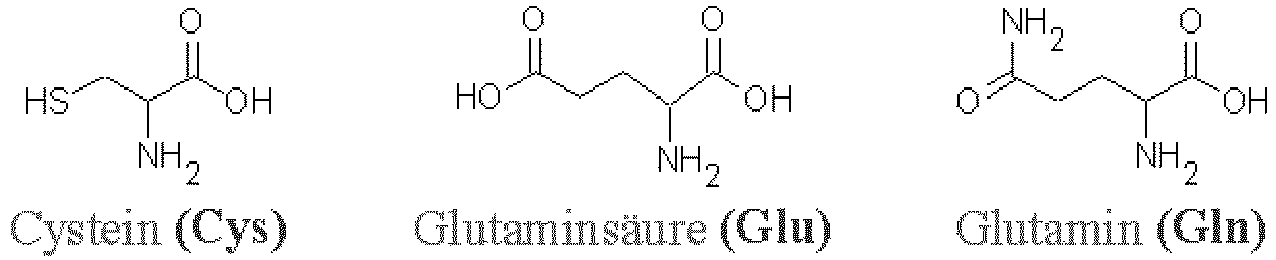


 R4 gleich H, OCH3, OCHF2, CN, C1-6 Alkoxy, Halogen, oder NH2 istR5 gleich H istund R6 ausgewählt ist aus
Cyclopropyl Cyclobutyl Ethyl Propyl Methyl 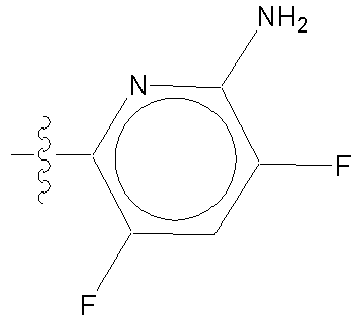

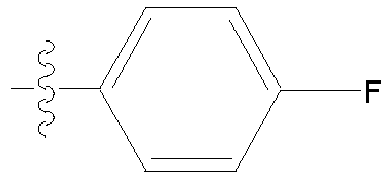
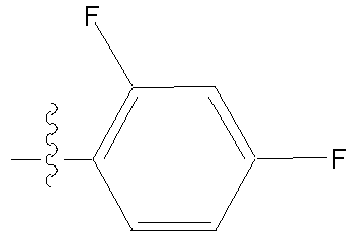


 zur Verwendung bei der Behandlung von bakteriellen Infektionen.
 - Das Chinolon-Antibiotikum zur Verwendung nach Anspruch 1 mit der Formel

- Das Chinolon-Antibiotikum zur Verwendung nach einem der vorangegangenen Ansprüche, wobeiR1 in Formel I und Formel IV = H, oder FR1 in Formel II und Formel III = FR2 = H, oder FR3 = wie in Anspruch 1 definiertR4 = H, OCH3, OCHF2, Cl, CN, oder F, undR5 = H, ist.
- Das Chinolon-Antibiotikum zur Verwendung nach einem der vorangegangenen Ansprüche mit der Formel II-a

- Chinolon-Antibiotikum zur Verwendung nach einem der vorangegangenen Ansprüche mit der allgemeinen Formel:

- Das Chinolon-Antibiotikum zur Verwendung nach einem der vorangegangenen Ansprüche, bei dem die Aminosäure R3 in L-Konfiguration ist.
- Das Chinolon-Antibiotikum zur Verwendung nach einem der vorangegangenen Ansprüche, mit der Formel
 R3 eine natürliche Aminosäure nach Anspruch 1 ist, undR4 ein Wasserstoffatom ist.
 - Das Chinolon-Antibiotikum zur Verwendung nach einem der vorangegangenen Ansprüche, wobei die Amidbindung abiotisch oder biotisch abgespalten werden kann.
- Medikament enthaltend ein Chinolon-Antibiotikum nach einem der vorangegangenen Ansprüche.
Applications Claiming Priority (2)
| Application Number | Priority Date | Filing Date | Title |
|---|---|---|---|
| DE102017218114.1A DE102017218114A1 (de) | 2017-10-11 | 2017-10-11 | Biologisch abbaubare Chinolon-Antibiotika |
| PCT/EP2018/077584 WO2019072907A1 (de) | 2017-10-11 | 2018-10-10 | Biologisch abbaubare chinolon-antibiotika |
Publications (2)
| Publication Number | Publication Date |
|---|---|
| EP3694516A1 EP3694516A1 (de) | 2020-08-19 |
| EP3694516B1 true EP3694516B1 (de) | 2023-12-13 |
Family
ID=63857907
Family Applications (1)
| Application Number | Title | Priority Date | Filing Date |
|---|---|---|---|
| EP18786271.9A Active EP3694516B1 (de) | 2017-10-11 | 2018-10-10 | Biologisch abbaubare chinolon-antibiotika |
Country Status (3)
| Country | Link |
|---|---|
| EP (1) | EP3694516B1 (de) |
| DE (1) | DE102017218114A1 (de) |
| WO (1) | WO2019072907A1 (de) |
Family Cites Families (10)
| Publication number | Priority date | Publication date | Assignee | Title |
|---|---|---|---|---|
| US4416884A (en) * | 1978-04-12 | 1983-11-22 | Otsuka Pharmaceutical Co., Ltd. | Piperazinylbenzoheterocyclic compounds |
| JPS5716882A (en) * | 1980-07-04 | 1982-01-28 | Otsuka Pharmaceut Co Ltd | Production of benzo-heteroring derivative |
| US4382089A (en) * | 1982-03-02 | 1983-05-03 | Warner-Lambert Company | Antibacterial amide compounds, compositions thereof and methods of using them |
| DE3788177D1 (de) * | 1986-09-12 | 1993-12-23 | Hoffmann La Roche | Pyrido [3,2,1-ij]-1,3,4-benzoxadiazinderivate, Verfahren zu deren Herstellung, entsprechende pharmazeutische Präparate und im Verfahren verwendbare Zwischenprodukte. |
| JPH02157282A (ja) | 1988-12-12 | 1990-06-18 | Wakunaga Pharmaceut Co Ltd | 新規ピリドベンゾオキサジン誘導体 |
| DE10026903A1 (de) | 2000-06-03 | 2002-01-10 | Cpc Cellular Process Chemistry | Verfahren zur Herstellung von Chinolon-3-carbonsäuren |
| AU2007225088B2 (en) * | 2006-03-13 | 2012-09-13 | Kyorin Pharmaceutical Co., Ltd | Aminoquinolones as GSK-3 inhibitors |
| US8889689B2 (en) * | 2010-01-26 | 2014-11-18 | Stc.Unm | Bifunctional metnase/intnase inhibitors and related compositions and methods of treatment of cancer |
| CN102030737B (zh) | 2010-10-29 | 2014-03-26 | 重庆巴仕迪动物药业有限公司 | 克林沙星氨基衍生物及其应用 |
| CN103405435B (zh) | 2013-08-30 | 2014-12-10 | 西南大学 | 克林沙星氨基衍生物及其可药用盐在制备抗结核药物中的应用 |
-
2017
- 2017-10-11 DE DE102017218114.1A patent/DE102017218114A1/de not_active Withdrawn
-
2018
- 2018-10-10 WO PCT/EP2018/077584 patent/WO2019072907A1/de not_active Ceased
- 2018-10-10 EP EP18786271.9A patent/EP3694516B1/de active Active
Non-Patent Citations (2)
| Title |
|---|
| DATABASE CAPLUS [online] CHEMICAL ABSTRACTS SERVICE, COLUMBUS, OHIO, US; 28 August 2016 (2016-08-28), HALEHATTY S.BHOJYA NAIK ET AL: "ANTIMICROBIAL COMPOUNDS, SYNTHESIS AND APPLICATIONS THEREOF, IN 2015CH00032", XP055916389, retrieved from STN Database accession no. 216:1429194 * |
| HALEHATTY NAIK S. BHOJYA: "ANTIMICROBIAL COMPOUNDS, SYNTHESIS AND APPLICATIONS THEREOF"", PATENT APPLICATION, 1 January 2016 (2016-01-01), XP055916313, Retrieved from the Internet <URL:https://content2.cas.org/v1/AUTH_9a355bb5cefd4c378bde0d541c6a11ce/patentpak-cdr-full-text-18/patent/76871612_1537160410.pdf?temp_url_sig=f5388647d1e6911573a04f8e60cbd36d1d5e45ee&temp_url_expires=1651187138&inline> * |
Also Published As
| Publication number | Publication date |
|---|---|
| DE102017218114A1 (de) | 2019-04-11 |
| WO2019072907A1 (de) | 2019-04-18 |
| EP3694516A1 (de) | 2020-08-19 |
Similar Documents
| Publication | Publication Date | Title |
|---|---|---|
| DE69310178T2 (de) | K-252a DERIVATE | |
| EP1126837B1 (de) | Fulvinsäure und dessen verwendung zur behandlung von diversen krankheitszuständen | |
| DE69613063T2 (de) | Zusammensetzungen und Verfahren zur Wirkungsverstärkung von Antibiotika mit Polyphenolen | |
| EP0231888B1 (de) | Substituierte 2,4-Diamino-5-benzylpyrimidine, deren Herstellung und deren Verwendung als Arzneimittel mit antimikrobieller Wirksamkeit | |
| DE3205655C2 (de) | ||
| DE2710327B2 (de) | Verwendung von Benzaldehyd | |
| DE69424112T2 (de) | Verfahren zur Herstellung von Iturin A und Fungizid für schwere Mycosis | |
| EP2358642B1 (de) | Verfahren zur reduktion der konzentration von aminen und deren salzen | |
| EP0864579A2 (de) | Wismutsalze von Antibiotika der Moenomycin-Gruppe, Verfahren zu ihrer Herstellung, ihre Verwendung und solche Salze enthaltende Arzneimittel | |
| EP2047855B1 (de) | Antitumorale, antibakterielle und antivirale pharmazeutische zusammensetzung (varianten) | |
| EP3694851B1 (de) | In der umwelt abbaubare chinolon-antibiotika mit hemiaminal-struktureinheit | |
| EP3694516A1 (de) | Biologisch abbaubare chinolon-antibiotika | |
| DE60310717T2 (de) | Teicoplanin-Zubereitung mit verbesserter antibiotischer Wirkung | |
| DE68918453T2 (de) | Zusammensetzungen auf Basis von CPF Peptiden sowie deren Verwendungen. | |
| CH668069A5 (de) | Chinolinderivate, verfahren zur herstellung derselben und diese verbindungen enthaltende pharmazeutische praeparate. | |
| Mabkhot et al. | The novel economical synthesis and antimicrobial activity of a trithiocarbonate derivative | |
| DE69331616T2 (de) | Zentrale Venenkatheter mit aufgebrachtem Lipodalbaheptid-Antibiotikum zur Vermeidung von katheterbezogenen Infektionen | |
| EP0194466A2 (de) | Kombination zur antimikrobiellen und antioxidativen Stabilisierung von Externa und Körperpflegemitteln | |
| WO1997049669A1 (de) | Verbindungen, die mit metallen komplexe bilden können | |
| WO2008092928A2 (de) | NEUE ß-LACTAM-ANTIBIOTIKA, VERFAHREN ZU IHRER HERSTELLUNG UND IHRE VERWENDUNG | |
| DE3147311C2 (de) | ||
| DE69608260T2 (de) | Wässrige spectinomycinborat-auflösung | |
| US11970505B1 (en) | Pyridino-2,16-dioxapentacyclo[7.7.5.01,21.03,8.010,15]henicosa3(8),10,12,14-tetraene-7,20-dione as an antimicrobial compound | |
| AT500282A2 (de) | Neurotrophe und neuroprotektive peptide | |
| US11952385B1 (en) | 12-bromo-2,16-dioxa-9,9,18,18-tetramethylpentacyclo[7.7.5.0 1, 21.0 3,8.0 10,15]henicosa3(8),10,12,14-tetraene-7,20-dione as an antimicrobial compound |
Legal Events
| Date | Code | Title | Description |
|---|---|---|---|
| STAA | Information on the status of an ep patent application or granted ep patent |
Free format text: STATUS: UNKNOWN |
|
| STAA | Information on the status of an ep patent application or granted ep patent |
Free format text: STATUS: THE INTERNATIONAL PUBLICATION HAS BEEN MADE |
|
| PUAI | Public reference made under article 153(3) epc to a published international application that has entered the european phase |
Free format text: ORIGINAL CODE: 0009012 |
|
| STAA | Information on the status of an ep patent application or granted ep patent |
Free format text: STATUS: REQUEST FOR EXAMINATION WAS MADE |
|
| 17P | Request for examination filed |
Effective date: 20200327 |
|
| AK | Designated contracting states |
Kind code of ref document: A1 Designated state(s): AL AT BE BG CH CY CZ DE DK EE ES FI FR GB GR HR HU IE IS IT LI LT LU LV MC MK MT NL NO PL PT RO RS SE SI SK SM TR |
|
| AX | Request for extension of the european patent |
Extension state: BA ME |
|
| DAV | Request for validation of the european patent (deleted) | ||
| DAX | Request for extension of the european patent (deleted) | ||
| STAA | Information on the status of an ep patent application or granted ep patent |
Free format text: STATUS: EXAMINATION IS IN PROGRESS |
|
| 17Q | First examination report despatched |
Effective date: 20220504 |
|
| GRAP | Despatch of communication of intention to grant a patent |
Free format text: ORIGINAL CODE: EPIDOSNIGR1 |
|
| STAA | Information on the status of an ep patent application or granted ep patent |
Free format text: STATUS: GRANT OF PATENT IS INTENDED |
|
| INTG | Intention to grant announced |
Effective date: 20230706 |
|
| GRAS | Grant fee paid |
Free format text: ORIGINAL CODE: EPIDOSNIGR3 |
|
| GRAA | (expected) grant |
Free format text: ORIGINAL CODE: 0009210 |
|
| STAA | Information on the status of an ep patent application or granted ep patent |
Free format text: STATUS: THE PATENT HAS BEEN GRANTED |
|
| REG | Reference to a national code |
Ref country code: DE Ref legal event code: R081 Ref document number: 502018013815 Country of ref document: DE Owner name: LEUPHANA UNIVERSITAET LUENEBURG STIFTUNG OEFFE, DE Free format text: FORMER OWNER: LEUPHANA UNIVERSITAET LUENEBURG STIFTUNG OEFFENTLICHEN RECHTS, 21335 LUENEBURG, DE Ref country code: DE Ref legal event code: R081 Ref document number: 502018013815 Country of ref document: DE Owner name: ANMELDERANGABEN UNKLAR / UNVOLLSTAENDIG, DE Free format text: FORMER OWNER: LEUPHANA UNIVERSITAET LUENEBURG STIFTUNG OEFFENTLICHEN RECHTS, 21335 LUENEBURG, DE |
|
| REG | Reference to a national code |
Ref country code: DE Ref legal event code: R081 Ref document number: 502018013815 Country of ref document: DE Owner name: LEUPHANA UNIVERSITAET LUENEBURG STIFTUNG OEFFE, DE Free format text: FORMER OWNER: ANMELDERANGABEN UNKLAR / UNVOLLSTAENDIG, 80297 MUENCHEN, DE |
|
| AK | Designated contracting states |
Kind code of ref document: B1 Designated state(s): AL AT BE BG CH CY CZ DE DK EE ES FI FR GB GR HR HU IE IS IT LI LT LU LV MC MK MT NL NO PL PT RO RS SE SI SK SM TR |
|
| REG | Reference to a national code |
Ref country code: GB Ref legal event code: FG4D Free format text: NOT ENGLISH |
|
| REG | Reference to a national code |
Ref country code: CH Ref legal event code: EP |
|
| REG | Reference to a national code |
Ref country code: DE Ref legal event code: R096 Ref document number: 502018013815 Country of ref document: DE |
|
| REG | Reference to a national code |
Ref country code: IE Ref legal event code: FG4D Free format text: LANGUAGE OF EP DOCUMENT: GERMAN |
|
| P01 | Opt-out of the competence of the unified patent court (upc) registered |
Effective date: 20231207 |
|
| PG25 | Lapsed in a contracting state [announced via postgrant information from national office to epo] |
Ref country code: GR Free format text: LAPSE BECAUSE OF FAILURE TO SUBMIT A TRANSLATION OF THE DESCRIPTION OR TO PAY THE FEE WITHIN THE PRESCRIBED TIME-LIMIT Effective date: 20240314 |
|
| REG | Reference to a national code |
Ref country code: LT Ref legal event code: MG9D |
|
| PG25 | Lapsed in a contracting state [announced via postgrant information from national office to epo] |
Ref country code: LT Free format text: LAPSE BECAUSE OF FAILURE TO SUBMIT A TRANSLATION OF THE DESCRIPTION OR TO PAY THE FEE WITHIN THE PRESCRIBED TIME-LIMIT Effective date: 20231213 |
|
| REG | Reference to a national code |
Ref country code: NL Ref legal event code: MP Effective date: 20231213 |
|
| PG25 | Lapsed in a contracting state [announced via postgrant information from national office to epo] |
Ref country code: ES Free format text: LAPSE BECAUSE OF FAILURE TO SUBMIT A TRANSLATION OF THE DESCRIPTION OR TO PAY THE FEE WITHIN THE PRESCRIBED TIME-LIMIT Effective date: 20231213 |
|
| PG25 | Lapsed in a contracting state [announced via postgrant information from national office to epo] |
Ref country code: LT Free format text: LAPSE BECAUSE OF FAILURE TO SUBMIT A TRANSLATION OF THE DESCRIPTION OR TO PAY THE FEE WITHIN THE PRESCRIBED TIME-LIMIT Effective date: 20231213 Ref country code: GR Free format text: LAPSE BECAUSE OF FAILURE TO SUBMIT A TRANSLATION OF THE DESCRIPTION OR TO PAY THE FEE WITHIN THE PRESCRIBED TIME-LIMIT Effective date: 20240314 Ref country code: ES Free format text: LAPSE BECAUSE OF FAILURE TO SUBMIT A TRANSLATION OF THE DESCRIPTION OR TO PAY THE FEE WITHIN THE PRESCRIBED TIME-LIMIT Effective date: 20231213 Ref country code: BG Free format text: LAPSE BECAUSE OF FAILURE TO SUBMIT A TRANSLATION OF THE DESCRIPTION OR TO PAY THE FEE WITHIN THE PRESCRIBED TIME-LIMIT Effective date: 20240313 |
|
| PG25 | Lapsed in a contracting state [announced via postgrant information from national office to epo] |
Ref country code: NL Free format text: LAPSE BECAUSE OF FAILURE TO SUBMIT A TRANSLATION OF THE DESCRIPTION OR TO PAY THE FEE WITHIN THE PRESCRIBED TIME-LIMIT Effective date: 20231213 |
|
| PG25 | Lapsed in a contracting state [announced via postgrant information from national office to epo] |
Ref country code: SE Free format text: LAPSE BECAUSE OF FAILURE TO SUBMIT A TRANSLATION OF THE DESCRIPTION OR TO PAY THE FEE WITHIN THE PRESCRIBED TIME-LIMIT Effective date: 20231213 Ref country code: RS Free format text: LAPSE BECAUSE OF FAILURE TO SUBMIT A TRANSLATION OF THE DESCRIPTION OR TO PAY THE FEE WITHIN THE PRESCRIBED TIME-LIMIT Effective date: 20231213 Ref country code: NO Free format text: LAPSE BECAUSE OF FAILURE TO SUBMIT A TRANSLATION OF THE DESCRIPTION OR TO PAY THE FEE WITHIN THE PRESCRIBED TIME-LIMIT Effective date: 20240313 Ref country code: NL Free format text: LAPSE BECAUSE OF FAILURE TO SUBMIT A TRANSLATION OF THE DESCRIPTION OR TO PAY THE FEE WITHIN THE PRESCRIBED TIME-LIMIT Effective date: 20231213 Ref country code: LV Free format text: LAPSE BECAUSE OF FAILURE TO SUBMIT A TRANSLATION OF THE DESCRIPTION OR TO PAY THE FEE WITHIN THE PRESCRIBED TIME-LIMIT Effective date: 20231213 Ref country code: HR Free format text: LAPSE BECAUSE OF FAILURE TO SUBMIT A TRANSLATION OF THE DESCRIPTION OR TO PAY THE FEE WITHIN THE PRESCRIBED TIME-LIMIT Effective date: 20231213 |
|
| PG25 | Lapsed in a contracting state [announced via postgrant information from national office to epo] |
Ref country code: IS Free format text: LAPSE BECAUSE OF FAILURE TO SUBMIT A TRANSLATION OF THE DESCRIPTION OR TO PAY THE FEE WITHIN THE PRESCRIBED TIME-LIMIT Effective date: 20240413 |
|
| PG25 | Lapsed in a contracting state [announced via postgrant information from national office to epo] |
Ref country code: CZ Free format text: LAPSE BECAUSE OF FAILURE TO SUBMIT A TRANSLATION OF THE DESCRIPTION OR TO PAY THE FEE WITHIN THE PRESCRIBED TIME-LIMIT Effective date: 20231213 |
|
| PG25 | Lapsed in a contracting state [announced via postgrant information from national office to epo] |
Ref country code: SK Free format text: LAPSE BECAUSE OF FAILURE TO SUBMIT A TRANSLATION OF THE DESCRIPTION OR TO PAY THE FEE WITHIN THE PRESCRIBED TIME-LIMIT Effective date: 20231213 |
|
| PG25 | Lapsed in a contracting state [announced via postgrant information from national office to epo] |
Ref country code: SM Free format text: LAPSE BECAUSE OF FAILURE TO SUBMIT A TRANSLATION OF THE DESCRIPTION OR TO PAY THE FEE WITHIN THE PRESCRIBED TIME-LIMIT Effective date: 20231213 Ref country code: SK Free format text: LAPSE BECAUSE OF FAILURE TO SUBMIT A TRANSLATION OF THE DESCRIPTION OR TO PAY THE FEE WITHIN THE PRESCRIBED TIME-LIMIT Effective date: 20231213 Ref country code: RO Free format text: LAPSE BECAUSE OF FAILURE TO SUBMIT A TRANSLATION OF THE DESCRIPTION OR TO PAY THE FEE WITHIN THE PRESCRIBED TIME-LIMIT Effective date: 20231213 Ref country code: IT Free format text: LAPSE BECAUSE OF FAILURE TO SUBMIT A TRANSLATION OF THE DESCRIPTION OR TO PAY THE FEE WITHIN THE PRESCRIBED TIME-LIMIT Effective date: 20231213 Ref country code: IS Free format text: LAPSE BECAUSE OF FAILURE TO SUBMIT A TRANSLATION OF THE DESCRIPTION OR TO PAY THE FEE WITHIN THE PRESCRIBED TIME-LIMIT Effective date: 20240413 Ref country code: EE Free format text: LAPSE BECAUSE OF FAILURE TO SUBMIT A TRANSLATION OF THE DESCRIPTION OR TO PAY THE FEE WITHIN THE PRESCRIBED TIME-LIMIT Effective date: 20231213 Ref country code: CZ Free format text: LAPSE BECAUSE OF FAILURE TO SUBMIT A TRANSLATION OF THE DESCRIPTION OR TO PAY THE FEE WITHIN THE PRESCRIBED TIME-LIMIT Effective date: 20231213 |
|
| PG25 | Lapsed in a contracting state [announced via postgrant information from national office to epo] |
Ref country code: PL Free format text: LAPSE BECAUSE OF FAILURE TO SUBMIT A TRANSLATION OF THE DESCRIPTION OR TO PAY THE FEE WITHIN THE PRESCRIBED TIME-LIMIT Effective date: 20231213 Ref country code: PT Free format text: LAPSE BECAUSE OF FAILURE TO SUBMIT A TRANSLATION OF THE DESCRIPTION OR TO PAY THE FEE WITHIN THE PRESCRIBED TIME-LIMIT Effective date: 20240415 |
|
| PG25 | Lapsed in a contracting state [announced via postgrant information from national office to epo] |
Ref country code: PT Free format text: LAPSE BECAUSE OF FAILURE TO SUBMIT A TRANSLATION OF THE DESCRIPTION OR TO PAY THE FEE WITHIN THE PRESCRIBED TIME-LIMIT Effective date: 20240415 Ref country code: PL Free format text: LAPSE BECAUSE OF FAILURE TO SUBMIT A TRANSLATION OF THE DESCRIPTION OR TO PAY THE FEE WITHIN THE PRESCRIBED TIME-LIMIT Effective date: 20231213 |
|
| REG | Reference to a national code |
Ref country code: DE Ref legal event code: R097 Ref document number: 502018013815 Country of ref document: DE |
|
| PG25 | Lapsed in a contracting state [announced via postgrant information from national office to epo] |
Ref country code: DK Free format text: LAPSE BECAUSE OF FAILURE TO SUBMIT A TRANSLATION OF THE DESCRIPTION OR TO PAY THE FEE WITHIN THE PRESCRIBED TIME-LIMIT Effective date: 20231213 |
|
| PLBE | No opposition filed within time limit |
Free format text: ORIGINAL CODE: 0009261 |
|
| STAA | Information on the status of an ep patent application or granted ep patent |
Free format text: STATUS: NO OPPOSITION FILED WITHIN TIME LIMIT |
|
| PG25 | Lapsed in a contracting state [announced via postgrant information from national office to epo] |
Ref country code: SI Free format text: LAPSE BECAUSE OF FAILURE TO SUBMIT A TRANSLATION OF THE DESCRIPTION OR TO PAY THE FEE WITHIN THE PRESCRIBED TIME-LIMIT Effective date: 20231213 |
|
| PG25 | Lapsed in a contracting state [announced via postgrant information from national office to epo] |
Ref country code: SI Free format text: LAPSE BECAUSE OF FAILURE TO SUBMIT A TRANSLATION OF THE DESCRIPTION OR TO PAY THE FEE WITHIN THE PRESCRIBED TIME-LIMIT Effective date: 20231213 Ref country code: DK Free format text: LAPSE BECAUSE OF FAILURE TO SUBMIT A TRANSLATION OF THE DESCRIPTION OR TO PAY THE FEE WITHIN THE PRESCRIBED TIME-LIMIT Effective date: 20231213 |
|
| 26N | No opposition filed |
Effective date: 20240916 |
|
| REG | Reference to a national code |
Ref country code: CH Ref legal event code: PL |
|
| GBPC | Gb: european patent ceased through non-payment of renewal fee |
Effective date: 20241010 |
|
| PG25 | Lapsed in a contracting state [announced via postgrant information from national office to epo] |
Ref country code: MC Free format text: LAPSE BECAUSE OF FAILURE TO SUBMIT A TRANSLATION OF THE DESCRIPTION OR TO PAY THE FEE WITHIN THE PRESCRIBED TIME-LIMIT Effective date: 20231213 |
|
| PG25 | Lapsed in a contracting state [announced via postgrant information from national office to epo] |
Ref country code: GB Free format text: LAPSE BECAUSE OF NON-PAYMENT OF DUE FEES Effective date: 20241010 |
|
| PG25 | Lapsed in a contracting state [announced via postgrant information from national office to epo] |
Ref country code: BE Free format text: LAPSE BECAUSE OF NON-PAYMENT OF DUE FEES Effective date: 20241031 Ref country code: LU Free format text: LAPSE BECAUSE OF NON-PAYMENT OF DUE FEES Effective date: 20241010 |
|
| PG25 | Lapsed in a contracting state [announced via postgrant information from national office to epo] |
Ref country code: FR Free format text: LAPSE BECAUSE OF NON-PAYMENT OF DUE FEES Effective date: 20241031 |
|
| PG25 | Lapsed in a contracting state [announced via postgrant information from national office to epo] |
Ref country code: CH Free format text: LAPSE BECAUSE OF NON-PAYMENT OF DUE FEES Effective date: 20241031 |
|
| REG | Reference to a national code |
Ref country code: BE Ref legal event code: MM Effective date: 20241031 |
|
| PG25 | Lapsed in a contracting state [announced via postgrant information from national office to epo] |
Ref country code: FI Free format text: LAPSE BECAUSE OF FAILURE TO SUBMIT A TRANSLATION OF THE DESCRIPTION OR TO PAY THE FEE WITHIN THE PRESCRIBED TIME-LIMIT Effective date: 20231213 |
|
| PG25 | Lapsed in a contracting state [announced via postgrant information from national office to epo] |
Ref country code: IE Free format text: LAPSE BECAUSE OF NON-PAYMENT OF DUE FEES Effective date: 20241010 |
|
| REG | Reference to a national code |
Ref country code: AT Ref legal event code: MM01 Ref document number: 1639899 Country of ref document: AT Kind code of ref document: T Effective date: 20241010 |
|
| PGFP | Annual fee paid to national office [announced via postgrant information from national office to epo] |
Ref country code: DE Payment date: 20251020 Year of fee payment: 8 |
|
| PG25 | Lapsed in a contracting state [announced via postgrant information from national office to epo] |
Ref country code: AT Free format text: LAPSE BECAUSE OF NON-PAYMENT OF DUE FEES Effective date: 20241010 |
|
| PG25 | Lapsed in a contracting state [announced via postgrant information from national office to epo] |
Ref country code: CY Free format text: LAPSE BECAUSE OF FAILURE TO SUBMIT A TRANSLATION OF THE DESCRIPTION OR TO PAY THE FEE WITHIN THE PRESCRIBED TIME-LIMIT; INVALID AB INITIO Effective date: 20181010 |
|
| PG25 | Lapsed in a contracting state [announced via postgrant information from national office to epo] |
Ref country code: HU Free format text: LAPSE BECAUSE OF FAILURE TO SUBMIT A TRANSLATION OF THE DESCRIPTION OR TO PAY THE FEE WITHIN THE PRESCRIBED TIME-LIMIT; INVALID AB INITIO Effective date: 20181010 |
|
| PG25 | Lapsed in a contracting state [announced via postgrant information from national office to epo] |
Ref country code: TR Free format text: LAPSE BECAUSE OF FAILURE TO SUBMIT A TRANSLATION OF THE DESCRIPTION OR TO PAY THE FEE WITHIN THE PRESCRIBED TIME-LIMIT Effective date: 20231213 |