EP3680356B1 - Wrought aluminum alloy - Google Patents
Wrought aluminum alloy Download PDFInfo
- Publication number
- EP3680356B1 EP3680356B1 EP20157510.7A EP20157510A EP3680356B1 EP 3680356 B1 EP3680356 B1 EP 3680356B1 EP 20157510 A EP20157510 A EP 20157510A EP 3680356 B1 EP3680356 B1 EP 3680356B1
- Authority
- EP
- European Patent Office
- Prior art keywords
- content
- aluminum alloy
- wrought aluminum
- present disclosure
- experimental example
- Prior art date
- Legal status (The legal status is an assumption and is not a legal conclusion. Google has not performed a legal analysis and makes no representation as to the accuracy of the status listed.)
- Active
Links
Images







Classifications
-
- C—CHEMISTRY; METALLURGY
- C22—METALLURGY; FERROUS OR NON-FERROUS ALLOYS; TREATMENT OF ALLOYS OR NON-FERROUS METALS
- C22C—ALLOYS
- C22C21/00—Alloys based on aluminium
- C22C21/10—Alloys based on aluminium with zinc as the next major constituent
-
- C—CHEMISTRY; METALLURGY
- C22—METALLURGY; FERROUS OR NON-FERROUS ALLOYS; TREATMENT OF ALLOYS OR NON-FERROUS METALS
- C22F—CHANGING THE PHYSICAL STRUCTURE OF NON-FERROUS METALS AND NON-FERROUS ALLOYS
- C22F1/00—Changing the physical structure of non-ferrous metals or alloys by heat treatment or by hot or cold working
- C22F1/04—Changing the physical structure of non-ferrous metals or alloys by heat treatment or by hot or cold working of aluminium or alloys based thereon
- C22F1/053—Changing the physical structure of non-ferrous metals or alloys by heat treatment or by hot or cold working of aluminium or alloys based thereon of alloys with zinc as the next major constituent
Definitions
- the present application relates to a wrought alloy, and more particularly, to a wrought aluminum alloy.
- Extruded aluminum is being employed to impart high strength to automobile bumpers, structural materials, smartphones, IT components. Although 7000 series aluminum alloys are being employed as such extruded aluminums, such 7000 series aluminum alloys have low extrudability, and thus exhibit limitations with regard to cross section shape and reduced productivity.
- the present disclosure provides a wrought aluminum alloy, which is a 7000 series aluminum alloy having a yield strength of at least 500 MPa and capable of achieving an extrusion speed of at least 1 mm/s, and which is not deformed when subjected to solution treatment and press water quenching (PWQ).
- the present disclosure also provides an automobile bumper, a structural material, and a smartphone case which contain the wrought aluminum alloy as a material.
- these are exemplary, and the scope of the present disclosure is not limited thereby.
- a wrought aluminum alloy contains 0.01 to 0.15 wt% of Ti; 5.5 to 6.0 wt% of Zn; 1.8 to 2.8 wt% of Mg; 0.4 to 0.8 wt% of Cu; 0.1 to 0.2 wt% of Cr; at most 0.2 wt% (and more than 0 wt%) of Fe; at most 0.2 wt% (and more than 0 wt%) of Mn; and at most 0.2 wt% (and more than 0 wt%) of Si, with the remainder being Al.
- a wrought aluminum alloy contains 0.01 to 0.15 wt% of Ti; 0.01 to 0.2 wt% of Sr; 5.5 to 6.0 wt% of Zn; 1.8 to 2.8 wt% of Mg; 0.4 to 0.8 wt% of Cu; 0.1 to 0.2 wt% of Cr; at most 0.2 wt% (and more than 0 wt%) of Fe; at most 0.2 wt% (and more than 0 wt%) of Mn; and at most 0.2 wt% (and more than 0 wt%) of Si, with the remainder being Al.
- a wrought aluminum alloy containing 5.5 to 6.0 wt% of Zn; 2.0 to 2.5 wt% of Mg; 0.2 to 0.6 wt% of Cu; 0.1 to 0.2 wt% of Cr; at most 0.2 wt% (and more than 0 wt%) of Fe; at most 0.2 wt% (and more than 0 wt%) of Mn; at most 0.2 wt% (and more than 0 wt%) of Si; at most 0.1 wt% (and more than 0 wt%) of Ti; and at most 0.05 wt% (and more than 0 wt%) of Sr, with the remainder being Al.
- a wrought aluminum alloy containing 5.5 to 6.0 wt% of Zn; 2.0 to 2.5 wt% of Mg; 0.2 to 0.6 wt% of Cu; 0.1 to 0.2 wt% of Cr; at most 0.2 wt% (and more than 0 wt%) of Fe; at most 0.2 wt% (and more than 0 wt%) of Mn; at most 0.2 wt% (and more than 0 wt%) of Si; and at most 0.1 wt% (and more than 0 wt%) of Ti, with the remainder being Al.
- a wrought aluminum alloy containing 5.5 to 6.0 wt% of Zn; 2.0 to 2.5 wt% of Mg; 0.2 to 0.6 wt% of Cu; 0.1 to 0.2 wt% of Cr; at most 0.2 wt% (and more than 0 wt%) of Fe; at most 0.2 wt% (and more than 0 wt%) of Mn; at most 0.2 wt% (and more than 0 wt%) of Si; at most 0.1 wt% (and more than 0 wt%) of Ti; at most 0.05 wt% (and more than 0 wt%) of Sr; and 0.1 to 0.8 wt% of Ag, with the remainder being Al.
- the wrought aluminum alloy may specifically contain 0.4 to 0.6 wt% of Cu.
- the wrought aluminum alloy may specifically contain 2.0 to 2.25 wt% of Mg.
- an automobile bumper, a structural material, or a smartphone case may be provided.
- the automobile bumper, the structural material, or the smartphone case may include, as a material, the wrought aluminum alloy according to embodiments of the present invention described above.
- a wrought aluminum alloy containing at least 5.5 wt% and less than 6.0 wt% of Zn; 2.0 to 2.5 wt% of Mg; 0.2 to 0.6 wt% of Cu; 0.1 to 0.2 wt% of Cr; at most 0.2 wt% (and more than 0 wt%) of Fe; at most 0.2 wt% (and more than 0 wt%) of Mn; at most 0.2 wt% (and more than 0 wt%) of Si; at most 0.1 wt% (and more than 0 wt%) of Ti; at most 0.05 wt% (and more than 0 wt%) of Sr; and 0.2 to 0.8 wt% of Ag, with the remainder being Al, wherein extrusion is possible at an extrusion speed in the range of 1.2 to 1.5 mm/s, and the yield strength is in the range of 523 to 565 MPa when T6 heat treatment is performed after the
- a wrought aluminum alloy (A7075), provided as a comparative example of the present disclosure, may be composed of 5.1 to 6.1 wt% of Zn; 2.1 to 2.9 wt% of Mg; 1.2 to 2.0 wt% of Cu; 0.18 to 0.28 wt% of Cr; at most 0.5 wt% of Fe; at most 0.3 wt% of Mn; at most 0.4 wt% of Si; and 0.2 wt% of Ti; with the remainder being Al.
- 7000 series alloys have high yield strengths of at least 500 MPa following T6 heat treatment, and thus are widely used in applications ranging from aircraft to automobiles, and recently, smartphone cases.
- such materials have high rigidity, and thus are limited in having low extrudability. For example, when the extrusion speed was 0.2 mm/s, edge tearing phenomena did not occur, but when the extrusion speed was 0.5 mm/s, it was observed that edge tearing phenomena occurred.
- the above-described wrought aluminum alloy according to a comparative example in the present disclosure exhibited a yield strength of about 103 MPA, a tensile strength of about 288 MPa, and an elongation of about 10% when O-tempered, and exhibited a yield strength of about 503 MPa, a tensile strength of about 572 MPa, and an elongation of about 11% when T6 heat treated.
- FIG. 1 is a graph analyzing phase fractions during T6 heat treatment in a wrought aluminum alloy according to a comparative example in the present disclosure.
- phases are shown which are formed when the above-described wrought aluminum alloy according to a comparative example in the present disclosure is solution treated at 450°C and then artificially aged at 125°C.
- the phases making up the largest fraction are the T prime phrase and the Eta prime phase. These two phases are stable phases, and do not coarsen or transform into other phases when aging is carried out. Therefore, the two phases heavily contribute to the increase in yield strength following T6 heat treatment.
- the GP zone phase, the S prime phase, and the theta prime phase also contribute to strength enhancement, but being metastable phases, coarsen or induce transformation into other phases when heat treated, and thus are major factors of deformation when T6 heat treatment is carried out.
- the above-described wrought aluminum alloy according to a comparative example in the present disclosure includes significantly large fractions of such metastable phases, and thus, in the present disclosure, the fractions of such phases are fundamentally controlled by using additive elements.
- a wrought aluminum alloy also disclosed herein and not forming part of the claimed invention is composed of 5.5 to 6.0 wt% of Zn; 2.0 to 2.5 wt% of Mg; 0.2 to 0.6 wt% of Cu; 0.1 to 0.2 wt% of Cr; at most 0.2 wt% (and more than 0 wt% ) of Fe; at most 0.2 wt% (and more than 0 wt%) of Mn; at most 0.2 wt% (and more than 0 wt%) of Si; at most 0.1 wt% (and more than 0 wt%) of Ti; and at most 0.05 wt% (and more than 0 wt%) of Sr; with the remainder being unavoidable impurities and Al.
- a wrought aluminum alloy according to the same exhibited a yield strength of about 243 MPa, a tensile strength of about 399 MPa, and an elongation of about 15.1% when F-tempered, and exhibited a yield strength of about 515 MPa, a tensile strength of about 565 MPa, and an elongation of about 10.7% when T6 heat treated.
- FIG. 2 is a photograph showing the microstructure of a wrought aluminum alloy disclosed herein and not forming part of the claimed invention.
- FIG. 2 shows the microstructure of an extrusion product of the above-described wrought aluminum alloy disclosed herein and not forming part of the claimed invention at low magnification (X50) following F-tempering
- (b) shows the microstructure of an extrusion product of the above-described wrought aluminum alloy disclosed herein and not forming part of the claimed invention at high magnification (X200) following F-tempering
- (c) shows the microstructure of an extrusion product of the above-described wrought aluminum alloy disclosed herein and not forming part of the claimed invention at low magnification (X50) following T6 heat treatment
- (d) shows the microstructure of an extrusion product of the above-described wrought aluminum alloy disclosed herein and not forming part of the claimed invention at high magnification (X200) following T6 heat treatment.
- the present inventors discovered that extrudability decreases suddenly when the shear modulus of a wrought aluminum alloy exceeds 19 GPa.
- This prior premise was derived by using, as comparative data, the fact that, for example, A6061 alloy is calculated to have a shear modulus of about 18.8 GPa under conditions of an extrusion speed of 1.2 mm/s and an extrusion temperature of 445°C, and A7075 alloy is calculated to have a shear modulus of about 19.16 GPa under conditions of an extrusion speed of 0.2 mm/s and an extrusion temperature of 450°C.
- FIG. 3 is a graph analyzing the change in volume change ratio along the solidus according to Zn content in a wrought aluminum alloy according to an experimental example in the present disclosure
- FIG. 4 is a graph analyzing the change in shear modulus change ratio along the solidus according to Zn content in a wrought aluminum alloy according to an experimental example in the present disclosure
- FIG. 5 is a graph of experimentally measured yield strength according to Zn content of a wrought aluminum alloy according to an experimental example in the present disclosure
- FIG. 6 is a graph of experimentally measured change in extrusion speed according to Zn content in a wrought aluminum alloy according to an experimental example in the present disclosure.
- a wrought aluminum alloy according to the experimental example is an alloy in which the composition of Zn is arbitrarily varied, and is composed of 2.0 to 2.5 wt% of Mg; 0.2 to 0.6 wt% of Cu; 0.1 to 0.2 wt% of Cr; at most 0.2 wt% (and more than 0 wt%) of Fe; at most 0.2 wt% (and more than 0 wt%) of Mn; at most 0.2 wt% (and more than 0 wt%) of Si; at most 0.1 wt% (and more than 0 wt%) of Ti; and at most 0.2 wt% (and more than 0 wt%) of Sr; with the remainder being unavoidable impurities and Al.
- FIG. 3 in view of preventing cracks from occurring during the process of continuous casting into billets, it is desirable to specify a Zn content of 6.5 wt% or lower.
- FIG. 4 in view of shear modulus, it is analyzed that in the case of Zn, a large effect is absent up to 5-8.5 wt%.
- FIG. 5 it is analyzed that at a Zn content of 5.5 wt% or higher, yield strength decreases with Zn content prior to heat treatment, and increases with Zn content following heat treatment.
- FIG. 6 it is analyzed that in view of extrusion speed, the best properties are exhibited at a Zn content of 5 to 6wt%.
- Table 1 displays the change in the values of properties according to Zn content, of wrought aluminum alloys according to the experimental example of the present disclosure.
- the Zn content in the wrought aluminum alloy according to an embodiment of the present disclosure is desirably specified to be 5.5 to 6.0 wt%.
- FIG. 7 is a graph analyzing the change in volume change ratio along the solidus according to Mg content in a wrought aluminum alloy according to an experimental example in the present disclosure
- FIG. 8 is a graph analyzing the change in shear modulus change ratio according to Mg content in a wrought aluminum alloy according to an experimental example in the present disclosure
- FIG. 9 is a graph of experimentally measured yield strength according to Mg content of a wrought aluminum alloy according to an experimental example in the present disclosure
- FIG. 10 is a graph of experimentally measured change in extrusion speed according to Mg content in a wrought aluminum alloy according to an experimental example in the present disclosure.
- a wrought aluminum alloy according to the experimental example is an alloy in which the composition of Mg is arbitrarily varied, and is composed of 5.5 to 6.0 wt% of Zn; 0.2 to 0.6 wt% of Cu; 0.1 to 0.2 wt% of Cr; at most 0.2 wt% (and more than 0 wt%) of Fe; at most 0.2 wt% (and more than 0 wt%) of Mn; at most 0.2 wt% (and more than 0 wt%) of Si; at most 0.1 wt% (and more than 0 wt%) of Ti; and at most 0.05 wt% (and more than 0 wt%) of Sr; with the remainder being unavoidable impurities and Al.
- a Mg content of 2 wt% or higher in view of preventing cracks from occurring during the process of continuous casting into billets, it is desirable to specify a Mg content of 2 wt% or higher.
- a Mg content of 2.25 wt% or lower in view of shear modulus, it is desirable to specify a Mg content of 2.25 wt% or lower.
- the yield strength following heat treatment continuously increases with Mg content, such that it is advantageous to add up to 3 wt% of Mg, it is desirable to limit the Mg content to at most 2.8 wt% in consideration of other properties.
- FIG. 10 it is analyzed that it is desirable to specify a Mg content of 2 to 2.5 wt% in view of extrusion speed. In consideration of volume change, yield strength, extrusion speed, minute changes in the content of other elements, and on-site productivity, a Mg content of 2 to 2.75 wt% may be specified.
- Table 2 displays the change in the values of properties according to Mg content, of wrought aluminum alloys according to the experimental example of the present disclosure.
- the optimal Mg composition is advantageously 2.25 wt% or lower in view of shear modulus, desirably 1.5 to 3 wt% in view of volume change, and a higher Mg content is more advantageous in view of yield strength, it is necessary to exclude values of 19 GPa or higher in consideration of extrudability.
- the Mg content in the wrought aluminum alloy according to an embodiment of the present disclosure is desirably 2.0 to 2.5 wt%, and more desirably, 2.0 to 2.25 wt%.
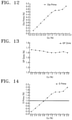
- FIG. 11 is a graph analyzing the change in T prime phase ratio according to Cu content in a wrought aluminum alloy according to an experimental example in the present disclosure
- FIG. 12 is a graph analyzing the change in Eta prime phase ratio according to Cu content in a wrought aluminum alloy according to an experimental example in the present disclosure
- FIG. 13 is a graph analyzing the change in GP zone phase ratio according to Cu content in a wrought aluminum alloy according to an experimental example in the present disclosure
- FIG. 14 is a graph analyzing the change in S prime phase ratio according to Cu content in a wrought aluminum alloy according to an experimental example in the present disclosure
- FIG. 15 is a graph analyzing the change in Theta prime phase ratio according to Cu content in a wrought aluminum alloy according to an experimental example in the present disclosure
- FIG. 16 is a graph of experimentally measured deformation according to Cu content in a wrought aluminum alloy according to an experimental example in the present disclosure
- FIG. 17 is a graph of experimentally measured yield strength according to Cu content of a wrought aluminum alloy according to an experimental example in the present disclosure.
- a wrought aluminum alloy according to the experimental example is an alloy in which the composition of Cu is arbitrarily varied, and is composed of 5.5 to 6.0 wt% of Zn; 2.0 to 2.5 wt% of Mg; 0.1 to 0.2 wt% of Cr; at most 0.2 wt% (and more than 0 wt%) of Fe; at most 0.2 wt% (and more than 0 wt%) of Mn; at most 0.2 wt% (and more than 0 wt%) of Si; at most 0.1 wt% (and more than 0 wt%) of Ti; and at most 0.05 wt% (and more than 0 wt%) of Sr; with the remainder being Al.
- the T prime phase according to Cu content converges starting from 0.8 wt% of Cu, and thus it is desirable to limit the Cu content to at most 0.8 wt%.
- the Eta prime phase according to Cu content is analyzed to continuously increase, and thus it is analyzed that increasing the Cu content is desirable.
- the GP zone phase according to Cu content is determined to be maintained stable between 1.6 to 1.7 wt%, and thus Cu content is analyzed to not have a large effect.
- the S prime phase fraction increases in proportion to Cu content, and thus it is desirable to limit the Cu content to 0.8 wt% or lower, where the S prime phase fraction is 1 wt% or lower.
- Theta prime phase also increases with Cu content, since the fraction is determined to be extremely low when the Cu content is at or below 1.4 wt%, it is desirable in view of the Theta prime phase to limit Cu to 1.4 wt% or lower.
- FIG. 16 in view of deformation, it is determined that limiting the Cu content to below 0.8 wt% is desirable.
- yield strength following heat treatment is characterized by being proportional to Cu content but converging starting from a Cu content of 0.6 wt%. Since, in view of extrudability, an F state yield strength prior to heat treatment of 250 MPa or lower is appropriate, it is analyzed that limiting the Cu content to 0.6 wt% or lower in view of yield strength is desirable.
- Table 3 displays the change in phase fractions and the like according to Cu content, of wrought aluminum alloys according to the experimental example of the present disclosure.
- Cu content T'% ⁇ '% GP% S'% ⁇ '% Deformation mm/200mm Yield strength F (MPa) Yield strength T6 (MPa) 0.2 4.1 3.22 1.66 0.19 0 0.05 238 466 0.4 4.23 3.49 1.65 0.43 0.0061 4 0.05 239 492 0.6 4.29 3.76 1.64 0.69 0.0416 0.06 243 515 0.8 4.33 4.03 1.63 0.95 0.1 0.10 245 519 1.0 4.35 4.3 1.61 1.22 0.18 0.13 249 523 1.2 4.36 4.56 1.6 1.49 0.27 0.17 252 522 1.4 4.37 4.72 1.6 1.65 0.33 0.20 253 527 1.6 4.37 4.73 1.61 1.65 0.33 0.20 262 526 1.8 4.37 4.79 1.62 1.71 0.35 0.21 251 531 2.0 4.37 5.03 1.6 1.99 0.
- the Cu composition contributes to strength enhancement when solution heat treatment is performed, and increases the phase fractions of the stable phases Al 2 Mg 3 Zn 3 T' and MgZn2 ⁇ '.
- Al-Cu alloys which are 2000 series alloys
- Cu content has a large effect on GP zone fraction, but in the case of 7000 series alloys, since the GP zone is an ⁇ phase in which the solid elements Cu, Mg, and Zn are formed simultaneously, and the artificial aging temperature is high, the effect of Cu content on the GP zone was not large.
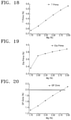
- FIG. 18 is a graph analyzing the change in T prime phase ratio according to Mg content in a wrought aluminum alloy according to an experimental example in the present disclosure
- FIG. 19 is a graph analyzing the change in Eta prime phase ratio according to Mg content in a wrought aluminum alloy according to an experimental example in the present disclosure
- FIG. 20 is a graph analyzing the change in GP zone phase ratio according to Mg content in a wrought aluminum alloy according to an experimental example in the present disclosure
- FIG. 21 is a graph analyzing the change in S prime phase ratio according to Mg content in a wrought aluminum alloy according to an experimental example in the present disclosure
- FIG. 22 is a graph analyzing the change in Theta prime phase ratio according to Mg content in a wrought aluminum alloy according to an experimental example in the present disclosure
- FIG. 23 is a graph of experimentally measured deformation according to Mg content in a wrought aluminum alloy according to an experimental example in the present disclosure
- FIG. 24 is a graph of experimentally measured yield strength according to Mg content of a wrought aluminum alloy according to an experimental example in the present disclosure.
- a wrought aluminum alloy according to the experimental example is an alloy in which the composition of Mg is arbitrarily varied, and is composed of 5.5 to 6.0 wt% of Zn; 0.2 to 0.6 wt% of Cu; 0.1 to 0.2 wt% of Cr; at most 0.2 wt% (and more than 0 wt%) of Fe; at most 0.2 wt% (and more than 0 wt%) of Mn; at most 0.2 wt% (and more than 0 wt%) of Si; at most 0.1 wt% (and more than 0 wt%) of Ti; and at most 0.05 wt% (and more than 0 wt%) of Sr; with the remainder being Al.
- Mg content was evaluated for appropriateness in the range of 1.75 to 3 wt%, near the optimal composition of 2 to 2.25 wt% of the extrudability evaluation factor mentioned above. Since the T prime phase continuously increases with Mg content, it is determined that it is possible to add up to 3 wt% of Mg in view of T prime. Referring to FIG. 19 , 2 to 3 wt% of Mg is determined to be appropriate in view of Eta prime. Referring to FIG. 20 , it is desirable to specify an Mg content of 2.75 wt% or lower in order to prevent the GP zone phase from exceeding 2 wt%. Referring to FIG. 21 , the S prime phase maintains a fraction of 0.6 to 0.7 wt% independent of Mg content, and thus it is determined that Mg content does not have a large effect thereon.
- the Theta prime phase is analyzed to decrease very slightly with Mg content, and thus it is determined that Mg content does not have a large effect thereon.
- yield strength following heat treatment is proportional to Mg content, since F state yield strength prior to heat treatment is appropriately 250 MPa or lower in view of extrudability, it is determined that it is desirable for Mg content to be below 2.5 wt% in view of yield strength.
- Table 4 displays the change in phase fractions and the like according to Mg content, of wrought aluminum alloys according to the experimental example of the present disclosure.
- Yield strength F MPa
- Yield strength T6 MPa
- FIG. 25 is a graph analyzing the change in T prime phase ratio according to Zn content in a wrought aluminum alloy according to an experimental example in the present disclosure
- FIG. 26 is a graph analyzing the change in Eta prime phase ratio according to Zn content in a wrought aluminum alloy according to an experimental example in the present disclosure
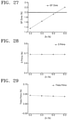
- FIG. 27 is a graph analyzing the change in GP zone phase ratio according to Zn content in a wrought aluminum alloy according to an experimental example in the present disclosure
- FIG. 28 is a graph analyzing the change in S prime phase ratio according to Zn content in a wrought aluminum alloy according to an experimental example in the present disclosure
- FIG. 29 is a graph analyzing the change in Theta prime phase ratio according to Zn content in a wrought aluminum alloy according to an experimental example in the present disclosure
- FIG. 30 is a graph of experimentally measured deformation according to Zn content in a wrought aluminum alloy according to an experimental example in the present disclosure
- FIG. 31 is a graph of experimentally measured yield strength according to Zn content of a wrought aluminum alloy according to an experimental example in the present disclosure.
- a wrought aluminum alloy according to the experimental example is an alloy in which the composition of Zn is arbitrarily varied, and is composed of 2.0 to 2.5 wt% of Mg; 0.2 to 0.6 wt% of Cu; 0.1 to 0.2 wt% of Cr; at most 0.2 wt% (and more than 0 wt%) of Fe; at most 0.2 wt% (and more than 0 wt%) of Mn; at most 0.2 wt% (and more than 0 wt%) of Si; at most 0.1 wt% (and more than 0 wt%) of Ti; and at most 0.05 wt% (and more than 0 wt%) of Sr; with the remainder being Al.
- Zn content was evaluated for appropriateness in the range of 5-6.5 wt% by extending by 0.5 wt% in both directions, the range of 5.5-6.5 wt% specified above in view of extrusion speed control. Since the T prime phase increases continuously with Zn content, it is determined that it is possible to add up to 6.5 wt% of Zn in view of T prime. Referring to FIG. 26 , it is determined that it is possible to add up to 6.5 wt% of Zn in view of the Eta prime phase. Referring to FIG. 27 , it is desirable to limit Zn content to 6 wt% or lower in order to ensure that GP zone does not exceed 2%. Referring to FIG.
- the S prime phase maintains a fraction of 0.6-0.7% independent of Zn content, and thus it is determined that Zn content does not have a large effect thereon.
- the Theta prime phase is analyzed to decrease very slightly with Zn content, and thus is determined that Zn content does not have a large effect thereon.
- Table 5 displays the change in phase fractions and the like according to Zn content, of wrought aluminum alloys according to the experimental example of the present disclosure.
- Yield strength T6 (MPa) 5 4.16 3.47 1.35 0.69 0.0439 0.05 230 487 5.5 4.29 3.76 1.64 0.69 0.0416 0.06 243 515 6 4.41 4.06 1.93 0.69 0.04 0.17 235 523 6.5 4.51 4.35 2.21 0.69 0.0384 0.26 227 527
- FIG. 32 is a graph analyzing phase fractions during T6 heat treatment in a wrought aluminum alloy according to an embodiment of the present disclosure.
- phases which form when artificial aging is carried out at 125°C after solution treating the above-described wrought aluminum alloy according to an embodiment of the present disclosure at 450°C are displayed.
- the phases making up the largest fraction are the T prime phrase and the Eta prime phase. These two phases are stable phases, and do not coarsen or transform into other phases when aging is carried out. Therefore, the two phases heavily contribute to the increase in yield strength following T6 heat treatment.
- the GP zone phase, the S prime phase, and the theta prime phase also contribute to strength enhancement, but, being metastable phases, have the problem of coarsening or inducing transformation into other phases when heat treated.
- another wrought aluminum alloy disclosed herein and not forming part of the claimed invention may be composed of 5.5 to 6.0 wt% of Zn; 2.0 to 2.5 wt% of Mg; 0.2 to 0.6 wt% of Cu; 0.1 to 0.2 wt% of Cr; at most 0.2 wt% (and more than 0 wt%) of Fe; at most 0.2 wt% (and more than 0 wt%) of Mn; at most 0.2 wt% (and more than 0 wt%) of Si; and at most 0.1 wt% (and more than 0 wt%) of Ti; with the remainder being unavoidable impurities and Al.
- a wrought aluminum alloy also disclosed herein and not forming part of the claimed invention is composed of 5.5 to 6.0 wt% of Zn; 2.0 to 2.5 wt% of Mg; 0.2 to 0.6 wt% of Cu; 0.1 to 0.2 wt% of Cr; at most 0.2 wt% (and more than 0 wt%) of Fe; at most 0.2 wt% (and more than 0 wt%) of Mn; at most 0.2 wt% (and more than 0 wt%) of Si; at most 0.1 wt% (and more than 0 wt%) of Ti; at most 0.05 wt% (and more than 0 wt%) of Sr; and 0.1 to 0.8 wt% of Ag; with the remainder being Al.
- the wrought aluminum alloy according to the same exhibited a yield strength of about 208 MPa, a tensile strength of about 350 MPa, an elongation of about 12.9% when F-tempered, and exhibited a yield strength of about 573 MPa, a tensile strength of about 618 MPa, and an elongation of about 10.9% when T6 heat treated.
- FIG. 33 is a photograph showing the microstructure of a wrought aluminum alloy disclosed herein and not forming part of the claimed invention.
- FIG. 33 shows the microstructure of an extrusion product of the above-described wrought aluminum alloy disclosed herein and not forming part of the claimed invention at low magnification (X50) following F-tempering
- (b) shows the microstructure of an extrusion product of the above-described wrought aluminum alloy disclosed herein and not forming part of the claimed invention at high magnification (X200) following F-tempering
- (c) shows the microstructure of an extrusion product of the above-described wrought aluminum alloy disclosed herein and not forming part of the claimed invention at low magnification (X50) following T6 heat treatment
- (d) shows the microstructure of an extrusion product of the above-described wrought aluminum alloy disclosed herein and not forming part of the claimed invention at high magnification (X200) following T6 heat treatment.
- FIG. 34 is a graph of experimentally measured yield strength according to Ag content of a wrought aluminum alloy according to an experimental example of the present disclosure
- FIG. 35 is a graph of experimentally measured change in extrusion speed according to Ag content in a wrought aluminum alloy according to an experimental example of the present disclosure
- a wrought aluminum alloy according to the experimental example and falling outside the ambit of the invention may be an alloy in which the composition of Ag is arbitrarily varied, and is composed of 5.5 to 6.0 wt% of Zn; 2.0 to 2.5 wt% of Mg; 0.2 to 0.6 wt% of Cu; 0.1 to 0.2 wt% of Cr; at most 0.2 wt% (and more than 0 wt%) of Fe; at most 0.2 wt% (and more than 0 wt%) of Mn; at most 0.2 wt% (and more than 0 wt%) of Si; at most 0.1 wt% (and more than 0 wt%) of Ti; and at most 0.05 wt% (and more than 0 wt%) of Sr; with the remainder being Al.
- the alloy may be composed of 0.15 wt% of Cr, 0.6 wt% of Cu, 0.1 wt% of Fe, 2.25 wt% of Mg, 0.1 wt% of Mn, 0.1 wt% of Si, 0.01 wt% of Sr, 0.05 wt% of Ti, and 5.5 wt% of Zn, with the remainder being Al.
- FIG. 34 it is analyzed that when Ag is added to the wrought aluminum alloy disclosed herein and not forming part of the claimed invention with reference to FIG. 2 , the yield strength following heat treatment continuously increases, while conversely, the yield strength prior to heat treatment is maintained at or below 250 MPa. Starting from an Ag content of 1 wt%, the yield strength prior to heat treatment again increases with Ag content, and thus it is determined that it is appropriate to limit Ag to 1 wt% or lower in view of yield strength. Referring to FIG.
- Table 6 displays the change in yield strength and extrusion speed according to Ag content, of wrought aluminum alloys according to the experimental example of the present disclosure, but outside the ambit of the present invention.
- Ag Content Yield strength F MPa
- Yield strength T6 MPa
- Extrusion speed mm/s
- 0.1 240 510 1.0 0.2 220 523 1.2 0.3 215 531 1.3 0.4 215 537 1.3 0.5 212 541 1.4 0.6 210 560 1.4 0.7 208 573 1.4 0.8 205 565 1.5 0.9 204 568 1.4 1.0 201 570 1.5 1.1 210 573 1.3 1.2 223 576 1.2 1.3 237 575 1.1 1.4 246 577 1.1
- an aluminum alloy which is a 7000 series alloy having a yield strength of at least 500 MPa and a level of productivity achieved by an extrusion speed of at least 1 mm/s, and which is not deformed when subjected to solution treatment and PWQ treatment.
- Phases that improved mechanical properties following T6 heat treatment in existing A7075 are phases such as ⁇ ', S', ⁇ ', T', and GP zones.
- GP zones, ⁇ ', and S' although contributing to strength enhancement, have the problem of coarsening in order to be transformed into a stable phase, and of deforming.
- the fractions of GP zones, ⁇ ', and S' which cause deformation, are reduced, and the fractions of phases, such as ⁇ ' and T, which are not significantly modified thermally, are kept stable.
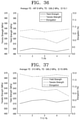
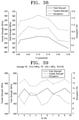
- FIG. 36 is a graph of measured strength and elongation of a wrought aluminum alloy disclosed herein and not forming part of the claimed invention, when Ti is not added
- FIG. 37 is a graph of measured strength and elongation of a wrought aluminum alloy according to an embodiment of the present disclosure, when 0.1 wt% of Ti is added
- FIG. 38 is a graph of measured change in mechanical properties according to amount of Ti added in a wrought aluminum alloy according to an embodiment of the present disclosure.
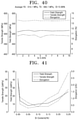
- FIG. 39 is a graph of measured strength and elongation of a wrought aluminum alloy according to an embodiment of the present disclosure, when Sr is not added
- FIG. 40 is a graph of measured strength and elongation of a wrought aluminum alloy according to an embodiment of the present disclosure, when 0.05 wt% of Sr is added
- FIG. 41 is a graph of measured change in mechanical properties according to amount of Sr added in a wrought aluminum alloy according to an embodiment of the present disclosure.
- Sr is known as an alloying element having a eutectic Si-refining role in a eutectic silicon composition
- Sr when Sr is added to an alloy having a Mg content of at least 1.5 wt%, although the contribution to improving the mechanical properties is not large, a characteristic was observed in which uniform mechanical properties are achieved in the alloy.
- the limitation of variation in properties may be overcome adding 0.05%, and the same characteristic was observed in evaluations examining mass producibility.
- an aluminum alloy which is a 7000 series alloy having a yield strength of at least 500 MPa and a level of productivity achieved by an extrusion speed of at least 1 mm/s, and which is not deformed when subjected to solution treatment and PWQ treatment.
- Phases that improved mechanical properties following T6 heat treatment in existing A7075 are phases such as ⁇ ', S', ⁇ ', T', and GP zones.
- GP zones, ⁇ ', and S' although contributing to strength enhancement, have the problem, when solution heat treated, of coarsening in order to be transformed into a stable phase, and deforming.
- the fractions of GP zones, ⁇ ', and S' which cause deformation when heat treatment is performed, are reduced, and the fractions of phases, such as ⁇ ' and T, which are not significantly modified thermally, are kept stable.
- the above-described alloys of the present disclosure enable the extrusion speed of 7000 series wrought aluminum alloys to be 1 mm/s or higher, which is at least 5 times higher than conventional A7075 alloys. Moreover, the alloys of the present disclosure are not deformed when subjected to solution treatment and PWQ, have a yield strength of at least 500 MPa, have excellent properties with respect to surface treatments such as anodization, and may not only be used as a structural material, for instance, as a material for automobile body and chassis parts, but may also be used as a case material for smartphones and IT components.
- a wrought aluminum alloy may be achieved, which is a 7000 series aluminum alloy having a yield strength of at least 500 MPa and capable of achieving an extrusion speed of at least 1 mm/s, and which is not deformed when subjected to solution treatment and press water quenching (PWQ).
- PWQ press water quenching
Landscapes
- Chemical & Material Sciences (AREA)
- Engineering & Computer Science (AREA)
- Materials Engineering (AREA)
- Mechanical Engineering (AREA)
- Metallurgy (AREA)
- Organic Chemistry (AREA)
- Physics & Mathematics (AREA)
- Thermal Sciences (AREA)
- Crystallography & Structural Chemistry (AREA)
- Extrusion Of Metal (AREA)
- Forging (AREA)
- Mechanical Operated Clutches (AREA)
- Filtering Materials (AREA)
- Cell Electrode Carriers And Collectors (AREA)
Priority Applications (1)
| Application Number | Priority Date | Filing Date | Title |
|---|---|---|---|
| PL20157510T PL3680356T3 (pl) | 2016-04-04 | 2017-04-03 | Stop aluminium do obróbki plastycznej |
Applications Claiming Priority (3)
| Application Number | Priority Date | Filing Date | Title |
|---|---|---|---|
| KR1020160040972A KR101698533B1 (ko) | 2016-04-04 | 2016-04-04 | 알루미늄 전신재 합금 |
| KR1020160136665A KR101760838B1 (ko) | 2016-10-20 | 2016-10-20 | 알루미늄 전신재 합금 |
| EP17164614.4A EP3239313B1 (en) | 2016-04-04 | 2017-04-03 | Wrought aluminum alloy |
Related Parent Applications (2)
| Application Number | Title | Priority Date | Filing Date |
|---|---|---|---|
| EP17164614.4A Division EP3239313B1 (en) | 2016-04-04 | 2017-04-03 | Wrought aluminum alloy |
| EP17164614.4A Division-Into EP3239313B1 (en) | 2016-04-04 | 2017-04-03 | Wrought aluminum alloy |
Publications (2)
| Publication Number | Publication Date |
|---|---|
| EP3680356A1 EP3680356A1 (en) | 2020-07-15 |
| EP3680356B1 true EP3680356B1 (en) | 2022-03-09 |
Family
ID=58488917
Family Applications (2)
| Application Number | Title | Priority Date | Filing Date |
|---|---|---|---|
| EP20157510.7A Active EP3680356B1 (en) | 2016-04-04 | 2017-04-03 | Wrought aluminum alloy |
| EP17164614.4A Active EP3239313B1 (en) | 2016-04-04 | 2017-04-03 | Wrought aluminum alloy |
Family Applications After (1)
| Application Number | Title | Priority Date | Filing Date |
|---|---|---|---|
| EP17164614.4A Active EP3239313B1 (en) | 2016-04-04 | 2017-04-03 | Wrought aluminum alloy |
Country Status (4)
| Country | Link |
|---|---|
| US (1) | US10557186B2 (pl) |
| EP (2) | EP3680356B1 (pl) |
| CN (1) | CN107012373B (pl) |
| PL (2) | PL3680356T3 (pl) |
Family Cites Families (20)
| Publication number | Priority date | Publication date | Assignee | Title |
|---|---|---|---|---|
| US4711762A (en) * | 1982-09-22 | 1987-12-08 | Aluminum Company Of America | Aluminum base alloys of the A1-Cu-Mg-Zn type |
| JPS6058300B2 (ja) * | 1982-12-25 | 1985-12-19 | 株式会社神戸製鋼所 | 溶接性および耐応力腐蝕割れ性が優れたAl−Zn−Mg合金の製造法 |
| JPS62130255A (ja) * | 1985-12-02 | 1987-06-12 | Kobe Steel Ltd | めがね用アルミニウム合金 |
| JPS62250149A (ja) * | 1986-04-24 | 1987-10-31 | Kobe Steel Ltd | 自転車用アルミニウム合金 |
| FR2907796B1 (fr) * | 2006-07-07 | 2011-06-10 | Aleris Aluminum Koblenz Gmbh | Produits en alliage d'aluminium de la serie aa7000 et leur procede de fabrication |
| WO2008003503A2 (en) | 2006-07-07 | 2008-01-10 | Aleris Aluminum Koblenz Gmbh | Method of manufacturing aa2000 - series aluminium alloy products |
| EP2288738B1 (en) * | 2008-06-24 | 2014-02-12 | Aleris Rolled Products Germany GmbH | Al-zn-mg alloy product with reduced quench sensitivity |
| JP2012207302A (ja) * | 2011-03-16 | 2012-10-25 | Kobe Steel Ltd | 熱処理型Al−Zn−Mg系アルミニウム合金押出材の製造方法 |
| US10697047B2 (en) * | 2011-12-12 | 2020-06-30 | Kobe Steel, Ltd. | High strength aluminum alloy extruded material excellent in stress corrosion cracking resistance |
| JP5767624B2 (ja) * | 2012-02-16 | 2015-08-19 | 株式会社神戸製鋼所 | 電磁成形用アルミニウム合金中空押出材 |
| CN102876942A (zh) * | 2012-09-04 | 2013-01-16 | 昆山市源丰铝业有限公司 | 车用铝合金板 |
| KR20150038678A (ko) | 2012-09-20 | 2015-04-08 | 가부시키가이샤 고베 세이코쇼 | 자동차 부재용 알루미늄 합금판 |
| WO2014046046A1 (ja) * | 2012-09-20 | 2014-03-27 | 株式会社神戸製鋼所 | アルミニウム合金製自動車部材 |
| JP5860372B2 (ja) * | 2012-09-20 | 2016-02-16 | 株式会社神戸製鋼所 | アルミニウム合金製自動車部材の製造方法 |
| JP6195446B2 (ja) * | 2013-01-25 | 2017-09-13 | 株式会社神戸製鋼所 | 耐応力腐食割れ性に優れた7000系アルミニウム合金部材の製造方法 |
| JP6195448B2 (ja) | 2013-01-30 | 2017-09-13 | 株式会社神戸製鋼所 | 耐応力腐食割れ性に優れた7000系アルミニウム合金部材の製造方法 |
| EP3052668B1 (en) * | 2013-09-30 | 2020-07-01 | Apple Inc. | Aluminum alloys with high strength and cosmetic appeal |
| JP2015175045A (ja) * | 2014-03-17 | 2015-10-05 | 株式会社神戸製鋼所 | 構造材用アルミニウム合金板 |
| JP5823010B2 (ja) * | 2014-10-07 | 2015-11-25 | 株式会社神戸製鋼所 | 耐応力腐食割れ性に優れた自動車構造部材用高強度アルミニウム合金押出材 |
| CN105331859A (zh) * | 2015-10-29 | 2016-02-17 | 中国航空工业集团公司北京航空材料研究院 | 一种700MPa级铝合金挤压型材的制备方法 |
-
2017
- 2017-04-01 CN CN201710213449.XA patent/CN107012373B/zh not_active Expired - Fee Related
- 2017-04-03 US US15/477,347 patent/US10557186B2/en active Active
- 2017-04-03 EP EP20157510.7A patent/EP3680356B1/en active Active
- 2017-04-03 PL PL20157510T patent/PL3680356T3/pl unknown
- 2017-04-03 PL PL17164614T patent/PL3239313T3/pl unknown
- 2017-04-03 EP EP17164614.4A patent/EP3239313B1/en active Active
Also Published As
| Publication number | Publication date |
|---|---|
| EP3239313A3 (en) | 2019-08-14 |
| CN107012373A (zh) | 2017-08-04 |
| EP3680356A1 (en) | 2020-07-15 |
| US20170283914A1 (en) | 2017-10-05 |
| PL3239313T3 (pl) | 2021-07-12 |
| CN107012373B (zh) | 2019-05-14 |
| PL3680356T3 (pl) | 2022-05-09 |
| US10557186B2 (en) | 2020-02-11 |
| EP3239313B1 (en) | 2021-03-24 |
| EP3239313A2 (en) | 2017-11-01 |
Similar Documents
| Publication | Publication Date | Title |
|---|---|---|
| KR102056035B1 (ko) | 높은 강도 및 전성 알파/베타 티타늄 합금 | |
| JP6090725B2 (ja) | アルミニウム合金製塑性加工品の製造方法 | |
| JP6955483B2 (ja) | 耐食性に優れ、良好な焼入れ性を有する高強度アルミニウム合金押出材及びその製造方法 | |
| CN103025901B (zh) | 具有分层的微结构的损伤容限性铝材料 | |
| CN108474066A (zh) | 高强度6xxx铝合金和其制造方法 | |
| JP2013525608A5 (pl) | ||
| KR101760076B1 (ko) | 석출물을 포함하는 강도와 연신율이 향상된 알루미늄-아연 합금 및 이의 제조방법 | |
| US20140166165A1 (en) | High-strength aluminum alloy extruded shape exhibiting excellent corrosion resistance, ductility, and hardenability, and method for producing the same | |
| JP2014208865A (ja) | 冷間塑性加工用熱処理型アルミニウム合金及びその製造方法 | |
| CN116134169A (zh) | 新型6xxx铝合金以及其生产方法 | |
| CN106460134B (zh) | 铝合金构件的制造方法、以及使用了该方法的铝合金构件 | |
| JP6723215B2 (ja) | アルミニウム−亜鉛−銅(Al−Zn−Cu)合金及びその製造方法 | |
| CN109923230B (zh) | 由镁基合金制成的板材和用于制造这种板材的方法和由该板材制成的板材件 | |
| KR101698533B1 (ko) | 알루미늄 전신재 합금 | |
| EP3680356B1 (en) | Wrought aluminum alloy | |
| EP3652356B1 (en) | High-strength corrosion-resistant aluminum alloy and method of making the same | |
| KR101760838B1 (ko) | 알루미늄 전신재 합금 | |
| JPH0447019B2 (pl) | ||
| KR20130000341A (ko) | 자동차 부품 압출용 고강도 알루미늄 합금 | |
| JP4864413B2 (ja) | 高強度マグネシウム合金押出し材 | |
| KR102012952B1 (ko) | 알루미늄 합금 및 그 제조방법 | |
| KR20190030296A (ko) | 알루미늄 합금의 처리 방법 | |
| KR101744457B1 (ko) | 고강도 알루미늄 합금 | |
| KR20080046974A (ko) | 알루미늄 압출재 제조 방법 | |
| KR101639590B1 (ko) | 마그네슘 합금 결정립 미세화제 및 마그네슘 합금의 결정립 미세화 방법 |
Legal Events
| Date | Code | Title | Description |
|---|---|---|---|
| PUAI | Public reference made under article 153(3) epc to a published international application that has entered the european phase |
Free format text: ORIGINAL CODE: 0009012 |
|
| STAA | Information on the status of an ep patent application or granted ep patent |
Free format text: STATUS: REQUEST FOR EXAMINATION WAS MADE |
|
| 17P | Request for examination filed |
Effective date: 20200214 |
|
| AC | Divisional application: reference to earlier application |
Ref document number: 3239313 Country of ref document: EP Kind code of ref document: P |
|
| AK | Designated contracting states |
Kind code of ref document: A1 Designated state(s): AL AT BE BG CH CY CZ DE DK EE ES FI FR GB GR HR HU IE IS IT LI LT LU LV MC MK MT NL NO PL PT RO RS SE SI SK SM TR |
|
| AX | Request for extension of the european patent |
Extension state: BA ME |
|
| STAA | Information on the status of an ep patent application or granted ep patent |
Free format text: STATUS: EXAMINATION IS IN PROGRESS |
|
| 17Q | First examination report despatched |
Effective date: 20210419 |
|
| GRAP | Despatch of communication of intention to grant a patent |
Free format text: ORIGINAL CODE: EPIDOSNIGR1 |
|
| STAA | Information on the status of an ep patent application or granted ep patent |
Free format text: STATUS: GRANT OF PATENT IS INTENDED |
|
| INTG | Intention to grant announced |
Effective date: 20211124 |
|
| GRAS | Grant fee paid |
Free format text: ORIGINAL CODE: EPIDOSNIGR3 |
|
| GRAA | (expected) grant |
Free format text: ORIGINAL CODE: 0009210 |
|
| STAA | Information on the status of an ep patent application or granted ep patent |
Free format text: STATUS: THE PATENT HAS BEEN GRANTED |
|
| AC | Divisional application: reference to earlier application |
Ref document number: 3239313 Country of ref document: EP Kind code of ref document: P |
|
| AK | Designated contracting states |
Kind code of ref document: B1 Designated state(s): AL AT BE BG CH CY CZ DE DK EE ES FI FR GB GR HR HU IE IS IT LI LT LU LV MC MK MT NL NO PL PT RO RS SE SI SK SM TR |
|
| REG | Reference to a national code |
Ref country code: CH Ref legal event code: EP Ref country code: AT Ref legal event code: REF Ref document number: 1474216 Country of ref document: AT Kind code of ref document: T Effective date: 20220315 |
|
| REG | Reference to a national code |
Ref country code: DE Ref legal event code: R096 Ref document number: 602017054553 Country of ref document: DE |
|
| REG | Reference to a national code |
Ref country code: IE Ref legal event code: FG4D |
|
| REG | Reference to a national code |
Ref country code: LT Ref legal event code: MG9D |
|
| REG | Reference to a national code |
Ref country code: NL Ref legal event code: MP Effective date: 20220309 |
|
| PG25 | Lapsed in a contracting state [announced via postgrant information from national office to epo] |
Ref country code: SE Free format text: LAPSE BECAUSE OF FAILURE TO SUBMIT A TRANSLATION OF THE DESCRIPTION OR TO PAY THE FEE WITHIN THE PRESCRIBED TIME-LIMIT Effective date: 20220309 Ref country code: RS Free format text: LAPSE BECAUSE OF FAILURE TO SUBMIT A TRANSLATION OF THE DESCRIPTION OR TO PAY THE FEE WITHIN THE PRESCRIBED TIME-LIMIT Effective date: 20220309 Ref country code: NO Free format text: LAPSE BECAUSE OF FAILURE TO SUBMIT A TRANSLATION OF THE DESCRIPTION OR TO PAY THE FEE WITHIN THE PRESCRIBED TIME-LIMIT Effective date: 20220609 Ref country code: LT Free format text: LAPSE BECAUSE OF FAILURE TO SUBMIT A TRANSLATION OF THE DESCRIPTION OR TO PAY THE FEE WITHIN THE PRESCRIBED TIME-LIMIT Effective date: 20220309 Ref country code: HR Free format text: LAPSE BECAUSE OF FAILURE TO SUBMIT A TRANSLATION OF THE DESCRIPTION OR TO PAY THE FEE WITHIN THE PRESCRIBED TIME-LIMIT Effective date: 20220309 Ref country code: BG Free format text: LAPSE BECAUSE OF FAILURE TO SUBMIT A TRANSLATION OF THE DESCRIPTION OR TO PAY THE FEE WITHIN THE PRESCRIBED TIME-LIMIT Effective date: 20220609 |
|
| REG | Reference to a national code |
Ref country code: AT Ref legal event code: MK05 Ref document number: 1474216 Country of ref document: AT Kind code of ref document: T Effective date: 20220309 |
|
| PG25 | Lapsed in a contracting state [announced via postgrant information from national office to epo] |
Ref country code: LV Free format text: LAPSE BECAUSE OF FAILURE TO SUBMIT A TRANSLATION OF THE DESCRIPTION OR TO PAY THE FEE WITHIN THE PRESCRIBED TIME-LIMIT Effective date: 20220309 Ref country code: GR Free format text: LAPSE BECAUSE OF FAILURE TO SUBMIT A TRANSLATION OF THE DESCRIPTION OR TO PAY THE FEE WITHIN THE PRESCRIBED TIME-LIMIT Effective date: 20220610 Ref country code: FI Free format text: LAPSE BECAUSE OF FAILURE TO SUBMIT A TRANSLATION OF THE DESCRIPTION OR TO PAY THE FEE WITHIN THE PRESCRIBED TIME-LIMIT Effective date: 20220309 |
|
| PG25 | Lapsed in a contracting state [announced via postgrant information from national office to epo] |
Ref country code: NL Free format text: LAPSE BECAUSE OF FAILURE TO SUBMIT A TRANSLATION OF THE DESCRIPTION OR TO PAY THE FEE WITHIN THE PRESCRIBED TIME-LIMIT Effective date: 20220309 |
|
| PG25 | Lapsed in a contracting state [announced via postgrant information from national office to epo] |
Ref country code: SM Free format text: LAPSE BECAUSE OF FAILURE TO SUBMIT A TRANSLATION OF THE DESCRIPTION OR TO PAY THE FEE WITHIN THE PRESCRIBED TIME-LIMIT Effective date: 20220309 Ref country code: SK Free format text: LAPSE BECAUSE OF FAILURE TO SUBMIT A TRANSLATION OF THE DESCRIPTION OR TO PAY THE FEE WITHIN THE PRESCRIBED TIME-LIMIT Effective date: 20220309 Ref country code: RO Free format text: LAPSE BECAUSE OF FAILURE TO SUBMIT A TRANSLATION OF THE DESCRIPTION OR TO PAY THE FEE WITHIN THE PRESCRIBED TIME-LIMIT Effective date: 20220309 Ref country code: PT Free format text: LAPSE BECAUSE OF FAILURE TO SUBMIT A TRANSLATION OF THE DESCRIPTION OR TO PAY THE FEE WITHIN THE PRESCRIBED TIME-LIMIT Effective date: 20220711 Ref country code: ES Free format text: LAPSE BECAUSE OF FAILURE TO SUBMIT A TRANSLATION OF THE DESCRIPTION OR TO PAY THE FEE WITHIN THE PRESCRIBED TIME-LIMIT Effective date: 20220309 Ref country code: EE Free format text: LAPSE BECAUSE OF FAILURE TO SUBMIT A TRANSLATION OF THE DESCRIPTION OR TO PAY THE FEE WITHIN THE PRESCRIBED TIME-LIMIT Effective date: 20220309 Ref country code: CZ Free format text: LAPSE BECAUSE OF FAILURE TO SUBMIT A TRANSLATION OF THE DESCRIPTION OR TO PAY THE FEE WITHIN THE PRESCRIBED TIME-LIMIT Effective date: 20220309 Ref country code: AT Free format text: LAPSE BECAUSE OF FAILURE TO SUBMIT A TRANSLATION OF THE DESCRIPTION OR TO PAY THE FEE WITHIN THE PRESCRIBED TIME-LIMIT Effective date: 20220309 |
|
| PG25 | Lapsed in a contracting state [announced via postgrant information from national office to epo] |
Ref country code: IS Free format text: LAPSE BECAUSE OF FAILURE TO SUBMIT A TRANSLATION OF THE DESCRIPTION OR TO PAY THE FEE WITHIN THE PRESCRIBED TIME-LIMIT Effective date: 20220709 Ref country code: AL Free format text: LAPSE BECAUSE OF FAILURE TO SUBMIT A TRANSLATION OF THE DESCRIPTION OR TO PAY THE FEE WITHIN THE PRESCRIBED TIME-LIMIT Effective date: 20220309 |
|
| REG | Reference to a national code |
Ref country code: CH Ref legal event code: PL |
|
| REG | Reference to a national code |
Ref country code: DE Ref legal event code: R097 Ref document number: 602017054553 Country of ref document: DE |
|
| REG | Reference to a national code |
Ref country code: BE Ref legal event code: MM Effective date: 20220430 |
|
| PLBE | No opposition filed within time limit |
Free format text: ORIGINAL CODE: 0009261 |
|
| STAA | Information on the status of an ep patent application or granted ep patent |
Free format text: STATUS: NO OPPOSITION FILED WITHIN TIME LIMIT |
|
| PG25 | Lapsed in a contracting state [announced via postgrant information from national office to epo] |
Ref country code: MC Free format text: LAPSE BECAUSE OF FAILURE TO SUBMIT A TRANSLATION OF THE DESCRIPTION OR TO PAY THE FEE WITHIN THE PRESCRIBED TIME-LIMIT Effective date: 20220309 Ref country code: LU Free format text: LAPSE BECAUSE OF NON-PAYMENT OF DUE FEES Effective date: 20220403 Ref country code: LI Free format text: LAPSE BECAUSE OF NON-PAYMENT OF DUE FEES Effective date: 20220430 Ref country code: DK Free format text: LAPSE BECAUSE OF FAILURE TO SUBMIT A TRANSLATION OF THE DESCRIPTION OR TO PAY THE FEE WITHIN THE PRESCRIBED TIME-LIMIT Effective date: 20220309 Ref country code: CH Free format text: LAPSE BECAUSE OF NON-PAYMENT OF DUE FEES Effective date: 20220430 |
|
| 26N | No opposition filed |
Effective date: 20221212 |
|
| PG25 | Lapsed in a contracting state [announced via postgrant information from national office to epo] |
Ref country code: SI Free format text: LAPSE BECAUSE OF FAILURE TO SUBMIT A TRANSLATION OF THE DESCRIPTION OR TO PAY THE FEE WITHIN THE PRESCRIBED TIME-LIMIT Effective date: 20220309 Ref country code: BE Free format text: LAPSE BECAUSE OF NON-PAYMENT OF DUE FEES Effective date: 20220430 |
|
| GBPC | Gb: european patent ceased through non-payment of renewal fee |
Effective date: 20220609 |
|
| PG25 | Lapsed in a contracting state [announced via postgrant information from national office to epo] |
Ref country code: IE Free format text: LAPSE BECAUSE OF NON-PAYMENT OF DUE FEES Effective date: 20220403 |
|
| PGFP | Annual fee paid to national office [announced via postgrant information from national office to epo] |
Ref country code: FR Payment date: 20230321 Year of fee payment: 7 |
|
| PG25 | Lapsed in a contracting state [announced via postgrant information from national office to epo] |
Ref country code: GB Free format text: LAPSE BECAUSE OF NON-PAYMENT OF DUE FEES Effective date: 20220609 |
|
| PGFP | Annual fee paid to national office [announced via postgrant information from national office to epo] |
Ref country code: PL Payment date: 20230323 Year of fee payment: 7 |
|
| PG25 | Lapsed in a contracting state [announced via postgrant information from national office to epo] |
Ref country code: IT Free format text: LAPSE BECAUSE OF FAILURE TO SUBMIT A TRANSLATION OF THE DESCRIPTION OR TO PAY THE FEE WITHIN THE PRESCRIBED TIME-LIMIT Effective date: 20220309 |
|
| PG25 | Lapsed in a contracting state [announced via postgrant information from national office to epo] |
Ref country code: MK Free format text: LAPSE BECAUSE OF FAILURE TO SUBMIT A TRANSLATION OF THE DESCRIPTION OR TO PAY THE FEE WITHIN THE PRESCRIBED TIME-LIMIT Effective date: 20220309 Ref country code: CY Free format text: LAPSE BECAUSE OF FAILURE TO SUBMIT A TRANSLATION OF THE DESCRIPTION OR TO PAY THE FEE WITHIN THE PRESCRIBED TIME-LIMIT Effective date: 20220309 |
|
| PG25 | Lapsed in a contracting state [announced via postgrant information from national office to epo] |
Ref country code: HU Free format text: LAPSE BECAUSE OF FAILURE TO SUBMIT A TRANSLATION OF THE DESCRIPTION OR TO PAY THE FEE WITHIN THE PRESCRIBED TIME-LIMIT; INVALID AB INITIO Effective date: 20170403 |
|
| PG25 | Lapsed in a contracting state [announced via postgrant information from national office to epo] |
Ref country code: TR Free format text: LAPSE BECAUSE OF FAILURE TO SUBMIT A TRANSLATION OF THE DESCRIPTION OR TO PAY THE FEE WITHIN THE PRESCRIBED TIME-LIMIT Effective date: 20220309 |
|
| PG25 | Lapsed in a contracting state [announced via postgrant information from national office to epo] |
Ref country code: MT Free format text: LAPSE BECAUSE OF FAILURE TO SUBMIT A TRANSLATION OF THE DESCRIPTION OR TO PAY THE FEE WITHIN THE PRESCRIBED TIME-LIMIT Effective date: 20220309 |
|
| PG25 | Lapsed in a contracting state [announced via postgrant information from national office to epo] |
Ref country code: FR Free format text: LAPSE BECAUSE OF NON-PAYMENT OF DUE FEES Effective date: 20240430 |
|
| PG25 | Lapsed in a contracting state [announced via postgrant information from national office to epo] |
Ref country code: FR Free format text: LAPSE BECAUSE OF NON-PAYMENT OF DUE FEES Effective date: 20240430 |
|
| PGFP | Annual fee paid to national office [announced via postgrant information from national office to epo] |
Ref country code: DE Payment date: 20250320 Year of fee payment: 9 |
|
| PG25 | Lapsed in a contracting state [announced via postgrant information from national office to epo] |
Ref country code: PL Free format text: LAPSE BECAUSE OF NON-PAYMENT OF DUE FEES Effective date: 20240403 |