EP3678081A1 - Zahlungssystem, zahlungsverfahren und programm - Google Patents
Zahlungssystem, zahlungsverfahren und programm Download PDFInfo
- Publication number
- EP3678081A1 EP3678081A1 EP17923952.0A EP17923952A EP3678081A1 EP 3678081 A1 EP3678081 A1 EP 3678081A1 EP 17923952 A EP17923952 A EP 17923952A EP 3678081 A1 EP3678081 A1 EP 3678081A1
- Authority
- EP
- European Patent Office
- Prior art keywords
- shop
- payment
- authentication information
- payee
- customer
- Prior art date
- Legal status (The legal status is an assumption and is not a legal conclusion. Google has not performed a legal analysis and makes no representation as to the accuracy of the status listed.)
- Withdrawn
Links
Images



Classifications
-
- G—PHYSICS
- G06—COMPUTING OR CALCULATING; COUNTING
- G06Q—INFORMATION AND COMMUNICATION TECHNOLOGY [ICT] SPECIALLY ADAPTED FOR ADMINISTRATIVE, COMMERCIAL, FINANCIAL, MANAGERIAL OR SUPERVISORY PURPOSES; SYSTEMS OR METHODS SPECIALLY ADAPTED FOR ADMINISTRATIVE, COMMERCIAL, FINANCIAL, MANAGERIAL OR SUPERVISORY PURPOSES, NOT OTHERWISE PROVIDED FOR
- G06Q20/00—Payment architectures, schemes or protocols
- G06Q20/38—Payment protocols; Details thereof
- G06Q20/40—Authorisation, e.g. identification of payer or payee, verification of customer or shop credentials; Review and approval of payers, e.g. check credit lines or negative lists
- G06Q20/401—Transaction verification
- G06Q20/4012—Verifying personal identification numbers [PIN]
-
- G—PHYSICS
- G06—COMPUTING OR CALCULATING; COUNTING
- G06Q—INFORMATION AND COMMUNICATION TECHNOLOGY [ICT] SPECIALLY ADAPTED FOR ADMINISTRATIVE, COMMERCIAL, FINANCIAL, MANAGERIAL OR SUPERVISORY PURPOSES; SYSTEMS OR METHODS SPECIALLY ADAPTED FOR ADMINISTRATIVE, COMMERCIAL, FINANCIAL, MANAGERIAL OR SUPERVISORY PURPOSES, NOT OTHERWISE PROVIDED FOR
- G06Q20/00—Payment architectures, schemes or protocols
- G06Q20/02—Payment architectures, schemes or protocols involving a neutral party, e.g. certification authority, notary or trusted third party [TTP]
-
- G—PHYSICS
- G06—COMPUTING OR CALCULATING; COUNTING
- G06Q—INFORMATION AND COMMUNICATION TECHNOLOGY [ICT] SPECIALLY ADAPTED FOR ADMINISTRATIVE, COMMERCIAL, FINANCIAL, MANAGERIAL OR SUPERVISORY PURPOSES; SYSTEMS OR METHODS SPECIALLY ADAPTED FOR ADMINISTRATIVE, COMMERCIAL, FINANCIAL, MANAGERIAL OR SUPERVISORY PURPOSES, NOT OTHERWISE PROVIDED FOR
- G06Q20/00—Payment architectures, schemes or protocols
- G06Q20/08—Payment architectures
- G06Q20/085—Payment architectures involving remote charge determination or related payment systems
-
- G—PHYSICS
- G06—COMPUTING OR CALCULATING; COUNTING
- G06Q—INFORMATION AND COMMUNICATION TECHNOLOGY [ICT] SPECIALLY ADAPTED FOR ADMINISTRATIVE, COMMERCIAL, FINANCIAL, MANAGERIAL OR SUPERVISORY PURPOSES; SYSTEMS OR METHODS SPECIALLY ADAPTED FOR ADMINISTRATIVE, COMMERCIAL, FINANCIAL, MANAGERIAL OR SUPERVISORY PURPOSES, NOT OTHERWISE PROVIDED FOR
- G06Q20/00—Payment architectures, schemes or protocols
- G06Q20/08—Payment architectures
- G06Q20/20—Point-of-sale [POS] network systems
- G06Q20/202—Interconnection or interaction of plural electronic cash registers [ECR] or to host computer, e.g. network details, transfer of information from host to ECR or from ECR to ECR
-
- G—PHYSICS
- G06—COMPUTING OR CALCULATING; COUNTING
- G06Q—INFORMATION AND COMMUNICATION TECHNOLOGY [ICT] SPECIALLY ADAPTED FOR ADMINISTRATIVE, COMMERCIAL, FINANCIAL, MANAGERIAL OR SUPERVISORY PURPOSES; SYSTEMS OR METHODS SPECIALLY ADAPTED FOR ADMINISTRATIVE, COMMERCIAL, FINANCIAL, MANAGERIAL OR SUPERVISORY PURPOSES, NOT OTHERWISE PROVIDED FOR
- G06Q20/00—Payment architectures, schemes or protocols
- G06Q20/30—Payment architectures, schemes or protocols characterised by the use of specific devices or networks
- G06Q20/32—Payment architectures, schemes or protocols characterised by the use of specific devices or networks using wireless devices
- G06Q20/322—Aspects of commerce using mobile devices [M-devices]
-
- G—PHYSICS
- G06—COMPUTING OR CALCULATING; COUNTING
- G06Q—INFORMATION AND COMMUNICATION TECHNOLOGY [ICT] SPECIALLY ADAPTED FOR ADMINISTRATIVE, COMMERCIAL, FINANCIAL, MANAGERIAL OR SUPERVISORY PURPOSES; SYSTEMS OR METHODS SPECIALLY ADAPTED FOR ADMINISTRATIVE, COMMERCIAL, FINANCIAL, MANAGERIAL OR SUPERVISORY PURPOSES, NOT OTHERWISE PROVIDED FOR
- G06Q20/00—Payment architectures, schemes or protocols
- G06Q20/30—Payment architectures, schemes or protocols characterised by the use of specific devices or networks
- G06Q20/32—Payment architectures, schemes or protocols characterised by the use of specific devices or networks using wireless devices
- G06Q20/322—Aspects of commerce using mobile devices [M-devices]
- G06Q20/3223—Realising banking transactions through M-devices
-
- G—PHYSICS
- G06—COMPUTING OR CALCULATING; COUNTING
- G06Q—INFORMATION AND COMMUNICATION TECHNOLOGY [ICT] SPECIALLY ADAPTED FOR ADMINISTRATIVE, COMMERCIAL, FINANCIAL, MANAGERIAL OR SUPERVISORY PURPOSES; SYSTEMS OR METHODS SPECIALLY ADAPTED FOR ADMINISTRATIVE, COMMERCIAL, FINANCIAL, MANAGERIAL OR SUPERVISORY PURPOSES, NOT OTHERWISE PROVIDED FOR
- G06Q20/00—Payment architectures, schemes or protocols
- G06Q20/30—Payment architectures, schemes or protocols characterised by the use of specific devices or networks
- G06Q20/32—Payment architectures, schemes or protocols characterised by the use of specific devices or networks using wireless devices
- G06Q20/326—Payment applications installed on the mobile devices
- G06Q20/3267—In-app payments
-
- G—PHYSICS
- G06—COMPUTING OR CALCULATING; COUNTING
- G06Q—INFORMATION AND COMMUNICATION TECHNOLOGY [ICT] SPECIALLY ADAPTED FOR ADMINISTRATIVE, COMMERCIAL, FINANCIAL, MANAGERIAL OR SUPERVISORY PURPOSES; SYSTEMS OR METHODS SPECIALLY ADAPTED FOR ADMINISTRATIVE, COMMERCIAL, FINANCIAL, MANAGERIAL OR SUPERVISORY PURPOSES, NOT OTHERWISE PROVIDED FOR
- G06Q20/00—Payment architectures, schemes or protocols
- G06Q20/38—Payment protocols; Details thereof
- G06Q20/382—Payment protocols; Details thereof insuring higher security of transaction
- G06Q20/3829—Payment protocols; Details thereof insuring higher security of transaction involving key management
-
- G—PHYSICS
- G06—COMPUTING OR CALCULATING; COUNTING
- G06Q—INFORMATION AND COMMUNICATION TECHNOLOGY [ICT] SPECIALLY ADAPTED FOR ADMINISTRATIVE, COMMERCIAL, FINANCIAL, MANAGERIAL OR SUPERVISORY PURPOSES; SYSTEMS OR METHODS SPECIALLY ADAPTED FOR ADMINISTRATIVE, COMMERCIAL, FINANCIAL, MANAGERIAL OR SUPERVISORY PURPOSES, NOT OTHERWISE PROVIDED FOR
- G06Q20/00—Payment architectures, schemes or protocols
- G06Q20/38—Payment protocols; Details thereof
- G06Q20/40—Authorisation, e.g. identification of payer or payee, verification of customer or shop credentials; Review and approval of payers, e.g. check credit lines or negative lists
-
- G—PHYSICS
- G06—COMPUTING OR CALCULATING; COUNTING
- G06Q—INFORMATION AND COMMUNICATION TECHNOLOGY [ICT] SPECIALLY ADAPTED FOR ADMINISTRATIVE, COMMERCIAL, FINANCIAL, MANAGERIAL OR SUPERVISORY PURPOSES; SYSTEMS OR METHODS SPECIALLY ADAPTED FOR ADMINISTRATIVE, COMMERCIAL, FINANCIAL, MANAGERIAL OR SUPERVISORY PURPOSES, NOT OTHERWISE PROVIDED FOR
- G06Q20/00—Payment architectures, schemes or protocols
- G06Q20/38—Payment protocols; Details thereof
- G06Q20/40—Authorisation, e.g. identification of payer or payee, verification of customer or shop credentials; Review and approval of payers, e.g. check credit lines or negative lists
- G06Q20/401—Transaction verification
-
- G—PHYSICS
- G06—COMPUTING OR CALCULATING; COUNTING
- G06Q—INFORMATION AND COMMUNICATION TECHNOLOGY [ICT] SPECIALLY ADAPTED FOR ADMINISTRATIVE, COMMERCIAL, FINANCIAL, MANAGERIAL OR SUPERVISORY PURPOSES; SYSTEMS OR METHODS SPECIALLY ADAPTED FOR ADMINISTRATIVE, COMMERCIAL, FINANCIAL, MANAGERIAL OR SUPERVISORY PURPOSES, NOT OTHERWISE PROVIDED FOR
- G06Q20/00—Payment architectures, schemes or protocols
- G06Q20/38—Payment protocols; Details thereof
- G06Q20/40—Authorisation, e.g. identification of payer or payee, verification of customer or shop credentials; Review and approval of payers, e.g. check credit lines or negative lists
- G06Q20/401—Transaction verification
- G06Q20/4014—Identity check for transactions
- G06Q20/40145—Biometric identity checks
-
- H—ELECTRICITY
- H04—ELECTRIC COMMUNICATION TECHNIQUE
- H04L—TRANSMISSION OF DIGITAL INFORMATION, e.g. TELEGRAPHIC COMMUNICATION
- H04L9/00—Cryptographic mechanisms or cryptographic arrangements for secret or secure communications; Network security protocols
- H04L9/32—Cryptographic mechanisms or cryptographic arrangements for secret or secure communications; Network security protocols including means for verifying the identity or authority of a user of the system or for message authentication, e.g. authorization, entity authentication, data integrity or data verification, non-repudiation, key authentication or verification of credentials
- H04L9/321—Cryptographic mechanisms or cryptographic arrangements for secret or secure communications; Network security protocols including means for verifying the identity or authority of a user of the system or for message authentication, e.g. authorization, entity authentication, data integrity or data verification, non-repudiation, key authentication or verification of credentials involving a third party or a trusted authority
-
- G—PHYSICS
- G06—COMPUTING OR CALCULATING; COUNTING
- G06Q—INFORMATION AND COMMUNICATION TECHNOLOGY [ICT] SPECIALLY ADAPTED FOR ADMINISTRATIVE, COMMERCIAL, FINANCIAL, MANAGERIAL OR SUPERVISORY PURPOSES; SYSTEMS OR METHODS SPECIALLY ADAPTED FOR ADMINISTRATIVE, COMMERCIAL, FINANCIAL, MANAGERIAL OR SUPERVISORY PURPOSES, NOT OTHERWISE PROVIDED FOR
- G06Q2220/00—Business processing using cryptography
-
- H—ELECTRICITY
- H04—ELECTRIC COMMUNICATION TECHNIQUE
- H04L—TRANSMISSION OF DIGITAL INFORMATION, e.g. TELEGRAPHIC COMMUNICATION
- H04L2209/00—Additional information or applications relating to cryptographic mechanisms or cryptographic arrangements for secret or secure communication H04L9/00
- H04L2209/56—Financial cryptography, e.g. electronic payment or e-cash
Definitions
- the present invention relates to a payment system, a payment method, and a program.
- Patent Literature 1 describes a system in which, when a customer brings the customer terminal near an authentication device, authentication is performed between the customer terminal and the authentication device, and, when the authentication is successful (when the authentication gets succeeded), the payment processing is performed.
- Patent Literature 2 describes a system in which display information is sequentially displayed on the display part of the customer terminal and the reader reads the display information, and the authentication is thereby performed between the customer terminal and the reader, and, when the authentication is successful, the payment processing is performed.
- Patent Literatures 1 and 2 the customer needs to bring their customer terminal close to the authentication device or the reader, and thus a place in which the customer executes the payment processing is limited.
- it can be considered to display a list of shops on the customer terminal, and perform the payment processing on a payee shop selected from the list, thereby allowing the customer to pay at any place.
- the customer may select a payee shop in error and make an erroneous payment.
- One or more embodiments of the present invention have been conceived in view of the above, and an object thereof is to prevent an erroneous payment.
- a payment system includes a customer terminal operated by a customer and a server.
- the server includes storing means for storing each of a plurality of pieces of shop identification information in association with authentication information that is necessary for a payment.
- the customer terminal includes shop receiving means for receiving a selection of a payee shop by the customer, authentication information receiving means for receiving an input of the authentication information by the payee shop, and sending means for sending shop identification information of the payee shop and the authentication information entered by the payee shop to the server.
- the server further includes authentication means for executing authentication processing based on authentication information received from the customer terminal and authentication information stored in association with the shop identification information received from the customer terminal.
- the payment system includes payment execution means for executing payment processing to the payee shop based on an authentication result of the authentication means.
- a payment method is a method based on a customer terminal operated by a customer and a server.
- the method includes a shop receiving step of receiving, by the customer terminal, a selection of a payee shop by the customer, an authentication information receiving step of receiving, by the customer terminal, an input of the authentication information by the payee shop, a sending step of sending shop identification information of the payee shop and the authentication information entered by the payee shop to the server, an authentication step of executing authentication processing based on authentication information received from the customer terminal and authentication information stored in association with the shop identification information received from the customer terminal, and a payment execution step of executing payment processing to the payee shop based on an authentication result of the authentication step.
- a program according to the present invention that causes a customer terminal or other computer to function as payment execution means for executing payment processing to a payee shop based on an authentication result of authentication processing, the authentication processing being based on authentication information stored in association with shop identification information of the payee shop selected by a customer on a customer terminal and authentication information entered by the payee shop in the customer terminal.
- the customer terminal further includes display control means for, when the customer selects the payee shop, displaying a message, on display means, to prompt the payee shop to enter the authentication information on display means, and when the message is displayed, the authentication information receiving means receives the input of the authentication information by the payee shop.
- the customer terminal further includes display control means for, when the customer selects the payee shop, displaying payee shop information indicating the payee shop on display means, and the authentication information receiving means receives the input of the authentication information by the payee shop while the payee shop information being displayed.
- the customer terminal further includes payment amount receiving means for receiving an input of a payment amount by the customer and display control means for displaying, on display means, the payment amount entered by the customer.
- the authentication information receiving means receives the input of the authentication information by the payee shop while the payment amount being displayed.
- the payment processing is processing for paying the payment amount entered by the customer to the payee shop selected by the customer.
- the customer terminal further includes payment amount receiving means for receiving an input of a payment amount by the customer and an input of a payment amount by the payee shop.
- the payment system further includes determining means for determining whether the payment amount entered by the customer is matched with the payment amount entered by the payee shop.
- the payment execution means executes the payment processing further based on a determination result of the determining means.
- the payment system further includes a shop terminal of each shop.
- the shop terminal of each shop and the server share authentication information of the shop by a first network.
- the sending means of the customer terminal sends the shop identification information and the authentication information entered by the payee shop by a second network that is different from the first network.
- the customer terminal further includes payment amount receiving means for receiving an input of a payment amount by the customer.
- the sending means of the customer terminal further sends the payment amount entered by the customer to the server.
- the payment system further includes a shop terminal of each shop.
- the shop terminal of each shop includes payment amount receiving means for receiving an input of a payment amount by the shop, authentication information receiving means for receiving an input of the authentication information by the shop, and sending means for sending the payment amount and the authentication information each entered by the shop to the server.
- the storing means of the server stores authentication information and a payment amount, which are received from the shop terminal of each shop, in association with shop identification information of the shop.
- the authentication means of the server executes authentication processing based on authentication information received from the customer terminal and authentication information stored in association with shop identification information and a payment amount that are received from the customer terminal.
- the server further includes encrypting means for encrypting authentication information entered by a shop using a payment amount entered by the shop as a cryptographic key.
- the storing means of the server stores the authentication information encrypted by the encrypting means.
- the authentication means of the server executes authentication processing by decoding the authentication information stored in association with shop identification information and the payment amount that are received from the customer terminal based on the payment amount.
- each shop has an electronic stamp indicating authentication information of the shop.
- the customer terminal includes a touch panel.
- the authentication information receiving means receives an input of the authentication information by a contact between an electronic stamp of the payee shop and the touch panel.
- the server further includes issuing means for issuing authentication information of each shop and sending means for sending authentication information issued by the issuing means to each shop.
- FIG. 1 is a diagram illustrating a hardware configuration of the payment system.
- the payment system S includes a customer terminal 10, a payment server 20, and a shop terminal 30, which are connectable to a network, such as the Internet.
- FIG. 1 shows one customer terminal 10, one payment server 20, and one shop terminal 30, although the number of each of them may be two or more.
- the customer terminal 10 is a computer operated by a customer, such as, a mobile phone (including a smartphone), a mobile information terminal (including a tablet computer), and a laptop personal computer.
- the customer terminal 10 may be a portable terminal.
- the portable terminal means a terminal that can be carried out, and, for example, a terminal in a hand-held size.
- the portable customer terminal 10 includes a battery, and can operate without a connection to a power cable.
- the customer terminal 10 includes a control unit 11, a storage unit 12, a communication unit 13, an operation unit 14, a display unit 15, and a camera 16.
- the control unit 11 includes at least one microprocessor.
- the control unit 11 executes processing in accordance with programs and data stored in the storage unit 12.
- the storage unit 12 includes a main storage unit and an auxiliary storage unit.
- the main storage unit is a volatile memory such as a RAM
- the auxiliary storage unit is a nonvolatile memory such as a ROM, an EEPROM, a flash memory, and a hard disk.
- the communication unit 13 is a wired or wireless communication interface for data communications through a network.
- the operation unit 14 is an input device for a user to operate the terminal, and includes, for example, a touch panel 14A.
- the touch panel 14A may adopt various types of touch panels, such as a capacitive touch panel and a resistive film touch panel.
- the operation unit 14 may include a pointing device such as a mouse, and a keyboard or a button.
- the operation unit 14 transmits an operation to the control unit 11.
- the display unit 15 is, for example, a liquid crystal display unit or an organic EL display unit.
- the display unit 15 displays a screen based on instructions from the control unit 11.
- the camera 16 includes, for example, a CMOS image sensor or a CCD image sensor, and captures a still image or video.
- the payment server 20 is a server computer.
- the payment server 20 includes a control unit 21, a storage unit 22, and a communication unit 23.
- the physical arrangement of the control unit 21, the storage unit 22, and the communication unit 23 may be the same as that of the control unit 11, the storage unit 12, and the communication unit 13.
- the shop terminal 30 is a computer that is used at a shop or a salesperson's house, such as, a mobile phone (including a smartphone), a mobile information terminal (including a tablet computer), a POS terminal, and a personal computer.
- the shop terminal 30 includes a control unit 31, a storage unit 32, a communication unit 33, an operation unit 34, and a display unit 35.
- the physical arrangement of these units may be the same as that of the control unit 11, the storage unit 12, the communication unit 13, the operation unit 14, and the display unit 15.
- the shop may be a shop located at a fixed place such as a restaurant and a merchandise outlet, a mobile type shop such as a food wagon and an automobile, or a shop of a flea market exhibitor.
- the programs and data described as being stored in the storage units 12, 22, and 32 may be provided through a network.
- the hardware configurations of the computers described above are not limited to the above examples, and various types of hardware can be applied.
- the hardware may include a reader (e.g., optical disc drive, memory card slot) for reading a computer-readable information storage medium, and an input/output unit (e.g., USB port) for inputting/outputting data to/from external devices.
- programs and data stored in an information storage medium may be provided to the computers through the reader or the input/output unit.
- a case will be described as an example in which a customer selects a payee shop and enters a payment amount in the customer terminal 10, and a payment to a shop is thereby made.
- a payment method is referred to as a self-payment.
- the customer activates a dedicated application on the customer terminal 10.
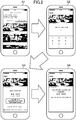
- FIGs. 2 and 3 are diagrams of screen transitions after the application is activated.
- a shop selection screen G1 for selecting a payee shop is displayed on the display unit 15.
- shops for which the self-payment is available may be registered in the payment server 20 in advance, and the shop selection screen G1 may display a list of the shops.
- the shop selection screen G1 displays a plurality of shops that are scrollable. For example, all of the shops registered in the payment server 20 may be displayable, or some of the shops may be displayable. When only some of the shops are displayable, only the shops close to customer terminal 10 may be displayable. In this case, the customer may enter an address of a present location, or, if the customer terminal 10 includes a GPS sensor, nearby shops may be specified using latitude/longitude information detected by the GPS sensor.
- the screen is transitioned to an amount input screen G2 for entering a payment amount.
- the amount that can be entered in the amount input screen G2 may not be limited, or have at least one of the lowest value and the highest value.
- the customer operates the operation unit 14 to enter a payment amount.
- the screen is transitioned to a confirmation screen G3 for confirming the payment.
- the confirmation screen G3 displays the payee shop selected by the customer and the payment amount entered by the customer, and also displays a button to jump to a screen in which authentication information required for the payment is to be entered.
- the authentication information is basically only known to the shop, and secret information that the customer cannot know.
- the screen is transitioned to an authentication information input screen G4 for the payee shop to enter the authentication information.
- the authentication information input screen G4 displays a message to prompt the customer to hand the customer terminal 10 to a salesperson so that the salesperson enters the authentication information.
- the customer hands the customer terminal 10 to the salesperson to ask the salesperson to enter the authentication information.
- the authentication information input screen G4 also displays the payee shop and the payment amount. As such, the salesperson can enter the authentication information while confirming the payee shop and the payment amount.
- a predetermined payment start operation can be initiated.
- the payment start operation may be any predetermined operation, for example, sliding an image displayed on the authentication information input screen G4 in a predetermined direction while touching the image.
- the payment start operation may be performed by either a user or a salesperson, although here, the user performs the payment start operation.
- the customer terminal 10 sends a predetermined payment request to the payment server 20.
- the payment request includes the payee shop, the payment amount, and the authentication information.
- the payment server 20 stores authentication information of each shop in advance, and the payment server 20 performs authentication processing based on the authentication information included in the received payment request.
- the payment server 20 permits a payment if the authentication is successful, and does not permit a payment if the authentication fails.
- the screen is transitioned to a payment complete screen G5 that notifies of the completion of the payment on the customer terminal 10.
- the customer shows the payment complete screen G5 to the salesperson when leaving the shop, for example.
- the salesperson thus confirms that the payment of the customer is complete.
- a notification similar to the payment complete screen G5 may be displayed on the shop terminal 30. In this case, the salesperson can confirm that the payment of the customer is complete by the notification displayed on the shop terminal 30.
- the screen is transitioned to an error screen G6 for notifying of a failure of the payment.
- the error screen G6 displays a message indicating that the payment is not complete. If the error screen G6 is displayed, there is a possibility that the user selects a wrong payee shop or the payee shop enters erroneous authentication information. As such, the operation needs to be performed again from the shop selection screen G1 or the authentication information input screen G4.
- a payee shop is selected by a customer, and authentication information is entered by a shop.
- authentication is performed based on authentication information entered by a shop, and thus, it is possible to prevent erroneous payment even if a user selects a wrong shop. This technique will be described in details below.
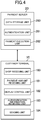
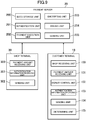
- FIG. 4 is a functional block diagram showing an example of functions implemented in the payment system S. Here, a case where the functions implemented by the customer terminal 10 and the payment server 20 will be described.
- a shop receiving unit 100, a payment amount receiving unit 101, a display control unit 102, an authentication information receiving unit 103, and a sending unit 104 are implemented.
- the shop receiving unit 100, the payment amount receiving unit 101, and the authentication information receiving unit 103 are implemented mainly by the control unit 11 and the operation unit 14.
- the display control unit 102 is implemented mainly by the control unit 11 and the display unit 15.
- the sending unit 104 is implemented mainly by the control unit 11 and the communication unit 13.
- the shop receiving unit 100 receives a selection of a payee shop by a customer.
- the payee shop is a shop to which the customer makes a payment among a plurality of shops.
- the payee shop is a shop that provides the customer with goods or services, and receives the payment from the customer in exchange for the goods or the services.
- a list of candidates of payee shops is displayed on the shop selection screen G1, and thus, the shop receiving unit 100 receives a selection of a payee shop from a plurality of shops displayed on the shop selection screen G1.
- the shop receiving unit 100 may specify the payee shop selected by the customer based on a detection signal of the operation unit 14.
- the payment amount receiving unit 101 receives an input of a payment amount by a customer.
- the payment amount is a settlement amount, and an amount that the customer pays to the payee shop.
- the payment amount is an amount that the payee shop receives from the customer in exchange for goods or services provided to the customer.
- the payment amount receiving unit 101 may specify the payment amount entered by the customer based on a detection signal of the operation unit 14.
- the display control unit 102 displays various screens on the display unit 15. For example, when a customer selects a payee shop, the display control unit 102 displays a message on the display unit 15 to prompt for an input of authentication information by the payee shop.
- the message is not limited to the example shown on the authentication information input screen G4 in FIG. 2 , but may be a message that can prompt the shop to enter the authentication information.
- the display control unit 102 may display a message indicative of handing the customer terminal 10 to the payee shop.
- the display control unit 102 may display the message on any screen before completion of the payment.
- the message is displayed on the authentication information input screen G4.
- the display control unit 102 may display the message one or more previous screens prior to transitioning to the authentication information input screen G4.
- the data e.g., text data, image data
- the data may be stored in a data storage unit 200 described later of the payment server 20, or stored in the storage unit 12 of the customer terminal 10.
- the display control unit 102 displays payee shop information indicating the payee shop on the display unit 15.
- the payee shop information may be any information that can identify the payee shop, for example, a character string indicating a name of the payee shop, or an image indicating a name, appearance, interior, goods, or services of the payee shop.
- the display control unit 102 may display the payee shop information on any screen displayed before completion of the payment.
- the payee shop information is displayed on the amount input screen G2, the confirmation screen G3, and the authentication information input screen G4, for example.
- the data e.g., text data, image data
- the data indicating the payee shop information may be stored in a data storage unit 200 described later of the payment server 20, or stored in the storage unit 12 of the customer terminal 10.
- the display control unit 102 displays the payment amount entered by the customer on the display unit 15.
- the display control unit 102 displays a numeric value indicating the payment amount on the display unit 15.
- the display control unit 102 may display the payment amount on any screen displayed before completion of the payment.
- the display control unit 102 displays the payment amount on the confirmation screen G3 and the authentication information input screen G4, for example.
- the authentication information receiving unit 301 receives input of the authentication information by the payee shop.
- the authentication information proves the legitimacy of the shop.
- the authentication information is necessary for a payment to the shop, and for executing the payment processing.
- the authentication information may have any format, for example, a passcode (password) format. If the authentication information has a passcode format, for example, the authentication information may be configured only of numerals, only of characters, or a combination of numerals and characters.
- the authentication information receiving unit 301 receives the input of the authentication information by the payee shop. That is, the authentication information receiving unit 301 receives the input of the authentication information after the display control unit 102 displays the message.
- the authentication information receiving unit 301 may receive the input of the authentication information while the message is displayed on the authentication information input screen G4, or may receive the input of the authentication information on a screen transitioned from the screen displaying the message.
- the authentication information receiving unit 301 receives the input of the authentication information by the payee shop. That is, the authentication information receiving unit 301 receives the input of the authentication information on the same screen on which the payee shop information is displayed. In this embodiment, while the payee shop information is displayed on the authentication information input screen G4, the authentication information receiving unit 301 receives the input of the authentication information.
- the authentication information receiving unit 301 receives the input of the authentication information by the payee shop. That is, the authentication information receiving unit 301 receives the input of the authentication information on the same screen on which the payment amount is displayed. In this embodiment, while the payment amount is displayed on the authentication information input screen G4, the authentication information receiving unit 301 receives the input of the authentication information.
- the authentication information is not limited to information such as numerals and characters, but can adopt various types of authentication information used in the authentication technology.
- the authentication information may be moving a touched position to draw a predetermined trace on the touch panel 14A, or touching a plurality of positions on the touch panel 14A in a predetermined order.
- the authentication information may be entered by using an image, and may be, for example, a bar code or a two-dimensional bar code.
- the authentication information receiving unit 301 may read the authentication information with the camera 16 and a dedicated reader, thereby receiving the input of the authentication information.
- the biometric authentication may be used, and the authentication information may be a fingerprint, iris, face, vein, or voice of a salesperson at each shop.
- the authentication information receiving unit 301 may use the camera 16 or a microphone to receive the input of the authentication information.
- the sending unit 104 sends shop identification information of the payee shop and the authentication information entered by the payee shop to the payment server 20.
- shop identification information of respective shops displayed on the selection screen G1 i.e., shops that customers can select
- the sending unit 104 sends the shop identification information of the payee shop received by the shop receiving unit 100 to the payment server 20.
- the sending unit 104 may send the authentication information received by the authentication information receiving unit 103 with or without encryption.
- a user also enters a payment amount, and thus, the sending unit 104 also sends the payment amount entered by the user to the payment server 20.
- the sending unit 104 may send the payment amount received by the payment amount receiving unit 101 with or without encryption.
- a data storage unit 200 In the payment server 20, a data storage unit 200, an authentication unit 201, and a payment execution unit 202 are implemented.
- the data storage unit 200 is implemented mainly by the storage unit 22, and the authentication unit 201 and the payment execution unit 202 are implemented mainly by the control unit 21.
- the data storage unit 200 stores data required for payment, such as, a shop database and a customer database.
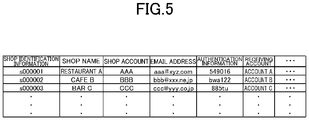
- FIG. 5 is an example of the shop database.
- the shop database stores various information about shops.
- the shop database stores shop names, shop accounts, email addresses, authentication information, and accounts for receiving payments in association with shop identification information for uniquely identifying shops.
- ID information issued for each shop corresponds to the shop identification information, although a shop account or an email address may be used for the shop identification information.
- the data storage unit 200 stores the shop database, thereby storing a plurality of items of shop identification information and authentication information required for payment in association with one another. Storing information in association with one another means storing items of information to be searchable with one another, and, for example, storing information in the same record in the table. For example, the data storage unit 200 stores authentication information for each shop. In other words, the data storage unit 200 stores authentication information peculiar to each shop.
- the authentication information stored in the shop database may be entered in or issued at the shop terminal 30, or entered in or issued at the payment server 20.
- a shop may freely determine numerals and characters forming the authentication information.
- the authentication information may be issued according to a predetermined issuance rule. For example, random numerals or characters may be issued as the authentication information, or, the authentication information may be issued by adding random numerals or characters to the numerals or characters identifying the shops.
- the information stored in the shop database is not limited to the above example, and other information about the shops may be stored.
- the shop database may store a password, which is required together with a shop account at the time of login to the payment system S, address, telephone number, shop image, and latitude/longitude information of a shop.
- FIG. 6 is a diagram illustrating an example of the customer database.
- the customer database stores various information about customers.
- the customer database stores customer names, customer accounts, email addresses, and payment information in association with customer identification information for uniquely identifying customers.
- ID information issued for each shop corresponds to the customer identification information, although a customer account, e-mail address, or identification information of the customer terminal 10 may be used as the customer identification information.
- the payment information is information necessary for payment, such as, a credit card number, a debit card number, and a number of a bank account from which the payment is to be made.
- the information stored in the customer database is not limited to the above example, and other information about the customers may be stored.
- the customer database may store a password required at the time of login to the payment system S together with a customer account.
- the data stored in the data storage unit 200 is not limited to the above example.
- the data storage unit 200 may store image data for displaying screens shown in FIGs. 2 and 3 .
- the authentication unit 201 performs authentication processing based on the authentication information received from the customer terminal 10 and the authentication information stored in association with the shop identification information received from the customer terminal 10.
- the authentication unit 201 refers to the customer database, and specifies authentication information associated with the shop identification information of the payee shop selected by the customer. Subsequently, the authentication unit 201 compares the specified authentication information with the authentication information received from the customer terminal 10. If these pieces of information are matched with each other, the authentication unit 201 determines that authentication is successful, and if not, determines that the authentication fails.
- the authentication is successful means that legitimacy of the payee shop is proven (the shop should receive the payment from the customer), and that the combination of the payee shop selected by the customer and the authentication information entered by the payee shop is correct.
- the authentication fails means that legitimacy of the payee shop is not proven, and that at least one of the payee shop selected by the customer and the authentication information entered by the payee shop is wrong.
- the authentication is successful means allowing the payment processing to be executed, and “the authentication fails” means that preventing the payment processing from being executed.
- the payment execution unit 202 executes payment processing for the payee shop based on an authentication result of the authentication unit 201.
- a customer enters a payment amount, and thus, the payment processing is processing for paying the payment amount entered by the customer to the payee shop selected by the customer.
- the payment execution unit 202 determines whether to execute the payment processing depending on the authentication result of the authentication unit 201.
- the payment processing is information processing for making a payment to a shop.
- the payment processing may adopt known processing, such as, credit card payment processing and processing for deduction from a bank account.
- the payment processing is executed by sending an inquiry about a credit check to a server of a credit card company, and, in the case of deduction from a bank account, the payment processing is executed by sending a deduction request to a server of a bank where the customer has an account.
- the payment execution unit 202 if the authentication of the authentication unit 201 is successful, the payment execution unit 202 permits execution of the payment processing, and, if the authentication of the authentication unit 201 fails, prevents execution of the payment processing. In other words, the payment execution unit 202 executes the payment processing in response to successful authentication of the authentication unit 201, and does not execute the payment processing if the authentication of the authentication unit 201 fails. In this embodiment, if the authentication of the authentication unit 201 fails, the payment execution unit 202 in no way executes the payment processing without suspending the payment processing or inquiring the shop or the customer.
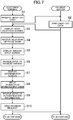
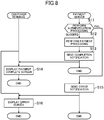
- FIGs. 7 and 8 are flow charts showing examples of processing executed in the payment system.
- the processing shown in FIGs. 7 and 8 is executed when the control units 11 and 21 operate in accordance with the programs respectively stored in the storage units 12 and 22.
- the processing described below is an example of the processing executed by the functional block shown in FIG. 4 .
- the control unit 11 starts an application stored in the storage unit 12, and requests the payment server 20 for shop list data that shows a list of shops (S1). If the customer terminal 10 communicates with the payment server 20, information for identifying the customer terminal 10 (e.g., IP address, customer identification information, customer account, session ID) is sent to the payment server 20, and the payment server 20 can specify which customer is accessing. After the application is activated, a customer account and a password may be required so as to log in the payment server 20.
- information for identifying the customer terminal 10 e.g., IP address, customer identification information, customer account, session ID
- the control unit 21 sends the shop list data to the customer terminal 10 based on the shop database (S2).
- the control unit 21 may include information about all of the shops in the shop list data, or may include information about only nearby shops in the shop list data. If information of only the nearby shops is included, at S1, the customer terminal 10 may send position information, such as latitude/longitude information of the customer terminal 10, to the payment server 20.
- the shop list data includes information for displaying the shop selection screen G1, such as, shop identification information, shop names, and shop images.
- the control unit 11 When the customer terminal 10 receives the shop list data, the control unit 11 displays the shop selection screen G1 on the display unit 15 based on the shop list data (S3).
- the control unit 11 receives a selection of a payee shop by the customer based on a detection signal from the operation unit 14 (S4).
- the control unit 11 retains shop identification information of the payee shop selected by the customer in the storage unit 12.
- the control unit 11 displays the amount input screen G2 on the display unit 15 (S5).
- the payment server 20 may send data for displaying the amount input screen G2, although here, such data is stored in the storage unit 12 together with the application. This applies to the confirmation screen G3 and the authentication information input screen G4.
- the control unit 11 receives an input of a payment amount by the customer based on a detection signal from the operation unit 14 (S6). In S6, the control unit 11 retains, in the storage unit 12, the payment amount entered by the customer. The control unit 11 displays the confirmation screen G3 on the display unit 15 based on the payee shop selected by the customer and the payment amount entered by the customer (S7). Upon detecting that the customer selects a button in the confirmation screen G3 based on the detection signal of the operation unit 14, the control unit 11 displays, on the display unit 15, the authentication information input screen G4 including the payee shop, the payment amount, and a message prompting an input of the payee shop (S8). In S8, when the authentication information input screen G4 is displayed, the customer hands the customer terminal 10 to a salesperson of the payee shop.
- the control unit 11 receives the input of authentication information by the payee shop based on a detection signal from the operation unit 14 (S9). In S9, the control unit 11 stores, in the storage unit 12, the authentication information entered by the payee shop. Upon receiving the authentication information and the payment start operation, the control unit 11 sends a payment request to the payment server 20 (S10).
- the payment request may be in any predetermined data format, and here, includes the shop identification information, the payment amount, and the authentication information stored in the storage unit 12.
- the control unit 21 executes the authentication processing based on the payment request and the shop database (S11).
- the control unit 21 specifies, in the shop database, the authentication information associated with the shop identification information included in the payment request.
- the control unit 21 determines whether the specified authentication information is matched with the authentication information included in the payment request.
- the control unit 21 executes the payment processing based on the shop database and the customer database (S12), and sends a predetermined completion notification to the shop terminal 30 and the customer terminal 10 (S13).
- the control unit 21 refers to the shop database to obtain payment destination information, and refers to the customer database to obtain credit card information of the customer.
- the control unit 21 then executes the credit card payment processing for paying the payment amount indicated by the payment request.
- the completion notification sent in S13 includes the content of the completed payment.
- the control unit 11 displays the payment complete screen G5 on the display unit 15 (S14). Subsequently, the customer shows the payment complete screen G5 to the salesperson and leaves the shop. If the shop terminal 30 also receives the completion notification, the salesperson can recognize the completion notification on the shop terminal 30.
- the control unit 21 does not execute the payment processing, and sends a predetermined error notification to the customer terminal 10 (S15).
- the control unit 11 displays the error screen G6 including a predetermined error message on the display unit 15 (S16). Subsequently, the operation is performed again by the customer or the payee shop.
- the authentication processing is executed based on the authentication information entered by the payee shop, and the payment processing is executed if the authentication is successful.
- This can prevent erroneous payment. That is, if the customer selects a payee shop in error, the authentication information does not match and the payment processing is not executed. This serves to prevent a payment to the payee shop selected in error. For example, when only the nearby shops are selectable by using the position information of the customer terminal 10, some shops having similar names, such as franchise stores, may be located in one area, and thus a customer may possibly select a payee shop in error.
- Such an error can be surely prevented by the use of the authentication information.
- a case can be considered in which a small amount of payment is remotely and repeatedly made for the purpose of mischief or harassment to a shop. In such a case, the payment processing is not executed by the authentication information unknown to the customer, and thus it is possible to prevent the mischief or the harassment.
- the message prompting the payee shop to enter the authentication information is displayed on the authentication information input screen G4, and this serves to smoothly perform the operation until the completion of the payment.
- the authentication information input screen G4 displays the payee shop information, and thus, the payee shop can enter the authentication information while viewing the payee shop selected by the customer. As such, if the customer selects a payee shop in error, the payee shop can visibly confirm the selected shop, and thus can notice the erroneous selection before executing the payment processing. If the erroneous selection can be found before the payment processing is executed, it is possible to save time and effort for cancelling the erroneous payment after the payment is executed.
- the authentication information input screen G4 displays the payment amount, and thus, the payee shop can enter the authentication information while viewing the payment amount entered by the customer. As such, if the customer enters a payment amount in error, the payee shop can visibly confirm the entered amount, and thus can notice the erroneous input before executing the payment processing. If the erroneous input can be found before the payment processing is executed, it is possible to save time and effort for cancelling the erroneous payment after the payment is executed.
- FIG. 9 is a functional block diagram of a variation. As shown in FIG. 9 , in the variation described below, a determining unit 105, an encrypting unit 203, an issuing unit 204, a sending unit 205, a payment amount receiving unit 300, an authentication information receiving unit 301, and a sending unit 302 are implemented in addition to the functions described in the embodiment.
- the payment system S includes a customer terminal 10 operated by a customer and the payment server 20, and further includes a shop terminal 30 of each shop, although the payment system S may not include the shop terminals 30. That is, only the customer terminal 10 and the payment server 20 may be included in the payment system S, and the shop terminal 30 may be omitted.
- a payment of the customer can be completed even if the payee shop does not have a terminal. For example, in a mobile type shop or a flea market, even if a payee shop does not carry a terminal, a payment of a customer can be completed.
- the authentication information input screen G4 may not particularly display the payee shop information and the payment amount.
- the payee shop enters the authentication information in the authentication information input screen G4 where the payee shop information and the payment amount are not displayed. If the payee shop wants to view the payee shop information and the payment amount, an operation to return to the previous screen may be performed. For example, a payment may be completed without a process in which a customer enters a payment amount.
- information of the payment amount may be entered from the shop terminal 30, and registered in the payment server 20 in advance.
- coupon information of the customer stored in the customer terminal 10 or another computer may be used to make the payment.
- the payment processing may be executed by using not only a credit card or a deduction from a bank, but also an electronic value (e.g., electronic money and point).
- the customer terminal 10 may be provided with an IC chip in which the electronic value is recorded.
- the IC chip may include a control unit, a storage unit, and a communication unit, and the storage unit stores balance information of the electronic value and a program to change the balance information.
- the IC chip may change the balance information stored therein in response to an instruction from the payment server 20 or other server.
- the functions described as being implemented by the payment server 20 may be implemented by the customer terminal 10.
- the authentication unit 201 may be implemented by the customer terminal 10.
- the authentication unit 201 may be implemented mainly by the control unit 11, and the payment server 20 may send encrypted authentication information.
- the authentication unit 201 may use a predetermined decoding key to decode the authentication information, and compares the decoded authentication information with the authentication information entered by the payee shop.
- the payment execution unit 202 may be implemented by the customer terminal 10. In this case, the payment execution unit 202 may be implemented mainly by the control unit 11, and send a payment instruction to the payment server 20 or other server, thereby executing the payment processing.
- the payment execution unit 202 may execute the payment processing based on the payment information, such as a credit card number, stored in the customer terminal 10.
- the functions other than the data storage unit 200, the shop receiving unit 100, the authentication information receiving unit 103, the sending unit 104, the authentication unit 201, and the payment execution unit 202 may be omitted.
Landscapes
- Business, Economics & Management (AREA)
- Engineering & Computer Science (AREA)
- Accounting & Taxation (AREA)
- Physics & Mathematics (AREA)
- Strategic Management (AREA)
- General Business, Economics & Management (AREA)
- General Physics & Mathematics (AREA)
- Theoretical Computer Science (AREA)
- Computer Security & Cryptography (AREA)
- Finance (AREA)
- Computer Networks & Wireless Communication (AREA)
- Signal Processing (AREA)
- Financial Or Insurance-Related Operations Such As Payment And Settlement (AREA)
Applications Claiming Priority (1)
| Application Number | Priority Date | Filing Date | Title |
|---|---|---|---|
| PCT/JP2017/031061 WO2019043809A1 (ja) | 2017-08-30 | 2017-08-30 | 決済システム、決済方法、及びプログラム |
Publications (2)
| Publication Number | Publication Date |
|---|---|
| EP3678081A1 true EP3678081A1 (de) | 2020-07-08 |
| EP3678081A4 EP3678081A4 (de) | 2021-04-07 |
Family
ID=65525103
Family Applications (1)
| Application Number | Title | Priority Date | Filing Date |
|---|---|---|---|
| EP17923952.0A Withdrawn EP3678081A4 (de) | 2017-08-30 | 2017-08-30 | Zahlungssystem, zahlungsverfahren und programm |
Country Status (5)
| Country | Link |
|---|---|
| US (1) | US20210073748A1 (de) |
| EP (1) | EP3678081A4 (de) |
| JP (1) | JP6496461B1 (de) |
| CN (1) | CN111052164B (de) |
| WO (1) | WO2019043809A1 (de) |
Families Citing this family (6)
| Publication number | Priority date | Publication date | Assignee | Title |
|---|---|---|---|---|
| JP7265448B2 (ja) * | 2019-08-20 | 2023-04-26 | 株式会社日立システムズ | デジタル地域通貨の利用促進を支援する方法及びシステム |
| JP6955053B1 (ja) * | 2020-05-08 | 2021-10-27 | Kddi株式会社 | 決済処理方法、決済処理装置及び決済用プログラム |
| JP2021179808A (ja) * | 2020-05-13 | 2021-11-18 | トヨタ自動車株式会社 | ウォレットサーバ、ウォレットシステム、およびプログラム |
| JP7028947B2 (ja) * | 2020-07-07 | 2022-03-02 | エヌ・ティ・ティ・コミュニケーションズ株式会社 | 決済システム、決済方法および利用システム |
| CN112990912B (zh) * | 2021-03-19 | 2024-04-19 | 联想(北京)有限公司 | 基于付款码的数据验证方法及装置 |
| CN115018487B (zh) * | 2022-04-29 | 2025-10-24 | 阿里巴巴(中国)有限公司 | 支付处理方法、装置及计算机可读存储介质 |
Family Cites Families (31)
| Publication number | Priority date | Publication date | Assignee | Title |
|---|---|---|---|---|
| DE60135125D1 (de) * | 2000-05-15 | 2008-09-11 | Nifty Corp | Elektronischer kommerz in einem informationsverarbeitungssystem und verfahren |
| JP2002163584A (ja) * | 2000-11-24 | 2002-06-07 | Fujitsu Ltd | 携帯情報端末を利用したカード決済方法及びシステム |
| CN1625751A (zh) * | 2002-02-08 | 2005-06-08 | 株式会社Tri-C | 利用了移动通信的终端的结算方法 |
| JP2004252588A (ja) * | 2003-02-18 | 2004-09-09 | Oki Electric Ind Co Ltd | カード決済システムおよびその携帯電話のプログラム |
| AU2003901043A0 (en) * | 2003-03-07 | 2003-03-20 | Torto, Anthony | Transaction system |
| JP2005276066A (ja) * | 2004-03-26 | 2005-10-06 | Oki Consulting Solutions Co Ltd | 電子認証システムおよび方法 |
| EP1836676A4 (de) * | 2004-11-02 | 2009-12-30 | Global Direct Man Corp | System und verfahren zum authentifizieren von benutzern für sichere mobile elektronische transaktionen |
| JP2007116456A (ja) | 2005-10-20 | 2007-05-10 | Sharp Corp | 情報通信端末、認証装置、情報通信システム、および記録媒体 |
| JP2007272526A (ja) * | 2006-03-31 | 2007-10-18 | Point On Kk | ポイント決済システム |
| CN101093593A (zh) * | 2006-06-21 | 2007-12-26 | 韩燕� | 一种储值卡或收付卡电子支付方法与id鉴别终端及其系统 |
| US7512567B2 (en) * | 2006-06-29 | 2009-03-31 | Yt Acquisition Corporation | Method and system for providing biometric authentication at a point-of-sale via a mobile device |
| EP2128809A1 (de) * | 2008-05-30 | 2009-12-02 | Luc Stals | Servervorrichtung zur Steuerung einer Transaktion, erste und zweite Einheit |
| US20100036741A1 (en) * | 2008-08-04 | 2010-02-11 | Marc Cleven | Application currency code for dynamic currency conversion transactions with contactless consumer transaction payment device |
| JP5518615B2 (ja) * | 2010-07-27 | 2014-06-11 | 株式会社日本総合研究所 | 決済システム、決済方法および決済プログラム |
| US20130080289A1 (en) * | 2011-09-28 | 2013-03-28 | Rupessh Ranen Roy | Retail shopping |
| US8910254B2 (en) * | 2012-02-11 | 2014-12-09 | Aol Inc. | System and methods for profiling client devices |
| SG193041A1 (en) * | 2012-02-21 | 2013-09-30 | Global Blue Holdings Ab | Transaction processing system and method |
| CN102789612A (zh) * | 2012-07-16 | 2012-11-21 | 深圳宝嘉电子设备有限公司 | 一种数字印章支付验证系统及其方法 |
| EP2979236A1 (de) * | 2013-03-27 | 2016-02-03 | Cleverade | Sicheres zahlungstransaktionssystem |
| GB2512595A (en) * | 2013-04-02 | 2014-10-08 | Mastercard International Inc | Integrated contactless mpos implementation |
| US20150317633A1 (en) * | 2013-04-12 | 2015-11-05 | Mastercard International Incorporated | Analytics rules engine for payment processing system |
| EP3174240A4 (de) * | 2013-12-08 | 2018-06-27 | Mao Ye | Digitales tokensystem zur physischen mediendigitalisierung und zur physischen lageroptimierung |
| US12469041B2 (en) * | 2014-05-02 | 2025-11-11 | Tillster, Inc. | Mobile loyalty and payment system using temporary short codes |
| JP5978326B2 (ja) | 2015-01-23 | 2016-08-24 | ソフトバンク・ペイメント・サービス株式会社 | 動的認証システム、動的認証方法、動的認証用読取装置、ユーザー端末装置、及び動的認証プログラム |
| US20160224973A1 (en) * | 2015-02-01 | 2016-08-04 | Apple Inc. | User interface for payments |
| US20160283925A1 (en) * | 2015-03-26 | 2016-09-29 | Kohl's Department Stores, Inc. | Omni-channel shopping and mobile payment system |
| EP3296844A4 (de) * | 2015-05-13 | 2018-12-26 | playground Co., Ltd. | Endgerätevorrichtung, elektronischer stempel und programm |
| US20160379187A1 (en) * | 2015-06-29 | 2016-12-29 | Mark Wijngaarden | Electronic receipt system |
| CN105160562A (zh) * | 2015-10-10 | 2015-12-16 | 金大甲 | 利用移动客户终端的电子章系统及方法 |
| US11263617B2 (en) * | 2015-12-04 | 2022-03-01 | Apple Inc. | Method, non-transitory computer-readable medium, and mobile device for location-based graphical user interfaces |
| US12118532B2 (en) * | 2016-03-14 | 2024-10-15 | Vray Inc. | Online mobile payment system and method using a server between the personal comuter and the mobile payment device |
-
2017
- 2017-08-30 JP JP2018567978A patent/JP6496461B1/ja active Active
- 2017-08-30 WO PCT/JP2017/031061 patent/WO2019043809A1/ja not_active Ceased
- 2017-08-30 CN CN201780094361.9A patent/CN111052164B/zh active Active
- 2017-08-30 US US16/642,374 patent/US20210073748A1/en not_active Abandoned
- 2017-08-30 EP EP17923952.0A patent/EP3678081A4/de not_active Withdrawn
Also Published As
| Publication number | Publication date |
|---|---|
| WO2019043809A1 (ja) | 2019-03-07 |
| US20210073748A1 (en) | 2021-03-11 |
| JPWO2019043809A1 (ja) | 2019-11-07 |
| CN111052164A (zh) | 2020-04-21 |
| EP3678081A4 (de) | 2021-04-07 |
| JP6496461B1 (ja) | 2019-04-03 |
| CN111052164B (zh) | 2023-09-15 |
Similar Documents
| Publication | Publication Date | Title |
|---|---|---|
| US12475448B2 (en) | Electronic identification and authentication system | |
| EP3678081A1 (de) | Zahlungssystem, zahlungsverfahren und programm | |
| US12591867B2 (en) | Systems and methods for third party payment at point of sale terminals | |
| US20150046330A1 (en) | Transaction processing system and method | |
| US10909518B2 (en) | Delegation payment with picture | |
| CN104272314B (zh) | 利用移动终端进行认证和结算的方法以及系统 | |
| JP2015018437A (ja) | 特典使用のための端末装置、icタグ、プログラム、方法およびシステム | |
| CA3136109A1 (en) | Source independent consistent tokenization | |
| WO2018092809A2 (ja) | ユーザ端末、方法、コンピュータプログラム | |
| KR20140145190A (ko) | 전자 거래 방법 | |
| US11521192B2 (en) | Settlement system, user terminal and method executed thereby, settlement device and method executed thereby, and program | |
| JP2008040890A (ja) | 金融取引システム及びサーバ | |
| US10885506B2 (en) | System and method for electronically providing receipts | |
| US10373149B1 (en) | Secure data entry using a card reader with minimal display and input capabilities having a display | |
| KR101398021B1 (ko) | 결제채널 관리방법 | |
| JP7085460B2 (ja) | 銀行サーバ、決済方法及びプログラム | |
| JP2019040547A (ja) | 情報処理装置およびプログラム | |
| US20160275493A1 (en) | Secure electronic transaction framework | |
| EP3536515A1 (de) | Geldgutschein | |
| KR20170029941A (ko) | 웹 기반 다중 인증을 지원하는 결제 서비스 제공 장치 및 방법, 그리고 시스템 및 컴퓨터 프로그램이 기록된 기록매체 | |
| WO2015167671A1 (en) | Secure system and method of virtually making payments at a point of sale | |
| HK1262778A1 (en) | Settlement system, user terminal and method executed thereby, settlement device and method executed thereby, and program | |
| HK40014115A (en) | Money voucher |
Legal Events
| Date | Code | Title | Description |
|---|---|---|---|
| STAA | Information on the status of an ep patent application or granted ep patent |
Free format text: STATUS: THE INTERNATIONAL PUBLICATION HAS BEEN MADE |
|
| PUAI | Public reference made under article 153(3) epc to a published international application that has entered the european phase |
Free format text: ORIGINAL CODE: 0009012 |
|
| STAA | Information on the status of an ep patent application or granted ep patent |
Free format text: STATUS: REQUEST FOR EXAMINATION WAS MADE |
|
| 17P | Request for examination filed |
Effective date: 20200330 |
|
| AK | Designated contracting states |
Kind code of ref document: A1 Designated state(s): AL AT BE BG CH CY CZ DE DK EE ES FI FR GB GR HR HU IE IS IT LI LT LU LV MC MK MT NL NO PL PT RO RS SE SI SK SM TR |
|
| AX | Request for extension of the european patent |
Extension state: BA ME |
|
| DAV | Request for validation of the european patent (deleted) | ||
| DAX | Request for extension of the european patent (deleted) | ||
| A4 | Supplementary search report drawn up and despatched |
Effective date: 20210309 |
|
| RIC1 | Information provided on ipc code assigned before grant |
Ipc: G06F 3/0488 20130101ALI20210302BHEP Ipc: G06F 3/041 20060101ALI20210302BHEP Ipc: G06Q 20/40 20120101AFI20210302BHEP Ipc: G06Q 20/32 20120101ALI20210302BHEP Ipc: G06Q 20/02 20120101ALI20210302BHEP |
|
| RAP3 | Party data changed (applicant data changed or rights of an application transferred) |
Owner name: RAKUTEN GROUP, INC. |
|
| STAA | Information on the status of an ep patent application or granted ep patent |
Free format text: STATUS: EXAMINATION IS IN PROGRESS |
|
| 17Q | First examination report despatched |
Effective date: 20220311 |
|
| STAA | Information on the status of an ep patent application or granted ep patent |
Free format text: STATUS: THE APPLICATION HAS BEEN WITHDRAWN |
|
| 18W | Application withdrawn |
Effective date: 20220707 |