EP3676149B1 - Systeme und verfahren zur kommunikationsabsicht eines autonomen fahrzeugs - Google Patents
Systeme und verfahren zur kommunikationsabsicht eines autonomen fahrzeugs Download PDFInfo
- Publication number
- EP3676149B1 EP3676149B1 EP18773296.1A EP18773296A EP3676149B1 EP 3676149 B1 EP3676149 B1 EP 3676149B1 EP 18773296 A EP18773296 A EP 18773296A EP 3676149 B1 EP3676149 B1 EP 3676149B1
- Authority
- EP
- European Patent Office
- Prior art keywords
- autonomous vehicle
- intent
- computing system
- passenger
- computer
- Prior art date
- Legal status (The legal status is an assumption and is not a legal conclusion. Google has not performed a legal analysis and makes no representation as to the accuracy of the status listed.)
- Active
Links
Images



Classifications
-
- G—PHYSICS
- G05—CONTROLLING; REGULATING
- G05D—SYSTEMS FOR CONTROLLING OR REGULATING NON-ELECTRIC VARIABLES
- G05D1/00—Control of position, course, altitude or attitude of land, water, air or space vehicles, e.g. using automatic pilots
- G05D1/02—Control of position or course in two dimensions
- G05D1/021—Control of position or course in two dimensions specially adapted to land vehicles
- G05D1/0212—Control of position or course in two dimensions specially adapted to land vehicles with means for defining a desired trajectory
-
- B—PERFORMING OPERATIONS; TRANSPORTING
- B60—VEHICLES IN GENERAL
- B60W—CONJOINT CONTROL OF VEHICLE SUB-UNITS OF DIFFERENT TYPE OR DIFFERENT FUNCTION; CONTROL SYSTEMS SPECIALLY ADAPTED FOR HYBRID VEHICLES; ROAD VEHICLE DRIVE CONTROL SYSTEMS FOR PURPOSES NOT RELATED TO THE CONTROL OF A PARTICULAR SUB-UNIT
- B60W50/00—Details of control systems for road vehicle drive control not related to the control of a particular sub-unit, e.g. process diagnostic or vehicle driver interfaces
- B60W50/0097—Predicting future conditions
-
- B—PERFORMING OPERATIONS; TRANSPORTING
- B60—VEHICLES IN GENERAL
- B60K—ARRANGEMENT OR MOUNTING OF PROPULSION UNITS OR OF TRANSMISSIONS IN VEHICLES; ARRANGEMENT OR MOUNTING OF PLURAL DIVERSE PRIME-MOVERS IN VEHICLES; AUXILIARY DRIVES FOR VEHICLES; INSTRUMENTATION OR DASHBOARDS FOR VEHICLES; ARRANGEMENTS IN CONNECTION WITH COOLING, AIR INTAKE, GAS EXHAUST OR FUEL SUPPLY OF PROPULSION UNITS IN VEHICLES
- B60K35/00—Instruments specially adapted for vehicles; Arrangement of instruments in or on vehicles
- B60K35/10—Input arrangements, i.e. from user to vehicle, associated with vehicle functions or specially adapted therefor
-
- B—PERFORMING OPERATIONS; TRANSPORTING
- B60—VEHICLES IN GENERAL
- B60K—ARRANGEMENT OR MOUNTING OF PROPULSION UNITS OR OF TRANSMISSIONS IN VEHICLES; ARRANGEMENT OR MOUNTING OF PLURAL DIVERSE PRIME-MOVERS IN VEHICLES; AUXILIARY DRIVES FOR VEHICLES; INSTRUMENTATION OR DASHBOARDS FOR VEHICLES; ARRANGEMENTS IN CONNECTION WITH COOLING, AIR INTAKE, GAS EXHAUST OR FUEL SUPPLY OF PROPULSION UNITS IN VEHICLES
- B60K35/00—Instruments specially adapted for vehicles; Arrangement of instruments in or on vehicles
- B60K35/20—Output arrangements, i.e. from vehicle to user, associated with vehicle functions or specially adapted therefor
- B60K35/28—Output arrangements, i.e. from vehicle to user, associated with vehicle functions or specially adapted therefor characterised by the type of the output information, e.g. video entertainment or vehicle dynamics information; characterised by the purpose of the output information, e.g. for attracting the attention of the driver
-
- B—PERFORMING OPERATIONS; TRANSPORTING
- B60—VEHICLES IN GENERAL
- B60K—ARRANGEMENT OR MOUNTING OF PROPULSION UNITS OR OF TRANSMISSIONS IN VEHICLES; ARRANGEMENT OR MOUNTING OF PLURAL DIVERSE PRIME-MOVERS IN VEHICLES; AUXILIARY DRIVES FOR VEHICLES; INSTRUMENTATION OR DASHBOARDS FOR VEHICLES; ARRANGEMENTS IN CONNECTION WITH COOLING, AIR INTAKE, GAS EXHAUST OR FUEL SUPPLY OF PROPULSION UNITS IN VEHICLES
- B60K35/00—Instruments specially adapted for vehicles; Arrangement of instruments in or on vehicles
- B60K35/20—Output arrangements, i.e. from vehicle to user, associated with vehicle functions or specially adapted therefor
- B60K35/29—Instruments characterised by the way in which information is handled, e.g. showing information on plural displays or prioritising information according to driving conditions
-
- B—PERFORMING OPERATIONS; TRANSPORTING
- B60—VEHICLES IN GENERAL
- B60W—CONJOINT CONTROL OF VEHICLE SUB-UNITS OF DIFFERENT TYPE OR DIFFERENT FUNCTION; CONTROL SYSTEMS SPECIALLY ADAPTED FOR HYBRID VEHICLES; ROAD VEHICLE DRIVE CONTROL SYSTEMS FOR PURPOSES NOT RELATED TO THE CONTROL OF A PARTICULAR SUB-UNIT
- B60W50/00—Details of control systems for road vehicle drive control not related to the control of a particular sub-unit, e.g. process diagnostic or vehicle driver interfaces
- B60W50/08—Interaction between the driver and the control system
-
- B—PERFORMING OPERATIONS; TRANSPORTING
- B60—VEHICLES IN GENERAL
- B60W—CONJOINT CONTROL OF VEHICLE SUB-UNITS OF DIFFERENT TYPE OR DIFFERENT FUNCTION; CONTROL SYSTEMS SPECIALLY ADAPTED FOR HYBRID VEHICLES; ROAD VEHICLE DRIVE CONTROL SYSTEMS FOR PURPOSES NOT RELATED TO THE CONTROL OF A PARTICULAR SUB-UNIT
- B60W50/00—Details of control systems for road vehicle drive control not related to the control of a particular sub-unit, e.g. process diagnostic or vehicle driver interfaces
- B60W50/08—Interaction between the driver and the control system
- B60W50/14—Means for informing the driver, warning the driver or prompting a driver intervention
-
- G—PHYSICS
- G01—MEASURING; TESTING
- G01C—MEASURING DISTANCES, LEVELS OR BEARINGS; SURVEYING; NAVIGATION; GYROSCOPIC INSTRUMENTS; PHOTOGRAMMETRY OR VIDEOGRAMMETRY
- G01C21/00—Navigation; Navigational instruments not provided for in groups G01C1/00 - G01C19/00
- G01C21/26—Navigation; Navigational instruments not provided for in groups G01C1/00 - G01C19/00 specially adapted for navigation in a road network
- G01C21/34—Route searching; Route guidance
- G01C21/36—Input/output arrangements for on-board computers
- G01C21/3667—Display of a road map
- G01C21/3676—Overview of the route on the road map
-
- G—PHYSICS
- G05—CONTROLLING; REGULATING
- G05D—SYSTEMS FOR CONTROLLING OR REGULATING NON-ELECTRIC VARIABLES
- G05D1/00—Control of position, course, altitude or attitude of land, water, air or space vehicles, e.g. using automatic pilots
- G05D1/20—Control system inputs
- G05D1/22—Command input arrangements
- G05D1/221—Remote-control arrangements
- G05D1/227—Handing over between remote control and on-board control; Handing over between remote control arrangements
-
- G—PHYSICS
- G05—CONTROLLING; REGULATING
- G05D—SYSTEMS FOR CONTROLLING OR REGULATING NON-ELECTRIC VARIABLES
- G05D1/00—Control of position, course, altitude or attitude of land, water, air or space vehicles, e.g. using automatic pilots
- G05D1/60—Intended control result
- G05D1/646—Following a predefined trajectory, e.g. a line marked on the floor or a flight path
-
- B—PERFORMING OPERATIONS; TRANSPORTING
- B60—VEHICLES IN GENERAL
- B60K—ARRANGEMENT OR MOUNTING OF PROPULSION UNITS OR OF TRANSMISSIONS IN VEHICLES; ARRANGEMENT OR MOUNTING OF PLURAL DIVERSE PRIME-MOVERS IN VEHICLES; AUXILIARY DRIVES FOR VEHICLES; INSTRUMENTATION OR DASHBOARDS FOR VEHICLES; ARRANGEMENTS IN CONNECTION WITH COOLING, AIR INTAKE, GAS EXHAUST OR FUEL SUPPLY OF PROPULSION UNITS IN VEHICLES
- B60K2360/00—Indexing scheme associated with groups B60K35/00 or B60K37/00 relating to details of instruments or dashboards
- B60K2360/11—Instrument graphical user interfaces or menu aspects
- B60K2360/119—Icons
-
- B—PERFORMING OPERATIONS; TRANSPORTING
- B60—VEHICLES IN GENERAL
- B60K—ARRANGEMENT OR MOUNTING OF PROPULSION UNITS OR OF TRANSMISSIONS IN VEHICLES; ARRANGEMENT OR MOUNTING OF PLURAL DIVERSE PRIME-MOVERS IN VEHICLES; AUXILIARY DRIVES FOR VEHICLES; INSTRUMENTATION OR DASHBOARDS FOR VEHICLES; ARRANGEMENTS IN CONNECTION WITH COOLING, AIR INTAKE, GAS EXHAUST OR FUEL SUPPLY OF PROPULSION UNITS IN VEHICLES
- B60K2360/00—Indexing scheme associated with groups B60K35/00 or B60K37/00 relating to details of instruments or dashboards
- B60K2360/16—Type of output information
-
- B—PERFORMING OPERATIONS; TRANSPORTING
- B60—VEHICLES IN GENERAL
- B60K—ARRANGEMENT OR MOUNTING OF PROPULSION UNITS OR OF TRANSMISSIONS IN VEHICLES; ARRANGEMENT OR MOUNTING OF PLURAL DIVERSE PRIME-MOVERS IN VEHICLES; AUXILIARY DRIVES FOR VEHICLES; INSTRUMENTATION OR DASHBOARDS FOR VEHICLES; ARRANGEMENTS IN CONNECTION WITH COOLING, AIR INTAKE, GAS EXHAUST OR FUEL SUPPLY OF PROPULSION UNITS IN VEHICLES
- B60K2360/00—Indexing scheme associated with groups B60K35/00 or B60K37/00 relating to details of instruments or dashboards
- B60K2360/16—Type of output information
- B60K2360/166—Navigation
-
- B—PERFORMING OPERATIONS; TRANSPORTING
- B60—VEHICLES IN GENERAL
- B60K—ARRANGEMENT OR MOUNTING OF PROPULSION UNITS OR OF TRANSMISSIONS IN VEHICLES; ARRANGEMENT OR MOUNTING OF PLURAL DIVERSE PRIME-MOVERS IN VEHICLES; AUXILIARY DRIVES FOR VEHICLES; INSTRUMENTATION OR DASHBOARDS FOR VEHICLES; ARRANGEMENTS IN CONNECTION WITH COOLING, AIR INTAKE, GAS EXHAUST OR FUEL SUPPLY OF PROPULSION UNITS IN VEHICLES
- B60K2360/00—Indexing scheme associated with groups B60K35/00 or B60K37/00 relating to details of instruments or dashboards
- B60K2360/16—Type of output information
- B60K2360/175—Autonomous driving
-
- B—PERFORMING OPERATIONS; TRANSPORTING
- B60—VEHICLES IN GENERAL
- B60K—ARRANGEMENT OR MOUNTING OF PROPULSION UNITS OR OF TRANSMISSIONS IN VEHICLES; ARRANGEMENT OR MOUNTING OF PLURAL DIVERSE PRIME-MOVERS IN VEHICLES; AUXILIARY DRIVES FOR VEHICLES; INSTRUMENTATION OR DASHBOARDS FOR VEHICLES; ARRANGEMENTS IN CONNECTION WITH COOLING, AIR INTAKE, GAS EXHAUST OR FUEL SUPPLY OF PROPULSION UNITS IN VEHICLES
- B60K2360/00—Indexing scheme associated with groups B60K35/00 or B60K37/00 relating to details of instruments or dashboards
- B60K2360/18—Information management
- B60K2360/186—Displaying information according to relevancy
-
- B—PERFORMING OPERATIONS; TRANSPORTING
- B60—VEHICLES IN GENERAL
- B60K—ARRANGEMENT OR MOUNTING OF PROPULSION UNITS OR OF TRANSMISSIONS IN VEHICLES; ARRANGEMENT OR MOUNTING OF PLURAL DIVERSE PRIME-MOVERS IN VEHICLES; AUXILIARY DRIVES FOR VEHICLES; INSTRUMENTATION OR DASHBOARDS FOR VEHICLES; ARRANGEMENTS IN CONNECTION WITH COOLING, AIR INTAKE, GAS EXHAUST OR FUEL SUPPLY OF PROPULSION UNITS IN VEHICLES
- B60K2360/00—Indexing scheme associated with groups B60K35/00 or B60K37/00 relating to details of instruments or dashboards
- B60K2360/18—Information management
- B60K2360/191—Highlight information
-
- B—PERFORMING OPERATIONS; TRANSPORTING
- B60—VEHICLES IN GENERAL
- B60W—CONJOINT CONTROL OF VEHICLE SUB-UNITS OF DIFFERENT TYPE OR DIFFERENT FUNCTION; CONTROL SYSTEMS SPECIALLY ADAPTED FOR HYBRID VEHICLES; ROAD VEHICLE DRIVE CONTROL SYSTEMS FOR PURPOSES NOT RELATED TO THE CONTROL OF A PARTICULAR SUB-UNIT
- B60W50/00—Details of control systems for road vehicle drive control not related to the control of a particular sub-unit, e.g. process diagnostic or vehicle driver interfaces
- B60W50/08—Interaction between the driver and the control system
- B60W50/14—Means for informing the driver, warning the driver or prompting a driver intervention
- B60W2050/146—Display means
-
- B—PERFORMING OPERATIONS; TRANSPORTING
- B60—VEHICLES IN GENERAL
- B60W—CONJOINT CONTROL OF VEHICLE SUB-UNITS OF DIFFERENT TYPE OR DIFFERENT FUNCTION; CONTROL SYSTEMS SPECIALLY ADAPTED FOR HYBRID VEHICLES; ROAD VEHICLE DRIVE CONTROL SYSTEMS FOR PURPOSES NOT RELATED TO THE CONTROL OF A PARTICULAR SUB-UNIT
- B60W2554/00—Input parameters relating to objects
- B60W2554/80—Spatial relation or speed relative to objects
-
- B—PERFORMING OPERATIONS; TRANSPORTING
- B60—VEHICLES IN GENERAL
- B60W—CONJOINT CONTROL OF VEHICLE SUB-UNITS OF DIFFERENT TYPE OR DIFFERENT FUNCTION; CONTROL SYSTEMS SPECIALLY ADAPTED FOR HYBRID VEHICLES; ROAD VEHICLE DRIVE CONTROL SYSTEMS FOR PURPOSES NOT RELATED TO THE CONTROL OF A PARTICULAR SUB-UNIT
- B60W2555/00—Input parameters relating to exterior conditions, not covered by groups B60W2552/00, B60W2554/00
- B60W2555/60—Traffic rules, e.g. speed limits or right of way
Definitions
- the present invention relates generally to autonomous vehicles. More particularly, the present invention relates to communicating intent of an autonomous vehicle.
- An autonomous vehicle is a vehicle that is capable of sensing its environment and navigating with minimal or no human input.
- an autonomous vehicle can observe its surrounding environment using a variety of sensors and identify an appropriate motion path through such surrounding environment.
- EP3050771A1 proposes an information provision method that includes obtaining information about at least one of a property and a state of an occupant of a vehicle (A) of which at least part of driving operation is automatically controlled, and notifying the occupant of the vehicle of the information about the automated control on the basis of the obtained information.
- WO2016109829A1 proposes systems and methods of operating an autonomous vehicle to perform an autonomous maneuver.
- One system includes a human machine interface and an electronic controller electrically coupled to the human machine interface.
- the electronic controller includes an electronic processor configured to detect at least one driving condition and determine the autonomous maneuver based on the at least one driving condition.
- the electronic processor is also configured to display, via the human machine interface, a maneuver notification before performing the autonomous maneuver.
- the electronic processor is further configured to control the autonomous vehicle to perform the autonomous maneuver.
- US8676431B1 proposes a vehicle having a plurality of control apparatuses, a user input, a geographic position component, an object detection apparatus, memory, and a display.
- a processor is also included and is programmed to receive the destination information, identify a route, and determine the current geographic location of the vehicle.
- the processor is also programmed to identify an object and object type based on object information received from the object detection apparatus and to determine at least one warning characteristic of the identified object based on at least one of: the object type, a detected proximity of the detected object to the vehicle, the location of the detected object relative to predetermined peripheral areas of the vehicle, the current geographic location of the vehicle, and the route.
- the processor is also configured to select and display on the display an object warning image based on the at least one warning characteristic.
- the control system includes an exterior sensor for sensing the environment outside the vehicle.
- a processor is in communication with the exterior sensor and configured to calculate a driving plan of the vehicle based at least partially on the sensed environment outside the vehicle.
- the processor is also configured to calculate a confidence level of the driving plan of the vehicle based at least partially on the sensed environment around the vehicle.
- the control system also includes a display in communication with the processor and configured to receive data from the processor and display a representation of at least one of the driving plan and the confidence level.
- an autonomy computing system of an autonomous vehicle can determine a motion plan for the autonomous vehicle based on maps and data received from sensors of the autonomous vehicle that describes the environment in which the autonomous vehicle is operating.
- a motion plan can include data that indicates intents of the autonomous vehicle.
- the autonomous vehicle can plan to stop at an approaching intersection (e.g., based on a stop sign or signal determined from map and/or environmental sensor data).
- a computing system can receive, from the autonomy computing system of the autonomous vehicle, data indicating the intent of the autonomous vehicle (e.g., that the autonomous vehicle intends to stop at the approaching intersection). Multiple intents of the autonomous vehicle can be determined based on the data indicating the intent.
- the data can indicate that the autonomous vehicle plans to stop at the approaching intersection because there is a red signal light and because pedestrians are currently crossing the path of the autonomous vehicle (e.g., at the intersection).
- an intent of the autonomous vehicle can be selected.
- the intent can be selected based on a predetermined hierarchy. For example, an intent indicating that the autonomous vehicle plans to stop at the approaching intersection because there is a red signal light can be selected instead of an intent indicating that the autonomous vehicle plans to stop because pedestrians are currently crossing the path of the autonomous vehicle because a predetermined hierarchy can indicate that intents associated with traffic signals should be selected in lieu of intents associated with pedestrian crossings.
- a determination can be made that the intent of the autonomous vehicle e.g., planned deceleration associated with the approaching intersection
- a passenger of the autonomous vehicle e.g., operator or non-operator passenger of the autonomous vehicle.
- the deceleration associated with the approaching intersection is of sufficient magnitude (e.g., exceeds a predetermined threshold) that a passenger of the autonomous vehicle should be notified.
- a graphical interface indicating the intent of the autonomous vehicle can be generated and displayed for viewing by the passenger of the autonomous vehicle. For example, a graphical interface indicating that the autonomous vehicle is (or is planning to) decelerate due to the approaching intersection can be generated and displayed to a passenger of the autonomous vehicle.
- the graphical interface can include a map of the area surrounding the current location of the autonomous vehicle and can depict the location of the autonomous vehicle (e.g., within the surrounding area).
- the graphical interface can include a graphic overlay on the map indicating the intent of the autonomous vehicle.
- generating the graphical interface can include distilling or summarizing complex vehicle intent information into an easily understandable graphical element that quickly conveys to the passenger the intent of the autonomous vehicle.
- the graphical interface can include (e.g., as part of the graphic overlay) one or more elements depicting an event associated with the intent of the autonomous vehicle.
- the autonomous vehicle can be stopped for two cars, and the graphic overlay can indicate that the autonomous vehicle is stopped (e.g., via a graphic corresponding to a stop sign) and the graphical interface can indicate that the associated event is waiting for two cars (e.g., via one or more textual elements).
- the autonomous vehicle can be approaching a traffic signal and the graphical overlay can indicate the intent of the autonomous vehicle (e.g., continuing, stopping, stopped, or the like) and the associated event, for example, the status of the traffic signal (e.g., red, yellow, green, or the like).
- the graphical interface can indicate one or more parameters associated with the event.
- the autonomous vehicle can be approaching a turn and the graphical interface can indicate a time until completion or execution of the turn.
- the autonomous vehicle can be yielding (e.g., decelerating) in response to another vehicle, a pedestrian, a cyclist, or the like, and the graphical interface can indicate a speed of the vehicle, cyclist, pedestrian, or the like and/or a distance between the autonomous vehicle and the vehicle, cyclist, pedestrian, or the like.
- the computing system can determine that the intent of the autonomous vehicle should be communicated to the passenger based on a determination that a frequency in the change of the intent indicated by the data received from the autonomy computing system meets a predetermined threshold.
- the data received from the autonomy computing system can indicate multiple intents within a short period of time (e.g., the autonomy computing system can frequently alter its planned motion path for the autonomous vehicle based on, for example, changes in data received from sensors of the autonomous vehicle).
- the data received from the autonomy computing system can indicate that the autonomous vehicle intends to decelerate in order to avoid a pedestrian, however, the data received from the autonomy computing system could subsequently indicate that the autonomous vehicle intends to maintain its current speed (e.g., because data received from sensors of the autonomous vehicle indicates the pedestrian has already cleared the path of the autonomous vehicle).
- a determination can be made with regards to the frequency in the change of the intent indicated by the data received from the autonomy computing system, and the intent of the autonomous vehicle can be communicated in response to a determination that the frequency in the change of the intent meets a predetermined threshold (e.g., the intent of the autonomous vehicle has remained constant for a threshold period of time).
- a predetermined threshold e.g., the intent of the autonomous vehicle has remained constant for a threshold period of time.
- the intent of the autonomous vehicle can be communicated in response to a determination that the frequency in the change of the intent is less than a predetermined threshold.
- the computing system can determine that the intent of the autonomous vehicle should be communicated to the passenger based on a determination that a degree of confidence of an event associated with the intent indicated by the data received from the autonomy computing system meets a predetermined threshold.
- the data received from the autonomy computing system can indicate an event associated with the intent of the autonomous vehicle.
- the data can indicate that the autonomous vehicle intends to decelerate because a pedestrian has entered the path of the autonomous vehicle.
- the autonomous vehicle can determine its intent, but the nature of the associated event can be unclear.
- the autonomous vehicle can detect an object in its path and determine to decelerate in order to avoid the object, but the autonomous vehicle can be uncertain regarding the nature of the object (e.g., whether the object is a pedestrian, cyclist, or the like). This uncertainty can be indicated by the data received from the autonomy computing system. For example, the data can indicate the nature of the object to a degree of confidence. Because communicating erroneous information about the nature of the event to the passenger could undermine the confidence of the passenger in the autonomous vehicle, a determination can be made about whether to communicate the intent of the autonomous vehicle based on a determination that the degree of confidence meets a predetermined threshold (e.g., the intent can be conveyed when the confidence regarding the event exceeds the predetermined threshold).
- a predetermined threshold e.g., the intent can be conveyed when the confidence regarding the event exceeds the predetermined threshold.
- the computing system can include a human machine interface device (e.g., a mobile device, tablet computing device, or the like) that can be viewable by a passenger of the autonomous vehicle.
- the device can include a display (e.g., for viewing by the passenger), one or more processors, and memory.
- the memory can include instructions that when executed by the processor(s) cause the device to perform one or more of the operations described herein.
- the systems and methods described herein can provide a number of technical effects and benefits.
- the systems and methods described herein can communicate the intent of an autonomous vehicle to its passenger thereby allowing the passenger to anticipate impending changes in force and increasing passenger comfort.
- the systems and methods described herein can demonstrate environmental understanding and driving competence of the autonomous vehicle to its passenger thereby reassuring the passenger that the autonomous vehicle is correctly interpreting its environment and acting appropriately.
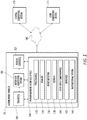
- FIG. 1 depicts a block diagram of an example computing system according to example embodiments of the present invention.
- the example computing system includes autonomous vehicle 10, central computing system 170, and user computing device 175 that are communicatively coupled over one or more communication networks 180.
- Autonomous vehicle 10 can include one or more sensors 101, autonomy computing system 102, one or more vehicle controls 107, and human machine interface device 150.
- Human machine interface device 150 can enable communication, control, and/or other interface actions to occur between autonomous vehicle 10 and a human (e.g., a passenger located within autonomous vehicle 10). Human machine interface device 150 can be communicatively coupled to autonomy computing system 102 to enable exchange of data, instructions, and/or requests between system 102 and device 150.
- Human machine interface device 150 can include or be implemented by one or more computing devices that are operatively connected. Human machine interface device 150 can be an embedded computing device or a stand-alone computing device. In one particular example, human machine interface device 150 can be a tablet computing device that is positioned within autonomous vehicle 10 for viewing by a passenger (e.g., within a rear seat area of autonomous vehicle 10).
- Human machine interface device 150 can include one or more processors 152, memory 154, event detector 156, display 158, one or more user input components 160, one or more sensors 162, and navigational system 164.
- Processor(s) 152 can be any suitable processing device (e.g., a processor core, a microprocessor, an application-specific integrated circuit (ASIC), a field-programmable gate array (FPGA), a controller, a microcontroller, etc.) and can be one processor or a plurality of processors that are operatively connected.
- Memory 154 can include one or more non-transitory computer-readable storage media, such as random-access memory (RAM), read-only memory (ROM), electrically erasable programmable read-only memory (EEPROM), erasable programmable read-only memory (EPROM), one or more memory devices, flash memory devices, etc., and combinations thereof.
- RAM random-access memory
- ROM read-only memory
- EEPROM electrically erasable programmable read-only memory
- EPROM erasable programmable read-only memory
- Memory 154 can store information that can be accessed by processor(s) 152.
- memory 154 e.g., one or more non-transitory computer-readable storage mediums, memory devices
- memory 154 can store data that can be obtained, received, accessed, written, manipulated, created, and/or stored.
- Memory 154 can also store computer-readable instructions that can be executed by processor(s) 152.
- the instructions can be software written in any suitable programming language or can be implemented in hardware. Additionally, or alternatively, the instructions can be executed in logically and/or virtually separate threads on processor(s) 152.
- memory 154 can store instructions that when executed by processor(s) 152 cause processor(s) 152 to perform any of the operations and/or functions described herein.
- human machine interface device 150 can include display device 158 (e.g., a touch-sensitive display device) and/or other input/output components 160 that provide an interactive user interface.
- display device 158 can be a rear-seat display device that is accessible by a passenger that is located in a rear seat of autonomous vehicle 10.
- the systems and methods of the present invention can include or leverage user computing device 175 that is associated with the passenger.
- the interactive user interface can be provided on or accessible via a display of user computing device 175.
- User computing device 175 can be communicatively connected to human machine interface device 150 via a local area network such as a short range wireless connection (e.g., a Bluetooth, ZigBee, near-field communication (NFC), infrared, etc.) or other forms of connections (e.g., hardwiring).
- a short range wireless connection e.g., a Bluetooth, ZigBee, near-field communication (NFC), infrared, etc.
- NFC near-field communication
- hardwiring e.g., hardwiring
- user computing device 175 can be a smartphone, tablet computing device, wearable computing device, portable gaming device, hand-held display screen, or other form of computing device.
- central computing system 170 that is remotely located to autonomous vehicle 10 and in communication with autonomous vehicle 10 over network(s) 180 (e.g., cellular data networks, satellite communication networks, wide area networks, etc.).
- network(s) 180 e.g., cellular data networks, satellite communication networks, wide area networks, etc.
- central computing system 170 can include one or more server computing devices. In the event that plural server computing devices are used, the server computing devices can be arranged according to a parallel computing architecture, a sequential computing architecture, or combinations thereof.
- central computing system 170 can provide control, monitoring, management, and/or other functionality for a fleet of autonomous vehicles including autonomous vehicle 10.
- Network(s) 180 can be any type of network or combination of networks that allows for communication between devices.
- network(s) 180 can include one or more of a local area network, wide area network, the Internet, secure network, cellular network, mesh network, peer-to-peer communication link, and/or some combination thereof, and can include any number of wired or wireless links.
- Communication over network(s) 180 can be accomplished, for instance, via a network interface using any type of protocol, protection scheme, encoding, format, packaging, etc.
- a computing system of autonomous vehicle 10 can be configured to communicate intent of autonomous vehicle 10 to a passenger of autonomous vehicle 10 (e.g., an operator and/or non-operator passenger).
- human machine interface device 150 can receive, from autonomy computing system 102, data indicating an intent of autonomous vehicle 10 (e.g., intent to perform a driving maneuver) and can determine, based on the data indicating the intent, that the intent of autonomous vehicle 10 should be communicated to a passenger of autonomous vehicle 10.
- human machine interface device 150 can generate a graphical interface indicating the intent of autonomous vehicle 10 and can provide the graphical interface for display (e.g., via display 158) for viewing by the passenger.
- human machine interface device 150 can generate or otherwise trigger an audible signal for the passenger (e.g., a signal indicating the intent, a signal alerting the passenger to view display 158 for information regarding the intent, or the like).
- human machine interface device 150 can determine multiple intents of autonomous vehicle 10 based on the data received from autonomy computing system 102. For example, the data received from autonomy computing system 102 can indicate autonomous vehicle 10 plans to stop at an approaching intersection because there is a red signal light and because pedestrians are currently crossing the path of autonomous vehicle 10 (e.g., at the intersection). In such implementations, human machine interface device 150 can select, from amongst the intents, an intent to communicate to the passenger of autonomous vehicle 10. In some implementations, human machine interface device 150 can be configured to select the intent to be communicated to the passenger based on a predetermined hierarchy.
- human machine interface device 150 can be configured to select an intent indicating that autonomous vehicle 10 plans to stop at the approaching intersection because there is a red signal light instead of an intent indicating that autonomous vehicle 10 plans to stop because pedestrians are currently crossing the path of autonomous vehicle 10 because a predetermined hierarchy can indicate that intents associated with traffic signals should be selected in lieu of intents associated with pedestrian crossings.
- human machine interface device 150 can be configured to determine that the intent of autonomous vehicle 10 should be communicated to the passenger based on a determination that a frequency in the change of the intent indicated by the data received from autonomy computing system 102 meets a predetermined threshold.
- the data received from autonomy computing system 102 can indicate multiple intents within a short period of time (e.g., autonomy computing system 102 can frequently alter its planned motion path for autonomous vehicle 10 based on, for example, changes in data received from sensor(s) 101).
- the data received from autonomy computing system 102 can indicate that autonomous vehicle 10 intends to decelerate in order to avoid a pedestrian, however, the data received from autonomy computing system 102 could subsequently indicate that autonomous vehicle 10 intends to maintain its current speed (e.g., because data received from sensor(s) 101 indicates the pedestrian has already cleared the path of autonomous vehicle 10).
- human machine interface device 150 can be configured to make a determination with regards to the frequency in the change of the intent indicated by the data received from autonomy computing system 102, and the intent of autonomous vehicle 10 can be communicated in response to a determination that the frequency in the change of the intent meets a predetermined threshold (e.g., the intent of autonomous vehicle 10 has remained constant for a threshold period of time). For example, the intent of autonomous vehicle 10 can be communicated in response to a determination that the frequency in the change of the intent is less than a predetermined threshold.
- a predetermined threshold e.g., the intent of autonomous vehicle 10 has remained constant for a threshold period of time
- human machine interface device 150 can be configured to determine that the intent of autonomous vehicle 10 should be communicated to the passenger based on a determination that a degree of confidence of an event associated with the intent indicated by the data received from autonomy computing system 102 meets a predetermined threshold.
- the data received from autonomy computing system 102 can indicate an event associated with the intent of autonomous vehicle 10.
- the data can indicate that autonomous vehicle 10 intends to decelerate because a pedestrian has entered the path of autonomous vehicle 10.
- autonomous vehicle 10 can determine its intent, but the nature of the associated event can be unclear.
- autonomous vehicle 10 can detect an object in its path and determine to decelerate in order to avoid the object, but autonomous vehicle 10 can be uncertain regarding the nature of the object (e.g., whether the object is a pedestrian, cyclist, or the like). This uncertainty can be indicated by the data received from autonomy computing system 102. For example, the data can indicate the nature of the object to a degree of confidence. Because communicating erroneous information about the nature of the event to the passenger could undermine the confidence of the passenger in autonomous vehicle 10, human machine interface device 150 can be configured to make a determination about whether to communicate the intent of autonomous vehicle 10 based on a determination that the degree of confidence meets a predetermined threshold (e.g., the intent can be conveyed when the confidence regarding the event exceeds the predetermined threshold).
- a predetermined threshold e.g., the intent can be conveyed when the confidence regarding the event exceeds the predetermined threshold.
- the intent can be an intent to perform a driving maneuver.
- the intent could be that autonomous vehicle 10 intends to change lanes, decelerate (e.g., to yield to and/or stop for a traffic sign or signal, approaching vehicle, pedestrian, cyclist, unclassified object or the like), merge into traffic, pull alongside a curb or roadside, perform a left- or right-hand turn (e.g., a protected or unprotected turn), deviate from a typical pathway within its lane and/or without substantially intruding an adjacent lane in order to avoid an object or obstruction, decelerate or alter its speed based on a context-based speed limit (e.g., a school zone), or other driving maneuver.
- a context-based speed limit e.g., a school zone
- human machine interface device 150 can be configured to distill or summarize complex vehicle intent information such that it is easily understandable by a passenger.
- human machine interface device 150 can be configured to generate a graphical interface indicating the intent of autonomous vehicle 10.
- the graphical interface can include one or more elements that distill or summarize complex vehicle intent information such that it is easily understandable by a passenger.
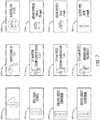
- FIG. 2 depicts example graphical interface elements for communicating intent of an autonomous vehicle according to example embodiments of the present invention.
- graphics 202, 204, 206, 208, 210, 212, 214, 216, 218, 220, 222, and 224 include elements that distill or summarize complex vehicle intent information such that it is easily understandable by a passenger.
- the one or more elements of a graphic indicating intent can include elements depicting an event associated with the intent.
- graphic 202 can depict an intent of autonomous vehicle 10 to decelerate in response to a red traffic signal.
- graphic 204 can depict an intent of autonomous vehicle 10 to remain stopped for a red traffic signal; graphic 204 can depict an intent of autonomous vehicle 10 to maintain its current velocity in response to a yellow traffic signal; graphic 208 can depict an intent of autonomous vehicle 10 to maintain its current velocity in response to a green traffic signal; graphics 210 and 212 can depict an intent of autonomous vehicle 10 to perform a left-hand turn; graphics 214 and 216 can depict an intent of autonomous vehicle 10 to perform a right-hand turn; graphic 218 can depict an intent of autonomous vehicle 10 to remain stopped for two other vehicles; graphic 220 can depict an intent of autonomous vehicle 10 to remain stopped or decelerate for another vehicle; graphic 222 can depict an intent of autonomous vehicle 10 to remain stopped or decelerate for a cyclist; and graphic 224 can depict an intent of autonomous vehicle 10 to remain stopped or decelerate for a pedestrian.
- the one or more elements of a graphic indicating intent can include elements that provide contextual information associated with the intent and/or associated event.
- graphics 210, 212, and/or 214 can indicate a time until the turn is completed;
- graphic 212 can indicate a margin between autonomous vehicle 10 and an approaching vehicle;
- graphics 214 and/or 216 can indicate a velocity and/or acceleration status of an approaching vehicle;
- graphics 220, 222, and/or 224 can indicate a distance to and/or velocity of another vehicle, a cyclist, and/or a pedestrian, respectively.
- human machine interface device 150 can be configured to generate a graphical interface that includes a map depicting the current location of autonomous vehicle 10.
- the graphical interface can include a graphic overlay on the map indicating an intent of autonomous vehicle 10.
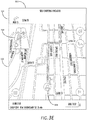
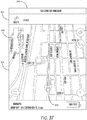
- FIGs. 3A-G depict example graphical interfaces for communicating intent of an autonomous vehicle according to example embodiments of the present invention.
- graphical interface 302 can include portion 304 and map 306.
- Portion 304 can indicate a status of autonomous vehicle 10 on a planned route (e.g., a distance to the next turn on the planned route, or the like).
- Map 306 can include element 308, which can depict the current location of autonomous vehicle 10 (e.g., within its surrounding environment).
- human machine interface device 150 can be configured to generate a graphical interface that includes a graphic overlay on the map indicating an intent of autonomous vehicle 10.
- graphical interface 310 can include graphic overlay 312 indicating an intent of autonomous vehicle 10 to remain stopped and/or decelerate in response to a detected cyclist.
- FIG. 3B graphical interface 310 can include graphic overlay 312 indicating an intent of autonomous vehicle 10 to remain stopped and/or decelerate in response to a detected cyclist.
- graphical interface 314 can include graphic overlay 316 indicating an intent of autonomous vehicle 10 to remain stopped and/or decelerate in response to a red traffic signal; referring to FIG. 3D , graphical interface 318 can include graphic overlay 320 indicating an intent of autonomous vehicle 10 to execute a right-hand turn; referring to FIG. 3E , graphical interface 322 can include graphic overlay 324 indicating an intent of autonomous vehicle 10 to abort a planned lane change (e.g., in response to the presence of another vehicle in the lane); referring to FIG.
- graphical interface 326 can include graphic overlay 328 indicating an intent of autonomous vehicle 10 to execute a lane change (e.g., in order to pass an approaching vehicle in its current lane); and referring to FIG. 3G , graphical interface 330 can include graphic overlay 332 indicating an intent of autonomous vehicle 10 to execute a lane change.
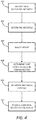
- FIG. 4 depicts a flow chart diagram of an example method to communicate intent of an autonomous vehicle according to example embodiments of the present invention.
- data indicating one or more intents of an autonomous vehicle can be received.
- human machine interface device 150 can receive data indicating one or more intents of autonomous vehicle 10 from autonomy computing system 102.
- one or more intents of the autonomous vehicle can be determined.
- human machine interface device 150 can determine, based on the data received from autonomy computing system 102, one or more intents of autonomous vehicle 10.
- an intent of the autonomous vehicle can be selected.
- human machine interface device 150 can select, from amongst the determined intent(s) (e.g., based on a predetermined hierarchy), an intent to communicate to a passenger of autonomous vehicle 10.
- a determination that the intent should be communicated to a passenger of the autonomous vehicle can be made.
- human machine interface device 150 can determine to communicate the selected intent of autonomous vehicle 10 to a passenger of autonomous vehicle 10 (e.g., based on a determination that a frequency in the change of the intent meets a predetermined threshold, a determination that a degree of confidence of an event associated with the intent meets a predetermined threshold, or the like).
- a graphical interface indicating the intent of the autonomous vehicle can be generated.
- human machine interface device 150 can generate a graphical interface similar to graphical interfaces 310, 314, 318, 322, 326, and/or 330.
- the graphical interface indicating the intent of the autonomous vehicle can be provided for display for viewing by the passenger of the autonomous vehicle.
- human machine interface device 150 can provide a graphical interface similar to graphical interfaces 310, 314, 318, 322, 326, and/or 330 (e.g., via display 158) for viewing by a passenger of autonomous vehicle 10.
- the technology discussed herein makes reference to servers, databases, software applications, and other computer-based systems, as well as actions taken and information sent to and from such systems.
- the inherent flexibility of computer-based systems allows for a great variety of possible configurations, combinations, and divisions of tasks and functionality between and among components.
- processes discussed herein can be implemented using a single device or component or multiple devices or components working in combination.
- Databases and applications can be implemented on a single system or distributed across multiple systems. Distributed components can operate sequentially or in parallel.
Landscapes
- Engineering & Computer Science (AREA)
- Automation & Control Theory (AREA)
- Mechanical Engineering (AREA)
- Transportation (AREA)
- Radar, Positioning & Navigation (AREA)
- Remote Sensing (AREA)
- Human Computer Interaction (AREA)
- Physics & Mathematics (AREA)
- General Physics & Mathematics (AREA)
- Aviation & Aerospace Engineering (AREA)
- Chemical & Material Sciences (AREA)
- Combustion & Propulsion (AREA)
- Traffic Control Systems (AREA)
- Business, Economics & Management (AREA)
- Game Theory and Decision Science (AREA)
- Medical Informatics (AREA)
- Evolutionary Computation (AREA)
- Artificial Intelligence (AREA)
- Health & Medical Sciences (AREA)
- User Interface Of Digital Computer (AREA)
- Control Of Driving Devices And Active Controlling Of Vehicle (AREA)
Claims (10)
- Computerimplementiertes Verfahren, um Vorhaben eines autonomen Fahrzeugs mitzuteilen, wobei das Verfahren umfasst:durch ein Computersystem, das eine oder mehrere Computervorrichtungen umfasst, und von einem autonomen Computersystem eines autonomen Fahrzeugs erfolgendes Empfangen (402) von Daten, die ein Vorhaben des autonomen Fahrzeugs, ein Fahrmanöver durchzuführen, angeben;Bestimmen (408), durch das Computersystem und mindestens teilweise auf der Grundlage der das Vorhaben angebenden Daten, dass das Vorhaben des autonomen Fahrzeugs einem Fahrgast des autonomen Fahrzeugs mitgeteilt werden sollte;worin das Bestimmen, dass das Vorhaben des autonomen Fahrzeugs dem Fahrgast mitgeteilt werden sollte, das Bestimmen umfasst, dass ein Vertrauensgrad eines Ereignisses, das mit dem Vorhaben assoziiert ist, einen vorbestimmten Schwellenwert erfüllt; undals Reaktion auf das Bestimmen, dass das Vorhaben des autonomen Fahrzeugs dem Fahrgast mitgeteilt werden sollte:Erzeugen (410), durch das Computersystem, einer grafischen Schnittstelle (302, 310, 314, 318, 322, 326, 330), die das Vorhaben des autonomen Fahrzeugs angibt,; undzur Anzeige Bereitstellen (412) der grafischen Schnittstelle (302, 310, 314, 318, 322, 326, 330) durch das Computersystem und zum Betrachten durch den Fahrgast.
- Computerimplementiertes Verfahren nach Anspruch 1, worin das Vorhaben mindestens eines von Folgendem umfasst: Wechseln der Spur, Abbremsen für ein Verkehrssignal, Abbremsen für ein sich näherndes Fahrzeug, Abbremsen für einen Fußgänger oder Abbremsen für einen Radfahrer.
- Computerimplementiertes Verfahren nach Anspruch 1, ferner umfassend:Bestimmen (404) einer Vielzahl von Vorhaben des autonomen Fahrzeugs durch das Computersystem und mindestens teilweise auf der Grundlage der das Vorhaben angebenden Daten; undAuswählen (406) des Vorhabens des autonomen Fahrzeugs aus der Vielzahl von Vorhaben durch das Computersystem und mindestens teilweise auf der Grundlage einer vorbestimmten Hierarchie.
- Computerimplementiertes Verfahren nach Anspruch 3, worin:die Vielzahl von Vorhaben angibt, dass das autonome Fahrzeug für mindestens ein erstes Ereignis und ein zweites Ereignis angehalten hat oder anhält; unddas Auswählen (406) des Vorhabens des autonomen Fahrzeugsdas Bestimmen einer Position des ersten Ereignisses in Bezug auf das zweite Ereignis in der vorbestimmten Hierarchie umfasst.
- Computerimplementiertes Verfahren nach Anspruch 1, worin das Bestimmen (408), dass das Vorhaben des autonomen Fahrzeugs dem Fahrgast mitgeteilt werden sollte, das Bestimmen umfasst, dass eine Änderungshäufigkeit des Vorhabens einen vorbestimmten Schwellenwert erfüllt.
- Computerimplementiertes Verfahren nach Anspruch 1, worin das Erzeugen (410) der grafischen Schnittstelle (302, 310, 314, 318, 322, 326, 330) das Erzeugen einer Schnittstelle umfasst, die Folgendes umfasst: eine Karte (306), die einen aktuellen Standort des autonomen Fahrzeugs darstellt; und ein grafisches Overlay (312, 316, 320, 324, 328, 332) auf der Karte (306), welches das Vorhaben des autonomen Fahrzeugs angibt.
- Computerimplementiertes Verfahren nach Anspruch 1, worin (410) das Erzeugen der grafischen Schnittstelle (302, 310, 314, 318, 322, 326, 330) das Erzeugen einer Schnittstelle umfasst, die ein oder mehrere Elemente umfasst, die ein Ereignis darstellen, das mit dem Vorhaben des autonomen Fahrzeugs assoziiert ist.
- Computerimplementiertes Verfahren nach Anspruch 1, ferner umfassend das Erzeugen eines hörbaren Signals für den Fahrgast als Reaktion auf das Bestimmen, dass das Vorhaben des autonomen Fahrzeugs dem Fahrgast mitgeteilt werden sollte.
- Computersystem, umfassend:einen oder mehrere Prozessoren; undein oder mehrere nichtflüchtige computerlesbare Medien, die gemeinsam Anweisungen speichern, die, wenn sie durch den einen oder die mehreren Prozessoren ausgeführt werden, das Computersystem veranlassen, ein Verfahren nach einem der vorhergehenden Ansprüche durchzuführen.
- Ein oder mehrere nichtflüchtige computerlesbare Medien, die gemeinsam Anweisungen speichern, die, wenn sie durch einen oder mehrere Prozessoren ausgeführt werden, ein Computersystem veranlassen, ein Verfahren nach einem der Ansprüche 1 bis 8 durchzuführen.
Priority Applications (1)
| Application Number | Priority Date | Filing Date | Title |
|---|---|---|---|
| EP21193381.7A EP3932769B1 (de) | 2017-08-28 | 2018-08-20 | Systeme und verfahren zur kommunikation einer absicht eines autonomen fahrzeugs |
Applications Claiming Priority (3)
| Application Number | Priority Date | Filing Date | Title |
|---|---|---|---|
| US201762550796P | 2017-08-28 | 2017-08-28 | |
| US15/700,211 US10429846B2 (en) | 2017-08-28 | 2017-09-11 | Systems and methods for communicating intent of an autonomous vehicle |
| PCT/US2018/047044 WO2019046024A1 (en) | 2017-08-28 | 2018-08-20 | SYSTEMS AND METHODS FOR COMMUNICATING INTENT OF AN AUTONOMOUS VEHICLE |
Related Child Applications (2)
| Application Number | Title | Priority Date | Filing Date |
|---|---|---|---|
| EP21193381.7A Division-Into EP3932769B1 (de) | 2017-08-28 | 2018-08-20 | Systeme und verfahren zur kommunikation einer absicht eines autonomen fahrzeugs |
| EP21193381.7A Division EP3932769B1 (de) | 2017-08-28 | 2018-08-20 | Systeme und verfahren zur kommunikation einer absicht eines autonomen fahrzeugs |
Publications (2)
| Publication Number | Publication Date |
|---|---|
| EP3676149A1 EP3676149A1 (de) | 2020-07-08 |
| EP3676149B1 true EP3676149B1 (de) | 2021-10-06 |
Family
ID=65436212
Family Applications (2)
| Application Number | Title | Priority Date | Filing Date |
|---|---|---|---|
| EP18773296.1A Active EP3676149B1 (de) | 2017-08-28 | 2018-08-20 | Systeme und verfahren zur kommunikationsabsicht eines autonomen fahrzeugs |
| EP21193381.7A Active EP3932769B1 (de) | 2017-08-28 | 2018-08-20 | Systeme und verfahren zur kommunikation einer absicht eines autonomen fahrzeugs |
Family Applications After (1)
| Application Number | Title | Priority Date | Filing Date |
|---|---|---|---|
| EP21193381.7A Active EP3932769B1 (de) | 2017-08-28 | 2018-08-20 | Systeme und verfahren zur kommunikation einer absicht eines autonomen fahrzeugs |
Country Status (3)
| Country | Link |
|---|---|
| US (3) | US10429846B2 (de) |
| EP (2) | EP3676149B1 (de) |
| WO (1) | WO2019046024A1 (de) |
Families Citing this family (13)
| Publication number | Priority date | Publication date | Assignee | Title |
|---|---|---|---|---|
| US11010615B2 (en) * | 2016-11-14 | 2021-05-18 | Lyft, Inc. | Rendering a situational-awareness view in an autonomous-vehicle environment |
| US10576984B2 (en) * | 2017-07-06 | 2020-03-03 | Toyota Research Institute, Inc. | Second stop position for intersection turn |
| US10429846B2 (en) * | 2017-08-28 | 2019-10-01 | Uber Technologies, Inc. | Systems and methods for communicating intent of an autonomous vehicle |
| DE102017221619A1 (de) * | 2017-11-30 | 2019-06-06 | Volkswagen Aktiengesellschaft | Verfahren und Vorrichtung zum Anzeigen einer Durchführbarkeit eines zumindest teilweise automatisch durchführbaren Fahrmanövers in einem Fahrzeug |
| US11474519B2 (en) * | 2018-02-26 | 2022-10-18 | Nvidia Corporation | Systems and methods for computer-assisted shuttles, buses, robo-taxis, ride-sharing and on-demand vehicles with situational awareness |
| JP2019156180A (ja) * | 2018-03-13 | 2019-09-19 | 本田技研工業株式会社 | 車両制御装置、車両制御方法、およびプログラム |
| JP7073880B2 (ja) * | 2018-04-19 | 2022-05-24 | トヨタ自動車株式会社 | 進路決定装置 |
| JP7155975B2 (ja) * | 2018-12-10 | 2022-10-19 | トヨタ自動車株式会社 | 車両制御装置 |
| US11794766B2 (en) * | 2021-10-14 | 2023-10-24 | Huawei Technologies Co., Ltd. | Systems and methods for prediction-based driver assistance |
| DE102021133174A1 (de) * | 2021-12-15 | 2023-06-15 | Bayerische Motoren Werke Aktiengesellschaft | Verfahren zur animierten darstellung einer objektwahrnehmung und einer fahrabsicht eines assistenzsystems eines fahrzeugs, assistenzsystem, computerprogramm sowie computerlesbares (speicher)medium |
| US12037012B2 (en) * | 2022-10-14 | 2024-07-16 | Motional Ad Llc | Ensemble-based vehicle motion planner |
| TW202430574A (zh) | 2022-11-30 | 2024-08-01 | 美商積分分子股份有限公司 | 針對密連蛋白6之抗體,包括其雙特異性格式 |
| CN116691721B (zh) * | 2023-06-20 | 2025-02-28 | 杭州电子科技大学 | 一种基于交互界面情景元素呈现优化来提升驾驶信任的系统及方法 |
Family Cites Families (86)
| Publication number | Priority date | Publication date | Assignee | Title |
|---|---|---|---|---|
| JP3455153B2 (ja) * | 2000-02-16 | 2003-10-14 | 松下電器産業株式会社 | 交差点における車線誘導案内表示方法およびそのナビゲーション装置並びに記録媒体 |
| DE10037573B4 (de) * | 2000-08-02 | 2005-05-19 | Robert Bosch Gmbh | Navigationsverfahren in einem Kraftfahrzeug |
| EP1302356B1 (de) * | 2001-10-15 | 2006-08-02 | Ford Global Technologies, LLC. | Verfahren und Einrichtung zur Steuerung eines Fahrzeuges |
| KR100811232B1 (ko) * | 2003-07-18 | 2008-03-07 | 엘지전자 주식회사 | 턴 바이 턴 네비게이션 시스템 및 차기 안내방법 |
| US7649444B1 (en) | 2005-12-13 | 2010-01-19 | Nvidia Corporation | Positional audio cues for an vehicle indicator system |
| US20090069977A1 (en) * | 2007-09-12 | 2009-03-12 | Gm Global Technology Operations, Inc. | Apparatus and methods for automatically activating a motor vehicle turn signal lamp |
| US8160811B2 (en) * | 2008-06-26 | 2012-04-17 | Toyota Motor Engineering & Manufacturing North America, Inc. | Method and system to estimate driving risk based on a hierarchical index of driving |
| US8103449B2 (en) * | 2008-10-24 | 2012-01-24 | GM Global Technology Operations LLC | Configurable vehicular time to stop warning system |
| US8773281B2 (en) * | 2009-09-15 | 2014-07-08 | Ohanes D. Ghazarian | Intersection vehicle collision avoidance system |
| US8253589B2 (en) * | 2009-10-20 | 2012-08-28 | GM Global Technology Operations LLC | Vehicle to entity communication |
| US10395125B2 (en) | 2016-10-06 | 2019-08-27 | Smr Patents S.A.R.L. | Object detection and classification with fourier fans |
| JP5626578B2 (ja) * | 2010-12-02 | 2014-11-19 | アイシン・エィ・ダブリュ株式会社 | 走行支援システム、走行支援プログラム、及び走行支援方法 |
| JP5408237B2 (ja) * | 2010-12-28 | 2014-02-05 | 株式会社デンソー | 車載障害物情報通知装置 |
| US8924150B2 (en) * | 2010-12-29 | 2014-12-30 | GM Global Technology Operations LLC | Vehicle operation and control system for autonomous vehicles on full windshield display |
| DE102011121948A1 (de) | 2011-12-22 | 2013-06-27 | Gm Global Technology Operations, Llc | Vorausschau auf Aktionen eines autonomen Fahrsystems |
| WO2013136779A1 (ja) * | 2012-03-16 | 2013-09-19 | 日産自動車株式会社 | 不慮予測感度判定装置 |
| WO2013145274A1 (ja) * | 2012-03-30 | 2013-10-03 | トヨタ自動車株式会社 | 運転支援装置 |
| US8676500B1 (en) * | 2012-08-30 | 2014-03-18 | Mitac International Corp. | Method of providing intersection assistance and related portable electronic device |
| US9242647B2 (en) | 2013-02-06 | 2016-01-26 | GM Global Technology Operations LLC | Display systems and methods for autonomous vehicles |
| US8676431B1 (en) * | 2013-03-12 | 2014-03-18 | Google Inc. | User interface for displaying object-based indications in an autonomous driving system |
| US9514650B2 (en) * | 2013-03-13 | 2016-12-06 | Honda Motor Co., Ltd. | System and method for warning a driver of pedestrians and other obstacles when turning |
| US9047703B2 (en) * | 2013-03-13 | 2015-06-02 | Honda Motor Co., Ltd. | Augmented reality heads up display (HUD) for left turn safety cues |
| US9200915B2 (en) * | 2013-06-08 | 2015-12-01 | Apple Inc. | Mapping application with several user interfaces |
| US9812007B2 (en) * | 2013-03-28 | 2017-11-07 | Honda Motor Co., Ltd. | Map generation system, map generation device, map generation method, and program |
| WO2014157401A1 (ja) * | 2013-03-28 | 2014-10-02 | 本田技研工業株式会社 | 運転評価システム、電子装置、運転評価方法およびプログラム |
| WO2014157322A1 (ja) * | 2013-03-28 | 2014-10-02 | 本田技研工業株式会社 | 報知システム、電子装置、報知方法、およびプログラム |
| FR3005924B1 (fr) * | 2013-05-27 | 2016-10-21 | Renault Sa | Procede de fonctionnement d'un vehicule en mode manuel et en mode autonome |
| EP3217321B1 (de) * | 2013-07-31 | 2019-08-28 | Honda Motor Co., Ltd. | Zeicheninformationsausgabevorrichtung |
| US20150066284A1 (en) * | 2013-09-05 | 2015-03-05 | Ford Global Technologies, Llc | Autonomous vehicle control for impaired driver |
| KR101901962B1 (ko) * | 2013-11-08 | 2018-11-07 | 한국전자통신연구원 | 내비게이션을 이용한 자율 주행 제어 장치 및 그 방법 |
| US9656673B2 (en) * | 2013-12-04 | 2017-05-23 | Mobileye Vision Technologies Ltd. | Systems and methods for navigating a vehicle to a default lane |
| US9406177B2 (en) | 2013-12-20 | 2016-08-02 | Ford Global Technologies, Llc | Fault handling in an autonomous vehicle |
| JP6180968B2 (ja) * | 2014-03-10 | 2017-08-16 | 日立オートモティブシステムズ株式会社 | 車両制御装置 |
| JP6267558B2 (ja) * | 2014-03-25 | 2018-01-24 | 株式会社デンソーテン | 車両用装置及び車両制御方法 |
| US9522676B2 (en) * | 2014-04-30 | 2016-12-20 | Denso International America, Inc. | Situation awareness assistant for vehicle control |
| US9720418B2 (en) | 2014-05-27 | 2017-08-01 | Here Global B.V. | Autonomous vehicle monitoring and control |
| JP6330537B2 (ja) * | 2014-07-14 | 2018-05-30 | 株式会社デンソー | 運転支援装置 |
| WO2016027351A1 (ja) * | 2014-08-21 | 2016-02-25 | 日産自動車株式会社 | 運転支援装置及び運転支援方法 |
| WO2016070193A1 (en) | 2014-10-31 | 2016-05-06 | Nodal Inc. | Systems, apparatus, and methods for improving safety related to movable/moving objects |
| US9959624B2 (en) * | 2014-12-22 | 2018-05-01 | Volkswagen Ag | Early detection of turning condition identification using perception technology |
| US10589751B2 (en) | 2014-12-31 | 2020-03-17 | Robert Bosch Gmbh | Autonomous maneuver notification for autonomous vehicles |
| US9740945B2 (en) * | 2015-01-14 | 2017-08-22 | Magna Electronics Inc. | Driver assistance system for vehicle |
| US9649979B2 (en) | 2015-01-29 | 2017-05-16 | Toyota Motor Engineering & Manufacturing North America, Inc. | Autonomous vehicle operation in view-obstructed environments |
| JP6470059B2 (ja) | 2015-01-30 | 2019-02-13 | 株式会社デンソーテン | 情報提供方法、情報提供装置、情報提供システムおよび車両 |
| KR20170117098A (ko) | 2015-02-10 | 2017-10-20 | 라이더 시스템즈 엘엘씨 | 자동차에 대한 근접성 인식 시스템 |
| JP6598019B2 (ja) * | 2015-04-21 | 2019-10-30 | パナソニックIpマネジメント株式会社 | 運転支援方法およびそれを利用した運転支援装置、運転制御装置、車両、運転支援プログラム |
| CN107531245B (zh) * | 2015-04-21 | 2020-01-24 | 松下知识产权经营株式会社 | 信息处理系统、信息处理方法、以及程序 |
| US9459623B1 (en) * | 2015-04-29 | 2016-10-04 | Volkswagen Ag | Stop sign intersection decision system |
| US9669677B2 (en) | 2015-05-28 | 2017-06-06 | Ford Global Technologies, Llc | Vehicle active suspension system and method of control |
| US9637120B2 (en) * | 2015-06-24 | 2017-05-02 | Delphi Technologies, Inc. | Cognitive driver assist with variable assistance for automated vehicles |
| US10179590B2 (en) * | 2015-09-10 | 2019-01-15 | Ford Global Technologies, Llc | Park out assist |
| US10053001B1 (en) * | 2015-09-24 | 2018-08-21 | Apple Inc. | System and method for visual communication of an operational status |
| US9950619B1 (en) * | 2015-09-30 | 2018-04-24 | Waymo Llc | Occupant facing vehicle display |
| US10509121B2 (en) | 2016-03-04 | 2019-12-17 | Uatc, Llc | Dynamic range setting for vehicular radars |
| US10807603B2 (en) * | 2016-04-05 | 2020-10-20 | Ford Global Technologies, Llc | Method and apparatus for predictive driver assistance |
| US10032453B2 (en) | 2016-05-06 | 2018-07-24 | GM Global Technology Operations LLC | System for providing occupant-specific acoustic functions in a vehicle of transportation |
| US10317900B2 (en) | 2016-05-13 | 2019-06-11 | GM Global Technology Operations LLC | Controlling autonomous-vehicle functions and output based on occupant position and attention |
| US10011285B2 (en) * | 2016-05-23 | 2018-07-03 | Toyota Motor Engineering & Manufacturing North America, Inc. | Device, system, and method for pictorial language for autonomous vehicle |
| US10183679B2 (en) | 2016-06-28 | 2019-01-22 | Volkswagen Aktiengesellschaft | Apparatus, system and method for personalized settings for driver assistance systems |
| WO2018007995A1 (en) * | 2016-07-08 | 2018-01-11 | Magna Electronics Inc. | 2d mimo radar system for vehicle |
| US9956910B2 (en) | 2016-07-18 | 2018-05-01 | Toyota Motor Engineering & Manufacturing North America, Inc. | Audible notification systems and methods for autonomous vehicles |
| US10471904B2 (en) | 2016-08-08 | 2019-11-12 | Toyota Motor Engineering & Manufacturing North America, Inc. | Systems and methods for adjusting the position of sensors of an automated vehicle |
| US10179586B2 (en) * | 2016-08-11 | 2019-01-15 | Toyota Motor Engineering & Manufacturing North America, Inc. | Using information obtained from fleet of vehicles for informational display and control of an autonomous vehicle |
| JP6412070B2 (ja) * | 2016-08-12 | 2018-10-24 | トヨタ自動車株式会社 | 運転支援装置及び運転支援方法 |
| US10643391B2 (en) * | 2016-09-23 | 2020-05-05 | Apple Inc. | Immersive virtual display |
| US10496090B2 (en) | 2016-09-29 | 2019-12-03 | Magna Electronics Inc. | Handover procedure for driver of autonomous vehicle |
| JP6731619B2 (ja) * | 2016-10-26 | 2020-07-29 | パナソニックIpマネジメント株式会社 | 情報処理システム、情報処理方法、およびプログラム |
| US9811086B1 (en) * | 2016-12-14 | 2017-11-07 | Uber Technologies, Inc. | Vehicle management system |
| JP6895634B2 (ja) * | 2016-12-16 | 2021-06-30 | パナソニックIpマネジメント株式会社 | 情報処理システム、情報処理方法、およびプログラム |
| US10261513B2 (en) * | 2016-12-19 | 2019-04-16 | drive.ai Inc. | Methods for communicating state, intent, and context of an autonomous vehicle |
| US10150386B2 (en) * | 2017-02-27 | 2018-12-11 | Nissan North America, Inc. | Autonomous vehicle seat positioning system |
| US10134279B1 (en) * | 2017-05-05 | 2018-11-20 | Toyota Motor Engineering & Manufacturing North America, Inc. | Systems and methods for visualizing potential risks |
| US10346888B2 (en) * | 2017-06-16 | 2019-07-09 | Uber Technologies, Inc. | Systems and methods to obtain passenger feedback in response to autonomous vehicle driving events |
| US10493622B2 (en) * | 2017-07-14 | 2019-12-03 | Uatc, Llc | Systems and methods for communicating future vehicle actions to be performed by an autonomous vehicle |
| US10429846B2 (en) | 2017-08-28 | 2019-10-01 | Uber Technologies, Inc. | Systems and methods for communicating intent of an autonomous vehicle |
| US10629080B2 (en) * | 2017-08-31 | 2020-04-21 | Uatc Llc | Autonomous vehicles featuring vehicle intention system |
| JP7062898B2 (ja) * | 2017-09-07 | 2022-05-09 | 株式会社デンソー | 衝突回避装置 |
| US10648832B2 (en) * | 2017-09-27 | 2020-05-12 | Toyota Research Institute, Inc. | System and method for in-vehicle display with integrated object detection |
| KR102540919B1 (ko) * | 2018-02-20 | 2023-06-07 | 현대자동차주식회사 | 차량의 주행 제어 장치 및 방법 |
| KR102139590B1 (ko) * | 2018-02-27 | 2020-07-30 | 주식회사 만도 | 교차로에서의 차량 자동 긴급 제동 시스템 및 방법 |
| EP3779929A4 (de) * | 2018-03-29 | 2021-05-05 | Panasonic Intellectual Property Management Co., Ltd. | Steuerungsvorrichtung und kartenerzeugungsverfahren |
| DE102018209191A1 (de) * | 2018-06-08 | 2019-12-12 | Volkswagen Aktiengesellschaft | Verfahren und System zum Betreiben einer automatischen Fahrfunktion in einem Fahrzeug |
| US10488215B1 (en) * | 2018-10-26 | 2019-11-26 | Phiar Technologies, Inc. | Augmented reality interface for navigation assistance |
| US11472440B2 (en) * | 2019-09-27 | 2022-10-18 | Intel Corporation | Methods and apparatus to provide accident avoidance information to passengers of autonomous vehicles |
| US12444305B2 (en) * | 2020-01-29 | 2025-10-14 | NetraDyne, Inc. | Combination alerts |
| JP2023068892A (ja) * | 2021-11-04 | 2023-05-18 | 本田技研工業株式会社 | 運転支援装置 |
-
2017
- 2017-09-11 US US15/700,211 patent/US10429846B2/en active Active
-
2018
- 2018-08-20 EP EP18773296.1A patent/EP3676149B1/de active Active
- 2018-08-20 EP EP21193381.7A patent/EP3932769B1/de active Active
- 2018-08-20 WO PCT/US2018/047044 patent/WO2019046024A1/en not_active Ceased
-
2019
- 2019-09-27 US US16/585,497 patent/US11022973B2/en active Active
-
2021
- 2021-05-28 US US17/333,934 patent/US12013701B2/en active Active
Also Published As
| Publication number | Publication date |
|---|---|
| US10429846B2 (en) | 2019-10-01 |
| US20190064824A1 (en) | 2019-02-28 |
| US12013701B2 (en) | 2024-06-18 |
| US20210356966A1 (en) | 2021-11-18 |
| EP3932769A1 (de) | 2022-01-05 |
| US20200026298A1 (en) | 2020-01-23 |
| EP3932769B1 (de) | 2024-09-18 |
| WO2019046024A1 (en) | 2019-03-07 |
| US11022973B2 (en) | 2021-06-01 |
| EP3676149A1 (de) | 2020-07-08 |
Similar Documents
| Publication | Publication Date | Title |
|---|---|---|
| EP3676149B1 (de) | Systeme und verfahren zur kommunikationsabsicht eines autonomen fahrzeugs | |
| US11953911B1 (en) | User interface for displaying object-based indications in an autonomous driving system | |
| US20230418307A1 (en) | Autonomous Vehicle Collision Mitigation Systems and Methods | |
| US11807273B2 (en) | Methods and apparatus to provide accident avoidance information to passengers of autonomous vehicles | |
| EP3704684B1 (de) | Objektbewegungsvorhersage sowie fahrzeugsteuerung für autonome fahrzeuge | |
| US11507090B2 (en) | Systems and methods for vehicle motion control with interactive object annotation | |
| US20200402323A1 (en) | Intervention in operation of a vehicle having autonomous driving capabilities | |
| US10514692B2 (en) | Intervention in operation of a vehicle having autonomous driving capabilities | |
| US10705521B2 (en) | Autonomous driving interface | |
| US20190258246A1 (en) | Intervention in operation of a vehicle having autonomous driving capabilities | |
| US20210191394A1 (en) | Systems and methods for presenting curated autonomy-system information of a vehicle | |
| JP6856085B2 (ja) | 車両用表示制御装置、方法及びプログラム | |
| KR102214887B1 (ko) | 네비게이션 인터페이스 백그라운드를 위한 안전성 시각화 | |
| JP2019026261A (ja) | 衝突緩和システムにおけるマルチモーダル切り替え | |
| CN112154492A (zh) | 预警和碰撞避免 | |
| EP2915718A1 (de) | Vorrichtung und Verfahren zur kontinuierlichen Herstellung einer Grenze für autonome Antriebsverfügbarkeit und Kraftfahrzeug mit einer solchen Vorrichtung | |
| US20180364703A1 (en) | Intervention in operation of a vehicle having autonomous driving capabilities | |
| CN104890595A (zh) | 在自动驾驶车辆中预测自动驾驶可用时间的设备和方法 | |
| US20150057835A1 (en) | Driver assistance system, motor vehicle having a driver assistance system, and a method for operating a driver assistance system | |
| CN104787042A (zh) | 车内路线验证 | |
| US20180364702A1 (en) | Intervention in operation of a vehicle having autonomous driving capabilities | |
| US9612596B2 (en) | Hands-off steering wheel governed by pedestrian detection | |
| US20220180738A1 (en) | Risk assessment for temporary zones | |
| CN115729229B (zh) | 用于运载工具的方法和运载工具系统 | |
| CN105843225B (zh) | 一种数据处理方法及设备 |
Legal Events
| Date | Code | Title | Description |
|---|---|---|---|
| STAA | Information on the status of an ep patent application or granted ep patent |
Free format text: STATUS: UNKNOWN |
|
| STAA | Information on the status of an ep patent application or granted ep patent |
Free format text: STATUS: THE INTERNATIONAL PUBLICATION HAS BEEN MADE |
|
| PUAI | Public reference made under article 153(3) epc to a published international application that has entered the european phase |
Free format text: ORIGINAL CODE: 0009012 |
|
| STAA | Information on the status of an ep patent application or granted ep patent |
Free format text: STATUS: REQUEST FOR EXAMINATION WAS MADE |
|
| 17P | Request for examination filed |
Effective date: 20200228 |
|
| AK | Designated contracting states |
Kind code of ref document: A1 Designated state(s): AL AT BE BG CH CY CZ DE DK EE ES FI FR GB GR HR HU IE IS IT LI LT LU LV MC MK MT NL NO PL PT RO RS SE SI SK SM TR |
|
| AX | Request for extension of the european patent |
Extension state: BA ME |
|
| DAV | Request for validation of the european patent (deleted) | ||
| DAX | Request for extension of the european patent (deleted) | ||
| RAP1 | Party data changed (applicant data changed or rights of an application transferred) |
Owner name: UBER TECHNOLOGIES, INC. |
|
| GRAP | Despatch of communication of intention to grant a patent |
Free format text: ORIGINAL CODE: EPIDOSNIGR1 |
|
| STAA | Information on the status of an ep patent application or granted ep patent |
Free format text: STATUS: GRANT OF PATENT IS INTENDED |
|
| INTG | Intention to grant announced |
Effective date: 20210416 |
|
| GRAS | Grant fee paid |
Free format text: ORIGINAL CODE: EPIDOSNIGR3 |
|
| GRAA | (expected) grant |
Free format text: ORIGINAL CODE: 0009210 |
|
| STAA | Information on the status of an ep patent application or granted ep patent |
Free format text: STATUS: THE PATENT HAS BEEN GRANTED |
|
| AK | Designated contracting states |
Kind code of ref document: B1 Designated state(s): AL AT BE BG CH CY CZ DE DK EE ES FI FR GB GR HR HU IE IS IT LI LT LU LV MC MK MT NL NO PL PT RO RS SE SI SK SM TR |
|
| REG | Reference to a national code |
Ref country code: GB Ref legal event code: FG4D |
|
| REG | Reference to a national code |
Ref country code: CH Ref legal event code: EP Ref country code: AT Ref legal event code: REF Ref document number: 1435976 Country of ref document: AT Kind code of ref document: T Effective date: 20211015 |
|
| REG | Reference to a national code |
Ref country code: IE Ref legal event code: FG4D |
|
| REG | Reference to a national code |
Ref country code: DE Ref legal event code: R096 Ref document number: 602018024740 Country of ref document: DE |
|
| REG | Reference to a national code |
Ref country code: LT Ref legal event code: MG9D |
|
| REG | Reference to a national code |
Ref country code: NL Ref legal event code: MP Effective date: 20211006 |
|
| REG | Reference to a national code |
Ref country code: AT Ref legal event code: MK05 Ref document number: 1435976 Country of ref document: AT Kind code of ref document: T Effective date: 20211006 |
|
| PG25 | Lapsed in a contracting state [announced via postgrant information from national office to epo] |
Ref country code: RS Free format text: LAPSE BECAUSE OF FAILURE TO SUBMIT A TRANSLATION OF THE DESCRIPTION OR TO PAY THE FEE WITHIN THE PRESCRIBED TIME-LIMIT Effective date: 20211006 Ref country code: LT Free format text: LAPSE BECAUSE OF FAILURE TO SUBMIT A TRANSLATION OF THE DESCRIPTION OR TO PAY THE FEE WITHIN THE PRESCRIBED TIME-LIMIT Effective date: 20211006 Ref country code: FI Free format text: LAPSE BECAUSE OF FAILURE TO SUBMIT A TRANSLATION OF THE DESCRIPTION OR TO PAY THE FEE WITHIN THE PRESCRIBED TIME-LIMIT Effective date: 20211006 Ref country code: BG Free format text: LAPSE BECAUSE OF FAILURE TO SUBMIT A TRANSLATION OF THE DESCRIPTION OR TO PAY THE FEE WITHIN THE PRESCRIBED TIME-LIMIT Effective date: 20220106 Ref country code: AT Free format text: LAPSE BECAUSE OF FAILURE TO SUBMIT A TRANSLATION OF THE DESCRIPTION OR TO PAY THE FEE WITHIN THE PRESCRIBED TIME-LIMIT Effective date: 20211006 |
|
| PG25 | Lapsed in a contracting state [announced via postgrant information from national office to epo] |
Ref country code: IS Free format text: LAPSE BECAUSE OF FAILURE TO SUBMIT A TRANSLATION OF THE DESCRIPTION OR TO PAY THE FEE WITHIN THE PRESCRIBED TIME-LIMIT Effective date: 20220206 Ref country code: SE Free format text: LAPSE BECAUSE OF FAILURE TO SUBMIT A TRANSLATION OF THE DESCRIPTION OR TO PAY THE FEE WITHIN THE PRESCRIBED TIME-LIMIT Effective date: 20211006 Ref country code: PT Free format text: LAPSE BECAUSE OF FAILURE TO SUBMIT A TRANSLATION OF THE DESCRIPTION OR TO PAY THE FEE WITHIN THE PRESCRIBED TIME-LIMIT Effective date: 20220207 Ref country code: PL Free format text: LAPSE BECAUSE OF FAILURE TO SUBMIT A TRANSLATION OF THE DESCRIPTION OR TO PAY THE FEE WITHIN THE PRESCRIBED TIME-LIMIT Effective date: 20211006 Ref country code: NO Free format text: LAPSE BECAUSE OF FAILURE TO SUBMIT A TRANSLATION OF THE DESCRIPTION OR TO PAY THE FEE WITHIN THE PRESCRIBED TIME-LIMIT Effective date: 20220106 Ref country code: NL Free format text: LAPSE BECAUSE OF FAILURE TO SUBMIT A TRANSLATION OF THE DESCRIPTION OR TO PAY THE FEE WITHIN THE PRESCRIBED TIME-LIMIT Effective date: 20211006 Ref country code: LV Free format text: LAPSE BECAUSE OF FAILURE TO SUBMIT A TRANSLATION OF THE DESCRIPTION OR TO PAY THE FEE WITHIN THE PRESCRIBED TIME-LIMIT Effective date: 20211006 Ref country code: HR Free format text: LAPSE BECAUSE OF FAILURE TO SUBMIT A TRANSLATION OF THE DESCRIPTION OR TO PAY THE FEE WITHIN THE PRESCRIBED TIME-LIMIT Effective date: 20211006 Ref country code: GR Free format text: LAPSE BECAUSE OF FAILURE TO SUBMIT A TRANSLATION OF THE DESCRIPTION OR TO PAY THE FEE WITHIN THE PRESCRIBED TIME-LIMIT Effective date: 20220107 Ref country code: ES Free format text: LAPSE BECAUSE OF FAILURE TO SUBMIT A TRANSLATION OF THE DESCRIPTION OR TO PAY THE FEE WITHIN THE PRESCRIBED TIME-LIMIT Effective date: 20211006 |
|
| REG | Reference to a national code |
Ref country code: DE Ref legal event code: R097 Ref document number: 602018024740 Country of ref document: DE |
|
| PG25 | Lapsed in a contracting state [announced via postgrant information from national office to epo] |
Ref country code: SM Free format text: LAPSE BECAUSE OF FAILURE TO SUBMIT A TRANSLATION OF THE DESCRIPTION OR TO PAY THE FEE WITHIN THE PRESCRIBED TIME-LIMIT Effective date: 20211006 Ref country code: SK Free format text: LAPSE BECAUSE OF FAILURE TO SUBMIT A TRANSLATION OF THE DESCRIPTION OR TO PAY THE FEE WITHIN THE PRESCRIBED TIME-LIMIT Effective date: 20211006 Ref country code: RO Free format text: LAPSE BECAUSE OF FAILURE TO SUBMIT A TRANSLATION OF THE DESCRIPTION OR TO PAY THE FEE WITHIN THE PRESCRIBED TIME-LIMIT Effective date: 20211006 Ref country code: EE Free format text: LAPSE BECAUSE OF FAILURE TO SUBMIT A TRANSLATION OF THE DESCRIPTION OR TO PAY THE FEE WITHIN THE PRESCRIBED TIME-LIMIT Effective date: 20211006 Ref country code: DK Free format text: LAPSE BECAUSE OF FAILURE TO SUBMIT A TRANSLATION OF THE DESCRIPTION OR TO PAY THE FEE WITHIN THE PRESCRIBED TIME-LIMIT Effective date: 20211006 Ref country code: CZ Free format text: LAPSE BECAUSE OF FAILURE TO SUBMIT A TRANSLATION OF THE DESCRIPTION OR TO PAY THE FEE WITHIN THE PRESCRIBED TIME-LIMIT Effective date: 20211006 |
|
| PLBE | No opposition filed within time limit |
Free format text: ORIGINAL CODE: 0009261 |
|
| STAA | Information on the status of an ep patent application or granted ep patent |
Free format text: STATUS: NO OPPOSITION FILED WITHIN TIME LIMIT |
|
| 26N | No opposition filed |
Effective date: 20220707 |
|
| PG25 | Lapsed in a contracting state [announced via postgrant information from national office to epo] |
Ref country code: AL Free format text: LAPSE BECAUSE OF FAILURE TO SUBMIT A TRANSLATION OF THE DESCRIPTION OR TO PAY THE FEE WITHIN THE PRESCRIBED TIME-LIMIT Effective date: 20211006 |
|
| PG25 | Lapsed in a contracting state [announced via postgrant information from national office to epo] |
Ref country code: SI Free format text: LAPSE BECAUSE OF FAILURE TO SUBMIT A TRANSLATION OF THE DESCRIPTION OR TO PAY THE FEE WITHIN THE PRESCRIBED TIME-LIMIT Effective date: 20211006 |
|
| PG25 | Lapsed in a contracting state [announced via postgrant information from national office to epo] |
Ref country code: MC Free format text: LAPSE BECAUSE OF FAILURE TO SUBMIT A TRANSLATION OF THE DESCRIPTION OR TO PAY THE FEE WITHIN THE PRESCRIBED TIME-LIMIT Effective date: 20211006 |
|
| REG | Reference to a national code |
Ref country code: CH Ref legal event code: PL |
|
| PG25 | Lapsed in a contracting state [announced via postgrant information from national office to epo] |
Ref country code: LU Free format text: LAPSE BECAUSE OF NON-PAYMENT OF DUE FEES Effective date: 20220820 Ref country code: LI Free format text: LAPSE BECAUSE OF NON-PAYMENT OF DUE FEES Effective date: 20220831 Ref country code: CH Free format text: LAPSE BECAUSE OF NON-PAYMENT OF DUE FEES Effective date: 20220831 |
|
| REG | Reference to a national code |
Ref country code: BE Ref legal event code: MM Effective date: 20220831 |
|
| PG25 | Lapsed in a contracting state [announced via postgrant information from national office to epo] |
Ref country code: IT Free format text: LAPSE BECAUSE OF FAILURE TO SUBMIT A TRANSLATION OF THE DESCRIPTION OR TO PAY THE FEE WITHIN THE PRESCRIBED TIME-LIMIT Effective date: 20211006 |
|
| P01 | Opt-out of the competence of the unified patent court (upc) registered |
Effective date: 20230526 |
|
| PG25 | Lapsed in a contracting state [announced via postgrant information from national office to epo] |
Ref country code: IE Free format text: LAPSE BECAUSE OF NON-PAYMENT OF DUE FEES Effective date: 20220820 Ref country code: FR Free format text: LAPSE BECAUSE OF NON-PAYMENT OF DUE FEES Effective date: 20220831 |
|
| PG25 | Lapsed in a contracting state [announced via postgrant information from national office to epo] |
Ref country code: BE Free format text: LAPSE BECAUSE OF NON-PAYMENT OF DUE FEES Effective date: 20220831 |
|
| PG25 | Lapsed in a contracting state [announced via postgrant information from national office to epo] |
Ref country code: CY Free format text: LAPSE BECAUSE OF FAILURE TO SUBMIT A TRANSLATION OF THE DESCRIPTION OR TO PAY THE FEE WITHIN THE PRESCRIBED TIME-LIMIT Effective date: 20211006 |
|
| PG25 | Lapsed in a contracting state [announced via postgrant information from national office to epo] |
Ref country code: MK Free format text: LAPSE BECAUSE OF FAILURE TO SUBMIT A TRANSLATION OF THE DESCRIPTION OR TO PAY THE FEE WITHIN THE PRESCRIBED TIME-LIMIT Effective date: 20211006 Ref country code: HU Free format text: LAPSE BECAUSE OF FAILURE TO SUBMIT A TRANSLATION OF THE DESCRIPTION OR TO PAY THE FEE WITHIN THE PRESCRIBED TIME-LIMIT; INVALID AB INITIO Effective date: 20180820 |
|
| PG25 | Lapsed in a contracting state [announced via postgrant information from national office to epo] |
Ref country code: MT Free format text: LAPSE BECAUSE OF FAILURE TO SUBMIT A TRANSLATION OF THE DESCRIPTION OR TO PAY THE FEE WITHIN THE PRESCRIBED TIME-LIMIT Effective date: 20211006 |
|
| PGFP | Annual fee paid to national office [announced via postgrant information from national office to epo] |
Ref country code: DE Payment date: 20250827 Year of fee payment: 8 |
|
| PGFP | Annual fee paid to national office [announced via postgrant information from national office to epo] |
Ref country code: GB Payment date: 20250826 Year of fee payment: 8 |
|
| PG25 | Lapsed in a contracting state [announced via postgrant information from national office to epo] |
Ref country code: TR Free format text: LAPSE BECAUSE OF FAILURE TO SUBMIT A TRANSLATION OF THE DESCRIPTION OR TO PAY THE FEE WITHIN THE PRESCRIBED TIME-LIMIT Effective date: 20211006 |