EP3672174B1 - Verfahren und vorrichtung zur bandbreitenplanung - Google Patents
Verfahren und vorrichtung zur bandbreitenplanung Download PDFInfo
- Publication number
- EP3672174B1 EP3672174B1 EP18854178.3A EP18854178A EP3672174B1 EP 3672174 B1 EP3672174 B1 EP 3672174B1 EP 18854178 A EP18854178 A EP 18854178A EP 3672174 B1 EP3672174 B1 EP 3672174B1
- Authority
- EP
- European Patent Office
- Prior art keywords
- bandwidth
- message
- information
- service
- request message
- Prior art date
- Legal status (The legal status is an assumption and is not a legal conclusion. Google has not performed a legal analysis and makes no representation as to the accuracy of the status listed.)
- Active
Links
Images




Classifications
-
- H—ELECTRICITY
- H04—ELECTRIC COMMUNICATION TECHNIQUE
- H04L—TRANSMISSION OF DIGITAL INFORMATION, e.g. TELEGRAPHIC COMMUNICATION
- H04L47/00—Traffic control in data switching networks
- H04L47/70—Admission control; Resource allocation
- H04L47/78—Architectures of resource allocation
- H04L47/781—Centralised allocation of resources
-
- H—ELECTRICITY
- H04—ELECTRIC COMMUNICATION TECHNIQUE
- H04L—TRANSMISSION OF DIGITAL INFORMATION, e.g. TELEGRAPHIC COMMUNICATION
- H04L41/00—Arrangements for maintenance, administration or management of data switching networks, e.g. of packet switching networks
- H04L41/08—Configuration management of networks or network elements
- H04L41/0896—Bandwidth or capacity management, i.e. automatically increasing or decreasing capacities
-
- H—ELECTRICITY
- H04—ELECTRIC COMMUNICATION TECHNIQUE
- H04L—TRANSMISSION OF DIGITAL INFORMATION, e.g. TELEGRAPHIC COMMUNICATION
- H04L47/00—Traffic control in data switching networks
- H04L47/70—Admission control; Resource allocation
- H04L47/82—Miscellaneous aspects
- H04L47/826—Involving periods of time
-
- H—ELECTRICITY
- H04—ELECTRIC COMMUNICATION TECHNIQUE
- H04L—TRANSMISSION OF DIGITAL INFORMATION, e.g. TELEGRAPHIC COMMUNICATION
- H04L69/00—Network arrangements, protocols or services independent of the application payload and not provided for in the other groups of this subclass
- H04L69/18—Multiprotocol handlers, e.g. single devices capable of handling multiple protocols
-
- H—ELECTRICITY
- H04—ELECTRIC COMMUNICATION TECHNIQUE
- H04Q—SELECTING
- H04Q11/00—Selecting arrangements for multiplex systems
- H04Q11/0001—Selecting arrangements for multiplex systems using optical switching
- H04Q11/0062—Network aspects
-
- H—ELECTRICITY
- H04—ELECTRIC COMMUNICATION TECHNIQUE
- H04Q—SELECTING
- H04Q11/00—Selecting arrangements for multiplex systems
- H04Q11/0001—Selecting arrangements for multiplex systems using optical switching
- H04Q11/0062—Network aspects
- H04Q11/0067—Provisions for optical access or distribution networks, e.g. Gigabit Ethernet Passive Optical Network (GE-PON), ATM-based Passive Optical Network (A-PON), PON-Ring
-
- H—ELECTRICITY
- H04—ELECTRIC COMMUNICATION TECHNIQUE
- H04W—WIRELESS COMMUNICATION NETWORKS
- H04W72/00—Local resource management
- H04W72/04—Wireless resource allocation
- H04W72/044—Wireless resource allocation based on the type of the allocated resource
-
- H—ELECTRICITY
- H04—ELECTRIC COMMUNICATION TECHNIQUE
- H04W—WIRELESS COMMUNICATION NETWORKS
- H04W72/00—Local resource management
- H04W72/20—Control channels or signalling for resource management
- H04W72/21—Control channels or signalling for resource management in the uplink direction of a wireless link, i.e. towards the network
-
- H—ELECTRICITY
- H04—ELECTRIC COMMUNICATION TECHNIQUE
- H04Q—SELECTING
- H04Q11/00—Selecting arrangements for multiplex systems
- H04Q11/0001—Selecting arrangements for multiplex systems using optical switching
- H04Q11/0062—Network aspects
- H04Q2011/0064—Arbitration, scheduling or medium access control aspects
-
- H—ELECTRICITY
- H04—ELECTRIC COMMUNICATION TECHNIQUE
- H04Q—SELECTING
- H04Q11/00—Selecting arrangements for multiplex systems
- H04Q11/0001—Selecting arrangements for multiplex systems using optical switching
- H04Q11/0062—Network aspects
- H04Q2011/0086—Network resource allocation, dimensioning or optimisation
Definitions
- This application relates to the field of communications technologies, and in particular, to a bandwidth scheduling method and an apparatus.
- FIG. 1 is a schematic diagram of an existing bandwidth scheduling method.
- a user-side device sends a first bandwidth request message to a second access device, where the first bandwidth request message includes a bandwidth requirement of the user-side device.
- the second access device allocates a bandwidth to the user-side device based on the bandwidth requirement of the user-side device.
- the second access device sends a first bandwidth response message to the user-side device, where the first bandwidth response message carries info rmation about the bandwidth allocated to the user-side device.
- the user-side device may send uplink data to the second access device based on the obtained bandwidth information.
- the second access device After receiving the uplink data, the second access device sends a second bandwidth request message to a first access device, to request a bandwidth used for sending the uplink data, where the second bandwidth request message includes a bandwidth requirement of the second access device, and the bandwidth requirement of the second access device is a bandwidth requirement used for sending the uplink data of the user-side device.
- the first access device allocates the bandwidth to the second access device.
- the first access device sends a second bandwidth response message to the user-side device, where the second bandwidth response message carries information about the bandwidth allocated to the second access device.
- the second access device sends the uplink data to the first access device based on the obtained bandwidth information.
- the user-side device may be a cable modem (cable modem, CM) or user equipment (user equipment, UE).
- the second access device may be an optical network unit (optical network unit, ONU).
- the first access device may be an optical line terminal (optical line terminal, OLT).
- dynamic bandwidth allocation dynamic bandwidth allocation, DBA
- DBA dynamic bandwidth allocation
- Document US 2013/239165 A1 relates to communication systems with both optical fiber links and coaxial cable (“coax”) links, and dislcoses a method of operating a media converter coupled to an optical line terminal via an optical link and to a plurality of coax network units via coax links in a cable plant includes receiving and transmitting optical signals via the optical link and receiving and transmitting electrical signals via the coax links.
- the method further includes scheduling transmission of electrical signals from the plurality of coax network units.
- the scheduling includes allocating coax resources (e.g., both time and frequency) among the plurality of coax network units in accordance with resource allocation for the optical link.
- Embodiments of this application provide a bandwidth scheduling method and an apparatus, to help reduce an uplink data transmission delay and improve bandwidth allocation efficiency.
- bandwidth scheduling methods a bandwidth allocation apparatus, a message conversion apparatus and a bandwidth scheduling system, having the features of respective independent claims.
- the dependent claims relate to preferred embodiments.
- a bandwidth scheduling method performed by a bandwidth allocation apparatus includes: receiving, by the bandwidth allocation apparatus, a bandwidth request message sent by a message conversion apparatus, where the bandwidth request message includes a bandwidth requirement, and the bandwidth requirement is a bandwidth used for completing transmission of a service; calculating, by the bandwidth allocation apparatus, first bandwidth grant information and second bandwidth grant information based on the bandwidth requirement, where the first bandwidth grant information is information about a bandwidth that is allocated to a user-side device and that corresponds to the service, and the second bandwidth grant information is information about a bandwidth that is allocated to a second access device and that corresponds to the service; and sending, by the bandwidth allocation apparatus, a first bandwidth response message to the message conversion apparatus, and sending a second bandwidth response message to a first access device, where the first bandwidth response message includes the first bandwidth grant information, and the second bandwidth response message includes the second bandwidth grant information.
- the first access device is an OLT
- the second access device is an ONU
- the message conversion apparatus is disposed on or outside the second access device, and when the message conversion apparatus is disposed outside the second access device, the message conversion apparatus receives and sends a respective bandwidth request message and a respective bandwidth response message by using a protocol between the message conversion apparatus and the second access device.
- the bandwidth allocation apparatus directly allocates corresponding bandwidths to the user-side device and the second access device based on the bandwidth request message reported by the message conversion apparatus, sends the first bandwidth grant information to the message conversion apparatus, and sends the second bandwidth grant information to the first access device.
- the bandwidth allocation apparatus directly allocates corresponding bandwidths to the user-side device and the second access device based on the bandwidth request message reported by the message conversion apparatus, sends the first bandwidth grant information to the message conversion apparatus, and sends the second bandwidth grant information to the first access device.
- the message conversion apparatus is disposed on the second access device, or the message conversion apparatus is disposed outside the second access device.
- the user-side device may be a CM
- the second access device may be an ONU with a built-in cable television cable (cable) device, a cable modem termination system (cable modem termination system, CMTS), or a converged cable access platform (converged cable access platform, CCAP).
- the user-side device may be UE
- the second access device may be an ONU having a wireless access point (access point, AP) function or a base station (base station, BS) function.
- the first bandwidth grant information includes at least one of first time information and first frequency information.
- the first time information includes a start point of a first time slice and a length of the first time slice
- the first frequency information includes a center frequency of a first frequency band and a frequency width of the first frequency band.
- the start point of the first time slice is a start moment at which the user-side device sends the service
- the length of the first time slice is effective duration in which the user-side device sends the service
- the first frequency band is a frequency range within which the user-side device sends the service.
- the second bandwidth grant information includes at least one of second time information and second frequency information.
- the second time information includes a start point of a second time slice and a length of the second time slice
- the second frequency information includes a center frequency of a second frequency band and a frequency width of the second frequency band.
- the start point of the second time slice is a start moment at which the second access device sends the service
- the length of the second time slice is effective duration in which the second access device sends the service
- the second frequency band is a frequency range within which the second access device sends the service.
- the start point of the second time slice may be determined based on the start point of the first time slice and the length of the first time slice.
- the start point of the second time slice is a moment obtained by adding the length of the first time slice and the start point of the first time slice.
- a transmission delay generated by the user-side device may be further considered.
- the start point of the second time slice is a moment obtained by adding the start point of the first time slice, the length of the first time slice, and the transmission delay generated by the user-side device.
- the bandwidth request message further includes at least one of a service identifier and priority information, the priority information is used to identify a priority of the service, and the service identifier is used to identify the service.
- the service identifier may be 5-tuple information in the bandwidth request message, where the 5-tuple information may be used to identify a service; or the service identifier may be information carried in a message body.
- the first bandwidth response message and the second bandwidth response message are internet protocol (Internet Protocol, IP)-based messages; or the first bandwidth response message and the second bandwidth response message are Ethernet encapsulation messages.
- IP Internet Protocol
- a message header of the bandwidth request message includes a destination address, a source address, and first type information, where the destination address is an address of the bandwidth allocation apparatus, the source address is an address of the message conversion apparatus, and the first type information is used to indicate that the message body carries a bandwidth requestrelated parameter.
- a message body of the bandwidth request message includes the bandwidth requirement.
- the message body of the bandwidth request message further includes at least one of a service identifier and a service type.
- a message header of the first bandwidth response message includes a destination address, a source address, and second type information, where the source address is the address of the bandwidth allocation apparatus, the destination address is the address of the message conversion apparatus, and the second type information is used to indicate that the message body carries a bandwidth grant-related parameter.
- a message body of the first bandwidth response message includes the first bandwidth grant information.
- the message body of the first bandwidth response message further includes at least one of a service identifier and a service type.
- a message header of the second bandwidth response message includes a destination address, a source address, and second type information, where the source address is the address of the bandwidth allocation apparatus, the destination address is the address of the message conversion apparatus, and the second type information is used to indicate that the message body carries the bandwidth grant-related parameter.
- a message body of the second bandwidth response message includes the second bandwidth grant information.
- the message body of the second bandwidth response message further includes at least one of a service identifier and a service type.
- the method further includes: receiving, by the message conversion apparatus, a third bandwidth response message sent by the first access device, where the third bandwidth response message includes the second bandwidth grant information.
- the third bandwidth response message and the first bandwidth response message are based on different protocol types. In this way, after the message conversion apparatus receives the third bandwidth response message, the second access device at which the message conversion apparatus is located may reserve the bandwidth for the user-side device based on the second bandwidth grant information, to further reduce a transmission delay.
- a bandwidth scheduling method includes: receiving, by a message conversion apparatus, a second bandwidth request message sent by a user-side device, where the second bandwidth request message includes a first bandwidth requirement, and the first bandwidth requirement is a bandwidth used for completing transmission of a first service; obtaining, by the message conversion apparatus, a first bandwidth request message based on the second bandwidth request message, where the first bandwidth request message includes the first bandwidth requirement; sending, by the message conversion apparatus, the first bandwidth request message to a bandwidth allocation apparatus; receiving, by the message conversion apparatus, a first bandwidth response message sent by the bandwidth allocation apparatus, where the first bandwidth response message includes first bandwidth grant information, and the first bandwidth grant information is information about a bandwidth that is allocated to the user-side device and that corresponds to the first service; obtaining, by the message conversion apparatus, a second bandwidth response message based on the first bandwidth response message, where the second bandwidth response message includes the first bandwidth grant information; and sending, by the message conversion apparatus, the second bandwidth response message to the user-side device.
- the message conversion apparatus is disposed on or outside an ONU, and when the message conversion apparatus is disposed outside the ONU, the message conversion apparatus receives and sends a respective bandwidth request message and a respective bandwidth response message by using a protocol between the message conversion apparatus and the ONU.
- the message conversion apparatus may perform protocol conversion on the second bandwidth request message from the user-side device, to obtain the first bandwidth request message.
- the message conversion apparatus may no longer send the first bandwidth request message to a first access device, but directly send the first bandwidth request message to the bandwidth allocation apparatus, to trigger the bandwidth allocation apparatus to allocate corresponding bandwidth information to the user-side device and the second access device. This simplifies a procedure of currently allocating bandwidths to the message conversion apparatus and the first access device, improves bandwidth allocation efficiency, and reduce a latency caused to data transmission in a process of allocating a bandwidth to the message conversion apparatus.
- the first bandwidth grant information is the same as the first bandwidth grant information in the first aspect.
- the second bandwidth request message further includes first priority information, where the first priority information is used to identify a priority of a first service.
- the message conversion apparatus may generate a new bandwidth request message and sort a sending sequence based on the first priority information. If the first priority information is high, the message conversion apparatus preferentially generates the first bandwidth request message and preferentially sends the first bandwidth request message to the bandwidth allocation apparatus.
- the first bandwidth request message further includes the first priority information. If the first priority information is high, the bandwidth allocation apparatus may preferentially process the first bandwidth request message, to obtain the first bandwidth grant information and the second bandwidth grant information.
- the second bandwidth request message further includes a first service identifier, and the first service identifier is used to identify the first service.
- the first service identifier may be 5-tuple information carried in a message header of the second bandwidth request message, or the first service identifier may be an identifier carried in a message body of the second bandwidth request message.
- the first bandwidth request message further includes the first service identifier. If service identifiers are all represented by using 5-tuple information in a message header, 5-tuple included in the first bandwidth request message is not the same as 5-tuple included in the second bandwidth request message, but the 5-tuple included in the first bandwidth request message can still be used to represent the first service identifier.
- a message body of the first bandwidth request message may be the same as the message body of the second bandwidth request message, that is, the first service identifier may also be carried in the message body of the first bandwidth request message.
- the first bandwidth request message and the first bandwidth response message are based on a same protocol, and the first bandwidth request message is based on an IP or an Ethernet protocol; and the second bandwidth request message and the first bandwidth request message are based on different protocols, and the second bandwidth response message and the second bandwidth request message are based on a same protocol.
- the message header of the first bandwidth request message is different from the message header of the second bandwidth request message, and the message body of the first bandwidth request message is the same as the message body of the second bandwidth request message.
- a message header of the first bandwidth response message is different from a message header of the second bandwidth response message, and a message body of the first bandwidth response message is the same as a message body of the second bandwidth response message.
- the first bandwidth response message further includes the second bandwidth grant information, where the second bandwidth grant information is information about a bandwidth that is allocated to the user-side device and that corresponds to a second service
- the method further includes: receiving, by the message conversion apparatus, a second bandwidth requirement sent by the user-side device, where the second bandwidth requirement is a bandwidth used for completing transmission of the second service; adding, by the message conversion apparatus, the second bandwidth requirement to the first bandwidth request message; obtaining, by the message conversion apparatus, the second bandwidth grant information from the first bandwidth response message; and sending, by the message conversion apparatus, the second bandwidth grant information to the user-side device.
- the second bandwidth requirement may be carried in the message body of the second bandwidth request message.
- the second bandwidth grant information may be carried in the message body of the second bandwidth response message.
- a bandwidth allocation apparatus includes:
- the bandwidth request message further includes at least one of a service identifier and priority information, the priority information is used to identify a priority of the service, and the service identifier is used to identify the service.
- the first bandwidth grant information is the same as the first bandwidth grant information in the first aspect.
- the second bandwidth grant information is the same as the second bandwidth grant information in the second aspect.
- a message conversion apparatus includes:
- the first bandwidth request message further includes at least one of a first service identifier and first priority information, where the first priority information is used to identify a priority of a first service, and the first service identifier is used to identify the first service.
- the first bandwidth request message and the first bandwidth response message are based on a same protocol, and the first bandwidth request message is based on an IP or an Ethernet protocol; and the second bandwidth request message and the first bandwidth request message are based on different protocols, and the second bandwidth response message and the second bandwidth request message are based on a same protocol.
- the first bandwidth response message further includes second bandwidth grant information, and the second bandwidth grant information is information about a bandwidth that is allocated to the user-side device and that corresponds to a second service;
- the first bandwidth request message in the fourth aspect is the same as the first bandwidth message in the second aspect
- the second bandwidth request message in the fourth aspect is the same as the second bandwidth request message in the second aspect
- the first bandwidth response message in the fourth aspect is the same as the first bandwidth response message in the second aspect
- the second bandwidth grant information in the fourth aspect is the same as the second bandwidth grant information in the second aspect.
- the message conversion apparatus is disposed on a second access device, or the message conversion apparatus is disposed outside the second access device.
- information about a bandwidth corresponding to a service is information about a bandwidth used for transmitting the service
- the user-side device is an apparatus that is disposed on a user side and that can communicate with the second access device.
- a bandwidth scheduling system includes the bandwidth allocation apparatus provided in any one of the third aspect or the implementations of the third aspect, and the message conversion apparatus provided in any one of the fourth aspect or the implementations of the fourth aspect.
- a bandwidth allocation apparatus includes a processor, a memory, and a communications interface.
- the processor, the memory, and the communications interface may communicate with each other through a communications bus.
- the processor may read an instruction from the memory, to implement the method step included in any one of the first aspect or the implementations of the first aspect.
- a message conversion apparatus includes a processor, a memory, and a communications interface.
- the processor, the memory, and the communications interface may communicate with each other through a communications bus.
- the processor may read an instruction from the memory, to implement the method step included in any one of the second aspect or the implementations of the second aspect.
- a second access device is provided, where the second access device includes the message conversion apparatus provided in the fourth aspect or any implementation of the fourth aspect.
- the second access device further includes a third receiving unit and a bandwidth configuration unit.
- the third receiving unit is configured to receive a third bandwidth response message sent by a first receiving device, where the third bandwidth response message includes third bandwidth grant information, the third bandwidth grant information is information about a bandwidth that is allocated to the second access device and that corresponds to the first service; and the bandwidth configuration unit is configured to complete bandwidth configuration based on the third bandwidth grant information.
- the third bandwidth grant information is the same as the second bandwidth grant information in any one of the first aspect or the implementations of the first aspect.
- a first access device includes a receiving unit, a conversion unit, and a sending unit.
- the receiving unit is configured to receive a first bandwidth response message sent by a bandwidth allocation apparatus, where the first bandwidth response message includes bandwidth grant information, and the bandwidth grant information is information about a bandwidth that is allocated to a second access device and that corresponds to a service.
- the conversion unit is configured to perform protocol format conversion on the first bandwidth response message, to obtain a second bandwidth response message, where the second bandwidth response message includes the bandwidth grant information.
- the sending unit is configured to send the second bandwidth response message to the second access device.
- the first bandwidth response message and the second bandwidth response message are based on different protocols
- the first bandwidth response message may be an IP-based message
- the second bandwidth response message may be a passive optical network (passive optical network, PON) message.
- a bandwidth scheduling system is provided, where the system includes the second access device according to any one of the third example or the implementations of the third example and the first access device according to any one of the fourth example or the implementation of the fourth example.
- An embodiment of this application provides a bandwidth scheduling method.
- a message conversion apparatus receives a second bandwidth request message sent by a user-side device, where the second bandwidth request message includes a first bandwidth requirement, and the first bandwidth requirement is a bandwidth used for completing transmission of a first service; the message conversion apparatus obtains a first bandwidth request message based on the second bandwidth request message, where the first bandwidth request message includes the first bandwidth requirement; the message conversion apparatus sends the first bandwidth request message to a bandwidth allocation apparatus; the bandwidth allocation apparatus receives the first bandwidth request message sent by the message conversion apparatus; the bandwidth allocation apparatus calculates first bandwidth grant information and second bandwidth grant information based on the first bandwidth requirement, where the first bandwidth grant information is information about a bandwidth that is allocated to the user-side device and that corresponds to the service, and the second bandwidth grant information is information about a bandwidth that is allocated to a second access device and that corresponds to the service; and the bandwidth allocation apparatus sends a first bandwidth response message to the message conversion apparatus, and sends a second bandwidth response message to a first access device
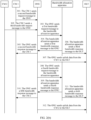
- FIG. 2(a) is a flowchart of a bandwidth scheduling method according to Embodiment 1 of this application.
- a user-side device is a CM
- a first access device is an OLT
- a message conversion apparatus is disposed on a second access device
- the second access device is an ONU.
- An action related to message conversion and performed by the ONU in Embodiment 1 may be performed by the message conversion apparatus included in the ONU.
- the user-side device may be another device having a function of the CM in Embodiment 1.
- the first access device and the second access device may be other devices having functions of the OLT and the ONU device in Embodiment 1.
- the CM sends a second bandwidth request message to the ONU.
- the second bandwidth request message includes a first bandwidth requirement
- the first bandwidth requirement is a bandwidth used for completing transmission of a first service.
- the second bandwidth request message may further include at least one of a first service identifier and first priority information, the first service identifier is used to identify the first service, and the first priority information is used to identify a priority of a first service.
- the second bandwidth request message may be a data over cable service interface specification (data over cable service interface specification, DOCSIS) bandwidth request message.
- a message body of the second bandwidth request message includes a field used to carry the first bandwidth requirement.
- the message body of the second bandwidth request message further includes a field used to carry the first service identifier.
- the at least one of the first service identifier and the first priority information may be placed in a message header of the second bandwidth request message, provided that the at least one of the first service identifier and the first priority information can be transferred to a bandwidth allocation apparatus.
- the second bandwidth request message may be a message based on the data over cable service interface specification (data over cable service interface specification, DOCSIS), a message based on a passive optical network (passive optical network, PON), or a message based on wireless communication.
- data over cable service interface specification data over cable service interface specification, DOCSIS
- PON passive optical network
- the ONU sends a first bandwidth request message to the bandwidth allocation apparatus.
- the ONU obtains the first bandwidth request message based on the first bandwidth requirement carried in the second bandwidth request message.
- the first bandwidth request message is a message obtained after protocol conversion is performed on the second bandwidth request message.
- the first bandwidth request message may be an internet protocol (Internet Protocol, IP)-based message.
- IP Internet Protocol
- the first bandwidth requirement may be carried in a message body of the first bandwidth request message.
- the first bandwidth request message may be encapsulated based on the IP or Ethernet protocol.
- a destination address (destination address) of the first bandwidth request message is an address of the bandwidth allocation apparatus.
- a source address (source address) of the first bandwidth request message is an address of the ONU. Specifically, the source address of the first bandwidth request message may be an address of a module responsible for message conversion in the ONU.
- the first bandwidth request message further includes first type information, and the first type information is used to indicate that the message is a bandwidth-related message.
- a message header of the first bandwidth request message may include the destination address, the source address, and the first type information.
- the message body of the first bandwidth request message may include the first bandwidth requirement.
- the message body of the first bandwidth request message may further include at least one of a service type and the first service identifier.
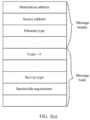
- the message body of the first bandwidth request message may further include second type information, and the second type information is used to indicate that the message body carries a parameter used to request a bandwidth. If the first bandwidth request message is an Ethernet-based message, the first type information is carried in an Ethernet type field, and a code field in the message body is used to carry the second type information.
- a value 0 of a code shown in FIG. 3(a) is merely used as an example, indicating that the message is a bandwidth request message.
- the code may also have another value to indicate that the message is a bandwidth request message. Examples are not described one by one herein.
- the bandwidth allocation apparatus sends a first bandwidth response message to the ONU.
- the bandwidth allocation apparatus calculates first bandwidth grant information and second bandwidth grant information based on the first bandwidth requirement in the first bandwidth request message.
- the first bandwidth grant information is information about a bandwidth that is allocated to the CM and that corresponds to the first service.
- the second bandwidth grant information is information about a bandwidth that is allocated to the ONU and that corresponds to the first service.
- the bandwidth allocation apparatus may obtain the first bandwidth grant information and the second bandwidth grant information based on a common DBA algorithm. Examples are not described herein.
- the first bandwidth grant information includes at least one of first time information and first frequency information.
- the first time information includes a start point of a first time slice and a length of the first time slice
- the first frequency information includes a center frequency of a first frequency band and a frequency width of the first frequency band.
- the start point of the first time slice is a start moment at which the CM sends the service
- the length of the first time slice is effective duration in which the CM sends the service
- the first frequency band is a frequency range within which the CM sends the service.
- the second bandwidth grant information includes at least one of second time information and second frequency information.
- the second time information includes a start point of a second time slice and a length of the second time slice
- the second frequency information includes a center frequency of a second frequency band and a frequency width of the second frequency band.
- the start point of the second time slice is a start moment at which the ONU sends the service
- the length of the second time slice is effective duration in which the ONU sends the service
- the second frequency band is a frequency range within which the ONU sends the service.
- the start point of the second time slice may be determined based on the start point of the first time slice and the length of the first time slice.
- the start point of the second time slice is a moment obtained by adding the length of the first time slice and the start point of the first time slice.
- a transmission delay generated by the CM may be further considered.
- the start point of the second time slice is a moment obtained by adding the start point of the first time slice, the length of the first time slice, and the transmission delay generated by the CM.
- the first bandwidth grant information and the second bandwidth grant information include parameters of a same type. If the first bandwidth grant information includes the first time information, the second bandwidth grant information includes the second time information. If the first bandwidth grant information includes the first frequency information, the second bandwidth grant information includes the second frequency information.
- the first bandwidth response message includes a message header and a message body.
- the message header of the first bandwidth response message includes a destination address, a source address, and first type information.
- the destination address is the address of the ONU. Specifically, the destination address is an address of a module, configured to convert a protocol type of a message, in the ONU.
- the source address is the address of the bandwidth allocation apparatus.
- the first type information is used to indicate that the message is a bandwidth-related message.
- the message body of the first bandwidth response message includes the first bandwidth grant information and second type information.
- the second type information is used to indicate that a parameter used to allocate a bandwidth is carried.
- the first bandwidth response message is encapsulated based on the Ethernet
- the first type information is carried in an Ethernet type field of the message header
- the second type information is carried in a code field of the message body.
- a value 1 of a code shown in FIG. 3(b) is merely used as an example, indicating that the message is a bandwidth response message.
- the code may also have another value to indicate that the message is a bandwidth response message. Examples are not described one by one herein.
- the ONU sends a second bandwidth response message to the CM.
- the ONU converts the first bandwidth response message into the second bandwidth response message based on a protocol used for the second bandwidth request message.
- a protocol on which the second bandwidth response message is based is the same as the protocol on which the second bandwidth request message is based.
- a format of the second bandwidth response message is not described herein again.
- the second bandwidth response message includes the first bandwidth grant information.
- the bandwidth allocation apparatus sends a third bandwidth response message to the OLT.
- the bandwidth allocation apparatus generates the third bandwidth response message according to a communication protocol used by the OLT.
- the third bandwidth response message includes the second bandwidth grant information.
- the third bandwidth response message may be an IP-based message, or the third bandwidth response message may be encapsulated based on the Ethernet.
- the OLT may perform format conversion on the third bandwidth response message.
- the OLT converts the third bandwidth response message into a fourth bandwidth response message that can be identified by the ONU, where the fourth bandwidth response message includes the second bandwidth grant information; and the OLT sends the fourth bandwidth response message to the ONU.
- the bandwidth allocation apparatus may send the third bandwidth response message to the OLT before, after, or at the same time as sending the first bandwidth response message.
- Step 205 and step 203 in this embodiment of this application do not represent a sequence, but the sequence numbers are used to distinguish between different steps.
- the ONU sends the uplink data from the CM to the OLT.
- the CM may complete bandwidth configuration for the CM itself after obtaining the first bandwidth grant information
- the ONU may complete bandwidth configuration for the ONU itself after obtaining the second bandwidth grant information.
- the CM may send the uplink data to the ONU based on a bandwidth configured by the CM.
- the ONU may send the uplink data to the OLT based on a bandwidth configured by the ONU.
- the OLT may directly forward the uplink data from the ONU. In this way, when the uplink data is sent to the OLT, there is no need to wait for a procedure in which the OLT applies for bandwidth allocation. This helps reduce a transmission delay and improve bandwidth allocation efficiency.
- the bandwidth allocation apparatus allocates, to the CM and the ONU based on the first bandwidth request message sent by the ONU, the bandwidths required for the uplink data from the CM, to avoid a transmission delay caused by requesting bandwidth allocation and interaction a plurality of times in an uplink data transmission process, and the CM transmits the uplink data by using the allocated bandwidth. This helps meet a transmission delay requirement in a service transmission process, and improve bandwidth allocation efficiency.
- the bandwidth allocation apparatus may add the first bandwidth grant information and the second bandwidth grant information to the first bandwidth response message.
- the bandwidth allocation apparatus directly delivers the second bandwidth grant information to the ONU by using the first bandwidth response message. In this way, a procedure of delivering the second bandwidth grant information to the ONU by using the OLT and a message conversion procedure performed by the OLT can be omitted, and the bandwidth configuration efficiency can be further improved.
- first”, “second”, and “third” are used to distinguish a same type of messages based on names, and the names may be changed based on an actual requirement.
- a name of the third bandwidth response message in Embodiment 1 may be changed to the second bandwidth response message, and correspondingly, the second bandwidth response message in Embodiment 1 may be changed to the third bandwidth response message.
- FIG. 2(b) is a flowchart of a bandwidth scheduling method according to Example 1 of this application.
- a first user-side device is a CM 1
- a second user-side device is a CM 2
- a first access device is an OLT
- a message conversion apparatus is disposed on a second access device
- the second access device is an ONU.
- An action related to message conversion and performed by the ONU in Example 1 may be performed by the message conversion apparatus included in the ONU.
- the CM 1 sends a second bandwidth request message to the ONU.
- the CM 1 in Example 1 may be the CM in this embodiment.
- the second bandwidth request message may further carry first priority information.
- the first priority information is used to identify a priority of the CM 1.
- the first priority information has a high priority.
- the first priority information may also be represented by using a service type or a service identifier.
- a priority of a video service is higher than a priority of an audio service.
- the video service has a high priority.
- the first priority information may be determined based on such a type, namely, the video service.
- the CM 2 sends a third bandwidth request message to the ONU.
- the third bandwidth request message includes a second bandwidth requirement and second priority information.
- the second bandwidth requirement is a bandwidth used for completing transmission of a second service
- the second priority information is used to identify a priority of the second service.
- the second priority information has a low priority.
- the priority of the second service is lower than a priority of a first service.
- a protocol format of the third bandwidth request message may be the same as a protocol format of the second bandwidth request message, or may be different from a protocol format of the second bandwidth request message.
- the ONU sends a first bandwidth request message to a bandwidth allocation apparatus.
- the ONU may place the second bandwidth request message into a high-priority queue and place the third bandwidth request message into a low-priority queue based on the first priority information and the second priority information. After completing a bandwidth request message in the high-priority queue, the ONU completes a bandwidth request message in the low-priority queue.
- the first bandwidth request message based on the second bandwidth request message refers to corresponding content in step 202 in Embodiment 1.
- a method for sending, by the ONU, the first bandwidth request message to the bandwidth allocation apparatus refer to corresponding content in Embodiment 1.
- the bandwidth allocation apparatus sends a first bandwidth response message to the ONU.
- the method in step 304 is the same as the content in step 203 in Embodiment 1. Details are not described herein again.
- the first bandwidth response message includes first bandwidth grant information.
- the first bandwidth grant information refer to the first bandwidth grant information in Embodiment 1.
- the CM 1 in Example 1 may be the CM in Embodiment 1, and the first bandwidth grant information is information about a bandwidth that is allocated to the CM 1 and that corresponds to the first service.
- the bandwidth allocation apparatus may determine, based on priority information included in the bandwidth request messages, for example, the first priority information in the first bandwidth request message, to preferentially process the first bandwidth request message.
- the ONU sends a second bandwidth response message to the CM 1.
- step 305 For a method in step 305, refer to corresponding content in step 204 in Embodiment 1. Details are not described herein again.
- the bandwidth allocation apparatus sends a third bandwidth response message to the OLT.
- Step 306 may be performed before, after, or at the same time as step 304.
- the OLT After receiving the third bandwidth response message, the OLT performs protocol format conversion on the third bandwidth response message, to obtain a third bandwidth response message after the protocol format conversion.
- the third bandwidth response message obtained after the protocol format conversion includes second bandwidth grant information calculated by the bandwidth allocation apparatus.
- the second bandwidth grant information refer to the second bandwidth grant information in Embodiment 1.
- the second bandwidth grant information is information about a bandwidth that is allocated to the ONU and that corresponds to the first service.
- a protocol used for the third bandwidth response message obtained after the protocol format conversion is a communication protocol between the OLT and the ONU.
- the OLT sends, to the ONU, the third bandwidth response message obtained after the protocol format conversion.
- the ONU sends uplink data from the CM 1 to the OLT.
- step 307 For a method in step 307, refer to corresponding content in step 206 in Embodiment 1. Details are not described herein again.
- the ONU sends a fourth bandwidth request message to the bandwidth allocation apparatus.
- the ONU obtains the fourth bandwidth request message based on the second bandwidth requirement carried in the third bandwidth request message.
- the fourth bandwidth request message may be in a format shown in FIG. 3(a) , and a difference from the first bandwidth request message lies in that a parameter carried in a message body of the fourth bandwidth request message is different from a parameter carried in a message body of the first bandwidth request message.
- the message body of the fourth bandwidth request message includes the second bandwidth requirement and the second priority information.
- the bandwidth allocation apparatus sends a fourth bandwidth response message to the ONU.
- the bandwidth allocation apparatus For example, for a method for obtaining third bandwidth grant information and fourth bandwidth grant information by the bandwidth allocation apparatus, refer to the method for obtaining the first bandwidth grant information and the second bandwidth grant information in step 203 in Embodiment 1.
- the third bandwidth grant information is information about a bandwidth that is allocated to the CM 2 and that corresponds to the second service.
- the fourth bandwidth grant information is information about a bandwidth that is allocated to the ONU and that corresponds to the second service.
- the third bandwidth grant information and the fourth bandwidth grant information include parameters of a same type.
- the third bandwidth grant information includes at least one of third time information and third frequency information.
- the third time information includes a start point of a third time slice and a length of the third time slice
- the third frequency information includes a center frequency of a third frequency band and a frequency width of the third frequency band.
- the start point of the third time slice is a start moment at which the CM 2 sends the second service
- the length of the third time slice is effective duration in which the CM 2 sends the second service
- the third frequency band is a frequency range within which the CM 2 sends the second service.
- the fourth bandwidth grant information includes at least one of fourth time information and fourth frequency information.
- the fourth time information includes a start point of a fourth time slice and a length of the fourth time slice
- the fourth frequency information includes a center frequency of a fourth frequency band and a frequency width of the fourth frequency band.
- the start point of the fourth time slice is a start moment at which the ONU sends the second service
- the length of the fourth time slice is effective duration in which the ONU sends the second service
- the fourth frequency band is a frequency range within which the ONU sends the second service.
- the fourth bandwidth response message is also in a format shown in FIG. 3(b) .
- a difference from the first bandwidth response message lies in that a parameter included in a message body of the fourth bandwidth response message is different from a parameter included in a message body in FIG. 3(b) .
- the fourth bandwidth response message includes the third bandwidth grant information.
- the ONU sends a fifth bandwidth response message to the CM 2.
- the fifth bandwidth response message carries the third bandwidth grant information.
- the fifth bandwidth response message is a message obtained after protocol format conversion is performed on the fourth bandwidth response message.
- the bandwidth allocation apparatus sends a sixth bandwidth response message to the OLT.
- the sixth bandwidth response message includes the fourth bandwidth grant information.
- a method in step 311 refer to corresponding content in step 205 in Embodiment 1. Details are not described herein again.
- Step 311 may be performed before step 309, or step 311 may be performed at the same time as step 309. Examples are not described one by one herein.
- the OLT may use the method in Embodiment 1 to obtain a sixth bandwidth response message after protocol format conversion, and send the fourth bandwidth grant information to the ONU by using the sixth bandwidth response message obtained after the protocol format conversion.
- the ONU sends the uplink data from the CM 2 to the OLT.
- the CM 2 may complete bandwidth configuration for the CM 2 itself based on the third bandwidth grant information, and the ONU may complete bandwidth configuration for the ONU itself based on the fourth bandwidth grant information.
- the CM 2 may send the uplink data of the second service to the ONU by using a configured bandwidth.
- the ONU may send the uplink data of the second service to the OLT by using a configured bandwidth.
- the OLT may directly forward the uplink data that is of the second service and that is from the ONU. In this way, when the uplink data is sent to the OLT, there is no need to wait for a procedure in which the OLT applies for bandwidth allocation. This helps reduce a transmission delay and improve bandwidth allocation efficiency.
- the ONU may preferentially process a bandwidth request message with a high priority based on priority information carried in bandwidth request messages from the CM 1 and the CM 2. In this way, a bandwidth of a high-priority service is preferentially configured. This helps reduce a transmission delay of the high-priority service.
- the message conversion apparatus may be disposed on another second access device, and the another second access device may be a CMTS, a CCAP, an AP, or a BS.
- Example 1 “first”, “second”, and “third” are used to distinguish a same type of messages based on names, and the names may be changed based on an actual requirement. For example, a name of the third bandwidth response message in Example 1 may be changed to the second bandwidth response message, and correspondingly, the second bandwidth response message in Example 1 may be changed to the third bandwidth response message.
- FIG. 4(a) is a schematic structural diagram of a bandwidth allocation apparatus according to an embodiment of this application.
- the bandwidth allocation apparatus in this embodiment may be the bandwidth allocation apparatus in the embodiment in FIG. 2(a) or FIG. 2(b) .
- the bandwidth allocation apparatus includes a receiving unit 401, a calculation unit 402, and a sending unit 403.
- the receiving unit 401 is configured to receive a bandwidth request message sent by a message conversion apparatus, where the bandwidth request message includes a bandwidth requirement, and the bandwidth requirement is a bandwidth used for completing transmission of a service.
- the calculation unit 402 is configured to calculate first bandwidth grant information and second bandwidth grant information based on the bandwidth requirement, where the first bandwidth grant information is information about a bandwidth that is allocated to a user-side device and that corresponds to the service, and the second bandwidth grant information is information about a bandwidth that is allocated to a second access device and that corresponds to the service.
- the sending unit 403 is configured to: send a first bandwidth response message to the message conversion apparatus, and send a second bandwidth response message to a first access device, where the first bandwidth response message includes the first bandwidth grant information, and the second bandwidth response message includes the second bandwidth grant information.
- the bandwidth request message further includes at least one of a service identifier and priority information, the priority information is used to identify a priority of the service, and the service identifier is used to identify the service.
- FIG. 4(b) is a schematic structural diagram of a message conversion apparatus according to an embodiment of this application.
- the message conversion apparatus in this embodiment may be disposed on the ONU in the embodiment in FIG. 2(a) or FIG. 2(b) .
- the message conversion apparatus in FIG. 4(b) may perform specific configuration based on a protocol type used by a second access device on which the message conversion apparatus is disposed, so that a bandwidth request from a user-side device is rapidly and efficiently sent to a bandwidth allocation apparatus.
- the message conversion apparatus includes a first receiving unit 501, a first conversion unit 502, a first sending unit 503, a second receiving unit 504, a second conversion unit 505, and a second sending unit 506.
- the first receiving unit 501 is configured to receive a second bandwidth request message sent by the user-side device, where the second bandwidth request message includes a first bandwidth requirement, and the first bandwidth requirement is a bandwidth used for completing transmission of a first service.
- the first conversion unit 502 is configured to obtain a first bandwidth request message based on the second bandwidth request message, where the first bandwidth request message includes the first bandwidth requirement.
- the first sending unit 503 is configured to send the first bandwidth request message to the bandwidth allocation apparatus.
- the second receiving unit 504 is configured to receive a first bandwidth response message sent by the bandwidth allocation apparatus, where the first bandwidth response message includes first bandwidth grant information, and the first bandwidth grant information is information about a bandwidth that is allocated to the user-side device and that corresponds to the first service.
- the second conversion unit 505 is configured to obtain a second bandwidth response message based on the first bandwidth response message, where the second bandwidth response message includes the first bandwidth grant information. Specifically, the second conversion unit 505 is configured to perform protocol format conversion on the first bandwidth response message, to obtain the second bandwidth response message.
- the second sending unit 506 is configured to send the second bandwidth response message to the user-side device.
- the second sending unit 506 and the second conversion unit 505 may be disposed on one physical component.
- the first bandwidth request message further includes at least one of a first service identifier and first priority information.
- the first priority information is used to identify a priority of a first service
- the first service identifier is used to identify the first service.
- the first bandwidth request message and the first bandwidth response message are based on a same protocol, and the first bandwidth request message is based on an IP or an Ethernet protocol.
- the second bandwidth request message and the first bandwidth request message are based on different protocols, and the second bandwidth response message and the second bandwidth request message are based on a same protocol.
- the first bandwidth response message further includes second bandwidth grant information
- the second bandwidth grant information is information about a bandwidth that is allocated to the user-side device and that corresponds to a second service.
- the first receiving unit 501 is further configured to receive a second bandwidth requirement sent by the user-side device, where the second bandwidth requirement is a bandwidth used for completing transmission of the second service.
- the first conversion unit 502 is further configured to add the second bandwidth requirement to the first bandwidth request message.
- the second conversion unit 505 is further configured to obtain the second bandwidth grant information from the first bandwidth response message.
- the second sending unit 506 is further configured to send the second bandwidth grant information to the user-side device.
- FIG. 4(c) is a schematic structural diagram of a second access device according to an embodiment of this application.
- the second access device provided in this embodiment of this application may include the message conversion apparatus shown in FIG. 4(b) .
- the second access device further includes a third receiving unit 507 and a bandwidth configuration unit 508.
- the third receiving unit 507 is configured to receive a third bandwidth response message sent by the first receiving device.
- the third bandwidth response message includes third bandwidth grant information, and the third bandwidth grant information is information about a bandwidth that is allocated to the second access device and that corresponds to the first service.
- the bandwidth configuration unit 508 is configured to complete bandwidth configuration based on the third bandwidth grant information. For the third bandwidth grant information, refer to the second bandwidth grant information in the embodiment corresponding to FIG. 2(a) .
- An embodiment of this application further provides a first access device.
- the first access device includes a receiving unit, a conversion unit, and a sending unit.
- the receiving unit is configured to receive a first bandwidth response message sent by a bandwidth allocation apparatus, where the first bandwidth response message includes bandwidth grant information, and the bandwidth grant information is information about a bandwidth that is allocated to a second access device and that corresponds to a service.
- the conversion unit is configured to perform protocol format conversion on the first bandwidth response message, to obtain a second bandwidth response message, where the second bandwidth response message includes the bandwidth grant information.
- the sending unit is configured to send the second bandwidth response message to the second access device.
- For the bandwidth grant information refer to the second bandwidth grant information in the embodiment corresponding to FIG. 2(a) .
- the first bandwidth response message and the second bandwidth response message are based on different protocols, where the first bandwidth response message may be an IP-based message, and the second bandwidth response message may be a PON-based message.
- FIG. 5(a) is a schematic structural diagram of a bandwidth allocation apparatus according to an embodiment of this application.
- the bandwidth allocation apparatus in this embodiment may be the bandwidth allocation apparatus in the embodiment in FIG. 2(a) , FIG. 2(b) , or FIG. 4(a) .
- a structure of the bandwidth allocation apparatus is described from a perspective of a hardware implementation.
- the bandwidth allocation apparatus in this embodiment includes a processor 601, a memory 602, and a communications interface 603.
- the processor 601, the memory 602, and the communications interface 603 are connected by using a communications bus 604.
- the memory 602 is configured to store a program.
- the processor 601 performs, according to an executable instruction included in the program read from the memory 602, the method steps performed by the bandwidth allocation apparatus in Embodiment 1 or Example 1.
- the processor 601 may receive and send a bandwidth request message and a bandwidth response message through the communications interface 603.
- FIG. 5(b) is a schematic structural diagram of a message conversion apparatus according to an embodiment of this application.
- the message conversion apparatus in this embodiment may be disposed on the ONU in the embodiment in FIG. 2(a) or FIG. 2(b) .
- the message conversion apparatus in this embodiment may be the message conversion apparatus in FIG. 4(b) .
- a structure of the message conversion apparatus is described from a perspective of a hardware implementation.
- the message conversion apparatus in this embodiment includes a processor 701, a memory 702, and a communications interface 703.
- the processor 701, the memory 702, and the communications interface 703 are connected by using a communications bus 704.
- the memory 702 is configured to store a program.
- the processor 701 performs, according to an executable instruction included in the program read from the memory 702, the method steps performed by the ONU in Embodiment 1 or Example 1.
- the processor 701 may receive and send a bandwidth request message and a bandwidth response message through the communications interface 703.
- An embodiment of this application further provides a second access device.
- the access device may include the message conversion apparatus provided in the embodiment corresponding to FIG. 5(b) .
- a component that is used by the second access device to receive a bandwidth response message from a first access device may be the communications interface 703 in FIG. 5(b) .
- the second access device may use the processor 701 in FIG. 5(b) to perform bandwidth configuration, that is, to complete the bandwidth configuration based on bandwidth grant information in the bandwidth response message from the first access device.
- the second access device may use an interface different from the communications interface 703 to receive the bandwidth response message from the first access device.
- the second access device may use a processor different from the processor 701 to perform the bandwidth configuration. Examples are not described one by one herein.
- FIG. 6(a) is a schematic structural diagram of a bandwidth scheduling system according to an embodiment of this application.
- the bandwidth scheduling system provided in this embodiment may include the bandwidth allocation apparatus shown in FIG. 4(a) and the message conversion apparatus shown in FIG. 4(b) .
- the bandwidth scheduling system provided in this embodiment of this application may further include the bandwidth allocation apparatus in FIG. 5(a) and the message conversion apparatus in FIG. 5(b) . Details of the foregoing two devices are not described herein again.
- FIG. 6(b) is a schematic structural diagram of a bandwidth scheduling system according to an embodiment of this application.
- a cable (cable) device conversion module may be a message conversion apparatus disposed on an access device in a fixed network
- a PON device conversion module may be a message conversion module disposed on an access device in a PON network
- a wireless device conversion module may be a message conversion module disposed on an access device in a wireless network.
- the cable device conversion module is used as an example.
- the cable device conversion module includes a data over cable service interface specification (data over cable service interface specification, DOCSIS) bandwidth request receiving module, a high-priority queue, a low-priority queue, a bandwidth request message conversion module, a grant (grant) message conversion module, and a DOCSIS grant sending module.
- the DOCSIS bandwidth request receiving module included in the cable device conversion module receives a DOCSIS request message from a user-side device, where the message may be represented as a DOCSIS Req. message, and the message may be a MAC frame.
- DOCSIS Req. message For a parameter carried in the DOCSIS request message, refer to the second bandwidth request message in FIG. 2(a) or FIG. 2(b) .
- the DOCSIS bandwidth request receiving module included in the cable device conversion module may place the DOCSIS Req. message into the high-priority queue or the low-priority queue based on priority information carried in the DOCSIS Req. message.
- the bandwidth request message conversion module in the cable device conversion module preferentially reads a message in the high-priority queue, and then reads a message in the low-priority queue after the high-priority queue becomes empty.
- the bandwidth request message conversion module in the cable device conversion module performs format conversion on a read message, and converts the read message into an IP-based bandwidth request message, where the message may be specifically represented as BW Req. over IP.
- the bandwidth request message conversion module in the cable device conversion module sends the IP-based bandwidth request message to a bandwidth allocation apparatus.
- a parameter carried in the IP-based bandwidth request message refer to the first bandwidth request message in FIG. 2(a) or FIG. 2(b) .
- the grant message conversion module in the cable device conversion module receives an IP-based bandwidth authorization message from the bandwidth allocation apparatus, where the message may be specifically represented as BW Grant over IP.
- the message may be specifically represented as BW Grant over IP.
- For a parameter carried in the message refer to the first bandwidth response message in FIG. 2(a) or FIG. 2(b) .
- the grant message conversion module in the cable device conversion module converts the IP-based bandwidth grant message into a bandwidth grant message, where the message may be specifically represented as a DOCSIS grant message and the message is a MAC frame, and sends the DOCSIS grant message to the DOCSIS grant sending module.
- the DOCSIS grant sending module sends the DOCSIS grant message to the user-side device. For a parameter carried in the bandwidth grant message, refer to the second bandwidth response message in FIG. 2(a) or FIG. 2(b) .
- the PON device conversion module is used as an example.
- the PON device conversion module includes a PON bandwidth request receiving module, a high-priority queue, a low-priority queue, a bandwidth request message conversion module, a grant message conversion module, and a PON grant sending module.
- the PON bandwidth request receiving module included in the PON device conversion module receives a PON request message from a user-side device, where the message may be represented as a PON Req. message, and the message may be a MAC frame.
- the message may be represented as a PON Req. message
- the message may be a MAC frame.
- For a parameter carried in the PON request message refer to the second bandwidth request message in FIG. 2(a) or FIG. 2(b) .
- the PON bandwidth request receiving module included in the PON device conversion module may place the PON Req.
- the bandwidth request message conversion module in the PON device conversion module preferentially reads a message in the high-priority queue, and then reads a message in the low-priority queue after the high-priority queue becomes empty.
- the bandwidth request message conversion module in the PON device conversion module performs format conversion on a read message, and converts the read message into an IP-based bandwidth request message, where the message may be specifically represented as BW Req. over IP.
- the bandwidth request message conversion module in the PON device conversion module sends the IP-based bandwidth request message to a bandwidth allocation apparatus.
- the grant message conversion module in the PON device conversion module receives an IP-based bandwidth authorization message from the bandwidth allocation apparatus, where the message may be specifically represented as BW Grant over IP.
- the grant message conversion module in the PON device conversion module converts the IP-based bandwidth grant message into a bandwidth grant message, where the message may be specifically represented as a PON grant message and the message is a MAC frame, and sends the PON grant message to the PON grant sending module.
- the PON grant sending module sends the PON grant message to the user-side device.
- For a parameter carried in the bandwidth grant message refer to the second bandwidth response message in FIG. 2(a) or FIG. 2(b) .
- the wireless device conversion module is used as an example.
- the wireless device conversion module includes a wireless bandwidth request receiving module, a high-priority queue, a low-priority queue, a bandwidth request message conversion module, a grant message conversion module, and a wireless grant sending module.
- the wireless bandwidth request receiving module included in the wireless device conversion module receives a wireless request message from a user-side device, where the message may be represented as a wireless Req. message, and the message may be a MAC frame.
- the wireless bandwidth request receiving module included in the wireless device conversion module may place the wireless Req.
- the bandwidth request message conversion module in the wireless device conversion module preferentially reads a message in the high-priority queue, and then reads a message in the low-priority queue after the high-priority queue becomes empty.
- the bandwidth request message conversion module in the wireless device conversion module performs format conversion on a read message, and converts the read message into an IP-based bandwidth request message, where the message may be specifically represented as BW Req. over IP.
- the bandwidth request message conversion module in the wireless device conversion module sends the IP-based bandwidth request message to a bandwidth allocation apparatus. For a parameter carried in the IP-based bandwidth request message, refer to the first bandwidth request message in FIG.
- the grant message conversion module in the wireless device conversion module receives an IP-based bandwidth authorization message from the bandwidth allocation apparatus, where the message may be specifically represented as BW Grant over IP.
- the grant message conversion module in the wireless device conversion module converts the IP-based bandwidth grant message into a bandwidth grant message, where the message may be specifically represented as a wireless grant message and the message is a MAC frame, and sends the wireless grant message to the wireless grant sending module.
- the wireless grant sending module sends the wireless grant message to the user-side device.
- a parameter carried in the bandwidth grant message refer to the second bandwidth response message in FIG. 2(a) or FIG. 2(b) .
- FIG. 6(c) is a schematic diagram of a scenario of a bandwidth scheduling method according to an embodiment of this application.
- a bandwidth allocation apparatus may be the bandwidth allocation apparatus in FIG. 2(a) or FIG. 2(b) .
- DOCSIS Req may be the second bandwidth request message in FIG. 2(a) or FIG. 2(b) .
- BW Req over IP may be the first bandwidth request message in FIG. 2(a) or FIG. 2(b) .
- BW Grant over IP sent by the bandwidth allocation apparatus to an ONU may be the first bandwidth response message in FIG. 2(a) or FIG. 2(b) .
- BW Grant over IP sent by the bandwidth allocation apparatus to an OLT may be the third bandwidth response message in FIG.
- PON Grant sent by the OLT to the ONU may be the fourth bandwidth response message in Embodiment 1, or the third bandwidth response message obtained after the protocol format conversion in Example 1.
- DOCSIS Grant may be the second bandwidth response message in FIG. 2(a) or FIG. 2(b) .
- the ONU has a built-in cable device.
- FIG. 6(d) is a schematic diagram of another scenario of a bandwidth scheduling method according to an embodiment of this application.
- a bandwidth allocation apparatus may be the bandwidth allocation apparatus in FIG. 2(a) or FIG. 2(b) .
- Wireless Req may be the second bandwidth request message in FIG. 2(a) or FIG. 2(b) .
- BW Req over IP may be the first bandwidth request message in FIG. 2(a) or FIG. 2(b) .
- BW Grant over IP sent by the bandwidth allocation apparatus to an ONU may be the first bandwidth response message in FIG. 2(a) or FIG. 2(b) .
- BW Grant over IP sent by the bandwidth allocation apparatus to an OLT may be the third bandwidth response message in FIG.
- PON Grant sent by the OLT to the ONU may be the fourth bandwidth response message in Embodiment 1, or the third bandwidth response message obtained after the protocol format conversion in Example 1.
- Wireless Grant may be the second bandwidth response message in FIG. 2(a) or FIG. 2(b) .
- the ONU in FIG. 6 (d) has a built-in wireless AP or BS function.
- a message conversion apparatus provided in this application is disposed outside a second access device, and receives and sends of a bandwidth request message and a bandwidth response message by using a protocol between the message conversion apparatus and the second access device.
- the general purpose processor mentioned in the embodiment of this application may be a microprocessor or the processor may be any conventional processor.
- the steps in the methods disclosed with reference to the embodiments of the present invention may be directly performed by using a combination of hardware in the processor and a software module.
- code that implements the foregoing functions may be stored in a computer-readable medium.
- the computer-readable medium includes a computer storage medium.
- the storage medium may be any available medium accessible to a computer.
- the computer-readable medium may be a random access memory (random access memory, RAM), a read-only memory (read-only memory, ROM), an electrically erasable programmable read-only memory (electrically erasable programmable read-only memory, EEPROM), a compact disc read-only memory (compact disc read-only memory, CD-ROM) or other optical disc storage, a disc storage medium or other disc storage, or any other medium that can be used to carry or store expected program code in a command or data structure form and can be accessed by a computer.
- the computer-readable medium may be a compact disc (compact disc, CD), a laser disc, a digital video disc (digital video disc, DVD), a floppy disc, or a Blu-ray disc.
Landscapes
- Engineering & Computer Science (AREA)
- Computer Networks & Wireless Communication (AREA)
- Signal Processing (AREA)
- Computer Security & Cryptography (AREA)
- Data Exchanges In Wide-Area Networks (AREA)
- Small-Scale Networks (AREA)
Claims (17)
- Verfahren zur Bandbreitenplanung, das von einer Bandbreitenzuweisungsvorrichtung durchgeführt wird, wobei das Verfahren umfasst:Empfangen einer von einer Nachrichtenumwandlungsvorrichtung gesendeten Bandbreitenanforderungsnachricht durch die Bandbreitenzuweisungsvorrichtung, wobei die Bandbreitenanforderungsnachricht eine Bandbreitenvoraussetzung umfasst, und die Bandbreitenvoraussetzung eine Bandbreite ist, die zum Vervollständigen der Übertragung eines Dienstes verwendet wird;Berechnen von ersten Bandbreitengewährungsinformationen und zweiten Bandbreitengewährungsinformationen basierend auf der Bandbreitenvoraussetzung durch die Bandbreitenzuweisungsvorrichtung, wobei die ersten Bandbreitengewährungsinformationen Informationen über eine Bandbreite sind, die einem benutzerseitigen Gerät zugewiesen ist und die dem Dienst entspricht, und die zweiten Bandbreitengewährungsinformationen Informationen über eine Bandbreite sind, die einem zweiten Zugriffsgerät zugewiesen ist und die dem Dienst entspricht; undSenden (203) einer ersten Bandbreitenantwortnachricht an die Nachrichtenumwandlungsvorrichtung durch die Bandbreitenzuweisungsvorrichtung und Senden einer zweiten Bandbreitenantwortnachricht an ein erstes Zugriffsgerät, wobei die erste Bandbreitenantwortnachricht die ersten Bandbreitengewährungsinformationen umfasst und die zweite Bandbreitenantwortnachricht die zweiten Bandbreitengewährungsinformationen umfasst,wobei das erste Zugriffsgerät ein optisches Leitungsendgerät, OLT, ist, das zweite Zugriffsgerät eine optische Netzwerkeinheit, ONU, ist, die Nachrichtenumwandlungsvorrichtung auf oder außerhalb des zweiten Zugriffsgeräts angeordnet ist, und, wenn die Nachrichtenumwandlungsvorrichtung außerhalb des zweiten Zugriffsgeräts angeordnet ist, die Nachrichtenumwandlungsvorrichtung eine jeweilige Bandbreitenanforderungsnachricht und eine jeweilige Bandbreitenantwortnachricht durch Verwendung eines Protokolls zwischen der Nachrichtenumwandlungsvorrichtung und dem zweiten Zugriffsgerät empfängt und sendet.
- Verfahren nach Anspruch 1, wobei die ersten Bandbreitengewährungsinformationen erste Zeitinformationen und/oder erste Frequenzinformationen umfassen, die ersten Zeitinformationen einen Startpunkt einer ersten Zeitscheibe und eine Länge der ersten Zeitscheibe umfassen, die ersten Frequenzinformationen eine Mittenfrequenz eines ersten Frequenzbandes und eine Frequenzbreite des ersten Frequenzbandes umfassen, der Startzeitpunkt der ersten Zeitscheibe ein Startzeitpunkt ist, zu dem das benutzerseitige Gerät den Dienst sendet, die Länge der ersten Zeitscheibe eine effektive Dauer ist, in der das benutzerseitige Gerät den Dienst sendet, und das erste Frequenzband ein Frequenzbereich ist, innerhalb dessen das benutzerseitige Gerät den Dienst sendet.
- Verfahren nach Anspruch 1 oder 2, wobei die zweiten Bandbreitengewährungsinformationen zweite Zeitinformationen und/oder zweite Frequenzinformationen umfassen, die zweiten Zeitinformationen einen Startpunkt einer zweiten Zeitscheibe und eine Länge der zweiten Zeitscheibe umfassen, die zweiten Frequenzinformationen eine Mittenfrequenz eines zweiten Frequenzbandes und eine Frequenzbreite des zweiten Frequenzbandes umfassen, der Startzeitpunkt der zweiten Zeitscheibe ein Startzeitpunkt ist, zu dem das zweite Zugriffsgerät den Dienst sendet, die Länge der zweiten Zeitscheibe eine effektive Dauer ist, in der das zweite Zugriffsgerät den Dienst sendet, und das zweite Frequenzband ein Frequenzbereich ist, innerhalb dessen das zweite Zugriffsgerät den Dienst sendet.
- Verfahren nach einem der Ansprüche 1 bis 3, wobei die Bandbreitenanforderungsnachricht ferner mindestens einen Dienstidentifikator und/oder Prioritätsinformationen umfasst, wobei die Prioritätsinformationen verwendet werden, um eine Priorität des Dienstes zu identifizieren, und der Dienstidentifikator verwendet wird, um den Dienst zu identifizieren.
- Verfahren nach einem der Ansprüche 1 bis 4, wobei die erste Bandbreitenantwortnachricht und die zweite Bandbreitenantwortnachricht auf dem Internetprotokoll, IP, basierende Nachrichten sind; oder
die erste Bandbreitenantwortnachricht und die zweite Bandbreitenantwortnachricht Ethernet-Kapselungsnachrichten sind. - Verfahren zur Bandbreitenplanung, das von einer Nachrichtenumwandlungsvorrichtung durchgeführt wird, wobei das Verfahren umfasst:Empfangen einer zweiten Bandbreitenanforderungsnachricht, die von einem benutzerseitigen Gerät gesendet wird, durch die Nachrichtenumwandlungsvorrichtung, wobei die zweite Bandbreitenanforderungsnachricht eine erste Bandbreitenvoraussetzung umfasst und die erste Bandbreitenvoraussetzung eine Bandbreite ist, die zum Vervollständigen der Übertragung eines ersten Dienstes verwendet wird;Erhalten, durch die Nachrichtenumwandlungsvorrichtung, einer ersten Bandbreitenanforderungsnachricht basierend auf der zweiten Bandbreitenanforderungsnachricht, wobei die erste Bandbreitenanforderungsnachricht die erste Bandbreitenvoraussetzung umfasst;Senden (202), durch die Nachrichtenumwandlungsvorrichtung, der ersten Bandbreitenanforderungsnachricht an eine Bandbreitenzuweisungsvorrichtung;Empfangen einer ersten Bandbreitenantwortnachricht, die von der Bandbreitenzuweisungsvorrichtung gesendet wurde, durch die Nachrichtenumwandlungsvorrichtung, wobei die erste Bandbreitenantwortnachricht erste Bandbreitengewährungsinformationen umfasst, und die ersten Bandbreitengewährungsinformationen Informationen über eine Bandbreite sind, die dem benutzerseitigen Gerät zugewiesen ist und die dem ersten Dienst entspricht;Erhalten, durch die Nachrichtenumwandlungsvorrichtung, einer zweiten Bandbreitenantwortnachricht basierend auf der ersten Bandbreitenantwortnachricht, wobei die zweite Bandbreitenantwortnachricht die ersten Bandbreitengewährungsinformationen umfasst; undSenden (204), durch die Nachrichtenumwandlungsvorrichtung, der zweiten Bandbreitenantwortnachricht an das benutzerseitige Gerät,wobei die Nachrichtenumwandlungsvorrichtung auf oder außerhalb einer optischen Netzwerkeinheit, ONU, angeordnet ist, und wobei, wenn die Nachrichtenumwandlungsvorrichtung außerhalb der ONU angeordnet ist, die Nachrichtenumwandlungsvorrichtung eine jeweilige Bandbreitenanforderungsnachricht und eine jeweilige Bandbreitenantwortnachricht unter Verwendung eines Protokolls zwischen der Nachrichtenumwandlungsvorrichtung und der ONU empfängt und sendet.
- Verfahren nach Anspruch 6, wobei die ersten Bandbreitengewährungsinformationen erste Zeitinformationen und/oder erste Frequenzinformationen umfassen, die ersten Zeitinformationen einen Startpunkt einer ersten Zeitscheibe und eine Länge der ersten Zeitscheibe umfassen, die ersten Frequenzinformationen eine Mittenfrequenz eines ersten Frequenzbandes und eine Frequenzbreite des ersten Frequenzbandes umfassen, der Startzeitpunkt der ersten Zeitscheibe ein Startzeitpunkt ist, zu dem das benutzerseitige Gerät den Dienst sendet, die Länge der ersten Zeitscheibe eine effektive Dauer ist, in der das benutzerseitige Gerät den Dienst sendet, und das erste Frequenzband ein Frequenzbereich ist, innerhalb dessen das benutzerseitige Gerät den Dienst sendet.
- Verfahren nach Anspruch 6 oder 7, wobei die erste Bandbreitenanforderungsnachricht ferner einen ersten Dienstidentifikator und/oder erste Prioritätsinformationen umfasst, wobei die ersten Prioritätsinformationen verwendet werden, um eine Priorität eines ersten Dienstes zu identifizieren, und der erste Dienstidentifikator verwendet wird, um den ersten Dienst zu identifizieren.
- Verfahren nach einem der Ansprüche 6 bis 7, wobei die erste Bandbreitenanforderungsnachricht und die erste Bandbreitenantwortnachricht auf einem gleichen Protokoll basieren, und die erste Bandbreitenanforderungsnachricht auf einem Internetprotokoll, IP, oder einem Ethernet-Protokoll basiert; und
die zweite Bandbreitenanforderungsnachricht und die erste Bandbreitenanforderungsnachricht auf unterschiedlichen Protokollen basieren, und die zweite Bandbreitenantwortnachricht und die zweite Bandbreitenanforderungsnachricht auf einem gleichen Protokoll basieren. - Verfahren nach einem der Ansprüche 6 bis 9, wobei die erste Bandbreitenantwortnachricht ferner zweite Bandbreitengewährungsinformationen umfasst, wobei die zweiten Bandbreitengewährungsinformationen Informationen über eine Bandbreite sind, die dem benutzerseitigen Gerät zugewiesen ist und die einem zweiten Dienst entspricht, und das Verfahren ferner umfasst:Empfangen einer zweiten Bandbreitenvoraussetzung, der von dem benutzerseitigen Gerät gesendet wird, durch die Nachrichtenumwandlungsvorrichtung, wobei die zweite Bandbreitenvoraussetzung eine Bandbreite ist, die für das Vervollständigen der Übertragung des zweiten Dienstes verwendet wird;Hinzufügen der zweiten Bandbreitenvoraussetzung zur ersten Bandbreitenanforderungsnachricht durch die Nachrichtenumwandlungsvorrichtung;Erhalten, durch die Nachrichtenumwandlungsvorrichtung, der zweiten Bandbreitengewährungsinformationen von der ersten Bandbreitenantwortnachricht; undSenden der zweiten Bandbreitengewährungsinformationen durch die Nachrichtenumwandlungsvorrichtung an das benutzerseitige Gerät.
- Bandbreitenzuweisungsvorrichtung, wobei die Bandbreitenzuweisungsvorrichtung umfasst:eine Empfangseinheit (401), die dazu konfiguriert ist, eine von einer Nachrichtenumwandlungsvorrichtung gesendete Bandbreitenanforderungsnachricht zu empfangen, wobei die Bandbreitenanforderungsnachricht eine Bandbreitenvoraussetzung umfasst und die Bandbreitenvoraussetzung eine Bandbreite ist, die für das Vervollständigen der Übertragung eines Dienstes verwendet wird;eine Berechnungseinheit (402), die dazu konfiguriert ist, erste Bandbreitengewährungsinformationen und zweite Bandbreitengewährungsinformationen basierend auf der Bandbreitenvoraussetzung zu berechnen, wobei die ersten Bandbreitengewährungsinformationen Informationen über eine Bandbreite sind, die einem benutzerseitigen Gerät zugewiesen ist und die dem Dienst entspricht, und die zweiten Bandbreitengewährungsinformationen Informationen über eine Bandbreite sind, die einem zweiten Zugriffsgerät zugewiesen ist und die dem Dienst entspricht; undeine Sendeeinheit (403), die dazu konfiguriert ist, eine erste Bandbreitenantwortnachricht an die Nachrichtenumwandlungsvorrichtung zu senden, und eine zweite Bandbreitenantwortnachricht an ein erstes Zugriffsgerät zu senden, wobei die erste Bandbreitenantwortnachricht die ersten Bandbreitengewährungsinformationen umfasst und die zweite Bandbreitenantwortnachricht die zweiten Bandbreitengewährungsinformationen umfasst,wobei das erste Zugriffsgerät ein optisches Leitungsendgerät, OLT, ist, das zweite Zugriffsgerät eine optische Netzwerkeinheit, ONU, ist, die Nachrichtenumwandlungsvorrichtung auf oder außerhalb des zweiten Zugriffsgeräts angeordnet ist, und wobei, wenn die Nachrichtenumwandlungsvorrichtung außerhalb des zweiten Zugriffsgeräts angeordnet ist, die Nachrichtenumwandlungsvorrichtung dazu konfiguriert ist, eine jeweilige Bandbreitenanforderungsnachricht und eine jeweilige Bandbreitenantwortnachricht unter Verwendung eines Protokolls zwischen der Nachrichtenumwandlungsvorrichtung und dem zweiten Zugriffsgerät zu empfangen und zu senden.
- Vorrichtung nach Anspruch 11, wobei die Bandbreitenanforderungsnachricht ferner einen Dienstidentifikator und/oder Prioritätsinformationen umfasst, wobei die Prioritätsinformationen verwendet werden, um eine Priorität des Dienstes zu identifizieren, und der Dienstidentifikator verwendet wird, um den Dienst zu identifizieren.
- Nachrichtenumwandlungsvorrichtung, wobei die Nachrichtenumwandlungsvorrichtung umfasst:eine erste Empfangseinheit (501), die dazu konfiguriert ist, eine zweite Bandbreitenanforderungsnachricht, die von einem benutzerseitigen Gerät gesendet wird, zu empfangen, wobei die zweite Bandbreitenanforderungsnachricht eine erste Bandbreitenvoraussetzung umfasst und die erste Bandbreitenvoraussetzung eine Bandbreite ist, die zum Vervollständigen der Übertragung eines ersten Dienstes verwendet wird;eine erste Umwandlungseinheit (502), die dazu konfiguriert ist, eine erste Bandbreitenanforderungsnachricht basierend auf der zweiten Bandbreitenanforderungsnachricht zu erhalten, wobei die erste Bandbreitenanforderungsnachricht die erste Bandbreitenvoraussetzung umfasst;eine erste Sendeeinheit (503), die dazu konfiguriert ist, die erste Bandbreitenanforderungsnachricht an eine Bandbreitenzuweisungsvorrichtung zu senden;eine zweite Empfangseinheit (504), die dazu konfiguriert ist, eine erste Bandbreitenantwortnachricht, die von der Bandbreitenzuweisungsvorrichtung gesendet wurde, zu empfangen, wobei die erste Bandbreitenantwortnachricht erste Bandbreitengewährungsinformationen umfasst, und die ersten Bandbreitengewährungsinformationen Informationen über eine Bandbreite sind, die dem benutzerseitigen Gerät zugewiesen ist und die dem ersten Dienst entspricht;eine zweite Umwandlungseinheit (505), die dazu konfiguriert ist, eine zweite Bandbreitenantwortnachricht basierend auf der ersten Bandbreitenantwortnachricht zu erhalten, wobei die zweite Bandbreitenantwortnachricht die ersten Bandbreitengewährungsinformationen umfasst; undeine zweite Sendeeinheit (506), die dazu konfiguriert ist, die zweite Bandbreitenantwortnachricht an das benutzerseitige Gerät zu senden,wobei die Nachrichtenumwandlungsvorrichtung auf oder außerhalb einer optischen Netzwerkeinheit, ONU, angeordnet ist, und wobei, wenn die Nachrichtenumwandlungsvorrichtung außerhalb der ONU angeordnet ist, die Nachrichtenumwandlungsvorrichtung dazu konfiguriert ist, eine jeweilige Bandbreitenanforderungsnachricht und eine jeweilige Bandbreitenantwortnachricht unter Verwendung eines Protokolls zwischen der Nachrichtenumwandlungsvorrichtung und der ONU zu empfangen und zu senden.
- Nachrichtenumwandlungsvorrichtung nach Anspruch 13, wobei die erste Bandbreitenanforderungsnachricht ferner einen ersten Dienstidentifikator und/oder erste Prioritätsinformationen umfasst, wobei die ersten Prioritätsinformationen verwendet werden, um eine Priorität eines ersten Dienstes zu identifizieren, und der erste Dienstidentifikator verwendet wird, um den ersten Dienst zu identifizieren.
- Nachrichtenumwandlungsvorrichtung nach Anspruch 13 oder 14, wobei die erste Bandbreitenanforderungsnachricht und die erste Bandbreitenantwortnachricht auf einem gleichen Protokoll basieren, und die erste Bandbreitenanforderungsnachricht auf einem Internetprotokoll, IP, oder einem Ethernet-Protokoll basiert; und
die zweite Bandbreitenanforderungsnachricht und die erste Bandbreitenanforderungsnachricht auf unterschiedlichen Protokollen basieren, und die zweite Bandbreitenantwortnachricht und die zweite Bandbreitenanforderungsnachricht auf einem gleichen Protokoll basieren. - Nachrichtenumwandlungsvorrichtung nach einem der Ansprüche 13 bis 15, wobei die erste Bandbreitenantwortnachricht ferner zweite Bandbreitengewährungsinformationen umfasst und die zweiten Bandbreitengewährungsinformationen Informationen über eine Bandbreite sind, die dem benutzerseitigen Gerät zugewiesen ist und die einem zweiten Dienst entspricht; die erste Empfangseinheit (501) ferner dazu konfiguriert ist, eine zweite Bandbreitenvoraussetzung zu empfangen, der von dem benutzerseitigen Gerät gesendet wird, wobei die zweite Bandbreitenvoraussetzung eine Bandbreite ist, die zum Vervollständigen der Übertragung des zweiten Dienstes verwendet wird;die erste Umwandlungseinheit (502) ferner dazu konfiguriert ist, die zweite Bandbreitenvoraussetzung zu der ersten Bandbreitenanforderungsnachricht hinzuzufügen;die zweite Umwandlungseinheit (505) ferner dazu konfiguriert ist, die zweiten Bandbreitengewährungsinformationen von der ersten Bandbreitenantwortnachricht zu erhalten; unddie zweite Sendeeinheit (506) ferner dazu konfiguriert ist, die zweiten Bandbreitengewährungsinformationen an die benutzerseitige Vorrichtung zu senden.
- System zur Bandbreitenplanung, wobei das System die Bandbreitenzuweisungsvorrichtung nach Anspruch 11 oder 12 und die Nachrichtenumwandlungsvorrichtung nach einem der Ansprüche 13 bis 16 umfasst.
Applications Claiming Priority (2)
| Application Number | Priority Date | Filing Date | Title |
|---|---|---|---|
| CN201710790790.1A CN109428762B (zh) | 2017-09-05 | 2017-09-05 | 一种带宽调度方法及装置 |
| PCT/CN2018/104071 WO2019047837A1 (zh) | 2017-09-05 | 2018-09-05 | 一种带宽调度方法及装置 |
Publications (3)
| Publication Number | Publication Date |
|---|---|
| EP3672174A1 EP3672174A1 (de) | 2020-06-24 |
| EP3672174A4 EP3672174A4 (de) | 2020-07-01 |
| EP3672174B1 true EP3672174B1 (de) | 2023-11-15 |
Family
ID=65513478
Family Applications (1)
| Application Number | Title | Priority Date | Filing Date |
|---|---|---|---|
| EP18854178.3A Active EP3672174B1 (de) | 2017-09-05 | 2018-09-05 | Verfahren und vorrichtung zur bandbreitenplanung |
Country Status (4)
| Country | Link |
|---|---|
| US (2) | US11310780B2 (de) |
| EP (1) | EP3672174B1 (de) |
| CN (1) | CN109428762B (de) |
| WO (1) | WO2019047837A1 (de) |
Families Citing this family (3)
| Publication number | Priority date | Publication date | Assignee | Title |
|---|---|---|---|---|
| JP7206920B2 (ja) * | 2019-01-08 | 2023-01-18 | 富士フイルムビジネスイノベーション株式会社 | 情報処理装置及びプログラム |
| CN112929763B (zh) * | 2019-12-05 | 2026-01-09 | 中兴通讯股份有限公司 | 一种通信业务的处理方法、装置、网络设备和存储介质 |
| CN121099214A (zh) * | 2024-06-06 | 2025-12-09 | 中兴通讯股份有限公司 | 时频分复用光接入方法、电子设备、可读介质、产品 |
Family Cites Families (28)
| Publication number | Priority date | Publication date | Assignee | Title |
|---|---|---|---|---|
| US6925068B1 (en) * | 1999-05-21 | 2005-08-02 | Wi-Lan, Inc. | Method and apparatus for allocating bandwidth in a wireless communication system |
| US7006530B2 (en) * | 2000-12-22 | 2006-02-28 | Wi-Lan, Inc. | Method and system for adaptively obtaining bandwidth allocation requests |
| US7245628B2 (en) * | 2001-07-10 | 2007-07-17 | Haixing Shi | Allocation of upstream bandwidth in an ethernet passive optical network |
| US7260119B2 (en) * | 2001-08-21 | 2007-08-21 | Broadcom Corporation | System, method, and computer program product for ethernet-passive optical networks |
| CA2401490C (en) * | 2001-09-10 | 2007-06-19 | Nippon Telegraph And Telephone Corporation | Dynamic bandwidth allocation circuit, dynamic bandwidth allocation method, dynamic bandwidth allocation program and recording medium |
| KR100421151B1 (ko) * | 2002-01-17 | 2004-03-04 | 삼성전자주식회사 | 기가비트 이더넷 수동 광 가입자 망 시스템에서의 동작구현방법 및 그 이더넷 프레임 구조 |
| KR100605987B1 (ko) * | 2002-09-09 | 2006-07-26 | 삼성전자주식회사 | 트리 알고리즘을 적용한 동적 대역 할당 방법 및 이를채택한 이더넷 수동 광가입자망 |
| KR100490901B1 (ko) * | 2002-12-02 | 2005-05-24 | 한국전자통신연구원 | 이더넷 수동 광통신망에서 서비스 등급별 동적대역 할당방법 및 대역할당장치 |
| US20070019957A1 (en) * | 2005-07-19 | 2007-01-25 | Chan Kim | Dynamic bandwidth allocation apparatus and method in Ethernet Passive Optical Network, and EPON master apparatus using the same |
| CN1941666B (zh) * | 2005-09-30 | 2014-07-30 | 华为技术有限公司 | 基于中转站实现带宽分配和调度管理的方法和系统 |
| KR100738559B1 (ko) * | 2006-02-13 | 2007-07-11 | 삼성전자주식회사 | Epon 시스템의 대역폭 설정 방법 및 그 장치 |
| CN101257347B (zh) * | 2007-02-28 | 2011-07-13 | 株式会社日立制作所 | 带宽分配设备及方法 |
| WO2009012528A1 (en) * | 2007-07-24 | 2009-01-29 | Adelaide Research & Innovation Pty Ltd | Optical fiber sensor |
| JP5114184B2 (ja) * | 2007-12-21 | 2013-01-09 | 株式会社日立製作所 | ネットワークシステム、onu及びolt |
| JP2010004259A (ja) * | 2008-06-19 | 2010-01-07 | Hitachi Communication Technologies Ltd | 受動光網システム、光加入者接続装置および光加入者端局装置 |
| CN101772083A (zh) * | 2008-12-30 | 2010-07-07 | 华为技术有限公司 | 一种带宽分配方法、装置和系统 |
| JP5331646B2 (ja) * | 2009-10-14 | 2013-10-30 | 株式会社日立製作所 | 光通信システム及び通信帯域制御方法 |
| JP5402556B2 (ja) * | 2009-11-19 | 2014-01-29 | 富士通株式会社 | データ伝送システム,端局装置およびデータ伝送方法 |
| CN102082976B (zh) * | 2009-11-27 | 2014-12-10 | 中兴通讯股份有限公司 | 一种无源光网络中数据发送的方法和系统 |
| JP5503464B2 (ja) * | 2010-08-30 | 2014-05-28 | 沖電気工業株式会社 | 帯域割当装置、帯域割当方法、帯域割当プログラム、及び通信端末 |
| JP5503463B2 (ja) * | 2010-08-30 | 2014-05-28 | 沖電気工業株式会社 | 帯域割当制御装置および帯域割当制御プログラム |
| US8997165B2 (en) * | 2012-03-06 | 2015-03-31 | Qualcomm Incorporated | Methods and systems for allocating resources in a network with optical and coaxial components |
| US9319759B2 (en) * | 2012-11-12 | 2016-04-19 | Broadcom Corporation | Overhead reduction in Ethernet passive optical network (EPON) |
| CN103534981B (zh) * | 2013-03-15 | 2017-04-19 | 华为技术有限公司 | 动态带宽分配的方法、装置和系统 |
| CN104735555B (zh) * | 2015-03-06 | 2019-10-29 | 北京邮电大学 | 一种无源光网络的带宽分配方法 |
| KR102032363B1 (ko) * | 2015-03-17 | 2019-10-16 | 한국전자통신연구원 | Tdm-pon에서의 저지연 패킷 전송을 위한 onu, 그의 동작 방법 및 onu 제어 장치 |
| CN105933064B (zh) * | 2016-07-05 | 2019-03-15 | 北京邮电大学 | 一种动态带宽分配方法及装置 |
| ES2906748T3 (es) * | 2016-11-23 | 2022-04-20 | Huawei Tech Co Ltd | Sistema de red óptica pasiva, terminal de línea óptica y unidad de red óptica |
-
2017
- 2017-09-05 CN CN201710790790.1A patent/CN109428762B/zh active Active
-
2018
- 2018-09-05 WO PCT/CN2018/104071 patent/WO2019047837A1/zh not_active Ceased
- 2018-09-05 EP EP18854178.3A patent/EP3672174B1/de active Active
-
2020
- 2020-03-04 US US16/809,017 patent/US11310780B2/en active Active
-
2022
- 2022-03-24 US US17/703,703 patent/US11792807B2/en active Active
Also Published As
| Publication number | Publication date |
|---|---|
| CN109428762B (zh) | 2021-09-07 |
| CN109428762A (zh) | 2019-03-05 |
| EP3672174A4 (de) | 2020-07-01 |
| US11310780B2 (en) | 2022-04-19 |
| US20220287031A1 (en) | 2022-09-08 |
| US11792807B2 (en) | 2023-10-17 |
| EP3672174A1 (de) | 2020-06-24 |
| WO2019047837A1 (zh) | 2019-03-14 |
| US20200205152A1 (en) | 2020-06-25 |
Similar Documents
| Publication | Publication Date | Title |
|---|---|---|
| JP5588514B2 (ja) | Macヘッダータイプ情報を用いたmacpdu送受信方法及び装置 | |
| US11792807B2 (en) | Bandwidth scheduling method and apparatus | |
| US10492104B2 (en) | Latency reduction in wireless service | |
| KR102520652B1 (ko) | Tdma/scpc 통합형 위성 통신 시스템의 성형망/메쉬망 접속 장치 및 그 방법 | |
| JP2020511083A (ja) | サービス品質制御方法およびその装置、smf、upf、ue、pcfおよびan | |
| US20230198793A1 (en) | Methods and apparatus for wireless device attachment in a managed network architecture | |
| KR102149822B1 (ko) | 레이턴시 감소를 위한 시스템들 및 방법들 | |
| KR101221924B1 (ko) | 광대역 무선 접속시스템에서의 대역폭 요청 방법 및 대역폭 할당 방법 | |
| JP3782352B2 (ja) | 広帯域符号分割多元接続システムにおけるチャネル設定 | |
| JP6765572B1 (ja) | ネットワーク制御装置、通信リソース割り当て方法および通信システム | |
| JP2013504245A (ja) | Macヘッダーを用いたmacpdu送受信方法及び装置 | |
| JP6128352B2 (ja) | 認証情報を転送するための方法、中継装置、サーバ、およびシステム | |
| US20200186466A1 (en) | Packet Processing Method and Apparatus | |
| CN112087678B (zh) | 带宽的分配、带宽的检查方法及装置 | |
| JP2010114927A (ja) | アクセス制御方法及びシステム | |
| WO2016169599A1 (en) | Resource reallocation | |
| CN107251634A (zh) | 控制调度报文的方法和装置 | |
| US8755284B2 (en) | Method and apparatus for requesting bandwidth in a wireless communication system | |
| CN113949740B (zh) | Cdn调度方法、接入设备、cdn调度器及存储介质 | |
| RU2324304C2 (ru) | Способ передачи данных и система, базовая станция, абонентская станция, блок обработки, компьютерный программный продукт, распространяемый носитель компьютерной программы и модуль исходных сигналов для его осуществления | |
| EP3277013A1 (de) | Verfahren zur gemeinsamen nutzung von subfrequenzbändern sowie basisstation und benutzerendgerät | |
| JP2019500785A (ja) | サービスデータパケット処理方法および装置 | |
| JP4900272B2 (ja) | 衛星通信地球局 | |
| KR100819118B1 (ko) | 채널결합 방식을 이용하는 케이블 모뎀 종단 시스템에서상향 데이터 스케줄링 방법 및 장치 | |
| JP2005167539A (ja) | データ制御システム |
Legal Events
| Date | Code | Title | Description |
|---|---|---|---|
| STAA | Information on the status of an ep patent application or granted ep patent |
Free format text: STATUS: THE INTERNATIONAL PUBLICATION HAS BEEN MADE |
|
| PUAI | Public reference made under article 153(3) epc to a published international application that has entered the european phase |
Free format text: ORIGINAL CODE: 0009012 |
|
| STAA | Information on the status of an ep patent application or granted ep patent |
Free format text: STATUS: REQUEST FOR EXAMINATION WAS MADE |
|
| 17P | Request for examination filed |
Effective date: 20200317 |
|
| AK | Designated contracting states |
Kind code of ref document: A1 Designated state(s): AL AT BE BG CH CY CZ DE DK EE ES FI FR GB GR HR HU IE IS IT LI LT LU LV MC MK MT NL NO PL PT RO RS SE SI SK SM TR |
|
| AX | Request for extension of the european patent |
Extension state: BA ME |
|
| A4 | Supplementary search report drawn up and despatched |
Effective date: 20200604 |
|
| RIC1 | Information provided on ipc code assigned before grant |
Ipc: H04Q 11/00 20060101ALI20200528BHEP Ipc: H04L 12/911 20130101AFI20200528BHEP |
|
| DAV | Request for validation of the european patent (deleted) | ||
| DAX | Request for extension of the european patent (deleted) | ||
| STAA | Information on the status of an ep patent application or granted ep patent |
Free format text: STATUS: EXAMINATION IS IN PROGRESS |
|
| 17Q | First examination report despatched |
Effective date: 20211104 |
|
| REG | Reference to a national code |
Ref country code: DE Ref legal event code: R079 Free format text: PREVIOUS MAIN CLASS: H04L0012911000 Ipc: H04L0047780000 Ref country code: DE Ref legal event code: R079 Ref document number: 602018061255 Country of ref document: DE Free format text: PREVIOUS MAIN CLASS: H04L0012911000 Ipc: H04L0047780000 |
|
| RIC1 | Information provided on ipc code assigned before grant |
Ipc: H04Q 11/00 20060101ALI20230302BHEP Ipc: H04L 47/78 20220101AFI20230302BHEP |
|
| GRAP | Despatch of communication of intention to grant a patent |
Free format text: ORIGINAL CODE: EPIDOSNIGR1 |
|
| STAA | Information on the status of an ep patent application or granted ep patent |
Free format text: STATUS: GRANT OF PATENT IS INTENDED |
|
| INTG | Intention to grant announced |
Effective date: 20230524 |
|
| RIN1 | Information on inventor provided before grant (corrected) |
Inventor name: ZHENG, RUOBIN |
|
| GRAS | Grant fee paid |
Free format text: ORIGINAL CODE: EPIDOSNIGR3 |
|
| GRAA | (expected) grant |
Free format text: ORIGINAL CODE: 0009210 |
|
| STAA | Information on the status of an ep patent application or granted ep patent |
Free format text: STATUS: THE PATENT HAS BEEN GRANTED |
|
| AK | Designated contracting states |
Kind code of ref document: B1 Designated state(s): AL AT BE BG CH CY CZ DE DK EE ES FI FR GB GR HR HU IE IS IT LI LT LU LV MC MK MT NL NO PL PT RO RS SE SI SK SM TR |
|
| REG | Reference to a national code |
Ref country code: CH Ref legal event code: EP Ref country code: GB Ref legal event code: FG4D |
|
| REG | Reference to a national code |
Ref country code: DE Ref legal event code: R096 Ref document number: 602018061255 Country of ref document: DE |
|
| REG | Reference to a national code |
Ref country code: IE Ref legal event code: FG4D |
|
| REG | Reference to a national code |
Ref country code: LT Ref legal event code: MG9D |
|
| REG | Reference to a national code |
Ref country code: NL Ref legal event code: MP Effective date: 20231115 |
|
| PG25 | Lapsed in a contracting state [announced via postgrant information from national office to epo] |
Ref country code: GR Free format text: LAPSE BECAUSE OF FAILURE TO SUBMIT A TRANSLATION OF THE DESCRIPTION OR TO PAY THE FEE WITHIN THE PRESCRIBED TIME-LIMIT Effective date: 20240216 |
|
| PG25 | Lapsed in a contracting state [announced via postgrant information from national office to epo] |
Ref country code: IS Free format text: LAPSE BECAUSE OF FAILURE TO SUBMIT A TRANSLATION OF THE DESCRIPTION OR TO PAY THE FEE WITHIN THE PRESCRIBED TIME-LIMIT Effective date: 20240315 |
|
| PG25 | Lapsed in a contracting state [announced via postgrant information from national office to epo] |
Ref country code: LT Free format text: LAPSE BECAUSE OF FAILURE TO SUBMIT A TRANSLATION OF THE DESCRIPTION OR TO PAY THE FEE WITHIN THE PRESCRIBED TIME-LIMIT Effective date: 20231115 |
|
| REG | Reference to a national code |
Ref country code: AT Ref legal event code: MK05 Ref document number: 1632803 Country of ref document: AT Kind code of ref document: T Effective date: 20231115 |
|
| PG25 | Lapsed in a contracting state [announced via postgrant information from national office to epo] |
Ref country code: NL Free format text: LAPSE BECAUSE OF FAILURE TO SUBMIT A TRANSLATION OF THE DESCRIPTION OR TO PAY THE FEE WITHIN THE PRESCRIBED TIME-LIMIT Effective date: 20231115 |
|
| PG25 | Lapsed in a contracting state [announced via postgrant information from national office to epo] |
Ref country code: AT Free format text: LAPSE BECAUSE OF FAILURE TO SUBMIT A TRANSLATION OF THE DESCRIPTION OR TO PAY THE FEE WITHIN THE PRESCRIBED TIME-LIMIT Effective date: 20231115 |
|
| PG25 | Lapsed in a contracting state [announced via postgrant information from national office to epo] |
Ref country code: ES Free format text: LAPSE BECAUSE OF FAILURE TO SUBMIT A TRANSLATION OF THE DESCRIPTION OR TO PAY THE FEE WITHIN THE PRESCRIBED TIME-LIMIT Effective date: 20231115 |
|
| PG25 | Lapsed in a contracting state [announced via postgrant information from national office to epo] |
Ref country code: NL Free format text: LAPSE BECAUSE OF FAILURE TO SUBMIT A TRANSLATION OF THE DESCRIPTION OR TO PAY THE FEE WITHIN THE PRESCRIBED TIME-LIMIT Effective date: 20231115 Ref country code: LT Free format text: LAPSE BECAUSE OF FAILURE TO SUBMIT A TRANSLATION OF THE DESCRIPTION OR TO PAY THE FEE WITHIN THE PRESCRIBED TIME-LIMIT Effective date: 20231115 Ref country code: IS Free format text: LAPSE BECAUSE OF FAILURE TO SUBMIT A TRANSLATION OF THE DESCRIPTION OR TO PAY THE FEE WITHIN THE PRESCRIBED TIME-LIMIT Effective date: 20240315 Ref country code: GR Free format text: LAPSE BECAUSE OF FAILURE TO SUBMIT A TRANSLATION OF THE DESCRIPTION OR TO PAY THE FEE WITHIN THE PRESCRIBED TIME-LIMIT Effective date: 20240216 Ref country code: ES Free format text: LAPSE BECAUSE OF FAILURE TO SUBMIT A TRANSLATION OF THE DESCRIPTION OR TO PAY THE FEE WITHIN THE PRESCRIBED TIME-LIMIT Effective date: 20231115 Ref country code: BG Free format text: LAPSE BECAUSE OF FAILURE TO SUBMIT A TRANSLATION OF THE DESCRIPTION OR TO PAY THE FEE WITHIN THE PRESCRIBED TIME-LIMIT Effective date: 20240215 Ref country code: AT Free format text: LAPSE BECAUSE OF FAILURE TO SUBMIT A TRANSLATION OF THE DESCRIPTION OR TO PAY THE FEE WITHIN THE PRESCRIBED TIME-LIMIT Effective date: 20231115 Ref country code: PT Free format text: LAPSE BECAUSE OF FAILURE TO SUBMIT A TRANSLATION OF THE DESCRIPTION OR TO PAY THE FEE WITHIN THE PRESCRIBED TIME-LIMIT Effective date: 20240315 |
|
| PG25 | Lapsed in a contracting state [announced via postgrant information from national office to epo] |
Ref country code: SE Free format text: LAPSE BECAUSE OF FAILURE TO SUBMIT A TRANSLATION OF THE DESCRIPTION OR TO PAY THE FEE WITHIN THE PRESCRIBED TIME-LIMIT Effective date: 20231115 Ref country code: RS Free format text: LAPSE BECAUSE OF FAILURE TO SUBMIT A TRANSLATION OF THE DESCRIPTION OR TO PAY THE FEE WITHIN THE PRESCRIBED TIME-LIMIT Effective date: 20231115 Ref country code: PL Free format text: LAPSE BECAUSE OF FAILURE TO SUBMIT A TRANSLATION OF THE DESCRIPTION OR TO PAY THE FEE WITHIN THE PRESCRIBED TIME-LIMIT Effective date: 20231115 Ref country code: NO Free format text: LAPSE BECAUSE OF FAILURE TO SUBMIT A TRANSLATION OF THE DESCRIPTION OR TO PAY THE FEE WITHIN THE PRESCRIBED TIME-LIMIT Effective date: 20240215 Ref country code: LV Free format text: LAPSE BECAUSE OF FAILURE TO SUBMIT A TRANSLATION OF THE DESCRIPTION OR TO PAY THE FEE WITHIN THE PRESCRIBED TIME-LIMIT Effective date: 20231115 Ref country code: HR Free format text: LAPSE BECAUSE OF FAILURE TO SUBMIT A TRANSLATION OF THE DESCRIPTION OR TO PAY THE FEE WITHIN THE PRESCRIBED TIME-LIMIT Effective date: 20231115 |
|
| PG25 | Lapsed in a contracting state [announced via postgrant information from national office to epo] |
Ref country code: DK Free format text: LAPSE BECAUSE OF FAILURE TO SUBMIT A TRANSLATION OF THE DESCRIPTION OR TO PAY THE FEE WITHIN THE PRESCRIBED TIME-LIMIT Effective date: 20231115 |
|
| PG25 | Lapsed in a contracting state [announced via postgrant information from national office to epo] |
Ref country code: CZ Free format text: LAPSE BECAUSE OF FAILURE TO SUBMIT A TRANSLATION OF THE DESCRIPTION OR TO PAY THE FEE WITHIN THE PRESCRIBED TIME-LIMIT Effective date: 20231115 |
|
| PG25 | Lapsed in a contracting state [announced via postgrant information from national office to epo] |
Ref country code: SK Free format text: LAPSE BECAUSE OF FAILURE TO SUBMIT A TRANSLATION OF THE DESCRIPTION OR TO PAY THE FEE WITHIN THE PRESCRIBED TIME-LIMIT Effective date: 20231115 |
|
| PG25 | Lapsed in a contracting state [announced via postgrant information from national office to epo] |
Ref country code: SM Free format text: LAPSE BECAUSE OF FAILURE TO SUBMIT A TRANSLATION OF THE DESCRIPTION OR TO PAY THE FEE WITHIN THE PRESCRIBED TIME-LIMIT Effective date: 20231115 Ref country code: SK Free format text: LAPSE BECAUSE OF FAILURE TO SUBMIT A TRANSLATION OF THE DESCRIPTION OR TO PAY THE FEE WITHIN THE PRESCRIBED TIME-LIMIT Effective date: 20231115 Ref country code: RO Free format text: LAPSE BECAUSE OF FAILURE TO SUBMIT A TRANSLATION OF THE DESCRIPTION OR TO PAY THE FEE WITHIN THE PRESCRIBED TIME-LIMIT Effective date: 20231115 Ref country code: IT Free format text: LAPSE BECAUSE OF FAILURE TO SUBMIT A TRANSLATION OF THE DESCRIPTION OR TO PAY THE FEE WITHIN THE PRESCRIBED TIME-LIMIT Effective date: 20231115 Ref country code: EE Free format text: LAPSE BECAUSE OF FAILURE TO SUBMIT A TRANSLATION OF THE DESCRIPTION OR TO PAY THE FEE WITHIN THE PRESCRIBED TIME-LIMIT Effective date: 20231115 Ref country code: DK Free format text: LAPSE BECAUSE OF FAILURE TO SUBMIT A TRANSLATION OF THE DESCRIPTION OR TO PAY THE FEE WITHIN THE PRESCRIBED TIME-LIMIT Effective date: 20231115 Ref country code: CZ Free format text: LAPSE BECAUSE OF FAILURE TO SUBMIT A TRANSLATION OF THE DESCRIPTION OR TO PAY THE FEE WITHIN THE PRESCRIBED TIME-LIMIT Effective date: 20231115 |
|
| REG | Reference to a national code |
Ref country code: DE Ref legal event code: R097 Ref document number: 602018061255 Country of ref document: DE |
|
| PLBE | No opposition filed within time limit |
Free format text: ORIGINAL CODE: 0009261 |
|
| STAA | Information on the status of an ep patent application or granted ep patent |
Free format text: STATUS: NO OPPOSITION FILED WITHIN TIME LIMIT |
|
| 26N | No opposition filed |
Effective date: 20240819 |
|
| PG25 | Lapsed in a contracting state [announced via postgrant information from national office to epo] |
Ref country code: SI Free format text: LAPSE BECAUSE OF FAILURE TO SUBMIT A TRANSLATION OF THE DESCRIPTION OR TO PAY THE FEE WITHIN THE PRESCRIBED TIME-LIMIT Effective date: 20231115 |
|
| PG25 | Lapsed in a contracting state [announced via postgrant information from national office to epo] |
Ref country code: SI Free format text: LAPSE BECAUSE OF FAILURE TO SUBMIT A TRANSLATION OF THE DESCRIPTION OR TO PAY THE FEE WITHIN THE PRESCRIBED TIME-LIMIT Effective date: 20231115 |
|
| PG25 | Lapsed in a contracting state [announced via postgrant information from national office to epo] |
Ref country code: MC Free format text: LAPSE BECAUSE OF FAILURE TO SUBMIT A TRANSLATION OF THE DESCRIPTION OR TO PAY THE FEE WITHIN THE PRESCRIBED TIME-LIMIT Effective date: 20231115 |
|
| REG | Reference to a national code |
Ref country code: CH Ref legal event code: PL |
|
| PG25 | Lapsed in a contracting state [announced via postgrant information from national office to epo] |
Ref country code: LU Free format text: LAPSE BECAUSE OF NON-PAYMENT OF DUE FEES Effective date: 20240905 |
|
| REG | Reference to a national code |
Ref country code: BE Ref legal event code: MM Effective date: 20240930 |
|
| PG25 | Lapsed in a contracting state [announced via postgrant information from national office to epo] |
Ref country code: BE Free format text: LAPSE BECAUSE OF NON-PAYMENT OF DUE FEES Effective date: 20240930 |
|
| PG25 | Lapsed in a contracting state [announced via postgrant information from national office to epo] |
Ref country code: FR Free format text: LAPSE BECAUSE OF NON-PAYMENT OF DUE FEES Effective date: 20240930 |
|
| PG25 | Lapsed in a contracting state [announced via postgrant information from national office to epo] |
Ref country code: CH Free format text: LAPSE BECAUSE OF NON-PAYMENT OF DUE FEES Effective date: 20240930 |
|
| PG25 | Lapsed in a contracting state [announced via postgrant information from national office to epo] |
Ref country code: IE Free format text: LAPSE BECAUSE OF NON-PAYMENT OF DUE FEES Effective date: 20240905 |
|
| PG25 | Lapsed in a contracting state [announced via postgrant information from national office to epo] |
Ref country code: FI Free format text: LAPSE BECAUSE OF FAILURE TO SUBMIT A TRANSLATION OF THE DESCRIPTION OR TO PAY THE FEE WITHIN THE PRESCRIBED TIME-LIMIT Effective date: 20231115 |
|
| PGFP | Annual fee paid to national office [announced via postgrant information from national office to epo] |
Ref country code: DE Payment date: 20250730 Year of fee payment: 8 |
|
| PGFP | Annual fee paid to national office [announced via postgrant information from national office to epo] |
Ref country code: GB Payment date: 20250731 Year of fee payment: 8 |
|
| PG25 | Lapsed in a contracting state [announced via postgrant information from national office to epo] |
Ref country code: CY Free format text: LAPSE BECAUSE OF FAILURE TO SUBMIT A TRANSLATION OF THE DESCRIPTION OR TO PAY THE FEE WITHIN THE PRESCRIBED TIME-LIMIT; INVALID AB INITIO Effective date: 20180905 |
|
| PG25 | Lapsed in a contracting state [announced via postgrant information from national office to epo] |
Ref country code: HU Free format text: LAPSE BECAUSE OF FAILURE TO SUBMIT A TRANSLATION OF THE DESCRIPTION OR TO PAY THE FEE WITHIN THE PRESCRIBED TIME-LIMIT; INVALID AB INITIO Effective date: 20180905 |