EP3663463B1 - Système de nettoyage et procédé de nettoyage d'une bande circulant dans une machine de fabrication de papier et machine de fabrication de papier comprenant ledit système - Google Patents
Système de nettoyage et procédé de nettoyage d'une bande circulant dans une machine de fabrication de papier et machine de fabrication de papier comprenant ledit système Download PDFInfo
- Publication number
- EP3663463B1 EP3663463B1 EP19214220.6A EP19214220A EP3663463B1 EP 3663463 B1 EP3663463 B1 EP 3663463B1 EP 19214220 A EP19214220 A EP 19214220A EP 3663463 B1 EP3663463 B1 EP 3663463B1
- Authority
- EP
- European Patent Office
- Prior art keywords
- cleaning
- band
- cleaning system
- transversal
- moving assembly
- Prior art date
- Legal status (The legal status is an assumption and is not a legal conclusion. Google has not performed a legal analysis and makes no representation as to the accuracy of the status listed.)
- Active
Links
Images

Classifications
-
- D—TEXTILES; PAPER
- D21—PAPER-MAKING; PRODUCTION OF CELLULOSE
- D21F—PAPER-MAKING MACHINES; METHODS OF PRODUCING PAPER THEREON
- D21F1/00—Wet end of machines for making continuous webs of paper
- D21F1/32—Washing wire-cloths or felts
- D21F1/325—Washing wire-cloths or felts with reciprocating devices
-
- D—TEXTILES; PAPER
- D21—PAPER-MAKING; PRODUCTION OF CELLULOSE
- D21G—CALENDERS; ACCESSORIES FOR PAPER-MAKING MACHINES
- D21G9/00—Other accessories for paper-making machines
- D21G9/0009—Paper-making control systems
-
- G—PHYSICS
- G05—CONTROLLING; REGULATING
- G05D—SYSTEMS FOR CONTROLLING OR REGULATING NON-ELECTRIC VARIABLES
- G05D22/00—Control of humidity
- G05D22/02—Control of humidity characterised by the use of electric means
Definitions
- the present invention concerns a cleaning system and method for cleaning a band circulating in a paper making machine.
- the present invention furthermore concerns a paper making machine comprising said system.
- bands are used circulating along closed-loop paths and by means of which the paper material being formed is transported and processed.
- Each section of the machine generally has a specific type of band.
- the bands are cleaned by means of at least one washing device, configured to spray water at an appropriate pressure onto the band.
- An object of the present invention is therefore to provide a cleaning system for cleaning a band circulating in a paper making machine which is without the drawbacks of the known art highlighted here; in particular, an object of the invention is to provide a cleaning system that overcomes the above-mentioned drawbacks in a simple and inexpensive manner, in both functional and construction terms.
- the present invention concerns a cleaning system for cleaning a band circulating in a paper making machine as claimed in claim 1.
- the system according to the present invention guarantees effective cleaning, minimizing the energy and water consumptions.
- a further object of the invention is to provide a paper making machine in which the washing of the band can be carried out in a simple and reliable manner, at the same time guaranteeing low water and energy consumptions.
- the present invention concerns a paper making machine comprising at least one band circulating along a circulation direction and at least one cleaning system for cleaning a band as described above.
- a further object of the invention is to provide a cleaning method for cleaning a band circulating in a paper making machine by means of which the washing of the band can be carried out in a simple and reliable manner, at the same time guaranteeing low water and energy consumptions.
- the present invention concerns a cleaning method for cleaning a band in a paper making machine as claimed in claim 15.
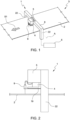
- the reference number 1 indicates a cleaning system for cleaning a band 2 circulating in a paper making machine 3 according to the present invention.
- Figure 1 illustrates only one portion of the paper making machine 3.
- the band 2 circulates in a first circulation direction S1.
- the portion of the paper making machine 3 illustrated in figure 1 belongs to a pressing section. It is understood that the system 1 according to the present invention can be installed also in drying sections and/or in formation sections of the paper making machine 3.
- the system 1 comprises at least a detecting device 4, configured to detect at least one parameter indicative of the cleaning conditions of the band 2 on at least one portion of the band 2, at least one cleaning device 5 configured to clean the band 2, and a control device 6 configured to regulate the cleaning device 5 based on the at least one parameter indicative of the cleaning of the band 2 detected by the detecting device 4.
- the system 1 further comprises a first moving assembly 7 configured to move the detecting device 4 with respect to the band 2 and a second moving assembly 8 configured to move the cleaning device 5 with respect to the band 2.
- the detecting device 4 is provided with a first detector (not illustrated) configured to detect at least one parameter indicative of the cleaning conditions of the band 2.
- the detecting device 4 is provided with a first detector (not illustrated) configured to detect the permeability of the band 2.
- the first detector comprises at least one water delivery nozzle and a flow meter associated with the nozzle (not illustrated).
- the detecting device 4 further comprises a control unit (not illustrated), connected to the first detector to process the signals coming from it and provide one or more data indicative of the cleaning of the band 2 based on the permeability values detected.
- the detecting device 4 is also provided with a second detector configured to detect the humidity of the band 2 and the control unit is also connected to the second detector to process the signals coming from it and provide one or more data indicative of the cleaning of the band 2 based on the permeability and humidity values detected.
- the second detector comprises at least a microwave sensor.
- the detecting device 4 comprises one single detector configured to detect the humidity of the band 2 and the control unit is also connected to the detector to process the signals coming from it and provide one or more data indicative of the cleaning conditions of the band 2 based on the humidity values detected.
- the detecting device 4 is supplied with water by means of a water supply duct (not visible in the attached figures) and is provided with a battery electrical power supply.
- a variation provides for connection to the electrical power supply network by means of a cable.
- control unit is arranged remotely and communication between the control unit and the detectors of the detecting device 4 takes place by means of cable or wireless communication systems.
- the detecting device 4 can detect other parameters indicative of the cleaning conditions of the band 2.
- the detecting device 4 is schematically represented as a case inside which the first detector and the control unit are housed. It is understood that the detecting device 4 can have a different configuration.
- the cleaning device 5 is provided with at least one nozzle 9 for generating a jet of cleaning fluid, which is arranged, in use, so that the jet of cleaning fluid emitted from the nozzle 9 is directed towards the band 2.
- the cleaning fluid is preferably pressurized water.
- the cleaning fluid can be a mixture having a specific chemical composition (for example, basic, acid, solvent, etc).
- the mixture can also be waterbased.
- the nozzle 9 is schematically shown in the attached figures and is preferably defined by a terminal having a diameter smaller than the diameter of the tube to which it is coupled. In this way, the flow of water passes from the larger diameter to the smaller one.
- the pressure and flowrate of the jet of water can be regulated.
- the nozzle 9 of the cleaning device 5 can oscillate in a controlled manner.
- the cleaning device 5 can also comprise different nozzles arranged in configurations such as to locally increase the cleaning action or to carry out a distributed cleaning action.
- the cleaning device 5 can comprise nozzles of different geometries and having different inclinations with respect to the band 2.
- a variation of the cleaning device 5 which comprises a plurality of nozzles 9 side-by-side in a direction orthogonal to the circulation direction S1 of the band 2 and distributed throughout the width of the band 2.
- the nozzles 9 can oscillate in a controlled manner, preferably in a direction transversal to the circulation direction S1 of the band 2.
- the nozzles 9 can carry out contained and controlled movements in a direction transversal to the circulation direction S1 of the band 2.
- the cleaning device 5 is supplied with the cleaning fluid by means of a supply duct (not visible in the attached figures) and is provided with a battery electric power supply. According to a variation, it is connected to the electric power supply network by means of a cable.
- the cleaning device 5 is schematically shown as a case provided with one single nozzle 9. It is understood that the cleaning device can have a different configuration.
- the first moving assembly 7 is configured to move the detecting device 4 with respect to the band 2 in a direction transversal to the circulation direction S1 of the band 2.
- the detecting device 4 is active during the movement carried out by the first moving assembly 7.
- the detecting device 4 detects a plurality of parameters indicative of the cleaning of the band 2 in different portions of the band 2.
- the detecting device 4 moved by the first moving assembly 7 carries out a scan of the cleaning conditions of the band 2 circulating in the circulation direction S1. Normally the band 2 circulates at a speed ranging between 0.5 m/s and 40 m/s.
- the band 2 normally has longitudinal areas which are dirty to varying degrees. Therefore, the scan described above and performed by the cleaning device 5 provides a sufficiently reliable indication of the actual conditions of the band 2.
- the second moving assembly 8 is configured to move the cleaning device 5 with respect to the band 2 in a direction transversal to the circulation direction S1 of the band 2.
- the cleaning device 5 can be active or inactive during the movement performed by the second moving assembly 8.
- the cleaning device 5 If the cleaning device 5 is active during the movement, cleaning will be obtained along areas transversal to the circulation direction, whereas if the cleaning device 5 is firstly positioned and then activated, the cleaning will be carried out on longitudinal areas of the band 2.
- the cleaning device 5 in accordance with the variation illustrated in figure 7 is fixed and is not associated with any moving assembly.
- the first moving assembly 7 coincides with the second moving assembly 8.
- the detecting device 4 and the cleaning device 5 are moved by a same moving assembly and perform substantially the same movements.
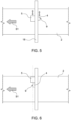
- Figures 5 and 6 illustrate two variations, which will be described in detail further on, in accordance with which the first moving assembly 7 is distinct from the second moving assembly 8.
- the first moving assembly 7 and the second moving assembly 8 have a very similar structure.
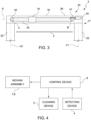
- Figure 3 shows schematically the moving assembly 7, 8.
- the cleaning device 5 and the detecting device 4 have been removed for the sake of simplicity.
- the moving assembly 7 comprises a supporting frame 17, a guide 18 supported by the supporting frame 17, a carriage 19 that moves along the guide 18, and a moving device 20 configured to move the carriage 19 along the guide 18.
- the supporting frame 17 comprises two substantially identical uprights 22, which are preferably arranged parallel resting on the floor or on an appropriate support base at the sides of the band 2.
- the uprights 22 extend along two respective vertical axes V 1 and V 2 .
- the uprights 22 are preferably parallelepipedal-shaped and are coupled to the guide 18.
- the uprights 22 are preferably hollow to allow for any housing of parts of the system 1.
- a variation not illustrated provides for the supporting frame 17 to be a portion of the main frame normally used for supporting also other elements of the paper making machine 3.
- the guide 18 extends along an axis A, orthogonal to the axes V 1 , V 2 of the uprights 22 and, therefore, extends horizontally.
- the guide 18 and the uprights 22 define a bridge structure.
- Said solution guarantees a high safety level during the detection and scanning operations, because it prevents the operator from getting close to the moving machine.
- the guide 18 is arranged above the band 2.
- the structure defined by the uprights 22 and the guide 18 can be shaped and arranged so as to be in front of the band 2, which runs substantially in an almost vertical direction.
- the guide 18 comprises a guide element 26, which extends along the axis A and has a substantially C-shaped section along a plane orthogonal to the axis A.
- the guide element 26 is made in one single piece.
- the guide element 26 is a section bar.
- the guide element 26 thus shaped defines a longitudinal seat 31.
- the moving device 20 is a cable moving device comprising a drive member 40 arranged in the seat 31 near an upright 22, a drive pulley 41, a return pulley 42 arranged in the seat 31 near the other upright 22, and a traction cable 43.
- the drive pulley 41 is rotatable about a rotation axis B orthogonal to the axis A and is operated by the drive member 40 connected to the drive pulley 41 by transmission means (not illustrated).
- the drive pulley 41 is provided with a perimeter housing seat (not shown) and configured to house the traction cable 43.
- the drive member 40 is preferably a stepper motor.
- the return pulley 42 is rotatable about an axis C, has a perimeter housing seat (not illustrated) configured to house the traction cable 43 and rotates idle dragged by the traction cable 43.
- the traction cable 43 is preferably a cable made of steel.
- the drive pulley 41 and the return pulley 42 are preferably rubber-coated.
- the carriage 19 is provided with a gripping member (not illustrated) configured to hook the carriage 19 to the traction cable 43 and is coupled to the detecting device 4 and to the cleaning device 5.
- the carriage 19 comprises movement means (not illustrated) configured to move the detecting device 4 and/or the cleaning device 5 or a portion of the carriage 19 coupled to the detecting device 4 and/or to the cleaning device 5 towards the band 2, so as to vary the distance between band 2 and detecting device 4.
- movement means (not illustrated) configured to move the detecting device 4 and/or the cleaning device 5 or a portion of the carriage 19 coupled to the detecting device 4 and/or to the cleaning device 5 towards the band 2, so as to vary the distance between band 2 and detecting device 4.
- the carriage 19 is further provided with a jointed grommet element (not illustrated in the attached figures), configured to house the water supply duct of the detecting device 4 and/or of the cleaning device and if necessary other service cables.
- the moving device 20 can be of different type, for example pneumatic or hydraulic.
- the control device 6 is configured to regulate the cleaning device 5 based on the parameter indicative of the cleaning of the band 2 detected by the detecting device 4.
- the control device 6 is preferably arranged in a remote seat and communicates with the cleaning device 5, with the control unit of the detecting device 4 and with the moving assembly 7 and the moving assembly 8 by means of cable or by means of wireless communication systems.
- control device to be coupled to the cleaning device 5 and/or to the detecting device 4.
- control device 6 is configured to receive the data detected by the detecting device 4 indicative of the cleaning of the band 2 (in the non-limiting example described here, the permeability values in different points along a direction transversal to the circulation direction S1) and regulate operation of the cleaning device 5 based on said data detected.
- control device 6 is configured to identify the dirty areas of the band 2, for example by identifying the areas of the band 2 in which the permeability value is lower than a threshold value.
- the threshold value is calculated by the control device 6 as the mean of the permeability values detected by the detecting device 4 in a given time window.
- the graph of figure 8 illustrates an example of identification of the dirty areas of the band 2.
- the X axis shows the dimension of the band X transversal to the circulation direction S1.
- the Y axis shows the permeability values detected by the detecting device 4 along the dimension X of the band 2.
- the dirty areas Z1, Z2 are those in which the permeability value is lower than the threshold value.
- control device 6 is configured to regulate activation of the cleaning device 5 and the position of the cleaning device 5 along the direction transversal to the circulation direction S1 of the band 2.
- control device 6 is configured to regulate the moving assembly 8 so as to regulate the position of the cleaning device 5 with respect to the band 2.
- control device 6 regulates the moving assembly 8 so that the cleaning device 5 is positioned and is activated in the dirty areas Z1, Z2 of the band 2 identified by the control device 6.
- the control device 6 is preferably configured also to regulate the movement speed of the cleaning device 5 in the direction transversal to the circulation direction S1 while the cleaning device 5 is active.
- control device 6 is also configured to regulate the distance of the cleaning device 5 from the band 2.
- control device 6 is also configured to regulate the pressure of the jet of water generated by the cleaning device 5.
- the detecting device 4 carries out a scan of the band 2 and sends the values detected to the control device 6. Based on said values, the control device 6 regulates the cleaning device 5 as described above.
- a variation provides for the detection and cleaning to be substantially carried out in sequence in the direction transversal to the circulation direction S1.
- a detection is carried out by the detecting device 4 and any consequent cleaning action by the cleaning device 5.
- figure 5 illustrates a variation of the present invention in which the cleaning device 5 and the detecting device 4 are moved independently by the respective moving assemblies (of which only the guide 18 is visible) and are arranged on opposite sides with respect to the guide 18.
- Figure 6 instead illustrates a further variation of the present invention in which the cleaning device 5 and the detecting device 4 are moved independently by the respective moving assemblies (of which only the guide 18 is visible) and are arranged on the same side with respect to the guide 18.
- the guides 18 of each moving assembly 7 and 8 can be arranged at different heights with respect to the band 2 to allow free and independent sliding in the direction transversal to the circulation direction S1.
- control device 6 is configured to regulate the selective activation of the nozzles 9a based on the plurality of parameters indicative of the cleaning of the band 2 detected by the detecting device 4. In other words, the control device 6 activates only the nozzles 9a below the dirty areas Z1, Z2.
Landscapes
- Cleaning By Liquid Or Steam (AREA)
- Paper (AREA)
- Chemical & Material Sciences (AREA)
- Chemical Kinetics & Catalysis (AREA)
- General Chemical & Material Sciences (AREA)
- Detergent Compositions (AREA)
- Accessory Devices And Overall Control Thereof (AREA)
Claims (15)
- Système de nettoyage pour nettoyer une bande (2) circulant dans une machine de fabrication de papier (3) ; le système (1) comprenant :- au moins un dispositif de détection (4) configuré pour détecter au moins un paramètre indicatif des conditions de nettoyage de la bande (2) sur au moins une partie de la bande (2) ;- au moins un dispositif de nettoyage (5) prévu avec au moins une buse (9) pour créer un jet d'un fluide de nettoyage ; la buse (9) étant agencée de sorte que le jet de fluide de nettoyage est dirigé vers la bande (2) ;- un dispositif de contrôle (6) configuré pour réguler le dispositif de nettoyage (5) sur la base du au moins un paramètre indicatif des conditions de nettoyage de la bande (2) ;- un premier ensemble de déplacement (7) configuré pour déplacer le dispositif de détection (4) le long d'une direction (A) transversale par rapport à la direction de circulation (S1) de la bande (2) ; le dispositif de détection (4) étant actif pendant le déplacement afin de détecter une pluralité de paramètres indicatifs des conditions de nettoyage de la bande (2) dans différentes parties de la bande (2) ;- un second ensemble de déplacement (8) configuré pour déplacer le dispositif de nettoyage (5) le long d'une direction (A) transversale par rapport à la direction de circulation (S1) de la bande (2) ;le système de nettoyage étant caractérisé en ce que le second ensemble de déplacement (8) comprend :• un second dispositif de déplacement (20) ;• un second chariot (19) déplacé par le second dispositif de déplacement (20) et couplé au dispositif de nettoyage (5) ;• un second guide (18) configuré pour guider le déplacement du second chariot (19) et s'étendant le long d'un axe (A) sensiblement transversal par rapport à la direction de circulation (S1) de la bande (2) ;• un bâti de support (17) supportant le second guide (18) ;le bâti de support (17) comprenant deux montants (22) sensiblement identiques couplés au second guide (18) reposant sur le sol ou sur une base de support appropriée sur les côtés de la bande (2) ; dans lequel le second guide (18) et les montants (22) définissent une structure de pont sur la bande (2).
- Système de nettoyage selon la revendication 1, dans lequel le dispositif de détection (4) est configuré pour détecter au moins un paramètre indicatif de la perméabilité de la bande (2).
- Système de nettoyage selon la revendication 1 ou 2, dans lequel le dispositif de détection (4) est configuré pour détecter un paramètre indicatif de l'humidité de la bande (2).
- Système de nettoyage selon l'une quelconque des revendications précédentes, dans lequel le dispositif de nettoyage (5) est prévu avec une pluralité de buses (9a) agencées côte à côte le long d'une direction transversale à la direction de circulation (S1) de la bande (2) ; le dispositif de contrôle (6) étant configuré pour réguler l'activation sélective des buses (9a) sur la base de la pluralité de paramètres indicatifs des conditions de nettoyage de la bande (2) détectées par le dispositif de détection (4).
- Système de nettoyage selon l'une quelconque des revendications précédentes, dans lequel le premier ensemble de déplacement (7) et le second ensemble de déplacement (8) sont indépendants.
- Système de nettoyage selon l'une quelconque des revendications précédentes, dans lequel le premier ensemble de déplacement (7) et le second ensemble de déplacement (8) coïncident.
- Système de nettoyage selon l'une quelconque des revendications précédentes, dans lequel le dispositif de contrôle (6) est configuré pour réguler l'activation du dispositif de nettoyage (5) et la position du dispositif de nettoyage (5) le long de la direction (A) transversale par rapport à la direction de circulation (S1) de la bande.
- Système de nettoyage selon la revendication 7, dans lequel le dispositif de contrôle (6) est configuré pour activer le dispositif de nettoyage (5) dans des positions, le long de la direction (A) transversale par rapport à la direction de circulation (S1) de la bande (2), correspondant aux valeurs de perméabilité inférieures à une valeur de seuil.
- Système de nettoyage selon la revendication 8, dans lequel la valeur de seuil est une valeur moyenne de la pluralité de valeurs détectées par le dispositif de détection (4) pendant le déplacement le long de la direction (A) transversale par rapport à la direction de circulation (S1) de la bande (2).
- Système de nettoyage selon l'une quelconque des revendications précédentes, dans lequel le dispositif de contrôle (6) est configuré pour réguler la vitesse de déplacement du dispositif de nettoyage (5) le long de la direction (A) transversale à la direction de circulation (S1) de la bande (2) alors que le dispositif de nettoyage (5) est actif.
- Système de nettoyage selon l'une quelconque des revendications précédentes, dans lequel le dispositif de contrôle (6) est configuré pour réguler la distance entre le dispositif de nettoyage (5) et la bande (2).
- Système de nettoyage selon l'une quelconque des revendications précédentes, dans lequel le dispositif de contrôle (6) est configuré pour réguler la pression du jet de fluide de nettoyage créé par le dispositif de nettoyage (5).
- Système de nettoyage selon l'une quelconque des revendications précédentes, dans lequel le premier ensemble de déplacement (7) comprend :• un premier dispositif de déplacement (20) ;• un premier chariot (19) déplacé par le premier dispositif de déplacement (20) et couplé au dispositif de détection (4) ;• un premier guide (18) configuré pour guider le déplacement du premier chariot (19) et s'étendant le long d'un axe (A) sensiblement transversal par rapport à la direction de circulation (S1) de la bande (2).
- Machine de fabrication de papier comprenant au moins une bande (2) circulant le long d'une direction de circulation (S1) et au moins un système de nettoyage (1) pour nettoyer une bande (2) selon l'une quelconque des revendications précédentes.
- Procédé de nettoyage pour nettoyer une bande (2) circulant dans une machine de fabrication de papier (3) au moyen d'un système de nettoyage (1) selon l'une quelconque des revendications 1 à 13 ; le procédé comprenant les étapes consistant à :- détecter au moins un paramètre indicatif des conditions de nettoyage de la bande (2) sur au moins une partie de la bande (2) au moyen du dispositif de détection (4) du système de nettoyage (1) ;- nettoyer la bande (2) au moyen du dispositif de nettoyage (5) du système de nettoyage (1) ;- réguler le dispositif de nettoyage (5) sur la base du au moins un paramètre indicatif du nettoyage de la bande (2).
Applications Claiming Priority (1)
| Application Number | Priority Date | Filing Date | Title |
|---|---|---|---|
| IT102018000010875A IT201800010875A1 (it) | 2018-12-06 | 2018-12-06 | Sistema e metodo di pulizia per pulire un feltro circolante in una macchina per la produzione della carta e macchina per la produzione della carta comprendente detto sistema |
Publications (2)
| Publication Number | Publication Date |
|---|---|
| EP3663463A1 EP3663463A1 (fr) | 2020-06-10 |
| EP3663463B1 true EP3663463B1 (fr) | 2023-03-22 |
Family
ID=65767223
Family Applications (1)
| Application Number | Title | Priority Date | Filing Date |
|---|---|---|---|
| EP19214220.6A Active EP3663463B1 (fr) | 2018-12-06 | 2019-12-06 | Système de nettoyage et procédé de nettoyage d'une bande circulant dans une machine de fabrication de papier et machine de fabrication de papier comprenant ledit système |
Country Status (6)
| Country | Link |
|---|---|
| US (1) | US11613847B2 (fr) |
| EP (1) | EP3663463B1 (fr) |
| CA (1) | CA3064123A1 (fr) |
| ES (1) | ES2946882T3 (fr) |
| FI (1) | FI3663463T3 (fr) |
| IT (1) | IT201800010875A1 (fr) |
Family Cites Families (6)
| Publication number | Priority date | Publication date | Assignee | Title |
|---|---|---|---|---|
| GB8903357D0 (en) * | 1989-02-14 | 1989-04-05 | Morley Michael J | Improvements in and relating to shower installations for paper making machines |
| DE19712753A1 (de) * | 1997-03-26 | 1998-10-01 | Voith Sulzer Papiermasch Gmbh | Reinigungsvorrichtung |
| US6143092A (en) * | 1997-06-25 | 2000-11-07 | Voith Sulzer Papiermaschinen Gmbh | Process for cleaning a transport belt |
| DE10102199A1 (de) * | 2001-01-18 | 2002-08-01 | Voith Paper Patent Gmbh | Verfahren zur Konditionierung eines umlaufenden Filzbandes |
| DE102011006135A1 (de) * | 2011-03-25 | 2012-09-27 | Voith Patent Gmbh | Vorrichtung und Verfahren zum Reinigen und/oder Konditionieren einer Bespannung |
| ITMI20132213A1 (it) * | 2013-12-27 | 2015-06-28 | Giuseppe Cristini S P A Sa | Apparecchiatura e metodo per controllare le condizioni di almeno un nastro circolante in una macchina di fabbricazione della carta e macchina di fabbricazione della carta comprendente detta apparecchiatura |
-
2018
- 2018-12-06 IT IT102018000010875A patent/IT201800010875A1/it unknown
-
2019
- 2019-12-06 CA CA3064123A patent/CA3064123A1/fr active Pending
- 2019-12-06 US US16/706,031 patent/US11613847B2/en active Active
- 2019-12-06 ES ES19214220T patent/ES2946882T3/es active Active
- 2019-12-06 EP EP19214220.6A patent/EP3663463B1/fr active Active
- 2019-12-06 FI FIEP19214220.6T patent/FI3663463T3/fi active
Also Published As
| Publication number | Publication date |
|---|---|
| EP3663463A1 (fr) | 2020-06-10 |
| US20200179989A1 (en) | 2020-06-11 |
| FI3663463T3 (fi) | 2023-06-09 |
| RU2019139842A (ru) | 2021-06-10 |
| US11613847B2 (en) | 2023-03-28 |
| ES2946882T3 (es) | 2023-07-27 |
| CA3064123A1 (fr) | 2020-06-06 |
| IT201800010875A1 (it) | 2020-06-06 |
Similar Documents
| Publication | Publication Date | Title |
|---|---|---|
| US4726388A (en) | Automatic vehicle washing equipment | |
| KR102242992B1 (ko) | 번들 세척 장치 | |
| KR20210057553A (ko) | 무인 유리창 청소시스템 | |
| EP3663463B1 (fr) | Système de nettoyage et procédé de nettoyage d'une bande circulant dans une machine de fabrication de papier et machine de fabrication de papier comprenant ledit système | |
| CN117265710A (zh) | 向处理纤维条的纺纱机器供应的筒子架装置、设备和方法 | |
| US4701242A (en) | Mechanism for moving a shower nozzle in a paper making machine | |
| CN217359654U (zh) | 一种防水卷材空鼓检测装置 | |
| KR20100054241A (ko) | 마킹장치의 잉크젯 마킹 헤드 세척장치 및 그 제어방법 | |
| KR102432098B1 (ko) | 전차선용 세척장치 | |
| EP3788186B1 (fr) | Procédé de filage par fusion et d'enroulement de fils synthétiques, et équipement pour réaliser le procédé | |
| RU2799932C2 (ru) | Система очистки и способ очистки ленты, циркулирующей в бумагоделательной машине, и бумагоделательная машина, содержащая указанную систему | |
| KR102394344B1 (ko) | 캐리어 휠 세척장치 | |
| US20080313832A1 (en) | Rollover Wash Unit For a Vehicle Wash System | |
| JPS5928654B2 (ja) | 筒状布帛の湿潤処理装置に使用する膨らみ制御装置 | |
| KR102790725B1 (ko) | 자동 세차 시스템 | |
| KR102173514B1 (ko) | 번들 세척 장치 | |
| KR101202618B1 (ko) | 터널등 청소장치 | |
| KR101340130B1 (ko) | 절단 파이프 세척장치 | |
| CN113601985B (zh) | 一种稳定性高的数码印花机 | |
| FI114107B (fi) | Puhdistus- ja pinnoituslaitteisto sekä menetelmä liikkuvaa pintaa varten | |
| KR102432013B1 (ko) | 전차선용 세척장치 | |
| JP4432830B2 (ja) | 洗車機 | |
| WO2008110175A1 (fr) | Système de sécurité pour station de lavage de véhicules à moteur | |
| CN120348756B (zh) | 一种纤维检测物料运输机 | |
| KR100835367B1 (ko) | 저수조의 자동 코팅처리장치 |
Legal Events
| Date | Code | Title | Description |
|---|---|---|---|
| PUAI | Public reference made under article 153(3) epc to a published international application that has entered the european phase |
Free format text: ORIGINAL CODE: 0009012 |
|
| STAA | Information on the status of an ep patent application or granted ep patent |
Free format text: STATUS: THE APPLICATION HAS BEEN PUBLISHED |
|
| AK | Designated contracting states |
Kind code of ref document: A1 Designated state(s): AL AT BE BG CH CY CZ DE DK EE ES FI FR GB GR HR HU IE IS IT LI LT LU LV MC MK MT NL NO PL PT RO RS SE SI SK SM TR |
|
| AX | Request for extension of the european patent |
Extension state: BA ME |
|
| STAA | Information on the status of an ep patent application or granted ep patent |
Free format text: STATUS: REQUEST FOR EXAMINATION WAS MADE |
|
| 17P | Request for examination filed |
Effective date: 20201209 |
|
| RBV | Designated contracting states (corrected) |
Designated state(s): AL AT BE BG CH CY CZ DE DK EE ES FI FR GB GR HR HU IE IS IT LI LT LU LV MC MK MT NL NO PL PT RO RS SE SI SK SM TR |
|
| GRAP | Despatch of communication of intention to grant a patent |
Free format text: ORIGINAL CODE: EPIDOSNIGR1 |
|
| STAA | Information on the status of an ep patent application or granted ep patent |
Free format text: STATUS: GRANT OF PATENT IS INTENDED |
|
| GRAJ | Information related to disapproval of communication of intention to grant by the applicant or resumption of examination proceedings by the epo deleted |
Free format text: ORIGINAL CODE: EPIDOSDIGR1 |
|
| STAA | Information on the status of an ep patent application or granted ep patent |
Free format text: STATUS: REQUEST FOR EXAMINATION WAS MADE |
|
| INTG | Intention to grant announced |
Effective date: 20220729 |
|
| INTC | Intention to grant announced (deleted) | ||
| GRAP | Despatch of communication of intention to grant a patent |
Free format text: ORIGINAL CODE: EPIDOSNIGR1 |
|
| STAA | Information on the status of an ep patent application or granted ep patent |
Free format text: STATUS: GRANT OF PATENT IS INTENDED |
|
| INTG | Intention to grant announced |
Effective date: 20221005 |
|
| GRAS | Grant fee paid |
Free format text: ORIGINAL CODE: EPIDOSNIGR3 |
|
| GRAA | (expected) grant |
Free format text: ORIGINAL CODE: 0009210 |
|
| STAA | Information on the status of an ep patent application or granted ep patent |
Free format text: STATUS: THE PATENT HAS BEEN GRANTED |
|
| RIN1 | Information on inventor provided before grant (corrected) |
Inventor name: MICHELOTTI, MATTEO Inventor name: CANALI, LUCA Inventor name: CRISTINI, GIOVANNI |
|
| AK | Designated contracting states |
Kind code of ref document: B1 Designated state(s): AL AT BE BG CH CY CZ DE DK EE ES FI FR GB GR HR HU IE IS IT LI LT LU LV MC MK MT NL NO PL PT RO RS SE SI SK SM TR |
|
| REG | Reference to a national code |
Ref country code: GB Ref legal event code: FG4D |
|
| REG | Reference to a national code |
Ref country code: CH Ref legal event code: EP |
|
| REG | Reference to a national code |
Ref country code: DE Ref legal event code: R096 Ref document number: 602019026614 Country of ref document: DE |
|
| REG | Reference to a national code |
Ref country code: IE Ref legal event code: FG4D |
|
| REG | Reference to a national code |
Ref country code: AT Ref legal event code: REF Ref document number: 1555350 Country of ref document: AT Kind code of ref document: T Effective date: 20230415 |
|
| REG | Reference to a national code |
Ref country code: FI Ref legal event code: FGE |
|
| REG | Reference to a national code |
Ref country code: SE Ref legal event code: TRGR |
|
| REG | Reference to a national code |
Ref country code: LT Ref legal event code: MG9D |
|
| P01 | Opt-out of the competence of the unified patent court (upc) registered |
Effective date: 20230529 |
|
| REG | Reference to a national code |
Ref country code: NL Ref legal event code: MP Effective date: 20230322 |
|
| REG | Reference to a national code |
Ref country code: ES Ref legal event code: FG2A Ref document number: 2946882 Country of ref document: ES Kind code of ref document: T3 Effective date: 20230727 |
|
| PG25 | Lapsed in a contracting state [announced via postgrant information from national office to epo] |
Ref country code: RS Free format text: LAPSE BECAUSE OF FAILURE TO SUBMIT A TRANSLATION OF THE DESCRIPTION OR TO PAY THE FEE WITHIN THE PRESCRIBED TIME-LIMIT Effective date: 20230322 Ref country code: NO Free format text: LAPSE BECAUSE OF FAILURE TO SUBMIT A TRANSLATION OF THE DESCRIPTION OR TO PAY THE FEE WITHIN THE PRESCRIBED TIME-LIMIT Effective date: 20230622 Ref country code: LV Free format text: LAPSE BECAUSE OF FAILURE TO SUBMIT A TRANSLATION OF THE DESCRIPTION OR TO PAY THE FEE WITHIN THE PRESCRIBED TIME-LIMIT Effective date: 20230322 Ref country code: LT Free format text: LAPSE BECAUSE OF FAILURE TO SUBMIT A TRANSLATION OF THE DESCRIPTION OR TO PAY THE FEE WITHIN THE PRESCRIBED TIME-LIMIT Effective date: 20230322 Ref country code: HR Free format text: LAPSE BECAUSE OF FAILURE TO SUBMIT A TRANSLATION OF THE DESCRIPTION OR TO PAY THE FEE WITHIN THE PRESCRIBED TIME-LIMIT Effective date: 20230322 |
|
| REG | Reference to a national code |
Ref country code: AT Ref legal event code: MK05 Ref document number: 1555350 Country of ref document: AT Kind code of ref document: T Effective date: 20230322 |
|
| PG25 | Lapsed in a contracting state [announced via postgrant information from national office to epo] |
Ref country code: NL Free format text: LAPSE BECAUSE OF FAILURE TO SUBMIT A TRANSLATION OF THE DESCRIPTION OR TO PAY THE FEE WITHIN THE PRESCRIBED TIME-LIMIT Effective date: 20230322 Ref country code: GR Free format text: LAPSE BECAUSE OF FAILURE TO SUBMIT A TRANSLATION OF THE DESCRIPTION OR TO PAY THE FEE WITHIN THE PRESCRIBED TIME-LIMIT Effective date: 20230623 |
|
| REG | Reference to a national code |
Ref country code: DE Ref legal event code: R082 Ref document number: 602019026614 Country of ref document: DE Representative=s name: MUELLER-BORE & PARTNER PATENTANWAELTE PARTG MB, DE |
|
| PG25 | Lapsed in a contracting state [announced via postgrant information from national office to epo] |
Ref country code: SM Free format text: LAPSE BECAUSE OF FAILURE TO SUBMIT A TRANSLATION OF THE DESCRIPTION OR TO PAY THE FEE WITHIN THE PRESCRIBED TIME-LIMIT Effective date: 20230322 Ref country code: RO Free format text: LAPSE BECAUSE OF FAILURE TO SUBMIT A TRANSLATION OF THE DESCRIPTION OR TO PAY THE FEE WITHIN THE PRESCRIBED TIME-LIMIT Effective date: 20230322 Ref country code: PT Free format text: LAPSE BECAUSE OF FAILURE TO SUBMIT A TRANSLATION OF THE DESCRIPTION OR TO PAY THE FEE WITHIN THE PRESCRIBED TIME-LIMIT Effective date: 20230724 Ref country code: EE Free format text: LAPSE BECAUSE OF FAILURE TO SUBMIT A TRANSLATION OF THE DESCRIPTION OR TO PAY THE FEE WITHIN THE PRESCRIBED TIME-LIMIT Effective date: 20230322 Ref country code: AT Free format text: LAPSE BECAUSE OF FAILURE TO SUBMIT A TRANSLATION OF THE DESCRIPTION OR TO PAY THE FEE WITHIN THE PRESCRIBED TIME-LIMIT Effective date: 20230322 |
|
| PG25 | Lapsed in a contracting state [announced via postgrant information from national office to epo] |
Ref country code: SK Free format text: LAPSE BECAUSE OF FAILURE TO SUBMIT A TRANSLATION OF THE DESCRIPTION OR TO PAY THE FEE WITHIN THE PRESCRIBED TIME-LIMIT Effective date: 20230322 Ref country code: PL Free format text: LAPSE BECAUSE OF FAILURE TO SUBMIT A TRANSLATION OF THE DESCRIPTION OR TO PAY THE FEE WITHIN THE PRESCRIBED TIME-LIMIT Effective date: 20230322 Ref country code: IS Free format text: LAPSE BECAUSE OF FAILURE TO SUBMIT A TRANSLATION OF THE DESCRIPTION OR TO PAY THE FEE WITHIN THE PRESCRIBED TIME-LIMIT Effective date: 20230722 |
|
| REG | Reference to a national code |
Ref country code: DE Ref legal event code: R097 Ref document number: 602019026614 Country of ref document: DE |
|
| PLBE | No opposition filed within time limit |
Free format text: ORIGINAL CODE: 0009261 |
|
| STAA | Information on the status of an ep patent application or granted ep patent |
Free format text: STATUS: NO OPPOSITION FILED WITHIN TIME LIMIT |
|
| PG25 | Lapsed in a contracting state [announced via postgrant information from national office to epo] |
Ref country code: SI Free format text: LAPSE BECAUSE OF FAILURE TO SUBMIT A TRANSLATION OF THE DESCRIPTION OR TO PAY THE FEE WITHIN THE PRESCRIBED TIME-LIMIT Effective date: 20230322 Ref country code: DK Free format text: LAPSE BECAUSE OF FAILURE TO SUBMIT A TRANSLATION OF THE DESCRIPTION OR TO PAY THE FEE WITHIN THE PRESCRIBED TIME-LIMIT Effective date: 20230322 Ref country code: CZ Free format text: LAPSE BECAUSE OF FAILURE TO SUBMIT A TRANSLATION OF THE DESCRIPTION OR TO PAY THE FEE WITHIN THE PRESCRIBED TIME-LIMIT Effective date: 20230322 |
|
| 26N | No opposition filed |
Effective date: 20240102 |
|
| PG25 | Lapsed in a contracting state [announced via postgrant information from national office to epo] |
Ref country code: IT Free format text: LAPSE BECAUSE OF FAILURE TO SUBMIT A TRANSLATION OF THE DESCRIPTION OR TO PAY THE FEE WITHIN THE PRESCRIBED TIME-LIMIT Effective date: 20230322 |
|
| REG | Reference to a national code |
Ref country code: CH Ref legal event code: PL |
|
| PG25 | Lapsed in a contracting state [announced via postgrant information from national office to epo] |
Ref country code: LU Free format text: LAPSE BECAUSE OF NON-PAYMENT OF DUE FEES Effective date: 20231206 |
|
| PG25 | Lapsed in a contracting state [announced via postgrant information from national office to epo] |
Ref country code: MC Free format text: LAPSE BECAUSE OF FAILURE TO SUBMIT A TRANSLATION OF THE DESCRIPTION OR TO PAY THE FEE WITHIN THE PRESCRIBED TIME-LIMIT Effective date: 20230322 |
|
| GBPC | Gb: european patent ceased through non-payment of renewal fee |
Effective date: 20231206 |
|
| REG | Reference to a national code |
Ref country code: BE Ref legal event code: MM Effective date: 20231231 |
|
| PG25 | Lapsed in a contracting state [announced via postgrant information from national office to epo] |
Ref country code: MC Free format text: LAPSE BECAUSE OF FAILURE TO SUBMIT A TRANSLATION OF THE DESCRIPTION OR TO PAY THE FEE WITHIN THE PRESCRIBED TIME-LIMIT Effective date: 20230322 Ref country code: LU Free format text: LAPSE BECAUSE OF NON-PAYMENT OF DUE FEES Effective date: 20231206 |
|
| REG | Reference to a national code |
Ref country code: IE Ref legal event code: MM4A |
|
| PG25 | Lapsed in a contracting state [announced via postgrant information from national office to epo] |
Ref country code: IE Free format text: LAPSE BECAUSE OF NON-PAYMENT OF DUE FEES Effective date: 20231206 |
|
| PG25 | Lapsed in a contracting state [announced via postgrant information from national office to epo] |
Ref country code: GB Free format text: LAPSE BECAUSE OF NON-PAYMENT OF DUE FEES Effective date: 20231206 |
|
| PG25 | Lapsed in a contracting state [announced via postgrant information from national office to epo] |
Ref country code: BE Free format text: LAPSE BECAUSE OF NON-PAYMENT OF DUE FEES Effective date: 20231231 |
|
| PG25 | Lapsed in a contracting state [announced via postgrant information from national office to epo] |
Ref country code: CH Free format text: LAPSE BECAUSE OF NON-PAYMENT OF DUE FEES Effective date: 20231231 |
|
| PG25 | Lapsed in a contracting state [announced via postgrant information from national office to epo] |
Ref country code: IE Free format text: LAPSE BECAUSE OF NON-PAYMENT OF DUE FEES Effective date: 20231206 Ref country code: GB Free format text: LAPSE BECAUSE OF NON-PAYMENT OF DUE FEES Effective date: 20231206 Ref country code: CH Free format text: LAPSE BECAUSE OF NON-PAYMENT OF DUE FEES Effective date: 20231231 Ref country code: BE Free format text: LAPSE BECAUSE OF NON-PAYMENT OF DUE FEES Effective date: 20231231 |
|
| PG25 | Lapsed in a contracting state [announced via postgrant information from national office to epo] |
Ref country code: BG Free format text: LAPSE BECAUSE OF FAILURE TO SUBMIT A TRANSLATION OF THE DESCRIPTION OR TO PAY THE FEE WITHIN THE PRESCRIBED TIME-LIMIT Effective date: 20230322 |
|
| PG25 | Lapsed in a contracting state [announced via postgrant information from national office to epo] |
Ref country code: BG Free format text: LAPSE BECAUSE OF FAILURE TO SUBMIT A TRANSLATION OF THE DESCRIPTION OR TO PAY THE FEE WITHIN THE PRESCRIBED TIME-LIMIT Effective date: 20230322 |
|
| PG25 | Lapsed in a contracting state [announced via postgrant information from national office to epo] |
Ref country code: CY Free format text: LAPSE BECAUSE OF FAILURE TO SUBMIT A TRANSLATION OF THE DESCRIPTION OR TO PAY THE FEE WITHIN THE PRESCRIBED TIME-LIMIT; INVALID AB INITIO Effective date: 20191206 |
|
| PG25 | Lapsed in a contracting state [announced via postgrant information from national office to epo] |
Ref country code: HU Free format text: LAPSE BECAUSE OF FAILURE TO SUBMIT A TRANSLATION OF THE DESCRIPTION OR TO PAY THE FEE WITHIN THE PRESCRIBED TIME-LIMIT; INVALID AB INITIO Effective date: 20191206 |
|
| PG25 | Lapsed in a contracting state [announced via postgrant information from national office to epo] |
Ref country code: TR Free format text: LAPSE BECAUSE OF FAILURE TO SUBMIT A TRANSLATION OF THE DESCRIPTION OR TO PAY THE FEE WITHIN THE PRESCRIBED TIME-LIMIT Effective date: 20230322 |
|
| PGFP | Annual fee paid to national office [announced via postgrant information from national office to epo] |
Ref country code: FI Payment date: 20251226 Year of fee payment: 7 |
|
| PGFP | Annual fee paid to national office [announced via postgrant information from national office to epo] |
Ref country code: FR Payment date: 20251223 Year of fee payment: 7 |
|
| PGFP | Annual fee paid to national office [announced via postgrant information from national office to epo] |
Ref country code: SE Payment date: 20251224 Year of fee payment: 7 |
|
| PGFP | Annual fee paid to national office [announced via postgrant information from national office to epo] |
Ref country code: ES Payment date: 20260122 Year of fee payment: 7 |
|
| PGFP | Annual fee paid to national office [announced via postgrant information from national office to epo] |
Ref country code: DE Payment date: 20251229 Year of fee payment: 7 |