EP3653698B1 - Automated system for producing induced pluripotent stem cells or differentiated cells - Google Patents
Automated system for producing induced pluripotent stem cells or differentiated cells Download PDFInfo
- Publication number
- EP3653698B1 EP3653698B1 EP19203379.3A EP19203379A EP3653698B1 EP 3653698 B1 EP3653698 B1 EP 3653698B1 EP 19203379 A EP19203379 A EP 19203379A EP 3653698 B1 EP3653698 B1 EP 3653698B1
- Authority
- EP
- European Patent Office
- Prior art keywords
- cells
- cell
- automated
- unit
- differentiated
- Prior art date
- Legal status (The legal status is an assumption and is not a legal conclusion. Google has not performed a legal analysis and makes no representation as to the accuracy of the status listed.)
- Active
Links
Images






Classifications
-
- C—CHEMISTRY; METALLURGY
- C12—BIOCHEMISTRY; BEER; SPIRITS; WINE; VINEGAR; MICROBIOLOGY; ENZYMOLOGY; MUTATION OR GENETIC ENGINEERING
- C12M—APPARATUS FOR ENZYMOLOGY OR MICROBIOLOGY; APPARATUS FOR CULTURING MICROORGANISMS FOR PRODUCING BIOMASS, FOR GROWING CELLS OR FOR OBTAINING FERMENTATION OR METABOLIC PRODUCTS, i.e. BIOREACTORS OR FERMENTERS
- C12M23/00—Constructional details, e.g. recesses, hinges
- C12M23/02—Form or structure of the vessel
- C12M23/04—Flat or tray type, drawers
-
- C—CHEMISTRY; METALLURGY
- C12—BIOCHEMISTRY; BEER; SPIRITS; WINE; VINEGAR; MICROBIOLOGY; ENZYMOLOGY; MUTATION OR GENETIC ENGINEERING
- C12M—APPARATUS FOR ENZYMOLOGY OR MICROBIOLOGY; APPARATUS FOR CULTURING MICROORGANISMS FOR PRODUCING BIOMASS, FOR GROWING CELLS OR FOR OBTAINING FERMENTATION OR METABOLIC PRODUCTS, i.e. BIOREACTORS OR FERMENTERS
- C12M35/00—Means for application of stress for stimulating the growth of microorganisms or the generation of fermentation or metabolic products; Means for electroporation or cell fusion
- C12M35/02—Electrical or electromagnetic means, e.g. for electroporation or for cell fusion
-
- C—CHEMISTRY; METALLURGY
- C12—BIOCHEMISTRY; BEER; SPIRITS; WINE; VINEGAR; MICROBIOLOGY; ENZYMOLOGY; MUTATION OR GENETIC ENGINEERING
- C12M—APPARATUS FOR ENZYMOLOGY OR MICROBIOLOGY; APPARATUS FOR CULTURING MICROORGANISMS FOR PRODUCING BIOMASS, FOR GROWING CELLS OR FOR OBTAINING FERMENTATION OR METABOLIC PRODUCTS, i.e. BIOREACTORS OR FERMENTERS
- C12M35/00—Means for application of stress for stimulating the growth of microorganisms or the generation of fermentation or metabolic products; Means for electroporation or cell fusion
- C12M35/08—Chemical, biochemical or biological means, e.g. plasma jet, co-culture
-
- C—CHEMISTRY; METALLURGY
- C12—BIOCHEMISTRY; BEER; SPIRITS; WINE; VINEGAR; MICROBIOLOGY; ENZYMOLOGY; MUTATION OR GENETIC ENGINEERING
- C12M—APPARATUS FOR ENZYMOLOGY OR MICROBIOLOGY; APPARATUS FOR CULTURING MICROORGANISMS FOR PRODUCING BIOMASS, FOR GROWING CELLS OR FOR OBTAINING FERMENTATION OR METABOLIC PRODUCTS, i.e. BIOREACTORS OR FERMENTERS
- C12M47/00—Means for after-treatment of the produced biomass or of the fermentation or metabolic products, e.g. storage of biomass
- C12M47/04—Cell isolation or sorting
-
- C—CHEMISTRY; METALLURGY
- C12—BIOCHEMISTRY; BEER; SPIRITS; WINE; VINEGAR; MICROBIOLOGY; ENZYMOLOGY; MUTATION OR GENETIC ENGINEERING
- C12N—MICROORGANISMS OR ENZYMES; COMPOSITIONS THEREOF; PROPAGATING, PRESERVING, OR MAINTAINING MICROORGANISMS; MUTATION OR GENETIC ENGINEERING; CULTURE MEDIA
- C12N5/00—Undifferentiated human, animal or plant cells, e.g. cell lines; Tissues; Cultivation or maintenance thereof; Culture media therefor
- C12N5/06—Animal cells or tissues; Human cells or tissues
- C12N5/0602—Vertebrate cells
- C12N5/0607—Non-embryonic pluripotent stem cells, e.g. MASC
-
- C—CHEMISTRY; METALLURGY
- C12—BIOCHEMISTRY; BEER; SPIRITS; WINE; VINEGAR; MICROBIOLOGY; ENZYMOLOGY; MUTATION OR GENETIC ENGINEERING
- C12N—MICROORGANISMS OR ENZYMES; COMPOSITIONS THEREOF; PROPAGATING, PRESERVING, OR MAINTAINING MICROORGANISMS; MUTATION OR GENETIC ENGINEERING; CULTURE MEDIA
- C12N5/00—Undifferentiated human, animal or plant cells, e.g. cell lines; Tissues; Cultivation or maintenance thereof; Culture media therefor
- C12N5/06—Animal cells or tissues; Human cells or tissues
- C12N5/0602—Vertebrate cells
- C12N5/0652—Cells of skeletal and connective tissues; Mesenchyme
- C12N5/0662—Stem cells
-
- C—CHEMISTRY; METALLURGY
- C12—BIOCHEMISTRY; BEER; SPIRITS; WINE; VINEGAR; MICROBIOLOGY; ENZYMOLOGY; MUTATION OR GENETIC ENGINEERING
- C12N—MICROORGANISMS OR ENZYMES; COMPOSITIONS THEREOF; PROPAGATING, PRESERVING, OR MAINTAINING MICROORGANISMS; MUTATION OR GENETIC ENGINEERING; CULTURE MEDIA
- C12N5/00—Undifferentiated human, animal or plant cells, e.g. cell lines; Tissues; Cultivation or maintenance thereof; Culture media therefor
- C12N5/06—Animal cells or tissues; Human cells or tissues
- C12N5/0602—Vertebrate cells
- C12N5/0696—Artificially induced pluripotent stem cells, e.g. iPS
-
- C—CHEMISTRY; METALLURGY
- C12—BIOCHEMISTRY; BEER; SPIRITS; WINE; VINEGAR; MICROBIOLOGY; ENZYMOLOGY; MUTATION OR GENETIC ENGINEERING
- C12N—MICROORGANISMS OR ENZYMES; COMPOSITIONS THEREOF; PROPAGATING, PRESERVING, OR MAINTAINING MICROORGANISMS; MUTATION OR GENETIC ENGINEERING; CULTURE MEDIA
- C12N2506/00—Differentiation of animal cells from one lineage to another; Differentiation of pluripotent cells
- C12N2506/13—Differentiation of animal cells from one lineage to another; Differentiation of pluripotent cells from connective tissue cells, from mesenchymal cells
- C12N2506/1307—Differentiation of animal cells from one lineage to another; Differentiation of pluripotent cells from connective tissue cells, from mesenchymal cells from adult fibroblasts
Definitions
- the present invention relates generally to an automated system for producing induced pluripotent stem cells (iPSC) from differentiated adult cells and more specifically to an automated system for isolating somatic cells from tissue samples, producing iPSC lines from adult differentiated cells by reprogramming such cells, identifying the pluripotent reprogrammed adult cells among other cells, and expanding the identified reprogrammed cells.
- iPSC induced pluripotent stem cells
- the induction unit uses a viral vector to initiate differentiation. In one embodiment the induction unit uses a retrovirus or a Sendai virus to initiate differentiation.
- the sorting unit comprises a magnetic sorting unit.
- iPSCs induced pluripotent stem cells
- the workflow system can be adapted to any cell isolation system for starting material and be applied to direct or indirect reprogramming and transdifferentiation, for example.
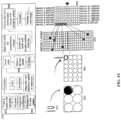
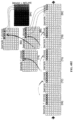
- the workflow system will allow production employing cellular arrays of cells from 6, 24, 96, 384, 1536 sized arrays, or greater.
- the workflow system is flexible and will allow for multiple iterations and flexibility in cell type and tissue.
- the description herein is shown with fibroblasts as an illustrative somatic cell. As noted herein, other cell types are used in the system. The example is not meant to be limited in this way.
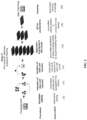
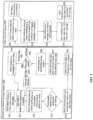
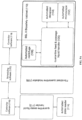
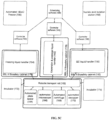
- the workflow system is broken down into four independently-operated units:
- an automated -80 storage and retrieval system for storing fibroblasts and final clones in 1.4mL Matrix screw cap tubes is part of the system.
- the systems, and the steps and operations that each unit will perform, will be described below.
- the system components that may be used to perform these automated steps include by way of example, STARlet Manual Load, a Modular Arm for 4/8/12 ch./MPH, 8 channels with 1000 ⁇ l Pipetting Channels and an iSWAP Plate Handler, all available from Hamilton Science Robotics. If centerfuging is needed or desired, an Agilent VSpin Microplate Centerfuge can be used.
- the software may be Celigo API Software.
- the incubator may be a Cytomat Incubator. For plate handling a Cytomat 24 Barcode Reader, Cytomat 23mm Stackers, and a Cytomat 400mm transfer station may be used. For plate tilting, one may use a MultiFlex Tilt Module.
- the system controller may be a Dell PG with a Windows XP operating system.
- the carrier package may be a Q Growth Carrier Package.
- the system components that may be used to perform these automated steps may be selected from the same components used in the Quarantine Growth Workflow, except a STARlet Auto Load may be used.
- a Spectramax L Reader may be used as a spectral acquisition device.
- the system components that may be used to perform these automated steps include STARlet Manual Load, a Modular Arm for 4/8/12 ch./MPH, 8 channels with 1000 ⁇ l Pipetting Channels and an iSWAP Plate Handler, all available from Hamilton Science Robotics.
- the system controller may be a Dell PG with a Windows XP operating system.
- the carrier package may be a Q Growth Carrier Package.
- the system components that may be used to perform these automated steps may be selected from the same components used in the Quarantine Growth Workflow with the addition of one or more CORE 96 PROBEHEAD II 1000 ⁇ l model probe heads.
- the system components that may be used to perform these automated steps may be selected from the same components used in the Quarantine Growth Workflow.
- adult means post-fetal, i.e., an organism from the neonate stage through the end of life, and includes, for example, cells obtained from delivered placenta tissue, amniotic fluid and/or cord blood.
- the term "adult differentiated cell” encompasses a wide range of differentiated cell types obtained from an adult organism, that are amenable to producing iPSCs using the instantly described automation system.
- the adult differentiated cell is a "fibroblast.”
- Fibroblasts also referred to as “fibrocytes” in their less active form, are derived from mesenchyme. Their function includes secreting the precursors of extracellular matrix components including, e.g., collagen. Histologically, fibroblasts are highly branched cells, but fibrocytes are generally smaller and are often described as spindle-shaped. Fibroblasts and fibrocytes derived from any tissue may be employed as a starting material for the automated workflow system.
- Mammalian somatic cells useful in the present invention include, by way of example, adult stem cells, sertoli cells, endothelial cells, granulosa epithelial cells, neurons, pancreatic islet cells, epidermal cells, epithelial cells, hepatocytes, hair follicle cells, keratinocytes, hematopoietic cells, melanocytes, chondrocytes, lymphocytes (B and T lymphocytes), erythrocytes, macrophages, monocytes, mononuclear cells, fibroblasts, cardiac muscle cells, other known muscle cells, and generally any live somatic cells.
- fibroblasts are used.
- somatic cell is also intended to include adult stem cells.
- An adult stem cell is a cell that is capable of giving rise to all cell types of a particular tissue.
- Exemplary adult stem cells include hematopoietic stem cells, neural stem cells, and mesenchymal stem cells.
- One advantage of the present disclosure is that it provides an essentially limitless supply of isogenic or synegenic human cells suitable for transplantation, use in drug discovery assays, or for disease modeling.
- the iPSCs are tailored specifically to the patient, avoiding immune rejection. Therefore, it will obviate the significant problem associated with current transplantation methods, such as, rejection of the transplanted tissue, which may occur because of host versus graft or graft versus host rejection.
- the cells demonstrate each person's response to chemicals when used in drug discovery or their individual manifestation of diseases in disease models.
- iPSCs or fully differentiated somatic cells prepared from iPSCs derived from somatic cells derived from humans can be stored in an iPSC bank as a library of cells, and one kind or more kinds of the iPSCs in the library can be used for preparation of somatic cells, tissues, or organs that are free of rejection by a patient to be subjected to stem cell therapy.
- totipotency refers to a cell with a developmental potential to make all of the cells in the adult body as well as the extra-embryonic tissues, including the placenta.
- the fertilized egg zygote
- the fertilized egg is totipotent, as are the cells (blastomeres) of the morula (up to the 16-cell stage following fertilization).
- embryonic stem cell refers to naturally occurring pluripotent stem cells that can be obtained from the inner cell mass of the embryonic blastocyst (see, for e.g., U.S. Pat. Nos. 5,843,780 ; 6,200,806 ; 7,029,913 ; 7,584,479 ). Such cells can similarly be obtained from the inner cell mass of blastocysts derived from non-human somatic cell nuclear transfer (see, for example, U.S. Pat. Nos. 5,945,577 , 5,994,619 , 6,235,970 ).
- Embryonic stem cells are pluripotent and give rise during development to all derivatives of the three primary germ layers: ectoderm, endoderm and mesoderm. In other words, they can develop into each of the more than 200 cell types of the adult body when given sufficient and necessary stimulation for a specific cell type. They do not contribute to the extra-embryonic membranes or the placenta, i.e., are not totipotent.
- progenitor cell is used herein to refer to cells that have greater developmental potential, i.e., a cellular phenotype that is more primitive (e.g., is at an earlier step along a developmental pathway or progression) relative to a cell which it can give rise to by differentiation. Often, progenitor cells have significant or very high proliferative potential. Progenitor cells can give rise to multiple distinct cells having lower developmental potential, i.e., differentiated cell types, or to a single differentiated cell type, depending on the developmental pathway and on the environment in which the cells develop and differentiate.
- germline cells also known as “gametes” are the spermatozoa and ova which fuse during fertilization to produce a cell called a zygote, from which the entire mammalian embryo develops.
- reprogramming of a cell using the synthetic, modified RNAs and methods thereof described herein causes the cell to assume a multipotent state (e.g., is a multipotent cell).
- reprogramming of a cell (e.g. a somatic cell) using the synthetic, modified RNAs and methods thereof described herein causes the cell to assume a pluripotent-like state or an embryonic stem cell phenotype.
- reprogrammed cells The resulting cells are referred to herein as "reprogrammed cells,” “somatic pluripotent cells,” and “RNA-induced somatic pluripotent cells.”
- the term "partially reprogrammed somatic cell” as referred to herein refers to a cell which has been reprogrammed from a cell with lower developmental potential by the methods as disclosed herein, such that the partially reprogrammed cell has not been completely reprogrammed to a pluripotent state but rather to a non-pluripotent, stable intermediate state.
- Such a partially reprogrammed cell can have a developmental potential lower that a pluripotent cell, but higher than a multipotent cell, as those terms are defined herein.
- a partially reprogrammed cell can, for example, differentiate into one or two of the three germ layers, but cannot differentiate into all three of the germ layers.
- a "reprogramming factor,” as used herein, refers to a developmental potential altering factor, as that term is defined herein, such as a gene, protein, RNA, DNA, or small molecule, the expression of which contributes to the reprogramming of a cell, e.g. a somatic cell, to a less differentiated or undifferentiated state, e.g. to a cell of a pluripotent state or partially pluripotent state.
- a reprogramming factor can be, for example, transcription factors that can reprogram cells to a pluripotent state, such as SOX2, OCT3/4, KLF4, NANOG, LIN-28, c-MYC, and the like, including as any gene, protein, RNA or small molecule, that can substitute for one or more of these in a method of reprogramming cells in vitro.
- exogenous expression of a reprogramming factor using the synthetic modified RNAs and methods thereof described herein, induces endogenous expression of one or more reprogramming factors, such that exogenous expression of one or more reprogramming factors is no longer required for stable maintenance of the cell in the reprogrammed or partially reprogrammed state.
- Reprogramming to a pluripotent state in vitro is used herein to refer to in vitro reprogramming methods that do not require and/or do not include nuclear or cytoplasmic transfer or cell fusion, e.g., with oocytes, embryos, germ cells, or pluripotent cells.
- a reprogramming factor can also be termed a "de-differentiation factor,” which refers to a developmental potential altering factor, as that term is defined herein, such as a protein or RNA, that induces a cell to de-differentiate to a less differentiated phenotype, that is a de-differentiation factor increases the developmental potential of a cell.
- differentiation factor refers to a developmental potential altering factor, as that term is defined herein, such as a protein, RNA, or small molecule, that induces a cell to differentiate to a desired cell-type, i.e., a differentiation factor reduces the developmental potential of a cell.
- a differentiation factor can be a cell-type specific polypeptide, however this is not required. Differentiation to a specific cell type can require simultaneous and/or successive expression of more than one differentiation factor.
- the developmental potential of a cell or population of cells is first increased via reprogramming or partial reprogramming using synthetic, modified RNAs, as described herein, and then the cell or progeny cells thereof produced by such reprogramming are induced to undergo differentiation by contacting with, or introducing, one or more synthetic, modified RNAs encoding differentiation factors, such that the cell or progeny cells thereof have decreased developmental potential.
- a reprogrammed cell as the term is defined herein, can differentiate to a lineage-restricted precursor cell (such as a mesodermal stem cell), which in turn can differentiate into other types of precursor cells further down the pathway (such as a tissue specific precursor, for example, a cardiomyocyte precursor), and then to an end-stage differentiated cell, which plays a characteristic role in a certain tissue type, and may or may not retain the capacity to proliferate further.
- a lineage-restricted precursor cell such as a mesodermal stem cell
- precursor cells such as a mesodermal stem cell
- end-stage differentiated cell which plays a characteristic role in a certain tissue type, and may or may not retain the capacity to proliferate further.
- the term "without the formation of a pluripotent intermediate cell” refers to the transdifferentiation of one cell type to another cell type, preferably, in one step; thus a method that modifies the differentiated phenotype or developmental potential of a cell without the formation of a pluripotent intermediate cell does not require that the cell be first dedifferentiated (or reprogrammed) and then differentiated to another cell type. Instead, the cell type is merely "switched" from one cell type to another without going through a less differentiated phenotype.
- transdifferentiation refers to a change in the developmental potential of a cell whereby the cell is induced to become a different cell having a similar developmental potential, e.g., a liver cell to a pancreatic cell, a pancreatic alpha cell into a pancreatic beta cell, etc.
- the system and methods described herein are well suited for transdifferentiation of cells.
- RNA transcribed from a gene and polypeptides obtained by translation of mRNA transcribed from a gene.
- an expression product is transcribed from a sequence that does not encode a polypeptide, such as a microRNA.
- transcription factor refers to a protein that binds to specific parts of DNA using DNA binding domains and is part of the system that controls the transcription of genetic information from DNA to RNA.
- small molecule refers to a chemical agent which can include, but is not limited to, a peptide, a peptidomimetic, an amino acid, an amino acid analog, a polynucleotide, a polynucleotide analog, an aptamer, a nucleotide, a nucleotide analog, an organic or inorganic compound (e.g., including heterorganic and organometallic compounds) having a molecular weight less than about 10,000 grams per mole, organic or inorganic compounds having a molecular weight less than about 5,000 grams per mole, organic or inorganic compounds having a molecular weight less than about 1,000 grams per mole, organic or inorganic compounds having a molecular weight less than about 500 grams per mole, and salts, esters, and other pharmaceutically acceptable forms of such compounds.
- organic or inorganic compound e.g., including heterorganic and organometallic compounds
- exogenous refers to a nucleic acid (e.g., a synthetic, modified RNA encoding a transcription factor), or a protein (e.g., a transcription factor) that has been introduced by a process involving the hand of man into a biological system such as a cell or organism in which it is not normally found, or in which it is found in lower amounts.
- a factor e.g. a synthetic, modified RNA encoding a transcription factor, or a protein, e.g., a polypeptide
- endogenous refers to a factor or expression product that is native to the biological system or cell (e.g., endogenous expression of a gene, such as, e.g., SOX2 refers to production of a SOX2 polypeptide by the endogenous gene in a cell).
- introduction of one or more exogenous factors to a cell e.g., a developmental potential altering factor, using the compositions and methods comprising synthetic, modified RNAs described herein, induces endogenous expression in the cell or progeny cell(s) thereof of a factor or gene product necessary for maintenance of the cell or progeny cell(s) thereof in a new developmental potential.
- isolated cell refers to a cell that has been removed from an organism in which it was originally found, or a descendant of such a cell.
- the cell has been cultured in vitro, e.g., in the presence of other cells.
- the cell is later introduced into a second organism or re-introduced into the organism from which it (or the cell or population of cells from which it descended) was isolated.
- isolated population refers to a population of cells that has been removed and separated from a mixed or heterogeneous population of cells.
- an isolated population is a "substantially pure” population of cells as compared to the heterogeneous population from which the cells were isolated or enriched.
- the isolated population is an isolated population of pluripotent cells which comprise a substantially pure population of pluripotent cells as compared to a heterogeneous population of somatic cells from which the pluripotent cells were derived.
- synthetic, modified RNA refers to an RNA molecule produced in vitro, which comprise at least one modified nucleoside as that term is defined herein below. Methods of the invention do not require modified RNA.
- the synthetic, modified RNA composition does not encompass mRNAs that are isolated from natural sources such as cells, tissue, organs etc., having those modifications, but rather only synthetic, modified RNAs that are synthesized using in vitro techniques.
- composition encompasses a plurality of different synthetic, modified RNA molecules (e.g., at least 2, at least 3, at least 4, at least 5, at least 6, at least 7, at least 8, at least 9, at least 10, at least 11, at least 12, at least 13, at least 14, at least 15, at least 16, at least 17, at least 18, at least 19, at least 20, at least 25, at least 30, at least 40, at least 50, at least 75, at least 90, at least 100 synthetic, modified RNA molecules or more).
- a synthetic, modified RNA composition can further comprise other agents (e.g., an inhibitor of interferon expression or activity, a transfection reagent, etc.).
- Such a plurality can include synthetic, modified RNA of different sequences (e.g., coding for different polypeptides), synthetic, modified RNAs of the same sequence with differing modifications, or any combination thereof.
- polypeptide refers to a polymer of amino acids comprising at least 2 amino acids (e.g., at least 5, at least 10, at least 20, at least 30, at least 40, at least 50, at least 60, at least 70, at least 80, at least 90, at least 100, at least 125, at least 150, at least 175, at least 200, at least 225, at least 250, at least 275, at least 300, at least 350, at least 400, at least 450, at least 500, at least 600, at least 700, at least 800, at least 900, at least 1000, at least 2000, at least 3000, at least 4000, at least 5000, at least 6000, at least 7000, at least 8000, at least 9000, at least 10,000 amino acids or more).
- protein and “polypeptide” are used interchangeably herein.
- peptide refers to a relatively short polypeptide, typically between about 2 and 60 amino acids in length.
- Microarrays and particularly "cell arrays" are currently needed for screening of large biomolecule libraries, such as RNAs, DNAs, proteins and small molecules with respect to their biological functions and for fundamental investigation of cell and gene-functions.
- Many research facilities both in academia and in industry need advanced high-density arrays to improve their screening-efficiency, velocity and quality.
- Many screens will first become possible or significantly more affordable with the development of next generation microarrays and cell arrays, respectively.
- An array should typically fit onto a customary microtiter scaled plate to ensure the usability of conventional microplate handling robots and microscopes.
- arrays can be any collection of cell lines that need to be assayed as a unit under identical conditions but where the only variable is the genotype of the cell lines.
- An example could be a collection of normal and disease specific iPSC lines or their differentiated derivatives plated in microtiter plates in wells adjacent to each other. This would allow researchers to probe the activity of a single factor (e.g. small molecule) on multiple genotypes simultaneously to discover genotype specific effects of that factor using the appropriate assays.
- a single factor e.g. small molecule
- the system can also be used to obtain cell populations enriched in fully reprogrammed cells, from among cells that have undergone differentiation in established iPSC cell lines that were cultured under both murine embryonic fibroblast (MEF) feeder layer, as well as feeder reconditions.
- the system further enables the live-sorting of defined subpopulations of fully-reprogrammed, or differentiated, iPSC cells into 96-well plates for use in high-throughput screening campaigns.
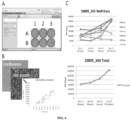
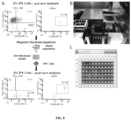
- FIG. 2 shows the steps performed by Systems 2, 3, and 4. Fibroblasts are plated by the automated system (10), reprogramming factors are introduced by the automated system (12), iPSCs are isolated by automated sorting and isolation (14), desired clones are selected and expanded by the automated system (16), automated quality checks (QC) for pluripotent status by marker assays and embryoid body assays (18), followed by automated freezing and storage of desired cells (20).
- reprogramming factors are introduced by the automated system (12)
- iPSCs are isolated by automated sorting and isolation (14)
- desired clones are selected and expanded by the automated system (16)
- automated quality checks QC for pluripotent status by marker assays and embryoid body assays (18)
Landscapes
- Health & Medical Sciences (AREA)
- Life Sciences & Earth Sciences (AREA)
- Engineering & Computer Science (AREA)
- Chemical & Material Sciences (AREA)
- Wood Science & Technology (AREA)
- Organic Chemistry (AREA)
- Bioinformatics & Cheminformatics (AREA)
- Zoology (AREA)
- Biotechnology (AREA)
- Genetics & Genomics (AREA)
- Biomedical Technology (AREA)
- General Engineering & Computer Science (AREA)
- Microbiology (AREA)
- Biochemistry (AREA)
- General Health & Medical Sciences (AREA)
- Cell Biology (AREA)
- Sustainable Development (AREA)
- Molecular Biology (AREA)
- Developmental Biology & Embryology (AREA)
- Transplantation (AREA)
- Clinical Laboratory Science (AREA)
- Physics & Mathematics (AREA)
- Electromagnetism (AREA)
- Physiology (AREA)
- General Chemical & Material Sciences (AREA)
- Rheumatology (AREA)
- Micro-Organisms Or Cultivation Processes Thereof (AREA)
- Apparatus Associated With Microorganisms And Enzymes (AREA)
- Measuring Or Testing Involving Enzymes Or Micro-Organisms (AREA)
- Investigating Or Analysing Biological Materials (AREA)
- Analytical Chemistry (AREA)
- Computer Hardware Design (AREA)
Applications Claiming Priority (5)
| Application Number | Priority Date | Filing Date | Title |
|---|---|---|---|
| US201161565818P | 2011-12-01 | 2011-12-01 | |
| US201161580007P | 2011-12-23 | 2011-12-23 | |
| US201261700792P | 2012-09-13 | 2012-09-13 | |
| PCT/US2012/067417 WO2013082509A1 (en) | 2011-12-01 | 2012-11-30 | Automated system for producing induced pluripotent stem cells or differentiated cells |
| EP12852680.3A EP2785829B1 (en) | 2011-12-01 | 2012-11-30 | Automated system for producing induced pluripotent stem cells or differentiated cells |
Related Parent Applications (1)
| Application Number | Title | Priority Date | Filing Date |
|---|---|---|---|
| EP12852680.3A Division EP2785829B1 (en) | 2011-12-01 | 2012-11-30 | Automated system for producing induced pluripotent stem cells or differentiated cells |
Publications (2)
| Publication Number | Publication Date |
|---|---|
| EP3653698A1 EP3653698A1 (en) | 2020-05-20 |
| EP3653698B1 true EP3653698B1 (en) | 2025-04-02 |
Family
ID=48536128
Family Applications (2)
| Application Number | Title | Priority Date | Filing Date |
|---|---|---|---|
| EP19203379.3A Active EP3653698B1 (en) | 2011-12-01 | 2012-11-30 | Automated system for producing induced pluripotent stem cells or differentiated cells |
| EP12852680.3A Active EP2785829B1 (en) | 2011-12-01 | 2012-11-30 | Automated system for producing induced pluripotent stem cells or differentiated cells |
Family Applications After (1)
| Application Number | Title | Priority Date | Filing Date |
|---|---|---|---|
| EP12852680.3A Active EP2785829B1 (en) | 2011-12-01 | 2012-11-30 | Automated system for producing induced pluripotent stem cells or differentiated cells |
Country Status (14)
| Country | Link |
|---|---|
| US (4) | US10273459B2 (cg-RX-API-DMAC7.html) |
| EP (2) | EP3653698B1 (cg-RX-API-DMAC7.html) |
| JP (1) | JP6257520B2 (cg-RX-API-DMAC7.html) |
| KR (5) | KR20240019378A (cg-RX-API-DMAC7.html) |
| CN (2) | CN104080906A (cg-RX-API-DMAC7.html) |
| AU (4) | AU2012345676B2 (cg-RX-API-DMAC7.html) |
| BR (2) | BR122020005735B1 (cg-RX-API-DMAC7.html) |
| CA (2) | CA2857295C (cg-RX-API-DMAC7.html) |
| DK (2) | DK2785829T3 (cg-RX-API-DMAC7.html) |
| ES (2) | ES2773863T3 (cg-RX-API-DMAC7.html) |
| IL (3) | IL299477A (cg-RX-API-DMAC7.html) |
| IN (1) | IN2014CN04920A (cg-RX-API-DMAC7.html) |
| WO (1) | WO2013082509A1 (cg-RX-API-DMAC7.html) |
| ZA (3) | ZA201403945B (cg-RX-API-DMAC7.html) |
Families Citing this family (36)
| Publication number | Priority date | Publication date | Assignee | Title |
|---|---|---|---|---|
| ES2773863T3 (es) | 2011-12-01 | 2020-07-15 | New York Stem Cell Found Inc | Sistema automatizado para la producción de células madre pluripotentes inducidas o células diferenciadas |
| US10428309B2 (en) | 2011-12-01 | 2019-10-01 | New York Stem Cell Foundation, Inc. | Systems and methods for producing stem cells and differentiated cells |
| US20160130561A1 (en) * | 2013-06-13 | 2016-05-12 | The New York Stem Cell Foundation Inc. | Pluripotent stem cells derived from non-cryoprotected frozen tissue and methods for making and using the same |
| EP3013941B1 (en) * | 2013-06-27 | 2018-10-31 | New York Stem Cell Foundation, Inc. | Improved systems and methods for producing stem cells and differentiated cells |
| EP3033414A4 (en) * | 2013-08-12 | 2017-03-22 | Invivosciences Inc. | Automated cell culture system and method |
| US20160222355A1 (en) * | 2014-12-26 | 2016-08-04 | New York Stem Cell Foundation, Inc. | Systems and methods for producing stem cells differentiated cells, and genetically edited cells |
| US9828634B2 (en) | 2015-01-22 | 2017-11-28 | Regenerative Medical Solutions, Inc. | Markers for differentiation of stem cells into differentiated cell populations |
| EP3344755A4 (en) * | 2015-08-31 | 2019-05-22 | I Peace, Inc. | PREPARATION SYSTEM FOR PLURIPOTENTE STEM CELLS AND METHOD FOR THE PRODUCTION OF INDUCED PLURIPOTENTAL STEM CELLS |
| CN105567642B (zh) * | 2016-02-01 | 2019-07-12 | 中国科学院生物物理研究所 | 一种着色性干皮病人多能干细胞的制备方法 |
| JP7235507B2 (ja) | 2016-03-03 | 2023-03-08 | ニューヨーク ステム セル ファウンデーション インコーポレイテッド | 多能性幹細胞由来のミクログリアならびにその作製および使用方法 |
| WO2018015561A1 (en) * | 2016-07-21 | 2018-01-25 | Celyad | Method and apparatus for automated independent parallel batch-processing of cells |
| US10354218B2 (en) | 2016-08-04 | 2019-07-16 | Fanuc Corporation | System and method for iPS cell bank using internet technology |
| US11259520B2 (en) | 2016-08-04 | 2022-03-01 | Fanuc Corporation | Stem cell manufacturing system, stem cell information management system, cell transport apparatus, and stem cell frozen storage apparatus |
| US10373109B2 (en) | 2016-08-04 | 2019-08-06 | Fanuc Corporation | System and method for iPS cell bank using media |
| CA3044251A1 (en) * | 2016-11-18 | 2018-05-24 | New York Stem Cell Foundation, Inc. | Microfluidic system and method of use thereof |
| KR102318710B1 (ko) * | 2017-01-20 | 2021-10-27 | 후지필름 가부시키가이샤 | 세포 배양 장치 및 세포 배양 방법 |
| EP3587556A4 (en) | 2017-02-24 | 2021-04-14 | Koji Tanabe | CELL TREATMENT DEVICE, SUSPENSION CULTURE VESSEL AND STEM CELL INDUCTION METHOD |
| CA3054272C (en) * | 2017-02-27 | 2023-01-24 | I Peace, Inc. | Cell processing system and cell processing apparatus |
| CA3053891C (en) * | 2017-02-27 | 2023-05-23 | I Peace, Inc. | Somatic cell production system |
| JP2020530979A (ja) * | 2017-06-30 | 2020-11-05 | インスクリプタ, インコーポレイテッド | 自動細胞処理方法、モジュール、機器及びシステム |
| GB2564437B (en) | 2017-07-10 | 2020-11-04 | Univ Brunel | Method of testing a gene therapy vector using induced pluripotent stem cells |
| IL315340A (en) | 2017-09-01 | 2024-10-01 | Lonza Walkersville Inc | End-to-end cell therapy automation |
| JP6985508B2 (ja) * | 2017-09-30 | 2021-12-22 | インスクリプタ, インコーポレイテッド | フロースルーエレクトロポレーション機器編成 |
| CN112292445A (zh) * | 2018-06-13 | 2021-01-29 | 富士胶片株式会社 | 信息处理装置、导出方法及导出程序 |
| JP6530577B1 (ja) * | 2019-03-20 | 2019-06-12 | 剛士 田邊 | 細胞処理システム及び細胞処理装置 |
| JP6530874B1 (ja) * | 2019-03-20 | 2019-06-12 | 剛士 田邊 | 細胞処理システム及び細胞処理装置 |
| JP7090337B2 (ja) * | 2019-03-20 | 2022-06-24 | アイ ピース,インコーポレイテッド | 細胞処理システム及び細胞処理装置 |
| WO2021067797A1 (en) * | 2019-10-04 | 2021-04-08 | New York Stem Cell Foundation, Inc. | Imaging system and method of use thereof |
| CN115087730A (zh) * | 2019-11-28 | 2022-09-20 | 香港大学 | 间充质基质细胞作为ipsc诱导的重编程来源 |
| US20230014181A1 (en) * | 2021-06-17 | 2023-01-19 | Genentech, Inc. | Culture system and methods for improved modeling of neurological conditions |
| US12385002B1 (en) * | 2022-01-21 | 2025-08-12 | Sahar M. H. Jaffal | Automated primary cells' triturator |
| CN114606198A (zh) * | 2022-03-25 | 2022-06-10 | 深圳临研医学有限公司 | 成骨发育不全诱导多能干细胞及其构建方法 |
| WO2024020572A1 (en) | 2022-07-22 | 2024-01-25 | New York Stem Cell Foundation, Inc. | Methods and compositions for the treatment of ptsd |
| IL322030A (en) * | 2023-01-11 | 2025-09-01 | Regeneron Pharma | Methods and systems for automated regulatory compliance testing |
| WO2024228384A1 (ja) * | 2023-04-30 | 2024-11-07 | 国立大学法人北海道大学 | 免疫寛容誘導用組成物 |
| JP2025064611A (ja) * | 2023-10-06 | 2025-04-17 | 住友化学株式会社 | 細胞チップ |
Family Cites Families (31)
| Publication number | Priority date | Publication date | Assignee | Title |
|---|---|---|---|---|
| US5843780A (en) | 1995-01-20 | 1998-12-01 | Wisconsin Alumni Research Foundation | Primate embryonic stem cells |
| US5994619A (en) | 1996-04-01 | 1999-11-30 | University Of Massachusetts, A Public Institution Of Higher Education Of The Commonwealth Of Massachusetts, As Represented By Its Amherst Campus | Production of chimeric bovine or porcine animals using cultured inner cell mass cells |
| US5945577A (en) | 1997-01-10 | 1999-08-31 | University Of Massachusetts As Represented By Its Amherst Campus | Cloning using donor nuclei from proliferating somatic cells |
| EP0996736A1 (en) | 1997-08-11 | 2000-05-03 | Chiron Corporation | Methods for genetically modifying t cells |
| US8026096B1 (en) | 1998-10-08 | 2011-09-27 | Protein Sciences Corporation | In vivo active erythropoietin produced in insect cells |
| US20110171185A1 (en) * | 1999-06-30 | 2011-07-14 | Klimanskaya Irina V | Genetically intact induced pluripotent cells or transdifferentiated cells and methods for the production thereof |
| US6429013B1 (en) | 1999-08-19 | 2002-08-06 | Artecel Science, Inc. | Use of adipose tissue-derived stromal cells for chondrocyte differentiation and cartilage repair |
| US6959438B2 (en) | 2000-12-06 | 2005-10-25 | Microsoft Corporation | Interface and related methods for dynamically generating a filter graph in a development system |
| WO2003087292A2 (en) * | 2002-04-08 | 2003-10-23 | Millenium Biologix Inc. | Automated tissue engineering system |
| EP1445320A1 (en) | 2003-02-05 | 2004-08-11 | ARTEMIS Pharmaceuticals GmbH | Automated gene-targeting using non-toxic detectable markers |
| WO2005095581A1 (en) * | 2004-03-19 | 2005-10-13 | Macropore Biosurgery Inc. | Cell carrier and cell carrier containment devices containing regenerative cells |
| US20070238175A1 (en) | 2006-04-06 | 2007-10-11 | Chi Alfred L | Standardization of processes for culturing primary cells |
| GB0704406D0 (en) | 2007-03-07 | 2007-04-18 | Stem Cell Sciences Uk Ltd | Automated culture of stem cells |
| JP2008307007A (ja) | 2007-06-15 | 2008-12-25 | Bayer Schering Pharma Ag | 出生後のヒト組織由来未分化幹細胞から誘導したヒト多能性幹細胞 |
| WO2009006422A1 (en) | 2007-06-29 | 2009-01-08 | Stem Cell Products, Inc. | Automated method and apparatus for embryonic stem cell culture |
| US20100196923A1 (en) * | 2007-08-14 | 2010-08-05 | Anthony Atala | Pluripotent adult stem cells |
| EP2315829B1 (en) | 2008-08-08 | 2015-02-11 | Mayo Foundation For Medical Education And Research | Induced pluripotent stem cells |
| EP2376626A4 (en) | 2008-12-13 | 2012-10-17 | Dna Microarray | MICRO-ENVIRONMENTAL NICHE ASSAY FOR SCREENING OF INDUCED PLURIPOTENT STEM CELLS (CIPS) |
| WO2010077955A1 (en) * | 2008-12-17 | 2010-07-08 | The Scripps Research Institute | Generation and maintenance of stem cells |
| WO2010096746A1 (en) * | 2009-02-20 | 2010-08-26 | Cellular Dynamics International, Inc. | Methods and compositions for the differentiation of stem cells |
| KR101720961B1 (ko) * | 2009-02-27 | 2017-03-29 | 셀룰러 다이내믹스 인터내셔널, 인코포레이티드 | 다능성 세포의 분화 |
| CN101580816B (zh) | 2009-04-23 | 2012-02-29 | 中国科学院广州生物医药与健康研究院 | 诱导多能性干细胞快速高效产生的新型无血清培养基以及使用其的方法 |
| US20110020814A1 (en) * | 2009-06-05 | 2011-01-27 | Ipierian, Inc. | Methods and compositions for selection of stem cells |
| WO2010141801A2 (en) * | 2009-06-05 | 2010-12-09 | Cellular Dynamics International, Inc. | Reprogramming t cells and hematophietic cells |
| WO2011026222A1 (en) * | 2009-09-01 | 2011-03-10 | Mcmaster University | Transformed human pluripotent stem cells and associated methods |
| WO2011037301A1 (ko) * | 2009-09-22 | 2011-03-31 | 서울대학교병원 | 성체세포로부터 만능줄기세포를 유도하는 방법 및 그 방법에 의해 제조된 만능줄기세포 |
| US8802438B2 (en) | 2010-04-16 | 2014-08-12 | Children's Medical Center Corporation | Compositions, kits, and methods for making induced pluripotent stem cells using synthetic modified RNAs |
| US20110306516A1 (en) | 2010-06-15 | 2011-12-15 | The New York Stem Cell Foundation | Methods for producing induced pluripotent stem cells |
| EP2655601A4 (en) | 2010-12-22 | 2014-09-10 | Fate Therapeutics Inc | CELL CULTURAL PLATFORM FOR INDIVIDUAL CELL SIZING AND IMPROVED RESOLUTION OF IPSCS |
| EP2481795A1 (en) | 2011-01-28 | 2012-08-01 | Universität für Bodenkultur Wien | Method of generating induced pluripotent stem cells and differentiated cells |
| ES2773863T3 (es) | 2011-12-01 | 2020-07-15 | New York Stem Cell Found Inc | Sistema automatizado para la producción de células madre pluripotentes inducidas o células diferenciadas |
-
2012
- 2012-11-30 ES ES12852680T patent/ES2773863T3/es active Active
- 2012-11-30 KR KR1020247003083A patent/KR20240019378A/ko not_active Ceased
- 2012-11-30 CN CN201280068799.7A patent/CN104080906A/zh active Pending
- 2012-11-30 IL IL299477A patent/IL299477A/en unknown
- 2012-11-30 EP EP19203379.3A patent/EP3653698B1/en active Active
- 2012-11-30 IN IN4920CHN2014 patent/IN2014CN04920A/en unknown
- 2012-11-30 KR KR1020227029866A patent/KR102631374B1/ko active Active
- 2012-11-30 ES ES19203379T patent/ES3038941T3/es active Active
- 2012-11-30 CN CN201911063727.3A patent/CN110724636A/zh active Pending
- 2012-11-30 KR KR1020217024088A patent/KR102439238B1/ko active Active
- 2012-11-30 AU AU2012345676A patent/AU2012345676B2/en active Active
- 2012-11-30 CA CA2857295A patent/CA2857295C/en active Active
- 2012-11-30 JP JP2014544949A patent/JP6257520B2/ja active Active
- 2012-11-30 DK DK12852680.3T patent/DK2785829T3/da active
- 2012-11-30 US US13/691,258 patent/US10273459B2/en active Active
- 2012-11-30 BR BR122020005735-1A patent/BR122020005735B1/pt active IP Right Grant
- 2012-11-30 BR BR112014013152-0A patent/BR112014013152B1/pt active IP Right Grant
- 2012-11-30 CA CA3118842A patent/CA3118842C/en active Active
- 2012-11-30 EP EP12852680.3A patent/EP2785829B1/en active Active
- 2012-11-30 KR KR1020197031339A patent/KR20190124326A/ko not_active Ceased
- 2012-11-30 WO PCT/US2012/067417 patent/WO2013082509A1/en not_active Ceased
- 2012-11-30 KR KR1020147017723A patent/KR102039202B1/ko active Active
- 2012-11-30 DK DK19203379.3T patent/DK3653698T3/da active
-
2014
- 2014-05-29 IL IL232869A patent/IL232869B/en unknown
- 2014-05-29 ZA ZA2014/03945A patent/ZA201403945B/en unknown
-
2018
- 2018-05-28 ZA ZA2018/03502A patent/ZA201803502B/en unknown
- 2018-12-24 AU AU2018286561A patent/AU2018286561A1/en not_active Abandoned
-
2019
- 2019-04-29 US US16/398,117 patent/US10968435B2/en active Active
-
2021
- 2021-03-05 US US17/194,047 patent/US11732242B2/en active Active
- 2021-08-05 AU AU2021212081A patent/AU2021212081B2/en active Active
-
2022
- 2022-01-13 IL IL289822A patent/IL289822B2/en unknown
- 2022-05-26 ZA ZA2022/05833A patent/ZA202205833B/en unknown
-
2023
- 2023-06-29 US US18/344,024 patent/US20240191203A1/en active Pending
-
2024
- 2024-05-28 AU AU2024203546A patent/AU2024203546A1/en active Pending
Also Published As
Similar Documents
| Publication | Publication Date | Title |
|---|---|---|
| AU2021212081B2 (en) | Automated system for producing induced pluripotent stem cells or differentiated cells | |
| US20250250532A1 (en) | Microfluidic system and method of use thereof | |
| HK40029445B (en) | Automated system for producing induced pluripotent stem cells or differentiated cells | |
| HK40029445A (en) | Automated system for producing induced pluripotent stem cells or differentiated cells | |
| HK1202584A1 (en) | Automated system for producing induced pluripotent stem cells or differentiated cells |
Legal Events
| Date | Code | Title | Description |
|---|---|---|---|
| PUAI | Public reference made under article 153(3) epc to a published international application that has entered the european phase |
Free format text: ORIGINAL CODE: 0009012 |
|
| STAA | Information on the status of an ep patent application or granted ep patent |
Free format text: STATUS: THE APPLICATION HAS BEEN PUBLISHED |
|
| AC | Divisional application: reference to earlier application |
Ref document number: 2785829 Country of ref document: EP Kind code of ref document: P |
|
| AK | Designated contracting states |
Kind code of ref document: A1 Designated state(s): AL AT BE BG CH CY CZ DE DK EE ES FI FR GB GR HR HU IE IS IT LI LT LU LV MC MK MT NL NO PL PT RO RS SE SI SK SM TR |
|
| STAA | Information on the status of an ep patent application or granted ep patent |
Free format text: STATUS: REQUEST FOR EXAMINATION WAS MADE |
|
| 17P | Request for examination filed |
Effective date: 20201119 |
|
| RBV | Designated contracting states (corrected) |
Designated state(s): AL AT BE BG CH CY CZ DE DK EE ES FI FR GB GR HR HU IE IS IT LI LT LU LV MC MK MT NL NO PL PT RO RS SE SI SK SM TR |
|
| REG | Reference to a national code |
Ref country code: HK Ref legal event code: DE Ref document number: 40029445 Country of ref document: HK |
|
| STAA | Information on the status of an ep patent application or granted ep patent |
Free format text: STATUS: EXAMINATION IS IN PROGRESS |
|
| 17Q | First examination report despatched |
Effective date: 20210608 |
|
| P01 | Opt-out of the competence of the unified patent court (upc) registered |
Effective date: 20230507 |
|
| GRAP | Despatch of communication of intention to grant a patent |
Free format text: ORIGINAL CODE: EPIDOSNIGR1 |
|
| STAA | Information on the status of an ep patent application or granted ep patent |
Free format text: STATUS: GRANT OF PATENT IS INTENDED |
|
| INTG | Intention to grant announced |
Effective date: 20241025 |
|
| GRAS | Grant fee paid |
Free format text: ORIGINAL CODE: EPIDOSNIGR3 |
|
| GRAA | (expected) grant |
Free format text: ORIGINAL CODE: 0009210 |
|
| STAA | Information on the status of an ep patent application or granted ep patent |
Free format text: STATUS: THE PATENT HAS BEEN GRANTED |
|
| AC | Divisional application: reference to earlier application |
Ref document number: 2785829 Country of ref document: EP Kind code of ref document: P |
|
| AK | Designated contracting states |
Kind code of ref document: B1 Designated state(s): AL AT BE BG CH CY CZ DE DK EE ES FI FR GB GR HR HU IE IS IT LI LT LU LV MC MK MT NL NO PL PT RO RS SE SI SK SM TR |
|
| REG | Reference to a national code |
Ref country code: GB Ref legal event code: FG4D |
|
| REG | Reference to a national code |
Ref country code: CH Ref legal event code: EP |
|
| REG | Reference to a national code |
Ref country code: IE Ref legal event code: FG4D |
|
| REG | Reference to a national code |
Ref country code: DE Ref legal event code: R096 Ref document number: 602012081457 Country of ref document: DE |
|
| REG | Reference to a national code |
Ref country code: DK Ref legal event code: T3 Effective date: 20250701 |
|
| REG | Reference to a national code |
Ref country code: SE Ref legal event code: TRGR |
|
| REG | Reference to a national code |
Ref country code: NL Ref legal event code: FP |
|
| REG | Reference to a national code |
Ref country code: AT Ref legal event code: MK05 Ref document number: 1781297 Country of ref document: AT Kind code of ref document: T Effective date: 20250402 |
|
| PG25 | Lapsed in a contracting state [announced via postgrant information from national office to epo] |
Ref country code: FI Free format text: LAPSE BECAUSE OF FAILURE TO SUBMIT A TRANSLATION OF THE DESCRIPTION OR TO PAY THE FEE WITHIN THE PRESCRIBED TIME-LIMIT Effective date: 20250402 Ref country code: PT Free format text: LAPSE BECAUSE OF FAILURE TO SUBMIT A TRANSLATION OF THE DESCRIPTION OR TO PAY THE FEE WITHIN THE PRESCRIBED TIME-LIMIT Effective date: 20250804 |
|
| REG | Reference to a national code |
Ref country code: LT Ref legal event code: MG9D |
|
| PG25 | Lapsed in a contracting state [announced via postgrant information from national office to epo] |
Ref country code: GR Free format text: LAPSE BECAUSE OF FAILURE TO SUBMIT A TRANSLATION OF THE DESCRIPTION OR TO PAY THE FEE WITHIN THE PRESCRIBED TIME-LIMIT Effective date: 20250703 Ref country code: NO Free format text: LAPSE BECAUSE OF FAILURE TO SUBMIT A TRANSLATION OF THE DESCRIPTION OR TO PAY THE FEE WITHIN THE PRESCRIBED TIME-LIMIT Effective date: 20250702 |
|
| PG25 | Lapsed in a contracting state [announced via postgrant information from national office to epo] |
Ref country code: PL Free format text: LAPSE BECAUSE OF FAILURE TO SUBMIT A TRANSLATION OF THE DESCRIPTION OR TO PAY THE FEE WITHIN THE PRESCRIBED TIME-LIMIT Effective date: 20250402 |
|
| PG25 | Lapsed in a contracting state [announced via postgrant information from national office to epo] |
Ref country code: BG Free format text: LAPSE BECAUSE OF FAILURE TO SUBMIT A TRANSLATION OF THE DESCRIPTION OR TO PAY THE FEE WITHIN THE PRESCRIBED TIME-LIMIT Effective date: 20250402 |
|
| REG | Reference to a national code |
Ref country code: ES Ref legal event code: FG2A Ref document number: 3038941 Country of ref document: ES Kind code of ref document: T3 Effective date: 20251016 |
|
| PG25 | Lapsed in a contracting state [announced via postgrant information from national office to epo] |
Ref country code: HR Free format text: LAPSE BECAUSE OF FAILURE TO SUBMIT A TRANSLATION OF THE DESCRIPTION OR TO PAY THE FEE WITHIN THE PRESCRIBED TIME-LIMIT Effective date: 20250402 |
|
| PG25 | Lapsed in a contracting state [announced via postgrant information from national office to epo] |
Ref country code: AT Free format text: LAPSE BECAUSE OF FAILURE TO SUBMIT A TRANSLATION OF THE DESCRIPTION OR TO PAY THE FEE WITHIN THE PRESCRIBED TIME-LIMIT Effective date: 20250402 |
|
| PG25 | Lapsed in a contracting state [announced via postgrant information from national office to epo] |
Ref country code: RS Free format text: LAPSE BECAUSE OF FAILURE TO SUBMIT A TRANSLATION OF THE DESCRIPTION OR TO PAY THE FEE WITHIN THE PRESCRIBED TIME-LIMIT Effective date: 20250702 |
|
| PG25 | Lapsed in a contracting state [announced via postgrant information from national office to epo] |
Ref country code: IS Free format text: LAPSE BECAUSE OF FAILURE TO SUBMIT A TRANSLATION OF THE DESCRIPTION OR TO PAY THE FEE WITHIN THE PRESCRIBED TIME-LIMIT Effective date: 20250802 |
|
| PG25 | Lapsed in a contracting state [announced via postgrant information from national office to epo] |
Ref country code: LV Free format text: LAPSE BECAUSE OF FAILURE TO SUBMIT A TRANSLATION OF THE DESCRIPTION OR TO PAY THE FEE WITHIN THE PRESCRIBED TIME-LIMIT Effective date: 20250402 |
|
| PGFP | Annual fee paid to national office [announced via postgrant information from national office to epo] |
Ref country code: NL Payment date: 20251126 Year of fee payment: 14 |
|
| REG | Reference to a national code |
Ref country code: DE Ref legal event code: R097 Ref document number: 602012081457 Country of ref document: DE |
|
| PGFP | Annual fee paid to national office [announced via postgrant information from national office to epo] |
Ref country code: DE Payment date: 20251128 Year of fee payment: 14 |
|
| PGFP | Annual fee paid to national office [announced via postgrant information from national office to epo] |
Ref country code: GB Payment date: 20251127 Year of fee payment: 14 |
|
| PG25 | Lapsed in a contracting state [announced via postgrant information from national office to epo] |
Ref country code: SM Free format text: LAPSE BECAUSE OF FAILURE TO SUBMIT A TRANSLATION OF THE DESCRIPTION OR TO PAY THE FEE WITHIN THE PRESCRIBED TIME-LIMIT Effective date: 20250402 |
|
| PGFP | Annual fee paid to national office [announced via postgrant information from national office to epo] |
Ref country code: IT Payment date: 20251119 Year of fee payment: 14 Ref country code: DK Payment date: 20251125 Year of fee payment: 14 |
|
| PGFP | Annual fee paid to national office [announced via postgrant information from national office to epo] |
Ref country code: FR Payment date: 20251125 Year of fee payment: 14 |
|
| PGFP | Annual fee paid to national office [announced via postgrant information from national office to epo] |
Ref country code: BE Payment date: 20251127 Year of fee payment: 14 |
|
| PGFP | Annual fee paid to national office [announced via postgrant information from national office to epo] |
Ref country code: SE Payment date: 20251127 Year of fee payment: 14 |
|
| PG25 | Lapsed in a contracting state [announced via postgrant information from national office to epo] |
Ref country code: CZ Free format text: LAPSE BECAUSE OF FAILURE TO SUBMIT A TRANSLATION OF THE DESCRIPTION OR TO PAY THE FEE WITHIN THE PRESCRIBED TIME-LIMIT Effective date: 20250402 |
|
| PGFP | Annual fee paid to national office [announced via postgrant information from national office to epo] |
Ref country code: IE Payment date: 20251127 Year of fee payment: 14 |
|
| PG25 | Lapsed in a contracting state [announced via postgrant information from national office to epo] |
Ref country code: EE Free format text: LAPSE BECAUSE OF FAILURE TO SUBMIT A TRANSLATION OF THE DESCRIPTION OR TO PAY THE FEE WITHIN THE PRESCRIBED TIME-LIMIT Effective date: 20250402 |
|
| PG25 | Lapsed in a contracting state [announced via postgrant information from national office to epo] |
Ref country code: SK Free format text: LAPSE BECAUSE OF FAILURE TO SUBMIT A TRANSLATION OF THE DESCRIPTION OR TO PAY THE FEE WITHIN THE PRESCRIBED TIME-LIMIT Effective date: 20250402 Ref country code: RO Free format text: LAPSE BECAUSE OF FAILURE TO SUBMIT A TRANSLATION OF THE DESCRIPTION OR TO PAY THE FEE WITHIN THE PRESCRIBED TIME-LIMIT Effective date: 20250402 |
|
| PGFP | Annual fee paid to national office [announced via postgrant information from national office to epo] |
Ref country code: ES Payment date: 20251201 Year of fee payment: 14 |
|
| PLBE | No opposition filed within time limit |
Free format text: ORIGINAL CODE: 0009261 |
|
| STAA | Information on the status of an ep patent application or granted ep patent |
Free format text: STATUS: NO OPPOSITION FILED WITHIN TIME LIMIT |
|
| REG | Reference to a national code |
Ref country code: CH Ref legal event code: L10 Free format text: ST27 STATUS EVENT CODE: U-0-0-L10-L00 (AS PROVIDED BY THE NATIONAL OFFICE) Effective date: 20260211 |
|
| 26N | No opposition filed |
Effective date: 20260105 |