EP3640232A1 - Verfahren und vorrichtung zur bewuchshemmung zur oligomerisation von olefinen - Google Patents
Verfahren und vorrichtung zur bewuchshemmung zur oligomerisation von olefinen Download PDFInfo
- Publication number
- EP3640232A1 EP3640232A1 EP18818798.3A EP18818798A EP3640232A1 EP 3640232 A1 EP3640232 A1 EP 3640232A1 EP 18818798 A EP18818798 A EP 18818798A EP 3640232 A1 EP3640232 A1 EP 3640232A1
- Authority
- EP
- European Patent Office
- Prior art keywords
- group
- reactor
- olefin oligomerization
- ionic compound
- olefin
- Prior art date
- Legal status (The legal status is an assumption and is not a legal conclusion. Google has not performed a legal analysis and makes no representation as to the accuracy of the status listed.)
- Granted
Links
Images
Classifications
-
- C—CHEMISTRY; METALLURGY
- C10—PETROLEUM, GAS OR COKE INDUSTRIES; TECHNICAL GASES CONTAINING CARBON MONOXIDE; FUELS; LUBRICANTS; PEAT
- C10G—CRACKING HYDROCARBON OILS; PRODUCTION OF LIQUID HYDROCARBON MIXTURES, e.g. BY DESTRUCTIVE HYDROGENATION, OLIGOMERISATION, POLYMERISATION; RECOVERY OF HYDROCARBON OILS FROM OIL-SHALE, OIL-SAND, OR GASES; REFINING MIXTURES MAINLY CONSISTING OF HYDROCARBONS; REFORMING OF NAPHTHA; MINERAL WAXES
- C10G75/00—Inhibiting corrosion or fouling in apparatus for treatment or conversion of hydrocarbon oils, in general
- C10G75/04—Inhibiting corrosion or fouling in apparatus for treatment or conversion of hydrocarbon oils, in general by addition of antifouling agents
-
- B—PERFORMING OPERATIONS; TRANSPORTING
- B01—PHYSICAL OR CHEMICAL PROCESSES OR APPARATUS IN GENERAL
- B01J—CHEMICAL OR PHYSICAL PROCESSES, e.g. CATALYSIS OR COLLOID CHEMISTRY; THEIR RELEVANT APPARATUS
- B01J19/00—Chemical, physical or physico-chemical processes in general; Their relevant apparatus
- B01J19/0006—Controlling or regulating processes
- B01J19/002—Avoiding undesirable reactions or side-effects, e.g. avoiding explosions, or improving the yield by suppressing side-reactions
-
- B—PERFORMING OPERATIONS; TRANSPORTING
- B01—PHYSICAL OR CHEMICAL PROCESSES OR APPARATUS IN GENERAL
- B01J—CHEMICAL OR PHYSICAL PROCESSES, e.g. CATALYSIS OR COLLOID CHEMISTRY; THEIR RELEVANT APPARATUS
- B01J19/00—Chemical, physical or physico-chemical processes in general; Their relevant apparatus
- B01J19/0006—Controlling or regulating processes
- B01J19/002—Avoiding undesirable reactions or side-effects, e.g. avoiding explosions, or improving the yield by suppressing side-reactions
- B01J19/0026—Avoiding carbon deposits
-
- C—CHEMISTRY; METALLURGY
- C07—ORGANIC CHEMISTRY
- C07C—ACYCLIC OR CARBOCYCLIC COMPOUNDS
- C07C11/00—Aliphatic unsaturated hydrocarbons
- C07C11/02—Alkenes
- C07C11/06—Propene
-
- C—CHEMISTRY; METALLURGY
- C07—ORGANIC CHEMISTRY
- C07C—ACYCLIC OR CARBOCYCLIC COMPOUNDS
- C07C2/00—Preparation of hydrocarbons from hydrocarbons containing a smaller number of carbon atoms
- C07C2/02—Preparation of hydrocarbons from hydrocarbons containing a smaller number of carbon atoms by addition between unsaturated hydrocarbons
- C07C2/04—Preparation of hydrocarbons from hydrocarbons containing a smaller number of carbon atoms by addition between unsaturated hydrocarbons by oligomerisation of well-defined unsaturated hydrocarbons without ring formation
-
- C—CHEMISTRY; METALLURGY
- C07—ORGANIC CHEMISTRY
- C07C—ACYCLIC OR CARBOCYCLIC COMPOUNDS
- C07C2/00—Preparation of hydrocarbons from hydrocarbons containing a smaller number of carbon atoms
- C07C2/02—Preparation of hydrocarbons from hydrocarbons containing a smaller number of carbon atoms by addition between unsaturated hydrocarbons
- C07C2/04—Preparation of hydrocarbons from hydrocarbons containing a smaller number of carbon atoms by addition between unsaturated hydrocarbons by oligomerisation of well-defined unsaturated hydrocarbons without ring formation
- C07C2/06—Preparation of hydrocarbons from hydrocarbons containing a smaller number of carbon atoms by addition between unsaturated hydrocarbons by oligomerisation of well-defined unsaturated hydrocarbons without ring formation of alkenes, i.e. acyclic hydrocarbons having only one carbon-to-carbon double bond
-
- C—CHEMISTRY; METALLURGY
- C07—ORGANIC CHEMISTRY
- C07C—ACYCLIC OR CARBOCYCLIC COMPOUNDS
- C07C2/00—Preparation of hydrocarbons from hydrocarbons containing a smaller number of carbon atoms
- C07C2/02—Preparation of hydrocarbons from hydrocarbons containing a smaller number of carbon atoms by addition between unsaturated hydrocarbons
- C07C2/04—Preparation of hydrocarbons from hydrocarbons containing a smaller number of carbon atoms by addition between unsaturated hydrocarbons by oligomerisation of well-defined unsaturated hydrocarbons without ring formation
- C07C2/06—Preparation of hydrocarbons from hydrocarbons containing a smaller number of carbon atoms by addition between unsaturated hydrocarbons by oligomerisation of well-defined unsaturated hydrocarbons without ring formation of alkenes, i.e. acyclic hydrocarbons having only one carbon-to-carbon double bond
- C07C2/08—Catalytic processes
-
- C—CHEMISTRY; METALLURGY
- C07—ORGANIC CHEMISTRY
- C07C—ACYCLIC OR CARBOCYCLIC COMPOUNDS
- C07C2/00—Preparation of hydrocarbons from hydrocarbons containing a smaller number of carbon atoms
- C07C2/02—Preparation of hydrocarbons from hydrocarbons containing a smaller number of carbon atoms by addition between unsaturated hydrocarbons
- C07C2/04—Preparation of hydrocarbons from hydrocarbons containing a smaller number of carbon atoms by addition between unsaturated hydrocarbons by oligomerisation of well-defined unsaturated hydrocarbons without ring formation
- C07C2/06—Preparation of hydrocarbons from hydrocarbons containing a smaller number of carbon atoms by addition between unsaturated hydrocarbons by oligomerisation of well-defined unsaturated hydrocarbons without ring formation of alkenes, i.e. acyclic hydrocarbons having only one carbon-to-carbon double bond
- C07C2/08—Catalytic processes
- C07C2/26—Catalytic processes with hydrides or organic compounds
-
- C—CHEMISTRY; METALLURGY
- C07—ORGANIC CHEMISTRY
- C07C—ACYCLIC OR CARBOCYCLIC COMPOUNDS
- C07C2/00—Preparation of hydrocarbons from hydrocarbons containing a smaller number of carbon atoms
- C07C2/02—Preparation of hydrocarbons from hydrocarbons containing a smaller number of carbon atoms by addition between unsaturated hydrocarbons
- C07C2/04—Preparation of hydrocarbons from hydrocarbons containing a smaller number of carbon atoms by addition between unsaturated hydrocarbons by oligomerisation of well-defined unsaturated hydrocarbons without ring formation
- C07C2/06—Preparation of hydrocarbons from hydrocarbons containing a smaller number of carbon atoms by addition between unsaturated hydrocarbons by oligomerisation of well-defined unsaturated hydrocarbons without ring formation of alkenes, i.e. acyclic hydrocarbons having only one carbon-to-carbon double bond
- C07C2/08—Catalytic processes
- C07C2/26—Catalytic processes with hydrides or organic compounds
- C07C2/32—Catalytic processes with hydrides or organic compounds as complexes, e.g. acetyl-acetonates
-
- C—CHEMISTRY; METALLURGY
- C07—ORGANIC CHEMISTRY
- C07C—ACYCLIC OR CARBOCYCLIC COMPOUNDS
- C07C2/00—Preparation of hydrocarbons from hydrocarbons containing a smaller number of carbon atoms
- C07C2/02—Preparation of hydrocarbons from hydrocarbons containing a smaller number of carbon atoms by addition between unsaturated hydrocarbons
- C07C2/04—Preparation of hydrocarbons from hydrocarbons containing a smaller number of carbon atoms by addition between unsaturated hydrocarbons by oligomerisation of well-defined unsaturated hydrocarbons without ring formation
- C07C2/06—Preparation of hydrocarbons from hydrocarbons containing a smaller number of carbon atoms by addition between unsaturated hydrocarbons by oligomerisation of well-defined unsaturated hydrocarbons without ring formation of alkenes, i.e. acyclic hydrocarbons having only one carbon-to-carbon double bond
- C07C2/08—Catalytic processes
- C07C2/26—Catalytic processes with hydrides or organic compounds
- C07C2/32—Catalytic processes with hydrides or organic compounds as complexes, e.g. acetyl-acetonates
- C07C2/34—Metal-hydrocarbon complexes
-
- C—CHEMISTRY; METALLURGY
- C07—ORGANIC CHEMISTRY
- C07C—ACYCLIC OR CARBOCYCLIC COMPOUNDS
- C07C2/00—Preparation of hydrocarbons from hydrocarbons containing a smaller number of carbon atoms
- C07C2/02—Preparation of hydrocarbons from hydrocarbons containing a smaller number of carbon atoms by addition between unsaturated hydrocarbons
- C07C2/04—Preparation of hydrocarbons from hydrocarbons containing a smaller number of carbon atoms by addition between unsaturated hydrocarbons by oligomerisation of well-defined unsaturated hydrocarbons without ring formation
- C07C2/06—Preparation of hydrocarbons from hydrocarbons containing a smaller number of carbon atoms by addition between unsaturated hydrocarbons by oligomerisation of well-defined unsaturated hydrocarbons without ring formation of alkenes, i.e. acyclic hydrocarbons having only one carbon-to-carbon double bond
- C07C2/08—Catalytic processes
- C07C2/26—Catalytic processes with hydrides or organic compounds
- C07C2/36—Catalytic processes with hydrides or organic compounds as phosphines, arsines, stilbines or bismuthines
-
- C—CHEMISTRY; METALLURGY
- C07—ORGANIC CHEMISTRY
- C07C—ACYCLIC OR CARBOCYCLIC COMPOUNDS
- C07C7/00—Purification; Separation; Use of additives
- C07C7/20—Use of additives, e.g. for stabilisation
-
- B—PERFORMING OPERATIONS; TRANSPORTING
- B01—PHYSICAL OR CHEMICAL PROCESSES OR APPARATUS IN GENERAL
- B01J—CHEMICAL OR PHYSICAL PROCESSES, e.g. CATALYSIS OR COLLOID CHEMISTRY; THEIR RELEVANT APPARATUS
- B01J2208/00—Processes carried out in the presence of solid particles; Reactors therefor
- B01J2208/00008—Controlling the process
- B01J2208/00654—Controlling the process by measures relating to the particulate material
- B01J2208/00707—Fouling
-
- B—PERFORMING OPERATIONS; TRANSPORTING
- B01—PHYSICAL OR CHEMICAL PROCESSES OR APPARATUS IN GENERAL
- B01J—CHEMICAL OR PHYSICAL PROCESSES, e.g. CATALYSIS OR COLLOID CHEMISTRY; THEIR RELEVANT APPARATUS
- B01J2219/00—Chemical, physical or physico-chemical processes in general; Their relevant apparatus
- B01J2219/00002—Chemical plants
- B01J2219/00042—Features relating to reactants and process fluids
- B01J2219/00047—Ionic liquids
-
- B—PERFORMING OPERATIONS; TRANSPORTING
- B01—PHYSICAL OR CHEMICAL PROCESSES OR APPARATUS IN GENERAL
- B01J—CHEMICAL OR PHYSICAL PROCESSES, e.g. CATALYSIS OR COLLOID CHEMISTRY; THEIR RELEVANT APPARATUS
- B01J2219/00—Chemical, physical or physico-chemical processes in general; Their relevant apparatus
- B01J2219/00049—Controlling or regulating processes
- B01J2219/00245—Avoiding undesirable reactions or side-effects
- B01J2219/00247—Fouling of the reactor or the process equipment
-
- B—PERFORMING OPERATIONS; TRANSPORTING
- B01—PHYSICAL OR CHEMICAL PROCESSES OR APPARATUS IN GENERAL
- B01J—CHEMICAL OR PHYSICAL PROCESSES, e.g. CATALYSIS OR COLLOID CHEMISTRY; THEIR RELEVANT APPARATUS
- B01J2231/00—Catalytic reactions performed with catalysts classified in B01J31/00
- B01J2231/20—Olefin oligomerisation or telomerisation
-
- B—PERFORMING OPERATIONS; TRANSPORTING
- B01—PHYSICAL OR CHEMICAL PROCESSES OR APPARATUS IN GENERAL
- B01J—CHEMICAL OR PHYSICAL PROCESSES, e.g. CATALYSIS OR COLLOID CHEMISTRY; THEIR RELEVANT APPARATUS
- B01J2531/00—Additional information regarding catalytic systems classified in B01J31/00
- B01J2531/60—Complexes comprising metals of Group VI (VIA or VIB) as the central metal
- B01J2531/62—Chromium
-
- B—PERFORMING OPERATIONS; TRANSPORTING
- B01—PHYSICAL OR CHEMICAL PROCESSES OR APPARATUS IN GENERAL
- B01J—CHEMICAL OR PHYSICAL PROCESSES, e.g. CATALYSIS OR COLLOID CHEMISTRY; THEIR RELEVANT APPARATUS
- B01J31/00—Catalysts comprising hydrides, coordination complexes or organic compounds
- B01J31/02—Catalysts comprising hydrides, coordination complexes or organic compounds containing organic compounds or metal hydrides
- B01J31/12—Catalysts comprising hydrides, coordination complexes or organic compounds containing organic compounds or metal hydrides containing organo-metallic compounds or metal hydrides
- B01J31/14—Catalysts comprising hydrides, coordination complexes or organic compounds containing organic compounds or metal hydrides containing organo-metallic compounds or metal hydrides of aluminium or boron
- B01J31/143—Catalysts comprising hydrides, coordination complexes or organic compounds containing organic compounds or metal hydrides containing organo-metallic compounds or metal hydrides of aluminium or boron of aluminium
-
- B—PERFORMING OPERATIONS; TRANSPORTING
- B01—PHYSICAL OR CHEMICAL PROCESSES OR APPARATUS IN GENERAL
- B01J—CHEMICAL OR PHYSICAL PROCESSES, e.g. CATALYSIS OR COLLOID CHEMISTRY; THEIR RELEVANT APPARATUS
- B01J31/00—Catalysts comprising hydrides, coordination complexes or organic compounds
- B01J31/16—Catalysts comprising hydrides, coordination complexes or organic compounds containing coordination complexes
- B01J31/24—Phosphines, i.e. phosphorus bonded to only carbon atoms, or to both carbon and hydrogen atoms, including e.g. sp2-hybridised phosphorus compounds such as phosphabenzene, phosphole or anionic phospholide ligands
- B01J31/2404—Cyclic ligands, including e.g. non-condensed polycyclic ligands, the phosphine-P atom being a ring member or a substituent on the ring
- B01J31/2409—Cyclic ligands, including e.g. non-condensed polycyclic ligands, the phosphine-P atom being a ring member or a substituent on the ring with more than one complexing phosphine-P atom
-
- C—CHEMISTRY; METALLURGY
- C07—ORGANIC CHEMISTRY
- C07C—ACYCLIC OR CARBOCYCLIC COMPOUNDS
- C07C11/00—Aliphatic unsaturated hydrocarbons
- C07C11/02—Alkenes
- C07C11/04—Ethene
-
- C—CHEMISTRY; METALLURGY
- C07—ORGANIC CHEMISTRY
- C07C—ACYCLIC OR CARBOCYCLIC COMPOUNDS
- C07C11/00—Aliphatic unsaturated hydrocarbons
- C07C11/02—Alkenes
- C07C11/107—Alkenes with six carbon atoms
-
- C—CHEMISTRY; METALLURGY
- C07—ORGANIC CHEMISTRY
- C07C—ACYCLIC OR CARBOCYCLIC COMPOUNDS
- C07C2531/00—Catalysts comprising hydrides, coordination complexes or organic compounds
- C07C2531/16—Catalysts comprising hydrides, coordination complexes or organic compounds containing coordination complexes
- C07C2531/24—Phosphines
-
- C—CHEMISTRY; METALLURGY
- C07—ORGANIC CHEMISTRY
- C07C—ACYCLIC OR CARBOCYCLIC COMPOUNDS
- C07C2531/00—Catalysts comprising hydrides, coordination complexes or organic compounds
- C07C2531/26—Catalysts comprising hydrides, coordination complexes or organic compounds containing in addition, inorganic metal compounds not provided for in groups C07C2531/02 - C07C2531/24
Definitions
- the present invention relates to an antifouling method and an olefin oligomerization method.
- a linear ⁇ -olefin (LAO) required for preparation of a high value-added linear low density polyethylene is obtained by an oligomerization reaction of an olefin.
- LAO linear ⁇ -olefin
- the oligomerization reaction of an olefin produces significant amounts of butene, other olefins, and isomers thereof, specific higher oligomers, polymers (for example, polyethylene), and the like together, and a catalyst released from a carrier and by-products (for example, polyethylene) produced during an oligomerization reaction of an olefin are partly attached to the inner wall of a reactor and on the surface of a heat exchanger installed in the reactor or float in the reactor to form fouling.
- Fouling as described above makes it difficult to control a heat of reaction and interfere with even diffusion of an olefin monomer to reduce heat efficiency and production efficiency.
- U.S. Patent No. 4,956,427 discloses a method of hydrolyzing and curing aminosilicon on a metal surface in a reactor to coat it.
- the method has a problem in that a high cost is required since, for example, during coating, production should be stopped for a long time.
- U.S. Patent No. 3,984,387 discloses a method of introducing inert gas such as nitrogen and helium to a reactor together with an olefin monomer, but has a problem that a partial pressure of the olefin monomer is decreased to degrade a polymerization activity.
- U.S. Patent No. 4,012,574 discloses method of introducing an antifouling agent including a perfluorocarbon group and a hydrophilic group, but has a problem that an effect of suppressing fouling is not sufficient.
- the present inventors confirmed that in an olefin oligomerization method, process problems such as fouling and plugging may be effectively solved to provide improved workability and productivity, thereby completing the present invention.
- An object of the present invention is to provide an ionic compound useful as an antifouling agent.
- Another object of the present invention is to provide a reactor antifouling method which not only has a significant effect of decreasing fouling occurring during the reaction, but also does not cause an adverse effect to reaction efficiency, using an ionic compound.
- Still another object of the present invention is to provide an olefin oligomerization method which suppresses production of by-products (for example, polyethylene) occurring during an olefin oligomerization reaction and effectively suppresses sticking of the produced by-products in a reactor simultaneously, thereby showing an excellent effect of decreasing fouling.
- by-products for example, polyethylene
- the olefin oligomerization method according to the present invention allows easy removal of a heat of reaction by the above-described effect, may maximize a catalyst activity, and may produce 1-hexene and 1-octene with high selectivity by oligomerization.
- a reactor antifouling method includes introducing an antifouling agent including an ionic compound to a chemical reactor.
- the ionic compound having various forms selected from the group consisting of inorganic salts and organic salts may be used as the antifouling agent.
- the inorganic salt may be selected from the group consisting of alkali metal salts, alkali earth metal salts, transition metal salts, post-transition metal salts, metalloid salts, and the like.
- cations of the organic salts may be selected from the group consisting of ammonium, phosphonium, pyridinium, imidazolium, imidazolinium, pyrazolium, sulfonium, pyrrolidinium, piperidinium, and the like.
- the ionic compound may be included in a range of 0.001 to 1,000 ppm, based on a total weight of the medium.
- an olefin oligomerization method includes: introducing an antifouling agent including an ionic compound to a medium introduced into a reactor; introducing a catalyst composition to the reactor; and introducing an olefin to the reactor to subject the olefin to an oligomerization reaction.
- the ionic compound may be an inorganic salt including a metal ion selected from the group consisting of alkali metals, alkali earth metals, transition metals, post-transition metals, metalloids, and the like.
- the ionic compound may be selected from the group consisting of alkali metal salts and the like.
- the ionic compound may be selected from organic salts including cations selected from the group consisting of ammonium, phosphonium, pyridinium, imidazolium, pyrazolium, sulfonium, pyrrolidinium, piperidinium, and the like.
- the ionic compound may be selected from the group consisting of tetraalkyl ammonium salts, tetraalkyl phosphonium salts, and the like.
- the ionic compound may be selected from tetraalkyl ammonium salts selected from the group consisting of tetraalkyl ammonium phosphate-based compounds, tetraalkyl ammonium sulfate-based compound, tetraalkyl ammonium halide-based compound, tetraalkyl ammonium pseudohalide-based compounds, and the like; tetraalkyl phosphonium salts selected from the group consisting of tetraalkyl phosphonium phosphate-based compounds, tetraalkyl phosphonium sulfate-based compound, tetraalkyl phosphonium halide-based compound, tetraalkyl phosphonium pseudohalide-based compounds, and the like; and the like.
- the ionic compound may include a halide group.
- the ionic compound may be included in a range of 0.001 to 1,000 ppm, based on a total weight of the medium.
- the catalyst composition includes a main catalyst and a cocatalyst, and the main catalyst may be a complex of a transition metal coordinately bonded to a heteroatom ligand represented by the following Chemical Formula A: [Chemical Formula A] (R 1 ) n A-B-C(R 2 ) m wherein
- a reaction step may be performed in a temperature range of 0 to 200°C.
- the reaction step may be performed in a temperature range of 40 to 100 °C.
- the reaction step may be performed in a pressure range of 1 to 800 bar.
- the olefin oligomerization method according to an exemplary embodiment of the present invention may be selectively preparing 1-hexene, 1-octene, or a mixture thereof.
- the production amount of sticking by-products is effectively suppressed, and also the production amounts of floating by-products as well as the sticking by-products are dramatically suppressed by using a predetermined ionic compound, thereby fundamentally preventing fouling of the by-products produced during the reaction in the inner wall of a reactor.
- thermal conductivity in the inner wall of the reactor may be maintained constant, temperature control during the reaction becomes easy and reaction efficiency may be maximized.
- the production amount of sticking by-products which are stuck in the inner wall of the reactor may be suppressed to a minimum amount, and also a technical obstructive factor of the conventional art is overcome and a synergistic effect in a decreased production amount of the by-products which are produced during the reaction may be achieved, a production efficiency increase effect may be provided.
- ionic compound herein includes not only an optional polar liquid simply including ions, but also all polar compounds which have a vapor pressure close to 0 and is polar in a temperature range of -100 to 300°C.
- the polarity may vary with the kind of anionic materials, and various kinds of ionic compounds having from a very weak polarity to a very strong polarity may be used as an exemplary embodiment of the present invention.
- fouling refers to a continuous work problem by a by-product produced during a reaction which is discontinuously caused in a reactor, and the fouling may be present in at least two different forms.
- the two forms of fouling are described as sticking fouling or floating fouling depending on at which position of the reactor the produced by-product is formed.
- the sticking by-product is expressed as a sticking polymer, a secondary polymer, sticking polyethylene, 2 nd PE, and the like, which are the terms of the present invention
- the floating fouling may be expressed as a floating polymer, a primary polymer, floating polyethylene, 1 st PE, and the like, which are the terms of the present invention.
- oligomerization means that the olefin is oligomerized. Oligomerization is referred to as trimerization or tetramerization depending on the number of olefins to be polymerized, and these are collectively called multimerization. In particular, in the present specification, oligomerization means that ethylene is trimerized and tetramerized to selectively produce 1-hexene and 1-octene which are the main comonomers of linear low-density polyethylene.
- the antifouling agent according to an exemplary embodiment of the present invention has a significant fouling reduction effect.
- the above-described effect becomes significant by suppressing the production amount of a sticking floating matter which is stuck to the inner wall of a reactor to a minimum.
- the antifouling agent according to an exemplary embodiment of the present invention does not affect the physical properties and the catalytic efficiency of a linear ⁇ -olefin (for example, 1-hexene, 1-octene, and the like) which is produced by the oligomerization reaction described above, and has an excellent fouling reduction effect in spite of a small use amount.
- a linear ⁇ -olefin for example, 1-hexene, 1-octene, and the like
- the antifouling agent according to an exemplary embodiment of the present invention includes an ionic compound.
- the ionic compound which may be included in the antifouling agent according to an exemplary embodiment of the present invention means that the compound includes a cationic component with an anionic component, and each of the components may have a significant influence on the solubility of the ionic compound in different media.
- the anionic component of the ionic compound may be a polyvalent anionic component which is a monovalent, divalent, or higher-valent.
- the anionic component is not limited, but a non-limiting example of the anionic component may include that having one or more anionic groups selected from the group consisting of alkoxide groups or aryloxide groups such as RO - (wherein R is alkyl or aryl) ; halide groups such as F - , Cl - , Br - , and I - ; pseudohalide groups such as BF 4 - , PF 6 - , CF 3 SO 3 - , (CF 3 SO 3 ) 2 N - , CN - , SCN - , and OCN - ; sulfonate groups or sulfate group such as CF 3 SO 3 - , CH 3 (C 6 H 4 )SO 3 - , CH 3 C 6 H 4 SO 3 - , CO
- the ionic compound included in the antifouling agent according to an exemplary embodiment of the present invention may be one or more selected from the group consisting of inorganic salts, organic salts, and the like.
- the inorganic salt included the antifouling method according to an exemplary embodiment of the present invention may be that including a metal ion selected from the group consisting of alkali metals, alkali earth metals, transition metals, post-transition metals, metalloids, and the like, as a cationic component.
- the metal ion may include alkali metals such as Li, Na, K, and Cs; alkali earth metals such as Be, Ca, and Mg; transition metals such as Au, Ag, Fe, Cu, Ni, and Co; post-transition metals such as Al, Ga, and In; metalloids such as B, Si, Ge, and As; and the like, but are not limited thereto.
- a non-limiting example of the inorganic salt included in the antifouling agent according to an exemplary embodiment of the present invention may be one or more selected from the group consisting of NaCl, NaBr, NaF, NaI, KC1, KBr, KF, KI, Na 2 S, K 2 S, NaHCO 3 , Na 2 CO 3 , NaHSO 3 , Na 3 PO 4 , Na 2 HPO 4 , KHCO 3 , K 2 CO 3 , KHSO 3 , K 3 PO 4 , K 2 HPO 4 , and the like.
- the inorganic salt included in the antifouling agent according to an exemplary embodiment of the present invention may be an alkali metal salt, in terms of optimally reducing the sticking by-product, and a non-limiting example thereof may include NaCl, NaBr, NaF, NaI, KC1, KBr, KF, KI, Na 3 PO 4 , Na 2 HPO 4 , K 3 PO 4 , K 2 HPO 4 , and the like.
- the organic salt included in the antifouling method according to an exemplary embodiment of the present invention may include a cationic component selected from the group consisting of ammonium, phosphonium, pyridinium, imidazolium, imidazolinium, pyrazolium, sulfonium, pyrrolidinium, piperidinium, and the like.
- a non-limiting example of the organic salt included in the antifouling agent according to an exemplary embodiment of the present invention may include ionic compounds including a cationic component selected from the group consisting of ammonium such as N-ethyl-N,N-dimethyl-N-propylammonium, N,N,N-trimethyl-N-propylammonium, N-methyl-N,N,N-tributylammonium, N-ethyl-N,N,N-tributylammonium, N-methyl-N,N,N-trihexylammonium, N-ethyl-N,N,N-trihexylammonium, N-methyl-N,N,N-trioctylammonium, or N-ethyl-N,N,N-trioctylammonium; phosphonium such as N-ethyl-N,N-dimethyl-N-propylphosphonium, N,N,N-
- the antifouling agent according to an exemplary embodiment of the present invention includes, particularly, a predetermined ionic compound including a cationic component selected from the group consisting of tetraalkylammonium and tetraalkkylphosphonium, the production amounts of floating by-products as well as sticking by-products may be dramatically suppressed.
- the predetermined ionic compound described above when used as the antifouling agent, the total amounts of the by-products produced during the reaction are minimized, and also a phenomenon of fouling in the inner wall of the reactor resulted therefrom may be fundamentally prevented.
- the predetermined ionic compound may be one or more selected from the group consisting of tetraalkylammonium phosphate-based compounds, tetraalkylammonium sulfate-based compounds, tetraalkylammonium halide-based compounds, tetraalkylammonium pseudohalide-based compounds, tetraalkylphosphonium phosphate-based compounds, tetraalkylphosphonium sulfate-based compounds, tetraalkylphosphonium halide-based compounds, tetraalkylphosphonium pseudohalide-based compounds, and the like.
- the alkyl in the ionic compound may be in the form of a straight chain or branched chain form having 1 to 50 carbon atoms, and preferably, has one or more lower alkyl having 1 to 7 carbon atoms, in terms of effectively changing an occurrence behavior of the produced by-products.
- a higher alkyl having 8 or more carbon atoms is also an exemplary embodiment of the present invention.
- the ionic compound may include the anionic component selected from the group consisting of halide groups such as F - , Cl - , Br - , and I - ; pseudohalide groups such as BF 4 - , PF 6 - , CF 3 SO 3 - , (CF 3 SO 3 ) 2 N - , CN - , SCN - , and OCN - ; sulfate groups represented by the following Chemical Formula 1; ad phosphate groups represented by the following Chemical Formula 2: wherein R 1 to R 4 are independently of one another selected from the group consisting of hydrogen, substituted or unsubstituted hydrocarbyl, and substituted or unsubstituted heterohydrocarbyl, and R 3 and R 4 are not hydrogen at the same time.
- halide groups such as F - , Cl - , Br - , and I -
- pseudohalide groups such as BF 4 - , PF 6 - , CF 3 SO
- R 1 to R 4 are independently of one another selected from the group consisting of hydrogen, (C6-C20)aryl, (C6-C20)ar(C1-C10)alkyl, (C1-C10)alkyl, (C1-C10)alkoxycarbonyl(C1-C10)alkyl, carbonyl(C1-C10)alkyl, (C2-C10)alkenyl, (C2-C10)alkynyl, (C3-C7)cycloalkyl, (C5-C20)heteroaryl, (C3-C7)heterocycloalkyl, (C1-C10)alkoxy, (C6-C20)aryloxy, and the like, and R 3 and R 4 may not be hydrogen at the same time.
- the ionic compound included in the antifouling agent according to an exemplary embodiment of the present invention may include a halide group.
- the antifouling agent may be used in an olefin oligomerization process.
- the antifouling method according to an exemplary embodiment of the present invention includes introducing an ionic compound.
- the condition of introducing the ionic compound in the above method is not limited, and for example, the ionic compound may be preliminary introduced to a cocatalyst and a main catalyst for olefin oligomerization, may be introduced during introduction of the cocatalyst and the main catalyst, or may be further added after completing addition of the cocatalyst and the main catalyst.
- the use amount of the ionic compound is not limited, but the ionic compound may be used by appropriately adjusting the amount to 0.001 to 1,000 ppm, 0.01 to 500 ppm, 0.1 to 50 ppm, or 10 to 30 ppm in a medium used in the reaction.
- the ionic compound is served as a lubricant during the reaction to effectively suppress sticking of the by-products produced during the reaction to the inner wall of the reactor, and to change the occurrence behavior of the polymer produced as the by-product during the reaction to minimize the total production amount of the polymer.
- the thermal conductivity in the inner wall of the reactor may be maintained constant, which allows easy control of the heat of reaction and is helpful to even diffusion of an olefin and catalytic activity, thereby providing improved production efficiency.
- the production amount of sticking by-products stuck in the reactor may be suppressed to a minimum.
- the production amounts of the floating by-products as well as the sticking by-products are effectively suppressed, thereby problems in the process occurring by the by-products may be dramatically prevented.
- the problems in the process such as fouling or plugging in the reactor, occurring during olefin oligomerization are solved to provide improved workability and productivity.
- the problems in the process such as fouling or plugging in the reactor, degradation of the catalytic activity which may be caused during the reaction may be prevented.
- the by-products produced during the reaction in particular, the sticking by-products, are stuck in the reactor and interfere with heat transfer to decrease a LAO production yield, and serves to induce prevention of operation of the process.
- ethylene is trimerized and tetramerized with improved catalytic activity to produce 1-hexene and 1-octene with high selectivity.
- the olefin oligomerization method with reduced fouling includes: introducing an antifouling agent including an ionic compound to a medium introduced into a reactor, introducing a catalyst composition to the reactor, and introducing an olefin to the reactor to subject the olefin to an oligomerization reaction.
- the ionic compound may be one or more selected from the group consisting of inorganic salts and organic salts.
- the ionic compound may be selected from inorganic salts including a metal ion selected from the group consisting of alkali metals, alkali earth metals, transition metals, post-transition metals, metalloids, and the like; organic salts including a cationic component selected from the group consisting of ammonium, phosphonium, pyridinium, imidazolium, imidazolinium, pyrazolium, sulfonium, pyrrolidinium, piperidinium, and the like; and the like.
- inorganic salts including a metal ion selected from the group consisting of alkali metals, alkali earth metals, transition metals, post-transition metals, metalloids, and the like
- organic salts including a cationic component selected from the group consisting of ammonium, phosphonium, pyridinium, imidazolium, imidazolinium, pyrazolium, sulfonium, pyrrolidinium
- the production amount of the floating by-products as well as the production amount of the sticking by-products are minimized, thereby significantly decreasing the phenomenon of fouling in the inner wall of the reactor.
- the olefin oligomerization method with reduced fouling it is preferred to include one or more ionic compounds selected from the group consisting of tetraalkylammonium phosphate-based compounds, tetraalkylammonium sulfate-based compounds, tetraalkylammonium halide-based compounds, tetraalkylammonium pseudohalide-based compounds, tetraalkylphosphonium phosphate-based compounds, tetraalkylphosphonium sulfate-based compounds, tetraalkylphosphonium halide-based compounds, tetraalkylphosphonium pseudohalide-based compounds, and the like, as the organic salt.
- one or more ionic compounds selected from the group consisting of tetraalkylammonium phosphate-based compounds, tetraalkylammonium sulfate-based compounds, tetraalkylammonium halide-based compounds,
- the olefin oligomerization method with reduced fouling it is preferred to include one or more organic salts selected from the group consisting of tetramethylammonium bromide, tetramethylammonium chloride, tetramethylammonium fluoride, tetramethylammonium cyanide, tetraethylammonium bromide, tetraethylammonium chloride, tetraethylammonium fluoride, tetraethylammonium cyanide, tetrabutylammonium bromide, tetrabutylammonium chloride, tetrabutylammonium fluoride, tetrabutylammonium cyanide, and the like, as the ionic compound, since the fouling effect to be desired is shown to be significant.
- organic salts selected from the group consisting of tetramethylammonium bromide, tetramethylammonium chloride
- the ionic compound may include a halide group.
- the predetermined ionic compound described above when included, the total production amount of the by-products produced during the reaction is reduced to effectively suppress fouling in the reactor and dramatically improve reaction efficiency simultaneously, thereby imparting high selectivity to oligomerization of an olefin, in particular, trimerization and tetramerization of ethylene.
- the introduction order of the ionic compound and the catalyst composition has no influence on the reaction, and the introduction order may be appropriately adjusted according to convenience in the process.
- the use amount of the ionic compound is not limited, but the ionic compound may be used by appropriately adjusting the amount to 0.001 to 1,000 ppm, 0.01 to 500 ppm, 0.1 to 50 ppm, or 10 to 30 ppm in a medium of the olefin oligomerization process.
- the catalyst composition includes a main catalyst and a cocatalyst
- the main catalyst is not limited as long as it is in the form of a complex which may oligomerize an olefin, but preferably the main catalyst includes a transition metal, and may be a catalyst in which a heteroatom ligand is coordinately bonded.
- the main catalyst according to the present invention may be in the form of a complex in which a transition metal and a heteroatom ligand are coordinately bonded, represented by the following Chemical Formula 1: [Chemical Formula A] (R 1 ) n A-B-C(R 2 ) m wherein
- hydrocarbyl or heterohydrocarbyl refers to a radical having one binding site derived from hydrocarbon or heterohydrocarbon
- hydrocarbylene or heterohydrocarbylene refers to a radical having two binding sites derived from hydrocarbon or heterohydrocarbon
- the meaning of hetero is carbon being substituted by a heteroatom such as O, S, N, B, Si, and P.
- a substitution is replaced with a substituent selected from the group consisting of hydrocarbyl, heterohydrocarbyl, halogen, and the like, and as a non-limiting example, the substituent is selected from the group consisting of (C6-C20)aryl, (C6-C20)ar(C1-C10)alkyl, (C1-C10)alkyl, (C2-C10)alkenyl, (C2-C10)alkynyl, (C3-C7)cycloalkyl, (C5-C20)heteroaryl, (C3-C7)heterocycloalkyl, (C1-C10)alkoxy, (C6-C20)aryloxy,-NR 21 R 22 , fluoro, chloro, bromo, iodo, and the like, R 21 and R 22 are independently of each other selected from the group consisting of hydrogen, (C1-C10)alkyl, (C1-C10)alkoxy, (C6-C20)aryl
- B of the heteroatom ligand may be selected from the group consisting of organic linking groups including substituted or unsubstituted hydrocarbylene and substituted or unsubstituted heterocarbylene; and inorganic linking groups including a monoatomic link, and a non-limiting example thereof may be selected from the group consisting of organic linking groups such as methylene, dimethylmethylene, ethane-1,2-diyl, ethene-1,2-diyl, 1,2-propylene, propane-1,2-diyl, propane-1,3-diyl, cyclopropane-1,1-diyl, cyclopropane-1,2-diyl, butane-2,3-diyl, cyclobutane-1,2-diyl, cyclpentane-1,2-diyl, cyclohexane-1,2-diyl, cyclohexane-1,1-diyl, 1,2-
- the transition metal according to an exemplary embodiment of the present invention may be preferably chromium.
- Chromium may be provided as one or more chromium precursors selected from the group consisting of chromium(III) acetyl acetonate, chromium trichloride tris-tetrahydrofuran, chromium(III) 2-ethylhexanoate, and the like, but is not limited thereto.
- the heteroatom ligand according to an exemplary embodiment of the present invention has a skeleton structure of -P-C-C-P-, and as the structure neighboring a carbon atom between two phosphine atoms varies three-dimensionally, the activity and selectivity of the trimerization and tetramerization reactions may be changed depending on the purpose, a preferred example in terms of more easily controlling a space unsymmetrically may be a ligand of the following Chemical Formula B, and it is more preferred that the carbon in the skeleton structure has a (R,R) or (S.S) configuration pair as a chiral carbon, but not limited thereto.
- R 11 to R 14 are independently of one another selected from the group consisting of substituted or unsubstituted hydrocarbyl and substituted or unsubstituted heterohydrocarbyl; and
- R 15 and R 16 are independently of each other substituted or unsubstituted hydrocarbyl, or R 15 and R 16 may be bonded via substituted or unsubstituted hydrocarbylene or substituted or unsubstituted heterohydrocarbylene to form a ring.
- the main catalyst may be a compound in which chromium provided by a chromium precursor and a ligand represented by Chemical Formula B are bonded.
- the catalyst composition may include the cocatalyst in a range of 1 to 10000 moles, based on 1 mole of the main catalyst.
- the catalyst composition may be a composition in which the main catalyst and the cocatalyst are mixed in a mole ratio of 1:10 to 1:10000, but is not limited thereto.
- the cocatalyst is introduced for increasing the activity of the main catalyst and implementing more stable catalytic activity, and is not limited as long as it is a commonly used compound, and a non-limiting example thereof includes organic aluminum compounds, organic boron compounds, and the like.
- the organic aluminum compound may be aluminoxane, an alkylaluminum compound, an alkylaluminumchloride compound, an alkyloxyaluminum compound, an aryloxyaluminum compound, and the like.
- aluminoxane may have a form such as linear, cyclic, or cage, and a non-limiting example thereof may include not only alkylauminoxane selected from the group consisting of methylaluminoxane (MAO), methylisobutylaluminoxane (MMAO), ethylaluminoxane (EAO), isobutylaluminoxane (IBAO), tetraisobutylaluminoxane (TIBAO), and the like, but also modified alkylaluminoxane such as modified methylaluminoxane (mMAO) (as an example, [(R a ) n (R b ) 1-n AlO] m wherein R a and R b are independently of each other hydrocarbyl, halogen-substituted hydrocarbyl, or a halogen, n is a number between 0 and 1, and m is an integer of 1 or more), and the like.
- a non-limiting example of the alkylaluminum compound may include trimethylaluminum, triethylaluminum, tripropylaluminum, triisobutylaluminum, diisobutylaluminum, trioctylaluminum, and the like
- a non-limiting example of the alkylaluminumchloride compound may include dimethylaluminum chloride, diethylaluminum chloride, dipropylaluminum chloride, diisobutylaluminum chloride, dioctylaluminum chloride, methylaluminum dichloride, ethylaluminum dichloride, propylaluminum dichloride, isobutylaluminum dichloride, hexylaluminum dichloride, methylaluminum sesquichloride, ethylaluminum sesquichloride, and the like.
- the alkyloxyaluminum compound may be dimethylaluminum hydride, diethylaluminum hydride, dipropylaluminum hydride, diisopropylaluminum hydride, diisobutylaluminum hydride, dioctylaluminum hydride, and the like
- a non-limiting example of the aryloxyaluminum compound may include aryloxyaluminum compounds such as triphenoxyaluminum, dimethyaluminumphenoxide, and methylaluminumdiphenoxide.
- organic boron compound may be selected from the group consisting of tris(pentafluorophenyl)borane, tris(2,3,5,6-tetrafluorophenyl)borane, tris(2,3,4,5-tetrafluorophenyl)borane, tris(3,4,5-trifluorophenyl)borane, tris(2,3,4-trifluorophenyl)borane, phenylbis(pentafluorophenyl)borane, tetrakis(pentafluorophenyl)borate, tetrakis(2,3,5,6-tetrafluorophenyl)borate, tetrakis(2,3,4,5-tetrafluorophenyl)borate, tetrakis(3,4,5-tetrafluorophenyl)borate, tetrakis(2,2,4-trifluorophenyl)borate
- the cocatalyst may be included so that the mole ratio of an aluminum or boron atom is 1:0.01 to 1:1000, based on the mole ratio of the chromium atom of the main catalyst, and it is preferred that the cocatalyst is included at preferably a mole ratio of 1:0.1 to 1:500, more preferably a mole ratio of 1:0.1 to 1:100.
- the cocatalyst may be dissolved in a reaction solvent (medium) or may be uniformly dispersed in the reaction solvent, and a preferred example of the reaction solvent may include C3-C20 hydrocarbon-based solvents.
- a non-limiting example of the hydrocarbon-based solvent may be one or more selected from the group consisting of butane, pentane, hexane, heptane, octane, isooctane, nonane, decane, dodecane, cyclohexane, methylcyclohexane (MCH), methylcyclopentane (MCP), benzene, toluene, xylene, ethylbenzene, and the like, and preferably one or more selected from the group consisting of cyclohexane, methylcyclohexane (MCH), methylcyclopentane (MCP), and the like, but is not limited thereto.
- the produced oligomer may be for example, 1-butene, 1-hexene, 1-octene, 1-decene, 1-dodecene, 1-tetradecene, 1-octadecene, and the like.
- 1-hexene and 1-octene may be prepared with high selectivity, and thus, these products are prioritized.
- the oligomerization reaction may be performed under a slurry phase condition, a solution phase, or the like, of course.
- the olefin oligomerization method with reduced fouling may be performed at any appropriate temperature.
- the appropriate temperature may be 0 to 200°C, and it is preferred that the method is performed at preferably at 40 to 100°C, and more preferably at 40 to 70°C.
- reaction solvent to be used under the solution phase condition is not limited, but may be selected from C3-C20 hydrocarbon-based solvents, and a non-limiting example of the hydrocarbon-based solvent may be one or more selected from the group consisting of butane, pentane, hexane, heptane, octane, isooctane, nonane, decane, dodecane, cyclohexane, methylcyclohexane (MCH), methylcyclopentane (MCP), benzene, toluene, xylene, ethylbenzene, and the like, and preferably one or more selected from the group consisting of hexane, heptane, cyclohexane, methylcyclohexane (MCH), methylcyclopentane (MCP), and the like.
- the hydrocarbon-based solvent may be one or more selected from the group consisting of butane, pentane
- the olefin oligomerization method with reduced fouling may be performed under an atmospheric pressure (1 bar) to 800 bar, preferably an atmospheric pressure to 100 bar, and more preferably an atmospheric pressure to 60 bar.
- the production amount of the sticking by-products is effectively suppressed by introducing the ionic compound, and also the production amounts of floating by-products as well as the sticking by-products are dramatically suppressed by using a predetermined ionic compound, thereby fundamentally preventing fouling of the by-products produced during the reaction in the inner wall of a reactor.
- the olefin oligomerization catalyst composition may be a composition in which main catalyst: cocatalyst is mixed in a range of a mole ratio of 1:10 to 1:10000, but is not limited thereto.
- an ⁇ -olefin oligomer composition including an ionic compound and an ⁇ -olefin oligomer is included.
- ⁇ -olefin oligomer As the ⁇ -olefin oligomer according to an exemplary embodiment of the present invention, 1-hexene, 1-octene, or a mixture thereof is prioritized.
- the content of the ionic compound in the ⁇ -olefin oligomer composition is not limited, but the ionic compound may be contained at 0.001 to 1,000 ppm, 0.01 to 500 ppm, 0.1 to 50 ppm, or 10 to 30 ppm in the ⁇ -olefin oligomer composition.
- the present invention may be understood more clearly by the following examples, and the following examples are only illustrative of the present invention and are not to limit the scope of the present invention.
- the following examples of the present invention were performed in a semi-batch reactor except where otherwise stated, and all of the organic solvents used in the reaction was used after passing the solvent through a tube filled with silica gel and molecular sieve 5A active alumina and bubbling it through high-purity nitrogen to sufficiently remove moisture, oxygen, other catalytic poison materials, and the like therefrom. All of the reactions was allowed to proceed under a nitrogen atmosphere, and most of the reagents were used by purchasing the products from Aldrich or STREM.
- Methylaluminoxane or modified aluminoxane (as an example, mMAO-12, mMAO-3A, or mMAO-7) was used by purchasing a product from AkzoNobel.
- the molecular weight of methylaluminoxane was calculated as 58.016 g/mol and the molecular weight of modified aluminoxane (mMAO-3A) used in the examples was calculated as 70.07 g/mol.
- the amounts of the reaction products obtained in the following examples and comparative examples were analyzed by the following method:
- the content of polyethylene obtained as a by-product after the reaction refers to a total content of polyethylene including a primary by-product (floating polyethylene, 1 st PE) and a secondary by-product (sticking polyethylene, 2 nd PE).
- the floating polyethylene is a solid separated after filtering a reaction product, and the sticking polyethylene refers to a solid attached to the inside of the reactor.
- Each solid was dissolved in benzene heated to 70°C and dried in a vacuum oven at 60°C for 8 hours, and the weight was measured, thereby analyzing each content (wt%).
- MCH methylcyclohexane
- NaCl sodium chloride
- 1 L of methylcyclohexane (MCH) was introduced to a semi-batch reactor having a volume of 2 L which was substituted with nitrogen after sufficient drying, and 20 mg of sodium chloride (NaCl) was dispersed in 10 mL of MCH and introduced to the semi-batch reactor.
- 1.57 g(4 mmol) of heptane solution of a cocatalyst of 18 wt% mMAO-3A was introduced to the reactor, and the temperature of the semi-batch reactor was heated to 60°C. Thereafter, the pressure in the reactor was filled with ethylene to 27 bar.
- the weight of the primary by-product recovered by filtration was measured.
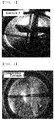
- 1 L of MCH was introduced to the semi-batch reactor from which the reaction product was removed ( FIG. 1 ) and stirred at 150°C for 1 hour, then the reaction solution was drained, and the weight of the secondary by-product was measured.
- reaction product LAO, C6+C8
- total PE total amount of polyethylene obtained as a by-product
- a reaction product was obtained in the same manner as in Example 1, except that sodium phosphate (Na 3 PO 4 ) was used instead of sodium chloride (NaCl), and the primary by-product and the secondary by-product were weighed in the same manner as in Example 1.
- sodium phosphate Na 3 PO 4
- NaCl sodium chloride
- reaction product LAO, C6+C8
- total PE total amount of polyethylene obtained as a by-product
- a reaction product was obtained in the same manner as in Example 1, except that imidazolium chloride was used instead of sodium chloride (NaCl), and the primary by-product and the secondary by-product were weighed in the same manner as in Example 1.
- reaction product LAO, C6+C8
- total PE total amount of polyethylene obtained as a by-product
- a reaction product was obtained in the same manner as in Example 1, except that tetrabutylammonium cyanide (TBACN) was used instead of sodium chloride (NaCl), and the primary by-product and the secondary by-product were weighed in the same manner as in Example 1.
- TBACN tetrabutylammonium cyanide
- NaCl sodium chloride
- reaction product LAO, C6+C8
- total PE total amount of polyethylene
- a reaction product was obtained in the same manner as in Example 1, except that tetrabutylammonium chloride (TBACl) was used instead of sodium chloride (NaCl), and the primary by-product and the secondary by-product were weighed in the same manner as in Example 1.
- TBACl tetrabutylammonium chloride
- NaCl sodium chloride
- reaction product LAO, C6+C8
- total PE total amount of polyethylene obtained as a by-product
- a reaction product was obtained in the same manner as in Example 1, except that sodium iodide (NaI) was used instead of sodium chloride (NaCl), and the primary by-product and the secondary by-product were weighed in the same manner as in Example 1.
- NaI sodium iodide
- NaCl sodium chloride
- reaction product LAO, C6+C8
- total PE total amount of polyethylene obtained as a by-product
- a reaction product was obtained in the same manner as in Example 1, except that sodium bromide (NaBr) was used instead of sodium chloride (NaCl), and the primary by-product and the secondary by-product were weighed in the same manner as in Example 1.
- NaBr sodium bromide
- NaCl sodium chloride
- reaction product LAO, C6+C8
- total PE total amount of polyethylene obtained as a by-product
- a reaction product was obtained in the same manner as in Example 1, except that potassium bromide (Kbr) was used instead of sodium chloride (NaCl), and the primary by-product and the secondary by-product were weighed in the same manner as in Example 1.
- Kbr potassium bromide
- NaCl sodium chloride
- reaction product LAO, C6+C8
- total PE total amount of polyethylene obtained as a by-product
- a reaction product was obtained in the same manner as in Example 1 except that sodium chloride (NaCl) was not used.
- NaCl sodium chloride
- a reaction product was obtained in the same manner as in Example 1, except that triethylamine (Sigma-Aldrich, TEA) was used instead of sodium chloride (NaCl), and the primary by-product and the secondary by-product were weighed in the same manner as in Example 1.
- TEA triethylamine
- NaCl sodium chloride
- the predetermined ionic compound when used, not only the production amount of the secondary by-product, but also the production amount of the primary by-product which is floating polyethylene is reduced simultaneously, thereby effectively suppressing a fouling phenomenon which may occur in the reaction.
- an organic salt including a predetermined ionic compound including a cationic component selected from the group consisting of tetraalkylammonium and tetraalkylphosphonium since the production amount of total PE as well as the production amount of the secondary by-product may be dramatically reduced.
Landscapes
- Chemical & Material Sciences (AREA)
- Organic Chemistry (AREA)
- Chemical Kinetics & Catalysis (AREA)
- Oil, Petroleum & Natural Gas (AREA)
- Engineering & Computer Science (AREA)
- Analytical Chemistry (AREA)
- Water Supply & Treatment (AREA)
- General Chemical & Material Sciences (AREA)
- Organic Low-Molecular-Weight Compounds And Preparation Thereof (AREA)
- Low-Molecular Organic Synthesis Reactions Using Catalysts (AREA)
- Catalysts (AREA)
Applications Claiming Priority (2)
| Application Number | Priority Date | Filing Date | Title |
|---|---|---|---|
| KR1020170076529A KR102284949B1 (ko) | 2017-06-16 | 2017-06-16 | 파울링 방지방법 및 올레핀의 올리고머화 방법 |
| PCT/KR2018/005477 WO2018230844A1 (ko) | 2017-06-16 | 2018-05-14 | 파울링 방지방법 및 올레핀의 올리고머화 방법 |
Publications (3)
| Publication Number | Publication Date |
|---|---|
| EP3640232A1 true EP3640232A1 (de) | 2020-04-22 |
| EP3640232A4 EP3640232A4 (de) | 2021-04-07 |
| EP3640232B1 EP3640232B1 (de) | 2024-04-24 |
Family
ID=64659574
Family Applications (1)
| Application Number | Title | Priority Date | Filing Date |
|---|---|---|---|
| EP18818798.3A Active EP3640232B1 (de) | 2017-06-16 | 2018-05-14 | Verfahren zur prävention von ablagerungen und verfahren zur oligomerisierung von olefinen |
Country Status (6)
| Country | Link |
|---|---|
| US (1) | US11130112B2 (de) |
| EP (1) | EP3640232B1 (de) |
| JP (1) | JP7129431B2 (de) |
| KR (1) | KR102284949B1 (de) |
| CN (1) | CN110785391B (de) |
| WO (1) | WO2018230844A1 (de) |
Cited By (9)
| Publication number | Priority date | Publication date | Assignee | Title |
|---|---|---|---|---|
| WO2022115749A1 (en) * | 2020-11-30 | 2022-06-02 | Saudi Arabian Oil Company | Catalyst systems |
| US11458462B2 (en) | 2020-11-30 | 2022-10-04 | Saudi Arabian Oil Company | Catalyst systems |
| US11458463B2 (en) | 2020-11-30 | 2022-10-04 | Saudi Arabian Oil Company | Catalyst systems |
| US11484871B1 (en) | 2021-08-26 | 2022-11-01 | Saudi Arabian Oil Company | Catalyst systems |
| US11529622B2 (en) | 2021-03-12 | 2022-12-20 | Saudi Arabian Oil Company | Catalyst systems |
| US11612883B2 (en) | 2020-11-30 | 2023-03-28 | Saudi Arabian Oil Company | Catalyst systems |
| US11623901B1 (en) | 2022-08-31 | 2023-04-11 | Saudi Arabian Oil Company | Catalyst systems that include silyl ether moieties |
| US11623208B2 (en) | 2020-11-30 | 2023-04-11 | Saudi Arabian Oil Company | Catalyst systems |
| US11639321B1 (en) | 2022-08-31 | 2023-05-02 | Saudi Arabian Oil Company | Catalyst systems that include meta-alkoxy substituted n-aryl bis-diphosphinoamine ligands |
Families Citing this family (3)
| Publication number | Priority date | Publication date | Assignee | Title |
|---|---|---|---|---|
| JP7508778B2 (ja) * | 2019-12-26 | 2024-07-02 | 株式会社レゾナック | N-ビニルカルボン酸アミド重合体溶液の製造方法 |
| CN114409495B (zh) * | 2020-10-28 | 2024-09-27 | 中国石油天然气股份有限公司 | 一种乙烯四聚的方法 |
| AR124324A1 (es) * | 2020-12-15 | 2023-03-15 | Shell Int Research | UN PROCESO PARA PRODUCIR a-OLEFINAS |
Family Cites Families (21)
| Publication number | Priority date | Publication date | Assignee | Title |
|---|---|---|---|---|
| GB1443074A (en) | 1974-01-14 | 1976-07-21 | Ici Ltd | Olefin polymerisation process |
| US3984387A (en) | 1974-08-07 | 1976-10-05 | The Dow Chemical Company | Preparation of linear α-olefin polymers having ultra high molecular weight |
| US4024051A (en) * | 1975-01-07 | 1977-05-17 | Nalco Chemical Company | Using an antifoulant in a crude oil heating process |
| US4675463A (en) | 1986-02-05 | 1987-06-23 | Exxon Chemical Patents Inc. | Process for reducing fouling in higher olefin plants |
| US4956427A (en) | 1988-12-23 | 1990-09-11 | Union Carbide Chemicals And Plastics Company Inc. | Process for reducing polymer build-up in polymerization equipment during polymerization of alpha-olefins |
| ES2154456T3 (es) | 1996-10-25 | 2001-04-01 | Bayerische Motoren Werke Ag | Procedimiento para ajustar un componente de asiento de vehiculo. |
| JP3984387B2 (ja) | 1998-04-09 | 2007-10-03 | 株式会社クラレ | ポリマーフィルムを用いたコーティング方法および金属箔積層体の製造方法 |
| KR101084937B1 (ko) | 2004-03-11 | 2011-11-17 | 에스케이종합화학 주식회사 | 에틸렌 중합용 촉매의 제조방법 |
| JP4956427B2 (ja) | 2004-07-21 | 2012-06-20 | デイナ ファーバー キャンサー インスティチュート,インコーポレイテッド | レンチウイルスベクターおよびその使用 |
| GB0507626D0 (en) * | 2005-04-15 | 2005-05-25 | Exxonmobil Chem Patents Inc | Branched olefin compositions |
| US8648212B2 (en) | 2009-04-02 | 2014-02-11 | Basf Se | Process for preparing solutions of radiation-sensitive, free-radically polymerizable organic compounds |
| EP2239056B1 (de) * | 2009-04-09 | 2011-07-20 | Saudi Basic Industries Corporation | Katalysatorzusammensetzung und Verfahren zur Oligomerisierung von Ethylen |
| JP5615807B2 (ja) | 2009-04-21 | 2014-10-29 | 三井化学株式会社 | オレフィン重合体の製造方法 |
| CA2760264C (en) | 2011-12-05 | 2018-08-21 | Nova Chemicals Corporation | Passivated supports for use with olefin polymerization catalysts |
| KR101588382B1 (ko) * | 2013-04-08 | 2016-01-27 | 한화케미칼 주식회사 | 대전 방지제를 포함하는 메탈로센 촉매 시스템 및 이를 이용한 폴리올레핀의 제조 방법 |
| KR101584350B1 (ko) * | 2013-04-08 | 2016-01-13 | 한화케미칼 주식회사 | 대전 방지제를 포함하는 메탈로센 촉매 시스템 및 이를 이용한 폴리올레핀의 제조 방법 |
| US9073029B2 (en) * | 2013-09-25 | 2015-07-07 | Chevron Phillips Chemical Company Lp | System and method for deterring fouling in a polymerization reactor |
| KR101679515B1 (ko) * | 2015-02-12 | 2016-11-24 | 주식회사 엘지화학 | 올리고머화 촉매계의 제조방법 및 이에 의해 제조된 올리고머화 촉매계 |
| BR112017024302A2 (pt) | 2015-05-11 | 2018-07-24 | Grace W R & Co | processo para a produção de argila modificada, catalisador de polimerização de metaloceno suportado, catalisador produzido e uso dos mesmos |
| EP4582181A1 (de) * | 2015-06-19 | 2025-07-09 | Saudi Arabian Oil Company | Antifouling-oligomerisierungskatalysatorsysteme |
| US10280125B2 (en) * | 2016-12-07 | 2019-05-07 | Sumitomo Chemical Company, Limited | Process for selective ethylene oligomerization with antifouling components |
-
2017
- 2017-06-16 KR KR1020170076529A patent/KR102284949B1/ko active Active
-
2018
- 2018-05-14 CN CN201880040200.6A patent/CN110785391B/zh active Active
- 2018-05-14 JP JP2019568605A patent/JP7129431B2/ja active Active
- 2018-05-14 WO PCT/KR2018/005477 patent/WO2018230844A1/ko not_active Ceased
- 2018-05-14 EP EP18818798.3A patent/EP3640232B1/de active Active
- 2018-05-14 US US16/622,470 patent/US11130112B2/en active Active
Cited By (12)
| Publication number | Priority date | Publication date | Assignee | Title |
|---|---|---|---|---|
| WO2022115749A1 (en) * | 2020-11-30 | 2022-06-02 | Saudi Arabian Oil Company | Catalyst systems |
| US11440857B2 (en) | 2020-11-30 | 2022-09-13 | Saudi Arabian Oil Company | Catalyst systems |
| US11458462B2 (en) | 2020-11-30 | 2022-10-04 | Saudi Arabian Oil Company | Catalyst systems |
| US11458463B2 (en) | 2020-11-30 | 2022-10-04 | Saudi Arabian Oil Company | Catalyst systems |
| US11612883B2 (en) | 2020-11-30 | 2023-03-28 | Saudi Arabian Oil Company | Catalyst systems |
| US11623208B2 (en) | 2020-11-30 | 2023-04-11 | Saudi Arabian Oil Company | Catalyst systems |
| US11866388B1 (en) | 2020-11-30 | 2024-01-09 | Saudi Arabian Oil Company | Catalyst systems |
| US11975310B1 (en) | 2020-11-30 | 2024-05-07 | Saudi Arabian Oil Company | Catalyst systems |
| US11529622B2 (en) | 2021-03-12 | 2022-12-20 | Saudi Arabian Oil Company | Catalyst systems |
| US11484871B1 (en) | 2021-08-26 | 2022-11-01 | Saudi Arabian Oil Company | Catalyst systems |
| US11623901B1 (en) | 2022-08-31 | 2023-04-11 | Saudi Arabian Oil Company | Catalyst systems that include silyl ether moieties |
| US11639321B1 (en) | 2022-08-31 | 2023-05-02 | Saudi Arabian Oil Company | Catalyst systems that include meta-alkoxy substituted n-aryl bis-diphosphinoamine ligands |
Also Published As
| Publication number | Publication date |
|---|---|
| JP2020523352A (ja) | 2020-08-06 |
| US20200139333A1 (en) | 2020-05-07 |
| KR20180137192A (ko) | 2018-12-27 |
| JP7129431B2 (ja) | 2022-09-01 |
| CN110785391A (zh) | 2020-02-11 |
| KR102284949B1 (ko) | 2021-08-03 |
| WO2018230844A1 (ko) | 2018-12-20 |
| US11130112B2 (en) | 2021-09-28 |
| EP3640232A4 (de) | 2021-04-07 |
| CN110785391B (zh) | 2023-03-10 |
| EP3640232B1 (de) | 2024-04-24 |
Similar Documents
| Publication | Publication Date | Title |
|---|---|---|
| EP3640232B1 (de) | Verfahren zur prävention von ablagerungen und verfahren zur oligomerisierung von olefinen | |
| CN103270006B (zh) | 烯烃低聚反应催化剂以及制备和使用其的方法 | |
| WO2006099053A1 (en) | Methods for oligomerizing olefins | |
| JP2005513115A (ja) | クロムを主成分とした触媒を使用したオレフィンの三量化およびオリゴマー化 | |
| US10421064B2 (en) | Catalyst composition and process for oligomerization of ethylene to produce 1-hexene and/or 1-octene | |
| EP3037399B1 (de) | Verfahren zur herstellung von olefinoligomeren | |
| US8629280B2 (en) | Methods for oligomerizing olefins with chromium pyridine ether catalysts | |
| US10919819B2 (en) | Oligomerization of ethylene | |
| CN107207545B (zh) | 配体化合物,低聚催化剂体系及使用其的烯烃低聚方法 | |
| US11247201B2 (en) | Ligands for production of 1-hexene in chromium assisted ethylene oligomerization process | |
| US8138348B2 (en) | Methods for oligomerizing olefins with chromium pyridine mono-oxazoline catalysts | |
| US8993775B2 (en) | Chromium and nickel catalysts for oligomerization reactions and process for obtaining alpha-olefins using said catalysts | |
| WO2020100007A1 (en) | Ligands for production of 1-octene in chromium assisted ethylene oligomerization process | |
| US12440830B2 (en) | Ligands for production of 1-octene in chromium assisted ethylene oligomerization process | |
| KR20160064840A (ko) | 1-헥센 및 1-옥텐의 제조방법 | |
| JP2013103218A (ja) | オリゴマー化反応用クロム及びニッケル触媒と前記触媒を使ったアルファ−オレフィンを得る方法 | |
| US8816146B2 (en) | Organometallic complexes as catalyst precursors for selective olefin dimerization and processes therefor | |
| KR20240028765A (ko) | 1-부텐의 제조 방법 | |
| WO2016043463A1 (ko) | 올레핀의 을리고머화 방법 |
Legal Events
| Date | Code | Title | Description |
|---|---|---|---|
| STAA | Information on the status of an ep patent application or granted ep patent |
Free format text: STATUS: THE INTERNATIONAL PUBLICATION HAS BEEN MADE |
|
| PUAI | Public reference made under article 153(3) epc to a published international application that has entered the european phase |
Free format text: ORIGINAL CODE: 0009012 |
|
| STAA | Information on the status of an ep patent application or granted ep patent |
Free format text: STATUS: REQUEST FOR EXAMINATION WAS MADE |
|
| 17P | Request for examination filed |
Effective date: 20191219 |
|
| AK | Designated contracting states |
Kind code of ref document: A1 Designated state(s): AL AT BE BG CH CY CZ DE DK EE ES FI FR GB GR HR HU IE IS IT LI LT LU LV MC MK MT NL NO PL PT RO RS SE SI SK SM TR |
|
| AX | Request for extension of the european patent |
Extension state: BA ME |
|
| DAV | Request for validation of the european patent (deleted) | ||
| DAX | Request for extension of the european patent (deleted) | ||
| REG | Reference to a national code |
Ref country code: DE Ref legal event code: R079 Free format text: PREVIOUS MAIN CLASS: C07C0007200000 Ipc: C07C0002320000 Ref country code: DE Ref legal event code: R079 Ref document number: 602018068634 Country of ref document: DE Free format text: PREVIOUS MAIN CLASS: C07C0007200000 Ipc: C07C0002320000 |
|
| A4 | Supplementary search report drawn up and despatched |
Effective date: 20210304 |
|
| RIC1 | Information provided on ipc code assigned before grant |
Ipc: B01J 31/24 20060101ALI20210226BHEP Ipc: C07C 11/02 20060101ALI20210226BHEP Ipc: C07C 2/32 20060101AFI20210226BHEP Ipc: C07C 11/107 20060101ALI20210226BHEP |
|
| RAP3 | Party data changed (applicant data changed or rights of an application transferred) |
Owner name: SK GEO CENTRIC CO., LTD. Owner name: SK INNOVATION CO., LTD. |
|
| STAA | Information on the status of an ep patent application or granted ep patent |
Free format text: STATUS: EXAMINATION IS IN PROGRESS |
|
| 17Q | First examination report despatched |
Effective date: 20230331 |
|
| P01 | Opt-out of the competence of the unified patent court (upc) registered |
Effective date: 20230622 |
|
| GRAP | Despatch of communication of intention to grant a patent |
Free format text: ORIGINAL CODE: EPIDOSNIGR1 |
|
| STAA | Information on the status of an ep patent application or granted ep patent |
Free format text: STATUS: GRANT OF PATENT IS INTENDED |
|
| RIC1 | Information provided on ipc code assigned before grant |
Ipc: C10G 75/04 20060101ALI20231101BHEP Ipc: B01J 19/00 20060101ALI20231101BHEP Ipc: B01J 31/14 20060101ALI20231101BHEP Ipc: B01J 31/24 20060101ALI20231101BHEP Ipc: C07C 11/107 20060101ALI20231101BHEP Ipc: C07C 11/02 20060101ALI20231101BHEP Ipc: C07C 2/32 20060101AFI20231101BHEP |
|
| INTG | Intention to grant announced |
Effective date: 20231117 |
|
| GRAS | Grant fee paid |
Free format text: ORIGINAL CODE: EPIDOSNIGR3 |
|
| GRAA | (expected) grant |
Free format text: ORIGINAL CODE: 0009210 |
|
| STAA | Information on the status of an ep patent application or granted ep patent |
Free format text: STATUS: THE PATENT HAS BEEN GRANTED |
|
| AK | Designated contracting states |
Kind code of ref document: B1 Designated state(s): AL AT BE BG CH CY CZ DE DK EE ES FI FR GB GR HR HU IE IS IT LI LT LU LV MC MK MT NL NO PL PT RO RS SE SI SK SM TR |
|
| REG | Reference to a national code |
Ref country code: GB Ref legal event code: FG4D |
|
| REG | Reference to a national code |
Ref country code: CH Ref legal event code: EP |
|
| REG | Reference to a national code |
Ref country code: DE Ref legal event code: R096 Ref document number: 602018068634 Country of ref document: DE |
|
| REG | Reference to a national code |
Ref country code: IE Ref legal event code: FG4D |
|
| REG | Reference to a national code |
Ref country code: LT Ref legal event code: MG9D |
|
| REG | Reference to a national code |
Ref country code: NL Ref legal event code: MP Effective date: 20240424 |
|
| REG | Reference to a national code |
Ref country code: AT Ref legal event code: MK05 Ref document number: 1679463 Country of ref document: AT Kind code of ref document: T Effective date: 20240424 |
|
| PG25 | Lapsed in a contracting state [announced via postgrant information from national office to epo] |
Ref country code: NL Free format text: LAPSE BECAUSE OF FAILURE TO SUBMIT A TRANSLATION OF THE DESCRIPTION OR TO PAY THE FEE WITHIN THE PRESCRIBED TIME-LIMIT Effective date: 20240424 |
|
| PG25 | Lapsed in a contracting state [announced via postgrant information from national office to epo] |
Ref country code: NL Free format text: LAPSE BECAUSE OF FAILURE TO SUBMIT A TRANSLATION OF THE DESCRIPTION OR TO PAY THE FEE WITHIN THE PRESCRIBED TIME-LIMIT Effective date: 20240424 |
|
| PG25 | Lapsed in a contracting state [announced via postgrant information from national office to epo] |
Ref country code: IS Free format text: LAPSE BECAUSE OF FAILURE TO SUBMIT A TRANSLATION OF THE DESCRIPTION OR TO PAY THE FEE WITHIN THE PRESCRIBED TIME-LIMIT Effective date: 20240824 |
|
| PG25 | Lapsed in a contracting state [announced via postgrant information from national office to epo] |
Ref country code: BG Free format text: LAPSE BECAUSE OF FAILURE TO SUBMIT A TRANSLATION OF THE DESCRIPTION OR TO PAY THE FEE WITHIN THE PRESCRIBED TIME-LIMIT Effective date: 20240424 |
|
| PG25 | Lapsed in a contracting state [announced via postgrant information from national office to epo] |
Ref country code: HR Free format text: LAPSE BECAUSE OF FAILURE TO SUBMIT A TRANSLATION OF THE DESCRIPTION OR TO PAY THE FEE WITHIN THE PRESCRIBED TIME-LIMIT Effective date: 20240424 Ref country code: FI Free format text: LAPSE BECAUSE OF FAILURE TO SUBMIT A TRANSLATION OF THE DESCRIPTION OR TO PAY THE FEE WITHIN THE PRESCRIBED TIME-LIMIT Effective date: 20240424 |
|
| PG25 | Lapsed in a contracting state [announced via postgrant information from national office to epo] |
Ref country code: GR Free format text: LAPSE BECAUSE OF FAILURE TO SUBMIT A TRANSLATION OF THE DESCRIPTION OR TO PAY THE FEE WITHIN THE PRESCRIBED TIME-LIMIT Effective date: 20240725 |
|
| PG25 | Lapsed in a contracting state [announced via postgrant information from national office to epo] |
Ref country code: PT Free format text: LAPSE BECAUSE OF FAILURE TO SUBMIT A TRANSLATION OF THE DESCRIPTION OR TO PAY THE FEE WITHIN THE PRESCRIBED TIME-LIMIT Effective date: 20240826 |
|
| PG25 | Lapsed in a contracting state [announced via postgrant information from national office to epo] |
Ref country code: ES Free format text: LAPSE BECAUSE OF FAILURE TO SUBMIT A TRANSLATION OF THE DESCRIPTION OR TO PAY THE FEE WITHIN THE PRESCRIBED TIME-LIMIT Effective date: 20240424 |
|
| PG25 | Lapsed in a contracting state [announced via postgrant information from national office to epo] |
Ref country code: AT Free format text: LAPSE BECAUSE OF FAILURE TO SUBMIT A TRANSLATION OF THE DESCRIPTION OR TO PAY THE FEE WITHIN THE PRESCRIBED TIME-LIMIT Effective date: 20240424 |
|
| PG25 | Lapsed in a contracting state [announced via postgrant information from national office to epo] |
Ref country code: PL Free format text: LAPSE BECAUSE OF FAILURE TO SUBMIT A TRANSLATION OF THE DESCRIPTION OR TO PAY THE FEE WITHIN THE PRESCRIBED TIME-LIMIT Effective date: 20240424 |
|
| PG25 | Lapsed in a contracting state [announced via postgrant information from national office to epo] |
Ref country code: LV Free format text: LAPSE BECAUSE OF FAILURE TO SUBMIT A TRANSLATION OF THE DESCRIPTION OR TO PAY THE FEE WITHIN THE PRESCRIBED TIME-LIMIT Effective date: 20240424 |
|
| PG25 | Lapsed in a contracting state [announced via postgrant information from national office to epo] |
Ref country code: PT Free format text: LAPSE BECAUSE OF FAILURE TO SUBMIT A TRANSLATION OF THE DESCRIPTION OR TO PAY THE FEE WITHIN THE PRESCRIBED TIME-LIMIT Effective date: 20240826 Ref country code: PL Free format text: LAPSE BECAUSE OF FAILURE TO SUBMIT A TRANSLATION OF THE DESCRIPTION OR TO PAY THE FEE WITHIN THE PRESCRIBED TIME-LIMIT Effective date: 20240424 Ref country code: NO Free format text: LAPSE BECAUSE OF FAILURE TO SUBMIT A TRANSLATION OF THE DESCRIPTION OR TO PAY THE FEE WITHIN THE PRESCRIBED TIME-LIMIT Effective date: 20240724 Ref country code: LV Free format text: LAPSE BECAUSE OF FAILURE TO SUBMIT A TRANSLATION OF THE DESCRIPTION OR TO PAY THE FEE WITHIN THE PRESCRIBED TIME-LIMIT Effective date: 20240424 Ref country code: IS Free format text: LAPSE BECAUSE OF FAILURE TO SUBMIT A TRANSLATION OF THE DESCRIPTION OR TO PAY THE FEE WITHIN THE PRESCRIBED TIME-LIMIT Effective date: 20240824 Ref country code: HR Free format text: LAPSE BECAUSE OF FAILURE TO SUBMIT A TRANSLATION OF THE DESCRIPTION OR TO PAY THE FEE WITHIN THE PRESCRIBED TIME-LIMIT Effective date: 20240424 Ref country code: GR Free format text: LAPSE BECAUSE OF FAILURE TO SUBMIT A TRANSLATION OF THE DESCRIPTION OR TO PAY THE FEE WITHIN THE PRESCRIBED TIME-LIMIT Effective date: 20240725 Ref country code: FI Free format text: LAPSE BECAUSE OF FAILURE TO SUBMIT A TRANSLATION OF THE DESCRIPTION OR TO PAY THE FEE WITHIN THE PRESCRIBED TIME-LIMIT Effective date: 20240424 Ref country code: ES Free format text: LAPSE BECAUSE OF FAILURE TO SUBMIT A TRANSLATION OF THE DESCRIPTION OR TO PAY THE FEE WITHIN THE PRESCRIBED TIME-LIMIT Effective date: 20240424 Ref country code: BG Free format text: LAPSE BECAUSE OF FAILURE TO SUBMIT A TRANSLATION OF THE DESCRIPTION OR TO PAY THE FEE WITHIN THE PRESCRIBED TIME-LIMIT Effective date: 20240424 Ref country code: AT Free format text: LAPSE BECAUSE OF FAILURE TO SUBMIT A TRANSLATION OF THE DESCRIPTION OR TO PAY THE FEE WITHIN THE PRESCRIBED TIME-LIMIT Effective date: 20240424 Ref country code: RS Free format text: LAPSE BECAUSE OF FAILURE TO SUBMIT A TRANSLATION OF THE DESCRIPTION OR TO PAY THE FEE WITHIN THE PRESCRIBED TIME-LIMIT Effective date: 20240724 |
|
| REG | Reference to a national code |
Ref country code: CH Ref legal event code: PL |
|
| PG25 | Lapsed in a contracting state [announced via postgrant information from national office to epo] |
Ref country code: DK Free format text: LAPSE BECAUSE OF FAILURE TO SUBMIT A TRANSLATION OF THE DESCRIPTION OR TO PAY THE FEE WITHIN THE PRESCRIBED TIME-LIMIT Effective date: 20240424 |
|
| PG25 | Lapsed in a contracting state [announced via postgrant information from national office to epo] |
Ref country code: LU Free format text: LAPSE BECAUSE OF NON-PAYMENT OF DUE FEES Effective date: 20240514 |
|
| PG25 | Lapsed in a contracting state [announced via postgrant information from national office to epo] |
Ref country code: EE Free format text: LAPSE BECAUSE OF FAILURE TO SUBMIT A TRANSLATION OF THE DESCRIPTION OR TO PAY THE FEE WITHIN THE PRESCRIBED TIME-LIMIT Effective date: 20240424 |
|
| PG25 | Lapsed in a contracting state [announced via postgrant information from national office to epo] |
Ref country code: CZ Free format text: LAPSE BECAUSE OF FAILURE TO SUBMIT A TRANSLATION OF THE DESCRIPTION OR TO PAY THE FEE WITHIN THE PRESCRIBED TIME-LIMIT Effective date: 20240424 |
|
| PG25 | Lapsed in a contracting state [announced via postgrant information from national office to epo] |
Ref country code: SK Free format text: LAPSE BECAUSE OF FAILURE TO SUBMIT A TRANSLATION OF THE DESCRIPTION OR TO PAY THE FEE WITHIN THE PRESCRIBED TIME-LIMIT Effective date: 20240424 Ref country code: RO Free format text: LAPSE BECAUSE OF FAILURE TO SUBMIT A TRANSLATION OF THE DESCRIPTION OR TO PAY THE FEE WITHIN THE PRESCRIBED TIME-LIMIT Effective date: 20240424 |
|
| REG | Reference to a national code |
Ref country code: DE Ref legal event code: R097 Ref document number: 602018068634 Country of ref document: DE |
|
| PG25 | Lapsed in a contracting state [announced via postgrant information from national office to epo] |
Ref country code: SM Free format text: LAPSE BECAUSE OF FAILURE TO SUBMIT A TRANSLATION OF THE DESCRIPTION OR TO PAY THE FEE WITHIN THE PRESCRIBED TIME-LIMIT Effective date: 20240424 |
|
| PG25 | Lapsed in a contracting state [announced via postgrant information from national office to epo] |
Ref country code: SM Free format text: LAPSE BECAUSE OF FAILURE TO SUBMIT A TRANSLATION OF THE DESCRIPTION OR TO PAY THE FEE WITHIN THE PRESCRIBED TIME-LIMIT Effective date: 20240424 Ref country code: SK Free format text: LAPSE BECAUSE OF FAILURE TO SUBMIT A TRANSLATION OF THE DESCRIPTION OR TO PAY THE FEE WITHIN THE PRESCRIBED TIME-LIMIT Effective date: 20240424 Ref country code: RO Free format text: LAPSE BECAUSE OF FAILURE TO SUBMIT A TRANSLATION OF THE DESCRIPTION OR TO PAY THE FEE WITHIN THE PRESCRIBED TIME-LIMIT Effective date: 20240424 Ref country code: LU Free format text: LAPSE BECAUSE OF NON-PAYMENT OF DUE FEES Effective date: 20240514 Ref country code: EE Free format text: LAPSE BECAUSE OF FAILURE TO SUBMIT A TRANSLATION OF THE DESCRIPTION OR TO PAY THE FEE WITHIN THE PRESCRIBED TIME-LIMIT Effective date: 20240424 Ref country code: DK Free format text: LAPSE BECAUSE OF FAILURE TO SUBMIT A TRANSLATION OF THE DESCRIPTION OR TO PAY THE FEE WITHIN THE PRESCRIBED TIME-LIMIT Effective date: 20240424 Ref country code: CZ Free format text: LAPSE BECAUSE OF FAILURE TO SUBMIT A TRANSLATION OF THE DESCRIPTION OR TO PAY THE FEE WITHIN THE PRESCRIBED TIME-LIMIT Effective date: 20240424 Ref country code: MC Free format text: LAPSE BECAUSE OF FAILURE TO SUBMIT A TRANSLATION OF THE DESCRIPTION OR TO PAY THE FEE WITHIN THE PRESCRIBED TIME-LIMIT Effective date: 20240424 Ref country code: CH Free format text: LAPSE BECAUSE OF NON-PAYMENT OF DUE FEES Effective date: 20240531 |
|
| PLBE | No opposition filed within time limit |
Free format text: ORIGINAL CODE: 0009261 |
|
| STAA | Information on the status of an ep patent application or granted ep patent |
Free format text: STATUS: NO OPPOSITION FILED WITHIN TIME LIMIT |
|
| 26N | No opposition filed |
Effective date: 20250127 |
|
| PG25 | Lapsed in a contracting state [announced via postgrant information from national office to epo] |
Ref country code: IE Free format text: LAPSE BECAUSE OF NON-PAYMENT OF DUE FEES Effective date: 20240514 |
|
| PG25 | Lapsed in a contracting state [announced via postgrant information from national office to epo] |
Ref country code: SI Free format text: LAPSE BECAUSE OF FAILURE TO SUBMIT A TRANSLATION OF THE DESCRIPTION OR TO PAY THE FEE WITHIN THE PRESCRIBED TIME-LIMIT Effective date: 20240424 |
|
| PGFP | Annual fee paid to national office [announced via postgrant information from national office to epo] |
Ref country code: BE Payment date: 20250320 Year of fee payment: 8 |
|
| PGFP | Annual fee paid to national office [announced via postgrant information from national office to epo] |
Ref country code: FR Payment date: 20250321 Year of fee payment: 8 |
|
| PGFP | Annual fee paid to national office [announced via postgrant information from national office to epo] |
Ref country code: GB Payment date: 20250320 Year of fee payment: 8 |
|
| PGFP | Annual fee paid to national office [announced via postgrant information from national office to epo] |
Ref country code: DE Payment date: 20250320 Year of fee payment: 8 |
|
| PG25 | Lapsed in a contracting state [announced via postgrant information from national office to epo] |
Ref country code: CY Free format text: LAPSE BECAUSE OF FAILURE TO SUBMIT A TRANSLATION OF THE DESCRIPTION OR TO PAY THE FEE WITHIN THE PRESCRIBED TIME-LIMIT; INVALID AB INITIO Effective date: 20180514 |
|
| PG25 | Lapsed in a contracting state [announced via postgrant information from national office to epo] |
Ref country code: HU Free format text: LAPSE BECAUSE OF FAILURE TO SUBMIT A TRANSLATION OF THE DESCRIPTION OR TO PAY THE FEE WITHIN THE PRESCRIBED TIME-LIMIT; INVALID AB INITIO Effective date: 20180514 |
|
| PG25 | Lapsed in a contracting state [announced via postgrant information from national office to epo] |
Ref country code: SE Free format text: LAPSE BECAUSE OF FAILURE TO SUBMIT A TRANSLATION OF THE DESCRIPTION OR TO PAY THE FEE WITHIN THE PRESCRIBED TIME-LIMIT Effective date: 20240424 |
|
| PG25 | Lapsed in a contracting state [announced via postgrant information from national office to epo] |
Ref country code: IT Free format text: LAPSE BECAUSE OF FAILURE TO SUBMIT A TRANSLATION OF THE DESCRIPTION OR TO PAY THE FEE WITHIN THE PRESCRIBED TIME-LIMIT Effective date: 20240424 |