EP3565283B1 - Positionierungsverfahren und -vorrichtung - Google Patents
Positionierungsverfahren und -vorrichtung Download PDFInfo
- Publication number
- EP3565283B1 EP3565283B1 EP17894410.4A EP17894410A EP3565283B1 EP 3565283 B1 EP3565283 B1 EP 3565283B1 EP 17894410 A EP17894410 A EP 17894410A EP 3565283 B1 EP3565283 B1 EP 3565283B1
- Authority
- EP
- European Patent Office
- Prior art keywords
- target object
- location information
- absolute location
- identifier
- sensor
- Prior art date
- Legal status (The legal status is an assumption and is not a legal conclusion. Google has not performed a legal analysis and makes no representation as to the accuracy of the status listed.)
- Active
Links
Images



Classifications
-
- H—ELECTRICITY
- H04—ELECTRIC COMMUNICATION TECHNIQUE
- H04W—WIRELESS COMMUNICATION NETWORKS
- H04W4/00—Services specially adapted for wireless communication networks; Facilities therefor
- H04W4/02—Services making use of location information
- H04W4/029—Location-based management or tracking services
-
- H—ELECTRICITY
- H04—ELECTRIC COMMUNICATION TECHNIQUE
- H04W—WIRELESS COMMUNICATION NETWORKS
- H04W4/00—Services specially adapted for wireless communication networks; Facilities therefor
- H04W4/02—Services making use of location information
-
- H—ELECTRICITY
- H04—ELECTRIC COMMUNICATION TECHNIQUE
- H04W—WIRELESS COMMUNICATION NETWORKS
- H04W4/00—Services specially adapted for wireless communication networks; Facilities therefor
- H04W4/02—Services making use of location information
- H04W4/023—Services making use of location information using mutual or relative location information between multiple location based services [LBS] targets or of distance thresholds
-
- H—ELECTRICITY
- H04—ELECTRIC COMMUNICATION TECHNIQUE
- H04N—PICTORIAL COMMUNICATION, e.g. TELEVISION
- H04N7/00—Television systems
- H04N7/18—Closed-circuit television [CCTV] systems, i.e. systems in which the video signal is not broadcast
- H04N7/183—Closed-circuit television [CCTV] systems, i.e. systems in which the video signal is not broadcast for receiving images from a single remote source
-
- H—ELECTRICITY
- H04—ELECTRIC COMMUNICATION TECHNIQUE
- H04W—WIRELESS COMMUNICATION NETWORKS
- H04W4/00—Services specially adapted for wireless communication networks; Facilities therefor
- H04W4/06—Selective distribution of broadcast services, e.g. multimedia broadcast multicast service [MBMS]; Services to user groups; One-way selective calling services
- H04W4/08—User group management
-
- H—ELECTRICITY
- H04—ELECTRIC COMMUNICATION TECHNIQUE
- H04W—WIRELESS COMMUNICATION NETWORKS
- H04W4/00—Services specially adapted for wireless communication networks; Facilities therefor
- H04W4/30—Services specially adapted for particular environments, situations or purposes
- H04W4/40—Services specially adapted for particular environments, situations or purposes for vehicles, e.g. vehicle-to-pedestrians [V2P]
-
- H—ELECTRICITY
- H04—ELECTRIC COMMUNICATION TECHNIQUE
- H04W—WIRELESS COMMUNICATION NETWORKS
- H04W64/00—Locating users or terminals or network equipment for network management purposes, e.g. mobility management
-
- H—ELECTRICITY
- H04—ELECTRIC COMMUNICATION TECHNIQUE
- H04W—WIRELESS COMMUNICATION NETWORKS
- H04W64/00—Locating users or terminals or network equipment for network management purposes, e.g. mobility management
- H04W64/006—Locating users or terminals or network equipment for network management purposes, e.g. mobility management with additional information processing, e.g. for direction or speed determination
Definitions
- This application relates to the field of communications technologies, and in particular, to a positioning method and a device.
- Automated driving means that a vehicle can drive safely at any time in any scenarios.
- the any scenarios include various special driving environments, such as a tunnel, a mountain, a bridge, and an overpass.
- a positioning technology is most critical in technologies for implementing automated driving, and a high-precision positioning technology is a basis for ensuring safe driving of the vehicle.
- an in-vehicle terminal in a vehicle determines a location of the vehicle by receiving a Global Positioning System (GPS) signal.
- GPS Global Positioning System
- a high-precision map with topographic features is prestored in the in-vehicle terminal.
- the high-precision map further provides 3D images and high-precision location information of fixed objects such as a building and a landmark object around a road.
- the in-vehicle terminal scans a surrounding environment by using a 64-line laser radar, to obtain a 3D image.
- the in-vehicle terminal compares the scanned 3D image with the prestored high-precision map to determine location information of the vehicle.
- US 2014/092236 A1 discloses a positioning system for a vehicle that includes a camera, a processor unit and a data storage device. A length relating to a feature of the vehicle is stored in the data storage device. The vehicle is positioned for an inductive charging process in that the vehicle is recorded by a camera and a feature of the vehicle is detected. The position relating to a feature is calculated.
- This application provides positioning methods of claims 1 and 2, and related devices of claims 5 and 7, to improve operability of positioning when there is no GPS signal. Possible implementation manners are disclosed in the dependent claims.
- the embodiments of this application may be applied to scenarios such as vehicle positioning, pedestrian positioning, and obstacle positioning in a transportation system, and may also be applied to a scenario in which a robot locates an indoor or outdoor target object, and the like.
- Vehicle positioning applied to the transportation system is used as an example to describe the embodiments of this application in detail.
- a positioning manner applied to another application scenario is similar to a vehicle positioning manner applied to the scenario of the transportation system. Details are not described herein again.
- a first device can determine absolute location information of a target object according to prestored absolute location information of the first device and a detection signal that is obtained when a sensor detects the target object, and can send, by using a wireless network, the absolute location information that is of the target object and that is determined by the first device to a second device disposed on the target object, so that the second device can implement positioning of the target object according to the absolute location information that is of the target object and that is sent by the first device. Therefore, this resolves a prior-art problem that positioning of a target object cannot be implemented when there is no GPS signal.
- this solution is easy to implement, improves operability of positioning, and increases positioning precision of the target object by increasing precision of the sensor.
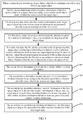
- a positioning method in an embodiment of this application includes the following steps.
- a first device detects, by using a sensor, a target object that occurs within a range detectable to the sensor.
- the first device performs step 100 to step 130 when the sensor detects any target object.
- Step 100 The first device determines relative location information of the first device relative to the target object according to a detection signal that is obtained when the sensor detects the target object, where a second device having a communication function is disposed on each target object.
- Step 110 The first device determines absolute location information of the target object according to the relative location information and prestored absolute location information of the first device.
- Step 120 The first device sends, by using a wireless network, the absolute location information of the target object to the second device disposed on the target object.
- Step 130 The second device receives, by using the wireless network, absolute location information that is of a first target object and that is sent by at least one first device, where the target object in which the second device is located is the first target object, and the absolute location information of the first target object is one piece of absolute information that is of a target location and that is determined by the at least one first device.
- Step 140 The second device determines positioning information of the first target object according to the absolute location information of the first target object that is sent by the at least one first device.
- the wireless network may be a mobile data network provided by an operator, for example, a network of a network standard such as Long Term Evolution (Long Term Evolution, LTE), or a wireless local area network (Wireless Local Area Networks, WLAN).
- a network standard such as Long Term Evolution (Long Term Evolution, LTE)
- a wireless local area network Wireless Local Area Networks, WLAN.
- each first device may be bound to one sensor, or may be bound to a plurality of sensors.
- the sensor in this embodiment of this application may be a video camera or a camera, or may be a sensing device such as a laser radar or a millimeter wave radar.
- the sensor may be disposed on the first device, or may send a detection signal to the first device in a wireless or wired manner.
- the first device is a device having a communication function.
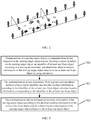
- a sensor T1, a sensor T2, and a sensor T3 are video cameras. Each of the sensor T1, the sensor T2, and the sensor T3 is fastened on a fixed object.
- the fixed object may be a utility pole, a building, or the like.
- a vehicle C1, a vehicle C2, a vehicle C3, and a vehicle C4 are target objects, and a second device having a communication function is disposed on each of the vehicle C1, the vehicle C2, the vehicle C3, and the vehicle C4.
- the second device may be a smart terminal device, for example, an in-vehicle station, a smart phone, a notebook computer, a palmtop computer, or a tablet computer.
- the T1 is used as an example.
- the T1 is disposed on a first device 1. Because a range detectable to the T1 is limited, if the T1 can detect only the C1, C2, and C3 within the detectable range, the T1 sends image information of photographed C1, C2, and C3 to the first device 1 after photographing the C1, C2, and C3. In this case, a detection signal is the image information of the T1-photographed C1, C2, and C3.
- the first device 1 determines relative location information of the first device 1 relative to the C1, relative location information of the first device 1 relative to the C2, and relative location information of the first device 1 relative to the C3 according to the image information of the T1-photographed C1, C2, and C3, respectively.
- Absolute location information of the first device 1 is measured in advance and stored in the first device 1.
- the absolute location information of the first device 1 is (x1, y1, z1), where x1 is used to indicate a longitude of the first device 1, y1 is used to indicate a latitude of the first device 1, and z1 is used to indicate a height of the first device 1.
- the first device 1 may determine absolute location information of the C1 by using the relative location information relative to the C1 and the absolute location information of the first device 1, determine absolute location information of the C2 by using the relative location information relative to the C2 and the absolute location information of the first device 1, and determine absolute location information of the C3 by using the relative location information relative to the C3 and the absolute location information of the first device 1. Then, the first device 1 sends the absolute location information of the C1 to a second device 1 disposed on the C1, sends the absolute location information of the C2 to a second device 2 disposed on the C2, and sends the absolute location information of the C3 to a second device 3 disposed on the C3.
- the T2 can detect the C1, C2, C3, and C4 within a detectable range
- the T3 can detect the C2, C3, and C4 within a detectable range
- a manner of determining absolute location information of the C1, C2, C3, and C4 by the first device 2 and a manner of determining absolute location information of the C2, C3, and C4 by the first device 3 are similar to a manner of determining the absolute location information of the C1, C2, and C3 by the first device 1. Details are not described herein again.
- a manner of sending the absolute location information of the C1 to the second device 1 disposed on the C1 by the first device 2 a manner of sending the absolute location information of the C2 to the second device 2 disposed on the C2 by the first device 2 disposed on the C2 by the first device 2 a manner of sending the absolute location information of the C3 to the second device 3 disposed on the C3 by the first device 2, a manner of sending the absolute location information of the C4 to the second device 4 disposed on the C4 by the first device 2, a manner of sending the absolute location information of the C2 to the second device 2 disposed on the C2 by the first device 3, a manner of sending the absolute location information of the C3 to the second device 3 disposed on the C3 by the first device 3, and a manner of sending the absolute location information of the C4 to the second device 4 disposed on the C4 by the first device 3, a manner of sending the absolute location information of the C2 to the second device 2 disposed on the C2 by the first device 1, and a manner of sending the absolute location information
- the first device 1 obtains, by using the T1, a target object identifier attached to the C1.
- a target object identifier attached to the C1 obtains, from the image information of the T1-detected C1, C2 and C3, the target object identifier attached to the C1, and sends, by using the wireless network, the target object identifier and the absolute location information of the C1 to the second device 1 disposed on the C1.
- the target object identifier may be a vehicle license plate number.
- the second device 1 determines, by using the target object identifier, that received absolute location information is the absolute location information of the C1.
- a possible implementation in which the first device 1 sends, by using the target object identifier, the absolute location information of the C1 to the second device 1 is:
- the first device 1 may send a correspondence between the target object identifier and the absolute location information of the C1 to an intelligent transportation system; then, the intelligent transportation system finds an identifier of the second device 1 from a prestored correspondence between a target object identifier and a second-device identifier according to the target object identifier, and sends the absolute location information of the C1 to the second device 1 according to the identifier of the second device 1.
- an identifier may be a network identifier that can be used to indicate identifier information of the second device 1, for example, a mobile phone number or a user equipment identifier (User Equipment Identification, UE_ID).
- the identifier may alternatively be a network address, for example, a Media Access Control address (Media Access Control Address, MAC Address) or an Internet Protocol address (Internet Protocol Address, IP Address).
- the second device 1 can directly receive the absolute location information of the C1, without receiving absolute location information of another target object different from the absolute location information of the C1.
- the first device 1 sends, by using the target object identifier, the absolute location information of the C1 to the second device 1 is:
- the first device 1 broadcasts a data packet by using the wireless network, and the data packet includes a correspondence between the target object identifier of the C1 and the absolute location information of the C1.
- the first device 1 can separately determine the absolute location information of the C1, C2, and C3.
- the first device 1 may encapsulate the correspondence between the target object identifier of the C1 and the absolute location information of the C1, a correspondence between a target object identifier of the C2 and the absolute location information of the C2, and a correspondence between a target object identifier of the C3 and the absolute location information of the C3 into one data packet for broadcasting, or may encapsulate the correspondence between the target object identifier of the C1 and the absolute location information of the C1, a correspondence between a target object identifier of the C2 and the absolute location information of the C2, and a correspondence between a target object identifier of the C3 and the absolute location information of the C3 separately into three data packets for broadcasting.
- the second device 1 determines, from the correspondences included in the data packet, the absolute location information of the C1 corresponding to the target object identifier of the C1.
- a third possible implementation in which the first device 1 sends, by using the target object identifier, the absolute location information of the C1 to the second device 1 is: A correspondence between a target object identifier and a second-device identifier is prestored in the first device 1. The first device 1 determines an identifier of the second device 1 from the prestored correspondence between the target object identifier and the second-device identifier according to the target object identifier of the C1; then, the first device 1 sends the absolute location information of the C1 to the second device 1. In this way, the absolute location information of the C1 can be directly sent to the second device 1 without using the intelligent transportation system.
- a fourth possible implementation in which the first device 1 sends, by using the target object identifier, the absolute location information of the C1 to the second device 1 is:
- a correspondence between a target object identifier and a second-device identifier is prestored in the first device 1.
- the first device 1 determines an identifier of the second device 1 from the prestored correspondence between the target object identifier and the second-device identifier according to the target object identifier of the C1, and then broadcasts a data packet, where the data packet includes the correspondence between the identifier of the second device 1 and the absolute location information of the C1.
- the first device 1 can separately determine the absolute location information of the C1, C2, and C3.
- the first device 1 may encapsulate the correspondence between the target object identifier of the C1 and the absolute location information of the C1, a correspondence between a target object identifier of the C2 and the absolute location information of the C2, and a correspondence between a target object identifier of the C3 and the absolute location information of the C3 into one data packet for broadcasting, or may encapsulate the correspondence between the target object identifier of the C1 and the absolute location information of the C1, a correspondence between a target object identifier of the C2 and the absolute location information of the C2, and a correspondence between a target object identifier of the C3 and the absolute location information of the C3 separately into three data packets for broadcasting.
- the second device 1 determines, from the correspondences included in the data packet, the absolute location information of the C1 corresponding to the target object identifier of the C1.
- appearance image information of a driver may also be photographed when the sensor is a video camera or a camera.
- An identification number of the driver may be obtained by using the appearance image information of the driver, so that the identifier of the second device is obtained based on the identification number of the driver.
- the target object identifier may alternatively be external characteristic information of the vehicle, such as a brand, a color, and an aging degree of the vehicle.
- the first device may determine the identifier of the second device in the following manner.
- the first device determines the identifier of the second device in the wireless network by using a radio signal sent by the second device.
- the radio signal may be a cell handover signal, a reference signal, or the like.
- the second device sends a cell handover signal to a network device.
- the first device obtains the cell handover signal, and extracts the identifier of the second device from the handover signal.
- the first device obtains a reference signal of the second device, and extracts the identifier of the second device from the reference signal.
- the senor when the sensor is a laser radar or another sensor incapable of obtaining image information, the sensor may send laser or another signal to the target object and then measure a signal that is returned after the signal sent by the sensor reaches the target object, to determine the relative location information of the first device relative to the target object.
- the sensor is usually disposed on the first device. In this embodiment of this application, a quantity of sensors disposed on the first device is not limited.
- both the first device 1 and the first device 2 can determine the absolute location information of the C1, and the second device 1 can receive at least the absolute location information of the C1 sent by the first device 1 and the absolute location information of the C1 sent by the first device 2.
- the second device 1 may randomly select, as positioning information of the C1, one piece of absolute location information in the absolute location information of the C1 sent by the first device 1 and the first device 2. To make the positioning information more accurate, the second device 1 may determine the positioning information of the C1 as an average value of the absolute location information of the C1 sent by the first device 1 and the first device 2.
- another location calculation algorithm in the prior art is also applicable to this application, and this is not limited herein.
- the first device may also upload the determined absolute location information of the target object to the intelligent transportation system, or the second device uploads the positioning information of the target object to the intelligent transportation system, so that the intelligent transportation system records the absolute location information of the target object, to help a staff know a traffic condition in a timely manner.
- a positioning method in an embodiment of this application includes the following steps.
- Step 300 During motion of a moving target object, a communications device disposed on the moving target object detects, by using a sensor installed on the moving target object, an identifier of at least one fixed object occurring in a moving environment, and determines relative location information of the moving target object relative to the at least one fixed object by using the sensor.
- Step 301 The communications device determines, from a preset correspondence between a fixed-object identifier and absolute location information according to the identifier of the at least one fixed object, absolute location information corresponding to the identifier of the at least one fixed object.
- Step 302. The communications device estimates positioning information of the moving target object according to the absolute location information of the at least one fixed object and the relative location information of the moving target object relative to the at least one fixed object.
- the communications device may be such communications devices as a smart phone, an in-vehicle station, a notebook computer, and a tablet computer
- the fixed object may be a fixedly-located object such as a building or a tree.
- An identifier of the fixed object is preallocated to the fixed object, and the identifier of the fixed object may be a building name, a numeral identifier allocated to a tree, or the like.
- the identifier of the fixed object is in a one-to-one correspondence with absolute location information of the fixed object, and the absolute location information of the fixed object is measured in advance.
- the senor is a sensor that can identify the identifier of the fixed object and that can determine, based on a detection signal for the fixed object detected by the sensor, relative location information of a target object relative to the fixed object, for example, a video camera or a camera.
- the sensor may further include a first sensing module and a second sensing module.
- the first sensing module is configured to obtain the identifier of the fixed object
- the second sensing module is configured to obtain the detection signal.
- the target object may be a vehicle, a pedestrian, or the like.
- the preset correspondence between the fixed-object identifier and the absolute location information may be prestored in a mobile device, or may be prestored in an intelligent transportation system.
- the communications device may send the obtained identifier of the fixed object to the intelligent transportation system, and then the intelligent transportation system sends, to the communications device, determined absolute location information corresponding to the identifier of the fixed object.
- the communications device estimates the positioning information of the moving target object according to the absolute location information of the at least one fixed object and the relative location information of the moving target object relative to the at least one fixed object. Specifically, the communications device first determines absolute location information of at least one moving target object according to absolute location information of each fixed object and relative location information of the moving target object relative to the fixed object, and then estimates the positioning information of the moving target object according to the absolute location information of the at least one target object.
- a manner of estimating the positioning information of the moving target object according to the absolute location information of the at least one target object is similar to a manner in which the second device determines the positioning information of the second device according to the absolute location information of the first target object that is sent by the at least one first device in FIG. 1 . Details are not described herein again.
- a communications device may further be installed on each fixed object, and these location-known communications devices broadcast, by using a wireless network, correspondences between identifiers and absolute location information of all fixed objects.
- the communications device in this embodiment of this application obtains the correspondences between the identifiers and the absolute location information of the fixed objects by using a signal in the wireless network.
- the positioning information of the target object may further be uploaded to the intelligent transportation system, so that a traffic condition on a road can be known in a timely manner.
- a positioning method in an embodiment of this application includes the following steps.
- a first device detects, by using a sensor, a target object that occurs within a range detectable to the sensor.
- the first device When the sensor detects at least one target object, the first device performs step 400 to step 410 for any one of the at least one target object.
- Step 400 The first device determines relative location information of the first device relative to the target object according to a detection signal that is obtained when the sensor detects the target object, where a second device having a communication function is disposed on each target object.
- Step 410 The first device determines absolute location information of the target object according to the relative location information and prestored absolute location information of the first device.
- Step 420 The first device sends, by using a wireless network, absolute location information of each target object to a second device disposed on the target object.
- Step 430 For each of at least one first device, a second device disposed on a first target object and having a communication function receives absolute location information of the at least one target object by using the wireless network, where the absolute location information of the at least one target object is determined by the first device according to a detection signal that is obtained when the sensor detects the at least one target object.
- Step 440 The second device determines at least one piece of first relative location information, where each of the at least one piece of first relative location information is relative location information between two pieces of absolute location information in the absolute location information of the at least one target object.
- Step 450 The second device determines at least one piece of second relative location information according to the detection signal that is obtained when the sensor detects the at least one target object, and each of the at least one piece of second relative location information is relative location information of the first target object relative to one of the at least one target object.
- Step 460 The second device determines absolute location information of the first target object from the absolute location information of the at least one target object by performing matching between the at least one piece of first relative location information and the at least one piece of second relative location information.
- Step 470 The second device determines positioning information of the first target object according to the determined absolute location information of the first target object.
- the first device only needs to send the determined at least one piece of absolute location information to the second device through wireless network broadcasting, with no need to obtain an identifier of the second device.
- a second device 1 receives absolute location information 1, absolute location information 2, and absolute location information 3 that are sent by a first device 1, and determines first relative location information 1, first relative location information 2, and first relative location information 3, respectively.
- the first relative location information 1 is a difference between the absolute location information 1 and the absolute location information 2.
- the first relative location information 2 is a difference between the absolute location information 1 and the absolute location information 3.
- the first relative location information 3 is a difference between the absolute location information 2 and the absolute location information 3. Assuming that the absolute location information 1 is (x1, y1, z1) and the absolute location information 2 is (x2, y2, z2), the first relative location information 1 is (x1-x2, y1-y2, z1-z2).
- One piece of absolute location information in the absolute location information 1, the absolute location information 2, and the absolute location information 3 is absolute location information of a target object disposed with the second device 1.
- target locations of surrounding objects of the target object disposed with the second device 1 is the other two absolute locations in the absolute location information 1, the absolute location information 2, and the absolute location information 3.
- the second device 1 determines second relative location information 1 and second relative location information 2 by using a detection signal that is obtained when the sensor detects at least one surrounding target object, and then performs matching between the second relative location information 1, the second relative location information 2, the first relative location information 1, the first relative location information 2, and the first relative location information 3.
- absolute location information of the target object disposed with the second device 1 is the absolute location information 1 in the absolute location information 1, the absolute location information 2, and the absolute location information 3.
- a manner in which the second device 1, when receiving absolute location information of another first device, determines the absolute location information of the target object disposed with the second device 1 is similar to a manner in which the second device 1, when receiving the absolute location information of the first device 1, determines the absolute location information of the target object disposed with the second device 1, and details are not described herein again.
- the first relative location information may alternatively be determined by the first device and then sent to the second device.
- the embodiments of this application further provide a first device 500a shown in FIG. 5a and a second device 600a shown in FIG. 6a .
- a method corresponding to the first device shown in FIG. 5a and the second device shown in FIG. 6a is the positioning method shown in FIG. 1 in the embodiments of this application. Therefore, for implementation of the first device 500a shown in FIG. 5a and the second device 600a shown in FIG. 6a in the embodiments of this application, refer to implementation of the method. Details are not described herein again.
- the first device 500a in an embodiment of this application includes a processing unit 510a and a transceiver unit 520a.
- the processing unit 510a is configured to control a sensor to detect a target object that occurs within a range detectable to the sensor, and perform the following operations when the sensor detects any target object: determining relative location information of the first device relative to the target object according to a detection signal that is obtained when the sensor detects the target object, and determining absolute location information of the target object according to the relative location information and prestored absolute location information of the first device, where a second device having a communication function is disposed on each target object; and the transceiver unit 520a is configured to send, by using a wireless network, the absolute location information of the target object to the second device disposed on the target object.
- the senor is a video camera or a camera.
- the processing unit 510a is further configured to control the sensor to obtain a target object identifier attached to the target object, and the transceiver unit 520a is specifically configured to send, by using the wireless network, the obtained target object identifier and the absolute location information of the target object to the second device disposed on the target object; or when the sensor is a video camera or a camera, the processing unit 510a is further configured to control the sensor to obtain a target object identifier attached to the target object, and determine, from a preset correspondence list between a target object identifier and a second-device identifier, a second-device identifier corresponding to the target object identifier, and the transceiver unit 520a is specifically configured to send, according to the determined second-device identifier by using the wireless network, the absolute location information of the target object to the second device disposed on the target object.
- the transceiver unit 520a is specifically configured to: broadcast a data packet by using the wireless network, where the data packet includes a correspondence between a target object identifier of each target object detected by the first device by using the sensor and absolute location information of each target object; or broadcast a data packet by using the wireless network, where the data packet includes a correspondence between a second-device identifier of each target object detected by the first device by using the sensor and absolute location information of each target object.
- the senor is installed on the first device 500a, or the sensor is connected to the first device 500a in a wireless or wired manner.
- the senor is connected to the first device 500a. Generally, the sensor sends a signal to the transceiver unit 520a. Then, the processing unit 510a obtains, from the transceiver unit 520a, the signal detected by the sensor. It should be understood that in this embodiment of this application, in a possible implementation, the processing unit 510a may alternatively obtain, directly from the sensor, the signal detected by the sensor.
- a connection to the first device 500a may be established in a wireless manner such as a wireless network, infrared, or Bluetooth.
- the target object is a vehicle
- the target object identifier is a vehicle license plate number
- a first device 500b may include a processor 510b, a transceiver 520b, and a memory 530b.
- the memory 530b may be configured to store a program/code preinstalled in the first device 500b before delivery or may store code or the like used for execution of the processor 510b.
- the processor 510b may be a general-purpose central processing unit (Central Processing Unit, CPU), a microprocessor, an application-specific integrated circuit (Application Specific Integrated Circuit, ASIC), or one or more integrated circuits, and is configured to perform a related operation, so as to implement the technical solution provided in this embodiment of this application.
- CPU Central Processing Unit
- ASIC Application Specific Integrated Circuit
- the first device 500b further includes another component necessary for normal operation.
- the first device 500b may further include a hardware component that implements another additional function.
- the first device 500b may alternatively include only a component or module necessary for implementing this embodiment of this application, but does not need to include all components shown in FIG. 5b .
- the program may be stored in a computer-readable storage medium. When the program runs, the processes of the method embodiments may be performed.
- the storage medium may be a magnetic disk, an optical disc, a read-only memory (Read-Only Memory, ROM), a random access memory (Random Access Memory, RAM), or the like.
- the second device 600a in an embodiment of this application includes a transceiver unit 620a and a processing unit 610a, and the second device 600a is disposed on a first target object.
- the transceiver unit 620a is configured to receive, by using a wireless network, absolute location information of the first target object that is sent by at least one first device, where the absolute location information of the first target object that is sent by the at least one first device is determined by the at least one first device according to a detection signal that is obtained when a sensor detects the first target object.
- the processing unit 610a is configured to determine positioning information of the first target object according to the absolute location information of the first target object that is sent by the at least one first device.
- the senor is a video camera or a camera
- the transceiver unit 620a is specifically configured to: receive at least one data packet by using the wireless network, where each data packet is broadcast by one first device, and each data packet includes a correspondence between a target object identifier of each target object detected by the first device by using the sensor and absolute location information of each target object
- the processing unit 610a is specifically configured to determine the absolute location information of the first target object as absolute location information that is corresponding to a target object identifier of the first target object and that is in the at least one data packet.
- the senor is a video camera or a camera
- the transceiver unit 620a is specifically configured to receive at least one data packet by using the wireless network, where each data packet is broadcast by one first device, and each data packet includes a correspondence between an identifier of a communications device on each target object detected by the first device by using the sensor and absolute location information of each target object
- the processing unit 610a is specifically configured to: determine the absolute location information of the first target object as absolute location information that is corresponding to an identifier of a communications device the same as an identifier of the second device and that is in the at least one data packet.
- the senor is installed on the first device, or the sensor is connected to the first device in a wireless or wired manner.
- the first target object is a vehicle
- an identifier of the first target object is a vehicle license plate number
- the processing unit 610a is specifically configured to: determine the positioning information of the first target object as one piece of absolute location information in the absolute location information of the first target object that is sent by the at least one first device; or determine the positioning information of the first target object as an average value of the absolute location information of the first target object that is sent by the at least one first device.
- a second device 600b may include a processor 610b, a transceiver 620b, and a memory 630b.
- the memory 630b may be configured to store a program/code preinstalled in the second device 600b before delivery or may store code or the like used for execution of the processor 610b.
- the processor 610b may be a general-purpose CPU, a microprocessor, an ASIC, or one or more integrated circuits, and is configured to perform a related operation, so as to implement the technical solution provided in this embodiment of this application. It should be noted that, although only the processor 610b, the transceiver 620b, and the memory 630b are shown for the second device 600b shown in FIG. 6b , in a specific implementation process, a person skilled in the art should understand that the second device 600b further includes another component necessary for normal operation. In addition, according to a specific requirement, a person skilled in the art should understand that the second device 600b may further include a hardware component that implements another additional function. In addition, a person skilled in the art should understand that the second device 600b may alternatively include only a component or module necessary for implementing this embodiment of this application, but does not need to include all components shown in FIG. 6b .
- the program may be stored in a computer-readable storage medium. When the program runs, the processes of the method embodiments may be performed.
- the storage medium may be a magnetic disk, an optical disc, a ROM, a RAM, or the like.
- the embodiments of this application further provide a communications device 700a shown in FIG. 7a .
- a method corresponding to the communications device 700a shown in FIG. 7a is the positioning method shown in FIG. 3 in the embodiments of this application. Therefore, for implementation of the communications device 700a shown in FIG. 7a in the embodiments of this application, refer to implementation of the method. Details are not described herein again.
- the communications device 700a in an embodiment of this application includes a processing unit 710a and a transceiver unit 720a, and the communications device 700a is disposed on a moving target object.
- the transceiver unit 720a is configured to receive an identifier that is of at least one fixed object occurring in a moving environment and that is detected and sent when a sensor disposed on the moving target object detects the at least one fixed object occurring in the moving environment, and relative location information of the moving target object relative to the at least one fixed object; and the processing unit 710a is configured to determine, from a preset correspondence between a fixed-object identifier and absolute location information according to the identifier of the at least one fixed object, absolute location information corresponding to the identifier of the at least one fixed object, and estimate positioning information of the moving target object according to the absolute location information of the at least one fixed object and the relative location information of the moving target object relative to the at least one fixed object.
- a communications device 700b may include a processor 710b, a transceiver 720b, and a memory 730b.
- the memory 730b may be configured to store a program/code preinstalled in the communications device 700b before delivery or may store code or the like used for execution of the processor 710b.
- the processor 710b may be a general-purpose CPU, a microprocessor, an ASIC, or one or more integrated circuits, and is configured to perform a related operation, so as to implement the technical solution provided in this embodiment of this application.
- the communications device 700b further includes another component necessary for normal operation.
- the communications device 700b may further include a hardware component that implements another additional function.
- the communications device 700b may alternatively include only a component or module necessary for implementing this embodiment of this application, but does not need to include all components shown in FIG. 7b .
- the program may be stored in a computer-readable storage medium. When the program runs, the processes of the method embodiments may be performed.
- the storage medium may be a magnetic disk, an optical disc, a ROM, a RAM, or the like.
- the embodiments of this application further provide a second device 800a shown in FIG. 8a .
- a method corresponding to the second device shown in FIG. 8a is the positioning method shown in FIG. 4 in the embodiments of this application. Therefore, for implementation of the second device 800a shown in FIG. 8a in the embodiments of this application, refer to implementation of the method. Details are not described herein again.
- the second device 800a in an embodiment of this application includes a transceiver unit 820a and a processing unit 810a, and the second device 800a is disposed on a first target object and has a communication function.
- the transceiver unit 820a is configured to: for each of at least one first device, receive absolute location information of at least one target object, where the absolute location information of the at least one target object is determined by the first device according to a detection signal that is obtained when a sensor detects the at least one target object.
- the processing unit 810a is configured to: determine at least one piece of first relative location information, where each of the at least one piece of first relative location information is relative location information between two pieces of absolute location information in the absolute location information of the at least one target object; determine at least one piece of second relative location information according to the detection signal that is obtained when the sensor detects the at least one target object, where each of the at least one piece of second relative location information is relative location information of the first target object relative to one of the at least one target object; determine absolute location information of the first target object from the absolute location information of the at least one target object by performing matching between the at least one piece of first relative location information and the at least one piece of second relative location information; and determine positioning information of the first target object according to the determined absolute location information of the first target object.
- a second device 800b may include a processor 810b, a transceiver 820b, and a memory 830b.
- the memory 830b may be configured to store a program/code preinstalled in the second device 800b before delivery or may store code or the like used for execution of the processor 810b.
- the processor 810b may be a general-purpose CPU, a microprocessor, an ASIC, or one or more integrated circuits, and is configured to perform a related operation, so as to implement the technical solution provided in this embodiment of this application.
- the second device 800b further includes another component necessary for normal operation.
- the second device 800b may further include a hardware component that implements another additional function.
- the second device 800b may alternatively include only a component or module necessary for implementing this embodiment of this application, but does not need to include all components shown in FIG. 8b .
- the program may be stored in a computer-readable storage medium. When the program runs, the processes of the method embodiments may be performed.
- the storage medium may be a magnetic disk, an optical disc, a ROM, a RAM, or the like.
- the second device can implement positioning of the target object according to the absolute location information of the target object that is sent by the first device. Therefore, this resolves a prior-art problem that positioning of a target object cannot be implemented when there is no GPS signal.
- this solution is easy to implement, improves operability of positioning, and increases positioning precision of the target object by increasing precision of the sensor.
- the embodiments of this application may be provided as a method, a system, or a computer program product. Therefore, the embodiments of this application may be in a form of hardware only embodiments, software only embodiments, or embodiments with a combination of software and hardware. Moreover, the embodiments of this application may use a form of a computer program product that is implemented on one or more computer-usable storage media (including but not limited to a disk memory, a CD-ROM, an optical memory, and the like) that include computer-usable program code.
- computer-usable storage media including but not limited to a disk memory, a CD-ROM, an optical memory, and the like
- These computer program instructions may be provided for a general-purpose computer, a dedicated computer, an embedded processor, or a processor of any other programmable data processing device to generate a machine, so that the instructions executed by the computer or the processor of any other programmable data processing device generate an apparatus for implementing a specified function in one or more processes in the flowcharts and/or in one or more blocks in the block diagrams.
- These computer program instructions may also be stored in a computer readable memory that can instruct the computer or any other programmable data processing device to work in a specific manner, so that the instructions stored in the computer readable memory generate an artifact that includes an instruction apparatus.
- the instruction apparatus implements a specified function in one or more processes in the flowcharts and/or in one or more blocks in the block diagrams.
- These computer program instructions may be installed onto a computer or another programmable data processing device, so that a series of operation steps are performed on the computer or the another programmable device, thereby generating computer-implemented processing.
- the instructions executed on the computer or the another programmable device provide steps for implementing a specified function in one or more processes in the flowcharts and/or in one or more blocks in the block diagrams.
Landscapes
- Engineering & Computer Science (AREA)
- Signal Processing (AREA)
- Computer Networks & Wireless Communication (AREA)
- Multimedia (AREA)
- Traffic Control Systems (AREA)
- Mobile Radio Communication Systems (AREA)
- Navigation (AREA)
- Optical Radar Systems And Details Thereof (AREA)
- Position Fixing By Use Of Radio Waves (AREA)
Claims (7)
- Positionierungsverfahren, das Folgendes umfasst:Erfassen, durch ein erstes Gerät unter Verwendung eines Sensors, eines Zielobjekts, das innerhalb eines für den Sensor erfassbaren Bereichs auftritt; undBestimmen (100), gemäß einem Erfassungssignal, das erhalten wird, wenn der Sensor das Zielobjekt erfasst, von relativen Positionsinformationen des ersten Gerätes relativ zum Zielobjekt;Bestimmen (110), durch das erste Gerät, von absoluten Positionsinformationen des Zielobjekts gemäß den relativen Positionsinformationen und vorgespeicherten absoluten Positionsinformationen des ersten Gerätes;wobei an jedem Zielobjekt ein zweites Gerät mit einer Kommunikationsfunktion angeordnet ist;wobei der Sensor eine Videokamera oder eine Kamera ist und das Verfahren ferner Folgendes umfasst:Erhalten, durch das erste Gerät unter Verwendung des Sensors, eines Zielobjektbezeichners, der an dem Zielobjekt angebracht ist;Bestimmen, aus einer voreingestellten Korrespondenzliste zwischen einem Zielobjektbezeichner und einem zweiten Gerätebezeichner, eines zweiten Gerätebezeichners, der dem Zielobjektbezeichner entspricht; undSenden, durch das erste Gerät gemäß dem ermittelten Zweitgerätebezeichner unter Verwendung des Drahtlosnetzwerks, der absoluten Positionsinformationen des Zielobjekts an das zweite Gerät, das an dem Zielobjekt angeordnet ist;wobei das Senden der absoluten Positionsinformationen des Zielobjekts an das zweite Gerät, das an dem Zielobjekt angeordnet ist, Folgendes umfasst:
Rundsenden, durch das erste Gerät, eines Datenpakets unter Verwendung des Drahtlosnetzwerks, wobei das Datenpaket eine Korrespondenz zwischen einem Zweitgerätebezeichner jedes Zielobjekts, das durch das erste Gerät unter Verwendung des Sensors detektiert wurde, und absoluten Positionsinformationen jedes Zielobjekts umfasst. - Positionierungsverfahren, das Folgendes umfasst:Empfangen (130), durch ein zweites Gerät, das an einem ersten Zielobjekt angeordnet ist und eine Kommunikationsfunktion hat, unter Verwendung eines Drahtlosnetzwerks,von absoluten Positionsinformationen des ersten Zielobjekts, die von mindestens einem ersten Gerät gesendet werden; undBestimmen (140), durch das zweite Gerät, von Positionierungsinformationen des ersten Zielobjekts gemäß den absoluten Positionsinformationen des ersten Zielobjekts, die von dem mindestens einen ersten Gerät gesendet werden;wobei das Empfangen Folgendes umfasst:
Empfangen, durch das zweite Gerät, des mindestens einen Datenpakets unter Verwendung des Drahtlosnetzwerks, wobei jedes Datenpaket von einem ersten Gerät gesendet wird und jedes Datenpaket eine Entsprechung zwischen einem Zweitgerätebezeichner, der einem Zielobjektbezeichner entspricht, der an jedem Zielobjekt angebracht ist, das von dem ersten Gerät unter Verwendung einer Videokamera oder einer Kamera erfasst wird, und absoluter Positionsinformationen jedes Zielobjekts umfasst, und Bestimmen der absoluten Positionsinformationen des ersten Zielobjekts als absolute Positionsinformationen, die einem Bezeichner des zweiten Gerätes entsprechen und die in dem mindestens einen Datenpaket enthalten sind. - Verfahren nach Anspruch 2, wobei das erste Zielobjekt ein Fahrzeug ist, und ein Bezeichner des ersten Zielobjekts ein Fahrzeugkennzeichen ist.
- Verfahren nach Anspruch 2, wobei das Bestimmen von Positionierungsinformationen des zweiten Gerätes durch das zweite Gerät in Abhängigkeit von den absoluten Positionsinformationen des ersten Zielobjektes, die von dem mindestens einen ersten Gerät gesendet werden, umfasst:Bestimmen, durch das zweite Gerät, der Positionierungsinformationen des ersten Zielobjekts als ein Stück absoluter Positionsinformationen in den absoluten Positionsinformationen des ersten Zielobjekts, die von dem mindestens einen ersten Gerät gesendet werden; oderBestimmen, durch das zweite Gerät, der Positionierungsinformationen des ersten Zielobjekts als einen Durchschnittswert von mindestens einem Stück absoluter Positionsinformationen des ersten Zielobjekts, die von dem mindestens einen ersten Gerät gesendet werden.
- Gerät (600a), das eine Transceiver-Einheit (620a) und eine Verarbeitungseinheit (610a) umfasst, wobei das Gerät an einem Zielobjekt angeordnet ist;
die Transceiver-Einheit (620a) dazu ausgelegt ist, unter Verwendung eines Drahtlosnetzwerks absolute Positionsinformationen des ersten Zielobjekts zu empfangen, die von mindestens einem ersten Gerät gesendet werden; und
die Verarbeitungseinheit (610a) dazu ausgelegt ist, Positionierungsinformationen des ersten Zielobjekts gemäß den absoluten Positionsinformationen des ersten Zielobjekts zu bestimmen, die von dem mindestens einen ersten Gerät gesendet werden;
die Transceiver-Einheit (620a) speziell für Folgendes ausgelegt ist:Empfangen mindestens eines Datenpakets unter Verwendung des Drahtlosnetzwerks, wobei jedes Datenpaket von einem ersten Gerät gesendet wird und jedes Datenpaket eine Entsprechung zwischen einem Zweitgerätebezeichner, der einem Zielobjektbezeichner entspricht, der an jedem Zielobjekt angebracht ist, das von dem ersten Gerät unter Verwendung einer Videokamera oder einer Kamera erfasst wird, und absoluten Positionsinformationen eines jeden Zielobjekts umfasst; und die Verarbeitungseinheit (610a) speziell für Folgendes ausgelegt ist:Bestimmen der absoluten Positionsinformationen des ersten Zielobjekts als absolute Positionsinformationen, die einem Bezeichner eines Kommunikationsgerätes entsprechen, der mit einem Bezeichner des Gerätes übereinstimmt, und die in dem mindestens einen Datenpaket enthalten sind. - Gerät nach Anspruch 5, wobei die Verarbeitungseinheit (610a) speziell für Folgendes ausgelegt ist:Bestimmen der Positionierungsinformationen des ersten Zielobjekts als ein Stück absoluter Positionsinformationen in den absoluten Positionsinformationen des ersten Zielobjekts, die von dem mindestens einen ersten Gerät gesendet werden; oderBestimmen der Positionsinformationen des ersten Zielobjekts als Durchschnittswert der absoluten Positionsinformationen des ersten Zielobjekts, die von dem mindestens einen ersten Gerät gesendet werden.
- Gerät (500a), das eine Verarbeitungseinheit (510a) und eine Transceiver-Einheit (520a) umfasst;
die Verarbeitungseinheit (510a) dazu ausgelegt ist, einen Sensor zu steuern, um ein Zielobjekt zu erfassen, das in einem für den Sensor erfassbaren Bereich auftritt, gemäß einem Erfassungssignal, das erhalten wird, wenn der Sensor das Zielobjekt erfasst, relative Positionsinformationen des Gerätes relativ zu dem Zielobjekt zu bestimmen, und absolute Positionsinformationen des Zielobjekts gemäß den relativen Positionsinformationen und vorgespeicherten absoluten Positionsinformationen des Gerätes zu bestimmen;
wobei an jedem Zielobjekt ein zweites Gerät mit einer Kommunikationsfunktion angeordnet ist, der Sensor eine Videokamera oder eine Kamera ist;
die Verarbeitungseinheit (510a) ferner dazu ausgelegt ist, den Sensor zu steuern, um einen an dem Zielobjekt angebrachten Zielobjektbezeichner zu erhalten, und aus einer voreingestellten Korrespondenzliste zwischen einem Zielobjektbezeichner und einem Zweitgerätebezeichner einen Zweitgerätebezeichner zu bestimmen, der dem Zielobjektbezeichner entspricht; und
die Transceiver-Einheit (520a) dazu ausgelegt ist, entsprechend dem ermittelten Zweitgerätebezeichner unter Verwendung des Drahtlosnetzwerks die absoluten Positionsinformationen des Zielobjekts an das zweite Gerät zu senden, das an dem Zielobjekt angeordnet ist;
wobei die Transceiver-Einheit (520a) speziell dafür ausgelegt ist, ein Datenpaket unter Verwendung des Drahtlosnetzwerks zu senden, wobei das Datenpaket eine Entsprechung zwischen einem Zweitgerätebezeichner für jedes Zielobjekt, das von dem Gerät unter Verwendung des Sensors erfasst wird, und absoluten Positionsinformationen eines jeden Zielobjekts enthält.
Applications Claiming Priority (2)
| Application Number | Priority Date | Filing Date | Title |
|---|---|---|---|
| CN201710060298.9A CN108347691B (zh) | 2017-01-24 | 2017-01-24 | 一种定位方法及设备 |
| PCT/CN2017/106094 WO2018137362A1 (zh) | 2017-01-24 | 2017-10-13 | 一种定位方法及设备 |
Publications (3)
| Publication Number | Publication Date |
|---|---|
| EP3565283A1 EP3565283A1 (de) | 2019-11-06 |
| EP3565283A4 EP3565283A4 (de) | 2019-11-27 |
| EP3565283B1 true EP3565283B1 (de) | 2021-07-28 |
Family
ID=62961952
Family Applications (1)
| Application Number | Title | Priority Date | Filing Date |
|---|---|---|---|
| EP17894410.4A Active EP3565283B1 (de) | 2017-01-24 | 2017-10-13 | Positionierungsverfahren und -vorrichtung |
Country Status (6)
| Country | Link |
|---|---|
| US (1) | US10812941B2 (de) |
| EP (1) | EP3565283B1 (de) |
| JP (1) | JP6919863B2 (de) |
| KR (1) | KR102226022B1 (de) |
| CN (1) | CN108347691B (de) |
| WO (1) | WO2018137362A1 (de) |
Families Citing this family (13)
| Publication number | Priority date | Publication date | Assignee | Title |
|---|---|---|---|---|
| CN109668742B (zh) | 2019-02-20 | 2020-04-28 | 苏州风图智能科技有限公司 | 基于激光雷达的无人车辆的测试方法及装置 |
| CN110191410A (zh) * | 2019-04-15 | 2019-08-30 | 李宏军 | 厘米级精度的物品关联探测方法、装置、系统及终端设备 |
| DE102020120873A1 (de) * | 2019-08-12 | 2021-02-18 | Motional AD LLC (n.d.Ges.d. Staates Delaware) | Lokalisierung basierend auf vordefinierten merkmalen der umgebung |
| CN112986972A (zh) | 2019-12-13 | 2021-06-18 | 华为技术有限公司 | 探测物体位置的方法和装置 |
| CN111708043B (zh) * | 2020-05-13 | 2023-09-26 | 阿波罗智能技术(北京)有限公司 | 定位方法及装置 |
| CN113763744A (zh) * | 2020-06-02 | 2021-12-07 | 荷兰移动驱动器公司 | 停车位置提醒方法及车载装置 |
| CN111795697B (zh) * | 2020-07-13 | 2022-05-10 | 北京梧桐车联科技有限责任公司 | 设备定位方法、装置、电子设备及存储介质 |
| CN115767413A (zh) * | 2020-08-29 | 2023-03-07 | 华为技术有限公司 | 一种协作定位方法及装置 |
| KR102418881B1 (ko) * | 2020-11-13 | 2022-07-07 | 주식회사 카카오모빌리티 | 위치 정보 제공 방법 및 장치 |
| CN112504270A (zh) * | 2020-12-08 | 2021-03-16 | 特路(北京)科技有限公司 | 一种隧道内辅助车辆定位设施及方法 |
| CN114449447A (zh) * | 2021-12-25 | 2022-05-06 | 浙江亿利达风机股份有限公司 | 一种ec风机的无gps地理定位方法 |
| CN115006826B (zh) * | 2022-08-09 | 2022-10-25 | 澳瑞特体育产业股份有限公司 | 一种运动行程采集装置、方法及气阻健身训练设备 |
| US12495388B2 (en) * | 2022-08-22 | 2025-12-09 | Qualcomm Incorporated | Calibration of interconnected tracking devices |
Family Cites Families (29)
| Publication number | Priority date | Publication date | Assignee | Title |
|---|---|---|---|---|
| US5568406A (en) * | 1995-12-01 | 1996-10-22 | Gerber; Eliot S. | Stolen car detection system and method |
| US7499675B2 (en) * | 2005-11-07 | 2009-03-03 | Denso Corporation | Vehicle-to-vehicle communication system |
| JP4760673B2 (ja) * | 2005-11-07 | 2011-08-31 | 株式会社デンソー | 車車間通信システムおよび車車間通信装置 |
| JP2009008432A (ja) * | 2007-06-26 | 2009-01-15 | Sumitomo Electric Ind Ltd | 通信システム及び車載機 |
| DE102008020446A1 (de) * | 2007-08-29 | 2009-03-05 | Continental Teves Ag & Co. Ohg | Korrektur einer Fahrzeugposition mittels markanter Punkte |
| JP4905341B2 (ja) * | 2007-12-13 | 2012-03-28 | 株式会社豊田中央研究所 | 位置推定装置及び位置推定システム |
| US8718634B2 (en) * | 2008-11-07 | 2014-05-06 | Telefonaktiebolaget Lm Ericsson (Publ) | Method and arrangement in a communication system |
| US8744745B2 (en) | 2010-06-08 | 2014-06-03 | General Motors Llc | Method of using vehicle location information with a wireless mobile device |
| US9507027B2 (en) * | 2010-08-06 | 2016-11-29 | Qualcomm Incorporated | Determining location of a target device based on relative change in location information |
| US8744644B2 (en) * | 2011-01-19 | 2014-06-03 | Electronics And Telecommunications Research Institute | Apparatus and method for detecting location of vehicle |
| KR20120084244A (ko) * | 2011-01-19 | 2012-07-27 | 한국전자통신연구원 | 차량 위치 인식 장치 및 그 방법 |
| WO2012114568A1 (ja) * | 2011-02-24 | 2012-08-30 | 三洋電機株式会社 | 移動体通信装置、端末装置、基地局装置、送信制御方法、通信制御方法 |
| WO2012142088A1 (en) | 2011-04-12 | 2012-10-18 | Citrix Systems, Inc. | Server remotely executing an application using geographic location data of a mobile device |
| US9140792B2 (en) * | 2011-06-01 | 2015-09-22 | GM Global Technology Operations LLC | System and method for sensor based environmental model construction |
| DE102012203037A1 (de) * | 2012-02-28 | 2013-08-29 | Continental Automotive Gmbh | Verfahren zur Ermittlung der Geschwindigkeit und/oder Position eines Fahrzeuges |
| CN102628690B (zh) * | 2012-04-19 | 2015-06-24 | 清华大学 | 两架无人机任务协同可视导航方法 |
| CN103389486B (zh) * | 2012-05-07 | 2017-04-19 | 联想(北京)有限公司 | 控制方法和电子设备 |
| US9344989B2 (en) | 2012-09-06 | 2016-05-17 | Apple Inc. | System with wireless messages to enhance location accuracy |
| EP2712762B1 (de) * | 2012-09-28 | 2021-09-01 | Valeo Siemens eAutomotive Germany GmbH | Positioniersystem und Verfahren zur Positionierung eines Fahrzeuges |
| CN103869814B (zh) * | 2012-12-17 | 2017-04-19 | 联想(北京)有限公司 | 一种终端定位和导航方法以及可移动的终端 |
| JP6520080B2 (ja) * | 2014-01-31 | 2019-05-29 | 株式会社リコー | ステレオカメラ校正方法、視差算出装置、ステレオカメラ及び車両 |
| DE102014002150B3 (de) | 2014-02-15 | 2015-07-23 | Audi Ag | Verfahren zur Ermittlung der absoluten Position einer mobilen Einheit und mobile Einheit |
| CN103941226A (zh) * | 2014-05-09 | 2014-07-23 | 华中师范大学 | 一种电子标签三维无线高精度定位系统及方法 |
| EP2995910B1 (de) | 2014-09-11 | 2016-11-16 | Baumüller Nürnberg GmbH | Absolutlage-Messsystem und -Verfahren |
| JP2016103183A (ja) * | 2014-11-28 | 2016-06-02 | 株式会社東芝 | 通信システム、通信方法及び通信装置 |
| CN105809752A (zh) * | 2014-12-30 | 2016-07-27 | 航天信息股份有限公司 | 集成红外摄像功能的etc系统及车辆识别和定位方法 |
| CN106332274A (zh) * | 2016-08-22 | 2017-01-11 | 联想(北京)有限公司 | 一种定位方法及设备 |
| TWI662252B (zh) * | 2016-09-06 | 2019-06-11 | 財團法人工業技術研究院 | 路側偵測系統、路側裝置及其路側通訊方法 |
| US20180173229A1 (en) * | 2016-12-15 | 2018-06-21 | Dura Operating, Llc | Method and system for performing advanced driver assistance system functions using beyond line-of-sight situational awareness |
-
2017
- 2017-01-24 CN CN201710060298.9A patent/CN108347691B/zh active Active
- 2017-10-13 KR KR1020197024067A patent/KR102226022B1/ko active Active
- 2017-10-13 WO PCT/CN2017/106094 patent/WO2018137362A1/zh not_active Ceased
- 2017-10-13 JP JP2019539216A patent/JP6919863B2/ja active Active
- 2017-10-13 EP EP17894410.4A patent/EP3565283B1/de active Active
-
2019
- 2019-07-23 US US16/519,890 patent/US10812941B2/en active Active
Non-Patent Citations (1)
| Title |
|---|
| None * |
Also Published As
| Publication number | Publication date |
|---|---|
| KR20190103409A (ko) | 2019-09-04 |
| EP3565283A4 (de) | 2019-11-27 |
| JP2020510813A (ja) | 2020-04-09 |
| US20190349716A1 (en) | 2019-11-14 |
| KR102226022B1 (ko) | 2021-03-09 |
| CN108347691A (zh) | 2018-07-31 |
| CN108347691B (zh) | 2021-10-26 |
| US10812941B2 (en) | 2020-10-20 |
| WO2018137362A1 (zh) | 2018-08-02 |
| EP3565283A1 (de) | 2019-11-06 |
| JP6919863B2 (ja) | 2021-08-18 |
Similar Documents
| Publication | Publication Date | Title |
|---|---|---|
| EP3565283B1 (de) | Positionierungsverfahren und -vorrichtung | |
| US11915099B2 (en) | Information processing method, information processing apparatus, and recording medium for selecting sensing data serving as learning data | |
| EP3680616B1 (de) | Lokalisierungsverfahren und vorrichtung, mobiles endgerät und computerlesbares speichermedium | |
| US10262533B2 (en) | Moving object and driving support system for moving object | |
| US10950125B2 (en) | Calibration for wireless localization and detection of vulnerable road users | |
| KR101785161B1 (ko) | 실내 위치 결정 시스템 및 실내 위치 결정 방법 | |
| JP2018050120A (ja) | 通信装置、サーバ装置、通信システム、通信プログラム、および、通信方法 | |
| CN106931945A (zh) | 机器人导航方法和系统 | |
| US20150339823A1 (en) | Supporting and enhancing image-based positioning | |
| CN111886612A (zh) | 移动微定位 | |
| KR101957446B1 (ko) | 증강현실을 이용한 실내 내비게이션 방법 및 장치 | |
| KR102154610B1 (ko) | 이벤트 발생 위치 계산이 가능한 영상장치 및 그 장치의 구동방법 | |
| US20260046378A1 (en) | Enhanced video system | |
| US20200380305A1 (en) | Training and verification of learning models using high-definition map information and positioning information | |
| CN112689234A (zh) | 室内车辆定位方法、装置、计算机设备和存储介质 | |
| CN106162546A (zh) | 一种基于跟随式虚拟围栏的监控方法、装置及系统 | |
| KR101711156B1 (ko) | 단말 식별자를 이용한 영상 보안 시스템 및 방법 | |
| WO2025003914A1 (en) | Apparatus, methods and computer programs relating to a sensing service | |
| CN116448089B (zh) | 一种导航方法、装置及存储介质 | |
| Miyaki et al. | Visual tracking of pedestrians jointly using wi-fi location system on distributed camera network | |
| Błaszczak-Bąk et al. | Dual-frequency GNSS/Wi-Fi Smartphone Navigation | |
| CA2919230A1 (en) | System, method and apparatus for generating building maps | |
| TW202612376A (zh) | 匹配移動裝置與物件的方法和電子裝置 | |
| CN117544895A (zh) | 定位方法、电子设备和计算机可读存储介质 | |
| WO2025085170A1 (en) | Automated driving sotif via signal representation |
Legal Events
| Date | Code | Title | Description |
|---|---|---|---|
| STAA | Information on the status of an ep patent application or granted ep patent |
Free format text: STATUS: THE INTERNATIONAL PUBLICATION HAS BEEN MADE |
|
| PUAI | Public reference made under article 153(3) epc to a published international application that has entered the european phase |
Free format text: ORIGINAL CODE: 0009012 |
|
| STAA | Information on the status of an ep patent application or granted ep patent |
Free format text: STATUS: REQUEST FOR EXAMINATION WAS MADE |
|
| 17P | Request for examination filed |
Effective date: 20190730 |
|
| AK | Designated contracting states |
Kind code of ref document: A1 Designated state(s): AL AT BE BG CH CY CZ DE DK EE ES FI FR GB GR HR HU IE IS IT LI LT LU LV MC MK MT NL NO PL PT RO RS SE SI SK SM TR |
|
| AX | Request for extension of the european patent |
Extension state: BA ME |
|
| A4 | Supplementary search report drawn up and despatched |
Effective date: 20191028 |
|
| RIC1 | Information provided on ipc code assigned before grant |
Ipc: H04W 64/00 20090101ALI20191022BHEP Ipc: H04W 4/08 20090101ALI20191022BHEP Ipc: H04W 4/02 20180101AFI20191022BHEP Ipc: H04W 4/40 20180101ALI20191022BHEP |
|
| DAV | Request for validation of the european patent (deleted) | ||
| DAX | Request for extension of the european patent (deleted) | ||
| STAA | Information on the status of an ep patent application or granted ep patent |
Free format text: STATUS: EXAMINATION IS IN PROGRESS |
|
| 17Q | First examination report despatched |
Effective date: 20200528 |
|
| GRAP | Despatch of communication of intention to grant a patent |
Free format text: ORIGINAL CODE: EPIDOSNIGR1 |
|
| STAA | Information on the status of an ep patent application or granted ep patent |
Free format text: STATUS: GRANT OF PATENT IS INTENDED |
|
| INTG | Intention to grant announced |
Effective date: 20210329 |
|
| GRAS | Grant fee paid |
Free format text: ORIGINAL CODE: EPIDOSNIGR3 |
|
| GRAA | (expected) grant |
Free format text: ORIGINAL CODE: 0009210 |
|
| STAA | Information on the status of an ep patent application or granted ep patent |
Free format text: STATUS: THE PATENT HAS BEEN GRANTED |
|
| AK | Designated contracting states |
Kind code of ref document: B1 Designated state(s): AL AT BE BG CH CY CZ DE DK EE ES FI FR GB GR HR HU IE IS IT LI LT LU LV MC MK MT NL NO PL PT RO RS SE SI SK SM TR |
|
| REG | Reference to a national code |
Ref country code: GB Ref legal event code: FG4D |
|
| REG | Reference to a national code |
Ref country code: CH Ref legal event code: EP |
|
| REG | Reference to a national code |
Ref country code: AT Ref legal event code: REF Ref document number: 1415836 Country of ref document: AT Kind code of ref document: T Effective date: 20210815 |
|
| REG | Reference to a national code |
Ref country code: IE Ref legal event code: FG4D |
|
| REG | Reference to a national code |
Ref country code: DE Ref legal event code: R096 Ref document number: 602017043158 Country of ref document: DE |
|
| REG | Reference to a national code |
Ref country code: LT Ref legal event code: MG9D |
|
| REG | Reference to a national code |
Ref country code: NL Ref legal event code: MP Effective date: 20210728 |
|
| REG | Reference to a national code |
Ref country code: AT Ref legal event code: MK05 Ref document number: 1415836 Country of ref document: AT Kind code of ref document: T Effective date: 20210728 |
|
| PG25 | Lapsed in a contracting state [announced via postgrant information from national office to epo] |
Ref country code: RS Free format text: LAPSE BECAUSE OF FAILURE TO SUBMIT A TRANSLATION OF THE DESCRIPTION OR TO PAY THE FEE WITHIN THE PRESCRIBED TIME-LIMIT Effective date: 20210728 Ref country code: SE Free format text: LAPSE BECAUSE OF FAILURE TO SUBMIT A TRANSLATION OF THE DESCRIPTION OR TO PAY THE FEE WITHIN THE PRESCRIBED TIME-LIMIT Effective date: 20210728 Ref country code: HR Free format text: LAPSE BECAUSE OF FAILURE TO SUBMIT A TRANSLATION OF THE DESCRIPTION OR TO PAY THE FEE WITHIN THE PRESCRIBED TIME-LIMIT Effective date: 20210728 Ref country code: FI Free format text: LAPSE BECAUSE OF FAILURE TO SUBMIT A TRANSLATION OF THE DESCRIPTION OR TO PAY THE FEE WITHIN THE PRESCRIBED TIME-LIMIT Effective date: 20210728 Ref country code: ES Free format text: LAPSE BECAUSE OF FAILURE TO SUBMIT A TRANSLATION OF THE DESCRIPTION OR TO PAY THE FEE WITHIN THE PRESCRIBED TIME-LIMIT Effective date: 20210728 Ref country code: PT Free format text: LAPSE BECAUSE OF FAILURE TO SUBMIT A TRANSLATION OF THE DESCRIPTION OR TO PAY THE FEE WITHIN THE PRESCRIBED TIME-LIMIT Effective date: 20211129 Ref country code: NL Free format text: LAPSE BECAUSE OF FAILURE TO SUBMIT A TRANSLATION OF THE DESCRIPTION OR TO PAY THE FEE WITHIN THE PRESCRIBED TIME-LIMIT Effective date: 20210728 Ref country code: NO Free format text: LAPSE BECAUSE OF FAILURE TO SUBMIT A TRANSLATION OF THE DESCRIPTION OR TO PAY THE FEE WITHIN THE PRESCRIBED TIME-LIMIT Effective date: 20211028 Ref country code: AT Free format text: LAPSE BECAUSE OF FAILURE TO SUBMIT A TRANSLATION OF THE DESCRIPTION OR TO PAY THE FEE WITHIN THE PRESCRIBED TIME-LIMIT Effective date: 20210728 Ref country code: BG Free format text: LAPSE BECAUSE OF FAILURE TO SUBMIT A TRANSLATION OF THE DESCRIPTION OR TO PAY THE FEE WITHIN THE PRESCRIBED TIME-LIMIT Effective date: 20211028 Ref country code: LT Free format text: LAPSE BECAUSE OF FAILURE TO SUBMIT A TRANSLATION OF THE DESCRIPTION OR TO PAY THE FEE WITHIN THE PRESCRIBED TIME-LIMIT Effective date: 20210728 |
|
| PG25 | Lapsed in a contracting state [announced via postgrant information from national office to epo] |
Ref country code: PL Free format text: LAPSE BECAUSE OF FAILURE TO SUBMIT A TRANSLATION OF THE DESCRIPTION OR TO PAY THE FEE WITHIN THE PRESCRIBED TIME-LIMIT Effective date: 20210728 Ref country code: LV Free format text: LAPSE BECAUSE OF FAILURE TO SUBMIT A TRANSLATION OF THE DESCRIPTION OR TO PAY THE FEE WITHIN THE PRESCRIBED TIME-LIMIT Effective date: 20210728 Ref country code: GR Free format text: LAPSE BECAUSE OF FAILURE TO SUBMIT A TRANSLATION OF THE DESCRIPTION OR TO PAY THE FEE WITHIN THE PRESCRIBED TIME-LIMIT Effective date: 20211029 |
|
| PG25 | Lapsed in a contracting state [announced via postgrant information from national office to epo] |
Ref country code: DK Free format text: LAPSE BECAUSE OF FAILURE TO SUBMIT A TRANSLATION OF THE DESCRIPTION OR TO PAY THE FEE WITHIN THE PRESCRIBED TIME-LIMIT Effective date: 20210728 |
|
| REG | Reference to a national code |
Ref country code: DE Ref legal event code: R097 Ref document number: 602017043158 Country of ref document: DE |
|
| PG25 | Lapsed in a contracting state [announced via postgrant information from national office to epo] |
Ref country code: SM Free format text: LAPSE BECAUSE OF FAILURE TO SUBMIT A TRANSLATION OF THE DESCRIPTION OR TO PAY THE FEE WITHIN THE PRESCRIBED TIME-LIMIT Effective date: 20210728 Ref country code: SK Free format text: LAPSE BECAUSE OF FAILURE TO SUBMIT A TRANSLATION OF THE DESCRIPTION OR TO PAY THE FEE WITHIN THE PRESCRIBED TIME-LIMIT Effective date: 20210728 Ref country code: RO Free format text: LAPSE BECAUSE OF FAILURE TO SUBMIT A TRANSLATION OF THE DESCRIPTION OR TO PAY THE FEE WITHIN THE PRESCRIBED TIME-LIMIT Effective date: 20210728 Ref country code: EE Free format text: LAPSE BECAUSE OF FAILURE TO SUBMIT A TRANSLATION OF THE DESCRIPTION OR TO PAY THE FEE WITHIN THE PRESCRIBED TIME-LIMIT Effective date: 20210728 Ref country code: CZ Free format text: LAPSE BECAUSE OF FAILURE TO SUBMIT A TRANSLATION OF THE DESCRIPTION OR TO PAY THE FEE WITHIN THE PRESCRIBED TIME-LIMIT Effective date: 20210728 Ref country code: AL Free format text: LAPSE BECAUSE OF FAILURE TO SUBMIT A TRANSLATION OF THE DESCRIPTION OR TO PAY THE FEE WITHIN THE PRESCRIBED TIME-LIMIT Effective date: 20210728 |
|
| PLBE | No opposition filed within time limit |
Free format text: ORIGINAL CODE: 0009261 |
|
| STAA | Information on the status of an ep patent application or granted ep patent |
Free format text: STATUS: NO OPPOSITION FILED WITHIN TIME LIMIT |
|
| REG | Reference to a national code |
Ref country code: CH Ref legal event code: PL |
|
| REG | Reference to a national code |
Ref country code: BE Ref legal event code: MM Effective date: 20211031 |
|
| PG25 | Lapsed in a contracting state [announced via postgrant information from national office to epo] |
Ref country code: MC Free format text: LAPSE BECAUSE OF FAILURE TO SUBMIT A TRANSLATION OF THE DESCRIPTION OR TO PAY THE FEE WITHIN THE PRESCRIBED TIME-LIMIT Effective date: 20210728 |
|
| 26N | No opposition filed |
Effective date: 20220429 |
|
| PG25 | Lapsed in a contracting state [announced via postgrant information from national office to epo] |
Ref country code: LU Free format text: LAPSE BECAUSE OF NON-PAYMENT OF DUE FEES Effective date: 20211013 Ref country code: IT Free format text: LAPSE BECAUSE OF FAILURE TO SUBMIT A TRANSLATION OF THE DESCRIPTION OR TO PAY THE FEE WITHIN THE PRESCRIBED TIME-LIMIT Effective date: 20210728 Ref country code: BE Free format text: LAPSE BECAUSE OF NON-PAYMENT OF DUE FEES Effective date: 20211031 |
|
| PG25 | Lapsed in a contracting state [announced via postgrant information from national office to epo] |
Ref country code: LI Free format text: LAPSE BECAUSE OF NON-PAYMENT OF DUE FEES Effective date: 20211031 Ref country code: CH Free format text: LAPSE BECAUSE OF NON-PAYMENT OF DUE FEES Effective date: 20211031 |
|
| PG25 | Lapsed in a contracting state [announced via postgrant information from national office to epo] |
Ref country code: IE Free format text: LAPSE BECAUSE OF NON-PAYMENT OF DUE FEES Effective date: 20211013 |
|
| PG25 | Lapsed in a contracting state [announced via postgrant information from national office to epo] |
Ref country code: CY Free format text: LAPSE BECAUSE OF FAILURE TO SUBMIT A TRANSLATION OF THE DESCRIPTION OR TO PAY THE FEE WITHIN THE PRESCRIBED TIME-LIMIT Effective date: 20210728 |
|
| PG25 | Lapsed in a contracting state [announced via postgrant information from national office to epo] |
Ref country code: HU Free format text: LAPSE BECAUSE OF FAILURE TO SUBMIT A TRANSLATION OF THE DESCRIPTION OR TO PAY THE FEE WITHIN THE PRESCRIBED TIME-LIMIT; INVALID AB INITIO Effective date: 20171013 |
|
| PG25 | Lapsed in a contracting state [announced via postgrant information from national office to epo] |
Ref country code: MK Free format text: LAPSE BECAUSE OF FAILURE TO SUBMIT A TRANSLATION OF THE DESCRIPTION OR TO PAY THE FEE WITHIN THE PRESCRIBED TIME-LIMIT Effective date: 20210728 |
|
| PG25 | Lapsed in a contracting state [announced via postgrant information from national office to epo] |
Ref country code: MT Free format text: LAPSE BECAUSE OF FAILURE TO SUBMIT A TRANSLATION OF THE DESCRIPTION OR TO PAY THE FEE WITHIN THE PRESCRIBED TIME-LIMIT Effective date: 20210728 |
|
| PGFP | Annual fee paid to national office [announced via postgrant information from national office to epo] |
Ref country code: GB Payment date: 20250904 Year of fee payment: 9 |
|
| PGFP | Annual fee paid to national office [announced via postgrant information from national office to epo] |
Ref country code: FR Payment date: 20250908 Year of fee payment: 9 |
|
| PG25 | Lapsed in a contracting state [announced via postgrant information from national office to epo] |
Ref country code: TR Free format text: LAPSE BECAUSE OF FAILURE TO SUBMIT A TRANSLATION OF THE DESCRIPTION OR TO PAY THE FEE WITHIN THE PRESCRIBED TIME-LIMIT Effective date: 20210728 |
|
| PGFP | Annual fee paid to national office [announced via postgrant information from national office to epo] |
Ref country code: DE Payment date: 20250902 Year of fee payment: 9 |