EP3555357B1 - Steuerung eines haushaltsgeräts - Google Patents
Steuerung eines haushaltsgeräts Download PDFInfo
- Publication number
- EP3555357B1 EP3555357B1 EP17808458.8A EP17808458A EP3555357B1 EP 3555357 B1 EP3555357 B1 EP 3555357B1 EP 17808458 A EP17808458 A EP 17808458A EP 3555357 B1 EP3555357 B1 EP 3555357B1
- Authority
- EP
- European Patent Office
- Prior art keywords
- appliance
- sequence program
- sequential program
- predetermined
- condition
- Prior art date
- Legal status (The legal status is an assumption and is not a legal conclusion. Google has not performed a legal analysis and makes no representation as to the accuracy of the status listed.)
- Active
Links
Images


Classifications
-
- A—HUMAN NECESSITIES
- A47—FURNITURE; DOMESTIC ARTICLES OR APPLIANCES; COFFEE MILLS; SPICE MILLS; SUCTION CLEANERS IN GENERAL
- A47L—DOMESTIC WASHING OR CLEANING; SUCTION CLEANERS IN GENERAL
- A47L15/00—Washing or rinsing machines for crockery or tableware
- A47L15/42—Details
- A47L15/46—Devices for the automatic control of the different phases of cleaning ; Controlling devices
-
- A—HUMAN NECESSITIES
- A47—FURNITURE; DOMESTIC ARTICLES OR APPLIANCES; COFFEE MILLS; SPICE MILLS; SUCTION CLEANERS IN GENERAL
- A47L—DOMESTIC WASHING OR CLEANING; SUCTION CLEANERS IN GENERAL
- A47L15/00—Washing or rinsing machines for crockery or tableware
- A47L15/0018—Controlling processes, i.e. processes to control the operation of the machine characterised by the purpose or target of the control
- A47L15/0049—Detection or prevention of malfunction, including accident prevention
-
- A—HUMAN NECESSITIES
- A47—FURNITURE; DOMESTIC ARTICLES OR APPLIANCES; COFFEE MILLS; SPICE MILLS; SUCTION CLEANERS IN GENERAL
- A47L—DOMESTIC WASHING OR CLEANING; SUCTION CLEANERS IN GENERAL
- A47L15/00—Washing or rinsing machines for crockery or tableware
- A47L15/0018—Controlling processes, i.e. processes to control the operation of the machine characterised by the purpose or target of the control
- A47L15/0063—Controlling processes, i.e. processes to control the operation of the machine characterised by the purpose or target of the control using remote monitoring or controlling of the dishwasher operation, e.g. networking systems
-
- D—TEXTILES; PAPER
- D06—TREATMENT OF TEXTILES OR THE LIKE; LAUNDERING; FLEXIBLE MATERIALS NOT OTHERWISE PROVIDED FOR
- D06F—LAUNDERING, DRYING, IRONING, PRESSING OR FOLDING TEXTILE ARTICLES
- D06F33/00—Control of operations performed in washing machines or washer-dryers
- D06F33/30—Control of washing machines characterised by the purpose or target of the control
- D06F33/32—Control of operational steps, e.g. optimisation or improvement of operational steps depending on the condition of the laundry
-
- G—PHYSICS
- G05—CONTROLLING; REGULATING
- G05B—CONTROL OR REGULATING SYSTEMS IN GENERAL; FUNCTIONAL ELEMENTS OF SUCH SYSTEMS; MONITORING OR TESTING ARRANGEMENTS FOR SUCH SYSTEMS OR ELEMENTS
- G05B19/00—Program-control systems
- G05B19/02—Program-control systems electric
- G05B19/04—Program control other than numerical control, i.e. in sequence controllers or logic controllers
- G05B19/042—Program control other than numerical control, i.e. in sequence controllers or logic controllers using digital processors
-
- G—PHYSICS
- G06—COMPUTING OR CALCULATING; COUNTING
- G06K—GRAPHICAL DATA READING; PRESENTATION OF DATA; RECORD CARRIERS; HANDLING RECORD CARRIERS
- G06K7/00—Methods or arrangements for sensing record carriers, e.g. for reading patterns
- G06K7/10—Methods or arrangements for sensing record carriers, e.g. for reading patterns by electromagnetic radiation, e.g. optical sensing; by corpuscular radiation
- G06K7/14—Methods or arrangements for sensing record carriers, e.g. for reading patterns by electromagnetic radiation, e.g. optical sensing; by corpuscular radiation using light without selection of wavelength, e.g. sensing reflected white light
- G06K7/1404—Methods for optical code recognition
- G06K7/1408—Methods for optical code recognition the method being specifically adapted for the type of code
- G06K7/1417—2D bar codes
-
- A—HUMAN NECESSITIES
- A47—FURNITURE; DOMESTIC ARTICLES OR APPLIANCES; COFFEE MILLS; SPICE MILLS; SUCTION CLEANERS IN GENERAL
- A47L—DOMESTIC WASHING OR CLEANING; SUCTION CLEANERS IN GENERAL
- A47L2301/00—Manual input in controlling methods of washing or rinsing machines for crockery or tableware, i.e. information entered by a user
- A47L2301/04—Operation mode, e.g. delicate washing, economy washing, reduced time, sterilizing, water softener regenerating, odor eliminating or service
-
- A—HUMAN NECESSITIES
- A47—FURNITURE; DOMESTIC ARTICLES OR APPLIANCES; COFFEE MILLS; SPICE MILLS; SUCTION CLEANERS IN GENERAL
- A47L—DOMESTIC WASHING OR CLEANING; SUCTION CLEANERS IN GENERAL
- A47L2301/00—Manual input in controlling methods of washing or rinsing machines for crockery or tableware, i.e. information entered by a user
- A47L2301/08—Other manual input
-
- A—HUMAN NECESSITIES
- A47—FURNITURE; DOMESTIC ARTICLES OR APPLIANCES; COFFEE MILLS; SPICE MILLS; SUCTION CLEANERS IN GENERAL
- A47L—DOMESTIC WASHING OR CLEANING; SUCTION CLEANERS IN GENERAL
- A47L2401/00—Automatic detection in controlling methods of washing or rinsing machines for crockery or tableware, e.g. information provided by sensors entered into controlling devices
- A47L2401/09—Water level
-
- A—HUMAN NECESSITIES
- A47—FURNITURE; DOMESTIC ARTICLES OR APPLIANCES; COFFEE MILLS; SPICE MILLS; SUCTION CLEANERS IN GENERAL
- A47L—DOMESTIC WASHING OR CLEANING; SUCTION CLEANERS IN GENERAL
- A47L2401/00—Automatic detection in controlling methods of washing or rinsing machines for crockery or tableware, e.g. information provided by sensors entered into controlling devices
- A47L2401/12—Water temperature
-
- A—HUMAN NECESSITIES
- A47—FURNITURE; DOMESTIC ARTICLES OR APPLIANCES; COFFEE MILLS; SPICE MILLS; SUCTION CLEANERS IN GENERAL
- A47L—DOMESTIC WASHING OR CLEANING; SUCTION CLEANERS IN GENERAL
- A47L2401/00—Automatic detection in controlling methods of washing or rinsing machines for crockery or tableware, e.g. information provided by sensors entered into controlling devices
- A47L2401/20—Time, e.g. elapsed operating time
-
- A—HUMAN NECESSITIES
- A47—FURNITURE; DOMESTIC ARTICLES OR APPLIANCES; COFFEE MILLS; SPICE MILLS; SUCTION CLEANERS IN GENERAL
- A47L—DOMESTIC WASHING OR CLEANING; SUCTION CLEANERS IN GENERAL
- A47L2501/00—Output in controlling method of washing or rinsing machines for crockery or tableware, i.e. quantities or components controlled, or actions performed by the controlling device executing the controlling method
- A47L2501/01—Water supply, e.g. opening or closure of the water inlet valve
-
- A—HUMAN NECESSITIES
- A47—FURNITURE; DOMESTIC ARTICLES OR APPLIANCES; COFFEE MILLS; SPICE MILLS; SUCTION CLEANERS IN GENERAL
- A47L—DOMESTIC WASHING OR CLEANING; SUCTION CLEANERS IN GENERAL
- A47L2501/00—Output in controlling method of washing or rinsing machines for crockery or tableware, i.e. quantities or components controlled, or actions performed by the controlling device executing the controlling method
- A47L2501/05—Drain or recirculation pump, e.g. regulation of the pump rotational speed or flow direction
-
- A—HUMAN NECESSITIES
- A47—FURNITURE; DOMESTIC ARTICLES OR APPLIANCES; COFFEE MILLS; SPICE MILLS; SUCTION CLEANERS IN GENERAL
- A47L—DOMESTIC WASHING OR CLEANING; SUCTION CLEANERS IN GENERAL
- A47L2501/00—Output in controlling method of washing or rinsing machines for crockery or tableware, i.e. quantities or components controlled, or actions performed by the controlling device executing the controlling method
- A47L2501/06—Water heaters
-
- A—HUMAN NECESSITIES
- A47—FURNITURE; DOMESTIC ARTICLES OR APPLIANCES; COFFEE MILLS; SPICE MILLS; SUCTION CLEANERS IN GENERAL
- A47L—DOMESTIC WASHING OR CLEANING; SUCTION CLEANERS IN GENERAL
- A47L2501/00—Output in controlling method of washing or rinsing machines for crockery or tableware, i.e. quantities or components controlled, or actions performed by the controlling device executing the controlling method
- A47L2501/26—Indication or alarm to the controlling device or to the user
-
- A—HUMAN NECESSITIES
- A47—FURNITURE; DOMESTIC ARTICLES OR APPLIANCES; COFFEE MILLS; SPICE MILLS; SUCTION CLEANERS IN GENERAL
- A47L—DOMESTIC WASHING OR CLEANING; SUCTION CLEANERS IN GENERAL
- A47L2501/00—Output in controlling method of washing or rinsing machines for crockery or tableware, i.e. quantities or components controlled, or actions performed by the controlling device executing the controlling method
- A47L2501/30—Regulation of machine operational steps within the washing process, e.g. performing an additional rinsing phase, shortening or stopping of the drying phase, washing at decreased noise operation conditions
-
- A—HUMAN NECESSITIES
- A47—FURNITURE; DOMESTIC ARTICLES OR APPLIANCES; COFFEE MILLS; SPICE MILLS; SUCTION CLEANERS IN GENERAL
- A47L—DOMESTIC WASHING OR CLEANING; SUCTION CLEANERS IN GENERAL
- A47L2501/00—Output in controlling method of washing or rinsing machines for crockery or tableware, i.e. quantities or components controlled, or actions performed by the controlling device executing the controlling method
- A47L2501/32—Stopping or disabling machine operation, including disconnecting the machine from a network, e.g. from an electrical power supply
-
- D—TEXTILES; PAPER
- D06—TREATMENT OF TEXTILES OR THE LIKE; LAUNDERING; FLEXIBLE MATERIALS NOT OTHERWISE PROVIDED FOR
- D06F—LAUNDERING, DRYING, IRONING, PRESSING OR FOLDING TEXTILE ARTICLES
- D06F2101/00—User input for the control of domestic laundry washing machines, washer-dryers or laundry dryers
-
- D—TEXTILES; PAPER
- D06—TREATMENT OF TEXTILES OR THE LIKE; LAUNDERING; FLEXIBLE MATERIALS NOT OTHERWISE PROVIDED FOR
- D06F—LAUNDERING, DRYING, IRONING, PRESSING OR FOLDING TEXTILE ARTICLES
- D06F2103/00—Parameters monitored or detected for the control of domestic laundry washing machines, washer-dryers or laundry dryers
- D06F2103/16—Washing liquid temperature
-
- D—TEXTILES; PAPER
- D06—TREATMENT OF TEXTILES OR THE LIKE; LAUNDERING; FLEXIBLE MATERIALS NOT OTHERWISE PROVIDED FOR
- D06F—LAUNDERING, DRYING, IRONING, PRESSING OR FOLDING TEXTILE ARTICLES
- D06F33/00—Control of operations performed in washing machines or washer-dryers
- D06F33/30—Control of washing machines characterised by the purpose or target of the control
- D06F33/47—Responding to irregular working conditions, e.g. malfunctioning of pumps
-
- D—TEXTILES; PAPER
- D06—TREATMENT OF TEXTILES OR THE LIKE; LAUNDERING; FLEXIBLE MATERIALS NOT OTHERWISE PROVIDED FOR
- D06F—LAUNDERING, DRYING, IRONING, PRESSING OR FOLDING TEXTILE ARTICLES
- D06F34/00—Details of control systems for washing machines, washer-dryers or laundry dryers
- D06F34/04—Signal transfer or data transmission arrangements
- D06F34/05—Signal transfer or data transmission arrangements for wireless communication between components, e.g. for remote monitoring or control
-
- G—PHYSICS
- G05—CONTROLLING; REGULATING
- G05B—CONTROL OR REGULATING SYSTEMS IN GENERAL; FUNCTIONAL ELEMENTS OF SUCH SYSTEMS; MONITORING OR TESTING ARRANGEMENTS FOR SUCH SYSTEMS OR ELEMENTS
- G05B2219/00—Program-control systems
- G05B2219/20—Pc systems
- G05B2219/23—Pc programming
- G05B2219/23238—TV microprocessor executes also home control, monitoring of appliances
Definitions
- the invention relates to the control of a domestic appliance.
- the invention relates to the creation of a sequence program for a domestic appliance.
- a household appliance such as a washing machine or a dishwasher is set up to carry out a support task in a household on the basis of a predetermined sequence program.
- the sequence program usually comprises several sections that are processed one after the other.
- a cleaning program for a washing machine can include the prewash, soak, main wash and spin sections.
- One or more actuators of the domestic appliance can be controlled in each section, in the example of the washing machine, for example, a water valve, a drum drive or a caustic heater.
- the progression of the sequence program through individual sections or steps is generally dependent on conditions that can include an event or a predetermined time.
- a sequence program comprises all conditions and associated actuator controls in a predetermined sequence.
- a predetermined number of sequence programs is specified in the domestic appliance and the user's contribution, if he goes beyond the selection of the sequence program, is limited to parameterization.
- a washing machine sequence program can be provided for washing colored laundry and the sequence program can be used at suds temperatures of 30 °, 60 ° or 90 °.
- the spinning of the sequence program can be parameterized by the user to a maximum speed or a maximum time.
- DE 69 318 782 T2 suggests producing different variants of household appliances by assigning a definition pattern to each variant that has a connection between functions and elements of the home appliance.
- DE 10 2010 030 016 B4 proposes a technique to make it easier for a user to create a new operating program for a domestic appliance.
- a method for sequence programming of a domestic appliance comprises the steps of receiving a user-controlled sequence program by the domestic appliance; the checking of the sequence program for a predetermined device condition by the domestic appliance; and enabling the execution of the sequence program in the domestic appliance as a function of the result of the check.
- any sequence program can be executed on a domestic appliance without compromising the security of the domestic appliance.
- the sequence program can in particular be user-controlled, that is, a user of the domestic appliance can be enabled to create the sequence program or to change an existing sequence program.
- the check for the predetermined device condition can represent the framework within which a sequence program can operate freely. A violation of the framework conditions can be prevented by not allowing a sequence program that violates a predetermined device condition to be executed on the domestic device.
- the household appliance can then be used with another sequence program that is permanently installed in the household appliance, for example.
- the development of the sequence program can thus take place on a device other than the domestic appliance.
- Control elements that are preferably present for development such as an extended graphical or numerical display of parameters or an extended one Keyboard for entering commands do not have to be retrofitted on the household appliance.
- the domestic appliance can therefore be manufactured inexpensively, while the development of the operating program can be carried out more efficiently on another appliance.
- Household appliances here are generally regarded as appliances which include a programmable sequence control and are intended for use in a private household. Household appliances are generally used in closed rooms and are often used for cleaning or repairing objects of daily use, for example for cooking, cooling, washing up or washing.
- a household appliance can comprise a dishwasher, a washing machine or an ironing machine.
- the household appliance can be individually adapted, for example, by a user or a service provider using the sequence program. If a user of a dishwasher has, for example, special dishes that he would like to clean (gold-rimmed porcelain, uranium glass, silver cutlery, etc.), he can develop or have a customized program developed for it. Use of the household appliance for a special purpose can also be made possible in this way, for example for cleaning chemical laboratory equipment or for removing drilling, milling or sawing chips from a metal workpiece.
- the domestic appliance can be prevented from being used in a manner that endangers the operational safety of the domestic appliance, the safety of a person or an object in the area of the domestic appliance, or the integrity of an object to be treated.
- An expected service life of the household appliance can remain unimpaired.
- a product liability of a manufacturer of the domestic appliance can also be assumed when executing the received sequence program.
- the creation of the sequence program can be carried out by a third party.
- the household appliance can be adapted by an outfitter to a specific purpose, a product line, predetermined specifications (for example with regard to a maximum energy consumption or emissions) before delivery to a user.
- the outfitter can then market the adapted household appliance under his own name.
- the device condition can in particular be an operating parameter of an actuator of the Household appliance concern.
- the operating parameter can relate to the frequency with which the actuator is switched on or off, a maximum switch-on duration of the actuator, a property of a medium that can be influenced by the actuator.
- the property can in particular include an amount, a temperature or a degree of soiling.
- the sequence program can also be checked for a predetermined maximum sequence time. Combinations are also possible, in which case predetermined conditions can be met in a binary manner (using Boolean algebra) or analogously by setting parameters in relation. In the latter case, for example, a formulaic condition can be set up, for example A + B ⁇ C, where A and B are operating parameters and C is a threshold value.
- control over the actuator or over the household appliance can be withdrawn from the sequence program.
- a predetermined expiry time can be observed in combination with or separately from the other device conditions. In particular, this can prevent a process from being continued or repeated until an unreachable condition occurs (endless loop).
- the actuator can include, for example, a motor or a heater.
- the operating parameter can ensure that there is a predetermined load on the actuator in order to avoid overloading the actuator.
- the motor can drive a washing drum and the load can be laundry in the drum.
- the motor can also drive a pump and the load is a fluid to be circulated.
- the actuator includes a heater, the load can include an object to be heated, for example a lye or an item of laundry.
- the operating parameter can ensure that the actuator can be operated within its specifications. For example, it can be ensured that an actuator designed as a short-term runner is not operated too frequently, not too long or not too intermittently. A maximum operating temperature, a maximum current consumption or another operating parameter can be maintained.
- the device condition is checked before the execution of the sequence program.
- This variant is also called a static test and a sequence program that does not pass this test because it could violate a device condition during its execution is not even allowed to be executed on the domestic appliance.
- the device condition is also checked while the sequence program is being executed.
- This variant can also be called dynamic testing. Control over the domestic appliance can be withdrawn from a sequence program if a violation of a device condition is imminent or apparent during operation of the domestic appliance.
- the dynamic test can supplement the static test.
- a potentially dangerous state of the domestic appliance for one of its elements, a person or an object in the area of the domestic appliance or an object processed by means of the domestic appliance can be avoided in an improved manner.
- a predetermined abort program can be carried out in order to put the household appliance in a stable state.
- a gentle end to the treatment of the object can also be controlled. For example, a detergent solution can be pumped out to establish the safe state. Objects to be cleaned can be washed off with fresh water.
- This adaptation can take place in the static or in the dynamic test. A user of the domestic appliance is preferably informed about the adaptation in order to avoid undesired behavior of the domestic appliance.
- the domestic appliance comprises a communication interface that can in particular be connected to a network.
- the sequence program can then be loaded into the household appliance via the interface from a computer, a server or a storage device that is connected to the network.
- the sequence program is transmitted optically.
- the sequence program is available in an optically coded form and an optical sensor is provided on the part of the domestic appliance.
- the sensor can be attached to the domestic appliance at low cost and can be robust against soiling or malfunctions, and also easy to care for in use or cleaning.
- the amount of information to be transmitted to the domestic appliance can be relatively small, for example in the range from approx. 10 bytes to approx. 10 KByte, so that the optical transmission offers sufficient bandwidth for an acceptably fast transmission. Larger amounts of information can be divided into several codings.
- the sequence program can in particular be binary-coded, specifically either one-dimensional, for example in the manner of a bar code, or two-dimensionally, for example in the manner of a QR code.
- the optical coding can include error protection or error correction in order to prevent a transmission error in the sequence program.
- the optically coded sequence program can also be recorded, for example, by means of a mobile device, for example a smartphone, and then transmitted to the domestic appliance. This transmission is preferably carried out wirelessly, for example via Bluetooth or WLAN.
- a mobile device with an optical output device can be used to send the sequence program.
- a device can include, for example, a laptop or a smartphone.
- the device can be networked with another device and load the sequence program from an external source.
- the device can also be used to create or develop the sequence program.
- a program ("app") can be offered on the smartphone for the simple and intuitive adaptation of process parameters of a predetermined process program.
- the extent to which the sequence program can be influenced can be predetermined in different stages. For example, constructs such as a conditional loop execution (WHILE), a conditional jump (IF-GOTO) or parameterized subroutines (CALL) can be used to provide powerful programming concepts.
- WHILE conditional loop execution
- I-GOTO conditional jump
- CALL parameterized subroutines
- a control device for a domestic appliance comprises an interface for receiving a sequence program; a processing device which is set up to check the sequence program for a predetermined device condition; and to enable the execution of the sequence program by the household appliance as a function of the result of the check, so that the execution of the sequence program is enabled when the predetermined device condition is met and, if the predetermined device condition is violated, the execution of the sequence program by the household appliance is not permitted or a parameter of the sequence program that violates the device condition is changed in such a way that the device condition is met. Only a modest amount of processing work can be required for the test, so that a conventional processing device can be used to control the domestic appliance. In addition, it may be acceptable for the test to take several seconds to complete.
- control device can be set up to carry out at least part of the method described above.
- control device comprises a processing device, which in particular is provided by a programmable microcomputer or microcontroller can be formed.
- a processing device which in particular is provided by a programmable microcomputer or microcontroller can be formed.
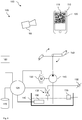
- FIG. 3 shows a system 100 comprising a sequence-programmable household appliance 105 and a device 110.
- the domestic appliance 105 here comprises a dishwasher, purely by way of example, but any other domestic appliance 105 could also be used.
- the domestic appliance 105 can be controlled by means of a sequence program 115.
- the device 110 preferably comprises a mobile device which comprises at least one optical output device 120.
- the output device 120 is further preferably set up to display the sequence program 115 in an optically coded manner.
- the output device 120 is preferably designed two-dimensionally.
- the output device 120 can have a predetermined contrast ratio (for example> 20: 1) and further optionally be backlit.
- the domestic appliance 105 is shown schematically and in a greatly simplified form. It comprises a control device 125 which is set up to execute the sequence program 115, at least one actuator 130 and usually at least one sensor 135.
- the domestic appliance 105 in the embodiment shown as a dishwasher comprises a water container 140, from which water is extracted by means of a water pump 145 in FIG a rotatable spray arm 150 can be pumped that the water on dishes can spray. The water can then drip off into the water container 140.
- a first actuator 130 as a pump motor for driving the water pump 145
- a second actuator 130 as a controllable water valve between a water inlet 155 and the water container 140
- a third actuator 130 as a heater for water in the water container 140
- the sensor 135 can comprise, for example, a fill level or temperature sensor.
- a timer can also be counted as sensor 135.
- Household appliance 105 optionally includes an operating element 160, which can include input and / or output elements for an operator.
- the actuators 130 are activated and deactivated in a predetermined sequence by means of the sequence program 115. Each activation or deactivation can be based on a parameter which can be scanned by means of a sensor 135, for example. Specifications for parameters can also be scanned by the operating element 160. For example, the water valve 130 can be opened until a water level sensed by the sensor 135 reaches a predetermined threshold value. The heater 130 can then be switched on until the temperature of the water in the water container 140 has reached a predetermined temperature according to the sensor 135. This predetermined temperature can be scanned by the operating element 160.
- a current intensity flowing through the heater 130 can be adapted as a function of the temperature of the water in the water container 140 in order to enable rapid heating, but at the same time to avoid overloading the heater 130 as far as possible.
- the actual cleaning process of the dishes can be started by activating the pump motor 130.
- the device conditions can be specified by the type of construction of the household appliance 105 or by a predetermined restriction and are preferably selected in such a way that overloading, a malfunction or excessive wear on the household appliance 105 or one of its elements are avoided.
- the transmission can take place in different ways;
- an optical interface 165 is provided to allow the optical to be able to scan coded sequence program 115 from device 110 or another source.
- the optical interface 165 can comprise a camera with a line sensor or an area sensor in order to be able to scan the two- or three-dimensionally coded sequence program 115.
- a laser-controlled optical code sensor can be provided.
- the sequence program 115 is encoded as a QR code, it being possible to use different, known codes depending on the data volume to be transmitted, the quality of the optical interface 165 and the desired robustness of the transmission.
- the coding can include control bits for error detection and, in a further embodiment, also correction bits for correcting transmission errors.
- the sequence program 115 can be stored in a memory 115.
- a user of the domestic appliance 105 can select the received or another sequence program 105 by means of the operating element 160 and, if necessary, parameterize it in order to use the domestic appliance 105.
- the sequence program 115 is preferably subjected to the check for compliance with the device conditions after it has been received by the household appliance 105, so that the check is carried out within the household appliance 105 and manipulation of the test method is largely excluded.
- the test can include compliance with predetermined device conditions.
- a device condition can provide that a parameter which can be determined on the domestic appliance 105 while the sequence program 115 is running is above or below a predetermined threshold value or within a predetermined range.
- Such a parameter can be used directly to control the flow of the domestic appliance 105, for example a water temperature in the water tank 140.
- a less obvious parameter can also be tested, for example compliance with a maximum power consumption of the entire domestic appliance 105 Relate to components of the domestic appliance 105 and are determined, for example, on the basis of a switching frequency of an element or a historical temperature profile.
- a parameter can also be determined algorithmically on the basis of several sensor values or actuator actuations. For example, the emission of an aggressive substance from the cleaning process described may be due to an amount of water, contamination and the addition of cleaning agent to be determined. Not all parameters that are checked as device conditions need to be disclosed. Certain device conditions can be formulated so complex that a creator or processor of the sequence program 115 can only be given a general recommendation, for example not to let an emission or a current consumption become too large as possible. Instructions on how to comply with such recommendations can also be given.
- control device 125 which is set up to control the domestic appliance 105, also checks the sequence program 115.
- a dedicated control device 125 can also be provided for the test.
- FIG. 13 shows an illustration of a method 200 for controlling a domestic appliance 105, such as the dishwasher 105 of FIG Figure 1 .
- a domestic appliance 105 is used in accordance with one of the above with reference to FIG Figure 1 mentioned embodiments preferred.
- a device 110 can according to Figure 1 be used.
- a communication network 205 or a central component 210 can also be used for the method 200.
- the communication network 205 can be constructed entirely or partially wireless or also wired.
- Communication network 205 can preferably form part of the Internet.
- the central component 210 can in particular comprise a server or a similar central service.
- the component 210 can be anonymized by the communication network 205, so that a physical aspect of the component 210, such as its installation location, can be irrelevant for the use of a service offered or provided by it (“cloud server”).
- the component 210 is set up to establish a communication connection to one or more household appliances 105 of a household.
- Such a component is known under the name "Home Connect Server” from Bosch Siemens Haustechnik (BSH).
- the sequence program 115 is created on the device 110 or an already existing sequence program 115 is processed.
- a program (“app”) installed locally on device 110 is used for this, and the edited sequence program 115 can be stored locally on device 110.
- the manipulation program can also run on the central component 210 and be controlled by means of the device 110 (“web app”). That Edited sequence program 115 can be stored on the central component.
- the editing can include an input, a translation of the input or the application of one or more parameters.
- Each of these partial results can optionally be validated.
- it can be checked locally, that is to say outside the domestic appliance 105, whether the sequence program 115 complies with predetermined limits. In particular, compliance with the device limits of a known household appliance 105 can be checked.
- the validation can take place as part of the editing of the sequence program or before it is transmitted to the domestic appliance 105. In this case, the validation can take place in different variants of the method 200, for example by the device 110 or by the component 210. If the validation fails, a transmission of the sequence program 115 is preferably prevented.
- the sequence program 115 comprises edited parameters; in another embodiment, a parameter list is provided separately from the sequence program 115. Parameters that are controlled by a user of the domestic appliance 105 can be checked by the sequence program 115 or added to the parameter list.
- the sequence program 115 can then be transmitted to the domestic appliance 105 in a step 225.
- a local interface is used for this, which is set up for optical transmission.
- the local interface can also be implemented wirelessly according to the WLAN or Bluetooth standard, for example.
- Other local interfaces for example wired, for example using RS232 or USB, are also possible.
- the transmission can also use the communication network 205. This way is particularly preferred when the provided sequence program 115 is available on the central component 210.
- the transmission can optionally be initiated by the household appliance 105 or by the sending device 110, 210.
- the received sequence program 115 is checked by the domestic appliance 105 for compliance with a predetermined appliance condition.
- a predetermined appliance condition For this purpose, parameters that are used in the sequence program 115 or are attached to it can be checked to see whether they are in predetermined ranges. Further parameters, intermediate results, Boundary conditions or higher-level goals can also be checked, as described in more detail above. If a test fails, that is, if a device condition is not met, the execution of the sequence program 115 can be prevented. Otherwise, if all predetermined device conditions are met, the execution of the sequence program 115 can be released in a step 235.
- sequence program 115 or a parameter for the sequence program 115 can be automatically adapted in such a way that all device conditions can be met. A corresponding notification of a user is preferred here.
- the modified sequence program 115 can then be stored in memory 170 for later use. If the device condition is checked while the sequence program 115 is being carried out, a controlled exit (“graceful exit”) from the sequence program 115 can be controlled.
- FIG. 11 shows an exemplary sequence program 115 for a domestic appliance 105, using the example of the dishwasher 105 from FIG Figure 1 . Shown is a graphical representation of the time profile of various exemplary parameters of the domestic appliance 105. A desired profile of a quantity of water in the water container 140 is shown in an upper area, and a desired profile of a temperature of the water in the water tank 140 is shown in a middle area. The time is plotted in the horizontal direction.
- the as sequence program 115 here comprises, for example, four phases 305, 310, 315 and 320 that follow one another in time. In a lower area, an energy requirement for the respective phase 305-320 is shown.
- a program for changing the sequence program 115 can make it possible, for example, to change the duration of one of the phases 305-320 or their sequence. Further possibilities for influencing can include increasing or decreasing the amount of water or the temperature of the water in the water container 140 in one of the phases 305-320.
- the display of the energy consumption can help to interactively change the sequence program 115 in such a way that the energy consumption is minimized.
- one or more further parameters can also be represented, for example the generation of noise, wear and tear on the domestic appliance 105 or how gentle or aggressive the sequence program 115 is for an object to be treated.
Landscapes
- Engineering & Computer Science (AREA)
- Physics & Mathematics (AREA)
- General Physics & Mathematics (AREA)
- Textile Engineering (AREA)
- Artificial Intelligence (AREA)
- Toxicology (AREA)
- General Health & Medical Sciences (AREA)
- Computer Vision & Pattern Recognition (AREA)
- Electromagnetism (AREA)
- Theoretical Computer Science (AREA)
- Automation & Control Theory (AREA)
- Health & Medical Sciences (AREA)
- Washing And Drying Of Tableware (AREA)
- Stored Programmes (AREA)
- Selective Calling Equipment (AREA)
Description
- Die Erfindung betrifft die Steuerung eines Hausgeräts. Insbesondere betrifft die Erfindung die Erstellung eines Ablaufprogramms für ein Hausgerät.
- Ein Hausgerät wie eine Waschmaschine oder ein Geschirrspüler ist dazu eingerichtet, eine Unterstützungsaufgabe in einem Haushalt auf der Basis eines vorbestimmten Ablaufprogramms durchzuführen. Das Ablaufprogramm umfasst üblicherweise mehrere Abschnitte, die nacheinander abgearbeitet werden. Beispielsweise kann ein Reinigungsprogramm für eine Waschmaschine die Abschnitte Vorwaschen, Einweichen, Hauptwaschen und Schleudern umfassen. In jedem Abschnitt können einer oder mehrere Aktoren des Hausgeräts gesteuert werden, im Beispiel der Waschmaschine etwa ein Wasserventil, ein Trommelantrieb oder eine Laugenheizung. Das Fortschalten des Ablaufprogramms durch einzelne Abschnitte oder Schritte ist allgemein von Bedingungen abhängig, die ein Ereignis oder eine vorbestimmte Zeit umfassen können. Ein Ablaufprogramm umfasst alle Bedingungen und daran geknüpfte Aktorsteuerungen in einer vorbestimmten Abfolge.
- Üblicherweise ist eine vorbestimmte Anzahl Ablaufprogramme im Hausgerät vorgegeben und ein Beitrag des Benutzers, falls er über die Auswahl des Ablaufprogramms hinausgeht, beschränkt sich auf eine Parametrierung. Beispielsweise kann ein Ablaufprogramm der Waschmaschine für das Waschen von Buntwäsche vorgesehen sein und das Ablaufprogramm kann bei Laugentemperaturen von 30°, 60° oder 90° eingesetzt werden. Das Schleudern des Ablaufprogramms kann durch den Benutzer auf eine maximale Drehzahl oder eine maximale Zeit parametriert werden.
- Aus der
JP 2002 273 089 A CN 104 328 623 A ist jeweils eine Waschmaschine vorbekannt, auf die mittels eines Mobiltelefons ein Waschprogramm geladen werden kann. DieWO 2013/021330 A1 beschreibt ein weiteres programmierbares Hausgerät. -
DE 69 318 782 T2 schlägt vor, verschiedene Varianten von Hausgeräten herzustellen, indem jeder Variante ein Definitionsmuster zugeordnet wird, das einen Zusammenhang zwischen Funktionen und Elementen des Hausgeräts herstellt. -
DE 10 2010 030 016 B4 schlägt eine Technik vor, um einem Anwender das Erstellen eines neuen Betriebsprogramms für ein Hausgerät zu erleichtern. - Im Allgemeinen ist jedoch nicht vorgesehen, dass ein Benutzer ein eigenes Ablaufprogramm erstellt, das dann auf dem Hausgerät abläuft. Eine Aufgabe, die der vorliegenden Erfindung zugrunde liegt, besteht daher in der Bereitstellung einer verbesserten Technik zur Ablaufprogrammierung eines Hausgeräts. Diese Aufgabe wird durch die Gegenstände der unabhängigen Ansprüche gelöst.
- Ein Verfahren zur Ablaufprogrammierung eines Hausgeräts umfasst Schritte des Empfangens eines benutzergesteuerten Ablaufprogramms durch das Hausgerät; des Überprüfens des Ablaufprogramms auf eine vorbestimmte Gerätebedingung durch das Hausgerät; und des Freigebens des Ablaufs des Ablaufprogramms im Hausgerät in Abhängigkeit des Ergebnisses der Überprüfung.
- Auf diese Weise kann die Ausführung eines beliebigen Ablaufprogramms auf einem Hausgerät ermöglicht werden, ohne die Sicherheit des Hausgeräts zu kompromittieren. Das Ablaufprogramm kann insbesondere benutzergesteuert sein, das heißt, ein Benutzer des Hausgeräts kann in die Lage versetzt werden, das Ablaufprogramm zu erstellen oder ein vorhandenes Ablaufprogramm zu verändern. Die Überprüfung auf die vorbestimmte Gerätebedingung kann den Rahmen darstellen, innerhalb dessen ein Ablaufprogramm frei operieren kann. Eine Verletzung der Rahmenbedingungen kann verhindert werden, indem ein Ablaufprogramm, das eine vorbestimmte Gerätebedingung verletzt, nicht zur Ausführung auf dem Hausgerät zugelassen wird. Das Hausgerät kann dann noch mit einem anderen Ablaufprogramm benutzt werden, das beispielsweise fest im Hausgerät installiert ist.
- Die Entwicklung des Ablaufprogramms kann so auf einem anderen Gerät als dem Hausgerät stattfinden. Bedienelemente, die für das Entwickeln bevorzugt vorhanden sind, etwa eine erweiterte graphische oder numerische Anzeige von Parametern oder eine erweiterte Tastatur zur Befehlseingabe, müssen so nicht am Hausgerät nachgerüstet werden. Das Hausgerät kann daher kostengünstig hergestellt werden, während das Entwickeln des Betriebsprogramms auf einem anderen Gerät effizienter durchgeführt werden kann.
- Als Hausgeräte werden hier allgemein Geräte angesehen, die eine programmierbare Ablaufsteuerung umfassen und zum Einsatz in einem Privathaushalt vorgesehen sind. Hausgeräte werden im Allgemeinen in geschlossenen Räumen eingesetzt und dienen häufig der Reinigung oder Instandsetzung von Gegenständen des täglichen Gebrauchs, etwa zum Kochen, Kühlen, Spülen oder Waschen. Insbesondere kann ein Hausgerät einen Geschirrspüler, eine Waschmaschine oder eine Bügelmaschine umfassen.
- Das Hausgerät kann beispielsweise durch einen Benutzer oder einen Dienstleister mittels des Ablaufprogramms individuell angepasst werden. Besitzt ein Benutzer eines Geschirrspülers beispielsweise besonderes Geschirr, das er reinigen möchte (Goldrand-Porzellan, Uranglas, Silberbesteck etc.), so kann er ein angepasstes Ablaufprogramm dafür entwickeln oder entwickeln lassen. Auch eine Verwendung des Hausgeräts für einen speziellen Zweck kann so ermöglicht werden, etwa zur Reinigung von chemischem Laborgerät oder zur Entfernung von Bohr-, Fräs- oder Sägespänen von einem Werkstück aus Metall.
- Auf die vorgeschlagene Weise kann verhindert werden, dass das Hausgerät in einer Weise verwendet wird, die die Betriebssicherheit des Hausgeräts, die Sicherheit einer Person oder eines Objekt im Bereich des Hausgeräts oder die Unversehrtheit eines zu behandelnden Gegenstands gefährdet. Eine zu erwartende Lebensdauer des Hausgeräts kann unverkürzt bleiben. Eine Produkthaftung eines Herstellers des Hausgeräts kann auch bei Ausführen des empfangenen Ablaufprogramms übernommen werden.
- In einer Ausführungsform kann die Erstellung des Ablaufprogramms von dritter Seite durchgeführt werden. Beispielsweise kann das Hausgerät vor der Auslieferung an einen Benutzer durch einen Ausstatter an einen bestimmten Zweck, eine Produktlinie, vorbestimmte Vorgaben (etwa bezüglich einer maximalen Energieaufnahme oder von Emissionen) angepasst werden. Der Ausstatter kann das angepasste Hausgerät dann unter eigener Bezeichnung vermarkten.
- Die Gerätebedingung kann insbesondere einen Betriebsparameter eines Aktors des Hausgeräts betreffen. Insbesondere kann der Betriebsparameter die Häufigkeit eines Ein- oder Ausschaltens des Aktors, eine maximale Einschaltdauer des Aktors, eine Eigenschaft eines mittels des Aktors beeinflussbaren Mediums betreffen. Die Eigenschaft kann insbesondere eine Menge, eine Temperatur oder einen Verschmutzungsgrad umfassen. Das Ablaufprogramm kann auch auf eine vorbestimmte maximale Ablaufzeit überprüft werden. Kombinationen sind ebenfalls möglich, wobei das Einhalten vorbestimmter Bedingungen binär (mittels Boolescher Algebra) oder analog durch In-Beziehung-Setzen von Parametern erfolgen kann. In letztgenanntem Fall kann beispielsweise eine formelhafte Bedingung aufgestellt werden, etwa A + B < C, wobei A und B Betriebsparameter sind und C ein Schwellenwert ist. Ist die Bedingung nicht erfüllt, so kann dem Ablaufprogramm die Kontrolle über den Aktor oder über das Hausgerät entzogen werden. Das Einhalten einer vorbestimmten Ablaufzeit kann kombiniert mit oder getrennt von den anderen Gerätebedingungen erfolgen. Insbesondere kann so verhindert werden, dass ein Vorgang bis zum Eintreten einer unerreichbaren Bedingung fortgeführt oder wiederholt wird (Endlosschleife).
- Der Aktor kann beispielsweise einen Motor oder eine Heizung umfassen. Der Betriebsparameter kann sicherstellen, dass eine vorbestimmte Last des Aktors vorliegt, um eine Überlastung des Aktors zu vermeiden. Der Motor kann beispielsweise eine Waschtrommel antreiben und die Last kann in Wäsche in der Trommel bestehen. Der Motor kann auch eine Pumpe antreiben und die Last besteht in einer umzuwälzenden Flüssigkeit. Umfasst der Aktor eine Heizung, so kann die Last einen zu heizenden Gegenstand umfassen, etwa eine Lauge oder ein Wäschestück. Der Betriebsparameter kann sicher stellen, dass der Aktor innerhalb seiner Spezifikationen betrieben werden kann. So kann beispielsweise sichergestellt werden, dass ein als Kurzzeitläufer ausgebildeter Aktor nicht zu häufig, nicht zu lange oder nicht zu stark intermittierend betrieben wird. Eine maximale Betriebstemperatur, eine maximale Stromaufnahme oder ein anderer Betriebsparameter kann eingehalten werden.
- Die Gerätebedingung wird vor der Ausführung des Ablaufprogramms überprüft. Diese Variante wird auch statische Prüfung genannt und ein Ablaufprogramm, das diese Prüfung nicht besteht, weil es während seiner Ausführung eine Gerätebedingung verletzen könnte, wird gar nicht erst zur Ausführung auf dem Hausgerät zugelassen.
- In einer Variante wird die Gerätebedingung auch während der Ausführung des Ablaufprogramms überprüft. Diese Variante kann auch dynamische Prüfung genannt werden. Einem Ablaufprogramm kann die Kontrolle über das Hausgerät entzogen werden, wenn sich während des Betriebs des Hausgeräts die Verletzung einer Gerätebedingung anbahnt oder zeigt. Die dynamische Prüfung kann die statische Prüfung ergänzen. Durch die dynamische Prüfung kann ein potentiell gefährlicher Zustand des Hausgeräts für eines seiner Elemente, eine Person oder einen Gegenstand im Bereich des Hausgeräts oder eines mittels des Hausgeräts bearbeiteten Objekts verbessert vermieden werden. Im Fall eines Abbruchs des Hausgeräts durch die dynamische Prüfung kann ein vorbestimmtes Abbruchprogramm durchgeführt werden, um das Hausgerät in einen stabilen Zustand zu versetzen. Gegebenenfalls kann auch ein schonendes Ende der Behandlung des Objekts gesteuert werden. Beispielsweise kann zur Herstellung des sicheren Zustands eine Lauge eines Geschirrspülers abgepumpt werden. Zu reinigende Objekte können mittels Frischwasser abgewaschen werden.
- Im Rahmen der Erfindung kann es auch vorgesehen sein, einen Parameter des Ablaufprogramms, der die Gerätebedingung verletzt, derart zu ändern, dass die Gerätebedingung erfüllt ist. Wird beispielsweise an einer Wasch- oder Geschirrspülmaschine eine Laugentemperatur von > 100° gefordert, so kann die vorgegebene Temperatur auf beispielsweise 90° oder 80° gesenkt werden. Diese Anpassung kann in der statischen oder in der dynamischen Prüfung erfolgen. Bevorzugt wird ein Benutzer des Hausgeräts über die Anpassung informiert, um ein unerwünschtes Verhalten des Hausgeräts zu vermeiden.
- In einer Ausführungsform umfasst das Hausgerät eine Kommunikationsschnittstelle, die insbesondere mit einem Netzwerk verbunden werden kann. Von einem Computer einem Server oder einer Speichereinrichtung, die mit dem Netzwerk verbunden ist, kann das Ablaufprogramm dann über die Schnittstelle ins Hausgerät geladen werden.
- In einer anderen Ausführungsform wird das Ablaufprogramm optisch übertragen. Dazu liegt das Ablaufprogramm in einer optisch codierten Form vor und seitens des Hausgeräts ist ein optischer Sensor vorgesehen. Der Sensor kann mit geringem Kostenaufwand an dem Hausgerät angebracht werden und robust gegenüber Verschmutzung oder Störungen sein, außerdem pflegeleicht in der Benutzung oder Reinigung. Ein Umfang von an das Hausgerät zu übermittelnden Informationen kann relativ gering sein, beispielsweise im Bereich von ca. 10 Byte bis ca. 10 KByte, sodass die optische Übertragung ausreichend Bandbreite für eine akzeptabel schnelle Übermittlung bietet. Größere Informationsmengen können auf mehrere Codierungen aufgeteilt werden. Das Ablaufprogramm kann insbesondere binär codiert sein, und zwar entweder eindimensional, beispielsweise nach Art eines Strichcode, oder zweidimensional, beispielsweise nach Art eines QR-Codes. Die optische Codierung kann eine Fehlerabsicherung oder Fehlerkorrektur umfassen, um einem Übertragungsfehler des Ablaufprogramms vorzubeugen. In einer weiteren Ausführungsform der Erfindung kann das optisch codierte Ablaufprogramm auch beispielsweise mittels eines mobilen Geräts, etwa eines Smartphone, aufgenommen und anschließend an das Hausgerät übermittelt werden. Diese Übermittlung erfolgt bevorzugt drahtlos, beispielsweise via Bluetooth oder WLAN.
- Zum Senden des Ablaufprogramms kann insbesondere ein mobiles Gerät mit einer optischen Ausgabeeinrichtung verwendet werden. Ein solches Gerät kann etwa ein Laptop oder ein Smartphone umfassen. Das Gerät kann mit einem anderen Gerät datentechnisch vernetzt sein und das Ablaufprogramm aus einer externen Quelle laden. Das Gerät kann auch zur Erstellung oder Entwicklung des Ablaufprogramms verwendet werden. So kann beispielsweise ein Programm ("App") auf dem Smartphone zur einfachen und intuitiven Anpassung von Ablaufparametern eines vorbestimmten Ablaufprogramms angeboten werden. Das Maß der Beeinflussbarkeit des Ablaufprogramms kann in unterschiedlichen Stufen vorbestimmt sein. Beispielsweise können durch Konstrukte wie eine bedingte Schleifenausführung (WHILE), einen bedingten Sprung (IF-GOTO) oder parametrierte Unterprogramme (CALL) mächtige Programmierkonzepte bereitgestellt werden.
- Eine Steuervorrichtung für ein Hausgerät umfasst eine Schnittstelle zum Empfangen eines Ablaufprogramms; eine Verarbeitungseinrichtung, die dazu eingerichtet ist, das Ablaufprogramm auf eine vorbestimmte Gerätebedingung zu überprüfen; und den Ablauf des Ablaufprogramms durch das Hausgerät in Abhängigkeit des Ergebnisses der Überprüfung freizugeben, sodass der Ablauf des Ablaufprogramms freigegeben wird, wenn die vorbestimmte Gerätebedingung erfüllt ist, und, wenn die vorbestimmte Gerätebedingung verletzt ist, der Ablauf des Ablaufprogramms durch das Hausgerät nicht zugelassen oder einen Parameter des Ablaufprogramms, der die Gerätebedingung verletzt, derart geändert wird, dass die Gerätebedingung erfüllt ist. Für die Prüfung kann nur ein bescheidener Verarbeitungsaufwand erforderlich sein, sodass eine übliche Verarbeitungseinrichtung zur Steuerung des Hausgeräts dafür verwendet werden kann. Außerdem kann es akzeptabel sein, dass die Prüfung mehrere Sekunden in Anspruch nimmt.
- Die Steuervorrichtung kann zur Ausführung wenigstens eines Teils des oben beschriebenen Verfahrens eingerichtet sein. Dazu ist bevorzugt, dass die Steuervorrichtung eine Verarbeitungseinrichtung umfasst, die insbesondere durch einen programmierbaren Mikrocomputer oder Mikrocontroller gebildet sein kann. Merkmale oder Vorteile, die bezüglich der Steuervorrichtung genannt sind, können auch auf das Verfahren bezogen werden und umgekehrt.
- Die Erfindung wird nun unter Bezug auf die beiliegenden Figuren genauer beschrieben, in denen:
- Fig. 1
- ein System mit einem ablaufprogrammierbaren Hausgerät;
- Fig. 2
- eine Veranschaulichung eines Verfahrens; und
- Fig. 3
- ein Ablaufprogramm für ein Hausgerät
-
Figur 1 zeigt ein System 100, das ein ablaufprogrammierbares Hausgerät 105 und ein Gerät 110 umfasst. Das Hausgerät 105 umfasst hier rein exemplarisch einen Geschirrspüler, es könnte aber auch ein beliebiges anderes Hausgerät 105 verwendet werden. Das Hausgerät 105 kann mittels eines Ablaufprogramms 115 gesteuert werden. Das Gerät 110 umfasst bevorzugt ein mobiles Gerät, das zumindest eine optische Ausgabeeinrichtung 120 umfasst. Die Ausgabeeinrichtung 120 ist weiter bevorzugt dazu eingerichtet, das Ablaufprogramm 115 optisch codiert anzuzeigen. Dazu ist die Ausgabeeinrichtung 120 bevorzugt zweidimensional ausgeführt. Die Ausgabeeinrichtung 120 kann ein vorbestimmtes Kontrastverhältnis (z. B. > 20:1) aufweisen und weiter optional hintergrundbeleuchtet ausgeführt sein. - Das Hausgerät 105 ist schematisch und in einer stark vereinfachten Form dargestellt. Er umfasst eine Steuervorrichtung 125, die zur Ausführung des Ablaufprogramms 115 eingerichtet ist, wenigstens einen Aktor 130 und üblicherweise wenigstens einen Sensor 135. Rein beispielhaft umfasst das Hausgerät 105 in der dargestellten Ausführungsform als Geschirrspüler einen Wasserbehälter 140, aus dem Wasser mittels einer Wasserpumpe 145 in einen drehbaren Sprüharm 150 gepumpt werden kann, der das Wasser auf Geschirr sprühen kann. Das Wasser kann anschließend in den Wasserbehälter 140 abtropfen. In der dargestellten Ausführungsform sind ein erster Aktor 130 als Pumpenmotor zum Antrieb der Wasserpumpe 145, ein zweiter Aktor 130 als steuerbares Wasserventil zwischen einem Wasserzulauf 155 und dem Wasserbehälter 140, sowie ein dritter Aktor 130 als Heizung für Wasser im Wasserbehälter 140 vorgesehen. Der Sensor 135 kann beispielsweise einen Füllstands- oder Temperatursensor umfassen. Auch ein Zeitgeber kann als Sensor 135 gezählt werden. Optional umfasst das Hausgerät 105 ein Bedienelement 160, das Ein- und/oder Ausgabeelemente für eine Bedienperson umfassen kann.
- Die Aktoren 130 werden mittels des Ablaufprogramms 115 in einer vorbestimmten Reihenfolge aktiviert und deaktiviert. Jedes Aktivieren oder Deaktivieren kann auf einen Parameter gestützt sein, der beispielsweise mittels eines Sensors 135 abgetastet werden kann. Vorgaben für Parameter können ferner vom Bedienelement 160 abgetastet werden. Beispielsweise kann das Wasserventil 130 geöffnet werden, bis ein durch den Sensor 135 abgetasteter Wasserstand einen vorbestimmten Schwellenwert erreicht. Anschließend kann die Heizung 130 eingeschaltet werden, bis die Temperatur des Wassers im Wasserbehälter 140 laut dem Sensor 135 eine vorbestimmte Temperatur erreicht hat. Diese vorgegebene Temperatur kann vom Bedienelement 160 abgetastet werden. Eine durch die Heizung 130 fließende Stromstärke kann in Abhängigkeit der Temperatur des Wassers im Wasserbehälter 140 angepasst werden, um ein rasches Aufheizen zu ermöglichen, gleichzeitig aber eine Überlastung der Heizung 130 möglichst zu vermeiden. Der eigentliche Reinigungsvorgang des Geschirrs kann durch Aktivieren des Pumpenmotors 130 begonnen werden.
- Es wird vorgeschlagen, die Übertragung eines Ablaufprogramms 115 aus einer externen Quelle ins Hausgerät 105 zu ermöglichen und die Ausführung des Ablaufprogramms 115 durch die Steuervorrichtung 125 zu erlauben, falls das empfangene Ablaufprogramm 115 vorbestimmte Gerätebedingungen erfüllt. Die Gerätebedingungen können durch die Bauart des Hausgeräts 105 oder durch eine vorbestimmte Restriktion vorgegeben sein und sind bevorzugt so gewählt, dass eine Überlastung, eine Fehlfunktion oder ein übermäßiger Verschleiß am Hausgerät 105 oder eines seiner Elemente vermieden werden.
- Die Übertragung kann auf unterschiedliche Weisen erfolgen; in der dargestellten, bevorzugten Ausführungsform ist eine optische Schnittstelle 165 vorgesehen, um das optisch codierte Ablaufprogramm 115 vom Gerät 110 oder einer anderen Quelle abtasten zu können. Die optische Schnittstelle 165 kann eine Kamera mit einem Zeilensensor oder einem Flächensensor umfassen, um das zwei- oder dreidimensional codierte Ablaufprogramm 115 abtasten zu können. In einer anderen Variante kann ein lasergesteuerter optischer Codesensor vorgesehen sein. In einer besonders bevorzugten Ausführungsform liegt das Ablaufprogramm 115 codiert als QR-Code vor, wobei je nach zu übertragendem Datenvolumen, Qualität der optischen Schnittstelle 165 und angestrebter Robustheit der Übertragung unterschiedliche, bekannte Codierungen verwendet werden können. Die Codierung kann Kontrollbits zur Fehlererkennung und in einer weiteren Ausführungsform auch Korrekturbits zur Korrektur von Übertragungsfehlern umfassen. Nach dem Empfangen kann das Ablaufprogramm 115 in einem Speicher 115 abgelegt werden. Ein Benutzer des Hausgeräts 105 kann das empfangene oder ein anderes Ablaufprogramm 105 mittels des Bedienelements 160 auswählen und gegebenenfalls parametrieren, um das Hausgerät 105 zu benutzen.
- Das Ablaufprogramm 115 wird bevorzugt nach seinem Empfang vom Hausgerät 105 der Prüfung auf Einhalten der Gerätebedingungen unterzogen, sodass die Überprüfung innerhalb des Hausgeräts 105 durchgeführt wird und eine Manipulation des Prüfverfahrens weitgehend ausgeschlossen ist. Die Prüfung kann das Einhalten vorbestimmter Gerätebedingungen umfassen. Eine Gerätebedingung kann vorsehen, dass ein Parameter, der am Hausgerät 105 während des Ablaufs des Ablaufprogramms 115 bestimmt werden kann, ober- oder unterhalb eines vorbestimmten Schwellenwerts oder innerhalb eines vorbestimmten Bereichs liegt.
- Ein solcher Parameter kann unmittelbar zur Ablaufsteuerung des Hausgeräts 105 verwendet werden, beispielsweise eine Wassertemperatur im Wasserbehälter 140. Es kann auch ein weniger offensichtliche Parameter getestet werden, etwa das Einhalten einer maximalen Stromaufnahme des gesamten Hausgeräts 105. Wieder ein anderer Parameter kann einen erwarteten Verschleiß einer Komponente des Hausgeräts 105 betreffen und beispielsweise auf der Basis einer Schaltfrequenz eines Elements oder eines historischen Temperaturverlaufs bestimmt werden. Ein Parameter kann auch algorithmisch auf der Basis mehrerer Sensorwerte oder Aktorbetätigungen bestimmt werden. Beispielsweise kann eine Emission einer aggressiven Substanz aus dem beschriebenen Reinigungsvorgang aufgrund einer Wassermenge, einer Verschmutzung und einer Zugabe von Reinigungsmittel bestimmt werden. Nicht alle Parameter, die als Gerätebedingung geprüft werden, müssen offengelegt sein. Bestimmte Gerätebedingungen können so komplex zu formulieren sein, dass einem Ersteller oder Bearbeiter der Ablaufprogramms 115 nur eine allgemeine Empfehlung angegeben werden kann, beispielsweise eine Emission oder eine Stromaufnahme möglichst nicht zu groß werden zu lassen. Hinweise, wie derartige Empfehlungen einzuhalten sind, können ebenfalls gegeben werden.
- Es ist bevorzugt, dass die Steuervorrichtung 125, die zur Steuerung des Hausgeräts 105 eingerichtet ist, auch die Prüfung des Ablaufprogramms 115 vornimmt. In einer anderen Ausführungsform kann auch eine dedizierte Steuervorrichtung 125 für die Prüfung vorgesehen sein.
-
Figur 2 zeigt eine Veranschaulichung eines Verfahrens 200 zum Steuern eines Hausgeräts 105 wie des Geschirrspülers 105 vonFigur 1 . Dabei wird ein Hausgerät 105 nach einer der oben mit Bezug aufFigur 1 erwähnten Ausführungsformen bevorzugt. Ferner kann ein Gerät 110 nachFigur 1 verwendet werden. Optional können ferner ein Kommunikationsnetz 205 oder eine zentrale Komponente 210 für das Verfahren 200 benutzt werden. Das Kommunikationsnetz 205 kann ganz oder teilweise drahtlos oder auch kabelgebunden aufgebaut sein. Bevorzugt kann Kommunikationsnetz 205 einen Teil des Internet bilden. Die zentrale Komponente 210 kann insbesondere einen Server oder einen ähnlichen zentralen Dienst umfassen. Die Komponente 210 kann durch das Kommunikationsnetz 205 anonymisiert werden, sodass ein physischer Aspekt der Komponente 210 wie ihr Aufstellungsort für die Nutzung eines von ihm angebotenen oder erbrachten Diensts unerheblich sein kann ("cloud server"). In einer Ausführungsform ist die Komponente 210 dazu eingerichtet, eine Kommunikationsverbindung zu einem oder mehreren Hausgeräten 105 eines Haushalts herzustellen. Eine solche Komponente ist unter der Bezeichnung "Home Connect Server" von Bosch Siemens Hausgeräte (BSH) bekannt. - In einem optionalen Schritt 220 wird auf dem Gerät 110 das Ablaufprogramm 115 erstellt oder ein bereits bestehendes Ablaufprogramm 115 wird bearbeitet. In einer Ausführungsform wird dazu ein lokal auf dem Gerät 110 installiertes Programm ("App") verwendet und das editierte Ablaufprogramm 115 kann lokal auf dem Gerät 110 abgespeichert sein. In einer anderen Ausführungsform kann das Manipulationsprogramm auch auf der zentralen Komponente 210 ablaufen und mittels des Geräts 110 gesteuert werden ("Webapp"). Das editierte Ablaufprogramm 115 kann auf der zentralen Komponente gespeichert sein. Das Editieren kann eine Eingabe, eine Übersetzung der Eingabe oder das Anwenden eines oder mehrerer Parameter umfassen.
- Jedes dieser Teilergebnisse kann optional validiert werden. Beim Validieren kann lokal, also außerhalb des Hausgeräts 105 überprüft werden, ob das Ablaufprogramm 115 vorbestimmte Grenzen einhält. Insbesondere kann das Einhalten der Gerätegrenzen eines bekannten Hausgeräts 105 überprüft werden. Das Validieren kann im Rahmen des Editierens des Ablaufprogramms oder vor dem Übermitteln an das Hausgerät 105 erfolgen. Dabei kann die Validierung in unterschiedlichen Varianten des Verfahrens 200 beispielsweise durch das Gerät 110 oder durch die Komponente 210 erfolgen. Schlägt die Validierung fehl, so wird bevorzugt eine Übermittlung des Ablaufprogramms 115 verhindert.
- In einer Ausführungsform umfasst das Ablaufprogramm 115 editierte Parameter, in einer anderen Ausführungsform wird eine Parameterliste separat vom Ablaufprogramm 115 bereitgestellt. Parameter, die von einem Benutzer des Hausgeräts 105 gesteuert werden, können durch das Ablaufprogramm 115 überprüft oder der Parameterliste hinzugefügt werden.
- Das Ablaufprogramm 115 kann dann in einem Schritt 225 an das Hausgerät 105 übermittelt werden. In der Ausführungsform von
Figur 1 wird hierfür eine lokale Schnittstelle verwendet, die zu einer optischen Übermittlung eingerichtet ist. In einer anderen Ausführungsform kann die lokale Schnittstelle auch beispielsweise drahtlos nach dem WLAN- oder Bluetooth-Standard ausgeführt sein. Andere lokale Schnittstellen, beispielsweise kabelgebunden, etwa mittels RS232 oder USB, sind ebenfalls möglich. Die Übermittlung kann auch das Kommunikationsnetz 205 verwenden. Dieser Weg ist insbesondere dann bevorzugt, wenn das bereitgestellte Ablaufprogramm 115 auf der zentralen Komponente 210 vorliegt. Die Übertragung kann wahlweise seitens des Hausgeräts 105 oder seitens des sendenden Geräts 110, 210 initiiert werden. - In einem Schritt 230 wird das empfangene Ablaufprogramm 115 durch das Hausgerät 105 auf Einhalten einer vorbestimmten Gerätebedingung überprüft. Dazu können Parameter, die im Ablaufprogramm 115 verwendet werden oder ihm beigefügt sind, darauf überprüft werden, ob sie in vorbestimmten Bereichen liegen. Weitere Parameter, Zwischenergebnisse, Randbedingungen oder übergeordnete Ziele können ebenfalls geprüft werden, wie oben genauer beschrieben ist. Schlägt ein Test fehl, wird also eine Gerätebedingung nicht erfüllt, so kann die Ausführung des Ablaufprogramms 115 verhindert werden. Andernfalls, wenn alle vorbestimmten Gerätebedingungen erfüllt werden, kann die Ausführung des Ablaufprogramms 115 in einem Schritt 235 freigegeben werden.
- Alternativ oder zusätzlich zum Sperren kann das Ablaufprogramm 115 bzw. ein Parameter für das Ablaufprogramm 115 automatisch derart angepasst werden, dass alle Gerätebedingungen erfüllt werden können. Eine entsprechende Benachrichtigung eines Benutzers ist hierbei bevorzugt. Das geänderte Ablaufprogramm 115 kann dann im Speicher 170 zur späteren Verwendung abgelegt werden. Erfolgt das Überprüfen der Gerätebedingung während des Durchführens des Ablaufprogramms 115, so kann ein kontrollierter Ausstieg ("graceful exit") aus dem Ablaufprogramm 115 gesteuert werden.
-
Figur 3 zeigt ein exemplarisches Ablaufprogramm 115 für ein Hausgerät 105, am Beispiel des Geschirrspülers 105 vonFigur 1 . Gezeigt ist eine graphische Darstellung des zeitlichen Verlaufs verschiedener beispielhafter Parameter des Hausgeräts 105. In einem oberen Bereich ist ein gewünschter Verlauf einer Wassermenge im Wasserbehälter 140, in einem mittleren Bereich ein gewünschter Verlauf einer Temperatur des Wassers im Wasserbehälter 140 dargestellt. In horizontaler Richtung ist jeweils die Zeit angetragen. Das as Ablaufprogramm 115 umfasst hier beispielhaft vier zeitlich aufeinanderfolgende Phasen 305, 310, 315 und 320. In einem unteren Bereich ist ein Energiebedarf für die jeweilige Phase 305 ― 320 dargestellt. - Ein Programm zum Ändern des Ablaufprogramms 115 kann es beispielsweise erlauben, die zeitliche Dauer einer der Phasen 305 ― 320 oder deren Reihenfolge zu verändern. Weitere Einflussmöglichkeiten können das Erhöhen oder Verringern der Wassermenge oder der Temperatur des Wassers im Wasserbehälter 140 in einer der Phasen 305 ― 320 umfassen. Die Anzeige des Energieverbrauchs kann dabei helfen, das Ablaufprogramm 115 interaktiv so zu verändern, dass der Energieverbrauch minimiert wird. Anstelle des Energieverbrauchs können auch einer oder mehrere weitere Parameter dargestellt werden, beispielsweise eine Schallentwicklung, ein Verschleiß des Hausgeräts 105 oder wie schonend oder aggressiv der Ablauf des Ablaufprogramms 115 für ein zu behandelndes Objekt ist.
-
- 100
- System
- 105
- Hausgerät, z. B. Geschirrspüler
- 110
- Gerät
- 115
- Ablaufprogramm
- 120
- optische Ausgabeeinrichtung
- 125
- Steuervorrichtung
- 130
- Aktor
- 135
- Sensor
- 140
- Wasserbehälter
- 145
- Wasserpumpe
- 150
- Sprüharm
- 155
- Wasserzulauf
- 160
- Bedienelement
- 165
- optische Schnittstelle
- 170
- Speicher
- 200
- Verfahren
- 205
- Kommunikationsnetzwerk
- 210
- zentrale Komponente
- 220
- Ablaufprogramm erstellen
- 225
- Kommunikationsprogramm hochladen
- 230
- überprüfen
- 235
- freigeben
- 305
- erste Phase
- 310
- zweite Phase
- 315
- dritte Phase
- 320
- vierte Phase
Claims (11)
- Verfahren (200) zur Ablaufprogrammierung eines Hausgeräts (105) mit programmierbarer Ablaufsteuerung, wobei das Verfahren (200) folgende Schritte umfasst:- Empfangen (225) eines Ablaufprogramms (115) durch das Hausgerät (105);- Überprüfen (230) des Ablaufprogramms (115) auf eine vorbestimmte Gerätebedingung durch das Hausgerät (105); und- Freigeben (235) des Ablaufs des Ablaufprogramms (115) im Hausgerät (105) in Abhängigkeit des Ergebnisses der Überprüfung, wobei der Ablauf des Ablaufprogramms (115) freigegeben wird, wenn die vorbestimmte Gerätebedingung erfüllt ist, und,- wenn die vorbestimmte Gerätebedingung verletzt ist, der Ablauf des Ablaufprogramms (115) nicht zugelassen wird oder ein Parameter des Ablaufprogramms (115) verändert wird, der die Gerätebedingung verletzt, so dass die Gerätebedingung erfüllt ist.
- Verfahren (200) nach Anspruch 1, wobei die Gerätebedingung einen Betriebsparameter eines Aktors (130) des Hausgeräts (105) betrifft.
- Verfahren (200) nach Anspruch 2, wobei der Betriebsparameter die Häufigkeit eines Ein- oder Ausschaltens des Aktors (130) betrifft.
- Verfahren (200) nach Anspruch 2 oder 3, wobei der Betriebsparameter eine maximale Einschaltdauer des Aktors (130) betrifft.
- Verfahren (200) nach einem der Ansprüche 2 bis 4, wobei der Betriebsparameter eine Eigenschaft eines mittels des Aktors (130) beeinflussbaren Mediums betrifft.
- Verfahren (200) nach einem der vorangehenden Ansprüche, wobei ferner das Ablaufprogramm (115) auf eine vorbestimmte maximale Ablaufzeit überprüft wird.
- Verfahren (200) nach einem der vorangehenden Ansprüche, wobei die Gerätebedingung während der Ausführung des Ablaufprogramms (115) überprüft wird.
- Verfahren (200) nach einem der vorangehenden Ansprüche, wobei das Ablaufprogramm (115) in einer optisch codierten Form empfangen (225) wird.
- Steuervorrichtung (125) für ein Hausgerät (105) mit programmierbarer Ablaufsteuerung, wobei die Steuervorrichtung (125) folgendes umfasst:- eine Schnittstelle (165) zum Empfangen eines Ablaufprogramms (115);- eine Verarbeitungseinrichtung, die dazu eingerichtet ist, das Ablaufprogramm (115) auf eine vorbestimmte Gerätebedingung zu überprüfen;- und den Ablauf des Ablaufprogramms (115) durch das Hausgerät (105) in Abhängigkeit des Ergebnisses der Überprüfung freizugeben, sodass der Ablauf des Ablaufprogramms (115) freigegeben wird, wenn die vorbestimmte Gerätebedingung erfüllt ist, und, wenn die vorbestimmte Gerätebedingung verletzt ist, der Ablauf des Ablaufprogramms (115) durch das Hausgerät (105) nicht zugelassen oder einen Parameter des Ablaufprogramms (115), der die Gerätebedingung verletzt, derart geändert wird, dass die Gerätebedingung erfüllt ist.
- Steuervorrichtung (125) nach Anspruch 9, wobei die Schnittstelle optisch ist.
- Steuervorrichtung (125) nach Anspruch 10, wobei die Schnittstelle zur Abtastung eines zweidimensionalen QR-Codes eingerichtet ist.
Priority Applications (1)
| Application Number | Priority Date | Filing Date | Title |
|---|---|---|---|
| PL17808458T PL3555357T3 (pl) | 2016-12-16 | 2017-12-01 | Sterownik urządzenia gospodarstwa domowego |
Applications Claiming Priority (2)
| Application Number | Priority Date | Filing Date | Title |
|---|---|---|---|
| DE102016225274.7A DE102016225274A1 (de) | 2016-12-16 | 2016-12-16 | Steuerung eines Hausgeräts |
| PCT/EP2017/081226 WO2018108580A1 (de) | 2016-12-16 | 2017-12-01 | Steuerung eines hausgeräts |
Publications (2)
| Publication Number | Publication Date |
|---|---|
| EP3555357A1 EP3555357A1 (de) | 2019-10-23 |
| EP3555357B1 true EP3555357B1 (de) | 2021-08-25 |
Family
ID=60569920
Family Applications (1)
| Application Number | Title | Priority Date | Filing Date |
|---|---|---|---|
| EP17808458.8A Active EP3555357B1 (de) | 2016-12-16 | 2017-12-01 | Steuerung eines haushaltsgeräts |
Country Status (6)
| Country | Link |
|---|---|
| US (1) | US11363937B2 (de) |
| EP (1) | EP3555357B1 (de) |
| CN (1) | CN110088376B (de) |
| DE (1) | DE102016225274A1 (de) |
| PL (1) | PL3555357T3 (de) |
| WO (1) | WO2018108580A1 (de) |
Families Citing this family (4)
| Publication number | Priority date | Publication date | Assignee | Title |
|---|---|---|---|---|
| US20210238787A1 (en) * | 2019-05-26 | 2021-08-05 | Nurpsphere Inc | Appliance Comprising Weight Sensing Technology |
| JP7417832B2 (ja) | 2020-06-19 | 2024-01-19 | パナソニックIpマネジメント株式会社 | 情報処理方法、及び、情報処理装置 |
| WO2021256497A1 (ja) * | 2020-06-19 | 2021-12-23 | パナソニック インテレクチュアル プロパティ コーポレーション オブ アメリカ | アクチュエータ及び/又は加熱器を備える装置並びにその装置を制御する方法 |
| CN113832659A (zh) * | 2021-11-01 | 2021-12-24 | 北京小米移动软件有限公司 | 洗涤设备的控制方法、装置及可读存储介质 |
Family Cites Families (18)
| Publication number | Priority date | Publication date | Assignee | Title |
|---|---|---|---|---|
| SE470468B (sv) | 1992-09-17 | 1994-05-02 | Electrolux Ab | Förfarande för att definiera och programmera en universell styranordning för en ugn, universell styranordning för en ugn och dataverktyg |
| JP2002273089A (ja) * | 2001-03-16 | 2002-09-24 | Hitachi Ltd | 電気洗濯機システム |
| US7239861B2 (en) * | 2002-08-26 | 2007-07-03 | Cisco Technology, Inc. | System and method for communication service portability |
| CN1749466A (zh) * | 2004-09-13 | 2006-03-22 | 乐金电子(天津)电器有限公司 | 一种利用智能服务器的洗衣机控制方法 |
| US9103061B2 (en) * | 2006-06-08 | 2015-08-11 | Whirlpool Corporation | Product service system and method |
| DE102010030016B4 (de) | 2010-06-14 | 2012-04-26 | BSH Bosch und Siemens Hausgeräte GmbH | Verfahren zum Unterstützen einer Bedienperson beim Gestalten eines neuen Betriebsprogramms eines Haushaltsgerätes und Haushaltsgerät |
| KR20120038271A (ko) | 2010-10-13 | 2012-04-23 | 삼성전자주식회사 | 세탁기의 제어 방법 |
| KR101797946B1 (ko) * | 2011-05-25 | 2017-12-12 | 삼성전자주식회사 | 가전기기의 자가 진단 시스템 및 그 동작 방법 |
| DE102011077572B4 (de) * | 2011-06-15 | 2019-03-28 | BSH Hausgeräte GmbH | Verfahren zum Betreiben eines programmgesteuerten Haushaltsgeräts, Haushaltsgerät und System mit einem Haushaltsgerät |
| ITRN20110053A1 (it) * | 2011-08-05 | 2013-02-06 | Indesit Co Spa | Elettrodomestico e metodo di impostazione in un elettrodomestico di un programma di funzionamento |
| KR101797493B1 (ko) * | 2012-09-06 | 2017-11-15 | 엘지전자 주식회사 | 가전제품 및 이를 포함하여 이루어지는 온라인 시스템 |
| DE102012217004A1 (de) * | 2012-09-21 | 2014-03-27 | BSH Bosch und Siemens Hausgeräte GmbH | Menüerstellung |
| KR20140122109A (ko) | 2013-04-09 | 2014-10-17 | 엘지전자 주식회사 | 가전기기 제어 시스템 및 가전기기 제어 시스템 제어방법 |
| DE102013218871A1 (de) * | 2013-09-19 | 2014-08-07 | E.G.O. Elektro-Gerätebau GmbH | Verfahren zum Übertragen von Daten, Haushaltselektrogerät und Mobiltelefon |
| DE102014102531A1 (de) * | 2014-02-26 | 2015-09-10 | Miele & Cie. Kg | Verfahren zum Betrieb eines Haushaltsgeräts und System mit einem solchen Haushaltsgerät |
| PL2989940T3 (pl) * | 2014-09-01 | 2017-09-29 | Vorwerk Co Interholding | Wielofunkcyjny aparat kuchenny z kontrolą receptury |
| CN104328623A (zh) * | 2014-11-11 | 2015-02-04 | 南京乐金熊猫电器有限公司 | 移动设备向洗衣机传送洗涤程序的方法 |
| CN106319833B (zh) * | 2015-06-17 | 2020-12-22 | 青岛海尔洗衣机有限公司 | 一种洗衣机远程控制方法及洗衣机 |
-
2016
- 2016-12-16 DE DE102016225274.7A patent/DE102016225274A1/de not_active Withdrawn
-
2017
- 2017-12-01 CN CN201780078044.8A patent/CN110088376B/zh active Active
- 2017-12-01 US US16/466,703 patent/US11363937B2/en active Active
- 2017-12-01 EP EP17808458.8A patent/EP3555357B1/de active Active
- 2017-12-01 WO PCT/EP2017/081226 patent/WO2018108580A1/de not_active Ceased
- 2017-12-01 PL PL17808458T patent/PL3555357T3/pl unknown
Non-Patent Citations (1)
| Title |
|---|
| None * |
Also Published As
| Publication number | Publication date |
|---|---|
| DE102016225274A1 (de) | 2018-06-21 |
| WO2018108580A1 (de) | 2018-06-21 |
| PL3555357T3 (pl) | 2022-01-17 |
| US11363937B2 (en) | 2022-06-21 |
| CN110088376B (zh) | 2021-11-23 |
| CN110088376A (zh) | 2019-08-02 |
| US20190302718A1 (en) | 2019-10-03 |
| EP3555357A1 (de) | 2019-10-23 |
Similar Documents
| Publication | Publication Date | Title |
|---|---|---|
| WO2018108580A1 (de) | Steuerung eines hausgeräts | |
| DE102016213171A1 (de) | Steuerung eines Geschirrspülers | |
| DE102014217616A1 (de) | Generisches Bedienelement für vernetzte Hausgeräte | |
| DE102013224521B4 (de) | Wasserführendes Haushaltsgerät mit einer Aufbereitung von gespeichertem Grauwasser | |
| EP2932337A1 (de) | Geräteanordnung und verfahren zur ermittlung einer reinigungsanweisung eines hausgerätes mit einem, mit dem hausgerät in verbindung stehenden, mobilen endgerät | |
| EP3142538A1 (de) | Wasserführendes haushaltsgerät | |
| EP3376714A1 (de) | Daten-management-system und verfahren zum regeln oder steuern eines haushaltsgeräts | |
| DE102012223611A1 (de) | Verfahren zum aufeinander abgestimmten Betreiben einer Textilwaschmaschine und eines Wäschetrockners | |
| EP2804165A1 (de) | System mit einem Haushaltsgerät und einer Kommunikationseinrichtung sowie Verfahren zum Betrieb eines solchen Systems | |
| DE102007002184A1 (de) | Verfahren zum Waschen von Wäschestücken in einem programmgesteuerten Hausgerät, sowie solches Hausgerät | |
| WO2014001213A1 (de) | Kommunikation eines hausgeräts | |
| WO2014090851A1 (de) | Verfahren zum automatisierten überwachen eines betriebszustandes eines haushaltsgerätes | |
| EP2762631B1 (de) | Verfahren zum Betreiben einer Waschmaschine mit Umfluteinrichtung | |
| EP2702196B1 (de) | Hausgerät mit nachträglich abänderbarem, technischem programm sowie zugehöriges verfahren und computerprogrammprodukt | |
| EP2573633B1 (de) | Verfahren zum Betrieb eines Haushaltsgeräts und nach dem Verfahren arbeitendes Haushaltsgerät | |
| DE102014206605A1 (de) | Verfahren zum Konfigurieren eines Haushaltsgeräts sowie Haushaltsgerät | |
| EP3006618B1 (de) | Wäschepflegegerät | |
| EP2993831B1 (de) | Verfahren zur ermittlung und anzeige von zubehör und dienstleistungen für vernetzte hausgeräte | |
| DE202014010390U1 (de) | Vorrichtung zum Verschließen eines Behandlungsraums einer Geschirrspülmaschine | |
| DE102013104927B4 (de) | Verfahren zum Betreiben einer Waschmaschine und Steuereinrichtung für eine Waschmaschine | |
| DE102014206602A1 (de) | Verfahren zum Konfigurieren eines Haushaltsgeräts sowie Haushaltsgerät | |
| WO2022228877A1 (de) | Verfahren zum hygienischen aufbereiten von textilien in einem waschautomaten, vorrichtung, waschautomat und computer-programmprodukt. | |
| EP3977382A1 (de) | Wartungsplanung eines hausgeräts | |
| DE102015107143A1 (de) | Verfahren und Vorrichtung zum Steuern zumindest eines Hausgerätes in einem Haushalt sowie System zur Gebäudeautomatisierung für einen Haushalt | |
| WO2013102482A1 (de) | Steuereinheit zur gerätesteuerung |
Legal Events
| Date | Code | Title | Description |
|---|---|---|---|
| STAA | Information on the status of an ep patent application or granted ep patent |
Free format text: STATUS: UNKNOWN |
|
| STAA | Information on the status of an ep patent application or granted ep patent |
Free format text: STATUS: THE INTERNATIONAL PUBLICATION HAS BEEN MADE |
|
| PUAI | Public reference made under article 153(3) epc to a published international application that has entered the european phase |
Free format text: ORIGINAL CODE: 0009012 |
|
| STAA | Information on the status of an ep patent application or granted ep patent |
Free format text: STATUS: REQUEST FOR EXAMINATION WAS MADE |
|
| 17P | Request for examination filed |
Effective date: 20190716 |
|
| AK | Designated contracting states |
Kind code of ref document: A1 Designated state(s): AL AT BE BG CH CY CZ DE DK EE ES FI FR GB GR HR HU IE IS IT LI LT LU LV MC MK MT NL NO PL PT RO RS SE SI SK SM TR |
|
| AX | Request for extension of the european patent |
Extension state: BA ME |
|
| DAV | Request for validation of the european patent (deleted) | ||
| DAX | Request for extension of the european patent (deleted) | ||
| STAA | Information on the status of an ep patent application or granted ep patent |
Free format text: STATUS: EXAMINATION IS IN PROGRESS |
|
| 17Q | First examination report despatched |
Effective date: 20200710 |
|
| RIC1 | Information provided on ipc code assigned before grant |
Ipc: A47L 15/46 20060101ALI20210124BHEP Ipc: D06F 101/00 20200101ALN20210124BHEP Ipc: D06F 33/32 20200101AFI20210124BHEP |
|
| REG | Reference to a national code |
Ref country code: DE Ref legal event code: R079 Ref document number: 502017011328 Country of ref document: DE Free format text: PREVIOUS MAIN CLASS: D06F0033020000 Ipc: D06F0033320000 |
|
| GRAP | Despatch of communication of intention to grant a patent |
Free format text: ORIGINAL CODE: EPIDOSNIGR1 |
|
| STAA | Information on the status of an ep patent application or granted ep patent |
Free format text: STATUS: GRANT OF PATENT IS INTENDED |
|
| RIC1 | Information provided on ipc code assigned before grant |
Ipc: D06F 101/00 20200101ALN20210317BHEP Ipc: A47L 15/46 20060101ALI20210317BHEP Ipc: D06F 33/32 20200101AFI20210317BHEP |
|
| INTG | Intention to grant announced |
Effective date: 20210406 |
|
| GRAS | Grant fee paid |
Free format text: ORIGINAL CODE: EPIDOSNIGR3 |
|
| GRAA | (expected) grant |
Free format text: ORIGINAL CODE: 0009210 |
|
| STAA | Information on the status of an ep patent application or granted ep patent |
Free format text: STATUS: THE PATENT HAS BEEN GRANTED |
|
| AK | Designated contracting states |
Kind code of ref document: B1 Designated state(s): AL AT BE BG CH CY CZ DE DK EE ES FI FR GB GR HR HU IE IS IT LI LT LU LV MC MK MT NL NO PL PT RO RS SE SI SK SM TR |
|
| REG | Reference to a national code |
Ref country code: CH Ref legal event code: EP |
|
| REG | Reference to a national code |
Ref country code: DE Ref legal event code: R096 Ref document number: 502017011328 Country of ref document: DE |
|
| REG | Reference to a national code |
Ref country code: IE Ref legal event code: FG4D Free format text: LANGUAGE OF EP DOCUMENT: GERMAN Ref country code: AT Ref legal event code: REF Ref document number: 1423908 Country of ref document: AT Kind code of ref document: T Effective date: 20210915 |
|
| REG | Reference to a national code |
Ref country code: LT Ref legal event code: MG9D |
|
| REG | Reference to a national code |
Ref country code: NL Ref legal event code: MP Effective date: 20210825 |
|
| PG25 | Lapsed in a contracting state [announced via postgrant information from national office to epo] |
Ref country code: HR Free format text: LAPSE BECAUSE OF FAILURE TO SUBMIT A TRANSLATION OF THE DESCRIPTION OR TO PAY THE FEE WITHIN THE PRESCRIBED TIME-LIMIT Effective date: 20210825 Ref country code: FI Free format text: LAPSE BECAUSE OF FAILURE TO SUBMIT A TRANSLATION OF THE DESCRIPTION OR TO PAY THE FEE WITHIN THE PRESCRIBED TIME-LIMIT Effective date: 20210825 Ref country code: ES Free format text: LAPSE BECAUSE OF FAILURE TO SUBMIT A TRANSLATION OF THE DESCRIPTION OR TO PAY THE FEE WITHIN THE PRESCRIBED TIME-LIMIT Effective date: 20210825 Ref country code: RS Free format text: LAPSE BECAUSE OF FAILURE TO SUBMIT A TRANSLATION OF THE DESCRIPTION OR TO PAY THE FEE WITHIN THE PRESCRIBED TIME-LIMIT Effective date: 20210825 Ref country code: SE Free format text: LAPSE BECAUSE OF FAILURE TO SUBMIT A TRANSLATION OF THE DESCRIPTION OR TO PAY THE FEE WITHIN THE PRESCRIBED TIME-LIMIT Effective date: 20210825 Ref country code: BG Free format text: LAPSE BECAUSE OF FAILURE TO SUBMIT A TRANSLATION OF THE DESCRIPTION OR TO PAY THE FEE WITHIN THE PRESCRIBED TIME-LIMIT Effective date: 20211125 Ref country code: LT Free format text: LAPSE BECAUSE OF FAILURE TO SUBMIT A TRANSLATION OF THE DESCRIPTION OR TO PAY THE FEE WITHIN THE PRESCRIBED TIME-LIMIT Effective date: 20210825 Ref country code: PT Free format text: LAPSE BECAUSE OF FAILURE TO SUBMIT A TRANSLATION OF THE DESCRIPTION OR TO PAY THE FEE WITHIN THE PRESCRIBED TIME-LIMIT Effective date: 20211227 Ref country code: NO Free format text: LAPSE BECAUSE OF FAILURE TO SUBMIT A TRANSLATION OF THE DESCRIPTION OR TO PAY THE FEE WITHIN THE PRESCRIBED TIME-LIMIT Effective date: 20211125 |
|
| PG25 | Lapsed in a contracting state [announced via postgrant information from national office to epo] |
Ref country code: LV Free format text: LAPSE BECAUSE OF FAILURE TO SUBMIT A TRANSLATION OF THE DESCRIPTION OR TO PAY THE FEE WITHIN THE PRESCRIBED TIME-LIMIT Effective date: 20210825 Ref country code: GR Free format text: LAPSE BECAUSE OF FAILURE TO SUBMIT A TRANSLATION OF THE DESCRIPTION OR TO PAY THE FEE WITHIN THE PRESCRIBED TIME-LIMIT Effective date: 20211126 |
|
| PG25 | Lapsed in a contracting state [announced via postgrant information from national office to epo] |
Ref country code: NL Free format text: LAPSE BECAUSE OF FAILURE TO SUBMIT A TRANSLATION OF THE DESCRIPTION OR TO PAY THE FEE WITHIN THE PRESCRIBED TIME-LIMIT Effective date: 20210825 |
|
| PG25 | Lapsed in a contracting state [announced via postgrant information from national office to epo] |
Ref country code: DK Free format text: LAPSE BECAUSE OF FAILURE TO SUBMIT A TRANSLATION OF THE DESCRIPTION OR TO PAY THE FEE WITHIN THE PRESCRIBED TIME-LIMIT Effective date: 20210825 |
|
| REG | Reference to a national code |
Ref country code: DE Ref legal event code: R097 Ref document number: 502017011328 Country of ref document: DE |
|
| PG25 | Lapsed in a contracting state [announced via postgrant information from national office to epo] |
Ref country code: SM Free format text: LAPSE BECAUSE OF FAILURE TO SUBMIT A TRANSLATION OF THE DESCRIPTION OR TO PAY THE FEE WITHIN THE PRESCRIBED TIME-LIMIT Effective date: 20210825 Ref country code: SK Free format text: LAPSE BECAUSE OF FAILURE TO SUBMIT A TRANSLATION OF THE DESCRIPTION OR TO PAY THE FEE WITHIN THE PRESCRIBED TIME-LIMIT Effective date: 20210825 Ref country code: RO Free format text: LAPSE BECAUSE OF FAILURE TO SUBMIT A TRANSLATION OF THE DESCRIPTION OR TO PAY THE FEE WITHIN THE PRESCRIBED TIME-LIMIT Effective date: 20210825 Ref country code: EE Free format text: LAPSE BECAUSE OF FAILURE TO SUBMIT A TRANSLATION OF THE DESCRIPTION OR TO PAY THE FEE WITHIN THE PRESCRIBED TIME-LIMIT Effective date: 20210825 Ref country code: CZ Free format text: LAPSE BECAUSE OF FAILURE TO SUBMIT A TRANSLATION OF THE DESCRIPTION OR TO PAY THE FEE WITHIN THE PRESCRIBED TIME-LIMIT Effective date: 20210825 Ref country code: AL Free format text: LAPSE BECAUSE OF FAILURE TO SUBMIT A TRANSLATION OF THE DESCRIPTION OR TO PAY THE FEE WITHIN THE PRESCRIBED TIME-LIMIT Effective date: 20210825 |
|
| PLBE | No opposition filed within time limit |
Free format text: ORIGINAL CODE: 0009261 |
|
| STAA | Information on the status of an ep patent application or granted ep patent |
Free format text: STATUS: NO OPPOSITION FILED WITHIN TIME LIMIT |
|
| PG25 | Lapsed in a contracting state [announced via postgrant information from national office to epo] |
Ref country code: MC Free format text: LAPSE BECAUSE OF FAILURE TO SUBMIT A TRANSLATION OF THE DESCRIPTION OR TO PAY THE FEE WITHIN THE PRESCRIBED TIME-LIMIT Effective date: 20210825 |
|
| REG | Reference to a national code |
Ref country code: CH Ref legal event code: PL |
|
| 26N | No opposition filed |
Effective date: 20220527 |
|
| PG25 | Lapsed in a contracting state [announced via postgrant information from national office to epo] |
Ref country code: SI Free format text: LAPSE BECAUSE OF FAILURE TO SUBMIT A TRANSLATION OF THE DESCRIPTION OR TO PAY THE FEE WITHIN THE PRESCRIBED TIME-LIMIT Effective date: 20210825 |
|
| REG | Reference to a national code |
Ref country code: BE Ref legal event code: MM Effective date: 20211231 |
|
| PG25 | Lapsed in a contracting state [announced via postgrant information from national office to epo] |
Ref country code: LU Free format text: LAPSE BECAUSE OF NON-PAYMENT OF DUE FEES Effective date: 20211201 Ref country code: IE Free format text: LAPSE BECAUSE OF NON-PAYMENT OF DUE FEES Effective date: 20211201 |
|
| PG25 | Lapsed in a contracting state [announced via postgrant information from national office to epo] |
Ref country code: BE Free format text: LAPSE BECAUSE OF NON-PAYMENT OF DUE FEES Effective date: 20211231 |
|
| PG25 | Lapsed in a contracting state [announced via postgrant information from national office to epo] |
Ref country code: LI Free format text: LAPSE BECAUSE OF NON-PAYMENT OF DUE FEES Effective date: 20211231 Ref country code: CH Free format text: LAPSE BECAUSE OF NON-PAYMENT OF DUE FEES Effective date: 20211231 |
|
| PG25 | Lapsed in a contracting state [announced via postgrant information from national office to epo] |
Ref country code: CY Free format text: LAPSE BECAUSE OF FAILURE TO SUBMIT A TRANSLATION OF THE DESCRIPTION OR TO PAY THE FEE WITHIN THE PRESCRIBED TIME-LIMIT Effective date: 20210825 |
|
| PG25 | Lapsed in a contracting state [announced via postgrant information from national office to epo] |
Ref country code: HU Free format text: LAPSE BECAUSE OF FAILURE TO SUBMIT A TRANSLATION OF THE DESCRIPTION OR TO PAY THE FEE WITHIN THE PRESCRIBED TIME-LIMIT; INVALID AB INITIO Effective date: 20171201 |
|
| REG | Reference to a national code |
Ref country code: AT Ref legal event code: MM01 Ref document number: 1423908 Country of ref document: AT Kind code of ref document: T Effective date: 20221201 |
|
| PG25 | Lapsed in a contracting state [announced via postgrant information from national office to epo] |
Ref country code: AT Free format text: LAPSE BECAUSE OF NON-PAYMENT OF DUE FEES Effective date: 20221201 |
|
| PG25 | Lapsed in a contracting state [announced via postgrant information from national office to epo] |
Ref country code: MK Free format text: LAPSE BECAUSE OF FAILURE TO SUBMIT A TRANSLATION OF THE DESCRIPTION OR TO PAY THE FEE WITHIN THE PRESCRIBED TIME-LIMIT Effective date: 20210825 Ref country code: AT Free format text: LAPSE BECAUSE OF NON-PAYMENT OF DUE FEES Effective date: 20221201 |
|
| PG25 | Lapsed in a contracting state [announced via postgrant information from national office to epo] |
Ref country code: MT Free format text: LAPSE BECAUSE OF FAILURE TO SUBMIT A TRANSLATION OF THE DESCRIPTION OR TO PAY THE FEE WITHIN THE PRESCRIBED TIME-LIMIT Effective date: 20210825 |
|
| PGFP | Annual fee paid to national office [announced via postgrant information from national office to epo] |
Ref country code: GB Payment date: 20251218 Year of fee payment: 9 |
|
| PGFP | Annual fee paid to national office [announced via postgrant information from national office to epo] |
Ref country code: FR Payment date: 20251217 Year of fee payment: 9 |
|
| PGFP | Annual fee paid to national office [announced via postgrant information from national office to epo] |
Ref country code: TR Payment date: 20251206 Year of fee payment: 9 |
|
| PGFP | Annual fee paid to national office [announced via postgrant information from national office to epo] |
Ref country code: PL Payment date: 20251124 Year of fee payment: 9 |
|
| PGFP | Annual fee paid to national office [announced via postgrant information from national office to epo] |
Ref country code: DE Payment date: 20251231 Year of fee payment: 9 |
|
| PGFP | Annual fee paid to national office [announced via postgrant information from national office to epo] |
Ref country code: AT Payment date: 20260410 Year of fee payment: 5 |
|
| PGFP | Annual fee paid to national office [announced via postgrant information from national office to epo] |
Ref country code: IT Payment date: 20251231 Year of fee payment: 9 |