EP3553066B1 - Glycolurilringhaltige organosiliciumverbindung und herstellungsverfahren - Google Patents
Glycolurilringhaltige organosiliciumverbindung und herstellungsverfahren Download PDFInfo
- Publication number
- EP3553066B1 EP3553066B1 EP19167462.1A EP19167462A EP3553066B1 EP 3553066 B1 EP3553066 B1 EP 3553066B1 EP 19167462 A EP19167462 A EP 19167462A EP 3553066 B1 EP3553066 B1 EP 3553066B1
- Authority
- EP
- European Patent Office
- Prior art keywords
- compound
- glycoluril
- hydrocarbon group
- unsubstituted
- group
- Prior art date
- Legal status (The legal status is an assumption and is not a legal conclusion. Google has not performed a legal analysis and makes no representation as to the accuracy of the status listed.)
- Active
Links
Images



Classifications
-
- C—CHEMISTRY; METALLURGY
- C07—ORGANIC CHEMISTRY
- C07F—ACYCLIC, CARBOCYCLIC OR HETEROCYCLIC COMPOUNDS CONTAINING ELEMENTS OTHER THAN CARBON, HYDROGEN, HALOGEN, OXYGEN, NITROGEN, SULFUR, SELENIUM OR TELLURIUM
- C07F7/00—Compounds containing elements of Groups 4 or 14 of the Periodic Table
- C07F7/02—Silicon compounds
- C07F7/08—Compounds having one or more C—Si linkages
- C07F7/18—Compounds having one or more C—Si linkages as well as one or more C—O—Si linkages
- C07F7/1804—Compounds having Si-O-C linkages
-
- B—PERFORMING OPERATIONS; TRANSPORTING
- B01—PHYSICAL OR CHEMICAL PROCESSES OR APPARATUS IN GENERAL
- B01J—CHEMICAL OR PHYSICAL PROCESSES, e.g. CATALYSIS OR COLLOID CHEMISTRY; THEIR RELEVANT APPARATUS
- B01J23/00—Catalysts comprising metals or metal oxides or hydroxides, not provided for in group B01J21/00
- B01J23/38—Catalysts comprising metals or metal oxides or hydroxides, not provided for in group B01J21/00 of noble metals
- B01J23/40—Catalysts comprising metals or metal oxides or hydroxides, not provided for in group B01J21/00 of noble metals of the platinum group metals
- B01J23/42—Platinum
-
- C—CHEMISTRY; METALLURGY
- C07—ORGANIC CHEMISTRY
- C07F—ACYCLIC, CARBOCYCLIC OR HETEROCYCLIC COMPOUNDS CONTAINING ELEMENTS OTHER THAN CARBON, HYDROGEN, HALOGEN, OXYGEN, NITROGEN, SULFUR, SELENIUM OR TELLURIUM
- C07F7/00—Compounds containing elements of Groups 4 or 14 of the Periodic Table
- C07F7/02—Silicon compounds
- C07F7/08—Compounds having one or more C—Si linkages
- C07F7/18—Compounds having one or more C—Si linkages as well as one or more C—O—Si linkages
- C07F7/1804—Compounds having Si-O-C linkages
- C07F7/1872—Preparation; Treatments not provided for in C07F7/20
- C07F7/1876—Preparation; Treatments not provided for in C07F7/20 by reactions involving the formation of Si-C linkages
Definitions
- This invention relates to a glycoluril ring-containing organosilicon compound and a method for preparing the same.
- organosilicon compound having a hydrolyzable silyl group and an organic group enables to bond an organic material and an inorganic material that would otherwise be difficult to bond, through the mechanism that the hydrolyzable silyl group is hydrolyzed to form a silanol group which covalently bonds with a hydroxyl group on the surface of the inorganic material whereas the organic group reacts with the organic material.
- This enables to endow organic/inorganic composite materials with heat resistance, water resistance, weather resistance, improved mechanical strength, adhesion, dispersibility, hydrophobicity, and rust prevention properties.
- the organosilicon compounds are used in a wide variety of fields and applications, for example, silane coupling agents, resin additives, surface treating agents, textile treating agents, adhesives, paint additives, and polymer modifiers.
- organosilicon compounds having a urea skeleton such as a ureido group, isocyanurate ring or glycoluril ring are known as especially useful compounds in the above-mentioned applications because they can impart excellent mechanical strength and adhesion to organic/inorganic composite materials.
- organosilicon compounds having a urea skeleton include organosilicon compounds having an ureido group such as 3-ureidopropyltriethoxysilane (Patent Document 1) and organosilicon compounds having a glycoluril ring such as 1,3,4,6-tetrakis(dimethylphenylsilyltrimethylene)glycoluril (Patent Document 2).
- glycoluril ring-containing organosilicon compounds cure into products having improved weather resistance, heat resistance, light resistance, electrical insulation, and adhesion. These organosilicon compounds are thus useful as molding materials, coating materials, insulators, encapsulants, adhesives, and resin additives for electrical and electronic parts, automobile parts, and optical parts.
- WO 2015/163355 A1 pertains to a curable resin composition characterized in containing a polysiloxane (A) having two or more alkenyl groups per molecule that is at least one selected from the group consisting of polyorganosiloxanes (A1) and polyorganosiloxysilalkylenes (A2), a polysiloxane (B) having two or more hydrosilyl groups per molecule that is at least one selected from the group consisting of polyorganosiloxanes (B1) and polyorganosiloxysilalkylenes (B2), and a compound (C) being a glycoluril ring-containing organosilicon compound.
- A polysiloxane having two or more alkenyl groups per molecule that is at least one selected from the group consisting of polyorganosiloxanes (A1) and polyorganosiloxysilalkylenes (A2)
- JP 2017 008017 A relates to a glycoluril compound having a thioether bond and a silyl group.
- the ureido-containing organosilicon compound in Patent Document 1 may fail to fully exert the desired effects as a silane coupling agent, resin additive or the like because the compound forms at most 3 silanol groups which function as reactive sites to an inorganic material and it has only one silicon atom to form a silanol group per ureido group.
- the glycoluril ring-containing organosilicon compound is expected to exert the desired effects as a silane coupling agent, resin additive or the like because at most 4 silanol-forming silicon atoms may be introduced via 4 nitrogen atoms in the heterocycle.
- the glycoluril ring-containing organosilicon compound in Patent Document 2 has organosilyl groups which are not hydrolyzable or organosiloxy groups which are unstable after hydrolysis. That is, no hydrolyzable organoxysilyl groups are contained.
- the compound having organosilyl groups fails to exert the desired effects as silane coupling agent, resin additive or the like.
- the siloxane bond is inferior in mechanical strength to other organic resins, the cured product may have poor mechanical strengths such as tensile strength, tear strength and frictional resistance.
- the siloxane bond may be severed and recombined due to hydrolysis, forming unwanted low molecular weight chain-like or cyclic siloxanes. As a result, the cured product may have reduced hardness and degraded durability. Not only the desired effects as silane coupling agent, resin additive or the like are negated, but also other properties may be adversely affected.
- organoxysilyl-containing organosilicon compounds One well-known method for preparing organoxysilyl-containing organosilicon compounds is hydrosilylation reaction of an alkenyl compound having an unsaturated bond (i.e., carbon-carbon double bond) with an organoxysilyl-containing hydrogensilane compound in the presence of a platinum catalyst.
- glycoluril ring-containing organosilicon compound which has 4 organoxysilyl groups to form silanol groups capable of covalently bonding with hydroxyl groups on an inorganic material surface, and which imparts excellent mechanical strength and adhesion to an organic/inorganic composite material.
- An object of the invention is to provide a glycoluril ring-containing organosilicon compound which has 4 organoxysilyl groups to form silanol groups capable of covalently bonding with hydroxyl groups on an inorganic material surface, and which imparts excellent mechanical strength and adhesion to an organic/inorganic composite material, and a method for preparing the compound.
- the inventors have found that by effecting hydrosilylation reaction of a glycoluril ring-containing alkenyl compound with an organoxysilyl-containing hydrogensilane compound in the presence of an acid amide compound and a platinum catalyst, an organosilicon compound having an organoxysilyl group on each of 4 nitrogen atoms in the glycoluril ring is prepared in high purity; and that the glycoluril ring-containing organosilicon compound imparts excellent mechanical strength and adhesion to organic/inorganic composite materials and exerts the desired effects when used as a silane coupling agent, resin additive, surface treating agent, textile treating agent, adhesive, paint additive, polymer modifier or the like.
- the invention provides a glycoluril ring-containing organosilicon compound having the general formula (1).
- R 1 , R 2 , R 3 and R 4 are each a group having the general formula (2): -R 7 -SiR 8 n (OR 9 ) 3-n (2) wherein R 7 is an unsubstituted C 3 -C 6 straight, branched or cyclic alkylene group, R 8 and R 9 are each independently an unsubstituted C 1 -C 10 monovalent hydrocarbon group, and n is an integer of 1. R 5 and R 6 are each independently hydrogen or an unsubstituted C 1 -C 10 monovalent hydrocarbon group.
- the invention provides a method for preparing the glycoluril ring-containing organosilicon compound, comprising the step of effecting hydrosilylation reaction of a glycoluril ring-containing alkenyl compound having the general formula (3): wherein R 10 is an unsubstituted C 1 -C 4 straight or branched alkylene group and R 11 and R 12 are each independently hydrogen or an unsubstituted C 1 -C 10 monovalent hydrocarbon group, with an organoxysilyl-containing hydrogensilane compound having the general formula (4): H-SiR 13 n (OR 14 ) 3-n (4) wherein R 13 and R 14 are each independently an unsubstituted C 1 -C 10 monovalent hydrocarbon group and n is an integer of 0 to 2 in the presence of an acid amide compound co-catalyst and a platinum catalyst.
- the method of the invention enables to introduce 4 silicon atoms to form silanol groups via 4 nitrogen atoms in the glycoluril ring. Then a glycoluril ring-containing organosilicon compound having 4 organoxysilyl groups to form silanol groups capable of covalently bonding with hydroxyl groups on an inorganic material surface is obtained in high purity.
- the glycoluril organosilicon compound can impart excellent mechanical strength and adhesion to organic/inorganic composite materials.
- the glycoluril organosilicon compound exerts the desired effects when used as a silane coupling agent, resin additive, surface treating agent, textile treating agent, adhesive, paint additive, polymer modifier or the like.
- the notation (Cn-Cm) means a group containing from n to m carbon atoms per group.
- the invention provides a glycoluril ring-containing organosilicon compound having the general formula (1).
- R 5 and R 6 are each independently hydrogen or an unsubstituted C 1 -C 10 monovalent hydrocarbon group.
- R 1 , R 2 , R 3 and R 4 are each a hydrolyzable organoxysilyl group having the general formula (2). -R 7 -SiR 8 n (OR 9 ) 3-n (2)
- R 7 is an unsubstituted C 3 -C 6 straight, branched or cyclic alkylene group.
- R 8 and R 9 are each independently an unsubstituted C 1 -C 10 monovalent hydrocarbon group, and n is an integer of 1.
- the C 1 -C 10 monovalent hydrocarbon group may be straight, branched or cyclic.
- Illustrative examples include straight alkyl groups such as methyl, ethyl, n-propyl, n-butyl, n-pentyl, n-hexyl, n-heptyl, n-octyl, n-nonyl and n-decyl; branched alkyl groups such as isopropyl, isobutyl, tert-butyl, sec-butyl, isopentyl, neopentyl, isohexyl, isoheptyl, isooctyl, tert-octyl, isononyl and isodecyl; cyclic alkyl groups such as cyclopentyl and cyclohexyl; alkenyl groups such as vinyl, allyl, butenyl and methallyl
- Illustrative examples include alkylene groups such as trimethylene, propylene, tetramethylene and isobutylene.
- R 5 and R 6 in formula (1) each are preferably hydrogen, a C 1 -C 5 alkyl or C 6 -C 10 aryl group, more preferably hydrogen, methyl, ethyl, propyl, isopropyl, phenyl, tolyl or xylyl, for availability of the precursor.
- R 7 is preferably a C 3 or C 4 straight, branched or cyclic alkylene group.
- trimethylene is more preferred.
- R 8 and R 9 each are preferably a C 1 -C 5 alkyl group.
- R 8 and R 9 are more preferably straight C 1 -C 5 alkyl and even more preferably methyl or ethyl.
- the subscript n is an integer of 1 because the organosilicon compound used as a silane coupling agent or resin additive has age stability after hydrolysis and compatibility with resins and solvents.
- hydrolyzable organoxysilyl group of formula (2) examples include dimethylmethoxysilylpropyl, methyldimethoxysilylpropyl, trimethoxysilylpropyl, dimethylethoxysilylpropyl, methyldiethoxysilylpropyl, and triethoxysilylpropyl. Preference is given to dimethylmethoxysilylpropyl, methyldimethoxysilylpropyl, dimethylethoxysilylpropyl and methyldiethoxysilylpropyl because the organosilicon compound used as a silane coupling agent or resin additive has age stability after hydrolysis and compatibility with resins and solvents.
- glycoluril ring-containing organosilicon compound having formula (1) examples include 1,3,4,6-tetrakis(methyldimethoxysilylpropyl)glycoluril, and 1,3,4,6-tetrakis(methyldiethoxysilylpropyl)glycoluril. These compounds are preferred because these compounds, when used as a silane coupling agent or resin additive, have age stability after hydrolysis and compatibility with resins and solvents.
- the glycoluril ring-containing organosilicon compound may be used in any desired applications. Typical applications include, but are not limited to, silane coupling agents, resin additives, surface treating agents, textile treating agents, adhesives, paint additives, and polymer modifiers. Particularly when the organosilicon compound is applied to organic/inorganic composite materials, it imparts excellent mechanical strength and adhesion thereto.
- the inorganic material include metal plates, glass plates, metal fibers, glass fibers, powder silica, powder alumina, powder talc, and powder calcium carbonate.
- the organic material include thermosetting resins such as phenolic resins, epoxy resins and urethane resins and thermoplastic resins such as polyethylene, polypropylene, polycarbonate and polyphenylene sulfide.
- Suitable solvents include water; alcohol solvents such as methanol and ethanol; hydrocarbon solvents such as pentane, hexane, cyclohexane, heptane, isooctane, benzene, toluene and xylene; ketone solvents such as acetone and methyl isobutyl ketone, ether solvents such as diethyl ether, tetrahydrofuran and dioxane; ester solvents such as ethyl acetate and butyl acetate; aprotic polar solvents such as acetonitrile and N,N-dimethylformamide; and chlorinated hydrocarbon solvents such as dichloromethane and chloroform, with water and alcohol solvents being preferred.
- the glycoluril ring-containing organosilicon compound may be used in the form of a composition comprising the same and at least one additive selected from pigments, defoamers, lubricants, preservatives, pH control agents, film formers, antistatic agents, anti-fungus agents, surfactants, and dyes as long as the benefits of the invention are not impaired.
- the glycoluril ring-containing organosilicon compound having formula (1) is prepared by hydrosilylation reaction of a glycoluril ring-containing alkenyl compound having the general formula (3) (designated Compound (3), hereinafter) with an organoxysilyl-containing hydrogensilane compound having the general formula (4) (designated Compound (4), hereinafter) in the presence of an acid amide compound co-catalyst and a platinum catalyst.
- R 10 is an unsubstituted C 1 -C 4 straight or branched alkylene group.
- R 11 and R 12 are each independently hydrogen or an unsubstituted C 1 -C 10 monovalent hydrocarbon group.
- R 13 and R 14 are each independently an unsubstituted C 1 -C 10 monovalent hydrocarbon group and n is an integer of 0 to 2.
- R 10 is an unsubstituted group of 1 to 4 carbon atoms, preferably 1 or 2 carbon atoms, which may be straight or branched.
- Illustrative examples include alkylene groups such as methylene and ethylene.
- the C 1 -C 10 monovalent hydrocarbon groups R 11 and R 12 are as exemplified above for R 8 and R 9 .
- R 11 and R 12 are preferably selected from hydrogen, alkyl groups such as methyl, ethyl, propyl and isopropyl, and aryl groups such as phenyl, tolyl and xylyl.
- Compound (3) examples include 1,3,4,6-tetraallylglycoluril, 1,3,4,6-tetraallyl-3a-methylglycoluril, 1,3,4,6-tetraallyl-3a,6a-dimethylglycoluril, and 1,3,4,6-tetraallyl-3 a,6a-diphenylglycoluril.
- the C 1 -C 10 monovalent hydrocarbon groups R 13 and R 14 are as exemplified above for R 8 and R 9 .
- Preferred are C 1 -C 5 alkyl groups such as methyl and ethyl.
- Examples of Compound (4) include dimethylmethoxysilane, methyldimethoxysilane, trimethoxysilane, dimethylethoxysilane, methyldiethoxysilane, and triethoxysilane.
- Compound (3) and Compound (4) may be combined in any desired ratio. It is preferred from the aspects of reactivity and productivity that 4 to 20 moles, more preferably 4 to 10 moles, and even more preferably 4 to 5 moles of Compound (4) be used per mole of Compound (3).
- the platinum catalyst used herein may be selected from well-known platinum (Pt) and complex compounds having Pt as the central metal.
- Pt platinum
- Examples include chloroplatinic acid, alcohol solutions of chloroplatinic acid, a toluene or xylene solution of platinum-1,3-divinyl-1,1,3,3-tetramethyldisiloxane complex, dichlorobis(acetonitrile)platinum, dichlorobis(benzonitrile)platinum, and dichloro(cyclooctadiene)platinum.
- Platinum black on supports such as alumina, silica and carbon may also be used.
- an alcohol solution of chloroplatinic acid and a toluene or xylene solution of platinum-1,3-divinyl-1,1,3,3-tetramethyldisiloxane complex are preferred for reactivity.
- the amount of the platinum catalyst used is not particularly limited as long as a catalytic effect on hydrosilylation reaction is exerted. From the aspects of reactivity and productivity, the catalyst is preferably used in an amount of 0.000001 to 1 mole, more preferably 0.00001 to 0.1 mole, and even more preferably 0.0001 to 0.01 mole of platinum metal per mole of Compound (3). Less than 0.000001 mole of the platinum catalyst (i.e., platinum metal) may fail to exert a catalytic effect. An amount of more than 1 mole is unfavorable in view of productivity and because a reaction promoting effect commensurate with that catalyst amount may not be obtained.
- an acid amide compound is used as a hydrosilylation co-catalyst along with the platinum catalyst.
- the acid amide compound is not particularly limited, it is preferably a carboxylic acid amide compound having the general formula (5) which is obtained from a carboxylic acid and an amine.
- a primary acid amide compound having the general formula (6) is also preferred from the aspect of effectiveness per unit amount.
- R 15 is hydrogen or a k-valent hydrocarbon group of 1 to 30 carbon atoms, preferably 1 to 20 carbon atoms
- R 16 is each independently hydrogen or a monovalent hydrocarbon group of 1 to 30 carbon atoms, preferably 1 to 6 carbon atoms
- k is an integer of 1 or 2.
- Examples of the monovalent hydrocarbon group R 15 include alkyl groups such as methyl, ethyl, n-propyl, isopropyl, n-butyl, n-hexyl, pentadecyl, heptadecyl and cyclohexyl, aryl groups such as phenyl, and alkenyl groups such as vinyl.
- Examples of the divalent hydrocarbon group R 15 include alkylene groups such as methylene, ethylene, trimethylene and propylene, alkenylene groups such as vinylene, and arylene groups such as phenylene.
- Examples of the monovalent hydrocarbon group R 16 include alkyl groups such as methyl, ethyl, n-propyl, isopropyl, n-butyl, n-hexyl and cyclohexyl and aryl groups such as phenyl.
- R 17 is hydrogen or a monovalent hydrocarbon group of 1 to 30 carbon atoms, preferably 1 to 20 carbon atoms, examples of which are as exemplified above for R 15 in formula (5).
- Examples of the acid amide compounds of formulae (5) and (6) include formamide, acetamide, N-methylacetamide, N,N-dimethylacetamide, propionamide, acrylamide, malonamide, succinamide, maleamide, fumaramide, benzamide, phthalamide, palmitamide, and stearamide. These are commercially available as reagents. Formamide, acetamide, benzamide and stearamide are preferred from the aspects of availability and co-catalytic effects.
- the amount of the acid amide compound used is not particularly limited as long as co-catalytic effects (i.e., reaction promoting effects) are exerted.
- the acid amide compound is preferably used in an amount of 0.00001 to 10 moles, more preferably 0.0001 to 1 mole, and even more preferably 0.001 to 0.1 mole per mole of Compound (3) for reactivity and productivity. Less than 0.00001 mole of the acid amide compound may fail to exert a sufficient co-catalytic effect. More than 10 moles of the acid amide compound is unfavorable in view of productivity and such excessive co-catalyst can rather reduce the activity of the platinum catalyst.
- the temperature of hydrosilylation reaction is not particularly limited, it is preferably in a range of 50 to 200°C, more preferably 50 to 150°C, and even more preferably 50 to 100°C for reactivity and productivity.
- the reaction time is preferably 1 to 30 hours, more preferably 1 to 20 hours, and more preferably 1 to 10 hours, though not limited thereto.
- a solvent may be used.
- Suitable solvents include hydrocarbon solvents such as pentane, hexane, cyclohexane, heptane, isooctane, benzene, toluene and xylene; ether solvents such as diethyl ether, tetrahydrofuran and dioxane; ester solvents such as ethyl acetate and butyl acetate; aprotic polar solvents such as acetonitrile and N,N-dimethylformamide; and chlorinated hydrocarbon solvents such as dichloromethane and chloroform. These solvents may be used alone or in admixture of two or more.
- a flask equipped with a stirrer, reflux condenser, dropping funnel and thermometer was charged with 15.12 g (0.050 mol) of 1,3,4,6-tetraallylglycoluril, 0.045 g (0.0010 mol) of formamide, and an amount (to give 0.000010 mol of platinum atoms) of a toluene solution of platinum-1,3-divinyl-1,1,3,3-tetramethyldisiloxane complex, and heated at 60°C. Once the internal temperature became steady, 21.24 g (0.20 mol) of methyldimethoxysilane was added dropwise over one hour. The contents were stirred for one hour at the temperature. The resulting solution was filtered and then dried under vacuum at 100°C for one hour, obtaining 35.90 g (0.049 mol, yield 98.73%) of a colorless clear liquid compound.
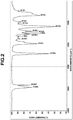
- the resulting compound was analyzed by 1 H-NMR spectroscopy (deuterated chloroform solvent) and IR spectroscopy, with the results shown in FIGS. 1 and 2 , respectively.
- the compound was identified to be 1,3,4,6-tetrakis(methyldimethoxysilylpropyl)glycoluril having 4 organoxysilyl groups via 4 nitrogen atoms in the glycoluril ring.
- the ratio in area % of 1,3,4,6-tetraallylglycoluril as reactant 1-(trimethoxysilylpropyl)-3,4,6-triallylglycoluril as product : 1,3-bis(trimethoxysilylpropyl)-4,6-diallylglycoluril as product: 1,3,4-tris(trimethoxysilylpropyl)-6-monoallylglycoluril as product: 1,3,4,6-tetrakis(trimethoxysilylpropyl)glycoluril as product was 0:0:0:0:100.
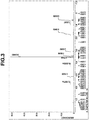
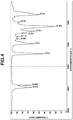
- the compound was analyzed by 1 H-NMR spectroscopy (deuterated chloroform solvent) and IR spectroscopy, with the results shown in FIGS. 3 and 4 , respectively.
- the compound was identified to be 1,3,4,6-tetrakis(trimethoxysilylpropyl)glycoluril having 4 organoxysilyl groups via 4 nitrogen atoms in the glycoluril ring.
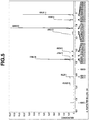
- the compound was analyzed by 1 H-NMR spectroscopy (deuterated chloroform solvent) and IR spectroscopy, with the results shown in FIGS. 5 and 6 , respectively.
- the compound was identified to be 1,3,4,6-tetrakis(methyldiethoxysilylpropyl)glycoluril having 4 organoxysilyl groups via 4 nitrogen atoms in the glycoluril ring.
- the compound was analyzed by 1 H-NMR spectroscopy (deuterated chloroform solvent) and IR spectroscopy, with the results shown in FIGS. 7 and 8 , respectively.
- the compound was identified to be 1,3,4,6-tetrakis(triethoxysilylpropyl)glycoluril having 4 organoxysilyl groups via 4 nitrogen atoms in the glycoluril ring.
- Reaction was performed as in Comparative Example 1 except that the amount (to give 0.000010 mol of platinum atoms) of the toluene solution of platinum-1,3-divinyl-1,1,3,3-tetramethyldisiloxane complex was changed to an amount to give 0.010 mol of platinum atoms.
Landscapes
- Chemical & Material Sciences (AREA)
- Organic Chemistry (AREA)
- Chemical Kinetics & Catalysis (AREA)
- Engineering & Computer Science (AREA)
- Materials Engineering (AREA)
- Low-Molecular Organic Synthesis Reactions Using Catalysts (AREA)
Claims (3)
- Glycolurilring-enthaltende Organosiliciumverbindung mit der allgemeinen Formel (1):
 wobei R1, R2, R3 and R4 jeweils eine Gruppe mit der allgemeinen Formel (2) sind:
-R7-SiR8 n(OR9)3-n (2)
wobei R7 eine unsubstituierte geradkettige, verzweigte oder cyclische C3-C6-Alkylengruppe ist, R8 und R9 jeweils unabhängig voneinander eine unsubstituierte einwertige C1-C10-Kohlenwasserstoffgruppe sind, und n eine ganze Zahl von 1 ist,
R5 und R6 sind jeweils unabhängig voneinander Wasserstoff oder eine unsubstituierte einwertige C1-C10-Kohlenwasserstoffgruppe. - Verfahren zur Herstellung einer Glycolurilring-enthaltenden Organosiliciumverbindung, umfassend den Schritt der Durchführung einer Hydrosilylierungsreaktion einer Glycolurilring-enthaltenden Alkenylverbindung mit der allgemeinen Formel (3):
 wobei R10 eine unsubstituierte geradkettige oder verzweigte C1-C4-Alkylengruppe ist und R11 und R12 jeweils unabhängig voneinander Wasserstoff oder eine unsubstituierte einwertige C1-C10-Kohlenwasserstoffgruppe sind, mit einer organoxysilylhaltigen Hydrogensilanverbindung der allgemeinen Formel (4):
H-SiR13 n(OR14)3-n (4)
wobei R13 und R14 jeweils unabhängig voneinander eine unsubstituierte einwertige C1-C10-Kohlenwasserstoffgruppe sind und n eine ganze Zahl von 0 bis 2 ist, in Gegenwart einer Säureamidverbindung als Cokatalysator und eines Platinkatalysators. - Verfahren nach Anspruch 2, wobei der Säureamidverbindungs-Cokatalysator eine Carbonsäureamidverbindung mit der allgemeinen Formel (5) ist:
R15-[C(=O)-NR16 2]k (5)
wobei R15 Wasserstoff oder eine k-wertige C1-C30-Kohlenwasserstoffgruppe ist, R16 jeweils unabhängig voneinander Wasserstoff oder eine einwertige C1-C30-Kohlenwasserstoffgruppe ist und k eine ganze Zahl von 1 oder 2 ist, oder eine primäre Säureamidverbindung mit der allgemeinen Formel (6):
R17-C(=O)-NH2 (6)
wobei R17 Wasserstoff oder eine einwertige C1-C30-Kohlenwasserstoffgruppe ist.
Applications Claiming Priority (1)
| Application Number | Priority Date | Filing Date | Title |
|---|---|---|---|
| JP2018076577A JP6879260B2 (ja) | 2018-04-12 | 2018-04-12 | グリコールウリル環を有する有機ケイ素化合物およびその製造方法 |
Publications (2)
| Publication Number | Publication Date |
|---|---|
| EP3553066A1 EP3553066A1 (de) | 2019-10-16 |
| EP3553066B1 true EP3553066B1 (de) | 2021-12-01 |
Family
ID=66101874
Family Applications (1)
| Application Number | Title | Priority Date | Filing Date |
|---|---|---|---|
| EP19167462.1A Active EP3553066B1 (de) | 2018-04-12 | 2019-04-05 | Glycolurilringhaltige organosiliciumverbindung und herstellungsverfahren |
Country Status (6)
| Country | Link |
|---|---|
| US (1) | US10683312B2 (de) |
| EP (1) | EP3553066B1 (de) |
| JP (1) | JP6879260B2 (de) |
| KR (1) | KR102486677B1 (de) |
| CN (1) | CN110372741A (de) |
| TW (1) | TWI744623B (de) |
Families Citing this family (1)
| Publication number | Priority date | Publication date | Assignee | Title |
|---|---|---|---|---|
| WO2024111422A1 (ja) * | 2022-11-21 | 2024-05-30 | 信越化学工業株式会社 | ハイドロジェンシラン組成物およびヒドロシリル化反応物の製造方法 |
Family Cites Families (10)
| Publication number | Priority date | Publication date | Assignee | Title |
|---|---|---|---|---|
| DD108085A1 (de) * | 1973-11-02 | 1974-09-05 | ||
| JP3522902B2 (ja) | 1995-06-03 | 2004-04-26 | 信越化学工業株式会社 | ウレイド基含有アルコキシシランの製造方法 |
| EP2463291B1 (de) * | 2010-12-09 | 2016-05-04 | Shin-Etsu Chemical Co., Ltd. | Hydrosilysierungsverfahren, Verfahren zur Herstellung einer Organosilicium-Verbindung und Organosilicium-Verbindung |
| JP5740953B2 (ja) * | 2010-12-09 | 2015-07-01 | 信越化学工業株式会社 | 有機ケイ素化合物の製造方法 |
| JP5821866B2 (ja) * | 2013-02-07 | 2015-11-24 | 信越化学工業株式会社 | 共役ジエン構造基を有する有機ケイ素化合物及びその製造方法 |
| JP6111174B2 (ja) * | 2013-09-19 | 2017-04-05 | 四国化成工業株式会社 | グリコールウリル環含有オルガノシランとグリコールウリル環含有オルガノシロキサンとそれらの製造方法 |
| WO2015163355A1 (ja) * | 2014-04-23 | 2015-10-29 | 株式会社ダイセル | 硬化性樹脂組成物及びその硬化物、グリコールウリル誘導体及びその製造方法 |
| JP6462509B2 (ja) * | 2015-06-26 | 2019-01-30 | 四国化成工業株式会社 | チオエーテル結合とシリル基を有するグリコールウリル化合物、該化合物の合成方法およびポリオルガノシロキサン組成物 |
| JP6665528B2 (ja) * | 2015-12-25 | 2020-03-13 | Jsr株式会社 | 感放射線性樹脂組成物、硬化膜、その形成方法、及び表示素子 |
| JP2018076577A (ja) | 2016-11-11 | 2018-05-17 | 学校法人 工学院大学 | 水電解装置、水素水の製造方法 |
-
2018
- 2018-04-12 JP JP2018076577A patent/JP6879260B2/ja active Active
-
2019
- 2019-04-05 EP EP19167462.1A patent/EP3553066B1/de active Active
- 2019-04-09 KR KR1020190041133A patent/KR102486677B1/ko active Active
- 2019-04-11 TW TW108112608A patent/TWI744623B/zh active
- 2019-04-11 US US16/381,998 patent/US10683312B2/en active Active
- 2019-04-12 CN CN201910291760.5A patent/CN110372741A/zh active Pending
Non-Patent Citations (1)
| Title |
|---|
| None * |
Also Published As
| Publication number | Publication date |
|---|---|
| TW202003529A (zh) | 2020-01-16 |
| CN110372741A (zh) | 2019-10-25 |
| JP2019182794A (ja) | 2019-10-24 |
| US10683312B2 (en) | 2020-06-16 |
| KR20190119525A (ko) | 2019-10-22 |
| US20190315779A1 (en) | 2019-10-17 |
| TWI744623B (zh) | 2021-11-01 |
| KR102486677B1 (ko) | 2023-01-11 |
| EP3553066A1 (de) | 2019-10-16 |
| JP6879260B2 (ja) | 2021-06-02 |
Similar Documents
| Publication | Publication Date | Title |
|---|---|---|
| EP3730538B1 (de) | Bissilylaminogruppenhaltige organische polysilazanverbindung, verfahren zu ihrer herstellung sowie zusammensetzung damit und gehärtetes produkt | |
| JP7683444B2 (ja) | アルコキシシリルアルキルアミノプロピル変性ポリシロキサン化合物の製造方法 | |
| JP6424868B2 (ja) | シラン変性共重合体、その製造方法および密着向上剤 | |
| EP2660244B1 (de) | Organoxysilanverbindungen mit silylgeschützter sekundärer Aminogruppe und Herstellungsverfahren | |
| US10683312B2 (en) | Glycoluril ring-containing organosilicon compound and making method | |
| US7053233B2 (en) | Silane compound having at least two protected functional groups and method for preparing the same | |
| WO2016170851A1 (ja) | 加水分解性シリル基含有環状オルガノハイドロジェンシロキサン | |
| JP5440389B2 (ja) | シリル基で保護されたアミノ基とカルボン酸エステル基を有するシラン化合物及びその製造方法 | |
| KR20210130647A (ko) | 밀착성 조성물, 피복 기재 및 경화물 | |
| JP2025104408A (ja) | 反応性ケイ素含有基を有するオルガノポリシロキサン、その製造方法、硬化性組成物および硬化物 | |
| US10065975B2 (en) | Amino-containing organosilicon compound and making method | |
| EP1714968A1 (de) | Geschützte Piperazinogruppe enthaltende Organooxysilanverbindung und Herstellungsverfahren | |
| EP3936510B1 (de) | Organosiliciumverbindung mit cyclischer silazanstruktur zusammensetzung damit und verfahren zu ihrer herstellung | |
| KR20190143384A (ko) | 환상 아미노오르가녹시실란 화합물 및 그의 제조 방법 | |
| EP0570208A2 (de) | Phenolmodifizierte Silicone | |
| WO2024106213A1 (ja) | ジシロキサン化合物の製造方法 | |
| EP4722221A1 (de) | Organoxysilanverbindung mit silylgeschützter carboxygruppe und herstellungsverfahren dafür | |
| US9233988B2 (en) | Silyl-protected nitrogen-containing cyclic compounds and making method |
Legal Events
| Date | Code | Title | Description |
|---|---|---|---|
| PUAI | Public reference made under article 153(3) epc to a published international application that has entered the european phase |
Free format text: ORIGINAL CODE: 0009012 |
|
| STAA | Information on the status of an ep patent application or granted ep patent |
Free format text: STATUS: THE APPLICATION HAS BEEN PUBLISHED |
|
| AK | Designated contracting states |
Kind code of ref document: A1 Designated state(s): AL AT BE BG CH CY CZ DE DK EE ES FI FR GB GR HR HU IE IS IT LI LT LU LV MC MK MT NL NO PL PT RO RS SE SI SK SM TR |
|
| AX | Request for extension of the european patent |
Extension state: BA ME |
|
| STAA | Information on the status of an ep patent application or granted ep patent |
Free format text: STATUS: REQUEST FOR EXAMINATION WAS MADE |
|
| STAA | Information on the status of an ep patent application or granted ep patent |
Free format text: STATUS: EXAMINATION IS IN PROGRESS |
|
| 17P | Request for examination filed |
Effective date: 20200408 |
|
| RBV | Designated contracting states (corrected) |
Designated state(s): AL AT BE BG CH CY CZ DE DK EE ES FI FR GB GR HR HU IE IS IT LI LT LU LV MC MK MT NL NO PL PT RO RS SE SI SK SM TR |
|
| 17Q | First examination report despatched |
Effective date: 20200507 |
|
| GRAP | Despatch of communication of intention to grant a patent |
Free format text: ORIGINAL CODE: EPIDOSNIGR1 |
|
| STAA | Information on the status of an ep patent application or granted ep patent |
Free format text: STATUS: GRANT OF PATENT IS INTENDED |
|
| INTG | Intention to grant announced |
Effective date: 20210705 |
|
| GRAS | Grant fee paid |
Free format text: ORIGINAL CODE: EPIDOSNIGR3 |
|
| GRAA | (expected) grant |
Free format text: ORIGINAL CODE: 0009210 |
|
| STAA | Information on the status of an ep patent application or granted ep patent |
Free format text: STATUS: THE PATENT HAS BEEN GRANTED |
|
| AK | Designated contracting states |
Kind code of ref document: B1 Designated state(s): AL AT BE BG CH CY CZ DE DK EE ES FI FR GB GR HR HU IE IS IT LI LT LU LV MC MK MT NL NO PL PT RO RS SE SI SK SM TR |
|
| REG | Reference to a national code |
Ref country code: GB Ref legal event code: FG4D |
|
| REG | Reference to a national code |
Ref country code: AT Ref legal event code: REF Ref document number: 1451678 Country of ref document: AT Kind code of ref document: T Effective date: 20211215 Ref country code: CH Ref legal event code: EP |
|
| REG | Reference to a national code |
Ref country code: IE Ref legal event code: FG4D |
|
| REG | Reference to a national code |
Ref country code: DE Ref legal event code: R096 Ref document number: 602019009614 Country of ref document: DE |
|
| REG | Reference to a national code |
Ref country code: LT Ref legal event code: MG9D |
|
| REG | Reference to a national code |
Ref country code: NL Ref legal event code: MP Effective date: 20211201 |
|
| REG | Reference to a national code |
Ref country code: AT Ref legal event code: MK05 Ref document number: 1451678 Country of ref document: AT Kind code of ref document: T Effective date: 20211201 |
|
| PG25 | Lapsed in a contracting state [announced via postgrant information from national office to epo] |
Ref country code: RS Free format text: LAPSE BECAUSE OF FAILURE TO SUBMIT A TRANSLATION OF THE DESCRIPTION OR TO PAY THE FEE WITHIN THE PRESCRIBED TIME-LIMIT Effective date: 20211201 Ref country code: LT Free format text: LAPSE BECAUSE OF FAILURE TO SUBMIT A TRANSLATION OF THE DESCRIPTION OR TO PAY THE FEE WITHIN THE PRESCRIBED TIME-LIMIT Effective date: 20211201 Ref country code: FI Free format text: LAPSE BECAUSE OF FAILURE TO SUBMIT A TRANSLATION OF THE DESCRIPTION OR TO PAY THE FEE WITHIN THE PRESCRIBED TIME-LIMIT Effective date: 20211201 Ref country code: BG Free format text: LAPSE BECAUSE OF FAILURE TO SUBMIT A TRANSLATION OF THE DESCRIPTION OR TO PAY THE FEE WITHIN THE PRESCRIBED TIME-LIMIT Effective date: 20220301 Ref country code: AT Free format text: LAPSE BECAUSE OF FAILURE TO SUBMIT A TRANSLATION OF THE DESCRIPTION OR TO PAY THE FEE WITHIN THE PRESCRIBED TIME-LIMIT Effective date: 20211201 |
|
| PG25 | Lapsed in a contracting state [announced via postgrant information from national office to epo] |
Ref country code: SE Free format text: LAPSE BECAUSE OF FAILURE TO SUBMIT A TRANSLATION OF THE DESCRIPTION OR TO PAY THE FEE WITHIN THE PRESCRIBED TIME-LIMIT Effective date: 20211201 Ref country code: PL Free format text: LAPSE BECAUSE OF FAILURE TO SUBMIT A TRANSLATION OF THE DESCRIPTION OR TO PAY THE FEE WITHIN THE PRESCRIBED TIME-LIMIT Effective date: 20211201 Ref country code: NO Free format text: LAPSE BECAUSE OF FAILURE TO SUBMIT A TRANSLATION OF THE DESCRIPTION OR TO PAY THE FEE WITHIN THE PRESCRIBED TIME-LIMIT Effective date: 20220301 Ref country code: LV Free format text: LAPSE BECAUSE OF FAILURE TO SUBMIT A TRANSLATION OF THE DESCRIPTION OR TO PAY THE FEE WITHIN THE PRESCRIBED TIME-LIMIT Effective date: 20211201 Ref country code: HR Free format text: LAPSE BECAUSE OF FAILURE TO SUBMIT A TRANSLATION OF THE DESCRIPTION OR TO PAY THE FEE WITHIN THE PRESCRIBED TIME-LIMIT Effective date: 20211201 Ref country code: GR Free format text: LAPSE BECAUSE OF FAILURE TO SUBMIT A TRANSLATION OF THE DESCRIPTION OR TO PAY THE FEE WITHIN THE PRESCRIBED TIME-LIMIT Effective date: 20220302 Ref country code: ES Free format text: LAPSE BECAUSE OF FAILURE TO SUBMIT A TRANSLATION OF THE DESCRIPTION OR TO PAY THE FEE WITHIN THE PRESCRIBED TIME-LIMIT Effective date: 20211201 |
|
| PG25 | Lapsed in a contracting state [announced via postgrant information from national office to epo] |
Ref country code: NL Free format text: LAPSE BECAUSE OF FAILURE TO SUBMIT A TRANSLATION OF THE DESCRIPTION OR TO PAY THE FEE WITHIN THE PRESCRIBED TIME-LIMIT Effective date: 20211201 |
|
| PG25 | Lapsed in a contracting state [announced via postgrant information from national office to epo] |
Ref country code: SM Free format text: LAPSE BECAUSE OF FAILURE TO SUBMIT A TRANSLATION OF THE DESCRIPTION OR TO PAY THE FEE WITHIN THE PRESCRIBED TIME-LIMIT Effective date: 20211201 Ref country code: SK Free format text: LAPSE BECAUSE OF FAILURE TO SUBMIT A TRANSLATION OF THE DESCRIPTION OR TO PAY THE FEE WITHIN THE PRESCRIBED TIME-LIMIT Effective date: 20211201 Ref country code: RO Free format text: LAPSE BECAUSE OF FAILURE TO SUBMIT A TRANSLATION OF THE DESCRIPTION OR TO PAY THE FEE WITHIN THE PRESCRIBED TIME-LIMIT Effective date: 20211201 Ref country code: PT Free format text: LAPSE BECAUSE OF FAILURE TO SUBMIT A TRANSLATION OF THE DESCRIPTION OR TO PAY THE FEE WITHIN THE PRESCRIBED TIME-LIMIT Effective date: 20220401 Ref country code: EE Free format text: LAPSE BECAUSE OF FAILURE TO SUBMIT A TRANSLATION OF THE DESCRIPTION OR TO PAY THE FEE WITHIN THE PRESCRIBED TIME-LIMIT Effective date: 20211201 Ref country code: CZ Free format text: LAPSE BECAUSE OF FAILURE TO SUBMIT A TRANSLATION OF THE DESCRIPTION OR TO PAY THE FEE WITHIN THE PRESCRIBED TIME-LIMIT Effective date: 20211201 |
|
| REG | Reference to a national code |
Ref country code: DE Ref legal event code: R097 Ref document number: 602019009614 Country of ref document: DE |
|
| PG25 | Lapsed in a contracting state [announced via postgrant information from national office to epo] |
Ref country code: IS Free format text: LAPSE BECAUSE OF FAILURE TO SUBMIT A TRANSLATION OF THE DESCRIPTION OR TO PAY THE FEE WITHIN THE PRESCRIBED TIME-LIMIT Effective date: 20220401 |
|
| PLBE | No opposition filed within time limit |
Free format text: ORIGINAL CODE: 0009261 |
|
| STAA | Information on the status of an ep patent application or granted ep patent |
Free format text: STATUS: NO OPPOSITION FILED WITHIN TIME LIMIT |
|
| PG25 | Lapsed in a contracting state [announced via postgrant information from national office to epo] |
Ref country code: DK Free format text: LAPSE BECAUSE OF FAILURE TO SUBMIT A TRANSLATION OF THE DESCRIPTION OR TO PAY THE FEE WITHIN THE PRESCRIBED TIME-LIMIT Effective date: 20211201 Ref country code: AL Free format text: LAPSE BECAUSE OF FAILURE TO SUBMIT A TRANSLATION OF THE DESCRIPTION OR TO PAY THE FEE WITHIN THE PRESCRIBED TIME-LIMIT Effective date: 20211201 |
|
| 26N | No opposition filed |
Effective date: 20220902 |
|
| PG25 | Lapsed in a contracting state [announced via postgrant information from national office to epo] |
Ref country code: SI Free format text: LAPSE BECAUSE OF FAILURE TO SUBMIT A TRANSLATION OF THE DESCRIPTION OR TO PAY THE FEE WITHIN THE PRESCRIBED TIME-LIMIT Effective date: 20211201 |
|
| REG | Reference to a national code |
Ref country code: CH Ref legal event code: PL |
|
| REG | Reference to a national code |
Ref country code: BE Ref legal event code: MM Effective date: 20220430 |
|
| PG25 | Lapsed in a contracting state [announced via postgrant information from national office to epo] |
Ref country code: MC Free format text: LAPSE BECAUSE OF FAILURE TO SUBMIT A TRANSLATION OF THE DESCRIPTION OR TO PAY THE FEE WITHIN THE PRESCRIBED TIME-LIMIT Effective date: 20211201 Ref country code: LU Free format text: LAPSE BECAUSE OF NON-PAYMENT OF DUE FEES Effective date: 20220405 Ref country code: LI Free format text: LAPSE BECAUSE OF NON-PAYMENT OF DUE FEES Effective date: 20220430 Ref country code: FR Free format text: LAPSE BECAUSE OF NON-PAYMENT OF DUE FEES Effective date: 20220430 Ref country code: CH Free format text: LAPSE BECAUSE OF NON-PAYMENT OF DUE FEES Effective date: 20220430 |
|
| PG25 | Lapsed in a contracting state [announced via postgrant information from national office to epo] |
Ref country code: BE Free format text: LAPSE BECAUSE OF NON-PAYMENT OF DUE FEES Effective date: 20220430 |
|
| PG25 | Lapsed in a contracting state [announced via postgrant information from national office to epo] |
Ref country code: IE Free format text: LAPSE BECAUSE OF NON-PAYMENT OF DUE FEES Effective date: 20220405 |
|
| PG25 | Lapsed in a contracting state [announced via postgrant information from national office to epo] |
Ref country code: IT Free format text: LAPSE BECAUSE OF FAILURE TO SUBMIT A TRANSLATION OF THE DESCRIPTION OR TO PAY THE FEE WITHIN THE PRESCRIBED TIME-LIMIT Effective date: 20211201 |
|
| GBPC | Gb: european patent ceased through non-payment of renewal fee |
Effective date: 20230405 |
|
| PG25 | Lapsed in a contracting state [announced via postgrant information from national office to epo] |
Ref country code: GB Free format text: LAPSE BECAUSE OF NON-PAYMENT OF DUE FEES Effective date: 20230405 |
|
| PG25 | Lapsed in a contracting state [announced via postgrant information from national office to epo] |
Ref country code: GB Free format text: LAPSE BECAUSE OF NON-PAYMENT OF DUE FEES Effective date: 20230405 |
|
| PG25 | Lapsed in a contracting state [announced via postgrant information from national office to epo] |
Ref country code: HU Free format text: LAPSE BECAUSE OF FAILURE TO SUBMIT A TRANSLATION OF THE DESCRIPTION OR TO PAY THE FEE WITHIN THE PRESCRIBED TIME-LIMIT; INVALID AB INITIO Effective date: 20190405 |
|
| PG25 | Lapsed in a contracting state [announced via postgrant information from national office to epo] |
Ref country code: MK Free format text: LAPSE BECAUSE OF FAILURE TO SUBMIT A TRANSLATION OF THE DESCRIPTION OR TO PAY THE FEE WITHIN THE PRESCRIBED TIME-LIMIT Effective date: 20211201 Ref country code: CY Free format text: LAPSE BECAUSE OF FAILURE TO SUBMIT A TRANSLATION OF THE DESCRIPTION OR TO PAY THE FEE WITHIN THE PRESCRIBED TIME-LIMIT Effective date: 20211201 |
|
| PG25 | Lapsed in a contracting state [announced via postgrant information from national office to epo] |
Ref country code: MT Free format text: LAPSE BECAUSE OF FAILURE TO SUBMIT A TRANSLATION OF THE DESCRIPTION OR TO PAY THE FEE WITHIN THE PRESCRIBED TIME-LIMIT Effective date: 20211201 |
|
| PG25 | Lapsed in a contracting state [announced via postgrant information from national office to epo] |
Ref country code: TR Free format text: LAPSE BECAUSE OF FAILURE TO SUBMIT A TRANSLATION OF THE DESCRIPTION OR TO PAY THE FEE WITHIN THE PRESCRIBED TIME-LIMIT Effective date: 20211201 |
|
| PGFP | Annual fee paid to national office [announced via postgrant information from national office to epo] |
Ref country code: DE Payment date: 20260422 Year of fee payment: 8 |