EP3553043A1 - Verwendung von celluloseether-compounds zur verlängerung der offenen zeit und verbesserung der benetzbarkeit von zementären mörteln - Google Patents
Verwendung von celluloseether-compounds zur verlängerung der offenen zeit und verbesserung der benetzbarkeit von zementären mörteln Download PDFInfo
- Publication number
- EP3553043A1 EP3553043A1 EP19165754.3A EP19165754A EP3553043A1 EP 3553043 A1 EP3553043 A1 EP 3553043A1 EP 19165754 A EP19165754 A EP 19165754A EP 3553043 A1 EP3553043 A1 EP 3553043A1
- Authority
- EP
- European Patent Office
- Prior art keywords
- cellulose
- methyl
- hydroxyethyl
- minutes
- use according
- Prior art date
- Legal status (The legal status is an assumption and is not a legal conclusion. Google has not performed a legal analysis and makes no representation as to the accuracy of the status listed.)
- Granted
Links
Images
Classifications
-
- C—CHEMISTRY; METALLURGY
- C04—CEMENTS; CONCRETE; ARTIFICIAL STONE; CERAMICS; REFRACTORIES
- C04B—LIME, MAGNESIA; SLAG; CEMENTS; COMPOSITIONS THEREOF, e.g. MORTARS, CONCRETE OR LIKE BUILDING MATERIALS; ARTIFICIAL STONE; CERAMICS; REFRACTORIES; TREATMENT OF NATURAL STONE
- C04B24/00—Use of organic materials as active ingredients for mortars, concrete or artificial stone, e.g. plasticisers
- C04B24/24—Macromolecular compounds
- C04B24/38—Polysaccharides or derivatives thereof
- C04B24/383—Cellulose or derivatives thereof
-
- C—CHEMISTRY; METALLURGY
- C04—CEMENTS; CONCRETE; ARTIFICIAL STONE; CERAMICS; REFRACTORIES
- C04B—LIME, MAGNESIA; SLAG; CEMENTS; COMPOSITIONS THEREOF, e.g. MORTARS, CONCRETE OR LIKE BUILDING MATERIALS; ARTIFICIAL STONE; CERAMICS; REFRACTORIES; TREATMENT OF NATURAL STONE
- C04B20/00—Use of materials as fillers for mortars, concrete or artificial stone according to more than one of groups C04B14/00 - C04B18/00 and characterised by shape or grain distribution; Treatment of materials according to more than one of the groups C04B14/00 - C04B18/00 specially adapted to enhance their filling properties in mortars, concrete or artificial stone; Expanding or defibrillating materials
- C04B20/10—Coating or impregnating
- C04B20/1003—Non-compositional aspects of the coating or impregnation
-
- C—CHEMISTRY; METALLURGY
- C04—CEMENTS; CONCRETE; ARTIFICIAL STONE; CERAMICS; REFRACTORIES
- C04B—LIME, MAGNESIA; SLAG; CEMENTS; COMPOSITIONS THEREOF, e.g. MORTARS, CONCRETE OR LIKE BUILDING MATERIALS; ARTIFICIAL STONE; CERAMICS; REFRACTORIES; TREATMENT OF NATURAL STONE
- C04B20/00—Use of materials as fillers for mortars, concrete or artificial stone according to more than one of groups C04B14/00 - C04B18/00 and characterised by shape or grain distribution; Treatment of materials according to more than one of the groups C04B14/00 - C04B18/00 specially adapted to enhance their filling properties in mortars, concrete or artificial stone; Expanding or defibrillating materials
- C04B20/10—Coating or impregnating
- C04B20/1018—Coating or impregnating with organic materials
- C04B20/1022—Non-macromolecular compounds
-
- C—CHEMISTRY; METALLURGY
- C04—CEMENTS; CONCRETE; ARTIFICIAL STONE; CERAMICS; REFRACTORIES
- C04B—LIME, MAGNESIA; SLAG; CEMENTS; COMPOSITIONS THEREOF, e.g. MORTARS, CONCRETE OR LIKE BUILDING MATERIALS; ARTIFICIAL STONE; CERAMICS; REFRACTORIES; TREATMENT OF NATURAL STONE
- C04B20/00—Use of materials as fillers for mortars, concrete or artificial stone according to more than one of groups C04B14/00 - C04B18/00 and characterised by shape or grain distribution; Treatment of materials according to more than one of the groups C04B14/00 - C04B18/00 specially adapted to enhance their filling properties in mortars, concrete or artificial stone; Expanding or defibrillating materials
- C04B20/10—Coating or impregnating
- C04B20/1018—Coating or impregnating with organic materials
- C04B20/1022—Non-macromolecular compounds
- C04B20/1025—Fats; Fatty oils; Ester type waxes; Higher fatty acids; Derivatives thereof
-
- C—CHEMISTRY; METALLURGY
- C04—CEMENTS; CONCRETE; ARTIFICIAL STONE; CERAMICS; REFRACTORIES
- C04B—LIME, MAGNESIA; SLAG; CEMENTS; COMPOSITIONS THEREOF, e.g. MORTARS, CONCRETE OR LIKE BUILDING MATERIALS; ARTIFICIAL STONE; CERAMICS; REFRACTORIES; TREATMENT OF NATURAL STONE
- C04B20/00—Use of materials as fillers for mortars, concrete or artificial stone according to more than one of groups C04B14/00 - C04B18/00 and characterised by shape or grain distribution; Treatment of materials according to more than one of the groups C04B14/00 - C04B18/00 specially adapted to enhance their filling properties in mortars, concrete or artificial stone; Expanding or defibrillating materials
- C04B20/10—Coating or impregnating
- C04B20/1051—Organo-metallic compounds; Organo-silicon compounds, e.g. bentone
-
- C—CHEMISTRY; METALLURGY
- C04—CEMENTS; CONCRETE; ARTIFICIAL STONE; CERAMICS; REFRACTORIES
- C04B—LIME, MAGNESIA; SLAG; CEMENTS; COMPOSITIONS THEREOF, e.g. MORTARS, CONCRETE OR LIKE BUILDING MATERIALS; ARTIFICIAL STONE; CERAMICS; REFRACTORIES; TREATMENT OF NATURAL STONE
- C04B24/00—Use of organic materials as active ingredients for mortars, concrete or artificial stone, e.g. plasticisers
- C04B24/08—Fats; Fatty oils; Ester type waxes; Higher fatty acids, i.e. having at least seven carbon atoms in an unbroken chain bound to a carboxyl group; Oxidised oils or fats
-
- C—CHEMISTRY; METALLURGY
- C04—CEMENTS; CONCRETE; ARTIFICIAL STONE; CERAMICS; REFRACTORIES
- C04B—LIME, MAGNESIA; SLAG; CEMENTS; COMPOSITIONS THEREOF, e.g. MORTARS, CONCRETE OR LIKE BUILDING MATERIALS; ARTIFICIAL STONE; CERAMICS; REFRACTORIES; TREATMENT OF NATURAL STONE
- C04B24/00—Use of organic materials as active ingredients for mortars, concrete or artificial stone, e.g. plasticisers
- C04B24/24—Macromolecular compounds
- C04B24/26—Macromolecular compounds obtained by reactions only involving carbon-to-carbon unsaturated bonds
- C04B24/2652—Nitrogen containing polymers, e.g. polyacrylamides, polyacrylonitriles
-
- C—CHEMISTRY; METALLURGY
- C04—CEMENTS; CONCRETE; ARTIFICIAL STONE; CERAMICS; REFRACTORIES
- C04B—LIME, MAGNESIA; SLAG; CEMENTS; COMPOSITIONS THEREOF, e.g. MORTARS, CONCRETE OR LIKE BUILDING MATERIALS; ARTIFICIAL STONE; CERAMICS; REFRACTORIES; TREATMENT OF NATURAL STONE
- C04B28/00—Compositions of mortars, concrete or artificial stone, containing inorganic binders or the reaction product of an inorganic and an organic binder, e.g. polycarboxylate cements
- C04B28/02—Compositions of mortars, concrete or artificial stone, containing inorganic binders or the reaction product of an inorganic and an organic binder, e.g. polycarboxylate cements containing hydraulic cements other than calcium sulfates
-
- C—CHEMISTRY; METALLURGY
- C04—CEMENTS; CONCRETE; ARTIFICIAL STONE; CERAMICS; REFRACTORIES
- C04B—LIME, MAGNESIA; SLAG; CEMENTS; COMPOSITIONS THEREOF, e.g. MORTARS, CONCRETE OR LIKE BUILDING MATERIALS; ARTIFICIAL STONE; CERAMICS; REFRACTORIES; TREATMENT OF NATURAL STONE
- C04B28/00—Compositions of mortars, concrete or artificial stone, containing inorganic binders or the reaction product of an inorganic and an organic binder, e.g. polycarboxylate cements
- C04B28/02—Compositions of mortars, concrete or artificial stone, containing inorganic binders or the reaction product of an inorganic and an organic binder, e.g. polycarboxylate cements containing hydraulic cements other than calcium sulfates
- C04B28/04—Portland cements
-
- C—CHEMISTRY; METALLURGY
- C04—CEMENTS; CONCRETE; ARTIFICIAL STONE; CERAMICS; REFRACTORIES
- C04B—LIME, MAGNESIA; SLAG; CEMENTS; COMPOSITIONS THEREOF, e.g. MORTARS, CONCRETE OR LIKE BUILDING MATERIALS; ARTIFICIAL STONE; CERAMICS; REFRACTORIES; TREATMENT OF NATURAL STONE
- C04B40/00—Processes, in general, for influencing or modifying the properties of mortars, concrete or artificial stone compositions, e.g. their setting or hardening ability
- C04B40/0028—Aspects relating to the mixing step of the mortar preparation
- C04B40/0039—Premixtures of ingredients
-
- C—CHEMISTRY; METALLURGY
- C04—CEMENTS; CONCRETE; ARTIFICIAL STONE; CERAMICS; REFRACTORIES
- C04B—LIME, MAGNESIA; SLAG; CEMENTS; COMPOSITIONS THEREOF, e.g. MORTARS, CONCRETE OR LIKE BUILDING MATERIALS; ARTIFICIAL STONE; CERAMICS; REFRACTORIES; TREATMENT OF NATURAL STONE
- C04B40/00—Processes, in general, for influencing or modifying the properties of mortars, concrete or artificial stone compositions, e.g. their setting or hardening ability
- C04B40/0028—Aspects relating to the mixing step of the mortar preparation
- C04B40/0039—Premixtures of ingredients
- C04B40/0042—Powdery mixtures
-
- C—CHEMISTRY; METALLURGY
- C04—CEMENTS; CONCRETE; ARTIFICIAL STONE; CERAMICS; REFRACTORIES
- C04B—LIME, MAGNESIA; SLAG; CEMENTS; COMPOSITIONS THEREOF, e.g. MORTARS, CONCRETE OR LIKE BUILDING MATERIALS; ARTIFICIAL STONE; CERAMICS; REFRACTORIES; TREATMENT OF NATURAL STONE
- C04B40/00—Processes, in general, for influencing or modifying the properties of mortars, concrete or artificial stone compositions, e.g. their setting or hardening ability
- C04B40/06—Inhibiting the setting, e.g. mortars of the deferred action type containing water in breakable containers ; Inhibiting the action of active ingredients
- C04B40/0658—Retarder inhibited mortars activated by the addition of accelerators or retarder-neutralising agents
-
- C—CHEMISTRY; METALLURGY
- C09—DYES; PAINTS; POLISHES; NATURAL RESINS; ADHESIVES; COMPOSITIONS NOT OTHERWISE PROVIDED FOR; APPLICATIONS OF MATERIALS NOT OTHERWISE PROVIDED FOR
- C09J—ADHESIVES; NON-MECHANICAL ASPECTS OF ADHESIVE PROCESSES IN GENERAL; ADHESIVE PROCESSES NOT PROVIDED FOR ELSEWHERE; USE OF MATERIALS AS ADHESIVES
- C09J101/00—Adhesives based on cellulose, modified cellulose, or cellulose derivatives
- C09J101/08—Cellulose derivatives
- C09J101/26—Cellulose ethers
-
- C—CHEMISTRY; METALLURGY
- C04—CEMENTS; CONCRETE; ARTIFICIAL STONE; CERAMICS; REFRACTORIES
- C04B—LIME, MAGNESIA; SLAG; CEMENTS; COMPOSITIONS THEREOF, e.g. MORTARS, CONCRETE OR LIKE BUILDING MATERIALS; ARTIFICIAL STONE; CERAMICS; REFRACTORIES; TREATMENT OF NATURAL STONE
- C04B2103/00—Function or property of ingredients for mortars, concrete or artificial stone
- C04B2103/46—Water-loss or fluid-loss reducers, hygroscopic or hydrophilic agents, water retention agents
-
- C—CHEMISTRY; METALLURGY
- C04—CEMENTS; CONCRETE; ARTIFICIAL STONE; CERAMICS; REFRACTORIES
- C04B—LIME, MAGNESIA; SLAG; CEMENTS; COMPOSITIONS THEREOF, e.g. MORTARS, CONCRETE OR LIKE BUILDING MATERIALS; ARTIFICIAL STONE; CERAMICS; REFRACTORIES; TREATMENT OF NATURAL STONE
- C04B2103/00—Function or property of ingredients for mortars, concrete or artificial stone
- C04B2103/50—Defoamers, air detrainers
-
- C—CHEMISTRY; METALLURGY
- C04—CEMENTS; CONCRETE; ARTIFICIAL STONE; CERAMICS; REFRACTORIES
- C04B—LIME, MAGNESIA; SLAG; CEMENTS; COMPOSITIONS THEREOF, e.g. MORTARS, CONCRETE OR LIKE BUILDING MATERIALS; ARTIFICIAL STONE; CERAMICS; REFRACTORIES; TREATMENT OF NATURAL STONE
- C04B2111/00—Mortars, concrete or artificial stone or mixtures to prepare them, characterised by specific function, property or use
- C04B2111/00474—Uses not provided for elsewhere in C04B2111/00
- C04B2111/00482—Coating or impregnation materials
- C04B2111/00517—Coating or impregnation materials for masonry
-
- C—CHEMISTRY; METALLURGY
- C04—CEMENTS; CONCRETE; ARTIFICIAL STONE; CERAMICS; REFRACTORIES
- C04B—LIME, MAGNESIA; SLAG; CEMENTS; COMPOSITIONS THEREOF, e.g. MORTARS, CONCRETE OR LIKE BUILDING MATERIALS; ARTIFICIAL STONE; CERAMICS; REFRACTORIES; TREATMENT OF NATURAL STONE
- C04B2111/00—Mortars, concrete or artificial stone or mixtures to prepare them, characterised by specific function, property or use
- C04B2111/00474—Uses not provided for elsewhere in C04B2111/00
- C04B2111/00612—Uses not provided for elsewhere in C04B2111/00 as one or more layers of a layered structure
-
- C—CHEMISTRY; METALLURGY
- C04—CEMENTS; CONCRETE; ARTIFICIAL STONE; CERAMICS; REFRACTORIES
- C04B—LIME, MAGNESIA; SLAG; CEMENTS; COMPOSITIONS THEREOF, e.g. MORTARS, CONCRETE OR LIKE BUILDING MATERIALS; ARTIFICIAL STONE; CERAMICS; REFRACTORIES; TREATMENT OF NATURAL STONE
- C04B2111/00—Mortars, concrete or artificial stone or mixtures to prepare them, characterised by specific function, property or use
- C04B2111/00474—Uses not provided for elsewhere in C04B2111/00
- C04B2111/00637—Uses not provided for elsewhere in C04B2111/00 as glue or binder for uniting building or structural materials
-
- C—CHEMISTRY; METALLURGY
- C04—CEMENTS; CONCRETE; ARTIFICIAL STONE; CERAMICS; REFRACTORIES
- C04B—LIME, MAGNESIA; SLAG; CEMENTS; COMPOSITIONS THEREOF, e.g. MORTARS, CONCRETE OR LIKE BUILDING MATERIALS; ARTIFICIAL STONE; CERAMICS; REFRACTORIES; TREATMENT OF NATURAL STONE
- C04B2111/00—Mortars, concrete or artificial stone or mixtures to prepare them, characterised by specific function, property or use
- C04B2111/20—Resistance against chemical, physical or biological attack
- C04B2111/28—Fire resistance, i.e. materials resistant to accidental fires or high temperatures
Definitions
- the invention relates to the use of water-soluble cellulose ethers, in which one or more liquid defoamers are incorporated.
- cementitious adhesives e.g., cement, hydrated lime
- fillers e.g., different grained sands
- other additives such as cellulose ethers, air entrainers, dispersible powders and starch, and starch derivatives such as starch ethers. They are factory-made so that they only need to be mixed with water for processing. These building materials are called dry mortar.
- cement-based tile adhesives are applied in a thin bed process. This requires a level surface on which the adhesive is applied in a uniform layer thickness with a toothed spatula. In the adhesive mortar applied in this way, the tiles are laid and aligned over their entire surface. In order to be able to work as rationally and efficiently as possible, it is the goal of the processors to prepare the largest possible area with tile adhesive and then insert the tiles in it. For this, the adhesive must have a sufficiently long open time to ensure that all tiles are wetted as completely and as completely as possible with the adhesive mortar. Thin-bed adhesives consist of cement, sand, rock flour and cellulose ethers. Other additives, such as dispersion powders, cement accelerators, starch derivatives, inorganic thickeners and fibers may also be included to optimize processing and solid mortar properties.
- the open time of tile adhesives is determined according to ISO 13007 or EN 1346 by adhesive tensile strength values after defined insertion times. In parallel, so-called wetting tests are often carried out in which absorbent tiles, also after defined times, are inserted into the mortar bed and then the percentage of wetting is evaluated.
- the open time depends, among other things, on the water content of the adhesive. The open time is often shortened by an undesirable skin formation on the surface of the mortar, which requires adequate wetting of the tile prevented even though the glue inside is still soft. High quality tile adhesives have an open time of at least 30 minutes.
- ETS external thermal insulation systems
- an insulating board consisting of EPS, XPS, PU, mineral wool, etc.
- the surface of the insulation board is coated with a flush plaster into which a reinforcing fabric is embedded.
- the flush is made of cement, sand, cellulose ethers and dispersion powder.
- starch and starch derivatives such as starch ethers, fibers and other additives may also be included.
- a thickener for a hydraulic composition comprises a water-soluble cellulose ether, a defoamer, a biopolymer and optionally a water-reducing agent.
- the cellulose ether is preferably methylcellulose, ethylcellulose, hydroxyalkylcellulose such as hydroxyethylcellulose or hydroxypropylcellulose or an alkylhydroxyalkylcellulose such as methylhydroxyethylcellulose or methylhydroxypropylcellulose.
- Defoamers which are mentioned are polyoxyalkylenes, silicone oils and agents based on alcohols, on fatty acids or on fatty acid esters.
- the biopolymer serves to stabilize the water-soluble cellulose ether in the water-reducing agent.
- the water-reducing agent is preferably a polycarboxylic acid, lignin or melamine derivative, for example copolymers of acrylic acid, methacrylic acid, crotonic acid, itaconic acid, or citraconic acid with polyalkylene glycol mono (meth) acrylate, styrene, melamine / sulfonic acid / formaldehyde condensates or a ligninsulfonic.
- Subject of the EP 1 884 503 B1 is a hydraulic composition for plasters or mortars containing cement and / or gypsum, an anionic surfactant capable of foaming, a nonionic surfactant capable of defoaming and a water-soluble cellulose ether.
- the defoamer surfactant is preferably a polyether surfactant, a silicone surfactant, an alcohol surfactant, a mineral oil surfactant, or a vegetable oil surfactant.
- EP 2 363 428 A1 discloses a composition which serves to modify the rheological properties of cementitious mixtures. It comprises a polysaccharide derivative, in particular a cellulose ether, a siloxane and a defoamer which is not a siloxane.
- the defoamer is preferably in powder form.
- powdery defoamers tributyl phosphate and stearic acid metal salts are mentioned.
- Liquid defoamers such as polyoxyalkylene glycols or oily hydrocarbons, are said to be bound to a solid carrier material, such as diatomaceous earth, silica or calcium silicate.
- EP 2 190 800 B1 discloses the use of quaternary organic ammonium compounds in building materials for the reduction of efflorescence.
- the ammonium compounds are preferably mixed with cellulose ethers.
- a liquid and / or dissolved quaternary ammonium compound is sprayed onto the cellulose ether and mixed with it.
- an additive for cementitious compositions comprises a copolymer having a plurality of carboxyl groups or a salt thereof, a water-soluble cellulose ether and a solid or liquid defoamer.
- the additive serves to improve the processability of the cementitious composition and to reduce the splash in shotcrete. It also prevents bleeding of the composition after its installation.
- defoamers mostly powder defoamers
- the goal is to reduce the air entrainment content to achieve higher strengths and smoother surfaces.
- Mineral oils liquid defoamers
- dry mortars usually in cementitious tile adhesives, joint fillers and leveling compounds, in order to significantly reduce dusting during transfer and mixing. They are not used as defoamers and do not act defoaming on dry mortar.
- the fresh mortar density for cement tile adhesives is approx. 1.5 kg / l. If Defoamers are added, the fresh mortar raw density rises to 2.0 kg / l after 2 hours. As time progresses, larger and larger bubbles are created. The higher the mortar density, the worse a cement tile adhesive is to be processed.
- Liquid defoamers are commonly used in aqueous coatings such as construction paints, enamels, tints, wood coatings, pasty plasters, as well as in adhesives, concretes, fiber cement boards, in agriculture, the paper industry, biotechnology, the food industry and in chemical processes. For dry mortar liquid defoamers are not recommended and consequently not used.
- the object was to develop a defoamed cellulose ether which has a time-limited defoaming action. Mortars containing this defoamed cellulose ether should be easy to process over as long a period as possible.
- liquid defoamers in particular fatty acid esters and fatty alcohol alkoxylates have a time-limited defoaming action, with good processability of the mortar.
- a natural biopolymer as an additional ingredient, as in the EP 2 966 049 described is not required for this effect.
- these liquid defoamers must be incorporated into the cellulose ether.
- a mixture of a cellulose ether and a powder defoamer (or a liquid defoamer on a solid inorganic support) surprisingly does not work. The same goes for those in the EP 2 190 800 B1 quaternary ammonium compounds mentioned.
- the inventive compound of a cellulose ether with liquid defoamer wetting is also significantly improved in cement tile adhesives, plasters and ETICS Armleitersputzen and extends the open time.
- the adhesive tensile strengths of tile adhesives according to various types of bearings (dry, wet, warm, freeze / thaw according to ISO 13007 or EN 1348) are significantly improved by the compound according to the invention.
- the compound cellulose ether with liquid defoamer is prepared by pasting a cellulose ether with water until it has 60-90% moisture content. In these moist cellulose ether, the liquid defoamer is incorporated or kneaded. Thereafter, this dough is dried and ground or semi-dried in a process as is customary in large-scale production of cellulose ethers. The spraying of liquid defoamers on the dry cellulose ether is also a way to incorporate the defoamer.
- liquid refers to defoamers which have a viscosity of less than 250 mPa s, preferably less than 150 mPa s, measured with Brookfield CAP 2000 +, spindle 01, 250 rpm, 25 ° C. (DIN EN ISO 321).
- the resulting compound according to the invention is present as a free-flowing powder.
- the cellulose ether may be an ionic cellulose ether such as carboxymethylcellulose (CMC), carboxymethylhydroxyethylcellulose (CMHEC), carboxymethylhydroxypropylcellulose (CMHPC), sulfoethylmethylhydroxyethylcellulose (SEMHEC), sulfoethylmethylhydroxypropylcellulose (SEMHPC) or nonionic cellulose ethers such as hydroxyethylcellulose (HEC), hydroxypropylcellulose (HPC), methylcellulose (MC ), Methylhydroxypropylcellulose (MHPC), methylhydroxyethylcellulose (MHEC), ethylhydroxyethylcellulose (EHEC) or methylethylhydroxyethylcellulose (MEHEC).
- CMC carboxymethylcellulose
- CMC carboxymethylhydroxyethylcellulose
- CMVPC carboxymethylhydroxypropylcellulose
- SEMHEC sulfoethylmethylhydroxyethylcellulose
- SEMHPC sul
- the defoamer is a compound based on oxyalkylene, silicone oil, alcohol, mineral oil, fatty acids and fatty acid esters, preferably fatty acid esters.
- Preferred fields of application of the cellulose ether with defoamer according to the invention are: cement-based tile adhesive, for improving the open time and wetting, plasters in the thermal insulation composite system and cement plasters (basic plasters, decorative plasters, plasters) to extend the processing time.
- the proportion of cellulose ether is generally about 80 to 99.5 wt .-%, preferably about 85 to 98 wt .-%, more preferably about 90 to 97 wt .-%, each based on the total weight of the dry compound.
- the defoamer fraction is about 0.5 to 20 wt .-%, preferably about 2 to 15 wt .-%, more preferably about 3 to 10 wt .-%, each based on the total weight of the dry compound.
- Cellulose ethers are referred to as water-soluble if at least 2 g of them can be dissolved in one liter of cold water (20 ° C.).
- Preferred cellulose ethers are: Methylcellulose (MC) with a DS methyl of 1.4 to 2.2, in particular with a DS methyl of 1.6 to 2.0; Methylhydroxypropylcellulose (MHPC) having a DS methyl of 1.2 to 2.2 and a MS hydroxypropyl of 0.1 to 1.0, in particular with a DS methyl of 1.3 to 2.0 and a MS hydroxypropyl of 0.15 to 0.7; Methylhydroxyethylcellulose (MHEC) having a DS methyl of 1.2 to 2.2 and a MS hydroxyethyl of 0.05 to 0.4, in particular with a DS methyl of 1.4 to 1.9 and a MS hydroxyethyl of 0.1 to 0.35; Hydroxyethylcellulose (HEC) with a MS hydroxyethyl of 1.2 to 4.0, more preferably with a MS Hydroyethyl of 1.6 to 3.5; Ethyl hydroxyethyl cellulose
- Carboxymethyl cellulose ether having a DS carboxymethyl of 0.4 to 1.0
- carboxymethyl hydroxyethyl cellulose ether having a DS carboxymethyl of 0.1 to 1.0 and a MS hydroxyethyl of 0.8 to 3.5
- carboxymethyl hydroxypropyl cellulose ether having a DS carboxymethyl of 0.1 to 1.0 and a MS hydroxypropyl of 0.8 to 3.3
- SEMHEC sulfoethylmethyl hydroxyethyl cellulose ether
- SEMHEC having a DS sulfoethyl of 0.005 to 0.01, DS methyl of 0.2 to 2, 0, and an MS hydroxyethyl of 0.1 to 0.3
- SEMHPC sulfoethylmethylhydroxypropyl cellulose ether having a DS sulfoethyl of 0.005 to 0.01, DS methyl of 0.2 to 2.0, and a
- the average degree of polymerization DPw of the cellulose ethers measured by the pulp determination of the limiting viscosity number in cupriethylenediamine (CED) solution according to ISO 5351, is about 10 to 5,000.
- the viscosity of the cellulose ethers is 1 to 20,000 mPa s, preferably 100 to 15,000 mPa s, more preferably 1000 to 12,000 mPa s. It is measured with Brookfield RV, 20 rpm, in water at 20 ° C and 20 ° dH.
- the defoamers may be based on oxyalkylene, silicone, alcohol, mineral oil, fatty acids, fatty alcohol alkoxylate and fatty acid esters. Preference is given to fatty alcohol alkoxylate and fatty acid ester defoamers, in particular those containing one fatty acid ester fraction, or mixtures of these constituents.
- the cellulose ether / defoamer compounds according to the invention contain, in contrast to the EP 2 966 049 A1 not a natural biopolymer. They also contain no quaternary ammonium compounds, as in the EP 2 190 800 B1 disclosed.
- SE1 hydroxypropyl starch (HPS), MS 0.4, viscosity (5% of lutro, 20 ° C, water of ca. 18 ° dH, Brookfield RV, 100 rpm, spindle 3) 150-300 mPas
- the CE used in the compound of the invention are preferably modified CE.
- the modifiers are usually polyacrylamides (PAA).
- PAA polyacrylamides
- the polyacrylamides are preferably anionic PAA with a molecular weight of more than 10 million.
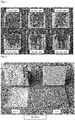
- the wetting was measured by placing a stoneware tile (5 ⁇ 5 cm) in the mortar bed (applied according to ISO 13007) every 5 minutes, loading it with 2 kg for 30 seconds and then picking it up from the mortar bed. Wetting of the back of the tile was reported in%. Fig. 1 illustrates how the wetting was measured.
- the wetting was measured by placing a mortar bed 0.5 cm thick on a sheet of expanded polystyrene (EPS) and placing a glazed stoneware tile (5 ⁇ 5 cm 2 ) with the glazed side into the mortar bed every 5 minutes. Loaded with 0.5 kg for 30 seconds and then picked up from the mortar bed. The wetting of the back of the tile is given in%.
- EPS expanded polystyrene
- the adhesion was measured by applying a mortar bed 0.5 cm thick to an EPS plate and glazing after 10 minutes every 10 minutes Stoneware tile (5 X 5 cm 2 ) with the glazed side inserted into the mortar bed and loaded with 0.5 kg for 30 seconds. After 7 days, the tensile adhesion was determined. The adhesion tensile strength in N / mm 2 and the fracture pattern in% are indicated. Fig. 2 clarifies how adhesion and tear are to be evaluated.
- the comparative product product no. 1 showed a wetting of about 80% after 5 minutes, after about 10 minutes of about 40% (experiments Nos. 1, 5 and 7).
- the competition product ®Culminal MHPC 20000 S showed a wetting of 95% after 5 minutes, about 40% after 10 minutes (test no. 2) and ®Walocel Xact 12-01-E showed a wetting of 100% after 5 minutes. , after 10 minutes of 80% (Trial No. 3).
- product no. 2 according to the invention showed markedly higher wetting. After 5 minutes it showed a wetting of practically 100%, after 10 minutes about 95% (experiments Nos. 4, 6 and 8).
- Comparative product # 20 showed wetting of 70% after 15 minutes, 40% after 20 minutes (Run # 15).
- the market product ®Methocel 327 showed a wetting of 65% after 15 minutes, after 35 minutes 35% (test No. 10) and ®Walocel Xact 13-70-E shows a wetting of 95% after 15 minutes, after 20 minutes 75% (Experiment No. 11).
- product no. 12 according to the invention showed markedly higher wetting. It showed a wetting of 80% after 25 minutes, and of 70% after 30 minutes (experiment No. 17).
- Table 6 Wetting results [%] of tile adhesive with modified CE 3 (Product Nos. 3, 4, 5, 9 and 16) and market products ⁇ / b> test number 18 19 20 21 22
- Product no. 13 Culminal Plus 2060 PF Walocel MKX 45000 PF 20L 14 18 Test mixture
- FK 6 FK 9 FK 9 FK 6 FK 6 Wetting for 10 minutes 80% 100% 85% 100% 80% Wetting for 15 minutes 70% 95% 75% 100% 70% Wetting for 20 minutes 30% 75% 65% 90% 40% Wetting 25 minutes 10% 70% 35% 85% 30%
- Comparative Product # 13 showed wetting of 70% after 15 minutes, 30% after 20 minutes (Run # 18).
- Comparative Product No. 18 showed wetting of 70% after 15 minutes, 40% after 20 minutes (Run No. 22), comparatively the same results as Comparative Product No. 13.
- the market product ®Culminal Plus 2060 PF showed a wetting of 95% after 15 minutes, 75% after 20 minutes (test no. 19) and ®Walocel MKX 45000 PF 20 L showed a wetting of 75% after 15 minutes, 65 minutes after 20 minutes % (Experiment No. 20).
- Comparative product No. 6 showed a wetting of 90% after 15 minutes, and of 70% after 20 minutes (Experiment No. 23).
- the product of the invention No. 7 showed significantly higher wetting. It showed a wetting of 95% after 15 minutes, and of 85% after 20 minutes (experiment No. 24).
- Comparative Product # 8 showed 90% wetting after 15 minutes, 75% after 20 minutes (Run # 25).
- product no. 9 according to the invention showed significantly higher wetting. It showed a wetting of 100% after 15 minutes, and of 90% after 20 minutes (experiment No. 26).
- Comparative Product # 3 showed bond strength after 20 minutes of 1.38 N / mm 2 , after 30 minutes of 0.87 N / mm 2 (Run # 27).
- Comparative Product No. 20 showed adhesive tensile strength after 20 minutes of 1.11 N / mm 2 , after 30 minutes of 0.70 N / mm 2 (Test No. 30).
- the inventive products No. 4 and No. 10 showed higher adhesive tensile strengths.
- test no. 32 had significantly higher adhesive tensile strength, 0.51 N / mm 2 after 30 minutes, two to three times higher than the comparison products.
- Table 10 Wetting results [%] of ETICS plastering with modified CE 1 (Product Nos. 15 and 16) ⁇ / b> test number 34 35 Product no. 15 16 Test mixture WDVS1 WDVS1 Wetting for 15 minutes 100% 100% Wetting for 20 minutes 70% 85% Wetting 25 minutes 10% 30% Wetting for 30 minutes 0% 20%
- Comparative Product # 15 showed 10% wetting after 25 minutes, 0% after 30 minutes (Run # 34).
- Comparative Product # 13 showed 90% wetting after 25 minutes, 50% after 30 minutes (Run No. 36).
- Comparative Product No. 13 showed an adhesive tensile strength of 0.06 N / mm 2 and 0% EPS breakout after 40 minutes, no tensile bond strength after 50 minutes and no EPS tear (Run No. 38).
- Product no. 19 according to the invention showed an adhesive tensile strength of 0.11 N / mm 2 and 100% EPS breakout after 40 minutes, after 50 minutes an adhesive tensile strength of 0.09 N / mm 2 and 100% EPS break-out (test no. 39) , It was much longer processable.
Landscapes
- Chemical & Material Sciences (AREA)
- Engineering & Computer Science (AREA)
- Ceramic Engineering (AREA)
- Organic Chemistry (AREA)
- Materials Engineering (AREA)
- Structural Engineering (AREA)
- Chemical Kinetics & Catalysis (AREA)
- Oil, Petroleum & Natural Gas (AREA)
- Inorganic Chemistry (AREA)
- Curing Cements, Concrete, And Artificial Stone (AREA)
Abstract
Description
- Die Erfindung betrifft die Verwendung von wasserlöslichen Celluloseethern, in die ein oder mehrere flüssige Entschäumer eingearbeitet sind.
- Zum Verbinden oder Beschichten von Bauteilen werden in der Bauindustrie u.a. zementäre Kleber, Putze, Spachtelmassen oder Wärmedämmverbundsysteme eingesetzt. Diese Systeme sind Mischungen aus einem oder mehreren Bindemitteln (z.B. Zement, Kalkhydrat), Füllstoffen (z.B. Sande mit verschiedenen Körnungen) und anderen Additiven, wie Celluloseether, Luftporenbildner, Dispersionspulver und Stärke und Stärkederivate wie Stärkeether. Sie werden werksseitig so hergestellt, dass sie zum Verarbeiten nur noch mit Wasser angemischt werden müssen. Diese Baustoffe werden Werktrockenmörtel genannt.
- Es ist Stand der Technik, dass Fliesenkleber auf Zementbasis im Dünnbettverfahren appliziert werden. Dazu wird ein ebener Untergrund benötigt, auf dem mit einem Zahnspachtel der Kleber in gleichmäßiger Schichtdicke aufgetragen wird. In den so aufgetragenen Klebemörtel werden die Fliesen vollflächig eingelegt und ausgerichtet. Um möglichst rationell und effizient arbeiten zu können, ist es Ziel der Verarbeiter, eine möglichst große Fläche mit Fliesenkleber vorzubereiten und dann die Fliesen darin einzulegen. Dafür muss der Kleber eine ausreichend lange offene Zeit haben, um zu gewährleisten, dass alle Fliesen möglichst komplett und vollflächig mit dem Klebemörtel benetzt sind. Dünnbettkleber bestehen aus Zement, Sand, Gesteinsmehl und Celluloseethern. Weitere Additive, wie Dispersionspulver, Zement-Beschleuniger, Stärkederivate, anorganische Verdicker und Fasern können zur Optimierung der Verarbeitungs- und Festmörteleigenschaften ebenfalls enthalten sein.
- Die offene Zeit von Fliesenklebern wird nach ISO 13007 bzw. EN 1346 durch Haftzugfestigkeitswerte nach definierten Einlegezeiten bestimmt. Parallel werden häufig auch sogenannte Benetzungsversuche durchgeführt, bei denen saugfähige Fliesen, ebenfalls nach definierten Zeiten, in das Mörtelbett eingelegt werden und danach der prozentuale Anteil der Benetzung bewertet wird. Die offene Zeit ist u.a. abhängig vom Wassergehalt des Klebers. Verkürzt wird die offene Zeit oft durch eine unerwünschte Hautbildung an der Oberfläche der Mörtel, die eine ausreichende Benetzung der Fliese verhindert, obwohl der Kleber im Inneren noch weich ist. Qualitativ hochwertige Fliesenkleber haben eine offene Zeit von mind. 30 Minuten.
- Zur Verbesserung der Energieeffizienz werden Gebäude oft mit sogenannten Wärmedämmverbundsystemen (WDVS) verkleidet. Dazu wird eine Dämmplatte, bestehend aus EPS, XPS, PU, Mineralwolle u.a., an der Wand verklebt und eventuell auch verdübelt. Die Oberfläche der Dämmplatte wird mit einem Unterputz beschichtet, in den ein Armierungsgewebe eingebettet wird. Auch hierbei ist es wichtig, dass der Unterputz über eine lange verarbeitungsoffene Zeit verfügt, damit möglichst große Gewebeflächen in einem Arbeitsgang in den Unterputz eingearbeitet werden können und dabei vollflächig benetzt werden. Der Unterputz bestehen aus Zement, Sand, Celluloseether und Dispersionspulver. Zusätzlich können auch Stärke und Stärkederivate wie Stärkeether, Fasern und weitere Additive enthalten sein.
- In der
EP 2 966 049 A1 ist ein Verdicker für eine hydraulische Zusammensetzung offenbart. Er umfasst einen wasserlöslichen Celluloseether, einen Entschäumer, ein Biopoymer und gegebenenfalls ein wasser-reduzierendes Mittel. Der Celluloseether ist bevorzugt Methylcellulose, Ethylcellulose, Hydroxyalkylcellulose, wie Hydroxyethylcellulose oder Hydroxypropylcellulose oder eine Alkylhydroxyalkylcellulose, wie Methylhydroxyethylcellulose oder Methylhydroxypropylcellulose. Als Entschäumer sind Polyoxyalkylene, Silikonöle und auf Alkoholen, auf Fettsäuren oder auf Fettsäureestern basierende Mittel genannt. Das Biopolymer dient zur Stabilisierung des wasserlöslichen Celluloseethers in dem wasserreduzierenden Mittel. Bevorzugt sind Xanthan-Gum, Diutan-Gum, Welan-Gum und/oder Gellan-Gum. Das wasserreduzierende Mittel ist bevorzugt ein Polycarbonsäure-, Lignin- oder Melamin-Derivat, beispielsweise Copolymere von Acrylsäure, Methacrylsäure, Crotonsäure, Itaconsäure, oder Citraconsäure mit Polyalkylenglykol-mono(meth)acrylat, Styrol, Melamin/Sulfonsäure/- Formaldehyd-Kondensate oder ein Ligninsulfonsäuresalz. - Gegenstand der
EP 1 884 503 B1 ist eine hydraulische Zusammensetzung für Putze oder Mörtel, die Zement und/oder Gips, ein anionisches Tensid mit der Fähigkeit zum Schäumen, ein nicht-ionisches Tensid mit der Fähigkeit zum Entschäumen und einen wasserlöslichen Celluloseether enthält. Das als Entschäumer wirkende Tensid ist vorzugsweise ein Polyether-Tensid, ein Silikon-Tensid, ein Alkohol-Tensid, ein Mineralöl-Tensid oder ein Pflanzenöl-Tensid. - In der
EP 2 363 428 A1 ist eine Zusammensetzung offenbart, die zur Modifizierung der rheologischen Eigenschaften von zementären Mischungen dient. Sie umfasst ein Polysaccharid-Derivat, insbesondere einen Celluloseether, ein Siloxan und einen Entschäumer, der kein Siloxan ist. Der Entschäumer ist vorzugsweise pulverförmig. Als pulverförmige Entschäumer sind Tributylphosphat und Stearinsäuremetallsalze genannt. Flüssige Entschäumer, wie Polyoxyalkylenglykole oder ölige Kohlenwasserstoffe sollen an ein festes Trägermaterial, wie Diatomeenerde, Kieselsäure oder Calciumsilikat gebunden sein. - In der
EP 2 190 800 B1 ist die Verwendung von quartären organischen Ammoniumverbindungen in Baustoffmassen zur Reduktion von Ausblühungen offenbart. Die Ammoniumverbindungen sind bevorzugt mit Celluloseethern vermischt. Dazu wird eine flüssige und/oder gelöste quartäre Ammoniumverbindung auf den Celluloseether aufgesprüht und damit vermischt. - In der
EP 1 426 349 A1 ist ein Additiv für zementäre Zusammensetzungen offenbart. Es umfaßt ein Copolymer mit einer Vielzahl an Carboxylgruppen oder ein Salz davon, einen wasserlöslichen Celluloseether und einen festen oder flüssigen Entschäumer. Das Additiv dient zur Verbesserung der Verarbeitbarkeit der zementären Zusammensetzung und zur Verminderung des Spritzens bei Spritzbeton. Es verhindert zudem ein Bluten der Zusammensetzung nach deren Einbau. - Es ist Stand der Technik, dass Entschäumer (meistens Pulverentschäumer) in Baustoffen wie Betonen oder Bodenspachtelmassen eingesetzt werden. Das Ziel ist dabei, den Luftporengehalt zu reduzieren, um dadurch höhere Festigkeiten und glattere Oberflächen zu erreichen. Auch werden Mineralöle (flüssige Entschäumer) in Trockenmörteln, meistens in zementären Fliesenklebern, Fugenfüllern und Ausgleichsmassen, eingesetzt, um das Stauben beim Umfüllen und Anrühren deutlich zu reduzieren. Sie werden nicht als Entschäumer eingesetzt und wirken auch nicht entschäumend auf Trockenmörtel.
- Wenn Entschäumer in Zementfliesenklebern oder WDVS-Putzen eingesetzt werden, wird der Mörtel über die Zeit immer mehr entschäumt, es tritt kein stabiler Zustand ein. Die Frischmörtelrohdichte liegt bei Zementfliesenklebern bei ca. 1,5 kg/l. Wenn Entschäumer zugesetzt werden, steigt die Frischmörtelrohdichte auf bis zu 2,0 kg/l nach 2 Stunden. Es entstehen mit fortschreitender Zeit immer größere Luftblasen. Je höher die Fischmörtelrohdichte, desto schlechter ist ein Zementfliesenkleber zu verarbeiten.
- Flüssige Entschäumer werden üblicherweise in wässrigen Beschichtungen, wie Baufarben, Lackfarben, Abtönfarben, Holzlacken, pastösen Putzen, sowie in Klebstoffen, Betonen, Faserzementplatten, in der Landwirtschaft, der Papierindustrie, Biotechnologie, Lebensmittelindustrie und in chemischen Prozessen eingesetzt. Für Trockenmörtel werden flüssige Entschäumer nicht empfohlen und demzufolge auch nicht eingesetzt.
- Es bestand die Aufgabe, einen entschäumten Celluloseether zu entwickeln, der eine zeitlich begrenzte Entschäumungswirkung hat. Mörtel, die diesen entschäumten Celluloseether enthalten, sollen über einen möglichst langen Zeitraum gut zu verarbeiten sein.
- Überraschenderweise wurde festgestellt, dass flüssige Entschäumer, insbesondere Fettsäureester und Fettalkoholalkoxylate eine zeitlich beschränkte Entschäumungswirkung, bei guter Verarbeitbarkeit des Mörtels, haben. Ein natürliches Biopolymer als zusätzlicher Bestandteil, wie in der
EP 2 966 049 beschrieben, ist für diese Wirkung nicht erforderlich. Ebenfalls wurde festgestellt, dass diese flüssigen Entschäumer in den Celluloseether eingearbeitet werden müssen. Eine Mischung aus einem Celluloseether und einem Pulver-Entschäumer (oder einem flüssigen Entschäumer auf einem festen anorganischen Träger) wirkt überraschenderweise nicht. Das gleiche gilt für die in derEP 2 190 800 B1 genannten quartären Ammoniumverbindungen. - Durch das erfindungsgemäße Compound aus einem Celluloseether mit flüssigem Entschäumer wird zusätzlich in Zementfliesenklebern, Putzen und WDVS-Armierungsputzen die Benetzung deutlich verbessert und die offene Zeit verlängert. Auch die Haftzugfestigkeiten von Fliesenklebern nach verschiedenen Lagerarten (Trocken, Nass, Warm, Frost/Tau nach ISO 13007 bzw. EN 1348) werden durch das erfindungsgemäße Compound signifikant verbessert.
- Das Compound Celluloseether mit flüssigen Entschäumer wird hergestellt, in dem ein Celluloseether mit Wasser angeteigt wird, bis er 60 - 90% Feuchtgehalt hat. In diesen feuchten Celluloseether wird der flüssige Entschäumer eingearbeitet bzw. eingeknetet. Danach wird dieser Teig getrocknet und gemahlen oder in einem Prozess mahlgetrocknet, wie in großtechnischer Produktion von Celluloseethern üblich. Auch das Aufsprühen von flüssigen Entschäumern auf den trockenen Celluloseether ist eine Möglichkeit den Entschäumer einzuarbeiten. Als "flüssig" werden im Zusammenhang mit der vorliegenden Erfindung Entschäumer bezeichnet, die eine Viskosität von weniger als 250 mPa s, bevorzugt weniger als 150 mPa s aufweisen, gemessen mit Brookfield CAP 2000 +, Spindel 01, 250 UPM, 25 °C (DIN EN ISO 321). Das so entstandene erfindungsgemäße Compound liegt als rieselfähiges Pulver vor.
- Der Celluloseether kann ein ionischer Celluloseether, wie Carboxymethylcellulose (CMC), Carboxymethylhydroxyethylcellulose (CMHEC), Carboxymethylhydroxypropylcellulose (CMHPC), Sulfoethylmethylhydroxyethylcellulose (SEMHEC), Sulfoethylmethylhydroxypropylcellulose (SEMHPC) oder nicht ionischer Celluloseether wie Hydroxyethylcellulose (HEC), Hydroxypropylcellulose (HPC), Methylcellulose (MC), Methylhydroxypropylcellulose (MHPC), Methylhydroxyethylcellulose (MHEC), Ethylhydroxyethylcellulose (EHEC) oder Methylethylhydroxyethylcellulose (MEHEC), sein.
- Bei dem Entschäumer handelt es sich um eine Verbindung auf Basis von Oxyalkylen, Silikonöl, Alkohol, Mineralöl, Fettsäuren und Fettsäureester, bevorzugt sind Fettsäureester.
- Bevorzugte Einsatzgebiete des erfindungsgemäßen Compounds Celluloseether mit Entschäumer sind: Fliesenkleber auf Zementbasis, zur Verbesserung der offenen Zeit und Benetzung, Putze im Wärmedämmverbundsystem sowie Zementputze (Grundputze, Dekorputze, Einlagenputze) zur Verlängerung der Verarbeitungszeit.
- Der Anteil an Celluloseether beträgt allgemein etwa 80 bis 99,5 Gew.-%, bevorzugt etwa 85 bis 98 Gew.-%, besonders bevorzugt etwa 90 bis 97 Gew.-%, jeweils bezogen auf das Gesamtgewicht des trockenen Compounds.
- Der Entschäumer-Anteil beträgt etwa 0,5 bis 20 Gew.-%, bevorzugt etwa 2 bis 15 Gew.-%, besonders bevorzugt etwa 3 bis 10 Gew.-%, jeweils bezogen auf das Gesamtgewicht des trockenen Compounds.
- Als wasserlöslich werden Celluloseether bezeichnet, wenn mindestens 2 g davon in einem Liter kaltem Wasser (20 °C) gelöst werden können.
- Bevorzugte Celluloseether sind:
Methylcellulose (MC) mit einem DSMethyl von 1,4 bis 2,2, insbesondere mit einem DSmethyl von 1,6 bis 2,0; Methylhydroxypropylcellulose (MHPC) mit einem DSMethyl von 1,2 bis 2,2 und einem MSHydroxypropyl von 0,1 bis 1,0, insbesondere mit einem DSMethyl von 1,3 bis 2,0 und einem MSHydroxypropyl von 0,15 bis 0,7; Methylhydroxyethylcellulose (MHEC) mit einem DSMethyl von 1,2 bis 2,2 und einem MSHydroxyelhyl von 0,05 bis 0,4, insbesondere mit einem DSMethyl von 1,4 bis 1,9 und einem MSHydroxyelhyl von 0,1 bis 0,35; Hydroxyethylcellulose (HEC)mit einem MSHydroxyelhyl von 1,2 bis 4,0, besonders bevorzugt mit einem MSHydroyethyl von 1,6 bis 3,5; Ethylhydroxyethylcellulose (EHEC) mit einem DSEthyl von 0,5 bis 1,5 und einem MSHydroxyelhyl von 1,5 bis 3,5 und Methylethylhydroxyethylcellulose (MEHEC) mit einem DSMethyl von 0,2 bis 2,0, einem DSEthyl von 0,05 bis 1,5 und einem MSHydroxyelhyl von 0,2 bis 3,5. Carboxymethylcelluloseether (CMC) mit einem DSCarboxymethyl von 0,4 bis 1,0, Carboxymethylhydroxyethylcelluloseether (CMHEC) mit einem DSCarboxymethyl von 0,1 bis 1,0 und einem MSHydroxyelhyl von von 0,8 bis 3,5, Carboxymethylhydroxypropylcelluloseether (CMHPC) mit einem DSCarboxymethyl von 0,1 bis 1,0 und einem MSHydroxpropyl von 0,8 bis 3,3, Sulfoethylmethylhydroxyethylcelluloseether (SEMHEC) mit einem DSSulfoethyl von 0,005 bis 0,01, DSMethyl von 0,2 bis 2,0, und einem MSHydroxyelhyl von 0,1 bis 0,3, Sulfoethylmethylhydroxypropylcelluloseether (SEMHPC) mit einem DSSulfoethyl von 0,005 bis 0,01, DSMethyl von 0,2 bis 2,0, und einem MSHydroxpropyl von 0,1 bis 0,3. - Der mittlere Polymerisationsgrad DPw der Celluloseether, gemessen nach Pulps - Determination of limiting viscosity number in cupriethylenediamine (CED) solution - nach ISO 5351, beträgt etwa 10 bis 5.000.
- Die Viskosität der Celluloseether beträgt 1 bis 20.000 mPa s, bevorzugt 100 bis 15.000 mPa s, besonders bevorzugt 1000 bis 12.000 mPa s. Gemessen wird sie mit Brookfield RV, 20 UPM, in Wasser von 20 °C und 20° dH. Dabei wird je nach Viskosität mit unterschiedlichen Konzentrationen der Celluloseether gemessen: Viskosität < 150 mPa s: 4,75 Gew.-% absolut trocken (atro); Viskosität 150 bis 250 mPa s: 2,85 Gew.-% atro; Viskosität 250 bis 34000 mPa s: 1,9 % Gew.-% atro; Viskosität 4.000 bis 20000 mPa s: 1,0 % Gew.-% atro.
- Die Entschäumer können auf Basis von Oxyalkylen, Silikon, Alkohol, Mineralöl, Fettsäuren, Fettalkoholalkoxylat und Fettsäureester sein. Bevorzugt sind Fettalkoholalkoxylat- und Fettsäureester-Entschäumer, besonders die einen Fettsäureester Anteil enthalten oder Mischungen dieser Bestandteile.
- Die erfindungsgemäßen Celluloseether/Entschäumer-Compounds enthalten im Unterschied zu der
EP 2 966 049 A1 kein natürliches Biopolymer. Sie enthalten auch keine quartären Ammoniumverbindungen, wie in derEP 2 190 800 B1 offenbart. - Die nachfolgenden Beispiele dienen zur Erläuterung der Erfindung. Prozente sind Gewichtsprozente, soweit nicht anders angegeben oder aus dem Zusammenhang ersichtlich, wobei "atro" für "absolut trocken" und "lutro" für "lufttrocken" steht. In den Beispielen wurden folgende Komponenten eingesetzt:
-
- CE1: MHEC, DS 1,7, MS 0,2, Viskosität (1,9 % atro, 20 °C, 20 °dH, Brookfield RV 20 UPM, Spindel 6) 13000 mPa s
Feinpulver (Luftstrahlsieb, < 0,125 mm: 95%, < 0,063 mm: 50%) - CE2: MHEC, DS 1,7, MS 0,2, Viskosität (1,9% atro, 20 °C, 20 °dH, Brookfield RV 20 UPM, Spindel 6) 25000 mPa s
Feinpulver (Luftstrahlsieb, < 0,125 mm: 95%, < 0,063 mm: 50%) - CE3: MHEC, DS 1,7, MS 0,2, Viskosität (1,0% atro, 20 °C, 20 °dH, Brookfield RV 20 UPM, Spindel 5) 10000 mPa s,
Feinstpulver (Luftstrahlsieb, < 0,100 mm: 95%, < 0,063 mm: 75%) - CE4: MHEC, DS 1,6, MS 0,3, Viskosität (1,9% atro, 20 °C, 20 °dH, Brookfield RV 20 UPM, Spindel 6) 25000 mPa s
Feinpulver (Luftstrahlsieb, < 0,125 mm: 95%, < 0,063 mm: 50%) - CE5: MHPC, DS 1,7, MS 0,2, Viskosität (1,9% atro, 20 °C, 20 °dH, Brookfield RV 20 UPM, Spindel 6) 25000 mPa s
Feinpulver (Luftstrahlsieb, < 0,125 mm: 95%, < 0,063 mm: 50%) - SE1: Hydroxypropylstärke (HPS), MS 0,4, Viskosität (5% lutro, 20 °C, Wasser mit ca. 18 °dH, Brookfield RV, 100 UPM, Spindel 3) 150 - 300 mPas
- Die in dem erfindungsgemäßen Compound verwendeten CE sind bevorzugt modifizierte CE. Die Modifizierungsmittel sind üblicherweise Polyacrylamide (PAA). Die Polyacrylamide sind vorzugsweise anionische PAA mit einer Molmasse von über 10 Mio.
-
- E1: Fettsäureester, Dichte bei 20°C: 900 kg/m3 ± 100 kg/m3; dyn. Viskosität bei 25°C: 80 mPa s ± 30 mPa s; Säurezahl: 35 mg KOH/g ± 10 mg KOH/g; flüssig
- E2: 50 Gew.-% E1 auf anorganischem Träger; Pulver
- E3: Fettalkoholalkoxylat, Dichte bei 20°C: 950 kg/m3 ± 50 kg/m3, Viskosität bei 25°C: 115 mPa s ± 10 mPas; flüssig
-

-
- Hersteller: Dow Chemical Company
- ®Methocel 327: MHPC, modifiziert, Brookfield Viskosität 2% in Wasser bei 20°C und 20 UPM: 22000 mPa s, Feinheit < 212 µm: min 95%
- ®Walocel MKX 45000 PF 20 L: MHEC, modifiziert, Haake ®Rotovisko RV 100 Viskosität 2% in Wasser bei 20°C und Scherrate 2,55 1/s: 45000 mPa s
- ®Walocel Xact 13-70-E: MHEC, modifiziert, Haake Rotovisko RV 100 Viskosität 2% in Wasser bei 20°C und Scherrate 2,55 1/s: 13000 mPa s
- ®Walocel Xact 12-01-E: MHEC, nicht modifiziert, Haake Rotovisko RV 100 Viskosität 2% in Wasser bei 20°C und Scherrate 2,55 1/s: 12000 mPa s
- Hersteller: Ashland
- ®Culminal MHPC 20000 S: MHPC, nicht modifiziert, Brookfield RVT Viskosität abs. trocken, 2% in Wasser bei 20°C und 20 UPM: 15000 mPa s
- ®Culminal Plus 2060 PF: MHEC, modifiziert, Brookfield RVT Viskosität abs. trocken, 2% in Wasser bei 20°C und 20 UPM: 20000 mPa s
-


- Offene Zeit nach ISO 13007 und DIN EN 1346.
- Die Benetzung wurde gemessen, indem in das Mörtelbett (appliziert nach ISO 13007) alle 5 Minuten eine Steingutfliese (5 X 5 cm) eingelegt, 30 Sekunden lang mit 2 kg belastet und dann aus dem Mörtelbett aufgenommen wurde. Die Benetzung der Rückseite der Fliese wurde in % angegeben.
Fig. 1 verdeutlicht wie die Benetzung gemessen wurde. - Die Benetzung wurde gemessen, indem auf eine Platte aus expandiertem Polystyrol (EPS) ein Mörtelbett mit einer Dicke von 0,5 cm aufgebracht und alle 5 Minuten eine glasierte Steingutfliese (5 X 5 cm2) mit der glasierten Seite in das Mörtelbett eingelegt wurde, 30 Sekunden lang mit 0,5 kg belastet und dann aus dem Mörtelbett aufgenommen wurde. Die Benetzung der Rückseite der Fliese ist in % angegeben.
- Die Haftung wurde gemessen, indem auf eine EPS-Platte ein Mörtelbett mit einer Dicke von 0,5 cm aufgebracht und nach 30 Minuten alle 10 Minuten eine glasierte Steingutfliese (5 X 5 cm2) mit der glasierten Seite in das Mörtelbett eingelegt und 30 Sekunden lang mit 0,5 kg belastet wurde. Nach 7 Tagen wurde die Haftzugfestigkeit bestimmt. Es ist die Haftzugfestigkeit in N/mm2 und das Bruchbild in % angegeben.
Fig. 2 verdeutlicht wie Haftung und Ausriss zu bewerten sind.
- Das Vergleichsprodukt Produkt Nr. 1 zeigte nach 5 Minuten eine Benetzung von ca 80%, nach 10 Minuten von ca. 40% (Versuche Nr. 1, 5 und 7).
- Das Wettbewerbs-Produkt ®Culminal MHPC 20000 S zeigte nach 5 Minuten eine Benetzung von 95%, nach 10 Minuten ca. 40% (Versuch Nr. 2) und ®Walocel Xact 12-01-E zeigte nach 5 Minuten eine Benetzung von 100%, nach 10 Minuten von 80% (Versuch Nr. 3).
- Überraschend zeigte das erfindungsgemäße Produkt Nr. 2 deutlich höhere Benetzung. Es zeigte nach 5 Minuten eine Benetzung von praktisch 100%, nach 10 Minuten ca. 95% (Versuche Nr. 4, 6 und 8).

- Produkt Nr. 3 zeigte nach 15 Minuten eine Benetzung von 85%, nach 20 Minuten 60% (Versuch Nr. 9).
- Das Vergleichs-Produkt Nr.20 zeigte nach 15 Minuten eine Benetzung von 70%, nach 20 Minuten 40% (Versuch Nr. 15).
- Das Marktprodukt ®Methocel 327 zeigte nach 15 Minuten eine Benetzung von 65%, nach 20 Minuten 35% (Versuch Nr. 10) und ®Walocel Xact 13-70-E zeigt nach 15 Minuten eine Benetzung von 95%, nach 20 Minuten 75% (Versuch Nr. 11).
- Überraschend zeigten die erfindungsgemäßen Produkte Nr. 4, Nr. 5 und Nr. 10 höhere Benetzung.
- Produkt Nr. 4 zeigte nach 15 Minuten eine Benetzung von 90%, nach 20 Minuten von 85% (Versuch Nr. 12); Produkt Nr. 5 zeigte nach 15 Minuten eine Benetzung von 100%, nach 20 Minuten 90% (Versuch Nr. 13) und Produkt Nr. 10 zeigte nach 15 Minuten eine Benetzung von 90%, nach 20 Minuten 85% (Versuch Nr. 14).
Tabelle 5: Ergebnisse der Benetzung [%] von Fliesenkleber mit modifiziertem CE 1 (Produkte Nr. 3, 4, 5, 9 und 16) Versuchsnummer 16 17 Produkt Nr. 11 12 Prüfmischung FK 5 FK 5 Benetzung 10 Minuten 90% 90% Benetzung 15 Minuten 80% 90% Benetzung 20 Minuten 70% 80% Benetzung 25 Minuten 60% 80% Benetzung 30 Minuten 50% 70% - Produkt Nr.11 zeigte nach 25 Minuten eine Benetzung von 60%, nach 30 Minuten 50% (Versuch Nr. 16).
- Überraschend zeigte das erfindungsgemäße Produkt Nr. 12 deutlich höhere Benetzung. Es zeigte nach 25 Minuten eine Benetzung von 80%, nach 30 Minuten von 70% (Versuch Nr. 17).
Tabelle 6: Ergebnisse der Benetzung [%] von Fliesenkleber mit modifiziertem CE 3 (Produkte Nr. 3, 4, 5, 9 und 16) und Marktprodukte Versuchsnummer 18 19 20 21 22 Produkt Nr. 13 Culminal Plus 2060 PF Walocel MKX 45000 PF 20 L 14 18 Prüfmischung FK 6 FK 9 FK 9 FK 6 FK 6 Benetzung 10 Minuten 80% 100% 85% 100% 80% Benetzung 15 Minuten 70% 95% 75% 100% 70% Benetzung 20 Minuten 30% 75% 65% 90% 40% Benetzung 25 Minuten 10% 70% 35% 85% 30% - Das Vergleichs-Produkt Nr. 13 zeigte nach 15 Minuten eine Benetzung von 70%, nach 20 Minuten 30% (Versuch Nr. 18).
- Das Vergleichsprodukt Nr. 18 zeigte nach 15 Minuten eine Benetzung von 70%, nach 20 Minuten von 40% (Versuch Nr. 22), vergleichsweise die gleichen Ergebnisse wie Vergleichs-Produkt Nr. 13.
- Die Marktprodukt ®Culminal Plus 2060 PF zeigte nach 15 Minuten eine Benetzung von 95%, nach 20 Minuten 75% (Versuch Nr. 19) und ®Walocel MKX 45000 PF 20 L zeigte nach 15 Minuten eine Benetzung von 75%, nach 20 Minuten 65% (Versuch Nr. 20).
- Überraschend zeigte das erfindungsgemäße Produkt Nr.14 deutlich höhere Benetzung. Es zeigte nach 15 Minuten eine Benetzung von 100%, nach 20 Minuten von 90% (Versuch Nr. 21).
Tabelle 7: Ergebnisse der Benetzung [%] von Fliesenkleber mit Produkt Nr. 6 - 9 Versuchsnummer 23 24 25 26 Produkt Nr. 6 7 8 9 Prüfmischung FK 4 FK 4 FK 4 FK 4 Benetzung 10 Minuten 95% 100% 100% 100% Benetzung 15 Minuten 90% 95% 90% 100% Benetzung 20 Minuten 70% 85% 75% 90% - Das Vergleichsprodukt Nr.6 zeigte nach 15 Minuten eine Benetzung von 90%, nach 20 Minuten von 70% (Versuch Nr. 23).
- Überraschend zeigte das erfindungsgemäße Produkt Nr. 7 deutlich höhere Benetzung. Es zeigte nach 15 Minuten eine Benetzung von 95%, nach 20 Minuten von 85% (Versuch Nr. 24).
- Das Vergleichs-Produkt Nr. 8 zeigte nach 15 Minuten eine Benetzung von 90%, nach 20 Minuten von 75% (Versuch Nr. 25).
- Überraschend zeigte das erfindungsgemäße Produkt Nr. 9 deutlich höhere Benetzung. Es zeigte nach 15 Minuten eine Benetzung von 100%, nach 20 Minuten von 90% (Versuch Nr. 26).
Tabelle 8: Ergebnisse der offenen Zeit nach EN 1346 [N/mm2] von Fliesenkleber mit modifiziertem CE 2 (Produkte Nr. 3, 4, 10 und 20) Versuchsnummer 27 28 29 30 Produkt Nr. 3 4 10 20 Entschäumer 5% E1 5% E3 10% E2 Prüfmischung FK 4 FK 4 FK 4 FK 4 Haftzugfestigkeit nach 20 Minuten 1,38 N/mm2 1,69 N/mm2 1,92 N/mm2 1,11 N/mm2 Haftzugfestigkeit nach 30 Minuten 0,87 N/mm2 1,34 N/mm2 1,29 N/mm2 0,70 N/mm2 - Das Vergleichs-Produkt Nr. 3 zeigte Haftzugfestigkeit nach 20 Minuten von 1,38 N/mm2, nach 30 Minuten von 0,87 N/mm2 (Versuch Nr. 27).
- Das Vergleichs-Produkt Nr. 20 zeigte Haftzugfestigkeit nach 20 Minuten von 1,11 N/mm2, nach 30 Minuten von 0,70 N/mm2 (Versuch Nr. 30).
- Überraschend zeigten die erfindungsgemäßen Produkte Nr. 4 und Nr. 10 höhere Haftzugfestigkeiten.
- Produkt Nr. 4 zeigte nach 20 Minuten 1,69 N/mm2, nach 30 Minuten 1,38 N/mm2 (Versuch Nr. 28).
- Produkt Nr. 10 zeigte nach 20 Minuten 1,92 N/mm2, nach 30 Minuten 1,29 N/mm2 (Versuch Nr. 29).
- Die erfindungsgemäßen Produkte Nr. 4 und Nr. 10 zeigten höhere Haftzugfestigkeiten von 20 - 80%.
Tabelle 9: Ergebnisse der offenen Zeit nach EN 1346 [N/mm2] von Fliesenkleber mit modifiziertem CE 3 (Produkte Nr. 13, 19 und 20) Versuchsnummer 31 32 33 Produkt Nr. 13 19 20 Prüfmischung FK 6 FK 6 FK 9 Haftzugfestigkeit nach 20 Minuten 0,59 N/mm2 0,66 N/mm2 0,46 N/mm2 Haftzugfestigkeit nach 30 Minuten 0,17 N/mm2 0,51 N/mm2 0,23 N/mm2 - Die Versuche Nr. 31 und 33 zeigen, dass die offene Zeit mit den Vergleichs-Produkten Nr.13 und Nr. 20 vergleichbar waren und ähnliche Haftzugfestigkeiten nach 30 Minuten 0,17 N/mm2 bzw. 0,23 N/mm2 erreicht wurden.
- Überraschend zeigte sich, dass das erfindungsgemäße Produkt Nr. 19 (Versuch Nr. 32) deutlich höhere Haftzugfestigkeit aufwies, nach 30 Minuten 0,51 N/mm2, zwei- bis dreimal höher als die Vergleichs-Produkte.
Tabelle 10: Ergebnisse der Benetzung [%] von WDVS Putzen mit modifiziertem CE 1 (Produkte Nr. 15 und 16) Versuchsnummer 34 35 Produkt Nr. 15 16 Prüfmischung WDVS1 WDVS1 Benetzung 15 Minuten 100% 100% Benetzung 20 Minuten 70% 85% Benetzung 25 Minuten 10% 30% Benetzung 30 Minuten 0% 20% - Das Vergleichs-Produkt Nr. 15 zeigte nach 25 Minuten eine Benetzung von 10%, nach 30 Minuten 0% (Versuch Nr. 34).
- Überraschend zeigte das erfindungsgemäße Produkt Nr. 16 deutlich höhere Benetzung. Es zeigte nach 25 Minuten eine Benetzung von 30%, nach 30 Minuten von 20% (Versuch Nr. 35).
Tabelle 11: Ergebnisse der Benetzung [%] von WDVS Putzen mit modifiziertem CE 3 (Produkte Nr. 13 und 19) Versuchsnummer 36 37 Produkt Nr. 13 19 Prüfmischung WDVS2 WDVS2 Benetzung 20 Minuten 100% 100% Benetzung 25 Minuten 90% 100% Benetzung 30 Minuten 50% 100% - Das Vergleichs-Produkt Nr. 13 zeigte nach 25 Minuten eine Benetzung von 90%, nach 30 Minuten von 50% (Versuch Nr. 36).
- Überraschend zeigte das erfindungsgemäße Produkt Nr. 19 deutlich höhere Benetzung. Es zeigte nach 25 Minuten eine Benetzung von 100%, nach 30 Minuten ebenso 100% (Versuch Nr. 37).
Tabelle 12: Ergebnisse der Haftzugfestigkeit [N/mm2] von WDVS Putzen mit modifiziertem CE 3 (Produkte Nr. 13 und 19) Versuchsnummer 38 39 Celluloseether 13 19 Prüfmischung WDVS2 WDVS2 nach 30 Minuten 0,12 N/mm2 1 00% EPS Ausriss 0,09 N/mm2 1 00% EPS Ausriss nach 40 Minuten 0,06 N/mm2 0% EPS Ausriss 0,11 N/mm2 1 00% EPS Ausriss nach 50 Minuten 0 N/mm2 0% EPS Ausriss 0,09 N/mm2 1 00% EPS Ausriss - Das Vergleichs-Produkt Nr. 13 zeigte nach 40 Minuten eine Haftzugfestigkeiten von 0,06 N/mm2 und 0% EPS Ausriss, nach 50 Minuten keine Haftzugfestigkeit und keinen EPS Ausriss (Versuch Nr. 38).
- Das erfindungsgemäße Produkt Nr. 19 zeigte nach 40 Minuten eine Haftzugfestigkeit von 0,11 N/mm2 und 100% EPS Ausriss, nach 50 Minuten eine Haftzugfestigkeiten von 0,09 N/mm2 und 100% EPS Ausriss (Versuch Nr. 39). Es war deutlich länger verarbeitbar.
Claims (12)
- Verwendung von Celluloseethern, die mit einem oder mehreren flüssigen Entschäumern abgemischt sind, zur Verlängerung der offenen Zeit und der Benetzung von zementären Fliesenklebern sowie zur Verlängerung der Verarbeitungszeit von Zementputzen sowie von zementären Putzen in Wärmedämmverbundsystemen.
- Verwendung gemäß Anspruch 1, dass der flüssige Entschäumer auf den Celluloseether aufgesprüht oder eingeknetet ist, bevorzugt eingeknetet.
- Verwendung gemäß Anspruch 1 oder 2, dadurch gekennzeichnet, dass der Celluloseether Hydroxyethylcellulose (HEC), Hydroxypropylcellulose (HPC), Methylcellulose (MC), Methylhydroxypropylcellulose (MHPC), Methylhydroxyethylcellulose (MHEC), Ethylhydroxyethylcellulose (EHEC) oder Methylethylhydroxyethylcellulose (MEHEC), Carboxymethylcellulose (CMC), Carboxymethylhydroxyethylcellulose (CMHEC), Carboxymethylhydroxypropylcellulose (CMHPC), Sulfoethylmethylhydroxyethylcellulose (SEMHEC), Sulfoethylmethylhydroxypropylcellulose (SEMHPC) ist.
- Verwendung gemäß einem oder mehreren der Ansprüche 1 bis 3, dadurch gekennzeichnet, dass die Methylcellulose (MC) einen DSMethyl von 1,4 bis 2,2, insbesondere von 1,6 bis 2,0 aufweist; die Methylhydroxypropylcellulose (MHPC) einen DSMethyl von 1,2 bis 2,2 und einem MSHydroxypropyl von 0,1 bis 1,0, insbesondere einen DSMethyl von 1,3 bis 2,0 und einen MSHydroxypropyl von 0,15 bis 0,7 aufweist; die Methylhydroxyethylcellulose (MHEC) einen DSMethyl von 1,2 bis 2,2 und einen MSHydroxyelhyl von 0,05 bis 0,4, insbesondere mit einem DSMethyl von 1,4 bis 1,9 und einem MSHydroxyelhyl von 0,1 bis 0,35 aufweist; die Hydroxyethylcellulose (HEC) einen MSHydroxyelhyl von 1,2 bis 4,0, besonders bevorzugt einen MSHydroxyelhyl von 1,6 bis 3,5 aufweist; die Ethylhydroxyethylcellulose (EHEC) einen DSEthyl von 0,5 bis 1,5 und einen MSHydroxyelhyl von 1,5 bis 3,5 aufweist; die Methylethylhydroxyethylcellulose (MEHEC) einen DSMethyl von 0,2 bis 2,0, einen DSEthyl von 0,05 bis 1,5 und einen MSHydroxyelhyl von 0,2 bis 3,5 aufweist; die Carboxymethylcellulose (CMC) einen DSCarboxymethyl von 0,4 bis 1,0 aufweist; die Carboxymethylhydroxyethylcellulose (CMHEC) einen DSCarboxymethyl von 0,1 bis 1,0 und einen MSHydroxyelhyl von 0,8 bis 3,5 aufweist; die Carboxymethylhydroxypropylcellulose (CMHPC) einen DSCarboxymethyl von 0,1 bis 1,0 und einen MSHydroxpropyl von 0,8 bis 3,3 aufweist; die Sulfoethylmethylhydroxyethylcellulose (SEMHEC) einen DSSulfoethyl von 0,005 bis 0,01, einen DSMethyl von 0,2 bis 2,0, und einem MSHydroxyelhyl von 0,1 bis 0,3 aufweist; oder die Sulfoethylmethylhydroxypropylcellulose (SEMHPC) einen DSSulfoethyl von 0,005 bis 0,01, einen DSMethyl von 0,2 bis 2,0, und einen MSHydroxpropyl von 0,1 bis 0,3 aufweist.
- Verwendung gemäß einem oder mehreren der Ansprüche 1 bis 4, dadurch gekennzeichnet, dass der Celluloseether einen mittleren Polymerisationsgrad DPw von 10 bis 5.000 aufweist.
- Verwendung gemäß einem oder mehreren der Ansprüche 1 bis 5, dadurch gekennzeichnet, das die Viskosität des Celluloseethers 1 bis 20.000 mPa s, bevorzugt 100 bis 15.000 mPa s, besonders bevorzugt 1000 bis 12.000 mPa s, beträgt, gemessen mit Brookfield RV, 20 UPM, in Wasser von 20 °C und 20° dH, wobei die Viskosität mit unterschiedlichen Konzentrationen der Celluloseether gemessen: Viskosität < 150 mPa s: 4,75 Gew.-% absolut trocken (atro); Viskosität 150 bis 250 mPa s: 2,85 Gew.-% atro; Viskosität 250 bis 34000 mPa s: 1,9 % Gew.-% atro; Viskosität 4.000 bis 20000 mPa s: 1,0 % Gew.-% atro.
- Verwendung gemäß einem oder mehreren der Ansprüche 1 bis 6, dadurch gekennzeichnet, dass der Celluloseether eine Feuchte von 0 bis 15 Gew.%, bevorzugt 1 bis 10 Gew.-%, aufweist.
- Verwendung gemäß einem oder mehreren der Ansprüche 1 bis 7, dadurch gekennzeichnet, dass das Compound in Pulverform vorliegt, wobei 100% der Partikel kleiner als 1000 µm sind, bevorzugt 100% kleiner als 300 µm, gemessen mit einem Luftstrahlsieb.
- Verwendung gemäß einem oder mehreren der Ansprüche 1 bis 8, dadurch gekennzeichnet, dass der flüssige Entschäumer eine Verbindung auf Basis von Oxyalkylen, auf Basis Silikon, Alkohol, Mineralöl, auf Basis Fettsäuren, Fettalkoholalkoxylat und Fettsäureester oder eine Kombination davon ist, wobei Fettalkoholalkoxylate und Fettsäureester sowie Kombinationen davon bevorzugt sind.
- Verwendung gemäß einem oder mehreren der Ansprüche 1 bis 9, dass das Compound zusätzlich mindestens ein nicht-ionisches, anionisches oder kationisches Polyacrylamid (PAA) enthält, bevorzugt mit einer Molmasse von über 5 Mio. und einer Partikelgröße von weniger als 1 mm.
- Verwendung gemäß einem oder mehreren der Ansprüche 1 bis 10, dadurch gekennzeichnet, dass der mindestens eine flüssige Entschäumer in dem Compound in einem Anteil von 0,5 bis 15 Gew. %, bevorzugt von 0,7 bis 10 Gew. %, besonders bevorzugt von 1,0 bis 6 Gew. %, jeweils bezogen auf das Gesamtgewicht des trockenen Compounds, enthalten ist.
- Verwendung gemäß einem oder mehreren der Ansprüche 1 bis 11, dadurch gekennzeichnet, dass das Compound in einem Trockenmörtel in einem Anteil von 0,02 bis 1 Gew.-%, bevorzugt von 0,05 bis 0,7 Gew.%, jeweils bezogen auf das Gesamtgewicht des Trockenmörtels, eingesetzt wird.
Applications Claiming Priority (1)
| Application Number | Priority Date | Filing Date | Title |
|---|---|---|---|
| DE102018107556.1A DE102018107556B3 (de) | 2018-03-29 | 2018-03-29 | Verwendung von Celluloseether-Compounds zur Verlängerung der offenen Zeit und Verbesserung der Benetzbarkeit von zementären Mörteln |
Publications (2)
| Publication Number | Publication Date |
|---|---|
| EP3553043A1 true EP3553043A1 (de) | 2019-10-16 |
| EP3553043B1 EP3553043B1 (de) | 2021-05-12 |
Family
ID=66000980
Family Applications (1)
| Application Number | Title | Priority Date | Filing Date |
|---|---|---|---|
| EP19165754.3A Active EP3553043B1 (de) | 2018-03-29 | 2019-03-28 | Verwendung von celluloseether-compounds zur verlängerung der offenen zeit und verbesserung der benetzbarkeit von zementären mörteln |
Country Status (7)
| Country | Link |
|---|---|
| US (1) | US20190300432A1 (de) |
| EP (1) | EP3553043B1 (de) |
| JP (1) | JP2019202927A (de) |
| CN (1) | CN110316997A (de) |
| BR (1) | BR102019005677A2 (de) |
| DE (1) | DE102018107556B3 (de) |
| RU (1) | RU2019109005A (de) |
Families Citing this family (3)
| Publication number | Priority date | Publication date | Assignee | Title |
|---|---|---|---|---|
| CN116477905B (zh) * | 2023-04-28 | 2024-12-13 | 广州番禺职业技术学院 | 一种干混砂浆及其制备方法与应用 |
| WO2026118040A1 (en) * | 2024-12-06 | 2026-06-11 | Dow Global Technologies Llc | Mortars |
| WO2026118039A1 (en) * | 2024-12-06 | 2026-06-11 | Dow Global Technologies Llc | Mortars |
Citations (1)
| Publication number | Priority date | Publication date | Assignee | Title |
|---|---|---|---|---|
| WO2017108865A1 (en) * | 2015-12-22 | 2017-06-29 | Sika Technology Ag | Cementitious adhesive composition |
Family Cites Families (15)
| Publication number | Priority date | Publication date | Assignee | Title |
|---|---|---|---|---|
| US4211572A (en) * | 1978-04-17 | 1980-07-08 | Tile Council Of America, Inc. | Dry-set mortars and method for improving the water retentivity thereof |
| EP1426349A4 (de) | 2001-09-14 | 2008-08-06 | Nmb Ltd | Zusatz für zementzusammensetzung und diesen enthaltende zementzusammensetzung |
| SE520651C2 (sv) * | 2001-12-03 | 2003-08-05 | Akzo Nobel Nv | Vattenhaltig cementkomposition |
| WO2005105699A1 (en) * | 2004-04-27 | 2005-11-10 | Hercules Incorporated | Cement-based plasters using water rentention agents prepared from raw cotton linters |
| WO2005105697A1 (en) * | 2004-04-27 | 2005-11-10 | Hercules Incorporated | Tile cement mortars using water retention agents |
| DE102005030521A1 (de) * | 2005-06-30 | 2007-01-11 | Wolff Cellulosics Gmbh & Co. Kg | Celluloseetherzusammensetzung für die Extrusion anorganischer Formkörper |
| JP4577521B2 (ja) * | 2006-08-01 | 2010-11-10 | 信越化学工業株式会社 | 水硬性組成物 |
| JP4725742B2 (ja) * | 2007-02-19 | 2011-07-13 | 信越化学工業株式会社 | 水硬性組成物 |
| CL2008002733A1 (es) | 2007-09-18 | 2009-03-20 | Elotex Ag | Uso de compuestos organicos de amonio cuaternario en materiales de construccion para la reduccion de eflorescencias en materiales de construccion. |
| EP2363428B1 (de) | 2010-02-23 | 2014-03-05 | Dow Global Technologies LLC | Rheologiemodifizierer für Zementschlämme |
| BR112015013262A2 (pt) * | 2012-12-14 | 2017-07-11 | Dow Global Technologies Llc | composição hidráulica livre de aglutinante, processo para produzir uma composição livre de aglutinante hidráulica, formulação de argamassa seca modificada, mistura de sedimentação hidráulica, método de modificar uma formulação de argamassa seca, e, uso da composição |
| MX383721B (es) * | 2013-03-15 | 2025-03-14 | Hercules Inc | Composición hidráulica con tiempo abierto prolongado. |
| US20150119490A1 (en) * | 2013-10-31 | 2015-04-30 | Hercules Incorporated | Dry mortar and emulsion/dispersion based compositions |
| JP6428500B2 (ja) | 2014-07-10 | 2018-11-28 | 信越化学工業株式会社 | 一剤型減水剤用増粘剤、一剤型減水剤及びこれを含む水硬性組成物の製造方法 |
| JP6651990B2 (ja) * | 2016-06-10 | 2020-02-19 | 信越化学工業株式会社 | 水硬性組成物の製造方法 |
-
2018
- 2018-03-29 DE DE102018107556.1A patent/DE102018107556B3/de not_active Expired - Fee Related
-
2019
- 2019-03-22 BR BR102019005677-0A patent/BR102019005677A2/pt not_active Application Discontinuation
- 2019-03-27 US US16/365,878 patent/US20190300432A1/en not_active Abandoned
- 2019-03-28 RU RU2019109005A patent/RU2019109005A/ru not_active Application Discontinuation
- 2019-03-28 JP JP2019064601A patent/JP2019202927A/ja active Pending
- 2019-03-28 EP EP19165754.3A patent/EP3553043B1/de active Active
- 2019-03-29 CN CN201910247209.0A patent/CN110316997A/zh active Pending
Patent Citations (1)
| Publication number | Priority date | Publication date | Assignee | Title |
|---|---|---|---|---|
| WO2017108865A1 (en) * | 2015-12-22 | 2017-06-29 | Sika Technology Ag | Cementitious adhesive composition |
Non-Patent Citations (1)
| Title |
|---|
| INGO MÜLLER: "Influence of Cellulose Ethers on the Kinetics of Early Portland Cement Hydration", 31 December 2016, UNIVERSITÄTSVERLAG KARLSRUHE, Karlsruhe, ISBN: 978-3-86644-077-7, pages: 92, XP002793344 * |
Also Published As
| Publication number | Publication date |
|---|---|
| CN110316997A (zh) | 2019-10-11 |
| RU2019109005A (ru) | 2020-09-29 |
| BR102019005677A2 (pt) | 2019-10-08 |
| DE102018107556B3 (de) | 2019-05-02 |
| US20190300432A1 (en) | 2019-10-03 |
| EP3553043B1 (de) | 2021-05-12 |
| JP2019202927A (ja) | 2019-11-28 |
Similar Documents
| Publication | Publication Date | Title |
|---|---|---|
| DE3854410T2 (de) | 3-Alkoxy-2-hydroxypropylcellulosederivate und ihre Verwendung in Baumaterialien. | |
| EP1136458B1 (de) | Verwendung von Polysacchariden oder Polysaccharidderivaten, die nach Vergelung und Heiss-Dampf-Mahltrocknung mittels Gas- oder Wasserdampftrocknung hergestellt wurden, in Baustoffgemischen | |
| WO2010112197A1 (de) | Faserstoff als additiv für ein bauprodukt | |
| EP3805181B1 (de) | Schnelltrocknende baustoffzusammensetzung auf basis eines mineralischen hybridbindemittels | |
| EP3553043B1 (de) | Verwendung von celluloseether-compounds zur verlängerung der offenen zeit und verbesserung der benetzbarkeit von zementären mörteln | |
| DE1471318A1 (de) | Bindemassen und Verfahren zu ihrer Herstellung | |
| EP1246782B1 (de) | Extrudierbares zementmaterial | |
| MX2008012132A (es) | Papel mejorado para tablero de yeso. | |
| DE2652569A1 (de) | Zementmassen fuer keramische fliesen und platten | |
| KR101862594B1 (ko) | 벽면 미장용 시멘트계 모르타르 조성물. | |
| KR20190085265A (ko) | 벽면 미장용 시멘트계 모르타르 조성물. | |
| KR20120091697A (ko) | 콘크리트 면처리용 시멘트 조성물 | |
| WO2020070189A1 (de) | Zubereitung umfassend einen celluloseether und/oder ein polysaccharid und einen fettalkohol | |
| CN104870397A (zh) | 液压凝固混合物的添加剂 | |
| DE69520216T2 (de) | Kalkenthaltender Gipsputz | |
| KR101761778B1 (ko) | 모르타르 첨가제 조성물 | |
| KR102182926B1 (ko) | 수경성 혼합물용 첨가제 | |
| KR102109750B1 (ko) | 분산성이 향상된 석고 플라스터용 첨가제 조성물 및 그 제조방법 | |
| EP2640676A1 (de) | Trockenmörtel und dessen verwendung als putz | |
| EP2313351B1 (de) | Pulverförmige baustoffzusammensetzungen enthaltend langkettige dialkylether | |
| EP4093712A1 (de) | Zubereitung, umfassend ein hydraulisches bindemittel und einen celluloseether | |
| KR20110082858A (ko) | 스킴코트 모르타르의 첨가제 조성물 및 상기 첨가제 조성물을 포함하는 스킴코트 모르타르 조성물 | |
| EP4458913B1 (de) | Trockenzusammensetzung zur herstellung einer pastösen beschichtungsmasse, pastöse beschichtungsmasse für ein akustiksystem sowie akustiksystem | |
| KR20190021098A (ko) | 타일시멘트 모르타르용 첨가제 조성물 및 이를 포함하는 타일시멘트 모르타르 | |
| KR101563160B1 (ko) | 석고계 접착재용 증점제 및 이를 포함하는 석고계 접착재 |
Legal Events
| Date | Code | Title | Description |
|---|---|---|---|
| PUAI | Public reference made under article 153(3) epc to a published international application that has entered the european phase |
Free format text: ORIGINAL CODE: 0009012 |
|
| STAA | Information on the status of an ep patent application or granted ep patent |
Free format text: STATUS: THE APPLICATION HAS BEEN PUBLISHED |
|
| AK | Designated contracting states |
Kind code of ref document: A1 Designated state(s): AL AT BE BG CH CY CZ DE DK EE ES FI FR GB GR HR HU IE IS IT LI LT LU LV MC MK MT NL NO PL PT RO RS SE SI SK SM TR |
|
| AX | Request for extension of the european patent |
Extension state: BA ME |
|
| STAA | Information on the status of an ep patent application or granted ep patent |
Free format text: STATUS: REQUEST FOR EXAMINATION WAS MADE |
|
| 17P | Request for examination filed |
Effective date: 20200416 |
|
| RBV | Designated contracting states (corrected) |
Designated state(s): AL AT BE BG CH CY CZ DE DK EE ES FI FR GB GR HR HU IE IS IT LI LT LU LV MC MK MT NL NO PL PT RO RS SE SI SK SM TR |
|
| GRAP | Despatch of communication of intention to grant a patent |
Free format text: ORIGINAL CODE: EPIDOSNIGR1 |
|
| STAA | Information on the status of an ep patent application or granted ep patent |
Free format text: STATUS: GRANT OF PATENT IS INTENDED |
|
| INTG | Intention to grant announced |
Effective date: 20200608 |
|
| GRAJ | Information related to disapproval of communication of intention to grant by the applicant or resumption of examination proceedings by the epo deleted |
Free format text: ORIGINAL CODE: EPIDOSDIGR1 |
|
| STAA | Information on the status of an ep patent application or granted ep patent |
Free format text: STATUS: REQUEST FOR EXAMINATION WAS MADE |
|
| GRAP | Despatch of communication of intention to grant a patent |
Free format text: ORIGINAL CODE: EPIDOSNIGR1 |
|
| STAA | Information on the status of an ep patent application or granted ep patent |
Free format text: STATUS: GRANT OF PATENT IS INTENDED |
|
| INTC | Intention to grant announced (deleted) | ||
| INTG | Intention to grant announced |
Effective date: 20201016 |
|
| GRAJ | Information related to disapproval of communication of intention to grant by the applicant or resumption of examination proceedings by the epo deleted |
Free format text: ORIGINAL CODE: EPIDOSDIGR1 |
|
| STAA | Information on the status of an ep patent application or granted ep patent |
Free format text: STATUS: REQUEST FOR EXAMINATION WAS MADE |
|
| GRAP | Despatch of communication of intention to grant a patent |
Free format text: ORIGINAL CODE: EPIDOSNIGR1 |
|
| STAA | Information on the status of an ep patent application or granted ep patent |
Free format text: STATUS: GRANT OF PATENT IS INTENDED |
|
| INTC | Intention to grant announced (deleted) | ||
| GRAS | Grant fee paid |
Free format text: ORIGINAL CODE: EPIDOSNIGR3 |
|
| INTG | Intention to grant announced |
Effective date: 20210202 |
|
| GRAA | (expected) grant |
Free format text: ORIGINAL CODE: 0009210 |
|
| STAA | Information on the status of an ep patent application or granted ep patent |
Free format text: STATUS: THE PATENT HAS BEEN GRANTED |
|
| AK | Designated contracting states |
Kind code of ref document: B1 Designated state(s): AL AT BE BG CH CY CZ DE DK EE ES FI FR GB GR HR HU IE IS IT LI LT LU LV MC MK MT NL NO PL PT RO RS SE SI SK SM TR |
|
| REG | Reference to a national code |
Ref country code: GB Ref legal event code: FG4D Free format text: NOT ENGLISH |
|
| REG | Reference to a national code |
Ref country code: CH Ref legal event code: EP |
|
| REG | Reference to a national code |
Ref country code: DE Ref legal event code: R096 Ref document number: 502019001399 Country of ref document: DE |
|
| REG | Reference to a national code |
Ref country code: IE Ref legal event code: FG4D Free format text: LANGUAGE OF EP DOCUMENT: GERMAN |
|
| REG | Reference to a national code |
Ref country code: AT Ref legal event code: REF Ref document number: 1392101 Country of ref document: AT Kind code of ref document: T Effective date: 20210615 |
|
| REG | Reference to a national code |
Ref country code: LT Ref legal event code: MG9D |
|
| REG | Reference to a national code |
Ref country code: NL Ref legal event code: MP Effective date: 20210512 |
|
| PG25 | Lapsed in a contracting state [announced via postgrant information from national office to epo] |
Ref country code: BG Free format text: LAPSE BECAUSE OF FAILURE TO SUBMIT A TRANSLATION OF THE DESCRIPTION OR TO PAY THE FEE WITHIN THE PRESCRIBED TIME-LIMIT Effective date: 20210812 Ref country code: FI Free format text: LAPSE BECAUSE OF FAILURE TO SUBMIT A TRANSLATION OF THE DESCRIPTION OR TO PAY THE FEE WITHIN THE PRESCRIBED TIME-LIMIT Effective date: 20210512 Ref country code: LT Free format text: LAPSE BECAUSE OF FAILURE TO SUBMIT A TRANSLATION OF THE DESCRIPTION OR TO PAY THE FEE WITHIN THE PRESCRIBED TIME-LIMIT Effective date: 20210512 Ref country code: HR Free format text: LAPSE BECAUSE OF FAILURE TO SUBMIT A TRANSLATION OF THE DESCRIPTION OR TO PAY THE FEE WITHIN THE PRESCRIBED TIME-LIMIT Effective date: 20210512 |
|
| PG25 | Lapsed in a contracting state [announced via postgrant information from national office to epo] |
Ref country code: GR Free format text: LAPSE BECAUSE OF FAILURE TO SUBMIT A TRANSLATION OF THE DESCRIPTION OR TO PAY THE FEE WITHIN THE PRESCRIBED TIME-LIMIT Effective date: 20210813 Ref country code: IS Free format text: LAPSE BECAUSE OF FAILURE TO SUBMIT A TRANSLATION OF THE DESCRIPTION OR TO PAY THE FEE WITHIN THE PRESCRIBED TIME-LIMIT Effective date: 20210912 Ref country code: PT Free format text: LAPSE BECAUSE OF FAILURE TO SUBMIT A TRANSLATION OF THE DESCRIPTION OR TO PAY THE FEE WITHIN THE PRESCRIBED TIME-LIMIT Effective date: 20210913 Ref country code: RS Free format text: LAPSE BECAUSE OF FAILURE TO SUBMIT A TRANSLATION OF THE DESCRIPTION OR TO PAY THE FEE WITHIN THE PRESCRIBED TIME-LIMIT Effective date: 20210512 Ref country code: SE Free format text: LAPSE BECAUSE OF FAILURE TO SUBMIT A TRANSLATION OF THE DESCRIPTION OR TO PAY THE FEE WITHIN THE PRESCRIBED TIME-LIMIT Effective date: 20210512 Ref country code: LV Free format text: LAPSE BECAUSE OF FAILURE TO SUBMIT A TRANSLATION OF THE DESCRIPTION OR TO PAY THE FEE WITHIN THE PRESCRIBED TIME-LIMIT Effective date: 20210512 Ref country code: NO Free format text: LAPSE BECAUSE OF FAILURE TO SUBMIT A TRANSLATION OF THE DESCRIPTION OR TO PAY THE FEE WITHIN THE PRESCRIBED TIME-LIMIT Effective date: 20210812 Ref country code: PL Free format text: LAPSE BECAUSE OF FAILURE TO SUBMIT A TRANSLATION OF THE DESCRIPTION OR TO PAY THE FEE WITHIN THE PRESCRIBED TIME-LIMIT Effective date: 20210512 |
|
| PG25 | Lapsed in a contracting state [announced via postgrant information from national office to epo] |
Ref country code: NL Free format text: LAPSE BECAUSE OF FAILURE TO SUBMIT A TRANSLATION OF THE DESCRIPTION OR TO PAY THE FEE WITHIN THE PRESCRIBED TIME-LIMIT Effective date: 20210512 |
|
| PG25 | Lapsed in a contracting state [announced via postgrant information from national office to epo] |
Ref country code: SK Free format text: LAPSE BECAUSE OF FAILURE TO SUBMIT A TRANSLATION OF THE DESCRIPTION OR TO PAY THE FEE WITHIN THE PRESCRIBED TIME-LIMIT Effective date: 20210512 Ref country code: EE Free format text: LAPSE BECAUSE OF FAILURE TO SUBMIT A TRANSLATION OF THE DESCRIPTION OR TO PAY THE FEE WITHIN THE PRESCRIBED TIME-LIMIT Effective date: 20210512 Ref country code: ES Free format text: LAPSE BECAUSE OF FAILURE TO SUBMIT A TRANSLATION OF THE DESCRIPTION OR TO PAY THE FEE WITHIN THE PRESCRIBED TIME-LIMIT Effective date: 20210512 Ref country code: DK Free format text: LAPSE BECAUSE OF FAILURE TO SUBMIT A TRANSLATION OF THE DESCRIPTION OR TO PAY THE FEE WITHIN THE PRESCRIBED TIME-LIMIT Effective date: 20210512 Ref country code: CZ Free format text: LAPSE BECAUSE OF FAILURE TO SUBMIT A TRANSLATION OF THE DESCRIPTION OR TO PAY THE FEE WITHIN THE PRESCRIBED TIME-LIMIT Effective date: 20210512 Ref country code: RO Free format text: LAPSE BECAUSE OF FAILURE TO SUBMIT A TRANSLATION OF THE DESCRIPTION OR TO PAY THE FEE WITHIN THE PRESCRIBED TIME-LIMIT Effective date: 20210512 Ref country code: SM Free format text: LAPSE BECAUSE OF FAILURE TO SUBMIT A TRANSLATION OF THE DESCRIPTION OR TO PAY THE FEE WITHIN THE PRESCRIBED TIME-LIMIT Effective date: 20210512 |
|
| REG | Reference to a national code |
Ref country code: DE Ref legal event code: R097 Ref document number: 502019001399 Country of ref document: DE |
|
| PLBE | No opposition filed within time limit |
Free format text: ORIGINAL CODE: 0009261 |
|
| STAA | Information on the status of an ep patent application or granted ep patent |
Free format text: STATUS: NO OPPOSITION FILED WITHIN TIME LIMIT |
|
| 26N | No opposition filed |
Effective date: 20220215 |
|
| PG25 | Lapsed in a contracting state [announced via postgrant information from national office to epo] |
Ref country code: IS Free format text: LAPSE BECAUSE OF FAILURE TO SUBMIT A TRANSLATION OF THE DESCRIPTION OR TO PAY THE FEE WITHIN THE PRESCRIBED TIME-LIMIT Effective date: 20210912 Ref country code: AL Free format text: LAPSE BECAUSE OF FAILURE TO SUBMIT A TRANSLATION OF THE DESCRIPTION OR TO PAY THE FEE WITHIN THE PRESCRIBED TIME-LIMIT Effective date: 20210512 |
|
| PG25 | Lapsed in a contracting state [announced via postgrant information from national office to epo] |
Ref country code: IT Free format text: LAPSE BECAUSE OF FAILURE TO SUBMIT A TRANSLATION OF THE DESCRIPTION OR TO PAY THE FEE WITHIN THE PRESCRIBED TIME-LIMIT Effective date: 20210512 |
|
| PG25 | Lapsed in a contracting state [announced via postgrant information from national office to epo] |
Ref country code: MC Free format text: LAPSE BECAUSE OF FAILURE TO SUBMIT A TRANSLATION OF THE DESCRIPTION OR TO PAY THE FEE WITHIN THE PRESCRIBED TIME-LIMIT Effective date: 20210512 |
|
| REG | Reference to a national code |
Ref country code: CH Ref legal event code: PL |
|
| REG | Reference to a national code |
Ref country code: BE Ref legal event code: MM Effective date: 20220331 |
|
| PG25 | Lapsed in a contracting state [announced via postgrant information from national office to epo] |
Ref country code: LU Free format text: LAPSE BECAUSE OF NON-PAYMENT OF DUE FEES Effective date: 20220328 Ref country code: LI Free format text: LAPSE BECAUSE OF NON-PAYMENT OF DUE FEES Effective date: 20220331 Ref country code: IE Free format text: LAPSE BECAUSE OF NON-PAYMENT OF DUE FEES Effective date: 20220328 Ref country code: FR Free format text: LAPSE BECAUSE OF NON-PAYMENT OF DUE FEES Effective date: 20220331 Ref country code: CH Free format text: LAPSE BECAUSE OF NON-PAYMENT OF DUE FEES Effective date: 20220331 |
|
| PG25 | Lapsed in a contracting state [announced via postgrant information from national office to epo] |
Ref country code: BE Free format text: LAPSE BECAUSE OF NON-PAYMENT OF DUE FEES Effective date: 20220331 |
|
| GBPC | Gb: european patent ceased through non-payment of renewal fee |
Effective date: 20230328 |
|
| PG25 | Lapsed in a contracting state [announced via postgrant information from national office to epo] |
Ref country code: GB Free format text: LAPSE BECAUSE OF NON-PAYMENT OF DUE FEES Effective date: 20230328 |
|
| PG25 | Lapsed in a contracting state [announced via postgrant information from national office to epo] |
Ref country code: GB Free format text: LAPSE BECAUSE OF NON-PAYMENT OF DUE FEES Effective date: 20230328 |
|
| PG25 | Lapsed in a contracting state [announced via postgrant information from national office to epo] |
Ref country code: MK Free format text: LAPSE BECAUSE OF FAILURE TO SUBMIT A TRANSLATION OF THE DESCRIPTION OR TO PAY THE FEE WITHIN THE PRESCRIBED TIME-LIMIT Effective date: 20210512 Ref country code: CY Free format text: LAPSE BECAUSE OF FAILURE TO SUBMIT A TRANSLATION OF THE DESCRIPTION OR TO PAY THE FEE WITHIN THE PRESCRIBED TIME-LIMIT Effective date: 20210512 |
|
| PG25 | Lapsed in a contracting state [announced via postgrant information from national office to epo] |
Ref country code: HU Free format text: LAPSE BECAUSE OF FAILURE TO SUBMIT A TRANSLATION OF THE DESCRIPTION OR TO PAY THE FEE WITHIN THE PRESCRIBED TIME-LIMIT; INVALID AB INITIO Effective date: 20190328 |
|
| PG25 | Lapsed in a contracting state [announced via postgrant information from national office to epo] |
Ref country code: MT Free format text: LAPSE BECAUSE OF FAILURE TO SUBMIT A TRANSLATION OF THE DESCRIPTION OR TO PAY THE FEE WITHIN THE PRESCRIBED TIME-LIMIT Effective date: 20210512 |
|
| REG | Reference to a national code |
Ref country code: AT Ref legal event code: MM01 Ref document number: 1392101 Country of ref document: AT Kind code of ref document: T Effective date: 20240328 |
|
| PG25 | Lapsed in a contracting state [announced via postgrant information from national office to epo] |
Ref country code: AT Free format text: LAPSE BECAUSE OF NON-PAYMENT OF DUE FEES Effective date: 20240328 |
|
| PG25 | Lapsed in a contracting state [announced via postgrant information from national office to epo] |
Ref country code: TR Free format text: LAPSE BECAUSE OF FAILURE TO SUBMIT A TRANSLATION OF THE DESCRIPTION OR TO PAY THE FEE WITHIN THE PRESCRIBED TIME-LIMIT Effective date: 20210512 |
|
| PGFP | Annual fee paid to national office [announced via postgrant information from national office to epo] |
Ref country code: AT Payment date: 20260410 Year of fee payment: 5 |
|
| PGFP | Annual fee paid to national office [announced via postgrant information from national office to epo] |
Ref country code: DE Payment date: 20260428 Year of fee payment: 8 |