EP3551631B1 - Nicht-peptidische oxytocin-rezeptoragonisten - Google Patents
Nicht-peptidische oxytocin-rezeptoragonisten Download PDFInfo
- Publication number
- EP3551631B1 EP3551631B1 EP17880082.7A EP17880082A EP3551631B1 EP 3551631 B1 EP3551631 B1 EP 3551631B1 EP 17880082 A EP17880082 A EP 17880082A EP 3551631 B1 EP3551631 B1 EP 3551631B1
- Authority
- EP
- European Patent Office
- Prior art keywords
- substituted
- unsubstituted
- alkyl
- alkenyl
- alkynyl
- Prior art date
- Legal status (The legal status is an assumption and is not a legal conclusion. Google has not performed a legal analysis and makes no representation as to the accuracy of the status listed.)
- Active
Links
Images

Classifications
-
- A—HUMAN NECESSITIES
- A61—MEDICAL OR VETERINARY SCIENCE; HYGIENE
- A61K—PREPARATIONS FOR MEDICAL, DENTAL OR TOILETRY PURPOSES
- A61K31/00—Medicinal preparations containing organic active ingredients
- A61K31/33—Heterocyclic compounds
- A61K31/395—Heterocyclic compounds having nitrogen as a ring hetero atom, e.g. guanethidine or rifamycins
- A61K31/55—Heterocyclic compounds having nitrogen as a ring hetero atom, e.g. guanethidine or rifamycins having seven-membered rings, e.g. azelastine, pentylenetetrazole
- A61K31/551—Heterocyclic compounds having nitrogen as a ring hetero atom, e.g. guanethidine or rifamycins having seven-membered rings, e.g. azelastine, pentylenetetrazole having two nitrogen atoms, e.g. dilazep
- A61K31/5513—1,4-Benzodiazepines, e.g. diazepam or clozapine
- A61K31/5517—1,4-Benzodiazepines, e.g. diazepam or clozapine condensed with five-membered rings having nitrogen as a ring hetero atom, e.g. imidazobenzodiazepines, triazolam
-
- A—HUMAN NECESSITIES
- A61—MEDICAL OR VETERINARY SCIENCE; HYGIENE
- A61P—SPECIFIC THERAPEUTIC ACTIVITY OF CHEMICAL COMPOUNDS OR MEDICINAL PREPARATIONS
- A61P25/00—Drugs for disorders of the nervous system
-
- A—HUMAN NECESSITIES
- A61—MEDICAL OR VETERINARY SCIENCE; HYGIENE
- A61P—SPECIFIC THERAPEUTIC ACTIVITY OF CHEMICAL COMPOUNDS OR MEDICINAL PREPARATIONS
- A61P25/00—Drugs for disorders of the nervous system
- A61P25/18—Antipsychotics, i.e. neuroleptics; Drugs for mania or schizophrenia
-
- A—HUMAN NECESSITIES
- A61—MEDICAL OR VETERINARY SCIENCE; HYGIENE
- A61P—SPECIFIC THERAPEUTIC ACTIVITY OF CHEMICAL COMPOUNDS OR MEDICINAL PREPARATIONS
- A61P25/00—Drugs for disorders of the nervous system
- A61P25/22—Anxiolytics
-
- A—HUMAN NECESSITIES
- A61—MEDICAL OR VETERINARY SCIENCE; HYGIENE
- A61P—SPECIFIC THERAPEUTIC ACTIVITY OF CHEMICAL COMPOUNDS OR MEDICINAL PREPARATIONS
- A61P25/00—Drugs for disorders of the nervous system
- A61P25/24—Antidepressants
-
- A—HUMAN NECESSITIES
- A61—MEDICAL OR VETERINARY SCIENCE; HYGIENE
- A61P—SPECIFIC THERAPEUTIC ACTIVITY OF CHEMICAL COMPOUNDS OR MEDICINAL PREPARATIONS
- A61P25/00—Drugs for disorders of the nervous system
- A61P25/30—Drugs for disorders of the nervous system for treating abuse or dependence
-
- A—HUMAN NECESSITIES
- A61—MEDICAL OR VETERINARY SCIENCE; HYGIENE
- A61P—SPECIFIC THERAPEUTIC ACTIVITY OF CHEMICAL COMPOUNDS OR MEDICINAL PREPARATIONS
- A61P27/00—Drugs for disorders of the senses
-
- C—CHEMISTRY; METALLURGY
- C07—ORGANIC CHEMISTRY
- C07D—HETEROCYCLIC COMPOUNDS
- C07D487/00—Heterocyclic compounds containing nitrogen atoms as the only ring hetero atoms in the condensed system, not provided for by groups C07D451/00 - C07D477/00
- C07D487/02—Heterocyclic compounds containing nitrogen atoms as the only ring hetero atoms in the condensed system, not provided for by groups C07D451/00 - C07D477/00 in which the condensed system contains two hetero rings
- C07D487/04—Ortho-condensed systems
-
- Y—GENERAL TAGGING OF NEW TECHNOLOGICAL DEVELOPMENTS; GENERAL TAGGING OF CROSS-SECTIONAL TECHNOLOGIES SPANNING OVER SEVERAL SECTIONS OF THE IPC; TECHNICAL SUBJECTS COVERED BY FORMER USPC CROSS-REFERENCE ART COLLECTIONS [XRACs] AND DIGESTS
- Y02—TECHNOLOGIES OR APPLICATIONS FOR MITIGATION OR ADAPTATION AGAINST CLIMATE CHANGE
- Y02A—TECHNOLOGIES FOR ADAPTATION TO CLIMATE CHANGE
- Y02A50/00—TECHNOLOGIES FOR ADAPTATION TO CLIMATE CHANGE in human health protection, e.g. against extreme weather
- Y02A50/30—Against vector-borne diseases, e.g. mosquito-borne, fly-borne, tick-borne or waterborne diseases whose impact is exacerbated by climate change
Definitions
- the present disclosure relates to compounds, compositions and methods for the treatment of neurological, psychiatric disorders which are characterised by a fundamental disruption of social behaviour, and substance use disorders.
- autism spectrum disorder ASD
- SAD social anxiety disorder
- MMD major depressive disorder
- substance use disorders At present there are no approved medications that directly target social deficits, and drug-treatments for these disorders, where available, have at best limited efficacy.
- SAD Social anxiety disorder
- social phobia is the most common anxiety disorder and is understood to affect 1 in 10 Australians at some time in their lives, and approximately 5% of the population at any one time.
- Social anxiety is frequently co-morbid with, and frequently precedes the onset of, other psychiatric problems such as depression, schizophrenia and substance use disorders.
- Social withdrawal is also a very prominent feature of childhood neurodevelopmental disorders such as autism.
- OT neuropeptide oxytocin
- Animal studies show that OT positively modulates a wide variety of social interactions, including maternal behaviour, courtship, sexual behaviour and peer-to-peer interaction.
- Results of human studies, in which OT is usually administered intranasally show that OT can increase trust and co-operation, improve social memory and decrease social fear.
- recent clinical trials indicated that administration of OT to a person with autism and social anxiety can restore some aspects of social functioning.
- the OT receptor therefore has immense potential for drug discovery aimed at alleviating serious psychiatric disorders. However, it is unlikely that intranasal OT will be an optimal therapeutic modality.
- OT is a cyclic peptide that does not survive primary metabolism, has a short physiological half-life and does not readily penetrate the blood brain barrier.
- WO2010/097576 describes 1,4-disubstituted piperidine as vasopressin receptor V1A antagonists.
- Tristan Reekie et al (Synthesis, 45:23, 2013, pp 3211-3227 ) describes synthesis of biologically active seven-membered ring heterocycles.
- Tristan Reekie et al (Tetrahedron Letters, 55:33, 2014, pp 4568-4571 ) describes pyrazolo[1 ,4]diazepines as nonpeptidic probes of the oxytocin and vasopressin receptors.
- CAS RN1780762-56-2 describes 1H-Pyrazolo[4,3-c]quinoline, 4,5-dihydro-1-methyl.
- V1aR vasopressin 1a receptor
- the present invention provides a pharmaceutical composition, the pharmaceutical composition including, consisting essentially of, or consisting of: a pharmaceutically acceptable compound of Formula I and a pharmaceutically acceptable carrier, diluent, or excipient:
- X1 is any one of a substituted or unsubstituted C 1 -C 4 alkyl, or a substituted or unsubstituted C 2 -C 4 alkenyl
- a compound of formula I for use in treating or preventing a condition in a subject, the condition selected from the group consisting of:
- R5 and R6 are each independently selected from H, F, Cl, Br, I, OH, CH 3 , CH m F (3-m) , CH m Cl (3-m) , CH m Br (3-m) , OCH 3 , OCH m F (3-m) , OCH m Cl (3-m) , or OCH m Br (3-m) ; wherein each m is an integer selected from 0, 1, or 2.
- at least one of R5 or R6 is H. More preferably, R5 and R6 are H.
- the compound is of Formula IA:
- C 1 -C 4 alkyl either used alone or in compound terms refers to straight chain or branched saturated hydrocarbon groups, having 1 to 4 carbon atoms. Suitable alkyl groups include, but are not limited to: methyl, ethyl, propyl, isopropyl, n-butyl, sec-butyl, tert-butyl.
- the "C 1 -C 4 alkyl” may be optionally substituted with one or more substituents. The substituents may replace one or more hydrogen atoms on any carbon atom or carbon atoms in the "C 1 -C 4 alkyl" carbon atom chain.
- C 2 -C 4 alkenyl either used alone or in compound terms refers to straight chain or branched unsaturated hydrocarbon groups, having 2 to 4 carbon atoms and including at least one carbon to carbon double bond.
- Suitable alkenyl groups include, but are not limited to: ethenyl, propenyl, or butenyl.
- the carbon to carbon double bond may be between any two adjacent carbon atoms.
- the "C 2 -C 4 alkenyl” may be optionally substituted with one or more substituents. The substituents may replace one or more hydrogen atoms on any carbon atom or carbon atoms in the "C 2 -C 4 alkenyl" carbon atom chain.
- C 2 -C 4 alkynyl either used alone or in compound terms refers to straight chain or branched unsaturated hydrocarbon groups, having 2 to 4 carbon atoms and including at least one carbon to carbon triple bond.
- Suitable alkynyl groups include, but are not limited to: ethynyl, propynyl, or butynyl.
- the carbon to carbon triple bond may be between any two adjacent carbon atoms.
- the "C 2 -C 4 alkynyl” may be optionally substituted with one or more substituents. The substituents may replace one or more hydrogen atoms on any carbon atom or carbon atoms in the "C 2 -C 4 alkynyl" carbon atom chain.
- the cyclic structure 'X' is selected from the group consisting of: fused or unfused aryl groups; fused or unfused 5-, 6-, 7-membered heterocyclic groups having one or more hetero ring atoms selected from N, O, or S (preferably N); or a 5-, 6-, 7-, 8-, 9-, 10-, 11-, 12-, 13-, 14-, 15-, or 16-membered (preferably 8-, 9-, 10-, 11-, or 12-membered) mono-, bridged bi-, or bridged tri-cycloalkyl groups (preferably a bridged tri-cycloalkyl group).
- Bridged cycloalkyl groups are intended to cover prismanes and asteranes, such as prismane, cubane, basketane, etc.
- 'X' is a fused aryl group or a fused heterocyclic group
- the fused group comprises 4 fused rings or less (preferably 3 fused rings or less, and more preferably 2 fused rings or less).
- the fused rings may be a mixture of one or more aryl, heterocyclyl, and/or cycloalkyl ring groups.
- the aryl group and/or the heterocyclic group are unfused.
- the heterocyclic group is an unfused 5- or 6-membered heterocyclic group.
- the heterocyclic group has only a single hetero ring atom.
- the heterocyclic group is a pyridyl group.
- the cycloalkyl is a bridged bi- or bridged tri-cycloalkyl. It is preferred that the cycloalkyl group does not include a hetero ring atom. More preferably, the cycloalkyl is a bridged tri-cycloalkyl, and the most preferably the bridged tri-cycloalkyl is adamantyl. It is most preferred that the cyclic structure is selected from the group consisting of: phenyl, pyridyl, and adamantyl.
- substituted or unsubstituted cycloalkyl is not a substituted cyclohexane group.
- R1 and R4 are each independently selected from the group consisting of: H, F, Cl, Br, I, OH, CH 3 , CH m F (3-m) , CH m Cl (3-m) , CH m Br (3-m) , OCH 3 , OCH m F (3-m) , OCH m Cl (3-m) , or OCH m Br (3-m) .
- R1 and R4 are the same. Most preferably, R1 and R4 are both H.
- R2 is independently selected from the group consisting of: H, F, Br, I, OH, CH m F (3-m) , CH m Cl (3-m) , CH m Br (3-m) , OCH 3 , OCH m F (3-m) , OCH m Cl (3-m) , or OCH m Br (3-m) . More preferably, R2 is H.
- R3 is independently selected from the group consisting of: H, F, Cl, Br, I, OH, CH 3 , CH m F (3-m) , CH m Cl (3-m) , CH m Br (3-m) , OCH 3 , OCH m F (3-m) , OCH m Cl (3-m) , or OCH m Br (3-m) . More preferably, R3 is selected from the group consisting of: H, CH 3 , or OCH 3 .
- R1, R2, R3, or R4 are H. More preferably, at least three of R1, R2, R3, or R4 are H.
- the substituted or unsubstituted aryl is a substituted or unsubstituted phenyl of the form:
- A3 is not OH when R1, R2, R3, R4, A1, A2, A4, and A5 are H; and
- each A1, A2, A3, A4, or A5 is independently selected from the group consisting of: H, F, Cl, Br, I, OH, CH 3 , CH m F (3-m) , CH m Cl (3-m) , CH m Br (3-m) , OCH 3 , OCH m F (3-m) , OCH m Cl (3-m) , or OCH m Br (3-m) .
- At least two of A1, A2, A3, A4, or A5 is H. More preferably, at least three of A1, A2, A3, A4, or A5 is H.
- the substituted or unsubstituted heterocyclyl is selected from the group consisting of:
- Z is selected from the group consisting of N or O. Most preferably, Z is N.
- each H1, H2, H3, H4, or H5 that is present is independently selected from the group consisting of: H, F, Cl, Br, I, OH, CH 3 , CH m F (3-m) , CH m Cl (3-m) , CH m Br (3-m) , OCH 3 , OCH m F (3-m) , OCH m Cl (3-m) , or OCH m Br (3-m) .
- each H1, H2, H3, H4, or H5 that is present is H. More preferably, at least three of each H1, H2, H3, H4, or H5 that is present is H. Most preferably, each H1, H2, H3, H4, or H5 that is present is H.
- substituents selected from the group consisting of: H, F, Cl, Br, I, NH 2
- each carbon atom in the adamantyl ring that can be substituted may be independently substituted with one or more substituents selected from the group consisting of: H, F, Cl, Br, I, OH, CH 3 , CH m F (3-m) , CH m Cl (3-m) , CH m Br (3-m) , OCH 3 , OCH m F (3-m) , OCH m Cl (3-m) , or OCH m Br (3-m) .
- the substituted or unsubstituted cycloalkyl is an adamantyl ring of the form:
- each B1, B2, and B3 is independently selected from the group consisting of: H, F, Cl, Br, I, OH, CH 3 , CH m F (3-m) , CH m Cl (3-m) , CH m Br (3-m) , OCH 3 , OCH m F (3-m) , OCH m Cl (3-m) , or OCH m Br (3-m) .
- the cyclic structure is the substituted or unsubstituted aryl group. In another form, the cyclic structure is the substituted or unsubstituted heterocyclyl. In yet another form, the cyclic structure is the substituted or unsubstituted cycloalkyl.
- a pharmaceutical composition including, consisting essentially of, or consisting of: a pharmaceutically acceptable compound of Formula I (as defined above); and a pharmaceutically acceptable carrier, diluent, or excipient.
- a method including: administering a pharmaceutical composition including a compound of Formula I to a subject. It is preferred that the pharmaceutical composition further includes a pharmaceutically acceptable carrier, diluent, or excipient.
- the method includes administering the pharmaceutical composition to the subject in an amount effective to treat or prevent a condition in a subject.
- the condition may be a social dysfunction, such as social withdrawal, aggressiveness, an anti-social disorder, or an addiction to a substance.
- the condition may be a psychiatric disorder, such as an autistic spectrum disorder, a social anxiety disorder, a depressive disorder including major depressive disorder, or schizophrenia.
- the substance may be, for example, alcohol, cocaine, opiates, amphetamines, heroin, and nicotine.
- the method includes administering the pharmaceutical composition to a subject that suffers from, or is recovering from a substance abuse disorder; or a subject that is recovering from the substance abuse disorder and seeks to maintain ongoing abstinence from the substance.
- Disclosed herein is a use of a pharmaceutical composition including the compound of Formula I for treating or preventing a condition in a subject, and/or maintaining ongoing abstinence from a substance in the subject.
- a social dysfunction including: social withdrawal, aggressiveness, an anti-social disorder, or an addiction to a substance
- a psychiatric disorder including: a social anxiety disorder, a depressive disorder including major depressive disorder, or schizophrenia
- a developmental disorder such as an autistic spectrum disorder.
- the compound is not selected from the group consisting of:
- the present invention is based on the discovery of compounds of Formula I and their use in treating a range of mental, neurological, and behavioural disorders.
- the compounds of Formula I have been found to act as selective agonists for the oxytocin receptor (OXTR).
- WAY 267464 is a non-peptide agonist for the oxytocin receptor.
- WAY 267,464 is a non-peptide agonist for the oxytocin receptor.
- patent publications WO 2006/021213 and WO 03/000692 disclose vasopressin V1A antagonists and an oxytocin agonist respectively which exhibit similar architecture to the WAY 267,464 compound in that a number of the compounds disclosed therein include pyrazolo[1,4] diazepine head groups with long pendant chains extending from the nitrogen atom in the 4 position of the diazepine ring.
- these large compounds exhibit a number of draw backs in comparison with compounds of Formula I.
- these compounds can act as an OXTR agonist
- these compounds also bind with the vasopressin V1a receptor (V1aR), generally as an antagonist.
- Other issues include poor bioavailability of these compounds, due to difficulties with these compounds crossing the blood brain barrier, or the metabolism of these compounds into smaller fragments which then have no effect or a deleterious effect.
- Frantz et al. divided this compound into a "western part” which covered only the pyrazolo[1,4] diazepine head group, and an "eastern part” which covered the tail group extending from the nitrogen atom in the 4 position of the diazepine ring.
- Frantz et al. then studied the effects of varying the head group of the "western part” and truncating the "eastern part” of the compound.
- Frantz et al. demonstrated that truncation of the "eastern part” of the overall molecule resulted in the molecule acting as an antagonist for the OXTR, or in some cases being inactive in respect of OXTR. Based on this, Frantz et al. concluded that a long tail including at least the urea linkage is necessary for the OXTR activation.
- compounds of Formula I not only act as OXTR agonists, but in many instances are highly selective for the OXTR, having minimal or no affinity for V1aR.
- the compounds of Formula I being comparatively small molecules, are also less susceptible to issues of bioavailability and metabolic breakdown that plague some of these larger molecules.
- the compounds of Formula I act at the OXTR while avoiding a number of pitfalls associated with the native ligand (i.e. oxytocin) or the compounds discussed in WO 2006/021213 , WO 03/000692 , and Frantz et al. As such, the compounds avoid or reduce the problems mentioned above for OT and have widespread and valuable applications for a range of conditions or disorders that may be treated by an OXTR agonist. In addition to treating disease states, selective small molecules allow for molecular probes for the OT receptor.
- the invention also relates to a pharmaceutical composition including the compound of Formula I.
- the compound of Formula I is included in a pharmaceutically effective amount, sufficient to produce a desired effect upon a process or condition of a disease.
- An appropriate dosage level will generally be about 0.01 to 500 mg per kg patient body weight per day which can be administered in single or multiple doses.
- the dosage level will be about 0.1 to about 250 mg/kg per day; more preferably about 0.5 to about 100 mg/kg per day.
- a suitable dosage level may be about 0.01 to 250 mg/kg per day, about 0.05 to 100 mg/kg per day, or about 0.1 to 50 mg/kg per day. Within this range the dosage may be 0.05 to 0.5, 0.5 to 5 or 5 to 50 mg/kg per day.
- compositions are preferably provided in the form of tablets containing 1.0 to 1000 milligrams of the active ingredient, particularly 1.0, 5.0, 10.0, 15.0, 20.0, 25.0, 50.0, 75.0, 100.0, 150.0, 200.0, 250.0, 300.0, 400.0, 500.0, 600.0, 750.0, 800.0, 900.0, and 1000.0 milligrams of the active ingredient for the symptomatic adjustment of the dosage to the patient to be treated.
- the compounds may be administered on a regimen of 1 to 4 times per day, preferably once or twice per day.
- the specific dose level and frequency of dosage for any particular patient may be varied and will depend upon a variety of factors including the activity of the specific compound employed, the metabolic stability and length of action of that compound, the age, body weight, general health, sex, diet, mode and time of administration, rate of excretion, drug combination, the severity of the particular condition, and the host undergoing therapy.
- the amount of a compound of the present invention in the composition will also depend upon the particular compound in the composition.
- the pharmaceutical composition may further comprise other therapeutically active compounds which are usually applied in the treatment of the disclosed disorders or conditions. Selection of the appropriate agents for use in combination therapy may be made by one of ordinary skill in the art, according to conventional pharmaceutical principles.
- the combination of therapeutic agents may act synergistically to effect the treatment or prevention of the various disorders or conditions disclosed herein. Using this approach, one may be able to achieve therapeutic efficacy with lower dosages of each agent, thus reducing the potential for adverse side effects.
- compositions of the invention may be formulated for any appropriate route of administration including, for example, topical (for example, transdermal or ocular), oral, buccal, nasal, vaginal, rectal or parenteral administration.
- parenteral as used herein includes subcutaneous, intradermal, intravascular (for example, intravenous), intramuscular, spinal, intracranial, intrathecal, intraocular, periocular, intraorbital, intrasynovial and intraperitoneal injection, as well as any similar injection or infusion technique.
- compositions in a form suitable for oral use or parenteral use are preferred.
- Suitable oral forms include, for example, tablets, troches, lozenges, aqueous or oily suspensions, dispersible powders or granules, emulsions, hard or soft capsules, or syrups or elixirs.
- compositions provided herein may be formulated as a lyophilizate.
- the various dosage units are each preferably provided as a discrete dosage tablet, capsules, lozenge, dragee, gum, or other type of solid formulation.
- Capsules may encapsulate a powder, liquid, or gel.
- the solid formulation may be swallowed, or may be of a suckable or chewable type (either frangible or gum-like).
- the present invention contemplates dosage unit retaining devices other than blister packs; for example, packages such as bottles, tubes, canisters, packets.
- the dosage units may further include conventional excipients well-known in pharmaceutical formulation practice, such as binding agents, gellants, fillers, tableting lubricants, disintegrants, surfactants, and colorants; and for suckable or chewable formulations.
- compositions intended for oral use may further comprise one or more components such as sweetening agents, flavouring agents, colouring agents and/or preserving agents in order to provide appealing and palatable preparations.
- Tablets contain the active ingredient in admixture with physiologically acceptable excipients that are suitable for the manufacture of tablets.
- excipients include, for example, inert diluents such as calcium carbonate, sodium carbonate, lactose, calcium phosphate or sodium phosphate, granulating and disintegrating agents such as corn starch or alginic acid, binding agents such as starch, gelatine or acacia, and lubricating agents such as magnesium stearate, stearic acid or talc.
- the tablets may be uncoated or they may be coated by known techniques to delay disintegration and absorption in the gastrointestinal tract and thereby provide a sustained action over a longer period.
- a time delay material such as glyceryl monostearate or glyceryl distearate may be employed.
- Formulations for oral use may also be presented as hard gelatine capsules wherein the active ingredient is mixed with an inert solid diluent such as calcium carbonate, calcium phosphate or kaolin, or as soft gelatine capsules wherein the active ingredient is mixed with water or an oil medium such as peanut oil, liquid paraffin or olive oil.
- an inert solid diluent such as calcium carbonate, calcium phosphate or kaolin
- an oil medium such as peanut oil, liquid paraffin or olive oil.
- Aqueous suspensions contain the active ingredient(s) in admixture with excipients suitable for the manufacture of aqueous suspensions.
- excipients include suspending agents such as sodium carboxymethylcellulose, methylcellulose, hydroxypropylmethylcellulose, sodium alginate, polyvinylpyrrolidone, gum tragacanth and gum acacia, and dispersing or wetting agents such as naturally-occurring phosphatides (for example, lecithin), condensation products of an alkylene oxide with fatty acids such as polyoxyethylene stearate, condensation products of ethylene oxide with long chain aliphatic alcohols such as heptadecaethyleneoxycetanol, condensation products of ethylene oxide with partial esters derived from fatty acids and a hexitol such as polyoxyethylene sorbitol mono-oleate, or condensation products of ethylene oxide with partial esters derived from fatty acids and hexitol anhydrides such as polyethylene sorbitan monooleate.
- Aqueous suspensions may also comprise one or more preservatives, for example ethyl, or n-propyl p-hydroxybenzoate, one or more colouring agents, one or more flavouring agents, and one or more sweetening agents, such as sucrose or saccharin.
- preservatives for example ethyl, or n-propyl p-hydroxybenzoate
- colouring agents for example ethyl, or n-propyl p-hydroxybenzoate
- flavouring agents such as sucrose or saccharin.
- sweetening agents such as sucrose or saccharin.
- Oily suspensions may be formulated by suspending the active ingredients in a vegetable oil such as arachis oil, olive oil, sesame oil or coconut oil, or in a mineral oil such as liquid paraffin.
- the oily suspensions may contain a thickening agent such as beeswax, hard paraffin or cetyl alcohol. Sweetening agents such as those set forth above, and/or flavouring agents may be added to provide palatable oral preparations.
- Such suspensions may be preserved by the addition of an antioxidant such as ascorbic acid.
- Dispersible powders and granules suitable for preparation of an aqueous suspension by the addition of water provide the active ingredient in admixture with a dispersing or wetting agent, suspending agent and one or more preservatives.
- a dispersing or wetting agent e.g., kaolin, kaolin, kaolin, kaolin, kaolin, kaolin, kaolin, kaolin, kaolin, kaolin, kaolin, kaolin, kaolin, kaolin, kaolin, kaolin, sorbitol, sorbitol, sorbitol, sorbitol, sorbitol, sorbitol, sorbitol, sorbitol, sorbitol, mannitol, mannitol, mannitol, mannitol, mannitol, mannitol, mannitol, mannitol, mannitol, mannitol,
- compositions may also be in the form of oil-in-water emulsions.
- the oily phase may be a vegetable oil such as olive oil or arachis oil, a mineral oil such as liquid paraffin, or a mixture thereof.
- Suitable emulsifying agents include naturally-occurring gums such as gum acacia or gum tragacanth, naturally-occurring phosphatides such as soy bean lecithin, and esters or partial esters derived from fatty acids and hexitol, anhydrides such as sorbitan monoleate, and condensation products of partial esters derived from fatty acids and hexitol with ethylene oxide such as polyoxyethylene sorbitan monoleate.
- An emulsion may also comprise one or more sweetening and/or flavouring agents.
- Syrups and elixirs may be formulated with sweetening agents, such as glycerol, propylene glycol, sorbitol or sucrose. Such formulations may also comprise one or more demulcents, preservatives, flavouring agents and/or colouring agents.
- sweetening agents such as glycerol, propylene glycol, sorbitol or sucrose.
- Such formulations may also comprise one or more demulcents, preservatives, flavouring agents and/or colouring agents.
- compositions of the invention may be formulated for local or topical administration, such as for topical application to the skin.
- Formulations for topical administration typically comprise a topical vehicle combined with active agent(s), with or without additional optional components.
- Topical vehicles include organic solvents such as alcohols (for example, ethanol, iso-propyl alcohol or glycerine), glycols such as butylene, isoprene or propylene glycol, aliphatic alcohols such as lanolin, mixtures of water and organic solvents and mixtures of organic solvents such as alcohol and glycerine, lipid-based materials such as fatty acids, acylglycerols including oils such as mineral oil, and fats of natural or synthetic origin, phosphoglycerides, sphingolipids and waxes, protein-based materials such as collagen and gelatine, silicone-based materials (both nonvolatile and volatile), and hydrocarbon-based materials such as microsponges and polymer matrices.
- organic solvents such as alcohols (for example, ethanol, iso-propyl alcohol or glycerine), glycols such as butylene, isoprene or propylene glycol, aliphatic alcohols such as lanolin, mixtures of
- a composition may further include one or more components adapted to improve the stability or effectiveness of the applied formulation, such as stabilizing agents, suspending agents, emulsifying agents, viscosity adjusters, gelling agents, preservatives, antioxidants, skin penetration enhancers, moisturizers and sustained release materials.
- stabilizing agents such as hydroxymethylcellulose or gelatine-microcapsules, liposomes, albumin microspheres, microemulsions, nanoparticles or nanocapsules.
- a topical formulation may be prepared in a variety of physical forms including, for example, solids, pastes, creams, foams, lotions, gels, powders, aqueous liquids, emulsions, sprays and skin patches.
- the physical appearance and viscosity of such forms can be governed by the presence and amount of emulsifier(s) and viscosity adjuster(s) present in the formulation.
- Solids are generally firm and non-pourable and commonly are formulated as bars or sticks, or in particulate form.
- Solids can be opaque or transparent, and optionally can contain solvents, emulsifiers, moisturizers, emollients, fragrances, dyes/colorants, preservatives and other active ingredients that increase or enhance the efficacy of the final product.
- Creams and lotions are often similar to one another, differing mainly in their viscosity. Both lotions and creams may be opaque, translucent or clear and often contain emulsifiers, solvents, and viscosity adjusting agents, as well as moisturizers, emollients, fragrances, dyes/colorants, preservatives and other active ingredients that increase or enhance the efficacy of the final product.
- Gels can be prepared with a range of viscosities, from thick or high viscosity to thin or low viscosity. These formulations, like those of lotions and creams, may also contain solvents, emulsifiers, moisturizers, emollients, fragrances, dyes/colorants, preservatives and other active ingredients that increase or enhance the efficacy of the final product. Liquids are thinner than creams, lotions, or gels, and often do not contain emulsifiers. Liquid topical products often contain solvents, emulsifiers, moisturizers, emollients, fragrances, dyes/colorants, preservatives and other active ingredients that increase or enhance the efficacy of the final product.
- Emulsifiers for use in topical formulations include, but are not limited to, ionic emulsifiers, cetearyl alcohol, non-ionic emulsifiers like polyoxyethylene oleyl ether, PEG-40 stearate, ceteareth-12, ceteareth-20, ceteareth-30, ceteareth alcohol, PEG-100 stearate and glyceryl stearate.
- Suitable viscosity adjusting agents include, but are not limited to, protective colloids or nonionic gums such as hydroxyethylcellulose, xanthan gum, magnesium aluminum silicate, silica, microcrystalline wax, beeswax, paraffin, and cetyl palmitate.
- a gel composition may be formed by the addition of a gelling agent such as chitosan, methyl cellulose, ethyl cellulose, polyvinyl alcohol, polyquaterniums, hydroxyethylceilulose, hydroxypropylcellulose, hydroxypropylmethylcellulose, carbomer or ammoniated glycyrrhizinate.
- a gelling agent such as chitosan, methyl cellulose, ethyl cellulose, polyvinyl alcohol, polyquaterniums, hydroxyethylceilulose, hydroxypropylcellulose, hydroxypropylmethylcellulose, carbomer or ammoniated glycyrrhizinate.
- Suitable surfactants include, but are not limited to, nonionic, amphoteric, ionic and anionic surfactants.
- dimethicone copolyol polysorbate 20
- polysorbate 40 polysorbate 60
- polysorbate 80 lauramide DEA, cocamide DEA, and cocamide MEA
- oleyl betaine cocamidopropyl phosphatidyl PG-dimonium chloride
- ammonium laureth sulfate may be used within topical formulations.
- Preservatives include, but are not limited to, antimicrobials such as methylparaben, propylparaben, sorbic acid, benzoic acid, and formaldehyde, as well as physical stabilizers and antioxidants such as vitamin E, sodium ascorbate/ascorbic acid and propyl gallate.
- Suitable moisturizers include, but are not limited to, lactic acid and other hydroxy acids and their salts, glycerine, propylene glycol, and butylene glycol.
- Suitable emollients include lanolin alcohol, lanolin, lanolin derivatives, cholesterol, petrolatum, isostearyl neopentanoate and mineral oils.
- Suitable fragrances and colours include, but are not limited to, FD&C Red No. 40 and FD&C Yellow No. 5.
- Other suitable additional ingredients that may be included in a topical formulation include, but are not limited to, abrasives, absorbents, anticaking agents, antifoaming agents, antistatic agents, astringents (such as witch hazel), alcohol and herbal extracts such as chamomile extract, binders/excipients, buffering agents, chelating agents, film forming agents, conditioning agents, propellants, opacifying agents, pH adjusters and protectants.
- Typical modes of delivery for topical compositions include application using the fingers, application using a physical applicator such as a cloth, tissue, swab, stick or brush, spraying including mist, aerosol or foam spraying, dropper application, sprinkling, soaking, and rinsing.
- Controlled release vehicles can also be used, and compositions may be formulated for transdermal administration (for example, as a transdermal patch).
- compositions may be formulated as sustained release formulations such as a capsule that creates a slow release of modulator following administration.
- sustained release formulations such as a capsule that creates a slow release of modulator following administration.
- Such formulations may generally be prepared using well-known technology and administered by, for example, oral, rectal or subcutaneous implantation, or by implantation at the desired target site.
- Carriers for use within such formulations are biocompatible, and may also be biodegradable.
- the formulation provides a relatively constant level of modulator release.
- the amount of modulator contained within a sustained release formulation depends upon, for example, the site of implantation, the rate and expected duration of release and the nature of the disorder to be treated or prevented.
- Disclosed herein is a method of treating a subject, the method including administering a pharmaceutically effective amount of a compound of Formula I, in a pharmaceutically acceptable form, to the subject.
- a "subject” refers to an animal, such as a mammalian or an avian species, including a human, an ape, a horse, a cow, a sheep, a goat, a dog, a cat, a guinea pig, a rat, a mouse, a chicken etc.
- the inventors have found that compounds of Formula I are particularly useful for the treatment of a range of neurological conditions or disorders.
- the condition or disorder may be a social dysfunction, such as social withdrawal, aggressiveness, an anti-social disorder, or an addiction to a substance (for example, alcohol, cocaine, opiates, amphetamines, heroin, and nicotine.).
- the condition or disorder may be a psychiatric disorder, a social anxiety disorder, a depressive disorder including major depressive disorder, memory loss, or schizophrenia, or a developmental disorder such as an autistic spectrum disorder.
- the condition or disorder may be a stress disorders including post-traumatic stress disorder.
- treating may include one or more of, ameliorating a symptom of a disorder in a subject, blocking or ameliorating a recurrence of a symptom of a condition or disorder in a subject, and decreasing in severity and/or frequency a symptom of a condition or disorder in a subject.
- kits or article of manufacture including a compound of Formula I or pharmaceutical composition including a compound of Formula I as described herein.
- kits for use in a therapeutic or prophylactic application mentioned herein including: a container holding a compound of Formula I or pharmaceutical composition including a compound of Formula I; and a label or package insert with instructions for use.
- the kit or "article of manufacture” may comprise a container and a label or package insert on or associated with the container.
- Suitable containers include, for example, bottles, vials, syringes, blister pack, etc.
- the containers may be formed from a variety of materials such as glass or plastic.
- the container holds a compound of Formula I or composition which is effective for treating the condition and may have a sterile access port (for example the container may be an intravenous solution bag or a vial having a stopper pierceable by a hypodermic injection needle).
- the label or package insert indicates that the dendrimer or composition is used for treating a disorder.
- the label or package insert includes instructions for use and indicates that the therapeutic or prophylactic composition can be used to treat a disorder described herein.
- the kit may comprise (a) a therapeutic or prophylactic composition; and (b) a second container with a second active principle or ingredient contained therein.
- the kit in this embodiment of the invention may further comprise a package insert indicating the composition and other active principle can be used to treat a disorder or prevent a complication stemming from a disorder described herein.
- the kit may further comprise a second (or third) container comprising a pharmaceutically-acceptable buffer, such as bacteriostatic water for injection (BWFI), phosphate-buffered saline, Ringer's solution and dextrose solution. It may further include other materials desirable from a commercial and user standpoint, including other buffers, diluents, filters, needles, and syringes.
- BWFI bacteriostatic water for injection
- the therapeutic composition may be provided in the form of a device, disposable or reusable, including a receptacle for holding the compound of Formula I or therapeutic or prophylactic pharmaceutical composition including a compound of Formula I.
- the device may be a syringe.
- the therapeutic or prophylactic composition may be provided in the device in a state that is ready for use or in a state requiring mixing or addition of further components.
- Acid chlorides were prepared by treating the parent acids (1.1 mmol) in CH 2 Cl 2 (10 mL) at 0 °C with oxalyl chloride (1.0 mL, 11 mmol) followed by DMF (1 drop) and stirred at room temperature for 2 h followed by concentrating under a stream of nitrogen to afford acyl chlorides of general structure (2).
- Acid chlorides were prepared by treating the parent acids (1.1 mmol) in CH 2 Cl 2 (10 mL) at 0 °C with oxalyl chloride (1.0 mL, 11 mmol) followed by DMF (1 drop) and stirred at room temperature for 2 h followed by concentrating under a stream of nitrogen to afford acyl chlorides of general structure ( 2 ).
- a magnetically stirred suspension of the dihydrochloride salt of 1 (272 mg, 1 mmol) and base (3.3 mmol) in CH 2 Cl 2 (10 mL) was treated with a solution of the appropriate benzoyl chlorides (1.1 mmol) in CH 2 Cl 2 (10 mL) dropwise at 0 °C.
- the base may be NEt 3 , diisopropylethylamine or pyridine.
- the reaction mixture was then warmed to room temperature and stirring continued for 4 h.
- the resultant solution was diluted with CH 2 Cl 2 (25 mL) and NaHCO 3 (25 mL of a sat. aq.
- Example 36 cyclohexyl(1-methyl-4,10-dihydrobenzo[b]pyrazolo[3,4-e][1,4]diazepin-5(1H)-yl)methanone (CA6)
- Example 38 cyclopropyl(1-methyl-4,10-dihydrobenzo[b]pyrazolo[3,4-e][1,4]diazepin-5(1H)-yl)methanone (CA3)
- Example 39 (1-methyl-4,10-dihydrobenzo[b]pyrazolo[3,4-e][1,4]diazepin-5(1H)-yl)(4-methylcvclohexyl)methanone (TAR-C41 )
- Example 40 (4-(hexyloxy)phenyl)(1-methyl-4,10-dihydrobenzo[b]pyrazolo[3,4-e][1,4]diazepin-5(1H)-yl)methanone (TAR-B085)
- Example 41 4-(1-methyl-1,4,5,10-tetrahydrobenzo[b]pyrazolo[3,4-e][1,4]diazepine-5-carbonyl)benzoic acid (TAR-C076)
- Example 42 4-(1-methyl-1,4,5,10-tetrahydrobenzo[b]pyrazolo[3,4-e][1,4]diazepine-5-carbonyl)benzoic acid (TAR-C077)
- Example 45 (2-fluoro-5-(trifluoromethyl)phenyl)(1-methyl-4,10-dihydrobenzo[b]pyrazolo[3,4-e][1,4]diazepin-5(1H)-yl)methanone (TAR-B077)
- Example 46 (2-fluoropyridin-3-yl)(1-methyl-4,10-dihydrobenzo[b]pyrazolo[3,4-e][1,4]diazepin-5(1H)-yl)methanone (TAR-B078)
- Example 48 (2-(2-fluoroethoxy)phenyl)(1-methyl-4,10-dihydrobenzo[b]pyrazolo[3,4-e][1,4]diazepin-5(1H)-yl)methanone (TAR-B086)
- Example 49 (3-(2-fluoroethoxy)phenyl)(1-methyl-4,10-dihydrobenzo[b]pyrazolo[3,4-e][1,4]diazepin-5(1H)-yl)methanone (TAR-B087)
- Example 50 (4-(2-fluoroethoxy)phenyl)(1-methyl-4,10-dihydrobenzo[b]pvrazolo[3,4-e][1,4]diazepin-5(1H)-yl)methanone (TAR-B088)
- Example 57 benzo[d][1,3]dioxol-5-yl(1-methyl-4,10-dihydrobenzo[b]pyrazolo[3,4-e][1,4]diazepin-5(1H)-yl)methanone (TRGA-95)
- Example 66 1-Methyl-5-((4-(trifluoromethyl)phenyl)sulfonyl)-1,4,5,10-tetrahydrobenzo[b]pyrazolo[3,4-e][1,4]diazepine (WJ0639)
- HEK-293 Human embryonic kidney cells (HEK-293) transfected to stably express untagged hOTR and V 1a R using the Flp-In TM T-REx TM system (Life Technologies, Carlsbad, CA, USA) were established as reported in Jorgensen et al., 2016. Cells were subsequently maintained in 10% DMEM containing hygromycin (80 ⁇ g/ml), penicillin (100 U/ml), streptomycin (0.1 mg/ml) and blasticidine S hydrochloride (15 ⁇ g/ml).
- Membranes (50 ⁇ g/well) were incubated with [Tyrosyl-2,6- 3 H]-oxytocin (10 nM) or [Phenylalanyl-3,4,5- 3 H]-vasopressin (8-L-arginine) (2 nM; Perkin Elmer, Waltham, MS, USA) and logarithmically-spaced concentrations of competing compounds (1 nM - 10 ⁇ M) in reaction buffer (50 mM Tris HCl, 5 mM MgCl 2 , pH 7.4).
- Reactions were incubated for 90 min at 4°C to reach equilibrium, and terminated by rapid filtration over glass fibre filters (Whatman GF/A 1.6 ⁇ M; Millipore, Darmstadt, Germany), and washing with ice-cold reaction buffer. Filters were dried, then incubated with Microscint 0 (Perkin Elmer) for 30 min before radioactivity was detected with a Microbeta2 2450 microplate-reader (Perkin Elmer). Nonspecific binding was determined in the presence of 1 ⁇ M cold oxytocin or vasopressin (Sigma Aldrich), and was subtracted from total binding values to calculate specific binding values. Specific binding in the presence of compounds was expressed as a percentage of specific binding in the presence of vehicle control.
- a sum-of-squares F-test was used to compare the goodness of fit of one-site, two-site and sigmoidal with variable hill slope binding models, and to calculate K i 's using Graphpad Prism (Graphpad Software, La Jolla, CA, USA).
- OTR or V 1a R-expressing HEK-293 cells were seeded onto poly-L-lysine (100 ⁇ g/ml)-coated 384-well plates at a density of 8.75 ⁇ 10 3 cells per well. Cells were incubated in tetracycline (2 ⁇ g/mL) for 48 h to induce receptor expression. Intracellular IP1 levels induced by activation of the G q protein coupled to the OTR and V1aR was indexed using the HTRF IP-One kit (CisBio International, Bedford, MA, USA), according to manufacturer's protocol.
- agonist assessment cells were incubated with logarithmically-spaced concentrations of compounds (1 nM - 100 ⁇ M) for 1 h prior to the addition of Ab-Cryptate and IP1-d2 for 1 h. The contents of each well were transferred to a white-walled proxy plate (Perkin Elmer) and fluorescence read using a Pherastar Microplate reader (BMG Labtech, Cary, NC, USA).
- antagonist assessment cells were incubated an ⁇ EC 70 concentration of OT (30 nM) or AVP (25 nM) mixed with compounds (1 nM - 100 ⁇ M) or vehicle control for 1 h.
- IP1 levels in the presence of compounds and OT or AVP were expressed as a percentage of levels seen with OT or AVP in the presence of vehicle control.
- Data represent the mean ⁇ s.d. of at least 3 independent experiments, each in duplicate.
- Table 1 WJ-X Code Ki OXTR (nM) Ki V1aR EC50 OXTR agonist (nM) EC50 V1aR (nM) IC50 V1aR (nM) OXTR Emax (nM) OXTR Emax (%OXT) O/V Ki O/V function WAY 230 ⁇ 31 27 ⁇ 3 420 ⁇ 59 >10,000 n/a 613 ⁇ 206 45 8.5 0.69 WJ5103 117.2 ⁇ 12.4 14 ⁇ 2 109.3 ⁇ 17.7 >10,000 n/a 346.3 ⁇ 90.91 147.0 ⁇ 64.3 5.87 8.4 0.37 WJ0685 >10,000 81.6 ⁇ 12.6 846.7 ⁇ 244 >10,000 n/a >10,000 297.7 ⁇ 71.3 11.89 OT only WJ05105 >10,000 >10,000 >10,000 >10,000 >10,000 >10,000 >10,000 n/a
- mice were placed in the arena (40 ⁇ 40 ⁇ 40 cm) in weight and treatment matched pairs of unfamiliar mice for a 10 min test session, commencing 30 min after receiving their i.p. injection.
- the variables of interest were the time the mice spent in close physical contact with each other and the time each mouse spent engaged in active social investigation (sniffing the other mouse).
- Figure 1 shows that all doses of WJ0679 significantly increased time spent in close physical contact, with the effect being most pronounced at the lower doses (1 and 5 mg/kg).
- Figure 2 shows that doses of 1 and 20 mg/kg WJ0679 significantly increased active social investigation.
Landscapes
- Health & Medical Sciences (AREA)
- Chemical & Material Sciences (AREA)
- Organic Chemistry (AREA)
- Pharmacology & Pharmacy (AREA)
- Veterinary Medicine (AREA)
- Public Health (AREA)
- General Health & Medical Sciences (AREA)
- Animal Behavior & Ethology (AREA)
- Medicinal Chemistry (AREA)
- Life Sciences & Earth Sciences (AREA)
- Engineering & Computer Science (AREA)
- Bioinformatics & Cheminformatics (AREA)
- Chemical Kinetics & Catalysis (AREA)
- Nuclear Medicine, Radiotherapy & Molecular Imaging (AREA)
- General Chemical & Material Sciences (AREA)
- Neurosurgery (AREA)
- Neurology (AREA)
- Biomedical Technology (AREA)
- Epidemiology (AREA)
- Psychiatry (AREA)
- Addiction (AREA)
- Pain & Pain Management (AREA)
- Pharmaceuticals Containing Other Organic And Inorganic Compounds (AREA)
- Acyclic And Carbocyclic Compounds In Medicinal Compositions (AREA)
- Nitrogen Condensed Heterocyclic Rings (AREA)
- Peptides Or Proteins (AREA)
- Medicines That Contain Protein Lipid Enzymes And Other Medicines (AREA)
- Organic Low-Molecular-Weight Compounds And Preparation Thereof (AREA)
- Pyridine Compounds (AREA)
Claims (18)
- Pharmazeutische Zusammensetzung, wobei die pharmazeutische Zusammensetzung Folgendes beinhaltet, im Wesentlichen daraus besteht oder daraus besteht: eine pharmazeutisch verträgliche Verbindung der Formel I und einen pharmazeutisch verträglichen Träger, Verdünner oder Hilfsstoff:
 wobei R1, R3, R4, R5 und R6 jeweils unabhängig ausgewählt sind aus der Gruppe bestehend aus: H, F, Cl, Br, I, NH2, NO2, OH, ON=O, substituiertem oder unsubstituiertem C1-C4-Alkyl, substituiertem oder unsubstituiertem C2-C4-Alkenyl, substituiertem oder unsubstituiertem C2-C4-Alkinyl, substituiertem oder unsubstituiertem -OC1-C4-Alkyl, substituiertem oder unsubstituiertem -OC2-C4-Alkenyl, substituiertem oder unsubstituiertem - OC2-C4-Alkinyl, substituiertem oder unsubstituiertem -NHC1-C4-Alkyl, substituiertem oder unsubstituiertem -NHC2-C4-Alkenyl, substituiertem oder unsubstituiertem -NHC2-C4-Alkinyl, einem substituierten oder unsubstituierten Aryl oder einem substituierten oder unsubstituierten Heterocyclyl;wobei R2 unabhängig ausgewählt ist aus der Gruppe bestehend aus: H, F, Br, I, NH2, NO2, OH, ON=O, substituiertem Methyl, substituiertem oder unsubstituiertem C2-C4-Alkyl, substituiertem oder unsubstituiertem C2-C4-Alkenyl, substituiertem oder unsubstituiertem C2-C4-Alkinyl, substituiertem oder unsubstituiertem -OC1-C4-Alkyl, substituiertem oder unsubstituiertem -OC2-C4-Alkenyl, substituiertem oder unsubstituiertem -OC2-C4-Alkinyl, substituiertem oder unsubstituiertem -NHC1-C4-Alkyl, substituiertem oder unsubstituiertem - NHC2-C4-Alkenyl, substituiertem oder unsubstituiertem -NHC2-C4-Alkinyl, einem substituierten oder unsubstituierten Aryl oder einem substituierten oder unsubstituierten Heterocyclyl;wobei jedes R1, R2, R3, R4, R5 oder R6, das ein substituiertes Aryl oder ein substituiertes Heterocyclyl ist, einen oder mehrere Substituenten beinhaltet, ausgewählt aus der Gruppe bestehend aus F, Cl, Br, I, NH2, N=O, NO2, NHCH3, OH, OCH3, OC=N, ON=O, SH, SCH3, S(=O)nOH, S(=O)nCH3, SC=N, COOH, CH3, CHmF(3-m), CHmCl(3-m), CHmBr(3-m), OCH3, OCHmF(3-m), OCHmCl(3-m) oder OCHmBr(3-m);wobei X eine cyclische Struktur ist, ausgewählt aus der Gruppe bestehend aus: einem substituierten oder unsubstituierten, kondensierten oder unkondensierten Aryl, z. B. Phenyl; einem substituierten oder unsubstituierten, kondensierten oder unkondensierten Heterocyclyl, z. B. Pyridyl, Pyranyl oder Thiopyranyl oder einem substituierten oder unsubstituierten, kondensierten oder unkondensierten 5-, 6-, 7-, 8-, 9-, 10-, 11-, 12-, 13-, 14-, 15- oder 16-gliedrigen Mono-, überbrückten Bi- oder überbrückten Tricycloalkyl, z. B. Adamantyl; undwobei X1 ein oder mehrere Atome oder Einheiten darstellt, die unabhängig ausgewählt sind aus der Gruppe bestehend aus: H, F, Cl, Br, I, NH2, NO2, OH, ON=O, substituiertem oder unsubstituiertem C1-C4-Alkyl, substituiertem oder unsubstituiertem C2-C4-Alkenyl, substituiertem oder unsubstituiertem C2-C4-Alkinyl, substituiertem oder unsubstituiertem -OC1-C4-Alkyl, substituiertem oder unsubstituiertem -OC2-C4-Alkenyl, substituiertem oder unsubstituiertem - OC2-C4-Alkinyl, substituiertem oder unsubstituiertem -NHC1-C4-Alkyl, substituiertem oder unsubstituiertem -NHC2-C4-Alkenyl, substituiertem oder unsubstituiertem -NHC2-C4-Alkinyl, COOH, C1-Alkyl-COOH, -COOC1-C2-Alkyl, -COOC1-C2-Alkaryl, -C1-Alkyl-COOC1-C2-alkyl, - C1-C2-Alkaryl, -OC1-C2-Alkaryl, -NC1-C2-Alkaryl, -C1-C2-Alkyl-heterocyclyl, -OC1-C2-Alkyl-heterocyclyl, -NC1-C2-Alkyl-heterocyclyl,wobei jedes Alkyl, Alkenyl, Alkinyl, Alkaryl oder Alkyl-heterocyclyl, das substituiert ist, unabhängig mit einem oder mehreren Substituenten substituiert ist, ausgewählt aus der Gruppe bestehend aus: F, Cl, Br, I, =N, =NH, NH2, N=O, NO2, NHCH3, N=C=O, N=C=S, =O, OH, OCH3, OC=N, ON=O, =S, SH, SCH3, S(=O)nOH, S(=O)nCH3 und SC=N;wobei jedes m eine ganze Zahl ausgewählt aus 0, 1 oder 2 ist; undjedes n eine ganze Zahl ausgewählt aus 0, 1 oder 2 ist.
 - Pharmazeutische Zusammensetzung nach Anspruch 1, wobei die cyclische Struktur ausgewählt ist aus der Gruppe bestehend aus: kondensierten oder unkondensierten Arylgruppen; kondensierten oder unkondensierten 5-, 6-, 7-gliedrigen heterocyclischen Gruppen mit einem oder mehreren Heteroringatomen ausgewählt aus N, O oder S; oder einer 5-, 6-, 7-, 8-, 9-, 10-, 11-, 12-, 13-, 14-, 15- oder 16-gliedrigen Mono-, überbrückten Bi- oder überbrückten Tricycloalkylgruppe; wobei bevorzugt: die Arylgruppe eine unkondensierte Arylgruppe ist, die heterocyclische Gruppe eine unkondensierte heterocyclische Gruppe mit nur einem einzelnen Heteroringatom ist und das Cycloalkyl eine überbrückte bi- oder tricyclische Alkylgruppe ist; wobei bevorzugter die cyclische Struktur ausgewählt ist aus der Gruppe bestehend aus: Phenyl, Pyridyl und Adamantyl.
- Pharmazeutische Zusammensetzung nach einem der vorhergehenden Ansprüche, wobei R1, R3, R4, R5 und R6 jeweils unabhängig ausgewählt sind aus der Gruppe bestehend aus: H, F, Cl, Br, I, OH, CH3, CHmF(3-m), CHmCl(3-m), CHmBr(3-m), OCH3, OCHmF(3-m), OCHmCl(3-m) oder OCHmBr(3-m).
- Pharmazeutische Zusammensetzung nach einem der vorhergehenden Ansprüche, wobei R2 unabhängig ausgewählt ist aus der Gruppe bestehend aus: H, F, Br, I, OH, CHmF(3-m), CHmCl(3-m), CHmBr(3-m), OCH3, OCHmF(3-m), OCHmCl(3-m) oder OCHmBr(3-m).
- Pharmazeutische Zusammensetzung nach einem der vorhergehenden Ansprüche, wobei das substituierte oder unsubstituierte, kondensierte oder unkondensierte Aryl ein substituiertes oder unsubstituiertes Phenyl der folgenden Form ist:
 wobei jedes A1, A2, A3, A4 oder A5 unabhängig ausgewählt ist aus der Gruppe bestehend aus: H, F, Cl, Br, I, NH2, NO2, OH, ON=O, substituiertem oder unsubstituiertem C1-C4-Alkyl, substituiertem oder unsubstituiertem C2-C4-Alkenyl, substituiertem oder unsubstituiertem C2-C4-Alkinyl, substituiertem oder unsubstituiertem -OC1-C4-Alkyl, substituiertem oder unsubstituiertem -OC2-C4-Alkenyl, substituiertem oder unsubstituiertem -OC2-C4-Alkinyl, substituiertem oder unsubstituiertem -NHC1-C4-Alkyl, substituiertem oder unsubstituiertem - NHC2-C4-Alkenyl, substituiertem oder unsubstituiertem -NHC2-C4-Alkinyl; undwobei optional eines oder mehrere von A1 und A2 und/oder A2 und A3 und/oder A3 und A4 und/oder A4 und A5 zusammen eine kondensierte Ringstruktur bilden.
 - Pharmazeutische Zusammensetzung nach Anspruch 5, wobei A1, A2, A3, A4 oder A5 jeweils unabhängig ausgewählt sind aus der Gruppe bestehend aus: H, F, Cl, Br, I, NH2, NO2, OH, ON=O, substituiertem oder unsubstituiertem C1-C2-Alkyl, substituiertem oder unsubstituiertem C2-Alkenyl, substituiertem oder unsubstituiertem C2-Alkinyl, substituiertem oder unsubstituiertem -OC1-C2-Alkyl, substituiertem oder unsubstituiertem -OC2-Alkenyl, substituiertem oder unsubstituiertem -OC2-Alkinyl, substituiertem oder unsubstituiertem -NHC1-C2-Alkyl, substituiertem oder unsubstituiertem -NHC2-Alkenyl, substituiertem oder unsubstituiertem - NHC2-Alkinyl, wobei bevorzugt A1, A2, A3, A4 oder A5 jeweils unabhängig ausgewählt sind aus der Gruppe bestehend aus: H, F, Cl, Br, I, OH, CH3, CHmF(3-m), CHmCl(3-m), CHmBr(3-m), OCH3, OCHmF(3-m), OCHmCl(3-m) oder OCHmBr(3-m).
- Pharmazeutische Zusammensetzung nach einem der vorhergehenden Ansprüche, wobei das substituierte oder unsubstituierte, kondensierte oder unkondensierte Heterocyclyl ausgewählt ist aus der Gruppe bestehend aus:
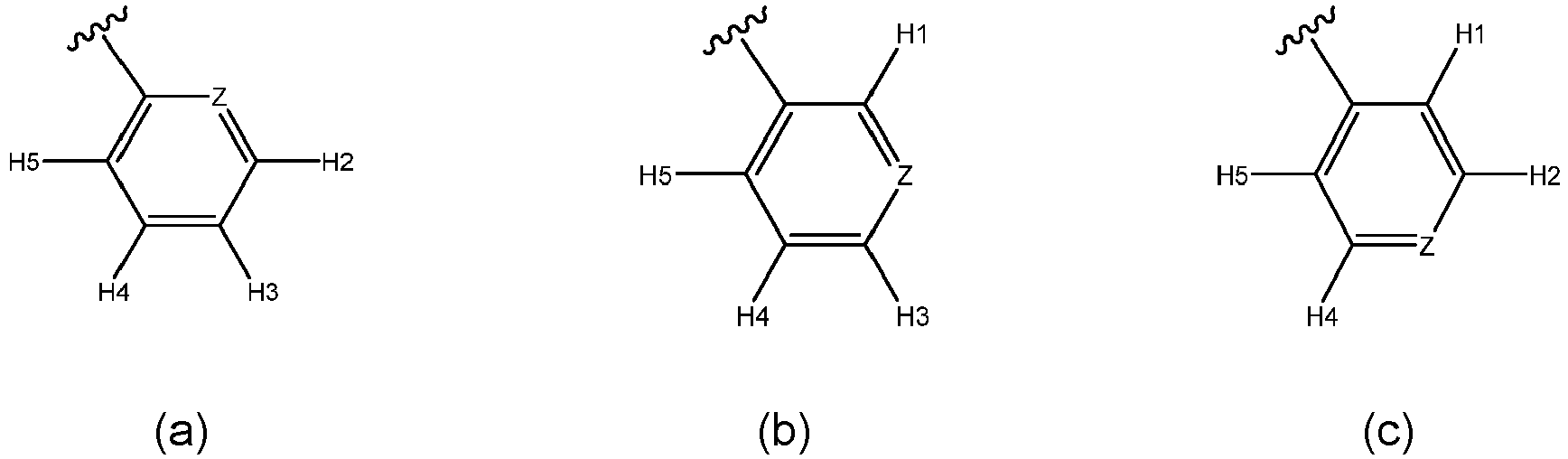 Z das Heteroringatom ist und ausgewählt ist aus der Gruppe bestehend aus N, S oder O, bevorzugt N; undjedes H1, H2, H3, H4 oder H5, das vorhanden ist, unabhängig ausgewählt ist aus der Gruppe bestehend aus: H, F, Cl, Br, I, NH2, NO2, OH, ON=O, substituiertem oder unsubstituiertem C1-C4-Alkyl, substituiertem oder unsubstituiertem C2-C4-Alkenyl, substituiertem oder unsubstituiertem C2-C4-Alkinyl, substituiertem oder unsubstituiertem -OC1-C4-Alkyl, substituiertem oder unsubstituiertem -OC2-C4-Alkenyl, substituiertem oder unsubstituiertem - OC2-C4-Alkinyl, substituiertem oder unsubstituiertem -NHC1-C4-Alkyl, substituiertem oder unsubstituiertem -NHC2-C4-Alkenyl, substituiertem oder unsubstituiertem -NHC2-C4-Alkinyl; undwobei optional eines oder mehrere von H1 und H2 und/oder H2 und H3 und/oder H3 und H4 und/oder H4 und H5 zusammen eine kondensierte Ringstruktur bilden.
 - Pharmazeutische Zusammensetzung nach Anspruch 7, wobei jedes H1, H2, H3, H4 oder H5, das vorhanden ist, unabhängig ausgewählt ist aus der Gruppe bestehend aus: H, F, Cl, Br, I, NH2, NO2, OH, ON=O, substituiertem oder unsubstituiertem C1-C2-Alkyl, substituiertem oder unsubstituiertem C2-Alkenyl, substituiertem oder unsubstituiertem C2-Alkinyl, substituiertem oder unsubstituiertem -OC1-C2-Alkyl, substituiertem oder unsubstituiertem -OC2-Alkenyl, substituiertem oder unsubstituiertem -OC2-Alkinyl, substituiertem oder unsubstituiertem -NHC1-C2-Alkyl, substituiertem oder unsubstituiertem -NHC2-Alkenyl, substituiertem oder unsubstituiertem -NHC2-Alkinyl, wobei bevorzugt jedes H1, H2, H3, H4 oder H5, das vorhanden ist, unabhängig ausgewählt ist aus der Gruppe bestehend aus: H, F, Cl, Br, I, OH, CH3, CHmF(3-m), CHmCl(3-m), CHmBr(3-m), OCH3, OCHmF(3-m), OCHmCl(3-m) oder OCHmBr(3-m).
- Pharmazeutische Zusammensetzung nach einem der Ansprüche 1-8, wobei jedes Alkyl, Alkenyl oder Alkinyl, das substituiert ist, unabhängig mit einem oder mehreren Substituenten substituiert ist, ausgewählt aus der Gruppe bestehend aus: F, Cl, Br, I, =NH, N=O, NO2, NHCH3, N=C=O, N=C=S, OH, OCH3, OC=N, ON=O, =S, SH, SCH3, S(=O)nOH, S(=O)nCH3 und SC=N.
- Pharmazeutische Zusammensetzung nach Anspruch 1, wobei die Verbindung ausgewählt ist aus der Gruppe bestehend aus:


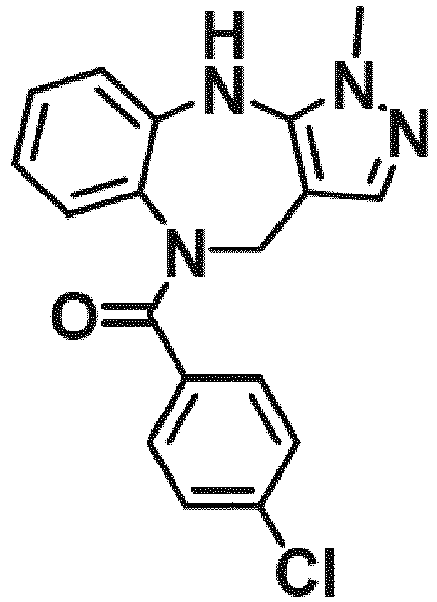
(i) (ii) (iii) (iv) 


(v) (vi) (vii) (viii) 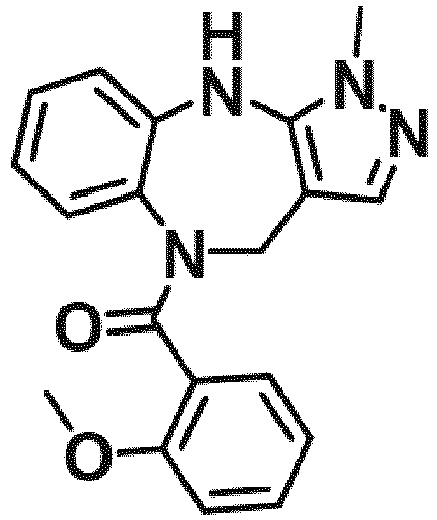
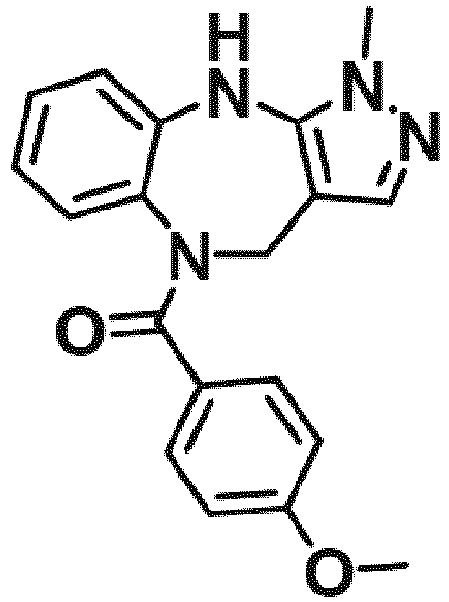


(ix) (x) (xi) (xii) 


(xiii) (xiv) (xv) (xvi) 
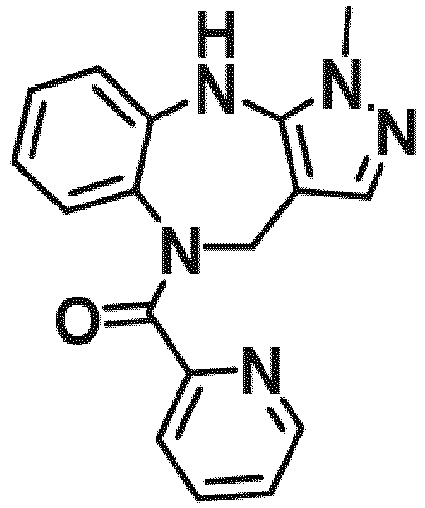


(xvii) (xviii) (xix) (xx) 


(xxi) (xxii) (xxiii) (xxiv) 


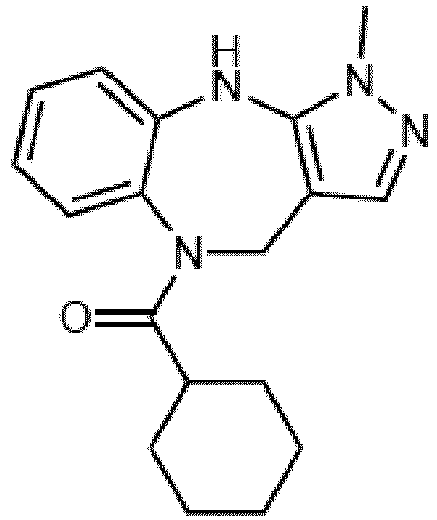
(xxv) (xxvi) (xxvii) (xxviii) 

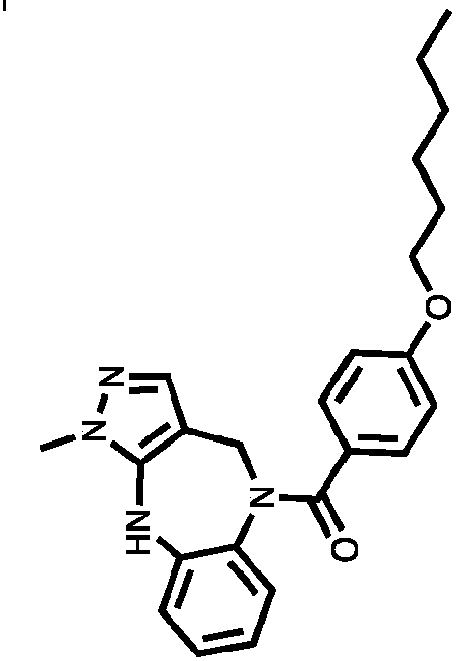
(xxix) (xxxi) (xxxii) 


(xxxiii) (xxxiv) (xxxv) (xxxvi) 


(xxxvii) (xxxviii) (xxxix) (xl) 


(xli) (xlii) (xliii) (xliv) 


(xlv) (xlvi) (xlvii) (xlviii) 


(xlix) (l) (li) (lii) 


(liv) (lv) (lvi) 


(lvii) (lviii) (lix) (lx) 
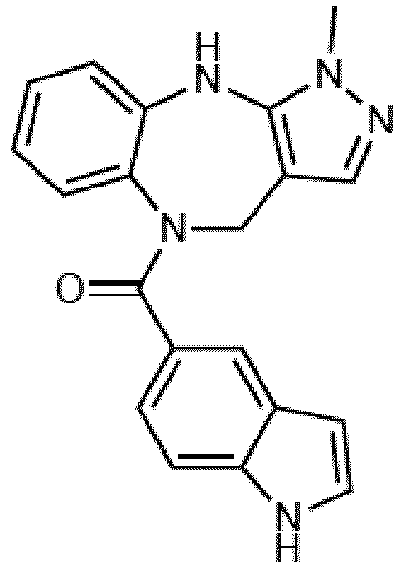

(Ixi) (lxii) (lxiii) - Verbindung der Formel I zur Verwendung beim Behandeln oder Verhindern eines Zustands bei einem Subjekt, wobei der Zustand ausgewählt ist aus der Gruppe bestehend aus:einer sozialen Funktionsstörung, beinhaltend: sozialen Rückzug, Aggressivität, eine antisoziale Störung oder eine Abhängigkeit von einer Substanz;einer psychiatrischen Störung, beinhaltend: eine Autismus-Spektrum-Störung, eine soziale Angststörung, eine depressive Störung, beinhaltend schwere depressive Störung, oder Schizophrenie:
 wobei R1, R3, R4, R5 und R6 jeweils unabhängig ausgewählt sind aus der Gruppe bestehend aus: H, F, Cl, Br, I, NH2, NO2, OH, ON=O, substituiertem oder unsubstituiertem C1-C4-Alkyl, substituiertem oder unsubstituiertem C2-C4-Alkenyl, substituiertem oder unsubstituiertem C2-C4-Alkinyl, substituiertem oder unsubstituiertem -OC1-C4-Alkyl, substituiertem oder unsubstituiertem -OC2-C4-Alkenyl, substituiertem oder unsubstituiertem - OC2-C4-Alkinyl, substituiertem oder unsubstituiertem -NHC1-C4-Alkyl, substituiertem oder unsubstituiertem -NHC2-C4-Alkenyl, substituiertem oder unsubstituiertem -NHC2-C4-Alkinyl, einem substituierten oder unsubstituierten Aryl oder einem substituierten oder unsubstituierten Heterocyclyl;wobei R2 unabhängig ausgewählt ist aus der Gruppe bestehend aus: H, F, Br, I, NH2, NO2, OH, ON=O, substituiertem Methyl, substituiertem oder unsubstituiertem C2-C4-Alkyl, substituiertem oder unsubstituiertem C2-C4-Alkenyl, substituiertem oder unsubstituiertem C2-C4-Alkinyl, substituiertem oder unsubstituiertem -OC1-C4-Alkyl, substituiertem oder unsubstituiertem -OC2-C4-Alkenyl, substituiertem oder unsubstituiertem -OC2-C4-Alkinyl, substituiertem oder unsubstituiertem -NHC1-C4-Alkyl, substituiertem oder unsubstituiertem - NHC2-C4-Alkenyl, substituiertem oder unsubstituiertem -NHC2-C4-Alkinyl, einem substituierten oder unsubstituierten Aryl oder einem substituierten oder unsubstituierten Heterocyclyl;wobei jedes R1, R2, R3, R4, R5 oder R6, das ein substituiertes Aryl oder ein substituiertes Heterocyclyl ist, einen oder mehrere Substituenten beinhaltet, ausgewählt aus der Gruppe bestehend aus F, Cl, Br, I, NH2, N=O, NO2, NHCH3, OH, OCH3, OC=N, ON=O, SH, SCH3, S(=O)nOH, S(=O)nCH3, SC=N, COOH, CH3, CHmF(3-m), CHmCl(3-m), CHmBr(3-m), OCH3, OCHmF(3-m), OCHmCl(3-m) oder OCHmBr(3-m);wobei X eine cyclische Struktur ist, ausgewählt aus der Gruppe bestehend aus: einem substituierten oder unsubstituierten, kondensierten oder unkondensierten Aryl, z. B. Phenyl; einem substituierten oder unsubstituierten, kondensierten oder unkondensierten Heterocyclyl, z. B. Pyridyl, Pyranyl oder Thiopyranyl; oder einem substituierten oder unsubstituierten, kondensierten oder unkondensierten 5-, 6-, 7-, 8-, 9-, 10-, 11-, 12-, 13-, 14-, 15- oder 16-gliedrigen Mono-, überbrückten Bi- oder überbrückten Tricycloalkyl, z. B. Adamantyl; undwobei X1 ein oder mehrere Atome oder Einheiten darstellt, die unabhängig ausgewählt sind aus der Gruppe bestehend aus: H, F, Cl, Br, I, NH2, NO2, OH, ON=O, substituiertem oder unsubstituiertem C1-C4-Alkyl, substituiertem oder unsubstituiertem C2-C4-Alkenyl, substituiertem oder unsubstituiertem C2-C4-Alkinyl, substituiertem oder unsubstituiertem -OC1-C4-Alkyl, substituiertem oder unsubstituiertem -OC2-C4-Alkenyl, substituiertem oder unsubstituiertem - OC2-C4-Alkinyl, substituiertem oder unsubstituiertem -NHC1-C4-Alkyl, substituiertem oder unsubstituiertem -NHC2-C4-Alkenyl, substituiertem oder unsubstituiertem -NHC2-C4-Alkinyl, COOH, C1-Alkyl-COOH, -COOC1-C2-Alkyl, -COOC1-C2-Alkaryl, -C1-Alkyl-COOC1-C2-alkyl, - C1-C2-Alkaryl, -OC1-C2-Alkaryl, -NC1-C2-Alkaryl, -C1-C2-Alkyl-heterocyclyl, -OC1-C2-Alkyl-heterocyclyl, -NC1-C2-Alkyl-heterocyclyl;wobei jedes Alkyl, Alkenyl, Alkinyl, Alkaryl oder Alkyl-heterocyclyl, das substituiert ist, unabhängig mit einem oder mehreren Substituenten substituiert ist, ausgewählt aus der Gruppe bestehend aus: F, Cl, Br, I, =N, =NH, NH2, N=O, NO2, NHCH3, N=C=O, N=C=S, =O, OH, OCH3, OC=N, ON=O, =S, SH, SCH3, S(=O)nOH, S(=O)nCH3 und SC=N;wobei jedes m eine ganze Zahl ausgewählt aus 0, 1 oder 2 ist; undjedes n eine ganze Zahl ausgewählt aus 0, 1 oder 2 ist.
 - Pharmazeutische Zusammensetzung nach einem der Ansprüche 1 bis 10 zur Verwendung beim Behandeln oder Verhindern eines Zustands bei einem Subjekt, wobei der Zustand ausgewählt ist aus der Gruppe bestehend aus:einer sozialen Funktionsstörung, beinhaltend: sozialen Rückzug, Aggressivität, eine antisoziale Störung oder eine Abhängigkeit von einer Substanz;einer psychiatrischen Störung, beinhaltend: eine Autismus-Spektrum-Störung, eine soziale Angststörung, eine depressive Störung beinhaltend schwere depressive Störung oder Schizophrenie.
- Pharmazeutische Zusammensetzung zur Verwendung nach Anspruch 12, wobei die Substanz ausgewählt ist aus der Gruppe bestehend aus: Alkohol, Kokain, Opiaten, Amphetaminen, Heroin und Nikotin.
- Pharmazeutische Zusammensetzung zur Verwendung nach Anspruch 12, wobei das Subjekt eines von Folgendem ist:einem Subjekt, das an einer Substanzmissbrauchsstörung leidet oder sich davon erholt; odereinem Subjekt, das sich von der Substanzmissbrauchsstörung erholt und versucht, dauerhaft von der Substanz abstinent zu bleiben.
- Verbindung der Formel I
 wobei R1, R3, R4, R5 und R6 jeweils unabhängig ausgewählt sind aus der Gruppe bestehend aus: H, F, Cl, Br, I, NH2, NO2, OH, ON=O, substituiertem oder unsubstituiertem C1-C4-Alkyl, substituiertem oder unsubstituiertem C2-C4-Alkenyl, substituiertem oder unsubstituiertem C2-C4-Alkinyl, substituiertem oder unsubstituiertem -OC1-C4-Alkyl, substituiertem oder unsubstituiertem -OC2-C4-Alkenyl, substituiertem oder unsubstituiertem - OC2-C4-Alkinyl, substituiertem oder unsubstituiertem -NHC1-C4-Alkyl, substituiertem oder unsubstituiertem -NHC2-C4-Alkenyl, substituiertem oder unsubstituiertem -NHC2-C4-Alkinyl, einem substituierten oder unsubstituierten Aryl oder einem substituierten oder unsubstituierten Heterocyclyl;wobei R2 unabhängig ausgewählt ist aus der Gruppe bestehend aus: H, F, Br, I, NH2, NO2, OH, ON=O, substituiertem Methyl, substituiertem oder unsubstituiertem C2-C4-Alkyl, substituiertem oder unsubstituiertem C2-C4-Alkenyl, substituiertem oder unsubstituiertem C2-C4-Alkinyl, substituiertem oder unsubstituiertem -OC1-C4-Alkyl, substituiertem oder unsubstituiertem -OC2-C4-Alkenyl, substituiertem oder unsubstituiertem -OC2-C4-Alkinyl, substituiertem oder unsubstituiertem -NHC1-C4-Alkyl, substituiertem oder unsubstituiertem - NHC2-C4-Alkenyl, substituiertem oder unsubstituiertem -NHC2-C4-Alkinyl, einem substituierten oder unsubstituierten Aryl oder einem substituierten oder unsubstituierten Heterocyclyl;wobei jedes R1, R2, R3, R4, R5 oder R6, das ein substituiertes Aryl oder ein substituiertes Heterocyclyl ist, einen oder mehrere Substituenten beinhaltet, ausgewählt aus der Gruppe bestehend aus F, Cl, Br, I, NH2, N=O, NO2, NHCH3, OH, OCH3, OC=N, ON=O, SH, SCH3, S(=O)nOH, S(=O)nCH3, SC=N, COOH, CH3, CHmF(3-m), CHmCl(3-m), CHmBr(3-m), OCH3, OCHmF(3-m), OCHmCl(3-m) oder OCHmBr(3-m);wobei X eine cyclische Struktur ist, ausgewählt aus der Gruppe bestehend aus: einem substituierten oder unsubstituierten, kondensierten oder unkondensierten Aryl, z. B. Phenyl; einem substituierten oder unsubstituierten, kondensierten oder unkondensierten Heterocyclyl, z. B. Pyridyl, Pyranyl oder Thiopyranyl; oder einem substituierten oder unsubstituierten, kondensierten oder unkondensierten 5-, 6-, 7-, 8-, 9-, 10-, 11-, 12-, 13-, 14-, 15- oder 16-gliedrigen Mono-, überbrückten Bi- oder überbrückten Tricycloalkyl, z. B. Adamantyl; undwobei jedes X1 ein oder mehrere Atome oder Einheiten darstellt, die unabhängig ausgewählt sind aus der Gruppe bestehend aus: F, Cl, Br, I, OH, ON=O, substituiertem oder unsubstituiertem C1-C4-Alkyl, substituiertem oder unsubstituiertem C2-C4-Alkenyl, substituiertem oder unsubstituiertem C2-C4-Alkinyl, substituiertem oder unsubstituiertem -OC1-C4-Alkyl, substituiertem oder unsubstituiertem -OC2-C4-Alkenyl, substituiertem oder unsubstituiertem -OC2-C4-Alkinyl, substituiertem oder unsubstituiertem -NHC1-C4-Alkyl, substituiertem oder unsubstituiertem -NHC2-C4-Alkenyl, substituiertem oder unsubstituiertem - NHC2-C4-Alkinyl, COOH, C1-Alkyl-COOH, -COOC1-C2-Alkyl, -COOC1-C2-Alkaryl, -C1-Alkyl-COOC1-C2-alkyl, C1-C2-Alkaryl, -OC2-Alkaryl, -NC1-C2-Alkaryl, -C1-C2-Alkyl-heterocyclyl, - OC1-C2-Alkyl-heterocyclyl, -NC1-C2-Alkyl-heterocyclyl;wobei jedes Alkyl, Alkenyl oder Alkinyl unabhängig, das substituiert ist, mit einem oder mehreren Substituenten substituiert ist, ausgewählt aus der Gruppe bestehend aus: F, Cl, Br, I, =NH, N=O, NO2, NHCH3, N=C=O, N=C=S, =O, OH, OCH3, OC=N, ON=O, =S, SH, SCH3, S(=O)nOH, S(=O)nCH3 und SC≡N;wobei jedes m eine ganze Zahl ausgewählt aus 0, 1 oder 2 ist; undjedes n eine ganze Zahl ausgewählt aus 0, 1 oder 2 ist; undwobei die Verbindung nicht ausgewählt ist aus der Gruppe bestehend aus:(i)
 (ii)
(ii) (iii) eine Verbindung, wobei das substituierte oder unsubstituierte Cycloalkyl eine substituierte Cyclohexangruppe ist.
 - Verbindung nach Anspruch 15, wobei jedes Alkyl, Alkenyl oder Alkinyl, das substituiert ist, unabhängig mit einem oder mehreren Substituenten substituiert ist, ausgewählt aus der Gruppe bestehend aus: F, Cl, Br, I, =NH, N=O, NO2, NHCH3, N=C=O, N=C=S, OH, OCH3, OC=N, ON=O, =S, SH, SCH3, S(=O)nOH, S(=O)nCH3 und SC=N.
- Verbindung nach Anspruch 15, wobei die Verbindung ausgewählt ist aus der Gruppe bestehend aus:
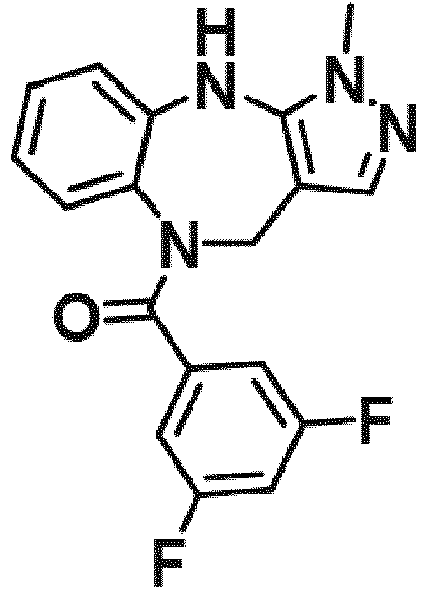


(i) (ii) (iii) (iv) 


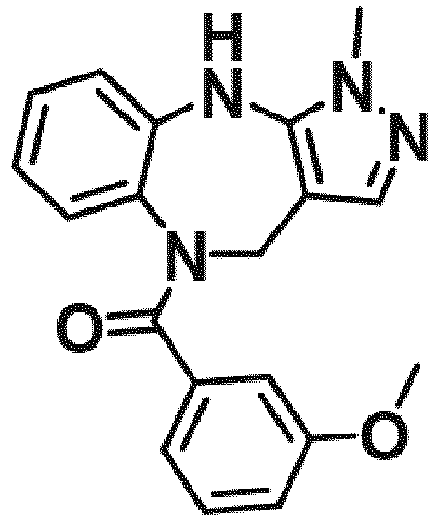
(v) (vi) (vii) (viii) 

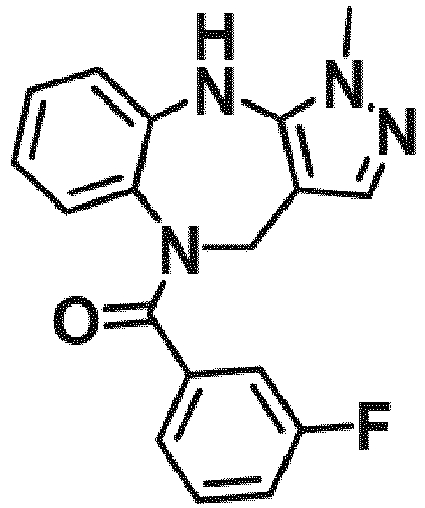
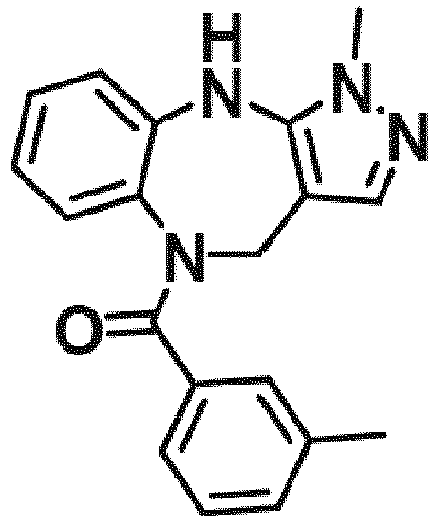
(ix) (x) (xi) (xii) 


(xiii) (xiv) (xv) (xvi) 
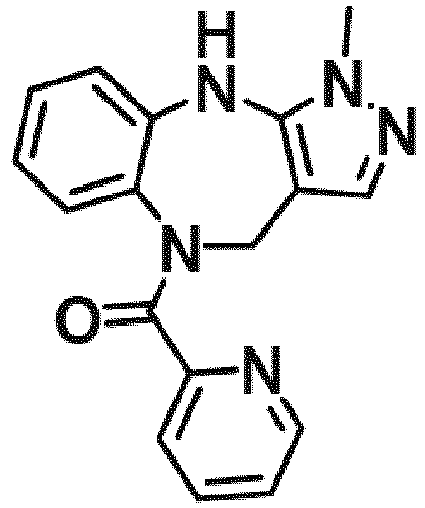
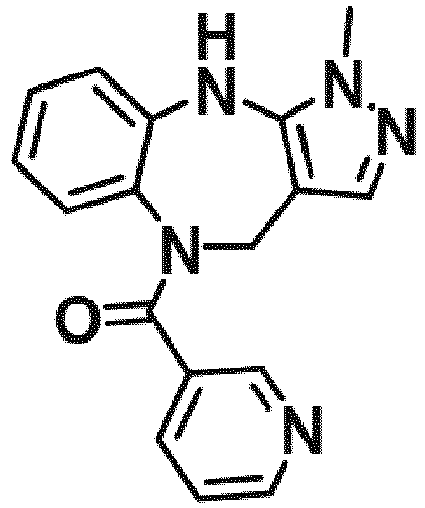

(xvii) (xviii) (xix) (xx) 

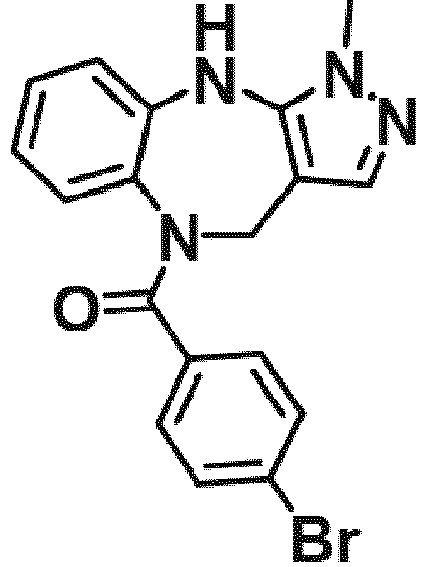

(xxi) (xxii) (xxiii) (xxiv) 

(xxv) (xxviii) 

(xxix) (xxxii) 
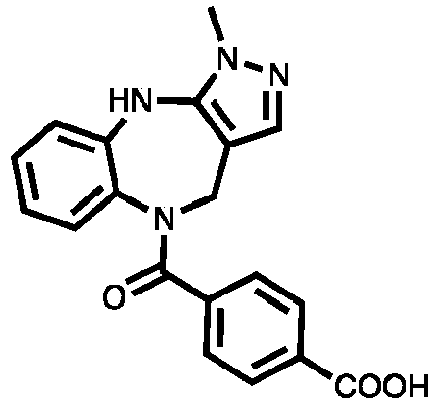


(xxxiii) (xxxiv) (xxxv) (xxxvi) 


(xxxvii) (xxxviii) (xxxix) (xl) 


(xli) (xlii) (xliii) (xliv) 

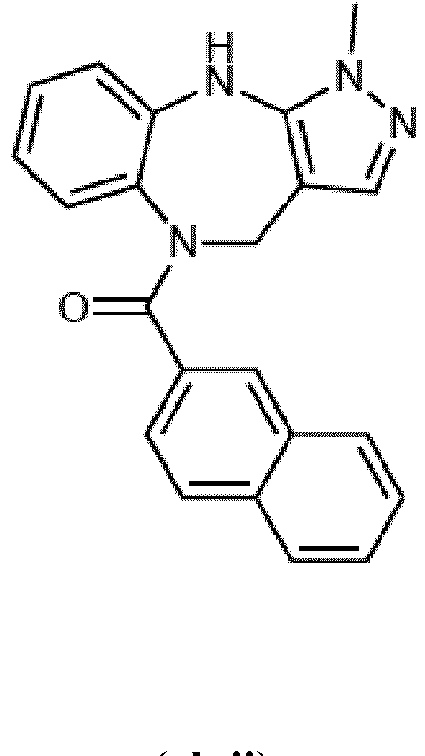

(xlv) (xlvi) (xlvii) (xlviii) 


(xlix) (l) (li) (lii) 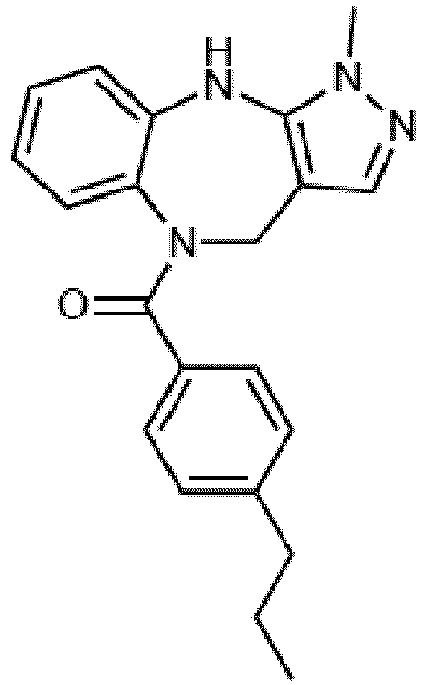


(liv) (lv) (lvi) 

(lix) (lx) 


(lxi) (lxii) (lxiii) - Verbindung, ausgewählt aus der Gruppe bestehend aus:


(xxx) (xxxi) (lviii)
Priority Applications (2)
| Application Number | Priority Date | Filing Date | Title |
|---|---|---|---|
| SI201731588T SI3551631T1 (sl) | 2016-12-12 | 2017-12-12 | Nepeptidni agonisti oksitocinskih receptorjev |
| EP24212001.2A EP4494705A3 (de) | 2016-12-12 | 2017-12-12 | Nicht-peptidische oxytocin-rezeptoragonisten |
Applications Claiming Priority (2)
| Application Number | Priority Date | Filing Date | Title |
|---|---|---|---|
| AU2016905126A AU2016905126A0 (en) | 2016-12-12 | Non-peptide oxytocin receptor agonists | |
| PCT/AU2017/051371 WO2018107216A1 (en) | 2016-12-12 | 2017-12-12 | Non-peptide oxytocin receptor agonists |
Related Child Applications (2)
| Application Number | Title | Priority Date | Filing Date |
|---|---|---|---|
| EP24212001.2A Division EP4494705A3 (de) | 2016-12-12 | 2017-12-12 | Nicht-peptidische oxytocin-rezeptoragonisten |
| EP24212001.2A Division-Into EP4494705A3 (de) | 2016-12-12 | 2017-12-12 | Nicht-peptidische oxytocin-rezeptoragonisten |
Publications (4)
| Publication Number | Publication Date |
|---|---|
| EP3551631A1 EP3551631A1 (de) | 2019-10-16 |
| EP3551631A4 EP3551631A4 (de) | 2020-07-15 |
| EP3551631B1 true EP3551631B1 (de) | 2024-11-13 |
| EP3551631B9 EP3551631B9 (de) | 2025-02-26 |
Family
ID=62557695
Family Applications (2)
| Application Number | Title | Priority Date | Filing Date |
|---|---|---|---|
| EP24212001.2A Pending EP4494705A3 (de) | 2016-12-12 | 2017-12-12 | Nicht-peptidische oxytocin-rezeptoragonisten |
| EP17880082.7A Active EP3551631B9 (de) | 2016-12-12 | 2017-12-12 | Nicht-peptidische oxytocin-rezeptoragonisten |
Family Applications Before (1)
| Application Number | Title | Priority Date | Filing Date |
|---|---|---|---|
| EP24212001.2A Pending EP4494705A3 (de) | 2016-12-12 | 2017-12-12 | Nicht-peptidische oxytocin-rezeptoragonisten |
Country Status (19)
| Country | Link |
|---|---|
| US (2) | US11491165B2 (de) |
| EP (2) | EP4494705A3 (de) |
| JP (3) | JP7089649B2 (de) |
| KR (1) | KR102561721B1 (de) |
| CN (1) | CN110248944A (de) |
| AU (1) | AU2017377653B2 (de) |
| BR (1) | BR112019012049A2 (de) |
| CA (1) | CA3046809A1 (de) |
| DK (1) | DK3551631T3 (de) |
| ES (1) | ES3001195T3 (de) |
| FI (1) | FI3551631T3 (de) |
| HU (1) | HUE070078T2 (de) |
| IL (1) | IL267276B2 (de) |
| MX (1) | MX2019006942A (de) |
| PL (1) | PL3551631T3 (de) |
| PT (1) | PT3551631T (de) |
| RU (1) | RU2019120162A (de) |
| SI (1) | SI3551631T1 (de) |
| WO (1) | WO2018107216A1 (de) |
Families Citing this family (5)
| Publication number | Priority date | Publication date | Assignee | Title |
|---|---|---|---|---|
| WO2020102857A1 (en) * | 2018-11-23 | 2020-05-28 | The University Of Sydney | Methods for management of weight |
| EP4025221A4 (de) * | 2019-09-06 | 2024-01-03 | Kinoxis Therapeutics Pty Ltd | Behandlung von opioidentzug |
| JP2022548581A (ja) | 2019-09-13 | 2022-11-21 | オリゲニス ゲーエムベーハー | 例えば自己免疫疾患の処置のための、LRRK2、NUAK1および/またはTYK2キナーゼモジュレータとしての1,4-ジヒドロベンゾ[d]ピラゾロ[3,4-f][1,3]ジアゼピン誘導体および関連する化合物 |
| US20240067654A1 (en) * | 2020-12-14 | 2024-02-29 | Kinoxis Therapeutics Pyt Ltd | Oxytocin receptor modulators |
| KR20230159492A (ko) * | 2021-03-18 | 2023-11-21 | 키녹시스 테라퓨틱스 피티와이 리미티드 | 치료 방법 |
Family Cites Families (16)
| Publication number | Priority date | Publication date | Assignee | Title |
|---|---|---|---|---|
| US3770762A (en) * | 1972-08-29 | 1973-11-06 | Parke Davis & Co | Diazepine compounds and methods for their production |
| AR002459A1 (es) | 1995-01-17 | 1998-03-25 | American Cyanamid Co | Antagonistas de vasopresina de benzacepina triciclicos, una composicion farmaceutica que los contiene, un metodo para tratar enfermedades y unprocedimiento para su preparacion. |
| US5536718A (en) * | 1995-01-17 | 1996-07-16 | American Cyanamid Company | Tricyclic benzazepine vasopressin antagonists |
| GB0115515D0 (en) * | 2001-06-25 | 2001-08-15 | Ferring Bv | Oxytocin agonisys |
| GB0120051D0 (en) * | 2001-08-16 | 2001-10-10 | Ferring Bv | Oxytocin agonists |
| EP1449844A1 (de) | 2003-02-14 | 2004-08-25 | Ferring B.V. | benzamidderivate als oxytocin-agonisten und vasopressin-antagonisten |
| US7342112B2 (en) * | 2003-07-01 | 2008-03-11 | Ppg Industries Ohio, Inc. | Photochromic compounds |
| EP1512687A1 (de) * | 2003-09-05 | 2005-03-09 | Ferring B.V. | Piperazine als Oxytocin-Agonisten |
| EP1632494A1 (de) * | 2004-08-24 | 2006-03-08 | Ferring B.V. | Vasopressin v1a antagonisten |
| WO2006040036A1 (en) * | 2004-10-13 | 2006-04-20 | F. Hoffmann-La Roche Ag | Disubstituted pyrazolobenzodiazepines useful as inhibitors for cdk2 and angiogesis, and for the treatment of breast, colon, lung and prostate cancer |
| CN101203516A (zh) * | 2005-04-05 | 2008-06-18 | 法马科皮亚公司 | 用于免疫抑制的嘌呤及咪唑并吡啶衍生物 |
| WO2007050353A2 (en) | 2005-10-24 | 2007-05-03 | Wyeth | Tricyclic compounds useful as oxytocin receptor agonists |
| WO2008103367A2 (en) * | 2007-02-20 | 2008-08-28 | Sergey Kozmin | Method for assembling high-purity chemical libraries, proapoptotic compounds discovered by same |
| GB0903493D0 (en) * | 2009-02-27 | 2009-04-08 | Vantia Ltd | New compounds |
| WO2016089830A1 (en) * | 2014-12-05 | 2016-06-09 | Merck Sharp & Dohme Corp. | Novel tricyclic compounds as inhibitors of mutant idh enzymes |
| MX389545B (es) * | 2015-07-06 | 2025-03-20 | Univ Sydney | Compuestos terapeuticos y composiciones para el tratamiento de trastornos sociales y trastornos de uso de sustancias. |
-
2017
- 2017-12-12 WO PCT/AU2017/051371 patent/WO2018107216A1/en not_active Ceased
- 2017-12-12 SI SI201731588T patent/SI3551631T1/sl unknown
- 2017-12-12 PT PT178800827T patent/PT3551631T/pt unknown
- 2017-12-12 EP EP24212001.2A patent/EP4494705A3/de active Pending
- 2017-12-12 HU HUE17880082A patent/HUE070078T2/hu unknown
- 2017-12-12 CN CN201780085825.XA patent/CN110248944A/zh active Pending
- 2017-12-12 FI FIEP17880082.7T patent/FI3551631T3/fi active
- 2017-12-12 ES ES17880082T patent/ES3001195T3/es active Active
- 2017-12-12 EP EP17880082.7A patent/EP3551631B9/de active Active
- 2017-12-12 JP JP2019531447A patent/JP7089649B2/ja active Active
- 2017-12-12 KR KR1020197019977A patent/KR102561721B1/ko active Active
- 2017-12-12 IL IL267276A patent/IL267276B2/en unknown
- 2017-12-12 MX MX2019006942A patent/MX2019006942A/es unknown
- 2017-12-12 AU AU2017377653A patent/AU2017377653B2/en active Active
- 2017-12-12 DK DK17880082.7T patent/DK3551631T3/da active
- 2017-12-12 CA CA3046809A patent/CA3046809A1/en active Pending
- 2017-12-12 PL PL17880082.7T patent/PL3551631T3/pl unknown
- 2017-12-12 BR BR112019012049-1A patent/BR112019012049A2/pt active Search and Examination
- 2017-12-12 RU RU2019120162A patent/RU2019120162A/ru unknown
-
2019
- 2019-06-12 US US16/439,570 patent/US11491165B2/en active Active
-
2022
- 2022-05-11 JP JP2022078250A patent/JP2022097655A/ja active Pending
- 2022-09-16 US US17/932,914 patent/US20230330103A1/en active Pending
-
2024
- 2024-06-05 JP JP2024091625A patent/JP2024107136A/ja active Pending
Also Published As
Similar Documents
| Publication | Publication Date | Title |
|---|---|---|
| US20230330103A1 (en) | Non-peptide oxytocin receptor agonists | |
| JP6382403B2 (ja) | Lsd1阻害剤としての(ヘテロ)アリールシクロプロピルアミン化合物 | |
| ES2901471T3 (es) | Agonistas del receptor 2 de formilpéptido y del receptor 1 de formilpéptido de piperidinona | |
| MX2014014563A (es) | Formas solidas de un compuesto antiviral. | |
| KR102623473B1 (ko) | 피페리디논 포르밀 펩티드 2 수용체 및 포르밀 펩티드 1 수용체 효능제 | |
| BR112015010072B1 (pt) | Compostos, processo para a preparação dos referidos compostos, medicamento comprendendo os mesmos e seu uso relacionado | |
| EP3828174A1 (de) | Pyridazinonderivat | |
| US20220363694A1 (en) | N-cyano-7-azanorbornane derivatives and uses thereof | |
| JP2018076297A (ja) | 複素環式化合物およびその使用方法 | |
| EP3774722B1 (de) | Opioid-rezeptor-modulatoren sowie zugehörige produkte und verfahren | |
| JP2014076948A (ja) | イソキノリンアミド誘導体 | |
| EP3145933B1 (de) | Nampt inhibitoren und verfahren | |
| ITMI951900A1 (it) | Derivati idroisochinolinici sostituiti | |
| JP2006522070A (ja) | ベンズイミダゾール誘導体及びこれをgabaa受容体複合体をモジュレートするために使用する方法 | |
| JP2023524863A (ja) | 三環式のヘテロ環 | |
| CN112118891A (zh) | 作为流感病毒复制抑制剂的稠和多环吡啶酮化合物 | |
| KR20180128930A (ko) | 벤젠술포닐-비대칭 우레아 및 그의 의학적 용도 | |
| US20240208907A1 (en) | Gpr52 modulators and methods of use | |
| HK40014275A (en) | Non-peptide oxytocin receptor agonists | |
| HK40053244A (en) | Pyridazinone derivative | |
| NZ717556B2 (en) | Spirocyclic compounds as tryptophan hydroxylase inhibitors | |
| NZ717556A (en) | Spirocyclic compounds as tryptophan hydroxylase inhibitors |
Legal Events
| Date | Code | Title | Description |
|---|---|---|---|
| STAA | Information on the status of an ep patent application or granted ep patent |
Free format text: STATUS: THE INTERNATIONAL PUBLICATION HAS BEEN MADE |
|
| PUAI | Public reference made under article 153(3) epc to a published international application that has entered the european phase |
Free format text: ORIGINAL CODE: 0009012 |
|
| STAA | Information on the status of an ep patent application or granted ep patent |
Free format text: STATUS: REQUEST FOR EXAMINATION WAS MADE |
|
| 17P | Request for examination filed |
Effective date: 20190710 |
|
| AK | Designated contracting states |
Kind code of ref document: A1 Designated state(s): AL AT BE BG CH CY CZ DE DK EE ES FI FR GB GR HR HU IE IS IT LI LT LU LV MC MK MT NL NO PL PT RO RS SE SI SK SM TR |
|
| AX | Request for extension of the european patent |
Extension state: BA ME |
|
| RIN1 | Information on inventor provided before grant (corrected) |
Inventor name: BOWEN, MICHAEL Inventor name: WERRY, ERYN Inventor name: REEKIE, TRISTAN Inventor name: JORGENSEN, WILLIAM Inventor name: MCGREGOR, IAIN Inventor name: KASSIOU, MICHAEL |
|
| DAV | Request for validation of the european patent (deleted) | ||
| DAX | Request for extension of the european patent (deleted) | ||
| A4 | Supplementary search report drawn up and despatched |
Effective date: 20200612 |
|
| RIC1 | Information provided on ipc code assigned before grant |
Ipc: A61P 25/30 20060101ALI20200606BHEP Ipc: A61K 31/5517 20060101ALI20200606BHEP Ipc: A61P 25/00 20060101ALI20200606BHEP Ipc: A61P 27/00 20060101ALI20200606BHEP Ipc: C07D 487/04 20060101AFI20200606BHEP |
|
| STAA | Information on the status of an ep patent application or granted ep patent |
Free format text: STATUS: EXAMINATION IS IN PROGRESS |
|
| 17Q | First examination report despatched |
Effective date: 20210415 |
|
| RAP1 | Party data changed (applicant data changed or rights of an application transferred) |
Owner name: KINOXIS THERAPEUTICS PTY LTD |
|
| GRAP | Despatch of communication of intention to grant a patent |
Free format text: ORIGINAL CODE: EPIDOSNIGR1 |
|
| STAA | Information on the status of an ep patent application or granted ep patent |
Free format text: STATUS: GRANT OF PATENT IS INTENDED |
|
| INTG | Intention to grant announced |
Effective date: 20240103 |
|
| GRAJ | Information related to disapproval of communication of intention to grant by the applicant or resumption of examination proceedings by the epo deleted |
Free format text: ORIGINAL CODE: EPIDOSDIGR1 |
|
| STAA | Information on the status of an ep patent application or granted ep patent |
Free format text: STATUS: EXAMINATION IS IN PROGRESS |
|
| GRAP | Despatch of communication of intention to grant a patent |
Free format text: ORIGINAL CODE: EPIDOSNIGR1 |
|
| STAA | Information on the status of an ep patent application or granted ep patent |
Free format text: STATUS: GRANT OF PATENT IS INTENDED |
|
| INTC | Intention to grant announced (deleted) | ||
| INTG | Intention to grant announced |
Effective date: 20240606 |
|
| GRAS | Grant fee paid |
Free format text: ORIGINAL CODE: EPIDOSNIGR3 |
|
| GRAA | (expected) grant |
Free format text: ORIGINAL CODE: 0009210 |
|
| STAA | Information on the status of an ep patent application or granted ep patent |
Free format text: STATUS: THE PATENT HAS BEEN GRANTED |
|
| AK | Designated contracting states |
Kind code of ref document: B1 Designated state(s): AL AT BE BG CH CY CZ DE DK EE ES FI FR GB GR HR HU IE IS IT LI LT LU LV MC MK MT NL NO PL PT RO RS SE SI SK SM TR |
|
| REG | Reference to a national code |
Ref country code: GB Ref legal event code: FG4D |
|
| REG | Reference to a national code |
Ref country code: CH Ref legal event code: EP |
|
| REG | Reference to a national code |
Ref country code: DE Ref legal event code: R096 Ref document number: 602017086162 Country of ref document: DE |
|
| REG | Reference to a national code |
Ref country code: IE Ref legal event code: FG4D |
|
| REG | Reference to a national code |
Ref country code: PT Ref legal event code: SC4A Ref document number: 3551631 Country of ref document: PT Date of ref document: 20241210 Kind code of ref document: T Free format text: AVAILABILITY OF NATIONAL TRANSLATION Effective date: 20241204 |
|
| P01 | Opt-out of the competence of the unified patent court (upc) registered |
Free format text: CASE NUMBER: APP_62781/2024 Effective date: 20241126 |
|
| REG | Reference to a national code |
Ref country code: FI Ref legal event code: FGE |
|
| REG | Reference to a national code |
Ref country code: NL Ref legal event code: FP |
|
| REG | Reference to a national code |
Ref country code: CH Ref legal event code: PK Free format text: BERICHTIGUNG B9 |
|
| REG | Reference to a national code |
Ref country code: SE Ref legal event code: TRGR |
|
| REG | Reference to a national code |
Ref country code: DK Ref legal event code: T3 Effective date: 20250214 |
|
| REG | Reference to a national code |
Ref country code: ES Ref legal event code: FG2A Ref document number: 3001195 Country of ref document: ES Kind code of ref document: T3 Effective date: 20250304 |
|
| REG | Reference to a national code |
Ref country code: LT Ref legal event code: MG9D |
|
| REG | Reference to a national code |
Ref country code: GR Ref legal event code: EP Ref document number: 20250400247 Country of ref document: GR Effective date: 20250314 |
|
| PG25 | Lapsed in a contracting state [announced via postgrant information from national office to epo] |
Ref country code: IS Free format text: LAPSE BECAUSE OF FAILURE TO SUBMIT A TRANSLATION OF THE DESCRIPTION OR TO PAY THE FEE WITHIN THE PRESCRIBED TIME-LIMIT Effective date: 20250313 Ref country code: HR Free format text: LAPSE BECAUSE OF FAILURE TO SUBMIT A TRANSLATION OF THE DESCRIPTION OR TO PAY THE FEE WITHIN THE PRESCRIBED TIME-LIMIT Effective date: 20241113 |
|
| PG25 | Lapsed in a contracting state [announced via postgrant information from national office to epo] |
Ref country code: BG Free format text: LAPSE BECAUSE OF FAILURE TO SUBMIT A TRANSLATION OF THE DESCRIPTION OR TO PAY THE FEE WITHIN THE PRESCRIBED TIME-LIMIT Effective date: 20241113 |
|
| PG25 | Lapsed in a contracting state [announced via postgrant information from national office to epo] |
Ref country code: LV Free format text: LAPSE BECAUSE OF FAILURE TO SUBMIT A TRANSLATION OF THE DESCRIPTION OR TO PAY THE FEE WITHIN THE PRESCRIBED TIME-LIMIT Effective date: 20241113 |
|
| PGFP | Annual fee paid to national office [announced via postgrant information from national office to epo] |
Ref country code: CH Payment date: 20250101 Year of fee payment: 8 |
|
| PG25 | Lapsed in a contracting state [announced via postgrant information from national office to epo] |
Ref country code: RS Free format text: LAPSE BECAUSE OF FAILURE TO SUBMIT A TRANSLATION OF THE DESCRIPTION OR TO PAY THE FEE WITHIN THE PRESCRIBED TIME-LIMIT Effective date: 20250213 |
|
| REG | Reference to a national code |
Ref country code: HU Ref legal event code: AG4A Ref document number: E070078 Country of ref document: HU |
|
| PG25 | Lapsed in a contracting state [announced via postgrant information from national office to epo] |
Ref country code: SM Free format text: LAPSE BECAUSE OF FAILURE TO SUBMIT A TRANSLATION OF THE DESCRIPTION OR TO PAY THE FEE WITHIN THE PRESCRIBED TIME-LIMIT Effective date: 20241113 |
|
| PG25 | Lapsed in a contracting state [announced via postgrant information from national office to epo] |
Ref country code: RO Free format text: LAPSE BECAUSE OF FAILURE TO SUBMIT A TRANSLATION OF THE DESCRIPTION OR TO PAY THE FEE WITHIN THE PRESCRIBED TIME-LIMIT Effective date: 20241113 |
|
| PG25 | Lapsed in a contracting state [announced via postgrant information from national office to epo] |
Ref country code: SK Free format text: LAPSE BECAUSE OF FAILURE TO SUBMIT A TRANSLATION OF THE DESCRIPTION OR TO PAY THE FEE WITHIN THE PRESCRIBED TIME-LIMIT Effective date: 20241113 |
|
| REG | Reference to a national code |
Ref country code: DE Ref legal event code: R097 Ref document number: 602017086162 Country of ref document: DE |
|
| PG25 | Lapsed in a contracting state [announced via postgrant information from national office to epo] |
Ref country code: LU Free format text: LAPSE BECAUSE OF NON-PAYMENT OF DUE FEES Effective date: 20241212 |
|
| PG25 | Lapsed in a contracting state [announced via postgrant information from national office to epo] |
Ref country code: MC Free format text: LAPSE BECAUSE OF FAILURE TO SUBMIT A TRANSLATION OF THE DESCRIPTION OR TO PAY THE FEE WITHIN THE PRESCRIBED TIME-LIMIT Effective date: 20241113 |
|
| PLBE | No opposition filed within time limit |
Free format text: ORIGINAL CODE: 0009261 |
|
| STAA | Information on the status of an ep patent application or granted ep patent |
Free format text: STATUS: NO OPPOSITION FILED WITHIN TIME LIMIT |
|
| 26N | No opposition filed |
Effective date: 20250814 |
|
| PGFP | Annual fee paid to national office [announced via postgrant information from national office to epo] |
Ref country code: PT Payment date: 20251204 Year of fee payment: 9 |
|
| REG | Reference to a national code |
Ref country code: CH Ref legal event code: U11 Free format text: ST27 STATUS EVENT CODE: U-0-0-U10-U11 (AS PROVIDED BY THE NATIONAL OFFICE) Effective date: 20260101 |
|
| PGFP | Annual fee paid to national office [announced via postgrant information from national office to epo] |
Ref country code: DE Payment date: 20251211 Year of fee payment: 9 |
|
| PGFP | Annual fee paid to national office [announced via postgrant information from national office to epo] |
Ref country code: GB Payment date: 20251219 Year of fee payment: 9 |
|
| PGFP | Annual fee paid to national office [announced via postgrant information from national office to epo] |
Ref country code: AT Payment date: 20251222 Year of fee payment: 9 |
|
| PGFP | Annual fee paid to national office [announced via postgrant information from national office to epo] |
Ref country code: IT Payment date: 20251223 Year of fee payment: 9 Ref country code: FI Payment date: 20251223 Year of fee payment: 9 Ref country code: DK Payment date: 20251224 Year of fee payment: 9 |
|
| PGFP | Annual fee paid to national office [announced via postgrant information from national office to epo] |
Ref country code: HU Payment date: 20251223 Year of fee payment: 9 Ref country code: FR Payment date: 20251229 Year of fee payment: 9 Ref country code: NL Payment date: 20251219 Year of fee payment: 9 |
|
| PGFP | Annual fee paid to national office [announced via postgrant information from national office to epo] |
Ref country code: GR Payment date: 20251222 Year of fee payment: 9 Ref country code: BE Payment date: 20251219 Year of fee payment: 9 Ref country code: TR Payment date: 20251208 Year of fee payment: 9 |
|
| PGFP | Annual fee paid to national office [announced via postgrant information from national office to epo] |
Ref country code: SE Payment date: 20251219 Year of fee payment: 9 |
|
| PGFP | Annual fee paid to national office [announced via postgrant information from national office to epo] |
Ref country code: IE Payment date: 20251219 Year of fee payment: 9 Ref country code: CZ Payment date: 20251209 Year of fee payment: 9 |
|
| PGFP | Annual fee paid to national office [announced via postgrant information from national office to epo] |
Ref country code: PL Payment date: 20251205 Year of fee payment: 9 |
|
| PGFP | Annual fee paid to national office [announced via postgrant information from national office to epo] |
Ref country code: SI Payment date: 20251204 Year of fee payment: 9 |
|
| PGFP | Annual fee paid to national office [announced via postgrant information from national office to epo] |
Ref country code: ES Payment date: 20260130 Year of fee payment: 9 |
|
| PGFP | Annual fee paid to national office [announced via postgrant information from national office to epo] |
Ref country code: NO Payment date: 20251230 Year of fee payment: 9 |