EP3537519B1 - Method for pre-lithiating silicon oxide anode for secondary battery - Google Patents
Method for pre-lithiating silicon oxide anode for secondary battery Download PDFInfo
- Publication number
- EP3537519B1 EP3537519B1 EP18802551.4A EP18802551A EP3537519B1 EP 3537519 B1 EP3537519 B1 EP 3537519B1 EP 18802551 A EP18802551 A EP 18802551A EP 3537519 B1 EP3537519 B1 EP 3537519B1
- Authority
- EP
- European Patent Office
- Prior art keywords
- negative electrode
- silicon oxide
- secondary battery
- lithium
- oxide negative
- Prior art date
- Legal status (The legal status is an assumption and is not a legal conclusion. Google has not performed a legal analysis and makes no representation as to the accuracy of the status listed.)
- Active
Links
Images
Classifications
-
- H—ELECTRICITY
- H01—ELECTRIC ELEMENTS
- H01M—PROCESSES OR MEANS, e.g. BATTERIES, FOR THE DIRECT CONVERSION OF CHEMICAL ENERGY INTO ELECTRICAL ENERGY
- H01M4/00—Electrodes
- H01M4/02—Electrodes composed of, or comprising, active material
- H01M4/04—Processes of manufacture in general
- H01M4/043—Processes of manufacture in general involving compressing or compaction
- H01M4/0435—Rolling or calendering
-
- H—ELECTRICITY
- H01—ELECTRIC ELEMENTS
- H01M—PROCESSES OR MEANS, e.g. BATTERIES, FOR THE DIRECT CONVERSION OF CHEMICAL ENERGY INTO ELECTRICAL ENERGY
- H01M4/00—Electrodes
- H01M4/02—Electrodes composed of, or comprising, active material
- H01M4/13—Electrodes for accumulators with non-aqueous electrolyte, e.g. for lithium-accumulators; Processes of manufacture thereof
- H01M4/139—Processes of manufacture
- H01M4/1391—Processes of manufacture of electrodes based on mixed oxides or hydroxides, or on mixtures of oxides or hydroxides, e.g. LiCoOx
-
- H—ELECTRICITY
- H01—ELECTRIC ELEMENTS
- H01M—PROCESSES OR MEANS, e.g. BATTERIES, FOR THE DIRECT CONVERSION OF CHEMICAL ENERGY INTO ELECTRICAL ENERGY
- H01M10/00—Secondary cells; Manufacture thereof
- H01M10/05—Accumulators with non-aqueous electrolyte
- H01M10/052—Li-accumulators
- H01M10/0525—Rocking-chair batteries, i.e. batteries with lithium insertion or intercalation in both electrodes; Lithium-ion batteries
-
- H—ELECTRICITY
- H01—ELECTRIC ELEMENTS
- H01M—PROCESSES OR MEANS, e.g. BATTERIES, FOR THE DIRECT CONVERSION OF CHEMICAL ENERGY INTO ELECTRICAL ENERGY
- H01M4/00—Electrodes
- H01M4/02—Electrodes composed of, or comprising, active material
- H01M4/04—Processes of manufacture in general
- H01M4/0402—Methods of deposition of the material
- H01M4/0404—Methods of deposition of the material by coating on electrode collectors
-
- H—ELECTRICITY
- H01—ELECTRIC ELEMENTS
- H01M—PROCESSES OR MEANS, e.g. BATTERIES, FOR THE DIRECT CONVERSION OF CHEMICAL ENERGY INTO ELECTRICAL ENERGY
- H01M4/00—Electrodes
- H01M4/02—Electrodes composed of, or comprising, active material
- H01M4/04—Processes of manufacture in general
- H01M4/0402—Methods of deposition of the material
- H01M4/0416—Methods of deposition of the material involving impregnation with a solution, dispersion, paste or dry powder
-
- H—ELECTRICITY
- H01—ELECTRIC ELEMENTS
- H01M—PROCESSES OR MEANS, e.g. BATTERIES, FOR THE DIRECT CONVERSION OF CHEMICAL ENERGY INTO ELECTRICAL ENERGY
- H01M4/00—Electrodes
- H01M4/02—Electrodes composed of, or comprising, active material
- H01M4/04—Processes of manufacture in general
- H01M4/0438—Processes of manufacture in general by electrochemical processing
- H01M4/0459—Electrochemical doping, intercalation, occlusion or alloying
-
- H—ELECTRICITY
- H01—ELECTRIC ELEMENTS
- H01M—PROCESSES OR MEANS, e.g. BATTERIES, FOR THE DIRECT CONVERSION OF CHEMICAL ENERGY INTO ELECTRICAL ENERGY
- H01M4/00—Electrodes
- H01M4/02—Electrodes composed of, or comprising, active material
- H01M4/04—Processes of manufacture in general
- H01M4/0471—Processes of manufacture in general involving thermal treatment, e.g. firing, sintering, backing particulate active material, thermal decomposition, pyrolysis
-
- H—ELECTRICITY
- H01—ELECTRIC ELEMENTS
- H01M—PROCESSES OR MEANS, e.g. BATTERIES, FOR THE DIRECT CONVERSION OF CHEMICAL ENERGY INTO ELECTRICAL ENERGY
- H01M4/00—Electrodes
- H01M4/02—Electrodes composed of, or comprising, active material
- H01M4/04—Processes of manufacture in general
- H01M4/049—Manufacturing of an active layer by chemical means
- H01M4/0495—Chemical alloying
-
- H—ELECTRICITY
- H01—ELECTRIC ELEMENTS
- H01M—PROCESSES OR MEANS, e.g. BATTERIES, FOR THE DIRECT CONVERSION OF CHEMICAL ENERGY INTO ELECTRICAL ENERGY
- H01M4/00—Electrodes
- H01M4/02—Electrodes composed of, or comprising, active material
- H01M4/13—Electrodes for accumulators with non-aqueous electrolyte, e.g. for lithium-accumulators; Processes of manufacture thereof
- H01M4/131—Electrodes based on mixed oxides or hydroxides, or on mixtures of oxides or hydroxides, e.g. LiCoOx
-
- H—ELECTRICITY
- H01—ELECTRIC ELEMENTS
- H01M—PROCESSES OR MEANS, e.g. BATTERIES, FOR THE DIRECT CONVERSION OF CHEMICAL ENERGY INTO ELECTRICAL ENERGY
- H01M4/00—Electrodes
- H01M4/02—Electrodes composed of, or comprising, active material
- H01M4/36—Selection of substances as active materials, active masses, active liquids
- H01M4/48—Selection of substances as active materials, active masses, active liquids of inorganic oxides or hydroxides
- H01M4/485—Selection of substances as active materials, active masses, active liquids of inorganic oxides or hydroxides of mixed oxides or hydroxides for inserting or intercalating light metals, e.g. LiTi2O4 or LiTi2OxFy
-
- H—ELECTRICITY
- H01—ELECTRIC ELEMENTS
- H01M—PROCESSES OR MEANS, e.g. BATTERIES, FOR THE DIRECT CONVERSION OF CHEMICAL ENERGY INTO ELECTRICAL ENERGY
- H01M4/00—Electrodes
- H01M4/02—Electrodes composed of, or comprising, active material
- H01M2004/026—Electrodes composed of, or comprising, active material characterised by the polarity
- H01M2004/027—Negative electrodes
-
- Y—GENERAL TAGGING OF NEW TECHNOLOGICAL DEVELOPMENTS; GENERAL TAGGING OF CROSS-SECTIONAL TECHNOLOGIES SPANNING OVER SEVERAL SECTIONS OF THE IPC; TECHNICAL SUBJECTS COVERED BY FORMER USPC CROSS-REFERENCE ART COLLECTIONS [XRACs] AND DIGESTS
- Y02—TECHNOLOGIES OR APPLICATIONS FOR MITIGATION OR ADAPTATION AGAINST CLIMATE CHANGE
- Y02E—REDUCTION OF GREENHOUSE GAS [GHG] EMISSIONS, RELATED TO ENERGY GENERATION, TRANSMISSION OR DISTRIBUTION
- Y02E60/00—Enabling technologies; Technologies with a potential or indirect contribution to GHG emissions mitigation
- Y02E60/10—Energy storage using batteries
-
- Y—GENERAL TAGGING OF NEW TECHNOLOGICAL DEVELOPMENTS; GENERAL TAGGING OF CROSS-SECTIONAL TECHNOLOGIES SPANNING OVER SEVERAL SECTIONS OF THE IPC; TECHNICAL SUBJECTS COVERED BY FORMER USPC CROSS-REFERENCE ART COLLECTIONS [XRACs] AND DIGESTS
- Y02—TECHNOLOGIES OR APPLICATIONS FOR MITIGATION OR ADAPTATION AGAINST CLIMATE CHANGE
- Y02P—CLIMATE CHANGE MITIGATION TECHNOLOGIES IN THE PRODUCTION OR PROCESSING OF GOODS
- Y02P70/00—Climate change mitigation technologies in the production process for final industrial or consumer products
- Y02P70/50—Manufacturing or production processes characterised by the final manufactured product
Definitions
- the present invention is a method for pre-lithiating a silicon oxide negative electrode for a secondary battery. Specifically, the present invention is a method for pre-lithiation by immersing the silicon oxide negative electrode in an electrolytic solution for wetting, and by applying pressure while a lithium metal is in direct contact with the silicon oxide negative electrode.
- a lithium ion secondary battery such as lithium ion polymer battery having high energy density, discharge voltage, and output stability.
- an active material is applied to the surface of a current collector to form a positive electrode and a negative electrode, and a separator is interposed therebetween to form an electrode assembly, then the electrode assembly is mounted at the inside of a cylindrical or rectangular metal or aluminum laminate sheet, and a liquid electrolyte is injected or coalesced into the electrode assembly or a solid electrolyte is used to manufacture the secondary battery.
- a carbon material such as graphite is used as a negative electrode of a lithium secondary battery, but the theoretical capacity density of carbon is 372 mAh / g (833 mAh / cm3). Therefore, silicon (Si), tin (Sn), oxides thereof, and alloys thereof, which are alloyed with lithium to improve the energy density of the negative electrode, are examined as negative electrode materials. Among them, silicon-based materials have received attention due to their low cost and high capacity (4200 mAh / g).
- the silicon has poor mechanical stability due to volume change during intercalation/deintercalation of lithium ions and there is a problem that cycle characteristic is deterred. Therefore, it is necessary to develop a material with ecxellent stability and capable of ensuring cycle characteristics when the material used as an active material of an electrochemical device by having structural stability
- a method of pre-lithiating of a silicon oxide negative electrode including a silicon-based negative electrode active material is known.
- a method of producing an electrode by lithiating the negative electrode active material by a physicochemical method and a method of pre-lithiating the negative electrode electrochemically are known.
- the conventional physicochemical method has a risk of fire and explosion due to environmental factors to be performed at high temperature,
- the conventional electrochemical method has a problem that the initial irreversible capacity cannot be uniformly controlled and the production cost increases.
- JP 2015 088 450 A aims at providing a lithium ion secondary battery having a high capacity appearance rate and a capacity maintenance rate.
- the lithium ion secondary battery includes: a negative electrode active material formed by using a negative electrode material formed by mixing silicon oxide, a particulate conductive assistant, a fiber-like conductive assistant, and a binder; and a negative electrode to which lithium is pre-doped. The contact with lithium is conducted for 24 hours.
- the present invention is to solve the above-described technical problems according to the conventional art.
- the present invention is directed to providing a negative electrode having excellent initial irreversibility by immersing a silicon oxide negative electrode for a secondary battery in an electrolyte solution for wetting, and bringing the wetted silicon oxide negative electrode for a secondary battery into direct contact with a lithium metal.
- a method for pre-lithiating a silicon oxide negative electrode for a secondary battery which includes: a first step of immersing the silicon oxide negative electrode for the secondary battery in an electrolyte solution for wetting; and a second step of bringing the wetted silicon oxide negative electrode for a secondary battery into direct contact with a lithium metal.
- the method is characterized in that the second step comprises bringing the wetted silicon oxide negative electrode for the secondary battery into direct contact with the lithium metal for 5 to 50 minutes.
- the second step is performed in the electrolyte solution in the first step.
- the second step includes bringing the silicon oxide negative electrode for the secondary battery into direct contact with the lithium metal with a force of 6,537 Pa to 653,776 Pa (0.1 to 10 kgf per unit area of 1.5 cm 2 ).
- the first step includes immersing the silicon oxide negative electrode for the secondary battery in the electrolyte solution for 10 minutes to 50 hours.
- the electrolyte solution in the first step is prepared by dissolving any one or two or more lithium salts selected from the group consisting of LiCl, LiBr, LiI, LiClO 4 , LiBF 4 , LiB 10 Cl 10 , LiPF 6 , LiCF 3 SO 3 , LiCF 3 CO 2 , LiAsF 6 , LiSbF 6 , LiAlCl 4 , CH 3 SO 3 Li, CF 3 SO 3 Li, (CF 3 SO 2 ) 2 NLi, chloroborane lithium, a lower aliphatic lithium carboxylate and lithium tetraphenylborate in a solvent.
- any one or two or more lithium salts selected from the group consisting of LiCl, LiBr, LiI, LiClO 4 , LiBF 4 , LiB 10 Cl 10 , LiPF 6 , LiCF 3 SO 3 , LiCF 3 CO 2 , LiAsF 6 , LiSbF 6 , LiAlCl 4 , CH 3 SO
- the solvent is any one or a mixture of two or more selected from the group consisting of N-methyl-2-pyrrolidinone, propylene carbonate, ethylene carbonate, butylene carbonate, dimethyl carbonate, diethyl carbonate, ethylmethyl carbonate, gamma-butyrolactone and 1,2-dimethoxy ethane.
- a method for manufacturing a silicon oxide negative electrode for a secondary battery which includes: preparing a slurry by mixing an electrode active material including silicon oxide, a conducting material, and a binder; coating a current collector with the mixed slurry; pressing the coated current collector with a roller, and punching and drying the resultant to be a unit electrode; and pre-lithiating the dried unit electrode according to the pre-lithiating method described above, is provided.
- the silicon oxide negative electrode obtained by the method of the present invention may be used in a secondary batter.
- a silicon oxide negative electrode for a secondary battery manufactured through pre-lithiation provided in the present invention has improved initial irreversibility, and a secondary battery manufactured using such a silicon oxide negative electrode for a secondary battery has excellent charge/discharge efficiency.
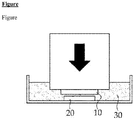
- FIG. 1 is a schematic diagram illustrating pre-lithiation using a direct contacting method according to the present invention.
- the pre-lithiation of a silicon oxide negative electrode for a secondary battery according to the present invention is performed by a first step of immersing a silicon oxide negative electrode for a secondary battery in an electrolyte solution for wetting; and a second step of bringing the wetted silicon oxide negative electrode for a secondary battery into direct contact with a lithium metal.
- the method is characterized in that the second step comprises bringing the wetted silicon oxide negative electrode for the secondary battery into direct contact with the lithium metal for 5 to 50 minutes.
- the silicon oxide negative electrode is a negative electrode formed using silicon and an oxide thereof as a main component to increase a capacity density of a conventional negative electrode formed using a carbon material such as graphite. Since the silicon oxide used in the present invention has a theoretical capacity density of 4200 mAh/g, which is much higher than that of a carbon material, that is, 372 mAh/g, it may be suitably used as a negative electrode for a secondary battery. However, since the silicon oxide negative electrode has a high initial irreversible capacity due to low morphological stability, a reduced electrode capacity or a risk of losing a cell balance, pre-lithiation as used in the present invention is required.
- the silicon oxide negative electrode is immersed in an electrolyte solution for wetting.
- the electrolyte solution is prepared by dissolving a lithium salt in a solvent, and the type of electrolyte solution is not limited as long as it can promote side reactions that will occur during the early charging of the silicon oxide negative electrode.
- any one or two or more selected from the group consisting of LiCl, LiBr, LiI, LiClO 4 , LiBF 4 ,LiB 10 Cl 10 , LiPF 6 , LiCF 3 SO 3 , LiCF 3 CO 2 , LiAsF 6 , LiSbF 6 , LiAlCl 4 , CH 3 SO 3 Li, CF 3 SO 3 Li, (CF 3 SO 2 ) 2 NLi, chloroborane lithium, lower aliphatic lithium carboxylate and lithium tetraphenyl borate may be used, and as a solvent, any one or a mixture of two or more selected from the group consisting of N-methyl-2-pyrrolidinone, propylene carbonate, ethylene carbonate, butylene carbonate, dimethyl carbonate, diethyl carbonate, ethylmethyl carbonate, gamma-butyrolactone and 1,2-dimethoxy ethane may be used.
- the first step of immersing the silicon oxide negative electrode in an electrolyte solution for wetting is performed by immersing the silicon oxide negative electrode in the electrolyte solution for 10 minutes to 50 hours. According to the wetting, a volume of the silicon oxide negative electrode increases to a specific level, and a distance between silicon oxide particles suitably increases, thereby deeply permeating the electrolyte solution in-between the particles. Therefore, a contact area between the electrolyte solution and the silicon oxide negative electrode increases, such that lithium ions easily enter the silicon oxide negative electrode due to direct contact.
- the silicon oxide negative electrode When immersed for less than 10 minutes, the silicon oxide negative electrode does not sufficiently expand, and the electrolyte solution cannot sufficiently and deeply permeate into the silicon oxide negative electrode, such that the pre-lithiation induced by direct contact may not sufficiently occur in the subsequent steps, and when immersed for more than 50 hours, the silicon oxide negative electrode is exposed to the electrolyte solution for too long, resulting in low morphological stability, a low adhesive strength of the electrode, and a reduced cell balance.
- the immersion time in the electrolyte solution is more preferably 1 to 30 hours, and further more preferably 3 to 20 hours.
- the second step of pre-lithiation is bringing the wetted silicon oxide negative electrode into direct contact with a lithium metal. Similar to the initial irreversible circumstances, according to the direct contact, lithium ions enter and are positioned in the silicon oxide negative electrode, such that less irreversibility will occur in subsequent charging cycles according to the space of the lithium ions, a degree of initial irreversibility of the silicon oxide negative electrode may be controlled.
- the second step is performed by bringing the silicon oxide negative electrode for a secondary battery into direct contact with the lithium metal with a force of 6,537 Pa to 653,776 Pa (0.1 to 10 kgf per unit area of 1.5 cm 2 ) and for 5 to 50 minutes
- a force of 6,537 Pa to 653,776 Pa 0.1 to 10 kgf per unit area of 1.5 cm 2
- sufficient pre-lithiation may not occur, leading to high initial irreversibility
- the bringing into direct contact is performed with a force of more than 653,776 Pa (10 kgf) or over 50 minutes, the pre-lithiation is excessively performed so as to reduce an electrode capacity.
- the silicon oxide negative electrode is brought into direct contact with the lithium metal with a force of 13,074 Pa to 326,888 Pa (0.2 to 5 kgf per unit area of 1.5 cm 2 ), and it is further more preferable that the direct contact is performed with a force of 32,685 to 130,740 Pa (0.5 to 2 kgf per unit area of 1.5 cm 2 ).
- the silicon oxide negative electrode is brought into direct contact with the lithium metal for 10 to 30 minutes.
- FIG. 1 is a schematic diagram illustrating pre-lithiation induced by a direct contacting method according to the present invention.
- Pre-lithiation is performed by immersing an electrode in an electrolyte solution for wetting, and bringing the electrode into direct contact with a lithium metal by placing the lithium metal on the electrode and pressing the lithium metal-placed electrode with a specific force.
- the lithium metal may have an area that entirely covers the electrode, and a method of applying the force to the lithium metal is not limited.
- a mechanically pressing method using a press is advantageous for applying a specific force for a specific time.
- the lithium metal may be in direct contact with the electrode in a state in which the electrolyte solution has been removed or in the electrolyte solution. Taking a reduction in a process time and a pre-lithiation effect into account, it is more preferable that the electrode is in direct contact with the lithium metal in the electrolyte solution.
- the method of the present invention may include manufacturing the silicon oxide negative electrode for the secondary battery used in step 1 by a method that includes: preparing a slurry by mixing an electrode active material containing silicon oxide, a conducting material, and a binder; coating a current collector with the mixed slurry; pressing the coated current collector with a roller, and punching and drying the resultant to be a unit electrode; and pre-lithiating the dried unit electrode according to the method comprising the first step and the second step as described above.
- the pre-lithiation step may be easily added to the conventional process, and since the additional process itself is very easy and simple, production costs are not greatly increased.
- the conventional, physicochemical method is performed at a high temperature, there is a high risk of fire and explosion, and the conventional, electrochemical method has difficulty in homogenization and requires a high cost
- the pre-lithiation method according to the present invention does not require a high cost, and facilitates relatively stable and uniform pre-lithiation.
- the secondary battery includes an electrode assembly which is made by lamination of electrodes of different polarities in a state that is separated by a separator, and the electrode assembly includes a positive electrode including positive electrode active materials, a negative electrode including negative electrode active materials, and a separator.
- the positive electrode for example, is made by applying the mixture of the positive electrode active materials, a conductive agent and a binder on the positive electrode current collector and then drying the positive electrode current collector, and a filler may be added to the mixture.
- the positive electrode current collector is generally made to have a thickness of 3 to 500 ⁇ m.
- the positive electrode current collector is not particularly limited as long as it has high conductivity without causing chemical changes in the battery.
- Examples of the positive electrode current collector include stainless steel, aluminum, nickel, titanium, calcined carbon, and stainless steel or aluminum of which the surface has been treated with carbon, nickel, titanium, silver, or the like.
- the current collector may have fine irregularities on the surface thereof to increase the adhesion of the positive electrode active material, and various forms such as a film, a sheet, a foil, a net, a porous body, a foam, and a nonwoven fabric are possible.
- the conductive agent is usually added in an amount of 1 to 50 wt% based on the total weight of the mixture including the positive electrode active material.
- a conductive agent is not particularly limited as long as it has electrical conductivity without causing a chemical change in the battery, and examples thereof include graphite such as natural graphite and artificial graphite; carbon black such as carbon black, acetylene black, Ketjenblack, channel black, furnace black, lamp black, and summer black; conductive fibers such as carbon fiber and metal fiber; metal powders such as carbon fluoride, aluminum and nickel powder; conductive whiskey such as zinc oxide and potassium titanate; conductive oxides such as titanium oxide; conductive materials such as polyphenylene derivatives and the like.
- the binder is a component which assists in bonding of the active material and the conductive material and binding with the current collector, and is usually added in an amount of 1 to 50 wt% based on the total weight of the mixture containing the positive electrode active material.
- binders include polyvinylidene fluoride, polyvinyl alcohol, carboxy methyl cellulose (CMC), starch, hydroxyl propyl cellulose, regenerated cellulose, polyvinyl pyrrolidone, tetrafluoro ethylene, polyethylene, Polypropylene, ethylenepropylene-diene terpolymer (EPDM), sulfonated EPDM, styrene butylene rubber, fluorine rubber, various copolymers and the like.
- the filler is optionally used as a component for inhibiting expansion of a positive electrode, and is not particularly limited as long as it is a fibrous material without causing a chemical change in the battery.
- the filler include olefin polymers such as polyethylene and polypropylene; fibrous materials such as glass fibers and carbon fibers.
- the negative electrode may be formed by applying a negative electrode material on the negative electrode current collector and drying the negative electrode material. If necessary, the negative electrode may further include the above-described components.
- the negative electrode current collector is generally made to have a thickness of 3 to 500 ⁇ m.
- the negative electrode current collector is not particularly limited as long as it has conductivity without causing chemical changes in the battery, and examples thereof include copper, stainless steel, aluminum, nickel, titanium, calcined carbon, and copper or stainless steel of which the surface has been treated with carbon, nickel, titanium, or silver, and an aluminum-cadmium alloy.
- fine unevenness can be formed on the surface to enhance the bonding force of the negative electrode active material, and it can be used in various forms such as films, sheets, foils, nets, porous bodies, foams, etc.
- Both a polyolefin-based separator commonly known as a separator for insulating the electrodes between the positive electrode and the negative electrode, and a composite separator having an organic and inorganic composite layer formed on the olefin-based substrate can be used and are not particularly limited.
- the electrolyte injected into the secondary battery is a non-aqueous electrolyte containing a lithium salt, which is composed of a nonaqueous electrolyte and lithium.
- a non-aqueous electrolyte a non-aqueous electrolyte, a solid electrolyte, an inorganic solid electrolyte and the like are used.
- nonaqueous electrolyte examples include N-methyl-2-pyrrolidinone, propylene carbonate, ethylene carbonate, butylene carbonate, dimethyl carbonate, diethyl carbonate, gamma-butylolactone, 1,2-dimethoxyethane, tetrahydroxyfranc, 2-methyltetrahydrofuran, dimethylsulfoxide, 1,3-dioxolane, formamide, dimethylformamide, dioxolane, acetonitrile, nitromethane, methyl formate, methyl acetate, phosphoric acid triester, trimethoxymethane, dioxolane derivatives, sulfolane, methyl sulfolane, 1,3-dimethyl-2-imidazolidinone, propylene carbonate derivatives, tetrahydrofuran derivatives, ether, methyl pyrophosphate, ethyl propionate and the like.
- organic solid electrolyte examples include polymers such as a polyethylene derivative, a polyethylene oxide derivative, a polypropylene oxide derivative, a phosphate ester polymer, an agitation lysine, a polyester sulfide, a polyvinyl alcohol, a polyvinylidene fluoride, and an ionic dissociation group.
- Examples of the inorganic solid electrolyte include Li nitrides such as Li 3 N, LiI, Li 5 NI 2 , Li 3 N-LiI-LiOH, LiSiO 4 , LiSiO 4 -LiI-LiOH, Li 2 SiS 3 , Li 4 SiO 4 , Li 4 SiO 4 -LiI-LiOH, Li 3 PO 4 -Li 2 S-SiS 2 , halides, sulfates, etc.
- Li nitrides such as Li 3 N, LiI, Li 5 NI 2 , Li 3 N-LiI-LiOH, LiSiO 4 , LiSiO 4 -LiI-LiOH, Li 2 SiS 3 , Li 4 SiO 4 , Li 4 SiO 4 -LiI-LiOH, Li 3 PO 4 -Li 2 S-SiS 2 , halides, sulfates, etc.
- the lithium salt is a substance that is soluble in the non-aqueous electrolyte, and examples thereof include LiCl, LiBr, LiI, LiClO 4 , LiBF 4 ,LiB 10 Cl 10 , LiPF 6 , LiCF 3 SO 3 , LiCF 3 CO 2 , LiAsF 6 , LiSbF 6 , LiAlCl 4 , CH 3 SO 3 Li, CF 3 SO 3 Li, (CF 3 SO 2 ) 2 NLi, chloroborane lithium, lower aliphatic carboxylate lithium, lithium 4-phenylborate, imide and the like.
- pyridine, triethylphosphite, triethanolamine, cyclic ethers, ethylenediamine, glyme, hexahydrate triamide, nitrobenzene derivatives, sulfur, quinone imine dyes, N-substituted oxazolidinones, N, N-substituted imidazolidines, ethylene glycol dialkyl ether, ammonium salt, pyrrole, 2-methoxyethanol, aluminum trichloride, etc. may be added to the non-aqueous electrolyte.
- a halogen-containing solvent such as carbon tetrachloride or ethylene trifluoride may be further added to impart nonflammability, or a carbon dioxide gas may be further added to improve high temperature storage characteristics.
- a negative electrode composite slurry was prepared by adding 92 wt% SiO as a negative electrode active material, 3 wt% Denka Black (conducting material), 3.5 wt% SBR (binding agent), and 1.5 wt% CMC (thickening agent) to water.
- a negative electrode was manufactured by coating one surface of a copper current collector with the negative electrode composite slurry, drying and rolling the coated copper current collector, and punching the resulting copper current collector to a specific size.
- An electrolyte solution was prepared by dissolving 1M lithium hexafluorophosphate (LiPF 6 ) in a solvent prepared by mixing ethylene carbonate (EC) and ethylmethyl carbonate (DEC) in a volume ratio of 50:50, the negative electrode manufactured in the above-described step was immersed in the electrolyte solution for wetting for 5 hours, and a lithium metal was brought into contact with the negative electrode and then pressed with a force of 1 kgf per unit area of 1.5 cm 2 for 10 minutes. The negative electrode manufactured by wetting and direct contacting was washed with dimethyl carbonate (DMC) and then dried.
- LiPF 6 lithium hexafluorophosphate
- EC ethylene carbonate
- DEC ethylmethyl carbonate
- a lithium metal foil 150 ⁇ m
- a coin-type half-cell was manufactured by interposing a polyolefin separator between the negative electrode and the counter electrode and injecting an electrolyte solution in which 1M lithium hexafluorophosphate (LiPF 6 ) was dissolved in a mixed solvent in which ethylene carbonate (EC) and ethylmethyl carbonate (DEC) were mixed in a volume ratio of 50:50.
- LiPF 6 lithium hexafluorophosphate
- EC ethylene carbonate
- DEC ethylmethyl carbonate
- a charge/discharge reversibility test was performed for the coin-type half-cell manufactured described above using an electrochemical battery cycle tester. Charging was performed by applying a current up to a voltage of 0.005 V (vs. Li/Li+) at a current density of 0.1C-rate in the first cycle, and discharging was performed up to a voltage of 1.5V (vs. Li/Li+) at the same current density used during the charging. At this time, a charge capacity and a discharge capacity were measured, and charge/discharge efficiency was calculated according to Equation 1.
- Charge / discharge efficiency % Discharge capacity Charge capacity ⁇ 100
- Example 1 A procedure was carried out in the same manner as described in Example 1, except that a contact time was changed to 20 minutes during the pre-lithiation using the direct contacting method of Example 1.
- Example 1 A procedure was carried out in the same manner as described in Example 1, except that a contact time was changed to 30 minutes during the pre-lithiation using the direct contacting method of Example 1.
- Example 1 A procedure was carried out in the same manner as described in Example 1, except that a contact time was changed to 20 minutes and a contact pressure was changed to 0.5 kgf per 1.5 cm 2 during the pre-lithiation using the direct contacting method of Example 1.
- Example 1 A procedure was carried out in the same manner as described in Example 1, except that a contact time was changed to 20 minutes and a contact pressure was changed to 2 kgf per 1.5 cm 2 during the pre-lithiation using the direct contacting method of Example 1.
- Example 1 A procedure was carried out in the same manner as described in Example 1, except that a contact time was changed to 20 minutes and a wetting time was changed to 3 hours during the pre-lithiation using the direct contacting method of Example 1.
- Example 1 A procedure was carried out in the same manner as described in Example 1, except that a contact time was changed to 20 minutes and a wetting time was changed to 7 hours during the pre-lithiation using the direct contacting method of Example 1.
- Example 1 A procedure was carried out in the same manner as described in Example 1, except that a contact time was changed to 0 minutes during the pre-lithiation using the direct contacting method of Example 1.
- Example 1 A procedure was carried out in the same manner as described in Example 1, except that a contact time was changed to 60 minutes during the pre-lithiation using the direct contacting method of Example 1.
- Example 1 A procedure was carried out in the same manner as described in Example 1, except that a contact time was changed to 20 minutes and a contact pressure was changed to 0.01 kgf per 1.5 cm 2 during the pre-lithiation using the direct contacting method of Example 1.
- Example 1 A procedure was carried out in the same manner as described in Example 1, except that a contact time was changed to 20 minutes and a wetting time was changed to 0 hours during the pre-lithiation using the direct contacting method of Example 1.
- Example 1 The first-cycle charge/discharge efficiency measured for each of Examples and Comparative Examples through a charge/discharge reversibility test is shown in Table 1 below.
- Table 1 Classification Lithium metal contact time Lithium metal contact pressure (per 1.5 cm 2 ) Electrolyte solution immersion time First -cycle charge/discharge efficiency Comparative Example 1 - - 5 hours 73% Example 1 10 minutes 1 kgf 5 hours 77% Example 2 20 minutes 1 kgf 5 hours 85% Example 3 30 minutes 1 kgf 5 hours 98% Comparative Example 2 60 minutes 1kgf 5 hours 121% Comparative Example 3 20 minutes 0.01 kgf 5 hours 74%
- Example 4 20 minutes 0.5kgf 5 hours 80%
- Example 5 20 minutes 2kgf 5 hours 91% Comparative Example 4 20 minutes 1 kgf - 74%
- Example 6 20 minutes 1 kgf 3 hours 82%
- Example 1 The first-cycle charge/discharge reversibility of Examples 1 to 3 was considerably improved, compared to that of Comparative Example 1.
- the charge/discharge reversibility was improved 4% in Example 1, 12% in Example 2, and 25% in Example 3. It is concluded that the improved reversibility of Examples 1 to 3 results from occurrence of surface side reactions in advance caused by the reaction between silicon monoxide (SiO) with the lithium metal previously added through pre-lithiation, and formation of dead particles in advance due to volume expansion caused by undergoing, in advance, a volume change in charging.
- SiO silicon monoxide
- Comparative Example 2 exhibited charge/discharge efficiency of over 100%, which is a phenomenon resulting from the continuous intake of additional lithium ions into an active material even after the initial irreversibility of the negative electrode is reduced because of the intake of an excessive amount of lithium ions into the negative electrode due to long-term contact with the lithium metal, and the actual charge capacity of the cell is reduced.
- the time for direct contact of a lithium metal is preferably 5 to 50 minutes, and more preferably 10 to 30 minutes.
- the contact pressure is preferably 0.1 to 10 kgf, more preferably 0.2 to 5 kgf, and further more preferably 0.5 to 2 kgf per 1.5 cm 2 .
- the first-cylce charge/discharge efficiency is less than 75%, and by repeated charging/discharging, performance may be drastically reduced, and when the contact time is more than 50 minutes, like Comparative Example 2, a cell balance may be lost.
Landscapes
- Chemical & Material Sciences (AREA)
- Engineering & Computer Science (AREA)
- General Chemical & Material Sciences (AREA)
- Chemical Kinetics & Catalysis (AREA)
- Electrochemistry (AREA)
- Manufacturing & Machinery (AREA)
- Materials Engineering (AREA)
- Inorganic Chemistry (AREA)
- Dispersion Chemistry (AREA)
- Secondary Cells (AREA)
- Battery Electrode And Active Subsutance (AREA)
Priority Applications (1)
| Application Number | Priority Date | Filing Date | Title |
|---|---|---|---|
| PL18802551T PL3537519T3 (pl) | 2017-05-19 | 2018-04-04 | Sposób wstępnego litowania anody z tlenku krzemu dla akumulatora |
Applications Claiming Priority (2)
| Application Number | Priority Date | Filing Date | Title |
|---|---|---|---|
| KR1020170062345A KR102265214B1 (ko) | 2017-05-19 | 2017-05-19 | 이차전지용 실리콘 산화물 음극의 전리튬화 방법 |
| PCT/KR2018/003989 WO2018212453A1 (ko) | 2017-05-19 | 2018-04-04 | 이차전지용 실리콘 산화물 음극의 전리튬화 방법 |
Publications (3)
| Publication Number | Publication Date |
|---|---|
| EP3537519A1 EP3537519A1 (en) | 2019-09-11 |
| EP3537519A4 EP3537519A4 (en) | 2019-12-04 |
| EP3537519B1 true EP3537519B1 (en) | 2021-06-02 |
Family
ID=64274083
Family Applications (1)
| Application Number | Title | Priority Date | Filing Date |
|---|---|---|---|
| EP18802551.4A Active EP3537519B1 (en) | 2017-05-19 | 2018-04-04 | Method for pre-lithiating silicon oxide anode for secondary battery |
Country Status (6)
| Country | Link |
|---|---|
| US (1) | US11575117B2 (pl) |
| EP (1) | EP3537519B1 (pl) |
| KR (1) | KR102265214B1 (pl) |
| CN (1) | CN110062973B (pl) |
| PL (1) | PL3537519T3 (pl) |
| WO (1) | WO2018212453A1 (pl) |
Families Citing this family (28)
| Publication number | Priority date | Publication date | Assignee | Title |
|---|---|---|---|---|
| KR102768402B1 (ko) | 2018-11-26 | 2025-02-18 | 주식회사 엘지에너지솔루션 | 리튬 이차전지의 제조방법 |
| KR20200067434A (ko) * | 2018-12-04 | 2020-06-12 | 주식회사 엘지화학 | 리튬 이차전지용 음극의 제조방법 |
| CN109742325B (zh) * | 2018-12-29 | 2021-01-19 | 曙鹏科技(深圳)有限公司 | 锂离子电池负极片分步预锂化的方法 |
| KR102530195B1 (ko) | 2019-01-18 | 2023-05-10 | 주식회사 엘지에너지솔루션 | 이차전지용 음극의 제조방법 |
| KR102343176B1 (ko) | 2019-01-21 | 2021-12-27 | 주식회사 엘지에너지솔루션 | 리튬 복합 음극 활물질, 이를 포함하는 음극 및 이들의 제조방법 |
| KR102586822B1 (ko) | 2019-01-25 | 2023-10-11 | 주식회사 엘지에너지솔루션 | 이차전지용 음극의 제조방법 |
| KR102530157B1 (ko) * | 2019-01-31 | 2023-05-10 | 주식회사 엘지에너지솔루션 | 이차전지용 음극의 전리튬화 방법 |
| KR102764986B1 (ko) | 2019-05-08 | 2025-02-12 | 주식회사 엘지에너지솔루션 | 전고체 이차전지용 음극의 전리튬화 방법 및 이를 이용한 이차전지 |
| KR20200129908A (ko) | 2019-05-10 | 2020-11-18 | 주식회사 엘지화학 | 음극의 제조방법 |
| KR102755824B1 (ko) | 2019-05-24 | 2025-01-17 | 주식회사 엘지에너지솔루션 | 전고체전지용 음극의 제조방법 |
| KR102074501B1 (ko) | 2019-07-30 | 2020-02-06 | (주)아이나노 | 리튬이온 이차전지용 음극재의 제조방법 |
| KR102856172B1 (ko) * | 2019-09-06 | 2025-09-04 | 주식회사 엘지에너지솔루션 | 음극 전극의 전리튬-전소듐화 방법, 전리튬-전소듐화 음극, 및 이를 포함하는 리튬 이차전지 |
| US11342553B2 (en) * | 2019-10-02 | 2022-05-24 | Enevate Corporation | Methods for prelithiation of silicon containing electrodes |
| US11342545B2 (en) * | 2019-12-06 | 2022-05-24 | GM Global Technology Operations LLC | Methods of lithiating electroactive materials |
| KR102747621B1 (ko) * | 2020-03-27 | 2024-12-31 | 주식회사 엘지에너지솔루션 | 음극의 제조방법 |
| KR102286231B1 (ko) | 2020-07-29 | 2021-08-06 | 에스케이이노베이션 주식회사 | 리튬이 도핑된 규소계 산화물 음극 활물질, 이의 제조방법, 이를 포함하는 음극 및 이차전지 |
| KR102400456B1 (ko) | 2020-08-05 | 2022-05-20 | 부산대학교 산학협력단 | 3차원 그래핀-염료 나노복합체를 포함하는 이차전지용 음극의 제조방법 |
| KR20220019915A (ko) | 2020-08-11 | 2022-02-18 | 경북대학교 산학협력단 | 유기안료를 이용한 이차전지용 음극재 및 이의 제조방법 |
| KR102921351B1 (ko) * | 2020-11-02 | 2026-01-30 | 주식회사 엘지에너지솔루션 | 전리튬화층을 포함하는 리튬 금속 전지용 음극, 이의 제조방법, 및 이를 포함하는 리튬 금속 전지 |
| KR102886191B1 (ko) | 2020-11-06 | 2025-11-13 | 주식회사 엘지에너지솔루션 | 음극 및 음극의 전리튬화 방법 |
| US11978880B2 (en) | 2021-06-01 | 2024-05-07 | GM Global Technology Operations LLC | Electrochemical exchange for the fabrication of a layered anode material |
| US20230060634A1 (en) * | 2021-09-02 | 2023-03-02 | GM Global Technology Operations LLC | Methods for fabricating two-dimensional anode materials |
| US12034144B2 (en) | 2021-09-27 | 2024-07-09 | GM Global Technology Operations LLC | Solid-state synthesis for the fabrication of a layered anode material |
| CN114335414A (zh) * | 2021-11-15 | 2022-04-12 | 华中科技大学 | 一种锂离子电池电极材料预锂化的方法及其产物与应用 |
| WO2023168258A2 (en) * | 2022-03-04 | 2023-09-07 | Factorial Inc. | Electrochemical cell having electrolyte with polymer localized on electrode surface |
| WO2023212540A1 (en) * | 2022-04-25 | 2023-11-02 | Krishna Kumar Sarode | Polymer-supported and lithiophilic material impregnated carbon fiber protection for li-metal stability |
| CN114899359B (zh) * | 2022-06-27 | 2023-06-09 | 中国科学院化学研究所 | 一种改进的锂/硅/碳复合负极及其制备方法 |
| EP4700836A1 (en) * | 2023-12-22 | 2026-02-25 | LG Energy Solution, Ltd. | Method for manufacturing pre-lithiated negative electrode, negative electrode manufactured thereby, and lithium secondary battery comprising negative electrode |
Family Cites Families (27)
| Publication number | Priority date | Publication date | Assignee | Title |
|---|---|---|---|---|
| KR100291067B1 (ko) | 1998-05-27 | 2001-06-01 | 박호군 | 카본전극의전리튬화방법과이를이용한리튬이차전지제조방법 |
| US20050130043A1 (en) * | 2003-07-29 | 2005-06-16 | Yuan Gao | Lithium metal dispersion in electrodes |
| JP2006216451A (ja) | 2005-02-04 | 2006-08-17 | Sony Corp | 電池の製造方法 |
| US7754390B2 (en) | 2006-03-14 | 2010-07-13 | Panasonic Corporation | Manufacturing method of negative electrode for nonaqueous electrolytic rechargeable battery, and nonaqueous electrolytic rechargeable battery using it |
| JP2008041489A (ja) | 2006-08-08 | 2008-02-21 | Fdk Corp | リチウムイオン蓄電素子 |
| JP2009076372A (ja) * | 2007-09-21 | 2009-04-09 | Shin Etsu Chem Co Ltd | 非水系二次電池 |
| US20090148773A1 (en) * | 2007-12-06 | 2009-06-11 | Ener1, Inc. | Lithium-ion secondary battery cell, electrode for the battery cell, and method of making the same |
| KR101397415B1 (ko) | 2011-02-11 | 2014-05-20 | 한양대학교 산학협력단 | 리튬화된 금속 탄소 복합체 전극의 제조 방법, 이에 의하여 제조된 리튬화된 금속 탄소 복합체 전극 및 이를 포함하는 전기화학소자 |
| KR20130007320A (ko) * | 2011-06-30 | 2013-01-18 | 삼성전기주식회사 | 리튬판, 전극의 리튬화 방법 및 에너지 저장장치 |
| JP6112111B2 (ja) | 2012-06-12 | 2017-04-12 | 日本電気株式会社 | リチウムイオン二次電池の製造方法およびリチウムイオン二次電池 |
| KR101608115B1 (ko) | 2012-11-30 | 2016-04-01 | 주식회사 엘지화학 | 리튬 이차전지용 음극재 및 이의 제조방법 |
| US9748599B2 (en) * | 2013-01-30 | 2017-08-29 | Nanoscale Components, Inc. | Phased introduction of lithium into the pre-lithiated anode of a lithium ion electrochemical cell |
| US20160133394A1 (en) * | 2013-03-14 | 2016-05-12 | Energ2 Technologies, Inc. | Energy storage devices based on hybrid carbon electrode systems |
| KR101594784B1 (ko) * | 2013-07-30 | 2016-02-17 | 주식회사 엘지화학 | 음극 전극의 전리튬화 방법 |
| KR101820463B1 (ko) * | 2013-07-30 | 2018-01-19 | 주식회사 엘지화학 | 음극 전극의 전리튬화 방법 |
| JP6302322B2 (ja) | 2013-09-26 | 2018-03-28 | 積水化学工業株式会社 | リチウムイオン二次電池 |
| US9343736B2 (en) * | 2014-03-31 | 2016-05-17 | Battelle Memorial Institute | Lithium compensation for full cell operation |
| CA2949093C (en) * | 2014-05-15 | 2019-04-30 | Msmh, Llc | Lithium intercalated nanocrystal anodes |
| EP3170218A4 (en) * | 2014-07-15 | 2018-05-09 | The Texas A&M University System | Large energy density batteries |
| KR101594874B1 (ko) | 2014-07-16 | 2016-02-17 | 삼성전자주식회사 | 전자 장치, 외부 장치 및 전자 장치의 외부 장치 전원 제어방법 |
| CN104577086B (zh) * | 2014-12-17 | 2017-01-04 | 李震祺 | 一种预锂化和石墨烯包覆的介孔SiO负极材料及其制备方法 |
| US9837659B2 (en) * | 2014-12-22 | 2017-12-05 | GM Global Technology Operations LLC | Process for lithiating negative electrodes for lithium ion electrochemical cells |
| CN105470465B (zh) * | 2015-01-21 | 2018-02-13 | 万向一二三股份公司 | 一种硅基负极的预锂化处理工艺及装置 |
| WO2016060534A2 (ru) * | 2015-08-03 | 2016-04-21 | Тоо "Институт Аккумуляторов" | Свободный от металлического лития кремний/серный аккумулятор |
| KR102170026B1 (ko) | 2015-09-21 | 2020-10-26 | 주식회사 엘지화학 | 저온 특성이 향상된 리튬 이차전지의 제조방법 및 리튬 이차전지 |
| US10714747B2 (en) * | 2016-12-16 | 2020-07-14 | Bayerische Motoren Werke Aktiengesellschaft | High energy lithium ion secondary battery with improved lifetime and energy density |
| KR102261504B1 (ko) * | 2017-08-10 | 2021-06-07 | 주식회사 엘지에너지솔루션 | 이차전지용 음극의 전리튬화 방법 |
-
2017
- 2017-05-19 KR KR1020170062345A patent/KR102265214B1/ko active Active
-
2018
- 2018-04-04 US US16/465,900 patent/US11575117B2/en active Active
- 2018-04-04 WO PCT/KR2018/003989 patent/WO2018212453A1/ko not_active Ceased
- 2018-04-04 EP EP18802551.4A patent/EP3537519B1/en active Active
- 2018-04-04 CN CN201880004953.1A patent/CN110062973B/zh active Active
- 2018-04-04 PL PL18802551T patent/PL3537519T3/pl unknown
Non-Patent Citations (1)
| Title |
|---|
| SEONG IL WON ET AL: "Electrochemical Study of SiO Initial Efficiency for Lithium Ion Batteries", 2016 3RD ASIA-PACIFIC WORLD CONGRESS ON COMPUTER SCIENCE AND ENGINEERING (APWC ON CSE), IEEE, 5 December 2016 (2016-12-05), pages 78 - 83, XP033105168, DOI: 10.1109/APWC-ON-CSE.2016.024 * |
Also Published As
| Publication number | Publication date |
|---|---|
| KR102265214B1 (ko) | 2021-06-16 |
| EP3537519A1 (en) | 2019-09-11 |
| CN110062973A (zh) | 2019-07-26 |
| KR20180127044A (ko) | 2018-11-28 |
| US20190305298A1 (en) | 2019-10-03 |
| PL3537519T3 (pl) | 2021-10-18 |
| CN110062973B (zh) | 2022-02-11 |
| US11575117B2 (en) | 2023-02-07 |
| EP3537519A4 (en) | 2019-12-04 |
| WO2018212453A1 (ko) | 2018-11-22 |
Similar Documents
| Publication | Publication Date | Title |
|---|---|---|
| EP3537519B1 (en) | Method for pre-lithiating silicon oxide anode for secondary battery | |
| EP3561918B1 (en) | Pre-lithiation method for anode for secondary battery | |
| US11316156B2 (en) | Pre-lithiation using lithium metal and inorganic composite layer | |
| KR102283684B1 (ko) | 이차전지용 음극의 제조방법 및 이차전지용 음극 | |
| EP3605670B1 (en) | Method for forming lithium metal and inorganic material composite thin film and method for pre-lithiation of negative electrode for lithium secondary battery by using same | |
| KR101592993B1 (ko) | 전해액과 반응을 방지하기 위한 코팅층을 포함하는 전극 | |
| EP3751641B1 (en) | Multi-layered anode containing silicon-based compound, and lithium secondary battery including the same | |
| EP2811562B1 (en) | Method of manufacturing electrode for lithium secondary cell | |
| EP2919314B1 (en) | Electrode laminate comprising electrodes having different areas and secondary battery comprising same | |
| EP3196970B1 (en) | Method for manufacturing lithium secondary battery and lithium secondary battery manufactured using same | |
| KR20160126840A (ko) | 하나 이상의 코팅층을 포함하는 양극 활물질 입자 및 이의 제조 방법 | |
| EP4053939A1 (en) | Negative electrode for lithium metal battery, comprising prelithiation layer, manufacturing method therefor, and lithium metal battery comprising same | |
| US10658656B2 (en) | High voltage positive active material and method for preparing the same | |
| EP2418718A2 (en) | Cathode active material for lithium secondary battery | |
| KR20130125862A (ko) | 고용량 리튬 망간계 산화물 및 이를 포함하는 리튬 이차전지 | |
| KR20130117016A (ko) | 구조적 안정성이 우수한 양극 활물질 및 이를 포함하는 리튬 이차전지 | |
| KR101352836B1 (ko) | 리튬 과잉의 리튬 망간계 산화물의 제조 방법 및 이를 이용한 리튬 이차전지 | |
| KR20130008780A (ko) | 이종 전극 활물질층이 코팅된 복합 전극 및 이를 포함하는 리튬 이차전지 | |
| KR20130116585A (ko) | 황(s)원소를 포함하는 양극 활물질 및 이를 포함하는 리튬 이차전지 | |
| EP4030502A1 (en) | Lithium-free battery, and method for manufacturing same | |
| KR20130089310A (ko) | 리튬 이차전지용 양극 | |
| KR20110122280A (ko) | 액체 전해액을 포함하는 전해액 분리막 |
Legal Events
| Date | Code | Title | Description |
|---|---|---|---|
| STAA | Information on the status of an ep patent application or granted ep patent |
Free format text: STATUS: THE INTERNATIONAL PUBLICATION HAS BEEN MADE |
|
| PUAI | Public reference made under article 153(3) epc to a published international application that has entered the european phase |
Free format text: ORIGINAL CODE: 0009012 |
|
| STAA | Information on the status of an ep patent application or granted ep patent |
Free format text: STATUS: REQUEST FOR EXAMINATION WAS MADE |
|
| 17P | Request for examination filed |
Effective date: 20190607 |
|
| AK | Designated contracting states |
Kind code of ref document: A1 Designated state(s): AL AT BE BG CH CY CZ DE DK EE ES FI FR GB GR HR HU IE IS IT LI LT LU LV MC MK MT NL NO PL PT RO RS SE SI SK SM TR |
|
| AX | Request for extension of the european patent |
Extension state: BA ME |
|
| A4 | Supplementary search report drawn up and despatched |
Effective date: 20191104 |
|
| RIC1 | Information provided on ipc code assigned before grant |
Ipc: H01M 4/485 20100101ALI20191025BHEP Ipc: H01M 10/0525 20100101ALI20191025BHEP Ipc: H01M 4/1391 20100101AFI20191025BHEP Ipc: H01M 4/04 20060101ALI20191025BHEP Ipc: H01M 4/131 20100101ALI20191025BHEP |
|
| STAA | Information on the status of an ep patent application or granted ep patent |
Free format text: STATUS: EXAMINATION IS IN PROGRESS |
|
| 17Q | First examination report despatched |
Effective date: 20200527 |
|
| DAV | Request for validation of the european patent (deleted) | ||
| DAX | Request for extension of the european patent (deleted) | ||
| GRAP | Despatch of communication of intention to grant a patent |
Free format text: ORIGINAL CODE: EPIDOSNIGR1 |
|
| STAA | Information on the status of an ep patent application or granted ep patent |
Free format text: STATUS: GRANT OF PATENT IS INTENDED |
|
| INTG | Intention to grant announced |
Effective date: 20210312 |
|
| GRAS | Grant fee paid |
Free format text: ORIGINAL CODE: EPIDOSNIGR3 |
|
| GRAA | (expected) grant |
Free format text: ORIGINAL CODE: 0009210 |
|
| STAA | Information on the status of an ep patent application or granted ep patent |
Free format text: STATUS: THE PATENT HAS BEEN GRANTED |
|
| REG | Reference to a national code |
Ref country code: CH Ref legal event code: EP |
|
| AK | Designated contracting states |
Kind code of ref document: B1 Designated state(s): AL AT BE BG CH CY CZ DE DK EE ES FI FR GB GR HR HU IE IS IT LI LT LU LV MC MK MT NL NO PL PT RO RS SE SI SK SM TR |
|
| REG | Reference to a national code |
Ref country code: GB Ref legal event code: FG4D |
|
| REG | Reference to a national code |
Ref country code: AT Ref legal event code: REF Ref document number: 1399264 Country of ref document: AT Kind code of ref document: T Effective date: 20210615 |
|
| REG | Reference to a national code |
Ref country code: IE Ref legal event code: FG4D |
|
| REG | Reference to a national code |
Ref country code: DE Ref legal event code: R096 Ref document number: 602018018174 Country of ref document: DE |
|
| REG | Reference to a national code |
Ref country code: LT Ref legal event code: MG9D |
|
| PG25 | Lapsed in a contracting state [announced via postgrant information from national office to epo] |
Ref country code: HR Free format text: LAPSE BECAUSE OF FAILURE TO SUBMIT A TRANSLATION OF THE DESCRIPTION OR TO PAY THE FEE WITHIN THE PRESCRIBED TIME-LIMIT Effective date: 20210602 Ref country code: LT Free format text: LAPSE BECAUSE OF FAILURE TO SUBMIT A TRANSLATION OF THE DESCRIPTION OR TO PAY THE FEE WITHIN THE PRESCRIBED TIME-LIMIT Effective date: 20210602 Ref country code: FI Free format text: LAPSE BECAUSE OF FAILURE TO SUBMIT A TRANSLATION OF THE DESCRIPTION OR TO PAY THE FEE WITHIN THE PRESCRIBED TIME-LIMIT Effective date: 20210602 Ref country code: BG Free format text: LAPSE BECAUSE OF FAILURE TO SUBMIT A TRANSLATION OF THE DESCRIPTION OR TO PAY THE FEE WITHIN THE PRESCRIBED TIME-LIMIT Effective date: 20210902 |
|
| REG | Reference to a national code |
Ref country code: NL Ref legal event code: MP Effective date: 20210602 |
|
| REG | Reference to a national code |
Ref country code: AT Ref legal event code: MK05 Ref document number: 1399264 Country of ref document: AT Kind code of ref document: T Effective date: 20210602 |
|
| PG25 | Lapsed in a contracting state [announced via postgrant information from national office to epo] |
Ref country code: LV Free format text: LAPSE BECAUSE OF FAILURE TO SUBMIT A TRANSLATION OF THE DESCRIPTION OR TO PAY THE FEE WITHIN THE PRESCRIBED TIME-LIMIT Effective date: 20210602 Ref country code: NO Free format text: LAPSE BECAUSE OF FAILURE TO SUBMIT A TRANSLATION OF THE DESCRIPTION OR TO PAY THE FEE WITHIN THE PRESCRIBED TIME-LIMIT Effective date: 20210902 Ref country code: SE Free format text: LAPSE BECAUSE OF FAILURE TO SUBMIT A TRANSLATION OF THE DESCRIPTION OR TO PAY THE FEE WITHIN THE PRESCRIBED TIME-LIMIT Effective date: 20210602 Ref country code: RS Free format text: LAPSE BECAUSE OF FAILURE TO SUBMIT A TRANSLATION OF THE DESCRIPTION OR TO PAY THE FEE WITHIN THE PRESCRIBED TIME-LIMIT Effective date: 20210602 Ref country code: GR Free format text: LAPSE BECAUSE OF FAILURE TO SUBMIT A TRANSLATION OF THE DESCRIPTION OR TO PAY THE FEE WITHIN THE PRESCRIBED TIME-LIMIT Effective date: 20210903 |
|
| RAP2 | Party data changed (patent owner data changed or rights of a patent transferred) |
Owner name: LG ENERGY SOLUTION LTD. |
|
| PG25 | Lapsed in a contracting state [announced via postgrant information from national office to epo] |
Ref country code: SM Free format text: LAPSE BECAUSE OF FAILURE TO SUBMIT A TRANSLATION OF THE DESCRIPTION OR TO PAY THE FEE WITHIN THE PRESCRIBED TIME-LIMIT Effective date: 20210602 Ref country code: RO Free format text: LAPSE BECAUSE OF FAILURE TO SUBMIT A TRANSLATION OF THE DESCRIPTION OR TO PAY THE FEE WITHIN THE PRESCRIBED TIME-LIMIT Effective date: 20210602 Ref country code: PT Free format text: LAPSE BECAUSE OF FAILURE TO SUBMIT A TRANSLATION OF THE DESCRIPTION OR TO PAY THE FEE WITHIN THE PRESCRIBED TIME-LIMIT Effective date: 20211004 Ref country code: NL Free format text: LAPSE BECAUSE OF FAILURE TO SUBMIT A TRANSLATION OF THE DESCRIPTION OR TO PAY THE FEE WITHIN THE PRESCRIBED TIME-LIMIT Effective date: 20210602 Ref country code: AT Free format text: LAPSE BECAUSE OF FAILURE TO SUBMIT A TRANSLATION OF THE DESCRIPTION OR TO PAY THE FEE WITHIN THE PRESCRIBED TIME-LIMIT Effective date: 20210602 Ref country code: CZ Free format text: LAPSE BECAUSE OF FAILURE TO SUBMIT A TRANSLATION OF THE DESCRIPTION OR TO PAY THE FEE WITHIN THE PRESCRIBED TIME-LIMIT Effective date: 20210602 Ref country code: SK Free format text: LAPSE BECAUSE OF FAILURE TO SUBMIT A TRANSLATION OF THE DESCRIPTION OR TO PAY THE FEE WITHIN THE PRESCRIBED TIME-LIMIT Effective date: 20210602 Ref country code: EE Free format text: LAPSE BECAUSE OF FAILURE TO SUBMIT A TRANSLATION OF THE DESCRIPTION OR TO PAY THE FEE WITHIN THE PRESCRIBED TIME-LIMIT Effective date: 20210602 Ref country code: ES Free format text: LAPSE BECAUSE OF FAILURE TO SUBMIT A TRANSLATION OF THE DESCRIPTION OR TO PAY THE FEE WITHIN THE PRESCRIBED TIME-LIMIT Effective date: 20210602 |
|
| REG | Reference to a national code |
Ref country code: DE Ref legal event code: R097 Ref document number: 602018018174 Country of ref document: DE |
|
| RAP4 | Party data changed (patent owner data changed or rights of a patent transferred) |
Owner name: LG ENERGY SOLUTION, LTD. |
|
| PLBE | No opposition filed within time limit |
Free format text: ORIGINAL CODE: 0009261 |
|
| STAA | Information on the status of an ep patent application or granted ep patent |
Free format text: STATUS: NO OPPOSITION FILED WITHIN TIME LIMIT |
|
| PG25 | Lapsed in a contracting state [announced via postgrant information from national office to epo] |
Ref country code: DK Free format text: LAPSE BECAUSE OF FAILURE TO SUBMIT A TRANSLATION OF THE DESCRIPTION OR TO PAY THE FEE WITHIN THE PRESCRIBED TIME-LIMIT Effective date: 20210602 |
|
| 26N | No opposition filed |
Effective date: 20220303 |
|
| PG25 | Lapsed in a contracting state [announced via postgrant information from national office to epo] |
Ref country code: AL Free format text: LAPSE BECAUSE OF FAILURE TO SUBMIT A TRANSLATION OF THE DESCRIPTION OR TO PAY THE FEE WITHIN THE PRESCRIBED TIME-LIMIT Effective date: 20210602 |
|
| PG25 | Lapsed in a contracting state [announced via postgrant information from national office to epo] |
Ref country code: IT Free format text: LAPSE BECAUSE OF FAILURE TO SUBMIT A TRANSLATION OF THE DESCRIPTION OR TO PAY THE FEE WITHIN THE PRESCRIBED TIME-LIMIT Effective date: 20210602 |
|
| REG | Reference to a national code |
Ref country code: CH Ref legal event code: PL |
|
| REG | Reference to a national code |
Ref country code: BE Ref legal event code: MM Effective date: 20220430 |
|
| PG25 | Lapsed in a contracting state [announced via postgrant information from national office to epo] |
Ref country code: MC Free format text: LAPSE BECAUSE OF FAILURE TO SUBMIT A TRANSLATION OF THE DESCRIPTION OR TO PAY THE FEE WITHIN THE PRESCRIBED TIME-LIMIT Effective date: 20210602 Ref country code: LU Free format text: LAPSE BECAUSE OF NON-PAYMENT OF DUE FEES Effective date: 20220404 Ref country code: LI Free format text: LAPSE BECAUSE OF NON-PAYMENT OF DUE FEES Effective date: 20220430 Ref country code: CH Free format text: LAPSE BECAUSE OF NON-PAYMENT OF DUE FEES Effective date: 20220430 |
|
| PG25 | Lapsed in a contracting state [announced via postgrant information from national office to epo] |
Ref country code: BE Free format text: LAPSE BECAUSE OF NON-PAYMENT OF DUE FEES Effective date: 20220430 |
|
| PG25 | Lapsed in a contracting state [announced via postgrant information from national office to epo] |
Ref country code: IE Free format text: LAPSE BECAUSE OF NON-PAYMENT OF DUE FEES Effective date: 20220404 |
|
| REG | Reference to a national code |
Ref country code: DE Ref legal event code: R081 Ref document number: 602018018174 Country of ref document: DE Owner name: LG ENERGY SOLUTION, LTD., KR Free format text: FORMER OWNER: LG CHEM, LTD., SEOUL, KR |
|
| P01 | Opt-out of the competence of the unified patent court (upc) registered |
Effective date: 20230412 |
|
| REG | Reference to a national code |
Ref country code: GB Ref legal event code: 732E Free format text: REGISTERED BETWEEN 20230901 AND 20230906 |
|
| PG25 | Lapsed in a contracting state [announced via postgrant information from national office to epo] |
Ref country code: HU Free format text: LAPSE BECAUSE OF FAILURE TO SUBMIT A TRANSLATION OF THE DESCRIPTION OR TO PAY THE FEE WITHIN THE PRESCRIBED TIME-LIMIT; INVALID AB INITIO Effective date: 20180404 |
|
| PG25 | Lapsed in a contracting state [announced via postgrant information from national office to epo] |
Ref country code: MK Free format text: LAPSE BECAUSE OF FAILURE TO SUBMIT A TRANSLATION OF THE DESCRIPTION OR TO PAY THE FEE WITHIN THE PRESCRIBED TIME-LIMIT Effective date: 20210602 Ref country code: CY Free format text: LAPSE BECAUSE OF FAILURE TO SUBMIT A TRANSLATION OF THE DESCRIPTION OR TO PAY THE FEE WITHIN THE PRESCRIBED TIME-LIMIT Effective date: 20210602 |
|
| PG25 | Lapsed in a contracting state [announced via postgrant information from national office to epo] |
Ref country code: MT Free format text: LAPSE BECAUSE OF FAILURE TO SUBMIT A TRANSLATION OF THE DESCRIPTION OR TO PAY THE FEE WITHIN THE PRESCRIBED TIME-LIMIT Effective date: 20210602 |
|
| PGFP | Annual fee paid to national office [announced via postgrant information from national office to epo] |
Ref country code: DE Payment date: 20250320 Year of fee payment: 8 |
|
| PG25 | Lapsed in a contracting state [announced via postgrant information from national office to epo] |
Ref country code: TR Free format text: LAPSE BECAUSE OF FAILURE TO SUBMIT A TRANSLATION OF THE DESCRIPTION OR TO PAY THE FEE WITHIN THE PRESCRIBED TIME-LIMIT Effective date: 20210602 |
|
| PGFP | Annual fee paid to national office [announced via postgrant information from national office to epo] |
Ref country code: GB Payment date: 20260324 Year of fee payment: 9 |
|
| PGFP | Annual fee paid to national office [announced via postgrant information from national office to epo] |
Ref country code: FR Payment date: 20260323 Year of fee payment: 9 |
|
| PGFP | Annual fee paid to national office [announced via postgrant information from national office to epo] |
Ref country code: PL Payment date: 20260324 Year of fee payment: 9 |