EP3537335B1 - Informationslesevorrichtung und informationslesesystem - Google Patents
Informationslesevorrichtung und informationslesesystem Download PDFInfo
- Publication number
- EP3537335B1 EP3537335B1 EP19161288.6A EP19161288A EP3537335B1 EP 3537335 B1 EP3537335 B1 EP 3537335B1 EP 19161288 A EP19161288 A EP 19161288A EP 3537335 B1 EP3537335 B1 EP 3537335B1
- Authority
- EP
- European Patent Office
- Prior art keywords
- data
- information reading
- unread
- section
- memory
- Prior art date
- Legal status (The legal status is an assumption and is not a legal conclusion. Google has not performed a legal analysis and makes no representation as to the accuracy of the status listed.)
- Active
Links
Images





Classifications
-
- G—PHYSICS
- G06—COMPUTING OR CALCULATING; COUNTING
- G06K—GRAPHICAL DATA READING; PRESENTATION OF DATA; RECORD CARRIERS; HANDLING RECORD CARRIERS
- G06K7/00—Methods or arrangements for sensing record carriers, e.g. for reading patterns
- G06K7/10—Methods or arrangements for sensing record carriers, e.g. for reading patterns by electromagnetic radiation, e.g. optical sensing; by corpuscular radiation
- G06K7/10009—Methods or arrangements for sensing record carriers, e.g. for reading patterns by electromagnetic radiation, e.g. optical sensing; by corpuscular radiation sensing by radiation using wavelengths larger than 0.1 mm, e.g. radio-waves or microwaves
- G06K7/10366—Methods or arrangements for sensing record carriers, e.g. for reading patterns by electromagnetic radiation, e.g. optical sensing; by corpuscular radiation sensing by radiation using wavelengths larger than 0.1 mm, e.g. radio-waves or microwaves the interrogation device being adapted for miscellaneous applications
- G06K7/10475—Methods or arrangements for sensing record carriers, e.g. for reading patterns by electromagnetic radiation, e.g. optical sensing; by corpuscular radiation sensing by radiation using wavelengths larger than 0.1 mm, e.g. radio-waves or microwaves the interrogation device being adapted for miscellaneous applications arrangements to facilitate interaction with further interrogation devices, e.g. such that at least two interrogation devices may function and cooperate in a network of such devices
-
- G—PHYSICS
- G06—COMPUTING OR CALCULATING; COUNTING
- G06K—GRAPHICAL DATA READING; PRESENTATION OF DATA; RECORD CARRIERS; HANDLING RECORD CARRIERS
- G06K17/00—Methods or arrangements for effecting co-operative working between equipments covered by two or more of main groups G06K1/00 - G06K15/00, e.g. automatic card files incorporating conveying and reading operations
- G06K17/0022—Methods or arrangements for effecting co-operative working between equipments covered by two or more of main groups G06K1/00 - G06K15/00, e.g. automatic card files incorporating conveying and reading operations arrangements or provisions for transferring data to distant stations, e.g. from a sensing device
- G06K17/0029—Methods or arrangements for effecting co-operative working between equipments covered by two or more of main groups G06K1/00 - G06K15/00, e.g. automatic card files incorporating conveying and reading operations arrangements or provisions for transferring data to distant stations, e.g. from a sensing device the arrangement being specially adapted for wireless interrogation of grouped or bundled articles tagged with wireless record carriers
-
- G—PHYSICS
- G06—COMPUTING OR CALCULATING; COUNTING
- G06K—GRAPHICAL DATA READING; PRESENTATION OF DATA; RECORD CARRIERS; HANDLING RECORD CARRIERS
- G06K7/00—Methods or arrangements for sensing record carriers, e.g. for reading patterns
- G06K7/10—Methods or arrangements for sensing record carriers, e.g. for reading patterns by electromagnetic radiation, e.g. optical sensing; by corpuscular radiation
-
- G—PHYSICS
- G06—COMPUTING OR CALCULATING; COUNTING
- G06K—GRAPHICAL DATA READING; PRESENTATION OF DATA; RECORD CARRIERS; HANDLING RECORD CARRIERS
- G06K7/00—Methods or arrangements for sensing record carriers, e.g. for reading patterns
- G06K7/10—Methods or arrangements for sensing record carriers, e.g. for reading patterns by electromagnetic radiation, e.g. optical sensing; by corpuscular radiation
- G06K7/10009—Methods or arrangements for sensing record carriers, e.g. for reading patterns by electromagnetic radiation, e.g. optical sensing; by corpuscular radiation sensing by radiation using wavelengths larger than 0.1 mm, e.g. radio-waves or microwaves
-
- G—PHYSICS
- G06—COMPUTING OR CALCULATING; COUNTING
- G06K—GRAPHICAL DATA READING; PRESENTATION OF DATA; RECORD CARRIERS; HANDLING RECORD CARRIERS
- G06K7/00—Methods or arrangements for sensing record carriers, e.g. for reading patterns
- G06K7/10—Methods or arrangements for sensing record carriers, e.g. for reading patterns by electromagnetic radiation, e.g. optical sensing; by corpuscular radiation
- G06K7/10009—Methods or arrangements for sensing record carriers, e.g. for reading patterns by electromagnetic radiation, e.g. optical sensing; by corpuscular radiation sensing by radiation using wavelengths larger than 0.1 mm, e.g. radio-waves or microwaves
- G06K7/10198—Methods or arrangements for sensing record carriers, e.g. for reading patterns by electromagnetic radiation, e.g. optical sensing; by corpuscular radiation sensing by radiation using wavelengths larger than 0.1 mm, e.g. radio-waves or microwaves setting parameters for the interrogator, e.g. programming parameters and operating modes
-
- G—PHYSICS
- G06—COMPUTING OR CALCULATING; COUNTING
- G06K—GRAPHICAL DATA READING; PRESENTATION OF DATA; RECORD CARRIERS; HANDLING RECORD CARRIERS
- G06K7/00—Methods or arrangements for sensing record carriers, e.g. for reading patterns
- G06K7/10—Methods or arrangements for sensing record carriers, e.g. for reading patterns by electromagnetic radiation, e.g. optical sensing; by corpuscular radiation
- G06K7/10009—Methods or arrangements for sensing record carriers, e.g. for reading patterns by electromagnetic radiation, e.g. optical sensing; by corpuscular radiation sensing by radiation using wavelengths larger than 0.1 mm, e.g. radio-waves or microwaves
- G06K7/10366—Methods or arrangements for sensing record carriers, e.g. for reading patterns by electromagnetic radiation, e.g. optical sensing; by corpuscular radiation sensing by radiation using wavelengths larger than 0.1 mm, e.g. radio-waves or microwaves the interrogation device being adapted for miscellaneous applications
- G06K7/10376—Methods or arrangements for sensing record carriers, e.g. for reading patterns by electromagnetic radiation, e.g. optical sensing; by corpuscular radiation sensing by radiation using wavelengths larger than 0.1 mm, e.g. radio-waves or microwaves the interrogation device being adapted for miscellaneous applications the interrogation device being adapted for being moveable
- G06K7/10386—Methods or arrangements for sensing record carriers, e.g. for reading patterns by electromagnetic radiation, e.g. optical sensing; by corpuscular radiation sensing by radiation using wavelengths larger than 0.1 mm, e.g. radio-waves or microwaves the interrogation device being adapted for miscellaneous applications the interrogation device being adapted for being moveable the interrogation device being of the portable or hand-handheld type, e.g. incorporated in ubiquitous hand-held devices such as PDA or mobile phone, or in the form of a portable dedicated RFID reader
-
- G—PHYSICS
- G06—COMPUTING OR CALCULATING; COUNTING
- G06K—GRAPHICAL DATA READING; PRESENTATION OF DATA; RECORD CARRIERS; HANDLING RECORD CARRIERS
- G06K7/00—Methods or arrangements for sensing record carriers, e.g. for reading patterns
- G06K7/10—Methods or arrangements for sensing record carriers, e.g. for reading patterns by electromagnetic radiation, e.g. optical sensing; by corpuscular radiation
- G06K7/10544—Methods or arrangements for sensing record carriers, e.g. for reading patterns by electromagnetic radiation, e.g. optical sensing; by corpuscular radiation by scanning of the records by radiation in the optical part of the electromagnetic spectrum
- G06K7/10712—Fixed beam scanning
- G06K7/10722—Photodetector array or CCD scanning
-
- G—PHYSICS
- G06—COMPUTING OR CALCULATING; COUNTING
- G06Q—INFORMATION AND COMMUNICATION TECHNOLOGY [ICT] SPECIALLY ADAPTED FOR ADMINISTRATIVE, COMMERCIAL, FINANCIAL, MANAGERIAL OR SUPERVISORY PURPOSES; SYSTEMS OR METHODS SPECIALLY ADAPTED FOR ADMINISTRATIVE, COMMERCIAL, FINANCIAL, MANAGERIAL OR SUPERVISORY PURPOSES, NOT OTHERWISE PROVIDED FOR
- G06Q10/00—Administration; Management
- G06Q10/06—Resources, workflows, human or project management; Enterprise or organisation planning; Enterprise or organisation modelling
- G06Q10/063—Operations research, analysis or management
- G06Q10/0631—Resource planning, allocation, distributing or scheduling for enterprises or organisations
- G06Q10/06311—Scheduling, planning or task assignment for a person or group
-
- G—PHYSICS
- G06—COMPUTING OR CALCULATING; COUNTING
- G06Q—INFORMATION AND COMMUNICATION TECHNOLOGY [ICT] SPECIALLY ADAPTED FOR ADMINISTRATIVE, COMMERCIAL, FINANCIAL, MANAGERIAL OR SUPERVISORY PURPOSES; SYSTEMS OR METHODS SPECIALLY ADAPTED FOR ADMINISTRATIVE, COMMERCIAL, FINANCIAL, MANAGERIAL OR SUPERVISORY PURPOSES, NOT OTHERWISE PROVIDED FOR
- G06Q10/00—Administration; Management
- G06Q10/08—Logistics, e.g. warehousing, loading or distribution; Inventory or stock management
- G06Q10/087—Inventory or stock management, e.g. order filling, procurement or balancing against orders
Definitions
- the present disclosure relates to an information reading apparatus and an information reading system.
- US 2010123562 discloses an information registering apparatus and an information registering method.
- a list generated by arranging a large number of records including at least identification information, which are stored by radio IC tags, for individually identifying objects and information derived from the identification information is acquired and displayed.
- the information stored by the radio IC tags is read.
- the list is updated to and displayed in a state in which the records of the list including the read information stored by the radio IC tags are moved to the top of the list in order of the reading. Therefore, even when inventory of a large quantity of commodities is performed, it is possible to provide a customer with information concerning inventory check in an accurate and comprehensible form. As a result, it is possible to improve work efficiency of the user.
- US 2008129485 discloses RFID communication systems and methods, as well as RFID readers and systems.
- a method of coordinating a plurality of RFID readers includes controlling the RFID readers such that only one of the readers performs an inventory of RFID tags at a time.
- a system for coordinating a plurality of RFID readers is also provided.
- GB 2434239 discloses a security system with a RFID tag reader.
- a security system monitors a number of entry point(s) each having an entry mechanism to gain access to an enclosed space 100.
- An RFID (radio frequency identification) tag 140 is located on a number of the entry mechanisms 110, 120, 130 to be monitored.
- a tag reader 115 is located within the space 100, such that when an entry mechanism 110, 120, 130 is in a closed state a tag 140 located thereon is located within a detection range of the tag reader 115. Conversely, when the entry mechanism 110, 120, 130 is in an open state the tag is located outside the range of the tag reader 115 and an alarm condition may be triggered.
- the tag reader 115 may be configured to communicate data via a wireless network.
- radio tags or information codes attached to objects to be managed are read by a radio tag reader or an information code reader to efficiently manage the objects.
- a radio tag reader or an information code reader to efficiently manage the objects.
- commercial goods or the like stored in a warehouse may be read by a plurality of terminals, which serve as radio tag readers, operated by the respective workers to efficiently take an inventory of these goods.
- a management system as disclosed in WO 2006/095410 .
- an IC tag is attached to each shelf for which an inventory survey is to be carried out, and before taking inventory of the goods of the shelf, the worker operates her/his mobile terminal to change the first progress information recorded on the IC tag to "Being inventoried”. Then, after completing the inventory survey, the worker operates her/his mobile terminal to change the first progress information recorded on the IC tag to "Inventoried”.
- inventory progress of the shelves can be ascertained using the individual mobile terminals.
- a radio tag is attached to each shelf in which objects to be managed are stored with radio tags being respectively attached thereto. Accordingly, both the radio tag of the shelf and those of the objects are required to be managed. For this reason, management of radio tags becomes complicated, or moreover, the configuration set forth above cannot be necessarily used in an environment where radio tags cannot be attached to shelves. Furthermore, in the case of information code readers which optically read information codes, the function as a radio tag reader is required to be imparted to these code readers. Thus, information reading apparatuses to which the above configuration can be applied are unavoidably limited to those which have a function as a radio tag reader.
- an information reading apparatus (10) including: an information reading section (30, 40) reading data recorded on a reading target (50, C); a communication section (28) that establishes radio communication with one or more other information reading apparatuses; a memory (22) that records the data read by the information reading section; a first determination section (21) that, every time the data is read by the information reading section, determines whether the read data is unread data that has not been recorded yet in the memory; a second determination section (21) that determines whether data received from each of the other information reading apparatuses through the communication section is the unread data; and a control unit (21) that controls data recorded in the memory.
- the control unit is configured to: i) record the unread data in the memory and transmit the unread data in the memory when the first determination section determines that the read data is the unread data, and ii) store the data determined to be unread data by the second determination section in the memory.
- the first determination section determines whether the data is previously unread data that is not recorded in the memory. Also, the second determination section determines whether data received from another information reading apparatus through the communication section is unread data. Every time data is determined to be unread data by the first determination section, the control unit records the unread data in the memory and transmits the unread data to other information reading apparatuses through the communication section. Also, the control unit records data determined to be unread data by the second determination section in the memory.
- each information reading apparatus can keep track of the entire reading progress without the need of allowing a server or the like to compile data of the individual information reading apparatuses.
- the control unit transmits all the read data recorded in the memory to other information reading apparatuses through the communication section at a predetermined time point.
- the control unit records the unread data in the memory, while transmitting the unread data to other information reading apparatuses through the communication section.
- the unread data received from another information reading apparatus is transmitted to other information reading apparatuses. Therefore, between information reading apparatuses that cannot directly communicate with each other, unread data can be transmitted to them being relayed through another information reading apparatus. Thus, data can be reliably shared between the information reading apparatuses.
- unread data is provided with transmission count that indicates the number of times of transmitting the unread data to other information reading apparatuses.
- the information reading apparatus includes an increment section that increments the transmission count assigned to the unread data, the transmission count being incremented when the control unit transmits the unread data. If data is determined to be unread data by the second determination section, the control unit records the unread data in the memory, and transmits the unread data, whose transmission count is not more than a first predetermined count, to other information reading apparatuses through the communication section.
- a transmission count is assigned to unread data and incremented every time the unread data is transmitted to other information reading apparatuses, and the unread data whose transmission count is not more than the first predetermined count is ensured to be transmitted to other information reading apparatuses.
- the unread data whose transmission count has exceeded the first predetermined count will no longer be transmitted to other information reading apparatuses. Accordingly, even when there a large number of information reading apparatuses to share data with, needless communication tasks are minimized by adequately determining the first predetermined count according to the number of information reading apparatuses.
- a count section counts, as a determination count, the number of times of consecutively determining data as not being unread data by the first determination section, and a notification section issues a predetermined notification if the determination count exceeds a second predetermined count.
- the determination count should exceed the second predetermined count and the predetermined notification should be issued. This is because, even if this worker in question has not read the data by herself/himself in the past, the data received from the another worker has already been recorded in the memory of this worker in question.
- each worker who can move avoiding issuance of the predetermined notification, can be directed to a region where data has not been read by another worker.
- an information reading system is configured so as to include a plurality of information reading apparatuses described above.
- each information reading apparatus can keep track of the entire reading progress without the need of allowing a server or the like to compile data of the individual information reading apparatuses.
- the system includes a server that is capable of acquiring data recorded in the memory, from at least any one of a plurality of information reading apparatuses used in a predetermined reading task area.
- the server includes a task tracking section that keeps track of progress of reading performed in the predetermined reading task area, based on the data acquired from the information reading apparatus, i.e. data shared between the information reading apparatuses (this data may be termed common data hereinafter).
- the server can acquire common data from any one of the information reading apparatuses used in the predetermined reading task area, eliminating the process of acquiring data from all the information reading apparatuses and of compiling the acquired data.
- the server can also easily keep track of the progress of reading.
- the manager or the like of the server can make an adjustment of improving the efficiency of the tasks of the entire reading task area by changing positioning of the workers, increasing workers, or the like, according to the progress of the tasks.
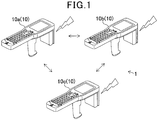
- Fig. 1 shows an information reading system 1 which is configured to include a plurality of information reading apparatuses each of which is capable of reading data recorded on a target to be read (this target may be termed reading target hereinafter).
- the information reading system 1 is configured to read a radio tag (radio count ID tag, or RFID tag) 50, or a reading target, and to include three information reading apparatuses 10, i.e. a first terminal 10a, a second terminal 10b, and a third terminal 10c, capable of reading data recorded on the radio tag 50.
- a radio tag radio count ID tag, or RFID tag
- first, second and third terminals 10a, 10b and 10c serving as information reading apparatuses have the same functions, the following description will be specifically provided, taking the first terminal 10a as an example and referring to Figs. 2A to 2C .
- the first terminal 10a is configured as a mobile information reading terminal carried by a worker (user) for use in various sites.
- the terminal 10a has a function of reading and writing information from/into the information recorded on the radio tag 50, via radio waves transmitted from or received by antennas.
- the first terminal 10a also has a function as an information code reader that reads an information code C, such as a barcode or a two-dimensional code.
- the first terminal 10a is configured such that two types of reading can be performed.
- the first terminal 10a has a housing in which a control unit 21 is provided, as shown in Fig. 2A , for overall control of the first terminal 10a.
- the control unit 21 is mainly configured by a microcomputer, and includes a CPU, a system bus, and an input/output interface.
- the control unit 21 configures an information processor together with a memory 22.
- the memory 22 is configured, for example, by a semiconductor memory device, such as a RAM 22A (e.g., DRAM or SRAM), a ROM 22B (e.g., EPROM or EEPROM), or the like.
- the control unit 21 is connected to a LED 23, a display 24, a key operation section 25, a vibrator 26, a buzzer 27, a communication section 28, and the like.
- the ROM 22B serves as a non-transient computer readable recording medium in which computer-readable programs for various processes are stored in advance.
- the key operation section 25 is configured to output an operation signal to the control unit 21. In response to the operation signal, the control unit 21 performs operation accordingly.
- the LED 23, the display 24, the vibrator 26, and the buzzer 27 are configured to be controlled by the control unit 21, i.e. to be activated upon reception of a command from the control unit 21.
- the communication section 28 is a radio communication means which can perform direct short-range radio communication with one or more other information reading apparatuses (e.g., the second and third terminals 10b and 10c). Specifically, for example, the communication section 28 is configured to have a Bluetooth (trademark) function or a near field communication (NFC) function.
- the housing also includes a power supply 29 or a battery 29a. The power supply 29 or the battery 29a is ensured to supply electrical power to the control unit 21 and various electrical components.
- the control unit 21 is connected to a radio tag processor 30 and an information code reader 40 respectively serving as information reading sections.
- radio tag processor 30 Referring to Fig. 2B , the radio tag processor 30 will be described.
- the radio tag processor 30 electromagnetically communicates with the radio tag 50 collaborating with an antenna 34 and the control unit 21 to read data recorded on the radio tag 50 or write data into the radio tag 50.
- the radio tag processor 30 is configured as a circuit for performing well-known radio transmission, and includes, as schematically shown in Fig. 2B , a transmission circuit 31, a reception circuit 32, and a matching circuit 33.
- the transmission circuit 31 is configured by a carrier oscillator, an encoder, an amplifier, a transmission filter, a modulator, and the like, and is ensured to allow the carrier oscillator to output carrier waves of a predetermined count.
- the encoder is connected to the control unit 21 to encode transmission data outputted from the control unit 21 and output the encoded data to the modulator.
- the modulator receives an input of carrier waves from the carrier oscillator and transmission data from the encoder.
- the modulator generates a modulated signal resulting from amplitude shift keying (ASK) modulation, and outputs the ASK-modulated signal to the amplifier.
- ASK amplitude shift keying
- This ASK modulation is performed based on an encoded transmission code (modulation signal) outputted from the encoder toward the carrier waves outputted from the carrier oscillator when a command is transmitted to a communication object.
- the amplifier amplifies the inputted signal, i.e. the signal modulated by the modulator, at a predetermined gain, and outputs the amplified signal to a transmission filter.
- the transmission filter filters the amplified signal inputted from the amplifier, and outputs the filtered signal to the antenna 34 as a transmission signal via the matching circuit 33. When the transmission signal is outputted to the antenna 34 in this way, the transmission signal is radiated outside as transmission radio waves by the antenna 34.
- a response signal received by the antenna 34 is inputted to the reception circuit 32 via the matching circuit 33.
- the reception circuit 32 is configured by a reception filter, an amplifier, a demodulator, a binary processor, a decoder, and the like.
- the reception circuit 32 allows the reception filter to filter the response signal received via the antenna 34, allows the amplifier to amplify the filtered signal, and then allows the demodulator to demodulate the amplified signal. Then, the demodulated signal waveform is binarized by the binary processor, followed by decoding by the decoder, and the decoded signal is outputted to the control unit 21 as reception data.
- Fig. 3 an electrical configuration of the radio tag 50, i.e. a target to be read by the first terminal 10a, will be described.
- the radio tag 50 is configured by an antenna 51, a power supply circuit 52, a demodulation circuit 53, a control circuit 54, a memory 55, a modulation circuit 56, and the like.
- the power supply circuit 52 rectifies and smooths a transmission signal (carrier signal) received from the first terminal 10a via the antenna 51 to generate an activation power.
- the power supply circuit 52 supplies the activation power to the individual constituent elements, including the control circuit 54.
- the demodulation circuit 53 demodulates data superimposed on the transmission signal (carrier signal) and outputs the demodulated signal to the control circuit 54.
- the memory 55 stores information for identifying the radio tag 50 (tag ID), or data suitable for usage of the radio tag 50.
- the control circuit 54 is configured to output data or the like read from the memory 55 to the modulation circuit 56 as transmission data.
- the modulation circuit 56 applies the transmission data to the response signal (carrier signal) for load modulation and transmits the resultant signal via the antenna 51 as reflective waves.
- the information code reding section 40 optically reads an information code, and is configured, as shown in Fig. 2C , by a light-receiving sensor 43 constituted of a CCD area sensor, an image-forming lens 42, a plurality of luminaires 41 each constituted of a LED or lens, and the like.
- the information code reader 40 collaborates with the control unit 21 to read an information code C (barcode or two-dimensional code) attached to a commercial product or the like.
- the luminaires 41 When an information code is read by the information code reader 40, the luminaires 41 emit illumination light Lf in response to a command from the control unit 21.
- the illumination light Lf is radiated to the information code C through a reading port.
- reflected light Lr i.e. the illumination light Lf reflected by the information code C
- the image-forming lens 42 disposed between the reading port and the light-receiving sensor 42 is configured to form an image of the information code C on the light-receiving sensor 43.
- the light-receiving sensor 43 outputs a light-receiving signal corresponding to the image of the information code C.
- the light-receiving signal outputted from the light-receiving sensor 43 is recorded in the memory 22 ( Fig. 2A ) as image data, and is ensured to be used in decoding processing of acquiring information contained in the information code C.
- the information code reader 40 includes an amplification circuit for amplifying a signal from the light-receiving sensor 43, an AD conversion circuit for converting the amplified signal into a digital signal, or other circuits. However, these circuits are omitted in Fig. 2C .
- the first terminal 10a configured as described above allows the radio tag processor 30 to read data (tag ID, etc.) recorded on the radio tag 50. As will be described later, the first terminal 10a performs transmission/reception communication with the second and third terminals 10b and 10c through the communication section 28 regarding the read data. This communication is performed during a reading process and a data transmission process performed by the control unit 21 to share the read data between the terminals.
- the second and third terminals 10b and 10c are each configured similarly to the first terminal 10a, and perform transmission/reception communication with other terminals regarding read data to share the data between the terminals.
- a specific description will now be given of a reading process and a data transmission process parallelly performed by the control unit 21 (precisely, the CPU 21A) when the data read by each terminal is shared with other terminals.
- the following description will be specifically given, taking an example of a reading process performed by the control unit 21 of the first terminal 10a, in a situation where commercial goods and the like displayed on the shelves of a store are inventoried by having the first, second and third terminals 10a, 10b and 10c read the radio tags 50 attached to the respective goods.
- the communication sections 28 of the terminals 10a to 10c each have a configuration enabling direct radio communication between them in the store that is an inventory task area (reading task area).
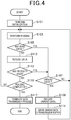
- step S101 of Fig. 4 When the reading process is started by the control unit 21 following a predetermined operation of the key operation section 25 at the start of an inventory survey, initialization is performed at step S101 of Fig. 4 .
- the second and third terminals 10b and 10c which are located in an area of the direct radio communication range via the communication section 28, are determined as being transmitters/receivers of read data.
- step S103 a process of reading a radio tag 50 is performed by using the radio tag processor 30 serving as an information reading section.
- step S105 it is determined whether any data has been read from a radio tag 50. If data recorded on a radio tag 50 has been read (Yes at step S105), control proceeds to step S107.
- step S107 it is determined whether the read data is unread data that has not yet been recorded in the memory 22.
- unread data are referred to as data which has already been optically acquired but not stored yet in the memory 22 as shared data in the respective terminals 10a, 10b and 10c, for example, in the RAM 22A, so that such acquired data cannot be referred to as being "completely read” for information sharing.
- step S107 If the read data is determined to be unread data (Yes at step S107), control proceeds to step S109 where the unread data is recorded in the memory 22. Then, at step S111, the unread data is stored in a transmission buffer formulated such as in the memory 22, for transmission to the second and third terminals 10b and 10c, i.e. other information reading apparatuses. Then, control returns to step S103, i.e. the first terminal 10a is brought into a state of reading a new radio tag 50. If the read data is determined to be already-read data, i.e. data already recorded in the memory 22 (No at step S107), the already-read data is deleted, and control returns to step S103, i.e. the first terminal 10a is brought into a state of reading a new radio tag 50.
- control unit 21 which makes a determination at step S107 as to whether the read data is unread data, may correspond to an example of the first determination section.
- a radio tag 50 if once read by the first terminal 10a, will no longer be a reading target of this first terminal 10a through a flag determination for example, and a "Yes" determination will no longer be made at step S105.
- step S201 of the data transmission process it is determined whether data has been stored in the transmission buffer. If unread data is determined to have been stored in the transmission buffer as mentioned above (Yes at step S201), control proceeds to step S203 where the data is immediately transmitted to the second and third terminals 10b and 10c via the communication section 28. Then, at step S205, it is determined whether the transmission has been successful. If the transmission is successful (Yes at step S205), control proceeds to step S207 where the transmitted data is deleted from the transmission buffer. Then, control returns to step S201 to iterate this process.
- step S112 if it is determined that data has not bean read (No at step S105), control proceeds to step S112 to try to receive data from the second and third terminals 10b and 10c, and then to step S113 where it is determined whether any data has been received as a result of the data transmission process performed by the second terminal 10b or the third terminal 10c. If data is determined to have been received (Yes at step S113), control proceeds to step S107 where it is determined whether the received data is unread data. If the data is determined to be unread data (Yes at step S107), control proceeds to step S109 where the unread data is recorded in the memory 22.
- the unread data is stored in the transmission buffer formulated such as in the memory 22, for transmission to the second and third terminals 10b and 10c, i.e. other information reading apparatuses.
- the stored unread data are then transmitted to the second and third terminals 10b and 10c.
- control returns to step S103, i.e. the first terminal 10a is brought into a state of reading a new radio tag 50.
- transmission buffer may store unread data such that the terminal that has transmitted the unread data is excluded from transmission targets. If the received data is determined to be already-read data (No at Step S107), the already-read data is cancelled, and control returns to step S103, i.e. the first terminal 10a is brought into a state of reading a new radio tag 50. It should be noted that the control unit 21, which makes a determination at step S107 as to whether the received data is unread data, may correspond to an example of the second determination section.
- step S113 determines whether reading has been completed. Specifically, if the number of times of reading such shared (or common) data has reached a predetermined value, reading is determined to have been completed (Yes at step S115). Then, at step S117, the data transmission process is terminated to thereby terminate the present reading process.
- first to third terminals 10a to 10c respectively to read fives RFID tags 50, i.e., first to fifth RFID tags 50a to 50e.
- This situation is true of divided work for reading many RFID tags and sharing read tag information to shorten a duration necessary for completing the entire reading work.
- the first terminal 10a is assigned to reading the first and second RFID tags 50a and 50b
- the second terminal 10b is assigned to reading the third RFID tags 50c and 50d
- the third terminal 10c is assigned to reading the fifth RFID tag 50e.
- the unread RFID data Da to De respectively indicating information read serially or in almost parallelly, i.e., depending on the order of the operator's reading actions, from the first to fifth RFID tags 50a to 50e are stored as illustrated in Fig. 9 in each of the RAMs 22A of the memories 22 of the first to third terminals 10a to 10c, in which such stored unread data Da to De become already-read data which can be shared in the system 1.
- the first to third terminals 10a to 10c are able to have the shared tag information in a shorter work time.
- the unread data is transmitted to other information reading apparatuses and recorded in the respective memories 22, all the information reading apparatuses located in an area of the communication range can record common data for information sharing in the respective memories 22 in real time.
- the individual information reading apparatuses can keep track of the entire progress of tasks without the need of compiling data from the individual information reading apparatuses by using a server or the like. Consequently, operator's tasks can be performed efficiently.
- the unread data is recorded in the memory 22 and transmitted simultaneously to other information reading apparatuses via the communication section 28.
- the unread data received from another information reading apparatus is transmitted to other information reading apparatuses. Therefore, between information reading apparatuses that cannot directly communicate with each other, unread data can be transmitted to them being relayed through another information reading apparatus. Thus, data can be reliably shared between the information reading apparatuses.
- the information reading system 1 which is configured by a plurality of information reading apparatuses (10a to 10c), enables the individual information reading apparatuses to easily keep track of the entire progress of tasks, without the need of allowing a server or the like to compile data of the individual information reading apparatuses.
- the reading process may be performed by the control unit 21 such that all the read data recorded in the memory 22 is stored in the transmission buffer at a predetermined time point.
- the predetermined time point may be the time point after lapse of a predetermined time from the start of the reading process, or the time point when a predetermined operation has been performed for the key operation section 25.
- the second embodiment is different from the first embodiment in that the number of times of transmission is assigned to unread data.
- the components substantially identical with or similar to those of the first embodiment are given the same reference numerals to omit duplicate description.
- the individual information reading apparatuses should substantially simultaneously perform the process of transmitting data received from another information reading apparatus to other information reading apparatuses. For example, let us assume a situation where twenty information reading apparatuses, including the first, second and third terminals 10a, 10b and 10c, are used in a predetermined reading task area. In this case, when data is shared between these information reading apparatuses, unread data that has been read by the first terminal 10a is transmitted to other information reading apparatuses as set forth below.
- the first terminal 10a performs a process of transmitting unread data to other nineteen information reading apparatuses including the second and third terminals 10b and 10c. Then, the second terminal 10b that has received the unread data performs a process of transmitting the unread data to other nineteen information reading apparatuses including the first and third terminals 10a and 10c. Also, the third terminal 10c that has received the unread data performs a process of transmitting the unread data to other nineteen information reading apparatuses including the first and second terminals 10a and 10b. Similarly, each of the remaining information reading apparatuses that has received the unread data performs a process of transmitting the unread data to other nineteen information reading apparatuses.
- the process of transmitting the received unread data to other nineteen information reading apparatuses is performed by each information reading apparatus. Accordingly, there may occur a number of needless radio communication tasks of transmitting the same unread data to one information reading apparatus from a plurality of other information reading apparatuses.
- an information reading apparatus that has already received unread data from the first terminal 10a may receive the same unread data from other eighteen information reading apparatuses including the second and third terminals 10b and 10c.
- a transmission count N1 is assigned to unread data to indicate the number of times of transmitting the unread data to other information reading apparatuses.
- the transmission count N1 assigned thereto is ensured to be incremented.
- unread data whose transmission count N1 is not more than a first predetermined count Nlth is ensured to be transmitted to other information reading apparatuses, and unread data whose transmission count N1 has exceeded the first predetermined count Nlth is ensured not to be transmitted to other information reading apparatuses to thereby minimize needless radio communication tasks.
- each information reading apparatus does not necessarily have to transmit unread data to other information reading apparatuses immediately after reception. For example, received unread data may be collectively transmitted to other information reading apparatuses after lapse of a predetermined time to minimize needless radio communication tasks.
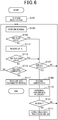
- step S101 When the reading process is started by the control unit 21 of the first terminal 10a, initialization is performed at step S101 shown in Fig. 6 to determine a plurality of information reading apparatuses including the second and third terminals 10b and 10c in a predetermined reading task area as being transmitters/receivers of read data.
- step S105 if the data recorded on a radio tag 50 is determined to have been read (Yes at step S105) and if the data is determined to be unread data (Yes at step S107), control proceeds to step S109 where the unread data is recorded in the memory 22.
- step S119 a transmission count increment process is performed, i.e. the transmission count N1 assigned to the unread data is incremented. If the unread data is data initially read by the information reading apparatus, it means that this unread data has not yet been transmitted and that no transmission count N1 has been assigned thereto. Accordingly, an initial transmission count N1, as 1, is assigned to the unread data at step S119. It should be noted that the control unit 21 that performs the transmission count increment process at step S119 may correspond to an example of the increment section.
- the first predetermined count Nlth refers to a threshold that is determined based on the number of information reading apparatuses used in the predetermined reading task area, or the radio communication range of the information reading apparatuses, or the like. For example, if data is shared between twenty information reading apparatuses used in the predetermined reading task area, the first predetermined count Nlth is set to 10.
- the first predetermined count Nlth may be set to less than 10 (e.g., 5), or may be set to 10 or more (e.g., 20) according to the number of information reading apparatuses, the radio communication range of the information reading apparatuses, or the like.
- an initial transmission count N1 as 1, is assigned to unread data because the unread data is data initially read by the information reading apparatus, the transmission count N1 should be not more than the predetermined number N1th, and thus a "Yes" determination should be made at step S121.
- step S111 described above is performed, and the unread data having the transmission count N1 is stored in the transmission buffer.
- the unread data, together with the transmission count N1 is transmitted to the plurality of information reading apparatuses including the second and third terminals 10b and 10c via the communication section 28 (step S203 of Fig. 5 ).
- step S109 the transmission count increment process of step S119 is performed to increment the transmission count N1 of the unread data.
- step S111 is performed so that the unread data having the transmission count N1 is stored in the transmission buffer. Then, the unread data, together with the transmission count N1, is transmitted to the plurality of information reading apparatuses including the first and third terminals 10a and 10c via the communication section 28 (step S203 of Fig. 5 ).
- step S109 the transmission count increment process of step S119 is performed to increment the transmission count N1 of the unread data to 2.
- step S111 is performed so that the unread data having the transmission count N1 is stored in the transmission buffer. Then, the unread data, together with the transmission count N1, is transmitted to the plurality of information reading apparatuses including the first and second terminals 10a and 10b via the communication section 28 (step S203 of Fig. 5 ).
- the third terminal 10c if it is determined that the data received from the second terminal 10b has already been received from the first terminal 10a and has been recorded in the memory 22 as already-read data (No at step S107), the already-read data is cancelled without incrementing the transmission count N1, and control returns to step S103, i.e. the third terminal 10c is brought into a state of reading a new radio tag 50.
- step S109 the unread data is recorded in the memory 22 (step S109). Then, the transmission count N1 is incremented to 11 in the transmission count increment process of step S119. At the subsequent step S121, the transmission count N1 is determined to be exceeding the first predetermined count Nlth (No at step S121). Accordingly, without storing the unread data in the transmission buffer, control returns to step S103, i.e. this information reading apparatus is brought into a state of reading a new radio tag 50.
- the control unit 21 performs the reading process as follows. Specifically, unread data is provided with a transmission count N1 that indicates the number of times of transmitting the unread data to other information reading apparatuses. When the unread data is transmitted, the transmission count N1 assigned thereto is incremented (step S119). Then, every time data received from another information reading apparatus is determined to be unread data (Yes at step S113 and Yes at step S107), the unread data is recorded in the memory 22. At the same time, the unread data, if determined to have a transmission count N1 of not more than the first predetermined count Nlth (Yes at step S121), is transmitted to other information reading apparatuses via the communication section 28.
- unread data is provided with a transmission count N1 which is incremented every time the unread data is transmitted to other information reading apparatuses. Moreover, the unread data whose transmission count N1 is not more than the first predetermined count Nlth is ensured to be transmitted to other information reading apparatuses. If this transmission causes the transmission count N1 of the unread data to exceed the first predetermined count N1th, the unread data is no longer transmitted to other information reading apparatuses. Thus, even when there are a large number of information reading apparatuses to share data with, needless communication tasks or the amount of radio communication data can be minimized by adequately setting the first predetermined count Nlth according to the number of information reading apparatuses, or the like.
- the third embodiment is mainly different from the first embodiment in that a predetermined notification is issued if data read by a worker is consecutively determined not to be unread data.
- the components substantially identical with or similar to those of the first embodiment are given the same reference numerals to omit duplicate description.
- a predetermined notification is issued. Specifically, the control unit 21 counts, as a determination count N2, the number of times of consecutively determining the data read by the worker herself/himself as not being unread data. If the determination count N2 exceeds a second predetermined count N2th, the control unit 21 issues a predetermined notification. Thus, the worker that has been given the predetermined notification is advised of her/his entry into a region where data has already been read, and can reduce the number of unnecessary tasks.
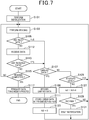
- step S105 of Fig. 7 if the data recorded on a radio tag 50 is determined to have been read through the radio tag processor 30 of the information reading apparatus (Yes at step S105 of Fig. 7 ) and if the data is determined to be unread data (Yes at step S107), the unread data is recorded in the memory 22 (step S109) and stored in the transmission buffer (step S111). Control then proceeds to step S123 where a determination count N2 is set to 0.
- step S113 determines whether data has been received from another information reading apparatus (Yes at step S113) and if the data is determined to be unread data (Yes at step S107). If the received data is determined not to be unread data (Yes at step S113 and No at step S107), control proceeds to step S125. At step S125, it is determined whether the data that has been determined not to be unread data has already been received. If the data that has been determined not to be unread data is determined to be received data (Yes at step S125), control returns to step S103, i.e. this information reading apparatus is brought into a state of reading a new radio tag 50.
- step S107 if the data recorded on a radio tag 50 is determined to have been read through the radio tag processor 30 of the information reading apparatus (Yes at step S105) and if the read data is already-read data recorded in the memory 22, a "No" determination is made at step S107. If the data has already been read by this information reading apparatus itself, the data will no longer be a reading target for this information reading apparatus, and thus a "Yes” determination will not be made at step S105. Accordingly, if already-read data, i.e. data received from another information reading apparatus and recorded in the memory 22, is read by this information reading apparatus in question for the first time from the radio tag 50, a "Yes" determination is made at step S105 but a "No” determination is made at step S107.
- already-read data i.e. data received from another information reading apparatus and recorded in the memory 22
- step S105 if the data of a radio tag 50 is read by a worker in a state of the worker entering a region where data has already been read by another worker, a "Yes” determination is made at step S105 but a "No” determination is made at step S107 due to sharing of data between information reading terminals as described above.
- step S129 it is determined whether the incremented determination count N2 exceeds a second predetermined count N2th.
- the second predetermined count N2th is determined according the work environments or the like of the predetermined reading task area. For example, if the second predetermined count N2th is set to 10 and the determination count N2 shows an initial count 1 as mentioned above, a "No" determination is made at step S129. Then, control returns to step S103, i.e. this information reading apparatus is brought into a state of reading a new radio tag 50.
- step S129 control proceeds to step S131 where a notification is issued.
- textual information "Already read by another terminal" is indicated on the display 24 as a predetermined notification.
- the worker can easily know her/his entry into a region where data has already been read by another worker.
- the entry into a region where data has already been ready by another worker may be notified by another method, such as lighting or flashing of the LED 23, or issue of an alarm sound from the buzzer 27.
- another method such as lighting or flashing of the LED 23, or issue of an alarm sound from the buzzer 27.
- an audible notification of "Already read by another terminal” may be issued using a well-known speaker.
- the display 24, the LED 23, the buzzer 27 or the speaker may correspond to an example of the notification section.
- the unread data is recorded in the memory 22 (step S109) and stored in the transmission buffer (Sill). Then, at the subsequent step S123, the determination count N2 is cleared
- the number of times of consecutively determining data read by a worker as not being unread data is counted as a determination count N2. If the determination count N2 exceeds a second predetermined count N2th, a predetermined notification is issued through the display 24 or the like (step S131).
- the counted determination count N2 should exceed the second predetermined count N2th and the predetermined notification should be issued. This is because, even if this worker in question has not read the data by herself/himself in the past, the data received from this another worker has already been recorded in the memory 22 of this worker in question.
- each worker who can move avoiding issuance of the predetermined notification, can be directed to a region where data has not been read by another worker.
- the characteristic configuration of issuing a predetermined notification if data read by the worker is consecutively determined not to be unread data may be applied to other embodiments.
- the fourth embodiment is mainly different from the first embodiment in that there is provided a server which is capable of communicating with at least one of a plurality of information reading apparatuses used in a predetermined reading task area.
- a server which is capable of communicating with at least one of a plurality of information reading apparatuses used in a predetermined reading task area.
- the components substantially identical with or similar to those of the first embodiment are given the same reference numerals to omit duplicate description.
- Fig. 8 shows an information reading system 1a according to the present embodiment.
- the information reading system 1a includes a server 2 in addition to the plurality of information reading apparatuses including the first, second and third terminals 10a, 10b and 10c.
- the server 2 is configured to serve as a manager terminal that monitors the progress or the like of the reading tasks by acquiring data shared between the information reading apparatuses (the data may simply be termed common data hereinafter).
- the server 2 mainly includes a memory 4, a display 5, a communication section 6, and a control unit 3 that collectively control these sections.
- the control unit 3 is mainly configured by a microcomputer, and includes a CPU, a system bus, and an input/output interface to serve as an information processor together with the memory 4.
- the memory 4 is configured by a known semiconductor memory, such as a ROM, a RAM, a nonvolatile memory, or the like.
- the memory 4 stores predetermined application programs, databases, and the like for executing a monitoring process described later and for use by the control unit 3.
- the display 5 is configured, for example, to serve as a liquid crystal monitor or the like.
- the contents of indication of the monitor are ensured to be controlled by the control unit 3.
- the communication section 6 is configured to be controlled by the control unit 3, and to communicate with information reading apparatuses, such as the first, second and third terminals 10a, 10b and 10c, connected to a predetermined network N, such as a company LAN or Internet.
- the server 2 configured as described above monitors the progress or the like of the reading tasks through a monitoring process performed by the control unit 3, i.e. monitors the progress by acquiring common data from a selected information reading apparatusespecifically, in the monitoring process, the control unit 3 establishes communication with any one of the information reading apparatuses through the predetermined network N. When such communication is established, the control unit 3 gives a command to the information reading apparatus to cause this apparatus to transmit common data to the server 2. Upon reception of the command, the information reading apparatus performs a process of transmitting the common data recorded in the memory 22 to the server 2 through the predetermined network N.
- the control unit 3 uses the acquired data as a basis for keeping track of the progress or the like of the reading tasks performed in the predetermined reading task area.
- the progress or the like grasped in this way is displayed on the screen of the display 5 with a predetermined display format.
- a manager or the like of the server 2 who has seen the display screen, can monitor the progress or the like of the reading tasks.
- the control unit 3 performing the monitoring process may correspond to an example of the task tracking section.
- Each selected information reading apparatus may transmit common data every time it is connected to the predetermined network N, instead of transmitting common data in response to a command from the server 2.
- the server 2 may receive common data from an information reading apparatus with which radio communication can be established directly or through an access point or the like.
- the information reading system 1a of the present embodiment is provided with a server 2 which is capable of acquiring data recorded in the memory of any one of a plurality of information reading apparatuses used in a predetermined reading task area.
- the server 2 can keep track of the progress or the like of reading tasks performed in the predetermined reading task area, based on the data, i.e. common data, acquire from the information reading apparatus.
- the server 2 can acquire common data from any one of the information reading apparatuses used in the predetermined reading task area, eliminating the process of acquiring data from all the information reading apparatuses and of compiling the acquired data.
- the server 2 can easily keep track of the progress of the reading tasks.
- the manager or the like of the server 2 can make an adjustment of improving the efficiency of the tasks of the entire reading task area by changing positioning of the workers, increasing workers, or the like, according to the progress of the tasks.
- the characteristic configuration in which the server 2 keeps track of the progress or the like of reading performed in the predetermined reading task area based on the common data acquired from an information reading apparatus may be applied to other embodiments.
Landscapes
- Engineering & Computer Science (AREA)
- Physics & Mathematics (AREA)
- Business, Economics & Management (AREA)
- Health & Medical Sciences (AREA)
- Toxicology (AREA)
- General Physics & Mathematics (AREA)
- Theoretical Computer Science (AREA)
- Human Resources & Organizations (AREA)
- Electromagnetism (AREA)
- General Health & Medical Sciences (AREA)
- Artificial Intelligence (AREA)
- Computer Vision & Pattern Recognition (AREA)
- Economics (AREA)
- Entrepreneurship & Innovation (AREA)
- Strategic Management (AREA)
- Tourism & Hospitality (AREA)
- General Business, Economics & Management (AREA)
- Marketing (AREA)
- Operations Research (AREA)
- Quality & Reliability (AREA)
- Development Economics (AREA)
- Finance (AREA)
- Accounting & Taxation (AREA)
- Educational Administration (AREA)
- Game Theory and Decision Science (AREA)
- Computer Networks & Wireless Communication (AREA)
- General Engineering & Computer Science (AREA)
- Mobile Radio Communication Systems (AREA)
- Information Transfer Between Computers (AREA)
Claims (7)
- Informationslesevorrichtung (10), aufweisend:einen Informationsleseabschnitt (30, 40), der Daten liest, die auf einem Leseziel (50, C) aufgezeichnet sind;einen Kommunikationsabschnitt (28), der eine Funkkommunikation mit einem odermehreren anderen Informationslesevorrichtungen herstellt;einen Speicher (22), der die Daten aufzeichnet, die durch den Informationsleseabschnitt (30, 40) gelesen werden;einen ersten Bestimmungsabschnitt (21), der jedes Mal, wenn die Daten durch den Informationsleseabschnitt (30, 40) gelesen werden, bestimmt, ob die gelesenen Daten ungelesene Daten sind, die noch nicht in dem Speicher (22) aufgezeichnet wurden,einen zweiten Bestimmungsabschnitt (21), der bestimmt, ob Daten, die von jeder der anderen Informationslesevorrichtungen durch den Kommunikationsabschnitt (28) empfangen werden, die ungelesenen Daten sind; undeine Steuereinheit (21), die Daten steuert, die in dem Speicher (22) aufgezeichnet sind, wobei:
die Steuereinheit (21) so konfiguriert ist, dass sie jeweils die folgenden Vorgänge ausführt:i) Aufzeichnen der ungelesenen Daten in dem Speicher (22), und Übertragen der ungelesenen Daten in dem Speicher (22) an die andere Informationslesevorrichtung (10), wenn der erste Bestimmungsabschnitt (21) bestimmt, dass die gelesenen Daten die ungelesenen Daten sind, undii) Aufzeichnen der Daten, die durch den zweiten Bestimmungsabschnitt (21) als ungelesene Daten bestimmt wurden, in den Speicher (22). - Informationslesevorrichtung (10) nach Anspruch 1, wobei die Steuereinheit (21) alle gelesenen Daten , die in dem Speicher (22) aufgezeichnet sind, durch den Kommunikationsabschnitt (28) zu einem vorbestimmten Zeitpunkt an die anderen Informationslesevorrichtungen überträgt.
- Informationslesevorrichtung (10) nach Anspruch 1 oder 2, wobei, falls die Daten durch den zweiten Bestimmungsabschnitt (21) als die ungelesenen Daten bestimmt werden, die Steuereinheit (21) die ungelesenen Daten in dem Speicher (22) aufzeichnet, während die ungelesenen Daten durch den Kommunikationsabschnitt (28) an die anderen Informationslesevorrichtungen übertragen werden.
- Informationslesevorrichtung (10) nach Anspruch 1 oder 2, wobei:die ungelesenen Daten einen Übertragungszählwert beinhalten, der die Anzahl der Übertragungen der ungelesenen Daten an die anderen Informationslesevorrichtungen anzeigt;die Informationslesevorrichtung (10) einen Inkrementabschnitt aufweist, der den Übertragungszählwert, der den ungelesenen Daten zugewiesen ist, inkrementiert,wobei der Übertragungszählwert inkrementiert wird, wenn die Steuereinheit (21) die ungelesenen Daten überträgt; undfalls durch den zweiten Bestimmungsabschnitt (21) bestimmt wird, dass Daten ungelesene Daten sind, die Steuereinheit (21) die ungelesenen Daten in dem Speicher (22) aufzeichnet und die ungelesenen Daten, deren Übertragungszählwert nicht mehr beträgt als einen ersten vorgegebenen Zählwert, durch den Kommunikationsabschnitt (28) an die anderen Informationslesevorrichtungen überträgt.
- Informationslesevorrichtung (10) nach einem der Ansprüche 1 bis 4, aufweisend:einen Zählabschnitt, der als einen Bestimmungszählwert zählt, wie oft konsekutiv bestimmte Daten durch den ersten Bestimmungsabschnitt (21) nicht als ungelesene Daten bestimmt werden, undeinen Benachrichtigungsabschnitt, der eine vorgegebene Benachrichtigung ausgibt, falls der Bestimmungszählwert einen zweiten vorgegebenen Zählwert überschreitet.
- Informationslesesystem, aufweisend eine Mehrzahl an Informationslesevorrichtungen nach einem der Ansprüche 1 bis 5.
- Informationslesesystem nach Anspruch 6, wobei:das System einen Server aufweist, der in der Lage ist, von zumindest einem von einer Mehrzahl der Informationslesevorrichtungen, die in einem vorgegebenen Leseaufgabenbereich verwendet werden, Daten zu erhalten, die in dem Speicher (22) aufgezeichnet sind; undder Server einen Aufgabennachverfolgungsabschnitt beinhaltet, der auf Basis der Daten, die von der Informationslesevorrichtung (10) erhalten werden, den Fortschritt des Lesens verfolgt, das in dem vorgegebenen Leseaufgabenbereich durchgeführt wird.
Applications Claiming Priority (2)
| Application Number | Priority Date | Filing Date | Title |
|---|---|---|---|
| JP2018041727 | 2018-03-08 | ||
| JP2019004139A JP7172620B2 (ja) | 2018-03-08 | 2019-01-15 | 情報読取装置及び情報読取システム |
Publications (2)
| Publication Number | Publication Date |
|---|---|
| EP3537335A1 EP3537335A1 (de) | 2019-09-11 |
| EP3537335B1 true EP3537335B1 (de) | 2021-11-10 |
Family
ID=65724259
Family Applications (1)
| Application Number | Title | Priority Date | Filing Date |
|---|---|---|---|
| EP19161288.6A Active EP3537335B1 (de) | 2018-03-08 | 2019-03-07 | Informationslesevorrichtung und informationslesesystem |
Country Status (3)
| Country | Link |
|---|---|
| US (1) | US10891454B2 (de) |
| EP (1) | EP3537335B1 (de) |
| CN (1) | CN110245727B (de) |
Families Citing this family (5)
| Publication number | Priority date | Publication date | Assignee | Title |
|---|---|---|---|---|
| USD829212S1 (en) * | 2016-08-01 | 2018-09-25 | Hand Held Products, Inc. | Optical scanner |
| USD883286S1 (en) * | 2018-02-06 | 2020-05-05 | Symbol Technologies, Llc | Data capture device |
| USD960161S1 (en) * | 2019-05-30 | 2022-08-09 | Advanced New Technologies Co., Ltd. | Smart scanning device |
| USD955390S1 (en) * | 2019-11-11 | 2022-06-21 | Intermec Ip Corporation | RFID handheld scanner |
| CN112367565B (zh) * | 2020-10-23 | 2023-04-07 | 深圳创维-Rgb电子有限公司 | 电视图文显示方法、装置、设备及存储介质 |
Family Cites Families (14)
| Publication number | Priority date | Publication date | Assignee | Title |
|---|---|---|---|---|
| KR20060063769A (ko) * | 2002-10-18 | 2006-06-12 | 심볼테크놀로지스,인코포레이티드 | 잡음이 있는 에어 채널 상에서 고유 식별 번호들을 갖는rfid 태그들의 집단을 효율적으로 판독하기 위한 방법 |
| JP4590449B2 (ja) | 2005-03-08 | 2010-12-01 | 富士通フロンテック株式会社 | 管理システムおよび携帯端末装置 |
| GB2434239A (en) * | 2006-01-12 | 2007-07-18 | Motorola Inc | Security system with RFID tag reader |
| CN100377161C (zh) * | 2006-07-04 | 2008-03-26 | 中国海洋大学 | 前置式rfid读写一体机 |
| US7837113B2 (en) * | 2006-09-20 | 2010-11-23 | Hand Held Products, Inc. | Method for updating indicia readers |
| US7924141B2 (en) * | 2006-12-01 | 2011-04-12 | Round Rock Research, Llc | RFID communication systems and methods, and RFID readers and systems |
| JP2009120301A (ja) * | 2007-11-13 | 2009-06-04 | Toshiba Tec Corp | 物品管理装置 |
| JP4733198B2 (ja) | 2008-11-17 | 2011-07-27 | 東芝テック株式会社 | 情報登録装置およびプログラム |
| TWI467492B (zh) * | 2009-03-05 | 2015-01-01 | Mstar Semiconductor Inc | 應用射頻識別讀取器之射頻識別系統及其運作方法 |
| CN102906765B (zh) * | 2011-03-31 | 2016-08-17 | 松下电器(美国)知识产权公司 | Rfid装置、主机、rfid装置搭载设备、以及rfid装置的控制方法 |
| JP2013246646A (ja) * | 2012-05-25 | 2013-12-09 | Toshiba Corp | 情報処理装置及びデータ読出方法 |
| JP2015108999A (ja) * | 2013-12-05 | 2015-06-11 | 三菱電機株式会社 | 動態管理システム |
| JP6477050B2 (ja) * | 2015-03-09 | 2019-03-06 | 株式会社デンソーウェーブ | 情報コード読取システム |
| CN108701203A (zh) * | 2016-01-29 | 2018-10-23 | 富士胶片株式会社 | 信息收集系统 |
-
2019
- 2019-03-07 EP EP19161288.6A patent/EP3537335B1/de active Active
- 2019-03-07 US US16/295,549 patent/US10891454B2/en active Active
- 2019-03-08 CN CN201910174563.5A patent/CN110245727B/zh active Active
Also Published As
| Publication number | Publication date |
|---|---|
| CN110245727B (zh) | 2022-04-22 |
| CN110245727A (zh) | 2019-09-17 |
| US10891454B2 (en) | 2021-01-12 |
| EP3537335A1 (de) | 2019-09-11 |
| US20190278958A1 (en) | 2019-09-12 |
Similar Documents
| Publication | Publication Date | Title |
|---|---|---|
| US10891454B2 (en) | Information reading apparatus and information reading system | |
| US11226395B2 (en) | Tracking system with mobile reader | |
| US8581701B2 (en) | RFID-based data collection, correlation and transmission system, and method for collecting data and correlating same to system participant identities and actions thereof | |
| US6662068B1 (en) | Real time total asset visibility system | |
| US20220207314A1 (en) | System and method for programming wireless sensor tags in food service operations | |
| US9722715B2 (en) | Systems and methods for determining a tag location | |
| US7209041B2 (en) | Mobile RFID management method and system | |
| US9026041B2 (en) | Portable radio-frequency repeater | |
| US20100052908A1 (en) | Transient state information display in an rfid tag | |
| EP2140411A1 (de) | Überwachungseinrichtung für ein tracking-system | |
| CN114897117B (zh) | 一种基于rfid的资产设备定位管理系统及方法 | |
| US20140327524A1 (en) | Method and apparatus pertaining to preconfiguring in facilitating the reading of rfid tags | |
| CN110458257B (zh) | 基于rfid系统的标签盘点方法及装置 | |
| CN114556455A (zh) | 使用短程通信的射频识别(rfid)标签位置验证 | |
| US20240319316A1 (en) | Tracking system with mobile reader | |
| JP6468145B2 (ja) | 携帯情報端末および情報読取システム | |
| JP4758213B2 (ja) | 無線タグ情報管理装置 | |
| US7911323B2 (en) | Radio frequency identification (RFID) tag response modulation | |
| JP7376783B2 (ja) | 管理システム | |
| JP7172620B2 (ja) | 情報読取装置及び情報読取システム | |
| JP2017057069A (ja) | 物品管理システム | |
| JP2016219019A (ja) | 店舗内位置情報管理システム | |
| JP2016162327A (ja) | 無線タグシステム | |
| KR20130015203A (ko) | 상품 유통 관리 시스템 | |
| JP2024101113A (ja) | 管理装置及び管理システム |
Legal Events
| Date | Code | Title | Description |
|---|---|---|---|
| PUAI | Public reference made under article 153(3) epc to a published international application that has entered the european phase |
Free format text: ORIGINAL CODE: 0009012 |
|
| STAA | Information on the status of an ep patent application or granted ep patent |
Free format text: STATUS: THE APPLICATION HAS BEEN PUBLISHED |
|
| AK | Designated contracting states |
Kind code of ref document: A1 Designated state(s): AL AT BE BG CH CY CZ DE DK EE ES FI FR GB GR HR HU IE IS IT LI LT LU LV MC MK MT NL NO PL PT RO RS SE SI SK SM TR |
|
| AX | Request for extension of the european patent |
Extension state: BA ME |
|
| STAA | Information on the status of an ep patent application or granted ep patent |
Free format text: STATUS: REQUEST FOR EXAMINATION WAS MADE |
|
| 17P | Request for examination filed |
Effective date: 20200310 |
|
| RBV | Designated contracting states (corrected) |
Designated state(s): AL AT BE BG CH CY CZ DE DK EE ES FI FR GB GR HR HU IE IS IT LI LT LU LV MC MK MT NL NO PL PT RO RS SE SI SK SM TR |
|
| GRAP | Despatch of communication of intention to grant a patent |
Free format text: ORIGINAL CODE: EPIDOSNIGR1 |
|
| STAA | Information on the status of an ep patent application or granted ep patent |
Free format text: STATUS: GRANT OF PATENT IS INTENDED |
|
| INTG | Intention to grant announced |
Effective date: 20210527 |
|
| GRAS | Grant fee paid |
Free format text: ORIGINAL CODE: EPIDOSNIGR3 |
|
| GRAA | (expected) grant |
Free format text: ORIGINAL CODE: 0009210 |
|
| STAA | Information on the status of an ep patent application or granted ep patent |
Free format text: STATUS: THE PATENT HAS BEEN GRANTED |
|
| RAP3 | Party data changed (applicant data changed or rights of an application transferred) |
Owner name: DENSO WAVE INCORPORATED |
|
| AK | Designated contracting states |
Kind code of ref document: B1 Designated state(s): AL AT BE BG CH CY CZ DE DK EE ES FI FR GB GR HR HU IE IS IT LI LT LU LV MC MK MT NL NO PL PT RO RS SE SI SK SM TR |
|
| REG | Reference to a national code |
Ref country code: GB Ref legal event code: FG4D |
|
| REG | Reference to a national code |
Ref country code: AT Ref legal event code: REF Ref document number: 1446757 Country of ref document: AT Kind code of ref document: T Effective date: 20211115 Ref country code: CH Ref legal event code: EP |
|
| REG | Reference to a national code |
Ref country code: DE Ref legal event code: R096 Ref document number: 602019009046 Country of ref document: DE |
|
| REG | Reference to a national code |
Ref country code: IE Ref legal event code: FG4D |
|
| REG | Reference to a national code |
Ref country code: LT Ref legal event code: MG9D |
|
| REG | Reference to a national code |
Ref country code: NL Ref legal event code: MP Effective date: 20211110 |
|
| REG | Reference to a national code |
Ref country code: AT Ref legal event code: MK05 Ref document number: 1446757 Country of ref document: AT Kind code of ref document: T Effective date: 20211110 |
|
| PG25 | Lapsed in a contracting state [announced via postgrant information from national office to epo] |
Ref country code: RS Free format text: LAPSE BECAUSE OF FAILURE TO SUBMIT A TRANSLATION OF THE DESCRIPTION OR TO PAY THE FEE WITHIN THE PRESCRIBED TIME-LIMIT Effective date: 20211110 Ref country code: LT Free format text: LAPSE BECAUSE OF FAILURE TO SUBMIT A TRANSLATION OF THE DESCRIPTION OR TO PAY THE FEE WITHIN THE PRESCRIBED TIME-LIMIT Effective date: 20211110 Ref country code: FI Free format text: LAPSE BECAUSE OF FAILURE TO SUBMIT A TRANSLATION OF THE DESCRIPTION OR TO PAY THE FEE WITHIN THE PRESCRIBED TIME-LIMIT Effective date: 20211110 Ref country code: BG Free format text: LAPSE BECAUSE OF FAILURE TO SUBMIT A TRANSLATION OF THE DESCRIPTION OR TO PAY THE FEE WITHIN THE PRESCRIBED TIME-LIMIT Effective date: 20220210 Ref country code: AT Free format text: LAPSE BECAUSE OF FAILURE TO SUBMIT A TRANSLATION OF THE DESCRIPTION OR TO PAY THE FEE WITHIN THE PRESCRIBED TIME-LIMIT Effective date: 20211110 |
|
| PG25 | Lapsed in a contracting state [announced via postgrant information from national office to epo] |
Ref country code: IS Free format text: LAPSE BECAUSE OF FAILURE TO SUBMIT A TRANSLATION OF THE DESCRIPTION OR TO PAY THE FEE WITHIN THE PRESCRIBED TIME-LIMIT Effective date: 20220310 Ref country code: SE Free format text: LAPSE BECAUSE OF FAILURE TO SUBMIT A TRANSLATION OF THE DESCRIPTION OR TO PAY THE FEE WITHIN THE PRESCRIBED TIME-LIMIT Effective date: 20211110 Ref country code: PT Free format text: LAPSE BECAUSE OF FAILURE TO SUBMIT A TRANSLATION OF THE DESCRIPTION OR TO PAY THE FEE WITHIN THE PRESCRIBED TIME-LIMIT Effective date: 20220310 Ref country code: PL Free format text: LAPSE BECAUSE OF FAILURE TO SUBMIT A TRANSLATION OF THE DESCRIPTION OR TO PAY THE FEE WITHIN THE PRESCRIBED TIME-LIMIT Effective date: 20211110 Ref country code: NO Free format text: LAPSE BECAUSE OF FAILURE TO SUBMIT A TRANSLATION OF THE DESCRIPTION OR TO PAY THE FEE WITHIN THE PRESCRIBED TIME-LIMIT Effective date: 20220210 Ref country code: NL Free format text: LAPSE BECAUSE OF FAILURE TO SUBMIT A TRANSLATION OF THE DESCRIPTION OR TO PAY THE FEE WITHIN THE PRESCRIBED TIME-LIMIT Effective date: 20211110 Ref country code: LV Free format text: LAPSE BECAUSE OF FAILURE TO SUBMIT A TRANSLATION OF THE DESCRIPTION OR TO PAY THE FEE WITHIN THE PRESCRIBED TIME-LIMIT Effective date: 20211110 Ref country code: HR Free format text: LAPSE BECAUSE OF FAILURE TO SUBMIT A TRANSLATION OF THE DESCRIPTION OR TO PAY THE FEE WITHIN THE PRESCRIBED TIME-LIMIT Effective date: 20211110 Ref country code: GR Free format text: LAPSE BECAUSE OF FAILURE TO SUBMIT A TRANSLATION OF THE DESCRIPTION OR TO PAY THE FEE WITHIN THE PRESCRIBED TIME-LIMIT Effective date: 20220211 Ref country code: ES Free format text: LAPSE BECAUSE OF FAILURE TO SUBMIT A TRANSLATION OF THE DESCRIPTION OR TO PAY THE FEE WITHIN THE PRESCRIBED TIME-LIMIT Effective date: 20211110 |
|
| PG25 | Lapsed in a contracting state [announced via postgrant information from national office to epo] |
Ref country code: SM Free format text: LAPSE BECAUSE OF FAILURE TO SUBMIT A TRANSLATION OF THE DESCRIPTION OR TO PAY THE FEE WITHIN THE PRESCRIBED TIME-LIMIT Effective date: 20211110 Ref country code: SK Free format text: LAPSE BECAUSE OF FAILURE TO SUBMIT A TRANSLATION OF THE DESCRIPTION OR TO PAY THE FEE WITHIN THE PRESCRIBED TIME-LIMIT Effective date: 20211110 Ref country code: RO Free format text: LAPSE BECAUSE OF FAILURE TO SUBMIT A TRANSLATION OF THE DESCRIPTION OR TO PAY THE FEE WITHIN THE PRESCRIBED TIME-LIMIT Effective date: 20211110 Ref country code: EE Free format text: LAPSE BECAUSE OF FAILURE TO SUBMIT A TRANSLATION OF THE DESCRIPTION OR TO PAY THE FEE WITHIN THE PRESCRIBED TIME-LIMIT Effective date: 20211110 Ref country code: DK Free format text: LAPSE BECAUSE OF FAILURE TO SUBMIT A TRANSLATION OF THE DESCRIPTION OR TO PAY THE FEE WITHIN THE PRESCRIBED TIME-LIMIT Effective date: 20211110 Ref country code: CZ Free format text: LAPSE BECAUSE OF FAILURE TO SUBMIT A TRANSLATION OF THE DESCRIPTION OR TO PAY THE FEE WITHIN THE PRESCRIBED TIME-LIMIT Effective date: 20211110 |
|
| REG | Reference to a national code |
Ref country code: DE Ref legal event code: R097 Ref document number: 602019009046 Country of ref document: DE |
|
| PLBE | No opposition filed within time limit |
Free format text: ORIGINAL CODE: 0009261 |
|
| STAA | Information on the status of an ep patent application or granted ep patent |
Free format text: STATUS: NO OPPOSITION FILED WITHIN TIME LIMIT |
|
| 26N | No opposition filed |
Effective date: 20220811 |
|
| PG25 | Lapsed in a contracting state [announced via postgrant information from national office to epo] |
Ref country code: MC Free format text: LAPSE BECAUSE OF FAILURE TO SUBMIT A TRANSLATION OF THE DESCRIPTION OR TO PAY THE FEE WITHIN THE PRESCRIBED TIME-LIMIT Effective date: 20211110 Ref country code: AL Free format text: LAPSE BECAUSE OF FAILURE TO SUBMIT A TRANSLATION OF THE DESCRIPTION OR TO PAY THE FEE WITHIN THE PRESCRIBED TIME-LIMIT Effective date: 20211110 |
|
| REG | Reference to a national code |
Ref country code: CH Ref legal event code: PL |
|
| PG25 | Lapsed in a contracting state [announced via postgrant information from national office to epo] |
Ref country code: SI Free format text: LAPSE BECAUSE OF FAILURE TO SUBMIT A TRANSLATION OF THE DESCRIPTION OR TO PAY THE FEE WITHIN THE PRESCRIBED TIME-LIMIT Effective date: 20211110 |
|
| REG | Reference to a national code |
Ref country code: BE Ref legal event code: MM Effective date: 20220331 |
|
| PG25 | Lapsed in a contracting state [announced via postgrant information from national office to epo] |
Ref country code: LU Free format text: LAPSE BECAUSE OF NON-PAYMENT OF DUE FEES Effective date: 20220307 Ref country code: LI Free format text: LAPSE BECAUSE OF NON-PAYMENT OF DUE FEES Effective date: 20220331 Ref country code: IE Free format text: LAPSE BECAUSE OF NON-PAYMENT OF DUE FEES Effective date: 20220307 Ref country code: CH Free format text: LAPSE BECAUSE OF NON-PAYMENT OF DUE FEES Effective date: 20220331 |
|
| PG25 | Lapsed in a contracting state [announced via postgrant information from national office to epo] |
Ref country code: BE Free format text: LAPSE BECAUSE OF NON-PAYMENT OF DUE FEES Effective date: 20220331 |
|
| PG25 | Lapsed in a contracting state [announced via postgrant information from national office to epo] |
Ref country code: IT Free format text: LAPSE BECAUSE OF FAILURE TO SUBMIT A TRANSLATION OF THE DESCRIPTION OR TO PAY THE FEE WITHIN THE PRESCRIBED TIME-LIMIT Effective date: 20211110 |
|
| PG25 | Lapsed in a contracting state [announced via postgrant information from national office to epo] |
Ref country code: MK Free format text: LAPSE BECAUSE OF FAILURE TO SUBMIT A TRANSLATION OF THE DESCRIPTION OR TO PAY THE FEE WITHIN THE PRESCRIBED TIME-LIMIT Effective date: 20211110 Ref country code: CY Free format text: LAPSE BECAUSE OF FAILURE TO SUBMIT A TRANSLATION OF THE DESCRIPTION OR TO PAY THE FEE WITHIN THE PRESCRIBED TIME-LIMIT Effective date: 20211110 |
|
| PG25 | Lapsed in a contracting state [announced via postgrant information from national office to epo] |
Ref country code: HU Free format text: LAPSE BECAUSE OF FAILURE TO SUBMIT A TRANSLATION OF THE DESCRIPTION OR TO PAY THE FEE WITHIN THE PRESCRIBED TIME-LIMIT; INVALID AB INITIO Effective date: 20190307 |
|
| PG25 | Lapsed in a contracting state [announced via postgrant information from national office to epo] |
Ref country code: MT Free format text: LAPSE BECAUSE OF FAILURE TO SUBMIT A TRANSLATION OF THE DESCRIPTION OR TO PAY THE FEE WITHIN THE PRESCRIBED TIME-LIMIT Effective date: 20211110 |
|
| PG25 | Lapsed in a contracting state [announced via postgrant information from national office to epo] |
Ref country code: TR Free format text: LAPSE BECAUSE OF FAILURE TO SUBMIT A TRANSLATION OF THE DESCRIPTION OR TO PAY THE FEE WITHIN THE PRESCRIBED TIME-LIMIT Effective date: 20211110 |
|
| PGFP | Annual fee paid to national office [announced via postgrant information from national office to epo] |
Ref country code: GB Payment date: 20260324 Year of fee payment: 8 |
|
| PGFP | Annual fee paid to national office [announced via postgrant information from national office to epo] |
Ref country code: DE Payment date: 20260319 Year of fee payment: 8 |
|
| PGFP | Annual fee paid to national office [announced via postgrant information from national office to epo] |
Ref country code: FR Payment date: 20260320 Year of fee payment: 8 |