EP3535484B1 - Verbrennungsmotor und verfahren zur steuerung eines bremsdrehmoments des motors - Google Patents
Verbrennungsmotor und verfahren zur steuerung eines bremsdrehmoments des motors Download PDFInfo
- Publication number
- EP3535484B1 EP3535484B1 EP17735097.2A EP17735097A EP3535484B1 EP 3535484 B1 EP3535484 B1 EP 3535484B1 EP 17735097 A EP17735097 A EP 17735097A EP 3535484 B1 EP3535484 B1 EP 3535484B1
- Authority
- EP
- European Patent Office
- Prior art keywords
- engine
- exhaust
- flow
- guide
- cylinder
- Prior art date
- Legal status (The legal status is an assumption and is not a legal conclusion. Google has not performed a legal analysis and makes no representation as to the accuracy of the status listed.)
- Active
Links
Images


Classifications
-
- F—MECHANICAL ENGINEERING; LIGHTING; HEATING; WEAPONS; BLASTING
- F02—COMBUSTION ENGINES; HOT-GAS OR COMBUSTION-PRODUCT ENGINE PLANTS
- F02D—CONTROLLING COMBUSTION ENGINES
- F02D13/00—Controlling the engine output power by varying inlet or exhaust valve operating characteristics, e.g. timing
- F02D13/02—Controlling the engine output power by varying inlet or exhaust valve operating characteristics, e.g. timing during engine operation
- F02D13/04—Controlling the engine output power by varying inlet or exhaust valve operating characteristics, e.g. timing during engine operation using engine as brake
-
- F—MECHANICAL ENGINEERING; LIGHTING; HEATING; WEAPONS; BLASTING
- F01—MACHINES OR ENGINES IN GENERAL; ENGINE PLANTS IN GENERAL; STEAM ENGINES
- F01L—CYCLICALLY OPERATING VALVES FOR MACHINES OR ENGINES
- F01L1/00—Valve-gear or valve arrangements, e.g. lift-valve gear
- F01L1/02—Valve drive
- F01L1/04—Valve drive by means of cams, camshafts, cam discs, eccentrics or the like
- F01L1/08—Shape of cams
-
- F—MECHANICAL ENGINEERING; LIGHTING; HEATING; WEAPONS; BLASTING
- F01—MACHINES OR ENGINES IN GENERAL; ENGINE PLANTS IN GENERAL; STEAM ENGINES
- F01L—CYCLICALLY OPERATING VALVES FOR MACHINES OR ENGINES
- F01L1/00—Valve-gear or valve arrangements, e.g. lift-valve gear
- F01L1/12—Transmitting gear between valve drive and valve
- F01L1/18—Rocking arms or levers
- F01L1/181—Centre pivot rocking arms
-
- F—MECHANICAL ENGINEERING; LIGHTING; HEATING; WEAPONS; BLASTING
- F01—MACHINES OR ENGINES IN GENERAL; ENGINE PLANTS IN GENERAL; STEAM ENGINES
- F01L—CYCLICALLY OPERATING VALVES FOR MACHINES OR ENGINES
- F01L13/00—Modifications of valve-gear to facilitate reversing, braking, starting, changing compression ratio, or other specific operations
- F01L13/06—Modifications of valve-gear to facilitate reversing, braking, starting, changing compression ratio, or other specific operations for braking
- F01L13/065—Compression release engine retarders of the "Jacobs Manufacturing" type
-
- F—MECHANICAL ENGINEERING; LIGHTING; HEATING; WEAPONS; BLASTING
- F02—COMBUSTION ENGINES; HOT-GAS OR COMBUSTION-PRODUCT ENGINE PLANTS
- F02D—CONTROLLING COMBUSTION ENGINES
- F02D13/00—Controlling the engine output power by varying inlet or exhaust valve operating characteristics, e.g. timing
- F02D13/02—Controlling the engine output power by varying inlet or exhaust valve operating characteristics, e.g. timing during engine operation
- F02D13/0242—Variable control of the exhaust valves only
- F02D13/0249—Variable control of the exhaust valves only changing the valve timing only
-
- F—MECHANICAL ENGINEERING; LIGHTING; HEATING; WEAPONS; BLASTING
- F02—COMBUSTION ENGINES; HOT-GAS OR COMBUSTION-PRODUCT ENGINE PLANTS
- F02D—CONTROLLING COMBUSTION ENGINES
- F02D41/00—Electrical control of supply of combustible mixture or its constituents
- F02D41/0002—Controlling intake air
- F02D41/0007—Controlling intake air for control of turbo-charged or super-charged engines
-
- F—MECHANICAL ENGINEERING; LIGHTING; HEATING; WEAPONS; BLASTING
- F02—COMBUSTION ENGINES; HOT-GAS OR COMBUSTION-PRODUCT ENGINE PLANTS
- F02D—CONTROLLING COMBUSTION ENGINES
- F02D41/00—Electrical control of supply of combustible mixture or its constituents
- F02D41/02—Circuit arrangements for generating control signals
- F02D41/04—Introducing corrections for particular operating conditions
- F02D41/12—Introducing corrections for particular operating conditions for deceleration
-
- F—MECHANICAL ENGINEERING; LIGHTING; HEATING; WEAPONS; BLASTING
- F02—COMBUSTION ENGINES; HOT-GAS OR COMBUSTION-PRODUCT ENGINE PLANTS
- F02D—CONTROLLING COMBUSTION ENGINES
- F02D9/00—Controlling engines by throttling air or fuel-and-air induction conduits or exhaust conduits
- F02D9/02—Controlling engines by throttling air or fuel-and-air induction conduits or exhaust conduits concerning induction conduits
-
- F—MECHANICAL ENGINEERING; LIGHTING; HEATING; WEAPONS; BLASTING
- F02—COMBUSTION ENGINES; HOT-GAS OR COMBUSTION-PRODUCT ENGINE PLANTS
- F02D—CONTROLLING COMBUSTION ENGINES
- F02D9/00—Controlling engines by throttling air or fuel-and-air induction conduits or exhaust conduits
- F02D9/04—Controlling engines by throttling air or fuel-and-air induction conduits or exhaust conduits concerning exhaust conduits
- F02D9/06—Exhaust brakes
-
- F—MECHANICAL ENGINEERING; LIGHTING; HEATING; WEAPONS; BLASTING
- F01—MACHINES OR ENGINES IN GENERAL; ENGINE PLANTS IN GENERAL; STEAM ENGINES
- F01L—CYCLICALLY OPERATING VALVES FOR MACHINES OR ENGINES
- F01L1/00—Valve-gear or valve arrangements, e.g. lift-valve gear
- F01L1/34—Valve-gear or valve arrangements, e.g. lift-valve gear characterised by the provision of means for changing the timing of the valves without changing the duration of opening and without affecting the magnitude of the valve lift
-
- F—MECHANICAL ENGINEERING; LIGHTING; HEATING; WEAPONS; BLASTING
- F01—MACHINES OR ENGINES IN GENERAL; ENGINE PLANTS IN GENERAL; STEAM ENGINES
- F01L—CYCLICALLY OPERATING VALVES FOR MACHINES OR ENGINES
- F01L13/00—Modifications of valve-gear to facilitate reversing, braking, starting, changing compression ratio, or other specific operations
- F01L2013/10—Auxiliary actuators for variable valve timing
- F01L2013/105—Hydraulic motors
-
- F—MECHANICAL ENGINEERING; LIGHTING; HEATING; WEAPONS; BLASTING
- F01—MACHINES OR ENGINES IN GENERAL; ENGINE PLANTS IN GENERAL; STEAM ENGINES
- F01L—CYCLICALLY OPERATING VALVES FOR MACHINES OR ENGINES
- F01L2305/00—Valve arrangements comprising rollers
-
- F—MECHANICAL ENGINEERING; LIGHTING; HEATING; WEAPONS; BLASTING
- F01—MACHINES OR ENGINES IN GENERAL; ENGINE PLANTS IN GENERAL; STEAM ENGINES
- F01L—CYCLICALLY OPERATING VALVES FOR MACHINES OR ENGINES
- F01L2800/00—Methods of operation using a variable valve timing mechanism
-
- F—MECHANICAL ENGINEERING; LIGHTING; HEATING; WEAPONS; BLASTING
- F01—MACHINES OR ENGINES IN GENERAL; ENGINE PLANTS IN GENERAL; STEAM ENGINES
- F01N—GAS-FLOW SILENCERS OR EXHAUST APPARATUS FOR MACHINES OR ENGINES IN GENERAL; GAS-FLOW SILENCERS OR EXHAUST APPARATUS FOR INTERNAL-COMBUSTION ENGINES
- F01N13/00—Exhaust or silencing apparatus characterised by constructional features
- F01N13/08—Other arrangements or adaptations of exhaust conduits
- F01N13/10—Other arrangements or adaptations of exhaust conduits of exhaust manifolds
- F01N13/107—More than one exhaust manifold or exhaust collector
-
- F—MECHANICAL ENGINEERING; LIGHTING; HEATING; WEAPONS; BLASTING
- F01—MACHINES OR ENGINES IN GENERAL; ENGINE PLANTS IN GENERAL; STEAM ENGINES
- F01N—GAS-FLOW SILENCERS OR EXHAUST APPARATUS FOR MACHINES OR ENGINES IN GENERAL; GAS-FLOW SILENCERS OR EXHAUST APPARATUS FOR INTERNAL-COMBUSTION ENGINES
- F01N2240/00—Combination or association of two or more different exhaust treating devices, or of at least one such device with an auxiliary device, not covered by indexing codes F01N2230/00 or F01N2250/00, one of the devices being
- F01N2240/36—Combination or association of two or more different exhaust treating devices, or of at least one such device with an auxiliary device, not covered by indexing codes F01N2230/00 or F01N2250/00, one of the devices being an exhaust flap
-
- F—MECHANICAL ENGINEERING; LIGHTING; HEATING; WEAPONS; BLASTING
- F01—MACHINES OR ENGINES IN GENERAL; ENGINE PLANTS IN GENERAL; STEAM ENGINES
- F01N—GAS-FLOW SILENCERS OR EXHAUST APPARATUS FOR MACHINES OR ENGINES IN GENERAL; GAS-FLOW SILENCERS OR EXHAUST APPARATUS FOR INTERNAL-COMBUSTION ENGINES
- F01N2590/00—Exhaust or silencing apparatus adapted to particular use, e.g. for military applications, airplanes, submarines
- F01N2590/08—Exhaust or silencing apparatus adapted to particular use, e.g. for military applications, airplanes, submarines for heavy duty applications, e.g. trucks, buses, tractors, locomotives
-
- F—MECHANICAL ENGINEERING; LIGHTING; HEATING; WEAPONS; BLASTING
- F02—COMBUSTION ENGINES; HOT-GAS OR COMBUSTION-PRODUCT ENGINE PLANTS
- F02D—CONTROLLING COMBUSTION ENGINES
- F02D9/00—Controlling engines by throttling air or fuel-and-air induction conduits or exhaust conduits
- F02D9/02—Controlling engines by throttling air or fuel-and-air induction conduits or exhaust conduits concerning induction conduits
- F02D2009/0201—Arrangements; Control features; Details thereof
- F02D2009/0242—Increasing exhaust brake effect
-
- F—MECHANICAL ENGINEERING; LIGHTING; HEATING; WEAPONS; BLASTING
- F02—COMBUSTION ENGINES; HOT-GAS OR COMBUSTION-PRODUCT ENGINE PLANTS
- F02D—CONTROLLING COMBUSTION ENGINES
- F02D2200/00—Input parameters for engine control
- F02D2200/02—Input parameters for engine control the parameters being related to the engine
- F02D2200/10—Parameters related to the engine output, e.g. engine torque or engine speed
- F02D2200/101—Engine speed
-
- F—MECHANICAL ENGINEERING; LIGHTING; HEATING; WEAPONS; BLASTING
- F02—COMBUSTION ENGINES; HOT-GAS OR COMBUSTION-PRODUCT ENGINE PLANTS
- F02D—CONTROLLING COMBUSTION ENGINES
- F02D2700/00—Mechanical control of speed or power of a single cylinder piston engine
- F02D2700/04—Controlling by throttling the exhaust conduit
-
- Y—GENERAL TAGGING OF NEW TECHNOLOGICAL DEVELOPMENTS; GENERAL TAGGING OF CROSS-SECTIONAL TECHNOLOGIES SPANNING OVER SEVERAL SECTIONS OF THE IPC; TECHNICAL SUBJECTS COVERED BY FORMER USPC CROSS-REFERENCE ART COLLECTIONS [XRACs] AND DIGESTS
- Y02—TECHNOLOGIES OR APPLICATIONS FOR MITIGATION OR ADAPTATION AGAINST CLIMATE CHANGE
- Y02T—CLIMATE CHANGE MITIGATION TECHNOLOGIES RELATED TO TRANSPORTATION
- Y02T10/00—Road transport of goods or passengers
- Y02T10/10—Internal combustion engine [ICE] based vehicles
- Y02T10/12—Improving ICE efficiencies
Definitions
- the invention relates to a method for controlling an internal combustion engine, a computer program, a computer readable medium, and a control unit.
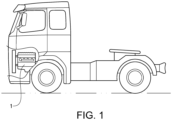
- the invention can be applied in heavy-duty vehicles, such as trucks, buses and construction equipment. Although the invention will be described with respect to a heavy-duty vehicle, the invention is not restricted to this particular vehicle, but may also be used in other vehicles such as a car.
- US5146890A describes an engine with a throttling device in the exhaust system so as to increase the back-pressure therein. US5146890A also describes the provision of exhaust valve opening sequences at the beginning and the end of the compression stroke so as to provide a pressure charge in the cylinder and to avoid a push-back effect at the end of the compression stroke, respectively.
- US2012017869A1 describes a system with a throttle in the exhaust system.
- the back-pressure causes an intermediate opening of the cylinder outlet valves and a rocker arm mechanism keeps the valve open until the exhaust valve main opening sequence occurs.
- This is disadvantageous since the exhaust valves are open during the entire compression stroke, whereby engine braking power is lost.
- US5146890A a disadvantageous need to consider design limits which require relatively large margins for the braking operation which impede maximization of the braking power.
- US20160169127 describes a decompression brake, which influences outlet valves and is dependent on the exhaust gas backpressure, and a brake flap, which is arranged in the exhaust system.
- the demanded braking torque is controlled in accordance with the boost pressure of a turbocharger and with the exhaust gas backpressure upstream of the brake flap, which is arranged directly upstream of an exhaust turbine of the exhaust turbocharger.
- the engine braking torque is controlled by a level of closure of the brake flap.
- a very small change of the braking flap position may result in a major change of the engine braking torque, making it difficult to achieve during part load engine braking a good drivability of a vehicle in which the engine is provided.
- US2014214308A1 discloses closing an air intake throttle, and decreasing the swallowing capacity of a variable geometry turbocharger in response to an operation of a compression brake.
- WO2008008005A1 suggests activating an exhaust brake by selecting, adapting or controlling the boost pressure, the pre- or after turbine pressure, the turbine speed, or a variable turbine geometry.
- WO2013159788A1 discloses regulating the air flow through an exhaust pressure governor by a closed loop control using the pressure downstream of the cylinders.
- US2016169127A1 discloses controlling a demanded braking torque in accordance with the boost pressure of a turbocharger, and with the exhaust gas backpressure upstream of a brake flap, which is arranged directly upstream of an exhaust turbine of the turbocharger.
- An object of the invention is to increase the braking performance of internal combustion engines in vehicles. It is also an object of the invention to improve the control of an internal combustion engine braking torque.
- the method may be advantageously performed in a four stroke internal combustion engine. It is understood that the method may include control of the engine braking torque to a drivetrain of the vehicle.
- the turbocharger comprises a turbine, the exhaust guide being arranged to guide the gas flow from the cylinder to the turbine. It is understood that restricting the flow through the exhaust guide may comprise adjusting an adjustable exhaust flow restriction element arranged to restrict the flow through the exhaust guide. It is also understood that restricting the flow through the air guide may comprise adjusting an adjustable air flow restriction element arranged to restrict the flow through the air guide.
- the combination of the restriction of the flow through the exhaust guide, and the adjustment of the restriction of the flow through the air guide in dependence on the determined turbocharger rotational speed value, provides for a control of partial braking torques with a high precision. This allows a good driveability of a vehicle in which the engine is provided.
- the air guide presents a lower temperature and less pressure fluctuations than the exhaust guide. Also, differing from the exhaust flow restriction, the air flow restriction does not affect the cylinder pressure to any substantial degree. As a result, compared to controlling the exhaust flow, controlling the flow restriction in the air guide will result in a reduced risk of an overreaction of the braking torque to relatively small flow changes.
- Adjusting the restriction of the flow through the air guide in dependence on the turbocharger rotational speed value provides a significant advantage.
- a limit of the rotational speed of the turbocharger may be reached before limits of other operational parameters are reached. Therefore, the turbocharger rotational speed limit may effectively provide a limit of the engine braking performance.
- Adjusting the restriction of the flow through the air guide in dependence on the turbocharger rotational speed value provides an engine braking control in direct dependence on the parameter which sets the limit to the performance. This allows for controlling the engine braking so as to be very close to the performance limit.
- An undesired rotational speed of the turbocharger may for example be a rotational speed that may cause High Cycle Fatigue (HCF) of turbine blades of the turbocharger.
- HDF may in some turbochargers occur at a certain combination of the turbocharger rotational speed and the pressure difference across the turbocharger.
- the method may thus comprise determining the pressure upstream and/or downstream of the turbocharger turbine.
- the method may further comprise adjusting, in dependence on the determined turbocharger rotational speed value, and in dependence on the pressure upstream and/or downstream of the turbocharger turbine, the restriction of the flow through the air guide, and/or the restriction of the flow through the exhaust guide.
- restriction of the flow through the air guide, and/or the restriction of the flow through the exhaust guide may be adjusted so as to avoid HCF of the turbine blades of the turbocharger.
- the rotational speed to the turbocharger may be controlled so as to avoid a rotational speed at which there is a risk of HCF of the turbine blades of the turbocharger.
- restriction of the flow through the air guide, and/or the restriction of the flow through the exhaust guide may be adjusted so as to avoid an undesired rotational speed of the turbocharger. It should be noted that such an undesired rotational speed may be below a maximum limit of the rotational speed of the turbocharger.
- the turbocharger rotational speed value is determined by means of a turbocharger rotational speed sensor.
- the engine preferably comprises an exhaust valve arranged to control a communication between the cylinder and the exhaust guide.
- the method comprises performing in each of a plurality of cycles of the cylinder an exhaust valve actuation sequence.
- adjusting the restriction of the flow through the air guide comprises adjusting a throttle valve in the air guide.
- the restriction of the flow through the air guide is adjusted in dependence on the determined turbocharger rotational speed value, the adjustment of the restriction of the flow through the air guide is a closed loop adjustment.
- the exhaust flow restriction may be adapted in an open loop control algorithm to provide a backpressure for the engine to provide a braking torque, and the air flow restriction may be adjusted in a closed loop to provide a high precision control of the braking torque at partial load.
- the turbocharger rotational speed is a feedback parameter in the closed loop adjustment.
- Providing the closed loop adjustment with the turbocharger rotational speed as a feedback adjustment provides particularly good possibilities of controlling the engine braking so as to be very close to the performance limit, mentioned above.
- a desired value of the the turbocharger rotational speed may be determined based on one or more of the engine rotational speed, a requested engine braking torque, and a current engine braking torque.
- the closed loop adjustment may be beneficially adapted to the operational circumstances as represented by the engine rotational speed, the requested engine braking torque, and/or the current engine braking torque.
- the exhaust guide may be arranged to guide the gas flow from the cylinder to a turbine of the turbocharger, wherein the adjustable exhaust flow restriction element is arranged between the cylinder and the turbine.
- Restricting the flow through the exhaust guide may comprise adjusting a throttle valve in the exhaust guide.
- restricting the flow through the exhaust guide may comprise adjusting a flow adjustment function at the turbocharger turbine, where the turbocharger is a variable geometry turbocharger.
- a method of controlling an internal combustion engine in a vehicle comprising a cylinder, a fuel system for supplying fuel to the cylinder, an air guide arranged to guide an air flow to the cylinder, and an exhaust guide arranged to guide a gas flow from the cylinder, the method comprising
- a significant advantage is provided with adjusting, in dependence on the determined engine parameter value, the restriction of the flow through the exhaust guide, wherein the adjustment of the restriction of the flow through the exhaust guide is a closed loop adjustment, wherein the determined engine parameter is a feedback parameter in the closed loop adjustment.
- the restriction of the flow through the air guide Due to the relatively low mass flow at low engine speeds, it may be difficult to control the engine brake torque by adjusting the restriction of the flow through the air guide. For example, where the air guide flow restriction is effected by a throttle valve, such a valve may need to be moved to a position in which it is almost closed, before any noticeable control of the engine brake torque is obtained.
- the relatively low pressure levels in the exhaust guide at low engine speeds may allow for an accurate closed loop control of the exhaust guide flow restriction. Thereby, the precision of the engine brake torque control may be improved at low engine speeds.
- the method not according to the invention comprises adjusting the restriction of the flow through the air guide in dependence on one or more of the engine rotational speed, a requested engine braking torque, and a current engine braking torque.
- the adjustment of the restriction of the flow through the air guide is advantageously done in an open loop adjustment.
- a simple algorithm is provided, in particular for relatively low engine speeds, to obtain, by the air guide flow restriction adjustment, a coarse setting of the engine brake power level, and a continuous closed loop adjustment of the exhaust guide flow restriction, for closely adjusting the engine braking power.
- the method not according to the invention comprises determining the engine rotational speed, wherein the step of performing a closed loop adjustment of the restriction of the flow through the exhaust guide is omitted if the engine rotational speed is above a threshold value.
- the method may comprise determining, if the engine rotational speed is above the threshold value, a value of an engine parameter affecting the pressure in the cylinder and/or the air mass flow through the cylinder, and adjusting, in dependence on the determined engine parameter value, the restriction of the flow through the air guide, wherein the adjustment of the restriction of the flow through the air guide is a closed loop adjustment, wherein the determined engine parameter is a feedback parameter in the closed loop adjustment.
- the restriction of the flow through the exhaust guide may be adjusted in dependence on one or more of the engine rotational speed, a requested engine braking torque, and a current engine braking torque.
- the method may provide a selection of one of two modes of the engine brake control, based on the engine speed. More specifically, the closed loop control of the exhaust guide flow restriction may be used where it may provide a more accurate engine brake torque control than the closed loop control of the air guide flow restriction, such as at relatively low engine speeds. The closed loop control of the air guide flow restriction may be used where it may provide a more accurate engine brake torque control than the closed loop control of the exhaust guide flow restriction, such as at relatively high engine speeds.
- the engine comprises a turbocharger comprising a turbine
- the exhaust guide being arranged to guide the gas flow from the cylinder to the turbine
- restricting the flow through the exhaust guide may comprise adjusting an exhaust flow restriction element in the exhaust guide, the adjustable exhaust flow restriction element being arranged between the cylinder and the turbine.
- the upstream location will increase the turbo speed and air mass flow through the engine, whereby the engine braking power may be increased.
- the upstream exhaust flow restriction element creates a high back pressure in the exhaust manifold without reducing turbo performance.
- the upstream location of the exhaust flow restriction element allows the turbocharger to be effective within a larger engine speed range, which in turn increases the available engine speed range controllable by the exhaust flow restriction element.
- the invention may be implemented in a variety of internal combustion engine types. Below are some examples of features of an engine in which the invention may be implemented.
- the exhaust flow restriction element, the exhaust valve, and the exhaust valve actuation assembly may be adapted to provide a backpressure for the engine to provide a braking torque, and the air flow restriction element may be adapted to enable controllability of said braking torque.
- the exhaust flow restriction element, the exhaust valve and the exhaust valve actuation assembly may allow a high maximum braking torque at a wide engine speed interval, while the air flow restriction element allows a high degree of control of the braking torque at a partial load operation.
- the turbocharger comprises a compressor
- the air guide is arranged to guide the air flow from the compressor to the cylinder
- the adjustable air flow restriction element may be arranged between the compressor and the cylinder.
- the adjustable air flow restriction element may alternatively be arranged upstream of the compressor.
- the air flow restriction element may be arranged to provide a plurality of levels of the air flow restriction depending on the adjustment of the air flow restriction element.
- the air flow restriction element may be adapted to provide the restriction of the air flow restriction element at any level within a non-zero restriction interval.
- the engine may be adapted to run with a Diesel cycle, or adapted to run with an Otto cycle.
- the engine may have one or more cylinders. It is understood that in some embodiments with a multi cylinder engine, a single air guide may be arranged to guide air to all cylinders of the engine, wherein a single air flow restriction element is provided to adjustably provide a restriction of the air flow.
- the engine may be provided with two air guides, each guiding an air flow to a respective cylinder, or a respective sub-group of cylinders, and each being provided with a respective air flow restriction element.
- crankshaft angle interval within which the commencement of the exhaust valve actuation sequence may occur selectively at any crankshaft angle, may extend over 30-50 crankshaft angle degrees, e.g. 40 crankshaft angle degrees.
- the exhaust valve actuation assembly may comprise a rotatable camshaft arrangement, the camshaft arrangement being adapted to provide the control of the commencement of the exhaust valve actuation sequence to occur selectively at any crankshaft angle within the non-zero crankshaft angle interval.
- the exhaust valve actuation assembly may be controllable for adjusting the phase of the camshaft rotation in relation of the crankshaft rotation.
- the exhaust valve actuation assembly may comprise a variator for variable valve timing.
- cam phasing may be the use of two coaxial camshafts with a respective cam lobe profile which provide a combined cam lobe profile with an adjustable length. Thereby one follower may span the pair of closely spaced cam lobes. By changing the duration of the valve lift by advancing one of the cam lobes in the camshaft rotation direction, an advancement of the commencement of the exhaust valve actuation sequence will also be obtained, and vice versa.
- the engine may be a four-stroke internal combustion engine.
- the exhaust valve actuation sequence may be a decompression opening sequence of the exhaust valve commenced in a compression stroke of the respective cycle of the cylinder, the exhaust valve actuation assembly being controllable for selectively providing the decompression opening sequence.
- the exhaust valve actuation assembly may comprise a camshaft presenting at least one cam lobe presenting a decompression nose for the decompression opening sequence, the exhaust valve actuation assembly being controllable for selectively actuating the exhaust valve by means of the decompression nose.
- the decompression opening sequence of the exhaust valve may be commenced in a later half of the compression stroke. Thereby, the decompression opening sequence serves to avoid a push-back effect, which the compressed air would otherwise have produced at the end of the compression stroke.
- the exhaust flow restriction element is arranged to provide a plurality of levels of the exhaust flow restriction depending on the adjustment of the exhaust flow restriction element.
- the exhaust flow restriction element is adapted to provide the restriction of the exhaust flow restriction element at any level within a non-zero restriction interval.
- the turbocharger may be a fixed geometry turbocharger with a turbine in one, two or more steps.
- the engine comprises a variable geometry turbocharger comprising a turbine, the exhaust guide being arranged to guide the gas flow from the cylinder to the turbine, wherein the turbocharger is arranged to provide at the turbine an adjustable restriction of the gas flow in addition to the restriction which the adjustable exhaust flow restriction element is arranged to provide.
- the adjustable exhaust flow restriction element may be provided by a flow adjusting function at the turbine. Thereby, the exhaust flow restriction element may be integrated with the variable geometry turbocharger, which reduces the complexity of the engine.
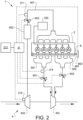
- the engine in this example comprises six cylinders 301, 302 arranged in a line.
- the engine 1 is oriented in the vehicle such that line of cylinders is parallel with the direction of straight travel of the vehicle.
- the orientation of the engine may have another orientation in the vehicle.
- it may be a transverse engine, i.e. an engine installed such that the crankshaft of the engine is perpendicular to the direction of straight travel of the vehicle. This may be the case e.g. in a bus, where the engine may be a transverse engine mounted in the rear of the bus.
- the cylinders include first cylinders 301 which are the three cylinders located forward in the vehicle direction of forward travel, and second cylinders 302 which are the three cylinders located rearward in the vehicle direction of forward travel.
- the exhaust conduit arrangement comprises a first exhaust guide 501 arranged to guide a gas flow from the first cylinders 301 to the turbine 401, and a second exhaust guide 502 arranged to guide a gas flow from the second cylinders 302 to the turbine 401.
- An adjustable air flow restriction element comprising a throttle valve 903 in the air guide 901, is arranged to restrict the flow through the air guide 901.
- the adjustable air flow restriction element 903 is arranged between the compressor 402 and the cylinders 301, 302, more specifically, between the charge air cooler 902 and the cylinders 301, 302.
- the air guide pressure sensor 211 is located between the adjustable air flow restriction element 903 and the cylinders 301, 302.
- the adjustable air flow restriction element 903 may be arranged upstream of the compressor 402.
- the air flow restriction element 903 is controllable by the control unit 21 via an air flow restriction actuation assembly (not shown) comprising e.g. a stepper motor.
- a position sensor (not shown) at the air flow restriction element 903 is connected to the control unit 21, and arranged to register and send to the control unit signals representative of the position of the air restriction element 903, for a position feedback.
- any alternative type of air flow restriction actuation assembly may be provided; for example such as assembly may include a brushless motor or a pneumatic motor.
- the air flow restriction element 903 is adapted to provide the air restriction at any level within a non-zero restriction interval depending on the adjustment of the air flow restriction element 903.
- Each of the first and second exhaust flow restriction elements 601, 602 is arranged to provide a plurality of levels of the exhaust flow restriction depending on the adjustment by the control unit 21 of the respective exhaust flow restriction element 601, 602. More specifically each exhaust flow restriction element 601, 602 is arranged to provide a continuous adjustment of the flow, i.e. to provide a flow restriction at any level within a non-zero restriction interval.
- the data storage unit 213 is provided with data correlating values of the engine torque and the engine rotational speed with settings for the first and second exhaust flow restriction elements 601, 602.
- a single exhaust guide may be arranged to guide exhaust gases from all cylinders of the engine.
- a single exhaust flow restriction element 601 may be provided downstream of the turbine of the turbocharger.
- the turbocharger 4 may be a variable geometry turbocharger, whereby the turbocharger 4 provides, with a flow adjusting function at the turbine 401, the function of the exhaust flow restriction element 601 as described herein.
- two intake valves (not shown) are provided to control the admission of air from the air guide 901 to the respective cylinder 301, 302.
- two exhaust valves are arranged to control a communication between the respective cylinder 301, 302 and the respective exhaust guide 501, 502. It should be noted that in other embodiments only one or more than two exhaust valves may be provided at each cylinder.
- the engine 1 comprises an exhaust valve actuation assembly 8 comprising a camshaft arrangement comprising a rotatable camshaft 801. At each cylinder 301, 302 a cam lobe 803 is fixed to the camshaft for actuation of the exhaust valves.
- the exhaust valve actuation assembly 8 also comprises a variator 802 for variable valve timing, more particularly for adjustment of the phase of the camshaft rotation.
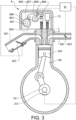
- FIG. 3 shows a cross-section through one of the first cylinders 301.
- Each cylinder 301, 302 comprises a piston 303 connected to a rotatable crankshaft 101.
- the control unit 21 is arranged to determine the engine speed by means of signals from an engine speed sensor 212 at the crankshaft 101.
- a sensor may be arranged to detect the speed of the camshaft 801, whereby the crankshaft speed may be obtained by doubling the sensed camshaft speed.
- Fig. 3 also shows one of the exhaust valves 7 arranged to control the communication between the first cylinder 301 and the first exhaust guide 501.
- Fig. 3 further shows the first adjustable exhaust flow restriction element 601 in the first exhaust guide 501.
- Fig. 3 also shows the adjustable air flow restriction element 903 in the air guide 901.
- the exhaust valve actuation assembly 8 comprises for each cylinder 301, 302 a rocker arm 807 arranged to pivot by contact at one end with the respective cam lobe 803 to actuate the exhaust valves 7.
- the cam lobe 803 presents a relatively large main nose 804, and two relatively small noses, i.e. a decompression nose 805 and a charge nose 806.
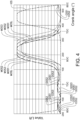
- the commencement of the exhaust valve actuation sequences MOS1, DOS1, COS1 may be controlled to occur selectively at any crankshaft angle within a non-zero crankshaft angle interval.
- the entire exhaust valve actuation sequences MOS1, DOS1, COS1 may be moved within the non-zero crankshaft angle interval.
- Said interval may extend over e.g. 40 crankshaft angle degrees. Other interval sizes are however of course possible.
- the data storage unit 213 is provided with data correlating values of the engine torque and the engine rotational speed with settings for the phase of the camshaft rotation.
- Fig. 4 shows examples of adjusted crankshaft values obtained by the camshaft phase adjustments.
- the exhaust valve actuation sequences are moved forward in the cycles as indicated by the curves MOS2, DOS2, COS2 in fig. 4 .
- the exhaust valve actuation sequences are moved backwards in the cycles as indicated by the curves MOS3, DOS3, COS3 in fig. 4 . It should be noted that, apart from the crankshaft angle at which the respective exhaust valve actuation sequence is commenced, the exhaust valve actuation sequences are identical in all cycles.
- the control valves 809 in the rocker arms 807 at the cylinders 301, 302 are controlled to actuate the hydraulic pistons 808 to engage the rocker arms 807 with the decompression noses 805 and the charge noses 806.
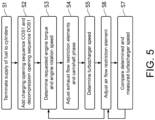
- the charging opening sequence COS1 and the decompression opening sequence DOS1 are added S2 to the cycles in the cylinders as described above.
- the method also comprises determining S3 the requested engine torque and the engine rotational speed.
- the control unit 21 determines by means of the data in the data storage unit 213 a setting for the first and second exhaust flow restriction elements 601, 602 based on the determined values of the engine torque and the engine rotational speed.
- the exhaust flow restriction elements 601, 602 are adjusted S4 to the determined setting, so as to provide a restriction of the air flows in the exhaust guides 501, 502 correlated with the determined requested engine torque and engine rotational speed.
- This adjustment is an open loop adjustment, i.e. although it is updated based on changes in the requested engine torque and engine rotational speed, it is not updated with feedback from any parameter from which the air flow through the cylinders or the cylinder pressure may be determined.
- the control unit 21 also determines, based on the requested engine torque and the engine rotational speed, by means of the data in the data storage unit 213, a setting for the camshaft phase. In an open loop control, the control unit 21 sends signals to the variator 802 so as to adjust S4 the phase of the camshaft rotation to adjust the crankshaft angles of the exhaust valve actuation sequences MOS1, DOS1, COS1. Retarding the commencement of the exhaust valve actuation sequences MOS1, DOS1, COS1 will reduce the pressure in the air guide 901 which will reduce the braking torque, and vice versa.
- the control unit 21 determines S5 based on the data in the storage unit 213 a desired turbocharger rotational speed value.
- the control unit 21 sends signals to the air flow restriction element 903 in the air guide 901 so as to adjust S6 the air flow restriction element 903, based on the desired turbocharger speed value and feedback signals from the turbocharger speed sensor 215.
- the feedback signals from the turbocharger speed sensor 215 are compared S7 to the desired turbocharger speed value. Moving the air flow restriction element 903 towards a fully closed position will reduce the pressure in the air guide 901 and hence the turbocharger speed, and vice versa.
- the method comprises determining S3 the requested engine torque and the engine rotational speed.
- the method comprises determining S34 whether the engine speed is above a predetermined threshold value. If the engine speed is below the threshold value, the following steps are performed:
- the control unit 21 determines by means of the data in the data storage unit 213 a setting for the air flow restriction element 903 in the air guide 901 based on the determined values of the engine torque and the engine rotational speed.
- the air flow restriction element 903 is adjusted S401 to the determined setting, so as to provide a restriction of the air flow in the air guide 901 correlated with the determined requested engine torque and engine rotational speed.
- This adjustment is an open loop adjustment, i.e. although it is updated based on changes in the requested engine torque and engine rotational speed, it is not updated with feedback from any parameter from which the air flow through the cylinders or the cylinder pressure may be determined.
- the control unit 21 also determines, based on the requested engine torque and the engine rotational speed, by means of the data in the data storage unit 213, a setting for the camshaft phase. In an open loop control, the control unit 21 sends signals to the variator 802 so as to adjust S401 the phase of the camshaft rotation to adjust the crankshaft angles of the exhaust valve actuation sequences MOS1, DOS1, COS1.
- the control unit 21 determines S501, by means of the data in the storage unit 213, a desired pressure difference across the cylinders 301, 302.
- the control unit 21 sends signals to the exhaust flow restriction elements 601, 602, based on the desired pressure difference across the cylinders 301, 302 and feedback signals from the air guide pressure sensor 211 and the exhaust guide pressure sensor 214.
- the feedback signals are compared S701 to the desired pressure difference across the cylinders 301, 302. Moving S601 the exhaust flow restriction elements 601, 602 towards respective fully closed positions will increase the pressure difference across the cylinders 301, 302, and vice versa.
- the engine speed is continuously or repetitively determined S34. If the engine speed is above the predetermined threshold value, the following steps are performed:
- the control unit 21 determines, by means of the data in the data storage unit 213, a setting for the exhaust flow restriction elements 601, 602, based on the determined values of the engine torque and the engine rotational speed.
- the exhaust flow restriction elements 601, 602 are adjusted S402 to the determined setting. This adjustment is an open loop adjustment.
- the control unit 21 also determines, based on the requested engine torque and the engine rotational speed, a setting for the camshaft phase. In an open loop control, the phase of the camshaft rotation is adjusted S402.
- the control unit 21 determines S502 a desired pressure difference across the cylinders 301, 302.
- the control unit 21 sends signals to the air flow restriction element 903 in the air guide 901 so as to adjust S602 the air flow restriction element 903, based on the desired pressure difference across the cylinders 301, 302 and feedback signals from the air guide pressure sensor 211 and the exhaust guide pressure sensor 214.
- the feedback signals from the air guide pressure sensor 211 and the exhaust guide pressure sensor 214 are compared S702 to the desired pressure difference across the cylinders 301, 302.
- Fig. 7 shows a method of controlling the engine 1 in fig. 2 , according to a further embodiment of the invention.
- the method comprises controlling the engine to provide a braking torque.
- This control comprises terminating S1 the supply of fuel to the cylinders 301, 302, restricting S4 the flow through the exhaust guides 501, 502, and restricting S6 the flow through the air guide 901.
- the control of the engine to provide a braking torque also comprises determining S5 a value of a rotational speed of the turbocharger 4, and adjusting S6, in dependence on the determined turbocharger rotational speed value, the restriction of the flow through the air guide 901, and/or the restriction of the flow through the exhaust guide 501, 502.
- Fig. 8 shows an advantageous example of an exhaust flow restriction element 601.
- the exhaust flow restriction element 601 is a butterfly valve with a flap 604.
- An exhaust flow restriction actuation assembly 603, comprising a stepper motor, a brushless motor or a pneumatic motor, is provided to adjust the exhaust flow restriction element 601, i.e. to adjust the angular position of the flap 604 around an axle 605.
- the flap 604 is non-symmetric, i.e. the extension of the flap is larger on one side of the axle 605 than on the other side.
- the exhaust flow restriction element is arranged to assume, upon a fault in the exhaust flow restriction actuation assembly 603, a position in which the exhaust flow restriction element does not restrict or block the flow through the exhaust guide.
Landscapes
- Engineering & Computer Science (AREA)
- Mechanical Engineering (AREA)
- General Engineering & Computer Science (AREA)
- Chemical & Material Sciences (AREA)
- Combustion & Propulsion (AREA)
- Output Control And Ontrol Of Special Type Engine (AREA)
- Supercharger (AREA)
Claims (11)
- Verfahren zum Steuern eines Verbrennungsmotors (1) in einem Fahrzeug, der einen Zylinder (301, 302), ein Kraftstoffsystem (330) zum Zuführen von Kraftstoff zu dem Zylinder, eine Luftführung (901), die so angeordnet ist, dass sie einen Luftstrom zu dem Zylinder (301, 302) führt, und eine Abgasführung (501, 502), die so angeordnet ist, dass sie einen Gasstrom von dem Zylinder (301, 302) führt, umfasst, wobei das Verfahren umfasst- Steuerung des Motors zur Bereitstellung eines Bremsmoments, wobei die Steuerung Folgendes umfasst,- Beenden (S1) der Kraftstoffzufuhr zum Zylinder (301, 302),- Drosselung (S4) des Durchflusses durch die Abgasführung (501, 502), und- Drosselung (S6) des Durchflusses durch die Luftführung (901),- wobei die Steuerung des Motors zur Bereitstellung eines Bremsmoments auch Folgendes umfasst:- Bestimmen (S5) eines Wertes einer Drehzahl eines Turboladers (4) des Motors mittels eines Turbolader-Drehzahlsensors,- dadurch gekennzeichnet, dass in Abhängigkeit von dem ermittelten Wertes der Drehzahl des Turboladers die Drosselung des Durchflusses durch die Luftführung (901) eingestellt wird, wobei die Einstellung der Drosselung des Durchflusses durch die Luftführung (901) eine Einstellung in einem geschlossenen Regelkreis ist.
- Verfahren nach Anspruch 1, dadurch gekennzeichnet, dass die Drehzahl des Turboladers ein Rückkopplungsparameter im geschlossenen Regelkreis ist.
- Verfahren nach Anspruch 2, dadurch gekennzeichnet, dass ein Sollwert der Turboladerdrehzahl auf der Grundlage der Motordrehzahl, eines angeforderten Motorbremsmoments und/oder eines aktuellen Motorbremsmoments bestimmt wird.
- Verfahren nach einem der vorhergehenden Ansprüche, dadurch gekennzeichnet, dass die Drosselung des Durchflusses durch die Abgasführung (501, 502) in Abhängigkeit von der Motordrehzahl, einem angeforderten Motorbremsmoment und/oder einem aktuellen Motorbremsmoment eingestellt wird.
- Verfahren nach Anspruch 4, dadurch gekennzeichnet, dass die Einstellung der Drosselung des Durchflusses durch die Abgasführung (501, 502) eine Einstellung im offenen Regelkreis ist.
- Verfahren nach einem der vorhergehenden Ansprüche, dadurch gekennzeichnet, dass die Drosselung des Durchflusses durch die Abgasführung (501, 502) das Einstellen eines Abgasströmungsbegrenzungselements (601, 602) in der Abgasführung (501, 502) umfasst, und die Abgasführung (501, 502) so angeordnet ist, dass sie die Gasströmung von dem Zylinder (301, 302) zu einer Turbine (401) des Turboladers leitet, wobei das Abgasströmungsbegrenzungselement (601, 602) zwischen dem Zylinder (301, 302) und der Turbine (401) angeordnet ist.
- Verfahren nach einem der vorhergehenden Ansprüche, dadurch gekennzeichnet, dass die Drosselung des Durchflusses durch die Abgasführung (501, 502) das Einstellen eines Drosselventils (601, 602) in der Abgasführung (501, 502) und/oder das Einstellen einer Strömungseinstellfunktion an einer Turbine (401) eines Turboladers (4) mit variabler Geometrie des Motors umfasst, wobei die Abgasführung (501, 502) so angeordnet ist, dass sie die Gasströmung von dem Zylinder zu der Turbine (401) leitet.
- Verfahren nach einem der vorhergehenden Ansprüche, dadurch gekennzeichnet, dass die Einstellung der Drosselung des Durchflusses durch die Luftführung (901) die Einstellung eines Drosselventils (903) in der Luftführung (901) umfasst.
- Computerprogramm, das Programmcodemittel umfasst, um einen Motor, der zur Durchführung des Verfahrens nach einem der Ansprüche 1 bis 8 konfiguriert ist, zu veranlassen, die Schritte des Verfahrens nach einem der Ansprüche 1 bis 8 auszuführen.
- Ein computerlesbares Medium, auf dem das Computerprogramm nach Anspruch 9 gespeichert ist.
- Eine Steuereinheit (21), die so konfiguriert ist, dass sie die Schritte des Verfahrens nach einem der Ansprüche 1-8 durchführt.
Priority Applications (1)
| Application Number | Priority Date | Filing Date | Title |
|---|---|---|---|
| EP23155713.3A EP4212712A1 (de) | 2016-10-06 | 2017-06-30 | Verbrennungsmotor und verfahren zur steuerung eines bremsmoments des motors |
Applications Claiming Priority (2)
| Application Number | Priority Date | Filing Date | Title |
|---|---|---|---|
| PCT/EP2016/073859 WO2018065053A1 (en) | 2016-10-06 | 2016-10-06 | An internal combustion engine and a method for controlling a braking torque of the engine |
| PCT/EP2017/066344 WO2018065131A1 (en) | 2016-10-06 | 2017-06-30 | An internal combustion engine and a method for controlling a braking torque of the engine |
Related Child Applications (2)
| Application Number | Title | Priority Date | Filing Date |
|---|---|---|---|
| EP23155713.3A Division-Into EP4212712A1 (de) | 2016-10-06 | 2017-06-30 | Verbrennungsmotor und verfahren zur steuerung eines bremsmoments des motors |
| EP23155713.3A Division EP4212712A1 (de) | 2016-10-06 | 2017-06-30 | Verbrennungsmotor und verfahren zur steuerung eines bremsmoments des motors |
Publications (3)
| Publication Number | Publication Date |
|---|---|
| EP3535484A1 EP3535484A1 (de) | 2019-09-11 |
| EP3535484C0 EP3535484C0 (de) | 2023-06-07 |
| EP3535484B1 true EP3535484B1 (de) | 2023-06-07 |
Family
ID=57130363
Family Applications (3)
| Application Number | Title | Priority Date | Filing Date |
|---|---|---|---|
| EP16781087.8A Active EP3523527B2 (de) | 2016-10-06 | 2016-10-06 | Verfahren zur steuerung eines bremsdrehmoments des motors |
| EP17735097.2A Active EP3535484B1 (de) | 2016-10-06 | 2017-06-30 | Verbrennungsmotor und verfahren zur steuerung eines bremsdrehmoments des motors |
| EP23155713.3A Pending EP4212712A1 (de) | 2016-10-06 | 2017-06-30 | Verbrennungsmotor und verfahren zur steuerung eines bremsmoments des motors |
Family Applications Before (1)
| Application Number | Title | Priority Date | Filing Date |
|---|---|---|---|
| EP16781087.8A Active EP3523527B2 (de) | 2016-10-06 | 2016-10-06 | Verfahren zur steuerung eines bremsdrehmoments des motors |
Family Applications After (1)
| Application Number | Title | Priority Date | Filing Date |
|---|---|---|---|
| EP23155713.3A Pending EP4212712A1 (de) | 2016-10-06 | 2017-06-30 | Verbrennungsmotor und verfahren zur steuerung eines bremsmoments des motors |
Country Status (4)
| Country | Link |
|---|---|
| US (2) | US10859007B2 (de) |
| EP (3) | EP3523527B2 (de) |
| CN (2) | CN109804151B (de) |
| WO (2) | WO2018065053A1 (de) |
Families Citing this family (10)
| Publication number | Priority date | Publication date | Assignee | Title |
|---|---|---|---|---|
| WO2018065053A1 (en) * | 2016-10-06 | 2018-04-12 | Volvo Truck Corporation | An internal combustion engine and a method for controlling a braking torque of the engine |
| US11913389B2 (en) * | 2018-10-01 | 2024-02-27 | Volvo Truck Corporation | Method for controlling an internal combustion engine, a computer program, a computer readable medium, a control unit, an internal combustion engine, and a vehicle |
| KR20200063453A (ko) * | 2018-11-28 | 2020-06-05 | 현대자동차주식회사 | 자동차의 배기브레이크 자동 제어 시스템 및 방법 |
| CN111980792A (zh) * | 2019-05-22 | 2020-11-24 | 卡明斯公司 | 分流式通道排气歧管上的排气歧管压力管理系统 |
| CN110657036B (zh) * | 2019-09-29 | 2022-04-05 | 潍柴动力股份有限公司 | 增压器的控制方法及装置 |
| US11193434B2 (en) * | 2019-11-29 | 2021-12-07 | Caterpillar Inc. | Turbocharger control using an intake throttle valve |
| US11391223B2 (en) | 2020-08-19 | 2022-07-19 | Caterpillar Inc. | Increasing braking power and exhaust gas temperature |
| SE544784C2 (en) * | 2020-10-09 | 2022-11-15 | Scania Cv Ab | Variable Valve Timing Internal Combustion Engine |
| WO2024017464A1 (en) * | 2022-07-19 | 2024-01-25 | Volvo Truck Corporation | Engine system |
| IT202200020052A1 (it) * | 2022-09-29 | 2024-03-29 | Fpt Ind Spa | Metodo e sistema di gestione di una procedura di freno motore in un motore a ciclo diesel |
Family Cites Families (69)
| Publication number | Priority date | Publication date | Assignee | Title |
|---|---|---|---|---|
| SE466320B (sv) | 1989-02-15 | 1992-01-27 | Volvo Ab | Foerfarande och anordning foer motorbromsning med en fyrtakts foerbraenningsmotor |
| GB9611015D0 (en) * | 1996-05-25 | 1996-07-31 | Holset Engineering Co | Variable geometry turbocharger control |
| JP3443514B2 (ja) * | 1997-03-25 | 2003-09-02 | 株式会社日立ユニシアオートモティブ | エンジンブレーキ装置の排気弁操作用アクチュエータ |
| DE19637999A1 (de) | 1996-09-18 | 1998-03-19 | Daimler Benz Ag | Verfahren zum Betreiben einer Motorbremse und Vorrichtung zur Durchführung des Verfahrens |
| US5787859A (en) | 1997-02-03 | 1998-08-04 | Diesel Engine Retarders, Inc. | Method and apparatus to accomplish exhaust air recirculation during engine braking and/or exhaust gas recirculation during positive power operation of an internal combustion engine |
| JP4261767B2 (ja) | 1997-10-03 | 2009-04-30 | ジェイコブス ビークル システムズ、インコーポレイテッド | 内燃機関における排気ガスパラメータを制御する方法と装置 |
| US6647954B2 (en) * | 1997-11-17 | 2003-11-18 | Diesel Engine Retarders, Inc. | Method and system of improving engine braking by variable valve actuation |
| US6810850B2 (en) * | 2001-04-20 | 2004-11-02 | Jenara Enterprises Ltd. | Apparatus and control for variable exhaust brake |
| US6594996B2 (en) | 2001-05-22 | 2003-07-22 | Diesel Engine Retarders, Inc | Method and system for engine braking in an internal combustion engine with exhaust pressure regulation and turbocharger control |
| US6681573B2 (en) * | 2002-02-05 | 2004-01-27 | Honeywell International Inc | Methods and systems for variable geometry turbocharger control |
| GB0203490D0 (en) | 2002-02-14 | 2002-04-03 | Holset Engineering Co | Exhaust brake control system |
| CN101270693A (zh) * | 2002-04-08 | 2008-09-24 | 柴油发动机减震器有限公司 | 用于实现气阀可变驱动的紧凑型空动系统 |
| WO2003089819A1 (en) * | 2002-04-15 | 2003-10-30 | Jenara Enterprises Ltd. | Exhaust gas control valve, apparatus and method of controlling exhaust gas flow |
| US6694933B1 (en) * | 2002-09-19 | 2004-02-24 | Diesel Engine Retarders, Inc. | Lost motion system and method for fixed-time valve actuation |
| EP1803913B1 (de) * | 2002-12-23 | 2010-08-11 | Jacobs Vehicle Systems, Inc. | Motorbremsverfahren und Einrichtung |
| CN101696645B (zh) * | 2002-12-23 | 2013-03-27 | 雅各布斯车辆系统公司 | 发动机制动方法及设备 |
| US20030178002A1 (en) * | 2003-02-27 | 2003-09-25 | Israel Mark A. | Apparatus and method to operate an engine exhaust brake together with an exhaust gas recirculation system |
| EP1733125B1 (de) * | 2004-03-15 | 2018-08-01 | Jacobs Vehicle Systems, Inc. | Ventilbrücke mit integriertem lost-motion-system |
| JP2005307898A (ja) * | 2004-04-23 | 2005-11-04 | Hino Motors Ltd | 制動力増大機構 |
| AT500601B1 (de) * | 2004-07-16 | 2006-11-15 | Avl List Gmbh | Verfahren zum betreiben einer brennkraftmaschine |
| DE112005000030D2 (de) | 2004-07-17 | 2006-10-05 | Mahle Ventiltrieb Gmbh | Steuereinrichtung für ein Ventil, insbesondere ein Gaswechselventil eines Verbrennungsmotors |
| US7954465B2 (en) * | 2004-08-17 | 2011-06-07 | Jacobs Vehicle Systems, Inc. | Combined exhaust restriction and variable valve actuation |
| EP1880095B1 (de) * | 2005-05-13 | 2008-10-08 | Daimler AG | Zweitakt-motorbremsverfahren für eine aufgeladene brennkraftmaschine |
| AT502997B1 (de) * | 2005-12-20 | 2013-09-15 | Man Truck & Bus Oesterreich Ag | Vorrichtung zur steigerung der bremsleistung einer mehrzylindrigen brennkraftmaschine eines fahrzeugs während des motorbremsbetriebes |
| EP1969207A4 (de) * | 2005-12-28 | 2012-03-07 | Jacobs Vehicle Systems Inc | Verfahren und system für teilzyklusentlüftungsbremse |
| US7284533B1 (en) * | 2006-05-08 | 2007-10-23 | Jacobs Vehicle Systems, Inc | Method of operating an engine brake |
| EP2044314B1 (de) * | 2006-07-13 | 2020-11-11 | Volvo Lastvagnar AB | Verfahren und system zur betätigung einer brennkraftmotorbremse |
| GB2443419A (en) | 2006-11-06 | 2008-05-07 | Mechadyne Plc | Internal combustion engine valve mechanism allowing variable phase compression braking |
| EP2092178B2 (de) * | 2006-12-20 | 2019-10-23 | Volvo Lastvagnar AB | Motorbremse für fahrzeug |
| DE102007038078A1 (de) | 2007-08-11 | 2009-02-12 | Daimler Ag | Gaswechselventilbetätigungsvorrichtung |
| US7610897B2 (en) * | 2007-09-07 | 2009-11-03 | Gm Global Technology Operations, Inc. | Valvetrain control systems for internal combustion engines with time and event based control |
| US7565896B1 (en) | 2008-02-28 | 2009-07-28 | Jacobs Vehicle Systems, Inc. | Method for variable valve actuation to provide positive power and engine braking |
| US8109091B2 (en) * | 2008-05-22 | 2012-02-07 | GM Global Technology Operations LLC | Exhaust gas recirculation control systems and methods |
| JP2010001822A (ja) | 2008-06-20 | 2010-01-07 | Toyota Motor Corp | ターボチャージャ付き内燃機関 |
| JP2010024967A (ja) * | 2008-07-18 | 2010-02-04 | Toyota Motor Corp | 車両の運転制御方法およびその装置 |
| US7900597B2 (en) * | 2008-07-31 | 2011-03-08 | Pacbrake Company | Self-contained compression brakecontrol module for compression-release brakesystem of internal combustion engine |
| GB0814764D0 (en) * | 2008-08-13 | 2008-09-17 | Cummins Turbo Tech Ltd | Engine braking method and system |
| US8448626B2 (en) * | 2008-08-13 | 2013-05-28 | International Engine Intellectual Property Company, Llc | Exhaust system for engine braking |
| US8065987B2 (en) * | 2009-01-05 | 2011-11-29 | Zhou Yang | Integrated engine brake with mechanical linkage |
| JP4816785B2 (ja) | 2009-02-20 | 2011-11-16 | マツダ株式会社 | ターボ過給機付きエンジンの制御方法および制御装置 |
| US8290689B2 (en) * | 2009-04-14 | 2012-10-16 | GM Global Technology Operations LLC | Variable exhaust brake control via turbine vane positioning |
| US7712449B1 (en) | 2009-05-06 | 2010-05-11 | Jacobs Vehicle Systems, Inc. | Lost motion variable valve actuation system for engine braking and early exhaust opening |
| US8281587B2 (en) * | 2009-08-13 | 2012-10-09 | International Engine Intellectual Property Company, Llc | Supercharged boost-assist engine brake |
| DE102009051261B4 (de) † | 2009-10-29 | 2023-05-11 | Daimler Truck AG | Verfahren zum Betreiben einer Motorbremse eines Kraftwagens |
| US8689770B2 (en) * | 2009-11-02 | 2014-04-08 | International Engine Intellectual Property Company, Llc | High-temperature-flow engine brake with valve actuation |
| DE102011011251A1 (de) | 2010-02-15 | 2011-08-18 | Magna Steyr Fahrzeugtechnik Ag & Co Kg | Verfahren zur Erhöhung der Bremswirkung einer Hubkolbenbrennkraftmaschine in einem Kraftfahrzeug |
| CN102947573B (zh) * | 2010-04-16 | 2015-11-25 | 万国引擎知识产权有限责任公司 | 使用弹簧加载阀的发动机制动系统 |
| AT510236B1 (de) | 2010-07-26 | 2015-12-15 | MAN Truck & Bus Österreich AG | Verfahren zur motorbremsung |
| CN104675532B (zh) | 2010-07-27 | 2018-11-13 | 雅各布斯车辆系统公司 | 组合发动机制动和正功率发动机空动阀致动系统 |
| AT510527B1 (de) | 2010-09-23 | 2012-09-15 | Avl List Gmbh | Viertakt-brennkraftmaschine mit einer motorbremse |
| JP2012097604A (ja) | 2010-10-29 | 2012-05-24 | Isuzu Motors Ltd | 内燃機関の排気ブレーキ制御方法及び装置 |
| CN102022154A (zh) * | 2011-01-13 | 2011-04-20 | 大连理工大学 | 内燃机进排气门控制方法 |
| US9528432B2 (en) * | 2011-09-25 | 2016-12-27 | Cummins, Inc. | System for controlling an air handling system including an electric motor assisted variable geometry turbocharger |
| AT512332B1 (de) * | 2011-12-23 | 2021-01-15 | MAN TRUCK & BUS OESTERREICH GesmbH | Anordnung einer drosseleinrichtung zum steuern und/oder regeln des motorbremsbetriebs |
| US9938907B2 (en) * | 2012-04-25 | 2018-04-10 | Volvo Lastvagnar Ab | Method and engine brake system to control an engine brake of a vehicle |
| US9359962B2 (en) | 2012-04-25 | 2016-06-07 | International Engine Intellectual Property Company, Llc | Engine braking |
| DE102012207085B4 (de) * | 2012-04-27 | 2021-04-29 | Zf Friedrichshafen Ag | Mehrstufengetriebe |
| US8924131B2 (en) | 2012-05-24 | 2014-12-30 | GM Global Technology Operations LLC | Method and apparatus for controlling a diagnostic module for an exhaust gas sensor |
| PL2672091T3 (pl) * | 2012-06-07 | 2015-09-30 | Daf Trucks Nv | Sterowanie silnikowym hamulcem dekompresyjnym |
| US20140214308A1 (en) | 2013-01-29 | 2014-07-31 | Cummins Ip, Inc. | Apparatus, system and method for increasing braking power |
| SE539214C2 (sv) † | 2013-12-05 | 2017-05-16 | Scania Cv Ab | Förbränningsmotor, fordon som innefattar en sådan förbränningsmotor och förfarande för att styra en sådan förbränningsmotor |
| US9752464B2 (en) * | 2014-05-28 | 2017-09-05 | Ford Global Technologies, Llc | Supercharged applied ignition internal combustion engine with exhaust-gas turbocharging and method for operating an internal combustion engine of said type |
| AT516542B1 (de) | 2014-12-15 | 2019-12-15 | Man Truck & Bus Oesterreich Ag | Verfahren zum Steuern einer Motorbremsvorrichtung sowie Motorbremsvorrichtung |
| CN204783160U (zh) * | 2015-07-10 | 2015-11-18 | 浙江师范大学 | 一种连续可调型发动机辅助制动装置 |
| CN108603448B (zh) * | 2016-01-29 | 2022-03-29 | 沃尔沃卡车集团 | 内燃发动机和包括控制该发动机以提供制动扭矩的方法 |
| US10393038B2 (en) * | 2016-08-22 | 2019-08-27 | GM Global Technology Operations LLC | Method and apparatus for controlling a two-stage air charging system with mixed EGR |
| WO2018065053A1 (en) | 2016-10-06 | 2018-04-12 | Volvo Truck Corporation | An internal combustion engine and a method for controlling a braking torque of the engine |
| US10605158B2 (en) * | 2017-09-18 | 2020-03-31 | Ford Global Technologies, Llc | Engine braking an opposed piston that includes a mechanically driven supercharger |
| US10605159B2 (en) * | 2017-09-18 | 2020-03-31 | Ford Global Technologies, Llc | Engine braking for an opposed piston that includes a mechanically driven supercharger |
-
2016
- 2016-10-06 WO PCT/EP2016/073859 patent/WO2018065053A1/en not_active Ceased
- 2016-10-06 US US16/333,249 patent/US10859007B2/en active Active
- 2016-10-06 EP EP16781087.8A patent/EP3523527B2/de active Active
- 2016-10-06 CN CN201680089807.4A patent/CN109804151B/zh active Active
-
2017
- 2017-06-30 EP EP17735097.2A patent/EP3535484B1/de active Active
- 2017-06-30 EP EP23155713.3A patent/EP4212712A1/de active Pending
- 2017-06-30 US US16/333,251 patent/US11371444B2/en active Active
- 2017-06-30 WO PCT/EP2017/066344 patent/WO2018065131A1/en not_active Ceased
- 2017-06-30 CN CN201780061199.0A patent/CN109790780B/zh active Active
Also Published As
| Publication number | Publication date |
|---|---|
| EP3535484C0 (de) | 2023-06-07 |
| US20200200103A1 (en) | 2020-06-25 |
| US10859007B2 (en) | 2020-12-08 |
| EP3523527B2 (de) | 2023-11-29 |
| CN109804151B (zh) | 2022-03-29 |
| CN109790780B (zh) | 2022-04-26 |
| US20190249606A1 (en) | 2019-08-15 |
| US11371444B2 (en) | 2022-06-28 |
| WO2018065053A1 (en) | 2018-04-12 |
| EP3535484A1 (de) | 2019-09-11 |
| CN109790780A (zh) | 2019-05-21 |
| WO2018065131A1 (en) | 2018-04-12 |
| EP4212712A1 (de) | 2023-07-19 |
| CN109804151A (zh) | 2019-05-24 |
| EP3523527B1 (de) | 2020-11-04 |
| EP3523527A1 (de) | 2019-08-14 |
Similar Documents
| Publication | Publication Date | Title |
|---|---|---|
| EP3535484B1 (de) | Verbrennungsmotor und verfahren zur steuerung eines bremsdrehmoments des motors | |
| US10801419B2 (en) | Internal combustion engine and a method comprising control of the engine to provide a braking torque | |
| JP6028925B2 (ja) | 内燃機関の制御装置 | |
| JP2006046293A (ja) | 内燃機関の吸気制御装置 | |
| JP5393801B2 (ja) | ピストンエンジンのターボチャージャー速度制御方法及びターボチャージ型ピストンエンジン用の制御システム | |
| JP6394624B2 (ja) | ターボ過給機付エンジン | |
| EP3460220B1 (de) | Steuerungsvorrichtung für motor | |
| CN109819665B (zh) | 用于控制内燃机的气缸中的残余气体质量和/或排气歧管中的冲刷空气质量的方法和装置 | |
| JP2019120204A (ja) | エンジン制御装置 | |
| JP5800090B2 (ja) | 内燃機関の制御装置 | |
| US20150300217A1 (en) | Internal combustion engine and control method for internal combustion engine | |
| US12378923B1 (en) | Exhaust vane braking transition and correction strategy | |
| JP7486904B2 (ja) | 内燃機関の制御装置 | |
| JP6191311B2 (ja) | エンジンの制御装置 | |
| US11111842B2 (en) | Method for charge pressure control of an internal combustion engine | |
| JP2019027290A (ja) | エンジンの制御装置 | |
| JP2007247434A (ja) | 内燃機関の制御装置及び制御方法 | |
| EP2894319B1 (de) | Verfahren zur steuerung eines verbrennungsmotors mit turbolader während eines gasabnahmeschritts | |
| JP2014105577A (ja) | 内燃機関の制御装置 | |
| JPH09250352A (ja) | 過給エンジンの制御装置 | |
| JP2013072372A (ja) | 内燃機関の制御装置 | |
| JP2009085029A (ja) | 内燃機関の制御装置 |
Legal Events
| Date | Code | Title | Description |
|---|---|---|---|
| STAA | Information on the status of an ep patent application or granted ep patent |
Free format text: STATUS: UNKNOWN |
|
| STAA | Information on the status of an ep patent application or granted ep patent |
Free format text: STATUS: THE INTERNATIONAL PUBLICATION HAS BEEN MADE |
|
| PUAI | Public reference made under article 153(3) epc to a published international application that has entered the european phase |
Free format text: ORIGINAL CODE: 0009012 |
|
| STAA | Information on the status of an ep patent application or granted ep patent |
Free format text: STATUS: REQUEST FOR EXAMINATION WAS MADE |
|
| 17P | Request for examination filed |
Effective date: 20190430 |
|
| AK | Designated contracting states |
Kind code of ref document: A1 Designated state(s): AL AT BE BG CH CY CZ DE DK EE ES FI FR GB GR HR HU IE IS IT LI LT LU LV MC MK MT NL NO PL PT RO RS SE SI SK SM TR |
|
| AX | Request for extension of the european patent |
Extension state: BA ME |
|
| DAV | Request for validation of the european patent (deleted) | ||
| DAX | Request for extension of the european patent (deleted) | ||
| STAA | Information on the status of an ep patent application or granted ep patent |
Free format text: STATUS: EXAMINATION IS IN PROGRESS |
|
| 17Q | First examination report despatched |
Effective date: 20200730 |
|
| GRAP | Despatch of communication of intention to grant a patent |
Free format text: ORIGINAL CODE: EPIDOSNIGR1 |
|
| STAA | Information on the status of an ep patent application or granted ep patent |
Free format text: STATUS: GRANT OF PATENT IS INTENDED |
|
| INTG | Intention to grant announced |
Effective date: 20220927 |
|
| GRAS | Grant fee paid |
Free format text: ORIGINAL CODE: EPIDOSNIGR3 |
|
| GRAA | (expected) grant |
Free format text: ORIGINAL CODE: 0009210 |
|
| STAA | Information on the status of an ep patent application or granted ep patent |
Free format text: STATUS: THE PATENT HAS BEEN GRANTED |
|
| AK | Designated contracting states |
Kind code of ref document: B1 Designated state(s): AL AT BE BG CH CY CZ DE DK EE ES FI FR GB GR HR HU IE IS IT LI LT LU LV MC MK MT NL NO PL PT RO RS SE SI SK SM TR |
|
| REG | Reference to a national code |
Ref country code: GB Ref legal event code: FG4D |
|
| REG | Reference to a national code |
Ref country code: CH Ref legal event code: EP Ref country code: AT Ref legal event code: REF Ref document number: 1575744 Country of ref document: AT Kind code of ref document: T Effective date: 20230615 |
|
| REG | Reference to a national code |
Ref country code: DE Ref legal event code: R096 Ref document number: 602017069542 Country of ref document: DE |
|
| U01 | Request for unitary effect filed |
Effective date: 20230705 |
|
| U07 | Unitary effect registered |
Designated state(s): AT BE BG DE DK EE FI FR IT LT LU LV MT NL PT SE SI Effective date: 20230714 |
|
| U20 | Renewal fee for the european patent with unitary effect paid |
Year of fee payment: 7 Effective date: 20230719 |
|
| REG | Reference to a national code |
Ref country code: LT Ref legal event code: MG9D |
|
| PG25 | Lapsed in a contracting state [announced via postgrant information from national office to epo] |
Ref country code: NO Free format text: LAPSE BECAUSE OF FAILURE TO SUBMIT A TRANSLATION OF THE DESCRIPTION OR TO PAY THE FEE WITHIN THE PRESCRIBED TIME-LIMIT Effective date: 20230907 Ref country code: ES Free format text: LAPSE BECAUSE OF FAILURE TO SUBMIT A TRANSLATION OF THE DESCRIPTION OR TO PAY THE FEE WITHIN THE PRESCRIBED TIME-LIMIT Effective date: 20230607 |
|
| PG25 | Lapsed in a contracting state [announced via postgrant information from national office to epo] |
Ref country code: RS Free format text: LAPSE BECAUSE OF FAILURE TO SUBMIT A TRANSLATION OF THE DESCRIPTION OR TO PAY THE FEE WITHIN THE PRESCRIBED TIME-LIMIT Effective date: 20230607 Ref country code: HR Free format text: LAPSE BECAUSE OF FAILURE TO SUBMIT A TRANSLATION OF THE DESCRIPTION OR TO PAY THE FEE WITHIN THE PRESCRIBED TIME-LIMIT Effective date: 20230607 Ref country code: GR Free format text: LAPSE BECAUSE OF FAILURE TO SUBMIT A TRANSLATION OF THE DESCRIPTION OR TO PAY THE FEE WITHIN THE PRESCRIBED TIME-LIMIT Effective date: 20230908 |
|
| PG25 | Lapsed in a contracting state [announced via postgrant information from national office to epo] |
Ref country code: SK Free format text: LAPSE BECAUSE OF FAILURE TO SUBMIT A TRANSLATION OF THE DESCRIPTION OR TO PAY THE FEE WITHIN THE PRESCRIBED TIME-LIMIT Effective date: 20230607 |
|
| PG25 | Lapsed in a contracting state [announced via postgrant information from national office to epo] |
Ref country code: IS Free format text: LAPSE BECAUSE OF FAILURE TO SUBMIT A TRANSLATION OF THE DESCRIPTION OR TO PAY THE FEE WITHIN THE PRESCRIBED TIME-LIMIT Effective date: 20231007 |
|
| PG25 | Lapsed in a contracting state [announced via postgrant information from national office to epo] |
Ref country code: SM Free format text: LAPSE BECAUSE OF FAILURE TO SUBMIT A TRANSLATION OF THE DESCRIPTION OR TO PAY THE FEE WITHIN THE PRESCRIBED TIME-LIMIT Effective date: 20230607 Ref country code: SK Free format text: LAPSE BECAUSE OF FAILURE TO SUBMIT A TRANSLATION OF THE DESCRIPTION OR TO PAY THE FEE WITHIN THE PRESCRIBED TIME-LIMIT Effective date: 20230607 Ref country code: RO Free format text: LAPSE BECAUSE OF FAILURE TO SUBMIT A TRANSLATION OF THE DESCRIPTION OR TO PAY THE FEE WITHIN THE PRESCRIBED TIME-LIMIT Effective date: 20230607 Ref country code: IS Free format text: LAPSE BECAUSE OF FAILURE TO SUBMIT A TRANSLATION OF THE DESCRIPTION OR TO PAY THE FEE WITHIN THE PRESCRIBED TIME-LIMIT Effective date: 20231007 Ref country code: CZ Free format text: LAPSE BECAUSE OF FAILURE TO SUBMIT A TRANSLATION OF THE DESCRIPTION OR TO PAY THE FEE WITHIN THE PRESCRIBED TIME-LIMIT Effective date: 20230607 |
|
| REG | Reference to a national code |
Ref country code: CH Ref legal event code: PL |
|
| PG25 | Lapsed in a contracting state [announced via postgrant information from national office to epo] |
Ref country code: PL Free format text: LAPSE BECAUSE OF FAILURE TO SUBMIT A TRANSLATION OF THE DESCRIPTION OR TO PAY THE FEE WITHIN THE PRESCRIBED TIME-LIMIT Effective date: 20230607 |
|
| REG | Reference to a national code |
Ref country code: DE Ref legal event code: R097 Ref document number: 602017069542 Country of ref document: DE |
|
| PG25 | Lapsed in a contracting state [announced via postgrant information from national office to epo] |
Ref country code: MC Free format text: LAPSE BECAUSE OF FAILURE TO SUBMIT A TRANSLATION OF THE DESCRIPTION OR TO PAY THE FEE WITHIN THE PRESCRIBED TIME-LIMIT Effective date: 20230607 |
|
| REG | Reference to a national code |
Ref country code: IE Ref legal event code: MM4A |
|
| PG25 | Lapsed in a contracting state [announced via postgrant information from national office to epo] |
Ref country code: MC Free format text: LAPSE BECAUSE OF FAILURE TO SUBMIT A TRANSLATION OF THE DESCRIPTION OR TO PAY THE FEE WITHIN THE PRESCRIBED TIME-LIMIT Effective date: 20230607 |
|
| PLBE | No opposition filed within time limit |
Free format text: ORIGINAL CODE: 0009261 |
|
| STAA | Information on the status of an ep patent application or granted ep patent |
Free format text: STATUS: NO OPPOSITION FILED WITHIN TIME LIMIT |
|
| PG25 | Lapsed in a contracting state [announced via postgrant information from national office to epo] |
Ref country code: IE Free format text: LAPSE BECAUSE OF NON-PAYMENT OF DUE FEES Effective date: 20230630 |
|
| PG25 | Lapsed in a contracting state [announced via postgrant information from national office to epo] |
Ref country code: IE Free format text: LAPSE BECAUSE OF NON-PAYMENT OF DUE FEES Effective date: 20230630 Ref country code: CH Free format text: LAPSE BECAUSE OF NON-PAYMENT OF DUE FEES Effective date: 20230630 |
|
| 26N | No opposition filed |
Effective date: 20240308 |
|
| GBPC | Gb: european patent ceased through non-payment of renewal fee |
Effective date: 20230907 |
|
| PG25 | Lapsed in a contracting state [announced via postgrant information from national office to epo] |
Ref country code: GB Free format text: LAPSE BECAUSE OF NON-PAYMENT OF DUE FEES Effective date: 20230907 |
|
| PG25 | Lapsed in a contracting state [announced via postgrant information from national office to epo] |
Ref country code: GB Free format text: LAPSE BECAUSE OF NON-PAYMENT OF DUE FEES Effective date: 20230907 |
|
| U20 | Renewal fee for the european patent with unitary effect paid |
Year of fee payment: 8 Effective date: 20240625 |
|
| U1N | Appointed representative for the unitary patent procedure changed after the registration of the unitary effect |
Representative=s name: LAVOIX; DE |
|
| PG25 | Lapsed in a contracting state [announced via postgrant information from national office to epo] |
Ref country code: CY Free format text: LAPSE BECAUSE OF FAILURE TO SUBMIT A TRANSLATION OF THE DESCRIPTION OR TO PAY THE FEE WITHIN THE PRESCRIBED TIME-LIMIT; INVALID AB INITIO Effective date: 20170630 |
|
| U20 | Renewal fee for the european patent with unitary effect paid |
Year of fee payment: 9 Effective date: 20250624 |
|
| PG25 | Lapsed in a contracting state [announced via postgrant information from national office to epo] |
Ref country code: HU Free format text: LAPSE BECAUSE OF FAILURE TO SUBMIT A TRANSLATION OF THE DESCRIPTION OR TO PAY THE FEE WITHIN THE PRESCRIBED TIME-LIMIT; INVALID AB INITIO Effective date: 20170630 |