EP3508581A1 - Regeneration of genetically modified plants - Google Patents
Regeneration of genetically modified plants Download PDFInfo
- Publication number
- EP3508581A1 EP3508581A1 EP18150187.5A EP18150187A EP3508581A1 EP 3508581 A1 EP3508581 A1 EP 3508581A1 EP 18150187 A EP18150187 A EP 18150187A EP 3508581 A1 EP3508581 A1 EP 3508581A1
- Authority
- EP
- European Patent Office
- Prior art keywords
- grf5
- polypeptide
- plant cell
- plant
- nucleotide sequence
- Prior art date
- Legal status (The legal status is an assumption and is not a legal conclusion. Google has not performed a legal analysis and makes no representation as to the accuracy of the status listed.)
- Withdrawn
Links
Images



Classifications
-
- C—CHEMISTRY; METALLURGY
- C12—BIOCHEMISTRY; BEER; SPIRITS; WINE; VINEGAR; MICROBIOLOGY; ENZYMOLOGY; MUTATION OR GENETIC ENGINEERING
- C12N—MICROORGANISMS OR ENZYMES; COMPOSITIONS THEREOF; PROPAGATING, PRESERVING, OR MAINTAINING MICROORGANISMS; MUTATION OR GENETIC ENGINEERING; CULTURE MEDIA
- C12N15/00—Mutation or genetic engineering; DNA or RNA concerning genetic engineering, vectors, e.g. plasmids, or their isolation, preparation or purification; Use of hosts therefor
- C12N15/09—Recombinant DNA-technology
- C12N15/63—Introduction of foreign genetic material using vectors; Vectors; Use of hosts therefor; Regulation of expression
- C12N15/79—Vectors or expression systems specially adapted for eukaryotic hosts
- C12N15/82—Vectors or expression systems specially adapted for eukaryotic hosts for plant cells, e.g. plant artificial chromosomes (PACs)
- C12N15/8201—Methods for introducing genetic material into plant cells, e.g. DNA, RNA, stable or transient incorporation, tissue culture methods adapted for transformation
- C12N15/8202—Methods for introducing genetic material into plant cells, e.g. DNA, RNA, stable or transient incorporation, tissue culture methods adapted for transformation by biological means, e.g. cell mediated or natural vector
- C12N15/8205—Agrobacterium mediated transformation
-
- C—CHEMISTRY; METALLURGY
- C12—BIOCHEMISTRY; BEER; SPIRITS; WINE; VINEGAR; MICROBIOLOGY; ENZYMOLOGY; MUTATION OR GENETIC ENGINEERING
- C12N—MICROORGANISMS OR ENZYMES; COMPOSITIONS THEREOF; PROPAGATING, PRESERVING, OR MAINTAINING MICROORGANISMS; MUTATION OR GENETIC ENGINEERING; CULTURE MEDIA
- C12N15/00—Mutation or genetic engineering; DNA or RNA concerning genetic engineering, vectors, e.g. plasmids, or their isolation, preparation or purification; Use of hosts therefor
- C12N15/09—Recombinant DNA-technology
- C12N15/63—Introduction of foreign genetic material using vectors; Vectors; Use of hosts therefor; Regulation of expression
- C12N15/79—Vectors or expression systems specially adapted for eukaryotic hosts
- C12N15/82—Vectors or expression systems specially adapted for eukaryotic hosts for plant cells, e.g. plant artificial chromosomes (PACs)
- C12N15/8201—Methods for introducing genetic material into plant cells, e.g. DNA, RNA, stable or transient incorporation, tissue culture methods adapted for transformation
-
- A—HUMAN NECESSITIES
- A01—AGRICULTURE; FORESTRY; ANIMAL HUSBANDRY; HUNTING; TRAPPING; FISHING
- A01H—NEW PLANTS OR NON-TRANSGENIC PROCESSES FOR OBTAINING THEM; PLANT REPRODUCTION BY TISSUE CULTURE TECHNIQUES
- A01H4/00—Plant reproduction by tissue culture techniques ; Tissue culture techniques therefor
-
- A—HUMAN NECESSITIES
- A01—AGRICULTURE; FORESTRY; ANIMAL HUSBANDRY; HUNTING; TRAPPING; FISHING
- A01H—NEW PLANTS OR NON-TRANSGENIC PROCESSES FOR OBTAINING THEM; PLANT REPRODUCTION BY TISSUE CULTURE TECHNIQUES
- A01H4/00—Plant reproduction by tissue culture techniques ; Tissue culture techniques therefor
- A01H4/008—Methods for regeneration to complete plants
-
- Y—GENERAL TAGGING OF NEW TECHNOLOGICAL DEVELOPMENTS; GENERAL TAGGING OF CROSS-SECTIONAL TECHNOLOGIES SPANNING OVER SEVERAL SECTIONS OF THE IPC; TECHNICAL SUBJECTS COVERED BY FORMER USPC CROSS-REFERENCE ART COLLECTIONS [XRACs] AND DIGESTS
- Y02—TECHNOLOGIES OR APPLICATIONS FOR MITIGATION OR ADAPTATION AGAINST CLIMATE CHANGE
- Y02A—TECHNOLOGIES FOR ADAPTATION TO CLIMATE CHANGE
- Y02A40/00—Adaptation technologies in agriculture, forestry, livestock or agroalimentary production
- Y02A40/10—Adaptation technologies in agriculture, forestry, livestock or agroalimentary production in agriculture
- Y02A40/146—Genetically Modified [GMO] plants, e.g. transgenic plants
Definitions
- the present invention relates to the field of plant breeding and biotechnology and in particular to the generation of plants from cells and other tissues. More particularly, the invention provides methods and means for improving plant regeneration, especially from transformed or genetically modified plant cells.
- haploid gametophytic cells such as the cells of pollen and embryo sacs (see Forster, B.P., et al. (2007) Trends Plant Sci. 12: 368-375 and Segu ⁇ -Simarro, J.M. (2010) Bot. Rev. 76: 377-404 ), as well as somatic cells derived from all three fundamental tissue layers of the plant ( Gaj, M.D. (2004) Plant Growth Regul. 43: 27-47 or Rose, R., et al. (2010) "Developmental biology of somatic embryogenesis” in: Plant Developmental Biology-Biotechnological Perspectives, Pua E-C and Davey MR, Eds. (Berlin Heidelberg: Springer), pp. 3-26 ).
- the ability to regenerate into plants is often limited to particular genotypes in a certain plant species and weakened in transformed and genetically modified plant cells and other precursor tissues. Even if the step of transformation and genetic modification of a plant cell is successful, this does not necessarily mean that the desired plants can actually be obtained from the modified cells. It is assumed that the treatment, which the plant cells and other precursor tissues are subjected to in order to achieve a genetic modification, affects plant development and regeneration. Thus, it is an object of the present invention to improve efficacy of previously known methods for generating transgenic and genetically modified plants and to support the regeneration of plants from modified plant cells and other plant precursors.
- the Arabidopsis gene GRF5 ( GROWTH-REGULATING FACTOR 5 ) has an effect in boosting plant regeneration that has never been reported for this gene or its counterparts of the GRF gene family.
- AtGRF family of putative transcription factors is involved in leaf and cotyledon growth in Arabidopsis
- the Plant Journal, 36(1), 94-104 . have characterized the Arabidopsis GRF family and determined that the genes are mainly expressed in actively growing tissues. Analysis of null mutants and transgenic plants overexpressing AtGRF1 and AtGRF2 indicated that some members of the GRF family are involved in the regulation of cell expansion during leaf and cotyledon growth. In addition, overexpressor plants showed delayed bolting time, revealing a putative role in flowering. In a study to determine the molecular mechanisms that coordinate cell proliferation in developing leaves, Rodriguez et al.
- miR396 antagonizes the expression pattern of its targets, the GRF transcription factors, in Arabidopsis (( 2010), "Control of cell proliferation in Arabidopsis thaliana by microRNA miR396", Development, 137(1), 103-112 .).
- the balance between miR396 and the GRFs controls the final number of cells in leaves.
- the authors showed that miR396-targeted GRFs can regulate the size of the shoot apical meristem.
- GRF5 is capable of providing a positive effect on boosting plant regeneration and thus allowing a more efficient recovery of transgenic plants.
- the present invention allows to improve the regeneration from diverse tissues or cells (e.g. microspores), may overcome recalcitrance to plant regeneration, in particular genotype dependency, improve the recovery of transgenic plants by e.g.
- a first aspect of the present invention is the use of GRF5 polypeptide for improving the regenerative ability of a plant.
- Any reference hereinafter to a polypeptide or protein useful in the methods of the present invention is taken to mean a GRF5 polypeptide or GRF5 protein as defined herein.
- Any reference hereinafter to a nucleic acid or polynucleotide useful in the methods of the invention is taken to mean a nucleic acid or polynucleotide capable of encoding such a GRF5 polypeptide or GRF5 protein.
- any reference to a polypeptide/protein or nucleic acid/polynucleotide useful in the methods of the invention is to be understood to mean proteins or nucleic acids useful in the methods, constructs, expression cassettes, plant cells, plants, seeds, harvestable parts and products of the invention.
- the nucleic acid/polynucleotide including the mRNA(s) to be introduced into a plant cell or plant is any nucleic acid/polynucleotide encoding the type of polypeptide/protein which will now be described, hereafter also named "GRF5 nucleic acid”, “GRF5 polynucleotide”, GRF5 gene” or “GRF5 mRNA” or the like.
- GRF5 polypeptide or "GRF5 protein” as defined herein refers to any transcription factor preferably a 14-3-3-like protein GF14 upsilon, more preferably comprising a PFAM domain PF08880 (also known as QLQ domain) and a PFAM domain PF08879 (also known as WRC domain) when analyzed with the Interproscan software (www.ebi.ac.uk/interpro), and even more preferably comprises a PFAM domain PF08880 that finds a match of at least 90%, at least 91%, at least 92%, at least 93%, at least 94%, at least 95%, at least 96%, at least 97%, at least 98%, at least 99% or 100% coverage at or near the N-terminus of the GRF5 polypeptide and the PFAM domain PF08879 that finds a match of at least 90%, at least 91%, at least 92%, at least 93%, at least 94%, at least 95%, at least 96%,
- the amino acid stretch matching PF08879 is located in direction of translation behind the amino acid stretch matching PF08880.
- at least one of the matches has a coverage of at least 95%, at least 96%, at least 97%, at least 98%, at least 99% or 100%.
- both matching amino acid stretches are located in the N-terminal half of the GRF5 polypeptide, preferably the amino acid stretch matching PFAM domain PF08880 is located in the N-terminal quarter of the GRF5 polypeptide.
- the PFAM domain PF08880 matches the amino acid residues of the GRF5 polypeptide starting from residue 5, 6, 7, 8, 9, 10, 11, 12, 13, 14, 15, 16, 17, 18, 19, 20, 21, 22, 23, 24 or 25 of the GRF5 polypeptide, preferably from residue 9, 10, 11, 12, 13, 14, 15, 16, 17, 18, 19, 20 or 21, and the PFAM domain PF08879 matches the amino acid residues of the GRF5 polypeptide starting from residue 68, 69, 70, 71, 72, 73, 74, 75, 76, 77, 78, 79, 80, 81, 82, 83, 84, 85, 86, 87, 88, 89, 90, 91, 92, 93, 94, 95, 96, 97, 98
- the distance between the starting amino acid residue of amino acid stretch matching PFAM domain PF08880 and the starting amino acid residue of amino acid stretch matching PFAM domain PF08879 is 60 to 75 amino acids within the GRF5 polypeptide, more preferably 61 to 74 amino acids, even more preferably 62 to 73 amino acids within the GRF5 polypeptide.
- the GRF5 polypeptide as used herein comprises the indicator motif: [D]-[P]-[E]-[P]-[G]-[R]-[C]-[R]-[R]-[T]-[D]-[G]-[K]-[K]-[W]-[R]-[C]-[SA]-[RK]-[ED]-[A]-[YH]-[P]-[D]-[S]-[K]-[Y]-[C]-[E]-[KR]-[H]-[M]-[H]-[R]-[G]-[RK]-[N]-[R], wherein it is allowable/tolerable that the GRF5 polypeptide exhibits a maximum number of three mismatches in comparison with the indicator motif, i.e., up to three mismatches may appear in a sequence alignment between the respective GRF5 polypeptide and the indicator motif, preferably a maximum number of
- one of the mismatches or the sole mismatch is located at position 2 of the indicator motif and more preferably the mismatch is [A] instead of [P].
- a mismatch means that the amino acid at a certain position according to the indicator motif is replaced by different amino acid or is deleted or shifted by the insertion of at least one additional amino acid.
- the letters of the indicator motif within square brackets indicate the amino acid residue (one-letter code) and the motif represents the order of the amino acid residues in direction from N-terminus to C-terminus as present in any GRF5 polypeptide of the present invention. If there are two letters within one square bracket they represent alternatives.
- the motif has been deduced from a comprehensive comparison of the sequences of GRF5 polypeptides derived from 16 different plant species including monocotyledonous and dicotyledonous plants and allows to distinguish GRF5 polypeptides from other members of the GRF protein family like GRF1 (see Figure 5A ).
- Exemplary motif analysis by sequence alignment/comparison for the determination of the number of mismatches is shown in Figure 5B .
- the motif is located in the N-terminal half of the GRF5 polypeptide, more preferably the motif is located in the N-terminal half of the GRF5 polypeptide and contains a sub-region of amino acid stretch matching PFAM domain PF08879, i.e.
- the motif has a sequential overlap with the amino acid stretch matching PFAM domain PF08879.
- the indicator motif consists of any of the amino acid sequences SEQ ID NO: 41 to SEQ ID NO: 104.
- the GRF5 polypeptide preferably comprises one contiguous motif consisting of any of the amino acid sequences SEQ ID NO: 41 to SEQ ID NO: 104.
- GRF5 polypeptide from various plant species useful in the methods of the present invention are described further below.
- Table 1 the locations of the PFAM domain PF08880 and of the PFAM domain PF08879 as well as the individual coverage in any of the presented GRF5 sequences is indicated.
- Table 1 Domain analyses in GRF5 polypeptides derived from 16 different plant species [SEQ ID NO] Pfam domain (HMM) Pfam domain description Pfam domain length (i)E_ value score Pfam domain from Pfam domain to sequence from sequence to length of Pfam domain covered % 2 PF08879 WRC 43 1,60E-20 72,5 1 41 82 124 95 2 PF08880 QLQ 35 7,80E-16 57,4 1 35 16 50 100 4 PF08879 WRC 43 1,10E-20 73 1 43 88 130 100 4 PF08880 QLQ 35 3,00E-16 58,8 1 34 20 54 97 6 PF08879 WRC 43 1,90E-20 72,3 1 43 91 133 100 6 PF08880 QLQ 35 7,00E-14 51,2 1 33 19 53 94 8 PF08879 WRC 43 2,00E-20 72,2 1 43 94 136 100 8 PF08880 QLQ 35 2,20E-15 56 1 34 21 55 97
- the invention provides a method for transforming a plant cell comprising the steps
- the methods according to the present invention yields a modified or transformed plant cell having an improved ability of regeneration due to the presence of GRF5 or the presence of GRF5 in an enhanced amount. It is preferred, however, that in the modified plant cell the presence of GRF5 or the presence of GRF5 in an enhanced amount is transient.
- Transformation of a plant cell means introducing a nucleic acid molecule into a plant cell in a manner to cause stable integration into the genome of the plant cell or transient appearance in the plant cell leading to expression of the nucleic acid sequence for example constitutively, temporally or specifically related to particular tissue(s) or certain developmental stage(s) et cetera. Transformation and regeneration of both monocotyledonous and dicotyledonous plant cells is now routine, and the selection of the most appropriate transformation technique will be determined by the practitioner. The choice of method will vary with the type of plant or genotype to be transformed; those skilled in the art will recognize the suitability of particular methods for given plant types or genotypes.
- Suitable methods can include, but are not limited to: electroporation of plant protoplasts; liposome-mediated transformation; polyethylene glycol (PEG) mediated transformation; transformation using viruses; micro-injection of plant cells; micro-projectile bombardment of plant cells; vacuum infiltration; and Agrobacterium-mediated transformation.
- electroporation of plant protoplasts liposome-mediated transformation
- PEG polyethylene glycol
- Step (a1) (i) or (a2) of introducing the at least one nucleotide sequence of interest can be performed using any suitable method commonly known in the art.
- a number of methods is available to transfer nucleic acids of interest into plant cells.
- An exemplary vector mediated method is Agrobacterium-mediated transformation, as described, for example, by Lindsay & Gallois, 1990, Journal of Experimental Botany , and Kischenko et al., 2005, Cell Biology International for sugar beet, by Ishida et al., 2007, ("Agrobacterium-mediated transformation of maize.” Nature protocols, 2(7), 1614-1621 ) for corn, or by the PureWheat Technology from Japan Tobacco company for wheat.
- Other suitable techniques include particle bombardment and electroporation.
- the nucleotide sequence of interest may be a DNA or RNA sequence, e.g. mRNA, siRNA, miRNA etc. More particularly, the nucleotide sequence of interest encodes at least one phenotypic trait.
- the phenotypic trait conferred by the DNA or RNA can be selected from the group consisting of resistance/tolerance to biotic stress, including pathogen resistance/tolerance, wherein the pathogen can be a virus, bacterial, fungal or animal pathogen, resistance/tolerance to abiotic stress including chilling resistance/tolerance, drought stress resistance/tolerance, osmotic resistance/tolerance, heat stress resistance/tolerance, cold or frost stress resistance/tolerance, oxidative stress resistance/tolerance, heavy metal stress resistance/tolerance, salt stress or water logging resistance/tolerance, lodging resistance/tolerance, shattering resistance/tolerance, or resistance/tolerance against one or more herbicides like glyphosate,
- the at least one phenotypic trait of interest can also be selected from the group consisting of the modification of a further agronomic trait of interest including yield increase, flowering time modification, seed color modification, endosperm composition modification, nutritional content modification or metabolic engineering of a pathway of interest.
- GRF5 can be introduced as an expression cassette comprising a polynucleotide encoding a GRF5 polypeptide, as mRNA encoding a GRF5 polypeptide (including also pre-mRNA or precursor mRNA) or as a GRF5 polypeptide. Exemplary techniques for introducing a nucleic acid molecule are described above.
- GRF5 can be provided in the plant cell by activating the expression of the endogenous gene encoding for GRF5 polypeptide. This would lead to an enhanced expression level of the endogenous GRF5 gene, i.e. to the presence or occurrence of GRF5 polypeptide in an enhanced amount in the plant cell.
- the activation of the expression of the endogenous gene can be achieved by modifying the activity or structure of the promoter of the endogenous gene encoding the GRF5 polypeptide.
- enhancer elements can be introduced into the promoter by means of gene editing; or either an enhancer element regulating the promoter can be further strengthen or a silencer element regulating the promoter can be weakened by e.g. targeted mutagenesis/modification; or modifications can be introduced into the epigenome related to enhancers by means of gene editing tools like CRISPR systems ( Hilton et al. (2015). Epigenome editing by a CRISPR-Cas9-based acetyltransferase activates genes from promoters and enhancers.
- TALE activators or dCas9 activators can be introduced into the cell where they are able to bind targeted recognition sites on or near by the promoter und activate transcription of the GRF5 gene ( Cheng et al. (2013). Multiplexed activation of endogenous genes by CRISPR-on, an RNA-guided transcriptional activator system. Cell research, 23(10), 1163 .); or the amount of microRNA (miRNA) in the plant cell regulating the expression of the GRF5 gene by post-transcriptional inhibition can be reduced by e.g.
- miRNA microRNA
- the expression level of an endogenous gene encoding a GRF5 polypeptide is increased at least by the factor of 2, the factor of 3, or the factor of 5, preferably by the factor of 10, the factor of 25 or factor of 50, more preferred by the factor of 100, the factor of 200, or the factor of 500.
- the induction of an enhanced expression level of an endogenous gene in a plant cell can be carried out by the application of one or more activators or a precursor thereof. These can be applied to the medium in which the plant cells are cultivated and is then actively or passively absorbed by the plant cell. Furthermore, the one or more activator or a precursor thereof can be directly introduced into the plant cell by microinjection, electroporation or biolistic bombardment.
- the recognition domain can be derived from known systems like Zinc finger, TAL effectors or CRISPR; for activation, fusing for instances the herpes simplex virus derived VP-16 or VP-64 activation domains to a recognition domain can cause an increase in transcription.
- Weaker activation domains such as the AD of human NF- ⁇ B add to the variety of options for gene activation.
- combinations of activators can be used to introduce synergistic effects ( Moore et al. (2014).
- the synthetical transcription activator can be delivered to the plant cell or introduced into the plant cell also as precursor, i.e. as DNA or RNA molecule encoding such artificial or synthetical transcription activator or a domain thereof or as inactive form of transcription activator which is activated later in the cell or a in a specific compartment of the cell.
- enhancing expression of GRF genes can be also achieved by the inactivation of upstream negative regulators (i.e. miR396) or by the creation of a mutant version of the GRF gene that is resistant to such negative regulators.
- the GRF5 polypeptide of the present invention comprises an amino acid sequence selected from the group consisting of SEQ ID NO: 2, 4, 6, 8, 10, 12, 14, 16, 18, 20, 22, 24, 26, 28, 30 or 32, or an amino acid sequence having at least 70% identity to SEQ ID NO: 2, 4, 6, 8, 10, 12, 14, 16, 18, 20, 22, 24, 26, 28, 30 or 32, preferably at least 80%, at least 85%, at least 90%, more preferably at least 95%, at least 98% or at least 99% identity to SEQ ID NO: 2, 4, 6, 8, 10, 12, 14, 16, 18, 20, 22, 24, 26, 28, 30 or 32, and preferably comprises an indicator motif as described herein, particularly preferably an indicator motif consisting of any of the amino acid sequences SEQ ID NO: 41 to SEQ ID NO: 104.
- the GRF5 polypeptide may comprise an amino acid sequence selected from the group consisting of the sequences of SEQ ID NO: 2 ( Arabidopsis thaliana ), SEQ ID NO: 4 ( Beta vulgaris ), SEQ ID NO: 6 ( Zea mays ), SEQ ID NO: 8 ( Triticum aestivum ), SEQ ID NO: 10 ( Brassica napus ), SEQ ID NO: 12 ( Brassica rapa ), SEQ ID NO: 14 ( Brassica oleracea ), SEQ ID NO: 16 ( Raphanus sativus ), SEQ ID NO: 18 ( Sorghum bicolor ), SEQ ID NO: 20 ( Helianthus annuus ), SEQ ID NO: 22 ( Solanum tuberosum ), SEQ ID NO: 24 ( Hordeum vulgare ), SEQ ID NO: 26 ( Secale cereale ), SEQ ID NO: 28 ( Glycine max ), SEQ ID NO: 30 ( Gossypium hir
- exogenous (heterologous) or endogenous polynucleotide encoding the GRF5 polypeptide of the invention comprises
- the polynucleotide encoding the GRF5 polypeptide may comprise a nucleotide sequence selected from the group consisting of the sequences of SEQ ID NO: 1 ( Arabidopsis thaliana ); SEQ ID NO: 3 ( Beta vulgaris ), SEQ ID NO: 5 ( Zea mays ), SEQ ID NO: 7 ( Triticum aestivum ), SEQ ID NO: 9 ( Brassica napus ), SEQ ID NO: 11 ( Brassica rapa ), SEQ ID NO: 13 ( Brassica oleracea ), SEQ ID NO: 15 ( Raphanus sativus ), SEQ ID NO: 17 ( Sorghum bicolor ), SEQ ID NO: 19 ( Helianthus annuus ), SEQ ID NO: 21 ( Solanum tuberosum ), SEQ ID NO: 23 ( Hordeum vulgare ), SEQ ID NO: 25 ( Secale cereale ), SEQ ID NO
- sequence identity refers to the number of positions in the two optimally aligned sequences which have identical residues (x100) divided by the number of positions compared.
- a gap i.e. a position in an alignment where a residue is present in one sequence but not in the other, is regarded as a position with non-identical residues.
- the alignment of the two sequences is performed by the Needleman and Wunsch algorithm (Needleman and Wunsch 1970).
- stringent conditions or “hybridization under stringent conditions” refer to conditions under which nucleotide sequences with sufficient complementarity to one another usually remain hybridized. These stringent conditions are known to the skilled person and described, for example, in Current Protocols in Molecular Biology, John Wiley & Sons, N.Y. (1989) 6.3.1-6.3.6 . The skilled person knows how to determine the required hybridization conditions on the basis of, for example, Sambrook et al., Molecular Cloning, Cold Spring Harbour Laboratory, 1989 . The term “hybridization conditions” in this respect refers not only to the actual conditions prevailing during actual agglomeration of the nucleic acids, but also to the conditions prevailing during the subsequent washing steps.
- stringent hybridization conditions are conditions under which primarily only those nucleic acid molecules that have at least at least 80%, preferably at least 85%, at least 90%, at least 95%, at least 98% or at least 99% sequence identity undergo hybridization.
- Stringent hybridization conditions are, for example: 4xSSC at 65°C and subsequent multiple washes in 0.1 ⁇ SSC at 65°C. for approximately 1 hour.
- the term "stringent hybridization conditions" as used herein may also mean: hybridization at 68°C in 0.25 M sodium phosphate, pH 7.2, 7% SDS, 1 mM EDTA and 1% BSA for 16 hours and subsequently washing twice with 2 ⁇ SSC and 0.1% SDS at 68°C.
- hybridization takes place under stringent conditions.
- operably linked means that said elements of the chimeric gene are linked to one another in such a way that their function is coordinated and allows expression of the coding sequence, i.e. they are functionally linked.
- a promoter is functionally linked to another nucleotide sequence when it is capable of ensuring transcription and ultimately expression of said other nucleotide sequence.
- Two proteins encoding nucleotide sequences are functionally or operably linked to each other if they are connected in such a way that a fusion protein of first and second protein or polypeptide can be formed.
- a gene is said to be expressed when it leads to the formation of an expression product.
- An expression product denotes an intermediate or end product arising from the transcription and optionally translation of the nucleic acid, DNA or RNA, coding for such product, e. g. the second nucleic acid described herein.
- a DNA sequence under control of regulatory regions, particularly the promoter is transcribed into an RNA molecule.
- An RNA molecule may either itself form an expression product or be an intermediate product when it is capable of being translated into a peptide or protein.
- a gene is said to encode an RNA molecule as expression product when the RNA as the end product of the expression of the gene is, e.g., capable of interacting with another nucleic acid or protein.
- RNA expression products include inhibitory RNA such as e.g. sense RNA (co-suppression), antisense RNA, ribozymes, miRNA or siRNA, mRNA, rRNA and tRNA.
- inhibitory RNA such as e.g. sense RNA (co-suppression), antisense RNA, ribozymes, miRNA or siRNA, mRNA, rRNA and tRNA.
- a gene is said to encode a protein as expression product when the end product of the expression of the gene is a protein or peptide.
- DNA also includes cDNA and genomic DNA.
- a nucleic acid molecule can be single- or double-stranded, and can be synthesized chemically or produced by biological expression in vitro or even in vivo.
- RNA molecules are defined by reference to nucleotide sequence of corresponding DNA molecules, the thymine (T) in the nucleotide sequence should be replaced by uracil (U). Whether reference is made to RNA or DNA molecules will be clear from the context of the application.
- nucleic acid or protein comprising a sequence of nucleotides or amino acids
- a chimeric gene comprising a DNA region which is functionally or structurally defined may comprise additional DNA regions etc.
- a plant cell or other plant precursor tissues can be provided having an improved ability of regeneration. This is particularly helpful for genetically modified plant cells, in particular plant cells with an edited genome.
- step (a1) of introducing the at least one nucleotide sequence of interest and GRF5 or the step (a2) of introducing the at least one nucleotide sequence of interest and inducing an enhanced expression level of an endogenous gene encoding the GRF5 yields in transient transformation of the plant cell.
- transient transformation means that the inserted sequence is not (stably) integrated into the genome of the plant cell.
- a stable transformation is effected, wherein the nucleotide sequence of interest in step (a1) and (a2) of the method for transforming disclosed here and/or the polynucleotide encoding an GRF5 polypeptide in step (a1) of the method of modifying the genome disclosed here is inserted into the genome of the plant cell.
- the nucleotide sequence encoding GRF5 is transformed transiently into the cell while the nucleotide sequence of interest is stably transformed into the genome of the cell.
- Modifying the genome of the plant cell can be accomplished by means of a double-stranded DNA break (DSB) inducing enzyme which preferably recognizes a predetermined site in the genome of said cell.
- DSB double-stranded DNA break
- Another embodiment of the present invention is a method for modifying the genome of a plant cell comprising the steps
- a double-stranded DNA break inducing enzyme or "DSBI enzyme” is an enzyme capable of inducing a double-stranded DNA break at a particular nucleotide sequence, called the "recognition site".
- the double-stranded DNA break (DSB)-inducing enzyme can, for example, be selected from the group consisting of meganuclease, TAL effector nuclease, zinc finger nuclease, CRISPR systems like CRISPR/Cas9, CRISPR/Cpf1, CRISPR/CasX or CRISPR/CasY.
- Rare-cleaving endonucleases are DSBI enzymes that have a recognition site of preferably about 14 to 70 consecutive nucleotides, and therefore have a very low frequency of cleaving, even in larger genomes such as most plant genomes.
- Homing endonucleases also called meganucleases, constitute a family of such rare-cleaving endonucleases. They may be encoded by introns, independent genes or intervening sequences, and present striking structural and functional properties that distinguish them from the more classical restriction enzymes, usually from bacterial restriction-modification Type II systems.
- Their recognition sites have a general asymmetry which contrast to the characteristic dyad symmetry of most restriction enzyme recognition sites.
- chimeric restriction enzymes can be prepared using hybrids between a zinc-finger domain designed to recognize a specific nucleotide sequence and the non-specific DNA-cleavage domain from a natural restriction enzyme, such as Fokl.
- a natural restriction enzyme such as Fokl.
- Such methods have been described e.g. in WO 03/080809 , WO 94/18313 or WO 95/09233 and in Isalan et al. (2001).
- a rapid, generally applicable method to engineer zinc fingers illustrated by targeting the HIV-1 promoter. Nature biotechnology, 19(7), 656 ; Liu et al. (1997). Design of polydactyl zinc-finger proteins for unique addressing within complex genomes. Proceedings of the National Academy of Sciences, 94(11), 5525-5530 .).
- TALE nucleases which are based on transcription activator-like effectors (TALEs) from the bacterial genus Xanthomonas fused to the catalytic domain of a nuclease (e.g. Fokl or a variant thereof).
- TALEs transcription activator-like effectors
- the DNA binding specificity of these TALEs is defined by repeat-variable di-residues (RVDs) of tandem-arranged 34/35-amino acid repeat units, such that one RVD specifically recognizes one nucleotide in the target DNA.
- RVDs repeat-variable di-residues
- the repeat units can be assembled to recognize basically any target sequences and fused to a catalytic domain of a nuclease create sequence specific endonucleases (see e.g. Boch et al. (2009). Breaking the code of DNA binding specificity of TAL-type III effectors. Science, 326(5959), 1509-1512 ; Moscou & Bogdanove (2009). A simple cipher governs DNA recognition by TAL effectors.
- WO 2012/138927 further describes monomeric (compact) TALENs and TALEs with various catalytic domains and combinations thereof.
- CRISPR/Cas system A CRISPR system in its natural environment describes a molecular complex comprising at least one small and individual non-coding RNA in combination with a Cas nuclease or another CRISPR nuclease like a Cpf1 nuclease ( Zetsche et al., "Cpf1 Is a Single RNA-Guides Endonuclease of a Class 2 CRISPR-Cas System", Cell, 163, pp. 1-13, October 2015 ) which can produce a specific DNA double-stranded break.
- CRISPR systems are categorized into 2 classes comprising five types of CRISPR systems, the type II system, for instance, using Cas9 as effector and the type V system using Cpf1 as effector molecule ( Makarova et al., Nature Rev. Microbiol., 2015 ).
- a synthetic non-coding RNA and a CRISPR nuclease and/or optionally a modified CRISPR nuclease, modified to act as nickase or lacking any nuclease function can be used in combination with at least one synthetic or artificial guide RNA or gRNA combining the function of a crRNA and/or a tracrRNA (Makarova et al., 2015, supra).
- CRISPR-RNA CRISPR-RNA
- the maturation of this guiding RNA which controls the specific activation of the CRISPR nuclease, varies significantly between the various CRISPR systems which have been characterized so far.
- the invading DNA also known as a spacer, is integrated between two adjacent repeat regions at the proximal end of the CRISPR locus.
- Type II CRISPR systems code for a Cas9 nuclease as key enzyme for the interference step, which system contains both a crRNA and also a trans-activating RNA (tracrRNA) as the guide motif.
- RNAseIII hybridize and form double-stranded (ds) RNA regions which are recognized by RNAseIII and can be cleaved in order to form mature crRNAs. These then in turn associate with the Cas molecule in order to direct the nuclease specifically to the target nucleic acid region.
- Recombinant gRNA molecules can comprise both the variable DNA recognition region and also the Cas interaction region and thus can be specifically designed, independently of the specific target nucleic acid and the desired Cas nuclease.
- PAMs protospacer adjacent motifs
- the PAM sequence for the Cas9 from Streptococcus pyogenes has been described to be "NGG” or “NAG” (Standard IUPAC nucleotide code) ( Jinek et al, "A programmable dual-RNA-guided DNA endonuclease in adaptive bacterial immunity", Science 2012, 337: 816-821 ).
- the PAM sequence for Cas9 from Staphylococcus aureus is "NNGRRT” or "NNGRR(N)”. Further variant CRISPR/Cas9 systems are known.
- a Neisseria meningitidis Cas9 cleaves at the PAM sequence NNNNGATT.
- a Streptococcus thermophilus Cas9 cleaves at the PAM sequence NNAGAAW.
- a further PAM motif NNNNRYAC has been described for a CRISPR system of Campylobacter ( WO 2016/021973 A1 ).
- Cpf1 nucleases it has been described that the Cpf1-crRNA complex, without a tracrRNA, efficiently recognize and cleave target DNA proceeded by a short T-rich PAM in contrast to the commonly G-rich PAMs recognized by Cas9 systems (Zetsche et al., supra).
- modified CRISPR polypeptides specific single-stranded breaks can be obtained.
- Cas nickases with various recombinant gRNAs can also induce highly specific DNA double-stranded breaks by means of double DNA nicking.
- two gRNAs moreover, the specificity of the DNA binding and thus the DNA cleavage can be optimized.
- Further CRISPR effectors like CasX and CasY effectors originally described for bacteria, are meanwhile available and represent further effectors, which can be used for genome engineering purposes ( Burstein et al., "New CRISPR-Cas systems from uncultivated microbes", Nature, 2017, 542, 237-241 ).
- the cleavage site of a DSBI enzyme relates to the exact location on the DNA where the double-stranded DNA break is induced.
- the cleavage site may or may not be comprised in (overlap with) the recognition site of the DSBI enzyme and hence it is said that the cleavage site of a DSBI enzyme is located at or near its recognition site.
- the recognition site of a DSBI enzyme also sometimes referred to as binding site, is the nucleotide sequence that is (specifically) recognized by the DSBI enzyme and determines its binding specificity.
- a TALEN or ZNF monomer has a recognition site that is determined by their RVD repeats or ZF repeats respectively, whereas its cleavage site is determined by its nuclease domain (e.g. Fokl) and is usually located outside the recognition site.
- the cleavage site is located between the two recognition/binding sites of the respective monomers, this intervening DNA region where cleavage occurs being referred to as the spacer region.
- a DSBI enzyme recognition site may be introduced into the target genome using any conventional transformation method or by crossing with an organism having a DSBI enzyme recognition site in its genome, and any desired DNA may afterwards be introduced at or in the vicinity of the cleavage site of that DSBI enzyme.
- a repair nucleic acid molecule is additionally introduced into the plant cell.
- a "repair nucleic acid molecule” is a single-stranded or double-stranded DNA molecule or RNA molecule that is used as a template for modification of the genomic DNA at the preselected site in the vicinity of or at the cleavage site.
- repair nucleic acid molecule is copied or integrated at the preselected site by homologous recombination between the flanking region(s) and the corresponding homology region(s) in the target genome flanking the preselected site, optionally in combination with non-homologous end-joining (NHEJ) at one of the two end of the repair nucleic acid molecule (e.g. in case there is only one flanking region).
- NHEJ non-homologous end-joining
- a modification of the genome means that the genome has changed by at least one nucleotide. This can occur by replacement of at least one nucleotide and/or a deletion of at least one nucleotide and/or an insertion of at least one nucleotide, as long as it results in a total change of at least one nucleotide compared to the nucleotide sequence of the preselected genomic target site before modification, thereby allowing the identification of the modification, e.g. by techniques such as sequencing or PCR analysis and the like, of which the skilled person will be well aware.
- a preselected site indicates a particular nucleotide sequence in the genome (e.g. the nuclear genome or the chloroplast genome) at which location it is desired to insert, replace and/or delete one or more nucleotides. This can e.g. be an endogenous locus or a particular nucleotide sequence in or linked to a previously introduced foreign DNA or transgene.
- the preselected site can be a particular nucleotide position at(after) which it is intended to make an insertion of one or more nucleotides.
- the preselected site can also comprise a sequence of one or more nucleotides which are to be exchanged (replaced) or deleted.
- the term " about" means +/-10% of the recited value, preferably +/- 5% of the recited value.
- about 100 nucleotides (nt) shall be understood as a value between 90 and 110 nt, preferably between 95 and 105.
- flanking region is a region of the repair nucleic acid molecule having a nucleotide sequence which is homologous to the nucleotide sequence of the DNA region flanking (i.e. upstream or downstream) of the preselected site. It will be clear that the length and percentage sequence identity of the flanking regions should be chosen such as to enable homologous recombination between said flanking regions and their corresponding DNA region upstream or downstream of the preselected site.
- the DNA region or regions flanking the preselected site having homology to the flanking DNA region or regions of the repair nucleic acid molecule are also referred to as the homology region or regions in the genomic DNA.
- flanking DNA regions of the repair nucleic acid molecule may vary in length, and should be at least about 10 nt, about 15 nt, about 20 nt, about 25 nt, about 30 nt, about 40 nt or about 50 nt in length.
- the flanking region may be as long as is practically possible (e.g. up to about 100-150 kb such as complete bacterial artificial chromosomes (BACs).
- the flanking region will be about 50 nt to about 2000 nt, e.g. about 100 nt, 200 nt, 500 nt or 1000 nt.
- the regions flanking the DNA of interest need not be identical to the homology regions (the DNA regions flanking the preselected site) and may have between about 80% to about 100% sequence identity, preferably about 95% to about 100% sequence identity with the DNA regions flanking the preselected site. The longer the flanking region, the less stringent the requirement for homology. Furthermore, to achieve exchange of the target DNA sequence at the preselected site without changing the DNA sequence of the adjacent DNA sequences, the flanking DNA sequences should preferably be identical to the upstream and downstream DNA regions flanking the preselected site.
- upstream indicates a location on a nucleic acid molecule which is nearer to the 5' end of said nucleic acid molecule.
- downstream refers to a location on a nucleic acid molecule which is nearer to the 3' end of said nucleic acid molecule.
- nucleic acid molecules and their sequences are typically represented in their 5' to 3' direction (left to right).
- flanking regions In order to target sequence modification at the preselected site, the flanking regions must be chosen so that 3' end of the upstream flanking region and/or the 5' end of the downstream flanking region align(s) with the ends of the predefined site. As such, the 3' end of the upstream flanking region determines the 5' end of the predefined site, while the 5' end of the downstream flanking region determines the 3' end of the predefined site.
- said preselected site being located outside or away from said cleavage (and/or recognition) site, means that the site at which it is intended to make the genomic modification (the preselected site) does not comprise the cleavage site and/or recognition site of the DSBI enzyme, i.e. the preselected site does not overlap with the cleavage (and/or recognition) site. Outside/away from in this respect thus means upstream or downstream of the cleavage (and/or recognition) site.
- the modified plant cell that has been transformed or gene edited according to the methods of the present invention and possibly has a modified genome can be regenerated into a whole (fertile) plant. Due to the presence of the additional GRF5 in the plant cell their ability to regenerate is significantly improved.
- the transformation of a plant cell or the modification of a genome of a plant cell, respectively is followed by a step of regenerating a plant. Accordingly, the present invention provides a method for producing a transgenic plant comprising
- the present invention also provides a method of producing a genetically modified plant comprising
- Regeneration techniques rely on manipulation of certain phytohormones in a tissue culture growth medium, occasionally relying on a biocide and/or herbicide marker that can been introduced together with the desired nucleotide sequence(s) of interest. Plant regeneration from cultured protoplasts is described in Evans et al., Protoplasts Isolation and Culture, Handbook of Plant Cell Culture, pp. 124-176, MacMillilan Publishing Company, New York, 1983 ; and Binding, Regeneration of Plants, Plant Protoplasts, pp. 21-73, CRC Press, Boca Raton, 1985 .
- Regeneration can also be obtained from plant callus, explants, protoplasts, immature or mature embryos, embryonic tissue, meristematic tissues, organs, or parts thereof. Such regeneration techniques are described generally in Klee (1987) Ann. Rev. of Plant Phys. 38:467486. To obtain whole plants from transgenic tissues such as immature embryos, they can be grown under controlled environmental conditions in a series of media containing nutrients and hormones, a process known as tissue culture. Once whole plants are generated and produce seed, evaluation of the progeny begins.
- a haploid plant embryo from precursors like an immature male gametophyte or a microspore can be improved by means of GRF5.
- Another aspect of the present invention is a method of producing a haploid plant embryo comprising the steps
- the invention also includes a method of producing haploid seedlings comprising exposing haploid plant material to an expression cassette comprising a polynucleotide encoding a GRF5 polypeptide, mRNA encoding GRF5 polypeptide, or GRF5 polypeptide(s) to produce haploid embryos and then converting (i.e. germinating) the haploid embryos into seedlings.
- the invention therefore includes a method of making haploid plants comprising growing a seedling produced in accordance with the aforementioned method.
- the invention also provides a method of producing a double haploid plant comprising culturing haploid plant material in the presence of GRF5 for a period, stimulating or allowing a spontaneous chromosome doubling, and growing the double haploid plant material into a seedling, plantlet or plant.
- haploid embryogenesis and chromosome doubling may take place substantially simultaneously.
- a chemical chromosome doubling agent may be used, e.g. colchicine.
- colchicine anti-microtubule agents or anti-microtubule herbicides such as pronamide, nitrous oxide, or any mitotic inhibitor.
- concentration in the medium may be generally 0.01 %-0.2%.
- the range of colchicine concentration may be from about 400 - 600 mg/L.
- the invention therefore includes a method of producing haploid plant callus comprising exposing an immature male gametophyte or a microspore to GRF5 polypeptide(s) or introducing into it an expression cassette comprising a polynucleotide encoding a GRF5 polypeptide, mRNA encoding GRF5 polypeptide, or GRF5 polypeptide(s).
- the exposure of the immature male gametophyte or the microspore to GRF5 during cultivation step is preferably carried out for a period of time sufficient to induce haploid embryo formation.
- the period of time needed may depend on the species of plant concerned and these are all readily ascertainable by a person of ordinary skilled in the art.
- a preferred range of GRF5 exposure is from about 1 to about 20 hours; more preferably from about 2 to about 20 hours.
- a physical stress is applied to the haploid plant material prior to the introduction of the expression cassette comprising a polynucleotide encoding a GRF5 polypeptide, mRNA encoding GRF5 polypeptide, or GRF5 polypeptide(s).
- the physical stress may be any of temperature, darkness, light or ionizing radiation, starvation or osmotic stress, for example.
- the light may be full spectrum sunlight, or one or more frequencies selected from the visible, infrared or UV spectrum.
- the stresses may be continuous or interrupted (periodic); regular or random over time.
- plants which may be subject to the methods and uses of the present invention are plants of the genus selected from the group consisting of Hordeum, Sorghum, Saccharum, Zea, Setaria, Oryza, Triticum, Secale, Triticale, Malus, Brachypodium, Aegilops, Daucus, Beta, Eucalyptus, Nicotiana, Solanum, Coffea, Vitis, Erythrante, Genlisea, Cucumis, Marus, Arabidopsis, Crucihimalaya, Cardamine, Lepidium, Capsella, Olmarabidopsis, Arabis, Brassica, Eruca, Raphanus, Citrus, Jatropha, Populus, Medicago, Cicer, Cajanus, Phaseolus, Glycine, Gossypium, Astragalus, Lotus, Torenia, Allium, or Helianthus.
- the genus selected from the group consisting of Hordeum, Sorghum, Saccharum, Zea, Setaria, Oryza
- the plant is selected from the group consisting of Hordeum vulgare, Hordeum bulbusom, Sorghum bicolor, Saccharum officinarium, Zea spp., including Zea mays, Setaria italica, Oryza minuta, Oryza sativa, Oryza australiensis, Oryza alta, Triticum aestivum, Triticum durum, Secale cereale, Triticale, Malus domestica, Brachypodium distachyon, Hordeum marinum, Aegilops tauschii, Daucus glochidiatus, Beta spp., including Beta vulgaris, Daucus pusillus, Daucus muricatus, Daucus carota, Eucalyptus grandis, Nicotiana sylvestris, Nicotiana tomentosiformis, Nicotiana tabacum, Nicotiana benthamiana, Solanum lycopersicum, Solanum tuberosum, Coffea cane
- Beta vulgaris Zea mays, Triticum aestivum, Hordeum vulgare, Secale cereale, Helianthus annuus, Solanum tuberosum, Sorghum bicolor, Brassica rapa, Brassica napus, Brassica juncacea, Brassica oleracea, Raphanus sativus, Oryza sativa, Glycine max, and/or Gossypium sp.
- Suitable plant cells according the present invention are especially cells of a callus tissue, preferably of a friable callus, of a meristematic tissue, of a reproductive tissue (e.g. microspores) or an embryonic tissue as well as protoplasts.
- a part or parts of plants may be attached to or separated from a whole intact plant.
- Such parts of a plant include, but are not limited to, organs, tissues, and cells of a plant, and preferably seeds.
- one embodiment of the invention is a transgenic plant obtained or obtainable by the above method of transforming a plant cell and regenerating a plant from said cell, as well as progeny or parts thereof, wherein the progeny or the part comprises the at least one nucleotide sequence of interest as transgene.
- Another embodiment of the invention is a genetically modified plant obtained or obtainable by the above method of modifying the genome of a plant cell and regenerating a plant from said cell as well as progeny or parts thereof, wherein the progeny or the part comprises the modification in the genome introduced by the above method of modification.
- a plant cell or a seed derived from the above transgenic plant or genetically modified plant preferably comprises a polynucleotide encoding a GRF5 polypeptide transiently or stably integrated and a double-stranded DNA break (DSB)-inducing enzyme, which preferably recognizes a predetermined site in the genome of said cell and optionally a repair nucleic acid molecule.
- the polynucleotide encoding the GRF5 polypeptide is preferably operably linked to a suitable regulatory sequence so that the plant cell is capable of expressing the GRF5 polypeptide.
- a regulatory sequence means, for example, a "promoter” which refers to a nucleotide sequence, usually upstream (5') to its coding sequence, which controls the expression of the coding sequence by providing the recognition for RNA polymerase and other factors required for proper transcription.
- “Constitutive promoter” refers to promoters that direct gene expression in nearly all tissues and at all times. Examples of constitutive promoters include CaMV 35S promoter, double CaMV 35S promoter, nopaline synthase (nos) promoter, or ubiquitin promoter like PcUbi4.
- Regular promoter refers to promoters that direct gene expression not constitutively but in a temporally and/or spatially regulated manner and include both tissue-specific and inducible promoters. It includes natural and synthetic sequences as well as sequences which may be a combination of synthetic and natural sequences. Different promoters may direct the expression of a gene in different tissues or cell types, or at different stages of development, or in response to different environmental conditions. New promoters of various types useful in plant cells are constantly being discovered and are well-known to a person skilled in the art.
- tissue-specific promoter refers to regulated promoters that are not expressed in all plant cells but only in one or more cell types in specific organs (such as leaves or seeds), specific tissues (such as embryo or cotyledon), or specific cell types (such as leaf parenchyma or seed storage cells). These also include promoters that are temporally regulated (such as in early or late embryogenesis), during fruit ripening in developing seeds or fruit, in fully differentiated leaf, or at the onset of senescence.
- “Inducible promoter” refers to those regulated promoters that can be turned on in one or more cell types by an external stimulus (such as a chemical, light, hormone, stress, or pathogen).
- inducible promoter examples include promoters inducible by ecdysone, dexamethasone, ethanol. Such promoters are well-known from the state of the art (e.g., Samalova et al. (2005). pOp6/LhGR: a stringently regulated and highly responsive dexamethasone-inducible gene expression system for tobacco. The Plant Journal, 41(6), 919-935 ; Gatz & Lenk (1998). Promoters that respond to chemical inducers. Trends in Plant Science, 3(9), 352-358 .).
- a further subject matter of the invention is a haploid plant embryo obtained or obtainable by the method of the invention.
- Another subject-matter of the present invention is a plant cell comprising a polynucleotide encoding a GRF5 polypeptide transiently or stable integrated, and a double stranded DNA break (DSB) inducing enzyme which preferably recognize a predetermined site in the genome of said cell, and optionally a repair nucleic acid molecule, wherein preferably the polynucleotide encoding the GRF5 polypeptide being operatively linked to a suitable regulatory sequence, so that the plant cell is capable of expressing the GRF5 polypeptide.
- DLB double stranded DNA break
- a further aspect of the present invention is the use of a polynucleotide encoding a GRF5 polypeptide, mRNA encoding a GRF5 polypeptide, GRF5 polypeptide or an activator of expression of an endogenous gene encoding a GRF5 polypeptide in a method of transformation of a plant cell, preferably in the method of transformation as described above, in a method of modifying the genome of a plant cell, preferably in the method of modifying the genome as described above, in a method for the production of a plant or a haploid plant embryo, preferably in the method for the production of a plant or a haploid plant embryo as described above, or in a method for regeneration of a plant, preferably in the method for regeneration of a plant as described above.
- the binary vector pZFN-nptll-GRF5 was produced by following standard cloning procedures. Within the T-DNA of this vector, the cDNA encoding GRF5 (At3g13960) was cloned between the double CaMV 35S promoter and the nopaline synthase (NOS) terminator to ensure high ectopic expression levels of the GRF5 protein.
- the T-DNA also contains the neomycin phosphotransferase II (nptll) gene that confers resistance to a range of aminoglycoside antibiotics such as kanamycin or paromomycin and was used for the selection of transgenic plant cells and tissues.
- the NOS promoter and the pAG7 terminator flank the nptll gene.
- the backbone of the binary vector contains the colE1 and the pVS1 origins for plasmid replication in Escherichia coli and Agrobacterium tumefaciens, respectively; and the aadA gene that confers streptomycin / spectinomycin resistance for bacteria selection.
- the pZFN-nptll-GRF5 plasmid was transformed into AGL-1 Agrobacterium strain by a standard procedure.
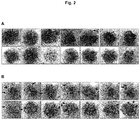
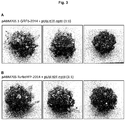
- the Agrobacterium tumefaciens -mediated transformation of calli derived from micropropagated shoots of sugar beet with the construct pZFN-nptll-GRF5 increases the number of regenerated shoots at the end of the selection step significantly (Table 2).
- the construct pZFN-tdT-nptll (Control) containing a red fluorescent reporter has been used.
- the five independent experiments show an increase of the on average transformation frequency from 5.0% to 33.9%. Further the number of transgenic events confirmed by PCR has been increased on average from 4.8 events to 25.4 events per transformation experiment.
- the expression level of GRF5 has been determined in eleven, randomly chosen independent transgenic events of sugar beet. The expression analysis was performed with primers binding to the 3'-UTR of the NOS terminator. In all analyzed transgenic events a high level of GRF5 expression have been detected (see figure 4 ). Table 3. Quantification of regenerating shoots in each selection step of 5 independent callus transformation experiments done either with pZFN-tdT-nptll (Ctrl) or pZFN-nptll-GRF5 (RB). Total number of developing shoots in each step are indicated in bold.
- Wild type green seeds have been incubated in 70% ethanol and shaked for approximately 1 minute. After removal of ethanol the seeds have been washed once with sterile mQ water. Then 30 ml of 6% sodium hypochlorite solution has been added and the seeds have been shaked for 40-60 minutes. After removal of the sodium hypochlorite solution seeds have been washed 3 to 5 times with sterile mQ.
- the seeds After finishing sterilization (0-3 hours) the seeds have been dried on sterile filter paper and placed onto the surface of the induction medium R001. The incubation took place under continuous light (3000 lux) at 32°C for 6 days.
- swollen embryo's (scutellum derived calli) from the wild type seeds suitable for transformation has been selected and transferred to liquid infection medium (R002) containing Agrobacterium tumefaciens transformed with the plasmid being incorporated into the plant cells for 1.5 minutes and then to the cocultivation plates (R003). The plates have been incubated for 3 days at 25°C in darkness. Selection of resistant tissue
- Incubation has been performed under continuous light (3000 lux) at 32°C for 2 weeks.
- the microcalli By means of sterile forceps the microcalli have been transferred to R005 and incubated under continuous light (3000 lux) at 32°C for 1 week. Thereafter GFP used as selection marker has been checked in the dark room. Healthy calli positive for GFP have been transfer to R006 and further incubated under continuous light (3000 lux) at 32°C for 1 week. For continuous regeneration, the calli have been transferred to R007 for 3 weeks under continuous light (3000 lux) at 32°C. With sterile forceps, healthy plantlets have been pulled out and transferred to R008 for 2 weeks under continuous light (3000 lux) at 32°C before the plantlets have been brought to the greenhouse. Table 4. Composition of media R001 to R008.
Landscapes
- Life Sciences & Earth Sciences (AREA)
- Health & Medical Sciences (AREA)
- Engineering & Computer Science (AREA)
- Genetics & Genomics (AREA)
- Biotechnology (AREA)
- Biomedical Technology (AREA)
- Developmental Biology & Embryology (AREA)
- Cell Biology (AREA)
- Zoology (AREA)
- Bioinformatics & Cheminformatics (AREA)
- Organic Chemistry (AREA)
- Chemical & Material Sciences (AREA)
- General Engineering & Computer Science (AREA)
- Wood Science & Technology (AREA)
- Molecular Biology (AREA)
- Environmental Sciences (AREA)
- Botany (AREA)
- Plant Pathology (AREA)
- Microbiology (AREA)
- Biophysics (AREA)
- Biochemistry (AREA)
- General Health & Medical Sciences (AREA)
- Physics & Mathematics (AREA)
- Breeding Of Plants And Reproduction By Means Of Culturing (AREA)
- Micro-Organisms Or Cultivation Processes Thereof (AREA)
- Preparation Of Compounds By Using Micro-Organisms (AREA)
- Solid-Sorbent Or Filter-Aiding Compositions (AREA)
Priority Applications (20)
| Application Number | Priority Date | Filing Date | Title |
|---|---|---|---|
| EP18150187.5A EP3508581A1 (en) | 2018-01-03 | 2018-01-03 | Regeneration of genetically modified plants |
| EP23160014.9A EP4234701A3 (en) | 2018-01-03 | 2018-12-31 | Regeneration of genetically modified plants |
| BR112020013605-0A BR112020013605A2 (pt) | 2018-01-03 | 2018-12-31 | métodos para transformar uma célula vegetal, para modificar o genoma, para produzir uma planta transgênica, para produzir uma planta genéticamente modificada e para produzir um embrião vegetal haploide, planta e célula vegetal ou semente de planta |
| CN201880085294.9A CN111630174B (zh) | 2018-01-03 | 2018-12-31 | 遗传修饰植物的再生 |
| CA3086717A CA3086717C (en) | 2018-01-03 | 2018-12-31 | Methods of plant cell genome modification with enhanced plant regeneration using growth-regulating factor 5 |
| US16/959,555 US12516335B2 (en) | 2018-01-03 | 2018-12-31 | Regeneration of genetically modified plants |
| IL275614A IL275614B2 (en) | 2018-01-03 | 2018-12-31 | Regeneration of genetically modified plants |
| JP2020536960A JP7774959B2 (ja) | 2018-01-03 | 2018-12-31 | 遺伝子改変された植物体の再生 |
| EP18827136.5A EP3735464B1 (en) | 2018-01-03 | 2018-12-31 | Regeneration of genetically modified plants |
| ES18827136T ES2946040T3 (es) | 2018-01-03 | 2018-12-31 | Regeneración de plantas modificadas genéticamente |
| DK18827136.5T DK3735464T5 (da) | 2018-01-03 | 2018-12-31 | Regenerering af genetisk modificerede planter |
| MX2020006998A MX2020006998A (es) | 2018-01-03 | 2018-12-31 | Regeneracion de plantas geneticamente modificadas. |
| PL18827136.5T PL3735464T3 (pl) | 2018-01-03 | 2018-12-31 | Regeneracja genetycznie zmodyfikowanych roślin |
| PCT/EP2018/086902 WO2019134884A1 (en) | 2018-01-03 | 2018-12-31 | Regeneration of genetically modified plants |
| AU2018400378A AU2018400378B2 (en) | 2018-01-03 | 2018-12-31 | Regeneration of genetically modified plants |
| ARP190100013A AR114504A1 (es) | 2018-01-03 | 2019-01-03 | Regeneración de plantas genéticamente modificadas |
| ZA2020/04679A ZA202004679B (en) | 2018-01-03 | 2020-07-29 | Regeneration of genetically modified plants |
| JP2023133678A JP2023156474A (ja) | 2018-01-03 | 2023-08-18 | 遺伝子改変された植物体の再生 |
| AU2025204832A AU2025204832A1 (en) | 2018-01-03 | 2025-06-26 | Regeneration of genetically modified plants |
| US19/311,107 US20260002167A1 (en) | 2018-01-03 | 2025-08-27 | Regeneration of genetically modified plants |
Applications Claiming Priority (1)
| Application Number | Priority Date | Filing Date | Title |
|---|---|---|---|
| EP18150187.5A EP3508581A1 (en) | 2018-01-03 | 2018-01-03 | Regeneration of genetically modified plants |
Publications (1)
| Publication Number | Publication Date |
|---|---|
| EP3508581A1 true EP3508581A1 (en) | 2019-07-10 |
Family
ID=60915458
Family Applications (3)
| Application Number | Title | Priority Date | Filing Date |
|---|---|---|---|
| EP18150187.5A Withdrawn EP3508581A1 (en) | 2018-01-03 | 2018-01-03 | Regeneration of genetically modified plants |
| EP23160014.9A Pending EP4234701A3 (en) | 2018-01-03 | 2018-12-31 | Regeneration of genetically modified plants |
| EP18827136.5A Active EP3735464B1 (en) | 2018-01-03 | 2018-12-31 | Regeneration of genetically modified plants |
Family Applications After (2)
| Application Number | Title | Priority Date | Filing Date |
|---|---|---|---|
| EP23160014.9A Pending EP4234701A3 (en) | 2018-01-03 | 2018-12-31 | Regeneration of genetically modified plants |
| EP18827136.5A Active EP3735464B1 (en) | 2018-01-03 | 2018-12-31 | Regeneration of genetically modified plants |
Country Status (14)
| Country | Link |
|---|---|
| US (2) | US12516335B2 (enExample) |
| EP (3) | EP3508581A1 (enExample) |
| JP (2) | JP7774959B2 (enExample) |
| CN (1) | CN111630174B (enExample) |
| AR (1) | AR114504A1 (enExample) |
| AU (2) | AU2018400378B2 (enExample) |
| BR (1) | BR112020013605A2 (enExample) |
| DK (1) | DK3735464T5 (enExample) |
| ES (1) | ES2946040T3 (enExample) |
| IL (1) | IL275614B2 (enExample) |
| MX (1) | MX2020006998A (enExample) |
| PL (1) | PL3735464T3 (enExample) |
| WO (1) | WO2019134884A1 (enExample) |
| ZA (1) | ZA202004679B (enExample) |
Cited By (3)
| Publication number | Priority date | Publication date | Assignee | Title |
|---|---|---|---|---|
| EP3757219A1 (en) * | 2019-06-28 | 2020-12-30 | KWS SAAT SE & Co. KGaA | Enhanced plant regeneration and transformation by using grf1 booster gene |
| WO2021007284A3 (en) * | 2019-07-11 | 2021-02-18 | The Regents Of The University Of California | Methods for improved regeneration of transgenic plants using growth-regulating factor (grf), grf-interacting factor (gif), or chimeric grf-gif genes and proteins |
| CN114672513A (zh) * | 2022-04-12 | 2022-06-28 | 北京大学现代农业研究院 | 一种基因编辑系统及其应用 |
Families Citing this family (7)
| Publication number | Priority date | Publication date | Assignee | Title |
|---|---|---|---|---|
| EP3508581A1 (en) * | 2018-01-03 | 2019-07-10 | Kws Saat Se | Regeneration of genetically modified plants |
| CN109554371A (zh) * | 2018-11-07 | 2019-04-02 | 江苏大学 | BnGRF7a基因及其用途 |
| EP3708651A1 (en) | 2019-03-12 | 2020-09-16 | KWS SAAT SE & Co. KGaA | Improving plant regeneration |
| BR112022018585A2 (pt) * | 2020-03-19 | 2022-11-22 | Inst Genetics & Developmental Biology Cas | Método para melhorar a transformação genética de plantas e eficiência de edição genética |
| CN114989278B (zh) * | 2022-04-27 | 2025-09-02 | 中国农业科学院作物科学研究所 | 大豆光合作用相关基因GmGRF5-2及其编码蛋白与应用 |
| CN120519495A (zh) * | 2024-11-13 | 2025-08-22 | 中国农业科学院蔬菜花卉研究所 | 一种甘蓝高效遗传转化和基因编辑方法 |
| CN119351430B (zh) * | 2024-12-04 | 2025-10-17 | 西部(重庆)科学城种质创制大科学中心 | CsACS6基因及在提高柑橘溃疡病抗性中的应用 |
Citations (15)
| Publication number | Priority date | Publication date | Assignee | Title |
|---|---|---|---|---|
| WO1994018313A1 (en) | 1993-02-12 | 1994-08-18 | The Johns-Hopkins University | Functional domains in flavobacterium okeanokoites (foki) restriction endonuclease |
| WO1995009233A1 (en) | 1993-09-27 | 1995-04-06 | The Johns-Hopkins University | Functional domains in flavobacterium okeanokoites (foki) restriction endonuclease |
| US20020046419A1 (en) | 1998-08-25 | 2002-04-18 | Yen Choo | Regulated gene expression in plants |
| WO2003004659A2 (de) | 2001-07-04 | 2003-01-16 | Sungene Gmbh & Co. Kgaa | Rekombinationssysteme und verfahren zum entfernen von nukleinsäuresequenzen aus dem genom eukaryotischer organismen |
| WO2003080809A2 (en) | 2002-03-21 | 2003-10-02 | Sangamo Biosciences, Inc. | Methods and compositions for using zinc finger endonucleases to enhance homologous recombination |
| WO2010079430A1 (en) | 2009-01-12 | 2010-07-15 | Ulla Bonas | Modular dna-binding domains and methods of use |
| WO2011072246A2 (en) | 2009-12-10 | 2011-06-16 | Regents Of The University Of Minnesota | Tal effector-mediated dna modification |
| WO2011146121A1 (en) | 2010-05-17 | 2011-11-24 | Sangamo Biosciences, Inc. | Novel dna-binding proteins and uses thereof |
| WO2011154393A1 (en) | 2010-06-07 | 2011-12-15 | Helmholtz Zentrum München Deutsches Forschungszentrum Für Gesundheit Und Umwelt (Gmbh) | Fusion proteins comprising a dna-binding domain of a tal effector protein and a non-specific cleavage domain of a restriction nuclease and their use |
| WO2012001527A2 (en) | 2010-06-15 | 2012-01-05 | Cellectis S.A. | Method for improving cleavage of dna by endonuclease sensitive to methylation |
| WO2012093833A2 (en) | 2011-01-03 | 2012-07-12 | Toolgen Incorporation | Genome engineering via designed tal effector nucleases |
| WO2012104729A1 (en) | 2011-02-02 | 2012-08-09 | Ulla Bonas | Modular dna-binding domains and methods of use |
| WO2012138939A1 (en) | 2011-04-05 | 2012-10-11 | Philippe Duchateau | New tale-protein scaffolds and uses thereof |
| WO2016021973A1 (ko) | 2014-08-06 | 2016-02-11 | 주식회사 툴젠 | 캄필로박터 제주니 crispr/cas 시스템 유래 rgen을 이용한 유전체 교정 |
| US20160201076A1 (en) * | 2014-09-25 | 2016-07-14 | The Samuel Roberts Noble Foundation, Inc. | Manipulating bs1 for plant seed yield |
Family Cites Families (11)
| Publication number | Priority date | Publication date | Assignee | Title |
|---|---|---|---|---|
| WO1995006722A1 (en) | 1993-09-03 | 1995-03-09 | Japan Tobacco Inc. | Method of transforming monocotyledon by using scutellum of immature embryo |
| MXPA06013357A (es) | 2004-06-07 | 2007-03-01 | Basf Plant Science Gmbh | Transformacion mejorada de porotos de soja. |
| CN101010432A (zh) | 2004-09-02 | 2007-08-01 | 巴斯福植物科学有限公司 | 卸甲农杆菌菌株、Ri质粒和基于它们的转化方法 |
| CN101855355B (zh) * | 2007-09-14 | 2016-06-22 | 巴斯夫植物科学有限公司 | 具有提高的产量相关性状的植物和用于制备该植物的方法 |
| ES2390523T3 (es) * | 2007-09-21 | 2012-11-13 | Basf Plant Science Gmbh | Plantas que tienen características incrementadas relacionadas con el rendimiento y un método para elaboración de las mismas |
| GB201007834D0 (en) * | 2010-05-11 | 2010-06-23 | Vib Vzw | Growth promoting fusion proteins |
| WO2012149316A2 (en) * | 2011-04-28 | 2012-11-01 | Iowa State University Research Foundation, Inc. | miRNA396 AND GROWTH REGULATING FACTORS FOR CYST NEMATODE TOLERANCE IN PLANTS |
| US20140173770A1 (en) * | 2011-06-06 | 2014-06-19 | Bayer Cropscience Nv | Methods and means to modify a plant genome at a preselected site |
| BR112014001387A2 (pt) | 2011-07-22 | 2017-02-21 | Basf Plant Science Co Gmbh | método para produção de uma planta transgênica |
| EP3508581A1 (en) * | 2018-01-03 | 2019-07-10 | Kws Saat Se | Regeneration of genetically modified plants |
| EP3757219A1 (en) * | 2019-06-28 | 2020-12-30 | KWS SAAT SE & Co. KGaA | Enhanced plant regeneration and transformation by using grf1 booster gene |
-
2018
- 2018-01-03 EP EP18150187.5A patent/EP3508581A1/en not_active Withdrawn
- 2018-12-31 CN CN201880085294.9A patent/CN111630174B/zh active Active
- 2018-12-31 MX MX2020006998A patent/MX2020006998A/es unknown
- 2018-12-31 JP JP2020536960A patent/JP7774959B2/ja active Active
- 2018-12-31 ES ES18827136T patent/ES2946040T3/es active Active
- 2018-12-31 EP EP23160014.9A patent/EP4234701A3/en active Pending
- 2018-12-31 AU AU2018400378A patent/AU2018400378B2/en active Active
- 2018-12-31 IL IL275614A patent/IL275614B2/en unknown
- 2018-12-31 PL PL18827136.5T patent/PL3735464T3/pl unknown
- 2018-12-31 BR BR112020013605-0A patent/BR112020013605A2/pt unknown
- 2018-12-31 DK DK18827136.5T patent/DK3735464T5/da active
- 2018-12-31 EP EP18827136.5A patent/EP3735464B1/en active Active
- 2018-12-31 US US16/959,555 patent/US12516335B2/en active Active
- 2018-12-31 WO PCT/EP2018/086902 patent/WO2019134884A1/en not_active Ceased
-
2019
- 2019-01-03 AR ARP190100013A patent/AR114504A1/es unknown
-
2020
- 2020-07-29 ZA ZA2020/04679A patent/ZA202004679B/en unknown
-
2023
- 2023-08-18 JP JP2023133678A patent/JP2023156474A/ja not_active Revoked
-
2025
- 2025-06-26 AU AU2025204832A patent/AU2025204832A1/en active Pending
- 2025-08-27 US US19/311,107 patent/US20260002167A1/en active Pending
Patent Citations (16)
| Publication number | Priority date | Publication date | Assignee | Title |
|---|---|---|---|---|
| WO1994018313A1 (en) | 1993-02-12 | 1994-08-18 | The Johns-Hopkins University | Functional domains in flavobacterium okeanokoites (foki) restriction endonuclease |
| WO1995009233A1 (en) | 1993-09-27 | 1995-04-06 | The Johns-Hopkins University | Functional domains in flavobacterium okeanokoites (foki) restriction endonuclease |
| US20020046419A1 (en) | 1998-08-25 | 2002-04-18 | Yen Choo | Regulated gene expression in plants |
| WO2003004659A2 (de) | 2001-07-04 | 2003-01-16 | Sungene Gmbh & Co. Kgaa | Rekombinationssysteme und verfahren zum entfernen von nukleinsäuresequenzen aus dem genom eukaryotischer organismen |
| WO2003080809A2 (en) | 2002-03-21 | 2003-10-02 | Sangamo Biosciences, Inc. | Methods and compositions for using zinc finger endonucleases to enhance homologous recombination |
| WO2010079430A1 (en) | 2009-01-12 | 2010-07-15 | Ulla Bonas | Modular dna-binding domains and methods of use |
| WO2011072246A2 (en) | 2009-12-10 | 2011-06-16 | Regents Of The University Of Minnesota | Tal effector-mediated dna modification |
| WO2011146121A1 (en) | 2010-05-17 | 2011-11-24 | Sangamo Biosciences, Inc. | Novel dna-binding proteins and uses thereof |
| WO2011154393A1 (en) | 2010-06-07 | 2011-12-15 | Helmholtz Zentrum München Deutsches Forschungszentrum Für Gesundheit Und Umwelt (Gmbh) | Fusion proteins comprising a dna-binding domain of a tal effector protein and a non-specific cleavage domain of a restriction nuclease and their use |
| WO2012001527A2 (en) | 2010-06-15 | 2012-01-05 | Cellectis S.A. | Method for improving cleavage of dna by endonuclease sensitive to methylation |
| WO2012093833A2 (en) | 2011-01-03 | 2012-07-12 | Toolgen Incorporation | Genome engineering via designed tal effector nucleases |
| WO2012104729A1 (en) | 2011-02-02 | 2012-08-09 | Ulla Bonas | Modular dna-binding domains and methods of use |
| WO2012138939A1 (en) | 2011-04-05 | 2012-10-11 | Philippe Duchateau | New tale-protein scaffolds and uses thereof |
| WO2012138927A2 (en) | 2011-04-05 | 2012-10-11 | Philippe Duchateau | Method for the generation of compact tale-nucleases and uses thereof |
| WO2016021973A1 (ko) | 2014-08-06 | 2016-02-11 | 주식회사 툴젠 | 캄필로박터 제주니 crispr/cas 시스템 유래 rgen을 이용한 유전체 교정 |
| US20160201076A1 (en) * | 2014-09-25 | 2016-07-14 | The Samuel Roberts Noble Foundation, Inc. | Manipulating bs1 for plant seed yield |
Non-Patent Citations (47)
| Title |
|---|
| "Binding, Regeneration of Plants, Plant Protoplasts", 1985, CRC PRESS, pages: 21 - 73 |
| "Control of cell proliferation in Arabidopsis thaliana by microRNA miR396", DEVELOPMENT, vol. 137, no. 1, 2010, pages 103 - 112 |
| "Current Protocols in Molecular Biology", 1989, JOHN WILEY & SONS, pages: 6.3.1 - 6.3.6 |
| AUSUBEL ET AL.: "Current Protocols in Molecular Biology", CURRENT PROTOCOLS, vol. 1 and 2, 1994 |
| BOCH ET AL.: "Breaking the code of DNA binding specificity of TAL-type III effectors", SCIENCE, vol. 326, no. 5959, 2009, pages 1509 - 1512 |
| BROWN: "Molecular Biology LabFax", vol. I and II, 1998, ACADEMIC PRESS |
| BURSTEIN ET AL.: "New CRISPR-Cas systems from uncultivated microbes", NATURE, vol. 542, 2017, pages 237 - 241 |
| CHENG ET AL.: "Multiplexed activation of endogenous genes by CRISPR-on, an RNA-guided transcriptional activator system", CELL RESEARCH, vol. 23, no. 10, 2013, pages 1163 |
| DEJONGHE; RUSSINOVA: "Plant Chemical Genetics: From Phenotype-Based Screens to Synthetic Biology", PLANT PHYSIOLOGY, 2017, pages 01805 |
| DIEFFENBACH; DVEKSLER: "PCR Primer: A Laboratory Manual", 1995, COLD SPRING HARBOR LABORATORY PRESS |
| EVANS ET AL.: "Handbook of Plant Cell Culture", 1983, MACMILLILAN PUBLISHING COMPANY, article "Protoplasts Isolation and Culture", pages: 124 - 176 |
| FORSTER, B.P. ET AL., TRENDS PLANT SCI., vol. 12, 2007, pages 368 - 375 |
| GAJ, M.D., PLANT GROWTH REGUL., vol. 43, 2004, pages 27 - 47 |
| GATZ; LENK: "Promoters that respond to chemical inducers", TRENDS IN PLANT SCIENCE, vol. 3, no. 9, 1998, pages 352 - 358, XP001006068, DOI: doi:10.1016/S1360-1385(98)01287-4 |
| HILTON ET AL.: "Epigenome editing by a CRISPR-Cas9-based acetyltransferase activates genes from promoters and enhancers", NATURE BIOTECHNOLOGY, vol. 33, no. 5, 2015, pages 510 - 517, XP055327077, DOI: doi:10.1038/nbt.3199 |
| HORIGUCHI ET AL.: "The transcription factor AtGRF5 and the transcription coactivator AN3 regulate cell proliferation in leaf primordia of Arabidopsis thaliana", THE PLANT JOURNAL, vol. 43, no. 1, 2005, pages 68 - 78, XP002410132, DOI: doi:10.1111/j.1365-313X.2005.02429.x |
| HORIGUCHI GOROU ET AL: "The transcription factor AtGRF5 and the transcription coactivator AN3 regulate cell proliferation in leaf primordia of Arabidopsis thaliana", THE PLANT JOURNAL, BLACKWELL SCIENTIFIC PUBLICATIONS, OXFORD, GB, vol. 43, no. 1, 1 July 2005 (2005-07-01), pages 68 - 78, XP002410132, ISSN: 0960-7412, DOI: 10.1111/J.1365-313X.2005.02429.X * |
| ISALAN ET AL.: "A rapid, generally applicable method to engineer zinc fingers illustrated by targeting the HIV-1 promoter", NATURE BIOTECHNOLOGY, vol. 19, no. 7, 2001, pages 656, XP002191617, DOI: doi:10.1038/90264 |
| ISHIDA ET AL.: "Agrobacterium-mediated transformation of maize", NATURE PROTOCOLS, vol. 2, no. 7, 2007, pages 1614 - 1621, XP009148413, DOI: doi:10.1038/nprot.2007.241 |
| JEONG HOE KIM ET AL: "THE ATGRF FAMILY OF PUTATIVE TRANSCRIPTION FACTORS US INVOLVED IN LEAF AND COTYLEDON GROWTH IN ARABIDOPSIS", THE PLANT JOU, BLACKWELL SCIENTIFIC PUBLICATIONS, OXFORD, GB, vol. 36, no. 1, 1 October 2003 (2003-10-01), pages 94 - 104, XP008058318, ISSN: 0960-7412, DOI: 10.1046/J.1365-313X.2003.01862.X * |
| JINEK ET AL.: "A programmable dual-RNA-guided DNA endonuclease in adaptive bacterial immunity", SCIENCE, vol. 337, 2012, pages 816 - 821, XP055299674, DOI: doi:10.1126/science.1225829 |
| KAWASUMI, M.; NGHIEM, P.: "Chemical genetics: elucidating biological systems with small-molecule compounds", JOURNAL OF INVESTIGATIVE DERMATOLOGY, vol. 127, no. 7, 2007, pages 1577 - 1584 |
| KIM ET AL.: "The AtGRF family of putative transcription factors is involved in leaf and cotyledon growth in Arabidopsis", THE PLANT JOURNAL, vol. 36, no. 1, 2003, pages 94 - 104, XP008058318, DOI: doi:10.1046/j.1365-313X.2003.01862.x |
| KISCHENKO ET AL., CELL BIOLOGY INTERNATIONAL FOR SUGAR BEET, 2005 |
| KISCHENKO ET AL., CELL BIOLOGY INTERNATIONAL, 2005 |
| KLEE, ANN. REV. OF PLANT PHYS., vol. 38, 1987, pages 467486 |
| KUIJT ET AL.: "Interaction between the GROWTH-REGULATING FACTOR and KNOTTED1-LIKE HOMEOBOX Families of Transcription Factors", PLANT PHYSIOLOGY, vol. 164, no. 4, 2014, pages 1952 - 1966 |
| L. VERCRUYSSEN ET AL: "Combining Enhanced Root and Shoot Growth Reveals Cross Talk between Pathways That Control Plant Organ Size in Arabidopsis", PLANT PHYSIOLOGY, vol. 155, no. 3, 3 January 2011 (2011-01-03), Rockville, Md, USA, pages 1339 - 1352, XP055350539, ISSN: 0032-0889, DOI: 10.1104/pp.110.167049 * |
| LINDSAY; GALLOIS, JOURNAL OF EXPERIMENTAL BOTANY, 1990 |
| LIU ET AL.: "Design of polydactyl zinc-finger proteins for unique addressing within complex genomes", PROCEEDINGS OF THE NATIONAL ACADEMY OF SCIENCES, vol. 94, no. 11, 1997, pages 5525 - 5530, XP002169348, DOI: doi:10.1073/pnas.94.11.5525 |
| LOWDER ET AL.: "Multiplexed transcriptional activation or repression in plants using CRISPR-dCas9-based systems", PLANT GENE REGULATORY NETWORKS: METHODS AND PROTOCOLS, 2017, pages 167 - 184 |
| MAKAROVA ET AL., NATURE REV. MICROBIOL., 2015 |
| MALGORZATA D. GAJ: "Factors Influencing Somatic Embryogenesis Induction and Plant Regeneration with Particular Reference to Arabidopsis thaliana (L.) Heynh", PLANT GROWTH REGULATION, vol. 43, no. 1, 1 May 2004 (2004-05-01), DORDRECHT, NL, pages 27 - 47, XP055281010, ISSN: 0167-6903, DOI: 10.1023/B:GROW.0000038275.29262.fb * |
| MCPHERSON: "PCR - Basics: From Background to Bench", 2000, SPRINGER VERLAG |
| MOORE ET AL.: "Transcription activator-like effectors: a toolkit for synthetic biology", ACS SYNTHETIC BIOLOGY, vol. 3, no. 10, 2014, pages 708 - 716 |
| MOSCOU; BOGDANOVE: "A simple cipher governs DNA recognition by TAL effectors", SCIENCE, vol. 326, no. 5959, 2009, pages 1501 - 1501, XP002599998 |
| R.D.D. CRAY: "Plant Molecular Biology Labfax", 1993, BIOS SCIENTIFIC PUBLICATIONS LTD (UK |
| ROSE, R. ET AL.: "Plant Developmental Biology-Biotechnological Perspectives", 2010, SPRINGER, article "Developmental biology of somatic embryogenesis", pages: 3 - 26 |
| SAMALOVA ET AL.: "pOp6/LhGR: a stringently regulated and highly responsive dexamethasone-inducible gene expression system for tobacco", THE PLANT JOURNAL, vol. 41, no. 6, 2005, pages 919 - 935 |
| SAMBROOK ET AL.: "Molecular Cloning", 1989, COLD SPRING HARBOUR LABORATORY |
| SAMBROOK ET AL.: "Molecular Cloning: A Laboratory Manual", 1989, COLD SPRING HARBOR LABORATORY PRESS |
| SAMBROOK; RUSSELL: "Molecular Cloning: A Laboratory Manual", 2001, COLD SPRING HARBOR LABORATORY PRESS |
| SEGUI-SIMARRO, J.M., BOT. REV., vol. 76, 2010, pages 377 - 404 |
| TRENDS IN GENETICS, vol. 16, no. 6, 2000, pages 276 |
| VAN DER KNAAP ET AL.: "A novel gibberellin-induced gene from rice and its potential regulatory role in stem growth", PLANT PHYSIOLOGY, vol. 122, no. 3, 2000, pages 695 - 704, XP002344810, DOI: doi:10.1104/pp.122.3.695 |
| VERCRUYSSEN ET AL.: "Growth regulating factor 5 stimulates Arabidopsis chloroplast division, photosynthesis, and leaf longevity", PLANT PHYSIOLOGY, 2015, pages 114 |
| ZETSCHE ET AL.: "Cpf1 Is a Single RNA-Guides Endonuclease of a Class 2 CRISPR-Cas System", CELL, vol. 163, October 2015 (2015-10-01), pages 1 - 13 |
Cited By (7)
| Publication number | Priority date | Publication date | Assignee | Title |
|---|---|---|---|---|
| EP3757219A1 (en) * | 2019-06-28 | 2020-12-30 | KWS SAAT SE & Co. KGaA | Enhanced plant regeneration and transformation by using grf1 booster gene |
| WO2020260682A1 (en) * | 2019-06-28 | 2020-12-30 | KWS SAAT SE & Co. KGaA | Enhanced plant regeneration and transformation by using grf1 booster gene |
| WO2021007284A3 (en) * | 2019-07-11 | 2021-02-18 | The Regents Of The University Of California | Methods for improved regeneration of transgenic plants using growth-regulating factor (grf), grf-interacting factor (gif), or chimeric grf-gif genes and proteins |
| CN114667292A (zh) * | 2019-07-11 | 2022-06-24 | 加利福尼亚大学董事会 | 用生长调节因子(grf)、grf相互作用因子(gif)或嵌合grf-gif改进植物再生的方法 |
| AU2020310877B2 (en) * | 2019-07-11 | 2024-05-23 | Consejo Nacional De Investigaciones Científicas Y Técnicas | Methods for improved regeneration of transgenic plants using Growth-Regulating Factor (GRF), GRF-Interacting Factor (GIF), or chimeric GRF-GIF genes and proteins |
| CN114672513A (zh) * | 2022-04-12 | 2022-06-28 | 北京大学现代农业研究院 | 一种基因编辑系统及其应用 |
| CN114672513B (zh) * | 2022-04-12 | 2024-04-02 | 北京大学现代农业研究院 | 一种基因编辑系统及其应用 |
Also Published As
| Publication number | Publication date |
|---|---|
| JP2021510069A (ja) | 2021-04-15 |
| EP4234701A2 (en) | 2023-08-30 |
| ZA202004679B (en) | 2023-10-25 |
| IL275614B2 (en) | 2025-03-01 |
| EP3735464B1 (en) | 2023-03-15 |
| IL275614B1 (en) | 2024-11-01 |
| US20210079409A1 (en) | 2021-03-18 |
| US12516335B2 (en) | 2026-01-06 |
| DK3735464T3 (da) | 2023-06-06 |
| MX2020006998A (es) | 2020-12-10 |
| US20260002167A1 (en) | 2026-01-01 |
| AU2018400378B2 (en) | 2025-04-03 |
| JP7774959B2 (ja) | 2025-11-25 |
| IL275614A (en) | 2020-08-31 |
| JP2023156474A (ja) | 2023-10-24 |
| WO2019134884A1 (en) | 2019-07-11 |
| EP4234701A3 (en) | 2023-09-27 |
| DK3735464T5 (da) | 2024-08-26 |
| BR112020013605A2 (pt) | 2020-12-01 |
| AR114504A1 (es) | 2020-09-16 |
| AU2025204832A1 (en) | 2025-07-24 |
| ES2946040T3 (es) | 2023-07-12 |
| EP3735464A1 (en) | 2020-11-11 |
| AU2018400378A1 (en) | 2020-06-25 |
| CN111630174A (zh) | 2020-09-04 |
| PL3735464T3 (pl) | 2023-07-17 |
| CN111630174B (zh) | 2024-07-12 |
| CA3086717A1 (en) | 2019-07-11 |
Similar Documents
| Publication | Publication Date | Title |
|---|---|---|
| US20260002167A1 (en) | Regeneration of genetically modified plants | |
| US20220235363A1 (en) | Enhanced plant regeneration and transformation by using grf1 booster gene | |
| CN112585269B (zh) | 改善植物中基因组工程化和再生的方法ii | |
| CN119265223A (zh) | 增强基因组工程化效率的方法 | |
| US12527270B2 (en) | Promoting regeneration and transformation in plants | |
| CA3086717C (en) | Methods of plant cell genome modification with enhanced plant regeneration using growth-regulating factor 5 | |
| US20220112511A1 (en) | Methods for enhancing genome engineering efficiency | |
| US20230392160A1 (en) | Compositions and methods for increasing genome editing efficiency | |
| BR122024027399A2 (pt) | Métodos para transformar uma célula vegetal, para modificar o genoma, para produzir uma planta transgênica, para produzir uma planta geneticamente modificada e para produzir um embrião vegetal haploide, planta e célula vegetal ou semente de planta | |
| EP4019638A1 (en) | Promoting regeneration and transformation in beta vulgaris |
Legal Events
| Date | Code | Title | Description |
|---|---|---|---|
| PUAI | Public reference made under article 153(3) epc to a published international application that has entered the european phase |
Free format text: ORIGINAL CODE: 0009012 |
|
| AK | Designated contracting states |
Kind code of ref document: A1 Designated state(s): AL AT BE BG CH CY CZ DE DK EE ES FI FR GB GR HR HU IE IS IT LI LT LU LV MC MK MT NL NO PL PT RO RS SE SI SK SM TR |
|
| AX | Request for extension of the european patent |
Extension state: BA ME |
|
| RAP1 | Party data changed (applicant data changed or rights of an application transferred) |
Owner name: KWS SAAT SE & CO. KGAA Owner name: BASF SE |
|
| STAA | Information on the status of an ep patent application or granted ep patent |
Free format text: STATUS: THE APPLICATION IS DEEMED TO BE WITHDRAWN |
|
| 18D | Application deemed to be withdrawn |
Effective date: 20200111 |