EP3499480A1 - Vorrichtung zur erkennung von angezeigten inhalten und fahrzeugsteuerungsvorrichtung - Google Patents
Vorrichtung zur erkennung von angezeigten inhalten und fahrzeugsteuerungsvorrichtung Download PDFInfo
- Publication number
- EP3499480A1 EP3499480A1 EP17839176.9A EP17839176A EP3499480A1 EP 3499480 A1 EP3499480 A1 EP 3499480A1 EP 17839176 A EP17839176 A EP 17839176A EP 3499480 A1 EP3499480 A1 EP 3499480A1
- Authority
- EP
- European Patent Office
- Prior art keywords
- displayed content
- travel environment
- vehicle control
- displayed
- content
- Prior art date
- Legal status (The legal status is an assumption and is not a legal conclusion. Google has not performed a legal analysis and makes no representation as to the accuracy of the status listed.)
- Granted
Links
Images




Classifications
-
- G—PHYSICS
- G08—SIGNALLING
- G08G—TRAFFIC CONTROL SYSTEMS
- G08G1/00—Traffic control systems for road vehicles
- G08G1/09—Arrangements for giving variable traffic instructions
- G08G1/0962—Arrangements for giving variable traffic instructions having an indicator mounted inside the vehicle, e.g. giving voice messages
- G08G1/09623—Systems involving the acquisition of information from passive traffic signs by means mounted on the vehicle
-
- B—PERFORMING OPERATIONS; TRANSPORTING
- B60—VEHICLES IN GENERAL
- B60K—ARRANGEMENT OR MOUNTING OF PROPULSION UNITS OR OF TRANSMISSIONS IN VEHICLES; ARRANGEMENT OR MOUNTING OF PLURAL DIVERSE PRIME-MOVERS IN VEHICLES; AUXILIARY DRIVES FOR VEHICLES; INSTRUMENTATION OR DASHBOARDS FOR VEHICLES; ARRANGEMENTS IN CONNECTION WITH COOLING, AIR INTAKE, GAS EXHAUST OR FUEL SUPPLY OF PROPULSION UNITS IN VEHICLES
- B60K31/00—Vehicle fittings, acting on a single sub-unit only, for automatically controlling vehicle speed, i.e. preventing speed from exceeding an arbitrarily established velocity or maintaining speed at a particular velocity, as selected by the vehicle operator
-
- B—PERFORMING OPERATIONS; TRANSPORTING
- B60—VEHICLES IN GENERAL
- B60R—VEHICLES, VEHICLE FITTINGS, OR VEHICLE PARTS, NOT OTHERWISE PROVIDED FOR
- B60R21/00—Arrangements or fittings on vehicles for protecting or preventing injuries to occupants or pedestrians in case of accidents or other traffic risks
-
- B—PERFORMING OPERATIONS; TRANSPORTING
- B60—VEHICLES IN GENERAL
- B60W—CONJOINT CONTROL OF VEHICLE SUB-UNITS OF DIFFERENT TYPE OR DIFFERENT FUNCTION; CONTROL SYSTEMS SPECIALLY ADAPTED FOR HYBRID VEHICLES; ROAD VEHICLE DRIVE CONTROL SYSTEMS FOR PURPOSES NOT RELATED TO THE CONTROL OF A PARTICULAR SUB-UNIT
- B60W30/00—Purposes of road vehicle drive control systems not related to the control of a particular sub-unit, e.g. of systems using conjoint control of vehicle sub-units
- B60W30/14—Adaptive cruise control
- B60W30/143—Speed control
-
- B—PERFORMING OPERATIONS; TRANSPORTING
- B60—VEHICLES IN GENERAL
- B60W—CONJOINT CONTROL OF VEHICLE SUB-UNITS OF DIFFERENT TYPE OR DIFFERENT FUNCTION; CONTROL SYSTEMS SPECIALLY ADAPTED FOR HYBRID VEHICLES; ROAD VEHICLE DRIVE CONTROL SYSTEMS FOR PURPOSES NOT RELATED TO THE CONTROL OF A PARTICULAR SUB-UNIT
- B60W40/00—Estimation or calculation of non-directly measurable driving parameters for road vehicle drive control systems not related to the control of a particular sub unit, e.g. by using mathematical models
- B60W40/02—Estimation or calculation of non-directly measurable driving parameters for road vehicle drive control systems not related to the control of a particular sub unit, e.g. by using mathematical models related to ambient conditions
- B60W40/04—Traffic conditions
-
- B—PERFORMING OPERATIONS; TRANSPORTING
- B60—VEHICLES IN GENERAL
- B60W—CONJOINT CONTROL OF VEHICLE SUB-UNITS OF DIFFERENT TYPE OR DIFFERENT FUNCTION; CONTROL SYSTEMS SPECIALLY ADAPTED FOR HYBRID VEHICLES; ROAD VEHICLE DRIVE CONTROL SYSTEMS FOR PURPOSES NOT RELATED TO THE CONTROL OF A PARTICULAR SUB-UNIT
- B60W50/00—Details of control systems for road vehicle drive control not related to the control of a particular sub-unit, e.g. process diagnostic or vehicle driver interfaces
- B60W50/08—Interaction between the driver and the control system
- B60W50/14—Means for informing the driver, warning the driver or prompting a driver intervention
-
- G—PHYSICS
- G06—COMPUTING OR CALCULATING; COUNTING
- G06T—IMAGE DATA PROCESSING OR GENERATION, IN GENERAL
- G06T7/00—Image analysis
-
- B—PERFORMING OPERATIONS; TRANSPORTING
- B60—VEHICLES IN GENERAL
- B60W—CONJOINT CONTROL OF VEHICLE SUB-UNITS OF DIFFERENT TYPE OR DIFFERENT FUNCTION; CONTROL SYSTEMS SPECIALLY ADAPTED FOR HYBRID VEHICLES; ROAD VEHICLE DRIVE CONTROL SYSTEMS FOR PURPOSES NOT RELATED TO THE CONTROL OF A PARTICULAR SUB-UNIT
- B60W50/00—Details of control systems for road vehicle drive control not related to the control of a particular sub-unit, e.g. process diagnostic or vehicle driver interfaces
- B60W50/08—Interaction between the driver and the control system
- B60W50/14—Means for informing the driver, warning the driver or prompting a driver intervention
- B60W2050/146—Display means
-
- B—PERFORMING OPERATIONS; TRANSPORTING
- B60—VEHICLES IN GENERAL
- B60W—CONJOINT CONTROL OF VEHICLE SUB-UNITS OF DIFFERENT TYPE OR DIFFERENT FUNCTION; CONTROL SYSTEMS SPECIALLY ADAPTED FOR HYBRID VEHICLES; ROAD VEHICLE DRIVE CONTROL SYSTEMS FOR PURPOSES NOT RELATED TO THE CONTROL OF A PARTICULAR SUB-UNIT
- B60W2420/00—Indexing codes relating to the type of sensors based on the principle of their operation
- B60W2420/40—Photo, light or radio wave sensitive means, e.g. infrared sensors
- B60W2420/403—Image sensing, e.g. optical camera
-
- B—PERFORMING OPERATIONS; TRANSPORTING
- B60—VEHICLES IN GENERAL
- B60W—CONJOINT CONTROL OF VEHICLE SUB-UNITS OF DIFFERENT TYPE OR DIFFERENT FUNCTION; CONTROL SYSTEMS SPECIALLY ADAPTED FOR HYBRID VEHICLES; ROAD VEHICLE DRIVE CONTROL SYSTEMS FOR PURPOSES NOT RELATED TO THE CONTROL OF A PARTICULAR SUB-UNIT
- B60W2555/00—Input parameters relating to exterior conditions, not covered by groups B60W2552/00, B60W2554/00
- B60W2555/60—Traffic rules, e.g. speed limits or right of way
Definitions
- the present invention relates to a displayed content recognition device and a vehicle control device.
- PTL 1 discloses a pavement marking recognition device that accurately recognizes a road marking including blurring by judging whether a road marking specified by analyzing an in-vehicle camera image matches a road shape.
- the road shape utilized in the device of PTL 1 is used when one recognition result is obtained by image recognition to verify whether this recognition result is correct and, in a case where an incorrect recognition result is obtained at the time point of image recognition, it is impossible to finally make a correct determination even if the road shape is utilized.
- the recognition result of the image recognition includes an error, such as when a road sign or a pavement marking is present in a long distance or when shielding or the like due to a three-dimensional object such as a vehicle or a tree has occurred, the pavement marking cannot be accurately recognized.
- the purpose of the present invention is to provide: a displayed content recognition device that can accurately determine displayed content for a displayed object on the basis of camera images; and a vehicle control device.
- the present invention includes: a displayed content candidate extraction unit that extracts candidates for displayed content for a displayed object on the basis of camera images acquired by a camera that is mounted on a vehicle; a travel environment acquisition unit that acquires the travel environment of the vehicle; and a displayed content determination unit that, when there are multiple candidates for the displayed content, determines the displayed content using the travel environment.
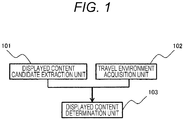
- FIG. 1 depicts functional blocks illustrating the configuration of a displayed content recognition device according to a first embodiment.
- the displayed content recognition device of the present embodiment includes: a displayed content candidate extraction unit 101 that recognizes displayed content for a displayed object (specifically, a road sign and a pavement marking) on the basis of camera images; a travel environment acquisition unit 102 that acquires travel environment of a host vehicle; and a displayed content determination unit 103 that determines the displayed content on the basis of the candidates for the displayed content extracted by the displayed content candidate extraction unit 101 and the travel environment acquired by the travel environment acquisition unit 102.
- a displayed content candidate extraction unit 101 that recognizes displayed content for a displayed object (specifically, a road sign and a pavement marking) on the basis of camera images
- a travel environment acquisition unit 102 that acquires travel environment of a host vehicle
- a displayed content determination unit 103 that determines the displayed content on the basis of the candidates for the displayed content extracted by the displayed content candidate extraction unit 101 and the travel environment acquired by the travel environment acquisition unit 102.
- the displayed content candidate extraction unit 101 first specifies an area of an acquired image, specifically, in which portion of the image a road sign or a pavement marking appears. Thereafter, a candidate for displayed content for the road sign or the pavement marking is extracted for the specified area.
- an edge may be found out in the image such that the Hough transformation using the acquired edge is performed to specify the sign position in the image.
- the above technique may be replaced with, for example, a maximally stable extremal regions (MSER) algorithm using pixel density information or the like.
- MSER maximally stable extremal regions
- a likelihood for the displayed content for each recognition target is worked out for the specified area.
- a large number of templates may be prepared in advance for each recognition target such that the correlation between the template and a candidate area is utilized, or a model of the recognition target may be created in a statistical manner on the basis of machine learning such that the correlation with this statistical model is utilized.
- the displayed content candidate extraction unit 101 confirms whether or not the likelihood of each recognition target is equal to or greater than a predetermined threshold value and assigns a recognition target having a likelihood equal to or greater than the threshold value as a candidate for displayed content; then outputs a road sign/pavement marking type corresponding to the likelihood.
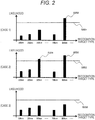
- a recognition target having a likelihood equal to or greater than a predetermined threshold value is only 80 km/h maximum speed restriction (S202 in FIG. 2 ), such that 80 km/h maximum speed restriction and the likelihood thereof are output as an output.
- a recognition target having a likelihood equal to or greater than a predetermined threshold value is 30 km/h maximum speed restriction (S204 in Fig. 2 ) and 80 km/h maximum speed restriction (S205 in FIG. 2 ), such that 30 km/h maximum speed restriction and 80 km/h maximum speed restriction, and respective likelihoods thereof are output as an output.
- the method may be based on different references.
- a relative threshold value the likelihood of a recognition target having the highest likelihood may be assigned as a reference such that a recognition target whose difference between this value and the likelihood thereof is equal to or smaller than a predetermined value is assigned as a candidate for displayed content.
- the displayed content candidate extraction unit 101 described above outputs the displayed content for a recognition target satisfying the threshold value condition
- a candidate not satisfying the threshold value condition may be extracted. That is, in this case, the likelihoods of all the recognition targets and the number of candidates for displayed content satisfying the threshold value condition are output.
- the travel environment acquisition unit 102 acquires the travel environment around the host vehicle using at least one of a camera image, vehicle speed information, or map information registered in a car navigation system.
- the travel environment here is information relating to an installation standard for road signs and pavement markings, including expressway, ordinary road, the number of lanes, the number of pedestrians, presence/absence of a median strip, and road shapes such as curve radius, lane width, and shoulder width.
- a gate image installed at an entrance or exit of an expressway may be held in advance as a template such that template matching using this template is performed, or since there are basically no pedestrians on the expressway, information on both of pedestrian recognition and the number of pedestrians may be used to acquire information on whether the road on which the host vehicle is currently traveling is an expressway or an ordinary road.
- a large number of white line templates, median strip templates, and pedestrian templates may be prepared in advance, respectively, such that the number of lanes, the median strip, and the number of pedestrians are acquired by template matching using these templates, or information on respective items may be acquired by a statistical method using machine learning.
- triangulation may be performed using an image acquired at every frame to create a three-dimensional map around the host vehicle, or white line detection may be performed to acquire road shape information on the basis of a result of the white line detection.
- the above explanation relates to a method of acquiring the travel environment based on a camera image
- whether the traveling road is an expressway or an ordinary road may be determined using the vehicle speed information up to the present time.
- this method for example, when the vehicle speed is 80 km/h or faster for a predetermined time or longer until the present time, it is determined that the traveling road is an expressway and the travel environment information that the current traveling road is an expressway is acquired.
- information that the traveling road is an ordinary road may be acquired in a case where this condition is not satisfied.
- the number of lanes written on the map, road shape information and the like are read using the host vehicle position as a reference and used.
- the travel environment acquisition unit 103 determines displayed content for a road sign or a pavement marking in the image, using the output of the displayed content candidate extraction unit 101 and the travel environment information acquired by the travel environment acquisition unit 102. The process of the travel environment acquisition unit 103 will be described in detail with reference to FIG. 3 .
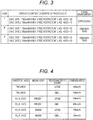
- FIG. 3 illustrates output examples of the displayed content candidate extraction unit 101 and the travel environment acquisition unit 102.
- Case 1 in FIG. 3 represents a case where the displayed content candidate extraction unit 101 has extracted 30 km/h maximum speed limitation and 80 km/h maximum speed limitation as candidates for displayed content, and the travel environment acquisition unit 202 has acquired a travel environment in which the traveling path of the host vehicle is an expressway.
- the displayed content determination unit 103 determines that the road sign captured in the image is an 80 km/h maximum speed restriction sign.
- Case 2 in FIG. 3 denotes a case where the displayed content candidate extraction unit 101 has extracted 30 km/h maximum speed limitation and 80 km/h maximum speed limitation as candidates for displayed content, and the travel environment acquisition unit 202 has acquired a travel environment in which the traveling path of the host vehicle is an ordinary road. At this time, since an 80 km/h maximum speed restriction sign is not installed on the ordinary road, the displayed content determination unit 103 determines that the road sign captured in the image is a 30 km/h maximum speed restriction sign.
- Case 3 in FIG. 3 denotes a case where the displayed content candidate extraction unit 101 has extracted 30 km/h maximum speed limitation and 60 km/h maximum speed limitation as candidates for displayed content, and the travel environment acquisition unit 202 has acquired a travel environment in which the traveling path of the host vehicle is an ordinary road.
- the displayed content determination unit 103 refers to the likelihoods output by the displayed content candidate extraction unit 101 and determines the 30 km/h maximum speed limitation having a higher likelihood, as displayed content.
- the recognition result of the image recognition includes an error, such as when a road sign or a pavement marking is present in a long distance or when shielding or the like due to a three-dimensional object such as a vehicle or a tree has occurred
- multiple candidates are extracts as displayed content candidates and one of those candidates matching the travel environment is selected, whereby it is possible to recognize the displayed content for the road sign or the pavement marking with high accuracy.
- the present embodiment is characterized in that the recognition result varies according to the travel environment and, when the same road sign or pavement marking is captured by the camera in a different travel environment, a different recognition result is output.
- the displayed content recognition unit 103 selects one candidate that matches the travel environment acquired by the travel environment acquisition unit 102, from among the candidates extracted by the displayed content candidate extraction unit 101.
- this configuration may be changed to a configuration described below, in which the travel environment acquired by the travel environment acquisition unit 102 is converted into the likelihood of a road sign or a pavement marking installed around the host vehicle, on the basis of the traffic standard, and a result of the conversion and the result of the displayed content candidate extraction unit 101 are combined to determine the displayed content.
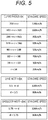
- FIGS. 4 and 5 Examples of traffic standards are illustrated in FIGS. 4 and 5 .
- FIGS. 4 and 5 are regulatory standards for the speed limit in ordinary roads and expressways, respectively.
- FIG. 6 is calculated as likelihoods for displayed content based on the travel environment, using the traffic standard in FIG. 4 .
- the travel environment acquisition unit 102 has acquired information that the current road type is an expressway, the curve radius is 500 m, the lane width is 4 m, and the shoulder width is 2 m, the respective pieces of information relating to the curve radius, the lane width, and the shoulder width are combined on the basis of the traffic standard in FIG. 5 and FIG. 7 is calculated as likelihoods for displayed content based on the travel environment. Thereafter, the output of the displayed content candidate extraction unit 101 and the result illustrated in FIG. 6 or 7 are subjected to sum or product computation for each item of displayed content, and displayed content with a highest likelihood is employed as a determination result.
- the displayed content candidate determination unit 103 may settle the result in consideration of not only the result of the displayed content candidate extraction unit 101 and the result of the travel environment acquisition unit 102 but also predetermined priorities. For example, priorities such as those illustrated in FIG. 8 may be set beforehand such that the priority in FIG. 9 is added to the likelihood by the displayed content candidate extraction unit 101, or the priority in FIG. 9 is added to the likelihood calculated from the likelihood by the displayed content candidate extraction unit 101 and the travel environment acquired by the travel environment acquisition unit 102 to determine displayed content with a highest likelihood.
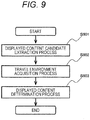
- FIG. 9 is a flowchart representing the operation of the displayed content recognition device of the present embodiment.
- the displayed content candidate extraction unit 101 firstly performs an image process and extracts a candidate for content for a road sign or a pavement marking in the image (a displayed content candidate extraction process S901 in FIG. 9 ). Thereafter, the travel environment acquisition unit 102 acquires the travel environment such as the expressway, the ordinary road, the number of lanes, the number of pedestrians, and the road shape (a displayed content candidate extraction process S902 in FIG. 9 ). Then, the displayed content determination unit 103 selects one of the extracted candidates matching the travel environment (a displayed content candidate extraction process S903 in FIG. 9 ).
- the travel environment is always acquired (the displayed content candidate extraction process S902 in FIG. 9 ) when the displayed content candidate is extracted (the displayed content candidate extraction process S901 in FIG. 9 ). As illustrated in FIG. 10 , however, the travel environment may be acquired only when multiple candidates are extracted in extracting the displayed content candidate.
- the displayed content candidate extraction unit 101 first performs an image process and extracts a candidate for content for a road sign or a pavement marking in the image (a displayed content candidate extraction process S101 in FIG. 10 ). Thereafter, when the number of candidates is plural as a consequence of confirming the number of candidates, the travel environment acquisition unit 102 acquires the travel environment (S103 in FIG. 10 ), and the displayed content determination unit 103 determines displayed content for the road sign or the pavement marking on the basis of the outputs of the displayed content candidate extraction unit 101 and the travel environment acquisition unit 102 (S104 in FIG. 10 ).
- the displayed content determination unit 103 determines displayed content for the road sign or the pavement marking on the basis only of the result of the displayed content candidate extraction unit 101 (S104 in FIG. 10 ). In addition, when the number of candidates is zero, displayed content for the road sign or the pavement marking is not determined.
- the displayed content candidate extraction unit 101 first extracts a candidate for content for a road sign or a pavement marking in the image and thereafter the travel environment acquisition unit 202 acquires the travel environment.
- a process may be employed such that the travel environment acquisition unit 202 acquires the travel environment and thereafter the displayed content candidate extraction unit 101 extracts a candidate for content for a road sign or a pavement marking in the image.
- the travel environment acquisition unit 102 firstly acquires the travel environment (a travel environment acquisition process S111 in FIG. 11 ).
- the displayed content candidate extraction unit 101 extracts a candidate for content for a road sign or a pavement marking (a travel environment acquisition process S112 in FIG. 11 ), but at this time, only a candidate satisfying the travel environment acquired by the travel environment acquisition unit 102 is extracted. For example, when the travel environment acquisition unit 102 has acquired information that the number of pedestrians is very large, it is judged that the host vehicle is traveling on an ordinary road and a maximum speed restriction sign for 80 km/h or faster installed on the expressway is not extracted. Thereafter, the displayed content determination unit 103 selects a candidate extracted as a displayed content candidate, thereby specifying displayed content for the road sign or the pavement marking in the image.
- FIG. 12 depicts functional blocks illustrating the configuration of a displayed content recognition device according to the present embodiment.
- the displayed content recognition device of the present embodiment includes: a displayed content candidate extraction unit 201 that extracts a candidate for displayed content for a displayed object on the basis of camera images; a travel environment acquisition unit 202 that acquires travel environment of a host vehicle; and a vehicle control content designation unit 203 that designates vehicle control content on the basis of the candidates for the displayed content extracted by the displayed content candidate extraction unit 201 and the travel environment acquired by the travel environment acquisition unit 202.
- the displayed content candidate extraction unit 201 first specifies an area of an acquired image, specifically, in which portion of the image a road sign or a pavement marking appears. Thereafter, a candidate for displayed content for the road sign or the pavement marking is extracted for the specified area.
- the travel environment acquisition unit 202 uses at least one of a camera image, vehicle speed information, or map information registered in a car navigation system to acquire the travel environment around the host vehicle relating to an installation standard for road signs and pavement markings, including expressway, ordinary road, the number of lanes, the number of pedestrians, presence/absence of a median strip, and road shapes such as curve radius, lane width, and shoulder width.
- the vehicle control content designation unit 203 receives the outputs of the displayed content candidate extraction unit 201 and the travel environment acquisition unit 202 as inputs and settles the control content for the vehicle. A method of designating the vehicle control content by the vehicle control content designation unit 203 will be described with reference to FIG. 13.
- FIG. 13 illustrates the current vehicle speed and outputs of the displayed content candidate extraction unit 201 and the travel environment acquisition unit 202.
- Case 1 in FIG. 13 represents that two candidates, namely, a 30 km/h maximum speed restriction sign and an 80 km/h maximum speed restriction sign are extracted by the displayed content candidate extraction unit 201 and the host vehicle speed is 100 km/h when the expressway is acquired as the travel environment.
- the control content candidate extraction unit determines that the road sign in the image is the 80 km/h maximum speed sign and settles a brake control signal for lowering the current vehicle speed of 100 km/h down to 80 km/h.
- Case 2 in FIG. 13 represents that two candidates, namely, a 30 km/h maximum speed restriction sign and an 80 km/h maximum speed restriction sign are extracted by the displayed content candidate extraction unit 201 and the host vehicle speed is 50 km/h when information indicating the ordinary road is acquired as the travel environment.
- the control content candidate extraction unit determines that the road sign in the image is the 30 km/h maximum speed sign and settles a brake control signal for lowering the current vehicle speed of 50 km/h down to 30 km/h.
- Case 3 in FIG. 13 represents that two candidates, namely, a 30 km/h maximum speed restriction sign and a 60 km/h maximum speed restriction sign are extracted by the displayed content candidate extraction unit 201 and the host vehicle speed is 50 km/h when information indicating the ordinary road is acquired as the travel environment.
- the vehicle control content designation unit 203 refers to the likelihoods output by the displayed content candidate extraction unit 201 and settles a brake control signal for lowering the current vehicle speed of 50 km/h down to 30 km/h having a higher likelihood.
- the vehicle control signal can be generated using the travel environment.
- the vehicle control content designation unit 203 designates the vehicle control signal on the basis of one candidate that matches the travel environment acquired by the travel environment acquisition unit 202, from among the candidates extracted by the displayed content candidate extraction unit 201.
- this configuration may be changed to a configuration described below, in which the travel environment acquired by the travel environment acquisition unit 202 is converted into the likelihood of a road sign or a pavement marking installed around the host vehicle, on the basis of the traffic standard, and a result of the conversion and the result of the displayed content candidate extraction unit 201 are combined to designate the vehicle control content.
- FIG. 6 is calculated as likelihoods for displayed content based on the travel environment, using the traffic standard in FIG. 4 .
- the curve radius is 500 m
- the lane width is 4 m
- the shoulder width is 2 m
- the respective pieces of information relating to the curve radius, the lane width, and the shoulder width are combined on the basis of the traffic standard in FIG. 5
- FIG. 7 is calculated as likelihoods for displayed content based on the travel environment.
- the output of the displayed content candidate extraction unit 201 and the result illustrated in FIG. 6 or 7 are subjected to sum or product computation for each item of displayed content, and the vehicle control content is designated using displayed content with a highest likelihood as a reference.
- the vehicle control content can be designated using the travel environment as a reference.
- the vehicle control content designation unit 203 may settle the result on the basis of a predetermined priority. For example, priorities such as those illustrated in FIG. 9 are set beforehand and, when multiple candidates cannot be distinguished from each other, the vehicle control content is settled on the basis of a candidate with a higher priority.
- FIG. 14 is a flowchart representing the operation of a vehicle control device of the present embodiment.
- the displayed content candidate extraction unit 201 firstly performs an image process and extracts a candidate for content for a road sign or a pavement marking in the image (a displayed content candidate extraction process S141 in FIG. 14 ). Thereafter, the travel environment acquisition unit 202 acquires the travel environment (a displayed content candidate extraction process S142 in FIG. 14 ). Then, the vehicle control content designation unit 203 settles the vehicle control signal on the basis of the results of the displayed content candidate extraction unit 201 and the travel environment acquisition unit 202 (a vehicle control content designation process S143 in FIG. 14 ).
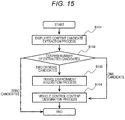
- the travel environment is always acquired (the displayed content candidate extraction process S142 in FIG. 14 ) when the displayed content candidate is extracted (the displayed content candidate extraction process S141 in FIG. 14 ). As illustrated in FIG. 15 , however, the travel environment may be acquired only when multiple candidates are extracted in extracting the displayed content candidate.
- the displayed content candidate extraction unit 201 first performs an image process and extracts a candidate for content for a road sign or a pavement marking in the image (a displayed content candidate extraction process S151 in FIG. 15 ). Next, the number of candidates for content for the road sign or the pavement marking is acquired. Then, on the basis of this number of candidates, it is designated whether the travel environment is to be acquired (S152 in FIG. 15 ). When the number of candidates is plural, the travel environment acquisition unit 202 acquires the travel environment (S153 in FIG. 5 ) and the vehicle control content is settled on the basis of the outputs of the displayed content candidate extraction unit 201 and the travel environment acquisition unit 202 (S154 in FIG. 15 ). Meanwhile, when the number of candidates is only one, the vehicle control content is settled on the basis only of the result of the displayed content candidate extraction unit 201 (S154 in FIG. 15 ). When the number of candidates is zero, control content is not settled.
- the processing time can be reduced because it is not necessary to acquire a redundant travel environment in a case where a road sign or a pavement marking can be accurately recognized only by image recognition.
- the displayed content candidate extraction unit 201 first extracts a candidate for content for a road sign or a pavement marking in the image and thereafter the travel environment acquisition unit 202 acquires the travel environment.
- the travel environment acquisition unit 202 acquires the travel environment and thereafter the displayed content candidate extraction unit 201 extracts a candidate for content for a road sign or a pavement marking in the image.
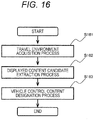
- the travel environment acquisition unit 202 firstly acquires the travel environment (a travel environment acquisition process S161 in FIG. 16 ).
- the displayed content candidate extraction unit 201 extracts a candidate for content for a road sign or a pavement marking (a travel environment acquisition process S162 in FIG. 16 ), but at this time, only a candidate satisfying the travel environment acquired by the travel environment acquisition unit 202 is extracted.
- the vehicle control content designation unit 203 designates vehicle control content.
- the vehicle control content designation unit 203 performs vehicle control on the basis of displayed content for a road sign or a pavement marking in the image.
- a virtual desired value may be set instead of displayed content for a road sign or a pavement marking in the image such that the vehicle control signal is created so as to be in accordance with the desired value.
- the displayed content for a road sign in the image is determined as 50 km/h maximum speed restriction when the host vehicle speed is 40 km/h.
- the travel environment acquisition unit acquires information that there are an enormous number of pedestrians around the host vehicle, for example, 20 km/h may be set as the desired value for the host vehicle speed such that a brake signal to bring the vehicle speed of 40 km/h close to 20 km/h is generated as vehicle control content.
- the invention of the present application is not limited to the above-described embodiments.
- the recognition of the maximum speed limitation sign among the road signs has been described especially in detail, but the recognition target of the invention of the present application is not limited to the maximum speed limitation sign and other road markings and other road signs are also treated as recognition targets.
- the invention of the present application can be carried out by acquiring the travel environment taking the installation standard into account. For example, a road sign for a pedestrian, a road closed sign for a large-sized automobile or the like, and a pedestrian crossing pavement marking can be used for recognizing displayed content by acquiring pedestrian information as a travel environment.
Landscapes
- Engineering & Computer Science (AREA)
- Mechanical Engineering (AREA)
- Automation & Control Theory (AREA)
- Transportation (AREA)
- Physics & Mathematics (AREA)
- General Physics & Mathematics (AREA)
- Computer Vision & Pattern Recognition (AREA)
- Mathematical Physics (AREA)
- Human Computer Interaction (AREA)
- Theoretical Computer Science (AREA)
- Chemical & Material Sciences (AREA)
- Combustion & Propulsion (AREA)
- Traffic Control Systems (AREA)
- Image Analysis (AREA)
- Control Of Driving Devices And Active Controlling Of Vehicle (AREA)
- Image Processing (AREA)
Applications Claiming Priority (2)
| Application Number | Priority Date | Filing Date | Title |
|---|---|---|---|
| JP2016156076A JP7214329B2 (ja) | 2016-08-09 | 2016-08-09 | 表示内容認識装置、および車両制御装置 |
| PCT/JP2017/026236 WO2018030103A1 (ja) | 2016-08-09 | 2017-07-20 | 表示内容認識装置、および車両制御装置 |
Publications (3)
| Publication Number | Publication Date |
|---|---|
| EP3499480A1 true EP3499480A1 (de) | 2019-06-19 |
| EP3499480A4 EP3499480A4 (de) | 2020-04-01 |
| EP3499480B1 EP3499480B1 (de) | 2024-09-18 |
Family
ID=61162955
Family Applications (1)
| Application Number | Title | Priority Date | Filing Date |
|---|---|---|---|
| EP17839176.9A Active EP3499480B1 (de) | 2016-08-09 | 2017-07-20 | Vorrichtung zur erkennung von angezeigten inhalten und fahrzeugsteuerungsvorrichtung |
Country Status (3)
| Country | Link |
|---|---|
| EP (1) | EP3499480B1 (de) |
| JP (1) | JP7214329B2 (de) |
| WO (1) | WO2018030103A1 (de) |
Cited By (2)
| Publication number | Priority date | Publication date | Assignee | Title |
|---|---|---|---|---|
| US12094329B2 (en) * | 2021-10-14 | 2024-09-17 | Mitac Digital Technology Corporation | Method and system for adaptively providing auxiliary driving information |
| US12444304B2 (en) | 2018-07-31 | 2025-10-14 | Ntt, Inc. | Driving assistance device and method, and storage medium in which program is stored |
Families Citing this family (3)
| Publication number | Priority date | Publication date | Assignee | Title |
|---|---|---|---|---|
| US20200406894A1 (en) * | 2019-06-28 | 2020-12-31 | Zoox, Inc. | System and method for determining a target vehicle speed |
| JP7327047B2 (ja) * | 2019-09-27 | 2023-08-16 | スズキ株式会社 | 車両用運転支援システム |
| JP2022139009A (ja) | 2021-03-11 | 2022-09-26 | 本田技研工業株式会社 | 運転支援装置、運転支援方法及びプログラム |
Family Cites Families (18)
| Publication number | Priority date | Publication date | Assignee | Title |
|---|---|---|---|---|
| DE19842176A1 (de) * | 1998-09-15 | 2000-03-16 | Bosch Gmbh Robert | Verfahren und Vorrichtung zur Verkehrszeichenerkennung und Navigation |
| JP4093026B2 (ja) * | 2002-11-18 | 2008-05-28 | 日本電気株式会社 | 道路環境情報通知装置、車載報知装置、情報センタ内装置、及び道路環境情報通知プログラム |
| JP4765362B2 (ja) * | 2005-03-24 | 2011-09-07 | アイシン・エィ・ダブリュ株式会社 | 車両周辺視認装置 |
| FR2919098B1 (fr) * | 2007-07-20 | 2010-06-11 | Valeo Vision | Procede de determination automatique des limitations de vitesse sur une route et systeme associe |
| US8725394B2 (en) * | 2007-10-09 | 2014-05-13 | Siemens Corporation | Multi-modal speed limit assistant |
| JP4941234B2 (ja) * | 2007-10-31 | 2012-05-30 | 株式会社エクォス・リサーチ | 道路標識表示装置 |
| JP5257252B2 (ja) | 2009-06-05 | 2013-08-07 | 株式会社デンソー | 運転支援装置および運転支援システム |
| JP5819420B2 (ja) * | 2010-06-15 | 2015-11-24 | コンティ テミック マイクロエレクトロニック ゲゼルシャフト ミットベシュレンクテル ハフツングConti Temic microelectronic GmbH | 自動車の交通標識認識システムと車線認識システムとを融合する方法 |
| JP2012189511A (ja) * | 2011-03-11 | 2012-10-04 | Denso Corp | 地域識別装置、および地域識別プログラム |
| EP2950291A4 (de) * | 2013-01-25 | 2016-10-12 | Toyota Motor Co Ltd | Strassenumgebungserkennungssystem |
| JP2014153167A (ja) | 2013-02-07 | 2014-08-25 | Nidec Elesys Corp | 物体認識装置、物体認識方法及び物体認識プログラム |
| JP6323074B2 (ja) * | 2014-03-06 | 2018-05-16 | 株式会社デンソー | 表示物情報表示装置 |
| JP6598255B2 (ja) * | 2014-03-31 | 2019-10-30 | エイディシーテクノロジー株式会社 | 運転支援装置、及び運転支援システム |
| JP6537780B2 (ja) * | 2014-04-09 | 2019-07-03 | 日立オートモティブシステムズ株式会社 | 走行制御装置、車載用表示装置、及び走行制御システム |
| JP2016130979A (ja) | 2015-01-14 | 2016-07-21 | 株式会社リコー | 検知装置、検知処理プログラム及び検知システム |
| JP6298772B2 (ja) * | 2015-01-14 | 2018-03-20 | 日立オートモティブシステムズ株式会社 | 車載用制御装置、自車位置姿勢特定装置、車載用表示装置 |
| JP6428546B2 (ja) * | 2015-09-25 | 2018-11-28 | トヨタ自動車株式会社 | 運転支援装置 |
| JP7079069B2 (ja) * | 2016-04-15 | 2022-06-01 | パナソニック インテレクチュアル プロパティ コーポレーション オブ アメリカ | 情報提示制御装置、自動運転車、及び自動運転車運転支援システム |
-
2016
- 2016-08-09 JP JP2016156076A patent/JP7214329B2/ja active Active
-
2017
- 2017-07-20 WO PCT/JP2017/026236 patent/WO2018030103A1/ja not_active Ceased
- 2017-07-20 EP EP17839176.9A patent/EP3499480B1/de active Active
Cited By (2)
| Publication number | Priority date | Publication date | Assignee | Title |
|---|---|---|---|---|
| US12444304B2 (en) | 2018-07-31 | 2025-10-14 | Ntt, Inc. | Driving assistance device and method, and storage medium in which program is stored |
| US12094329B2 (en) * | 2021-10-14 | 2024-09-17 | Mitac Digital Technology Corporation | Method and system for adaptively providing auxiliary driving information |
Also Published As
| Publication number | Publication date |
|---|---|
| JP7214329B2 (ja) | 2023-01-30 |
| EP3499480B1 (de) | 2024-09-18 |
| JP2018025898A (ja) | 2018-02-15 |
| WO2018030103A1 (ja) | 2018-02-15 |
| EP3499480A4 (de) | 2020-04-01 |
Similar Documents
| Publication | Publication Date | Title |
|---|---|---|
| EP3499480B1 (de) | Vorrichtung zur erkennung von angezeigten inhalten und fahrzeugsteuerungsvorrichtung | |
| US8620032B2 (en) | System and method for traffic signal detection | |
| US11727799B2 (en) | Automatically perceiving travel signals | |
| CN113597396B (zh) | 利用道路表面特性的道路上定位方法和设备 | |
| US10032085B2 (en) | Method and system to identify traffic lights by an autonomous vehicle | |
| US20180299893A1 (en) | Automatically perceiving travel signals | |
| CN111091037A (zh) | 用于确定驾驶信息的方法和设备 | |
| CN113435498B (zh) | 数据标注方法、装置、设备及存储介质 | |
| KR20190036844A (ko) | 주행 차로를 식별하는 방법 및 장치 | |
| US20180300567A1 (en) | Automatically perceiving travel signals | |
| CN106980113A (zh) | 物体检测装置和物体检测方法 | |
| Zhang et al. | A framework for turning behavior classification at intersections using 3D LIDAR | |
| CN107729843B (zh) | 基于雷达与视觉信息融合的低地板有轨电车行人识别方法 | |
| US20230221136A1 (en) | Roadmap generation system and method of using | |
| Revilloud et al. | An improved approach for robust road marking detection and tracking applied to multi-lane estimation | |
| US20180300566A1 (en) | Automatically perceiving travel signals | |
| Aron et al. | Current approaches in traffic lane detection: a minireview | |
| CN112180913A (zh) | 特种车辆识别方法 | |
| Tiron et al. | Neural network based traffic sign recognition for autonomous driving | |
| CN120107933B (zh) | 铁路无人驾驶障碍物检测定位方法、装置、设备及介质 | |
| US11651583B2 (en) | Multi-channel object matching | |
| CN118244257A (zh) | 基于毫米波雷达的车辆自身状态的评估方法及系统 | |
| CN111611942B (zh) | 一种透视自适应车道骨架提取建库的方法 | |
| Sundaraperumal et al. | Deep learning based real-time pothole and speed bump/hump detection | |
| Moon et al. | Classification of roadway type based on roadway characteristics using RCCC |
Legal Events
| Date | Code | Title | Description |
|---|---|---|---|
| STAA | Information on the status of an ep patent application or granted ep patent |
Free format text: STATUS: THE INTERNATIONAL PUBLICATION HAS BEEN MADE |
|
| PUAI | Public reference made under article 153(3) epc to a published international application that has entered the european phase |
Free format text: ORIGINAL CODE: 0009012 |
|
| STAA | Information on the status of an ep patent application or granted ep patent |
Free format text: STATUS: REQUEST FOR EXAMINATION WAS MADE |
|
| 17P | Request for examination filed |
Effective date: 20181219 |
|
| AK | Designated contracting states |
Kind code of ref document: A1 Designated state(s): AL AT BE BG CH CY CZ DE DK EE ES FI FR GB GR HR HU IE IS IT LI LT LU LV MC MK MT NL NO PL PT RO RS SE SI SK SM TR |
|
| AX | Request for extension of the european patent |
Extension state: BA ME |
|
| DAV | Request for validation of the european patent (deleted) | ||
| DAX | Request for extension of the european patent (deleted) | ||
| A4 | Supplementary search report drawn up and despatched |
Effective date: 20200228 |
|
| RIC1 | Information provided on ipc code assigned before grant |
Ipc: G08G 1/09 20060101AFI20200224BHEP Ipc: G08G 1/16 20060101ALI20200224BHEP Ipc: B60R 21/00 20060101ALI20200224BHEP Ipc: G06T 7/00 20170101ALI20200224BHEP Ipc: G06K 9/00 20060101ALI20200224BHEP Ipc: G08G 1/0962 20060101ALI20200224BHEP Ipc: B60W 30/14 20060101ALI20200224BHEP Ipc: B60K 31/00 20060101ALI20200224BHEP |
|
| RAP3 | Party data changed (applicant data changed or rights of an application transferred) |
Owner name: HITACHI ASTEMO, LTD. |
|
| STAA | Information on the status of an ep patent application or granted ep patent |
Free format text: STATUS: EXAMINATION IS IN PROGRESS |
|
| 17Q | First examination report despatched |
Effective date: 20211210 |
|
| RIC1 | Information provided on ipc code assigned before grant |
Ipc: G08G 1/0962 20060101ALI20240311BHEP Ipc: B60W 50/14 20120101ALI20240311BHEP Ipc: B60W 40/04 20060101ALI20240311BHEP Ipc: G08G 1/16 20060101ALI20240311BHEP Ipc: G06T 7/00 20170101ALI20240311BHEP Ipc: B60W 30/14 20060101ALI20240311BHEP Ipc: B60R 21/00 20060101ALI20240311BHEP Ipc: B60K 31/00 20060101ALI20240311BHEP Ipc: G08G 1/09 20060101AFI20240311BHEP |
|
| GRAP | Despatch of communication of intention to grant a patent |
Free format text: ORIGINAL CODE: EPIDOSNIGR1 |
|
| STAA | Information on the status of an ep patent application or granted ep patent |
Free format text: STATUS: GRANT OF PATENT IS INTENDED |
|
| INTG | Intention to grant announced |
Effective date: 20240422 |
|
| GRAS | Grant fee paid |
Free format text: ORIGINAL CODE: EPIDOSNIGR3 |
|
| GRAA | (expected) grant |
Free format text: ORIGINAL CODE: 0009210 |
|
| STAA | Information on the status of an ep patent application or granted ep patent |
Free format text: STATUS: THE PATENT HAS BEEN GRANTED |
|
| RIN1 | Information on inventor provided before grant (corrected) |
Inventor name: KIDO, HIDEAKI Inventor name: SHIINA, YUHI Inventor name: NAGASAKI, TAKESHI Inventor name: ENDO, TAKESHI |
|
| AK | Designated contracting states |
Kind code of ref document: B1 Designated state(s): AL AT BE BG CH CY CZ DE DK EE ES FI FR GB GR HR HU IE IS IT LI LT LU LV MC MK MT NL NO PL PT RO RS SE SI SK SM TR |
|
| REG | Reference to a national code |
Ref country code: GB Ref legal event code: FG4D |
|
| RIN1 | Information on inventor provided before grant (corrected) |
Inventor name: KIDO, HIDEAKI Inventor name: SHIINA, YUHI Inventor name: NAGASAKI, TAKESHI Inventor name: ENDO, TAKESHI |
|
| REG | Reference to a national code |
Ref country code: CH Ref legal event code: EP |
|
| REG | Reference to a national code |
Ref country code: IE Ref legal event code: FG4D |
|
| REG | Reference to a national code |
Ref country code: DE Ref legal event code: R096 Ref document number: 602017084951 Country of ref document: DE |
|
| REG | Reference to a national code |
Ref country code: LT Ref legal event code: MG9D |
|
| PG25 | Lapsed in a contracting state [announced via postgrant information from national office to epo] |
Ref country code: NO Free format text: LAPSE BECAUSE OF FAILURE TO SUBMIT A TRANSLATION OF THE DESCRIPTION OR TO PAY THE FEE WITHIN THE PRESCRIBED TIME-LIMIT Effective date: 20241218 |
|
| PG25 | Lapsed in a contracting state [announced via postgrant information from national office to epo] |
Ref country code: GR Free format text: LAPSE BECAUSE OF FAILURE TO SUBMIT A TRANSLATION OF THE DESCRIPTION OR TO PAY THE FEE WITHIN THE PRESCRIBED TIME-LIMIT Effective date: 20241219 Ref country code: FI Free format text: LAPSE BECAUSE OF FAILURE TO SUBMIT A TRANSLATION OF THE DESCRIPTION OR TO PAY THE FEE WITHIN THE PRESCRIBED TIME-LIMIT Effective date: 20240918 |
|
| PG25 | Lapsed in a contracting state [announced via postgrant information from national office to epo] |
Ref country code: BG Free format text: LAPSE BECAUSE OF FAILURE TO SUBMIT A TRANSLATION OF THE DESCRIPTION OR TO PAY THE FEE WITHIN THE PRESCRIBED TIME-LIMIT Effective date: 20240918 |
|
| PG25 | Lapsed in a contracting state [announced via postgrant information from national office to epo] |
Ref country code: LV Free format text: LAPSE BECAUSE OF FAILURE TO SUBMIT A TRANSLATION OF THE DESCRIPTION OR TO PAY THE FEE WITHIN THE PRESCRIBED TIME-LIMIT Effective date: 20240918 |
|
| PG25 | Lapsed in a contracting state [announced via postgrant information from national office to epo] |
Ref country code: HR Free format text: LAPSE BECAUSE OF FAILURE TO SUBMIT A TRANSLATION OF THE DESCRIPTION OR TO PAY THE FEE WITHIN THE PRESCRIBED TIME-LIMIT Effective date: 20240918 |
|
| REG | Reference to a national code |
Ref country code: NL Ref legal event code: MP Effective date: 20240918 |
|
| PG25 | Lapsed in a contracting state [announced via postgrant information from national office to epo] |
Ref country code: RS Free format text: LAPSE BECAUSE OF FAILURE TO SUBMIT A TRANSLATION OF THE DESCRIPTION OR TO PAY THE FEE WITHIN THE PRESCRIBED TIME-LIMIT Effective date: 20241218 |
|
| PG25 | Lapsed in a contracting state [announced via postgrant information from national office to epo] |
Ref country code: RS Free format text: LAPSE BECAUSE OF FAILURE TO SUBMIT A TRANSLATION OF THE DESCRIPTION OR TO PAY THE FEE WITHIN THE PRESCRIBED TIME-LIMIT Effective date: 20241218 Ref country code: NO Free format text: LAPSE BECAUSE OF FAILURE TO SUBMIT A TRANSLATION OF THE DESCRIPTION OR TO PAY THE FEE WITHIN THE PRESCRIBED TIME-LIMIT Effective date: 20241218 Ref country code: LV Free format text: LAPSE BECAUSE OF FAILURE TO SUBMIT A TRANSLATION OF THE DESCRIPTION OR TO PAY THE FEE WITHIN THE PRESCRIBED TIME-LIMIT Effective date: 20240918 Ref country code: HR Free format text: LAPSE BECAUSE OF FAILURE TO SUBMIT A TRANSLATION OF THE DESCRIPTION OR TO PAY THE FEE WITHIN THE PRESCRIBED TIME-LIMIT Effective date: 20240918 Ref country code: GR Free format text: LAPSE BECAUSE OF FAILURE TO SUBMIT A TRANSLATION OF THE DESCRIPTION OR TO PAY THE FEE WITHIN THE PRESCRIBED TIME-LIMIT Effective date: 20241219 Ref country code: FI Free format text: LAPSE BECAUSE OF FAILURE TO SUBMIT A TRANSLATION OF THE DESCRIPTION OR TO PAY THE FEE WITHIN THE PRESCRIBED TIME-LIMIT Effective date: 20240918 Ref country code: BG Free format text: LAPSE BECAUSE OF FAILURE TO SUBMIT A TRANSLATION OF THE DESCRIPTION OR TO PAY THE FEE WITHIN THE PRESCRIBED TIME-LIMIT Effective date: 20240918 |
|
| REG | Reference to a national code |
Ref country code: AT Ref legal event code: MK05 Ref document number: 1725369 Country of ref document: AT Kind code of ref document: T Effective date: 20240918 |
|
| PG25 | Lapsed in a contracting state [announced via postgrant information from national office to epo] |
Ref country code: NL Free format text: LAPSE BECAUSE OF FAILURE TO SUBMIT A TRANSLATION OF THE DESCRIPTION OR TO PAY THE FEE WITHIN THE PRESCRIBED TIME-LIMIT Effective date: 20240918 |
|
| PG25 | Lapsed in a contracting state [announced via postgrant information from national office to epo] |
Ref country code: PT Free format text: LAPSE BECAUSE OF FAILURE TO SUBMIT A TRANSLATION OF THE DESCRIPTION OR TO PAY THE FEE WITHIN THE PRESCRIBED TIME-LIMIT Effective date: 20250120 Ref country code: IS Free format text: LAPSE BECAUSE OF FAILURE TO SUBMIT A TRANSLATION OF THE DESCRIPTION OR TO PAY THE FEE WITHIN THE PRESCRIBED TIME-LIMIT Effective date: 20250118 |
|
| PG25 | Lapsed in a contracting state [announced via postgrant information from national office to epo] |
Ref country code: RO Free format text: LAPSE BECAUSE OF FAILURE TO SUBMIT A TRANSLATION OF THE DESCRIPTION OR TO PAY THE FEE WITHIN THE PRESCRIBED TIME-LIMIT Effective date: 20240918 Ref country code: SM Free format text: LAPSE BECAUSE OF FAILURE TO SUBMIT A TRANSLATION OF THE DESCRIPTION OR TO PAY THE FEE WITHIN THE PRESCRIBED TIME-LIMIT Effective date: 20240918 |
|
| PG25 | Lapsed in a contracting state [announced via postgrant information from national office to epo] |
Ref country code: ES Free format text: LAPSE BECAUSE OF FAILURE TO SUBMIT A TRANSLATION OF THE DESCRIPTION OR TO PAY THE FEE WITHIN THE PRESCRIBED TIME-LIMIT Effective date: 20240918 |
|
| PG25 | Lapsed in a contracting state [announced via postgrant information from national office to epo] |
Ref country code: EE Free format text: LAPSE BECAUSE OF FAILURE TO SUBMIT A TRANSLATION OF THE DESCRIPTION OR TO PAY THE FEE WITHIN THE PRESCRIBED TIME-LIMIT Effective date: 20240918 Ref country code: AT Free format text: LAPSE BECAUSE OF FAILURE TO SUBMIT A TRANSLATION OF THE DESCRIPTION OR TO PAY THE FEE WITHIN THE PRESCRIBED TIME-LIMIT Effective date: 20240918 |
|
| PG25 | Lapsed in a contracting state [announced via postgrant information from national office to epo] |
Ref country code: CZ Free format text: LAPSE BECAUSE OF FAILURE TO SUBMIT A TRANSLATION OF THE DESCRIPTION OR TO PAY THE FEE WITHIN THE PRESCRIBED TIME-LIMIT Effective date: 20240918 Ref country code: PL Free format text: LAPSE BECAUSE OF FAILURE TO SUBMIT A TRANSLATION OF THE DESCRIPTION OR TO PAY THE FEE WITHIN THE PRESCRIBED TIME-LIMIT Effective date: 20240918 |
|
| PG25 | Lapsed in a contracting state [announced via postgrant information from national office to epo] |
Ref country code: IT Free format text: LAPSE BECAUSE OF FAILURE TO SUBMIT A TRANSLATION OF THE DESCRIPTION OR TO PAY THE FEE WITHIN THE PRESCRIBED TIME-LIMIT Effective date: 20240918 Ref country code: SK Free format text: LAPSE BECAUSE OF FAILURE TO SUBMIT A TRANSLATION OF THE DESCRIPTION OR TO PAY THE FEE WITHIN THE PRESCRIBED TIME-LIMIT Effective date: 20240918 |
|
| REG | Reference to a national code |
Ref country code: DE Ref legal event code: R097 Ref document number: 602017084951 Country of ref document: DE |
|
| PG25 | Lapsed in a contracting state [announced via postgrant information from national office to epo] |
Ref country code: DK Free format text: LAPSE BECAUSE OF FAILURE TO SUBMIT A TRANSLATION OF THE DESCRIPTION OR TO PAY THE FEE WITHIN THE PRESCRIBED TIME-LIMIT Effective date: 20240918 |
|
| PLBE | No opposition filed within time limit |
Free format text: ORIGINAL CODE: 0009261 |
|
| STAA | Information on the status of an ep patent application or granted ep patent |
Free format text: STATUS: NO OPPOSITION FILED WITHIN TIME LIMIT |
|
| 26N | No opposition filed |
Effective date: 20250619 |
|
| PG25 | Lapsed in a contracting state [announced via postgrant information from national office to epo] |
Ref country code: SE Free format text: LAPSE BECAUSE OF FAILURE TO SUBMIT A TRANSLATION OF THE DESCRIPTION OR TO PAY THE FEE WITHIN THE PRESCRIBED TIME-LIMIT Effective date: 20240918 |
|
| PGFP | Annual fee paid to national office [announced via postgrant information from national office to epo] |
Ref country code: DE Payment date: 20250528 Year of fee payment: 9 |
|
| REG | Reference to a national code |
Ref country code: CH Ref legal event code: H13 Free format text: ST27 STATUS EVENT CODE: U-0-0-H10-H13 (AS PROVIDED BY THE NATIONAL OFFICE) Effective date: 20260224 |
|
| PG25 | Lapsed in a contracting state [announced via postgrant information from national office to epo] |
Ref country code: LU Free format text: LAPSE BECAUSE OF NON-PAYMENT OF DUE FEES Effective date: 20250720 |
|
| GBPC | Gb: european patent ceased through non-payment of renewal fee |
Effective date: 20250720 |
|
| REG | Reference to a national code |
Ref country code: BE Ref legal event code: MM Effective date: 20250731 |
|
| PG25 | Lapsed in a contracting state [announced via postgrant information from national office to epo] |
Ref country code: GB Free format text: LAPSE BECAUSE OF NON-PAYMENT OF DUE FEES Effective date: 20250720 |
|
| PG25 | Lapsed in a contracting state [announced via postgrant information from national office to epo] |
Ref country code: BE Free format text: LAPSE BECAUSE OF NON-PAYMENT OF DUE FEES Effective date: 20250731 |
|
| PG25 | Lapsed in a contracting state [announced via postgrant information from national office to epo] |
Ref country code: FR Free format text: LAPSE BECAUSE OF NON-PAYMENT OF DUE FEES Effective date: 20250731 |