EP3497452B1 - Diagnosis, prevention, and/or treatment of autoimmune diseases - Google Patents
Diagnosis, prevention, and/or treatment of autoimmune diseases Download PDFInfo
- Publication number
- EP3497452B1 EP3497452B1 EP17840379.6A EP17840379A EP3497452B1 EP 3497452 B1 EP3497452 B1 EP 3497452B1 EP 17840379 A EP17840379 A EP 17840379A EP 3497452 B1 EP3497452 B1 EP 3497452B1
- Authority
- EP
- European Patent Office
- Prior art keywords
- epitope
- cells
- pla2r
- edc
- patient
- Prior art date
- Legal status (The legal status is an assumption and is not a legal conclusion. Google has not performed a legal analysis and makes no representation as to the accuracy of the status listed.)
- Active
Links
Images










Classifications
-
- A—HUMAN NECESSITIES
- A61—MEDICAL OR VETERINARY SCIENCE; HYGIENE
- A61K—PREPARATIONS FOR MEDICAL, DENTAL OR TOILETRY PURPOSES
- A61K38/00—Medicinal preparations containing peptides
- A61K38/16—Peptides having more than 20 amino acids; Gastrins; Somatostatins; Melanotropins; Derivatives thereof
- A61K38/17—Peptides having more than 20 amino acids; Gastrins; Somatostatins; Melanotropins; Derivatives thereof from animals; from humans
- A61K38/177—Receptors; Cell surface antigens; Cell surface determinants
-
- A—HUMAN NECESSITIES
- A61—MEDICAL OR VETERINARY SCIENCE; HYGIENE
- A61K—PREPARATIONS FOR MEDICAL, DENTAL OR TOILETRY PURPOSES
- A61K38/00—Medicinal preparations containing peptides
- A61K38/16—Peptides having more than 20 amino acids; Gastrins; Somatostatins; Melanotropins; Derivatives thereof
-
- A—HUMAN NECESSITIES
- A61—MEDICAL OR VETERINARY SCIENCE; HYGIENE
- A61K—PREPARATIONS FOR MEDICAL, DENTAL OR TOILETRY PURPOSES
- A61K47/00—Medicinal preparations characterised by the non-active ingredients used, e.g. carriers or inert additives; Targeting or modifying agents chemically bound to the active ingredient
- A61K47/50—Medicinal preparations characterised by the non-active ingredients used, e.g. carriers or inert additives; Targeting or modifying agents chemically bound to the active ingredient the non-active ingredient being chemically bound to the active ingredient, e.g. polymer-drug conjugates
- A61K47/51—Medicinal preparations characterised by the non-active ingredients used, e.g. carriers or inert additives; Targeting or modifying agents chemically bound to the active ingredient the non-active ingredient being chemically bound to the active ingredient, e.g. polymer-drug conjugates the non-active ingredient being a modifying agent
- A61K47/62—Medicinal preparations characterised by the non-active ingredients used, e.g. carriers or inert additives; Targeting or modifying agents chemically bound to the active ingredient the non-active ingredient being chemically bound to the active ingredient, e.g. polymer-drug conjugates the non-active ingredient being a modifying agent the modifying agent being a protein, peptide or polyamino acid
- A61K47/64—Drug-peptide, drug-protein or drug-polyamino acid conjugates, i.e. the modifying agent being a peptide, protein or polyamino acid which is covalently bonded or complexed to a therapeutically active agent
-
- A—HUMAN NECESSITIES
- A61—MEDICAL OR VETERINARY SCIENCE; HYGIENE
- A61K—PREPARATIONS FOR MEDICAL, DENTAL OR TOILETRY PURPOSES
- A61K47/00—Medicinal preparations characterised by the non-active ingredients used, e.g. carriers or inert additives; Targeting or modifying agents chemically bound to the active ingredient
- A61K47/50—Medicinal preparations characterised by the non-active ingredients used, e.g. carriers or inert additives; Targeting or modifying agents chemically bound to the active ingredient the non-active ingredient being chemically bound to the active ingredient, e.g. polymer-drug conjugates
- A61K47/51—Medicinal preparations characterised by the non-active ingredients used, e.g. carriers or inert additives; Targeting or modifying agents chemically bound to the active ingredient the non-active ingredient being chemically bound to the active ingredient, e.g. polymer-drug conjugates the non-active ingredient being a modifying agent
- A61K47/62—Medicinal preparations characterised by the non-active ingredients used, e.g. carriers or inert additives; Targeting or modifying agents chemically bound to the active ingredient the non-active ingredient being chemically bound to the active ingredient, e.g. polymer-drug conjugates the non-active ingredient being a modifying agent the modifying agent being a protein, peptide or polyamino acid
- A61K47/65—Peptidic linkers, binders or spacers, e.g. peptidic enzyme-labile linkers
-
- A—HUMAN NECESSITIES
- A61—MEDICAL OR VETERINARY SCIENCE; HYGIENE
- A61P—SPECIFIC THERAPEUTIC ACTIVITY OF CHEMICAL COMPOUNDS OR MEDICINAL PREPARATIONS
- A61P13/00—Drugs for disorders of the urinary system
- A61P13/12—Drugs for disorders of the urinary system of the kidneys
-
- G—PHYSICS
- G01—MEASURING; TESTING
- G01N—INVESTIGATING OR ANALYSING MATERIALS BY DETERMINING THEIR CHEMICAL OR PHYSICAL PROPERTIES
- G01N33/00—Investigating or analysing materials by specific methods not covered by groups G01N1/00 - G01N31/00
- G01N33/48—Biological material, e.g. blood, urine; Haemocytometers
- G01N33/50—Chemical analysis of biological material, e.g. blood, urine; Testing involving biospecific ligand binding methods; Immunological testing
- G01N33/53—Immunoassay; Biospecific binding assay; Materials therefor
- G01N33/564—Immunoassay; Biospecific binding assay; Materials therefor for pre-existing immune complex or autoimmune disease, i.e. systemic lupus erythematosus, rheumatoid arthritis, multiple sclerosis, rheumatoid factors or complement components C1-C9
-
- G—PHYSICS
- G01—MEASURING; TESTING
- G01N—INVESTIGATING OR ANALYSING MATERIALS BY DETERMINING THEIR CHEMICAL OR PHYSICAL PROPERTIES
- G01N33/00—Investigating or analysing materials by specific methods not covered by groups G01N1/00 - G01N31/00
- G01N33/48—Biological material, e.g. blood, urine; Haemocytometers
- G01N33/50—Chemical analysis of biological material, e.g. blood, urine; Testing involving biospecific ligand binding methods; Immunological testing
- G01N33/68—Chemical analysis of biological material, e.g. blood, urine; Testing involving biospecific ligand binding methods; Immunological testing involving proteins, peptides or amino acids
- G01N33/6878—Chemical analysis of biological material, e.g. blood, urine; Testing involving biospecific ligand binding methods; Immunological testing involving proteins, peptides or amino acids in epitope analysis
-
- G—PHYSICS
- G01—MEASURING; TESTING
- G01N—INVESTIGATING OR ANALYSING MATERIALS BY DETERMINING THEIR CHEMICAL OR PHYSICAL PROPERTIES
- G01N33/00—Investigating or analysing materials by specific methods not covered by groups G01N1/00 - G01N31/00
- G01N33/48—Biological material, e.g. blood, urine; Haemocytometers
- G01N33/50—Chemical analysis of biological material, e.g. blood, urine; Testing involving biospecific ligand binding methods; Immunological testing
- G01N33/96—Chemical analysis of biological material, e.g. blood, urine; Testing involving biospecific ligand binding methods; Immunological testing involving blood or serum control standard
-
- G—PHYSICS
- G01—MEASURING; TESTING
- G01N—INVESTIGATING OR ANALYSING MATERIALS BY DETERMINING THEIR CHEMICAL OR PHYSICAL PROPERTIES
- G01N2500/00—Screening for compounds of potential therapeutic value
- G01N2500/10—Screening for compounds of potential therapeutic value involving cells
-
- G—PHYSICS
- G01—MEASURING; TESTING
- G01N—INVESTIGATING OR ANALYSING MATERIALS BY DETERMINING THEIR CHEMICAL OR PHYSICAL PROPERTIES
- G01N33/00—Investigating or analysing materials by specific methods not covered by groups G01N1/00 - G01N31/00
- G01N33/48—Biological material, e.g. blood, urine; Haemocytometers
- G01N33/50—Chemical analysis of biological material, e.g. blood, urine; Testing involving biospecific ligand binding methods; Immunological testing
- G01N33/68—Chemical analysis of biological material, e.g. blood, urine; Testing involving biospecific ligand binding methods; Immunological testing involving proteins, peptides or amino acids
Definitions
- WO 2015/185949 refers to particular peptides having a length of between 31 and 60 amino acids capable to bind to anti-PLA2R antibodies.
- the peptides are reported to be useful in the prevention or treatment of kidney disease.
- WO 2015/004603 discloses antibodies directed against a specific PLA 2 R-derived peptide, useful in the diagnosis of the occurrence of a membranous nephropathy (MN) disease in an individual.
- MN membranous nephropathy
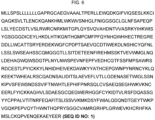
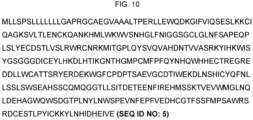
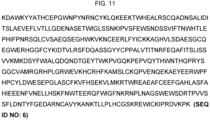
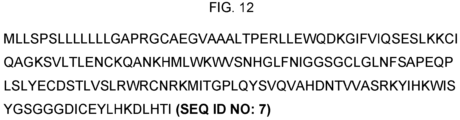
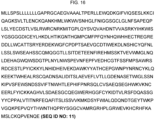
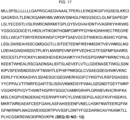
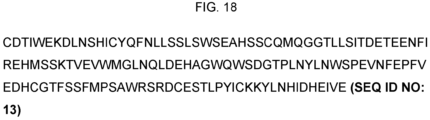
- the sequence of the PLA2R fragment is as provided in SEQ ID NO: 1. In some embodiments of the method, the sequence of the PLA2R fragment is as provided in SEQ ID NO: 2. In some embodiments of the method, the PLA2R fragment is as provided in SEQ ID NO: 2 and at least about 5% of the sequence provided in SEQ ID NO: 3. In some embodiments of the method, the PLA2R fragment is as provided in SEQ ID NO: 4. In some embodiments of the method, the PLA2R fragment is as provided in SEQ ID NO: 5. In some embodiments of the method, the PLA2R fragment is as provided in SEQ ID NO: 5 and at least about 5% of the sequence provided in SEQ ID NO: 6.
- BCRs cell-surface B cell receptors
- the initial binding of antigen to the BCR induces a cascade of intracellular signaling events that results in B cell activation.
- Antigen binding to BCR triggers rapid internalization of the BCR-antigen complex.
- the BCR-antigen complex is sorted into early endosomes and subsequently into major histocompatibility complex class II (MHCII)-containing late endosomes.
- MHCII major histocompatibility complex class II
- FIG. 3 The engagement of specific helper T cells stimulates antibody production by the activated B cells.
- An autoimmune disease occurs due to an immune response (e.g., antibody production by B cells) against to a normal body tissue and/or organ. About 80 types of autoimmune diseases are known in humans and almost any tissue and/or organ can be affected.
- the frequent autoimmune disease relapse in patients is due to the presence of a specific group of memory B cells that are present in a quiescent state in the patient's body and are circulating between the peripheral blood and peripheral lymph tissues and/or organs (e.g., lymph nodes).
- these memory B cells Upon re-encounter with an antigen for which they are specific, these memory B cells are quickly activated and subsequently differentiate into plasma cells that produce massive amounts of disease-causing antibodies (pathogenic antibodies) in a short period of time.
- these memory B cells serve as antigen presenting cells (APCs) that present the processed antigen to antigen-specific helper T cells thus triggering and/or enhancing T cell mediated organ and/or tissue damage.
- APCs antigen presenting cells
- autoimmune memory B cells and T cells possess unique and antigen-specific BCRs and T cell receptors (TCRs), respectively, both of which bind specifically to the antigen.
- TCRs T cell receptors
- autoimmune memory B cells and T cells there is no treatment that can specifically target this group of disease-causing memory B cells and antigen specific-T cells.
- autoimmune memory B cells and T cells there is no treatment that can specifically target this group of autoimmune memory B cells and autoimmune T cells circulating between the peripheral blood and peripheral lymph tissues and/or organs (e.g., lymph nodes).
- the present disclosure is related to a new drug development platform that specifically targets this repertoire of autoimmune cells in the peripheral blood and the peripheral lymph organs of a subject/patient. Targeting this repertoire of autoimmune cells in the peripheral blood and the peripheral lymph organs may result in a life-long treatment effect.
- epitope The part of an antigen responsible for the autoimmune antibody binding is a specific region called an epitope.
- epitope can be a natural peptide, a synthetic peptide, an artificial peptide, a biosimilar, an aptamer, a protein domain, or a combination thereof.
- An epitope may be conformational ornon-conformational.
- An epitope may be both conformational and non-conformational.
- a peptide/protein epitope can be recombinantly expressed as well as obtained in large quantities using one or more techniques that well-known in the art of epitope synthesis and purification.
- An epitope has a high affinity for the disease-causing autoantibodies, as well as for the antigen-specific BCRs expressed on memory B cells, TCRs expressed on helper T cells, or both.
- the present disclosure is also related epitope-drug conjugates (EDCs), and also discloses compositions, methods and/or kits comprising EDCs.
- EDCs epitope-drug conjugates
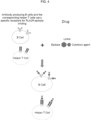
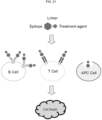
- the present disclosure is related to an EDC comprising a peptide epitope that targets antigen-specific BCRs expressed on memory B cells, TCRs expressed on helper T cells, or both ( FIG. 21 ).
- the EDC may also target APCs that phagocytose and/or endocytose the EDC ( FIG. 21 ).
- the platform is based on an epitope(s) that are specifically recognized by immune cells, the platform according to the present disclosure can be adapted for any autoimmune disease.
- FIG. 21 shows a schematic of a drug development platform for autoimmune disease treatment.
- FIG. 21 shows a schematic of a drug development platform for autoimmune disease treatment.
- FIG. 21 shows design of EDC.
- FIG. 21 shows EDC binds to the antigen-specific receptors on the surface of the B cells and T cells. EDC can be internalized into the cells via BCR-mediated endocytosis.
- cleavable linkers include hydrazone linkers, disulfide-based linkers and peptide linkers.
- Disulfide-based linkers may be selectively broken down inside a cell.
- Disulfide-based linkers may be selectively broken down inside a cell because of higher intracellular concentration of thiols.
- Peptide linkers may be selectively broken down inside a cell by intracellular enzymes.
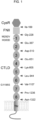
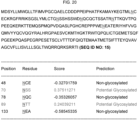
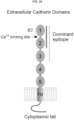
- the size, bulk, conformational complexity of the epitope can be reduced by substituting potential glycosylation sites (e.g., at Asn70 and Asn89 in FIG. 20 ) with Gln or any other non-glycosylated amino acids that will not affect protein structure and/or conformation for autoantibody recognition.
- potential glycosylation sites e.g., at Asn70 and Asn89 in FIG. 20
- Gln any other non-glycosylated amino acids that will not affect protein structure and/or conformation for autoantibody recognition.
- Residues that are potentially glycosylated can be substituted using, for example, site directed mutagenesis. Residues that are potentially glycosylated can be substituted using, for example, site directed mutagenesis when using an expression vector to express an epitope.
- An epitope can be directly synthesized. When an epitope is directly synthesized, the peptide and/or protein synthesis can be customized such that the potentially glycosylated residues are replaced with non-glycosylated residues that will not affect protein structure and/or conformation for autoantibody recognition.
- epitopes may be encoded by nucleic acids.
- the epitope-encoding nucleic acid may be a cDNA or an mRNA.
- the epitope-encoding nucleic acid can be comprised within a protein expression vector.
- the protein expression vector may be a DNA vector or an RNA vector.
- the protein expression vector may be an adeno-associated viral (AAV) vector.
- the protein expression vector may be a mammalian cell expression vector.
- the protein expression vector may be an insect cell expression vector.
- the epitope-encoding nucleic acid comprised within a protein expression vector may be operably linked to regulatory elements to regulate the expression of the epitope.
- Regulatory elements can include promoters, terminators, enhancers, etc.
- "operably linked” refers to a regulatory element positively or negatively controlling the expression of a protein from a nucleic acid.
- a variant of an epitope can have about 70% to about 99.99% identity to the epitope.
- a variant of an epitope can have about 65, 70, 57, 80, 85, 90, 95, 96, 97, 98, 99, 99.25, 99.5, 99.75, 99.99% identity to the epitope, or a value with a range defined by any two of the aforementioned values.
- the protein expression vector may introduce a tag on the encoded epitope.
- One or more may tag enable purification of the epitope.
- the tag may be on the N-terminal end.
- the tag may be on the C-terminal end.
- the tag may be on both N- and C-terminal ends.
- Non-limiting examples of tags include chitin binding protein, maltose binding protein, glutathione-S-transferase, thioredoxin, poly(NANP), FLAG, V5, Myc, HA, NE, biotin, biotin carboxyl carrier protein, GFP, Halo, Nus, Fc, AviTag, calmodulin, poly-Glu, E, S, SBP, Softag 1, Softag 3, Strep, TC, VSV, Ty and Xpress.
- the tag is a poly-histidine (poly-His) tag.
- the protein expression vector additionally may introduce a cleavage site between the epitope and the tag to allow for separation of the epitope from the tag.
- the cleavage site may be a proteolytic site.
- the cleavage site may be a non-proteolytic site.
- Non-limiting examples of proteolytic sites include sites for TEV protease, Factor Xa or enteropeptidase.
- the proteolytic site may be a thrombin cleavage site.
- the "drug" in the EDC can also be referred to as a "treatment agent" ( FIG. 21 ; top panel) or “agent.”
- a drug includes agents that are specifically used for the prevention and/or treatment of one or more diseases, which is not claimed by the present invention.
- the drug can be cytostatic, cytotoxic, immunosuppressive, or any agent that can be used for treatment purpose.
- binding of EDC to TCR may result in the induction of immunotolerance by the drug or internalization of EDC into APCs may result in APC death ( FIG. 21 ; bottom panel). Immune tolerance may occur by one or more known mechanisms.
- the drug may prevent release of one or more cytokines by the autoimmune B cells, T cells or both, or inhibits cytokine signaling in the autoimmune B cells, T cells or both.
- Non-limiting examples include clonal deletion, receptor editing, follicular exclusion, and anergy.
- the drug may inhibit antigen presentation by autoimmune B cells to T cells.
- the drug may inhibit one or more signaling pathways.
- Non-limiting examples include of IL-6 receptor signaling, NF- ⁇ B signaling, Toll-like receptor signaling, B cell receptor signaling, T cell receptor signaling, and inflammasome signaling.
- One or more targets in the one or more signaling pathways may be targeted by the drug.
- Non-limiting examples include COX, CCR, histamine receptor, interleukin receptor, gp120/CD4, CXCR, PD-1/PD-L1, MALT, LTR, ROS, NOS, TLR, NADPH-oxidase, and Nrf2.
- Non-limiting examples of drugs include Duocarmycin A, Duocarmycin B1, Duocarmycin B2, Duocarmycin C1, Duocarmycin C2, Duocarmycin D, Duocarmycin SA, CC-1065, adozelesin, bizelesin, carzelesin, Cyclophosphamide, Rapamycin, methotrexate, 5-fluorouracil, Doxorubicin, cyclophosphamide, Epirubicin, cisplatin, 5-fluorouracil or capecitabine, Monomethyl auristatin E (MMAE), anthracyclines, oxaliplatin, or bortezomib.
- MMAE Monomethyl auristatin E
- the EDC can be based on an immunotoxin, which is an antibody-based targeting domain fused to a bacterial toxin for cell killing ( Alewine, C., et al, The Oncologist, Vol. 20, pp. 176-185, 2015 ).
- Immunotoxin-based EDCs can kill cells by inhibiting protein synthesis and can target both dividing and non-dividing cells.
- a drug can be a detection reagent, for example, fluorophores.
- Non-limiting examples include FITC, Hydroxycoumarin, Aminocoumarin, Methoxycoumarin, Cascade Blue, Pacific Blue, Pacific Orange, Lucifer yellow, NBD, NBD-X, R-Phycoerythrin (PE), PE-Cy5 conjugates, PE-Cy7 conjugates, Red 613 (PE-Texas Red), Peridinin chlorophyll protein (PerCP), TruRed (PerCP-Cy5.5 conjugate), FluorX, Fluorescein, BODIPY-FL, Cy2, Cy3, Cy3B, Cy3.5, Cy5, Cy5.5, Cy7, TRITC, X-Rhodamine, Lissamine Rhodamine B, Texas Red, Allophycocyanin (APC), and APC-Cy7 conjugates.
- FACS and/or microscopy-based assays can be designed for screening and identifying small molecules that can be used as the drug in the EDC.
- a FACS-based assay (based on Example 1) can be used to screen one or more commercially available libraries of small molecules and identify small molecules that can be used as the drug in the EDC.
- a microscopy-based assay (based on Example 2) can be used to screen one or more commercially available libraries of small molecules and identify small molecules that can be used as the drug in the EDC.
- Cell death may occur by one or more of programmed cell death, apoptosis, macroautophagy, autophagy, necrosis, necroptosis, mitotic catastrophe, activation-induced cell death, anoikis, cornification, excitotoxicity, ferroptosis, Wallerian degeneration, and immunogenic apoptosis.
- More than one EDC can be used in combination. More than one EDC can be used, in which case a potentiated effect on autoimmune cells is observed.
- the potentiation can be additive or synergistic. A synergistic effect is greater than an additive effect. An additive effect is observed when the potentiation is equal to the sum of the individual effects of the different EDCs. A synergistic effect is observed when the potentiation is greater than the sum of the individual effects of the different EDCs. Synergistic effect, additive effect or both can be occur human patients, non-human patients, non-patient human volunteers, in vivo models, ex vivo models, in vitro models, etc. Potentiation can range from about ⁇ 1 to about 100 fold.
- EDCs specifically target only the disease-causing autoimmune cells (e.g., antigen-specific B and T cells) without affecting the function of the normal immune cells.
- the platform according to the present disclosure only targets the specific repertoire of the disease-causing autoimmune cells with no/minimal side effects or without significant side effects. Thus, disease progression and relapses are mitigated resulting in long-lasting protective effects.
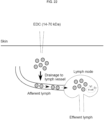
- EDC in the size range of about 14 kDa to about 70 kDa drains directly to the afferent lymph ( FIG. 22 ).
- the route of administration of EDC in the size range of about 14 kDa to about 70 kDa may be subcutaneous, intradermal or both to deliver them directly to the afferent lymph.
- EDC in the size range of about 14 kDa to about 70 kDa drains directly to the afferent lymph, and encounters and binds to memory B cells in the lymph nodes directly without the help of antigen presenting cells ( FIG. 22 ). Therefore, the route of administration of EDC in the size range of about 14 kDa to about 70 kDa may be subcutaneous, intradermal or both to deliver them directly to the afferent lymph and deliver them to directly to memory B cells in the lymph nodes without the help of antigen presenting cells.
- EDCs within a molecular weight range of about 14 kDa to about 70 kDa can be quickly drained to the lymph nodes to target the antigen-specific memory B cells (and T cells) when delivered via the subcutaneous and/or intradermal routes.
- EDCs can be delivered to patients via all possible delivery routes depending on need.
- the levels of circulating autoantibodies are high, for example, patients with active autoimmune disease.
- autoantibodies are present in the patient's circulation and the patient is experiencing the effects of the disease.
- the circulating autoantibodies can neutralize the effects of an EDC, especially when administered intravenously, by binding to the epitope in the EDC.
- the autoantibodies may form immune complexes with EDCs resulting in unwanted side-effects.
- the preferred route of administration is one or more of subcutaneous, intradermal, or oral.
- EDC electrospray mediated neoplasmic mediated neoplasmic mediated neoplasmic mediated neoplasmic mediated neoplasmic mediated neoplasmic mediated neoplasmic mediated neoplasmic mediated neoplasmic mediated neoplasmic mediated neoplasmic mediated neoplasmic mediated neoplasmic mediated a combination of routes (e.g., Pemphigus vulgaris).
- the EDC is delivered after the titers of autoantibodies in patient circulation are decreased.
- the EDC can be delivered in a combined approach of intradermal, subcutaneous and intravenous routes.
- a patient's active disease may be managed via alternative therapies until circulating autoantibody levels naturally reduce based on antibody half-life due to recycling, degradation, or both, following which the EDC is administered.
- the EDC may be administered via a one or more of intradermal, subcutaneous, oral, or intravenous routes.
- EDC can be delivered to patients who were administered alternative therapies and are in remission. In such situations, EDC can be administered to eliminate any lingering populations of disease-causing memory B cells and T cells and thus prevent potential future disease relapses.
- the drug development platform according to the present disclosure can be used to prevent and/or effectively treat any T cell and B cell-mediated autoimmune disease.
- the drug development platform according to the present disclosure can be used to diagnose, prevent and/or effectively treat any antigen-specific autoimmune disease, including but not limited to, Addison's disease, Agammaglobulinemia, Alopecia areata, Amyloidosis, Ankylosing spondylitis, Anti-GBM/Anti-TBM nephritis, Antiphospholipid syndrome, Autoimmune angioedema, Autoimmune dysautonomia, Autoimmune encephalomyelitis, Autoimmune hepatitis, Autoimmune inner ear disease (AIED), Autoimmune myocarditis, Autoimmune pancreatitis, Autoimmune retinopathy, Autoimmune urticaria, Axonal & neuronal neuropathy (AMAN), Baló disease, Behcet's disease, Benign mucosal pemph
- Diagnosis, prevention and/or treatment of other immune diseases are contemplated including those in which the function of one or more immune cells is skewed resulting in immune system disease that is not necessarily an autoimmune disease.
- the drug development platform herein can also be used to prevent, and/or effectively treat diseases that are not autoimmune diseases.
- Human autoimmune diseases are targeted by the platform.
- Autoimmune diseases of non-humans may be targeted.
- Non-limiting examples of non-humans include dogs, cats, rabbit, mouse, guinea pig, monkey, cow, sheep goat, and zebra.
- Immune system diseases that are non-autoimmune diseases in human and non-humans may also be targeted by the platform of the present disclosure.
- the patient may heve had an autoimmune disease for about 1 month to about 5 years.
- the patient may heve had an autoimmune disease for about 1, 2, 3 or 4 weeks, or within a range defined by any two of the aforementioned values, or 2, 3, 4, 5, 6, 7, 8, 9, 10, 11, 12 months, or within a range defined by any two of the aforementioned values, or 2, 3, 4, 5, 6, 7, 8, 9 or 10 years, or within a range defined by any two of the aforementioned values.
- the patient may have previously not received any treatment for an autoimmune disease.
- the patient may have previously received treatment (either immunosuppressive drugs or steroid hormones or both) for an autoimmune disease.
- the patient may have previously been successfully treated with either immunosuppressive drugs or steroid hormones or both for an autoimmune disease.
- the patient may have previously been successfully treated with either immunosuppressive drugs or steroid hormones or both for an autoimmune disease, however, the autoimmune disease has relapsed.
- the patient may have previously been unsuccessfully treated with either immunosuppressive drugs or steroid hormones or both for an autoimmune disease.
- the age of the patient may range from about 20 years to about 95 years.
- the age of the patient may range from about 5 years to about 70 years. the age of the patient is less than 5 years.
- the age of the patient may be more than 70 years.
- the age of the patient may be about 15, 20, 25, 30, 35, 40, 45, 50, 55, 60, 65, 70, 75, 80, 85, 90 or 95 years, or within a range defined by any two of the aforementioned values.
- the patient may be a male.
- the patient may be a female.
- the EDC may be provided in the form of a composition.
- the EDC composition can be formulated for delivery via one or more routes of administration herein.
- Compositions can be without limitations aqueous and non-aqueous, isotonic sterile injection solutions, which can contain antioxidants, buffers, bacteriostats, and solutes that render the formulation isotonic with the blood of the intended recipient, and aqueous and non-aqueous sterile suspensions that can include suspending agents, solubilizers, thickening agents, stabilizers, and preservatives.
- compositions can be presented in unit-dose or multi-dose sealed containers, such as ampules and vials. Injection solutions and suspensions can be prepared from one or more of sterile powders, granules, capsules and tablets. Other non-limiting compositions such as for aerosol- or nebulizer-based and delivery skin patch-based delivery are also contemplated. The efficacy of the compositions may be tested in non-patient human volunteers, in vivo models, ex vivo models, in vitro models, before being administered to human patients, non-human patients, or both.
- An EDC may be administered daily, weekly, biweekly or monthly.
- the EDC may be administered 1, 2, 3, 4, 5, 6, 7 or 8 times a day.
- the duration of treatment with an EDC may range from about 2 weeks to about 4 months. Depending on the severity of the disease, the duration of treatment with an EDC may be about 1, 2, 3, 4, 5, 6, 7, 8, 9, 10, 11, 12, 13, 14, 15, 16, 17, 18, 19, 20, 21, 22, 23 or 24 weeks, or within a range defined by any two of the aforementioned values.
- the treatment efficacy of treatment may range from about 80% to about 95% as determined by the level of circulating autoantibodies and/or the number of epitope-specific immune cells (e.g., B and T cells) in the patient.
- the treatment efficacy may be about 70, 75, 80, 85, 90, 91, 92, 93, 94, 95, 96, 97, 98, 99 or 100%, or within a range defined by any two of the aforementioned values as determined by the level of circulating autoantibodies and/or the number of epitope-specific immune cells (e.g., B and T cells) in the patient.
- the volume of the EDC composition may range from about 0.1 ml to about 10 ml.
- the volume of the EDC composition may range from about 0.05 ml to about 100 ml.
- the volume the EDC composition may be about 0.005, 0.0075, 0.01, 0.025, 0.05, 0.075, 0.1, 0.2, 0.3, 0.4, 0.5, 0.6, 0.7, 0.8, 0.9, 1, 2, 3, 4, 5, 6, 7, 8, 9, 10, 11, 12, 13, 14, 15, 20, 50, 100, or 150 ml, or within a range defined by any two of the aforementioned values.
- effective treatment of an autoimmune disease is achieved at much lower dose of the drug in the EDC as compared to when the drug in the EDC is administered alone.
- the duration of treatment required with an EDC is much shorter as compared to when the drug in the EDC is administered alone.
- the starting dose of EDC is about 1/10 th of the dose at which the drug in the EDC is used for solid tumor treatment.
- the starting dose of the drug in the form of EDC can be much lower than what the dose for the drug would be on its own (e.g., for tumors/caners in relatively inaccessible locations in the body).
- the starting dose of the drug in the form of EDC can be about 1/5 th , 1/10 th , 1/15 th , 1/20 th , 1/25 th , 1/30 th , 1/35 th , 1/40 th , 1/45 th , 1/50 th , 1/55 th , 1/60 th , 1/65 th , 1/70 th , 1/75 th , 1/80 th , 1/85 th , 1/90 th , 1/95 th , 1/100 th , 1/200 th , 1/250 th , 1/500 th , 1/1000 th , 1/2000 th or 1/5000 th , or within a range defined by any two of the aforementioned values, of the dose at which the drug in the EDC would be is used for treatment of the disease.
- the one or more EDC-based treatment options provided herein may be rapidly effective, require a much lower dose and cause minimal adverse effects as compared to treatment with immunosuppressive drugs and/or steroids.
- a unit dose of EDC can range from about 0.001 mg/kg to about 5 mg/kg. In some embodiments, a unit dose of EDC can range from about 0.01 mg/kg to about 50 mg/kg.
- a unit dose of EDC for targeting B cells can range from about 0.001 mg/kg to about 50 mg/kg.
- a unit dose of EDC for targeting T cells can range from about 0.001 mg/kg to about 50 mg/kg.
- a unit dose of EDC can is about 0.001, 0.01, 0.1, 0.5, 1, 2.5, 5, 7.5, 10, 15, 20, 25, 30, 35, 40, 45, or 50 mg/kg, or a value within a range defined by any two of the aforementioned values.
- the EDC may be administered as a single daily dose. _The EDC may be administered as more than one dose per day. The number of doses per day may range from one to six. the number of doses per day may be 1, 2, 3, 4, 5, 6, 7, or 8.
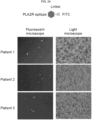
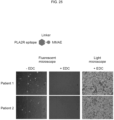
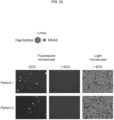
- Preincubation with MMAE alone resulted in a number of B cells being stained by Dsg1 and Dsg3-epitope-FITC ( FIG. 30 ).
- preincubation with Dsg1 and Dsg3-epitope-MMAE showed no staining with Dsg1 and Dsg3-epitope-FITC indicating the specific targeting and eliminating of the Dsg1 and Dsg3-epitope specific memory B cells by Dsg1 and Dsg3-epitope-MMAE ( FIG. 30 ).
- Light microscope images of Dsg 1 and Dsg3-epitope-MMAE treated B cells also indicated that EDC produced little effect on most of the B cells ( FIG. 30 ).
- polypeptide includes proteins, fragments of proteins, and peptides, whether isolated from natural sources, produced by recombinant techniques or chemically synthesized. Polypeptides typically comprise at least about 6 amino acids. Shorter polypeptides, e.g., those less than about 50 amino acids in length, are typically referred to as "peptides".
- a variant contains conservative substitutions.
- a "conservative substitution” is one in which an amino acid is substituted for another amino acid that has similar properties, such that one skilled in the art of peptide chemistry would expect the secondary structure and hydropathic nature of the polypeptide to be substantially unchanged.
- Amino acid substitutions may generally be made on the basis of similarity in polarity, charge, solubility, hydrophobicity, hydrophilicity and/or the amphipathic nature of the residues.
Landscapes
- Health & Medical Sciences (AREA)
- Life Sciences & Earth Sciences (AREA)
- Engineering & Computer Science (AREA)
- Chemical & Material Sciences (AREA)
- Immunology (AREA)
- General Health & Medical Sciences (AREA)
- Medicinal Chemistry (AREA)
- Hematology (AREA)
- Urology & Nephrology (AREA)
- Bioinformatics & Cheminformatics (AREA)
- Molecular Biology (AREA)
- Veterinary Medicine (AREA)
- Animal Behavior & Ethology (AREA)
- Public Health (AREA)
- Pharmacology & Pharmacy (AREA)
- Proteomics, Peptides & Aminoacids (AREA)
- Biomedical Technology (AREA)
- Epidemiology (AREA)
- Cell Biology (AREA)
- Analytical Chemistry (AREA)
- Food Science & Technology (AREA)
- Pathology (AREA)
- Biotechnology (AREA)
- General Physics & Mathematics (AREA)
- Biochemistry (AREA)
- Physics & Mathematics (AREA)
- Microbiology (AREA)
- Gastroenterology & Hepatology (AREA)
- Organic Chemistry (AREA)
- Nuclear Medicine, Radiotherapy & Molecular Imaging (AREA)
- General Chemical & Material Sciences (AREA)
- Chemical Kinetics & Catalysis (AREA)
- Rheumatology (AREA)
- Rehabilitation Therapy (AREA)
- Zoology (AREA)
- Medicinal Preparation (AREA)
- Peptides Or Proteins (AREA)
- Medicines That Contain Protein Lipid Enzymes And Other Medicines (AREA)
- Pharmaceuticals Containing Other Organic And Inorganic Compounds (AREA)
- Acyclic And Carbocyclic Compounds In Medicinal Compositions (AREA)
Priority Applications (1)
| Application Number | Priority Date | Filing Date | Title |
|---|---|---|---|
| EP25158624.4A EP4644899A3 (en) | 2016-08-12 | 2017-08-11 | Diagnosis, prevention, and/or treatment of autoimmune diseases |
Applications Claiming Priority (2)
| Application Number | Priority Date | Filing Date | Title |
|---|---|---|---|
| US201662374382P | 2016-08-12 | 2016-08-12 | |
| PCT/US2017/046626 WO2018031947A1 (en) | 2016-08-12 | 2017-08-11 | Diagnosis, prevention, and/or treatment of autoimmune diseases |
Related Child Applications (1)
| Application Number | Title | Priority Date | Filing Date |
|---|---|---|---|
| EP25158624.4A Division EP4644899A3 (en) | 2016-08-12 | 2017-08-11 | Diagnosis, prevention, and/or treatment of autoimmune diseases |
Publications (4)
| Publication Number | Publication Date |
|---|---|
| EP3497452A1 EP3497452A1 (en) | 2019-06-19 |
| EP3497452A4 EP3497452A4 (en) | 2020-01-22 |
| EP3497452B1 true EP3497452B1 (en) | 2025-03-05 |
| EP3497452C0 EP3497452C0 (en) | 2025-03-05 |
Family
ID=61163324
Family Applications (2)
| Application Number | Title | Priority Date | Filing Date |
|---|---|---|---|
| EP17840379.6A Active EP3497452B1 (en) | 2016-08-12 | 2017-08-11 | Diagnosis, prevention, and/or treatment of autoimmune diseases |
| EP25158624.4A Pending EP4644899A3 (en) | 2016-08-12 | 2017-08-11 | Diagnosis, prevention, and/or treatment of autoimmune diseases |
Family Applications After (1)
| Application Number | Title | Priority Date | Filing Date |
|---|---|---|---|
| EP25158624.4A Pending EP4644899A3 (en) | 2016-08-12 | 2017-08-11 | Diagnosis, prevention, and/or treatment of autoimmune diseases |
Country Status (6)
| Country | Link |
|---|---|
| US (3) | US11266717B2 (enExample) |
| EP (2) | EP3497452B1 (enExample) |
| JP (2) | JP7303107B2 (enExample) |
| CN (1) | CN109891245B (enExample) |
| ES (1) | ES3014985T3 (enExample) |
| WO (1) | WO2018031947A1 (enExample) |
Families Citing this family (17)
| Publication number | Priority date | Publication date | Assignee | Title |
|---|---|---|---|---|
| EP3497452B1 (en) * | 2016-08-12 | 2025-03-05 | Immunowork, LLC | Diagnosis, prevention, and/or treatment of autoimmune diseases |
| EP3813885A4 (en) * | 2018-05-02 | 2022-01-12 | The Trustees of The University of Pennsylvania | Compositions and methods of phospholipase a2 receptor chimeric autoantibody receptor t cells |
| EP3837547A4 (en) | 2018-08-15 | 2022-03-02 | Mayo Foundation for Medical Education and Research | METHODS AND MATERIALS FOR IDENTIFICATION AND TREATMENT OF MEMBRANE NEPHROPATHY |
| EP4010704A1 (en) | 2019-08-06 | 2022-06-15 | Euroimmun Medizinische Labordiagnostika AG | An improved autoantibody detection assay |
| WO2021055767A1 (en) | 2019-09-19 | 2021-03-25 | Mayo Foundation For Medical Education And Research | Methods and materials for identifying and treating membranous nephropathy |
| US12590165B2 (en) | 2020-03-06 | 2026-03-31 | Mayo Foundation For Medical Education And Research | Methods and materials for identifying and treating membranous nephropathy based on elevated Semaphorin 3B |
| CN112111015B (zh) * | 2020-09-24 | 2021-12-07 | 苏州携创生物技术有限公司 | PLA2R、C1q、THSD7A融合蛋白及其构建方法、应用 |
| CN112557670A (zh) * | 2020-12-07 | 2021-03-26 | 东南大学 | 一种基于尿液外泌体pla2r检测imn的方法、试剂盒及其应用 |
| BR102021022687A2 (pt) | 2020-12-11 | 2022-06-28 | Euroimmun Medizinische Labordiagnostika Ag | Método e reagentes para diagnosticar nefropatia membranosa |
| EP4380963A4 (en) * | 2021-08-05 | 2025-06-04 | The Trustees of The University of Pennsylvania | Compositions and methods of chimeric autoantibody receptor cells expressing extended phospholipase a2 receptor fragments |
| CN114588881B (zh) * | 2022-03-07 | 2023-07-18 | 大连理工大学 | 免疫吸附剂及其制备方法 |
| US20250230261A1 (en) * | 2022-03-23 | 2025-07-17 | Bodhi Bio Llc | Compositions and methods for antigen-specific therapy |
| CN116082517B (zh) * | 2022-05-26 | 2025-08-22 | 成都地奥制药集团有限公司 | 融合蛋白及其用途 |
| WO2024147113A1 (en) * | 2023-01-05 | 2024-07-11 | Glycoera Ag | Glycoengineered polypeptides targeting anti-podocyte autoantibodies and uses thereof |
| CN115951047A (zh) * | 2023-02-10 | 2023-04-11 | 大连大学 | 自身免疫性水疱病PBMCs直接免疫荧光诊断试剂盒 |
| CN121443630A (zh) * | 2023-05-08 | 2026-01-30 | 卡努佩免疫治疗公司 | 用于治疗膜性肾病的ig样融合蛋白 |
| US20250382348A1 (en) * | 2024-06-13 | 2025-12-18 | Astero BioPharma LLC | Approaches for the selective depletion of pla2r-specific antibodies |
Family Cites Families (14)
| Publication number | Priority date | Publication date | Assignee | Title |
|---|---|---|---|---|
| ES2051989T3 (es) | 1988-10-21 | 1994-07-01 | Akzo Nv | Un procedimiento para la manufactura de una inmunotoxina para el tratamiento o profilaxis de una enfermedad autoinmune. |
| JPH07278196A (ja) * | 1994-04-05 | 1995-10-24 | Shionogi & Co Ltd | ヒトi型ホスホリパーゼa2レセプター |
| JP2004505029A (ja) | 2000-08-01 | 2004-02-19 | ザ・ユニバーシティ・オブ・カンザス | 細胞内に取り込まれるペプチド−薬剤複合体 |
| US9726673B2 (en) | 2005-11-23 | 2017-08-08 | Genentech, Inc. | Methods and compositions related to B cell assays |
| US8491840B2 (en) * | 2008-07-14 | 2013-07-23 | Samsung Electronics Co., Ltd. | Microfluidic device, sample analyzing method using the same, and dilution ratio measuring method |
| ES2535640T3 (es) * | 2008-07-18 | 2015-05-13 | Boston Medical Center Corporation | Diagnósticos para nefropatía membranosa |
| US9156854B2 (en) | 2011-04-18 | 2015-10-13 | Immunogen, Inc. | Maytansinoid derivatives with sulfoxide linker |
| FI3467509T3 (fi) * | 2011-05-04 | 2026-02-11 | Cellular Tech Ltd | Cns-antigeenispesifisiä b-solu-, t-solu- ja vasta-ainemäärityksiä ja niiden käyttötapoja multippeliskleroosin diagnosoinnissa ja hoidossa |
| CN104685056A (zh) | 2012-06-21 | 2015-06-03 | 米拉根医疗股份有限公司 | 包含锁核酸基序的基于寡核苷酸的抑制剂 |
| WO2015004603A1 (en) * | 2013-07-09 | 2015-01-15 | Institut National De La Sante Et De La Recherche Medicale | Anti-pla2r antibody and uses thereof |
| GB201410108D0 (en) | 2014-06-06 | 2014-07-23 | Univ Manchester | Peptides, and methods and apparatus utilising same |
| CN104849452A (zh) * | 2015-05-14 | 2015-08-19 | 深圳市伯劳特生物制品有限公司 | 一种pla2r抗体定量检测试纸条及制作、检测方法 |
| CN105510575A (zh) | 2015-12-04 | 2016-04-20 | 深圳市伯劳特生物制品有限公司 | 抗磷脂酶A2受体抗体IgG试剂盒及检测方法 |
| EP3497452B1 (en) * | 2016-08-12 | 2025-03-05 | Immunowork, LLC | Diagnosis, prevention, and/or treatment of autoimmune diseases |
-
2017
- 2017-08-11 EP EP17840379.6A patent/EP3497452B1/en active Active
- 2017-08-11 CN CN201780062647.9A patent/CN109891245B/zh active Active
- 2017-08-11 US US16/324,870 patent/US11266717B2/en active Active
- 2017-08-11 ES ES17840379T patent/ES3014985T3/es active Active
- 2017-08-11 EP EP25158624.4A patent/EP4644899A3/en active Pending
- 2017-08-11 JP JP2019529463A patent/JP7303107B2/ja active Active
- 2017-08-11 WO PCT/US2017/046626 patent/WO2018031947A1/en not_active Ceased
-
2022
- 2022-03-07 US US17/688,811 patent/US20220193188A1/en active Pending
- 2022-05-06 JP JP2022076451A patent/JP7411718B2/ja active Active
-
2024
- 2024-04-10 US US18/631,559 patent/US20240252590A1/en active Pending
Also Published As
| Publication number | Publication date |
|---|---|
| JP7411718B2 (ja) | 2024-01-11 |
| EP4644899A3 (en) | 2026-04-08 |
| CN109891245A (zh) | 2019-06-14 |
| JP7303107B2 (ja) | 2023-07-04 |
| EP3497452C0 (en) | 2025-03-05 |
| US11266717B2 (en) | 2022-03-08 |
| US20220193188A1 (en) | 2022-06-23 |
| US20240252590A1 (en) | 2024-08-01 |
| ES3014985T3 (en) | 2025-04-28 |
| EP3497452A4 (en) | 2020-01-22 |
| JP2019524884A (ja) | 2019-09-05 |
| EP3497452A1 (en) | 2019-06-19 |
| CN109891245B (zh) | 2023-05-05 |
| EP4644899A2 (en) | 2025-11-05 |
| US20190183969A1 (en) | 2019-06-20 |
| JP2022097596A (ja) | 2022-06-30 |
| WO2018031947A1 (en) | 2018-02-15 |
Similar Documents
| Publication | Publication Date | Title |
|---|---|---|
| US20240252590A1 (en) | Method of identifying and treating membranous nephropathy | |
| JP7289346B2 (ja) | 葉酸受容体1の検出のための診断分析およびキット | |
| JP7663513B2 (ja) | 調節された合成遺伝子発現システム | |
| KR102581747B1 (ko) | 표적 세포 표면 편집을 위한 접합체 | |
| ES2745014T3 (es) | Proteína | |
| JP2020532509A (ja) | 活性化可能抗cd166抗体およびその使用方法 | |
| US20200222549A1 (en) | Renal-homing peptide conjugates and methods of use thereof | |
| JP2015516813A5 (enExample) | ||
| JP2018524282A (ja) | Sirpポリペプチド組成物および使用の方法 | |
| US20210347824A1 (en) | Antigenic peptides and uses thereof for diagnosing and treating autism | |
| AU2005249553B2 (en) | Imaging and therapeutic agents targeting proteins expressed on endothelial cell surface | |
| CN101282989A (zh) | 用于诊断风湿性疾病的方法 | |
| CN118119405A (zh) | B7-h3靶向融合蛋白及其使用方法 | |
| CA2666009A1 (en) | Prognostic method | |
| WO2000024777A1 (en) | Antigenic epitopes with lym-1 reactivity and uses thereof | |
| US12516096B2 (en) | Composition and use of humoral immune suppressor antagonists for the treatment of humoral immune suppressed diseases | |
| Gburek et al. | Hemoglobin-a novel ligand of hepatocyte ectopic F1-ATPase | |
| US20240285785A1 (en) | Targeting sortilin | |
| EP1735432A1 (en) | Cancerous disease modifying antibodies | |
| CN121038818A (zh) | 用于治疗癌症的b7-h4治疗性结合分子 | |
| NZ550044A (en) | Cancerous disease modifying antibodies | |
| BR112015005549B1 (pt) | Anticorpo anti-polipeptídeo, polinucleotídeo, vetor, microorganismo trasgênico, composição, método in vitro para diagnóstico e kit |
Legal Events
| Date | Code | Title | Description |
|---|---|---|---|
| STAA | Information on the status of an ep patent application or granted ep patent |
Free format text: STATUS: THE INTERNATIONAL PUBLICATION HAS BEEN MADE |
|
| PUAI | Public reference made under article 153(3) epc to a published international application that has entered the european phase |
Free format text: ORIGINAL CODE: 0009012 |
|
| STAA | Information on the status of an ep patent application or granted ep patent |
Free format text: STATUS: REQUEST FOR EXAMINATION WAS MADE |
|
| 17P | Request for examination filed |
Effective date: 20190213 |
|
| AK | Designated contracting states |
Kind code of ref document: A1 Designated state(s): AL AT BE BG CH CY CZ DE DK EE ES FI FR GB GR HR HU IE IS IT LI LT LU LV MC MK MT NL NO PL PT RO RS SE SI SK SM TR |
|
| AX | Request for extension of the european patent |
Extension state: BA ME |
|
| DAV | Request for validation of the european patent (deleted) | ||
| DAX | Request for extension of the european patent (deleted) | ||
| A4 | Supplementary search report drawn up and despatched |
Effective date: 20200107 |
|
| RIC1 | Information provided on ipc code assigned before grant |
Ipc: G01N 33/68 20060101AFI20191219BHEP Ipc: G01N 33/53 20060101ALI20191219BHEP |
|
| STAA | Information on the status of an ep patent application or granted ep patent |
Free format text: STATUS: EXAMINATION IS IN PROGRESS |
|
| 17Q | First examination report despatched |
Effective date: 20211223 |
|
| GRAP | Despatch of communication of intention to grant a patent |
Free format text: ORIGINAL CODE: EPIDOSNIGR1 |
|
| STAA | Information on the status of an ep patent application or granted ep patent |
Free format text: STATUS: GRANT OF PATENT IS INTENDED |
|
| INTG | Intention to grant announced |
Effective date: 20241015 |
|
| GRAS | Grant fee paid |
Free format text: ORIGINAL CODE: EPIDOSNIGR3 |
|
| GRAA | (expected) grant |
Free format text: ORIGINAL CODE: 0009210 |
|
| STAA | Information on the status of an ep patent application or granted ep patent |
Free format text: STATUS: THE PATENT HAS BEEN GRANTED |
|
| AK | Designated contracting states |
Kind code of ref document: B1 Designated state(s): AL AT BE BG CH CY CZ DE DK EE ES FI FR GB GR HR HU IE IS IT LI LT LU LV MC MK MT NL NO PL PT RO RS SE SI SK SM TR |
|
| REG | Reference to a national code |
Ref country code: GB Ref legal event code: FG4D |
|
| REG | Reference to a national code |
Ref country code: CH Ref legal event code: EP |
|
| REG | Reference to a national code |
Ref country code: DE Ref legal event code: R096 Ref document number: 602017088198 Country of ref document: DE |
|
| REG | Reference to a national code |
Ref country code: IE Ref legal event code: FG4D |
|
| U01 | Request for unitary effect filed |
Effective date: 20250306 |
|
| U07 | Unitary effect registered |
Designated state(s): AT BE BG DE DK EE FI FR IT LT LU LV MT NL PT RO SE SI Effective date: 20250314 |
|
| PG25 | Lapsed in a contracting state [announced via postgrant information from national office to epo] |
Ref country code: RS Free format text: LAPSE BECAUSE OF FAILURE TO SUBMIT A TRANSLATION OF THE DESCRIPTION OR TO PAY THE FEE WITHIN THE PRESCRIBED TIME-LIMIT Effective date: 20250605 |
|
| PG25 | Lapsed in a contracting state [announced via postgrant information from national office to epo] |
Ref country code: NO Free format text: LAPSE BECAUSE OF FAILURE TO SUBMIT A TRANSLATION OF THE DESCRIPTION OR TO PAY THE FEE WITHIN THE PRESCRIBED TIME-LIMIT Effective date: 20250605 |
|
| PG25 | Lapsed in a contracting state [announced via postgrant information from national office to epo] |
Ref country code: HR Free format text: LAPSE BECAUSE OF FAILURE TO SUBMIT A TRANSLATION OF THE DESCRIPTION OR TO PAY THE FEE WITHIN THE PRESCRIBED TIME-LIMIT Effective date: 20250305 |
|
| PG25 | Lapsed in a contracting state [announced via postgrant information from national office to epo] |
Ref country code: GR Free format text: LAPSE BECAUSE OF FAILURE TO SUBMIT A TRANSLATION OF THE DESCRIPTION OR TO PAY THE FEE WITHIN THE PRESCRIBED TIME-LIMIT Effective date: 20250606 |
|
| U20 | Renewal fee for the european patent with unitary effect paid |
Year of fee payment: 9 Effective date: 20250708 |
|
| PG25 | Lapsed in a contracting state [announced via postgrant information from national office to epo] |
Ref country code: SM Free format text: LAPSE BECAUSE OF FAILURE TO SUBMIT A TRANSLATION OF THE DESCRIPTION OR TO PAY THE FEE WITHIN THE PRESCRIBED TIME-LIMIT Effective date: 20250305 |
|
| PG25 | Lapsed in a contracting state [announced via postgrant information from national office to epo] |
Ref country code: PL Free format text: LAPSE BECAUSE OF FAILURE TO SUBMIT A TRANSLATION OF THE DESCRIPTION OR TO PAY THE FEE WITHIN THE PRESCRIBED TIME-LIMIT Effective date: 20250305 |
|
| PGFP | Annual fee paid to national office [announced via postgrant information from national office to epo] |
Ref country code: GB Payment date: 20250707 Year of fee payment: 9 |
|
| PG25 | Lapsed in a contracting state [announced via postgrant information from national office to epo] |
Ref country code: CZ Free format text: LAPSE BECAUSE OF FAILURE TO SUBMIT A TRANSLATION OF THE DESCRIPTION OR TO PAY THE FEE WITHIN THE PRESCRIBED TIME-LIMIT Effective date: 20250305 |
|
| PG25 | Lapsed in a contracting state [announced via postgrant information from national office to epo] |
Ref country code: SK Free format text: LAPSE BECAUSE OF FAILURE TO SUBMIT A TRANSLATION OF THE DESCRIPTION OR TO PAY THE FEE WITHIN THE PRESCRIBED TIME-LIMIT Effective date: 20250305 |
|
| PG25 | Lapsed in a contracting state [announced via postgrant information from national office to epo] |
Ref country code: IS Free format text: LAPSE BECAUSE OF FAILURE TO SUBMIT A TRANSLATION OF THE DESCRIPTION OR TO PAY THE FEE WITHIN THE PRESCRIBED TIME-LIMIT Effective date: 20250705 |
|
| PLBE | No opposition filed within time limit |
Free format text: ORIGINAL CODE: 0009261 |
|
| STAA | Information on the status of an ep patent application or granted ep patent |
Free format text: STATUS: NO OPPOSITION FILED WITHIN TIME LIMIT |
|
| REG | Reference to a national code |
Ref country code: CH Ref legal event code: L10 Free format text: ST27 STATUS EVENT CODE: U-0-0-L10-L00 (AS PROVIDED BY THE NATIONAL OFFICE) Effective date: 20260114 |
|
| PGFP | Annual fee paid to national office [announced via postgrant information from national office to epo] |
Ref country code: ES Payment date: 20251010 Year of fee payment: 9 |
|
| 26N | No opposition filed |
Effective date: 20251208 |
|
| REG | Reference to a national code |
Ref country code: CH Ref legal event code: H13 Free format text: ST27 STATUS EVENT CODE: U-0-0-H10-H13 (AS PROVIDED BY THE NATIONAL OFFICE) Effective date: 20260324 |
|
| PG25 | Lapsed in a contracting state [announced via postgrant information from national office to epo] |
Ref country code: MC Free format text: LAPSE BECAUSE OF FAILURE TO SUBMIT A TRANSLATION OF THE DESCRIPTION OR TO PAY THE FEE WITHIN THE PRESCRIBED TIME-LIMIT Effective date: 20250305 |
|
| PG25 | Lapsed in a contracting state [announced via postgrant information from national office to epo] |
Ref country code: CH Free format text: LAPSE BECAUSE OF NON-PAYMENT OF DUE FEES Effective date: 20250831 |