EP3487618B1 - Katalysatoren zur hydrobehandlung und verfahren zur herstellung besagter katalysatoren - Google Patents
Katalysatoren zur hydrobehandlung und verfahren zur herstellung besagter katalysatoren Download PDFInfo
- Publication number
- EP3487618B1 EP3487618B1 EP17755249.4A EP17755249A EP3487618B1 EP 3487618 B1 EP3487618 B1 EP 3487618B1 EP 17755249 A EP17755249 A EP 17755249A EP 3487618 B1 EP3487618 B1 EP 3487618B1
- Authority
- EP
- European Patent Office
- Prior art keywords
- mixed oxide
- equal
- comprised
- formula
- mixture
- Prior art date
- Legal status (The legal status is an assumption and is not a legal conclusion. Google has not performed a legal analysis and makes no representation as to the accuracy of the status listed.)
- Active
Links
Images
Classifications
-
- B—PERFORMING OPERATIONS; TRANSPORTING
- B01—PHYSICAL OR CHEMICAL PROCESSES OR APPARATUS IN GENERAL
- B01J—CHEMICAL OR PHYSICAL PROCESSES, e.g. CATALYSIS OR COLLOID CHEMISTRY; THEIR RELEVANT APPARATUS
- B01J27/00—Catalysts comprising the elements or compounds of halogens, sulfur, selenium, tellurium, phosphorus or nitrogen; Catalysts comprising carbon compounds
- B01J27/02—Sulfur, selenium or tellurium; Compounds thereof
- B01J27/04—Sulfides
- B01J27/047—Sulfides with chromium, molybdenum, tungsten or polonium
- B01J27/051—Molybdenum
- B01J27/0515—Molybdenum with iron group metals or platinum group metals
-
- B—PERFORMING OPERATIONS; TRANSPORTING
- B01—PHYSICAL OR CHEMICAL PROCESSES OR APPARATUS IN GENERAL
- B01J—CHEMICAL OR PHYSICAL PROCESSES, e.g. CATALYSIS OR COLLOID CHEMISTRY; THEIR RELEVANT APPARATUS
- B01J23/00—Catalysts comprising metals or metal oxides or hydroxides, not provided for in group B01J21/00
- B01J23/70—Catalysts comprising metals or metal oxides or hydroxides, not provided for in group B01J21/00 of the iron group metals or copper
- B01J23/76—Catalysts comprising metals or metal oxides or hydroxides, not provided for in group B01J21/00 of the iron group metals or copper combined with metals, oxides or hydroxides provided for in groups B01J23/02 - B01J23/36
- B01J23/84—Catalysts comprising metals or metal oxides or hydroxides, not provided for in group B01J21/00 of the iron group metals or copper combined with metals, oxides or hydroxides provided for in groups B01J23/02 - B01J23/36 with arsenic, antimony, bismuth, vanadium, niobium, tantalum, polonium, chromium, molybdenum, tungsten, manganese, technetium or rhenium
- B01J23/85—Chromium, molybdenum or tungsten
- B01J23/888—Tungsten
-
- B—PERFORMING OPERATIONS; TRANSPORTING
- B01—PHYSICAL OR CHEMICAL PROCESSES OR APPARATUS IN GENERAL
- B01J—CHEMICAL OR PHYSICAL PROCESSES, e.g. CATALYSIS OR COLLOID CHEMISTRY; THEIR RELEVANT APPARATUS
- B01J23/00—Catalysts comprising metals or metal oxides or hydroxides, not provided for in group B01J21/00
- B01J23/70—Catalysts comprising metals or metal oxides or hydroxides, not provided for in group B01J21/00 of the iron group metals or copper
- B01J23/76—Catalysts comprising metals or metal oxides or hydroxides, not provided for in group B01J21/00 of the iron group metals or copper combined with metals, oxides or hydroxides provided for in groups B01J23/02 - B01J23/36
- B01J23/84—Catalysts comprising metals or metal oxides or hydroxides, not provided for in group B01J21/00 of the iron group metals or copper combined with metals, oxides or hydroxides provided for in groups B01J23/02 - B01J23/36 with arsenic, antimony, bismuth, vanadium, niobium, tantalum, polonium, chromium, molybdenum, tungsten, manganese, technetium or rhenium
- B01J23/85—Chromium, molybdenum or tungsten
- B01J23/888—Tungsten
- B01J23/8885—Tungsten containing also molybdenum
-
- B—PERFORMING OPERATIONS; TRANSPORTING
- B01—PHYSICAL OR CHEMICAL PROCESSES OR APPARATUS IN GENERAL
- B01J—CHEMICAL OR PHYSICAL PROCESSES, e.g. CATALYSIS OR COLLOID CHEMISTRY; THEIR RELEVANT APPARATUS
- B01J21/00—Catalysts comprising the elements, oxides, or hydroxides of magnesium, boron, aluminium, carbon, silicon, titanium, zirconium, or hafnium
- B01J21/02—Boron or aluminium; Oxides or hydroxides thereof
- B01J21/04—Alumina
-
- B—PERFORMING OPERATIONS; TRANSPORTING
- B01—PHYSICAL OR CHEMICAL PROCESSES OR APPARATUS IN GENERAL
- B01J—CHEMICAL OR PHYSICAL PROCESSES, e.g. CATALYSIS OR COLLOID CHEMISTRY; THEIR RELEVANT APPARATUS
- B01J21/00—Catalysts comprising the elements, oxides, or hydroxides of magnesium, boron, aluminium, carbon, silicon, titanium, zirconium, or hafnium
- B01J21/18—Carbon
-
- B—PERFORMING OPERATIONS; TRANSPORTING
- B01—PHYSICAL OR CHEMICAL PROCESSES OR APPARATUS IN GENERAL
- B01J—CHEMICAL OR PHYSICAL PROCESSES, e.g. CATALYSIS OR COLLOID CHEMISTRY; THEIR RELEVANT APPARATUS
- B01J23/00—Catalysts comprising metals or metal oxides or hydroxides, not provided for in group B01J21/00
- B01J23/002—Mixed oxides other than spinels, e.g. perovskite
-
- B—PERFORMING OPERATIONS; TRANSPORTING
- B01—PHYSICAL OR CHEMICAL PROCESSES OR APPARATUS IN GENERAL
- B01J—CHEMICAL OR PHYSICAL PROCESSES, e.g. CATALYSIS OR COLLOID CHEMISTRY; THEIR RELEVANT APPARATUS
- B01J27/00—Catalysts comprising the elements or compounds of halogens, sulfur, selenium, tellurium, phosphorus or nitrogen; Catalysts comprising carbon compounds
- B01J27/02—Sulfur, selenium or tellurium; Compounds thereof
- B01J27/04—Sulfides
- B01J27/047—Sulfides with chromium, molybdenum, tungsten or polonium
- B01J27/051—Molybdenum
-
- B—PERFORMING OPERATIONS; TRANSPORTING
- B01—PHYSICAL OR CHEMICAL PROCESSES OR APPARATUS IN GENERAL
- B01J—CHEMICAL OR PHYSICAL PROCESSES, e.g. CATALYSIS OR COLLOID CHEMISTRY; THEIR RELEVANT APPARATUS
- B01J35/00—Catalysts, in general, characterised by their form or physical properties
- B01J35/60—Catalysts, in general, characterised by their form or physical properties characterised by their surface properties or porosity
- B01J35/61—Surface area
- B01J35/615—100-500 m2/g
-
- B—PERFORMING OPERATIONS; TRANSPORTING
- B01—PHYSICAL OR CHEMICAL PROCESSES OR APPARATUS IN GENERAL
- B01J—CHEMICAL OR PHYSICAL PROCESSES, e.g. CATALYSIS OR COLLOID CHEMISTRY; THEIR RELEVANT APPARATUS
- B01J35/00—Catalysts, in general, characterised by their form or physical properties
- B01J35/60—Catalysts, in general, characterised by their form or physical properties characterised by their surface properties or porosity
- B01J35/63—Pore volume
- B01J35/633—Pore volume less than 0.5 ml/g
-
- B—PERFORMING OPERATIONS; TRANSPORTING
- B01—PHYSICAL OR CHEMICAL PROCESSES OR APPARATUS IN GENERAL
- B01J—CHEMICAL OR PHYSICAL PROCESSES, e.g. CATALYSIS OR COLLOID CHEMISTRY; THEIR RELEVANT APPARATUS
- B01J35/00—Catalysts, in general, characterised by their form or physical properties
- B01J35/60—Catalysts, in general, characterised by their form or physical properties characterised by their surface properties or porosity
- B01J35/64—Pore diameter
- B01J35/647—2-50 nm
-
- B—PERFORMING OPERATIONS; TRANSPORTING
- B01—PHYSICAL OR CHEMICAL PROCESSES OR APPARATUS IN GENERAL
- B01J—CHEMICAL OR PHYSICAL PROCESSES, e.g. CATALYSIS OR COLLOID CHEMISTRY; THEIR RELEVANT APPARATUS
- B01J37/00—Processes, in general, for preparing catalysts; Processes, in general, for activation of catalysts
- B01J37/0009—Use of binding agents; Moulding; Pressing; Powdering; Granulating; Addition of materials ameliorating the mechanical properties of the product catalyst
-
- B—PERFORMING OPERATIONS; TRANSPORTING
- B01—PHYSICAL OR CHEMICAL PROCESSES OR APPARATUS IN GENERAL
- B01J—CHEMICAL OR PHYSICAL PROCESSES, e.g. CATALYSIS OR COLLOID CHEMISTRY; THEIR RELEVANT APPARATUS
- B01J37/00—Processes, in general, for preparing catalysts; Processes, in general, for activation of catalysts
- B01J37/0009—Use of binding agents; Moulding; Pressing; Powdering; Granulating; Addition of materials ameliorating the mechanical properties of the product catalyst
- B01J37/0018—Addition of a binding agent or of material, later completely removed among others as result of heat treatment, leaching or washing,(e.g. forming of pores; protective layer, desintegrating by heat)
-
- B—PERFORMING OPERATIONS; TRANSPORTING
- B01—PHYSICAL OR CHEMICAL PROCESSES OR APPARATUS IN GENERAL
- B01J—CHEMICAL OR PHYSICAL PROCESSES, e.g. CATALYSIS OR COLLOID CHEMISTRY; THEIR RELEVANT APPARATUS
- B01J37/00—Processes, in general, for preparing catalysts; Processes, in general, for activation of catalysts
- B01J37/02—Impregnation, coating or precipitation
- B01J37/03—Precipitation; Co-precipitation
- B01J37/031—Precipitation
-
- B—PERFORMING OPERATIONS; TRANSPORTING
- B01—PHYSICAL OR CHEMICAL PROCESSES OR APPARATUS IN GENERAL
- B01J—CHEMICAL OR PHYSICAL PROCESSES, e.g. CATALYSIS OR COLLOID CHEMISTRY; THEIR RELEVANT APPARATUS
- B01J37/00—Processes, in general, for preparing catalysts; Processes, in general, for activation of catalysts
- B01J37/04—Mixing
-
- B—PERFORMING OPERATIONS; TRANSPORTING
- B01—PHYSICAL OR CHEMICAL PROCESSES OR APPARATUS IN GENERAL
- B01J—CHEMICAL OR PHYSICAL PROCESSES, e.g. CATALYSIS OR COLLOID CHEMISTRY; THEIR RELEVANT APPARATUS
- B01J37/00—Processes, in general, for preparing catalysts; Processes, in general, for activation of catalysts
- B01J37/08—Heat treatment
-
- B—PERFORMING OPERATIONS; TRANSPORTING
- B01—PHYSICAL OR CHEMICAL PROCESSES OR APPARATUS IN GENERAL
- B01J—CHEMICAL OR PHYSICAL PROCESSES, e.g. CATALYSIS OR COLLOID CHEMISTRY; THEIR RELEVANT APPARATUS
- B01J37/00—Processes, in general, for preparing catalysts; Processes, in general, for activation of catalysts
- B01J37/08—Heat treatment
- B01J37/082—Decomposition and pyrolysis
- B01J37/084—Decomposition of carbon-containing compounds into carbon
-
- B—PERFORMING OPERATIONS; TRANSPORTING
- B01—PHYSICAL OR CHEMICAL PROCESSES OR APPARATUS IN GENERAL
- B01J—CHEMICAL OR PHYSICAL PROCESSES, e.g. CATALYSIS OR COLLOID CHEMISTRY; THEIR RELEVANT APPARATUS
- B01J37/00—Processes, in general, for preparing catalysts; Processes, in general, for activation of catalysts
- B01J37/08—Heat treatment
- B01J37/082—Decomposition and pyrolysis
- B01J37/088—Decomposition of a metal salt
-
- B—PERFORMING OPERATIONS; TRANSPORTING
- B01—PHYSICAL OR CHEMICAL PROCESSES OR APPARATUS IN GENERAL
- B01J—CHEMICAL OR PHYSICAL PROCESSES, e.g. CATALYSIS OR COLLOID CHEMISTRY; THEIR RELEVANT APPARATUS
- B01J37/00—Processes, in general, for preparing catalysts; Processes, in general, for activation of catalysts
- B01J37/20—Sulfiding
-
- C—CHEMISTRY; METALLURGY
- C01—INORGANIC CHEMISTRY
- C01G—COMPOUNDS CONTAINING METALS NOT COVERED BY SUBCLASSES C01D OR C01F
- C01G53/00—Compounds of nickel
- C01G53/40—Complex oxides containing nickel and at least one other metal element
-
- C—CHEMISTRY; METALLURGY
- C10—PETROLEUM, GAS OR COKE INDUSTRIES; TECHNICAL GASES CONTAINING CARBON MONOXIDE; FUELS; LUBRICANTS; PEAT
- C10G—CRACKING HYDROCARBON OILS; PRODUCTION OF LIQUID HYDROCARBON MIXTURES, e.g. BY DESTRUCTIVE HYDROGENATION, OLIGOMERISATION, POLYMERISATION; RECOVERY OF HYDROCARBON OILS FROM OIL-SHALE, OIL-SAND, OR GASES; REFINING MIXTURES MAINLY CONSISTING OF HYDROCARBONS; REFORMING OF NAPHTHA; MINERAL WAXES
- C10G45/00—Refining of hydrocarbon oils using hydrogen or hydrogen-generating compounds
- C10G45/02—Refining of hydrocarbon oils using hydrogen or hydrogen-generating compounds to eliminate hetero atoms without changing the skeleton of the hydrocarbon involved and without cracking into lower boiling hydrocarbons; Hydrofinishing
- C10G45/04—Refining of hydrocarbon oils using hydrogen or hydrogen-generating compounds to eliminate hetero atoms without changing the skeleton of the hydrocarbon involved and without cracking into lower boiling hydrocarbons; Hydrofinishing characterised by the catalyst used
- C10G45/06—Refining of hydrocarbon oils using hydrogen or hydrogen-generating compounds to eliminate hetero atoms without changing the skeleton of the hydrocarbon involved and without cracking into lower boiling hydrocarbons; Hydrofinishing characterised by the catalyst used containing nickel or cobalt metal, or compounds thereof
- C10G45/08—Refining of hydrocarbon oils using hydrogen or hydrogen-generating compounds to eliminate hetero atoms without changing the skeleton of the hydrocarbon involved and without cracking into lower boiling hydrocarbons; Hydrofinishing characterised by the catalyst used containing nickel or cobalt metal, or compounds thereof in combination with chromium, molybdenum, or tungsten metals, or compounds thereof
-
- C—CHEMISTRY; METALLURGY
- C10—PETROLEUM, GAS OR COKE INDUSTRIES; TECHNICAL GASES CONTAINING CARBON MONOXIDE; FUELS; LUBRICANTS; PEAT
- C10G—CRACKING HYDROCARBON OILS; PRODUCTION OF LIQUID HYDROCARBON MIXTURES, e.g. BY DESTRUCTIVE HYDROGENATION, OLIGOMERISATION, POLYMERISATION; RECOVERY OF HYDROCARBON OILS FROM OIL-SHALE, OIL-SAND, OR GASES; REFINING MIXTURES MAINLY CONSISTING OF HYDROCARBONS; REFORMING OF NAPHTHA; MINERAL WAXES
- C10G45/00—Refining of hydrocarbon oils using hydrogen or hydrogen-generating compounds
- C10G45/44—Hydrogenation of the aromatic hydrocarbons
- C10G45/46—Hydrogenation of the aromatic hydrocarbons characterised by the catalyst used
- C10G45/48—Hydrogenation of the aromatic hydrocarbons characterised by the catalyst used containing nickel or cobalt metal, or compounds thereof
- C10G45/50—Hydrogenation of the aromatic hydrocarbons characterised by the catalyst used containing nickel or cobalt metal, or compounds thereof in combination with chromium, molybdenum or tungsten metal, or compounds thereof
-
- B—PERFORMING OPERATIONS; TRANSPORTING
- B01—PHYSICAL OR CHEMICAL PROCESSES OR APPARATUS IN GENERAL
- B01J—CHEMICAL OR PHYSICAL PROCESSES, e.g. CATALYSIS OR COLLOID CHEMISTRY; THEIR RELEVANT APPARATUS
- B01J2235/00—Indexing scheme associated with group B01J35/00, related to the analysis techniques used to determine the catalysts form or properties
- B01J2235/05—Nuclear magnetic resonance [NMR]
-
- B—PERFORMING OPERATIONS; TRANSPORTING
- B01—PHYSICAL OR CHEMICAL PROCESSES OR APPARATUS IN GENERAL
- B01J—CHEMICAL OR PHYSICAL PROCESSES, e.g. CATALYSIS OR COLLOID CHEMISTRY; THEIR RELEVANT APPARATUS
- B01J2235/00—Indexing scheme associated with group B01J35/00, related to the analysis techniques used to determine the catalysts form or properties
- B01J2235/10—Infrared [IR]
-
- B—PERFORMING OPERATIONS; TRANSPORTING
- B01—PHYSICAL OR CHEMICAL PROCESSES OR APPARATUS IN GENERAL
- B01J—CHEMICAL OR PHYSICAL PROCESSES, e.g. CATALYSIS OR COLLOID CHEMISTRY; THEIR RELEVANT APPARATUS
- B01J2235/00—Indexing scheme associated with group B01J35/00, related to the analysis techniques used to determine the catalysts form or properties
- B01J2235/15—X-ray diffraction
-
- B—PERFORMING OPERATIONS; TRANSPORTING
- B01—PHYSICAL OR CHEMICAL PROCESSES OR APPARATUS IN GENERAL
- B01J—CHEMICAL OR PHYSICAL PROCESSES, e.g. CATALYSIS OR COLLOID CHEMISTRY; THEIR RELEVANT APPARATUS
- B01J2523/00—Constitutive chemical elements of heterogeneous catalysts
-
- B—PERFORMING OPERATIONS; TRANSPORTING
- B01—PHYSICAL OR CHEMICAL PROCESSES OR APPARATUS IN GENERAL
- B01J—CHEMICAL OR PHYSICAL PROCESSES, e.g. CATALYSIS OR COLLOID CHEMISTRY; THEIR RELEVANT APPARATUS
- B01J35/00—Catalysts, in general, characterised by their form or physical properties
- B01J35/70—Catalysts, in general, characterised by their form or physical properties characterised by their crystalline properties, e.g. semi-crystalline
-
- B—PERFORMING OPERATIONS; TRANSPORTING
- B01—PHYSICAL OR CHEMICAL PROCESSES OR APPARATUS IN GENERAL
- B01J—CHEMICAL OR PHYSICAL PROCESSES, e.g. CATALYSIS OR COLLOID CHEMISTRY; THEIR RELEVANT APPARATUS
- B01J35/00—Catalysts, in general, characterised by their form or physical properties
- B01J35/80—Catalysts, in general, characterised by their form or physical properties characterised by their amorphous structures
-
- B—PERFORMING OPERATIONS; TRANSPORTING
- B01—PHYSICAL OR CHEMICAL PROCESSES OR APPARATUS IN GENERAL
- B01J—CHEMICAL OR PHYSICAL PROCESSES, e.g. CATALYSIS OR COLLOID CHEMISTRY; THEIR RELEVANT APPARATUS
- B01J37/00—Processes, in general, for preparing catalysts; Processes, in general, for activation of catalysts
- B01J37/02—Impregnation, coating or precipitation
- B01J37/03—Precipitation; Co-precipitation
- B01J37/036—Precipitation; Co-precipitation to form a gel or a cogel
-
- C—CHEMISTRY; METALLURGY
- C01—INORGANIC CHEMISTRY
- C01P—INDEXING SCHEME RELATING TO STRUCTURAL AND PHYSICAL ASPECTS OF SOLID INORGANIC COMPOUNDS
- C01P2002/00—Crystal-structural characteristics
- C01P2002/50—Solid solutions
-
- C—CHEMISTRY; METALLURGY
- C10—PETROLEUM, GAS OR COKE INDUSTRIES; TECHNICAL GASES CONTAINING CARBON MONOXIDE; FUELS; LUBRICANTS; PEAT
- C10G—CRACKING HYDROCARBON OILS; PRODUCTION OF LIQUID HYDROCARBON MIXTURES, e.g. BY DESTRUCTIVE HYDROGENATION, OLIGOMERISATION, POLYMERISATION; RECOVERY OF HYDROCARBON OILS FROM OIL-SHALE, OIL-SAND, OR GASES; REFINING MIXTURES MAINLY CONSISTING OF HYDROCARBONS; REFORMING OF NAPHTHA; MINERAL WAXES
- C10G2300/00—Aspects relating to hydrocarbon processing covered by groups C10G1/00 - C10G99/00
- C10G2300/10—Feedstock materials
- C10G2300/1037—Hydrocarbon fractions
- C10G2300/1048—Middle distillates
- C10G2300/1059—Gasoil having a boiling range of about 330 - 427 °C
-
- C—CHEMISTRY; METALLURGY
- C10—PETROLEUM, GAS OR COKE INDUSTRIES; TECHNICAL GASES CONTAINING CARBON MONOXIDE; FUELS; LUBRICANTS; PEAT
- C10G—CRACKING HYDROCARBON OILS; PRODUCTION OF LIQUID HYDROCARBON MIXTURES, e.g. BY DESTRUCTIVE HYDROGENATION, OLIGOMERISATION, POLYMERISATION; RECOVERY OF HYDROCARBON OILS FROM OIL-SHALE, OIL-SAND, OR GASES; REFINING MIXTURES MAINLY CONSISTING OF HYDROCARBONS; REFORMING OF NAPHTHA; MINERAL WAXES
- C10G2300/00—Aspects relating to hydrocarbon processing covered by groups C10G1/00 - C10G99/00
- C10G2300/20—Characteristics of the feedstock or the products
- C10G2300/201—Impurities
- C10G2300/202—Heteroatoms content, i.e. S, N, O, P
Definitions
- the present invention is in the field of heterogeneous catalysis.
- the present invention relates to a process for preparing catalysts advantageously usable in the hydrotreatment processes, for example in hydrodesulphurization, hydrodenitrogenation, hydrodearomatization processes of hydrocarbons.
- the present invention relates to a process according to claim 1 for obtaining said catalysts, which comprise mixed oxides of Nickel, Aluminum, Molybdenum and Tungsten and optionally a transition metal Me selected from the group consisting of Zn, Mn, Cd, and a mixture thereof, an organic component C, and possibly an inorganic binder B.
- said catalysts which comprise mixed oxides of Nickel, Aluminum, Molybdenum and Tungsten and optionally a transition metal Me selected from the group consisting of Zn, Mn, Cd, and a mixture thereof, an organic component C, and possibly an inorganic binder B.
- Said mixed oxides comprise an amorphous phase and a pseudo-crystalline phase isostructural to Wolframite.
- the present invention further relates to said hydrotreatment catalysts and a hydrotreatment process wherein said catalysts are used.
- transition metal-based catalytic compositions showed to be effective in the refining process in which carrying out hydrotreatment unit operations.
- the "bulk" catalysts used in the hydrotreatment processes can be formed exclusively by one or more non-noble metals of Group VIII and possibly one or more metals of Group VIB and they do not comprise " carrier " supports or substrates Typically, the bulk catalysts do not provide the presence of a binder in the final catalytic composition; when the use of the binder is necessary, the latter promotes the aggregation of bulk catalyst particles, preferably without modifying their morphology.
- US 4,596,785 and US 4,820,677 discloses catalysts for the hydrotreatment and/or hydro-refining of petroleum cuts, prepared by the co-precipitation of metals constituting said cuts, starting from water-soluble salts, in the presence of sulphides. Such methods involve to operate with sophisticated techniques and under inert atmosphere in order to avoid metal sulfurs to be subsequently transformed in the corresponding oxides.
- the obtained catalyst has a crystalline structure which is similar to molybdenite as for the metal sulphide of Group VIB and a crystalline structures which is similar to pyrite as for the metal sulphide of Group VIII.
- the catalyst described in US 4,820,677 is amorphous.
- US 6,299,760 and US 6,635,599 discloses hydrotreatment bulk catalysts prepared by combining metal components in solution and their reaction to obtain a stable precipitate in the presence of oxygen, which is then sulphidated.
- patent application EP 1941944 A1 discloses catalysts for the hydrotreatment of petroleum fractions obtained by metals co-precipitation starting from solution of the corresponding ammonium salts, followed by high-temperature heating under inert atmosphere and a sulphiding treatment.
- the inorganic binders can be comprised in the bulk catalyst compositions, such as for example silica, alumina, silica-alumina, in order to maintain the integrity of catalyst particles.
- the addition of an inorganic binder during the catalyst preparation is provided, or, in a further preferred aspect, the above-mentioned inorganic binder is added to the catalytic composition before the step of formation of the catalyst.
- the binder when the binder is added as soluble precursor during the preparation process, it is to be ensured that it is converted to the solid state as such, namely without reacting with the other metal components.
- such binders have lower catalytic activity (or no catalytic activity) with respect to the bulk catalyst. Accordingly, the addition of an inorganic binder generally causes the reduction of the activity of the catalytic composition which comprises the same.
- the bulk catalyst compositions can comprise metals in the form of oxides so-called "refractory”, such as for example, silica, alumina, magnesia, titania, zirconia, boric anhydride, and zinc oxide.
- refractory such as for example, silica, alumina, magnesia, titania, zirconia, boric anhydride, and zinc oxide.
- the application WO 2004/073859 discloses the preparation of a bulk catalyst of formula (X) b (M) c (Z) a (O) e , where X is at least one non-noble metal of group VIII, M is at least one non-noble metal of group VIB, Z is one or more elements selected from aluminum, silicon, magnesium, titanium, zirconium, boron and zinc, O is oxygen, an index selected between b and c is equal to 1 whereas d, e, and the other index selected between b and c and different from 1 are a number higher than 0, so that the molar ratio b/c is comprised in the range 0.5:1 - 5:1, the molar ratio d/c is comprised in the range 0.2: 1-50: 1, and the molar ratio e/c is comprised in the range 3.7:1-108:1.
- the catalytic composition described in said application is prepared by a process of controlled co-precipitation of the metal compounds together with the refractory oxide and an alkaline compounds (generally ammonia) in a protic liquid, thus providing complex of metal and refractory oxide, which is further subjected to heat treatment.
- the above-mentioned catalytic composition can comprise small amounts of zinc in the form of refractory oxide (in the range between 1% and 3% by weight with respect to the total weight of the catalytic composition), to which a positive effect on the surface area of the catalytic composition itself is attributed.
- the catalyst of WO 2004/073859 is defined to be "a low crystallinity" catalyst, as demonstrated by the X ray diffraction "pattern” from which none reflection, characterized by full width at half maximum (FWHM) lower than 2.5° of 2 ⁇ , is highlighted.
- WO 2009/058783 discloses a catalytic precursor containing Zn/Mo/W/maleate, which after sulphidation allows to obtain better hydrocracking yields with respect to Ni/Mo/W-based catalysts known in the art, even operating at lower temperatures, however being less active of these latter in the hydrodesulphurization reaction.
- WO 2009/126689 discloses a catalytic precursor characterized by a " residual geometric volume shrinkage " lower than 12% after sulphidation at a temperature of at least 100°C for at least 30 minutes and with a monomodal distribution of the pores in the macropore region.
- US 7,648,941 discloses a " bulk " catalyst comprising Ni and W oxides as main components.
- a second metal of Group VIB in an amount lower than 10% with respect to the total moles of metals of Group VIB
- a metal of Group V in an amount lower than 10% with respect to the total moles of metals of Group VIB
- the preparation of the catalytic composition comprises a heat treatment of the reaction mixture for a time suitably long to allow the total conversion of the starting material.
- the obtained catalyst is defined as "non-amorphous", wherein at least one crystalline phase is present, even if one or more disordered phase are also present in the catalyst.
- the catalyst shows a metastable hexagonal structure, which is characterized by a diffraction spectrum with a single reflection between about 60° and about 65° of the angle 2 ⁇ , and main reflections between about 32° and about 36°C of 2 ⁇ and between about 50° and about 55° of 2 ⁇ whose full widths at half maximum (FWHM) are lower than 2.5° of 2 ⁇ .
- WO 2012/130728 discloses particular mixed oxides containing Ni, Mo, W, at least one element selected from Si, Al and mixtures thereof, and possibly containing an organic component deriving from compound containing carbon and nitrogen, characterized by the fact that they comprise an amorphous phase and a monoclinic crystalline phase isostructural to Wolframite, with a crystallinity degree higher than 0% and lower than 100%, preferably higher than or equal to 3% and lower than 100%.
- Such mixed oxides have the composition Ni a Y b Z c O d ⁇ pC, where Y is a mixture of Mo and W and the Mo/W ratio is higher than 0.1 and lower than 10.
- mixed oxides containing an amorphous phase and a crystalline phase isostructural to Wolframite wherein said oxides have a crystallinity degree higher than 0% and more than 70%, can be obtained under certain conditions, wherein the heat treatments are carried out at temperatures higher than or equal to 150°C and lower than or equal to 500°C, preferably at temperature higher than or equal to 170°C and lower than or equal to 500°C.
- Heat treatments at temperatures higher than 500°C and lower than 900°C allows to obtain a mixed oxide containing an amorphous phase and a crystalline phase isostructural to Wolframite, wherein said oxide has a crystallinity degree higher than 70% and lower than 100%.
- the even more restrictive regulations on the control of waste gas emissions made necessary the use of even more active catalysts.
- the current European regulation provides that the maximum standard of sulphur in the automotive diesel fuel is 10 mg/kg.
- PAH polycyclic aromatic hydrocarbons
- the Directive 2009/30/CE of 2009 requires a reduction of the maximum content of PAH in the automotive diesel up to 8 % m/m.
- the Applicant has faced the aim to find new processes for preparing precursors of the above said bulk catalysts, cheaper and in line with the current orientations of environmental protection with respect to the processes of the known art, by using less amounts of organic additives and/or metals, which are expensive and toxic, taking then advantage in terms of safety and costs.
- a second aim consists of identifying bulk catalyst from precursors obtained through the new preparation process, characterized by high performances of hydrodesulphurization and hydrodenitrogenation, wherein the ability to promote the hydrocarbon hydrodearomatization is also improved.
- the Applicant has now found a new process for preparing precursors of bulk catalyst usable in hydrotreatment processes of crude oil fractions, comprising multi-metal mixed oxides, which allows to achieve the above-mentioned aims and has numerous advantages with respect to the processes of the know art.
- a first improving aspect of this process relates to the fact that it requires less amounts of precious metals of Group VIB and Group VIII without the catalytic activity of the materials obtained through the above-mentioned process being affected, and accordingly it is characterized by lower costs with respect to the preparation process of known bulk catalysts.
- a further improving aspect relates to the use of lowered of organic additives, with consequent less loss by weigh of precursors of the above-mentioned catalysts after calcination and then higher yield of the preparation process.
- a further advantage is that the above-mentioned preparation process does not involve any solid/liquid separation steps and provides the obtainment of metal concentrated suspensions: that allows to avoid the formation of separation waters contaminated with toxic metals and reducing the energetic cost and thus contributing to increase the preparation process yields.
- the use of the terms "comprising” and “containing” means that the options described, for example relating to the steps of a method or a process or the components of a product or a device, are not necessarily exhaustive. However, it is important to note that an object of the present invention are also the embodiments wherein the term “comprising” referred to the options described, for example such options relating to the steps of a method or a process or the components of a product or a device, is to be interpreted as “consisting essentially of” or “consisting of', even if not explicitly declared.
- the term "bulk catalyst” means a non-supported catalyst, meaning in this way that the catalyst composition does not provide a preformed support on which metals are loaded by impregnation or deposition.
- the compositions described and exemplified herein can comprise constituents different from those catalytically active, such as binders, promoters or additives, is not excluded.
- the term "precursor of the crystalline phase isostructural to Wolframite” means a compound characterized in that it comprises an amorphous phase and a pseudo-crystalline phase isostructural to Wolframite which, when subjected to calcination under oxidizing atmosphere, at temperatures equal to or higher than 600°C for a period of time higher than or equal to 3 hours, develops in a crystalline phase isostructural to Wolframite which has a x ray diffraction " pattern " (" X-Ray Diffractometry ", XRD) comprising the signals reported in Table 1.
- crystalline phase isostructural to Wolframite means a phase having the same type of crystalline structure of natural Wolframite (mineral constituted by tungstate mixed of iron and manganese), for example a class of prismatic monoclinic symmetry, but different chemical composition, wherein then W, Fe, Mn can be partially or wholly substituted by different metals.
- the above-mentioned phase has a XRD pattern comprising the signals reported in Table 1.
- the term "hydrotreatment” means a set of reactions wherein a hydrocarbon charge is contacted with hydrogen to modify the main chemical and physical properties. It is important to remember that in the refining sector, the hydrotreatment can have different names as a function of purpose (for example, hydrodesulphurization, hydrodenitrogenation, hydrodearomatization, hydrodemetalation, hydrodeoxygenation, hydrodecyclization, hydroisomerization, hydrocracking, hydrodewaxing, etcetera).
- the generic term of hydrorefining is usually used, said term can comprise the same above-mentioned hydrotreatment processes and distinguishing from it, in general, only for the less severe, but not always, conditions.
- the hydrotreatment according to present invention can be carried out on a wide variety of petroleum- and petrochemical-derivatives, which comprise whole or reduced crude oils, residues or products of atmospheric distillation or under-vacuum, residues of processes of deasphalting with propane, for example "brick stock” fractions, Heavy and Light Cycle Oils, residues of the Fluid Catalytic Cracking (FCC) process, gas-oils from atmospheric distillation and under-vacuum, gas-oils from coker, light and heavy distillate, comprised "raw virgin” distillates, hydrocracking products, dewaxing products, petrolatum, products of Fischer-Tropsch process, refined products, naphthas, products from EST process and mixtures thereof.
- FCC Fluid Catalytic Cracking
- hydrocarbon fractions obtained, for example, from the processes described in US 5,932,090 , US 7,255,795 , WO2004/058922 , WO2004/056946 , WO2004/056947 , WO2005/047425 , WO2006/066911 , WO2006/066857 , WO2008/014947 , WO2008/014948 , WO2008/141830 , WO2008/141831 , WO2008/151792 , WO2009/003633 , WO2009/003634 , WO2009/149923 .
- the hydrotreatment relates to hydrocarbon cuts containing sulphur derivative contaminants and/or nitrogen derivative contaminants, in particular containing up to 40000 ppm of sulphur, possibly containing up to 2000 ppm of nitrogen.
- cuts up to 60% by weight of aromatic hydrocarbons can be present and up to 30% by weight of polycyclic aromatic hydrocarbons.
- b, c, d, and e are higher than 0.1.
- a is higher than 0 and more preferably a is higher than 0.1.
- step 1 the process above described is carried out sequentially from step 1 to step 8.
- at least one optional step can be omitted, or it is possible to add at least one additional step to said process, as better described in the following, without the object the invention to be modified.
- the first step of the process consists of dissolving the tungsten source and the molybdenum source in an amount of water, preferably deionized or distilled water, at least sufficient to obtain a transparent solution.
- Usable source of Mo and W are, for example, oxides, particularly acid oxides, the corresponding acids and ammonium salts thereof.
- metatungstate is used as source of molybdenum ammonium and ammonium heptamolybdate is used as source of tungsten.
- the obtained mixture is maintained under stirring until a clear solution is obtained, indicating the total dissolution of Mo and W sources.
- step 1 of said process can be carried out at a temperature comprised between 25°C and 50°C, in order to promote the above-mentioned dissolution.
- a soluble or insoluble or partially soluble source of the element Me preferably a soluble source, can be added to the obtained transparent solution.
- the above mentioned element Me when present, can have the function of promoting the formation of the pseudo-crystalline phase isostructural to Wolframite.
- said element can be selected from the group consisting of Zn, Cd and Mn, and a mixture thereof.
- the element Me optionally added to step 2 of said process can be Zn.
- the element Me optionally added in step 2 can be Mn.
- Usable sources of element Me can be, for example, the corresponding nitrates, acetates, carbonates, hydroxycarbonates.
- manganese acetate can be used as a source of element Me.
- the optional step 2 can be omitted.
- the element Me in the mixed oxide of formula (I) obtained at the end of the above-mentioned process, the element Me is not present, namely the "a" index of said element Me in the above-mentioned formula (I) is equal to 0.
- a soluble, insoluble or partially soluble source preferably a partially soluble source, of nickel is added.
- Usable sources of Ni can be the correspondent nitrates, acetates, hydroxycarbonates, carbonates, acetylacetonates.
- nickel hydroxycarbonate can be used.
- step 3 of said process can be carried out at a temperature comprised between 50°C and 70°C, in order to promote the dissolution of said Ni source in the mixture obtained in the previous step.
- the mixture obtained is subjected in step 4 to a first heat treatment, at temperatures comprised between 50°C and 80°C, under stirring.
- said first heat treatment of step 4 can be carried out for a time comprised between 10 minutes and 1 hour, at temperatures comprised between 50°C and 80°C, under stirring.
- said first heat treatment of step 4 of the present preparation process can be carried out at temperatures comprised between 55°C and 70°C, maintaining the mixture constantly under stirring.
- the first heat treatment of step 4 of said processes can be carried out under constant stirring for a time comprised between 20 and 40 minutes.
- the first heat treatment of step 4 of said process can be carried out at a temperature comprised between 55 and 70°C for a time comprised between 20 and 40 minutes, under constant stirring.
- the process envisages that, in step 5, the at least one soluble source of aluminum, hydrolysable or dispersible, and at least one polymer organic compound, can be added to the mixture thus obtained.
- aluminum sources for example, aluminum lactate, or dispersible alumina, or alumina monohydrate, or alumina trihydrate, or aluminum trialkoxides, wherein the alkyl is linear or branched and can contain from 2 to 5 carbon atoms, can be used and preferably a dispersible alumina is used.
- the dispersible alumina added as aluminum source in step 5 of said process, can be a boehmite or pseudo-boehmite characterized by particles having an average diameter lower than 100 ⁇ m.
- Usable dispersible aluminas can be, for example, bohemites commercially available of the series Versal ® , Pural ® , Catapal ® , Dequadis ® , Disperal ® and Dispal ® .
- dispersible aluminum sources water-dispersible aluminas or aluminas dispersible in aqueous solutions containing a monovalent acid, at room temperature, under stirring, can be particularly preferred: this aluminas are nanodimensional in the dispersed phase, characterized by particles sizes in dispersion comprised between 10 and 500 nm.
- Dispersible aluminas of this type which are advantageously usable are, for example, commercially available boehmites of the series Disperal P3 ® (Al 2 O 3 68% by weight) and Dequadis HP ® .
- the sources of hydrolysable aluminum which, starting from aluminum monomeric precursors, guarantee its good dispersion, can be trialkylaluminates wherein the alkyl group contains from 3 to 4 carbon atoms.
- ⁇ -aluminas are not comprised among the aluminum source usable in this step.
- the source of Al can be added to step 5 as dispersion previously prepared in the following manner: a soluble source of Al, hydrolysable or dispersible, in an amount comprised between 5 and 25% by weight, preferably between 8 and 18% by weight, is added to an aqueous solution containing between 0.2 and 2% by weight of acetic acid.
- the obtained dispersions is stirred for a time comprised between 1 and 48 hours, preferably between 3 e 24 hours, at a temperature comprised between 25 and 90°C, preferably between 30 and 70°C.
- a polymer organic compound is added to the obtained dispersion after the addition of the Al source,
- the above-mentioned polymer organic compound added in step 5 of said process comprises one or more heteroatoms selected from N and 0 and can be selected, for example, from the group consisting of ammonium alginate, methylcellulose, propyl methylcellulose, ethylene glycol and propylene glycol copolymers, octylphenol ethoxylated, polioxyethylene cetyl ether.
- the polymer organic compound added to step 5 of said process is methylcellulose.
- the polymer organic compound added in step 5 of said process can be ammonium alginate.
- octylphenol ethoxylated commercially available as Triton ® X-305,
- Said polymer organic compounds can be added in a percentage variable between 1% and 10% by weight with respect to the weight of metals present in the mixture.
- said polymer organic compound can be added in a percentage comprised between 1% and 5% by weight with respect to the weight of the metals.
- step 5 instead of separately adding at least one soluble, hydrolysable or dispersible source of Al and then at least one polymer organic compound, a dispersion, prepared separately and comprising both said at least one soluble, hydrolysable or dispersible source of Al and said at least one polymer organic compound, can be added.
- the procedure is the following: a soluble, hydrolysable or dispersible source of Al is added to an aqueous solution containing acetic acid and the obtained dispersion mixed with an aqueous suspension comprising a polymer organic compound and previously maintained under stirring for a period comprised between 20 minutes and 1 hour at a temperature comprised between 25 and 80°C.
- the polymer organic compounds can be added in a percentage variable between 1% and 10% by weight with respect to the weight of metals present in the mixture.
- said polymer organic compound can be added in a percentage comprised between 1% and 5% by weight with respect to the weight of the metals.
- the dispersion comprising both the soluble, hydrolysable or dispersible source of Al and the polymer organic compound, is stirred for a time comprised between 1 and 48 h, preferably between 3 and 24 h, and at a temperature comprised between 25 and 90°C, preferably between 30 and 70°C before to be added to the metal-containing mixture obtained in step 3 of the process according to the invention.
- the obtained mixture comprising Mo, W, Ni, Al, the polymer organic compound, and optionally Me, is further subjected in subsequent step 6, to a second heat treatment at temperatures comprised between 80°C and 95°C, under stirring.
- said second heat treatment is carried out at temperatures comprised between 80°C and 95°C for a time comprised between 5 and 30 hours, under stirring.
- the suspension obtained in step 6 can have a theoretical content of metal oxides comprised between 15 and 40% by weight, preferably between 18 and 30% by weight with respect to the total weight of the suspension.
- said second heat treatment can be carried out at temperatures comprised between 85°C and 92°C.
- said second heat treatment can be carried out for a time comprised between 15 and 25 hours.
- said second heat treatment of step 6 can be carried out at temperatures comprised between 85°C and 92°C for a time comprised between 15 and 25 hours.
- step 7 The main function of the drying of step 7 is to remove the water present in the suspension, thus allowing to obtain a solid phase.
- step 7 can be carried out by using any of the techniques known to one skilled in the art, for example, static oven, or by " belt drying “ or “ flash drying “ or “ spray drying “ and preferably it is carried out by “ spray drying “ .
- the drying can be carried out at a temperature comprised between 100°C and 250°C.
- the time necessary to prevent a solid phase is related to the method used to carry out the drying operation of step 7. Identifying the more suitable time for each method use, in order to obtain the desired solid phase, is within the abilities of the skilled person.
- step 6 in which the second heat treatment is carried out is distinct from step 7 of drying, even if the two steps can be carried out possibly through the same principle, namely by heat administration for a suitable time, in view of the fact that, unlike step 6, from which it is possible to obtain a suspension, even extremely dense, in the drying step 7 is essential to obtain a solid phase substantially free of liquid phase.
- the obtained solid phase after drying, can be subjecting to shaping.
- the process according to the present invention can comprise an additional step 7' immediately subsequent to step 7, wherein the dried solid phase obtained in said step 7 is subjecting to shaping.
- the shaping can be carried out by tableting, extrusion, granulation, spherulization or atomization by spray-drying.
- additives preferably can comprise: starch, cellulose, stearate, surfactant agents, or a mixture thereof.
- the last step of the process provides the partial calcination of the mixed oxide prepared.
- the calcination of step 8 is carried out under air or inert atmosphere, at temperatures higher than or equal to 200°C and lower than or equal to 450°C. In a preferred aspect, the calcination can be carried out at temperatures comprised between 300°C and 400°C.
- the partial calcination can be carried out at a constant temperature or under a temperature gradient (or "programming").
- the calcination time varies from a minimum of 3 hours up to 20 hours.
- the mixed oxide obtained can contain variable percentages, higher than 0.2% and lower than or equal to 30%, of the organic component C and/or of a residue of said organic component C.
- the term "residue of the organic component C” means the set of the compounds, not better characterized, possibly present and deriving from said organic component C by thermal decomposition or degradation during the calcination process.
- the above-mentioned organic component C can comprise, in addition to the polymer organic compound previously described, an organic portion deriving from the metal sources (for example acetate ion, acetylacetonate ion, lactate ion, alkoxide) and acetic acid, possibly used in the preparation process of the mixed oxide according to the invention.
- the metal sources for example acetate ion, acetylacetonate ion, lactate ion, alkoxide
- acetic acid possibly used in the preparation process of the mixed oxide according to the invention.
- the organic component C (and possibly the above-mentioned residue of the organic component C) is quantitatively measured by thermogravimetry and differential thermal analysis (TG-DTA) on a sample of mixed oxide by using a Mettler thermobalance (mod. TG50).
- the test is carried out by subjecting the sample to a heating ramp of 10°C/min under air flux (200 cm 3 /min) from 30°C to 600°C.
- the content of the organic component C (and possibly the above-mentioned residue of the organic component C) is expressed as percentage (percentage "p") by weight with respect to the total weight of the mixed oxide, and it is calculated depending on the loss of weight of the sample analyzed through TG-DTA in the range 150-600°C.
- the percentage "p" of said organic component C and possibly of the residue of said organic component C, in the composition of the mixed oxide obtainable by the process of the present invention is higher than 0.2% and lower than or equal to 30%.
- "p" can be higher than or equal to 0.2% and lower than or equal to 10%.
- the process according to the invention provides the introduction of the element Me, in step 2.
- the process for obtaining a mixed oxide comprising Ni, Mo, W, Al, at least one metal Me and an organic component C or a residue derived from said organic component C by thermal decomposition or degradation during the calcination process, having the following formula (I), Me a Ni b MO c W d Al e O f ⁇ pC (I), wherein:
- a, b, c, d and e can be higher than 0.1.
- the first heat treatment of step 4 can be carried out for a time comprised between 10 minutes and 1 hour, at temperatures comprised between 50°C and 80°C, under stirring.
- the second heat treatment of step 6 can be carried out for a time comprised between 5 and 30 hours, at temperatures comprised between 80°C and 95°C, under stirring.
- the process according to the invention can exclude the introduction of element Me in step 2.
- step 2 of the process can be omitted and the "a" index in formula (I) is equal to 0.
- An advantage of the present process consists in that it does not involve separating and washing operations of the obtained solid phase. The absence of these steps allows the maintenance of the atomic ratios between the metals present in the mixtures reacting during the whole process in the final solid product: accordingly, it is not necessary the analytic control for determining the final composition of the mixed oxide metals, corresponding to the atomic ratios of the metals used during the process, even after the calcination.
- the above described process can be modified so as to provide the addition of at least one inorganic binder B.
- the process for preparing the mixed oxides of formula (I) bound to at least one inorganic binder B comprises all the steps of the process already described and comprises one additional step 5', which is immediately after step 5 of said process, namely after the addition of the polymer organic compound, or, in the case where this latter is added in mixture with the aluminum source, after the addition of said mixture to the mixture obtained in step 4, wherein an inorganic binder B is added.
- the above-mentioned inorganic binder B can be constituted by a material conventionally used as inorganic binder for catalysts.
- inorganic binder can comprise, for example, silica, alumina, silico-alumina, silica coated with alumina and alumina coated with silica, gibbsite, titania, zirconia, anionic and cationic clays, saponite, bentonite, kaolin, sepiolite or hydrotalcite, or mixtures thereof.
- Preferred binding material are silica, alumina, silico-alumina or mixtures thereof.
- ⁇ -alumina can be used as source of alumina, possibly in the form of aqueous dispersion.
- the mixed oxide of the present invention is bound with at least one inorganic binder B wherein B contains Al
- two forms structurally different of said metal are detectable in the above-mentioned mixed oxide, to which different functions are associated (component of the catalytic composition and function of inorganic binder, respectively).
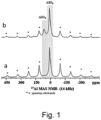
- the sample of mixed oxide of formula (I) has almost exclusively Al in an octahedral coordination
- the sample corresponding to the mixed oxide bound to the Al-based inorganic binder B, as well as the aluminum octahedral component has a second Al component with an octahedral and tetrahedral coordination, compatible with the presence of ⁇ -alumina as inorganic binder.
- the aluminum present as ⁇ -alumina constitutes only a portion of the total aluminum present in the sample of mixed oxide bound to at least one inorganic binder B, according to a lower content of [AlO 4 ] mol%, with respect to a sample of ⁇ -alumina.
- a step of shaping after the drying of the obtained solid phase can be included.
- the process according to the present invention can comprise a step 7' immediately subsequent to step 7 of drying in which the dried solid phase obtained in said step 7 is subjected to shaping.
- the mixed oxide of formula (I) formed in the presence of at least one inorganic binder B comprises an amorphous phase and a pseudo-crystalline phase isostructural to Wolframite.
- the mixed oxide of formula (I) bound to at least one inorganic binder B of the present invention can be subjected to calcination, before the use, under air of inert atmosphere, at temperatures higher than 250°C and lower than or equal to 450°C and preferably can be subjected to calcination at temperatures comprised between 300°C and 400°C.
- the calcination can be carried out at constant temperature or under temperature gradient (or "programming").
- the calcination time varies from a minimum of 3 hours up to 20 hours.
- the calcinated mixed oxide can contain variable percentages, higher than 0.2% and lower than or equal to 30%, of the organic component C and/or of a residue of said organic component C.
- a is higher than 0 and more preferably a is higher than 0.1.
- b, c, d and e are higher than 0.1.
- the element Me when a is higher than 0 the element Me can be Zn.
- the element Me when a is higher than 0, the element Me can be Mn.
- the (a+b)/(c+d) ratio can be comprised between 0.8 and 2. In a further preferred aspect said (a+b)/c+d) ratio can be equal to 1.
- the a/b ratio can be higher than or equal to 0 and lower than or equal to 1. In a particularly preferred aspect the a/b ratio can be comprised between 0.1 and 0.4.
- the c/d ratio can be comprised between 0.4 and 3. In a particularly preferred aspect the c/d ratio can be comprised between 1 and 2.5.
- p can be higher than or equal to 0.2% and lower than or equal to 10%.
- the mixed oxide of formula (I) is obtained through the process of the present invention described above.
- said mixed oxide can be bound to at least one inorganic binder B.
- said mixed oxide of formula (I) bound to at least one inorganic binder B can be obtained through the process of the present invention, in the embodiment which envisages an additional step 5' wherein said inorganic binder B is added.
- step 5' is set after step 5 of said process, namely after the addition of the polymer organic compound, or, in case the latter is added in mixture with the aluminum source, after the addition of said mixture.
- the pseudo-crystalline phase evolves towards the formation of a crystalline phase isostructural to Wolframite.
- the pseudo-crystalline phase present in the samples after calcination at a temperature comprised between 300 and 400°C is therefore a precursor of a crystalline phase isostructural to Wolframite.
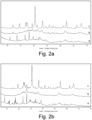
- the signals reported in Table 1 above are distinguished.
- the mixed oxide comprising metal Me ( Figure 2b ) is further characterized by at least two additional signals in the range comprised between 25° and 28° of the 2 ⁇ angle (at 26,2°, of very weak intensity and at 26,6°, of weak intensity).
- the mixed oxide of formula (I) obtained through the process of the present invention was further characterized by Fourier Transformed Infrared Spectroscopy (FT-IR), with a spectrometer Perkin-Elmer mod. Spectrum BX, using tablets of powders diluted in KBr (2% by weight in KBr), by applying methods known to one skilled in the art.
- FT-IR Fourier Transformed Infrared Spectroscopy
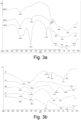
- the main signals FT-IR present in the solid after drying are attributable to precursors of metals usable in the synthesis: in particular the signal at about 1400 cm -1 is typical of the precursors of Mo, W, Ni and the signal at about 1070 cm -1 is typical of the Al precursor (pseudo-boehmite).
- the mixed oxide of formula (I) independently from the fact that it comprises or it does not comprise the metal Me, produces a FT-IR spectrum wherein the signals at 805 ⁇ 10cm -1 , 605 ⁇ 10cm -1 and 445 ⁇ 10cm -1 , which are typical of the Wolframite phase and whose definition increases with the calcination temperature, are recognized.
- the surface area and the porosity of the mixed oxide of formula (I) obtained through the process of the present invention were determined from the isotherm of absorption/desorption of N 2 at the temperature of -196°C, by using the Micrometrics TriStar ® Surface Area and Porosity Analyzer. Before acquiring the isotherms, samples (about 0.3 g per test) were subjected to pre-treatment under-vacuum for 16 hours at 150°C.
- the Specific Surface Area (SSA) was determined by the BET method (Brunauer-Emmett-Taller), known to the skilled person, carrying out the analysis in the range of relative pressure of P/P 0 comprised between 0.05 and 0.3.
- the above-mentioned mixed-oxide is characterized by having a specific Surface Area, determined after heat treatment at 350°C, higher than or equal to 80 m 2 /g.
- the Specific Surface Area is comprised in the range 90-230 m 2 /g and more preferably it is comprised in the range 90-190 m 2 /g.
- the mixed oxide of formula (I) obtained by the process according to the invention is mesoporous, namely, in accordance with the IUPAC terminology ( Pure & Appl. Chem. Vol. 66, No. 8, pp. 1739-1758, 1994 ), is characterized by pore diameter comprised between 2 and 50 nm. Preferably the average pore diameter ranges from 4 to 10 nm.
- the specific total volume of the pores was calculated by using the Gurvitsch method at 0.99 P/P 0 and the pore distribution was determined by applying the BJH (Barret-Joyner-Hallender) method on the desorption curve. All the cited methods are known to one skilled in the art.
- the mixed oxide of formula (I) obtained by the process of the present invention is characterized by a volume of the pores higher than or equal 0.15 mL/g.
- Preferably said volume of the pores is comprised between 0.15 and 0.35 mL/g.
- the mixed oxide of formula (I), possibly bound to at least one inorganic binder B, obtained by the process of the present invention can be transformed in the corresponding sulphide, and said sulphide can be advantageously used as hydrotreatment catalyst.
- a metal sulphide catalyst obtained by sulphidation of the mixed oxide of formula (I), possibly bound to at least one inorganic binder B.
- the mixed oxide of formula (I) subjected to sulphidation in order to provide the above-mentioned metal sulphide catalyst is obtained by the process of preparation of said mixed oxide of formula (I), according to the invention.
- the metal sulphidated catalyst can be obtained by sulphidation of the mixed oxide of formula (I) bound to at least one inorganic binder B.
- the mixed oxide of formula (I) bound to at least one inorganic binder B subjected to sulphidation to provide the above-mentioned metal sulphide catalyst is obtained by the process of preparation of said mixed oxide of formula (I) bound to at least one inorganic binder B, according to the invention.
- the mixed oxide sulphidation of the present invention can be carried out by any one of the techniques known to the skilled person, by using any sulphiding agent, as described, for example, by J.H. Gary e G.E. Handwerk in "Petroleum Refining - Technology and Economics” (2001, M. Dekker) p. 177 .
- the sulphidation can be carried out in situ , namely in the same reactor wherein the hydrotreatment will be subsequently carried out, or ex situ.
- the sulphidation process can be carried out under reducing atmosphere, for example constituted by H 2 S and H 2 , or with CS 2 and H 2 , at high temperature, preferably with H 2 S and H 2 , at a temperature comprised between 300°C and 500°C, for a period sufficient to sulphidate the starting mixed oxide.
- the sulphidation can be carried out for a time comprised between 1 and 100 hours and preferably it is carried out for a time comprised between 15 and 50 hours.
- the sulphidation of the mixed oxides can be carried out by using dimethyldisulphide (DMDS) dissolved in a hydrocarbon charge such as, for example, naphtha or gas-oil, at temperatures comprised between 300°C and 500°C.
- DMDS dimethyldisulphide
- the sulphidation can be carried out contacting the mixed oxide of the present invention directly with the sulphur-rich hydrocarbon charge to be treated, preferably at temperatures comprised between 300°C and 500°C.
- the catalyst of the present invention obtained by the sulphidation of the mixed oxide of formula (I) or the mixed oxide of formula (I) bound to at least one inorganic binder B, is a catalyst which is very active and stable, and it provides particularly high and wide-spectrum catalytic performances in the hydrotreatment process, comprising, in addition to hydrodesulphurization and hydrodenitrogenation, also the hydrodearomatization and the reduction of the content of polycyclic aromatic hydrocarbons in the treated hydrocarbon mixtures.
- a hydrotreating process of a feeding containing one or more hydrocarbons comprising contacting said feeding with hydrogen in the presence of a catalyst obtained by the sulphidation of the mixed oxide of formula (I) or the mixed oxide of formula (I) bound to at least one inorganic binder B.
- Any feeding of hydrocarbon mixture containing impurities comprising sulphur and/or nitrogen can be treated with the catalyst of the present invention: for example, crude-oil distillates, crude oil residues, naphtha, etcetera, can be subjecting to the treatment, and preferably the hydrotreatment relates to hydrocarbon cuts containing contaminants comprising sulphur and/or contaminants comprising nitrogen.
- the metal sulphide catalyst of the present invention can be advantageously used for hydrotreating feedings comprising one or more hydrocarbons containing up to 4% w/w of S, up to 0.2% w/w of N and up to 50% w/w of polynuclear aromatic hydrocarbons.
- the processing occurs at a temperature comprised between 100 and 450°C, more preferably between 300 and 370°C, at a pressure comprising between 5.0 and 10.0 MPa, more preferably between 5.0 and 7.0 MPa.
- the space velocity LHSV Liquid Hour Space Velocity
- the hydrogen amount can range between 100 and 800 times the hydrocarbon amounts, expressed as Nl H 2 /l of hydrocarbon mixture.
- the catalyst of the invention can be advantageously used also as hydrogenating component, associated to an acid components, in the hydrocracking process.
- Feeding suitable of hydrocracking are, for example, heavy and extra-heavy crude oil, Vacuum Gas Oil (VGO), Vacuum Residues (VR).
- Example 1 according to the invention (preparation of a mixed oxide having the composition: Me 0.00 Ni 1.00 Mo 0.60 W 0.40 Al 1.04 O 5.56 ⁇ 6.0% C)
- the preparation procedure of the mixed oxide involves the subsequent addition under suitable temperature conditions and stirring of solutions or dispersions containing the elements of the composition.
- NiO nickel hydroxycarbonate
- Disperal ® P3 Sasol (pseudoboehmite containing Al 2 O 3 70% w/w) were mixed with 188.1 g of an aqueous solution of acetic acid 0.6 % w/w. The mixture was maintained under stirring for about 2 hours, in order to obtain a homogeneous alumina dispersion.
- the dispersion thus obtained which has a theoretical content of oxides equal to 26% by weight, was cooled and subjected to drying for about 20 minutes in a pre-heated oven at 200°C.
- Part of the obtained solid (50g) was calcinated in static air according to the following programmed temperature: from room temperature at 200°C in 30 minutes with a ramp of 6°C/min, isotherm at 200°C for 10 minutes, heating up to 350°C in 2 hours and 35 minutes with a ramp of about 1°C/min, isotherm at 350°C for 5 hours.
- the remaining part of the sample dried at 200°C was then placed into a mechanical mixer and mixed at a temperature of about 50°C for about 2 hours, until obtaining an homogeneous paste with a suitable consistency to be extruded.
- the extrudate was aged at room temperature for 15 hours, then calcinated with the ramp described above.
- the final mixed oxide extruded has the following molar composition: Ni 1.00 Mo 0.60 W 0.40 Al 1.04 O 5.56 .
- the mixed oxide contains 6.0% by weight of organic component residue with respect to the total weight of the solid.
- the Specific Surface Area (SSA) is 142 m 2 /g
- the total volume of the pores (Vp) is 0.18 cm 3 /g
- the average pore size is 4.0 nm calculated from the desorption isotherm.
- Example 2 according to the invention (preparation of a mixed oxide having the composition: Me 0.00 Ni 1.00 Mo 0.50 W 0.50 Al 1.04 O 5.56 ⁇ 6,3% C)
- the obtained mixed oxide has the following molar composition: Ni 1.00 Mo 0.50 W 0.50 Al 1.04 O 5.56 .
- the mixed oxide contains 6.3 % by weight of organic component residue with respect to the total weight of the solid.
- the Specific Surface Area (SSA) is 149 m 2 /g
- the total volume of the pores (Vp) is 0.19 cm 3 /g
- the average pore diameter is 4.4 nm calculated from the desorption isotherm.
- Disperal ® P3 Sasol (pseudoboehmite containing Al 2 O 3 70% w/w) were mixed with 188.1 g of an aqueous solution of acetic acid 0.6 % w/w. The mixture was maintained under stirring for about 2 hours, in order to obtain a homogeneous alumina dispersion.
- Said homogeneous dispersion was added to the suspension containing Zn, Ni, Mo and W above described, maintained in turn at 70°C under stirring. The addition is carried out very slowly and using a dropping funnel. At the end, the temperature of the mixture was brought to 90°C and the obtained slurry was maintained at such temperature under stirring for about 18 hours.
- the pH of the suspension measured at the end of the above-mentioned heat treatment was equal to 5.6, and the content of Methocel ® MC was equal to 3.1% by weight with respect to the theoretical content of mixed oxide.
- the dispersion thus obtained which has a theoretical content of oxides equal to 22% by weight, with respect to the total weight of the dispersion, was cooled and subjected to drying for about 20 minutes in a pre-heated oven at 200°C.
- the recovered solid phase was then calcinated in static air according to the following temperature program: from room temperature at 200°C in 30 minutes with a ramp of 6°C/min, isotherm at 200°C for 10 minutes, heating up to 350°C in 2 hours and 35 minutes with a ramp of about 1°C/min, isotherm at 350°C for 5 hours.
- the final mixed oxide has the following molar composition: Zn 0.50 Ni 0.50 Mo 0.50 W 0.50 Al 1.02 O 5.53 .
- the mixed oxide contains 13.1% by weight of organic component residue with respect to the total weight of the solid.
- the Specific Surface Area (SSA) is 142 m 2 /g
- the total volume of the pores (Vp) is 0.21 cm 3 /g
- the average pore size is 9 nm calculated from the desorption isotherm.
- Disperal ® P3 Sasol (pseudoboehmite containing Al 2 O 3 70% w/w) were mixed with 188.1 g of an aqueous solution of acetic acid 0,6 % w/w. The mixture was maintained under stirring for about 2 hours, in order to obtain a homogeneous alumina dispersion.
- Said homogeneous dispersion was added to the suspension containing Zn, Ni, Mo and W above described, maintained in turn at 70°C under stirring. The addition is carried out very slowly and using a dropping funnel. At the end, the temperature of the mixture was brought to 90°C and the obtained slurry was maintained at such temperature under stirring for about 18 hours.
- the pH of the suspension measured at the end of the above-mentioned heat treatment was equal to 5.6, and the content of Methocel ® MC was equal to 3.1% by weight with respect to the theoretical content of mixed oxide.
- the dispersion thus obtained which has a theoretical content of oxides equal to 24% by weight, was cooled and subjected to drying for about 20 minutes in a pre-heated oven at 200°C.
- the recovered solid phase was then calcinated in static air according to the following temperature program: from room temperature at 200°C in 30 minutes with a ramp of 6°C/min, isotherm at 200°C for 10 minutes, heating up to 350°C in 2 hours and 35 minutes with a ramp of about 1°C/min, isotherm at 350°C for 5 hours.
- the final mixed oxide has the following molar composition: Me 0.25 Ni 0.75 Mo 0.60 W 0.40 Al 1.03 O 5.55 .
- the mixed oxide contains 14.9% by weight of organic component residue with respect to the total weight of the solid.
- the Specific Surface Area (SSA) is 175 m 2 /g
- the total volume of the pores (Vp) is 0.21 cm 3 /g
- the average pore size is 4.1 nm calculated from the desorption isotherm.
- This example discloses the preparation of a mixed oxide containing Zn and bound to an inorganic binder B, wherein the polymer organic compound used is Methocel ® MC.
- the final mixed oxide has the following molar composition: Zn 0.25 Ni 0.75 Mo 0.6 W 0.4 Al 1 O 5.5 ⁇ 10% ⁇ -Al 2 O 3 .
- the mixed oxide contains 13.8% by weight of organic component residue with respect to the total weight of the solid.
- the Specific Surface Area (SSA) is 145 m 2 /g, the total volume of the pores is 0.23 cm 3 /g, the average pore size is 4.0 nm calculated from the desorption isotherm.
- the X-ray diffraction spectrum of the obtained mixed oxide allows to detect at least three signals in the range of the 2 ⁇ angle comprised between 21° and 28°.
- Example 6 comparative (preparation of a mixed oxide having the composition:Ni 1.0 Mo 0.5 W 0.54 Al 0.57. O .4.98. ⁇ 2.0% C, not according to the invention)
- the octylamine/(Ni+Mo+W) molar ratio is equal to 0.6.
- a light green gel which was left under stirring for 3 hours, heating at 70°C, was formed. It was left to stand for 48 hour. The gel obtained did not have supernatant and it was dried into a oven at 90°C for 48 hours. The dried material was subjected to heat treatment at 400°C for 5 hours in air.
- the solid had the following molar composition Ni 1.00 Mo 0.50 W 0.54 Al 0.57 O 4.98 .
- the mixed oxide contains 2.0% by weight of organic component residue with respect to the total weight of the solid.
- the specific surface area is 151 m 2 /g, the total volume of the pores 0.381 cm 3 /g, the average diameter of the pores 6.3 nm, calculated from the desorption isotherm.
- the mixed oxides prepared according to the examples 1,2,4,5,6 were used in experiments wherein their effectiveness as hydrotreatment catalysts was verified.
- the hydrotreatment reaction was carried out by feeding a mixture consisting of "Straight Run” gas-oil and “Visbreaking” in proportion 75:25 (w/w) and therefore characterized by high amounts of sulphur (2% w/w) and polynuclear aromatic hydrocarbons (17% w/w).
- the activity of each catalyst was assessed in percentage with respect to the catalyst activity of the comparative example 6 (set to 100%).
- the catalyst of example 5 characterized by a lower content of metals, as it contains 10% by weight of inorganic binder B, is more active, mainly for the aims of the hydrodearomatization reaction, with respect to the catalyst of the comparative example.
Landscapes
- Chemical & Material Sciences (AREA)
- Organic Chemistry (AREA)
- Engineering & Computer Science (AREA)
- Chemical Kinetics & Catalysis (AREA)
- Materials Engineering (AREA)
- Oil, Petroleum & Natural Gas (AREA)
- General Chemical & Material Sciences (AREA)
- Physics & Mathematics (AREA)
- Thermal Sciences (AREA)
- Inorganic Chemistry (AREA)
- Catalysts (AREA)
- Low-Molecular Organic Synthesis Reactions Using Catalysts (AREA)
Claims (19)
- Verfahren zur Gewinnung eines Mischoxids, umfassend Ni, Mo, W, Al, optional zumindest ein Metall Me und eine organische Komponente C oder einen von dieser organischen Komponente C durch thermische Zersetzung oder Degradation während des Kalzinierungsverfahrens abgeleiteten Rückstand, die folgende Formel (I) aufweisend,
Mea Nib Moc Wd Ale Of pC (I)
wobei:- Me ausgewählt ist aus der Gruppe bestehend aus Zn, Cd, Mn und einem Gemisch daraus,- C eine polymere organische Verbindung umfasst,- a größer als oder gleich 0 ist,- b, c, d, e und f größer als 0 sind und vorzugsweise größer als 0,1 sind,- f gleich (2a+2b+6c+6d+3e)/2 ist,- das Verhältnis (a+b)/(c+d) zwischen 0,9 und 1,1 umfasst ist,- das Verhältnis a/b größer als oder gleich 0 und kleiner als oder gleich 1,5 ist,- das Verhältnis c/d zwischen 0,2 und 5 umfasst ist,- das Verhältnis (a+b+c+d)/e zwischen 0,6 und 5 umfasst ist, und- p der Gewichtsprozentsatz von C oder gegebenenfalls des Rückstands von C ist, bezogen auf das Gesamtgewicht des Mischoxids der Formel (I), und größer oder gleich 0,2 % und kleiner oder gleich 30 % ist, berechnet in Abhängigkeit vom Gewichtsverlust, analysiert durch Thermogravimetrie und Differentialthermoanalyse (TG-DTA) im Bereich von 150-600°C bei einer Heizrampe von 10°C/min unter einem Luftstrom von 200 cm3/min,wobei das Mischoxid der Formel (I) eine amorphe Phase und eine pseudokristalline Phase umfasst, die isostrukturell zu Wolframit ist,wobei das Verfahren die folgenden Schritte umfasst:1) Mischen von zumindest einer löslichen Quelle von W und zumindest einer löslichen Quelle von Mo in ein geeignetes Wasservolumen, bis man eine klare wässrige Lösung erhält;2) optional Zugeben von zumindest einer Quelle von zumindest einem Element Me zu der in Schritt 1 erhaltenen Lösung;3) Zugeben von zumindest einer Quelle von Ni zu dem in dem vorhergehenden Schritt erhaltenem Gemisch;4) Unterziehen des in Schritt 3 erhaltenen Gemischs einer ersten Wärmebehandlung bei Temperaturen, die zwischen 50° und 80°C umfassen, unter Rühren;5) Zugeben von zumindest einer löslichen, hydrolysierbaren oder dispergierbaren Quelle von Al und zumindest einer polymeren organischen Verbindung, umfassend ein oder mehrere Heteroatome, ausgewählt aus 0 und N, zu dem in Schritt 4 erhaltenem Gemisch;6) Unterziehen des in dem vorhergehenden Schritt erhaltenen Gemisches einer zweiten Wärmebehandlung bei Temperaturen, die zwischen 80°C und 95°C umfassen, unter Rühren, wobei man eine Suspension erhält;7) Unterziehen der in Schritt 6 erhaltenen Suspension einer Trocknung, wobei man auf diese Weise eine feste Phase erhält;8) Kalzinieren der in dem vorhergehenden Schritt erhaltenen festen Phase bei Temperaturen gleich oder höher als 200°C und gleich oder niedriger als 450°C in Luft oder in einer inerten Atmosphäre über einen Zeitraum von 3 bis 20 Stunden, wobei das Mischoxid der Formel (I) erhalten wird. - Verfahren gemäß Anspruch 1, wobei das in Schritt 2 des Verfahrens optional zugegebene Element Me Zn ist.
- Verfahren gemäß Anspruch 1, wobei das in Schritt 2 des Verfahrens optional zugegebene Element Me Mn ist.
- Verfahren gemäß einem der Ansprüche 1 bis 3, wobei der optionale Schritt 2 weggelassen wird.
- Verfahren gemäß einem der Ansprüche 1 bis 4, wobei die erste Wärmebehandlung des Schrittes 4 für einen Zeitraum durchgeführt wird, der zwischen 10 Minuten und 1 Stunde umfasst.
- Verfahren nach einem der Ansprüche 1 bis 5, wobei als Quelle von Aluminium in Schritt 5 des Verfahrens ein dispergierbares Alumina verwendet wird und vorzugsweise das dispergierbare Alumina ein Böhmit oder Pseudoböhmit ist, gekennzeichnet durch Teilchen mit einem durchschnittlichen Durchmesser von weniger als 100 µm.
- Verfahren nach einem der Ansprüche 1 bis 6, wobei die in Schritt 5 des Verfahrens zugesetzte polymere organische Verbindung Methylcellulose ist.
- Verfahren nach einem der Ansprüche 1 bis 7, wobei in Schritt 5 des Verfahrens eine Dispersion zugegeben wird, die separat hergestellt wird und sowohl die zumindest eine lösliche, hydrolysierbare oder dispergierbare Quelle von Al als auch die zumindest eine polymere organische Verbindung enthält.
- Verfahren nach einem der Ansprüche 1 bis 8, wobei die zweite Wärmebehandlung von Schritt 6 für einen Zeitraum, der zwischen 5 und 30 Stunden umfasst, durchgeführt wird.
- Verfahren nach einem der Ansprüche 1 bis 9, umfassend einen zusätzlichen Schritt 7', welcher unmittelbar nach Schritt 7, in dem die in Schritt 7 erhaltene getrocknete feste Phase einer Formgebung unterzogen wird.
- Verfahren nach einem der Ansprüche 1 bis 10, wobei das Verfahren einen zusätzlichen Schritt 5' umfasst, der unmittelbar nach Schritt 5 des Verfahrens erfolgt, wobei ein anorganisches Bindemittel B zugegeben wird.
- Mischoxid, umfassend Ni, Mo, W, Al, optional zumindest ein Metall Me und eine organische Komponente C oder einen von dieser organischen Komponente C durch thermische Zersetzung oder Degradation während des Kalzinierungsverfahrens abgeleiteten Rückstand, die folgende Formel (I) aufweisend:
Mea Nib Moc Wd Ale Of pC (I)
wobei:- Me ausgewählt ist aus der Gruppe bestehend aus Zn, Cd, Mn und einem Gemisch daraus,- C eine polymere organische Verbindung umfasst,- a größer als oder gleich 0 ist,- b, c, d, e und f größer als 0 sind,- f gleich (2a+2b+6c+6d+3e)/2 ist,- das Verhältnis (a+b)/(c+d) zwischen 0,9 und 1,1 umfasst ist,- das Verhältnis a/b größer als oder gleich 0 und kleiner als oder gleich 1,5 ist- das Verhältnis c/d zwischen 0,2 und 5 umfasst ist,- das Verhältnis (a+b+c+d)/e zwischen 0,6 und 5 umfasst ist, und- p der Gewichtsprozentsatz des organischen Bestandteils C oder eines Rückstands des organischen Bestandteils C ist, bezogen auf das Gesamtgewicht des Mischoxids der Formel (I), und größer oder gleich 0,2 % und kleiner oder gleich 30 % ist, berechnet in Abhängigkeit von dem Gewichtsverlust, analysiert durch Thermogravimetrie und Differentialthermoanalyse (TG-DTA) im Bereich von 150-600°C bei einer Heizrampe von 10°C/min unter einem Luftstrom von 200 cm3/min,wobei das Mischoxid eine amorphe Phase und eine pseudokristalline Phase umfasst, die isostrukturell zu Wolframit ist, wobei das Mischoxid durch ein Verfahren gemäß einem der vorangehenden Ansprüche 1 bis 11 erhältlich ist. - Mischoxid nach Anspruch 12, wobei, wenn a größer als 0 ist, das Element Me Zn ist.
- Mischoxid nach Anspruch 12, wobei, wenn a größer als 0 ist, das Element Me Mn ist.
- Mischoxid nach einem der Ansprüche 12 bis 14, gebunden an zumindest ein anorganisches Bindemittel B.
- Mischoxid nach einem der Ansprüche 12 bis 14, erhältlich nach dem Verfahren nach einem der Ansprüche 1 bis 10.
- Mischoxid nach Anspruch 15, erhältlich nach dem Verfahren des Anspruchs 11.
- Metallsulfid-Katalysator, erhalten durch Sulfidierung des Mischoxids der Formel (I) oder des an zumindest ein anorganisches Bindemittel B gebundenen Mischoxids der Formel (I), nach einem der Ansprüche 12 bis 17.
- Verfahren zur Hydrobehandlung einer Beschickung, enthaltend einen oder mehrere Kohlenwasserstoffe, welches das Inkontaktbringen der Beschickung mit Wasserstoff in Gegenwart des Katalysators nach Anspruch 18 umfasst.
Priority Applications (1)
| Application Number | Priority Date | Filing Date | Title |
|---|---|---|---|
| RS20240794A RS65743B1 (sr) | 2016-07-22 | 2017-07-21 | Katalizatori za hidrotretman i postupak za dobijanje navedenih katalizatora |
Applications Claiming Priority (2)
| Application Number | Priority Date | Filing Date | Title |
|---|---|---|---|
| IT102016000077340A IT201600077340A1 (it) | 2016-07-22 | 2016-07-22 | Catalizzatori di idrotrattamento e procedimento di preparazione di detti catalizzatori. |
| PCT/IB2017/054439 WO2018015933A1 (en) | 2016-07-22 | 2017-07-21 | Hydrotreatment catalysts and process for preparing said catalysts |
Publications (3)
| Publication Number | Publication Date |
|---|---|
| EP3487618A1 EP3487618A1 (de) | 2019-05-29 |
| EP3487618B1 true EP3487618B1 (de) | 2024-06-12 |
| EP3487618C0 EP3487618C0 (de) | 2024-06-12 |
Family
ID=57851137
Family Applications (1)
| Application Number | Title | Priority Date | Filing Date |
|---|---|---|---|
| EP17755249.4A Active EP3487618B1 (de) | 2016-07-22 | 2017-07-21 | Katalysatoren zur hydrobehandlung und verfahren zur herstellung besagter katalysatoren |
Country Status (10)
| Country | Link |
|---|---|
| US (3) | US11311862B2 (de) |
| EP (1) | EP3487618B1 (de) |
| CN (1) | CN109475845B (de) |
| CA (1) | CA3029930C (de) |
| ES (1) | ES2981981T3 (de) |
| IT (1) | IT201600077340A1 (de) |
| RS (1) | RS65743B1 (de) |
| RU (1) | RU2729655C1 (de) |
| SA (1) | SA519400882B1 (de) |
| WO (1) | WO2018015933A1 (de) |
Families Citing this family (4)
| Publication number | Priority date | Publication date | Assignee | Title |
|---|---|---|---|---|
| IT201600077340A1 (it) | 2016-07-22 | 2018-01-22 | Eni Spa | Catalizzatori di idrotrattamento e procedimento di preparazione di detti catalizzatori. |
| US20200055024A1 (en) * | 2018-08-14 | 2020-02-20 | Uop Llc | Hydroprocessing catalyst for heavy distillate streams, method of manufacture and application |
| WO2022201179A1 (en) | 2021-03-20 | 2022-09-29 | Hindustan Petroleum Corporation Limited | A dispersed hydrotreating catalyst and a process of preparation thereof |
| CN117839713B (zh) * | 2022-09-29 | 2025-06-03 | 中国石油化工股份有限公司 | 一种加氢精制催化剂的制备方法 |
Family Cites Families (8)
| Publication number | Priority date | Publication date | Assignee | Title |
|---|---|---|---|---|
| US6930219B2 (en) | 1999-09-07 | 2005-08-16 | Abb Lummus Global Inc. | Mesoporous material with active metals |
| CN102413925B (zh) * | 2009-04-29 | 2013-11-27 | 雪佛龙美国公司 | 加氢转化多金属催化剂及其制备方法 |
| US8058203B2 (en) * | 2009-04-29 | 2011-11-15 | Chevron U.S.A. Inc. | Hydroconversion multi-metallic catalyst and method for making thereof |
| IT1398288B1 (it) | 2009-09-30 | 2013-02-22 | Eni Spa | Ossidi misti di metalli di transizione, catalizzatori di idrotrattamento da essi ottenuti, e processo di preparazione comprendente procedimenti sol-gel |
| ITMI20110510A1 (it) | 2011-03-30 | 2012-10-01 | Eni Spa | Ossidi misti di metalli di transizione, catalizzatori di idrotrattamento da essi ottenuti, e processo di preparazione |
| CN103055881A (zh) * | 2012-08-27 | 2013-04-24 | 王小英 | 煤焦油加氢精制催化剂及其制备方法 |
| CN105312060A (zh) * | 2014-07-17 | 2016-02-10 | 中国科学院大连化学物理研究所 | 一种层状结构多金属本体催化剂及制备和应用 |
| IT201600077340A1 (it) | 2016-07-22 | 2018-01-22 | Eni Spa | Catalizzatori di idrotrattamento e procedimento di preparazione di detti catalizzatori. |
-
2016
- 2016-07-22 IT IT102016000077340A patent/IT201600077340A1/it unknown
-
2017
- 2017-07-21 RU RU2019103459A patent/RU2729655C1/ru active
- 2017-07-21 US US16/317,978 patent/US11311862B2/en active Active
- 2017-07-21 CN CN201780044089.3A patent/CN109475845B/zh active Active
- 2017-07-21 RS RS20240794A patent/RS65743B1/sr unknown
- 2017-07-21 WO PCT/IB2017/054439 patent/WO2018015933A1/en not_active Ceased
- 2017-07-21 ES ES17755249T patent/ES2981981T3/es active Active
- 2017-07-21 EP EP17755249.4A patent/EP3487618B1/de active Active
- 2017-07-21 CA CA3029930A patent/CA3029930C/en active Active
-
2019
- 2019-01-13 SA SA519400882A patent/SA519400882B1/ar unknown
-
2022
- 2022-02-07 US US17/666,030 patent/US11878289B2/en active Active
-
2023
- 2023-10-26 US US18/495,151 patent/US12343710B2/en active Active
Also Published As
| Publication number | Publication date |
|---|---|
| CA3029930A1 (en) | 2018-01-25 |
| US20220161238A1 (en) | 2022-05-26 |
| US11311862B2 (en) | 2022-04-26 |
| IT201600077340A1 (it) | 2018-01-22 |
| EP3487618A1 (de) | 2019-05-29 |
| US12343710B2 (en) | 2025-07-01 |
| US20200290025A1 (en) | 2020-09-17 |
| US20240050929A1 (en) | 2024-02-15 |
| US11878289B2 (en) | 2024-01-23 |
| SA519400882B1 (ar) | 2023-02-19 |
| CN109475845B (zh) | 2022-04-12 |
| CA3029930C (en) | 2023-12-12 |
| RS65743B1 (sr) | 2024-08-30 |
| ES2981981T3 (es) | 2024-10-14 |
| RU2729655C1 (ru) | 2020-08-11 |
| EP3487618C0 (de) | 2024-06-12 |
| WO2018015933A1 (en) | 2018-01-25 |
| CN109475845A (zh) | 2019-03-15 |
Similar Documents
| Publication | Publication Date | Title |
|---|---|---|
| US12343710B2 (en) | Hydrotreatment catalysts and process for preparing said catalysts | |
| US8088706B2 (en) | Catalyst composition preparation and use | |
| RU2599255C2 (ru) | Смешанные оксиды переходных металлов, полученные из них катализаторы гидроочистки и способ изготовления | |
| CN110841674B (zh) | 挤出的残油脱金属催化剂 | |
| JP6489990B2 (ja) | 炭化水素油の水素化脱硫触媒およびその製造方法 | |
| EP1599285A1 (de) | Katalytischer katalysator, deren herstellung und deren verwendung | |
| CZ298378B6 (cs) | Katalytický prostredek, zpusob jeho prípravy a jeho použití | |
| KR20180111868A (ko) | 니켈 함유 혼합 금속-산화물/탄소 벌크 수소화 처리용 촉매 및 그 용도 | |
| JP4242055B2 (ja) | 水素化処理用触媒およびそれを用いる炭化水素油の水素化処理方法 | |
| Rayo et al. | Experimentation in Small‐scale Continuous Fixed‐bed Tubular Reactors | |
| TWI432261B (zh) | 包含鎳鎢金屬氧化顆粒之整體觸媒(bulk catalyst) | |
| JPH0655074A (ja) | 炭化水素油の水素化処理用触媒の製法 | |
| MXPA06005447A (en) | Hydroconversion catalysts and methods of making and using same |
Legal Events
| Date | Code | Title | Description |
|---|---|---|---|
| STAA | Information on the status of an ep patent application or granted ep patent |
Free format text: STATUS: UNKNOWN |
|
| STAA | Information on the status of an ep patent application or granted ep patent |
Free format text: STATUS: THE INTERNATIONAL PUBLICATION HAS BEEN MADE |
|
| PUAI | Public reference made under article 153(3) epc to a published international application that has entered the european phase |
Free format text: ORIGINAL CODE: 0009012 |
|
| STAA | Information on the status of an ep patent application or granted ep patent |
Free format text: STATUS: REQUEST FOR EXAMINATION WAS MADE |
|
| 17P | Request for examination filed |
Effective date: 20190114 |
|
| AK | Designated contracting states |
Kind code of ref document: A1 Designated state(s): AL AT BE BG CH CY CZ DE DK EE ES FI FR GB GR HR HU IE IS IT LI LT LU LV MC MK MT NL NO PL PT RO RS SE SI SK SM TR |
|
| AX | Request for extension of the european patent |
Extension state: BA ME |
|
| DAV | Request for validation of the european patent (deleted) | ||
| DAX | Request for extension of the european patent (deleted) | ||
| REG | Reference to a national code |
Ref country code: DE Ref legal event code: R079 Free format text: PREVIOUS MAIN CLASS: B01J0023888000 Ipc: B01J0035600000 Ref country code: DE Ref legal event code: R079 Ref document number: 602017082536 Country of ref document: DE Free format text: PREVIOUS MAIN CLASS: B01J0023888000 Ipc: B01J0035600000 |
|
| GRAP | Despatch of communication of intention to grant a patent |
Free format text: ORIGINAL CODE: EPIDOSNIGR1 |
|
| STAA | Information on the status of an ep patent application or granted ep patent |
Free format text: STATUS: GRANT OF PATENT IS INTENDED |
|
| RIC1 | Information provided on ipc code assigned before grant |
Ipc: B01J 35/60 20240101AFI20240116BHEP |
|
| INTG | Intention to grant announced |
Effective date: 20240202 |
|
| GRAS | Grant fee paid |
Free format text: ORIGINAL CODE: EPIDOSNIGR3 |
|
| GRAA | (expected) grant |
Free format text: ORIGINAL CODE: 0009210 |
|
| STAA | Information on the status of an ep patent application or granted ep patent |
Free format text: STATUS: THE PATENT HAS BEEN GRANTED |
|
| AK | Designated contracting states |
Kind code of ref document: B1 Designated state(s): AL AT BE BG CH CY CZ DE DK EE ES FI FR GB GR HR HU IE IS IT LI LT LU LV MC MK MT NL NO PL PT RO RS SE SI SK SM TR |
|
| REG | Reference to a national code |
Ref country code: GB Ref legal event code: FG4D |
|
| REG | Reference to a national code |
Ref country code: CH Ref legal event code: EP |
|
| REG | Reference to a national code |
Ref country code: DE Ref legal event code: R096 Ref document number: 602017082536 Country of ref document: DE |
|
| REG | Reference to a national code |
Ref country code: IE Ref legal event code: FG4D |
|
| U01 | Request for unitary effect filed |
Effective date: 20240710 |
|
| U07 | Unitary effect registered |
Designated state(s): AT BE BG DE DK EE FI FR IT LT LU LV MT NL PT RO SE SI Effective date: 20240902 |
|
| PG25 | Lapsed in a contracting state [announced via postgrant information from national office to epo] |
Ref country code: HR Free format text: LAPSE BECAUSE OF FAILURE TO SUBMIT A TRANSLATION OF THE DESCRIPTION OR TO PAY THE FEE WITHIN THE PRESCRIBED TIME-LIMIT Effective date: 20240612 |
|
| PG25 | Lapsed in a contracting state [announced via postgrant information from national office to epo] |
Ref country code: GR Free format text: LAPSE BECAUSE OF FAILURE TO SUBMIT A TRANSLATION OF THE DESCRIPTION OR TO PAY THE FEE WITHIN THE PRESCRIBED TIME-LIMIT Effective date: 20240913 |
|
| REG | Reference to a national code |
Ref country code: ES Ref legal event code: FG2A Ref document number: 2981981 Country of ref document: ES Kind code of ref document: T3 Effective date: 20241014 |
|
| U20 | Renewal fee for the european patent with unitary effect paid |
Year of fee payment: 8 Effective date: 20240906 |
|
| PG25 | Lapsed in a contracting state [announced via postgrant information from national office to epo] |
Ref country code: NO Free format text: LAPSE BECAUSE OF FAILURE TO SUBMIT A TRANSLATION OF THE DESCRIPTION OR TO PAY THE FEE WITHIN THE PRESCRIBED TIME-LIMIT Effective date: 20240912 Ref country code: HR Free format text: LAPSE BECAUSE OF FAILURE TO SUBMIT A TRANSLATION OF THE DESCRIPTION OR TO PAY THE FEE WITHIN THE PRESCRIBED TIME-LIMIT Effective date: 20240612 Ref country code: GR Free format text: LAPSE BECAUSE OF FAILURE TO SUBMIT A TRANSLATION OF THE DESCRIPTION OR TO PAY THE FEE WITHIN THE PRESCRIBED TIME-LIMIT Effective date: 20240913 |
|
| PG25 | Lapsed in a contracting state [announced via postgrant information from national office to epo] |
Ref country code: PL Free format text: LAPSE BECAUSE OF FAILURE TO SUBMIT A TRANSLATION OF THE DESCRIPTION OR TO PAY THE FEE WITHIN THE PRESCRIBED TIME-LIMIT Effective date: 20240612 |
|
| PG25 | Lapsed in a contracting state [announced via postgrant information from national office to epo] |
Ref country code: IS Free format text: LAPSE BECAUSE OF FAILURE TO SUBMIT A TRANSLATION OF THE DESCRIPTION OR TO PAY THE FEE WITHIN THE PRESCRIBED TIME-LIMIT Effective date: 20241012 |
|
| PG25 | Lapsed in a contracting state [announced via postgrant information from national office to epo] |
Ref country code: SK Free format text: LAPSE BECAUSE OF FAILURE TO SUBMIT A TRANSLATION OF THE DESCRIPTION OR TO PAY THE FEE WITHIN THE PRESCRIBED TIME-LIMIT Effective date: 20240612 |
|
| PG25 | Lapsed in a contracting state [announced via postgrant information from national office to epo] |
Ref country code: SM Free format text: LAPSE BECAUSE OF FAILURE TO SUBMIT A TRANSLATION OF THE DESCRIPTION OR TO PAY THE FEE WITHIN THE PRESCRIBED TIME-LIMIT Effective date: 20240612 |
|
| PG25 | Lapsed in a contracting state [announced via postgrant information from national office to epo] |
Ref country code: SM Free format text: LAPSE BECAUSE OF FAILURE TO SUBMIT A TRANSLATION OF THE DESCRIPTION OR TO PAY THE FEE WITHIN THE PRESCRIBED TIME-LIMIT Effective date: 20240612 Ref country code: SK Free format text: LAPSE BECAUSE OF FAILURE TO SUBMIT A TRANSLATION OF THE DESCRIPTION OR TO PAY THE FEE WITHIN THE PRESCRIBED TIME-LIMIT Effective date: 20240612 Ref country code: PL Free format text: LAPSE BECAUSE OF FAILURE TO SUBMIT A TRANSLATION OF THE DESCRIPTION OR TO PAY THE FEE WITHIN THE PRESCRIBED TIME-LIMIT Effective date: 20240612 Ref country code: IS Free format text: LAPSE BECAUSE OF FAILURE TO SUBMIT A TRANSLATION OF THE DESCRIPTION OR TO PAY THE FEE WITHIN THE PRESCRIBED TIME-LIMIT Effective date: 20241012 |
|
| REG | Reference to a national code |
Ref country code: CH Ref legal event code: PL |
|
| PG25 | Lapsed in a contracting state [announced via postgrant information from national office to epo] |
Ref country code: MC Free format text: LAPSE BECAUSE OF FAILURE TO SUBMIT A TRANSLATION OF THE DESCRIPTION OR TO PAY THE FEE WITHIN THE PRESCRIBED TIME-LIMIT Effective date: 20240612 |
|
| PG25 | Lapsed in a contracting state [announced via postgrant information from national office to epo] |
Ref country code: MC Free format text: LAPSE BECAUSE OF FAILURE TO SUBMIT A TRANSLATION OF THE DESCRIPTION OR TO PAY THE FEE WITHIN THE PRESCRIBED TIME-LIMIT Effective date: 20240612 |
|
| PLBE | No opposition filed within time limit |
Free format text: ORIGINAL CODE: 0009261 |
|
| STAA | Information on the status of an ep patent application or granted ep patent |
Free format text: STATUS: NO OPPOSITION FILED WITHIN TIME LIMIT |
|
| PG25 | Lapsed in a contracting state [announced via postgrant information from national office to epo] |
Ref country code: CH Free format text: LAPSE BECAUSE OF NON-PAYMENT OF DUE FEES Effective date: 20240731 |
|
| 26N | No opposition filed |
Effective date: 20250313 |
|
| PGFP | Annual fee paid to national office [announced via postgrant information from national office to epo] |
Ref country code: RS Payment date: 20250630 Year of fee payment: 9 |
|
| PG25 | Lapsed in a contracting state [announced via postgrant information from national office to epo] |
Ref country code: IE Free format text: LAPSE BECAUSE OF NON-PAYMENT OF DUE FEES Effective date: 20240721 |
|
| U20 | Renewal fee for the european patent with unitary effect paid |
Year of fee payment: 9 Effective date: 20250728 |
|
| PGFP | Annual fee paid to national office [announced via postgrant information from national office to epo] |
Ref country code: ES Payment date: 20250801 Year of fee payment: 9 |
|
| PGFP | Annual fee paid to national office [announced via postgrant information from national office to epo] |
Ref country code: TR Payment date: 20250711 Year of fee payment: 9 |
|
| PGFP | Annual fee paid to national office [announced via postgrant information from national office to epo] |
Ref country code: GB Payment date: 20250728 Year of fee payment: 9 |
|
| PGFP | Annual fee paid to national office [announced via postgrant information from national office to epo] |
Ref country code: CZ Payment date: 20250704 Year of fee payment: 9 |
|
| PG25 | Lapsed in a contracting state [announced via postgrant information from national office to epo] |
Ref country code: CY Free format text: LAPSE BECAUSE OF FAILURE TO SUBMIT A TRANSLATION OF THE DESCRIPTION OR TO PAY THE FEE WITHIN THE PRESCRIBED TIME-LIMIT; INVALID AB INITIO Effective date: 20170721 |
|
| PG25 | Lapsed in a contracting state [announced via postgrant information from national office to epo] |
Ref country code: HU Free format text: LAPSE BECAUSE OF FAILURE TO SUBMIT A TRANSLATION OF THE DESCRIPTION OR TO PAY THE FEE WITHIN THE PRESCRIBED TIME-LIMIT; INVALID AB INITIO Effective date: 20170721 |