EP3475337B1 - Verfahren zur entfernung von wasser aus einem polyetherpolyol - Google Patents
Verfahren zur entfernung von wasser aus einem polyetherpolyol Download PDFInfo
- Publication number
- EP3475337B1 EP3475337B1 EP17733331.7A EP17733331A EP3475337B1 EP 3475337 B1 EP3475337 B1 EP 3475337B1 EP 17733331 A EP17733331 A EP 17733331A EP 3475337 B1 EP3475337 B1 EP 3475337B1
- Authority
- EP
- European Patent Office
- Prior art keywords
- pressure
- vessel
- normal atmospheric
- decrease
- atmospheric pressure
- Prior art date
- Legal status (The legal status is an assumption and is not a legal conclusion. Google has not performed a legal analysis and makes no representation as to the accuracy of the status listed.)
- Active
Links
Images




Classifications
-
- C—CHEMISTRY; METALLURGY
- C08—ORGANIC MACROMOLECULAR COMPOUNDS; THEIR PREPARATION OR CHEMICAL WORKING-UP; COMPOSITIONS BASED THEREON
- C08G—MACROMOLECULAR COMPOUNDS OBTAINED OTHERWISE THAN BY REACTIONS ONLY INVOLVING UNSATURATED CARBON-TO-CARBON BONDS
- C08G65/00—Macromolecular compounds obtained by reactions forming an ether link in the main chain of the macromolecule
- C08G65/02—Macromolecular compounds obtained by reactions forming an ether link in the main chain of the macromolecule from cyclic ethers by opening of the heterocyclic ring
- C08G65/30—Post-polymerisation treatment, e.g. recovery, purification, drying
-
- B—PERFORMING OPERATIONS; TRANSPORTING
- B01—PHYSICAL OR CHEMICAL PROCESSES OR APPARATUS IN GENERAL
- B01D—SEPARATION
- B01D3/00—Distillation or related exchange processes in which liquids are contacted with gaseous media, e.g. stripping
- B01D3/14—Fractional distillation or use of a fractionation or rectification column
-
- B—PERFORMING OPERATIONS; TRANSPORTING
- B01—PHYSICAL OR CHEMICAL PROCESSES OR APPARATUS IN GENERAL
- B01D—SEPARATION
- B01D3/00—Distillation or related exchange processes in which liquids are contacted with gaseous media, e.g. stripping
- B01D3/42—Regulation; Control
Definitions
- the present invention is directed to, among other things, processes and systems for removing water from poly ether polyols.
- Polyether polyols are often manufactured commercially using a catalyzed reaction of initiators having active hydrogen atoms with epoxides such as, for example, ethylene oxide and/or propylene oxide.
- Alkalinity is introduced into the polyether polyols, for example, by using alkaline metal hydroxides as catalysts.
- KOH potassium hydroxide
- NaOH sodium hydroxide
- Both the hydroxide and the alkoxide can react with epoxides. This is often acceptable for short chain (low molecular weight) polyols, but the reaction of water is undesirable in the preparation of higher molecular weight (i.e., number average molecular weight of at least 1000) ethylene oxide capped polyols. It is therefore, necessary to force the above equilibrium to the right by removing the water (i.e., dewatering). This converts all of the hydroxide to alkoxide. The total amount of alkalinity remains constant and is equal to the amount of KOH originally added.
- the alkaline catalyst is typically neutralized and removed from the crude mixture to yield the final polyether polyol.
- Several processes for the removal of the residual catalysts from the crude polyether polyols to yield the final product are known.
- the polyether polyol undergoes a batch distillation after being neutralized.
- a batch distillation is described for example in DE 198 38 156 .
- This distillation can occur at various temperatures and pressures.
- some polyols such as long chain active polyols, form a foam layer on top of the liquid product that rises up, and, if it rises high enough, it can overflow into the vessel's vent line, which can result in wastewater contamination and/or the need for manual cleaning of downstream equipment.
- the present invention was made in view of the foregoing.
- the present invention is directed to processes for removing water from a polyether polyol in a vessel by batch distillation. These processes comprise: (a) heating the polyether polyol to a temperature within a first predetermined distillation temperature range while (i) maintaining the pressure of the vessel at or above normal atmospheric pressure and at or below a predetermined maximum pressure, and (ii) controlling the rate of increase in vessel pressure within a predetermined pressure increase rate range, to remove a first portion of the water from the polyether polyol; and then (b) controlling the rate of decrease in vessel pressure within a predetermined pressure decrease rate range, to remove a second portion of the water from the polyether polyol, wherein a target rate of increase in vessel pressure during step (a) is 0.01 to 1 lb/in 2 per minute (0.01149 to 1.149 mbar per second) and wherein step (b) comprises controlling the rate of decrease in vessel pressure to normal atmospheric pressure at a rate within 0.01 to 1 lb/in 2 per minute (0.01149 to 1.149 mbar per second
- the present invention is directed to processes for removing water from a polyether polyol in a vessel by batch distillation that comprises: (a) heating the polyether polyol to a temperature within a first predetermined distillation temperature range while (i) maintaining the pressure of the vessel at or above normal atmospheric pressure and at or below a predetermined maximum pressure, and (ii) controlling the rate of increase in vessel pressure within a predetermined pressure increase rate range, to remove a first portion of the water from the poly ether polyol; then (b) controlling the rate of decrease in vessel pressure to normal atmospheric pressure within a first predetermined pressure decrease rate range; and then (c) maintaining the temperature of the poly ether polyol within a second predetermined distillation temperature range while (i) maintaining the pressure of the vessel below normal atmospheric pressure, and (ii) controlling the rate of decrease in vessel pressure within a second predetermined pressure decrease rate range, which may be the same as or different from the first predetermined pressure decrease range, wherein a target rate of increase in vessel pressure during step (a) is 0.01
- the present invention is also directed to, among other things, poly ether polyols produced by such processes as well as their use in the manufacture of polyurethanes.
- any numerical range recited in this specification is intended to include all sub-ranges of the same numerical precision subsumed within the recited range.
- a range of "1.0 to 10.0" is intended to include all sub-ranges between (and including) the recited minimum value of 1.0 and the recited maximum value of 10.0, that is, having a minimum value equal to or greater than 1.0 and a maximum value equal to or less than 10.0, such as, for example, 2.4 to 7.6.
- Any maximum numerical limitation recited in this specification is intended to include all lower numerical limitations subsumed therein and any minimum numerical limitation recited in this specification is intended to include all higher numerical limitations subsumed therein. Accordingly, Applicant(s) reserves the right to amend this specification, including the claims, to expressly recite any sub-range subsumed within the ranges expressly recited herein. All such ranges are intended to be inherently described in this specification.
- the present invention is directed to processes for removing water from a poly ether polyol in a vessel by batch distillation.
- the polyether polyols subject to the processes of the present invention can be prepared, for example, by a procedure in which one or more alkylene oxides having from 2 to 10 carbon atoms in the alkylene radical, such as 2 to 6 carbon atoms in the alkylene radical, and which are optionally substituted, are added to a starter molecule that contains at least 2, such as 2 to 8, or, in some cases, 2 to 4 active hydrogen atoms, in the presence of an alkaline catalyst.
- the processes of the present invention are suitable for removing water from a wide range of poly ether polyols, in terms of their functionality, molecular weight and OH number. In certain embodiments, however, the processes of the present invention are particularly advantageous for use in connection with removing water from a poly ether polyol that has a number average molecular weight of at least 700 gram/mole, such as 700 gram/mole to 12,000 gram/mole, or, in some cases, 1000 to 12,000 gram/mole, and a hydroxyl number of 28 to 150 mg KOH/gram determined according to ASTM D6342-12.
- Suitable alkylene oxides for preparing such polyether polyols include, but are not limited to, butylene oxide, styrene oxide, ethylene oxide and propylene oxide.
- the alkylene oxides may be used individually, sequentially or as mixtures of two or more thereof. In certain embodiments, however, the processes of the present invention are particularly advantageous for use in connection with removing water from an "active" polyether polyol, which, as used herein, refers to an ethylene oxide capped polyether polyol having terminal primary hydroxyl groups.
- Suitable starter molecules for preparing such polyether polyols include, but are not limited to, aliphatic and aromatic N-mono-, N,N- and N,N'-dialkyl substituted diamines with 1 to 4 carbon atoms in the alkyl radical such as mono- and dialkyl substituted ethylenediamine, diethylenetriamine, triethylenetetramine, 1,5-pentanediamine, 1,3-propylenediamine, 1,3- and/or 1,4-butylenediamine, 1,2-, 1,3-, 1,4-, 1,5- and 1,6-hexamethylenediamine, phenylenediamine, 2,4- and 2,6-toluenediamine, 4,4'-, 2,4- and 2,2'-diaminodiphenylmethane and mixtures of diaminodiphenylmethanes, etc.
- alkyl radical such as mono- and dialkyl substituted ethylenediamine, diethylenetriamine, triethylenetetramine, 1,5
- Suitable starter molecules include alkanolamines, such as ethanolamine, diethanolamine, N-methyl- and N-ethyl alkanolamines, such as N-methyl- and N-ethyl-diethanolamine and triethanolamine, and ammonia, among others.
- the starter molecules include monofunctional compounds such as, for example, butyl carbitol, and multifunctional, particularly bi- and/or trifunctional compounds, such as, for example, water, ethylene glycol, 1,2-propylene glycol and trimethylene glycol, diethylene glycol, dipropylene glycol, 1,4-butanediol, 1,6-hexamethylene glycol, glycerine, trimethylol-propane, pentaerythritol, sorbitol and sucrose.
- the starter molecules may be used individually or as mixtures.
- An alkaline catalyst is used in the preparation of the polyether polyol that is subject to the processes of the present invention.
- examples of such catalysts are alkali alkoxides with 1 to 4 carbon atoms in the alkyl radical, such as, but not limited to, sodium methylate, sodium and potassium ethylate, potassium isopropylate and sodium butylate, and alkali hydroxides, such as sodium hydroxide, potassium hydroxide and cesium hydroxide.
- Such catalysts may be used individually or as mixtures of two or more thereof.
- the catalyst is used in an amount of 0.01 to 5 weight percent, 0.2 to 3 weight percent, or, in some cases, 0.1 to 1.0 weight percent, based on the overall weight of the total reactant charge.
- the alkaline catalyst is neutralized in the presence of water.
- water prior to any distillation, water is present in an amount of 1% to 15% by weight, such as 3% to 13% by weight, or, in some cases, 4% to 10% by weight or 4% to 8% by weight, based on the total weight of polyether polyol present.
- the alkaline catalyst is neutralized with an acid.
- suitable acids include, but are not limited to, sulfuric acid, phosphoric acid, carbonic acid, tartaric acid, lactic acid, acetic acid, citric acid, and DDBSA (dodecylbenzene sulfonic acid).
- the amount of acid employed is, in certain embodiments, from 0.3 to 1.5 equivalents of acid per equivalent of alkaline catalyst, such as 0.9 to 1.2 equivalent of acid per equivalent of alkaline catalyst, or, in some cases, 1.0 to 1.1 equivalent of acid per equivalent of alkaline catalyst.
- Adsorbents are also effective in removing alkaline and any excess acid present in the crude polyether polyol.
- acid-adsorbents include oxides, carbonates, hydroxides and silicates of Ca, Mg, Al and their complexes such as MgCO 3 , CaCO 3 , .5MgO ⁇ Al 3 ⁇ xH 2 O, Mg 6 Al 2 (OH) 16 CO 3 ⁇ 4H 2 O, synthetic magnesium silicate, calcium silicate and synthetic aluminum silicate.
- alkali-adsorbents include synthetic magnesium silicate, synthetic aluminum silicate, activated bentonite, acid bentonite and their mixtures.
- Fig. 1 is a schematic illustration of a system 10 suitable for carrying out the processes of the present invention.
- Fig. 1 illustrates a neutralizer vessel 20.
- the neutralizer vessel 20 contains a polyether polyol, a neutralized alkaline catalyst, and water present in an amount described above.
- neutralizer vessel 20 which typically comprises an agitator, such as a gate agitator and/or a turbine agitator, has a vent line 30 attached to the top of the neutralizer vessel 20.
- a vent control valve 40 is disposed in the vent line 30 upstream of further equipment, such as condenser 60, distillate flow control valve 70, and distillate receiver 80.
- the vent control valve 40 is a ball valve.
- the processes of the present invention are directed to removing water from a polyether polyol in a vessel by batch distillation.
- batch distillation means that a mixture comprising a polyether polyol, water, and neutralized alkaline catalyst is distilled to separate the water from the polyether polyol before the vessel is again charged with more of such a mixture and the process then repeated. Batch distillation is in contrast with continuous distillation where the mixture is added and the distillate drawn off without interruption.
- the processes of the present invention comprise heating the polyether polyol to a temperature within a first predetermined distillation temperature range.
- first predetermined distillation temperature range means a target distillation temperature range for step (a) of the processes of the present invention that is determined at or before commencing the heating of the polyether polyol.
- the first predetermined distillation temperature range is at least 100°C, such as 100°C to 140°C, or in some cases 100°C to 120°C or, in yet other cases, 110°C to 120°C.
- the pressure of the vessel is maintained at or above normal atmospheric pressure and at or below a predetermined maximum pressure while the foregoing heating of the polyether polyol takes place.
- normal atmospheric pressure means 1 atmosphere (14.7 lb/in 2 ).
- predetermined maximum pressure means a target maximum vessel pressure during step (a) of the processes of the present invention that is determined at or before commencing the heating of the polyether polyol.
- the predetermined maximum pressure is at least normal atmospheric pressure up to 2.02 atmosphere (29.7 lb/in 2 ), such as up to 1.68 atmosphere (24.7 lb/in 2 ), or in some cases, up to 1.54 atmosphere (22.7 lb/in 2 ).
- the rate of increase in vessel pressure is controlled within a predetermined pressure increase rate range while the foregoing heating of the polyether polyol takes place.
- this rate of pressure increase is controlled by adjusting the position of vent control valve 40, in some cases solely by adjusting the position of vent control valve 40.
- the rate of pressure increase is not controlled by other means, such as by injecting an inert gas stream, such as nitrogen gas, into the vessel to adjust the rate of vessel pressure increase.
- the position of the vent control valve 40 is such that the vent control valve 40 will open to a greater extent when necessary to allow release of vapor from the vessel 20 at times when the vessel pressure exceeds any instantaneous pressure set point.
- the target (set point) rate of increase in vessel pressure during step (a) of the processes of the present invention is a rate within the range of 0.01 to 1 lb/in 2 per minute (0.00068 to 0.068 atmosphere per minute), such as 0.1 to 0.5 lb/in 2 per minute (0.0068 to 0.034 atmosphere per minute), or, in some cases 0.1 to 0.3 lb/in 2 per minute (0.0068 to 0.020 atmosphere per minute).
- a single target rate of increase in vessel pressure during step (a) is employed, whereas, in other embodiments, a plurality of different rates of increase in vessel pressure during step (a) of the processes of the present invention is employed.
- step (a) of the processes of the present invention removes a first portion of the water from the polyether polyol.
- at least 50% by weight, in some cases, at least 70% by weight, at least 80% by weight, or, in yet other cases at least 90% by weight of the water in the polyether polyol is removed during step (a).
- less than 100% by weight of the water in the polyether polyol is removed during step (a).
- the rate of decrease in vessel pressure is controlled within a predetermined pressure decrease rate range, to remove a second portion of the water from the polyether polyol.
- the vessel pressure upon reaching a temperature within the first predetermined distillation temperature range, is first decreased to normal atmospheric pressure. More particularly, in certain embodiments, the rate of decrease in vessel pressure to normal atmospheric pressure is controlled. In certain embodiments of the present invention, this rate of pressure decrease to normal atmospheric pressure is controlled by adjusting the position of vent control valve 40, in some cases solely by adjusting the position of vent control valve 40. In these embodiments, the position of the vent control valve 40 is such that the vent control valve 40 will open to a greater extent when necessary to allow release of vapor from the vessel 20 at times when the vessel pressure exceeds any instantaneous pressure set point.
- the target (set point) rate of decrease in vessel pressure to normal atmospheric pressure is a rate within the range of 0.01 to 1 lb/in 2 per minute (0.00068 to 0.068 atmosphere per minute), such as 0.1 to 0.5 lb/in 2 per minute (0.0068 to 0.034 atmosphere per minute), or, in some cases 0.1 to 0.3 lb/in 2 per minute (0.0068 to 0.020 atmosphere per minute).
- a plurality, such as 3 or more, different target rates of decrease in vessel pressure to normal atmospheric pressure are employed.
- the target rate of decrease in vessel pressure to normal atmospheric pressure is "x", wherein "x" is, in some embodiments, a value within the range of 0.1 to 0.3 lb/in 2 per minute (0.0068 to 0.020 atmosphere per minute) to a first pressure set point above normal atmospheric pressure
- the target rate of rate of decrease in vessel pressure to normal atmospheric pressure is less than "x", such as less than 50% of "x", such as 0.01 to less than 0.1 lb/in 2 per minute (0.00068 to less than 0.068 atmosphere per minute) or, in some cases, 0.02 to 0.08 1 lb/in 2 per minute (0.0014 to 0.0054 atmosphere per minute) to a second pressure set point that is a pressure lower than the first pressure set point above normal atmospheric pressure and above normal atmospheric pressure
- the temperature of the poly ether polyol is then maintained at a temperature within a second predetermined distillation temperature range while (i) maintaining the pressure of the vessel below normal atmospheric pressure, and (ii) controlling the rate of decrease in vessel pressure below normal atmospheric pressure within a predetermined pressure decrease rate range, to remove a second portion of the water from the poly ether polyol.
- the term "second predetermined distillation temperature range” means a target distillation temperature range for step (b) of the processes of the present invention that is determined at or before commencing the heating of the poly ether polyol.
- the second predetermined distillation temperature range is at least 110°C, such as 110°C to 150°C, or in some cases 120°C to 140°C, including 120°C to 130°C.
- the temperature of the polyether polyol within the second predetermined distillation temperature range is higher than the temperature of the poly ether polyol within the first predetermined distillation temperature range, such as at least 2°C, at least 5°C, or in some cases, at least 10°C.
- vacuum is pulled on the vessel 10 such that the pressure of the vessel 10 is maintained below normal atmospheric pressure.
- Any suitable means may be employed to remove gas molecules from the vessel 10 to thereby leave behind a partial vacuum, such as, without limitation, a positive displacement pump, a momentum transfer pump, an entrapment pump, or a combination of any of these.
- the rate of decrease in vessel pressure below normal atmospheric pressure is controlled within a predetermined pressure decrease range. In certain embodiments of the present invention, this rate of pressure decrease below normal atmospheric pressure is controlled by adjusting the position of vent control valve 40, in some cases solely by adjusting the position of vent control valve 40. In these embodiments, the position of the vent control valve 40 is such that the vent control valve 40 will open to a greater extent when necessary to allow release of vapor from the vessel 20 at times when the vessel pressure exceeds any instantaneous pressure set point.
- the target (set point) rate of decrease in vessel pressure below normal atmospheric pressure is a rate within the range of 0.01 to 1 lb/in 2 per minute (0.00068 to 0.068 atmosphere per minute), such as 0.1 to 0.5 lb/in 2 per minute (0.0068 to 0.034 atmosphere per minute), or, in some cases 0.1 to 0.3 lb/in 2 per minute (0.0068 to 0.020 atmosphere per minute).
- a plurality, such as 3 or more, different target rates of decrease in vessel pressure below normal atmospheric pressure are employed.
- the target rate of decrease in vessel pressure below normal atmospheric pressure is "y", wherein "y” is, in some embodiments, a value within the range of 0.1 to 0.3 lb/in 2 per minute (0.0068 to 0.020 atmosphere per minute) to a first pressure set point below normal atmospheric pressure
- the target rate of decrease in vessel pressure below normal atmospheric pressure is greater than "y", such as at least 120% of "y”, such as 0.12 to 0.5 lb/in 2 per minute (0.0082 to less than 0.034 atmosphere per minute) or, in some cases, 0.2 to 0.4 1 lb/in 2 per minute (0.0014 to 0.0027 atmosphere per minute) to a second pressure set point that is a pressure lower than the first pressure set point below normal atmospheric pressure
- the target rate of decrease in vessel pressure below normal atmospheric pressure is less than "y
- step (b) of the processes of the present invention removes a second portion of the water from the poly ether polyol.
- the poly ether polyol is dewatered.
- dewatered means that the polyether polyol has a water content of no more than 10,000 ppm, such as no more than 1,000 ppm, or, in some cases, no more than 500 ppm (when measured according to ASTM D4672 (2012)).
- certain embodiments of the present invention are directed to processes for removing water from a poly ether polyol in a vessel by batch distillation that comprise: (a) heating the poly ether polyol to a temperature within a first predetermined distillation temperature range while (i) maintaining the pressure of the vessel at or above normal atmospheric pressure and at or below a predetermined maximum pressure, and (ii) controlling the rate of increase in vessel pressure within a predetermined pressure increase rate range, to remove a first portion of the water from the poly ether polyol; then (b) controlling the rate of decrease in vessel pressure to normal atmospheric pressure within a first predetermined pressure decrease rate range; and then (c) maintaining the temperature of the poly ether polyol at a temperature within a second predetermined distillation temperature range while (i) maintaining the pressure of the vessel below normal atmospheric pressure, and (ii) controlling the rate of decrease in vessel pressure below normal atmospheric pressure within a second predetermined pressure decrease rate range, which may be the same as or different from the first predetermined pressure decrease range
- Polyether polyols resulting from the processes of the present invention may be reacted with one or more isocyanates, as is known to those in the art, to provide improved polyurethane products including, but not limited to, coatings, adhesives, sealants, elastomers, foams, including flexible foams, and the like.
- Suitable organic polyisocyanates for forming such poylurethanes include unmodified isocyanates, modified polyisocyanates, and isocyanate prepolymers.
- Such organic polyisocyanates include aliphatic, cycloaliphatic, araliphatic, aromatic, and heterocyclic polyisocyanates of the type described, for example, by W. Siefken in Justus Liebigs Annalen der Chemie, 562, pages 75 to 136 .
- isocyanates include those represented by the formula: Q(NCO)n in which n is a number from 2-5, preferably 2-3, and Q is an aliphatic hydrocarbon group; a cycloaliphatic hydrocarbon group; an araliphatic hydrocarbon group; or an aromatic hydrocarbon group.
- Table 1 Example Description 1 6,000 molecular weight glycerin-based polyol with a hydroxyl number of 28, a functionality of 3, and an EO cap 2 4,000 molecular weight propylene glycol-based polyol with a hydroxyl number of 28, a functionality of 2, and an EO cap 3 6,000 molecular weight glycerin-based polyol with a hydroxyl number of 28, a functionality of 3, and an EO cap 4 4,000 molecular weight propylene glycol-based polyol with a hydroxyl number of 28, a functionality of 2, and an EO cap 5 4,550 molecular weight glycerin-based polyol with a hydroxyl number of 37, a functionality of 3, and an EO cap
- the vessel's vent control valve 40 was closed while heating the polyether polyol to the Atmospheric Distillation Temperature Setpoint listed in Table 2, and then, once this temperature was achieved, the vent control valve 40 was set to open as long as the vapor flow meter read under the Vapor Flow Rate Maximum identified in Table 2. However, the vapor flow meter was very inaccurate, so the vent control valve 40 was open most of the time, and poorly controlled.
- the vessel 20 was allowed to vent until it reached the Atmospheric Distillation Pressure End Point listed in Table 3. The temperature setpoint remained at the Atmospheric Distillation Temperature Setpoint listed in Table 2 throughout this venting.
- the neutralized polyol was heated to the Atmospheric Distillation Temperature Setpoint in Table 2 to begin the distillation.
- the vent control valve 40 was set to partially open and close based on the vessel 20 pressure in order to allow the pressure to ramp up without exceeding the Preset Pressure Ramp Up Rate listed in Table 3 without exceeding the Atmospheric Distillation Pressure Maximum listed in Table 3. Then, once the temperature reached the Atmospheric Distillation Temperature Setpoint listed in Table 2, the vent control valve 40 position was controlled based on the measured pressure of vessel 20. The position of vent control valve 40 allowed the water vapor to vent off slowly, while following a preset pressure decrease profile that is described by Table 3.
- the vessel 20 pressure decrease target rate was the Atmospheric Distillation Ramp Down Rate 1 listed in Table 3 until the Atmospheric Distillation Pressure Switch 1 pressure listed in Table 3 was reached. Then, the vessel 20 pressure decrease target rate was adjusted to the Atmospheric Distillation Ramp Down Rate 2 listed in Table 3 until the Atmospheric Distillation Pressure Switch 2 pressure listed in Table 3 was reached. Finally, the vessel 20 pressure decrease target rate was adjusted to the Atmospheric Distillation Ramp Down Rate 3 listed in Table 3 until the Atmospheric Distillation Pressure End Point listed in Table 3 was reached. The temperature setpoint remained at the Atmospheric Distillation Temperature Setpoint listed in Table 2 throughout this venting.
- the pressure decrease target rate of vessel 20 was adjusted to the Vacuum Distillation Ramp Down Rate 2 listed in Table 4 until the Vacuum Distillation Pressure Switch 2 pressure listed in Table 4 was reached.
- the target pressure decrease rate of vessel 20 was adjusted to the Vacuum Distillation Ramp Down Rate 3 listed in Table 4 until the Vacuum Distillation Pressure End Point pressure listed in Table 4 was reached.
- the temperature setpoint remained at the Vacuum Distillation Temperature Setpoint listed in Table 2 throughout this venting.
- Table 4 VACUUM DISTILLATION RAMPS Example Vacuum Distillation Starting Pressure [psig (bar g)] Vacuum Distillation Ramp Down Rate 1 [psi/sec (mbar/sec)] Vacuum Distillation Pressure Switch 1 [psig (bar g)] Vacuum Distillation Ramp Down Rate 2 [psi/sec (mbar/sec)] Vacuum distillation Pressure Switch 2 [psig (bar g)] Vacuum Distillation Ramp Down Rate 3 [psi/sec (mbar/sec)] Vacuum Distillation Pressure End Point [psig (bar g)] 1 0.5 (0.034) 0.0008 (0.055) -5.0 (-0.34) 0.001 (0.068) -9.0 (-0.62) 0.005 (0.034) -12.5 (-0.86) 2 0.5 (0.034) 0.0009 (0.062) -5.0 (-0.34) 0.0015 (0.10) -9.0 (-0.62) 0.006 (0.41) -12.7 (-0.88) 3 0.5
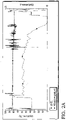
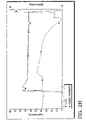
- Fig. 2A illustrates the vessel pressure and vessel liquid level profile during the distillation process of the Comparative Example using the polyol of Example 1.
- the pressure fluctuated with many quick drops that coincided with spikes in the liquid level, indicating foam up, in this case reaching to top of the vessel (100% level).
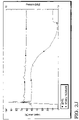
- Fig. 2B illustrates the vessel pressure and vessel liquid level profile during the inventive distillation process using the polyol of Example 1.
- the pressure decreased at a much more controlled pace relative to the profile of Fig. 2A , without as many fluctuations.
- the liquid level also had less extreme spikes, staying below 100%.
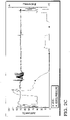
- Fig. 2C illustrates the vessel pressure and vessel liquid level profile during the distillation process of the Comparative Example using the polyol of Example 2. As is apparent, the pressure dropped very rapidly. The liquid level spiked into the high-80's and 90% range.
- Fig. 2D illustrates the vessel pressure and vessel liquid level profile during the inventive distillation process using the polyol of Example 2. As is apparent, the pressure decrease was slow and controlled relative to the profile of Fig. 2C . The liquid level spikes were also fewer and only reached into the low-80's % range.
- Fig. 2E illustrates the vessel pressure and vessel liquid level profile during the distillation process of the Comparative Example using the polyol of Example 3. As is apparent, the pressure decrease was rapid. There were liquid level spikes into the 80's and low 90's % range.
- Fig. 2F illustrates the vessel pressure and vessel liquid level profile during the inventive distillation process using the polyol of Example 3. As is apparent, the pressure decrease was much slower and more controlled than the profile of Fig. 2E . The liquid level spikes were fewer and reached only into the low-80's % range.
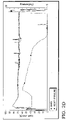
- Fig. 2G illustrates the vessel pressure and vessel liquid level profile during the distillation process of the Comparative Example using the polyol of Example 4. As is apparent, the pressure decrease was rapid and up and down. The liquid level was erratic and hit 100% level a few times.
- Fig. 2H illustrates the vessel pressure and vessel liquid level profile during the inventive distillation process using the polyol of Example 4. As is apparent, the pressure decrease was much slower and more controlled than the profile of Fig. 2G . The liquid level was relatively smooth with only one small spike at the beginning.
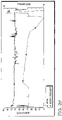
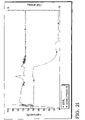
- Fig. 21 illustrates the vessel pressure and vessel liquid level profile during the distillation process of the Comparative Example using the polyol of Example 5. As is apparent, the pressure decrease was rapid. A few small spikes in liquid level occurred.
- Fig. 2J illustrates the vessel pressure and vessel liquid level profile during the inventive distillation process using the polyol of Example 5. As is apparent, the pressure decrease was slower relative to the profile of Fig. 21. The liquid level was smooth with no spikes.
Landscapes
- Chemical & Material Sciences (AREA)
- Chemical Kinetics & Catalysis (AREA)
- Health & Medical Sciences (AREA)
- Medicinal Chemistry (AREA)
- Polymers & Plastics (AREA)
- Organic Chemistry (AREA)
- Polyethers (AREA)
- Treatments Of Macromolecular Shaped Articles (AREA)
Claims (14)
- Verfahren zum Entfernen von Wasser aus einem Polyetherpolyol in einem Behälter durch Chargendestillation, Folgendes umfassend:(a) Erhitzen des Polyetherpolyols auf eine Temperatur innerhalb eines ersten vorbestimmten Destillationstemperaturbereichs, während (i) der Druck des Behälters bei oder über normalem Atmosphärendruck und bei oder unter einem vorbestimmten Maximaldruck gehalten wird und (ii) die Erhöhungsgeschwindigkeit des Behälterdrucks innerhalb eines vorbestimmten Druckerhöhungsgeschwindigkeitsbereichs geregelt wird, um einen ersten Anteil des Wassers aus dem Polyetherpolyol zu entfernen; und dann(b) Regeln der Senkungsgeschwindigkeit des Behälterdrucks innerhalb eines vorbestimmten Drucksenkungsgeschwindigkeitsbereichs, um einen zweiten Anteil des Wassers aus dem Polyetherpolyol zu entfernen,wobei eine Zielerhöhungsgeschwindigkeit des Behälterdrucks während Schritt (a) 0,01 bis 1 lb/in2 pro Minute (0,01149 bis 1,149 mbar pro Sekunde) beträgt und wobei Schritt (b) Regeln der Senkungsgeschwindigkeit des Behälterdrucks auf normalen Atmosphärendruck bei einer Geschwindigkeit innerhalb des Bereichs von 0,01 bis 1 lb/in2 pro Minute (0,01149 bis 1,149 mbar pro Sekunde) umfasst.
- Verfahren nach Anspruch 1, wobei der erste vorbestimmte Destillationstemperaturbereich 100 °C bis 140 °C ist und der vorbestimmte Maximaldruck mindestens normaler Atmosphärendruck bis hoch zu 2047,7 mbar (29,7 lb/in2) ist.
- Verfahren nach Anspruch 1, wobei:(1) eine Zielsenkungsgeschwindigkeit des Behälterdrucks auf normalen Atmosphärendruck bis zu einem ersten Solldruckwert über dem normalen Atmosphärendruck "x" ist;(2) eine Zielsenkungsgeschwindigkeit des Behälterdrucks auf normalen Atmosphärendruck bis zu einem zweiten Solldruckwert kleiner ist als "x", der ein niedrigerer Druck als der erste Solldruckwert über dem normalen Atmosphärendruck ist und über dem normalen Atmosphärendruck liegt, und(3) eine Zielsenkungsgeschwindigkeit des Behälterdrucks auf normalen Atmosphärendruck bis zu einem dritten Solldruckwert größer ist als "x", der ein niedrigerer Druck als der zweite Solldruckwert über dem normalen Atmosphärendruck ist und bei oder über dem normalen Atmosphärendruck liegt.
- Verfahren nach Anspruch 3, wobei:"x" ein Wert innerhalb des Bereichs von 0,1 bis 0,3 lb/in2 pro Minute (0,1149 bis 0,3447 mbar pro Sekunde) ist;die Zielsenkungsgeschwindigkeit des Behälterdrucks auf normalen Atmosphärendruck in Schritt (2) kleiner ist als 50 % von "x"; unddie Zielsenkungsgeschwindigkeit des Behälterdrucks auf normalen Atmosphärendruck in Schritt (3) mindestens 120 % von "x" ist.
- Verfahren nach Anspruch 1, wobei:(i) Schritt (b) Halten der Temperatur des Polyetherpolyols bei einer Temperatur innerhalb eines zweiten vorbestimmten Destillationstemperaturbereichs umfasst, während (i) der Behälterdruck unter normalem Atmosphärendruck gehalten wird und (ii) die Senkungsgeschwindigkeit des Behälterdrucks unter normalen Atmosphärendruck auf eine Geschwindigkeit innerhalb eines vorbestimmten Drucksenkungsgeschwindigkeitsbereichs geregelt wird; und(ii) die Temperatur des Polyetherpolyols innerhalb des zweiten vorbestimmten Destillationstemperaturbereichs mindestens 5 °C höher ist als die Temperatur des Polyetherpolyols innerhalb des ersten vorbestimmten Destillationstemperaturbereichs;(iii) eine Zielsenkungsgeschwindigkeit des Behälterdrucks unter normalen Atmosphärendruck 0,1 bis 0,3 lb/in2 pro Minute (0,1149 bis 0,3447 mbar pro Sekunde) ist.
- Verfahren nach Anspruch 5, wobei die Drucksenkungsgeschwindigkeit unter normalen Atmosphärendruck durch Einstellen der Position eines Entlüftungsregelventils geregelt wird, das in einer Entlüftungsleitung des Behälters stromaufwärtig von weiterer Ausrüstung angeordnet ist.
- Verfahren nach Anspruch 5, wobei:(1) eine Zielsenkungsgeschwindigkeit des Behälterdrucks unter normalen Atmosphärendruck bis zu einem ersten Solldruckwert unter dem normalen Atmosphärendruck "y" ist;(2) eine Zielsenkungsgeschwindigkeit des Behälterdrucks unter normalen Atmosphärendruck bis zu einem zweiten Solldruckwert größer ist als "y", der ein niedrigerer Druck als der erste Solldruckwert unter dem normalen Atmosphärendruck ist und über dem normalen Atmosphärendruck liegt, und(3) eine Zielsenkungsgeschwindigkeit des Behälterdrucks unter normalen Atmosphärendruck bis zu einem dritten Solldruckwert kleiner ist als "y", der ein niedrigerer Druck als der zweite Solldruckwert unter normalem Atmosphärendruck ist.
- Verfahren nach Anspruch 7, wobei:"y" ein Wert innerhalb des Bereichs von 0,1 bis 0,3 lb/in2 pro Minute (0,1149 bis 0,3447 mbar pro Sekunde) ist;die Zielsenkungsgeschwindigkeit des Behälterdrucks unter normalen Atmosphärendruck in Schritt (2) mindestens 120 % von "y" ist; unddie Zielsenkungsgeschwindigkeit des Behälterdrucks unter normalen Atmosphärendruck in Schritt (3) kleiner ist als 80 % von "y".
- Verfahren zum Entfernen von Wasser aus einem Polyetherpolyol in einem Behälter durch Chargendestillation, Folgendes umfassend:(a) Erhitzen des Polyetherpolyols auf eine Temperatur innerhalb eines ersten vorbestimmten Destillationstemperaturbereichs, während (i) der Druck des Behälters bei oder über normalem Atmosphärendruck und bei oder unter einem vorbestimmten Maximaldruck gehalten wird und (ii) die Erhöhungsgeschwindigkeit des Behälterdrucks innerhalb eines vorbestimmten Druckerhöhungsgeschwindigkeitsbereich geregelt wird, um einen ersten Anteil des Wassers aus dem Polyetherpolyol zu entfernen; dann(b) Regeln der Senkungsgeschwindigkeit des Behälterdrucks auf normalen Atmosphärendruck innerhalb eines ersten vorbestimmten Drucksenkungsgeschwindigkeitsbereichs; und dann(c) Halten der Temperatur des Polyetherpolyols innerhalb eines zweiten vorbestimmten Destillationstemperaturbereichs, während (i) der Behälterdruck unter normalem Atmosphärendruck gehalten wird und (ii) die Senkungsgeschwindigkeit des Behälterdrucks innerhalb eines zweiten vorbestimmten Drucksenkungsgeschwindigkeitsbereichs geregelt wird, welcher der gleiche wie der erste vorbestimmte Drucksenkungsbereich oder davon verschieden sein kann;wobei eine Zielerhöhungsgeschwindigkeit des Behälterdrucks während Schritt (a) 0,01 bis 1 lb/in2 pro Minute (0,01149 bis 1,149 mbar pro Sekunde) beträgt und wobei Schritt (b) Regeln der Senkungsgeschwindigkeit des Behälterdrucks auf normalen Atmosphärendruck bei einer Geschwindigkeit innerhalb des Bereichs von 0,01 bis 1 lb/in2 pro Minute (0,01149 bis 1,149 mbar pro Sekunde) umfasst.
- Verfahren nach Anspruch 9, wobei der erste vorbestimmte Destillationstemperaturbereich 100 °C bis 140 °C ist und der vorbestimmte Maximaldruck mindestens normaler Atmosphärendruck bis hoch zu 2047,7 mbar (29,7 lb/in2) ist.
- Verfahren nach Anspruch 9, wobei:(1) eine Zielsenkungsgeschwindigkeit des Behälterdrucks auf normalen Atmosphärendruck bis zu einem ersten Solldruckwert über dem normalen Atmosphärendruck "x" ist;(2) eine Zielsenkungsgeschwindigkeit des Behälterdrucks auf normalen Atmosphärendruck bis zu einem zweiten Solldruckwert kleiner ist als "x", der ein niedrigerer Druck als der erste Solldruckwert über dem normalen Atmosphärendruck ist und über dem normalen Atmosphärendruck liegt, und(3) eine Zielsenkungsgeschwindigkeit des Behälterdrucks auf normalen Atmosphärendruck bis zu einem dritten Solldruckwert größer ist als "x", der ein niedrigerer Druck als der zweite Solldruckwert über dem normalen Atmosphärendruck ist und bei oder über dem normalen Atmosphärendruck liegt.
- Verfahren nach Anspruch 11, wobei:"x" ein Wert innerhalb des Bereichs von 0,1 bis 0,3 lb/in2 pro Minute (0,1149 bis 0,3447 mbar pro Sekunde) ist;die Zielsenkungsgeschwindigkeit des Behälterdrucks auf normalen Atmosphärendruck in Schritt (2) kleiner ist als 50 % von "x"; unddie Zielsenkungsgeschwindigkeit des Behälterdrucks auf normalen Atmosphärendruck in Schritt (3) mindestens 120 % von "x" ist.
- Verfahren nach Anspruch 9, wobei:(1) eine Zielsenkungsgeschwindigkeit des Behälterdrucks unter normalen Atmosphärendruck bis zu einem ersten Solldruckwert unter dem normalen Atmosphärendruck "y" ist;(2) eine Zielsenkungsgeschwindigkeit des Behälterdrucks unter normalen Atmosphärendruck bis zu einem zweiten Solldruckwert größer ist als "y", der ein niedrigerer Druck als der erste Solldruckwert unter dem normalen Atmosphärendruck ist und über dem normalen Atmosphärendruck liegt, und(3) eine Zielsenkungsgeschwindigkeit des Behälterdrucks unter normalen Atmosphärendruck bis zu einem dritten Solldruckwert kleiner ist als "y", der ein niedrigerer Druck als der zweite Solldruckwert unter normalem Atmosphärendruck ist.
- Verfahren nach Anspruch 13, wobei:"y" ein Wert innerhalb des Bereichs von 0,1 bis 0,3 lb/in2 pro Minute (0,1149 bis 0,3447 mbar pro Sekunde) ist;die Zielsenkungsgeschwindigkeit des Behälterdrucks unter normalen Atmosphärendruck in Schritt (2) mindestens 120 % von "y" ist; unddie Zielsenkungsgeschwindigkeit des Behälterdrucks unter normalen Atmosphärendruck in Schritt (3) kleiner ist als 80 % von "y".
Applications Claiming Priority (2)
| Application Number | Priority Date | Filing Date | Title |
|---|---|---|---|
| US15/190,841 US10150837B2 (en) | 2016-06-23 | 2016-06-23 | Processes for removing water from a polyether polyol |
| PCT/US2017/038133 WO2017222984A1 (en) | 2016-06-23 | 2017-06-19 | Processes for removing water from a polyether polyol |
Publications (2)
| Publication Number | Publication Date |
|---|---|
| EP3475337A1 EP3475337A1 (de) | 2019-05-01 |
| EP3475337B1 true EP3475337B1 (de) | 2022-06-01 |
Family
ID=59216103
Family Applications (1)
| Application Number | Title | Priority Date | Filing Date |
|---|---|---|---|
| EP17733331.7A Active EP3475337B1 (de) | 2016-06-23 | 2017-06-19 | Verfahren zur entfernung von wasser aus einem polyetherpolyol |
Country Status (5)
| Country | Link |
|---|---|
| US (1) | US10150837B2 (de) |
| EP (1) | EP3475337B1 (de) |
| CN (1) | CN109312066B (de) |
| ES (1) | ES2917215T3 (de) |
| WO (1) | WO2017222984A1 (de) |
Families Citing this family (2)
| Publication number | Priority date | Publication date | Assignee | Title |
|---|---|---|---|---|
| US11572440B2 (en) | 2020-02-18 | 2023-02-07 | Covestro Llc | Methods for purifying polyols containing oxyalkylene units to reduce 2-methyl-2-pentenal content |
| CN115500751A (zh) * | 2022-09-20 | 2022-12-23 | 深圳市杉川机器人有限公司 | 基站的控制方法和具有其的基站 |
Family Cites Families (21)
| Publication number | Priority date | Publication date | Assignee | Title |
|---|---|---|---|---|
| US3016404A (en) | 1959-09-28 | 1962-01-09 | Allied Chem | Purification of crude alkylene oxide polyether |
| US3729387A (en) | 1971-07-08 | 1973-04-24 | Exxon Research Engineering Co | Distillation of water and alcohol while preventing foaming and formation of emulsions |
| JPS5770124A (en) | 1980-10-20 | 1982-04-30 | Dai Ichi Kogyo Seiyaku Co Ltd | Purification of polyether-polyol |
| US4430490A (en) | 1982-08-10 | 1984-02-07 | Ppg Industries, Inc. | Polyether polyols and their method of preparation |
| US4985551A (en) | 1988-12-29 | 1991-01-15 | Basf Corporation | Process for purification of catalysts from polyols using ion exchange resins |
| US5053111A (en) * | 1989-12-01 | 1991-10-01 | Ellerbe Jr William R | Method and apparatus for the batch distillation of water |
| JPH0488019A (ja) | 1990-07-26 | 1992-03-19 | Henkel Kgaa | ポリエーテルポリアミンの製法 |
| GB9325468D0 (en) | 1993-12-13 | 1994-02-16 | Ici Plc | Process for purifying polyols |
| JPH07251002A (ja) * | 1994-03-16 | 1995-10-03 | Toshiba Corp | 2成分系減圧蒸発缶装置とその運転方法 |
| WO1996020972A2 (en) | 1995-01-05 | 1996-07-11 | Bayer Corporation | A PROCESS FOR THE REMOVAL OF A pH-BASIC MATERIAL FROM A POLYETHER POLYOL |
| DE19629160A1 (de) | 1996-07-19 | 1998-01-22 | Basf Ag | Verfahren zur Herstellung von Polyurethanweichschaumstoffen |
| DE19838156A1 (de) | 1998-08-21 | 2000-02-24 | Basf Ag | Verfahren zur Herstellung von Polyetherpolyolen |
| US6376625B1 (en) | 1999-08-25 | 2002-04-23 | The Dow Chemical Company | Process for purifying polyethers |
| US20030158450A1 (en) | 2000-05-15 | 2003-08-21 | Melis Hasselaar | Process for the preparation of polyether polyols |
| EP1370600B1 (de) | 2000-11-22 | 2004-10-13 | Basf Aktiengesellschaft | Verfahren zur aufarbeitung von polyetheralkoholen |
| WO2009131141A1 (ja) * | 2008-04-25 | 2009-10-29 | 三井化学株式会社 | ポリエーテルポリオール、硬質ポリウレタン発泡体およびこれらの製造方法 |
| US9012695B2 (en) | 2009-06-18 | 2015-04-21 | Huntsman International Llc | Process for neutralizing an unneutralised polyether polyol |
| CN102887996B (zh) | 2011-07-19 | 2016-03-16 | 因温斯特技术公司 | 聚醚多元醇过滤中的聚合物回收方法 |
| EP2669312A1 (de) * | 2012-05-29 | 2013-12-04 | Huntsman International Llc | Verfahren zur Herstellung von Polyetherpolyolen |
| CN103466549B (zh) * | 2013-08-20 | 2015-04-01 | 山东新龙科技股份有限公司 | 一种高纯氯气精馏工艺及其设备 |
| KR20160101919A (ko) | 2013-12-18 | 2016-08-26 | 코베스트로 도이칠란트 아게 | 알칼리 폴리에테르 폴리올의 후처리 방법 |
-
2016
- 2016-06-23 US US15/190,841 patent/US10150837B2/en active Active
-
2017
- 2017-06-19 WO PCT/US2017/038133 patent/WO2017222984A1/en not_active Ceased
- 2017-06-19 CN CN201780036010.2A patent/CN109312066B/zh not_active Expired - Fee Related
- 2017-06-19 EP EP17733331.7A patent/EP3475337B1/de active Active
- 2017-06-19 ES ES17733331T patent/ES2917215T3/es active Active
Also Published As
| Publication number | Publication date |
|---|---|
| CN109312066B (zh) | 2021-09-28 |
| US10150837B2 (en) | 2018-12-11 |
| WO2017222984A1 (en) | 2017-12-28 |
| EP3475337A1 (de) | 2019-05-01 |
| CN109312066A (zh) | 2019-02-05 |
| US20170369647A1 (en) | 2017-12-28 |
| ES2917215T3 (es) | 2022-07-07 |
Similar Documents
| Publication | Publication Date | Title |
|---|---|---|
| EP1911787B1 (de) | Verfahren zur Herstellung von Polyethern mit Toleranz für einen hohen Wassergehalt | |
| EP1528073B1 (de) | Ein-Reaktor-Synthese von Polyolen, die unter Verwendung basischer Katalysatoren terminiert werden, basierend auf Intermediaten, die mit DMC-Katalysatoren hergestellt werden. | |
| KR101469276B1 (ko) | 중합체 폴리올 스트리핑 방법 | |
| CN101250260B (zh) | 聚醚酯多元醇的制备方法 | |
| EP2855559B1 (de) | Verfahren zur herstellung von polyetherpolyolen | |
| CA2756579C (en) | Processes for preparing ethylene oxide-capped polyols | |
| EP3475337B1 (de) | Verfahren zur entfernung von wasser aus einem polyetherpolyol | |
| JP2011195836A (ja) | アルキレンオキサイド付加物の製造方法 | |
| EP3559083B1 (de) | Verfahren zur reinigung von polyetherpolyolen | |
| EP3478745B1 (de) | Verfahren und systeme zur entfernung von wasser und salz aus einem neutralisierten polyetherpolyol | |
| JP5415323B2 (ja) | ポリオキシアルキレンアルコールの製造方法 | |
| US6245947B1 (en) | Treatment for polyether polyols | |
| EP4353767B1 (de) | Verfahren zur reinigung von polyetherpolyolen unter verwendung von ionenaustauschharzen | |
| US11572440B2 (en) | Methods for purifying polyols containing oxyalkylene units to reduce 2-methyl-2-pentenal content | |
| CN121368608A (zh) | 生产聚氧化烯多元醇的方法 | |
| HK1124079A (en) | Process for the preparation of polyether-ester polyols | |
| MX2013009913A (es) | Procedimiento para la produccion de espumas rigidas de poliuretano. |
Legal Events
| Date | Code | Title | Description |
|---|---|---|---|
| STAA | Information on the status of an ep patent application or granted ep patent |
Free format text: STATUS: UNKNOWN |
|
| STAA | Information on the status of an ep patent application or granted ep patent |
Free format text: STATUS: THE INTERNATIONAL PUBLICATION HAS BEEN MADE |
|
| PUAI | Public reference made under article 153(3) epc to a published international application that has entered the european phase |
Free format text: ORIGINAL CODE: 0009012 |
|
| STAA | Information on the status of an ep patent application or granted ep patent |
Free format text: STATUS: REQUEST FOR EXAMINATION WAS MADE |
|
| 17P | Request for examination filed |
Effective date: 20190123 |
|
| AK | Designated contracting states |
Kind code of ref document: A1 Designated state(s): AL AT BE BG CH CY CZ DE DK EE ES FI FR GB GR HR HU IE IS IT LI LT LU LV MC MK MT NL NO PL PT RO RS SE SI SK SM TR |
|
| AX | Request for extension of the european patent |
Extension state: BA ME |
|
| DAV | Request for validation of the european patent (deleted) | ||
| DAX | Request for extension of the european patent (deleted) | ||
| STAA | Information on the status of an ep patent application or granted ep patent |
Free format text: STATUS: EXAMINATION IS IN PROGRESS |
|
| 17Q | First examination report despatched |
Effective date: 20200514 |
|
| GRAP | Despatch of communication of intention to grant a patent |
Free format text: ORIGINAL CODE: EPIDOSNIGR1 |
|
| STAA | Information on the status of an ep patent application or granted ep patent |
Free format text: STATUS: GRANT OF PATENT IS INTENDED |
|
| INTG | Intention to grant announced |
Effective date: 20211105 |
|
| GRAJ | Information related to disapproval of communication of intention to grant by the applicant or resumption of examination proceedings by the epo deleted |
Free format text: ORIGINAL CODE: EPIDOSDIGR1 |
|
| STAA | Information on the status of an ep patent application or granted ep patent |
Free format text: STATUS: EXAMINATION IS IN PROGRESS |
|
| GRAP | Despatch of communication of intention to grant a patent |
Free format text: ORIGINAL CODE: EPIDOSNIGR1 |
|
| STAA | Information on the status of an ep patent application or granted ep patent |
Free format text: STATUS: GRANT OF PATENT IS INTENDED |
|
| INTC | Intention to grant announced (deleted) | ||
| INTG | Intention to grant announced |
Effective date: 20211222 |
|
| GRAS | Grant fee paid |
Free format text: ORIGINAL CODE: EPIDOSNIGR3 |
|
| GRAA | (expected) grant |
Free format text: ORIGINAL CODE: 0009210 |
|
| STAA | Information on the status of an ep patent application or granted ep patent |
Free format text: STATUS: THE PATENT HAS BEEN GRANTED |
|
| AK | Designated contracting states |
Kind code of ref document: B1 Designated state(s): AL AT BE BG CH CY CZ DE DK EE ES FI FR GB GR HR HU IE IS IT LI LT LU LV MC MK MT NL NO PL PT RO RS SE SI SK SM TR |
|
| REG | Reference to a national code |
Ref country code: GB Ref legal event code: FG4D |
|
| REG | Reference to a national code |
Ref country code: AT Ref legal event code: REF Ref document number: 1495355 Country of ref document: AT Kind code of ref document: T Effective date: 20220615 Ref country code: CH Ref legal event code: EP |
|
| REG | Reference to a national code |
Ref country code: IE Ref legal event code: FG4D Ref country code: NL Ref legal event code: FP |
|
| REG | Reference to a national code |
Ref country code: DE Ref legal event code: R096 Ref document number: 602017058000 Country of ref document: DE |
|
| REG | Reference to a national code |
Ref country code: ES Ref legal event code: FG2A Ref document number: 2917215 Country of ref document: ES Kind code of ref document: T3 Effective date: 20220707 |
|
| REG | Reference to a national code |
Ref country code: LT Ref legal event code: MG9D |
|
| PG25 | Lapsed in a contracting state [announced via postgrant information from national office to epo] |
Ref country code: SE Free format text: LAPSE BECAUSE OF FAILURE TO SUBMIT A TRANSLATION OF THE DESCRIPTION OR TO PAY THE FEE WITHIN THE PRESCRIBED TIME-LIMIT Effective date: 20220601 Ref country code: NO Free format text: LAPSE BECAUSE OF FAILURE TO SUBMIT A TRANSLATION OF THE DESCRIPTION OR TO PAY THE FEE WITHIN THE PRESCRIBED TIME-LIMIT Effective date: 20220901 Ref country code: LT Free format text: LAPSE BECAUSE OF FAILURE TO SUBMIT A TRANSLATION OF THE DESCRIPTION OR TO PAY THE FEE WITHIN THE PRESCRIBED TIME-LIMIT Effective date: 20220601 Ref country code: HR Free format text: LAPSE BECAUSE OF FAILURE TO SUBMIT A TRANSLATION OF THE DESCRIPTION OR TO PAY THE FEE WITHIN THE PRESCRIBED TIME-LIMIT Effective date: 20220601 Ref country code: GR Free format text: LAPSE BECAUSE OF FAILURE TO SUBMIT A TRANSLATION OF THE DESCRIPTION OR TO PAY THE FEE WITHIN THE PRESCRIBED TIME-LIMIT Effective date: 20220902 Ref country code: FI Free format text: LAPSE BECAUSE OF FAILURE TO SUBMIT A TRANSLATION OF THE DESCRIPTION OR TO PAY THE FEE WITHIN THE PRESCRIBED TIME-LIMIT Effective date: 20220601 Ref country code: BG Free format text: LAPSE BECAUSE OF FAILURE TO SUBMIT A TRANSLATION OF THE DESCRIPTION OR TO PAY THE FEE WITHIN THE PRESCRIBED TIME-LIMIT Effective date: 20220901 |
|
| REG | Reference to a national code |
Ref country code: AT Ref legal event code: MK05 Ref document number: 1495355 Country of ref document: AT Kind code of ref document: T Effective date: 20220601 |
|
| PG25 | Lapsed in a contracting state [announced via postgrant information from national office to epo] |
Ref country code: RS Free format text: LAPSE BECAUSE OF FAILURE TO SUBMIT A TRANSLATION OF THE DESCRIPTION OR TO PAY THE FEE WITHIN THE PRESCRIBED TIME-LIMIT Effective date: 20220601 Ref country code: PL Free format text: LAPSE BECAUSE OF FAILURE TO SUBMIT A TRANSLATION OF THE DESCRIPTION OR TO PAY THE FEE WITHIN THE PRESCRIBED TIME-LIMIT Effective date: 20220601 Ref country code: LV Free format text: LAPSE BECAUSE OF FAILURE TO SUBMIT A TRANSLATION OF THE DESCRIPTION OR TO PAY THE FEE WITHIN THE PRESCRIBED TIME-LIMIT Effective date: 20220601 |
|
| PG25 | Lapsed in a contracting state [announced via postgrant information from national office to epo] |
Ref country code: SM Free format text: LAPSE BECAUSE OF FAILURE TO SUBMIT A TRANSLATION OF THE DESCRIPTION OR TO PAY THE FEE WITHIN THE PRESCRIBED TIME-LIMIT Effective date: 20220601 Ref country code: SK Free format text: LAPSE BECAUSE OF FAILURE TO SUBMIT A TRANSLATION OF THE DESCRIPTION OR TO PAY THE FEE WITHIN THE PRESCRIBED TIME-LIMIT Effective date: 20220601 Ref country code: RO Free format text: LAPSE BECAUSE OF FAILURE TO SUBMIT A TRANSLATION OF THE DESCRIPTION OR TO PAY THE FEE WITHIN THE PRESCRIBED TIME-LIMIT Effective date: 20220601 Ref country code: PT Free format text: LAPSE BECAUSE OF FAILURE TO SUBMIT A TRANSLATION OF THE DESCRIPTION OR TO PAY THE FEE WITHIN THE PRESCRIBED TIME-LIMIT Effective date: 20221003 Ref country code: EE Free format text: LAPSE BECAUSE OF FAILURE TO SUBMIT A TRANSLATION OF THE DESCRIPTION OR TO PAY THE FEE WITHIN THE PRESCRIBED TIME-LIMIT Effective date: 20220601 Ref country code: CZ Free format text: LAPSE BECAUSE OF FAILURE TO SUBMIT A TRANSLATION OF THE DESCRIPTION OR TO PAY THE FEE WITHIN THE PRESCRIBED TIME-LIMIT Effective date: 20220601 Ref country code: AT Free format text: LAPSE BECAUSE OF FAILURE TO SUBMIT A TRANSLATION OF THE DESCRIPTION OR TO PAY THE FEE WITHIN THE PRESCRIBED TIME-LIMIT Effective date: 20220601 |
|
| REG | Reference to a national code |
Ref country code: CH Ref legal event code: PL |
|
| PG25 | Lapsed in a contracting state [announced via postgrant information from national office to epo] |
Ref country code: MC Free format text: LAPSE BECAUSE OF FAILURE TO SUBMIT A TRANSLATION OF THE DESCRIPTION OR TO PAY THE FEE WITHIN THE PRESCRIBED TIME-LIMIT Effective date: 20220601 Ref country code: IS Free format text: LAPSE BECAUSE OF FAILURE TO SUBMIT A TRANSLATION OF THE DESCRIPTION OR TO PAY THE FEE WITHIN THE PRESCRIBED TIME-LIMIT Effective date: 20221001 |
|
| REG | Reference to a national code |
Ref country code: DE Ref legal event code: R097 Ref document number: 602017058000 Country of ref document: DE |
|
| PG25 | Lapsed in a contracting state [announced via postgrant information from national office to epo] |
Ref country code: AL Free format text: LAPSE BECAUSE OF FAILURE TO SUBMIT A TRANSLATION OF THE DESCRIPTION OR TO PAY THE FEE WITHIN THE PRESCRIBED TIME-LIMIT Effective date: 20220601 |
|
| PLBE | No opposition filed within time limit |
Free format text: ORIGINAL CODE: 0009261 |
|
| STAA | Information on the status of an ep patent application or granted ep patent |
Free format text: STATUS: NO OPPOSITION FILED WITHIN TIME LIMIT |
|
| PG25 | Lapsed in a contracting state [announced via postgrant information from national office to epo] |
Ref country code: LU Free format text: LAPSE BECAUSE OF NON-PAYMENT OF DUE FEES Effective date: 20220619 Ref country code: LI Free format text: LAPSE BECAUSE OF NON-PAYMENT OF DUE FEES Effective date: 20220630 Ref country code: IE Free format text: LAPSE BECAUSE OF NON-PAYMENT OF DUE FEES Effective date: 20220619 Ref country code: FR Free format text: LAPSE BECAUSE OF NON-PAYMENT OF DUE FEES Effective date: 20220801 Ref country code: DK Free format text: LAPSE BECAUSE OF FAILURE TO SUBMIT A TRANSLATION OF THE DESCRIPTION OR TO PAY THE FEE WITHIN THE PRESCRIBED TIME-LIMIT Effective date: 20220601 Ref country code: CH Free format text: LAPSE BECAUSE OF NON-PAYMENT OF DUE FEES Effective date: 20220630 |
|
| 26N | No opposition filed |
Effective date: 20230302 |
|
| GBPC | Gb: european patent ceased through non-payment of renewal fee |
Effective date: 20220901 |
|
| PG25 | Lapsed in a contracting state [announced via postgrant information from national office to epo] |
Ref country code: SI Free format text: LAPSE BECAUSE OF FAILURE TO SUBMIT A TRANSLATION OF THE DESCRIPTION OR TO PAY THE FEE WITHIN THE PRESCRIBED TIME-LIMIT Effective date: 20220601 |
|
| PG25 | Lapsed in a contracting state [announced via postgrant information from national office to epo] |
Ref country code: GB Free format text: LAPSE BECAUSE OF NON-PAYMENT OF DUE FEES Effective date: 20220901 |
|
| PG25 | Lapsed in a contracting state [announced via postgrant information from national office to epo] |
Ref country code: IT Free format text: LAPSE BECAUSE OF FAILURE TO SUBMIT A TRANSLATION OF THE DESCRIPTION OR TO PAY THE FEE WITHIN THE PRESCRIBED TIME-LIMIT Effective date: 20220601 |
|
| PG25 | Lapsed in a contracting state [announced via postgrant information from national office to epo] |
Ref country code: HU Free format text: LAPSE BECAUSE OF FAILURE TO SUBMIT A TRANSLATION OF THE DESCRIPTION OR TO PAY THE FEE WITHIN THE PRESCRIBED TIME-LIMIT; INVALID AB INITIO Effective date: 20170619 |
|
| PG25 | Lapsed in a contracting state [announced via postgrant information from national office to epo] |
Ref country code: MK Free format text: LAPSE BECAUSE OF FAILURE TO SUBMIT A TRANSLATION OF THE DESCRIPTION OR TO PAY THE FEE WITHIN THE PRESCRIBED TIME-LIMIT Effective date: 20220601 Ref country code: CY Free format text: LAPSE BECAUSE OF FAILURE TO SUBMIT A TRANSLATION OF THE DESCRIPTION OR TO PAY THE FEE WITHIN THE PRESCRIBED TIME-LIMIT Effective date: 20220601 |
|
| PG25 | Lapsed in a contracting state [announced via postgrant information from national office to epo] |
Ref country code: TR Free format text: LAPSE BECAUSE OF FAILURE TO SUBMIT A TRANSLATION OF THE DESCRIPTION OR TO PAY THE FEE WITHIN THE PRESCRIBED TIME-LIMIT Effective date: 20220601 |
|
| PG25 | Lapsed in a contracting state [announced via postgrant information from national office to epo] |
Ref country code: MT Free format text: LAPSE BECAUSE OF FAILURE TO SUBMIT A TRANSLATION OF THE DESCRIPTION OR TO PAY THE FEE WITHIN THE PRESCRIBED TIME-LIMIT Effective date: 20220601 |
|
| PG25 | Lapsed in a contracting state [announced via postgrant information from national office to epo] |
Ref country code: BG Free format text: LAPSE BECAUSE OF FAILURE TO SUBMIT A TRANSLATION OF THE DESCRIPTION OR TO PAY THE FEE WITHIN THE PRESCRIBED TIME-LIMIT Effective date: 20220601 |
|
| PG25 | Lapsed in a contracting state [announced via postgrant information from national office to epo] |
Ref country code: BG Free format text: LAPSE BECAUSE OF FAILURE TO SUBMIT A TRANSLATION OF THE DESCRIPTION OR TO PAY THE FEE WITHIN THE PRESCRIBED TIME-LIMIT Effective date: 20220601 |
|
| PGFP | Annual fee paid to national office [announced via postgrant information from national office to epo] |
Ref country code: NL Payment date: 20250526 Year of fee payment: 9 |
|
| PGFP | Annual fee paid to national office [announced via postgrant information from national office to epo] |
Ref country code: DE Payment date: 20250521 Year of fee payment: 9 |
|
| PGFP | Annual fee paid to national office [announced via postgrant information from national office to epo] |
Ref country code: BE Payment date: 20250526 Year of fee payment: 9 |
|
| PGFP | Annual fee paid to national office [announced via postgrant information from national office to epo] |
Ref country code: ES Payment date: 20250707 Year of fee payment: 9 |