EP3462422B1 - Fahrzeugsteuerungssystem - Google Patents
Fahrzeugsteuerungssystem Download PDFInfo
- Publication number
- EP3462422B1 EP3462422B1 EP18192551.2A EP18192551A EP3462422B1 EP 3462422 B1 EP3462422 B1 EP 3462422B1 EP 18192551 A EP18192551 A EP 18192551A EP 3462422 B1 EP3462422 B1 EP 3462422B1
- Authority
- EP
- European Patent Office
- Prior art keywords
- vehicle
- unit
- terminal device
- user
- manipulation
- Prior art date
- Legal status (The legal status is an assumption and is not a legal conclusion. Google has not performed a legal analysis and makes no representation as to the accuracy of the status listed.)
- Active
Links
Images




Classifications
-
- B—PERFORMING OPERATIONS; TRANSPORTING
- B60—VEHICLES IN GENERAL
- B60R—VEHICLES, VEHICLE FITTINGS, OR VEHICLE PARTS, NOT OTHERWISE PROVIDED FOR
- B60R25/00—Fittings or systems for preventing or indicating unauthorised use or theft of vehicles
- B60R25/20—Means to switch the anti-theft system on or off
- B60R25/25—Means to switch the anti-theft system on or off using biometry
- B60R25/257—Voice recognition
-
- B—PERFORMING OPERATIONS; TRANSPORTING
- B60—VEHICLES IN GENERAL
- B60R—VEHICLES, VEHICLE FITTINGS, OR VEHICLE PARTS, NOT OTHERWISE PROVIDED FOR
- B60R25/00—Fittings or systems for preventing or indicating unauthorised use or theft of vehicles
- B60R25/20—Means to switch the anti-theft system on or off
- B60R25/24—Means to switch the anti-theft system on or off using electronic identifiers containing a code not memorised by the user
- B60R25/241—Means to switch the anti-theft system on or off using electronic identifiers containing a code not memorised by the user whereby access privileges are related to the identifiers
-
- B—PERFORMING OPERATIONS; TRANSPORTING
- B60—VEHICLES IN GENERAL
- B60R—VEHICLES, VEHICLE FITTINGS, OR VEHICLE PARTS, NOT OTHERWISE PROVIDED FOR
- B60R25/00—Fittings or systems for preventing or indicating unauthorised use or theft of vehicles
- B60R25/01—Fittings or systems for preventing or indicating unauthorised use or theft of vehicles operating on vehicle systems or fittings, e.g. on doors, seats or windscreens
-
- B—PERFORMING OPERATIONS; TRANSPORTING
- B60—VEHICLES IN GENERAL
- B60R—VEHICLES, VEHICLE FITTINGS, OR VEHICLE PARTS, NOT OTHERWISE PROVIDED FOR
- B60R25/00—Fittings or systems for preventing or indicating unauthorised use or theft of vehicles
- B60R25/10—Fittings or systems for preventing or indicating unauthorised use or theft of vehicles actuating a signalling device
-
- B—PERFORMING OPERATIONS; TRANSPORTING
- B60—VEHICLES IN GENERAL
- B60R—VEHICLES, VEHICLE FITTINGS, OR VEHICLE PARTS, NOT OTHERWISE PROVIDED FOR
- B60R25/00—Fittings or systems for preventing or indicating unauthorised use or theft of vehicles
- B60R25/20—Means to switch the anti-theft system on or off
- B60R25/24—Means to switch the anti-theft system on or off using electronic identifiers containing a code not memorised by the user
- B60R25/245—Means to switch the anti-theft system on or off using electronic identifiers containing a code not memorised by the user where the antenna reception area plays a role
-
- G—PHYSICS
- G07—CHECKING-DEVICES
- G07C—TIME OR ATTENDANCE REGISTERS; REGISTERING OR INDICATING THE WORKING OF MACHINES; GENERATING RANDOM NUMBERS; VOTING OR LOTTERY APPARATUS; ARRANGEMENTS, SYSTEMS OR APPARATUS FOR CHECKING NOT PROVIDED FOR ELSEWHERE
- G07C9/00—Individual registration on entry or exit
- G07C9/00174—Electronically operated locks; Circuits therefor; Nonmechanical keys therefor, e.g. passive or active electrical keys or other data carriers without mechanical keys
- G07C9/00309—Electronically operated locks; Circuits therefor; Nonmechanical keys therefor, e.g. passive or active electrical keys or other data carriers without mechanical keys operated with bidirectional data transmission between data carrier and locks
-
- G—PHYSICS
- G07—CHECKING-DEVICES
- G07C—TIME OR ATTENDANCE REGISTERS; REGISTERING OR INDICATING THE WORKING OF MACHINES; GENERATING RANDOM NUMBERS; VOTING OR LOTTERY APPARATUS; ARRANGEMENTS, SYSTEMS OR APPARATUS FOR CHECKING NOT PROVIDED FOR ELSEWHERE
- G07C9/00—Individual registration on entry or exit
- G07C9/00174—Electronically operated locks; Circuits therefor; Nonmechanical keys therefor, e.g. passive or active electrical keys or other data carriers without mechanical keys
- G07C9/00563—Electronically operated locks; Circuits therefor; Nonmechanical keys therefor, e.g. passive or active electrical keys or other data carriers without mechanical keys using personal physical data of the operator, e.g. finger prints, retinal images, voicepatterns
-
- B—PERFORMING OPERATIONS; TRANSPORTING
- B60—VEHICLES IN GENERAL
- B60R—VEHICLES, VEHICLE FITTINGS, OR VEHICLE PARTS, NOT OTHERWISE PROVIDED FOR
- B60R25/00—Fittings or systems for preventing or indicating unauthorised use or theft of vehicles
- B60R25/20—Means to switch the anti-theft system on or off
- B60R25/25—Means to switch the anti-theft system on or off using biometry
-
- B—PERFORMING OPERATIONS; TRANSPORTING
- B60—VEHICLES IN GENERAL
- B60R—VEHICLES, VEHICLE FITTINGS, OR VEHICLE PARTS, NOT OTHERWISE PROVIDED FOR
- B60R25/00—Fittings or systems for preventing or indicating unauthorised use or theft of vehicles
- B60R25/30—Detection related to theft or to other events relevant to anti-theft systems
- B60R25/31—Detection related to theft or to other events relevant to anti-theft systems of human presence inside or outside the vehicle
-
- G—PHYSICS
- G07—CHECKING-DEVICES
- G07C—TIME OR ATTENDANCE REGISTERS; REGISTERING OR INDICATING THE WORKING OF MACHINES; GENERATING RANDOM NUMBERS; VOTING OR LOTTERY APPARATUS; ARRANGEMENTS, SYSTEMS OR APPARATUS FOR CHECKING NOT PROVIDED FOR ELSEWHERE
- G07C9/00—Individual registration on entry or exit
- G07C9/00174—Electronically operated locks; Circuits therefor; Nonmechanical keys therefor, e.g. passive or active electrical keys or other data carriers without mechanical keys
- G07C9/00309—Electronically operated locks; Circuits therefor; Nonmechanical keys therefor, e.g. passive or active electrical keys or other data carriers without mechanical keys operated with bidirectional data transmission between data carrier and locks
- G07C2009/00555—Electronically operated locks; Circuits therefor; Nonmechanical keys therefor, e.g. passive or active electrical keys or other data carriers without mechanical keys operated with bidirectional data transmission between data carrier and locks comprising means to detect or avoid relay attacks
-
- G—PHYSICS
- G07—CHECKING-DEVICES
- G07C—TIME OR ATTENDANCE REGISTERS; REGISTERING OR INDICATING THE WORKING OF MACHINES; GENERATING RANDOM NUMBERS; VOTING OR LOTTERY APPARATUS; ARRANGEMENTS, SYSTEMS OR APPARATUS FOR CHECKING NOT PROVIDED FOR ELSEWHERE
- G07C9/00—Individual registration on entry or exit
- G07C9/00174—Electronically operated locks; Circuits therefor; Nonmechanical keys therefor, e.g. passive or active electrical keys or other data carriers without mechanical keys
- G07C2009/00753—Electronically operated locks; Circuits therefor; Nonmechanical keys therefor, e.g. passive or active electrical keys or other data carriers without mechanical keys operated by active electrical keys
- G07C2009/00809—Electronically operated locks; Circuits therefor; Nonmechanical keys therefor, e.g. passive or active electrical keys or other data carriers without mechanical keys operated by active electrical keys with data transmission through the human body
Definitions
- the present invention relates to a vehicle control system that causes a vehicle to perform a predetermined operation.
- a smart system in which a user carrying an electronic key or the like verified to match a vehicle through wireless communication, performs a predetermined manipulation such as a touch on a door handle such that an operation of door unlocking or the like can be controlled has been proposed (see JP 2015-169008 A ).
- a terminal device called a hearable device, having an earhole (external ear canal) verification function, which is mounted on an ear of a user, emits a reference sound from sound emission means to an ear canal, receives a reflected sound of the reference sound using sound collection means, and identifies the user using characteristics of the reflected sound has been proposed (see JP 2010-086328 A ).
- a system which includes a vehicle, the vehicle comprising a control system and a wireless transceiver operatively connected to the control system.
- the control system is configured to wirelessly communicate with a wearable device worn by a user using the wireless transceiver and the control system is configured to receive input from one or more sensors of the wearable device for identifying the role of one or more users.
- the present invention provides a vehicle control system in which a likelihood of an operation of a vehicle being executed by a third party is further reduced.
- the vehicle control system includes a terminal device including an ear mounting unit to be mounted on an ear of a user, and a vehicle that performs wireless communication with the terminal device.
- the terminal device includes a sound collecting device configured to collect acoustic reflected sound in an earhole of the user, a user identification unit configured to identify the user based on the acoustic reflected sound in the earhole, a first verification unit configured to verify whether the terminal device matches the vehicle through wireless communication when the terminal device enters an area in which wireless communication between the terminal device and the vehicle is available, an operation instruction unit configured to transmit a signal according to an instruction to prohibit the operation of the vehicle according to a predetermined manipulation to the vehicle when the instruction is received from the user within a predetermined period from reception of a detection signal indicating that a detection is made that a predetermined manipulation is performed with respect to the vehicle when the signal is received from the vehicle after the user identification unit has identified the user and the first verification unit has
- the vehicle includes a second verification unit configured to communicate with the first verification unit and verify whether the vehicle matches the terminal device, a manipulation detection unit configured to detect the predetermined manipulation and notify the operation instruction unit of the predetermined manipulation when the second verification unit verifies that the vehicle matches the terminal device, and an operation controller configured to execute the operation of the vehicle corresponding to the predetermined manipulation when the signal according to the instruction is not received from the operation instruction unit within the predetermined period after the manipulation detection unit detects the predetermined manipulation, and the operation controller being configured not to execute the operation of the vehicle when the signal according to the instruction is received from the operation instruction unit within the predetermined period after the manipulation detection unit detects the predetermined manipulation.
- the user can cancel the operation of the vehicle according to the manipulation of the third party. Accordingly, it is possible to further reduce a likelihood that a third party near the vehicle causing the vehicle to execute the operation. Moreover, according to the aspect of the present invention, when a third party performs a predetermined manipulation, the user can more reliably recognize the manipulation of the third party.
- the notification unit may be further configured to perform a notification to the user when the user identification unit identifies the user and the first verification unit verifies that the terminal device matches the vehicle.
- the user can recognize that the user is within a predetermined distance from the vehicle.
- the notification unit of the terminal device may perform the notification through vibration.
- the predetermined operation may include at least one of locking or unlocking of a door, startup of an engine, opening of a trunk, and opening of a fuel filler port.
- the vehicle operation is controlled by performing an operation instruction or an operation prohibition instruction with respect to a terminal device mounted on a user or human body communication via the user having the terminal device mounted thereon, it is possible to provide a vehicle control system in which a likelihood of the operation of the vehicle being executed by a third party is further reduced.
- a vehicle control system performs an instruction or cancelation of a vehicle operation based on an operation instruction or an operation prohibition instruction with respect to a terminal device mounted on a user.
- the vehicle control system performs human body communication via the user having the terminal device mounted thereon to control the vehicle operation. Therefore, it is possible to further reduce a likelihood of the operation of the vehicle being executed by a third party.
- FIG. 1 illustrates a functional block diagram of a vehicle control system 11 according to the first embodiment.
- the vehicle control system 11 includes a terminal device 110 and a vehicle 210.
- the terminal device 110 is a small device including an ear mounting unit that is a mounted on an ear of a user.
- the terminal device 110 includes a user identification unit 111, an output unit 112, an input unit 113, an operation instruction unit 114, a notification unit 115, a first verification unit 116, and a first communication unit 117.
- the output unit 112 includes a speaker capable of emitting sound to an external ear canal (hereinafter referred to as an earhole) of the user.
- the input unit 113 includes an identification microphone that collects acoustic reflected sound in the earhole of the user, and an utterance microphone that collects uttered sound of the user.
- the input unit 113 has a function of recognizing voice from the collected uttered sound of the user.
- the vehicle 210 includes an operation controller 211, a second verification unit 212, and a second communication unit 213. Each of the terminal device 110 and the vehicle 210 may have a controller that appropriately controls an operation of each of the above-described units.
- the notification unit 115 generates content of notification for the user as voice or the like, and causes the output unit 112 to output the notification.
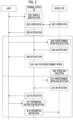
- FIG. 2 is a sequence diagram illustrating a process of the vehicle 210 and the terminal device 110. This process will be described with reference to FIG. 2 .
- Step S101 The terminal device 110 performs earhole identification.
- the earhole identification may be performed when the terminal device 110 is mounted on the ear and may be then performed periodically or may be performed before any operation each time the terminal device 110 performs the operation.
- the user identification unit 111 of the terminal device 110 emits an identification sound from the output unit 112 to the ear canal, acoustic reflected sound of the identification sound is acquired by the identification microphone of the input unit 113, and characteristics of the acoustic reflected sound are compared with characteristics of an acoustic reflected sound of the user registered in advance to identify user. In the case of identification failure, the subsequent processes are not performed and this sequence is ended.
- the identification sound may be a sound in an audible band or may be a sound in an inaudible band such as ultrasonic waves.
- the user can recognize that the identification process is performed through the sound.
- a notification may be sent to the user by voice such as "the identification is performed" before the identification process.
- Step S102 When the terminal device 110 enters a range in which communication with the vehicle 210 is possible, the first communication unit 117 of the terminal device 110 performs wireless communication with the second communication unit 213 of the vehicle 210, for example, upon reception of a radio signal periodically transmitted by the vehicle 210.
- FIG. 3 illustrates an example of a range 500 in which the vehicle 210 and the terminal device 110 can wirelessly communicate with each other.
- the range 500 is, for example, in a range of about 10 m or less from the vehicle.
- the wireless communication may be controlled by the first verification unit 116 of the terminal device 110 and the second verification unit 212 of the vehicle 210, and collation may be performed as to an identifier of the terminal device 110 matches a regular identifier registered in the vehicle 210 in advance through communication to perform verification. Alternatively, collation may be performed as to an identifier of the vehicle 210 matches a regular identifier registered in the terminal device 110 in advance to perform verification. In the case of verification failure, subsequent processes are not performed and this sequence is ended.
- Step S103 When the verification in step S102 is successful, the notification unit 115 of the terminal device 110 drives the output unit 112 to perform a notification to the user. Accordingly, the user can recognize that the terminal device 110 has entered the range in which communication with the vehicle 210 is possible.
- a method of the notification is not limited.
- the notification may be performed by a voice that is output from the speaker of the output unit 112, or the output unit 112 may include a vibrator and perform the notification through vibration. Voice is easier to understand, but the voice is annoying when the voice is frequent, and therefore, a degree of vibration felt by the user may be used. Either the voice or the vibration may be selected by the user.
- Step S104 When the user receives the notification, the user issues an instruction to execute a predetermined operation of the vehicle 210.
- the instruction can be made, for example, by uttering predetermined words such as "unlock a door” or "open a door".
- the voice is input to the utterance microphone of the input unit 113 of the terminal device 110.
- the operation instruction unit 114 of the terminal device 110 receives the input predetermined words as an operation instruction for the vehicle.
- the same earhole identification as in step S101 may be performed and identification of the uttering user may be performed.
- Step S105 The operation instruction unit 114 of the terminal device 110 transmits a signal indicating the received operation instruction to the vehicle 210 via the first communication unit 117.
- Step S106 The operation controller 211 of the vehicle 210 receives the signal indicating the operation instruction from the operation instruction unit 114 of the terminal device 110 via the second communication unit 213 and executes an operation such as door unlocking according to the signal. The sequence is then ended.
- the user can recognize that the terminal device 110 enters the range in which communication with the vehicle 210 is possible and that the operation of the vehicle according to this embodiment can be executed. Thereafter, the user can cause the vehicle to execute the operation by performing utterance to the mounted terminal device 110. Accordingly, even when a communicable area is wider than in the related art, it is possible to further reduce a likelihood that a third party near the vehicle causing the vehicle to execute the operation.
- FIG. 4 is a functional block diagram of a vehicle control system 12 according to a second embodiment.
- the vehicle control system 12 includes a terminal device 120 and a vehicle 220.
- the terminal device 120 has the same functional block configuration as the terminal device 110 in the first embodiment.
- the vehicle 220 further includes a manipulation detection unit 224 in the vehicle 210 according to the first embodiment.
- differences between the second embodiment and the first embodiment will be mainly described, and description of the same or corresponding features will be omitted or simplified.
- FIG. 5 is a sequence diagram illustrating a process of the vehicle 220 and the terminal device 120. This process will be described with reference to FIG. 5 .
- Step S201 The terminal device 120 identifies the user through earhole identification, as in step S101 of the first embodiment.
- Step S202 When the terminal device 120 enters a range in which communication with the vehicle 220 is possible, the terminal device 120 and the vehicle 220 perform wireless communication with each other and perform identification, as in step S102 of the first embodiment.
- Step S203 The notification unit 115 of the terminal device 120 notifies the user that the verification in step S202 has been successful, as in step S103 of the first embodiment.
- Step S204 A case in which, in this step to step S208, the user performs a predetermined manipulation such as touching a door handle with respect to the vehicle 220 with intention of causing the vehicle to perform an operation such as door unlocking will be described.
- the manipulation detection unit 224 of the vehicle 220 detects the manipulation.
- Step S205 The manipulation detection unit 224 of the vehicle 220 transmits a signal indicating that the predetermined manipulation has been performed via the second communication unit 213 and notifies the terminal device 120 of the fact.
- the operation instruction unit 114 of the terminal device 120 receives the signal via the first communication unit 117.
- Step S206 The operation instruction unit 114 of the terminal device 120 causes the notification unit 115 to execute notification to the user according to the signal received in step S205.
- the notification unit 115 outputs a voice "unlock the door” or "Please perform a stop action when you want to stop unlocking" in addition to this from the speaker of the output unit 112.
- the notification may be executed through vibration. It may be able to be customized by user whether or not the notification is executed.
- Step S207 The operation instruction unit 114 of the terminal device 120 waits for a predetermined prohibition instruction to be input from the user for a predetermined period from the notification in step S206.
- the prohibition instruction input will be described below.
- the operation controller 211 of the vehicle 220 also waits for the same period as in the operation instruction unit 114.
- the operation instruction unit 114 may cause the user identification unit 111 to execute the same earhole identification as in step S201 and perform identification of the user. It is desirable for the predetermined period to be, for example, equal to or greater than 0.5 seconds and equal to or smaller than one second.
- Step S208 Since there is no prohibition instruction that is input from the user for a predetermined period in this step, the vehicle 220 executes the operation of the vehicle according to the predetermined manipulation detected in step S204. The sequence is then ended.
- Step S214 In this step to step S218, a case where a third party other than the user is near the vehicle and performs a predetermined manipulation such as touching of a door handle with respect to the vehicle 220 with intention of causing the vehicle to perform an operation such as door unlocking without a legitimate right or a case where the user cancels the operation of the vehicle based on the above-described manipulation when the user or the third party accidentally or erroneously performs the above-described manipulation will be described.
- the manipulation detection unit 224 of the vehicle 220 detects the manipulation, as in step S204.
- Step S215 The manipulation detection unit 224 of the vehicle 220 transmits a signal indicating that the predetermined manipulation has been performed and notifies the terminal device 120 of the fact, as in step S205.
- Step S216 The operation instruction unit 114 of the terminal device 120 causes the notification unit 115 to execute a notification to the user, as in Step S206.
- Step S217 The operation instruction unit 114 of the terminal device 120 waits for a predetermined prohibition instruction to be input from the user for a predetermined period from the notification in step S216.
- the operation instruction unit 114 of the terminal device 120 may perform the identification of the user by causing the user identification unit 111 to execute the earhole identification, as in step S207. In this step, since the user does not intend to operate the vehicle, the operation instruction unit 114 performs a prohibition instruction.
- the prohibition instruction can be performed, for example, by uttering predetermined words such as "Do not unlock the door".
- the voice is input to the utterance sound microphone of the input unit 113 of the terminal device 120.
- a method of inputting the instruction is not limited thereto and, for example, when the input unit 113 includes a motion sensor, the user can perform the instruction input through an operation of shaking his or her head twice.
- Step S218 The operation instruction unit 114 of the terminal device 120 transmits a signal indicating the received prohibition instruction to the vehicle 220 via the first communication unit 117.
- the operation controller 211 of the vehicle 220 receives a signal indicating an operation instruction from the operation instruction unit 114 of the terminal device 110 via the second communication unit 213 and cancels an operation such as door unlocking based on a manipulation such as the touch of the door handle received in step S214 according to the signal. The sequence is then ended.
- the user can recognize that the terminal device 120 enters a range in which communication with the vehicle 220 is possible and that the operation can be executed by the manipulation with respect to the vehicle according to the present embodiment. Even when a predetermined manipulation is performed by a third party, the user can cancel the operation of the vehicle according to the manipulation of the third party. Accordingly, even when a communicable area is wider than in the related art, it is possible to further reduce a likelihood that a third party near the vehicle causing the vehicle to execute the operation.
- FIG. 6 is a functional block diagram of a vehicle control system 13 according to a third embodiment.
- the vehicle control system 13 includes a terminal device 130 and a vehicle 230.
- the terminal device 130 does not include the operation instruction unit 114 in the terminal device 110 according to the first embodiment, and further includes a first human body communication unit 137.
- the vehicle 230 further includes a second human body communication unit 235 in the vehicle 210 according to the first embodiment.
- differences between the third embodiment and the first embodiment will be mainly described, and description of the same or corresponding features will be omitted or simplified.
- FIG. 7 is a sequence diagram illustrating a process of the vehicle 230 and the terminal device 130. This process will be described with reference to FIG. 7 .
- Step S301 The terminal device 130 identifies the user through earhole identification, as in step S101 of the first embodiment.
- Step S302 When the terminal device 130 enters a range in which communication with the vehicle 220 is possible, the terminal device 130 and the vehicle 230 perform wireless communication with each other and perform verification, as in step S102 of the first embodiment.
- Step S303 The notification unit 115 of the terminal device 130 notifies the user that the verification in step S302 has been successful, as in step S103 of the first embodiment.
- Step S304 When the user performs a predetermined manipulation, the second human body communication unit 235 of the vehicle 230 detects the manipulation.
- the second human body communication unit 235 has an electrode provided at a position with which the user comes into contact according to various manipulations, such as a door handle, an engine startup switch, or a brake pedal.
- Step S305 The first human body communication unit 137 of the terminal device 130 has an electrode that comes into contact with the ear of the user or the like in a state in which the user has the terminal device 130 mounted thereon (or, an electrode located very close to the ear or the like without coming into contact with the ear or the like). Therefore, when the user performs a predetermined manipulation in step S302, a path of human body communication in which a body of the user is used as a communication path is formed between the first human body communication unit 137 and the second human body communication unit 235. In this step, the terminal device 130 and the vehicle 230 perform verification through human body communication.
- the verification includes, for example, a notification of an identification result in steps S301 and S302 or a new verification process between the terminal device 130 and the vehicle 230 using human body communication. Earhole identification may be performed again in this step. When the identification as described above fails, subsequent processes are not executed and the sequence is ended.
- Step S306 When the verification is successful in step S305, the operation controller 211 of the vehicle 230 executes an operation such as door unlocking based on the predetermined manipulation performed in step S302. The sequence is then ended.
- the user can recognize that the vehicle 230 is nearby according to the terminal device 130 entering the range in which communication with the vehicle 230 is possible. Since the verification through human body communication with the vehicle can be performed according to a predetermined manipulation of the user having the terminal device 130 mounted thereon, it is possible to further reduce a likelihood of a third party near the vehicle causing the vehicle to execute an operation even when the communicable area is wider than in the related art.
- step S302 may be omitted when the notification in step S303, that is, the notification of the fact that the vehicle is nearby is not needed. In this case, the wireless communication is not needed.
- the door unlocking has been described as an example of the operation of the vehicle that is a control target, but the present invention is not limited thereto, and various operations such as door locking, engine startup, opening of a trunk, and opening of a fuel filler port may be control targets for further improvement of convenience.
- the terminal device may have a configuration in which, for example, all of the units are included in the ear mounting unit to be mounted on the ear of the user or may have a configuration in which at least the output unit is included in the ear mounting unit, the other units are included in a mobile terminal device such as a smartphone, and the ear mounting unit and the mobile terminal device may perform wireless or wired communication.
- the present description can be regarded not only as a system including a terminal device and a vehicle, but also as a method that is executed by a single body of a terminal device or a single vehicle, or one or more computers including a processor, or a program thereof.
- the present invention is useful for a vehicle control system that controls an operation of a vehicle or the like.
Landscapes
- Engineering & Computer Science (AREA)
- Mechanical Engineering (AREA)
- Physics & Mathematics (AREA)
- General Physics & Mathematics (AREA)
- Computer Networks & Wireless Communication (AREA)
- Human Computer Interaction (AREA)
- Lock And Its Accessories (AREA)
- Selective Calling Equipment (AREA)
Claims (4)
- Fahrzeugsteuersystem (12), aufweisend:eine Endgerätevorrichtung (120), die eine Ohrbefestigungseinheit beinhaltet, die an einem Ohr eines Benutzers befestigt werden kann; undein Fahrzeug (220), das so konfiguriert ist, dass es eine Drahtloskommunikation mit der Endgerätevorrichtung (120) durchführt, wobei:die Endgerätevorrichtung (120) beinhaltet:eine Tonaufnahmevorrichtung, die so konfiguriert ist, dass sie akustisch reflektierte Töne in einem Gehörgang des Benutzers aufnimmt,eine Benutzeridentifikationseinheit (111), die so konfiguriert ist, dass sie den Benutzer auf Basis der akustisch reflektierten Töne in dem Gehörgang identifiziert,eine erste Verifizierungseinheit (116), die so konfiguriert ist, dass sie durch Drahtloskommunikation verifiziert, ob die Endgerätevorrichtung (120) zu dem Fahrzeug (220) gehört, wenn die Endgerätevorrichtung in einen Bereich gelangt, in dem eine Drahtloskommunikation zwischen der Endgerätevorrichtung (120) und dem Fahrzeug (220) verfügbar ist,eine Betriebsbefehlseinheit (114), die so konfiguriert ist, dass sie ein Signal gemäß einem Befehl, einen Betrieb des Fahrzeugs (220) gemäß einer vorgegebenen Manipulation des Fahrzeugs (220) zu verhindern, sendet, wenn der Befehl innerhalb einer vorgegebenen Zeitspanne ab dem Empfang eines Erfassungssignals, das anzeigt, dass eine Erfassung erfolgt, dass die vorgegebene Manipulation mit Hinblick auf das Fahrzeug (220) vorgenommen wird, von dem Benutzer empfangen wird, wenn das Erfassungssignal von dem Fahrzeug (220) empfangen wird, nachdem die Benutzeridentifikationseinheit (111) den Benutzer identifiziert hat und die erste Verifizierungseinheit (116) verifiziert hat, dass die Endgerätevorrichtung zu dem Fahrzeug (220) gehört, undeine Benachrichtigungseinheit (115), die so konfiguriert ist, dass sie eine Benachrichtigung des Benutzer gemäß dem Erfassungssignal vornimmt, das anzeigt, dass die Erfassung erfolgt, dass die vorgegebene Manipulation mit Hinblick auf das Fahrzeug (220) vorgenommen wird; undwobei das Fahrzeug (220) beinhaltet:eine zweite Verifizierungseinheit (212), die so konfiguriert ist, dass sie mit der ersten Verifizierungseinheit (116) kommuniziert und verifiziert, ob das Fahrzeug zu dem Endgerät (120) gehört,eine Manipulationserfassungseinheit (224), die so konfiguriert ist, dass sie die vorgegebene Manipulation erfasst und die Betriebsbefehlseinheit (114) über die vorgegebene Manipulation in Kenntnis setzt, wenn die zweite Verifizierungseinheit (212) verifiziert, dass das Fahrzeug zu der Endgerätevorrichtung (120) gehört, und einen Betriebscontroller (211), der so konfiguriert ist, dass er den Betrieb des Fahrzeugs (220) gemäß der vorgegebenen Manipulation ausführt, wenn das Signal gemäß dem Befehl von der Betriebsbefehlseinheit (114) nicht innerhalb der vorgegebenen Zeitspanne, nachdem die Manipulationserfassungseinheit (224) die vorgegebene Manipulation erfasst, empfangen wird, und der Betriebscontroller (211) so konfiguriert ist, dass er den Betrieb des Fahrzeugs (220) nicht ausführt, wenn das Signal gemäß dem Befehl von der Betriebsbefehlseinheit (114) innerhalb der vorgegebenen Zeitspanne, nachdem die Manipulationserfassungseinheit (224) die vorgegebene Manipulation erfasst, empfangen wird.
- Fahrzeugsteuersystem (11; 12; 13) nach Anspruch 1, wobei die Benachrichtigungseinheit (115) ferner so konfiguriert ist, dass sie den Benutzer benachrichtigt, wenn die Benutzeridentifikationseinheit (111) den Benutzer identifiziert und die erste Verifizierungseinheit verifiziert, dass die Endgerätevorrichtung zu dem Fahrzeug (210; 220; 230) gehört.
- Fahrzeugsteuersystem (11; 12; 13) nach Anspruch 1 oder 2, wobei die Benachrichtigungseinheit (115) der Endgerätevorrichtung (110; 120; 130) die Benachrichtigung durch Vibration durchführt.
- Fahrzeugsteuersystem (11; 12; 13) nach einem der Ansprüche 1 bis 2, wobei der vorgegebene Betrieb zumindest eines von einem Verriegeln oder Entriegeln einer Tür, einem Starten eines Motors, einem Öffnen eines Kofferraumdeckels, und einem Öffnen eines Kraftstoffeinfüllstutzens beinhaltet.
Priority Applications (1)
| Application Number | Priority Date | Filing Date | Title |
|---|---|---|---|
| EP23155960.0A EP4220588A1 (de) | 2017-09-27 | 2018-09-04 | Endgerätevorrichtung |
Applications Claiming Priority (1)
| Application Number | Priority Date | Filing Date | Title |
|---|---|---|---|
| JP2017186794A JP6915481B2 (ja) | 2017-09-27 | 2017-09-27 | 車両制御システム |
Related Child Applications (2)
| Application Number | Title | Priority Date | Filing Date |
|---|---|---|---|
| EP23155960.0A Division-Into EP4220588A1 (de) | 2017-09-27 | 2018-09-04 | Endgerätevorrichtung |
| EP23155960.0A Division EP4220588A1 (de) | 2017-09-27 | 2018-09-04 | Endgerätevorrichtung |
Publications (2)
| Publication Number | Publication Date |
|---|---|
| EP3462422A1 EP3462422A1 (de) | 2019-04-03 |
| EP3462422B1 true EP3462422B1 (de) | 2023-04-05 |
Family
ID=63491539
Family Applications (2)
| Application Number | Title | Priority Date | Filing Date |
|---|---|---|---|
| EP18192551.2A Active EP3462422B1 (de) | 2017-09-27 | 2018-09-04 | Fahrzeugsteuerungssystem |
| EP23155960.0A Pending EP4220588A1 (de) | 2017-09-27 | 2018-09-04 | Endgerätevorrichtung |
Family Applications After (1)
| Application Number | Title | Priority Date | Filing Date |
|---|---|---|---|
| EP23155960.0A Pending EP4220588A1 (de) | 2017-09-27 | 2018-09-04 | Endgerätevorrichtung |
Country Status (4)
| Country | Link |
|---|---|
| US (4) | US10752210B2 (de) |
| EP (2) | EP3462422B1 (de) |
| JP (3) | JP6915481B2 (de) |
| CN (2) | CN109572621B (de) |
Families Citing this family (10)
| Publication number | Priority date | Publication date | Assignee | Title |
|---|---|---|---|---|
| JP6915481B2 (ja) * | 2017-09-27 | 2021-08-04 | トヨタ自動車株式会社 | 車両制御システム |
| JP7147671B2 (ja) * | 2019-04-11 | 2022-10-05 | トヨタ自動車株式会社 | 情報処理システム及び情報処理プログラム |
| CN110341647A (zh) * | 2019-07-09 | 2019-10-18 | 长沙理工大学 | 一种基于耳道识别的汽车智能启动方法及系统 |
| JP2021088282A (ja) * | 2019-12-04 | 2021-06-10 | 株式会社デンソー | 車両用通知システム及び車載装置 |
| JP7310594B2 (ja) * | 2019-12-23 | 2023-07-19 | 株式会社デンソー | 車両用通信システム |
| CN111060507B (zh) | 2019-12-24 | 2021-05-04 | 北京嘀嘀无限科技发展有限公司 | 一种车辆验证方法及装置 |
| JP7287269B2 (ja) * | 2019-12-25 | 2023-06-06 | 株式会社デンソー | 車両用通信システム |
| EP4116946A1 (de) * | 2021-07-06 | 2023-01-11 | Nxp B.V. | Zugangssteuerungssystem |
| JP7715665B2 (ja) * | 2022-03-22 | 2025-07-30 | トヨタ自動車株式会社 | 情報処理装置、情報処理方法、及びプログラム |
| JP7852417B2 (ja) | 2022-07-20 | 2026-04-28 | 株式会社デンソー | ロック制御装置 |
Family Cites Families (37)
| Publication number | Priority date | Publication date | Assignee | Title |
|---|---|---|---|---|
| US6140938A (en) * | 1995-04-14 | 2000-10-31 | Flick; Kenneth E. | Remote control system suitable for a vehicle and having remote transmitter verification |
| DE19547560C2 (de) * | 1995-12-20 | 2000-01-13 | Daimler Chrysler Ag | Einrichtung zur körpergebundenen Datenübertragung zwischen zwei Endgeräten |
| US5787187A (en) * | 1996-04-01 | 1998-07-28 | Sandia Corporation | Systems and methods for biometric identification using the acoustic properties of the ear canal |
| US6041410A (en) * | 1997-12-22 | 2000-03-21 | Trw Inc. | Personal identification fob |
| JP3533966B2 (ja) * | 1998-06-18 | 2004-06-07 | トヨタ自動車株式会社 | 車両制御システム |
| US8686922B2 (en) * | 1999-12-15 | 2014-04-01 | American Vehicular Sciences Llc | Eye-location dependent vehicular heads-up display system |
| JP3765981B2 (ja) * | 2000-11-29 | 2006-04-12 | 株式会社エヌ・ティ・ティ・ドコモ | 個人識別方法及び装置 |
| US7921297B2 (en) | 2001-01-10 | 2011-04-05 | Luis Melisendro Ortiz | Random biometric authentication utilizing unique biometric signatures |
| EP1465117A1 (de) | 2003-03-31 | 2004-10-06 | Hotz, Michel André | Verfahren und Vorrichtung zur Personenidentifikation durch Messung otoakustischer Emissionen |
| US6992562B2 (en) * | 2003-06-10 | 2006-01-31 | Visteon Global Technologies, Inc. | Biometric keyless entry system |
| KR100594055B1 (ko) * | 2003-10-01 | 2006-06-30 | 삼성전자주식회사 | 단문 메시지를 이용하여 자동차를 제어하는이동통신단말기 및 그 방법 |
| US7529379B2 (en) * | 2005-01-04 | 2009-05-05 | Motorola, Inc. | System and method for determining an in-ear acoustic response for confirming the identity of a user |
| FR2884664B1 (fr) | 2005-04-19 | 2007-08-31 | Valeo Securite Habitacle Sas | Procede et dispositif d'identification, notamment pour l'identification d'un proprietaire d'un vehicule |
| JP4702613B2 (ja) * | 2005-11-16 | 2011-06-15 | アイシン精機株式会社 | 車両用ドア開閉装置及び車両用ドア開閉制御方法 |
| JP2008082069A (ja) * | 2006-09-28 | 2008-04-10 | Aisin Seiki Co Ltd | 車両用ドアハンドル |
| US8652040B2 (en) * | 2006-12-19 | 2014-02-18 | Valencell, Inc. | Telemetric apparatus for health and environmental monitoring |
| JP4615575B2 (ja) * | 2008-02-29 | 2011-01-19 | アルプス電気株式会社 | キーレスエントリー装置 |
| JP2010086328A (ja) | 2008-09-30 | 2010-04-15 | Yamaha Corp | 認証装置および携帯電話機 |
| JP5402365B2 (ja) * | 2009-08-04 | 2014-01-29 | 大日本印刷株式会社 | キーレスエントリー装置 |
| KR20110038563A (ko) * | 2009-10-08 | 2011-04-14 | 최운호 | 운전자 인증을 통한 차량 제어 방법, 차량 단말기, 생체인식 카드 및 시스템과, 생체인식 카드와 단말기를 이용한 탑승자 보호 추적 기능을 제공하는 방법 |
| JP2013063672A (ja) * | 2011-09-15 | 2013-04-11 | Denso Corp | 車両用制御システム |
| JP5406271B2 (ja) | 2011-12-28 | 2014-02-05 | 三菱電機株式会社 | 電子キー装置 |
| JP5941315B2 (ja) * | 2012-03-29 | 2016-06-29 | 富士通テン株式会社 | 車両制御装置、及び、車両制御システム |
| DE102012106522A1 (de) * | 2012-07-18 | 2014-01-23 | Huf Hülsbeck & Fürst Gmbh & Co. Kg | Verfahren zur Authentifizierung eines Fahrers in einem Kraftfahrzeug |
| CN103237142A (zh) * | 2013-04-25 | 2013-08-07 | 刘义柏 | 一种通过蓝牙耳机和手机产生汽车控制指令的方法 |
| GB2515005A (en) | 2013-05-31 | 2014-12-17 | Jaguar Land Rover Ltd | Vehicle communication system |
| JP2015035697A (ja) | 2013-08-08 | 2015-02-19 | 日本精機株式会社 | 遠隔操作装置 |
| JP2015085899A (ja) * | 2013-11-01 | 2015-05-07 | 株式会社デンソー | 車両制御装置 |
| US9305412B2 (en) * | 2013-11-22 | 2016-04-05 | Volkswagen Ag | Apparatus, system and method for vehicle authentication management and reporting |
| JP6294109B2 (ja) | 2014-03-07 | 2018-03-14 | 株式会社東海理化電機製作所 | スマートシステム |
| JP6201835B2 (ja) | 2014-03-14 | 2017-09-27 | ソニー株式会社 | 情報処理装置、情報処理方法及びコンピュータプログラム |
| US9701280B2 (en) * | 2015-04-03 | 2017-07-11 | GM Global Technology Operations LLC | Revocation of mobile device communication control privileges |
| JP2017043267A (ja) * | 2015-08-28 | 2017-03-02 | 修一 田山 | 電子キーシステム |
| US9944295B2 (en) * | 2015-11-27 | 2018-04-17 | Bragi GmbH | Vehicle with wearable for identifying role of one or more users and adjustment of user settings |
| US10040423B2 (en) * | 2015-11-27 | 2018-08-07 | Bragi GmbH | Vehicle with wearable for identifying one or more vehicle occupants |
| US20170308689A1 (en) * | 2016-04-26 | 2017-10-26 | Bragi GmbH | Gesture-based Wireless Toggle Control System and Method |
| JP6915481B2 (ja) | 2017-09-27 | 2021-08-04 | トヨタ自動車株式会社 | 車両制御システム |
-
2017
- 2017-09-27 JP JP2017186794A patent/JP6915481B2/ja active Active
-
2018
- 2018-08-30 US US16/117,601 patent/US10752210B2/en active Active
- 2018-09-04 EP EP18192551.2A patent/EP3462422B1/de active Active
- 2018-09-04 EP EP23155960.0A patent/EP4220588A1/de active Pending
- 2018-09-27 CN CN201811132917.1A patent/CN109572621B/zh active Active
- 2018-09-27 CN CN202210044540.4A patent/CN114312668B/zh active Active
-
2020
- 2020-07-15 US US16/929,844 patent/US11292432B2/en active Active
-
2021
- 2021-07-14 JP JP2021116309A patent/JP7276386B2/ja active Active
-
2022
- 2022-02-24 US US17/679,577 patent/US12275373B2/en active Active
-
2023
- 2023-04-27 JP JP2023073502A patent/JP7639847B2/ja active Active
-
2024
- 2024-06-20 US US18/748,993 patent/US12337793B2/en active Active
Also Published As
| Publication number | Publication date |
|---|---|
| JP2021179169A (ja) | 2021-11-18 |
| US20220176910A1 (en) | 2022-06-09 |
| JP6915481B2 (ja) | 2021-08-04 |
| EP3462422A1 (de) | 2019-04-03 |
| CN109572621B (zh) | 2022-02-11 |
| US20240336225A1 (en) | 2024-10-10 |
| JP7276386B2 (ja) | 2023-05-18 |
| JP7639847B2 (ja) | 2025-03-05 |
| JP2019060175A (ja) | 2019-04-18 |
| US12337793B2 (en) | 2025-06-24 |
| JP2023095917A (ja) | 2023-07-06 |
| US20200346617A1 (en) | 2020-11-05 |
| EP4220588A1 (de) | 2023-08-02 |
| US11292432B2 (en) | 2022-04-05 |
| CN114312668A (zh) | 2022-04-12 |
| CN109572621A (zh) | 2019-04-05 |
| US10752210B2 (en) | 2020-08-25 |
| CN114312668B (zh) | 2024-08-13 |
| US20190092281A1 (en) | 2019-03-28 |
| US12275373B2 (en) | 2025-04-15 |
Similar Documents
| Publication | Publication Date | Title |
|---|---|---|
| US11292432B2 (en) | Vehicle control system | |
| KR102525294B1 (ko) | 음성 제어 방법, 웨어러블 디바이스 및 단말 | |
| US10384647B2 (en) | Electronic key system | |
| US20200411014A1 (en) | User authentication with audio reply | |
| CN110677768A (zh) | 一种无线耳机控制方法、装置及无线耳机和存储介质 | |
| US12087295B2 (en) | Vehicle control system and vehicle control method | |
| JP2019035258A (ja) | 車両用制御システム | |
| US20210288807A1 (en) | System and method for performing biometric authentication | |
| US20210019112A1 (en) | Acoustic system | |
| JP2006025079A (ja) | ヘッドセット及び無線通信システム | |
| CN112738738B (zh) | 好友添加方法、装置、设备及存储介质 | |
| CN114080641B (zh) | 麦克风单元 | |
| CN106656352B (zh) | 一种信息传递方法及装置、可穿戴设备 | |
| EP3901923A1 (de) | Verfahren und fahrzeugtürverriegelungssystem zum verwalten des zugangs zu einem fahrzeug |
Legal Events
| Date | Code | Title | Description |
|---|---|---|---|
| PUAI | Public reference made under article 153(3) epc to a published international application that has entered the european phase |
Free format text: ORIGINAL CODE: 0009012 |
|
| STAA | Information on the status of an ep patent application or granted ep patent |
Free format text: STATUS: REQUEST FOR EXAMINATION WAS MADE |
|
| 17P | Request for examination filed |
Effective date: 20180904 |
|
| AK | Designated contracting states |
Kind code of ref document: A1 Designated state(s): AL AT BE BG CH CY CZ DE DK EE ES FI FR GB GR HR HU IE IS IT LI LT LU LV MC MK MT NL NO PL PT RO RS SE SI SK SM TR |
|
| AX | Request for extension of the european patent |
Extension state: BA ME |
|
| STAA | Information on the status of an ep patent application or granted ep patent |
Free format text: STATUS: EXAMINATION IS IN PROGRESS |
|
| 17Q | First examination report despatched |
Effective date: 20211215 |
|
| GRAP | Despatch of communication of intention to grant a patent |
Free format text: ORIGINAL CODE: EPIDOSNIGR1 |
|
| STAA | Information on the status of an ep patent application or granted ep patent |
Free format text: STATUS: GRANT OF PATENT IS INTENDED |
|
| RIC1 | Information provided on ipc code assigned before grant |
Ipc: B60R 25/25 20130101ALN20220909BHEP Ipc: B60R 25/31 20130101ALN20220909BHEP Ipc: G07C 9/00 20060101AFI20220909BHEP |
|
| INTG | Intention to grant announced |
Effective date: 20221018 |
|
| GRAS | Grant fee paid |
Free format text: ORIGINAL CODE: EPIDOSNIGR3 |
|
| GRAA | (expected) grant |
Free format text: ORIGINAL CODE: 0009210 |
|
| STAA | Information on the status of an ep patent application or granted ep patent |
Free format text: STATUS: THE PATENT HAS BEEN GRANTED |
|
| RIN1 | Information on inventor provided before grant (corrected) |
Inventor name: ASAI, SHINPEI Inventor name: HIROKI, DAISUKE Inventor name: FUJISAKI, SATOSHI Inventor name: ATSUMI, RYUTA Inventor name: OKADA, HIROKI |
|
| AK | Designated contracting states |
Kind code of ref document: B1 Designated state(s): AL AT BE BG CH CY CZ DE DK EE ES FI FR GB GR HR HU IE IS IT LI LT LU LV MC MK MT NL NO PL PT RO RS SE SI SK SM TR |
|
| REG | Reference to a national code |
Ref country code: GB Ref legal event code: FG4D |
|
| REG | Reference to a national code |
Ref country code: CH Ref legal event code: EP |
|
| REG | Reference to a national code |
Ref country code: AT Ref legal event code: REF Ref document number: 1558840 Country of ref document: AT Kind code of ref document: T Effective date: 20230415 |
|
| REG | Reference to a national code |
Ref country code: DE Ref legal event code: R096 Ref document number: 602018047971 Country of ref document: DE |
|
| REG | Reference to a national code |
Ref country code: IE Ref legal event code: FG4D |
|
| REG | Reference to a national code |
Ref country code: LT Ref legal event code: MG9D |
|
| REG | Reference to a national code |
Ref country code: NL Ref legal event code: MP Effective date: 20230405 |
|
| REG | Reference to a national code |
Ref country code: DE Ref legal event code: R084 Ref document number: 602018047971 Country of ref document: DE |
|
| REG | Reference to a national code |
Ref country code: AT Ref legal event code: MK05 Ref document number: 1558840 Country of ref document: AT Kind code of ref document: T Effective date: 20230405 |
|
| PG25 | Lapsed in a contracting state [announced via postgrant information from national office to epo] |
Ref country code: NL Free format text: LAPSE BECAUSE OF FAILURE TO SUBMIT A TRANSLATION OF THE DESCRIPTION OR TO PAY THE FEE WITHIN THE PRESCRIBED TIME-LIMIT Effective date: 20230405 |
|
| REG | Reference to a national code |
Ref country code: GB Ref legal event code: 746 Effective date: 20230926 |
|
| PG25 | Lapsed in a contracting state [announced via postgrant information from national office to epo] |
Ref country code: SE Free format text: LAPSE BECAUSE OF FAILURE TO SUBMIT A TRANSLATION OF THE DESCRIPTION OR TO PAY THE FEE WITHIN THE PRESCRIBED TIME-LIMIT Effective date: 20230405 Ref country code: PT Free format text: LAPSE BECAUSE OF FAILURE TO SUBMIT A TRANSLATION OF THE DESCRIPTION OR TO PAY THE FEE WITHIN THE PRESCRIBED TIME-LIMIT Effective date: 20230807 Ref country code: NO Free format text: LAPSE BECAUSE OF FAILURE TO SUBMIT A TRANSLATION OF THE DESCRIPTION OR TO PAY THE FEE WITHIN THE PRESCRIBED TIME-LIMIT Effective date: 20230705 Ref country code: ES Free format text: LAPSE BECAUSE OF FAILURE TO SUBMIT A TRANSLATION OF THE DESCRIPTION OR TO PAY THE FEE WITHIN THE PRESCRIBED TIME-LIMIT Effective date: 20230405 Ref country code: AT Free format text: LAPSE BECAUSE OF FAILURE TO SUBMIT A TRANSLATION OF THE DESCRIPTION OR TO PAY THE FEE WITHIN THE PRESCRIBED TIME-LIMIT Effective date: 20230405 |
|
| P01 | Opt-out of the competence of the unified patent court (upc) registered |
Effective date: 20231024 |
|
| PG25 | Lapsed in a contracting state [announced via postgrant information from national office to epo] |
Ref country code: RS Free format text: LAPSE BECAUSE OF FAILURE TO SUBMIT A TRANSLATION OF THE DESCRIPTION OR TO PAY THE FEE WITHIN THE PRESCRIBED TIME-LIMIT Effective date: 20230405 Ref country code: PL Free format text: LAPSE BECAUSE OF FAILURE TO SUBMIT A TRANSLATION OF THE DESCRIPTION OR TO PAY THE FEE WITHIN THE PRESCRIBED TIME-LIMIT Effective date: 20230405 Ref country code: LV Free format text: LAPSE BECAUSE OF FAILURE TO SUBMIT A TRANSLATION OF THE DESCRIPTION OR TO PAY THE FEE WITHIN THE PRESCRIBED TIME-LIMIT Effective date: 20230405 Ref country code: LT Free format text: LAPSE BECAUSE OF FAILURE TO SUBMIT A TRANSLATION OF THE DESCRIPTION OR TO PAY THE FEE WITHIN THE PRESCRIBED TIME-LIMIT Effective date: 20230405 Ref country code: IS Free format text: LAPSE BECAUSE OF FAILURE TO SUBMIT A TRANSLATION OF THE DESCRIPTION OR TO PAY THE FEE WITHIN THE PRESCRIBED TIME-LIMIT Effective date: 20230805 Ref country code: HR Free format text: LAPSE BECAUSE OF FAILURE TO SUBMIT A TRANSLATION OF THE DESCRIPTION OR TO PAY THE FEE WITHIN THE PRESCRIBED TIME-LIMIT Effective date: 20230405 Ref country code: GR Free format text: LAPSE BECAUSE OF FAILURE TO SUBMIT A TRANSLATION OF THE DESCRIPTION OR TO PAY THE FEE WITHIN THE PRESCRIBED TIME-LIMIT Effective date: 20230706 Ref country code: AL Free format text: LAPSE BECAUSE OF FAILURE TO SUBMIT A TRANSLATION OF THE DESCRIPTION OR TO PAY THE FEE WITHIN THE PRESCRIBED TIME-LIMIT Effective date: 20230405 |
|
| PG25 | Lapsed in a contracting state [announced via postgrant information from national office to epo] |
Ref country code: FI Free format text: LAPSE BECAUSE OF FAILURE TO SUBMIT A TRANSLATION OF THE DESCRIPTION OR TO PAY THE FEE WITHIN THE PRESCRIBED TIME-LIMIT Effective date: 20230405 |
|
| REG | Reference to a national code |
Ref country code: DE Ref legal event code: R097 Ref document number: 602018047971 Country of ref document: DE |
|
| PG25 | Lapsed in a contracting state [announced via postgrant information from national office to epo] |
Ref country code: SK Free format text: LAPSE BECAUSE OF FAILURE TO SUBMIT A TRANSLATION OF THE DESCRIPTION OR TO PAY THE FEE WITHIN THE PRESCRIBED TIME-LIMIT Effective date: 20230405 |
|
| PG25 | Lapsed in a contracting state [announced via postgrant information from national office to epo] |
Ref country code: SM Free format text: LAPSE BECAUSE OF FAILURE TO SUBMIT A TRANSLATION OF THE DESCRIPTION OR TO PAY THE FEE WITHIN THE PRESCRIBED TIME-LIMIT Effective date: 20230405 Ref country code: SK Free format text: LAPSE BECAUSE OF FAILURE TO SUBMIT A TRANSLATION OF THE DESCRIPTION OR TO PAY THE FEE WITHIN THE PRESCRIBED TIME-LIMIT Effective date: 20230405 Ref country code: RO Free format text: LAPSE BECAUSE OF FAILURE TO SUBMIT A TRANSLATION OF THE DESCRIPTION OR TO PAY THE FEE WITHIN THE PRESCRIBED TIME-LIMIT Effective date: 20230405 Ref country code: EE Free format text: LAPSE BECAUSE OF FAILURE TO SUBMIT A TRANSLATION OF THE DESCRIPTION OR TO PAY THE FEE WITHIN THE PRESCRIBED TIME-LIMIT Effective date: 20230405 Ref country code: DK Free format text: LAPSE BECAUSE OF FAILURE TO SUBMIT A TRANSLATION OF THE DESCRIPTION OR TO PAY THE FEE WITHIN THE PRESCRIBED TIME-LIMIT Effective date: 20230405 Ref country code: CZ Free format text: LAPSE BECAUSE OF FAILURE TO SUBMIT A TRANSLATION OF THE DESCRIPTION OR TO PAY THE FEE WITHIN THE PRESCRIBED TIME-LIMIT Effective date: 20230405 |
|
| PLBE | No opposition filed within time limit |
Free format text: ORIGINAL CODE: 0009261 |
|
| STAA | Information on the status of an ep patent application or granted ep patent |
Free format text: STATUS: NO OPPOSITION FILED WITHIN TIME LIMIT |
|
| 26N | No opposition filed |
Effective date: 20240108 |
|
| REG | Reference to a national code |
Ref country code: CH Ref legal event code: PL |
|
| PG25 | Lapsed in a contracting state [announced via postgrant information from national office to epo] |
Ref country code: SI Free format text: LAPSE BECAUSE OF FAILURE TO SUBMIT A TRANSLATION OF THE DESCRIPTION OR TO PAY THE FEE WITHIN THE PRESCRIBED TIME-LIMIT Effective date: 20230405 |
|
| PG25 | Lapsed in a contracting state [announced via postgrant information from national office to epo] |
Ref country code: LU Free format text: LAPSE BECAUSE OF NON-PAYMENT OF DUE FEES Effective date: 20230904 |
|
| REG | Reference to a national code |
Ref country code: BE Ref legal event code: MM Effective date: 20230930 |
|
| PG25 | Lapsed in a contracting state [announced via postgrant information from national office to epo] |
Ref country code: SI Free format text: LAPSE BECAUSE OF FAILURE TO SUBMIT A TRANSLATION OF THE DESCRIPTION OR TO PAY THE FEE WITHIN THE PRESCRIBED TIME-LIMIT Effective date: 20230405 Ref country code: LU Free format text: LAPSE BECAUSE OF NON-PAYMENT OF DUE FEES Effective date: 20230904 Ref country code: IT Free format text: LAPSE BECAUSE OF FAILURE TO SUBMIT A TRANSLATION OF THE DESCRIPTION OR TO PAY THE FEE WITHIN THE PRESCRIBED TIME-LIMIT Effective date: 20230405 Ref country code: MC Free format text: LAPSE BECAUSE OF FAILURE TO SUBMIT A TRANSLATION OF THE DESCRIPTION OR TO PAY THE FEE WITHIN THE PRESCRIBED TIME-LIMIT Effective date: 20230405 |
|
| REG | Reference to a national code |
Ref country code: IE Ref legal event code: MM4A |
|
| PG25 | Lapsed in a contracting state [announced via postgrant information from national office to epo] |
Ref country code: IE Free format text: LAPSE BECAUSE OF NON-PAYMENT OF DUE FEES Effective date: 20230904 |
|
| PG25 | Lapsed in a contracting state [announced via postgrant information from national office to epo] |
Ref country code: CH Free format text: LAPSE BECAUSE OF NON-PAYMENT OF DUE FEES Effective date: 20230930 |
|
| PG25 | Lapsed in a contracting state [announced via postgrant information from national office to epo] |
Ref country code: IE Free format text: LAPSE BECAUSE OF NON-PAYMENT OF DUE FEES Effective date: 20230904 Ref country code: CH Free format text: LAPSE BECAUSE OF NON-PAYMENT OF DUE FEES Effective date: 20230930 |
|
| PG25 | Lapsed in a contracting state [announced via postgrant information from national office to epo] |
Ref country code: BE Free format text: LAPSE BECAUSE OF NON-PAYMENT OF DUE FEES Effective date: 20230930 |
|
| PG25 | Lapsed in a contracting state [announced via postgrant information from national office to epo] |
Ref country code: BG Free format text: LAPSE BECAUSE OF FAILURE TO SUBMIT A TRANSLATION OF THE DESCRIPTION OR TO PAY THE FEE WITHIN THE PRESCRIBED TIME-LIMIT Effective date: 20230405 |
|
| PG25 | Lapsed in a contracting state [announced via postgrant information from national office to epo] |
Ref country code: BG Free format text: LAPSE BECAUSE OF FAILURE TO SUBMIT A TRANSLATION OF THE DESCRIPTION OR TO PAY THE FEE WITHIN THE PRESCRIBED TIME-LIMIT Effective date: 20230405 |
|
| PG25 | Lapsed in a contracting state [announced via postgrant information from national office to epo] |
Ref country code: CY Free format text: LAPSE BECAUSE OF FAILURE TO SUBMIT A TRANSLATION OF THE DESCRIPTION OR TO PAY THE FEE WITHIN THE PRESCRIBED TIME-LIMIT; INVALID AB INITIO Effective date: 20180904 |
|
| PG25 | Lapsed in a contracting state [announced via postgrant information from national office to epo] |
Ref country code: HU Free format text: LAPSE BECAUSE OF FAILURE TO SUBMIT A TRANSLATION OF THE DESCRIPTION OR TO PAY THE FEE WITHIN THE PRESCRIBED TIME-LIMIT; INVALID AB INITIO Effective date: 20180904 |
|
| PGFP | Annual fee paid to national office [announced via postgrant information from national office to epo] |
Ref country code: DE Payment date: 20250730 Year of fee payment: 8 |
|
| PGFP | Annual fee paid to national office [announced via postgrant information from national office to epo] |
Ref country code: GB Payment date: 20250731 Year of fee payment: 8 |
|
| PGFP | Annual fee paid to national office [announced via postgrant information from national office to epo] |
Ref country code: FR Payment date: 20250808 Year of fee payment: 8 |
|
| PG25 | Lapsed in a contracting state [announced via postgrant information from national office to epo] |
Ref country code: TR Free format text: LAPSE BECAUSE OF FAILURE TO SUBMIT A TRANSLATION OF THE DESCRIPTION OR TO PAY THE FEE WITHIN THE PRESCRIBED TIME-LIMIT Effective date: 20230405 |