EP3459929A1 - Ophthalmic formulation - Google Patents
Ophthalmic formulation Download PDFInfo
- Publication number
- EP3459929A1 EP3459929A1 EP18187476.9A EP18187476A EP3459929A1 EP 3459929 A1 EP3459929 A1 EP 3459929A1 EP 18187476 A EP18187476 A EP 18187476A EP 3459929 A1 EP3459929 A1 EP 3459929A1
- Authority
- EP
- European Patent Office
- Prior art keywords
- ophthalmic formulation
- formula
- branched
- linear
- compound
- Prior art date
- Legal status (The legal status is an assumption and is not a legal conclusion. Google has not performed a legal analysis and makes no representation as to the accuracy of the status listed.)
- Withdrawn
Links
- 0 C[*+](C)C(CC*1)CC1C1(*)CC1 Chemical compound C[*+](C)C(CC*1)CC1C1(*)CC1 0.000 description 2
- KFWAHSGKMAKXBL-HZJYTTRNSA-N CCCCC/C=C\C/C=C\CCCCCCCC(OCCCCCCCCCN)=O Chemical compound CCCCC/C=C\C/C=C\CCCCCCCC(OCCCCCCCCCN)=O KFWAHSGKMAKXBL-HZJYTTRNSA-N 0.000 description 1
Images
Classifications
-
- A—HUMAN NECESSITIES
- A61—MEDICAL OR VETERINARY SCIENCE; HYGIENE
- A61K—PREPARATIONS FOR MEDICAL, DENTAL OR TOILETRY PURPOSES
- A61K31/00—Medicinal preparations containing organic active ingredients
- A61K31/185—Acids; Anhydrides, halides or salts thereof, e.g. sulfur acids, imidic, hydrazonic or hydroximic acids
- A61K31/19—Carboxylic acids, e.g. valproic acid
- A61K31/20—Carboxylic acids, e.g. valproic acid having a carboxyl group bound to a chain of seven or more carbon atoms, e.g. stearic, palmitic, arachidic acids
-
- C—CHEMISTRY; METALLURGY
- C07—ORGANIC CHEMISTRY
- C07C—ACYCLIC OR CARBOCYCLIC COMPOUNDS
- C07C69/00—Esters of carboxylic acids; Esters of carbonic or haloformic acids
- C07C69/52—Esters of acyclic unsaturated carboxylic acids having the esterified carboxyl group bound to an acyclic carbon atom
- C07C69/533—Monocarboxylic acid esters having only one carbon-to-carbon double bond
-
- A—HUMAN NECESSITIES
- A61—MEDICAL OR VETERINARY SCIENCE; HYGIENE
- A61K—PREPARATIONS FOR MEDICAL, DENTAL OR TOILETRY PURPOSES
- A61K31/00—Medicinal preparations containing organic active ingredients
- A61K31/185—Acids; Anhydrides, halides or salts thereof, e.g. sulfur acids, imidic, hydrazonic or hydroximic acids
- A61K31/19—Carboxylic acids, e.g. valproic acid
- A61K31/20—Carboxylic acids, e.g. valproic acid having a carboxyl group bound to a chain of seven or more carbon atoms, e.g. stearic, palmitic, arachidic acids
- A61K31/201—Carboxylic acids, e.g. valproic acid having a carboxyl group bound to a chain of seven or more carbon atoms, e.g. stearic, palmitic, arachidic acids having one or two double bonds, e.g. oleic, linoleic acids
-
- A—HUMAN NECESSITIES
- A61—MEDICAL OR VETERINARY SCIENCE; HYGIENE
- A61K—PREPARATIONS FOR MEDICAL, DENTAL OR TOILETRY PURPOSES
- A61K31/00—Medicinal preparations containing organic active ingredients
- A61K31/185—Acids; Anhydrides, halides or salts thereof, e.g. sulfur acids, imidic, hydrazonic or hydroximic acids
- A61K31/19—Carboxylic acids, e.g. valproic acid
- A61K31/20—Carboxylic acids, e.g. valproic acid having a carboxyl group bound to a chain of seven or more carbon atoms, e.g. stearic, palmitic, arachidic acids
- A61K31/202—Carboxylic acids, e.g. valproic acid having a carboxyl group bound to a chain of seven or more carbon atoms, e.g. stearic, palmitic, arachidic acids having three or more double bonds, e.g. linolenic
-
- A—HUMAN NECESSITIES
- A61—MEDICAL OR VETERINARY SCIENCE; HYGIENE
- A61K—PREPARATIONS FOR MEDICAL, DENTAL OR TOILETRY PURPOSES
- A61K31/00—Medicinal preparations containing organic active ingredients
- A61K31/21—Esters, e.g. nitroglycerine, selenocyanates
- A61K31/215—Esters, e.g. nitroglycerine, selenocyanates of carboxylic acids
- A61K31/22—Esters, e.g. nitroglycerine, selenocyanates of carboxylic acids of acyclic acids, e.g. pravastatin
- A61K31/23—Esters, e.g. nitroglycerine, selenocyanates of carboxylic acids of acyclic acids, e.g. pravastatin of acids having a carboxyl group bound to a chain of seven or more carbon atoms
-
- A—HUMAN NECESSITIES
- A61—MEDICAL OR VETERINARY SCIENCE; HYGIENE
- A61K—PREPARATIONS FOR MEDICAL, DENTAL OR TOILETRY PURPOSES
- A61K31/00—Medicinal preparations containing organic active ingredients
- A61K31/21—Esters, e.g. nitroglycerine, selenocyanates
- A61K31/215—Esters, e.g. nitroglycerine, selenocyanates of carboxylic acids
- A61K31/22—Esters, e.g. nitroglycerine, selenocyanates of carboxylic acids of acyclic acids, e.g. pravastatin
- A61K31/23—Esters, e.g. nitroglycerine, selenocyanates of carboxylic acids of acyclic acids, e.g. pravastatin of acids having a carboxyl group bound to a chain of seven or more carbon atoms
- A61K31/231—Esters, e.g. nitroglycerine, selenocyanates of carboxylic acids of acyclic acids, e.g. pravastatin of acids having a carboxyl group bound to a chain of seven or more carbon atoms having one or two double bonds
-
- A—HUMAN NECESSITIES
- A61—MEDICAL OR VETERINARY SCIENCE; HYGIENE
- A61K—PREPARATIONS FOR MEDICAL, DENTAL OR TOILETRY PURPOSES
- A61K31/00—Medicinal preparations containing organic active ingredients
- A61K31/21—Esters, e.g. nitroglycerine, selenocyanates
- A61K31/215—Esters, e.g. nitroglycerine, selenocyanates of carboxylic acids
- A61K31/22—Esters, e.g. nitroglycerine, selenocyanates of carboxylic acids of acyclic acids, e.g. pravastatin
- A61K31/23—Esters, e.g. nitroglycerine, selenocyanates of carboxylic acids of acyclic acids, e.g. pravastatin of acids having a carboxyl group bound to a chain of seven or more carbon atoms
- A61K31/232—Esters, e.g. nitroglycerine, selenocyanates of carboxylic acids of acyclic acids, e.g. pravastatin of acids having a carboxyl group bound to a chain of seven or more carbon atoms having three or more double bonds, e.g. etretinate
-
- A—HUMAN NECESSITIES
- A61—MEDICAL OR VETERINARY SCIENCE; HYGIENE
- A61K—PREPARATIONS FOR MEDICAL, DENTAL OR TOILETRY PURPOSES
- A61K45/00—Medicinal preparations containing active ingredients not provided for in groups A61K31/00 - A61K41/00
- A61K45/06—Mixtures of active ingredients without chemical characterisation, e.g. antiphlogistics and cardiaca
-
- A—HUMAN NECESSITIES
- A61—MEDICAL OR VETERINARY SCIENCE; HYGIENE
- A61K—PREPARATIONS FOR MEDICAL, DENTAL OR TOILETRY PURPOSES
- A61K47/00—Medicinal preparations characterised by the non-active ingredients used, e.g. carriers or inert additives; Targeting or modifying agents chemically bound to the active ingredient
- A61K47/06—Organic compounds, e.g. natural or synthetic hydrocarbons, polyolefins, mineral oil, petrolatum or ozokerite
- A61K47/08—Organic compounds, e.g. natural or synthetic hydrocarbons, polyolefins, mineral oil, petrolatum or ozokerite containing oxygen, e.g. ethers, acetals, ketones, quinones, aldehydes, peroxides
- A61K47/14—Esters of carboxylic acids, e.g. fatty acid monoglycerides, medium-chain triglycerides, parabens or PEG fatty acid esters
-
- A—HUMAN NECESSITIES
- A61—MEDICAL OR VETERINARY SCIENCE; HYGIENE
- A61K—PREPARATIONS FOR MEDICAL, DENTAL OR TOILETRY PURPOSES
- A61K47/00—Medicinal preparations characterised by the non-active ingredients used, e.g. carriers or inert additives; Targeting or modifying agents chemically bound to the active ingredient
- A61K47/30—Macromolecular organic or inorganic compounds, e.g. inorganic polyphosphates
- A61K47/36—Polysaccharides; Derivatives thereof, e.g. gums, starch, alginate, dextrin, hyaluronic acid, chitosan, inulin, agar or pectin
- A61K47/38—Cellulose; Derivatives thereof
-
- A—HUMAN NECESSITIES
- A61—MEDICAL OR VETERINARY SCIENCE; HYGIENE
- A61K—PREPARATIONS FOR MEDICAL, DENTAL OR TOILETRY PURPOSES
- A61K9/00—Medicinal preparations characterised by special physical form
- A61K9/0012—Galenical forms characterised by the site of application
- A61K9/0048—Eye, e.g. artificial tears
-
- A—HUMAN NECESSITIES
- A61—MEDICAL OR VETERINARY SCIENCE; HYGIENE
- A61K—PREPARATIONS FOR MEDICAL, DENTAL OR TOILETRY PURPOSES
- A61K9/00—Medicinal preparations characterised by special physical form
- A61K9/0012—Galenical forms characterised by the site of application
- A61K9/0048—Eye, e.g. artificial tears
- A61K9/0051—Ocular inserts or implants
-
- A—HUMAN NECESSITIES
- A61—MEDICAL OR VETERINARY SCIENCE; HYGIENE
- A61K—PREPARATIONS FOR MEDICAL, DENTAL OR TOILETRY PURPOSES
- A61K9/00—Medicinal preparations characterised by special physical form
- A61K9/06—Ointments; Bases therefor; Other semi-solid forms, e.g. creams, sticks, gels
-
- A—HUMAN NECESSITIES
- A61—MEDICAL OR VETERINARY SCIENCE; HYGIENE
- A61K—PREPARATIONS FOR MEDICAL, DENTAL OR TOILETRY PURPOSES
- A61K9/00—Medicinal preparations characterised by special physical form
- A61K9/08—Solutions
-
- A—HUMAN NECESSITIES
- A61—MEDICAL OR VETERINARY SCIENCE; HYGIENE
- A61K—PREPARATIONS FOR MEDICAL, DENTAL OR TOILETRY PURPOSES
- A61K9/00—Medicinal preparations characterised by special physical form
- A61K9/10—Dispersions; Emulsions
- A61K9/107—Emulsions ; Emulsion preconcentrates; Micelles
-
- A—HUMAN NECESSITIES
- A61—MEDICAL OR VETERINARY SCIENCE; HYGIENE
- A61P—SPECIFIC THERAPEUTIC ACTIVITY OF CHEMICAL COMPOUNDS OR MEDICINAL PREPARATIONS
- A61P27/00—Drugs for disorders of the senses
- A61P27/02—Ophthalmic agents
-
- A—HUMAN NECESSITIES
- A61—MEDICAL OR VETERINARY SCIENCE; HYGIENE
- A61P—SPECIFIC THERAPEUTIC ACTIVITY OF CHEMICAL COMPOUNDS OR MEDICINAL PREPARATIONS
- A61P27/00—Drugs for disorders of the senses
- A61P27/02—Ophthalmic agents
- A61P27/04—Artificial tears; Irrigation solutions
-
- C—CHEMISTRY; METALLURGY
- C07—ORGANIC CHEMISTRY
- C07C—ACYCLIC OR CARBOCYCLIC COMPOUNDS
- C07C67/00—Preparation of carboxylic acid esters
- C07C67/14—Preparation of carboxylic acid esters from carboxylic acid halides
-
- C—CHEMISTRY; METALLURGY
- C07—ORGANIC CHEMISTRY
- C07C—ACYCLIC OR CARBOCYCLIC COMPOUNDS
- C07C69/00—Esters of carboxylic acids; Esters of carbonic or haloformic acids
- C07C69/02—Esters of acyclic saturated monocarboxylic acids having the carboxyl group bound to an acyclic carbon atom or to hydrogen
- C07C69/22—Esters of acyclic saturated monocarboxylic acids having the carboxyl group bound to an acyclic carbon atom or to hydrogen having three or more carbon atoms in the acid moiety
-
- C—CHEMISTRY; METALLURGY
- C07—ORGANIC CHEMISTRY
- C07C—ACYCLIC OR CARBOCYCLIC COMPOUNDS
- C07C69/00—Esters of carboxylic acids; Esters of carbonic or haloformic acids
- C07C69/02—Esters of acyclic saturated monocarboxylic acids having the carboxyl group bound to an acyclic carbon atom or to hydrogen
- C07C69/22—Esters of acyclic saturated monocarboxylic acids having the carboxyl group bound to an acyclic carbon atom or to hydrogen having three or more carbon atoms in the acid moiety
- C07C69/24—Esters of acyclic saturated monocarboxylic acids having the carboxyl group bound to an acyclic carbon atom or to hydrogen having three or more carbon atoms in the acid moiety esterified with monohydroxylic compounds
- C07C69/26—Synthetic waxes
-
- C—CHEMISTRY; METALLURGY
- C07—ORGANIC CHEMISTRY
- C07C—ACYCLIC OR CARBOCYCLIC COMPOUNDS
- C07C69/00—Esters of carboxylic acids; Esters of carbonic or haloformic acids
- C07C69/52—Esters of acyclic unsaturated carboxylic acids having the esterified carboxyl group bound to an acyclic carbon atom
- C07C69/533—Monocarboxylic acid esters having only one carbon-to-carbon double bond
- C07C69/58—Esters of straight chain acids with eighteen carbon atoms in the acid moiety
-
- C—CHEMISTRY; METALLURGY
- C07—ORGANIC CHEMISTRY
- C07C—ACYCLIC OR CARBOCYCLIC COMPOUNDS
- C07C69/00—Esters of carboxylic acids; Esters of carbonic or haloformic acids
- C07C69/52—Esters of acyclic unsaturated carboxylic acids having the esterified carboxyl group bound to an acyclic carbon atom
- C07C69/587—Monocarboxylic acid esters having at least two carbon-to-carbon double bonds
-
- A—HUMAN NECESSITIES
- A61—MEDICAL OR VETERINARY SCIENCE; HYGIENE
- A61K—PREPARATIONS FOR MEDICAL, DENTAL OR TOILETRY PURPOSES
- A61K45/00—Medicinal preparations containing active ingredients not provided for in groups A61K31/00 - A61K41/00
-
- A—HUMAN NECESSITIES
- A61—MEDICAL OR VETERINARY SCIENCE; HYGIENE
- A61K—PREPARATIONS FOR MEDICAL, DENTAL OR TOILETRY PURPOSES
- A61K47/00—Medicinal preparations characterised by the non-active ingredients used, e.g. carriers or inert additives; Targeting or modifying agents chemically bound to the active ingredient
- A61K47/06—Organic compounds, e.g. natural or synthetic hydrocarbons, polyolefins, mineral oil, petrolatum or ozokerite
- A61K47/08—Organic compounds, e.g. natural or synthetic hydrocarbons, polyolefins, mineral oil, petrolatum or ozokerite containing oxygen, e.g. ethers, acetals, ketones, quinones, aldehydes, peroxides
- A61K47/10—Alcohols; Phenols; Salts thereof, e.g. glycerol; Polyethylene glycols [PEG]; Poloxamers; PEG/POE alkyl ethers
-
- A—HUMAN NECESSITIES
- A61—MEDICAL OR VETERINARY SCIENCE; HYGIENE
- A61K—PREPARATIONS FOR MEDICAL, DENTAL OR TOILETRY PURPOSES
- A61K47/00—Medicinal preparations characterised by the non-active ingredients used, e.g. carriers or inert additives; Targeting or modifying agents chemically bound to the active ingredient
- A61K47/30—Macromolecular organic or inorganic compounds, e.g. inorganic polyphosphates
- A61K47/32—Macromolecular compounds obtained by reactions only involving carbon-to-carbon unsaturated bonds, e.g. carbomers, poly(meth)acrylates, or polyvinyl pyrrolidone
-
- A—HUMAN NECESSITIES
- A61—MEDICAL OR VETERINARY SCIENCE; HYGIENE
- A61K—PREPARATIONS FOR MEDICAL, DENTAL OR TOILETRY PURPOSES
- A61K47/00—Medicinal preparations characterised by the non-active ingredients used, e.g. carriers or inert additives; Targeting or modifying agents chemically bound to the active ingredient
- A61K47/30—Macromolecular organic or inorganic compounds, e.g. inorganic polyphosphates
- A61K47/34—Macromolecular compounds obtained otherwise than by reactions only involving carbon-to-carbon unsaturated bonds, e.g. polyesters, polyamino acids, polysiloxanes, polyphosphazines, copolymers of polyalkylene glycol or poloxamers
-
- A—HUMAN NECESSITIES
- A61—MEDICAL OR VETERINARY SCIENCE; HYGIENE
- A61K—PREPARATIONS FOR MEDICAL, DENTAL OR TOILETRY PURPOSES
- A61K47/00—Medicinal preparations characterised by the non-active ingredients used, e.g. carriers or inert additives; Targeting or modifying agents chemically bound to the active ingredient
- A61K47/30—Macromolecular organic or inorganic compounds, e.g. inorganic polyphosphates
- A61K47/36—Polysaccharides; Derivatives thereof, e.g. gums, starch, alginate, dextrin, hyaluronic acid, chitosan, inulin, agar or pectin
-
- A—HUMAN NECESSITIES
- A61—MEDICAL OR VETERINARY SCIENCE; HYGIENE
- A61K—PREPARATIONS FOR MEDICAL, DENTAL OR TOILETRY PURPOSES
- A61K9/00—Medicinal preparations characterised by special physical form
- A61K9/10—Dispersions; Emulsions
- A61K9/127—Synthetic bilayered vehicles, e.g. liposomes or liposomes with cholesterol as the only non-phosphatidyl surfactant
-
- C—CHEMISTRY; METALLURGY
- C07—ORGANIC CHEMISTRY
- C07C—ACYCLIC OR CARBOCYCLIC COMPOUNDS
- C07C69/00—Esters of carboxylic acids; Esters of carbonic or haloformic acids
- C07C69/02—Esters of acyclic saturated monocarboxylic acids having the carboxyl group bound to an acyclic carbon atom or to hydrogen
- C07C69/22—Esters of acyclic saturated monocarboxylic acids having the carboxyl group bound to an acyclic carbon atom or to hydrogen having three or more carbon atoms in the acid moiety
- C07C69/24—Esters of acyclic saturated monocarboxylic acids having the carboxyl group bound to an acyclic carbon atom or to hydrogen having three or more carbon atoms in the acid moiety esterified with monohydroxylic compounds
Definitions
- the present invention relates to ophthalmic formulations and to methods for treating dry eye.
- Ocular comfort requires the maintenance of a continuous film known as preocular tear film or lachrymal film on the ocular surface, and proper function of the lids to regularly re-spread the tear film before it breaks down.
- Dry eye also known as dysfunctional tear syndrome, is one of the most frequently encountered ocular morbidities and one of the most common disease conditions diagnosed by eye care practitioners. Dry eye has a wide range of signs, symptoms and underlying etiologies. Dry eye is a multifactorial disease of the tears and ocular surface that results in symptoms of discomfort, visual disturbance, and tear film instability with potential damage to the ocular surface. It is accompanied by increased osmolarity of the tear film and inflammation of the ocular surface. Dry eye can be caused by a multitude of causes, such as neural loop dysfunction, mucin deficiency (e.g.
- goblet cell deficiency or goblet cell dysfunction a malignant neoplasm originating from a malignant neoplasm originating from a malignant neoplasm originating from a malignant neoplasm originating from a malignant neoplasm originating from a malignant neoplasm originating from a malignant neoplasm originating from a malignant neoplasm originating from a malignant fibros, and fibrosis, and fibrosis, and fibrosis, and fibrosis, and fibroblast originating from a malignant neoplasm originating from a malignant neoplasm originating from a malignant neoplasm originating from a malignant neoplasm originating from a malignant neoplasm originating from a malignant neoplasm originating from a malignant neoplasm originating from a malignant neoplasm originating from a malignant neo
- the present invention provides the following items 1 to 24:
- the present invention provides an ophthalmic formulation comprising a compound of formula (I): wherein
- the inventors have surprisingly found that compounds of formula (I) can be used to prepare ophthalmic formulations that mimic the physico-chemical properties of tear lipids.
- the tear film keeps the surface of the eye moist, lubricated and free of foreign material during blinking, protects against pathogens while also providing an optimal visually transparent medium.
- the most superficial layer of the tear film is 15 nm-160 nm thick.
- Meibomian glands in the upper and lower lids secrete tear lipids that self-assemble to form the TFLL.
- This layer is an essential component of the tear film and believed to enhance the spread of tears across the ocular surface, retard evaporation, and stabilise the tear film by lowering surface tension and increasing tear film break-up time. Lipid layers that are too thin or too thick can lead to inadequate spreading of the tear film or lead to decreased tear film break-up time.
- meibomian lipids that has been correlated with poor structure or performance of the TFLL.
- the actual structure of the normal TFLL is unknown.
- Lipids derived from meibum are believed to form the outermost layer of tear film, which retards evaporation of water from the bulk of the tear film and from the ocular surface beneath it.
- Yet another function of meibum is to form a hydrophobic barrier along the margins of the eyelids to contain tear film at, and prevent it from leaking out of, the ocular surface area defined by the margins of the eyelids.
- These protective functions imply a very hydrophobic nature of meibum.
- the major meibum components have been identified as various wax esters (WEs) and cholesteryl esters (CEs) with long-chain and very long-chain fatty acids.
- Triglycerides also form a significant class of compounds found in meibum, and there may be other acylglycerols present in minute amounts.
- the physical properties of the compounds of formula (I) resemble the physical properties of total meibomian lipids. Surprisingly and unexpectedly, this is in stark contrast to other lipids or lipid classes found in meibomian secretions.
- the compounds of formula (I) can be used to prepare ophthalmic formulations that mimic the physical properties of tear lipids.
- the films formed by compounds of formula (I), similar to meibomian lipid films, do not collapse under high pressure, and they unexpectedly increase their surface activity after cooling to 20°C from 34°C. Further, similar to meibomian lipids but unlike wax esters, the compounds of formula (I) do not go off the aqueous surface, even under high pressures. Further, the compounds of formula (I) mix with lipids that are naturally found in tear lipids. The compounds of formula (I) also act to stabilise, and facilitate the spreading of, the tear film.
- the compounds of formula (I) are very surface active and, consequently, only small amounts are needed in the ophthalmic formulation of the present invention.
- the present invention also provides a method for the treatment of dry eye comprising administering to a patient in need thereof a therapeutically effective amount of an ophthalmic formulation of the present invention.
- the present invention also provides use of a compound of formula (I) in the manufacture of an ophthalmic formulation for the treatment of dry eye.
- the ophthalmic formulation of the present invention comprises a compound of formula (I): wherein
- alkyl and alkenyl are sometimes used herein (in relation to R 2 in formula (I), R b , R 1 in Scheme 1 and R 2 in Scheme 1) to refer to a monovalent radical, and are sometimes used herein (in relation to R 1 in formula (I), and R a ) to refer to a divalent radical.
- a divalent alkyl is sometimes referred to as a "alkanediyl”
- a divalent alkenyl is sometimes referred to as a "alkenediyl”.
- R 1 is a linear or branched C 9 -C 33 alkanediyl, that is, a linear or branched saturated hydrocarbon radical comprising 9 to 33 carbons. In some embodiments, R 1 is a linear C 9 -C 33 alkanediyl. In some embodiments, R 1 is a linear or branched C 9 -C 33 alkenediyl with 1 to 4 double bonds, that is, a linear or branched hydrocarbon radical comprising 9 to 33 carbons, and having 1, 2, 3 or 4 double bonds and no triple bonds. In some embodiments, R 1 is a linear C 9 -C 33 alkenediyl with 1 to 4 double bonds.
- R 1 is a linear or branched C 9 -C 17 alkyl or a linear or branched C 9 -C 17 alkenyl with 1, 2 or 3 double bonds.
- R 1 is a linear or branched C 9 , C 10 , C 11 , C 12 , C 13 , C 14 , C 15 , C 16 , or C 17 alkyl, or a linear or branched C 9 , C 10 , C 11 , C 12 , C 13 , C 14 , C 15 , C 16 , or C 17 alkenyl with 1, 2 or 3 double bonds.
- HOOC-R 1 - is selected from the group consisting of: capryl (C10:0), lauryl (C12:0), myristyl (C14:0), palmityl (C16:0), stearyl (C18:0), oleoyl (C18:1), linoleoyl ( ⁇ 6) (C18:2), and linolenoyl (w3) (C18:3).
- R 2 is a linear or branched C 16 -C 19 alkyl or a linear or branched C 16 -C 19 alkenyl with 1, 2, 3 or 4 double bonds.
- R 2 is a linear or branched C 16 , C 17 , C 18 or C 19 alkyl, or a linear or branched C 16 , C 17 , C 18 or C 19 alkenyl with 1, 2 or 3 double bonds.
- R 2 is linear or branched C 17 alkyl or a linear or branched C 17 alkenyl with 1 or 2 double bonds.
- R 2 is linear or branched C 19 alkenyl with 4 double bonds.
- Examples of compounds of formula (I) include:
- a preferred compound of formula (I) is ( O -oleoyl)-16-hydroxypalmitic acid. This compound is sometimes referred to as ( O -oleoyl)- ⁇ -hydroxypalmitic acid.
- the compounds of formula (I) may be present in the ophthalmic formulation of the present invention in amounts ranging from about 0.001 wt% to about 20 wt%, e.g. about 0.01 wt% to about 1 wt%, about 0.1 wt% to about 10 wt%, about 0.1 wt% to about 5 wt%, about 1 wt% to about 5 wt%, or about 2 wt% to about 4 wt%.
- the compounds of formula (I) may be present in the ophthalmic formulation in an amount of 0.001 wt%, 0.002 wt%, 0.003 wt%, 0.004 wt%, 0.005 wt%, 0.006 wt%, 0.007 wt%, 0.008 wt%, 0.009 wt%, 0.01 wt%, 0.02 wt%, 0.03 wt%, 0.04 wt%, 0.05 wt%, 0.06 wt%, 0.07 wt%, 0.08 wt%, 0.09 wt%, 0.1 wt%, 0.2 wt%, 0.3 wt%, 0.4 wt%, 0.5 wt%, 0.6 wt%, 0.7 wt%, 0.8 wt%, 0.9 wt%, 1 wt%, 2 wt%, 3 wt%, 4 wt%, 5 wt%, 6 w
- the ophthalmic formulation is a sterile formulation.
- the ophthalmic formulation of the present invention comprises an ophthalmologically acceptable carrier.
- an "ophthalmologically acceptable carrier” is an ophthalmologically acceptable solvent, suspending agent or vehicle for delivering compounds of formula (I) to the eye of a subject.
- the carrier may be solid or liquid.
- the carrier is "ophthalmologically acceptable” in the sense that the carrier is suitable for administering to the eye without causing any or a substantial adverse reaction.
- the ophthalmologically acceptable carrier is, or comprises, water.
- the ophthalmic formulation is in the form of an eye drop or gel for application to the eye.
- the majority of the formulation is water.
- the formulation comprises greater than 50 wt% (e.g. greater than 60 wt%, 65 wt%, 70 wt%, 75 wt%, 80 wt%, 85 wt%, or 90 wt%), more typically greater than 95 wt%, water (e.g. 96 wt%, 97 wt%, 98 wt%, or 99 wt%).
- the ophthalmologically acceptable carrier is an oil-in-water emulsion, or an oil.
- the ophthalmic formulation may be in the form of a cream for application to the eye.
- the formulation may comprise greater than 10 wt%, more typically greater than 20 wt%, of an oleaginous ingredient.
- the carrier may be a biodegradable polymer, for example, for a biodegradable polymer ocular insert for extended release of the compound of formula (I) and optionally other compounds.
- the ophthalmic formulation typically further comprises one or more other ophthalmologically acceptable excipients.
- Excipients suitable for use in the ophthalmic formulation of the present invention include, for example, demulcents, emollients, hypertonicity agents, preservatives, buffers or pH adjusting agents.
- suitable excipients include:
- Emollients are:
- Ophthalmic hypertonicity agents
- the ophthalmic formulation of the present invention may contain a preservative to inhibit microbial growth and extend the shelf-life of the formulation.
- Preservatives which may be used in the ophthalmic formulation of the present invention include, for example, benzalkonium chloride, sodium perborate, Oxyd (sodium chlorite 0.05%, hydrogen peroxide 0.01%), polyquarternium-1 (ethanol, 2,2',2"-nitrilotris-, polymer with 1,4-dichloro-2-butene and N,N,N',N'-tetramethyl-2-butene-1,4-diamine), sodium silver chloride, hexamethylene biguanide, oxyborate, and Purite®.
- benzalkonium chloride sodium perborate
- Oxyd sodium chlorite 0.05%, hydrogen peroxide 0.01%
- polyquarternium-1 ethanol, 2,2',2"-nitrilotris-, polymer with 1,4-dichloro-2-butene and N,N,N',N'-tetramethyl-2-butene-1,4-diamine
- Purite® sodium chlorite 0.005% m/v
- Purite® is a microbicide with a broad spectrum of antimicrobial activity and very low toxicity to mammalian cells.
- Purite® preserves a formulation during storage but ultimately, following exposure to light, dissociates into water, sodium ions, chloride ions, and oxygen. Because these substances are also found in natural tears, the risk of preservative-induced ocular irritation and corneal damage is minimized.
- Purite® has a long history of safe and effective use. This preservative has no adverse effect on epithelial cells in vitro or in vivo , and is less disruptive to cellular integrity than many other preservatives currently used.
- the ophthalmic formulation of the present invention may be prepared by any suitable means for preparing an ophthalmic formulation.
- Ophthalmic formulations are typically sterile and, therefore, the method may comprise a step of sterilising the ophthalmic formulation.
- the ophthalmic formulation is clear and has a refractive index similar to tears, a suitable pH (usually buffered around pH 7.5) to avoid severe corneal irritation, and free of microbes.
- Ophthalmic formulations typically have an osmolarity value close to 300 mosmol/L. Surface tension values close to or lower than the ones observed for the tear film are generally preferred.
- Formulations in the form of oil-in-water emulsions are effective in reducing tear evaporation, and thus useful in the management of evaporative dry eye.
- the ophthalmic formulation is an oil-in-water emulsion comprising a compound of formula (I), water, and optionally one or more emulsifying agents.
- the emulsifying agent is optional as the compounds of formula (I) can form emulsions in water without the use of an emulsifying agent.
- the ophthalmic formulation may also comprise one or more demulcents, emollients, hypertonicity agents, preservatives, buffers or pH adjusting agents as described above.
- the ophthalmic formulation comprises one or more demulcents.
- the oil-in-water emulsion may be a microemulsion, where the size of an inner phase is less than a micron.
- Emulsifying agents include, for example, lanolins, light mineral oil, mineral oil, paraffin, petrolatum, castor oil, as well as non-surfactant emulsifiers based on hydroxypropyl methyl cellulose, and crosslinked polymers of acrylic acid such as PemulenTM (carbomer 1342).
- PemulenTM polymeric emulsifiers are predominantly high molecular weight polyacrylic acid polymers which have a small lipophilic (oil-loving) portion in addition to a large, hydrophilic (water-loving) portion.
- This chemical structure allows these copolymers to function as primary emulsifiers which actually form oil-in-water emulsions, rather than as a secondary oil-in-water emulsion stabiliser.
- the lipophilic portion adsorbs at the oil-water interface, and the hydrophilic portion swells in the water forming a gel network around oil droplets to provide exceptional emulsion stability to a broad range of oils.
- An ophthalmic formulation of the present invention may, for example, be an oil-in-water emulsion comprising a compound of formula (I), purified water, castor oil, glycerin, polysorbate 80, carbomer 1342, and sodium hydroxide (to adjust the pH of the formulation to 7.4).
- the oil-in-water emulsion may be packaged in a single dose vial containing 0.4 mL.
- An exemplary ophthalmic formulation of the present invention is a formulation in the form of an oil-in-water emulsion comprising the following: Compound of formula (I) 0.1 wt% to 5 wt% Purified water > 80 wt% castor oil 1 wt% to 10 wt% glycerin 0.2 wt% to 1 wt% polysorbate 80 0.2 wt% to 1 wt% carbomer 1342 0.1 wt% to 4 wt% sodium hydroxide ⁇ 0.1 wt% sodium chloride 0.1 wt% to 2 wt% TOTAL: 100 wt%
- the ophthalmic formulation is an oil-in-water emulsion comprising a compound of formula (I), water, and one or more ophthalmologically acceptable excipients selected from the group consisting of polyethylene glycol, propylene glycol, glycerin, polyvinyl alcohol, povidone, polysorbate 80, hydroxypropyl methylcellulose, carmellose, carbomer 980, sodium hyaluronate, dextran, and the like.
- ophthalmologically acceptable excipients selected from the group consisting of polyethylene glycol, propylene glycol, glycerin, polyvinyl alcohol, povidone, polysorbate 80, hydroxypropyl methylcellulose, carmellose, carbomer 980, sodium hyaluronate, dextran, and the like.
- An ophthalmic formulation of the present invention may, for example, comprise a compound of formula (I), water, hydroxypropyl methylcellulose, polysorbate 80, disodium phosphate and sodium chloride.
- the ophthalmic formulation may be packaged in a single dose vial containing 0.5 mL.
- Another exemplary ophthalmic formulation of the present invention is a formulation in the form of an oil-in-water emulsion comprising the following: Compound of formula (I) 0.1 wt% to 5 wt% Purified water > 85 wt% hydroxypropyl methylcellulose 0.1 wt% to 4 wt% polysorbate 80 0.2 wt% to 1 wt% disodium phosphate 0.1 wt% sodium hydroxide ⁇ 0.1 wt% sodium chloride 0.1 wt% to 2 wt% TOTAL: 100 wt%
- Ophthalmic formulations of the present invention comprising an aqueous carrier may be used as an artificial tear and may be used to treat dry eye.
- the ophthalmic formulation is an artificial tear formulation.
- the ophthalmic formulation may also be used as a vehicle for delivering an active pharmaceutical ingredient to the eye of a patient.
- the ophthalmic formulation of the present invention may comprise an active pharmaceutical ingredient for treating, for example, a condition or disease of the eye.
- the active pharmaceutical ingredient may, for example, be an anti-inflammatory agent (e.g. a corticosteroid such as loteprednol etabonate, fluorometholone or dexamethasone phosphate), an anti-immune response agent (e.g. cyclosporine A, pimecrolimus and voclosporin), or an antibiotic (e.g. doxycycline).
- an anti-inflammatory agent e.g. a corticosteroid such as loteprednol etabonate, fluorometholone or dexamethasone phosphate
- an anti-immune response agent e.g. cyclosporine A, pimecrolimus and voclosporin
- an antibiotic e.g. doxycycline
- the ophthalmic formulation contains liposomes incorporating the active pharmaceutical ingredient.
- Liposomes can be employed to incorporate active pharmaceutical ingredients in the oily or in the hydrophilic phase of a formulation.
- the bioavailability of a drug administered by eye drops can be enhanced through the use of liposomes.
- Liposomes are artificially prepared vesicles composed mainly of phospholipids. A lipophilic drug will bind within the vesicle membranes, while a hydrophilic drug will become encapsulated within the aqueous phase in the interior of the liposome.
- liposomes can be positive, negative or neutral.
- Liposomes may be prepared from positive charged phospholipids.
- the vesicles are suspended in aqueous solutions with high viscosity polymers (e.g. hydroxyethylcellulose, methylcellulose, hydroxypropylmethylcellulose) and vinylic derivatives (e.g. polyvinylpirrolidone, polyvinyl alcohol) and their mixtures.
- High viscosity polymers e.g. hydroxyethylcellulose, methylcellulose, hydroxypropylmethylcellulose
- vinylic derivatives e.g. polyvinylpirrolidone, polyvinyl alcohol
- Neutral liposomes may be prepared from phosphatidylcholine associated with mucoadhesive polymers.
- the ophthalmic formulation of the present invention may be delivered to the patient in the form of an eye drop (in a single-dose or multi-dose dropper), ointment, gel, cream or biodegradable polymer ocular insert (designed for extended-release), or by ocular humidification (e.g. a multi-dose spray).
- the ophthalmic formulation of the present invention is typically administered to the eye in an amount to provide 5 to 10 microgram of the compound of formula (I) to the eye.
- the packaging of the ophthalmic formulation should correlate to the preserved or non-preserved nature of the solution.
- Packaging approaches such as form-fill-seal technology, which merges blow molding, sterile filling, and hermetic sealing into a single process, can be especially useful for packaging preservative-free formulations in unit dose containers.
- these single-dose containers are made of low-density polyethylene or polypropylene and incorporate a twist-off closure.
- the compounds of formula (I) may be prepared by methods known in the art for the synthesis of organic compounds.
- R a can be a linear or branched C 9 -C 33 alkyl or a linear or branched C 9 -C 33 alkenyl with 1 to 4 double bonds
- R b can be a linear or branched C 9 -C 19 alkyl or a linear or branched C 9 -C 19 alkenyl with 1 to 4 double bonds.
- the starting material compounds are mixed in a molar ratio of about 1:1 in a suitable organic solvent (e.g. chloroform, tetrahydrofuran or dichloromethane) at room temperature overnight (about 12 hours).
- a suitable organic solvent e.g. chloroform, tetrahydrofuran or dichloromethane
- the present invention also provides a method for the preparation of the compounds of formula (I) comprising mixing the starting material compounds in a molar ratio of, for example, about 1:1 at a temperature of from about room temperature to about 60°C overnight (e.g. about 12 hours).
- a molar ratio of, for example, about 1:1 at a temperature of from about room temperature to about 60°C overnight e.g. about 12 hours.
- circumventing the use of solvents avoids the use of quantitative amounts of base (HCI is released as a gas) and minimises water contamination; water can interfere with the reaction by destroying the acid chloride starting compound.
- acid chlorides are used in the reaction to prepare the compounds of formula (I).
- acid bromides may also be used.
- Long chain mono-unsaturated ⁇ -hydroxy fatty acids or their relevant esters for use as starting materials for the above method can, for example, be prepared via cross-metathesis reactions as shown in Scheme 1 below.
- R 1 and R 2 are alkyl groups.
- different chain lengths and positions of the double bonds can be achieved.
- Omega vinyl functionalised educts as outlined are preferable for this kind of synthesis to minimise undesired mixed cross-metathesis reactions.
- chain lengths up to C 30 are realisable with double bonds between ⁇ 3 to ⁇ 14.
- the saturated forms of the products in the above scheme can be produced by hydration.
- the free ⁇ -hydroxy fatty acids can be released by hydrolysis for use in the esterification reaction to form the compounds of formula (I).
- 16-Hydroxypalmitoleic acid (16-hydroxyhexadecenoic acid) can be synthesised from aleuritic acid via the available vicinal diol through a stereoselective elimination of its threo or erthyro form to the desired product in cis- or trans- form, as shown Scheme 2 below.
- variable can be equal to any integer value of the numerical range, including the end-points of the range.
- variable can be equal to any real value of the numerical range, including the end-points of the range.
- a variable which is described as having values between 0 and 2 can be 0, 1 or 2 for variables which are inherently discrete, and can be 0.0, 0.1, 0.01, 0.001, or any other real value, for variables which are inherently continuous.
- the formulations and methods of the present invention are intended for use with any subject that may experience the benefits of the formulations and methods of the invention.
- the subject is typically a mammal, more typically a human.
- the invention is not limited to the treatment of humans and is applicable to veterinary uses.
- the term "subject" or “subject in need thereof” includes humans as well as non-human animals, such as domesticated mammals including, without limitation, cats, dogs, and horses.
- terapéuticaally effective amount is used to denote treatments at dosages effective to achieve the therapeutic result sought.
- Oleoyl chloride (Sigma Aldrich product no. 367850); 16-hydroxyhexadecanoic acid (Sigma Aldrich product no. 177490); stearoyl chloride (Sigma product no. 171158); linoleoyl chloride (Sigma Aldrich product no. L-5753); 10-hydroxydeconoic acid (Sigma Aldrich product no. 379700); Silica gel 70-230 mesh 60 ⁇ (Sigma Aldrich product no. 112926-00-8); Silica gel (Sigma Aldrich product no. 28862); Sephadex LH-20 (Sigma Aldrich product no. 17-0090-01), GE Healthcare 17-0090-10.
- Chloroform, ethanol-free chloroform (Sigma Aldrich product no. 372978), methanol, n-hexane, diethylether (water-free), tetrahydrofuran (water-free), and acetic acid were all of analytic grade and purchased from Sigma Aldrich (Castle Hill, Australia).
- the chloroform used in the examples was either purchased in alcohol-free form (Sigma Aldrich product no. 372978), or was further purified prior to use by distillation to remove the stabiliser ethanol. Palmityl oleate and oleic acid were purchased from NuCheck (Elysian MN, USA).
- TLC analysis mobile phase n-hexane:diethylether:acetic acid (80:20:1), detection by iodine fume or charcoal stain using 5% vol/vol concentrated sulfuric acid in ethanol followed by heating the TLC plates to 150°C.
- TLC plates Silicagel 60 ⁇ F254, 0.2 mm on aluminum support (Sigma Z191293 or Riedel-deHaen 37360).
- Example 1 Synthesis and purification of ( O )-oleoyl- ⁇ -hydroxypalmitic acid (C16:0-C18:1)
- 16-Hydroxyhexadecanoic (6.5 mg, 2.3x10 -5 mol) was dissolved in 500 ⁇ L CHCl 3 in a glass vial and oleoylchloride (18 ⁇ L, 5.6x10 -5 mol) was added. The reaction mixture was stirred at room temperature for 24 hours and then loaded onto a 25x1 cm silica gel column equilibrated with CHCl 3 as the mobile phase. 1.5 mL fractions were collected and analysed by UV/VIS absorption (200-300 nm). Positive fractions were then further analysed by TLC and FT-IR.
- Example 2 Synthesis and purification of ( O )-stearyl-16-hydroxypalmitic acid (C16:0-C18:0) and ( O )-stearyl-10-hydroxydecanoic acid (C10:0-C18:0)
- Example 4 Synthesis and purification of ( O -linoleoyl)-10-hydroxycaprinic acid (C10:0-C18:2) and ( O -linoleoyl)-16-hydroxypalmitic acid (C16:0-C18:2)
- a buffer NaCl: 6.63g/L, KCl: 1.72g/L, NaHCO 3 : 1.38g/L, CaCl 2 .2H 2 O: 0.15g/L, NaH 2 PO 4 .H 2 O: 0.10g/L and MOPS: 4.18g/L dissolved in MilliQ water
- a double barrier minitrough Na Technology Ltd, UK; Working surface area 15 cm 2 -80 cm 2 ).
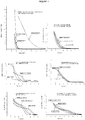
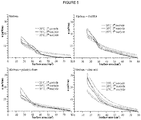
- Figure 1 shows pressure/area curves comparing dynamic surface pressure of films of wax esters (top to bottom: palmityl stearate wax ester (C16:0-C18:0) (25 ⁇ L applied to the trough); palmitoyl oleate wax ester (C16:0-C18:1) (8 ⁇ L applied to the trough); and steroyl linolenate wax ester (C18:0-C18:3) (5 ⁇ L applied to the trough)) (left column of Figure 1 ) with their equivalent or similar compound of formula (I) (top to bottom: ( O -stearyl)-16-hydroxypalmitic acid (C16:0-C18:0) (5 ⁇ L applied to the trough); ( O -oleoyl)-16-hydroxypalmitic acid (C16:0-C18:1) (5 ⁇ L applied to the trough); and ( O -linoleoyl)-16-hydroxypalmitic acid (C16:0-C18:2) (5 ⁇ L
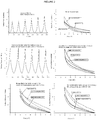
- Figure 2 shows pressure/time and pressure/area curves showing the dynamic surface pressure of films of meibomian lipids (25 ⁇ L) alone and mixtures of meibomian lipids (20 ⁇ L) with different compounds of formula (I) (( O -oleoyl)-16-hydroxypalmitic acid (C16:0-C18:1) (3 ⁇ L), middle row; ( O -oleoyl)-10-hydroxycaprinic acid (C10:0-C18:1) (5 ⁇ L), bottom row, left; and ( O -stearyl)-16-hydroxypalmitic acid (C16:0-C18:0) (5 ⁇ L), bottom row, right).
- formula (I) (( O -oleoyl)-16-hydroxypalmitic acid (C16:0-C18:1) (3 ⁇ L), middle row; ( O -oleoyl)-10-hydroxycaprinic acid (C10:0-C18:1) (5 ⁇ L), bottom row, left; and ( O -stearyl)-16
- the pressure/time curve for meibomian lipids alone indicates that it takes a long time for the lipids to stabilise on the surface (pressure increasing at each cycle).
- Adding a small amount of a compound of formula (I) causes fast stabilisation of the film (indicated on the pressure/time curve with the mixture having little change between isocycles) and the maximum surface pressures are much higher.
- Higher surface pressures (low surface tension) have been shown to be associated with a stable tear film. All of the different examples of the compounds of formula (I) interact readily with meibomian lipids and stabilise the films.
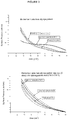
- Figure 3 shows pressure/area curves showing the dynamic surface pressure of films of meibomian lipids alone from a patient with dry eye disease and mixtures of the meibomian lipids with a compound of formula (I) (( O -oleoyl)-16-hydroxypalmitic acid (C16:0-C18:1) (3 ⁇ L)).
- the compound of formula (I) increases the surface pressure, which is an advantage in dry eye, and causes an increase in hysteresis which means that the lipid layer has become more viscous indicating that it spreads more evenly and is more resistant to rapid changes.
- Example 6 Comparision of ( O -oleyl)- ⁇ -hydroxypalmitic acid with other components of the meibum
- Freshly synthesised ( O -oleoyl)- ⁇ -hydroxypalmitic acid (an example of a compound of formula (I)) was spread either alone or mixed with human meibum on a Langmuir trough on an artificial tear buffer. Pressure-area isocycle profiles were recorded and compared with those of palmityl oleate and oleic acid, alone or mixed with meibum. These measurements were accompanied by fluorescence microscopy of meibum mixed films during pressure-area isocycles.
- Omega-hydroxypalmitic acid (6.8 mg; 25 ⁇ mol) was mixed with oleoyl chloride (32.5 ⁇ mol) in a 1.5 mL glass vial and incubated overnight at 60°C with continuous agitation based on the method described in Ranu et al. ( Ranu BC, Dey SS, Hajra A, 2002, "Highly efficient acylation of alcohols, amines and thiols under solvent-free and catalyst-free conditions", Green Chemistry, 5: 44-46 , incorporated herein by reference).
- Fractions containing the desired product were pooled, dried under nitrogen, resuspended in 200 ⁇ L pre-chilled chloroform: methanol: acetic acid (2:1:0.01) and further purified using a Sephadex LH-20 column (30x1 cm) equilibrated with the same solvent at a flow rate of 0.5 mL/min. Fractions of 1.5 mL were collected and analysed as described above and those containing pure product were pooled, dried and weighed. A stock solution of 1 mg/mL (1.86 mM) in chloroform was prepared and stored at -20°C.
- the meibomian lipids were dried through vacuum concentration and centrifugation, and then reconstituted in chloroform spiked with 0.5% (w/w) of the fluorophore, 1-palmitoyl-2-[12-[(7-nitro-2-1,3-benzoxadiazol-4-yl)amino]dodecanoyl]-sn-glycero-3-phosphatidylcholine] (NBD-DPPC) (Avanti Polar Lipids, Auspep Pty. Ltd (Tullamarine, Australia)) and stored at -20°C until used.
- NBD-DPPC 1-palmitoyl-2-[12-[(7-nitro-2-1,3-benzoxadiazol-4-yl)amino]dodecanoyl]-sn-glycero-3-phosphatidylcholine]
- Films were formed by spreading 7.5 nmol of the lipids dissolved in chloroform onto the cleaned surface (air-buffer interface) of an artificial tear buffer (NaCl: 6.63 g/L, KCI: 1.72 g/L, NaHCO 3 : 1.38 g/L, CaCl 2 .2H 2 O: 0.15 g/L, NaH 2 PO 4 xH 2 O: 0.10 g/L and MOPS: 4.18 g/L dissolved in ion exchange ultrapure water) in a double barrier 80 mL temperature-controlled (35°C) Langmuir trough (Nima Technology Ltd, UK). After 5 isocycles were obtained, the temperature was lowered to 20°C. A Whilhelmy balance (Whatman No. 1 filter paper) was used to record surface pressure during isocycles (79 cm 2 - 16 cm 2 at 10 cm 2 /min).
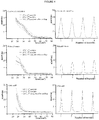
- Figure 4 shows surface pressure/area curves for equimolar amounts of pure lipid films spread at 35°C and then recordings after the same films were cooled to 20°C.
- the ( O -oleoyl)- ⁇ -hydroxypalmitic acid was very surface active as indicated by its large take-off area and there was little change in its profile through repeated isocycles.
- For palmityl oleate there was a slow shift in the ⁇ -A curve to the left and an increase in maximum surface pressure ( ⁇ max ) with increasing isocycles.
- ⁇ max maximum surface pressure
- the inventors have interpreted this as molecules leaving the surface and moving into the outer, non-polar lipid phase. This contrasts markedly with oleic acid, which both decreases in take-off and in ⁇ max as isocycles continue and there is no phase shift. This is indicative of molecules moving off the surface into the subphase. This could occur because either oleic acid is partly miscible in the artificial tear buffer, or micelles could form. Both are possible given that the critical micellar concentration of oleic acid is about 6 ⁇ M and energy is put into this system by compression.
- meibomian films were very tolerant to the changes in their composition, indicated by the fact that the shapes of the different ⁇ -A curves of mixed films were similar to those obtained from films of pure meibomian lipids ( Figure 5).
- Figure 5 shows surface pressure/area curves for meibum and meibum mixed with different lipids.
- Meibum containing fluorophore was spread on artificial tear buffer alone or pre-mixed with each of ( O -oleoyl)- ⁇ -hydroxypalmitic acid, palmityl oleate, or oleic acid were spread at 20°C on the trough. After five isocycles, the trough was heated to 35°C and five more isocycles were carried out. Then the trough was cooled back to 20°C and again five more isocycles were run.
- ⁇ max in the first isocycle after spreading the films at 20°C was higher in the case of meibum mixed with ( O -oleoyl)- ⁇ -hydroxypalmitic acid or oleic acid than for meibomian lipid films alone, whereas palmityl oleate did not influence this ( Figure 5 ).
- Subsequent isocycles resulted in a small increase in ⁇ max for films of meibomian lipids plus ( O -oleoyl)- ⁇ -hydroxypalmitic acid, but there was a marked increase in ⁇ max for the films of meibomian lipids plus palmityl oleate.
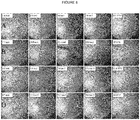
- FIG. 6 shows micrographs of meibomian lipid films. Micrographs comparing the appearance of pure meibomian lipid films (Row A) with meibomian lipids mixed with the ( O -oleoyl)-w-hydroxypalmitic acid (Row B), palmityl oleate (Row C) or oleic acid (Row D) at 20°C.
- the surface pressure during compression of the film and the isocycle is given, e.g. 1.6 iso 1 means that the pressure was 1.6 mN/m during compression in isocycle 1.
- the last column shows the appearance of the films at 35°C. These dark regions were all oriented in approximately the same direction, which may indicate that the film was buckling or creasing in these areas ( Figure 6 ). Although present, the spots were less pronounced after a number of isocycles and it appeared as if the dark spots had merged or had organized differently. At 35°C, the dark spots were present but appeared larger and at higher pressure some dark lines marbling the film could be seen.
- this feature of the ( O -oleoyl)- ⁇ -hydroxypalmitic acid derived films and the ability to take up a normal (right angle) orientation from the surface would give these molecules the capacity to form a bridge between the aqueous and outer bulk layer.
Landscapes
- Health & Medical Sciences (AREA)
- Chemical & Material Sciences (AREA)
- Organic Chemistry (AREA)
- Veterinary Medicine (AREA)
- Medicinal Chemistry (AREA)
- Pharmacology & Pharmacy (AREA)
- Life Sciences & Earth Sciences (AREA)
- Animal Behavior & Ethology (AREA)
- General Health & Medical Sciences (AREA)
- Public Health (AREA)
- Epidemiology (AREA)
- Ophthalmology & Optometry (AREA)
- Emergency Medicine (AREA)
- Engineering & Computer Science (AREA)
- Chemical Kinetics & Catalysis (AREA)
- General Chemical & Material Sciences (AREA)
- Oil, Petroleum & Natural Gas (AREA)
- Dispersion Chemistry (AREA)
- Inorganic Chemistry (AREA)
- Bioinformatics & Cheminformatics (AREA)
- Nuclear Medicine, Radiotherapy & Molecular Imaging (AREA)
- Medicinal Preparation (AREA)
- Organic Low-Molecular-Weight Compounds And Preparation Thereof (AREA)
- Acyclic And Carbocyclic Compounds In Medicinal Compositions (AREA)
- Pharmaceuticals Containing Other Organic And Inorganic Compounds (AREA)
- Medicines That Contain Protein Lipid Enzymes And Other Medicines (AREA)
Priority Applications (1)
| Application Number | Priority Date | Filing Date | Title |
|---|---|---|---|
| EP24203699.4A EP4494707A3 (en) | 2011-12-23 | 2012-12-21 | Ophthalmic formulation |
Applications Claiming Priority (3)
| Application Number | Priority Date | Filing Date | Title |
|---|---|---|---|
| AU2011905421A AU2011905421A0 (en) | 2011-12-23 | Ophthalmic Formulation | |
| EP12860686.0A EP2794550B1 (en) | 2011-12-23 | 2012-12-21 | Ophthalmic formulation |
| PCT/AU2012/001595 WO2013091020A2 (en) | 2011-12-23 | 2012-12-21 | Ophthalmic formulation |
Related Parent Applications (2)
| Application Number | Title | Priority Date | Filing Date |
|---|---|---|---|
| EP12860686.0A Division-Into EP2794550B1 (en) | 2011-12-23 | 2012-12-21 | Ophthalmic formulation |
| EP12860686.0A Division EP2794550B1 (en) | 2011-12-23 | 2012-12-21 | Ophthalmic formulation |
Related Child Applications (1)
| Application Number | Title | Priority Date | Filing Date |
|---|---|---|---|
| EP24203699.4A Division EP4494707A3 (en) | 2011-12-23 | 2012-12-21 | Ophthalmic formulation |
Publications (1)
| Publication Number | Publication Date |
|---|---|
| EP3459929A1 true EP3459929A1 (en) | 2019-03-27 |
Family
ID=48669621
Family Applications (3)
| Application Number | Title | Priority Date | Filing Date |
|---|---|---|---|
| EP18187476.9A Withdrawn EP3459929A1 (en) | 2011-12-23 | 2012-12-21 | Ophthalmic formulation |
| EP24203699.4A Pending EP4494707A3 (en) | 2011-12-23 | 2012-12-21 | Ophthalmic formulation |
| EP12860686.0A Active EP2794550B1 (en) | 2011-12-23 | 2012-12-21 | Ophthalmic formulation |
Family Applications After (2)
| Application Number | Title | Priority Date | Filing Date |
|---|---|---|---|
| EP24203699.4A Pending EP4494707A3 (en) | 2011-12-23 | 2012-12-21 | Ophthalmic formulation |
| EP12860686.0A Active EP2794550B1 (en) | 2011-12-23 | 2012-12-21 | Ophthalmic formulation |
Country Status (20)
| Country | Link |
|---|---|
| US (5) | US10385003B2 (enExample) |
| EP (3) | EP3459929A1 (enExample) |
| JP (1) | JP6087374B2 (enExample) |
| KR (3) | KR102291754B1 (enExample) |
| CN (1) | CN104271548B (enExample) |
| AU (1) | AU2012318266B2 (enExample) |
| BR (1) | BR112014015430B1 (enExample) |
| CA (1) | CA2859997C (enExample) |
| CO (1) | CO7101242A2 (enExample) |
| DK (1) | DK2794550T3 (enExample) |
| ES (1) | ES2716806T3 (enExample) |
| HU (1) | HUE042760T2 (enExample) |
| MX (1) | MX364693B (enExample) |
| PL (1) | PL2794550T3 (enExample) |
| PT (1) | PT2794550T (enExample) |
| RU (1) | RU2625301C2 (enExample) |
| SI (1) | SI2794550T1 (enExample) |
| TR (1) | TR201902752T4 (enExample) |
| WO (1) | WO2013091020A2 (enExample) |
| ZA (1) | ZA201404642B (enExample) |
Families Citing this family (6)
| Publication number | Priority date | Publication date | Assignee | Title |
|---|---|---|---|---|
| TR201902752T4 (tr) * | 2011-12-23 | 2019-03-21 | Univ Of Western Sydney | Oftalmik formülasyon. |
| EP3644966A4 (en) * | 2017-06-29 | 2021-03-24 | Advaite LLC | TREATMENT AND DIAGNOSIS OF EYE SURFACE DISORDERS |
| NO345574B1 (en) * | 2018-06-19 | 2021-04-26 | Epax Norway As | Composition for treatment of dry eye disease and meibomianitis |
| BR112023022535A2 (pt) * | 2021-04-30 | 2024-01-02 | Helsingin Yliopisto | Composição, método de preparação de uma composição, método não terapêutico ou terapêutico, uso de uma composição, e, método para tratar a doença do olho seco e/ou disfunção da glândula meibomiana, ou aliviar o desconforto ocular |
| CN115607534A (zh) * | 2021-07-16 | 2023-01-17 | 云南拜奥泰克生物技术有限责任公司 | 一种mlct替代睑酯油及其制备方法 |
| FI20225982A1 (en) * | 2022-11-02 | 2024-05-03 | Univ Helsinki | New formulations |
Citations (1)
| Publication number | Priority date | Publication date | Assignee | Title |
|---|---|---|---|---|
| US20080312194A1 (en) * | 2007-02-28 | 2008-12-18 | Ousler Iii George W | Methods and compositions for normalizing meibomian gland secretions |
Family Cites Families (5)
| Publication number | Priority date | Publication date | Assignee | Title |
|---|---|---|---|---|
| FR2855047B1 (fr) * | 2003-05-19 | 2007-11-30 | Oreal | Composition comprenant une base sphingoide, un activateur de la voie des 4-et/ou des 6-hydroxylases et un acide gras, utilisation pour renforcer la fonction barriere de la peau |
| US8455016B2 (en) * | 2004-03-12 | 2013-06-04 | Melbj Holdings, Llc | Treatment for meibomian gland dysfunction or obstruction |
| US8569367B2 (en) * | 2004-11-16 | 2013-10-29 | Allergan, Inc. | Ophthalmic compositions and methods for treating eyes |
| IT1393419B1 (it) | 2009-03-19 | 2012-04-20 | Medivis S R L | Composizioni oftalmiche a base di acidi grassi polinsaturi omega-3 e omega-6. |
| TR201902752T4 (tr) | 2011-12-23 | 2019-03-21 | Univ Of Western Sydney | Oftalmik formülasyon. |
-
2012
- 2012-12-21 TR TR2019/02752T patent/TR201902752T4/tr unknown
- 2012-12-21 JP JP2014547635A patent/JP6087374B2/ja active Active
- 2012-12-21 KR KR1020207004568A patent/KR102291754B1/ko active Active
- 2012-12-21 MX MX2014007629A patent/MX364693B/es active IP Right Grant
- 2012-12-21 EP EP18187476.9A patent/EP3459929A1/en not_active Withdrawn
- 2012-12-21 PL PL12860686T patent/PL2794550T3/pl unknown
- 2012-12-21 ES ES12860686T patent/ES2716806T3/es active Active
- 2012-12-21 EP EP24203699.4A patent/EP4494707A3/en active Pending
- 2012-12-21 CA CA2859997A patent/CA2859997C/en active Active
- 2012-12-21 WO PCT/AU2012/001595 patent/WO2013091020A2/en not_active Ceased
- 2012-12-21 US US14/367,836 patent/US10385003B2/en active Active
- 2012-12-21 SI SI201231543T patent/SI2794550T1/sl unknown
- 2012-12-21 CN CN201280069966.XA patent/CN104271548B/zh active Active
- 2012-12-21 KR KR1020147020528A patent/KR102080951B1/ko active Active
- 2012-12-21 PT PT12860686T patent/PT2794550T/pt unknown
- 2012-12-21 KR KR1020217025498A patent/KR20210104916A/ko not_active Ceased
- 2012-12-21 RU RU2014129437A patent/RU2625301C2/ru active
- 2012-12-21 HU HUE12860686A patent/HUE042760T2/hu unknown
- 2012-12-21 DK DK12860686.0T patent/DK2794550T3/en active
- 2012-12-21 EP EP12860686.0A patent/EP2794550B1/en active Active
- 2012-12-21 AU AU2012318266A patent/AU2012318266B2/en active Active
- 2012-12-21 BR BR112014015430-9A patent/BR112014015430B1/pt active IP Right Grant
-
2014
- 2014-06-24 ZA ZA2014/04642A patent/ZA201404642B/en unknown
- 2014-07-22 CO CO14158909A patent/CO7101242A2/es unknown
-
2019
- 2019-07-18 US US16/515,387 patent/US20200190015A1/en not_active Abandoned
-
2021
- 2021-05-12 US US17/318,581 patent/US20210403410A1/en not_active Abandoned
-
2024
- 2024-03-18 US US18/608,522 patent/US20240368069A1/en not_active Abandoned
-
2025
- 2025-05-27 US US19/219,008 patent/US20260049049A1/en active Pending
Patent Citations (1)
| Publication number | Priority date | Publication date | Assignee | Title |
|---|---|---|---|---|
| US20080312194A1 (en) * | 2007-02-28 | 2008-12-18 | Ousler Iii George W | Methods and compositions for normalizing meibomian gland secretions |
Non-Patent Citations (5)
| Title |
|---|
| HIRANITA H; NAKAMURA S; KAWACHI M; COURRIER HM; VANDAMME TF; KRAFFT MP; SHIBATA O: "Miscibility behavior of dipalmitoylphosphatidylcholine with a single-chain partially fluorinated amphiphile in Langmuir monolayers", J. COLL. INTER. SCI., vol. 265, 2003, pages 83 - 92 |
| IGOR A. BUTOVICH: "Human tear film and meibum. Very long chain wax esters and (O-acyl)-omega-hydroxy fatty acids of meibum", J LIPID RES, vol. 50, no. 12, 1 December 2009 (2009-12-01), pages 2471 - 2485, XP055157215 * |
| RANU BC; DEY SS; HAJRA A: "Highly efficient acylation of alcohols, amines and thiols under solvent-free and catalyst-free conditions", GREEN CHEMISTRY, vol. 5, 2002, pages 44 - 46 |
| RANU ET AL: "Highly efficient acylation of alcohols, amines and thiols under solvent-free and catalyst-free conditions", GREEN CHEMISTRY, vol. 5, no. 1, 14 January 2003 (2003-01-14), GB, pages 44 - 46, XP055555544, ISSN: 1463-9262, DOI: 10.1039/b211238h * |
| SIN MAN LAM ET AL: "Meibum Lipid Composition in Asians with Dry Eye Disease", PLOS ONE, vol. 6, no. 10, 17 October 2011 (2011-10-17), pages e24339, XP055013727, ISSN: 1932-6203, DOI: 10.1371/journal.pone.0024339 * |
Also Published As
Similar Documents
| Publication | Publication Date | Title |
|---|---|---|
| US20240368069A1 (en) | Ophthalmic formulation | |
| US10363314B2 (en) | Sprayable topical carrier and composition comprising phosphatidylcholine | |
| JP5722802B2 (ja) | プロスタグランジンを含有するアニオン性水中油型エマルジョンおよびその使用 | |
| HK1203480B (en) | Ophthalmic formulation | |
| CA3216905A1 (en) | A specific combination of lipids and methods and uses related thereto |
Legal Events
| Date | Code | Title | Description |
|---|---|---|---|
| PUAI | Public reference made under article 153(3) epc to a published international application that has entered the european phase |
Free format text: ORIGINAL CODE: 0009012 |
|
| STAA | Information on the status of an ep patent application or granted ep patent |
Free format text: STATUS: THE APPLICATION HAS BEEN PUBLISHED |
|
| AC | Divisional application: reference to earlier application |
Ref document number: 2794550 Country of ref document: EP Kind code of ref document: P |
|
| AK | Designated contracting states |
Kind code of ref document: A1 Designated state(s): AL AT BE BG CH CY CZ DE DK EE ES FI FR GB GR HR HU IE IS IT LI LT LU LV MC MK MT NL NO PL PT RO RS SE SI SK SM TR |
|
| STAA | Information on the status of an ep patent application or granted ep patent |
Free format text: STATUS: REQUEST FOR EXAMINATION WAS MADE |
|
| 17P | Request for examination filed |
Effective date: 20190814 |
|
| RBV | Designated contracting states (corrected) |
Designated state(s): AL AT BE BG CH CY CZ DE DK EE ES FI FR GB GR HR HU IE IS IT LI LT LU LV MC MK MT NL NO PL PT RO RS SE SI SK SM TR |
|
| STAA | Information on the status of an ep patent application or granted ep patent |
Free format text: STATUS: EXAMINATION IS IN PROGRESS |
|
| 17Q | First examination report despatched |
Effective date: 20220322 |
|
| P01 | Opt-out of the competence of the unified patent court (upc) registered |
Effective date: 20230523 |
|
| GRAP | Despatch of communication of intention to grant a patent |
Free format text: ORIGINAL CODE: EPIDOSNIGR1 |
|
| STAA | Information on the status of an ep patent application or granted ep patent |
Free format text: STATUS: GRANT OF PATENT IS INTENDED |
|
| RIC1 | Information provided on ipc code assigned before grant |
Ipc: A61P 27/04 20060101ALI20240506BHEP Ipc: A61P 27/02 20060101ALI20240506BHEP Ipc: A61K 47/38 20060101ALI20240506BHEP Ipc: A61K 47/14 20170101ALI20240506BHEP Ipc: A61K 9/00 20060101ALI20240506BHEP Ipc: A61K 31/232 20060101ALI20240506BHEP Ipc: A61K 9/107 20060101ALI20240506BHEP Ipc: C07C 67/14 20060101ALI20240506BHEP Ipc: C07C 69/26 20060101ALI20240506BHEP Ipc: A61K 31/23 20060101ALI20240506BHEP Ipc: A61K 31/231 20060101ALI20240506BHEP Ipc: A61K 9/08 20060101ALI20240506BHEP Ipc: C07C 69/22 20060101ALI20240506BHEP Ipc: C07C 69/58 20060101ALI20240506BHEP Ipc: C07C 69/533 20060101ALI20240506BHEP Ipc: A61K 9/06 20060101ALI20240506BHEP Ipc: C07C 69/587 20060101AFI20240506BHEP |
|
| INTG | Intention to grant announced |
Effective date: 20240531 |
|
| RIN1 | Information on inventor provided before grant (corrected) |
Inventor name: SCHUETT, BURKHARDT Inventor name: MILLAR, THOMAS |
|
| STAA | Information on the status of an ep patent application or granted ep patent |
Free format text: STATUS: THE APPLICATION IS DEEMED TO BE WITHDRAWN |
|
| 18D | Application deemed to be withdrawn |
Effective date: 20241001 |