EP3433300B1 - Entsalzung von polyarylethern mittels schmelzeextraktion - Google Patents
Entsalzung von polyarylethern mittels schmelzeextraktion Download PDFInfo
- Publication number
- EP3433300B1 EP3433300B1 EP17710296.9A EP17710296A EP3433300B1 EP 3433300 B1 EP3433300 B1 EP 3433300B1 EP 17710296 A EP17710296 A EP 17710296A EP 3433300 B1 EP3433300 B1 EP 3433300B1
- Authority
- EP
- European Patent Office
- Prior art keywords
- salt
- polyaryl ether
- temperature
- polymer
- weight
- Prior art date
- Legal status (The legal status is an assumption and is not a legal conclusion. Google has not performed a legal analysis and makes no representation as to the accuracy of the status listed.)
- Active
Links
Classifications
-
- C—CHEMISTRY; METALLURGY
- C08—ORGANIC MACROMOLECULAR COMPOUNDS; THEIR PREPARATION OR CHEMICAL WORKING-UP; COMPOSITIONS BASED THEREON
- C08G—MACROMOLECULAR COMPOUNDS OBTAINED OTHERWISE THAN BY REACTIONS ONLY INVOLVING UNSATURATED CARBON-TO-CARBON BONDS
- C08G75/00—Macromolecular compounds obtained by reactions forming a linkage containing sulfur with or without nitrogen, oxygen, or carbon in the main chain of the macromolecule
- C08G75/20—Polysulfones
- C08G75/23—Polyethersulfones
-
- C—CHEMISTRY; METALLURGY
- C08—ORGANIC MACROMOLECULAR COMPOUNDS; THEIR PREPARATION OR CHEMICAL WORKING-UP; COMPOSITIONS BASED THEREON
- C08G—MACROMOLECULAR COMPOUNDS OBTAINED OTHERWISE THAN BY REACTIONS ONLY INVOLVING UNSATURATED CARBON-TO-CARBON BONDS
- C08G65/00—Macromolecular compounds obtained by reactions forming an ether link in the main chain of the macromolecule
- C08G65/34—Macromolecular compounds obtained by reactions forming an ether link in the main chain of the macromolecule from hydroxy compounds or their metallic derivatives
- C08G65/38—Macromolecular compounds obtained by reactions forming an ether link in the main chain of the macromolecule from hydroxy compounds or their metallic derivatives derived from phenols
- C08G65/40—Macromolecular compounds obtained by reactions forming an ether link in the main chain of the macromolecule from hydroxy compounds or their metallic derivatives derived from phenols from phenols (I) and other compounds (II), e.g. OH-Ar-OH + X-Ar-X, where X is halogen atom, i.e. leaving group
-
- C—CHEMISTRY; METALLURGY
- C08—ORGANIC MACROMOLECULAR COMPOUNDS; THEIR PREPARATION OR CHEMICAL WORKING-UP; COMPOSITIONS BASED THEREON
- C08G—MACROMOLECULAR COMPOUNDS OBTAINED OTHERWISE THAN BY REACTIONS ONLY INVOLVING UNSATURATED CARBON-TO-CARBON BONDS
- C08G65/00—Macromolecular compounds obtained by reactions forming an ether link in the main chain of the macromolecule
- C08G65/34—Macromolecular compounds obtained by reactions forming an ether link in the main chain of the macromolecule from hydroxy compounds or their metallic derivatives
- C08G65/46—Post-polymerisation treatment, e.g. recovery, purification, drying
-
- C—CHEMISTRY; METALLURGY
- C08—ORGANIC MACROMOLECULAR COMPOUNDS; THEIR PREPARATION OR CHEMICAL WORKING-UP; COMPOSITIONS BASED THEREON
- C08G—MACROMOLECULAR COMPOUNDS OBTAINED OTHERWISE THAN BY REACTIONS ONLY INVOLVING UNSATURATED CARBON-TO-CARBON BONDS
- C08G75/00—Macromolecular compounds obtained by reactions forming a linkage containing sulfur with or without nitrogen, oxygen, or carbon in the main chain of the macromolecule
-
- C—CHEMISTRY; METALLURGY
- C08—ORGANIC MACROMOLECULAR COMPOUNDS; THEIR PREPARATION OR CHEMICAL WORKING-UP; COMPOSITIONS BASED THEREON
- C08G—MACROMOLECULAR COMPOUNDS OBTAINED OTHERWISE THAN BY REACTIONS ONLY INVOLVING UNSATURATED CARBON-TO-CARBON BONDS
- C08G75/00—Macromolecular compounds obtained by reactions forming a linkage containing sulfur with or without nitrogen, oxygen, or carbon in the main chain of the macromolecule
- C08G75/02—Polythioethers
-
- C—CHEMISTRY; METALLURGY
- C08—ORGANIC MACROMOLECULAR COMPOUNDS; THEIR PREPARATION OR CHEMICAL WORKING-UP; COMPOSITIONS BASED THEREON
- C08G—MACROMOLECULAR COMPOUNDS OBTAINED OTHERWISE THAN BY REACTIONS ONLY INVOLVING UNSATURATED CARBON-TO-CARBON BONDS
- C08G75/00—Macromolecular compounds obtained by reactions forming a linkage containing sulfur with or without nitrogen, oxygen, or carbon in the main chain of the macromolecule
- C08G75/02—Polythioethers
- C08G75/0204—Polyarylenethioethers
- C08G75/0277—Post-polymerisation treatment
- C08G75/0281—Recovery or purification
-
- C—CHEMISTRY; METALLURGY
- C08—ORGANIC MACROMOLECULAR COMPOUNDS; THEIR PREPARATION OR CHEMICAL WORKING-UP; COMPOSITIONS BASED THEREON
- C08G—MACROMOLECULAR COMPOUNDS OBTAINED OTHERWISE THAN BY REACTIONS ONLY INVOLVING UNSATURATED CARBON-TO-CARBON BONDS
- C08G75/00—Macromolecular compounds obtained by reactions forming a linkage containing sulfur with or without nitrogen, oxygen, or carbon in the main chain of the macromolecule
- C08G75/20—Polysulfones
-
- C—CHEMISTRY; METALLURGY
- C08—ORGANIC MACROMOLECULAR COMPOUNDS; THEIR PREPARATION OR CHEMICAL WORKING-UP; COMPOSITIONS BASED THEREON
- C08J—WORKING-UP; GENERAL PROCESSES OF COMPOUNDING; AFTER-TREATMENT NOT COVERED BY SUBCLASSES C08B, C08C, C08F, C08G or C08H
- C08J3/00—Processes of treating or compounding macromolecular substances
- C08J3/12—Powdering or granulating
- C08J3/14—Powdering or granulating by precipitation from solutions
-
- C—CHEMISTRY; METALLURGY
- C08—ORGANIC MACROMOLECULAR COMPOUNDS; THEIR PREPARATION OR CHEMICAL WORKING-UP; COMPOSITIONS BASED THEREON
- C08J—WORKING-UP; GENERAL PROCESSES OF COMPOUNDING; AFTER-TREATMENT NOT COVERED BY SUBCLASSES C08B, C08C, C08F, C08G or C08H
- C08J5/00—Manufacture of articles or shaped materials containing macromolecular substances
- C08J5/18—Manufacture of films or sheets
-
- C—CHEMISTRY; METALLURGY
- C08—ORGANIC MACROMOLECULAR COMPOUNDS; THEIR PREPARATION OR CHEMICAL WORKING-UP; COMPOSITIONS BASED THEREON
- C08J—WORKING-UP; GENERAL PROCESSES OF COMPOUNDING; AFTER-TREATMENT NOT COVERED BY SUBCLASSES C08B, C08C, C08F, C08G or C08H
- C08J2381/00—Characterised by the use of macromolecular compounds obtained by reactions forming in the main chain of the macromolecule a linkage containing sulfur with or without nitrogen, oxygen, or carbon only; Polysulfones; Derivatives of such polymers
- C08J2381/06—Polysulfones; Polyethersulfones
Definitions
- the present invention relates to a process for producing a polyaryl ether by reacting components (a1) and (a2) in the presence of a carbonate compound (C) to obtain a salt-containing polymer (sP) containing the polyaryl ether and a salt (S). Following the reaction, the salt (S) is extracted from the salt-containing polymer (sP) to obtain a desalted polymer (eP) containing the polyaryl ether.
- polyaryl ether polymers are polyaryl ether sulfones.
- Polyarylether polymers belong to the group of high-performance thermoplastics and are characterized by high heat resistance with good mechanical properties and inherent flame retardance.
- polyaryl ether polymers are generally prepared by polycondensation of corresponding aromatic dihydroxy compounds with aromatic dihalogen compounds, the polycondensation being carried out in an aprotic polar solvent in the presence of potassium carbonate as the base.
- the polyaryl ether polymers occur in the manufacturing process in the form of a solution that contains the polyaryl ether polymers dissolved in the aprotic-polar solvent.
- the potassium halide formed during the reaction can be separated from the solution mechanically, for example by centrifugation or filtration, so that the solution and thus also the subsequently isolated polyaryl ether polymers contain little or no potassium halide.
- Various methods have been described in the prior art for the subsequent isolation of the polyaryl ether polymers from the aprotic-polar solvent.
- the DE 36 44 464 and the EP 2 305 740 also describe processes for preparing polyaryl ether polymers by polycondensation in an aprotic polar solvent.
- the solution obtained, which contains the polyaryl ether polymers dissolved in the aprotic-polar solvent, is then placed in a precipitation bath drips, containing water, and so obtained the polyaryl ether polymers in the form of beads.
- the EP0292211 describes a process for preparing aryl polyethers or thioethers in which a bisphenol, a bisthiophenol or a hydroxyphenylmercaptan is contacted with a dihalobenzenoid compound in the presence of a basic alkali metal catalyst and the reaction is carried out in the presence of a solvent.
- the resulting product solution is contacted with water to remove the alkali metal halide formed during the reaction.
- the U.S. 4,113,698 describes a process for preparing polyether ketones by nucleophilic polycondensation of an alkali metal bisphenolate with at least one dihalo compound and/or an alkali metal halophenate in an aromatic solvent.
- the reaction mixture obtained is then crystallized out or precipitated and finally brought to a small particle size by grinding and washed with water.
- the WO 2010/046482 describes a process for preparing polyetherketones in diphenyl sulfone to give a reaction mixture which is then cooled to solidify. The solid reaction mixture is then ground and extracted with acetone and water.
- WO 2011/020 823 proposes a process for preparing the polymers which is carried out in a solvent. In order to remove the salt content formed during the polycondensation, the polymer solution is filtered after the production steps.
- GB 2 376 019 A relates to a method for cleaning polymeric material.
- Preferred polymeric material is polyetheretherketone and polyetherketone. From the description of the prior art it can be inferred that aromatic polyketones and polyetheretherketones can be prepared in diphenyl sulfone as the solvent. Furthermore, in GB 2 376 019 A described that the polymeric material can be prepared in a solution process and to what extent the solvent content can be reduced by purification.
- EP 2 305 740 B1 discloses a desalination process explicitly from polymer solution rather than from the molten state. EP 2 305 740 B1 points out that this desalination process is particularly useful in processes where the polymer is already in solution anyway, especially when it has been produced by solution polymerisation.
- U.S. 4,113,698 discloses a process for preparing aromatic polymers in an aromatic sulfone solvent from which the polymers are isolated below their melting point, i.e., it is a solution process.
- the aprotic-polar solvents can migrate out of the moldings when they are used.
- the moldings obtained in this way are therefore not harmless from a toxicological point of view.
- the molded parts are therefore often unsuitable, particularly for food applications.
- melt polymerization processes for the production of polyaryl ether polymers are described in the prior art.
- the DE 27 49 645 describes a process for preparing polyaryl ethers in a melt polymerization process by polycondensation of at least one bisphenol with at least one dihalobenzene compound or of a halophenol in the presence of anhydrous alkali metal carbonate in the absence of solvents or diluents.
- the reaction is carried out in a kneader or in an extruder.
- the inorganic components formed during the condensation reaction for example sodium or potassium chloride, are removed from the polyaryl ethers by dissolving and then filtering, sieving or extracting.
- the WO 2014/033321 also describes a process for preparing aromatic polyaryl ethers in a melt polymerization process by reacting a dichlorodiphenyl sulfone component with a bisphenol component in the presence of an alkali metal carbonate in the absence of solvents or diluents, the reaction being carried out in a mixing kneader.
- the polyaryl ether polymers thus obtained are ground to a particle size of about 2 mm and washed with water twice for 3 hours at 80° C. in order to remove the alkali metal chloride formed as a by-product.
- the polyaryl ether polymers produced by melt polymerization have no residual aprotic-polar solvent content.
- the UK 2 376 019 describes a process for purifying polyketones.
- the polyketones are brought into contact with water and extraction agent. During contacting, the polyketone is in the form of powders, pellets or granules.
- the CN 102 786 681 describes a process for purifying polymers, preferably from polyetherketones.
- the polymer is used in solid form as powder, in particulate form or in circular form. It is then brought into contact with water as the extraction agent.
- the present invention is therefore based on the object of providing an improved process for desalination of a salt-containing polymer (sP) which contains a polyaryl ether and a salt (S).
- the desalinated polymer (eP) produced in this way should have little or no residual content of aprotic-polar solvents and a reduced residual content of salt (S) compared to the polyaryl ether polymers obtainable by processes of the prior art.
- the process according to the invention and the desalinated polymers (eP) obtainable thereby should not have the disadvantages of the processes described in the prior art and the polymers obtainable therefrom, or only to a reduced extent.
- the method according to the invention should be simple, as error-free as possible and inexpensive to carry out.
- the present invention is therefore based on the object of providing a process for preparing a polyaryl ether.
- the polyaryl ether produced in this way should not have the disadvantages of the polyaryl ethers, as described in the prior art, or only to a reduced extent.
- the method according to the invention should be simple, as error-free as possible and inexpensive to carry out.
- the process according to the invention can be used to remove more salt (S) from the salt-containing polymer (sP) in the same period of time compared to the processes described in the prior art. That is, the salt (S) can be more quickly removed from the salt-containing polymer (sP).
- a salt content of at most 150 ppm by weight in the desalinated polymer (eP) can be achieved with the process according to the invention.
- the storage stability of the desalinated polymer (eP) is significantly increased compared to the polyaryl ethers from the prior art, which are produced by a melt polymerization process.
- the desalinated polymer (eP) also has good melt stability. When it is remelted, the polyaryl ether is not degraded, nor does the polymerization of the polyaryl ether continue.
- the desalinated polymer (eP) can also be used to manufacture membranes.
- the inventive method is also particularly suitable for the desalination of salt-containing polymers (sP) by a Melt polymerization processes have been prepared. If salt-containing polymers (sP) produced by melt polymerization processes are used in the process according to the invention, the desalinated polymers (eP) have no residual solvent content. Thus, the desalinated polymers (eP) obtainable in this way can also be used for the production of molded parts that are suitable for food applications.
- step I components (a1) and (a2) are mixed in a mixing kneader in the presence of a carbonate compound (C) at a first temperature T 1-I , which is above the softening point T E of the polyaryl ether implemented.
- a salt-containing polymer (sP) is thereby obtained.
- the salt-containing polymer (sP) contains the polyaryl ether and a salt (S).
- Component (a1) is at least one aromatic hydroxy compound.
- Component (a2) is at least one aromatic sulfone compound having two halogen substituents.
- a carbonate compound (C) means both precisely one carbonate compound (C) and a mixture of two or more carbonate compounds (C).
- the reaction of components (a1) and (a2) in the presence of the carbonate compound (C) can be carried out by any of the methods known to those skilled in the art.
- the reaction can take place in the presence of at least one solvent and/or diluent.
- the reaction in the absence of a solvent and/or diluent is also possible.
- the reaction in the absence of a solvent and/or diluent is preferred.
- the present invention therefore also relates to a process in which components (a1) and (a2) are reacted in step I) in the presence of a carbonate compound (C) in the absence of a solvent and/or diluent.
- Suitable solvents and/or diluents for the reaction of components (a1) and (a2) in the presence of a carbonate compound (C) are known per se to the person skilled in the art and are usually polar aprotic solvents.
- aprotic-polar solvents are selected, for example, from the group consisting of N,N-dimethylformamide, N,N-dimethylacetamide, N-methylpyrrolidone, N-ethylpyrrolidone, dimethyl sulfoxide, dimethyl sulfone, sulfolane, diphenyl sulfone and mixtures thereof.
- reaction of components (a1) and (a2) in step I) in the presence of the carbonate compound (C) in the absence of an aprotic-polar solvent selected from the group consisting of N,N-dimethylformamide, N ,N-dimethylacetamide, N-methylpyrrolidone, N-ethylpyrrolidone, dimethyl sulfoxide, dimethyl sulfone, sulfolane, diphenyl sulfone and mixtures thereof takes place, with particular preference the reaction of components (a1) and (a2) in step I) takes place in the presence of a carbonate compound (C) in the absence of an aprotic polar solvent.
- an aprotic-polar solvent selected from the group consisting of N,N-dimethylformamide, N ,N-dimethylacetamide, N-methylpyrrolidone, N-ethylpyrrolidone, dimethyl sulfoxide, dimethyl sulfone, sulfolane,
- the subject matter of the present invention is therefore also a process in which the reaction of components (a1) and (a2) in step I) in the absence of an aprotic-polar solvent selected from the group consisting of N,N-dimethylformamide, N,N- dimethylacetamide, N-methylpyrrolidone, N-ethylpyrrolidone, dimethyl sulfoxide, dimethyl sulfone, sulfolane, diphenyl sulfone and mixtures thereof.
- an aprotic-polar solvent selected from the group consisting of N,N-dimethylformamide, N,N- dimethylacetamide, N-methylpyrrolidone, N-ethylpyrrolidone, dimethyl sulfoxide, dimethyl sulfone, sulfolane, diphenyl sulfone and mixtures thereof.
- the reaction of components (a1) and (a2) in the presence of the carbonate compound (C) in step I) preferably takes place in the absence of a solvent and/or diluent. It is particularly preferred that the reaction takes place in a melt polymerization process. Melt polymerization processes for the production of polyaryl ethers are, for example, in DE 2 749 645 and in the WO 2014/033321 described.
- the subject matter of the present invention is therefore also a process in which the reaction of components (a1) and (a2) in step I) takes place in the presence of a carbonate compound (C) by a melt polymerization process.
- the components (a1) and (a2) are usually reacted together in a molten form to obtain the salt-containing polymer (sP) which is also in a molten form.
- the salt-containing polymer (sP) is in molten form, this means that the salt-containing polymer (sP) is present at a temperature above the melting temperature of the polyaryl ether present if the polyaryl ether is partially crystalline.
- the polyaryl ether is preferably amorphous.
- the salt-containing polymer (sP) is in molten form then means that the salt-containing polymer (sP) above the softening point T E , preferably above the Glass transition temperature T G of the polyaryl ether contained is present.
- the explanations and preferences described further below apply to the softening point T E and the glass transition temperature T G of the polyaryl ether.
- the reaction of components (a1) and (a2) therefore takes place at a first temperature T 1-I , which is above the softening point T E , preferably above the glass transition temperature T G of the polyaryl ether.
- step I) is carried out at a first temperature T 1-I , which is above the glass transition temperature T G of the polyaryl ether.
- the first temperature T 1-I at which the reaction of components (a1) and (a2) in step I) takes place is, for example, in the range from 200 to 400.degree. C., preferably in the range from 250 to 350.degree.
- the subject matter of the present invention is therefore also a method in which the first temperature T 1-I in step I) is in the range from 200 to 400.degree.
- the first temperature T 1-I at which the reaction of components (a1) and (a2) in step I) takes place, is usually below the decomposition temperature of the polyaryl ether.
- the first temperature T 1-I is preferably at least 1° C., preferably at least 5° C. and particularly preferably at least 10° C. below the decomposition temperature of the polyaryl ether.
- the component (a1) and the component (a2) are preferably in a molar ratio in the range from 0.9 to 1.4, particularly preferably in the range from 1.0 to 1.2 and particularly preferably in the range of 1.0 to 1.1 reacted to each other.
- the present invention therefore also relates to a process in which the molar ratio of component (a1) to component (a2) in the reaction in step I) is in the range from 0.9 to 1.4.
- the carbonate compound (C) is preferably in a molar ratio to component (a1) of from 0.9 to 1.22, particularly preferably from 1.0 to 1.12 and particularly preferably from 1.03 to 1.10 before.
- the subject matter of the present invention is therefore also a process in which the molar ratio of the carbonate compound (C) to the component (a1) in step I) is in the range from 0.9 to 1.22.
- the molar ratio of component (a1) to component (a2) and the molar ratio of carbonate compound (C) to component (a1) are based on the molar ratio at the beginning of the reaction in step I). , ie before the components (a1) and (a2) and the carbonate compound (C) have reacted with one another in step I).
- components (a1) and (a2) are reacted in a mixing kneader.
- Suitable mixing kneaders are known as such to those skilled in the art. Single-screw or double-screw kneaders are preferred, with double-screw kneaders being particularly preferred.
- the mixing kneader additionally comprises a reflux condenser in order to recycle volatile monomer, which may evaporate at the reaction temperatures, into the mixing kneader.
- components (a1) and (a2) for example, are placed in the mixing kneader and the carbonate compound (C) is then fed in.
- the components (a1) and (a2) are fed to the mixing kneader in solid form and then firstly melted therein and then the carbonate compound (C) is fed.
- component (a1) is then first reacted with the carbonate compound (C) to form a dialcoholate. Then component (a2) is added.
- the components (a1) and (a2) and the carbonate compound (C) in each case in the form of a powder and then to feed this mixture to the mixing kneader.
- the mixture is then melted in the mixing kneader and components (a1) and (a2) are reacted.
- the components (a1) and (a2) can be introduced into the mixing kneader in liquid or in solid form. They are preferably introduced into the mixing kneader in solid form. If the components (a1) and/or (a2) are introduced into the mixing kneader in solid form, they can be introduced into the mixing kneader, for example, as powder or granules.
- Components (a1) and (a2) can be reacted in the mixing kneader over any period of time.
- the reaction time of components (a1) and (a2) in the mixing kneader is preferably in the range from 0.5 to 3.5 hours, particularly preferably in the range from 1.5 to 3 hours.
- the reaction of the components (a1) and (a2) in the presence of the carbonate compound (C) is a condensation reaction.
- condensation reactions are known as such to those skilled in the art.
- the water formed and the carbon dioxide formed can be removed from the mixing kneader as gaseous constituents during the reaction.
- the salt (S) generally remains in the polyaryl ether, so that the salt-containing polymer (sP) is obtained when components (a1) and (a2) are reacted.
- Component (a1) preferably contains at least 50% by weight, more preferably at least 60% by weight, particularly preferably at least 80% by weight and in particular at least 95% by weight of at least one dihydroxy component selected from the group consisting of 4, 4'-dihydroxybiphenyl, 2,2-bis(4-hydroxyphenyl)propane and bis(4-hydroxyphenyl)sulfone, each based on the total weight of component (a1).
- Component (a1) very particularly preferably consists of at least one dihydroxy component selected from the group consisting of 4,4'-dihydroxybiphenyl, 2,2-bis(4-hydroxyphenyl)propane and bis(4-hydroxyphenyl)sulfone.
- 2,2-bis(4-hydroxyphenyl)propane is also known under the name bisphenol A.
- Bis(4-hydroxyphenyl)sulfone is also known under the name bisphenol S.
- the subject of the present invention is therefore also a method in which the component (a1) is selected from the group consisting of 4,4'-dihydroxybiphenyl, 2,2-bis(4-hydroxyphenyl)propane and bis(4-hydroxyphenyl)sulfone.
- component (a2) is at least one aromatic sulfone compound having two halogen substituents.
- Component (a2) is preferably a dihalodiphenyl sulfone. It is therefore preferred that component (a2) is selected from the group consisting of 4,4'-dichlorodiphenyl sulfone, 4,4'-difluorodiphenyl sulfone, 4,4'-dibromodiphenyl sulfone, 2,2'-dichlorodiphenyl sulfone and 2,2' -Difluorodiphenylsulfone, particularly preferably component (a2) is selected from the group consisting of 4,4'-dichlorodiphenylsulfone and 4,4'-difluorodiphenylsulfone, most preferably component (a2) is 4,4'-dichlorodiphenylsulfone.
- component (a2) is selected from the group consisting of 4,4'-dichlorodiphenyl sulfone, 4,4'-difluorodiphenyl sulfone, 4,4'-dibromodiphenyl sulfone, 2,2'- dichlorodiphenyl sulfone and 2,2'-difluorodiphenyl sulfone.
- Suitable carbonate compounds (C) are known as such to those skilled in the art.
- the carbonate compound (C) is preferably an alkali metal carbonate and/or an alkaline earth metal carbonate.
- Preferably the carbonate compound (C) is anhydrous.
- the carbonate compound (C) is therefore preferably an anhydrous alkali metal carbonate, with anhydrous sodium carbonate, anhydrous potassium carbonate and mixtures thereof being particularly preferred, particularly preferred carbonate compound (C) being anhydrous potassium carbonate.
- step I the salt-containing polymer (sP) is obtained.
- the salt-containing polymer (sP) contains the polyaryl ether and the salt (S).
- a polyaryl ether means precisely a polyaryl ether as well as mixtures of two or more polyaryl ethers.
- a salt (S) is understood to mean both precisely one salt (S) and mixtures of two or more salts (S).
- the salt-containing polymer (sP) contains at least 50% by weight, more preferably at least 60% by weight, more preferably at least 65% by weight and particularly preferably at least 70% by weight of the polyaryl ether, based in each case on the total weight of the saline polymer (sP).
- the salt-containing polymer (sP) contains at most 99.98% by weight, preferably at most 99% by weight, more preferably at most 90% by weight and particularly preferably at most 80% by weight of the polyaryl ether, in each case based on the total weight of the salt-containing polymer (sP).
- the salt-containing polymer (sP) preferably contains 50 to 99.98% by weight of the polyaryl ether, more preferably 60 to 99% by weight of the polyaryl ether, particularly preferably 65 to 90% by weight of the polyaryl ether and most preferably 70 to 80 % by weight of the polyaryl ether, in each case based on the total weight of the salt-containing polymer (sP).
- the salt-containing polymer (sP) usually contains at least 0.02% by weight, preferably at least 1% by weight, particularly preferably at least 10% by weight and particularly preferably at least 20% by weight of the salt (S), based in each case on the total weight of the salt-containing polymer (sP).
- the salt-containing polymer (sP) contains at most 50% by weight, preferably at most 40% by weight, more preferably at most 35% by weight and particularly preferably at most 30% by weight of the salt (S), based on the Total weight of saline polymer (sP).
- the salt-containing polymer (sP) contains 0.02 to 50% by weight of the salt (S), particularly preferably 1 to 40% by weight of the salt (S), particularly preferably 10 to 35% by weight. % and most preferably 20 to 30% by weight of the salt (S), each based on the total weight of the salt-containing polymer (sP).
- salt-containing polymer (sP) additionally contains additives.
- Suitable additives are known as such to those skilled in the art. Additives of this type are usually reacted with components (a1) and (a2) in step I) and/or the components (a1) and (a2) in step I) are reacted in the presence of the additives.
- the salt-containing polymer (sP) additionally contains additives
- the salt-containing polymer (sP) generally contains 0.01 to 10% by weight of additives, preferably 0.01 to 7% by weight of additives and particularly preferably 0 0.01 to 5% by weight of additives, based in each case on the total weight of the salt-containing polymer (sP).
- the salt-containing polymer (sP) contains no additional additives.
- the salt-containing polymer (sP) may contain the carbonate compound (C).
- the statements and preferences described above apply to the carbonate compound (C).
- the salt-containing polymer (sp) contains the carbonate compound (C)
- the salt-containing polymer (sp) contains in the range from 0.01 to 20% by weight, preferably in the range from 0.01 to 5% by weight. % and more preferably in the range of 0.01 to 2% by weight of the carbonate compound (C), based on the total weight of the salt-containing polymer (sP).
- the carbonate compound (C) is different from the salt (S).
- the salt-containing polymer (sP) does not contain any carbonate compounds (C).
- the salt-containing polymer (sP) contains 50 to 99.98% by weight of the polyaryl ether and 0.02 to 50% by weight of the salt (S), preferably 60 to 99% by weight of the polyaryl ether and 1 to 40% by weight % of the salt (S), more preferably 65 to 90% by weight of the polyaryl ether and 10 to 35% by weight of the salt (S) and most preferably 70 to 80% by weight of the polyaryl ether and 20 to 30 % by weight of the salt (S), in each case based on the total weight of the salt-containing polymer (sP).
- the sum of the percentages by weight of the polyaryl ether, the salt (S) and any additional additives and the carbonate compound (C) add up to 100%.
- the viscosity numbers of the salt-containing polymer (sP) are generally in the range from 15 to 90 ml/g, preferably from 22.5 to 75 ml/g and particularly preferably from 26.25 to 71.25 ml/g, determined by Ubbelohde Viscosity number measurement of a 0.01 g/ml solution of the salt-containing polymer (sP) in a 1:1 phenol/1,2-dichlorobenzene mixture according to DIN 51562.
- the viscosity number of the salt-containing polymer (sP) is usually lower than the viscosity number of the desalted polymer (eP).
- the salt (S) contains a cation and a halide, preferably a cation and a chloride.
- a halide is also referred to as a "halide anion”.
- a chloride is also referred to as a "chloride anion”.
- a cation is understood to mean both precisely one cation and mixtures of two or more cations.
- a halide is understood to mean both exactly one halide and also mixtures of two or more halides.
- the salt (S) is an inorganic salt when an inorganic carbonate compound (C) is used as the carbonate compound (C).
- the salt (S) is preferably an alkali metal halide when an alkali metal carbonate is used as the carbonate compound (C).
- the salt (S) is potassium chloride and/or sodium chloride, when potassium carbonate and/or sodium carbonate is used as the carbonate compound (C).
- the subject matter of the present invention is therefore also a process in which the salt (S) contains potassium chloride and/or sodium chloride.
- the weight percent of the salt (S) in the salt-containing polymer (sP) can therefore be determined by measuring the weight percent of the halide, preferably the chloride, in the salt-containing polymer (sP).
- the weight percent of the halide means the weight percent of the anionic halogen, ie the weight percent of the free halide and not the weight percent of the polymer-bound halogen.
- halide preferably chloride
- NMP N-methylpyrrolidone
- the solution obtained in this way is acidified with sulfuric acid or nitric acid and then titrated potentiometrically with a 0.0002 mol/l silver nitrate solution, using methyl orange as an indicator.
- An Ag Titrode from Metrohm is used as the electrode.
- the wt. % of the cation also present in the salt (S) in the salt-containing polymer (sP) can then be calculated from the wt. % of halide. Methods for this are known to those skilled in the art. The sum of the % by weight of the halide and the % by weight of the cation in the salt-containing polymer then results in the % by weight of the salt (S) in the salt-containing polymer (sP).
- the % by weight of salt (S) in the desalted polymer (eP) described below is determined in the same way.
- Polyaryl ethers are known to those skilled in the art as a class of polymers.
- Q, T and Y in formula (I) are independently selected from -O- and -SO 2 -, provided that at least one of the group consisting of Q, T and Y is -SO 2 -.
- These polyarylethers are polyarylethersulfones.
- the subject matter of the present invention is therefore also a process in which the polyaryl ether is a polyaryl ether sulfone.
- R a and R b each independently represent a hydrogen atom or a C 1 -C 12 alkyl, C 1 -C 12 alkoxy or C 6 -C atom 18 -aryl group.
- C 1 -C 12 alkyl groups include linear and branched saturated alkyl groups having from 1 to 12 carbon atoms.
- the following radicals should be mentioned in particular: C 1 -C 6 -alkyl radicals such as methyl, ethyl, n-propyl, i-propyl, n-butyl, sec-butyl, 2- or 3-methylpentyl and longer-chain radicals such as unbranched heptyl and octyl , nonyl, decyl, undecyl, lauryl and the mono- or multi-branched analogues thereof.
- Suitable alkyl radicals in the aforementioned C 1 -C 12 -alkoxy groups which can be used are the alkyl groups defined above having from 1 to 12 carbon atoms.
- Cycloalkyl radicals which can preferably be used include, in particular, C 3 -C 12 -cycloalkyl radicals, such as, for example, cyclopropyl, cyclobutyl, cyclopentyl, cyclohexyl, cycloheptyl, cyclooctyl, cyclopropylmethyl, cyclopropylethyl, cyclopropylpropyl, cyclobutylmethyl, cyclobutylethyl, cyclopentylethyl, -propyl, -butyl, -pentyl, -hexyl, cyclohexylmethyl, -dimethyl, and -trimethyl.
- Ar and Ar 1 independently represent a C 6 -C 18 arylene group.
- Ar is preferably derived from an electron-rich, easily electrophilically attackable aromatic substance, which is preferably selected from the group consisting of hydroquinone, resorcinol, dihydroxynaphthalene, in particular 2,7-dihydroxynaphthalene, and 4,4'-bisphenol .
- Ar 1 is an unsubstituted C 6 or C 12 arylene group.
- C 6 -C 18 arylene groups Ar and Ar 1 are in particular phenylene groups such as 1,2-, 1,3- and 1,4-phenylene, naphthylene groups such as 1,6-, 1,7-, 2,6-and 2,7-Naphthylen, as well as the arylene groups derived from anthracene, phenanthrene and naphthacene.
- Ar and Ar 1 are preferably selected independently of one another from the group consisting of 1,4-phenylene, 1,3-phenylene, naphthylene, in particular 2,7-dihydroxynaphthylene, and 4,4'- bisphenylene.
- Preferred polyaryl ethers are those that contain at least one of the following building blocks la to lo as recurring structural units:
- building blocks la to lo are also preferred in which one or more 1,4-phenylene units derived from hydroquinone are replaced by 1,3-phenylene units derived from resorcinol or by naphthylene units derived from dihydroxynaphthalene , are replaced.
- the building blocks Ia, Ig and Ik are particularly preferred as building blocks of the general formula (I). It is also particularly preferred if the polyaryl ethers are composed essentially of one type of building blocks of the general formula (I), in particular of a building block selected from Ia, Ig and Ik.
- Ar 1,4-phenylene
- Y SO 2 .
- Particularly preferred polyaryl ether sulfones made up of the aforementioned repeating unit are referred to as polyphenylene sulfone (PPSU) (formula Ig).
- PPSU polyphenylene sulfone
- Polyphenylene sulfone is also referred to as polybiphenyl sulfone polymer.
- PSU polysulfone
- PESU polyethersulfone
- the preferred polyaryl ether sulfones also include polybiphenyl sulfone polymers with a reduced content of polymer-bound halogen, in particular chlorine, of less than 400 ppm, in particular less than 300 ppm, particularly preferably less than 200 ppm.
- the lower limit of the content of polymer-bound halogen, preferably chlorine, is usually at least 10 ppm.
- abbreviations such as PPSU, PSU and PESU correspond to DIN EN ISO 1043-1 (Plastics - Code letters and abbreviations - Part 1: Basic polymers and their special properties (ISO 1043-1:2001); German version EN ISO 1043-1:2002).
- the polyaryl ethers preferably have weight-average molecular weights M w of 10,000 to 150,000 g/mol, in particular 15,000 to 120,000 g/mol, particularly preferably 18,000 to 100,000 g/mol, determined by gel permeation chromatography in the solvent dimethylacetamide against narrowly distributed polymethyl methacrylate as the standard.
- the polyaryl ethers preferably have a number-average molecular weight M n of from 10,000 to 35,000 g/mol, determined by means of gel permeation chromatography in the solvent dimethylacetamide against narrowly distributed polymethyl methacrylate as the standard.
- the polydispersity is preferably from 1.9 to 7.5, particularly preferably from 2.1 to 4.
- the polyaryl ethers in the pure substance preferably have an apparent melt viscosity at 350° C./1150 s ⁇ 1 of 100 to 1000 Pa s, preferably 150 to 300 Pa s and particularly preferably 150 to 275 Pa s.
- the melt viscosity was determined using a capillary rheometer.
- the values determined at 1150 s -1 are given.
- the softening point T E of the polyaryl ether is usually in the range from 150 to 230° C., preferably in the range from 155 to 230° C. and particularly preferably in the range from 160 to 180° C., determined using differential scanning calorimetry. Methods for this are known to the person skilled in the art.
- the softening point T E of the polyaryl ether is the glass transition temperature of the pure polyaryl ether containing 2 to 30% by weight of the extractant (E), based on the total weight of the polyaryl ether and the extractant (E), with the polyaryl ether not containing any salt (S) contains.
- the softening point T E of the polyaryl ether is preferably understood to mean the glass transition temperature of the pure polyaryl ether which contains at least 15% by weight of the extractant (E), based on the total weight of the polyaryl ether and the extractant (E), the polyaryl ether not being a salt (S) contains.
- the softening point T E of the polyaryl ether can therefore be determined analogously to the glass transition temperature T G of the polyaryl ether.
- the subject matter of the present invention is therefore also a process in which the softening point T E of the polyaryl ether is in the range from 150 to 230.degree.
- the glass transition temperature T G of the polyaryl ether is usually in the range from 160 to 270 ° C, preferably in the range from 170 to 250 ° C and particularly preferably in the range from 180 to 230 ° C, determined by differential thermal analysis (DTA; differential calorimetry; DSC, where the exact measuring specification can be found in the example part).
- DTA differential thermal analysis
- the glass transition temperature T G is understood as meaning the temperature at which the polyaryl ether solidifies on cooling to form a glass-like solid.
- the subject matter of the present invention is therefore also a process in which the glass transition temperature T G of the polyaryl ether is in the range from 160.degree. C. to 270.degree.
- the polyaryl ethers according to the invention are usually amorphous.
- “amorphous” means that the polyaryl ethers do not have a melting point T M . They only have one glass transition temperature T G . At the glass transition temperature T G , the polyaryl ether changes from the solid state to the molten state.
- the subject matter of the present invention is therefore also a process in which the polyaryl ether is amorphous.
- step II) the salt-containing polymer (sP) obtained in step I) is transferred from the mixing kneader into a reactor which includes a dynamic mixer. During the transfer, the salt-containing polymer (sP) has a second temperature T 2-II which is above the softening point T E of the polyaryl ether.
- the reactor into which the salt-containing polymer (sP) is transferred contains an extractant (E) which has a third temperature T 3-II which is above the softening point T E of the polyaryl ether.
- step II the salt-containing polymer (sP) is transferred from the mixing kneader to the reactor.
- the transfer of the salt-containing polymer (sP) in step II) can take place both directly and indirectly from the mixing kneader into the reactor.
- the transfer is preferably carried out directly.
- the salt-containing polymer (sP) obtained in step I) is transferred indirectly from the mixing kneader to the reactor, the salt-containing polymer (sP) obtained in step I) can, for example, be discharged from the mixing kneader and granulated, for example, and then transferred to the reactor will.
- the salt-containing polymer (sP) obtained in step I) is preferably transferred directly from the mixing kneader to the reactor, i.e. without intermediate steps.
- the salt-containing polymer (SP) can be discharged from the mixing kneader by any of the methods known to those skilled in the art.
- the salt-containing polymer (sP) is used as a salt-containing Melt transferred by means of a pump through a pipeline into the reactor. Methods for this are known to the person skilled in the art.
- the discharged salt-containing polymer (sP) is then transferred directly to the reactor.
- the salt-containing polymer (sP) has a second temperature T 2-II which is above the softening point T E , preferably above the glass transition temperature T G , of the polyaryl ether.
- the subject matter of the present invention is therefore also a method in which the salt-containing polymer in step II) has a second temperature T 2-II which is above the glass transition temperature T G .
- the second temperature T 2-II is preferably in the range from 200 to 400.degree. C., particularly preferably in the range from 250 to 350.degree.
- the subject matter of the present invention is therefore also a process in which the second temperature T 2-II of the salt-containing polymer (sP) in step II) is in the range from 200 to 400°C.
- the salt-containing polymer (sP) it is possible for the salt-containing polymer (sP) to at least partially cool down while it is being transferred from the mixing kneader to the reactor in step II).
- the second temperature T 2-II changes during the transfer. During the entire transfer, however, it is above the softening point T E , preferably above the glass transition temperature T G of the polyaryl ether.
- the second temperature T 2-II that the salt-containing polymer (sP) has in step II) is equal to the first temperature T 1-I at which the components (a1) and (a2) in Step I) are implemented.
- Suitable reactors into which the salt-containing polymer (sP) is transferred are all reactors known to those skilled in the art which include a dynamic mixer.
- the reactor is therefore preferably a reactor which operates according to the rotor/stator principle using the continuous flow principle.
- Such reactors are known as such to those skilled in the art.
- the dynamic mixer of the reactor distributes the salt-containing polymer (sP) transferred into the reactor into fine droplets. This additionally increases the surface area of the salt-containing polymer (sP), which further improves the extraction of the salt (S) in step III).
- the size of the droplets of the salt-containing polymer (sP) is, for example, in the range from 10 to 100 ⁇ m.
- the reactor which comprises the dynamic mixer, has a shear rate in the range from 100 to 2000 1/s, preferably in the range from 100 to 1500 1/s, more preferably in the range from 200 to 1000 1/s and most preferably from 300 up to 700 1/s.
- the reactor contains an extractant (E).
- an extractant (E) means both precisely one extractant and a mixture of two or more extractants (E).
- any solvent which dissolves the salt (S) contained in the salt-containing polymer (sP) is suitable as the extraction agent (E).
- the extractant (E) preferably contains a protic solvent.
- the extractant (E) particularly preferably contains water.
- the subject matter of the present invention is therefore also a process in which a protic solvent is used as extractant (E).
- the extractant (E) contains at least 50% by weight, preferably at least 70% by weight, particularly preferably at least 80% by weight and most preferably at least 90% by weight of water, based in each case on the total weight of the extractant (E). Most preferably the extractant (E) consists of water.
- the subject matter of the present invention is therefore also a process in which the extractant (E) contains water.
- the extractant (E) has a third temperature T 3-II which is above the softening point T E , preferably above the glass transition temperature T G of the polyaryl ether.
- the subject matter of the present invention is therefore also a process in which the extraction agent (E) in step II) has a third temperature T 3-II which is above the glass transition temperature T G .
- the third temperature T 3-II of the extractant (E) is preferably in the range from 160 to 300.degree. C., particularly preferably in the range from 200 to 280.degree. C. and particularly preferably in the range from 220 to 260.degree.
- the subject matter of the present invention is therefore also a process in which the third temperature T 3-II of the extractant (E) in step II) is in the range from 160 to 300°C.
- the third temperature T 3-II of the extractant (E) is below the decomposition temperature of the polyaryl ether.
- the third temperature T 3-II is at least 1° C., preferably at least 5° C. and particularly preferably at least 10° C. below the decomposition temperature of the polyaryl ether.
- the third temperature T 3-II can be above the second temperature T 2-II and/or above the first temperature T 1-I . It is also possible that the third temperature T 3-II is below the second temperature T 2-II and/or below the first temperature T 1-I . This embodiment is preferred.
- the pressure in the reactor in step II) is, for example, in the range from 6 to 100 bar, preferably in the range from 10 to 70 bar, particularly preferably in the range from 20 to 50 bar.
- step III the salt (S) is extracted from the salt-containing polymer (sP) with the extractant (E) in the reactor.
- the extraction is carried out at a fourth temperature T 4-III which is above the softening point T E of the polyaryl ether.
- a desalinated polymer (eP) is thereby obtained.
- the desalinated polymer (eP) contains the polyaryl ether.
- a salt-containing extractant (sE) is obtained, which contains the extractant (E) and the salt (S).
- the salt (S) is extracted from the salt-containing polymer (sP) in step III) at a fourth temperature T 4-III , which is above the softening point T E , preferably above the glass transition temperature T G of the polyaryl ether.
- the subject matter of the present invention is therefore also a process in which the salt (S) is extracted from the salt-containing polymer (sP) at a fourth temperature T 4-III , which is above the glass transition temperature T G of the polyaryl ether.
- the fourth temperature T 4-III is preferably in the range from 160 to 300.degree. C., particularly preferably in the range from 200 to 280.degree. C. and particularly preferably in the range from 220 to 260.degree.
- the subject matter of the present invention is therefore also a method in which the fourth temperature T 4 -111 in step III) is in the range from 160 to 300.degree.
- the pressure during the extraction of the salt (S) in step III) is, for example, in the range from 6 to 100 bar, preferably in the range from 10 to 70 bar and particularly preferably in the range from 20 to 50 bar.
- the fourth temperature T 4 -111 can be above the third temperature T 3-II and/or above the second temperature T 2-II and/or above the first temperature T 1-I . It is also possible that the fourth temperature T 4 -111 is below the third temperature T 3-II and/or below the second temperature T 2-II and/or below the first temperature T 1-I .
- the present invention is therefore also a method in which the first temperature T 1-I , the second temperature T 2-II , the third temperature T 3-II and the fourth temperature T 4 - 111 above the glass transition temperature T G of the polyaryl ether lie.
- the salt-containing polymer (sP) is therefore above the softening point T E , preferably above the glass transition temperature T G of the polyarylether.
- the salt-containing polymer (sP) is therefore also present in molten form during the extraction in step III).
- the residence time of the salt-containing polymer (sP) in the reactor comprising a dynamic mixer in step III) can be any.
- the residence time is in the range from 1 to 100 s (seconds), preferably in the range from 3 to 60 s and particularly preferably in the range from 5 to 20 s.
- the residence time is understood as meaning the time between the time at which the salt-containing polymer (sP) is introduced into the reactor and the time at which the resulting desalinated polymer (eP) is removed from the reactor.
- step III the salt-containing extractant (sE) is obtained, which contains the extractant (E) and the salt (S).
- the salt-containing extractant (sE) contains that part of the salt (S) which has been removed from the salt-containing polymer (sP).
- the salt-containing extractant (SA) contains 0.1 to 20% by weight of the salt (S), preferably 0.5 to 10% by weight of the salt (S) and particularly preferably 1 to 5% by weight of the salt (S), in each case based on the total weight of the salt-containing extractant (sE).
- the desalted polymer (eP) is obtained.
- the desalinated polymer (eP) can be separated from the salt-containing extractant (sE) by any of the methods known to those skilled in the art.
- the desalinated polymer (eP) is preferably separated from the salt-containing extractant (sE) by sedimentation.
- the sedimentation can take place in the same reactor as the extraction, it is also possible and preferred according to the invention to carry out the sedimentation in a settling tank. This principle of combined extraction and subsequent sedimentation is also known to those skilled in the art as the mixer-settler principle.
- the separation can be carried out in a centrifugal field using centrifuges, decanters or hydrocyclones. Apparatus for this are known to those skilled in the art.
- Steps II and III) can be repeated.
- the desalinated polymer (eP) is contacted again with the extractant (E) and extracted.
- further salt (S) is removed from the desalinated polymer (eP).
- step III) is repeated, it is preferably repeated as a cascade.
- the desalinated polymer (eP) is separated from the salt-containing extractant (sE) in a settling tank.
- the desalinated polymer (eP) is in molten form in the settling tank and is molten in the latter Form transferred to a second reactor.
- further salt (S) is then removed from the desalinated polymer (eP) by extraction with the extractant (E).
- This second reactor is preferably followed by a second settling tank in which the desalinated polymer (eP) is separated from the salt-containing extractant (sE) obtained.
- the second settling tank can be followed by further reactors and further settling tanks, in which further salt (S) is removed from the desalinated polymer (eP).
- the desalted polymer (eP) obtained in step III) contains less salt (S) than the salt-containing polymer (sP) obtained in step I).
- the desalted polymer (eP) still contains traces of the salt (S).
- traces of the salt (S) is present a salt content in the desalted polymer (eP) of not more than 150 ppm by weight, preferably not more than 100 ppm by weight, particularly preferably not more than 80 ppm by weight and most preferably of a maximum of 50 ppm by weight of the salt (S), based in each case on the total weight of the desalinated polymer.
- the desalinated polymer (eP) contains in the range from 0.01 to 150 ppm by weight of the salt (S), preferably in the range from 0.1 to 100 ppm by weight, particularly preferably in the range from 1 to 80 ppm by weight .-ppm and particularly preferably in the range from 5 to 50 ppm by weight of the salt (S), based in each case on the total weight of the desalinated polymer (eP).
- the desalinated polymer (eP) therefore usually contains not more than 150 ppm by weight, preferably not more than 100 ppm by weight, particularly preferably not more than 80 ppm by weight and most preferably not more than 50 ppm by weight, of the salt (S), in each case based on the total weight of desalted polymer (eP).
- the present invention therefore also relates to a process in which the desalted polymer (eP) obtained in step III) contains a maximum of 150 ppm by weight of the salt (S), based on the total weight of the desalted polymer (eP).
- the lower limit of the content of salt (S) in the desalinated polymer (eP) is generally 0.01 ppm by weight, preferably 0.1 ppm by weight, particularly preferably 1 ppm by weight and particularly preferably 5 ppm by weight based on the total weight of the desalted polymer (eP).
- the desalted polymer (eP) is essentially free of the salt (S).
- "essentially free” means that the desalinated polymer (eP) contains a maximum of 15 ppm by weight, preferably a maximum of 10 ppm by weight and particularly preferably a maximum of 5 ppm by weight of the salt (S), based on the total weight of the desalinated polymer (eP).
- the desalinated polymer (eP) is usually present in molten form.
- the desalinated polymer (eP) is then preferably dried and granulated, for example by means of strand granulation or underwater granulation.
- the desalinated polymer (eP) can then be dried, for example.
- all methods known to the person skilled in the art are suitable for drying.
- the desalted polymer (eP) can be dried at elevated temperatures. Temperatures in the range from 150 to 160° C. are preferred, particularly preferably in the range from 100 to 150° C.
- the drying temperature is usually below the glass transition temperature T G , preferably below the softening point T E of the polyaryl ether. If necessary, the drying can be carried out under reduced pressure.
- the salt-containing polymer (sP) is preferably produced in a melt polymerization process.
- the salt-containing polymer (sP) and thus also the desalinated polymer (eP) therefore preferably does not contain any aprotic-polar solvent which is selected from the group consisting of N,N-dimethylformamide, N,N-dimethylacetamide, N-methylpyrrolidone, N- ethyl pyrrolidone, dimethyl sulfoxide, dimethyl sulfone, sulfolane, diphenyl sulfone and mixtures thereof.
- the desalinated polymer (eP) particularly preferably contains no aprotic-polar solvent.
- the desalinated polymer (eP), which can be obtained by the process according to the invention, can contain from 0 to 100 ppm by weight, preferably from 0 to 20 ppm by weight and particularly preferably from 0 to 10 ppm by weight, of an aprotic-polar solvent.
- the desalinated polymers (eP) obtainable by the process according to the invention preferably have an apparent melt viscosity at 350° C./1150 s ⁇ 1 of 100 to 1000 Pa s, preferably 150 to 300 Pa s and particularly preferably 150 to 275 Pa s.
- the melt viscosity was determined using a capillary rheometer.
- the values determined at 1150 s -1 are given.
- the viscosity numbers of the polymers (eP) desalinated by the process according to the invention are generally in the range from 20 to 120 ml/g, preferably from 30 to 100 ml/g and particularly preferably from 35 to 95 ml/g, determined by Ubbelohde viscosity number measurement 0.01 g/ml solution of the salt-containing polymer (sP) in a 1:1 phenol/1,2-dichlorobenzene mixture according to DIN 51562.
- the desalinated polymers (eP) obtainable by the process according to the invention are suitable for the production of molding compositions, fibers, films, coatings or moldings.
- the desalinated polymers (EP) are particularly suitable for applications in which high purity of the polymeric matrix is desired, for example in the food sector, in the field of membranes or in electronics.
- the softening point was determined by DSC.
- the respective sample was weighed into a crucible that was pressure-tight at 20 bar and heated twice at 2K/min.
- the measurement curve was recorded during the third heating (2K/min and an underlying modulation of 1K/80s).
- the softening point can be determined both on the pure polymer and approximately on the salt-containing polymer sP by bringing 10 g sP into contact with 1 l of water at 95° C. for 24 h.
- the salt content in the salt-containing polymer is thereby reduced to approx. 1% salt.
- a DSC measurement can be carried out on this water and salt-loaded state using the above-mentioned method in order to obtain an approximation of the softening temperature.
- the softening point is preferably determined by first crushing the salt-containing or pure polymer until a powder with a particle size of 50 ⁇ m is obtained and then bringing it into contact with water according to the instructions given above, separating off the surface water and performing the DSC measurement on the moist, water-laden polymer performs.
- the second signal disappears completely and the polymer behaves like a liquid from the softening point.
- the VN was determined by measuring the Ubbelohde viscosity number of a 0.01 g/ml solution of the salt-containing polymer (sP) in a 1:1 phenol/1,2-dichlorobenzene mixture in accordance with DIN 51562-1:1999-01.
- Ionic chlorine was determined by titration.
- the potassium chloride concentration was determined on the basis of the chlorine content determined in this way.
- the monomers DHDPS and DCDPS were polymerized in the presence of potassium carbonate in the molar ratios DHDPS:DCDPS 1:1.005 and DHDPS:potassium carbonate 1:1.06.
- the polymerization took place in the absence of a solvent in a mixing kneader at a first temperature T 1-I of 290.degree.
- sP1 was melted again, brought to a temperature T 2-II of 310° C. and metered into a reactor which includes a dynamic mixer at this temperature.
- the dynamic mixer contained water which had a temperature of T 3-II of 240°C.
- a suspension was obtained which separated into two phases.
- the salt was extracted at a temperature T 4-II of 241°C.
- the dynamic mixer speed was 157 rpm.
- the residence time in the reactor was 47 seconds.
- the extraction was carried out a total of three times as described above. In the second and third extraction, however, the speed was reduced to 130 rpm while the residence time was kept constant.
- the potassium chloride content was 5200 ppm after the first extraction, 148 ppm after the second extraction and ⁇ 20 ppm after the third extraction.
- the softening point of the desalinated polymer (eP1) was 166°C.
- the monomers DHDPS and DCDPS were polymerized in the presence of potassium carbonate in the molar ratios DHDPS:DCDPS 1:1.005 and DHDPS:potassium carbonate 1:1.06.
- the polymerization took place in the absence of a solvent in a mixing kneader at a first temperature T 1-I of 290.degree.
- sP1 was melted again, brought to a temperature T 2-II of 310° C. and metered into a reactor which includes a dynamic mixer at this temperature.
- the dynamic mixer contained water having a T 3-II temperature of 230°C.
- a suspension was obtained which separated into two phases.
- the salt was extracted at a temperature T 4-II of 240.degree.
- the dynamic mixer speed was 157 rpm.
- the residence time in the reactor was 47 seconds.
- the extraction was carried out a total of three times as described above.
- the potassium chloride content was 7930 ppm after the first extraction, 370 ppm after the second extraction and 48 ppm after the third extraction.
- the softening point of the desalinated polymer (eP1) was 166°C.
Landscapes
- Chemical & Material Sciences (AREA)
- Health & Medical Sciences (AREA)
- Chemical Kinetics & Catalysis (AREA)
- Medicinal Chemistry (AREA)
- Polymers & Plastics (AREA)
- Organic Chemistry (AREA)
- Engineering & Computer Science (AREA)
- Manufacturing & Machinery (AREA)
- Materials Engineering (AREA)
- General Chemical & Material Sciences (AREA)
- Polyethers (AREA)
- Polymers With Sulfur, Phosphorus Or Metals In The Main Chain (AREA)
Description
- Die vorliegende Erfindung betrifft ein Verfahren zur Herstellung eines Polyarylethers durch Umsetzung der Komponenten (a1) und (a2) in Gegenwart einer Carbonatverbindung (C) unter Erhalt eines salzhaltigen Polymers (sP), das den Polyarylether und ein Salz (S) enthält. Im Anschluss an die Umsetzung wird das Salz (S) aus dem salzhaltigen Polymer (sP) extrahiert unter Erhalt eines entsalzten Polymers (eP), das den Polyarylether enthält.
- Eine wirtschaftlich besonders bedeutende Gruppe von Polyarylether-Polymeren sind Polyarylethersulfone. Polyarylether-Polymere gehören zur Gruppe der Hochleistungsthermoplasten und zeichnen sich durch hohe Wärmeformbeständigkeit bei guten mechanischen Eigenschaften und einer inhärenten Flammwidrigkeit aus.
- Die Herstellung von Polyarylether-Polymeren ist seit langem bekannt. Die Herstellung von Polyarylether-Polymeren erfolgt im Allgemeinen durch Polykondensation entsprechender aromatischer Dihydroxyverbindungen mit aromatischen Dihalogenverbindungen, wobei die Polykondensation in einem aprotisch-polaren Lösungsmittel in Gegenwart von Kaliumcarbonat als Base durchgeführt wird. Die Polyarylether-Polymere fallen im Herstellungsprozess in Form einer Lösung an, die die Polyarylether-Polymere gelöst in dem aprotisch-polaren Lösungsmittel enthält. Das während der Reaktion gebildete Kaliumhalogenid kann mechanisch, beispielsweise durch Zentrifugation oder Filtration, von der Lösung abgetrennt werden, so dass die Lösung und somit auch die nachfolgend isolierten Polyarylether-Polymere nur wenig oder sogar kein Kaliumhalogenid enthalten. Zur anschließenden Isolierung der Polyarylether-Polymere aus dem aprotisch-polaren Lösungsmittel sind im Stand der Technik verschiedene Methoden beschrieben.
- Gemäß den in
DE 19 57 091 undEP 0 000 361 beschriebenen Verfahren zur Isolierung von Polyarylether-Polymeren, die durch Polykondensation in einem aprotisch-polaren Lösungsmittel hergestellt werden, wird die Lösung, die die Polyarylether-Polymere gelöst in einem aprotisch-polaren Lösungsmittel enthält, in Wasser eingebracht und die Polyarylether-Polymere dadurch gefällt. - Die
DE 36 44 464 und dieEP 2 305 740 beschreiben ebenfalls Verfahren zur Herstellung von Polyarylether-Polymeren durch Polykondensation in einem aprotisch-polaren Lösungsmittel. Die erhaltene Lösung, die die Polyarylether-Polymere gelöst in dem aprotisch-polaren Lösungsmittel enthält, wird anschließend in ein Fällbad vertropft, das Wasser enthält, und so die Polyarylether-Polymere in Form von Perlen erhalten. - Die
EP 0292211 beschreibt ein Verfahren zur Herstellung von Arylpolyethern oder Thioethern, wobei ein Bisphenol, ein Bisthiophenol oder ein Hydroxyphenylmercaptan mit einer Dihalobenzoidverbindung in Gegenwart eines basischen Alkalimetallkatalysators in Kontakt gebracht wird, und wobei die Umsetzung in Gegenwart eines Lösungsmittels erfolgt. Die erhaltene Produktlösung wird mit Wasser in Kontakt gebracht und so das Alkalimetallhalid, das sich bei der Reaktion bildet, entfernt. - Die
US 4,113, 698 beschreibt ein Verfahren zur Herstellung von Polyetherketonen durch nukleophile Polykondensation von einem Alkalimetall-Bisphenolat mit zumindest einer Dihaloverbindung und/oder einem Alkalimetallhalophenat in einem aromatischen Lösungsmittel. Die erhaltene Reaktionsmischung wird anschließend auskristallisiert oder gefällt und schließlich durch Mahlen auf eine geringe Partikelgröße gebracht und mit Wasser gewaschen. - Die
WO 2010/046482 beschreibt ein Verfahren zur Herstellung von Polyetherketonen in Diphenylsulfon unter Erhalt einer Reaktionsmischung, die dann abgekühlt wird, so dass sie fest wird. Die feste Reaktionsmischung wird dann gemahlen und mit Aceton und Wasser extrahiert. -
WO 2011/020 823 schlägt ein Verfahren zur Herstellung der Polymeren vor, das in einem Lösungsmittel durchgeführt wird. Um den bei der Polykondensation gebildeten Salzanteil zu entfernen, erfolgt im Anschluss an die Herstellungsschritte eine Filtration der Polymerlösung. -
GB 2 376 019 A GB 2 376 019 A -
EP 2 305 740 B1 offenbart ein Entsalzungsverfahren explizit aus Polymerlösung und gerade nicht aus schmelzeflüssigem Zustand.EP 2 305 740 B1 verweist darauf, dass sich dieses Entsalzungsverfahren insbesondere für Verfahren eignet, in denen das Polymer sowieso schon in Lösung vorliegt, insbesondere, wenn es durch Lösungspolymerisation hergestellt wurde. -
US 4,113,698 offenbart ein Verfahren zur Herstellung aromatischer Polymere in einem aromatischen Sulfon als Lösungsmitte, aus dem die Polymere unterhalb ihres Schmelzpunktes isoliert werden, es handelt sich also um ein Lösungsverfahren. - Allen im Stand der Technik beschriebenen Verfahren, bei denen Polyarylether-Polymere durch Polykondensation in einem aprotisch-polaren Lösungsmittel hergestellt werden, ist gemeinsam, dass sie nur einen geringen Gehalt an Kaliumhalogenid aufweisen. Allerdings kann das aprotisch-polare Lösungsmittel nicht vollständig aus den Polyarylether-Polymeren entfernt werden. Diese aprotisch-polaren Lösungsmittel sind folglich auch in Formteilen enthalten, die aus den nach den vorstehend beschriebenen Verfahren erhältlichen Polyarylether-Polymeren hergestellt werden.
- Die aprotisch-polaren Lösungsmittel können beim Gebrauch der Formteile aus diesen migrieren. Die so erhaltenen Formteile sind daher aus toxikologischer Sicht nicht unbedenklich. Die Formteile sind deswegen insbesondere für Lebensmittelanwendungen häufig ungeeignet.
- Um einen Restgehalt an aprotisch-polarem Lösungsmittel in den Polyarylether-Polymeren zu vermeiden, sind im Stand der Technik Schmelzepolymerisationsverfahren zur Herstellung von Polyarylether-Polymeren beschrieben.
- Die
DE 27 49 645 beschreibt ein Verfahren zur Herstellung von Polyarylethern in einem Schmelzepolymerisationsverfahren durch Polykondensation von mindestens einem Bisphenol mit mindestens einer Dihalogenbenzolverbindung oder von einem Halogenphenol in Gegenwart von wasserfreiem Alkalimetallcarbonat in Abwesenheit von Lösungs- oder Verdünnungsmitteln. Die Reaktion wird in einem Kneter oder in einem Extruder durchgeführt. Die anorganischen Bestandteile, die während der Kondensationsreaktion gebildet werden, beispielsweise Natrium- oder Kaliumchlorid, werden durch Lösen und anschließendes Filtrieren, Sieben oder Extrahieren aus den Polyarylethern entfernt. - Die
WO 2014/033321 beschreibt ebenfalls ein Verfahren zur Herstellung von aromatischen Polyarylethern in einem Schmelzepolymerisationsverfahren durch Umsetzung einer Dichlordiphenylsulfonkomponente mit einer Bisphenolkomponente in Gegenwart eines Alkalimetallcarbonats in Abwesenheit von Lösungs- oder Verdünnungsmitteln, wobei die Reaktion in einem Mischkneter durchgeführt wird. Die so erhaltenen Polyarylether-Polymere werden auf eine Teilchengröße von etwa 2 mm vermahlen und zweimal für 3 Stunden bei 80 °C mit Wasser gewaschen, um das als Nebenprodukt gebildete Alkalimetallchlorid zu entfernen. Durch das in der -
WO 2014/033321 beschriebene Verfahren können jedoch nur 80 % des Akalimetallchlorids aus dem Polyarylether entfernt werden. - Die durch Schmelzepolymerisation hergestellten Polyarylether-Polymere weisen keinen Restgehalt an aprotisch-polarem Lösungsmittel auf.
- Die
GB 2 376 019 - Die
CN 102 786 681 beschreibt ein Verfahren zur Reinigung von Polymeren vorzugsweise von Polyetherketonen. Das Polymer wird in fester Form als Pulver, in partikulärer Form oder in kreisförmiger Form eingesetzt. Anschließend wird es mit Wasser als Extraktionsmittel in Kontakt gebracht. - Der vorliegenden Erfindung liegt somit die Aufgabe zugrunde, ein verbessertes Verfahren zur Entsalzung eines salzhaltigen Polymers (sP), das einen Polyarylether und ein Salz (S) enthält, bereitzustellen. Das so hergestellte entsalzte Polymer (eP) soll einen geringen oder keinen Restgehalt an aprotisch-polaren Lösungsmitteln und einen reduzierten Restgehalt an Salz (S) im Vergleich zu den nach den Verfahren des Standes der Technik erhältlichen Polyarylether-Polymeren aufweisen. Das erfindungsgemäße Verfahren und die dadurch erhältlichen entsalzten Polymere (eP) sollen die Nachteile der im Stand der Technik beschriebenen Verfahren und der daraus erhältlichen Polymere nicht oder nur in vermindertem Maße aufweisen. Das erfindungsgemäße Verfahren soll dabei einfach, möglichst fehlerunanfällig und kostengünstig durchführbar sein.
- Der vorliegenden Erfindung liegt daher die Aufgabe zugrunde, ein Verfahren zur Herstellung eines Polyarylethers bereitzustellen. Der so hergestellte Polyarylether soll die Nachteile der Polyarylether, wie sie im Stand der Technik beschrieben sind, nicht oder nur in vermindertem Maße aufweisen. Das erfindungsgemäße Verfahren soll dabei einfach, möglichst fehlerunanfällig und kostengünstig durchführbar sein.
- Diese Aufgabe wird erfindungsgemäß gelöst durch ein Verfahren zur Herstellung eines Polyarylethers, der eine Erweichungstemperatur TE aufweist, umfassend die Schritte
- I) Umsetzung der Komponenten
- (a1) mindestens eine aromatische Dihydroxyverbindung und
- (a2) mindestens eine aromatische Sulfonverbindung mit zwei Halogensubstituenten
- II) Überführen des in Schritt I) erhaltenen salzhaltigen Polymers (sP) aus dem Mischkneter in einen Reaktor, der einen dynamischen Mischer umfasst, wobei das salzhaltige Polymer (sP) eine zweite Temperatur T2-II, die oberhalb der Erweichungstemperatur TE des Polyarylethers liegt, aufweist, und wobei der Reaktor ein Extraktionsmittel (E) enthält, das eine dritte Temperatur T3-II, die oberhalb der Erweichungstemperatur TE des Polyarylethers liegt, aufweist,
- III) Extraktion des Salzes (S) aus dem salzhaltigen Polymer (sP) mit dem Extraktionsmittel (E) in dem Reaktor, der einen dynamischen Mischer umfasst, bei einer vierten Temperatur T4-III, die oberhalb der Erweichungstemperatur TE des Polyarylethers liegt, unter Erhalt eines entsalzten Polymers (eP), das den Polyarylether enthält, und eines salzhaltigen Extraktionsmittels (sE), das das Extraktionsmittel (E) und das Salz (S) enthält und wobei der Reaktor eine Scherrate im Bereich von 100 bis 2000 1/s aufweist.
- Es wurde überraschend festgestellt, dass mit dem erfindungsgemäßen Verfahren im Vergleich zu den im Stand der Technik beschriebenen Verfahren im gleichen Zeitraum mehr Salz (S) aus dem salzhaltigen Polymer (sP) entfernt werden kann. Das heißt, das Salz (S) kann schneller aus dem salzhaltigen Polymer (sP) entfernt werden. Überraschenderweise kann mit dem erfindungsgemäßen Verfahren ein Salzgehalt von maximal 150 Gew.-ppm im entsalzten Polymer (eP) erreicht werden. Dadurch wird die Lagerstabilität des entsalzten Polymers (eP) deutlich erhöht gegenüber den Polyarylethern aus dem Stand der Technik, die durch ein Schmelzepolymerisationsverfahren hergestellt werden. Das entsalzte Polymer (eP) besitzt zudem eine gute Schmelzestabilität. Beim Wiederaufschmelzen wird also weder der Polyarylether abgebaut, noch schreitet die Polymerisation des Polyarylethers weiter fort.
- Das entsalzte Polymer (eP) kann zudem zur Herstellung von Membranen eingesetzt werden.
- Das erfindungsgemäße Verfahren ist außerdem insbesondere geeignet für die Entsalzung von salzhaltigen Polymeren (sP), die durch ein Schmelzepolymerisationsverfahren hergestellt worden sind. Werden in dem erfindungsgemäßen Verfahren durch Schmelzepolymerisationsverfahren hergestellte salzhaltige Polymere (sP) eingesetzt, so weisen die entsalzten Polymere (eP) keinen Restgehalt an Lösungsmittel auf. Somit sind die so erhältlichen entsalzten Polymere (eP) auch für die Herstellung von Formteilen einsetzbar, die für Lebensmittelanwendungen geeignet sind.
- Nachfolgend wird das erfindungsgemäße Verfahren näher erläutert.
- Im Verfahren zur Herstellung eines Polyarylethers werden erfindungsgemäß in Schritt I) die Komponenten (a1) und (a2) in Gegenwart einer Carbonatverbindung (C) bei einer ersten Temperatur T1-I, die oberhalb der Erweichungstemperatur TE des Polyarylethers liegt, in einem Mischkneter umgesetzt. Dabei wird ein salzhaltiges Polymer (sP) erhalten. Das salzhaltige Polymer (sP) enthält den Polyarylether und ein Salz (S). Die Komponente (a1) ist mindestens eine aromatische Hydroxyverbindung. Die Komponente (a2) ist mindestens eine aromatische Sulfonverbindung mit zwei Halogensubstituenten.
- "Eine Carbonatverbindung (C)" bedeutet im Rahmen der vorliegenden Erfindung sowohl genau eine Carbonatverbindung (C) als auch eine Mischung aus zwei oder mehreren Carbonatverbindungen (C).
- Die Umsetzung der Komponenten (a1) und (a2) in Gegenwart der Carbonatverbindung (C) kann nach allen dem Fachmann bekannten Methoden erfolgen. Die Umsetzung kann in Anwesenheit mindestens eines Lösungs- und/oder Verdünnungsmittels erfolgen. Ebenso ist die Umsetzung in Abwesenheit eines Lösungs- und/oder Verdünnungsmittels möglich. Bevorzugt ist die Umsetzung in Abwesenheit eines Lösungs- und/oder Verdünnungsmittels.
- Gegenstand der vorliegenden Erfindung ist daher auch ein Verfahren, bei dem die Komponenten (a1) und (a2) in Schritt I) in Gegenwart einer Carbonatverbindung (C) in Abwesenheit eines Lösungs- und/oder Verdünnungsmittels umgesetzt werden.
- Geeignete Lösungs- und/oder Verdünnungsmittel für die Umsetzung der Komponenten (a1) und (a2) in Gegenwart einer Carbonatverbindung (C) sind dem Fachmann als solche bekannt und üblicherweise aprotisch-polare Lösungsmittel. Derartige aprotisch-polaren Lösungsmittel sind beispielsweise ausgewählt aus der Gruppe bestehend aus N,N-Dimethylformamid, N,N-Dimethylacetamid, N-Methylpyrrolidon, N-Ethylpyrrolidon, Dimethylsulfoxid, Dimethylsulfon, Sulfolan, Diphenylsulfon und Mischungen daraus. Es ist daher erfindungsgemäß auch bevorzugt, dass die Umsetzung der Komponenten (a1) und (a2) in Schritt I) in Gegenwart der Carbonatverbindung (C) in Abwesenheit eines aprotisch-polaren Lösungsmittels ausgewählt aus der Gruppe bestehend aus N,N-Dimethylformamid, N,N-Dimethylacetamid, N-Methylpyrrolidon, N-Ethylpyrrolidon, Dimethylsulfoxid, Dimethylsulfon, Sulfolan, Diphenylsulfon und Mischungen daraus erfolgt, insbesondere bevorzugt erfolgt die Umsetzung der Komponenten (a1) und (a2) in Schritt I) in Gegenwart einer Carbonatverbindung (C) in Abwesenheit eines aprotisch-polaren Lösungsmittels.
- Gegenstand der vorliegenden Erfindung ist daher auch ein Verfahren, bei dem die Umsetzung der Komponenten (a1) und (a2) in Schritt I) in Abwesenheit eines aprotisch-polaren Lösungsmittels ausgewählt aus der Gruppe bestehend aus N,N-Dimethylformamid, N,N-Dimethylacetamid, N-Methylpyrrolidon, N-Ethylpyrrolidon, Dimethylsulfoxid, Dimethylsulfon, Sulfolan, Diphenylsulfon und Mischungen daraus erfolgt.
- Wie vorstehend beschrieben erfolgt die Umsetzung der Komponenten (a1) und (a2) in Gegenwart der Carbonatverbindung (C) in Schritt I) bevorzugt in Abwesenheit eines Lösungs- und/oder Verdünnungsmittels. Dabei ist es besonders bevorzugt, dass die Umsetzung in einem Schmelzepolymerisationsverfahren erfolgt. Schmelzepolymerisationsverfahren zur Herstellung von Polyarylethern sind beispielsweise in der
DE 2 749 645 und in derWO 2014/033321 beschrieben. - Gegenstand der vorliegenden Erfindung ist somit auch ein Verfahren, bei dem die Umsetzung der Komponenten (a1) und (a2) in Schritt I) in Gegenwart einer Carbonatverbindung (C) durch ein Schmelzepolymerisationsverfahren erfolgt.
- Bei einem Schmelzepolymerisationsverfahren werden die Komponenten (a1) und (a2) üblicherweise in geschmolzener Form miteinander umgesetzt unter Erhalt des salzhaltigen Polymers (sP), das ebenfalls in geschmolzener Form vorliegt.
- Wenn die Komponenten (a1) und (a2) in geschmolzener Form vorliegen, so bedeutet dies, dass sie oberhalb ihres Schmelzpunktes vorliegen.
- Liegt das salzhaltige Polymer (sP) in geschmolzener Form vor, so bedeutet dies, dass das salzhaltige Polymer (sP) bei einer Temperatur oberhalb der Schmelztemperatur des enthaltenen Polyarylethers vorliegt, wenn der Polyarylether teilkristallin ist. Erfindungsgemäß bevorzugt ist der Polyarylether amorph. "Das salzhaltige Polymer (sP) liegt in geschmolzener Form vor" bedeutet dann, dass das salzhaltige Polymer (sP) oberhalb der Erweichungstemperatur TE, bevorzugt oberhalb der Glasübergangstemperatur TG, des enthaltenen Polyarylethers vorliegt. Für die Erweichungstemperatur TE und die Glasübergangstemperatur TG des Polyarylethers gelten die weiter unten beschriebenen Ausführungen und Bevorzugungen.
- Erfindungsgemäß erfolgt die Umsetzung der Komponenten (a1) und (a2) daher bei einer ersten Temperatur T1-I, die oberhalb der Erweichungstemperatur TE, bevorzugt oberhalb der Glasübergangstemperatur TG des Polyarylethers liegt.
- Gegenstand der vorliegenden Erfindung ist daher auch ein Verfahren, bei dem Schritt I) bei einer ersten Temperatur T1-I, die oberhalb der Glasübergangstemperatur TG des Polyarylethers liegt, durchgeführt wird.
- Für die Erweichungstemperatur TE des Polyarylethers und die Glasübergangstemperatur TG des Polyarylethers gelten die weiter unten beschriebenen Ausführungen und Bevorzugungen.
- Die erste Temperatur T1-I, bei der die Umsetzung der Komponenten (a1) und (a2) in Schritt I) erfolgt, liegt beispielsweise im Bereich von 200 bis 400 °C, bevorzugt im Bereich von 250 bis 350 °C.
- Gegenstand der vorliegenden Erfindung ist daher auch ein Verfahren, bei dem die erste Temperatur T1-I in Schritt I) im Bereich von 200 bis 400 °C liegt.
- Es versteht sich von selbst, dass die erste Temperatur T1-I, bei der die Umsetzung der Komponenten (a1) und (a2) in Schritt I) erfolgt, üblicherweise unterhalb der Zersetzungstemperatur des Polyarylethers liegt. Vorzugsweise liegt die erste Temperatur T1-I mindestens 1 °C, bevorzugt mindestens 5 °C und insbesondere bevorzugt mindestens 10 °C unterhalb der Zersetzungstemperatur des Polyarylethers.
- In Schritt I) werden die Komponente (a1) und die Komponente (a2) vorzugsweise in einem molaren Verhältnis im Bereich von 0,9 bis 1,4, besonders bevorzugt im Bereich von 1,0 bis 1,2 und insbesondere bevorzugt im Bereich von 1,0 bis 1,1 zueinander umgesetzt.
- Gegenstand der vorliegenden Erfindung ist daher auch ein Verfahren, bei dem das molare Verhältnis der Komponente (a1) zu der Komponente (a2) bei der Umsetzung in Schritt I) im Bereich von 0,9 bis 1,4 liegt.
- Die Carbonatverbindung (C) liegt in Schritt I) vorzugsweise in einem molaren Verhältnis zur Komponente (a1) von 0,9 bis 1,22, besonders bevorzugt von 1,0 bis 1,12 und insbesondere bevorzugt von 1,03 bis 1,10 vor.
- Gegenstand der vorliegenden Erfindung ist daher auch ein Verfahren, bei dem das molare Verhältnis der Carbonatverbindung (C) zu der Komponente (a1) in Schritt I) im Bereich von 0,9 bis 1,22 liegt.
- Es versteht sich von selbst, dass das molare Verhältnis der Komponente (a1) zu der Komponente (a2) sich ebenso wie das molare Verhältnis der Carbonatverbindung (C) zur Komponente (a1) auf das molare Verhältnis zu Beginn der Umsetzung in Schritt I) bezieht, also bevor die Komponenten (a1) und (a2) sowie die Carbonatverbindung (C) in Schritt I) miteinander reagiert haben.
- Die Komponenten (a1) und (a2) werden erfindungsgemäß in einem Mischkneter umgesetzt. Geeignete Mischkneter sind dem Fachmann als solche bekannt. Bevorzugt sind Ein- oder Doppelwellenkneter, wobei Doppelwellenkneter besonders bevorzugt sind. Es ist außerdem bevorzugt, dass der Mischkneter zusätzlich einen Rückflusskondensator umfasst, um flüchtiges Monomer, das bei den Reaktionstemperaturen gegebenenfalls verdampft, in den Mischkneter rückzuführen.
- Zur Umsetzung der Komponenten (a1) und (a2) in Schritt I) werden beispielsweise die Komponenten (a1) und (a2) in dem Mischkneter vorgelegt und anschließend die Carbonatverbindung (C) zugeführt.
- Dabei ist es bevorzugt, dass die Komponenten (a1) und (a2) dem Mischkneter in fester Form zugeführt und dann darin zunächst aufgeschmolzen werden und anschließend die Carbonatverbindung (C) zugeführt wird.
- Darüber hinaus ist es möglich, die Carbonatverbindung (C) mit einer der beiden Komponenten (a1) oder (a2) vorzulegen und anschließend die zweite der beiden Komponenten (a1) oder (a2) zuzugeben.
- Dabei ist es bevorzugt, die Carbonatverbindung (C) mit der Komponente (a1) vorzulegen. Im Allgemeinen wird dann zunächst die Komponente (a1) mit der Carbonatverbindung (C) umgesetzt unter Bildung eines Dialkoholats. Anschließend wird die Komponente (a2) zugegeben.
- Erfindungsgemäß ist es besonders bevorzugt, die Komponenten (a1) und (a2) sowie die Carbonatverbindung (C) jeweils in Form eines Pulvers vorzumischen und diese Mischung dann dem Mischkneter zuzuführen. In dem Mischkneter wird die Mischung dann aufgeschmolzen und die Komponenten (a1) und (a2) umgesetzt.
- Die Komponenten (a1) und (a2) können in flüssiger oder in fester Form in den Mischkneter eingebracht werden. Bevorzugt werden sie in fester Form in den Mischkneter eingebracht. Werden die Komponenten (a1) und/oder (a2) in fester Form in den Mischkneter eingebracht, so können sie beispielsweise als Pulver oder Granulat in den Mischkneter eingebracht werden.
- Die Umsetzung der Komponenten (a1) und (a2) in dem Mischkneter kann über einen beliebigen Zeitraum erfolgen. Bevorzugt liegt die Umsetzungszeit der Komponenten (a1) und (a2) in dem Mischkneter im Bereich von 0,5 bis 3,5 Stunden, besonders bevorzugt im Bereich von 1,5 bis 3 Stunden.
- Die Umsetzung der Komponenten (a1) und (a2) in Gegenwart der Carbonatverbindung (C) ist eine Kondensationsreaktion. Derartige Kondensationsreaktionen sind dem Fachmann als solche bekannt.
- Bei der Umsetzung der Komponente (a1) und der Komponente (a2) in Gegenwart der Carbonatverbindung (C) in Schritt I) werden üblicherweise neben dem Polyarylether Wasser, Kohlenstoffdioxid und das Salz (S) gebildet.
- Das gebildete Wasser und das gebildete Kohlenstoffdioxid können während der Umsetzung als gasförmige Bestandteile aus dem Mischkneter entfernt werden. Das Salz (S) verbleibt im Allgemeinen im Polyarylether, sodass bei der Umsetzung der Komponenten (a1) und (a2) das salzhaltige Polymer (sP) erhalten wird.
- Für das salzhaltige Polymer (sP) sowie das Salz (S) gelten die weiter unten beschriebenen Ausführungen und Bevorzugungen.
- Erfindungsgemäß ist die Komponente (a1) mindestens eine aromatische Dihydroxyverbindung. Beispielsweise ist die Komponente (a1) ausgewählt aus der Gruppe bestehend aus
- 4,4' Dihydroxybiphenyl;
- Dihydroxybenzolen, insbesondere Hydrochinon und Resorcin;
- Dihydroxynaphthalinen, insbesondere 1,5-Dihydroxynaphthalin, 1,6-Dihydroxynaphthalin, 1,7- Dihydroxynaphthalin, und 2,7- Dihydroxynaphthalin;
- Anderen Dihydroxybiphenylen als 4,4'-Biphenol, insbesondere 2,2'-Biphenol;
- Bisphenylethern, insbesondere Bis(4-hydroxyphenyl)ether und Bis(2-hydroxyphenyl)ether;
- Bisphenylpropanen, insbesondere 2,2-Bis(4-hydroxyphenyl)propan, 2,2-Bis(3-methyl-4-hydroxyphenyl)propan, und 2,2-Bis(3,5-dimethyl-4-hydroxyphenyl)propan;
- Bisphenylmethanen, insbesondere Bis(4-hydroxyphenyl)methan
- Bisphenylcyclohexanen, insbesondere Bis(4-hydroxyphenyl)-2,2,4-trimethylcyclohexan;
- Bisphenylsulfonen, insbesondere Bis(4-hydroxyphenyl)sulfon;
- Bisphenylsulfiden, insbesondere Bis(4-hydroxyphenyl)sulfid;
- Bisphenylketonen, insbesondere Bis(4-hydroxyphenyl)keton;
- Bisphenylhexafluoropropanen, insbesondere 2,2-Bis(3,5-dimethyl-4-hydroxyphenyl)hexafluoropropan; und
- Bisphenylfluorenen, insbesondere 9,9-Bis(4-hydroxyphenyl)fluoren.
- Vorzugsweise enthält die Komponente (a1) mindestens 50 Gew.-%, mehr bevorzugt mindestens 60 Gew.-%, besonders bevorzugt mindestens 80 Gew.-% und insbesondere mindestens 95 Gew.-% mindestens einer Dihydroxykomponente ausgewählt aus der Gruppe bestehend aus 4,4'-Dihydroxybiphenyl, 2,2-Bis(4-hydroxyphenyl)propan und Bis(4-hydroxyphenyl)sulfon, jeweils bezogen auf das Gesamtgewicht der Komponente (a1). Ganz besonders bevorzugt besteht die Komponente (a1) aus mindestens einer Dihydroxykomponente ausgewählt aus der Gruppe bestehend aus 4,4'-Dihydroxybiphenyl, 2,2-Bis(4-hydroxyphenyl)propan und Bis(4-hydroxyphenyl)sulfon.
- 2,2-Bis(4-hydroxyphenyl)propan ist auch bekannt unter dem Namen Bisphenol A. Bis(4-hydroxyphenyl)sulfon ist auch bekannt unter dem Namen Bisphenol S. Gegenstand der vorliegenden Erfindung ist daher auch ein Verfahren, bei dem die Komponente (a1) ausgewählt ist aus der Gruppe bestehend aus 4,4'-Dihydroxybiphenyl, 2,2-Bis(4-hydroxyphenyl)propan und Bis(4-hydroxyphenyl)sulfon.
- Die Komponente (a2) ist erfindungsgemäß mindestens eine aromatische Sulfonverbindung mit zwei Halogensubstituenten.
- Derartige Komponenten (a2) sind dem Fachmann als solche bekannt. Bevorzugt ist die Komponente (a2) ein Dihalogendiphenylsulfon. Es ist daher bevorzugt, dass die Komponente (a2) ausgewählt ist aus der Gruppe bestehend aus 4,4'-Dichlordiphenylsulfon, 4,4'-Difluordiphenylsulfon, 4,4'-Dibromdiphenylsulfon, 2,2'-Dichlordiphenylsulfon und 2,2'-Difluordiphenylsulfon, besonders bevorzugt ist die Komponente (a2) ausgewählt aus der Gruppe bestehend aus 4,4'-Dichlordiphenylsulfon und 4,4'-Difluordiphenylsulfon, am meisten bevorzugt ist die Komponenten (a2) 4,4'-Dichlordiphenylsulfon.
- Gegenstand der vorliegenden Erfindung ist daher auch ein Verfahren, bei dem die Komponente (a2) ausgewählt ist aus der Gruppe bestehend aus 4,4'-Dichlordiphenylsulfon, 4,4'-Difluordiphenylsulfon, 4,4'-Dibromdiphenylsulfon, 2,2'-Dichlordiphenylsulfon und 2,2'-Difluordiphenylsulfon.
- Geeignete Carbonatverbindungen (C) sind dem Fachmann als solche bekannt. Bevorzugt ist die Carbonatverbindung (C) ein Alkalimetallcarbonat und/oder ein Erdalkalimetallcarbonat. Vorzugsweise ist die Carbonatverbindung (C) wasserfrei.
- Bevorzugt ist die Carbonatverbindung (C) daher ein wasserfreies Alkalimetallcarbonat, wobei wasserfreies Natriumcarbonat, wasserfreies Kaliumcarbonat und Mischungen davon besonders bevorzugt sind, insbesondere bevorzugt als Carbonatverbindung (C) ist wasserfreies Kaliumcarbonat.
- In Schritt I) wird das salzhaltige Polymer (sP) erhalten.
- Das salzhaltige Polymer (sP) enthält den Polyarylether und das Salz (S).
- Unter "einem Polyarylether" wird erfindungsgemäß genau ein Polyarylether ebenso wie Mischungen aus zwei oder mehreren Polyarylethern verstanden.
- Unter "ein Salz (S)" wird im Rahmen der vorliegenden Erfindung sowohl genau ein Salz (S) als auch Mischungen aus zwei oder mehreren Salzen (S) verstanden.
- Beispielsweise enthält das salzhaltige Polymer (sP) mindestens 50 Gew.-%, besonders bevorzugt mindestens 60 Gew.-%, mehr bevorzugt mindestens 65 Gew.-% und insbesondere bevorzugt mindestens 70 Gew.-% des Polyarylethers, jeweils bezogen auf das Gesamtgewicht des salzhaltigen Polymers (sP).
- Es ist außerdem bevorzugt, dass das salzhaltige Polymer (sP) höchstens 99,98 Gew.-%, bevorzugt höchstens 99 Gew.-%, mehr bevorzugt höchstens 90 Gew.-% und insbesondere bevorzugt höchstens 80 Gew.-% des Polyarylethers enthält, jeweils bezogen auf das Gesamtgewicht des salzhaltigen Polymers (sP).
- Bevorzugt enthält das salzhaltige Polymer (sP) 50 bis 99,98 Gew.-% des Polyarylethers, besonders bevorzugt 60 bis 99 Gew.-% des Polyarylethers, insbesondere bevorzugt 65 bis 90 Gew.-% des Polyarylethers und am meisten bevorzugt 70 bis 80 Gew.-% des Polyarylethers, jeweils bezogen auf das Gesamtgewicht des salzhaltigen Polymers (sP).
- Das salzhaltige Polymer (sP) enthält üblicherweise mindestens 0,02 Gew.-%, bevorzugt mindestens 1 Gew.-%, besonders bevorzugt mindestens 10 Gew.-% und insbesondere bevorzugt mindestens 20 Gew.-% des Salzes (S), jeweils bezogen auf das Gesamtgewicht des salzhaltigen Polymers (sP).
- Beispielsweise enthält das salzhaltige Polymer (sP) höchstens 50 Gew.-%, bevorzugt höchstens 40 Gew.-%, mehr bevorzugt höchstens 35 Gew.-% und insbesondere bevorzugt höchstens 30 Gew.-% des Salzes (S), jeweils bezogen auf das Gesamtgewicht des salzhaltigen Polymers (sP).
- Es ist bevorzugt, dass das salzhaltige Polymer (sP) 0,02 bis 50 Gew.-% des Salzes (S) enthält, besonders bevorzugt 1 bis 40 Gew.-% des Salzes (S), insbesondere bevorzugt 10 bis 35 Gew.-% und am meisten bevorzugt 20 bis 30 Gew.-% des Salzes (S), jeweils bezogen auf das Gesamtgewicht des salzhaltigen Polymers (sP).
- Es ist möglich, dass das salzhaltige Polymer (sP) zusätzlich Additive enthält. Geeignete Additive sind dem Fachmann als solche bekannt. Derartige Additive werden üblicherweise mit den Komponenten (a1) und (a2) in Schritt I) umgesetzt und/oder die Umsetzung der Komponenten (a1) und (a2) in Schritt I) erfolgt in Gegenwart der Additive.
- Für den Fall, dass das salzhaltige Polymer (sP) zusätzlich Additive enthält, enthält das salzhaltige Polymer (sP) im Allgemeinen 0,01 bis 10 Gew.-% Additive, bevorzugt 0,01 bis 7 Gew.-% Additive und insbesondere bevorzugt 0,01 bis 5 Gew.-% Additive, jeweils bezogen auf das Gesamtgewicht des salzhaltigen Polymers (sP).
- In einer Ausführungsform enthält das salzhaltige Polymer (sP) keine zusätzlichen Additive.
- Darüber hinaus kann das salzhaltige Polymer (sP) die Carbonatverbindung (C) enthalten. Für die Carbonatverbindung (C) gelten die vorstehend beschriebenen Ausführungen und Bevorzugungen. Für den Fall, dass das salzhaltige Polymer (sP) die Carbonatverbindung (C) enthält, enthält das salzhaltige Polymer (sP) im Bereich von 0,01 bis 20 Gew.-%, bevorzugt im Bereich von 0,01 bis 5 Gew.-% und insbesondere bevorzugt im Bereich von 0,01 bis 2 Gew.-% der Carbonatverbindung (C), bezogen auf das Gesamtgewicht des salzhaltigen Polymers (sP). Die Carbonatverbindung (C) ist von dem Salz (S) verschieden. In einer Ausführungsform enthält das salzhaltige Polymer (sP) keine Carbonatverbindungen (C).
- Üblicherweise enthält das salzhaltige Polymer (sP) 50 bis 99,98 Gew.-% des Polyarylethers und 0,02 bis 50 Gew.-% des Salzes (S), bevorzugt 60 bis 99 Gew.-% des Polyarylethers und 1 bis 40 Gew.-% des Salzes (S), insbesondere bevorzugt 65 bis 90 Gew.-% des Polyarylethers und 10 bis 35 Gew.-% des Salzes (S) und am meisten bevorzugt 70 bis 80 Gew.-% des Polyarylethers und 20 bis 30 Gew.-% des Salzes (S), jeweils bezogen auf das Gesamtgewicht des salzhaltigen Polymers (sP).
- Im Allgemeinen ergeben die Summen der Gewichtsprozente des Polyarylethers, des Salzes (S) und gegebenenfalls der zusätzlichen Additive sowie der Carbonatverbindung (C) 100 %.
- Die Viskositätszahlen des salzhaltigen Polymers (sP) liegen im Allgemeinen im Bereich von 15 bis 90 ml/g, bevorzugt von 22,5 bis 75 ml/g und insbesondere bevorzugt von 26,25 bis 71,25 ml/g, bestimmt durch Ubbelohde-Viskositätszahlmessung einer 0,01 g/ml Lösung des salzhaltigen Polymers (sP) in einer 1 : 1 Phenol/1,2-Dichlorbenzol-Mischung nach DIN 51562.
- Die Viskositätszahl des salzhaltigen Polymers (sP) liegt üblicherweise niedriger als die Viskositätszahl des entsalzten Polymers (eP).
- Im Allgemeinen enthält das Salz (S) ein Kation und ein Halogenid, bevorzugt ein Kation und ein Chlorid. Ein Halogenid wird auch als "Halogenidanion" bezeichnet. Ein Chlorid wird auch als "Chloridanion" bezeichnet.
- Unter "ein Kation" wird erfindungsgemäß sowohl genau ein Kation als auch Mischungen aus zwei oder mehreren Kationen verstanden.
- Unter "ein Halogenid" wird erfindungsgemäß sowohl genau ein Halogenid als auch Mischungen aus zwei oder mehreren Halogeniden verstanden.
- Im Allgemeinen handelt es sich bei dem Salz (S) um ein anorganisches Salz, wenn als Carbonatverbindung (C) eine anorganische Carbonatverbindung (C) eingesetzt wird. Bevorzugt handelt es sich bei dem Salz (S) um ein Alkalimetallhalogenid, wenn als Carbonatverbindung (C) ein Alkalimetallcarbonat eingesetzt wird. Am meisten bevorzugt handelt es sich bei dem Salz (S) um Kaliumchlorid und/oder Natriumchlorid, wenn als Carbonatverbindung (C) Kaliumcarbonat und/oder Natriumcarbonat eingesetzt wird.
- Gegenstand der vorliegenden Erfindung ist daher auch ein Verfahren, bei dem das Salz (S) Kaliumchlorid und/oder Natriumchlorid enthält.
- Die Gew.-% des Salzes (S) in dem salzhaltigen Polymer (sP) können daher über die Messung der Gew.-% des Halogenids, bevorzugt des Chlorids in dem salzhaltigen Polymer (sP) bestimmt werden. Unter den Gew.-% des Halogenids sind die Gew.-% des anionischen Halogens zu verstehen, also die Gew.-% des freien Halogenids und nicht die Gew.-% des polymergebundenen Halogens. Entsprechendes gilt für die Gew.-% des Chlorids. Diese beziehen sich auf die Gew.-% des ionischen Chlors und somit auf die Gew.-% des freien Chlorids und nicht auf die Gew.-% des polymergebundenen Chlors.
- Zur Bestimmung der Gew.-% an Halogenid, bevorzugt an Chlorid in dem salzhaltigen Polymer (sP), werden 700 mg des salzhaltigen Polymers (sP) in N-Methylpyrrolidon (NMP) gelöst und die erhaltene Lösung mit einer Essigsäure-/Aceton-Mischung (Verhältnis von Essigsäure zu Aceton: 1:1) verdünnt. Die so erhaltene Lösung wird mit Schwefelsäure oder Salpetersäure angesäuert und anschließend mit einer 0,0002 mol/I Silbernitratlösung potentiometrisch titriert, wobei Methylorange als Indikator eingesetzt wird. Als Elektrode dient eine Ag-Titrode der Firma Metrohm.
- Über die Gew.-% an Halogenid können anschließend die Gew.-% des ebenfalls im Salz (S) enthaltenen Kations im salzhaltigen Polymer (sP) errechnet werden. Methoden hierzu sind dem Fachmann bekannt. Aus der Summe der Gew.-% des Halogenids sowie der Gew.-% des Kations im salzhaltigen Polymer ergeben sich dann die Gew.-% des Salzes (S) im salzhaltigen Polymer (sP).
- Die Gew.-% an Salz (S) in dem nachfolgend beschriebenen entsalzten Polymer (eP) werden erfindungsgemäß in gleicher Weise bestimmt.
- Polyarylether sind dem Fachmann als Polymerklasse bekannt.
- Erfindungsgemäß bevorzugte Polyarylether sind aus Bausteinen der allgemeinen Formel (I) aufgebaut:

- t, q:
- unabhängig voneinander 0, 1, 2 oder 3,
- Q, T, Y:
- unabhängig voneinander jeweils eine chemische Bindung oder Gruppe, ausgewählt aus -O-, -S-, -SO2-, S=O, C=O, -N=N- und -CRaRb-, wobei Ra und Rb unabhängig voneinander jeweils für ein Wasserstoffatom oder eine C1-C12-Alkyl-, C1-C12-Alkoxy- oder C6-C18-Arylgruppe stehen, und wobei wenigstens eines aus Q, T und Y für -SO2- steht und
- Ar, Ar1:
- unabhängig voneinander eine Arylengruppe mit von 6 bis 18 Kohlenstoffatomen.
- Falls Q, T oder Y unter den oben genannten Voraussetzungen eine chemische Bindung ist, dann ist darunter zu verstehen, dass die links benachbarte und die rechts benachbarte Gruppe direkt miteinander über eine chemische Bindung verknüpft vorliegen.
- Vorzugsweise werden Q, T und Y in Formel (I) allerdings unabhängig voneinander ausgewählt aus -O- und -SO2-, mit der Maßgabe, dass wenigstens eines aus der Gruppe bestehend aus Q, T und Y für -SO2- steht. Diese Polyarylether sind Polyarylethersulfone.
- Gegenstand der vorliegenden Erfindung ist somit auch ein Verfahren, bei dem der Polyarylether ein Polyarylethersulfon ist.
- Sofern Q, T oder Y -CRaRb- sind, stehen Ra und Rb unabhängig voneinander jeweils für ein Wasserstoffatom oder eine C1-C12-Alkyl-, C1-C12-Alkoxy- oder C6-C18-Arylgruppe.
- Bevorzugte C1-C12-Alkylgruppen umfassen lineare und verzweigte, gesättigte Alkylgruppen mit von 1 bis 12 Kohlenstoffatomen. Insbesondere sind folgende Reste zu nennen: C1-C6-Alkylrest, wie Methyl, Ethyl, n-Propyl, i-Propyl, n-Butyl, sek-Butyl, 2oder 3-Methyl-pentyl und längerkettige Reste wie unverzweigtes Heptyl, Octyl, Nonyl, Decyl, Undecyl, Lauryl und die ein- oder mehrfach verzweigten Analoga davon.
- Als Alkylreste in den vorgenannten einsetzbaren C1-C12-Alkoxygruppen kommen die weiter oben definierten Alkylgruppen mit von 1 bis 12 Kohlenstoffatomen in Betracht. Vorzugsweise verwendbare Cycloalkylreste umfassen insbesondere C3-C12-Cycloalkylreste, wie zum Beispiel Cyclopropyl, Cyclobutyl, Cyclopentyl, Cyclohexyl, Cycloheptyl, Cyclooctyl, Cyclopropylmethyl, Cyclopropylethyl, Cyclopropylpropyl, Cyclobutylmethyl, Cyclobutylethyl, Cyclpentylethyl, -propyl, -butyl, -pentyl, -hexyl, Cyclohexylmethyl, -dimethyl, und -trimethyl.
- Ar und Ar1 bedeuten unabhängig voneinander eine C6-C18-Arylengruppe. Ausgehend von den weiter oben beschriebenen Ausgangsprodukten ist Ar vorzugsweise abgeleitet von einer elektronenreichen, leicht elektrophil angreifbaren aromatischen Substanz, die bevorzugt aus der Gruppe bestehend aus Hydrochinon, Resorcin, Dihydroxynaphthalin, insbesondere 2,7-Dihydroxynaphthalin, und 4,4'-Bisphenol ausgewählt wird. Vorzugsweise ist Ar1 eine unsubstituierte C6- oder C12-Arylengruppe.
- Als C6-C18-Arylengruppen Ar und Ar1 kommen insbesondere Phenylengruppen, wie 1,2-, 1,3- und 1,4-Phenylen, Naphthylengruppen, wie beispielsweise 1,6-, 1,7-, 2,6und 2,7-Naphthylen, sowie die von Anthracen, Phenanthren und Naphthacen abgeleiteten Arylengruppen in Betracht.
- Vorzugsweise werden Ar und Ar1 in der bevorzugten Ausführungsform gemäß Formel (I) unabhängig voneinander ausgewählt aus der Gruppe bestehend aus 1,4-Phenylen, 1,3-Phenylen, Naphthylen, insbesondere 2,7-Dihydroxynaphthylen, und 4,4'-Bisphenylen.
- Bevorzugte Polyarylether sind solche, die mindestens eine der folgenden Bausteine la bis lo als wiederkehrende Struktureinheiten enthalten:


- Zusätzlich zu den bevorzugten Bausteinen la bis lo sind auch solche Bausteine bevorzugt, in denen eine oder mehrere 1,4-Phenyleneinheiten, die von Hydrochinon abstammen, durch 1,3-Phenyleneinheiten, die von Resorcin abstammen, oder durch Naphthyleneinheiten, die von Dihydroxynaphthalin abstammen, ersetzt sind.
- Als Bausteine der allgemeinen Formel (I) besonders bevorzugt sind die Bausteine la, Ig und Ik. Es ist außerdem besonders bevorzugt, wenn die Polyarylether im Wesentlichen aus einer Sorte Bausteine der allgemeinen Formel (I), insbesondere aus einem Baustein ausgewählt aus la, Ig und Ik aufgebaut sind.
- In einer besonders bevorzugten Ausführungsform ist Ar = 1,4-Phenylen, t = 1, q = 0, T ist eine chemische Bindung und Y = SO2. Aus der vorgenannten Wiederholungseinheit aufgebaute besonders bevorzugte Polyarylethersulfone werden als Polyphenylensulfon (PPSU) bezeichnet (Formel Ig). Polypenylensulfon wird auch as Polybiphenylsulfon-Polymer bezeichnet.
- In einer weiteren besonders bevorzugten Ausführungsform ist Ar = 1,4-Phenylen, t = 1, q = 0, T = C(CH3)2 und Y = SO2. Aus der vorgenannten Wiederholungseinheit aufgebaute besonders bevorzugte Polyarylethersulfone werden als Polysulfon (PSU) bezeichnet (Formel la).
- In einer weiteren besonders bevorzugten Ausführungsform ist Ar = 1,4-Phenylen, t = 1, q = 0, T = Y = SO2. Aus der vorgenannten Wiederholungseinheit aufgebaute besonders bevorzugte Polyarylethersulfone werden als Polyethersulfon (PESU) bezeichnet (Formel Ik).
- Zu den bevorzugten Polyarylethersulfonen zählen auch Polybiphenylsulfon-Polymere mit einem reduzierten Gehalt an polymergebundem Halogen, insbesondere Chlor, von weniger als 400 ppm, insbesondere weniger als 300 ppm besonders bevorzugt weniger als 200 ppm. Die untere Grenze des Gehalts an polymergebundem Halogen, bevorzugt Chor, beträgt üblicherweise mindestens 10 ppm. Diese Polymere sind z.B. unter den in der
WO 2014/33321 - Abkürzungen wie PPSU, PSU und PESU entsprechen im Rahmen der vorliegenden Erfindung der DIN EN ISO 1043-1 (Kunststoffe - Kennbuchstaben und Kurzzeichen - Teil 1: Basis-Polymere und ihre besonderen Eigenschaften (ISO 1043-1:2001); Deutsche Fassung EN ISO 1043-1:2002).
- Die Polyarylether weisen vorzugsweise gewichtsmittlere Molekulargewichte Mw von 10.000 bis 150.000 g/mol, insbesondere von 15.000 bis 120.000 g/mol, besonders bevorzugt von 18.000 bis 100.000 g/mol auf, bestimmt mittels Gelpermeationschromatographie im Lösungsmittel Dimethylacetamid gegen engverteiltes Polymethylmethacrylat als Standard.
- Die Polyarylether weisen vorzugsweise ein zahlenmittleres Molekulargewicht Mn von 10 000 bis 35 000 g/mol auf, bestimmt mittels Gelpermeationschromatographie im Lösungsmittel Dimethylacetamid gegen engverteiltes Polymethylmethacrylat als Standard.
- Die Polydispersität beträgt bevorzugt von 1,9 bis 7,5, besonders bevorzugt von 2,1 bis 4.
- Darüber hinaus weisen die Polyarylether in Reinsubstanz vorzugsweise eine scheinbare Schmelzviskosität bei 350 °C/1150 s-1 von 100 bis 1 000 Pa s, bevorzugt von 150 bis 300 Pa s und insbesondere bevorzugt von 150 bis 275 Pa s auf.
- Die Schmelzeviskosität wurde mittels eines Kapillarrheometers bestimmt. Dabei wurde die scheinbare Viskosität bei 350°C als Funktion der Scherrate in einem Kapillarviskosimeter (Göttfert Kapillarviskosimeter Rheograph 2003) mit einer Kreiskapillare der Länge 30 mm, einem Radius von 0,5 mm, einem Einlaufwinkel der Düse von 180°, einem Durchmesser des Reservoirgefäßes der Schmelze von 12 mm und mit einer Vorheizzeit von 5 Minuten bestimmt. Angegeben sind die bei 1150 s-1 bestimmten Werte.
- Die Erweichungstemperatur TE des Polyarylethers liegt üblicherweise im Bereich von 150 bis 230 °C, bevorzugt im Bereich von 155 bis 230 °C und insbesondere bevorzugt im Bereich von 160 bis 180 °C, bestimmt mittels dynamischer Differenzkalorimetrie. Verfahren hierzu sind dem Fachmann bekannt.
- Unter der Erweichungstemperatur TE des Polyarylethers wird vorliegend die Glasübergangstemperatur des reinen Polyarylethers, der 2 bis 30 Gew.-% des Extraktionsmittels (E), bezogen auf das Gesamtgewicht des Polyarylethers und des Extraktionsmittels (E), enthält, verstanden, wobei der Polyarylether kein Salz (S) enthält.
- Bevorzugt wird unter der Erweichungstemperatur TE des Polyarylethers die Glasübergangstemperatur des reinen Polyarylethers, der mindestens 15 Gew.-% des Extraktionsmittels (E), bezogen auf das Gesamtgewicht des Polyarylethers und des Extraktionsmittels (E), enthält, verstanden, wobei der Polyarylether kein Salz (S) enthält.
- Die Erweichungstemperatur TE des Polyarylethers kann daher analog zur Glasübergangstemperatur TG des Polyarylethers bestimmt werden.
- Es versteht sich von selbst, dass die Erweichungstemperatur TE des Polyarylethers unterhalb der Glasübergangstemperatur TG des Polyarylethers liegt.
- Gegenstand der vorliegenden Erfindung ist somit auch ein Verfahren, bei dem die Erweichungstemperatur TE des Polyarylethers im Bereich von 150 bis 230 °C liegt.
- Die Glasübergangstemperatur TG des Polyarylethers liegt üblicherweise im Bereich von 160 bis 270 °C, bevorzugt im Bereich von 170 bis 250 °C und insbesondere bevorzugt im Bereich von 180 bis 230 °C, bestimmt durch Differenzthermoanalyse (DTA; differential calorimetry; DSC, wobei die genaue Messvorschrift dem Beispielteil entnommen werden kann).
- Verfahren zur Bestimmung der Glasübergangstemperatur TG durch Differenzthermoanalyse sind dem Fachmann als solche bekannt.
- Unter der Glasübergangstemperatur TG wird die Temperatur verstanden, bei der der Polyarylether beim Abkühlen zu einem glasartigen Feststoff erstarrt.
- Gegenstand der vorliegenden Erfindung ist somit auch ein Verfahren, bei dem die Glasübergangstemperatur TG des Polyarylethers im Bereich von 160 °C bis 270 °C liegt.
- Die erfindungsgemäßen Polyarylether sind üblicherweise amorph. "Amorph" bedeutet im Rahmen der vorliegenden Erfindung, dass die Polyarylether keine Schmelztemperatur TM aufweisen. Sie weisen nur eine Glasübergangstemperatur TG auf. Bei der Glasübergangstemperatur TG geht der Polyarylether vom festen Zustand in den geschmolzenen Zustand über.
- Gegenstand der vorliegenden Erfindung ist daher auch ein Verfahren, bei dem der Polyarylether amorph ist.
- In Schritt II) wird das in Schritt I) erhaltene salzhaltige Polymer (sP) aus dem Mischkneter in einen Reaktor, der einen dynamischen Mischer umfasst, überführt. Während der Überführung weist das salzhaltige Polymer (sP) eine zweite Temperatur T2-II auf, die oberhalb der Erweichungstemperatur TE des Polyarylethers liegt, auf. Der Reaktor, in den das salzhaltige Polymer (sP) überführt wird, enthält ein Extraktionsmittel (E), das eine dritte Temperatur T3-II, die oberhalb der Erweichungstemperatur TE des Polyarylethers liegt, aufweist.
- In Schritt II) wird das salzhaltige Polymer (sP) aus dem Mischkneter in den Reaktor überführt. Das Überführen des salzhaltigen Polymers (sP) in Schritt II) kann sowohl direkt als auch indirekt von dem Mischkneter in den Reaktor erfolgen. Bevorzugt erfolgt das Überführen direkt.
- Erfolgt das Überführen des in Schritt I) erhaltenen salzhaltigen Polymers (sP) aus dem Mischkneter in den Reaktor indirekt, so kann beispielsweise das in Schritt I) erhaltene salzhaltige Polymer (sP) aus dem Mischkneter ausgetragen und beispielsweise granuliert werden und anschließend in den Reaktor überführt werden.
- Wie vorstehend beschrieben, erfolgt das Überführen des in Schritt I) erhaltenen salzhaltigen Polymers (sP) aus dem Mischkneter in den Reaktor bevorzugt direkt, d.h. ohne Zwischenschritte.
- Das salzhaltige Polymer (sP) kann, um es aus dem Mischkneter in den Reaktor direkt zu überführen, nach allen dem Fachmann bekannten Methoden aus dem Mischkneter ausgetragen werden. Vorzugsweise wird das salzhaltige Polymer (sP) als salzhaltige Schmelze mittels einer Pumpe durch eine Rohrleitung in den Reaktor überführt. Verfahren hierzu sind dem Fachmann bekannt.
- Das ausgetragene salzhaltige Polymer (sP) wird dann direkt in den Reaktor überführt. Während der Überführung weist das salzhaltige Polymer (sP) eine zweite Temperatur T2-II, die oberhalb der Erweichungstemperatur TE, bevorzugt oberhalb der Glasübergangstemperatur TG, des Polyarylethers liegt, auf.
- Gegenstand der vorliegenden Erfindung ist daher auch ein Verfahren, bei dem das salzhaltige Polymer in Schritt II) eine zweite Temperatur T2-II, die oberhalb der Glasübergangstemperatur TG liegt, aufweist.
- Für die Erweichungstemperatur TE und die Glasübergangstemperatur TG des Polyarylethers gelten die zuvor beschriebenen Ausführungen und Bevorzugungen.
- Bevorzugt liegt die zweite Temperatur T2-II im Bereich von 200 bis 400 °C, besonders bevorzugt im Bereich von 250 bis 350 °C.
- Gegenstand der vorliegenden Erfindung ist daher auch ein Verfahren, bei dem die zweite Temperatur T2-II des salzhaltigen Polymers (sP) in Schritt II) im Bereich von 200 bis 400 °C liegt.
- Es versteht sich von selbst, dass es möglich ist, dass das salzhaltige Polymer (sP), während es in Schritt II) von dem Mischkneter in den Reaktor überführt wird, zumindest teilweise abkühlt. In diesem Fall ändert sich die zweite Temperatur T2-II während des Überführens. Sie liegt aber während des gesamten Überführens oberhalb der Erweichungstemperatur TE, bevorzugt oberhalb der Glasübergangstemperatur TG des Polyarylethers.
- In einer weiteren Ausführungsform der vorliegenden Erfindung ist die zweite Temperatur T2-II, die das salzhaltige Polymer (sP) in Schritt II) aufweist, gleich der ersten Temperatur T1-I, bei der die Komponenten (a1) und (a2) in Schritt I) umgesetzt werden.
- Als Reaktor, in den das salzhaltige Polymer (sP) überführt wird, eignen sich alle dem Fachmann bekannten Reaktoren, die einen dynamischen Mischer umfassen. Bei dem Reaktor handelt es sich also vorzugsweise um einen Reaktor, der nach dem Rotor/Stator-Prinzip im Durchlaufprinzip arbeitet. Derartige Reaktoren sind dem Fachmann als solche bekannt.
- Es besteht die Vorstellung, dass durch den dynamischen Mischer des Reaktors das in den Reaktor überführte salzhaltige Polymer (sP) zu feinen Tropfen verteilt wird. Dadurch wird die Oberfläche des salzhaltigen Polymers (sP) zusätzlich vergrößert, was die Extraktion des Salzes (S) in Schritt III) weiter verbessert. Die Größe der Tropfen des salzhaltigen Polymers (sP) liegt beispielsweise im Bereich von 10 bis 100 µm.
- Der Reaktor, der den dynamischen Mischer umfasst, weist eine Scherrate im Bereich von 100 bis 2000 1/s, bevorzugt im Bereich von 100 bis 1500 1/s, besonders bevorzugt im Bereich von 200 bis 1000 1/s und am meisten bevorzugt von 300 bis 700 1/s auf.
- Die Scherrate lässt sich über die Winkelgeschwindigkeit ω und die Umfangsgeschwindigkeit nach folgenden Formeln berechnen:


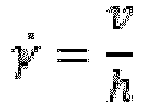
- ω
- die Winkelgeschwindigkeit in Radius/Sekunde ist,
- n
- ist die Drehzahl in 1/min,
- v
- ist die Umfangsgeschwindigkeit in m/s,
- r
- ist der größte Radius des dynamischen Mischers, also des Rotors, in m,
- γ̇
- ist die Scherrate in 1/s und
- h
- ist der Scherspalt, wobei darunter der kleinste Spalt zwischen der Innenwand des Reaktors und dem dynamischen Mischer, also der kleinste Spalt zwischen dem Rotor und dem Stator verstanden wird, in m.
- Erfindungsgemäß enthält der Reaktor ein Extraktionsmittel (E).
- "Ein Extraktionsmittel (E)" bedeutet im Rahmen der vorliegenden Erfindung sowohl genau ein Extraktionsmittel als auch eine Mischung aus zwei oder mehreren Extraktionsmitteln (E). Als Extraktionsmittel (E) eignet sich prinzipiell jedes Lösungsmittel, das das Salz (S), das in dem salzhaltigen Polymer (sP) enthalten ist, löst. Bevorzugt enthält das Extraktionsmittel (E) ein protisches Lösungsmittel. Besonders bevorzugt enthält das Extraktionsmittel (E) Wasser.
- Gegenstand der vorliegenden Erfindung ist daher auch ein Verfahren, bei dem als Extraktionsmittel (E) ein protisches Lösungsmittel verwendet wird.
- Im Allgemeinen enthält das Extraktionsmittel (E) mindestens 50 Gew.-%, bevorzugt mindestens 70 Gew.-%, insbesondere bevorzugt mindestens 80 Gew.-% und am meisten bevorzugt mindestens 90 Gew.-% Wasser, jeweils bezogen auf das Gesamtgewicht des Extraktionsmittels (E). Am meisten bevorzugt besteht das Extraktionsmittel (E) aus Wasser.
- Gegenstand der vorliegenden Erfindung ist daher auch ein Verfahren, bei dem das Extraktionsmittel (E) Wasser enthält.
- Erfindungsgemäß weist das Extraktionsmittel (E) eine dritte Temperatur T3-II auf, die oberhalb der Erweichungstemperatur TE, bevorzugt oberhalb der Glasübergangstemperatur TG des Polyarylethers liegt.
- Gegenstand der vorliegenden Erfindung ist daher auch ein Verfahren, bei dem das Extraktionsmittel (E) in Schritt II) eine dritte Temperatur T3-II, die oberhalb der Glasübergangstemperatur TG liegt, aufweist.
- Vorzugsweise liegt die dritte Temperatur T3-II des Extraktionsmittels (E) im Bereich von 160 bis 300 °C, besonders bevorzugt im Bereich von 200 bis 280 °C und insbesondere bevorzugt im Bereich von 220 bis 260 °C.
- Gegenstand der vorliegenden Erfindung ist daher auch ein Verfahren, bei dem die dritte Temperatur T3-II des Extraktionsmittels (E) in Schritt II) im Bereich von 160 bis 300 °C liegt.
- Es versteht sich von selbst, dass die dritte Temperatur T3-II des Extraktionsmittels (E) unterhalb der Zersetzungstemperatur des Polyarylethers liegt. Beispielsweise liegt die dritte Temperatur T3-II mindestens 1 °C, bevorzugt mindestens 5°C und insbesondere bevorzugt mindestens 10 °C unterhalb der Zersetzungstemperatur des Polyarylethers.
- Die dritte Temperatur T3-II kann oberhalb der zweiten Temperatur T2-II und/oder oberhalb der ersten Temperatur T1-I liegen. Ebenso ist es möglich, dass die dritte Temperatur T3-II unterhalb der zweiten Temperatur T2-II und/oder unterhalb der ersten Temperatur T1-I liegt. Diese Ausführungsform ist bevorzugt.
- Der Druck im Reaktor in Schritt II) liegt beispielsweise im Bereich von 6 bis 100 bar, bevorzugt im Bereich von 10 bis 70 bar, insbesondere bevorzugt im Bereich von 20 bis 50 bar.
- In Schritt III) wird das Salz (S) aus dem salzhaltigen Polymer (sP) mit dem Extraktionsmittel (E) in dem Reaktor extrahiert. Die Extraktion wird bei einer vierten Temperatur T4-III, die oberhalb der Erweichungstemperatur TE des Polyarylethers liegt, durchgeführt. Dabei wird ein entsalztes Polymer (eP) erhalten. Das entsalzte Polymer (eP) enthält den Polyarylether. Darüber hinaus wird ein salzhaltiges Extraktionsmittel (sE) erhalten, das das Extraktionsmittel (E) und das Salz (S) enthält.
- Die Extraktion des Salzes (S) aus dem salzhaltigen Polymer (sP) in Schritt III) erfolgt bei einer vierten Temperatur T4-III, die oberhalb der Erweichungstemperatur TE, bevorzugt oberhalb der Glasübergangstemperatur TG des Polyarylethers liegt.
- Gegenstand der vorliegenden Erfindung ist daher auch ein Verfahren, bei dem die Extraktion des Salzes (S) aus dem salzhaltigen Polymer (sP) bei einer vierten Temperatur T4-III, die oberhalb der Glasübergangstemperatur TG des Polyarylethers liegt, erfolgt.
- Vorzugsweise liegt die vierte Temperatur T4-III im Bereich von 160 bis 300 °C, besonders bevorzugt im Bereich von 200 bis 280 °C und insbesondere bevorzugt im Bereich von 220 bis 260 °C.
- Gegenstand der vorliegenden Erfindung ist daher auch ein Verfahren, bei dem die vierte Temperatur T4-111 in Schritt III) im Bereich von 160 bis 300 °C liegt.
- Der Druck während der Extraktion des Salzes (S) in Schritt III) liegt beispielsweise im Bereich von 6 bis 100 bar, bevorzugt im Bereich von 10 bis 70 bar und insbesondere bevorzugt im Bereich von 20 bis 50 bar.
- Die vierte Temperatur T4-111 kann oberhalb der dritten Temperatur T3-II und/oder oberhalb der zweiten Temperatur T2-II und/oder oberhalb der ersten Temperatur T1-I liegen. Ebenso ist es möglich, dass die vierte Temperatur T4-111 unterhalb der dritten Temperatur T3-II und/oder unterhalb der zweiten Temperatur T2-II und/oder unterhalb der ersten Temperatur T1-I liegt.
- Gegenstand der vorliegenden Erfindung ist daher auch ein Verfahren, bei dem die erste Temperatur T1-I, die zweite Temperatur T2-II, die dritte Temperatur T3-II und die vierte Temperatur T4-111 oberhalb der Glasübergangstemperatur TG des Polyarylethers liegen.
- Während der Extraktion des Salzes (S) liegt also das salzhaltige Polymer (sP) oberhalb der Erweichungstemperatur TE, bevorzugt oberhalb der Glasübergangstemperatur TG des Polyarylethers vor. Daher liegt das salzhaltige Polymer (sP) auch während der Extraktion in Schritt III) geschmolzen vor.
- Die Verweilzeit des salzhaltigen Polymers (sP) in dem Reaktor, der einen dynamischen Mischer umfasst, in Schritt III) kann beliebig sein. Beispielsweise liegt die Verweilzeit im Bereich von 1 bis 100 s (Sekunden), bevorzugt im Bereich von 3 bis 60 s und besonders bevorzugt im Bereich von 5 bis 20 s.
- Unter der Verweilzeit wird im Rahmen der vorliegenden Erfindung der Zeitraum zwischen dem Zeitpunkt, zu dem das salzhaltige Polymer (sP) in den Reaktor eingebracht wird und dem Zeitpunkt, zu dem das erhaltene entsalzte Polymer (eP) aus dem Reaktor entnommen wird, verstanden.
- In Schritt III) wird das salzhaltige Extraktionsmittel (sE) erhalten, das das Extraktionsmittel (E) und das Salz (S) enthält.
- Das salzhaltige Extraktionsmittel (sE) enthält den Teil des Salzes (S), der aus dem salzhaltigen Polymer (sP) entfernt worden ist. Beispielsweise enthält das salzhaltige Extraktionsmittel (sE) 0,1 bis 20 Gew.-% des Salzes (S), bevorzugt 0,5 bis 10 Gew.-% des Salzes (S) und insbesondere bevorzugt 1 bis 5 Gew.-% des Salzes (S), jeweils bezogen auf das Gesamtgewicht des salzhaltigen Extraktionsmittels (sE).
- Darüber hinaus wird das entsalzte Polymer (eP) erhalten. Das entsalzte Polymer (eP) kann von dem salzhaltigen Extraktionsmittel (sE) nach allen dem Fachmann bekannten Methoden abgetrennt werden. Bevorzugt wird das entsalzte Polymer (eP) durch Sedimentieren von dem salzhaltigen Extraktionsmittel (sE) abgetrennt. Die Sedimentation kann in dem gleichen Reaktor wie die Extraktion erfolgen, ebenso ist es möglich und erfindungsgemäß bevorzugt, die Sedimentation in einem Absetzbehälter durchzuführen. Dieses Prinzip der kombinierten Extraktion und anschließenden Sedimentation ist dem Fachmann auch als Mixer-Settler-Prinzip bekannt. Alternativ zur Sedimentation kann die Abtrennung im Zentrifugalfeld mittels Zentrifugen, Dekanter oder Hydrozyklonen erfolgen. Apparate hierzu sind dem Fachmann bekannt.
- Die Schritte II und III) können wiederholt werden. In diesem Fall wird das entsalzte Polymer (eP) erneut mit dem Extraktionsmittel (E) in Kontakt gebracht und extrahiert. Dabei wird weiteres Salz (S) aus dem entsalzten Polymer (eP) entfernt.
- Wird Schritt III) wiederholt, so wird er vorzugsweise als Kaskade wiederholt. Dies bedeutet, dass das entsalzte Polymer (eP) in einem Absetzbehälter von dem salzhaltigen Extraktionsmittel (sE) abgetrennt wird. Das entsalzte Polymer (eP) liegt in dem Absetzbehälter in geschmolzener Form vor und wird in dieser geschmolzenen Form in einen zweiten Reaktor überführt. In diesem zweiten Reaktor wird dann weiteres Salz (S) aus dem entsalzten Polymer (eP) durch Extraktion mit dem Extraktionsmittel (E) entfernt. Auf diesen zweiten Reaktor folgt bevorzugt ein zweiter Absetzbehälter, in dem das entsalzte Polymer (eP) von dem erhaltenen salzhaltigen Extraktionsmittel (sE) abgetrennt wird. Gegebenenfalls können auf den zweiten Absetzbehälter weitere Reaktoren und weitere Absetzbehälter folgen, in denen weiteres Salz (S) aus dem entsalzten Polymer (eP) entfernt wird.
- Es versteht sich von selbst, dass das entsalzte Polymer (eP), das in Schritt III) erhalten wird, weniger Salz (S) enthält, als das in Schritt I) erhaltene salzhaltige Polymer (sP).
- Im Allgemeinen enthält das entsalzte Polymer (eP) noch Spuren des Salzes (S). Unter "Spuren des Salzes (S)" wird vorliegend ein Salzgehalt im entsalzten Polymer (eP) von maximal 150 Gew.-ppm, bevorzugt von maximal 100 Gew.-ppm, insbesondere bevorzugt von maximal 80 Gew.-ppm und am meisten bevorzugt von maximal 50 Gew.-ppm des Salzes (S) verstanden, jeweils bezogen auf das Gesamtgewicht des entsalzten Polymers.
- Im Allgemeinen enthält das entsalzte Polymer (eP) im Bereich von 0,01 bis 150 Gew.-ppm des Salzes (S), bevorzugt im Bereich von 0,1 bis 100 Gew.-ppm, besonders bevorzugt im Bereich von 1 bis 80 Gew.-ppm und insbesondere bevorzugt im Bereich von 5 bis 50 Gew.-ppm des Salzes (S), jeweils bezogen auf das Gesamtgewicht des entsalzten Polymers (eP).
- Üblicherweise enthält das entsalzte Polymer (eP) daher maximal 150 Gew.-ppm, bevorzugt maximal 100 Gew.-ppm besonders bevorzugt maximal 80 Gew.-ppm und am meisten bevorzugt maximal 50 Gew.-ppm des Salzes (S), jeweils bezogen auf das Gesamtgewicht des entsalzten Polymers (eP).
- Gegenstand der vorliegenden Erfindung ist daher auch ein Verfahren, bei dem das in Schritt III) erhaltene entsalzte Polymer (eP) maximal 150 Gew.-ppm des Salzes (S) enthält, bezogen auf das Gesamtgewicht des entsalzten Polymers (eP).
- Die Untergrenze des Gehalts an Salz (S) im entsalzten Polymer (eP) liegt im Allgemeinen bei 0,01 Gew.-ppm, bevorzugt bei 0,1 Gew.-ppm, besonders bevorzugt bei 1 Gew.-ppm und insbesondere bevorzugt bei 5 Gew.-ppm, bezogen auf das Gesamtgewicht des entsalzten Polymers (eP).
- In einer insbesondere bevorzugten Ausführungsform der vorliegenden Erfindung ist das entsalzte Polymer (eP) im Wesentlichen frei von dem Salz (S). "Im Wesentlichen frei" bedeutet im Rahmen der vorliegenden Erfindung, dass das entsalzte Polymer (eP) maximal 15 Gew.-ppm, bevorzugt maximal 10 Gew.-ppm und insbesondere bevorzugt maximal 5 Gew.-ppm des Salzes (S) enthält, bezogen auf das Gesamtgewicht des entsalzten Polymers (eP).
- Nach Schritt III) wird das entsalzte Polymer (eP) üblicherweise in geschmolzener Form enthalten. Das entsalzte Polymer (eP) wird dann vorzugsweise getrocknet und granuliert, beispielsweise mittels Stranggranulierung oder Unterwassergranulierung. Anschließend kann das entsalzte Polymer (eP) beispielsweise getrocknet werden. Zur Trocknung eignen sich prinzipiell alle dem Fachmann bekannten Methoden. Beispielsweise kann das entsalzte Polymer (eP) bei erhöhten Temperaturen getrocknet werden. Bevorzugt sind Temperaturen im Bereich von 150 bis 160 °C, besonders bevorzugt im Bereich von 100 bis 150 °C. Die Temperatur beim Trocknen liegt üblicherweise unterhalb der Glasübergangstemperatur TG, bevorzugt unterhalb der Erweichungstemperatur TE des Polyarylethers. Die Trocknung kann gegebenenfalls unter vermindertem Druck durchgeführt werden.
- Erfindungsgemäß bevorzugt wird das salzhaltige Polymer (sP) in einem Schmelzpolymerisationsverfahren hergestellt. Daher enthält das salzhaltige Polymer (sP) und damit auch das entsalzte Polymer (eP) bevorzugt kein aprotisch-polares Lösungsmittel, das ausgewählt ist aus der Gruppe bestehend aus N,N-Dimethylformamid, N,N-Dimethylacetamid, N-Methylpyrrolidon, N-Ethylpyrrolidon, Dimethylsulfoxid, Dimethylsulfon, Sulfolan, Diphenylsulfon und Mischungen daraus. Besonders bevorzugt enthält das entsalzte Polymer (eP) kein aprotisch-polares Lösungsmittel.
- Das entsalzte Polymer (eP), das nach dem erfindungsgemäßen Verfahren erhältlich ist, kann von 0 bis 100 Gew.-ppm, bevorzugt 0 bis 20 Gew.-ppm und insbesondere bevorzugt 0 bis 10 Gew.-ppm eines aprotisch-polaren Lösungsmittels enthalten, ausgewählt aus der Gruppe bestehend aus N,N-Dimethylformamid, N,N-Dimethylacetamid, N-Methylpyrrolidion, N-Ethylpyrrolidon, Dimethylsulfoxid, Dimethylsulfon, Sulfolan, Diphenylsulfon und Mischungen daraus, am meisten bevorzugt kein aprotisch-polares Lösungsmittel enthält, und das weniger als 150 Gew.ppm, bevorzugt weniger als 100 Gew.-ppm, mehr bevorzugt weniger als 80 Gew.-ppm und am meisten bevorzugt weniger als 50 Gew.-ppm des Salzes (S) enthält, wobei die Gew.-ppm jeweils bezogen sind auf das Gesamtgewicht des entsalzten Polymers (eP).
- Die nach dem erfindungsgemäßen Verfahren erhältlichen entsalzten Polymere (eP) weisen vorzugsweise eine scheinbare Schmelzviskosität bei 350 °C/1150 s-1 von 100 bis 1000 Pa s, bevorzugt von 150 bis 300 Pa s und insbesondere bevorzugt von 150 bis 275 Pa s auf.
- Die Schmelzeviskosität wurde mittels eines Kapillarrheometers bestimmt. Dabei wurde die scheinbare Viskosität bei 350°C als Funktion der Scherrate in einem Kapillarviskosimeter (Göttfert Kapillarviskosimeter Rheograph 2003) mit einer Kreiskapillare der Länge 30 mm, einem Radius von 0,5 mm, einem Einlaufwinkel der Düse von 180°, einem Durchmesser des Reservoirgefäßes der Schmelze von 12 mm und mit einer Vorheizzeit von 5 Minuten bestimmt. Angegeben sind die bei 1150 s-1 bestimmten Werte.
- Die Viskositätszahlen der nach dem erfindungsgemäßen Verfahren entsalzten Polymere (eP) liegen im Allgemeinen im Bereich von 20 bis 120 ml/g, bevorzugt von 30 bis 100 ml/g und insbesondere bevorzugt von 35 bis 95 ml/g, bestimmt durch Ubbelohde-Viskositätszahlmessung einer 0,01 g/ml Lösung des salzhaltigen Polymers (sP) in einer 1 : 1 Phenol/1,2-Dichlorbenzol-Mischung nach DIN 51562.
- Das nach dem erfindungsgemäßen Verfahren erhältichen entsalzten Polymere (eP) eignen sich zur Herstellung von Formmassen, Fasern, Folien, Beschichtungen oder Formteilen. Die entsalzten Polymere (EP) egnen sich insbesondere für Anwendungen, in denen hohe Reinheit der polymeren Matrix gewünscht ist, beispielsweise im Lebensmittelsektor, auf dem Membrangebiet oder in der Elektronik.
- Abkürzungen
- DHDPS
- Dihydroxydiphenylsulfon
- DCDPS
- Dichlordiphenylsulfon
- NMP
- N-Methyl-2-pyrrolidon
- VZ
- Viskositätszahl
- Die Erweichungstemperatur wurde mittels DSC bestimmt. Die jeweilige Probe wurde in einen bei 20 bar druckdichten Tiegel eingewogen und zweimal mit 2K/min aufgeheizt. Beim dritten Aufheizen (2K/min und einer unterliegenden Modulation von 1K/80s) wurde die Messkurve aufgezeichnet.
- Die Erweichungstemperatur kann sowohl am reinen Polymer als auch näherungsweise am salzhaltigen Polymer sP bestimmt werden, indem 10g sP mit 1 I Wasser bei 95°C für 24 h in Kontakt gebracht werden. Der Salzgehalt im salzhaltigen Polymer wird dadurch auf ca. 1 % Salz reduziert. Nach Abtrennen der flüssigen Phase bestehend aus Wasser und gelöstem Salz, befinden sich nach dieser Behandlung zwischen 20 und 30% Wasser, ca. 1% Salz und dem restlichen (69 bis 79%) Polyarylether im Granulat. An diesem wasser- und salzbeladenem Zustand kann mittels oben genanntem Verfahren eine DSC Messung durchgeführt werden, um eine Näherung zur Erweichungstemperatur zu erhalten. Aus der DSC Messkurve können dann zwei Temperaturen ermittelt werden, die einen Übergang aus dem glasartigen zum flüssigen Zustand darstellen. Davon ist die niedrigere Temperatur die Erweichungstemperatur und die höhere die Glasübergangstemperatur. Mit zunehmender Größe der Grenzfläche des Polymeren wird das Signal für die Erweichungstemperatur deutlicher. Darum bestimmt man die Erweichungstemperatur bevorzugt, indem das salzhaltige oder reine Polymer zunächst zerkleinert wird, bis man ein Pulver mit einer Teilchengröße von 50µm erhält und anschließend nach oben gegebener Vorschrift mit Wasser in Kontakt bringt, das Oberflächenwasser abtrennt und die DSC Messung am feuchten, wasserbeladenen Polymer durchführt.
- Bei sehr großen Grenzflächen, wie im Fall des dispergierten Polymeren in Wasser verschwindet das zweite Signal gänzlich und das Polymer verhält sich ab der Erweichungstemperatur entsprechend einer Flüssigkeit.
- Die VZ wurde bestimmt durch Ubbelohde-Viskositätszahlmessung einer 0,01 g/ml Lösung des salzhaltigen Polymers (sP) in einer 1 : 1 Phenol/1,2-Dichlorbenzol-Mischung nach DIN 51562-1:1999-01.
- Es wurde ionisch vorliegendes Chlor mittels Titration bestimmt. Anhand des so bestimmten Chlorgehaltes wurde die Kaliumchloridkonzentration ermittelt.
- Es wurden ca. 100 bis 500 mg einer Polymerprobe in ein Becherglas eingewogen und mit NMP gelöst. Danach wurde die Probe mit Essigsäure/Aceton (1:1) verdünnt. Für die Titration wurde diese Probelösung mit Methylorange versetzt und mit Schwefeläsure oder Salpetersäure angesäuert. Anschließend wurde mit einer Silbernitratlösung (0.001 mol/l) potentiometisch titirert. Der Verbrauch der Maßlösung unterschritt 1ml nicht.
- Die Monomere DHDPS und DCDPS wurden in Gegenwart von Kaliumcarbonat in den molaren Verhältnissen DHDPS:DCDPS 1:1,005 und DHDPS:Kaliumcarbonat 1:1,06 polymerisiert. Die Polymerisation erfolgte in Abwesenheit eines Lösungsmittels in einem Mischkneter bei einer ersten Temperatur T1-I von 290°C.
- Das so erhaltene salzhaltige Polymer (sP1) hatte eine VZ = 52ml/g und enthielt 24,3% (243000ppm) Kaliumchlorid.
- Danach wurde das salzhaltige Polymer sP1 granuliert und erkaltet.
- Zum Fördern wurde sP1 wieder aufgeschmolzen, auf eine Temperatur T2-II von 310 °C gebracht und bei dieser Temperatur in einen Reaktor, der einen dynamischen Mischer umfasst, dosiert. Der dynamische Mischer enthielt Wasser, das eine Temperatur von T3-II von 240 °C hatte. Es wurde eine Suspension erhalten, die sich in zwei Phasen trennte. Die Extraktion des Salzes erfolgte bei einer Temperatur T4-II von241°C. Die Drehzahl des dynamischen Mischers betrug 157 U pro min. Die Verweilzeit im Reaktor betrug 47 Sekunden.
- Die Extraktion wurde insgesamt dreimal wie oben beschrieben durchgeführt. Bei der zweiten und dritten Extraktion wurde die Drehzahl allerdings auf 130 U pro min reduziert während die Verweilzeit konstant gehalten wurde. Der Kaliumchloridgehalt betrug nach der ersten Extraktion 5200 ppm, nach der zweiten Extraktion 148 ppm und nach der dritten Extraktion < 20 ppm.
- Die Erweichungstemperatur des entsalzten Polymers (eP1) betrug 166°C.
- Die Monomere DHDPS und DCDPS wurden in Gegenwart von Kaliumcarbonat in den molaren Verhältnissen DHDPS:DCDPS 1:1,005 und DHDPS:Kaliumcarbonat 1:1,06 polymerisiert. Die Polymerisation erfolgte in Abwesenheit eines Lösungsmittels in einem Mischkneter bei einer ersten Temperatur T1-I von 290°C.
- Das so erhaltene salzhaltige Polymer (sP1) hatte eine VZ = 47 ml/g und enthielt 24,3% (243000ppm) Kaliumchlorid.
- Danach wurde das salzhaltige Polymer sP1 granuliert und erkaltet.
- Zum Fördern wurde sP1 wieder aufgeschmolzen, auf eine Temperatur T2-II von 310 °C gebracht und bei dieser Temperatur in einen Reaktor, der einen dynamischen Mischer umfasst, dosiert. Der dynamische Mischer enthielt Wasser, das eine Temperatur von T3-II von 230 °C hatte. Es wurde eine Suspension erhalten, die sich in zwei Phasen trennte. Die Extraktion des Salzes erfolgte bei einer Temperatur T4-II von 240°C. Die Drehzahl des dynamischen Mischers betrug 157 U pro min. Die Verweilzeit im Reaktor betrug 47 Sekunden.
- Die Extraktion wurde insgesamt dreimal wie oben beschrieben durchgeführt. Der Kaliumchloridgehalt betrug nach der ersten Extraktion 7930 ppm, nach der zweiten Extraktion 370 ppm und nach der dritten Extraktion 48 ppm.
- Die Erweichungstemperatur des entsalzten Polymers (eP1) betrug 166°C.
Claims (14)
- Verfahren zur Herstellung eines Polyarylethers, der eine Erweichungstemperatur TE aufweist, umfassend die SchritteI) Umsetzung der Komponenten(a1) mindestens eine aromatische Dihydroxyverbindung und(a2) mindestens eine aromatische Sulfonverbindung mit zwei Halogensubstituentenin Gegenwart einer Carbonatverbindung (C) bei einer ersten Temperatur T1-I, die oberhalb der Erweichungstemperatur TE des Polyarylethers liegt, in einem Mischkneter, unter Erhalt eines salzhaltigen Polymers (sP), das den Polyarylether und ein Salz (S) enthält,II) Überführen des in Schritt I) erhaltenen salzhaltigen Polymers (sP) aus dem Mischkneter in einen Reaktor, der einen dynamischen Mischer umfasst, wobei das salzhaltige Polymer (sP) eine zweite Temperatur T2-II, die oberhalb der Erweichungstemperatur TE des Polyarylethers liegt, aufweist, und wobei der Reaktor ein Extraktionsmittel (E) enthält, das eine dritte Temperatur T3-II, die oberhalb der Erweichungstemperatur TE des Polyarylethers liegt, aufweist,III) Extraktion des Salzes (S) aus dem salzhaltigen Polymer (sP) mit dem Extraktionsmittel (E) in dem Reaktor, der einen dynamischen Mischer umfasst, bei einer vierten Temperatur T4-III, die oberhalb der Erweichungstemperatur TE des Polyarylethers liegt, unter Erhalt eines entsalzten Polymers (eP), das den Polyarylether enthält, und eines salzhaltigen Extraktionsmittels (sE), das das Extraktionsmittel (E) und das Salz (S) enthält und wobei der Reaktor eine Scherrate im Bereich von 100 bis 2000 1/s aufweist.
- Verfahren gemäß Anspruch 1, dadurch gekennzeichnet, dass die vierte Temperatur T4-111 in Schritt III) im Bereich von 160 bis 300 °C liegt.
- Verfahren gemäß Anspruch 1 oder 2, dadurch gekennzeichnet, dass die dritte Temperatur T3-II des Extraktionsmittels (E) in Schritt II) im Bereich von 160 bis 300 °C liegt.
- Verfahren gemäß einem der Ansprüche 1 bis 3, dadurch gekennzeichnet, dass die zweite Temperatur T2-II des salzhaltigen Polymers (sP) in Schritt II) im Bereich von 200 bis 400 °C liegt.
- Verfahren gemäß einem der Ansprüche 1 bis 4, dadurch gekennzeichnet, dass die erste Temperatur T1-I in Schritt I) im Bereich von 200 bis 400 °C liegt.
- Verfahren gemäß einem der Ansprüche 1 bis 5, dadurch gekennzeichnet, dass die Erweichungstemperatur TE des Polyarylethers im Bereich von 150 bis 230 °C liegt.
- Verfahren gemäß einem der Ansprüche 1 bis 6, dadurch gekennzeichnet, dass das Extraktionsmittel (E) Wasser enthält.
- Verfahren gemäß einem der Ansprüche 1 bis 7, dadurch gekennzeichnet, dass das in Schritt III) erhaltene entsalzte Polymer (eP) maximal 150 Gew.-ppm des Salzes (S) enthält, bezogen auf das Gesamtgewicht des entsalzten Polymers (eP).
- Verfahren gemäß einem der Ansprüche 1 bis 8, dadurch gekennzeichnet, dass der Polyarylether amorph ist.
- Verfahren gemäß einem der Ansprüche 1 bis 9, dadurch gekennzeichnet, dass die Komponente (a1) ausgewählt ist aus der Gruppe bestehend aus 4,4'-Dihydroxybiphenyl, 2,2-Bis(4-hydroxyphenyl)propan und Bis(4-hydroxyphenyl)sulfon.
- Verfahren gemäß einem der Ansprüche 1 bis 10, dadurch gekennzeichnet, dass die Komponente (a2) ausgewählt ist aus der Gruppe bestehend aus 4,4'-Dichlordiphenylsulfon, 4,4'-Difluordiphenylsulfon, 4,4'-Dibromdiphenylsulfon, 2,2'-Dichlordiphenylsulfon und 2,2'-Difluordiphenylsulfon.
- Verfahren gemäß einem der Ansprüche 1 bis 11, dadurch gekennzeichnet, dass der Polyarylether ein Polyarylethersulfon ist.
- Verfahren gemäß einem der Ansprüche 1 bis 12, dadurch gekennzeichnet, dass das Salz (S) Kaliumchlorid und/oder Natriumchlorid enthält.
- Faser, Folie, Beschichtung oder Formteil, enthaltend oder hergestellt unter Verwendung von entsalztem Polymer (eP) erhalten nach dem Verfahren gemäß einem der Ansprüche 1 bis 13.
Applications Claiming Priority (2)
| Application Number | Priority Date | Filing Date | Title |
|---|---|---|---|
| EP16161430.0A EP3222651A1 (de) | 2016-03-21 | 2016-03-21 | Entsalzung von polyarylethern mittels schmelzeextraktion |
| PCT/EP2017/055992 WO2017162485A1 (de) | 2016-03-21 | 2017-03-14 | Entsalzung von polyarylethern mittels schmelzeextraktion |
Publications (2)
| Publication Number | Publication Date |
|---|---|
| EP3433300A1 EP3433300A1 (de) | 2019-01-30 |
| EP3433300B1 true EP3433300B1 (de) | 2022-06-22 |
Family
ID=55640555
Family Applications (2)
| Application Number | Title | Priority Date | Filing Date |
|---|---|---|---|
| EP16161430.0A Withdrawn EP3222651A1 (de) | 2016-03-21 | 2016-03-21 | Entsalzung von polyarylethern mittels schmelzeextraktion |
| EP17710296.9A Active EP3433300B1 (de) | 2016-03-21 | 2017-03-14 | Entsalzung von polyarylethern mittels schmelzeextraktion |
Family Applications Before (1)
| Application Number | Title | Priority Date | Filing Date |
|---|---|---|---|
| EP16161430.0A Withdrawn EP3222651A1 (de) | 2016-03-21 | 2016-03-21 | Entsalzung von polyarylethern mittels schmelzeextraktion |
Country Status (7)
| Country | Link |
|---|---|
| US (1) | US10889689B2 (de) |
| EP (2) | EP3222651A1 (de) |
| JP (1) | JP7003050B2 (de) |
| KR (1) | KR102327908B1 (de) |
| CN (1) | CN108779252B (de) |
| ES (1) | ES2926228T3 (de) |
| WO (1) | WO2017162485A1 (de) |
Families Citing this family (5)
| Publication number | Priority date | Publication date | Assignee | Title |
|---|---|---|---|---|
| KR102596640B1 (ko) | 2017-01-19 | 2023-10-31 | 바스프 에스이 | 옥시메틸렌 중합체의 제조 방법 |
| EP3921362B1 (de) | 2019-02-04 | 2025-07-23 | Basf Se | Leicht lösliche und rieselfähige granulate auf basis von hochtemperaturthermoplasten mit niedrigem gehalt an flüchtigen organischen verbindungen |
| IT201900002479A1 (it) * | 2019-02-20 | 2020-08-20 | Montefibre Mae Tech S R L | Processo di produzione di derivati della cellulosa |
| CN116322954A (zh) * | 2020-10-12 | 2023-06-23 | 巴斯夫欧洲公司 | 制造磺化聚亚芳基(醚)砜的方法 |
| CN115960354B (zh) * | 2022-12-30 | 2024-05-24 | 四川大学 | 一种聚芳醚的纯化方法及高纯度聚芳醚 |
Citations (1)
| Publication number | Priority date | Publication date | Assignee | Title |
|---|---|---|---|---|
| WO2014033321A1 (de) * | 2012-09-03 | 2014-03-06 | Basf Se | Verfahren zur herstellung von aromatischen polyethersulfonen |
Family Cites Families (20)
| Publication number | Priority date | Publication date | Assignee | Title |
|---|---|---|---|---|
| NL6916865A (de) | 1968-11-21 | 1970-05-25 | ||
| JPS5654329B2 (de) * | 1974-01-16 | 1981-12-24 | ||
| GB1563222A (en) | 1976-02-10 | 1980-03-19 | Ici Ltd | Aromatic polymer production |
| DE2731816A1 (de) | 1977-07-14 | 1979-02-01 | Basf Ag | Verfahren zur herstellung von polyaethern |
| DE2749645A1 (de) | 1977-11-05 | 1979-05-10 | Basf Ag | Verfahren zur herstellung von polyaethern |
| DE3644464A1 (de) | 1986-12-24 | 1988-07-07 | Basf Ag | Verfahren zur isolierung teilchenfoermiger polymere |
| EP0292211A3 (de) | 1987-05-18 | 1989-06-14 | Imperial Chemical Industries Plc | Herstellung und/oder Behandlung von Polymeren |
| US6197924B1 (en) * | 1999-11-29 | 2001-03-06 | General Electric Company | Method for isolating dihydroxybiphenyl polyethersulfones |
| GB0113053D0 (en) | 2001-05-30 | 2001-07-18 | Victrex Mfg Ltd | Polyketones |
| US20110213115A1 (en) | 2008-10-24 | 2011-09-01 | Solvay Advanced Polymers, L.L.C. | Process for preparing a poly(aryl ether ketone) using a high purity 4,4'-difluorobenzophenone |
| EP2467415B1 (de) * | 2009-08-20 | 2019-10-09 | Basf Se | Verfahren zur herstellung von halogenarmen polybiphenylsulfon-polymeren |
| EP2305740B1 (de) | 2009-09-30 | 2011-06-08 | Ems-Patent Ag | Verfahren zur Herstellung von Polymerpartikeln |
| CN102786681B (zh) | 2012-08-08 | 2014-10-29 | 金发科技股份有限公司 | 聚合物的纯化装置以及纯化方法 |
| CN105452334B (zh) | 2013-06-12 | 2019-08-27 | 巴斯夫欧洲公司 | 连续制备脂族聚酰胺或半芳族聚酰胺的方法 |
| EP3143069A1 (de) | 2014-05-16 | 2017-03-22 | Basf Se | Herstellung von polyamiden durch hydrolytische polymerisation und nachfolgende behandlung in einem kneter |
| WO2016116616A1 (de) | 2015-01-23 | 2016-07-28 | Basf Se | Entsalzung von polyarylethern aus einem schmelzpolymerisationsverfahren |
| EP3247737B1 (de) * | 2015-01-23 | 2018-10-24 | Basf Se | Entsalzung von polyarylethern mittels schmelzeextraktion |
| AU2017221117A1 (en) | 2016-02-19 | 2018-09-06 | Basf Se | Polyamide composition containing a polyamide and an additive |
| AU2017219199A1 (en) | 2016-02-19 | 2018-08-30 | Basf Se | Process for preparing polyamide powders by precipitation |
| JP6991982B2 (ja) | 2016-02-19 | 2022-01-13 | ビーエーエスエフ ソシエタス・ヨーロピア | レーザー焼結粉末のための抗核形成剤 |
-
2016
- 2016-03-21 EP EP16161430.0A patent/EP3222651A1/de not_active Withdrawn
-
2017
- 2017-03-14 CN CN201780018312.7A patent/CN108779252B/zh active Active
- 2017-03-14 JP JP2018549512A patent/JP7003050B2/ja active Active
- 2017-03-14 WO PCT/EP2017/055992 patent/WO2017162485A1/de not_active Ceased
- 2017-03-14 US US16/086,671 patent/US10889689B2/en active Active
- 2017-03-14 EP EP17710296.9A patent/EP3433300B1/de active Active
- 2017-03-14 ES ES17710296T patent/ES2926228T3/es active Active
- 2017-03-14 KR KR1020187030311A patent/KR102327908B1/ko active Active
Patent Citations (1)
| Publication number | Priority date | Publication date | Assignee | Title |
|---|---|---|---|---|
| WO2014033321A1 (de) * | 2012-09-03 | 2014-03-06 | Basf Se | Verfahren zur herstellung von aromatischen polyethersulfonen |
Also Published As
| Publication number | Publication date |
|---|---|
| EP3222651A1 (de) | 2017-09-27 |
| EP3433300A1 (de) | 2019-01-30 |
| US20190085134A1 (en) | 2019-03-21 |
| WO2017162485A1 (de) | 2017-09-28 |
| CN108779252B (zh) | 2021-08-20 |
| JP2019509386A (ja) | 2019-04-04 |
| KR20180126024A (ko) | 2018-11-26 |
| ES2926228T3 (es) | 2022-10-24 |
| KR102327908B1 (ko) | 2021-11-18 |
| US10889689B2 (en) | 2021-01-12 |
| CN108779252A (zh) | 2018-11-09 |
| JP7003050B2 (ja) | 2022-02-10 |
Similar Documents
| Publication | Publication Date | Title |
|---|---|---|
| EP3247736B1 (de) | Entsalzung von polyarylethern aus einem schmelzpolymerisationsverfahren | |
| EP2358787B1 (de) | Verfahren zur herstellung eines reaktiven polyarylenethers | |
| EP3044249B1 (de) | Polyarylenethersulfon-polymere für membrananwendungen | |
| EP3247737B1 (de) | Entsalzung von polyarylethern mittels schmelzeextraktion | |
| WO2013167251A1 (de) | Verfahren zur herstellung von polysulfonen und polysulfone | |
| WO2017162485A1 (de) | Entsalzung von polyarylethern mittels schmelzeextraktion | |
| WO2015007776A1 (de) | Vereinzelung einer polyarylenetherlösung | |
| EP0234223B1 (de) | Verfahren zur Herstellung von aromatischen Block-Copolyethern | |
| EP2576676A1 (de) | Verstärkte thermoplastische formmassen auf basis von polyarylenethern | |
| DE112016001236T5 (de) | Aromatische Polysulfone | |
| EP3022254A1 (de) | Vereinzelung einer polyarylenetherlösung | |
| EP0243833A2 (de) | Hochtemperaturbeständige Copolykondensat-Formmassen | |
| EP3022252B1 (de) | Vereinzelung einer polyarylenetherlösung | |
| DE3414492A1 (de) | Polyetherthioethernitrile | |
| EP0294773A2 (de) | Polymermischungen auf der Basis von Polyarylethersulfonen |
Legal Events
| Date | Code | Title | Description |
|---|---|---|---|
| STAA | Information on the status of an ep patent application or granted ep patent |
Free format text: STATUS: UNKNOWN |
|
| STAA | Information on the status of an ep patent application or granted ep patent |
Free format text: STATUS: THE INTERNATIONAL PUBLICATION HAS BEEN MADE |
|
| PUAI | Public reference made under article 153(3) epc to a published international application that has entered the european phase |
Free format text: ORIGINAL CODE: 0009012 |
|
| STAA | Information on the status of an ep patent application or granted ep patent |
Free format text: STATUS: REQUEST FOR EXAMINATION WAS MADE |
|
| 17P | Request for examination filed |
Effective date: 20181022 |
|
| AK | Designated contracting states |
Kind code of ref document: A1 Designated state(s): AL AT BE BG CH CY CZ DE DK EE ES FI FR GB GR HR HU IE IS IT LI LT LU LV MC MK MT NL NO PL PT RO RS SE SI SK SM TR |
|
| AX | Request for extension of the european patent |
Extension state: BA ME |
|
| DAV | Request for validation of the european patent (deleted) | ||
| DAX | Request for extension of the european patent (deleted) | ||
| STAA | Information on the status of an ep patent application or granted ep patent |
Free format text: STATUS: EXAMINATION IS IN PROGRESS |
|
| 17Q | First examination report despatched |
Effective date: 20200128 |
|
| GRAP | Despatch of communication of intention to grant a patent |
Free format text: ORIGINAL CODE: EPIDOSNIGR1 |
|
| STAA | Information on the status of an ep patent application or granted ep patent |
Free format text: STATUS: GRANT OF PATENT IS INTENDED |
|
| INTG | Intention to grant announced |
Effective date: 20220131 |
|
| GRAS | Grant fee paid |
Free format text: ORIGINAL CODE: EPIDOSNIGR3 |
|
| GRAA | (expected) grant |
Free format text: ORIGINAL CODE: 0009210 |
|
| STAA | Information on the status of an ep patent application or granted ep patent |
Free format text: STATUS: THE PATENT HAS BEEN GRANTED |
|
| AK | Designated contracting states |
Kind code of ref document: B1 Designated state(s): AL AT BE BG CH CY CZ DE DK EE ES FI FR GB GR HR HU IE IS IT LI LT LU LV MC MK MT NL NO PL PT RO RS SE SI SK SM TR |
|
| REG | Reference to a national code |
Ref country code: GB Ref legal event code: FG4D Free format text: NOT ENGLISH |
|
| REG | Reference to a national code |
Ref country code: CH Ref legal event code: EP |
|
| REG | Reference to a national code |
Ref country code: DE Ref legal event code: R096 Ref document number: 502017013358 Country of ref document: DE |
|
| REG | Reference to a national code |
Ref country code: AT Ref legal event code: REF Ref document number: 1499749 Country of ref document: AT Kind code of ref document: T Effective date: 20220715 |
|
| REG | Reference to a national code |
Ref country code: IE Ref legal event code: FG4D Free format text: LANGUAGE OF EP DOCUMENT: GERMAN |
|
| REG | Reference to a national code |
Ref country code: LT Ref legal event code: MG9D |
|
| REG | Reference to a national code |
Ref country code: ES Ref legal event code: FG2A Ref document number: 2926228 Country of ref document: ES Kind code of ref document: T3 Effective date: 20221024 |
|
| REG | Reference to a national code |
Ref country code: NL Ref legal event code: MP Effective date: 20220622 |
|
| PG25 | Lapsed in a contracting state [announced via postgrant information from national office to epo] |
Ref country code: SE Free format text: LAPSE BECAUSE OF FAILURE TO SUBMIT A TRANSLATION OF THE DESCRIPTION OR TO PAY THE FEE WITHIN THE PRESCRIBED TIME-LIMIT Effective date: 20220622 Ref country code: NO Free format text: LAPSE BECAUSE OF FAILURE TO SUBMIT A TRANSLATION OF THE DESCRIPTION OR TO PAY THE FEE WITHIN THE PRESCRIBED TIME-LIMIT Effective date: 20220922 Ref country code: LT Free format text: LAPSE BECAUSE OF FAILURE TO SUBMIT A TRANSLATION OF THE DESCRIPTION OR TO PAY THE FEE WITHIN THE PRESCRIBED TIME-LIMIT Effective date: 20220622 Ref country code: HR Free format text: LAPSE BECAUSE OF FAILURE TO SUBMIT A TRANSLATION OF THE DESCRIPTION OR TO PAY THE FEE WITHIN THE PRESCRIBED TIME-LIMIT Effective date: 20220622 Ref country code: GR Free format text: LAPSE BECAUSE OF FAILURE TO SUBMIT A TRANSLATION OF THE DESCRIPTION OR TO PAY THE FEE WITHIN THE PRESCRIBED TIME-LIMIT Effective date: 20220923 Ref country code: FI Free format text: LAPSE BECAUSE OF FAILURE TO SUBMIT A TRANSLATION OF THE DESCRIPTION OR TO PAY THE FEE WITHIN THE PRESCRIBED TIME-LIMIT Effective date: 20220622 Ref country code: BG Free format text: LAPSE BECAUSE OF FAILURE TO SUBMIT A TRANSLATION OF THE DESCRIPTION OR TO PAY THE FEE WITHIN THE PRESCRIBED TIME-LIMIT Effective date: 20220922 |
|
| PG25 | Lapsed in a contracting state [announced via postgrant information from national office to epo] |
Ref country code: RS Free format text: LAPSE BECAUSE OF FAILURE TO SUBMIT A TRANSLATION OF THE DESCRIPTION OR TO PAY THE FEE WITHIN THE PRESCRIBED TIME-LIMIT Effective date: 20220622 Ref country code: LV Free format text: LAPSE BECAUSE OF FAILURE TO SUBMIT A TRANSLATION OF THE DESCRIPTION OR TO PAY THE FEE WITHIN THE PRESCRIBED TIME-LIMIT Effective date: 20220622 |
|
| PG25 | Lapsed in a contracting state [announced via postgrant information from national office to epo] |
Ref country code: NL Free format text: LAPSE BECAUSE OF FAILURE TO SUBMIT A TRANSLATION OF THE DESCRIPTION OR TO PAY THE FEE WITHIN THE PRESCRIBED TIME-LIMIT Effective date: 20220622 |
|
| PG25 | Lapsed in a contracting state [announced via postgrant information from national office to epo] |
Ref country code: SM Free format text: LAPSE BECAUSE OF FAILURE TO SUBMIT A TRANSLATION OF THE DESCRIPTION OR TO PAY THE FEE WITHIN THE PRESCRIBED TIME-LIMIT Effective date: 20220622 Ref country code: SK Free format text: LAPSE BECAUSE OF FAILURE TO SUBMIT A TRANSLATION OF THE DESCRIPTION OR TO PAY THE FEE WITHIN THE PRESCRIBED TIME-LIMIT Effective date: 20220622 Ref country code: RO Free format text: LAPSE BECAUSE OF FAILURE TO SUBMIT A TRANSLATION OF THE DESCRIPTION OR TO PAY THE FEE WITHIN THE PRESCRIBED TIME-LIMIT Effective date: 20220622 Ref country code: PT Free format text: LAPSE BECAUSE OF FAILURE TO SUBMIT A TRANSLATION OF THE DESCRIPTION OR TO PAY THE FEE WITHIN THE PRESCRIBED TIME-LIMIT Effective date: 20221024 Ref country code: EE Free format text: LAPSE BECAUSE OF FAILURE TO SUBMIT A TRANSLATION OF THE DESCRIPTION OR TO PAY THE FEE WITHIN THE PRESCRIBED TIME-LIMIT Effective date: 20220622 Ref country code: CZ Free format text: LAPSE BECAUSE OF FAILURE TO SUBMIT A TRANSLATION OF THE DESCRIPTION OR TO PAY THE FEE WITHIN THE PRESCRIBED TIME-LIMIT Effective date: 20220622 |
|
| PG25 | Lapsed in a contracting state [announced via postgrant information from national office to epo] |
Ref country code: PL Free format text: LAPSE BECAUSE OF FAILURE TO SUBMIT A TRANSLATION OF THE DESCRIPTION OR TO PAY THE FEE WITHIN THE PRESCRIBED TIME-LIMIT Effective date: 20220622 Ref country code: IS Free format text: LAPSE BECAUSE OF FAILURE TO SUBMIT A TRANSLATION OF THE DESCRIPTION OR TO PAY THE FEE WITHIN THE PRESCRIBED TIME-LIMIT Effective date: 20221022 |
|
| REG | Reference to a national code |
Ref country code: DE Ref legal event code: R097 Ref document number: 502017013358 Country of ref document: DE |
|
| PG25 | Lapsed in a contracting state [announced via postgrant information from national office to epo] |
Ref country code: AL Free format text: LAPSE BECAUSE OF FAILURE TO SUBMIT A TRANSLATION OF THE DESCRIPTION OR TO PAY THE FEE WITHIN THE PRESCRIBED TIME-LIMIT Effective date: 20220622 |
|
| PG25 | Lapsed in a contracting state [announced via postgrant information from national office to epo] |
Ref country code: DK Free format text: LAPSE BECAUSE OF FAILURE TO SUBMIT A TRANSLATION OF THE DESCRIPTION OR TO PAY THE FEE WITHIN THE PRESCRIBED TIME-LIMIT Effective date: 20220622 |
|
| PGFP | Annual fee paid to national office [announced via postgrant information from national office to epo] |
Ref country code: FR Payment date: 20230323 Year of fee payment: 7 |
|
| PLBE | No opposition filed within time limit |
Free format text: ORIGINAL CODE: 0009261 |
|
| STAA | Information on the status of an ep patent application or granted ep patent |
Free format text: STATUS: NO OPPOSITION FILED WITHIN TIME LIMIT |
|
| 26N | No opposition filed |
Effective date: 20230323 |
|
| PGFP | Annual fee paid to national office [announced via postgrant information from national office to epo] |
Ref country code: IT Payment date: 20230321 Year of fee payment: 7 |
|
| PGFP | Annual fee paid to national office [announced via postgrant information from national office to epo] |
Ref country code: ES Payment date: 20230424 Year of fee payment: 7 Ref country code: CH Payment date: 20230402 Year of fee payment: 7 |
|
| PG25 | Lapsed in a contracting state [announced via postgrant information from national office to epo] |
Ref country code: SI Free format text: LAPSE BECAUSE OF FAILURE TO SUBMIT A TRANSLATION OF THE DESCRIPTION OR TO PAY THE FEE WITHIN THE PRESCRIBED TIME-LIMIT Effective date: 20220622 |
|
| PG25 | Lapsed in a contracting state [announced via postgrant information from national office to epo] |
Ref country code: MC Free format text: LAPSE BECAUSE OF FAILURE TO SUBMIT A TRANSLATION OF THE DESCRIPTION OR TO PAY THE FEE WITHIN THE PRESCRIBED TIME-LIMIT Effective date: 20220622 |
|
| GBPC | Gb: european patent ceased through non-payment of renewal fee |
Effective date: 20230314 |
|
| REG | Reference to a national code |
Ref country code: BE Ref legal event code: MM Effective date: 20230331 |
|
| PG25 | Lapsed in a contracting state [announced via postgrant information from national office to epo] |
Ref country code: LU Free format text: LAPSE BECAUSE OF NON-PAYMENT OF DUE FEES Effective date: 20230314 |
|
| REG | Reference to a national code |
Ref country code: IE Ref legal event code: MM4A |
|
| PG25 | Lapsed in a contracting state [announced via postgrant information from national office to epo] |
Ref country code: GB Free format text: LAPSE BECAUSE OF NON-PAYMENT OF DUE FEES Effective date: 20230314 |
|
| PG25 | Lapsed in a contracting state [announced via postgrant information from national office to epo] |
Ref country code: IE Free format text: LAPSE BECAUSE OF NON-PAYMENT OF DUE FEES Effective date: 20230314 Ref country code: GB Free format text: LAPSE BECAUSE OF NON-PAYMENT OF DUE FEES Effective date: 20230314 |
|
| PG25 | Lapsed in a contracting state [announced via postgrant information from national office to epo] |
Ref country code: BE Free format text: LAPSE BECAUSE OF NON-PAYMENT OF DUE FEES Effective date: 20230331 |
|
| REG | Reference to a national code |
Ref country code: AT Ref legal event code: MM01 Ref document number: 1499749 Country of ref document: AT Kind code of ref document: T Effective date: 20230314 |
|
| PG25 | Lapsed in a contracting state [announced via postgrant information from national office to epo] |
Ref country code: AT Free format text: LAPSE BECAUSE OF NON-PAYMENT OF DUE FEES Effective date: 20230314 |
|
| PG25 | Lapsed in a contracting state [announced via postgrant information from national office to epo] |
Ref country code: AT Free format text: LAPSE BECAUSE OF NON-PAYMENT OF DUE FEES Effective date: 20230314 |
|
| REG | Reference to a national code |
Ref country code: CH Ref legal event code: PL |
|
| PG25 | Lapsed in a contracting state [announced via postgrant information from national office to epo] |
Ref country code: BG Free format text: LAPSE BECAUSE OF FAILURE TO SUBMIT A TRANSLATION OF THE DESCRIPTION OR TO PAY THE FEE WITHIN THE PRESCRIBED TIME-LIMIT Effective date: 20220622 |
|
| PG25 | Lapsed in a contracting state [announced via postgrant information from national office to epo] |
Ref country code: BG Free format text: LAPSE BECAUSE OF FAILURE TO SUBMIT A TRANSLATION OF THE DESCRIPTION OR TO PAY THE FEE WITHIN THE PRESCRIBED TIME-LIMIT Effective date: 20220622 |
|
| PG25 | Lapsed in a contracting state [announced via postgrant information from national office to epo] |
Ref country code: FR Free format text: LAPSE BECAUSE OF NON-PAYMENT OF DUE FEES Effective date: 20240331 |
|
| PG25 | Lapsed in a contracting state [announced via postgrant information from national office to epo] |
Ref country code: FR Free format text: LAPSE BECAUSE OF NON-PAYMENT OF DUE FEES Effective date: 20240331 Ref country code: CH Free format text: LAPSE BECAUSE OF NON-PAYMENT OF DUE FEES Effective date: 20240331 |
|
| PGFP | Annual fee paid to national office [announced via postgrant information from national office to epo] |
Ref country code: DE Payment date: 20250327 Year of fee payment: 9 |
|
| PG25 | Lapsed in a contracting state [announced via postgrant information from national office to epo] |
Ref country code: IT Free format text: LAPSE BECAUSE OF NON-PAYMENT OF DUE FEES Effective date: 20240314 |
|
| REG | Reference to a national code |
Ref country code: ES Ref legal event code: FD2A Effective date: 20250430 |
|
| PG25 | Lapsed in a contracting state [announced via postgrant information from national office to epo] |
Ref country code: ES Free format text: LAPSE BECAUSE OF NON-PAYMENT OF DUE FEES Effective date: 20240315 |
|
| PG25 | Lapsed in a contracting state [announced via postgrant information from national office to epo] |
Ref country code: CY Free format text: LAPSE BECAUSE OF FAILURE TO SUBMIT A TRANSLATION OF THE DESCRIPTION OR TO PAY THE FEE WITHIN THE PRESCRIBED TIME-LIMIT; INVALID AB INITIO Effective date: 20170314 |
|
| PG25 | Lapsed in a contracting state [announced via postgrant information from national office to epo] |
Ref country code: HU Free format text: LAPSE BECAUSE OF FAILURE TO SUBMIT A TRANSLATION OF THE DESCRIPTION OR TO PAY THE FEE WITHIN THE PRESCRIBED TIME-LIMIT; INVALID AB INITIO Effective date: 20170314 |
|
| PG25 | Lapsed in a contracting state [announced via postgrant information from national office to epo] |
Ref country code: TR Free format text: LAPSE BECAUSE OF FAILURE TO SUBMIT A TRANSLATION OF THE DESCRIPTION OR TO PAY THE FEE WITHIN THE PRESCRIBED TIME-LIMIT Effective date: 20220622 |