EP3426796B1 - Biomarkers of traumatic brain injury - Google Patents
Biomarkers of traumatic brain injury Download PDFInfo
- Publication number
- EP3426796B1 EP3426796B1 EP17703217.4A EP17703217A EP3426796B1 EP 3426796 B1 EP3426796 B1 EP 3426796B1 EP 17703217 A EP17703217 A EP 17703217A EP 3426796 B1 EP3426796 B1 EP 3426796B1
- Authority
- EP
- European Patent Office
- Prior art keywords
- mir
- hsa
- subject
- mirna
- mtbi
- Prior art date
- Legal status (The legal status is an assumption and is not a legal conclusion. Google has not performed a legal analysis and makes no representation as to the accuracy of the status listed.)
- Active
Links
Images


Classifications
-
- C—CHEMISTRY; METALLURGY
- C12—BIOCHEMISTRY; BEER; SPIRITS; WINE; VINEGAR; MICROBIOLOGY; ENZYMOLOGY; MUTATION OR GENETIC ENGINEERING
- C12Q—MEASURING OR TESTING PROCESSES INVOLVING ENZYMES, NUCLEIC ACIDS OR MICROORGANISMS; COMPOSITIONS OR TEST PAPERS THEREFOR; PROCESSES OF PREPARING SUCH COMPOSITIONS; CONDITION-RESPONSIVE CONTROL IN MICROBIOLOGICAL OR ENZYMOLOGICAL PROCESSES
- C12Q1/00—Measuring or testing processes involving enzymes, nucleic acids or microorganisms; Compositions therefor; Processes of preparing such compositions
- C12Q1/68—Measuring or testing processes involving enzymes, nucleic acids or microorganisms; Compositions therefor; Processes of preparing such compositions involving nucleic acids
- C12Q1/6876—Nucleic acid products used in the analysis of nucleic acids, e.g. primers or probes
- C12Q1/6883—Nucleic acid products used in the analysis of nucleic acids, e.g. primers or probes for diseases caused by alterations of genetic material
-
- A—HUMAN NECESSITIES
- A61—MEDICAL OR VETERINARY SCIENCE; HYGIENE
- A61P—SPECIFIC THERAPEUTIC ACTIVITY OF CHEMICAL COMPOUNDS OR MEDICINAL PREPARATIONS
- A61P25/00—Drugs for disorders of the nervous system
-
- A—HUMAN NECESSITIES
- A61—MEDICAL OR VETERINARY SCIENCE; HYGIENE
- A61P—SPECIFIC THERAPEUTIC ACTIVITY OF CHEMICAL COMPOUNDS OR MEDICINAL PREPARATIONS
- A61P25/00—Drugs for disorders of the nervous system
- A61P25/20—Hypnotics; Sedatives
-
- A—HUMAN NECESSITIES
- A61—MEDICAL OR VETERINARY SCIENCE; HYGIENE
- A61P—SPECIFIC THERAPEUTIC ACTIVITY OF CHEMICAL COMPOUNDS OR MEDICINAL PREPARATIONS
- A61P9/00—Drugs for disorders of the cardiovascular system
-
- C—CHEMISTRY; METALLURGY
- C12—BIOCHEMISTRY; BEER; SPIRITS; WINE; VINEGAR; MICROBIOLOGY; ENZYMOLOGY; MUTATION OR GENETIC ENGINEERING
- C12Q—MEASURING OR TESTING PROCESSES INVOLVING ENZYMES, NUCLEIC ACIDS OR MICROORGANISMS; COMPOSITIONS OR TEST PAPERS THEREFOR; PROCESSES OF PREPARING SUCH COMPOSITIONS; CONDITION-RESPONSIVE CONTROL IN MICROBIOLOGICAL OR ENZYMOLOGICAL PROCESSES
- C12Q2600/00—Oligonucleotides characterized by their use
- C12Q2600/106—Pharmacogenomics, i.e. genetic variability in individual responses to drugs and drug metabolism
-
- C—CHEMISTRY; METALLURGY
- C12—BIOCHEMISTRY; BEER; SPIRITS; WINE; VINEGAR; MICROBIOLOGY; ENZYMOLOGY; MUTATION OR GENETIC ENGINEERING
- C12Q—MEASURING OR TESTING PROCESSES INVOLVING ENZYMES, NUCLEIC ACIDS OR MICROORGANISMS; COMPOSITIONS OR TEST PAPERS THEREFOR; PROCESSES OF PREPARING SUCH COMPOSITIONS; CONDITION-RESPONSIVE CONTROL IN MICROBIOLOGICAL OR ENZYMOLOGICAL PROCESSES
- C12Q2600/00—Oligonucleotides characterized by their use
- C12Q2600/118—Prognosis of disease development
-
- C—CHEMISTRY; METALLURGY
- C12—BIOCHEMISTRY; BEER; SPIRITS; WINE; VINEGAR; MICROBIOLOGY; ENZYMOLOGY; MUTATION OR GENETIC ENGINEERING
- C12Q—MEASURING OR TESTING PROCESSES INVOLVING ENZYMES, NUCLEIC ACIDS OR MICROORGANISMS; COMPOSITIONS OR TEST PAPERS THEREFOR; PROCESSES OF PREPARING SUCH COMPOSITIONS; CONDITION-RESPONSIVE CONTROL IN MICROBIOLOGICAL OR ENZYMOLOGICAL PROCESSES
- C12Q2600/00—Oligonucleotides characterized by their use
- C12Q2600/158—Expression markers
-
- C—CHEMISTRY; METALLURGY
- C12—BIOCHEMISTRY; BEER; SPIRITS; WINE; VINEGAR; MICROBIOLOGY; ENZYMOLOGY; MUTATION OR GENETIC ENGINEERING
- C12Q—MEASURING OR TESTING PROCESSES INVOLVING ENZYMES, NUCLEIC ACIDS OR MICROORGANISMS; COMPOSITIONS OR TEST PAPERS THEREFOR; PROCESSES OF PREPARING SUCH COMPOSITIONS; CONDITION-RESPONSIVE CONTROL IN MICROBIOLOGICAL OR ENZYMOLOGICAL PROCESSES
- C12Q2600/00—Oligonucleotides characterized by their use
- C12Q2600/178—Oligonucleotides characterized by their use miRNA, siRNA or ncRNA
Definitions
- the present invention relates to methods for diagnosing and/or monitoring mild traumatic brain injury (mTBI) and the use of compositions, kits, systems for diagnosing and/or monitoring mild traumatic brain injury (mTBI). More particularly, the present invention relates to the diagnosis and monitoring of TBI using miRNA biomarkers, including miR-502.
- Traumatic brain injury is the leading cause of death and disability under the age of 45 years in Western countries. Its healthcare burden and social costs are expected to continue to rise and, by 2020, the World Health Organization projects TBI to become the third leading cause of disability worldwide.
- mTBI The correct diagnosis of mTBI is particularly important in patients, such as athletes, soldiers and children, who are at greater risk of repetitive mTBI and a catastrophic form of brain injury known as second impact syndrome (SIS) where the synergistic effects of repeated TBI result in profound damage and even death. Early diagnosis and evaluation of the severity of TBI thus becomes crucial for patients' wellbeing and ultimately saving their life.
- SIS second impact syndrome
- TBI biomarkers have received significant impetus by the increased profile of sport concussion in the media. In the last few years many studies have focused on biomarkers that can support clinical decision making pitch-side or in a sports clinic. However, protein biomarkers reported in the literature lack specificity or sensitivity, or are not detectable for some time after injury. This may be due to the fact that following concussion, which is a form of TBI, brain-derived compounds are only released in very small amounts and the blood-brain barrier remains mostly closed.
- MicroRNAs are an abundant class of highly conserved, non-coding RNA molecules of approximately 22 nucleotides in length that induce mRNA degradation, translational repression or both via pairing with partially complementary sites in the 3'UTR of target genes.
- the human genome encodes over 2,000 miRNAs, which may target about 60% of all genes.
- miRNAs their biomolecular functions and involvement in pathology remain to be fully elucidated. They play a central role in many biological processes including cell cycle, cell metabolism, apoptosis and immune responses, and are attracting increasing interest in clinical research as potential biomarkers for the detection, identification and classification of cancers and other disease states including neurodegenerative diseases.
- WO 2015/196191 A1 discloses a method of diagnosing and/or monitoring mTBI in a subject, the method comprising determining a level of at least one miRNA in a fluid sample from the subject, wherein the level of the at least one miRNA is determined in a fluid sample obtained from the subject no more than 48 hours after injury, wherein the fluid sample comprises saliva, blood, plasma or serum.
- the method comprises i) diagnosing mild traumatic injury (mTBI) in a subject, the method comprising determining the level of miR-502 in a fluid sample obtained from the sample up to 48 hours from injury and/or ii) monitoring mTBI in a subject, the method comprising determining the level of miR-502 in a fluid sample obtained from the subject at least 2 days after injury, wherein the fluid sample comprises serum.
- mTBI mild traumatic injury
- the present disclosure provides a method of diagnosing or monitoring traumatic brain injury (TBI) in a subject.
- TBI traumatic brain injury
- the disclosure relates to a method for diagnosing and/or monitoring traumatic brain injury (TBI) in a subject, the method comprising detecting the presence of and/or determining a level of at least one miRNA in a sample from the subject.
- TBI traumatic brain injury
- the at least one miRNA may be selected from the group consisting of miR-505, miR-203, miR-654-3p, miR-655, miR-184, miR-301b, miR-425-5p, miR-502, miR-21, miR-let-7g, miR-335, miR-126*, miR-193a-5p, miR-144*, miR-190, miR-194, miR-365, miR-590-3p, miR-624, miR-625*, miR-671-3p, hsa-let-7c-5p, hsa-let-7i-5p miR-142-3p, miR-148a-3p, miR-15b-5p, miR-16-5p, miR-181a-5p, miR-20a-5p, miR-20b-5p, miR-221-3p, miR-24-3p, miR-27b-3p, miR-29a-3p, miR-29c-3p, miR
- the at least one miRNA is selected from the group consisting of miR-505, miR-203, miR-654-3p, miR-655, miR-184, miR-301b, miR-425-5p, miR-502, miR-21, miR-let-7g, miR-335, hsa-miR-126*, miR-193a-5p, miR-144*, miR-190, miR-194, miR-365, miR-590-3p, miR-624, miR-625*, and miR-671-3p, wherein the at least one miRNA comprises miR-502.
- the at least one miRNA is selected from the group consisting of miR-505, miR-203, miR-654-3p, miR-655, miR-184, miR-301b, miR-425-5p, miR-502, miR-21, miR-let-7g and miR-335, wherein the at least one miRNA comprises miR-502
- the at least one miRNA is selected from the group consisting of let-7c-5p, let-7i-5p, miR-142-3p, miR-148a-3p, miR-15b-5p, miR-16-5p, miR-181a-5p, miR-20a-5p, miR-20b-5p, miR-221-3p, miR-24-3p, miR-27b-3p, miR-29a-3p, miR-29c-3p, and miR-424-5p; miR-30a-5p; miR-107; miR-135b-5p; miR-199b-5p; miR-324-5p; miR-652-3p.
- the at least one miRNA is selected from the group consisting of miR-10a, miR-132, miR-223, miR-143, miR-148b, miR-18a, miR-192, miR-429, miR-618, miR-95, miR-130a, miR-152, miR-194, miR-27b, miR-301, miR-326, miR-345, miR-361, miR-422a, miR-579, miR-642, miR-99a, miR-520D-3p and miR-629.
- the at least one miRNA is selected from a group of miRNAs
- the method in question whether carried out for a diagnostic, prognostic, or therapeutic purpose, can be carried out with any one of the listed miRNAs or with any plurality of the listed miRNAs (e.g., two, three, four, or more of the listed miRNAs). It follows that any one or more of the listed miRNAs may be explicitly excluded.
- the method may include detecting and/or assessing the level of any combination of miR-505, miR-203, miR-654-3p, miR-655, miR-184, miR-301b, miR-425-5p, miR-502, miR-21, miR-let-7g and miR-335.
- the at least one miRNA comprises miR-502.
- a method of i) diagnosing mild traumatic brain injury (mTBI) in a subject comprising determining the level of at least one miRNA in a fluid sample obtained from the subject up to 48 hours from injury and/or ii) monitoring mTBI in a subject, the method comprising determining the level of miR-502 in a fluid sample obtained from the subject at least 2 days after injury, wherein the miRNA is selected from the group consisting of: miR-425-5p; miR-502; miR-21; and miR-335, provided the miRNA comprises miR-502.
- miRNA is selected from the group consisting of: miR-425-5p; miR-502; miR-21; and miR-335, provided the miRNA comprises miR-502.
- TBI Traumatic brain injury occurs when an external force traumatically injures the brain.
- GCS Glasgow Coma Scale
- a TBI with a GCS score of 13 or above is defined as mild, 9-12 as moderate and 8 or below as severe.
- Another system, the Mayo Classification System has three main classifications including definite moderate-severe TBI, probable mild TBI, and possible TBI.
- references to “mild”, “moderate” and “severe” TBI are made in accordance with the GCS. References herein to “moderate-to-severe” TBI encompass both moderate and severe TBI in accordance with the GCS.
- the diagnosis and/or monitoring of TBI using the biomarkers of the present invention is expected to support clinical decision making and treatment regimens in a variety of contexts, including the following situations: as part of the initial assessment by paramedics to determine whether patients should be transported to a facility with neurosurgical expertise, a major trauma centre or a local trauma unit; in the emergency department of hospitals to determine appropriate treatment, including the need for a CT brain scan; pitch-side, to assist decision making as to the removal of a player from play and assessment of the need to take a player to hospital; in sports clinics, to confirm a concussive event and enable decision making with regard to returning to play; in combat situations, to determine the need to dispatch a rescue team and evacuate a victim.
- subjects for whom the present invention provides particular benefit include accident victims, sports players and military personnel.
- a sample may be obtained from the subject at a time prior to any known or recent trauma (e.g., near the beginning of a sporting career or prior to a military deployment) and any miRNAs of interest can be assessed at that time or later, when the subject has experienced a possible TBI.
- Such samples may thereby provide an internal reference standard.
- the subject is human.
- the TBI is moderate-to-severe TBI (m-sTBI). In other reference examples disclosed herein for reference only, the TBI is moderate TBI or severe TBI (sTBI).
- the level of the miRNA or of each miRNA in the sample may be determined quantitatively or semi-quantitatively. By “quantitatively”, it will be understood that the absolute amount or concentration of the miRNA or of each miRNA in the sample is determined. The absolute amount of the miRNA or of each miRNA in the sample can then be compared to a predetermined threshold (e.g.
- the subject is diagnosed as having a TBI when the level of the miRNA is below the predetermined threshold, or decreased relative to a reference or control sample. In other embodiments, the subject is diagnosed as having a TBI when the level of the miRNA is increased compared to the predetermined threshold.
- the reference may be an invariant miRNA, i.e. a miRNA having an expression level that remains substantially unchanged between healthy subjects and those having a TBI.
- a subject may be diagnosed as suffering from a TBI if the level of the miRNA or of each miRNA of interest is increased or decreased relative to that of an invariant miRNA.
- Suitable invariant miRNAs include miR-331, miR-223*, miR-23a-3p and miR148b-3p. miR-23a-3p and miR148b-3p are invariant in saliva only.
- the level of the miRNA or of each miRNA in the sample obtained from the subject may be about 0.01 times to about 100 times, about 0.05 times to about 50 times, about 0.1 times to about 10 times, about 0.5 times to about 5 times, about 1.0 to about 3 times, or about 1.5 times to about 2.0 times lower or higher than the level in the control sample, the reference level or the published value.
- the level of the miRNA or of each miRNA of interest can be determined using methods known to those skilled in the art. In some embodiments, determining the level of the miRNA or of each miRNA of interest comprises amplifying the miRNA. In some embodiments, total miRNA may be first isolated from the sample using standard techniques, for example using the miRNeasy mini kit (Qiagen). The amount of the miRNA of interest can then be determined. In some embodiments, the level of the miRNA or of each miRNA of interest in the sample is determined using PCR (polymerase chain reaction). For example, quantitative PCR may be used for quantitative determination of the level of the miRNA or of each miRNA of interest. PCR may also be used for semi-quantitative determination, by comparing the level of the miRNA or of each miRNA of interest in the sample with that of a reference (e.g. an invariant miRNA).
- PCR polymerase chain reaction
- Suitable techniques for miRNA detection and/or quantification include qPCR, miRNA assays, next-generation sequencing (NGS), and multiplex miRNA profiling assays.
- the level of the miRNA or of each miRNA of interest is determined using in-situ hybridization, for example using a probe (e.g., a labelled probe) specific for the miRNA.
- a probe e.g., a labelled probe
- the level of miRNA may be determined in a sample which was obtained from the subject immediately after injury (i.e. less than 1 hour after injury), and/or in a sample obtained at one or more time points a few hours or days after injury.
- changes in the miRNA level can be detected over time to enable monitoring of a TBI.
- the methods described herein for monitoring TBI can be expanded to include maintaining or adjusting the subject's treatment regimen accordingly.
- the method comprises i) diagnosing mild traumatic brain injury (mTBI) in a subject, the method comprising determining the level of miR-502 in a fluid sample obtained from the subject up to 48 hours from injury, and/or ii) monitoring mTBI in a subject, the method comprising determining the level of miR-502 in a fluid sample obtained from the subject at least 2 days after injury, wherein the fluid sample comprises serum.
- mTBI mild traumatic brain injury
- the level of miRNA in the subject may change significantly over time. In some embodiments, it may therefore be advantageous to measure the miRNA relatively soon after injury to enable an accurate diagnosis.
- the level of miRNA is determined in a sample obtained from the subject no more than 72 hours, no more than 48 hours, no more than 36 hours, no more than 24 hours, no more than 12 hours, no more than 6 hours, no more than 4 hours, no more than 2 hours or no more than 1 hour after injury.
- the level of some miRNAs is substantially stable over time, thus allowing a diagnosis to be made a few hours, days or even weeks after injury.
- the level of miRNA is determined in a sample obtained from the subject up to 20, 18, 15, 12, 10, 8, 5 or 2 days from injury.
- the TBI is mild TBI (mTBI) and the at least one miRNA is selected from the group consisting of miR-505, miR-203, miR-654-3p, miR-655, miR-184, miR-301b, miR-425-5p, miR-502, miR-21, miR-let-7g, miR-335, hsa-miR-126*, miR-193a-5p, miR-144*, miR-190, miR-194, miR-365, miR-590-3p, miR-624, miR-625*, and miR-671-3p, wherein the at least one miRNA comprises miR-502
- the TBI is mild TBI (mTBI) and the miRNA is selected from the group consisting of miR-425-5p and miR-502, provided the miRNA comprises miR-502.
- the subject may be diagnosed as having mTBI if the level of miR-502 (or optionally miR-425-5p and miR-502) is determined to be below a predetermined threshold, or is decreased relative to a reference.
- a level of miR-502 (or optionally miR-425-5p and miR-502) which is below a predetermined threshold, or decreased relative to a reference, is diagnostic of mTBI when the level is determined in a sample obtained less than 48 hours after injury.
- the TBI is moderate-to-severe TBI (m-sTBI) and the miRNA is selected from the group consisting of miR-21 and miR-335.
- the subject may be diagnosed as having moderate-to-severe TBI if the level of miR-21 and/or miR-335 is determined to be above a predetermined threshold, or increased relative to a reference.
- a level of miR-21 and/or miR-335 which is above a predetermined threshold, or increased relative to a reference is diagnostic of moderate-to-severe TBI when the level is determined in a sample obtained up to 15 days after injury.
- the TBI is moderate-to-severe TBI (m-sTBI) and the at least one miRNA is selected from the group consisting of miR-10a, miR-132, miR-223, miR-143, miR-148b, miR-18a, miR-192, miR-429, miR-618, miR-95, miR-130a, miR-152, miR-194, miR-27b, miR-301, miR-326, miR-345, miR-361, miR-422a, miR-579, miR-642, miR-99a, miR-520D-3p and miR-629.
- miR-10a miR-132, miR-223, miR-143, miR-148b, miR-18a
- miR-192 miR-429, miR-618, miR-95, miR-130a, miR-152, miR-194, miR-27b, miR-301, miR-326, miR-345, miR-361, mi
- the subject may be diagnosed as having m-sTBI if the level of miR-10a, miR-132, miR-223, miR-143, miR-148b, miR-18a, miR-618, miR-95, miR-130a, miR-152, miR-194, miR-27b, miR-301, miR-326, miR-345, miR-361, miR-422a, miR-579, miR-642 and/or miR-99a is determined to be above a predetermined threshold, or is increased relative to a reference.
- the subject may be diagnosed as having m-sTBI if the level of miR-192, miR-429, miR-520D-3p and/or miR-629 is determined to be below a predetermined threshold, or is decreased relative to a reference.
- the miRNAs may be used individually to diagnose TBI. For example, in sport concussion, miR-502 or miR-425-5p could be used to confirm that a traumatic brain injury has occurred.
- a method of determining the severity of TBI is also disclosed herein but not part of the invention, and the steps of this method can be repeated to monitor the subject over time.
- a positive result for a single miRNA e.g. the level of a single miRNA is determined to be above/below a predetermined threshold, or is increased/decreased relative to a reference
- the severity of the TBI is determined to be mild (mTBI).
- the method comprises determining a level of a plurality (e.g., two or more) miRNAs in the sample.
- the two or more miRNAs are selected from the group consisting of: miR-425-5p; miR-502; miR-21; and miR-335, provided the two or more miRNAs comprise miR-502.
- the method comprises determining the level of:
- a subject may be diagnosed as having a TBI if the level of miR-502 is determined to be below a predetermined threshold, or is decreased relative to a reference, or the level of miR-21 or miR-335 is determined to be above a predetermined threshold, or increased relative to a reference.
- the TBI is mild TBI (mTBI) and the at least one miRNA is selected from the group consisting of let-7c-5p, let-7i-5p, miR-142-3p, miR-148a-3p, miR-15b-5p, miR-16-5p, miR-181a-5p, miR-20a-5p, miR-20b-5p, miR-221-3p, miRmmiR-29a-3p, miR-29c-3p, miR-424-5p, miR-30a-5p, miR-107, miR-135b-5p, miR-199b-5p, miR-324-5p, and miR-652-3p, or a combination thereof.
- mTBI mild TBI
- the subject may be diagnosed as having mTBI if there is a fold change of at least 0.5, at least 1.0, at least 1.5, at least 2.0, at least 2.5, at least 3.0, at least 3.5 or at least 4.0 in level of the microRNA compared to a reference.
- the subject is diagnosed as having mTBI if the level(s) of the microRNA(s) is/are increased compared to a reference.
- Table 1 miRNA sequence miRBase Accession no. hsa-miR-21 uagcuuaucagacugauguuga (SEQ ID No. 1) MIMAT0000076 hsa-miR-425-5p aaugacacgaucacucccguuga (SEQ ID No. 2) MIMAT0003393 hsa-miR-502-5p (also known as hsa-miR-502) auccuugcuaucugggugcua (SEQ ID No.
- MIMAT0002873 hsa-miR-335-5p also known as hsa-miR-335) ucaagagcaauaacgaaaaugu (SEQ ID No. 4)
- MIMAT0000765 hsa-miR-301b-3p also known as hsa-miR-301b) cagugcaaugauauugucaaagc (SEQ ID No. 5)
- MIMAT0004958 hsa-miR-184 uggacggagaacugauaagggu SEQ ID No.
- MIMAT0000454 hsa-miR-505-3p also known as hsa-miR-505) cgucaacacuugcugguuuccu (SEQ ID No. 7)
- MIMAT0002876 hsa-miR-203a-3p also known as hsa-miR-203a, hsa-miR-203) gugaaauguuuaggaccacuag (SEQ ID No. 8) MIMAT0000264 hsa-miR-654-3p uaugucugcugaccaucaccuu (SEQ ID No.
- MIMAT0004814 hsa-miR-655-3p also known as hsa-miR-655) auaauacaugguuaaccucuuuuu (SEQ ID No. 1 0
- MIMAT0003331 hsa-miR-331-3p also known as hsa-miR-331) gccccugggccuauccuagaa (SEQ ID No. 11)
- MIMAT0000760 hsa-miR-223-5p also known as hsa-miR-223*
- cguguauuugacaagcugaguu SEQ ID No.
- MIMAT0004570 hsa-miR-let-7g ugagguaguaguuuguacaguu SEQ ID No. 13
- MIMAT0000414 hsa-miR-126* (also known as hsa-miR-126-5p) cauuauuacuuuuugguacgcg
- MIMAT0004614 hsa-miR-144*(also known as hsa-miR-144-5p) ggauaucaucauauacuguaag SEQ ID No.
- MIMAT0004600 hsa-miR-190 also known as hsa-miR-190a or hsa-miR-190a-3p
- cuauauaucaaacauauuccu SEQ ID No. 17
- MIMAT0026482 hsa-miR-194 also known as hsa-miR-194-5p
- uguaacagcaacuccaugugga SEQ ID No. 18
- MIMAT0000460 hsa-miR-365 also known as hsa-miR-365a-3p
- uaaugccccuaaaaauccuuau SEQ ID No.
- the sample is a fluid sample obtained from the subject.
- the sample is a fluid sample which comprises serum.
- the biological sample may comprise at least one of the group consisting of: urine, saliva, whole blood, plasma, sputum, semen, faeces, a nasal swab, tears, a vaginal swab, a rectal swab, a cervical smear, a tissue biopsy, and a urethral swab. It will be appreciated that in some embodiments the process of obtaining the sample does not form part of the invention described herein.
- the sample comprises or is constituted by serum.
- serum has practical advantages, but it is also free of anticoagulants such as heparin, a potential inhibitor of PCR reactions.
- Serum may also be less affected by haemolysis, compared to plasma.
- the sample is saliva.
- Saliva can be easily obtained from the patient (e.g. pitch-side, or in the field), without specialist training or medical equipment.
- miRNAs which have been found to be indicative of mTBI in saliva include: hsa-let-7ca-5p, hsa-let-7i-5p, hsa-miR-1421-3p, hsa-miR-148a-3p, hsa-miR-15b-5p, hsa-miR-16-5p, hsa-miR-181a-5p, hsa-miR-20a-5p, hsa-miR-20b-5p, hsa-miR-221-3p, hsa-miR-24-3p, hsa-miR-27b-3p, hsa-miR-29a-3p, hsa-miR-29c-3p, hsa-miR-340
- Levels of miRNAs may be used to track recovery of a subject from injury.
- the present invention encompasses monitoring the recovery of a subject from TBI, as an alternative or in addition to the initial diagnosis.
- the method comprises monitoring TBI and the level of the at least one miRNA is determined in a sample obtained from the subject at least 2, at least 3, at least 5, at least 7, at least 10 or at least 14 days after injury (i.e., wherein the at least one miRNA comprises miR-502).
- the level of the at least one miRNA is determined in a sample obtained from the subject 15 days after injury.
- the level of the at least one miRNA is determined in at least two samples obtained at different time intervals after injury, thus allowing recovery to be monitored. For example, miRNA levels could be determined at 7 and 14 days following injury, or at 5, 10 and 15 days following injury. A return of miRNA levels to normal may be indicative of recovery of the subject from the TBI.
- a subject is determined to have recovered from mTBI if the level of miR-miR-502 (or optionally miR-502 and miR-425-5p) is no longer below a predetermined threshold or no longer decreased relative to a reference.
- a subject is determined to have recovered from moderate-to-severe TBI if the level of miR-21 and/or miR-335 is no longer above a predetermined threshold or no longer increased relative to a reference.
- the diagnosis of a subject as suffering from a TBI may facilitate in the determination of an appropriate treatment.
- the present invention thus provides a test that enables healthcare workers, such as physicians, clinicians, paramedics, and even non-medical personnel (e.g. teachers, sports coaches, military personnel) to decide on appropriate action for a subject suspected of having a TBI.
- a subject determined as having a TBI may therefore receive the most appropriate treatment as a result of a diagnosis being made.
- the disclosure also encompasses appropriate therapy for use in the method of treating TBI, the method further comprising directing appropriate therapy to a subject diagnosed with a TBI.
- a subject diagnosed with TBI may be further evaluated, e.g. by CT scanning.
- the subject is admitted to hospital.
- the subject may not need to be admitted to hospital for evaluation.
- a subject diagnosed with moderate-to-severe TBI may be admitted to hospital, or a specialist centre with neurotrauma expertise.
- a subject diagnosed with a TBI (particularly mTBI) outside a hospital environment, for example, at a sporting event, during combat or during play, may be removed from play or combat immediately. The subject may subsequently be started on a graduated return to play or combat.
- a method for determining whether it is appropriate to administer to a subject a therapy for alleviating TBI comprising:
- step of administering the therapy to the subject does not form a part of the claimed method.
- an appropriate treatment may be for use in the method, wherein the method may further comprise administering to the subject an appropriate treatment.
- the treatment may comprise a therapy for alleviating TBI.
- the invention features a treatment for use in methods of diagnosing and treating TBI in a subject, the method comprising the steps of (a) obtaining a sample from the subject; (b) detecting one or more miRNAs (selected from those described herein, and comprising miR-502); diagnosing the patient as having a TBI when the level(s) of the miRNA(s) differ from a reference standard (as described herein); and administering a treatment for the TBI.
- the description provides a method of determining an appropriate treatment to a subject suspected of suffering from a TBI, the method comprising identifying whether or not the subject has a TBI by determining a level of at least one miRNA (i.e., comprising miR-502) in a sample from the subject.
- miRNA i.e., comprising miR-502
- an appropriate treatment may include one or more of the following: further evaluating the subject, for example by further tests (e.g. verbal, cognitive, motor and/or optical tests), CT and/or MRI scanning; removing the subject from activity (e.g. the activity during which the TBI was incurred); admitting the subject to hospital or a specialist clinic; surgery; and administering a therapy for alleviating TBI to the subject.
- further tests e.g. verbal, cognitive, motor and/or optical tests
- CT and/or MRI scanning e.g. the activity during which the TBI was incurred
- admitting the subject to hospital or a specialist clinic e.g. the activity during which the TBI was incurred
- surgery e.g. the activity during which the TBI was incurred
- the therapy for alleviating TBI may include neuroprotective drugs, e.g. drugs to treat cerebral swelling such as mannitol and hypertonic saline, and/or other neuroprotective measures, such as avoidance of hypertensive resuscitation and the use of sedation.
- neuroprotective drugs e.g. drugs to treat cerebral swelling such as mannitol and hypertonic saline
- other neuroprotective measures such as avoidance of hypertensive resuscitation and the use of sedation.
- the subject may be subsequently monitored to track their recovery, for example in a hospital or clinic setting.
- a method of detecting and/or determining a level of a target miRNA in a subject comprising the steps of (a) obtaining a sample from the subject; and (b) detecting and/or determining the level of the target miRNA in the sample by contacting the sample with a probe that is specific for the target miRNA, i.e., a probe specific for miR-502, wherein the probe comprises a nucleic acid, and wherein the nucleic acid comprises a sequence which is at least 80% identical to a sequence which is the complement of SEQ ID NO:3.
- the sample is a fluid sample obtained from the subject, as defined above, which comprisesor is , serum,.
- the method may comprise determining the level of two or more target miRNAs in the sample (i.e., wherein the two or more target miRNAs comprise miR-502).
- a therapy for alleviating TBI for use in a method of treating a subject in need thereof wherein said subject is identified as having a TBI by determining a level of at least one miRNA (i.e., comprising miR-502) in a sample from the subject.
- miRNA i.e., comprising miR-502
- the step of determining the level of the target miRNA may comprise contacting the sample with a substrate functionalized with the probe, for example a chip comprising the probe.
- a substrate functionalized with the probe for example a chip comprising the probe.
- the substrate or chip may conveniently include multiple probes, each specific for a different target miRNA.
- the subject may have suffered an injury, in particular a head injury.
- the subject may be suspected as having a TBI.
- the sample is obtained no more than 72 hours, no more than 48 hours, no more than 36 hours, no more than 24 hours, no more than 12 hours, no more than 6 hours, no more than 4 hours, no more than 2 hours or no more than 1 hour after injury.
- the method comprises i) diagnosing mild traumatic brain injury (mTBI) in a subject, the method comprising determining the level of miR-502 in a fluid sample obtained from the subject up to 48 hours from injury, and/or ii) monitoring mTBI in a subject, the method comprising determining the level of miR-502 in a fluid sample obtained from the subject at least 2 days after injury, wherein the fluid sample comprises serum.
- mTBI mild traumatic brain injury
- the method further comprises treating the subject.
- the treatment may include one or more of the following: further evaluating the subject, for example by further tests (e.g. verbal, cognitive, motor and/or optical tests), CT and/or MRI scanning; removing the subject from activity (e.g. the activity during which the TBI was incurred); admitting the subject to hospital or a specialist clinic.
- further tests e.g. verbal, cognitive, motor and/or optical tests
- CT and/or MRI scanning removing the subject from activity (e.g. the activity during which the TBI was incurred); admitting the subject to hospital or a specialist clinic.
- a therapy for use in a method for alleviating TBI to the subject comprises administering an effective amount of a neuroprotective drug.
- Also disclosed herein is a method of treating TBI, the method comprising:
- An appropriate treatment for mTBI may include: removing the subject from activity; treatment in situ or in the community; further evaluating the subject in hospital without overnight admission (typically mTBI patients are discharged with promptly with head injury advice); or admission to hospital for a period of observation (typically 1-2 days).
- the subject may be further evaluated using tests (e.g. verbal, cognitive, motor and/or optical tests).
- CT scanning is generally only required if certain indications are present, including suspected skull fracture, post-traumatic seizure, focal neurological defecit, repeated vomiting, a GCS score of less than 13 on initial assessment (less than 14 for children, or less than 15 for infants under 1 year), in accordance with NICE guidelines.
- An appropriate treatment for m-sTBI may include: MRI or CT scanning (particularly within 1 hour of injury); admission to hospital (which may include admission to intensive care and/or transfer to a specialist clinic or major trauma centre with neurosurgical facilities); neuromonitoring; surgery.
- a therapy i.e., neuroprotective drugs, e.g., e.g. drugs to treat cerebral swelling such as mannitol and hypertonic saline, and/or other neuroprotective measures, such as avoidance of hypertensive resuscitation and the use of sedation
- a therapy i.e., neuroprotective drugs, e.g., e.g. drugs to treat cerebral swelling such as mannitol and hypertonic saline, and/or other neuroprotective measures, such as avoidance of hypertensive resuscitation and the use of sedation.
- neuroprotective drugs e.g., e.g. drugs to treat cerebral swelling such as mannitol and hypertonic s
- the present invention enables subjects with a TBI to be quickly stratified into mTBI or m-sTBI, so that they may receive the most appropriate treatment.
- a detection system in the method of the invention for diagnosing and/or monitoring TBI
- the detection system comprising a sensor element comprising a substrate functionalized with a probe specific for a target miRNA, i.e., specific for miR-502, wherein the probe comprises a nucleic acid, and wherein the nucleic acid comprises a sequence which is at least 80% identical to a sequence which is the complement of SEQ ID NO:3.
- the detection system can further comprise a detection device that is capable of detecting the binding of a target miRNA to the probe.
- a sensor element in the method of the invention for diagnosing and/or monitoring TBI, the sensor element comprising a substrate functionalized with a probe specific for a target miRNA, i.e., specific for miR-502, wherein the probe comprises a nucleic acid, and wherein the nucleic acid comprises a sequence which is at least 80% identical to a sequence which is the complement of SEQ ID NO:3.
- the sensor element may further comprise a sample addition zone for receiving a sample ( a fluid sample) thereon.
- the probe is capable of selectively binding the miRNA of interest (i.e., comprising miR-502).
- the substrate may be functionalized with a plurality of probes.
- the probes may all be the same, or two or more different probes may be provided.
- the substrate may be functionalized with a first probe specific for a first miRNA, and a second probe specific for a second miRNA.
- the first and second probes may be grouped together, for example on different portions of the sensor element.
- compositions in the method of the invention for diagnosing and/or monitoring mild traumatic brain injury (mTBI) in a subject comprising a probe specific for a target miRNA (i.e., miR-502).
- the composition may comprise miR-502 or with any plurality of the listed miRNAs (e.g., two, three, four, or more of the listed miRNAs).
- the target miRNA is selected from the group consisting of miR-505, miR-203, miR-654-3p, miR-655, miR-184, miR-301b, miR-425-5p, miR-502, miR-21, miR-let-7g, miR-335, miR-126*, miR-193a-5p, miR-144*, miR-190, miR-194, miR-365, miR-590-3p, miR-624, miR-625*, miR-671-3p, hsa-let-7c-5p, hsa-let-7i-5p, miR-142-3p, miR-148a-3p, miR-15b-5p, miR-16-5p, miR-181a-5p, miR-20a-5p, miR-20b-5p, miR-221-3p, miR-24-3p, miR-27b-3p, miR-29a-3p, miR-29c-3p, miR-30a-5p; miR-107;
- the target miRNA is selected from the group consisting of miR-505, miR-203, miR-654-3p, miR-655, miR-184, miR-301b, miR-425-5p, miR-502, miR-21, miR-let-7g, miR-335, hsa-miR-126*, miR-193a-5p, miR-144*, miR-190, miR-194, miR-365, miR-590-3p, miR-624, miR-625*, and miR-671-3p, wherein the target miRNA comprises miR-502.
- These microRNAs have been found to be biomarkers expressed in all TBI patients (mild or severe).
- the target miRNA is selected from the group consisting of miR-505, miR-203, miR-654-3p, miR-655, miR-184, miR-301b, miR-425-5p, miR-502, miR-21, miR-let-7g and miR-335, wherein the target miRNA comprises miR-502.
- the target miRNA is selected from the group consisting of let-7c-5p, let-7i-5p, miR-142-3p, miR-148a-3p, miR-15b-5p, miR-16-5p, miR-181a-5p, miR-20a-5p, miR-20b-5p, miR-221-3p, miR-24-3p, miR-27b-3p, miR-29a-3p, miR-29c-3p, and miR-424-5p; miR-30a-5p; miR-107; miR-135b-5p; miR-199b-5p; miR-324-5p; miR-652-3p.
- the target miRNA is selected from the group consisting of miR-10a, miR-132, miR-223, miR-143, miR-148b, miR-18a, miR-192, miR-429, miR-618, miR-95, miR-130a, miR-152, miR-194, miR-27b, miR-301, miR-326, miR-345, miR-361, miR-422a, miR-579, miR-642, miR-99a, miR-520D-3p and miR-629.
- the target miRNA is selected from the group consisting of miR-425-5p, miR-502, miR-21 and miR-335, provided the target miRNA comprises miR-502.
- the probe may comprise a biological molecule such as a protein (e.g. an antibody) or a nucleic acid.
- the probe comprises a nucleic acid.
- each probe may be attached to a surface of the substrate by any suitable means, such as by coupling chemistry known to those skilled in the art.
- each probe is attached to a surface of the substrate via a linker.
- the probe comprises a moiety for immobilizing the probe on the substrate, or for attaching the probe to a linker immobilized on the substrate.
- the probe may comprise a detectable label.
- the detectable label may be, for example, radioactive, fluorescent, luminescent, or antibody-based (e.g., it may constitute a conventional tetrameric antibody or a detectable fragment thereof).
- the substrate of the sensor element may be formed from any suitable material.
- the substrate comprises or is formed from metal, plastic, glass, silica, silicon, graphite, graphene, or any combination thereof.
- the substrate comprises multiple layers.
- a substrate may be prepared by forming a surface or layer of graphene on a layer of silicon carbide or silica.
- the graphene surface may be chemically modified, for example to graphene-oxide (GO) or graphene-amine (GA). Methods for forming graphene layers, such as epitaxial growth and sublimation growth, will be known to those skilled in the art.
- probes comprising or constituted by a nucleic acid can be attached to a GO surface via a linker, using an amide coupling reagent (e.g. (O-(7-azabenzotriazole-1-yl)-N,N,N,N'-tetramethyluronium hexafluorophosphate (HATU)).
- amide coupling reagent e.g. (O-(7-azabenzotriazole-1-yl)-N,N,N,N'-tetramethyluronium hexafluorophosphate (HATU)
- a sensor element comprising a surface functionalized with a nucleic acid probe can then be used to selectively detect its complementary miRNA.
- Suitable linkers may comprise an aniline moiety (or a derivative thereof), a benzoic acid moiety (or a derivative thereof) or an ethendiamine moiety (or a derivative thereof).
- An aniline linker may be formed by attaching a nitrobenzene molecule (or derivative) to a graphene surface (e.g. using a diazonium salt), and reducing the nitrobenzene to aniline. The amine group of the aniline may then be used to attach to the probe.
- a diazonium salt e.g. 4-benzoic acid diazonium tetrafluoroborate
- An ethanediamine moiety may be attached to carboxylated graphene or graphene oxide.
- the sensor element may be comprised within a test strip.
- the test strip may be disposable.
- the detection device may be configured to detect the binding of a target miRNA to the receptor by any suitable means known to those skilled in the art, for example by detecting changes in electrical impedance, hydrogen ion concentration, or conformational changes resulting from hybridisation.
- the detection device may further include a user interface to output data to a user.
- the detection device includes a database of treatment information.
- the device may be capable of identifying suitable treatment options from the database depending on the levels of the or each miRNA of interest.
- the treatment information may be provided to the user via the user interface.
- the detection device may be portable, e.g. hand-held.
- the detection device may comprise a data storage unit for storing miRNA levels and other information relating to the subject.
- the device comprises a data communication means for communicating data to other devices.
- the device may communicate data wirelessly through WiFi, 3G, 4G, Bluetooth, or through a mobile app. This may conveniently enable the data to be easily accessed by medical professionals if necessary.
- the detection device of the invention provides an affordable, portable, point of care means for diagnosing and monitoring TBI non-invasively.
- the device may be used by ambulance crews, the military, schools, sports clubs and healthcare professionals, enabling the correct assessment and triage of patients suspected to have a TBI.
- kits in the present methods.
- the kit may comprise at least probe (e.g. a protein, such as an antibody, or a nucleic acid) which is capable of selectively binding the miRNA of interest, i.e., comprising at least one probe specific for miR-502, wherein the fluid sample comprises serum, and wherein the probe comprises a nucleic acid, wherein the nucleic acid comprises a sequence which is at least 80% identical to a sequence which is the complement of the sequence of SEQ ID NO: 3.
- the kit comprises an array comprising a plurality of probes.
- the at least one probe is a primer for carrying out PCR.
- the kit may further comprise instructions for use, for example instructions for use in the diagnosis and/or monitoring of TBI.
- the kit may further comprise suitable buffers and reagents, such as amplification primers and enzymes (e.g. DNA polymerase, reverse transcriptase for conversion of miRNA to cDNA).
- amplification primers and enzymes e.g. DNA polymerase, reverse transcriptase for conversion of miRNA to cDNA.
- the present invention provides a method of i) diagnosing mild traumatic brain injury (mTBI) in a subject, the method comprising determining the level of miR-502 in a fluid sample obtained from the subject up to 48 hours from injury, and/or ii) monitoring mTBI in a subject, the method comprising determining the level of miR-502 in a fluid sample obtained from the subject at least 2 days after injury, wherein the fluid sample comprises serum.
- mTBI mild traumatic brain injury
- EC injury patients had radiographically-confirmed fractures, no head trauma, no infection, no history of neurological or psychiatric disorders and no alcohol or drug dependency.
- Mild TBI with EC included those with a non-penetrating head trauma and Glasgow Coma Scale (GCS) score >13.
- Severe TBI with EC included patients with GCS score of 8 or below. All patients were gender and age matched to HVs.
- Peripheral blood samples were taken at 1 day and 15 days from injury in each patient. The blood samples were processed for serum isolation within 2h after withdrawal. Whole blood was left to stand for about 30' at room temperature before being centrifuged at 3000 rpm for 10' at 4°C. Serum was divided into aliquots and stored at -80°C until analysis.
- RNA isolation, reverse transcription and miRNAs profiling by TaqMan Low Density Array were performed on 5 mTBI+EC and 5 sTBI+EC patients, which were compared to HV at the two different time points (1 day and 15 days from the injury). The serum of these patients was used to profile the transcriptome of 754 miRNAs. Serum samples were centrifuged at 2000 rpm for 10' to pellet and remove any circulating cell or debris.
- MiRNAs were extracted from 400 ⁇ l of serum samples by using Qiagen miRNeasy mini kit (Qiagen, GmbH, Hilden, Germany), according to Qiagen supplementary protocol for purification of small RNAs from serum and plasma and finally eluted in 30 ⁇ l volume of RNase free water. The concentration and purity of the resulting RNA was determined with a ND-1000 UV-Vis Spectrophotometer (NanoDrop). 20 ng of serum RNAs was retrotranscribed and pre-amplified, according to the manufacturer's instructions. Pre-amplified products were loaded onto TLDAs, TaqMan Human MicroRNA Array v3.0 A and B (Applied Biosystems LifeTechnologies TM ). PCRs on TLDAs were performed on 7900HT Fast RealTime PCR System (Applied Biosystem, LifeTechnologies TM ).
- miRNA profiling we used the global median normalization method. Similar to microarray analysis, Ct values from each sample were normalized to the median Ct of the array. Moreover, by computing the Pearson correlation among the Ct medians and means of each array and Ct of each miRNA, we identified two miRNAs that showed an expression profile close to the median and mean of TLDAs, i.e., miR-331 and miR-223*. These miRNAs were also confirmed to be among the most stable in TLDAs by applying two different methods [DataAssistv.3software (AppliedBiosystem Life Technologies TM )] and geNorm Algorithm. Accordingly, miR-331 and miR-223* were used as reference genes for validation by single TaqMan assays.
- RNAs were chosen from the arrays as potential candidate biomarkers with the aim to discriminate mild from severe TBI and to monitor the recovery of mild. These candidates were used to validate the data in an enlarged cohort of 30 patients (validation set) grouped in 3 different categories (mTBI+EC, sTBI+EC and EC only) and 10 controls (HV) at two different time points (1 and 15 days from injury) by single TaqMan assays (AppliedBiosystems, Life Technologies TM ). Samples were extracted and retrotrascribed as described above and RT-qPCR analysis was performed in Bio-Rad iQ5 Real-time PCR Detection System (Bio-Rad, CA, USA). Expression fold changes were calculated by the 2- ⁇ CT method.
- miR-184, miR-301b, miR-502 and miR-505 uniquely and differentially expressed in mTBI+EC at 1 day, were selected as early candidate biomarkers of mTBI.
- miR-203, miR-425-5p, miR-654-3p and miR-655 differentially expressed at 15 days post mTBI+EC were selected as candidate biomarkers able to track the recovery of mTBI.
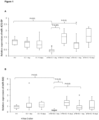
- miR-425-5p and miR-502 showed a similar trend ( Fig 1 ). They were both significantly downregulated in mTBI+EC (mean of 0.387 ⁇ 0.201 and 0.314 ⁇ 0.146) respectively at 1 day from injury compared to HV (p ⁇ 0.001), EC (p ⁇ 0.001) and sTBI+EC (p ⁇ 0.001).
- miR425-5p and miR-502 returned back to normal levels (0.886 ⁇ 0.310 and 1.157 ⁇ 0.258).
- the expression of miR-425-5p and miR-502 was also found similar to HV in EC samples at both 1 day and 15 days from injury, thus suggesting that these two biomarkers are differentially expressed in brain injury patients only. Moreover, neither of them showed any significant difference in sTBI+EC compared to HV at both time points. Therefore, miR-425-5p and miR-502 could be considered the most promising candidate biomarkers for the early diagnosis and monitoring of mTBI at 15 days after trauma. AUCs for these biomarkers are shown in Table 3.
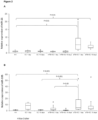
- miR-21 and miR-335 were analysed as potential biomarkers of sTBI since they both appeared upregulated at both time points of sTBI+EC in the initial screening. They showed to be strong candidates in the second dataset of patients as well ( Fig 2 ). Mir-21 was significantly upregulated at both time points in sTBI with EC (7.106 ⁇ 4.192 and 4.012 ⁇ 1.577) with respect to HV (p,0.001), EC (p ⁇ 0.001) and mTBI (p ⁇ 0.001). No significant differences were found in the remaining categories compared to HV. miR-335 showed upregulation in sTBI+EC and at both time points (16.824 ⁇ 14.195 and 12.324 ⁇ 8.931, respectively).
- Table 3 Area under the curve Variable(s) Area Asymptotic 95% Confidence Interval Lower Bound Upper Bound miR-502 1 day .993 .972 1.000 miR-502 15 days Not Significant - - miR-425-5p 1 day .994 .977 1.000 miR-425-5p 15 days Not Significant - - miR-21 1 day .979 .934 1.000 miR-21 15 days .975 .929 1.000 miR-335 1day .758 .592 .921 miR-335 15 days .957 .884 1.000
- the present study investigated if changes in the levels of miRNAs can be applied to the diagnosis of TBI, and evaluating its severity.
- miRNAs were identified as being differentially expressed in TBI; miR-425-5p, miR 502, miR-21 and miR-335.
- miR-425-5p showed significant results at day 1 in mTBI+EC compared to the HV and similar results were obtained in all other categories. Its downregulation within the first 24h from the mild injury and the its return back to normal levels after 15 days, makes miR-425-5p a suitable candidate biomarker of mild trauma.
- miR-502 was also found to be differentially expressed in mTBI+EC. The trend of this miRNA was very similar to miR-425-5p. It showed specificity for brain injured patients and could also be used to track recovery, since it returns back to normal value after 15 days form the mild injury.
- miRNAs (miR-21, miR-335) were noted to be expressed at both 1 and 15 days and were thus selected as potential biomarkers for sTBI.
- miR-21 and miR-335 were significantly up-regulated at both time points when compared with controls in sTBI+EC. Therefore, the overexpression confirmed the results of the array and showed the potential of these molecules as biomarkers of sTBI.
- the selected panel of miRNAs have the potential to diagnose TBI accurately and enable the stratification of patients according to severity which, in turn, allows the delivery of the most appropriate treatment.
- Healthy volunteers were consented and enrolled in the ReCoS study.
- EC injury patients had radiographically-confirmed orthopaedic fractures, no head trauma, no infection, no history of neurological or psychiatric disorders and no alcohol or drug dependency.
- Mild TBI with EC included those with a non-penetrating head trauma and Glasgow Coma Scale (GCS) score ⁇ 13. Severe TBI with EC included patients with GCS ⁇ 8.
- the blood samples were processed for serum isolation within 2h after withdrawal. Whole blood was left to stand for about 30' at room temperature before being centrifuged at 3000 rpm for 10' at 4°C. Serum was divided into aliquots and stored at -80°C until analysis.
- RNA isolation, data analysis, assays and statistical analysis were carried out as described in Example 1.
- Example 1 In order to validate the findings of Example 1, the expression of selected miRNAs in 3 separate and independent groups (30 mTBI + EC, 30 sTBI + EC, 30 EC) was measured at different time points (T0, T4-12h, T48-72h and 15 days from the injury) by using single TaqMan assays. The results were compared to 10 HV. The fold changes were calculated by the 2- ⁇ CT method, using miR-331 and miR-223* as reference.
- miR-425-5p and miR-502 could be considered the most promising candidate biomarkers for the early diagnosis and monitoring of mTBI. AUCs for these biomarkers at the most relevant time points, are shown in Table 4.
- AUCs for these biomarkers are also shown in Table 4. Table 4 : Area under the curve of the four candidate biomarkers of TBI at different time points. Only most relevant time points are shown.
- miR-425-5p showed significant results at T0 and T4-12h in mTBI+EC compared to the HV and similar results were obtained in all other categories. Its downregulation return back to normal levels after T48-72h, confirms that miR-425-5p a suitable candidate biomarker of mild trauma.
- miR-502 was also confirmed to be differentially expressed in mTBI+EC.
- the trend of this miRNA was very similar to miR-425-5p. It showed specificity for brain injured patients and could also be used to track recovery, since it returns back to normal value after T48-72h form the mild injury.
- miRNAs (miR-21, miR-335) were noted to be expressed at all time points analysed and were thus confirmed as potential biomarkers for sTBI.
- miR-21 and miR-335 were significantly up-regulated when compared with controls in sTBI+EC. Therefore, the overexpression confirmed the potential of these molecules as biomarkers of sTBI.
- Saliva samples were collected from concussed professional athletes after 2-3 days from injury and the microRNAs present in the saliva was analysed. The athletes were diagnosed clinically as having mTBI.
- RNAs were analysed using nCounter technology (nanoString Technologies ® ), which uses molecular "barcodes” and microscopic imaging to detect and count up to several hundred unique transcripts in one hybridization reaction. Each colour-coded barcode is attached to a single target-specific probe corresponding to a microRNAs of interest.
- Table 4 is a list of microRNAs which were found to be significantly and differentially expressed in concussed athletes compared to healthy volunteers.
- the table shows the fold change in expression of the microRNAs in the patients compared to the control group. The fold changes were calculated using miR-23a-3p and miR-148b-3p as reference genes.
Landscapes
- Chemical & Material Sciences (AREA)
- Health & Medical Sciences (AREA)
- Life Sciences & Earth Sciences (AREA)
- Organic Chemistry (AREA)
- Proteomics, Peptides & Aminoacids (AREA)
- Engineering & Computer Science (AREA)
- Genetics & Genomics (AREA)
- Analytical Chemistry (AREA)
- Zoology (AREA)
- Wood Science & Technology (AREA)
- General Health & Medical Sciences (AREA)
- Bioinformatics & Cheminformatics (AREA)
- Biotechnology (AREA)
- Molecular Biology (AREA)
- Microbiology (AREA)
- Immunology (AREA)
- Biophysics (AREA)
- Biochemistry (AREA)
- Physics & Mathematics (AREA)
- General Engineering & Computer Science (AREA)
- Pathology (AREA)
- Nuclear Medicine, Radiotherapy & Molecular Imaging (AREA)
- Public Health (AREA)
- Veterinary Medicine (AREA)
- Chemical Kinetics & Catalysis (AREA)
- General Chemical & Material Sciences (AREA)
- Medicinal Chemistry (AREA)
- Animal Behavior & Ethology (AREA)
- Pharmacology & Pharmacy (AREA)
- Biomedical Technology (AREA)
- Neurology (AREA)
- Neurosurgery (AREA)
- Anesthesiology (AREA)
- Cardiology (AREA)
- Heart & Thoracic Surgery (AREA)
- Measuring Or Testing Involving Enzymes Or Micro-Organisms (AREA)
- Investigating Or Analysing Biological Materials (AREA)
- Apparatus Associated With Microorganisms And Enzymes (AREA)
- Medicines That Contain Protein Lipid Enzymes And Other Medicines (AREA)
- Medicines Containing Antibodies Or Antigens For Use As Internal Diagnostic Agents (AREA)
Priority Applications (2)
| Application Number | Priority Date | Filing Date | Title |
|---|---|---|---|
| EP24174972.0A EP4403649A3 (en) | 2016-03-08 | 2017-01-30 | Biomarkers of traumatic brain injury |
| EP20169635.8A EP3712277B1 (en) | 2016-03-08 | 2017-01-30 | Biomarkers of severe traumatic brain injury |
Applications Claiming Priority (2)
| Application Number | Priority Date | Filing Date | Title |
|---|---|---|---|
| GBGB1603967.9A GB201603967D0 (en) | 2016-03-08 | 2016-03-08 | Biomarkers of traumatic brain injury |
| PCT/GB2017/050231 WO2017153710A1 (en) | 2016-03-08 | 2017-01-30 | Biomarkers of traumatic brain injury |
Related Child Applications (3)
| Application Number | Title | Priority Date | Filing Date |
|---|---|---|---|
| EP20169635.8A Division-Into EP3712277B1 (en) | 2016-03-08 | 2017-01-30 | Biomarkers of severe traumatic brain injury |
| EP20169635.8A Division EP3712277B1 (en) | 2016-03-08 | 2017-01-30 | Biomarkers of severe traumatic brain injury |
| EP24174972.0A Division EP4403649A3 (en) | 2016-03-08 | 2017-01-30 | Biomarkers of traumatic brain injury |
Publications (2)
| Publication Number | Publication Date |
|---|---|
| EP3426796A1 EP3426796A1 (en) | 2019-01-16 |
| EP3426796B1 true EP3426796B1 (en) | 2023-09-06 |
Family
ID=55859162
Family Applications (7)
| Application Number | Title | Priority Date | Filing Date |
|---|---|---|---|
| EP17703217.4A Active EP3426796B1 (en) | 2016-03-08 | 2017-01-30 | Biomarkers of traumatic brain injury |
| EP20169635.8A Active EP3712277B1 (en) | 2016-03-08 | 2017-01-30 | Biomarkers of severe traumatic brain injury |
| EP24174972.0A Pending EP4403649A3 (en) | 2016-03-08 | 2017-01-30 | Biomarkers of traumatic brain injury |
| EP17822770.8A Active EP3574117B1 (en) | 2016-03-08 | 2017-12-22 | Biomarkers of traumatic brain injury |
| EP25164531.3A Pending EP4582559A3 (en) | 2016-03-08 | 2017-12-22 | Biomarkers of traumatic brain injury |
| EP20169652.3A Active EP3712280B8 (en) | 2016-03-08 | 2017-12-22 | Biomarkers of traumatic brain injury |
| EP23184544.7A Active EP4257705B1 (en) | 2016-03-08 | 2017-12-22 | Biomarkers of traumatic brain injury |
Family Applications After (6)
| Application Number | Title | Priority Date | Filing Date |
|---|---|---|---|
| EP20169635.8A Active EP3712277B1 (en) | 2016-03-08 | 2017-01-30 | Biomarkers of severe traumatic brain injury |
| EP24174972.0A Pending EP4403649A3 (en) | 2016-03-08 | 2017-01-30 | Biomarkers of traumatic brain injury |
| EP17822770.8A Active EP3574117B1 (en) | 2016-03-08 | 2017-12-22 | Biomarkers of traumatic brain injury |
| EP25164531.3A Pending EP4582559A3 (en) | 2016-03-08 | 2017-12-22 | Biomarkers of traumatic brain injury |
| EP20169652.3A Active EP3712280B8 (en) | 2016-03-08 | 2017-12-22 | Biomarkers of traumatic brain injury |
| EP23184544.7A Active EP4257705B1 (en) | 2016-03-08 | 2017-12-22 | Biomarkers of traumatic brain injury |
Country Status (14)
| Country | Link |
|---|---|
| US (5) | US20190085395A1 (enExample) |
| EP (7) | EP3426796B1 (enExample) |
| JP (5) | JP7111619B2 (enExample) |
| KR (4) | KR20240167935A (enExample) |
| CN (4) | CN116004796A (enExample) |
| AU (3) | AU2017231845B2 (enExample) |
| CA (2) | CA3015150A1 (enExample) |
| ES (4) | ES2967073T3 (enExample) |
| GB (1) | GB201603967D0 (enExample) |
| NZ (1) | NZ782016A (enExample) |
| PL (2) | PL3712277T3 (enExample) |
| UA (1) | UA127918C2 (enExample) |
| WO (2) | WO2017153710A1 (enExample) |
| ZA (1) | ZA201805982B (enExample) |
Families Citing this family (19)
| Publication number | Priority date | Publication date | Assignee | Title |
|---|---|---|---|---|
| EP3122905B1 (en) | 2014-03-27 | 2020-09-09 | Yale University | Circulating micrornas as biomarkers for endometriosis |
| GB201603967D0 (en) | 2016-03-08 | 2016-04-20 | Univ Birmingham | Biomarkers of traumatic brain injury |
| MX2019002425A (es) * | 2016-08-30 | 2019-08-16 | Univ Yale | Micro ácidos ribonucleicos como biomarcadores para la endometriosis. |
| WO2018175941A1 (en) * | 2017-03-23 | 2018-09-27 | Quadrant Biosciences Inc. | Analysis and prediction of traumatic brain injury and concusion symptoms |
| US11739323B2 (en) * | 2017-06-08 | 2023-08-29 | Temple University-Of The Commonwealth System Of Higher Education | Micro-RNAs as biomarkers for subconcussive and concussive injury and therapeutic applications |
| EP3803416A4 (en) * | 2018-05-31 | 2022-05-18 | Amydis, Inc. | COMPOSITIONS AND METHODS FOR DETECTING BRAIN TRAUMA |
| SG10201807529VA (en) * | 2018-09-03 | 2020-04-29 | Nec Asia Pacific Pte Ltd | Systems and methods for predicting recovery of a patient |
| US11315660B2 (en) | 2018-10-31 | 2022-04-26 | Dot Laboratories, Inc. | Method of detecting and treating endometriosis in a female subject |
| PE20220877A1 (es) * | 2019-02-14 | 2022-05-27 | Marker Diagnostics Uk Ltd | Biomarcadores salivales de lesion cerebral |
| KR102184840B1 (ko) * | 2019-05-20 | 2020-11-30 | 이화여자대학교 산학협력단 | 외상 후 스트레스 장애 진단 또는 예측용 바이오마커 및 그의 용도 |
| US11965879B2 (en) * | 2019-08-23 | 2024-04-23 | Mcmaster University | Method for diagnosing and assessing endometriosis |
| KR102272915B1 (ko) | 2019-09-27 | 2021-07-06 | 주식회사 이지다이아텍 | 새로운 외상성 뇌손상 및 감염병 poct 진단시스템 |
| CN110684835A (zh) * | 2019-10-12 | 2020-01-14 | 山东大学齐鲁医院 | miR-21在诊治蛛网膜下腔出血中的应用 |
| CN111419866A (zh) * | 2020-03-02 | 2020-07-17 | 南通大学 | miR-29a-3p在制备治疗周围神经损伤药物中的应用 |
| US12157918B2 (en) * | 2020-09-04 | 2024-12-03 | University Of Kentucky Research Foundation | Clinical assessment of cerebral vasospasm risk following aneurysmal subarachnoid hemorrhage |
| IL307369A (en) | 2021-04-02 | 2023-11-01 | Marker Holdings Ag | Biomarkers of muscle and skeletal injury |
| CN116219019A (zh) * | 2023-03-02 | 2023-06-06 | 圣湘生物科技股份有限公司 | 一种用于结直肠癌诊断的microRNA标志物组合物及检测试剂、检测试剂盒 |
| WO2024242411A1 (ko) | 2023-05-19 | 2024-11-28 | 주식회사 이지다이아텍 | 자동 항체 커플링 및 이를 확인하는 장치 |
| WO2025039033A1 (en) * | 2023-08-21 | 2025-02-27 | Glia Diagnostics Pty Ltd | Methods and reagents for diagnosis and/or prognosis of traumatic brain injury |
Family Cites Families (31)
| Publication number | Priority date | Publication date | Assignee | Title |
|---|---|---|---|---|
| PH31414A (en) | 1994-02-24 | 1998-10-29 | Boehringer Ingelheim Int | Method of diagnosing cancer precancerous state, orsusceptibility to other forms of diseases by anal ysis of irf-1 specific rna in biopsy samples. |
| WO1999033018A1 (de) | 1997-12-18 | 1999-07-01 | Infineon Technologies Ag | Vorrichtung zur bilderfassung |
| RU66524U1 (ru) | 2007-05-03 | 2007-09-10 | Федор Андреевич Егоров | Сооружение, в котором обеспечена возможность комплексного мониторинга сооружения |
| CN101424640B (zh) | 2007-11-02 | 2012-07-25 | 江苏命码生物科技有限公司 | 血清中微小核糖核酸的检测方法和用于检测的试剂盒、生物芯片及其制作和应用方法 |
| DE102008017652A1 (de) | 2008-04-04 | 2009-10-08 | Leonhard Kurz Stiftung & Co. Kg | Sicherheitselement sowie Verfahren zur Herstellung eines Sicherheitselements |
| EP2336353A1 (en) | 2009-12-17 | 2011-06-22 | febit holding GmbH | miRNA fingerprints in the diagnosis of diseases |
| HUE040281T2 (hu) * | 2009-09-14 | 2019-03-28 | Banyan Biomarkers Inc | Autoantitest markerek traumás agysérülés diagnózisára |
| RU93660U1 (ru) | 2010-02-08 | 2010-05-10 | Государственное образовательное учреждение высшего профессионального образования "Ростовский государственный медицинский университет Федерального агентства по здравоохранению и социальному развитию" (ГОУ ВПО "РостГМУ Росздрава") | Тест-полоска для диагностики нефропатии |
| CN103237901B (zh) * | 2010-03-01 | 2016-08-03 | 卡里斯生命科学瑞士控股有限责任公司 | 用于治疗诊断的生物标志物 |
| WO2013159091A2 (en) * | 2012-04-20 | 2013-10-24 | Aptamir Therapeutics, Inc. | Mirna modulators of thermogenesis |
| US20150203916A1 (en) | 2012-06-27 | 2015-07-23 | Music Foundation For Research Development | Plasma analytes predict diagnosis and prognosis of thoracic aortic aneurysm |
| GB201223243D0 (en) * | 2012-12-21 | 2013-02-06 | King S College London | Detection method |
| EP3418430B1 (en) | 2013-03-15 | 2023-03-29 | The Trustees of the University of Pennsylvania | Blood biomarkers that predict persistent cognitive dysfunction after concussion |
| US9890428B2 (en) * | 2013-05-14 | 2018-02-13 | Ohio State Innovation Foundation | MiRNA biomarkers for radiation biodosimetry |
| US9434945B2 (en) * | 2013-08-02 | 2016-09-06 | University Of Maryland, Baltimore | Use of miR-23a-3p and/or miR-27a-3p mimics as therapeutic agents for inhibition of neuronal apoptosis following brain injury |
| CN103667445A (zh) * | 2013-10-16 | 2014-03-26 | 石磊 | 一种脑梗塞早期诊断标志物及其应用 |
| WO2015073972A1 (en) * | 2013-11-18 | 2015-05-21 | Diamir, Llc | METHODS OF USING mIRNAs FROM BODILY FLUIDS FOR DETECTION AND MONITORING OF PARKINSON'S DISEASE (PD) |
| WO2015128192A1 (en) * | 2014-02-26 | 2015-09-03 | Koninklijke Philips N.V. | Light reflectance based detection |
| WO2015134551A1 (en) * | 2014-03-03 | 2015-09-11 | Banyan Biomarkers, Inc. | Micro rna markers for diagnosis of a neurological condition |
| US9605315B2 (en) * | 2014-03-26 | 2017-03-28 | The University Of Montana | Detection of traumatic brain injury |
| WO2015153864A2 (en) | 2014-04-02 | 2015-10-08 | Hopkins Patricia T | Methods for treating inflammatory conditions |
| WO2015164431A2 (en) * | 2014-04-22 | 2015-10-29 | The Henry M. Jackson Foundation For The Advancement Of Military Medicine, Inc. | Methods, processes, devices and kits for the measurement of post traumatic stress disorder microrna markers |
| WO2015196191A1 (en) * | 2014-06-20 | 2015-12-23 | The Henry M. Jackson Foundation For The Advancement Of Military Medicine, Inc. | Microrna biomarkers for traumatic brain injury and methods of use thereof |
| ES2558262B2 (es) | 2014-08-01 | 2016-07-14 | Universidad Católica De Valencia "San Vicente Mártir" | Método de diagnóstico de fibromialgia basado en microRNAs |
| CN104293791B (zh) * | 2014-10-22 | 2018-01-12 | 首都医科大学附属北京友谊医院 | miR‑200b在制备Rac‑1蛋白表达抑制剂中的新用途 |
| CA2993989A1 (en) * | 2015-07-29 | 2017-02-02 | The Henry M. Jackson Foundation For The Advancement Of Military Medicine, Inc. | Microrna biomarkers for traumatic brain injury and methods of use thereof |
| WO2017044650A1 (en) | 2015-09-08 | 2017-03-16 | The Translational Genomics Research Institute | Biomarkers and methods of diagnosing and prognosing mild traumatic brain injuries |
| GB201603967D0 (en) | 2016-03-08 | 2016-04-20 | Univ Birmingham | Biomarkers of traumatic brain injury |
| WO2018175941A1 (en) | 2017-03-23 | 2018-09-27 | Quadrant Biosciences Inc. | Analysis and prediction of traumatic brain injury and concusion symptoms |
| WO2018175422A1 (en) | 2017-03-23 | 2018-09-27 | Quadrant Biosciences Inc. | Method for diagnosing or monitoring conditions characterized by abnormal temporal variations method of normalizing epigenetic data to compensate for temporal variations |
| PE20220877A1 (es) | 2019-02-14 | 2022-05-27 | Marker Diagnostics Uk Ltd | Biomarcadores salivales de lesion cerebral |
-
2016
- 2016-03-08 GB GBGB1603967.9A patent/GB201603967D0/en not_active Ceased
-
2017
- 2017-01-30 US US16/083,178 patent/US20190085395A1/en not_active Abandoned
- 2017-01-30 UA UAA201809265A patent/UA127918C2/uk unknown
- 2017-01-30 KR KR1020247037409A patent/KR20240167935A/ko active Pending
- 2017-01-30 PL PL20169635.8T patent/PL3712277T3/pl unknown
- 2017-01-30 EP EP17703217.4A patent/EP3426796B1/en active Active
- 2017-01-30 CN CN202211408247.8A patent/CN116004796A/zh active Pending
- 2017-01-30 ES ES17703217T patent/ES2967073T3/es active Active
- 2017-01-30 AU AU2017231845A patent/AU2017231845B2/en active Active
- 2017-01-30 JP JP2018546868A patent/JP7111619B2/ja active Active
- 2017-01-30 CN CN201780015193.XA patent/CN109415769B/zh active Active
- 2017-01-30 EP EP20169635.8A patent/EP3712277B1/en active Active
- 2017-01-30 ES ES20169635T patent/ES2987237T3/es active Active
- 2017-01-30 WO PCT/GB2017/050231 patent/WO2017153710A1/en not_active Ceased
- 2017-01-30 KR KR1020187026295A patent/KR102729795B1/ko active Active
- 2017-01-30 CA CA3015150A patent/CA3015150A1/en active Pending
- 2017-01-30 EP EP24174972.0A patent/EP4403649A3/en active Pending
- 2017-01-30 NZ NZ782016A patent/NZ782016A/en unknown
- 2017-12-22 EP EP17822770.8A patent/EP3574117B1/en active Active
- 2017-12-22 EP EP25164531.3A patent/EP4582559A3/en active Pending
- 2017-12-22 JP JP2019539924A patent/JP7132224B2/ja active Active
- 2017-12-22 WO PCT/GB2017/053887 patent/WO2018138468A1/en not_active Ceased
- 2017-12-22 ES ES20169652T patent/ES2965297T3/es active Active
- 2017-12-22 CA CA3050996A patent/CA3050996A1/en active Pending
- 2017-12-22 CN CN201780084939.2A patent/CN110291210B/zh not_active Expired - Fee Related
- 2017-12-22 ES ES23184544T patent/ES3032995T3/es active Active
- 2017-12-22 EP EP20169652.3A patent/EP3712280B8/en active Active
- 2017-12-22 PL PL23184544.7T patent/PL4257705T3/pl unknown
- 2017-12-22 EP EP23184544.7A patent/EP4257705B1/en active Active
- 2017-12-22 US US15/852,128 patent/US10563262B2/en active Active
- 2017-12-22 KR KR1020197022615A patent/KR102618993B1/ko active Active
- 2017-12-22 KR KR1020237044544A patent/KR20240011189A/ko active Pending
- 2017-12-22 CN CN202410665501.5A patent/CN118441040A/zh active Pending
-
2018
- 2018-09-06 ZA ZA2018/05982A patent/ZA201805982B/en unknown
-
2019
- 2019-12-31 US US16/732,254 patent/US11414705B2/en active Active
-
2022
- 2022-07-21 JP JP2022116002A patent/JP7413455B2/ja active Active
- 2022-07-28 US US17/876,472 patent/US12467095B2/en active Active
- 2022-09-08 US US17/940,988 patent/US20230313300A1/en active Pending
-
2023
- 2023-12-13 AU AU2023282212A patent/AU2023282212B2/en active Active
- 2023-12-27 JP JP2023220147A patent/JP7654769B2/ja active Active
-
2025
- 2025-03-19 JP JP2025044721A patent/JP2025098112A/ja active Pending
- 2025-11-05 AU AU2025263788A patent/AU2025263788A1/en active Pending
Non-Patent Citations (8)
| Title |
|---|
| CAMERON B. JETER ET AL: "Biomarkers for the Diagnosis and Prognosis of Mild Traumatic Brain Injury/Concussion", JOURNAL OF NEUROTRAUMA., vol. 30, no. 8, 15 April 2013 (2013-04-15), US, pages 657 - 670, XP055325456, ISSN: 0897-7151, DOI: 10.1089/neu.2012.2439 * |
| JIALU WANG ET AL: "Differential expression of circulating microRNAs in blood and haematoma samples from patients with intracerebral haemorrhage", JOURNAL OF INTERNATIONAL MEDICAL RESEARCH, vol. 44, no. 3, 28 March 2016 (2016-03-28), GB, pages 419 - 432, XP055625198, ISSN: 0300-0605, DOI: 10.1177/0300060516630852 * |
| KAI-YING LIM ET AL: "MicroRNAs in Cerebral Ischemia", TRANSLATIONAL STROKE RESEARCH, vol. 1, no. 4, 31 July 2010 (2010-07-31), Boston, pages 287 - 303, XP055496347, ISSN: 1868-4483, DOI: 10.1007/s12975-010-0035-3 * |
| KULBE JACQUELINE R ET AL: "Current status of fluid biomarkers in mild traumatic brain injury", EXPERIMENTAL NEUROLOGY, ELSEVIER, AMSTERDAM, NL, vol. 275, 14 May 2015 (2015-05-14), pages 334 - 352, XP029357335, ISSN: 0014-4886, DOI: 10.1016/J.EXPNEUROL.2015.05.004 * |
| MAFFIOLETTI E ET AL: "Micro spies from the brain to the periphery: New clues from studies on microRNAs in neuropsychiatric disorders", FRONTIERS IN CELLULAR NEUROSCI, FRONTIERS RESEARCH FOUNDATION, CH, vol. 8, no. 75, 11 March 2014 (2014-03-11), pages 1 - 16, XP008175202, ISSN: 1662-5102, DOI: 10.3389/FNCEL.2014.00075 * |
| SERPIL TAHERI ET AL: "Circulating MicroRNAs as Potential Biomarkers for Traumatic Brain Injury-Induced Hypopituitarism", JOURNAL OF NEUROTRAUMA., vol. 33, no. 20, 15 October 2016 (2016-10-15), US, pages 1818 - 1825, XP055357234, ISSN: 0897-7151, DOI: 10.1089/neu.2015.4281 * |
| TING YANG ET AL: "Elevated serum miR-93, miR-191, and miR-499 are noninvasive biomarkers for the presence and progression of traumatic brain injury", JOURNAL OF NEUROCHEMISTRY, vol. 137, no. 1, 17 April 2016 (2016-04-17), GB, pages 122 - 129, XP055357232, ISSN: 0022-3042, DOI: 10.1111/jnc.13534 * |
| YU HAN ET AL: "Diagnostic value of elevated serum miRNA-143 levels in sepsis", JOURNAL OF INTERNATIONAL MEDICAL RESEARCH, vol. 44, no. 4, 25 May 2016 (2016-05-25), GB, pages 875 - 881, XP055625175, ISSN: 0300-0605, DOI: 10.1177/0300060516645003 * |
Also Published As
Similar Documents
| Publication | Publication Date | Title |
|---|---|---|
| US20230313300A1 (en) | Biomarkers of traumatic brain injury | |
| HK40095431A (en) | Biomarkers of traumatic brain injury | |
| RU2771757C2 (ru) | Биомаркеры травматического повреждения головного мозга | |
| HK40034626A (en) | Biomarkers of severe traumatic brain injury | |
| HK40114018A (en) | Biomarkers of traumatic brain injury | |
| HK40034626B (en) | Biomarkers of severe traumatic brain injury | |
| HK1258615B (en) | Biomarkers of traumatic brain injury | |
| HK40011329B (en) | Biomarkers of traumatic brain injury | |
| HK40011329A (en) | Biomarkers of traumatic brain injury | |
| OA19460A (en) | Biomarkers of traumatic brain injury. |
Legal Events
| Date | Code | Title | Description |
|---|---|---|---|
| STAA | Information on the status of an ep patent application or granted ep patent |
Free format text: STATUS: UNKNOWN |
|
| STAA | Information on the status of an ep patent application or granted ep patent |
Free format text: STATUS: THE INTERNATIONAL PUBLICATION HAS BEEN MADE |
|
| PUAI | Public reference made under article 153(3) epc to a published international application that has entered the european phase |
Free format text: ORIGINAL CODE: 0009012 |
|
| STAA | Information on the status of an ep patent application or granted ep patent |
Free format text: STATUS: REQUEST FOR EXAMINATION WAS MADE |
|
| 17P | Request for examination filed |
Effective date: 20180913 |
|
| AK | Designated contracting states |
Kind code of ref document: A1 Designated state(s): AL AT BE BG CH CY CZ DE DK EE ES FI FR GB GR HR HU IE IS IT LI LT LU LV MC MK MT NL NO PL PT RO RS SE SI SK SM TR |
|
| AX | Request for extension of the european patent |
Extension state: BA ME |
|
| DAV | Request for validation of the european patent (deleted) | ||
| DAX | Request for extension of the european patent (deleted) | ||
| REG | Reference to a national code |
Ref country code: DE Ref legal event code: R079 Free format text: PREVIOUS MAIN CLASS: C12Q0001680000 Ipc: C12Q0001688300 Ref country code: DE Ref legal event code: R079 Ref document number: 602017073726 Country of ref document: DE Free format text: PREVIOUS MAIN CLASS: C12Q0001680000 Ipc: C12Q0001688300 |
|
| STAA | Information on the status of an ep patent application or granted ep patent |
Free format text: STATUS: EXAMINATION IS IN PROGRESS |
|
| PUAG | Search results despatched under rule 164(2) epc together with communication from examining division |
Free format text: ORIGINAL CODE: 0009017 |
|
| 17Q | First examination report despatched |
Effective date: 20191002 |
|
| B565 | Issuance of search results under rule 164(2) epc |
Effective date: 20191002 |
|
| RIC1 | Information provided on ipc code assigned before grant |
Ipc: C12Q 1/6883 20180101AFI20190927BHEP |
|
| REG | Reference to a national code |
Ref country code: HK Ref legal event code: DE Ref document number: 1258615 Country of ref document: HK |
|
| GRAP | Despatch of communication of intention to grant a patent |
Free format text: ORIGINAL CODE: EPIDOSNIGR1 |
|
| STAA | Information on the status of an ep patent application or granted ep patent |
Free format text: STATUS: GRANT OF PATENT IS INTENDED |
|
| INTG | Intention to grant announced |
Effective date: 20230417 |
|
| GRAS | Grant fee paid |
Free format text: ORIGINAL CODE: EPIDOSNIGR3 |
|
| GRAA | (expected) grant |
Free format text: ORIGINAL CODE: 0009210 |
|
| STAA | Information on the status of an ep patent application or granted ep patent |
Free format text: STATUS: THE PATENT HAS BEEN GRANTED |
|
| P01 | Opt-out of the competence of the unified patent court (upc) registered |
Effective date: 20230725 |
|
| AK | Designated contracting states |
Kind code of ref document: B1 Designated state(s): AL AT BE BG CH CY CZ DE DK EE ES FI FR GB GR HR HU IE IS IT LI LT LU LV MC MK MT NL NO PL PT RO RS SE SI SK SM TR |
|
| REG | Reference to a national code |
Ref country code: GB Ref legal event code: FG4D |
|
| REG | Reference to a national code |
Ref country code: CH Ref legal event code: EP |
|
| REG | Reference to a national code |
Ref country code: IE Ref legal event code: FG4D |
|
| REG | Reference to a national code |
Ref country code: DE Ref legal event code: R096 Ref document number: 602017073726 Country of ref document: DE |
|
| REG | Reference to a national code |
Ref country code: NL Ref legal event code: FP |
|
| REG | Reference to a national code |
Ref country code: LT Ref legal event code: MG9D |
|
| PG25 | Lapsed in a contracting state [announced via postgrant information from national office to epo] |
Ref country code: GR Free format text: LAPSE BECAUSE OF FAILURE TO SUBMIT A TRANSLATION OF THE DESCRIPTION OR TO PAY THE FEE WITHIN THE PRESCRIBED TIME-LIMIT Effective date: 20231207 |
|
| PG25 | Lapsed in a contracting state [announced via postgrant information from national office to epo] |
Ref country code: SE Free format text: LAPSE BECAUSE OF FAILURE TO SUBMIT A TRANSLATION OF THE DESCRIPTION OR TO PAY THE FEE WITHIN THE PRESCRIBED TIME-LIMIT Effective date: 20230906 Ref country code: RS Free format text: LAPSE BECAUSE OF FAILURE TO SUBMIT A TRANSLATION OF THE DESCRIPTION OR TO PAY THE FEE WITHIN THE PRESCRIBED TIME-LIMIT Effective date: 20230906 Ref country code: NO Free format text: LAPSE BECAUSE OF FAILURE TO SUBMIT A TRANSLATION OF THE DESCRIPTION OR TO PAY THE FEE WITHIN THE PRESCRIBED TIME-LIMIT Effective date: 20231206 Ref country code: LV Free format text: LAPSE BECAUSE OF FAILURE TO SUBMIT A TRANSLATION OF THE DESCRIPTION OR TO PAY THE FEE WITHIN THE PRESCRIBED TIME-LIMIT Effective date: 20230906 Ref country code: LT Free format text: LAPSE BECAUSE OF FAILURE TO SUBMIT A TRANSLATION OF THE DESCRIPTION OR TO PAY THE FEE WITHIN THE PRESCRIBED TIME-LIMIT Effective date: 20230906 Ref country code: HR Free format text: LAPSE BECAUSE OF FAILURE TO SUBMIT A TRANSLATION OF THE DESCRIPTION OR TO PAY THE FEE WITHIN THE PRESCRIBED TIME-LIMIT Effective date: 20230906 Ref country code: GR Free format text: LAPSE BECAUSE OF FAILURE TO SUBMIT A TRANSLATION OF THE DESCRIPTION OR TO PAY THE FEE WITHIN THE PRESCRIBED TIME-LIMIT Effective date: 20231207 Ref country code: FI Free format text: LAPSE BECAUSE OF FAILURE TO SUBMIT A TRANSLATION OF THE DESCRIPTION OR TO PAY THE FEE WITHIN THE PRESCRIBED TIME-LIMIT Effective date: 20230906 |
|
| REG | Reference to a national code |
Ref country code: AT Ref legal event code: MK05 Ref document number: 1608632 Country of ref document: AT Kind code of ref document: T Effective date: 20230906 |
|
| PG25 | Lapsed in a contracting state [announced via postgrant information from national office to epo] |
Ref country code: IS Free format text: LAPSE BECAUSE OF FAILURE TO SUBMIT A TRANSLATION OF THE DESCRIPTION OR TO PAY THE FEE WITHIN THE PRESCRIBED TIME-LIMIT Effective date: 20240106 |
|
| PG25 | Lapsed in a contracting state [announced via postgrant information from national office to epo] |
Ref country code: AT Free format text: LAPSE BECAUSE OF FAILURE TO SUBMIT A TRANSLATION OF THE DESCRIPTION OR TO PAY THE FEE WITHIN THE PRESCRIBED TIME-LIMIT Effective date: 20230906 |
|
| REG | Reference to a national code |
Ref country code: ES Ref legal event code: FG2A Ref document number: 2967073 Country of ref document: ES Kind code of ref document: T3 Effective date: 20240425 |
|
| PG25 | Lapsed in a contracting state [announced via postgrant information from national office to epo] |
Ref country code: SM Free format text: LAPSE BECAUSE OF FAILURE TO SUBMIT A TRANSLATION OF THE DESCRIPTION OR TO PAY THE FEE WITHIN THE PRESCRIBED TIME-LIMIT Effective date: 20230906 Ref country code: RO Free format text: LAPSE BECAUSE OF FAILURE TO SUBMIT A TRANSLATION OF THE DESCRIPTION OR TO PAY THE FEE WITHIN THE PRESCRIBED TIME-LIMIT Effective date: 20230906 Ref country code: IS Free format text: LAPSE BECAUSE OF FAILURE TO SUBMIT A TRANSLATION OF THE DESCRIPTION OR TO PAY THE FEE WITHIN THE PRESCRIBED TIME-LIMIT Effective date: 20240106 Ref country code: EE Free format text: LAPSE BECAUSE OF FAILURE TO SUBMIT A TRANSLATION OF THE DESCRIPTION OR TO PAY THE FEE WITHIN THE PRESCRIBED TIME-LIMIT Effective date: 20230906 Ref country code: CZ Free format text: LAPSE BECAUSE OF FAILURE TO SUBMIT A TRANSLATION OF THE DESCRIPTION OR TO PAY THE FEE WITHIN THE PRESCRIBED TIME-LIMIT Effective date: 20230906 Ref country code: AT Free format text: LAPSE BECAUSE OF FAILURE TO SUBMIT A TRANSLATION OF THE DESCRIPTION OR TO PAY THE FEE WITHIN THE PRESCRIBED TIME-LIMIT Effective date: 20230906 Ref country code: PT Free format text: LAPSE BECAUSE OF FAILURE TO SUBMIT A TRANSLATION OF THE DESCRIPTION OR TO PAY THE FEE WITHIN THE PRESCRIBED TIME-LIMIT Effective date: 20240108 Ref country code: SK Free format text: LAPSE BECAUSE OF FAILURE TO SUBMIT A TRANSLATION OF THE DESCRIPTION OR TO PAY THE FEE WITHIN THE PRESCRIBED TIME-LIMIT Effective date: 20230906 |
|
| PG25 | Lapsed in a contracting state [announced via postgrant information from national office to epo] |
Ref country code: PL Free format text: LAPSE BECAUSE OF FAILURE TO SUBMIT A TRANSLATION OF THE DESCRIPTION OR TO PAY THE FEE WITHIN THE PRESCRIBED TIME-LIMIT Effective date: 20230906 |
|
| REG | Reference to a national code |
Ref country code: DE Ref legal event code: R097 Ref document number: 602017073726 Country of ref document: DE |
|
| PG25 | Lapsed in a contracting state [announced via postgrant information from national office to epo] |
Ref country code: DK Free format text: LAPSE BECAUSE OF FAILURE TO SUBMIT A TRANSLATION OF THE DESCRIPTION OR TO PAY THE FEE WITHIN THE PRESCRIBED TIME-LIMIT Effective date: 20230906 |
|
| PLBE | No opposition filed within time limit |
Free format text: ORIGINAL CODE: 0009261 |
|
| STAA | Information on the status of an ep patent application or granted ep patent |
Free format text: STATUS: NO OPPOSITION FILED WITHIN TIME LIMIT |
|
| PG25 | Lapsed in a contracting state [announced via postgrant information from national office to epo] |
Ref country code: DK Free format text: LAPSE BECAUSE OF FAILURE TO SUBMIT A TRANSLATION OF THE DESCRIPTION OR TO PAY THE FEE WITHIN THE PRESCRIBED TIME-LIMIT Effective date: 20230906 Ref country code: SI Free format text: LAPSE BECAUSE OF FAILURE TO SUBMIT A TRANSLATION OF THE DESCRIPTION OR TO PAY THE FEE WITHIN THE PRESCRIBED TIME-LIMIT Effective date: 20230906 |
|
| 26N | No opposition filed |
Effective date: 20240607 |
|
| PG25 | Lapsed in a contracting state [announced via postgrant information from national office to epo] |
Ref country code: MC Free format text: LAPSE BECAUSE OF FAILURE TO SUBMIT A TRANSLATION OF THE DESCRIPTION OR TO PAY THE FEE WITHIN THE PRESCRIBED TIME-LIMIT Effective date: 20230906 |
|
| PG25 | Lapsed in a contracting state [announced via postgrant information from national office to epo] |
Ref country code: MC Free format text: LAPSE BECAUSE OF FAILURE TO SUBMIT A TRANSLATION OF THE DESCRIPTION OR TO PAY THE FEE WITHIN THE PRESCRIBED TIME-LIMIT Effective date: 20230906 |
|
| REG | Reference to a national code |
Ref country code: CH Ref legal event code: PL |
|
| PG25 | Lapsed in a contracting state [announced via postgrant information from national office to epo] |
Ref country code: LU Free format text: LAPSE BECAUSE OF NON-PAYMENT OF DUE FEES Effective date: 20240130 |
|
| PG25 | Lapsed in a contracting state [announced via postgrant information from national office to epo] |
Ref country code: LU Free format text: LAPSE BECAUSE OF NON-PAYMENT OF DUE FEES Effective date: 20240130 |
|
| PG25 | Lapsed in a contracting state [announced via postgrant information from national office to epo] |
Ref country code: BE Free format text: LAPSE BECAUSE OF NON-PAYMENT OF DUE FEES Effective date: 20240131 |
|
| PG25 | Lapsed in a contracting state [announced via postgrant information from national office to epo] |
Ref country code: CH Free format text: LAPSE BECAUSE OF NON-PAYMENT OF DUE FEES Effective date: 20240131 |
|
| PG25 | Lapsed in a contracting state [announced via postgrant information from national office to epo] |
Ref country code: CH Free format text: LAPSE BECAUSE OF NON-PAYMENT OF DUE FEES Effective date: 20240131 Ref country code: BE Free format text: LAPSE BECAUSE OF NON-PAYMENT OF DUE FEES Effective date: 20240131 |
|
| REG | Reference to a national code |
Ref country code: BE Ref legal event code: MM Effective date: 20240131 |
|
| PG25 | Lapsed in a contracting state [announced via postgrant information from national office to epo] |
Ref country code: BG Free format text: LAPSE BECAUSE OF FAILURE TO SUBMIT A TRANSLATION OF THE DESCRIPTION OR TO PAY THE FEE WITHIN THE PRESCRIBED TIME-LIMIT Effective date: 20230906 |
|
| PG25 | Lapsed in a contracting state [announced via postgrant information from national office to epo] |
Ref country code: BG Free format text: LAPSE BECAUSE OF FAILURE TO SUBMIT A TRANSLATION OF THE DESCRIPTION OR TO PAY THE FEE WITHIN THE PRESCRIBED TIME-LIMIT Effective date: 20230906 |
|
| PG25 | Lapsed in a contracting state [announced via postgrant information from national office to epo] |
Ref country code: IE Free format text: LAPSE BECAUSE OF NON-PAYMENT OF DUE FEES Effective date: 20240130 |
|
| PG25 | Lapsed in a contracting state [announced via postgrant information from national office to epo] |
Ref country code: IE Free format text: LAPSE BECAUSE OF NON-PAYMENT OF DUE FEES Effective date: 20240130 |
|
| PGFP | Annual fee paid to national office [announced via postgrant information from national office to epo] |
Ref country code: NL Payment date: 20250122 Year of fee payment: 9 |
|
| PGFP | Annual fee paid to national office [announced via postgrant information from national office to epo] |
Ref country code: DE Payment date: 20250121 Year of fee payment: 9 |
|
| PGFP | Annual fee paid to national office [announced via postgrant information from national office to epo] |
Ref country code: ES Payment date: 20250205 Year of fee payment: 9 |
|
| PGFP | Annual fee paid to national office [announced via postgrant information from national office to epo] |
Ref country code: FR Payment date: 20250121 Year of fee payment: 9 |
|
| PGFP | Annual fee paid to national office [announced via postgrant information from national office to epo] |
Ref country code: IT Payment date: 20250121 Year of fee payment: 9 Ref country code: GB Payment date: 20250122 Year of fee payment: 9 |
|
| PG25 | Lapsed in a contracting state [announced via postgrant information from national office to epo] |
Ref country code: CY Free format text: LAPSE BECAUSE OF FAILURE TO SUBMIT A TRANSLATION OF THE DESCRIPTION OR TO PAY THE FEE WITHIN THE PRESCRIBED TIME-LIMIT; INVALID AB INITIO Effective date: 20170130 |
|
| PG25 | Lapsed in a contracting state [announced via postgrant information from national office to epo] |
Ref country code: HU Free format text: LAPSE BECAUSE OF FAILURE TO SUBMIT A TRANSLATION OF THE DESCRIPTION OR TO PAY THE FEE WITHIN THE PRESCRIBED TIME-LIMIT; INVALID AB INITIO Effective date: 20170130 |