EP3415147B1 - Melaninabbauhemmer - Google Patents
Melaninabbauhemmer Download PDFInfo
- Publication number
- EP3415147B1 EP3415147B1 EP17750373.7A EP17750373A EP3415147B1 EP 3415147 B1 EP3415147 B1 EP 3415147B1 EP 17750373 A EP17750373 A EP 17750373A EP 3415147 B1 EP3415147 B1 EP 3415147B1
- Authority
- EP
- European Patent Office
- Prior art keywords
- proguanil
- phenformin
- salt
- acid
- skin
- Prior art date
- Legal status (The legal status is an assumption and is not a legal conclusion. Google has not performed a legal analysis and makes no representation as to the accuracy of the status listed.)
- Active
Links
Images








Classifications
-
- A—HUMAN NECESSITIES
- A61—MEDICAL OR VETERINARY SCIENCE; HYGIENE
- A61K—PREPARATIONS FOR MEDICAL, DENTAL OR TOILETRY PURPOSES
- A61K8/00—Cosmetics or similar toiletry preparations
- A61K8/18—Cosmetics or similar toiletry preparations characterised by the composition
- A61K8/30—Cosmetics or similar toiletry preparations characterised by the composition containing organic compounds
- A61K8/49—Cosmetics or similar toiletry preparations characterised by the composition containing organic compounds containing heterocyclic compounds
- A61K8/4906—Cosmetics or similar toiletry preparations characterised by the composition containing organic compounds containing heterocyclic compounds with one nitrogen as the only hetero atom
- A61K8/4926—Cosmetics or similar toiletry preparations characterised by the composition containing organic compounds containing heterocyclic compounds with one nitrogen as the only hetero atom having six membered rings
-
- A—HUMAN NECESSITIES
- A61—MEDICAL OR VETERINARY SCIENCE; HYGIENE
- A61K—PREPARATIONS FOR MEDICAL, DENTAL OR TOILETRY PURPOSES
- A61K31/00—Medicinal preparations containing organic active ingredients
- A61K31/13—Amines
- A61K31/155—Amidines (), e.g. guanidine (H2N—C(=NH)—NH2), isourea (N=C(OH)—NH2), isothiourea (—N=C(SH)—NH2)
-
- A—HUMAN NECESSITIES
- A61—MEDICAL OR VETERINARY SCIENCE; HYGIENE
- A61K—PREPARATIONS FOR MEDICAL, DENTAL OR TOILETRY PURPOSES
- A61K31/00—Medicinal preparations containing organic active ingredients
- A61K31/33—Heterocyclic compounds
- A61K31/395—Heterocyclic compounds having nitrogen as a ring hetero atom, e.g. guanethidine or rifamycins
- A61K31/435—Heterocyclic compounds having nitrogen as a ring hetero atom, e.g. guanethidine or rifamycins having six-membered rings with one nitrogen as the only ring hetero atom
- A61K31/4353—Heterocyclic compounds having nitrogen as a ring hetero atom, e.g. guanethidine or rifamycins having six-membered rings with one nitrogen as the only ring hetero atom ortho- or peri-condensed with heterocyclic ring systems
- A61K31/4375—Heterocyclic compounds having nitrogen as a ring hetero atom, e.g. guanethidine or rifamycins having six-membered rings with one nitrogen as the only ring hetero atom ortho- or peri-condensed with heterocyclic ring systems the heterocyclic ring system containing a six-membered ring having nitrogen as a ring heteroatom, e.g. quinolizines, naphthyridines, berberine, vincamine
-
- A—HUMAN NECESSITIES
- A61—MEDICAL OR VETERINARY SCIENCE; HYGIENE
- A61K—PREPARATIONS FOR MEDICAL, DENTAL OR TOILETRY PURPOSES
- A61K31/00—Medicinal preparations containing organic active ingredients
- A61K31/33—Heterocyclic compounds
- A61K31/395—Heterocyclic compounds having nitrogen as a ring hetero atom, e.g. guanethidine or rifamycins
- A61K31/435—Heterocyclic compounds having nitrogen as a ring hetero atom, e.g. guanethidine or rifamycins having six-membered rings with one nitrogen as the only ring hetero atom
- A61K31/47—Quinolines; Isoquinolines
- A61K31/4738—Quinolines; Isoquinolines ortho- or peri-condensed with heterocyclic ring systems
- A61K31/4741—Quinolines; Isoquinolines ortho- or peri-condensed with heterocyclic ring systems condensed with ring systems having oxygen as a ring hetero atom, e.g. tubocuraran derivatives, noscapine, bicuculline
-
- A—HUMAN NECESSITIES
- A61—MEDICAL OR VETERINARY SCIENCE; HYGIENE
- A61K—PREPARATIONS FOR MEDICAL, DENTAL OR TOILETRY PURPOSES
- A61K36/00—Medicinal preparations of undetermined constitution containing material from algae, lichens, fungi or plants, or derivatives thereof, e.g. traditional herbal medicines
- A61K36/18—Magnoliophyta (angiosperms)
- A61K36/185—Magnoliopsida (dicotyledons)
- A61K36/29—Berberidaceae (Barberry family), e.g. barberry, cohosh or mayapple
-
- A—HUMAN NECESSITIES
- A61—MEDICAL OR VETERINARY SCIENCE; HYGIENE
- A61K—PREPARATIONS FOR MEDICAL, DENTAL OR TOILETRY PURPOSES
- A61K36/00—Medicinal preparations of undetermined constitution containing material from algae, lichens, fungi or plants, or derivatives thereof, e.g. traditional herbal medicines
- A61K36/18—Magnoliophyta (angiosperms)
- A61K36/185—Magnoliopsida (dicotyledons)
- A61K36/71—Ranunculaceae (Buttercup family), e.g. larkspur, hepatica, hydrastis, columbine or goldenseal
-
- A—HUMAN NECESSITIES
- A61—MEDICAL OR VETERINARY SCIENCE; HYGIENE
- A61K—PREPARATIONS FOR MEDICAL, DENTAL OR TOILETRY PURPOSES
- A61K36/00—Medicinal preparations of undetermined constitution containing material from algae, lichens, fungi or plants, or derivatives thereof, e.g. traditional herbal medicines
- A61K36/18—Magnoliophyta (angiosperms)
- A61K36/185—Magnoliopsida (dicotyledons)
- A61K36/71—Ranunculaceae (Buttercup family), e.g. larkspur, hepatica, hydrastis, columbine or goldenseal
- A61K36/718—Coptis (goldthread)
-
- A—HUMAN NECESSITIES
- A61—MEDICAL OR VETERINARY SCIENCE; HYGIENE
- A61K—PREPARATIONS FOR MEDICAL, DENTAL OR TOILETRY PURPOSES
- A61K36/00—Medicinal preparations of undetermined constitution containing material from algae, lichens, fungi or plants, or derivatives thereof, e.g. traditional herbal medicines
- A61K36/18—Magnoliophyta (angiosperms)
- A61K36/185—Magnoliopsida (dicotyledons)
- A61K36/75—Rutaceae (Rue family)
- A61K36/756—Phellodendron, e.g. corktree
-
- A—HUMAN NECESSITIES
- A61—MEDICAL OR VETERINARY SCIENCE; HYGIENE
- A61K—PREPARATIONS FOR MEDICAL, DENTAL OR TOILETRY PURPOSES
- A61K36/00—Medicinal preparations of undetermined constitution containing material from algae, lichens, fungi or plants, or derivatives thereof, e.g. traditional herbal medicines
- A61K36/18—Magnoliophyta (angiosperms)
- A61K36/185—Magnoliopsida (dicotyledons)
- A61K36/87—Vitaceae or Ampelidaceae (Vine or Grape family), e.g. wine grapes, muscadine or peppervine
-
- A—HUMAN NECESSITIES
- A61—MEDICAL OR VETERINARY SCIENCE; HYGIENE
- A61K—PREPARATIONS FOR MEDICAL, DENTAL OR TOILETRY PURPOSES
- A61K8/00—Cosmetics or similar toiletry preparations
- A61K8/18—Cosmetics or similar toiletry preparations characterised by the composition
- A61K8/30—Cosmetics or similar toiletry preparations characterised by the composition containing organic compounds
- A61K8/40—Cosmetics or similar toiletry preparations characterised by the composition containing organic compounds containing nitrogen
- A61K8/41—Amines
-
- A—HUMAN NECESSITIES
- A61—MEDICAL OR VETERINARY SCIENCE; HYGIENE
- A61K—PREPARATIONS FOR MEDICAL, DENTAL OR TOILETRY PURPOSES
- A61K8/00—Cosmetics or similar toiletry preparations
- A61K8/18—Cosmetics or similar toiletry preparations characterised by the composition
- A61K8/30—Cosmetics or similar toiletry preparations characterised by the composition containing organic compounds
- A61K8/40—Cosmetics or similar toiletry preparations characterised by the composition containing organic compounds containing nitrogen
- A61K8/43—Guanidines
-
- A—HUMAN NECESSITIES
- A61—MEDICAL OR VETERINARY SCIENCE; HYGIENE
- A61K—PREPARATIONS FOR MEDICAL, DENTAL OR TOILETRY PURPOSES
- A61K8/00—Cosmetics or similar toiletry preparations
- A61K8/18—Cosmetics or similar toiletry preparations characterised by the composition
- A61K8/30—Cosmetics or similar toiletry preparations characterised by the composition containing organic compounds
- A61K8/49—Cosmetics or similar toiletry preparations characterised by the composition containing organic compounds containing heterocyclic compounds
-
- A—HUMAN NECESSITIES
- A61—MEDICAL OR VETERINARY SCIENCE; HYGIENE
- A61K—PREPARATIONS FOR MEDICAL, DENTAL OR TOILETRY PURPOSES
- A61K8/00—Cosmetics or similar toiletry preparations
- A61K8/18—Cosmetics or similar toiletry preparations characterised by the composition
- A61K8/96—Cosmetics or similar toiletry preparations characterised by the composition containing materials, or derivatives thereof of undetermined constitution
- A61K8/97—Cosmetics or similar toiletry preparations characterised by the composition containing materials, or derivatives thereof of undetermined constitution from algae, fungi, lichens or plants; from derivatives thereof
-
- A—HUMAN NECESSITIES
- A61—MEDICAL OR VETERINARY SCIENCE; HYGIENE
- A61K—PREPARATIONS FOR MEDICAL, DENTAL OR TOILETRY PURPOSES
- A61K8/00—Cosmetics or similar toiletry preparations
- A61K8/18—Cosmetics or similar toiletry preparations characterised by the composition
- A61K8/96—Cosmetics or similar toiletry preparations characterised by the composition containing materials, or derivatives thereof of undetermined constitution
- A61K8/97—Cosmetics or similar toiletry preparations characterised by the composition containing materials, or derivatives thereof of undetermined constitution from algae, fungi, lichens or plants; from derivatives thereof
- A61K8/9783—Angiosperms [Magnoliophyta]
- A61K8/9789—Magnoliopsida [dicotyledons]
-
- A—HUMAN NECESSITIES
- A61—MEDICAL OR VETERINARY SCIENCE; HYGIENE
- A61Q—SPECIFIC USE OF COSMETICS OR SIMILAR TOILETRY PREPARATIONS
- A61Q19/00—Preparations for care of the skin
-
- A—HUMAN NECESSITIES
- A61—MEDICAL OR VETERINARY SCIENCE; HYGIENE
- A61Q—SPECIFIC USE OF COSMETICS OR SIMILAR TOILETRY PREPARATIONS
- A61Q19/00—Preparations for care of the skin
- A61Q19/02—Preparations for care of the skin for chemically bleaching or whitening the skin
-
- A—HUMAN NECESSITIES
- A61—MEDICAL OR VETERINARY SCIENCE; HYGIENE
- A61Q—SPECIFIC USE OF COSMETICS OR SIMILAR TOILETRY PREPARATIONS
- A61Q5/00—Preparations for care of the hair
-
- A—HUMAN NECESSITIES
- A61—MEDICAL OR VETERINARY SCIENCE; HYGIENE
- A61Q—SPECIFIC USE OF COSMETICS OR SIMILAR TOILETRY PREPARATIONS
- A61Q5/00—Preparations for care of the hair
- A61Q5/10—Preparations for permanently dyeing the hair
-
- A—HUMAN NECESSITIES
- A61—MEDICAL OR VETERINARY SCIENCE; HYGIENE
- A61K—PREPARATIONS FOR MEDICAL, DENTAL OR TOILETRY PURPOSES
- A61K2800/00—Properties of cosmetic compositions or active ingredients thereof or formulation aids used therein and process related aspects
- A61K2800/74—Biological properties of particular ingredients
- A61K2800/78—Enzyme modulators, e.g. Enzyme agonists
- A61K2800/782—Enzyme inhibitors; Enzyme antagonists
-
- Y—GENERAL TAGGING OF NEW TECHNOLOGICAL DEVELOPMENTS; GENERAL TAGGING OF CROSS-SECTIONAL TECHNOLOGIES SPANNING OVER SEVERAL SECTIONS OF THE IPC; TECHNICAL SUBJECTS COVERED BY FORMER USPC CROSS-REFERENCE ART COLLECTIONS [XRACs] AND DIGESTS
- Y02—TECHNOLOGIES OR APPLICATIONS FOR MITIGATION OR ADAPTATION AGAINST CLIMATE CHANGE
- Y02A—TECHNOLOGIES FOR ADAPTATION TO CLIMATE CHANGE
- Y02A50/00—TECHNOLOGIES FOR ADAPTATION TO CLIMATE CHANGE in human health protection, e.g. against extreme weather
- Y02A50/30—Against vector-borne diseases, e.g. mosquito-borne, fly-borne, tick-borne or waterborne diseases whose impact is exacerbated by climate change
Definitions
- the present invention relates to a non-therapeutic cosmetic use of an inhibitor of melanin decomposition which inhibits decomposition of melanin in keratinocytes.
- the skin turns brown and the hair turns black.
- gray hair is a physiological phenomenon, i.e., aging in which melanin is decreased by a change of hair-matrix melanin-producing cells; however, the mechanism of how to get gray hair has not yet been elucidated.
- aging in which melanin is decreased by a change of hair-matrix melanin-producing cells; however, the mechanism of how to get gray hair has not yet been elucidated.
- a number of components preventing or improving gray hair have been reported; however, sufficient components in view of effectiveness and safety have not yet been obtained.
- Coloring hair with a hair dye is mainly used at present.
- the component can accelerate a biophylactic ability that melanin inherently has to prevent skin damage as well as darken the skin and prevent or improve gray hair.
- Phenformin belongs to the biguanide drug developed as an oral antidiabetic drug. It is reported that phenformin activates autophagy through activation of AMPK (AMP-activated protein kinase) in human embryonic liver cells (HEK 293 T cells) (Non-Patent Literature 1).
- AMPK AMP-activated protein kinase
- Berberine is a benzylisoquinoline alkaloid contained in plants such as KIHADA and OUREN. Since berberine has, e.g., a bactericidal action against harmful enterobacteria and choleretic effect, it is used for treating, e.g., diarrhea. It was reported that berberine has an AMPK activation action (Non-Patent Literature 2); that berberine has an antioxidation and anti-inflammatory effect; and that Barberry root rich in berberine is used as a herb mixture for treating white spot (Non-Patent Literature 3).
- Patent Literature 2 discloses the use of epidermal glycolysis-inducing compound in a composition, with exclusion of insulin growth factor type-1, as agent e.g. to reduce/delay the aging signs of skin and/or its annexes and to prevent/reduce e.g. wrinkles.
- Proguanil is an antimalarial agent for use in treating and preventing malaria and a highly safe drug used for a long time over the world.
- the present invention relates to the non-therapeutic cosmetic use of at least one selected from the group consisting of proguanil or a salt thereof and phenformin or a salt thereof for inhibiting melanin decomposition in keratinocytes or autophagy in keratinocytes; darkening skin or hair color; or preventing gray hair, wherein the salt of proguanil or phenformin is a salt of an acid selected from the group consisting of hydrochloric acid, hydrobromic acid, hydroiodic acid, nitric acid, sulfuric acid, phosphoric acid, acetic acid, fumaric acid, maleic acid, succinic acid, citric acid, and tartaric acid.
- the salt of proguanil or phenformin is a salt of an acid selected from the group consisting of hydrochloric acid, hydrobromic acid, hydroiodic acid, nitric acid, sulfuric acid, phosphoric acid, acetic acid, fumaric acid, maleic acid, succinic acid, cit
- the present inventors searched for a substance increasing the amount of melanin in the skin or hair. As a result, they found that phenformin, berberine and proguanil have an inhibitory action on autophagy activity and an inhibitory action on melanin decomposition in keratinocytes and accelerate melanin accumulation in keratinocytes.
- accumulation of melanin in the skin or hair can be accelerated to darken the skin and prevent gray hair.
- Phenformin and berberine are represented by the following formulas.
- a salt of phenformin is a salt of an acid selected from the group consisting of hydrochloric acid, hydrobromic acid, hydroiodic acid, nitric acid, sulfuric acid, phosphoric acid, acetic acid, fumaric acid, maleic acid, succinic acid, citric acid, and tartaric acid.
- a hydrochloride is used.
- Phenformin may be used in the form of a hydrate or a solvate.
- Phenformin or a salt thereof is available from general reagent manufacturers such as Sigma-Aldrich.
- Examples of a salt of berberine include salts of, e.g., hydrochloric acid, sulfuric acid and tannic acid.
- a hydrochloride berberine chloride
- berberine chloride is used.
- Berberine or a salt thereof is abundantly contained not only in KIHADA and OUREN used as a natural medicine but also in Goldenseal, Barberry and Oregon grape. Highly purified berberine or a salt thereof can be easily obtained by extracting it from these plants and purifying it ( 13th-edition Japanese Pharmacopoeia, manual, page C-405 ).
- an extract of a plant containing berberine or a salt thereof may be used as berberine or a salt thereof.
- the plant containing berberine or a salt thereof include a rutaceous plant, KIHADA (scientific name: Phellodendron amurense, medicinal name of bark: OUBAKU), a ranunculaceae plant, OUREN (scientific name: Coptis japonica ), a ranunculaceae plant, Goldenseal (scientific name: Hydrastis canadensis ), a Berberidaceae plant, Barberry (scientific name: Berberis vulgaris ) and a Berberidaceae plant, Oregon grape (scientific name: Berberis aquifolium ) .
- Examples of the part of a plant to be used for extraction include, but are not particularly limited to, whole grass, leave, stem, sprout, flower, bud, woody part, bark, thallus, root, rhizome, pseudobulb, bulb, tuber, seed, and fruit. These may be used in combination. Of them, bark is preferably used in the case of KIHADA; and root or rhizome is preferably used in the cases of OUREN, Goldenseal, Barberry and Oregon grape.
- both a polar solvent and a nonpolar solvent can be used; however, a polar solvent is preferably used in view of extraction efficiency of berberine or a salt thereof.
- the polar solvent include water, monovalent to trivalent alcohols such as methanol, ethanol, 1-propanol, 2-propanol, 1-butanol, 2-butanol, tert-butanol, 1-pentanol, 1-hexanol, 1-heptanol, 1-octanol, ethylene glycol, propylene glycol, 1,3-butylene glycol, 1,4-butylene glycol and glycerin, and polyethylene glycol. These solvents may be used alone or in combination of two types or more.
- a monovalent to trivalent alcohol or an aqueous solution of a monovalent to trivalent alcohol is preferably used.
- ethanol, methanol, 1,3-butylene glycol or glycerin is preferably used as the monovalent to trivalent alcohol.
- the amount of an extraction solvent used is not particularly limited as long as a sufficient extraction efficiency is obtained.
- the amount used can be, for example, from 1 to 1000 mL, preferably from 5 to 100 mL per dry weight (1 g) of a plant.
- the extraction condition is not particularly limited as long as sufficient extraction efficiency is obtained.
- the extraction period (time) can be, for example, one hour or more, preferably one day or more; and 30 days or less, preferably 14 days or less.
- the extraction is preferably carried out at a temperature of 0°C or more and equal to or lower than the boiling point of the solvent, more preferably within the range ranging from normal temperature to the boiling point of the solvent. Note that, if the extraction is carried out under pressurized conditions, the extraction temperature is not limited by the boiling point of the solvent to be used and can be appropriately set at an optimal temperature in view of extraction efficiency.
- the plant extract as mentioned above may be a crudely purified product as long as it can comply with, for example, cosmetically or pharmaceutically acceptable standards and exerts the effect of the present disclosure. If necessary, removal of inactive contaminants, deodorization and decoloration may be applied by a technique known in the art, such as liquid-liquid partition, solid-liquid partition, treatment with activated carbon and treatment with ion exchange resin.
- the extract as mentioned above can be used as it is or diluted, concentrated or lyophilized to prepare a powder or paste and then put in use.
- the extract can be lyophilized and dissolved/diluted with a solvent usually used for extraction such as water, ethanol, propylene glycol, a water-ethanol mixed solution, a water-propylene glycol mixed solution, a water-1,3-butylene glycol mixed solution when used, and then put in use.
- a solvent usually used for extraction such as water, ethanol, propylene glycol, a water-ethanol mixed solution, a water-propylene glycol mixed solution, a water-1,3-butylene glycol mixed solution when used, and then put in use.
- the extract can be enclosed in a vesicle such as liposomes and microcapsules and then put in use.
- proguanil refers to 1-(p-chlorophenyl)-5-isopropyl biguanide represented by the following formula.
- a salt of proguanil is a salt of an acid selected from the group consisting of hydrochloric acid, hydrobromic acid, hydroiodic acid, nitric acid, sulfuric acid, phosphoric acid, acetic acid, fumaric acid, maleic acid, succinic acid, citric acid, and tartaric acid.
- a hydrochloride is used.
- a hydrate or a solvate of proguanil is included in the proguanil of the present invention.
- Proguanil or a salt thereof is commercially available; for example, proguanil hydrochloride is commercially offered by, e.g., Sigma-Aldrich.
- phenformin or a salt thereof and proguanil or a salt thereof have an action to increase the amount of Pmel17 protein ( Murase D, Hachiya A, Takano K, Hicks R, Visscher MO, Kitahara T, Hase T, Takema Y, Yoshimori T (2013), Autophagy has a significant role in determining skin color by regulating melanosome degradation in keratinocytes, J Invest Dermatol 133: 2416-2424 ) serving as an index for a melanosome amount in human keratinocytes, accelerate accumulation of melanin and darken the skin color.
- Phenformin or a salt thereof, berberine or a salt thereof and a plant extract containing berberine or a salt thereof accelerate accumulation of LC3-II and p62 proteins.
- LC3-II and p62 proteins are proteins essential for autophagy and generated or decomposed by autophagy and thus used as a marker for autophagy activity ( Mizushima N, Yoshimori T (2007), How to interpret LC3 immunoblotting, Autophagy 3: 542-545 ). Accordingly, the compound used in the present invention accelerating accumulation of the above two proteins is considered to have an inhibitory action on autophagy.
- Proguanil or a salt thereof also inhibits accumulation of LC3-II in the presence of chloroquine diphosphate, which inhibits proteolysis in autolysosomes. From this, proguanil or a salt thereof is considered to have an inhibitory action on autophagy. Note that, in this case, LC3-II itself is decomposed by autophagy, accurately to say, accumulation of LC3-II during inhibition of decomposition by a decomposition inhibitor serves as a marker for autophagy activity ( Mizushima N, Yoshimori T (2007), How to interpret LC3 immunoblotting, Autophagy 3: 542-545 ).
- Patent Literature 1 It has been elucidated that autophagy is involved in decomposition of melanin in keratinocytes (Patent Literature 1). From this, it is considered that accumulation of melanin and increase in the amount of melanin in keratinocytes by the compound used in the present invention and resultant skin color darkening are basically caused by inhibition of autophagy activity and inhibition of melanin decomposition in keratinocytes.
- the compound used in the present invention is administered to an animal, preferably a human, it is possible to inhibit decomposition of melanin in keratinocytes, inhibit autophagy, darken skin or hair color and prevent gray hair.
- the compound used in the present invention serves as an inhibitor of melanin decomposition in keratinocytes, an inhibitor of autophagy in keratinocytes, an agent for darkening skin or hair color and an agent for preventing gray hair; and can be used for inhibiting melanin decomposition, inhibiting autophagy in keratinocytes, darkening skin or hair color and preventing gray hair.
- inhibiting autophagy in keratinocytes herein means inhibiting autophagy activity in keratinocytes, particularly inhibiting generation of phagophores in the autophagy pathway and inhibiting activity to elongate or grow phagophores, thereby increasing the amount of melanin in the keratinocytes.
- autophagy activity can be determined and evaluated not only based on the amount of LC3-II and p62 proteins accumulated but also flux assay in which turnover of these proteins is determined in the presence or absence of a lysosome inhibitor.
- darkening skin or hair color means that the color of the skin or hair is darkened by increasing the amount of melanin in the skin or hair having melanin productivity. Accordingly, recovery of the color of skin which lost productivity of melanin, for example, such as the case of vitiligo vulgaris, is not included.
- the inhibitor of melanin decomposition in keratinocytes, inhibitor of autophagy in keratinocytes and agent for darkening skin or hair color used in the present invention do not serve as a therapeutic agent for vitiligo vulgaris; however, if each of them is combined with a therapeutic agent for vitiligo vulgaris, they can be used for inhibiting melanin decomposition and darkening skin color.
- the present invention does not restrict such use.
- non-therapeutic use does not include a medical treatment (practice); namely, does not include a surgery, therapy or diagnosis method for a human, more specifically, a concept which does not include a surgery, therapy or diagnosis method practiced on a human by a doctor, a health care worker or a person under a doctor's supervision.
- examples of the non-therapeutic use of the compound of the present invention include use for darkening skin or hair color for cosmetic or aesthetic purpose, more specifically, use by, e.g., aestheticians and hairdressers.
- improvement refers to favorable turn of a symptom or a state, preventing or delaying worsening of a symptom or a state, or reversing, preventing or delaying progression of a symptom or a state.
- prevention refers to preventing or delaying occurrence of a symptom in individuals or reducing a risk of occurrence of a symptom in individuals.
- the compound used in present invention can be used for producing an inhibitor of melanin decomposition in keratinocytes, an inhibitor of autophagy in keratinocytes, an agent for darkening skin or hair color or an agent for preventing gray hair.
- the inhibitor of melanin decomposition in keratinocytes, the inhibitor of autophagy in keratinocytes, the agent for darkening skin or hair color or the agent for preventing gray hair used in present disclosure can be a medicine, a quasi-drug or a cosmetic for the purpose of inhibiting melanin decomposition, inhibiting autophagy in keratinocytes, darkening of skin or hair color or preventing gray hair, or can be a raw material or a material for producing the medicine, quasi-drug or cosmetic.
- the present invention relates to a non-therapeutic cosmetic use. A medicine or quasi-drug are not encompassed by the wording of the claims.
- the administration route of the medicine or quasi-drug is not limited. Oral administration or parenterally administration may be used.
- dosage form for oral administration include solid preparations such as tablet, granule, powder and capsule; and liquid formulations such as elixir, syrup and suspension.
- dosage form for parenteral administration include various preparations such as injection, external preparation, transdermal preparation, transmucosal preparation, nasal preparation, enteral preparation, inhalation, suppository and patch.
- the medicine or quasi-drugs is preferably in the form of an external preparation for skin, more specifically, in the form of ointment, cream, emulsion, lotion, gel, aerosol, patch, tape and spray.
- any form can be used as long as it is used in cosmetics.
- examples thereof include cream, emulsion, lotion, suspension, gel, powder, pack, sheet, patch, stick, cake, hair tonic, hair liquid, hair gel, hair cream, hair treatment, hair spray, aerosol mousse, shampoo and rinse.
- Preparation compositions of the medicine, quasi-drug or cosmetic as mentioned above can be individually obtained in accordance with general production methods, more specifically, by blending the compound used in the present invention with a pharmaceutically acceptable carrier such as an oil agent, a surfactant, a gelling agent, a preservative, an antioxidant, a solvent, an alcohol, water, a chelating agent, a thickener, a UV absorber, an emulsion stabilizer, a pH modifier, a dye and a perfume, dispersing and processing into a desired form.
- a pharmaceutically acceptable carrier such as an oil agent, a surfactant, a gelling agent, a preservative, an antioxidant, a solvent, an alcohol, water, a chelating agent, a thickener, a UV absorber, an emulsion stabilizer, a pH modifier, a dye and a perfume, dispersing and processing into a desired form.
- a medicinally effective component such as a plant extract, a germicidal agent, a humectant, an antimicrobial agent and a refreshing agent can be appropriately blended in accordance with the type of preparation such as medicine, quasi-drug and cosmetic, as long as the effect of the present invention is not blocked.
- the content of phenformin or a salt thereof, or proguanil or a salt thereof in the present invention in the preparation composition is generally, in terms of phenformin or proguanil, preferably 0.01% by mass or more, more preferably 0.05% by mass or more, further preferably 0.1% by mass or more; and preferably 10% by mass or less, more preferably 5% by mass or less, further preferably 2% by mass or less; in other words, preferably from 0.01 to 10% by mass, more preferably from 0.05 to 5% by mass, further preferably from 0.1 to 2% by mass.
- the dose of phenformin or a salt thereof, or proguanil or a salt thereof given by the above preparation composition can be the amount which can achieve the effect of the present invention.
- the dose can be varied depending on the state, body weight, sex and age of a subject or other factors; however, the dose per adult (60 kg) per day is, in terms of phenformin, or proguanil, for example, preferably 0.1 mg or more, more preferably 1 mg or more, further preferably 5 mg or more; and preferably 5,000 mg or less, more preferably 1,000 mg or less, further preferably 500 mg or less; in other words, preferably from 0.1 to 5,000 mg, more preferably from 1 to 1,000 mg, further preferably from 5 to 500 mg.
- the dose per area of 100 cm 2 per time is, in terms of phenformin, or proguanil, preferably 0.01 mg or more, more preferably 0.05 mg or more, further preferably 0.1 mg or more; and preferably 10 mg or less, more preferably 5 mg or less, further preferably 2 mg or less; in other words, preferably from 0.01 to 10 mg, more preferably from 0.05 to 5 mg, further preferably from 0.1 to 2 mg.
- the preparation can be ingested or administered in accordance with any dosage regimen. It is preferable that the preparation is administered once or several times per day by dividing the dose into several portions, and continuously administered for several weeks to several months.
- the subject to which the cosmetic as mentioned above is to be applied is not particularly limited as long as the subject requires the cosmetic, and preferably a human (person) who desires to darken skin and prevent gray hair.
- a human (person) who desires to darken skin and prevent gray hair it is preferable to apply the cosmetic directly to the site on which the user desires to produce the above effect.
- the site on which the user desires to produce the above effect in the case of darkening the skin a site where the user desires to improve UV protection ability, a site where the user desires to darken the skin for aesthetic purpose are mentioned; more specifically, the skin of face and limbs which are frequently and daily exposed to UV and shown in the public eye, and the skin to which the user applies a self-tanning agent are mentioned.
- the skin having hair in particular, the skin of a head having hair is preferable.
- the skin tissue derived from an African American and prepared in accordance with the method of Example 1 (1) was allowed to stand still in a 6-well plate and cultured in the presence or absence of phenformin for 6 days. Protein was extracted from the skin tissue and used for quantitative analysis of Pmell7 protein, which is a major protein constituting a melanosome, by Western-blotting. Using a mouse anti-human Pmell7 antibody (DAKO) as a primary antibody and a goat anti-mouse IgG antibody as a secondary antibody, signals were detected by using ECL prime reagent (GE Healthcare) and ODYSSEY Fc Imaging System (LICOR). Beta-actin protein as an internal standard was detected in the same manner. It was observed that the amount of Pmel17 protein is increased by phenformin, which is in conformity with induction of melanin deposition ( Figure 3A ).
- DAKO mouse anti-human Pmell7 antibody
- LICOR ODYSSEY Fc Imaging System
- Example 1 (1) the skin tissue derived from an African American and prepared in accordance with the method of Example 1 (1) was allowed to stand still in a 6-well plate and cultured in the absence or presence of phenformin at a different concentration for 4 days. Proteins were extracted from the skin tissues and subjected to Western-blotting analysis. In this manner, the expression levels of LC3-II and p62 proteins, which are localized in autophagosome membrane and finally decomposed by autophagy, were determined. A mouse anti-human LC3 antibody (Cosmo Bio) and rabbit anti-human p62 antibody (MBL International) were used as primary antibodies. Since accumulation on both markers was observed by addition of phenformin, inhibition autophagy was suggested ( Figure 3B ).
- Cosmo Bio Cosmo Bio
- MBL International rabbit anti-human p62 antibody
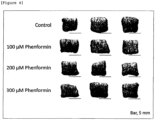
- a human skin tissue prepared in accordance with the method of Example 1 (1) was allowed to stand still in a 6-well plate. Then, phenformin was added in a medium at a final concentration of 100, 200 or 300 ⁇ M and tissue culture was initiated. Four days later, the appearance of the skin tissue was observed and photographed. Recognizable darkening was observed in a dose-dependent manner by 4-day treatment ( Figure 4 ). Note that, melanin deposition, which is correlated with a change in skin color, was confirmed by Fontana-Masson staining (data not shown) .
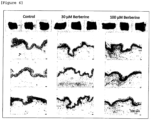
- Skin tissues derived from a Caucasian and an African American and prepared in accordance with the method of Example 1 (1) were allowed to stand still in 6-well plates.
- Berberine was added to the medium for the skin tissue derived form a Caucasian at a final concentration of 10 or 30 ⁇ M and to the medium for the skin tissue derived from an African American at a final concentration of 30 or 100 ⁇ M.
- tissue culture was initiated. Six days later or four days later, the appearance of the skin tissues was observed and photographed.
- epidermal cells were isolated from a foreskin tissue obtained from a Skin Bank of the United States, National Disease Research Interchange (NDRI) in accordance with a predetermined method, and cultured.
- Melanosomes were prepared from MNT-1 cell strain in accordance with a predetermined method ( Murase et al. (2013), J Invest Dermatol, 133: 2416-2424 ). A predetermined amount of melanosomes was added to epidermal cells and the cells were cultured for 24 hours.
- the skin tissue derived from an African American and prepared in accordance with the method of Example 1 (1) was allowed to stand still in a 6-well plate.
- Each of an OUBAKU extract and an OUREN extract were added in a medium at a final concentration of 1% (V/V) and tissue culture was initiated. Six days later, appearance of the skin tissue was observed and photographed.
- a human hair follicle was surgically isolated from a normal human scalp tissue (derived from a Caucasian), which was obtained at the time of surgical operation, and given by a USA dermatologist.
- the isolated human hair follicle was cultured at 37°C under a 5%CO 2 atmosphere in William E medium supplemented with 20 ⁇ g/mL insulin (Sigma-Aldrich), 40 ng/mL hydrocortisone (Sigma-Aldrich), 2 mM L-glutamine (Life Technologies) and a 1% (v/v) penicillin/streptomycin solution (Life Technologies) (all were final concentrations).
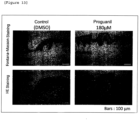
- the isolated human hair follicle was allowed to stand still in a 24-well plate and phenformin was added at a final concentration of 200 ⁇ M in the medium.
- Tissue culture was initiated. Medium replacement was performed Day 1 and Day 3 after the initiation of culture.
- Follicular tissue at Day 5 after the initiation of culture was embedded in OCT compound (TissueTek) and frozen. These follicular tissues were subjected to Fontana-Masson staining and deposition of melanin was observed. Apparent hair color darkening was induced by a treatment of phenformin in the follicular tissue cultured ( Figure 10 ).
- a normal human skin tissue which was obtained at the time of surgical operation, was provided by a medical college (department of plastic surgery).
- the human skin tissue from which subcutaneous fat was previously trimmed, was cut into small pieces having a size of about 1 cm ⁇ 1 cm by knife.
- the small pieces were cultured by using a 6-well plate at 37°C under a 5 vol% CO 2 atmospheric conditions.
- Advanced DMEM medium containing a 10% (v/v) Fetal Bovine Serum (FBS) (Thermo Fisher Scientific, respectively) was used.
- a human skin tissue was allowed to stand still in a 6-well plate.
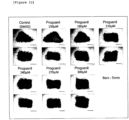
- Proguanil was added in the medium at a final concentration of 150, 180, 210, 240, 270 or 300 ⁇ M and then tissue culture was performed.
- DMSO was added in the same amount.
- Medium replacement was carried out every 2 to 3 days. Day 5 after initiation of the culture, the appearance of the skin tissue was observed and photographed. As a result, it was confirmed that proguanil induces darkening of the skin color in a dose-dependent manner ( Figure 12 ).
- a Fontana ammonia silver solution (manufactured by MUTO PURE CHEMICALS Co., Ltd.) was allowed to react at room temperature for two hours to visually distinguish melanin granules.
- HEMn-LP lightly pigmented donor
- HEMn-DP Human Epidermal Melanocytes, neonatal, darkly pigmented donor
- melanocytes (lightly) and melanocytes (darkly) a growth medium for epidermal melanocytes (Medium254) and a growth additive (HMGS) for the medium were purchased from Thermo Fisher Scientific.
- Melanocytes were cultured at 37°C in 5 vol% CO 2 atmospheric conditions.
- HMGS growth additives
- FBS Fetal Bovine Serum
- hFGF-B basic fibroblast growth factor
- hydrocortisone insulin, transferrin, heparin and Bovine Pituitary Extract (BPE) and did not contain phorbol 12-myristate 13-acetate (PMA).
- PMA phorbol 12-myristate 13-acetate
- proguanil was added at a final concentration of 0.1, 0.3, 1, 3, 10, 30, 100, 300 or 1000 ⁇ M and culture was performed at 37°C in 5 vol% CO 2 atmospheric conditions for 4 days.
- DMSO dimethyl sulfoxide
- alamarBlue Bio-Rad AbD Serotec Limited
- Incubation was carried out at 37°C in 5 vol% CO 2 atmospheric conditions for one hour. Thereafter, fluorescence intensity of the medium was measured (Ex 544nm /Em 590nm ) to evaluate cellular respiratory chain (growth) activity.
- HMGS growth additives
- FBS Fetal Bovine Serum
- hFGF-B basic fibroblast growth factor
- HPA phorbol 12-myristate 13-acetate
- the same amount of DMSO was added. Note that medium replacement was carried out every 2 to 3 days.
- the cell culture plates were washed with PBS and the cells were collected by use of a cell scraper in 1.5 mL micro tubes.
- 2M NaOH 150 ⁇ L was added and treatment was performed at 100°C for 60 minutes to lyse the cells. Each of the lysates was centrifuged at a 21,640 g for 10 minutes at room temperature and the supernatant was recovered. The absorbance of the supernatant recovered was measured at a wavelength of 405 nm and the amount of melanin per well was calculated.
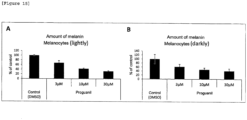
- proguanil does not increase intracellular amount of melanin, as compared to the control obtained by adding DMSO alone ( Figures 15A, 15B ) .
- Example 12 Effect of proguanil on melanin production in a coculture system of keratinocytes and melanocytes
- HEMn-LP Human Epidermal Melanocytes, neonatal, lightly pigmented donor (HEMn-LP) and Human Epidermal Melanocytes, neonatal, darkly pigmented donor (HEMn-DP); melanocytes (lightly) and melanocytes (darkly)) were purchased from Thermo Fisher Scientific. Keratinocytes and melanocytes were cultured at 37°C in 5 vol% CO 2 atmospheric conditions.
- Keratinocytes were seeded in a 96-well plate at a cell density of 1 ⁇ 10 4 cells/well (100 ⁇ L/well). On the following day, melanocytes (lightly and darkly) were seeded at a cell density of 2 ⁇ 10 4 cells/well (100 ⁇ L/well). On the following day, proguanil was added at a final concentration of 0.1, 0.3, 1, 3, 10, 30, 100, 300 or 1000 ⁇ M. Culture was performed at 37°C in a 5 vol% CO 2 atmospheric conditions for 4 days.
- RPMI1640 medium (Thermo Fisher Scientific) containing AIM-V medium and Fetal Bovine Serum (FBS) each in an amount of 10% (v/v) was used and culture was performed at 37°C in 5 vol% CO 2 atmospheric conditions.
- a melanosome fraction was isolated and prepared from MNT-1 cells by a predetermined method ( Murase et al. (2013), J Invest Dermatol, 133: 2416-2424 ). More specifically, MNT-1 cells, which were cultured in a flask (175 cm 2 ) and reached confluent, were recovered with 0.05% Trypsin/EDTA (Thermo Fisher Scientific) and washed with Phosphate-Buffered Saline (DPBS, no calcium, no magnesium; Thermo Fisher Scientific) (hereinafter simply referred to as PBS). Subsequently, 2 mL of Lysis buffer (0.1M Tris-HCL, pH7.5, 1% Igepal CA-630, 0.01% SDS) was added.
- Lysis buffer 0.1M Tris-HCL, pH7.5, 1% Igepal CA-630, 0.01% SDS
- the mixture was gently mixed and stirred at 4°C for one hour while shaking.
- the resultant cell lysate was dispensed in 1.5 mL micro tubes and centrifuged at 1,000 g for 10 minutes (4°C) and the supernatant was recovered. The centrifugal operation was repeated twice. Subsequently, the supernatant was obtained and centrifuged at 20,000 g for 10 minutes (4°C). Finally, the pellet was washed with PBS. The centrifugal operation was repeated twice in the same conditions.
- the pellet obtained was regarded as a melanosome fraction (melanosome-rich fraction).
- Keratinocytes were seeded in a 6-well plate at a cell density of 2 ⁇ 10 5 cells/well (2 mL/well). Three days later, a melanosome fraction obtained from MNT-1 cells cultured in a flask (175 cm 2 ) was added in 6-wells of the plate so as to equally distribute therein. The following day, medium replacement was performed. proguanil was added so as to obtain a final concentration of 10 or 30 ⁇ M. Culture was performed at 37°C in 5 vol% CO 2 atmospheric conditions for 2 days. As a control, the same amount of DMSO was added.
- Epilife was used, which contained, as growth additives (Humedia-KG), hydrocortisone, insulin, gentamicin and amphotericin B and did not contain Human Epidermal Growth Factor (hEGF) or Bovine Pituitary Extract (BPE).
- hEGF Human Epidermal Growth Factor
- BPE Bovine Pituitary Extract
- samples were prepared so as to contain the same amount of protein and subjected to SDS-PAGE and Western Blotting in accordance with routine methods.
- anti-Pmel17 Dako, 1: 250
- an anti-mouse IgG, HRP-Linked F(ab') 2 Fragment Sheep GE Healthcare Life Science
- color was developed by using ECL plus western blotting detection reagents (GE healthcare bioscience) and the expression level was visualized by using LAS4000 (Fuji Film).
- Expression of ⁇ -actin as the internal standard was evaluated by using a monoclonal antibody specific for ⁇ -actin (Sigma-Aldrich, 1: 5000).
- the intensity of the band of a Pmell7 detected in keratinocytes having melanosome incorporated therein and treated with proguanil is increased in a concentration-dependent manner, as compared to the control obtained by adding DMSO.
- the color density of the cell sediment recovered was confirmed to be increased in a concentration-dependent manner ( Figure 17 ). Since Pmel17 is a protein specific to melanosome, it was considered that decomposition of melanosome incorporated in keratinocytes is inhibited by treatment with proguanil.
- Keratinocytes were seeded in a 6-well plate at a density of 1.5 ⁇ 10 5 cells/well (2 mL/well). The following day, proguanil was added so as to obtain a final concentration of 0.3, 1, 3, 10 or 30 ⁇ M. Culture was performed at 37°C in 5 vol% CO 2 atmospheric conditions. As a control, the same amount of DMSO was added. Note that, as the test medium herein, Epilife was used, which contained, as growth additives (Humedia-KG), hydrocortisone, insulin, gentamicin and amphotericin B and did not contain Human Epidermal Growth Factor (hEGF) or Bovine Pituitary Extract (BPE).
- hEGF Human Epidermal Growth Factor
- BPE Bovine Pituitary Extract
- LC3B Antibody Kit for Autophagy (Thermo Fisher Scientific) was added so as to obtain a final concentration of 10 ⁇ M.
- Culture was performed at 37°C in 5 vol% CO 2 atmospheric conditions for 24 hours. After completion of the culture, SDS-PAGE and western blotting were performed in accordance with the method as mentioned above.
- anti-LC3B (1: 1000) attached to the kit mentioned above was used.
- an anti-rabbit IgG, HRP-Linked F(ab') 2 Fragment Sheep (GE Healthcare Life Science) was used.
Landscapes
- Health & Medical Sciences (AREA)
- Life Sciences & Earth Sciences (AREA)
- Natural Medicines & Medicinal Plants (AREA)
- Animal Behavior & Ethology (AREA)
- General Health & Medical Sciences (AREA)
- Public Health (AREA)
- Veterinary Medicine (AREA)
- Epidemiology (AREA)
- Mycology (AREA)
- Biotechnology (AREA)
- Botany (AREA)
- Microbiology (AREA)
- Engineering & Computer Science (AREA)
- Medicinal Chemistry (AREA)
- Chemical & Material Sciences (AREA)
- Pharmacology & Pharmacy (AREA)
- Birds (AREA)
- Alternative & Traditional Medicine (AREA)
- Medical Informatics (AREA)
- Dermatology (AREA)
- Cosmetics (AREA)
- Pharmaceuticals Containing Other Organic And Inorganic Compounds (AREA)
- Medicines Containing Plant Substances (AREA)
- Acyclic And Carbocyclic Compounds In Medicinal Compositions (AREA)
- Nitrogen Condensed Heterocyclic Rings (AREA)
- Medicinal Preparation (AREA)
Claims (5)
- Nicht-therapeutische kosmetische Verwendung von mindestens einem, ausgewählt aus der Gruppe bestehend aus Proguanil oder einem Salz davon und Phenformin oder einem Salz davon, zur Hemmung des Melaninabbaus in Keratinozyten oder der Autophagie in Keratinozyten, zur Verdunkelung der Haut- oder Haarfarbe; oder zur Verhinderung von grauem Haar,
wobei das Salz von Proguanil oder Phenformin ein Salz einer Säure, ausgewählt aus der Gruppe bestehend aus Salzsäure, Bromwasserstoffsäure, Jodwasserstoffsäure, Salpetersäure, Schwefelsäure, Phosphorsäure, Essigsäure, Fumarsäure, Maleinsäure, Bernsteinsäure, Zitronensäure und Weinsäure, ist. - Nicht-therapeutische kosmetische Verwendung gemäß Anspruch 1, wobei die Verwendungskonzentration von Proguanil oder einem Salz davon und Phenformin oder einem Salz davon, bezogen auf Phenformin oder Proguanil, 0,01 Massen-% oder mehr, 0,05 Massen-% oder mehr oder 0,1 Massen-% oder mehr; und 10 Massen-% oder weniger, 5 Massen-% oder weniger oder 2 Massen-% oder weniger beträgt.
- Nicht-therapeutische kosmetische Verwendung gemäß Anspruch 1 oder Anspruch 2, wobei die Verwendungskonzentration von Proguanil oder einem Salz davon und Phenformin oder einem Salz davon, bezogen auf Phenformin oder Proguanil, 0,01 bis 10 Massen-%, 0,05 bis 5 Massen-% oder 0,1 bis 2 Massen-% beträgt.
- Nicht-therapeutische kosmetische Verwendung gemäß Anspruch 1, wobei die Dosis des mindestens einen, ausgewählt aus der Gruppe bestehend aus Proguanil oder einem Salz davon und Phenformin oder einem Salz davon, pro Fläche von 100 cm2 pro Anwendung, wenn sie als äußerliche Zubereitung angewendet wird, in Bezug auf Phenformin oder Proguanil, 0,01 mg oder mehr, 0,05 mg oder mehr oder 0,1 mg oder mehr; und 10 mg oder weniger, 5 mg oder weniger oder 2 mg oder weniger beträgt.
- Nicht-therapeutische kosmetische Verwendung gemäß Anspruch 1, wobei die Dosis des mindestens einen, ausgewählt aus der Gruppe bestehend aus Proguanil oder einem Salz davon und Phenformin oder einem Salz davon, pro Fläche von 100 cm2 pro Anwendung, wenn sie als äußerliche Zubereitung angewendet wird, in Bezug auf Phenformin oder Proguanil, 0,01 bis 10 mg, 0,05 bis 5 mg oder 0,1 bis 2 mg beträgt.
Applications Claiming Priority (3)
| Application Number | Priority Date | Filing Date | Title |
|---|---|---|---|
| US201662294667P | 2016-02-12 | 2016-02-12 | |
| JP2016217082 | 2016-11-07 | ||
| PCT/JP2017/004987 WO2017138652A1 (ja) | 2016-02-12 | 2017-02-10 | メラニン分解抑制剤 |
Publications (3)
| Publication Number | Publication Date |
|---|---|
| EP3415147A1 EP3415147A1 (de) | 2018-12-19 |
| EP3415147A4 EP3415147A4 (de) | 2019-07-10 |
| EP3415147B1 true EP3415147B1 (de) | 2025-04-02 |
Family
ID=59563087
Family Applications (1)
| Application Number | Title | Priority Date | Filing Date |
|---|---|---|---|
| EP17750373.7A Active EP3415147B1 (de) | 2016-02-12 | 2017-02-10 | Melaninabbauhemmer |
Country Status (5)
| Country | Link |
|---|---|
| US (1) | US10966911B2 (de) |
| EP (1) | EP3415147B1 (de) |
| JP (2) | JPWO2017138652A1 (de) |
| CN (1) | CN108697706B (de) |
| WO (1) | WO2017138652A1 (de) |
Families Citing this family (8)
| Publication number | Priority date | Publication date | Assignee | Title |
|---|---|---|---|---|
| JP7139136B2 (ja) * | 2018-04-12 | 2022-09-20 | 小林製薬株式会社 | メラノサイトの共存下でのケラチノサイトのオートファジー活性を増大又は抑制する物質のスクリーニング方法 |
| JP7545896B2 (ja) * | 2018-04-16 | 2024-09-05 | ザ リージェンツ オブ ザ ユニバーシティ オブ カリフォルニア | オートファジーを活性化することによる発毛のための方法及び組成物 |
| JP7156907B2 (ja) * | 2018-10-30 | 2022-10-19 | 花王株式会社 | オートファジー抑制剤 |
| US12377061B2 (en) * | 2018-11-14 | 2025-08-05 | Korea Research Institute Of Bioscience And Biotechnology | Composition for promoting hair growth comprising a guanine derivative |
| JP7630764B2 (ja) * | 2019-06-26 | 2025-02-18 | 大正製薬株式会社 | 毛髪抗老化剤 |
| JP2023104500A (ja) * | 2022-01-18 | 2023-07-28 | 株式会社クラブコスメチックス | ブルーライトによるミトコンドリアダメージの抑制剤 |
| CN116725901A (zh) * | 2023-07-12 | 2023-09-12 | 四川大学 | 一种基于自然光照黑发的精华水及其制备方法 |
| CN118021678A (zh) * | 2024-02-04 | 2024-05-14 | 上海美浮特生物科技有限公司 | 一种促黑色素自噬组合物及其制备方法和应用 |
Family Cites Families (11)
| Publication number | Priority date | Publication date | Assignee | Title |
|---|---|---|---|---|
| JPH0578222A (ja) * | 1991-05-01 | 1993-03-30 | Sansho Seiyaku Co Ltd | 白髪防止剤 |
| WO2000061133A1 (en) * | 1999-04-09 | 2000-10-19 | Glaxo Group Limited | Combination preparation for treating malaria |
| JP4433241B2 (ja) * | 2000-04-10 | 2010-03-17 | 丸善製薬株式会社 | 白髪改善剤 |
| JP2001342112A (ja) | 2000-06-02 | 2001-12-11 | Shiseido Co Ltd | 皮膚外用剤 |
| JP2003171240A (ja) | 2001-09-28 | 2003-06-17 | Lion Corp | 白髪予防改善剤及び毛髪有効成分のスクリーニング方法 |
| FR2901133B1 (fr) * | 2006-05-22 | 2013-04-26 | Oreal | Utilisation de modulateurs de la glycolyse comme agents anti-age |
| KR20110010763A (ko) * | 2008-05-09 | 2011-02-07 | 톨마 인코포레이티드 | 피부/점막 질환을 치료하기 위한 프로구아닐 |
| US8574829B2 (en) * | 2009-03-31 | 2013-11-05 | The Trustees Of The University Of Pennsylvania | Methods of treating cancer with phenformin |
| JP5545938B2 (ja) * | 2009-09-30 | 2014-07-09 | 丸善製薬株式会社 | 幹細胞増殖因子(SCF)mRNA発現促進剤 |
| CN102266499B (zh) | 2011-07-07 | 2012-08-08 | 威海人太生物科技有限公司 | 一种生发药酒及其制备工艺 |
| US8927517B2 (en) | 2012-04-27 | 2015-01-06 | Kao Corporation | Factors controlling skin and hair color |
-
2017
- 2017-02-10 EP EP17750373.7A patent/EP3415147B1/de active Active
- 2017-02-10 CN CN201780011011.1A patent/CN108697706B/zh active Active
- 2017-02-10 US US16/075,828 patent/US10966911B2/en active Active
- 2017-02-10 JP JP2017567019A patent/JPWO2017138652A1/ja active Pending
- 2017-02-10 WO PCT/JP2017/004987 patent/WO2017138652A1/ja not_active Ceased
-
2020
- 2020-09-24 JP JP2020160104A patent/JP7057404B2/ja active Active
Also Published As
| Publication number | Publication date |
|---|---|
| JPWO2017138652A1 (ja) | 2018-12-13 |
| US10966911B2 (en) | 2021-04-06 |
| CN108697706B (zh) | 2021-07-16 |
| WO2017138652A1 (ja) | 2017-08-17 |
| EP3415147A1 (de) | 2018-12-19 |
| US20190053994A1 (en) | 2019-02-21 |
| JP2020200349A (ja) | 2020-12-17 |
| EP3415147A4 (de) | 2019-07-10 |
| JP7057404B2 (ja) | 2022-04-19 |
| CN108697706A (zh) | 2018-10-23 |
Similar Documents
| Publication | Publication Date | Title |
|---|---|---|
| EP3415147B1 (de) | Melaninabbauhemmer | |
| US9079047B2 (en) | Cosmetic composition for skin whitening | |
| CN106266587B (zh) | 兰花萃取物及其制备方法和应用 | |
| US7189419B2 (en) | Use of active extracts to lighten skin, lips, hair, and/or nails | |
| KR102420544B1 (ko) | 장미꽃잎 추출물을 유효성분으로 포함하는 피부노화 방지용 조성물 | |
| TW200904482A (en) | Compositions and methods for inhibiting melanogenesis | |
| KR101858095B1 (ko) | 커큐민을 포함하는 강황 추출물을 유효 성분으로 포함하는 피부 미백, 주름 형성 억제, 및 소양증 완화용 화장품 조성물 | |
| KR20160091301A (ko) | 브라소카틀레야 마르셀라 코스 난초 추출물 및 피부 탈색제로서의 그의 용도 | |
| CN112770722A (zh) | 小花风车子提取物在化妆品中的用途 | |
| CN112245348A (zh) | 一种护肤面霜及其制备方法 | |
| KR20190137328A (ko) | 병아리꽃나무 추출물을 포함하는 항노화용 피부외용제 조성물 | |
| KR101939112B1 (ko) | 진세노사이드 f1을 함유하는 피부 외용제 조성물 | |
| KR101209220B1 (ko) | 생강나무 잎 추출물을 포함하는 피부 미백 및 주름개선용 조성물 | |
| EP2772255B1 (de) | Zusammensetzung mit syringaresinol zur verbesserung der haut | |
| KR101909533B1 (ko) | 진세노사이드 f1을 함유하는 피부 외용제 조성물 | |
| KR20250054284A (ko) | 씨사이드에링고 배양물을 포함하는 피부 개선용 조성물 | |
| EP3354256A1 (de) | Sojasaponinhaltige zusammensetzung zur hautaufhellung | |
| KR20080111299A (ko) | 캄페롤-3,7-o-알파-l-디람노피라노사이드를 함유하는피부 미백용 외용제 조성물 | |
| KR100561781B1 (ko) | 방기 추출물을 유효성분으로 함유하는 피부 미백용 조성물 | |
| KR20190026372A (ko) | 탈모방지 및 발모촉진기능의 천연추출물을 함유한 화장료 조성물 | |
| KR20230147900A (ko) | 포포나무 유래 세포 외 소포체를 포함하는 피부 상태 개선용 조성물 | |
| KR20230006131A (ko) | 피부미백용 화장료 조성물 | |
| KR20110110069A (ko) | 생강나무 잎 추출물을 포함하는 피부 미백 및 주름개선용 조성물 | |
| US20210177732A1 (en) | Combination of extracts of quinquina and of leontopodium alpinum and of the manganese salt of l-pyrrolidone carboxylic acid in the treatment of alopecia | |
| KR20120097568A (ko) | 생강나무로부터 분리한 쿼세틴-3-0-알파-람노사이드을 포함하는 피부미백 및 피부톤 개선용 조성물 |
Legal Events
| Date | Code | Title | Description |
|---|---|---|---|
| STAA | Information on the status of an ep patent application or granted ep patent |
Free format text: STATUS: THE INTERNATIONAL PUBLICATION HAS BEEN MADE |
|
| PUAI | Public reference made under article 153(3) epc to a published international application that has entered the european phase |
Free format text: ORIGINAL CODE: 0009012 |
|
| STAA | Information on the status of an ep patent application or granted ep patent |
Free format text: STATUS: REQUEST FOR EXAMINATION WAS MADE |
|
| 17P | Request for examination filed |
Effective date: 20180911 |
|
| AK | Designated contracting states |
Kind code of ref document: A1 Designated state(s): AL AT BE BG CH CY CZ DE DK EE ES FI FR GB GR HR HU IE IS IT LI LT LU LV MC MK MT NL NO PL PT RO RS SE SI SK SM TR |
|
| AX | Request for extension of the european patent |
Extension state: BA ME |
|
| DAV | Request for validation of the european patent (deleted) | ||
| DAX | Request for extension of the european patent (deleted) | ||
| A4 | Supplementary search report drawn up and despatched |
Effective date: 20190607 |
|
| RIC1 | Information provided on ipc code assigned before grant |
Ipc: A61K 8/49 20060101ALI20190531BHEP Ipc: A61K 36/71 20060101ALI20190531BHEP Ipc: A61K 8/41 20060101ALI20190531BHEP Ipc: A61K 31/4741 20060101AFI20190531BHEP Ipc: A61K 8/9789 20170101ALI20190531BHEP Ipc: A61K 31/155 20060101ALI20190531BHEP Ipc: A61Q 5/00 20060101ALI20190531BHEP Ipc: A61K 36/29 20060101ALI20190531BHEP Ipc: A61K 36/718 20060101ALI20190531BHEP Ipc: A61K 36/756 20060101ALI20190531BHEP Ipc: A61K 8/97 20170101ALI20190531BHEP Ipc: A61Q 19/00 20060101ALI20190531BHEP Ipc: A61P 17/00 20060101ALI20190531BHEP Ipc: A61K 8/43 20060101ALI20190531BHEP |
|
| STAA | Information on the status of an ep patent application or granted ep patent |
Free format text: STATUS: EXAMINATION IS IN PROGRESS |
|
| 17Q | First examination report despatched |
Effective date: 20210121 |
|
| REG | Reference to a national code |
Ref country code: DE Ref legal event code: R079 Free format text: PREVIOUS MAIN CLASS: A61K0031474100 Ipc: A61K0036870000 Ref country code: DE Ref legal event code: R079 Ref document number: 602017088686 Country of ref document: DE Free format text: PREVIOUS MAIN CLASS: A61K0031474100 Ipc: A61K0036870000 |
|
| RIC1 | Information provided on ipc code assigned before grant |
Ipc: A61K 36/71 20060101ALI20240221BHEP Ipc: A61K 8/9789 20170101ALI20240221BHEP Ipc: A61K 8/43 20060101ALI20240221BHEP Ipc: A61K 31/155 20060101ALI20240221BHEP Ipc: A61K 36/718 20060101ALI20240221BHEP Ipc: A61K 8/97 20170101ALI20240221BHEP Ipc: A61K 8/49 20060101ALI20240221BHEP Ipc: A61K 36/29 20060101ALI20240221BHEP Ipc: A61K 36/756 20060101ALI20240221BHEP Ipc: A61Q 19/02 20060101ALI20240221BHEP Ipc: A61Q 5/10 20060101ALI20240221BHEP Ipc: A61K 31/4375 20060101ALI20240221BHEP Ipc: A61K 36/87 20060101AFI20240221BHEP |
|
| GRAP | Despatch of communication of intention to grant a patent |
Free format text: ORIGINAL CODE: EPIDOSNIGR1 |
|
| STAA | Information on the status of an ep patent application or granted ep patent |
Free format text: STATUS: GRANT OF PATENT IS INTENDED |
|
| INTG | Intention to grant announced |
Effective date: 20240419 |
|
| GRAS | Grant fee paid |
Free format text: ORIGINAL CODE: EPIDOSNIGR3 |
|
| GRAJ | Information related to disapproval of communication of intention to grant by the applicant or resumption of examination proceedings by the epo deleted |
Free format text: ORIGINAL CODE: EPIDOSDIGR1 |
|
| GRAL | Information related to payment of fee for publishing/printing deleted |
Free format text: ORIGINAL CODE: EPIDOSDIGR3 |
|
| STAA | Information on the status of an ep patent application or granted ep patent |
Free format text: STATUS: EXAMINATION IS IN PROGRESS |
|
| INTC | Intention to grant announced (deleted) | ||
| P01 | Opt-out of the competence of the unified patent court (upc) registered |
Free format text: CASE NUMBER: APP_43220/2024 Effective date: 20240724 |
|
| GRAP | Despatch of communication of intention to grant a patent |
Free format text: ORIGINAL CODE: EPIDOSNIGR1 |
|
| STAA | Information on the status of an ep patent application or granted ep patent |
Free format text: STATUS: GRANT OF PATENT IS INTENDED |
|
| INTG | Intention to grant announced |
Effective date: 20241122 |
|
| RAP3 | Party data changed (applicant data changed or rights of an application transferred) |
Owner name: KAO CORPORATION |
|
| GRAA | (expected) grant |
Free format text: ORIGINAL CODE: 0009210 |
|
| STAA | Information on the status of an ep patent application or granted ep patent |
Free format text: STATUS: THE PATENT HAS BEEN GRANTED |
|
| AK | Designated contracting states |
Kind code of ref document: B1 Designated state(s): AL AT BE BG CH CY CZ DE DK EE ES FI FR GB GR HR HU IE IS IT LI LT LU LV MC MK MT NL NO PL PT RO RS SE SI SK SM TR |
|
| REG | Reference to a national code |
Ref country code: GB Ref legal event code: FG4D |
|
| REG | Reference to a national code |
Ref country code: CH Ref legal event code: EP |
|
| REG | Reference to a national code |
Ref country code: IE Ref legal event code: FG4D |
|
| REG | Reference to a national code |
Ref country code: DE Ref legal event code: R096 Ref document number: 602017088686 Country of ref document: DE |
|
| REG | Reference to a national code |
Ref country code: NL Ref legal event code: MP Effective date: 20250402 |
|
| PG25 | Lapsed in a contracting state [announced via postgrant information from national office to epo] |
Ref country code: NL Free format text: LAPSE BECAUSE OF FAILURE TO SUBMIT A TRANSLATION OF THE DESCRIPTION OR TO PAY THE FEE WITHIN THE PRESCRIBED TIME-LIMIT Effective date: 20250402 |
|
| REG | Reference to a national code |
Ref country code: AT Ref legal event code: MK05 Ref document number: 1780643 Country of ref document: AT Kind code of ref document: T Effective date: 20250402 |
|
| PG25 | Lapsed in a contracting state [announced via postgrant information from national office to epo] |
Ref country code: PT Free format text: LAPSE BECAUSE OF FAILURE TO SUBMIT A TRANSLATION OF THE DESCRIPTION OR TO PAY THE FEE WITHIN THE PRESCRIBED TIME-LIMIT Effective date: 20250804 Ref country code: ES Free format text: LAPSE BECAUSE OF FAILURE TO SUBMIT A TRANSLATION OF THE DESCRIPTION OR TO PAY THE FEE WITHIN THE PRESCRIBED TIME-LIMIT Effective date: 20250402 Ref country code: FI Free format text: LAPSE BECAUSE OF FAILURE TO SUBMIT A TRANSLATION OF THE DESCRIPTION OR TO PAY THE FEE WITHIN THE PRESCRIBED TIME-LIMIT Effective date: 20250402 |
|
| REG | Reference to a national code |
Ref country code: LT Ref legal event code: MG9D |
|
| PG25 | Lapsed in a contracting state [announced via postgrant information from national office to epo] |
Ref country code: NO Free format text: LAPSE BECAUSE OF FAILURE TO SUBMIT A TRANSLATION OF THE DESCRIPTION OR TO PAY THE FEE WITHIN THE PRESCRIBED TIME-LIMIT Effective date: 20250702 Ref country code: GR Free format text: LAPSE BECAUSE OF FAILURE TO SUBMIT A TRANSLATION OF THE DESCRIPTION OR TO PAY THE FEE WITHIN THE PRESCRIBED TIME-LIMIT Effective date: 20250703 |
|
| PG25 | Lapsed in a contracting state [announced via postgrant information from national office to epo] |
Ref country code: PL Free format text: LAPSE BECAUSE OF FAILURE TO SUBMIT A TRANSLATION OF THE DESCRIPTION OR TO PAY THE FEE WITHIN THE PRESCRIBED TIME-LIMIT Effective date: 20250402 |
|
| PG25 | Lapsed in a contracting state [announced via postgrant information from national office to epo] |
Ref country code: BG Free format text: LAPSE BECAUSE OF FAILURE TO SUBMIT A TRANSLATION OF THE DESCRIPTION OR TO PAY THE FEE WITHIN THE PRESCRIBED TIME-LIMIT Effective date: 20250402 |
|
| PG25 | Lapsed in a contracting state [announced via postgrant information from national office to epo] |
Ref country code: HR Free format text: LAPSE BECAUSE OF FAILURE TO SUBMIT A TRANSLATION OF THE DESCRIPTION OR TO PAY THE FEE WITHIN THE PRESCRIBED TIME-LIMIT Effective date: 20250402 |
|
| PG25 | Lapsed in a contracting state [announced via postgrant information from national office to epo] |
Ref country code: AT Free format text: LAPSE BECAUSE OF FAILURE TO SUBMIT A TRANSLATION OF THE DESCRIPTION OR TO PAY THE FEE WITHIN THE PRESCRIBED TIME-LIMIT Effective date: 20250402 |
|
| PG25 | Lapsed in a contracting state [announced via postgrant information from national office to epo] |
Ref country code: RS Free format text: LAPSE BECAUSE OF FAILURE TO SUBMIT A TRANSLATION OF THE DESCRIPTION OR TO PAY THE FEE WITHIN THE PRESCRIBED TIME-LIMIT Effective date: 20250702 |
|
| PG25 | Lapsed in a contracting state [announced via postgrant information from national office to epo] |
Ref country code: IS Free format text: LAPSE BECAUSE OF FAILURE TO SUBMIT A TRANSLATION OF THE DESCRIPTION OR TO PAY THE FEE WITHIN THE PRESCRIBED TIME-LIMIT Effective date: 20250802 |
|
| PG25 | Lapsed in a contracting state [announced via postgrant information from national office to epo] |
Ref country code: LV Free format text: LAPSE BECAUSE OF FAILURE TO SUBMIT A TRANSLATION OF THE DESCRIPTION OR TO PAY THE FEE WITHIN THE PRESCRIBED TIME-LIMIT Effective date: 20250402 |
|
| PG25 | Lapsed in a contracting state [announced via postgrant information from national office to epo] |
Ref country code: DK Free format text: LAPSE BECAUSE OF FAILURE TO SUBMIT A TRANSLATION OF THE DESCRIPTION OR TO PAY THE FEE WITHIN THE PRESCRIBED TIME-LIMIT Effective date: 20250402 Ref country code: SM Free format text: LAPSE BECAUSE OF FAILURE TO SUBMIT A TRANSLATION OF THE DESCRIPTION OR TO PAY THE FEE WITHIN THE PRESCRIBED TIME-LIMIT Effective date: 20250402 |
|
| PGFP | Annual fee paid to national office [announced via postgrant information from national office to epo] |
Ref country code: FR Payment date: 20251231 Year of fee payment: 10 |
|
| PG25 | Lapsed in a contracting state [announced via postgrant information from national office to epo] |
Ref country code: CZ Free format text: LAPSE BECAUSE OF FAILURE TO SUBMIT A TRANSLATION OF THE DESCRIPTION OR TO PAY THE FEE WITHIN THE PRESCRIBED TIME-LIMIT Effective date: 20250402 |
|
| PG25 | Lapsed in a contracting state [announced via postgrant information from national office to epo] |
Ref country code: EE Free format text: LAPSE BECAUSE OF FAILURE TO SUBMIT A TRANSLATION OF THE DESCRIPTION OR TO PAY THE FEE WITHIN THE PRESCRIBED TIME-LIMIT Effective date: 20250402 |
|
| PG25 | Lapsed in a contracting state [announced via postgrant information from national office to epo] |
Ref country code: SK Free format text: LAPSE BECAUSE OF FAILURE TO SUBMIT A TRANSLATION OF THE DESCRIPTION OR TO PAY THE FEE WITHIN THE PRESCRIBED TIME-LIMIT Effective date: 20250402 Ref country code: RO Free format text: LAPSE BECAUSE OF FAILURE TO SUBMIT A TRANSLATION OF THE DESCRIPTION OR TO PAY THE FEE WITHIN THE PRESCRIBED TIME-LIMIT Effective date: 20250402 |
|
| PG25 | Lapsed in a contracting state [announced via postgrant information from national office to epo] |
Ref country code: IT Free format text: LAPSE BECAUSE OF FAILURE TO SUBMIT A TRANSLATION OF THE DESCRIPTION OR TO PAY THE FEE WITHIN THE PRESCRIBED TIME-LIMIT Effective date: 20250402 |
|
| PLBE | No opposition filed within time limit |
Free format text: ORIGINAL CODE: 0009261 |
|
| STAA | Information on the status of an ep patent application or granted ep patent |
Free format text: STATUS: NO OPPOSITION FILED WITHIN TIME LIMIT |
|
| REG | Reference to a national code |
Ref country code: CH Ref legal event code: L10 Free format text: ST27 STATUS EVENT CODE: U-0-0-L10-L00 (AS PROVIDED BY THE NATIONAL OFFICE) Effective date: 20260211 |