EP3407704B1 - Reducing cadmium accumulation in field grown tobacco plants - Google Patents
Reducing cadmium accumulation in field grown tobacco plants Download PDFInfo
- Publication number
- EP3407704B1 EP3407704B1 EP17702591.3A EP17702591A EP3407704B1 EP 3407704 B1 EP3407704 B1 EP 3407704B1 EP 17702591 A EP17702591 A EP 17702591A EP 3407704 B1 EP3407704 B1 EP 3407704B1
- Authority
- EP
- European Patent Office
- Prior art keywords
- seq
- amino acid
- mutation
- position corresponding
- plant
- Prior art date
- Legal status (The legal status is an assumption and is not a legal conclusion. Google has not performed a legal analysis and makes no representation as to the accuracy of the status listed.)
- Active
Links
Images




Classifications
-
- C—CHEMISTRY; METALLURGY
- C12—BIOCHEMISTRY; BEER; SPIRITS; WINE; VINEGAR; MICROBIOLOGY; ENZYMOLOGY; MUTATION OR GENETIC ENGINEERING
- C12N—MICROORGANISMS OR ENZYMES; COMPOSITIONS THEREOF; PROPAGATING, PRESERVING, OR MAINTAINING MICROORGANISMS; MUTATION OR GENETIC ENGINEERING; CULTURE MEDIA
- C12N15/00—Mutation or genetic engineering; DNA or RNA concerning genetic engineering, vectors, e.g. plasmids, or their isolation, preparation or purification; Use of hosts therefor
- C12N15/09—Recombinant DNA-technology
- C12N15/63—Introduction of foreign genetic material using vectors; Vectors; Use of hosts therefor; Regulation of expression
- C12N15/79—Vectors or expression systems specially adapted for eukaryotic hosts
- C12N15/82—Vectors or expression systems specially adapted for eukaryotic hosts for plant cells, e.g. plant artificial chromosomes (PACs)
- C12N15/8241—Phenotypically and genetically modified plants via recombinant DNA technology
- C12N15/8242—Phenotypically and genetically modified plants via recombinant DNA technology with non-agronomic quality (output) traits, e.g. for industrial processing; Value added, non-agronomic traits
-
- A—HUMAN NECESSITIES
- A01—AGRICULTURE; FORESTRY; ANIMAL HUSBANDRY; HUNTING; TRAPPING; FISHING
- A01G—HORTICULTURE; CULTIVATION OF VEGETABLES, FLOWERS, RICE, FRUIT, VINES, HOPS OR SEAWEED; FORESTRY; WATERING
- A01G22/00—Cultivation of specific crops or plants not otherwise provided for
- A01G22/45—Tobacco
-
- A—HUMAN NECESSITIES
- A01—AGRICULTURE; FORESTRY; ANIMAL HUSBANDRY; HUNTING; TRAPPING; FISHING
- A01H—NEW PLANTS OR NON-TRANSGENIC PROCESSES FOR OBTAINING THEM; PLANT REPRODUCTION BY TISSUE CULTURE TECHNIQUES
- A01H5/00—Angiosperms, i.e. flowering plants, characterised by their plant parts; Angiosperms characterised otherwise than by their botanic taxonomy
- A01H5/12—Leaves
-
- A—HUMAN NECESSITIES
- A01—AGRICULTURE; FORESTRY; ANIMAL HUSBANDRY; HUNTING; TRAPPING; FISHING
- A01H—NEW PLANTS OR NON-TRANSGENIC PROCESSES FOR OBTAINING THEM; PLANT REPRODUCTION BY TISSUE CULTURE TECHNIQUES
- A01H6/00—Angiosperms, i.e. flowering plants, characterised by their botanic taxonomy
- A01H6/82—Solanaceae, e.g. pepper, tobacco, potato, tomato or eggplant
- A01H6/823—Nicotiana, e.g. tobacco
-
- A—HUMAN NECESSITIES
- A24—TOBACCO; CIGARS; CIGARETTES; SIMULATED SMOKING DEVICES; SMOKERS' REQUISITES
- A24B—MANUFACTURE OR PREPARATION OF TOBACCO FOR SMOKING OR CHEWING; TOBACCO; SNUFF
- A24B15/00—Chemical features or treatment of tobacco; Tobacco substitutes, e.g. in liquid form
- A24B15/10—Chemical features of tobacco products or tobacco substitutes
-
- A—HUMAN NECESSITIES
- A24—TOBACCO; CIGARS; CIGARETTES; SIMULATED SMOKING DEVICES; SMOKERS' REQUISITES
- A24B—MANUFACTURE OR PREPARATION OF TOBACCO FOR SMOKING OR CHEWING; TOBACCO; SNUFF
- A24B15/00—Chemical features or treatment of tobacco; Tobacco substitutes, e.g. in liquid form
- A24B15/18—Treatment of tobacco products or tobacco substitutes
- A24B15/24—Treatment of tobacco products or tobacco substitutes by extraction; Tobacco extracts
- A24B15/241—Extraction of specific substances
- A24B15/248—Heavy metals
-
- C—CHEMISTRY; METALLURGY
- C07—ORGANIC CHEMISTRY
- C07K—PEPTIDES
- C07K14/00—Peptides having more than 20 amino acids; Gastrins; Somatostatins; Melanotropins; Derivatives thereof
- C07K14/415—Peptides having more than 20 amino acids; Gastrins; Somatostatins; Melanotropins; Derivatives thereof from plants
-
- C—CHEMISTRY; METALLURGY
- C12—BIOCHEMISTRY; BEER; SPIRITS; WINE; VINEGAR; MICROBIOLOGY; ENZYMOLOGY; MUTATION OR GENETIC ENGINEERING
- C12N—MICROORGANISMS OR ENZYMES; COMPOSITIONS THEREOF; PROPAGATING, PRESERVING, OR MAINTAINING MICROORGANISMS; MUTATION OR GENETIC ENGINEERING; CULTURE MEDIA
- C12N15/00—Mutation or genetic engineering; DNA or RNA concerning genetic engineering, vectors, e.g. plasmids, or their isolation, preparation or purification; Use of hosts therefor
- C12N15/09—Recombinant DNA-technology
- C12N15/63—Introduction of foreign genetic material using vectors; Vectors; Use of hosts therefor; Regulation of expression
- C12N15/79—Vectors or expression systems specially adapted for eukaryotic hosts
- C12N15/82—Vectors or expression systems specially adapted for eukaryotic hosts for plant cells, e.g. plant artificial chromosomes (PACs)
- C12N15/8216—Methods for controlling, regulating or enhancing expression of transgenes in plant cells
- C12N15/8218—Antisense, co-suppression, viral induced gene silencing [VIGS], post-transcriptional induced gene silencing [PTGS]
Definitions
- Cadmium (Cd) is one of the metals for which there is no reported beneficial effect on plant or human development. It is classified as known human carcinogen. If Cd is accumulated in excess in plants, it can trigger various deleterious effects - such as a reduced leaf surface, reduced dry weight, reduced water content, reduced chlorophyll content, and reduced carotenoid content.
- Tobacco is a plant species characterized by an ability to accumulate four times higher levels of Cd in the shoots than in the roots. It is desirable to be able to reduce the accumulation of Cd in plants - such as tobacco. It is especially desirable to be able to reduce the accumulation of Cd in plants - such as tobacco - when grown outside in an open field on a large scale for commercial production.
- Cd concentrations in field-grown tobacco leaves can vary depending on factors such as the agro-climate, soil parameters, and cultivars.
- the Cd concentrations measured in field-grown tobacco leaves can be in the range from approximately 0.5 to 5 ppm (parts per million, or ⁇ g/g of dry weight of tobacco leaves). Lower and higher values have been observed in the range of 0 to 6.78 ppm (Lugon-Moulin et al., 2006).
- non-GMO non-genetically modified organism
- WO2012/041913 describes tobacco plants with reduced heavy metal content in leaves. This is achieved through the use of tobacco plants comprising at least one mutation in a HMA gene. The mutation causes a substitution or a deletion or an insertion of at least one amino acid in the polypeptide encoded by the nucleotide sequence and reduces the heavy metal uptake by the leaves of the plant.
- Various single mutations were identified in WO2012/041913 as summarised in Table 1, herein. This citation presents data of small plantlets grown in hydroponics. In this system, very high Cd and Zn concentrations were present that do not reflect the conditions in open field systems. Cd concentrations measured in leaves of control plants in such systems are 30- to 300-fold higher compared to that found under soil conditions.
- AtHMA2 and AtHMA4 encode Heavy Metal ATPases (HMAs) that transport both zinc (Zn) and Cd from roots to shoots.
- HMAs Heavy Metal ATPases
- Two orthologues to the AtHMA2 and AtHMA4 genes were identified in the N. tabacum genome and named NtHMA ⁇ and NtHMA ⁇ , respectively. Expression was altered to determine the possibility of using this approach to obtain tobacco lines with reduced Cd levels in the leaves.
- NtHMA genes were identified by screening an EMS mutagenized mutant collection. Missense mutations (P249S, E387K and G515R) and nonsense mutations (W265* and R529*) were identified in either NtHMA ⁇ (P294S, E387K and W265*) or in NtHMA ⁇ (G515R, R520*). These mutations altered amino acids or introduced premature stop codons in the second (P294S and W265*) and third (E387K, G515R and R520*) cytosolic loop of the HMA protein.
- the homozygous single mutant lines generated by Hermand et al. (2014) were grown under artificial sterile conditions on agar plates containing Murashige and Skoog medium.
- the results obtained with the single mutants as reported in Figures 4a and 4b of Hermand et al. (2014) are summarised in Table 2 herein.
- the single mutants were reported to show reduced Cd and Zn accumulation in shoots.
- the single mutant plants were reported to have growth and development that was comparable to the wild type. Plants containing a nonsense mutation in both NtHMA genes showed strong stunted growth and did not produce seeds.
- the data reported in Figures 4a and 4b is obtained using small plantlets grown in sterile culture in which artificially high Cd and Zn concentrations are used.
- NtHMA genes could lead to commercially valuable plants that display a reduction of Cd concentration in shoots.
- HMA4 RNAi tobacco plants are described that exhibit around 10-times reduced Cd content compared to a wild type control. However, the phenotype was strongly affected with reduced growth, thicker leaves and necrotic lesions. A similar phenotype was reported for tobacco HMA4 double knockout mutants by Hermand et al., 2014.
- WO2013/119541 is another example which describes methods of making tobacco plants or a portion thereof having altered uptake and/or altered levels of at least one environmental contaminant or other non-natural chemical as compared to an unmodified tobacco plant or portion thereof from which the modified plant is derived, the environmental contaminant or other non-natural chemical may comprise a heavy metal which may be cadmium.
- the mutated genes and positions of mutations are not disclosed therein.
- WO2012/041913 and Hermand et al. (2014) describe EMS mutant tobacco lines which show reduced Zn and Cd accumulation in shoots under highly artificial sterile or hydroponic growth conditions.
- the present invention is concerned with reducing the level of Cd in tobacco plants when they are grown outside in the open environment (for example, in the field) where the levels of Cd are 30- to 300-fold lower than the Cd levels used in WO2012/041913 and Hermand et al. (2014).
- the tobacco plants described in the present disclosure are used for commercial production which demands that they are grown under field conditions in the open air in very large quantities rather than being grown under artificial conditions. To commercially grow plants under artificial conditions would be uneconomical.
- the present invention seeks to provide mutant tobacco plants - such as non-GMO mutant tobacco plants - in which the level of Cd accumulation is reduced when they are grown in open field conditions.
- the conditions used by Hermand et al. (2014) do not reflect the natural conditions in open field conditions, which are the conditions that are of interest in the present disclosure.
- the results reported by Hermand et al. (2014) are of limited use to the skilled person seeking to reduce the level of Cd in plants grown in open field conditions since the Cd level in open field conditions and the artificial conditions used by Hermand et al. (2014) and are not comparable.
- Liedschulte et al. (2015) conclude that a deleterious mutation in NtHMA4.1 or NtHMA4.2 does not significantly reduce Cd levels in plants grown under field conditions beyond the level of measurement of uncertainty (about 20%).
- the approach of Hermand et al. (2014) is concluded as not being applicable to field conditions.
- the present inventors created various HMA4 homozygous EMS single mutants, including the single W265* nonsense mutation reported by Hermand et al. (2014), and tested them in open field conditions.
- the results of this experiment are reported in Table 3 herein.
- the results show that none of the single mutants tested, including the W265* single mutation of Hermand et al. (2014), showed any Cd reduction under open field conditions.
- the % Cd reduction vs control for each of the single mutants tested under open field conditions was 0%.
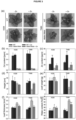
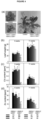
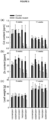
- the level of Cd reduction in leaf that was achieved in open field conditions was at least about 27%, about 30%, about 40%, about 50%, about 60%, about 70%, about 80% or even about 90% or more, as summarised in Tables 4, 5 and 6 herein.
- This high level of Cd reduction is highly advantageous in reducing the level of Cd in plants grown under open field conditions.
- the double mutant tobacco plants with reduced levels of Cd in leaf as described herein do not suffer a deleterious phenotype - such as reduced amounts of growth/dwarfism/biomass.
- the advantageous results reported for the double mutants described herein is a finding that was not expected nor predicted by the present inventors.
- the present invention is based, at least in part, on the finding that tobacco plants can exhibit reduced accumulation of Cd in leaf when grown in open field conditions by at least partially reducing the expression or activity of NtHMA4.1 and NtHMA4.2.
- non-GMO plants can be prepared through the use of mutagenesis and suitably do not suffer a deleterious phenotype.
- NtHMA4.1 and NtHMA4.2 correspond to NtHMA ⁇ and NtHMA ⁇ , respectively, as reported by Hermand et al. (2014).
- the different mutant combinations can be used as a toolkit to breed different varieties with reduced levels of cadmium and without compromised phenotype and/or yield.
- Producing plants according to the present disclosure provides a number of advantages.
- the plants described herein can be non-GMO plants which overcomes the difficulties of growing and commercialising genetically modified crops.
- the plants described herein can be grown in soils containing variable Cd concentrations. These plants and derivative seeds can provide more options for cultivating them in a broader range of soil environments, which may increase the amount of cultivatable soils available to practitioners. It may also increase the range of potentially acceptable phosphate fertilisers, which may contain higher levels of Cd as a contaminating element. Thus, lower cost phosphate fertilizers may become acceptable for crop production.
- the % Cd reduction in the mutant plants - such as the aerial parts of the mutant plants, including the leaf lamina portion, can be approximately at least about 20%, 27%, 30%, 33%, 35%, 40%, 45%, 50%, 55%, 60%, 65%, 70%, 75%, 80%, 85%, 90%, 91%, 92%, 93%, 94% or 95% or more, when compared to the wild-type counterpart.
- the phenotype of the mutant plants described herein can be similar to or the same as the wild-type counterparts, especially at harvest time, which means that the amount of biomass obtained for production is commercially acceptable.
- the mutant plants do not suffer from reduced amounts of growth/dwarfism, especially at harvest time.
- Mutation combinations leading to lowest possible Cd content combined with commercially acceptable biomass levels can be chosen according to the plant species and tobacco cultivar of interest.
- isolated refers to any entity that is taken from its natural milieu, but the term does not connote any degree of purification.
- An "expression vector” is a nucleic acid vehicle that comprises a combination of nucleic acid components for enabling the expression of nucleic acid. Suitable expression vectors include episomes capable of extra-chromosomal replication such as circular, double-stranded nucleic acid plasmids; linearized double-stranded nucleic acid plasmids; and other functionally equivalent expression vectors of any origin.
- An expression vector comprises at least a promoter positioned upstream and operably-linked to a nucleic acid, nucleic acid constructs or nucleic acid conjugate, as defined below.
- construct refers to a double-stranded, recombinant nucleic acid fragment comprising one or more polynucleotides.
- the construct comprises a "template strand” base-paired with a complementary "sense or coding strand.”
- a given construct can be inserted into a vector in two possible orientations, either in the same (or sense) orientation or in the reverse (or anti-sense) orientation with respect to the orientation of a promoter positioned within a vector - such as an expression vector.
- a “vector” refers to a nucleic acid vehicle that comprises a combination of nucleic acid components for enabling the transport of nucleic acid, nucleic acid constructs and nucleic acid conjugates and the like.
- Suitable vectors include episomes capable of extra-chromosomal replication such as circular, double-stranded nucleic acid plasmids; linearized double-stranded nucleic acid plasmids; and other vectors of any origin.
- a “promoter” refers to a nucleic acid element/sequence, typically positioned upstream and operably-linked to a double-stranded DNA fragment. Promoters can be derived entirely from regions proximate to a native gene of interest, or can be composed of different elements derived from different native promoters or synthetic DNA segments.
- the terms "homology, identity or similarity” refer to the degree of sequence similarity between two polypeptides or between two nucleic acid molecules compared by sequence alignment.
- the degree of homology between two discrete nucleic acid sequences being compared is a function of the number of identical, or matching, nucleotides at comparable positions.
- the percent identity may be determined by visual inspection and mathematical calculation. Alternatively, the percent identity of two nucleic acid sequences may be determined by comparing sequence information using a computer program such as - ClustalW, BLAST, FASTA or Smith-Waterman.
- the percentage identity for two sequences may take different values depending on: (i) the method used to align the sequences, for example, ClustalW, BLAST, FASTA, Smith-Waterman (implemented in different programs), or structural alignment from 3D comparison; and (ii) the parameters used by the alignment method, for example, local vs global alignment, the pair-score matrix used (for example, BLOSUM62, PAM250, Gonnet etc.), and gap-penalty, for example, functional form and constants. Having made the alignment, there are different ways of calculating percentage identity between the two sequences.
- percentage identity is also strongly length dependent. Therefore, the shorter a pair of sequences is, the higher the sequence identity one may expect to occur by chance.
- the popular multiple alignment program ClustalW Nucleic Acids Research (1994) 22, 4673-4680 ; Nucleic Acids Research (1997), 24, 4876-4882 ) is a suitable way for generating multiple alignments of polypeptides or polynucleotides.
- a “variant” means a substantially similar sequence.
- a variant can have a similar function or substantially similar function as a wild-type sequence.
- a similar function is at least about 50%, 60%, 70%, 80% or 90% of wild-type enzyme function.
- a substantially similar function is at least about 90%, 95%, 96%, 97%, 98% or 99% of wild-type enzyme function.
- the variants can have one or more favourable mutations that result in the enzyme having a reduced level of activity as compared to the wild-type polypeptide.
- the variants can have one or more favourable mutations that result in their activity being knocked out (ie. a 100% inhibition, and thus a non-functional polypeptide). Exemplary variants having one or more favourable mutations are described herein.
- the term "plant” refers to any plant or part of a plant at any stage of its life cycle or development, and its progenies.
- the plant is a "tobacco plant", which refers to a plant belonging to the genus Nicotiana, specifically Nicotiana tabacum. Other species of tobacco plant are described herein.
- the plant is a mutant plant in which the expression of one or more genes or the activity of one or more proteins is modulated as compared to a control plant.
- the alteration that renders the plant a mutant plant results in the modulation of the expression of one or more genes or the modulation of the activity of one or more polypeptides.
- the alteration is a genetic alternation or a genetic modification.
- Plant parts include plant cells, plant protoplasts, plant cell tissue cultures from which a whole plant can be regenerated, plant calli, plant clumps and plant cells that are intact in plants or parts of plants such as embryos, pollen, anthers, ovules, seeds, leaves, flowers, stems, branches, fruit, roots, root tips and the like. Progeny, variants and mutants of regenerated plants are also included within the scope of the disclosure, provided that they comprise the introduced polynucleotides described herein. Leaves of plants are particularly suitable for use in the present disclosure.
- a "plant cell” refers to a structural and physiological unit of a plant.
- the plant cell may be in the form of a protoplast without a cell wall, an isolated single cell or a cultured cell, or as a part of higher organized unit such as but not limited to, plant tissue, a plant organ, or a whole plant.
- plant material refers to any solid, liquid or gaseous composition, or a combination thereof, obtainable from a plant, including biomass, leaves, stems, roots, flowers or flower parts, fruits, pollen, egg cells, zygotes, seeds, cuttings, secretions, extracts, cell or tissue cultures, or any other parts or products of a plant.
- the plant material comprises or consists of biomass, stem, seed or leaves.
- the plant material comprises or consists of leaves.
- variable refers to a population of plants that share constant characteristics which separate them from other plants of the same species. While possessing one or more distinctive traits, a variety is further characterized by a very small overall variation between individuals within that variety. A variety is often sold commercially.
- line or "breeding line” as used herein denotes a group of plants that are used during plant breeding. A line is distinguishable from a variety as it displays little variation between individuals for one or more traits of interest, although there may be some variation between individuals for other traits.
- non-naturally occurring as used herein describes an entity (for example, a polynucleotide, a genetic mutation, a polypeptide, a plant, and a plant cell and plant material) that is not formed by nature or that does not exist in nature.
- entity for example, a polynucleotide, a genetic mutation, a polypeptide, a plant, and a plant cell and plant material
- Such non-naturally occurring entities or artificial entities may be made, synthesized, initiated, modified, intervened, or manipulated by methods described herein or that are known in the art.
- Such non-naturally occurring entities or artificial entities may be made, synthesized, initiated, modified, intervened, or manipulated by man.
- a non-naturally occurring plant a non-naturally occurring plant cell or non-naturally occurring plant material may be made using genetic manipulation technologies - such as antisense RNA, interfering RNA, meganuclease and the like.
- a non-naturally occurring plant, a non-naturally occurring plant cell or non-naturally occurring plant material may be made by introgression of or by transferring one or more genetic mutations (for example one or more polymorphisms) from a first plant or plant cell into a second plant or plant cell (which may itself be naturally occurring), such that the resulting plant, plant cell or plant material or the progeny thereof comprises a genetic constitution (for example, a genome, a chromosome or a segment thereof) that is not formed by nature or that does not exist in nature.
- the resulting plant, plant cell or plant material is thus artificial or non-naturally occurring.
- an artificial or non-naturally occurring plant or plant cell may be made by modifying a genetic sequence in a first naturally occurring plant or plant cell, even if the resulting genetic sequence occurs naturally in a second plant or plant cell that comprises a different genetic background from the first plant or plant cell.
- modulating may refer to reducing, inhibiting, eliminating increasing or otherwise affecting the expression or activity of a polypeptide.
- the term may also refer to reducing, inhibiting, eliminating, increasing or otherwise affecting the activity of a gene encoding a polypeptide which can include, but is not limited to, modulating transcriptional activity.
- reduce refers to a reduction of from about 10% to about 99%, or a reduction of at least 10%, at least 20%, at least 25%, at least 30%, at least 40%, at least 50%, at least 60%, at least 70%, at least 75%, at least 80%, at least 90%, at least 95%, at least 98%, at least 99%, or at least 100% or more of a quantity or an activity, such as but not limited to polypeptide activity, transcriptional activity and protein expression.
- inhibitor refers to a reduction of from about 98% to about 100%, or a reduction of at least 98%, at least 99%, but particularly of 100%, of a quantity or an activity, such as but not limited to polypeptide activity, transcriptional activity and expression.
- Transformation of a cell may be stable or transient.
- transient transformation or “transiently transformed” or variations thereof refers to the introduction of one or more exogenous polynucleotides into a cell in the absence of integration of the exogenous polynucleotide into the host cell's genome.
- stable transformation or “stably transformed” refers to the introduction and integration of one or more exogenous polynucleotides into the genome of a cell.
- stable transformant refers to a cell which has stably integrated one or more exogenous polynucleotides into the genomic or organellar DNA. It is to be understood that an organism or its cell transformed with the nucleic acids, constructs and/or vectors of the present disclosure can be transiently as well as stably transformed. In certain examples, stable transformation is preferred.
- increase refers to an increase of from about 5% to about 99%, or an increase of at least 5%, at least 10%, at least 20%, at least 25%, at least 30%, at least 40%, at least 50%, at least 60%, at least 70%, at least 75%, at least 80%, at least 90%, at least 95%, at least 98%, at least 99%, or at least 100% or more of a quantity or an activity, such as but not limited to polypeptide activity, transcriptional activity and protein expression.
- substantially as used herein and when used in the context of an amount means that the amount is at least about 10%, at least about 9%, at least about 8%, at least about 7%, at least about 6%, at least about 5%, at least about 4%, at least about 3%, at least about 2%, at least about 1%, or at least about 0.1% of the amount that it is being compared to.
- control in the context of a control plant or control plant cell and the like means a plant or plant cell in which the expression or activity of the gene or protein of interest has not been modulated and so it can provide a comparison or reference with a plant or plant cell in which the expression or activity of the enzyme has been modified.
- the control will not include the at least one genetic alteration which reduces the expression or activity of the HMA4(s) described herein.
- the control plant or pant cell may comprise an empty vector.
- the control plant or plant cell may correspond to a wild-type plant or wild-type plant cell and the like. In all such cases, the subject plant and the control plant are grown and harvested under the same conditions and using the same protocols for comparative purposes.
- the subject plant and the control plant can be grown in and harvested from soil with about the same levels of heavy metal(s) content - such as Cd - so that comparisons between the two can be made.
- This can entail the subject plant and the control plant being grown in the same part of a field, for example, so that they are exposed to the approximately the same soil Cd levels.
- Changes in levels, ratios, activity, or distribution of the genes or polypeptides described herein, or changes in plant phenotype, particularly reduced accumulation of Cd and/or zinc can be measured using the methods described herein by comparing a subject plant to the control plant, suitably, where the subject plant and the control plant have been cultured and/or harvested using the same protocols.
- the control plant can provide a reference point for measuring changes in phenotype of the subject plant.
- the measurement of changes in phenotype can be measured at any time in a plant, including during plant development, senescence, or after curing.
- Measurement of changes in phenotype can be measured in plants grown under any conditions, including from plants grown in growth chamber, greenhouse, or in a field. Changes in phenotype can be measured by measuring Cd content and/or zinc content before and/or during and/or after curing or drying using methods that are well known in the art.
- field assumes its normal meaning in the art as an area of open land, especially one that can be or is planted with crops.
- the field is part of the natural environment, rather than an artificial environment - such as a laboratory or a greenhouse.
- an artificial environment which will commonly be a man made building or structure, the field is part of the open outside environment.
- the expression or activity of HMA(s) can be partially reduced in the mutant plant.
- partially reduced means that the expression or activity of HMA(s) in the mutant plant is between about 1% and 99% lower than the level of expression or activity of HMA(s) in the control plant.
- the expression or activity of HMA(s) in the mutant plant is between at least about 10%, 20%, 30%, 40%, 50%, 60%, 70%, 80% or 90% lower than the level of expression or activity of HMA(s) in the control plant.
- a nonsense mutation that truncates a large part of the HMA protein is expected not to show any enzyme activity thereby resuting in the complete loss of activity (that is, zero activity).
- enzyme activity can be the same as the control plant, partially reduced or may not be detectable (for example, completely lost or zero).
- Isolated HMA4 polypeptide variants are described herein comprising a polypeptide sequence having at least 65% sequence identity to SEQ ID NO:1 or SEQ ID NO:2 and at least one amino acid mutation as compared to the wild-type sequences set forth in SEQ ID NO:1 or SEQ ID NO:2.
- SEQ ID NO:1 and SEQ ID NO:2 are non-mutated sequences.
- SEQ ID NO: 1 and SEQ ID NO:2 correspond to the amino acid sequence of Nicotiana tabacum heavy metal ATPase (NtHMA4.1) GenBank Accession No: CCQ77798 and the amino acid sequence of Nicotiana tabacum heavy metal ATPase (NtHMA4.2) GenBank Accession No: CCW03243.1, respectively.
- the isolated polypeptide comprises, consists or consists essentially of a sequence having at least 95% 96%, 97%, 98%, 99%, 99.1%, 99.2%, 99.3%, 99.4%, 99.5%, 99.6%, 99.7%, 99.8%, 99.9% or 100% sequence identity thereto and at least one amino acid mutation.
- Certain plants - such as N. tabacum - contain two homeologs of HMA4 which are referred to herein as HMA4.1 and HMA4.2.
- the function or activity of the mutant polypeptides is modulated, reduced, partially inactivated, inhibited, eliminated, knocked out or lost.
- the function or activity of one mutant polypeptide can be inhibited, eliminated, knocked out or lost such that the polypeptide activity is not detectable.
- the function or activity of two mutant polypeptides (for example, polypeptides encoded by homeologs of the same gene) can be inhibited, eliminated, knocked out or lost such that the polypeptide activity is not detectable.
- one mutant polypeptide for example, one homeolog of a gene
- another mutant polypeptide for example, a second homeolog of the gene
- An exemplary mutation combination of this type is the double homozygous mutant G251D/Q561*, wherein the G251D mutation partially reduces the activity of NtHMA4.1 (SEQ ID NO:1) and the Q561* mutation knocks out, inhibits or eliminates the activity of NtHMA4.2 (SEQ ID NO:2).
- Either the activity of SEQ ID NO:1 or SEQ ID NO:2 is partially reduced and either the activity of SEQ ID NO:1 or SEQ ID NO:2 is lost, inhibited or eliminated provided that the activity of one of the HMA4 polypeptides is partially reduced and the activity of one of the HMAs is lost.
- Either the activity of SEQ ID NO:1 or SEQ ID NO:2 can be partially reduced and either the activity of SEQ ID NO:1 or SEQ ID NO:2 can be lost, inhibited or eliminated provided that the activity of one of the HMA4 polypeptides is partially reduced and the activity of one of the HMAs is lost.
- At least one of the HMAs is fully knocked out and at least one of the HMAs comprises a nonsense or a missense mutation located either in the A-domain, in the DKTGT motif of the P-domain or in the HP locus of the N-domain.
- NtHMA4.1 SEQ ID NO:1
- NtHMA4.2 SEQ ID NO:2
- An exemplary mutation combination of this type is the double homozygous mutant Q293*/Q561*, wherein the Q293* mutation knocks out, inhibits or eliminates the activity of NtHMA4.1 (SEQ ID NO:1) and the Q561* mutation knocks out, inhibits or eliminates the activity of NtHMA4.2 (SEQ ID NO:2).
- Other exemplary mutants are described in Tables 4 and 5. Combinations or mixtures of the variant (mutant) HMA4.1 and HMA4.2 polypeptides and polynucleotides as described herein are contemplated.
- the HMA4 polypeptide variants cause the plant in which they are contained to exhibit at least about a 27%, 33%, 35%, 40%, 45%, 50%, 55%, 60%, 65%, 70%, 75%, 80%, 85%, 90%, 91%, 92%, 93%, 94% or 95% or more Cd reduction when compared to the control.
- Fragments of the variant polypeptides are also contemplated with the proviso they that they carry one or more of the amino acid mutation(s). Fragments of variant polypeptides may range from at least about 25 amino acids, about 50 amino acids, about 75 amino acids, about 100 amino acids about 150 amino acids, about 200 amino acids, about 250 amino acids, about 300 amino acids, about 400 amino acids, about 500 amino acids, about 600 amino acids, or up to the full-length polypeptide.
- the variants can be produced by introducing any type of alterations (for example, insertions, deletions, or substitutions of amino acids; changes in glycosylation states; changes that affect refolding or isomerizations, three-dimensional structures, or self-association states), provided that the mutant polypeptide causes the plant in which it is expressed to exhibit at least a reduction in the accumulation of Cd in as described herein.
- alterations for example, insertions, deletions, or substitutions of amino acids; changes in glycosylation states; changes that affect refolding or isomerizations, three-dimensional structures, or self-association states
- Polypeptides variants include mutants produced by introducing any type of alterations (for example, insertions, deletions, or substitutions of amino acids; changes in glycosylation states; changes that affect refolding or isomerizations, three-dimensional structures, or self-association states), which can be deliberately engineered or isolated naturally.
- alterations for example, insertions, deletions, or substitutions of amino acids; changes in glycosylation states; changes that affect refolding or isomerizations, three-dimensional structures, or self-association states
- Deliberate amino acid substitutions may be made on the basis of similarity in polarity, charge, solubility, hydrophobicity, hydrophilicity and the amphipathic nature of the residues as long as the secondary binding activity of the substance is retained.
- negatively charged amino acids include aspartic acid and glutamic acid; positively charged amino acids include lysine and arginine; and amino acids with uncharged polar head groups having similar hydrophilicity values include leucine, isoleucine, valine, glycine, alanine, asparagine, glutamine, serine, threonine, phenylalanine, and tyrosine. Conservative substitutions may be made, for example according to the Table below.
- Amino acids in the same block in the second column and suitably in the same line in the third column may be substituted for each other: ALIPHATIC Non-polar Gly Ala Pro Ile Leu Val Polar - uncharged Cys Ser Thr Met Asn Gly Polar - charged Asp Glu Lys Arg AROMATIC His Phe TrpTyr
- Missense mutations are a point mutation in which a single nucleotide change results in a codon that codes for a different amino acid. Missense mutations can be particularly effective for partially inactivating (eg. reducing) a HMA4 polypeptide - such as HMA4.1 or HMA4.2.
- a nonsense mutation which is a point mutation in which a single nucleotide change results in a premature stop codon or a nonsense codon in the transcribed mRNA and a truncated, incomplete and non-functional HMA4 polypeptide- such as HMA4.1 or HMA4.2.
- Nonsense mutations can be particularly effective for inhibiting or eliminating or knocking out the activity of a HMA4 polypeptide - such as HMA4.1 or HMA4.2.
- the expression or activity of one of HMA4.1 or HMA4.2 is at least partially reduced and the expression or activity of the other HMA4.1 or HMA4.2 is lost, eliminated or reduced as compared to a control plant in certain examples.
- the expression or activity of one of HMA4.1 or HMA4.2 is partially reduced through the use of a missense point mutation and the expression or activity of the other HMA4.1 or HMA4.2 is lost, eliminated or reduced through the use of a nonsense point mutation.
- the mutations described herein are heterozygous or homozygous mutations.
- the mutations described herein are homozygous mutations.
- the mutation(s) can be positioned in, for example, a regulatory region of HMA4.1 or HMA4.2 or in the coding sequence of HMA4.1 or HMA4.2. In certain examples, the mutation(s) are positioned in the coding sequence of HMA4.1 or HMA4.2.
- the HMA4 polypeptide comprises various domains which are described in Table 7.
- HMAs heavy metal ATPases
- the HMA4 polypeptide variant can comprise at least one mutation at a position corresponding to an amino acid position in the A-domain of the HMA polypeptide encoded by SEQ ID NO: 3 and at least one mutation at a position corresponding to an amino acid position in the PIN-domain loop of the HMA polypeptide encoded by SEQ ID NO: 4.
- the HMA4 polypeptide variant can comprise at least one mutation at a position corresponding to an amino acid position in the A-domain of the HMA polypeptide encoded by SEQ ID NO: 4 and at least one mutation at a position corresponding to an amino acid position in the PIN-domain loop of the HMA polypeptide encoded by SEQ ID NO: 3.
- variant comprises at least one mutation at a position corresponding to amino acid positions 251 to 296 of the A-domain of the HMA polypeptide encoded by SEQ ID NO: 3 and at least one mutation at a position corresponding to amino acid position 561 of the PIN-domain loop of the HMA polypeptide encoded by SEQ ID NO: 4.
- variant comprises at least one mutation at a position corresponding to amino acid positions 251 to 296 of the A-domain of the HMA polypeptide encoded by SEQ ID NO: 4 and at least one mutation at a position corresponding to amino acid position 561 of the PIN-domain loop of the HMA polypeptide encoded by SEQ ID NO: 3.
- the variant comprises at least one mutation at a position corresponding to amino acid position 251 or 293 or 296 of the A-domain of the HMA polypeptide encoded by SEQ ID NO: 3 and at least one mutation at a position corresponding to amino acid position 561 of the PIN-domain loop of the HMA polypeptide encoded by SEQ ID NO: 4.
- the variant comprises at least one mutation at a position corresponding to amino acid position 251 or 293 or 296 of the A-domain of the HMA polypeptide encoded by SEQ ID NO: 4 and at least one mutation at a position corresponding to amino acid position 561 of the PIN-domain loop of the HMA polypeptide encoded by SEQ ID NO: 3.
- the plant comprises at least one mutation at a position corresponding to an amino acid position in the A-domain of the HMA polypeptide encoded by SEQ ID NO: 3 and at least one mutation at a position corresponding to an amino acid position in the A-domain of the HMA polypeptide encoded by SEQ ID NO: 4.
- the plant comprises at least one mutation at a position corresponding to an amino acid position in the A-domain of the HMA polypeptide encoded by SEQ ID NO: 4and at least one mutation at a position corresponding to an amino acid position in the A-domain of the HMA polypeptide encoded by SEQ ID NO: 3.
- the variant comprises at least one mutation at a position corresponding to amino acid position 293 of the A-domain of the HMA polypeptide encoded by SEQ ID NO: 3 and at least one mutation at a position corresponding to amino acid positions 223 to 265 of the A-domain of the HMA polypeptide encoded by SEQ ID NO: 4.
- the variant comprises at least one mutation at a position corresponding to amino acid position 293 of the A-domain of the HMA polypeptide encoded by SEQ ID NO: 4and at least one mutation at a position corresponding to amino acid positions 223 to 265 of the A-domain of the HMA polypeptide encoded by SEQ ID NO: 3.
- the variant comprises at least one mutation at a position corresponding to amino acid position 293 of the A-domain of the HMA polypeptide encoded by SEQ ID NO: 3 and at least one mutation at a position corresponding to amino acid position 223 or 234 or 235 or 265 of the N-domain of the A-domain of the HMA polypeptide encoded by SEQ ID NO: 4.
- the variant comprises at least one mutation at a position corresponding to amino acid position 293 of the A-domain of the HMA polypeptide encoded by SEQ ID NO: 4and at least one mutation at a position corresponding to amino acid position 223 or 234 or 235 or 265 of the N-domain of the A-domain of the HMA polypeptide encoded by SEQ ID NO: 3.
- the variant comprises at least one mutation at a position corresponding to an amino acid position in the PIN-domain loop of the HMA polypeptide encoded by SEQ ID NO: 3 and at least one mutation at a position corresponding to an amino acid position in the P/N-domain of the HMA polypeptide encoded by SEQ ID NO: 4.
- the variant comprises at least one mutation at a position corresponding to an amino acid position in the PIN-domain loop of the HMA polypeptide encoded by SEQ ID NO: 4 and at least one mutation at a position corresponding to an amino acid position in the P/N-domain of the HMA polypeptide encoded by SEQ ID NO: 3.
- the variant comprises at least one mutation at a position corresponding to amino acid position 402 to 464 of the PIN-domain loop of the HMA polypeptide encoded by SEQ ID NO: 3 and at least one mutation at a position corresponding to amino acid position 561 of the PIN-domain of the HMA polypeptide encoded by SEQ ID NO: 4.
- the variant comprises at least one mutation at a position corresponding to amino acid position 402 to 464 of the PIN-domain loop of the HMA polypeptide encoded by SEQ ID NO: 4and at least one mutation at a position corresponding to amino acid position 561 of the PIN-domain of the HMA polypeptide encoded by SEQ ID NO: 3.
- the variant comprises at least one mutation at a position corresponding to amino acid position 402 or 464 of the P-domain of the third loop of the HMA polypeptide encoded by SEQ ID NO: 3 and at least one mutation at a position corresponding to amino acid position 561 of the PIN-domain of the HMA polypeptide encoded by SEQ ID NO: 4.
- the variant comprises at least one mutation at a position corresponding to amino acid position 402 or 464 of the P-domain of the third loop of the HMA polypeptide encoded by SEQ ID NO: 4 and at least one mutation at a position corresponding to amino acid position 561 of the PIN-domain of the HMA polypeptide encoded by SEQ ID NO: 3.
- the variant comprises at least one mutation at a position corresponding to an amino acid position in the PIN-domain loop of the HMA polypeptide encoded by SEQ ID NO: 3 and at least one mutation at a position corresponding to an amino acid position in the A-domain of the HMA polypeptide encoded by SEQ ID NO: 4.
- the variant comprises at least one mutation at a position corresponding to an amino acid position in the PIN-domain loop of the HMA polypeptide encoded by SEQ ID NO:4 and at least one mutation at a position corresponding to an amino acid position in the A-domain of the HMA polypeptide encoded by SEQ ID NO: 3.
- the variant comprises at least one mutation at a position corresponding to amino acid position 438 of the PIN-domain loop encoded by SEQ ID NO: 3 and at least one mutation at amino acid position 265 in the A-domain of the HMA polypeptide encoded by SEQ ID NO: 4.
- the variant comprises at least one mutation at a position corresponding to amino acid position 438 of the PIN-domain loop encoded by SEQ ID NO: 4 and at least one mutation at amino acid position 265 in the A-domain of the HMA polypeptide encoded by SEQ ID NO: 3.
- the variant comprises one or more of the mutations selected from the group consisting of: (i) a nonsense mutation at a position corresponding to amino acid position 293 of SEQ ID NO:1 and a nonsense mutation at a position corresponding to amino acid position 561 of SEQ ID NO:2, suitably, wherein the mutations are Q293* and Q561*, wherein * denotes a stop codon; (ii) a nonsense mutation at a position corresponding to amino acid position 293 of SEQ ID NO:1 and a nonsense mutation at a position corresponding to amino acid position 265 of SEQ ID NO:2, suitably, wherein the mutations are Q293* and W265*, wherein * denotes a stop codon; (iii) a missense mutation at a position corresponding to amino acid position 296 of SEQ ID NO:1 and a nonsense mutation at a position corresponding to amino acid position 561 of SEQ ID NO:2, suitably, wherein the mutations are E296
- the variant comprises one or more of the mutations selected from the group consisting of: (i) a nonsense mutation at a position corresponding to amino acid position 293 of SEQ ID NO:2 and a nonsense mutation at a position corresponding to amino acid position 561 of SEQ ID NO:1, suitably, wherein the mutations are Q293* and Q561*, wherein * denotes a stop codon; (ii) a nonsense mutation at a position corresponding to amino acid position 293 of SEQ ID NO:2 and a nonsense mutation at a position corresponding to amino acid position 265 of SEQ ID NO:1, suitably, wherein the mutations are Q293* and W265*, wherein * denotes a stop codon; (iii) a missense mutation at a position corresponding to amino acid position 296 of SEQ ID NO:2 and a nonsense mutation at a position corresponding to amino acid position 561 of SEQ ID NO:1, suitably, wherein the mutations are E296
- any one of the nonsense mutations can be combined with any one of the missense mutations described herein.
- Plants comprising the double mutant Q293*/Q561* or Q293*/W265* or Q464*/Q561* or Q293*/G235E or E296K/Q561* or T402I/Q561* exhibit around 80-96% Cd reduction.
- Plants comprising the double mutant G251D/Q561* exhibit around 33-70% Cd reduction.
- Plants comprising the double mutant Q293*/L223F or Q293*/D234N exhibit around 27-37% Cd reduction.
- Q293*/Q561* or Q293*/W265* or Q464*/Q561* or E296K/Q561* or Q293*/G235E might show necrotic lesions on their leaves at an early stage, depending on environmental conditions, the presence of necrotic lesions is not observed under most conditions at harvest time in the field.
- the double mutant is not G382R/Q561* or V351M/Q561* or A188V/Q561* or Q293*/A369V or Q293*/A374V or T189I/Q561* or Q293*/S27L or Q293*/A188V or G128E/Q561*.
- the double mutants Q293*/Q561* or Q293*/W265* or E296K/Q561* or T402I/Q561* or Q464*/Q561* or Q293*/G235E are preferred because they exhibit about 80% or more Cd reduction in the field.
- the mutant plant or part thereof comprises one or more of the mutations selected from the group consisting of: (i) a nonsense mutation at a position corresponding to amino acid position 293 of SEQ ID NO:1 and a nonsense mutation at a position corresponding to amino acid position 561 of SEQ ID NO:2, suitably, wherein the mutations are Q293* and Q561*, wherein * denotes a stop codon; (ii) a nonsense mutation at a position corresponding to amino acid position 293 of SEQ ID NO:1 and a nonsense mutation at a position corresponding to amino acid position 265 of SEQ ID NO:2, suitably, wherein the mutations are Q293* and W265*, wherein * denotes a stop codon; (iii) a missense mutation at a position corresponding to amino acid position 296 of SEQ ID NO:1 and a nonsense mutation at a position corresponding to amino acid position 561 of SEQ ID NO:2, suitably, where
- the mutant plant or part thereof comprises one or more of the mutations selected from the group consisting of: (i) a nonsense mutation at a position corresponding to amino acid position 293 of SEQ ID NO:2 and a nonsense mutation at a position corresponding to amino acid position 561 of SEQ ID NO:1, suitably, wherein the mutations are Q293* and Q561*, wherein * denotes a stop codon; (ii) a nonsense mutation at a position corresponding to amino acid position 293 of SEQ ID NO:2 and a nonsense mutation at a position corresponding to amino acid position 265 of SEQ ID NO:1, suitably, wherein the mutations are Q293* and W265*, wherein * denotes a stop codon; (iii) a missense mutation at a position corresponding to amino acid position 296 of SEQ ID NO:2 and a nonsense mutation at a position corresponding to amino acid position 561 of SEQ ID NO:1, suitably, where
- the double mutants G251D/Q561* or H438Y/W265* or Q293*/L223F or Q293*/D234N are preferred (for example, for introduction into plants - such as tobacco, for example, Burley tobacco) because they exhibit 27-70% Cd reduction and are likely not to interfere with growth.
- the mutant plant or part thereof comprises one or more of the mutations selected from the group consisting of: (i) a missense mutation at a position corresponding to amino acid position 251 of SEQ ID NO:1 and a nonsense mutation at a position corresponding to amino acid position 561 of SEQ ID NO:2, suitably, wherein the mutations are G251D and Q561*, wherein * denotes a stop codon; (ii) a missense mutation at a position corresponding to amino acid position 438 of SEQ ID NO:1 and a nonsense mutation at a position corresponding to amino acid position 265 of SEQ ID NO:2, suitably, wherein the mutations are H438Y and W265*, wherein * denotes a stop codon; (iii) a nonsense mutation at a position corresponding to amino acid position 293 of SEQ ID NO:1 and a missense mutation at a position corresponding to amino acid position 223 of SEQ ID NO:2, suitably, where
- the mutant plant or part thereof comprises one or more of the mutations selected from the group consisting of: (i) a missense mutation at a position corresponding to amino acid position 251 of SEQ ID NO:2 and a nonsense mutation at a position corresponding to amino acid position 561 of SEQ ID NO:1, suitably, wherein the mutations are G251D and Q561*, wherein * denotes a stop codon; (ii) a missense mutation at a position corresponding to amino acid position 438 of SEQ ID NO:2 and a nonsense mutation at a position corresponding to amino acid position 265 of SEQ ID NO:1, suitably, wherein the mutations are H438Y and W265*, wherein * denotes a stop codon; (iii) a nonsense mutation at a position corresponding to amino acid position 293 of SEQ ID NO:2 and a missense mutation at a position corresponding to amino acid position 223 of SEQ ID NO:1, suitably, where
- the double mutant T402I/ Q561* is preferred since it exhibits around 90% Cd reduction and acceptable morphology even at early growing stage.
- the mutant plant or part thereof comprises a missense mutation at a position corresponding to amino acid position 402 of SEQ ID NO:1 and a nonsense mutation at a position corresponding to amino acid position 561 of SEQ ID NO:2, suitably, wherein the mutations are T402I and Q561*, wherein * denotes a stop codon.
- the variant comprises at least one mutation at a position corresponding to amino acid position 464 of the P-domain of the third loop of the HMA polypeptide encoded by SEQ ID NO: 3 and at least one mutation at a position corresponding to amino acid position 265 of the second cytoplasmic loop of the A-domain of the HMA polypeptide encoded by SEQ ID NO: 4.
- the variant comprises at least one mutation at a position corresponding to amino acid position 464 of the P-domain of the third loop of the HMA polypeptide encoded by SEQ ID NO: 4 and at least one mutation at a position corresponding to amino acid position 265 of the second cytoplasmic loop of the A-domain of the HMA polypeptide encoded by SEQ ID NO: 3.
- the variant comprises at least one mutation at a position corresponding to amino acid position 464 of the P-domain of the third loop of the HMA polypeptide encoded by SEQ ID NO: 3 and at least one mutation at a position corresponding to amino acid position 223 of the second cytoplasmic loop of the A-domain of the HMA polypeptide encoded by SEQ ID NO: 4.
- the variant comprises at least one mutation at a position corresponding to amino acid position 464 of the P-domain of the third loop of the HMA polypeptide encoded by SEQ ID NO: 4 and at least one mutation at a position corresponding to amino acid position 223 of the second cytoplasmic loop of the A-domain of the HMA polypeptide encoded by SEQ ID NO: 3.
- the variant comprises at least one mutation at a position corresponding to amino acid position 464 of the P-domain of the third loop of the HMA polypeptide encoded by SEQ ID NO: 3 and at least one mutation at a position corresponding to amino acid position 234 of the second cytoplasmic loop of the A-domain of the HMA polypeptide encoded by SEQ ID NO: 4.
- the variant comprises at least one mutation at a position corresponding to amino acid position 464 of the P-domain of the third loop of the HMA polypeptide encoded by SEQ ID NO: 4 and at least one mutation at a position corresponding to amino acid position 234 of the second cytoplasmic loop of the A-domain of the HMA polypeptide encoded by SEQ ID NO: 3.
- the variant comprises at least one mutation at a position corresponding to amino acid position 464 of the P-domain of the third loop of the HMA polypeptide encoded by SEQ ID NO: 3 and at least one mutation at a position corresponding to amino acid position 235 of the second cytoplasmic loop of the A-domain of the HMA polypeptide encoded by SEQ ID NO: 4.
- the variant comprises at least one mutation at a position corresponding to amino acid position 464 of the P-domain of the third loop of the HMA polypeptide encoded by SEQ ID NO: 4 and at least one mutation at a position corresponding to amino acid position 235 of the second cytoplasmic loop of the A-domain of the HMA polypeptide encoded by SEQ ID NO: 3.
- the variant comprises at least one mutation at a position corresponding to amino acid position 296 of the second cytoplasmic loop of the A-domain of the HMA polypeptide encoded by SEQ ID NO: 3 and at least one mutation at a position corresponding to amino acid position 265 of the second cytoplasmic loop of the A-domain of the HMA polypeptide encoded by SEQ ID NO: 4.
- the variant comprises at least one mutation at a position corresponding to amino acid position 296 of the second cytoplasmic loop of the A-domain of the HMA polypeptide encoded by SEQ ID NO: 4 and at least one mutation at a position corresponding to amino acid position 265 of the second cytoplasmic loop of the A-domain of the HMA polypeptide encoded by SEQ ID NO: 3.
- the variant comprises at least one mutation at a position corresponding to amino acid position 296 of the second cytoplasmic loop of the A-domain of the HMA polypeptide encoded by SEQ ID NO: 3 and at least one mutation at a position corresponding to amino acid position 223 of the second cytoplasmic loop of the A-domain of the HMA polypeptide encoded by SEQ ID NO: 4.
- the variant comprises at least one mutation at a position corresponding to amino acid position 296 of the second cytoplasmic loop of the A-domain of the HMA polypeptide encoded by SEQ ID NO: 4 and at least one mutation at a position corresponding to amino acid position 223 of the second cytoplasmic loop of the A-domain of the HMA polypeptide encoded by SEQ ID NO: 3.
- the variant comprises at least one mutation at a position corresponding to amino acid position 296 of the second cytoplasmic loop of the A-domain of the HMA polypeptide encoded by SEQ ID NO: 3 and at least one mutation at a position corresponding to amino acid position 234 of the second cytoplasmic loop of the A-domain of the HMA polypeptide encoded by SEQ ID NO: 4.
- the variant comprises at least one mutation at a position corresponding to amino acid position 296 of the second cytoplasmic loop of the A-domain of the HMA polypeptide encoded by SEQ ID NO: 4 and at least one mutation at a position corresponding to amino acid position 234 of the second cytoplasmic loop of the A-domain of the HMA polypeptide encoded by SEQ ID NO: 3.
- the variant comprises at least one mutation at a position corresponding to amino acid position 296 of the second cytoplasmic loop of the A-domain of the HMA polypeptide encoded by SEQ ID NO: 3 and at least one mutation at a position corresponding to amino acid position 235 of the second cytoplasmic loop of the A-domain of the HMA polypeptide encoded by SEQ ID NO: 4.
- the variant comprises at least one mutation at a position corresponding to amino acid position 296 of the second cytoplasmic loop of the A-domain of the HMA polypeptide encoded by SEQ ID NO: 4 and at least one mutation at a position corresponding to amino acid position 235 of the second cytoplasmic loop of the A-domain of the HMA polypeptide encoded by SEQ ID NO: 3.
- the variant comprises at least one mutation at a position corresponding to amino acid position 402 of the third cytoplasmic loop of the PIN-domain of the HMA polypeptide encoded by SEQ ID NO: 3 and at least one mutation at a position corresponding to amino acid position 265 of the second cytoplasmic loop of the A-domain of the HMA polypeptide encoded by SEQ ID NO: 4.
- the variant comprises at least one mutation at a position corresponding to amino acid position 402 of the third cytoplasmic loop of the PIN-domain of the HMA polypeptide encoded by SEQ ID NO: 4 and at least one mutation at a position corresponding to amino acid position 265 of the second cytoplasmic loop of the A-domain of the HMA polypeptide encoded by SEQ ID NO: 3.
- the variant comprises at least one mutation at a position corresponding to amino acid position 402 of the third cytoplasmic loop of the PIN-domain of the HMA polypeptide encoded by SEQ ID NO: 3 and at least one mutation at a position corresponding to amino acid position 223 of the second cytoplasmic loop of the A-domain of the HMA polypeptide encoded by SEQ ID NO: 4.
- the variant comprises at least one mutation at a position corresponding to amino acid position 402 of the third cytoplasmic loop of the PIN-domain of the HMA polypeptide encoded by SEQ ID NO: 4 and at least one mutation at a position corresponding to amino acid position 223 of the second cytoplasmic loop of the A-domain of the HMA polypeptide encoded by SEQ ID NO: 3.
- the variant comprises at least one mutation at a position corresponding to amino acid position 402 of the third cytoplasmic loop of the PIN-domain of the HMA polypeptide encoded by SEQ ID NO: 3 and at least one mutation at a position corresponding to amino acid position 234 of the second cytoplasmic loop of the A-domain of the HMA polypeptide encoded by SEQ ID NO: 4.
- the variant comprises at least one mutation at a position corresponding to amino acid position 402 of the third cytoplasmic loop of the PIN-domain of the HMA polypeptide encoded by SEQ ID NO: 4 and at least one mutation at a position corresponding to amino acid position 234 of the second cytoplasmic loop of the A-domain of the HMA polypeptide encoded by SEQ ID NO: 3.
- the variant comprises at least one mutation at a position corresponding to amino acid position 402 of the third cytoplasmic loop of the PIN-domain of the HMA polypeptide encoded by SEQ ID NO: 3 and at least one mutation at a position corresponding to amino acid position 235 of the second cytoplasmic loop of the A-domain of the HMA polypeptide encoded by SEQ ID NO: 4.
- the variant comprises at least one mutation at a position corresponding to amino acid position 402 of the third cytoplasmic loop of the PIN-domain of the HMA polypeptide encoded by SEQ ID NO: 4 and at least one mutation at a position corresponding to amino acid position 235 of the second cytoplasmic loop of the A-domain of the HMA polypeptide encoded by SEQ ID NO: 3.
- the variant comprises at least one mutation at a position corresponding to amino acid position 251 of the second cytoplasmic loop of the A-domain of the HMA polypeptide encoded by SEQ ID NO: 3 and at least one mutation at a position corresponding to amino acid position 265 of the second cytoplasmic loop of the A-domain of the HMA polypeptide encoded by SEQ ID NO: 4.
- the variant comprises at least one mutation at a position corresponding to amino acid position 251 of the second cytoplasmic loop of the A-domain of the HMA polypeptide encoded by SEQ ID NO: 4 and at least one mutation at a position corresponding to amino acid position 265 of the second cytoplasmic loop of the A-domain of the HMA polypeptide encoded by SEQ ID NO: 3.
- the variant comprises at least one mutation at a position corresponding to amino acid position 251 of the second cytoplasmic loop of the A-domain of the HMA polypeptide encoded by SEQ ID NO: 3 and at least one mutation at a position corresponding to amino acid position 223 of the second cytoplasmic loop of the A-domain of the HMA polypeptide encoded by SEQ ID NO: 4.
- the variant comprises at least one mutation at a position corresponding to amino acid position 251 of the second cytoplasmic loop of the A-domain of the HMA polypeptide encoded by SEQ ID NO: 4 and at least one mutation at a position corresponding to amino acid position 223 of the second cytoplasmic loop of the A-domain of the HMA polypeptide encoded by SEQ ID NO: 3.
- the variant comprises at least one mutation at a position corresponding to amino acid position 251 of the second cytoplasmic loop of the A-domain of the HMA polypeptide encoded by SEQ ID NO: 3 and at least one mutation at a position corresponding to amino acid position 234 of the second cytoplasmic loop of the A-domain of the HMA polypeptide encoded by SEQ ID NO: 4.
- the variant comprises at least one mutation at a position corresponding to amino acid position 251 of the second cytoplasmic loop of the A-domain of the HMA polypeptide encoded by SEQ ID NO: 4 and at least one mutation at a position corresponding to amino acid position 234 of the second cytoplasmic loop of the A-domain of the HMA polypeptide encoded by SEQ ID NO: 3.
- the variant comprises at least one mutation at a position corresponding to amino acid position 251 of the second cytoplasmic loop of the A-domain of the HMA polypeptide encoded by SEQ ID NO: 3 and at least one mutation at a position corresponding to amino acid position 235 of the second cytoplasmic loop of the A-domain of the HMA polypeptide encoded by SEQ ID NO: 4.
- the variant comprises at least one mutation at a position corresponding to amino acid position 251 of the second cytoplasmic loop of the A-domain of the HMA polypeptide encoded by SEQ ID NO: 4 and at least one mutation at a position corresponding to amino acid position 235 of the second cytoplasmic loop of the A-domain of the HMA polypeptide encoded by SEQ ID NO: 3.
- the variant comprises at least one mutation at a position corresponding to amino acid position 438 of the third cytoplasmic loop of the PIN-domain of the HMA polypeptide encoded by SEQ ID NO: 3 and at least one mutation at a position corresponding to amino acid position 561 of the third cytoplasmic loop of the PIN-domain of the HMA polypeptide encoded by SEQ ID NO: 4.
- the variant comprises at least one mutation at a position corresponding to amino acid position 438 of the third cytoplasmic loop of the PIN-domain of the HMA polypeptide encoded by SEQ ID NO: 4 and at least one mutation at a position corresponding to amino acid position 561 of the third cytoplasmic loop of the PIN-domain of the HMA polypeptide encoded by SEQ ID NO: 3.
- the variant comprises at least one mutation at a position corresponding to amino acid position 438 of the third cytoplasmic loop of the PIN-domain of the HMA polypeptide encoded by SEQ ID NO: 3 and at least one mutation at a position corresponding to amino acid position 223 of the second cytoplasmic loop of the A-domain of the HMA polypeptide encoded by SEQ ID NO: 4.
- the variant comprises at least one mutation at a position corresponding to amino acid position 438 of the third cytoplasmic loop of the PIN-domain of the HMA polypeptide encoded by SEQ ID NO: 4 and at least one mutation at a position corresponding to amino acid position 223 of the second cytoplasmic loop of the A-domain of the HMA polypeptide encoded by SEQ ID NO: 3.
- the variant comprises at least one mutation at a position corresponding to amino acid position 438 of the third cytoplasmic loop of the PIN-domain of the HMA polypeptide encoded by SEQ ID NO: 3 and at least one mutation at a position corresponding to amino acid position 234 of the second cytoplasmic loop of the A-domain of the HMA polypeptide encoded by SEQ ID NO: 4.
- the variant comprises at least one mutation at a position corresponding to amino acid position 438 of the third cytoplasmic loop of the PIN-domain of the HMA polypeptide encoded by SEQ ID NO: 4 and at least one mutation at a position corresponding to amino acid position 234 of the second cytoplasmic loop of the A-domain of the HMA polypeptide encoded by SEQ ID NO: 3.
- the variant comprises at least one mutation at a position corresponding to amino acid position 438 of the third cytoplasmic loop of the PIN-domain of the HMA polypeptide encoded by SEQ ID NO: 3 and at least one mutation at a position corresponding to amino acid position 235 of the second cytoplasmic loop of the A-domain of the HMA polypeptide encoded by SEQ ID NO: 4.
- the variant comprises at least one mutation at a position corresponding to amino acid position 438 of the third cytoplasmic loop of the PIN-domain of the HMA polypeptide encoded by SEQ ID NO: 4 and at least one mutation at a position corresponding to amino acid position 235 of the second cytoplasmic loop of the A-domain of the HMA polypeptide encoded by SEQ ID NO: 3.
- the variant comprises one or more of the mutations selected from the group consisting of: (i) a nonsense mutation at a position corresponding to amino acid position 464 of SEQ ID NO:1 and a nonsense mutation at a position corresponding to amino acid position 265 of SEQ ID NO:2, suitably, wherein the mutations are Q464* and W265**, wherein * denotes a stop codon; (ii) a nonsense mutation at a position corresponding to amino acid position 464 of SEQ ID NO:1 and a missense mutation at a position corresponding to amino acid position 223 of SEQ ID NO:2, suitably, wherein the mutations are Q464* and L223F, wherein * denotes a stop codon; (iii) a nonsense mutation at a position corresponding to amino acid position 464 of SEQ ID NO:1 and a missense mutation at a position corresponding to amino acid position 234 of SEQ ID NO:2, suitably, wherein the mutations are Q464
- the variant comprises one or more of the mutations selected from the group consisting of: (i) a nonsense mutation at a position corresponding to amino acid position 464 of SEQ ID NO:2 and a nonsense mutation at a position corresponding to amino acid position 265 of SEQ ID NO:1, suitably, wherein the mutations are Q464* and W265**, wherein * denotes a stop codon; (ii) a nonsense mutation at a position corresponding to amino acid position 464 of SEQ ID NO:2 and a missense mutation at a position corresponding to amino acid position 223 of SEQ ID NO:1, suitably, wherein the mutations are Q464* and L223F, wherein * denotes a stop codon; (iii) a nonsense mutation at a position corresponding to amino acid position 464 of SEQ ID NO:2 and a missense mutation at a position corresponding to amino acid position 234 of SEQ ID NO:1, suitably, wherein the mutations are Q464
- a polynucleotide as described herein will generally contain phosphodiester bonds, although in some cases, polynucleotide analogues are included that may have alternate backbones, comprising, for example, phosphoramidate, phosphorothioate, phosphorodithioate, or O-methylphophoroamidite linkages; and peptide polynucleotide backbones and linkages.
- polynucleotide analogues include those with positive backbones; non-ionic backbones, and non-ribose backbones.
- Modifications of the ribose-phosphate backbone may be done for a variety of reasons, for example, to increase the stability and half-life of such molecules in physiological environments or as probes on a biochip.
- Mixtures of naturally occurring polynucleotides and analogues can be made; alternatively, mixtures of different polynucleotide analogues, and mixtures of naturally occurring polynucleotides and analogues may be made.
- Isolated HMA4 polynucleotide variants are described herein comprising a polynucleotide sequence having at least 65% sequence identity to SEQ ID NO:3 or SEQ ID NO:4 and at least one nucleotide mutation as compared to the wild-type sequences set forth in SEQ ID NO:3 or SEQ ID NO:4.
- SEQ ID NO:3 and SEQ ID NO:4 are non-mutated sequences.
- SEQ ID NO: 3 and SEQ ID NO:4 correspond to the polynucleotide sequence of Nicotiana tabacum heavy metal ATPase ( NtHMA4.1 ) GenBank Accession No: HF675181.1 and Nicotiana tabacum heavy metal ATPase ( NtHMA4.2 ) GenBank Accession No: HF937054.1, respectively.
- the isolated polynucleotide comprises, consists or consists essentially of a sequence having at least 65%, 66%, 67%, 68%, 69%, 70%, 75%, 76%, 77%, 78%, 79%, 80%, 85%, 87%, 88%, 89%, 90%, 91%, 92%, 93%, 94%, 95% 96%, 97%, 98%, 99%, 99.1%, 99.2%, 99.3%, 99.4%, 99.5%, 99.6%, 99.7%, 99.8%, 99.9% or 100% sequence identity thereto and at least one nucleotide mutation.
- the plant comprises at least one mutation in each of SEQ ID NO:3 and SEQ NO:4 and/or a gene fragment that interferes with the translation of an RNA transcript encoding the HMAs set forth in (ii), suitably, where in the mutation is a missense mutation or a nonsense mutation.
- polynucleotide analogues including, for example, phosphoramidate, phosphorothioate, phosphorodithioate, O-methylphophoroamidite linkages and peptide polynucleotide backbones and linkages.
- Other analogue polynucleotides include those with positive backbones, non-ionic backbones and non-ribose backbones.
- Polynucleotides containing one or more carbocyclic sugars are also included.
- oligonucleotides are useful as primers, for example, in polymerase chain reactions (PCR), whereby DNA fragments are isolated and amplified.
- degenerate primers can be used as probes for genetic libraries.
- libraries would include but are not limited to cDNA libraries, genomic libraries, and even electronic express sequence tag or DNA libraries. Homologous sequences identified by this method would then be used as probes to identify homologues of the sequences identified herein.
- polynucleotides and oligonucleotides for example, primers or probes
- hybridize under reduced stringency conditions typically moderately stringent conditions, and commonly highly stringent conditions to the polynucleotide(s) as described herein.
- the basic parameters affecting the choice of hybridization conditions and guidance for devising suitable conditions can be readily determined by those having ordinary skill in the art based on, for example, the length or base composition of the polynucleotide.
- One way of achieving moderately stringent conditions involves the use of a prewashing solution containing 5x Standard Sodium Citrate, 0.5% Sodium Dodecyl Sulphate, 1.0 mM Ethylenediaminetetraacetic acid (pH 8.0), hybridization buffer of about 50% formamide, 6x Standard Sodium Citrate, and a hybridization temperature of about 55 °C (or other similar hybridization solutions, such as one containing about 50% formamide, with a hybridization temperature of about 42°C), and washing conditions of about 60°C, in 0.5x Standard Sodium Citrate, 0.1% Sodium Dodecyl Sulphate.
- highly stringent conditions are defined as hybridization conditions as above, but with washing at approximately 68 °C, 0.2x Standard Sodium Citrate, 0.1% Sodium Dodecyl Sulphate.
- SSPE (1 x SSPE is 0.15 M sodium chloride, 10 mM sodium phosphate, and 1.25 mM Ethylenediaminetetraacetic acid, pH 7.4) can be substituted for Standard Sodium Citrate (1 x Standard Sodium Citrate is 0.15 M sodium chloride and 15 mM sodium citrate) in the hybridization and wash buffers; washes are performed for 15 minutes after hybridization is complete.
- wash temperature and wash salt concentration can be adjusted as necessary to achieve a desired degree of stringency by applying the basic principles that govern hybridization reactions and duplex stability, as known to those skilled in the art and described further below (see, for example, Sambrook, et al., 1989).
- the hybrid length is assumed to be that of the hybridizing polynucleotide.
- the hybrid length can be determined by aligning the sequences of the polynucleotides and identifying the region or regions of optimal sequence complementarity.
- the hybridization temperature for hybrids anticipated to be less than 50 base pairs in length should be 5 to 10 °C less than the melting temperature of the hybrid, where melting temperature is determined according to the following equations.
- melting temperature (°C) 2(number of A+T bases)+4(number of G+C bases).
- each such hybridizing polynucleotide has a length that is at least 25% (commonly at least 50%, 60%, or 70%, and most commonly at least 80%) of the length of a polynucleotide to which it hybridizes, and has at least 60% sequence identity (for example, at least 70%, 75%, 80%, 85%, 90%, 95%, 96%, 97%, 98%, 99% or 100%) with a polynucleotide to which it hybridizes.
- Isolated polynucleotides are also contemplated.
- An "isolated" polynucleotide is free of sequences (optimally protein encoding sequences) that naturally flank the polynucleotide (for example, sequences located at the 5' and 3' ends of the polynucleotide) in the genomic DNA of the organism from which the polynucleotide is derived.
- the isolated polynucleotide can contain less than about 5 kb, 4 kb, 3 kb, 2 kb, 1 kb, 0.5 kb, or 0.1 kb of nucleotide sequence that naturally flank the polynucleotide in genomic DNA of the cell from which the polynucleotide is derived.
- Recombinant constructs can be used to transform plants or plant cells.
- a recombinant polynucleotide construct can comprise a polynucleotide encoding one or more variant polypeptides as described herein, operably linked to a regulatory region suitable for expressing the variant polypeptide.
- a polynucleotide can comprise a coding sequence that encodes the variant polypeptide.
- the plant or plant cell can comprise a genome that has been altered by the stable integration of recombinant DNA.
- Recombinant DNA includes DNA which has been genetically engineered and constructed outside of a cell and includes DNA containing naturally occurring DNA or cDNA or synthetic DNA.
- the plant can include a plant regenerated from an originally-transformed plant cell and progeny plants from later generations or crosses of a transformed plant.
- the modification alters the expression or activity of the HMA polynucleotide or the HMA polypeptide described herein as compared to a control plant.
- the use of non-GMO approaches to reduce Cd accumulation through the use of gene inactivation is used.
- mutants featuring one or more nucleotide polymorphisms obtained thought the use of one or more exogenously added chemicals - such as mutagenic, teratogenic, or carcinogenic organic compounds, for example ethyl methanesulfonate (EMS), that produce random mutations in genetic material is used.
- EMS ethyl methanesulfonate
- a DNA library of treated plants can then be screened for mutations in the two HMA4 genes.
- Vectors containing recombinant polynucleotide constructs such as those described herein are also provided.
- Suitable vector backbones include, for example, those routinely used in the art such as plasmids, viruses, artificial chromosomes, bacterial artificial chromosomes, yeast artificial chromosomes, or bacteriophage artificial chromosomes.
- Suitable expression vectors include, without limitation, plasmids and viral vectors derived from, for example, bacteriophage, baculoviruses, and retroviruses. Numerous vectors and expression systems are commercially available.
- the vectors can include, for example, origins of replication, scaffold attachment regions or markers.
- a marker gene can confer a selectable phenotype on a plant cell.
- a marker can confer biocide resistance, such as resistance to an antibiotic (for example, kanamycin, G418, bleomycin, or hygromycin), or an herbicide (for example, glyphosate, chlorsulfuron or phosphinothricin).
- an expression vector can include a tag sequence designed to facilitate manipulation or detection (for example, purification or localization) of the expressed polypeptide.
- Tag sequences such as luciferase, beta-glucuronidase, green fluorescent protein, glutathione S-transferase, polyhistidine, c-myc or hemagglutinin sequences typically are expressed as a fusion with the encoded polypeptide.
- Such tags can be inserted anywhere within the HMA variant polypeptide, including at either the carboxyl or amino terminus.
- a plant or plant cell can be transformed by having the recombinant polynucleotide integrated into its genome to become stably transformed.
- the plant or plant cell described herein can be stably transformed.
- Stably transformed cells typically retain the introduced polynucleotide with each cell division.
- a plant or plant cell can be transiently transformed such that the recombinant polynucleotide is not integrated into its genome.
- Transiently transformed cells typically lose all or some portion of the introduced recombinant polynucleotide with each cell division such that the introduced recombinant polynucleotide cannot be detected in daughter cells after a sufficient number of cell divisions.
- the use of genome editing is also contemplated.
- a number of methods are available in the art for transforming a plant cell which are all encompassed herein, including biolistics, gene gun techniques, Agrobacterium-mediated transformation, viral vector-mediated transformation and electroporation.
- the Agrobacterium system for integration of foreign DNA into plant chromosomes has been extensively studied, modified, and exploited for plant genetic engineering. Naked recombinant DNA molecules comprising DNA sequences corresponding to the subject purified protein operably linked, in the sense or antisense orientation, to regulatory sequences are joined to appropriate T-DNA sequences by conventional methods. These are introduced into protoplasts by polyethylene glycol techniques or by electroporation techniques, both of which are standard.
- such vectors comprising recombinant DNA molecules encoding the subject purified protein are introduced into live Agrobacterium cells, which then transfer the DNA into the plant cells. Transformation by naked DNA without accompanying T-DNA vector sequences can be accomplished via fusion of protoplasts with DNA-containing liposomes or via electroporation. Naked DNA unaccompanied by T-DNA vector sequences can also be used to transform cells via inert, high velocity microprojectiles.
- regulatory regions to be included in a recombinant construct depends upon several factors, including, but not limited to, efficiency, selectability, inducibility, desired expression level, and cell- or tissue-preferential expression. It is a routine matter for one of skill in the art to modulate the expression of a HMA variant coding sequence by appropriately selecting and positioning regulatory regions relative to the coding sequence. Transcription of a polynucleotide can be modulated in a similar manner. Some suitable regulatory regions initiate transcription only, or predominantly, in certain cell types. Methods for identifying and characterizing regulatory regions in plant genomic DNA are known in the art.
- promoters include tissue-specific promoters recognized by tissue-specific factors present in different tissues or cell types (for example, root-specific promoters, shoot-specific promoters, xylem-specific promoters), or present during different developmental stages, or present in response to different environmental conditions.
- tissue-specific promoters recognized by tissue-specific factors present in different tissues or cell types (for example, root-specific promoters, shoot-specific promoters, xylem-specific promoters), or present during different developmental stages, or present in response to different environmental conditions.
- promoters include constitutive promoters that can be activated in most cell types without requiring specific inducers.
- promoters for controlling RNAi polypeptide production include the cauliflower mosaic virus 35S (CaMV/35S), SSU, OCS, lib4, usp, STLS1, B33, nos or ubiquitin- or phaseolin-promoters. Persons skilled in the art are capable of generating multiple variations of recombinant promoters.
- promoters may be derived from bacterial origin for example, the octopine synthase promoter, the nopaline synthase promoter and other promoters derived from Ti plasmids), or may be derived from viral promoters (for example, 35S and 19S RNA promoters of cauliflower mosaic virus (CaMV), constitutive promoters of tobacco mosaic virus, cauliflower mosaic virus (CaMV) 19S and 35S promoters, or figwort mosaic virus 35S promoter).
- CaMV cauliflower mosaic virus
- CaMV constitutive promoters of tobacco mosaic virus
- CaMV cauliflower mosaic virus
- reducing or inhibiting the expression or activity of the HMAs described herein may be achieved by various means. For example, inserting one or more mutations into at least one of the genes encoding the HMAs, including deletions, insertions, site specific mutations, zinc-finger nucleases is contemplated.
- a mutant plant or part thereof having at least partially reduced expression or activity of at least two heavy metal ATPases comprising, consisting or consisting essentially of: (i) polypeptides having at least 65% sequence identity to SEQ ID NO:1 and SEQ ID NO:2; (ii) polynucleotides encoding the polypeptides set forth in (i); or (iii) polynucleotides having at least 65% sequence identity to SEQ ID NO:3 and SEQ ID NO:4 encoding HMAs; wherein the mutant plant or part thereof exhibits at least a 27% reduction, as compared to the control plant, in the accumulation of cadmium in leaf when the mutant plant is grown in the field in the presence of naturally or non-naturally occurring cadmium.
- HMAs heavy metal ATPases
- the expression or activity of the HMAs can be modulated through the use of one of more mutations that cause a reduction in the expression or function of said gene or protein encoded thereby.
- the mutant plant or plant cell can have one or more further mutations in one or more other genes or polypeptides.
- the mutants can have one or more further mutations in one or more other genes or polypeptides.
- a method for reducing the level of cadmium in the leaf of a field grown plant comprising the steps of: (a) reducing the expression or activity of two heavy metal ATPases (HMAs), said two HMAs comprising, consisting or consisting essentially of: (i) polypeptides having at least 65% sequence identity to SEQ ID NO:1 and SEQ ID NO:2; (ii) polynucleotides encoding the polypeptides set forth in (i); or (iii) polynucleotides having at least 65% sequence identity to SEQ ID NO:3 and SEQ ID NO:4 encoding HMAs; (b) growing the plant in the field; (c) optionally, measuring the cadmium content in the plant obtained in step (b); and (d) identifying a plant in which the cadmium content therein is reduced in comparison to a control plant in which the expression or activity of the HMAs has not been reduced, suitably, wherein the plant or part thereof
- the "harvest time" of a plant will be immediately apparent to a person skilled in the art.
- the skilled person will know when a plant is ready for harvesting.
- the person skilled in the art knows when to harvest a tobacco plant because the leaves of the tobacco plant begin to ripen. For certain varieties of tobacco this means that the leaves begin to yellow, which is intended and desired for proper curing.
- Plants can be harvested as a whole or in part once the part of the plant is ready to harvest. For example, for tobacco plants, the harvest time can be defined for each stalk position. The leaves on the bottom of the tobacco stalk will start to change colour ( eg .
- a method for identifying one or more genetic alterations in a field grown plant that correlates with reduced levels of cadmium in leaf as compared to a field grown control plant that does not comprise the one or more genetic alterations, said method comprising the steps of: (a) identifying a plant with reduced levels of cadmium in the leaves when grown in the field as compared to a control plant grown in the field, optionally wherein the phenotype of the plant or part thereof at harvest time is the same as the control plant at the same harvest time, suitably, wherein the plant or part thereof does not show a biomass (for example, leaf weight) reduction at harvest time as compared to the control plant at the same harvest time; (b) providing a nucleic acid sample from the plant identified in step (a); and (c) identifying in the nucleic acid sample from step (b) one or more genetic alterations in the polynucleotide sequences encoding HMAs
- one or more favourable mutations are identified through screening a mutant plant population.
- one or more favourable mutations that are identified through a screening approach can be introduced into a different plant or plant cell and the introduced mutation can be identified or selected using methods known to those of skill in the art - such as Southern blot analysis, DNA sequencing, PCR analysis, or phenotypic analysis. Mutations that impact gene expression or that interfere with the function of the encoded HMA protein can be determined using methods that are well known in the art.
- Any plant of interest including a plant cell or plant material can be modified by various methods known to induce mutagenesis, including site-directed mutagenesis, oligonucleotide-directed mutagenesis, chemically-induced mutagenesis, irradiation-induced mutagenesis, mutagenesis utilizing modified bases, mutagenesis utilizing gapped duplex DNA, double-strand break mutagenesis, mutagenesis utilizing repair-deficient host strains, mutagenesis by total gene synthesis, DNA shuffling and other equivalent methods.
- Mutant polypeptide variants can be used to create mutant plants or plant cells comprising one or more mutant polypeptide variants.
- the HMA activity of the mutant polypeptide variant may be higher, lower or about the same as the unmutated polypeptide.
- the HMA activity of the mutant polypeptide variants is partially inactivated (for example, reduced) or lost (for example, inhibited or eliminated) as described herein.
- Mutations in the nucleotide sequences and polypeptides described herein can include man-made mutations or synthetic mutations or genetically engineered mutations. Mutations in the nucleotide sequences and polypeptides described herein can be mutations that are obtained or obtainable via a process which includes an in vitro or an in vivo manipulation step. Mutations in the nucleotide sequences and polypeptides described herein can be mutations that are obtained or obtainable via a process which includes intervention by man.
- the process may include mutagenesis using exogenously added chemicals - such as mutagenic, teratogenic, or carcinogenic organic compounds, for example ethyl methanesulfonate (EMS), that produce random mutations in genetic material.
- the process may include one or more genetic engineering steps - such as one or more of the genetic engineering steps that are described herein or combinations thereof.
- the process may include one or more plant crossing steps.
- the activity of one or more HMA polypeptides in a plant is reduced or inhibited according to the present disclosure if the HMA polypeptide activity is statistically lower than the activity of the same HMA polypeptide(s) in a plant that has not been modified to reduce or inhibit the activity of that HMA polypeptide and which has been cultured and harvested using the same protocols.
- the activity of a HMA polypeptide in a plant is considered to be eliminated when it is not detectable by the assay methods described herein.
- a yeast-based assay can be used. In this assay, the full-length sequence can be cloned into a yeast expression vector and expressed in a Cd-sensitive ycf1 yeast mutant.
- Cells in the log phase are diluted to different OD 600 and spotted onto medium containing Cd.
- the Cd tolerance of the strain reflects the transport activity of the HMA mutant protein.
- the activity can be deduced when combining a mutated HMA sequence with a second HMA nonsense mutation which completely abolishes HMA transport activity.
- a nonsense mutation that truncates a large part of the protein is expected not to show any transport activity.
- enzyme activity can be either partially reduced or completely lost.
- Methods that introduce a mutation randomly in a gene sequence can include chemical mutagenesis, EMS mutagenesis and radiation mutagenesis.
- Methods that introduce one or more targeted mutations into a cell include but are not limited to genome editing technology, particularly zinc finger nuclease-mediated mutagenesis (reviewed in Petolino, 2015), targeting induced local lesions in genomes (TILLING) (reviewed in Chen et al., 2014), meganuclease-mediated mutagenesis (see, for example, Arnould et al., 2011), TALENs (reviewed in Wright et al., 2014) and the CRISPR/Cas system (reviewed in Bortesi and Fischer, 2015).
- mutations are deletions, insertions, nonsense and missense mutations of at least one nucleotide, single nucleotide polymorphisms and a simple sequence repeat.
- screening can be performed to identify mutations that create premature stop codons or otherwise non-functional genes. Screening of mutants can be carried out by sequencing, or by the use of one or more probes or primers specific to the gene or protein.
- Specific mutations in polynucleotides can also be created that can result in modulated gene expression, modulated stability of mRNA, or modulated stability of protein. Such plants are referred to herein as "non-naturally occurring" or "mutant" plants.
- the mutant or non-naturally occurring plants may include at least a portion of foreign or synthetic or man-made nucleic acid (for example, DNA or RNA) that was not present in the plant before it was manipulated.
- the foreign nucleic acid may be a single nucleotide, two or more nucleotides, two or more contiguous nucleotides or two or more non-contiguous nucleotides - such as at least 10, 20, 30, 40, 50,100, 200, 300, 400, 500, 600, 700, 800, 900, 1000, 1100, 1200, 1300, 1400 or 1500 or more contiguous or non-contiguous nucleotides.
- seeds from plants are mutagenised and then grown into first generation mutant plants, which are then screened for mutations in their loci.
- first generation plants can be allowed to self-pollinate and seeds from the first generation plant can be grown into second generation plants, which can be screened for mutations in their loci.
- the mutagenized plant material (including seeds) can be screened for mutations
- an advantage of screening the second generation plants is that all somatic mutations correspond to germline mutations.
- plant materials including but not limited to, seeds, pollen, plant tissue or plant cells, may be mutagenised in order to create the mutant plants.
- the type of plant material mutagenised may affect when the plant nucleic acid is screened for mutations.
- the seeds resulting from that pollination are grown into first generation plants. Every cell of the first generation plants will contain mutations created in the pollen; thus these first generation plants may then be screened for mutations instead of waiting until the second generation.
- Mutagens that create primarily point mutations and short deletions, insertions, transversions, and or transitions, including chemical mutagens or radiation, may be used to create the mutations.
- Mutagens include, but are not limited to, ethyl methanesulfonate, methylmethane sulfonate, N-ethyl-N-nitrosurea, triethylmelamine, N-methyl-N-nitrosourea, procarbazine, chlorambucil, cyclophosphamide, diethyl sulfate, acrylamide monomer, melphalan, nitrogen mustard, vincristine, dimethylnitrosamine, N-methyl-N'-nitro-Nitrosoguanidine, nitrosoguanidine, 2-aminopurine, 7,12 dimethyl-benz(a)anthracene, ethylene oxide, hexamethylphosphoramide, bisulfan, diepoxyalkanes (diepoxyoctane,
- Suitable mutagenic agents can also include, for example, ionising radiation - such as X-rays, gamma rays, fast neutron irradiation and UV radiation. Any method of plant nucleic acid preparation known to those of skill in the art may be used to prepare the plant nucleic acid for mutation screening.
- Prepared nucleic acid from individual plants, plant cells, or plant material can optionally be pooled in order to expedite screening for mutations in the population of plants originating from the mutagenized plant tissue, cells or material.
- One or more subsequent generations of plants, plant cells or plant material can be screened.
- the size of the optionally pooled group is dependent upon the sensitivity of the screening method used.
- nucleic acid samples After the nucleic acid samples are optionally pooled, they can be subjected to polynucleotide-specific amplification techniques, such as Polymerase Chain Reaction. Any one or more primers or probes specific to the gene or the sequences immediately adjacent to the gene may be utilized to amplify the sequences within the optionally pooled nucleic acid sample. Examples of oligonucleotide primers are described herein. Suitably, the one or more primers or probes are designed to amplify the regions of the locus where useful mutations are most likely to arise. Most suitably, the primer is designed to detect mutations within regions of the polynucleotide.
- the primer(s) and probe(s) are suitable for the primer(s) and probe(s) to avoid known polymorphic sites in order to ease screening for point mutations.
- the one or more primers or probes may be labelled using any conventional labelling method.
- Primer(s) or probe(s) can be designed based upon the sequences described herein using methods that are well understood in the art.
- the primer(s) or probe(s) may be labelled using any conventional labelling method. These can be designed based upon the sequences described herein using methods that are well understood in the art. Polymorphisms may be identified by means known in the art and some have been described in the literature.
- a method of preparing a mutant plant involves providing at least one cell of a plant comprising a gene encoding a functional HMA polypeptide as described herein (or any combination thereof as described herein). Next, the at least one cell of the plant is treated under conditions effective to modulate the activity of the HMA polypeptide(s) described herein. The at least one mutant plant cell is then propagated into a mutant plant, where the mutant plant has a modulated level of HMA polypeptide(s) as compared to that of a control plant.
- the treating step involves subjecting the at least one cell to a chemical mutagenising agent as described above and under conditions effective to yield at least one mutant plant cell.
- the treating step involves subjecting the at least one cell to a radiation source under conditions effective to yield at least one mutant plant cell.
- mutant plant includes mutant plants in which the genotype is modified as compared to a control plant.
- the mutant plant, mutant plant cell or mutant plant material may comprise one or more mutations that have occurred naturally in another plant, plant cell or plant material and confer a desired trait.
- This mutation can be incorporated (for example, introgressed) into another plant, plant cell or plant material (for example, a plant, plant cell or plant material with a different genetic background to the plant from which the mutation was derived) to create a mutation that is non-naturally occurring in that plant and to confer the trait thereto.
- a mutation that occurred naturally in a first plant may be introduced into a second plant - such as a second plant with a different genetic background to the first plant.
- the skilled person is therefore able to search for and identify a plant carrying naturally in its genome one or more mutant alleles of the genes described herein which confer a desired trait.
- the mutant allele(s) that occurs naturally can be transferred to the second plant by various methods including breeding, backcrossing and introgression to produce a lines, varieties or hybrids that have one or more mutations in the genes described herein.
- Plants showing a desired trait may be screened out of a pool of mutant plants.
- the selection is carried out utilising the knowledge of the nucleotide sequences as described herein. Consequently, it is possible to screen for a genetic trait as compared to a control.
- Such a screening approach may involve the application of conventional nucleic acid amplification and/or hybridization techniques as discussed herein.
- a method for preparing a mutant plant which has reduced levels of Cd as compared to a control plant comprising the steps of: (a) providing a sample from a first plant; (b) determining if said sample comprises a simultaneous mutations in each of the HMA4 polypeptides described herein that result in reduced levels of Cd in plants grown in the field; and (c) transferring both mutations into a second plant.
- the mutation(s) can be transferred into the second plant using various methods that are known in the art - such as by genetic engineering, genetic manipulation, introgression, plant breeding, backcrossing and the like.
- the second plant has a different genetic background to the first plant.
- Also provided is a method for preparing a mutant plant which has reduced levels of Cd as compared to a control plant comprising the steps of: (a) providing a sample from a first plant; (b) determining if said sample comprises a double mutations in the HMA4 polypeptides described herein that result in reduced levels of Cd in plants grown in the field; and (c) introgressing both mutations from the first plant into a second plant.
- the step of introgressing comprises plant breeding, optionally including backcrossing and the like.
- the second plant has a different genetic background to the first plant.
- the first plant is not a cultivar or an elite cultivar. Also disclosed is that the second plant is a cultivar or an elite cultivar.
- a further example relates to a mutant plant (including a cultivar or elite cultivar mutant plant) obtained or obtainable by the methods described herein.
- the "mutant plant” may have one or more mutations localised only to a specific region of the plant - such as within the sequence of the one or more polynucleotide(s) described herein. According to this embodiment, the remaining genomic sequence of the mutant plant will be the same or substantially the same as the plant prior to the mutagenesis.
- compositions and methods can be applied to any species of the genus Nicotiana, including N. rustica and N. tabacum (for example, LA B21, LN KY171, TI 1406, Basma, Galpao, Perique, Beinhart 1000-1, and Petico).
- the mutant plant may therefore be a tobacco variety or elite tobacco cultivar that comprises one or more transgenes, or one or more genetic mutations or a combination thereof.
- the genetic mutation(s) (for example, one or more polymorphisms) can be mutations that do not exist naturally in the individual tobacco variety or tobacco cultivar (for example, elite tobacco cultivar) or can be genetic mutation(s) that do occur naturally provided that the mutation does not occur naturally in the individual tobacco variety or tobacco cultivar (for example, elite tobacco cultivar).
- Nicotiana tabacum varieties include Burley type, dark type, flue-cured type, and Oriental type tobaccos.
- varieties or cultivars are: BD 64, CC 101, CC 200, CC 27, CC 301, CC 400, CC 500, CC 600, CC 700, CC 800, CC 900, Coker 176, Coker 319, Coker 371 Gold, Coker 48, CD 263, DF911, DT 538 LC Galpao tobacco, GL 26H, GL 350, GL 600, GL 737, GL 939, GL 973, HB 04P, HB 04P LC, HB3307PLC, Hybrid 403LC, Hybrid 404LC, Hybrid 501 LC, K 149, K 326, K 346, K 358, K394, K 399, K 730, KDH 959, KT 200, KT204LC, KY10, KY14, KY 160, KY 17, KY 171, KY 907, KY
- the Burley type of Nicotiana tabacum is used.
- Embodiments are also directed to compositions and methods for producing mutant plants that have been modified to modulate the expression or activity of a HMA polynucleotide(s) described herein (or any combination thereof as described herein).
- the mutant plants that are obtained may be similar or substantially the same in overall appearance to control plants.
- Various phenotypic characteristics such as degree of maturity, number of leaves per plant, stalk height, leaf insertion angle, leaf size (width and length), internode distance, and lamina-midrib ratio can be assessed by field observations.
- One example relates to a seed of a mutant plant.
- the seed is a tobacco seed.
- a further example relates to pollen or an ovule of a mutant plant that is described herein.
- a mutant plant as described herein which further comprises a nucleic acid conferring male sterility.
- a still further example relates to a cured or dried plant material - such as cured or dried leaf or cured or dried tobacco - derived or derivable from a mutant plant or cell, wherein expression of one or more of the HMA polynucleotides described herein or the activity of the protein encoded thereby is reduced and which results in reduced levels of Cd therein.
- Embodiments are also directed to compositions and methods for producing mutant plants or plant cells that have been modified to modulate the expression or activity of the one or more of the HMA polynucleotides or HMA polypeptides described herein which can result in plants or plant components (for example, leaves - such as cured or dried leaves) or plant cells with reduced levels of Cd as described herein.
- the visual appearance of the plants described herein is substantially the same as the control plant.
- the biomass and leaf size is substantially unchanged as compared to the control plant.
- the leaf weight of the mutant plant is substantially the same as the control plant.
- the leaf number of the mutant plant is substantially the same as the control plant.
- the leaf weight and the leaf number of the mutant plant is substantially the same as the control plant.
- the stalk height of the mutant plants is substantially the same as the control plants at, for example, one, two or three or more months after field transplant or 10, 20, 30 or 36 or more days after topping.
- the stalk height of the mutant plants is not less than the stalk height of the control plants.
- the chlorophyll content of the mutant plants is substantially the same as the control plants.
- the stalk height of the mutant plants is substantially the same as the control plants and the chlorophyll content of the mutant plants is substantially the same as the control plants.
- the size or form or number or colouration of the leaves of the mutant plants is substantially the same as the control plants.
- a reduction in expression as compared to a control may be from about 5 % to about 100 %, or a reduction of at least 10 %, at least 20 %, at least 25 %, at least 30 %, at least 40 %, at least 50 %, at least 60 %, at least 70 %, at least 75 %, at least 80 %, at least 90 %, at least 95 %, at least 98 %, or 100 %, which includes a reduction in transcriptional activity or polynucleotide expression or polypeptide expression or a combination thereof.
- a reduction in activity as compared to a control may be from about 5 % to about 100 %, or a reduction of at least 10 %, at least 20 %, at least 25 %, at least 30 %, at least 40 %, at least 50 %, at least 60 %, at least 70 %, at least 75 %, at least 80 %, at least 90 %, at least 95 %, at least 98 %, or 100 %.
- Polynucleotides and recombinant constructs described herein can be used to modulate the expression of NtHMA4 as described herein in a plant species of interest, suitably tobacco. Polynucleotides and recombinant constructs described herein can be used to express the mutant NtHMA4 polypeptides as described herein in a plant species of interest, suitably tobacco.
- the leaf phenotype and growth rate of the mutant plant or part thereof is the same as the control plant.
- An example of a double mutation that confers these properties is G251 D/Q561*.
- the leaf phenotype of the mutant plant or part thereof is the same as the control plant and the mutant plant or part thereof exhibits at an early stage delayed growth as compared to the control plant. Delayed growth at an early stage is not considered to be problematic because at harvest time, biomass differences as compared to the control plants are not observed.
- An example of a double mutant that confers these properties is T402I/Q561*.
- the leaf phenotype of the mutant plant or part thereof is the same as the control plant except for the presence of necrotic lesions at an early stage and the mutant plant or part thereof exhibits delayed growth as compared to the control plant at an early stage.
- the presence of necrotic lesions is not problematic because necrotic lesions are not observed under most conditions at harvest time in the field.
- An example of a double mutant that confers these properties is Q293*/Q561* or Q293*/W265* or E296K/Q561* or Q464*/Q561* or Q293*/G235E.
- the amount of growth of the mutant plants or part thereof as described herein is not reduced as compared to the control plant.
- the mutant plants or part thereof as described herein do not exhibit a dwarf phenotype as compared to the control plant.
- the mutant plants or part thereof as described herein do not exhibit a dwarf phenotype at harvest time as compared to the control plant harvest time.
- the mutant plants or part thereof as described herein do not show a biomass (leaf weight) reduction as compared to the control.
- the mutant plants or part thereof as described herein do not show a biomass (leaf weight) reduction at harvest time as compared to the control.
- the mutant plants may be supplemented with zinc during growth.
- Various examples are directed to methods for reducing the expression level of one or more polynucleotides described herein by integrating multiple copies of the polynucleotide into a plant genome, comprising: transforming a plant cell host with an expression vector that comprises a promoter operably-linked to one or more polynucleotides described herein.
- the polypeptide encoded by a recombinant polynucleotide can be a native polypeptide, or can be heterologous to the cell.
- a population of mutant plants can be screened or selected for those members of the population that have a desired trait or phenotype. For example, a population of progeny of a single transformation event can be screened for those plants having a desired level of expression or activity of the polypeptide(s) encoded thereby. Physical and biochemical methods can be used to identify expression or activity levels.
- RNA transcripts include Southern analysis or PCR amplification for detection of a polynucleotide; Northern blots, S1 RNase protection, primer-extension, or RT-PCR amplification for detecting RNA transcripts; enzymatic assays for detecting enzyme or ribozyme activity of polypeptides and polynucleotides; and protein gel electrophoresis, Western blots, immunoprecipitation, and enzyme-linked immunoassays to detect polypeptides.
- Other techniques such as in situ hybridization, enzyme staining, and immunostaining and enzyme assays also can be used to detect the presence or expression or activity of polypeptides or polynucleotides.
- Mutant plant cells and plants are described herein comprising one or more recombinant polynucleotides, one or more polynucleotide constructs, one or more double-stranded RNAs, one or more conjugates or one or more vectors/expression vectors.
- mutant plants described herein may be modified for other purposes either before or after the expression or activity has been modulated according to the present disclosure.
- the mutant plants remain as non-GMO plants despite these further modifications.
- One or more of the following genetic modifications can be present in the mutant plants.
- one or more genes that are involved in the conversion of nitrogenous metabolic intermediates is modified resulting in plants (such as leaves) that when cured, produces lower levels of at least one tobacco-specific nitrosamine than control plants.
- genes that can be modified include, as described herein, genes encoding an asparagine synthetase, such as CYP82E4, CYP82E5 and CYP82E10 which participate in the conversion of nicotine to nornicotine and are described in WO2006091194 , WO2008070274 , WO2009064771 and PCT/US2011/021088 and as described herein.
- genes that are involved in heavy metal uptake or heavy metal transport are modified resulting in plants or parts of plants (such as leaves) having a lower heavy metal content than control plants or parts thereof without the modification(s).
- Non-limiting examples include genes in the family of multidrug resistance associated proteins, the family of cation diffusion facilitators (CDF), the family of Zrt-, Irt-like proteins (ZIP), the family of cation exchangers (CAX), the family of copper transporters (COPT), the family of heavy-metal P-type ATPases (for example, HMAs, as described in WO2009074325 ), the family of homologs of natural resistance-associated macrophage proteins (NRAMP), and the family of ATP-binding cassette (ABC) transporters (for example, MRPs, as described in WO2012/028309 , which participate in transport of heavy metals, such as Cd.
- the term heavy metal as used herein includes transition metals.
- glyphosate is an active ingredient of many broad spectrum herbicides.
- Glyphosate resistant transgenic plants have been developed by transferring the aroA gene (a glyphosate EPSP synthetase from Salmonella typhimurium and E.coli ) .
- Sulphonylurea resistant plants have been produced by transforming the mutant ALS (acetolactate synthetase) gene from Arabidopsis.
- OB protein of photosystem II from mutant Amaranthus hybridus has been transferred in to plants to produce atrazine resistant transgenic plants; and bromoxynil resistant transgenic plants have been produced by incorporating the bxn gene from the bacterium Klebsiella pneumoniae.
- Bacillus thuringiensis (Bt) toxins can provide an effective way of delaying the emergence of Bt-resistant pests, as recently illustrated in broccoli where pyramided cry1Ac and cry1C Bt genes controlled diamondback moths resistant to either single protein and significantly delayed the evolution of resistant insects.
- Another exemplary modification results in plants that are resistant to diseases caused by pathogens (for example, viruses, bacteria, fungi). Plants expressing the Xa21 gene (resistance to bacterial blight) with plants expressing both a Bt fusion gene and a chitinase gene (resistance to yellow stem borer and tolerance to sheath) have been engineered.
- Another exemplary modification results in altered reproductive capability, such as male sterility.
- Another exemplary modification results in plants that are tolerant to abiotic stress (for example, drought, temperature, salinity), and tolerant transgenic plants have been produced by transferring acyl glycerol phosphate enzyme from Arabidopsis; genes coding mannitol dehydrogenase and sorbitol dehydrogenase which are involved in synthesis of mannitol and sorbitol improve drought resistance.
- Other exemplary modifications can result in plants with improved storage proteins and oils, plants with enhanced photosynthetic efficiency, plants with prolonged shelf life, plants with enhanced carbohydrate content, and plants resistant to fungi; plants encoding an enzyme involved in the biosynthesis of alkaloids.
- Transgenic plants in which the expression of S-adenosyl-L-methionine (SAM) and/or cystathionine gamma-synthase (CGS) has been modulated are also contemplated.
- One or more such traits may be introgressed into the mutant plants from another cultivar or may be directly transformed into it.
- the introgression of the trait(s) into the mutant plants may be achieved by any method of plant breeding known in the art, for example, pedigree breeding, backcrossing, doubled-haploid breeding, and the like (see, Wernsman, E. A, and Rufty, R. C. 1987. Chapter Seventeen. Tobacco. Pages 669-698 In: Cultivar Development. Crop Species. W. H. Fehr (ed.), MacMillan Publishing Co, Inc., New York, N.Y 761 pp .).
- Molecular biology-based techniques described above, in particular RFLP and microsatellite markers, can be used in such backcrosses to identify the progenies having the highest degree of genetic identity with the recurrent parent. This permits one to accelerate the production of varieties having at least 90%, suitably at least 95%, more suitably at least 99% genetic identity with the recurrent parent, yet more suitably genetically identical to the recurrent parent, and further comprising the trait(s) introgressed from the donor parent. Such determination of genetic identity can be based on molecular markers known in the art.
- the last backcross generation can be selfed to give pure breeding progeny for the nucleic acid(s) being transferred.
- the resulting plants generally have essentially all of the morphological and physiological characteristics of the mutant plants, in addition to the transferred trait(s) (for example, one or more single gene traits).
- the exact backcrossing protocol will depend on the trait being altered to determine an appropriate testing protocol. Although backcrossing methods are simplified when the trait being transferred is a dominant allele, a recessive allele may also be transferred. In this instance, it may be necessary to introduce a test of the progeny to determine if the desired trait has been successfully transferred.
- mutant plants as well as biomass in which the expression level of NtHMA4 polynucleotides is reduced to reduce the Cd content therein.
- parts of such plants can be incorporated into or used in making various consumable products including but not limited to aerosol forming materials, aerosol forming devices, smoking articles, smokable articles, smokeless products, and tobacco products.
- aerosol forming materials include but are not limited to tobacco compositions, tobaccos, tobacco extract, cut tobacco, cut filler, cured or dried tobacco, expanded tobacco, homogenized tobacco, reconstituted tobacco, and pipe tobaccos.
- Smoking articles and smokable articles are types of aerosol forming devices. Examples of smoking articles or smokable articles include but are not limited to cigarettes, cigarillos, and cigars. Examples of smokeless products comprise chewing tobaccos, and snuffs.
- a tobacco composition or another aerosol forming material is heated, for example, by one or more electrical heating elements, to produce an aerosol.
- an aerosol is generated by the transfer of heat from a heat source to a physically separate aerosol-forming substrate or material, which may be located within, around or downstream of the heat source.
- volatile compounds are released from the aerosol-forming substrate by heat transfer from the heat source and entrained in air drawn through the smoking article. As the released compounds cool, they condense to form an aerosol that is inhaled by the user.
- Such devices include, for example, electrically heated aerosol-generating devices in which an aerosol is generated by the transfer of heat from one or more electrical heating elements of the aerosol-generating device to the aerosol-forming substrate of a heated smoking article.
- an aerosol is produced by the transfer of heat from a combustible fuel element or heat source to a physically separate aerosol forming material, which may be located within, around or downstream of the heat source.
- Smokeless tobacco products and various tobacco-containing aerosol forming materials may contain tobacco in any form, including as dried particles, shreds, granules, powders, or slurry, deposited on, mixed in, surrounded by, or otherwise combined with other ingredients in any format, such as flakes, films, tabs, foams, or beads.
- the term 'smoke' is used to describe a type of aerosol that is produced by smoking articles, such as cigarettes, or by combusting an aerosol forming material.
- cured plant material from the mutant tobacco plants described herein.
- Processes of curing green tobacco leaves are known by those having ordinary skill in the art and include without limitation air-curing, fire-curing, flue-curing and sun-curing.
- the process of curing green tobacco leaves depends on the type of tobacco harvested. For example, Burley and certain dark strains are usually air-cured, and pipe tobacco, chewing tobacco, and snuff are usually fire-cured.
- Smokeless tobacco products incorporating tobacco plants as described herein can be manufactured in any format suitable for comfort in a consumer's oral cavity.
- Smokeless tobacco products contain tobacco in any form, including as dried particles, shreds, granules, powders, or a slurry deposited on, mixed in, surrounded by, or otherwise combined with other ingredients in any format, such as flakes, films, tabs, foams, or beads.
- Smokeless tobacco products may be wrapped with a material, which may be edible or nonedible. Liquid contents of smokeless tobacco products can be enclosed in a form, such as beads, to preclude interaction with a water-soluble wrapper.
- the wrapper may be shaped as a pouch to partially or completely enclose tobacco-incorporating compositions, or to function as an adhesive to hold together a plurality of tabs, beads, or flakes of tobacco.
- a wrapper may also enclose a mouldable tobacco composition that conforms to the shape of a consumer's mouth.
- An orally disintegrable wrapper may enclose smokeless tobacco, for example, as dry snuff or soluble tobacco, and may be formed on continuous thermoforming or horizontal form/fill/seal equipment or other suitable packaging equipment using edible films (which may or may not contain tobacco).
- Exemplary materials for constructing a wrapper include film compositions comprising HPMC, CMC, pectin, alginates, pullulan, and other commercially viable, edible film-forming polymers.
- Wrappers that are not orally disintegrable may be composed of woven or nonwoven fabrics, of coated or uncoated paper, or of perforated or otherwise porous plastic films. Wrappers may incorporate flavouring and/or colouring agents. Smokeless products can be assembled together with a wrapper utilizing any method known to persons skilled in the art of commercial packaging, including methods such as blister packing and stik-packing, in which a small package can be formed by a vertical form/fill/seal packaging machine.
- dried plant material from the mutant plants described herein.
- Processes of drying leaves are known by those having ordinary skill in the art and include without limitation air-drying and sun-drying. The exact process of drying leaves depends on the type of plant that is harvested. Suitably, the plant material is dried after harvesting. Thus, the use of dried material and post-harvested dried material is contemplated herein.
- the drying process may activate one or more senescence associated genes. The expression of activity of the genes and proteins described herein can be monitored during curing or drying.
- tobacco products including tobacco-containing aerosol forming materials comprising plant material - such as leaves, suitably cured or dried leaves - from the mutant tobacco plants described herein.
- the tobacco products described herein can be a blended tobacco product which may further comprise unmodified tobacco.
- the amount of Cd in the field grown plant, part of the plant, plant material, plant product or tobacco product described herein can be reduced by at least about 33%, 35%, 40%, 45%, 50%, 55%, 60%, 65%, 70%, 75%, 80%, 85%, 90%, 91%, 92%, 93%, 94% or 95% or more, when compared to the wild-type counterpart.
- HMA4 acts in root-to-shoot Cd translocation, reducing or eliminating the activity or expression of HMA4 can lead to reduced Cd accumulation in leaves and increased Cd accumulation in roots.
- the fertiliser may comprise or consist of Zn which is added to the field either before or during the time that the plants are grown. This supplementation may help to replenish or restore the Zn content in the plant whilst still have reduced levels of Cd. This supplementation may help to restore the phenotype of the plant whilst still having reduced levels of Cd. Zn addition may increase stalk height and/or leaf weight.
- Seeds from plants described herein can be conditioned and bagged in packaging material by means known in the art to form an article of manufacture.
- Packaging material such as paper and cloth are well known in the art.
- a package of seed can have a label, for example, a tag or label secured to the packaging material, a label printed on the package that describes the nature of the seeds therein.
- compositions, methods and kits for genotyping plants for identification, selection, or breeding can comprise a means of detecting the presence of a polynucleotide (or any combination thereof as described herein) in a sample of polynucleotide. Accordingly, a composition is described comprising one of more primers for specifically amplifying at least a portion of one or more of the polynucleotides and optionally one or more probes and optionally one or more reagents for conducting the amplification or detection.
- cured or dried plant material from the mutant plants described herein.
- processes of curing or drying tobacco leaves are known by those having skills in the field and include without limitation air-curing, fire-curing, flue-curing and sun-curing.
- the process of curing green tobacco leaves depends on the type of tobacco harvested as described herein.
- tobacco products including tobacco products comprising plant material - such as leaves, suitably cured plant material - such as cured or dried leaves - from the mutant plants described herein or which are produced by the methods described herein.
- the tobacco products described herein may further comprise unmodified tobacco.
- tobacco products comprising plant material, suitably leaves - such as cured or dried leaves, from the mutant plants described herein.
- the plant material may be added to the inside or outside of the tobacco product and so upon burning a desirable aroma is released.
- the tobacco product according to this embodiment may even be an unmodified tobacco or a modified tobacco.
- the tobacco product according to this embodiment may even be derived from a mutant plant which has mutations in one or more genes other than the genes disclosed herein.
- NtHMA4.1 protein sequence: SEQ ID NO:1, Genbank: CCQ77798.1; nucleotide sequence: SEQ ID NO:3, Genbank: HF675181.1
- NtHMA4.2 protein sequence: SEQ ID NO:2, Genbank: CCW03243.1; nucleotide sequence: SEQ ID NO:4, Genbank: HF937054.1
- TN90 (PI 543792, TC 586, USDA -GRIN database), K326 (PI 552505, TC 319, USDA-GRIN database).
- AA37 is presumably a cross between a South American dark tobacco and American Burley germplasm.
- HMA4 RNAi construct For construction of an HMA4 RNAi construct, a sequence of exon 7 of HMA4.1 (5'-TGAGAGCAAGTCAGGTCATCCGATGGCAGCCGCTCTGGTGGACTATGCACAATCAAAT TCCGTTGAGCCAAAGCCTGATAGAGTTGAGCAGTTTCAAAATTTTCCTGGTGAAGGGAT ATTTGGAAGAATTGATGGAATGGAAATCTATGTCGGGAATAGGAAAATTTCTTCAAGAG CTGGATGTACCACAG-3') is used in sense and antisense direction and part of the adjacent intron (5'-TAAATGGTTGAATCATTTCTTATGCTCATAGTAGAGATAAAACATCAGA GTTATAATTATAAGTATATGATTTCTCCAGTTAATTTTGCTGTTAGATTTTCTTTGACCTGT TTAGCACTAATGCGGTGGATGTTTGAAT-3') is employed as hairpin loop.
- the construct is designed with Gateway sites and synthesized by Geneart (Invitrogen, Life technologies, Regensburg, Germany). Then it is transferred into an expression vector using the Gateway technology and corresponding enzymes (Invitrogen, Life technologies, Carlsbad, CA, USA). Agrobacterium tumefaciens is transformed with the expression vector and is used for tobacco leaf disc transformation using previously described methods (Horsch et al., 1985). T0 primary transformants are grown on soil and their roots analysed for HMA4 expression. Best performing lines (lowest HMA4 expression) are identified and the T1 generation and wild type plants are grown on agar medium and total roots are again analysed for HMA4 expression.
- a mutant population is created by treating tobacco AA37 seeds with the mutagenic agent ethyl methanesulfonate (EMS).
- EMS ethyl methanesulfonate
- a DNA library of about 9'800 M2 generation EMS-treated plants (representing the segregating progeny of 1050 M1 generation variants) is screened for mutations in the two HMA4 genes. Five amplicons are sequenced and analysed for mutations in HMA4.1 and in HMA4.2, respectively.
- HMA4.1-Exon1 forward primer 5'-GCATGTTCTTATAAGAGAAACTC-3', reverse primer 5'-GTGAATTTATTTAACAAGCCACA-3'
- HMA4.1-Exon2 forward primer 5'-CCAAAATTGTTTCTGCTTCTCC-3', reverse primer 5'-CGTCATATAAATTGGGACAAAAG-3'
- HMA4.1-Exon4/5 forward primer 5'-GTGTCTTTATTTTCTCACTGATA-3', reverse primer 5'-TAGTGACGTGATTCATAAGACAA-3'
- HMA4.1-Exon6 forward primer 5'-ATCAGTCCTTTCACTTGACCC-3', reverse primer 5'- AACCATTAGAGCCATTTCAGAA-3'
- HMA4.1-Exon7/8 forward primer 5'-GATACTGCAATACAAAAGCACAT-3', reverse primer 5'-CACTTACTTGGTAATACGTTCT-3'
- HMA4.2-Exon1 forward primer 5'-TTG
- the amplification products are sequenced according to the Sanger method on ABI XL3730 (Applied Biosystems, Life Technologies, Foster City, CA, USA).
- the amplification primers are likewise used for sequencing, except for HMA4.2-Exon6, where a nested reverse primer 5'- TTATGAATATATGCTACAAATCAC-3' is used for sequencing.
- stop mutations as well as missense mutations are chosen.
- “Burley” macroelements: 850.3 mg NO3- I-1, 18.5 mg NH4+ I-1 (total of 207.35 mg N I-1), 91.31 mg P2O5 I-1, 383.65 mg K2O I-1, 49.99 mg Mg I-1, 185.61 mg Ca I-1, 369.60 mg SO42- I-1; microelements: 0.839 mg Fe I-1, 0.549 mg Mn !-1, 0.327 mg Zn I-1, 0.324 mg B I-1, 0.048 mg Cu I-1, 0.048 mg Mo I-1. HMA4 RNAi lines are fertilized in two parallel experiments with either "Flue Cured” or "Burley” solution.
- the field trial is carried out in a field in Switzerland (Vaud). All plants are sown in floating trays (according to agricultural practices) and grown in a greenhouse prior to transplanting. Plants are grouped into genotypic classes. Plants are grouped into experimental units which are repeated six times in the field. In the first year, for each mutation combination, 10 plants carrying both mutations in a homozygous state are grown adjacent with 10 plants homozygous only for the mutation in HMA4.1, 10 plants homozygous only for the mutation in HMA4.2 and 10 plants that are null-segregant plants for both HMA4 genes.
- double nonsense mutants also two other genotypes are included (in three replicates): 10 plants that are homozygous nonsense mutants for HMA4.1 and heterozygous nonsense mutants for HMA4.2 and 10 plants that are homozygous nonsense mutants for HMA4.2 and heterozygous nonsense mutants for HMA4.1, these latter groups only containing one functional non-mutant allele.
- 20 plants carrying both mutations in a homozygous state are grown adjacent with 20 plants that are null-segregant plants for both HMA4 genes.
- the field is fertilized according to standard practices for Burley cultivation.
- Two field trials are carried out in one year in two fields in two tobacco growing regions containing high cadmium. For each mutation combination, 20 plants carrying both mutations in a homozygous state are grown adjacent with 20 plants that were null-segregant plants for both HMA4 genes.
- RNA is extracted from tobacco using the RNeasy Plant Mini Kit (Qiagen, Hilden, Germany). The RNA is digested using RQ1 RNase-free DNase (Promega, Madison, WI, USA) and reverse transcribed using an oligo dT17 primer, dTNPs, RNasin Plus RNase Inhibitor and M-MLV Reverse Transcriptase, RNase (H-), Point Mutant (all from Promega, Madison, WI, USA). qRT-PCR is performed on the Mx3005P system (Stratagene, Agilent, Waldbronn, Germany).
- Amplification reactions are carried out with the HMA4.1 forward primer (5'-TCATGCAGAAATAAGAAGTGCCAG-3') an the HMA4.1 reverse primer (5'-ATGGATGCTTAGAGAGTCCAGGA-3') or with the HMA4.2 forward primer (5'-GTTATGCGGAAATAAGAAGTGCCTA-3') and the HMA4.2 reverse primer (5'-CATGGATGCTTAGAGAGTCCAGAC-3') using SYBR 2-step QRT Low Rox (Thermo Scientific, Surrey, UK).
- the actin9 gene is used with forward primer (5'-CTATTCTCCGCTTTGGACTTGGCA-3') and reverse primer (5'-AGGACCTCAGGACAACGGAAACG-3').
- Leaf samples are extracted using the BioSprint 96 (Qiagen, Hilden, Germany) together with the BioSprint 96 DNA plant kit (Qiagen, Hilden, Germany). DNA samples are used in a TaqMan reaction in order to determine the plant genotype. Taqman is carried out using the ABI PRISM 7900HT Sequence Detection System (Applied Biosystems, Life Technologies, Foster City, CA, USA) and TaqMan Fast Advanced Master Mix (Applied Biosystems, Foster City, CA, USA).
- HMA4.1 Q293* mutant-probe 5'-AGGATGGCATAGCT-3', Wild-type (WT) probe 5'-AGGATGGCACAGCT-3', forward primer 5' CTGGCACTACAAATCTAAATGGTAGTATAGTATTT-3', reverse primer 5'-CTGGTGTATAATATTTAGCACACTTGTCG-3'; HMA4.1 E296K: mutant-probe 5'-CACAGCTTGTCAAAG-3', WT probe 5'-CACAGCTTGTCGAAG-3', forward primer 5'-CTGGCACTACAAATCTAAATGGTAGTATAGTATTT-3', reverse primer 5'-CTGGTGTATAATATTTAGCACACTTGTCG-3'; HMA4.1 T402I: mutant-probe 5'-TTTGACAAAACAGGGATTA-3', WT probe 5'
- mid-lower stalk positions of mature plants are harvested in pooled samples for each field plot (1 leaf per plant). From individual greenhouse plants, two mid-lower stalk position leaves (same leaf position for all plants) are harvested. The harvested material is dried in the oven at 60°C until completely dry.
- sample analysis is carried out by ALS (Prague, Czech Republic). Samples are homogenized and mineralized by acids and hydrogen peroxide prior to analysis. Zn and Cd are measured by mass spectrometry with inductively coupled plasma (ICP-MS) according to CZ_SOP_D06 02_002 (US EPA 200.8, CSN EN ISO 17294-2).
- ICP-MS inductively coupled plasma
- RNA-seq libraries are made using the Illumina TruSeq RNA Sample prep kit and sequenced on an Illumina HiSeq-2500. Base calling and sample demultiplexing are performed using Illumina HiSeq Control Software and CASAVA pipeline software. The reads are mapped to the previously published genome (Sierro et al., 2014) using the Tophat2 software (Kim et al. 2013; version 2.0.11). Differential gene expression is calculated using Cuffdiff (Trapnell et al, 2013, version 2.2.1).
- the LOQ value are considered for calculation and graphical representation.
- 2-sided T-tests are performed, using the Satterthwaite correction for the heterogeneity of variance.
- paired t-tests on ratios were conducted for the mutant plots and their corresponding control plots.
- Raw p-values were calculated for the probability that it is by chance that mean (mutant) ⁇ 0.8 * mean (control), in order to determine a significant Cd/Zn reduction below the measuring uncertainty (20%).
- HMA2, HMA3 and HMA4 are closely related. While HMA2 und HMA4 are involved in Zn and Cd root-to-shoot translocation (Wong and Cobbett, 2009), HMA3 is in Cd accumulation by root vacuolar storage of Zn, Cd, Co and Pb (Gravot et al., 2004; Morel et al., 2009).
- HMA3 is in Cd accumulation by root vacuolar storage of Zn, Cd, Co and Pb (Gravot et al., 2004; Morel et al., 2009).
- the tobacco genome is screened for putative AtHMA2 / 3 / 4 orthologs and two homologs of HMA4, HMA4.1 and HMA4.2, inherited from N. sylvestris and N. tomentosiformis respectively, are found in N. tabacum.
- HMA4.1 and HMA4.2 are investigated in the two main tobacco cultivars, TN90 and K326. Flue cured tobacco types (K326) require fertilization less rich in nitrogen compared to Burley type (TN90) tobacco (Lewis et al., 2012). These differences in fertilization practices also partially explain why Cd content was found to be higher in Burley type tobacco compared to flue cured tobacco (Lugon-Moulin et al., 2006).
- the expression pattern of NtHMA4.1 and NtHMA4.2 is analysed in different tissues of TN90 and K326 tobacco plants, grown in the field. In these two cultivars, both genes are found to be especially expressed in root and flower tissues, but also to a smaller extent in all other tissues ( Figure 1 ). This pattern is in accordance with GUS-expression data reported by Hussain et al. (2004) for Arabidopsis and by Hermand et al. (2014) for tobacco.
- RNAi constructs are designed against both NtHMA4 homologs.
- DNA fragments are cloned into binary vectors under the control of the constitutive MMV promoter (Dey and Maiti, 1999) and transformed in the two above-mentioned cultivars TN90 and K326.
- an RNAi line is selected, based on the reduced expression of both HMA4 homeologs ( Figure 2 ). Five plants per line and their respective untransformed controls are grown on soil, with and without Zn supplementation.
- TN90 HMA4 RNAi lines displays stunted growth and necrotic patches on the leaves ( Figure 3a , d). Leaves are thicker compared to the TN90 WT control ( Figure 3f ). Based on fresh and dry weight measurements, these plants exhibits increased water content ( Figure 3g ). The experiment is repeated under high nitrate fertilization, however nitrogen supply does not affect Cd levels and phenotype (data not shown). In conclusion, these results demonstrate that silencing both HMA4 homeologs in both tobacco cultivars reduces leaf Cd more than 10-fold and Zn around 4-fold. However, despite similar Cd/Zn reduction in both varieties, phenotypic effects were very different between K326 and TN90 with K326 performing better.
- AA37 is a cultivar derived from a crossing between a South American dark tobacco and American Burley germplasm, it is therefore more closely related to TN90 than to K326 (Fricano et al., 2012). Comparable expression profiles suggest that both HMA4 homeologs ( Figure 1 and Figure 2 ) are involved in Zn and Cd translocation from root to shoot. Therefore, exons coding for catalytically important domains are screened for point mutations in both HMA4 copies. All amino acid substitutions identified in NtHMA4.1 and NtHMA4.2 are analysed for possible impact on protein function using the SIFT program (Ng and Henikoff, 2003).
- a small SIFT score ( ⁇ 0.05) implies that an amino acid residue is likely not tolerated at the functional level.
- NtHMA4.1 and in NtHMA4.2 36 and 33 mutations are identified, respectively, including 2 nonsense mutations in each of the homeologs and 15 missense mutations in each homeolog with a SIFT score ratio below 0.05 (Table 10).
- the SIFT score is used as a tool to facilitate the selection of mutations.
- Mutations in both HMA4 isoforms are combined by crossings. Such crossings include at least one nonsense mutation and a second mutation which was either a nonsense mutation or a SIFT predicted missense mutation.
- the segregating offspring are grown in floating trays, genotyped using Taqman and grouped into individual classes prior to soil transplantation.
- Two field experiments are conducted under moderate cadmium conditions in order to confirm the greenhouse data.
- the same genotype groups (single mutants, double mutants and control plants) are grown in six replicate plots. Each replicate unit contains 10 plants of the double mutant, the HMA4 WT control and the two simple mutants, respectively.
- the double nonsense mutants also the two other genotypes containing one functional non-mutant allele are included (homozygous nonsense mutants for HMA4.1 / heterozygous nonsense mutants for HMA4.2 and heterozygous nonsense mutants for HMA4.1 / homozygous nonsense mutants for HMA4.2 ).
- Plants are grown for 14 weeks in a field in Switzerland. Plant phenotypes are investigated and leaves at mid-stalk position harvested, dried and subjected to Cd/Zn analysis. P-values are calculated for the probability that the observed reduction in Cd in the mutant by more than 20% compared to the control is by chance.
- leaf weight is reduced in line E296K/Q561*, whereas in the three other low Cd lines (T402I/Q561*; Q293*/Q561*; Q293*/W265*) leaf weight is not significantly affected ( Figure 6b ).
- Plant and leaf morphology is not affected by the mutations.
- necrotic spots are observed on the lower leaves, especially at an early growth stage.
- the double mutants T402I/Q561* and G251D/Q561* show the best phenotypes and do not display necrotic lesions at any time. These two lines are hardly distinguishable from their controls.
- the new mutation combination Q293*/G235E show 94% Cd reduction.
- the mutation combinations Q293*/L223F and Q293*/D234N exhibit intermediate Cd reduction (37% and 27%, respectively).
- the line Q293*/D234N shows a 27% Cd reduction, but the reduction is not bigger than 20% with p ⁇ 0.05. All other double mutants analysed only show less than 20% Cd reduction and thus are not interesting for further development.
- the mutation combinations Q293*/Q561* and Q293*/W265*, Q464*/Q561*, Q293*/G235E and E296K/Q561* show necrotic spots on the leaves and reduced growth rate at an early stage. However, at harvest time, no clear difference is seen between these double mutants and their controls.
- Leaf dry weight of most mutant lines in the field is similar to their control plants ( Figure 7b ). In some cases, leaf dry weight differs slightly from the controls, however, without being correlated to the Cd reduction.
- the control plants accumulate around 3 ppm Cd, whereas the Cd content is reduced by ⁇ 80% and by ⁇ 90% for mutation combinations Q293*/Q561*, Q293*/G235E, E296K/Q561* and T402I/Q561* in the first (field 3) and second region (field 4), respectively.
- the Cd reduction is at around 45% in both field locations.
- Example 7 - NtHMA4 is the key enzyme for root-to-shoot Cd translocation
- HMA4 RNAi lines as well as HMA4 double nonsense mutants described herein leaf Cd can be reduced by more than 10-fold, indicating that Cd root-to shoot transfer in tobacco is essentially dependent on HMA4. Mutations in both HMA4 genes are necessary to breed for low Cd tobacco. Under both greenhouse and field conditions, HMA4 double nonsense mutants exhibit 90% Cd reduction. Under all Cd conditions tested, a nonsense mutation in only one of the HMA4 genes is not able to reduce Cd content in tobacco plants. Interestingly, under extremely high non-naturally occurring Cd conditions, 50% reduction of Cd has been observed in plants carrying only one nonsense mutation in one of the NtHMA4 genes (Hermand, 2014).
- Example 8 Low Cd combined with unaffected phenotype requires fine-tuning of both NtHMA4 homeologs
- HMA4 double knockout In order to minimize phenotypic effects of HMA4 double knockout, a second mutation is identified in one of the HMA4 genes. The aim is that when breeding this combination in a variety of choice, it is sufficient to reduce Cd significantly, but without affecting the plant phenotype. While in the AA37 EMS mutant background an effect is especially visible at an early growing stage, no clear impact on growth and biomass can be observed at a later stage. However, according to the data of the HMA4 RNAi lines ( Figure 3 ) according to the variety of interest and especially in Burley varieties, a negative impact on growth might occur.
- Heavy metal ATPases comprise three domains that are important for catalytic function: the phosphorylation (P), nucleotide binding (N) and actuator (A) domains.
- the P-domain is composed of the N- and C-terminal parts of the third cytoplasmic loop.
- the middle part of the loop is the N-domain.
- a DKTGT motif is found in the P-domain.
- the aspartate residue in this motif is predicted to be phosphorylated in the active enzyme during catalysis.
- the catalytically active TGE(S) loop protrudes from the structure, interacting with the phosphorylated site in the ATP-binding domain (Banci et al., 2009).
- the T402I mutation is found in the DKTGT motif, the P (phosphorylation)-domain in the third cytoplasmic loop of the protein.
- the H438Y mutation is found in the HP motif of the N (nucleotide binding)-domain in the third cytoplasmic loop of the protein which might act by impairing nucleotide coordination.
- two mutations are necessary to inhibit Cd translocation, one of them being a full knockout and the second a nonsense or a missense mutation likely located either in the A-domain, in the DKTGT motif of the P-domain or in the HP locus of the N-domain in the second HMA4 copy.
- Cd/Zn values (mean ⁇ standard deviation) of pooled samples of plots of homozygous single mutants and their null-segregant controls grown in a large scale field experiment. % of Cd/Zn reduction is calculated compared to the control values. The p-value (paired T-test) is calculated for the probability that the mean (mutant line) is by chance ⁇ 0.8 * mean (control line). For lines with significant >20% Cd/Zn reduction (p ⁇ 0.05), the p-values are highlighted in bold.
- Cd/Zn values (mean ⁇ standard deviation) of pooled samples of plots of homozygous double mutants and their null-segregant controls grown in a large scale field experiment. % of Cd/Zn reduction is calculated compared to the control values. The p-value (paired T-test) is calculated for the probability that the mean (mutant line) is by chance ⁇ 0.8 * mean (control line). For lines with significant >20% Cd/Zn reduction (p ⁇ 0.05), the p-values are highlighted in bold. In the field trial, segregating seed lots of seven mutation combinations are sown and analysed for their genotype.
- genotype groups are grown in six replicate plots (5 for Q293*/Q561*, 4 for E296/Q561* and 3 for Q293*/W265*). Each replicate unit contains 10 plants of the double mutant, the HMA4 WT control and the two simple mutants, respectively. Phenotypic data (leaf fresh weight) is shown in Figure 6 .
- Cd/Zn values (mean ⁇ standard deviation) of pooled samples of plots of homozygous double mutants and their null-segregant controls grown in a large scale field experiment. % of Cd/Zn reduction is calculated compared to the control values. The p -value (paired T-test) is calculated for the probability that the mean (mutant line) is by chance ⁇ 0.8 * mean (control line). For lines with significant >20% Cd/Zn reduction ( p ⁇ 0.05), the p -values are highlighted in bold. In the field trial, for 18 mutation combinations, double mutants and their control plants were grown in six replicate plots (4 for Q293*/W265* and for Q293*/D234N).
- Cd/Zn values (mean ⁇ standard deviation) of pooled samples of plots of homozygous double mutants and their null-segregant controls grown in a two field experiments in high cadmium regions. % of Cd/Zn reduction is calculated compared to the control values. The p-value (paired T-test) is calculated for the probability that the mean (mutant line) is by chance ⁇ 0.8 * mean (control line). For lines with significant >20% Cd/Zn reduction (p ⁇ 0.05), the p-values are highlighted in bold. In the field trial, for five mutation combinations, double mutants and their control plants were grown in five replicate plots. Each replicate unit contained 20 plants of the double mutant and the HMA4 WT control, respectively.
- Phenotypic data (cured leaf weight) is shown in Figure 8 .
- Cd/Zn values (mean ⁇ standard deviation) of eight plants (six plants for Q293*/A374V) that are homozygous double mutants (mutations indicated as "homozygous mutation in HMA4.1/ homozygous mutation in HMA4.2") and the null-segregant controls of all double mutants (54 plants total). % of Cd/Zn reduction are calculated compared to the control values. In order to make the table less complex, all 54 control plants are analysed together in the above table and the Cd/Zn values of the double mutant plots are compared with all controls. (T-tests are performed and values in brackets indicate no significant reduction at P ⁇ 0.05.) Plants in this experiment are grown in large pots in the greenhouse.
- Leaf Cd/Zn values (mean ⁇ standard deviation of 9 replicate plants for H438Y/W265* and of 6 replicate plants for L36F/Q561*) of two additional combinations of homozygous HMA4 mutants (mutations indicated as "homozygous mutation in HMA4.1/ homozygous mutation in HMA4.2") and the same number of null-segregant controls for each double mutant. % of Cd/Zn reduction are calculated compared to the control values. TABLE 10 Exon AA change WT SIFT score Mut. SIFT score Mut. SIFT/ WT SIFT Exon AA change WT SIFT score Mut. SIFT score Mut.
Landscapes
- Health & Medical Sciences (AREA)
- Life Sciences & Earth Sciences (AREA)
- Genetics & Genomics (AREA)
- Chemical & Material Sciences (AREA)
- Engineering & Computer Science (AREA)
- Organic Chemistry (AREA)
- Molecular Biology (AREA)
- Zoology (AREA)
- Biotechnology (AREA)
- General Engineering & Computer Science (AREA)
- Bioinformatics & Cheminformatics (AREA)
- Wood Science & Technology (AREA)
- Biomedical Technology (AREA)
- Botany (AREA)
- Biochemistry (AREA)
- Biophysics (AREA)
- General Health & Medical Sciences (AREA)
- Environmental Sciences (AREA)
- Plant Pathology (AREA)
- Cell Biology (AREA)
- Physics & Mathematics (AREA)
- Chemical Kinetics & Catalysis (AREA)
- General Chemical & Material Sciences (AREA)
- Microbiology (AREA)
- Developmental Biology & Embryology (AREA)
- Physiology (AREA)
- Virology (AREA)
- Natural Medicines & Medicinal Plants (AREA)
- Proteomics, Peptides & Aminoacids (AREA)
- Medicinal Chemistry (AREA)
- Gastroenterology & Hepatology (AREA)
- Breeding Of Plants And Reproduction By Means Of Culturing (AREA)
- Peptides Or Proteins (AREA)
- Micro-Organisms Or Cultivation Processes Thereof (AREA)
- Measuring Or Testing Involving Enzymes Or Micro-Organisms (AREA)
Applications Claiming Priority (2)
| Application Number | Priority Date | Filing Date | Title |
|---|---|---|---|
| EP16153529 | 2016-01-29 | ||
| PCT/EP2017/051761 WO2017129739A1 (en) | 2016-01-29 | 2017-01-27 | Reducing cadmium accumulation in field grown tobacco plants |
Publications (2)
| Publication Number | Publication Date |
|---|---|
| EP3407704A1 EP3407704A1 (en) | 2018-12-05 |
| EP3407704B1 true EP3407704B1 (en) | 2024-08-14 |
Family
ID=55359387
Family Applications (1)
| Application Number | Title | Priority Date | Filing Date |
|---|---|---|---|
| EP17702591.3A Active EP3407704B1 (en) | 2016-01-29 | 2017-01-27 | Reducing cadmium accumulation in field grown tobacco plants |
Country Status (15)
| Country | Link |
|---|---|
| US (1) | US11213004B2 (pl) |
| EP (1) | EP3407704B1 (pl) |
| JP (1) | JP7129335B2 (pl) |
| KR (1) | KR102868252B1 (pl) |
| CN (1) | CN108697059B (pl) |
| AR (1) | AR107478A1 (pl) |
| AU (1) | AU2017211970A1 (pl) |
| CA (1) | CA3010142A1 (pl) |
| CO (1) | CO2018007797A2 (pl) |
| EA (1) | EA201891707A1 (pl) |
| ES (1) | ES2989556T3 (pl) |
| MX (1) | MX2018009002A (pl) |
| PH (1) | PH12018501304A1 (pl) |
| PL (1) | PL3407704T3 (pl) |
| WO (1) | WO2017129739A1 (pl) |
Families Citing this family (19)
| Publication number | Priority date | Publication date | Assignee | Title |
|---|---|---|---|---|
| CN108157104B (zh) * | 2017-12-12 | 2020-08-04 | 贵州省烟草公司黔东南州公司 | 一种蚜茧蜂保种和扩种用烟株的培育方法 |
| CN111801423A (zh) | 2018-03-28 | 2020-10-20 | 菲利普莫里斯生产公司 | 调节植物中的氨基酸含量 |
| CN111818795A (zh) | 2018-03-28 | 2020-10-23 | 菲利普莫里斯生产公司 | 调节植物中的还原糖含量 |
| JP2022515435A (ja) | 2018-12-30 | 2022-02-18 | フィリップ・モーリス・プロダクツ・ソシエテ・アノニム | 硝酸レダクターゼの突然変異による植物における硝酸塩レベルの調節 |
| US12419264B2 (en) | 2019-10-01 | 2025-09-23 | Philip Morris Products S.A. | Modulating sugar and amino acid content in a plant (SULTR3) |
| US12291714B2 (en) | 2019-10-01 | 2025-05-06 | Philip Morris Products S.A. | Modulating reducing sugar content in a plant (INV) |
| CN111436343A (zh) * | 2019-12-19 | 2020-07-24 | 中国农业科学院烟草研究所 | 一种青枯病鉴定方法 |
| CN111727784A (zh) * | 2020-07-27 | 2020-10-02 | 贵州省烟草科学研究院 | 一种烟草黑胫病始发期的预报方法 |
| KR102522125B1 (ko) | 2020-09-08 | 2023-04-14 | 주식회사 케이티앤지 | 중금속 저감된 식물체 및 이의 제조방법 |
| CN114736908B (zh) * | 2020-12-23 | 2024-02-09 | 中国科学院分子植物科学卓越创新中心 | 调节植物镉含量以及镉耐受性的基因及其应用 |
| CN114451256B (zh) * | 2021-11-15 | 2023-07-04 | 玉溪中烟种子有限责任公司 | 一种基质处理方法及使用该基质的烟草种子育苗方法 |
| WO2023117661A1 (en) | 2021-12-20 | 2023-06-29 | Philip Morris Products S.A. | Increasing anatabine in tobacco leaf by regulating methyl putrescine oxidase |
| WO2023117701A1 (en) | 2021-12-21 | 2023-06-29 | Philip Morris Products S.A. | Modulation of nicotine production by alteration of nicotinamidase expression or function in plants |
| EP4602060A1 (en) | 2022-10-13 | 2025-08-20 | Philip Morris Products S.A. | Increasing leaf biomass and nitrogen use efficiency by regulating ntp2 |
| CN120476136A (zh) | 2023-02-02 | 2025-08-12 | 菲利普莫里斯生产公司 | 编码赖氨酸酮戊二酸还原酶的基因的调节 |
| JP2026506774A (ja) | 2023-02-02 | 2026-02-26 | フィリップ・モーリス・プロダクツ・ソシエテ・アノニム | 糖トランスポーターの調節 |
| KR20260026072A (ko) | 2023-06-29 | 2026-02-25 | 필립모리스 프로덕츠 에스.에이. | 글루타메이트 탈수소효소 코딩 유전자의 조절 |
| CN119592601B (zh) * | 2025-02-11 | 2025-05-27 | 西北农林科技大学 | 抗逆性增强的转基因集胞藻藻株及其在污水处理中的应用 |
| CN119876252B (zh) * | 2025-03-27 | 2025-06-20 | 浙江农林大学 | 毛竹PeNRAMP5基因在降低水稻Cd积累增加Mn吸收的应用 |
Family Cites Families (9)
| Publication number | Priority date | Publication date | Assignee | Title |
|---|---|---|---|---|
| WO2006091194A1 (en) | 2005-02-23 | 2006-08-31 | North Carolina State University | Alteration of tobacco alkaloid content through modification of specific cytochrome p450 genes |
| EP2087123B1 (en) | 2006-10-13 | 2011-08-10 | North Carolina State University | Alteration of tobacco alkaloid content through modification of specific cytochrome p450 genes |
| US8124851B2 (en) | 2007-11-12 | 2012-02-28 | North Carolina State University | Alteration of tobacco alkaloid content through modification of specific cytochrome P450 genes |
| BRPI0722297A2 (pt) | 2007-12-12 | 2014-06-03 | Commissariat Energie Atomique | Plantas genticamente modificadas exibindo acúmulo de cádmio reduzido |
| CN104131030A (zh) | 2007-12-13 | 2014-11-05 | 菲利普莫里斯生产公司 | 就减少的镉转运进行修饰的转基因植物、衍生产物和相关方法 |
| CN102858983B (zh) | 2010-01-15 | 2015-08-12 | 北卡罗来纳州立大学 | 最小化烟草中去甲烟碱合成的组合物和方法 |
| TR201815375T4 (tr) | 2010-09-03 | 2018-11-21 | Philip Morris Products Sa | Bitkilerde ağır metal redüksiyonu. |
| CN103261421B (zh) * | 2010-09-30 | 2016-03-30 | 国营烟草火柴工业开发公司 | 镉含量降低的烟草 |
| CA2863411C (en) | 2012-02-08 | 2021-06-22 | Reynolds Technologies, Inc. | Tobacco having altered amounts of environmental contaminants and methods for producing such lines |
-
2017
- 2017-01-27 EA EA201891707A patent/EA201891707A1/ru unknown
- 2017-01-27 CN CN201780007852.5A patent/CN108697059B/zh active Active
- 2017-01-27 AU AU2017211970A patent/AU2017211970A1/en not_active Abandoned
- 2017-01-27 CA CA3010142A patent/CA3010142A1/en not_active Abandoned
- 2017-01-27 KR KR1020187021999A patent/KR102868252B1/ko active Active
- 2017-01-27 AR ARP170100227A patent/AR107478A1/es not_active Application Discontinuation
- 2017-01-27 JP JP2018539075A patent/JP7129335B2/ja active Active
- 2017-01-27 WO PCT/EP2017/051761 patent/WO2017129739A1/en not_active Ceased
- 2017-01-27 US US16/072,391 patent/US11213004B2/en active Active
- 2017-01-27 ES ES17702591T patent/ES2989556T3/es active Active
- 2017-01-27 PL PL17702591.3T patent/PL3407704T3/pl unknown
- 2017-01-27 MX MX2018009002A patent/MX2018009002A/es unknown
- 2017-01-27 EP EP17702591.3A patent/EP3407704B1/en active Active
-
2018
- 2018-06-18 PH PH12018501304A patent/PH12018501304A1/en unknown
- 2018-07-27 CO CONC2018/0007797A patent/CO2018007797A2/es unknown
Non-Patent Citations (1)
| Title |
|---|
| LIEDSCHULTE V: "Missense or nonsense mutation in either HMA4.1 or HMA4.2 do not significantly reduce cadmium content in leaves of tobacco plants grown under field conditions", THE 12TH SOLANACEAE CONFERENCE, 28 October 2015 (2015-10-28), pages 144 - 144, XP055830515, Retrieved from the Internet <URL:https://colloque.inra.fr> * |
Also Published As
| Publication number | Publication date |
|---|---|
| AU2017211970A1 (en) | 2018-07-12 |
| BR112018014765A2 (en) | 2018-12-26 |
| KR20180107123A (ko) | 2018-10-01 |
| EP3407704A1 (en) | 2018-12-05 |
| CN108697059A (zh) | 2018-10-23 |
| KR102868252B1 (ko) | 2025-10-13 |
| US11213004B2 (en) | 2022-01-04 |
| US20190387702A1 (en) | 2019-12-26 |
| CN108697059B (zh) | 2023-06-16 |
| MX2018009002A (es) | 2018-11-19 |
| CA3010142A1 (en) | 2017-08-03 |
| ES2989556T3 (es) | 2024-11-27 |
| EA201891707A1 (ru) | 2018-12-28 |
| PH12018501304A1 (en) | 2019-02-11 |
| AR107478A1 (es) | 2018-05-02 |
| JP7129335B2 (ja) | 2022-09-01 |
| JP2019503187A (ja) | 2019-02-07 |
| WO2017129739A1 (en) | 2017-08-03 |
| PL3407704T3 (pl) | 2024-11-18 |
| CO2018007797A2 (es) | 2018-08-10 |
Similar Documents
| Publication | Publication Date | Title |
|---|---|---|
| US11213004B2 (en) | Reducing cadmium accumulation in field grown tobacco plants | |
| RU2733837C2 (ru) | Снижение превращения никотина в норникотин в растениях | |
| CN105247053B (zh) | 植物中的烟草特异性亚硝胺降低 | |
| KR101965019B1 (ko) | 식물에서의 베타-다마세논의 조절 | |
| US10883114B2 (en) | Plants with reduced asparagine content | |
| RU2689719C2 (ru) | Треонинсинтаза из nicotiana tabacum и относящиеся к ней способы применения | |
| AU2017380893A1 (en) | Plants with shortened time to flowering | |
| CN107074919A (zh) | 通过氯化物通道的异位表达调节植物中的生物质 | |
| KR20250139370A (ko) | 리신 케토글루타레이트 환원효소 코딩 유전자 조절 | |
| KR20260026072A (ko) | 글루타메이트 탈수소효소 코딩 유전자의 조절 | |
| EA041833B1 (ru) | Уменьшение накопления кадмия в выращенных в поле растениях табака | |
| US20210230627A1 (en) | Methods and compositions related to improved nitrogen use efficiency | |
| BR112018014765B1 (pt) | Método para produção de um produto de tabaco | |
| HK1194425B (en) | Threonine synthase from nicotiana tabacum and methods and uses thereof | |
| HK1194425A (en) | Threonine synthase from nicotiana tabacum and methods and uses thereof |
Legal Events
| Date | Code | Title | Description |
|---|---|---|---|
| STAA | Information on the status of an ep patent application or granted ep patent |
Free format text: STATUS: UNKNOWN |
|
| STAA | Information on the status of an ep patent application or granted ep patent |
Free format text: STATUS: THE INTERNATIONAL PUBLICATION HAS BEEN MADE |
|
| PUAI | Public reference made under article 153(3) epc to a published international application that has entered the european phase |
Free format text: ORIGINAL CODE: 0009012 |
|
| STAA | Information on the status of an ep patent application or granted ep patent |
Free format text: STATUS: REQUEST FOR EXAMINATION WAS MADE |
|
| 17P | Request for examination filed |
Effective date: 20180821 |
|
| AK | Designated contracting states |
Kind code of ref document: A1 Designated state(s): AL AT BE BG CH CY CZ DE DK EE ES FI FR GB GR HR HU IE IS IT LI LT LU LV MC MK MT NL NO PL PT RO RS SE SI SK SM TR |
|
| AX | Request for extension of the european patent |
Extension state: BA ME |
|
| DAV | Request for validation of the european patent (deleted) | ||
| DAX | Request for extension of the european patent (deleted) | ||
| STAA | Information on the status of an ep patent application or granted ep patent |
Free format text: STATUS: EXAMINATION IS IN PROGRESS |
|
| 17Q | First examination report despatched |
Effective date: 20200826 |
|
| GRAP | Despatch of communication of intention to grant a patent |
Free format text: ORIGINAL CODE: EPIDOSNIGR1 |
|
| STAA | Information on the status of an ep patent application or granted ep patent |
Free format text: STATUS: GRANT OF PATENT IS INTENDED |
|
| INTG | Intention to grant announced |
Effective date: 20240318 |
|
| GRAS | Grant fee paid |
Free format text: ORIGINAL CODE: EPIDOSNIGR3 |
|
| GRAA | (expected) grant |
Free format text: ORIGINAL CODE: 0009210 |
|
| STAA | Information on the status of an ep patent application or granted ep patent |
Free format text: STATUS: THE PATENT HAS BEEN GRANTED |
|
| P01 | Opt-out of the competence of the unified patent court (upc) registered |
Free format text: CASE NUMBER: APP_39629/2024 Effective date: 20240703 |
|
| AK | Designated contracting states |
Kind code of ref document: B1 Designated state(s): AL AT BE BG CH CY CZ DE DK EE ES FI FR GB GR HR HU IE IS IT LI LT LU LV MC MK MT NL NO PL PT RO RS SE SI SK SM TR |
|
| REG | Reference to a national code |
Ref country code: GB Ref legal event code: FG4D |
|
| REG | Reference to a national code |
Ref country code: CH Ref legal event code: EP |
|
| REG | Reference to a national code |
Ref country code: DE Ref legal event code: R096 Ref document number: 602017084040 Country of ref document: DE |
|
| REG | Reference to a national code |
Ref country code: IE Ref legal event code: FG4D |
|
| REG | Reference to a national code |
Ref country code: NL Ref legal event code: FP |
|
| REG | Reference to a national code |
Ref country code: ES Ref legal event code: FG2A Ref document number: 2989556 Country of ref document: ES Kind code of ref document: T3 Effective date: 20241127 |
|
| REG | Reference to a national code |
Ref country code: LT Ref legal event code: MG9D |
|
| PG25 | Lapsed in a contracting state [announced via postgrant information from national office to epo] |
Ref country code: NO Free format text: LAPSE BECAUSE OF FAILURE TO SUBMIT A TRANSLATION OF THE DESCRIPTION OR TO PAY THE FEE WITHIN THE PRESCRIBED TIME-LIMIT Effective date: 20241114 |
|
| REG | Reference to a national code |
Ref country code: AT Ref legal event code: MK05 Ref document number: 1712366 Country of ref document: AT Kind code of ref document: T Effective date: 20240814 |
|
| PG25 | Lapsed in a contracting state [announced via postgrant information from national office to epo] |
Ref country code: FI Free format text: LAPSE BECAUSE OF FAILURE TO SUBMIT A TRANSLATION OF THE DESCRIPTION OR TO PAY THE FEE WITHIN THE PRESCRIBED TIME-LIMIT Effective date: 20240814 Ref country code: PT Free format text: LAPSE BECAUSE OF FAILURE TO SUBMIT A TRANSLATION OF THE DESCRIPTION OR TO PAY THE FEE WITHIN THE PRESCRIBED TIME-LIMIT Effective date: 20241216 Ref country code: GR Free format text: LAPSE BECAUSE OF FAILURE TO SUBMIT A TRANSLATION OF THE DESCRIPTION OR TO PAY THE FEE WITHIN THE PRESCRIBED TIME-LIMIT Effective date: 20241115 |
|
| PG25 | Lapsed in a contracting state [announced via postgrant information from national office to epo] |
Ref country code: BG Free format text: LAPSE BECAUSE OF FAILURE TO SUBMIT A TRANSLATION OF THE DESCRIPTION OR TO PAY THE FEE WITHIN THE PRESCRIBED TIME-LIMIT Effective date: 20240814 |
|
| PG25 | Lapsed in a contracting state [announced via postgrant information from national office to epo] |
Ref country code: LV Free format text: LAPSE BECAUSE OF FAILURE TO SUBMIT A TRANSLATION OF THE DESCRIPTION OR TO PAY THE FEE WITHIN THE PRESCRIBED TIME-LIMIT Effective date: 20240814 |
|
| PG25 | Lapsed in a contracting state [announced via postgrant information from national office to epo] |
Ref country code: AT Free format text: LAPSE BECAUSE OF FAILURE TO SUBMIT A TRANSLATION OF THE DESCRIPTION OR TO PAY THE FEE WITHIN THE PRESCRIBED TIME-LIMIT Effective date: 20240814 Ref country code: IS Free format text: LAPSE BECAUSE OF FAILURE TO SUBMIT A TRANSLATION OF THE DESCRIPTION OR TO PAY THE FEE WITHIN THE PRESCRIBED TIME-LIMIT Effective date: 20241214 |
|
| PG25 | Lapsed in a contracting state [announced via postgrant information from national office to epo] |
Ref country code: HR Free format text: LAPSE BECAUSE OF FAILURE TO SUBMIT A TRANSLATION OF THE DESCRIPTION OR TO PAY THE FEE WITHIN THE PRESCRIBED TIME-LIMIT Effective date: 20240814 |
|
| PG25 | Lapsed in a contracting state [announced via postgrant information from national office to epo] |
Ref country code: RS Free format text: LAPSE BECAUSE OF FAILURE TO SUBMIT A TRANSLATION OF THE DESCRIPTION OR TO PAY THE FEE WITHIN THE PRESCRIBED TIME-LIMIT Effective date: 20241114 |
|
| PG25 | Lapsed in a contracting state [announced via postgrant information from national office to epo] |
Ref country code: RS Free format text: LAPSE BECAUSE OF FAILURE TO SUBMIT A TRANSLATION OF THE DESCRIPTION OR TO PAY THE FEE WITHIN THE PRESCRIBED TIME-LIMIT Effective date: 20241114 Ref country code: PT Free format text: LAPSE BECAUSE OF FAILURE TO SUBMIT A TRANSLATION OF THE DESCRIPTION OR TO PAY THE FEE WITHIN THE PRESCRIBED TIME-LIMIT Effective date: 20241216 Ref country code: NO Free format text: LAPSE BECAUSE OF FAILURE TO SUBMIT A TRANSLATION OF THE DESCRIPTION OR TO PAY THE FEE WITHIN THE PRESCRIBED TIME-LIMIT Effective date: 20241114 Ref country code: LV Free format text: LAPSE BECAUSE OF FAILURE TO SUBMIT A TRANSLATION OF THE DESCRIPTION OR TO PAY THE FEE WITHIN THE PRESCRIBED TIME-LIMIT Effective date: 20240814 Ref country code: IS Free format text: LAPSE BECAUSE OF FAILURE TO SUBMIT A TRANSLATION OF THE DESCRIPTION OR TO PAY THE FEE WITHIN THE PRESCRIBED TIME-LIMIT Effective date: 20241214 Ref country code: HR Free format text: LAPSE BECAUSE OF FAILURE TO SUBMIT A TRANSLATION OF THE DESCRIPTION OR TO PAY THE FEE WITHIN THE PRESCRIBED TIME-LIMIT Effective date: 20240814 Ref country code: GR Free format text: LAPSE BECAUSE OF FAILURE TO SUBMIT A TRANSLATION OF THE DESCRIPTION OR TO PAY THE FEE WITHIN THE PRESCRIBED TIME-LIMIT Effective date: 20241115 Ref country code: FI Free format text: LAPSE BECAUSE OF FAILURE TO SUBMIT A TRANSLATION OF THE DESCRIPTION OR TO PAY THE FEE WITHIN THE PRESCRIBED TIME-LIMIT Effective date: 20240814 Ref country code: BG Free format text: LAPSE BECAUSE OF FAILURE TO SUBMIT A TRANSLATION OF THE DESCRIPTION OR TO PAY THE FEE WITHIN THE PRESCRIBED TIME-LIMIT Effective date: 20240814 Ref country code: AT Free format text: LAPSE BECAUSE OF FAILURE TO SUBMIT A TRANSLATION OF THE DESCRIPTION OR TO PAY THE FEE WITHIN THE PRESCRIBED TIME-LIMIT Effective date: 20240814 |
|
| PG25 | Lapsed in a contracting state [announced via postgrant information from national office to epo] |
Ref country code: SM Free format text: LAPSE BECAUSE OF FAILURE TO SUBMIT A TRANSLATION OF THE DESCRIPTION OR TO PAY THE FEE WITHIN THE PRESCRIBED TIME-LIMIT Effective date: 20240814 Ref country code: DK Free format text: LAPSE BECAUSE OF FAILURE TO SUBMIT A TRANSLATION OF THE DESCRIPTION OR TO PAY THE FEE WITHIN THE PRESCRIBED TIME-LIMIT Effective date: 20240814 |
|
| PG25 | Lapsed in a contracting state [announced via postgrant information from national office to epo] |
Ref country code: EE Free format text: LAPSE BECAUSE OF FAILURE TO SUBMIT A TRANSLATION OF THE DESCRIPTION OR TO PAY THE FEE WITHIN THE PRESCRIBED TIME-LIMIT Effective date: 20240814 |
|
| PG25 | Lapsed in a contracting state [announced via postgrant information from national office to epo] |
Ref country code: CZ Free format text: LAPSE BECAUSE OF FAILURE TO SUBMIT A TRANSLATION OF THE DESCRIPTION OR TO PAY THE FEE WITHIN THE PRESCRIBED TIME-LIMIT Effective date: 20240814 |
|
| PG25 | Lapsed in a contracting state [announced via postgrant information from national office to epo] |
Ref country code: SK Free format text: LAPSE BECAUSE OF FAILURE TO SUBMIT A TRANSLATION OF THE DESCRIPTION OR TO PAY THE FEE WITHIN THE PRESCRIBED TIME-LIMIT Effective date: 20240814 |
|
| REG | Reference to a national code |
Ref country code: DE Ref legal event code: R097 Ref document number: 602017084040 Country of ref document: DE |
|
| PLBE | No opposition filed within time limit |
Free format text: ORIGINAL CODE: 0009261 |
|
| STAA | Information on the status of an ep patent application or granted ep patent |
Free format text: STATUS: NO OPPOSITION FILED WITHIN TIME LIMIT |
|
| 26N | No opposition filed |
Effective date: 20250515 |
|
| PG25 | Lapsed in a contracting state [announced via postgrant information from national office to epo] |
Ref country code: SE Free format text: LAPSE BECAUSE OF FAILURE TO SUBMIT A TRANSLATION OF THE DESCRIPTION OR TO PAY THE FEE WITHIN THE PRESCRIBED TIME-LIMIT Effective date: 20240814 |
|
| PG25 | Lapsed in a contracting state [announced via postgrant information from national office to epo] |
Ref country code: MC Free format text: LAPSE BECAUSE OF FAILURE TO SUBMIT A TRANSLATION OF THE DESCRIPTION OR TO PAY THE FEE WITHIN THE PRESCRIBED TIME-LIMIT Effective date: 20240814 Ref country code: LU Free format text: LAPSE BECAUSE OF NON-PAYMENT OF DUE FEES Effective date: 20250127 |
|
| PG25 | Lapsed in a contracting state [announced via postgrant information from national office to epo] |
Ref country code: BE Free format text: LAPSE BECAUSE OF NON-PAYMENT OF DUE FEES Effective date: 20250131 |
|
| REG | Reference to a national code |
Ref country code: BE Ref legal event code: MM Effective date: 20250131 |
|
| PG25 | Lapsed in a contracting state [announced via postgrant information from national office to epo] |
Ref country code: IE Free format text: LAPSE BECAUSE OF NON-PAYMENT OF DUE FEES Effective date: 20250127 |
|
| REG | Reference to a national code |
Ref country code: CH Ref legal event code: U11 Free format text: ST27 STATUS EVENT CODE: U-0-0-U10-U11 (AS PROVIDED BY THE NATIONAL OFFICE) Effective date: 20260201 |
|
| PGFP | Annual fee paid to national office [announced via postgrant information from national office to epo] |
Ref country code: NL Payment date: 20260121 Year of fee payment: 10 |
|
| PGFP | Annual fee paid to national office [announced via postgrant information from national office to epo] |
Ref country code: GB Payment date: 20260123 Year of fee payment: 10 |
|
| PGFP | Annual fee paid to national office [announced via postgrant information from national office to epo] |
Ref country code: ES Payment date: 20260227 Year of fee payment: 10 |
|
| PGFP | Annual fee paid to national office [announced via postgrant information from national office to epo] |
Ref country code: DE Payment date: 20260121 Year of fee payment: 10 |
|
| PGFP | Annual fee paid to national office [announced via postgrant information from national office to epo] |
Ref country code: RO Payment date: 20260121 Year of fee payment: 10 Ref country code: IT Payment date: 20260122 Year of fee payment: 10 |
|
| PGFP | Annual fee paid to national office [announced via postgrant information from national office to epo] |
Ref country code: FR Payment date: 20260123 Year of fee payment: 10 |
|
| PGFP | Annual fee paid to national office [announced via postgrant information from national office to epo] |
Ref country code: CH Payment date: 20260201 Year of fee payment: 10 |
|
| PGFP | Annual fee paid to national office [announced via postgrant information from national office to epo] |
Ref country code: PL Payment date: 20260127 Year of fee payment: 10 |