EP3390689B1 - Verfahren zur ausbildung einer alumosilikat-zeolith-schicht auf einem aluminiumhaltigen metallischen substrat sowie verwendung des danach erhaltenen substrats - Google Patents
Verfahren zur ausbildung einer alumosilikat-zeolith-schicht auf einem aluminiumhaltigen metallischen substrat sowie verwendung des danach erhaltenen substrats Download PDFInfo
- Publication number
- EP3390689B1 EP3390689B1 EP16806107.5A EP16806107A EP3390689B1 EP 3390689 B1 EP3390689 B1 EP 3390689B1 EP 16806107 A EP16806107 A EP 16806107A EP 3390689 B1 EP3390689 B1 EP 3390689B1
- Authority
- EP
- European Patent Office
- Prior art keywords
- aluminium
- aluminum
- aqueous reaction
- reaction dispersion
- substrate
- Prior art date
- Legal status (The legal status is an assumption and is not a legal conclusion. Google has not performed a legal analysis and makes no representation as to the accuracy of the status listed.)
- Active
Links
Images


Classifications
-
- C—CHEMISTRY; METALLURGY
- C23—COATING METALLIC MATERIAL; COATING MATERIAL WITH METALLIC MATERIAL; CHEMICAL SURFACE TREATMENT; DIFFUSION TREATMENT OF METALLIC MATERIAL; COATING BY VACUUM EVAPORATION, BY SPUTTERING, BY ION IMPLANTATION OR BY CHEMICAL VAPOUR DEPOSITION, IN GENERAL; INHIBITING CORROSION OF METALLIC MATERIAL OR INCRUSTATION IN GENERAL
- C23C—COATING METALLIC MATERIAL; COATING MATERIAL WITH METALLIC MATERIAL; SURFACE TREATMENT OF METALLIC MATERIAL BY DIFFUSION INTO THE SURFACE, BY CHEMICAL CONVERSION OR SUBSTITUTION; COATING BY VACUUM EVAPORATION, BY SPUTTERING, BY ION IMPLANTATION OR BY CHEMICAL VAPOUR DEPOSITION, IN GENERAL
- C23C18/00—Chemical coating by decomposition of either liquid compounds or solutions of the coating forming compounds, without leaving reaction products of surface material in the coating; Contact plating
- C23C18/02—Chemical coating by decomposition of either liquid compounds or solutions of the coating forming compounds, without leaving reaction products of surface material in the coating; Contact plating by thermal decomposition
- C23C18/12—Chemical coating by decomposition of either liquid compounds or solutions of the coating forming compounds, without leaving reaction products of surface material in the coating; Contact plating by thermal decomposition characterised by the deposition of inorganic material other than metallic material
- C23C18/1204—Chemical coating by decomposition of either liquid compounds or solutions of the coating forming compounds, without leaving reaction products of surface material in the coating; Contact plating by thermal decomposition characterised by the deposition of inorganic material other than metallic material inorganic material, e.g. non-oxide and non-metallic such as sulfides, nitrides based compounds
- C23C18/1208—Oxides, e.g. ceramics
- C23C18/1212—Zeolites, glasses
-
- B—PERFORMING OPERATIONS; TRANSPORTING
- B01—PHYSICAL OR CHEMICAL PROCESSES OR APPARATUS IN GENERAL
- B01J—CHEMICAL OR PHYSICAL PROCESSES, e.g. CATALYSIS OR COLLOID CHEMISTRY; THEIR RELEVANT APPARATUS
- B01J20/00—Solid sorbent compositions or filter aid compositions; Sorbents for chromatography; Processes for preparing, regenerating or reactivating thereof
- B01J20/02—Solid sorbent compositions or filter aid compositions; Sorbents for chromatography; Processes for preparing, regenerating or reactivating thereof comprising inorganic material
- B01J20/10—Solid sorbent compositions or filter aid compositions; Sorbents for chromatography; Processes for preparing, regenerating or reactivating thereof comprising inorganic material comprising silica or silicate
- B01J20/16—Alumino-silicates
- B01J20/165—Natural alumino-silicates, e.g. zeolites
-
- B—PERFORMING OPERATIONS; TRANSPORTING
- B01—PHYSICAL OR CHEMICAL PROCESSES OR APPARATUS IN GENERAL
- B01J—CHEMICAL OR PHYSICAL PROCESSES, e.g. CATALYSIS OR COLLOID CHEMISTRY; THEIR RELEVANT APPARATUS
- B01J20/00—Solid sorbent compositions or filter aid compositions; Sorbents for chromatography; Processes for preparing, regenerating or reactivating thereof
- B01J20/02—Solid sorbent compositions or filter aid compositions; Sorbents for chromatography; Processes for preparing, regenerating or reactivating thereof comprising inorganic material
- B01J20/10—Solid sorbent compositions or filter aid compositions; Sorbents for chromatography; Processes for preparing, regenerating or reactivating thereof comprising inorganic material comprising silica or silicate
- B01J20/16—Alumino-silicates
- B01J20/18—Synthetic zeolitic molecular sieves
- B01J20/183—Physical conditioning without chemical treatment, e.g. drying, granulating, coating, irradiation
-
- B—PERFORMING OPERATIONS; TRANSPORTING
- B01—PHYSICAL OR CHEMICAL PROCESSES OR APPARATUS IN GENERAL
- B01J—CHEMICAL OR PHYSICAL PROCESSES, e.g. CATALYSIS OR COLLOID CHEMISTRY; THEIR RELEVANT APPARATUS
- B01J20/00—Solid sorbent compositions or filter aid compositions; Sorbents for chromatography; Processes for preparing, regenerating or reactivating thereof
- B01J20/30—Processes for preparing, regenerating, or reactivating
- B01J20/32—Impregnating or coating ; Solid sorbent compositions obtained from processes involving impregnating or coating
- B01J20/3202—Impregnating or coating ; Solid sorbent compositions obtained from processes involving impregnating or coating characterised by the carrier, support or substrate used for impregnation or coating
- B01J20/3204—Inorganic carriers, supports or substrates
-
- B—PERFORMING OPERATIONS; TRANSPORTING
- B01—PHYSICAL OR CHEMICAL PROCESSES OR APPARATUS IN GENERAL
- B01J—CHEMICAL OR PHYSICAL PROCESSES, e.g. CATALYSIS OR COLLOID CHEMISTRY; THEIR RELEVANT APPARATUS
- B01J20/00—Solid sorbent compositions or filter aid compositions; Sorbents for chromatography; Processes for preparing, regenerating or reactivating thereof
- B01J20/30—Processes for preparing, regenerating, or reactivating
- B01J20/32—Impregnating or coating ; Solid sorbent compositions obtained from processes involving impregnating or coating
- B01J20/3214—Impregnating or coating ; Solid sorbent compositions obtained from processes involving impregnating or coating characterised by the method for obtaining this coating or impregnating
-
- B—PERFORMING OPERATIONS; TRANSPORTING
- B01—PHYSICAL OR CHEMICAL PROCESSES OR APPARATUS IN GENERAL
- B01J—CHEMICAL OR PHYSICAL PROCESSES, e.g. CATALYSIS OR COLLOID CHEMISTRY; THEIR RELEVANT APPARATUS
- B01J20/00—Solid sorbent compositions or filter aid compositions; Sorbents for chromatography; Processes for preparing, regenerating or reactivating thereof
- B01J20/30—Processes for preparing, regenerating, or reactivating
- B01J20/32—Impregnating or coating ; Solid sorbent compositions obtained from processes involving impregnating or coating
- B01J20/3231—Impregnating or coating ; Solid sorbent compositions obtained from processes involving impregnating or coating characterised by the coating or impregnating layer
- B01J20/3234—Inorganic material layers
- B01J20/3238—Inorganic material layers containing any type of zeolite
-
- B—PERFORMING OPERATIONS; TRANSPORTING
- B01—PHYSICAL OR CHEMICAL PROCESSES OR APPARATUS IN GENERAL
- B01J—CHEMICAL OR PHYSICAL PROCESSES, e.g. CATALYSIS OR COLLOID CHEMISTRY; THEIR RELEVANT APPARATUS
- B01J29/00—Catalysts comprising molecular sieves
-
- B—PERFORMING OPERATIONS; TRANSPORTING
- B01—PHYSICAL OR CHEMICAL PROCESSES OR APPARATUS IN GENERAL
- B01J—CHEMICAL OR PHYSICAL PROCESSES, e.g. CATALYSIS OR COLLOID CHEMISTRY; THEIR RELEVANT APPARATUS
- B01J29/00—Catalysts comprising molecular sieves
- B01J29/04—Catalysts comprising molecular sieves having base-exchange properties, e.g. crystalline zeolites
- B01J29/06—Crystalline aluminosilicate zeolites; Isomorphous compounds thereof
- B01J29/08—Crystalline aluminosilicate zeolites; Isomorphous compounds thereof of the faujasite type, e.g. type X or Y
-
- B—PERFORMING OPERATIONS; TRANSPORTING
- B01—PHYSICAL OR CHEMICAL PROCESSES OR APPARATUS IN GENERAL
- B01J—CHEMICAL OR PHYSICAL PROCESSES, e.g. CATALYSIS OR COLLOID CHEMISTRY; THEIR RELEVANT APPARATUS
- B01J29/00—Catalysts comprising molecular sieves
- B01J29/04—Catalysts comprising molecular sieves having base-exchange properties, e.g. crystalline zeolites
- B01J29/06—Crystalline aluminosilicate zeolites; Isomorphous compounds thereof
- B01J29/08—Crystalline aluminosilicate zeolites; Isomorphous compounds thereof of the faujasite type, e.g. type X or Y
- B01J29/082—X-type faujasite
-
- B—PERFORMING OPERATIONS; TRANSPORTING
- B01—PHYSICAL OR CHEMICAL PROCESSES OR APPARATUS IN GENERAL
- B01J—CHEMICAL OR PHYSICAL PROCESSES, e.g. CATALYSIS OR COLLOID CHEMISTRY; THEIR RELEVANT APPARATUS
- B01J29/00—Catalysts comprising molecular sieves
- B01J29/04—Catalysts comprising molecular sieves having base-exchange properties, e.g. crystalline zeolites
- B01J29/06—Crystalline aluminosilicate zeolites; Isomorphous compounds thereof
- B01J29/08—Crystalline aluminosilicate zeolites; Isomorphous compounds thereof of the faujasite type, e.g. type X or Y
- B01J29/084—Y-type faujasite
-
- B—PERFORMING OPERATIONS; TRANSPORTING
- B01—PHYSICAL OR CHEMICAL PROCESSES OR APPARATUS IN GENERAL
- B01J—CHEMICAL OR PHYSICAL PROCESSES, e.g. CATALYSIS OR COLLOID CHEMISTRY; THEIR RELEVANT APPARATUS
- B01J29/00—Catalysts comprising molecular sieves
- B01J29/04—Catalysts comprising molecular sieves having base-exchange properties, e.g. crystalline zeolites
- B01J29/06—Crystalline aluminosilicate zeolites; Isomorphous compounds thereof
- B01J29/18—Crystalline aluminosilicate zeolites; Isomorphous compounds thereof of the mordenite type
-
- B—PERFORMING OPERATIONS; TRANSPORTING
- B01—PHYSICAL OR CHEMICAL PROCESSES OR APPARATUS IN GENERAL
- B01J—CHEMICAL OR PHYSICAL PROCESSES, e.g. CATALYSIS OR COLLOID CHEMISTRY; THEIR RELEVANT APPARATUS
- B01J29/00—Catalysts comprising molecular sieves
- B01J29/04—Catalysts comprising molecular sieves having base-exchange properties, e.g. crystalline zeolites
- B01J29/06—Crystalline aluminosilicate zeolites; Isomorphous compounds thereof
- B01J29/70—Crystalline aluminosilicate zeolites; Isomorphous compounds thereof of types characterised by their specific structure not provided for in groups B01J29/08 - B01J29/65
-
- B—PERFORMING OPERATIONS; TRANSPORTING
- B01—PHYSICAL OR CHEMICAL PROCESSES OR APPARATUS IN GENERAL
- B01J—CHEMICAL OR PHYSICAL PROCESSES, e.g. CATALYSIS OR COLLOID CHEMISTRY; THEIR RELEVANT APPARATUS
- B01J29/00—Catalysts comprising molecular sieves
- B01J29/04—Catalysts comprising molecular sieves having base-exchange properties, e.g. crystalline zeolites
- B01J29/06—Crystalline aluminosilicate zeolites; Isomorphous compounds thereof
- B01J29/70—Crystalline aluminosilicate zeolites; Isomorphous compounds thereof of types characterised by their specific structure not provided for in groups B01J29/08 - B01J29/65
- B01J29/7003—A-type
-
- B—PERFORMING OPERATIONS; TRANSPORTING
- B01—PHYSICAL OR CHEMICAL PROCESSES OR APPARATUS IN GENERAL
- B01J—CHEMICAL OR PHYSICAL PROCESSES, e.g. CATALYSIS OR COLLOID CHEMISTRY; THEIR RELEVANT APPARATUS
- B01J29/00—Catalysts comprising molecular sieves
- B01J29/04—Catalysts comprising molecular sieves having base-exchange properties, e.g. crystalline zeolites
- B01J29/06—Crystalline aluminosilicate zeolites; Isomorphous compounds thereof
- B01J29/70—Crystalline aluminosilicate zeolites; Isomorphous compounds thereof of types characterised by their specific structure not provided for in groups B01J29/08 - B01J29/65
- B01J29/7015—CHA-type, e.g. Chabazite, LZ-218
-
- B—PERFORMING OPERATIONS; TRANSPORTING
- B01—PHYSICAL OR CHEMICAL PROCESSES OR APPARATUS IN GENERAL
- B01J—CHEMICAL OR PHYSICAL PROCESSES, e.g. CATALYSIS OR COLLOID CHEMISTRY; THEIR RELEVANT APPARATUS
- B01J35/00—Catalysts, in general, characterised by their form or physical properties
- B01J35/30—Catalysts, in general, characterised by their form or physical properties characterised by their physical properties
- B01J35/391—Physical properties of the active metal ingredient
- B01J35/395—Thickness of the active catalytic layer
-
- C—CHEMISTRY; METALLURGY
- C23—COATING METALLIC MATERIAL; COATING MATERIAL WITH METALLIC MATERIAL; CHEMICAL SURFACE TREATMENT; DIFFUSION TREATMENT OF METALLIC MATERIAL; COATING BY VACUUM EVAPORATION, BY SPUTTERING, BY ION IMPLANTATION OR BY CHEMICAL VAPOUR DEPOSITION, IN GENERAL; INHIBITING CORROSION OF METALLIC MATERIAL OR INCRUSTATION IN GENERAL
- C23C—COATING METALLIC MATERIAL; COATING MATERIAL WITH METALLIC MATERIAL; SURFACE TREATMENT OF METALLIC MATERIAL BY DIFFUSION INTO THE SURFACE, BY CHEMICAL CONVERSION OR SUBSTITUTION; COATING BY VACUUM EVAPORATION, BY SPUTTERING, BY ION IMPLANTATION OR BY CHEMICAL VAPOUR DEPOSITION, IN GENERAL
- C23C18/00—Chemical coating by decomposition of either liquid compounds or solutions of the coating forming compounds, without leaving reaction products of surface material in the coating; Contact plating
- C23C18/02—Chemical coating by decomposition of either liquid compounds or solutions of the coating forming compounds, without leaving reaction products of surface material in the coating; Contact plating by thermal decomposition
- C23C18/12—Chemical coating by decomposition of either liquid compounds or solutions of the coating forming compounds, without leaving reaction products of surface material in the coating; Contact plating by thermal decomposition characterised by the deposition of inorganic material other than metallic material
- C23C18/1229—Composition of the substrate
- C23C18/1241—Metallic substrates
-
- C—CHEMISTRY; METALLURGY
- C23—COATING METALLIC MATERIAL; COATING MATERIAL WITH METALLIC MATERIAL; CHEMICAL SURFACE TREATMENT; DIFFUSION TREATMENT OF METALLIC MATERIAL; COATING BY VACUUM EVAPORATION, BY SPUTTERING, BY ION IMPLANTATION OR BY CHEMICAL VAPOUR DEPOSITION, IN GENERAL; INHIBITING CORROSION OF METALLIC MATERIAL OR INCRUSTATION IN GENERAL
- C23C—COATING METALLIC MATERIAL; COATING MATERIAL WITH METALLIC MATERIAL; SURFACE TREATMENT OF METALLIC MATERIAL BY DIFFUSION INTO THE SURFACE, BY CHEMICAL CONVERSION OR SUBSTITUTION; COATING BY VACUUM EVAPORATION, BY SPUTTERING, BY ION IMPLANTATION OR BY CHEMICAL VAPOUR DEPOSITION, IN GENERAL
- C23C22/00—Chemical surface treatment of metallic material by reaction of the surface with a reactive liquid, leaving reaction products of surface material in the coating, e.g. conversion coatings, passivation of metals
- C23C22/05—Chemical surface treatment of metallic material by reaction of the surface with a reactive liquid, leaving reaction products of surface material in the coating, e.g. conversion coatings, passivation of metals using aqueous solutions
- C23C22/60—Chemical surface treatment of metallic material by reaction of the surface with a reactive liquid, leaving reaction products of surface material in the coating, e.g. conversion coatings, passivation of metals using aqueous solutions using alkaline aqueous solutions with pH greater than 8
- C23C22/66—Treatment of aluminium or alloys based thereon
-
- B—PERFORMING OPERATIONS; TRANSPORTING
- B01—PHYSICAL OR CHEMICAL PROCESSES OR APPARATUS IN GENERAL
- B01J—CHEMICAL OR PHYSICAL PROCESSES, e.g. CATALYSIS OR COLLOID CHEMISTRY; THEIR RELEVANT APPARATUS
- B01J2229/00—Aspects of molecular sieve catalysts not covered by B01J29/00
- B01J2229/60—Synthesis on support
- B01J2229/66—Synthesis on support on metal supports
-
- B—PERFORMING OPERATIONS; TRANSPORTING
- B01—PHYSICAL OR CHEMICAL PROCESSES OR APPARATUS IN GENERAL
- B01J—CHEMICAL OR PHYSICAL PROCESSES, e.g. CATALYSIS OR COLLOID CHEMISTRY; THEIR RELEVANT APPARATUS
- B01J2235/00—Indexing scheme associated with group B01J35/00, related to the analysis techniques used to determine the catalysts form or properties
- B01J2235/05—Nuclear magnetic resonance [NMR]
-
- B—PERFORMING OPERATIONS; TRANSPORTING
- B01—PHYSICAL OR CHEMICAL PROCESSES OR APPARATUS IN GENERAL
- B01J—CHEMICAL OR PHYSICAL PROCESSES, e.g. CATALYSIS OR COLLOID CHEMISTRY; THEIR RELEVANT APPARATUS
- B01J2235/00—Indexing scheme associated with group B01J35/00, related to the analysis techniques used to determine the catalysts form or properties
- B01J2235/15—X-ray diffraction
-
- B—PERFORMING OPERATIONS; TRANSPORTING
- B01—PHYSICAL OR CHEMICAL PROCESSES OR APPARATUS IN GENERAL
- B01J—CHEMICAL OR PHYSICAL PROCESSES, e.g. CATALYSIS OR COLLOID CHEMISTRY; THEIR RELEVANT APPARATUS
- B01J35/00—Catalysts, in general, characterised by their form or physical properties
- B01J35/70—Catalysts, in general, characterised by their form or physical properties characterised by their crystalline properties, e.g. semi-crystalline
-
- C—CHEMISTRY; METALLURGY
- C01—INORGANIC CHEMISTRY
- C01B—NON-METALLIC ELEMENTS; COMPOUNDS THEREOF; METALLOIDS OR COMPOUNDS THEREOF NOT COVERED BY SUBCLASS C01C
- C01B39/00—Compounds having molecular sieve and base-exchange properties, e.g. crystalline zeolites; Their preparation; After-treatment, e.g. ion-exchange or dealumination
- C01B39/02—Crystalline aluminosilicate zeolites; Isomorphous compounds thereof; Direct preparation thereof; Preparation thereof starting from a reaction mixture containing a crystalline zeolite of another type, or from preformed reactants; After-treatment thereof
- C01B39/04—Crystalline aluminosilicate zeolites; Isomorphous compounds thereof; Direct preparation thereof; Preparation thereof starting from a reaction mixture containing a crystalline zeolite of another type, or from preformed reactants; After-treatment thereof using at least one organic template directing agent, e.g. an ionic quaternary ammonium compound or an aminated compound
-
- Y—GENERAL TAGGING OF NEW TECHNOLOGICAL DEVELOPMENTS; GENERAL TAGGING OF CROSS-SECTIONAL TECHNOLOGIES SPANNING OVER SEVERAL SECTIONS OF THE IPC; TECHNICAL SUBJECTS COVERED BY FORMER USPC CROSS-REFERENCE ART COLLECTIONS [XRACs] AND DIGESTS
- Y02—TECHNOLOGIES OR APPLICATIONS FOR MITIGATION OR ADAPTATION AGAINST CLIMATE CHANGE
- Y02P—CLIMATE CHANGE MITIGATION TECHNOLOGIES IN THE PRODUCTION OR PROCESSING OF GOODS
- Y02P20/00—Technologies relating to chemical industry
- Y02P20/10—Process efficiency
- Y02P20/129—Energy recovery, e.g. by cogeneration, H2recovery or pressure recovery turbines
Definitions
- the present invention relates to a method for forming an aluminosilicate zeolite layer on an aluminum-containing metallic substrate made of metallic aluminum or an aluminum alloy, which is converted into an aqueous reaction dispersion in which silicon and optionally aluminum are contained as network-forming elements, the molar ratio between Aluminum in the aqueous reaction dispersion to the sum of the network-forming elements contained in the aqueous reaction dispersion is less than 0.5, which heats the aqueous reaction dispersion containing the aluminum-containing metallic substrate, extracts aluminum from the aluminum-containing metallic substrate for the aluminosilicate-zeolite formation process, and removes the layer of an aluminosilicate Zeolite is formed on the metallic substrate by in-situ crystallization.
- the invention further relates to the use of the substrate obtained in this way in sorption-based fields of application.
- zeolites are silicate minerals and in particular alumosilicates with a complex chemical structure, which are characterized by the formation of porous tetrahedral networks (T networks).
- T networks porous tetrahedral networks
- IZA International Zeolithe Association
- zeolites are understood to mean those materials which have T networks with a network density of ⁇ 19 T atoms per 1000 ⁇ 3 . They show a structure with internal voids, that can take on molecular sizes. This results in the property of zeolites to be able to incorporate foreign atoms or foreign molecules into their porous structure. For example, zeolites can store large amounts of water and release them again when heated.
- Zeolites are particularly suitable for heat transformation in contact with a heat exchanger. According to an earlier prior art, either beds of shaped zeolites or zeolites are used for this purpose, which are introduced into open-pore solid bodies which are in thermal contact with a heat exchanger. Such prior art results, for example, from the DE 101 59 652 C2 .
- Zeolites are also used in the chemical industry for a variety of other applications. These are e.g. Ion exchange processes, mostly using synthetic zeolites in powder form with a crystal size of a few micrometers. In addition, zeolites are used as molecular sieves, and the zeolites can be introduced into a filter system as a loose bed of crystals or shaped materials.
- the US 2003/0091872 A1 describes a method for producing a zeolite layer on a metal, such as aluminum, nickel, steel or titanium.
- Classic aluminum silicate layers are then formed in an aqueous reaction dispersion with a pH from neutral to 12.
- the reaction dispersion also contains aluminum.
- the adhesion of the zeolite layer to the substrate is improved by directly growing the zeolites onto the substrate (in-situ crystallization).
- the Si and Al sources in the solution provide the components for the aluminosilicate zeolites to be formed on the substrate.
- some aluminum atoms of the substrate can also be built into the aluminosilicate-zeolite network.
- the aluminosilicate-zeolite-coated metallic substrate obtained by the known process technology can be used in many different ways, preferably in sorption-based applications.
- This technology shows a variety of advantages, which can be represented as follows: 1. Thin, hydrophilic aluminosilicate zeolite layers on aluminum-containing metallic substrates, in particular aluminum-rich aluminosilicates, are accessible. These carry a higher grid charge and are therefore significantly more hydrophilic than low-Al zeolites. 2.
- Classic adsorbents, such as FAU can be produced for the first time as compact layers with firm, direct bonding on metallic aluminum (very good heat conduction).
- the known method is a one-step synthesis, with no foreign zeolite layer being necessary as the binding matrix. 4. Many of the aluminosilicate zeolites to be considered are accessible without a template and therefore without calcination. 5. A layer of an aluminum-rich aluminosilicate zeolite is formed very firmly on a metallic Al carrier. No aluminum complexing agent with O-anchor atoms, which is an organic multiple acid or its salt, is used here. This also applies to the state of the art according to DE 10 2008 023 634 A1 as well as the US 2006/0093806 A1 .
- an aluminum-containing substrate is treated hydrothermally in an aqueous suspension containing at least phosphorus as a network-forming element and then by in-situ crystallization a microporous primary layer of an aluminum phosphate zeolite is formed.
- the molar ratio between the network-forming aluminum present in the aqueous suspension in deficiency to the sum of all network-forming elements present in the aqueous suspension is set below 0.5.
- a porous secondary material is formed on the microporous primary layer in that the aluminum-containing substrate having the microporous primary layer is subjected to a further treatment in an aqueous suspension which contains the necessary network-forming elements for the formation of the porous secondary material.
- the US 2006/0093806 A1 relates to a method for applying a corrosion-resistant and hydrophilic coating to the surface of a metallic substrate that is susceptible to corrosion in an alkaline solution of high pH. Therefore, a corrosion resistant layer is formed as a base on the surface of the substrate, the base layer being pure silica zeolite or a high silica zeolite, and the silicon: aluminum atomic ratio is at least about 100. This is followed by the formation of a middle (mixed) zeolite layer on the surface of the base layer. A hydrophilic layer is then formed on the surface of the middle layer, the top layer being a zeolite with a high aluminum content and the silicon: aluminum atomic ratio therein being less than 5.
- the object of the invention is therefore to avoid the disadvantages occurring in the prior art described above.
- This relates to a method for forming an aluminosilicate zeolite layer on an aluminum-containing metallic substrate made of metallic aluminum or an aluminum alloy, which is introduced into an alkaline aqueous reaction dispersion of the silicon and optionally aluminum as network-forming elements, regardless of whether aluminum is present in the aqueous reaction dispersion or not, the molar ratio between the aluminum in the aqueous reaction dispersion to the sum of the network-forming elements contained in the aqueous reaction dispersion, the deficit ratio, below 0 , 5, in particular below 0.4, where, if aluminum is not present in the aqueous reaction solution, the deficit molar ratio is 0, and the alkaline aqueous solution containing the aluminum-containing metallic substrate Reaction dispersion heated, aluminum removed from the aluminum-containing metallic substrate for the aluminosilicate zeolite formation process and the layer of an aluminosilicate zeolite is formed by in-situ crystall
- these aluminum complexing agents do not have a structure-directing template effect, like many amines and ammonium salts. It is It is advisable to choose the reaction conditions so that the synthesis window for the desired Al-containing zeolites is not left. This is especially true for the content of alkali ions and the basic pH to be set. It should be noted here that the additional introduction of zeolite crystallization nuclei can improve the targeted production of zeolite layers on an aluminum-containing metallic support. For this purpose, these germs are expediently applied as a porous coating in layer form to the aluminum-containing metallic carrier to be coated and thus also fulfill the function of a kind of protective layer.
- chelating agents aluminum-complexing compounds
- the compounds of this type which are suitable according to the invention are organic multiple acids and their salts.
- Various chelating agents with coordination numbers from 2 to 8 (in brackets) are listed below: oxalate (2), dimercaptosuccinic acid (2), acetylacetone (2), tartrate (2) and citrate (3).
- the above-mentioned salts of multiple acids are in particular in the form of a sodium and / or potassium salt.
- Preferred ligands are organic di- and tri-acids, especially oxalic acid, malonic acid, succinic acid, glutaric acid, adipic acid, maleic acid, tartaric acid, malic acid, glutamic acid and / or citric acid, especially in the form of the sodium and / or potassium salts.
- the concentration of the complexing agent used according to the invention in the aqueous reaction dispersion is preferably greater than 8.5.
- the minimum amount of complexing agent salt in Reference to Na 2 O could be given as 0.15 mol for the dianion and 0.1 mol for the trianion. This is a suitable guideline for the person skilled in the art Implementation of the method according to the invention taking into account the other parameters relevant to the invention.
- the organic complexing agents can be removed from the product by washing or can be decomposed as amines at lower temperatures, in which case no amines, acrylic compounds, (iso) cyanides or (iso) cyanates and nitrogen oxides are formed as in the calcination of the amines.
- an aluminum-rich aluminosilicate zeolite is formed on an aluminum-containing metallic substrate, then this is to be understood as far as possible.
- the following aluminum-rich aluminosilicate zeolites are to be highlighted only by way of example, although preferably: FAU (zeolite X and Y), LTA, CHA, MOR and GIS.
- FAU zeolite X and Y
- LTA zeolite X and Y
- LTA CHA
- MOR MOR
- GIS zeolites
- These preferred aluminum-rich aluminosilicate zeolites meet the further preferred requirement according to the invention that the Si / Al ratio in them is 1 to 10, in particular less than 6. It is preferred that this ratio is less than 4, in particular less than 3.5.
- the Si / Al ratio can lead to a value of 1, which in principle cannot be undercut.
- zeolites are characterized by a water sorption capacity at 25 ° C of at least 12% or more, based on the pure mass of the zeolite, and by IUPAC type I equilibrium isotherms for water vapor (cf. Sing et al, Pure Appl. Chem. 57 (1985) p. 603 ) and are according to Rodrizez-Reinoso et al. (see. Rodrizez-Reinoso et al. Studies in Surface Science and Catalysis 62 (1991) pp. 685-692 ) assign the hydrophilic "Group 1" adsorbents. A higher proportion of aluminum generally leads to a stronger adhesion of the zeolite layer formed on the aluminum-containing substrate.
- An aluminosilicate zeolite layer is formed on a component, which has an aluminum-containing metallic layer made of aluminum or an aluminum alloy and has a thickness of more than 0.05 mm, in particular more than 0.2 mm.
- an aluminum-rich aluminosilicate zeolite of the specified requirements on an aluminum-containing metallic substrate can be a substrate made of metallic aluminum.
- Other elements can be included to form an alloy.
- Typical aluminum alloys are, for example, AlFe 1.5 Mn 0.5 or AIMg3.
- special alloy components such as silicon, can be included with regard to an advantageous effect for the respective application.
- the aluminum is either not present in the aqueous reaction dispersion, the deficit molar ratio mentioned then being 0, or only in such amounts that the corresponding value is at least below 0.5, in particular below 0.4 lies. Since the deficit relates to the Si / Al ratio present in the zeolite produced and this ratio can vary from 1 to 10, in particular for the aluminum-rich aluminosilicate zeolites, a graded specification of the deficit ratio Al / (Al + Si) also makes sense. Corresponding information can be found in Table 1 following the description, from which there is a relationship between the aluminum deficit (AI / (AI + Si)) in the reaction dispersion and the zeolite composition (rounded details). The Si / Al ratio of less than 6, in particular less than 4, is particularly preferred.
- the molar ratio mentioned is below 0.05, in particular below 0.02. It may be particularly preferred if the deficit molar ratio is 0 if the aqueous reaction dispersion does not contain any Al source directly.
- This deficit requirement can be technologically explained as follows. In this way, an in-situ crystallization of said layer takes place on the aluminum-containing metallic substrate. This crystallization is an essential reason for the fact that the process product exhibits the desirable properties, in particular good adhesion of the zeolite layer formed on the surface of the aluminum-containing metallic substrate. If this deficit is 0, for example, then this means that the network-forming aluminum is removed solely from the aluminum-containing metallic substrate to form the crystallized zeolite layer.
- the elemental aluminum is oxidized to Al 3+ and equivalent hydrogen is formed in the aqueous reaction medium.
- the Al 3+ is then primarily present with (OH) - or complexed according to the invention as counterion in the region of the substrate surface and can react further there. This leads to the particularly good anchoring between the surface of the aluminum-containing substrate and the aluminosilicate zeolite formed.
- WO 2006/084211 A deals with the mentioned deficit molar ratio, which was already mentioned above has been referred to.
- the aqueous reaction dispersion used contains a Si source.
- a Si source there are no relevant restrictions here. It is preferably silica, silicates and / or silica esters.
- an Al source is added to the aqueous reaction dispersion for the practical implementation of the process in accordance with the requirements mentioned, it is advantageous if it is an aluminum oxide hydrate, in particular pseudoboehmite, and / or aluminum aluminate.
- the existing aqueous reaction dispersion is made alkaline, since otherwise the layer of an aluminum-rich metallic aluminosilicate zeolite is not formed. It is largely up to the person skilled in the art how to adjust the pH of the aqueous reaction dispersion to be alkaline. This can be, in particular, sodium hydroxide, potassium hydroxide, amines, basic Na salts and / or sodium aluminate. It is preferred that the pH of the aqueous reaction dispersion is set to more than 9 and / or less than 13.8, in particular for Al alloys with an Al content of more than 90%.
- colloidal sources of silicon and / or aluminum are used.
- fluoride salts or hydrofluoric acid it may be expedient to add fluoride salts or hydrofluoric acid to their mineralization, it having to be taken into account that the aqueous reaction dispersion must have a pH of more than 7.
- the aqueous reaction dispersion contains an organic template or an organic structure-directing agent, in particular amines or ammonium salts or crown ethers.
- organic template or an organic structure-directing agent in particular amines or ammonium salts or crown ethers.
- amines or ammonium salts or crown ethers The function of such substances is known. They are also referred to in the literature as “template molecule ” and “template molecule” (cf. Stephen G. Wilson, “Templating in Molecular Seive Synthesis” (from Elesivier Science PV)).
- an aged gel is a reaction dispersion which is capable of forming the respective target zeolite of the layer in powder form and which is already in the nucleation phase of zeolite development after several hours at room temperature, but without reaching the zeolite growth phase.
- the high viscosity of the gel also allows the crystallization nuclei to be applied directly to the aluminum-containing metallic substrate.
- the process according to the invention is preferably carried out at elevated temperature. It is expedient that the aqueous reaction dispersion and the aluminum-containing metallic substrate located therein are heated to a temperature of 50 to 200 ° C., in particular 70 to 130 ° C. In the event that the temperature exceeds 100 ° C, it may be necessary to carry out the reaction in a closed system, therefore in an autoclave.
- the inventors have recognized that it is particularly expedient for an advantageous embodiment of the method according to the invention to pay attention to the ratio of the surface of the aluminum-containing substrate to the volume of the aqueous reaction dispersion (in cm 2 / cm 3 ). It proves to be preferred if this ratio is set to 0.03 to 20, in particular 0.1 to 15 and very particularly preferably 1 to 8. If it is less than 0.1, in particular less than 0.03, then there is too much aqueous reaction dispersion available, which can have a destructive effect on the aluminum-containing metallic substrate. In addition, it was found that an excessively large volume standing above the aluminum-containing substrate reduces the layer growth in favor of the undesired crystal growth in the reaction dispersion. If the value of 15, in particular 20, is exceeded, then there are not enough reactants in the reaction solution to adequately cover the aluminum-containing substrate with aluminosilicate zeolite crystals.
- the layer thickness can be set desirably and is preferably about 5 ⁇ m to 200 ⁇ m, in particular 5 ⁇ m to 100 ⁇ m. To form particularly strong coatings, it is expedient to continue the layer growth with fresh aqueous reaction dispersion.
- the aluminum-rich aluminosilicate zeolite After the aluminum-rich aluminosilicate zeolite has crystallized onto the aluminum-containing metallic substrate, it is only necessary to remove the coated substrate from the remaining reaction dispersion.
- the remaining reaction dispersion is expediently removed from the coated substrate by washing.
- the method according to the invention uses an organic structure-directing agent or an organic template, there is the possibility of further removing this agent or template, optionally after washing, by calcining.
- aluminosilicate-zeolite-coated aluminum-containing metallic substrates obtained according to the invention are accessible for a wide range of uses, preferably in sorption-based applications, in particular for heterogeneous catalysis, in separation and cleaning processes, in sorption heat pumps, in connection with immobilized catalysts and in microreaction technology. This list is not restrictive.
- the invention has many advantages in its practical implementation. Undesired foreign phases do not arise, the partial reaction of the aluminum dissolution is greatly reduced and easy to control.
- An advantageous zeolite is formed as a layer on the metallic support. A particular advantage can be seen in the fact that almost all technically relevant zeolites have become accessible. The gibbsite formation mentioned is strongly suppressed. Overall, all of the optimization goals that have been achieved with regard to the optimization of the teaching of the WO 2010/099919 A2 are addressed.
- the invention proves to be particularly advantageous compared to complexing agents with N-anchor atoms as follows: Although aluminum ions form complexes with ligands with N as the anchor atom (amines, ammonium salts), the a subsequent reaction to an inert aluminum oxide hydrate (Gibbsit) continue to react. This precipitates immediately and stands for the desired zeolite formation not available as an aluminum source.
- complexing agents with O as anchor atoms which are an organic multiple acid and its salt, form complexes which subsequently react further to form the reactive alumina hydrate pseudoboehmite (a common aluminum source in classic zeolite syntheses).
- O as anchor atoms which are an organic multiple acid and its salt
- complexes which subsequently react further to form the reactive alumina hydrate pseudoboehmite (a common aluminum source in classic zeolite syntheses).
- aluminum species suitable for zeolite formation exist over a longer period of time.
- the suitable aluminum complexation according to the invention also has a positive effect for crystallization on an aluminum-containing metallic substrate. In this way, the reactive metal is dissolved less, which is otherwise always critical given the high pH values required. This may be due to the increased presence of aluminum ions (as a complex) in the solution, causing the dissolution equilibrium to shift more to the side of the metallic aluminum.
- Table 1 Examples of the dependence of the aluminum deficit Al / (Al + Si) in the reaction dispersion on the zeolite composition (details rounded off) Without deficit Deficit Ratio in the zeolite Si / Al 100% of theory. Al portion 80% of theory. Al portion 10% of theory. Al portion 0% of theory.
- a reaction mixture of the composition 1.65 Na 2 O: 1.0 SiO 2 : 0.5 trisodium citronate: 140 H 2 O with sodium metasilicate as the silicon source is produced.
- partial solution 1 a 25% NaOH solution is stirred with the required citric acid and half of the water at 600 rpm for 1 hour.
- partial solution 2 the silicon source (98%) is stirred with the rest of the water also at 600 rpm for 1 hour.
- partial solution 2 is added to partial solution 1 and the mixture is stirred at 800 rpm for 2 h.
- a reaction mixture of the composition 0.9 Na 2 O: 1.0 SiO 2 : 0.5 disodium tartrate: 140 H 2 O with sodium metasilicate as the silicon source is prepared in accordance with Example 1.
Landscapes
- Chemical & Material Sciences (AREA)
- Organic Chemistry (AREA)
- Chemical Kinetics & Catalysis (AREA)
- Engineering & Computer Science (AREA)
- Materials Engineering (AREA)
- Crystallography & Structural Chemistry (AREA)
- Inorganic Chemistry (AREA)
- Analytical Chemistry (AREA)
- Metallurgy (AREA)
- General Chemical & Material Sciences (AREA)
- Mechanical Engineering (AREA)
- Thermal Sciences (AREA)
- Physics & Mathematics (AREA)
- Ceramic Engineering (AREA)
- Silicates, Zeolites, And Molecular Sieves (AREA)
- Chemical Treatment Of Metals (AREA)
Description
- Die vorliegende Erfindung betrifft ein Verfahren zur Ausbildung einer Alumosilikat-Zeolith-Schicht auf einem aluminiumhaltigen metallischen Substrat aus metallischem Aluminium oder einer Aluminiumlegierung, das in eine wässrige Reaktionsdispersion überführt wird, in der als netzwerkbildende Elemente Silizium und gegebenenfalls Aluminium enthalten sind, wobei das Molverhältnis zwischen Aluminium in der wässrigen Reaktionsdispersion zur Summe der in der wässrigen Reaktionsdispersion enthaltenen netzwerkbildenden Elemente unter 0,5 liegt, die das aluminiumhaltige metallische Substrat enthaltende wässrige Reaktionsdispersion erwärmt, dem aluminiumhaltigen metallischen Substrat für den Alumosilikat-Zeolith-Bildungsprozess Aluminium entzogen und die Schicht eines Alumosilikat-Zeoliths auf dem metallischen Substrat durch in-situ-Aufkristallisation ausgebildet wird. Ferner betrifft die Erfindung die Verwendung des auf diese Weise erhaltenen Substrats in sorptionsbasierenden Anwendungsbereichen.
- Zeolithe sind im engeren mineralogischen Sinne Silikat-Minerale und insbesondere Alumo-Silikate komplexer chemischer Struktur, die durch die Ausbildung poröser Tetraeder-Netzwerke (T-Netzwerke) charakterisiert sind. Nach der allgemeineren Definition der IZA (International Zeolithe Association) werden unter Zeolithen solche Materialien verstanden, die T-Netzwerke einer Netzwerkdichte von < 19 T-Atome pro 1000 Å3 aufweisen. Sie zeigen eine Struktur mit inneren Hohlräumen, die molekulare Größen annehmen können. Hieraus ergibt sich die Eigenschaft von Zeolithen, Fremdatome bzw. Fremdmoleküle in ihre poröse Struktur aufnehmen zu können. Beispielsweise können Zeolithe große Mengen an Wasser speichern und bei Erhitzung wieder freigeben. Zeolithe sind in Kontakt mit einem Wärmetauscher besonders zur Wärmetransformation geeignet. Hierzu werden nach einem früheren Stand der Technik entweder Schüttungen geformter Zeolithe oder Zeolithe verwendet, die in offenporige Festkörper, die in thermischem Kontakt mit einem Wärmetauscher stehen, eingebracht sind. Ein derartiger Stand der Technik ergibt sich beispielsweise aus der
DE 101 59 652 C2 . - Ferner werden Zeolithe in der chemischen Industrie für eine Vielzahl weiterer Anwendungen herangezogen. Dies sind z.B. Ionenaustauschprozesse, wobei meist synthetisch hergestellte Zeolithe in Pulverform einer Kristallgröße von wenigen Mikrometern eingesetzt werden. Außerdem werden Zeolithe als Molekularsiebe verwendet, wobei die Zeolithe als lose Schüttung von Kristallen oder geformten Materialien in ein Filtersystem eingebracht werden kann.
- Die
US 2003/0091872 A1 beschreibt ein Verfahren zum Herstellen einer Zeolith-Schicht auf einem Metall, wie Aluminium, Nickel, Stahl oder Titan. Hierauf werden klassische Aluminiumsilikat-Schichten in einer wässrigen Reaktionsdispersion eines pH-Wertes von neutral bis 12 ausgebildet. Die Reaktionsdispersion enthält auch Aluminium. Durch ein direktes Aufwachsen der Zeolithe auf das Substrat (in-situ Kristallisation) wird die Haftung der Zeolith-Schicht auf dem Substrat verbessert. Die Si- und Al-Quellen in der Lösung liefern die Bauelemente für die auf dem Substrat auszubildenden Alumosilikat-Zeolithe. Im Falle eines aluminiumhaltigen metallischen Substrats können auch einige Aluminiumatome des Substrats in das Alumosilikat-Zeolith-Netzwerk eingebaut werden. - Ein sehr interessanter Vorschlag, auf einem aluminiumhaltigen metallischen Substrat eine Schicht aus einem Alumosilikat-Zeolith auszubilden, ergibt sich aus der
WO 2006/08421 A2 - Der eingangs bezeichnete Stand der Technik, der auf die
WO 2010/099919 zurückgeht, ist bereits zufriedenstellend. Das nach der bekannten Verfahrenstechnologie erhaltene Alumosilikat-Zeolith-beschichtete metallische Substrat ist vielfältigen Verwendungsmöglichkeiten zugänglich, vorzugsweise in sorptionsbasierenden Anwendungsbereichen. Diese Technologie zeigt vielfältige Vorteile, die sich wie folgt darstellen lassen: 1. Es sind dünne, hydrophile Alumosilikat-Zeolith-Schichten auf aluminiumhaltigen metallischen Substraten, wobei insbesondere Al-reiche Alumosilikate vorliegen, zugänglich. Diese tragen eine höhere Gitterladung und sind deshalb deutlich hydrophiler als Al-arme Zeolithe. 2. Es sind klassische Adsorptionsmittel, wie FAU, erstmals als kompakte Schichten mit fester, direkter Bindung auf metallischem Aluminium (sehr gute Wärmeleitung) herstellbar. 3. Es handelt sich bei dem bekannten Verfahren um eine Einschrittsynthese, wobei keine Fremdzeolithschicht als Bindungsmatrix nötig ist. 4. Viele der in Betracht zu ziehenden Alumosilikat-Zeolithe sind ohne Templat und deshalb ohne Kalzinierung zugänglich. 5. Es wird eine Schicht eines aluminiumreichen Alumosilikat-Zeoliths sehr fest auf einem metallischen Al-Träger ausgebildet. Hierbei wird kein Aluminium-Komplexbildner mit O-Ankeratomen, der eine organische Mehrfachsäure oder deren Salz darstellt, herangezogen. Dies gilt auch für den Stand der Technik nach derDE 10 2008 023 634 A1 sowie derUS 2006/0093806 A1 . - Nach der
DE 10 2008 023 634 A1 wird ein aluminiumhaltiges Substrat in einer mindestens Phosphor als Netzwerk-bildendes Element enthaltenen wässrigen Suspension hydrothermal behandelt und darauf durch eine in-situ-Kristallisation eine mikroporöse Primärschicht eines Aluminiumphosphat-Zeoliths ausgebildet. Hierbei wird insbesondere das Mol-Verhältnis zwischen dem in der wässrigen Suspension im Unterschuss vorliegenden Netzwerk-bildenden Aluminium zur Summe aller in der wässrigen Suspension vorliegenden Netzwerk-bildenden Elemente unter 0,5 eingestellt. Dabei wird auf der mikroporösen Primärschicht ein poröses Sekundärmaterial dadurch ausgebildet, indem das die mikroporöse Primärschicht aufweisende aluminiumhaltige Substrat einer weiteren Behandlung in einer wässrigen Suspension, die die erforderlichen Netzwerk-bildenden Elemente für die Ausbildung des porösen Sekundärmaterials enthält, durchgeführt wird. - Die
US 2006/0093806 A1 betrifft ein Verfahren zum Aufbringen einer korrosionsbeständigen und hydrophilen Beschichtung auf die Oberfläche eines metallischen Substrats, das in einer alkalischen Lösung hohen pH-Wertes korrosionsanfällig ist. Daher wird eine korrosionsbeständige Schicht als Basis auf der Oberfläche des Substrats ausgebildet, wobei die Basisschicht reines Siliciumdioxidzeolith oder ein Zeolith mit hohem Siliciumdioxidanteil ist und das Silicium:Aluminium-Atomverhältnis mindestens etwa 100 beträgt. Es schließt sich die Ausbildung einer mittleren (gemischten) Zeolithschicht auf der Oberfläche der Basisschicht an. Anschließend wird auf der Oberfläche der mittleren Schicht eine hydrophile Schicht ausgebildet, wobei die Oberschicht einen Zeolith hohen Aluminiumgehalts darstellt und das Silicium:Aluminium-Atomverhältnis darin weniger als 5 beträgt. - Es hat sich gezeigt, dass hier in Einzelfällen Optimierungen angestrebt werden könnten. In diesen Einzelfällen haben sich folgende, keineswegs ausgeprägten, Nachteile dargestellt: geringe Schichtausbeute, unerwünschtes schwerlösliches Aluminiumoxidhydrat (z.B. Gibbsit) fällt gelegentlich als störender Niederschlag auf dem Träger-AI (negative Abschirmung der Oberfläche) an. Gelegentlich stellt sich eine unerwünschte lokale Auflösung des Al-Trägers ein und erfordert dadurch eine Einschränkung des Synthesefeldes (z.B. geringere Konzentrationen) zum Schutz des Al-Trägers.
- Die Erfindung hat sich daher die Aufgabe gestellt, die bei dem vorstehend beschriebenen Stand der Technik auftretenden Nachteile zu vermeiden.
- Die Lösung der oben dargestellten Aufgabe stellt sich durch folgenden Gegenstand der Erfindung dar: Dieser betrifft ein Verfahren zur Ausbildung einer Alumosilikat-Zeolith-Schicht auf einem aluminiumhaltigen metallischen Substrat aus metallischem Aluminium oder einer Aluminiumlegierung, das in eine alkalisch eingestellte wässrige Reaktionsdispersion eingebracht wird, in der als netzwerkbildende Elemente Silizium und gegebenenfalls Aluminium enthalten sind, wobei unabhängig davon, ob Aluminium in der wässrigen Reaktionsdispersion vorliegt oder nicht, das Molverhältnis zwischen dem Aluminium in der wässrigen Reaktionsdispersion zur Summe der in der wässrigen Reaktionsdispersion enthaltenen netzwerkbildenden Elemente, das Unterschussverhältnis, unter 0,5, insbesondere unter 0,4, liegt, wobei dann, wenn Aluminium in der wässrigen Reaktionslösung nicht vorliegt, das Unterschuss-Molverhältnis 0 beträgt, und die das aluminiumhaltige metallische Substrat enthaltende alkalisch eingestellte wässrige Reaktionsdispersion erwärmt, dem aluminiumhaltigen metallischen Substrat für den Alumosilikat-Zeolith-Bildungsprozess Aluminium entzogen und die Schicht eines Alumosilikat-Zeoliths durch in-situ-Aufkristallisation gebildet wird, insbesondere indem in die alkalisch eingestellte wässrige Reaktionsdispersion eine Si-Quelle in einer zur Ausbildung des Si/Al-Verhältnisses von 1 bis weniger als 10 ausreichenden Menge und bei einem Unterschuss-Molverhältnis von mehr als 0 eine zusätzliche Al-Quelle, die der Anforderung des molaren Unterschusses in der wässrigen Reaktionsdispersion genügt, eingebracht werden. Dieses Verfahren ist dadurch gekennzeichnet, dass der alkalisch eingestellten wässrigen Reaktionsdispersion ein Aluminium-Komplexbildner mit O-Ankeratomen, der eine organische Mehrfachsäure oder deren Salz darstellt, einverleibt wird.
- Von Vorteil ist es, wenn diese Aluminium-Komplexbildner keine strukturdirigierende Templatwirkung aufweisen, wie viele Amine und Ammoniumsalze. Dabei ist es zweckmäßig, die Reaktionsbedingungen so zu wählen, dass die Synthesefenster für die gewünschten Al-haltigen Zeolithe nicht verlassen werden. Speziell gilt dies für den Gehalt an Alkaliionen- und den einzustellenden basischen pH-Wert. Angemerkt sei hier, dass durch die zusätzliche Einbringung von Zeolithkristallisationskeimen die gezielte Herstellung von Zeolithschichten auf einen aluminiumhaltigen metallischen Träger verbessert werden kann. Diese Keime werden dafür zweckmäßig als poröses Coating in Schichtform auf den zu beschichtenden aluminiumhaltigen metallischen Träger aufgebracht und erfüllen so auch die Funktion einer Art Schutzschicht.
- Zum Kern der Erfindung: Dieser besteht in der Verwendung von Aluminium-komplexierenden Verbindungen (Chelatbildner). Die erfindungsgemäß in Betracht kommenden Verbindungen dieser Art sind organische Mehrfachsäuren und deren Salze. Verschiedene Chelatbildner mit Koordinationszahlen von 2 bis 8 (in Klammern) werden nachfolgend aufgeführt: Oxalat (2), Dimercaptobernsteinsäure (2), Acetylaceton (2), Tartrat (2) und Citrat (3).
- Die oben bezeichneten Salze der Mehrfachsäuren liegen insbesondere in Form eines Natrium- und/oder Kaliumsalzes vor.
- Bevorzugte Liganden sind hierbei organische Di- und Tri-Säuren, insbesondere Oxalsäure, Malonsäure, Bernsteinsäure, Glutarsäure, Adipinsäure, Maleinsäure, Weinsäure, Äpfelsäure, Glutaminsäure und/oder Citronensäure, insbesondere in Form der Natrium- und/oder Kaliumsalze.
- Die Konzentration des erfindungsgemäß eingesetzten Komplexbildners in der wässrigen Reaktionsdispersion ist vorzugsweise größer als 8,5. Es sollte insbesondere ein Überschuss an Alkalihydroxid, der nicht durch die organische Säure neutralisiert wird, vorhanden sein. Die Mindestmenge des Komplexbildnersalzes in Bezug auf Na2O könnte mit 0,15 mol für das Dianion und 0,1 mol für das Trianion angegeben werden. Dies ist eine geeignete Richtlinie für den Fachmann bei der Durchführung des erfindungsgemäßen Verfahrens unter Berücksichtigung der weiteren erfindungsrelevanten Parameter erfolgreich vorzugehen.
- Mit dem Einsatz der Aluminium-Komplexbildner der oben bezeichneten Art sind vielfältige Vorteile verbunden. Diese ermöglichen eine höhere Variabilität des Verhältnisses von zu beschichtender Aluminiumoberfläche und dem Volumen der eingesetzten Lösung und ein breiteres Synthesefeld (z.B. höhere Eduktkonzentrationen). Sie verhindern bereits in geringen Dosierungen die Bildung von unerwünschten, schwerlöslichen Aluminiumoxidhydraten (z.B. Gibbsit), erlauben eine bessere Kontrolle der Auflösung des metallischen Aluminiums und damit eine verbesserte Stabilität des Trägers. Der steuerbare Al3+-Gehalt in der Lösung erlaubt die gezielte Herstellung einer größeren Zahl von Zeolithen. Die organischen Komplexbildner sind durch Waschen vom Produkt zu entfernen oder bei geringeren Temperaturen als Amine zersetzbar, wobei dann keine Amine, Acrylverbindungen, (Iso)Cyanide oder (Iso)Cyanate und Stickoxide wie bei der Kalzinierung der Amine entstehen.
- Die im Rahmen der Verwirklichung der vorliegenden Erfindung ablaufenden Reaktionen werden nachfolgend exemplarisch dargestellt. Die ohne Komplexierung im basischen stattfindende Bildung von ausfallenden Al-Oxid/Hydroxid-Spezies kann durch die Komplexierung verhindert werden, ohne dass eine spätere Zeolithentstehung gestört wird. Dadurch entsteht eine höhere Al3+Konzentration in der Lösung, die über eine Gleichgewichtsverschiebung die Auflösung des metallischen Al-Trägers reduziert und geeignete Bedingungen für die Zeolithbildung (Al3+Übersättigung) bewirkt. Nachfolgend ist ein beispielhafter Reaktionsverlauf mit und ohne Aluminium-Komplexbildner dargestellt:
- Aluminium-Auflösung in wässriger Lösung ohne Komplexierung:
Al + 3 H2O → Al3+ + 3 OH- + 3/2 H2 → Al(OH)3 + 3/2 H2
- Verfahren mit Komplexierung:
Al3+ + 3 Oxalat2- → [Al(Oxalat)3]3-
- Zeolithbildung in alkalischer wässriger Lösung:
[Al(Oxalat)3]3-, + m Si(OH)4 → 3nOxalat2- + [(AlO2)n(SiO2)m]n-
[(AlO2)n(SiO2)m]n- = Zeolith
- Wenn im Rahmen der vorliegenden Erfindung auf einem aluminiumhaltigen metallischen Substrat eine Schicht aus einem aluminiumreichen Alumosilikat-Zeolith ausgebildet wird, dann ist dies weitestgehend zu verstehen. Nur beispielhaft, wenn auch bevorzugt, sollen folgende aluminiumreiche Alumosilikat-Zeolithe herausgestellt werden: FAU (Zeolith X und Y), LTA, CHA, MOR und GIS. Diese bevorzugten aluminiumreichen Alumosilikat-Zeolithe erfüllen die weitergehende bevorzugte Forderung gemäß der Erfindung, dass darin das Si/Al-Verhältnis 1 bis 10, insbesondere weniger als 6 beträgt. Bevorzugt ist es, dass dieses Verhältnis kleiner als 4, insbesondere kleiner als 3,5 ist. Das Si/Al-Verhältnis kann bis zu einem Wert von 1 führen, der prinzipiell nicht unterschritten werden kann. Diese Zeolithe zeichnen sich aus durch eine Wassersorptionskapazität bei 25°C von mindestens 12 % oder mehr, bezogen auf die reine Masse des Zeolithen, und durch IUPAC Typ I Gleichgewichtsisothermen für Wasserdampf (vgl. Sing et al, Pure Appl. Chem. 57 (1985) S. 603) aus und sind nach Rodrizez-Reinoso et al. (vgl. Rodrizez-Reinoso et al. Studies in Surface Science and Catalysis 62 (1991) S. 685-692) den hydrophilen "Gruppe 1" Adsorbentien zuzuordnen. Ein höherer Anteil an Aluminium führt in der Regel zu einer festeren Anhaftung der ausgebildeten Zeolith-Schicht auf dem aluminiumhaltigen Substrat.
- Auf einem Bauteil wird eine Alumosilikat-Zeolith-Schicht ausgebildet, die eine aluminiumhaltige metallische Schicht aus Aluminium oder einer Aluminiumlegierung aufweist, und eine Stärke von mehr als 0,05 mm, insbesondere von mehr als 0,2 mm aufweist.
- Ziel der Erfindung ist es auch, wie dargestellt, auf einem aluminiumhaltigen metallischen Substrat eine Schicht aus einem aluminiumreichen Alumosilikat-Zeolith der bezeichneten Anforderungen auszubilden. Auch hier unterliegt diese keinen relevanten Einschränkungen. Grundsätzlich kann es sich um ein Substrat aus metallischem Aluminium handeln. Andere Elemente können zur Bildung einer Legierung einbezogen werden. Typische Aluminiumlegierungen sind beispielsweise AlFe 1,5 Mn 0,5 oder AIMg3. Grundsätzlich können spezielle Legierungsbestandteile im Hinblick auf eine vorteilhafte Auswirkung für den jeweiligen Anwendungsfall einbezogen werden, wie beispielsweise Silizium.
- Von besonderer Bedeutung ist es, dass das Aluminium entweder in der wässrigen Reaktionsdispersion nicht vorliegt, wobei das angesprochene Unterschuss-Molverhältnis dann bei 0 liegt, oder aber nur in solchen Mengen, dass der entsprechende Wert mindestens unter 0,5, insbesondere unter 0,4 liegt. Da sich der Unterschuss auf das im hergestellten Zeolith vorliegende Si/Al-Verhältnis bezieht und dieses Verhältnis insbesondere für die aluminiumreichen Alumosilikat-Zeolithe von 1 bis 10 variieren kann, ist auch eine abgestufte Angabe des Unterschussquotienten Al/(Al+Si) sinnvoll. Hierzu finden sich in der der Beschreibung folgenden Tabelle 1 entsprechende Angaben, woraus sich ein Zusammenhang zwischen dem Aluminium-Unterschuss (AI/(AI+Si)) in der Reaktionsdispersion und der ZeolithZusammensetzung (abgerundete Angaben) ergibt. Als besonders bevorzugt gilt das Si/Al-Verhältnis von kleiner als 6, insbesondere kleiner als 4.
- Es hat sich als vorteilhaft erwiesen, wenn das angesprochene Molverhältnis unter 0,05, insbesondere unter 0,02 liegt. Es kann besonders bevorzugt sein, wenn das Unterschuss-Molverhältnis 0 beträgt, wenn die wässrige Reaktionsdispersion keine Al-Quelle unmittelbar enthält. Diese Unterschuss-Anforderung ist technologisch wie folgt zu erklären. Hierdurch läuft eine in-situ-Aufkristallisation der besagten Schicht auf das aluminiumhaltige metallische Substrat ab. Diese Aufkristallisation ist ein wesentlicher Grund dafür, dass das Verfahrenserzeugnis die wünschenswerten Eigenschaften zeigt, insbesondere eine gute Haftung der ausgebildeten Zeolith-Schicht auf der Oberfläche des aluminiumhaltigen metallischen Substrats. Beträgt dieser Unterschuss beispielsweise 0, dann bedeutet das, dass das netzwerkbildende Aluminium zur Ausbildung der aufkristallisierten Zeolith-Schicht allein dem aluminiumhaltigen metallischen Substrat entzogen wird. Dabei wird das elementare Aluminium zum Al3+ oxidiert und im wässrigen Reaktionsmedium dabei äquivalent Wasserstoff gebildet. Das Al3+ liegt dann primär mit (OH)- oder erfindungsgemäß komplexiert als Gegenion im Bereich der Substratoberfläche vor und kann dort weiterreagieren. Dies führt zu der besonders guten Verankerung zwischen Oberfläche des aluminiumhaltigen Substrats und dem ausgebildeten Alumosilikat-Zeolith. Sehr detailliert hat sich die
WO 2006/084211 A mit dem angesprochenen Unterschuss-Molverhältnis befasst, die vorstehend bereits angesprochen wurde und auf die verwiesen sei. Diese Anforderungen werden in überraschend günstigem Ausmaße dadurch erfüllt, dass der erfindungsgemäße Kerngedanke verwirklicht wird, wonach der erläuterten alkalisch eingestellten wässrigen Reaktionsdispersion ein Aluminium-Komplexbildner mit O-Ankeratomen, der eine organische Mehrfachsäure oder deren Salz darstellt, einverleibt wird. Dies gilt auch für die nachfolgend angesprochenen Gesichtspunkte, die sich mit vorteilhaften Weiterbildungen der Erfindung befassen. - Von besonderer Bedeutung ist es bei der Verwirklichung der erfindungsgemäßen Verfahrenslehre, bei der Wahl der erforderlichen bzw. bevorzugten Bedingungen ein besonderes Augenmerk darauf zu richten, dass das aluminiumhaltige Substrat keiner zerstörenden Auflösung unterliegt, um den erfindungsgemäß angestrebten Erfolg zu erreichen. Insbesondere ist es dabei wichtig, dass das Substrat nach Abschluss des Verfahrens noch den Anforderungen genügt, die bei späteren Anwendungen gestellt sind. So sollte es weiterhin die erforderliche mechanische Stabilität bzw. die gewünschte Integrität in seiner Formgebung aufweisen.
- Wie gezeigt, enthält die eingesetzte wässrige Reaktionsdispersion eine Si-Quelle. Hier sind keine relevanten Beschränkungen gegeben. Vorzugsweise handelt es sich um Kieselsäure, Silikate und/oder Kieselsäureester. Für den Fall, dass zur praktischen Ausführung des erfindungsgemäßen Verfahrens in die wässrige Reaktionsdispersion unter Beachtung der angesprochenen Anforderungen eine Al-Quelle gegeben wird, ist es von Vorteil, wenn es sich dabei um ein Aluminiumoxidhydrat, insbesondere Pseudoböhmit, und/oder Aluminiumaluminat handelt.
- Bei der Durchführung des erfindungsgemäßen Verfahrens wird die bestehende wässrige Reaktionsdispersion alkalisch eingestellt, da andernfalls die Schicht eines aluminiumreichen metallischen Alumosilikat-Zeoliths nicht entsteht. Es ist dem Fachmann weitgehend freigestellt, wie er den pH-Wert der wässrigen Reaktionsdispersion alkalisch einstellt. Hierbei kann es sich insbesondere um Natriumhydroxid, Kaliumhydroxid, Amine, basische Na-Salze und/oder um Natriumaluminat handeln. Es ist bevorzugt, dass der pH-Wert der wässrigen Reaktionsdispersion auf mehr als 9 und/oder weniger als 13,8 eingestellt wird, insbesondere bei Al-Legierungen mit einem Al-Gehalt von mehr als 90%.
- Es ist im Einzelfall vorteilhaft, dass kolloidale Quellen des Siliziums und/oder des Aluminiums herangezogen werden. Hierbei kann es zweckmäßig sein, zu deren Mineralisation Fluoridsalze oder Fluorwasserstoffsäure hinzuzugeben, wobei bedacht werden muss, dass die wässrige Reaktionsdispersion eines pH-Wert von mehr als 7 aufweisen muss.
- Darüber hinaus kann es vorteilhaft sein, wenn die wässrige Reaktionsdispersion ein organisches Templat bzw. ein organisches strukturdirigierendes Agens enthält, wobei es sich insbesondere um Amine bzw. Ammoniumsalze oder Kronenether handelt. Die Funktion derartiger Substanzen ist bekannt. Sie werden in der Literatur u.a. auch als "Schablonenmolekül" und "Templatmolekül" bezeichnet (vgl. Stephen G. Wilson, "Templating in Molecular Seive Synthesis" (von Elesivier Science P.V.)).
- In Einzelfällen kann es bevorzugt sein, die Kristallbildung bei der Ausbildung der Schicht des aluminiumreichen Alumosilikat-Zeoliths bei der Durchführung des erfindungsgemäßen Verfahrens zu beschleunigen. Das ist besonders dann vorteilhaft, wenn die zum Einsatz kommende Reaktionsdispersion eine hohe Aggressivität gegenüber dem aluminiumhaltigen Substrat aufweist. In diesem Fall ist es zweckmäßig, um schneller eine geschlossene Zeolithschicht zu erhalten, Kristallisationskeime oder ein gealtertes Gel hinzuzugeben. Bei einem gealterten Gel handelt es sich um eine Reaktionsdispersion, die befähigt ist, den jeweiligen Zielzeolithen der Schicht in Pulverform zu bilden und die sich nach mehreren Stunden bei Raumtemperatur bereits in der Keimbildungsphase der Zeolithentwicklung befindet, ohne jedoch zur Zeolithwachstumsphase zu gelangen. Die hohe Viskosität des Gels erlaubt es zusätzlich, die Kristallisationskeime direkt auf das aluminiumhaltige metallische Substrat aufzubringen.
- Das erfindungsgemäße Verfahren wird vorzugsweise bei erhöhter Temperatur durchgeführt. Zweckmäßig ist es, dass die wässrige Reaktionsdispersion und das darin befindliche aluminiumhaltige metallische Substrat auf eine Temperatur von 50 bis 200°C, insbesondere von 70 bis 130°C, erwärmt werden. Für den Fall, dass die Temperatur von 100°C überschritten wird, kann es erforderlich sein, die Reaktion in einem geschlossenen System, demzufolge in einem Autoklaven, durchzuführen.
- Die Erfinder haben erkannt, dass es für eine vorteilhafte Ausführung des erfindungsgemäßen Verfahrens besonders zweckmäßig ist, dem Verhältnis der Oberfläche des aluminiumhaltigen Substrats zu dem Volumen der wässrigen Reaktionsdispersion (in cm2/cm3) Aufmerksamkeit zuzuwenden. Es erweist sich als bevorzugt, wenn dieses Verhältnis auf 0,03 bis 20, insbesondere auf 0,1 bis 15 und ganz besonders bevorzugt auf 1 bis 8 eingestellt wird. Ist es kleiner als 0,1, insbesondere kleiner als 0,03, dann steht zu viel wässrige Reaktionsdispersion zur Verfügung, die sich auf das aluminiumhaltige metallische Substrat zerstörend auswirken kann. Zudem zeigte sich, dass ein über dem aluminiumhaltigen Substrat stehendes, zu großes Volumen das Schichtwachstum zugunsten des unerwünschten Kristallwachstums in der Reaktionsdispersion verringert. Wird der Wert von 15, insbesondere von 20 überschritten, dann stehen in der Reaktionslösung nicht genug Reaktionspartner für eine ausreichende Bedeckung des aluminiumhaltigen Substrats mit Alumosilikat-Zeolith-Kristallen zur Verfügung.
- Es könnte sich die Frage stellen, wie stark die erfindungsgemäß auf dem aluminiumhaltigen metallischen Substrat ausgebildete Zeolith-Schicht ist. Bestimmend ist hierfür die spätere Anwendung des erhaltenen Erzeugnisses. Hier zeigt die Erfindung eine große Flexibilität. Bei ihrer Ausführung kann die Schichtdicke wünschenswert eingestellt werden und vorzugsweise bei etwa 5 µm bis 200 µm, insbesondere 5 µm bis 100 µm, liegen. Zur Ausbildung besonders starker Beschichtungen ist es zweckmäßig, mit frischer wässriger Reaktionsdispersion das Schichtwachstum weiterzuführen.
- Nach der Aufkristallisation des aluminiumreichen Alumosilikat-Zeoliths auf das aluminiumhaltige metallische Substrat ist es lediglich erforderlich, das beschichtete Substrat aus der verbliebenen Reaktionsdispersion zu entnehmen. Zweckmäßigerweise wird verbliebene Reaktionsdispersion von dem beschichteten Substrat durch Waschen entfernt. Für den Fall, dass das erfindungsgemäße Verfahren ein organisches strukturdirigierendes Agens bzw. ein organisches Templat heranzieht, besteht die Möglichkeit, dieses Agens bzw. Templat, gegebenenfalls nach Waschen, durch eine Kalzinierung weitergehend zu entfernen.
- Die erfindungsgemäß erhaltenen Alumosilikat-Zeolith-beschichteten aluminiumhaltigen metallischen Substrate sind vielfältigen Verwendungsmöglichkeiten zugänglich, vorzugsweise in sorptionsbasierenden Anwendungsbereichen, insbesondere zur heterogenen Katalyse, bei Separations- und Reinigungsprozessen, in Sorptionswärmepumpen, im Zusammenhang mit immobilisierten Katalysatoren sowie in der Mikroreaktionstechnik. Diese Aufzählung ist nicht beschränkend.
- Die Erfindung lässt bei ihrer praktischen Verwirklichung vielfältige Vorteile in Erscheinung treten. Unerwünschte Fremdphasen entstehen nicht, die Teilreaktion der Aluminiumauflösung ist stark reduziert und gut kontrollierbar. Es wird ein vorteilhafter Zeolith als Schicht auf dem metallischen Träger ausgebildet. Ein besonderer Vorteil ist darin zu sehen, dass nahezu alle technisch relevanten Zeolithe zugänglich geworden sind. Die angesprochene Gibbsit-Bildung wird stark zurückgedrängt. Im Großen und Ganzen werden sämtliche Optimierungsziele erreicht, die vorstehend im Hinblick auf die Optimierung der Lehre der
WO 2010/099919 A2 angesprochen sind. - Besonders vorteilhaft erweist sich die Erfindung, nach der spezielle Aluminium-Komplexbildner mit O-Ankeratomen herangezogen werden, im Vergleich zu Komplexbildnern mit N-Ankeratomen wie folgt: Aluminiumionen bilden mit Liganden mit N als Ankeratom (Amine, Ammoniumsalze) zwar Komplexe, die jedoch in einer Folgereaktion zu einem reaktionsträgen Aluminiumoxidhydrat (Gibbsit) weiterreagieren. Dieses fällt sofort aus und steht somit für die gewünschte Zeolithbildung als Aluminiumquelle nicht zur Verfügung. Demgegenüber, was ein bedeutsamer Vorteil der vorliegenden Erfindung ist, bilden Komplexbildner mit O als Ankeratomen, die eine organische Mehrfachsäure und deren Salz darstellen, Komplexe, die anschließend zum reaktionsfreudigen Al-Oxidhydrat Pseudoböhmit (eine übliche Aluminiumquelle in klassischen Zeolithsynthesen) weiterreagieren. Hier existieren über eine längere Zeitdauer für die Zeolithbildung geeignete Aluminium-Spezies. Die geeignete Aluminium-Komplexierung gemäß der Erfindung hat zudem einen für die Aufkristallisation auf aluminiumhaltigem metallischem Substrat positiven Effekt. So wird das reaktive Metall weniger stark aufgelöst, was sonst bei den hohen notwendigen pH-Werten stets kritisch ist. Der Grund ist möglicherweise die erhöhte Präsenz der Aluminiumionen (als Komplex) in der Lösung, wodurch sich das Auflösungsgleichgewicht stärker auf die Seite des metallischen Aluminiums verschiebt.
- Die Erfindung soll nachfolgend anhand von Beispielen noch näher erläutert werden.
- Anhand der obigen Darstellung des erfindungsgemäßen Verfahrens, insbesondere unter Berücksichtigung der konkretisierenden Ausführungen und der nachfolgenden erläuternden Beispiele ist der Fachmann problemlos in der Lage, die Erfindung mit Erfolg auszuführen, wobei auch die nachfolgende Tabelle 1 bedeutsam sein kann.
Tabelle 1: Beispiele zur Abhängigkeit des Aluminium-Unterschusses Al/(Al+Si) in der Reaktionsdispersion von der Zeolithzusammensetzung (Angaben abgerundet) Ohne Unterschuss Unterschuss Verhältnis im Zeolith Si/Al 100 % vom theoret. Al-Anteil 80 % vom theoret. Al-Anteil 10 % vom theoret. Al-Anteil 0 % vom theoret. Al-Anteil Al/(Al +Si) Al/(Al+Si) Al/(Al +Si) Al/(Al +Si) 1,00 0,50 0,40 0,05 0 2,00 0,33 0,27 0,03 0 3,00 0,25 0,20 0,03 0 4,00 0,20 0,16 0,02 0 5,00 0,17 0,13 0,02 0 - Eine Reaktionsmischung der Zusammensetzung 1,65 Na2O : 1,0 SiO2 : 0,5 Tri-Natriumcitronat : 140 H2O mit Natriummetasilikat als Siliziumquelle wird hergestellt. Dazu wird als Teillösung 1 eine 25%ige NaOH-Lösung mit der benötigten Citronensäure und der Hälfte des Wassers bei 600 U/min 1h gerührt. Als Teillösung 2 wird die Siliziumquelle (98%ig) mit dem Rest des Wassers ebenfalls bei 600 U/min für 1h gerührt. Dann wird Teillösung 2 zu Teillösung 1 gegeben und die Mischung für 2h mit 800 U/min gerührt.
- Für die Synthese wurden 120 ml PTFE-Behälter genutzt. Aluminiumproben (mit oder ohne Keimkristalle) werden in den Behältern platziert und mit der Reaktionslösung bedeckt. Die Behälter werden dann geschlossen und für 36 h bei 95°C in einen vorgeheizten Ofen gestellt.
- Nach der Synthese werden die Behälter mit Wasser gekühlt (5-10 min). Die beschichteten Aluminiumproben werden entnommen und gründlich mit Wasser gewaschen. Die Proben werden dann bei 75°C getrocknet.
Analyse: Zeolith X in der gebildeten Schicht auf den Aluminiumproben - Eine Reaktionsmischung der Zusammensetzung 0,9 Na2O : 1,0 SiO2 : 0,5 Di-Natriumtartrate: 140 H2O mit Natriummetasilikat als Siliziumquelle wird entsprechend Beispiel 1 hergestellt.
- Für die Synthese wurden 120 ml PTFE-Behälter genutzt. Aluminiumproben (mit oder ohne Keimkristalle) werden in den Behältern platziert und mit der Reaktionslösung bedeckt. Die Behälter werden dann geschlossen und für 70 h bei 70°C in einen vorgeheizten Ofen gestellt.
- Nach der Synthese werden die Behälter mit Wasser gekühlt (5-10 min). Die beschichteten Aluminiumproben werden entnommen und gründlich mit Wasser gewaschen. Die Proben werden dann bei 75°C getrocknet.
Analyse: Zeolith Y in der gebildeten Schicht auf den Aluminiumproben - Die nachfolgenden Figuren sollen einen Beitrag zum weitergehenden Verständnis der vorliegenden Erfindung leisten.
- Darin bedeuten:
-
Fig. 1 : Auflösung von Aluminium in der NaOH-Lösung ohne Zuschläge bei pH 12,5 unter Bildung von nachteiligem Gibbsit -
Fig. 2 : Aluminium-Auflösung in der NaOH-Lösung mit Na-Tartrat (Komplexbildner gemäß der Erfindung) bei pH 12,5. Es zeigt sich keine Bildung von Gibbsit -
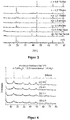
Fig. 3 : XRD-Messung (Röntgenpulverdiffraktometrie) an Sediment aus der Reaktion von metallischem Aluminium in 0,9 Na2O: 140 H2O : x Komplexbildner (TEothA = Triethanolamin, Bis-tris = Bis-(2-hydroxy-ethyl)-amino-tris(hydroxymethyl)-methan. Aus derFigur 3 wird deutlich sichtbar, dass ohne Komplexbildner oder mit geringen Konzentrationen an Amin-Komplexbildnern unerwünschtes Gibbsit entsteht. Mit Mehrfachsäure-Komplexen oder einem deutlichen Überschuss an Triethanolamin entsteht Pseudoböhmit, was eine übliche Al-Quelle in der Zeolithsynthese ist. -
Fig. 4 : Diese betrifft XRD-Messungen an den Produkten der Auflösung von metallischem Aluminium in alkalischer Lösung bei geringer Tartrat-Konzentration. Es wird nur Pseudoböhmit gebildet. Die Lösung entspricht einer erfindungsgemäßen Zeolithsyntheselösung, jedoch ohne die benötigte Si-Quelle (0,9 Na2O : 0,5 Di-Natriumtartrat : 140 H2O) -
Fig. 5 : Diese zeigt Al-NMR-Spektren der Al-Komplexe von Mehrfachsäuren a) Maleinsäure, b) Äpfelsäure und c) Citronensäure)
Claims (17)
- Verfahren zur Ausbildung einer Alumosilikat-Zeolith-Schicht auf einem aluminiumhaltigen metallischen Substrat aus metallischem Aluminium oder einer Aluminiumlegierung, das in eine alkalisch eingestellte wässrige Reaktionsdispersion eingebracht wird, in der als netzwerkbildende Elemente Silizium und gegebenenfalls Aluminium enthalten sind, wobei unabhängig davon, ob Aluminium in der wässrigen Reaktionsdispersion vorliegt oder nicht, das Molverhältnis zwischen dem Aluminium in der wässrigen Reaktionsdispersion zur Summe der in der wässrigen Reaktionsdispersion enthaltenen netzwerkbildenden Elemente unter 0,5 liegt, wobei dann, wenn Aluminium in der wässrigen Reaktionslösung nicht vorliegt, das Unterschuss-Molverhältnis 0 beträgt, und die das aluminiumhaltige metallische Substrat enthaltende alkalisch eingestellte wässrige Reaktionsdispersion erwärmt und dem aluminiumhaltigen metallischen Substrat für den Alumosilikat-Zeolith-Bildungsprozess Aluminium entzogen und die Schicht eines Alumosilikat-Zeoliths auf dem aluminiumhaltigen metallischen Substrat durch in-situ-Aufkristallisation gebildet wird, dadurch gekennzeichnet, dass der alkalisch eingestellten wässrigen Reaktionsdispersion ein Aluminium-Komplexbildner mit O-Ankeratomen, der eine organische Mehrfachsäure oder deren Salz darstellt, einverleibt wird.
- Verfahren nach Anspruch 1, dadurch gekennzeichnet, dass das Salz der organischen Mehrfachsäure ein Natrium- und/oder Kaliumsalz darstellt.
- Verfahren nach Anspruch 1 oder 2, dadurch gekennzeichnet, dass als organische Mehrfachsäure Citronensäure, Weinsäure, Oxalsäure, Malonsäure, Äpfelsäure und/oder Maleinsäure bzw. ein Salz hiervon eingesetzt wird.
- Verfahren nach mindestens einem der vorhergehenden Ansprüche, dadurch gekennzeichnet, dass als zusätzliche Al-Quelle neben dem aluminiumhaltigen metallischen Substrat als Al-Quelle Aluminiumoxidhydrate, insbesondere Pseudoböhmit, und/oder Natriumaluminat neben dem im Substrat enthaltenen Aluminium einsetzt werden.
- Verfahren nach mindestens einem der vorhergehenden Ansprüche, dadurch gekennzeichnet, dass als Si-Quelle Kieselsäure, Silikate und/oder Kieselsäureester eingesetzt werden.
- Verfahren nach mindestens einem der vorhergehenden Ansprüche, dadurch gekennzeichnet, dass zur Einstellung alkalischer Bedingungen in der wässrigen Reaktionsdispersion Natriumhydroxid, Kaliumhydroxid, basische Na- oder K-Salze und/oder Aluminate herangezogen werden.
- Verfahren nach mindestens einem der vorhergehenden Ansprüche, dadurch gekennzeichnet, dass der pH-Wert der wässrigen Reaktionsdispersion auf mehr als 9 und/oder weniger als 13,8, insbesondere bei Al-Legierungen mit einem Al-Gehalt von mehr als 90% eingestellt wird.
- Verfahren nach mindestens einem der vorhergehenden Ansprüche, dadurch gekennzeichnet, dass das Verhältnis der Oberfläche des aluminiumhaltigen Substrats zu dem Volumen der wässrigen Reaktionsdispersion (in cm2/cm3) zwischen 1 und 8 eingestellt wird.
- Verfahren nach mindestens einem der vorhergehenden Ansprüche, dadurch gekennzeichnet, dass solche aluminiumreichen Alumosilikat-Zeolithe ausgebildet werden, bei denen das Si/Al-Verhältnis kleiner als 10, insbesondere kleiner als 6 ist.
- Verfahren nach mindestens einem der vorhergehenden Ansprüche, dadurch gekennzeichnet, dass auf dem aluminiumhaltigen Substrat eine Schicht aus einem aluminiumreichen Alumosilikat-Zeolith in Form von LTA, FAU, CHA, MOR oder GIS ausgebildet wird.
- Verfahren nach mindestens einem der vorhergehenden Ansprüche, dadurch gekennzeichnet, dass das Unterschuss-Molverhältnis unter 0,05, insbesondere unter 0,02 liegt.
- Verfahren nach mindestens einem der vorhergehenden Ansprüche, dadurch gekennzeichnet, dass die wässrige Reaktionsdispersion ein organisches Templat bzw. organisches strukturdirigierendes Agens enthält, insbesondere in Form von Aminen bzw. Ammoniumsalzen oder Kronenethern, vorliegt.
- Verfahren nach mindestens einem der vorhergehenden Ansprüche, dadurch gekennzeichnet, dass im Falle kolloidaler Si- und/oder Al-Quellen zu deren Mineralisation Fluoridsalze oder Fluorwasserstoffsäure zugegeben werden.
- Verfahren nach mindestens einem der vorhergehenden Ansprüche, dadurch gekennzeichnet, dass die wässrige Reaktionsdispersion auf eine Temperatur von 50 bis 200°C, insbesondere von 70 bis 130°C, erwärmt wird.
- Verfahren nach mindestens einem der vorhergehenden Ansprüche, dadurch gekennzeichnet, dass zur Beschleunigung der Kristallbildung bei der Ausbildung der aluminiumreichen Alumosilikat-Zeolithschicht Kristallisationskeime oder ein gealtertes Gel hinzugegeben werden.
- Verwendung des 'mit einem aluminiumreichen Alumosilikat-Zeolith beschichteten aluminiumhaltigen metallischen Substrats, erhalten nach einem Verfahren nach mindestens einem der vorhergehenden Ansprüche, in sorptionsbasierenden Anwendungsbereichen.
- Verwendung nach Anspruch 16 zur heterogenen Katalyse, bei Separations- und Reinigungsprozessen, in Sorptionswärmepumpen, im Zusammenhang mit immobilisierten Katalysatoren sowie in der Mikroreaktionstechnik.
Applications Claiming Priority (2)
| Application Number | Priority Date | Filing Date | Title |
|---|---|---|---|
| DE102015122301.5A DE102015122301B4 (de) | 2015-12-18 | 2015-12-18 | Verfahren zur Ausbildung einer Alumosilikat-Zeolith-Schicht auf einem aluminiumhaltigen metallischen Substrat sowie Verwendung des danach erhaltenen Substrats |
| PCT/EP2016/079905 WO2017102442A1 (de) | 2015-12-18 | 2016-12-06 | Verfahren zur ausbildung einer alumosilikat-zeolith-schicht auf einem aluminiumhaltigen metallischen substrat sowie verwendung des danach erhaltenen substrats |
Publications (2)
| Publication Number | Publication Date |
|---|---|
| EP3390689A1 EP3390689A1 (de) | 2018-10-24 |
| EP3390689B1 true EP3390689B1 (de) | 2020-07-22 |
Family
ID=57485494
Family Applications (1)
| Application Number | Title | Priority Date | Filing Date |
|---|---|---|---|
| EP16806107.5A Active EP3390689B1 (de) | 2015-12-18 | 2016-12-06 | Verfahren zur ausbildung einer alumosilikat-zeolith-schicht auf einem aluminiumhaltigen metallischen substrat sowie verwendung des danach erhaltenen substrats |
Country Status (9)
| Country | Link |
|---|---|
| US (1) | US20180371616A1 (de) |
| EP (1) | EP3390689B1 (de) |
| JP (1) | JP7022435B2 (de) |
| KR (1) | KR102221016B1 (de) |
| CN (1) | CN108474117B (de) |
| BR (1) | BR112018012421A2 (de) |
| DE (1) | DE102015122301B4 (de) |
| ES (1) | ES2827504T3 (de) |
| WO (1) | WO2017102442A1 (de) |
Families Citing this family (1)
| Publication number | Priority date | Publication date | Assignee | Title |
|---|---|---|---|---|
| CN112062136A (zh) * | 2020-08-25 | 2020-12-11 | 郑州大学 | 一种硅烷官能化沸石及其制备方法与应用 |
Family Cites Families (19)
| Publication number | Priority date | Publication date | Assignee | Title |
|---|---|---|---|---|
| NL6407772A (de) * | 1963-07-11 | 1965-01-12 | ||
| US4088605A (en) * | 1976-09-24 | 1978-05-09 | Mobil Oil Corporation | ZSM-5 containing aluminum-free shells on its surface |
| US5200168A (en) * | 1992-01-31 | 1993-04-06 | Mobil Oil Corp. | Process for the dealumination of zeolite Beta |
| US5234872A (en) * | 1992-05-11 | 1993-08-10 | Mobil Oil Corp. | Method for producing zeolites with reduced surface acidity |
| US6500490B1 (en) | 2000-03-23 | 2002-12-31 | Honeywell International Inc. | Hydrophilic zeolite coating |
| DE10159652C2 (de) | 2000-12-05 | 2003-07-24 | Sortech Ag | Verfahren zur Wärmeübertragung sowie Wärmeübertrager hierfür |
| JP2002338239A (ja) * | 2001-03-08 | 2002-11-27 | Toray Ind Inc | ゼオライト合成方法 |
| JP3463108B2 (ja) * | 2001-03-19 | 2003-11-05 | 独立行政法人物質・材料研究機構 | パターン薄膜の形成方法 |
| WO2006008421A2 (fr) | 2004-07-13 | 2006-01-26 | L'air Liquide, Societe Anonyme A Directoire Et Conseil De Surveillance Pour L'etude Et L'exploitation Des Procedes Georges Claude | Traitement d'effluents gazeux par plasma a pression atmospherique |
| US7344694B2 (en) * | 2004-10-06 | 2008-03-18 | Uop Llc | UZM-12 and UZM-12HS: crystalline aluminosilicate zeolitic compositions and processes for preparing and using the compositions |
| DE102004052976A1 (de) * | 2004-10-29 | 2006-05-04 | Sortech Ag | Verfahren zur Herstellung eines mit einer Zeolith-Schicht beschichteten Substrats |
| US7179547B2 (en) * | 2004-10-29 | 2007-02-20 | The Regents Of The University Of California | High aluminum zeolite coatings on corrodible metal surfaces |
| US20080274183A1 (en) | 2005-02-04 | 2008-11-06 | Phillip Michael Cook | Thermoplastic articles containing a medicament |
| DE102005038044A1 (de) * | 2005-08-10 | 2007-02-15 | Sortech Ag | Schichtverbund und seine Herstellung |
| DE102008023634A1 (de) * | 2008-05-15 | 2009-11-19 | Sortech Ag | Aluminiumhaltiges Substrat mit einer mikroporösen Schicht eines Aluminiumphosphat-Zeoliths, ein Verfahren zu dessen Herstellung und dessen Verwendung |
| DE102009011530A1 (de) * | 2009-03-03 | 2010-09-09 | Sortech Ag | Verfahren zur Ausbildung einer Alumosilikat-Zeolith-Schicht auf einem metallischen Substrat, das beschichtete Substrat sowie dessen Verwendung |
| EP2336272A1 (de) * | 2009-12-15 | 2011-06-22 | Total Petrochemicals Research Feluy | Engstellenbeseitigung einer Dampfcrackeinheit zur Steigerung der Propylenproduktion |
| US20120183806A1 (en) * | 2011-01-17 | 2012-07-19 | Ppg Industries, Inc. | Pretreatment Compositions and Methods For Coating A Metal Substrate |
| KR102008954B1 (ko) * | 2011-10-24 | 2019-08-08 | 토탈 라피나쥬 프랑스 | 메조기공-함유 촉매의 제조방법, 이에 따라 획득된 촉매 및 이의 수소첨가전환 공정에서의 용도 |
-
2015
- 2015-12-18 DE DE102015122301.5A patent/DE102015122301B4/de not_active Expired - Fee Related
-
2016
- 2016-12-06 ES ES16806107T patent/ES2827504T3/es active Active
- 2016-12-06 JP JP2018532076A patent/JP7022435B2/ja not_active Expired - Fee Related
- 2016-12-06 US US16/063,420 patent/US20180371616A1/en not_active Abandoned
- 2016-12-06 EP EP16806107.5A patent/EP3390689B1/de active Active
- 2016-12-06 KR KR1020187019332A patent/KR102221016B1/ko not_active Expired - Fee Related
- 2016-12-06 WO PCT/EP2016/079905 patent/WO2017102442A1/de not_active Ceased
- 2016-12-06 BR BR112018012421-4A patent/BR112018012421A2/pt not_active Application Discontinuation
- 2016-12-06 CN CN201680073837.6A patent/CN108474117B/zh not_active Expired - Fee Related
Non-Patent Citations (1)
| Title |
|---|
| None * |
Also Published As
| Publication number | Publication date |
|---|---|
| ES2827504T3 (es) | 2021-05-21 |
| US20180371616A1 (en) | 2018-12-27 |
| CN108474117B (zh) | 2021-04-23 |
| KR102221016B1 (ko) | 2021-02-26 |
| DE102015122301A1 (de) | 2017-06-22 |
| BR112018012421A2 (pt) | 2018-12-18 |
| JP2019501290A (ja) | 2019-01-17 |
| CN108474117A (zh) | 2018-08-31 |
| DE102015122301B4 (de) | 2020-08-13 |
| JP7022435B2 (ja) | 2022-02-18 |
| EP3390689A1 (de) | 2018-10-24 |
| WO2017102442A1 (de) | 2017-06-22 |
| KR20180091060A (ko) | 2018-08-14 |
Similar Documents
| Publication | Publication Date | Title |
|---|---|---|
| DE69911896T2 (de) | Stannosilikat Molekular-Siebe mit Beta-typ Struktur | |
| EP2403977B1 (de) | Verfahren zur ausbildung einer alumosilikat-zeolith-schicht auf einem metallischen substrat, das beschichtete substrat sowie dessen verwendung | |
| EP3433014B1 (de) | Herstellung von zeolith-basierten kompositmaterialien mit hierarchischer porosität | |
| DE2531670A1 (de) | Zeolith und verfahren zu dessen herstellung | |
| DE1667618A1 (de) | Kristallines Aluminosilicat und Verfahren zu seiner Herstellung | |
| DE1792783C2 (de) | Verfahren zur Herstellung eines Zeolithen | |
| DE3041924A1 (de) | Synthetische kristalline borsilikatverbindungen und verfahren zu ihrer herstellung | |
| EP2241652B1 (de) | Verfahren zur herstellung eines mit einer zeolith-schicht beschichteten substrats | |
| EP2603457B1 (de) | Hydrothermale synthese von zeolithen unter verwendung von modifizierten mischoxiden | |
| DE1174749B (de) | Verfahren zur Herstellung modifizierter synthetischer Molekularsiebe | |
| DE2909929A1 (de) | Verfahren zur herstellung eines zeolithen vom strukturtyp zsm-5 | |
| EP2279286B1 (de) | Aluminiumhaltiges substrat mit einer mikroporösen schicht eines aluminiumphosphat-zeoliths, ein verfahren zu dessen herstellung und dessen verwendung | |
| DE102015122301B4 (de) | Verfahren zur Ausbildung einer Alumosilikat-Zeolith-Schicht auf einem aluminiumhaltigen metallischen Substrat sowie Verwendung des danach erhaltenen Substrats | |
| DE1038015B (de) | Verfahren zur Herstellung synthetischer zeolithischer Molekularsiebe | |
| WO1999043868A1 (de) | Wässrige lösung und verfahren zur phosphatierung metallischer oberflächen | |
| DE2446012C2 (de) | Zeolith, Verfahren zu seiner Herstellung und seine Verwendung | |
| DE102009034850A1 (de) | Verfahren zur Herstellung eines Silico-Alumo-Phosphats | |
| EP1965907B1 (de) | Schichtverbund und seine herstellung | |
| DE102010055730A1 (de) | Verfahren zur Herstellung von Titano-(Silico)-Alumo-Phosphat | |
| EP0558887A1 (de) | Anorganische mikroporöse Festkörper sowie Verfahren zu ihrer Herstellung | |
| EP0559059B1 (de) | Templatarmes Clathrasil | |
| DE2115965C3 (de) | Verfahren zur Herstellung von Mordenit und dessen Verwendung als Trager für Katalysatoren fur Kohlenwasserstoff-Umwandlungsverfahren | |
| EP0330855B1 (de) | Verfahren zur Modifizierung eines Zeoliths | |
| EP0968131B2 (de) | VERFAHREN ZUR HERSTELLUNG VON ZEOLITHEN MIT EINEM HOHEN Si/Al-ATOMVERHÄLTNIS | |
| DE1959761C3 (de) | Verfahren zur Herstellung eines synthetischen Faujasit enthaltenden Crackkatalysators |
Legal Events
| Date | Code | Title | Description |
|---|---|---|---|
| STAA | Information on the status of an ep patent application or granted ep patent |
Free format text: STATUS: UNKNOWN |
|
| STAA | Information on the status of an ep patent application or granted ep patent |
Free format text: STATUS: THE INTERNATIONAL PUBLICATION HAS BEEN MADE |
|
| PUAI | Public reference made under article 153(3) epc to a published international application that has entered the european phase |
Free format text: ORIGINAL CODE: 0009012 |
|
| STAA | Information on the status of an ep patent application or granted ep patent |
Free format text: STATUS: REQUEST FOR EXAMINATION WAS MADE |
|
| 17P | Request for examination filed |
Effective date: 20180711 |
|
| AK | Designated contracting states |
Kind code of ref document: A1 Designated state(s): AL AT BE BG CH CY CZ DE DK EE ES FI FR GB GR HR HU IE IS IT LI LT LU LV MC MK MT NL NO PL PT RO RS SE SI SK SM TR |
|
| AX | Request for extension of the european patent |
Extension state: BA ME |
|
| DAV | Request for validation of the european patent (deleted) | ||
| DAX | Request for extension of the european patent (deleted) | ||
| STAA | Information on the status of an ep patent application or granted ep patent |
Free format text: STATUS: EXAMINATION IS IN PROGRESS |
|
| 17Q | First examination report despatched |
Effective date: 20190724 |
|
| RIC1 | Information provided on ipc code assigned before grant |
Ipc: B01J 29/00 20060101ALI20191219BHEP Ipc: B01J 29/70 20060101ALI20191219BHEP Ipc: B01J 20/18 20060101ALI20191219BHEP Ipc: C23C 18/12 20060101AFI20191219BHEP Ipc: B01J 29/18 20060101ALI20191219BHEP Ipc: B01J 35/00 20060101ALI20191219BHEP Ipc: B01J 29/08 20060101ALI20191219BHEP Ipc: B01J 20/16 20060101ALI20191219BHEP |
|
| GRAP | Despatch of communication of intention to grant a patent |
Free format text: ORIGINAL CODE: EPIDOSNIGR1 |
|
| STAA | Information on the status of an ep patent application or granted ep patent |
Free format text: STATUS: GRANT OF PATENT IS INTENDED |
|
| INTG | Intention to grant announced |
Effective date: 20200205 |
|
| GRAS | Grant fee paid |
Free format text: ORIGINAL CODE: EPIDOSNIGR3 |
|
| GRAA | (expected) grant |
Free format text: ORIGINAL CODE: 0009210 |
|
| STAA | Information on the status of an ep patent application or granted ep patent |
Free format text: STATUS: THE PATENT HAS BEEN GRANTED |
|
| AK | Designated contracting states |
Kind code of ref document: B1 Designated state(s): AL AT BE BG CH CY CZ DE DK EE ES FI FR GB GR HR HU IE IS IT LI LT LU LV MC MK MT NL NO PL PT RO RS SE SI SK SM TR |
|
| REG | Reference to a national code |
Ref country code: GB Ref legal event code: FG4D Free format text: NOT ENGLISH |
|
| REG | Reference to a national code |
Ref country code: CH Ref legal event code: EP |
|
| REG | Reference to a national code |
Ref country code: DE Ref legal event code: R096 Ref document number: 502016010608 Country of ref document: DE |
|
| REG | Reference to a national code |
Ref country code: AT Ref legal event code: REF Ref document number: 1293460 Country of ref document: AT Kind code of ref document: T Effective date: 20200815 |
|
| REG | Reference to a national code |
Ref country code: IE Ref legal event code: FG4D Free format text: LANGUAGE OF EP DOCUMENT: GERMAN |
|
| REG | Reference to a national code |
Ref country code: LT Ref legal event code: MG4D |
|
| PG25 | Lapsed in a contracting state [announced via postgrant information from national office to epo] |
Ref country code: GR Free format text: LAPSE BECAUSE OF FAILURE TO SUBMIT A TRANSLATION OF THE DESCRIPTION OR TO PAY THE FEE WITHIN THE PRESCRIBED TIME-LIMIT Effective date: 20201023 Ref country code: FI Free format text: LAPSE BECAUSE OF FAILURE TO SUBMIT A TRANSLATION OF THE DESCRIPTION OR TO PAY THE FEE WITHIN THE PRESCRIBED TIME-LIMIT Effective date: 20200722 Ref country code: NO Free format text: LAPSE BECAUSE OF FAILURE TO SUBMIT A TRANSLATION OF THE DESCRIPTION OR TO PAY THE FEE WITHIN THE PRESCRIBED TIME-LIMIT Effective date: 20201022 Ref country code: SE Free format text: LAPSE BECAUSE OF FAILURE TO SUBMIT A TRANSLATION OF THE DESCRIPTION OR TO PAY THE FEE WITHIN THE PRESCRIBED TIME-LIMIT Effective date: 20200722 Ref country code: BG Free format text: LAPSE BECAUSE OF FAILURE TO SUBMIT A TRANSLATION OF THE DESCRIPTION OR TO PAY THE FEE WITHIN THE PRESCRIBED TIME-LIMIT Effective date: 20201022 Ref country code: PT Free format text: LAPSE BECAUSE OF FAILURE TO SUBMIT A TRANSLATION OF THE DESCRIPTION OR TO PAY THE FEE WITHIN THE PRESCRIBED TIME-LIMIT Effective date: 20201123 Ref country code: LT Free format text: LAPSE BECAUSE OF FAILURE TO SUBMIT A TRANSLATION OF THE DESCRIPTION OR TO PAY THE FEE WITHIN THE PRESCRIBED TIME-LIMIT Effective date: 20200722 Ref country code: HR Free format text: LAPSE BECAUSE OF FAILURE TO SUBMIT A TRANSLATION OF THE DESCRIPTION OR TO PAY THE FEE WITHIN THE PRESCRIBED TIME-LIMIT Effective date: 20200722 |
|
| PG25 | Lapsed in a contracting state [announced via postgrant information from national office to epo] |
Ref country code: IS Free format text: LAPSE BECAUSE OF FAILURE TO SUBMIT A TRANSLATION OF THE DESCRIPTION OR TO PAY THE FEE WITHIN THE PRESCRIBED TIME-LIMIT Effective date: 20201122 Ref country code: PL Free format text: LAPSE BECAUSE OF FAILURE TO SUBMIT A TRANSLATION OF THE DESCRIPTION OR TO PAY THE FEE WITHIN THE PRESCRIBED TIME-LIMIT Effective date: 20200722 Ref country code: RS Free format text: LAPSE BECAUSE OF FAILURE TO SUBMIT A TRANSLATION OF THE DESCRIPTION OR TO PAY THE FEE WITHIN THE PRESCRIBED TIME-LIMIT Effective date: 20200722 Ref country code: LV Free format text: LAPSE BECAUSE OF FAILURE TO SUBMIT A TRANSLATION OF THE DESCRIPTION OR TO PAY THE FEE WITHIN THE PRESCRIBED TIME-LIMIT Effective date: 20200722 |
|
| PG25 | Lapsed in a contracting state [announced via postgrant information from national office to epo] |
Ref country code: NL Free format text: LAPSE BECAUSE OF FAILURE TO SUBMIT A TRANSLATION OF THE DESCRIPTION OR TO PAY THE FEE WITHIN THE PRESCRIBED TIME-LIMIT Effective date: 20200722 |
|
| REG | Reference to a national code |
Ref country code: DE Ref legal event code: R097 Ref document number: 502016010608 Country of ref document: DE |
|
| PG25 | Lapsed in a contracting state [announced via postgrant information from national office to epo] |
Ref country code: RO Free format text: LAPSE BECAUSE OF FAILURE TO SUBMIT A TRANSLATION OF THE DESCRIPTION OR TO PAY THE FEE WITHIN THE PRESCRIBED TIME-LIMIT Effective date: 20200722 Ref country code: CZ Free format text: LAPSE BECAUSE OF FAILURE TO SUBMIT A TRANSLATION OF THE DESCRIPTION OR TO PAY THE FEE WITHIN THE PRESCRIBED TIME-LIMIT Effective date: 20200722 Ref country code: DK Free format text: LAPSE BECAUSE OF FAILURE TO SUBMIT A TRANSLATION OF THE DESCRIPTION OR TO PAY THE FEE WITHIN THE PRESCRIBED TIME-LIMIT Effective date: 20200722 Ref country code: EE Free format text: LAPSE BECAUSE OF FAILURE TO SUBMIT A TRANSLATION OF THE DESCRIPTION OR TO PAY THE FEE WITHIN THE PRESCRIBED TIME-LIMIT Effective date: 20200722 Ref country code: SM Free format text: LAPSE BECAUSE OF FAILURE TO SUBMIT A TRANSLATION OF THE DESCRIPTION OR TO PAY THE FEE WITHIN THE PRESCRIBED TIME-LIMIT Effective date: 20200722 |
|
| REG | Reference to a national code |
Ref country code: ES Ref legal event code: FG2A Ref document number: 2827504 Country of ref document: ES Kind code of ref document: T3 Effective date: 20210521 |
|
| PLBE | No opposition filed within time limit |
Free format text: ORIGINAL CODE: 0009261 |
|
| STAA | Information on the status of an ep patent application or granted ep patent |
Free format text: STATUS: NO OPPOSITION FILED WITHIN TIME LIMIT |
|
| PG25 | Lapsed in a contracting state [announced via postgrant information from national office to epo] |
Ref country code: AL Free format text: LAPSE BECAUSE OF FAILURE TO SUBMIT A TRANSLATION OF THE DESCRIPTION OR TO PAY THE FEE WITHIN THE PRESCRIBED TIME-LIMIT Effective date: 20200722 |
|
| 26N | No opposition filed |
Effective date: 20210423 |
|
| PG25 | Lapsed in a contracting state [announced via postgrant information from national office to epo] |
Ref country code: SK Free format text: LAPSE BECAUSE OF FAILURE TO SUBMIT A TRANSLATION OF THE DESCRIPTION OR TO PAY THE FEE WITHIN THE PRESCRIBED TIME-LIMIT Effective date: 20200722 |
|
| REG | Reference to a national code |
Ref country code: CH Ref legal event code: PL |
|
| PG25 | Lapsed in a contracting state [announced via postgrant information from national office to epo] |
Ref country code: SI Free format text: LAPSE BECAUSE OF FAILURE TO SUBMIT A TRANSLATION OF THE DESCRIPTION OR TO PAY THE FEE WITHIN THE PRESCRIBED TIME-LIMIT Effective date: 20200722 Ref country code: MC Free format text: LAPSE BECAUSE OF FAILURE TO SUBMIT A TRANSLATION OF THE DESCRIPTION OR TO PAY THE FEE WITHIN THE PRESCRIBED TIME-LIMIT Effective date: 20200722 |
|
| REG | Reference to a national code |
Ref country code: BE Ref legal event code: MM Effective date: 20201231 |
|
| REG | Reference to a national code |
Ref country code: NL Ref legal event code: MP Effective date: 20200722 |
|
| PG25 | Lapsed in a contracting state [announced via postgrant information from national office to epo] |
Ref country code: IE Free format text: LAPSE BECAUSE OF NON-PAYMENT OF DUE FEES Effective date: 20201206 Ref country code: LU Free format text: LAPSE BECAUSE OF NON-PAYMENT OF DUE FEES Effective date: 20201206 |
|
| PG25 | Lapsed in a contracting state [announced via postgrant information from national office to epo] |
Ref country code: LI Free format text: LAPSE BECAUSE OF NON-PAYMENT OF DUE FEES Effective date: 20201231 Ref country code: CH Free format text: LAPSE BECAUSE OF NON-PAYMENT OF DUE FEES Effective date: 20201231 |
|
| PG25 | Lapsed in a contracting state [announced via postgrant information from national office to epo] |
Ref country code: TR Free format text: LAPSE BECAUSE OF FAILURE TO SUBMIT A TRANSLATION OF THE DESCRIPTION OR TO PAY THE FEE WITHIN THE PRESCRIBED TIME-LIMIT Effective date: 20200722 Ref country code: MT Free format text: LAPSE BECAUSE OF FAILURE TO SUBMIT A TRANSLATION OF THE DESCRIPTION OR TO PAY THE FEE WITHIN THE PRESCRIBED TIME-LIMIT Effective date: 20200722 Ref country code: CY Free format text: LAPSE BECAUSE OF FAILURE TO SUBMIT A TRANSLATION OF THE DESCRIPTION OR TO PAY THE FEE WITHIN THE PRESCRIBED TIME-LIMIT Effective date: 20200722 |
|
| PG25 | Lapsed in a contracting state [announced via postgrant information from national office to epo] |
Ref country code: MK Free format text: LAPSE BECAUSE OF FAILURE TO SUBMIT A TRANSLATION OF THE DESCRIPTION OR TO PAY THE FEE WITHIN THE PRESCRIBED TIME-LIMIT Effective date: 20200722 |
|
| PG25 | Lapsed in a contracting state [announced via postgrant information from national office to epo] |
Ref country code: BE Free format text: LAPSE BECAUSE OF NON-PAYMENT OF DUE FEES Effective date: 20201231 |
|
| PGFP | Annual fee paid to national office [announced via postgrant information from national office to epo] |
Ref country code: GB Payment date: 20221222 Year of fee payment: 7 Ref country code: FR Payment date: 20221220 Year of fee payment: 7 |
|
| REG | Reference to a national code |
Ref country code: AT Ref legal event code: MM01 Ref document number: 1293460 Country of ref document: AT Kind code of ref document: T Effective date: 20211206 |
|
| PG25 | Lapsed in a contracting state [announced via postgrant information from national office to epo] |
Ref country code: AT Free format text: LAPSE BECAUSE OF NON-PAYMENT OF DUE FEES Effective date: 20211206 |
|
| PGFP | Annual fee paid to national office [announced via postgrant information from national office to epo] |
Ref country code: ES Payment date: 20230119 Year of fee payment: 7 |
|
| PGFP | Annual fee paid to national office [announced via postgrant information from national office to epo] |
Ref country code: IT Payment date: 20221230 Year of fee payment: 7 Ref country code: DE Payment date: 20221221 Year of fee payment: 7 |
|
| REG | Reference to a national code |
Ref country code: DE Ref legal event code: R119 Ref document number: 502016010608 Country of ref document: DE |
|
| GBPC | Gb: european patent ceased through non-payment of renewal fee |
Effective date: 20231206 |
|
| PG25 | Lapsed in a contracting state [announced via postgrant information from national office to epo] |
Ref country code: DE Free format text: LAPSE BECAUSE OF NON-PAYMENT OF DUE FEES Effective date: 20240702 |
|
| PG25 | Lapsed in a contracting state [announced via postgrant information from national office to epo] |
Ref country code: GB Free format text: LAPSE BECAUSE OF NON-PAYMENT OF DUE FEES Effective date: 20231206 |
|
| PG25 | Lapsed in a contracting state [announced via postgrant information from national office to epo] |
Ref country code: FR Free format text: LAPSE BECAUSE OF NON-PAYMENT OF DUE FEES Effective date: 20231231 |
|
| PG25 | Lapsed in a contracting state [announced via postgrant information from national office to epo] |
Ref country code: GB Free format text: LAPSE BECAUSE OF NON-PAYMENT OF DUE FEES Effective date: 20231206 Ref country code: FR Free format text: LAPSE BECAUSE OF NON-PAYMENT OF DUE FEES Effective date: 20231231 Ref country code: DE Free format text: LAPSE BECAUSE OF NON-PAYMENT OF DUE FEES Effective date: 20240702 |
|
| REG | Reference to a national code |
Ref country code: ES Ref legal event code: FD2A Effective date: 20250127 |
|
| PG25 | Lapsed in a contracting state [announced via postgrant information from national office to epo] |
Ref country code: ES Free format text: LAPSE BECAUSE OF NON-PAYMENT OF DUE FEES Effective date: 20231207 |
|
| PG25 | Lapsed in a contracting state [announced via postgrant information from national office to epo] |
Ref country code: IT Free format text: LAPSE BECAUSE OF NON-PAYMENT OF DUE FEES Effective date: 20231206 |