EP3381476A1 - Removal of microorganisms from fluid samples using nanofiber filtration media - Google Patents
Removal of microorganisms from fluid samples using nanofiber filtration media Download PDFInfo
- Publication number
- EP3381476A1 EP3381476A1 EP17195327.6A EP17195327A EP3381476A1 EP 3381476 A1 EP3381476 A1 EP 3381476A1 EP 17195327 A EP17195327 A EP 17195327A EP 3381476 A1 EP3381476 A1 EP 3381476A1
- Authority
- EP
- European Patent Office
- Prior art keywords
- filtration medium
- nanofiber
- filtration
- poly
- liquid
- Prior art date
- Legal status (The legal status is an assumption and is not a legal conclusion. Google has not performed a legal analysis and makes no representation as to the accuracy of the status listed.)
- Granted
Links
Images



Classifications
-
- A—HUMAN NECESSITIES
- A61—MEDICAL OR VETERINARY SCIENCE; HYGIENE
- A61L—METHODS OR APPARATUS FOR STERILISING MATERIALS OR OBJECTS IN GENERAL; DISINFECTION, STERILISATION OR DEODORISATION OF AIR; CHEMICAL ASPECTS OF BANDAGES, DRESSINGS, ABSORBENT PADS OR SURGICAL ARTICLES; MATERIALS FOR BANDAGES, DRESSINGS, ABSORBENT PADS OR SURGICAL ARTICLES
- A61L2/00—Disinfection or sterilisation of materials or objects, in general; Accessories therefor
- A61L2/02—Disinfection or sterilisation of materials or objects, in general; Accessories therefor using physical processes
- A61L2/022—Filtration
-
- B—PERFORMING OPERATIONS; TRANSPORTING
- B01—PHYSICAL OR CHEMICAL PROCESSES OR APPARATUS IN GENERAL
- B01D—SEPARATION
- B01D39/00—Filtering material for liquid or gaseous fluids
- B01D39/14—Other self-supporting filtering material ; Other filtering material
- B01D39/16—Other self-supporting filtering material ; Other filtering material of organic material, e.g. synthetic fibres
- B01D39/1607—Other self-supporting filtering material ; Other filtering material of organic material, e.g. synthetic fibres the material being fibrous
-
- B—PERFORMING OPERATIONS; TRANSPORTING
- B01—PHYSICAL OR CHEMICAL PROCESSES OR APPARATUS IN GENERAL
- B01D—SEPARATION
- B01D39/00—Filtering material for liquid or gaseous fluids
- B01D39/14—Other self-supporting filtering material ; Other filtering material
- B01D39/16—Other self-supporting filtering material ; Other filtering material of organic material, e.g. synthetic fibres
- B01D39/1607—Other self-supporting filtering material ; Other filtering material of organic material, e.g. synthetic fibres the material being fibrous
- B01D39/1623—Other self-supporting filtering material ; Other filtering material of organic material, e.g. synthetic fibres the material being fibrous of synthetic origin
-
- B—PERFORMING OPERATIONS; TRANSPORTING
- B01—PHYSICAL OR CHEMICAL PROCESSES OR APPARATUS IN GENERAL
- B01D—SEPARATION
- B01D67/00—Processes specially adapted for manufacturing semi-permeable membranes for separation processes or apparatus
- B01D67/0002—Organic membrane manufacture
- B01D67/0004—Organic membrane manufacture by agglomeration of particles
- B01D67/00042—Organic membrane manufacture by agglomeration of particles by deposition of fibres, nanofibres or nanofibrils
-
- B—PERFORMING OPERATIONS; TRANSPORTING
- B01—PHYSICAL OR CHEMICAL PROCESSES OR APPARATUS IN GENERAL
- B01D—SEPARATION
- B01D67/00—Processes specially adapted for manufacturing semi-permeable membranes for separation processes or apparatus
- B01D67/0002—Organic membrane manufacture
- B01D67/002—Organic membrane manufacture from melts
-
- B—PERFORMING OPERATIONS; TRANSPORTING
- B01—PHYSICAL OR CHEMICAL PROCESSES OR APPARATUS IN GENERAL
- B01D—SEPARATION
- B01D69/00—Semi-permeable membranes for separation processes or apparatus characterised by their form, structure or properties; Manufacturing processes specially adapted therefor
-
- C—CHEMISTRY; METALLURGY
- C02—TREATMENT OF WATER, WASTE WATER, SEWAGE, OR SLUDGE
- C02F—TREATMENT OF WATER, WASTE WATER, SEWAGE, OR SLUDGE
- C02F1/00—Treatment of water, waste water, or sewage
- C02F1/001—Processes for the treatment of water whereby the filtration technique is of importance
-
- A—HUMAN NECESSITIES
- A61—MEDICAL OR VETERINARY SCIENCE; HYGIENE
- A61L—METHODS OR APPARATUS FOR STERILISING MATERIALS OR OBJECTS IN GENERAL; DISINFECTION, STERILISATION OR DEODORISATION OF AIR; CHEMICAL ASPECTS OF BANDAGES, DRESSINGS, ABSORBENT PADS OR SURGICAL ARTICLES; MATERIALS FOR BANDAGES, DRESSINGS, ABSORBENT PADS OR SURGICAL ARTICLES
- A61L2103/00—Materials or objects being the target of disinfection or sterilisation
- A61L2103/05—Living organisms or biological materials
-
- B—PERFORMING OPERATIONS; TRANSPORTING
- B01—PHYSICAL OR CHEMICAL PROCESSES OR APPARATUS IN GENERAL
- B01D—SEPARATION
- B01D2239/00—Aspects relating to filtering material for liquid or gaseous fluids
- B01D2239/02—Types of fibres, filaments or particles, self-supporting or supported materials
- B01D2239/025—Types of fibres, filaments or particles, self-supporting or supported materials comprising nanofibres
-
- B—PERFORMING OPERATIONS; TRANSPORTING
- B01—PHYSICAL OR CHEMICAL PROCESSES OR APPARATUS IN GENERAL
- B01D—SEPARATION
- B01D2239/00—Aspects relating to filtering material for liquid or gaseous fluids
- B01D2239/02—Types of fibres, filaments or particles, self-supporting or supported materials
- B01D2239/0258—Types of fibres, filaments or particles, self-supporting or supported materials comprising nanoparticles
-
- B—PERFORMING OPERATIONS; TRANSPORTING
- B01—PHYSICAL OR CHEMICAL PROCESSES OR APPARATUS IN GENERAL
- B01D—SEPARATION
- B01D2239/00—Aspects relating to filtering material for liquid or gaseous fluids
- B01D2239/06—Filter cloth, e.g. knitted, woven non-woven; self-supported material
- B01D2239/0604—Arrangement of the fibres in the filtering material
- B01D2239/0631—Electro-spun
-
- B—PERFORMING OPERATIONS; TRANSPORTING
- B01—PHYSICAL OR CHEMICAL PROCESSES OR APPARATUS IN GENERAL
- B01D—SEPARATION
- B01D2323/00—Details relating to membrane preparation
- B01D2323/39—Electrospinning
-
- C—CHEMISTRY; METALLURGY
- C02—TREATMENT OF WATER, WASTE WATER, SEWAGE, OR SLUDGE
- C02F—TREATMENT OF WATER, WASTE WATER, SEWAGE, OR SLUDGE
- C02F1/00—Treatment of water, waste water, or sewage
- C02F1/44—Treatment of water, waste water, or sewage by dialysis, osmosis or reverse osmosis
- C02F1/444—Treatment of water, waste water, or sewage by dialysis, osmosis or reverse osmosis by ultrafiltration or microfiltration
-
- C—CHEMISTRY; METALLURGY
- C02—TREATMENT OF WATER, WASTE WATER, SEWAGE, OR SLUDGE
- C02F—TREATMENT OF WATER, WASTE WATER, SEWAGE, OR SLUDGE
- C02F2303/00—Specific treatment goals
- C02F2303/04—Disinfection
Definitions
- the present invention relates generally to filtration media.
- the invention provides a porous electrospun nanofiber liquid filtration mat, and methods of using the same in the retention of microorganism from a filtered liquid.
- Filters used in liquid filtration can be generally categorized as either fibrous nonwoven media filters or porous film membrane filters.
- Fibrous nonwoven liquid filtration media include, but are not limited to, nonwoven media formed from spunbonded, melt blown or spunlaced continuous fibers; hydroentangled nonwoven media formed from carded staple fiber and the like; or some combination of these types.
- fibrous nonwoven filter media filters used in liquid filtration have pore sizes generally greater than about 1 micron ( ⁇ m).
- Porous film membrane liquid filtration media is used either unsupported or used in conjunction with a porous substrate or support.
- Porous filtration membranes have pore sizes smaller than the fibrous nonwoven media, and typically have pore sizes less than about 1 ⁇ m.
- Porous film liquid filtration membranes can be used in: (a) microfiltration, wherein particulates filtered from a liquid are typically in the range of about 0.1 ⁇ m to about 10 ⁇ m; (b) ultrafiltration, wherein particulates filtered from a liquid, are typically in the range of about 5 nm to about 0.1 ⁇ m; and (c) reverse osmosis, wherein particulate matter filtered from a liquid, are typically in the range of about 1 ⁇ to about 1 nm.
- Fibrous nonwoven media and porous film membranes are each suitable for use in microfiltration.
- Microfiltration is widely accepted in industry as a reliable, easily scalable, and benign method to remove microorganisms, such as bacteria, from a fluid stream, and is an essential part of pharmaceutical and biopharmaceutical manufacturing. It is especially important in the biopharmaceutical industry, where microfiltration is used at multiple locations during biopharmaceutical processing.
- the number of layers of fibrous material in the filter needs to be increased in order to increase the depth of the nonwoven media.
- Increasing the number of fibrous layers in the nonwoven media produces both desirable and undesirably results.
- Increasing the number of fibrous layers produces desirable results by increased tortuosity of a defect path through which a contaminant particle must pass to escape capture by the filter media as well as increasing the contaminant-holding capacity of the filter media.
- increasing the number of fibrous layers in nonwoven media undesirably increases the pressure drop or differential pressure across the media when in use, which translates to increased energy for the filter user and a shorter filter lifespan.
- Porous membrane filters used in microfiltration unlike fibrous nonwoven media, offer a combination of good particle retention, pressure drop and flux, but also tend to be cost-prohibitive, and typically do not provide good contaminant-holding capacity over the entire range of pressure drop, therefore limiting the life of filters using porous membranes.
- LRV Log Reduction Value
- the filter retains all microorganisms under the conditions of the test, it is customarily to report the LRV as greater than the value obtained when a single microorganism passes the filter. For example, at the challenge particle concentration of 4.77*10 7 CFU/cm 2 , the maximum measurable LRV is 8.22. When no particles pass the filter, the LRV is reported as greater than 8.22.
- Pore size rating of a membrane is an indicator that the membrane has successfully passed a relevant, standardized bacterial challenge test.
- the most common pore size rating is 0.22 ⁇ m, which is assigned to membranes that pass a Standard Test Method for Determining Bacterial Retention Of Membrane Filters Utilized For Liquid Filtration (ASTM F838-83 test), can be validated to produce sterile effluent after being challenged with ⁇ 10 7 CFU/cm 2 Brevundimonas diminuta.
- Brevundimonas diminuta (ATTC#19146), formerly known as Pseudomonas diminuta, is an aerobic gram-negative bacteria (bacilli). Because of its small size, B. diminuta is a standard microbial organism for validation of membrane filters and the like for sterilization. However, while B. diminuta is representative of most pathogenic bacteria, B. diminuta has proved to be a poor model for a class of microorganisms called Mycoplasma. While representative of most pathogenic bacteria, B. diminuta has proved to be a poor model for a class of microorganisms called Mycoplasma.
- Mycoplasma is a microorganism that can infect cell cultures and can have a substantially deleterious effect to biopharmaceutical manufacturing.
- the contamination of eukaryotic cell cultures and the like with Mycoplasma is also a common problem, leading to unreliable experimental results and possibly unsafe biological products. This represents a serious problem for manufacturers involved in the development and fabrication of biological and pharmaceutical products.
- the highly nutritive environment of the media used in cell culture can lead to the propagation of Mycoplasmas, resulting in diminished cell growth as well as the loss of cultures.
- a membrane pore size rating of 0.1 ⁇ m indicates that a membrane has been validated to remove Mycoplasma. (See, Roche, K.L.: Levy, R.V., Methods to Validate Microporous Membranes for the Removal of Mycoplasma, BioPharm 1992, 5, (3), 22-33 )
- membranes having a pore size rating of 0.1 um can be used to filter media, nutrient and cell culture fluid delivered to cells living and growing inside of a bioreactor.
- Membranes currently exist that have a specific Log Reduction Value (LRV) for A.
- LRV Log Reduction Value
- Laidawii a test microorganism for Mycoplasma. While it is customarily accepted that LRV >8 is sufficient to claim "full" retention of Mycoplasma, filters having a lower LRV are often used instead in liquid filtration because of greater permeability and higher throughput.
- WO/2009/032040 assigned to Millipore Corporation and titled, SERUM-FREE GROWTH MEDIUM FOR ACHOLEPLASMA LAIDLAWII AND METHODS FOR RETENTION TESTING STERILIZING GRADE FILTERS, fully incorporated by reference herein in its entirety, teaches the full retention of Mycoplasma by a filtration medium can be validated to produce sterile effluent after being challenged with ⁇ 1 10 9 x cfu/mL Acholeplasma laidlawii (A. laidlawii; ATCC 23206).
- Synthetic polymers have been formed into webs of very small diameter fibers, i.e., on the order of a few micrometers or less than 1 ⁇ m, using various processes including melt blowing, electrostatic spinning and electroblowing. Such webs have been shown to be useful as liquid barrier materials and filters. Often they are combined with stronger sheets to form composites, wherein the stronger sheets provide the strength to meet the needs of the final filter product.
- U.S. Patent Publication Number 2004/0038014 issued to Schaefer et al. teaches a nonwoven filtration mat comprising one or more layers of a thick collection of fine polymeric microfibers and nanofibers formed by electrostatic spinning for filtering contaminants.
- the electrostatic spinning process utilizes an electro spinning apparatus including a reservoir in which the fine fiber forming polymer solution is contained, a pump and an emitter device which obtains polymer solution from the reservoir.
- a droplet of the polymer solution is accelerated by the electrostatic field toward a collecting media substrate located on a grid.
- a high voltage electrostatic potential is maintained between the emitter and grid, with the collection substrate positioned there between, by means of a suitable electrostatic voltage source.
- a stream of polymeric solution comprising a polymer and a solvent is fed from a storage tank to a series of spinning nozzles within a spinneret, to which a high voltage is applied and through which the polymeric solution is discharged. Meanwhile, compressed air that is optionally heated is issued from air nozzles disposed in the sides of, or at the periphery of the spinning nozzle. The air is directed generally downward as a blowing gas stream which envelopes and forwards the newly issued polymeric solution and aids in the formation of the fibrous web, which is collected on a grounded porous collection belt above a vacuum chamber.
- the electroblowing process permits formation of commercial sizes and quantities of nanowebs at basis weights in excess of about 1 gsm, even as high as about 40 gsm or greater, in a relatively short time period.
- U.S. Patent Publication Number 2007/0075015 issued to Bates et al. teaches a liquid filtration media including at least one layer of nanofibers having average diameters less than 1,000 nanometers optionally disposed on scrim layer for filtering particulate matter in a liquid.
- the filtration media have flow rates of at least 0.055 L/min/cm 2 at relatively high levels of solidity.
- the media apparently has non-diminishing flow rates as differential pressures increase between 2 psi (14 kPa) and 15 psi (100 kPa).
- U.S. Patent Publication Number 2007/0018361 issued to Xu teaches fabricating nanofibers by reactive electrospinning, wherein the electrospinning process is coupled with an in-line reactor where chemical or photochemical reactions take place.
- the processes taught in Xu use electrospinning to allow for the production of nanofibers from crosslinked polymers and other materials.
- U.S. Patent Publication Number 2009/0026137 issued to issued to Chen teaches fabricating liquid filter with a composite medium that has a nanoweb adjacent to and optionally bonded to a microporous membrane.
- the membrane is characterized by an LRV value of 3.7 at a rated particle size, and the nanoweb has a fractional filtration efficiency of greater than 0.1 at the rated particle size of the membrane.
- the nanoweb also has a thickness efficiency ratio of greater than 0.0002 at that efficiency.
- the nanoweb acts to provide depth filtration to the membrane.
- a reliable electrospun nanofiber liquid filtration medium having a microorganism LRV greater than about 8, suitable for full retention of microorganisms such as bacteria, Mycoplasma in particular, and/or a B. Diminuta LRV greater than about 9, suitable for full retention of B. Diminuta, when removed from a liquid passing through the filtration medium, while simultaneously achieving high permeability and high throughput.
- porous electrospun nanofiber filtration medium would be readily scalable, adaptable to processing volumes of sample fluids ranging from milliliters to thousands of liters, and capable of use with a variety of filtration processes and devices.
- the invention is directed to these, as well as other objectives and embodiments.
- the present invention is directed to a method of removing microorganisms from a liquid by passing the liquid through a porous electrospun nanofiber liquid filtration medium.
- the electrospun nanofiber liquid filtration medium can be used with or without being disposed on a porous support or substrate.
- the electrospun nanofiber liquid filtration medium can be formed into a variety of shapes, sizes, thicknesses and densities, such as a porous, polymeric nanofiber mat.
- the present invention is directed towards a porous electrospun nanofiber liquid filtration medium having a B. Diminuta LRV greater than about 9, and the nanofiber(s) has an average fiber diameter ranging from about 10 nm to about 1000 nm.
- the present invention is directed towards a porous electrospun nanofiber liquid filtration medium having a B . Diminuta LRV greater than about 9, and the filtration medium has a porosity ranging from about 80% to about 95%.
- the present invention is directed towards a porous electrospun nanofiber liquid filtration medium having a Mycoplasma LRV greater than about 4, and a liquid permeability at 10 psi differential pressure greater than about 3,000 LMH. (Liters Per Square Meter Per Hour).
- the present invention is directed towards a porous electrospun nanofiber liquid filtration medium having a Mycoplasma LRV greater than about 8, and a liquid permeability at 10 psi differential pressure greater than about 3,000 LMH.
- the present invention is directed towards a porous electrospun nanofiber liquid filtration medium having a B . Diminuta LRV greater than about 9, and formed as a fibrous porous mat having a thickness ranging from about 1 ⁇ m to about 500 ⁇ m.
- the present invention is directed towards a porous electrospun nanofiber liquid filtration medium having a B . Diminuta LRV greater than about 9, and a liquid permeability at 10 psi differential pressure greater than about 10,000 LMH.
- the present invention is directed towards a porous electrospun nanofiber liquid filtration medium having a Mycoplasma LRV greater than about 8, and the nanofiber(s) has an average fiber diameter ranging from about 10 nm to about 1,000 nm.
- the present invention is directed towards a porous electrospun nanofiber liquid filtration medium having a Mycoplasma LRV greater than about 8, and a liquid permeability at 10 psi differential pressure greater than about 3,000 LMH.
- the present invention is directed towards a porous electrospun nanofiber liquid filtration medium having a Mycoplasma LRV greater than about 8, and the filtration medium has a porosity ranging from about 80% to about 95%.
- the present invention is directed towards a porous electrospun nanofiber liquid filtration medium having a Mycoplasma LRV greater than about 8, and formed as a fibrous porous mat having a thickness ranging from about 1 ⁇ m to about 500 ⁇ m.
- the present invention is directed towards a porous electrospun nanofiber liquid filtration medium having a Mycoplasma LRV greater than about 8, and a liquid permeability at 10 psi differential pressure greater than about 10,000 LMH.
- the present invention is directed to a process for forming a porous filtration medium from one or more electrospun polymeric nanofibers from a polymer solution by using an electrospinning apparatus, and subjecting the solution to an electric potential greater than about 10 kV, and collecting electrospun polymer fiber(s) as a non-woven mat.
- the present invention is directed to a composite porous filtration device comprising a filtration medium having a microorganism LRV greater than about 8, and including an electrospun polymeric nanofiber mat disposed on a porous support or porous substrate.
- nanofibers refers to fibers having diameters varying from a few tens of nanometers up to several hundred nanometers, but generally less than one micrometer.
- filter medium or “filter media” refer to a material, or collection of material, through which a fluid carrying a microorganism contaminant passes, wherein microorganism is deposited in or on the material or collection of material.
- flux and “flow rate” are used interchangeably to refer to the rate at which a volume of fluid passes through a filtration medium of a given area.
- the filtration medium of the present invention includes a porous electrospun nanofiber liquid filtration mat.
- the nanofibers have an average fiber diameter of about 10 nm to about 1000 nm.
- the filtration medium has a mean pore size ranging from about 0.1 ⁇ m to about 1 ⁇ m.
- the filtration medium has a porosity ranging from about 80% to about 95%.
- the filtration medium has a thickness ranging from about 1 ⁇ m to about 500 ⁇ m, preferably from about 50 ⁇ m and about 200 ⁇ m.
- the filtration medium has liquid permeability greater than about 300 LMH/psi.
- Polymers suitable for use in the nanofibers of the invention include thermoplastic and thermosetting polymers.
- Suitable polymers include, but are not limited to, nylon, polyimide, aliphatic polyamide, aromatic polyamide, polysulfone, cellulose, cellulose acetate, polyether sulfone, polyurethane, poly(urea urethane), polybenzimidazole, polyetherimide, polyacrylonitrile, poly(ethylene terephthalate), polypropylene, polyaniline, poly(ethylene oxide), poly(ethylene naphthalate), poly(butylene terephthalate), styrene butadiene rubber, polystyrene, poly(vinyl chloride), poly(vinyl alcohol), poly(vinylidene fluoride), poly(vinyl butylene), copolymers, derivative compounds and blends thereof, and combinations thereof.
- the filtration medium comprises a mat made from a single nanofiber, wherein the single nanofiber is made by a single pass of a moving collection apparatus positioned between the spinning drum and the collector through the process.
- the fibrous web can be formed by one or more spinning drums running simultaneously above the same moving collection apparatus.
- a fibrous mat is made by depositing nanofiber (s) from a nylon solution.
- the nanofiber mat has a basis weight of between about 5 g/m 2 and about 15 g/m 2 , as measured on a dry basis, i.e., after the residual solvent has evaporated or been removed.
- a moving collection apparatus 30 is preferably a moving collection belt positioned within the electrostatic field between the spinning beam 20 and the collector 35, wherein the porous mat made from a single nanofiber is collected.
- any of a variety of porous single or multilayered substrates or supports can be arranged on a moving collection belt to collect and combine with the electrospun nanofiber mat medium, forming a composite filtration device.
- single or multilayered porous substrates or supports include, but are not limited to, spunbonded nonwovens, meltblown nonwovens, needle punched nonwovens, spunlaced nonwovens, wet laid nonwovens, resin-bonded nonwovens, woven fabrics, knit fabrics, paper, and combinations thereof.
- the electrospun the nanofiber mat medium taught herein may be bonded a porous substrate or support. Bonding may be accomplished by known methods in the art, including but not limited to thermal calendaring between heated smooth nip rolls, ultrasonic bonding, and through gas bonding. Bonding increases the strength and the compression resistance of the medium so that the medium may withstand the forces associated with being handled, being formed into a useful filter, and being used in a filter, and depending on the bonding method used, adjusts physical properties such as thickness, density, and the size and shape of the pores.
- thermal calendering can be used to reduce the thickness and increase the density and reduce the porosity of the electrospun nanofiber mat medium, and reduce the size of the pores. This in turn decreases the flow rate through the medium at a given applied differential pressure.
- ultrasonic bonding will bond to a smaller area of the electrospun nanofiber mat medium than thermal calendering, and therefore has a lesser effect on thickness, density and pore size.
- gas bonding generally has minimal effect on thickness, density and pore size, therefore this bonding method may be preferable in applications in which maintaining higher fluid flow rate is desired.
- the nip rolls used is heated to a temperature of between about ambient temperature, e.g., about 25°C and about 300°C.
- the nanofiber mat(s) and/or porous support or substrate can be compressed between the nip rolls at a pressure ranging from about 0 lb/in to about 1000 lb/in (178 kg/cm).
- the nanofiber mat(s) can be compressed at a line speed of at least about 10 ft/min (3 m/min).
- Calendering conditions e.g., roll temperature, nip pressure and line speed
- application of higher temperature, pressure, and/or residence time under elevated temperature and/or pressure results in increased solidity.
- the electrospun nanofiber mat medium taught herein may be stretched in a single step or a plurality of steps as desired.
- stretching can adjust the physical properties of the mat including thickness, density, and the size and shape of the pores formed in the mat.
- the stretching may be accomplished by a single stretching step or a sequence of stretching steps until the desired final stretch ratio is attained.
- the stretching can be conducted by a single biaxial stretching step or a sequence of biaxial stretching steps until the desired final stretch ratios are attained.
- Biaxial stretching may also be accomplished by a sequence of one or more uniaxial stretching steps in one direction and one or more uniaxial stretching steps in another direction.
- Biaxial stretching steps where the electrospun nanofiber mat is stretched simultaneously in two directions and uniaxial stretching steps may be conducted in sequence in any order.
- Methods for stretching the mat are not particularly limited, and use may be made of ordinary tentering, rolling, or inflation or a combination of two or more of these.
- the stretching may be conducted uniaxially, biaxially, etc.
- machine-direction stretching and transverse-direction stretching may be conducted either simultaneously or successively.
- Uniaxial stretching is usually accomplished by stretching between two rollers wherein the second or downstream roller rotates at a greater peripheral speed than the first or upstream roller. Uniaxial stretching can also be accomplished on a standard tentering machine.
- Biaxial stretching may be accomplished by simultaneously stretching in two different directions on a tentering machine. More commonly, however, biaxial stretching is accomplished by first uniaxially stretching between two differentially rotating rollers as described above, followed by either uniaxially stretching in a different direction using a tenter machine or by biaxially stretching using a tenter machine.
- the most common type of biaxial stretching is where the two stretching directions are approximately at right angles to each other. In most cases where a continuous sheet is being stretched, one stretching direction is at least approximately parallel to the long axis of the sheet (machine direction) and the other stretching direction is at least approximately perpendicular to the machine direction and is in the plane of the sheet (transverse direction).
- the stretched porous electrospun nanofiber mat can again be calendared.
- the stretched electrospun nanofiber mat can be forwarded to a pair of heated calendar rolls acting cooperatively so as to form a mat of reduced thickness compared to the mat exiting from the stretching apparatus.
- the pore size of the final electrospun nanofiber mat can be controlled as desired, thereby allowing for the adjustment of the average pore size.
- the electrospun nanofiber mat may be heated by any of a wide variety of techniques prior to, during, and/or after stretching. Examples of these techniques include radiative heating such as that provided by electrically heated or gas fired infrared heaters, convective heating such as that provided by recirculating hot air, and conductive heating such as that provided by contact with heated rolls.
- radiative heating such as that provided by electrically heated or gas fired infrared heaters
- convective heating such as that provided by recirculating hot air
- conductive heating such as that provided by contact with heated rolls.
- the temperatures which are measured for temperature control purposes may vary according to the apparatus used and personal preference.
- the temperature or temperatures can be controlled such that the electrospun nanofiber mat is stretched about evenly so that the variations, if any, in thickness of the stretched mat are within acceptable limits and so that the amount of stretched microporous electrospun nanofiber mat outside of those limits is acceptably low.
- the temperatures used for control purposes may or may not be close to those of the electrospun nanofiber mat itself since they depend upon the nature of the apparatus used, the locations of the temperature-measuring devices, and the identities of the substances or objects whose temperatures are being measured.
- the porosity can be modified as a result of calendering.
- the range of porosity from about 5% to about 90% can be obtained.
- filtration medium is often used in single-layer configuration, it is sometimes advantageous to provide more than one layer of filtration medium adjacent to each other.
- Layering membrane filters to improve particle retention is commonly used in virus filtration and is practiced commercially in Millipore's product lines of Viresolve® NFP and Viresolve Pro®.
- Layering filtration media of the same or different composition is also used to improve filter throughput. Examples of such layered filters are Millipore's Express® SHC and SHRP product lines.
- Other considerations for choosing a multi-layered filtration product include economics and convenience of media and device manufacturing, ease of sterilization and validation.
- the fibrous filtration media of the present invention can be used in single-layer or in a multi-layer configuration.
- Basis Weight was determined by ASTM D-3776, which is hereby incorporated by reference and reported in g/m 2 .
- Fiber Diameter was determined as follows. Ten scanning electron microscope (SEM) images at 40,000.times. Magnification was taken of each nanofiber layer sample. The diameter of ten (10) clearly distinguishable nanofibers were measured from each SEM image and recorded. Defects were not included (i.e., lumps of nanofibers, polymer drops, intersections of nanofibers). The average fiber diameter for each sample was calculated.
- Thickness was determined by ASTM D1777-64, which is hereby incorporated by reference, and is reported in micrometers.
- Mean flow bubble point was measured according to ASTM Designation E 1294-89, "Standard Test Method for Pore Size Characteristics of Membrane Filters Using Automated Liquid Porosimeter" by using automated bubble point method from ASTM Designation F 316 using a custom-built capillary flow porosimeter, in principle similar to a commercial apparatus from Porous Materials, Inc. (PMI), Ithaca, N.Y. Individual samples of 47 mm in diameter (9.6 cm 2 measurable area) were wetted with isopropyl alcohol. Each sample was placed in a holder, and a differential pressure of air was applied and the fluid removed from the sample. The differential pressure at which wet flow is equal to one-half the dry flow (flow without wetting solvent) is used to calculate the mean flow pore size using supplied software.
- Flow Rate (also referred to as Flux) is the rate at which fluid passes through the sample of a given area and was measured by passing deionized water through filter medium samples having a diameter of 35 mm. The water was forced through the samples using hydraulic pressure (water head pressure) or pneumatic pressure (air pressure over water).
- the effective pore size of an electrospun mat can be measured using conventional membrane techniques such as bubble point, liquid-liquid porometry, and challenge test with particles of certain size. It is known that the effective pore size of a fibrous mat generally increases with the fiber diameter and decreases with porosity.
- Membrane manufacturers assign nominal pore size ratings to commercial membrane filters, which are based on their retention characteristics.
- Mycoplasma retention was measured by challenging the membranes with 8.77*10 7 colony forming units per square cm of membrane (CFU/cm 2 ).
- the devices are challenged with 50 mL of diluted A. laidlawii and then flushed with 50 mL of Mycoplasma Buffer for a total of 100 mL.
- the full 100 mL was then filtered through a 0.22 ⁇ m sterilization membrane. Then, the procedure described in a published patent application WO 2009/032040 was followed.
- Nanofiber layers were made by electrospinning a solution of Nylon 6 polymer.
- Nylon 6 was supplied by BASF Corp., Florham Park, NJ, USA, under the trademark Ultramid B24. A solvent mixture of acetic and formic acid, weight ratio 2:1, was used to prepare solutions of Nylon, with concentrations ranging from 8 to 16%.
- a 10 wt.% solution of Nylon was electrospun at 82 kV and distance between solution and ground electrode 155 mm, for 45 minutes.
- samples were tested for A. Laidiawii retention using standard Millipore procedures described above.
- a representative sample is compared to the closest Durapore® membrane, MVPP, in Table I below.
- a series of Nylon 6 electrospun fibrous mats were prepared as described in Example 1.
- a 13 wt.% solution of Nylon was electrospun at 82 kV and distance between solution and ground electrode 155 mm, for 10 and 45 minutes. Fiber mats of 55 and 225 microns thick were produced for the two spin times, respectively. These samples were tested, by way of example only, for B . Diminuta retention. It should be noted that the Mycoplasma -retentive electrospun fibrous mats as taught herein are used for the full retention of B. Diminuta.
- Nylon 6 electrospun fibrous mats were prepared as described in Example 2. A 16 wt.% solution of Nylon was electrospun at 82 kV and distance between solution and ground electrode 155 mm, for 15 minutes. These samples were tested, by way of example only, for B. Diminuta retention.
- a higher porosity of electrospun nanofiber mats results in greater permeability, while still providing a reliable means for retention of microorganisms.
- Electrospun nanofiber containing liquid filtration media in accordance with the present invention are useful in the food, beverage, pharmaceuticals, biotechnology, microelectronics, chemical processing, water treatment, and other liquid treatment industries.
- Electrospun nanofiber containing liquid filtration media in accordance with the present invention may be used for filtering, separating, identifying, and/or detecting microorganisms from a liquid sample or stream.
- Electrospun nanofiber containing liquid filtration media in accordance with the present invention may be used with any liquid sample preparation methods including, but not limited to, chromatography; high pressure liquid chromatography (HPLC); electrophoresis; gel filtration; sample centrifugation; on-line sample preparation; diagnostic kits testing; diagnostic testing; high throughput screening; affinity binding assays; purification of a liquid sample; size-based separation of the components of the fluid sample; physical properties based separation of the components of the fluid sample; chemical properties based separation of the components of the fluid sample; biological properties based separation of the components of the fluid sample; electrostatic properties based separation of the components of the fluid sample; and, combinations thereof.
- electrospun nanofiber containing liquid filtration media in accordance with the present invention can be component or part of a larger device and/or system.
- kits which may be used to remove microorganisms from a liquid sample.
- the kit may comprise, for example, one or more electrospun nanofiber containing liquid filtration medium in accordance with the present invention, as well as one or more liquid filtration devices, support or substrate for the medium.
- the kit may contain one or more controls, and may optionally include various buffers useful in the methods of practicing the invention. Wash buffers for eliminating reagents or eliminating non-specifically retained or bound material may optionally be included in the kit.
- kit reagents include an elution buffer.
- Each of the buffers may be provided in a separate container as a solution.
- the buffers may be provided in dry form or as a powder and may be made up as a solution according to the user's desired application. In this case the buffers may be provided in packets.
- the kit may provide a power source in instances where the device is automated as well as a means of providing an external force such as a vacuum pump.
- the kit may also include instructions for using the electrospun nanofiber containing liquid filtration medium, device, support or substrate, and/or for making up reagents suitable for use with the invention, and methods of practicing invention.
- Optional software for recording and analyzing data obtained while practicing the methods of the invention or while using the device of the invention may also be included.
- kit includes, for example, each of the components combined in a single package, the components individually packaged and sold together, or the components presented together in a catalog (e.g., on the same page or double-page spread in the catalog).
- Embodiments of the invention may include the features of the following enumerated paragraphs.
Landscapes
- Chemical & Material Sciences (AREA)
- Chemical Kinetics & Catalysis (AREA)
- Engineering & Computer Science (AREA)
- Health & Medical Sciences (AREA)
- Manufacturing & Machinery (AREA)
- Life Sciences & Earth Sciences (AREA)
- Public Health (AREA)
- Veterinary Medicine (AREA)
- General Health & Medical Sciences (AREA)
- Nanotechnology (AREA)
- Animal Behavior & Ethology (AREA)
- Epidemiology (AREA)
- Environmental & Geological Engineering (AREA)
- Hydrology & Water Resources (AREA)
- Water Supply & Treatment (AREA)
- Organic Chemistry (AREA)
- Separation Using Semi-Permeable Membranes (AREA)
- Filtering Materials (AREA)
- Nonwoven Fabrics (AREA)
- Artificial Filaments (AREA)
Abstract
Description
- This application claims the benefit of
U.S. Provisional patent Application No. 61/210,468, filed on March 19, 2009 - The present invention relates generally to filtration media. In certain embodiments, the invention provides a porous electrospun nanofiber liquid filtration mat, and methods of using the same in the retention of microorganism from a filtered liquid.
- Filters used in liquid filtration can be generally categorized as either fibrous nonwoven media filters or porous film membrane filters.
- Fibrous nonwoven liquid filtration media include, but are not limited to, nonwoven media formed from spunbonded, melt blown or spunlaced continuous fibers; hydroentangled nonwoven media formed from carded staple fiber and the like; or some combination of these types. Typically, fibrous nonwoven filter media filters used in liquid filtration have pore sizes generally greater than about 1 micron (µm).
- Porous film membrane liquid filtration media is used either unsupported or used in conjunction with a porous substrate or support. Porous filtration membranes have pore sizes smaller than the fibrous nonwoven media, and typically have pore sizes less than about 1 µm. Porous film liquid filtration membranes can be used in: (a) microfiltration, wherein particulates filtered from a liquid are typically in the range of about 0.1 µm to about 10 µm; (b) ultrafiltration, wherein particulates filtered from a liquid, are typically in the range of about 5 nm to about 0.1 µm; and (c) reverse osmosis, wherein particulate matter filtered from a liquid, are typically in the range of about 1 Å to about 1 nm.
- Fibrous nonwoven media and porous film membranes are each suitable for use in microfiltration. Microfiltration is widely accepted in industry as a reliable, easily scalable, and benign method to remove microorganisms, such as bacteria, from a fluid stream, and is an essential part of pharmaceutical and biopharmaceutical manufacturing. It is especially important in the biopharmaceutical industry, where microfiltration is used at multiple locations during biopharmaceutical processing.
- However, in order to achieve particle retentions equivalent to pore sizes of less than about 1 µm using microfiltration with a fibrous nonwoven media, the number of layers of fibrous material in the filter needs to be increased in order to increase the depth of the nonwoven media. Increasing the number of fibrous layers in the nonwoven media produces both desirable and undesirably results. Increasing the number of fibrous layers produces desirable results by increased tortuosity of a defect path through which a contaminant particle must pass to escape capture by the filter media as well as increasing the contaminant-holding capacity of the filter media. However, increasing the number of fibrous layers in nonwoven media undesirably increases the pressure drop or differential pressure across the media when in use, which translates to increased energy for the filter user and a shorter filter lifespan.
- Porous membrane filters used in microfiltration, unlike fibrous nonwoven media, offer a combination of good particle retention, pressure drop and flux, but also tend to be cost-prohibitive, and typically do not provide good contaminant-holding capacity over the entire range of pressure drop, therefore limiting the life of filters using porous membranes.
- The two most desired features of a liquid microfiltration membrane are high permeability and reliable retention. Naturally, there is a trade-off between these two parameters, and for the same type of membrane, greater retention has historically been achieved by sacrificing permeability of the membrane. The inherent limitations of the conventional processes for making membranes prevents membranes from exceeding a certain threshold in porosity, and thus limits the magnitude of permeability that can be achieved at a given pore size.
- A quantitative measure of microorganism retention by a filtration membrane is customarily expressed as a Log Reduction Value, or LRV. LRV is a logarithm of the ratio of particle concentration in the challenge solution to that in the filter effluent:

- In the case when the filter retains all microorganisms under the conditions of the test, it is customarily to report the LRV as greater than the value obtained when a single microorganism passes the filter. For example, at the challenge particle concentration of 4.77*107 CFU/cm2, the maximum measurable LRV is 8.22. When no particles pass the filter, the LRV is reported as greater than 8.22.
- Pore size rating of a membrane is an indicator that the membrane has successfully passed a relevant, standardized bacterial challenge test. The most common pore size rating is 0.22 µm, which is assigned to membranes that pass a Standard Test Method for Determining Bacterial Retention Of Membrane Filters Utilized For Liquid Filtration (ASTM F838-83 test), can be validated to produce sterile effluent after being challenged with ≥107 CFU/cm2 Brevundimonas diminuta.
- Brevundimonas diminuta (ATTC#19146), formerly known as Pseudomonas diminuta, is an aerobic gram-negative bacteria (bacilli). Because of its small size, B. diminuta is a standard microbial organism for validation of membrane filters and the like for sterilization. However, while B. diminuta is representative of most pathogenic bacteria, B. diminuta has proved to be a poor model for a class of microorganisms called Mycoplasma. While representative of most pathogenic bacteria, B. diminuta has proved to be a poor model for a class of microorganisms called Mycoplasma.
- Mycoplasma is a microorganism that can infect cell cultures and can have a substantially deleterious effect to biopharmaceutical manufacturing. The contamination of eukaryotic cell cultures and the like with Mycoplasma is also a common problem, leading to unreliable experimental results and possibly unsafe biological products. This represents a serious problem for manufacturers involved in the development and fabrication of biological and pharmaceutical products. The highly nutritive environment of the media used in cell culture can lead to the propagation of Mycoplasmas, resulting in diminished cell growth as well as the loss of cultures. In contrast to contamination with types of bacteria which can be detected in a short period after infection on the basis of visible effects such as cytopathicity, pH change, abnormal growth, or the media appearing turbid, contamination caused by Mycoplasma may go undetected without noticeable symptoms (Razin, S. 1997. Comparative genomics of Mycoplasmas. Wien Klin Wochenschr 109:551-6. Jung H. Wang S Y, Yang I W, Hsuch D W, Yang W J, Wang T H, Wang: H S. (2003) Detection and treatment of Mycoplasma contamination in cultured cells. Chang Gung Med J. 26: 250-8. Wisher M. (2002) Biosafety and product release testing issues relevant to replication-competent oncolytic viruses, Review. Cancer Gene Ther. 9: 1056-61).
- A membrane pore size rating of 0.1 µm indicates that a membrane has been validated to remove Mycoplasma. (See, Roche, K.L.: Levy, R.V., Methods to Validate Microporous Membranes for the Removal of Mycoplasma, BioPharm 1992, 5, (3), 22-33)
- For example, membranes having a pore size rating of 0.1 um can be used to filter media, nutrient and cell culture fluid delivered to cells living and growing inside of a bioreactor. Membranes currently exist that have a specific Log Reduction Value (LRV) for A. Laidawii, a test microorganism for Mycoplasma. While it is customarily accepted that LRV >8 is sufficient to claim "full" retention of Mycoplasma, filters having a lower LRV are often used instead in liquid filtration because of greater permeability and higher throughput.
-
WO/2009/032040 , assigned to Millipore Corporation and titled, SERUM-FREE GROWTH MEDIUM FOR ACHOLEPLASMA LAIDLAWII AND METHODS FOR RETENTION TESTING STERILIZING GRADE FILTERS, fully incorporated by reference herein in its entirety, teaches the full retention of Mycoplasma by a filtration medium can be validated to produce sterile effluent after being challenged with ≥1 109 x cfu/mL Acholeplasma laidlawii (A. laidlawii; ATCC 23206). - For example, two membranes having a pore size rating of 0.1 µm, Durapore® W and Express SHR, each available from Millipore Corporation, Billerica, MA, USA, have Mycoplasma LRVs of 4 and 6, respectively. While Durapore® MV, also available from Millipore Corporation, claims full Mycoplasma retention (LRV >8), it has a lower permeability and capacity in media filtration compared to Durapore® W and Express SHR.
- Synthetic polymers have been formed into webs of very small diameter fibers, i.e., on the order of a few micrometers or less than 1 µm, using various processes including melt blowing, electrostatic spinning and electroblowing. Such webs have been shown to be useful as liquid barrier materials and filters. Often they are combined with stronger sheets to form composites, wherein the stronger sheets provide the strength to meet the needs of the final filter product.
-
U.S. Patent Publication Number 2004/0038014 issued to Schaefer et al. teaches a nonwoven filtration mat comprising one or more layers of a thick collection of fine polymeric microfibers and nanofibers formed by electrostatic spinning for filtering contaminants. The electrostatic spinning process utilizes an electro spinning apparatus including a reservoir in which the fine fiber forming polymer solution is contained, a pump and an emitter device which obtains polymer solution from the reservoir. In the electrostatic field, a droplet of the polymer solution is accelerated by the electrostatic field toward a collecting media substrate located on a grid. A high voltage electrostatic potential is maintained between the emitter and grid, with the collection substrate positioned there between, by means of a suitable electrostatic voltage source. - The "electroblowing" process is disclosed in World Patent Publication No.
WO 03/080905 -
U.S. Patent Publication Number 2007/0075015 issued to Bates et al. teaches a liquid filtration media including at least one layer of nanofibers having average diameters less than 1,000 nanometers optionally disposed on scrim layer for filtering particulate matter in a liquid. The filtration media have flow rates of at least 0.055 L/min/cm2 at relatively high levels of solidity. The media apparently has non-diminishing flow rates as differential pressures increase between 2 psi (14 kPa) and 15 psi (100 kPa). -
U.S. Patent Publication Number 2007/0018361 issued to Xu teaches fabricating nanofibers by reactive electrospinning, wherein the electrospinning process is coupled with an in-line reactor where chemical or photochemical reactions take place. The processes taught in Xu use electrospinning to allow for the production of nanofibers from crosslinked polymers and other materials. -
U.S. Patent Publication Number 2009/0026137 issued to issued to Chen teaches fabricating liquid filter with a composite medium that has a nanoweb adjacent to and optionally bonded to a microporous membrane. The membrane is characterized by an LRV value of 3.7 at a rated particle size, and the nanoweb has a fractional filtration efficiency of greater than 0.1 at the rated particle size of the membrane. The nanoweb also has a thickness efficiency ratio of greater than 0.0002 at that efficiency. The nanoweb acts to provide depth filtration to the membrane. - It would be desirable to have a reliable electrospun nanofiber liquid filtration medium having a microorganism LRV greater than about 8, suitable for full retention of microorganisms such as bacteria, Mycoplasma in particular, and/or a B. Diminuta LRV greater than about 9, suitable for full retention of B. Diminuta, when removed from a liquid passing through the filtration medium, while simultaneously achieving high permeability and high throughput.
- Additionally, the porous electrospun nanofiber filtration medium would be readily scalable, adaptable to processing volumes of sample fluids ranging from milliliters to thousands of liters, and capable of use with a variety of filtration processes and devices. The invention is directed to these, as well as other objectives and embodiments.
- The present invention is directed to a method of removing microorganisms from a liquid by passing the liquid through a porous electrospun nanofiber liquid filtration medium. The electrospun nanofiber liquid filtration medium can be used with or without being disposed on a porous support or substrate. The electrospun nanofiber liquid filtration medium can be formed into a variety of shapes, sizes, thicknesses and densities, such as a porous, polymeric nanofiber mat.
- In another embodiment, the present invention is directed towards a porous electrospun nanofiber liquid filtration medium having a B. Diminuta LRV greater than about 9, and the nanofiber(s) has an average fiber diameter ranging from about 10 nm to about 1000 nm.
- In another embodiment, the present invention is directed towards a porous electrospun nanofiber liquid filtration medium having a B. Diminuta LRV greater than about 9, and the filtration medium has a porosity ranging from about 80% to about 95%.
- In another embodiment, the present invention is directed towards a porous electrospun nanofiber liquid filtration medium having a Mycoplasma LRV greater than about 4, and a liquid permeability at 10 psi differential pressure greater than about 3,000 LMH. (Liters Per Square Meter Per Hour).
- In another embodiment, the present invention is directed towards a porous electrospun nanofiber liquid filtration medium having a Mycoplasma LRV greater than about 8, and a liquid permeability at 10 psi differential pressure greater than about 3,000 LMH.
- In another embodiment, the present invention is directed towards a porous electrospun nanofiber liquid filtration medium having a B. Diminuta LRV greater than about 9, and formed as a fibrous porous mat having a thickness ranging from about 1 µm to about 500 µm.
- In another embodiment, the present invention is directed towards a porous electrospun nanofiber liquid filtration medium having a B. Diminuta LRV greater than about 9, and a liquid permeability at 10 psi differential pressure greater than about 10,000 LMH.
- In another embodiment, the present invention is directed towards a porous electrospun nanofiber liquid filtration medium having a Mycoplasma LRV greater than about 8, and the nanofiber(s) has an average fiber diameter ranging from about 10 nm to about 1,000 nm.
- In another embodiment, the present invention is directed towards a porous electrospun nanofiber liquid filtration medium having a Mycoplasma LRV greater than about 8, and a liquid permeability at 10 psi differential pressure greater than about 3,000 LMH.
- In another embodiment, the present invention is directed towards a porous electrospun nanofiber liquid filtration medium having a Mycoplasma LRV greater than about 8, and the filtration medium has a porosity ranging from about 80% to about 95%.
- In another embodiment, the present invention is directed towards a porous electrospun nanofiber liquid filtration medium having a Mycoplasma LRV greater than about 8, and formed as a fibrous porous mat having a thickness ranging from about 1 µm to about 500 µm.
- In another embodiment, the present invention is directed towards a porous electrospun nanofiber liquid filtration medium having a Mycoplasma LRV greater than about 8, and a liquid permeability at 10 psi differential pressure greater than about 10,000 LMH.
- In another embodiment, the present invention is directed to a process for forming a porous filtration medium from one or more electrospun polymeric nanofibers from a polymer solution by using an electrospinning apparatus, and subjecting the solution to an electric potential greater than about 10 kV, and collecting electrospun polymer fiber(s) as a non-woven mat.
- In another embodiment, the present invention is directed to a composite porous filtration device comprising a filtration medium having a microorganism LRV greater than about 8, and including an electrospun polymeric nanofiber mat disposed on a porous support or porous substrate.
- Additional features and advantages of the invention will be set forth in the detailed description and claims, which follows. Many modifications and variations of this invention can be made without departing from its spirit and scope, as will be apparent to those skilled in the art. It is to be understood that the foregoing general description and the following detailed description, the claims, as well as the appended drawings are exemplary and explanatory only, and are intended to provide an explanation of various embodiments of the present teachings. The specific embodiments described herein are offered by way of example only and are not meant to be limiting in any way.
- The accompanying drawings, which are incorporated in and constitute a part of this specification, illustrate the presently contemplated embodiments of the invention and, together with the description, serve to explain the principles of the invention.
-
Fig. 1 is a schematic of the process of electrospinning a nonfiber according to one embodiment of the invention.Polymer solution 10, rotatingdrum 20, moving collectingbelt 30,ground electrode 35,high voltage source 40, polymer fibers produced byelectric field 50,fiber mat 60 formed from polymer fibers. -
Fig. 2 is a cross-sectional scanning electron micrograph of nylon fibers from an embodiment of the invention exemplified in Example 1. -
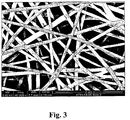
Fig. 3 is a frontal scanning electron micrograph of nylon fibers from an embodiment of the invention exemplified in Example 1. -
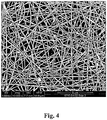
Fig. 4 is a scanning electron micrograph of nylon fibers from another embodiment of the invention as exemplified in Example 2 -
Fig. 5 is a scanning electron micrograph of a symmetrical commercial membrane Durapore® MVPP from Comparative Example 1. -
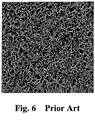
Fig. 6 is a scanning electron micrograph of a symmetrical commercial membrane Durapore® GVPP from Comparative Example 2. - All publications, patents and patent applications cited herein, whether supra or infra, are hereby incorporated by reference in their entirety to the same extent as if each individual publication, patent or patent application was specifically and individually indicated to be incorporated by reference.
- For the purposes of this specification and appended claims, unless otherwise indicated, all numbers expressing quantities of ingredients, percentages or proportions of materials, reaction conditions, and other numerical values used in the specification and claims, are to be understood as being modified in all instances by the term "about".
- Accordingly, unless indicated to the contrary, the numerical parameters set forth in the following specification and attached claims are approximations that may vary depending upon the desired properties sought to be obtained by the present invention. At the very least, and not as an attempt to limit the application of the doctrine of equivalents to the scope of the claims, each numerical parameter should at least be construed in light of the number of reported significant digits and by applying ordinary rounding techniques.
- Notwithstanding that the numerical ranges and parameters setting forth the broad scope of the invention are approximations, the numerical values set forth in the specific examples are reported as precisely as possible. Any numerical value, however, inherently contains certain errors necessarily resulting from the standard deviation found in their respective testing measurements. Moreover, all ranges disclosed herein are to be understood to encompass all subranges subsumed therein. For example, a range of "1 to 10" includes any and all subranges between (and including) the minimum value of 1 and the maximum value of 10, that is, any and all subranges having a minimum value of equal to or greater than 1 and a maximum value of equal to or less than 10, e.g., 5.5 to 10.
- Before describing the present invention in further detail, a number of terms will be defined. Use of these terms does not limit the scope of the invention but only serve to facilitate the description of the invention.
- As used herein, the singular forms "a," "an," and "the" include plural referents unless the context clearly dictates otherwise.
- The term "nanofibers" refers to fibers having diameters varying from a few tens of nanometers up to several hundred nanometers, but generally less than one micrometer.
- The terms "filter medium" or "filter media" refer to a material, or collection of material, through which a fluid carrying a microorganism contaminant passes, wherein microorganism is deposited in or on the material or collection of material.
- The terms "flux" and "flow rate" are used interchangeably to refer to the rate at which a volume of fluid passes through a filtration medium of a given area.
- The filtration medium of the present invention includes a porous electrospun nanofiber liquid filtration mat. The nanofibers have an average fiber diameter of about 10 nm to about 1000 nm. The filtration medium has a mean pore size ranging from about 0.1 µm to about 1 µm. The filtration medium has a porosity ranging from about 80% to about 95%. The filtration medium has a thickness ranging from about 1 µm to about 500 µm, preferably from about 50µm and about 200 µm. The filtration medium has liquid permeability greater than about 300 LMH/psi.
- Polymers suitable for use in the nanofibers of the invention include thermoplastic and thermosetting polymers. Suitable polymers include, but are not limited to, nylon, polyimide, aliphatic polyamide, aromatic polyamide, polysulfone, cellulose, cellulose acetate, polyether sulfone, polyurethane, poly(urea urethane), polybenzimidazole, polyetherimide, polyacrylonitrile, poly(ethylene terephthalate), polypropylene, polyaniline, poly(ethylene oxide), poly(ethylene naphthalate), poly(butylene terephthalate), styrene butadiene rubber, polystyrene, poly(vinyl chloride), poly(vinyl alcohol), poly(vinylidene fluoride), poly(vinyl butylene), copolymers, derivative compounds and blends thereof, and combinations thereof.
- The process for making the electrospun nanofiber mat of the filtration medium is disclosed in
WO 2005/024101 ;WO 2006/131081 ; andWO 2008/106903 , all assigned to Elmarco S.R.O., of Liberec, Czech Republic. - In one embodiment of the present invention, the filtration medium comprises a mat made from a single nanofiber, wherein the single nanofiber is made by a single pass of a moving collection apparatus positioned between the spinning drum and the collector through the process. It will be appreciated that the fibrous web can be formed by one or more spinning drums running simultaneously above the same moving collection apparatus.
- In one embodiment of the invention, a fibrous mat is made by depositing nanofiber (s) from a nylon solution. The nanofiber mat has a basis weight of between about 5 g/m2 and about 15 g/m2, as measured on a dry basis, i.e., after the residual solvent has evaporated or been removed.
- As depicted in
Fig. 1 , a movingcollection apparatus 30 is preferably a moving collection belt positioned within the electrostatic field between thespinning beam 20 and thecollector 35, wherein the porous mat made from a single nanofiber is collected. - In one embodiment of the invention, any of a variety of porous single or multilayered substrates or supports can be arranged on a moving collection belt to collect and combine with the electrospun nanofiber mat medium, forming a composite filtration device.
- Examples of single or multilayered porous substrates or supports include, but are not limited to, spunbonded nonwovens, meltblown nonwovens, needle punched nonwovens, spunlaced nonwovens, wet laid nonwovens, resin-bonded nonwovens, woven fabrics, knit fabrics, paper, and combinations thereof.
- In another embodiment of the invention the electrospun the nanofiber mat medium taught herein may be bonded a porous substrate or support. Bonding may be accomplished by known methods in the art, including but not limited to thermal calendaring between heated smooth nip rolls, ultrasonic bonding, and through gas bonding. Bonding increases the strength and the compression resistance of the medium so that the medium may withstand the forces associated with being handled, being formed into a useful filter, and being used in a filter, and depending on the bonding method used, adjusts physical properties such as thickness, density, and the size and shape of the pores.
- For instance, thermal calendering can be used to reduce the thickness and increase the density and reduce the porosity of the electrospun nanofiber mat medium, and reduce the size of the pores. This in turn decreases the flow rate through the medium at a given applied differential pressure. In general, ultrasonic bonding will bond to a smaller area of the electrospun nanofiber mat medium than thermal calendering, and therefore has a lesser effect on thickness, density and pore size. Though gas bonding generally has minimal effect on thickness, density and pore size, therefore this bonding method may be preferable in applications in which maintaining higher fluid flow rate is desired.
- When thermal calendering is used, care must be taken not to over-bond the electrospun nanofiber material, such that the nanofibers melt and no longer retain their structure as individual fibers. In the extreme, over-bonding would result in the nanofibers melting completely such that a film would be formed. One or both of the nip rolls used is heated to a temperature of between about ambient temperature, e.g., about 25°C and about 300°C. The nanofiber mat(s) and/or porous support or substrate, can be compressed between the nip rolls at a pressure ranging from about 0 lb/in to about 1000 lb/in (178 kg/cm). The nanofiber mat(s) can be compressed at a line speed of at least about 10 ft/min (3 m/min).
- Calendering conditions, e.g., roll temperature, nip pressure and line speed, can be adjusted to achieve the desired solidity. In general, application of higher temperature, pressure, and/or residence time under elevated temperature and/or pressure results in increased solidity.
- Other mechanical steps, such as stretching, cooling, heating, sintering, annealing, reeling, unreeling, and the like, may optionally be included in the overall process of forming, shaping and making the electrospun nanofiber mat medium as desired.
- For example, the electrospun nanofiber mat medium taught herein may be stretched in a single step or a plurality of steps as desired. Depending on the stretching method used to stretch the electrospun nanofiber mat medium, stretching can adjust the physical properties of the mat including thickness, density, and the size and shape of the pores formed in the mat. For example, if the electrospun nanofiber mat is stretched in a single direction (uniaxial stretching), the stretching may be accomplished by a single stretching step or a sequence of stretching steps until the desired final stretch ratio is attained.
- Similarly, if the electrospun nanofiber mat medium is stretched in two directions (biaxial stretching), the stretching can be conducted by a single biaxial stretching step or a sequence of biaxial stretching steps until the desired final stretch ratios are attained. Biaxial stretching may also be accomplished by a sequence of one or more uniaxial stretching steps in one direction and one or more uniaxial stretching steps in another direction. Biaxial stretching steps where the electrospun nanofiber mat is stretched simultaneously in two directions and uniaxial stretching steps may be conducted in sequence in any order.
- Methods for stretching the mat are not particularly limited, and use may be made of ordinary tentering, rolling, or inflation or a combination of two or more of these. The stretching may be conducted uniaxially, biaxially, etc. In the case of biaxial stretching, machine-direction stretching and transverse-direction stretching may be conducted either simultaneously or successively.
- Various types of stretching apparatus are well known in art and may be used to accomplish stretching of the electrospun mat according to the present invention. Uniaxial stretching is usually accomplished by stretching between two rollers wherein the second or downstream roller rotates at a greater peripheral speed than the first or upstream roller. Uniaxial stretching can also be accomplished on a standard tentering machine.
- Biaxial stretching may be accomplished by simultaneously stretching in two different directions on a tentering machine. More commonly, however, biaxial stretching is accomplished by first uniaxially stretching between two differentially rotating rollers as described above, followed by either uniaxially stretching in a different direction using a tenter machine or by biaxially stretching using a tenter machine. The most common type of biaxial stretching is where the two stretching directions are approximately at right angles to each other. In most cases where a continuous sheet is being stretched, one stretching direction is at least approximately parallel to the long axis of the sheet (machine direction) and the other stretching direction is at least approximately perpendicular to the machine direction and is in the plane of the sheet (transverse direction).
- After the electrospun nanofiber mat has been stretched either uniaxially or biaxially, the stretched porous electrospun nanofiber mat can again be calendared. The stretched electrospun nanofiber mat can be forwarded to a pair of heated calendar rolls acting cooperatively so as to form a mat of reduced thickness compared to the mat exiting from the stretching apparatus. By regulating the pressure exerted by these calendar rolls along with the temperature, the pore size of the final electrospun nanofiber mat can be controlled as desired, thereby allowing for the adjustment of the average pore size.
- The electrospun nanofiber mat may be heated by any of a wide variety of techniques prior to, during, and/or after stretching. Examples of these techniques include radiative heating such as that provided by electrically heated or gas fired infrared heaters, convective heating such as that provided by recirculating hot air, and conductive heating such as that provided by contact with heated rolls. The temperatures which are measured for temperature control purposes may vary according to the apparatus used and personal preference.
- In general, the temperature or temperatures can be controlled such that the electrospun nanofiber mat is stretched about evenly so that the variations, if any, in thickness of the stretched mat are within acceptable limits and so that the amount of stretched microporous electrospun nanofiber mat outside of those limits is acceptably low. It will be apparent that the temperatures used for control purposes may or may not be close to those of the electrospun nanofiber mat itself since they depend upon the nature of the apparatus used, the locations of the temperature-measuring devices, and the identities of the substances or objects whose temperatures are being measured.
- The porosity can be modified as a result of calendering. The range of porosity from about 5% to about 90% can be obtained.
- While filtration medium is often used in single-layer configuration, it is sometimes advantageous to provide more than one layer of filtration medium adjacent to each other. Layering membrane filters to improve particle retention is commonly used in virus filtration and is practiced commercially in Millipore's product lines of Viresolve® NFP and Viresolve Pro®. Layering filtration media of the same or different composition is also used to improve filter throughput. Examples of such layered filters are Millipore's Express® SHC and SHRP product lines. Other considerations for choosing a multi-layered filtration product include economics and convenience of media and device manufacturing, ease of sterilization and validation. The fibrous filtration media of the present invention can be used in single-layer or in a multi-layer configuration.
- Basis Weight was determined by ASTM D-3776, which is hereby incorporated by reference and reported in g/m2.
- Porosity was calculated by dividing the basis weight of the sample in g/m2 by the polymer density in g/cm3, by the sample thickness in micrometers, multiplying by 100, and subtracting the resulting number from 100, i.e., porosity=100-[basis weight/(density.times.thickness).times. 100].
- Fiber Diameter was determined as follows. Ten scanning electron microscope (SEM) images at 40,000.times. Magnification was taken of each nanofiber layer sample. The diameter of ten (10) clearly distinguishable nanofibers were measured from each SEM image and recorded. Defects were not included (i.e., lumps of nanofibers, polymer drops, intersections of nanofibers). The average fiber diameter for each sample was calculated.
- Thickness was determined by ASTM D1777-64, which is hereby incorporated by reference, and is reported in micrometers.
- Mean flow bubble point was measured according to ASTM Designation E 1294-89, "Standard Test Method for Pore Size Characteristics of Membrane Filters Using Automated Liquid Porosimeter" by using automated bubble point method from ASTM Designation F 316 using a custom-built capillary flow porosimeter, in principle similar to a commercial apparatus from Porous Materials, Inc. (PMI), Ithaca, N.Y. Individual samples of 47 mm in diameter (9.6 cm2 measurable area) were wetted with isopropyl alcohol. Each sample was placed in a holder, and a differential pressure of air was applied and the fluid removed from the sample. The differential pressure at which wet flow is equal to one-half the dry flow (flow without wetting solvent) is used to calculate the mean flow pore size using supplied software.
- Flow Rate (also referred to as Flux) is the rate at which fluid passes through the sample of a given area and was measured by passing deionized water through filter medium samples having a diameter of 35 mm. The water was forced through the samples using hydraulic pressure (water head pressure) or pneumatic pressure (air pressure over water).
- The effective pore size of an electrospun mat can be measured using conventional membrane techniques such as bubble point, liquid-liquid porometry, and challenge test with particles of certain size. It is known that the effective pore size of a fibrous mat generally increases with the fiber diameter and decreases with porosity.
- Bubble point test provides a convenient way to measure effective pore size. It is calculated from the following equation:

- Membrane manufacturers assign nominal pore size ratings to commercial membrane filters, which are based on their retention characteristics.
- While it is known that the pore size distribution of a random non-woven mat becomes narrower as thickness of the mat increases (See, Meltzer, T. H., In Filtration in the Pharmaceutical Industry, Marcel Dekker: New York, 1987; p 103), it has not been previously shown whether the pore size distribution of a non-woven mat can be sufficiently narrow to accomplish "full bacteria retention" (as discussed supra) at competitive permeability of at least 100 LMH/psi for Mycoplasma-retentive filters and 500 LMH/psi for B. Diminuta-retentive filters.
- Mycoplasma retention was measured by challenging the membranes with 8.77*107 colony forming units per square cm of membrane (CFU/cm2). The devices are challenged with 50 mL of diluted A. laidlawii and then flushed with 50 mL of Mycoplasma Buffer for a total of 100 mL. The full 100 mL was then filtered through a 0.22 µm sterilization membrane. Then, the procedure described in a published patent application
WO 2009/032040 was followed. - B. Diminuta retention was measured in accordance with ASTM F838-83.
- The following Examples of the present invention will demonstrate that an electrospun nanofiber mat can possess both high permeability and high bacteria retention at the same time.
- Hereinafter the present invention will be described in more detail in the following examples. The invention will be further clarified by the following examples which are intended to be exemplary of the invention.
- An electrospinning process and apparatus for forming a nanofiber web as disclosed in
WO 2006/131081 was used to produce the nanofiber layers and mats of the Examples below. - Nanofiber layers were made by electrospinning a solution of Nylon 6 polymer. Nylon 6 was supplied by BASF Corp., Florham Park, NJ, USA, under the trademark Ultramid B24. A solvent mixture of acetic and formic acid, weight ratio 2:1, was used to prepare solutions of Nylon, with concentrations ranging from 8 to 16%.
- A 10 wt.% solution of Nylon was electrospun at 82 kV and distance between solution and ground electrode 155 mm, for 45 minutes. By way of example only, samples were tested for A. Laidiawii retention using standard Millipore procedures described above. A representative sample is compared to the closest Durapore® membrane, MVPP, in Table I below.
- The results are shown in Table I below.
Table I Thickness (micron) Permeability (LMH/psi) Mean flow bubble point for IPA (psi) Nominal pore size rating (micron) Porosity (%) A. Laidlawii LRV Example 1: Electrospun Nylon 140 140 400 65 N/A 88 >8.6 Comparative Example 1: Millipore Durapore® MVPP 125 80 55 0.1 70 >8.6 - A series of Nylon 6 electrospun fibrous mats were prepared as described in Example 1. A 13 wt.% solution of Nylon was electrospun at 82 kV and distance between solution and ground electrode 155 mm, for 10 and 45 minutes. Fiber mats of 55 and 225 microns thick were produced for the two spin times, respectively. These samples were tested, by way of example only, for B. Diminuta retention. It should be noted that the Mycoplasma-retentive electrospun fibrous mats as taught herein are used for the full retention of B. Diminuta.
- Another series of Nylon 6 electrospun fibrous mats were prepared as described in Example 2. A 16 wt.% solution of Nylon was electrospun at 82 kV and distance between solution and ground electrode 155 mm, for 15 minutes. These samples were tested, by way of example only, for B. Diminuta retention.
- The results are shown in Table II below.
Table II Thickness (micron) Permeability (LMH/psi) Mean flow bubble point for IPA (psi) Nominal pore size rating (micron) Porosity (%) B. Diminuta LRV Example 2: Nylon 225 225 1,814 33 N/A 90 >9 Example 2: Nylon 55 55 4,960 26 N/A 90 >9 Example 3: Nylon 55 106 3,354 13.7 N/A 90 5.5 Comparativ e Example 2: Millipore Durapore® GVPP 125 500 30 0.22 75 >9 - A higher porosity of electrospun nanofiber mats results in greater permeability, while still providing a reliable means for retention of microorganisms.
- Electrospun nanofiber containing liquid filtration media, in accordance with the present invention are useful in the food, beverage, pharmaceuticals, biotechnology, microelectronics, chemical processing, water treatment, and other liquid treatment industries.
- Electrospun nanofiber containing liquid filtration media, in accordance with the present invention may be used for filtering, separating, identifying, and/or detecting microorganisms from a liquid sample or stream.
- Electrospun nanofiber containing liquid filtration media, in accordance with the present invention may be used with any liquid sample preparation methods including, but not limited to, chromatography; high pressure liquid chromatography (HPLC); electrophoresis; gel filtration; sample centrifugation; on-line sample preparation; diagnostic kits testing; diagnostic testing; high throughput screening; affinity binding assays; purification of a liquid sample; size-based separation of the components of the fluid sample; physical properties based separation of the components of the fluid sample; chemical properties based separation of the components of the fluid sample; biological properties based separation of the components of the fluid sample; electrostatic properties based separation of the components of the fluid sample; and, combinations thereof. Also, electrospun nanofiber containing liquid filtration media, in accordance with the present invention can be component or part of a larger device and/or system.
- The invention also provides kits which may be used to remove microorganisms from a liquid sample. The kit may comprise, for example, one or more electrospun nanofiber containing liquid filtration medium in accordance with the present invention, as well as one or more liquid filtration devices, support or substrate for the medium. The kit may contain one or more controls, and may optionally include various buffers useful in the methods of practicing the invention. Wash buffers for eliminating reagents or eliminating non-specifically retained or bound material may optionally be included in the kit.
- Other optional kit reagents include an elution buffer. Each of the buffers may be provided in a separate container as a solution. Alternatively the buffers may be provided in dry form or as a powder and may be made up as a solution according to the user's desired application. In this case the buffers may be provided in packets. The kit may provide a power source in instances where the device is automated as well as a means of providing an external force such as a vacuum pump. The kit may also include instructions for using the electrospun nanofiber containing liquid filtration medium, device, support or substrate, and/or for making up reagents suitable for use with the invention, and methods of practicing invention. Optional software for recording and analyzing data obtained while practicing the methods of the invention or while using the device of the invention may also be included.
- The term "kit" includes, for example, each of the components combined in a single package, the components individually packaged and sold together, or the components presented together in a catalog (e.g., on the same page or double-page spread in the catalog).
- The disclosure set forth above may encompass multiple distinct inventions with independent utility. Although each of these inventions has been disclosed in its preferred form(s), the specific embodiments thereof as disclosed and illustrated herein are not to be considered in a limiting sense, because numerous variations are possible. The subject matter of the inventions includes all novel and nonobvious combinations and subcombinations of the various elements, features, functions, and/or properties disclosed herein. The following claims particularly point out certain combinations and subcombinations regarded as novel and nonobvious. Inventions embodied in other combinations and subcombinations of features, functions, elements, and/or properties may be claimed in applications claiming priority from this or a related application. Such claims, whether directed to a different invention or to the same invention, and whether broader, narrower, equal, or different in scope to the original claims, also are regarded as included within the subject matter of the inventions of the present disclosure.
- Embodiments of the invention may include the features of the following enumerated paragraphs.
- 1. A method of removing microorganisms from a liquid sample comprising the steps of:
- a) providing a liquid sample containing microorganisms,
- b) providing a porous nanofiber containing filtration medium having a microorganism Log Reduction Value (LRV) greater than about 8, a porosity from about 80% to about 95%, and a liquid permeability greater than about 300 LMH/psi, wherein the nanofiber has a fiber diameter from about 10 nm to about 1,000 nm, and
- c) passing the liquid sample containing microorganisms through the filtration medium resulting in the full retention of microorganisms.
- 2. The method of paragraph 1, wherein the filtration medium has a mean flow bubble point, as tested with isopropanol, in the range from 1 to 100 psi.
- 3. The method of paragraph 1, wherein the filtration medium has a thickness ranging from about 1 µm to about 500 µm.
- 4. The method of paragraph 1, wherein the nanofiber containing filtration medium is formed by a process selected from the group consisting of electrospinning and electroblowing.
- 5. The method of paragraph 1, wherein the microorganism is bacteria.
- 6. The method of paragraph 1, wherein the microorganism is Mycoplasma.
- 7. The method of paragraph 1 , wherein the nanofiber comprises a polymer selected from the group consisting of polyimide, aliphatic polyamide, aromatic polyamide, polysulfone, cellulose acetate, polyether sulfone, polyurethane, poly(urea urethane), polybenzimidazole, polyetherimide, polyacrylonitrile, poly(ethylene terephthalate), polypropylene, polyaniline, poly(ethylene oxide), poly(ethylene naphthalate), poly(butylene terephthalate), styrene butadiene rubber, polystyrene, poly(vinyl chloride), poly(vinyl alcohol), poly(vinylidene fluoride), poly(vinyl butylene) and copolymers, derivative compounds, or blends thereof.
- 8. The method of paragraph 1, wherein the nanofiber comprises an aliphatic polyamide.
- 9. The method of paragraph 1, wherein the nanofiber comprises a blend of polymers or copolymers.
- 10. The method of paragraph 1, wherein the nanofiber is disposed on a porous support.
- 11. The method of paragraph 1 , wherein the porous support comprises one or more layers selected from the group consisting of spunbonded nonwovens, meltblown nonwovens, needle punched nonwovens, spunlaced nonwovens, wet laid nonwovens, resin-bonded nonwovens, woven fabrics, knit fabrics, paper, and combinations thereof.
- 12. The method of paragraph 6, wherein the full retention of Mycoplasma by the filtration medium occurs when the filtration medium can be validated to produce sterile effluent after being challenged with ≥1 109 x cfu/mL Acholeplasma laidlawii.
- 13. A porous nanofiber filtration medium having a microorganism LRV greater than about 8 for use in fully retaining microorganisms removed from a liquid sample passing through the filtration medium, the filtration medium comprising:
a nanofiber containing substrate wherein the nanofiber has a fiber diameter from about 10 nm to about 1,000 and the substrate has a,- i) a porosity ranging from about 80% to about 95%, and
- ii) a liquid permeability greater than about 300 LMH/psi.
- 14. The filtration medium of paragraph 13, having a thickness ranging from about 1 µm to about 500 µm.
- 15. The filtration medium of paragraph 13, further comprising:
- iii) a mean flow bubble point, as tested with isopropanol, in the range from 1 to 100 psi.
- 16. The filtration medium of paragraph 13, wherein the nanofiber comprises a polymer selected from the group consisting of polyimide, aliphatic polyamide, aromatic polyamide, polysulfone, cellulose acetate, polyether sulfone, polyurethane, poly(urea urethane), polybenzimidazole, polyethehmide, polyacrylonitrile, poly(ethylene terephthalate), polypropylene, polyaniline, poly(ethylene oxide), poly(ethylene naphthalate), poly(butylene terephthalate), styrene butadiene rubber, polystyrene, poly(vinyl chloride), poly(vinyl alcohol), poly(vinylidene fluoride), poly(vinyl butylene) and copolymers, derivative compounds, and blends thereof.
- 17. The filtration medium of paragraph 13, wherein the nanofiber comprises an aliphatic polyamide.
- 18. The filtration medium of paragraph 14, wherein the nanofiber containing substrate is formed by a process selected from the group consisting of electrospinning and electroblowing.
- 19. The filtration medium of paragraph 14, wherein the nanofiber is disposed on a porous support.
- 20. The filtration medium of paragraph 19, wherein the porous support comprises one or more layers selected from the group consisting of spunbonded nonwovens, meltblown nonwovens, needle punched nonwovens, spunlaced nonwovens, wet laid nonwovens, resin-bonded nonwovens, woven fabrics, knit fabrics, paper, and combinations thereof.
- 21. The filtration medium of paragraph 14, wherein the microorganism is bacteria.
- 22. The filtration medium of paragraph 14, wherein the microorganism is Mycoplasma.
- 23. The filtration medium of paragraph 22, wherein the full retention of Mycoplasma by the filtration medium occurs when the filtration medium can be validated to produce sterile effluent after being challenged with ≥ 1 109 x x cfu/mL Acholeplasma laidlawii.
- 24. A filtration device having a microorganism LRV greater than about 8 for use in fully retaining microorganisms removed from a liquid sample passing through the device, the filtration device comprising:
a nanofiber containing filtration medium having a microorganism Log Reduction Value (LRV) greater than about 8, wherein the nanofiber has a fiber diameter from about 10 nm to about 1,000 nm, and the filtration medium has,- i) a porosity ranging from about 80% to about 95%, and
- ii) a liquid permeability greater than about 300 LMH/psi.
- 25. The device of paragraph 24, wherein the filtration medium has a thickness ranging from about 1 µm to about 500 µm.
- 26. The device of paragraph 24, wherein the filtration medium further comprises: iii) a mean flow bubble point, as tested with isopropanol, in the range from 1 to 100 psi.
- 27. The device of paragraph 24, wherein the filtration medium is formed by a process selected from the group consisting of electrospinning and electroblowing.
- 28. The device of paragraph 24, wherein the filtration medium is an electrospun polymeric fibrous mat.
- 29. The device of paragraph 24, wherein the filtration medium is disposed on a porous support.
- 30. The device of paragraph 24, wherein the microorganism is Mycoplasma.
- 31. The device of paragraph 24, wherein the full retention of Mycoplasma by the filtration medium occurs when the filtration medium can be validated to produce sterile effluent after being challenged with ≥ 1 109 x cfu/mL Acholeplasma laidlawii.
- 32. A method of removing microorganisms from a liquid sample comprising the steps of:
- a) providing a liquid sample containing microorganisms,
- b) providing a porous nanofiber containing filtration medium having a microorganism Log Reduction Value (LRV) greater than about 9, a porosity from about 80% to about 95%, and a liquid permeability greater than about 1 ,000 LMH/psi, wherein the nanofiber has a fiber diameter from about 10 nm to about 1,000 nm, and
- c) passing the liquid sample containing microorganisms through the filtration medium resulting in the full retention of microorganisms.
- 33. The method of paragraph 32, wherein the filtration medium has a mean flow bubble point, as tested with isopropanol, in the range from 1 to 100 psi.
- 34. The method of paragraph 32, wherein the filtration medium has a thickness ranging from about 1 µm to about 500 µm.
- 35. The method of paragraph 32, wherein the filtration medium is an electrospun polymeric fibrous mat.
- 36. The method of paragraph 32, wherein the microorganism is bacteria.
- 37. The method of paragraph 36, wherein the bacteria is Brevundimonas diminuta.
- 38. The method of paragraph 32, wherein the nanofiber comprises a polymer selected from the group consisting of polyimide, aliphatic polyamide, aromatic polyamide, polysulfone, cellulose acetate, polyether sulfone, polyurethane, poly(urea urethane), polybenzimidazole, polyetherimide, polyacrylonitrile, poly(ethylene terephthalate), polypropylene, polyaniline, poly(ethylene oxide), poly(ethylene naphthalate), poly(butylene terephthalate), styrene butadiene rubber, polystyrene, poly(vinyl chloride), poly(vinyl alcohol), poly(vinylidene fluoride), poly(vinyl butylene) and copolymers, derivative compounds, and blends thereof.
- 39. The method of paragraph 32, wherein the nanofiber comprises an aliphatic polyamide.
- 40. The method of paragraph 32, wherein the filtration medium is disposed on a porous support.
- 41. The method of
paragraph 40, wherein the porous support comprises one or more layers selected from the group consisting of spunbonded nonwovens, meltblown nonwovens, needle punched nonwovens, spunlaced nonwovens, wet laid nonwovens, resin-bonded nonwovens, woven fabrics, knit fabrics, paper, and combinations thereof. - 42. The method of paragraph 32, wherein full retention of Brevundimonas diminuta by the filtration medium occurs when the filtration medium meets the requirements of the Standard Test Method for Determining Bacterial Retention Of Membrane Filters Utilized For Liquid Filtration (ASTM F838-83 test), and can be validated to produce sterile effluent after being challenged with ≥ 1 107 x CFU/cm2 Brevundimonas diminuta.
- 43. A liquid filtration nanofiber containing medium having a microorganism LRV greater than about 9 for use in fully retaining microorganisms removed from a liquid sample passing through the filtration medium, the filtration medium comprising: a nanofiber containing mat wherein the nanofiber has a fiber diameter from about 10 nm to about 1,000 nm, and the mat having a,
- i) a porosity ranging from about 80% to about 95%, and
- ii) a liquid permeability greater than about 1 ,000 LMH/psi.
- 44. The filtration medium of paragraph 43, has a thickness ranging from about 1 µm to about 500 µm.
- 45. The filtration medium of paragraph 43, further comprising:
- iii) a mean flow bubble point, as tested with isopropanol, in the range from 1 to 100 psi.
- 46. The filtration medium of paragraph 43, wherein the nanofiber comprises a polymer selected from the group consisting of polyimide, aliphatic polyamide, aromatic polyamide, polysulfone, cellulose acetate, polyether sulfone, polyurethane, poly(urea urethane), polybenzimidazole, polyetherimide, polyacrylonitrile, poly(ethylene terephthalate), polypropylene, polyaniline, poly(ethylene oxide), poly(ethylene naphthalate), poly(butylene terephthalate), styrene butadiene rubber, polystyrene, poly(vinyl chloride), poly(vinyl alcohol), poly(vinylidene fluoride), poly(vinyl butylene) and copolymers, derivative compounds, and blends thereof.
- 47. The filtration medium of paragraph 43, wherein the nanofiber comprises an aliphatic polyamide.
- 48. The filtration medium of paragraph 43, wherein the mat is an electrospun polymeric porous mat.
- 49. The filtration medium of paragraph 43, wherein the nanofiber is disposed on a porous support.
- 50. The filtration medium of paragraph 43, wherein the porous support comprises one or more layers selected from the group consisting of spunbonded nonwovens, meltblown nonwovens, needle punched nonwovens, spunlaced nonwovens, wet laid nonwovens, resin-bonded nonwovens, woven fabrics, knit fabrics, paper, and combinations thereof.
- 51. The filtration medium of paragraph 43, wherein the microorganism is bacteria.
- 52. The filtration medium of paragraph 51, wherein the bacteria is Brevundimonas diminuta.
- 53. The filtration medium of paragraph 52, wherein full retention of Brevundimonas diminuta by the filtration medium occurs when the filtration medium meets the requirements of the Standard Test Method for Determining Bacterial Retention Of Membrane Filters Utilized For Liquid Filtration (ASTM F838-83 test), and can be validated to produce sterile effluent after being challenged with ≥ 1 107 CFU/cm2 Brevundimonas diminuta.
- 54. A liquid filtration device having a microorganism LRV greater than about 9 for use in fully retaining microorganisms removed from a liquid sample passing through the device, the filtration device comprising:
a nanofiber containing filtration medium having a microorganism Log Reduction Value (LRV) greater than about 9, wherein the nanofiber has a fiber diameter from about 10 nm to about 1,000 nm, and the filtration medium has,- i) a porosity from about 80% to about 95%, and
- ii) a liquid permeability greater than about 1,000 LMH/psi.
- 55. The device of paragraph 54, wherein the filtration medium has a thickness ranging from about 1 µm to about 500 µm.
- 56. The device of paragraph 54, wherein the filtration medium further comprises:
- iii) a mean flow bubble point, as tested with isopropanol, in the range from 1 to 100 psi.
- 57. The device of paragraph 54, wherein the filtration medium is an electrospun polymeric porous mat.
- 58. The device of paragraph 54, wherein the filtration medium is disposed on a porous support having one or more layers.
- 59. The device of paragraph 54, wherein the microorganism is Brevundimonas diminuta.
- 60. The device of paragraph 59, wherein full retention of Brevundimonas diminuta by the filtration medium occurs when the filtration medium meets the requirements of the Standard Test Method for Determining Bacterial Retention Of Membrane Filters Utilized For Liquid Filtration (ASTM F838-83 test), and can be validated to produce sterile effluent after being challenged with ≥ 1 107 CFU/cm2 Brevundimonas diminuta.
- 61. The device of paragraph 54, wherein the nanofiber comprises a polymer selected from the group consisting of polyimide, aliphatic polyamide, aromatic polyamide, polysulfone, cellulose acetate, polyether sulfone, polyurethane, poly(urea urethane), polybenzimidazole, polyetherimide, polyacrylonitrile, poly(ethylene terephthalate), polypropylene, polyaniline, poly(ethylene oxide), poly(ethylene naphthalate), poly(butylene terephthalate), styrene butadiene rubber, polystyrene, poly(vinyl chloride), poly(vinyl alcohol), poly(vinylidene fluoride), poly(vinyl butylene), and copolymers, derivative compounds, and blends thereof.
- 62. The device of paragraph 54, wherein the nanofiber comprises an aliphatic polyamide.
- 63. The method of paragraph 32, using the filtration device of paragraph 54.
Claims (15)
- A porous nanofiber filtration medium having a microorganism LRV greater than 8 capable of fully retaining Brevundimonas diminuta as measured in accordance with ASTM F838-83 removed from a liquid sample passing through the filtration medium by size-based separation, the filtration medium comprising:
a nanofiber containing layer wherein the nanofiber has a fiber diameter from 10 nm to 1,000 nm and the layer has:i) a porosity ranging from 80% to 95%, andii) a liquid permeability greater than 300 LMH/psi, andiii) a mean flow bubble point, as tested with isopropanol, in the range from 1 psi to 100 psi. - A filtration medium according to claim 1, having a thickness ranging from 1 µm to 500 µm.
- A filtration medium according to claim 1 or claim 2, wherein the nanofiber comprises a polymer selected from the group consisting of polyimide, aliphatic polyamide, aromatic polyamide, polysulfone, cellulose acetate, polyether sulfone, polyurethane, poly(urea urethane), polybenzimidazole, polyethehmide, polyacrylonitrile, poly(ethylene terephthalate), polypropylene, polyaniline, poly(ethylene oxide), poly(ethylene naphthalate), poly(butylene terephthalate), styrene butadiene rubber, polystyrene, poly(vinyl chloride), poly(vinyl alcohol), poly(vinylidene fluoride), poly(vinyl butylene) and copolymers, derivative compounds, and blends thereof, and the nanofiber containing layer is formed by a process selected from the group consisting of electrospinning and electroblowing.
- A filtration medium according to any preceding claim, wherein the nanofiber containing layer is disposed on a porous support having one or more layers, and the porous support comprises one or more layers selected from the group consisting of spunbonded nonwovens, meltblown nonwovens, needle punched nonwovens, spunlaced nonwovens, wet laid nonwovens, resin-bonded nonwovens, woven fabrics, knit fabrics, paper, and combinations thereof.
- A filtration medium according to any preceding claim, wherein the filtration medium is an electrospun polymeric fibrous mat.
- The filtration medium according to any preceding claim, wherein the full retention of Brevundimonas diminuta by the filtration medium occurs when the filtration medium can be validated to produce sterile effluent after being challenged with ≥1 x 10⁷ cfu/mL Acholeplasma laidlawii.
- The filtration medium according to any preceding claim, wherein the filtration medium has a microorganism LRV greater than 9.
- A method of removing microorganisms from a liquid sample comprising the steps of:a) providing a liquid sample containing microorganisms,b) providing a porous nanofiber containing filtration medium according to any one of claims 1 to 7; andc) passing the liquid sample containing microorganisms through the filtration medium resulting in the full retention of microorganisms by size-based separation.
- A method according to claim 8 wherein the nanofiber containing filtration medium has a microorganism Log Reduction Value (LRV) greater than 9.
- A method of removing bacteria from a liquid sample comprising the steps of:a) providing a liquid sample containing bacteria,b) providing a porous nanofiber containing filtration medium according to any one of claims 1 to 7; andc) passing the liquid sample containing bacteria through the filtration medium resulting in the full retention of microorganisms by size-based separation.
- A method according to claim 10, wherein full retention of Brevundimonas diminuta by the filtration medium occurs when the filtration medium meets the requirements of the Standard Test Method for Determining Bacterial Retention Of Membrane Filters Utilized For Liquid Filtration (ASTM F838-83 test), and can be validated to produce sterile effluent after being challenged with ≥107 CFU/cm2 Brevundimonas diminuta.
- A filtration device having a microorganism LRV greater than 8 capable of fully retaining microorganisms removed from a liquid sample passing through the device, the filtration device comprising:
a nanofiber containing filtration medium according to any one of claims 1 to 7. - A filtration medium as claimed in any one of claims 1 to 7, a method as claimed in any one of claims 8 to 11 or a filtration devices as claimed in claim 12 wherein the nanofiber comprises an aliphatic polyamide.
- A filtration medium as claimed in any one of claims 1 to 7, a method as claimed in any one of claims 8 to 11 or a filtration devices as claimed in claim 12 wherein the nanofiber comprises a blend of polymers or copolymers.
- A filtration medium as claimed in any one of claims 1 to 7, a method as claimed in any one of claims 8 to 11 or a filtration devices as claimed in claim 12 wherein the nanofiber layer has a liquid permeability greater than 1000 LMH/psi
Applications Claiming Priority (3)
| Application Number | Priority Date | Filing Date | Title |
|---|---|---|---|
| US21046809P | 2009-03-19 | 2009-03-19 | |
| PCT/US2010/000826 WO2010107503A1 (en) | 2009-03-19 | 2010-03-19 | Removal of microorganisms from fluid samples using nanofiber filtration media |
| EP10723810A EP2408482A1 (en) | 2009-03-19 | 2010-03-19 | Removal of microorganisms from fluid samples using nanofiber filtration media |
Related Parent Applications (1)
| Application Number | Title | Priority Date | Filing Date |
|---|---|---|---|
| EP10723810A Division EP2408482A1 (en) | 2009-03-19 | 2010-03-19 | Removal of microorganisms from fluid samples using nanofiber filtration media |
Publications (2)
| Publication Number | Publication Date |
|---|---|
| EP3381476A1 true EP3381476A1 (en) | 2018-10-03 |
| EP3381476B1 EP3381476B1 (en) | 2022-11-09 |
Family
ID=42371352
Family Applications (2)
| Application Number | Title | Priority Date | Filing Date |
|---|---|---|---|
| EP10723810A Ceased EP2408482A1 (en) | 2009-03-19 | 2010-03-19 | Removal of microorganisms from fluid samples using nanofiber filtration media |
| EP17195327.6A Active EP3381476B1 (en) | 2009-03-19 | 2010-03-19 | Removal of microorganisms from fluid samples using nanofiber filtration media |
Family Applications Before (1)
| Application Number | Title | Priority Date | Filing Date |
|---|---|---|---|
| EP10723810A Ceased EP2408482A1 (en) | 2009-03-19 | 2010-03-19 | Removal of microorganisms from fluid samples using nanofiber filtration media |
Country Status (7)
| Country | Link |
|---|---|
| US (5) | US9750829B2 (en) |
| EP (2) | EP2408482A1 (en) |
| JP (5) | JP2012520761A (en) |
| CN (2) | CN105477650A (en) |
| ES (1) | ES2932986T3 (en) |
| SG (3) | SG174346A1 (en) |
| WO (1) | WO2010107503A1 (en) |
Families Citing this family (58)
| Publication number | Priority date | Publication date | Assignee | Title |
|---|---|---|---|---|
| US7993523B2 (en) * | 2007-03-06 | 2011-08-09 | E. I. Du Pont De Nemours And Company | Liquid filtration media |
| TWI398353B (en) * | 2009-03-02 | 2013-06-11 | Ind Tech Res Inst | Nano-fiber material and salt-rejecting filtration material |
| CN105477650A (en) | 2009-03-19 | 2016-04-13 | Emd密理博公司 | Removal of microorganisms from fluid samples using nanofiber filtration media |
| PH12012500626A1 (en) * | 2009-09-30 | 2012-10-22 | Amolifescience Co Ltd | Nanofiber membrane for western blot and preparation method thereof |
| CA2698880A1 (en) * | 2010-04-01 | 2011-10-01 | Sean Frisky | Method and apparatus for electrocoagulation |
| US9623352B2 (en) | 2010-08-10 | 2017-04-18 | Emd Millipore Corporation | Method for retrovirus removal |
| US8889572B2 (en) * | 2010-09-29 | 2014-11-18 | Milliken & Company | Gradient nanofiber non-woven |
| US20120076972A1 (en) * | 2010-09-29 | 2012-03-29 | Hao Zhou | Nanofiber Non-Woven Composite |
| US20120077406A1 (en) * | 2010-09-29 | 2012-03-29 | Scrivens Walter A | Nanofiber Non-Wovens Containing Particles |
| US20120077405A1 (en) * | 2010-09-29 | 2012-03-29 | Hao Zhou | Core/Shell Nanofiber Non-Woven |
| US20120318752A1 (en) * | 2010-12-20 | 2012-12-20 | E.I. Du Pont De Nemours And Company | High porosity high basis weight filter media |
| EP2484432B1 (en) * | 2011-02-03 | 2013-11-27 | Helmholtz-Zentrum Geesthacht Zentrum für Material- und Küstenforschung GmbH | Microfiltration membrane |
| SG10201605328WA (en) * | 2011-04-01 | 2016-08-30 | Emd Millipore Corp | Nanofiber containing composite structures |
| SG194764A1 (en) * | 2011-07-21 | 2013-12-30 | Emd Millipore Corp | Nanofiber containing composite structures |
| CN102505357A (en) * | 2011-09-22 | 2012-06-20 | 东华大学 | Electrostatic spinning melt blowing composite non-woven material for filtering blood and preparation method of electrostatic spinning melt blowing composite non-woven material |
| EP3335778A1 (en) * | 2012-01-04 | 2018-06-20 | North Carolina State University | Rotary disk water filter |
| US11090590B2 (en) | 2012-11-13 | 2021-08-17 | Hollingsworth & Vose Company | Pre-coalescing multi-layered filter media |
| US9149749B2 (en) | 2012-11-13 | 2015-10-06 | Hollingsworth & Vose Company | Pre-coalescing multi-layered filter media |
| WO2014078269A1 (en) * | 2012-11-14 | 2014-05-22 | Veolia Water Solutions & Technologies Support | Process for removing suspended particles by a gravity fed disc filter |
| SG11201504356RA (en) | 2012-12-10 | 2015-07-30 | Emd Millipore Corp | Ultraporous nanofiber mats and uses thereof |
| US20150354139A1 (en) * | 2013-01-25 | 2015-12-10 | Xanofi, Inc. | Wet laid non-woven substrate containing polymeric nanofibers |
| JP2016507671A (en) | 2013-02-14 | 2016-03-10 | ナノパレイル,エルエルシー | Hybrid felt of electrospun nanofiber |
| US9808770B2 (en) * | 2013-05-14 | 2017-11-07 | Pall Corporation | High throughput membrane with channels |
| US20150251138A1 (en) * | 2014-03-07 | 2015-09-10 | E I Du Pont De Nemours And Company | Process for Using a Cross-Flow Filter Membrane to Remove Particles from a Liquid Stream |
| US10399024B2 (en) | 2014-05-15 | 2019-09-03 | Hollingsworth & Vose Company | Surface modified filter media |
| SG11201608399QA (en) | 2014-06-26 | 2016-11-29 | Emd Millipore Corp | Filter structure with enhanced dirt holding capacity |
| US20160016124A1 (en) * | 2014-07-21 | 2016-01-21 | W.L. Gore & Associates, Inc. | Fluoropolymer Article for Mycoplasma Filtration |
| US20160016126A1 (en) * | 2014-07-21 | 2016-01-21 | W. L. Gore & Associates, Inc | Fluoropolymer Article For Bacterial Filtration |
| CN104474808B (en) * | 2014-12-06 | 2017-02-01 | 江苏三鼎环境科技有限公司 | Nano micro-pore air purification net and preparation method thereof |
| US9731239B2 (en) | 2014-12-15 | 2017-08-15 | W. L. Gore & Associates, Inc. | Fluoropolymer article for bacterial filtration |
| JP6502500B2 (en) * | 2014-12-24 | 2019-04-17 | コーロン ファッション マテリアル インコーポレイテッド | Porous support excellent in packing characteristics of ion conductor, method for producing the same, and reinforced membrane containing the same |
| KR20170113638A (en) * | 2015-04-17 | 2017-10-12 | 이엠디 밀리포어 코포레이션 | A method for purifying a biological material of interest in a sample using nanofiber ultrafiltration membranes operating in tangential flow filtration mode |
| US10828587B2 (en) | 2015-04-17 | 2020-11-10 | Hollingsworth & Vose Company | Stable filter media including nanofibers |
| KR101810830B1 (en) | 2015-08-13 | 2017-12-20 | 주식회사 아모그린텍 | Portable pouch for water purifying |
| WO2017044898A1 (en) * | 2015-09-11 | 2017-03-16 | Ultra Small Fibers, LLC | Tunable nanofiber filter media and filter devices |
| KR102063671B1 (en) * | 2015-10-14 | 2020-02-12 | 주식회사 아모그린텍 | Filter for liquid medicine, method for manufacturing thereof and liquid medicine filter module comprising the same |
| EP3348393B1 (en) | 2016-04-14 | 2023-06-21 | Sefar AG | Composite membrane and method for producing same |
| CN105833610B (en) * | 2016-04-26 | 2017-12-26 | 同济大学 | A kind of composite filter paper manufacture method and device for improving surface and holding dirt |
| US10625196B2 (en) | 2016-05-31 | 2020-04-21 | Hollingsworth & Vose Company | Coalescing filter media |
| CN109789377B (en) * | 2016-08-08 | 2022-03-08 | 港大科桥有限公司 | Preparation of hand-held gravity-driven water filters with high throughput and water disinfection performance |
| JP6294928B1 (en) | 2016-09-23 | 2018-03-14 | 株式会社Subaru | Vehicle travel control device |
| DE102016121126B3 (en) * | 2016-11-04 | 2018-01-18 | Farmers Cut GmbH | Climatically sealed climate cell for the cultivation of plants indoors |
| EP3366362B1 (en) * | 2017-02-23 | 2021-05-05 | Sefar AG | A protective vent and method for producing a protective vent |
| WO2019016605A1 (en) | 2017-07-21 | 2019-01-24 | Merck Millipore Ltd | Non-woven fiber membranes |
| US11452959B2 (en) | 2018-11-30 | 2022-09-27 | Hollingsworth & Vose Company | Filter media having a fine pore size distribution |
| EP3937997A1 (en) * | 2019-03-11 | 2022-01-19 | Xeltis AG | Electrospun polymer assemblies for medical implant applications |
| MX2021013375A (en) | 2019-05-01 | 2021-11-25 | Ascend Performance Mat Operations Llc | Filter media comprising polyamide nanofiber layer. |
| EP4033022A4 (en) * | 2019-09-20 | 2022-11-09 | FUJIFILM Corporation | Nonwoven fabric, method for producing nonwoven fabric, and filter |
| CA3092150A1 (en) | 2020-03-13 | 2021-09-13 | Sean Frisky | System and method for wastewater treatment |
| CN111389101A (en) * | 2020-03-31 | 2020-07-10 | 江西师范大学 | Five-layer polyurethane-cellulose acetate composite fiber efficient and durable air filter disc |
| CN111389100A (en) * | 2020-03-31 | 2020-07-10 | 江西师范大学 | Five-layer symmetrical polyvinylidene fluoride-cellulose acetate composite efficient durable air filter |
| US12343666B2 (en) | 2020-04-07 | 2025-07-01 | Hollingsworth & Vose Company | Filter media including out-of-plane solid elements, methods of forming them, and uses thereof |
| CN112226911A (en) * | 2020-09-22 | 2021-01-15 | 上海世龙科技有限公司 | Hydrophilic composite membrane and preparation method thereof |
| JPWO2023008489A1 (en) * | 2021-07-29 | 2023-02-02 | ||
| CN113578075A (en) * | 2021-08-18 | 2021-11-02 | 西安交通大学 | Composite strengthening method for electrostatic spinning polymer nanofiber filter membrane and filter membrane with composite structure |
| CN114272772A (en) * | 2021-12-31 | 2022-04-05 | 杭州科百特过滤器材有限公司 | Asymmetric PES (polyether sulfone) porous membrane for virus removal and preparation method thereof |
| US20250032966A1 (en) * | 2023-07-25 | 2025-01-30 | Suresh Bhate | Pathogen deactivating air filter systems |
| GB2633623A (en) * | 2023-09-18 | 2025-03-19 | Astrea Uk Services Ltd | Electrospun composite fibers and uses thereof |
Citations (15)
| Publication number | Priority date | Publication date | Assignee | Title |
|---|---|---|---|---|
| WO2003080905A1 (en) | 2002-03-26 | 2003-10-02 | Nano Technics Co., Ltd. | A manufacturing device and the method of preparing for the nanofibers via electro-blown spinning process |
| US20040038014A1 (en) | 2002-08-20 | 2004-02-26 | Donaldson Company, Inc. | Fiber containing filter media |
| US20050051487A1 (en) * | 2002-11-01 | 2005-03-10 | Koslow Evan E. | Fiber-fiber composites |
| WO2005024101A1 (en) | 2003-09-08 | 2005-03-17 | Technicka Univerzita V Liberci | A method of nanofibres production from a polymer solution using electrostatic spinning and a device for carrying out the method |
| KR20050077304A (en) * | 2004-01-27 | 2005-08-02 | 박원호 | Nanofibers web of cellulose acetate containing silver |
| WO2006131081A1 (en) | 2005-06-07 | 2006-12-14 | Elmarco, S.R.O. | A method and device for production of nanofibres from the polymeric solution through electrostatic spinning |
| US20070018361A1 (en) | 2003-09-05 | 2007-01-25 | Xiaoming Xu | Nanofibers, and apparatus and methods for fabricating nanofibers by reactive electrospinning |
| US20070075015A1 (en) | 2005-09-30 | 2007-04-05 | Bates W D Iii | Filtration media for liquid filtration |
| WO2007054040A2 (en) * | 2005-11-10 | 2007-05-18 | Elmarco, S.R.O. | Filter for removing of physical and/or biological impurities |
| US20070175196A1 (en) * | 2005-09-12 | 2007-08-02 | Argonide Corporation | Drinking water filtration device |
| WO2008034190A1 (en) * | 2006-09-21 | 2008-03-27 | Queensland University Of Technology | Metal oxide nanofibre filter |
| WO2008106903A2 (en) | 2007-03-08 | 2008-09-12 | Elmarco S.R.O. | Device for production of nanofibres and/or nanoparticles from solutions or melts of polymers in electrostatic field |
| KR100871440B1 (en) * | 2007-07-16 | 2008-12-03 | 주식회사 에이엠오 | PAN / PCDF composite nanofiber and method for producing same |
| US20090026137A1 (en) | 2007-03-06 | 2009-01-29 | E.I. Du Pont De Nemours And Company | Liquid filtration media |
| WO2009032040A1 (en) | 2007-08-29 | 2009-03-12 | Millipore Corporation | Serum-free growth medium for acholeplasma laidlawii and methods for retention testing sterilizing grade filters |
Family Cites Families (297)
| Publication number | Priority date | Publication date | Assignee | Title |
|---|---|---|---|---|
| US552291A (en) | 1895-12-31 | Half to william devlin | ||
| US500167A (en) | 1893-06-27 | Resawing-machine | ||
| US692631A (en) | 1899-10-06 | 1902-02-04 | Charles S Farquhar | Apparatus for electrically dispersing fluids. |
| US705691A (en) | 1900-02-20 | 1902-07-29 | William James Morton | Method of dispersing fluids. |
| US1699615A (en) | 1926-08-03 | 1929-01-22 | Toshiya Iwasaki | Process for manufacturing artificial silk and other filaments by applying electric current |
| US1975504A (en) | 1929-12-07 | 1934-10-02 | Richard Schreiber Gastell | Process and apparatus for preparing artificial threads |
| US1975594A (en) | 1931-09-09 | 1934-10-02 | Stroud | Oil reclaiming machine |
| US2048651A (en) | 1933-06-23 | 1936-07-21 | Massachusetts Inst Technology | Method of and apparatus for producing fibrous or filamentary material |
| US2168027A (en) | 1935-12-07 | 1939-08-01 | Du Pont | Apparatus for the production of filaments, threads, and the like |
| US2160962A (en) | 1936-07-01 | 1939-06-06 | Richard Schreiber Gastell | Method and apparatus for spinning |
| US2158416A (en) | 1937-07-28 | 1939-05-16 | Richard Schrelber Gastell | Method and apparatus for the production of artificial fibers |
| US2158415A (en) | 1937-07-28 | 1939-05-16 | Richard Schreiber Gastell | Method of producing artificial fibers |
| US2349950A (en) | 1937-08-18 | 1944-05-30 | Formhals Anton | Method and apparatus for spinning |
| US3585126A (en) | 1969-02-19 | 1971-06-15 | Aerojet General Co | Cellulose mixed ester reverse osmosis membrane and its use |
| US3620970A (en) | 1969-09-05 | 1971-11-16 | Hercules Inc | Reverse osmosis membranes from hydroxyalkyl derivatives of cellulose |
| US4143196A (en) | 1970-06-29 | 1979-03-06 | Bayer Aktiengesellschaft | Fibre fleece of electrostatically spun fibres and methods of making same |
| US4069026A (en) | 1970-06-29 | 1978-01-17 | Bayer Aktiengesellschaft | Filter made of electrostatically spun fibres |
| US3864289A (en) | 1971-04-07 | 1975-02-04 | Koratec Inc | Preparation of cellulosic semi-permeable membranes |
| US3994258A (en) | 1973-06-01 | 1976-11-30 | Bayer Aktiengesellschaft | Apparatus for the production of filters by electrostatic fiber spinning |
| US3876738A (en) | 1973-07-18 | 1975-04-08 | Amf Inc | Process for producing microporous films and products |
| GB1527592A (en) | 1974-08-05 | 1978-10-04 | Ici Ltd | Wound dressing |
| GB1522605A (en) | 1974-09-26 | 1978-08-23 | Ici Ltd | Preparation of fibrous sheet product |
| FR2355926A1 (en) | 1975-11-21 | 1978-01-20 | Rhone Poulenc Ind | ELECTROLYSIS SELECTIVE DIAPHRAGM |
| DE2960875D1 (en) | 1978-04-19 | 1981-12-10 | Ici Plc | A method of preparing a tubular product by electrostatic spinning |
| US4261834A (en) | 1978-05-18 | 1981-04-14 | Millipore Corporation | Device and process for removing pyrogens from aqueous solutions |
| US4629563B1 (en) | 1980-03-14 | 1997-06-03 | Memtec North America | Asymmetric membranes |
| CA1236956A (en) | 1983-05-02 | 1988-05-24 | Seiichi Manabe | Porous cuprammonium cellulose fibre produced with annular orifice and central coagulating stream |
| US4510047A (en) | 1983-12-14 | 1985-04-09 | Exxon Research And Engineering Co. | Selective extraction solvent recovery using regenerated cellulose membrane under reverse osmosis conditions |
| US4853129A (en) | 1983-12-14 | 1989-08-01 | Exxon Research & Engineering Company | Modified regenerated cellulose membrane for non-aqueous separations |
| US4657793A (en) | 1984-07-16 | 1987-04-14 | Ethicon, Inc. | Fibrous structures |
| DE3426331A1 (en) | 1984-07-17 | 1986-01-30 | 6380 Bad Homburg Fresenius AG | ASYMMETRIC MICROPOROUS HOLLOW FIBER FOR HAEMODIALYSIS AND METHOD FOR THE PRODUCTION THEREOF |
| US4778601A (en) | 1984-10-09 | 1988-10-18 | Millipore Corporation | Microporous membranes of ultrahigh molecular weight polyethylene |
| US4839203A (en) | 1985-04-03 | 1989-06-13 | The Dow Chemical Company | Semi-permeable membranes prepared via reaction of cationic groups with nucleophilic groups |
| US4704324A (en) | 1985-04-03 | 1987-11-03 | The Dow Chemical Company | Semi-permeable membranes prepared via reaction of cationic groups with nucleophilic groups |
| US4650506A (en) | 1986-02-25 | 1987-03-17 | Donaldson Company, Inc. | Multi-layered microfiltration medium |
| US4824568A (en) | 1986-05-16 | 1989-04-25 | Millipore Corporation | Composite ultrafiltration membranes |
| DK169616B1 (en) | 1986-08-27 | 1994-12-27 | Dow Danmark | Permeable, porous, polymer-treated plastic membrane with hydrophilic character, processes for their preparation and use thereof |
| NL8702759A (en) | 1987-11-19 | 1989-06-16 | Hoogovens Groep Bv | METHOD FOR MANUFACTURING A MICRO-PERMEABLE MEMBRANE AND APPARATUS FOR APPLYING THIS MEMBRANE TO A CARRIER |
| DE3818860A1 (en) | 1988-06-03 | 1989-12-07 | Seitz Filter Werke | FILTER ELEMENT |
| US4938869A (en) | 1988-10-19 | 1990-07-03 | Bay-San Co., Inc. | Spiral wound filter element |
| JP2804055B2 (en) | 1988-12-16 | 1998-09-24 | 旭化成工業株式会社 | Preparation method of non-infectious substance containing virus antigen or antibody |
| US4983266A (en) | 1988-12-27 | 1991-01-08 | The Sherwin-Williams Company | Curable coating compositions comprising self-crosslinkable components |
| US4983268A (en) | 1989-08-03 | 1991-01-08 | Fmc Corporation | High gel strength low electroendosmosis agarose |
| FR2664889B1 (en) | 1990-07-17 | 1992-09-25 | Lorraine Carbone | POROUS CARBON-CARBON COMPOSITE FILTERING MEMBRANE SUPPORT WITH CARBON FIBER SUBSTRATE AND MANUFACTURING METHOD THEREOF. |
| US5536413A (en) | 1990-12-03 | 1996-07-16 | Pall Corporation | Method for treating a parenteral emulsion-containing medicament fluid |
| JPH0749086B2 (en) | 1991-01-30 | 1995-05-31 | ベステクス株式会社 | Filter material manufacturing method |
| US5096473A (en) | 1991-03-01 | 1992-03-17 | W. L. Gore & Associates, Inc. | Filtration fabric laminates |
| JP3099416B2 (en) | 1991-05-29 | 2000-10-16 | ダイキン工業株式会社 | Method for producing polytetrafluoroethylene porous membrane with asymmetric pore size |
| US5731164A (en) * | 1991-08-06 | 1998-03-24 | Sanorell Pharma Gmbh & Co. | method of checking the rate of removal of pyrogenic substances, in particular viruses, from organic material |
| US5264165A (en) | 1992-05-06 | 1993-11-23 | Cuno, Incorporated | Process of making polytetramethylene adipamide or nylon 46 membranes |
| US5238106A (en) | 1992-10-13 | 1993-08-24 | Nguyen Tung D | Kitchen-sink organizer |
| US5228994A (en) | 1992-10-13 | 1993-07-20 | Millipore Corporation | Composite microporous membranes |
| US5433859A (en) | 1993-07-12 | 1995-07-18 | Pall Corporation | Supported microporous filtration membrane and method of using same |
| US5522601A (en) | 1994-01-18 | 1996-06-04 | Goulds Pumps, Incorporated | Locking labyrinth sealing assembly |
| DE4421871C2 (en) | 1994-06-23 | 1997-06-19 | Seitz Filter Werke | Multi-layer microfiltration membrane with integrated pre-filter layer and process for its production |
| US5522991A (en) | 1994-07-20 | 1996-06-04 | Millipore Investment Holdings Limited | Cellulosic ultrafiltration membrane |
| US5582907A (en) | 1994-07-28 | 1996-12-10 | Pall Corporation | Melt-blown fibrous web |
| WO1996003194A1 (en) | 1994-07-28 | 1996-02-08 | Pall Corporation | Fibrous web and process of preparing same |
| US5507847A (en) | 1994-07-29 | 1996-04-16 | W. L. Gore & Associates, Inc. | ULPA filter |
| US5693231A (en) | 1995-05-08 | 1997-12-02 | Micron Separations, Inc. | Aromatic/aliphatic nylon polymer microporous membranes |
| US5739316A (en) | 1995-05-26 | 1998-04-14 | Sartorius Ag | Cross-linked cellulose hydrate membranes |
| GB2311237B (en) | 1995-06-07 | 1999-04-14 | Gore & Ass | Porous composite |
| GB2303275B (en) | 1995-07-13 | 1997-06-25 | Northern Telecom Ltd | Detecting mobile telephone misuse |
| US6171684B1 (en) | 1995-11-17 | 2001-01-09 | Donaldson Company, Inc. | Filter material construction and method |
| DE19545701C1 (en) | 1995-12-07 | 1997-05-28 | Geesthacht Gkss Forschung | Composite nanofiltration membrane |
| JPH09234317A (en) | 1995-12-28 | 1997-09-09 | Ngk Insulators Ltd | Virus removing filter |
| US5800706A (en) | 1996-03-06 | 1998-09-01 | Hyperion Catalysis International, Inc. | Nanofiber packed beds having enhanced fluid flow characteristics |
| US6464881B2 (en) | 1996-10-21 | 2002-10-15 | Orelis | Inorganic nanofiltration membrane and its application in the sugar industry |
| IL119809A (en) | 1996-12-11 | 2001-06-14 | Nicast Ltd | Device for manufacture of composite filtering material and method of its manufacture |
| US6045899A (en) | 1996-12-12 | 2000-04-04 | Usf Filtration & Separations Group, Inc. | Highly assymetric, hydrophilic, microfiltration membranes having large pore diameters |
| US6264044B1 (en) | 1997-04-11 | 2001-07-24 | Cuno, Inc. | Reinforced, three zone microporous membrane |
| US6153098A (en) | 1997-09-03 | 2000-11-28 | Filtration Systems, Inc. | Spiral wound filter with central barrier |
| NL1007186C2 (en) | 1997-10-01 | 1999-04-07 | Dsm Nv | ß-hydroxyalkylamide group-containing condensation polymer. |
| US5968650A (en) | 1997-11-03 | 1999-10-19 | Hyperion Catalysis International, Inc. | Three dimensional interpenetrating networks of macroscopic assemblages of randomly oriented carbon fibrils and organic polymers |
| JP5112251B2 (en) | 1998-06-11 | 2013-01-09 | 日東電工株式会社 | Method for producing filter medium for air filter |
| JP2000061277A (en) | 1998-08-19 | 2000-02-29 | Asahi Chem Ind Co Ltd | Production of cellulosic crosslinked membrane |
| US6366733B1 (en) | 1999-06-28 | 2002-04-02 | Kenneth H. Reiker | Ceiling fan having one or more fan heaters |
| US6113794A (en) | 1999-01-25 | 2000-09-05 | Kumar; Ashwani | Composite solvent resistant nanofiltration membranes |
| EP1148925B1 (en) | 1999-02-04 | 2011-08-10 | 3M Innovative Properties Company | Graded particle-size retention filter medium for cell-type filter unit |
| US6155432A (en) | 1999-02-05 | 2000-12-05 | Hitco Carbon Composites, Inc. | High performance filters based on inorganic fibers and inorganic fiber whiskers |
| TW499449B (en) | 1999-03-24 | 2002-08-21 | Dsm Nv | Condensation polymer containing esteralkylamide-acid groups |
| EP1038902A1 (en) | 1999-03-26 | 2000-09-27 | Dsm N.V. | Condensation polymers containing dialkylamide endgroups, process for their production and applications thereof |
| DE19920983C5 (en) | 1999-05-06 | 2004-11-18 | Fibermark Gessner Gmbh & Co. Ohg | Two-layer or multi-layer filter medium for air filtration and filter element made from it |
| JP4152525B2 (en) | 1999-05-17 | 2008-09-17 | グンゼ株式会社 | Filament support fabric |
| DK1206961T3 (en) | 1999-08-20 | 2007-04-02 | Asahi Kasei Medical Co Ltd | Filter membranes for physiologically active substances |
| CN2390670Y (en) | 1999-09-14 | 2000-08-09 | 天津市长城过滤设备厂 | Coaxial multi-core layer high density compaction filtering hybridized compound core |
| US7108791B2 (en) | 1999-09-14 | 2006-09-19 | Millipore Corporation | High-resolution virus removal methodology and filtration capsule useful therefor |
| US20020096246A1 (en) | 1999-10-06 | 2002-07-25 | Michael S. Sennet | Non-woven elastic microporous membranes |
| WO2001032292A1 (en) | 1999-10-29 | 2001-05-10 | Hollingsworth & Vose Company | Filter media |
| US7264762B2 (en) | 2000-01-06 | 2007-09-04 | Drexel University | Electrospinning ultrafine conductive polymeric fibers |
| US6800155B2 (en) | 2000-02-24 | 2004-10-05 | The United States Of America As Represented By The Secretary Of The Army | Conductive (electrical, ionic and photoelectric) membrane articlers, and method for producing same |
| US7229665B2 (en) | 2001-05-22 | 2007-06-12 | Millipore Corporation | Process of forming multilayered structures |
| US6994811B2 (en) | 2001-05-22 | 2006-02-07 | Millipore Corporation | Method of manufacturing membranes and the resulting membranes |
| US6673136B2 (en) | 2000-09-05 | 2004-01-06 | Donaldson Company, Inc. | Air filtration arrangements having fluted media constructions and methods |
| US7115150B2 (en) | 2000-09-05 | 2006-10-03 | Donaldson Company, Inc. | Mist filtration arrangement utilizing fine fiber layer in contact with media having a pleated construction and floor filter method |
| US6746517B2 (en) | 2000-09-05 | 2004-06-08 | Donaldson Company, Inc. | Filter structure with two or more layers of fine fiber having extended useful service life |
| US7270693B2 (en) | 2000-09-05 | 2007-09-18 | Donaldson Company, Inc. | Polymer, polymer microfiber, polymer nanofiber and applications including filter structures |
| US6743273B2 (en) | 2000-09-05 | 2004-06-01 | Donaldson Company, Inc. | Polymer, polymer microfiber, polymer nanofiber and applications including filter structures |
| BR0113779A (en) | 2000-09-15 | 2003-07-08 | Cuno Inc | Spiral Pleated Filter Cartridges & Filters |
| US6596112B1 (en) | 2000-10-20 | 2003-07-22 | Pall Corporation | Laminates of asymmetric membranes |
| US6866794B1 (en) | 2000-11-15 | 2005-03-15 | Be Intellectual Property Inc. | Strontium peroxide catalyzed oxygen generating compositions |
| US20020084178A1 (en) | 2000-12-19 | 2002-07-04 | Nicast Corporation Ltd. | Method and apparatus for manufacturing polymer fiber shells via electrospinning |
| DE10063518C2 (en) | 2000-12-20 | 2003-11-20 | Sandler Helmut Helsa Werke | Process for the electrostatic spinning of polymers to obtain nano and microfibers |
| KR20020063020A (en) | 2001-01-26 | 2002-08-01 | 한국과학기술연구원 | Method for Preparing Thin Fiber -Structured Polymer Webs |
| DE10109474C1 (en) | 2001-02-28 | 2002-06-20 | Sandler Helmut Helsa Werke | Production of fleece, useful as a filter material in e.g. clean room filters, comprises passing a web between spray nozzles which act as electrodes, so that surfaces of the web are coated with nano- or microfibers of opposite polarity |
| DE10116232A1 (en) | 2001-04-02 | 2002-10-10 | Creavis Tech & Innovation Gmbh | Molded articles with internally coated cavities, useful as e.g. sensors, are prepared by forming template fibers with selective removal of material |
| US6713011B2 (en) | 2001-05-16 | 2004-03-30 | The Research Foundation At State University Of New York | Apparatus and methods for electrospinning polymeric fibers and membranes |
| DE10133393B4 (en) | 2001-07-13 | 2007-08-30 | TransMIT Gesellschaft für Technologietransfer mbH | Tubes with inside diameters in the nanometer range |
| DE10136256B4 (en) | 2001-07-25 | 2005-03-31 | Helsa-Werke Gmbh & Co. Kg | Apparatus for producing fibers in an electrostatic spinning process |
| US6737105B2 (en) | 2001-07-27 | 2004-05-18 | Vtec Technologies, Inc. | Multilayered hydrophobic coating and method of manufacturing the same |
| WO2003014430A1 (en) | 2001-07-30 | 2003-02-20 | Helsa-Werke Helmut Sandler Gmbh & Co. Kg | Method for the production of fibres or a fibrous product in an electrostatic spinning method |
| AT410406B (en) | 2001-09-17 | 2003-04-25 | Andritz Ag Maschf | METHOD AND DEVICE FOR VENTILATING A LIQUID WITH GAS |
| EP1306401A1 (en) | 2001-10-29 | 2003-05-02 | Dsm N.V. | Oil soluble hyperbranched polyesteramides and method for making the same |
| US6913694B2 (en) | 2001-11-06 | 2005-07-05 | Saehan Industries Incorporation | Selective membrane having a high fouling resistance |
| KR101271635B1 (en) | 2001-12-21 | 2013-06-12 | 휴먼 게놈 사이언시즈, 인코포레이티드 | Albumin fusion proteins |
| US6872311B2 (en) | 2002-01-31 | 2005-03-29 | Koslow Technologies Corporation | Nanofiber filter media |
| US6866704B2 (en) * | 2002-01-31 | 2005-03-15 | Koslow Technologies Corporation | Microporous filter media with intrinsic safety feature |
| US6835311B2 (en) | 2002-01-31 | 2004-12-28 | Koslow Technologies Corporation | Microporous filter media, filtration systems containing same, and methods of making and using |
| US8367570B2 (en) | 2002-04-04 | 2013-02-05 | The University Of Akron | Mechanically strong absorbent non-woven fibrous mats |
| JP2003308328A (en) | 2002-04-16 | 2003-10-31 | Nippon Telegr & Teleph Corp <Ntt> | Content-linked playback device, method, program, and recording medium |
| ES2326799T3 (en) | 2002-05-17 | 2009-10-20 | Millipore Corporation | METHOD FOR PRODUCING A HIGH PRODUCTION ASYMMETRIC MEMBRANE. |
| ATE390197T1 (en) | 2002-05-28 | 2008-04-15 | Hollingsworth & Vose Gmbh | FILTER MEDIA |
| US6783261B2 (en) | 2002-06-05 | 2004-08-31 | Jerome H. Simon | Optical assemblies for concentration of radial light distribution within confined luminaire packages |
| CN1278409C (en) | 2002-06-10 | 2006-10-04 | 株式会社东芝 | Manufacturing method of semiconductor device and semiconductor device |
| JP3768927B2 (en) | 2002-07-10 | 2006-04-19 | 三菱電機株式会社 | Cylinder discrimination device for internal combustion engine |
| WO2004009611A2 (en) | 2002-07-24 | 2004-01-29 | Cuno, Inc. | Multiple layer membrane and method for fabrication thereof |
| CA2494545A1 (en) * | 2002-08-14 | 2004-02-26 | Pall Corporation | Fluoropolymer membrane |
| US6861638B2 (en) | 2002-08-20 | 2005-03-01 | Northrop Grumman Corporation | Method and system for generating an image having multiple hues |
| US20040038013A1 (en) | 2002-08-20 | 2004-02-26 | Schaefer James W. | Fiber containing filter media |
| US6814916B2 (en) | 2002-08-30 | 2004-11-09 | The Boeing Company | Forming method for composites |
| KR100668573B1 (en) | 2002-10-18 | 2007-01-16 | 아사히 카세이 메디칼 가부시키가이샤 | Hydrophilic Microporous Membrane |
| GB0224989D0 (en) | 2002-10-28 | 2002-12-04 | Waterleaf Ltd | System and method for jackpot wagering |
| US20040116025A1 (en) | 2002-12-17 | 2004-06-17 | Gogins Mark A. | Air permeable garment and fabric with integral aerosol filtration |
| SE0203855L (en) | 2002-12-20 | 2004-06-21 | Gambro Lundia Ab | Perm-selective membrane |
| AU2003289117A1 (en) | 2002-12-24 | 2004-07-22 | Yumex Corporation | Exhaust manifold |
| US20040159609A1 (en) | 2003-02-19 | 2004-08-19 | Chase George G. | Nanofibers in cake filtration |
| US7419601B2 (en) * | 2003-03-07 | 2008-09-02 | Seldon Technologies, Llc | Nanomesh article and method of using the same for purifying fluids |
| US6770204B1 (en) | 2003-03-15 | 2004-08-03 | Koslow Technologies Corporation | Filter media with enhanced microbiological interception capability |
| TW200427889A (en) | 2003-03-31 | 2004-12-16 | Teijin Ltd | Non-woven fabric and process for producing the same |
| US20040206694A1 (en) | 2003-04-16 | 2004-10-21 | John Charkoudian | Epoxide-crosslinked, charged cellulosic membrane |
| US20040206693A1 (en) | 2003-04-16 | 2004-10-21 | John Charkoudian | Crosslinked cellulosic membrane |
| JP2004351645A (en) | 2003-05-27 | 2004-12-16 | Sumitomo Bakelite Co Ltd | Ptp package and method for producing the same |
| US7875380B2 (en) | 2003-06-17 | 2011-01-25 | Nanophil Co., Ltd. | Complex membrane for electrochemical device, manufacturing method and electrochemical device having the same |
| US7008465B2 (en) | 2003-06-19 | 2006-03-07 | Donaldson Company, Inc. | Cleanable high efficiency filter media structure and applications for use |
| US7790135B2 (en) | 2003-07-02 | 2010-09-07 | Physical Sciences, Inc. | Carbon and electrospun nanostructures |
| US7051883B2 (en) | 2003-07-07 | 2006-05-30 | Reemay, Inc. | Wetlaid-spunbond laminate membrane support |
| US20050026526A1 (en) | 2003-07-30 | 2005-02-03 | Verdegan Barry M. | High performance filter media with internal nanofiber structure and manufacturing methodology |
| US20060264139A1 (en) | 2003-08-19 | 2006-11-23 | Helsa-Werke Helmut Sandler Gmbh & Co. Kg | Filter materials with a bipolar coating |
| US20050048274A1 (en) | 2003-08-26 | 2005-03-03 | Rabolt John F. | Production of nanowebs by an electrostatic spinning apparatus and method |
| US20050053782A1 (en) | 2003-09-04 | 2005-03-10 | Ayusman Sen | Process for forming polymeric micro and nanofibers |
| US7662332B2 (en) | 2003-10-01 | 2010-02-16 | The Research Foundation Of State University Of New York | Electro-blowing technology for fabrication of fibrous articles and its applications of hyaluronan |
| KR101302769B1 (en) | 2003-10-22 | 2013-09-03 | 이 아이 듀폰 디 네모아 앤드 캄파니 | Porous Fibrous Sheets of Nanofibers |
| US7097694B1 (en) | 2003-12-04 | 2006-08-29 | Fleetguard, Inc. | High performance, high efficiency filter |
| US20060057377A1 (en) | 2003-12-19 | 2006-03-16 | U.S.A.As Represented By The Administrator Of The National Aeronautics And Space Administration | Electrospun electroactive polymers |
| DK1709218T3 (en) | 2004-01-30 | 2010-05-03 | Park Jong Cheol | Electrospinning device that works from the bottom up |
| CN1922363B (en) | 2004-02-19 | 2011-04-13 | 东丽株式会社 | Nano-fiber compounded solution, emulsion and gelling material and method for production thereof, and nano-fiber synthetic paper and method for production thereof |
| JP4706275B2 (en) | 2004-02-27 | 2011-06-22 | 東レ株式会社 | Filters and filter elements |
| US7592277B2 (en) | 2005-05-17 | 2009-09-22 | Research Triangle Institute | Nanofiber mats and production methods thereof |
| US7789930B2 (en) | 2006-11-13 | 2010-09-07 | Research Triangle Institute | Particle filter system incorporating nanofibers |
| DE602005026640D1 (en) * | 2004-04-19 | 2011-04-14 | Procter & Gamble | OBJECTS WITH NANO FIBERS AS BARRIER |
| JP4834659B2 (en) | 2004-04-19 | 2011-12-14 | ザ プロクター アンド ギャンブル カンパニー | Fibers, nonwovens and articles containing nanofibers made from high glass transition temperature polymers |
| WO2005102413A1 (en) | 2004-04-21 | 2005-11-03 | Toray Industries, Inc. | Medical filter material and, utilizing the same, extracorporeal circulation column and blood filter |
| US20050247236A1 (en) | 2004-04-29 | 2005-11-10 | Frey Margaret W | Cellulose solution in novel solvent and electrospinning thereof |
| US8163563B2 (en) | 2004-06-09 | 2012-04-24 | Pathogen Removal And Diagnostic Technologies, Inc. | Devices and methods for removing target agents from a sample |
| BRPI0512224A (en) * | 2004-06-18 | 2008-02-19 | Boc Group Inc | stored gas filtration device |
| US20080004205A1 (en) | 2006-06-30 | 2008-01-03 | Millipore Corporation | Ultrafiltration membranes and methods of making |
| JP2006049239A (en) | 2004-08-09 | 2006-02-16 | Honda Tsushin Kogyo Co Ltd | Memory card connector |
| EP1630209A1 (en) | 2004-08-10 | 2006-03-01 | DSM IP Assets B.V. | Coating composition, coating and object coated with the coating composition |
| JP4565944B2 (en) * | 2004-09-16 | 2010-10-20 | ダイセル化学工業株式会社 | Filter material and manufacturing method thereof |
| US7591883B2 (en) | 2004-09-27 | 2009-09-22 | Cornell Research Foundation, Inc. | Microfiber supported nanofiber membrane |
| WO2007001405A2 (en) | 2004-10-06 | 2007-01-04 | Research Foundation Of Suny | High flux and low fouling filtration media |
| US7501085B2 (en) | 2004-10-19 | 2009-03-10 | Aktiengesellschaft Adolph Saurer | Meltblown nonwoven webs including nanofibers and apparatus and method for forming such meltblown nonwoven webs |
| US20060094320A1 (en) | 2004-11-02 | 2006-05-04 | Kimberly-Clark Worldwide, Inc. | Gradient nanofiber materials and methods for making same |
| US7846374B2 (en) | 2004-11-05 | 2010-12-07 | E. I. Du Pont De Nemours And Company | Blowing gases in electroblowing process |
| US8021457B2 (en) | 2004-11-05 | 2011-09-20 | Donaldson Company, Inc. | Filter media and structure |
| DE102004053787B4 (en) | 2004-11-08 | 2007-08-02 | Sartorius Ag | Cellulose hydrate ultrafiltration membranes and process for their preparation |
| US7235122B2 (en) | 2004-11-08 | 2007-06-26 | E. I. Du Pont De Nemours And Company | Filtration media for filtering particulate material from gas streams |
| US7300359B2 (en) | 2004-11-17 | 2007-11-27 | Callaway Golf Company | Golf club with interchangeable head-shaft connection |
| CN101060817B (en) | 2004-11-19 | 2011-08-03 | 帝人株式会社 | Cylindrical member and process for producing the same |
| US20060135020A1 (en) | 2004-12-17 | 2006-06-22 | Weinberg Mark G | Flash spun web containing sub-micron filaments and process for forming same |
| WO2006068100A1 (en) | 2004-12-21 | 2006-06-29 | Asahi Kasei Fibers Corporation | Separation-membrane support |
| US8758887B2 (en) | 2004-12-22 | 2014-06-24 | Entegris, Inc. | Multilayer porous membrane and process |
| US8808608B2 (en) | 2004-12-27 | 2014-08-19 | E I Du Pont De Nemours And Company | Electroblowing web formation process |
| US7585451B2 (en) | 2004-12-27 | 2009-09-08 | E.I. Du Pont De Nemours And Company | Electroblowing web formation process |
| US20060137317A1 (en) | 2004-12-28 | 2006-06-29 | Bryner Michael A | Filtration media for filtering particulate material from gas streams |
| GB0500035D0 (en) | 2005-01-04 | 2005-02-09 | Nanotecture Ltd | Filter |
| US20060293169A1 (en) | 2005-02-09 | 2006-12-28 | General Electric Company | Molecular structures for gas sensing and devices and methods therewith |
| US7717975B2 (en) | 2005-02-16 | 2010-05-18 | Donaldson Company, Inc. | Reduced solidity web comprising fiber and fiber spacer or separation means |
| US20060213829A1 (en) | 2005-03-25 | 2006-09-28 | Rutledge Gregory C | Production of submicron diameter fibers by two-fluid electrospinning process |
| JP4351645B2 (en) | 2005-03-29 | 2009-10-28 | 京セラミタ株式会社 | Developer supply container of image forming apparatus |
| CZ300797B6 (en) | 2005-04-11 | 2009-08-12 | Elmarco, S. R. O. | Fabrics containing at least one layer of polymeric nanofibres and a method of producing a layer of polymeric nanofibres from a polymer solution by electrostatic spinning |
| JP5037034B2 (en) | 2005-04-26 | 2012-09-26 | 日東電工株式会社 | Filter filter medium, its production method and method of use, and filter unit |
| US20080307971A1 (en) | 2005-04-26 | 2008-12-18 | Nitto Denko Corporation | Filter Medium, Process for Producing the Same, Method of Use Thereof, and Filter Unit |
| JP4908498B2 (en) | 2005-05-03 | 2012-04-04 | ザ ユニバーシティ オブ アクロン | Electrospinning apparatus for spinning and spinning method |
| CN100488280C (en) | 2005-06-04 | 2009-05-13 | 华为技术有限公司 | Authentifying method and relative information transfer method |
| JP4776986B2 (en) * | 2005-06-10 | 2011-09-21 | 日本バイリーン株式会社 | Sterilized filter media and sterile filter |
| US20060286866A1 (en) | 2005-06-16 | 2006-12-21 | International Business Machines Corporation | Methods and apparatus for terminating a shielded cable |
| TW200702505A (en) | 2005-07-11 | 2007-01-16 | Ind Tech Res Inst | Nanofiber and fabrication methods thereof |
| US20070012519A1 (en) | 2005-07-18 | 2007-01-18 | Kimberly-Clark Worldwide, Inc. | System for merchandising disposable absorbent undergarments |
| RU2317843C2 (en) | 2005-08-08 | 2008-02-27 | Институт физики прочности и материаловедения Сибирского отделения Российской академии наук (ИФПМ СО РАН) | Filtering material, method of its manufacture and method of filtering |
| US7582247B2 (en) | 2005-08-17 | 2009-09-01 | E. I. Du Pont De Nemours And Company | Electroblowing fiber spinning process |
| US7465159B2 (en) | 2005-08-17 | 2008-12-16 | E.I. Du Pont De Nemours And Company | Fiber charging apparatus |
| US20080026041A1 (en) * | 2005-09-12 | 2008-01-31 | Argonide Corporation | Non-woven media incorporating ultrafine or nanosize powders |
| JP2007075739A (en) | 2005-09-14 | 2007-03-29 | Nitto Denko Corp | How to use filter unit and filter media |
| US8454836B2 (en) | 2005-09-15 | 2013-06-04 | The University Of Akron | Method for removing water from an organic liquid |
| US20070074628A1 (en) | 2005-09-30 | 2007-04-05 | Jones David C | Coalescing filtration medium and process |
| US7998349B2 (en) | 2005-10-11 | 2011-08-16 | Millipore Corporation | Integrity testable multilayered filter device |
| US20070084786A1 (en) | 2005-10-14 | 2007-04-19 | General Electric Company | Filter, filter media, and methods for making same |
| US20090156317A1 (en) | 2005-11-10 | 2009-06-18 | Mario Degler | Automotive Drive Train Having a Four-Cylinder Engine |
| CZ305244B6 (en) | 2005-11-10 | 2015-07-01 | Elmarco S.R.O. | Process for producing nanofibers by electrostatic spinning of solutions or melts of polymers and apparatus for making the same |
| US7776405B2 (en) | 2005-11-17 | 2010-08-17 | George Mason Intellectual Properties, Inc. | Electrospray neutralization process and apparatus for generation of nano-aerosol and nano-structured materials |
| US20070125700A1 (en) | 2005-12-05 | 2007-06-07 | Jiang Ding | Nanoweb composite material and gelling method for preparing same |
| US20070131609A1 (en) | 2005-12-08 | 2007-06-14 | General Electric Company | Membrane structure and method of making |
| KR100702156B1 (en) | 2005-12-14 | 2007-04-02 | 한국과학기술연구원 | Ultrafine Porous Graphite Carbon Fiber and Its Manufacturing Method |
| US20070151921A1 (en) | 2006-01-03 | 2007-07-05 | Ceo Espinex Inc. | Self-cleaning filtration nanofiber membrane |
| US9095818B2 (en) | 2009-06-15 | 2015-08-04 | Biovec Transfusion, Llc | Method of filtering platelets to remove antiplatelet and anticoagulant agents |
| US7618702B2 (en) | 2006-01-17 | 2009-11-17 | Cornell Research Foundation, Inc. | Cellulosic/polyamide composite |
| JP5190747B2 (en) | 2006-02-08 | 2013-04-24 | 住友金属鉱山株式会社 | ELECTROLYTE MEMBRANE FOR FUEL CELL AND METHOD FOR PRODUCING THE SAME |
| DE102006021905B4 (en) | 2006-02-27 | 2011-05-26 | BLüCHER GMBH | Adsorption filter material with integrated particle and / or aerosol filter function and its use |
| US8951509B2 (en) | 2006-03-03 | 2015-02-10 | Dsm Ip Assets B.V. | Heterocyclic substituted condensation polymers |
| KR101147726B1 (en) | 2006-03-28 | 2012-05-25 | 코오롱패션머티리얼 (주) | Method of manufacturing nanofiber web |
| JP2009538723A (en) | 2006-03-31 | 2009-11-12 | アルゴナイド コーポレイション | Nonwoven media incorporating ultrafine or nano-sized powder |
| JP2007301436A (en) | 2006-05-08 | 2007-11-22 | Kanai Juyo Kogyo Co Ltd | Filter medium for air filter |
| JP5204384B2 (en) | 2006-05-19 | 2013-06-05 | 富士フイルム株式会社 | Crystalline polymer microporous membrane, method for producing the same, and filter for filtration |
| CZ2006359A3 (en) | 2006-06-01 | 2007-12-12 | Elmarco, S. R. O. | Device for producing nanofibers by electrostatic spinning of polymeric solutions |
| WO2007144189A2 (en) | 2006-06-16 | 2007-12-21 | Dsm Ip Assets B.V. | Compositions based on hyperbranched condensation polymers and novel hyperbranched condensation polymers |
| US7536490B2 (en) | 2006-07-20 | 2009-05-19 | Via Technologies, Inc. | Method for link bandwidth management |
| US20080213574A1 (en) | 2006-08-01 | 2008-09-04 | Mckee Matthew G | Amphiphilic Fibers and Membranes and Processes for Preparing Them |
| JP2008049239A (en) | 2006-08-23 | 2008-03-06 | Gs Yuasa Corporation:Kk | Membrane element |
| US20080060328A1 (en) | 2006-09-12 | 2008-03-13 | Bha Group, Inc. | Filter and filter media |
| US20080070463A1 (en) | 2006-09-20 | 2008-03-20 | Pankaj Arora | Nanowebs |
| JP2008095266A (en) | 2006-10-12 | 2008-04-24 | Hodai Lee | Conjugate fiber filter using nano material, production equipment of conjugate fiber filter using nano material and production method of conjugate fiber filter using nano material |
| CN101168113B (en) | 2006-10-26 | 2010-12-22 | 康那香企业股份有限公司 | Solid-liquid separation type filter material for thin film biological treatment, filter and filter module |
| DE102006055074A1 (en) | 2006-11-22 | 2008-06-19 | Eos Gmbh Electro Optical Systems | Apparatus for layering a three-dimensional object and method for supplying building material |
| US8361180B2 (en) | 2006-11-27 | 2013-01-29 | E I Du Pont De Nemours And Company | Durable nanoweb scrim laminates |
| WO2008118228A2 (en) | 2006-12-05 | 2008-10-02 | Stonybrook Water Purification | Articles comprising a fibrous support |
| TWI306909B (en) | 2006-12-21 | 2009-03-01 | Taiwan Textile Res Inst | Electrostatic spinning apparatus |
| JP4805132B2 (en) | 2006-12-27 | 2011-11-02 | 日本水産株式会社 | Laminate containing chitin / chitosan materials |
| JP4939923B2 (en) | 2006-12-27 | 2012-05-30 | 富士フイルム株式会社 | Hazardous substance removing material, hazardous substance removing method, nonwoven fabric |
| US20080217241A1 (en) | 2007-03-05 | 2008-09-11 | Alan Smithies | Composite filter media and methods of manufacture |
| US8038013B2 (en) | 2007-03-06 | 2011-10-18 | E.I. Du Pont De Nemours And Company | Liquid filtration media |
| US20090041809A1 (en) | 2007-03-07 | 2009-02-12 | Nventa Biopharmaceuticals Corporation | Double-stranded locked nucleic acid compositions |
| US7988860B2 (en) | 2007-03-15 | 2011-08-02 | Donaldson Company Inc. | Superabsorbent-containing web that can act as a filter, absorbent, reactive layer or fuel fuse |
| US8277711B2 (en) | 2007-03-29 | 2012-10-02 | E I Du Pont De Nemours And Company | Production of nanofibers by melt spinning |
| US8303693B2 (en) | 2007-04-26 | 2012-11-06 | The Hong Kong Polytechnic University | Nanofiber filter facemasks and cabin filters |
| US8343250B2 (en) | 2007-05-02 | 2013-01-01 | E I Du Pont De Nemours And Company | Bag house filters and media |
| CN101680117B (en) | 2007-05-18 | 2011-09-28 | 根特大学 | Production and use of laminated nanofibrous structures |
| US8147583B2 (en) | 2007-06-08 | 2012-04-03 | Gore Enterprise Holdings, Inc. | Multiple layer filter media |
| CZ2007485A3 (en) | 2007-07-17 | 2009-04-22 | Elmarco, S. R. O. | Method for spinning the liquid matrix, device for production of nanofibres through electrostatic spinning of liquid matrix and spinning electrode for such device |
| CN101765456B (en) | 2007-07-31 | 2013-08-28 | 东丽株式会社 | Support for separation membrane, and method for production thereof |
| US8679217B2 (en) | 2007-09-07 | 2014-03-25 | E I Du Pont De Nemours And Company | Pleated nanoweb structures |
| US7914875B2 (en) | 2007-10-29 | 2011-03-29 | Corning Incorporated | Polymer hybrid membrane structures |
| WO2009064767A2 (en) * | 2007-11-12 | 2009-05-22 | Massachusetts Institute Of Technology | Bactericidal nanofibers, and methods of use thereof |
| WO2009064757A1 (en) | 2007-11-13 | 2009-05-22 | Gold Passage Inc. | Convertible closure for a container |
| EP2060315A3 (en) | 2007-11-15 | 2009-08-12 | DSMIP Assets B.V. | High performance membrane |
| ES2592433T3 (en) | 2007-11-20 | 2016-11-30 | Elmarco S.R.O. | Filtration media, fine fibers of less than 100 nanofibers, and methods |
| JP2009148748A (en) * | 2007-11-30 | 2009-07-09 | Toray Ind Inc | Filters and filter units |
| GB0723895D0 (en) | 2007-12-06 | 2008-01-16 | Munro Technology Ltd | Filtration of particles |
| US20090170962A1 (en) | 2007-12-20 | 2009-07-02 | Glen Harold Kirby | Methods for controlling dispersion of aqueous suspensions |
| JP2009183879A (en) | 2008-02-07 | 2009-08-20 | Japan Vilene Co Ltd | Separation membrane substrate sheet, method for producing the same, and separation membrane laminate sheet |
| JP4957585B2 (en) | 2008-02-29 | 2012-06-20 | 富士通株式会社 | Chromatic dispersion compensation design method and system for optical network |
| JP5165435B2 (en) | 2008-03-26 | 2013-03-21 | 株式会社クラレ | Filter media for gas filters |
| US8282712B2 (en) | 2008-04-07 | 2012-10-09 | E I Du Pont De Nemours And Company | Air filtration medium with improved dust loading capacity and improved resistance to high humidity environment |
| US8512432B2 (en) | 2008-08-01 | 2013-08-20 | David Charles Jones | Composite filter media |
| WO2010042647A2 (en) | 2008-10-07 | 2010-04-15 | The Research Foundation Of State University Of New York | High flux high efficiency nanofiber membranes and methods of production thereof |
| US8360251B2 (en) | 2008-10-08 | 2013-01-29 | Cummins Filtration Ip, Inc. | Multi-layer coalescing media having a high porosity interior layer and uses thereof |
| JP2010094962A (en) | 2008-10-20 | 2010-04-30 | Unitika Ltd | Laminate of microfiber aggregate and separating film |
| WO2010048392A1 (en) | 2008-10-24 | 2010-04-29 | Tonen Chemical Corporation | Multi-layer microporous membranes and methods for making and using such membranes |
| AU2009309585A1 (en) | 2008-10-31 | 2010-05-06 | Dsm Ip Assets B.V. | Antifouling coating composition comprising functionalized nanoparticules |
| WO2010065949A1 (en) | 2008-12-05 | 2010-06-10 | E. I. Du Pont De Nemours And Company | Filter media with nanoweb layer |
| DE102008063824A1 (en) | 2008-12-19 | 2010-06-24 | Philipps-Universität Marburg | Agent for the separation of microorganisms based on electrospun fibers |
| EP2398633B1 (en) | 2009-02-17 | 2014-05-07 | Essentra Porous Technologies Corp. | Multi-layer, fluid transmissive fiber structures containing nanofibers and a method of manufacturing such structures |
| CN105477650A (en) | 2009-03-19 | 2016-04-13 | Emd密理博公司 | Removal of microorganisms from fluid samples using nanofiber filtration media |
| EP2419203B1 (en) | 2009-04-13 | 2020-08-12 | Entegris, Inc. | Porous composite membrane |
| AR077838A1 (en) | 2009-08-10 | 2011-09-28 | Danisco Us Inc | PROCESS BASED ON THE TANGENTIAL FILTRATION IN MEMBRANE FOR THE RECOVERY OF PROTEINS |
| TWI414345B (en) | 2010-01-04 | 2013-11-11 | Taiwan Textile Res Inst | A nanofiber-containing membrane, a composite membrane, a process for producing them and their use |
| KR101142852B1 (en) | 2010-05-03 | 2012-05-08 | 한국과학기술연구원 | Ultrafine continuous fiber-based ceramic filter and preparation thereof |
| EP2576031A1 (en) | 2010-06-03 | 2013-04-10 | DSM IP Assets B.V. | Membrane suitable for blood filtration |
| NZ603705A (en) | 2010-06-09 | 2014-10-31 | Semprus Biosciences Corp | Non-fouling, anti-microbial, anti-thrombogenic graft-from compositions |
| KR101457821B1 (en) | 2010-07-29 | 2014-11-03 | 미쓰이 가가쿠 가부시키가이샤 | Non-woven fiber fabric, and production method and production device therefor |
| US9623352B2 (en) | 2010-08-10 | 2017-04-18 | Emd Millipore Corporation | Method for retrovirus removal |
| US8325774B2 (en) | 2010-08-12 | 2012-12-04 | Wisconsin Alumni Research Foundation | High power, high efficiency quantum cascade lasers with reduced electron leakage |
| WO2012071135A2 (en) | 2010-11-23 | 2012-05-31 | Biovec Transfusion, Llc | Methods for removing pathogens from a platelet preparation |
| SG10201605328WA (en) | 2011-04-01 | 2016-08-30 | Emd Millipore Corp | Nanofiber containing composite structures |
| SG194764A1 (en) | 2011-07-21 | 2013-12-30 | Emd Millipore Corp | Nanofiber containing composite structures |
| JP5955084B2 (en) | 2012-04-27 | 2016-07-20 | キヤノン株式会社 | Image forming apparatus |
| SG11201504356RA (en) | 2012-12-10 | 2015-07-30 | Emd Millipore Corp | Ultraporous nanofiber mats and uses thereof |
| US20150360157A1 (en) | 2013-02-18 | 2015-12-17 | Amogreentech Co., Ltd. | Filter medium, manufacturing method therefor, and filter equipment using same |
| CN105188892A (en) | 2013-03-14 | 2015-12-23 | 纳幕尔杜邦公司 | Method for Removing Particles from a Liquid Stream Using a Cross-Flow Filtration Membrane |
| TWI530596B (en) | 2013-06-28 | 2016-04-21 | 財團法人紡織產業綜合研究所 | Filter media and the method of fabricating the same |
| WO2015016450A1 (en) | 2013-08-01 | 2015-02-05 | (주)에프티이앤이 | Multi-layered nanofiber filter medium using electro-blowing, melt-blowing or electrospinning, and method for manufacturing same |
| WO2015016449A1 (en) | 2013-08-01 | 2015-02-05 | (주)에프티이앤이 | Multi-layered nanofiber filter having improved heat resistance, and method for manufacturing same |
| CN105392544B (en) | 2013-08-02 | 2017-12-15 | 康明斯过滤Ip公司 | Gradient Nanofiber Filter Media |
| KR101619471B1 (en) | 2013-08-06 | 2016-05-11 | 주식회사 아모그린텍 | Filter Media for Liquid Filter and Method of Manufacturing the Same |
| SG11201608399QA (en) | 2014-06-26 | 2016-11-29 | Emd Millipore Corp | Filter structure with enhanced dirt holding capacity |
| US20160136558A1 (en) | 2014-07-21 | 2016-05-19 | W. L. Gore & Associates, Inc. | Article Containing Nanofiber Membrane for Bacterial Filtration |
| US20160016124A1 (en) | 2014-07-21 | 2016-01-21 | W.L. Gore & Associates, Inc. | Fluoropolymer Article for Mycoplasma Filtration |
-
2010
- 2010-03-19 CN CN201510849372.6A patent/CN105477650A/en active Pending
- 2010-03-19 WO PCT/US2010/000826 patent/WO2010107503A1/en not_active Ceased
- 2010-03-19 ES ES17195327T patent/ES2932986T3/en active Active
- 2010-03-19 SG SG2011065596A patent/SG174346A1/en unknown
- 2010-03-19 SG SG10201605780QA patent/SG10201605780QA/en unknown
- 2010-03-19 EP EP10723810A patent/EP2408482A1/en not_active Ceased
- 2010-03-19 US US13/257,501 patent/US9750829B2/en active Active
- 2010-03-19 CN CN201080017401.8A patent/CN102405061B/en active Active
- 2010-03-19 EP EP17195327.6A patent/EP3381476B1/en active Active
- 2010-03-19 SG SG10201801667YA patent/SG10201801667YA/en unknown
- 2010-03-19 JP JP2012500791A patent/JP2012520761A/en active Pending
-
2014
- 2014-05-07 JP JP2014095953A patent/JP5931118B2/en active Active
-
2016
- 2016-04-25 JP JP2016086745A patent/JP2016185540A/en active Pending
-
2017
- 2017-08-30 US US15/691,286 patent/US10064965B2/en active Active
- 2017-08-30 US US15/691,290 patent/US9889214B2/en active Active
- 2017-08-30 US US15/691,369 patent/US9943616B2/en active Active
-
2018
- 2018-05-30 JP JP2018103127A patent/JP6832889B2/en active Active
- 2018-08-02 US US16/053,523 patent/US10722602B2/en active Active
-
2020
- 2020-10-09 JP JP2020171157A patent/JP7100099B2/en active Active
Patent Citations (15)
| Publication number | Priority date | Publication date | Assignee | Title |
|---|---|---|---|---|
| WO2003080905A1 (en) | 2002-03-26 | 2003-10-02 | Nano Technics Co., Ltd. | A manufacturing device and the method of preparing for the nanofibers via electro-blown spinning process |
| US20040038014A1 (en) | 2002-08-20 | 2004-02-26 | Donaldson Company, Inc. | Fiber containing filter media |
| US20050051487A1 (en) * | 2002-11-01 | 2005-03-10 | Koslow Evan E. | Fiber-fiber composites |
| US20070018361A1 (en) | 2003-09-05 | 2007-01-25 | Xiaoming Xu | Nanofibers, and apparatus and methods for fabricating nanofibers by reactive electrospinning |
| WO2005024101A1 (en) | 2003-09-08 | 2005-03-17 | Technicka Univerzita V Liberci | A method of nanofibres production from a polymer solution using electrostatic spinning and a device for carrying out the method |
| KR20050077304A (en) * | 2004-01-27 | 2005-08-02 | 박원호 | Nanofibers web of cellulose acetate containing silver |
| WO2006131081A1 (en) | 2005-06-07 | 2006-12-14 | Elmarco, S.R.O. | A method and device for production of nanofibres from the polymeric solution through electrostatic spinning |
| US20070175196A1 (en) * | 2005-09-12 | 2007-08-02 | Argonide Corporation | Drinking water filtration device |
| US20070075015A1 (en) | 2005-09-30 | 2007-04-05 | Bates W D Iii | Filtration media for liquid filtration |
| WO2007054040A2 (en) * | 2005-11-10 | 2007-05-18 | Elmarco, S.R.O. | Filter for removing of physical and/or biological impurities |
| WO2008034190A1 (en) * | 2006-09-21 | 2008-03-27 | Queensland University Of Technology | Metal oxide nanofibre filter |
| US20090026137A1 (en) | 2007-03-06 | 2009-01-29 | E.I. Du Pont De Nemours And Company | Liquid filtration media |
| WO2008106903A2 (en) | 2007-03-08 | 2008-09-12 | Elmarco S.R.O. | Device for production of nanofibres and/or nanoparticles from solutions or melts of polymers in electrostatic field |
| KR100871440B1 (en) * | 2007-07-16 | 2008-12-03 | 주식회사 에이엠오 | PAN / PCDF composite nanofiber and method for producing same |
| WO2009032040A1 (en) | 2007-08-29 | 2009-03-12 | Millipore Corporation | Serum-free growth medium for acholeplasma laidlawii and methods for retention testing sterilizing grade filters |
Non-Patent Citations (5)
| Title |
|---|
| JUNG H.; WANG S Y; YANG I W; HSUCH D W; YANG W J; WANG T H; WANG: H S: "Detection and treatment of Mycoplasma contamination in cultured cells", CHANG GUNG MED J., vol. 26, 2003, pages 250 - 8 |
| MELTZER, T. H.: "Filtration in the Pharmaceutical Industry", 1987, MARCEL DEKKER, pages: 103 |
| RAZIN, S: "Comparative genomics of Mycoplasmas", WIEN KLIN WOCHENSCHR, vol. 109, 1997, pages 551 - 6 |
| ROCHE, K.L.; LEVY, R.V.: "Methods to Validate Microporous Membranes for the Removal of Mycoplasma", BIOPHARM, vol. 5, no. 3, 1992, pages 22 - 33 |
| WISHER M.: "Biosafety and product release testing issues relevant to replication-competent oncolytic viruses, Review", CANCER GENE THER., vol. 9, 2002, pages 1056 - 61 |
Also Published As
| Publication number | Publication date |
|---|---|
| EP2408482A1 (en) | 2012-01-25 |
| JP2021007945A (en) | 2021-01-28 |
| US20170360969A1 (en) | 2017-12-21 |
| CN102405061B (en) | 2015-12-09 |
| SG174346A1 (en) | 2011-11-28 |
| EP3381476B1 (en) | 2022-11-09 |
| JP5931118B2 (en) | 2016-06-08 |
| US20190015533A1 (en) | 2019-01-17 |
| JP7100099B2 (en) | 2022-07-12 |
| US9889214B2 (en) | 2018-02-13 |
| JP2014208342A (en) | 2014-11-06 |
| US10064965B2 (en) | 2018-09-04 |
| WO2010107503A1 (en) | 2010-09-23 |
| US10722602B2 (en) | 2020-07-28 |
| US20120091072A1 (en) | 2012-04-19 |
| CN102405061A (en) | 2012-04-04 |
| JP2012520761A (en) | 2012-09-10 |
| US9750829B2 (en) | 2017-09-05 |
| US20170360971A1 (en) | 2017-12-21 |
| CN105477650A (en) | 2016-04-13 |
| US20170360970A1 (en) | 2017-12-21 |
| JP2018167264A (en) | 2018-11-01 |
| SG10201605780QA (en) | 2016-09-29 |
| ES2932986T3 (en) | 2023-01-30 |
| SG10201801667YA (en) | 2018-03-28 |
| US9943616B2 (en) | 2018-04-17 |
| JP6832889B2 (en) | 2021-02-24 |
| JP2016185540A (en) | 2016-10-27 |
Similar Documents
| Publication | Publication Date | Title |
|---|---|---|
| US10722602B2 (en) | Removal of microorganisms from fluid samples using nanofiber filtration media | |
| US10252199B2 (en) | Method for retrovirus removal | |
| EP2694196B1 (en) | Nanofiber containing composite structures |
Legal Events
| Date | Code | Title | Description |
|---|---|---|---|
| STAA | Information on the status of an ep patent application or granted ep patent |
Free format text: STATUS: UNKNOWN |
|
| PUAI | Public reference made under article 153(3) epc to a published international application that has entered the european phase |
Free format text: ORIGINAL CODE: 0009012 |
|
| STAA | Information on the status of an ep patent application or granted ep patent |
Free format text: STATUS: THE APPLICATION HAS BEEN PUBLISHED |
|
| AC | Divisional application: reference to earlier application |
Ref document number: 2408482 Country of ref document: EP Kind code of ref document: P |
|
| AK | Designated contracting states |
Kind code of ref document: A1 Designated state(s): AT BE BG CH CY CZ DE DK EE ES FI FR GB GR HR HU IE IS IT LI LT LU LV MC MK MT NL NO PL PT RO SE SI SK SM TR |
|
| STAA | Information on the status of an ep patent application or granted ep patent |
Free format text: STATUS: REQUEST FOR EXAMINATION WAS MADE |
|
| 17P | Request for examination filed |
Effective date: 20190401 |
|
| RBV | Designated contracting states (corrected) |
Designated state(s): AT BE BG CH CY CZ DE DK EE ES FI FR GB GR HR HU IE IS IT LI LT LU LV MC MK MT NL NO PL PT RO SE SI SK SM TR |
|
| RAP1 | Party data changed (applicant data changed or rights of an application transferred) |
Owner name: EMD MILLIPORE CORPORATION |
|
| STAA | Information on the status of an ep patent application or granted ep patent |
Free format text: STATUS: EXAMINATION IS IN PROGRESS |
|
| 17Q | First examination report despatched |
Effective date: 20200414 |
|
| GRAP | Despatch of communication of intention to grant a patent |
Free format text: ORIGINAL CODE: EPIDOSNIGR1 |
|
| STAA | Information on the status of an ep patent application or granted ep patent |
Free format text: STATUS: GRANT OF PATENT IS INTENDED |
|
| INTG | Intention to grant announced |
Effective date: 20220608 |
|
| GRAS | Grant fee paid |
Free format text: ORIGINAL CODE: EPIDOSNIGR3 |
|
| GRAA | (expected) grant |
Free format text: ORIGINAL CODE: 0009210 |
|
| STAA | Information on the status of an ep patent application or granted ep patent |
Free format text: STATUS: THE PATENT HAS BEEN GRANTED |
|
| AC | Divisional application: reference to earlier application |
Ref document number: 2408482 Country of ref document: EP Kind code of ref document: P |
|
| AK | Designated contracting states |
Kind code of ref document: B1 Designated state(s): AT BE BG CH CY CZ DE DK EE ES FI FR GB GR HR HU IE IS IT LI LT LU LV MC MK MT NL NO PL PT RO SE SI SK SM TR |
|
| REG | Reference to a national code |
Ref country code: GB Ref legal event code: FG4D |
|
| REG | Reference to a national code |
Ref country code: CH Ref legal event code: EP Ref country code: AT Ref legal event code: REF Ref document number: 1529920 Country of ref document: AT Kind code of ref document: T Effective date: 20221115 |
|
| REG | Reference to a national code |
Ref country code: DE Ref legal event code: R096 Ref document number: 602010068569 Country of ref document: DE |
|
| REG | Reference to a national code |
Ref country code: IE Ref legal event code: FG4D |
|
| REG | Reference to a national code |
Ref country code: NL Ref legal event code: FP |
|
| REG | Reference to a national code |
Ref country code: ES Ref legal event code: FG2A Ref document number: 2932986 Country of ref document: ES Kind code of ref document: T3 Effective date: 20230130 |
|
| REG | Reference to a national code |
Ref country code: LT Ref legal event code: MG9D |
|
| REG | Reference to a national code |
Ref country code: AT Ref legal event code: MK05 Ref document number: 1529920 Country of ref document: AT Kind code of ref document: T Effective date: 20221109 |
|
| PG25 | Lapsed in a contracting state [announced via postgrant information from national office to epo] |
Ref country code: SE Free format text: LAPSE BECAUSE OF FAILURE TO SUBMIT A TRANSLATION OF THE DESCRIPTION OR TO PAY THE FEE WITHIN THE PRESCRIBED TIME-LIMIT Effective date: 20221109 Ref country code: PT Free format text: LAPSE BECAUSE OF FAILURE TO SUBMIT A TRANSLATION OF THE DESCRIPTION OR TO PAY THE FEE WITHIN THE PRESCRIBED TIME-LIMIT Effective date: 20230309 Ref country code: NO Free format text: LAPSE BECAUSE OF FAILURE TO SUBMIT A TRANSLATION OF THE DESCRIPTION OR TO PAY THE FEE WITHIN THE PRESCRIBED TIME-LIMIT Effective date: 20230209 Ref country code: LT Free format text: LAPSE BECAUSE OF FAILURE TO SUBMIT A TRANSLATION OF THE DESCRIPTION OR TO PAY THE FEE WITHIN THE PRESCRIBED TIME-LIMIT Effective date: 20221109 Ref country code: FI Free format text: LAPSE BECAUSE OF FAILURE TO SUBMIT A TRANSLATION OF THE DESCRIPTION OR TO PAY THE FEE WITHIN THE PRESCRIBED TIME-LIMIT Effective date: 20221109 Ref country code: AT Free format text: LAPSE BECAUSE OF FAILURE TO SUBMIT A TRANSLATION OF THE DESCRIPTION OR TO PAY THE FEE WITHIN THE PRESCRIBED TIME-LIMIT Effective date: 20221109 |
|
| PG25 | Lapsed in a contracting state [announced via postgrant information from national office to epo] |
Ref country code: PL Free format text: LAPSE BECAUSE OF FAILURE TO SUBMIT A TRANSLATION OF THE DESCRIPTION OR TO PAY THE FEE WITHIN THE PRESCRIBED TIME-LIMIT Effective date: 20221109 Ref country code: LV Free format text: LAPSE BECAUSE OF FAILURE TO SUBMIT A TRANSLATION OF THE DESCRIPTION OR TO PAY THE FEE WITHIN THE PRESCRIBED TIME-LIMIT Effective date: 20221109 Ref country code: IS Free format text: LAPSE BECAUSE OF FAILURE TO SUBMIT A TRANSLATION OF THE DESCRIPTION OR TO PAY THE FEE WITHIN THE PRESCRIBED TIME-LIMIT Effective date: 20230309 Ref country code: HR Free format text: LAPSE BECAUSE OF FAILURE TO SUBMIT A TRANSLATION OF THE DESCRIPTION OR TO PAY THE FEE WITHIN THE PRESCRIBED TIME-LIMIT Effective date: 20221109 Ref country code: GR Free format text: LAPSE BECAUSE OF FAILURE TO SUBMIT A TRANSLATION OF THE DESCRIPTION OR TO PAY THE FEE WITHIN THE PRESCRIBED TIME-LIMIT Effective date: 20230210 |
|
| P01 | Opt-out of the competence of the unified patent court (upc) registered |
Effective date: 20230602 |
|
| PG25 | Lapsed in a contracting state [announced via postgrant information from national office to epo] |
Ref country code: SM Free format text: LAPSE BECAUSE OF FAILURE TO SUBMIT A TRANSLATION OF THE DESCRIPTION OR TO PAY THE FEE WITHIN THE PRESCRIBED TIME-LIMIT Effective date: 20221109 Ref country code: RO Free format text: LAPSE BECAUSE OF FAILURE TO SUBMIT A TRANSLATION OF THE DESCRIPTION OR TO PAY THE FEE WITHIN THE PRESCRIBED TIME-LIMIT Effective date: 20221109 Ref country code: EE Free format text: LAPSE BECAUSE OF FAILURE TO SUBMIT A TRANSLATION OF THE DESCRIPTION OR TO PAY THE FEE WITHIN THE PRESCRIBED TIME-LIMIT Effective date: 20221109 Ref country code: DK Free format text: LAPSE BECAUSE OF FAILURE TO SUBMIT A TRANSLATION OF THE DESCRIPTION OR TO PAY THE FEE WITHIN THE PRESCRIBED TIME-LIMIT Effective date: 20221109 Ref country code: CZ Free format text: LAPSE BECAUSE OF FAILURE TO SUBMIT A TRANSLATION OF THE DESCRIPTION OR TO PAY THE FEE WITHIN THE PRESCRIBED TIME-LIMIT Effective date: 20221109 |
|
| REG | Reference to a national code |
Ref country code: DE Ref legal event code: R097 Ref document number: 602010068569 Country of ref document: DE |
|
| PG25 | Lapsed in a contracting state [announced via postgrant information from national office to epo] |
Ref country code: SK Free format text: LAPSE BECAUSE OF FAILURE TO SUBMIT A TRANSLATION OF THE DESCRIPTION OR TO PAY THE FEE WITHIN THE PRESCRIBED TIME-LIMIT Effective date: 20221109 |
|
| PLBE | No opposition filed within time limit |
Free format text: ORIGINAL CODE: 0009261 |
|
| STAA | Information on the status of an ep patent application or granted ep patent |
Free format text: STATUS: NO OPPOSITION FILED WITHIN TIME LIMIT |
|
| 26N | No opposition filed |
Effective date: 20230810 |
|
| PG25 | Lapsed in a contracting state [announced via postgrant information from national office to epo] |
Ref country code: MC Free format text: LAPSE BECAUSE OF FAILURE TO SUBMIT A TRANSLATION OF THE DESCRIPTION OR TO PAY THE FEE WITHIN THE PRESCRIBED TIME-LIMIT Effective date: 20221109 |
|
| PG25 | Lapsed in a contracting state [announced via postgrant information from national office to epo] |
Ref country code: SI Free format text: LAPSE BECAUSE OF FAILURE TO SUBMIT A TRANSLATION OF THE DESCRIPTION OR TO PAY THE FEE WITHIN THE PRESCRIBED TIME-LIMIT Effective date: 20221109 |
|
| PG25 | Lapsed in a contracting state [announced via postgrant information from national office to epo] |
Ref country code: LU Free format text: LAPSE BECAUSE OF NON-PAYMENT OF DUE FEES Effective date: 20230319 |
|
| PG25 | Lapsed in a contracting state [announced via postgrant information from national office to epo] |
Ref country code: BG Free format text: LAPSE BECAUSE OF FAILURE TO SUBMIT A TRANSLATION OF THE DESCRIPTION OR TO PAY THE FEE WITHIN THE PRESCRIBED TIME-LIMIT Effective date: 20221109 |
|
| PG25 | Lapsed in a contracting state [announced via postgrant information from national office to epo] |
Ref country code: BG Free format text: LAPSE BECAUSE OF FAILURE TO SUBMIT A TRANSLATION OF THE DESCRIPTION OR TO PAY THE FEE WITHIN THE PRESCRIBED TIME-LIMIT Effective date: 20221109 |
|
| PGFP | Annual fee paid to national office [announced via postgrant information from national office to epo] |
Ref country code: ES Payment date: 20250403 Year of fee payment: 16 |
|
| PGFP | Annual fee paid to national office [announced via postgrant information from national office to epo] |
Ref country code: CH Payment date: 20250401 Year of fee payment: 16 |
|
| PG25 | Lapsed in a contracting state [announced via postgrant information from national office to epo] |
Ref country code: CY Free format text: LAPSE BECAUSE OF FAILURE TO SUBMIT A TRANSLATION OF THE DESCRIPTION OR TO PAY THE FEE WITHIN THE PRESCRIBED TIME-LIMIT; INVALID AB INITIO Effective date: 20100319 |
|
| PG25 | Lapsed in a contracting state [announced via postgrant information from national office to epo] |
Ref country code: HU Free format text: LAPSE BECAUSE OF FAILURE TO SUBMIT A TRANSLATION OF THE DESCRIPTION OR TO PAY THE FEE WITHIN THE PRESCRIBED TIME-LIMIT; INVALID AB INITIO Effective date: 20100319 |
|
| PG25 | Lapsed in a contracting state [announced via postgrant information from national office to epo] |
Ref country code: TR Free format text: LAPSE BECAUSE OF FAILURE TO SUBMIT A TRANSLATION OF THE DESCRIPTION OR TO PAY THE FEE WITHIN THE PRESCRIBED TIME-LIMIT Effective date: 20221109 |
|
| PGFP | Annual fee paid to national office [announced via postgrant information from national office to epo] |
Ref country code: NL Payment date: 20260219 Year of fee payment: 17 |
|
| REG | Reference to a national code |
Ref country code: CH Ref legal event code: U11 Free format text: ST27 STATUS EVENT CODE: U-0-0-U10-U11 (AS PROVIDED BY THE NATIONAL OFFICE) Effective date: 20260401 |
|
| PGFP | Annual fee paid to national office [announced via postgrant information from national office to epo] |
Ref country code: GB Payment date: 20260219 Year of fee payment: 17 |
|
| PGFP | Annual fee paid to national office [announced via postgrant information from national office to epo] |
Ref country code: DE Payment date: 20260219 Year of fee payment: 17 Ref country code: IE Payment date: 20260223 Year of fee payment: 17 |
|
| PGFP | Annual fee paid to national office [announced via postgrant information from national office to epo] |
Ref country code: BE Payment date: 20260219 Year of fee payment: 17 Ref country code: IT Payment date: 20260219 Year of fee payment: 17 |
|
| PGFP | Annual fee paid to national office [announced via postgrant information from national office to epo] |
Ref country code: FR Payment date: 20260219 Year of fee payment: 17 |