EP3379946B1 - Food supplement and composition for treating the metabolic syndrome - Google Patents
Food supplement and composition for treating the metabolic syndrome Download PDFInfo
- Publication number
- EP3379946B1 EP3379946B1 EP16809304.5A EP16809304A EP3379946B1 EP 3379946 B1 EP3379946 B1 EP 3379946B1 EP 16809304 A EP16809304 A EP 16809304A EP 3379946 B1 EP3379946 B1 EP 3379946B1
- Authority
- EP
- European Patent Office
- Prior art keywords
- amino acids
- food supplement
- dose
- chromium
- food
- Prior art date
- Legal status (The legal status is an assumption and is not a legal conclusion. Google has not performed a legal analysis and makes no representation as to the accuracy of the status listed.)
- Active
Links
Images




Classifications
-
- A—HUMAN NECESSITIES
- A23—FOODS OR FOODSTUFFS; TREATMENT THEREOF, NOT COVERED BY OTHER CLASSES
- A23L—FOODS, FOODSTUFFS OR NON-ALCOHOLIC BEVERAGES, NOT OTHERWISE PROVIDED FOR; PREPARATION OR TREATMENT THEREOF
- A23L2/00—Non-alcoholic beverages; Dry compositions or concentrates therefor; Preparation or treatment thereof
- A23L2/52—Adding ingredients
- A23L2/66—Proteins
-
- A—HUMAN NECESSITIES
- A23—FOODS OR FOODSTUFFS; TREATMENT THEREOF, NOT COVERED BY OTHER CLASSES
- A23L—FOODS, FOODSTUFFS OR NON-ALCOHOLIC BEVERAGES, NOT OTHERWISE PROVIDED FOR; PREPARATION OR TREATMENT THEREOF
- A23L33/00—Modifying nutritive qualities of foods; Dietetic products; Preparation or treatment thereof
- A23L33/10—Modifying nutritive qualities of foods; Dietetic products; Preparation or treatment thereof using additives
- A23L33/16—Inorganic salts, minerals or trace elements
-
- A—HUMAN NECESSITIES
- A23—FOODS OR FOODSTUFFS; TREATMENT THEREOF, NOT COVERED BY OTHER CLASSES
- A23L—FOODS, FOODSTUFFS OR NON-ALCOHOLIC BEVERAGES, NOT OTHERWISE PROVIDED FOR; PREPARATION OR TREATMENT THEREOF
- A23L33/00—Modifying nutritive qualities of foods; Dietetic products; Preparation or treatment thereof
- A23L33/10—Modifying nutritive qualities of foods; Dietetic products; Preparation or treatment thereof using additives
- A23L33/17—Amino acids, peptides or proteins
- A23L33/175—Amino acids
-
- A—HUMAN NECESSITIES
- A23—FOODS OR FOODSTUFFS; TREATMENT THEREOF, NOT COVERED BY OTHER CLASSES
- A23L—FOODS, FOODSTUFFS OR NON-ALCOHOLIC BEVERAGES, NOT OTHERWISE PROVIDED FOR; PREPARATION OR TREATMENT THEREOF
- A23L33/00—Modifying nutritive qualities of foods; Dietetic products; Preparation or treatment thereof
- A23L33/10—Modifying nutritive qualities of foods; Dietetic products; Preparation or treatment thereof using additives
- A23L33/17—Amino acids, peptides or proteins
- A23L33/18—Peptides; Protein hydrolysates
-
- A—HUMAN NECESSITIES
- A61—MEDICAL OR VETERINARY SCIENCE; HYGIENE
- A61K—PREPARATIONS FOR MEDICAL, DENTAL OR TOILETRY PURPOSES
- A61K31/00—Medicinal preparations containing organic active ingredients
- A61K31/185—Acids; Anhydrides, halides or salts thereof, e.g. sulfur acids, imidic, hydrazonic or hydroximic acids
- A61K31/19—Carboxylic acids, e.g. valproic acid
- A61K31/195—Carboxylic acids, e.g. valproic acid having an amino group
- A61K31/197—Carboxylic acids, e.g. valproic acid having an amino group the amino and the carboxyl groups being attached to the same acyclic carbon chain, e.g. gamma-aminobutyric acid [GABA], beta-alanine, epsilon-aminocaproic acid or pantothenic acid
- A61K31/198—Alpha-amino acids, e.g. alanine or edetic acid [EDTA]
-
- A—HUMAN NECESSITIES
- A61—MEDICAL OR VETERINARY SCIENCE; HYGIENE
- A61K—PREPARATIONS FOR MEDICAL, DENTAL OR TOILETRY PURPOSES
- A61K33/00—Medicinal preparations containing inorganic active ingredients
- A61K33/24—Heavy metals; Compounds thereof
-
- A—HUMAN NECESSITIES
- A61—MEDICAL OR VETERINARY SCIENCE; HYGIENE
- A61K—PREPARATIONS FOR MEDICAL, DENTAL OR TOILETRY PURPOSES
- A61K38/00—Medicinal preparations containing peptides
- A61K38/03—Peptides having up to 20 amino acids in an undefined or only partially defined sequence; Derivatives thereof
-
- A—HUMAN NECESSITIES
- A61—MEDICAL OR VETERINARY SCIENCE; HYGIENE
- A61P—SPECIFIC THERAPEUTIC ACTIVITY OF CHEMICAL COMPOUNDS OR MEDICINAL PREPARATIONS
- A61P3/00—Drugs for disorders of the metabolism
- A61P3/08—Drugs for disorders of the metabolism for glucose homeostasis
- A61P3/10—Drugs for disorders of the metabolism for glucose homeostasis for hyperglycaemia, e.g. antidiabetics
-
- A—HUMAN NECESSITIES
- A23—FOODS OR FOODSTUFFS; TREATMENT THEREOF, NOT COVERED BY OTHER CLASSES
- A23V—INDEXING SCHEME RELATING TO FOODS, FOODSTUFFS OR NON-ALCOHOLIC BEVERAGES AND LACTIC OR PROPIONIC ACID BACTERIA USED IN FOODSTUFFS OR FOOD PREPARATION
- A23V2002/00—Food compositions, function of food ingredients or processes for food or foodstuffs
-
- A—HUMAN NECESSITIES
- A23—FOODS OR FOODSTUFFS; TREATMENT THEREOF, NOT COVERED BY OTHER CLASSES
- A23V—INDEXING SCHEME RELATING TO FOODS, FOODSTUFFS OR NON-ALCOHOLIC BEVERAGES AND LACTIC OR PROPIONIC ACID BACTERIA USED IN FOODSTUFFS OR FOOD PREPARATION
- A23V2200/00—Function of food ingredients
- A23V2200/30—Foods, ingredients or supplements having a functional effect on health
- A23V2200/328—Foods, ingredients or supplements having a functional effect on health having effect on glycaemic control and diabetes
-
- A—HUMAN NECESSITIES
- A23—FOODS OR FOODSTUFFS; TREATMENT THEREOF, NOT COVERED BY OTHER CLASSES
- A23V—INDEXING SCHEME RELATING TO FOODS, FOODSTUFFS OR NON-ALCOHOLIC BEVERAGES AND LACTIC OR PROPIONIC ACID BACTERIA USED IN FOODSTUFFS OR FOOD PREPARATION
- A23V2200/00—Function of food ingredients
- A23V2200/30—Foods, ingredients or supplements having a functional effect on health
- A23V2200/332—Promoters of weight control and weight loss
-
- A—HUMAN NECESSITIES
- A23—FOODS OR FOODSTUFFS; TREATMENT THEREOF, NOT COVERED BY OTHER CLASSES
- A23V—INDEXING SCHEME RELATING TO FOODS, FOODSTUFFS OR NON-ALCOHOLIC BEVERAGES AND LACTIC OR PROPIONIC ACID BACTERIA USED IN FOODSTUFFS OR FOOD PREPARATION
- A23V2250/00—Food ingredients
- A23V2250/15—Inorganic Compounds
- A23V2250/156—Mineral combination
- A23V2250/1586—Chromium
Definitions
- the present invention relates to the field of food supplements suitable for treating the metabolic syndrome.
- the present invention relates to a food supplement comprising chromium and the amino acids leucine, isoleucine, valine, threonine and lysine, a food composition comprising the food supplement, and the amino acids leucine, isoleucine, valine, threonine and lysine for use in a method of treating the metabolic syndrome.
- the metabolic syndrome is a cluster of metabolic disorders, including elevated blood pressure, hyperglycaemia, dyslipidaemia and obesity, which increases the risk of cardiovascular disease (CVD) and type 2 diabetes mellitus (T2DM).
- CVD cardiovascular disease
- T2DM type 2 diabetes mellitus
- CVD cardiovascular disease
- T2DM type 2 diabetes mellitus
- 2-hour postprandial blood glucose concentration is a better predictor of future CVD risk than fasting glucose levels.
- the 1-hour postprandial blood glucose has been shown to predict CVD risk emphasising the cardio-preventive benefits of a tight post-prandial glycaemic control in T2DM.
- hyper-glycaemia may trigger release of inflammatory markers and oscillatory hyperglycaemia has been shown to promote higher inflammation than does chronic hyperglycaemia, indicative of a relation between elevated postprandial glycaemic levels and sub-clinical inflammation.
- the preventive potential of tight postprandial glycaemic control is also evident from interventions with Acarbose, an alpha-glucosidase inhibitor known to lower postprandial glycaemia. Consequently, Acarbose treatment markedly lowered the risk of diabetes in subjects with impaired glucose tolerance (IGT).
- ITT impaired glucose tolerance
- WO200784059 describes a protein composition comprising an amino acid mixture comprising leucine, isoleucine, valine, lysine and threonine in an amount from about 35 to about 90 g/100g of the total amount of the amino acid part.
- the composition is useful for control of blood glucose levels in a mammal.
- the amino acids themselves, by being insulin secretagogues, cause an increased postprandial insulin secretion.
- WO2012177215 discloses a food supplement comprising the five amino acids leucine, isoleucine, valine, threonine and lysine, and the mineral chromium, which food supplement significantly reduces post-prandial glycaemia, while also limiting postprandial insulin secretion.
- WO2005099483 discloses an ingestible composition containing carbohydrates, fats, proteins (including a plethora of different amino acids), vitamins and minerals wherein relative amounts of the components of the composition are chosen such that an intake of said product allegedly reduces the effects of metabolic syndrome.
- EP1680967 discloses a food supplement comprising milk proteins and inter alia tyrosine.
- WO2007049818 discloses a composition comprising different amounts of lysine, threonine, leucine, isoleucine, and valine.
- At least one of the above objects, or at least one of the objects which will be evident from the below description, is according to a first aspect of the invention achieved by a dose of a food supplement comprising the five amino acids leucine, isoleucine, valine, threonine and lysine, wherein the sum content of the five amino acids is less than 6.9 g, namely wherein leucine, isoleucine, valine, threonine and lysine are the only amino acids present in dose of the food supplement, and wherein the sum content of the five amino acids is from 1.75 to 3.5 g in the dose of the food supplement, and wherein the content of chromium is from 4.5 to 61 ⁇ g in the dose of the food supplement.
- the present invention is based on the unexpected finding that a lower amount of the five amino acids, i.e. from 1.75 to 3.5 g as will be further evidenced in the examples, actually reduces postprandial glycaemia by the same amount, or even reduces it further, than the higher amounts of the same five amino acids disclosed in the prior art. Further this lower amount of the five amino acids also reduces the postprandial insulin secretion, as will be further evidenced in the examples, thereby providing better insulin economy and hence reducing the systemic effects of insulin secreted postprandially.
- the dose of the food supplement according to the first aspect of invention when consumed prior to or at the same time as a meal, prevents postprandial glycaemia and thereby prevents or delays the progression of the metabolic syndrome. Furthermore, the reduced postprandial insulin secretion obtained by the consumption of the dose of the food supplement according to the first aspect of the present invention prevents or delays the progression of Insulin Resistance.
- At least one of the above objects, or at least one of the objects which will be evident from the below description, is according to a second aspect of the invention further achieved by a food composition comprising the dose of the food supplement according to the first aspect of the present invention, wherein the five amino acids leucine, isoleucine, valine, threonine and lysine are the only amino acids in the food composition that are free or provided as peptides comprising at the most 10 amino acids,
- the food composition consisting essentially of the dose of the food supplement according to the first aspect of the present invention and water.
- the food composition may preferably be provided as beverage, such as water, e.g. a table water, and may therefore serve as a drink to be taken with a meal.
- beverage such as water, e.g. a table water
- At least one of the above objects, or at least one of the objects which will be evident from the below description, is according to a third aspect of the present invention achieved by Chromium and the five amino acids leucine, isoleucine, valine, threonine and lysine, for use in a method of treating, controlling or preventing diseases or conditions related to the metabolic syndrome selected from the group consisting of insulin resistance, hyperinsulinemia, impaired glucose tolerance, and abdominal obesity, treating or controlling diabetes, treating, controlling or preventing obesity, wherein 1.75 to 3.5 g of the five amino acids is administered to, or consumed by, a subject prior to, or at the same time as, the subject consumes a meal, and wherein the chromium, in an amount of 4.5 to 61 ⁇ g, is also administered to, or consumed by, the subject prior to, or at the same time as the subject consumes a meal.,
- the term "food supplement” refers to an ingestible (consumable or drinkable) composition which affects the response of the body (mammal, e.g. human or animal) to a food.
- the food supplement may be added to a food before, during or after preparation of the food.
- the food supplement may also however be ingested on its own, preferably before or during a meal, or in between meals.
- the term "food composition” refers to a food, i.e. an ingestible (consumable or drinkable) composition.
- probiotic bacteria is intended to mean any micro-organism which after administration exercise health beneficial effects, within the mammal it is administrated to.
- IRS Insulin Resistance Syndrome
- MetS Metabolic syndrome
- IRS or MetS may be characterized by at least two of the following abnormalities: insulin resistance, hyperinsulinemia, impaired glucose tolerance, hyperlipidemia, hypercholesterolemia, hypertension, and abdominal obesity
- IR Insulin resistance
- IR refers to a condition with impairment of insulin receptor signalling and a condition of impaired ability for glucose regulation.
- Insulin sensitivity refers to a measure of degree of insulin action, with an insulin sensitive condition corresponding to a normal insulin receptor signalling and normal glucose metabolism.
- Impaired glucose tolerance refers to a pre-diabetic condition which is characterized by lowered insulin sensitivity in the fasting state, and/or post-prandial blood glucose responses above normal following a glucose challenge.
- Hyperinsulinemia refers to a condition with elevated insulin levels.
- GI Glycaemic Index
- GI Glycaemic Index
- carbohydrate test product expressed as a percentage of the corresponding response (incremental glycaemic area under curve) with a carbohydrate equivalent amount of a reference product or pure glucose taken by the same subject.
- GI refers to a time period up to 1.5 or 2 hours post meal.
- Glycaemic profile is defined as the duration (min) for the incremental post-prandial glycaemic response divided by the incremental glucose peak (min/mM) elicited by a food.
- GP may be a better predictor of acute postprandial insulin demand, subjective rating of satiety, and of second meal voluntary food intake compared to GI (see Rosen et al, Nutrition Journal 2009 ).
- treating refers to mitigating either a pre-existing disease state, acute or chronic, or a recurring condition.
- controlling refers to preventing further deterioration of a pre-existing disease state, acute or chronic, or a recurring condition, or lessening or limiting the symptoms or effects of a pre-existing disease state, acute or chronic, or a recurring condition.
- preventing is to be understood as encompassing lessening the risk or likelihood of the emergence or diagnosis of a disease state.
- the first aspect of the present invention relates to a dose of a food supplement comprising chromium and the five amino acids leucine, isoleucine, valine, threonine and lysine, wherein leucine, isoleucine, valine, threonine and lysine are the only amino acids present in the dose of the food supplement, and wherein the sum content of the five amino acids is from 1.75 to 3.5 g in the dose of the food supplement, and wherein the content of chromium is from 4.5 to 61 ⁇ g in the dose of the food supplement.
- these five amino acids reduce postprandial glycaemia.
- Tables 3, 5 and 7 now show that the food supplement according to the first aspect of the present invention, when included in a food composition in the form of a table water consumed at least partly prior to a meal, reduces postprandial glycaemia and postprandial insulin secretion.
- Postprandial glycaemia is reduced significantly, when compared to the reference meal without the food supplement, without significantly increasing the postprandial insulin secretion compared to the reference meal as is the case for the prior art food supplements containing 6.9 g or more of the amino acids.
- the reduction of postprandial insulin secretion is complete, i.e.
- the postprandial insulin secretion is approximately the same as for the reference meal, for the lower amounts 3.5 g and 1.75 g of the amino acids, i.e. between 1.75 g and 3.5 g, such as 2.6 g.
- the lowered postprandial insulin secretion reduces systemic effects of insulin and prevents insulin resistance, and the lower amounts of the amino acids in the food supplement according to the first aspect of the present invention also reduces the calorie content of the food supplement, and reduces the taste of the food composition. This provides a food supplement which is easily acceptable for the consumer of the food supplement, also when the food supplement is used for prevention treatment of the metabolic syndrome, or even when the food supplement is used by the general healthy public wishing to regulate their blood glucose levels after a meal.
- the lower amounts of the five amino acids provide an overall better treatment, controlling or prevention of conditions associated with the metabolic syndrome.
- the food supplement may alternatively be defined as a food supplement comprising amino acids and at least one mineral wherein
- any reference to the five amino acids is to be understood as referring to leucine, isoleucine, valine, threonine and lysine.
- the amino acids may each independently be present in amounts from 1 to 99%, such as 1-80%, from 10-50, 10-40, 10-35, 10-25%, such as from 6-12%, 7-15%, from 5-35%, 40-60%, 50-75%, 46-37%, 3-16%, such that the sum of all present amino acids is 100%.
- leucine is present in from 1 to 99%, such as from 1 to 80%, such as from 10 to 40%, such as from 10-50, 10-40, 10-35, 10-25%, such as from 6-12%, 7-15%, from 5-35%, 40-60%, 50-75%, 46-37%, 3-16%, or such as 25-29%, such as 25%, 26%, 27%, 28%, 29%.
- isoleucine is present in from 1 to 99%, such as from 1 to 80%, such as from 10 to 40%, such as from 10-50, 10-40, 10-35, 10-25%, such as from 6-12%, 7-15%, from 5-35%, 40-60%, 50-75%, 46-37%, 3-16%, or such as 11-14%, such as 9%, 10%, 11%, 12%, 13%, 14%.
- valine is present in from 1 to 99%, such as from 1 to 80%, such as from 10 to 40%, such as from 10-50, 10-40, 10-35, 10-25%, such as from 6-12%, 7-15%, from 5-35%, 40-60%, 50-75%, 46-37%, 3-16%, or such as 11-14%, such as 13%.
- threonine is present in from 1 to 99%, such as from 1 to 80%, such as from 10 to 40%, such as from 10-50, 10-40, 10-35, 10-25%, such as from 6-12%, 7-15%, from 5-35%, 40-60%, 50-75%, 46-37%, 3-16%, or such as 25-29%, such as 25%, 26%, 27%, 28%, 29%.
- lysine is present in from 1 to 99%, such as from 1 to 80%, such as from 10 to 40%, such as from 10-50, 10-40, 10-35, 10-25%, such as from 6-12%, 7-15%, from 5-35%, 40-60%, 50-75%, 46-37%, 3-16%, or such as 18-29%, such as 18%, 19%, 20%, 21%, 22%, 23%, 24%, 25%, 26%, 27%, 28%, 29%.
- the rate at which the amino acids are released during digestion and absorbed into the circulation is affected by the form in which the amino acids are present.
- Amino acids present in a form which is soluble, rapidly digested and/or easily absorbed enhances the plasma concentration of amino acids and promotes insulin secretion.
- the five amino acids may be present in a form selected from the group of: peptides consisting of one or more of the amino acids, free amino acids, or a mixture thereof.
- the peptides may consist of 2, 3, 4, 5 or 6 amino acids, or more, for example up to 10 amino acids or up to 20 amino acids, selected from the group of leucine, isoleucine, valine, threonine and lysine.
- the peptides need not be identical to each other. Instead the mixture containing peptides may differ in for example amino acid sequence and/or length. Also from a taste point of view it may be suitable for certain amino acids to be present as part of a peptide.
- the five amino acids are present as free amino acids or as peptides with up to 10 amino acids.
- One or more of the five amino acids or peptides may be synthesized or may be derived from for example one or more of the sources selected from the group comprising whey, soy-, casein-, oat-, egg-, blood-, pea-, barley-, fish protein, gelatine and ⁇ -lactalbumin. If one or more of the five amino acids are derived from whey, the whey may be obtained from any mammal source such as from cows, goats. If one or more of the five amino acids are obtained from a plant material such as soy, they may be obtained from for example genetically modified cultivars, such as by having an increased content of one or more of the amino acids.
- the food supplement further comprises one or more of flavouring agents, aromas (examples of ingredients giving taste) (such as orange, lemon, bergamot, grapefruit, banana, apricot and strawberry), colours, fillers, preservatives, sweeteners, gel forming agents, binders, lubricants, emulsifiers, vitamins, effervescent agents such as citric acid, tartaric acid, malic acid, fumaric acid, adipic acid, acid citrates, succinic acid, sodium carbonate, potassium carbonate, sodium bicarbonate, potassium bicarbonate, calcium bicarbonate, magnesium carbonate, sodium glycocarbonate, and carboxylysine, and mixtures thereof.
- flavouring agents such as orange, lemon, bergamot, grapefruit, banana, apricot and strawberry
- colours fillers
- preservatives such as orange, lemon, bergamot, grapefruit, banana, apricot and strawberry
- sweeteners such as orange, lemon, bergamot, grapefruit, banana,
- the dose of the food supplement according to the first aspect of the present invention may in particular further comprise one or more minerals such as calcium and/or magnesium.
- Magnesium may be present in amounts of for example 600 mg/serving, such as 100-600 mg.
- Calcium may be present in amounts such as for example 200, 300, 400, 400-1200, 500-1300 mg.
- Magnesium may be present in amounts of for example from 10 to 100 mg, such as for example 10 to 70 mg, 10 to 50 mg, 10 to 40 mg, 10 to 23 mg, or for example from 15 to 60 mg, or 15 to 35 mg.
- Magnesium may be present in amounts of for example, 15, 20, 23, 40, 50, 65, 70, 80, 85, or 90 mg.
- Calcium may be present in amounts of for example from 25 to 250 mg, such as for example 25 to 220, 30 to 200, 30 to 170, 30 to 150, 30 to 120, 30 to 100, 30 to 70, 30 to 50 mg, or for example 25 to 75, 25 to 65, 25 to 45 mg.
- the dose of the food supplement according to the first aspect of the present invention may in particular further comprise acids such as ascorbic acid (Vitamin C).
- Vitamin C may be present in amounts of for example 0.5 g, 1 g, 1.5 g, 2 g, 2.5g or 3g.
- the food supplement may in particular further comprise antioxidants such as Vitamin C.
- the food supplement according to the first aspect of the present invention comprises yeasts such as Saccharomyces, Debaryomyces, Candida, Pichia and Torulopsis, moulds such as Aspergillus, Rhizopus, Mucor, and Penicillium and Torulopsis and bacteria such as the genera Bifidobacterium, Bacteroides, Clostridium, Fusobacterium, Melissococcus, Propionibacterium, Streptococcus, Enterococcus, Lactococcus, Staphylococcus, Peptostreptococcus, Bacillus, Pediococcus, Micrococcus, Leuconostoc, Weissella, Aerococcus, Oenococcus and Lactobacillus.
- yeasts such as Saccharomyces, Debaryomyces, Candida, Pichia and Torulopsis
- moulds such as Aspergillus, Rhizopus, Mucor, and Penicillium and Torulopsis
- bacteria such
- probiotic microorganisms are: Saccharomyces cerevisae, Bacillus coagulans, Bacillus licheniformis, Bacillus subtilis, Bifidobacterium bifidum, Bifidobacterium infantis, Bifidobacterium longum, Enterococcus faecium, Enterococcus faecalis, Lactobacillus acidophilus, Lactobacillus alimentarius, Lactobacillus casei subsp. casei, Lactobacillus casei Shirota, Lactobacillus curvatus, Lactobacillus delbruckii subsp.
- lactis Lactobacillus farciminus, Lactobacillus gasseri, Lactobacillus helveticus, Lactobacillus johnsonii, Lactobacillus reuteri, Lactobacillus rhamnosus (Lactobacillus GG), Lactobacillus sake, Lactococcus lactis, Micrococcus varians, Pediococcus pentosaceus, Pediococcus acidilactici, Pediococcus halophilus,
- Streptococcus faecalis Streptococcus thermophilus, Staphylococcus carnosus, Staphylococcus xylosus, Lactobacillus acidophilus, Lactobacillus thermofilus, Lactobacillus bulgaricus, Lactobacillus plantarum, Bifidobacterium bifidum, Bifidobacterium longum. Caseii, Lactobacillus iners.
- the probiotic microorganism may be selected from the group consisting of Lactobacillus acidophilus, Lactobacillus thermophilus, Lactobacillus bulgaricus, Lactobacillus plantarum, Lactobacillus reuteri, Bifidobacterium bifidum, Bifidobacterium longum. Caseii and Lactobacillus iners.
- the probiotic microorganisms may be in powdered, dried form; especially in spore form for microorganisms which form spores. Further, if desired, the probiotic microorganism may be encapsulated to further increase the probability of survival; for example in a sugar matrix, fat matrix or polysaccharide matrix.
- per dose encompasses the term per serving.
- the sum content of the five amino acids is from 1.75 to 3.5 g.
- This range of sum contents correspond to the lower and middle amount of the five amino acids tested in the examples.
- a sum content of the five amino acids from 1.75 g to 3.5 g, as shown in table 3 and 5 provides a significant reduction of postprandial glycaemia and an essentially complete reduction of the postprandial insulin secretion, thus providing the benefits of the five amino acids in regard of lowering postprandial glycaemia, without at the same time increasing the postprandial insulin secretion.
- the sum content of the five amino acids is from 1.75 to 2.6 g, or from 2.6 to 3.5 g, per dose of the food supplement.
- the content of chromium is from 4.5 to 31.1 ⁇ g, such as 15.5 to 31.1 ⁇ g, per dose of the food supplement.
- leucine is present in an amount of 10-50 %, isoleucine is present in an amount of 5-35 %, valine is present in an amount of 10-25 %, threonine is present in an amount of 10-35 % and lysine is present in an amount of 10-25 %, wherein the percentages are calculated on the sum content of the five amino acids in the food supplement and wherein the sum of the percentages of the five amino acids in the food supplement is 100%.
- leucine, isoleucine, valine, threonine and lysine are the only amino acids present in the food supplement.
- the food supplement consists essentially of chromium and the five amino acids leucine, isoleucine, valine, threonine and lysine.
- the term "consists essentially of” means that only those further components which do not materially affect the basic and novel characteristic of the food supplement may be included in this embodiment.
- Components such as flavouring agents, aromas (examples of ingredients giving taste) (such as orange, lemon, bergamot, grapefruit, banana, apricot and strawberry), colours, fillers, preservatives, sweeteners (excluding sweeteners comprising amino acids and/or carbohydrates), gel forming agents, binders, lubricants, emulsifiers, vitamins, effervescent agents such as citric acid, tartaric acid, malic acid, fumaric acid, adipic acid, acid citrates, succinic acid, sodium carbonate, potassium carbonate, sodium bicarbonate, potassium bicarbonate, calcium bicarbonate, magnesium carbonate, sodium glycocarbonate, and carboxylysine, and mixtures thereof, are considered components which do not affect the function or the effect of the food supplement.
- the dose of the food supplement according to the first aspect of the present invention comprises chromium.
- chromium plays a role in limiting postprandial glycaemia and insulin secretion.
- the chromium may be present in any form which is suitable for consumption such as for example one or more of chromium picolinate, chromium nicotinate, chromium polynicotinate, chromium propionate, chromium acetylacetonate, chromium-citrate, chromium-dinicocysteinate, Niacin-bound chromium, Amino acid chelates with chromium, chromium chelavite, or combinations thereof.
- chromium is present as Chromium picolinate, such as chromium tripicolinate, chromium dipicolinate, chromium monopicolinate or combinations thereof. In a further embodiment, chromium is present as Chromium tripicolinate.
- chromium is present as Chromium dinicocysteinate (CDNC).
- CDNC and chromium picolinate have both shown positive effects on different metabolic markers for longer term glucose regulation.
- the percentage of chromium in chromium tripicolinate is 12.43 %, meaning that 1000 micrograms Chromium(III)Picolinate contains 125 micrograms Chromium. Sometimes this is expressed as 100 micrograms Chromium(III) picolinate equals 19.2 micromoles Chromium, i.e. 12.4 micrograms Chromium.
- the content of chromium is between 4.5 ⁇ g and 61 ⁇ g.
- the relationship between chromium and the sum content of the five amino acids leucine, isoleucine, valine, threonine and lysine in the food supplement may be for example between 4 and 10 microgram chromium per g sum content of the amino acids. Further examples include 4-9 micrograms, 5-10 micrograms , 6-10 micrograms, 5-10 micrograms, and 5-9 micrograms chromium per g sum content of the amino acids. Further examples are 1, 2, 3, 4, 5, 6, 7, 8, 9, 10 microgram chromium per g sum content of the amino acids.
- chromium corresponds to the amount of chromium in 100 ml of the table water, i.e. food composition, comprising the food supplement with the lowest (1.75 g in total) amount of the five amino acids, see table 1 and the 1.1. Materials and Methods section of the examples.
- the content of chromium is from 4.5 to 31.1 ⁇ g, such as 15.5 to 31.1 ⁇ g, per dose of the food supplement.
- the food supplement is in the form selected from the group consisting of liquid concentrates, effervescent forms, powders and granulates.
- the liquid concentrates may comprise the five amino acids, and chromium and other components if present, in a liquid such as water or oil.
- a liquid concentrate is to be understood as encompassing a gel.
- the gel may for example be formed by adding a gel forming agent to a liquid concentrate.
- the liquid concentrates may be consumed directly or mixed with for example water or other beverage.
- the liquid concentrates may for example be packaged in a bottle or flexible pouch.
- Effervescence is the reaction (in water) of acids and bases producing carbon dioxide.
- acids used in this reaction are citric acid, tartaric acid, malic acid, fumaric acid, adipic acid, acid citrates, succinic acid and mixtures thereof.
- Citric acid is the most commonly used, and it imparts a citrus-like taste to the product.
- bases used in the effervescent reaction are sodium carbonate, potassium carbonate, sodium bicarbonate, potassium bicarbonate, calcium bicarbonate, magnesium carbonate, sodium glycocarbonate, carboxylysine and mixtures thereof.
- Sodium bicarbonate is very common in effervescent formulas.
- the effervescent form may for example comprise an effervescent tablet or an effervescent powder or an effervescent granulate.
- the effervescent tablet, powder and granulate may be packaged in a pouch or other container and added to an aqueous liquid such as water to obtain a drink comprising the food supplement according to the first aspect of the present invention
- the powders may additionally be pressed into tables or granulates.
- the granulates may be provided in a capsule to be consumed whole or opened to sprinkle the granulates on a food or in a liquid.
- the sum content of the five amino acids is 2.6 g per dose of the food supplement.
- the content of chromium may be 31.1 ⁇ g (corresponding to 250 ⁇ g CrPic) per dose.
- the sum content of the five amino acids is 1.75 g per dose of the food supplement.
- the content of chromium may be 15.5 ⁇ g (corresponding to 125 ⁇ g CrPic) per dose.
- the sum content of the five amino acids is 3.5 g per dose.
- the content of chromium may be 31.1 (corresponding to 250 ⁇ g CrPic) ⁇ g per dose.
- the dose of the food supplement according to the first aspect of the present invention may be used for producing a food composition comprising the food supplement.
- the second aspect of the present invention relates to a food composition
- a food composition comprising the dose of the food supplement according to the first aspect of the present invention, wherein the five amino acids leucine, isoleucine, valine, threonine and lysine are the only amino acids in the food composition that are free or provided as peptides comprising, or consisting of, at the most 10 amino acids, wherein the food composition consists essentially of water and the dose of the food supplement.
- the food composition may comprise a functional food, functional feed, nutraceutical, nutritional supplement, medicament and pharmaceutical comprising the food supplement.
- a food composition may appear as a solid, a semi-solid such as a cream or paste, a gel, a liquid, a dispersion, a suspension or an emulsion, a powder for dissolution, or in any desired form.
- a composition may appear, for example, in the form of any kind of food, feed, drink, functional food and functional feed, e.g. as juice, jam, spread, soft drink, spreadable products, frozen desserts and ice-cream, malt drink, coffee, tea, sport drink, meal replacement, gruel, porridge, ready to eat meals, infant formula, baby food; in the form of a pharmaceutical composition and medicament, e.g. as a powder, an aggregate, a granulate, a tablet, a coated tablet, a lozenge, a capsule, a drink, a syrup, a composition for tube feeding, for enteral intake, for oral administration and for enteral administration.
- the effects of the food supplement i.e. the reduction of postprandial glycaemia and preferably the reduction of postprandial insulin secretion and/or the increase of postprandial GLP-1 levels, are maintained even when the food composition, in addition to the food supplement, comprises proteins. This is because the five amino acids in the food supplement are taken up by the body faster than proteins. This effect is maintained both when the five amino acids are free and in peptides up to 10 amino acids. Preferably however the five amino acids are present as free amino acids or dipeptides.
- the food composition is in an amount suitable for being consumed prior to, or together with, a meal.
- the food composition may then be used to lower postprandial glycaemia after conventional meals, i.e. the food composition according to the second aspect of the present invention need not replace conventional meals, instead consumers may continue consuming their conventional or usual meals yet receive the benefit of lowered postprandial glycaemia when the food composition is consumed prior to or together with the conventional meal or usual meal.
- the meal may for example be breakfast, brunch, lunch, a snack, dinner, supper, and evening meal.
- the meal typically contains carbohydrates or sugars.
- the amount of the food composition is from 5 ml to 1000 ml, such as from 100 ml to 500 ml, such as from 200 ml to 330 ml, or alternatively from 5 g to 1000 g, such as from 100 g to 500 g, such as from 200 g to 330 g.
- the amount of the food composition typically depends on the form of the food composition where liquid food composition generally may be in larger volumes/amounts and solid food compositions generally are in smaller volumes/amounts.
- the food composition according to the second aspect of the present invention consists essentially of water and the dose of the food supplement according to the first aspect of the present invention.
- water is a universally accepted drink. Further as water contains essentially no proteins, fats or carbohydrates, water has a minimum impact on the body.
- the term "consists essentially of” means that only those further components which do not affect the function or the effect of the food composition may be included in the food composition.
- Flavours, aromas, preservatives, colours, acids and bases, and the carbonisation of the water, are considered components which do not affect the function or the effect of the food composition.
- the food composition consists of carbonated water, the dose of the food supplement according to the first aspect of the present invention, potassium sorbate and sodium benzoate, and natural pomegranate flavouring.
- the third aspect of the present invention relates to Chromium and the five amino acids leucine, isoleucine, valine, threonine and lysine, for use in a method of treating, controlling or preventing diseases or conditions related to the metabolic syndrome selected from the group consisting of insulin resistance, hyperinsulinemia, impaired glucose tolerance, and abdominal obesity, treating or controlling diabetes, treating, controlling or preventing obesity, wherein 1.75 to 3.5 g of the five amino acids is administered to, or consumed by, a subject prior to, or at the same time as, the subject consumes a meal, and wherein the chromium, in an amount of 4.5 to 61 ⁇ g, is also administered to, or consumed by, the subject prior to, or at the same time as the subject consumes a meal.
- Diabetes is typically type 2 Diabetes Mellitus.
- Treating, controlling or preventing obesity may comprise promoting satiety, promoting weight loss, and/or promoting maintenance of a healthy bodyweight.
- a healthy bodyweight is specific for each subject and may for example be determined by a doctor or a dietitian.
- General guidelines may specify that a subject has a healthy bodyweight by measuring the subject's BMI (Body Mass Index), where for example a BMI below 30, or for example a BMI below 35, or for example a BMI below 28, may correspond to a healthy body weight, or by measuring the waist circumference where a circumference of for example below 102 cm, or for example below 94 cm, may correspond to a healthy body weight.
- BMI Body Mass Index
- Obesity may be prevented, treated or controlled ultimately by the reduction of postprandial glycaemia and the thereby achieved less fluctuating blood sugar which promotes satiety. Promotion of satiety, weight loss, and maintenance of a healthy bodyweight are obtained by the reduction of postprandial glycaemia and promoted satiety.
- the meal may for example be breakfast, brunch, lunch, a snack, dinner, supper, or evening meal.
- the meal typically comprises carbohydrates or sugars.
- the subject is preferably a human being.
- the amounts of the five amino acids leucine, isoleucine, valine, threonine and lysine administered or consumed may be those previously described for the five amino acids in the dose of the food supplement according to the first aspect of the present invention.
- the five amino acids may each independently be administered or consumed in amounts from 1 to 99%, such as 1-80%, from 10-50, 10-40, 10-35, 10-25%, such as from 6-12%, 7-15%, from 5-35%, 40-60%, 50-75%, 46-37%, 3-16%, such that the sum of all present amino acids is 100% of the weight of the five amino acids administered or consumed.
- leucine is administered or consumed in an amount of 10-50 %, isoleucine is administered or consumed in an amount of 5-35 %, valine is administered or consumed in an amount of 10-25 %, threonine is administered or consumed in an amount of 10-35 % and lysine is administered or consumed in an amount of 10-25 %, wherein the percentages are calculated on the sum content of the five amino acids administered or consumed and wherein the sum of the percentages of the five amino acids administered or consumed is 100%.
- the five amino acids may be free or provided as peptides comprising, or consisting of, at the most 10 amino acids.
- leucine, isoleucine, valine, threonine and lysine are the only amino acids administered or consumed. No further amino acids are necessary to obtain the reduction in postprandial glycaemia. This encompasses that the five amino acids leucine, isoleucine, valine, threonine and lysine should be the only amino acids administered or consumed that are free or provided as peptides comprising at the most 10 amino acids.
- essentially the five amino acids leucine, isoleucine, valine, threonine and lysine are administered or consumed.
- At least 0.5 g, such as at least 1.3 g, of the five amino acids is consumed by, or administered to, the subject prior to the meal.
- At least 4.5 ⁇ g chromium should be consumed by, or administered to, the subject prior to the meal.
- 0.5 g of the five amino acids corresponds to the amount consumed by the test subjects of Example 1, before the meal, at the lowest amount of the five amino acids.
- the five amino acids may be administered or consumed both prior to and at the same time as the meal.
- a portion of the amino acids corresponding to at least 0.5 g is administered or consumed prior to the meal and the remainder of the five amino acids are consumed or administered at the same time, or during, the meal.
- At least 0.5 g of the five amino acids is consumed by, or administered to, the subject within 20 minutes, such as within 1 second, such as within 30 seconds, such as within 1 minute, such as within 3 minutes, such as within 6 minutes, prior to the meal. Accordingly at least 4.5 ⁇ g chromium should be consumed, or administered to, the subject within the same times.
- an initial consumption or administration of the five amino acids causes the body of the subject to be better prepared for the subsequent meal, thereby allowing the body time to better handle insulin secretion and glucose metabolism to thereby reduce postprandial glycaemia and postprandial insulin secretion by improving insulin economy.
- At least 0.5 g of the five amino acids may be consumed by, or administered to, the subject 1-20, such as 1-15, such as 1-10, such as 1-5, such as 1-2, such as 1-3, such as 3-5, such as 5-10, such as 5-15, such as 10-20, such as 10-15, such as 15-20, such as 1, 2, 3, 4, 5, 6, 7, 8, 9, 10, 11, 12, 13, 14, 15, 16, 17, 18, 19, or 20 minutes prior to the meal. Accordingly at least 4.5 ⁇ g chromium should be consumed, or administered to, the subject within the same times.
- the five amino acids should not be consumed by, or administered to, the subject more than 20 minutes prior to the meal.
- the subject is in need of controlling or preventing diseases or conditions related to the metabolic syndrome, treating or controlling diabetes, treating, controlling or preventing obesity, promoting satiety, promoting weight loss, or promoting maintenance of a healthy bodyweight.
- the third aspect of the present invention will provide at least one of the stated benefits.
- the subject is not in need of controlling or preventing diseases or conditions related to the metabolic syndrome, treating or controlling diabetes, treating, controlling or preventing obesity, promoting satiety, promoting weight loss, or promoting maintenance of a healthy bodyweight. Also this subject can benefit from the reduced postprandial glycaemia and insulin secretion as the herewith connected less fluctuating blood sugar results in a higher mental productivity.
- the method of treating, controlling or preventing diseases or conditions related to the metabolic syndrome selected from the group consisting of insulin resistance, hyperinsulinemia, impaired glucose tolerance, and abdominal obesity, treating or controlling diabetes, treating, controlling or preventing obesity comprises lowering postprandial glycaemia, and preferably also lowering postprandial insulin secretion and/or increasing postprandial GLP-1 levels, in the subject.
- chromium is also administered to, or consumed by, the subject prior to, or at the same time as the subject consumes a meal.
- chromium plays a role in limiting postprandial glycaemia and insulin secretion.
- the five amino acids are administered to, or consumed by, the subject as the food supplement according to the first aspect of the present invention or as the dose of the food composition according to the second aspect of the present invention.
- a further aspect of the present invention relates to the dose of the food supplement according to the first aspect of the present invention or the food composition according to the second aspect of the present invention for use according to the third aspect of the present invention.
- the composite meal challenge study included: 125 g of frozen fillet of cod, cooked without added water in a covered bowl in a microwave oven (3.5 min, 800W); 250 g mashed potatoes, made from reconstituted potato powder containing 99% dried potato (ICA Basic Potatismos, ICA AB, Solna, Sweden); 50 g lingonberry jam (Lingonsylt, ICA AB, Solna, Sweden); 20 g melted butter (Smör Normalsaltat, Sk ⁇ nemejerier, Malmö, Sweden) and 50 g fresh cucumber.
- the composite meal was provided with 330 mL of carbonated water to which different concentrations of 5AA+CrPic was added.
- the different test meals were named after the concentration (high, medium or low) of 5AA+CrPic added to the drink; 5AACr-high, 5AACr-med and 5AACr-low (detailed recipes in Table 1 below).
- Table 1 Concentrations of 5AA+CrPic in the different test drinks Drink 5AA (g/330 mL serving) CrPic ( ⁇ g/330 mL serving) Ref 0 0 5AACr-high 6.9 500 5AACr-med 3.5 250 5AACr-low 1.75 125
- the composite meal served with a reference drink without addition of 5AA+CrPic was named Ref.
- the carbonated waters were provided by EW Flavours (Malmö, Sweden) and all waters, including the Ref, had a synthetic Lemon-Lime flavour.
- the total macronutrient composition of the different meals including the drinks can be seen in Table 2.
- Table 2 Total macronutrient composition of the different test meals, including the drinks, based on information in food database (Swedish National Food Agency, 2012) and from manufacturers.
- the subjects were instructed to drink a 100 mL portion of the water within three minutes before starting the meal and the remaining 230 mL was taken along with the food.
- the test meals were served as breakfast after an overnight fast at 4 different occasions, about 1 wk apart.
- the subjects were instructed to eat a standardized, low-fibre dinner of their own choice around 6 pm. Thereafter they were instructed to eat an evening meal of white wheat bread (Dollarfranska, Lockarps, Lockarp, Sweden), with sandwich spread and a drink of their own choice between 9 and 10 pm. After this meal they were to ingest nothing more than maximum half a glass of water until they were served breakfast at the laboratory. They were instructed to eat the same dinner and white wheat bread meal before all test occasions.
- Blood was sampled at fasting (allocated to time 0) and 15, 30, 45, 60, 90, 120 and 180 minutes after starting breakfast.
- Time 0 was defined as the minute when the subjects started eating the breakfast (3 minutes after having the pre-meal sip).
- Venous blood samples for serum insulin analysis were taken at all time points using serum separation tubes. The samples were left at room temperature for 30 minutes prior to centrifugation for 10 min (2246 ⁇ g, 4°C).
- Venous blood samples for GLP-1 analysis were taken during the first hour (time points 0 to 60) and collected in plasma (EDTA) tubes to which DPP-IV inhibitor (Merck Millipore, Billerica, MA, USA) had been added.
- Incremental peaks (iPeaks) for glucose and insulin were calculated using GraphPad (GraphPad Prism 5, version 5.04, GraphPad Software, Inc., San Diego, CA, USA). The individual iPeak was defined as the maximum increase from baseline over the entire test duration (Rosen, Silva et al. 2009). The Mean Peak was calculated for glucose and insulin and defined as the increase from baseline for each subject and meal at the time point where most of the mean curves peaked (i.e. at 45 min for both glucose and insulin).
- Glycaemic profile, GP was calculated for the glucose response and defined as duration divided by the iPeak (Rosen, Silva et al. 2009). The duration was determined using
- Time ⁇ treatment interactions for glucose, insulin and GLP-1 were analysed using a mixed model (PROC MIXED in SAS 9.3, SAS Institute Inc., Cary, NC, USA) with repeated measures and an autoregressive covariance structure.
- the meal supplemented with 5AACr-high resulted in significantly higher serum insulin responses than Ref, both in the early (iAUC 0-30 min) and overall (iAUC 0-180 min) postprandial phase.
- the insulin iPeak ( ⁇ mmol/L) as well as the Mean Peak ( ⁇ mmol/L) were significantly higher for 5AACr-high compared to Ref.
- test drinks exhibited positive effects on blood glucose regulation compared with the Ref meal with water. At the low and medium levels of 5AA+CrPic, this was achieved in the absence of an increase in overall insulin response compared with the ref meal.
- the highest level of AA in the present example is equivalent to the contribution of these AA from approximately 600 ml milk.
- a regular consumption of the table water containing the 5AA+CrPic mix at the 2 lower doses, together with all the three main meals of the day, would correspond to an increase in protein intake of about 5 to 10 g (1.7 and 3.4 g protein, respectively, per serving of 5AACr-low and 5AACr-med).
- This extra intake of protein should be well within the frames of a generally acceptable healthy dietary regimen.
- a prototype table water was further developed based on the 5AACr-med drink.
- the prototype table water contained preservatives (potassium sorbate and sodium benzoate) and natural pomegranate flavouring.
- the energy content of the prototype table water is 4 kcal per 100 ml.
- the prototype table water has the appearance and taste of conventional flavoured carbonated table waters. With the natural pomegranate flavouring no bitter taste from the five amino acids could be detected by test persons.
- the study was of randomized, double blind, within subject design. 9 men and 10 women completed the study. The study subjects had a mean BMI of 24.1 kg/m 2 , the values ranging between 18.5 and 31.9. The mean age of the subjects was 26.2 years, the values ranging between 21-43. None of the subjects had a metabolic disease.
- the standardized sandwich breakfast consisted of white wheat bread with butter and strawberry jam corresponding to 50 g available carbohydrates.
- the standardized breakfast sandwich was served with 330 ml carbonated and lightly flavoured water (Control), or the same water containing 2.6 g or 5.2 of the five amino acids leucine, isoleucine, valine, lysine and threonine and 250 ⁇ g CrPic, (2.6AA+CrPic and 5.2AA+CrPic, respectively).
- Glucose and insulin responses were measured in venous blood at -6 (fasting), 15, 30, 45, 60, 90, 120 and 180 min after starting the meal.
- Glucose and insulin responses were measured as described in Example 1, section 1.3 above, and the results analyzed statistically as described in Example 1, section 1.4 above.
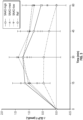
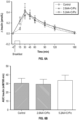
- Fig. 5A shows the mean ( ⁇ SEM) postprandial incremental changes ( ⁇ ) in blood glucose for the Control, the 2.6AA+CrPic, and the 5.2AA+CrPic -drinks.
- the incremental change in blood glucose for the water with amino acids and CrPic i.e. for 2.6AA+CrPic and 5.2AA+CrPic, is lower for all time points than Control.
- 5.2AA+CrPic gives the lowest change in blood glucose for the time interval -6 to 45 minutes, while 2.6AA+CrPic provides the lowest change in blood glucose for the time interval 60-180 minutes.
- the different incremental changes in blood glucose also influence the area under the curve (AUC) for the blood glucose responses in Fig. 5A .
- AUC area under the curve
- 2.6AA+CrPic provides a significantly (as indicated by the different letters "a" and "b" assigned to the bars in the chart) lower AUC value than the Control.
- 5.2AA+CrPic also provides a lower AUC value than control, however this value is not significantly different from that of Control and 2.6AA+CrPic.
- the AUC-values in Fig. 5B are calculated on the full time period of the meal, i.e. from 0 to 180 minutes.
- Fig. 6A shows the mean ( ⁇ SEM) postprandial incremental changes ( ⁇ ) in serum insulin, for the Control, the 2.6AA+CrPic, and the 5.2AA+CrPic -drinks.
- the incremental change in serum insulin for 2.6AA+CrPic and 5.2AA+CrPic follows the values for the Control closely, except for the time interval -6 to 30 minutes.
- 2.6AA+CrPic gives the lowest change in serum insulin for the time interval 30 to 180 minutes, lower even than the Control.
- the different incremental changes in serum insulin also influence the area under the curve (AUC) for the serum insulin responses in Fig. 6A .
- AUC area under the curve
- 2.6AA+CrPic provides an AUC value lower even than the Control.
- 5.2AA+CrPic provides a slightly higher AUC value, however none of the AUC values differ significantly from the others. This is important in that it shows that the 2.6AA+CrPic and 5.2AA+CrPic provide lower incremental change in blood glucose without increasing insulinemia.
- the 2.6AA+CrPic significantly reduced postprandial glycaemia caused by the consumption of the standardized sandwich meal with as much as 30 % (as shown in Fig. 5B ), without significantly increasing insulinemia (as shown in Fig. 6B ) when compared to the Control.
- 5.2AA+CrPic did not significantly reduce postprandial glycaemia for the full 180 minutes.
- the study was of randomized, double-blind, within-subject design. 12 men and 13 women were included in the study. The subjects had a mean BMI of 22.8 kg/m 2 , the values ranging between 19 and 25. The mean age was 26.7 years with values ranging between 19 and 52. None of the subjects had any metabolic disease.
- the meal was a standardized sandwich breakfast consisting of white wheat bread with butter and ham, corresponding to 50 g of available carbohydrates.
- the meal was served with 330 mL carbonated and lightly flavored water (Control) or the same water containing 0.65, 1.3 or 2.6 g of the amino acids leucine, isoleucine, valine, lysine and threonine. All drinks (except Control) contained 250 mcg CrPic. 1/3 of the water volume was taken during 3 min before starting the breakfast meal and the rest while eating the sandwiches.
- Capillary blood for glucose analysis and venous blood for insulin responses were collected at -3 (fasting), 15, 30, 45, 60, 90, 120 and 180 min after the start of the sandwich meal.
- Glucose and insulin responses were measured as described in Example 1, section 1.3 above, and the results analyzed statistically as described in Example 1, section 1.4 above.
- Table 7 Incremental areas under the curve (iAUC) for blood glucose responses Test meal iAUC 0-180 min (mean ⁇ SEM) N Control (without AA and CrPic) 127.3 ⁇ 25.1 ab 10 0.65 g AA + 250 mcg CrPic 143.1 ⁇ 21.8 ab 11 1.3 g AA + 250 mcg CrPic 179.8 ⁇ 18.8 a 11 2.6 g AA + 250 mcg CrPic 97.4 ⁇ 12.2 b 11 Rows not sharing the same superscript letter are significantly different
Landscapes
- Health & Medical Sciences (AREA)
- Life Sciences & Earth Sciences (AREA)
- Chemical & Material Sciences (AREA)
- Engineering & Computer Science (AREA)
- Public Health (AREA)
- Animal Behavior & Ethology (AREA)
- General Health & Medical Sciences (AREA)
- Veterinary Medicine (AREA)
- Pharmacology & Pharmacy (AREA)
- Medicinal Chemistry (AREA)
- Polymers & Plastics (AREA)
- Nutrition Science (AREA)
- Food Science & Technology (AREA)
- Mycology (AREA)
- Proteomics, Peptides & Aminoacids (AREA)
- Epidemiology (AREA)
- Diabetes (AREA)
- Inorganic Chemistry (AREA)
- Bioinformatics & Cheminformatics (AREA)
- Molecular Biology (AREA)
- Immunology (AREA)
- Emergency Medicine (AREA)
- Nuclear Medicine, Radiotherapy & Molecular Imaging (AREA)
- Obesity (AREA)
- Endocrinology (AREA)
- Chemical Kinetics & Catalysis (AREA)
- Organic Chemistry (AREA)
- General Chemical & Material Sciences (AREA)
- Hematology (AREA)
- Coloring Foods And Improving Nutritive Qualities (AREA)
- Acyclic And Carbocyclic Compounds In Medicinal Compositions (AREA)
- Dairy Products (AREA)
- Beans For Foods Or Fodder (AREA)
- Tea And Coffee (AREA)
- Non-Alcoholic Beverages (AREA)
- Pharmaceuticals Containing Other Organic And Inorganic Compounds (AREA)
Applications Claiming Priority (2)
| Application Number | Priority Date | Filing Date | Title |
|---|---|---|---|
| EP15196852 | 2015-11-27 | ||
| PCT/EP2016/079019 WO2017089612A1 (en) | 2015-11-27 | 2016-11-28 | Food supplement and composition for treating the metabolic syndrome |
Publications (3)
| Publication Number | Publication Date |
|---|---|
| EP3379946A1 EP3379946A1 (en) | 2018-10-03 |
| EP3379946C0 EP3379946C0 (en) | 2024-08-21 |
| EP3379946B1 true EP3379946B1 (en) | 2024-08-21 |
Family
ID=54780108
Family Applications (1)
| Application Number | Title | Priority Date | Filing Date |
|---|---|---|---|
| EP16809304.5A Active EP3379946B1 (en) | 2015-11-27 | 2016-11-28 | Food supplement and composition for treating the metabolic syndrome |
Country Status (11)
| Country | Link |
|---|---|
| US (2) | US20180344677A1 (he) |
| EP (1) | EP3379946B1 (he) |
| JP (2) | JP7366540B2 (he) |
| KR (1) | KR102917056B1 (he) |
| CN (1) | CN108366610A (he) |
| AU (1) | AU2016360831B2 (he) |
| BR (1) | BR112018010200B1 (he) |
| IL (1) | IL259183B (he) |
| MX (1) | MX2018006271A (he) |
| RU (1) | RU2741637C2 (he) |
| WO (1) | WO2017089612A1 (he) |
Families Citing this family (10)
| Publication number | Priority date | Publication date | Assignee | Title |
|---|---|---|---|---|
| RU2741637C2 (ru) * | 2015-11-27 | 2021-01-28 | Даблгуд Аб | Пищевая добавка и композиция для лечения метаболического синдрома |
| IT201700087359A1 (it) | 2017-07-28 | 2019-01-28 | Professional Dietetics Spa | Composizioni comprendenti amino acidi per l'uso nel trattamento di malattie associate a disfunzione mitocondriale |
| IT201700087376A1 (it) | 2017-07-28 | 2019-01-28 | Professional Dietetics Spa | Composizioni comprendenti amino acidi per l'uso nel trattamento di malattie associate a disfunzione mitocondriale |
| IT201800006725A1 (it) | 2018-06-27 | 2019-12-27 | Composizioni comprendenti aminoacidi per l'uso nella prevenzione e nel trattamento di malattie epatiche | |
| KR102485350B1 (ko) | 2018-07-19 | 2023-01-06 | 현대자동차주식회사 | 저크 기반 부주의 운전 상태 판단 장치 및 방법, 그리고 차량 시스템 |
| IT201900002109A1 (it) | 2019-02-13 | 2020-08-13 | Professional Dietetics Spa | Composizioni comprendenti amminoacidi per l'uso nel trattamento di lesioni del sistema nervoso centrale |
| JP2022542840A (ja) * | 2019-07-19 | 2022-10-07 | フィルトリシン, インコーポレイテッド | がん処置および代謝介入療法および他の使用のための組成物、方法、キットならびにシステム |
| RU2721605C1 (ru) * | 2019-11-11 | 2020-05-21 | Общество с ограниченной ответственностью "Ай Кью Витаминная студия" | Фармацевтическая композиция для парентерального капельного введения |
| IT202000000454A1 (it) | 2020-01-13 | 2021-07-13 | Professional Dietetics Spa | Composizioni comprendenti amino acidi per la prevenzione e il trattamento del cancro |
| IT202000000442A1 (it) * | 2020-01-13 | 2021-07-13 | Professional Dietetics Spa | Composizioni comprendenti amino acidi per l'uso nella prevenzione e nel trattamento di effetti collaterali della chemioterapia |
Citations (5)
| Publication number | Priority date | Publication date | Assignee | Title |
|---|---|---|---|---|
| WO2005099483A1 (en) * | 2004-04-16 | 2005-10-27 | Indevex Ab | Ingestible composition |
| EP1680967A1 (fr) * | 2005-01-14 | 2006-07-19 | Forum Media Productions SPRL | Compositions diététiques à base d'isolat de protéines solubles de lait |
| WO2007049818A1 (ja) * | 2005-10-27 | 2007-05-03 | Ajinomoto Co., Inc. | 抗脂肪肝、抗肥満及び抗高脂血症用組成物 |
| WO2007084059A1 (en) * | 2006-01-20 | 2007-07-26 | Bjoerk Inger | A food composition comprising amino acids |
| WO2012177215A1 (en) * | 2011-06-23 | 2012-12-27 | Innovafood Ab | Improved food composition |
Family Cites Families (16)
| Publication number | Priority date | Publication date | Assignee | Title |
|---|---|---|---|---|
| AU6831881A (en) * | 1980-03-31 | 1981-10-08 | Procter & Gamble Company, The | Chromium complexes as dietary supplements and pharmaceutical agents |
| DE3783206T2 (de) * | 1986-10-27 | 1993-05-27 | Abbott Lab | Fluessige naehrwert-tabelle fuer glukose-intoleranz. |
| US5132113A (en) * | 1990-10-26 | 1992-07-21 | Maurizio Luca | Nutritional composition containing essential amino acids |
| JP3137273B2 (ja) * | 1992-06-16 | 2001-02-19 | 明治乳業株式会社 | 糖尿病に有効な組成物 |
| US5925377A (en) * | 1997-08-07 | 1999-07-20 | Nova Pharmaceutical Co. | Dietary supplement composition |
| JP3633852B2 (ja) * | 2000-06-06 | 2005-03-30 | 伶輝 程 | 三価クロム複合物、その乳製品およびその製造方法 |
| CN1284297A (zh) * | 2000-08-08 | 2001-02-21 | 陈凌 | 糖尿病患者食物添加剂 |
| JP5126160B2 (ja) * | 2001-09-26 | 2013-01-23 | 味の素株式会社 | 耐糖能異常用医薬組成物 |
| SE526943C2 (sv) | 2002-08-26 | 2005-11-22 | Indevex Ab | Födoämneskompositionsprodukt |
| US7744930B2 (en) * | 2002-11-22 | 2010-06-29 | Shaklee Corporation | Compositions, methods and kits for enhancing weight loss while inhibiting loss of lean body mass |
| US20080075828A1 (en) | 2005-01-18 | 2008-03-27 | Swen Wolfram | Novel Nutraceutical Compositions |
| EP1863472B1 (en) * | 2005-03-21 | 2013-02-20 | Abbott Laboratories | Amino acid composition for improving glucose tolerance |
| US20080102137A1 (en) | 2006-10-31 | 2008-05-01 | Guffey Manning V R | Composition and method for etiological treatment and prevention of diseases and/or complications associated with chronic glucose metabolism destabilization |
| CN101632832B (zh) * | 2008-07-22 | 2013-02-06 | 加特福生物科技股份有限公司 | 用以减少体脂肪形成的组成物及其用途 |
| RU2012126178A (ru) * | 2012-06-22 | 2013-12-27 | Малое государственное предприятие "Научно-консультационный Центр" | Состав биологически активной добавки к пище |
| RU2741637C2 (ru) * | 2015-11-27 | 2021-01-28 | Даблгуд Аб | Пищевая добавка и композиция для лечения метаболического синдрома |
-
2016
- 2016-11-28 RU RU2018121404A patent/RU2741637C2/ru active
- 2016-11-28 AU AU2016360831A patent/AU2016360831B2/en active Active
- 2016-11-28 MX MX2018006271A patent/MX2018006271A/es unknown
- 2016-11-28 JP JP2018526876A patent/JP7366540B2/ja active Active
- 2016-11-28 CN CN201680069538.5A patent/CN108366610A/zh active Pending
- 2016-11-28 US US15/775,778 patent/US20180344677A1/en not_active Abandoned
- 2016-11-28 KR KR1020187016049A patent/KR102917056B1/ko active Active
- 2016-11-28 BR BR112018010200-8A patent/BR112018010200B1/pt active IP Right Grant
- 2016-11-28 WO PCT/EP2016/079019 patent/WO2017089612A1/en not_active Ceased
- 2016-11-28 EP EP16809304.5A patent/EP3379946B1/en active Active
-
2018
- 2018-05-07 IL IL259183A patent/IL259183B/he unknown
-
2021
- 2021-09-21 JP JP2021153566A patent/JP2022008469A/ja active Pending
-
2023
- 2023-06-22 US US18/213,059 patent/US12161615B2/en active Active
Patent Citations (5)
| Publication number | Priority date | Publication date | Assignee | Title |
|---|---|---|---|---|
| WO2005099483A1 (en) * | 2004-04-16 | 2005-10-27 | Indevex Ab | Ingestible composition |
| EP1680967A1 (fr) * | 2005-01-14 | 2006-07-19 | Forum Media Productions SPRL | Compositions diététiques à base d'isolat de protéines solubles de lait |
| WO2007049818A1 (ja) * | 2005-10-27 | 2007-05-03 | Ajinomoto Co., Inc. | 抗脂肪肝、抗肥満及び抗高脂血症用組成物 |
| WO2007084059A1 (en) * | 2006-01-20 | 2007-07-26 | Bjoerk Inger | A food composition comprising amino acids |
| WO2012177215A1 (en) * | 2011-06-23 | 2012-12-27 | Innovafood Ab | Improved food composition |
Non-Patent Citations (1)
| Title |
|---|
| ANONYMOUS: "APPLE FLAVOUR AMINO ACID JELLY DRINK", GNPD, 21 August 2015 (2015-08-21), XP002756069 * |
Also Published As
| Publication number | Publication date |
|---|---|
| KR20180084069A (ko) | 2018-07-24 |
| BR112018010200B1 (pt) | 2022-05-17 |
| RU2741637C2 (ru) | 2021-01-28 |
| NZ742873A (en) | 2023-12-22 |
| IL259183A (he) | 2018-07-31 |
| US20180344677A1 (en) | 2018-12-06 |
| IL259183B (he) | 2021-09-30 |
| JP2022008469A (ja) | 2022-01-13 |
| RU2018121404A (ru) | 2019-12-30 |
| MX2018006271A (es) | 2018-11-09 |
| EP3379946C0 (en) | 2024-08-21 |
| BR112018010200A2 (en) | 2018-11-21 |
| AU2016360831B2 (en) | 2021-02-18 |
| EP3379946A1 (en) | 2018-10-03 |
| RU2018121404A3 (he) | 2020-03-19 |
| US20230414549A1 (en) | 2023-12-28 |
| US12161615B2 (en) | 2024-12-10 |
| KR102917056B1 (ko) | 2026-02-12 |
| AU2016360831A1 (en) | 2018-06-14 |
| JP7366540B2 (ja) | 2023-10-23 |
| JP2018537974A (ja) | 2018-12-27 |
| CN108366610A (zh) | 2018-08-03 |
| WO2017089612A1 (en) | 2017-06-01 |
Similar Documents
| Publication | Publication Date | Title |
|---|---|---|
| US12161615B2 (en) | Food supplement and composition for treating the metabolic syndrome | |
| EP1983849B1 (en) | A food composition comprising amino acids | |
| JP2026062932A (ja) | 老化防止剤及び老化防止方法 | |
| Kairey et al. | The effects of kefir consumption on human health: a systematic review of randomized controlled trials | |
| US11937624B2 (en) | Food composition | |
| US20210360958A1 (en) | Sleep-improving compositions | |
| EP3701953A1 (en) | Composition for preventing or alleviating nonalcoholic fatty liver disease | |
| JP2025129365A (ja) | 糖代謝改善用組成物 | |
| KR101597781B1 (ko) | 락토바실러스 브레비스 g-101 및 이의 용도 | |
| HK1260546A1 (en) | Food supplement and composition for treating the metabolic syndrome | |
| HK1260546B (en) | Food supplement and composition for treating the metabolic syndrome | |
| MK et al. | A comprehensive review on kefir: composition, microbial diversities, meta-analysis and biological significances on human health | |
| HK1254118A1 (en) | Food supplement and composition for treating the metabolic syndrome | |
| WO2022191093A1 (ja) | 胃運動機能調整用組成物 |
Legal Events
| Date | Code | Title | Description |
|---|---|---|---|
| STAA | Information on the status of an ep patent application or granted ep patent |
Free format text: STATUS: UNKNOWN |
|
| STAA | Information on the status of an ep patent application or granted ep patent |
Free format text: STATUS: THE INTERNATIONAL PUBLICATION HAS BEEN MADE |
|
| PUAI | Public reference made under article 153(3) epc to a published international application that has entered the european phase |
Free format text: ORIGINAL CODE: 0009012 |
|
| STAA | Information on the status of an ep patent application or granted ep patent |
Free format text: STATUS: REQUEST FOR EXAMINATION WAS MADE |
|
| 17P | Request for examination filed |
Effective date: 20180516 |
|
| AK | Designated contracting states |
Kind code of ref document: A1 Designated state(s): AL AT BE BG CH CY CZ DE DK EE ES FI FR GB GR HR HU IE IS IT LI LT LU LV MC MK MT NL NO PL PT RO RS SE SI SK SM TR |
|
| AX | Request for extension of the european patent |
Extension state: BA ME |
|
| DAV | Request for validation of the european patent (deleted) | ||
| DAX | Request for extension of the european patent (deleted) | ||
| REG | Reference to a national code |
Ref country code: HK Ref legal event code: DE Ref document number: 1260546 Country of ref document: HK |
|
| STAA | Information on the status of an ep patent application or granted ep patent |
Free format text: STATUS: EXAMINATION IS IN PROGRESS |
|
| 17Q | First examination report despatched |
Effective date: 20201112 |
|
| GRAP | Despatch of communication of intention to grant a patent |
Free format text: ORIGINAL CODE: EPIDOSNIGR1 |
|
| STAA | Information on the status of an ep patent application or granted ep patent |
Free format text: STATUS: GRANT OF PATENT IS INTENDED |
|
| INTG | Intention to grant announced |
Effective date: 20240321 |
|
| GRAS | Grant fee paid |
Free format text: ORIGINAL CODE: EPIDOSNIGR3 |
|
| GRAA | (expected) grant |
Free format text: ORIGINAL CODE: 0009210 |
|
| STAA | Information on the status of an ep patent application or granted ep patent |
Free format text: STATUS: THE PATENT HAS BEEN GRANTED |
|
| AK | Designated contracting states |
Kind code of ref document: B1 Designated state(s): AL AT BE BG CH CY CZ DE DK EE ES FI FR GB GR HR HU IE IS IT LI LT LU LV MC MK MT NL NO PL PT RO RS SE SI SK SM TR |
|
| REG | Reference to a national code |
Ref country code: GB Ref legal event code: FG4D |
|
| REG | Reference to a national code |
Ref country code: CH Ref legal event code: EP |
|
| REG | Reference to a national code |
Ref country code: DE Ref legal event code: R096 Ref document number: 602016089024 Country of ref document: DE |
|
| REG | Reference to a national code |
Ref country code: IE Ref legal event code: FG4D |
|
| U01 | Request for unitary effect filed |
Effective date: 20240917 |
|
| U07 | Unitary effect registered |
Designated state(s): AT BE BG DE DK EE FI FR IT LT LU LV MT NL PT RO SE SI Effective date: 20241007 |
|
| PG25 | Lapsed in a contracting state [announced via postgrant information from national office to epo] |
Ref country code: NO Free format text: LAPSE BECAUSE OF FAILURE TO SUBMIT A TRANSLATION OF THE DESCRIPTION OR TO PAY THE FEE WITHIN THE PRESCRIBED TIME-LIMIT Effective date: 20241121 |
|
| PG25 | Lapsed in a contracting state [announced via postgrant information from national office to epo] |
Ref country code: PL Free format text: LAPSE BECAUSE OF FAILURE TO SUBMIT A TRANSLATION OF THE DESCRIPTION OR TO PAY THE FEE WITHIN THE PRESCRIBED TIME-LIMIT Effective date: 20240821 Ref country code: GR Free format text: LAPSE BECAUSE OF FAILURE TO SUBMIT A TRANSLATION OF THE DESCRIPTION OR TO PAY THE FEE WITHIN THE PRESCRIBED TIME-LIMIT Effective date: 20241122 |
|
| PG25 | Lapsed in a contracting state [announced via postgrant information from national office to epo] |
Ref country code: IS Free format text: LAPSE BECAUSE OF FAILURE TO SUBMIT A TRANSLATION OF THE DESCRIPTION OR TO PAY THE FEE WITHIN THE PRESCRIBED TIME-LIMIT Effective date: 20241221 |
|
| PG25 | Lapsed in a contracting state [announced via postgrant information from national office to epo] |
Ref country code: HR Free format text: LAPSE BECAUSE OF FAILURE TO SUBMIT A TRANSLATION OF THE DESCRIPTION OR TO PAY THE FEE WITHIN THE PRESCRIBED TIME-LIMIT Effective date: 20240821 |
|
| PG25 | Lapsed in a contracting state [announced via postgrant information from national office to epo] |
Ref country code: RS Free format text: LAPSE BECAUSE OF FAILURE TO SUBMIT A TRANSLATION OF THE DESCRIPTION OR TO PAY THE FEE WITHIN THE PRESCRIBED TIME-LIMIT Effective date: 20241121 Ref country code: ES Free format text: LAPSE BECAUSE OF FAILURE TO SUBMIT A TRANSLATION OF THE DESCRIPTION OR TO PAY THE FEE WITHIN THE PRESCRIBED TIME-LIMIT Effective date: 20240821 |
|
| PG25 | Lapsed in a contracting state [announced via postgrant information from national office to epo] |
Ref country code: RS Free format text: LAPSE BECAUSE OF FAILURE TO SUBMIT A TRANSLATION OF THE DESCRIPTION OR TO PAY THE FEE WITHIN THE PRESCRIBED TIME-LIMIT Effective date: 20241121 Ref country code: PL Free format text: LAPSE BECAUSE OF FAILURE TO SUBMIT A TRANSLATION OF THE DESCRIPTION OR TO PAY THE FEE WITHIN THE PRESCRIBED TIME-LIMIT Effective date: 20240821 Ref country code: NO Free format text: LAPSE BECAUSE OF FAILURE TO SUBMIT A TRANSLATION OF THE DESCRIPTION OR TO PAY THE FEE WITHIN THE PRESCRIBED TIME-LIMIT Effective date: 20241121 Ref country code: IS Free format text: LAPSE BECAUSE OF FAILURE TO SUBMIT A TRANSLATION OF THE DESCRIPTION OR TO PAY THE FEE WITHIN THE PRESCRIBED TIME-LIMIT Effective date: 20241221 Ref country code: HR Free format text: LAPSE BECAUSE OF FAILURE TO SUBMIT A TRANSLATION OF THE DESCRIPTION OR TO PAY THE FEE WITHIN THE PRESCRIBED TIME-LIMIT Effective date: 20240821 Ref country code: GR Free format text: LAPSE BECAUSE OF FAILURE TO SUBMIT A TRANSLATION OF THE DESCRIPTION OR TO PAY THE FEE WITHIN THE PRESCRIBED TIME-LIMIT Effective date: 20241122 Ref country code: ES Free format text: LAPSE BECAUSE OF FAILURE TO SUBMIT A TRANSLATION OF THE DESCRIPTION OR TO PAY THE FEE WITHIN THE PRESCRIBED TIME-LIMIT Effective date: 20240821 |
|
| U21 | Renewal fee for the european patent with unitary effect paid with additional fee |
Year of fee payment: 9 Effective date: 20250128 |
|
| PG25 | Lapsed in a contracting state [announced via postgrant information from national office to epo] |
Ref country code: SM Free format text: LAPSE BECAUSE OF FAILURE TO SUBMIT A TRANSLATION OF THE DESCRIPTION OR TO PAY THE FEE WITHIN THE PRESCRIBED TIME-LIMIT Effective date: 20240821 |
|
| PG25 | Lapsed in a contracting state [announced via postgrant information from national office to epo] |
Ref country code: CZ Free format text: LAPSE BECAUSE OF FAILURE TO SUBMIT A TRANSLATION OF THE DESCRIPTION OR TO PAY THE FEE WITHIN THE PRESCRIBED TIME-LIMIT Effective date: 20240821 |
|
| PG25 | Lapsed in a contracting state [announced via postgrant information from national office to epo] |
Ref country code: SK Free format text: LAPSE BECAUSE OF FAILURE TO SUBMIT A TRANSLATION OF THE DESCRIPTION OR TO PAY THE FEE WITHIN THE PRESCRIBED TIME-LIMIT Effective date: 20240821 |
|
| PLBE | No opposition filed within time limit |
Free format text: ORIGINAL CODE: 0009261 |
|
| STAA | Information on the status of an ep patent application or granted ep patent |
Free format text: STATUS: NO OPPOSITION FILED WITHIN TIME LIMIT |
|
| REG | Reference to a national code |
Ref country code: CH Ref legal event code: PL |
|
| PG25 | Lapsed in a contracting state [announced via postgrant information from national office to epo] |
Ref country code: MC Free format text: LAPSE BECAUSE OF FAILURE TO SUBMIT A TRANSLATION OF THE DESCRIPTION OR TO PAY THE FEE WITHIN THE PRESCRIBED TIME-LIMIT Effective date: 20240821 |
|
| REG | Reference to a national code |
Ref country code: CH Ref legal event code: PL |
|
| PG25 | Lapsed in a contracting state [announced via postgrant information from national office to epo] |
Ref country code: CH Free format text: LAPSE BECAUSE OF NON-PAYMENT OF DUE FEES Effective date: 20241130 |
|
| 26N | No opposition filed |
Effective date: 20250522 |
|
| PG25 | Lapsed in a contracting state [announced via postgrant information from national office to epo] |
Ref country code: IE Free format text: LAPSE BECAUSE OF NON-PAYMENT OF DUE FEES Effective date: 20241128 |
|
| REG | Reference to a national code |
Ref country code: GB Ref legal event code: 732E Free format text: REGISTERED BETWEEN 20251106 AND 20251112 |
|
| U1K | Transfer of rights of the unitary patent after the registration of the unitary effect |
Owner name: INNOVAFOOD AB; SE |
|
| U20 | Renewal fee for the european patent with unitary effect paid |
Year of fee payment: 10 Effective date: 20251028 |
|
| U1N | Appointed representative for the unitary patent procedure changed after the registration of the unitary effect |
Representative=s name: OEBERG & SJOEBERG AB; SE |
|
| PGFP | Annual fee paid to national office [announced via postgrant information from national office to epo] |
Ref country code: GB Payment date: 20251126 Year of fee payment: 10 |
|
| PG25 | Lapsed in a contracting state [announced via postgrant information from national office to epo] |
Ref country code: HU Free format text: LAPSE BECAUSE OF FAILURE TO SUBMIT A TRANSLATION OF THE DESCRIPTION OR TO PAY THE FEE WITHIN THE PRESCRIBED TIME-LIMIT; INVALID AB INITIO Effective date: 20161128 |
|
| PG25 | Lapsed in a contracting state [announced via postgrant information from national office to epo] |
Ref country code: CY Free format text: LAPSE BECAUSE OF FAILURE TO SUBMIT A TRANSLATION OF THE DESCRIPTION OR TO PAY THE FEE WITHIN THE PRESCRIBED TIME-LIMIT; INVALID AB INITIO Effective date: 20161128 |