EP3377618B1 - Puffer zur stabilisierung von lentiviralen zubereitungen - Google Patents
Puffer zur stabilisierung von lentiviralen zubereitungen Download PDFInfo
- Publication number
- EP3377618B1 EP3377618B1 EP16819211.0A EP16819211A EP3377618B1 EP 3377618 B1 EP3377618 B1 EP 3377618B1 EP 16819211 A EP16819211 A EP 16819211A EP 3377618 B1 EP3377618 B1 EP 3377618B1
- Authority
- EP
- European Patent Office
- Prior art keywords
- aqueous composition
- receptor
- antigen
- protein
- cell
- Prior art date
- Legal status (The legal status is an assumption and is not a legal conclusion. Google has not performed a legal analysis and makes no representation as to the accuracy of the status listed.)
- Active
Links
Images










Classifications
-
- C—CHEMISTRY; METALLURGY
- C12—BIOCHEMISTRY; BEER; SPIRITS; WINE; VINEGAR; MICROBIOLOGY; ENZYMOLOGY; MUTATION OR GENETIC ENGINEERING
- C12N—MICROORGANISMS OR ENZYMES; COMPOSITIONS THEREOF; PROPAGATING, PRESERVING, OR MAINTAINING MICROORGANISMS; MUTATION OR GENETIC ENGINEERING; CULTURE MEDIA
- C12N7/00—Viruses; Bacteriophages; Compositions thereof; Preparation or purification thereof
-
- C—CHEMISTRY; METALLURGY
- C12—BIOCHEMISTRY; BEER; SPIRITS; WINE; VINEGAR; MICROBIOLOGY; ENZYMOLOGY; MUTATION OR GENETIC ENGINEERING
- C12N—MICROORGANISMS OR ENZYMES; COMPOSITIONS THEREOF; PROPAGATING, PRESERVING, OR MAINTAINING MICROORGANISMS; MUTATION OR GENETIC ENGINEERING; CULTURE MEDIA
- C12N7/00—Viruses; Bacteriophages; Compositions thereof; Preparation or purification thereof
- C12N7/02—Recovery or purification
-
- A—HUMAN NECESSITIES
- A61—MEDICAL OR VETERINARY SCIENCE; HYGIENE
- A61K—PREPARATIONS FOR MEDICAL, DENTAL OR TOILETRY PURPOSES
- A61K31/00—Medicinal preparations containing organic active ingredients
- A61K31/33—Heterocyclic compounds
- A61K31/395—Heterocyclic compounds having nitrogen as a ring hetero atom, e.g. guanethidine or rifamycins
- A61K31/41—Heterocyclic compounds having nitrogen as a ring hetero atom, e.g. guanethidine or rifamycins having five-membered rings with two or more ring hetero atoms, at least one of which being nitrogen, e.g. tetrazole
- A61K31/4196—1,2,4-Triazoles
-
- A—HUMAN NECESSITIES
- A61—MEDICAL OR VETERINARY SCIENCE; HYGIENE
- A61K—PREPARATIONS FOR MEDICAL, DENTAL OR TOILETRY PURPOSES
- A61K39/00—Medicinal preparations containing antigens or antibodies
- A61K39/0005—Vertebrate antigens
- A61K39/0011—Cancer antigens
- A61K39/001102—Receptors, cell surface antigens or cell surface determinants
- A61K39/001111—Immunoglobulin superfamily
- A61K39/001112—CD19 or B4
-
- A—HUMAN NECESSITIES
- A61—MEDICAL OR VETERINARY SCIENCE; HYGIENE
- A61K—PREPARATIONS FOR MEDICAL, DENTAL OR TOILETRY PURPOSES
- A61K39/00—Medicinal preparations containing antigens or antibodies
- A61K39/0005—Vertebrate antigens
- A61K39/0011—Cancer antigens
- A61K39/001102—Receptors, cell surface antigens or cell surface determinants
- A61K39/001116—Receptors for cytokines
- A61K39/001119—Receptors for interleukins [IL]
-
- A—HUMAN NECESSITIES
- A61—MEDICAL OR VETERINARY SCIENCE; HYGIENE
- A61K—PREPARATIONS FOR MEDICAL, DENTAL OR TOILETRY PURPOSES
- A61K39/00—Medicinal preparations containing antigens or antibodies
- A61K39/0005—Vertebrate antigens
- A61K39/0011—Cancer antigens
- A61K39/001166—Adhesion molecules, e.g. NRCAM, EpCAM or cadherins
- A61K39/001168—Mesothelin [MSLN]
-
- A—HUMAN NECESSITIES
- A61—MEDICAL OR VETERINARY SCIENCE; HYGIENE
- A61P—SPECIFIC THERAPEUTIC ACTIVITY OF CHEMICAL COMPOUNDS OR MEDICINAL PREPARATIONS
- A61P35/00—Antineoplastic agents
-
- A—HUMAN NECESSITIES
- A61—MEDICAL OR VETERINARY SCIENCE; HYGIENE
- A61P—SPECIFIC THERAPEUTIC ACTIVITY OF CHEMICAL COMPOUNDS OR MEDICINAL PREPARATIONS
- A61P35/00—Antineoplastic agents
- A61P35/02—Antineoplastic agents specific for leukemia
-
- A—HUMAN NECESSITIES
- A61—MEDICAL OR VETERINARY SCIENCE; HYGIENE
- A61P—SPECIFIC THERAPEUTIC ACTIVITY OF CHEMICAL COMPOUNDS OR MEDICINAL PREPARATIONS
- A61P43/00—Drugs for specific purposes, not provided for in groups A61P1/00-A61P41/00
-
- C—CHEMISTRY; METALLURGY
- C07—ORGANIC CHEMISTRY
- C07K—PEPTIDES
- C07K14/00—Peptides having more than 20 amino acids; Gastrins; Somatostatins; Melanotropins; Derivatives thereof
- C07K14/005—Peptides having more than 20 amino acids; Gastrins; Somatostatins; Melanotropins; Derivatives thereof from viruses
-
- C—CHEMISTRY; METALLURGY
- C07—ORGANIC CHEMISTRY
- C07K—PEPTIDES
- C07K14/00—Peptides having more than 20 amino acids; Gastrins; Somatostatins; Melanotropins; Derivatives thereof
- C07K14/435—Peptides having more than 20 amino acids; Gastrins; Somatostatins; Melanotropins; Derivatives thereof from animals; from humans
- C07K14/705—Receptors; Cell surface antigens; Cell surface determinants
- C07K14/70503—Immunoglobulin superfamily
- C07K14/7051—T-cell receptor (TcR)-CD3 complex
-
- C—CHEMISTRY; METALLURGY
- C07—ORGANIC CHEMISTRY
- C07K—PEPTIDES
- C07K16/00—Immunoglobulins [IG], e.g. monoclonal or polyclonal antibodies
- C07K16/18—Immunoglobulins [IG], e.g. monoclonal or polyclonal antibodies against material from animals or humans
-
- C—CHEMISTRY; METALLURGY
- C07—ORGANIC CHEMISTRY
- C07K—PEPTIDES
- C07K16/00—Immunoglobulins [IG], e.g. monoclonal or polyclonal antibodies
- C07K16/18—Immunoglobulins [IG], e.g. monoclonal or polyclonal antibodies against material from animals or humans
- C07K16/28—Immunoglobulins [IG], e.g. monoclonal or polyclonal antibodies against material from animals or humans against receptors, cell surface antigens or cell surface determinants
- C07K16/2803—Immunoglobulins [IG], e.g. monoclonal or polyclonal antibodies against material from animals or humans against receptors, cell surface antigens or cell surface determinants against the immunoglobulin superfamily
-
- C—CHEMISTRY; METALLURGY
- C07—ORGANIC CHEMISTRY
- C07K—PEPTIDES
- C07K16/00—Immunoglobulins [IG], e.g. monoclonal or polyclonal antibodies
- C07K16/18—Immunoglobulins [IG], e.g. monoclonal or polyclonal antibodies against material from animals or humans
- C07K16/28—Immunoglobulins [IG], e.g. monoclonal or polyclonal antibodies against material from animals or humans against receptors, cell surface antigens or cell surface determinants
- C07K16/2866—Immunoglobulins [IG], e.g. monoclonal or polyclonal antibodies against material from animals or humans against receptors, cell surface antigens or cell surface determinants against receptors for cytokines, lymphokines, interferons
-
- C—CHEMISTRY; METALLURGY
- C07—ORGANIC CHEMISTRY
- C07K—PEPTIDES
- C07K16/00—Immunoglobulins [IG], e.g. monoclonal or polyclonal antibodies
- C07K16/18—Immunoglobulins [IG], e.g. monoclonal or polyclonal antibodies against material from animals or humans
- C07K16/28—Immunoglobulins [IG], e.g. monoclonal or polyclonal antibodies against material from animals or humans against receptors, cell surface antigens or cell surface determinants
- C07K16/30—Immunoglobulins [IG], e.g. monoclonal or polyclonal antibodies against material from animals or humans against receptors, cell surface antigens or cell surface determinants from tumour cells
-
- C—CHEMISTRY; METALLURGY
- C12—BIOCHEMISTRY; BEER; SPIRITS; WINE; VINEGAR; MICROBIOLOGY; ENZYMOLOGY; MUTATION OR GENETIC ENGINEERING
- C12N—MICROORGANISMS OR ENZYMES; COMPOSITIONS THEREOF; PROPAGATING, PRESERVING, OR MAINTAINING MICROORGANISMS; MUTATION OR GENETIC ENGINEERING; CULTURE MEDIA
- C12N15/00—Mutation or genetic engineering; DNA or RNA concerning genetic engineering, vectors, e.g. plasmids, or their isolation, preparation or purification; Use of hosts therefor
- C12N15/09—Recombinant DNA-technology
-
- C—CHEMISTRY; METALLURGY
- C12—BIOCHEMISTRY; BEER; SPIRITS; WINE; VINEGAR; MICROBIOLOGY; ENZYMOLOGY; MUTATION OR GENETIC ENGINEERING
- C12N—MICROORGANISMS OR ENZYMES; COMPOSITIONS THEREOF; PROPAGATING, PRESERVING, OR MAINTAINING MICROORGANISMS; MUTATION OR GENETIC ENGINEERING; CULTURE MEDIA
- C12N15/00—Mutation or genetic engineering; DNA or RNA concerning genetic engineering, vectors, e.g. plasmids, or their isolation, preparation or purification; Use of hosts therefor
- C12N15/09—Recombinant DNA-technology
- C12N15/63—Introduction of foreign genetic material using vectors; Vectors; Use of hosts therefor; Regulation of expression
- C12N15/79—Vectors or expression systems specially adapted for eukaryotic hosts
- C12N15/85—Vectors or expression systems specially adapted for eukaryotic hosts for animal cells
- C12N15/86—Viral vectors
-
- C—CHEMISTRY; METALLURGY
- C12—BIOCHEMISTRY; BEER; SPIRITS; WINE; VINEGAR; MICROBIOLOGY; ENZYMOLOGY; MUTATION OR GENETIC ENGINEERING
- C12N—MICROORGANISMS OR ENZYMES; COMPOSITIONS THEREOF; PROPAGATING, PRESERVING, OR MAINTAINING MICROORGANISMS; MUTATION OR GENETIC ENGINEERING; CULTURE MEDIA
- C12N5/00—Undifferentiated human, animal or plant cells, e.g. cell lines; Tissues; Cultivation or maintenance thereof; Culture media therefor
- C12N5/06—Animal cells or tissues; Human cells or tissues
- C12N5/0602—Vertebrate cells
- C12N5/0634—Cells from the blood or the immune system
- C12N5/0636—T lymphocytes
-
- C—CHEMISTRY; METALLURGY
- C12—BIOCHEMISTRY; BEER; SPIRITS; WINE; VINEGAR; MICROBIOLOGY; ENZYMOLOGY; MUTATION OR GENETIC ENGINEERING
- C12Q—MEASURING OR TESTING PROCESSES INVOLVING ENZYMES, NUCLEIC ACIDS OR MICROORGANISMS; COMPOSITIONS OR TEST PAPERS THEREFOR; PROCESSES OF PREPARING SUCH COMPOSITIONS; CONDITION-RESPONSIVE CONTROL IN MICROBIOLOGICAL OR ENZYMOLOGICAL PROCESSES
- C12Q1/00—Measuring or testing processes involving enzymes, nucleic acids or microorganisms; Compositions therefor; Processes of preparing such compositions
- C12Q1/68—Measuring or testing processes involving enzymes, nucleic acids or microorganisms; Compositions therefor; Processes of preparing such compositions involving nucleic acids
-
- G—PHYSICS
- G01—MEASURING; TESTING
- G01N—INVESTIGATING OR ANALYSING MATERIALS BY DETERMINING THEIR CHEMICAL OR PHYSICAL PROPERTIES
- G01N33/00—Investigating or analysing materials by specific methods not covered by groups G01N1/00 - G01N31/00
- G01N33/48—Biological material, e.g. blood, urine; Haemocytometers
- G01N33/50—Chemical analysis of biological material, e.g. blood, urine; Testing involving biospecific ligand binding methods; Immunological testing
- G01N33/53—Immunoassay; Biospecific binding assay; Materials therefor
-
- A—HUMAN NECESSITIES
- A61—MEDICAL OR VETERINARY SCIENCE; HYGIENE
- A61K—PREPARATIONS FOR MEDICAL, DENTAL OR TOILETRY PURPOSES
- A61K39/00—Medicinal preparations containing antigens or antibodies
- A61K2039/51—Medicinal preparations containing antigens or antibodies comprising whole cells, viruses or DNA/RNA
- A61K2039/515—Animal cells
- A61K2039/5158—Antigen-pulsed cells, e.g. T-cells
-
- C—CHEMISTRY; METALLURGY
- C07—ORGANIC CHEMISTRY
- C07K—PEPTIDES
- C07K2317/00—Immunoglobulins specific features
- C07K2317/60—Immunoglobulins specific features characterized by non-natural combinations of immunoglobulin fragments
- C07K2317/62—Immunoglobulins specific features characterized by non-natural combinations of immunoglobulin fragments comprising only variable region components
- C07K2317/622—Single chain antibody (scFv)
-
- C—CHEMISTRY; METALLURGY
- C07—ORGANIC CHEMISTRY
- C07K—PEPTIDES
- C07K2319/00—Fusion polypeptide
- C07K2319/01—Fusion polypeptide containing a localisation/targetting motif
- C07K2319/03—Fusion polypeptide containing a localisation/targetting motif containing a transmembrane segment
-
- C—CHEMISTRY; METALLURGY
- C07—ORGANIC CHEMISTRY
- C07K—PEPTIDES
- C07K2319/00—Fusion polypeptide
- C07K2319/33—Fusion polypeptide fusions for targeting to specific cell types, e.g. tissue specific targeting, targeting of a bacterial subspecies
-
- C—CHEMISTRY; METALLURGY
- C12—BIOCHEMISTRY; BEER; SPIRITS; WINE; VINEGAR; MICROBIOLOGY; ENZYMOLOGY; MUTATION OR GENETIC ENGINEERING
- C12N—MICROORGANISMS OR ENZYMES; COMPOSITIONS THEREOF; PROPAGATING, PRESERVING, OR MAINTAINING MICROORGANISMS; MUTATION OR GENETIC ENGINEERING; CULTURE MEDIA
- C12N2510/00—Genetically modified cells
-
- C—CHEMISTRY; METALLURGY
- C12—BIOCHEMISTRY; BEER; SPIRITS; WINE; VINEGAR; MICROBIOLOGY; ENZYMOLOGY; MUTATION OR GENETIC ENGINEERING
- C12N—MICROORGANISMS OR ENZYMES; COMPOSITIONS THEREOF; PROPAGATING, PRESERVING, OR MAINTAINING MICROORGANISMS; MUTATION OR GENETIC ENGINEERING; CULTURE MEDIA
- C12N2740/00—Reverse transcribing RNA viruses
- C12N2740/00011—Details
- C12N2740/10011—Retroviridae
- C12N2740/15011—Lentivirus, not HIV, e.g. FIV, SIV
- C12N2740/15041—Use of virus, viral particle or viral elements as a vector
- C12N2740/15043—Use of virus, viral particle or viral elements as a vector viral genome or elements thereof as genetic vector
-
- C—CHEMISTRY; METALLURGY
- C12—BIOCHEMISTRY; BEER; SPIRITS; WINE; VINEGAR; MICROBIOLOGY; ENZYMOLOGY; MUTATION OR GENETIC ENGINEERING
- C12N—MICROORGANISMS OR ENZYMES; COMPOSITIONS THEREOF; PROPAGATING, PRESERVING, OR MAINTAINING MICROORGANISMS; MUTATION OR GENETIC ENGINEERING; CULTURE MEDIA
- C12N2740/00—Reverse transcribing RNA viruses
- C12N2740/00011—Details
- C12N2740/10011—Retroviridae
- C12N2740/15011—Lentivirus, not HIV, e.g. FIV, SIV
- C12N2740/15051—Methods of production or purification of viral material
-
- C—CHEMISTRY; METALLURGY
- C12—BIOCHEMISTRY; BEER; SPIRITS; WINE; VINEGAR; MICROBIOLOGY; ENZYMOLOGY; MUTATION OR GENETIC ENGINEERING
- C12N—MICROORGANISMS OR ENZYMES; COMPOSITIONS THEREOF; PROPAGATING, PRESERVING, OR MAINTAINING MICROORGANISMS; MUTATION OR GENETIC ENGINEERING; CULTURE MEDIA
- C12N2740/00—Reverse transcribing RNA viruses
- C12N2740/00011—Details
- C12N2740/10011—Retroviridae
- C12N2740/16011—Human Immunodeficiency Virus, HIV
- C12N2740/16041—Use of virus, viral particle or viral elements as a vector
- C12N2740/16043—Use of virus, viral particle or viral elements as a vector viral genome or elements thereof as genetic vector
-
- C—CHEMISTRY; METALLURGY
- C12—BIOCHEMISTRY; BEER; SPIRITS; WINE; VINEGAR; MICROBIOLOGY; ENZYMOLOGY; MUTATION OR GENETIC ENGINEERING
- C12N—MICROORGANISMS OR ENZYMES; COMPOSITIONS THEREOF; PROPAGATING, PRESERVING, OR MAINTAINING MICROORGANISMS; MUTATION OR GENETIC ENGINEERING; CULTURE MEDIA
- C12N2740/00—Reverse transcribing RNA viruses
- C12N2740/00011—Details
- C12N2740/10011—Retroviridae
- C12N2740/16011—Human Immunodeficiency Virus, HIV
- C12N2740/16051—Methods of production or purification of viral material
-
- C—CHEMISTRY; METALLURGY
- C12—BIOCHEMISTRY; BEER; SPIRITS; WINE; VINEGAR; MICROBIOLOGY; ENZYMOLOGY; MUTATION OR GENETIC ENGINEERING
- C12N—MICROORGANISMS OR ENZYMES; COMPOSITIONS THEREOF; PROPAGATING, PRESERVING, OR MAINTAINING MICROORGANISMS; MUTATION OR GENETIC ENGINEERING; CULTURE MEDIA
- C12N2800/00—Nucleic acids vectors
- C12N2800/10—Plasmid DNA
- C12N2800/106—Plasmid DNA for vertebrates
- C12N2800/107—Plasmid DNA for vertebrates for mammalian
Definitions
- the invention relates to lentiviral preparations that exhibit improved transducing capabilities and storage stability, as well as to methods of heterologous gene expression in target cells.
- lentiviral vectors include reconstructed viral vector systems derived from human immunodeficiency virus-1 (HIV-1) and are capable of introducing a gene of interest into animal and human primary cells or cell lines.
- the genomes of lentiviral vectors include a coding strand of RNA, which is reverse-transcribed into DNA upon entering the cytoplasm of a host cell by a viral reverse transcriptase so as to form a DNA pre-integration complex. This complex is transported into the nucleus of the host cell, where a portion of the viral DNA is subsequently integrated into the host cell genome.
- the integrated DNA can then be transcribed into RNA, such as protein-coding mRNA, which can ultimately be exported to the cytoplasm for subsequent expression of a protein of interest.
- Lentiviral vector-mediated gene expression can be used to achieve continuous and stable protein production, because the gene of interest has been integrated into a host cell's genome and is thus replicated upon division of the cell. Lentiviral vectors can effectively infect non-dividing cells as well as those actively progressing through the cell cycle. In contrast, other viral vectors, such as adenoviral vectors, adeno-associated viral vectors, and classical retroviral vectors, are only capable of infecting dividing cells. Tissues and cells in which lentiviral vector-mediated chronic expression of a gene of interest can occur include the brain, liver, muscle cells, retina, hematopoietic stem cells, marrow mesenchymal stem cells, and macrophages, among others.
- lentiviral vectors The production of lentiviral vectors has been hindered by several challenges, one of which is low stability of the vectors.
- the manufacturing operation of lentiviral vectors includes several steps: production, purification, storage, and application of gene transfer ( Carmo et al., J. Gene Med. 11:670-678, 2009 ).
- Lentiviral vectors are susceptible to inactivation during these processes, which can contribute to diminished final quality and efficacy of the vector preparation.
- it has been shown that one mechanism by which viral vectors are inactivated is by the loss of viral capacity to perform reverse transcription ( Carmo et al., Hum. Gene Ther. 20:1168-76, 2009 ; and Carmo et al., J. Gene Med.
- lentiviral vectors have an additional need for stabilizing components, such as human serum albumin (HSA) ( Carmo et al., J. Gene Med. 11:670-678, 2009 ). This is in sharp contrast to gamma-retroviruses, where simply adding exogenous proteins brings back the stability comparable to cell culture supernatant.
- HSA human serum albumin
- Lipoproteins are complex structures composed of several lipids, including cholesterol, phospholipids, and proteins ( Olson, J. Nutr. 128:S439-S443, 1998 ).
- lipid transporters in blood along with HSA. It is possible that a lipoprotein-HSA structure forms a protective arrangement around the membrane of lentiviral vectors ( Carmo et al., J. Gene Med. 11:670-678, 2009 ). Because albumin is also known to associate tightly with cell surfaces ( Dziarski et al., J. Biol. Chem. 269:20431-20436, 1994 ), these lipoprotein/HSA complexes can associate with the membrane of the vector, which is similar to a cell membrane. This association may provide protection to their structure and prevent conformational changes more efficiently than HSA alone.
- lentiviral vector preparations typically contain proteins encoded by the viral genome, including envelope proteins embedded in a lipid bilayer membrane. At low temperatures, the protein can be susceptible to denaturation and the lipid bilayer may be prone to loss of structural integrity. Therefore, a need exists for lentiviral formulations capable of increasing the stability of a viral vector preparation at a low temperature, for extended periods of time.
- Lentiviral vectors are often maintained at these low temperatures for long-term storage, as iterative freezing and thawing of viral vectors can lead to a loss of transducing capacity. As such, there remains a need for lentiviral preparations that retain infectivity after undergoing multiple freeze/thaw cycles.
- a lentiviral vector useful for ex vivo applications desirably will retain stability at physiologically relevant temperatures, such as 37°C, the temperature at which lentiviral vectors may be incubated with host cells in order to promote transduction. Therefore, there also exists a need for lentiviral preparations that maintain structural integrity of the viral vector during gene transfer events ex vivo.
- lentiviral vector preparations that preserve viral vector stability can additionally be useful from a commercial perspective.
- a recombinant lentiviral vector is stored at low temperatures for excessive periods of time or when the recombinant vector undergoes multiple freeze/thaw cycles during experimental use or manufacturing operations, the biological activity decreases significantly. This leads to a diminished recovery of infectious particles, further raising the cost of goods (COGs).
- COGs cost of goods
- a higher susceptibility of vector particles to lose activity can lead to inaccurate results in preclinical or clinical studies.
- use of an ultra-low temperature (e.g., -60°C or below) storage device is an additional cost burden and poses a logistical challenge in hospitals and other point-of-care facilities. Generally, these facilities are expected to have an ultra-low freezing apparatus to deliver the treatment. Therefore, there remains a need for recombinant lentiviral vector preparations that preserve vector stability so as to promote efficient manufacturing operations and viable low-temperature storage methods.
- Salmon et al. (2007), Current Protocols in Human Genetics;54:12.10.1-12.10.24 also relates to protocols for the production of lentiviral vectors.
- Cribbs et al. (2013), BMC Biotechnology;13(1):98 relates to production and concentration of lentiviral vectors and transduction of human T cells.
- US 2015/056696 A1 relates to a recombinant lentiviral vector preparation.
- WO 2015/097650 A1 relates to methods of making lyophilized lentiviral vector particles.
- the invention provides aqueous compositions that each include a lentiviral vector, a 1,4-piperazinediethanesulfonic acid (PIPES) buffer, and a salt.
- a lentiviral vector that includes a lentiviral vector, a 1,4-piperazinediethanesulfonic acid (PIPES) buffer, and a salt.
- PPES 1,4-piperazinediethanesulfonic acid
- the PIPES buffer is present at a concentration of from about 10 to about 50 mM (e.g., about 20 mM); the pH of the aqueous composition is from about 6.0 to about 7.0 (e.g., about 6.5); and/or the salt is selected from the group consisting of sodium chloride, magnesium chloride, and calcium chloride.
- the concentration of the salt in the aqueous compositions can be, e.g., from about 25 mM to about 150 mM (e.g., about 50 mM or about 75 mM).
- the aqueous compositions include a lentiviral vector, 20 mM PIPES, and 75 mM sodium chloride, and have a pH of about 6.5.
- the aqueous compositions can further include a carbohydrate, for example, a non-reducing carbohydrate, e.g., sucrose or trehalose.
- a carbohydrate for example, a non-reducing carbohydrate, e.g., sucrose or trehalose.
- the carbohydrate is present at a concentration of from about 1% to about 10% (e.g., from about 2% to about 5%, or about 2.5%) by weight per volume of the aqueous composition.
- the aqueous compositions include a lentiviral vector, 20 mM PIPES, 75 mM sodium chloride, and 2.5% sucrose by weight per volume of the aqueous composition, and the aqueous composition has a pH of about 6.5.
- the osmolality of the aqueous compositions is from about 270 mOsm/kg to about 330 mOsm/kg (e.g., from about 275 mOsm/kg to about 300 mOsm/kg, or about 285 mOsm/kg), and/or the lentiviral vector is present at a concentration of from about 2 x 10 8 transducing units per milliliter (TU/mL) to about 1 x 10 9 TU/mL (e.g., about 3 x 10 8 TU/mL to about 5 x 10 8 TU/mL).
- TU/mL transducing units per milliliter
- the lentiviral vectors can be recombinant human immunodeficiency viruses (e.g., HIV-1) and, optionally, can include a vesicular stomatitis virus G (VSV-G) protein (e.g., present on the surface of the lentiviral vectors).
- VSV-G vesicular stomatitis virus G
- the lentiviral vectors can include one or more transgenes, including, for example, transgenes that encode proteins (e.g., one or more chimeric antigen receptors (CARs)).
- the CARs each include, in an N-terminal to C-terminal direction, an antigen binding domain, a transmembrane domain, and one or more signaling domains.
- the signaling domains can include one or more primary signaling domains (e.g., a CD3-zeta stimulatory domain) and/or one or more costimulatory signaling domains (e.g., an intracellular domain selected from a costimulatory protein selected from the group consisting of CD27, CD28, 4-1BB (CD137), OX40, GITR, CD30, CD40, ICOS, BAFFR, HVEM, ICAM-1, lymphocyte function-associated antigen-1 (LFA-1), CD2, CDS, CD7, CD287, LIGHT, NKG2C, NKG2D, SLAMF7, NKp80, NKp30, NKp44, NKp46, CD160, B7-H3, and a ligand that specifically binds with CD83).
- the antigen binding domain of the CARs can optionally be or include an scFv. Furthermore, the antigen binding domain can optionally bind to an antigen selected from the group consisting of CD19; CD123; CD22; CD30; CD171; CS-1; C-type lectin-like molecule-1, CD33; epidermal growth factor receptor variant III (EGFRvIII); ganglioside G2 (GD2); ganglioside GD3; TNF receptor family member B cell maturation (BCMA); Tn antigen ((Tn Ag) or (GalNAc ⁇ -Ser/Thr)); prostate-specific membrane antigen (PSMA); Receptor tyrosine kinase-like orphan receptor 1 (ROR1); Fms-Like Tyrosine Kinase 3 (FLT3); Tumor-associated glycoprotein 72 (TAG72); CD38; CD44v6; Carcinoembryonic antigen (CEA); Epithelial cell adhesion molecule (EPCAM); B7H
- the antigen binding domain binds to CD19, mesothelin, or CD123.
- the CAR includes an anti-CD19 antibody or a fragment thereof, a 4-1BB (CD137) transmembrane domain, and a CD3-zeta signaling domain.
- the aqueous compositions are free of one or more (e.g., all) proteins, e.g., one or more (e.g., all) of the proteins selected from the group consisting of human serum albumin (HSA), recombinant human serum albumin (rHSA), bovine serum albumin (BSA), and a lipoprotein; and/or the lentiviral vectors are produced in cells cultured in the absence of serum.
- HSA human serum albumin
- rHSA recombinant human serum albumin
- BSA bovine serum albumin
- the lentiviral vectors are characterized by a hydrodynamic radius of 100 ⁇ 25 nm as measured by dynamic light scattering (DLS).
- the lentiviral vectors may maintain a hydrodynamic radius of 100 ⁇ 25 nm within a temperature range of from 25°C to 55°C.
- the lentiviral vectors are characterized by a polydispersity of from 10% to 25%.
- the lentiviral vectors may maintain a polydispersity of from 10% to 25% within a temperature range of from 25°C to 55°C.
- the lentiviral vectors maintains a concentration after 3, 6, or 9 freeze/thaw cycles of from about 70% to about 100% relative to the concentration of the lentiviral vector in the aqueous composition prior to the freeze/thaw cycles, wherein each of the freeze/thaw cycles includes freezing the aqueous composition and subsequently allowing the aqueous composition to thaw at room temperature.
- compositions that each include a lentiviral vector, a buffer selected from the group consisting of a phosphate buffer, a sodium citrate buffer, a 2-(N-morpholino)ethanesulfonic acid (MES) buffer, a 3-morpholinopropane-1-sulfonic acid (MOPS) buffer, and a salt (e.g., sodium chloride, magnesium chloride, or calcium chloride).
- a buffer selected from the group consisting of a phosphate buffer, a sodium citrate buffer, a 2-(N-morpholino)ethanesulfonic acid (MES) buffer, a 3-morpholinopropane-1-sulfonic acid (MOPS) buffer, and a salt (e.g., sodium chloride, magnesium chloride, or calcium chloride).
- MES 2-(N-morpholino)ethanesulfonic acid
- MOPS 3-morpholinopropane-1-sulfonic acid
- salt e.g., sodium chloride, magnesium chloride,
- the disclosure further includes dried or lyophilized compositions, which are prepared by drying or lyophilizing the aqueous compositions described herein, as well as aqueous compositions that are prepared by reconstituting such dried or lyophilized compositions in a buffer described herein (or another, standard vehicle for administration).
- an aqueous composition as described herein is passed through a filter, thereby producing an aqueous composition that is substantially free of microorganisms.
- the filter includes a plurality of pores, e.g., pores having a diameter of about 0.2 ⁇ m.
- an aqueous composition that is substantially free of microorganisms includes the lentiviral vector at a concentration of about 80% relative to the concentration of the lentiviral vector in the aqueous composition prior to the contacting.
- the disclosure also provides methods of purifying lentiviral vectors, including (a) contacting an aqueous composition as described herein with a material including a plurality of particles; and (b) separating substances that flow through the material from substances that remain within the material, thereby producing an aqueous composition that is enriched with the lentiviral vector.
- the disclosure provides methods of purifying lentiviral vectors, including contacting an aqueous composition as described herein with a nuclease, thereby producing an aqueous composition that is substantially free of contaminating polynucleotides.
- the cell is a mammalian cell (e.g., a T cell, such as a human T cell).
- the cell is a 293T cell, a Jurkat T cell, or a primary human T cell.
- kits that include an aqueous composition as described herein and optionally a package insert, e.g., a package insert that instructs a user of the kit to express a transgene in a cell according to a method as described herein.
- the kits optionally can further include one or more reagents that can be used to culture a cell as described herein.
- the disclosure further includes the use of an aqueous composition as described herein in methods for delivering a viral vector, which optionally includes a transgene, into a cell of a subject, the method involving administering the composition to the subject.
- Methods of preventing or treating disease or conditions, e.g., as described herein, and/or delivering transgenes (e.g., genes encoding CARS), e.g., as described herein, are also included in the disclosure, and can involve administration of the compositions described herein.
- the term "about” refers to a value that is within 10% above or below the value being described. For instance, a value of "about 50 mM” denotes a concentration of from 45 mM to 55 mM.
- buffer refers to a mixture of a weak acid and its conjugate base or a weak base and its conjugate acid.
- a "1,4-piperazinediethanesulfonic acid buffer” refers to a mixture that includes 1,4-piperazinediethanesulfonic acid and the 1,4-piperazinediethanesulfonate anion (e.g., sodium 1,4-piperazinediethanesulfonate).
- sodium citrate buffer refers to a mixture that includes sodium citrate, as well as its conjugate acid, citric acid. Due to the chemical equilibrium that is established between a weak acid and its conjugate base, a solution containing a buffer resists abrupt changes in pH upon the addition of small quantities of acid or base to the solution.
- contaminating polynucleotide refers to a polynucleotide not derived from a lentiviral vector.
- Contaminating polynucleotides may include, e.g., non-lentiviral polynucleotides derived from a cell in which the lentiviral vector was produced, such as chromosomal mammalian DNA (e.g., human DNA) that is not included within a transgene or other component of a lentiviral vector.
- freeze/thaw cycle refers to exposure of a liquid mixture, such as an aqueous solution or suspension, to a temperature at or less than its freezing point until the mixture is frozen, followed by thawing the mixture at a temperature greater than its freezing point.
- the freezing step can be performed, e.g., by placing the mixture in an environment in which the temperature is from about - 80°C to about -20°C.
- the mixture can remain frozen, e.g., for a period of one or more days, weeks, months, or years prior to thawing.
- the thawing step can be performed by exposing the mixture to conditions in which the temperature is from about 2°C to about 8°C, or by storing the mixture at room temperature (e.g., the ambient temperature of a laboratory, or about 25°C). Alternatively, thawing can take place by use of a water bath (e.g., at 37°C).
- hydrodynamic radius refers to the apparent radius (R h in nm) of a particle in a solution as inferred from the diffusional characteristics of the particle.
- the hydrodynamic radius of a viral particle is one factor that dictates the rate of diffusion of the viral particle in aqueous solution, as well as the ability of the particle to migrate in gels of macromolecules.
- the hydrodynamic radius of a viral particle is determined in part by the mass and molecular structure of each of the components of the particle, as well as its hydration state. Methods for determining the hydrodynamic radius of a viral particle are well known in the art, and include the use of dynamic light scattering and size exclusion chromatography.
- non-reducing carbohydrate refers to a carbohydrate that does not exist in a state of chemical equilibrium with an aldehyde, and thus lacks the ability to be oxidized to a carboxylic acid by transition metal cations, such as silver (Ag + ) and copper (Cu 2+ ).
- exemplary non-reducing carbohydrates include, without limitation, disaccharides such as sucrose, trehalose, and palatinitol, trisaccharides such as raffinose and melezitose, as well as tetrasaccharides such as stachyose.
- Non-reducing carbohydrates additionally include monosaccharide derivatives such as sorbitol, mannitol, erythritol, and xylitol, disaccharide derivatives such as lacitol and maltitol, aldonic acids and their lactones such as gluconic acid, gluconic acid ⁇ -lactone, aldaric acids and their lactones such as ribaraic acid, arabinaric acid, and galactaric acid, uronic acids such as glucuronic acid, galaccuronic acid, and itiannuronic acid, ester derivatives such as trehalose octaacetate, sucrose octaacetate, and cellobiose octaacetate, and ether derivatives in which hydroxyl groups are O -alkylated.
- Non-reducing carbohydrates include those that have a D or L stereochemical orientation.
- osmolality refers to a measure of the osmotic pressure of dissolved solute particles in an aqueous solution.
- the solute particles include both ions as well as non-ionized molecules.
- Osmolality is expressed as the concentration of osmotically active particles (i.e., osmoles) dissolved in 1 kg of solvent (i.e., water). Osmolality is expressed herein in units of milliosmoles per 1 kg of water (mOsm/kg).
- percent by weight per volume or "% w/v” denotes the percentage weight (in grams) of a single component relative to the total volume of the mixture that contains the component. For instance, 500 mg of a component in a total volume of 8 ml is 6.25% w/v, and 500 mg of a component in a total volume of 5 ml is 10% w/v.
- polydispersity refers to the degree of homogeneity of the sizes of particles, such as lentiviral particles, within a sample.
- a higher polydispersity indicates less homogeneity and a lower polydispersity indicates a higher level of homogeneity.
- lentiviral particles can be considered to be approaching identical sizes and are thus monodisperse.
- a lower polydispersity indicates a higher level of homogeneity.
- a formulation with 15% polydispersity has less homogeneity than a formulation with 10% polydispersity.
- the level of homogeneity is low, the particle population can be considered to contain significantly different sizes and thus be polydisperse.
- scFv refers to a single chain Fv antibody in which the variable domains of the heavy chain and the light chain from an antibody have been joined to form one chain.
- scFv fragments contain a single polypeptide chain that includes the variable region of an antibody light chain (VL) (e.g., CDR-L1, CDR-L2, and/or CDR-L3) and the variable region of an antibody heavy chain (VH) (e.g., CDR-H1, CDR-H2, and/or CDR-H3) separated by a linker.
- VL antibody light chain
- VH variable region of an antibody heavy chain
- the linker that joins the VL and VH regions of a scFv fragment can be a peptide linker composed of proteinogenic amino acids.
- linkers can be used to so as to increase the resistance of the scFv fragment to proteolytic degradation (e.g., linkers containing D-amino acids), in order to enhance the solubility of the scFv fragment (e.g., hydrophilic linkers such as polyethylene glycol-containing linkers or polypeptides containing repeating glycine and serine residues), to improve the biophysical stability of the molecule (e.g., a linker containing cysteine residues that form intramolecular or intermolecular disulfide bonds), or to attenuate the immunogenicity of the scFv fragment (e.g., linkers containing glycosylation sites).
- linkers containing D-amino acids e.g., hydrophilic linkers such as polyethylene glycol-containing linkers or polypeptides containing repeating glycine and serine residues
- hydrophilic linkers such as polyethylene glycol-containing linkers or polypeptides containing repeating
- ScFv molecules are known in the art and are described, e.g., in U.S. Patent No. 5,892,019 ; Flo et al. (Gene 77:51, 1989 ); Bird et al. (Science 242:423, 1988 ); Pantoliano et al. (Biochemistry 30:10117, 1991 ); Milenic et al. (Cancer Research 51:6363, 1991 ); and Takkinen et al. (Protein Engineering 4:837, 1991 ).
- the VL and VH domains of an scFv molecule can be derived from one or more antibody molecules.
- variable regions of the scFv molecules of the disclosure can be modified such that they vary in amino acid sequence from the antibody molecule from which they were derived.
- nucleotide or amino acid substitutions leading to conservative substitutions or changes at amino acid residues can be made (e.g., in CDR and/or framework residues).
- mutations are made to CDR amino acid residues to optimize antigen-binding using art-recognized techniques. ScFv fragments are described, for example, in WO 2011/084714 .
- the phrases “specifically binds” and “binds” refer to a binding reaction which is determinative of the presence of a particular protein in a heterogeneous population of proteins and other biological molecules that is recognized, e.g., by a ligand with particularity.
- a ligand e.g., a protein, proteoglycan, or glycosaminoglycan
- a ligand that specifically binds to a protein will bind to the protein with a K D of less than 500 nM.
- a ligand that specifically binds to a protein will bind to the protein with a K D of up to 500 nM (e.g., between 1 pM and 500 nM).
- a ligand that does not exhibit specific binding to a protein or a domain thereof will exhibit a K D of greater than 500 nM (e.g., greater than 600 nm, 700 nM, 800 nM, 900 nM, 1 ⁇ M, 100 ⁇ M, 500 ⁇ M, or 1 mM) for that particular protein or domain thereof.
- assay formats may be used to determine the affinity of a ligand for a specific protein. For example, solid-phase ELISA assays are routinely used to identify ligands that specifically bind a target protein.
- transgene may refer to a nucleic acid sequence that encodes a protein or functional RNA product that is not naturally expressed in the cell into which the transgene is to be introduced.
- a transgene may be homologous to an endogenous gene of the cell into which the transgene is to be introduced, but is designed to be inserted into the genome of the target cell so as to alter the genome of the cell into which it is inserted.
- a transgene may be homologous to an endogenous gene of a target cell, but is to be inserted at a location within the genome of the target cell that differs from the location of the naturally occurring gene.
- VSV-G protein refers to an isolated polypeptide having substantial homology to the G protein of vesicular stomatitis virus.
- a polypeptide has substantial homology to the VSV-G protein, e.g., if it exhibits the membrane-fusing properties of the wild-type VSV-G protein.
- a VSV-G protein may be, e.g., the full-length VSV-G protein or a polypeptide that contains fragments thereof, as long as the polypeptide retains the ability to associate with nucleic acid-lipid particles and facilitate transfection.
- viral titer refers to the number of infectious vector particles, or “transducing units,” that result in the production of a transgene product in a target cell.
- Viral titer can be measured by a functional assay, such as an assay described in Xiao et al., Exp. Neurobiol. 144:113-124, 1997 , or Fisher et al., J. Virol. 70:520-532, 1996 .
- viral titer can be measured by determining the quantity of viral DNA that has integrated into a host cell genome, e.g., using polymerase chain reaction (PCR) techniques known in the art.
- PCR polymerase chain reaction
- viral vector refers to a viral particle which has a capability of introducing a nucleic acid molecule into a host.
- "Lentiviral vectors” includes viral vectors that include sequences derived from HIV-1.
- a lentiviral vector carrying an exogenous gene(s) is packaged into an infectious virus particle via virus packaging with the aid of packaging plasmids using specific cell-lines. The infectious virus particle infects a cell to achieve expression of the exogenous gene.
- a "recombinant" viral vector refers to a viral vector constructed by gene recombinant technologies.
- a recombination viral vector can be constructed using methods known in the art, such as by transducing a packaging cell-line with a nucleic acid encoding the viral genome and subsequently isolating newly packaged viral particles.
- the present invention is based on the discovery that lentiviral preparations containing a PIPES buffer exhibit improved biological properties relative to lentiviral preparations containing a conventional lentiviral formulation buffer, such as HEPES. These improved biological characteristics include elevated resistance to aggregation across a range of temperatures and salt concentrations, improved transduction capacity at physiological and at elevated temperatures (such as 42°C and 50°C), and greater resistance to loss of infectivity during multiple freeze/thaw cycles.
- Other buffers useful in conjunction with lentiviral preparations of the disclosure include phosphate buffers, sodium citrate buffers, MES buffers, and MOPS buffers.
- Lentiviral preparations of the disclosure may optionally include a salt, such as sodium chloride, and may optionally contain a carbohydrate, such as a non-reducing carbohydrate (see below).
- lentiviral vectors for use with the compositions and methods of the invention may include a transgene, e.g., a protein-encoding gene designed for integration into the chromosomal DNA of a host cell.
- the lentiviral preparations described herein can be used in conjunction with purification techniques, such as filtration and chromatographic procedures, in order to purify lentiviral vectors with improved recovery.
- the methods of the invention also encompass processes for the transduction of host cells, such as mammalian cells (e.g., human T cells).
- Lentiviral vector preparations of the disclosure may include a variety of components, such as one or more salts and/or carbohydrates. Surprisingly, the lentiviral vector preparations described herein do not require an added protein component in order to promote viral stability. The compositions described herein can thus each optionally be characterized as lacking added protein components. A number of different types of albumin have been tested for their ability to promote stability of lentiviral vectors (e.g. bovine serum albumin (BSA), human serum albumin (HAS), and recombinant HSA (rHSA)).
- BSA bovine serum albumin
- HAS human serum albumin
- rHSA recombinant HSA
- rHSA for instance, has often been incorporated into lentiviral preparations, as it is produced in genetically modified yeast and thus provides a higher level of safety since it is not of animal origin ( Chuang et al., Pharm. Res. 19:569-577, 2002 ).
- HSA and similar protein components can be avoided in lentiviral vector preparations, as these may interfere with analytical characterization of vectors.
- the present invention is unique in part because of the ability of the buffers described herein to impart stability to lentiviral vectors in the absence of added protein components.
- the buffers described herein can prevent viral aggregation, promote enhanced transduction capacity, and preserve infectivity following multiple freeze/thaw cycles.
- the compositions described herein can also, optionally, be characterized as including or lacking added carbohydrate components.
- Lentiviral vector preparations of the invention may be aqueous mixtures, such as aqueous solutions or suspensions.
- Lentiviral vector preparations can optionally include a salt, such as sodium chloride, magnesium chloride, or calcium chloride.
- the salt may be present, e.g., at a concentration of from about 1 mM to about 1 M in the aqueous lentiviral preparation (e.g., 1 mM, 2 mM, 3 mM, 4 mM, 5 mM, 6 mM, 7 mM, 8 mM, 9 mM, 10 mM, 15 mM, 20 mM, 25 mM, 30 mM, 35 mM, 40 mM, 45 mM, 50 mM, 55 mM, 60 mM, 65 mM, 70 mM, 75 mM, 80 mM, 85 mM, 90 mM, 100 mM, 125 mM, 150 mM,
- the concentration of salt is from about 25 mM to about 250 mM, about 50 mM to about 75 mM, about 50 mM to about 200 mM, or about 100 mM to about 150 mM (e.g., 25 mM, 30 mM, 35 mM, 40 mM, 45 mM, 50 mM, 55 mM, 60 mM, 65 mM, 70 mM, 75 mM, 80 mM, 85 mM, 90 mM, 100 mM, 125 mM, or 150 mM). In some embodiments, the concentration of salt may be 50 mM or 75 mM, as desired.
- Lentiviral vector preparations described herein may exhibit a pH, e.g., of from about 5.0 to about 8.0, e.g., 6.0 to about 7.0 (e.g., 6.0, 6.1, 6.2, 6.3, 6.4, 6.5, 6.6, 6.7, 6.8, 6.9, or 7.0).
- the pH of the lentiviral vector preparation is 6.5.
- a lentiviral vector preparation of the invention may optionally contain a carbohydrate, such as a non-reducing carbohydrate as described herein.
- a carbohydrate such as a non-reducing carbohydrate as described herein.
- Exemplary non-reducing carbohydrates include sucrose and trehalose, among others.
- a carbohydrate may be present at a concentration of, e.g., from about 1% to about 10%, from about 2.5% to about 10%, or from about 2.5% to about 5% by weight per volume (w/v) of the aqueous lentiviral preparation.
- a carbohydrate such as a non-reducing carbohydrate described herein, can be present within an aqueous lentiviral preparation at a concentration of 1% w/v, 1.5% w/v, 2% w/v, 2.5% w/v, 3% w/v, 3.5% w/v, 4% w/v, 4.5% w/v, 5% w/v, 5.5% w/v, 6% w/v, 6.5% w/v, 7% w/v, 7.5% w/v, 8% w/v, 8.5% w/v, 9% w/v, 9.5% w/v, or 10% w/v.
- a lentiviral vector may be present within a lentiviral preparation of the invention within a range of concentrations.
- a lentiviral vector may be present within a lentiviral preparation at a concentration of, e.g., from about 2 x 10 8 transducing units per milliliter (TU/mL) to about 1 x 10 9 TU/mL (e.g., 2 x 10 8 TU/mL, 2.5 x 10 8 TU/mL, 3 x 10 8 TU/mL, 3.5 x 10 8 TU/mL, 4 x 10 8 TU/mL, 4.5 x 10 8 TU/mL, 5 x 10 8 TU/mL, 5.5 x 10 8 TU/mL, 6 x 10 8 TU/mL, 6.5 x 10 8 TU/mL, 7 x 10 8 TU/mL, 7.5 x 10 8 TU/mL, 8 x 10 8 TU/mL, 8.5 x 10 8
- a lentiviral preparation may contain a lentiviral vector at a concentration of from about 3 x 10 8 TU/mL to about 5 x 10 8 TU/mL (e.g., 3 x 10 8 TU/mL, 3.5 x 10 8 TU/mL, 4 x 10 8 TU/mL, 4.5 x 10 8 TU/mL, or 5 x 10 8 TU/mL).
- Lentiviral vectors for use with the compositions and methods of the invention may include a transgene, such as a protein-encoding transgene designed for integration into the chromosomal DNA of a target cell.
- exemplary transgenes include those that encode a chimeric antigen receptor (CAR).
- the CAR may include several domains, such as an antigen binding domain, a transmembrane domain, and one or more signaling domains.
- the signaling domains may contain one or more primary signaling domains (such as a CD3-zeta stimulatory domain) and/or one or more costimulatory signaling domains (such as CD27, CD28, 4-1BB (CD137), OX40, GITR, CD30, CD40, ICOS, BAFFR, HVEM, ICAM-1, lymphocyte function-associated antigen-1 (LFA-1), CD2, CDS, CD7, CD287, LIGHT, NKG2C, NKG2D, SLAMF7, NKp80, NKp30, NKp44, NKp46, CD160, B7-H3, or a ligand that specifically binds with CD83.
- primary signaling domains such as a CD3-zeta stimulatory domain
- costimulatory signaling domains such as CD27, CD28, 4-1BB (CD137), OX40, GITR, CD30, CD40, ICOS, BAFFR, HVEM, ICAM-1, lymphocyte function
- the transgene can include an antigen-binding domain (such as a scFv) that binds a particular target protein or carbohydrate.
- antigens include CD19, CD123, CD22, CD30, CD171, CS-1, C-type lectin-like molecule-1, CD33, epidermal growth factor receptor variant III (EGFRvIII), ganglioside G2 (GD2), ganglioside GD3, TNF receptor family member B cell maturation (BCMA), Tn antigen ((Tn Ag) or (GalNAc ⁇ -Ser/Thr)), prostate-specific membrane antigen (PSMA), Receptor tyrosine kinase-like orphan receptor 1 (ROR1), Fms-Like Tyrosine Kinase 3 (FLT3), Tumor-associated glycoprotein 72 (TAG72), CD38, CD44v6, Carcinoembryonic antigen (CEA), Epithelial cell adhesion molecule (EPCAM), B7H3 (
- the methods of the invention include processes for purifying lentiviral vectors with improved efficiency, e.g., such that higher quantities of lentiviral vector are recovered relative to purification of lentiviral preparations containing conventional buffers (e.g., HEPES).
- the lentiviral vector preparations described herein can be purified by filtration (e.g., microfiltration or ultrafiltration) and/or by chromatography (e.g., size-exclusion chromatography) with high lentiviral recovery. Filtration techniques, such as those described above and known in the art, can be used so as to produce lentiviral preparations that are substantially free of microorganisms and cells (e.g., mammalian cells) from which the lentiviral vector is prepared.
- lentiviral vector preparations of the invention can be treated with nucleases so as to produce a preparation that is substantially free of contaminating polynucleotides (e.g., non-lentiviral polynucleotides derived from the cell in which the lentiviral vector was produced, such as chromosomal mammalian DNA, human DNA, RNA, or other polynucleotides that are not included within the lentiviral transgene).
- non-lentiviral polynucleotides derived from the cell in which the lentiviral vector was produced such as chromosomal mammalian DNA, human DNA, RNA, or other polynucleotides that are not included within the lentiviral transgene.
- a GFP gene transfer vector, a packaging vector, a rev expression vector, and a VSV-G expression vector were generated.
- the gene transfer vector contains both cPPT and WPRE elements.
- the lentiviral vector used in the study was self-inactivating transfer construct pELPS-EGFP, which is based on pRRL transfer construct ( Dull et al., J. Virol. 72(11):8463-8471, 1998 ).
- pELPS-EGFP was constructed using pELPS-19-BBz ( Milone et al., Mol. Ther. 17(8):1453-1464, 2009 ) by replacing CAR transgene with EGFP.
- Lentivirus was produced using third generation packaging system consisting of pMDLgpRRE, pRSV-Rev and pMD.G plasmids (Dull et al., supra), where ampicillin resistance gene was substituted with kanamycin resistance neomycin phosphotransferase II.
- Expi293F (Life Technologies) cells were seeded at a cell density of 5-6x10 6 cells/ml with 96% viability, containing Freestyle medium (Life Technologies) without serum. 12.5 ml PEIpro (Polyplus) was added to 0.25 liter of medium and added slowly to the plasmid mix (12.8 mgs of plasmids in 0.25 liter). After 15 minutes of incubation, 0.5 liter transfection mix is split between 2 x 5 liter flasks with addition of another 2.25 liter of FreeStyle media per flask.
- the 48 and 72 hour partially centrifuged harvest is passed through three differential graded filters, 5 micron glass filter (GE Healthcare), 1.2 micron Polypropylene filter (Sartorius), and 0.6/0.2 micron Polyethersulfone filter (GE Healthcare).
- the filtration train removes producer cells, cell debris and organelles. This is followed by tangential flow filtration using 500 MWCO hollow fiber membranes (GE Healthcare) for 100 fold concentration of virus containing supernatant.
- Benzonase (EMD-Millipore) treatment was performed at room temperature for 30 minutes with 50 units/ml followed by centrifugation at 3000 RPM for 20 minutes. A white pellet is visible, but there is minimal loss ( ⁇ 5%) of virus particles in the supernatant.
- a size-exclusion chromatography is performed using PIPES and other buffers (showing high stability of vectors described in this disclosure), which follows sterile filtration using 0.2 micron filters (EMD Millipore).
- Example 3 Sample preparation for high-throughput screening of stability of lentiviral preparations
- ZEBATM spin desalting plates (7K MWCO, Life Technologies) were buffer exchanged 4 x times with 250 ⁇ l of specific buffers and salts. 100 ⁇ l of virus stock solution was loaded at each well followed by centrifugation at 1000x g for 2 minutes. No loss of volume is observed post buffer exchange. 20-100 ⁇ l was used for each of the analytics (DLS, infectivity and freeze/thaw studies). To study the effect of temperature on infectivity of vectors, temperature shock was carried out in 96 well thin-walled PCR plates in a C-1000 Touch Thermal Cycler (range 25 to 55°C for an hour).
- Example 4 Analysis of lentiviral aggregation by dynamic light scattering in high-throughput screens
- a single, sealed 384 well plate is measured at 25°C, followed by incubation at 37°C for 2 hours, and measured as described. The same procedure is repeated for 42°C, 50°C, and 55°C. Regularization analysis was performed using algorithm bundled with the Dynamics R software. The upper and lower correlation function cut off were 0.5 and 1 x 10 6 ⁇ s, respectively. The hydrodynamic radius of the lentiviral peak is assigned as 50-200 nm.
- Example 5 Determination of lentiviral titer in high-throughput screens
- the titer of lentiviral vector includes a functional titer calculated by the number of cells expressing GFP protein coded by the carried gene (TU/ml).
- HEK293T cells were seeded at a certain density (2x10 4 /well) in a 96 well plate (Corning, Flat bottom) at a volume of 50 ⁇ l of D-MEM medium (Life Technologies) containing 10% fetal bovine serum (Life Technologies) and 8 ⁇ g/ml Polybrene (EMD Millipore). Diluted GFP standard virus and samples are prepared in complete DMEM and are added (50 ⁇ l) to the cells.
- 10 fold serial dilutions of virus solutions were prepared in a dilution series with DMEM as the diluent.
- the 96 well plates were incubated in a CO 2 incubator at 37°C for 72 hours.
- the cells were treated with trypsin followed by addition of 200 ⁇ l of complete DMEM.
- the plate was centrifuged at 1000 RPM for 10 minutes and the media is exchanged with 200 ⁇ l of flow-buffer autoMACS running buffer, Miltenyi Biotec). This is followed by GFP analysis done in Guava Viacount (EMD Millipore). Cell counting and health of untransduced cells were monitored at the time of harvest.
- Vials containing PBMC from three healthy donors were thawed, centrifuged, and resuspended in X-Vivo medium (Lonza) supplemented with 2% human AB serum (Access) and IL-2 (Prometheus Ther.). Cells were counted and seeded at a density of 1.6 x 10 6 cells/ml in 100 ⁇ L in duplicates for each donor.
- Anti-CD3/CD28 beads (Life Technologies) were washed in X-vivo Simple Medium and added at a final bead density of 4.8 x10 5 beads/well. Cells were placed in incubator at 37oC at 5% CO 2 .
- Lentiviral vector aliquots were thawed at room temperature and serial dilutions were prepared in a 1:3 dilution fashion in X-Vivo medium.
- Vector aliquots used were GFP (stock 26Sept14, JDG, 250 ⁇ L), Lentigen (Lentigen Corp, hCART019, LN0127-0214-064), and four different formulations of a GFP vector as follows: AD1 (20 mM His, 100 mM NaCl, 2.5% sucrose pH6.5), AD2 (20 mM Citrate, 75 mM NaCl, 2.5% sucrose pH 6.5), AD3 (20 mM HEPES, 75 mM NaCl, 2.5% Sucrose, pH 7), and AD4 (20 mM PIPES, 75 mM NaCl, 2.5% Sucrose, pH 6.5).
- Cells were split 1:3 on day 3 by resuspending cells and adding 60 ⁇ L of cell suspension into 120 ⁇ L of X-vivo Simple Medium in corresponding wells of new plate. Cells were returned to the incubator. Cells were split again on day 5 in 1:2 into new plates (90 ⁇ L of cells into 110 ⁇ L of X-Vivo Simple Medium) and returned to the incubator.
- Cells transduced with Lentigen Vector were spun down at 1000 rpm for 5 minutes at 20oC and stained using a mixture of AutoMacs buffer and PE-labeled anti-idiotype antibody at a 1:160 dilution (with one well left unstained). The preparation was left in the dark at room temperature and washed twice in 200 ⁇ L of AutoMacs buffer. Cells were resuspended in 200 ⁇ L of AutoMacs buffer and monitored using Guava instrument. Titers as TU/mL for both GFP and Lentigen were calculated based on the formula: Cells at D0* (%transduced cells/100)/virus volume (mL).
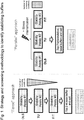
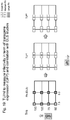
- Fig. 1 Screening studies were carried out using a parallel approach ( FIG. 1 ) to identify conditions that can be used to stabilize lentiviral vectors.
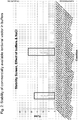
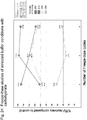
- the stability of a commercially available lentiviral vector (Lentigen) was assessed in a screen varying buffer, pH, and salt conditions, as indicated in Fig. 2 .
- the lentiviral vector was incubated overnight (about 18 hours) at room temperature (about 25°C). Stability was determined by assessment of titer (TU/ml) using the method described in Example 5, above.
- PIPES buffer with NaCl stabilized the vector almost to the same extent as the control formulation (Lentigen Formulation), which may include excipients in addition to buffer and salt components.
- the lentiviral vector used in this experiment was CAR19 LV from Lentigen. All other studies described in this Example utilized the GFP-LV described in Example 1, above.
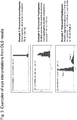
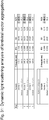
- Hydrodynamic radius distributions of various formulations were determined to assess levels of lentivirus vector aggregation ( Fig. 3 ), using methods described in Example 4, above.
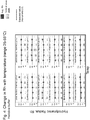
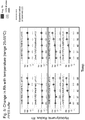
- Fig. 4 shows that histidine buffer (20 mM histidine, 50-150 mM NaCl, pH 6.0, 6.5, and 7.0) has a very low tendency for lentiviral vector aggregation with increase in temperature (monitored by change in Rh).
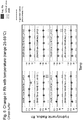
- Fig. 5 shows that lentiviral vector in 20 mM PIPES, pH 6.5 with NaCl concentrations ranging from 50-150 mM, showed no tendency for aggregation at all temperatures (with the exception of 100 mM NaCl at 55°C). Also, lentiviral vector in 20 mM PIPES, pH 7.0 with NaCl ranging from 50-150 mM, showed aggregation tendencies at temperatures 42-55°C.
- Fig. 4 shows that histidine buffer (20 mM histidine, 50-150 mM NaCl, pH 6.0, 6.5, and 7.0) has a very low tendency for lentiviral vector aggregation with increase in temperature (monitored by change in Rh
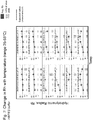
- citrate buffer (20 mM citrate, 50-150 mM NaCl, pH 6.0, 6.5) has a very low tendency for lentiviral vector aggregation with increases in temperature (monitored by change in Rh).
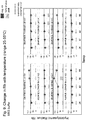
- Fig. 7 shows that HEPES buffer (20 mM HEPES, 50-150 mM NaCl, pH 7.0, 7.5 and 8.0) has large aggregation propensities at pH 7.5 and 8.0, whereas pH 7.0 preserves monomeric virus at different temperatures.
- MOPS buffer (20 mM MOPS, 50-150 mM NaCl, pH 6.5, 7.0 and 7.5) has high aggregation propensity at pH 6.5 and 7.0 at 50 mM NaCl and all conditions at pH 7.5. Only 20 mM MOPS, 75 mM NaCl, pH 6.5 shows aggregation at high temperature (55°C, which is significantly high as the virus would never be exposed to such a temperature in a real case situation).
- Fig. 9 shows that MES buffer (20 mM MES, 50-150 mM NaCl, pH 6.0 and 6.5) has low aggregation propensity of lentivirus vector under these conditions.
- phosphate buffer (20 mM phosphate, 50-150 mM NaCl, pH 6.5, 7.0, 7.5, 8.0
- Fig. 11 shows that for HEPPS buffer (20 mM HEPPS, 50-150 mM NaCl, pH 7.5 and 8.0), all of the conditions promote aggregation of LV (except at 25°C).
- Fig. 12 shows that for Tris buffer (20 mM Tris, 50-150 mM NaCl, pH 7.5 and 8.0), all of the conditions promote aggregation of LV (except at 25°C).
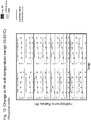
- Figs. 13-19 Additional analysis was carried out to determine the robustness of Rh in different buffer conditions ( FIGs. 13-19 ).
- Fig. 13 shows that histidine, citrate, MOPS, PIPES, HEPES, and MES buffers selectively promote stability to lentiviral vector in stabilizing monomers, as assessed by DLS only.
- Fig. 14 shows that phosphate, HEPPS, and Tris based buffers do not offer any protective action from aggregation at high temperature, as assessed by DLS only.
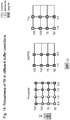
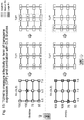
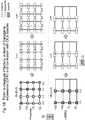
- Figs. 15-19 show the results of studies in which two criteria (protection from aggregation and protection from loss of infectivity at high temperatures) are analyzed together.
- Fig. 15 shows that histidine and PIPES buffers provide stability even at high temperatures in preserving infectivity (with unique pH and salt combinations).
- Fig. 16 shows that citrate buffer provides protection from loss of infectivity as compared to HEPES at high temperatures, while Fig. 17 shows that MOPS and MES buffers provide protection from loss of infectivity at high temperatures.
- Fig. 18 shows that phosphate buffer provides protection from loss of infectivity as compared to HEPPS at high temperatures, while Fig. 19 shows that Tris buffer does not provide protection from loss of infectivity at high temperatures.
- selected buffers e.g., histidine, PIPES, citrate etc.
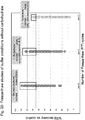
- Fig. 20 shows the number of conditions under which lentiviral vectors survived three, six, and nine freeze-thaw cycles, with greater than 65% retention of titer.
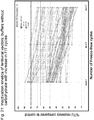
- Fig. 21 shows that inactivation kinetics of lentiviral vectors from third, sixth, and ninth freeze-thaw cycles differentiated buffers providing high or low stability for the vectors.
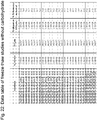
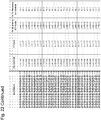
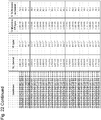
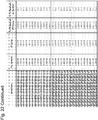
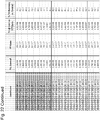
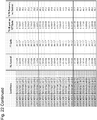
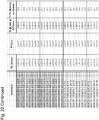
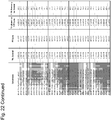
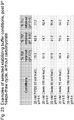
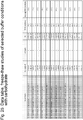
- Analysis of the data (see, e.g., Fig. 22 ) identified five conditions under which lentiviral vectors survived nine freeze-thaw cycles with greater than 65% retention of titer. The details of these conditions are set forth in Fig. 23 .
- Example 6 Additional studies were carried out to assess the effects of including a carbohydrate, sucrose, on maintenance of stability after multiple freeze-thaw cycles. The methods of Example 6, above, were employed for these experiments. For citrate, HEPES, and PIPES-based buffers, there is no loss of activity of lentivirus vectors, as compared to histidine buffer, which shows about 20% loss of activity after the ninth freeze-thaw cycle (see Figs. 24 and 25 ). Examples of selected stabilizing buffer conditions with carbohydrate are shown in Fig. 26 .
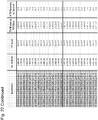
- Viral titers were assessed in primary T cells, using the methods described in Example 7, above. The results are set forth in Fig. 27 . PIPES and citrate buffers were found to provide very high titer in primary cells, showing efficient transduction in cells. HEPES and histidine buffers provided high titers as well. All of the identified conditions outperformed commercial vector purchased from Lentigen Corp. (commercial formulation, unknown).
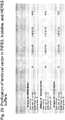
- Fig. 28 A comparison of certain results of the stability studies using PIPES, HEPES, and histidine buffers is set forth in Fig. 28 .
- the aggregation results show an increase in lentivirus vector hydrodynamic radius as a function of temperature, as measured by DLS. Average values with a specific pH is shown (with 50-150 mM NaCl). The activity of lentivirus vector at high temperature was assessed in 293T cells. The values at 50°C were compared to values at 25°C. Average values with a specific pH are shown (with 50-150 mM NaCl).
- Activity of a lentivirus vector in 293T cells after the ninth freeze-thaw cycle is shown as an example to indicate lentivirus vector stability (>100% activity meaning no loss of activity; the assay being variable as an in vivo assay).
- Activity of lentivirus vector in primary T cells is shown as an additional test for transduction ability.
- Lentiviral vector in PIPES buffer was able to transfect ⁇ 25% and ⁇ 35% more primary T cells, as compared to lentiviral vector in HEPES and histidine buffer, respectively.
- PIPES buffer thus provides an alternative to the standard HEPES-based formulation because, for example, lentiviral vectors are more stable in PIPES buffer.
- lentiviral vectors in PIPES buffer were able to transfect ⁇ 20-25% more primary T cells as compared to HEPES and histidine buffers
- Lentiviral vectors were produced and purified using the methods described in Examples 1 and 2, above.
- a post chromatographic purification step involving passage through a 0.2 micron filter, is carried out to maintain sterility.
- As low recovery can result from purification, due to aggregation, different buffers were tested to identify conditions the result in optimal recovery.
- PIPES buffer showed better recovery, as compared to HEPES and histidine buffers.
- Two lentiviral vectors, present in a PIPES-based buffer (20 mM PIPES, pH 6.5, 75 mM NaCl, 2.5% sucrose) were purified using a method including the steps of microfiltration, tangential flow filtration (TFF), benzonase treatment, centrifugation, size exclusion chromatography (SEC), and sterile filtration.
- Samples were obtained from the TFF retentate and held for 4 days at -80°C or +4°C.
- samples were obtained from the SEC eluate and held for 3 days at -80°C or +4°C.
- Viral titers were obtained from the samples before and after the holding periods. Both vectors were stable in the PIPES buffer during purification. As shown in Fig. 30 , no significant changes in activity, as measured by titer determinations, were found during short-term storage of the TFF and SEC samples at -80°C or +4°C.
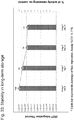
- Stability of purified vector 2 was assessed after storage in PIPES buffer (20 mM PIPES, pH 6.5, 75 mM NaCl, 2.5% sucrose) at 4°C for three weeks. As shown in Fig. 33 , this vector maintains high stability under these conditions, as measured by determination of titers in 293T cells, as well as percentage of activity remaining compared to a control (4°C, Day 0; the first bar in Fig. 33 , activity of control is taken as 100%). The x-axis bars show activities on Days 14 and 21, respectively (expressed as percent vs. control).
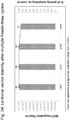
- freeze-thaw stability of vector 2 in PIPES buffer (20 mM PIPES, pH 6.5, 75 mM NaCl, 2.5% sucrose) was assessed (see Example 6, above, for methods).
- this vector maintains high stability after multiple cycles of freeze-thaw (up to 9 cycles were carried out), as measured by determination of titers in 293T cells, as well as percentage of activity remaining compared to a control (titer after 1 freeze-thaw cycle, as purified lentiviral sample is stored at -80°C immediately after purification).
- the activity of the control sample is taken as 100%, represented in the first bar in Fig 34 .
- the x-axis bars show residual activities (in percent) after 3, 6, and 9 freeze-thaw cycles (expressed as percent vs. control).
Landscapes
- Health & Medical Sciences (AREA)
- Life Sciences & Earth Sciences (AREA)
- Chemical & Material Sciences (AREA)
- Organic Chemistry (AREA)
- Engineering & Computer Science (AREA)
- Genetics & Genomics (AREA)
- Immunology (AREA)
- General Health & Medical Sciences (AREA)
- Zoology (AREA)
- Wood Science & Technology (AREA)
- Bioinformatics & Cheminformatics (AREA)
- Medicinal Chemistry (AREA)
- Biomedical Technology (AREA)
- Biochemistry (AREA)
- Biotechnology (AREA)
- Molecular Biology (AREA)
- Microbiology (AREA)
- General Engineering & Computer Science (AREA)
- Biophysics (AREA)
- Proteomics, Peptides & Aminoacids (AREA)
- Animal Behavior & Ethology (AREA)
- Pharmacology & Pharmacy (AREA)
- Public Health (AREA)
- Veterinary Medicine (AREA)
- Cell Biology (AREA)
- Physics & Mathematics (AREA)
- Virology (AREA)
- Hematology (AREA)
- Epidemiology (AREA)
- Oncology (AREA)
- Chemical Kinetics & Catalysis (AREA)
- General Chemical & Material Sciences (AREA)
- Nuclear Medicine, Radiotherapy & Molecular Imaging (AREA)
- Plant Pathology (AREA)
- Analytical Chemistry (AREA)
- Urology & Nephrology (AREA)
- Mycology (AREA)
- Gastroenterology & Hepatology (AREA)
- Toxicology (AREA)
- General Physics & Mathematics (AREA)
Claims (18)
- Eine wässrige Zusammensetzung, die einen Lentivirusvektor, einen 1,4-Piperazindiethansulfonsäure(PIPES)-Puffer und ein Salz beinhaltet.
- Wässrige Zusammensetzung nach Anspruch 1, wobei(a) der PIPES-Puffer in einer Konzentration von etwa 10 mM bis etwa 50 mM, z. B. etwa 20 mM, vorliegt;(b) der pH-Wert der wässrigen Zusammensetzung von etwa 6,0 bis etwa 7,0, z. B. etwa 6,5, beträgt;(c) das Salz aus der Gruppe ausgewählt ist, die aus Natriumchlorid, Magnesiumchlorid und Calciumchlorid besteht, z. B. das Salz Natriumchlorid ist;(d) die Konzentration des Salzes in der wässrigen Zusammensetzung von etwa 25 mM bis etwa 150 mM, z. B. etwa 50 mM oder etwa 75 mM, beträgt; und/oder(e) die wässrige Zusammensetzung 20 mM PIPES und 75 mM Natriumchlorid beinhaltet undwobei die wässrige Zusammensetzung einen pH-Wert von etwa 6,5 aufweist.
- Wässrige Zusammensetzung nach Anspruch 1 oder 2, wobei(a) die wässrige Zusammensetzung ferner ein Kohlenhydrat beinhaltet, wobei das Kohlenhydrat optional Folgendes ist:(i) ein nichtreduzierendes Kohlenhydrat, z. B. ein nichtreduzierendes Kohlenhydrat, das aus der Gruppe ausgewählt ist, die aus Saccharose und Trehalose besteht; und/oder(ii) in einer Konzentration von etwa 1 bis etwa 10, etwa 2 bis etwa 5 oder etwa 2,5 Gewichts-% pro Volumen der wässrigen Zusammensetzung vorliegt;(b) die wässrige Zusammensetzung 20 mM PIPES, 75 mM Natriumchlorid und 2,5 Gewichts-% Saccharose pro Volumen der wässrigen Zusammensetzung beinhaltet und wobei die wässrige Zusammensetzung einen pH-Wert von etwa 6,5 aufweist; und/oder(c) die Osmolalität der wässrigen Zusammensetzung von etwa 270 mOsm/kg bis etwa 330 mOsm/kg, etwa 275 mOsm/kg bis etwa 300 mOsm/kg oder etwa 285 mOsm/kg beträgt.
- Wässrige Zusammensetzung nach einem der Ansprüche 1-3, wobei der Lentivirusvektor(a) in einer Konzentration von etwa 2 x 10⁸ transduzierenden Einheiten pro Milliliter (TU/ml) bis etwa 1 x 10⁹ TU/ml, z. B. von etwa 3 x 10⁸ TU/ml bis etwa 5 x 10⁸ TU/ml vorliegt;(b) ein rekombinantes Human-Immunodeficiency-Virus ist; und/oder(c) vesikuläres Stomatitis-Virus-G(VSV-G)-Protein beinhaltet, wobei das VSV-G-Protein optional auf der Oberfläche des Lentivirusvektors vorliegt.
- Wässrige Zusammensetzung nach einem der Ansprüche 1-4, wobei der Lentivirusvektor ein Transgen beinhaltet, wobei das Transgen optional für ein Protein kodiert.
- Wässrige Zusammensetzung nach Anspruch 5, wobei das Protein einen chimären Antigenrezeptor (CAR) beinhaltet, wobei der CAR optional in einer N-terminalen zu C-terminalen Richtung eine Antigenbindungsdomäne, eine Transmembrandomäne und eine oder mehrere Signalgebungsdomänen beinhaltet.
- Wässrige Zusammensetzung nach Anspruch 6, wobei die Signalgebungsdomänen eine oder mehrere primäre Signalgebungsdomänen und/oder eine oder mehrere costimulatorische Signalgebungsdomänen beinhalten, wobei optional(a) eine von der einen oder den mehreren primären Signalgebungsdomänen eine CD3-zeta-stimulatorische Domäne beinhaltet; und/oder(b) eine oder mehrere der costimulatorischen Signalgebungsdomänen eine intrazelluläre Domäne beinhalten, ausgewählt aus einem costimulatorischen Protein, ausgewählt aus der Gruppe, bestehend aus CD27, CD28, 4-1BB (CD137), OX40, GITR, CD30, CD40, ICOS, BAFFR, HVEM, ICAM-1, lymphozytenfunktionsassoziiertem Antigen-1 (LFA-1), CD2, CDS, CD7, CD287, LIGHT, NKG2C, NKG2D, SLAMF7, NKp80, NKp30, NKp44, NKp46, CD160, B7-H3, und einem Liganden, der spezifisch mit CD83 bindet, z. B. wobei die eine oder mehreren der costimulatorischen Signalgebungsdomänen die 4-1BB(CD137)-costimulatorische Domäne und/oder die CD28-costimulatorische Domäne beinhaltet.
- Wässrige Zusammensetzung nach Anspruch 6 oder 7, wobei(a) die Antigenbindungsdomäne ein scFv ist;(b) die Antigenbindungsdomäne an ein Antigen bindet, ausgewählt aus der Gruppe, bestehend aus CD19; CD123; CD22; CD30; CD171; CS-1; C-Typ-lectinähnlichem Molekül-1, CD33; epidermaler Wachstumsfaktorrezeptor-Variante III (EGFRvIII); Gangliosid G2 (GD2); Gangliosid GD3; TNF-Rezeptor-Familienmitglied B-Zellreifung (BCMA); Tn-Antigen ((Tn Ag) oder (GaINAca-Ser/Thr)); prostataspezifischem Membranantigen (PSMA); Rezeptortyrosinkinase-ähnlichem Orphan-Rezeptor 1 (ROR1); Fms-ähnlicher Tyrosinkinase 3 (FLT3); tumorassoziiertem Glycoprotein 72 (TAG72); CD38; CD44v6; carcinoembryonischem Antigen (CEA); Epithelzell-Adhäsionsmolekül (EPCAM); B7H3 (CD276); KIT (CD117); Interleukin-13-Rezeptor-Untereinheit-alpha-2; Mesothelin; Interleukin-11-Rezeptor-alpha (IL-11Ra); Prostatastammzellenantigen (PSCA); Proteaseserin 21; vaskulärem Endothelwachstumsfaktorrezeptor 2 (VEGFR2); Lewis-(Y)-Antigen; CD24; plättchenderiviertem Wachstumsfaktorrezeptor-beta (PDGFR-beta); stadienspezifischem embryonischem Antigen-4 (SSEA-4); CD20; Folatrezeptor-alpha; Rezeptortyrosinproteinkinase ERBB2 (Her2/neu); Mucin 1, zelloberflächenassoziiert (MUC1); epidermalem Wachstumsfaktorrezeptor (EGFR); neuralem Zelladhäsionsmolekül (NCAM); Prostase; Prostatasäurephosphatase (PAP); Elongation-Faktor-2 mutiert (ELF2M); Ephrin B2; Fibroblastenaktivierungsprotein-alpha (FAP); insulinähnlichem Wachstumsfaktor-1-Rezeptor (IGF-1-Rezeptor), Carboanhydrase IX (CAIX); Proteasom(Prosom, Macropain)-Untereinheit, Beta-Typ, 9 (LMP2); Glycoprotein 100 (gp100); Onkogenfusionsprotein, bestehend aus Breakpoint-Clusterregion (BCR) und Abelson-Maus-Leukämievirus-Onkogen-Homolog 1 (Abl) (bcr-abl); Tyrosinase; Ephrin-Typ-A-Rezeptor 2 (EphA2); Fucosyl GM1; Sialyl-Lewis-Adhäsionsmolekül (sLe); Gangliosid GM3; Transglutaminase 5 (TGS5); High Molecular Weight Melanoma-Associated Antigen (HMWMAA); o-Acetyl-GD2-Gangliosid (OAcGD2); Folatrezeptor-beta; Tumorendothel-Marker 1 (TEM1/CD248); Tumorendothel-Marker-7-related (TEM7R); Claudin 6 (CLDN6); schilddrüsenstimulierendem Hormonrezeptor (TSHR); G-Protein-gekoppeltem Rezeptor Klasse C Gruppe 5, Mitglied D (GPRC5D); Chromosom-X-offenes Leseraster 61 (CXORF61); CD97; CD179a; anaplastischer Lymphomkinase (ALK); Polysialsäure; plazentaspezifisch 1 (PLAC1); Hexasaccharidanteil von globoH-Glykoceramid (GloboH); Brustdrüsen-Differenzierungsantigen (NY-BR-1); Uroplakin 2 (UPK2); Hepatitis-A-Virus-zellulärem Rezeptor 1 (HAVCR1); Adrenozeptor-beta 3 (ADRB3); Pannexin 3 (PANX3); G-Protein-gekoppeltem Rezeptor 20 (GPR20); Lymphozytenantigen-6-Komplex, Locus K 9 (LY6K); Olfaktorischem Rezeptor 51E2 (OR51E2); TCR-Gamma-Alternate Reading Frame Protein (TARP); Wilmstumor-Protein (WT1); Cancer/Testis-Antigen 1 (NY-ESO-1); Cancer/Testis-Antigen 2 (LAGE-1a); Melanom-assoziiertem Antigen 1 (MAGE-A1); ETS-Translokations-variantem Gen 6, lokalisiert auf Chromosom 12p (ETV6-AML); Sperm-Protein 17 (SPA17); X-Antigen-Familie, Mitglied 1A (XAGE1); Angiopoietinbindungs-Zelloberflächenrezeptor 2 (Tie 2); Melanom-Cancer-Testis-Antigen-1 (MAD-CT-1); Melanom-Cancer-Testis-Antigen-2 (MAD-CT-2); Fos-bezogenem Antigen 1; Tumorprotein p53 (p53); p53-Mutant; Prostein; Surviving; Telomerase; Prostatakarzinom-Tumorantigen-1, Melanom-Antigen, erkannt durch T-Zellen 1; Rattensarkom(Ras)-Mutant; humaner Telomerase-Reverse-Transkriptase (hTERT); Sarkom-Translokations-Breakpoints; Melanom-Apoptose-Inhibitor (ML-IAP); ERG (Transmembranprotease, Serin 2 (TMPRSS2) ETS-Fusionsgen); N-Acetylglucosaminyltransferase V (NA17); Paired-Box-Protein Pax-3 (PAX3); Androgenrezeptor; Cyclin B1; v-myc avian myelocytomatosis viral oncogene neuroblastoma derived homolog (MYCN); Ras-Homolog-Familienmitglied C (RhoC); Tyrosinase-bezogenem Protein 2 (TRP-2); Cytochrom P450 1B1 (CYP1B1); CCCTC-Bindungsfaktor (Zinkfinger-Protein)-ähnlich, Plattenepithelkarzinom-Antigen, erkannt durch T-Zellen 3 (SART3); Paired-Box-Protein Pax-5 (PAX5); Proacrosin-Bindungsprotein sp32 (OY-TES1); Lymphozytenspezifischer Protein-Tyrosinkinase (LCK); A-Kinase-Ankerprotein 4 (AKAP-4); Synovialsarkom, X Breakpoint 2 (SSX2); Receptor for Advanced Glycation End Products (RAGE-1); Renal Ubiquitous 1 (RU1); Renal Ubiquitous 2 (RU2); Legumain; Humanem Papillomavirus E6 (HPV E6); Humanes Papillomavirus E7 (HPV E7); Intestinaler Carboxylesterase; Heat-Shock-Protein 70-2 mutiert (mut hsp70-2); CD79a; CD79b; CD72; Leukozytenassoziiertem Immunglobulin-ähnlichem Rezeptor 1 (LAIR1); Fc-Fragment von IgA-Rezeptor (FCAR oder CD89); Leukozyten-Immunoglobulinähnlichem Rezeptor, Unterfamilie A Mitglied 2 (LILRA2); CD300 Molekül-ähnlicher Familie, Mitglied F (CD300LF); C-Typ-Lectin-Domäne, Familie 12, Mitglied A (CLEC12A); Knochenmark-Stromazell-Antigen 2 (BST2); EGF-like module-containing mucin-like hormone receptor-like 2 (EMR2); Lymphozytenantigen 75 (LY75); Glypican-3 (GPC3); Fc-Rezeptor-ähnlich 5 (FCRL5); und Immunglobulin-Lambdaähnlichem Polypeptid 1 (IGLL1), z. B. wobei die Antigenbindungsdomäne an CD19, Mesothelin oder CD123 bindet; und/oder(c) der CAR einen Anti-CD19-Antikörper oder ein Fragment davon, eine 4-1BB(CD137)-Transmembrandomäne und eine CD3-zeta-Signalgebungsdomäne beinhaltet.
- Wässrige Zusammensetzung nach einem der Ansprüche 1-8, wobei(a) die wässrige Zusammensetzung frei von einem oder mehreren Proteinen ist, die aus der Gruppe ausgewählt sind, die aus humanem Serumalbumin (HSA), rekombinantem humanem Serumalbumin (rHSA), Rinderserumalbumin (BSA) und einem Lipoprotein besteht, z. B. die wässrige Zusammensetzung frei von HSA, rHSA, BSA und Lipoproteinen ist; und/oder(b) der Lentivirusvektor in Zellen produziert wird, die in Abwesenheit von Serum kultiviert wurden.
- Wässrige Zusammensetzung nach einem der Ansprüche 1-9, wobei der Lentivirusvektor(a) durch einen hydrodynamischen Radius von 100 ± 25 nm, gemessen durch dynamische Lichtstreuung (DLS), gekennzeichnet ist, wobei der Lentivirusvektor optional den hydrodynamischen Radius von 100 ± 25 nm innerhalb eines Temperaturbereichs von 25 °C bis 55 °C aufrechterhält;(b) durch eine Polydispersität von 10% bis 25% gekennzeichnet ist, wobei der Lentivirusvektor optional die Polydispersität von 10% bis 25% innerhalb eines Temperaturbereichs von 25 °C bis 55 °C aufrechterhält; und/oder(c) eine Konzentration nach 3 Gefrier-/Auftauzyklen von etwa 70% bis etwa 100% relativ zu der Konzentration des Lentivirusvektors in der wässrigen Zusammensetzung vor den Gefrier-/Auftauzyklen aufrechterhält, wobei jeder der Gefrier-/Auftauzyklen das Einfrieren der wässrigen Zusammensetzung und das anschließende Auftauenlassen der wässrigen Zusammensetzung bei Raumtemperatur beinhaltet,wobei der Lentivirusvektor optional die Konzentration von etwa 70% bis etwa 100% nach 6 der Gefrier-/Auftauzyklen, z. B. nach 9 der Gefrier-/Auftauzyklen aufrechterhält.
- Ein Verfahren zum Aufreinigen eines Lentivirusvektors, wobei das Verfahren das Durchlaufenlassen der wässrigen Zusammensetzung nach einem der Ansprüche 1-10 durch ein Filter beinhaltet, wodurch eine wässrige Zusammensetzung produziert wird, die im Wesentlichen frei von Mikroorganismen ist.
- Verfahren nach Anspruch 11, wobei(a) das Filter eine Vielzahl von Poren beinhaltet und wobei die Poren einen Durchmesser von etwa 0,2 µm aufweisen; und/oder(b) die wässrige Zusammensetzung, die im Wesentlichen frei von Mikroorganismen ist, den Lentivirusvektor in einer Konzentration von etwa 80% relativ zu der Konzentration des Lentivirusvektors in der wässrigen Zusammensetzung vor dem In-Kontakt-Bringen beinhaltet.
- Ein Verfahren zum Aufreinigen eines Lentivirusvektors, wobei das Verfahren das In-Kontakt-Bringen der wässrigen Zusammensetzung nach einem der Ansprüche 1-10 mit einem der Folgenden beinhaltet:(i) einem Material, das eine Vielzahl von Partikeln beinhaltet, wobei das Verfahren ferner das Trennen von durch das Material fließenden Substanzen von innerhalb des Materials verbleibenden Substanzen beinhaltet, wodurch eine wässrige Zusammensetzung, die mit dem Lentivirusvektor angereichert ist, produziert wird; oder(ii) einer Nuclease, wodurch eine wässrige Zusammensetzung, die im Wesentlichen frei von verunreinigenden Polynucleotiden ist, produziert wird.
- Ein Verfahren zum Exprimieren eines Transgens in einer Zelle, wobei das Verfahren das In-Kontakt-Bringen der Zelle mit der wässrigen Zusammensetzung nach einem der Ansprüche 1-10 beinhaltet, wobei das Verfahren kein Verfahren zur Behandlung des menschlichen oder tierischen Körpers mittels Chirurgie oder Therapie ist.
- Verfahren nach Anspruch 14, wobei die Zelle eine Säugerzelle ist, wobei die Säugerzelle optional eine 293T-Zelle oder eine T-Zelle ist, z. B. eine menschliche T-Zelle wie etwa eine Jurkat-T-Zelle oder eine primäre menschliche T-Zelle.
- Ein Kit, der die wässrige Zusammensetzung nach einem der Ansprüche 1-10 und eine Packungsbeilage beinhaltet.
- Kit nach Anspruch 16, wobei die Packungsbeilage einen Benutzer des Kits zum Exprimieren eines Transgens in einer Zelle gemäß dem Verfahren nach Anspruch 14 oder 15 anweist, wobei der Kit ferner ein Reagens beinhaltet, das zum Kultivieren der Zelle verwendet werden kann.
- Wässrige Zusammensetzung nach einem der Ansprüche 1-10 zur Verwendung in einem Verfahren zur Behandlung oder Prävention einer Erkrankung bei einem Individuum durch Zuführen eines Virusvektors, der optional ein Transgen beinhaltet, in eine Zelle des Individuums, wobei das Verfahren das Verabreichen der Zusammensetzung an das Individuum beinhaltet.
Priority Applications (4)
| Application Number | Priority Date | Filing Date | Title |
|---|---|---|---|
| EP20207761.6A EP3907283A3 (de) | 2015-11-19 | 2016-11-18 | Puffer zur stabilisierung von lentiviralen zubereitungen |
| PL16819211T PL3377618T3 (pl) | 2015-11-19 | 2016-11-18 | Bufory do stabilizacji preparatów lentiwirusowych |
| HRP20202062TT HRP20202062T1 (hr) | 2015-11-19 | 2016-11-18 | Puferi za stabilizaciju lentivirusnih pripravaka |
| SI201631044T SI3377618T1 (sl) | 2015-11-19 | 2016-11-18 | Pufri za stabilizacijo lentivirusnih pripravkov |
Applications Claiming Priority (2)
| Application Number | Priority Date | Filing Date | Title |
|---|---|---|---|
| US201562257444P | 2015-11-19 | 2015-11-19 | |
| PCT/US2016/062871 WO2017087861A1 (en) | 2015-11-19 | 2016-11-18 | Buffers for stabilzation of lentiviral preparations |
Related Child Applications (1)
| Application Number | Title | Priority Date | Filing Date |
|---|---|---|---|
| EP20207761.6A Division EP3907283A3 (de) | 2015-11-19 | 2016-11-18 | Puffer zur stabilisierung von lentiviralen zubereitungen |
Publications (2)
| Publication Number | Publication Date |
|---|---|
| EP3377618A1 EP3377618A1 (de) | 2018-09-26 |
| EP3377618B1 true EP3377618B1 (de) | 2020-11-18 |
Family
ID=57614444
Family Applications (2)
| Application Number | Title | Priority Date | Filing Date |
|---|---|---|---|
| EP20207761.6A Pending EP3907283A3 (de) | 2015-11-19 | 2016-11-18 | Puffer zur stabilisierung von lentiviralen zubereitungen |
| EP16819211.0A Active EP3377618B1 (de) | 2015-11-19 | 2016-11-18 | Puffer zur stabilisierung von lentiviralen zubereitungen |
Family Applications Before (1)
| Application Number | Title | Priority Date | Filing Date |
|---|---|---|---|
| EP20207761.6A Pending EP3907283A3 (de) | 2015-11-19 | 2016-11-18 | Puffer zur stabilisierung von lentiviralen zubereitungen |
Country Status (18)
| Country | Link |
|---|---|
| US (1) | US10724006B2 (de) |
| EP (2) | EP3907283A3 (de) |
| JP (3) | JP7221049B2 (de) |
| KR (2) | KR102797330B1 (de) |
| CN (2) | CN116162658A (de) |
| AU (3) | AU2016355323B2 (de) |
| CA (1) | CA3005125A1 (de) |
| DK (1) | DK3377618T3 (de) |
| ES (1) | ES2842899T3 (de) |
| HR (1) | HRP20202062T1 (de) |
| HU (1) | HUE052016T2 (de) |
| IL (2) | IL296606A (de) |
| LT (1) | LT3377618T (de) |
| PL (1) | PL3377618T3 (de) |
| PT (1) | PT3377618T (de) |
| RU (2) | RU2021108572A (de) |
| SI (1) | SI3377618T1 (de) |
| WO (1) | WO2017087861A1 (de) |
Families Citing this family (16)
| Publication number | Priority date | Publication date | Assignee | Title |
|---|---|---|---|---|
| DK2956477T4 (da) | 2013-02-15 | 2024-04-15 | Bioverativ Therapeutics Inc | Optimeret faktor viii-gen |
| US11008561B2 (en) | 2014-06-30 | 2021-05-18 | Bioverativ Therapeutics Inc. | Optimized factor IX gene |
| KR20180118659A (ko) | 2016-02-01 | 2018-10-31 | 바이오버라티브 테라퓨틱스 인크. | 최적화된 viii 인자 유전자 |
| CN108060136A (zh) * | 2017-12-26 | 2018-05-22 | 东莞赛尔生物科技有限公司 | 一种用于治疗aml的嵌合抗原受体t细胞、制备方法及应用 |
| CN109157518B (zh) * | 2018-09-26 | 2021-03-12 | 厚朴生物科技(苏州)有限公司 | 慢病毒载体冻干保存方法及制剂 |
| CN109468282B (zh) * | 2018-11-22 | 2019-06-18 | 青岛协和华美医学诊断技术有限公司 | 一种靶向cd19的嵌合抗原受体t细胞的制备方法及应用 |
| CN113905718B (zh) * | 2019-03-26 | 2024-12-10 | 奥拉生物科学公司 | 人乳头瘤病毒纳米粒制剂 |
| TW202126284A (zh) | 2019-09-30 | 2021-07-16 | 美商百歐維拉提夫治療公司 | 慢病毒載體配製物 |
| TW202216768A (zh) | 2020-06-22 | 2022-05-01 | 美商恩格姆生物製藥公司 | Lair-1結合劑及其使用方法 |
| WO2021262963A1 (en) | 2020-06-24 | 2021-12-30 | Bioverativ Therapeutics Inc. | Methods for the removal of free factor viii from preparations of lentiviral vectors modified to express said protein |
| AU2022267891A1 (en) * | 2021-04-27 | 2023-11-09 | Novartis Ag | Viral vector production system |
| CN115704011A (zh) * | 2021-08-11 | 2023-02-17 | 北京永泰生物制品有限公司 | 一种高稳定性的慢病毒制剂及其制备方法和其应用 |
| CN115960962A (zh) * | 2021-10-09 | 2023-04-14 | 江苏金斯瑞蓬勃生物科技有限公司 | 一种用于加强慢病毒载体稳定性的保护剂及其用途 |
| CN119585438A (zh) * | 2022-05-26 | 2025-03-07 | 再生元制药公司 | 用于维持慢病毒载体的组合物及其用途 |
| WO2024089639A1 (en) | 2022-10-26 | 2024-05-02 | Novartis Ag | Lentiviral formulations |
| CN115948616B (zh) * | 2022-12-16 | 2024-02-06 | 杭州养生堂生物医药有限公司 | 一种柯萨奇病毒b1型的核酸定量检测方法 |
Citations (4)
| Publication number | Priority date | Publication date | Assignee | Title |
|---|---|---|---|---|
| WO2004022722A2 (en) | 2002-09-06 | 2004-03-18 | Massachusetts Institute Of Technology | Lentiviral vectors, related reagents, and methods of use thereof |
| WO2011090712A2 (en) | 2009-12-28 | 2011-07-28 | Ligocyte Pharmaceuticals, Inc. | Methods for stabilizing influenza antigen enveloped virus-based virus-like particle solutions |
| US20150056696A1 (en) | 2012-03-22 | 2015-02-26 | Beijing Solobio Genetechnology Company Ltd. | Recombinant lentiviral vector preparation |
| WO2015028969A2 (en) | 2013-08-28 | 2015-03-05 | Koninklijke Nederlandse Akademie Van Wetenschappen | Transduction buffer |
Family Cites Families (10)
| Publication number | Priority date | Publication date | Assignee | Title |
|---|---|---|---|---|
| US5892019A (en) | 1987-07-15 | 1999-04-06 | The United States Of America, As Represented By The Department Of Health And Human Services | Production of a single-gene-encoded immunoglobulin |
| WO2007149343A2 (en) * | 2006-06-16 | 2007-12-27 | The Board Of Trustees Of The Leland Stanford Junior University | Proteases for treatment of venomous bites |
| WO2011084714A2 (en) | 2009-12-17 | 2011-07-14 | Biogen Idec Ma Inc. | STABILIZED ANTI-TNF-ALPHA scFv MOLECULES OR ANTI-TWEAK scFv MOLECULES AND USES THEREOF |
| BR112013018311A2 (pt) | 2011-01-18 | 2017-03-21 | Univ Pennsylvania | sequência de ácido nucleico isolada, receptor de antígeno quimérico isolado, célula t geneticamente modificada, vetor, e, uso de uma célula t geneticamente modificada. |
| JP2015512263A (ja) * | 2012-03-30 | 2015-04-27 | イミューン デザイン コーポレイション | Dc−signを発現する細胞に対して改善された形質導入の有効性を有するレンチウイルスベクター粒子 |
| CN112375846A (zh) | 2012-07-13 | 2021-02-19 | 宾夕法尼亚大学董事会 | 评估用于施用的转导t细胞的适用性的方法 |
| FR3014901B1 (fr) * | 2013-12-17 | 2017-06-09 | Genethon | Procede de purification de virus ou vecteurs viraux enveloppes |
| US10538785B2 (en) | 2013-12-23 | 2020-01-21 | Renaud Vaillant | Lyophilized lentiviral vector particles, compositions and methods |
| PL3689899T3 (pl) * | 2014-04-25 | 2022-01-31 | 2Seventy Bio, Inc. | Chimeryczne receptory antygenowe promotora mnd |
| US20180094280A1 (en) * | 2015-03-20 | 2018-04-05 | Bluebird Bio, Inc. | Vector formulations |
-
2016
- 2016-11-18 PL PL16819211T patent/PL3377618T3/pl unknown
- 2016-11-18 KR KR1020187016784A patent/KR102797330B1/ko active Active
- 2016-11-18 CA CA3005125A patent/CA3005125A1/en active Pending
- 2016-11-18 US US15/777,290 patent/US10724006B2/en active Active
- 2016-11-18 PT PT168192110T patent/PT3377618T/pt unknown
- 2016-11-18 LT LTEP16819211.0T patent/LT3377618T/lt unknown
- 2016-11-18 SI SI201631044T patent/SI3377618T1/sl unknown
- 2016-11-18 HR HRP20202062TT patent/HRP20202062T1/hr unknown
- 2016-11-18 CN CN202310188178.2A patent/CN116162658A/zh active Pending
- 2016-11-18 RU RU2021108572A patent/RU2021108572A/ru unknown
- 2016-11-18 IL IL296606A patent/IL296606A/en unknown
- 2016-11-18 EP EP20207761.6A patent/EP3907283A3/de active Pending
- 2016-11-18 KR KR1020257012122A patent/KR20250053230A/ko active Pending
- 2016-11-18 WO PCT/US2016/062871 patent/WO2017087861A1/en not_active Ceased
- 2016-11-18 ES ES16819211T patent/ES2842899T3/es active Active
- 2016-11-18 AU AU2016355323A patent/AU2016355323B2/en active Active
- 2016-11-18 EP EP16819211.0A patent/EP3377618B1/de active Active
- 2016-11-18 CN CN201680067440.6A patent/CN108473964B/zh active Active
- 2016-11-18 DK DK16819211.0T patent/DK3377618T3/da active
- 2016-11-18 JP JP2018526174A patent/JP7221049B2/ja active Active
- 2016-11-18 RU RU2018122106A patent/RU2747231C2/ru active
- 2016-11-18 HU HUE16819211A patent/HUE052016T2/hu unknown
-
2018
- 2018-05-09 IL IL259251A patent/IL259251B2/en unknown
-
2021
- 2021-06-01 AU AU2021203566A patent/AU2021203566A1/en not_active Abandoned
- 2021-10-01 JP JP2021162668A patent/JP2022008809A/ja not_active Withdrawn
-
2023
- 2023-11-10 AU AU2023263532A patent/AU2023263532A1/en active Pending
-
2024
- 2024-06-19 JP JP2024098399A patent/JP2024150439A/ja active Pending
Patent Citations (4)
| Publication number | Priority date | Publication date | Assignee | Title |
|---|---|---|---|---|
| WO2004022722A2 (en) | 2002-09-06 | 2004-03-18 | Massachusetts Institute Of Technology | Lentiviral vectors, related reagents, and methods of use thereof |
| WO2011090712A2 (en) | 2009-12-28 | 2011-07-28 | Ligocyte Pharmaceuticals, Inc. | Methods for stabilizing influenza antigen enveloped virus-based virus-like particle solutions |
| US20150056696A1 (en) | 2012-03-22 | 2015-02-26 | Beijing Solobio Genetechnology Company Ltd. | Recombinant lentiviral vector preparation |
| WO2015028969A2 (en) | 2013-08-28 | 2015-03-05 | Koninklijke Nederlandse Akademie Van Wetenschappen | Transduction buffer |
Non-Patent Citations (12)
| Title |
|---|
| ANONYMOUS: "COMMITTEE FOR MEDICINAL PRODUCTS FOR HUMAN USE (CHMP)", EMEA EUROPEAN MEDICINES AGENCY, 26 May 2006 (2006-05-26), pages 1 - 8, XP055834061 |
| AUSUBEL L. J., HALL C., SHARMA A., SHAKELEY R., LOPEZ P., QUEZADA V., COUTURE S., LANDERMAN K., MCMAHON R., HUANG P., HSU D., COUT: "roduction of CGMP-Grade Lentiviral Vectors", BIOPROCESS INT., vol. 10, no. 2, February 2012 (2012-02-01), pages 32 - 43, XP055324289 |
| BANDEIRA V., PEIXOTO C., RODRIGUES A. F., CRUZ P. E., ALVES P. M., COROADINHA A. S., CARRONDO M. J. T.: "Downstream Processing of Lentiviral Vectors: Releasing Bottlenecks", HUMAN GENE THERAPY METHODS, vol. 23, no. 4, 31 August 2012 (2012-08-31), pages 255 - 263, XP055639687 |
| CHALLENER: "Excipient Selection for Protein Stabilization", PHARMACEUTICAL TECHNOLOGY: APIS, EXCIPIENTS, AND MANUFACTURING SUPPLEMENT, vol. 2015, no. 3, 15 August 2015 (2015-08-15), pages 35 - 39, XP055834051 |
| HANSEN L. J.J., DAOUSSI R., VERVAET C., REMON J.P., DE BEER T. R. M.: "Freeze-drying of live virus vaccines: A review", VACCINE, vol. 33, 2015, pages 5507 - 5519, XP029294851 |
| HILL J. P., BUCKLEY P. D.: "The use of PH indicators to indentify suitable environments for freezing samples in aqueous and mixed aqueous/Nonaqueous solutions", ANALYTICAL BIOCHEMISTRY, vol. 192, 1991, pages 358 - 361, XP055834065 |
| JIANG WEI, RUI HUA, MENGPING WEI, CHENHONG LI, ZILONG QIU, XIAOFEI YANG, CHEN ZHANG: "An optimized method for hightiter lentivirus preparations without ultracentrifugation", SCIENTIFIC REPORTS, vol. 5, no. 13875, 8 September 2015 (2015-09-08), pages 1 - 9, XP055834074 |
| KONERMANN: "Protein Unfolding and Denaturants", ELS, May 2012 (2012-05-01), Chichester, pages 1 - 7, XP055834044 |
| OLDHAM ET AL.: "entiviral vectors in cancer immunotherapy", IMMUNOTHERAPY, vol. 7, no. 3, 2015, pages 271 - 284, XP055834055 |
| SEGURA M. M., MANGION M., GAILLET B., GARNIER A.: "Expert Opinion on Biological Therapy", EXPERT OPINION ON BIOLOGICAL THERAPY, vol. 13, no. 7, 16 April 2013 (2013-04-16), pages 987 - 1011, XP055834058 |
| SUN X., ROTH S. L., BIALECKI M. A., WHITTAKER G. R.: "Internalization and fusion mechanism of vesicular stomatitis virus and related rhabdoviruses", FUTURE VIROL, vol. 5, no. 1, 2010, pages 85 - 96, XP055834081 |
| WANG WEI, NEMA SANDEEP, TEAGARDEN DIRK: "Protein aggregation—Pathways and influencing factors", INTERNATIONAL JOURNAL OF PHARMACEUTICS, vol. 390, 2010, pages 89 - 99, XP055834048 |
Also Published As
Similar Documents
| Publication | Publication Date | Title |
|---|---|---|
| EP3377618B1 (de) | Puffer zur stabilisierung von lentiviralen zubereitungen | |
| JP7559029B2 (ja) | 形質導入のための方法、キット、作用物質および装置 | |
| JP7216045B2 (ja) | 養子t細胞療法のためのセントラルメモリーt細胞 | |
| CN115835873A (zh) | 用于产生表达重组受体的供体分批细胞的方法 | |
| US20250297282A1 (en) | Viral-binding protein and related reagents, articles, and methods of use | |
| HK40058157A (en) | Buffers for stabilization of lentiviral preparations | |
| WO2024089639A1 (en) | Lentiviral formulations | |
| HK1253265B (en) | Buffers for stabilization of lentiviral preparations | |
| WO2023180527A1 (en) | Adenoviral mediated targeting of activated immune cells | |
| CN117043346A (zh) | 用于递送逆转录病毒颗粒的方法和组合物 |
Legal Events
| Date | Code | Title | Description |
|---|---|---|---|
| STAA | Information on the status of an ep patent application or granted ep patent |
Free format text: STATUS: UNKNOWN |
|
| STAA | Information on the status of an ep patent application or granted ep patent |
Free format text: STATUS: THE INTERNATIONAL PUBLICATION HAS BEEN MADE |
|
| PUAI | Public reference made under article 153(3) epc to a published international application that has entered the european phase |
Free format text: ORIGINAL CODE: 0009012 |
|
| STAA | Information on the status of an ep patent application or granted ep patent |
Free format text: STATUS: REQUEST FOR EXAMINATION WAS MADE |
|
| 17P | Request for examination filed |
Effective date: 20180619 |
|
| AK | Designated contracting states |
Kind code of ref document: A1 Designated state(s): AL AT BE BG CH CY CZ DE DK EE ES FI FR GB GR HR HU IE IS IT LI LT LU LV MC MK MT NL NO PL PT RO RS SE SI SK SM TR |
|
| AX | Request for extension of the european patent |
Extension state: BA ME |
|
| DAV | Request for validation of the european patent (deleted) | ||
| DAX | Request for extension of the european patent (deleted) | ||
| REG | Reference to a national code |
Ref country code: HK Ref legal event code: DE Ref document number: 1253265 Country of ref document: HK |
|
| STAA | Information on the status of an ep patent application or granted ep patent |
Free format text: STATUS: EXAMINATION IS IN PROGRESS |
|
| 17Q | First examination report despatched |
Effective date: 20191129 |
|
| GRAP | Despatch of communication of intention to grant a patent |
Free format text: ORIGINAL CODE: EPIDOSNIGR1 |
|
| STAA | Information on the status of an ep patent application or granted ep patent |
Free format text: STATUS: GRANT OF PATENT IS INTENDED |
|
| INTG | Intention to grant announced |
Effective date: 20200529 |
|
| GRAS | Grant fee paid |
Free format text: ORIGINAL CODE: EPIDOSNIGR3 |
|
| GRAA | (expected) grant |
Free format text: ORIGINAL CODE: 0009210 |
|
| STAA | Information on the status of an ep patent application or granted ep patent |
Free format text: STATUS: THE PATENT HAS BEEN GRANTED |
|
| AK | Designated contracting states |
Kind code of ref document: B1 Designated state(s): AL AT BE BG CH CY CZ DE DK EE ES FI FR GB GR HR HU IE IS IT LI LT LU LV MC MK MT NL NO PL PT RO RS SE SI SK SM TR |
|
| REG | Reference to a national code |
Ref country code: GB Ref legal event code: FG4D |
|
| REG | Reference to a national code |
Ref country code: CH Ref legal event code: EP |
|
| REG | Reference to a national code |
Ref country code: IE Ref legal event code: FG4D |
|
| REG | Reference to a national code |
Ref country code: DE Ref legal event code: R096 Ref document number: 602016048215 Country of ref document: DE |
|
| REG | Reference to a national code |
Ref country code: AT Ref legal event code: REF Ref document number: 1335815 Country of ref document: AT Kind code of ref document: T Effective date: 20201215 |
|
| REG | Reference to a national code |
Ref country code: DK Ref legal event code: T3 Effective date: 20201218 |
|
| REG | Reference to a national code |
Ref country code: HR Ref legal event code: TUEP Ref document number: P20202062 Country of ref document: HR |
|
| REG | Reference to a national code |
Ref country code: PT Ref legal event code: SC4A Ref document number: 3377618 Country of ref document: PT Date of ref document: 20210106 Kind code of ref document: T Free format text: AVAILABILITY OF NATIONAL TRANSLATION Effective date: 20201229 |
|
| REG | Reference to a national code |
Ref country code: FI Ref legal event code: FGE |
|
| REG | Reference to a national code |
Ref country code: RO Ref legal event code: EPE |
|
| REG | Reference to a national code |
Ref country code: NL Ref legal event code: FP |
|
| REG | Reference to a national code |
Ref country code: SE Ref legal event code: TRGR |
|
| REG | Reference to a national code |
Ref country code: CH Ref legal event code: NV Representative=s name: SERVOPATENT GMBH, CH |
|
| REG | Reference to a national code |
Ref country code: HR Ref legal event code: ODRP Ref document number: P20202062 Country of ref document: HR Payment date: 20210111 Year of fee payment: 5 |
|
| REG | Reference to a national code |
Ref country code: SK Ref legal event code: T3 Ref document number: E 36084 Country of ref document: SK |
|
| REG | Reference to a national code |
Ref country code: HR Ref legal event code: T1PR Ref document number: P20202062 Country of ref document: HR |
|
| REG | Reference to a national code |
Ref country code: GR Ref legal event code: EP Ref document number: 20200403614 Country of ref document: GR Effective date: 20210215 |
|
| REG | Reference to a national code |
Ref country code: EE Ref legal event code: FG4A Ref document number: E020331 Country of ref document: EE Effective date: 20210112 |
|
| REG | Reference to a national code |
Ref country code: NO Ref legal event code: T2 Effective date: 20201118 |
|
| REG | Reference to a national code |
Ref country code: HU Ref legal event code: AG4A Ref document number: E052016 Country of ref document: HU |
|
| PG25 | Lapsed in a contracting state [announced via postgrant information from national office to epo] |
Ref country code: RS Free format text: LAPSE BECAUSE OF FAILURE TO SUBMIT A TRANSLATION OF THE DESCRIPTION OR TO PAY THE FEE WITHIN THE PRESCRIBED TIME-LIMIT Effective date: 20201118 |
|
| PG25 | Lapsed in a contracting state [announced via postgrant information from national office to epo] |
Ref country code: IS Free format text: LAPSE BECAUSE OF FAILURE TO SUBMIT A TRANSLATION OF THE DESCRIPTION OR TO PAY THE FEE WITHIN THE PRESCRIBED TIME-LIMIT Effective date: 20210318 |
|
| REG | Reference to a national code |
Ref country code: ES Ref legal event code: FG2A Ref document number: 2842899 Country of ref document: ES Kind code of ref document: T3 Effective date: 20210715 |
|
| PG25 | Lapsed in a contracting state [announced via postgrant information from national office to epo] |
Ref country code: SM Free format text: LAPSE BECAUSE OF FAILURE TO SUBMIT A TRANSLATION OF THE DESCRIPTION OR TO PAY THE FEE WITHIN THE PRESCRIBED TIME-LIMIT Effective date: 20201118 |
|
| REG | Reference to a national code |
Ref country code: DE Ref legal event code: R026 Ref document number: 602016048215 Country of ref document: DE |
|
| PLBI | Opposition filed |
Free format text: ORIGINAL CODE: 0009260 |
|
| PG25 | Lapsed in a contracting state [announced via postgrant information from national office to epo] |
Ref country code: MC Free format text: LAPSE BECAUSE OF FAILURE TO SUBMIT A TRANSLATION OF THE DESCRIPTION OR TO PAY THE FEE WITHIN THE PRESCRIBED TIME-LIMIT Effective date: 20201118 |
|
| PLAX | Notice of opposition and request to file observation + time limit sent |
Free format text: ORIGINAL CODE: EPIDOSNOBS2 |
|
| REG | Reference to a national code |
Ref country code: FI Ref legal event code: MDE Opponent name: GLAXOSMITHKLINE INTELLECTUAL PROPERTY DEVELOPMENT LIMITED |
|
| 26 | Opposition filed |
Opponent name: GLAXOSMITHKLINE INTELLECTUAL PROPERTY DEVELOPMENT LIMITED Effective date: 20210812 |
|
| PG25 | Lapsed in a contracting state [announced via postgrant information from national office to epo] |
Ref country code: AL Free format text: LAPSE BECAUSE OF FAILURE TO SUBMIT A TRANSLATION OF THE DESCRIPTION OR TO PAY THE FEE WITHIN THE PRESCRIBED TIME-LIMIT Effective date: 20201118 |
|
| REG | Reference to a national code |
Ref country code: HR Ref legal event code: ODRP Ref document number: P20202062 Country of ref document: HR Payment date: 20211108 Year of fee payment: 6 |
|
| PLAF | Information modified related to communication of a notice of opposition and request to file observations + time limit |
Free format text: ORIGINAL CODE: EPIDOSCOBS2 |
|
| PLBB | Reply of patent proprietor to notice(s) of opposition received |
Free format text: ORIGINAL CODE: EPIDOSNOBS3 |
|
| PG25 | Lapsed in a contracting state [announced via postgrant information from national office to epo] |
Ref country code: TR Free format text: LAPSE BECAUSE OF FAILURE TO SUBMIT A TRANSLATION OF THE DESCRIPTION OR TO PAY THE FEE WITHIN THE PRESCRIBED TIME-LIMIT Effective date: 20201118 Ref country code: MT Free format text: LAPSE BECAUSE OF FAILURE TO SUBMIT A TRANSLATION OF THE DESCRIPTION OR TO PAY THE FEE WITHIN THE PRESCRIBED TIME-LIMIT Effective date: 20201118 Ref country code: CY Free format text: LAPSE BECAUSE OF FAILURE TO SUBMIT A TRANSLATION OF THE DESCRIPTION OR TO PAY THE FEE WITHIN THE PRESCRIBED TIME-LIMIT Effective date: 20201118 |
|
| PG25 | Lapsed in a contracting state [announced via postgrant information from national office to epo] |
Ref country code: MK Free format text: LAPSE BECAUSE OF FAILURE TO SUBMIT A TRANSLATION OF THE DESCRIPTION OR TO PAY THE FEE WITHIN THE PRESCRIBED TIME-LIMIT Effective date: 20201118 |
|
| REG | Reference to a national code |
Ref country code: HR Ref legal event code: ODRP Ref document number: P20202062 Country of ref document: HR Payment date: 20221103 Year of fee payment: 7 |
|
| REG | Reference to a national code |
Ref country code: HR Ref legal event code: ODRP Ref document number: P20202062 Country of ref document: HR Payment date: 20231120 Year of fee payment: 8 |
|
| PLCK | Communication despatched that opposition was rejected |
Free format text: ORIGINAL CODE: EPIDOSNREJ1 |
|
| REG | Reference to a national code |
Ref country code: DE Ref legal event code: R100 Ref document number: 602016048215 Country of ref document: DE |
|
| PLAB | Opposition data, opponent's data or that of the opponent's representative modified |
Free format text: ORIGINAL CODE: 0009299OPPO |
|
| REG | Reference to a national code |
Ref country code: HR Ref legal event code: ODRP Ref document number: P20202062 Country of ref document: HR Payment date: 20241119 Year of fee payment: 9 |
|
| R26 | Opposition filed (corrected) |
Opponent name: GLAXOSMITHKLINE INTELLECTUAL PROPERTYDEVELOPMENT LIMITED Effective date: 20210812 |
|
| PLBN | Opposition rejected |
Free format text: ORIGINAL CODE: 0009273 |
|
| STAA | Information on the status of an ep patent application or granted ep patent |
Free format text: STATUS: OPPOSITION REJECTED |
|
| 27O | Opposition rejected |
Effective date: 20241017 |
|
| REG | Reference to a national code |
Ref country code: FI Ref legal event code: FGE |
|
| REG | Reference to a national code |
Ref country code: AT Ref legal event code: UEP Ref document number: 1335815 Country of ref document: AT Kind code of ref document: T Effective date: 20201118 |
|
| REG | Reference to a national code |
Ref country code: CH Ref legal event code: U11 Free format text: ST27 STATUS EVENT CODE: U-0-0-U10-U11 (AS PROVIDED BY THE NATIONAL OFFICE) Effective date: 20251201 |
|
| PGFP | Annual fee paid to national office [announced via postgrant information from national office to epo] |
Ref country code: NL Payment date: 20251126 Year of fee payment: 10 Ref country code: LU Payment date: 20251126 Year of fee payment: 10 |
|
| PGFP | Annual fee paid to national office [announced via postgrant information from national office to epo] |
Ref country code: PT Payment date: 20251202 Year of fee payment: 10 |
|
| PGFP | Annual fee paid to national office [announced via postgrant information from national office to epo] |
Ref country code: DE Payment date: 20251128 Year of fee payment: 10 |
|
| PGFP | Annual fee paid to national office [announced via postgrant information from national office to epo] |
Ref country code: LT Payment date: 20251202 Year of fee payment: 10 Ref country code: GB Payment date: 20251127 Year of fee payment: 10 |
|
| PGFP | Annual fee paid to national office [announced via postgrant information from national office to epo] |
Ref country code: NO Payment date: 20251128 Year of fee payment: 10 |
|
| PGFP | Annual fee paid to national office [announced via postgrant information from national office to epo] |
Ref country code: AT Payment date: 20251128 Year of fee payment: 10 |
|
| PGFP | Annual fee paid to national office [announced via postgrant information from national office to epo] |
Ref country code: IT Payment date: 20251219 Year of fee payment: 10 Ref country code: FI Payment date: 20251125 Year of fee payment: 10 Ref country code: DK Payment date: 20251125 Year of fee payment: 10 |
|
| PGFP | Annual fee paid to national office [announced via postgrant information from national office to epo] |
Ref country code: HR Payment date: 20251204 Year of fee payment: 10 Ref country code: HU Payment date: 20251205 Year of fee payment: 10 Ref country code: FR Payment date: 20251125 Year of fee payment: 10 |
|
| PGFP | Annual fee paid to national office [announced via postgrant information from national office to epo] |
Ref country code: GR Payment date: 20251126 Year of fee payment: 10 Ref country code: BE Payment date: 20251127 Year of fee payment: 10 |
|
| REG | Reference to a national code |
Ref country code: HR Ref legal event code: ODRP Ref document number: P20202062 Country of ref document: HR Payment date: 20251204 Year of fee payment: 10 |
|
| PGFP | Annual fee paid to national office [announced via postgrant information from national office to epo] |
Ref country code: SE Payment date: 20251127 Year of fee payment: 10 Ref country code: CH Payment date: 20251201 Year of fee payment: 10 |
|
| PGFP | Annual fee paid to national office [announced via postgrant information from national office to epo] |
Ref country code: IE Payment date: 20251127 Year of fee payment: 10 Ref country code: CZ Payment date: 20251203 Year of fee payment: 10 |
|
| PGFP | Annual fee paid to national office [announced via postgrant information from national office to epo] |
Ref country code: LV Payment date: 20251202 Year of fee payment: 10 |
|
| PGFP | Annual fee paid to national office [announced via postgrant information from national office to epo] |
Ref country code: PL Payment date: 20251202 Year of fee payment: 10 Ref country code: BG Payment date: 20251210 Year of fee payment: 10 |
|
| PGFP | Annual fee paid to national office [announced via postgrant information from national office to epo] |
Ref country code: EE Payment date: 20251203 Year of fee payment: 10 |
|
| PGFP | Annual fee paid to national office [announced via postgrant information from national office to epo] |
Ref country code: RO Payment date: 20251205 Year of fee payment: 10 Ref country code: SK Payment date: 20251203 Year of fee payment: 10 |
|
| PGFP | Annual fee paid to national office [announced via postgrant information from national office to epo] |
Ref country code: SI Payment date: 20251201 Year of fee payment: 10 Ref country code: ES Payment date: 20251201 Year of fee payment: 10 |