EP3376587A1 - Dispositif de gestion de température - Google Patents
Dispositif de gestion de température Download PDFInfo
- Publication number
- EP3376587A1 EP3376587A1 EP17188523.9A EP17188523A EP3376587A1 EP 3376587 A1 EP3376587 A1 EP 3376587A1 EP 17188523 A EP17188523 A EP 17188523A EP 3376587 A1 EP3376587 A1 EP 3376587A1
- Authority
- EP
- European Patent Office
- Prior art keywords
- temperature
- section
- charge
- representative value
- radiation characteristic
- Prior art date
- Legal status (The legal status is an assumption and is not a legal conclusion. Google has not performed a legal analysis and makes no representation as to the accuracy of the status listed.)
- Pending
Links
Images




Classifications
-
- H—ELECTRICITY
- H01—ELECTRIC ELEMENTS
- H01M—PROCESSES OR MEANS, e.g. BATTERIES, FOR THE DIRECT CONVERSION OF CHEMICAL ENERGY INTO ELECTRICAL ENERGY
- H01M10/00—Secondary cells; Manufacture thereof
- H01M10/60—Heating or cooling; Temperature control
- H01M10/61—Types of temperature control
- H01M10/617—Types of temperature control for achieving uniformity or desired distribution of temperature
-
- G—PHYSICS
- G01—MEASURING; TESTING
- G01K—MEASURING TEMPERATURE; MEASURING QUANTITY OF HEAT; THERMALLY-SENSITIVE ELEMENTS NOT OTHERWISE PROVIDED FOR
- G01K13/00—Thermometers specially adapted for specific purposes
-
- G—PHYSICS
- G01—MEASURING; TESTING
- G01K—MEASURING TEMPERATURE; MEASURING QUANTITY OF HEAT; THERMALLY-SENSITIVE ELEMENTS NOT OTHERWISE PROVIDED FOR
- G01K3/00—Thermometers giving results other than momentary value of temperature
- G01K3/02—Thermometers giving results other than momentary value of temperature giving means values; giving integrated values
- G01K3/04—Thermometers giving results other than momentary value of temperature giving means values; giving integrated values in respect of time
-
- G—PHYSICS
- G01—MEASURING; TESTING
- G01R—MEASURING ELECTRIC VARIABLES; MEASURING MAGNETIC VARIABLES
- G01R31/00—Arrangements for testing electric properties; Arrangements for locating electric faults; Arrangements for electrical testing characterised by what is being tested not provided for elsewhere
- G01R31/36—Arrangements for testing, measuring or monitoring the electrical condition of accumulators or electric batteries, e.g. capacity or state of charge [SoC]
- G01R31/382—Arrangements for monitoring battery or accumulator variables, e.g. SoC
-
- G—PHYSICS
- G01—MEASURING; TESTING
- G01R—MEASURING ELECTRIC VARIABLES; MEASURING MAGNETIC VARIABLES
- G01R31/00—Arrangements for testing electric properties; Arrangements for locating electric faults; Arrangements for electrical testing characterised by what is being tested not provided for elsewhere
- G01R31/36—Arrangements for testing, measuring or monitoring the electrical condition of accumulators or electric batteries, e.g. capacity or state of charge [SoC]
- G01R31/396—Acquisition or processing of data for testing or for monitoring individual cells or groups of cells within a battery
-
- H—ELECTRICITY
- H01—ELECTRIC ELEMENTS
- H01M—PROCESSES OR MEANS, e.g. BATTERIES, FOR THE DIRECT CONVERSION OF CHEMICAL ENERGY INTO ELECTRICAL ENERGY
- H01M10/00—Secondary cells; Manufacture thereof
- H01M10/42—Methods or arrangements for servicing or maintenance of secondary cells or secondary half-cells
- H01M10/48—Accumulators combined with arrangements for measuring, testing or indicating the condition of cells, e.g. the level or density of the electrolyte
- H01M10/482—Accumulators combined with arrangements for measuring, testing or indicating the condition of cells, e.g. the level or density of the electrolyte for several batteries or cells simultaneously or sequentially
-
- H—ELECTRICITY
- H01—ELECTRIC ELEMENTS
- H01M—PROCESSES OR MEANS, e.g. BATTERIES, FOR THE DIRECT CONVERSION OF CHEMICAL ENERGY INTO ELECTRICAL ENERGY
- H01M10/00—Secondary cells; Manufacture thereof
- H01M10/42—Methods or arrangements for servicing or maintenance of secondary cells or secondary half-cells
- H01M10/48—Accumulators combined with arrangements for measuring, testing or indicating the condition of cells, e.g. the level or density of the electrolyte
- H01M10/486—Accumulators combined with arrangements for measuring, testing or indicating the condition of cells, e.g. the level or density of the electrolyte for measuring temperature
-
- H—ELECTRICITY
- H01—ELECTRIC ELEMENTS
- H01M—PROCESSES OR MEANS, e.g. BATTERIES, FOR THE DIRECT CONVERSION OF CHEMICAL ENERGY INTO ELECTRICAL ENERGY
- H01M10/00—Secondary cells; Manufacture thereof
- H01M10/60—Heating or cooling; Temperature control
- H01M10/61—Types of temperature control
- H01M10/613—Cooling or keeping cold
-
- H—ELECTRICITY
- H01—ELECTRIC ELEMENTS
- H01M—PROCESSES OR MEANS, e.g. BATTERIES, FOR THE DIRECT CONVERSION OF CHEMICAL ENERGY INTO ELECTRICAL ENERGY
- H01M10/00—Secondary cells; Manufacture thereof
- H01M10/60—Heating or cooling; Temperature control
- H01M10/63—Control systems
- H01M10/633—Control systems characterised by algorithms, flow charts, software details or the like
-
- H—ELECTRICITY
- H01—ELECTRIC ELEMENTS
- H01M—PROCESSES OR MEANS, e.g. BATTERIES, FOR THE DIRECT CONVERSION OF CHEMICAL ENERGY INTO ELECTRICAL ENERGY
- H01M10/00—Secondary cells; Manufacture thereof
- H01M10/60—Heating or cooling; Temperature control
- H01M10/66—Heat-exchange relationships between the cells and other systems, e.g. central heating systems or fuel cells
- H01M10/663—Heat-exchange relationships between the cells and other systems, e.g. central heating systems or fuel cells the system being an air-conditioner or an engine
-
- H—ELECTRICITY
- H01—ELECTRIC ELEMENTS
- H01M—PROCESSES OR MEANS, e.g. BATTERIES, FOR THE DIRECT CONVERSION OF CHEMICAL ENERGY INTO ELECTRICAL ENERGY
- H01M6/00—Primary cells; Manufacture thereof
- H01M6/50—Methods or arrangements for servicing or maintenance, e.g. for maintaining operating temperature
- H01M6/5011—Methods or arrangements for servicing or maintenance, e.g. for maintaining operating temperature for several cells simultaneously or successively
-
- H—ELECTRICITY
- H01—ELECTRIC ELEMENTS
- H01M—PROCESSES OR MEANS, e.g. BATTERIES, FOR THE DIRECT CONVERSION OF CHEMICAL ENERGY INTO ELECTRICAL ENERGY
- H01M6/00—Primary cells; Manufacture thereof
- H01M6/50—Methods or arrangements for servicing or maintenance, e.g. for maintaining operating temperature
- H01M6/5038—Heating or cooling of cells or batteries
-
- H—ELECTRICITY
- H01—ELECTRIC ELEMENTS
- H01M—PROCESSES OR MEANS, e.g. BATTERIES, FOR THE DIRECT CONVERSION OF CHEMICAL ENERGY INTO ELECTRICAL ENERGY
- H01M6/00—Primary cells; Manufacture thereof
- H01M6/50—Methods or arrangements for servicing or maintenance, e.g. for maintaining operating temperature
- H01M6/5044—Cells or batteries structurally combined with cell condition indicating means
-
- Y—GENERAL TAGGING OF NEW TECHNOLOGICAL DEVELOPMENTS; GENERAL TAGGING OF CROSS-SECTIONAL TECHNOLOGIES SPANNING OVER SEVERAL SECTIONS OF THE IPC; TECHNICAL SUBJECTS COVERED BY FORMER USPC CROSS-REFERENCE ART COLLECTIONS [XRACs] AND DIGESTS
- Y02—TECHNOLOGIES OR APPLICATIONS FOR MITIGATION OR ADAPTATION AGAINST CLIMATE CHANGE
- Y02E—REDUCTION OF GREENHOUSE GAS [GHG] EMISSIONS, RELATED TO ENERGY GENERATION, TRANSMISSION OR DISTRIBUTION
- Y02E60/00—Enabling technologies; Technologies with a potential or indirect contribution to GHG emissions mitigation
- Y02E60/10—Energy storage using batteries
Definitions
- Embodiments described herein relate generally to a temperature management device.
- a storage battery there is antinomy in which a charge/discharge amount of the storage battery is high when the temperature is high, but the lifetime of the storage battery becomes short when the temperature becomes high.
- a proper temperature management thereof is required.
- a temperature management device is provided with a plurality of battery cells, power sensor(s) each of which detects the charge/discharge power of battery cell(s) at a prescribed time interval, a power representative value calculation section which calculates a power representative value of a time lapse data of the charge/discharge power(s) detected by the power sensor, temperature sensor(s) each of which detects the temperature of battery cell(s) at a prescribed time interval, a temperature representative value calculation section which calculates a temperature representative value of a time lapse data of temperature(s) detected by the temperature sensor, a radiation characteristic identification section which identifies a radiation characteristic from the temperature representative value and the power representative value, and an air conditioning setting calculation section which calculates an air conditioning setting for the battery cell(s) corresponding to the power representative value by using the radiation characteristic.
- Fig. 1 is a block diagram of a temperature management device according to a first embodiment.
- a temperature management device identifies a radiation characteristic of a storage battery section 2, and can set an air conditioning setting for guaranteeing a lifetime of a storage battery for the charge/discharge amount.
- the radiation characteristic indicates a characteristic of the radiation of the storage battery section 2.
- the identification means that a representative value calculation and radiation characteristic identification section 12 estimates a radiation characteristic ⁇ '. To guarantee a lifetime of a storage battery indicates to keep a charge/discharge quality of the storage battery for a prescribed term.
- the temperature management device includes a system 1, the storage battery section 2, a storage battery temperature management section 3 and an air conditioning section 4.
- the storage battery section 2 is provided with a plurality of battery cells 6.
- the system 1 supplies a power to the storage battery section 2, and has a command value output section 5.
- the command value output section 5 outputs a command value for performing charge/discharge to the storage battery section 2.
- the storage battery section 2 performs charge/discharge by the command value from the command value output section 5, and includes a plurality of the battery cells 6 capable of performing charge/discharge, power sensors 7 each for detecting a charge/discharge power of each of the battery cells 6 at a prescribed time interval, temperature sensors 8 each for detecting a temperature of each of the battery cells 6 at a prescribed time interval, and a charge/discharge control section 9 which controls charge/discharge of each of the battery cells 6, upon receiving the command value from the command value output section 5 and a charge/discharge start command from the storage battery temperature management section 3.
- the storage battery temperature management section 3 calculates a proper setting temperature of the air conditioning section 4 from the charge/discharge performed in the storage battery section 2, outputs the setting to the air conditioning section 4, and makes the air conditioning section 4 operate, to perform temperature management of the storage battery section 2.
- the storage battery temperature management section 3 includes a charge/discharge time lapse data storage section 10 for storing charge/discharge powers of the respective battery cells 6, and a battery temperature time lapse data storage section 11 for storing temperatures of the respective battery cells 6.
- the storage battery temperature management section 3 is also provided with the representative value calculation and radiation characteristic identification section 12, which includes a power representative value calculation section which calculates a power representative value that is a sum of effective values of the charge/discharge powers of the battery cells 6 from the charge/discharge powers stored in the charge/discharge time lapse data storage section 10, a temperature representative value calculation section which calculates a temperature representative value that is an average value of the temperatures stored in the battery temperature time lapse data storage section 11, and a radiation characteristic identification section which identifies a radiation characteristic from the temperature representative value calculated by the temperature representative value calculation section and the power representative value calculated by the power representative value calculation section.
- the representative value calculation and radiation characteristic identification section 12 includes a power representative value calculation section which calculates a power representative value that is a sum of effective values of the charge/discharge powers of the battery cells 6 from the charge/discharge powers stored in the charge/discharge time lapse data storage section 10, a temperature representative value calculation section which calculates a temperature representative value that is an average value of the temperatures
- the storage battery temperature management section 3 has a radiation characteristic storage section 13 which stores the radiation characteristic identified by the representative value calculation and radiation characteristic identification section 12, and a standard air conditioning setting calculation section 14 which evaluates the radiation characteristic and outputs an air conditioning setting used as a reference to the air conditioning section 4.
- the standard air conditioning setting is an air conditioning setting used as a reference.
- the air conditioning section 4 is an air conditioning facility to which the air conditioning setting is inputted from the representative value calculation and radiation characteristic identification section 12 contained in the storage battery temperature management section 3, and which is provided for properly keeping the temperatures of the respective battery cells 6 of the storage battery section 2, such as an air conditioner.
- the air conditioning setting includes a setting temperature, an air quantity, and an air direction.
- the representative value calculation and radiation characteristic identification section 12 calculates the power representative value from the charge/discharge powers of the respective battery cells 6 stored in the charge/discharge time lapse data storage section 10, and calculates the temperature representative value from the temperatures of the respective battery cells 6 stored in the battery temperature time lapse data storage section 11. In addition, the representative value calculation and radiation characteristic identification section 12 identifies the radiation characteristic from the temperature representative value and the power representative value and stores the radiation characteristic which has been identified for a certain air conditioning setting into the radiation characteristic storage section 13. Here, if the storage battery section 2 is not operated, the representative value calculation and radiation characteristic identification section 12 outputs a signal for starting charge/discharge to the charge/discharge control section 9 of the storage battery section 2.
- the representative value calculation and radiation characteristic identification section 12 repeats the operation described above for various air conditioning settings, and accumulates the radiation characteristics identified in the respective operations into the radiation characteristic storage section 13.
- the standard air conditioning setting calculation section 14 obtains a standard air conditioning setting which can guarantee the lifetime and maximally save energy in a definite air conditioning using this, and outputs it to the air conditioning section 4.
- the radiation characteristics to be stored in the radiation characteristic storage section 13 are stored in the form of a translation table from an air conditioning setting to a value of ⁇ ', for example, and an example of its calculation method will be shown below.
- Fig. 2 is a schematic diagram indicating the balance of heat amount of the storage battery section 2 in the temperature management device according to the present embodiment.
- a removed heat amount ⁇ Q a by the air conditioning section 4 and a heat amount ⁇ Q b which is exchanged with the outside through a battery container for containing the storage battery section 2 and the air conditioning section 4 are respectively unknown in the heat generated in the storage battery section 2 by charge/discharge
- ⁇ Q ⁇ Q a + ⁇ Q b
- P is an absolute value of the charge/discharge power
- ⁇ (>0) is a ratio of charge/discharge powers converted into heat to the charge/discharge powers
- T Bat is a temperature representative value (°C)
- ⁇ (>0) is a radiation characteristic (W/ ⁇ °C).
- ⁇ T / ⁇ t ⁇ P ⁇ ⁇ T Bat ⁇ T SetConst / C
- P eff is an effective value of P
- ⁇ ' is calculated using the effective value P eff and T such that T converges in a positive range obtained for a certain air conditioning setting.
- ⁇ ' is a function of an air conditioning setting (a setting temperature, an air quantity, an air direction).
- the execution result for all settings of each air conditioning is outputted as a correspondence table of an air conditioning setting and a value of ⁇ ' to the radiation characteristic storage section 13, and the translation table may be held therein, or the function form may be complemented from values calculated in the several representative air conditioning settings.
- arguments of ⁇ ' may be set for the all air conditioning sections 4, or may be set for the interlocking air conditioning sections 4.
- the standard air conditioning setting calculation section 14 searches the weakest setting that is an air conditioning setting capable of maximally saving energy, in the air conditioning settings satisfying the above-described expression, and outputs it to the air conditioning section 4.
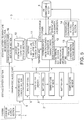
- Fig. 3 a flow chart for obtaining a standard air conditioning setting by the storage battery temperature management section 3 is shown.
- step S1 Whether charge/discharge powers inputted into the representative value calculation and radiation characteristic identification section 12 are similar to the past charge/discharge powers stored in the battery temperature time lapse data storage section 11 is discriminated (step S1). The case in which it is discriminated that they are similar in the step S1 will be described in second, fourth, fifth embodiments.
- the representative value calculation and radiation characteristic identification section 12 makes the air conditioning section 4 operate with a proper air conditioning setting (step S2).
- the representative value calculation and radiation characteristic identification section 12 When the charge/discharge has not been performed, the representative value calculation and radiation characteristic identification section 12 outputs a charge/discharge start command to the charge/discharge control section 9 so as to start charge/discharge (step S3).
- the representative value calculation and radiation characteristic identification section 12 discriminates whether or not a value obtained by subtracting the setting temperature set as described above from the temperature representative value converges (step S4). When this value converges in the step S4, the representative value calculation and radiation characteristic identification section 12 identifies the radiation characteristic from the power representative value and the temperature representative value, and stores the identified radiation characteristic ⁇ ' in the radiation characteristic storage section 13 (step S5).
- the representative value calculation and radiation characteristic identification section 12 discriminates whether or not to repeat the identification of the radiation characteristic, regarding the air conditioning setting of another temperature or the like (step S6).
- the processing is repeated from the step S1.
- the standard air conditioning setting calculation section 14 searches a weakest air conditioning setting in which the balance of heat amount during a prescribed term becomes minus, with respect to the battery performing the charge/discharge, so that the battery temperature is lifetime-guaranteed, and outputs the weakest air conditioning setting to the air conditioning section 4 as the standard air conditioning setting (step S7).
- the radiation characteristic is identified by the above-described method, and the battery temperature is kept within the lifetime guarantee range, the air conditioning setting capable of maximally saving energy is performed, and thereby the temperature management device according to the first embodiment performs an energy saving operation of the air conditioning within the lifetime guarantee range of the battery, and thereby the charge/discharge amount (profit) has been maximized.
- one power sensor 7 and one temperature senor 8 are provided for each battery cell 6, but one power sensor 7 and one temperature senor 8 may be provided for a plurality of the battery cells 6.
- Fig. 4 a temperature management device according to a second embodiment is shown.
- the temperature management device further has a change determination section 15 in the storage battery temperature management section 3.
- the similarity determination section 15 determines whether or not the number and the arrangement of the battery cells 6 of the storage battery section 2 or the charge/discharge trend which the system 1 requires has changed, from the charge/discharge powers. Specifically, the similarity determination section 15 compares a histogram of the past charge/discharge time lapse data which the charge/discharge time elapse data storage section 10 has with a present histogram, and thereby may determine whether they have similar figures. When they are not similar, the past radiation characteristic identification result is deleted from the radiation characteristic storage section 13.
- the radiation characteristic may be changed.
- the similarity determination section 15 is provided and the above-described flow chart is executed for each prescribed term, for example, and thereby it is possible to deal with such a matter at a proper timing.
- a temperature management device according to a third embodiment is shown.
- the power sensors 7 are omitted, and a charge/discharge estimation section 16 is provided instead.
- the temperature management device previously obtains the correspondence relation (a charge/discharge simulating function) between a command value and a charge/discharge power stored in the charge/discharge time lapse data storage section 10.
- An example of a charge/discharge simulating function is shown in Fig. 6 .
- the charge/discharge estimation section 16 estimates a charge/discharge power based on the command value inputted from the command value output section 5 using this, and this estimated value is stored in the charge/discharge time lapse data storage section 10.
- the charge/discharge simulating function becomes a linear function with an inclination 1 and an intercept 0, or a piecewise linear function having a dead zone near the origin as shown in Fig. 6 .
- the range of the dead zone can be obtained from the standard information, without actually performing charge/discharge.
- a command value zone in which the battery 6 may not respond to the charge/discharge, as specified by the contract between a charge/discharge service provider and the system 1 side, for example, can be used as the standard information, for example.
- the temperature management device can estimate the charge/discharge power by only the command value, and thereby can omit the power sensors 7. In addition, it is possible to suppress the calculation cost required for obtaining the power representative value from data of a large number of the power sensors 7.
- the temperature management device is further provided with a demand calculation section 17 in the storage battery temperature management section 3.
- the temperature management device according to the fourth embodiment further has the demand calculation section 17 which calculates Joule heats of the battery cells 6 from the charge/discharge powers which move randomly, and determines an air conditioning setting for removing the Joule heats using the radiation characteristic stored in the radiation characteristic storage section 13, and thereby deals with the irregular Joule heats.
- Fig. 8 a flow chart is shown when the standard air conditioning setting cannot timely deal with the temperature variation due to Joule heats generated by the irregular charge/discharge of the respective battery cells 6.
- step S1 Whether the trend of the inputted charge/discharge powers is similar to the past charge/discharge powers stored in the battery temperature time lapse data storage section 11 is discriminated (step S1). When they are not similar in the step S1, the processing follows the step S2 and later of the flow chart of Fig. 3 . When they are similar in the step S1, the demand calculation section 17 calculates Joule heats generated in the battery cells 6 by the immediately preceding irregular charge/discharge powers (step S12). Next, an air conditioning setting for removing the Joule heats is determined from the radiation characteristic stored in the radiation characteristic storage section 13 (step S13). The air conditioning setting is changed, and the air conditioning in this setting is continued only for a time corresponding to the irregular charge/discharge, and then the air conditioning setting is returned to the standard air conditioning setting (step S14).
- the Joule heats due to the irregular charge/discharge of the battery cells 6 are propagated late via the battery and air, and the heat removing of the air conditioning is delayed, and thereby the battery temperature may deviate from the lifetime guarantee range, and an excess operation of the air conditioning may be generated for removing heat deriving from matters other than the battery cells 6.
- the temperature management device temporarily changes the air conditioning setting, in order to remove the Joule heats generated in the battery cells 6 from an accumulation value of the absolute values of the irregular charge/discharge powers (or the command value), and thereby it has become possible that the overheating of the battery cells 6(and the excessive operation of the air conditioning are suppressed, and a risk of deviating from the battery guarantee range and useless air conditioning are reduced.
- the temperature management device further has a temperature unevenness dealing section 18 which specifies and deals with the battery cells 6 with temperature unevenness out of the whole battery cells 6, and a correspondence between battery cell and air direction storage section 19 which stores correspondence information of an air direction setting matched to a battery cell 6 which is to be preferentially heat-removed out of the whole battery cells 6.
- the temperature unevenness dealing section 18 discriminates whether temperature unevennesses searches the battery cell 6 with the highest temperature, when there are certain battery cells 6 with temperature unevenness above the prescribed value.
- the temperature unevenness dealing section 18 determines an air direction from the storage information of the correspondence between battery cell and air direction storage section 19, to change the air direction of the air conditioning section 4. In addition, when the temperature unevennesses are within the prescribed value, the temperature unevenness dealing section 18 does not change the air direction.
- Fig. 10 a flow chart when there are unevennesses in the temperatures of the respective battery cells 6 is shown.
- step S1 Whether or not the trend of the inputted charge/discharge powers is similar to the charge/discharge powers stored in the battery temperature time lapse data storage section 11 is discriminated (step S1).
- the processing follows the flow chart of Fig. 3 .
- the temperature unevenness dealing section 18 discriminates whether the temperature unevennesses of the respective battery cells 6 are within a prescribed value (step S22).
- the temperature unevenness dealing section 18 searches the battery cell 6 with the highest temperature (step S23).
- step S23 the temperature unevenness dealing section 18 determines an air direction of the air conditioning section 4 corresponding to the storage information of the correspondence between battery cell and air direction storage section 19 (step S24).
- the temperature unevenness dealing section 18 changes the air direction of the air conditioning section 4 (step S25).
- the temperature unevennesses are within the prescribed value in the step S22, the temperature unevenness dealing section 18 does not change the air direction of the air conditioning section 4.
- a standard deviation of the temperatures of the whole battery cells 6 may be used as the dispersion, for example.
- the temperature management device changes the air direction so that the temperatures of the respective battery cells 6 are uniformized, and thereby the individual difference in the battery cells 6 regarding the progress of deterioration and the deterioration degree (or lifetime) has been suppressed, and the lifetime management cost has been reduced, such as the sampling number in the deterioration degree examination has been reduced, for example.
Landscapes
- Engineering & Computer Science (AREA)
- Manufacturing & Machinery (AREA)
- Chemical & Material Sciences (AREA)
- Chemical Kinetics & Catalysis (AREA)
- Electrochemistry (AREA)
- General Chemical & Material Sciences (AREA)
- Physics & Mathematics (AREA)
- General Physics & Mathematics (AREA)
- Automation & Control Theory (AREA)
- Secondary Cells (AREA)
- Charge And Discharge Circuits For Batteries Or The Like (AREA)
Applications Claiming Priority (1)
| Application Number | Priority Date | Filing Date | Title |
|---|---|---|---|
| JP2017053470A JP6806602B2 (ja) | 2017-03-17 | 2017-03-17 | 温度管理装置 |
Publications (1)
| Publication Number | Publication Date |
|---|---|
| EP3376587A1 true EP3376587A1 (fr) | 2018-09-19 |
Family
ID=59858508
Family Applications (1)
| Application Number | Title | Priority Date | Filing Date |
|---|---|---|---|
| EP17188523.9A Pending EP3376587A1 (fr) | 2017-03-17 | 2017-08-30 | Dispositif de gestion de température |
Country Status (3)
| Country | Link |
|---|---|
| US (1) | US10573941B2 (fr) |
| EP (1) | EP3376587A1 (fr) |
| JP (1) | JP6806602B2 (fr) |
Cited By (2)
| Publication number | Priority date | Publication date | Assignee | Title |
|---|---|---|---|---|
| CN110146819A (zh) * | 2019-05-22 | 2019-08-20 | 广州小鹏汽车科技有限公司 | 电池充电前实际升温时间估算方法及系统、汽车、装置及计算机可读存储介质 |
| CN117175072A (zh) * | 2023-10-30 | 2023-12-05 | 山东天瀚新能源科技有限公司 | 一种应用于锂离子电池组的热管理系统及方法 |
Families Citing this family (8)
| Publication number | Priority date | Publication date | Assignee | Title |
|---|---|---|---|---|
| JP6759466B2 (ja) | 2017-11-29 | 2020-09-23 | 株式会社東芝 | 評価装置、蓄電システム、評価方法およびコンピュータプログラム |
| WO2021195840A1 (fr) * | 2020-03-30 | 2021-10-07 | 宁德时代新能源科技股份有限公司 | Procédé et appareil de régulation de la température d'un bloc-batterie, ainsi que système de gestion de batterie et support de stockage |
| CN113740740B (zh) * | 2020-05-27 | 2024-06-21 | 广汽埃安新能源汽车有限公司 | 一种直流充电剩余时间估算方法及其系统 |
| CN112542621B (zh) * | 2020-11-25 | 2022-04-01 | 东软睿驰汽车技术(沈阳)有限公司 | 一种电池温度向量生成方法及其相关设备 |
| CN115704719B (zh) * | 2021-08-10 | 2026-03-20 | 北京车和家信息技术有限公司 | 电池包温度异常的检测方法、装置、存储介质和电子设备 |
| CN114919465B (zh) * | 2022-05-12 | 2024-02-13 | 重庆大学 | 一种高温高寒条件下电动汽车存放装置及方法 |
| CN117134039B (zh) * | 2023-10-23 | 2024-01-23 | 杭州高特电子设备股份有限公司 | 一种储能液冷系统的温控方法、储能系统和计算机程序 |
| CN119050555B (zh) * | 2024-11-01 | 2025-02-25 | 广州毅昌科技股份有限公司 | 一种电池热管理系统的控制方法及装置 |
Citations (3)
| Publication number | Priority date | Publication date | Assignee | Title |
|---|---|---|---|---|
| DE10346706A1 (de) * | 2003-10-08 | 2005-05-12 | Daimler Chrysler Ag | Verfahren zur Regelung einer Kühlung |
| WO2008095313A1 (fr) * | 2007-02-09 | 2008-08-14 | Advanced Lithium Power Inc. | Système de gestion thermique d'une batterie |
| US20100019729A1 (en) * | 2008-07-25 | 2010-01-28 | Toyota Jidosha Kabushiki Kaisha | Power supply system and vehicle with the system |
Family Cites Families (17)
| Publication number | Priority date | Publication date | Assignee | Title |
|---|---|---|---|---|
| JP3733602B2 (ja) * | 1994-11-25 | 2006-01-11 | 日産自動車株式会社 | バッテリ冷却装置 |
| JP3687212B2 (ja) * | 1996-08-26 | 2005-08-24 | トヨタ自動車株式会社 | バッテリ冷却装置 |
| JP2003086255A (ja) * | 2001-09-12 | 2003-03-20 | Toyota Motor Corp | 二次電池の状態推定方法 |
| JP4810803B2 (ja) | 2004-07-13 | 2011-11-09 | トヨタ自動車株式会社 | 電源装置 |
| JP2006185788A (ja) * | 2004-12-28 | 2006-07-13 | Toyota Motor Corp | バッテリ冷却装置 |
| JP5026823B2 (ja) * | 2006-06-22 | 2012-09-19 | プライムアースEvエナジー株式会社 | バッテリ冷却装置 |
| JP2008253129A (ja) * | 2007-03-07 | 2008-10-16 | Matsushita Electric Ind Co Ltd | リチウム系二次電池の急速充電方法およびそれを用いる電子機器 |
| JP2010040420A (ja) * | 2008-08-07 | 2010-02-18 | Sanyo Electric Co Ltd | 車両用の電源装置 |
| JP5378023B2 (ja) * | 2009-03-24 | 2013-12-25 | 三洋電機株式会社 | 車両用電源装置及びその冷却方法 |
| CN102859836B (zh) | 2010-04-28 | 2016-05-18 | 丰田自动车株式会社 | 二次电池的充电控制方法及控制装置 |
| JP2013200979A (ja) | 2012-03-23 | 2013-10-03 | Sanyo Electric Co Ltd | 制御装置 |
| US9425628B2 (en) * | 2012-05-11 | 2016-08-23 | Ford Global Technologies, Llc | Vehicle battery pack cooling system |
| JP6151062B2 (ja) | 2013-04-01 | 2017-06-21 | 三菱重工業株式会社 | 蓄電システムおよび蓄電システムの温度制御方法 |
| JP2015133290A (ja) | 2014-01-15 | 2015-07-23 | 三菱重工業株式会社 | 冷却システム及びその制御装置並びに制御方法 |
| JP2015191717A (ja) * | 2014-03-27 | 2015-11-02 | 三菱日立パワーシステムズ株式会社 | 電力貯蔵システム及びその制御装置並びに電力貯蔵システムの制御方法 |
| JP2016061516A (ja) | 2014-09-19 | 2016-04-25 | 三菱重工業株式会社 | 空調管理装置、充放電制御システム、空調制御計画生成方法およびプログラム |
| US20170338527A1 (en) * | 2016-05-20 | 2017-11-23 | Faraday&Future Inc. | Thermal malfunction detector for electric vehicle |
-
2017
- 2017-03-17 JP JP2017053470A patent/JP6806602B2/ja not_active Expired - Fee Related
- 2017-08-30 US US15/690,375 patent/US10573941B2/en active Active
- 2017-08-30 EP EP17188523.9A patent/EP3376587A1/fr active Pending
Patent Citations (3)
| Publication number | Priority date | Publication date | Assignee | Title |
|---|---|---|---|---|
| DE10346706A1 (de) * | 2003-10-08 | 2005-05-12 | Daimler Chrysler Ag | Verfahren zur Regelung einer Kühlung |
| WO2008095313A1 (fr) * | 2007-02-09 | 2008-08-14 | Advanced Lithium Power Inc. | Système de gestion thermique d'une batterie |
| US20100019729A1 (en) * | 2008-07-25 | 2010-01-28 | Toyota Jidosha Kabushiki Kaisha | Power supply system and vehicle with the system |
Cited By (4)
| Publication number | Priority date | Publication date | Assignee | Title |
|---|---|---|---|---|
| CN110146819A (zh) * | 2019-05-22 | 2019-08-20 | 广州小鹏汽车科技有限公司 | 电池充电前实际升温时间估算方法及系统、汽车、装置及计算机可读存储介质 |
| CN110146819B (zh) * | 2019-05-22 | 2021-04-13 | 广州小鹏汽车科技有限公司 | 电池实际升温时间估算方法及系统、汽车、装置及存储介质 |
| CN117175072A (zh) * | 2023-10-30 | 2023-12-05 | 山东天瀚新能源科技有限公司 | 一种应用于锂离子电池组的热管理系统及方法 |
| CN117175072B (zh) * | 2023-10-30 | 2024-03-12 | 山东天瀚新能源科技有限公司 | 一种应用于锂离子电池组的热管理系统及方法 |
Also Published As
| Publication number | Publication date |
|---|---|
| JP2018156866A (ja) | 2018-10-04 |
| US20180269546A1 (en) | 2018-09-20 |
| US10573941B2 (en) | 2020-02-25 |
| JP6806602B2 (ja) | 2021-01-06 |
Similar Documents
| Publication | Publication Date | Title |
|---|---|---|
| EP3376587A1 (fr) | Dispositif de gestion de température | |
| US11821959B2 (en) | Method for estimating state of health of a battery | |
| US11215679B2 (en) | Method and apparatus for detecting micro short circuit of battery | |
| US9093844B2 (en) | Charge/discharge scheduling system and charge/discharge scheduling method | |
| US10818983B2 (en) | Battery management device and system, and hybrid vehicle control system for utilizing battery performance while maintaining battery life | |
| US10479204B2 (en) | Failure determination apparatus and method for determining failure | |
| CN113015918B (zh) | 用于确定二次电池的健康状态的方法和电池管理系统 | |
| US9669726B2 (en) | Battery control device, power storage device, power storage method, and program | |
| US11143708B2 (en) | Electronic device and method for obtaining a correct battery temperature | |
| US12083926B2 (en) | Calculate lifetime of a battery based on battery use data from multiple network connected electric vehicles | |
| WO2017104497A1 (fr) | Système de commande de batterie secondaire | |
| JP2003297435A (ja) | 蓄電池の寿命予測装置および蓄電池の制御装置 | |
| CN113815464B (zh) | 充电桩的推荐方法、装置、车辆以及存储介质 | |
| CN104656021B (zh) | 一种蓄电池剩余容量的预估方法及装置 | |
| CN118322931B (zh) | 新能源汽车化学电池储能系统的智能控制与管理系统 | |
| TW201610454A (zh) | 電池組、控制電路及控制方法 | |
| CN115476722B (zh) | 一种电池管理控制方法及装置 | |
| EP2792012B1 (fr) | Système et procédé de détermination des niveaux électriques de chargement et de déchargement pour un bloc-batterie | |
| WO2019181138A1 (fr) | Dispositif pour mesurer le degré de détérioration d'une batterie secondaire | |
| KR102213260B1 (ko) | Bms 온도 조절 방법 및 이를 적용한 bms | |
| JP5569969B2 (ja) | 温度センサの異常判定方法および当該方法を用いて異常を判定する車載充電器 | |
| US20150226808A1 (en) | Method of Use for Electric Energy Stores, Arrangement for carrying out such a Method of Use, Battery and Motor Vehicle having such a Battery | |
| US20250277856A1 (en) | System and method for accurately determining energy device state-of-charge and state-of-health with the addition of confidence scoring | |
| CN119556175A (zh) | 一种电池安全状态评估方法、装置、设备及介质 | |
| US20160004246A1 (en) | Pid controller and data collecting method |
Legal Events
| Date | Code | Title | Description |
|---|---|---|---|
| PUAI | Public reference made under article 153(3) epc to a published international application that has entered the european phase |
Free format text: ORIGINAL CODE: 0009012 |
|
| STAA | Information on the status of an ep patent application or granted ep patent |
Free format text: STATUS: REQUEST FOR EXAMINATION WAS MADE |
|
| 17P | Request for examination filed |
Effective date: 20170830 |
|
| AK | Designated contracting states |
Kind code of ref document: A1 Designated state(s): AL AT BE BG CH CY CZ DE DK EE ES FI FR GB GR HR HU IE IS IT LI LT LU LV MC MK MT NL NO PL PT RO RS SE SI SK SM TR |
|
| AX | Request for extension of the european patent |
Extension state: BA ME |
|
| STAA | Information on the status of an ep patent application or granted ep patent |
Free format text: STATUS: EXAMINATION IS IN PROGRESS |
|
| 17Q | First examination report despatched |
Effective date: 20200630 |