EP3373370B1 - Polymer-schwefel-copolymer, verfahren zur herstellung davon und lithiumsekundärbatterie damit - Google Patents
Polymer-schwefel-copolymer, verfahren zur herstellung davon und lithiumsekundärbatterie damit Download PDFInfo
- Publication number
- EP3373370B1 EP3373370B1 EP17799538.8A EP17799538A EP3373370B1 EP 3373370 B1 EP3373370 B1 EP 3373370B1 EP 17799538 A EP17799538 A EP 17799538A EP 3373370 B1 EP3373370 B1 EP 3373370B1
- Authority
- EP
- European Patent Office
- Prior art keywords
- sulfur
- polymer
- lithium
- battery
- positive electrode
- Prior art date
- Legal status (The legal status is an assumption and is not a legal conclusion. Google has not performed a legal analysis and makes no representation as to the accuracy of the status listed.)
- Active
Links
- 0 *c1cc(CN(*)C*2)c2cc1 Chemical compound *c1cc(CN(*)C*2)c2cc1 0.000 description 2
- AQBIQSUCGPWPJH-UHFFFAOYSA-N Sc(cc1C2)ccc1SCN2c1ccccc1 Chemical compound Sc(cc1C2)ccc1SCN2c1ccccc1 AQBIQSUCGPWPJH-UHFFFAOYSA-N 0.000 description 2
- IPICFWKONDVZQG-UHFFFAOYSA-N CN(Cc1c2)COc1ccc2S Chemical compound CN(Cc1c2)COc1ccc2S IPICFWKONDVZQG-UHFFFAOYSA-N 0.000 description 1
- JRHCKSGMDRFMIS-UHFFFAOYSA-N Sc(cc1C2)ccc1OCN2c1ccccc1 Chemical compound Sc(cc1C2)ccc1OCN2c1ccccc1 JRHCKSGMDRFMIS-UHFFFAOYSA-N 0.000 description 1
Images


Classifications
-
- H—ELECTRICITY
- H01—ELECTRIC ELEMENTS
- H01M—PROCESSES OR MEANS, e.g. BATTERIES, FOR THE DIRECT CONVERSION OF CHEMICAL ENERGY INTO ELECTRICAL ENERGY
- H01M4/00—Electrodes
- H01M4/02—Electrodes composed of, or comprising, active material
- H01M4/36—Selection of substances as active materials, active masses, active liquids
- H01M4/60—Selection of substances as active materials, active masses, active liquids of organic compounds
- H01M4/602—Polymers
- H01M4/606—Polymers containing aromatic main chain polymers
-
- H—ELECTRICITY
- H01—ELECTRIC ELEMENTS
- H01M—PROCESSES OR MEANS, e.g. BATTERIES, FOR THE DIRECT CONVERSION OF CHEMICAL ENERGY INTO ELECTRICAL ENERGY
- H01M4/00—Electrodes
- H01M4/02—Electrodes composed of, or comprising, active material
- H01M4/36—Selection of substances as active materials, active masses, active liquids
- H01M4/60—Selection of substances as active materials, active masses, active liquids of organic compounds
- H01M4/602—Polymers
- H01M4/606—Polymers containing aromatic main chain polymers
- H01M4/608—Polymers containing aromatic main chain polymers containing heterocyclic rings
-
- C—CHEMISTRY; METALLURGY
- C08—ORGANIC MACROMOLECULAR COMPOUNDS; THEIR PREPARATION OR CHEMICAL WORKING-UP; COMPOSITIONS BASED THEREON
- C08G—MACROMOLECULAR COMPOUNDS OBTAINED OTHERWISE THAN BY REACTIONS ONLY INVOLVING UNSATURATED CARBON-TO-CARBON BONDS
- C08G73/00—Macromolecular compounds obtained by reactions forming a linkage containing nitrogen with or without oxygen or carbon in the main chain of the macromolecule, not provided for in groups C08G12/00 - C08G71/00
- C08G73/02—Polyamines
-
- C—CHEMISTRY; METALLURGY
- C08—ORGANIC MACROMOLECULAR COMPOUNDS; THEIR PREPARATION OR CHEMICAL WORKING-UP; COMPOSITIONS BASED THEREON
- C08G—MACROMOLECULAR COMPOUNDS OBTAINED OTHERWISE THAN BY REACTIONS ONLY INVOLVING UNSATURATED CARBON-TO-CARBON BONDS
- C08G73/00—Macromolecular compounds obtained by reactions forming a linkage containing nitrogen with or without oxygen or carbon in the main chain of the macromolecule, not provided for in groups C08G12/00 - C08G71/00
- C08G73/02—Polyamines
- C08G73/0233—Polyamines derived from (poly)oxazolines, (poly)oxazines or having pendant acyl groups
-
- C—CHEMISTRY; METALLURGY
- C08—ORGANIC MACROMOLECULAR COMPOUNDS; THEIR PREPARATION OR CHEMICAL WORKING-UP; COMPOSITIONS BASED THEREON
- C08G—MACROMOLECULAR COMPOUNDS OBTAINED OTHERWISE THAN BY REACTIONS ONLY INVOLVING UNSATURATED CARBON-TO-CARBON BONDS
- C08G73/00—Macromolecular compounds obtained by reactions forming a linkage containing nitrogen with or without oxygen or carbon in the main chain of the macromolecule, not provided for in groups C08G12/00 - C08G71/00
- C08G73/02—Polyamines
- C08G73/0246—Polyamines containing other atoms than carbon, hydrogen, nitrogen or oxygen in the main chain
- C08G73/0253—Polyamines containing sulfur in the main chain
-
- H—ELECTRICITY
- H01—ELECTRIC ELEMENTS
- H01M—PROCESSES OR MEANS, e.g. BATTERIES, FOR THE DIRECT CONVERSION OF CHEMICAL ENERGY INTO ELECTRICAL ENERGY
- H01M10/00—Secondary cells; Manufacture thereof
- H01M10/05—Accumulators with non-aqueous electrolyte
- H01M10/052—Li-accumulators
-
- H—ELECTRICITY
- H01—ELECTRIC ELEMENTS
- H01M—PROCESSES OR MEANS, e.g. BATTERIES, FOR THE DIRECT CONVERSION OF CHEMICAL ENERGY INTO ELECTRICAL ENERGY
- H01M4/00—Electrodes
- H01M4/02—Electrodes composed of, or comprising, active material
- H01M4/13—Electrodes for accumulators with non-aqueous electrolyte, e.g. for lithium-accumulators; Processes of manufacture thereof
-
- H—ELECTRICITY
- H01—ELECTRIC ELEMENTS
- H01M—PROCESSES OR MEANS, e.g. BATTERIES, FOR THE DIRECT CONVERSION OF CHEMICAL ENERGY INTO ELECTRICAL ENERGY
- H01M4/00—Electrodes
- H01M4/02—Electrodes composed of, or comprising, active material
- H01M4/13—Electrodes for accumulators with non-aqueous electrolyte, e.g. for lithium-accumulators; Processes of manufacture thereof
- H01M4/136—Electrodes based on inorganic compounds other than oxides or hydroxides, e.g. sulfides, selenides, tellurides, halogenides or LiCoFy
-
- H—ELECTRICITY
- H01—ELECTRIC ELEMENTS
- H01M—PROCESSES OR MEANS, e.g. BATTERIES, FOR THE DIRECT CONVERSION OF CHEMICAL ENERGY INTO ELECTRICAL ENERGY
- H01M4/00—Electrodes
- H01M4/02—Electrodes composed of, or comprising, active material
- H01M4/13—Electrodes for accumulators with non-aqueous electrolyte, e.g. for lithium-accumulators; Processes of manufacture thereof
- H01M4/137—Electrodes based on electro-active polymers
-
- H—ELECTRICITY
- H01—ELECTRIC ELEMENTS
- H01M—PROCESSES OR MEANS, e.g. BATTERIES, FOR THE DIRECT CONVERSION OF CHEMICAL ENERGY INTO ELECTRICAL ENERGY
- H01M4/00—Electrodes
- H01M4/02—Electrodes composed of, or comprising, active material
- H01M4/13—Electrodes for accumulators with non-aqueous electrolyte, e.g. for lithium-accumulators; Processes of manufacture thereof
- H01M4/139—Processes of manufacture
-
- H—ELECTRICITY
- H01—ELECTRIC ELEMENTS
- H01M—PROCESSES OR MEANS, e.g. BATTERIES, FOR THE DIRECT CONVERSION OF CHEMICAL ENERGY INTO ELECTRICAL ENERGY
- H01M4/00—Electrodes
- H01M4/02—Electrodes composed of, or comprising, active material
- H01M4/13—Electrodes for accumulators with non-aqueous electrolyte, e.g. for lithium-accumulators; Processes of manufacture thereof
- H01M4/139—Processes of manufacture
- H01M4/1397—Processes of manufacture of electrodes based on inorganic compounds other than oxides or hydroxides, e.g. sulfides, selenides, tellurides, halogenides or LiCoFy
-
- H—ELECTRICITY
- H01—ELECTRIC ELEMENTS
- H01M—PROCESSES OR MEANS, e.g. BATTERIES, FOR THE DIRECT CONVERSION OF CHEMICAL ENERGY INTO ELECTRICAL ENERGY
- H01M4/00—Electrodes
- H01M4/02—Electrodes composed of, or comprising, active material
- H01M4/13—Electrodes for accumulators with non-aqueous electrolyte, e.g. for lithium-accumulators; Processes of manufacture thereof
- H01M4/139—Processes of manufacture
- H01M4/1399—Processes of manufacture of electrodes based on electro-active polymers
-
- H—ELECTRICITY
- H01—ELECTRIC ELEMENTS
- H01M—PROCESSES OR MEANS, e.g. BATTERIES, FOR THE DIRECT CONVERSION OF CHEMICAL ENERGY INTO ELECTRICAL ENERGY
- H01M4/00—Electrodes
- H01M4/02—Electrodes composed of, or comprising, active material
- H01M4/36—Selection of substances as active materials, active masses, active liquids
- H01M4/38—Selection of substances as active materials, active masses, active liquids of elements or alloys
-
- H—ELECTRICITY
- H01—ELECTRIC ELEMENTS
- H01M—PROCESSES OR MEANS, e.g. BATTERIES, FOR THE DIRECT CONVERSION OF CHEMICAL ENERGY INTO ELECTRICAL ENERGY
- H01M4/00—Electrodes
- H01M4/02—Electrodes composed of, or comprising, active material
- H01M4/36—Selection of substances as active materials, active masses, active liquids
- H01M4/38—Selection of substances as active materials, active masses, active liquids of elements or alloys
- H01M4/381—Alkaline or alkaline earth metals elements
- H01M4/382—Lithium
-
- H—ELECTRICITY
- H01—ELECTRIC ELEMENTS
- H01M—PROCESSES OR MEANS, e.g. BATTERIES, FOR THE DIRECT CONVERSION OF CHEMICAL ENERGY INTO ELECTRICAL ENERGY
- H01M4/00—Electrodes
- H01M4/02—Electrodes composed of, or comprising, active material
- H01M4/36—Selection of substances as active materials, active masses, active liquids
- H01M4/60—Selection of substances as active materials, active masses, active liquids of organic compounds
- H01M4/602—Polymers
-
- H—ELECTRICITY
- H01—ELECTRIC ELEMENTS
- H01M—PROCESSES OR MEANS, e.g. BATTERIES, FOR THE DIRECT CONVERSION OF CHEMICAL ENERGY INTO ELECTRICAL ENERGY
- H01M4/00—Electrodes
- H01M4/02—Electrodes composed of, or comprising, active material
- H01M2004/026—Electrodes composed of, or comprising, active material characterised by the polarity
- H01M2004/028—Positive electrodes
-
- Y—GENERAL TAGGING OF NEW TECHNOLOGICAL DEVELOPMENTS; GENERAL TAGGING OF CROSS-SECTIONAL TECHNOLOGIES SPANNING OVER SEVERAL SECTIONS OF THE IPC; TECHNICAL SUBJECTS COVERED BY FORMER USPC CROSS-REFERENCE ART COLLECTIONS [XRACs] AND DIGESTS
- Y02—TECHNOLOGIES OR APPLICATIONS FOR MITIGATION OR ADAPTATION AGAINST CLIMATE CHANGE
- Y02E—REDUCTION OF GREENHOUSE GAS [GHG] EMISSIONS, RELATED TO ENERGY GENERATION, TRANSMISSION OR DISTRIBUTION
- Y02E60/00—Enabling technologies; Technologies with a potential or indirect contribution to GHG emissions mitigation
- Y02E60/10—Energy storage using batteries
Definitions
- the present invention relates to a polymer-sulfur copolymer, a preparation method thereof, and a lithium-sulfur battery including the same.
- the lithium-sulfur battery is a secondary battery using a sulfur-based material having an S-S bond (Sulfur-Sulfur bond) as a positive electrode active material and using lithium metal as a negative electrode active material.
- the Lithium-sulfur battery has advantages in that sulfur, which is the main material of the positive electrode active material, is very rich in resources, is not toxic, and has a low atomic weight.
- lithium-sulfur battery 1672 mAh/g-sulfur, and its theoretical energy density is 2,600 Wh/kg. Since the energy density of the lithium-sulfur battery is much higher than the theoretical energy density of other battery systems currently under study (Ni-MH battery: 450Wh/kg, Li-FeS battery: 480 Wh/kg, Li-MnO 2 battery: 1,000Wh/kg, Na-S battery: 800 Wh/kg), the lithium-sulfur battery is attracting attention as a battery having high energy density characteristics.
- a method of impregnating a carrier such as a polymer with sulfur is used.
- the most commonly used method is a method of causing elemental sulfur to be contained in a porous conductive medium such as mesoporous carbon (CMK-3).
- CCMK-3 mesoporous carbon
- the cycling characteristics could be improved to some extent while complementing the low conductivity of the sulfur.
- the sulfur was not completely contained in the pores, the problem of elution of the polysulfide still occurred.
- the impregnation amount of sulfur is limited depending on the pore volume of the carrier, and thus there was a problem that the final impregnation amount is difficult to be over 50%. Accordingly, a method for attaching an organic linker to the pure sulfur complex to increase the impregnation amount of sulfur was attempted, but there was a problem that the organic linker has been eluted in the electrolyte during the electrochemical reaction.
- the inventors of the present invention have prepared a polymer-sulfur copolymer by polymerizing monomer having a ring-opening functional group and a sulfur-philic group and elemental sulfur, and have completed the present invention by confirming that the polymer-sulfur copolymer thus obtained exhibits higher sulfur impregnation amount and more uniform distribution of sulfur than the conventional sulfur complex, thereby exhibiting enhanced battery characteristics when applied as a positive electrode active material of a lithium-sulfur battery.
- an object of the present invention is to provide a polymer-sulfur copolymer.
- Another object of the present invention is to provide a preparation method for the polymer-sulfur copolymer.
- Still another object of the present invention is to provide an electrode including the polymer-sulfur copolymer as an active material and a lithium-sulfur battery including the electrode.
- the present invention provides a polymer-sulfur copolymer formed by polymerization of monomers represented by the following formula (1) and elemental sulfur, an electrode including the same as an active material, and a lithium-sulfur battery including the electrode: wherein, X, Y and Z are as described in the specification.
- the present invent provides a preparation method for the polymer-sulfur copolymer characterized by comprising; mixing the monomer represented by formula (1) and elemental sulfur to form a mixture; subjecting the mixture to a first heat treatment to impregnate the liquefied sulfur with monomer; subjecting the mixture subjected to the first heat treatment to a second heat treatment to copolymerize the monomer and elemental sulfur; and subjecting the mixture subjected to the second heat treatment to a third heat treatment to perform a vulcanization reaction.
- the carrier is polymerized, there is no possibility that the carrier is eluted, and since the sulfur is covalently bonded to the polymer and uniformly distributed in a certain size in the copolymer, when applied as a positive electrode active material for the lithium-sulfur battery, the problem of elution of the polysulfide can be improved.
- the polymer-sulfur copolymer according to the present invention has a high sulfur impregnation amount, thereby making it possible to realize a high capacity battery.
- the present invention provides a polymer-sulfur copolymer formed by polymerization of monomers represented by the following formula (1) and elemental sulfur: wherein,
- the C1 to C6 alkyl group as mentioned in the present specification may be a methyl group, an ethyl group, a propyl group, an isopropyl group, a butyl group, an isobutyl group, a pentyl group or a hexyl group.
- the C6 to C12 aryl group as mentioned in the present specification may be a phenyl group or a naphthyl group substituted or unsubstituted with a C1 to C6 alkyl group.
- the C1 to C6 alkyl group containing at least one S-S bond as mentioned in the present specification means a substituent of a methyl group, an ethyl group, a propyl group, an isopropyl group, a butyl group, a pentyl group, or a hexyl group comprising at least one S-S bond between a C-C bond or a C-H bond.
- the C1 to C6 alkyl group containing at least one S-S bond may be a substituent such as -S-S-CH 3 , -S-S-S-CH 3 , -CH 2 -S-S-CH 3 , -(CH 2 ) 2 -S-S-CH 3 , -S-S-(CH 2 ) 2 -CH 3 , -(CH 2 ) 3 -S-S-S-CH 3 or -(CH 2 ) 4 -S-S-S-H.
- the C6 to C12 aryl group containing at least one S-S bond as mentioned in the present specification means a substituent of a phenyl group or a naphthyl group substituted or unsubstituted with a C1 to C6 substituent comprising at least one S-S bond between a C-C bond or a C-H bond.
- the C6 to C12 aryl group containing at least one S-S bond may be a substituent such as -S-S-C 6 H 5 or -C 6 H 4 -S-S-H.
- the monomer represented by the formula (1) has a sulfur-philic group such as substituent Z, and thus can be polymerized with elemental sulfur (S8).
- the monomer represented by Formula (1) may be a benzoxazine derivative or a benzothiazine derivative having a ring-opening functional group.
- X may be O or S
- Y may be a C1 to C4 alkyl group or a C6 to C8 aryl group
- Z may be S-S, SH, or S-SH.
- the compound of formula (1) may include the compounds represented by the following formulas (2) to (6).
- Such benzoxazine and benzothiazine derivatives can synthesize benzoxazine or benzothiazine polymers through ring-opening polymerization (ROP). Since the benzoxazine or benzothiazine polymers exhibit excellent mechanical, thermal and electrical properties, polymer-sulfur composites prepared using them can be used as a positive electrode active material for the lithium-sulfur battery.
- ROP ring-opening polymerization
- the monomer represented by Formula (1) has a sulfur-philic group and a ring-opening functional group, so that it is possible to polymerize with elemental sulfur through the sulfur-philic group of the monomer simultaneously with the synthesis of the polymer by ring-opening polymerization.
- the polysulfide since sulfur forms a covalent bond with the polymer, the polysulfide is not eluted in the charge/discharge cycle when used as a positive electrode active material of the lithium-sulfur battery, and also since the carrier is polymerized, there is no problem that the carrier is eluted into the electrolyte. In addition, since it has a high sulfur impregnation amount of about 72 wt.%, it is possible to realize a lithium-sulfur battery with high capacity.
- the weight ratio of the monomer to elemental sulfur is 1:2 to 1:20. If the weight ratio is less than the above range, it is difficult to realize a high-capacity electrode because the impregnation amount of sulfur is low. If the weight ratio is more than the above range, sulfur cannot be completely contained in the polymer which is a carrier and thus it is difficult to solve the problem of elution of the polysulfide. Accordingly, the weight ratio is appropriately adjusted within the above range.
- the present invention provides a preparation method for the polymer-sulfur copolymer characterized by comprising; mixing the monomer represented by formula (1) and elemental sulfur to form a mixture; subjecting the mixture to a first heat treatment to impregnate the liquefied sulfur with monomer; subjecting the mixture subjected to the first heat treatment to a second heat treatment to copolymerize the monomer and elemental sulfur; and subjecting the mixture subjected to the second heat treatment to a third heat treatment to perform a vulcanization reaction: wherein X, Y and Z are as described in the specification.
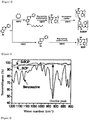
- Fig. 1 schematically shows a preparation method for a polymer-sulfur copolymer according to an embodiment of the present invention and a preparation method for a polymer without adding sulfur.
- the monomer represented by Formula (1) and elemental sulfur are mixed to form a mixture.
- the monomer and elemental sulfur are mixed at a weight ratio of 1: 2 to 1:20, and no solvent or catalyst is required.
- the mixture is subjected to a first heat treatment to impregnate the liquefied sulfur with monomer.
- the first heat treatment is a treatment for liquefying sulfur powder to impregnate a monomer and uniformly mixing sulfur and monomer wherein the heat treatment is performed in vacuum or argon atmosphere for 5 to 24 hours, preferably 7 to 15 hours by heating the mixture to 120 to 170 °C, preferably 140 to 170 °C.
- the mixture is subjected to a second heat treatment so that the polymerization of the monomer can take place.
- the secondary heat treatment is performed at 170 to 200 °C for 2 to 10 hours.
- benzoxazine or benzothiazine derivative is subjected to ring-opening polymerization to form a polymer.
- a ring opening reaction of elemental sulfur occurs to form a linear polysulfane, which is then added to the sulfur-philic group of the benzoxazine or benzothiazine derivative.
- the mixture subjected to the second heat treatment is subjected to a third heat treatment to perform a vulcanization reaction.
- the third heat treatment is for crosslinking the linear polymers through a polysulfane covalently bonded to the polymer, and is performed at 200 to 250 °C for 5 to 24 hours, preferably 7 to 15 hours.
- sulfur in the crosslinked polymer-sulfur complex is covalently bonded to the polymer chain and has a structure restricted to the polymer.
- the preparation method for the polymer-sulfur copolymer of the present invention since the polymer-sulfur copolymer is prepared by uniformly mixing the monomer and sulfur by the first heat treatment and then performing the second heat treatment and the third heat treatment, the prepared copolymer has a uniform sulfur distribution and the sulfur is confined within the polymer and thus there is no risk of polysulfide being eluted when used as a positive electrode active material.
- the carrier is also polymerized, there is no risk of elution of the carrier, and thus the battery characteristics can be improved.
- the lithium-sulfur battery according to the present invention includes a positive electrode, a negative electrode, a separator interposed therebetween and an electrolyte, and uses a polymer-sulfur copolymer according to the present invention as a positive electrode active material.
- the problem of elution of polysulfide in the positive electrode active material and the problem of elution of the carrier are improved, so that the battery characteristics are excellent, and the sulfur impregnation amount is high, and thus it is possible to realize high capacity.
- the construction of the positive electrode, negative electrode, separator and electrolyte of the lithium-sulfur battery is not particularly limited in the present invention, and is in accordance with that as well known in the art.
- the positive electrode according to the present invention includes a positive electrode active material formed on a positive electrode current collector, and the polymer-sulfur copolymer according to the present invention is used as the positive electrode active material.
- the positive electrode current collector may be any one as long as it can be used as a current collector in the related art. Specifically, it may be preferable to use foamed aluminum or foamed nickel, etc. having excellent conductivity.
- the conductive material may be porous. Therefore, any conductive material may be used without limitation as long as it has porosity and conductivity, and for example, carbon-based materials having porosity may be used. Examples of the carbon-based materials may include carbon black, graphite, graphene, activated carbon, carbon fiber, and the like. In addition, metallic fibers such as metal mesh; metallic powders such as copper, silver, nickel, and aluminum; or organic conductive materials such as polyphenylene derivatives may also be used. The conductive materials may be used alone or in combination.
- the positive electrode may further comprise binders for bonding of the positive electrode active material and the conductive material and for bonding to the current collector.
- the binders may comprise thermoplastic resins or thermosetting resins.
- polyolefins such as polyethylene, polypropylene, polytetrafluoro ethylene (PTFE), polyvinylidene fluoride (PVDF), styrene-butadiene rubber, tetrafluoroethylene-perfluoro alkylvinylether copolymer, vinylidene fluoride-hexafluoropropylene copolymer, vinylidene fluoride-chlorotrifluoroethylene copolymer, ethylene-tetrafluoroethylene copolymer, polychlorotrifluoroethylene, vinylidene fluoride-pentafluoro propylene copolymer, propylene-tetrafluoroethylene copolymer, ethylene-chlorotrifluoroethylene copolymer
- the positive electrode as described above can be produced by the conventional method.
- the positive electrode is prepared by mixing the positive electrode active material, the conductive material, and the binder in an organic solvent to form a composition for forming the layer of the positive electrode active material, applying such a composition on the current collector, drying it, and optionally compressing and molding it into the current collector for the purpose of improving the density of the electrode.
- the organic solvent it is preferable to use an organic solvent which can uniformly disperse the positive electrode active material, the binder and the conductive material, and is easily evaporated.
- N-methyl-2-pyrrolidone, acetonitrile, methanol, ethanol, tetrahydrofuran, water, isopropyl alcohol and the like may be included.
- the negative electrode according to the present invention includes a negative electrode active material formed on the negative electrode current collector.
- the negative electrode current collector may be specifically selected from the group consisting of copper, stainless steel, titanium, silver, palladium, nickel, alloys thereof, and combinations thereof.
- the stainless steel can be surface treated with carbon, nickel, titanium or silver, and the alloy may be an aluminum-cadmium alloy.
- a nonconductive polymer the surface of which is treated with sintered carbon i.e. a conductive material, or a conductive polymer, etc. may be used.
- the negative electrode active material may include materials capable of reversibly intercalating or deintercalating lithium ion (Li + ), materials capable of reversibly forming lithium containing compounds by reacting with lithium ion, lithium metal or lithium alloy.
- the materials capable of reversibly intercalating or deintercalating lithium ion (Li + ) can be, for example, crystalline carbon, amorphous carbon, or a mixture thereof.
- the materials capable of reacting with lithium ion (Li + ) to reversibly form lithium containing compounds may be, for example, tin oxide, titanium nitrate or silicon.
- the lithium alloy may be, for example, an alloy of lithium (Li) and a metal selected from the group consisting of sodium (Na), potassium (K), rubidium (Rb), cesium (Cs), francium (Fr), beryllium (Be), magnesium (Mg), calcium (Ca), strontium (Sr), barium (Ba), radium (Ra), aluminum (Al), and tin (Sn).
- a metal selected from the group consisting of sodium (Na), potassium (K), rubidium (Rb), cesium (Cs), francium (Fr), beryllium (Be), magnesium (Mg), calcium (Ca), strontium (Sr), barium (Ba), radium (Ra), aluminum (Al), and tin (Sn).
- the negative electrode may further include a binder for bonding of the negative electrode active material and the conductive material and for bonding to the current collector.
- the binder is the same as described above for the binder of the positive electrode.
- the negative electrode may be lithium metal or lithium alloy.
- the nonlimiting examples of the negative electrode may be a thin film of lithium metal, and may be an alloy of lithium and at least one metal selected from the group consisting of Na, K, Rb, Cs, Fr, Be, Mg, Ca, Sr, Ba, Ra, Al and Sn.
- the conventional separator can be interposed between the positive electrode and the negative electrode.
- the separator is a physical separator having a function of physically separating electrodes. Any separator can be used without any particular limitations as long as it is used as a conventional separator. Particularly, a separator with excellent electrolyte humidification ability while exhibiting low resistance to ion migration of electrolyte is preferable.
- the separator enables the lithium ion to be transported between the positive electrode and the negative electrode while separating or insulating the positive electrode and the negative electrode from each other.
- Such separator may be made of a porous, nonconductive or insulating material.
- the separator may be an independent member such as a film, or a coating layer added to the positive electrode and/or the negative electrode.
- a porous polymer film for example, a porous polymer film made of a polyolefin-based polymer such as ethylene homopolymer, propylene homopolymer, ethylene/butene copolymer, ethylene/hexene copolymer and ethylene/methacrylate copolymer, etc. may be used alone or in a laminate thereof, or a conventional porous nonwoven fabric, for example, a nonwoven fabric made of glass fiber, polyethyleneterephthalate fiber or the like with high melting point can be used, but are not limited thereto.
- a polyolefin-based polymer such as ethylene homopolymer, propylene homopolymer, ethylene/butene copolymer, ethylene/hexene copolymer and ethylene/methacrylate copolymer, etc.
- a conventional porous nonwoven fabric for example, a nonwoven fabric made of glass fiber, polyethyleneterephthalate fiber or the like with high melting point can be used, but are not
- the electrolyte according to the present invention is a non-aqueous electrolyte containing lithium salt and is composed of lithium salt and a solvent wherein as the solvent, a non-aqueous organic solvent, an organic solid electrolyte and an inorganic solid electrolyte, etc. can be used.
- the lithium salt is a substance which can be easily dissolved in a non-aqueous organic solvent, and for example, may be at least one selected from the group consisting of LiCl, LiBr, LiI, LiClO 4 , LiBF 4 , LiB 10 Cl 10 , LiB(Ph) 4 , LiC 4 BO 8 , LiPF 6 , LiCF 3 SO 3 , LiCF 3 CO 2 , LiAsF 6 , LiSbF 6 , LiAlCl 4 , LiSO 3 CH 3 , LiSO 3 CF 3 , LiSCN, LiC(CF 3 SO 2 ) 3 , LiN(CF 3 SO 2 ) 2 , LiN(C 2 F 5 SO 2 ) 2 , LiN(SO 2 F) 2 , lithium chloroborane, lithium lower aliphatic carboxylate, lithium tetraphenyl borate, and lithium imide
- the concentration of the lithium salt may be 0.1 to 4.0 M, preferably 0.5 to 2.0 M depending on various factors such as the exact composition of the electrolyte mixture, the solubility of the salt, the conductivity of the dissolved salt, the charge and discharge conditions of the battery, the operating temperature and other factors known in the lithium-sulfur battery field. If the concentration of the lithium salt is less than the above range, the conductivity of the electrolyte may be lowered and thus the performance of the battery may be deteriorated. If the concentration of the lithium salt exceeds the above range, the viscosity of the electrolyte may increase and thus the mobility of the lithium ion (Li + ) may be reduced. Accordingly, it is preferable to select an appropriate concentration of the lithium salt within the above range.
- the non-aqueous organic solvent is a substance capable of dissolving a lithium salt well, and preferably, aprotic organic solvents such as N-methyl-2-pyrrolidone, propylene carbonate, ethylene carbonate, butylene carbonate, dimethyl carbonate, diethyl carbonate, ethylmethyl carbonate, gamma -butyrolactone, 1,2-dimethoxyethane, 1,2-diethoxyethane, 1-ethoxy-2-methoxyethane, tetraethyleneglycol dimethylether, tetrahydroxy franc, 2-methyl tetrahydrofuran, dimethylsulfoxide, 1,3-dioxolane, 4-methyl-1,3-dioxen, diethylether, formamide, dimethylformamide, dioxolane, acetonitrile, nitromethane, methyl formate, methyl acetate, phosphate triester, trimethoxymethane, dioxolane
- organic solid electrolyte preferably, polyethylene derivatives, polyethylene oxide derivatives, polypropylene oxide derivatives, phosphate ester polymers, poly agitation lysine, polyester sulfide, polyvinyl alcohol, polyvinylidene fluoride, and polymers including ionic dissociation groups and the like can be used.
- nitrides, halides, sulfates and the like of Li such as Li 3 N, LiI, Li 5 NI 2 , Li 3 N-LiI-LiOH, LiSiO 4 , LiSiO 4 -LiI-LiOH, Li 2 SiS 3 , Li 4 SiO 4 , Li 4 SiO 4 -LiI-LiOH, Li 3 PO 4 -Li 2 S-SiS 2 may be preferably used.
- the non-aqueous electrolyte for the lithium-sulfur battery of the present invention may further comprise nitric acid or nitrous acid-based compounds as an additive.
- the nitric acid or nitrous acid-based compounds have an effect of forming a stable coating on the lithium electrode and improving the charge-discharge efficiency.
- the nitric acid or nitrous acid-based compounds include, but are not limited to, at least one selected from the group consisting of inorganic nitric acid or nitrous acid compounds such as lithium nitrate(LiNO 3 ), potassium nitrate (KNO 3 ), cesium nitrate (CsNO 3 ), barium nitrate (Ba (NO 3 ) 2 ), ammonium nitrate(NH 4 NO 3 ), lithium nitrite(LiNO 2 ), potassium nitrite(KNO 2 ), cesium nitrite(CsNO 2 ), and ammonium nitrite(NH 4 NO 2 ); organic nitric acid or nitrous acid compounds such as methyl nitrate, dialkyl imidazolium nitrate, guanidine nitrate, imidazolium nitrate, pyridinium nitrate, ethyl nitrite, propyl nitrite, butyl nitrite
- the non-aqueous electrolyte may further include other additives for the purpose of improving charge-discharge characteristics, flame retardancy, and the like.
- the additives include pyridine, triethylphosphite, triethanolamine, cyclic ether, ethylene diamine, n-glyme, hexaphosphoric triamide, nitrobenzene derivatives, sulfur, quinoneimine dyes, N-substituted oxazolidinone, N, N-substituted imidazolidine, ethylene glycol dialkyl ether, ammonium salt, pyrrole, 2-methoxy ethanol, aluminum trichloride, fluoroethylene carbonate (FEC), propen sultone (PRS), vinylene carbonate (VC) and the like.
- FEC fluoroethylene carbonate
- PRS propen sultone
- VC vinylene carbonate
- the positive electrode, the negative electrode, and the separator included in the lithium-sulfur battery can be prepared according to the common component and preparation method, respectively, and also the appearance of the lithium-sulfur battery is not particularly limited, but may be a cylindrical shape, a square shape, a pouch shape, or a coin shape.
- a battery module including the lithium-sulfur battery as a unit cell and a battery pack including the same.
- the battery module or the battery pack may be used as a mid or large sized device power source for one or more of power tools; electric vehicles (EVs), hybrid electric vehicles, and plug-in hybrid electric vehicles (PHEVs); or power storage systems.
- EVs electric vehicles
- PHEVs plug-in hybrid electric vehicles
- a benzoxazine derivative represented by the following formula (3) and 0.5 g of elemental sulfur were uniformly mixed and the atmosphere of the reaction ampule was replaced with argon three times.
- the temperature was raised to 160 °C (heating rate of 1 °C/min) and allowed to react for 10 hours.
- the temperature was then raised to 180 °C (heating rate of 1 °C/min) and allowed to react for 2 hours to initiate thermal ring-opening polymerization.
- the vulcanization reaction was carried out at 235 °C for 10 hours.
- the reaction product was cooled and dried to obtain a polymer-sulfur copolymer product, and the polymer-sulfur copolymer product thus obtained was pulverized into fine powder and used for analysis and electrode preparation.
- the polymer-sulfur complex obtained in (1) above as a positive electrode active material, poly(vinylidene fluoride) (PVDF) as a binder, and super-P as a conductive material were dispersed in N-methyl-2-pyrrolidone (NMP) at a mass ratio of 60: 10: 30 to prepare a positive electrode active material slurry.
- NMP N-methyl-2-pyrrolidone
- the prepared positive electrode active material slurry was coated on one side of an aluminum current collector (20 ⁇ m) using the doctor blade method and dried in a convection oven at 65 °C for more than 24 hours to prepare a positive electrode.
- the dried electrode was cut into a circular disk of 12 pi and used as a positive electrode of a lithium-sulfur battery.
- LiTFSI lithium bis-(trifluoromethylsulfonyl) imide
- LiN (CF 3 SO 2 ) 2 LiN (CF 3 SO 2 ) 2
- LiNO 3 lithium nitrate
- TEGDME tetraethylene glycol dimethylether
- the positive electrode which was cut in the form of a disk having a diameter of 12 mm was placed on the bottom of the coin cell made of stainless steel having a diameter of 20 mm, and then the separator and the lithium metal disk were sequentially laminated and 20 ⁇ l of electrolyte was injected. Thereafter, the coin cell was assembled in the order of gasket-spacer-spring-cap, and sealed through the presser to produce a lithium-sulfur coin cell half battery.
- the S-BOP was prepared in the same manner as in (1) of Example 1 except that 0.1 g of the benzoxazine derivative shown in formula (3) above and 0.3 g of elemental sulfur are used.
- a positive electrode was prepared in the same manner as in Example 1, except that the benzoxazine polymer prepared in (1) above is used as a positive electrode active material.
- a battery containing the positive electrode prepared in (2) above was prepared in the same manner as in Example 1.
- the S-BOP was prepared in the same manner as in (1) of Example 1 except that 0.1 g of the benzoxazine derivative shown in formula (3) above and 1.0 g of elemental sulfur are used.
- a positive electrode was prepared in the same manner as in Example 1, except that the benzoxazine polymer prepared in (1) above is used as a positive electrode active material.
- a battery containing the positive electrode prepared in (2) above was produced in the same manner as in Example 1.
- the S-BOP was prepared in the same manner as in (1) of Example 1 except that 0.1 g of the benzoxazine derivative shown in formula (5) below and 0.5 g of elemental sulfur are used.
- a positive electrode was prepared in the same manner as in Example 1, except that the benzoxazine polymer prepared in (1) above is used as a positive electrode active material.
- a battery containing the positive electrode prepared in (2) above was prepared in the same manner as in Example 1.
- the S-BOP was prepared in the same manner as in (1) of Example 1 except that 0.1 g of the benzoxazine derivative shown in formula (6) below and 0.5 g of elemental sulfur are used.
- a positive electrode was prepared in the same manner as in Example 1, except that the benzoxazine polymer prepared in (1) above is used as a positive electrode active material.
- a battery containing the positive electrode prepared in (2) above was prepared in the same manner as in Example 1.
- the BOP without sulfur impregnation was prepared in the same manner as in Example 1 except for the addition of elemental sulfur and the vulcanization reaction.
- a positive electrode and a battery were prepared in the same manner as in (2) and (3) of Example 1, except that the benzoxazine polymer prepared in (1) is used as a positive electrode active material.
- Activated carbon and sulfur at a mass ratio of 3:7 were mixed mechanically and thermal annealing was performed at 158 °C for 12 hours to prepare a positive electrode active material.
- a positive electrode and a battery were prepared in the same manner as in (2) and (3) of Example 1, except that the active material prepared in (1) above is used as a positive electrode active material.
- Example 1 The S-BOP prepared in Example 1 was confirmed by infrared spectroscopy (FT-IR) analysis, and the spectrum thereof is shown in Fig. 2 .
- FT-IR infrared spectroscopy
- Fig. 2 For analysis of the structure, the IR spectra of the benzoxazine derivative of Formula 3 and the BOP prepared in Comparative Example 1, i.e. starting materials are also shown together.
- the 1100 and 688 cm -1 peaks corresponding to C-S bond and aliphatic vibrations were weak in the IR spectrum of the S-BOP compared to the BOP. This is because the vibrations of the C-S bond was suppressed by a high amount of sulfur.
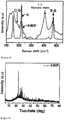
- the bonding properties of sulfur distributed in the polymer matrix of the S-BOP were confirmed by Raman spectroscopy, and the spectrum thereof is shown in Fig. 3 .
- the peaks at 152, 220, and 473 cm -1 which are the peaks of the S-S bonds in the S-BOP and the v (C-S) peak at 182 cm -1 indicate that sulfur was incorporated into the polymer backbone by chemical bond.
- a strong and broad peak at 407 cm-1 appeared. This also proves that the S-BOP was synthesized.
- the crystallinity of the S-BOP was measured by powder X-ray diffraction (PXRD) analysis, and the results are shown in Fig. 4 .
- PXRD powder X-ray diffraction
- the content of sulfur in the S-BOP was found to be 77%, but in a thermogravimetric analysis under the nitrogen atmosphere it was found to be about 72%. As a result of thermogravimetric analysis, the content of sulfur in the S-AC was found to be 69%.
- the S-BOP showed no mass loss at temperatures up to 200 ° C, and this suggests that sulfur is covalently bonded to the polymer backbone. Sulfur linked by covalent bonds can also be ascertained from derivative of the mass loss curve (orange curve) indicating a peak at 320 °C
- SEM scanning electron microscopy
- the S-BOP electrode showed a discharge graph with a steep slope in the range of 2.05 to 2.4 V. This indicates that the S-BOP has a C-S bond and thus the conversion of S8 to Li 2 S 8 was buried in the S-BOP.
- the XRD spectrum showed the presence of crystalline S8 in the S-BOP, but the presence of crystalline S8 was masked at the lower c-rate.
- the initial discharge and charge capacities of the S-BOP were 1149 and 1110 mAh/g, and the initial coulombic efficiency was 96.6%.
- the initial coulombic efficiency value suggests that capture of lithium ion on the polymer matrix and the shuttling of the polysulfide were successfully inhibited. This value is also in contrast to those from previously known polymers with high sulfur content, which usually showed initial coulombic efficiencies of 100% or more due to the shuttle phenomenon.
- the S-BOP was maintained at 86.2, 78.8, 70.2, 61.5, and 50.2% relative to the reversible capacity (1148 mAh/g) at C/20. Also, when the current density recovered to C/10, 99.0% of the initial capacity was recovered.
- the upper discharge stagnation period (the region before the second flat stagnation) is more clearly divided into two parts. This is due to two different atomic arrangements of sulfur wherein the upper part is due to S8 and the lower part is due to the sulfur chain attached to the polymer backbone. Since the interior of the S-BOP has a structure in which S8 is surrounded by sulfur chain, the sulfur chain becomes the first accessible part of the incoming lithium ion, and then the S8 can be used. If the c-rate increases, the effectiveness of S8 becomes more important at the beginning of the lithiation, so the above results will appear.
- Fig. 10 is a graph showing the cycle characteristics and coulombic efficiency of the S-BOP under the condition of 1C (720 mAh/g).
- the S-BOP showed excellent cycle characteristics showing 92.7% of the initial capacity (630 mAh/g) after 1000 cycles.
- the specific capacity gradually increased from 630 mAh/g (second cycle) to 705 mAh/g (30th cycle). This may be due to the particular electrode activation process. That is, initial cycle period is required to obtain full accessibility to the impregnated sulfur.
- the excellent reversibility of each cycle resulted in high coulombic efficiency.
- the coulombic efficiencies in the 2nd, 5th, 50th, 200th, 500th and 1000th cycles were 94.8, 99.8, 100.0, 100.2, 100.3, and 100.4%, respectively. This excellent performance is because the dissolution of the polysulfide was suppressed and the sulfur is distributed in the state trapped in the polymer.
- the cycle characteristics of the S-BOP were compared with the cycle characteristics of the SAC ( Fig. 11 ).
- the two electrodes showed distinct cycle stability.
- the specific capacity of the S-BOP continuously increased from 806 mAh/g (first cycle) to 832 mAh/g (25th cycle) due to the electrode activation process and finally increased to 828 mAh/g in the 50th cycle which corresponds to a capacity retention rate of 102.8% when compared to the second cycle.
- the S-AC showed a high capacity of 930 mAh/g in the second cycle, but it was remarkably decreased to 591 mAh/g in the 50th cycle and thus showed a capacity retention rate of 63.5%. Also, in the eighth cycle of the S-AC, the coulombic efficiency exceeded 100%, indicating that the polysulfide dissolution increased as the cycle is repeated.
- the cause of cyclic stability of the S-BOP was confirmed through ex-situ X-ray photoelectron spectroscopy ( ex-situ XPS) and cross-sectional SEM.
- ex-situ XPS ex-situ X-ray photoelectron spectroscopy
- Fig. 12 it can be seen that S 2p peaks are reversibly transferred in each cycle during charging and discharging.
- the 163.7 and 164.8 eV peaks are due to the S-S and C-S bonds, respectively, which show the bond structure of the S-BOP and the stability of the bonds which are remained in the synthesized state even after the 50th cycle. From this, it can be confirmed that the S-BOP can react reversibly.
- the inhibition of the dissolution of the polysulfide can be confirmed by the fact that sulfide (161.5 eV) and polysulfide (162.3 ⁇ 163.9 eV) peaks remain constant during charging and discharging.
- the chemical impregnation of sulfur in the S-BOP has an advantage in volumetric capacity because the chemical bonds between carbon and sulfur allow to have a higher tap density compared to physical mixing.
- the volumes of the S-BOP, the S-AC and LiCoO 2 are 1.8, 2.1 and 0.9 mL, respectively. This distinctive tap density is expected to affect the volumetric capacity of the electrode. To demonstrate this, all the electrodes were roll-pressed as closely as possible to commercial battery conditions. As a result, the S-BOP, the S-AC, and LiCoO 2 electrodes exhibited volumetric capacities of 884.0, 630.2, 520.8 mAh/cm 3 , respectively.
- the S-BOP electrode has the volumetric capacity 1.7 times higher than commercially available LiCoO 2 electrode.
- LiCoO 2 contains 93% by weight of active material.
- the volumetric capacity is more important than the gravimetric capacity, so the structural properties based on the C-S covalent bond of the S-BOP are believed to be a great advantage in terms of compatibility.
- Examples 1 to 3 show the content relevant to the characteristics of the batteries according to the content ratio of monomer and sulfur in the polymer-sulfur copolymer of the present invention.
- Examples 1 to 3 after preparing the electrode while changing the content of sulfur to the monomer, its loading amount and the reduction rate relative to the initial capacity were confirmed. That is, it can be seen that as the sulfur content increases, the loading amount of the electrode increases, but the capacity reduction of the battery relative to the initial capacity is in a trade-off to each other, which occurs more rapidly. Through this, it can be seen that the battery characteristics can be effectively controlled by appropriately controlling the weight ratio of monomer and sulfur.
- the polymer-sulfur copolymer of the present invention has a structure in which sulfur is covalently linked in a polymer carrier and is characterized in that the distribution of sulfur is uniform and the impregnation amount of sulfur is high. Therefore, when used as a positive electrode active material for a lithium-sulfur battery, a battery improved in the problem of dissolution of the polysulfide or the carrier while having excellent battery characteristics can be realized.
- the lithium-sulfur battery according to the present invention stably exhibits excellent discharge capacity, output characteristics and capacity retention rate, it is useful for portable devices such as mobile phones, notebook computers, and digital cameras, and electric vehicles such as hybrid electric vehicles (HEVs), etc.
- portable devices such as mobile phones, notebook computers, and digital cameras
- electric vehicles such as hybrid electric vehicles (HEVs), etc.
Landscapes
- Chemical & Material Sciences (AREA)
- Chemical Kinetics & Catalysis (AREA)
- Electrochemistry (AREA)
- General Chemical & Material Sciences (AREA)
- Engineering & Computer Science (AREA)
- Materials Engineering (AREA)
- Manufacturing & Machinery (AREA)
- Organic Chemistry (AREA)
- Health & Medical Sciences (AREA)
- Polymers & Plastics (AREA)
- Medicinal Chemistry (AREA)
- Inorganic Chemistry (AREA)
- Battery Electrode And Active Subsutance (AREA)
Claims (11)
- Polymer-Schwefel-Copolymer, gebildet durch Polymerisieren von Monomeren der nachstehenden Formel (1) und elementarem Schwefel:
 X 0 oder S ist,Y H, eine C1-6- Alkylgruppe oder eine C6-12-Arylgruppe ist,Z eine SnH-Gruppe, eine C1-6-Alkylgruppe, enthaltend zumindest eine S-S-Bindung, oder eine C6-12-Arylgruppe, enthaltend zumindest eine S-S-Bindung, ist,n eine ganze Zahl von 1 bis 6 ist.
 - Polymer-Schwefel-Copolymer gemäss Anspruch 1, dadurch gekennzeichnet, dass in der Formel (1),
X 0 oder S ist,
Y H, eine C1-4-Alkylgruppe oder eine C6-8-Arylgruppe ist,
Z SH, S-SH, eine C1-4-Alkylgruppe, enthaltend zumindest eine S-S-Bindung, oder eine C6-8-Arylgruppe, enthaltend zumindest eine S-S-Bindung, ist. - Polymer-Schwefel-Copolymer gemäss Anspruch 1, dadurch gekennzeichnet, dass das Monomer der Formel (1) zumindest eines, ausgewählt aus den Verbindungen der nachstehenden Formeln (2) bis (6), ist:


- Polymer-Schwefel-Copolymer gemäss Anspruch 1, dadurch gekennzeichnet, dass das Polymer-Schwefel-Copolymer ein Copolymer ist, das durch Polymerisieren des Monomers und von elementarem Schwefel in einem Gewichtsverhältnis im Bereich von 1:2 bis 1:20 hergestellt ist.
- Polymer-Schwefel-Copolymer gemäss Anspruch 1, dadurch gekennzeichnet, dass das Polymer-Schwefel-Copolymer eine amorphe kristalline Struktur aufweist.
- Herstellungsverfahren des Polymer-Schwefel-Copolymers, dadurch gekennzeichnet, dass es umfasst:Mischen des Monomers der nachstehenden Formel (1) und von elementarem Schwefel, um eine Mischung zu bilden;Unterziehen der Mischung einer ersten Wärmebehandlung, um den verflüssigten Schwefel mit dem Monomer zu imprägnieren;;Unterziehen der Mischung, die der ersten Wärmebehandlung unterzogen wurde, einer zweiten Wärmebehandlung, um das Monomer und den elementaren Schwefel zu copolymerisieren; undUnterziehen der Mischung, die der zweiten Wärmebehandlung unterzogen wurde, einer dritten Wärmebehandlung, um eine Vulkanisierungsreaktion durchzuführen:
 X 0 oder S ist,Y H, eine C1-6-Alkylgruppe oder eine C6-12-Arylgruppe ist,Z eine SnH-Gruppe, eine C1-6-Alkylgruppe, enthaltend zumindest eine S-S-Bindung, oder eine C6-12-Arylgruppe, enthaltend zumindest eine S-S-Bindung, ist,n eine ganze Zahl von 1 bis 6 ist.
 - Herstellungsverfahren gemäss Anspruch 6, dadurch gekennzeichnet, dass die Temperatur der ersten Wärmebehandlung 140 bis 170°C beträgt.
- Herstellungsverfahren gemäss Anspruch 6, dadurch gekennzeichnet, dass die Temperatur der zweiten Wärmebehandlung 170 bis 200°C beträgt.
- Herstellungsverfahren gemäss Anspruch 6, dadurch gekennzeichnet, dass die Temperatur der dritten Wärmebehandlung 200 bis 250°C beträgt.
- Elektrode für eine Lithium-Schwefel-Batterie, dadurch gekennzeichnet, dass sie ein Polymer-Schwefel-Copolymer gemäss irgendeinem der Ansprüche 1 bis 4 als aktives Material umfasst.
- Lithium-Schwefel-Batterie, die eine positive Elektrode; eine negative Elektrode; einen Separator, der zwischen der positiven Elektrode und der negativen Elektrode angeordnet ist, und einen Elektrolyten umfasst; dadurch gekennzeichnet, dass die positive Elektrode die Elektrode gemäss Anspruch 10 ist.
Applications Claiming Priority (3)
| Application Number | Priority Date | Filing Date | Title |
|---|---|---|---|
| KR20160060079 | 2016-05-17 | ||
| KR1020170010453A KR102006724B1 (ko) | 2016-05-17 | 2017-01-23 | 고분자-황 공중합체, 이의 제조방법 및 이를 포함하는 리튬-황 전지 |
| PCT/KR2017/000789 WO2017200180A1 (ko) | 2016-05-17 | 2017-01-24 | 고분자-황 공중합체, 이의 제조방법 및 이를 포함하는 리튬-황 전지 |
Publications (3)
| Publication Number | Publication Date |
|---|---|
| EP3373370A1 EP3373370A1 (de) | 2018-09-12 |
| EP3373370A4 EP3373370A4 (de) | 2019-01-02 |
| EP3373370B1 true EP3373370B1 (de) | 2019-07-10 |
Family
ID=60810975
Family Applications (1)
| Application Number | Title | Priority Date | Filing Date |
|---|---|---|---|
| EP17799538.8A Active EP3373370B1 (de) | 2016-05-17 | 2017-01-24 | Polymer-schwefel-copolymer, verfahren zur herstellung davon und lithiumsekundärbatterie damit |
Country Status (4)
| Country | Link |
|---|---|
| US (1) | US10297830B2 (de) |
| EP (1) | EP3373370B1 (de) |
| KR (1) | KR102006724B1 (de) |
| CN (1) | CN108701830B (de) |
Families Citing this family (2)
| Publication number | Priority date | Publication date | Assignee | Title |
|---|---|---|---|---|
| CN111129600B (zh) * | 2018-10-30 | 2021-02-09 | 宁德时代新能源科技股份有限公司 | 电解液及锂金属电池 |
| CN115692693A (zh) * | 2022-11-22 | 2023-02-03 | 江苏正力新能电池技术有限公司 | 一种锂硫电池正极材料,其制备方法以及锂硫电池 |
Family Cites Families (10)
| Publication number | Priority date | Publication date | Assignee | Title |
|---|---|---|---|---|
| KR100316587B1 (ko) | 1999-05-18 | 2001-12-12 | 대한민국 (관리청:특허청장, 승계청:경상대학교 총장) | 리튬전지용 초고용량 유황양전극과 그 제조방법 및 유황양전극을 이용한 리튬전지 |
| KR100659583B1 (ko) | 2005-12-30 | 2006-12-19 | 주식회사 효성 | 설퍼-설퍼 결합을 함유한 새로운 전도성고분자 물질의 양극조성물 및 이를 이용한 리튬 이차전지 |
| US8389758B2 (en) | 2009-06-05 | 2013-03-05 | 3M Innovative Properties Company | Benzoxazine-thiol adducts |
| JP5636726B2 (ja) | 2010-04-26 | 2014-12-10 | 横浜ゴム株式会社 | ジスルフィド結合を有するベンゾオキサジン化合物 |
| US9929429B2 (en) | 2011-08-08 | 2018-03-27 | Battelle Memorial Institute | Polymer-sulfur composite materials for electrodes in Li-S energy storage devices |
| WO2013023216A1 (en) | 2011-08-11 | 2013-02-14 | Arizona Board Of Regents On Behalf Of The University Of Arizona | High sulfur content copolymers and composite materials and electrochemical cells and optical elements using them |
| JP6279588B2 (ja) | 2012-09-28 | 2018-02-14 | スリーエム イノベイティブ プロパティズ カンパニー | ポリベンゾオキサジン組成物 |
| CN104577050B (zh) | 2013-10-17 | 2017-07-07 | 清华大学 | 锂离子电池电极活性物质及其制备方法 |
| CN104701542B (zh) * | 2015-02-05 | 2017-10-20 | 中南大学 | 一种全固态锂硫电池复合正极材料及全固态锂硫电池和制备方法 |
| CN105470513B (zh) * | 2015-12-29 | 2018-11-20 | 深圳大学 | 一种锂离子电池用的电极活性材料及锂离子电池 |
-
2017
- 2017-01-23 KR KR1020170010453A patent/KR102006724B1/ko active Active
- 2017-01-24 US US15/741,633 patent/US10297830B2/en active Active
- 2017-01-24 EP EP17799538.8A patent/EP3373370B1/de active Active
- 2017-01-24 CN CN201780005074.6A patent/CN108701830B/zh active Active
Non-Patent Citations (1)
| Title |
|---|
| None * |
Also Published As
| Publication number | Publication date |
|---|---|
| KR20170129596A (ko) | 2017-11-27 |
| EP3373370A4 (de) | 2019-01-02 |
| US10297830B2 (en) | 2019-05-21 |
| US20180190989A1 (en) | 2018-07-05 |
| KR102006724B1 (ko) | 2019-08-02 |
| CN108701830A (zh) | 2018-10-23 |
| CN108701830B (zh) | 2021-05-07 |
| EP3373370A1 (de) | 2018-09-12 |
Similar Documents
| Publication | Publication Date | Title |
|---|---|---|
| EP2605316B1 (de) | Verfahren zur vordotierung mit lithium, verfahren zur herstellung von elektroden und elektrischer energiespeichereinrichtung unter verwendung dieser verfahren | |
| US7674554B2 (en) | Anode active material, method of preparing the same, and anode and lithium battery containing the anode active material | |
| EP3460894B1 (de) | Lithium-schwefel-batterie | |
| EP3846257B1 (de) | Negativelektroden-aktivmaterial für lithiumsekundärbatterie und negativelektrode und lithiumsekundärbatterie damit | |
| CN116261563B (zh) | 多孔碳结构、其制造方法及包含其的锂二次电池 | |
| KR102537224B1 (ko) | 복합 전극 활물질, 이를 포함하는 리튬 전지, 및 상기 복합 전극 활물질의 제조방법 | |
| KR20160081692A (ko) | 실리콘계 음극 활물질, 이의 제조방법, 상기 실리콘계 음극 활물질을 포함하는 음극 및 상기 음극을 포함하는 리튬 이차전지 | |
| KR102547067B1 (ko) | 리튬 전지 | |
| KR102737098B1 (ko) | 리튬 전지 | |
| CN106611869B (zh) | 可再充电锂电池 | |
| EP2453511A1 (de) | Polymergelelektrolyt und polymer-akkumulator damit | |
| US8236447B2 (en) | Electrode active material for non-aqueous secondary batteries | |
| EP4164019B1 (de) | Elektrolyt für lithiumsekundärbatterie und lithiumsekundärbatterie damit | |
| KR102475181B1 (ko) | 리튬 금속 전지용 음극, 이의 제조 방법, 및 이를 포함하는 리튬 금속 전지 | |
| US10297830B2 (en) | Polymer-sulfur copolymer, method for preparing same, and lithium-sulfur battery comprising same | |
| KR20150089209A (ko) | 리튬 이차 전지용 음극 활물질, 이의 제조방법 및 이를 포함하는 리튬 이차 전지 | |
| KR20210130101A (ko) | 유기 황 재료, 전극 및 리튬 이온 이차 전지, 및 제조 방법 | |
| KR102737099B1 (ko) | 리튬 전지 | |
| US10431813B2 (en) | Carbon-silicon composite structure and method of preparing the same | |
| KR101990612B1 (ko) | 고분자-황 공중합체, 이의 제조방법 및 이를 포함하는 리튬-황 전지 | |
| KR102537229B1 (ko) | 리튬 전지 | |
| KR101790877B1 (ko) | 고분자-황 복합체, 이의 제조방법 및 이를 포함하는 리튬-황 전지 | |
| KR20230137230A (ko) | 금속 용출이 억제된 리튬 이차전지 | |
| EP3761418A1 (de) | Lithium-sekundärbatterieelektrode mit lioh, herstellungsverfahren dafür und lithium-sekundärbatterie mit elektrode | |
| KR102955955B1 (ko) | 화합물, 이를 포함하는 겔 고분자 전해질 및 리튬 이차 전지 |
Legal Events
| Date | Code | Title | Description |
|---|---|---|---|
| STAA | Information on the status of an ep patent application or granted ep patent |
Free format text: STATUS: THE INTERNATIONAL PUBLICATION HAS BEEN MADE |
|
| PUAI | Public reference made under article 153(3) epc to a published international application that has entered the european phase |
Free format text: ORIGINAL CODE: 0009012 |
|
| STAA | Information on the status of an ep patent application or granted ep patent |
Free format text: STATUS: REQUEST FOR EXAMINATION WAS MADE |
|
| 17P | Request for examination filed |
Effective date: 20180606 |
|
| AK | Designated contracting states |
Kind code of ref document: A1 Designated state(s): AL AT BE BG CH CY CZ DE DK EE ES FI FR GB GR HR HU IE IS IT LI LT LU LV MC MK MT NL NO PL PT RO RS SE SI SK SM TR |
|
| AX | Request for extension of the european patent |
Extension state: BA ME |
|
| A4 | Supplementary search report drawn up and despatched |
Effective date: 20181130 |
|
| RIC1 | Information provided on ipc code assigned before grant |
Ipc: H01M 4/137 20100101ALI20181126BHEP Ipc: H01M 10/052 20100101ALI20181126BHEP Ipc: H01M 4/60 20060101AFI20181126BHEP Ipc: H01M 4/02 20060101ALI20181126BHEP Ipc: C08G 73/02 20060101ALI20181126BHEP Ipc: H01M 4/1399 20100101ALI20181126BHEP Ipc: H01M 4/136 20100101ALI20181126BHEP Ipc: H01M 4/13 20100101ALI20181126BHEP Ipc: H01M 4/1397 20100101ALI20181126BHEP Ipc: H01M 4/139 20100101ALI20181126BHEP Ipc: H01M 4/38 20060101ALI20181126BHEP |
|
| GRAP | Despatch of communication of intention to grant a patent |
Free format text: ORIGINAL CODE: EPIDOSNIGR1 |
|
| STAA | Information on the status of an ep patent application or granted ep patent |
Free format text: STATUS: GRANT OF PATENT IS INTENDED |
|
| DAV | Request for validation of the european patent (deleted) | ||
| DAX | Request for extension of the european patent (deleted) | ||
| INTG | Intention to grant announced |
Effective date: 20190402 |
|
| GRAS | Grant fee paid |
Free format text: ORIGINAL CODE: EPIDOSNIGR3 |
|
| GRAA | (expected) grant |
Free format text: ORIGINAL CODE: 0009210 |
|
| STAA | Information on the status of an ep patent application or granted ep patent |
Free format text: STATUS: THE PATENT HAS BEEN GRANTED |
|
| AK | Designated contracting states |
Kind code of ref document: B1 Designated state(s): AL AT BE BG CH CY CZ DE DK EE ES FI FR GB GR HR HU IE IS IT LI LT LU LV MC MK MT NL NO PL PT RO RS SE SI SK SM TR |
|
| REG | Reference to a national code |
Ref country code: GB Ref legal event code: FG4D |
|
| REG | Reference to a national code |
Ref country code: CH Ref legal event code: EP Ref country code: AT Ref legal event code: REF Ref document number: 1154476 Country of ref document: AT Kind code of ref document: T Effective date: 20190715 |
|
| REG | Reference to a national code |
Ref country code: DE Ref legal event code: R096 Ref document number: 602017005231 Country of ref document: DE |
|
| REG | Reference to a national code |
Ref country code: IE Ref legal event code: FG4D |
|
| REG | Reference to a national code |
Ref country code: NL Ref legal event code: MP Effective date: 20190710 |
|
| REG | Reference to a national code |
Ref country code: LT Ref legal event code: MG4D |
|
| REG | Reference to a national code |
Ref country code: AT Ref legal event code: MK05 Ref document number: 1154476 Country of ref document: AT Kind code of ref document: T Effective date: 20190710 |
|
| PG25 | Lapsed in a contracting state [announced via postgrant information from national office to epo] |
Ref country code: SE Free format text: LAPSE BECAUSE OF FAILURE TO SUBMIT A TRANSLATION OF THE DESCRIPTION OR TO PAY THE FEE WITHIN THE PRESCRIBED TIME-LIMIT Effective date: 20190710 Ref country code: NO Free format text: LAPSE BECAUSE OF FAILURE TO SUBMIT A TRANSLATION OF THE DESCRIPTION OR TO PAY THE FEE WITHIN THE PRESCRIBED TIME-LIMIT Effective date: 20191010 Ref country code: FI Free format text: LAPSE BECAUSE OF FAILURE TO SUBMIT A TRANSLATION OF THE DESCRIPTION OR TO PAY THE FEE WITHIN THE PRESCRIBED TIME-LIMIT Effective date: 20190710 Ref country code: HR Free format text: LAPSE BECAUSE OF FAILURE TO SUBMIT A TRANSLATION OF THE DESCRIPTION OR TO PAY THE FEE WITHIN THE PRESCRIBED TIME-LIMIT Effective date: 20190710 Ref country code: PT Free format text: LAPSE BECAUSE OF FAILURE TO SUBMIT A TRANSLATION OF THE DESCRIPTION OR TO PAY THE FEE WITHIN THE PRESCRIBED TIME-LIMIT Effective date: 20191111 Ref country code: AT Free format text: LAPSE BECAUSE OF FAILURE TO SUBMIT A TRANSLATION OF THE DESCRIPTION OR TO PAY THE FEE WITHIN THE PRESCRIBED TIME-LIMIT Effective date: 20190710 Ref country code: BG Free format text: LAPSE BECAUSE OF FAILURE TO SUBMIT A TRANSLATION OF THE DESCRIPTION OR TO PAY THE FEE WITHIN THE PRESCRIBED TIME-LIMIT Effective date: 20191010 Ref country code: NL Free format text: LAPSE BECAUSE OF FAILURE TO SUBMIT A TRANSLATION OF THE DESCRIPTION OR TO PAY THE FEE WITHIN THE PRESCRIBED TIME-LIMIT Effective date: 20190710 Ref country code: LT Free format text: LAPSE BECAUSE OF FAILURE TO SUBMIT A TRANSLATION OF THE DESCRIPTION OR TO PAY THE FEE WITHIN THE PRESCRIBED TIME-LIMIT Effective date: 20190710 |
|
| PG25 | Lapsed in a contracting state [announced via postgrant information from national office to epo] |
Ref country code: LV Free format text: LAPSE BECAUSE OF FAILURE TO SUBMIT A TRANSLATION OF THE DESCRIPTION OR TO PAY THE FEE WITHIN THE PRESCRIBED TIME-LIMIT Effective date: 20190710 Ref country code: AL Free format text: LAPSE BECAUSE OF FAILURE TO SUBMIT A TRANSLATION OF THE DESCRIPTION OR TO PAY THE FEE WITHIN THE PRESCRIBED TIME-LIMIT Effective date: 20190710 Ref country code: IS Free format text: LAPSE BECAUSE OF FAILURE TO SUBMIT A TRANSLATION OF THE DESCRIPTION OR TO PAY THE FEE WITHIN THE PRESCRIBED TIME-LIMIT Effective date: 20191110 Ref country code: RS Free format text: LAPSE BECAUSE OF FAILURE TO SUBMIT A TRANSLATION OF THE DESCRIPTION OR TO PAY THE FEE WITHIN THE PRESCRIBED TIME-LIMIT Effective date: 20190710 Ref country code: GR Free format text: LAPSE BECAUSE OF FAILURE TO SUBMIT A TRANSLATION OF THE DESCRIPTION OR TO PAY THE FEE WITHIN THE PRESCRIBED TIME-LIMIT Effective date: 20191011 Ref country code: ES Free format text: LAPSE BECAUSE OF FAILURE TO SUBMIT A TRANSLATION OF THE DESCRIPTION OR TO PAY THE FEE WITHIN THE PRESCRIBED TIME-LIMIT Effective date: 20190710 |
|
| PG25 | Lapsed in a contracting state [announced via postgrant information from national office to epo] |
Ref country code: TR Free format text: LAPSE BECAUSE OF FAILURE TO SUBMIT A TRANSLATION OF THE DESCRIPTION OR TO PAY THE FEE WITHIN THE PRESCRIBED TIME-LIMIT Effective date: 20190710 |
|
| PG25 | Lapsed in a contracting state [announced via postgrant information from national office to epo] |
Ref country code: RO Free format text: LAPSE BECAUSE OF FAILURE TO SUBMIT A TRANSLATION OF THE DESCRIPTION OR TO PAY THE FEE WITHIN THE PRESCRIBED TIME-LIMIT Effective date: 20190710 Ref country code: IT Free format text: LAPSE BECAUSE OF FAILURE TO SUBMIT A TRANSLATION OF THE DESCRIPTION OR TO PAY THE FEE WITHIN THE PRESCRIBED TIME-LIMIT Effective date: 20190710 Ref country code: PL Free format text: LAPSE BECAUSE OF FAILURE TO SUBMIT A TRANSLATION OF THE DESCRIPTION OR TO PAY THE FEE WITHIN THE PRESCRIBED TIME-LIMIT Effective date: 20190710 Ref country code: DK Free format text: LAPSE BECAUSE OF FAILURE TO SUBMIT A TRANSLATION OF THE DESCRIPTION OR TO PAY THE FEE WITHIN THE PRESCRIBED TIME-LIMIT Effective date: 20190710 Ref country code: EE Free format text: LAPSE BECAUSE OF FAILURE TO SUBMIT A TRANSLATION OF THE DESCRIPTION OR TO PAY THE FEE WITHIN THE PRESCRIBED TIME-LIMIT Effective date: 20190710 |
|
| PG25 | Lapsed in a contracting state [announced via postgrant information from national office to epo] |
Ref country code: CZ Free format text: LAPSE BECAUSE OF FAILURE TO SUBMIT A TRANSLATION OF THE DESCRIPTION OR TO PAY THE FEE WITHIN THE PRESCRIBED TIME-LIMIT Effective date: 20190710 Ref country code: SM Free format text: LAPSE BECAUSE OF FAILURE TO SUBMIT A TRANSLATION OF THE DESCRIPTION OR TO PAY THE FEE WITHIN THE PRESCRIBED TIME-LIMIT Effective date: 20190710 Ref country code: IS Free format text: LAPSE BECAUSE OF FAILURE TO SUBMIT A TRANSLATION OF THE DESCRIPTION OR TO PAY THE FEE WITHIN THE PRESCRIBED TIME-LIMIT Effective date: 20200224 Ref country code: SK Free format text: LAPSE BECAUSE OF FAILURE TO SUBMIT A TRANSLATION OF THE DESCRIPTION OR TO PAY THE FEE WITHIN THE PRESCRIBED TIME-LIMIT Effective date: 20190710 |
|
| REG | Reference to a national code |
Ref country code: DE Ref legal event code: R097 Ref document number: 602017005231 Country of ref document: DE |
|
| PLBE | No opposition filed within time limit |
Free format text: ORIGINAL CODE: 0009261 |
|
| STAA | Information on the status of an ep patent application or granted ep patent |
Free format text: STATUS: NO OPPOSITION FILED WITHIN TIME LIMIT |
|
| PG2D | Information on lapse in contracting state deleted |
Ref country code: IS |
|
| 26N | No opposition filed |
Effective date: 20200603 |
|
| PG25 | Lapsed in a contracting state [announced via postgrant information from national office to epo] |
Ref country code: MC Free format text: LAPSE BECAUSE OF FAILURE TO SUBMIT A TRANSLATION OF THE DESCRIPTION OR TO PAY THE FEE WITHIN THE PRESCRIBED TIME-LIMIT Effective date: 20190710 Ref country code: SI Free format text: LAPSE BECAUSE OF FAILURE TO SUBMIT A TRANSLATION OF THE DESCRIPTION OR TO PAY THE FEE WITHIN THE PRESCRIBED TIME-LIMIT Effective date: 20190710 |
|
| REG | Reference to a national code |
Ref country code: CH Ref legal event code: PL |
|
| REG | Reference to a national code |
Ref country code: BE Ref legal event code: MM Effective date: 20200131 |
|
| PG25 | Lapsed in a contracting state [announced via postgrant information from national office to epo] |
Ref country code: LU Free format text: LAPSE BECAUSE OF NON-PAYMENT OF DUE FEES Effective date: 20200124 |
|
| PG25 | Lapsed in a contracting state [announced via postgrant information from national office to epo] |
Ref country code: LI Free format text: LAPSE BECAUSE OF NON-PAYMENT OF DUE FEES Effective date: 20200131 Ref country code: CH Free format text: LAPSE BECAUSE OF NON-PAYMENT OF DUE FEES Effective date: 20200131 Ref country code: BE Free format text: LAPSE BECAUSE OF NON-PAYMENT OF DUE FEES Effective date: 20200131 |
|
| PG25 | Lapsed in a contracting state [announced via postgrant information from national office to epo] |
Ref country code: IE Free format text: LAPSE BECAUSE OF NON-PAYMENT OF DUE FEES Effective date: 20200124 |
|
| PG25 | Lapsed in a contracting state [announced via postgrant information from national office to epo] |
Ref country code: MT Free format text: LAPSE BECAUSE OF FAILURE TO SUBMIT A TRANSLATION OF THE DESCRIPTION OR TO PAY THE FEE WITHIN THE PRESCRIBED TIME-LIMIT Effective date: 20190710 Ref country code: CY Free format text: LAPSE BECAUSE OF FAILURE TO SUBMIT A TRANSLATION OF THE DESCRIPTION OR TO PAY THE FEE WITHIN THE PRESCRIBED TIME-LIMIT Effective date: 20190710 |
|
| PG25 | Lapsed in a contracting state [announced via postgrant information from national office to epo] |
Ref country code: MK Free format text: LAPSE BECAUSE OF FAILURE TO SUBMIT A TRANSLATION OF THE DESCRIPTION OR TO PAY THE FEE WITHIN THE PRESCRIBED TIME-LIMIT Effective date: 20190710 |
|
| P01 | Opt-out of the competence of the unified patent court (upc) registered |
Effective date: 20230420 |
|
| REG | Reference to a national code |
Ref country code: DE Ref legal event code: R081 Ref document number: 602017005231 Country of ref document: DE Owner name: LG ENERGY SOLUTION, LTD., KR Free format text: FORMER OWNERS: KOREA ADVANCED INSTITUTE OF SCIENCE AND TECHNOLOGY, DAEJEON, KR; LG CHEM. LTD., SEOUL, KR Ref country code: DE Ref legal event code: R081 Ref document number: 602017005231 Country of ref document: DE Owner name: KOREA ADVANCED INSTITUTE OF SCIENCE AND TECHNO, KR Free format text: FORMER OWNERS: KOREA ADVANCED INSTITUTE OF SCIENCE AND TECHNOLOGY, DAEJEON, KR; LG CHEM. LTD., SEOUL, KR |
|
| REG | Reference to a national code |
Ref country code: GB Ref legal event code: 732E Free format text: REGISTERED BETWEEN 20231012 AND 20231018 |
|
| PGFP | Annual fee paid to national office [announced via postgrant information from national office to epo] |
Ref country code: GB Payment date: 20251222 Year of fee payment: 10 |
|
| PGFP | Annual fee paid to national office [announced via postgrant information from national office to epo] |
Ref country code: FR Payment date: 20251223 Year of fee payment: 10 |
|
| PGFP | Annual fee paid to national office [announced via postgrant information from national office to epo] |
Ref country code: DE Payment date: 20251222 Year of fee payment: 10 |