EP3356337B1 - Tricyclic dibenzothiazepine type compounds for use in the therapy of cdkl5 disorder - Google Patents
Tricyclic dibenzothiazepine type compounds for use in the therapy of cdkl5 disorder Download PDFInfo
- Publication number
- EP3356337B1 EP3356337B1 EP16777751.5A EP16777751A EP3356337B1 EP 3356337 B1 EP3356337 B1 EP 3356337B1 EP 16777751 A EP16777751 A EP 16777751A EP 3356337 B1 EP3356337 B1 EP 3356337B1
- Authority
- EP
- European Patent Office
- Prior art keywords
- formula
- compound
- treatment
- cdkl5
- mammal
- Prior art date
- Legal status (The legal status is an assumption and is not a legal conclusion. Google has not performed a legal analysis and makes no representation as to the accuracy of the status listed.)
- Active
Links
- 0 *C(*)(*)**N(*)C(c1ccccc1N1*)c(ccc(*)c2)c2S1(=O)=O Chemical compound *C(*)(*)**N(*)C(c1ccccc1N1*)c(ccc(*)c2)c2S1(=O)=O 0.000 description 1
Images


Classifications
-
- A—HUMAN NECESSITIES
- A61—MEDICAL OR VETERINARY SCIENCE; HYGIENE
- A61K—PREPARATIONS FOR MEDICAL, DENTAL OR TOILETRY PURPOSES
- A61K31/00—Medicinal preparations containing organic active ingredients
- A61K31/33—Heterocyclic compounds
- A61K31/395—Heterocyclic compounds having nitrogen as a ring hetero atom, e.g. guanethidine or rifamycins
- A61K31/55—Heterocyclic compounds having nitrogen as a ring hetero atom, e.g. guanethidine or rifamycins having seven-membered rings, e.g. azelastine, pentylenetetrazole
- A61K31/554—Heterocyclic compounds having nitrogen as a ring hetero atom, e.g. guanethidine or rifamycins having seven-membered rings, e.g. azelastine, pentylenetetrazole having at least one nitrogen and one sulfur as ring hetero atoms, e.g. clothiapine, diltiazem
-
- A—HUMAN NECESSITIES
- A61—MEDICAL OR VETERINARY SCIENCE; HYGIENE
- A61P—SPECIFIC THERAPEUTIC ACTIVITY OF CHEMICAL COMPOUNDS OR MEDICINAL PREPARATIONS
- A61P25/00—Drugs for disorders of the nervous system
- A61P25/08—Antiepileptics; Anticonvulsants
-
- C—CHEMISTRY; METALLURGY
- C07—ORGANIC CHEMISTRY
- C07D—HETEROCYCLIC COMPOUNDS
- C07D281/00—Heterocyclic compounds containing rings of more than six members having one nitrogen atom and one sulfur atom as the only ring hetero atoms
- C07D281/02—Seven-membered rings
- C07D281/04—Seven-membered rings having the hetero atoms in positions 1 and 4
- C07D281/08—Seven-membered rings having the hetero atoms in positions 1 and 4 condensed with carbocyclic rings or ring systems
- C07D281/12—Seven-membered rings having the hetero atoms in positions 1 and 4 condensed with carbocyclic rings or ring systems condensed with two six-membered rings
- C07D281/14—[b, e]-condensed
-
- A—HUMAN NECESSITIES
- A61—MEDICAL OR VETERINARY SCIENCE; HYGIENE
- A61K—PREPARATIONS FOR MEDICAL, DENTAL OR TOILETRY PURPOSES
- A61K2121/00—Preparations for use in therapy
Definitions
- the present invention relates to tricyclic dibenzothiazepine type compounds for use in the treatment of CDKL5 disorder in a subject (i.e. a mammal such as an animal or human, especially a human) suffering from such disorder.
- a subject i.e. a mammal such as an animal or human, especially a human
- the present invention relates to alleviating CDKL5 disorder with tricyclic dibenzothiazepine type compounds of Formula I in a subject as a result of a medical condition.
- the present invention relates to pharmaceutical compositions including tricyclic dibenzothiazepine type compounds of Formula I and the use of such compositions as a medicament, particularly a human medicament.
- Cyclin-dependent kinase-like 5 CDKL5 is a serine/threonine (S/T) kinase that is highly expressed in the brain. Mutations in the X-linked CDKL5 gene cause early-onset epileptic encephalopathy. Although CDKL5 disorder shares several features with Rett Syndrome, a neurodevelopmental disorder caused by mutations in the X-linked MECP2 gene, recent work assessing data has argued that it should be considered a distinct clinical entity, primarily due to its early onset and lack of clinical regression following a period of normal development ( Fehr S, et al. (2013) Eur J Hum Genet 21 (3) 266-273 ).
- CDKL5 disorder involves defects in Cdkl5 gene.
- the primary clinical features of CDKL5 disorder are early life seizures, motor rigidity, dyskinesias, stereotypical hand movements, and deficient language acquisition. Additional phenotypical characteristics include impaired learning ability, impaired memory, respiratory dysfunction and aspects of autistic behaviour.
- Additional features have been noted in some carriers, including gastrointestinal problems, bruxism, and a characteristic sideways glance ( Bahi-Buisson N et al. (2008) Brain 131: 2647-2661 ).
- the disorder is most frequently associated with nonsense or putative detrimental missense mutations and is thought to be caused by a loss of CDKL5 function, although no clear relationship between the type or location of mutations and symptom severity has been reported.
- the disorder is more frequently reported in females (8:1), probably due to the more severe consequences of dominant X-linked mutations in males than in females.
- Recent evidence suggests that CDKL5 is involved in neuronal plasticity.
- the modulation of CDKL5 alongside neuronal maturation has been measured using markers of pre- and post-synaptic development, Synapsin 1 and GluR2 (see Montanara et al, J Biol Chem. 2015; 290(7): 4512-4527 , the contents of which are incorporated by reference).
- GluR2 is a subunit of the AMPA receptor which influences receptor assembly and trafficking and plays a pivotal role in long-term synaptic plasticity. As GluR2, it is one of the CREB (cAMP response element-binding protein)-responsive immediate early genes. GluR2 is also a post-synaptic marker.
- the present invention provides a compound of Formula I, or a pharmaceutically or veterinarily acceptable salt thereof, or a pharmaceutically or veterinarily acceptable solvate of either entity or a pharmaceutical or veterinary composition containing any of the foregoing for use in the treatment of a motor deficit in a subject with CDKL5 disorder (i.e. mammal such as an animal or human, especially a human), wherein a compound of Formula I comprises: or a pharmaceutically or veterinarily acceptable salt thereof, or a pharmaceutically or veterinarily acceptable solvate of either entity, wherein:
- treatment or “treating” as used herein, we include both therapeutic (curative), palliative and prophylactic treatment.
- treatment includes "prevention”.
- the treatment of the CDKL5 disorder is accomplished by administration of a therapeutically effective amount of a compound of Formula I, or a pharmacologically active metabolite thereof, or a pharmaceutically or veterinarily acceptable salt thereof, or a pharmaceutically or veterinarily acceptable solvate of either entity or a pharmaceutical or veterinary composition containing any of the foregoing to the subject.
- a therapeutically effective amount of a compound of Formula I, or a pharmacologically active metabolite thereof, or a pharmaceutically or veterinarily acceptable salt thereof, or a pharmaceutically or veterinarily acceptable solvate of either entity to be administered is 2 to about 600 mg/day, preferably from about 5 to about 400 mg/day, and more preferably about 10 to 300 mg/day. Dosage depends on a number of factors such as age, weight and sex and can be determined by the skilled person.
- the dosage regimen can also be administered by the skilled person but, for example, a compound of Formula I may be administered once or twice a day, or more regularly such as 3, 4 or 5 times a day (particularly for short-acting compounds).
- R 1 in a compound of Formula I represents C 1 to C 5 alkyl, more preferably, R 1 represents C 1 to C 4 alkyl, even more preferably linear C 1 to C 4 alkyl. Most preferably, R 1 represents a methyl group.
- R 2 in a compound of Formula I is H, fluoro or chloro, more preferably H or chloro. Most preferably, R 2 is chloro.
- R 3 in a compound of Formula I represents H or C 1 to C 4 alkyl. More preferably, R 3 represents H or linear C 1 to C 4 alkyl. Most preferably, R 3 represents H.
- m in a compound of Formula I is an integer from 1 to 6 inclusive, more preferably 2 to 6 inclusive, especially 4 to 6. Most preferably, m is 4.
- Particularly preferred compounds of Formula I are: tianeptine (7-[(3-chloro-6,1'-dihydro-6-methyl-dibenzo[c,f][1,2]thiazepin-11-yl)amino]heptanoic acid S,S-dioxide) wherein R 1 is methyl, R 2 is chloro, R 3 is hydrogen, R 4 is hydrogen, R 5 is hydrogen, and m is 4 in a compound of Formula I; or the pharmacological active metabolite of tianeptine, referred to as the "MC5 metabolite" (7-[(3-chloro-6,1'-dihydro-6-methyl-dibenzo[c,f][1,2]thiazepin-11-yl)amino]pentanoic acid S,S-dioxide) wherein R 1 is methyl, R 2 is chloro, R 3 is hydrogen, R 4 is hydrogen, R 5 is hydrogen, and m is 2 in a compound of Formula I.
- Tianeptine which has the systematic name 7-[(3-chloro-6,1'-dihydro-6-methyl-dibenzo[c,f][1,2]thiazepin-11-yl)amino]heptanoic acid S,S-dioxide, is a tricyclic anti-depressant of the dibenzothiazepine type.
- a sodium salt of tianeptine is currently marketed in Europe under the trademark Stablon®.
- Tianeptine is known to have psychostimulant, antidepressive, analgesic, antitussive, antihistaminic and gastric antisecretory properties.
- the suggested daily dosage of tianeptine is 37.5 mg, to be given in divided doses three times daily, due to its short duration of action. Tianeptine has a plasma half-life of 2.5 +/- 1.1 h in humans.
- C 1 to C 5 alkyl which R 1 and R 3 may each independently represent, may unless otherwise specified, when there is a sufficient number of carbon atoms, be linear or branched, be cyclic, acylic or part cyclic/acyclic.
- the alkyl group is an acyclic alkyl group, more preferably a linear alkyl group.
- alkyl groups include, but are not limited to, methyl, ethyl, n-propyl, iso-propyl, n-butyl, sec-butyl, isobutyl, tert-butyl, n-pentyl, iso-pentyl, neo-pentyl and hexyl.
- halo when used herein, includes fluoro, chloro, bromo and iodo.
- each R 1 , R 2 , and R 3 group referred to herein is independent of other R 1 , R 2 and R 3 groups, respectively.
- R 1 and R 3 both represent C 1 to C 5 alkyl then the two individual alkyl substituents are independent of one another, and not necessarily identical (though this possibility is not excluded).
- the compounds of Formula I contain one or more asymmetric carbon atoms and therefore exist in two or more stereoisomeric forms.
- the aliphatic carbon marked with an asterisk (*) denotes an asymmetric carbon atom and the absolute configuration about that carbon may be (R)- or (S)- as designated according to the Cahn Ingold Prelog system.
- the present invention includes the individual (R)- and (S)- enantiomeric forms of the compounds of Formula I, in respect of the aliphatic carbon marked with an asterisk (*), and mixtures thereof (e.g. racemates).
- the present invention includes the individual (R)- and (S)-enantiomeric forms of the compounds of Formula I, in respect of the aliphatic carbon marked with an asterisk (*). Accordingly, such individual (R)- and (S)-enantiomeric forms possess optical activity.
- the individual enantiomeric forms of racemates refer to compositions consisting substantially of a single stereoisomer, i.e. substantially free of the other stereoisomer, that is containing at least 80 %, preferably at least 90 %, more preferably at least 95 %, and even more preferably at least 98 % by weight of such a single stereoisomer.
- (R)-enantiomeric form substantially free of the (S)-enantiomeric form means a compound that comprises at least 80% or more by weight of the (R)-enantiomer (preferably at least 90%, more preferably at least 95 %, and even more preferably at least 98 % by weight of the (R)-enantiomer), and likewise contains 20% or less by weight of the (S)-enantiomer (preferably less than 10 %, more preferably less than 5 %, and even more preferably less than 2 % by weight of the (S)-enantiomer) as a contaminant.
- (S)-enantiomeric form substantially free of the (R)-enantiomeric form is meant a compound that comprises at least 80% or more by weight of the (S)-enantiomer (preferably at least 90%, more preferably at least 95 %, and even more preferably at least 98 % by weight of the (S)-enantiomer), and likewise contains 20% or less by weight of the (R)-enantiomer (preferably less than 10 %, more preferably less than 5 %, and even more preferably less than 2 % by weight of the (R)-enantiomer) as a contaminant.
- optically active refers to a property whereby a material rotates the plane of plane-polarized light.
- a compound that is optically active is non-superimposable on its mirror image.
- the property of non-superimposability of an object on its mirror image is called "chirality.”
- the most common structural feature producing chirality is an asymmetric carbon atom; i.e., a carbon atom having four nonequivalent groups attached thereto.
- enantiomer refers to each of the two non-superimposable isomers of a pure compound that is optically active.
- Single enantiomers are designated according to the Cahn-Ingold-Prelog system, which is a well-known set of priority rules for ranking the four groups attached to an asymmetric carbon. See, e.g., March, Adv Org Chem 4th Ed., (1992), p. 109 .
- racemate or “racemic compound” refers to a 50-50 mixture of two enantiomers such that the mixture does not rotate plane-polarized light.
- An individual enantiomer of a compound of Formula I may be prepared from the corresponding optically pure intermediate or by resolution, either by HPLC of the racemate using a suitable chiral support or, where appropriate, by fractional crystallisation of the diastereoisomeric salts formed by reaction of the racemate with a suitable optically active acid or base.
- the compounds of the invention may include one or more further asymmetric carbon atoms, in addition to the aliphatic carbon marked with an asterisk (*) in a compound of Formula I, depending on the identity of each of the substituent groups R 1 , R 2 , R 3 , R 4 and R 5 .
- R 1 , R 2 , R 3 , R 4 and R 5 substituent groups
- the compound of Formula I represents tianeptine as defined hereinbefore, particularly (R)-tianeptine, substantially free of the corresponding (S)-enantiomeric form, with respect to the carbon marked with an asterisk (*) in a compound of Formula I or (S)-tianeptine, substantially free of the corresponding (R)-enantiomeric form, with respect to the carbon marked with an asterisk (*) in a compound of Formula I.
- the compound of Formula I represents the MC5 metabolite of tianeptine as defined hereinbefore, particularly the (R)-enantiomeric form, substantially free of the corresponding (S)-enantiomeric form, with respect to the carbon marked with an asterisk (*) in a compound of Formula I or the (S)-enantiomeric form, substantially free of the corresponding (R)-enantiomeric form, with respect to the carbon marked with an asterisk (*) in a compound of Formula I.
- racemate To isolate the individual (R)- and (S)-enantiomers of tianeptine, the racemate must be resolved. This resolution can be achieved by converting racemic tianeptine into a pair of diastereomers, for example by covalently bonding to an optically active moiety or by salt formation with an optically active base or acid. Either method provides a molecule with a second chiral center, thus generating a pair of diastereomers. The diastereomeric pair can then be separated by conventional methods, such as crystallization or chromatography.
- Racemic tianeptine can also be separated into enantiomers without diastereomer formation, for example, by differential absorption on a chiral stationary phase of a chromatography (e.g., HPLC) column.
- a chromatography e.g., HPLC
- Preparative HPLC columns suitable for diastereomer separation are commercially available with a variety of packing materials to suit a broad range of separation applications.
- Stationary phases suitable for resolving tianeptine include: (i) macrocyclic glycopeptides, such as silica-bonded vancomycin which contains 18 chiral centers surrounding three pockets or cavities; (ii) chiral ⁇ 1 -acid glycoprotein; (iii) human serum albumin; and (iv) cellobiohydrolase (CBH).
- the compounds of Formula I may be prepared by known synthetic procedures, for example as described in: French patent 2,104,728 ; GB patent application 1,269,551 ; U.S. patents Nos. 4,766,114 , 3,758,528 and 3,821,249, all of Malen et al. ; and U.S. patent No. 6,441,165 of Blanchard et al.
- the pharmaceutically or veterinarily acceptable salts of the compounds of Formula I are, for example, non-toxic acid addition salts formed with inorganic acids or organic acids or base addition salts.
- Suitable inorganic acids include hydrochloric, hydrobromic, hydroiodic, nitric, carbonic, sulfuric and phosphoric acid.
- Suitable organic acids include aliphatic, cycloaliphatic, aromatic, araliphatic, heterocyclic, carboxylic and sulfonic classes of organic acids, such as formic, acetic, propionic, succinic, glycolic, gluconic, lactic, malic, tartaric, citric, ascorbic, glucuronic, maleic, fumaric, pyruvic, aspartic, glutamic, benzoic, anthranilic, mesylic, salicylic, 4-hydroxybenzoic, phenylacetic, mandelic, embonic (pamoic), methanesulfonic, ethanesulfonic, benzenesulfonic, pantothenic, 2-hydroxyethanesulfonic, toluenesulfonic, sulfanilic, cyclohexylaminosulfonic, stearic, algenic, beta-hydroxybutyric, galactaric and galacturonic acid.
- organic acids
- Suitable pharmaceutically acceptable base addition salts of the compounds of Formula I include metallic salts made from calcium, magnesium, potassium, sodium and zinc, or organic salts made from N,N'-dibenzylethylenediamine, chloroprocaine, choline, diethanolamine, ethylenediamine, meglumine (N-methylglucamine), arginine and procaine.
- the pharmaceutically acceptable acid addition salts of the compounds of Formula I may be prepared in a conventional manner. For example, a solution of the free base is treated with the appropriate acid, either neat or in a suitable solvent, and the resulting salt isolated either by filtration or by evaporation under vacuum of the reaction solvent. Pharmaceutically acceptable base addition salts can be obtained in an analogous manner by treating a solution of a compound of Formula I with the appropriate base. Both types of salt may be formed or interconverted using ion-exchange resin techniques. For a review on suitable pharmaceutical salts see Berge et. al., J. Pharm., Sci., 66, 1-19, 1977 . A highly preferred salt is the sodium salt.
- the pharmaceutically or veterinarily acceptable solvates of the compounds of Formula I include the hydrates thereof.
- radiolabelled and isotopically labeled derivatives of the compounds of Formula I which are suitable for biological studies.
- examples of such derivatives include, but are not limited to, 2 H, 3 H, 11 C, 13 C, 14 C, 15 N, 17 O, 18 O, 18 F, 35 S and 36 Cl.
- Certain compounds of Formula I may exist in multiple crystalline or amorphous forms. All physical forms and polymorphs are included within the scope of the invention.
- the compound of Formula I may be metabolized in the body of the subject to form an active metabolite.
- the administration of such metabolites to treat movement disorders is also contemplated within the scope of the invention.
- Tianeptine is metabolised to 7-[(3-chloro-6,1'-dihydro-6-methyl-dibenzo[c,f][1,2]thiazepin-11-yl)amino]pentanoic acid S,S-dioxide, an active metabolite known as the "MC5 metabolite".
- the present invention extends to the use of tianeptine and the MC5 metabolite, or a pharmaceutically or veterinarily acceptable solvate of either entity or a pharmaceutical or veterinary composition containing any of the foregoing for the treatment of movement disorders in mammal, such as an animal or human, especially a human.
- the compounds of Formula I are useful because they possess pharmacological activity for the treatment of CDKL5 disorder in a subject (i.e. mammals, especially humans). They are therefore indicated as pharmaceuticals, as well as for use as animal medicaments for reducing or inhibiting CDKL5 disorder in animals and humans.
- reducing refers to a reduction in CDKL5 disorder in a subject in the presence of a compound of Formula I, preferably tianeptine, as compared with the level of CDKL5 disorder in the absence of such a compound.
- subject as referred to herein we mean “a mammal” which includes animals and humans, especially humans.
- mammal therefore may also include domestic and common laboratory mammals such as non-human primates, horses, pigs, goats, sheep, dogs, cats, rabbits, mice, rats, and the like. The most preferred mammal is a human subject.
- the methods and compositions of the present invention are directed toward subjects having CDKL5 disorder.
- the invention provides a method of treating, such as reducing or inhibiting, CDKL5 disorder in a subject (i.e. mammal) in need of such treatment comprising administering to the subject a therapeutic effective amount of a compound of Formula I as defined herein, or a pharmaceutically or veterinarily acceptable salt thereof, or a pharmaceutically or veterinarily acceptable solvate of either entity or a pharmaceutical or veterinary composition containing any of the foregoing.
- the compound of Formula I is tianeptine or the MC5 metabolite.
- the invention also provides the use of a compound of Formula I, or a pharmaceutically or veterinarily acceptable salt thereof, or a pharmaceutically or veterinarily acceptable solvate of either entity or a pharmaceutical or veterinary composition containing any of the foregoing for the treatment of CDKL5 disorder in a subject (i.e. mammal).
- the compound of Formula I is tianeptine or the MC5 metabolite, or a compound of Formula I wherein R 1 and R 3 each represent methyl, R 2 represents chloro, R 4 and R 5 each independently represent H, R 6 represents -C(O)OH, X represents O and m is 4.
- the compounds of Formula I will normally be administered orally or by any parenteral route in the form of pharmaceutical preparations comprising the active ingredient, optionally in the form of a non-toxic organic, or inorganic, acid, or base, addition salt, in a pharmaceutically acceptable dosage form.
- the compositions may be administered at varying doses.
- an effective amount of a compound of Formula I to be administered by taking into account factors such as the size, weight, age and sex of the subject, the extent of disease penetration or persistence and severity of symptoms, and the route of administration.
- an effective amount of a compound of Formula I, such as tianeptine, administered to a subject is from about 2 to about 600 mg/day, preferably from about 5 to about 400 mg/day, and more preferably about 10 to 300 mg/day. Higher or lower doses are also contemplated.
- the compound of Formula I can be administered to a subject by any route, for example by enteral (e.g., oral, rectal, intranasal, etc.) and parenteral administration.
- Parenteral administration includes, for example, intravenous, intramuscular, intraarterial, intraperitoneal (ip), intravaginal, intravesical (e.g., into the bladder), intradermal, topical or subcutaneous administration.
- the instillation of the compound of Formula I into the body of the subject for example in a controlled release formulation, with systemic or local release of the compound to occur over time or at a later time.
- the compound of Formula I e.g. tianeptine
- a compound of Formula I can be administered together with a pharmaceutically or veterinarily acceptable carrier.
- Pharmaceutical formulations can comprise from 0.1 to 99.99 weight percent of a compound of Formula I, e.g. tianeptine.
- the pharmaceutical compositions can be formulated according to standard practices in the field of pharmaceutical preparations. See Alphonso Gennaro, ed., Remington's Pharmaceutical Sciences. 18th Ed., (1990) Mack Publishing Co., Easton, Pa .
- Suitable dosage forms can comprise, for example, tablets, capsules, solutions, parenteral solutions, troches, suppositories, or suspensions.
- pharmaceutically acceptable carrier any diluent or excipient that is compatible with the other ingredients of the composition, and which is not deleterious to the recipient.
- the pharmaceutically acceptable carrier can be selected on the basis of the desired route of administration, in accordance with standard pharmaceutical practices.
- compositions for parenteral administration can take the form of an aqueous or nonaqueous solution, dispersion, suspension or emulsion.
- a compound of Formula I e.g. tianeptine
- a suitable pharmaceutically acceptable carrier such as water, oil (particularly a vegetable oil), ethanol, saline solutions (e.g., normal saline), aqueous dextrose (glucose) and related sugar solutions, glycerol, or glycols such as propylene glycol or polyethylene glycol.
- Pharmaceutical compositions for parenteral administration preferably contain a water-soluble salt of the compound of Formula I, e.g. tianeptine.
- Stabilizing agents, antioxidizing agents and preservatives can also be added to the pharmaceutical compositions for parenteral administration.
- Suitable antioxidizing agents include sulfite, ascorbic acid, citric acid and its salts, and sodium EDTA.
- Suitable preservatives include benzalkonium chloride, methyl- or propyl-paraben, and chlorbutanol.
- the compound of Formula I e.g. tianeptine
- the compound of Formula I can be combined with one or more solid or liquid inactive ingredients to form tablets, capsules, pills, powders, granules or other suitable oral dosage forms.
- the compound of Formula I e.g. tianeptine
- at least one pharmaceutically acceptable carrier such as a solvent, filler, binder, humectant, disintegrating agent, solution retarder, absorption accelerator, wetting agent absorbent or lubricating agent.
- the compound of Formula I, e.g. tianeptine is combined with carboxymethylcellulose calcium, magnesium stearate, mannitol and starch, and is formed into tablets by conventional tableting methods.
- controlled-release pharmaceutical compositions comprise the compound of Formula I, e.g. tianeptine, and a controlled-release component.
- a controlled-release pharmaceutical composition is capable of releasing the compound of Formula I, e.g. tianeptine, into a subject at a desired rate, so as to maintain a substantially constant pharmacological activity for a given period of time.
- a "controlled-release component" is a compound such as a polymer, polymer matrix, gel, permeable membrane, liposome and/or microsphere that induces the controlled-release of the compound of Formula I, e.g. tianeptine, into the subject upon exposure to a certain physiological compound or condition.
- the controlled-release component can be biodegradable, activated by exposure to a certain pH or temperature, by exposure to an aqueous environment, or by exposure to enzymes.
- An example of a controlled-release component which is activated by exposure to a certain temperature is a sol-gel.
- tianeptine is incorporated into a sol-gel matrix that is a solid at room temperature. This sol-gel matrix is implanted into a subject having a body temperature high enough to induce gel formation of the sol-gel matrix, thereby releasing the active ingredient into the subject.
- Suitable controlled release formulations are described in, for example, U.S. Pat. No. 5,674,533 (liquid dosage forms), U.S. Pat. No.
- oral or intravenous administration of the compounds of Formula I in the form of a pharmaceutical formulation is the preferred route.
- the invention also provides a pharmaceutical composition for use in the treatment of CDKL5 disorder in a human the composition comprising a compound of Formula I as defined herein or a pharmaceutically acceptable salt thereof, or a pharmaceutically acceptable solvate of either entity, in admixture with a pharmaceutically acceptable adjuvant, diluent or carrier.
- the invention also extends to a method of treating, such as inhibiting or reducing, CDKL5 disorder in a human by administering such a pharmaceutical composition to a human.
- the invention extends to the use of such a pharmaceutical composition for treating CDKL5 disorder in a human.
- the present invention provides the use of a compound of Formula I as defined herein or a pharmaceutically acceptable salt thereof, or a pharmaceutically acceptable solvate of either entity, in the manufacture of a medicament for use in the treatment of CDKL5 disorder in a human.
- a veterinary composition for use in the treatment of CDKL5 disorder in an animal comprising a compound of Formula I, or a veterinarily acceptable salt thereof, or a veterinarily acceptable solvate of either entity, in admixture with a veterinarily acceptable adjuvant, diluent or carrier.
- the invention also extends to a method of treating, such as inhibiting or reducing, CDKL5 disorder in an animal by administering such a veterinary composition to an animal.
- the invention extends to the use of such a veterinary composition for treating or preventing CDKL5 disorder in an animal.
- the present invention provides a pharmaceutical composition for use in the treatment of CDKL5 disorder in a human the pharmaceutical composition of a compound of Formula I as defined herein or a pharmaceutically acceptable salt thereof, or a pharmaceutically acceptable solvate of either entity, in admixture with a pharmaceutically acceptable adjuvant, diluent or carrier.
- a pharmaceutical composition is for oral administration.
- the daily dosage level of the compounds of Formula I or salts or solvates thereof will usually be from 2 to about 600 mg/day, preferably from about 5 to about 400 mg/day, and more preferably about 10 to 300 mg/day.
- tablets or capsules of the compounds of Formula I or salts or solvates thereof may contain from 2.5 mg to 250 mg of active compound for administration singly or two or more at a time, as appropriate.
- the physician in any event will determine the actual dosage which will be most suitable for any individual patient and it will vary with the age, weight and response of the particular patient.
- the above dosages are exemplary of the average case. There can, of course, be individual instances where higher or lower dosage ranges are merited and such are within the scope of this invention.
- a tablet formulation could typically contain between about 2.5 mg and 250 mg of a compound of Formula I (or a salt thereof) whilst tablet fill weights may range from 50 mg to 1000 mg.
- An example formulation for a 250 mg tablet is illustrated: Ingredient %w/w Tianeptine Na salt 10 Lactose 65 Starch 21 Croscarmellose Sodium 3 Magnesium Stearate 2
- Neuronal cultures Primary hippocampal cultures were prepared from hippocampi of embryonic day 17 (E17) CD1 mouse embryos, considering the day of the vaginal plug as E0. Briefly, neurons were dissociated in DMEM with 10% horse serum (HS, Life Technologies) by gentle trituration and seeded in Neurobasal containing 2% B27 supplement and 2 mM glutamine on poly-L-lysine coated dishes or coverslips and incubated at 37°C with 5% CO 2 . The density of neurons is 3.7x10 4 /cm 2 for western blots and immunostainings.
- HS horse serum
- CDKL5 knock-down - CDKL5 expression was silenced by the addition of lentiviral particles to the neurons before plating.
- Lentiviral vectors contain the shRNA-coding sequence cloned into the Hpal and Xhol sites of pLentiLox 3.7 (pLL 3.7).
- the target sequences of the shRNAs are as follows: shCDKL5#1: CTATGGAGTTGTACTTAA; shCDKL5#2: GCAGAGTCGGCACAGCTAT; a shRNA against LacZ was used as control.
- the constructs express GFP from an independent promoter allowing visualizing infected neurons.
- Immunofluorescence - Neurons were fixed at DIV18 with 4% paraformaldehyde/PBS for 15 min and incubated with blocking solution (5% Horse serum in PBS) in non-permeabilizing conditions for 1 h at room temperature and then with primary antibodies (overnight at 4°C) in blocking solution. Primary antibodies against extracellular epitopes of GluR2 were used for the quantification of cell-surface expressed GluR2. Subsequently anti-MAP2 was added in a permeabilizing solution (blocking solution w. 0.2% Triton X-100) After 3 rinses, cells were incubated with secondary antibodies (Molecular Probes) for 1 h at room temperature.
- blocking solution 5% Horse serum in PBS
- primary antibodies overnight at 4°C
- Primary antibodies against extracellular epitopes of GluR2 were used for the quantification of cell-surface expressed GluR2.
- anti-MAP2 was added in a permeabilizing solution (blocking solution w. 0.2% Triton X-100) After 3 rinse
- GluR2 1:100 (Millipore, MAB397)
- MAP2 1:1000 (Abcam, ab11267)
- GFP 1:1000 (Millipore, AB16901).
- Microscopic analysis was performed on an Olympus BX51 Fluorescence microscope equipped with Retiga R1 (Qlmaging) CCD camera. Quantification of surface-expressed GluR2 was performed with Image J software on segments of GFP- and MAP2-posititve neurites.
- neurons were dissociated in DMEM with 10% horse serum (HS, Life Technologies) by gentle trituration and seeded in Neurobasal containing 2% B27 supplement and 2 mM glutamine on poly-L-lysine coated dishes or coverslips and incubated at 37°C with 5% CO 2 .
- the density of neurons is 3.7x10 4 /cm 2 for western blots and immunostainings.
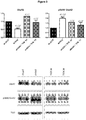
- tianeptine and TIOX both reversed the effects of CDKL5 gene silencing and therefore it is expected that these compounds (and the analogues within the scope of the present invention) would be useful in the therapy of CDKL5 disorder.
- motor performance is evaluated in separate cohorts of Cdkl5 knockout mice given tianeptine beginning at 6 weeks of age, to evaluate effects in symptomatic mice, and at 3 weeks of age, to assess effects prior to the onset of major motor impairments.
- Motor performance is assessed using a rotarod one week before (baseline) and once per week during treatment; the latter trials occur 18 hours after the preceding tianeptine injection. Results would be expected as follows: vehicle-treated Cdkl5 knockout mice exhibit substantial rotarod impairment by 6 weeks post-natal.
Landscapes
- Health & Medical Sciences (AREA)
- Chemical & Material Sciences (AREA)
- Organic Chemistry (AREA)
- Life Sciences & Earth Sciences (AREA)
- Pharmacology & Pharmacy (AREA)
- Animal Behavior & Ethology (AREA)
- General Health & Medical Sciences (AREA)
- Public Health (AREA)
- Veterinary Medicine (AREA)
- Medicinal Chemistry (AREA)
- Epidemiology (AREA)
- Engineering & Computer Science (AREA)
- Pain & Pain Management (AREA)
- Bioinformatics & Cheminformatics (AREA)
- Biomedical Technology (AREA)
- Neurology (AREA)
- Neurosurgery (AREA)
- Chemical Kinetics & Catalysis (AREA)
- General Chemical & Material Sciences (AREA)
- Nuclear Medicine, Radiotherapy & Molecular Imaging (AREA)
- Pharmaceuticals Containing Other Organic And Inorganic Compounds (AREA)
- Nitrogen- Or Sulfur-Containing Heterocyclic Ring Compounds With Rings Of Six Or More Members (AREA)
- Nitrogen And Oxygen Or Sulfur-Condensed Heterocyclic Ring Systems (AREA)
Priority Applications (5)
| Application Number | Priority Date | Filing Date | Title |
|---|---|---|---|
| HRP20201516TT HRP20201516T1 (hr) | 2015-09-28 | 2016-09-28 | Spoj tipa tricikličnih dibenzotiazepina za upotrebu u terapiji cdkl5 poremećaja |
| SI201630930T SI3356337T1 (sl) | 2015-09-28 | 2016-09-28 | Triciklične spojine vrste dibenzotiazepin za uporabo v zdravljenju motnje CDKL5 |
| RS20201141A RS60833B1 (sr) | 2015-09-28 | 2016-09-28 | Jedinjenja tipa tricikličnih dibenzotiazepina za upotrebu u terapiji cdkl5 poremećaja |
| SM20200518T SMT202000518T1 (it) | 2015-09-28 | 2016-09-28 | Composti triciclici di tipo dibenzotiazepinico per uso nella terapia del disturbo cdkl5 |
| PL16777751T PL3356337T3 (pl) | 2015-09-28 | 2016-09-28 | Tricykliczne związki typu dibenzotiazepin do stosowania w leczeniu zaburzenia związanego z cdkl5 |
Applications Claiming Priority (2)
| Application Number | Priority Date | Filing Date | Title |
|---|---|---|---|
| GBGB1517133.3A GB201517133D0 (en) | 2015-09-28 | 2015-09-28 | New pharmaceutical use |
| PCT/GB2016/053007 WO2017055834A1 (en) | 2015-09-28 | 2016-09-28 | Tricyclic dibenzothiazepine type compounds for use in the therapy of cdkl5 disorder |
Publications (2)
| Publication Number | Publication Date |
|---|---|
| EP3356337A1 EP3356337A1 (en) | 2018-08-08 |
| EP3356337B1 true EP3356337B1 (en) | 2020-06-24 |
Family
ID=54544229
Family Applications (1)
| Application Number | Title | Priority Date | Filing Date |
|---|---|---|---|
| EP16777751.5A Active EP3356337B1 (en) | 2015-09-28 | 2016-09-28 | Tricyclic dibenzothiazepine type compounds for use in the therapy of cdkl5 disorder |
Country Status (19)
| Country | Link |
|---|---|
| US (3) | US20180271876A1 (lt) |
| EP (1) | EP3356337B1 (lt) |
| JP (1) | JP6734380B2 (lt) |
| CN (1) | CN108368072B (lt) |
| AU (1) | AU2016330016B2 (lt) |
| CA (1) | CA3000070C (lt) |
| CY (1) | CY1123564T1 (lt) |
| DK (1) | DK3356337T3 (lt) |
| ES (1) | ES2825326T3 (lt) |
| GB (1) | GB201517133D0 (lt) |
| HR (1) | HRP20201516T1 (lt) |
| HU (1) | HUE051322T2 (lt) |
| LT (1) | LT3356337T (lt) |
| PL (1) | PL3356337T3 (lt) |
| PT (1) | PT3356337T (lt) |
| RS (1) | RS60833B1 (lt) |
| SI (1) | SI3356337T1 (lt) |
| SM (1) | SMT202000518T1 (lt) |
| WO (1) | WO2017055834A1 (lt) |
Families Citing this family (2)
| Publication number | Priority date | Publication date | Assignee | Title |
|---|---|---|---|---|
| CN114304068B (zh) * | 2020-09-30 | 2025-07-18 | 中国科学院脑科学与智能技术卓越创新中心 | 癫痫动物模型的制备及其应用 |
| CN116377050A (zh) * | 2022-12-16 | 2023-07-04 | 湖南家辉生物技术有限公司 | 一种发育性癫痫性脑病2型致病基因cdkl5突变位点的应用及其检测试剂和应用 |
Family Cites Families (4)
| Publication number | Priority date | Publication date | Assignee | Title |
|---|---|---|---|---|
| US6683072B1 (en) * | 2003-02-04 | 2004-01-27 | Vela Pharmaceuticals, Inc. | Compositions and methods for treatment of irritable bowel syndrome and nonulcer dyspepsia |
| US8198268B2 (en) * | 2008-10-31 | 2012-06-12 | Janssen Biotech, Inc. | Tianeptine sulfate salt forms and methods of making and using the same |
| GB201106520D0 (en) * | 2011-04-18 | 2011-06-01 | Numedicus Ltd | Pharmaceutical compounds |
| CN103420937A (zh) * | 2013-06-25 | 2013-12-04 | 陕西方舟制药有限公司 | 噻奈普汀钠的合成方法 |
-
2015
- 2015-09-28 GB GBGB1517133.3A patent/GB201517133D0/en not_active Ceased
-
2016
- 2016-09-28 DK DK16777751.5T patent/DK3356337T3/da active
- 2016-09-28 ES ES16777751T patent/ES2825326T3/es active Active
- 2016-09-28 WO PCT/GB2016/053007 patent/WO2017055834A1/en not_active Ceased
- 2016-09-28 SM SM20200518T patent/SMT202000518T1/it unknown
- 2016-09-28 AU AU2016330016A patent/AU2016330016B2/en active Active
- 2016-09-28 LT LTEP16777751.5T patent/LT3356337T/lt unknown
- 2016-09-28 RS RS20201141A patent/RS60833B1/sr unknown
- 2016-09-28 EP EP16777751.5A patent/EP3356337B1/en active Active
- 2016-09-28 PL PL16777751T patent/PL3356337T3/pl unknown
- 2016-09-28 PT PT167777515T patent/PT3356337T/pt unknown
- 2016-09-28 HU HUE16777751A patent/HUE051322T2/hu unknown
- 2016-09-28 HR HRP20201516TT patent/HRP20201516T1/hr unknown
- 2016-09-28 CA CA3000070A patent/CA3000070C/en active Active
- 2016-09-28 US US15/763,944 patent/US20180271876A1/en not_active Abandoned
- 2016-09-28 CN CN201680066450.8A patent/CN108368072B/zh not_active Expired - Fee Related
- 2016-09-28 SI SI201630930T patent/SI3356337T1/sl unknown
- 2016-09-28 JP JP2018535261A patent/JP6734380B2/ja active Active
-
2019
- 2019-05-24 US US16/422,484 patent/US20190381065A1/en not_active Abandoned
-
2020
- 2020-09-22 CY CY20201100889T patent/CY1123564T1/el unknown
-
2021
- 2021-12-10 US US17/547,729 patent/US20220265676A1/en not_active Abandoned
Non-Patent Citations (1)
| Title |
|---|
| CLAUDIA FUCHS ET AL: "Inhibition of GSK3? rescues hippocampal development and learning in a mouse model of CDKL5 disorder", NEUROBIOLOGY OF DISEASE, vol. 82, 2 July 2015 (2015-07-02), AMSTERDAM, NL, pages 298 - 310, XP055386961, ISSN: 0969-9961, DOI: 10.1016/j.nbd.2015.06.018 * |
Also Published As
| Publication number | Publication date |
|---|---|
| PT3356337T (pt) | 2020-10-19 |
| AU2016330016A1 (en) | 2018-05-10 |
| CN108368072B (zh) | 2022-02-15 |
| CA3000070C (en) | 2024-01-02 |
| US20180271876A1 (en) | 2018-09-27 |
| CN108368072A (zh) | 2018-08-03 |
| DK3356337T3 (en) | 2020-09-28 |
| CA3000070A1 (en) | 2017-04-06 |
| LT3356337T (lt) | 2020-10-12 |
| EP3356337A1 (en) | 2018-08-08 |
| GB201517133D0 (en) | 2015-11-11 |
| HRP20201516T1 (hr) | 2020-12-11 |
| US20190381065A1 (en) | 2019-12-19 |
| WO2017055834A1 (en) | 2017-04-06 |
| ES2825326T3 (es) | 2021-05-17 |
| RS60833B1 (sr) | 2020-10-30 |
| HUE051322T2 (hu) | 2021-03-01 |
| PL3356337T3 (pl) | 2021-02-08 |
| SI3356337T1 (sl) | 2021-02-26 |
| JP6734380B2 (ja) | 2020-08-05 |
| US20220265676A1 (en) | 2022-08-25 |
| SMT202000518T1 (it) | 2020-11-10 |
| AU2016330016B2 (en) | 2020-05-28 |
| CY1123564T1 (el) | 2022-03-24 |
| JP2018534350A (ja) | 2018-11-22 |
Similar Documents
| Publication | Publication Date | Title |
|---|---|---|
| JP7537675B2 (ja) | 外傷後ストレス障害の治療用の製剤 | |
| EP3246031B1 (en) | Method for treating neurocognitive dysfunction | |
| NO334233B1 (no) | Farmasøytisk sammensetning omfattende milnacipran for behandling av irritabel tarmsyndrom | |
| WO2007093624A2 (en) | Pharmaceutical compositions for the treatment of attention deficit hyperactivity disorder comprising flibanserin | |
| US20050227961A1 (en) | Compositions and methods for treatment of neuropathic pain, fibromyalgia and chronic fatigue syndrome | |
| US20220265676A1 (en) | Tricyclic dibenzothiazepine type compounds for use in the therapy of cdkl5 disorder | |
| WO1987001036A1 (en) | Anticonvulsant compositions and method | |
| US6683072B1 (en) | Compositions and methods for treatment of irritable bowel syndrome and nonulcer dyspepsia | |
| RU2193404C2 (ru) | Применение левовращающих энантиомеров производных медетомидина | |
| JP2005522445A (ja) | 注意欠陥過活動性障害(ad/hd)の処置方法 | |
| US20040229867A1 (en) | Treatment of gastrointestinal dysfunction and related stress with an enantiomerically-pure (R) 2,3-benzodiazepine | |
| JPH09500375A (ja) | パーキンソン病の治療を目的とする医薬品の製造のためのエファロキサンおよびその誘導体の使用 | |
| US20240277728A1 (en) | Formulations for treatment of post-traumatic stress disorder | |
| EP1755614A1 (en) | Compositions and methods for treatment of neuropathic pain, fibromyalgia and chronic fatigue syndrome |
Legal Events
| Date | Code | Title | Description |
|---|---|---|---|
| STAA | Information on the status of an ep patent application or granted ep patent |
Free format text: STATUS: THE INTERNATIONAL PUBLICATION HAS BEEN MADE |
|
| PUAI | Public reference made under article 153(3) epc to a published international application that has entered the european phase |
Free format text: ORIGINAL CODE: 0009012 |
|
| STAA | Information on the status of an ep patent application or granted ep patent |
Free format text: STATUS: REQUEST FOR EXAMINATION WAS MADE |
|
| 17P | Request for examination filed |
Effective date: 20180418 |
|
| AK | Designated contracting states |
Kind code of ref document: A1 Designated state(s): AL AT BE BG CH CY CZ DE DK EE ES FI FR GB GR HR HU IE IS IT LI LT LU LV MC MK MT NL NO PL PT RO RS SE SI SK SM TR |
|
| AX | Request for extension of the european patent |
Extension state: BA ME |
|
| DAV | Request for validation of the european patent (deleted) | ||
| DAX | Request for extension of the european patent (deleted) | ||
| REG | Reference to a national code |
Ref country code: DE Ref legal event code: R079 Ref document number: 602016038775 Country of ref document: DE Free format text: PREVIOUS MAIN CLASS: C07D0281140000 Ipc: A61K0031554000 |
|
| RIC1 | Information provided on ipc code assigned before grant |
Ipc: A61K 31/554 20060101ALI20191218BHEP Ipc: C07D 281/14 20060101ALI20191218BHEP Ipc: A61P 25/08 20060101AFI20191218BHEP |
|
| GRAP | Despatch of communication of intention to grant a patent |
Free format text: ORIGINAL CODE: EPIDOSNIGR1 |
|
| STAA | Information on the status of an ep patent application or granted ep patent |
Free format text: STATUS: GRANT OF PATENT IS INTENDED |
|
| INTG | Intention to grant announced |
Effective date: 20200124 |
|
| RIC1 | Information provided on ipc code assigned before grant |
Ipc: A61K 31/554 20060101AFI20200113BHEP Ipc: A61P 25/08 20060101ALI20200113BHEP |
|
| GRAS | Grant fee paid |
Free format text: ORIGINAL CODE: EPIDOSNIGR3 |
|
| GRAA | (expected) grant |
Free format text: ORIGINAL CODE: 0009210 |
|
| STAA | Information on the status of an ep patent application or granted ep patent |
Free format text: STATUS: THE PATENT HAS BEEN GRANTED |
|
| AK | Designated contracting states |
Kind code of ref document: B1 Designated state(s): AL AT BE BG CH CY CZ DE DK EE ES FI FR GB GR HR HU IE IS IT LI LT LU LV MC MK MT NL NO PL PT RO RS SE SI SK SM TR |
|
| REG | Reference to a national code |
Ref country code: GB Ref legal event code: FG4D |
|
| REG | Reference to a national code |
Ref country code: CH Ref legal event code: EP |
|
| REG | Reference to a national code |
Ref country code: AT Ref legal event code: REF Ref document number: 1283214 Country of ref document: AT Kind code of ref document: T Effective date: 20200715 |
|
| REG | Reference to a national code |
Ref country code: DE Ref legal event code: R096 Ref document number: 602016038775 Country of ref document: DE |
|
| REG | Reference to a national code |
Ref country code: IE Ref legal event code: FG4D |
|
| REG | Reference to a national code |
Ref country code: HR Ref legal event code: TUEP Ref document number: P20201516 Country of ref document: HR |
|
| REG | Reference to a national code |
Ref country code: FI Ref legal event code: FGE |
|
| REG | Reference to a national code |
Ref country code: DK Ref legal event code: T3 Effective date: 20200924 |
|
| REG | Reference to a national code |
Ref country code: CH Ref legal event code: NV Representative=s name: ISLER AND PEDRAZZINI AG, CH |
|
| REG | Reference to a national code |
Ref country code: NL Ref legal event code: FP |
|
| REG | Reference to a national code |
Ref country code: SE Ref legal event code: TRGR |
|
| REG | Reference to a national code |
Ref country code: PT Ref legal event code: SC4A Ref document number: 3356337 Country of ref document: PT Date of ref document: 20201019 Kind code of ref document: T Free format text: AVAILABILITY OF NATIONAL TRANSLATION Effective date: 20201012 |
|
| REG | Reference to a national code |
Ref country code: EE Ref legal event code: FG4A Ref document number: E019693 Country of ref document: EE Effective date: 20200922 Ref country code: NO Ref legal event code: T2 Effective date: 20200624 |
|
| REG | Reference to a national code |
Ref country code: HR Ref legal event code: ODRP Ref document number: P20201516 Country of ref document: HR Payment date: 20200928 Year of fee payment: 5 |
|
| REG | Reference to a national code |
Ref country code: SK Ref legal event code: T3 Ref document number: E 35325 Country of ref document: SK |
|
| REG | Reference to a national code |
Ref country code: HR Ref legal event code: T1PR Ref document number: P20201516 Country of ref document: HR |
|
| REG | Reference to a national code |
Ref country code: GR Ref legal event code: EP Ref document number: 20200402629 Country of ref document: GR Effective date: 20201116 |
|
| REG | Reference to a national code |
Ref country code: HU Ref legal event code: AG4A Ref document number: E051322 Country of ref document: HU |
|
| REG | Reference to a national code |
Ref country code: DE Ref legal event code: R097 Ref document number: 602016038775 Country of ref document: DE |
|
| PLBE | No opposition filed within time limit |
Free format text: ORIGINAL CODE: 0009261 |
|
| STAA | Information on the status of an ep patent application or granted ep patent |
Free format text: STATUS: NO OPPOSITION FILED WITHIN TIME LIMIT |
|
| REG | Reference to a national code |
Ref country code: ES Ref legal event code: FG2A Ref document number: 2825326 Country of ref document: ES Kind code of ref document: T3 Effective date: 20210517 |
|
| 26N | No opposition filed |
Effective date: 20210325 |
|
| REG | Reference to a national code |
Ref country code: AT Ref legal event code: UEP Ref document number: 1283214 Country of ref document: AT Kind code of ref document: T Effective date: 20200624 |
|
| REG | Reference to a national code |
Ref country code: HR Ref legal event code: ODRP Ref document number: P20201516 Country of ref document: HR Payment date: 20210917 Year of fee payment: 6 |
|
| PGFP | Annual fee paid to national office [announced via postgrant information from national office to epo] |
Ref country code: IT Payment date: 20210920 Year of fee payment: 6 Ref country code: LU Payment date: 20210913 Year of fee payment: 6 Ref country code: SM Payment date: 20210922 Year of fee payment: 6 Ref country code: MC Payment date: 20210908 Year of fee payment: 6 Ref country code: NL Payment date: 20210913 Year of fee payment: 6 Ref country code: CH Payment date: 20210914 Year of fee payment: 6 Ref country code: AT Payment date: 20210907 Year of fee payment: 6 Ref country code: BG Payment date: 20210921 Year of fee payment: 6 Ref country code: FI Payment date: 20210907 Year of fee payment: 6 Ref country code: EE Payment date: 20210921 Year of fee payment: 6 Ref country code: FR Payment date: 20210909 Year of fee payment: 6 Ref country code: HR Payment date: 20210917 Year of fee payment: 6 Ref country code: IE Payment date: 20210907 Year of fee payment: 6 |
|
| PGFP | Annual fee paid to national office [announced via postgrant information from national office to epo] |
Ref country code: SE Payment date: 20210916 Year of fee payment: 6 Ref country code: RS Payment date: 20210916 Year of fee payment: 6 Ref country code: TR Payment date: 20210917 Year of fee payment: 6 Ref country code: SI Payment date: 20210916 Year of fee payment: 6 Ref country code: SK Payment date: 20210913 Year of fee payment: 6 Ref country code: RO Payment date: 20210920 Year of fee payment: 6 Ref country code: DE Payment date: 20210917 Year of fee payment: 6 Ref country code: DK Payment date: 20210917 Year of fee payment: 6 Ref country code: BE Payment date: 20210913 Year of fee payment: 6 Ref country code: GR Payment date: 20210921 Year of fee payment: 6 Ref country code: LV Payment date: 20210920 Year of fee payment: 6 Ref country code: IS Payment date: 20210921 Year of fee payment: 6 Ref country code: HU Payment date: 20210908 Year of fee payment: 6 Ref country code: PL Payment date: 20210915 Year of fee payment: 6 Ref country code: NO Payment date: 20210907 Year of fee payment: 6 |
|
| PGFP | Annual fee paid to national office [announced via postgrant information from national office to epo] |
Ref country code: MK Payment date: 20210927 Year of fee payment: 6 Ref country code: PT Payment date: 20210916 Year of fee payment: 6 |
|
| PGFP | Annual fee paid to national office [announced via postgrant information from national office to epo] |
Ref country code: CZ Payment date: 20210929 Year of fee payment: 6 Ref country code: CY Payment date: 20210917 Year of fee payment: 6 Ref country code: ES Payment date: 20211015 Year of fee payment: 6 |
|
| PGFP | Annual fee paid to national office [announced via postgrant information from national office to epo] |
Ref country code: MT Payment date: 20210922 Year of fee payment: 6 |
|
| REG | Reference to a national code |
Ref country code: GB Ref legal event code: 732E Free format text: REGISTERED BETWEEN 20220407 AND 20220413 |
|
| PGFP | Annual fee paid to national office [announced via postgrant information from national office to epo] |
Ref country code: AL Payment date: 20210930 Year of fee payment: 6 |
|
| REG | Reference to a national code |
Ref country code: DE Ref legal event code: R119 Ref document number: 602016038775 Country of ref document: DE |
|
| REG | Reference to a national code |
Ref country code: HR Ref legal event code: PBON Ref document number: P20201516 Country of ref document: HR Effective date: 20220928 |
|
| REG | Reference to a national code |
Ref country code: EE Ref legal event code: MM4A Ref document number: E019693 Country of ref document: EE Effective date: 20220930 |
|
| REG | Reference to a national code |
Ref country code: NO Ref legal event code: MMEP |
|
| REG | Reference to a national code |
Ref country code: LT Ref legal event code: MM4D Effective date: 20220928 |
|
| PG25 | Lapsed in a contracting state [announced via postgrant information from national office to epo] |
Ref country code: PT Free format text: LAPSE BECAUSE OF NON-PAYMENT OF DUE FEES Effective date: 20230328 Ref country code: MC Free format text: LAPSE BECAUSE OF NON-PAYMENT OF DUE FEES Effective date: 20220930 Ref country code: FI Free format text: LAPSE BECAUSE OF NON-PAYMENT OF DUE FEES Effective date: 20220928 Ref country code: CZ Free format text: LAPSE BECAUSE OF NON-PAYMENT OF DUE FEES Effective date: 20220928 Ref country code: RO Free format text: LAPSE BECAUSE OF NON-PAYMENT OF DUE FEES Effective date: 20220928 |
|
| PGFP | Annual fee paid to national office [announced via postgrant information from national office to epo] |
Ref country code: LT Payment date: 20210917 Year of fee payment: 6 |
|
| REG | Reference to a national code |
Ref country code: CH Ref legal event code: PL |
|
| REG | Reference to a national code |
Ref country code: DK Ref legal event code: EBP Effective date: 20220930 |
|
| REG | Reference to a national code |
Ref country code: SE Ref legal event code: EUG |
|
| REG | Reference to a national code |
Ref country code: NL Ref legal event code: MM Effective date: 20221001 |
|
| REG | Reference to a national code |
Ref country code: AT Ref legal event code: MM01 Ref document number: 1283214 Country of ref document: AT Kind code of ref document: T Effective date: 20220928 |
|
| REG | Reference to a national code |
Ref country code: BE Ref legal event code: MM Effective date: 20220930 |
|
| PG25 | Lapsed in a contracting state [announced via postgrant information from national office to epo] |
Ref country code: LV Free format text: LAPSE BECAUSE OF NON-PAYMENT OF DUE FEES Effective date: 20220928 Ref country code: CY Free format text: LAPSE BECAUSE OF NON-PAYMENT OF DUE FEES Effective date: 20220928 |
|
| REG | Reference to a national code |
Ref country code: SK Ref legal event code: MM4A Ref document number: E 35325 Country of ref document: SK Effective date: 20220928 |
|
| PG25 | Lapsed in a contracting state [announced via postgrant information from national office to epo] |
Ref country code: NL Free format text: LAPSE BECAUSE OF NON-PAYMENT OF DUE FEES Effective date: 20221001 Ref country code: LU Free format text: LAPSE BECAUSE OF NON-PAYMENT OF DUE FEES Effective date: 20220928 |
|
| REG | Reference to a national code |
Ref country code: SI Ref legal event code: KO00 Effective date: 20230517 |
|
| P01 | Opt-out of the competence of the unified patent court (upc) registered |
Effective date: 20230528 |
|
| PG25 | Lapsed in a contracting state [announced via postgrant information from national office to epo] |
Ref country code: SM Free format text: LAPSE BECAUSE OF NON-PAYMENT OF DUE FEES Effective date: 20230425 Ref country code: RS Free format text: LAPSE BECAUSE OF NON-PAYMENT OF DUE FEES Effective date: 20220928 Ref country code: NO Free format text: LAPSE BECAUSE OF NON-PAYMENT OF DUE FEES Effective date: 20220930 Ref country code: LT Free format text: LAPSE BECAUSE OF NON-PAYMENT OF DUE FEES Effective date: 20220928 Ref country code: LI Free format text: LAPSE BECAUSE OF NON-PAYMENT OF DUE FEES Effective date: 20220930 Ref country code: IE Free format text: LAPSE BECAUSE OF NON-PAYMENT OF DUE FEES Effective date: 20220928 Ref country code: HU Free format text: LAPSE BECAUSE OF NON-PAYMENT OF DUE FEES Effective date: 20220929 Ref country code: HR Free format text: LAPSE BECAUSE OF NON-PAYMENT OF DUE FEES Effective date: 20220928 Ref country code: FR Free format text: LAPSE BECAUSE OF NON-PAYMENT OF DUE FEES Effective date: 20220930 Ref country code: EE Free format text: LAPSE BECAUSE OF NON-PAYMENT OF DUE FEES Effective date: 20220930 Ref country code: DE Free format text: LAPSE BECAUSE OF NON-PAYMENT OF DUE FEES Effective date: 20230401 Ref country code: CH Free format text: LAPSE BECAUSE OF NON-PAYMENT OF DUE FEES Effective date: 20220930 Ref country code: AT Free format text: LAPSE BECAUSE OF NON-PAYMENT OF DUE FEES Effective date: 20220928 |
|
| PG25 | Lapsed in a contracting state [announced via postgrant information from national office to epo] |
Ref country code: SK Free format text: LAPSE BECAUSE OF NON-PAYMENT OF DUE FEES Effective date: 20220928 Ref country code: SI Free format text: LAPSE BECAUSE OF NON-PAYMENT OF DUE FEES Effective date: 20220929 Ref country code: SE Free format text: LAPSE BECAUSE OF NON-PAYMENT OF DUE FEES Effective date: 20220929 Ref country code: GR Free format text: LAPSE BECAUSE OF NON-PAYMENT OF DUE FEES Effective date: 20230406 |
|
| PG25 | Lapsed in a contracting state [announced via postgrant information from national office to epo] |
Ref country code: BE Free format text: LAPSE BECAUSE OF NON-PAYMENT OF DUE FEES Effective date: 20220930 |
|
| PG25 | Lapsed in a contracting state [announced via postgrant information from national office to epo] |
Ref country code: IT Free format text: LAPSE BECAUSE OF NON-PAYMENT OF DUE FEES Effective date: 20220928 Ref country code: DK Free format text: LAPSE BECAUSE OF NON-PAYMENT OF DUE FEES Effective date: 20220930 |
|
| REG | Reference to a national code |
Ref country code: ES Ref legal event code: FD2A Effective date: 20231031 |
|
| PG25 | Lapsed in a contracting state [announced via postgrant information from national office to epo] |
Ref country code: ES Free format text: LAPSE BECAUSE OF NON-PAYMENT OF DUE FEES Effective date: 20220929 |
|
| PG25 | Lapsed in a contracting state [announced via postgrant information from national office to epo] |
Ref country code: ES Free format text: LAPSE BECAUSE OF NON-PAYMENT OF DUE FEES Effective date: 20220929 |
|
| PG25 | Lapsed in a contracting state [announced via postgrant information from national office to epo] |
Ref country code: PL Free format text: LAPSE BECAUSE OF NON-PAYMENT OF DUE FEES Effective date: 20220928 |
|
| PG25 | Lapsed in a contracting state [announced via postgrant information from national office to epo] |
Ref country code: BG Free format text: LAPSE BECAUSE OF NON-PAYMENT OF DUE FEES Effective date: 20220928 |
|
| PG25 | Lapsed in a contracting state [announced via postgrant information from national office to epo] |
Ref country code: MT Free format text: LAPSE BECAUSE OF FAILURE TO SUBMIT A TRANSLATION OF THE DESCRIPTION OR TO PAY THE FEE WITHIN THE PRESCRIBED TIME-LIMIT Effective date: 20200624 |
|
| PGFP | Annual fee paid to national office [announced via postgrant information from national office to epo] |
Ref country code: GB Payment date: 20240926 Year of fee payment: 9 |
|
| PG25 | Lapsed in a contracting state [announced via postgrant information from national office to epo] |
Ref country code: IS Free format text: LAPSE BECAUSE OF NON-PAYMENT OF DUE FEES Effective date: 20230403 |