EP3340344B1 - Method for manufacturing a lithium secondary battery separator - Google Patents
Method for manufacturing a lithium secondary battery separator Download PDFInfo
- Publication number
- EP3340344B1 EP3340344B1 EP17806988.6A EP17806988A EP3340344B1 EP 3340344 B1 EP3340344 B1 EP 3340344B1 EP 17806988 A EP17806988 A EP 17806988A EP 3340344 B1 EP3340344 B1 EP 3340344B1
- Authority
- EP
- European Patent Office
- Prior art keywords
- gas
- polar functional
- lithium
- mixture
- porous resin
- Prior art date
- Legal status (The legal status is an assumption and is not a legal conclusion. Google has not performed a legal analysis and makes no representation as to the accuracy of the status listed.)
- Active
Links
Images


Classifications
-
- H—ELECTRICITY
- H01—ELECTRIC ELEMENTS
- H01M—PROCESSES OR MEANS, e.g. BATTERIES, FOR THE DIRECT CONVERSION OF CHEMICAL ENERGY INTO ELECTRICAL ENERGY
- H01M4/00—Electrodes
- H01M4/02—Electrodes composed of, or comprising, active material
- H01M4/36—Selection of substances as active materials, active masses, active liquids
- H01M4/38—Selection of substances as active materials, active masses, active liquids of elements or alloys
- H01M4/381—Alkaline or alkaline earth metals elements
- H01M4/382—Lithium
-
- H—ELECTRICITY
- H01—ELECTRIC ELEMENTS
- H01M—PROCESSES OR MEANS, e.g. BATTERIES, FOR THE DIRECT CONVERSION OF CHEMICAL ENERGY INTO ELECTRICAL ENERGY
- H01M50/00—Constructional details or processes of manufacture of the non-active parts of electrochemical cells other than fuel cells, e.g. hybrid cells
- H01M50/40—Separators; Membranes; Diaphragms; Spacing elements inside cells
- H01M50/409—Separators, membranes or diaphragms characterised by the material
- H01M50/411—Organic material
- H01M50/414—Synthetic resins, e.g. thermoplastics or thermosetting resins
-
- B—PERFORMING OPERATIONS; TRANSPORTING
- B32—LAYERED PRODUCTS
- B32B—LAYERED PRODUCTS, i.e. PRODUCTS BUILT-UP OF STRATA OF FLAT OR NON-FLAT, e.g. CELLULAR OR HONEYCOMB, FORM
- B32B27/00—Layered products comprising a layer of synthetic resin
-
- C—CHEMISTRY; METALLURGY
- C08—ORGANIC MACROMOLECULAR COMPOUNDS; THEIR PREPARATION OR CHEMICAL WORKING-UP; COMPOSITIONS BASED THEREON
- C08J—WORKING-UP; GENERAL PROCESSES OF COMPOUNDING; AFTER-TREATMENT NOT COVERED BY SUBCLASSES C08B, C08C, C08F, C08G or C08H
- C08J7/00—Chemical treatment or coating of shaped articles made of macromolecular substances
- C08J7/12—Chemical modification
-
- C—CHEMISTRY; METALLURGY
- C08—ORGANIC MACROMOLECULAR COMPOUNDS; THEIR PREPARATION OR CHEMICAL WORKING-UP; COMPOSITIONS BASED THEREON
- C08J—WORKING-UP; GENERAL PROCESSES OF COMPOUNDING; AFTER-TREATMENT NOT COVERED BY SUBCLASSES C08B, C08C, C08F, C08G or C08H
- C08J7/00—Chemical treatment or coating of shaped articles made of macromolecular substances
- C08J7/12—Chemical modification
- C08J7/126—Halogenation
-
- H—ELECTRICITY
- H01—ELECTRIC ELEMENTS
- H01M—PROCESSES OR MEANS, e.g. BATTERIES, FOR THE DIRECT CONVERSION OF CHEMICAL ENERGY INTO ELECTRICAL ENERGY
- H01M10/00—Secondary cells; Manufacture thereof
- H01M10/05—Accumulators with non-aqueous electrolyte
- H01M10/052—Li-accumulators
-
- H—ELECTRICITY
- H01—ELECTRIC ELEMENTS
- H01M—PROCESSES OR MEANS, e.g. BATTERIES, FOR THE DIRECT CONVERSION OF CHEMICAL ENERGY INTO ELECTRICAL ENERGY
- H01M10/00—Secondary cells; Manufacture thereof
- H01M10/05—Accumulators with non-aqueous electrolyte
- H01M10/052—Li-accumulators
- H01M10/0525—Rocking-chair batteries, i.e. batteries with lithium insertion or intercalation in both electrodes; Lithium-ion batteries
-
- H—ELECTRICITY
- H01—ELECTRIC ELEMENTS
- H01M—PROCESSES OR MEANS, e.g. BATTERIES, FOR THE DIRECT CONVERSION OF CHEMICAL ENERGY INTO ELECTRICAL ENERGY
- H01M10/00—Secondary cells; Manufacture thereof
- H01M10/42—Methods or arrangements for servicing or maintenance of secondary cells or secondary half-cells
- H01M10/4235—Safety or regulating additives or arrangements in electrodes, separators or electrolyte
-
- H—ELECTRICITY
- H01—ELECTRIC ELEMENTS
- H01M—PROCESSES OR MEANS, e.g. BATTERIES, FOR THE DIRECT CONVERSION OF CHEMICAL ENERGY INTO ELECTRICAL ENERGY
- H01M4/00—Electrodes
- H01M4/02—Electrodes composed of, or comprising, active material
- H01M4/13—Electrodes for accumulators with non-aqueous electrolyte, e.g. for lithium-accumulators; Processes of manufacture thereof
- H01M4/134—Electrodes based on metals, Si or alloys
-
- H—ELECTRICITY
- H01—ELECTRIC ELEMENTS
- H01M—PROCESSES OR MEANS, e.g. BATTERIES, FOR THE DIRECT CONVERSION OF CHEMICAL ENERGY INTO ELECTRICAL ENERGY
- H01M4/00—Electrodes
- H01M4/02—Electrodes composed of, or comprising, active material
- H01M4/36—Selection of substances as active materials, active masses, active liquids
- H01M4/362—Composites
- H01M4/366—Composites as layered products
-
- H—ELECTRICITY
- H01—ELECTRIC ELEMENTS
- H01M—PROCESSES OR MEANS, e.g. BATTERIES, FOR THE DIRECT CONVERSION OF CHEMICAL ENERGY INTO ELECTRICAL ENERGY
- H01M4/00—Electrodes
- H01M4/02—Electrodes composed of, or comprising, active material
- H01M4/62—Selection of inactive substances as ingredients for active masses, e.g. binders, fillers
- H01M4/628—Inhibitors, e.g. gassing inhibitors, corrosion inhibitors
-
- H—ELECTRICITY
- H01—ELECTRIC ELEMENTS
- H01M—PROCESSES OR MEANS, e.g. BATTERIES, FOR THE DIRECT CONVERSION OF CHEMICAL ENERGY INTO ELECTRICAL ENERGY
- H01M50/00—Constructional details or processes of manufacture of the non-active parts of electrochemical cells other than fuel cells, e.g. hybrid cells
- H01M50/40—Separators; Membranes; Diaphragms; Spacing elements inside cells
- H01M50/403—Manufacturing processes of separators, membranes or diaphragms
-
- H—ELECTRICITY
- H01—ELECTRIC ELEMENTS
- H01M—PROCESSES OR MEANS, e.g. BATTERIES, FOR THE DIRECT CONVERSION OF CHEMICAL ENERGY INTO ELECTRICAL ENERGY
- H01M50/00—Constructional details or processes of manufacture of the non-active parts of electrochemical cells other than fuel cells, e.g. hybrid cells
- H01M50/40—Separators; Membranes; Diaphragms; Spacing elements inside cells
- H01M50/409—Separators, membranes or diaphragms characterised by the material
- H01M50/411—Organic material
- H01M50/414—Synthetic resins, e.g. thermoplastics or thermosetting resins
- H01M50/417—Polyolefins
-
- H—ELECTRICITY
- H01—ELECTRIC ELEMENTS
- H01M—PROCESSES OR MEANS, e.g. BATTERIES, FOR THE DIRECT CONVERSION OF CHEMICAL ENERGY INTO ELECTRICAL ENERGY
- H01M50/00—Constructional details or processes of manufacture of the non-active parts of electrochemical cells other than fuel cells, e.g. hybrid cells
- H01M50/40—Separators; Membranes; Diaphragms; Spacing elements inside cells
- H01M50/409—Separators, membranes or diaphragms characterised by the material
- H01M50/411—Organic material
- H01M50/414—Synthetic resins, e.g. thermoplastics or thermosetting resins
- H01M50/423—Polyamide resins
-
- H—ELECTRICITY
- H01—ELECTRIC ELEMENTS
- H01M—PROCESSES OR MEANS, e.g. BATTERIES, FOR THE DIRECT CONVERSION OF CHEMICAL ENERGY INTO ELECTRICAL ENERGY
- H01M50/00—Constructional details or processes of manufacture of the non-active parts of electrochemical cells other than fuel cells, e.g. hybrid cells
- H01M50/40—Separators; Membranes; Diaphragms; Spacing elements inside cells
- H01M50/409—Separators, membranes or diaphragms characterised by the material
- H01M50/431—Inorganic material
-
- H—ELECTRICITY
- H01—ELECTRIC ELEMENTS
- H01M—PROCESSES OR MEANS, e.g. BATTERIES, FOR THE DIRECT CONVERSION OF CHEMICAL ENERGY INTO ELECTRICAL ENERGY
- H01M50/00—Constructional details or processes of manufacture of the non-active parts of electrochemical cells other than fuel cells, e.g. hybrid cells
- H01M50/40—Separators; Membranes; Diaphragms; Spacing elements inside cells
- H01M50/46—Separators, membranes or diaphragms characterised by their combination with electrodes
-
- H—ELECTRICITY
- H01—ELECTRIC ELEMENTS
- H01M—PROCESSES OR MEANS, e.g. BATTERIES, FOR THE DIRECT CONVERSION OF CHEMICAL ENERGY INTO ELECTRICAL ENERGY
- H01M50/00—Constructional details or processes of manufacture of the non-active parts of electrochemical cells other than fuel cells, e.g. hybrid cells
- H01M50/40—Separators; Membranes; Diaphragms; Spacing elements inside cells
- H01M50/463—Separators, membranes or diaphragms characterised by their shape
-
- H—ELECTRICITY
- H01—ELECTRIC ELEMENTS
- H01M—PROCESSES OR MEANS, e.g. BATTERIES, FOR THE DIRECT CONVERSION OF CHEMICAL ENERGY INTO ELECTRICAL ENERGY
- H01M50/00—Constructional details or processes of manufacture of the non-active parts of electrochemical cells other than fuel cells, e.g. hybrid cells
- H01M50/40—Separators; Membranes; Diaphragms; Spacing elements inside cells
- H01M50/489—Separators, membranes, diaphragms or spacing elements inside the cells, characterised by their physical properties, e.g. swelling degree, hydrophilicity or shut down properties
- H01M50/491—Porosity
-
- C—CHEMISTRY; METALLURGY
- C08—ORGANIC MACROMOLECULAR COMPOUNDS; THEIR PREPARATION OR CHEMICAL WORKING-UP; COMPOSITIONS BASED THEREON
- C08J—WORKING-UP; GENERAL PROCESSES OF COMPOUNDING; AFTER-TREATMENT NOT COVERED BY SUBCLASSES C08B, C08C, C08F, C08G or C08H
- C08J2323/00—Characterised by the use of homopolymers or copolymers of unsaturated aliphatic hydrocarbons having only one carbon-to-carbon double bond; Derivatives of such polymers
- C08J2323/02—Characterised by the use of homopolymers or copolymers of unsaturated aliphatic hydrocarbons having only one carbon-to-carbon double bond; Derivatives of such polymers not modified by chemical after treatment
- C08J2323/10—Homopolymers or copolymers of propene
- C08J2323/12—Polypropene
-
- H—ELECTRICITY
- H01—ELECTRIC ELEMENTS
- H01M—PROCESSES OR MEANS, e.g. BATTERIES, FOR THE DIRECT CONVERSION OF CHEMICAL ENERGY INTO ELECTRICAL ENERGY
- H01M4/00—Electrodes
- H01M4/02—Electrodes composed of, or comprising, active material
- H01M2004/026—Electrodes composed of, or comprising, active material characterised by the polarity
- H01M2004/027—Negative electrodes
-
- Y—GENERAL TAGGING OF NEW TECHNOLOGICAL DEVELOPMENTS; GENERAL TAGGING OF CROSS-SECTIONAL TECHNOLOGIES SPANNING OVER SEVERAL SECTIONS OF THE IPC; TECHNICAL SUBJECTS COVERED BY FORMER USPC CROSS-REFERENCE ART COLLECTIONS [XRACs] AND DIGESTS
- Y02—TECHNOLOGIES OR APPLICATIONS FOR MITIGATION OR ADAPTATION AGAINST CLIMATE CHANGE
- Y02E—REDUCTION OF GREENHOUSE GAS [GHG] EMISSIONS, RELATED TO ENERGY GENERATION, TRANSMISSION OR DISTRIBUTION
- Y02E60/00—Enabling technologies; Technologies with a potential or indirect contribution to GHG emissions mitigation
- Y02E60/10—Energy storage using batteries
-
- Y—GENERAL TAGGING OF NEW TECHNOLOGICAL DEVELOPMENTS; GENERAL TAGGING OF CROSS-SECTIONAL TECHNOLOGIES SPANNING OVER SEVERAL SECTIONS OF THE IPC; TECHNICAL SUBJECTS COVERED BY FORMER USPC CROSS-REFERENCE ART COLLECTIONS [XRACs] AND DIGESTS
- Y02—TECHNOLOGIES OR APPLICATIONS FOR MITIGATION OR ADAPTATION AGAINST CLIMATE CHANGE
- Y02P—CLIMATE CHANGE MITIGATION TECHNOLOGIES IN THE PRODUCTION OR PROCESSING OF GOODS
- Y02P70/00—Climate change mitigation technologies in the production process for final industrial or consumer products
- Y02P70/50—Manufacturing or production processes characterised by the final manufactured product
Definitions
- the present invention relates to a method of manufacturing a separator for a lithium secondary battery.
- lithium secondary batteries which have high energy density and operating voltage, a long cycle lifespan, and a low self-discharge rate are commercially available and widely used.
- EVs electric vehicles
- HEVs hybrid EVs
- fossil fuels such as gasoline vehicles, diesel vehicles, and the like, which are one of the main causes of air pollution
- Ni-MH secondary batteries As power sources of these EVs, HEVs, and the like, nickel-metal hydride (Ni-MH) secondary batteries or lithium secondary batteries which have high energy density, high discharge voltage, and high power output stability are used.
- Ni-MH secondary batteries nickel-metal hydride (Ni-MH) secondary batteries or lithium secondary batteries which have high energy density, high discharge voltage, and high power output stability are used.
- a lithium secondary battery In a case in which a lithium secondary battery is used in EVs, long-term use for 10 years or more under harsh conditions, in addition to high energy density and high power output in a short time, are required, and thus much higher energy density and safety and superior long-term lifespan characteristics than those of existing small lithium secondary batteries are necessarily required.
- a lithium secondary battery is generally manufactured by assembling a negative electrode, a positive electrode, and a separator between the negative electrode and the positive electrode.
- a positive electrode active material constituting a positive electrode may be a metal oxide such as LiCoO 2 , LiMnO 2 , LiMn 2 O 4 , or LiCrO 2
- a negative electrode active material constituting a negative electrode may be a carbon-based material such as metal lithium, graphite, activated carbon, or the like, or a material such as silicon oxide (SiO x ) or the like.
- a negative electrode of a lithium secondary battery is formed of lithium metal, a carbon-based compound capable of reversibly intercalating and deintercalating lithium ions, or the like.
- lithium metal when lithium metal is used, a phenomenon, in which lithium atoms are grown on a surface of the metal lithium as cycles of charging and discharging proceed, and thus a separator is damaged, resulting in breakdown of a battery, more frequently occurs.
- EP 0 743 690 A1 discloses a battery separator produced by a method comprising contacting a non-woven fabric or film of a synthetic resin with a gas mixture comprising fluorine and oxygen.
- JP 09124813 A discloses a hydrophilic polyolefin-based porous material for use in a battery separator, the hydrophilic material being produced by a method comprising contacting a polyolefin-based porous material with a mixed gas comprising fluorine, oxygen and nitrogen, and subsequently dipping the material in a hot alkaline solution.
- US 5,484,651 A discloses a fluorine-containing polyolefin fiber non-woven fabric produced by a method comprising treating the surfaces of polyolefin fibers with a mixed gas comprising fluorine and oxygen.
- EP 2 079 119 A1 discloses a separator produced by a method comprising contacting a polyolefin resin with fluorine gas.
- KR 2004 0067620 A discloses a method of treating a polyolefin film comprising contacting the film with a mixed gas comprising fluorine and oxygen.
- the present invention provides a method of manufacturing a separator for a lithium secondary battery, the separator being capable of preventing the formation of dendrite lithium at a negative electrode, such that the stability of a lithium secondary battery may be enhanced.
- the present invention provides a method of manufacturing a separator for a lithium secondary battery, comprising (1) preparing a gas mixture by mixing N 2 gas or O 2 gas or a mixture thereof with F 2 gas, and (2) bringing the gas mixture into contact with a porous resin to form a polar functional group on a surface of the porous resin, wherein the pressure ratio of the F 2 gas to the N 2 gas or the O 2 gas or the mixture thereof in the preparing step is in the range from 7.5:2.5 to 9.4:0.6.
- a separator for a lithium secondary battery produced by a method according to the present invention includes a porous resin comprising a polar functional group on a surface thereof, and the polar functional group forms an insoluble lithium salt layer on a surface of a negative electrode, thereby inhibiting the formation of dendrite lithium on the surface of the negative electrode, whereby lifespan characteristics and safety of a lithium secondary battery including the separator can be enhanced.
- the polar functional group may be reduced or electrochemically carbonized around about 0.9 V to about 1.5 V (vs. Li/Li + ), thereby forming an insoluble lithium salt layer (inorganic protective film).
- the formation of dendrite lithium on the surface of the negative electrode may be suppressed.
- a lithium secondary battery comprises lithium metal as the negative electrode
- the formation of dendrite lithium may be suppressed.
- the content of the polar functional group in the porous resin may range from 0.7 mol/cm 2 to 6 mol/cm 2 , in particular, 1.8 mol/cm 2 to 3 mol/cm 2 , with respect to a surface area of the porous resin.
- the polar functional group included in the porous resin accounts for 0.7 mol/cm 2 or more of the surface elements of the porous resin, the polar functional group may be reduced and decomposed to an appropriate extent on the surface of a negative electrode, thereby appropriately forming an insoluble lithium salt layer on a surface of lithium metal.
- the polar functional group included in the porous resin accounts for greater than 6 mol/cm 2 of the surface elements of the porous resin, the insoluble lithium salt layer formed on the surface of a negative electrode is excessively thick, and thus the transfer of lithium ions may be hindered.
- the polar functional group may be present in a region ranging from 0.01 ⁇ m to 1 ⁇ m, in particular, 0.01 ⁇ m to 0.5 ⁇ m, more particularly, 0.01 ⁇ m to 0.3 ⁇ m, from a surface of the porous resin toward the center thereof.
- the separator When the polar functional group is present only in a region less than 0.01 ⁇ m from the surface of the porous resin toward the center thereof, it is difficult for the separator to include an appropriate amount of the polar functional group. When the polar functional group is present in a region greater than 1 ⁇ m from the surface of the porous resin toward the center thereof, it is difficult to smoothly form the insoluble lithium salt layer on the surface of a negative electrode.
- a total amount of the polar functional groups included in the porous resin may range from 0.1 wt% to 2 wt%, in particular, 0.2 wt% to 0.8 wt%, based on 100 wt% of the separator for a lithium secondary battery.
- the polar functional group included in the porous resin When the total amount of the polar functional groups included in the porous resin is 0.1 wt% or more based on 100 wt% of the separator for a lithium secondary battery, the polar functional group may be appropriately reduced and decomposed on the surface of lithium metal, thereby appropriately forming the insoluble lithium salt layer on the surface of lithium metal.
- the total amount of the polar functional groups included in the porous resin is 2 wt% or less based on 100 wt% of the separator for a lithium secondary battery, it may prevent the interference with transfer of lithium ions due to a excessive increase in the thickness of the insoluble lithium salt layer.
- the porous resin may be formed of any one selected from the group consisting of high-density polyethylene, linear low-density polyethylene, low-density polyethylene, ultra-high-molecular-weight polyethylene, polypropylene, polyethylene terephthalate, polybutylene terephthalate, polyester, polyacetal, polyamide, polycarbonate, polyimide, polyether ether ketone, polyethersulfone, polyphenylene oxide, polyphenylene sulfide, and polyethylene naphthalene, or a mixture of two or more thereof.
- the porous resin may be a polyolefin resin such as high-density polyethylene, linear low-density polyethylene, low-density polyethylene, ultra-high-molecular-weight polyethylene, or polypropylene.
- a pore size and porosity of the porous resin are not particularly limited, but the porosity of the porous resin may range from 5% to 95%, and the pore size (diameter) of the porous resin may range from 0.01 ⁇ m to 10 ⁇ m.
- the pore size and the porosity are 0.01 ⁇ m or more and 5% or more, respectively, an electrolytic solution is smoothly transferred and thus battery performance does not deteriorate.
- the pore size and the porosity are 10 ⁇ m or less and 95% or less, respectively, mechanical and physical properties of the porous resin may be appropriately maintained, and an internal short-circuit between a positive electrode and a negative electrode may be prevented.
- the thickness of the porous resin is not particularly limited, but may range from 1 ⁇ m to 300 ⁇ m, preferably, 5 ⁇ m to 100 ⁇ m.
- the thickness of the porous resin is 1 ⁇ m or more, appropriate mechanical and physical properties may be obtained, and, when the thickness of the porous resin is 300 ⁇ m or less, it is possible to prevent the separator including the porous resin from acting as a resistance layer.
- the separator be used in the manufacture of a lithium secondary battery.
- the polar functional groups on the surface of the porous resin included in the separator may be reduced and decomposed during charging of the lithium secondary battery, thereby forming an insoluble lithium salt layer (inorganic protective film) on a surface of a negative electrode.
- the insoluble lithium salt may be one or more selected from the group consisting of lithium fluoride (LiF), lithium carbonate (Li 2 CO 3 ), lithium oxide (Li 2 O), lithium oxalate (Li 2 C 2 O 4 ), and lithium hydroxide (LiOH), in particular, LiF.
- LiF lithium fluoride
- Li 2 CO 3 lithium carbonate
- Li 2 O lithium oxide
- Li oxalate Li 2 C 2 O 4
- LiOH lithium hydroxide
- the insoluble lithium salt layer may have a thickness of 0.001 ⁇ m to 0.5 ⁇ m, in particular, 0.005 ⁇ m to 0.1 ⁇ m.
- the insoluble lithium salt layer When the thickness of the insoluble lithium salt layer is 0.001 ⁇ m or more, the insoluble lithium salt layer may appropriately act as an inorganic protective film on the surface of lithium metal, thereby suppressing the formation of lithium dendrites. When the thickness of the insoluble lithium salt layer is 0.5 ⁇ m or less, problems do not occur in the smooth transfer and passage of lithium ions.
- the manufacturing method according to the present invention includes (1) preparing a gas mixture by mixing N 2 gas or O 2 gas or a mixture thereof with F 2 gas, and (2) bringing the gas mixture into contact with a porous resin to form a polar functional group on a surface of the porous resin.
- the pressure ratio of the F 2 gas to the N 2 gas or the O 2 gas or the mixture thereof is in the range from 7.5:2.5 to 9.4:0.6, and may in particular be 8:2 to 9:1, more particularly 8.5:1.5 to 9:1.
- N 2 gas and O 2 gas may be mixed at a pressure ratio of 1:9 to 9:1, in particular 1.5:8.5 to 8.5:1.5, more particularly 8:2 to 7:3. That is, the preparing of the gas mixture (step (1)) may be performed by mixing a mixture of N 2 gas and O 2 gas, mixed at a pressure ratio of 1:9 to 9:1, in particular, 1.5:8.5 to 8.5:1.5, more particularly 8:2 to 7:3, with the F 2 gas.
- the bringing of the gas mixture into contact with a porous resin includes bringing the gas mixture into contact with the above-described porous resin.
- the bringing of the gas mixture into contact with a porous resin may include placing the porous resin in a container such as a pressure chamber or the like, and adding the gas mixture thereto at a pressure of 1 KPa to 60 KPa, in particular 5 KPa to 50 KPa.
- the porous resin When the porous resin is placed in a container such as a pressure chamber or the like and the gas mixture is added thereto, the gas mixture is diffused onto a surface of the porous resin, and thus a reaction occurs. Since the reaction occurs by diffusion of gas with respect to the surface of a solid, a layer that is surface-modified with a polar functional group may be uniformly formed on the surface of the porous resin.
- the surface of the porous resin may not be smoothly modified with a polar functional group, and, when the pressure of the gas mixture is greater than 60 KPa, problems in terms of manufacturing safety according to heat, combustion, fire, and the like may occur.
- the bringing of the gas mixture into contact with a porous resin may be performed at a temperature of 0°C to 100°C, in particular, 20°C to 25°C for 1 minute to 240 minutes, in particular, 10 minutes to 30 minutes.
- the porous separator When the contact temperature is outside the range of 0°C to 100°C, the porous separator may contract. When the contact time is less than 1 minute, the amount of the formed functional group may be insufficient, and, when the contact time is greater than 240 minutes, an excess amount of -C-F may be formed.
- step (2) an additional reaction with a H 2 O-containing gas, in particular, gaseous H 2 O, may be attained.
- the reaction with a H 2 O-containing gas may be attained when the gas mixture prepared in step (1) above includes O 2 gas.
- the gas mixture prepared in step (1) above includes O 2 gas
- a -C-H bond on the surface of the porous resin reacts with O 2 to form a peroxy radical (-OO .)
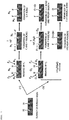
- FIG. 1 is a diagram illustrating a process of forming a polar functional group on a surface of a porous resin by treating the surface of the porous resin with a gas mixture prepared by mixing N 2 gas or O 2 gas or a mixture thereof with F 2 gas.
- (1) illustrates a state in which, when treating a porous resin including a polyolefin with a mixture of F 2 gas and N 2 gas, a polar functional group is formed on a surface of the porous resin
- (2) illustrates a state in which, when treating a porous resin including a polyolefin with a mixture of F 2 gas and O 2 gas, a polar functional group is formed on a surface of the porous resin.
- the porous resin may be modified by each of the F 2 gas, N 2 gas, and O 2 gas, and the formed polar functional groups may vary according to the type of gas, and thus, to form desired types of polar functional groups at a desired ratio, the porous resin needs to be treated by adjusting partial pressures of the F 2 gas, the N 2 gas, and the O 2 gas.
- a lithium secondary battery may include a positive electrode, a negative electrode, and a separator between the positive electrode and the negative electrode.
- the positive electrode may be manufactured using a method commonly known in the art.
- the positive electrode may be manufactured by preparing a slurry by mixing a positive electrode active material with a solvent and, according to need, a binder, a conductive material, and a dispersant and stirring the resulting mixture, coating a current collector made of a metal material with the slurry, and pressing and drying the resulting current collector.
- the current collector is formed of a metal with high conductivity and is not particularly limited as long as it is a metal to which the positive electrode active material slurry can be easily adhered, does not cause a chemical change in the fabricated battery within a voltage range of the battery, and has high conductivity.
- the current collector may be formed of stainless steel, aluminum, nickel, titanium, calcined carbon, or aluminum or stainless steel that is surface-treated with carbon, nickel, titanium, silver, or the like.
- the current collector may have fine irregularities on a surface thereof to increase adhesion between the current collector and the positive electrode active material.
- the current collector may be used in any of various forms including films, sheets, foils, nets, porous structures, foams, non-woven fabrics, and the like, and may have a thickness of 3 ⁇ m to 500 ⁇ m.
- the solvent used for fabricating the positive electrode may be an organic solvent such as N-methyl pyrrolidone (NMP), dimethyl formamide (DMF), acetone, dimethyl acetamide, or the like, water, or the like, and these solvents may be used alone or two or more of these solvents may be used in combination.
- the solvent may be used in a sufficient amount to dissolve and disperse the positive electrode active material, the binder, and the conductive material in consideration of the thickness of the slurry to be applied and manufacturing yield.
- the binder may be various types of binder polymers, such as a polyvinylidenefluoride-hexafluoropropylene copolymer (PVdF-co-HFP), polyvinylidenefluoride, polyacrylonitrile, polymethylmethacrylate, polyvinyl alcohols, carboxymethylcellulose (CMC), starch, hydroxypropylcellulose, regenerated cellulose, polyvinyl pyrrolidone, tetrafluoroethylene, polyethylene, polypropylene, polyacrylic acid, ethylene-propylene-diene monomers (EPDMs), sulfonated EPDMs, styrene-butadiene rubber (SBR), fluorine rubber, polymers obtained by substituting hydrogen atoms of the aforementioned materials with Li, Na, Ca, or the like, various copolymers, or the like.
- PVdF-co-HFP polyvinylidenefluoride-hexafluoropropylene copoly
- the conductive material is not particularly limited so long as it does not cause chemical changes in the fabricated battery and has conductivity.
- Examples of conductive materials include, but are not limited to, graphite such as natural or artificial graphite; carbon black such as acetylene black, Ketjen black, channel black, furnace black, lamp black, and thermal black; conductive fibers such as carbon fibers and metallic fibers; conductive tubes such as carbon nanotubes; metallic powders such as carbon fluoride powder, aluminum powder, and nickel powder; conductive whiskers such as zinc oxide and potassium titanate; conductive metal oxides such as titanium oxide; and polyphenylene derivatives.
- the dispersant may be a water-based dispersant or an organic dispersant such as N-methyl-2-pyrrolidone, or the like.
- the negative electrode may be manufactured using a method commonly used in the art.
- the negative electrode may generally use, as a negative electrode active material, a carbon material capable of intercalating and deintercalating lithium ions, a silicon-based material, tin, or the like, or may also be formed of lithium metal.
- the lithium metal when the negative electrode includes lithium metal, the lithium metal may be in a lithium metal foil form, or the negative electrode may be manufactured by depositing the lithium metal onto a current collector, coating a current collector with liquid metal, attaching a lithium metal film to a current collector, or the like.
- the negative electrode when the negative electrode includes, as a negative electrode active material, a carbon material capable of intercalating and deintercalating lithium ions, a silicon-based material, tin, or the like, the negative electrode may be manufactured by preparing a negative electrode active material slurry by mixing a negative electrode active material and additives such as a binder, a conductive material, and the like and stirring the resulting mixture, coating a negative electrode current collector with the negative electrode active material slurry, and drying and pressing the resulting negative electrode current collector.
- a negative electrode active material such as a binder, a conductive material, and the like
- the negative electrode includes a carbon material as a negative electrode active material
- the carbon material include low-crystalline carbon and high-crystalline carbon.
- the low-crystalline carbons include soft carbon and hard carbon
- examples of the high-crystalline carbon include natural graphite, Kish graphite, pyrolytic carbon, mesophase pitch based carbon fiber, meso-carbon microbeads, mesophase pitches, and high-temperature calcined carbon such as petroleum or coal tar pitch derived cokes, and the like.
- the silicon-based material include silicon, silicon oxide particles (SiO x where 0 ⁇ x ⁇ 2), Si-metal alloys, and alloys of Si and silicon oxide particles (SiO x where 0 ⁇ x ⁇ 2).
- a solvent for fabricating the negative electrode may be an organic solvent such as N-methyl pyrrolidone (NMP), dimethyl formamide (DMF), acetone, dimethyl acetamide, or the like, water, or the like, and these solvents may be used alone or two or more of these solvents may be used in combination.
- the solvent may be used in a sufficient amount to dissolve and disperse the negative electrode active material, the binder, and the conductive material in consideration of the thickness of the slurry coated and manufacturing yield.
- the binder may be used to bind negative electrode active material particles together to maintain the molded product, and is not particularly limited so long as it is a binder commonly used in preparation of a slurry for an negative electrode active material.
- the binder may be a non-aqueous binder such as polyvinyl alcohols, carboxymethylcellulose, hydroxypropylenecellulose, diacetylenecellulose, polyvinylchloride, polyvinylpyrrolidone, polytetrafluoroethylene (PTFE), polyvinylidenefluoride (PVdF), polyethylene, polypropylene, or the like.
- the binder may be an aqueous binder such as one selected from the group consisting of acrylonitrile-butadiene rubber, styrene-butadiene rubber, and acryl rubber or a mixture of two or more of these materials.
- Aqueous binders are more economical and more environmentally-friendly, and exhibit higher binding effects, compared to non-aqueous binders, and cause no harm to the health of an operator, and thus may increase the percentage of an active material per the same volume, which enables high-capacity
- the aqueous binder is preferably styrene-butadiene rubber.
- the conductive material is not particularly limited so long as it does not cause chemical changes in the fabricated battery and has conductivity.
- Examples of conductive materials include, but are not limited to, graphite such as natural or artificial graphite; carbon black such as acetylene black, Ketjen black, channel black, furnace black, lamp black, and thermal black; conductive fibers such as carbon fibers and metallic fibers; metallic powders such as carbon fluoride powder, aluminum powder, and nickel powder; conductive whiskers such as zinc oxide and potassium titanate; conductive metal oxides such as titanium oxide; and polyphenylene derivatives.
- a negative electrode current collector may have a thickness of 3 ⁇ m to 500 ⁇ m.
- the negative electrode current collector is not particularly limited so long as it does not cause chemical changes in the fabricated battery and has conductivity.
- the negative electrode current collector may be made of copper, gold, stainless steel, aluminum, nickel, titanium, calcined carbon, copper or stainless steel surface-treated with carbon, nickel, titanium, silver, or the like, aluminum-cadmium alloys, or the like.
- the negative electrode current collector may have fine irregularities on a surface thereof to increase adhesion between the negative electrode active material and the negative electrode current collector, and may be used in any of various forms including films, sheets, foils, nets, porous structures, foams, non-woven fabrics, and the like.
- a lithium salt that may be included as an electrolyte may be any lithium salt that is commonly used in an electrolyte for a lithium secondary battery without limitation, and the lithium salt may be, for example, any one selected from the group consisting of, as anions, F - , Cl - , Br - , I - , NO 3 - , N(CN) 2 - , BF 4 - , ClO 4 - , PF 6 - , (CF 3 ) 2 PF 4 - , (CF 3 ) 3 PF 3 - , (CF 3 ) 4 PF 2 - , (CF 3 ) 5 PF - , (CF 3 ) 6 P - , CF 3 SO 3 - , CF 3 CF 2 SO 3 - , (CF 3 SO 2 ) 2 N - , (FSO 2 ) 2 N - , CF 3 CF 2 (CF 3 ) 2 CO - , (CF 3 SO 2 ) 2 CH -
- an organic solvent included in the electrolytic solution may be any organic solvent that is commonly used in an electrolytic solution for a secondary battery without limitation.
- the organic solvent any one selected from the group consisting of propylene carbonate (PC), ethylene carbonate (EC), diethyl carbonate (DEC), dimethyl carbonate (DMC), ethyl methyl carbonate (EMC), methyl propyl carbonate, dipropyl carbonate, dimethyl sulfoxide, acetonitrile, dimethoxy ethane, diethoxy ethane, vinylene carbonate, sulfolane, ⁇ -butyrolactone, propylene sulfite, and tetrahydrofuran, a mixture of two or more of these materials, or the like may be used.
- PC propylene carbonate
- EC ethylene carbonate
- DEC diethyl carbonate
- DMC dimethyl carbonate
- EMC ethyl methyl carbonate
- methyl propyl carbonate di
- ethylene carbonate and propylene carbonate which are a type of cyclic carbonate
- ethylene carbonate and propylene carbonate which are a type of cyclic carbonate
- ethylene carbonate and propylene carbonate which are a type of cyclic carbonate
- a cyclic carbonate may be used due to high permittivity as a high-viscosity organic solvent, thus satisfactorily dissociating a lithium salt.
- a cyclic carbonate is used in combination with a low-viscosity, low-permittivity linear carbonate, such as dimethyl carbonate and diethyl carbonate, at an appropriate ratio
- an electrolytic solution having high electrical conductivity may be prepared, and thus such cyclic carbonates are more preferably used.
- the electrolytic solution may further include additives such as an overcharge inhibitor, and the like that are included in general electrolytic solutions.
- a shape of the lithium secondary battery is not particularly limited, but may be a cylindrical shape using a can, a rectangular shape, a pouch shape, a coin shape, or the like.
- the lithium secondary battery may be used in battery cells used as power sources of small devices, and may be a unit battery of medium- and large-sized battery modules used in battery modules or medium- and large-sized devices including a plurality of battery cells.
- Examples of the medium- and large-sized devices include, but are not limited to, electric vehicles, hybrid electric vehicles, plug-in hybrid electric vehicles, and power storage systems.
- the porous separator was treated with a gas mixture of F 2 gas, O 2 gas, and N 2 gas, concentrations of which were adjusted with a partial pressure ratio.
- All reaction lines including a reaction chamber or a reaction tube were made of a SUS-316 material which has corrosion resistance to F 2 gas at room temperature.
- O 2 gas and N 2 gas, to be mixed with F 2 gas were mixed in a ratio of 2:8 similarly to the composition of air, and the F 2 gas and the mixture of O 2 gas and N 2 gas were mixed in a buffer tank in a partial pressure ratio of 1:9, thereby preparing a gas mixture.
- the porous separator polypropylene/polyethylene/polypropylene
- the concentration of the gas mixture was adjusted using a gas valve positioned between the buffer tank and the reaction chamber in a vacuum state so as to satisfy a pressure condition of 30 KPa, and the reaction time was adjusted to 20 minutes.
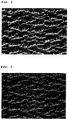
- FIG. 4 illustrates Fourier transform-attenuated total reflection (FT-ATR) results of the porous separator of Example 1.
- FIG. 5 illustrates FT-ATR results of the porous separator of Example 2.
- a positive electrode slurry mixture was prepared by adding 94 wt% of LiCoO 2 as a positive electrode active material, 3 wt% of carbon black as a conductive agent, and 3 wt% of PVdF as a binder to N-methyl-2-pyrrolidone (NMP) as a solvent.
- NMP N-methyl-2-pyrrolidone
- the positive electrode slurry mixture was applied onto Al foil having a thickness of about 20 ⁇ m as a positive electrode current collector and dried, followed by roll pressing, thereby completing fabrication of a positive electrode.
- the separator (treatment time: 60 minutes) manufactured in Example 1 was disposed between the positive electrode and a negative electrode, which is Li metal, and then an electrolytic solution, prepared by dissolving 1M LiPF 6 in a mixed solvent of ethylene carbonate (EC) and diethyl carbonate (DEC) in a volume ratio of 50:50, was injected thereinto, thereby completing manufacture of a coin-type half-cell.
- an electrolytic solution prepared by dissolving 1M LiPF 6 in a mixed solvent of ethylene carbonate (EC) and diethyl carbonate (DEC) in a volume ratio of 50:50, was injected thereinto, thereby completing manufacture of a coin-type half-cell.
- a coin-type half-cell was manufactured in the same manner as in Example 4, except that a porous separator (polypropylene/polyethylene/polypropylene), into which functional groups were not introduced, was used instead of the separator of Example 1.
- a porous separator polypropylene/polyethylene/polypropylene
- FIGS. 4 and 5 illustrate FT-ATR results of the porous separators manufactured in Examples 1 and 2, respectively, into which the polar functional groups were introduced.
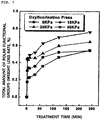
- measurement results of concentrations per area of the polar functional groups of each of the porous separators of Examples 1 and 2, into which the polar functional groups were introduced, are shown in FIG. 6 .
- each of the coin-type half-cells manufactured according to Examples 4 to 6 and Comparative Examples 4 to 6 was charged at a constant current (CC) of 0.8 C at 25°C until the voltage reached 0.005 V, and then charged at a constant voltage (CV) of 0.005 V until the charging current reached 0.005 C (cut-off current), which is referred to as a 1 st cycle of charging.
- CC constant current
- CV constant voltage
- each coin-type half-cell was maintained for 20 minutes and then discharged at a CC of 0.8 C until the voltage reached 1.5 V.
- Capacity retention ratio (%) after 70 th cycle (discharge capacity at 70 th cycle/discharge capacity at 3 rd cycle) x100 Table 1 Capacity retention ratio after 70 th cycle Example 4 99.4% Example 5 97.1% Example 6 95.9% Comparative Example 4 64.7% Comparative Example 5 52.9% Comparative Example 6 58.8%
Landscapes
- Chemical & Material Sciences (AREA)
- Chemical Kinetics & Catalysis (AREA)
- General Chemical & Material Sciences (AREA)
- Electrochemistry (AREA)
- Engineering & Computer Science (AREA)
- Manufacturing & Machinery (AREA)
- Materials Engineering (AREA)
- Polymers & Plastics (AREA)
- Medicinal Chemistry (AREA)
- Organic Chemistry (AREA)
- Health & Medical Sciences (AREA)
- Composite Materials (AREA)
- Inorganic Chemistry (AREA)
- Secondary Cells (AREA)
- Battery Electrode And Active Subsutance (AREA)
- Cell Separators (AREA)
Priority Applications (1)
| Application Number | Priority Date | Filing Date | Title |
|---|---|---|---|
| PL17806988T PL3340344T3 (pl) | 2016-05-30 | 2017-05-30 | Sposób wytwarzania separatora akumulatora litowego |
Applications Claiming Priority (2)
| Application Number | Priority Date | Filing Date | Title |
|---|---|---|---|
| KR20160066720 | 2016-05-30 | ||
| PCT/KR2017/005651 WO2017209495A1 (ko) | 2016-05-30 | 2017-05-30 | 리튬 이차전지용 분리막 및 이를 포함하는 리튬 이차전지 |
Publications (3)
| Publication Number | Publication Date |
|---|---|
| EP3340344A1 EP3340344A1 (en) | 2018-06-27 |
| EP3340344A4 EP3340344A4 (en) | 2018-09-05 |
| EP3340344B1 true EP3340344B1 (en) | 2021-10-27 |
Family
ID=60920207
Family Applications (1)
| Application Number | Title | Priority Date | Filing Date |
|---|---|---|---|
| EP17806988.6A Active EP3340344B1 (en) | 2016-05-30 | 2017-05-30 | Method for manufacturing a lithium secondary battery separator |
Country Status (6)
| Country | Link |
|---|---|
| US (1) | US10886514B2 (pl) |
| EP (1) | EP3340344B1 (pl) |
| JP (1) | JP6704625B2 (pl) |
| KR (1) | KR102143954B1 (pl) |
| CN (1) | CN108140788B (pl) |
| PL (1) | PL3340344T3 (pl) |
Families Citing this family (6)
| Publication number | Priority date | Publication date | Assignee | Title |
|---|---|---|---|---|
| KR102005870B1 (ko) * | 2016-01-15 | 2019-07-31 | 삼성에스디아이 주식회사 | 이차 전지용 세퍼레이터 및 이를 포함하는 리튬 이차 전지 |
| KR102255921B1 (ko) * | 2018-11-09 | 2021-05-25 | 주식회사 그리너지 | 리튬메탈 음극의 표면처리방법, 표면처리된 리튬메탈 음극 및 이를 포함하는 리튬금속전지 |
| FI3879604T3 (fi) * | 2018-11-09 | 2024-12-05 | Grinergy Co Ltd | Negatiivisen litiummetallielektrodin pintakäsittelymenetelmä |
| US10978193B2 (en) * | 2018-12-09 | 2021-04-13 | Tech Pharmacy Services, Llc | System and method of pharmaceutical operations for post-acute care facilities long-term care facilities |
| US11041236B2 (en) * | 2019-03-01 | 2021-06-22 | Honda Motor Co., Ltd. | Method for direct patterned growth of atomic layer metal dichalcogenides with pre-defined width |
| KR20220169605A (ko) * | 2021-06-21 | 2022-12-28 | 주식회사 엘지에너지솔루션 | 리튬 이차전지용 음극, 이의 제조방법 및 이를 포함하는 리튬 이차전지 |
Citations (1)
| Publication number | Priority date | Publication date | Assignee | Title |
|---|---|---|---|---|
| KR20040067620A (ko) * | 2003-01-24 | 2004-07-30 | 한국화학연구원 | 금속과의 접착력이 우수한 폴리올레핀계 필름의 제조방법 |
Family Cites Families (15)
| Publication number | Priority date | Publication date | Assignee | Title |
|---|---|---|---|---|
| JP3381385B2 (ja) | 1993-06-02 | 2003-02-24 | 三菱化学株式会社 | フッ素含有ポリオレフィン不織布及びその製造方法 |
| US5484651A (en) | 1993-06-02 | 1996-01-16 | Mitsubishi Chemical Corporation | Fluorine-containing polyolefin non-woven fabric and method of manufacturing the same |
| JP3482606B2 (ja) | 1994-08-11 | 2003-12-22 | 日本電池株式会社 | 密閉形アルカリ蓄電池 |
| EP0743690A1 (en) | 1995-05-17 | 1996-11-20 | Mitsubishi Chemical Corporation | Battery separator and method for its production |
| JPH08315800A (ja) | 1995-05-17 | 1996-11-29 | Mitsubishi Chem Corp | バッテリーセパレーターおよびこれを用いたアルカリ二次電池 |
| JPH09124813A (ja) | 1995-11-02 | 1997-05-13 | Mitsubishi Chem Corp | 親水性ポリオレフィン系高分子多孔体及びその製造方法並びにそれのバッテリーセパレーターへの適用 |
| JPH1027598A (ja) | 1996-07-10 | 1998-01-27 | Mitsubishi Chem Corp | バッテリーセパレーター及びその製造方法並びにそれを用いた電池 |
| JP3585833B2 (ja) | 2000-12-26 | 2004-11-04 | 東洋炭素株式会社 | 合成若しくは天然高分子材料の表面改質方法 |
| US20060154140A1 (en) | 2002-10-24 | 2006-07-13 | Daiwabo Co., Ltd. | Separator for organic electrolyte battery, process for producing the same and organic electrolyte battery including the separator |
| KR100485352B1 (ko) | 2003-02-20 | 2005-04-28 | 한국전자통신연구원 | 표면 개질된 다공성 고분자막의 제조방법 |
| US20080026297A1 (en) * | 2005-01-11 | 2008-01-31 | Air Products And Chemicals, Inc. | Electrolytes, cells and methods of forming passivaton layers |
| WO2008020620A1 (en) | 2006-08-17 | 2008-02-21 | Mitsubishi Chemical Corporation | Negative electrode active material for lithium ion secondary battery, method for producing the same, negative electrode for lithium ion secondary battery using the same, and lithium ion secondary battery |
| WO2008044761A1 (fr) | 2006-10-13 | 2008-04-17 | Toyo Tanso Co., Ltd. | Séparateur pour accumulateur secondaire à électrolyte non aqueux et séparateur à couches multiples pour accumulateur secondaire à électrolyte non aqueux |
| KR101171835B1 (ko) | 2009-07-03 | 2012-08-14 | 한국생산기술연구원 | 친수성 고분자로 표면개질된 폴리올레핀 미세다공성막, 그의 표면개질방법 및 표면개질된 폴리올레핀 미세다공성막을 구비한 리튬이온폴리머전지 |
| KR101410047B1 (ko) | 2012-12-24 | 2014-07-02 | 뉴로엘리싯 주식회사 | 이차전지용 유무기 다공성분리막의 제조방법 및 이로부터 제조된 유무기 다공성분리막 |
-
2017
- 2017-05-30 US US15/761,724 patent/US10886514B2/en active Active
- 2017-05-30 KR KR1020170066899A patent/KR102143954B1/ko active Active
- 2017-05-30 EP EP17806988.6A patent/EP3340344B1/en active Active
- 2017-05-30 PL PL17806988T patent/PL3340344T3/pl unknown
- 2017-05-30 CN CN201780003457.XA patent/CN108140788B/zh active Active
- 2017-05-30 JP JP2018539120A patent/JP6704625B2/ja active Active
Patent Citations (1)
| Publication number | Priority date | Publication date | Assignee | Title |
|---|---|---|---|---|
| KR20040067620A (ko) * | 2003-01-24 | 2004-07-30 | 한국화학연구원 | 금속과의 접착력이 우수한 폴리올레핀계 필름의 제조방법 |
Also Published As
| Publication number | Publication date |
|---|---|
| US10886514B2 (en) | 2021-01-05 |
| PL3340344T3 (pl) | 2022-01-24 |
| CN108140788B (zh) | 2021-03-16 |
| EP3340344A1 (en) | 2018-06-27 |
| US20180358596A1 (en) | 2018-12-13 |
| KR102143954B1 (ko) | 2020-08-12 |
| KR20170135749A (ko) | 2017-12-08 |
| JP2019503571A (ja) | 2019-02-07 |
| EP3340344A4 (en) | 2018-09-05 |
| JP6704625B2 (ja) | 2020-06-03 |
| CN108140788A (zh) | 2018-06-08 |
Similar Documents
| Publication | Publication Date | Title |
|---|---|---|
| EP3660956B1 (en) | Negative electrode for lithium secondary battery and lithium secondary battery comprising the same | |
| KR102335314B1 (ko) | 리튬 이차전지용 음극, 및 이를 포함하는 리튬 이차전지 | |
| US11043692B2 (en) | Negative electrode and secondary battery including the same | |
| EP3340344B1 (en) | Method for manufacturing a lithium secondary battery separator | |
| KR101676085B1 (ko) | 실리콘계 음극 활물질 및 이를 포함하는 리튬 이차전지 | |
| EP3683871A2 (en) | Negative electrode active material for lithium secondary battery and lithium secondary battery comprising same | |
| EP3686967B1 (en) | Method for designing electrode for lithium secondary battery and method for manufacturing electrode for lithium secondary battery comprising the same | |
| KR20180029919A (ko) | 음극, 이를 포함하는 이차전지, 전지 모듈 및 전지 팩 | |
| EP3893297A1 (en) | Anode and secondary battery comprising anode | |
| CN114555529A (zh) | 正极活性材料以及包含其的正极和锂二次电池 | |
| KR20210065831A (ko) | 도핑 원소가 도핑된 리튬 니켈계 산화물을 포함하는 양극 활물질, 및 이를 포함하는 이차전지 | |
| KR102170026B1 (ko) | 저온 특성이 향상된 리튬 이차전지의 제조방법 및 리튬 이차전지 | |
| KR20210058490A (ko) | 코팅층이 형성된 리튬 코발트계 산화물을 포함하는 양극 활물질, 이의 제조방법, 및 이를 포함하는 이차전지 | |
| US10490821B2 (en) | Electrode for lithium secondary battery comprising hygroscopic material and lithium secondary battery comprising the same | |
| US20220149367A1 (en) | Positive Electrode Active Material Comprising Lithium Nickle-Based Oxide Doped With Doping Element, and Secondary Battery Comprising the Same | |
| CN119547222A (zh) | 负极活性材料粒子、包含所述负极活性材料粒子的负极和包含所述负极的二次电池 | |
| KR102086532B1 (ko) | 비수성 전해액 및 이를 포함하는 리튬 이차전지 | |
| CN117136444A (zh) | 锂二次电池 | |
| EP4037021A1 (en) | Anode pre-lithiation method | |
| US11888156B2 (en) | Negative electrode active material, negative electrode including negative electrode active material, and lithium secondary battery including negative electrode | |
| KR20090113086A (ko) | 리튬이차전지의 음극전극, 이의 제조방법, 및 상기 음극전극을 포함하는 리튬 이차전지 | |
| JP2022551689A (ja) | リチウムフリー電池、およびその製造方法 |
Legal Events
| Date | Code | Title | Description |
|---|---|---|---|
| STAA | Information on the status of an ep patent application or granted ep patent |
Free format text: STATUS: THE INTERNATIONAL PUBLICATION HAS BEEN MADE |
|
| PUAI | Public reference made under article 153(3) epc to a published international application that has entered the european phase |
Free format text: ORIGINAL CODE: 0009012 |
|
| STAA | Information on the status of an ep patent application or granted ep patent |
Free format text: STATUS: REQUEST FOR EXAMINATION WAS MADE |
|
| 17P | Request for examination filed |
Effective date: 20180320 |
|
| AK | Designated contracting states |
Kind code of ref document: A1 Designated state(s): AL AT BE BG CH CY CZ DE DK EE ES FI FR GB GR HR HU IE IS IT LI LT LU LV MC MK MT NL NO PL PT RO RS SE SI SK SM TR |
|
| AX | Request for extension of the european patent |
Extension state: BA ME |
|
| A4 | Supplementary search report drawn up and despatched |
Effective date: 20180803 |
|
| RIC1 | Information provided on ipc code assigned before grant |
Ipc: H01M 10/052 20100101ALI20180730BHEP Ipc: H01M 2/14 20060101AFI20180730BHEP Ipc: H01M 10/42 20060101ALI20180730BHEP Ipc: H01M 2/16 20060101ALI20180730BHEP Ipc: C08J 7/12 20060101ALI20180730BHEP Ipc: H01M 10/0525 20100101ALI20180730BHEP |
|
| DAV | Request for validation of the european patent (deleted) | ||
| DAX | Request for extension of the european patent (deleted) | ||
| STAA | Information on the status of an ep patent application or granted ep patent |
Free format text: STATUS: EXAMINATION IS IN PROGRESS |
|
| 17Q | First examination report despatched |
Effective date: 20201116 |
|
| REG | Reference to a national code |
Ref country code: DE Ref legal event code: R079 Ref document number: 602017048370 Country of ref document: DE Free format text: PREVIOUS MAIN CLASS: H01M0002160000 Ipc: H01M0004134000 |
|
| GRAP | Despatch of communication of intention to grant a patent |
Free format text: ORIGINAL CODE: EPIDOSNIGR1 |
|
| STAA | Information on the status of an ep patent application or granted ep patent |
Free format text: STATUS: GRANT OF PATENT IS INTENDED |
|
| RIC1 | Information provided on ipc code assigned before grant |
Ipc: C08J 7/12 20060101ALI20210519BHEP Ipc: H01M 50/411 20210101ALI20210519BHEP Ipc: H01M 50/403 20210101ALI20210519BHEP Ipc: H01M 10/052 20100101ALI20210519BHEP Ipc: H01M 4/38 20060101ALI20210519BHEP Ipc: H01M 4/36 20060101ALI20210519BHEP Ipc: H01M 4/134 20100101AFI20210519BHEP |
|
| INTG | Intention to grant announced |
Effective date: 20210611 |
|
| GRAS | Grant fee paid |
Free format text: ORIGINAL CODE: EPIDOSNIGR3 |
|
| GRAA | (expected) grant |
Free format text: ORIGINAL CODE: 0009210 |
|
| STAA | Information on the status of an ep patent application or granted ep patent |
Free format text: STATUS: THE PATENT HAS BEEN GRANTED |
|
| AK | Designated contracting states |
Kind code of ref document: B1 Designated state(s): AL AT BE BG CH CY CZ DE DK EE ES FI FR GB GR HR HU IE IS IT LI LT LU LV MC MK MT NL NO PL PT RO RS SE SI SK SM TR |
|
| REG | Reference to a national code |
Ref country code: GB Ref legal event code: FG4D |
|
| REG | Reference to a national code |
Ref country code: CH Ref legal event code: EP |
|
| REG | Reference to a national code |
Ref country code: AT Ref legal event code: REF Ref document number: 1442639 Country of ref document: AT Kind code of ref document: T Effective date: 20211115 |
|
| REG | Reference to a national code |
Ref country code: DE Ref legal event code: R096 Ref document number: 602017048370 Country of ref document: DE |
|
| REG | Reference to a national code |
Ref country code: IE Ref legal event code: FG4D |
|
| REG | Reference to a national code |
Ref country code: SE Ref legal event code: TRGR |
|
| RAP2 | Party data changed (patent owner data changed or rights of a patent transferred) |
Owner name: LG ENERGY SOLUTION LTD. |
|
| REG | Reference to a national code |
Ref country code: LT Ref legal event code: MG9D |
|
| REG | Reference to a national code |
Ref country code: NL Ref legal event code: MP Effective date: 20211027 |
|
| REG | Reference to a national code |
Ref country code: AT Ref legal event code: MK05 Ref document number: 1442639 Country of ref document: AT Kind code of ref document: T Effective date: 20211027 |
|
| RAP4 | Party data changed (patent owner data changed or rights of a patent transferred) |
Owner name: LG ENERGY SOLUTION, LTD. |
|
| PG25 | Lapsed in a contracting state [announced via postgrant information from national office to epo] |
Ref country code: RS Free format text: LAPSE BECAUSE OF FAILURE TO SUBMIT A TRANSLATION OF THE DESCRIPTION OR TO PAY THE FEE WITHIN THE PRESCRIBED TIME-LIMIT Effective date: 20211027 Ref country code: LT Free format text: LAPSE BECAUSE OF FAILURE TO SUBMIT A TRANSLATION OF THE DESCRIPTION OR TO PAY THE FEE WITHIN THE PRESCRIBED TIME-LIMIT Effective date: 20211027 Ref country code: FI Free format text: LAPSE BECAUSE OF FAILURE TO SUBMIT A TRANSLATION OF THE DESCRIPTION OR TO PAY THE FEE WITHIN THE PRESCRIBED TIME-LIMIT Effective date: 20211027 Ref country code: BG Free format text: LAPSE BECAUSE OF FAILURE TO SUBMIT A TRANSLATION OF THE DESCRIPTION OR TO PAY THE FEE WITHIN THE PRESCRIBED TIME-LIMIT Effective date: 20220127 Ref country code: AT Free format text: LAPSE BECAUSE OF FAILURE TO SUBMIT A TRANSLATION OF THE DESCRIPTION OR TO PAY THE FEE WITHIN THE PRESCRIBED TIME-LIMIT Effective date: 20211027 |
|
| PG25 | Lapsed in a contracting state [announced via postgrant information from national office to epo] |
Ref country code: IS Free format text: LAPSE BECAUSE OF FAILURE TO SUBMIT A TRANSLATION OF THE DESCRIPTION OR TO PAY THE FEE WITHIN THE PRESCRIBED TIME-LIMIT Effective date: 20220227 Ref country code: PT Free format text: LAPSE BECAUSE OF FAILURE TO SUBMIT A TRANSLATION OF THE DESCRIPTION OR TO PAY THE FEE WITHIN THE PRESCRIBED TIME-LIMIT Effective date: 20220228 Ref country code: NO Free format text: LAPSE BECAUSE OF FAILURE TO SUBMIT A TRANSLATION OF THE DESCRIPTION OR TO PAY THE FEE WITHIN THE PRESCRIBED TIME-LIMIT Effective date: 20220127 Ref country code: NL Free format text: LAPSE BECAUSE OF FAILURE TO SUBMIT A TRANSLATION OF THE DESCRIPTION OR TO PAY THE FEE WITHIN THE PRESCRIBED TIME-LIMIT Effective date: 20211027 Ref country code: LV Free format text: LAPSE BECAUSE OF FAILURE TO SUBMIT A TRANSLATION OF THE DESCRIPTION OR TO PAY THE FEE WITHIN THE PRESCRIBED TIME-LIMIT Effective date: 20211027 Ref country code: HR Free format text: LAPSE BECAUSE OF FAILURE TO SUBMIT A TRANSLATION OF THE DESCRIPTION OR TO PAY THE FEE WITHIN THE PRESCRIBED TIME-LIMIT Effective date: 20211027 Ref country code: GR Free format text: LAPSE BECAUSE OF FAILURE TO SUBMIT A TRANSLATION OF THE DESCRIPTION OR TO PAY THE FEE WITHIN THE PRESCRIBED TIME-LIMIT Effective date: 20220128 Ref country code: ES Free format text: LAPSE BECAUSE OF FAILURE TO SUBMIT A TRANSLATION OF THE DESCRIPTION OR TO PAY THE FEE WITHIN THE PRESCRIBED TIME-LIMIT Effective date: 20211027 |
|
| REG | Reference to a national code |
Ref country code: DE Ref legal event code: R097 Ref document number: 602017048370 Country of ref document: DE |
|
| PG25 | Lapsed in a contracting state [announced via postgrant information from national office to epo] |
Ref country code: SM Free format text: LAPSE BECAUSE OF FAILURE TO SUBMIT A TRANSLATION OF THE DESCRIPTION OR TO PAY THE FEE WITHIN THE PRESCRIBED TIME-LIMIT Effective date: 20211027 Ref country code: SK Free format text: LAPSE BECAUSE OF FAILURE TO SUBMIT A TRANSLATION OF THE DESCRIPTION OR TO PAY THE FEE WITHIN THE PRESCRIBED TIME-LIMIT Effective date: 20211027 Ref country code: RO Free format text: LAPSE BECAUSE OF FAILURE TO SUBMIT A TRANSLATION OF THE DESCRIPTION OR TO PAY THE FEE WITHIN THE PRESCRIBED TIME-LIMIT Effective date: 20211027 Ref country code: EE Free format text: LAPSE BECAUSE OF FAILURE TO SUBMIT A TRANSLATION OF THE DESCRIPTION OR TO PAY THE FEE WITHIN THE PRESCRIBED TIME-LIMIT Effective date: 20211027 Ref country code: DK Free format text: LAPSE BECAUSE OF FAILURE TO SUBMIT A TRANSLATION OF THE DESCRIPTION OR TO PAY THE FEE WITHIN THE PRESCRIBED TIME-LIMIT Effective date: 20211027 Ref country code: CZ Free format text: LAPSE BECAUSE OF FAILURE TO SUBMIT A TRANSLATION OF THE DESCRIPTION OR TO PAY THE FEE WITHIN THE PRESCRIBED TIME-LIMIT Effective date: 20211027 |
|
| PLBE | No opposition filed within time limit |
Free format text: ORIGINAL CODE: 0009261 |
|
| STAA | Information on the status of an ep patent application or granted ep patent |
Free format text: STATUS: NO OPPOSITION FILED WITHIN TIME LIMIT |
|
| 26N | No opposition filed |
Effective date: 20220728 |
|
| PG25 | Lapsed in a contracting state [announced via postgrant information from national office to epo] |
Ref country code: AL Free format text: LAPSE BECAUSE OF FAILURE TO SUBMIT A TRANSLATION OF THE DESCRIPTION OR TO PAY THE FEE WITHIN THE PRESCRIBED TIME-LIMIT Effective date: 20211027 |
|
| PG25 | Lapsed in a contracting state [announced via postgrant information from national office to epo] |
Ref country code: SI Free format text: LAPSE BECAUSE OF FAILURE TO SUBMIT A TRANSLATION OF THE DESCRIPTION OR TO PAY THE FEE WITHIN THE PRESCRIBED TIME-LIMIT Effective date: 20211027 |
|
| REG | Reference to a national code |
Ref country code: CH Ref legal event code: PL |
|
| REG | Reference to a national code |
Ref country code: BE Ref legal event code: MM Effective date: 20220531 |
|
| PG25 | Lapsed in a contracting state [announced via postgrant information from national office to epo] |
Ref country code: MC Free format text: LAPSE BECAUSE OF FAILURE TO SUBMIT A TRANSLATION OF THE DESCRIPTION OR TO PAY THE FEE WITHIN THE PRESCRIBED TIME-LIMIT Effective date: 20211027 Ref country code: LU Free format text: LAPSE BECAUSE OF NON-PAYMENT OF DUE FEES Effective date: 20220530 Ref country code: LI Free format text: LAPSE BECAUSE OF NON-PAYMENT OF DUE FEES Effective date: 20220531 Ref country code: CH Free format text: LAPSE BECAUSE OF NON-PAYMENT OF DUE FEES Effective date: 20220531 |
|
| PG25 | Lapsed in a contracting state [announced via postgrant information from national office to epo] |
Ref country code: IE Free format text: LAPSE BECAUSE OF NON-PAYMENT OF DUE FEES Effective date: 20220530 |
|
| REG | Reference to a national code |
Ref country code: DE Ref legal event code: R081 Ref document number: 602017048370 Country of ref document: DE Owner name: LG ENERGY SOLUTION, LTD., KR Free format text: FORMER OWNER: LG CHEM, LTD., SEOUL, KR |
|
| PG25 | Lapsed in a contracting state [announced via postgrant information from national office to epo] |
Ref country code: IT Free format text: LAPSE BECAUSE OF FAILURE TO SUBMIT A TRANSLATION OF THE DESCRIPTION OR TO PAY THE FEE WITHIN THE PRESCRIBED TIME-LIMIT Effective date: 20211027 Ref country code: BE Free format text: LAPSE BECAUSE OF NON-PAYMENT OF DUE FEES Effective date: 20220531 |
|
| P01 | Opt-out of the competence of the unified patent court (upc) registered |
Effective date: 20230408 |
|
| REG | Reference to a national code |
Ref country code: GB Ref legal event code: 732E Free format text: REGISTERED BETWEEN 20230901 AND 20230906 |
|
| PG25 | Lapsed in a contracting state [announced via postgrant information from national office to epo] |
Ref country code: HU Free format text: LAPSE BECAUSE OF FAILURE TO SUBMIT A TRANSLATION OF THE DESCRIPTION OR TO PAY THE FEE WITHIN THE PRESCRIBED TIME-LIMIT; INVALID AB INITIO Effective date: 20170530 |
|
| PG25 | Lapsed in a contracting state [announced via postgrant information from national office to epo] |
Ref country code: MK Free format text: LAPSE BECAUSE OF FAILURE TO SUBMIT A TRANSLATION OF THE DESCRIPTION OR TO PAY THE FEE WITHIN THE PRESCRIBED TIME-LIMIT Effective date: 20211027 Ref country code: CY Free format text: LAPSE BECAUSE OF FAILURE TO SUBMIT A TRANSLATION OF THE DESCRIPTION OR TO PAY THE FEE WITHIN THE PRESCRIBED TIME-LIMIT Effective date: 20211027 |
|
| PG25 | Lapsed in a contracting state [announced via postgrant information from national office to epo] |
Ref country code: TR Free format text: LAPSE BECAUSE OF FAILURE TO SUBMIT A TRANSLATION OF THE DESCRIPTION OR TO PAY THE FEE WITHIN THE PRESCRIBED TIME-LIMIT Effective date: 20211027 |
|
| PG25 | Lapsed in a contracting state [announced via postgrant information from national office to epo] |
Ref country code: MT Free format text: LAPSE BECAUSE OF FAILURE TO SUBMIT A TRANSLATION OF THE DESCRIPTION OR TO PAY THE FEE WITHIN THE PRESCRIBED TIME-LIMIT Effective date: 20211027 |
|
| PGFP | Annual fee paid to national office [announced via postgrant information from national office to epo] |
Ref country code: PL Payment date: 20250423 Year of fee payment: 9 Ref country code: DE Payment date: 20250422 Year of fee payment: 9 |
|
| PGFP | Annual fee paid to national office [announced via postgrant information from national office to epo] |
Ref country code: GB Payment date: 20250422 Year of fee payment: 9 |
|
| PGFP | Annual fee paid to national office [announced via postgrant information from national office to epo] |
Ref country code: FR Payment date: 20250422 Year of fee payment: 9 |
|
| PGFP | Annual fee paid to national office [announced via postgrant information from national office to epo] |
Ref country code: SE Payment date: 20250422 Year of fee payment: 9 |