EP3329935B1 - Bakterieller impfstoff und verfahren zur herstellung davon - Google Patents
Bakterieller impfstoff und verfahren zur herstellung davon Download PDFInfo
- Publication number
- EP3329935B1 EP3329935B1 EP17197816.6A EP17197816A EP3329935B1 EP 3329935 B1 EP3329935 B1 EP 3329935B1 EP 17197816 A EP17197816 A EP 17197816A EP 3329935 B1 EP3329935 B1 EP 3329935B1
- Authority
- EP
- European Patent Office
- Prior art keywords
- vips
- vaccine
- polysaccharide
- conjugate
- complies
- Prior art date
- Legal status (The legal status is an assumption and is not a legal conclusion. Google has not performed a legal analysis and makes no representation as to the accuracy of the status listed.)
- Active
Links
Images





Classifications
-
- A—HUMAN NECESSITIES
- A61—MEDICAL OR VETERINARY SCIENCE; HYGIENE
- A61K—PREPARATIONS FOR MEDICAL, DENTAL OR TOILETRY PURPOSES
- A61K39/00—Medicinal preparations containing antigens or antibodies
- A61K39/02—Bacterial antigens
- A61K39/025—Enterobacteriales, e.g. Enterobacter
- A61K39/0275—Salmonella
-
- A—HUMAN NECESSITIES
- A61—MEDICAL OR VETERINARY SCIENCE; HYGIENE
- A61K—PREPARATIONS FOR MEDICAL, DENTAL OR TOILETRY PURPOSES
- A61K39/00—Medicinal preparations containing antigens or antibodies
- A61K39/02—Bacterial antigens
- A61K39/114—Fusobacterium
-
- A—HUMAN NECESSITIES
- A61—MEDICAL OR VETERINARY SCIENCE; HYGIENE
- A61K—PREPARATIONS FOR MEDICAL, DENTAL OR TOILETRY PURPOSES
- A61K31/00—Medicinal preparations containing organic active ingredients
- A61K31/70—Carbohydrates; Sugars; Derivatives thereof
- A61K31/715—Polysaccharides, i.e. having more than five saccharide radicals attached to each other by glycosidic linkages; Derivatives thereof, e.g. ethers, esters
-
- A—HUMAN NECESSITIES
- A61—MEDICAL OR VETERINARY SCIENCE; HYGIENE
- A61K—PREPARATIONS FOR MEDICAL, DENTAL OR TOILETRY PURPOSES
- A61K39/00—Medicinal preparations containing antigens or antibodies
- A61K39/0016—Combination vaccines based on diphtheria-tetanus-pertussis
-
- A—HUMAN NECESSITIES
- A61—MEDICAL OR VETERINARY SCIENCE; HYGIENE
- A61K—PREPARATIONS FOR MEDICAL, DENTAL OR TOILETRY PURPOSES
- A61K39/00—Medicinal preparations containing antigens or antibodies
- A61K39/02—Bacterial antigens
- A61K39/08—Clostridium, e.g. Clostridium tetani
-
- A—HUMAN NECESSITIES
- A61—MEDICAL OR VETERINARY SCIENCE; HYGIENE
- A61K—PREPARATIONS FOR MEDICAL, DENTAL OR TOILETRY PURPOSES
- A61K39/00—Medicinal preparations containing antigens or antibodies
- A61K39/12—Viral antigens
-
- A—HUMAN NECESSITIES
- A61—MEDICAL OR VETERINARY SCIENCE; HYGIENE
- A61K—PREPARATIONS FOR MEDICAL, DENTAL OR TOILETRY PURPOSES
- A61K39/00—Medicinal preparations containing antigens or antibodies
- A61K39/12—Viral antigens
- A61K39/155—Paramyxoviridae, e.g. parainfluenza virus
- A61K39/165—Mumps or measles virus
-
- A—HUMAN NECESSITIES
- A61—MEDICAL OR VETERINARY SCIENCE; HYGIENE
- A61K—PREPARATIONS FOR MEDICAL, DENTAL OR TOILETRY PURPOSES
- A61K39/00—Medicinal preparations containing antigens or antibodies
- A61K39/12—Viral antigens
- A61K39/295—Polyvalent viral antigens; Mixtures of viral and bacterial antigens
-
- A—HUMAN NECESSITIES
- A61—MEDICAL OR VETERINARY SCIENCE; HYGIENE
- A61K—PREPARATIONS FOR MEDICAL, DENTAL OR TOILETRY PURPOSES
- A61K39/00—Medicinal preparations containing antigens or antibodies
- A61K39/385—Haptens or antigens, bound to carriers
-
- A—HUMAN NECESSITIES
- A61—MEDICAL OR VETERINARY SCIENCE; HYGIENE
- A61K—PREPARATIONS FOR MEDICAL, DENTAL OR TOILETRY PURPOSES
- A61K47/00—Medicinal preparations characterised by the non-active ingredients used, e.g. carriers or inert additives; Targeting or modifying agents chemically bound to the active ingredient
- A61K47/50—Medicinal preparations characterised by the non-active ingredients used, e.g. carriers or inert additives; Targeting or modifying agents chemically bound to the active ingredient the non-active ingredient being chemically bound to the active ingredient, e.g. polymer-drug conjugates
- A61K47/51—Medicinal preparations characterised by the non-active ingredients used, e.g. carriers or inert additives; Targeting or modifying agents chemically bound to the active ingredient the non-active ingredient being chemically bound to the active ingredient, e.g. polymer-drug conjugates the non-active ingredient being a modifying agent
- A61K47/62—Medicinal preparations characterised by the non-active ingredients used, e.g. carriers or inert additives; Targeting or modifying agents chemically bound to the active ingredient the non-active ingredient being chemically bound to the active ingredient, e.g. polymer-drug conjugates the non-active ingredient being a modifying agent the modifying agent being a protein, peptide or polyamino acid
- A61K47/64—Drug-peptide, drug-protein or drug-polyamino acid conjugates, i.e. the modifying agent being a peptide, protein or polyamino acid which is covalently bonded or complexed to a therapeutically active agent
- A61K47/6415—Toxins or lectins, e.g. clostridial toxins or Pseudomonas exotoxins
-
- A—HUMAN NECESSITIES
- A61—MEDICAL OR VETERINARY SCIENCE; HYGIENE
- A61K—PREPARATIONS FOR MEDICAL, DENTAL OR TOILETRY PURPOSES
- A61K47/00—Medicinal preparations characterised by the non-active ingredients used, e.g. carriers or inert additives; Targeting or modifying agents chemically bound to the active ingredient
- A61K47/50—Medicinal preparations characterised by the non-active ingredients used, e.g. carriers or inert additives; Targeting or modifying agents chemically bound to the active ingredient the non-active ingredient being chemically bound to the active ingredient, e.g. polymer-drug conjugates
- A61K47/51—Medicinal preparations characterised by the non-active ingredients used, e.g. carriers or inert additives; Targeting or modifying agents chemically bound to the active ingredient the non-active ingredient being chemically bound to the active ingredient, e.g. polymer-drug conjugates the non-active ingredient being a modifying agent
- A61K47/62—Medicinal preparations characterised by the non-active ingredients used, e.g. carriers or inert additives; Targeting or modifying agents chemically bound to the active ingredient the non-active ingredient being chemically bound to the active ingredient, e.g. polymer-drug conjugates the non-active ingredient being a modifying agent the modifying agent being a protein, peptide or polyamino acid
- A61K47/64—Drug-peptide, drug-protein or drug-polyamino acid conjugates, i.e. the modifying agent being a peptide, protein or polyamino acid which is covalently bonded or complexed to a therapeutically active agent
- A61K47/646—Drug-peptide, drug-protein or drug-polyamino acid conjugates, i.e. the modifying agent being a peptide, protein or polyamino acid which is covalently bonded or complexed to a therapeutically active agent the entire peptide or protein drug conjugate elicits an immune response, e.g. conjugate vaccines
-
- A—HUMAN NECESSITIES
- A61—MEDICAL OR VETERINARY SCIENCE; HYGIENE
- A61P—SPECIFIC THERAPEUTIC ACTIVITY OF CHEMICAL COMPOUNDS OR MEDICINAL PREPARATIONS
- A61P31/00—Antiinfectives, i.e. antibiotics, antiseptics, chemotherapeutics
- A61P31/04—Antibacterial agents
-
- A—HUMAN NECESSITIES
- A61—MEDICAL OR VETERINARY SCIENCE; HYGIENE
- A61P—SPECIFIC THERAPEUTIC ACTIVITY OF CHEMICAL COMPOUNDS OR MEDICINAL PREPARATIONS
- A61P31/00—Antiinfectives, i.e. antibiotics, antiseptics, chemotherapeutics
- A61P31/12—Antivirals
-
- A—HUMAN NECESSITIES
- A61—MEDICAL OR VETERINARY SCIENCE; HYGIENE
- A61P—SPECIFIC THERAPEUTIC ACTIVITY OF CHEMICAL COMPOUNDS OR MEDICINAL PREPARATIONS
- A61P31/00—Antiinfectives, i.e. antibiotics, antiseptics, chemotherapeutics
- A61P31/12—Antivirals
- A61P31/14—Antivirals for RNA viruses
-
- C—CHEMISTRY; METALLURGY
- C07—ORGANIC CHEMISTRY
- C07K—PEPTIDES
- C07K14/00—Peptides having more than 20 amino acids; Gastrins; Somatostatins; Melanotropins; Derivatives thereof
- C07K14/195—Peptides having more than 20 amino acids; Gastrins; Somatostatins; Melanotropins; Derivatives thereof from bacteria
- C07K14/24—Peptides having more than 20 amino acids; Gastrins; Somatostatins; Melanotropins; Derivatives thereof from bacteria from Enterobacteriaceae (F), e.g. Citrobacter, Serratia, Proteus, Providencia, Morganella, Yersinia
- C07K14/255—Salmonella (G)
-
- C—CHEMISTRY; METALLURGY
- C12—BIOCHEMISTRY; BEER; SPIRITS; WINE; VINEGAR; MICROBIOLOGY; ENZYMOLOGY; MUTATION OR GENETIC ENGINEERING
- C12N—MICROORGANISMS OR ENZYMES; COMPOSITIONS THEREOF; PROPAGATING, PRESERVING, OR MAINTAINING MICROORGANISMS; MUTATION OR GENETIC ENGINEERING; CULTURE MEDIA
- C12N7/00—Viruses; Bacteriophages; Compositions thereof; Preparation or purification thereof
-
- A—HUMAN NECESSITIES
- A61—MEDICAL OR VETERINARY SCIENCE; HYGIENE
- A61K—PREPARATIONS FOR MEDICAL, DENTAL OR TOILETRY PURPOSES
- A61K39/00—Medicinal preparations containing antigens or antibodies
- A61K2039/545—Medicinal preparations containing antigens or antibodies characterised by the dose, timing or administration schedule
-
- A—HUMAN NECESSITIES
- A61—MEDICAL OR VETERINARY SCIENCE; HYGIENE
- A61K—PREPARATIONS FOR MEDICAL, DENTAL OR TOILETRY PURPOSES
- A61K39/00—Medicinal preparations containing antigens or antibodies
- A61K2039/55—Medicinal preparations containing antigens or antibodies characterised by the host/recipient, e.g. newborn with maternal antibodies
-
- A—HUMAN NECESSITIES
- A61—MEDICAL OR VETERINARY SCIENCE; HYGIENE
- A61K—PREPARATIONS FOR MEDICAL, DENTAL OR TOILETRY PURPOSES
- A61K39/00—Medicinal preparations containing antigens or antibodies
- A61K2039/60—Medicinal preparations containing antigens or antibodies characteristics by the carrier linked to the antigen
- A61K2039/6031—Proteins
- A61K2039/6037—Bacterial toxins, e.g. diphteria toxoid [DT], tetanus toxoid [TT]
-
- A—HUMAN NECESSITIES
- A61—MEDICAL OR VETERINARY SCIENCE; HYGIENE
- A61K—PREPARATIONS FOR MEDICAL, DENTAL OR TOILETRY PURPOSES
- A61K39/00—Medicinal preparations containing antigens or antibodies
- A61K2039/62—Medicinal preparations containing antigens or antibodies characterised by the link between antigen and carrier
- A61K2039/627—Medicinal preparations containing antigens or antibodies characterised by the link between antigen and carrier characterised by the linker
-
- A—HUMAN NECESSITIES
- A61—MEDICAL OR VETERINARY SCIENCE; HYGIENE
- A61K—PREPARATIONS FOR MEDICAL, DENTAL OR TOILETRY PURPOSES
- A61K39/00—Medicinal preparations containing antigens or antibodies
- A61K2039/70—Multivalent vaccine
-
- C—CHEMISTRY; METALLURGY
- C12—BIOCHEMISTRY; BEER; SPIRITS; WINE; VINEGAR; MICROBIOLOGY; ENZYMOLOGY; MUTATION OR GENETIC ENGINEERING
- C12N—MICROORGANISMS OR ENZYMES; COMPOSITIONS THEREOF; PROPAGATING, PRESERVING, OR MAINTAINING MICROORGANISMS; MUTATION OR GENETIC ENGINEERING; CULTURE MEDIA
- C12N2760/00—MICROORGANISMS OR ENZYMES; COMPOSITIONS THEREOF; PROPAGATING, PRESERVING, OR MAINTAINING MICROORGANISMS; MUTATION OR GENETIC ENGINEERING; CULTURE MEDIA ssRNA viruses negative-sense
- C12N2760/00011—Details
- C12N2760/18011—Paramyxoviridae
- C12N2760/18411—Morbillivirus, e.g. Measles virus, canine distemper
- C12N2760/18434—Use of virus or viral component as vaccine, e.g. live-attenuated or inactivated virus, VLP, viral protein
-
- Y—GENERAL TAGGING OF NEW TECHNOLOGICAL DEVELOPMENTS; GENERAL TAGGING OF CROSS-SECTIONAL TECHNOLOGIES SPANNING OVER SEVERAL SECTIONS OF THE IPC; TECHNICAL SUBJECTS COVERED BY FORMER USPC CROSS-REFERENCE ART COLLECTIONS [XRACs] AND DIGESTS
- Y02—TECHNOLOGIES OR APPLICATIONS FOR MITIGATION OR ADAPTATION AGAINST CLIMATE CHANGE
- Y02A—TECHNOLOGIES FOR ADAPTATION TO CLIMATE CHANGE
- Y02A50/00—TECHNOLOGIES FOR ADAPTATION TO CLIMATE CHANGE in human health protection, e.g. against extreme weather
- Y02A50/30—Against vector-borne diseases, e.g. mosquito-borne, fly-borne, tick-borne or waterborne diseases whose impact is exacerbated by climate change
Definitions
- the invention relates to the field of bacterial vaccine characterized to raise adequate immune responses in infants, children and adults against typhoid fever.
- the present invention relates to conjugate vaccines and processes of manufacture thereof, wherein the native polysaccharides of Salmonella typhi are conjugated to carrier proteins and formulated as a prophylactic conjugate vaccine.
- this invention also relates to the field of combined vaccine formulations for protection against Salmonella typhi and measles virus.
- Salmonella typhi the causative bacterium for typhoid fever in human beings is a major endemic disease in Africa, Asia, and Middle East. Food and water contaminated with S.typhi bacterium was identified as major source in transmission of the disease.
- Various studies have shown that the global burden of typhoid fever varies in different parts of the world. More than 100 cases in 100,000 populations per year reported in South Central Asia and South-East Asia; Asia, Africa, Latin America and the Caribbean are estimated to have medium incidence of typhoid fever, i.e., 10 to 100 cases in 100,000 populations per year; New Zealand, Australia and Europe have low to very low incidence (Crump et al., 2004).
- Salmonella belongs to the family of Enterobacteriaceae that includes the genera Shigella, Escherichia, and Vibrio.
- the genus of Salmonella contains two different species, S. enterica and S . bongori.
- S. enterica is further divided into six subspecies (enterica, salamae, arizonae, diarizonae, houtenae and indica) containing 2443 serovars.
- the agents that cause enteric fever are therefore Salmonella enterica subspecies enterica serovar typhi (commonly referred to as S .
- a serovar or serotype can be defined as a strain that has a unique surface molecule which is responsible for the production of specific antibody. Each serotype has subtle chemical differences in their antigenic region (Brenner et al., 2000).
- Salmonella typhi has a combination of characteristics that make it an effective pathogen. This species contains an endotoxin typical of gram negative organisms, as well as the Vi polysaccharide antigen which is thought to increase virulence. It also produces and excretes a protein known as "invasin” that allows non-phagocytic cells to take up the bacterium, allowing it to live intracellularly. It is also able to inhibit the oxidative burst of leukocytes, making innate immune response ineffective. During the last decade, Salmonella species have been found to acquire more and more antibiotic resistance.
- the cause appears to be the increased and indiscriminate use of antibiotics in the treatment of Salmonellosis of humans and animals, and the addition of growth-promoting antibiotics to the food of breeding animals. Plasmid-borne antibiotic resistance is very frequent among Salmonella strains involved in pediatric epidemics. Resistance to ampicillin, streptomycin, kanamycin, chloramphenicol, tetracycline, ceftriaxone, cefotaxine, cefoperazone and sulfonamides is commonly observed; Colistin-resistance has not yet been observed. Salmonella strains should be systematically checked for antibiotic resistance to aid in the choice of an efficient drug when needed and to detect any change in antibiotic susceptibility of strains (either from animal or human source).
- Salmonella typhi strains had remained susceptible to antibiotics, including chloramphenicol (the antibiotic most commonly used against typhoid); but in 1972 a widespread epidemic in Mexico was caused by a chloramphenicol resistant strain of Salmonella typhi. Other chloramphenicol-resistant strains have since been isolated in India, Thailand and Vietnam.
- Vaccination against typhoid fever caused due to Salmonella Typhi is essential for protection against this life-threatening disease due to increasing antibiotic resistance. It is also an important protective tool for people travelling into areas where typhoid fever is endemic. As the bacterium has the ability to acquire multi-drug resistance ability, antibiotics may not offer complete protection.
- Three types of typhoid vaccines have been made currently available for use till now: (1) Parenteral killed whole cell vaccine; (2) Oral live-attenuated vaccine; and (3) Typhoid- Vi capsular polysaccharide vaccine for parenteral use. Vaccines against typhoid fever were designed in early ages when the organism's cellular and molecular complexity was studied clearly. Initially parenterally administered whole cell S.
- typhi killed by heat- phenol-inactivation method was used as a vaccine, to be administered in two doses. Since the whole cell inactivated vaccines contain the 'O' antigen (endotoxin), they tend to produce local and general reactions in vaccinated individuals and these types of vaccines required a booster dose for every two years.
- Oral live-attenuated Ty21a vaccine are considered as second-generation vaccines prepared with mutant S. typhi strain lacking adenylate-cyclase and AMP receptor protein and mutants auxotrophic for p-amino benzoate and adenine. These live attenuated vaccines reported poor efficacy and was found to be not suitable for administration of children's below 6 years of age.
- capsular Vi-polysaccharide of S.typhi was identified as a protective immunogen capable for eliciting adequate immune responses in humans and hence used as a potential vaccine candidate in routine immunization schedule.
- a dose of 25 ⁇ g/0.5 mL injection of purified capsular Vi-polysaccharide (ViPs) can produce maximum seroconversion i.e. fourfold rise in antibodies.
- ViPs capsular Vi-polysaccharide
- the limitation of the Vi-polysaccharide vaccine has been reported in many clinical trials that native polysaccharide vaccine are incapable or do not produce secondary memory responses.
- Different carrier proteins like tetanus toxoid, diphtheria CRM 197, the B subunit of the heat-labile toxin (LT-B) of Escherichia coli, the recombinant exoprotein A (rEPA) of Pseudomonas aeruginosa and Horseshoe rab Haemocyanin (HCH) have been mostly used for conjugation.
- LT-B heat-labile toxin
- rEPA recombinant exoprotein A
- HSH Horseshoe rab Haemocyanin
- WO 1996/011709 discloses an O-acetylated oligonucleotide or polygalactouronate pectin which is substantially identical to Vi polysaccharide subunit structure conjugated to a carrier protein tetanus toxoid wherein the carrier protein being derivatized with cystamine.
- WO 1998/026799 discloses an isolated lipo-polysaccharide from Salmonella Paratyphi A, having removed its Lipid A through detoxification and retaining its O-acetyl content between 70% to 80% and then conjugated to a carrier protein tetanus toxoid through adipic acid dihydrazide (ADH).
- ADH adipic acid dihydrazide
- WO2000/033882 discloses a Vi-polysaccharide of the Salmonella typhi covalently bound to a protein pseudomonas aeruginosa (Vi-rEPA) conjugate through adipic acid dihydrazide.
- WO2007/039917 discloses an exogenous antigen of Salmonella typhi which is covalently/non-covalently bonded to a Heat Shock Protein.
- WO2009/150543 describes a conjugated Vi-polysaccharide to be used as a vaccine composition against Salmonella typhi causing typhoid fever, wherein the Vi-polysaccharide is covalently conjugated to a protein selected from CRM197 or tetanus toxoid.
- the method of conjugation as disclosed in WO2009/150543 includes first simultaneously adding carrier protein which is preferably CRM197 or tetanus toxoid to a linker such as adipic acid - dihydrazide (ADH), and a carbodiimide such as I-ethyl-3(3-dimethylaminopropyl) carbodiimide (EDAC), to give a derivatized carrier protein in presence of a 2-(N-morpholino) ethane sulphonic acid (MES buffer).
- the weight ratio of the carbodiimide EDAC to the carrier protein is between 0.1 to 0.15. It also discloses that higher amounts of carbodiimide/protein ratios can cause aggregate formation.
- Vi-polysaccharide ViPs
- EDAC carbodiimide
- Vi activation can be performed at room temperature within 2 minutes wherein higher ratios between 1.5: 1 to 200: 1 can be used.
- the derivatized carrier protein CRM197 or tetanus toxoid and the activated Vi-polysaccharide of Salmonella typhi is then reacted with each other to get the conjugated ViPs-CRM197 or ViPs-TT conjugate, followed by removal of the excess linker.
- US 6,797,275 B1 discloses conjugates of the Vi polysaccharide of S. typhi with the carrier Pseudomonas aeruginosa recombinant exoprotein A (rEPA), and compositions thereof, and methods of using these conjugates and/or compositions thereof for eliciting an immunogenic response in humans, including responses which provide protection against, or reduce the severity of S. typhi bacterial infections.
- the conjugates, and compositions thereof are said to be useful as vaccines to induce serum antibodies against S. typhi and to prevent and/or treat illnesses caused by S. typhi.
- Vi-CRM197 as a new conjugate vaccine against Salmonella Typhi
- VACCINE vol. 29, no. 4
- p. 712 suggests Vi-CRM 197 as a suitable candidate for the development of a commercially viable, effective typhoid vaccine, especially for young children in low-income countries.
- VADREVU KRISHNA MOHAN et al describe in their study "Safety and Immunogenicity of a Vi Polysaccharide-Tetanus Toxoid Conjugate Vaccine (Typbar-TCV) in Healthy Infants, Children, and Adults in Typhoid Endemic Areas: A Multicenter, 2-Cohort, Open-Label, Double-Blind, Randomized Controlled Phase 3 Study", published in CLINICAL INFECTIOUS DISEASES, 2015, vol. 61, no. 3, p. 293 , single-dose Tybar-TCV has been well tolerated and induced robust and long-lasting serum anti-Vi IgG across age groups.
- WO 2013/114268 A1 discloses immunogenic polysaccharide protein conjugates comprising capsular polysaccharides from N. Meningitidis serogroup X and methods for preparation thereof.
- WO 2013/038375 A2 discloses a process for the reductive amination of a carbonyl group at the reducing terminus of a polysaccharide, wherein the reductive amination is carried out at a pH between 4 and 5.
- the disclosure also provides a process for preparing a conjugate of a polysaccharide and a carrier molecule, comprising the steps of: (a) coupling the polysaccharide to a linker, to form a polysaccharide-linker compound in which the free terminus of the linker is an ester group; and (b) reacting the ester group with a primary amine group in the carrier molecule, to form a polysaccharide-linker-carrier molecule conjugate in which the linker is coupled to the carrier molecule via an amide linkage.
- the present state of the art includes conjugate vaccines with Vi-polysaccharide and a carrier protein, however, the existing native Vi-polysaccharide conjugate vaccines when tested in many human clinical trials revealed that these vaccines are safe and immunogenic in adults but failed to induce any protective immune response in children below 2 years of age. Therefore, this native S. typhi polysaccharide vaccine did not prove to find any particular solution against deadly S. typhi infections in children's less than 2 years of age which demands a new vaccine which could immunize children of age below 2 years against S. typhi infections responsible for causing typhoid.
- Yet another object of the invention is to provide a method of conjugation for Vi capsular polysaccharide of Salmonella typhi and a carrier protein tetanus toxoid as final polysaccharide conjugated bulk and finished vaccine without a linker molecule.
- One another embodiment of this invention provides, clinically established experimental data of the stable ViPs-TT conjugate vaccine formulation evidencing strong sero-protection and eliciting the desired immunogenicity against Salmonella typhi infections in humans including infants below 2 years of age (6 months to 2 years), as well as subjects in other age groups through only one injection comprising a complete vaccination schedule.
- references in the description to methods of treatment refer to the compounds, pharmaceutical compositions and medicaments of the present invention for use in a method for treatment of the human (or animal) body by therapy (or for diagnosis).
- Salmonella typhi are grown in suitable medium and the actively grown cells were transferred into the fermenter containing pre-sterilized medium. Initially, batch mode fermentation process is carried out and once the cultures reaches early stationary phases, a feed medium containing high concentration of carbon source was pumped into the fermenter incrementally. Fed-batch mode fermentation process is carried out till the desired optical density was obtained. The cultures are harvested by inactivating with low concentration of formalin and then centrifuged to obtain cell supernatant. Hexadecyltrimethylammonium bromide (Cetavlon) is added to the cell supernatant to precipitate the crude Vi-polysaccharide from host cell components. Sequential purification steps i.e.
- polysaccharide-protein conjugate plays important role in eliciting specific immune responses. Determination of the molecular size of the polysaccharide before and after conjugation results in efficient conjugation.
- the two important critical quality control tests employed after conjugation and purification are the 'polysaccharide (PS) to protein ratio' and the 'percent non-conjugated polysaccharide (Free polysaccharide)'.
- This invention relies on its unique conjugation methodology of the ViPs-TT conjugate vaccine having an advantage of making it possible to vaccinate children or infants under two years of age to be prevented from Salmonella typhi infections that causes typhoid fever in this tender age group which is accordingly supported by experimental clinical trial data, and also reduces the number of injections to accomplish a complete vaccination schedule through only one dose of the typhoid conjugate vaccine in infants below 2 years of age.
- the strain Salmonella typhi (Ty2) was obtained from Dr. John Robbins, National institutes of Child Health and Human Development (ICHD), USA.
- the culture received form NICHD, USA was confirmed and identified as Salmonella serovar typhi by identification of the following characteristics: gram staining, glucose positive without gas formation, H 2 S positive on a Xylose Lysine Deoxycholate agar (XLD agar), and positive serology with Vi- polysaccharide.
- the purity of the strain was confirmed on different selective media such as, Bismuth Sulfite Agar (BSA), Triple Sugar Iron (TSI) agar.
- the purity of the strain was confirmed on different selective media such as Xylose Lysine Deoxycholate agar (XLD agar), Bismuth Sulfite Agar (BSA), Triple Sugar Iron (TSI) agar.
- Salmonella typhi Ty2 was grown on Soyabean Casein Digest (SCDM) medium at 37 ⁇ 1 °C, for 12 hours.
- SCDM Soyabean Casein Digest
- the bacterial culture was centrifuged and the pellet was re-suspended in sterile glycerol (50%).
- 0.5 mL aliquots of the glycerol suspension in 1 mL cryovials were prepared and stored at -70°C. Viable cell count of the master seed was also carried out.
- the contents of cryovial of the Master seed lot was inoculated into SCDM broth and incubated at 37 ⁇ 1°C for 12 hours.
- the bacterial culture was centrifuged and the pellet was re-suspended in sterile glycerol (50%). Viable cell count was carried out.
- Fed batch mode fermentation Fed batch fermentation process for S . typhi resulted in increased Vi polysaccharide production. Stage III cultures with an OD 600 of 3.8 was ideal for fermentation. The pH was maintained at 6.90 and dissolved oxygen level was between 40% to 60%. To the early stationary phase culture, the feed medium containing carbon source along with inorganic salts and minerals was pumped incrementally into the fermenter throughout the fermentation process. The fed batch fermentation process adopted herein to increase biomass by feeding with a solution containing glucose at a range of 1 to 2 mg/mL concentration. The pH was maintained in the range of 6.90 to 7.20 and dissolved oxygen level was maintained between 40%-60%. Ammonia solution (50%) was supplied as a nitrogen source along with the feed medium.
- Foaming was controlled by pumping antifoam solution through the addition port aseptically.
- the optimal pH maintained was 7.2 using 10% NH 4 OH and dissolved oxygen concentration was maintained at 35% air saturation.
- Glucose level was monitored every 30 minutes, and through the fed-batch process the glucose concentration was maintained at about 1 g/L throughout the process.
- Vi-polysaccharide consists of partly 3-O-acetylated repeated units of 2-acetylamino-2-deoxy-d-galactopyranuronic acid with ⁇ -(1 ⁇ 4) linkages. Hence the determination of O-acetyl content could be correlated to the amount of Vi-polysaccharide.
- the final pure Vi-polysaccharide fraction should contain 2 mM of O acetyl per gram of Vi-polysaccharide (WHO TRS 840).
- the supernatant normally contains large amount of proteins, nucleic acid and lipopolysaccharides.
- Filtration techniques play an important role in downstream processing in purification of bacterial polysaccharides from host cell impurities. Retention of the desired molecule from the dissolved substances is done on the basis of size; higher sized particles will be retained at the surface and those lower than the nominal weight limit (NMWL) of the membrane flow out in the permeate (Jagannathan et al, 2008). 100 kDa cut-off membrane cassettes were used at initial step of cell supernatant concentration and 300 kDa cut-off membrane cassettes at final concentration step and diafiltered using sterile water for injection (WFI).
- WFI sterile water for injection
- the harvested culture was centrifuged in a bowl centrifuge at 9000 rpm (8000g) for 30 minutes at 4°C. The supernatant was collected in sterile vessels. A sample was taken from the supernatant and assayed for O-acetyl content.
- Cetrimide precipitation To the concentrate 0.4 M cetrimide was added and incubated at (5° ⁇ 1°C) for 3 ⁇ 1 hours. The contents were centrifuged at 9000 rpm for 30 minutes at 4°C. The pellet collected was suspended in the required volume of 1 M NaCl. The O-acetyl content of the pellet suspension was determined.
- Ethanol precipitation One volume of ethanol and 2% of sodium acetate were added to the resuspended cetrimide precipitate; the contents were stirred for 20 ⁇ 5 minutes using a magnetic stirrer. Contents were centrifuged at 4200 rpm (8000 g) for 30 minutes at 4°C. The supernatant was collected into a sterile bottle and the pellet was discarded. To the supernatant, two volumes of ethanol were added (100%) under continuous stirring for a period of 60 ⁇ 10 minutes. 2% of sodium acetate was added to the above content under continuous stirring. After 1 hour of incubation, the contents were centrifuged at 4200 rpm (8000 g) for 30 minutes at 4°C.
- O-acetyl content was determined by the method of Hestrin. (Hestrin, 1949). The amount O-acetyl in the sample was proportional to the amount of Vi-content expressed in mg/mL. 0.5 mL of 3.6 N HC1 and 1 mL of alkaline hydroxylamine solution were added to the test samples and mixed thoroughly. The mixture was kept at room temperature for 2 minutes and 0.5 mL of ferric chloride solution added and mixed well. The absorbance was measured at 540 nm.
- Vi-polysaccharide bulk is lyophilized in a low temperature vacuum dryer (Lyophilizer - FTS system).
- the lyophilized powder was tested for serological identification by Ouchterlony method, moisture content, protein content, nucleic acids, molecular size distribution and bacterial endotoxin content.
- purified Vi-polysaccharide and corresponding homologous antisera were filled in the wells until the meniscus just disappears.
- the gel plate was incubated in a humidity chamber.
- the precipitin lines were observed by naked eye when the plate was seen against a bright light background. A photograph of the same is shown in figure no. 2, showing a clear precipitin arc observed.
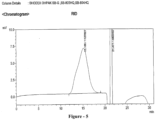
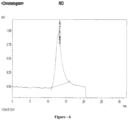
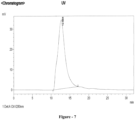
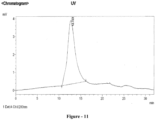
- the standard requirements of WHO are proteins 10 mg/g, nucleic acids 20 mg/g, O-acetyl content not less than 2 mmol/g of Vi-polysaccharide, molecular size of 50% polysaccharide should elute before 0.25 kDa, Identity by immune precipitation method and sterility test passing.
- the dried Vi-polysaccharide specifications are: protein 10 mg/g, nucleic acids 10 mg/g, O-acetyl groups 2 mmol/g, Not less than 50 per cent of the polysaccharide to be found in the pool containing fractions eluted before kDa 0.25, identification using a immunoprecipitation method, and bacterial endotoxin test. These specifications are similar to the WHO TRS 840, British pharmacopoeia (2010) and Indian pharmacopoeia (2010).
Landscapes
- Health & Medical Sciences (AREA)
- Life Sciences & Earth Sciences (AREA)
- Chemical & Material Sciences (AREA)
- General Health & Medical Sciences (AREA)
- Medicinal Chemistry (AREA)
- Pharmacology & Pharmacy (AREA)
- Veterinary Medicine (AREA)
- Public Health (AREA)
- Animal Behavior & Ethology (AREA)
- Virology (AREA)
- Epidemiology (AREA)
- Immunology (AREA)
- Microbiology (AREA)
- Mycology (AREA)
- Bioinformatics & Cheminformatics (AREA)
- Engineering & Computer Science (AREA)
- Organic Chemistry (AREA)
- Molecular Biology (AREA)
- Proteomics, Peptides & Aminoacids (AREA)
- Communicable Diseases (AREA)
- Chemical Kinetics & Catalysis (AREA)
- General Chemical & Material Sciences (AREA)
- Oncology (AREA)
- Nuclear Medicine, Radiotherapy & Molecular Imaging (AREA)
- Genetics & Genomics (AREA)
- Biochemistry (AREA)
- Zoology (AREA)
- Wood Science & Technology (AREA)
- Pulmonology (AREA)
- Toxicology (AREA)
- Biotechnology (AREA)
- Biomedical Technology (AREA)
- General Engineering & Computer Science (AREA)
- Gastroenterology & Hepatology (AREA)
- Biophysics (AREA)
- Medicines Containing Antibodies Or Antigens For Use As Internal Diagnostic Agents (AREA)
- Preparation Of Compounds By Using Micro-Organisms (AREA)
Claims (3)
- Einzeldosis-Impfstoffzubereitung zur Verwendung bei der Prävention von durch Salmonella typhi verursachtem Typhus, umfassend ein kapsuläres Vi-Polysaccharid (ViPs) von Salmonella typhi, das ohne ein ADH-Linkermolekül mit einem Trägerprotein von Tetanus-Toxoid als Impfstoffantigen konjugiert ist, wobei eine Einzeldosis der Impfstoffzubereitung ausreichend ist, um die erforderliche T-abhängige Immunantwort gegen S. typhi einschließlich bei Kindern im Alter von unter 2 Jahren hervorzurufen, wobei der Impfstoff 5 µg bis 25 µg des Salmonella-typhi-Vi-Polysaccharid-Trägerprotein-Konjugatimpfstoffantigens umfasst, das nach einem Verfahren erhalten wird, das Folgendes umfasst:a. einen Fed-Batch-Modus der Kultivierung, wobei man gereinigte ViPs mit einem Zufuhrmedium erhält, wobei das Zufuhrmedium das Zuführen einer Lösung umfasst, die Glucose mit einer Konzentration in einem Bereich von 1 bis 2 mg/ml bei einem pH-Wert, der im Bereich von 6,90 bis 7,20 gehalten wird, und einer zwischen 40% und 60% gehaltenen Menge an gelöstem Sauerstoff enthält, wobei eine Ammoniaklösung (50%) zusammen mit dem Zufuhrmedium als Stickstoffquelle zugeführt wurde;b. Größenreduktion von ViPs, wobei die ViPs in einer Konzentration von 5-7,5 mg/ml einer Hochdruckhomogenisierung bei 1500 bar und 2-8 °C unterzieht und dieselbe Aktivität über wenigstens 45 Durchgänge wiederholt, oder durch einen Mikrowellenherd, so dass eine entsprechende Molekülgröße von gereinigten ViPs von ungefähr 250 kDa erhalten wird;c. Behandeln der gereinigten ViPs aus Schritt (b) mit einer Konzentration von 5 mg/ml bis 7,5 mg/ml gereinigter ViPs von ca. 250 kDa in Gegenwart eines Vernetzungsmittels EDAC unter Bildung des Vi-Polysaccharid-Trägerprotein-Konjugats;d. Diafiltrieren des ViP-Trägerprotein-Konjugats aus Schritt (c) durch kontinuierlichen Pufferaustausch mit phosphatgepufferter Kochsalzlösung mit einer 1000-kDa-Membran, wobei man das gereinigte ViPs-Tetanus-Toxoid-Impfstoffantigen erhält;wobei die Molekülgröße des ViPs-Trägerprotein-Konjugatmoleküls im Bereich zwischen 0,25 kDa und 0,35 kDa liegt.
- Impfstoffzubereitung zur Verwendung gemäß Anspruch 1, wobei das Impfstoffantigen in einer Konzentration von 25 µg pro Dosis vorhanden ist.
- Impfstoffzubereitung zur Verwendung gemäß Anspruch 1, die im Falle von Stechampullen mit mehreren Dosen weiterhin 2-Phenoxyethanol als Stabilisator umfasst.
Applications Claiming Priority (3)
| Application Number | Priority Date | Filing Date | Title |
|---|---|---|---|
| IN3750CH2013 | 2013-08-24 | ||
| EP14841291.9A EP3035957B1 (de) | 2013-08-24 | 2014-08-19 | Bakterieller impfstoff und verfahren zur herstellung davon |
| PCT/IN2014/000530 WO2015029056A1 (en) | 2013-08-24 | 2014-08-19 | A bacterial vaccine and methods for manufacture thereof |
Related Parent Applications (2)
| Application Number | Title | Priority Date | Filing Date |
|---|---|---|---|
| EP14841291.9A Division EP3035957B1 (de) | 2013-08-24 | 2014-08-19 | Bakterieller impfstoff und verfahren zur herstellung davon |
| EP14841291.9A Division-Into EP3035957B1 (de) | 2013-08-24 | 2014-08-19 | Bakterieller impfstoff und verfahren zur herstellung davon |
Publications (2)
| Publication Number | Publication Date |
|---|---|
| EP3329935A1 EP3329935A1 (de) | 2018-06-06 |
| EP3329935B1 true EP3329935B1 (de) | 2025-01-08 |
Family
ID=52585707
Family Applications (3)
| Application Number | Title | Priority Date | Filing Date |
|---|---|---|---|
| EP17197816.6A Active EP3329935B1 (de) | 2013-08-24 | 2014-08-19 | Bakterieller impfstoff und verfahren zur herstellung davon |
| EP14841291.9A Active EP3035957B1 (de) | 2013-08-24 | 2014-08-19 | Bakterieller impfstoff und verfahren zur herstellung davon |
| EP17197818.2A Pending EP3335727A1 (de) | 2013-08-24 | 2014-08-19 | Bakterieller impfstoff und verfahren zur herstellung davon |
Family Applications After (2)
| Application Number | Title | Priority Date | Filing Date |
|---|---|---|---|
| EP14841291.9A Active EP3035957B1 (de) | 2013-08-24 | 2014-08-19 | Bakterieller impfstoff und verfahren zur herstellung davon |
| EP17197818.2A Pending EP3335727A1 (de) | 2013-08-24 | 2014-08-19 | Bakterieller impfstoff und verfahren zur herstellung davon |
Country Status (13)
| Country | Link |
|---|---|
| US (4) | US10046039B2 (de) |
| EP (3) | EP3329935B1 (de) |
| KR (2) | KR102183569B1 (de) |
| CN (2) | CN105744951B (de) |
| AU (1) | AU2014313699B2 (de) |
| DK (1) | DK3035957T3 (de) |
| MX (1) | MX365726B (de) |
| MY (1) | MY177944A (de) |
| PH (1) | PH12016500360A1 (de) |
| RU (1) | RU2684615C2 (de) |
| UA (1) | UA119244C2 (de) |
| WO (1) | WO2015029056A1 (de) |
| ZA (1) | ZA201601123B (de) |
Families Citing this family (10)
| Publication number | Priority date | Publication date | Assignee | Title |
|---|---|---|---|---|
| WO2018102585A1 (en) * | 2016-11-30 | 2018-06-07 | Advaxis, Inc. | Personalized immunotherapy in combination with immunotherapy targeting recurrent cancer mutations |
| SG10202105561PA (en) | 2016-11-30 | 2021-07-29 | Advaxis Inc | Immunogenic compositions targeting recurrent cancer mutations and methods of use thereof |
| CN111542339B (zh) * | 2017-11-06 | 2024-06-04 | Ozq私人有限公司 | 疫苗 |
| KR20210092224A (ko) * | 2018-11-10 | 2021-07-23 | 브하라트 바이오테크 인터내셔날 리미티드 | 다가 당접합체 면역원성 조성물 |
| JOP20200214A1 (ar) * | 2019-09-03 | 2021-03-03 | Serum Institute Of India Pvt Ltd | تركيبات مولدة للمناعة ضد الأمراض المعوية وطرق لتحضيرها |
| KR102493192B1 (ko) * | 2021-07-20 | 2023-01-30 | 에스케이바이오사이언스(주) | 살모넬라 타이피 유래의 피막 다당류-단백질 접합체를 포함하는 백신 조성물 |
| CN113899710A (zh) * | 2021-09-26 | 2022-01-07 | 罗益(无锡)生物制药有限公司 | 一种测定伤寒联合疫苗中糖的含量的方法 |
| US12138399B2 (en) | 2021-10-28 | 2024-11-12 | Te Connectivity Solutions Gmbh | Sensor assembly with improved performance and connection |
| WO2024107677A1 (en) * | 2022-11-14 | 2024-05-23 | Elanco Us Inc. | Salmonella vaccine compositions and methods thereof |
| CN120053379A (zh) * | 2023-11-30 | 2025-05-30 | 沈阳药科大学 | 瘤内自增殖增强的溶瘤微生物递送系统的构建及其应用 |
Family Cites Families (14)
| Publication number | Priority date | Publication date | Assignee | Title |
|---|---|---|---|---|
| US5738855A (en) | 1994-10-17 | 1998-04-14 | The United States Of America As Represented By The Secretary Of The Department Of Health And Human Services | Synthesis of typhoid fever vaccine from a plant or fruit polysaccharide |
| WO1998026799A1 (en) * | 1996-12-18 | 1998-06-25 | The Government Of The United States Of America, Represented By The Secretary, Department Of Health And Human Services | Conjugate vaccine for salmonella paratyphi a |
| WO2000033882A1 (en) | 1998-12-04 | 2000-06-15 | The Government Of The United States Of America As Represented By The Secretary, Department Of Health And Human Services | A vi-repa conjugate vaccine for immunization against salmonella typhi |
| US6797275B1 (en) * | 1998-12-04 | 2004-09-28 | The United States Of America As Represented By The Department Of Health And Human Services | Method of immunizing humans against Salmonella typhi using a Vi-rEPA conjugate vaccine |
| US20030199466A1 (en) | 2001-06-21 | 2003-10-23 | Fearon Karen L. | Chimeric immunomodulatory compounds and methods of using the same - ll |
| CN1404873A (zh) | 2002-11-22 | 2003-03-26 | 北京绿竹生物技术有限责任公司 | 一种伤寒疫苗 |
| EP1931389B1 (de) | 2005-10-04 | 2010-07-14 | Defence Research & Development Organisation | Ein impfstoff |
| GB0700135D0 (en) | 2007-01-04 | 2007-02-14 | Glaxosmithkline Biolog Sa | Vaccine |
| GB0810894D0 (en) * | 2008-06-13 | 2008-07-23 | Novartis Vaccines & Diagnostic | Conjugated saccharide |
| RU2428991C9 (ru) * | 2010-06-24 | 2011-12-27 | ОБЩЕСТВО С ОГРАНИЧЕННОЙ ОТВЕТСТВЕННОСТЬЮ "НПО Петровакс Фарм" | Сополимеры гетероцепных алифатических поли-n-оксидов, вакцинирующие и лекарственные средства на их основе |
| WO2012164480A1 (en) * | 2011-05-30 | 2012-12-06 | National Institute Of Immunology | A vaccine composition capable of inducing memory antibody response from single point immunization |
| TR201909110T4 (tr) | 2011-09-14 | 2019-07-22 | Glaxosmithkline Biologicals Sa | Sakarit-protein glikokonjugatları yapmaya yönelik yöntemler. |
| DK2809349T3 (da) * | 2012-01-30 | 2019-02-18 | Serum Institute Of India Pvt Ltd | Immunogen sammensætning |
| CN104487086B (zh) * | 2012-07-07 | 2019-08-30 | 巴拉特生物技术国际有限公司 | 无动物源的不含酒精的疫苗组合物及其制备方法 |
-
2014
- 2014-08-19 EP EP17197816.6A patent/EP3329935B1/de active Active
- 2014-08-19 MY MYPI2016000339A patent/MY177944A/en unknown
- 2014-08-19 CN CN201480057921.XA patent/CN105744951B/zh active Active
- 2014-08-19 EP EP14841291.9A patent/EP3035957B1/de active Active
- 2014-08-19 DK DK14841291.9T patent/DK3035957T3/da active
- 2014-08-19 RU RU2016110576A patent/RU2684615C2/ru active
- 2014-08-19 CN CN202110215238.6A patent/CN112999342B/zh active Active
- 2014-08-19 MX MX2016002386A patent/MX365726B/es active IP Right Grant
- 2014-08-19 US US14/913,816 patent/US10046039B2/en active Active
- 2014-08-19 KR KR1020167007378A patent/KR102183569B1/ko active Active
- 2014-08-19 AU AU2014313699A patent/AU2014313699B2/en active Active
- 2014-08-19 WO PCT/IN2014/000530 patent/WO2015029056A1/en not_active Ceased
- 2014-08-19 KR KR1020207033543A patent/KR102447303B1/ko active Active
- 2014-08-19 UA UAA201602951A patent/UA119244C2/uk unknown
- 2014-08-19 EP EP17197818.2A patent/EP3335727A1/de active Pending
-
2016
- 2016-02-18 ZA ZA2016/01123A patent/ZA201601123B/en unknown
- 2016-02-23 PH PH12016500360A patent/PH12016500360A1/en unknown
-
2018
- 2018-08-01 US US16/051,933 patent/US10576138B2/en active Active
- 2018-08-01 US US16/051,961 patent/US10702595B2/en active Active
- 2018-08-02 US US16/052,843 patent/US10758604B2/en active Active
Non-Patent Citations (1)
| Title |
|---|
| CHINNASAMI DR BALAJI ET AL: "Safety and Immunogenicity of Salmonella Typhi Vi conjugate vaccine (Peda Typh TM ) in children upto five years", INTERNATIONAL JOURNAL OF SCIENTIFIC AND RESEARCH PUBLICATIONS, vol. 3, no. 2, 1 February 2013 (2013-02-01), pages 1 - 5, XP093016585, Retrieved from the Internet <URL:https://citeseerx.ist.psu.edu/document?repid=rep1&type=pdf&doi=902498422610fa6d7ea7577a787f17b4793e5383> * |
Also Published As
Similar Documents
| Publication | Publication Date | Title |
|---|---|---|
| US10758604B2 (en) | Methods for the prevention of Salmonella infections | |
| JP7030235B2 (ja) | 多価肺炎球菌多糖体-タンパク質複合体組成物 | |
| JP7001687B2 (ja) | 多価肺炎球菌多糖体-タンパク質コンジュゲート組成物 | |
| AU2014313699A1 (en) | A bacterial vaccine and methods for manufacture thereof | |
| JP7001686B2 (ja) | 多価肺炎球菌多糖体-タンパク質コンジュゲート組成物 | |
| JP2021512870A (ja) | 多価肺炎球菌多糖体−タンパク質複合体組成物 | |
| EA042219B1 (ru) | Поливалентная пневмококковая полисахаридно-белковая конъюгатная композиция |
Legal Events
| Date | Code | Title | Description |
|---|---|---|---|
| STAA | Information on the status of an ep patent application or granted ep patent |
Free format text: STATUS: UNKNOWN |
|
| PUAI | Public reference made under article 153(3) epc to a published international application that has entered the european phase |
Free format text: ORIGINAL CODE: 0009012 |
|
| STAA | Information on the status of an ep patent application or granted ep patent |
Free format text: STATUS: THE APPLICATION HAS BEEN PUBLISHED |
|
| AC | Divisional application: reference to earlier application |
Ref document number: 3035957 Country of ref document: EP Kind code of ref document: P |
|
| AK | Designated contracting states |
Kind code of ref document: A1 Designated state(s): AL AT BE BG CH CY CZ DE DK EE ES FI FR GB GR HR HU IE IS IT LI LT LU LV MC MK MT NL NO PL PT RO RS SE SI SK SM TR |
|
| STAA | Information on the status of an ep patent application or granted ep patent |
Free format text: STATUS: REQUEST FOR EXAMINATION WAS MADE |
|
| 17P | Request for examination filed |
Effective date: 20181206 |
|
| RBV | Designated contracting states (corrected) |
Designated state(s): AL AT BE BG CH CY CZ DE DK EE ES FI FR GB GR HR HU IE IS IT LI LT LU LV MC MK MT NL NO PL PT RO RS SE SI SK SM TR |
|
| TPAC | Observations filed by third parties |
Free format text: ORIGINAL CODE: EPIDOSNTIPA |
|
| STAA | Information on the status of an ep patent application or granted ep patent |
Free format text: STATUS: EXAMINATION IS IN PROGRESS |
|
| 17Q | First examination report despatched |
Effective date: 20191217 |
|
| GRAP | Despatch of communication of intention to grant a patent |
Free format text: ORIGINAL CODE: EPIDOSNIGR1 |
|
| STAA | Information on the status of an ep patent application or granted ep patent |
Free format text: STATUS: GRANT OF PATENT IS INTENDED |
|
| INTG | Intention to grant announced |
Effective date: 20240805 |
|
| GRAS | Grant fee paid |
Free format text: ORIGINAL CODE: EPIDOSNIGR3 |
|
| GRAA | (expected) grant |
Free format text: ORIGINAL CODE: 0009210 |
|
| STAA | Information on the status of an ep patent application or granted ep patent |
Free format text: STATUS: THE PATENT HAS BEEN GRANTED |
|
| AC | Divisional application: reference to earlier application |
Ref document number: 3035957 Country of ref document: EP Kind code of ref document: P |
|
| AK | Designated contracting states |
Kind code of ref document: B1 Designated state(s): AL AT BE BG CH CY CZ DE DK EE ES FI FR GB GR HR HU IE IS IT LI LT LU LV MC MK MT NL NO PL PT RO RS SE SI SK SM TR |
|
| REG | Reference to a national code |
Ref country code: GB Ref legal event code: FG4D |
|
| REG | Reference to a national code |
Ref country code: CH Ref legal event code: EP |
|
| REG | Reference to a national code |
Ref country code: DE Ref legal event code: R096 Ref document number: 602014091440 Country of ref document: DE |
|
| REG | Reference to a national code |
Ref country code: IE Ref legal event code: FG4D |
|
| REG | Reference to a national code |
Ref country code: SE Ref legal event code: TRGR |
|
| REG | Reference to a national code |
Ref country code: LT Ref legal event code: MG9D |
|
| REG | Reference to a national code |
Ref country code: NL Ref legal event code: MP Effective date: 20250108 |
|
| REG | Reference to a national code |
Ref country code: AT Ref legal event code: MK05 Ref document number: 1757919 Country of ref document: AT Kind code of ref document: T Effective date: 20250108 |
|
| PG25 | Lapsed in a contracting state [announced via postgrant information from national office to epo] |
Ref country code: NL Free format text: LAPSE BECAUSE OF FAILURE TO SUBMIT A TRANSLATION OF THE DESCRIPTION OR TO PAY THE FEE WITHIN THE PRESCRIBED TIME-LIMIT Effective date: 20250108 |
|
| PG25 | Lapsed in a contracting state [announced via postgrant information from national office to epo] |
Ref country code: RS Free format text: LAPSE BECAUSE OF FAILURE TO SUBMIT A TRANSLATION OF THE DESCRIPTION OR TO PAY THE FEE WITHIN THE PRESCRIBED TIME-LIMIT Effective date: 20250408 |
|
| PG25 | Lapsed in a contracting state [announced via postgrant information from national office to epo] |
Ref country code: FI Free format text: LAPSE BECAUSE OF FAILURE TO SUBMIT A TRANSLATION OF THE DESCRIPTION OR TO PAY THE FEE WITHIN THE PRESCRIBED TIME-LIMIT Effective date: 20250108 |
|
| PG25 | Lapsed in a contracting state [announced via postgrant information from national office to epo] |
Ref country code: PL Free format text: LAPSE BECAUSE OF FAILURE TO SUBMIT A TRANSLATION OF THE DESCRIPTION OR TO PAY THE FEE WITHIN THE PRESCRIBED TIME-LIMIT Effective date: 20250108 |
|
| PG25 | Lapsed in a contracting state [announced via postgrant information from national office to epo] |
Ref country code: ES Free format text: LAPSE BECAUSE OF FAILURE TO SUBMIT A TRANSLATION OF THE DESCRIPTION OR TO PAY THE FEE WITHIN THE PRESCRIBED TIME-LIMIT Effective date: 20250108 |
|
| PG25 | Lapsed in a contracting state [announced via postgrant information from national office to epo] |
Ref country code: IS Free format text: LAPSE BECAUSE OF FAILURE TO SUBMIT A TRANSLATION OF THE DESCRIPTION OR TO PAY THE FEE WITHIN THE PRESCRIBED TIME-LIMIT Effective date: 20250508 Ref country code: NO Free format text: LAPSE BECAUSE OF FAILURE TO SUBMIT A TRANSLATION OF THE DESCRIPTION OR TO PAY THE FEE WITHIN THE PRESCRIBED TIME-LIMIT Effective date: 20250408 |
|
| PG25 | Lapsed in a contracting state [announced via postgrant information from national office to epo] |
Ref country code: HR Free format text: LAPSE BECAUSE OF FAILURE TO SUBMIT A TRANSLATION OF THE DESCRIPTION OR TO PAY THE FEE WITHIN THE PRESCRIBED TIME-LIMIT Effective date: 20250108 |
|
| PG25 | Lapsed in a contracting state [announced via postgrant information from national office to epo] |
Ref country code: PT Free format text: LAPSE BECAUSE OF FAILURE TO SUBMIT A TRANSLATION OF THE DESCRIPTION OR TO PAY THE FEE WITHIN THE PRESCRIBED TIME-LIMIT Effective date: 20250508 Ref country code: LV Free format text: LAPSE BECAUSE OF FAILURE TO SUBMIT A TRANSLATION OF THE DESCRIPTION OR TO PAY THE FEE WITHIN THE PRESCRIBED TIME-LIMIT Effective date: 20250108 |
|
| PG25 | Lapsed in a contracting state [announced via postgrant information from national office to epo] |
Ref country code: BG Free format text: LAPSE BECAUSE OF FAILURE TO SUBMIT A TRANSLATION OF THE DESCRIPTION OR TO PAY THE FEE WITHIN THE PRESCRIBED TIME-LIMIT Effective date: 20250108 Ref country code: GR Free format text: LAPSE BECAUSE OF FAILURE TO SUBMIT A TRANSLATION OF THE DESCRIPTION OR TO PAY THE FEE WITHIN THE PRESCRIBED TIME-LIMIT Effective date: 20250409 |
|
| PG25 | Lapsed in a contracting state [announced via postgrant information from national office to epo] |
Ref country code: AT Free format text: LAPSE BECAUSE OF FAILURE TO SUBMIT A TRANSLATION OF THE DESCRIPTION OR TO PAY THE FEE WITHIN THE PRESCRIBED TIME-LIMIT Effective date: 20250108 |
|
| PG25 | Lapsed in a contracting state [announced via postgrant information from national office to epo] |
Ref country code: SM Free format text: LAPSE BECAUSE OF FAILURE TO SUBMIT A TRANSLATION OF THE DESCRIPTION OR TO PAY THE FEE WITHIN THE PRESCRIBED TIME-LIMIT Effective date: 20250108 |
|
| REG | Reference to a national code |
Ref country code: DE Ref legal event code: R097 Ref document number: 602014091440 Country of ref document: DE |
|
| PG25 | Lapsed in a contracting state [announced via postgrant information from national office to epo] |
Ref country code: DK Free format text: LAPSE BECAUSE OF FAILURE TO SUBMIT A TRANSLATION OF THE DESCRIPTION OR TO PAY THE FEE WITHIN THE PRESCRIBED TIME-LIMIT Effective date: 20250108 |
|
| PGFP | Annual fee paid to national office [announced via postgrant information from national office to epo] |
Ref country code: DE Payment date: 20250815 Year of fee payment: 12 |
|
| PGFP | Annual fee paid to national office [announced via postgrant information from national office to epo] |
Ref country code: GB Payment date: 20250822 Year of fee payment: 12 |
|
| PGFP | Annual fee paid to national office [announced via postgrant information from national office to epo] |
Ref country code: FR Payment date: 20250821 Year of fee payment: 12 |
|
| PGFP | Annual fee paid to national office [announced via postgrant information from national office to epo] |
Ref country code: SE Payment date: 20250821 Year of fee payment: 12 |
|
| PG25 | Lapsed in a contracting state [announced via postgrant information from national office to epo] |
Ref country code: EE Free format text: LAPSE BECAUSE OF FAILURE TO SUBMIT A TRANSLATION OF THE DESCRIPTION OR TO PAY THE FEE WITHIN THE PRESCRIBED TIME-LIMIT Effective date: 20250108 Ref country code: CZ Free format text: LAPSE BECAUSE OF FAILURE TO SUBMIT A TRANSLATION OF THE DESCRIPTION OR TO PAY THE FEE WITHIN THE PRESCRIBED TIME-LIMIT Effective date: 20250108 |
|
| PG25 | Lapsed in a contracting state [announced via postgrant information from national office to epo] |
Ref country code: RO Free format text: LAPSE BECAUSE OF FAILURE TO SUBMIT A TRANSLATION OF THE DESCRIPTION OR TO PAY THE FEE WITHIN THE PRESCRIBED TIME-LIMIT Effective date: 20250108 |
|
| PG25 | Lapsed in a contracting state [announced via postgrant information from national office to epo] |
Ref country code: SK Free format text: LAPSE BECAUSE OF FAILURE TO SUBMIT A TRANSLATION OF THE DESCRIPTION OR TO PAY THE FEE WITHIN THE PRESCRIBED TIME-LIMIT Effective date: 20250108 |
|
| PLBE | No opposition filed within time limit |
Free format text: ORIGINAL CODE: 0009261 |
|
| STAA | Information on the status of an ep patent application or granted ep patent |
Free format text: STATUS: NO OPPOSITION FILED WITHIN TIME LIMIT |
|
| 26N | No opposition filed |
Effective date: 20251009 |
|
| PG25 | Lapsed in a contracting state [announced via postgrant information from national office to epo] |
Ref country code: IT Free format text: LAPSE BECAUSE OF FAILURE TO SUBMIT A TRANSLATION OF THE DESCRIPTION OR TO PAY THE FEE WITHIN THE PRESCRIBED TIME-LIMIT Effective date: 20250108 |