EP3274451B1 - Umwandlung von fructose in allulose unter verwendung eines burkholderia enzyms - Google Patents
Umwandlung von fructose in allulose unter verwendung eines burkholderia enzyms Download PDFInfo
- Publication number
- EP3274451B1 EP3274451B1 EP16773840.0A EP16773840A EP3274451B1 EP 3274451 B1 EP3274451 B1 EP 3274451B1 EP 16773840 A EP16773840 A EP 16773840A EP 3274451 B1 EP3274451 B1 EP 3274451B1
- Authority
- EP
- European Patent Office
- Prior art keywords
- seq
- psicose
- epimerase
- fructose
- enzyme
- Prior art date
- Legal status (The legal status is an assumption and is not a legal conclusion. Google has not performed a legal analysis and makes no representation as to the accuracy of the status listed.)
- Active
Links
Images







Classifications
-
- C—CHEMISTRY; METALLURGY
- C12—BIOCHEMISTRY; BEER; SPIRITS; WINE; VINEGAR; MICROBIOLOGY; ENZYMOLOGY; MUTATION OR GENETIC ENGINEERING
- C12N—MICROORGANISMS OR ENZYMES; COMPOSITIONS THEREOF; PROPAGATING, PRESERVING, OR MAINTAINING MICROORGANISMS; MUTATION OR GENETIC ENGINEERING; CULTURE MEDIA
- C12N9/00—Enzymes; Proenzymes; Compositions thereof; Processes for preparing, activating, inhibiting, separating or purifying enzymes
- C12N9/90—Isomerases (5.)
-
- C—CHEMISTRY; METALLURGY
- C12—BIOCHEMISTRY; BEER; SPIRITS; WINE; VINEGAR; MICROBIOLOGY; ENZYMOLOGY; MUTATION OR GENETIC ENGINEERING
- C12N—MICROORGANISMS OR ENZYMES; COMPOSITIONS THEREOF; PROPAGATING, PRESERVING, OR MAINTAINING MICROORGANISMS; MUTATION OR GENETIC ENGINEERING; CULTURE MEDIA
- C12N11/00—Carrier-bound or immobilised enzymes; Carrier-bound or immobilised microbial cells; Preparation thereof
- C12N11/02—Enzymes or microbial cells immobilised on or in an organic carrier
- C12N11/08—Enzymes or microbial cells immobilised on or in an organic carrier the carrier being a synthetic polymer
- C12N11/082—Enzymes or microbial cells immobilised on or in an organic carrier the carrier being a synthetic polymer obtained by reactions only involving carbon-to-carbon unsaturated bonds
- C12N11/087—Acrylic polymers
-
- C—CHEMISTRY; METALLURGY
- C12—BIOCHEMISTRY; BEER; SPIRITS; WINE; VINEGAR; MICROBIOLOGY; ENZYMOLOGY; MUTATION OR GENETIC ENGINEERING
- C12N—MICROORGANISMS OR ENZYMES; COMPOSITIONS THEREOF; PROPAGATING, PRESERVING, OR MAINTAINING MICROORGANISMS; MUTATION OR GENETIC ENGINEERING; CULTURE MEDIA
- C12N11/00—Carrier-bound or immobilised enzymes; Carrier-bound or immobilised microbial cells; Preparation thereof
- C12N11/02—Enzymes or microbial cells immobilised on or in an organic carrier
- C12N11/08—Enzymes or microbial cells immobilised on or in an organic carrier the carrier being a synthetic polymer
- C12N11/089—Enzymes or microbial cells immobilised on or in an organic carrier the carrier being a synthetic polymer obtained otherwise than by reactions only involving carbon-to-carbon unsaturated bonds
- C12N11/091—Phenol resins; Amino resins
-
- C—CHEMISTRY; METALLURGY
- C12—BIOCHEMISTRY; BEER; SPIRITS; WINE; VINEGAR; MICROBIOLOGY; ENZYMOLOGY; MUTATION OR GENETIC ENGINEERING
- C12P—FERMENTATION OR ENZYME-USING PROCESSES TO SYNTHESISE A DESIRED CHEMICAL COMPOUND OR COMPOSITION OR TO SEPARATE OPTICAL ISOMERS FROM A RACEMIC MIXTURE
- C12P19/00—Preparation of compounds containing saccharide radicals
- C12P19/02—Monosaccharides
-
- C—CHEMISTRY; METALLURGY
- C12—BIOCHEMISTRY; BEER; SPIRITS; WINE; VINEGAR; MICROBIOLOGY; ENZYMOLOGY; MUTATION OR GENETIC ENGINEERING
- C12P—FERMENTATION OR ENZYME-USING PROCESSES TO SYNTHESISE A DESIRED CHEMICAL COMPOUND OR COMPOSITION OR TO SEPARATE OPTICAL ISOMERS FROM A RACEMIC MIXTURE
- C12P19/00—Preparation of compounds containing saccharide radicals
- C12P19/24—Preparation of compounds containing saccharide radicals produced by the action of an isomerase, e.g. fructose
-
- C—CHEMISTRY; METALLURGY
- C12—BIOCHEMISTRY; BEER; SPIRITS; WINE; VINEGAR; MICROBIOLOGY; ENZYMOLOGY; MUTATION OR GENETIC ENGINEERING
- C12Y—ENZYMES
- C12Y501/00—Racemaces and epimerases (5.1)
- C12Y501/03—Racemaces and epimerases (5.1) acting on carbohydrates and derivatives (5.1.3)
Definitions
- D-Allulose is the C-3 epimer of D-fructose and is a low-caloric sweetener. Allulose, also widely known as D-psicose, is very similar to glucose in regards to intensity and sweetness. However, because the body metabolizes allulose differently than most sugars, such as glucose and fructose, its caloric value is significantly lower. In fact, its caloric value is nearly zero. Like glucose, D-allulose has about 70 % of the relative sweetness of sucrose but only provides 0.2 kcal/mol energy.
- D-tagatose-3-epimerase DT3E
- D-psicose-3-epimerase Figure 1
- the conversion of D-fructose to D-allulose will diversify the traditional sweetener product portfolio associated with corn processing by adding a natural low caloric sweetener and bulking agent to the traditional portfolio of sweeteners derived from corn starch, i.e. corn syrup, high fructose corn syrup (HFCS), glucose and fructose.
- DT3E D-tagatose-3-epimerase
- Figure 1 D-psicose-3-epimerase
- US Patent Application No: 20150210996 discloses an enzyme from the soil microorganism Desmospora sp. that has psicose-3-epimerase activity. This enzyme is shown to convert D-fructose to D-allulose (also known as D-psicose).
- US Patent 8,030,035 and WO2011/040708 disclose an enzyme derived from Agrobacterium tumefaciens that has psicose-3-epimerase activity.
- the present invention discloses a novel class of psicose-3-epimases from the betaproteobacteria Burkholderia which is a symbiont found the posterior midgut of the bean insect Riptortus pedestris. This symbiotic microorganism is thought to be essential for host survival and reproduction and plays pivotal roles in host metabolism by providing essential nutrients, digesting food materials and/ or influencing host plant use, resistance against parasitoids and body color change.
- an exemplary psicose-3-epimase gene from a Burkholderia sp. strain RPE64 was expressed in an E. colt production strain and the enzyme was isolated and evaluated in both benchtop and pilot scale production environments. The enzyme was evaluated for commercial allulose production by immobilization of the enzyme on a solid matrix weak base anion exchange resin as described in more detail herein.
- WO 2015/ 032761 relates to D-psicose-epimerase and methods of its use in the peparation of psicose from fructose. It discloses a D-psicose-3-epimerase from P. cichorii which is 88.3 % identical to SEQ I D NO: 1 disclosed herein.
- Gen Bank Accession No. BAN26336.1 discloses a sequence from Burkholderia RP64 that is identical to SEQ I D NO: 1 disclosed herein.
- the present invention describes a method of producing allulose comprising, contacting a solution containing fructose with a psicose-3-epimerase enzyme from a Burkholderia species having a polypeptide sequence selected from SEQ ID NO:1 and SEQ I D NO:12 for a time and under conditions suitable to convert at least a portion of the fructose to allulose.
- Certain embodiments include a method wherein the psicose-3-epimerase is immobilized on a solid matrix resin and used to convert fructose to allulose, preferably at temperatures between 50 ° and 70°C.
- Preferred embodiments include a method wherein the solid matrix is a weak base anion exchange resin.
- Exemplary embodiments of the invention include a method wherein the solid matrix resin is a phenol formaldehyde based condensate resin functionalized to contain tertiary amine free base groups, exemplified by DUOLITE TM A568. Additional exemplary embodiments of the invention include a method wherein the solid matrix resin is a methacrylic acid based resin functionalized to contain C2-C6 amine linkages, such as Lifetech TM ECR8315, Lifetech TM ECR 8415, and SEPABEADS TM EC-HA.
- Additional embodiments of the invention include a method wherein the fructose solution is selected from solubilized crystalline fructose and high fructose corn syrup (HFCS).
- Preferred embodiments of the invention include a method of wherein the fructose solution has a dissolved solids content of about 50%w/w, the contacting is done at a pH range of 6.5-7.7 in the presence of magnesium at a concentration of 24-50 ppm (corresponding to 24 - 5 0 mg/ L), and is done with a flow rate of 1-4 volumes of fructose solution per bed volume of the solid matrix resin.
- HFCS high fructose corn syrup
- inventions include a method wherein the psicose-3-epimirase enzyme is obtained from a microorganism containing a recombinant nucleic acid vector operably configured to express a nucleic acid sequence encoding the protein having a polypeptide sequence selected from SEQ ID NO: 1 and SEQ ID NO: 12.
- Preferred embodiments of the invention include a method wherein the microorganism is E. coli and B. subtillis.
- An additional aspect of the invention is a recombinant nucleic acid sequence operably configured to express a nucleic acid encoding psicose-3-epimerase enzyme having a polypeptide sequence of SEQ ID NO: 12.
- Another aspect of the invention is a microorganism transformed with a recombinant nucleic acid sequence operably configured to express a nucleic acid encoding psicose-3-epimerase having a polypeptide sequence selected from SEQ ID NO: 1 and SEQ ID NO: 12.
- Preferred embodiments of the invention include a microorganism selected from E. coli and B. subtillis.
- Additional aspects of the invention include a solid matrix resin containing a psicose-3-epimerase enzyme having a polypeptide sequence selected from SEQ ID NO:1 and SEQ I D NO: 12. Further aspects of the invention include a column containing the solid matrix resin which contains a psicose-3-epimerase enzyme having a polypeptide sequence selected from SEQ ID NO:1 and SEQ ID NO:12; and, configured to receive an input flow input flow of a solution to flow over the solid matrix resin and permit exit of an output flow of the solution.
- One aspect of the present invention is the discovery of a class of psicose-3-epimerase enzymes encoded by genes from the betaproteobacterial genus Burkholderia, which is exemplified herein by SEQ ID NO: 1, which is the protein sequence of a psicose-3-epimerase from a Burkholderia sp strain RPE 64 which is a symbiont found in the posterior midgut of the bean insect Riptortus pedestris.
- SEQ ID NO: 1 shows psicose-3-epimerase genes from this class, all of which share at least 84% amino acid sequence identity to SEQ ID NO: 1, all of which substantially differ from other psicose-3-epimerases disclosed for use in converting fructose to allulose, such as those from Clostridium sp. , Agrobacterium tumefaciens , Desmospora sp. that have previously been described in the art, and all of which, except for SEQ ID NO: 12, are not part of the claimed invention.
- SEQ ID NO: 1 only has 42% identity to the Desmospora sp polypeptide sequence disclosed by Woodyer et al.
- Clostridium cellulolyticum sequence described by Chan et al. has 42% identity to SEQ ID NO:1 and the Agrobacterium tumefaciens polypeptide described by US Patent 8,030,035 and WO2011/040708 only showed 41% identity to SEQ ID NO 1.
- An exception to this rule is the epimerase from Pseudomonas cichorii, (SEQ ID NO: 11) shown in Figure 10 , which has 88% sequence identity to SEQ ID NO: 1 but which is excluded from the present invention.
- SEQ ID NO: 1 was identified in a database by the National Center for Biotechnology Information (NCBI) as accession number YP_008039310 and was labeled as being a xylose isomerase gene. Prior to the present invention, it was not known that this enzyme has a psicose-3-epimerase activity capable of isomerizing fructose to allulose. In order to determine that the exemplary enzyme of the present invention displayed epimerase activity, the present inventors had the gene encoding the protein identified by accession number YP_008039310 chemically synthesized by GenScript (Biscataway, NJ).
- the synthetic DNA was created to include NdeI and XhoI restriction sites at the 5' and 3' ends of the polynucleotide in order to ensure simple cloning.
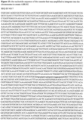
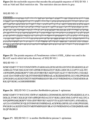
- the sequence of this synthesized polynucleotide is according to SEQ ID NO: 10 as shown in Figure 24 and is referred to herein as the BRPV3 gene cassette.
- the BRPV3 cassette was designed with the NdeI and XhoI restriction sites and was cloned into a NdeI/XhoI digested expression vector pET-22b+ obtained from Novagen, Inc. (Madison, WI) so the N terminus would be in frame with a polyhistidine tag sequence contained within the vector.
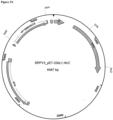
- the resulting expression vector is herein referred to as BRPV3_pET22b(+), a map of which is provided in Figure 2 .
- the expression vector BRPV3_pET22b(+) was transformed into the E . coli strain BL21(DE3) ( Studier, FW and BA Moffatt. Use of bacteriophage T7 RNA polymerase was used to direct selective high-level expression of cloned genes. J Mol Biol. 1986 May 5; 189(1):113-130 ) . The strain that resulted from this transformation is herein referred to as BL21(DE3)/BRPV3.
- coli K-12 derivative in the Keio collection Baba, T, T Ara, M Hasegawa, Y Takai, Y Okumura, M Baba, KA Datsenko, M Tomita, BL Wanner, and H Mori. Construction of Escherichia coli K-12 in-frame, single-gene knockout mutants: the Keio collection. Mol Syst Biol. 2006; 2:2006.0008 ).
- a kanamycin cassette has replaced the native thrC gene and is flanked by DNA sequences recognized by the FLP recombinase, an enzyme capable of excising the cassette.
- a P1 phage lysate generated from this thrC ::km R strain was used to transduce kanamycin resistance into BL21 (DE3).
- the transductants were transformed with a temperature sensitive ampicillin resistant plasmid pCP20 ( Cherepanov, PP and W Wackemagel. Gene disruption in Escherichia coli: TcR and KmR cassettes with the option of Flp-catalyzed excision of the antibiotic-resistance determinant. Gene 158:9-1 ) to transiently introduce the FLP recombinase and isolates that were sensitive to kanamycin and ampicillin were confirmed as being auxotrophic for threonine biosynthesis.
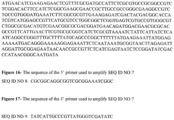
- the plasmid BRPV3_pET-22(b)+ was used as the template in a PCR reaction where the primers shown in Figures 10 and 11 (SEQ ID NO:2 and 3, respectively) were used to amplify the polynucleotide sequence that expresses the epimerase activity.
- the amplified PCR product and pET-22(b)+ were digested with the restriction enzymes NdeI and XhoI and ligated together to create the plasmid p-3-13_ pET-22(b)+.
- the 3' primer (SEQ ID NO: 3) contains a stop codon upstream of the XhoI restriction site so, once ligated, the His tag of the pET-22(b)+ expression vector is no longer in frame.
- the plasmid p-3-13_pET-22b (+) was digested with DraI and DraIII NEB restriction enzymes to remove all ampicillin resistance-encoding DNA.
- the thrC gene of E. coli K-12 was amplified with primers SEQ ID NO:4 and NO:5 (as seen in Figures 12 and 13 ) that appended extended homology to pET22b at the DraI and DraIII cut sites.
- the PCR and digested p-3-13_pET-22(b)+ plasmid were assembled by means of a Gibson Assembly Master Mix (NEB).
- ASR180 is an E. coli strain containing the antibiotic resistant marker free vector as indicated in Figure 23 .
- ASR182 which is an E. coli strain with a copy of the psicose-3-epimerase gene from Burkholderia RPE64 integrated into the chromosome
- a synthetic nucleotide cassette was made by Integrated DNA Technologies (Coralville, IA) according to SEQ ID NO: 7.
- the cassette functionally encodes a small piece of homologous DNA upstream of the thrC gene, the thrC gene, a T7 promoter, a sequence encoding the enzyme according to SEQ ID NO: 1 and a small piece of homologous DNA downstream of thrC.
- This cassette was amplified with Go Taq (Promega, Inc., Fitchburg, WI) using IDT primers according to SEQ ID NO: 8 and 9 ( Figures 16 and 17 , respectively).
- the amplified cassette and the plasmid pKD46 Datsenko, KA and BL Wanner.
- the plasmid pKD46 has a recombination mechanism capable of integrating the amplified cassette into the chromosome of BL21(DE3) thrC -.
- the cassette was integrated into the chromosome of BL21(DE3) thrC- by selecting for prototrophy on M9 minimal plates.
- the strain was cured of pKD46 by passage at 37 °C. Prototrophic isolates sensitive to ampicillin and expressing the desired enzymatic activity were characterized.
- strains ASR180 and ASR182 were constructed, small benchtop fermentations and large pilot scale fermentations were done as shown in the following examples. Isolation of the psicose-3-epimerase enzyme that was produced from these fermentations was done by immobilization onto solid matrix resins described in further detail in the examples below.
- Example 1 Small scale production of BL21DE3/BRPV3: After construction of the BL21DE3/BRPV3 strain, cultivation was done by first obtaining single colonies. Selected single colonies were inoculated into 15 mL of LB medium containing ampicillin (100 ug/mL) held in 50 mL flask. Cultures were incubated with shaking at 250 rpm at 30 °C on New Brunswick Scientific G25 Gyratory shakers. A 1% inoculum derived from overnight stage I cultures was used to initiate fresh LB cultures (500 mL) with antibiotics in a 2.7 L Fembach flask. The culture was incubated at 30 °C for 16 h with shaking at 250 rpm on a gyratory shaker.
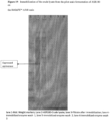
- Lane 4 is a SDS page gel analyzing different fraction after small scale purification.
- Lane 1 is a Pre-stained molecular weight markers
- Lane 2 is cell lysate
- Lane 3 is cell lysate eluate from the nickel column
- Lane 4 is Load FT
- Lane 5 is Wash
- Lane 6 is fraction 1
- Lane 7 is Fraction 2
- Lane 8 is Fraction 3
- Lane 9 is fraction 4
- Lane 10 is cell debris.
- Example 2 Large scale purification of psicose-3-epimerase from of BL21DE3/BRPV3
- BL21(DE3)/BRPV3 was cultured in a Biostat ® C-plus (Sartorius) fermenter. Seed cultures were initiated by inoculating 50 ⁇ l of frozen glycerol stock in a 250 mL flask containing 60 mL of LB Lenox media with ampicillin (100 ug/mL). The flask was shaken at 30 °C, 250 rpm for 16 h. The overnight culture were transferred to Biostat ® C-plus (Sartorius) fermenters containing 12 L of LB Lennox media with ampicillin (100 ug/mL). The fermenter was maintained at 30 °C, 30 % dissolved oxygen and at pH 6.8 ⁇ 0.1.
- the frozen cells were thawed and suspended in 100 mL lysis buffer (15 mM Tris Cl, 10 mM imidiazole, 300 mM NaCl, 2mM MnCl 2 , ph7.5).
- the cell were lysed using a microfluidizer (1.24 kbar (18,000 psi)) .
- the cell lysate was centrifuged at 15,000 g to separate cell debris. The supernatant was used for further purification.
- the active enzyme was purified using AKTA explorer FPLC system equipped with 40 mL of Ni-NTA column.
- the column was equilibrated with the lysis buffer and the supernatant was loaded onto the column at 6 ml/min. After all the cell lysate was loaded, the column was washed with 5 bed volumes of wash buffer (15 mM Tris. Cl, 30 mM imidiazole, 300 mM NaCl, 2 mM MnCl 2 , pH 7.5) to separate out all the other undesired proteins.
- wash buffer 15 mM Tris. Cl, 30 mM imidiazole, 300 mM NaCl, 2 mM MnCl 2 , pH 7.5
- Example 3 Purified psicose-3-epimerase enzyme from the fermentation as described in Example 1 and 2 was evaluated using an epimerase assay performed at 50 °C for 5 min in 50 mM TrisCl buffer (pH 7.5) containing 200 mM fructose and 40 ug of purified enzyme. The reaction was stopped by heating at 105 °C for 10 min. One unit of D-psicose 3-epimerase activity was defined as the amount of the enzyme required to produce 1 umol of psicose per min at pH 7.5 and 50 °C.
- Purified enzyme was diluted 10-fold into 50 mM tris buffer containing 2 mM MnClz, pH 7.5. This solution was incubated at different temperature (40-70 °C). At appropriate time after incubation at the desired temperature, an aliquot of enzyme sample (50 L) was withdrawn and evaluated for residual activity. The purified enzyme showed a similar level of enzyme activity at all temperatures tested. It was observed that the enzyme was catalytically active after incubating at 70 °C for 3 h. These results can be seen in Figure 6 . The bioconversion of fructose to allulose at 70 °C can also be seen in Figure 7 .
- Example 4 Immobilization of psicose-3-epimerase on solid matrix resins.
- the cell lysate from BL21(DE3)/BRPV3 as grown under the condition disclosed in Example 1 was screened for epimerase activity on several immobilization support resins.
- the results comparing the resins can be seen in Table 2 showing the activity of the present enzyme measured by GC analysis, which indicate that weak base solid matrix resins are the best support for immobilizing this enzyme.
- Table 2 further suggests that strong anion exchange resins, such as Lifetech TM ECR1504, Lifetech TM ECR1640, and Lifetech TM ECR1604, are not most suitable support resins for immobilizing the enzyme described herein.
- this psicose-3-epimerase has a high affinity for amino modified resin and shows high activity of the psicose-3-epimerase on these resins once immobilized.
- Table 2 Carrier # % water g wet U/g U/g dry % rec % activity in supernatant 1 Lifetech TM ECR8315F 78 1.13 300 1350 67 ⁇ 1 2 Lifetech TM ECR8415F 78 1.13 408 1834 92 ⁇ 1 363 1640 82 3 SEPABEADS TM EC-HA 63 0.68 700 1900 95 14 515 1392 70 4 Lifetech TM ECR1504 55 0.56 115 256 13 72 5 Lifetech TM ECR1640 72 0.89 103 370 18 79 6 Lifetech TM ECR1604 62 0.66 109 286 14 70 7 DUOLITE TM A568 66 0.74 636 1908 95 15 463 1392 70
- Psicose-3-epimerase was produced in the lab at a scale of 4- 5 L.
- a batch process was designed using E. coli strain ASR180. This experiment was done with ASR 182 also, but for exemplary purposes, data and results from ASR180 are shown herein.
- M9 media was used in the flask: 5.0 g/L Dextrose; 12.8 g/L Na 2 HPO 4 - 7H 2 O; 5.0 g/L KH 2 PO 4 ; 1.0 g/L NH 4 Cl; 0.5 g/L NaCl; 0.3 g/L MgSO 4 ; 0.03 g/L CaCl 2 ; 2.6 g/L (NH 4 ) 2 SO 4 ; 50 mg/L FeCl 3 ⁇ 6 H 2 O; and 1.8 mg/L ZnSO 4 ⁇ 7 H 2 O.
- Thiamine was aseptically added at a concentration of 0.05 g/L.
- M9 media was used in the seed fermenter: 12.8 g/L Na 2 HPO 4 ⁇ 7H 2 O; 5.0 g/L KH 2 PO 4 ; 1.0 g/L NH 4 Cl; 0.5 g/L NaCl; 0.3 g/L MgSO 4 ; 0.03 g/L CaCl 2 ; 2.6 g/L (NH 4 ) 2 SO 4 ; 50 mg/L FeCl 3 ⁇ 6 H 2 O; 1.8 mg/L ZnSO 4 ⁇ 7 H 2 O; 0.0 to 1.5 g/L citric acid; and 0.1 ml/L Antifoam.
- Dextrose and thiamine were aseptically added at a concentration of 5.0 g/L and 0.05 g/L, respectively.
- Seed tank conditions at EFT 0: temperature was 37 °C, pH was 7.0, agitator was 400 RPM, and airflow was 1.5 vvm.
- OD660 reached 25 to 40 units in the seed fermenter
- the culture was transferred to a production fermenter at a 2.5% ratio.
- Media was used in the production fermenter: 2.00 g/L (NH 4 ) 2 SO 4 ; 8.00 g/L K 2 HPO 4 ; 2.00 g/L NaCl; 1.00 g/L Na 3 C 6 H 5 O 7 -2H 2 O; 1.00 g/L MgSO 4 -7H 2 O; 0.03 g/L CaCl 2 -2H 2 O; 0.05 g/L FeSO 4 -7H 2 O; 0.0 to 1.5 g/L citric acid; 0.01 ml/L Antifoam; and 0.40 ml/L Neidhardt micronutrients solution.
- the Neidhardt micronutrients solution consisted of: 0.18 g/L (NH 4 ) 6 (MO 7 ) 24 ⁇ 4H 2 O; 1.24 g/L H 3 BO 3 ; 0.36 g/L CoCl 2 ⁇ 6H 2 O; 0.12 g/L CuSO 4 ⁇ 5H 2 O; 0.80 g/L MnCl 2 ⁇ 4H 2 O; and 0.14 g/L ZnSO 4 ⁇ 7H 2 O.
- Dextrose and thiamine were aseptically added at a concentration of 5.0 g/L and 0.05 g/L, respectively.
- the induction phase began. A bolus of 2.00 g/L to 10 g/L lactose or 0.8 mmol/L IPTG and 0.6 to 1.80 g/L yeast extract was added and the temperature was linearly ramped down from 37 °C to 30 °C over the course of 1 h. Production tank conditions after induction: temperature was 30 °C, pH was 7.0, agitator was 400 to 1000 RPM, and airflow was 1.5 vvm. During the induction phase, pH was controlled with 21% aqueous NH 4 OH at set point of 7.00 and dextrose concentration was maintained less than 1.0 g/L
- a fed-batch protocol was developed to increase the production of psicose-3-epimerase.
- E. coli strain ASR180 was used. This experiment was done with ASR182 also, but for exemplary purposes, data and results from ASR180 will be shown herein.
- M9 media was used in the flask: 5.0 g/L Dextrose; 12.8 g/L Na2HPO4 ⁇ 7H2O; 5.0 g/L KH 2 PO 4 ; 1.0 g/L NH 4 Cl; 0.5 g/L NaCl; 0.3 g/L MgSO 4 ; 0.03 g/L CaCl 2 ; 2.6 g/L (NH 4 ) 2 SO 4 ; 50 mg/L FeCl 3 ⁇ 6 H 2 O; and 1.8 mg/L ZnSO 4 ⁇ 7 H 2 O.
- Thiamine was aseptically added at a concentration of 0.05 g/L.
- M9 media was used in the seed fermenter: 12.8 g/L Na 2 HPO 4 ⁇ 7H 2 O; 5.0 g/L KH 2 PO 4 ; 1.0 g/L NH 4 Cl; 0.5 g/L NaCl; 0.3 g/L MgSO 4 ; 0.03 g/L CaCl 2 ; 2.6 g/L (NH 4 ) 2 SO 4 ; 50 mg/L FeCl 3 ⁇ 6H 2 O; 1.8 mg/L ZnSO 4 ⁇ 7H 2 O; 0.0 to 1.5 g/L citric acid; and 0.1 ml/L antifoam.
- Dextrose and thiamine were aseptically added at a concentration of 35 to 40 g/L and 0.05 g/L, respectively.
- Seed tank conditions at EFT 0: temperature was 37 °C, pH was 7.0, agitation was 200 RPM, airflow was 1.5 vvm, and back pressure was 2.05 bar (15 psig).
- pH was controlled with 28% aqueous NH4OH at set point of 7.00 and dissolved oxygen was controlled at 35% using agitation (max 500 RPM). The culture incubated until OD660 was 25 to 30 units.
- OD660 reached 25 to 30 units in the seed fermenter
- the culture was transferred to a production fermenter at a 2.5% ratio.
- Media was used in the production fermenter: 2.00 g/L (NH 4 ) 2 SO 4 ; 8.00 g/L K 2 HPO 4 ; 2.00 g/L NaCl; 1.00 g/L Na 3 C 6 H 5 O 7 ⁇ 2H 2 O; 1.00 g/L MgSO 4 ⁇ 7H 2 O; 0.03 g/L CaCl 2 ⁇ 2H 2 O; 0.05 g/L FeSO 4 ⁇ 7H 2 O; 0.0 to 1.5 g/L citric acid; 0.01 ml/L antifoam; 1.20 to 1.80 g/L yeast extract; and 0.40 ml/L Neidhardt micronutrients solution.
- the Neidhardt micronutrients solution consisted of: 0.18 g/L (NH 4 ) 6 (MO 7 ) 24 ⁇ 4H 2 O; 1.24 g/L H 3 BO 3 ; 0.36 g/L CoCl 2 ⁇ 6H 2 O; 0.12 g/L CuSO 4 ⁇ 5H 2 O; 0.80 g/L MnCl 2 ⁇ 4H 2 O; and 0.14 g/L ZnSO 4 ⁇ 7H 2 O.
- Dextrose and thiamine were aseptically added at a concentration of 5.0 g/L and 0.05 g/L, respectively.
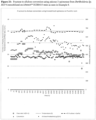
- induction phase began. A bolus of 5.00 g/L lactose or 0.8 m mol/ L IPTG was added and the temperature was linearly ramped down from 37 °C to 30 °C over the course of 1 h. Production tank conditions after induction: temperature was 30 °C, pH was 7.0, agitation was 340 RPM, airflow was 1.5 vvm, and back pressure was 2.05 bar (15 psig). During induction phase, pH was controlled with 28% aqueous NH 4 OH at set point of 7.00, dissolved oxygen was "as is," and dextrose concentration was maintained less than 1.0 g/L. The results of the enzyme specific activity over the course of the pilot scale fermentation can be seen in Figure 8 . In addition, Figure 18 shows the production of psicose-3-epimerase being produced by ASR180 over the course of this fermentation.
- the fermentation broth was processed by sodium phosphate salts being added to a final concentration of 50 mM phosphate and pH of 7.5.
- the fermentation broth was passed through a homogenizer (Panda NS1001L 2K from Niro-Soavi, Inc.) at 800-1000 bar, 4 °C to disrupt the cells.
- the crude lysate was clarified by centrifugation followed by filtration with diatomaceous earth to remove any cell debris. The supernatant was used for immobilization.
- Dow resin DUOLITE TM A568 was used for immobilization of the enzyme. Prior to immobilization, the resin was regenerated per manufacture's protocol and washed with 50 mM phosphate buffer with 2 mM MgSO 4 , pH 7.5. It was determined that a protein load of 100 mg/ g of dry resin was optimal for getting maximum enzyme immobilization. A jacketed glass column (Ace glass #15 15 mm ⁇ 450 mm) was filled with a known volume of resin. A known volume of crude lysate was recirculated through the resin bed at 2-4 BV/h for 4 h.
- Example 7 Conversion of fructose to allulose using psicose-3-epimerase from Burkholderia sp. RPE4 immobilized on Dow resin DUOLITE TM A568 resin
- reaction were carried out using feed consisting of solubilized crystalline fructose (50% w/w) or high fructose corn syrup 90(50% DS), magnesium Mg+ 2 concentration of 24-50 ppm, pH range of 7.7 -6.5.
- the flow rate was adjusted to 1 bed volume per h and temperature of the column was maintained at 50 °C. Results can be seen in Figure 20 . Under these conditions, near equilibrium production of allulose was observed for 3000 h with minimum loss in performance, which was surprising for this resin.
- an epimerase enzyme that was immobilized on the DUOLITE TM A568 resin showed a decrease in the percentage conversion of fructose to allulose over the course of as little as 8 h when the reaction was maintained at 53 °C.
- Example 8 Fructose to allulose conversion using Tagatose-3-epimerse from Burkholderia Sp. RPE4 immobilized on Lifetech TM ECR8415 resin.
- reaction were carried out using feed consisting of solubilized crystalline fructose (50% w/w) or high fructose corn syrup 90(50% DS), Mg + 2 concentration of 24-50 ppm, pH range of 7.7 -6.5.
- the flow rate was adjusted to 3-4 bed volume per hour and temperature of the column was maintained at 50 °C. Under these conditions, near equilibrium production of allulose was observed for ⁇ 3000 h with minimum loss in performance. Results can be seen in the chart in Figure 21 .
- Example 9 Enzyme assay for fermentation samples: The fermentation samples were stored at 4 °C until processed. Fermentation samples (1 mL) was centrifuged and supernatant was discarded. The cell pellet was lysed using Bugbuster ® (EMD Millipore), centrifuged and the supernatant was used for the enzyme assay.
- the psicose-3-epimerase enzyme assays were performed at 50 °C for 5 min in 3% (w/w) fructose and cell lysate (1:10 dilution v/v) of crude lysate. The reactions were stopped by adjusting the pH to 2 with 5% (v/v) HCl. The reaction mixtures were analyzed by HPLC. One unit of D-psicose-3-epimerase activity was defined as the amount of the enzyme required to produce 1 umol of psicose per min at pH 7.5 and 50 °C.
- Example 10 Enzyme assay for immobilized enzyme: A 10 g solution of 50 % (w/w) fructose containing feed consisting of crystalline fructose (50% w/w) or high fructose corn syrup 90(50% DS), magnesium(Mg+ 2 ) concentration of 24-50 ppm, pH range of 7.75. 1 g of immobilized enzyme was added to this reaction mixture and incubated in an orbital shaker at 50 °C for 60 min. The moisture content of immobilized enzyme was measured and accounted for in the enzyme reaction. The reactions were terminated by adjusting the pH to 2 with 5 % HCL (v/v). The reaction mixture were analyzed by HPLC. One unit of D-psicose-3-epimerase activity was defined as the amount of the immobilized enzyme resin required to produce 1 umol of psicose per min at pH 7.75 and 50°C.
Landscapes
- Chemical & Material Sciences (AREA)
- Organic Chemistry (AREA)
- Life Sciences & Earth Sciences (AREA)
- Engineering & Computer Science (AREA)
- Health & Medical Sciences (AREA)
- Zoology (AREA)
- Wood Science & Technology (AREA)
- Genetics & Genomics (AREA)
- Bioinformatics & Cheminformatics (AREA)
- General Health & Medical Sciences (AREA)
- Biochemistry (AREA)
- General Engineering & Computer Science (AREA)
- Microbiology (AREA)
- Biotechnology (AREA)
- Biomedical Technology (AREA)
- Chemical Kinetics & Catalysis (AREA)
- General Chemical & Material Sciences (AREA)
- Molecular Biology (AREA)
- Medicinal Chemistry (AREA)
- Enzymes And Modification Thereof (AREA)
- Immobilizing And Processing Of Enzymes And Microorganisms (AREA)
Claims (15)
- Verfahren zur Herstellung von Allulose, umfassend:
das In-Kontakt-Bringen einer Lösung, die Fructose enthält, mit einem Psicose-3-Epimerase-Enzym von einer Burkholderia-Spezies, das eine Polypeptidsequenz aufweist, die aus SEQ ID Nr. 1 und SEQ ID Nr. 12 ausgewählt ist, während einer Zeit und unter Bedingungen, die geeignet sind, wenigstens einen Teil der Fructose in Allulose umzuwandeln. - Verfahren gemäß Anspruch 1, wobei die Psicose-3-Epimerase auf einem festen Matrixharz immobilisiert ist.
- Verfahren gemäß Anspruch 2, wobei das feste Matrixharz ein Anionenaustauscherharz in einer schwachen Basenform ist.
- Verfahren gemäß Anspruch 2, wobei das feste Matrixharz ein Kondensatharz auf Phenol-Formaldehyd-Basis ist, das so funktionalisiert ist, dass es tertiär-Amin-freie Basengruppen enthält.
- Verfahren gemäß Anspruch 2, wobei die feste Matrix ein Harz auf Methacrylsäurebasis ist, das so funktionalisiert ist, dass es C2-C6-Aminbindungen enthält.
- Verfahren gemäß Anspruch 3, wobei die Umwandlung von Fructose in Allulose bei einer Temperatur zwischen 50°C und 70°C erfolgt.
- Verfahren gemäß Anspruch 1, wobei die Fructoselösung aus solubilisierter kristalliner Fructose und fructosereichem Maissirup (HFCS) ausgewählt ist.
- Verfahren gemäß Anspruch 7, wobei die Fructoselösung einen Gehalt an gelösten Feststoffen von 50 Gew.-% aufweist, das In-Kontakt-Bringen in einem pH-Bereich von 6,5-7,7 in Gegenwart von Magnesium in einer Konzentration von 24-50 ppm erfolgt und mit einer Fließgeschwindigkeit von 1-4 Volumina Fructoselösung pro Bettvolumen des festen Matrixharzes erfolgt.
- Verfahren gemäß Anspruch 1, wobei das Psicose-3-Epimerase-Enzym von einem Mikroorganismus erhalten ist, der einen rekombinanten Nucleinsäurevektor enthält, der funktionell so konfiguriert ist, dass er eine Nucleinsäuresequenz exprimiert, die das Protein codiert, das eine Polypeptidsequenz aufweist, die aus SEQ ID Nr. 1 und SEQ ID Nr. 12 ausgewählt ist.
- Verfahren gemäß Anspruch 9, wobei es sich bei dem Mikroorganismus um E. coli oder B. subtilis handelt.
- Rekombinante Nucleinsäuresequenz, die funktionell so konfiguriert ist, dass sie eine Nucleinsäure exprimiert, die ein Psicose-3-Epimerase-Enzym codiert, das eine Polypeptidsequenz von SEQ ID Nr. 12 aufweist.
- Mikroorganismus, der mit einer rekombinanten Nucleinsäuresequenz transformiert ist, die funktionell so konfiguriert ist, dass sie eine Nucleinsäure exprimiert, die ein Psicose-3-Epimerase-Enzym codiert, das eine Polypeptidsequenz aufweist, die aus SEQ ID Nr. 1 und SEQ ID Nr. 12 ausgewählt ist.
- Mikroorganismus gemäß Anspruch 12, wobei der Mikroorganismus aus E. coli und B. subtilis ausgewählt ist.
- Festes Matrixharz, das ein Psicose-3-Epimerase-Enzym enthält, das eine Polypeptidsequenz aufweist, die aus SEQ ID Nr. 1 und SEQ ID Nr. 12 ausgewählt ist.
- Säule, die das feste Matrixharz gemäß Anspruch 14 enthält und so konfiguriert ist, dass sie eine Eintrittsströmung einer Lösung aufnehmen kann, so dass diese über das feste Matrixharz strömt und eine Austrittsströmung der Lösung ermöglicht.
Priority Applications (1)
| Application Number | Priority Date | Filing Date | Title |
|---|---|---|---|
| EP24220945.0A EP4541903A3 (de) | 2015-03-27 | 2016-03-25 | Umwandlung von fructose in allulose |
Applications Claiming Priority (2)
| Application Number | Priority Date | Filing Date | Title |
|---|---|---|---|
| US201562139072P | 2015-03-27 | 2015-03-27 | |
| PCT/US2016/024217 WO2016160573A1 (en) | 2015-03-27 | 2016-03-25 | Fructose to allulose conversion |
Related Child Applications (1)
| Application Number | Title | Priority Date | Filing Date |
|---|---|---|---|
| EP24220945.0A Division EP4541903A3 (de) | 2015-03-27 | 2016-03-25 | Umwandlung von fructose in allulose |
Publications (3)
| Publication Number | Publication Date |
|---|---|
| EP3274451A1 EP3274451A1 (de) | 2018-01-31 |
| EP3274451A4 EP3274451A4 (de) | 2018-12-05 |
| EP3274451B1 true EP3274451B1 (de) | 2025-01-01 |
Family
ID=57005287
Family Applications (2)
| Application Number | Title | Priority Date | Filing Date |
|---|---|---|---|
| EP16773840.0A Active EP3274451B1 (de) | 2015-03-27 | 2016-03-25 | Umwandlung von fructose in allulose unter verwendung eines burkholderia enzyms |
| EP24220945.0A Pending EP4541903A3 (de) | 2015-03-27 | 2016-03-25 | Umwandlung von fructose in allulose |
Family Applications After (1)
| Application Number | Title | Priority Date | Filing Date |
|---|---|---|---|
| EP24220945.0A Pending EP4541903A3 (de) | 2015-03-27 | 2016-03-25 | Umwandlung von fructose in allulose |
Country Status (5)
| Country | Link |
|---|---|
| US (1) | US20180251749A1 (de) |
| EP (2) | EP3274451B1 (de) |
| ES (1) | ES3010384T3 (de) |
| HU (1) | HUE070591T2 (de) |
| WO (1) | WO2016160573A1 (de) |
Families Citing this family (10)
| Publication number | Priority date | Publication date | Assignee | Title |
|---|---|---|---|---|
| DK3298127T3 (da) | 2015-05-22 | 2022-04-25 | Archer Daniels Midland Co | Anvendelse af epimerase-enzymer til omdannelse af fructose til allulose |
| CN106929545A (zh) * | 2017-02-14 | 2017-07-07 | 榆林学院 | 一种蔬菜残渣资源化利用方法 |
| KR102004940B1 (ko) | 2017-06-30 | 2019-07-29 | 주식회사 삼양사 | 감미료 알룰로스를 제조하는 방법 |
| CN109402191A (zh) * | 2018-01-15 | 2019-03-01 | 吉林中粮生化有限公司 | 大米f55果葡糖浆的制备方法 |
| WO2019166514A1 (en) | 2018-02-28 | 2019-09-06 | C-Lecta Gmbh | Enzymatic in-situ fortification of food with functional carbohydrates |
| ES2951271T3 (es) | 2018-08-08 | 2023-10-19 | Archer Daniels Midland Co | Enzimas epimerasas y su uso |
| WO2021128086A1 (zh) * | 2019-12-25 | 2021-07-01 | 吉林凯莱英医药化学有限公司 | 固定化酶、其制备方法及其应用 |
| WO2021226072A1 (en) | 2020-05-05 | 2021-11-11 | Amalgamated Research Llc | Systems including simulated moving bed separators for high purity fructose production and related methods |
| CN113957064B (zh) * | 2020-07-21 | 2023-05-26 | 山东福洋生物科技股份有限公司 | 一种重组枯草芽孢杆菌高密度发酵生产dpe的方法 |
| CN114480359B (zh) * | 2022-03-22 | 2023-04-07 | 河南中大恒源生物科技股份有限公司 | 一种高密度发酵生产阿洛酮糖3-差向异构酶的方法 |
Citations (3)
| Publication number | Priority date | Publication date | Assignee | Title |
|---|---|---|---|---|
| US8030035B2 (en) * | 2005-06-01 | 2011-10-04 | Cj Cheiljedang Corp. | D-psicose production method by D-psicose epimerase |
| US8735106B2 (en) * | 2009-09-30 | 2014-05-27 | Cj Cheiljedang Corporation | Immobilization of psicose-epimerase and a method of producing D-psicose using the same |
| WO2015032761A1 (en) * | 2013-09-03 | 2015-03-12 | Roquette Freres | Improved variant of d-psicose 3-epimerase and uses thereof |
Family Cites Families (2)
| Publication number | Priority date | Publication date | Assignee | Title |
|---|---|---|---|---|
| CA2909438C (en) * | 2012-04-17 | 2021-01-19 | Agtive Bio-Sciences Private Limited | Method of production of monosaccharides |
| GB2583417B (en) | 2012-09-27 | 2021-03-31 | Tate & Lyle Ingredients Americas Llc | A protein |
-
2016
- 2016-03-25 EP EP16773840.0A patent/EP3274451B1/de active Active
- 2016-03-25 HU HUE16773840A patent/HUE070591T2/hu unknown
- 2016-03-25 EP EP24220945.0A patent/EP4541903A3/de active Pending
- 2016-03-25 ES ES16773840T patent/ES3010384T3/es active Active
- 2016-03-25 US US15/559,699 patent/US20180251749A1/en not_active Abandoned
- 2016-03-25 WO PCT/US2016/024217 patent/WO2016160573A1/en not_active Ceased
Patent Citations (3)
| Publication number | Priority date | Publication date | Assignee | Title |
|---|---|---|---|---|
| US8030035B2 (en) * | 2005-06-01 | 2011-10-04 | Cj Cheiljedang Corp. | D-psicose production method by D-psicose epimerase |
| US8735106B2 (en) * | 2009-09-30 | 2014-05-27 | Cj Cheiljedang Corporation | Immobilization of psicose-epimerase and a method of producing D-psicose using the same |
| WO2015032761A1 (en) * | 2013-09-03 | 2015-03-12 | Roquette Freres | Improved variant of d-psicose 3-epimerase and uses thereof |
Non-Patent Citations (4)
| Title |
|---|
| ANDREAS BOSSHART ET AL: "Directed divergent evolution of a thermostable D-tagatose epimerase towards improved activity for two hexose substrates", CHEMBIOCHEM,, vol. 16, 5 February 2015 (2015-02-05), pages 592 - 601, XP002789444 * |
| BOSSHART ANDREAS ET AL: "Supporting Information Directed Divergent Evolution of a Thermostable d- Tagatose Epimerase towards Improved Activity for Two Hexose Substrates", 5 February 2015 (2015-02-05), pages 1 - 17, XP055776964, Retrieved from the Internet <URL:https://chemistry-europe.onlinelibrary.wiley.com/action/downloadSupplement?doi=10.1002/cbic.201402620&file=cbic_201402620_sm_miscellaneous_information.pdf> [retrieved on 20210217] * |
| TAKESHITA ET AL: "Mass production of D-psicose from D-fructose by a continuous bioreactor system using immobilized D-tagatose 3-epimerase", JOURNAL OF BIOSCIENCE AND BIOENGINEERING, vol. 90, 2000, pages 453 - 455, XP003003993 * |
| ZHANG ET AL: "Characterization of a novel metal-dependent D-psicose-3-epimerase from Clostridium scindens 35704", PLOS ONE, vol. 8, 2013, pages 1 - 9, XP055089651 * |
Also Published As
| Publication number | Publication date |
|---|---|
| WO2016160573A1 (en) | 2016-10-06 |
| EP3274451A1 (de) | 2018-01-31 |
| US20180251749A1 (en) | 2018-09-06 |
| EP4541903A2 (de) | 2025-04-23 |
| EP4541903A3 (de) | 2025-10-01 |
| ES3010384T3 (en) | 2025-04-02 |
| HUE070591T2 (hu) | 2025-06-28 |
| EP3274451A4 (de) | 2018-12-05 |
Similar Documents
| Publication | Publication Date | Title |
|---|---|---|
| EP3274451B1 (de) | Umwandlung von fructose in allulose unter verwendung eines burkholderia enzyms | |
| US10612016B2 (en) | Variant of D-psicose 3-epimerase and uses thereof | |
| US9938515B2 (en) | Psicose epimerase mutant and method for preparing psicose by using same | |
| US8802393B2 (en) | Arabinose isomerase expressed from Corynebacterium genus and tagatose manufacturing method by using it | |
| ES2320820T3 (es) | Bioconversion de una fuente de carbono fermentable en 1,3-propanodiol mediante un solo cicroorganismo. | |
| KR101447579B1 (ko) | 미생물을 이용한 d-카이로 이노시톨의 생산 방법 | |
| CN103097514B (zh) | 一种用于从蔗糖制备1,3-丙二醇的方法 | |
| CA2909440C (en) | A method of production of rare disaccharides | |
| WO2024002131A1 (zh) | 一种高效表达d-阿洛酮糖3-差向异构酶的工程菌及应用 | |
| KR101994772B1 (ko) | 포도당으로부터 1,3-프로판디올를 생산하는 신규한 크렙시엘라 뉴모니아 균주 및 이를 이용한 1,3 프로판디올의 생산방법 | |
| KR102017776B1 (ko) | 휴면 세포 전환법을 이용한 d-카이로 이노시톨의 생산 방법 | |
| US8137946B2 (en) | Recombinant GRAS strains expressing thermophilic arabinose isomerase as an active form and method of preparing food grade tagatose by using the same | |
| US7198932B1 (en) | Gdp-4-keto-6-deoxy-d-mannose-3,5-epimerase-4-reductase gene derived from arabidopsis thaliana | |
| US20170137855A1 (en) | Recombinant cells and methods for nonphosphorylative metabolism | |
| CN102695793A (zh) | 具有改进的产品特异性的蔗糖变位酶 | |
| CN121472205A (zh) | 一种催化特性提高的d-阿洛酮糖3-差向异构酶突变体 | |
| CN117683750A (zh) | 重组α-葡萄糖苷酶及其制备方法 | |
| US11421215B2 (en) | Nucleic acid encoding an isomerase, host cells containing the nucleic acid, and methods of making and using the host cells | |
| CN119193524A (zh) | 一种提高α-1,3-岩藻糖基转移酶可溶性表达量的方法 | |
| WO2004058959A1 (ja) | PNPaseの製造法 |
Legal Events
| Date | Code | Title | Description |
|---|---|---|---|
| STAA | Information on the status of an ep patent application or granted ep patent |
Free format text: STATUS: THE INTERNATIONAL PUBLICATION HAS BEEN MADE |
|
| PUAI | Public reference made under article 153(3) epc to a published international application that has entered the european phase |
Free format text: ORIGINAL CODE: 0009012 |
|
| STAA | Information on the status of an ep patent application or granted ep patent |
Free format text: STATUS: REQUEST FOR EXAMINATION WAS MADE |
|
| 17P | Request for examination filed |
Effective date: 20171024 |
|
| AK | Designated contracting states |
Kind code of ref document: A1 Designated state(s): AL AT BE BG CH CY CZ DE DK EE ES FI FR GB GR HR HU IE IS IT LI LT LU LV MC MK MT NL NO PL PT RO RS SE SI SK SM TR |
|
| AX | Request for extension of the european patent |
Extension state: BA ME |
|
| TPAC | Observations filed by third parties |
Free format text: ORIGINAL CODE: EPIDOSNTIPA |
|
| DAV | Request for validation of the european patent (deleted) | ||
| DAX | Request for extension of the european patent (deleted) | ||
| A4 | Supplementary search report drawn up and despatched |
Effective date: 20181030 |
|
| RIC1 | Information provided on ipc code assigned before grant |
Ipc: C12N 15/61 20060101ALI20181020BHEP Ipc: C12P 19/24 20060101ALI20181020BHEP Ipc: C12N 9/90 20060101AFI20181020BHEP Ipc: C12P 19/02 20060101ALI20181020BHEP |
|
| STAA | Information on the status of an ep patent application or granted ep patent |
Free format text: STATUS: EXAMINATION IS IN PROGRESS |
|
| 17Q | First examination report despatched |
Effective date: 20190621 |
|
| GRAP | Despatch of communication of intention to grant a patent |
Free format text: ORIGINAL CODE: EPIDOSNIGR1 |
|
| STAA | Information on the status of an ep patent application or granted ep patent |
Free format text: STATUS: GRANT OF PATENT IS INTENDED |
|
| INTG | Intention to grant announced |
Effective date: 20240729 |
|
| GRAS | Grant fee paid |
Free format text: ORIGINAL CODE: EPIDOSNIGR3 |
|
| GRAA | (expected) grant |
Free format text: ORIGINAL CODE: 0009210 |
|
| STAA | Information on the status of an ep patent application or granted ep patent |
Free format text: STATUS: THE PATENT HAS BEEN GRANTED |
|
| AK | Designated contracting states |
Kind code of ref document: B1 Designated state(s): AL AT BE BG CH CY CZ DE DK EE ES FI FR GB GR HR HU IE IS IT LI LT LU LV MC MK MT NL NO PL PT RO RS SE SI SK SM TR |
|
| P01 | Opt-out of the competence of the unified patent court (upc) registered |
Free format text: CASE NUMBER: APP_62971/2024 Effective date: 20241127 |
|
| REG | Reference to a national code |
Ref country code: GB Ref legal event code: FG4D |
|
| REG | Reference to a national code |
Ref country code: DE Ref legal event code: R096 Ref document number: 602016090805 Country of ref document: DE |
|
| REG | Reference to a national code |
Ref country code: CH Ref legal event code: EP |
|
| REG | Reference to a national code |
Ref country code: IE Ref legal event code: FG4D |
|
| REG | Reference to a national code |
Ref country code: NL Ref legal event code: FP |
|
| PGFP | Annual fee paid to national office [announced via postgrant information from national office to epo] |
Ref country code: NL Payment date: 20250113 Year of fee payment: 10 |
|
| REG | Reference to a national code |
Ref country code: ES Ref legal event code: FG2A Ref document number: 3010384 Country of ref document: ES Kind code of ref document: T3 Effective date: 20250402 |
|
| PGFP | Annual fee paid to national office [announced via postgrant information from national office to epo] |
Ref country code: DE Payment date: 20250218 Year of fee payment: 10 |
|
| PGFP | Annual fee paid to national office [announced via postgrant information from national office to epo] |
Ref country code: BG Payment date: 20250221 Year of fee payment: 10 |
|
| PGFP | Annual fee paid to national office [announced via postgrant information from national office to epo] |
Ref country code: FR Payment date: 20250114 Year of fee payment: 10 |
|
| REG | Reference to a national code |
Ref country code: LT Ref legal event code: MG9D |
|
| PGFP | Annual fee paid to national office [announced via postgrant information from national office to epo] |
Ref country code: IT Payment date: 20250218 Year of fee payment: 10 Ref country code: GB Payment date: 20250116 Year of fee payment: 10 |
|
| PGFP | Annual fee paid to national office [announced via postgrant information from national office to epo] |
Ref country code: TR Payment date: 20250115 Year of fee payment: 10 |
|
| REG | Reference to a national code |
Ref country code: AT Ref legal event code: MK05 Ref document number: 1756269 Country of ref document: AT Kind code of ref document: T Effective date: 20250101 |
|
| REG | Reference to a national code |
Ref country code: HU Ref legal event code: AG4A Ref document number: E070591 Country of ref document: HU |
|
| PG25 | Lapsed in a contracting state [announced via postgrant information from national office to epo] |
Ref country code: FI Free format text: LAPSE BECAUSE OF FAILURE TO SUBMIT A TRANSLATION OF THE DESCRIPTION OR TO PAY THE FEE WITHIN THE PRESCRIBED TIME-LIMIT Effective date: 20250101 |
|
| PG25 | Lapsed in a contracting state [announced via postgrant information from national office to epo] |
Ref country code: PL Free format text: LAPSE BECAUSE OF FAILURE TO SUBMIT A TRANSLATION OF THE DESCRIPTION OR TO PAY THE FEE WITHIN THE PRESCRIBED TIME-LIMIT Effective date: 20250101 |
|
| PGFP | Annual fee paid to national office [announced via postgrant information from national office to epo] |
Ref country code: ES Payment date: 20250401 Year of fee payment: 10 |
|
| PG25 | Lapsed in a contracting state [announced via postgrant information from national office to epo] |
Ref country code: IS Free format text: LAPSE BECAUSE OF FAILURE TO SUBMIT A TRANSLATION OF THE DESCRIPTION OR TO PAY THE FEE WITHIN THE PRESCRIBED TIME-LIMIT Effective date: 20250501 Ref country code: NO Free format text: LAPSE BECAUSE OF FAILURE TO SUBMIT A TRANSLATION OF THE DESCRIPTION OR TO PAY THE FEE WITHIN THE PRESCRIBED TIME-LIMIT Effective date: 20250401 |
|
| PG25 | Lapsed in a contracting state [announced via postgrant information from national office to epo] |
Ref country code: HR Free format text: LAPSE BECAUSE OF FAILURE TO SUBMIT A TRANSLATION OF THE DESCRIPTION OR TO PAY THE FEE WITHIN THE PRESCRIBED TIME-LIMIT Effective date: 20250101 |
|
| PG25 | Lapsed in a contracting state [announced via postgrant information from national office to epo] |
Ref country code: LV Free format text: LAPSE BECAUSE OF FAILURE TO SUBMIT A TRANSLATION OF THE DESCRIPTION OR TO PAY THE FEE WITHIN THE PRESCRIBED TIME-LIMIT Effective date: 20250101 Ref country code: PT Free format text: LAPSE BECAUSE OF FAILURE TO SUBMIT A TRANSLATION OF THE DESCRIPTION OR TO PAY THE FEE WITHIN THE PRESCRIBED TIME-LIMIT Effective date: 20250502 |
|
| PGFP | Annual fee paid to national office [announced via postgrant information from national office to epo] |
Ref country code: HU Payment date: 20250117 Year of fee payment: 10 |
|
| PG25 | Lapsed in a contracting state [announced via postgrant information from national office to epo] |
Ref country code: GR Free format text: LAPSE BECAUSE OF FAILURE TO SUBMIT A TRANSLATION OF THE DESCRIPTION OR TO PAY THE FEE WITHIN THE PRESCRIBED TIME-LIMIT Effective date: 20250402 |
|
| PG25 | Lapsed in a contracting state [announced via postgrant information from national office to epo] |
Ref country code: AT Free format text: LAPSE BECAUSE OF FAILURE TO SUBMIT A TRANSLATION OF THE DESCRIPTION OR TO PAY THE FEE WITHIN THE PRESCRIBED TIME-LIMIT Effective date: 20250101 |
|
| PG25 | Lapsed in a contracting state [announced via postgrant information from national office to epo] |
Ref country code: CZ Free format text: LAPSE BECAUSE OF FAILURE TO SUBMIT A TRANSLATION OF THE DESCRIPTION OR TO PAY THE FEE WITHIN THE PRESCRIBED TIME-LIMIT Effective date: 20250101 |
|
| PG25 | Lapsed in a contracting state [announced via postgrant information from national office to epo] |
Ref country code: SE Free format text: LAPSE BECAUSE OF FAILURE TO SUBMIT A TRANSLATION OF THE DESCRIPTION OR TO PAY THE FEE WITHIN THE PRESCRIBED TIME-LIMIT Effective date: 20250101 |
|
| REG | Reference to a national code |
Ref country code: DE Ref legal event code: R097 Ref document number: 602016090805 Country of ref document: DE |
|
| PG25 | Lapsed in a contracting state [announced via postgrant information from national office to epo] |
Ref country code: SM Free format text: LAPSE BECAUSE OF FAILURE TO SUBMIT A TRANSLATION OF THE DESCRIPTION OR TO PAY THE FEE WITHIN THE PRESCRIBED TIME-LIMIT Effective date: 20250101 |
|
| PG25 | Lapsed in a contracting state [announced via postgrant information from national office to epo] |
Ref country code: DK Free format text: LAPSE BECAUSE OF FAILURE TO SUBMIT A TRANSLATION OF THE DESCRIPTION OR TO PAY THE FEE WITHIN THE PRESCRIBED TIME-LIMIT Effective date: 20250101 |
|
| PG25 | Lapsed in a contracting state [announced via postgrant information from national office to epo] |
Ref country code: MC Free format text: LAPSE BECAUSE OF FAILURE TO SUBMIT A TRANSLATION OF THE DESCRIPTION OR TO PAY THE FEE WITHIN THE PRESCRIBED TIME-LIMIT Effective date: 20250101 |
|
| PG25 | Lapsed in a contracting state [announced via postgrant information from national office to epo] |
Ref country code: EE Free format text: LAPSE BECAUSE OF FAILURE TO SUBMIT A TRANSLATION OF THE DESCRIPTION OR TO PAY THE FEE WITHIN THE PRESCRIBED TIME-LIMIT Effective date: 20250101 |
|
| PG25 | Lapsed in a contracting state [announced via postgrant information from national office to epo] |
Ref country code: RO Free format text: LAPSE BECAUSE OF FAILURE TO SUBMIT A TRANSLATION OF THE DESCRIPTION OR TO PAY THE FEE WITHIN THE PRESCRIBED TIME-LIMIT Effective date: 20250101 |
|
| REG | Reference to a national code |
Ref country code: CH Ref legal event code: H13 Free format text: ST27 STATUS EVENT CODE: U-0-0-H10-H13 (AS PROVIDED BY THE NATIONAL OFFICE) Effective date: 20251023 |
|
| PG25 | Lapsed in a contracting state [announced via postgrant information from national office to epo] |
Ref country code: SK Free format text: LAPSE BECAUSE OF FAILURE TO SUBMIT A TRANSLATION OF THE DESCRIPTION OR TO PAY THE FEE WITHIN THE PRESCRIBED TIME-LIMIT Effective date: 20250101 |
|
| PLBE | No opposition filed within time limit |
Free format text: ORIGINAL CODE: 0009261 |
|
| STAA | Information on the status of an ep patent application or granted ep patent |
Free format text: STATUS: NO OPPOSITION FILED WITHIN TIME LIMIT |
|
| PG25 | Lapsed in a contracting state [announced via postgrant information from national office to epo] |
Ref country code: LU Free format text: LAPSE BECAUSE OF NON-PAYMENT OF DUE FEES Effective date: 20250325 |
|
| 26N | No opposition filed |
Effective date: 20251002 |
|
| REG | Reference to a national code |
Ref country code: BE Ref legal event code: MM Effective date: 20250331 |
|
| PG25 | Lapsed in a contracting state [announced via postgrant information from national office to epo] |
Ref country code: BE Free format text: LAPSE BECAUSE OF NON-PAYMENT OF DUE FEES Effective date: 20250331 |
|
| PG25 | Lapsed in a contracting state [announced via postgrant information from national office to epo] |
Ref country code: CH Free format text: LAPSE BECAUSE OF NON-PAYMENT OF DUE FEES Effective date: 20250331 |
|
| PG25 | Lapsed in a contracting state [announced via postgrant information from national office to epo] |
Ref country code: IE Free format text: LAPSE BECAUSE OF NON-PAYMENT OF DUE FEES Effective date: 20250325 |